Skip to content

High-quality research proteins.

  • 1-800-805-6531

  • Mon - Sat 8.00-18.00, Sun - Closed

  • info@prospecbio.com

  • PO Box 6591 East Brunswick NJ 08816

  • Products
    • Cytokines
    • Growth factors
    • Chemokines
    • Cd antigens
    • Neurotrophins
    • Hormones
    • Enzymes
    • Viral antigens
    • Recombinant proteins
    • Natural proteins
    • Monoclonal antibodies
    • Polyclonal antibodies
    • Thermal Packaging
  • About
    • Company
    • Founder
    • Contribution
  • Customers
    • Eastern Asia
    • Eastern Europe
    • North America
    • South America
    • South East Asia
    • Southern Asia
    • Western Europe
  • Ordering
    • Ordering Method
    • Ordering - Credit Card
    • Ordering - PO
    • Shipping Fees
    • FAQs
  • Services
    • DNA Cloning
    • Protein Expression
    • Monoclonal Antibody
    • Fermentation
    • Technology License
  • Contact us
Log in

Country/region

  • USD $ | Albania
  • USD $ | Andorra
  • USD $ | Argentina
  • USD $ | Armenia
  • USD $ | Australia
  • USD $ | Austria
  • USD $ | Azerbaijan
  • USD $ | Belarus
  • USD $ | Belgium
  • USD $ | Bolivia
  • USD $ | Brazil
  • USD $ | Bulgaria
  • USD $ | Cambodia
  • USD $ | Canada
  • USD $ | Chile
  • USD $ | China
  • USD $ | Colombia
  • USD $ | Costa Rica
  • USD $ | Croatia
  • USD $ | Cyprus
  • USD $ | Czechia
  • USD $ | Denmark
  • USD $ | Estonia
  • USD $ | Finland
  • USD $ | France
  • USD $ | Georgia
  • USD $ | Germany
  • USD $ | Greece
  • USD $ | Hong Kong SAR
  • USD $ | Hungary
  • USD $ | Iceland
  • USD $ | India
  • USD $ | Ireland
  • USD $ | Israel
  • USD $ | Italy
  • USD $ | Japan
  • USD $ | Kazakhstan
  • USD $ | Latvia
  • USD $ | Liechtenstein
  • USD $ | Lithuania
  • USD $ | Madagascar
  • USD $ | Malta
  • USD $ | Mexico
  • USD $ | Moldova
  • USD $ | Monaco
  • USD $ | Netherlands
  • USD $ | New Zealand
  • USD $ | North Macedonia
  • USD $ | Norway
  • USD $ | Panama
  • USD $ | Paraguay
  • USD $ | Peru
  • USD $ | Philippines
  • USD $ | Poland
  • USD $ | Portugal
  • USD $ | Romania
  • USD $ | Singapore
  • USD $ | Slovakia
  • USD $ | Slovenia
  • USD $ | South Africa
  • USD $ | South Korea
  • USD $ | Spain
  • USD $ | Sri Lanka
  • USD $ | Sweden
  • USD $ | Switzerland
  • USD $ | Taiwan
  • USD $ | Thailand
  • USD $ | Türkiye
  • USD $ | Ukraine
  • USD $ | United Kingdom
  • USD $ | United States
  • USD $ | Uruguay
  • USD $ | Vatican City
  • USD $ | Venezuela
  • USD $ | Vietnam
  • Facebook
  • Instagram
logoProSpec - Recombinant Protein Manufacturer for academic and R&D industry
Become a distributor
Account Log in
Wishlist
Cart Cart(0)
  • Products
    +
    • Cytokines
    • Growth factors
    • Chemokines
    • Cd antigens
    • Neurotrophins
    • Hormones
    • Enzymes
    • Viral antigens
    • Recombinant proteins
    • Natural proteins
    • Monoclonal antibodies
    • Polyclonal antibodies
    • Thermal Packaging
  • About
    +
    • Company
    • Founder
    • Contribution
  • Customers
    +
    • Eastern Asia
    • Eastern Europe
    • North America
    • South America
    • South East Asia
    • Southern Asia
    • Western Europe
  • Ordering
    +
    • Ordering Method
    • Ordering - Credit Card
    • Ordering - PO
    • Shipping Fees
    • FAQs
  • Services
    +
    • DNA Cloning
    • Protein Expression
    • Monoclonal Antibody
    • Fermentation
    • Technology License
  • Contact us

Item added to your cart

View cart
View All
  • Cytokines
  • Growth factors
  • Chemokines
  • Cd antigens
  • Neurotrophins
  • Hormones
  • Enzymes
  • Viral antigens
  • Recombinant proteins
  • Natural proteins
  • Monoclonal antibodies
  • Polyclonal antibodies
  • Thermal Packaging
  • Tumor Necrosis Factor

    Tumor Necrosis Factor

    View All
  • 4-1BB

    4-1BB

    View All
  • Adiponectin

    Adiponectin

    View All
  • AIF1

    AIF1

    View All
  • Other Cytokines

    Other Cytokines

    View All
  • AITRL

    AITRL

    View All
  • Angiopoietin

    Angiopoietin

    View All
  • Apolipoprotein

    Apolipoprotein

    View All
  • B-Cell Activating Factor

    B-Cell Activating Factor

    View All
  • Beta Defensin

    Beta Defensin

    View All
  • Bone Morphogenetic Protein

    Bone Morphogenetic Protein

    View All
  • B type Natriuretic Peptide

    B type Natriuretic Peptide

    View All
  • BST

    BST

    View All
  • Betacellulin

    Betacellulin

    View All
  • Cardiotrophin

    Cardiotrophin

    View All
  • Activin

    Activin

    View All
  • Fibroblast Growth Factor

    Fibroblast Growth Factor

    View All
  • Other Growth Factors

    Other Growth Factors

    View All
  • CSF

    CSF

    View All
  • CTGF

    CTGF

    View All
  • IGFBP

    IGFBP

    View All
  • VEGF Protein

    VEGF Protein

    View All
  • EGF

    EGF

    View All
  • Epigen

    Epigen

    View All
  • Erythropoietin

    Erythropoietin

    View All
  • Insulin-Like Growth Factor

    Insulin-Like Growth Factor

    View All
  • Growth Hormone

    Growth Hormone

    View All
  • HDGF

    HDGF

    View All
  • Hepatocyte Growth Factor

    Hepatocyte Growth Factor

    View All
  • Insulin

    Insulin

    View All
  • BCA-1/ BLC (CXCL13)

    BCA-1/ BLC (CXCL13)

    View All
  • BRAK (CXCL14)

    BRAK (CXCL14)

    View All
  • C-10 (CCL6)

    C-10 (CCL6)

    View All
  • Other Chemokines

    Other Chemokines

    View All
  • MEC (CCL28)

    MEC (CCL28)

    View All
  • LD78-beta (CCL3L1)

    LD78-beta (CCL3L1)

    View All
  • CTACK (CCL27)

    CTACK (CCL27)

    View All
  • CXCL16

    CXCL16

    View All
  • CXCL17

    CXCL17

    View All
  • Platelet Factor-4 (CXCL4)

    Platelet Factor-4 (CXCL4)

    View All
  • ENA-78 (CXCL5)

    ENA-78 (CXCL5)

    View All
  • Eotaxin (CCL11,24,26)

    Eotaxin (CCL11,24,26)

    View All
  • Exodus-2 (CCL21)

    Exodus-2 (CCL21)

    View All
  • Fractalkine (CX3CL1)

    Fractalkine (CX3CL1)

    View All
  • CXCL6

    CXCL6

    View All
  • Other CD Antigens

    Other CD Antigens

    View All
  • CD14

    CD14

    View All
  • CD164

    CD164

    View All
  • CD1

    CD1

    View All
  • CD2

    CD2

    View All
  • CD200

    CD200

    View All
  • CD207

    CD207

    View All
  • CD226

    CD226

    View All
  • CD23

    CD23

    View All
  • CD244

    CD244

    View All
  • CD247

    CD247

    View All
  • CD27

    CD27

    View All
  • CD274

    CD274

    View All
  • CD300

    CD300

    View All
  • CD33

    CD33

    View All
  • Other Neurotrophins

    Other Neurotrophins

    View All
  • Beta-NGF

    Beta-NGF

    View All
  • BDNF

    BDNF

    View All
  • CDNF

    CDNF

    View All
  • CNTF

    CNTF

    View All
  • GDNF

    GDNF

    View All
  • Glia Maturation Factor

    Glia Maturation Factor

    View All
  • MANF

    MANF

    View All
  • Midkine

    Midkine

    View All
  • Neuroglobin

    Neuroglobin

    View All
  • Neurotrophic factors

    Neurotrophic factors

    View All
  • Neuregulin

    Neuregulin

    View All
  • Neuropilin

    Neuropilin

    View All
  • Pigment Epithelium-Derived Factor

    Pigment Epithelium-Derived Factor

    View All
  • Pleiotrophin

    Pleiotrophin

    View All
  • Peptide Hormones

    Peptide Hormones

    View All
  • Other Hormones

    Other Hormones

    View All
  • HCG

    HCG

    View All
  • Endothelin

    Endothelin

    View All
  • Exendin

    Exendin

    View All
  • FSH

    FSH

    View All
  • Glucagon

    Glucagon

    View All
  • GHRP

    GHRP

    View All
  • GLP

    GLP

    View All
  • Thyrostimulin

    Thyrostimulin

    View All
  • Inhibin A

    Inhibin A

    View All
  • LHRH

    LHRH

    View All
  • Melanotan

    Melanotan

    View All
  • Procalcitonin

    Procalcitonin

    View All
  • PTH

    PTH

    View All
  • Peroxiredoxin

    Peroxiredoxin

    View All
  • Peptidase

    Peptidase

    View All
  • Synthetase

    Synthetase

    View All
  • Transferase

    Transferase

    View All
  • Hydrolase

    Hydrolase

    View All
  • Dehydrogenase

    Dehydrogenase

    View All
  • ACE2

    ACE2

    View All
  • Esterase

    Esterase

    View All
  • Protein Kinases

    Protein Kinases

    View All
  • Other Enzymes

    Other Enzymes

    View All
  • Phosphatase

    Phosphatase

    View All
  • Deaminase

    Deaminase

    View All
  • Oxygenase

    Oxygenase

    View All
  • Adenylate Kinase

    Adenylate Kinase

    View All
  • Lyase

    Lyase

    View All
  • Chagas

    Chagas

    View All
  • SARS

    SARS

    View All
  • Influenza

    Influenza

    View All
  • ASFV

    ASFV

    View All
  • Astrovirus

    Astrovirus

    View All
  • Borrelia

    Borrelia

    View All
  • Helicobacter Pylori

    Helicobacter Pylori

    View All
  • Chikungunya

    Chikungunya

    View All
  • Chlamydia

    Chlamydia

    View All
  • Cytomegalo

    Cytomegalo

    View All
  • Dengue

    Dengue

    View All
  • EBV

    EBV

    View All
  • Ebola

    Ebola

    View All
  • Feline Leukemia Virus

    Feline Leukemia Virus

    View All
  • Hepatitis A

    Hepatitis A

    View All
  • Other

    Other

    View All
  • Actin

    Actin

    View All
  • ADAM

    ADAM

    View All
  • Complement Component

    Complement Component

    View All
  • Ag85

    Ag85

    View All
  • Eukaryotic Translation Initiation Factor

    Eukaryotic Translation Initiation Factor

    View All
  • Anterior Gradient Protein

    Anterior Gradient Protein

    View All
  • Heat Shock Protein

    Heat Shock Protein

    View All
  • Alpha-2-HS-Glycoprotein

    Alpha-2-HS-Glycoprotein

    View All
  • Hemoglobin

    Hemoglobin

    View All
  • Allergy

    Allergy

    View All
  • Anaplasma

    Anaplasma

    View All
  • Angiogenin

    Angiogenin

    View All
  • Ankyrin Repeat Domain

    Ankyrin Repeat Domain

    View All
  • Annexin

    Annexin

    View All
  • Other Natural Proteins

    Other Natural Proteins

    View All
  • Aprotinin

    Aprotinin

    View All
  • Transferrin

    Transferrin

    View All
  • Avidin

    Avidin

    View All
  • Anti Coagulation Factors

    Anti Coagulation Factors

    View All
  • Natural Albumin

    Natural Albumin

    View All
  • Natural Coagulation Factors

    Natural Coagulation Factors

    View All
  • Fibronectin

    Fibronectin

    View All
  • Thrombin

    Thrombin

    View All
  • Anti Human Enzyme

    Anti Human Enzyme

    View All
  • Other Monoclonal Antibodies

    Other Monoclonal Antibodies

    View All
  • Anti Human Cytokine

    Anti Human Cytokine

    View All
  • Anti Human Heat Shock Protein

    Anti Human Heat Shock Protein

    View All
  • Anti Mouse Lymphocyte

    Anti Mouse Lymphocyte

    View All
  • Anti Human Chemokine

    Anti Human Chemokine

    View All
  • Anti Human Lymphocyte

    Anti Human Lymphocyte

    View All
  • Anti Viral Monoclonal

    Anti Viral Monoclonal

    View All
  • Anti Mouse Cytokine

    Anti Mouse Cytokine

    View All
  • Anti-GST Monoclonal

    Anti-GST Monoclonal

    View All
  • Other Polyclonal Antibodies

    Other Polyclonal Antibodies

    View All
  • Anti Viral

    Anti Viral

    View All
  • Anti-GST Monoclonal

    Anti-GST Monoclonal

    View All
Back

Search results

1000 results found for “Visfatin”

Name

Description

Product #

Price

Quantity

Shipping Method

  • View Data Sheet

    Name :

    Exenatide

    Description:

    Exenatide

    Exendin-4.

    Product # :

    HOR-246

    Price :

    Quantity :

    Shipping Method :

    Room Temp Icon

    Shipped at Room temp

    Add To Cart

    More Info

    • description
    • formulation
    • purity
    • More Info
    • Citations

    Description

    Exenatide is a single, non-glycosylated, peptide containing 39 amino acids and having a molecular mass of 4186.6 Dalton. Exenatide has the empirical formula C184H282N50O60S.

    Formulation

    The Exenatide peptide was lyophilized from a concentrated solution with no additives.

    Purity

    Greater than 99.0% as determined by:
    (a) Analysis by RP-HPLC.
    (b) Analysis by SDS-PAGE.

    Citations

    More Info

    • Introduction

      Exenatide Derived from the saliva of the gila monster, is a 39 amino acid peptide that mimics the GLP-1 incretin, an insulin secretagogue with glucoregulatory effects. Typical responses to exenatide include improvements in the initial rapid release of endogenous insulin, suppression of glucagon release by the pancreas, regulation of gastric empyting, and reduced appetite - all of which function to lower blood glucose. Exenatide is self-regulating in that it lowers blood sugar when levels are elevated but does not continue to lower blood sugar when levels return to normal, unlike with sulfonylureas or insulins.

    • Synonyms

      Exendin-4.

    • Physical Appearance

      Sterile Filtered White lyophilized (freeze-dried) powder.

    • Stability

      Lyophilized Exenatide although stable at room temperature for 3 weeks, should be stored desiccated below -18°C. Upon reconstitution Exenatide should be stored at 4°C between 2-7 days and for future use below -18°C. For long term storage it is recommended to add a carrier protein (0.1% HSA or BSA).Please prevent freeze-thaw cycles.

    • Solubility

      It is recommended to reconstitute the lyophilized Exenatide in sterile 18MΩ-cm H2O not less than 100 µg/ml, which can then be further diluted to other aqueous solutions.

    • Amino Acid Sequence

      H-His-Gly-Glu-Gly-Thr-Phe-Thr-Ser-Asp-Leu-Ser-Lys-Gln-Met-Glu-Glu-Glu-Ala-Val-Arg-Leu-Phe-Ile-Glu-Trp-Leu-Lys-Asn-Gly-Gly-Pro-Ser-Ser-Gly-Ala-Pro-Pro-Pro-Ser-NH2.

    • Background

      What is the molecular weight/Mw of EXENATIDE Protein?
      EXENATIDE Protein has a total Mw of 4.18kDa.

      What is the Purity of EXENATIDE Protein?
      EXENATIDE Protein is > 99% pure as determined by SDS-PAGE.

      What is the Biological Activity of EXENATIDE Protein?
      The biological functionality of EXENATIDE Protein will be determined in the future.

      What is the amino acid sequence of EXENATIDE Protein?
      H-His-Gly-Glu-Gly-Thr-Phe-Thr-Ser-Asp-Leu-Ser-Lys-Gln-Met-Glu-Glu-Glu-Ala-Val-Arg-Leu-Phe-Ile-Glu-Trp-Leu-Lys-Asn-Gly-Gly-Pro-Ser-Ser-Gly-Ala-Pro-Pro-Pro-Ser-NH2.

      What applications can EXENATIDE Protein be used in?
      EXENATIDE Protein can probably be used in western blot, ELISA and Lateral Flow.

      What is the endotoxin level for EXENATIDE Protein?
      The endotoxin level is minimal, EXENATIDE Protein was purified using conventional chromatography techniques.

      Who supplies EXENATIDE that is in stock and available to order?
      ProSpec has the protein in stock and available for immediate delivery.

      Where can I order bulk mg quantities of EXENATIDE?
      ProSpec supplies bulk mg quantities at affordable prices that meets research and academic budgets.

    ProSpec's products are furnished for LABORATORY RESEARCH USE ONLY. The product may not be used as drugs, agricultural or pesticidal products, food additives or household chemicals.

    Exenatide
  • View Data Sheet

    Name :

    PEDF PAT13D9AT Antibody

    Description:

    Mouse Anti Human Pigment Epithelium-Derived Factor Clone PAT13D9AT

    Pigment epithelium-derived factor,PEDF, Serpin-F1, SerpinF1, EPC-1, EPC1, PIG35.

    Product # :

    ANT-714

    Price :

    Quantity :

    Shipping Method :

    Ice Icon

    Shipped with Ice Packs

    Add To Cart

    More Info

    • formulation
    • More Info
    • Citations

    Formulation

    1mg/ml containing PBS, pH-7.4, 10% Glycerol and 0.02% Sodium Azide.

    Citations

    More Info

    • Introduction

      PEDF is a noninhibitory serpin with neurotrophic, anti-angiogenic, and anti-tumorigenic properties. PEDF is a 50,000 dalton glycoprotein created and secreted in many tissues all the way through the body. A key component of the anti-angiogenic action of PEDF is the induction of apoptosis in proliferating endothelial cells. Additionally, PEDF is capable to inhibit the activity of angiogenic factors such as VEGF and FGF-2. The neuro-protective effects of PEDF are achieved through suppression of neuronal apoptosis induced by peroxide, glutamate, or other neurotoxins. The recognition of a lipase-linked cell membrane receptor for PEDF (PEDF-R) that binds to PEDF with high affinity should facilitate further elucidation of the underlying mechanisms of this pluripotent serpin. To date, PEDF-R is the only signaling receptor known to be used by a serpin family member. The unique range of PEDF activities associate it as a potential therapeutic agent for the treatment of vasculature related neurodegenerative diseases such as age-related macular degeneration (AMD) and proliferative diabetic retinopathy (PDR). PEDF in addition has the potential to be functional in the treatment of various angiogenesis-related diseases including a number of cancers.

    • Synonyms

      Pigment epithelium-derived factor,PEDF, Serpin-F1, SerpinF1, EPC-1, EPC1, PIG35.

    • Physical Appearance

      Sterile filtered colorless solution.

    • Immunogen

      Anti-human PEDF mAb, is derived from hybridization of mouse F0 myeloma cells with spleen cells from BALB/c mice immunized with a recombinant human PEDF protein 20-418 amino acids purified from E. coli.

    • Ig Subclass

      Mouse IgG1 heavy chain and κ light chain.

    • Clone

      PAT13D9AT.

    • Applications

      PEDF antibody has been tested by ELISA, Western blot analysis and ICC/IF to assure specificity and reactivity. Since application varies, however, each investigation should be titrated by the reagent to obtain optimal results.

    • Type

      Mouse Anti Human Monoclonal.

    • Storage Procedures

      For periods up to 1 month store at 4°C, for longer periods of time, store at -20°C. Prevent freeze thaw cycles.

    • Purification Method

      PEDF antibody was purified by protein-A affinity chromatography.

    ProSpec's products are furnished for LABORATORY RESEARCH USE ONLY. The product may not be used as drugs, agricultural or pesticidal products, food additives or household chemicals.

    Pedf Pat13D9At Antibody
  • View Data Sheet

    Name :

    VEGF E (Orf Virus)

    Description:

    Vascular Endothelial Growth Factor-E Recombinant (Orf Virus)

    Product # :

    CYT-263

    Price :

    Quantity :

    Shipping Method :

    Room Temp Icon

    Shipped at Room temp

    Add To Cart

    More Info

    • description
    • source
    • formulation
    • purity
    • biological activity
    • More Info
    • Citations

    Description

    A DNA sequence encoding the mature variant of ovVEGF-E isolate D1701 (Dehio et al., 1999; GenBank accession No. AF106020) was expressed in E. coli as a 132 amino acid residue fusion protein with an N-terminal His-tag sequence and a thrombin cleavage site. Recombinant VEGF-E homodimer was dimerized in vitro and has a predicted mass of approximately 35 kDa.

    Source

    Escherichia Coli.

    Formulation

    The protein was lyophilized from a concentrated (1mg/ml) solution containing PBS.

    Purity

    Greater than 90.0% as determined by SDS-PAGE.

    Biological Activity

    The biological activity was determined (1) by the ability to induce VEGFR-2/KDR receptor phosphorylation in PAE/KDR cells and (2) in a cell proliferation assay using primary HUVECs. The ED50 for this effect is typically 1-5ng/ml.

    Citations

    More Info

    • Introduction

      Based on sequence similarity to VEGF-A, a gene encoding a VEGF homologue has recently been discovered in the genome of Orf virus (OV) (Lyttle et al., 1994). Different isolates of Orf virus show significant amino acid sequence similarity to VEGF-A and described as a viral virulence factor that appears to be derived from captured host genes. All eight cysteine residues of the central cysteine knot motif characteristic of members of the VEGF family are conserved among other residues in the VEGF-E proteins (Dehio et al., 1999; Wise et al., 1999). Alignment of all mammalian VEGF sequences indicated that VEGF-E is distinct from the previously described VEGFs but most closely related to VEGF-A. Like VEGF-A, VEGF-E was found to bind with high affinity to VEGF receptor-2 (KDR) resulting in receptor autophosphorylation, whilst in contrast to VEGF-A, VEGF-E can not bind to VEGF receptor-1 (Flt-1). Furthermore VEGF-E can also not bind to VEGF receptor-3 (FLT-4). Therefore VEGF-E is a potent angiog

    • Physical Appearance

      Sterile Filtered White lyophilized (freeze-dried) powder.

    • Stability

      Lyophilized Vascular Endothelial Growth Factor-E Orf Virus although stable at room temperature for 3 weeks, should be stored desiccated below -18°C. Upon reconstitution VEGF E -OV should be stored at 4°C between 2-7 days and for future use below -18°C.Please prevent freeze-thaw cycles.

    • Solubility

      The lyophilized oVEGF-E Orf Virus should be reconstituted in water or medium to a concentration not lower than 50µg/ml. For long term storage we would recommend to add at least 0.1% human or bovine serum albumin.

    • Amino Acid Sequence

      MGSSHHHHHH SSGLVPRGSH DSTKTWSEVF ENSGCKPRPM VFRVHDEHPE LTSQRFNPPC VTLMRCGGCC NDESLECVPT EEANVTMQLM GASVSGGNGM QHLSFVEHKK CDCKPPLTTT PPTTTRPPRR RR

    ProSpec's products are furnished for LABORATORY RESEARCH USE ONLY. The product may not be used as drugs, agricultural or pesticidal products, food additives or household chemicals.

    Vegf E Orf Virus
  • View Data Sheet

    Name :

    Aprotinin Protein

    Description:

    Aprotinin

    Pancreatic trypsin inhibitor, Basic protease inhibitor, BPI, BPTI, Aprotinin, AP.

    Product # :

    PRO-285

    Price :

    Quantity :

    Shipping Method :

    Room Temp Icon

    Shipped at Room temp

    Add To Cart

    More Info

    • description
    • source
    • formulation
    • More Info
    • Citations

    Description

    Aprotinin is a natural proteinase inhibitor polypeptide consisting of fifty-eight amino acids {C284H432N84O79S7} arranged in a single polypeptide chain, cross-linked by three disulfide bridges and having a molecular mass of 6512.

    Source

    Bovine Lung.

    Formulation

    The protein (1mg/ml) was lyophilized with no additives.

    Citations

    More Info

    • Introduction

      Aprotinin inhibits the activity of several proteolytic enzymes such as chymotrypsin, kallikrein, plasmin and trypsin. Aprotinin is present in blood and in most tissues, with a high concentration in lung. Aprotinin inhibits pro-inflammatory cytokine release and maintains glycoprotein homeostasis. In platelets, aprotinin reduces glycoprotein loss (e.g., GpIb, GpIIb/IIIa), while in granulocytes it prevents the expression of pro-inflammatory adhesive glycoproteins (e.g., CD11b).

    • Synonyms

      Pancreatic trypsin inhibitor, Basic protease inhibitor, BPI, BPTI, Aprotinin, AP.

    • Physical Appearance

      Sterile Filtered White lyophilized (freeze-dried) powder.

    • Stability

      Lyophilized Aprotinin although stable at room temperature for 3 weeks, should be stored desiccated below -18°C. Upon reconstitution Aprotinin should be stored at 4°C between 2-7 days and for future use below -18°C.For long term storage it is recommended to add a carrier protein (0.1% HSA or BSA).Please prevent freeze-thaw cycles.

    • Solubility

      It is recommended to reconstitute the lyophilized Aprotinin in sterile 18MΩ-cm H2O not less than 100µg/ml, which can then be further diluted to other aqueous solutions.

    • Specific Activity

      5,940 KIU (Kallikrein Inactivator Units) per mg, 3.3 pH.Eur.U/mg.

    ProSpec's products are furnished for LABORATORY RESEARCH USE ONLY. The product may not be used as drugs, agricultural or pesticidal products, food additives or household chemicals.

    Bpti
  • View Data Sheet

    Name :

    Leptin Porcine

    Description:

    Leptin Porcine Recombinant

    OB Protein, Obesity Protein, OBS, Obesity factor.

    Product # :

    CYT-503

    Price :

    Quantity :

    Shipping Method :

    Room Temp Icon

    Shipped at Room temp

    Add To Cart

    More Info

    • description
    • source
    • formulation
    • purity
    • biological activity
    • More Info
    • Citations

    Description

    Leptin Porcine Recombinant produced in E.Coli is a single, non-glycosylated, polypeptide chain containing 146 amino acids and additional Ala at N-terminus, having a molecular mass of 16kDa. The Leptin is purified by proprietary chromatographic techniques.

    Source

    Escherichia Coli.

    Formulation

    The protein was lyophilized from a concentrated (1mg/ml) solution with 0.02% NaHCO3.

    Purity

    Greater than 98.0% as determined by:
    (a) Gel filtration analysis.
    (b) Analysis by SDS-PAGE.

    Biological Activity

    Biological active as evidenced by inducing proliferation of BAF/3 cells stably transfected with the long form of human leptin receptor.

    Citations

    More Info

    • Introduction

      A 16-kDa peptide hormone secreted from white adipocytes and implicated in the regulation of food intake and energy balance. Leptin provides the key afferent signal from fat cells in the feedback system that controls body fat stores.

    • Synonyms

      OB Protein, Obesity Protein, OBS, Obesity factor.

    • Physical Appearance

      Sterile Filtered White lyophilized (freeze-dried) powder.

    • Stability

      Lyophilized Leptin although stable at room temperature for 3 weeks, should be stored desiccated below -18°C. Upon reconstitution Leptin should be stored at 4°C between 2-7 days and for future use below -18°C.For long term storage it is recommended to add a carrier protein (0.1% HSA or BSA).Please prevent freeze-thaw cycles.

    • Solubility

      It is recommended to reconstitute the lyophilized recombinant porcine leptin in sterile 0.4% NaHCO3 adjusted to ph 8-9, not less than 100µg/ml, which can then be further diluted to other aqueous solutions.

    • Amino Acid Sequence

      The sequence of the first five N-terminal amino acids was determined and was found to be Ala-Val-Pro-Ile-Trp.

    • Protein content

      Protein quantitation was carried out by two independent methods:1. UV spectroscopy at 280 nm using the absorbency value of 0.57 as the extinction coefficient for a 0.1% (1mg/ml) solution. This value is calculated by the PC GENE computer analysis program of protein sequences (IntelliGenetics). 2. Analysis by RP-HPLC,using calibrated solution of Leptin Porcine as a Reference Standard.

    ProSpec's products are furnished for LABORATORY RESEARCH USE ONLY. The product may not be used as drugs, agricultural or pesticidal products, food additives or household chemicals.

    Leptin Porcine
  • View Data Sheet

    Name :

    Leptin tA Rat

    Description:

    Leptin Antagonist Triple Mutant Rat Recombinant

    Product # :

    CYT-355

    Price :

    Quantity :

    Shipping Method :

    Room Temp Icon

    Shipped at Room temp

    Add To Cart

    More Info

    • description
    • source
    • formulation
    • purity
    • biological activity
    • More Info
    • Citations

    Description

    Leptin Antagonist Triple Mutant Rat Recombinant is a singly non-glycosilated polypeptide chain containing 146 amino and additional Ala at N-terminus acids and having a molecular mass of ~ 16 kDa, Leptin was mutated, resulting in L39A/D40A/F41A mutant. Leptin Antagonist Triple Mutant Rat Recombinant was purified by proprietary chromatographic techniques.

    Source

    Escherichia coli.

    Formulation

    The protein was lyophilized from a concentrated (0.85mg/ml) solution with 0.003mM NaHCO3.

    Purity

    Greater than 99.0% as determined by:
    (a) Gel filtration analysis.
    (b) Analysis by SDS-PAGE.

    Biological Activity

    ProSpec’s Leptin Antagonist Triple Mutant Rat Recombinant is capable of inhibiting leptin-induced proliferation of BAF/3 cells stably transfected with the long form of human leptin receptor. It also inhibits various leptin effects in several in vitro bioassays.

    Citations

    More Info

    • Physical Appearance

      White lyophilized (freeze-dried) powder.

    • Stability

      Lyophilized Leptin-Antagonist Triple Mutant Rat Recombinant although stable at room temperature for several weeks, should be stored desiccated below -18°C. Upon reconstitution at > 0.1 Leptin mutant mg/ml and up to 2 mM and filter sterilization LEP-tA mutant can be stored at 4°C or even room temperature for several weeks making it suitable for long term infusion studies using osmotic pumps. At lower concentration addition of a carrier protein (0.1% HSA or BSA) is suggested. Please prevent freeze-thaw cycles.

    • Solubility

      It is recommended to reconstitute the lyophilized Leptin Antagonist Triple Mutant Rat Recombinant in sterile water or sterile 0.4% NaHCO3 adjusted to pH 8-9, not less than 100µg/ml, which can then be further diluted with other aqueous solutions.

    • Amino Acid Sequence

      The sequence of the first five N-terminal amino acids was determined and was found to be Ala-Val-Pro-Ile-Gln.

    • Protein content

      Protein quantization was carried out by UV spectroscopy at 280 nm using the absorbency value of 0.21 as the extinction coefficient for a 0.1% (1mg/ml) solution at pH 8.0. This value is calculated by the PC GENE computer analysis program of protein sequences (IntelliGenetics).

    ProSpec's products are furnished for LABORATORY RESEARCH USE ONLY. The product may not be used as drugs, agricultural or pesticidal products, food additives or household chemicals.

    Leptin Ta Rat
  • View Data Sheet

    Name :

    DSTN Human

    Description:

    Destrin Human Recombinant

    Destrin (actin depolymerizing factor), ACTDP, ADF, bA462D18.2 (destrin (actin depolymerizing factor ADF) (ACTDP)), destrin, DSN.

    Product # :

    PRO-1137

    Price :

    Quantity :

    Shipping Method :

    Ice Icon

    Shipped with Ice Packs

    Add To Cart

    More Info

    • description
    • source
    • formulation
    • purity
    • More Info
    • Citations

    Description

    DSTN Human Recombinant produced in E. coli is a single polypeptide chain containing 173 amino acids (1-165) and having a molecular mass of 19.5 kDa.DSTN is fused to an 8 amino acid His-tag at C-terminus & purified by proprietary chromatographic techniques.

    Source

    E.coli.

    Formulation

    The DSTN solution (0.5mg/ml) contains 20mM Tris-HCl buffer (pH 8.0), 0.1M NaCl, 1mM DTT and 10% glycerol.

    Purity

    Greater than 95% as determined by SDS-PAGE.

    Citations

    More Info

    • Introduction

      Actin depolymerizing factor (Destrin/DSTN) belongs to the ADF/Cofilin/destrin superfamily which has the ability to swiftly depolymerize F-Actin in a stoichiometric mode. The ADF family of proteins is responsible for enhancing the turnover rate of actin in vivo. Destrin is a small phosphoinositide-sensitive actin-binding protein capable of depolymerizing actin-filaments in vitro. DSTN functions in a pH-independent manner. DSTN is found in a variety of epithelial and endothelial cells, however it is virtually nonexistent in adult mouse heart and skeletal muscle cells. Destrin shares a 71% sequence homology with Cofilin, however the 2 proteins vary in their interaction with Actin.

    • Synonyms

      Destrin (actin depolymerizing factor), ACTDP, ADF, bA462D18.2 (destrin (actin depolymerizing factor ADF) (ACTDP)), destrin, DSN.

    • Physical Appearance

      Sterile Filtered colorless solution.

    • Stability

      Store at 4°C if entire vial will be used within 2-4 weeks. Store, frozen at -20°C for longer periods of time. For long term storage it is recommended to add a carrier protein (0.1% HSA or BSA).Avoid multiple freeze-thaw cycles.

    • Amino Acid Sequence

      MASGVQVADE VCRIFYDMKV RKCSTPEEIK KRKKAVIFCL SADKKCIIVE EGKEILVGDV GVTITDPFKH FVGMLPEKDC RYALYDASFE TKESRKEELM FFLWAPELAP LKSKMIYASS KDAIKKKFQG IKHECQANGP EDLNRACIAE KLGGSLIVAF EGCPVLEHHH HHH

    ProSpec's products are furnished for LABORATORY RESEARCH USE ONLY. The product may not be used as drugs, agricultural or pesticidal products, food additives or household chemicals.

    Dstn Human
  • View Data Sheet

    Name :

    KRT14 Human, His

    Description:

    Cytokeratin 14 Human Recombinant, His Tag

    Keratin, type I cytoskeletal 14, Cytokeratin-14, CK-14, Keratin-14, K14, KRT14, NFJ, CK14, EBS3, EBS4.

    Product # :

    PRO-941

    Price :

    Quantity :

    Shipping Method :

    Ice Icon

    Shipped with Ice Packs

    Add To Cart

    More Info

    • description
    • source
    • formulation
    • purity
    • More Info
    • Citations

    Description

    KRT14 Human Recombinant produced in E.Coli is a single, non-glycosylated polypeptide chain containing 492 amino acids (1-472 a.a.) and having a molecular mass of 53.8kDa.KRT14 is fused to a 20 amino acid His-tag at N-terminus & purified by proprietary chromatographic techniques.

    Source

    Escherichia Coli.

    Formulation

    KRT14 protein solution (1mg/ml) containing 20mM Tris-HCl buffer (pH8.0), 10% glycerol and 0.4M Urea.

    Purity

    Greater than 90.0% as determined by SDS-PAGE.

    Citations

    More Info

    • Introduction

      Cytokeratin 14 is a member of the keratin family, the most diverse group of intermediate filaments. Cytokeratin 14 is a type I keratin, is usually found as a heterotetramer with two keratin 5 molecules, a type II keratin. Together they form the cytoskeleton of epithelial cells. Mutations in the genes for these keratins are associated with epidermolysis bullosa simplex. At least one pseudogene has been identified at 17p12-p11.

    • Synonyms

      Keratin, type I cytoskeletal 14, Cytokeratin-14, CK-14, Keratin-14, K14, KRT14, NFJ, CK14, EBS3, EBS4.

    • Physical Appearance

      Sterile Filtered colorless solution.

    • Stability

      Store at 4°C if entire vial will be used within 2-4 weeks. Store, frozen at -20°C for longer periods of time.For long term storage it is recommended to add a carrier protein (0.1% HSA or BSA).Avoid multiple freeze-thaw cycles.

    • Amino Acid Sequence

      MGSSHHHHHH SSGLVPRGSH MTTCSRQFTS SSSMKGSCGI GGGIGGGSSR ISSVLAGGSC RAPSTYGGGL SVSSSRFSSG GAYGLGGGYG GGFSSSSSSF GSGFGGGYGG GLGTGLGGGF GGGFAGGDGL LVGSEKVTMQ NLNDRLASYL DKVRALEEAN ADLEVKIRDW YQRQRPAEIK
      DYSPYFKTIE DLRNKILTAT VDNANVLLQI DNARLAADDF RTKYETELNL RMSVEADING LRRVLDELTL ARADLEMQIE SLKEELAYLK KNHEEEMNAL RGQVGGDVNV EMDAAPGVDL SRILNEMRDQ YEKMAEKNRK DAEEWFFTKT EELNREVATN SELVQSGKSE ISELRRTMQN
      LEIELQSQLS MKASLENSLE ETKGRYCMQL AQIQEMIGSV EEQLAQLRCE MEQQNQEYKI LLDVKTRLEQ EIATYRRLLE GEDAHLSSSQ FSSGSQSSRD VTSSSRQIRT KVMDVHDGKV VSTHEQVLRT KN.

    ProSpec's products are furnished for LABORATORY RESEARCH USE ONLY. The product may not be used as drugs, agricultural or pesticidal products, food additives or household chemicals.

    Krt14 Human His
  • View Data Sheet

    Name :

    CNTF Mouse

    Description:

    Ciliary-Neurotrophic Factor Mouse Recombinant

    HCNTF, CNTF, Ciliary Neurotrophic Factor.

    Product # :

    CYT-139

    Price :

    Quantity :

    Shipping Method :

    Room Temp Icon

    Shipped at Room temp

    Add To Cart

    More Info

    • description
    • source
    • formulation
    • purity
    • biological activity
    • More Info
    • Citations

    Description

    Ciliary Neurotrophic Factor Recombinant Mouse produced in E.Coli is a single, non-glycosylated polypeptide chain containing 198 amino acids and having a molecular mass of 22.6kDa. The CNTF is purified by proprietary chromatographic techniques.

    Source

    Escherichia Coli.

    Formulation

    Lyophilized from a 0.2µm filtered concentrated solution in PBS, pH 7.4.

    Purity

    Greater than 97.0% as determined by:
    (a) Analysis by RP-HPLC.
    (b) Analysis by SDS-PAGE.

    Biological Activity

    Fully biologically active when compared to standard. The ED50 as determined by the dose-dependant stimulation of TF-1 cells is less than 35ng/ml, corresponding to a Specific Activity of 3.0×10⁴ IU/mg.

    Citations

    More Info

    • Introduction

      CNTF is a polypeptide hormone whose actions appear to be restricted to the nervous system where it promotes neurotransmitter synthesis and neurite outgrowth in certain neuronal populations. The protein is a potent survival factor for neurons and oligodendrocytes and may be relevant in reducing tissue destruction during inflammatory attacks. A mutation in this gene, which results in aberrant splicing, leads to ciliary neurotrophic factor deficiency, but this phenotype is not causally related to neurologic disease. In addition to the predominant monocistronic transcript originating from this locus, the gene is also co-transcribed with the upstream ZFP91 gene. Co-transcription from the two loci results in a transcript that contains a complete coding region for the zinc finger protein but lacks a complete coding region for ciliary neurotrophic factor.
      CNTF is a survival factor for various neuronal cell types. Seems to prevent the degeneration of motor axons after axotomy.

    • Synonyms

      HCNTF, CNTF, Ciliary Neurotrophic Factor.

    • Physical Appearance

      Sterile Filtered White lyophilized (freeze-dried) powder.

    • Stability

      Lyophilized Ciliary Neurotrophic Factor although stable at room temperature for 3 weeks, should be stored desiccated below -18°C. Upon reconstitution CNTF should be stored at 4°C between 2-7 days and for future use below -18°C.Please prevent freeze-thaw cycles.

    • Solubility

      It is recommended to reconstitute the lyophilized CNTF in sterile 18M-cm H2O not less than 100µg/ml, which can then be further diluted to other aqueous solutions.

    • Amino Acid Sequence

      MAFAEQSPLT LHRRDLCSRS IWLARKIRSD LTALMESYVK HQGLNKNISL DSVDGVPVAS TDRWSEMTEA ERLQENLQAY RTFQGMLTKL LEDQRVHFTP TEGDFHQAIH TLTLQVSAFA YQLEELMALL EQKVPEKEAD GMPVTIGDGG LFEKKLWGLK VLQELSQWTV RSIHDLRVIS SHHMGISAHE SHYGAKQM

    • Background

      What is the molecular weight/Mw of CNTF Protein?
      CNTF Protein has a total Mw of 22.6kDa.

      What is the source or expression system of CNTF Protein?
      Escherichia Coli.

      What is the Purity of CNTF Protein?
      CNTF Protein is >97% pure as determined by SDS-PAGE.

      What is the Biological Activity of CNTF Protein?
      Fully biologically active when compared to standard. The ED50 as determined by the dose-dependant stimulation of TF-1 cells is less than 35ng/ml, corresponding to a Specific Activity of 3.0×10⁴ IU/mg.

      What is the amino acid sequence of CNTF Protein?
      MAFAEQSPLT LHRRDLCSRS IWLARKIRSD LTALMESYVK HQGLNKNISL DSVDGVPVAS TDRWSEMTEA ERLQENLQAY RTFQGMLTKL LEDQRVHFTP TEGDFHQAIH TLTLQVSAFA YQLEELMALL EQKVPEKEAD GMPVTIGDGG LFEKKLWGLK VLQELSQWTV RSIHDLRVIS SHHMGISAHE SHYGAKQM

      What applications can CNTF Protein be used in?
      CNTF Protein can probably be used in western blot, ELISA and Lateral Flow.

      What is the endotoxin level for CNTF Protein?
      The endotoxin level is minimal, CNTF Protein was purified using conventional chromatography techniques.

    ProSpec's products are furnished for LABORATORY RESEARCH USE ONLY. The product may not be used as drugs, agricultural or pesticidal products, food additives or household chemicals.

    Cntf Mouse
  • View Data Sheet

    Name :

    Ferritin Human

    Description:

    Human Liver Ferritin

    Product # :

    PRO-564

    Price :

    Quantity :

    Shipping Method :

    Ice Icon

    Shipped with Ice Packs

    Add To Cart

    More Info

    • description
    • source
    • formulation
    • purity
    • More Info
    • Citations

    Description

    Ferritin is a glycoprotein produced in Human Liver having a molecular mass of 440- 450kDa and pI of 5.5, which stores iron atoms in the ferric state. It is predominantly intracellular, where it forms an exchangeable pool of iron acting as an iron store. Ferritin level in serum is directly proportional to body iron stores and serum levels are an excellent indicator in monitoring iron status in anemia. It can be used as a marker for inflammation and also used for monitoring and prediction of future events in coronary artery disease.

    Source

    Human Liver.

    Formulation

    The protein solution is in 0.05M TRIS buffer pH 7.5 containing 1.0M NaCl and 0.09% NaN3.

    Purity

    Greater than 96.0%.

    Citations

    More Info

    • Introduction

      Ferritin is the main intracellular iron storage protein in prokaryotes and eukaryotes. Ferritin’s major functions are the storage of iron in a soluble and nontoxic state and its release in a controlled fashion. An iron-containing protein complex is found mostly in the intestinal mucosa, spleen, and liver. Ferritin is composed of 24 subunits of the heavy and light chains. Variation in ferritin subunit composition may influence the rates of iron uptake and release in different tissues. Defects in the light chain ferritin gene are linked to a number of neurodegenerative diseases and hyperferritinemia-cataract syndrome. The genes that encode the light and heavy chains are on located different chromosomes. The light chain genes are in chromosome region 19q13.3-q13.4 whilst those for the heavy chain are in chromosome region 11q12-q13. Ferritin is shaped like a hollow sphere, inside which the iron is stored in the Fe(III) oxidation state. The iron is integrated in the mineral ferrihydrite, [FeO(OH)]8[FeO(H2PO4)], which is attached to the inner wall of the sphere. To release iron once the body needs it, the iron must be altered from the Fe(III) to the Fe(II) oxidation state. Subsequently, the iron leaves through channels in the spherical structure. Therefore, the structure of ferritin is tremendously important for the protein's ability to store and release iron in a controlled mode.
      The amount of ferritin in the blood (serum ferritin level) is directly related to the amount of iron stored in the body. The body has a "buffer" against iron deficiency (if the blood has too little iron, ferritin can release more) and, to a lesser extent, iron overload (if the blood and tissues of the body have too much iron, ferritin can help store the excess iron).

    • Physical Appearance

      Sterile Filtered brownish solution.

    • Stability

      Human Ferritin should be stored at 2-8°C.

    • Human Virus Test

      Tissue sample tested and found negative for HIV-1 & 2 antibodies, Hepatatis B surface antigen, Syphilis RPR and Hepatatis C antibodies.

    ProSpec's products are furnished for LABORATORY RESEARCH USE ONLY. The product may not be used as drugs, agricultural or pesticidal products, food additives or household chemicals.

    Ferritin Human
  • View Data Sheet

    Name :

    Adiponectin Human, HEK

    Description:

    Adiponectin Human Recombinant, HEK

    Acrp30, AdipoQ, GBP-28, APM-1, ACDC.

    Product # :

    CYT-434

    Price :

    Quantity :

    Shipping Method :

    Room Temp Icon

    Shipped at Room temp

    Add To Cart

    More Info

    • description
    • source
    • formulation
    • purity
    • biological activity
    • More Info
    • sds-page
    • Citations

    Description

    Acrp30 Human Recombinant produced in HEK cells is a glycosylated polypeptide chain containing 234 amino acids (19-244a.a.) and having a molecular mass of 25.5kDa. Acrp30 is expressed with a FLAG tag at C-Terminus and purified by proprietary chromatographic techniques.

    Source

    HEK293 (Human Embryonic Kidney cell line).

    Formulation

    Filtered (0.4µm) and lyophilized from 0.5mg/ml in 50mM phosphate Buffer, 75mM NaCl, pH 7.4.

    Purity

    Greater than 98% as determined by HPLC and SDS PAGE.

    Biological Activity

    In vitro gluconeogenesis assay in primary hepatocytes was performed, showing the Adiponectin human derived from mammalian cells can inhibit glucose production. The ED50 was ~6 µg/ml.

    sds-page

    adiponectin human HEK sds-page - Product image 1

    Citations

    More Info

    • Introduction

      Adiponectin is a recently discovered 244 amino acid protein, the product of the apM1 gene, which is physiologically active and specifically and highly expressed in adipose cells (Adipokine). The protein belongs to the soluble defense collagen super family; it has a collagen-like domain structurally homologous with collagen VIII and X and complement factor C1q-like globular domain. APM-1 forms homotrimers, which are the building blocks for higher order complexes found circulating in serum.

    • Synonyms

      Acrp30, AdipoQ, GBP-28, APM-1, ACDC.

    • Physical Appearance

      White lyophilized (freeze-dried) powder.

    • Stability

      For long term, store lyophilized AdipoQ at -20°C. Aliquot the product after reconstitution to avoid repeated freezing/thawing cycles. Reconstituted protein can be stored at 4°C for a limited period of time; it does not show any change after two weeks at 4°C. The lyophilized protein remains stable for 24 months when stored at -20°C.

    • Solubility

      Add deionized water to prepare a working stock solution of approximately 0.5mg/ml and let the lyophilized pellet dissolve completely. Product not sterile! Please filter the product by an appropriate sterile filter before using it in cell culture.

    • Amino Acid Sequence

      ETTTQGPGVL LPLPKGACTG WMAGIPGHPG HNGAPGRDGR DGTPGEKGEK GDPGLIGPKG DIGETGVPGA EGPRGFPGIQ GRKGEPGEGA YVYRSAFSVG LETYVTIPNM PIRFTKIFYN QQNHYDGSTG KFHCNIPGLY YFAYHIVYMK DVKVSLFKKD KAMLFTYDQY QENNVDQASG SVLLHLEVGD QVWLQVYGEG ERNGLYADND NDSTFTGFLL YHDTNDYKDDDDK.

    • Background

      What is the molecular weight/Mw of adiponectin Protein?
      Adiponectin Protein has a total Mw of 25.5kDa.

      What is the source or expression system of adiponectin Protein?
      HEK293.

      What is the Purity of adiponectin Protein?
      adiponectin Protein is >98% pure as determined by SDS-PAGE.

      What is the Biological Activity of adiponectin Protein?
      In vitro gluconeogenesis assay in primary hepatocytes was performed, showing the Adiponectin human derived from mammalian cells can inhibit glucose production. The ED50 was ~6 µg/ml.

      What is the amino acid sequence of adiponectin Protein?
      ETTTQGPGVL LPLPKGACTG WMAGIPGHPG HNGAPGRDGR DGTPGEKGEK GDPGLIGPKG DIGETGVPGA EGPRGFPGIQ GRKGEPGEGA YVYRSAFSVG LETYVTIPNM PIRFTKIFYN QQNHYDGSTG KFHCNIPGLY YFAYHIVYMK DVKVSLFKKD KAMLFTYDQY QENNVDQASG SVLLHLEVGD QVWLQVYGEG ERNGLYADND NDSTFTGFLL YHDTNDYKDDDDK.

      What applications can adiponectin Protein be used in?
      adiponectin Protein can probably be used in western blot, ELISA and Lateral Flow.

      What is the endotoxin level for adiponectin Protein?
      The endotoxin level is minimal, adiponectin Protein was purified using conventional chromatography techniques.

    ProSpec's products are furnished for LABORATORY RESEARCH USE ONLY. The product may not be used as drugs, agricultural or pesticidal products, food additives or household chemicals.

    Adiponectin Human Hek
  • View Data Sheet

    Name :

    Angiostatin K1-4

    Description:

    Angiostatin Kringles 1-4 Human

    Product # :

    PRO-604

    Price :

    Quantity :

    Shipping Method :

    Room Temp Icon

    Shipped at Room temp

    Add To Cart

    More Info

    • description
    • source
    • formulation
    • purity
    • biological activity
    • More Info
    • Citations

    Description

    Human Angiostatin kringles 1-4 is produced from Human Fluid is a glycosylated polypeptide chain which migrates as a doublet 50 kDa on SDS-PAGE. The Ang K1-4 is purified by proprietary chromatographic techniques.

    Source

    Human Fluid.

    Formulation

    Lyophilized from a (1mg/ml) solution in containing 20mM Hepes buffer pH-8.2 & 20mM NaCl.

    Purity

    Greater than 98.0% as determined by SDS-PAGE.

    Biological Activity

    Human Angiostatin Kringles 1-4 significantly inhibits basic-FGF induced endothelial cell proliferation and migration at concentration ranging from 300nM-1.0 uM.

    Citations

    More Info

    • Introduction

      There are several proteolytic fragments or specific domains of proteins that act as inhibitors of angiogenesis. These include fragments of plasminogen such as Angiostatin protein kringles 1-4 and kringles 1-5, Endostatin, Restin, PEX, the N-terminal fragment of prolactin, and the Nterminally truncated platelet factor. Angiostatin is a proteolytic protein fragment of plasminogen that is comprised of the first 4 kringle regions. Angiostatin k1-4 prevents the growth of endothelial cells, and its systemic administration inhibits the growth of primary carcinomas in mice. Angiostatin Kringles 1-3 segment has a larger inhibitory activity than the Angiostatin kringles 1-4 fragment. The protease-activated angiostatin kringles 1-5 is the most potent plasminogen fragment with over 50 times larger endothelial cell specific inhibitory activity. Angiostatin kringles 1-5 systemic administration inhibits growth of fibrosarcoma and significantly reduces neovascularization.
      Angiostatin is an angiogenesis inhibitor in mouse serum and urine. Angiostatin is a 38 kDa protein fragment of the plasminogen composed of the 1st 4 kringle domains of plasminogen. Angiostatin K1-4 is also named plasminogen kringles 1-4 and PK1-4.
      Angiostatin protein is manufactured by the protelytic cleavage of plasminogen by a serine protease from several prostate carcinoma cell lines. The manufacturing of angiostatin by pancreatic cancer cells can be inhibited by TGF-beta 1 along with plasminogen activator inhibitor type-1 (PAI1).

    • Physical Appearance

      Sterile Filtered lyophilized powder.

    • Stability

      Lyophilized Angiostatin Kringles 1-4 although stable at room temperature for 3 weeks, should be stored desiccated below -18°C. Upon reconstitution Angiostatin Kringles1-4 should be stored at 4°C between 2-7 days and for future use below -18°C.For long term storage it is recommended to add a carrier protein (0.1% HSA or BSA).Please prevent freeze-thaw cycles.

    • Solubility

      It is recommended to reconstitute the lyophilized Angiostatin K1-4 in sterile 18MΩ-cm H2O not less than 100µg/ml, which can then be further diluted to other aqueous solutions.

    ProSpec's products are furnished for LABORATORY RESEARCH USE ONLY. The product may not be used as drugs, agricultural or pesticidal products, food additives or household chemicals.

    Angiostatin K1 4 Human
  • View Data Sheet

    Name :

    EIF1AY Human

    Description:

    Eukaryotic Translation Initiation Factor 1A Y-linked Recombinant Human

    Eukaryotic translation initiation factor 1A Y chromosome, Eukaryotic translation initiation factor 4C, eIF-4C, eIF-1A Y isoform.

    Product # :

    PRO-098

    Price :

    Quantity :

    Shipping Method :

    Ice Icon

    Shipped with Ice Packs

    Add To Cart

    More Info

    • description
    • source
    • formulation
    • purity
    • More Info
    • Citations

    Description

    EIF1AY produced in E.Coli is a single, non-glycosylated polypeptide chain containing 167 amino acids (1-144.a.a) and having a molecular mass of 18.8kDa. EIF1AY is fused to a 23 amino acid His-tag at N-terminus & purified by proprietary chromatographic techniques.

    Source

    Escherichia Coli.

    Formulation

    The EIF1AY protein solution (0.5mg/1ml) is formulated in 20 mM Tris-HCl buffer (pH8.0), 0.1M NaCl, 1mM DTT and 20% glycerol.

    Purity

    Greater than 95% as determined by SDS-PAGE.

    Citations

    More Info

    • Introduction

      EIF1AY is comparable to eukaryotic translation initiation factor 1A (EIF1A). EIF1AY protein is essential for highest rate of protein biosynthesis. EIF1AY increases ribosome dissociation into subunits and is obligatory for the binding of the 43S complex (a 40S subunit, eIF2/GTP/Met-tRNAi and eIF3) to the 5' end of capped RNA.

    • Synonyms

      Eukaryotic translation initiation factor 1A Y chromosome, Eukaryotic translation initiation factor 4C, eIF-4C, eIF-1A Y isoform.

    • Physical Appearance

      Sterile Filtered clear solution.

    • Stability

      Store at 4°C if entire vial will be used within 2-4 weeks. Store, frozen at -20°C for longer periods of time.Please avoid freeze thaw cycles.

    • Amino Acid Sequence

      MGSSHHHHHH SSGLVPRGSH MGSMPKNKGK GGKNRRRGKN ENESEKRELV FKEDGQEYAQ VIKMLGNGRL EALCFDGVKR LCHIRGKLRK KVWINTSDII LVGLRDYQDN KADVILKYNA DEARSLKAYG ELPEHAKINE TDTFGPGDDD EIQFDDIGDD DEDIDDI.

    ProSpec's products are furnished for LABORATORY RESEARCH USE ONLY. The product may not be used as drugs, agricultural or pesticidal products, food additives or household chemicals.

    Eif1Ay Human
  • View Data Sheet

    Name :

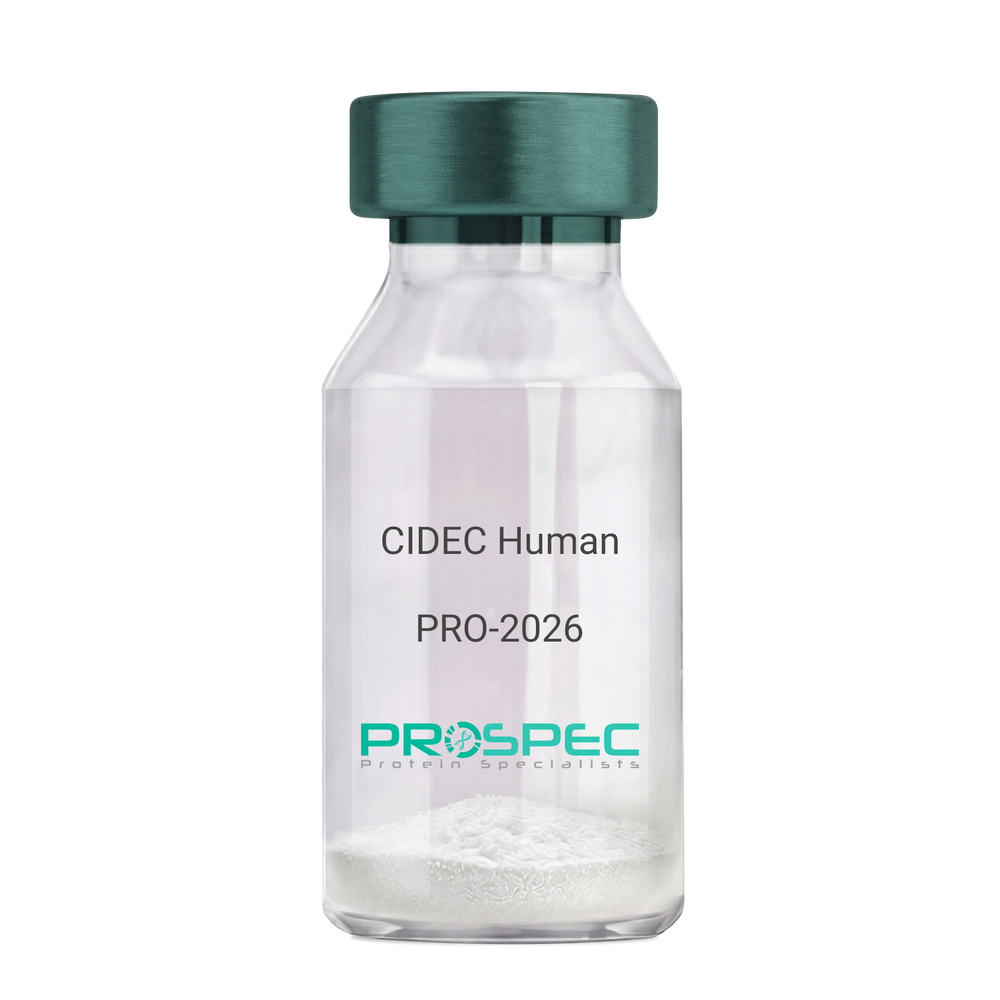
    CIDEC Human

    Description:

    Cell Death-Inducing DFFA-Like Effector C Human Recombinant

    Cell Death-Inducing DFFA-Like Effector C, FSP27, CIDE3, FPLD5, Cell Death-Inducing DFFA-Like Effector Protein C, Fat-Specific Protein FSP27 Homolog, Cell Death Activator CIDE-3, Fat Specific Protein 27, CIDE-3, CIDEC.

    Product # :

    PRO-2026

    Price :

    Quantity :

    Shipping Method :

    Ice Icon

    Shipped with Ice Packs

    Add To Cart

    More Info

    • description
    • source
    • formulation
    • purity
    • More Info
    • Citations

    Description

    CIDEC Human Recombinant produced in E.Coli is a single, non-glycosylated, polypeptide chain (Glu2-Gln238) containing 247 amino acids including a 10 aa His tag at N-terminus. The total calculated molecular mass is 28kDa.

    Source

    Escherichia Coli.

    Formulation

    CIDEC filtered (0.4µm) solution at a concentration of 0.4mg/ml in 30mM acetate buffer and 10mM dithiothreitol, pH 4.

    Purity

    Greater than 95.0% as determined by SDS-PAGE.

    Citations

    More Info

    • Introduction

      Cell Death-Inducing DFFA-Like Effector C (CIDEC) belongs to the cell death-inducing DNA fragmentation factor-like effector family, whose members have significant roles in apoptosis. CIDEC is expressed mainly in adipocytes, intestine, heart, stomach, and weakly in the brain, kidney and liver. CIDEC overexpression in preadipocytes induces apoptosis. CIDEC regulates enlargement of lipid droplets.

    • Synonyms

      Cell Death-Inducing DFFA-Like Effector C, FSP27, CIDE3, FPLD5, Cell Death-Inducing DFFA-Like Effector Protein C, Fat-Specific Protein FSP27 Homolog, Cell Death Activator CIDE-3, Fat Specific Protein 27, CIDE-3, CIDEC.

    • Physical Appearance

      Filtered colorless solution.

    • Stability

      Store at 4°C if entire vial will be used within 2-4 weeks. Store, frozen at -20°C for longer periods of time. For long term storage it is recommended to add a carrier protein (0.1% HSA or BSA).Avoid multiple freeze-thaw cycles.

    • Amino Acid Sequence

      MKHHHHHHASEYAMKSLSLL YPKSLSRHVS VRTSVVTQQL LSEPSPKAPR ARPCRVSTAD RSVRKGIMAY SLEDLLLKVR DTLMLADKPF FLVLEEDGTT VETEEYFQAL AGDTVFMVLQ KGQKWQPPSE QGTRHPLSLS HKPAKKIDVA RVTFDLYKLN PQDFIGCLNV KATFYDTYSL SYDLHCCGAK RIMKEAFRWA LFSMQATGHV LLGTSCYLQQ LLDATEEGQP PKGKASSLIP TCLKILQ.

    ProSpec's products are furnished for LABORATORY RESEARCH USE ONLY. The product may not be used as drugs, agricultural or pesticidal products, food additives or household chemicals.

    Cidec Human
  • View Data Sheet

    Name :

    IGFBP7 Human

    Description:

    Insulin-Like Growth Factor Binding Protein-7 Human Recombinant

    Insulin-like growth factor-binding protein 7, IBP-7, IGF-binding protein 7, IGFBP-7, IGFBP-rP1, MAC25 protein, PGI2-stimulating factor, Prostacyclin-stimulating factor, Tumor-derived adhesion factor, TAF, IGFBP7, MAC25, PSF, AGM, FSTL2, RAMSVPS, IGFBP-7v, IGFBPRP1.

    Product # :

    CYT-788

    Price :

    Quantity :

    Shipping Method :

    Room Temp Icon

    Shipped at Room temp

    Add To Cart

    More Info

    • description
    • source
    • formulation
    • purity
    • More Info
    • Citations

    Description

    Recombinant Human IGFBP7 produced in E.coli cells is a non-glycosylated, homodimeric protein containing 2x256 amino acid chains and having a molecular mass of 26.4kDa. The IGFBP-7 is purified by proprietary chromatographic techniques.

    Source

    Escherichia Coli.

    Formulation

    The IGFBP7 was lyophilized from a 0.2µm filtered concentrated solution in 20mM Tris-HCl, pH 8.5 and 150mM NaCl.

    Purity

    Greater than 97.0% as determined by:
    (a) Analysis by RP-HPLC.
    (b) Analysis by SDS-PAGE.

    Citations

    More Info

    • Introduction

      Insulin-like Growth Factor-Binding Protein 7 (IGFBP7) is a member of the IGFBP family. IGFBP family members are all cysteine rich proteins with conserved cysteine and have an IGFBP domain, a Kazal-like domain and an Ig-like C2-type domain. IGFBP7 is expressed in a broad range of normal human tissues and it mostly shows reduced expression in cancer cell lines of prostate, breast, colon, and lung origin. IGFBP7 has a role in skeletal myogenesis by binding to IGF in a manner which inhibits IGF induced differentiation of skeletal myoblasts, without disturbing IGF induced proliferation. Moreover, IGFBP7 suppresses growth and colony formation of prostate and breast cancer cell lines via an IGF independent mechanism, which triggers a delay in the G1 phase of the cell cycle, and increased apoptosis.

    • Synonyms

      Insulin-like growth factor-binding protein 7, IBP-7, IGF-binding protein 7, IGFBP-7, IGFBP-rP1, MAC25 protein, PGI2-stimulating factor, Prostacyclin-stimulating factor, Tumor-derived adhesion factor, TAF, IGFBP7, MAC25, PSF, AGM, FSTL2, RAMSVPS, IGFBP-7v, IGFBPRP1.

    • Physical Appearance

      Sterile Filtered White lyophilized (freeze-dried) powder.

    • Stability

      Lyophilized IGFBP7 although stable at room temperature for 3 weeks, should be stored desiccated below -18°C. Upon reconstitution IGFBP-7 should be stored at 4°C between 2-7 days and for future use below -18°C. For long term storage it is recommended to add a carrier protein (0.1% HSA or BSA).Please prevent freeze-thaw cycles.

    • Solubility

      It is recommended to reconstitute the lyophilized IGFBP-7 in sterile 20mM AcOH (acetic Acid) not less than 100µg/ml, which can then be further diluted to other aqueous solutions.

    • Amino Acid Sequence

      SSSDTCGPCE PASCPPLPPL GCLLGETRDA CGCCPMCARG EGEPCGGGGA GRGYCAPGME CVKSRKRRKG KAGAAAGGPG VSGVCVCKSR YPVCGSDGTT YPSGCQLRAA SQRAESRGEK AITQVSKGTC EQGPSIVTPP KDIWNVTGAQ VYLSCEVIGI PTPVLIWNKV KRGHYGVQRT ELLPGDRDNL AIQTRGGPEK HEVTGWVLVS PLSKEDAGEY ECHASNSQGQ ASASAKITVV DALHEIPVKK GEGAEL.

    • Background

      What is the molecular weight/Mw of IGFBP7 HUMAN Protein?
      IGFBP7 HUMAN Protein has a total Mw of 26.4kDa.

      What is the source or expression system of IGFBP7 HUMAN Protein?
      Escherichia Coli.

      What is the Purity of IGFBP7 HUMAN Protein?
      IGFBP7 HUMAN Protein is >97% pure as determined by SDS-PAGE.

      What is the Biological Activity of IGFBP7 HUMAN Protein?
      The biological functionality of IGFBP7 HUMAN Protein will be determined in the future.

      What is the amino acid sequence of IGFBP7 HUMAN Protein?
      SSSDTCGPCE PASCPPLPPL GCLLGETRDA CGCCPMCARG EGEPCGGGGA GRGYCAPGME CVKSRKRRKG KAGAAAGGPG VSGVCVCKSR YPVCGSDGTT YPSGCQLRAA SQRAESRGEK AITQVSKGTC EQGPSIVTPP KDIWNVTGAQ VYLSCEVIGI PTPVLIWNKV KRGHYGVQRT ELLPGDRDNL AIQTRGGPEK HEVTGWVLVS PLSKEDAGEY ECHASNSQGQ ASASAKITVV DALHEIPVKK GEGAEL.

      What applications can IGFBP7 HUMAN Protein be used in?
      IGFBP7 HUMAN Protein can probably be used in western blot, ELISA and Lateral Flow.

      What is the endotoxin level for IGFBP7 HUMAN Protein?
      The endotoxin level is minimal, IGFBP7 HUMAN Protein was purified using conventional chromatography techniques.


    ProSpec's products are furnished for LABORATORY RESEARCH USE ONLY. The product may not be used as drugs, agricultural or pesticidal products, food additives or household chemicals.

    Igfbp7 Human
  • View Data Sheet

    Name :

    GMFB His Human

    Description:

    Glia Maturation Factor Beta Human His Tag Recombinant

    GMF, GMF beta.

    Product # :

    CYT-726

    Price :

    Quantity :

    Shipping Method :

    Ice Icon

    Shipped with Ice Packs

    Add To Cart

    More Info

    • description
    • source
    • formulation
    • purity
    • More Info
    • Citations

    Description

    GMFB Human Recombinant produced in E.Coli is a signle, non-glycosylated, polypeptide chain containing 162 amino acids (1-142 a.a.)and having a total molecular mass of 18.8 kDa. GMGB is fused to a 20 amino acid His Tag at N-terminus and is purified by proprietary chromatographic techniques.

    Source

    Escherichia Coli.

    Formulation

    The GMFB 1mg/ml protein solution contains 20mM Tris-HCL pH-8, 1mM DTT, 0.1M NaCl and 10% Glycerol.

    Purity

    Greater than 95.0% as determined by SDS-PAGE.

    Citations

    More Info

    • Introduction

      GMFB is part of the GMF subfamily of the larger actin-binding protein ADF family. GMFB is phosphorylated after phorbol ester stimulation, and is crucial for the nervous system. GMFB causes brain cell differentiation, stimulates neural regeneration and inhibits tumor cell proliferation. GMFB overexpression in astrocytes results in the increase of BDNF production. GMFB expression is increased by exercise, thus BDNF is important for exercise-induction of BDNF.

    • Synonyms

      GMF, GMF beta.

    • Physical Appearance

      Sterile Filtered colorless clear solution.

    • Stability

      Store at 4°C if entire vial will be used within 2-4 weeks. Store, frozen at -20°C for longer periods of time. Please avoid freeze thaw cycles.

    • Amino Acid Sequence

      MGSSHHHHHH SSGLVPRGSH MSESLVVCDV AEDLVEKLRK FRFRKETNNA AIIMKIDKDK RLVVLDEELE GISPDELKDE LPERQPRFIV
      YSYKYQHDDG RVSYPLCFIF SSPVGCKPEQ QMMYAGSKNK LVQTAELTKV FEIRNTEDLT EEWLREKLGF FH.

    • Background

      What is the molecular weight/Mw of GMFB HIS HUMAN Protein?
      GMFB HIS HUMAN Protein has a total Mw of 18.8kDa.

      What is the source or expression system of GMFB HIS HUMAN Protein?
      Escherichia Coli.

      What is the Purity of GMFB HIS HUMAN Protein?
      GMFB HIS HUMAN Protein is >95% pure as determined by SDS-PAGE.

      What is the Biological Activity of GMFB HIS HUMAN Protein?
      The biological functionality of GMFB HIS HUMAN Protein will be determined in the future.

      What is the amino acid sequence of GMFB HIS HUMAN Protein?
      MGSSHHHHHH SSGLVPRGSH MSESLVVCDV AEDLVEKLRK FRFRKETNNA AIIMKIDKDK RLVVLDEELE GISPDELKDE LPERQPRFIV
      YSYKYQHDDG RVSYPLCFIF SSPVGCKPEQ QMMYAGSKNK LVQTAELTKV FEIRNTEDLT EEWLREKLGF FH.

      What applications can GMFB HIS HUMAN Protein be used in?
      GMFB HIS HUMAN Protein can probably be used in western blot, ELISA and Lateral Flow.

      What is the endotoxin level for GMFB HIS HUMAN Protein?
      The endotoxin level is minimal, GMFB HIS HUMAN Protein was purified using conventional chromatography techniques.


    ProSpec's products are furnished for LABORATORY RESEARCH USE ONLY. The product may not be used as drugs, agricultural or pesticidal products, food additives or household chemicals.

    Gmfb His Human
  • View Data Sheet

    Name :

    LIF Human, Yeast

    Description:

    LIF Human Recombinant, Yeast

    CDF, HILDA, D-FACTOR, Differentiation- stimulating factor, Melanoma-derived LPL inhibitor, MLPLI, Emfilermin, Leukemia inhibitory factor, LIF, DIA.

    Product # :

    CYT-191

    Price :

    Quantity :

    Shipping Method :

    Room Temp Icon

    Shipped at Room temp

    Add To Cart

    More Info

    • description
    • source
    • formulation
    • purity
    • biological activity
    • More Info
    • Citations

    Description

    LIF Human Recombinant produced in yeast is a single, glycosylated polypeptide chain containing 180 amino acids and having a molecular mass of 58.5 kDa. The LIF is purified by proprietary chromatographic techniques.

    Source

    Pichia pastoris.

    Formulation

    The protein was lyophilized from a 0.2 µm filtered PBS.

    Purity

    Greater than 98.0% as determined by:
    (a) Analysis by RP-HPLC.
    (b) Analysis by SDS-PAGE.

    Biological Activity

    The biological activity of recombinant human LIF was measured by the ability to induce differentiation of murine M1 myeloid leukemic cells. The minimal detectable concentration of human LIF in this assay is <0.05 ng/mL. The specific activity is > 1 x 10⁸ units/mg.

    Citations

    More Info

    • Introduction

      Leukemia Inhibitory Factor also called LIF is a lymphoid factor that promotes long-term maintenance of embryonic stem cells by suppressing spontaneous differentiation. Leukemia Inhibitory Factor has several functions such as cholinergic neuron differentiation, control of stem cell pluripotency, bone & fat metabolism, mitogenesis of factor dependent cell lines & promotion of megakaryocyte production in vivo. Human and mouse LIF exhibit a 78% identity in its amino acid sequence.

    • Synonyms

      CDF, HILDA, D-FACTOR, Differentiation- stimulating factor, Melanoma-derived LPL inhibitor, MLPLI, Emfilermin, Leukemia inhibitory factor, LIF, DIA.

    • Physical Appearance

      Sterile Filtered White lyophilized (freeze-dried) powder.

    • Stability

      Lyophilized LIF although stable at room temperature for 3 weeks, should be stored desiccated below -18°C. Upon reconstitution LIF should be stored at 4°C between 2-7 days and for future use below -18°C. Please prevent freeze-thaw cycles.

    • Solubility

      It is recommended to reconstitute the lyophilized LIF in sterile 18M-cm H2O not less than 100µg/ml, which can then be further diluted to other aqueous solutions.

    • Amino Acid Sequence

      S P L P I T P V N A T C A I R H P C H N N L M N Q I R S Q L A Q L N G S A N A L F I L Y Y T A Q G E P F P N N L D K L C G P N V T D F P P F H A N G T E K A K L V E L Y R I V V Y L G T S L G N I T R D Q K I L N P S A L S L H S K L N A T A D I L R G L L S N V L C R L C S K Y H V G H V D V T Y G P D T S G K D V F Q K K K L G C Q L L G K Y K Q I I A V L A Q A F.

    ProSpec's products are furnished for LABORATORY RESEARCH USE ONLY. The product may not be used as drugs, agricultural or pesticidal products, food additives or household chemicals.

    Lif Human Yeast
  • View Data Sheet

    Name :

    HDGF Human

    Description:

    Hepatoma-Derived Growth Factor Human Recombinant

    High-mobility group protein 1-like 2, HMG1L2, HMG-1L2, Hepatoma-derived growth factor, HDGF, FLJ96580, DKFZp686J1764.

    Product # :

    CYT-681

    Price :

    Quantity :

    Shipping Method :

    Ice Icon

    Shipped with Ice Packs

    Add To Cart

    More Info

    • description
    • source
    • formulation
    • purity
    • More Info
    • SDS-PAGE
    • Citations

    Description

    The HDGF Human recombinant protein is a single, non-glycosylated polypeptide chain produced in E. coli, having a molecular weight of 11.5kDa and containing 100 amino acids.The HDGF is purified by proprietary chromatographic techniques.

    Source

    Escherichia Coli.

    Formulation

    The HDGF protein solution (1mg/ml) is formulated in 20mM Tris-HCl pH-7.5, 1mM DTT, 10% glycerol and 1mM EDTA.

    Purity

    Greater than 95% as determined by SDS-PAGE.

    SDS-PAGE

    HDGF Human - Product image 1

    Citations

    More Info

    • Introduction

      HDGF is a member of the hepatoma-derived growth factor family. HDGF plays a role as a secreted mitogen from the human hepatoma cell line Huh-7. HDGF is a nuclear targeted vascular smooth muscle cell mitogen as well as a heparin-binding protein that is greatly expressed in tumor cells where it stimulates proliferation. HDGF takes part in organ development and lung remodeling after injury by promoting proliferation of lung epithelial cells. HDGF plays a role in the carcinogenesis of gastric epithelial cells through promotion of cell proliferation by Erk1/2 activation. HDGF is linked with tumorigenesis and the growth of cancer. HDGF is a self-regulating factor connected with the prognosis of liver cancer, non-small cell lung cancer and pancreatic cancer. HDGF has proliferative, angiogenic, and neurotrophic activity. HDGF is a distinctive nuclear targeting growth factor that is vastly expressed in HCC cells and is a prognostic factor for HCC.

    • Synonyms

      High-mobility group protein 1-like 2, HMG1L2, HMG-1L2, Hepatoma-derived growth factor, HDGF, FLJ96580, DKFZp686J1764.

    • Physical Appearance

      Sterile Filtered clear solution.

    • Stability

      Store at 4°C if entire vial will be used within 2-4 weeks. Store, frozen at -20°C for longer periods of time. For long term storage it is recommended to add a carrier protein (0.1% HSA or BSA).Avoid multiple freeze-thaw cycles.

    • Amino Acid Sequence

      MSRSNRQKEY KCGDLVFAKM KGYPHWPARI DEMPEAAVKS TANKYQVFFF GTHETAFLGP KDLFPYEESK EKFGKPNKRK GFSEGLWEIE NNPTVKASGY.

    • Background

      What is the molecular weight/Mw of HDGF HUMAN Protein?
      HDGF HUMAN Protein has a total Mw of 11.5kDa.

      What is the source or expression system of HDGF HUMAN Protein?
      Escherichia Coli.

      What is the Purity of HDGF HUMAN Protein?
      HDGF HUMAN Protein is >95% pure as determined by SDS-PAGE.

      What is the Biological Activity of HDGF HUMAN Protein?
      The biological functionality of HDGF HUMAN Protein will be determined in the future.

      What is the amino acid sequence of HDGF HUMAN Protein?
      MSRSNRQKEY KCGDLVFAKM KGYPHWPARI DEMPEAAVKS TANKYQVFFF GTHETAFLGP KDLFPYEESK EKFGKPNKRK GFSEGLWEIE NNPTVKASGY.

      What applications can HDGF HUMAN Protein be used in?
      HDGF HUMAN Protein can probably be used in western blot, ELISA and Lateral Flow.

      What is the endotoxin level for HDGF HUMAN Protein?
      The endotoxin level is minimal, HDGF HUMAN Protein was purified using conventional chromatography techniques.


    ProSpec's products are furnished for LABORATORY RESEARCH USE ONLY. The product may not be used as drugs, agricultural or pesticidal products, food additives or household chemicals.

    Hdgf Human
  • View Data Sheet

    Name :

    SCRN1 Human

    Description:

    Secernin 1 Human Recombinant

    Secernin-1, SES1, KIAA0193, Secernin 1.

    Product # :

    PRO-2212

    Price :

    Quantity :

    Shipping Method :

    Ice Icon

    Shipped with Ice Packs

    Add To Cart

    More Info

    • description
    • source
    • formulation
    • purity
    • More Info
    • Citations

    Description

    SCRN1 Human Recombinant produced in E.Coli is a single, non-glycosylated polypeptide chain containing 437 amino acids (1-414 a.a) and having a molecular mass of 48.8kDa. SCRN1 is fused to a 23 amino acid His-tag at N-terminus & purified by proprietary chromatographic techniques.

    Source

    Escherichia Coli.

    Formulation

    SCRN1 protein solution (0.5mg/ml) containing Phosphate buffered saline (pH7.4) , 10% glycerol and 1mM DTT.

    Purity

    Greater than 90.0% as determined by SDS-PAGE.

    Citations

    More Info

    • Introduction

      Secernin 1 (SCRN1) which is a member of the peptidase C69 family, regulates exocytosis in mast cells. SCRN1 increases both the level of secretion and the sensitivity of mast cells to stimulation with calcium.

    • Synonyms

      Secernin-1, SES1, KIAA0193, Secernin 1.

    • Physical Appearance

      Sterile Filtered colorless solution.

    • Stability

      Store at 4°C if entire vial will be used within 2-4 weeks. Store, frozen at -20°C for longer periods of time. For long term storage it is recommended to add a carrier protein (0.1% HSA or BSA). Avoid multiple freeze-thaw cycles.

    • Amino Acid Sequence

      GSSHHHHHH SSGLVPRGSH MGSMAAAPPS YCFVAFPPRA KDGLVVFGKN SARPRDEVQE VVYFSAADHE PESKVECTYI SIDQVPRTYA IMISRPAWLW GAEMGANEHG VCIANEAINT REPAAEIEAL LGMDLVRLGL ERGETAKEAL DVIVSLLEEH GQGGNYFEDA NSCHSFQSAY LIVDRDEAWV LETIGKYWAA EKVTEGVRCI CSQLSLTTKM DAEHPELRSY AQSQGWWTGE GEFNFSEVFS PVEDHLDCGA GKDSLEKQEE SITVQTMMNT LRDKASGVCI DSEFFLTTAS GVSVLPQNRS SPCIHYFTGT PDPSRSIFKP FIFVDDVKLV PKTQSPCFGD DDPAKKEPRF QEKPDRRHEL YKAHEWARAI IESDQEQGRK LRSTMLELEK QGLEAMEEIL TSSEPLDPAE VGDLFYDCVD TEIKFFK.

    ProSpec's products are furnished for LABORATORY RESEARCH USE ONLY. The product may not be used as drugs, agricultural or pesticidal products, food additives or household chemicals.

    Scrn1 Human
  • View Data Sheet

    Name :

    PEDF Human, His

    Description:

    Pigment Epithelium-Derived Factor Human Recombinant, His Tag

    Pigment epithelium-derived factor, PEDF, Serpin-F1, SerpinF1, EPC-1, EPC1, PIG35.

    Product # :

    CYT-552

    Price :

    Quantity :

    Shipping Method :

    Ice Icon

    Shipped with Ice Packs

    Add To Cart

    More Info

    • description
    • source
    • formulation
    • purity
    • More Info
    • Citations

    Description

    PEDF Human Recombinant produced in E.Coli containing a natural variant M72T is a single, non-glycosylated, polypeptide chain containing 420 amino acids (20-418 a.a.) and having a total molecular mass of 46.7 kDa. PEDF is fused to a 20 amino acid His Tag at N-terminus and purified by proprietary chromatographic techniques.

    Source

    Escherichia Coli.

    Formulation

    The PEDF solution contains 20mM Tris-HCl buffer(pH 8.0), 0.1M NaCl , and 20% glycerol.

    Purity

    Greater than 90% as determined by SDS-PAGE.

    Citations

    More Info

    • Introduction

      PEDF is a neurotrophic protein that induces extensive neuronal differentiation in retinoblastoma cells. SerpinF1 is a potent inhibitor of angiogenesis. EPC1 doesn’t undergo the stressed to relaxed conformation transition characteristic as of the active serpins since it exhibits no serine protease inhibitory activity.
      Aqueous humour level of asymmetric dimethylarginine is correlated with PEDF in humans. ADMA and PEDF levels are increased in response to inflammation in uveitis.
      Lack of PEDF expression is a potent factor for the enhancement of tumor growth and angiogenesis in breast cancer.
      PEDF & VEGF genes contribute to the development of diabetic retinopathy.
      PEDF and VEGF structural changes in blood vessel wall play an important role in the pathophysiology of PD patients.
      PEDF-overexpressing tumors exhibited reduced intratumoral angiogenesis.
      SerpinF1 is a new promising approach for the treatment of osteosarcoma.
      Levels of the natural ocular anti-angiogenic factor SentrinF1 (PEDF) is associated with proliferative retinopathy.
      VEGF secreted by retinal pigment epithelial cells upregulates PEDF expression via VEGFR-1 in an autocrine manner.
      Sentrin-F1 concentration in the aqueous humor of diabetic patients predicts who will develop progression of retinopathy.
      PEDF blocks angiogenic effects of leptin through its anti-oxidative properties.

    • Synonyms

      Pigment epithelium-derived factor, PEDF, Serpin-F1, SerpinF1, EPC-1, EPC1, PIG35.

    • Physical Appearance

      Sterile Filtered colorless solution.

    • Stability

      Store at 4°C if entire vial will be used within 2-4 weeks. Store, frozen at -20°C for longer periods of time. For long term storage it is recommended to add a carrier protein (0.1% HSA or BSA). Please prevent freeze-thaw cycles.

    • Amino Acid Sequence

      MGSSHHHHHH SSGLVPRGSH MQNPASPPEE GSPDPDSTGA LVEEEDPFFK VPVNKLAAAV SNFGYDLYRV RSSMSPTTNV LLSPLSVATA LSALSLGAEQ RTESIIHRAL YYDLISSPDI HGTYKELLDT VTAPQKNLKS ASRIVFEKKL RIKSSFVAPL EKSYGTRPRV LTGNPRLDLQ EINNWVQAQM KGKLARSTKE IPDEISILLL GVAHFKGQWV TKFDSRKTSL EDFYLDEERT VRVPMMSDPK AVLRYGLDSD LSCKIAQLPL TGSMSIIFFL PLKVTQNLTL IEESLTSEFI HDIDRELKTV QAVLTVPKLK LSYEGEVTKS LQEMKLQSLF DSPDFSKITG KPIKLTQVEH RAGFEWNEDG AGTTPSPGLQ PAHLTFPLDY HLNQPFIFVL RDTDTGALLF IGKILDPRGP.

    ProSpec's products are furnished for LABORATORY RESEARCH USE ONLY. The product may not be used as drugs, agricultural or pesticidal products, food additives or household chemicals.

    Serpinf1 Human His
  • View Data Sheet

    Name :

    PF 4 Protein

    Description:

    Platelet Factor-4 Human (CXCL4)

    CXCL4, PF-4, PF4, Iroplact, Oncostatin-A, SCYB4, MGC138298.

    Product # :

    CHM-234

    Price :

    Quantity :

    Shipping Method :

    Room Temp Icon

    Shipped at Room temp

    Add To Cart

    More Info

    • description
    • source
    • formulation
    • purity
    • More Info
    • Citations

    Description

    Human PF-4 a 7.8 kDa protein consisting of 70 amino acid residues.

    Source

    Human Platelets.

    Formulation

    The CXCL4 protein was lyophilized in PBS buffer pH-7.4.

    Purity

    Greater than 95.0% as determined by:
    (a) Analysis by RP-HPLC.
    (b) Analysis by SDS-PAGE.

    Citations

    More Info

    • Introduction

      Platelet factor-4 is a 70-amino acid protein that is released from the alpha-granules of activated platelets and binds with high affinity to heparin. Its major physiologic role appears to be neutralization of heparin-like molecules on the endothelial surface of blood vessels, thereby inhibiting local antithrombin III activity and promoting coagulation. As a strong chemoattractant for neutrophils and fibroblasts, PF4 probably has a role in inflammation and wound repair. Oncostatin-A is a member of the CXC chemokine family. Human PF4 is used for the proof of heparin-induced thrombocytopenia. Furthermore it is used as an inhibitor in the angiogenesis during tumor therapy.

    • Synonyms

      CXCL4, PF-4, PF4, Iroplact, Oncostatin-A, SCYB4, MGC138298.

    • Physical Appearance

      Sterile Filtered white lyophilized powder.

    • Stability

      Human CXCL4 although stable at 25°C 1 week, should be stored desiccated below -18°C. Please prevent freeze-thaw cycles.

    • Solubility

      It is recommended to reconstitute the lyophilized CXCL4 in sterile 18MΩ-cm H2O not less than 100µg/ml, which can then be further diluted to other aqueous solutions.

    • Amino Acid Sequence

      The sequence of the first four N-terminal amino acids was determined and was found to be Glu-Ala-Glu-Glu.

    ProSpec's products are furnished for LABORATORY RESEARCH USE ONLY. The product may not be used as drugs, agricultural or pesticidal products, food additives or household chemicals.

    Pf 4 Human
  • View Data Sheet

    Name :

    XAF1 Human

    Description:

    XIAP Associated Factor 1 Human Recombinant

    XIAP Associated Factor 1, BIRC4-Binding Protein, BIRC4BP, XIAPAF1, XIAP-Associated Factor 1, BIRC4 Binding Protein, HSXIAPAF1, XAF1.

    Product # :

    PRO-1963

    Price :

    Quantity :

    Shipping Method :

    Ice Icon

    Shipped with Ice Packs

    Add To Cart

    More Info

    • description
    • source
    • formulation
    • purity
    • More Info
    • Citations

    Description

    XAF1 Human Recombinant produced in E.coli is a single, non-glycosylated polypeptide chain containing 161 amino acids (1-125) and having a molecular mass of 18.6 kDa.XAF1 is fused to a 36 amino acid His-tag at N-terminus & purified by proprietary chromatographic techniques.

    Source

    Escherichia Coli.

    Formulation

    The XAF1 solution (1mg/ml) contains 20mM Tris-HCl buffer (pH 8.0), 30% glycerol, 0.15M NaCl and 1mM DTT.

    Purity

    Greater than 90.0% as determined by SDS-PAGE.

    Citations

    More Info

    • Introduction

      XIAP Associated Factor 1 (XAF1) is a protein which binds to and counteracts the inhibitory effect of a member of the IAP (inhibitor of apoptosis) protein family. IAP proteins bind to and inhibit caspases which are activated in the course of apoptosis. The ratio of IAPs and proteins which interfere with their activity, such as the XAF1 protein, influence the progress of the apoptosis signaling pathway. Additionally, XAF1 inhibits anti-caspase activity of BIRC4. XAF1 induces cleavage and inactivation of BIRC4 independent of caspase activation. Furthermore, XAF1 mediates TNF-alpha-induced apoptosis and is involved in apoptosis in trophoblast cells.

    • Synonyms

      XIAP Associated Factor 1, BIRC4-Binding Protein, BIRC4BP, XIAPAF1, XIAP-Associated Factor 1, BIRC4 Binding Protein, HSXIAPAF1, XAF1.

    • Physical Appearance

      Sterile Filtered colorless solution.

    • Stability

      Store at 4°C if entire vial will be used within 2-4 weeks. Store, frozen at -20°C for longer periods of time. For long term storage it is recommended to add a carrier protein (0.1% HSA or BSA).Avoid multiple freeze-thaw cycles.

    • Amino Acid Sequence

      MRGSHHHHHH GMASMTGGQQ MGRDLYDDDD KDRWGSMEGD FSVCRNCKRH VVSANFTLHE AYCLRFLVLC PECEEPVPKE TMEEHCKLEH QQVGCTMCQQ SMQKSSLEFH KANECQERPV ECKFCKLDMQ LSKLELHESY CGSRTELCQG CGQFIMHRML A.

    ProSpec's products are furnished for LABORATORY RESEARCH USE ONLY. The product may not be used as drugs, agricultural or pesticidal products, food additives or household chemicals.

    Xaf1 Human
  • View Data Sheet

    Name :

    Prealbumin Human

    Description:

    Transthyretin Human

    TTHY, TTR, ATTR, TBPA, Transthyretin, Prealbumin, PALB, HsT2651TTHY, TTR, ATTR, TBPA, Transthyretin, Prealbumin, PALB, HsT2651.

    Product # :

    PRO-2740

    Price :

    Quantity :

    Shipping Method :

    Room Temp Icon

    Shipped at Room temp

    Add To Cart

    More Info

    • description
    • source
    • formulation
    • purity
    • More Info
    • Citations

    Description

    Human Transthyretin dimer protein produced in Human plasma having a molecular mass of 30kD. Under certain conditions it may be shown as a monomer (15kD) or a tetramer (60kD).

    Source

    Human serum.

    Formulation

    The protein was lyophilized (0.2 µm filtered) from 20mM NH4HCO3.

    Purity

    Greater than 96.0%.

    Citations

    More Info

    • Introduction

      Prealbumin is a thyroid hormone-binding protein that transports thyroxine from the bloodstream to the brain. Prealbumin is a carrier protein which transports thyroid hormones in the plasma and cerebrospinal fluid, and also transports retinol (vitamin A) in the plasma. Transthyretin consists of a tetramer of identical subunits and is dominantly produced in the liver. Mutations in Prealbumin are related to amyloid deposition, affecting predominantly peripheral nerve and/or the heart. The diseases caused by mutations include amyloidotic polyneuropathy, euthyroid hyperthyroxinaemia, amyloidotic vitreous opacities, cardiomyopathy, oculoleptomeningeal amyloidosis, meningocerebrovascular amyloidosis, and carpal tunnel syndrome. Prealbumin is an indicator of protein-energy malnutrition since it has a circulating half life of 2 days and reacts swiftly to changes in nutritional status.

    • Synonyms

      TTHY, TTR, ATTR, TBPA, Transthyretin, Prealbumin, PALB, HsT2651TTHY, TTR, ATTR, TBPA, Transthyretin, Prealbumin, PALB, HsT2651.

    • Physical Appearance

      Sterile Filtered White lyophilized (freeze-dried) powder.

    • Stability

      Prealbumin Human although stable at room temperature for 3 weeks, should be stored between 2-8°C.

    • Solubility

      It is recommended to reconstitute the lyophilized Prealbumin Human in phosphate buffer pH > 7 containing 0.15M NaCl.

    • Human Virus Test

      Starting material donor has been tested and certified negative for antibodies to HIV-1, HIV-2, HCV, HBSAG, Parvovirus B19, Syphilis and HIV/HBV/HCV (PCR).

    ProSpec's products are furnished for LABORATORY RESEARCH USE ONLY. The product may not be used as drugs, agricultural or pesticidal products, food additives or household chemicals.

    Prealbumin Protein
  • View Data Sheet

    Name :

    Leptin qA Mouse, PEG

    Description:

    Leptin Quadruple Antagonist Pegylated Mouse Recombinant

    Product # :

    CYT-1244

    Price :

    Quantity :

    Shipping Method :

    Room Temp Icon

    Shipped at Room temp

    Add To Cart

    More Info

    • description
    • source
    • formulation
    • purity
    • biological activity
    • More Info
    • Citations

    Description

    Leptin Antagonist Quadruple Mutant Mouse Recombinant is a single non-glycosilated polypeptide chain containing 146 amino acids and additional Ala at N-terminus. The Mouse Leptin antagonist was mutated, resulting in D23L/L39A/D40A/F41A mutant. The Mouse Leptin antagonist is bound to 20 kDa mono-PEG at N-terminus, resulting in 35.6 kDa. The Mouse Leptin Quadruple anatagonist Pegylated runs as a 55 kDa due to enlarged hydrodymanic volume. Leptin Antagonist Quadruple Mutant Mouse Recombinant was purified by proprietary chromatographic techniques.

    Source

    Escherichia coli.

    Formulation

    The Mouse Leptin Quadruple anatagonist was lyophilized from a concentrated (0.65mg/ml) solution with 0.003mM NaHCO3.

    Purity

    Greater than 95.0% as determined by:

    (a) Gel filtration analysis.

    (b) Analysis by SDS-PAGE.

    Biological Activity

    Pegylated Mouse Leptin Quadruple Antagonist inhibits leptin-induced proliferation of BAF/3 cells stably transfected with the long form of human leptin receptor.  Pegylated recombinant mouse leptin antagonist in vitro activity is 6-8 fold lower than the non-pegylated recombinant super mouse leptin antagonist but in vivo it has profound weight gain effect, resulting mainly from increased food intake. Its in vivo activity compared to that of PEG-MLA is 9-27 fold higher.

    Citations

    More Info

    • Physical Appearance

      White lyophilized (freeze-dried) powder.

    • Stability

      Lyophilized Leptin Antagonist Quadruple Mutant Mouse Recombinant although stable at room temperature for several weeks, should be stored desiccated below -18°C. Upon reconstitution at > 0.1 mg/ml and up to 2mM and filter sterilization LEP mutant can be stored at 4°C or even room temperature for several weeks making it suitable for long term infusion studies using osmotic pumps. At lower concentration addition of a carrier protein (0.1% HSA or BSA) is suggested. Please prevent freeze-thaw cycles.

    • Solubility

      It is recommended to reconstitute the lyophilized Leptin Antagonist Quadruple Mutant Mouse Recombinant in sterile water or sterile 0.4% NaHCO3adjusted to pH 8-9, not less than 100µg/ml, which can then be further diluted with other aqueous solutions.

    • Background

      Leptin produced mainly by adipocytes. Leptin mostly regulate long-term energy balance. Leptin is encoded by the LEP gene. Leptin receptors are expressed by various brain and peripheral cell types. leptin levels influence satiety, appetite and triggers behaviors which lead to energy savings. High leptin levels are interpreted by the brain that energy reserves are high, whereas low leptin levels means that energy reserves are low, in the process adapting the organism to starvation through a variety of metabolic, neurobiochemical, endocrine and behavioral change.

    • Protein content

      Protein quantization was carried out by UV spectroscopy at 280 nm using the absorbency value of 0.2 as the extinction coefficient for a 0.1% (1mg/ml) solution at pH 8.0. This value is calculated by the PC GENE computer analysis program of protein sequences (IntelliGenetics).

    ProSpec's products are furnished for LABORATORY RESEARCH USE ONLY. The product may not be used as drugs, agricultural or pesticidal products, food additives or household chemicals.

    Leptin Mouse Ta Peg
  • 1
  • …
  • 15
  • 16
  • 17
  • 18
  • 19
  • …
  • 42
Your browser does not support the video tag.

Products

  • Cytokines
  • Growth Factors
  • Chemokines
  • CD Antigens
  • Neurotrophins
  • Hormones
  • Enzymes
  • Viral Antigens
  • Recombinant Proteins
  • Natural Proteins
  • Monoclonal Antibodies
  • Polyclonal Antibodies
  • Thermal Packaging

About

  • Company
  • Founder
  • Contribution
  • Contact Us
  • My Account

Ordering

  • Ordering Method
  • Ordering - Credit Card
  • Ordering PO
  • Shipping Fees
  • FAQ's

Legal

  • Terms & Conditions
  • Privacy
  • Site Map
  • info@prospecbio.com
  • Facebook
  • Instagram
  • Linkedin Profile

© 2026 ProSpec-Tany TechnoGene Ltd. All Rights Reserved.

  • Choosing a selection results in a full page refresh.
  • Opens in a new window.