Skip to content

High-quality research proteins.

  • 1-800-805-6531

  • Mon - Sat 8.00-18.00, Sun - Closed

  • info@prospecbio.com

  • PO Box 6591 East Brunswick NJ 08816

  • Products
    • Cytokines
    • Growth factors
    • Chemokines
    • Cd antigens
    • Neurotrophins
    • Hormones
    • Enzymes
    • Viral antigens
    • Recombinant proteins
    • Natural proteins
    • Monoclonal antibodies
    • Polyclonal antibodies
    • Thermal Packaging
  • About
    • Company
    • Founder
    • Contribution
  • Customers
    • Eastern Asia
    • Eastern Europe
    • North America
    • South America
    • South East Asia
    • Southern Asia
    • Western Europe
  • Ordering
    • Ordering Method
    • Ordering - Credit Card
    • Ordering - PO
    • Shipping Fees
    • FAQs
  • Services
    • DNA Cloning
    • Protein Expression
    • Monoclonal Antibody
    • Fermentation
    • Technology License
  • Contact us
Log in

Country/region

  • USD $ | Albania
  • USD $ | Andorra
  • USD $ | Argentina
  • USD $ | Armenia
  • USD $ | Australia
  • USD $ | Austria
  • USD $ | Azerbaijan
  • USD $ | Belarus
  • USD $ | Belgium
  • USD $ | Bolivia
  • USD $ | Brazil
  • USD $ | Bulgaria
  • USD $ | Cambodia
  • USD $ | Canada
  • USD $ | Chile
  • USD $ | China
  • USD $ | Colombia
  • USD $ | Costa Rica
  • USD $ | Croatia
  • USD $ | Cyprus
  • USD $ | Czechia
  • USD $ | Denmark
  • USD $ | Estonia
  • USD $ | Finland
  • USD $ | France
  • USD $ | Georgia
  • USD $ | Germany
  • USD $ | Greece
  • USD $ | Hong Kong SAR
  • USD $ | Hungary
  • USD $ | Iceland
  • USD $ | India
  • USD $ | Ireland
  • USD $ | Israel
  • USD $ | Italy
  • USD $ | Japan
  • USD $ | Kazakhstan
  • USD $ | Latvia
  • USD $ | Liechtenstein
  • USD $ | Lithuania
  • USD $ | Madagascar
  • USD $ | Malta
  • USD $ | Mexico
  • USD $ | Moldova
  • USD $ | Monaco
  • USD $ | Netherlands
  • USD $ | New Zealand
  • USD $ | North Macedonia
  • USD $ | Norway
  • USD $ | Panama
  • USD $ | Paraguay
  • USD $ | Peru
  • USD $ | Philippines
  • USD $ | Poland
  • USD $ | Portugal
  • USD $ | Romania
  • USD $ | Singapore
  • USD $ | Slovakia
  • USD $ | Slovenia
  • USD $ | South Africa
  • USD $ | South Korea
  • USD $ | Spain
  • USD $ | Sri Lanka
  • USD $ | Sweden
  • USD $ | Switzerland
  • USD $ | Taiwan
  • USD $ | Thailand
  • USD $ | Türkiye
  • USD $ | Ukraine
  • USD $ | United Kingdom
  • USD $ | United States
  • USD $ | Uruguay
  • USD $ | Vatican City
  • USD $ | Venezuela
  • USD $ | Vietnam
  • Facebook
  • Instagram
logoProSpec - Recombinant Protein Manufacturer for academic and R&D industry
Become a distributor
Account Log in
Wishlist
Cart Cart(0)
  • Products
    +
    • Cytokines
    • Growth factors
    • Chemokines
    • Cd antigens
    • Neurotrophins
    • Hormones
    • Enzymes
    • Viral antigens
    • Recombinant proteins
    • Natural proteins
    • Monoclonal antibodies
    • Polyclonal antibodies
    • Thermal Packaging
  • About
    +
    • Company
    • Founder
    • Contribution
  • Customers
    +
    • Eastern Asia
    • Eastern Europe
    • North America
    • South America
    • South East Asia
    • Southern Asia
    • Western Europe
  • Ordering
    +
    • Ordering Method
    • Ordering - Credit Card
    • Ordering - PO
    • Shipping Fees
    • FAQs
  • Services
    +
    • DNA Cloning
    • Protein Expression
    • Monoclonal Antibody
    • Fermentation
    • Technology License
  • Contact us

Item added to your cart

View cart
View All
  • Cytokines
  • Growth factors
  • Chemokines
  • Cd antigens
  • Neurotrophins
  • Hormones
  • Enzymes
  • Viral antigens
  • Recombinant proteins
  • Natural proteins
  • Monoclonal antibodies
  • Polyclonal antibodies
  • Thermal Packaging
  • Tumor Necrosis Factor

    Tumor Necrosis Factor

    View All
  • 4-1BB

    4-1BB

    View All
  • Adiponectin

    Adiponectin

    View All
  • AIF1

    AIF1

    View All
  • Other Cytokines

    Other Cytokines

    View All
  • AITRL

    AITRL

    View All
  • Angiopoietin

    Angiopoietin

    View All
  • Apolipoprotein

    Apolipoprotein

    View All
  • B-Cell Activating Factor

    B-Cell Activating Factor

    View All
  • Beta Defensin

    Beta Defensin

    View All
  • Bone Morphogenetic Protein

    Bone Morphogenetic Protein

    View All
  • B type Natriuretic Peptide

    B type Natriuretic Peptide

    View All
  • BST

    BST

    View All
  • Betacellulin

    Betacellulin

    View All
  • Cardiotrophin

    Cardiotrophin

    View All
  • Activin

    Activin

    View All
  • Fibroblast Growth Factor

    Fibroblast Growth Factor

    View All
  • Other Growth Factors

    Other Growth Factors

    View All
  • CSF

    CSF

    View All
  • CTGF

    CTGF

    View All
  • IGFBP

    IGFBP

    View All
  • VEGF Protein

    VEGF Protein

    View All
  • EGF

    EGF

    View All
  • Epigen

    Epigen

    View All
  • Erythropoietin

    Erythropoietin

    View All
  • Insulin-Like Growth Factor

    Insulin-Like Growth Factor

    View All
  • Growth Hormone

    Growth Hormone

    View All
  • HDGF

    HDGF

    View All
  • Hepatocyte Growth Factor

    Hepatocyte Growth Factor

    View All
  • Insulin

    Insulin

    View All
  • BCA-1/ BLC (CXCL13)

    BCA-1/ BLC (CXCL13)

    View All
  • BRAK (CXCL14)

    BRAK (CXCL14)

    View All
  • C-10 (CCL6)

    C-10 (CCL6)

    View All
  • Other Chemokines

    Other Chemokines

    View All
  • MEC (CCL28)

    MEC (CCL28)

    View All
  • LD78-beta (CCL3L1)

    LD78-beta (CCL3L1)

    View All
  • CTACK (CCL27)

    CTACK (CCL27)

    View All
  • CXCL16

    CXCL16

    View All
  • CXCL17

    CXCL17

    View All
  • Platelet Factor-4 (CXCL4)

    Platelet Factor-4 (CXCL4)

    View All
  • ENA-78 (CXCL5)

    ENA-78 (CXCL5)

    View All
  • Eotaxin (CCL11,24,26)

    Eotaxin (CCL11,24,26)

    View All
  • Exodus-2 (CCL21)

    Exodus-2 (CCL21)

    View All
  • Fractalkine (CX3CL1)

    Fractalkine (CX3CL1)

    View All
  • CXCL6

    CXCL6

    View All
  • Other CD Antigens

    Other CD Antigens

    View All
  • CD14

    CD14

    View All
  • CD164

    CD164

    View All
  • CD1

    CD1

    View All
  • CD2

    CD2

    View All
  • CD200

    CD200

    View All
  • CD207

    CD207

    View All
  • CD226

    CD226

    View All
  • CD23

    CD23

    View All
  • CD244

    CD244

    View All
  • CD247

    CD247

    View All
  • CD27

    CD27

    View All
  • CD274

    CD274

    View All
  • CD300

    CD300

    View All
  • CD33

    CD33

    View All
  • Other Neurotrophins

    Other Neurotrophins

    View All
  • Beta-NGF

    Beta-NGF

    View All
  • BDNF

    BDNF

    View All
  • CDNF

    CDNF

    View All
  • CNTF

    CNTF

    View All
  • GDNF

    GDNF

    View All
  • Glia Maturation Factor

    Glia Maturation Factor

    View All
  • MANF

    MANF

    View All
  • Midkine

    Midkine

    View All
  • Neuroglobin

    Neuroglobin

    View All
  • Neurotrophic factors

    Neurotrophic factors

    View All
  • Neuregulin

    Neuregulin

    View All
  • Neuropilin

    Neuropilin

    View All
  • Pigment Epithelium-Derived Factor

    Pigment Epithelium-Derived Factor

    View All
  • Pleiotrophin

    Pleiotrophin

    View All
  • Peptide Hormones

    Peptide Hormones

    View All
  • Other Hormones

    Other Hormones

    View All
  • HCG

    HCG

    View All
  • Endothelin

    Endothelin

    View All
  • Exendin

    Exendin

    View All
  • FSH

    FSH

    View All
  • Glucagon

    Glucagon

    View All
  • GHRP

    GHRP

    View All
  • GLP

    GLP

    View All
  • Thyrostimulin

    Thyrostimulin

    View All
  • Inhibin A

    Inhibin A

    View All
  • LHRH

    LHRH

    View All
  • Melanotan

    Melanotan

    View All
  • Procalcitonin

    Procalcitonin

    View All
  • PTH

    PTH

    View All
  • Peroxiredoxin

    Peroxiredoxin

    View All
  • Peptidase

    Peptidase

    View All
  • Synthetase

    Synthetase

    View All
  • Transferase

    Transferase

    View All
  • Hydrolase

    Hydrolase

    View All
  • Dehydrogenase

    Dehydrogenase

    View All
  • ACE2

    ACE2

    View All
  • Esterase

    Esterase

    View All
  • Protein Kinases

    Protein Kinases

    View All
  • Other Enzymes

    Other Enzymes

    View All
  • Phosphatase

    Phosphatase

    View All
  • Deaminase

    Deaminase

    View All
  • Oxygenase

    Oxygenase

    View All
  • Adenylate Kinase

    Adenylate Kinase

    View All
  • Lyase

    Lyase

    View All
  • Chagas

    Chagas

    View All
  • SARS

    SARS

    View All
  • Influenza

    Influenza

    View All
  • ASFV

    ASFV

    View All
  • Astrovirus

    Astrovirus

    View All
  • Borrelia

    Borrelia

    View All
  • Helicobacter Pylori

    Helicobacter Pylori

    View All
  • Chikungunya

    Chikungunya

    View All
  • Chlamydia

    Chlamydia

    View All
  • Cytomegalo

    Cytomegalo

    View All
  • Dengue

    Dengue

    View All
  • EBV

    EBV

    View All
  • Ebola

    Ebola

    View All
  • Feline Leukemia Virus

    Feline Leukemia Virus

    View All
  • Hepatitis A

    Hepatitis A

    View All
  • Other

    Other

    View All
  • Actin

    Actin

    View All
  • ADAM

    ADAM

    View All
  • Complement Component

    Complement Component

    View All
  • Ag85

    Ag85

    View All
  • Eukaryotic Translation Initiation Factor

    Eukaryotic Translation Initiation Factor

    View All
  • Anterior Gradient Protein

    Anterior Gradient Protein

    View All
  • Heat Shock Protein

    Heat Shock Protein

    View All
  • Alpha-2-HS-Glycoprotein

    Alpha-2-HS-Glycoprotein

    View All
  • Hemoglobin

    Hemoglobin

    View All
  • Allergy

    Allergy

    View All
  • Anaplasma

    Anaplasma

    View All
  • Angiogenin

    Angiogenin

    View All
  • Ankyrin Repeat Domain

    Ankyrin Repeat Domain

    View All
  • Annexin

    Annexin

    View All
  • Other Natural Proteins

    Other Natural Proteins

    View All
  • Aprotinin

    Aprotinin

    View All
  • Transferrin

    Transferrin

    View All
  • Avidin

    Avidin

    View All
  • Anti Coagulation Factors

    Anti Coagulation Factors

    View All
  • Natural Albumin

    Natural Albumin

    View All
  • Natural Coagulation Factors

    Natural Coagulation Factors

    View All
  • Fibronectin

    Fibronectin

    View All
  • Thrombin

    Thrombin

    View All
  • Anti Human Enzyme

    Anti Human Enzyme

    View All
  • Other Monoclonal Antibodies

    Other Monoclonal Antibodies

    View All
  • Anti Human Cytokine

    Anti Human Cytokine

    View All
  • Anti Human Heat Shock Protein

    Anti Human Heat Shock Protein

    View All
  • Anti Mouse Lymphocyte

    Anti Mouse Lymphocyte

    View All
  • Anti Human Chemokine

    Anti Human Chemokine

    View All
  • Anti Human Lymphocyte

    Anti Human Lymphocyte

    View All
  • Anti Viral Monoclonal

    Anti Viral Monoclonal

    View All
  • Anti Mouse Cytokine

    Anti Mouse Cytokine

    View All
  • Anti-GST Monoclonal

    Anti-GST Monoclonal

    View All
  • Other Polyclonal Antibodies

    Other Polyclonal Antibodies

    View All
  • Anti Viral

    Anti Viral

    View All
  • Anti-GST Monoclonal

    Anti-GST Monoclonal

    View All
Back

Search results

1000 results found for “Prolactin PRL”

Name

Description

Product #

Price

Quantity

Shipping Method

  • View Data Sheet

    Name :

    LGALSL Human

    Description:

    Lectin Galactoside-Binding-Like Human Recombinant

    GRP, HSPC159, Galectin-related protein, Lectin galactoside-binding-like protein, LGALSL.

    Product # :

    PRO-1374

    Price :

    Quantity :

    Shipping Method :

    Ice Icon

    Shipped with Ice Packs

    Add To Cart

    More Info

    • description
    • source
    • formulation
    • purity
    • More Info

    Description

    LGALSL Human Recombinant produced in E.Coli is a single, non-glycosylated polypeptide chain containing 195 amino acids (1-172a.a) and having a molecular mass of 21.4kDa. LGALSL is fused to a 23 amino acid His-tag at N-terminus & purified by proprietary chromatographic techniques.

    Source

    E.coli.

    Formulation

    LGALSL protein solution (0.5mg/ml) containing 20mM Tris-HCl buffer (pH 8.0), 0.1M NaCl, 20% glycerol and 1mM DTT.

    Purity

    Greater than 90% as determined by SDS-PAGE.

    More Info

    • Introduction

      Galectins are a family of soluble b-galactoside-binding animal lectins that modulate cell-to-cell adhesion and cell-to-extracellular matrix interactions. Galectins also take part in tumor progression, pre-mRNA splicing and apoptosis. Galectin-related protein (LGALSL) is a 172 amino acid protein which holds one galectin domain. In spite of this, LGALSL does not appear to bind carbohydrates or lactose since the critical residues required for binding are not conserved.

    • Synonyms

      GRP, HSPC159, Galectin-related protein, Lectin galactoside-binding-like protein, LGALSL.

    • Physical Appearance

      Sterile Filtered colorless solution.

    • Stability

      Store at 4°C if entire vial will be used within 2-4 weeks. Store, frozen at -20°C for longer periods of time. For long term storage it is recommended to add a carrier protein (0.1% HSA or BSA).Avoid multiple freeze-thaw cycles.

    • Amino Acid Sequence

      MGSSHHHHHH SSGLVPRGSH MGSMAGSVAD SDAVVKLDDG HLNNSLSSPV QADVYFPRLI VPFCGHIKGG MRPGKKVLVM GIVDLNPESF AISLTCGDSE DPPADVAIEL KAVFTDRQLL RNSCISGERG EEQSAIPYFP FIPDQPFRVE ILCEHPRFRV FVDGHQLFDF YHRIQTLSAI DTIKINGDLQ ITKLG.

    ProSpec's products are furnished for LABORATORY RESEARCH USE ONLY. The product may not be used as drugs, agricultural or pesticidal products, food additives or household chemicals.

    Lgalsl Human
  • View Data Sheet

    Name :

    RPL12 Human

    Description:

    Ribosomal Protein L12 Human Recombinant

    Ribosomal Protein L12, L12, 60S ribosomal protein L12.

    Product # :

    ENZ-693

    Price :

    Quantity :

    Shipping Method :

    Ice Icon

    Shipped with Ice Packs

    Add To Cart

    More Info

    • description
    • source
    • formulation
    • purity
    • More Info

    Description

    RPL12 Human Recombinant produced in E.Coli is a single, non-glycosylated polypeptide chain containing 188 amino acids (1-165 a.a) and having a molecular mass of 20.2kDa. RPL12 is fused to a 23 amino acid His-tag at N-terminus & purified by proprietary chromatographic techniques.

    Source

    E.coli.

    Formulation

    RPL12 protein solution (0.5mg/ml) containing 20mM Tris-HCl buffer (pH 8.0), 0.15M NaCl, 20% glycerol and 1mM DTT.

    Purity

    Greater than 95% as determined by SDS-PAGE.

    More Info

    • Introduction

      Ribosomes, the organelles which catalyze protein synthesis, consist of a small 40S subunit and a large 60S subunit. Together these subunits are comprised of four RNA species and approximately 80 structurally distinct proteins. Ribosomal Protein L12 (RPL12) protein is a member of the L11P family of ribosomal proteins. RPL12 is a component of the 60S subunit, which is located in the cytoplasm. RPL12 binds directly to the 26S rRNA.

    • Synonyms

      Ribosomal Protein L12, L12, 60S ribosomal protein L12.

    • Physical Appearance

      Sterile Filtered colorless solution.

    • Stability

      Store at 4°C if entire vial will be used within 2-4 weeks. Store, frozen at -20°C for longer periods of time. For long term storage it is recommended to add a carrier protein (0.1% HSA or BSA).Avoid multiple freeze-thaw cycles.

    • Amino Acid Sequence

      MGSSHHHHHH SSGLVPRGSH MGSMPPKFDP NEIKVVYLRC TGGEVGATSA LAPKIGPLGL SPKKVGDDIA KATGDWKGLR ITVKLTIQNR QAQIEVVPSA SALIIKALKE PPRDRKKQKN IKHSGNITFD EIVNIARQMR HRSLARELSG TIKEILGTAQ SVGCNVDGRH PHDIIDDINS GAVECPAS.

    ProSpec's products are furnished for LABORATORY RESEARCH USE ONLY. The product may not be used as drugs, agricultural or pesticidal products, food additives or household chemicals.

    Rpl12 Human
  • View Data Sheet

    Name :

    RPL18A Human

    Description:

    Ribosomal Protein L18A Human Recombinant

    Ribosomal Protein L18a, Ribosomal Protein L18a-Like Protein, 60S Ribosomal Protein L18a, L18A, RPL18A.

    Product # :

    PRO-1958

    Price :

    Quantity :

    Shipping Method :

    Ice Icon

    Shipped with Ice Packs

    Add To Cart

    More Info

    • description
    • source
    • formulation
    • purity
    • More Info

    Description

    RPL18A Human Recombinant produced in E.coli is a single, non-glycosylated polypeptide chain containing 199 amino acids (1-176) and having a molecular mass of 23.2 kDa.RPL18A is fused to a 23 amino acid His-tag at N-terminus & purified by proprietary chromatographic techniques.

    Source

    Escherichia Coli.

    Formulation

    The RPL18A solution (1mg/ml) contains 20mM Tris-HCl buffer (pH 8.0), 0.4M Urea and 10% glycerol.

    Purity

    Greater than 85% as determined by SDS-PAGE.

    More Info

    • Introduction

      Ribosomal Protein L18A (RPL18A) is a ribosomal protein which is a component of the 60S subunit, belongs to the L18AE family of ribosomal proteins. RPL18A is located in the cytoplasm. RPL18A is co-transcribed with the U68 snoRNA, which is located in its 3rd intron. The RPL18A protein may play a role in viral replication by interacting with the hepatitis C virus internal ribosome entry site (IRES).

    • Synonyms

      Ribosomal Protein L18a, Ribosomal Protein L18a-Like Protein, 60S Ribosomal Protein L18a, L18A, RPL18A.

    • Physical Appearance

      Sterile Filtered clear solution.

    • Stability

      Store at 4°C if entire vial will be used within 2-4 weeks. Store, frozen at -20°C for longer periods of time. For long term storage it is recommended to add a carrier protein (0.1% HSA or BSA).Avoid multiple freeze-thaw cycles.

    • Amino Acid Sequence

      MGSSHHHHHH SSGLVPRGSH MGSMKASGTL REYKVVGRCL PTPKCHTPPL YRMRIFAPNH VVAKSRFWYF VSQLKKMKKS SGEIVYCGQV FEKSPLRVKN FGIWLRYDSR SGTHNMYREY RDLTTAGAVT QCYRDMGARH RARAHSIQIM KVEEIAASKC RRPAVKQFHD SKIKFPLPHR VLRRQHKPRF TTKRPNTFF.

    ProSpec's products are furnished for LABORATORY RESEARCH USE ONLY. The product may not be used as drugs, agricultural or pesticidal products, food additives or household chemicals.

    Rpl18A Human
  • View Data Sheet

    Name :

    FSH Human

    Description:

    Follicle Stimulating Hormone Human Recombinant

    Follitropin subunit beta, Follicle-stimulating hormone beta subunit, FSH-beta, FSH-B, Follitropin beta chain, FSH.

    Product # :

    HOR-253

    Price :

    Quantity :

    Shipping Method :

    Room Temp Icon

    Shipped at Room temp

    Add To Cart

    More Info

    • description
    • source
    • formulation
    • purity
    • biological activity
    • More Info
    • sds-Page, HPLC

    Description

    FSH Human Recombinant produced in HEK-293 cells is heterodimeric, glycosylated, polypeptide chain transfected with two expression plasmids encoding the human FSH-alpha chain (Accession # P01215) (Ala25-Ser116) and human FSH-beta chain (Asn19-Glu129) (Accession # P01225) having an approximate Mw of 25 kDa. FSH human recombinant is fused to Flag-tag, 6xHis-tag at the C-terminal and purified by proprietary chromatographic techniques.

    Source

    HEK293

    Formulation

    The recombinant FSH was lyophilized from 0.2µm filtered solution containing PBS, pH 7.4.

    Purity

    Greater than 95% as determined by SDS-PAGE.

    Biological Activity

    The ED50 as determined by cAMP accumulation in human FSH Receptor transfected Chinese Hamster Ovary cells was found to be 80-450 pg/ml.

    sds-Page, HPLC

    fsh human sds-page - Product image 1
    fsh human hplc - Product image 2

    More Info

    • Introduction

      Follicle stimulating hormone (FSH) is a hormone synthesised and secreted by gonadotropes in the anterior pituitary gland. FSH and LH act synergistically in reproduction: In women, in the ovary FSH stimulates the growth of immature Graafian follicles to maturation. As the follicle grows it releases inhibin, which shuts off the FSH production. In men, FSH enhances the production of androgen-binding protein by the Sertoli cells of the testes and is critical for spermatogenesis. In both males and females, FSH stimulates the maturation of germ cells. In females, FSH initiates follicular growth, specifically affecting granulosa cells. With the concomitant rise in inhibin B FSH levels then decline in the late follicular phase. This seems to be critical in selecting only the most advanced follicle to proceed to ovulation. At the end of the luteal phase, there is a slight rise in FSH that seems to be of importance to start the next ovulatory cycle. Like its partner, LH, FSH release at the pituitary gland is controlled by pulses of gonadotropin-releasing hormone (GnRH). Those pulses, in turn, are subject to the estrogen feed-back from the gonads.

    • Synonyms

      Follitropin subunit beta, Follicle-stimulating hormone beta subunit, FSH-beta, FSH-B, Follitropin beta chain, FSH.

    • Physical Appearance

      Sterile Filtered White lyophilized (freeze-dried) powder.

    • Stability

      Lyophilized recombinant FSH although stable at room temperature for 3 weeks, should be stored desiccated below -18°C. Upon reconstitution FSH should be stored at 4°C between 2-7 days and for future use below -18°C. For long term storage it is recommended to add a carrier protein (0.1% HSA or BSA).Please prevent freeze-thaw cycles.

    • Solubility

      It is recommended to reconstitute the lyophilized Follicle Stimulating Hormone in sterile 18MΩ-cm H2O not less than 100 µg/ml, which can then be further diluted to other aqueous solutions.

    • Amino Acid Sequence

      FSH subunit alpha: APDVQDCPECTLQENPFFSQPGAPILQCMGCCFSRAYPTPLR SKKTMLVQKNVTSESTCCVAKSYNRVTVMGGFKVENHTACHCSTCYYHKS.

      FSH subunit beta: NSCELTNITIAIEKEECRFCISINTTWCAGYCYTRDLVYKDP ARPKIQKTCTFKELVYETVRVPGCAHHADSLYTYPVATQCHCGKCDSDSTDCTVRGLGPSYCSFGEMKE.

    ProSpec's products are furnished for LABORATORY RESEARCH USE ONLY. The product may not be used as drugs, agricultural or pesticidal products, food additives or household chemicals.

    Follicle Stimulating Hormone Human
  • View Data Sheet

    Name :

    Alarelin

    Description:

    Alarelin

    Alarelin, Alarelin Acetate.

    Product # :

    HOR-291

    Price :

    Quantity :

    Shipping Method :

    Room Temp Icon

    Shipped at Room temp

    Add To Cart

    More Info

    • description
    • formulation
    • purity
    • More Info

    Description

    Alarelin acetate peptide is a single, non-glycosylated polypeptide chain containing 9 amino acids, having a molecular mass of 1167.3 Dalton and a Molecular formula of C56H78N16O12 x C2H4O2. The CAS No. is 79561-22-1.

    Formulation

    The Alarelin was lyophilized with no additives.

    Purity

    Greater than 99.0% as determined by Analysis by RP-HPLC.

    More Info

    • Introduction

      Alarelin (Gonadotrophin-releasing hormone) is a synthetic LH-RH agonist that is found in higher amounts than that of LH-RH in rat hypophyseal stimulation of gonadotropin secretion in vivo and in vitro and in ovulation inductions. Alarelin is known for its induction of ovulation. Alarelin acetate is the acetate form of a hypothalamic peptide that stimulates the release of FSH and LH from the pituitary gland.

    • Synonyms

      Alarelin, Alarelin Acetate.

    • Physical Appearance

      Sterile Filtered White lyophilized (freeze-dried) powder.

    • Stability

      Lyophilized Alarelin e although stable at room temperature for 3 weeks, should be stored desiccated below -18°C. Upon reconstitution Alarelin should be stored at 4°C between 2-7 days and for future use below -18°C. For long term storage it is recommended to add a carrier protein (0.1% HSA or BSA).Please prevent freeze-thaw cycles.

    • Solubility

      It is recommended to reconstitute the lyophilized Argipressin in sterile 18MΩ-cm H2O not less than 100 µg/ml, which can then be further diluted to other aqueous solutions.

    • Amino Acid Sequence

      5-oxo-pro-His-Trp-Ser-Tyr-D-Ala-Leu-Arg-Pro-Nhet x CH3COOH.

    ProSpec's products are furnished for LABORATORY RESEARCH USE ONLY. The product may not be used as drugs, agricultural or pesticidal products, food additives or household chemicals.

    Alarelin
  • View Data Sheet

    Name :

    Calcitonin Salmon

    Description:

    Calcitonin Acetate Salmon

    CT, KC, CGRP, CALC1, CGRP1, CGRP-I, MGC126648, katacalcin, Calcitonin gene-related peptide 1 precursor, Calcitonin gene-related peptide I.

    Product # :

    HOR-262

    Price :

    Quantity :

    Shipping Method :

    Room Temp Icon

    Shipped at Room temp

    Add To Cart

    More Info

    • description
    • formulation
    • purity
    • More Info

    Description

    Calcitonin Acetate (Salmon) is a synthetic polypeptide of 32 amino acids in the same linear sequence that is found in calcitonin of salmon origin. The Molecular Formula is C145H240N44O48S2. Calcitonin Molecular Weight: 3431.9 Dalton.

    Formulation

    The calcitonin peptide was lyophilized with no additives.

    Purity

    Greater than 98.0% as determined by:
    (a) Analysis by RP-HPLC.
    (b) Analysis by SDS-PAGE.

    More Info

    • Introduction

      Calcitonin (CT) is a peptide hormone produced by the parafollicular cells of the thyroid gland in mammals and by the ultimobranchial gland of birds and fish. Salmon calcitonin (sCT), which is more potent and longer lasting than human CT, has been used widely for the treatment of osteoporosis, paget's disease, hypercalcemic shock and chronic pain in terminal cancer patients. sCT is one of the many bioactive peptides that require C-terminal amidation for full biological activity.

    • Synonyms

      CT, KC, CGRP, CALC1, CGRP1, CGRP-I, MGC126648, katacalcin, Calcitonin gene-related peptide 1 precursor, Calcitonin gene-related peptide I.

    • Physical Appearance

      Sterile Filtered White lyophilized (freeze-dried) powder.

    • Stability

      Lyophilized Calcitonin although stable at room temperature for 3 weeks, should be stored desiccated below -18°C. Upon reconstitution CGRP should be stored at 4°C between 2-7 days and for future use below -18°C. For long term storage it is recommended to add a carrier protein (0.1% HSA or BSA).Please prevent freeze-thaw cycles.

    • Solubility

      It is recommended to reconstitute the lyophilized Calcitonin in sterile 18MΩ-cm H2O not less than 100 µg/ml, which can then be further diluted to other aqueous solutions.

    • Amino Acid Sequence

      Calcitonin Acetate (Salmon) has an amino acid sequence of: Cys-Ser-Asn-Leu-Ser-Thr-Cys-Val-Leu-Gly-Lys-Leu-Ser-Gln-Glu-Leu-His-Lys-Leu-Gln-Thr-Tyr-Pro-Arg-Thr-Asn-Thr-Gly-Ser-Gly-Thr-Pro-NH2.

    ProSpec's products are furnished for LABORATORY RESEARCH USE ONLY. The product may not be used as drugs, agricultural or pesticidal products, food additives or household chemicals.

    Calcitonin Salmon
  • View Data Sheet

    Name :

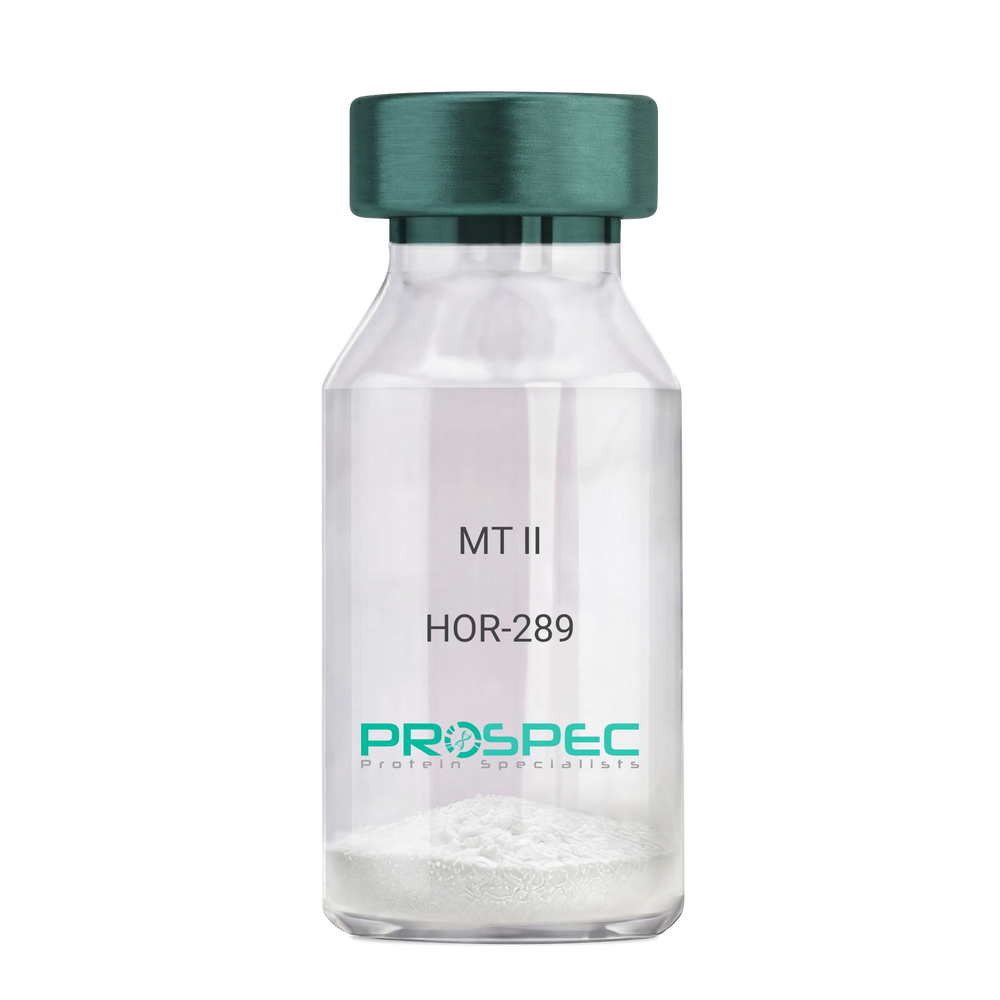
    MT II

    Description:

    Melanotan-II

    Melanotan-II, MT-II, Melanotan.

    Product # :

    HOR-289

    Price :

    Quantity :

    Shipping Method :

    Room Temp Icon

    Shipped at Room temp

    Add To Cart

    More Info

    • description
    • formulation
    • purity
    • More Info

    Description

    The molecular formula of Melanotan-II is C50H69N15O9. It has the amino acid sequence of Ac-Nle-cyclo [Asp-His-D-Phe-Arg-Trp-Lys]-NH2 and a molecular weight of 1024.2 Dalton. The CAS Number is 121062-08-6.

    Formulation

    The protein (1mg/ml) was lyophilized with no additives.

    Purity

    Greater than 99% as determined by by RP-HPLC.

    More Info

    • Introduction

      Melanotan and Melanotan-II are both analogs of the peptide hormone alpha melanocyte stimulating hormone (a-MSH) that tend to induce skin tanning. Unlike Melanotan, Melanotan-II has the additional effect of increasing libido. Melanotan II has aphrodisiac properties.

    • Synonyms

      Melanotan-II, MT-II, Melanotan.

    • Physical Appearance

      Sterile Filtered White lyophilized (freeze-dried) powder.

    • Stability

      Lyophilized Melanotan-II although stable at room temperature for 3 weeks, should be stored desiccated below -18°C. Upon reconstitution MT-II should be stored at 4°C between 2-7 days and for future use below -18°C.For long term storage it is recommended to add a carrier protein (0.1% HSA or BSA).Please prevent freeze-thaw cycles.

    • Solubility

      It is recommended to reconstitute the lyophilized Melanotan-II in sterile 18MΩ-cm H2O not less than 100 µg/ml, which can then be further diluted to other aqueous solutions.

    ProSpec's products are furnished for LABORATORY RESEARCH USE ONLY. The product may not be used as drugs, agricultural or pesticidal products, food additives or household chemicals.

    Melanotan Ii
  • View Data Sheet

    Name :

    PTH (7-84) Human

    Description:

    Parathyroid Hormone (7-84) Human Recombinant

    Parathyrin, PTH, Parathormone.

    Product # :

    HOR-011

    Price :

    Quantity :

    Shipping Method :

    Room Temp Icon

    Shipped at Room temp

    Add To Cart

    More Info

    • description
    • source
    • formulation
    • purity
    • More Info

    Description

    PTH (7-84) Human Recombinant produced in E.Coli is a single, non-glycosylated, polypeptide chain containing 76 amino acids, having an MW of 8.8kDa. The PTH (7-84) is purified by proprietary chromatographic techniques.

    Source

    Escherichia Coli.

    Formulation

    Lyophilized from a 0.2 µm filtered concentrated solution in PBS, pH 7.4.

    Purity

    Greater than 97.0% as determined by:
    (a) Analysis by RP-HPLC.
    (b) Analysis by SDS-PAGE.

    More Info

    • Introduction

      Parathyroid hormone (PTH), or parathormone, is secreted by the parathyroid glands as a polypeptide containing 84 amino acids. It acts to increase the concentration of calcium in the blood, whereas calcitonin (a hormone produced by the parafollicular cells of the thyroid gland) acts to decrease calcium concentration. PTH acts to increase the concentration of calcium in the blood by acting upon parathyroid hormone receptor in three parts of the body: In the bones- It enhances the release of calcium from the large reservoir contained in the bones. Bone resorption is the normal destruction of bone by osteoclasts, which are indirectly stimulated by PTH. Stimulation is indirect since osteoclasts do not have a receptor for PTH; rather, PTH binds to osteoblasts, the cells responsible for creating bone. Binding stimulates osteoblasts to increase their expression of RANKL, which can bind to osteoclast precursors containing RANK, a receptor for RANKL. The binding of RANKL to RANK stimulates these precursors to fuse, forming new osteoclasts which ultimately enhances the resorption of bone. In the kidney- It enhances active reabsorption of calcium from distal tubules and the thick ascending limb. In the intestine- It enhances the absorption of calcium in the intestine by increasing the production of vitamin D and upregulating the enzyme responsible for 1-alpha hydroxylation of 25-hydroxy vitamin D, converting vitamin D to its active form (1,25-dihydroxy vitamin D) which effects the actual absorption of calcium (as Ca2+ ions) by the intestine via calbindin.

    • Synonyms

      Parathyrin, PTH, Parathormone.

    • Physical Appearance

      Sterile Filtered White lyophilized (freeze-dried) powder.

    • Stability

      Lyophilized PTH (7-84) although stable at room temperature for 3 weeks, should be stored desiccated below -18C. Upon reconstitution PTH (7-84) should be stored at 4C between 2-7 days and for future use below -18C.For long term storage it is recommended to add a carrier protein (0.1% HSA or BSA).Please prevent freeze-thaw cycles.

    • Solubility

      It is recommended to reconstitute the lyophilized PTH (7-84) in sterile 18MΩ-cm H2O not less than 100 µg/ml, which can then be further diluted to other aqueous solutions.

    • Amino Acid Sequence

      LMHNLGKHLN SMERVEWLRK KLQDVHNFVA LGAPLAPRDA GSQRPRKKED NVLVESHEKS LGEADKADVN VLTKAKSQ.

    ProSpec's products are furnished for LABORATORY RESEARCH USE ONLY. The product may not be used as drugs, agricultural or pesticidal products, food additives or household chemicals.

    Pth 7 84 Human
  • View Data Sheet

    Name :

    MRPL13 Human

    Description:

    Mitochondrial Ribosomal Protein L13 Human Recombinant

    L13, L13A, L13mt, RPL13, RPML13, 39S ribosomal protein L13, mitochondrial, MRPL13.

    Product # :

    PRO-1404

    Price :

    Quantity :

    Shipping Method :

    Ice Icon

    Shipped with Ice Packs

    Add To Cart

    More Info

    • description
    • source
    • formulation
    • purity
    • More Info

    Description

    MRPL13 Human Recombinant produced in E.Coli is a single, non-glycosylated polypeptide chain containing 201 amino acids (1-178 a.a.) and having a molecular mass of 23.1kDa. MRPL13 is fused to a 23 amino acid His-tag at N-terminus & purified by proprietary chromatographic techniques.

    Source

    E.coli.

    Formulation

    MRPL13 protein solution (1mg/ml) contains 20mM Tris-HCl buffer (pH 8.0), 0.4M urea and 10% glycerol.

    Purity

    Greater than 85% as determined by SDS-PAGE.

    More Info

    • Introduction

      Mammalian mitochondrial ribosomal proteins are encoded by nuclear genes and assist in protein synthesis within the mitochondrion. Mitochondrial ribosomes (mitoribosomes) consist of a small 28S subunit and a large 39S subunit (MRPL13 is a 39S subunit protein) and have an estimated 75% protein to rRNA composition compared to prokaryotic ribosomes, where this ratio is reversed. An additional difference between mammalian mitoribosomes and prokaryotic ribosomes is that the second contain a 5S rRNA. Among various species, the proteins comprising the mitoribosome differ greatly in sequence, and sometimes in biochemical properties, which prevents easy recognition by sequence homology.

    • Synonyms

      L13, L13A, L13mt, RPL13, RPML13, 39S ribosomal protein L13, mitochondrial, MRPL13.

    • Physical Appearance

      Sterile Filtered colorless solution.

    • Stability

      Store at 4°C if entire vial will be used within 2-4 weeks. Store, frozen at -20°C for longer periods of time. For long term storage it is recommended to add a carrier protein (0.1% HSA or BSA).Avoid multiple freeze-thaw cycles.

    • Amino Acid Sequence

      MGSSHHHHHH SSGLVPRGSH MGSMSSFSRA PQQWATFARI WYLLDGKMQP PGKLAAMASI RLQGLHKPVY HALSDCGDHV VIMNTRHIAF SGNKWEQKVY SSHTGYPGGF RQVTAAQLHL RDPVAIVKLA IYGMLPKNLH RRTMMERLHL FPDEYIPEDI LKNLVEELPQ PRKIPKRLDE YTQEEIDAFP RLWTPPEDYR L.

    ProSpec's products are furnished for LABORATORY RESEARCH USE ONLY. The product may not be used as drugs, agricultural or pesticidal products, food additives or household chemicals.

    Mrpl13 Human
  • View Data Sheet

    Name :

    FOPNL Human

    Description:

    FGFR1OP N-terminal like Human Recombinant

    FGFR1OP N-terminal like-like protein, FOP-related protein of 20 kDa, pluripotent embryonic stem cell-related protein, lisH domain-containing protein C16orf63, chromosome 16 open reading frame 63, FGFR1OP N-terminal, PHSECRG2, C16orf63, DKFZp686N1651, FLJ31153, FOR20.

    Product # :

    PRO-1195

    Price :

    Quantity :

    Shipping Method :

    Ice Icon

    Shipped with Ice Packs

    Add To Cart

    More Info

    • description
    • source
    • formulation
    • purity
    • More Info

    Description

    FOPNL Human Recombinant produced in E. coli is a single polypeptide chain containing 194 amino acids (1-174) and having a molecular mass of 21.9 kDa.FOPNL is fused to a 20 amino acid His-tag at N-terminus & purified by proprietary chromatographic techniques.

    Source

    E.coli.

    Formulation

    The VAMP7 solution (0.5mg/1ml) contains 20mM Tris-HCl buffer (pH 8.0), 0.15M NaCl and 20% glycerol.

    Purity

    Greater than 85% as determined by SDS-PAGE.

    More Info

    • Introduction

      FGFR1OP N-terminal like (FOPNL) is a member of the FGFR1OP family and contains 1 LisH domain. FOPNL is participates in the biogenesis of cilia. FOPNL is extensively expressed and detected in the brain, heart, kidney, liver, lung, skeletal muscle, placenta and the intestine.

    • Synonyms

      FGFR1OP N-terminal like-like protein, FOP-related protein of 20 kDa, pluripotent embryonic stem cell-related protein, lisH domain-containing protein C16orf63, chromosome 16 open reading frame 63, FGFR1OP N-terminal, PHSECRG2, C16orf63, DKFZp686N1651, FLJ31153, FOR20.

    • Physical Appearance

      Sterile Filtered colorless solution.

    • Stability

      Store at 4°C if entire vial will be used within 2-4 weeks. Store, frozen at -20°C for longer periods of time. For long term storage it is recommended to add a carrier protein (0.1% HSA or BSA).Avoid multiple freeze-thaw cycles.

    • Amino Acid Sequence

      MGSSHHHHHH SSGLVPRGSH MATVAELKAV LKDTLEKKGV LGHLKARIRA EVFNALDDDR EPRPSLSHEN LLINELIREY LEFNKYKYTA SVLIAESGQP VVPLDRQFLI HELNAFEESK DNTIPLLYGI LAHFLRGTKD GIQNAFLKGP SLQPSDPSLG RQPSRRKPMD DHLRKEEQKS TNIEDLHVSQ AVNR

    ProSpec's products are furnished for LABORATORY RESEARCH USE ONLY. The product may not be used as drugs, agricultural or pesticidal products, food additives or household chemicals.

    Fopnl Human
  • View Data Sheet

    Name :

    PVALB Human

    Description:

    Parvalbumin Human Recombinant

    Parvalbumin alpha, PVALB, D22S749, MGC116759.

    Product # :

    PRO-004

    Price :

    Quantity :

    Shipping Method :

    Ice Icon

    Shipped with Ice Packs

    Add To Cart

    More Info

    • description
    • source
    • formulation
    • purity
    • More Info

    Description

    PVALB Human Recombinant fused with a 24 amino acid His tag at N-terminus produced in E.Coli is a single, non-glycosylated, polypeptide chain containing 134 amino acids (1-110 a.a.) and having a molecular mass of 14.6kDa. The PVALB is purified by proprietary chromatographic techniques.

    Source

    Escherichia Coli.

    Formulation

    The PVALB solution (1 mg/ml) contains 20mM Tris-HCl buffer (pH 8.0), 1mM DTT, 10% glycerol and 50mM NaCl.

    Purity

    Greater than 95.0% as determined by SDS-PAGE.

    More Info

    • Introduction

      Parvalbumin alpha (PVALB) is a member of a larger group of EF hand proteins. PVALB is a high affinity calcium ion-binding protein which is structurally and functionally similar to calmodulin and troponin C. Parvalbumin is expressed in a specific population of GABAergic interneurones which are believed to have a role in maintaining the balance between excitation and inhibition in the cortex as well as the hippocampus.

    • Synonyms

      Parvalbumin alpha, PVALB, D22S749, MGC116759.

    • Physical Appearance

      Sterile Filtered colorless solution.

    • Stability

      Store at 4°C if entire vial will be used within 2-4 weeks.Store, frozen at -20°C for longer periods of time. For long term storage it is recommended to add a carrier protein (0.1% HSA or BSA).Avoid multiple freeze-thaw cycles.

    • Amino Acid Sequence

      MGSSHHHHHH SSGLVPRGSH MGSHMSMTDL LNAEDIKKAV GAFSATDSFD HKKFFQMVGLKKKSADDVKK VFHMLDKDKS GFIEEDELGF ILKGFSPDAR DLSAKETKML MAAGDKDGDG KIGVDEFSTL VAES.

    ProSpec's products are furnished for LABORATORY RESEARCH USE ONLY. The product may not be used as drugs, agricultural or pesticidal products, food additives or household chemicals.

    Pvalb Human
  • View Data Sheet

    Name :

    RPL26L1 Human

    Description:

    Ribosomal Protein L26-Like 1 Human Recombinant

    Ribosomal Protein L26-Like 1, Ribosomal Protein L26 Pseudogene 1, RPL26P1, 60S Ribosomal Protein L26-Like 1, Ribosomal Protein L26 Homolog.

    Product # :

    PRO-1242

    Price :

    Quantity :

    Shipping Method :

    Ice Icon

    Shipped with Ice Packs

    Add To Cart

    More Info

    • description
    • source
    • formulation
    • purity
    • More Info

    Description

    RPL26L1 Human Recombinant produced in E. coli is a single polypeptide chain containing 168 amino acids (1-145) and having a molecular mass of 19.6 kDa.RPL26L1 is fused to a 23 amino acid His-tag at N-terminus & purified by proprietary chromatographic techniques.

    Source

    E.coli.

    Formulation

    The RPL26L1 solutioncontains 20mM Tris-HCl buffer (pH 8.0), 0.2M NaCl, 2mM DTT and 40% glycerol.

    Purity

    Greater than 90% as determined by SDS-PAGE.

    More Info

    • Introduction

      60S ribosomal protein L26-like 1 (RPL26L1) is a member of the ribosomal protein family and has a role in protein synthesis. RPL26L1 is situated in the cytoplasm. RPL26L1 shares a great sequence similarity with ribosomal protein L26. Currently it is unknown whether the RPL26L1 is a functional ribosomal protein or if it has developed a function which is independent of the ribosome.

    • Synonyms

      Ribosomal Protein L26-Like 1, Ribosomal Protein L26 Pseudogene 1, RPL26P1, 60S Ribosomal Protein L26-Like 1, Ribosomal Protein L26 Homolog.

    • Physical Appearance

      Sterile Filtered colorless solution.

    • Stability

      Store at 4°C if entire vial will be used within 2-4 weeks. Store, frozen at -20°C for longer periods of time. For long term storage it is recommended to add a carrier protein (0.1% HSA or BSA).Avoid multiple freeze-thaw cycles.

    • Amino Acid Sequence

      MGSSHHHHHH SSGLVPRGSH MGSMKFNPFV TSDRSKNRKR HFNAPSHVRR KIMSSPLSKE LRQKYNVRSM PIRKDDEVQV VRGHYKGQQI GKVVQVYRKK YVIYIERVQR EKANGTTVHV GIHPSKVVIT RLKLDKDRKK ILERKAKSRQ VGKEKGKYKE ELIEKMQE

    ProSpec's products are furnished for LABORATORY RESEARCH USE ONLY. The product may not be used as drugs, agricultural or pesticidal products, food additives or household chemicals.

    Rpl26L1 Human
  • View Data Sheet

    Name :

    PGRN Human

    Description:

    Progranulin Human Recombinant

    GRN, PGRN, granulin, Acrogranin, propithelin, PC cell derived growth Factor, GEP, GP88, PEPI, PCDGF.

    Product # :

    CYT-524

    Price :

    Quantity :

    Shipping Method :

    Room Temp Icon

    Shipped at Room temp

    Add To Cart

    More Info

    • description
    • source
    • formulation
    • purity
    • biological activity
    • More Info

    Description

    Progranulin Human Recombinant produced in HEK is a single, glycosylated, polypeptide chain containing 1-593 amino acids and having a molecular mass of 74kDa. The Progranulin is purified by standard chromatographic techniques.

    Source

    HEK 293 cells.

    Formulation

    The protein contains 1xPBS.

    Purity

    Greater than 98.0% as determined by SDS-PAGE.

    Biological Activity

    Activates phospho-ERK1/2 in neuronal mouse P19 cells and regulates food intake and body weight.

    More Info

    • Introduction

      A 88-kDa progranulin, also called proepithelin and PC cell-derived growth factor, is a single precursor protein of granulins which are a family of secreted, glycosylated peptides that are cleaved from a single precursor protein with 7.5 repeats of a highly conserved 12-cysteine granulin/epithelin motif. Granulins are a variety of active, 6 kDa peptides and named granulin A (epithelin 1), granulin B (epithelin 2), granulin C, etc. Both the peptides and intact progranulin protein regulate cell growth. However, different members of the granulin protein family may act as inhibitors, stimulators, or have dual actions on cell growth. Granulin family members are important in normal development, wound healing, and tumorigenesis.

    • Synonyms

      GRN, PGRN, granulin, Acrogranin, propithelin, PC cell derived growth Factor, GEP, GP88, PEPI, PCDGF.

    • Physical Appearance

      Sterile Filtered White lyophilized (freeze-dried) powder.

    • Stability

      Lyophilized Progranulin although stable at room temperature for 3 weeks, should be stored desiccated below -18C. Upon reconstitution PGRN should be stored at 4C between 2-7 days and for future use below -18C. For long term storage it is recommended to add a carrier protein (0.1% HSA or BSA). Please prevent freeze-thaw cycles.

    • Solubility

      It is recommended to reconstitute the lyophilized Progranulin in sterile 18MΩ-cm H2O not less than 100µg/ml, which can then be further diluted to other aqueous solutions.

    ProSpec's products are furnished for LABORATORY RESEARCH USE ONLY. The product may not be used as drugs, agricultural or pesticidal products, food additives or household chemicals.

    Progranulin Human
  • View Data Sheet

    Name :

    NCL Human

    Description:

    Nucleolin Human Recombinant

    Nucleolin, Protein C23, NCL, C23.

    Product # :

    PRO-1508

    Price :

    Quantity :

    Shipping Method :

    Ice Icon

    Shipped with Ice Packs

    Add To Cart

    More Info

    • description
    • source
    • formulation
    • purity
    • More Info

    Description

    Nucleolin Human Recombinant produced in SF9 is a glycosylated, polypeptide chain containing the C-terminal section of the human nucleolin and missing the N-terminal histone-binding part of nucleolin, having a calculated molecular mass of 55,162 Dalton. NCL is expressed with a -6x His tag at N-terminus and purified by proprietary chromatographic techniques.

    Source

    Sf9 Insect Cells.

    Formulation

    NCL is supplied in 20mM HEPES pH-7.3, 600mM NaCl, 0.3mM Tris(2-carboxyethyl)phosphine (TCEP) and 25% glycerol.

    Purity

    Greater than 80.0% as determined by SDS-PAGE.

    More Info

    • Introduction

      Nucleolin (NCL) which is a eukaryotic nucleolar phosphoprotein, involved in the synthesis and maturation of ribosomes. Nucleolin is the key nucleolar protein of growing eukaryotic cells. NCL is found linked with intranucleolar chromatin and pre-ribosomal particles. NCL induces chromatin decondensation by binding to histone H1. Nucleolin is assumed to have a role in pre-rRNA transcription and ribosome compilation. Nucleolin may also have a role in the process of transcriptional elongation. Nucleolin is located primarily in the dense fibrillar regions of the nucleolus. The Human NCL gene consists of 14 exons with 13 introns and spans approximately 11kb.

    • Synonyms

      Nucleolin, Protein C23, NCL, C23.

    • Physical Appearance

      Sterile Filtered clear solution.

    • Stability

      Store at 4°C if entire vial will be used within 2-4 weeks. Store, frozen at -20°C for longer periods of time. Avoid multiple freeze-thaw cycles.

    ProSpec's products are furnished for LABORATORY RESEARCH USE ONLY. The product may not be used as drugs, agricultural or pesticidal products, food additives or household chemicals.

    Ncl Human
  • View Data Sheet

    Name :

    pGH 20kDa Human

    Description:

    Growth Hormone Placental 20kDa Human Recombinant

    GHL, GHV, GH-V, hGH-V, PGH.

    Product # :

    CYT-337

    Price :

    Quantity :

    Shipping Method :

    Room Temp Icon

    Shipped at Room temp

    Add To Cart

    More Info

    • description
    • source
    • formulation
    • purity
    • More Info

    Description

    Growth Hormone Placental 20kDa Human Recombinant produced in E.Coli is a single, non-glycosylated, polypeptide chain containing 177 amino acids and having a molecular mass of 20498 Dalton. Predicted pI=8.20. Growth Hormone 20K placental is devoid of lactogenic (prolactin receptor mediated) activity characteristic to pituitary GHs. GH 20K placental is purified by proprietary chromatographic techniques.

    Source

    Escherichia Coli.

    Formulation

    pGH 20kDa was lyophilized from a concentrated (1mg/ml) solution with0.0045mM NaHCO3 previously adjusted pH 11.

    Purity

    Greater than 98.0% as determined by:
    (a) Analysis by SEC-HPLC.
    (b) Analysis by SDS-PAGE.

    More Info

    • Introduction

      GH is a member of the somatotropin/prolactin family of hormones which play an important role in growth control. The gene, along with four other related genes, is located at the growth hormone locus on chromosome 17 where they are interspersed in the same transcriptional orientation; an arrangement which is thought to have evolved by a series of gene duplications. The five genes share a remarkably high degree of sequence identity. Alternative splicing generates additional isoforms of each of the five growth hormones, leading to further diversity and potential for specialization. This particular family member is expressed in the pituitary but not in placental tissue as is the case for the other four genes in the growth hormone locus. Mutations in or deletions of the gene lead to growth hormone deficiency and short stature.

    • Synonyms

      GHL, GHV, GH-V, hGH-V, PGH.

    • Physical Appearance

      Sterile Filtered White lyophilized (freeze-dried) powder.

    • Stability

      Lyophilized Growth Hormone 20K Placental although stable at room temperature for 3 weeks, should be stored desiccated below -18°C. Upon reconstitution and filter sterilization GH 20K pl can be stored at 4°C for up to 4 weeks. For long term storage and more diluted solutions it is recommended to add a carrier protein (0.1% HSA or BSA). Please prevent freeze-thaw cycles.

    • Solubility

      It is recommended to reconstitute the lyophilized Placental Growth Hormone in 0.4% NaHCO3or water adjusted to pH 11, not less than 100µg/ml, which can then be further diluted to other aqueous solutions.

    • Amino Acid Sequence

      AFPTI PLSRLFDNAM LRARRLYQLA YDTYQEFNPQ TSLCFSESIP TPSNRVKTQQ KSNLELLRIS LLLIQSWLEP VQLLRSVFAN SLVYGASDSN VYRHLKDLEE GIQTLMWRLE DGSPRTGQIF NQSYSKFDTK SHNDDALLKN YGLLYCFRKD MDKVETFLRI VQCRSVEGSC GF

    ProSpec's products are furnished for LABORATORY RESEARCH USE ONLY. The product may not be used as drugs, agricultural or pesticidal products, food additives or household chemicals.

    Placental Gh 20K Human
  • View Data Sheet

    Name :

    LTF Apo Human

    Description:

    Lactoferrin Apo Human Recombinant

    Lactotransferrin, Lactoferrin, Growth-inhibiting protein 12, Talalactoferrin, LTF, GIG12, LF, HLF2, Neutrophil Lactoferrin.

    Product # :

    PRO-2771

    Price :

    Quantity :

    Shipping Method :

    Room Temp Icon

    Shipped at Room temp

    Add To Cart

    More Info

    • description
    • source
    • formulation
    • purity
    • More Info

    Description

    Recombinant Human Apo Lactoferrin produced in Plant is a glycosylated mature polypeptide sequence having an approximate molecular mass of 80 kDa.The Human Apo Lactoferrin is purified by proprietary chromatographic techniques.

    Source

    Rice Flour.

    Formulation

    The Human Apo lactoferrin was lyophilized with no additives.

    Purity

    Greater than 95% as determined by SDS-PAGE.

    More Info

    • Introduction

      Lactoferrin is a glycoprotein that belongs to the transferrin family of iron binding proteins. It is found in human breast milk as well as most epithelial surface secretions including tears, nasogastric, saliva, and bronchial. Lactoferrin binds 2 molecules of iron with very high affinity. Lactoferrin inhibits bacterial growth by withholding iron, its N-terminal region is an antimicrobial peptide. Lactotransferrin acts synergistically with lysozyme to potentiate the activity of both proteins. The multifunctional protein lactoferrin has many physiological possible roles. It is often referred to as an innate defense protein and frequently serves as the first line of defense in protection against pathogens. It has been shown to have the ability to bind iron, it is a natural anti-bacterial, anti-fungal and anti-viral, it is an antioxidant and it also has immunomodulatory properties. It has many beneficial properties, which make it a good candidate for a number of product applications. Considerable research is currently going on to explain the various suggested biological functions of lactoferrin.

    • Synonyms

      Lactotransferrin, Lactoferrin, Growth-inhibiting protein 12, Talalactoferrin, LTF, GIG12, LF, HLF2, Neutrophil Lactoferrin.

    • Physical Appearance

      Pink lyophilized powder.

    • Stability

      Recombinant Apo Lactoferrin although stable at room temperature for 3 weeks, should be stored 2-8°C.

    • Solubility

      It is recommended to reconstitute the lyophilized LTF Apo Human in sterile water at 10mg/ml, which can then be further diluted to other aqueous solutions.

    ProSpec's products are furnished for LABORATORY RESEARCH USE ONLY. The product may not be used as drugs, agricultural or pesticidal products, food additives or household chemicals.

    Lactoferrin Apo
  • View Data Sheet

    Name :

    ACTH

    Description:

    Adrenocorticotropic Hormone

    Corticotropin-lipotropin, Pro-opiomelanocortin, POMC, ACTH, LPH, MSH, NPP, POC, CLIP, Tetracosactide.

    Product # :

    HOR-279

    Price :

    Quantity :

    Shipping Method :

    Room Temp Icon

    Shipped at Room temp

    Add To Cart

    More Info

    • description
    • formulation
    • purity
    • More Info

    Description

    The Molecular formula of Adrenocorticotropic Hormone is C136H210N40O31S and the molecular weight is 2933.5 Dalton.

    Formulation

    The ACTH hormone was lyophilized with no additives.

    Purity

    Greater than 98.0% as determined by:
    (a) Analysis by RP-HPLC.
    (b) Analysis by SDS-PAGE.

    More Info

    • Introduction

      Adrenocorticotropic hormone, as its name implies, stimulates the adrenal cortex. More specifically, it stimulates secretion of glucocorticoids such as cortisol, and has little control over secretion of aldosterone, the other major steroid hormone from the adrenal cortex. Stimulates secretion of adrenal corticosteroids and induces growth of adrenal cortex. ACTH also called Tetracosactide directly activates G-proteins. A stimulator of adenylate cyclase and cAMP formation.

    • Synonyms

      Corticotropin-lipotropin, Pro-opiomelanocortin, POMC, ACTH, LPH, MSH, NPP, POC, CLIP, Tetracosactide.

    • Physical Appearance

      Sterile Filtered White lyophilized (freeze-dried) powder.

    • Stability

      Lyophilized Adrenocorticotropic Hormone although stable at room temperature for 3 weeks, should be stored desiccated below -18°C. Upon reconstitution ACTH should be stored at 4°C between 2-7 days and for future use below -18°C.For long term storage it is recommended to add a carrier protein (0.1% HSA or BSA).Please prevent freeze-thaw cycles.

    • Solubility

      It is recommended to reconstitute the lyophilized ACTH in sterile 18MΩ-cm H2O not less than 100 µg/ml, which can then be further diluted to other aqueous solutions.

    • Amino Acid Sequence

      Ser-Tyr-Ser-Met-Glu-His-Phe-Arg-Trp-Gly-Lys-Pro-Val-Gly-Lys-Lys-Arg-Arg-Pro-Val-Lys-Val-Tyr-Pro-OH.

    ProSpec's products are furnished for LABORATORY RESEARCH USE ONLY. The product may not be used as drugs, agricultural or pesticidal products, food additives or household chemicals.

    Acth
  • View Data Sheet

    Name :

    Omentin Human

    Description:

    Omentin Human Recombinant

    Intelectin-1, HL1, LFR, HL-1, INTL, ITLN, hIntL.

    Product # :

    CYT-301

    Price :

    Quantity :

    Shipping Method :

    Room Temp Icon

    Shipped at Room temp

    Add To Cart

    More Info

    • description
    • source
    • formulation
    • purity
    • More Info

    Description

    Omentin Human Recombinant is produced in E.Coli by recombinant DNA technology is a single, polypeptide chain containing 313 amino acids and having a molecular mass of 35 kDa. Intelectin is purified by proprietary chromatographic techniques.

    Source

    E.Coli.

    Formulation

    Each mg of lyophilized powder contains 10mM NaP, pH-7.5 and 5:1 mannitol to protein.

    Purity

    Greater than 95.0% as determined by SDS-PAGE.

    More Info

    • Introduction

      Omentin is a recently recognized gene highly localized to the mental tissue (visceral adipose tissue). Omentin is present in the stromal vascular cells in the adipose tissue rather than in the adipocytes. Omentin is predominantly expressed in the visceral adipose tissue than the subcutaneous tissue, with the omentin mRNA being 150 times higher in the visceral adipose tissue. Omentin has also been detected in human blood using western blot analysis, and seems to increase INSstimulated glucose uptake in 3T3-L1 adipocytes in mice. Omentin seems to increase Akt phosphorylation irrespective of INS presence. Its role in glucose metabolism and obesity remains to be described; an INS-sensitizing action is possible.Differences in Omentin expression has been noted in adipose tissue from normals and patients with inflammatory bowel disease although its significance is unknown.

    • Synonyms

      Intelectin-1, HL1, LFR, HL-1, INTL, ITLN, hIntL.

    • Physical Appearance

      Sterile Filtered White lyophilized (freeze-dried) powder.

    • Stability

      Lyophilized Intelectin although stable at room temperature for 3 weeks, should be stored desiccated below -18°C. Upon reconstitution Intelectin should be stored at 4°C between 2-7 days and for future use below -18°C.For long term storage it is recommended to add a carrier protein (0.1% HSA or BSA).Please prevent freeze-thaw cycles.

    • Solubility

      It is recommended to reconstitute the lyophilized Omentin in sterile 18MΩ-cm H2O not less than 100µg/ml, which can then be further diluted to other aqueous solutions.

    • Amino Acid Sequence

      MNQLSFLLFL IATTRGWSTD EANTYFKEWTCSSSPSLPRS CKEIKDECPS AFDGLYFLRT ENGVIYQTFC DMTSGGGGWT LVASVHENDM RGKCTVGDRW SSQQGSKADY PEGDGNWANY NTFGSAEAAT SDDYKNPGYY DIQAKDLGIW HVPNKSPMQH WRNSSLLRYR TDTGFLQTLG HNLFGIYQKY PVKYGEGKCW TDNGPVIPVV YDFGDAQKTA SYYSPYGQRE FNNERAANAL CAGMRVTGCN TEHHCIGGGG YFPEASPQQC GDFSGFDWSG YGTHVGYSSS REITEAAVLLFYR.

    ProSpec's products are furnished for LABORATORY RESEARCH USE ONLY. The product may not be used as drugs, agricultural or pesticidal products, food additives or household chemicals.

    Omentin Human
  • View Data Sheet

    Name :

    Guanylin Human

    Description:

    Guanylin Human Recombinant

    Guanylin, GUCA2A, Gap-IGUCA2, STARA, GUANYLIN.

    Product # :

    HOR-281

    Price :

    Quantity :

    Shipping Method :

    Room Temp Icon

    Shipped at Room temp

    Add To Cart

    More Info

    • description
    • source
    • formulation
    • purity
    • More Info

    Description

    Proguanylin Human Recombinant produced in E. coli is a single, non-glycosylated polypeptide chain (a.a 22-115) containing 104 amino acids including a 10 a.a N-terminal His tag. The total molecular mass is 11.5kDa (calculated).

    Source

    Escherichia Coli.

    Formulation

    Proguanylin filtered (0.4 µm) and lyophilized in 0.5mg/ml in deionized H20.

    Purity

    Greater than 90.0% as determined by SDS-PAGE.

    More Info

    • Introduction

      Heat-stable enterotoxins (STa) are small, cysteine-rich peptides secreted by Escherichia coli that are able to induce diarrhea through the stimulation of an intestine-specific receptor-guanylyl cyclase known as STaR. Binding of STa to STaR induces a dramatic increase in the cGMP content of the cell; the increase, in turn, inhibits salt absorption and stimulates chloride secretion. This imbalance of ions is accompanied by a massive accumulation of water in the gut that gives rise to the diarrhea and dehydration characteristic of enterotoxin activity. The identification of a receptor for STa on intestinal brush border membranes suggested the existence of an endogenous activator, described guanylin, a 15-amino acid peptide purified from rat small intestine, as a potential ligand for the STaR. This peptide shares sequence similarity with STa; see also uroguanylin. The molecular cloning of the human and mouse cDNAs encoding guanylin was reported. The sequences demonstrated that guanylin is present at the C-terminal end of a larger precursor protein. Expression in mammalian cells indicated that the 94- amino acid proguanylin is inactive. The biologically active guanylin can be released by either chemical or enzymatic treatment of proguanylin. By Northern blot analysis and in situ hybridization, showed that expression of guanylin mRNA is restricted to cells of the intestinal epithelium, specifically the Paneth cells at the base of the small intestinal crypts. These results demonstrate that guanylin is an endogenous activator of STaR isolated a cDNA encoding an apparent precursor of guanylin from a human intestinal cDNA library. The mRNA was expressed at high levels in human ileum and colon. In the mouse, interspecific backcross analysis used to map the Guca2 gene to the distal half of mouse chromosome 4 in a region of homology with human chromosome 1p. By fluorescence in situ hybridization mapped the GUCA2 gene to human 1p35-p34 Guanylin is thought to modulate intestinal water/electrolyte transport in a paracrine mode reported the nucleotide sequence of the gene, the characteristics of its circulating molecular form, and its localization in enterochromaffin cells of the gut. The gene, approximately 2.6 kb in size, consists of 3 exons interrupted by 2 introns. The hormonal form of guanylin is a 94-amino acid peptide with a molecular mass of 10.3 kDa. Guanylin is synthesized by gut enterochromaffin cells as a prohormone of 115 amino acids and is processed to the molecular form of 94 amino acids circulating in the blood.

    • Synonyms

      Guanylin Precursor, Guanylate cyclase activator 2A, Guanylate cyclase-activating protein 1, Gap-IGUCA2, STARA, GUANYLIN.

    • Physical Appearance

      Sterile Filtered White lyophilized (freeze-dried) powder.

    • Stability

      Store lyophilized protein at -20°C. Aliquot the product after reconstitution to avoid repeated freezing/thawing cycles. Reconstituted protein can be stored at 4°C for a limited period of time; it does not show any change after one week at 4°C.

    • Solubility

      It is recommended to add deionized water to prepare a working stock solution of approximately 0.5mg/ml and let the lyophilized pellet dissolve completely. Proguanylin is not sterile! Please filter the product by an appropriate sterile filter before using it in the cell culture.

    • Amino Acid Sequence

      MKHHHHHHAS VTVQDGNFSF SLESVKKLKD LQEPQEPRVG KLRNFAPIPG EPVVPILCSN PNFPEELKPL CKEPNAQEIL QRLEEIAEDP GTCEICAYAA CTGC.

    ProSpec's products are furnished for LABORATORY RESEARCH USE ONLY. The product may not be used as drugs, agricultural or pesticidal products, food additives or household chemicals.

    Proguanylin Human
  • View Data Sheet

    Name :

    VHL Human

    Description:

    Von Hippel-Lindau Protein Human Recombinant

    Von Hippel-Lindau disease tumor suppressor, pVHL, Protein G7, VHL, RCA1, VHL1, HRCA1.

    Product # :

    PRO-440

    Price :

    Quantity :

    Shipping Method :

    Ice Icon

    Shipped with Ice Packs

    Add To Cart

    More Info

    • description
    • source
    • formulation
    • purity
    • More Info

    Description

    Recombinant Human Von Hippel-Lindau Protein b-domain produced in E.Coli is a single, non-glycosylated polypeptide chain containing 174 amino acids (1-154) & having a molecular mass of 19.2 kDa. The Von Hippel-Lindau antigen is fused to 20 amino acid His-Tag at N-terminus and purified by proprietary chromatography techniques.

    Source

    Escherichia Coli.

    Formulation

    The Von Hippel-Lindau Protein contains 1x PBS pH-7.4, 2mM EDTA, and 1mM DTT.

    Purity

    Greater than 95.0% as determined by SDS-PAGE.

    More Info

    • Introduction

      Von Hippel-Lindau disease is a dominant inherited syndrome characterized by the predisposition to develop various kinds of benign and malignant tumors, including clear cell renal carcinomas, pheochromocytomas and hemangioblastomas of the central nervous system and retina. VHL syndrome is caused by germline mutation in the VHL tumor suppressor, and VHL tumors are associated with loss or mutation of the remaining wild-type allele. VHL has two domains: a roughly 100-residue NH2-terminal domain rich in b sheet (b-domain) and a smaller a-helical domain (a-domain), held together by two linkers and a polar interface. VHL protein is also involved in the degradation of hypoxia-inducible factor (HIF).

    • Synonyms

      Von Hippel-Lindau disease tumor suppressor, pVHL, Protein G7, VHL, RCA1, VHL1, HRCA1.

    • Physical Appearance

      Sterile filtered colorless solution.

    • Stability

      Store at 4°C if entire vial will be used within 2-4 weeks. Store, frozen at -20°C for longer periods of time. For long term storage it is recommended to add a carrier protein (0.1% HSA or BSA). Avoid multiple freeze-thaw cycles.

    • Amino Acid Sequence

      MGSSHHHHHH SSGLVPRGSH MPRRAENWDE AEVGAEEAGV EEYGPEEDGG EESGAEESGPEESGPEELGA EEEMEAGRPR PVLRSVNSRE PSQVIFCNRS PRVVLPVWLN FDGEPQPYPT LPPGTGRRIH SYRGHLWLFR DAGTHDGLLV NQTELFVPSL NVDGQPIFAN ITLP.

    ProSpec's products are furnished for LABORATORY RESEARCH USE ONLY. The product may not be used as drugs, agricultural or pesticidal products, food additives or household chemicals.

    Vhl Human
  • View Data Sheet

    Name :

    Activin-A Human Active

    Description:

    Activin-A Human Recombinant, Active

    Inhba, Inhibin beta A, FSH releasing protein.

    Product # :

    CYT-145

    Price :

    Quantity :

    Shipping Method :

    Room Temp Icon

    Shipped at Room temp

    Add To Cart

    More Info

    • description
    • source
    • formulation
    • purity
    • biological activity
    • More Info

    Description

    Active form Activin-A Human Recombinant produced in e.coli is a homodimeric, non-glycosylated, polypeptide chain containing 2 x 117 amino acids and having a molecular weight of 26.2kDa.The Active form Activin-A is purified by standard chromatographic techniques.

    Source

    E.Coli.

    Formulation

    Human Activin-A was lyophilized from a concentrated 1mg/ml protein solution containing 0.1% TFA.

    Purity

    Greater than 95% as obsereved by SDS-PAGE.

    Biological Activity

    Biological activity is assessed by the ability to induce cytotoxicity of MPC-11 cells and was found to be 8.95ng/ml corresponding to a specific activity of 1.1 x 10⁵ units/mg.

    More Info

    • Introduction

      Activins are homodimers or heterodimers of the different β subunit isoforms, part of the TGFβ family. Mature Activin A has two 116 amino acids residues βA subunits (βA-βA). Activin displays an extensive variety of biological activities, including mesoderm induction, neural cell differentiation, bone remodelling, haematopoiesis, and reproductive physiology. Activins takes part in the production and regulation of hormones such as FSH, LH, GnRH and ACTH. Cells that are identified to express Activin A include fibroblasts, endothelial cells, hepatocytes, vascular smooth muscle cells, macrophages, keratinocytes, osteoclasts, bone marrow monocytes, prostatic epithelium, neurons, chondrocytes, osteoblasts, Leydig cells, Sertoli cells, and ovarian granulosa cells.

    • Synonyms

      Inhba, Inhibin beta A, FSH releasing protein.

    • Physical Appearance

      Lyophilized freeze dried powder.

    • Stability

      Lyophilized Activin-A although stable at room temperature for 3 weeks, should be stored desiccated below -18°C. Upon reconstitution Activin-A should be stored at 4°C between 2-7 days and for future use below -18°C.For long term storage it is recommended to add a carrier protein (0.1% HSA or BSA).Please prevent freeze-thaw cycles.

    • Solubility

      Human INHBA protein should be reconstituted in distilled pyrogen free water to a concentration of 100ug /ml which can then be further diluted to other aqueous solutions.

    • Amino Acid Sequence

      MGLECDGKVN ICCKKQFFVS FKDIGWNDWI IAPSGYHANY CEGECPSHIA GTSGSSLSFH STVINHYRMR GHSPFANLKS CCVPTKLRPM SMLYYDDGQN IIKKDIQNMI VEECGCS.

    • Background

      Title: Research on Activin A Human Recombinant: Molecular Characteristics, Signaling Pathways, Physiological Functions, and Therapeutic Potential

      Introduction:

      Activin A, a member of the transforming growth factor-beta (TGF-β) superfamily, is a multifunctional cytokine that plays a significant role in various biological processes in the human body. Its involvement in diverse physiological and pathological functions has garnered considerable attention in scientific research. This paper aims to provide an overview of Activin A, encompassing its molecular characteristics, signaling pathways, physiological functions, and therapeutic potential.

      Activin A is encoded by the INHBA gene and is produced as a precursor protein that undergoes post-translational modifications to generate the mature form. The mature Activin A protein consists of two β-subunits held together by disulfide bonds. These structural features contribute to its functional properties and interactions with specific receptors.

      Upon binding to its cell surface receptors, Activin A triggers intracellular signaling cascades, leading to various cellular responses. Canonical SMAD-dependent pathway as well as non-SMAD pathways, such as MAPK/ERK, PI3K/Akt, and JNK signaling, are activated by Activin A. The intricate network of signaling pathways enables Activin A to regulate diverse biological processes, including cell proliferation, differentiation, apoptosis, and tissue homeostasis.

      Activin A exerts its physiological functions in a tissue-specific manner. It plays a critical role in embryonic development, particularly in organogenesis and patterning. Additionally, Activin A is involved in reproductive biology, where it participates in folliculogenesis, spermatogenesis, and hormonal regulation. It also contributes to neural development, immune system modulation, and skeletal homeostasis.

      The multifunctional properties of Activin A have positioned it as a potential therapeutic target for various diseases. Its involvement in cancer, neurodegenerative disorders, fibrosis, and reproductive disorders has prompted extensive research to explore its therapeutic potential. Understanding the molecular mechanisms underlying Activin A's actions provides valuable insights for developing innovative therapeutic strategies.

      In conclusion, Activin A is a versatile cytokine with diverse roles in human biology. This research aims to deepen our understanding of its molecular characteristics, signaling pathways, physiological functions, and therapeutic potential. By elucidating the complexities of Activin A, we strive to pave the way for novel therapeutic interventions in various human diseases.

    ProSpec's products are furnished for LABORATORY RESEARCH USE ONLY. The product may not be used as drugs, agricultural or pesticidal products, food additives or household chemicals.

    Inhba Human
  • View Data Sheet

    Name :

    NPL Human

    Description:

    N-acetylneuraminate Pyruvate Lyase Human Recombinant

    N-acetylneuraminate lyase, NALase, N-acetylneuraminate pyruvate-lyase, N-acetylneuraminic acid aldolase, Sialate lyase, Sialate-pyruvate lyase, Sialic acid aldolase, Sialic acid lyase, NPL, C1orf13, NAL, C112, NPL1.

    Product # :

    ENZ-125

    Price :

    Quantity :

    Shipping Method :

    Ice Icon

    Shipped with Ice Packs

    Add To Cart

    More Info

    • description
    • source
    • formulation
    • purity
    • More Info

    Description

    NPL produced in E.Coli is a single, non-glycosylated polypeptide chain containing 340 amino acids (1-320 a.a.) and having a molecular mass of 37.3kDa.NPL is fused to a 20 amino acid His-tag at N-terminus & purified by proprietary chromatographic techniques.

    Source

    Escherichia Coli.

    Formulation

    NPL protein solution (1mg/ml) containing 20mM Tris-HCl buffer (pH8.0), 20% glycerol, 0.1M NaCl and 1mM DTT.

    Purity

    Greater than 95.0% as determined by SDS-PAGE.

    More Info

    • Introduction

      N-acetylneuraminate lyase (NPL) is an enzyme which catalyzes the chemical reaction (N-acetylneuraminate ->N-acetyl-D-mannosamine + pyruvate). NPL is a member of a family of lyases, specifically the oxo-acid-lyases, which cleave carbon-carbon bonds. NPL participates in amino sugars metabolism.

    • Synonyms

      N-acetylneuraminate lyase, NALase, N-acetylneuraminate pyruvate-lyase, N-acetylneuraminic acid aldolase, Sialate lyase, Sialate-pyruvate lyase, Sialic acid aldolase, Sialic acid lyase, NPL, C1orf13, NAL, C112, NPL1.

    • Physical Appearance

      Sterile Filtered colorless solution.

    • Stability

      Store at 4°C if entire vial will be used within 2-4 weeks. Store, frozen at -20°C for longer periods of time. For long term storage it is recommended to add a carrier protein (0.1% HSA or BSA).Avoid multiple freeze-thaw cycles.

    • Amino Acid Sequence

      MGSSHHHHHH SSGLVPRGSH MAFPKKKLQG LVAATITPMT ENGEINFSVI GQYVDYLVKE QGVKNIFVNG TTGEGLSLSV SERRQVAEEW VTKGKDKLDQ VIIHVGALSL KESQELAQHA AEIGADGIAV IAPFFLKPWT KDILINFLKE VAAAAPALPF YYYHIPALTG VKIRAEELLD GILDKIPTFQ GLKFSDTDLL DFGQCVDQNR QQQFAFLFGV DEQLLSALVM GATGAVGSTY NYLGKKTNQM LEAFEQKDFS LALNYQFCIQ RFINFVVKLG FGVSQTKAIM TLVSGIPMGP PRLPLQKASR EFTDSAEAKL KSLDFLSFTD LKDGNLEAGS.

    ProSpec's products are furnished for LABORATORY RESEARCH USE ONLY. The product may not be used as drugs, agricultural or pesticidal products, food additives or household chemicals.

    Npl Human
  • View Data Sheet

    Name :

    PBLD Human

    Description:

    Phenazine Biosynthesis-Like Protein Domain Containing Human Recombinant

    Phenazine biosynthesis-like domain-containing protein, MAWD-binding protein, Unknown protein 32 from 2D-page of liver tissue, PBLD, MAWBP, MAWDBP, FLJ14767, FLJ35507.

    Product # :

    PRO-010

    Price :

    Quantity :

    Shipping Method :

    Ice Icon

    Shipped with Ice Packs

    Add To Cart

    More Info

    • description
    • source
    • formulation
    • purity
    • More Info

    Description

    PBLD Human Recombinant fused with a 20 amino acid His tag at N-terminus produced in E.Coli is a single, non-glycosylated, polypeptide chain containing 308 amino acids (1-288 a.a.) and having a molecular mass of 33.9kDa. The PBLD is purified by proprietary chromatographic techniques.

    Source

    Escherichia Coli.

    Formulation

    The PBLD solution (1 mg/ml) contains 20mM Tris-HCl buffer(pH 8.0), 10% glycerol, 2mM DTT and 0.1M NaCl.

    Purity

    Greater than 95.0% as determined by SDS-PAGE.

    More Info

    • Introduction

      PBLD is member of the phenazine biosynthesis-like protein (PhzF) family. PBLD which is expressed in most tissues is the only representative of the PhzF family in the human genome. PBLD participates in the MAPK signaling pathway. PBLD is involved in multiple basic cellular functions, its expression is elevated in several disease processes, including folate deficiency and hypotension.

    • Synonyms

      Phenazine biosynthesis-like domain-containing protein, MAWD-binding protein, Unknown protein 32 from 2D-page of liver tissue, PBLD, MAWBP, MAWDBP, FLJ14767, FLJ35507.

    • Physical Appearance

      Sterile Filtered colorless solution.

    • Stability

      Store at 4°C if entire vial will be used within 2-4 weeks. Store, frozen at -20°C for longer periods of time. For long term storage it is recommended to add a carrier protein (0.1% HSA or BSA).Avoid multiple freeze-thaw cycles.

    • Amino Acid Sequence

      MGSSHHHHHH SSGLVPRGSH MKLPIFIADA FTARAFRGNP AAVCLLENEL DEDMHQKIAR EMNLSETAFI RKLHPTDNFA QSSCFGLRWF TPASEVPLCG HATLASAAVL FHKIKNMNST LTFVTLSGEL RARRAEDGIV LDLPLYPAHP QDFHEVEDLI KTAIGNTLVQ DICYSPDTQK LLVRLSDVYN RSFLENLKVN TENLLQVENT GKVKGLILTL KGEPGGQTQA FDFYSRYFAP WVGVAEDPVT GSAHAVLSSY WSQHLGKKEM HAFQCSHRGG ELGISLRPDG RVDIRGGAAV VLEGTLTA.

    ProSpec's products are furnished for LABORATORY RESEARCH USE ONLY. The product may not be used as drugs, agricultural or pesticidal products, food additives or household chemicals.

    Pbld Human
  • View Data Sheet

    Name :

    VBP1 Human

    Description:

    Von Hippel-Lindau Binding Protein 1 Human Recombinant

    Prefoldin subunit 3, HIBBJ46, Von Hippel-Lindau-binding protein 1, VBP-1, VHL-binding protein 1, VBP1, PFDN3, PFD3.

    Product # :

    PRO-1325

    Price :

    Quantity :

    Shipping Method :

    Ice Icon

    Shipped with Ice Packs

    Add To Cart

    More Info

    • description
    • source
    • formulation
    • purity
    • More Info

    Description

    VBP1 Human Recombinant produced in E.Coli is a single, non-glycosylated polypeptide chain containing 220 amino acids (1-197 a.a) and having a molecular mass of 25kDa.VBP1 is fused to a 23 amino acid His-tag at N-terminus & purified by proprietary chromatographic techniques.

    Source

    Escherichia Coli.

    Formulation

    VBP1 protein solution (0.5mg/ml) containing 20mM Tris-HCl buffer (pH 8.0), 0.2M NaCl, 50% glycerol and 2mM DTT.

    Purity

    Greater than 90.0% as determined by SDS-PAGE.

    More Info

    • Introduction

      Prefoldin subunit 3 (VBP1) is a member of the prefoldin subunit alpha family. VBP1 interacts with the Von Hippel-Lindau protein in order to create an intracellular complex. Since VBP1 serves as a chaperone protein, it is assumed to have a role in the transport of the Von Hippel-Lindau protein from the perinuclear granules to the nucleus or cytoplasm. VBP1 binds specifically to cytosolic chaperonin (c-CPN) and transfers target proteins to it. VBP1 also binds to nascent polypeptide chain and stimulates folding in an environment in which there are numerous competing pathways for nonnative proteins.

    • Synonyms

      Prefoldin subunit 3, HIBBJ46, Von Hippel-Lindau-binding protein 1, VBP-1, VHL-binding protein 1, VBP1, PFDN3, PFD3.

    • Physical Appearance

      Sterile Filtered colorless solution.

    • Stability

      Store at 4°C if entire vial will be used within 2-4 weeks. Store, frozen at -20°C for longer periods of time. For long term storage it is recommended to add a carrier protein (0.1% HSA or BSA).Avoid multiple freeze-thaw cycles.

    • Amino Acid Sequence

      MGSSHHHHHH SSGLVPRGSH MGSMAAVKDS CGKGEMATGN GRRLHLGIPE AVFVEDVDSF MKQPGNETAD TVLKKLDEQY QKYKFMELNL AQKKRRLKGQ IPEIKQTLEI LKYMQKKKES TNSMETRFLL ADNLYCKASV PPTDKVCLWL GANVMLEYDI DEAQALLEKN LSTATKNLDS LEEDLDFLRD QFTTTEVNMA RVYNWDVKRR NKDDSTKNKA.

    ProSpec's products are furnished for LABORATORY RESEARCH USE ONLY. The product may not be used as drugs, agricultural or pesticidal products, food additives or household chemicals.

    Vbp1 Human
  • 1
  • …
  • 6
  • 7
  • 8
  • 9
  • 10
  • …
  • 42
Your browser does not support the video tag.

Products

  • Cytokines
  • Growth Factors
  • Chemokines
  • CD Antigens
  • Neurotrophins
  • Hormones
  • Enzymes
  • Viral Antigens
  • Recombinant Proteins
  • Natural Proteins
  • Monoclonal Antibodies
  • Polyclonal Antibodies
  • Thermal Packaging

About

  • Company
  • Founder
  • Contribution
  • Contact Us
  • My Account

Ordering

  • Ordering Method
  • Ordering - Credit Card
  • Ordering PO
  • Shipping Fees
  • FAQ's

Legal

  • Terms & Conditions
  • Privacy
  • Site Map
  • info@prospecbio.com
  • Facebook
  • Instagram
  • Linkedin Profile

© 2026 ProSpec-Tany TechnoGene Ltd. All Rights Reserved.

  • Choosing a selection results in a full page refresh.
  • Opens in a new window.