Skip to content

High-quality research proteins.

  • 1-800-805-6531

  • Mon - Sat 8.00-18.00, Sun - Closed

  • info@prospecbio.com

  • PO Box 6591 East Brunswick NJ 08816

  • Products
    • Cytokines
    • Growth factors
    • Chemokines
    • Cd antigens
    • Neurotrophins
    • Hormones
    • Enzymes
    • Viral antigens
    • Recombinant proteins
    • Natural proteins
    • Monoclonal antibodies
    • Polyclonal antibodies
    • Thermal Packaging
  • About
    • Company
    • Founder
    • Contribution
  • Customers
    • Eastern Asia
    • Eastern Europe
    • North America
    • South America
    • South East Asia
    • Southern Asia
    • Western Europe
  • Ordering
    • Ordering Method
    • Ordering - Credit Card
    • Ordering - PO
    • Shipping Fees
    • FAQs
  • Services
    • DNA Cloning
    • Protein Expression
    • Monoclonal Antibody
    • Fermentation
    • Technology License
  • Contact us
Log in

Country/region

  • USD $ | Albania
  • USD $ | Andorra
  • USD $ | Argentina
  • USD $ | Armenia
  • USD $ | Australia
  • USD $ | Austria
  • USD $ | Azerbaijan
  • USD $ | Belarus
  • USD $ | Belgium
  • USD $ | Bolivia
  • USD $ | Brazil
  • USD $ | Bulgaria
  • USD $ | Cambodia
  • USD $ | Canada
  • USD $ | Chile
  • USD $ | China
  • USD $ | Colombia
  • USD $ | Costa Rica
  • USD $ | Croatia
  • USD $ | Cyprus
  • USD $ | Czechia
  • USD $ | Denmark
  • USD $ | Estonia
  • USD $ | Finland
  • USD $ | France
  • USD $ | Georgia
  • USD $ | Germany
  • USD $ | Greece
  • USD $ | Hong Kong SAR
  • USD $ | Hungary
  • USD $ | Iceland
  • USD $ | India
  • USD $ | Ireland
  • USD $ | Israel
  • USD $ | Italy
  • USD $ | Japan
  • USD $ | Kazakhstan
  • USD $ | Latvia
  • USD $ | Liechtenstein
  • USD $ | Lithuania
  • USD $ | Madagascar
  • USD $ | Malta
  • USD $ | Mexico
  • USD $ | Moldova
  • USD $ | Monaco
  • USD $ | Netherlands
  • USD $ | New Zealand
  • USD $ | North Macedonia
  • USD $ | Norway
  • USD $ | Panama
  • USD $ | Paraguay
  • USD $ | Peru
  • USD $ | Philippines
  • USD $ | Poland
  • USD $ | Portugal
  • USD $ | Romania
  • USD $ | Singapore
  • USD $ | Slovakia
  • USD $ | Slovenia
  • USD $ | South Africa
  • USD $ | South Korea
  • USD $ | Spain
  • USD $ | Sri Lanka
  • USD $ | Sweden
  • USD $ | Switzerland
  • USD $ | Taiwan
  • USD $ | Thailand
  • USD $ | Türkiye
  • USD $ | Ukraine
  • USD $ | United Kingdom
  • USD $ | United States
  • USD $ | Uruguay
  • USD $ | Vatican City
  • USD $ | Venezuela
  • USD $ | Vietnam
  • Facebook
  • Instagram
logoProSpec - Recombinant Protein Manufacturer for academic and R&D industry
Become a distributor
Account Log in
Wishlist
Cart Cart(0)
  • Products
    +
    • Cytokines
    • Growth factors
    • Chemokines
    • Cd antigens
    • Neurotrophins
    • Hormones
    • Enzymes
    • Viral antigens
    • Recombinant proteins
    • Natural proteins
    • Monoclonal antibodies
    • Polyclonal antibodies
    • Thermal Packaging
  • About
    +
    • Company
    • Founder
    • Contribution
  • Customers
    +
    • Eastern Asia
    • Eastern Europe
    • North America
    • South America
    • South East Asia
    • Southern Asia
    • Western Europe
  • Ordering
    +
    • Ordering Method
    • Ordering - Credit Card
    • Ordering - PO
    • Shipping Fees
    • FAQs
  • Services
    +
    • DNA Cloning
    • Protein Expression
    • Monoclonal Antibody
    • Fermentation
    • Technology License
  • Contact us

Item added to your cart

View cart
View All
  • Cytokines
  • Growth factors
  • Chemokines
  • Cd antigens
  • Neurotrophins
  • Hormones
  • Enzymes
  • Viral antigens
  • Recombinant proteins
  • Natural proteins
  • Monoclonal antibodies
  • Polyclonal antibodies
  • Thermal Packaging
  • Tumor Necrosis Factor

    Tumor Necrosis Factor

    View All
  • 4-1BB

    4-1BB

    View All
  • Adiponectin

    Adiponectin

    View All
  • AIF1

    AIF1

    View All
  • Other Cytokines

    Other Cytokines

    View All
  • AITRL

    AITRL

    View All
  • Angiopoietin

    Angiopoietin

    View All
  • Apolipoprotein

    Apolipoprotein

    View All
  • B-Cell Activating Factor

    B-Cell Activating Factor

    View All
  • Beta Defensin

    Beta Defensin

    View All
  • Bone Morphogenetic Protein

    Bone Morphogenetic Protein

    View All
  • B type Natriuretic Peptide

    B type Natriuretic Peptide

    View All
  • BST

    BST

    View All
  • Betacellulin

    Betacellulin

    View All
  • Cardiotrophin

    Cardiotrophin

    View All
  • Activin

    Activin

    View All
  • Fibroblast Growth Factor

    Fibroblast Growth Factor

    View All
  • Other Growth Factors

    Other Growth Factors

    View All
  • CSF

    CSF

    View All
  • CTGF

    CTGF

    View All
  • IGFBP

    IGFBP

    View All
  • VEGF Protein

    VEGF Protein

    View All
  • EGF

    EGF

    View All
  • Epigen

    Epigen

    View All
  • Erythropoietin

    Erythropoietin

    View All
  • Insulin-Like Growth Factor

    Insulin-Like Growth Factor

    View All
  • Growth Hormone

    Growth Hormone

    View All
  • HDGF

    HDGF

    View All
  • Hepatocyte Growth Factor

    Hepatocyte Growth Factor

    View All
  • Insulin

    Insulin

    View All
  • BCA-1/ BLC (CXCL13)

    BCA-1/ BLC (CXCL13)

    View All
  • BRAK (CXCL14)

    BRAK (CXCL14)

    View All
  • C-10 (CCL6)

    C-10 (CCL6)

    View All
  • Other Chemokines

    Other Chemokines

    View All
  • MEC (CCL28)

    MEC (CCL28)

    View All
  • LD78-beta (CCL3L1)

    LD78-beta (CCL3L1)

    View All
  • CTACK (CCL27)

    CTACK (CCL27)

    View All
  • CXCL16

    CXCL16

    View All
  • CXCL17

    CXCL17

    View All
  • Platelet Factor-4 (CXCL4)

    Platelet Factor-4 (CXCL4)

    View All
  • ENA-78 (CXCL5)

    ENA-78 (CXCL5)

    View All
  • Eotaxin (CCL11,24,26)

    Eotaxin (CCL11,24,26)

    View All
  • Exodus-2 (CCL21)

    Exodus-2 (CCL21)

    View All
  • Fractalkine (CX3CL1)

    Fractalkine (CX3CL1)

    View All
  • CXCL6

    CXCL6

    View All
  • Other CD Antigens

    Other CD Antigens

    View All
  • CD14

    CD14

    View All
  • CD164

    CD164

    View All
  • CD1

    CD1

    View All
  • CD2

    CD2

    View All
  • CD200

    CD200

    View All
  • CD207

    CD207

    View All
  • CD226

    CD226

    View All
  • CD23

    CD23

    View All
  • CD244

    CD244

    View All
  • CD247

    CD247

    View All
  • CD27

    CD27

    View All
  • CD274

    CD274

    View All
  • CD300

    CD300

    View All
  • CD33

    CD33

    View All
  • Other Neurotrophins

    Other Neurotrophins

    View All
  • Beta-NGF

    Beta-NGF

    View All
  • BDNF

    BDNF

    View All
  • CDNF

    CDNF

    View All
  • CNTF

    CNTF

    View All
  • GDNF

    GDNF

    View All
  • Glia Maturation Factor

    Glia Maturation Factor

    View All
  • MANF

    MANF

    View All
  • Midkine

    Midkine

    View All
  • Neuroglobin

    Neuroglobin

    View All
  • Neurotrophic factors

    Neurotrophic factors

    View All
  • Neuregulin

    Neuregulin

    View All
  • Neuropilin

    Neuropilin

    View All
  • Pigment Epithelium-Derived Factor

    Pigment Epithelium-Derived Factor

    View All
  • Pleiotrophin

    Pleiotrophin

    View All
  • Peptide Hormones

    Peptide Hormones

    View All
  • Other Hormones

    Other Hormones

    View All
  • HCG

    HCG

    View All
  • Endothelin

    Endothelin

    View All
  • Exendin

    Exendin

    View All
  • FSH

    FSH

    View All
  • Glucagon

    Glucagon

    View All
  • GHRP

    GHRP

    View All
  • GLP

    GLP

    View All
  • Thyrostimulin

    Thyrostimulin

    View All
  • Inhibin A

    Inhibin A

    View All
  • LHRH

    LHRH

    View All
  • Melanotan

    Melanotan

    View All
  • Procalcitonin

    Procalcitonin

    View All
  • PTH

    PTH

    View All
  • Peroxiredoxin

    Peroxiredoxin

    View All
  • Peptidase

    Peptidase

    View All
  • Synthetase

    Synthetase

    View All
  • Transferase

    Transferase

    View All
  • Hydrolase

    Hydrolase

    View All
  • Dehydrogenase

    Dehydrogenase

    View All
  • ACE2

    ACE2

    View All
  • Esterase

    Esterase

    View All
  • Protein Kinases

    Protein Kinases

    View All
  • Other Enzymes

    Other Enzymes

    View All
  • Phosphatase

    Phosphatase

    View All
  • Deaminase

    Deaminase

    View All
  • Oxygenase

    Oxygenase

    View All
  • Adenylate Kinase

    Adenylate Kinase

    View All
  • Lyase

    Lyase

    View All
  • Chagas

    Chagas

    View All
  • SARS

    SARS

    View All
  • Influenza

    Influenza

    View All
  • ASFV

    ASFV

    View All
  • Astrovirus

    Astrovirus

    View All
  • Borrelia

    Borrelia

    View All
  • Helicobacter Pylori

    Helicobacter Pylori

    View All
  • Chikungunya

    Chikungunya

    View All
  • Chlamydia

    Chlamydia

    View All
  • Cytomegalo

    Cytomegalo

    View All
  • Dengue

    Dengue

    View All
  • EBV

    EBV

    View All
  • Ebola

    Ebola

    View All
  • Feline Leukemia Virus

    Feline Leukemia Virus

    View All
  • Hepatitis A

    Hepatitis A

    View All
  • Other

    Other

    View All
  • Actin

    Actin

    View All
  • ADAM

    ADAM

    View All
  • Complement Component

    Complement Component

    View All
  • Ag85

    Ag85

    View All
  • Eukaryotic Translation Initiation Factor

    Eukaryotic Translation Initiation Factor

    View All
  • Anterior Gradient Protein

    Anterior Gradient Protein

    View All
  • Heat Shock Protein

    Heat Shock Protein

    View All
  • Alpha-2-HS-Glycoprotein

    Alpha-2-HS-Glycoprotein

    View All
  • Hemoglobin

    Hemoglobin

    View All
  • Allergy

    Allergy

    View All
  • Anaplasma

    Anaplasma

    View All
  • Angiogenin

    Angiogenin

    View All
  • Ankyrin Repeat Domain

    Ankyrin Repeat Domain

    View All
  • Annexin

    Annexin

    View All
  • Other Natural Proteins

    Other Natural Proteins

    View All
  • Aprotinin

    Aprotinin

    View All
  • Transferrin

    Transferrin

    View All
  • Avidin

    Avidin

    View All
  • Anti Coagulation Factors

    Anti Coagulation Factors

    View All
  • Natural Albumin

    Natural Albumin

    View All
  • Natural Coagulation Factors

    Natural Coagulation Factors

    View All
  • Fibronectin

    Fibronectin

    View All
  • Thrombin

    Thrombin

    View All
  • Anti Human Enzyme

    Anti Human Enzyme

    View All
  • Other Monoclonal Antibodies

    Other Monoclonal Antibodies

    View All
  • Anti Human Cytokine

    Anti Human Cytokine

    View All
  • Anti Human Heat Shock Protein

    Anti Human Heat Shock Protein

    View All
  • Anti Mouse Lymphocyte

    Anti Mouse Lymphocyte

    View All
  • Anti Human Chemokine

    Anti Human Chemokine

    View All
  • Anti Human Lymphocyte

    Anti Human Lymphocyte

    View All
  • Anti Viral Monoclonal

    Anti Viral Monoclonal

    View All
  • Anti Mouse Cytokine

    Anti Mouse Cytokine

    View All
  • Anti-GST Monoclonal

    Anti-GST Monoclonal

    View All
  • Other Polyclonal Antibodies

    Other Polyclonal Antibodies

    View All
  • Anti Viral

    Anti Viral

    View All
  • Anti-GST Monoclonal

    Anti-GST Monoclonal

    View All
Back

Search results

1000 results found for “Prolactin PRL”

Name

Description

Product #

Price

Quantity

Shipping Method

  • View Data Sheet

    Name :

    PLGF 2 Human, Sf9

    Description:

    Recombinant Human Placental Growth Factor-2, Sf9

    PIGF, PGF, PlGF-2, PLGF-2.

    Product # :

    CYT-420

    Price :

    Quantity :

    Shipping Method :

    Room Temp Icon

    Shipped at Room temp

    Add To Cart

    More Info

    • description
    • source
    • formulation
    • purity
    • biological activity
    • More Info

    Description

    Placenta Growth Factor-2 Human Recombinant produced in insect cells is a homodimer, glycosylated polypeptide chain containing 2 x 152 amino acids and having a total molecular mass of 44 kDa. The PLGF-2 is purified by proprietary chromatographic techniques.

    Source

    Insect Cells.

    Formulation

    Lyophilized from a concentrated (1mg/ml) solution containing BSA.

    Purity

    Greater than 80.0% as determined by:
    (a) Analysis by RP-HPLC.
    (b) Analysis by SDS-PAGE.

    Biological Activity

    PlGF-2 human Recombinant can bind to immobilized rh-sFlt-1 (100ng/well) with a linear range at 0.3–10ng/ml.

    More Info

    • Introduction

      PLGF is a growth factor active in angiogenesis, and endothelial cell growth, stimulating their proliferation and migration. It binds to receptor vegfr-1/flt1.
      PLGF-2 binds neuropilin-1 and 2 in a dependent manner.

    • Synonyms

      PIGF, PGF, PlGF-2, PLGF-2.

    • Physical Appearance

      Sterile Filtered White lyophilized (freeze-dried) powder.

    • Stability

      Lyophilized Placenta Growth Factor-2 although stable at room temperature for 3 weeks, should be stored desiccated below -18°C. Upon reconstitution PLGF2 should be stored at 4°C between 2-7 days and for future use below -18°C.Please prevent freeze-thaw cycles.

    • Solubility

      It is recommended to reconstitute the lyophilized Placenta Growth Factor 2 in sterile 20mM acetic acid not less than 100µg/ml, which can then be further diluted to other aqueous solutions.

    ProSpec's products are furnished for LABORATORY RESEARCH USE ONLY. The product may not be used as drugs, agricultural or pesticidal products, food additives or household chemicals.

    Plgf 2 Human
  • View Data Sheet

    Name :

    KRT14 Human

    Description:

    Cytokeratin 14 Human Recombinant

    Keratin, type I cytoskeletal 14, Cytokeratin-14, CK-14, Keratin-14, K14, KRT14, NFJ, CK14, EBS3, EBS4.

    Product # :

    PRO-348

    Price :

    Quantity :

    Shipping Method :

    Room Temp Icon

    Shipped at Room temp

    Add To Cart

    More Info

    • description
    • source
    • formulation
    • purity
    • More Info

    Description

    Cytokeratin 14 Human Recombinant produced in E.Coli is a single, non-glycosylated polypeptide chain having a molecular mass of 51,530 Dalton. The KRT14 is purified by proprietary chromatographic techniques.

    Source

    Escherichia Coli.

    Formulation

    The protein (1mg/ml) was lyophilized after from a sterile solution containing 30mM Tris-HCl pH-8, 9.5M urea, 2mM DTT, 2mM EDTA and 10mM methylammonium chloride.

    Purity

    Greater than 95.0% as determined by SDS-PAGE.

    More Info

    • Introduction

      Cytokeratin 14 is a member of the keratin family, the most diverse group of intermediate filaments. Cytokeratin 14 is a type I keratin, is usually found as a heterotetramer with two keratin 5 molecules, a type II keratin. Together they form the cytoskeleton of epithelial cells. Mutations in the genes for these keratins are associated with epidermolysis bullosa simplex. At least one pseudogene has been identified at 17p12-p11.

    • Synonyms

      Keratin, type I cytoskeletal 14, Cytokeratin-14, CK-14, Keratin-14, K14, KRT14, NFJ, CK14, EBS3, EBS4.

    • Physical Appearance

      Sterile Filtered White lyophilized (freeze-dried) powder.

    • Stability

      Lyophilized KRT14 although stable at room temperature for 3 weeks, should be stored desiccated below -18°C. Upon reconstitution KRT14 should be stored at 4°C between 2-7 days and for future use below -18°C.For long term storage it is recommended to add a carrier protein (0.1% HSA or BSA).Please prevent freeze-thaw cycles.

    • Solubility

      It is recommended to reconstitute the lyophilized CK-14 in sterile 18MΩ-cm H2O not less than 100µg/ml, which can then be further diluted to other aqueous solutions.

    • Reconstitution to filaments

      Performed by mixing equimolar amounts of cytokeratins of type I and type II at concentrations of approx. 0.5 mg/ml, both dissolved in 9.5M urea buffer (see above). Protofilaments and filament complexes are obtained by dialyzing the resulting polypeptide solution stepwise to a concentration of 4M urea and then to low salt condition (50mM NaCI, 2mM dithiothreitol, 10mM Tris-HCI, pH 7.4). For immunization purposes, the solution can be further dialyzed against PBS (phosphate buffered saline, e.g. Dulbecco's PBS).

    ProSpec's products are furnished for LABORATORY RESEARCH USE ONLY. The product may not be used as drugs, agricultural or pesticidal products, food additives or household chemicals.

    Krt14 Human
  • View Data Sheet

    Name :

    FGF 18 Human, His

    Description:

    Fibroblast Growth Factor-18 Human Recombinant, His Tag

    Fibroblast growth factor 18, FGF-18, zFGF5, FGF18.

    Product # :

    CYT-935

    Price :

    Quantity :

    Shipping Method :

    Room Temp Icon

    Shipped at Room temp

    Add To Cart

    More Info

    • description
    • source
    • formulation
    • purity
    • More Info

    Description

    FGF18 Human Recombinant produced in E.Coli is a single, non-glycosylated, polypeptide chain (Glu28-Ala207) containing 190 amino acids including a 10 aa His tag at N-terminus. The total calculated molecular mass is 22.3kDa.

    Source

    Escherichia Coli.

    Formulation

    FGF18 was filtered (0.4µm) and lyophilized in phosphate buffered saline and 5% w/v trehalose.

    Purity

    Purity as determined by densitometric image analysis is greater than 95%.

    More Info

    • Introduction

      Fibroblast growth factor 18 (FGF18) is a member of the large FGF family which has at least 23 members. FGF18 is a binding growth factor with a core 120 amino acid FGF domain which allows for a common tertiary structure. FGFs are expressed in the course of the embryonic development and in restricted adult tissues. FGF-18 is an indispensable regulator of long bone and calvarial development. FGF-18 signals via FGFR 1c, 2c, 3c, and 4.

    • Synonyms

      Fibroblast growth factor 18, FGF-18, zFGF5, FGF18.

    • Physical Appearance

      Filtered White lyophilized (freeze-dried) powder.

    • Stability

      Store lyophilized protein at -20°C. Aliquot the product after reconstitution to avoid repeated freezing/thawing cycles. Reconstituted protein can be stored at 4°C for a limited period of time; it does not show any change after two weeks at 4°C.

    • Solubility

      It is recommended to add deionized water to prepare a working stock solution of approximately 0.5mg/ml and let the lyophilized pellet dissolve completely. FGF18 is not sterile! Please filter the product by an appropriate sterile filter before using it in the cell culture.

    • Amino Acid Sequence

      MKHHHHHHASEENVDFRIHV ENQTRARDDV SRKQLRLYQL YSRTSGKHIQ VLGRRISARG EDGDKYAQLL VETDTFGSQV RIKGKETEFY LCMNRKGKLV GKPDGTSKEC VFIEKVLENN YTALMSAKYS GWYVGFTKKG RPRKGPKTRE NQQDVHFMKR YPKGQPELQK PFKYTTVTKR SRRIRPTHPA.

    • Background

      What is the molecular weight/Mw of FGF18 HIS Protein?
      FGF18 HIS Protein has a total Mw of 22.3kDa.

      What is the source or expression system of FGF18 HIS Protein?
      Escherichia Coli.

      What is the Purity of FGF18 HIS Protein?
      FGF18 HIS Protein is >95% pure as determined by SDS-PAGE.

      What is the Biological Activity of FGF18 HIS Protein?
      The biological functionality of FGF18 HIS Protein will be determined in the future.

      What is the amino acid sequence of FGF18 HIS Protein?
      MKHHHHHHASEENVDFRIHV ENQTRARDDV SRKQLRLYQL YSRTSGKHIQ VLGRRISARG EDGDKYAQLL VETDTFGSQV RIKGKETEFY LCMNRKGKLV GKPDGTSKEC VFIEKVLENN YTALMSAKYS GWYVGFTKKG RPRKGPKTRE NQQDVHFMKR YPKGQPELQK PFKYTTVTKR SRRIRPTHPA.

      What applications can FGF18 HIS Protein be used in?
      FGF18 HIS Protein can probably be used in western blot, ELISA and Lateral Flow.

      What is the endotoxin level for FGF18 HIS Protein?
      The endotoxin level is minimal, FGF18 HIS Protein was purified using conventional chromatography techniques.

    ProSpec's products are furnished for LABORATORY RESEARCH USE ONLY. The product may not be used as drugs, agricultural or pesticidal products, food additives or household chemicals.

    Fgf 18 Human His
  • View Data Sheet

    Name :

    F9 Human

    Description:

    Coagulation Factor IX Human

    Coagulation factor IX, EC 3.4.21.22, Christmas factor, Plasma thromboplastin component, PTC, F9, FIX, HEMB, MGC129641, MGC129642, GLA domain, Factor IX.

    Product # :

    PRO-353

    Price :

    Quantity :

    Shipping Method :

    Room Temp Icon

    Shipped at Room temp

    Add To Cart

    More Info

    • description
    • source
    • formulation
    • purity
    • biological activity
    • More Info

    Description

    Human Factor-IX produced from fresh frozen human plasma is a glycosylated polypeptide chain having a molecular mass of 56 kDa.

    Source

    Human Plasma.

    Formulation

    The Factor-IX was lyophilized from a sterile solution containing 20mM Tris-HCl pH-7.4, 0.1M NaCl and 1mM Benzamidine.

    Purity

    Greater than 95.0% as determined by SDS-PAGE.

    Biological Activity

    The activity per mg was tested and found to be 306.5 PEU/mg.

    More Info

    • Introduction

      Human Factor IX also called Christmas-Factor is a glycoprotein, which is synthesized in the liver and belongs to the serine proteases system and is part of the S1 peptidase family.
      Lack of Factor-IX causes Hemophilia-B meaning Christmas Disease. Factor-IX has a N-terminus region which contains 12xGla residues which asist the calcium dpendant binding of Factor-IX to the phospholipid surface. Factor-IX is activated by either factor XIa or the factor VIIa/tissue factor/phospholipid complex. Cleavage yields the intermediate IXa, which is subsequently converted to the fully active form IXab.
      Factor-IX binds initially to exosites on the factor XIa heavy chain, followed by interaction at the active site with subsequent bond cleavage. Coagulation factor IX is activated by interaction with the erythrocyte membrane, causing intrinsic coagulation. Chaperones & lectins act simultaniously to guarantee the proper folding of Factor-IX and the retention of mutant molecules. Human Factor IX, activated by either the Contact or Tissue Factor Pathway, is responsible for the activation of Factor X to Xa.

    • Synonyms

      Coagulation factor IX, EC 3.4.21.22, Christmas factor, Plasma thromboplastin component, PTC, F9, FIX, HEMB, MGC129641, MGC129642, GLA domain, Factor IX.

    • Physical Appearance

      Sterile Filtered White lyophilized (freeze-dried) powder.

    • Stability

      Lyophilized Factor-IX although stable at room temperature for 3 weeks, should be stored desiccated below -18°C. Upon reconstitution Factor-IX should be stored at 4°C between 2-7 days and for future use below -18°C.Please prevent freeze-thaw cycles.

    • Solubility

      It is recommended to reconstitute the lyophilized 100U Factor-IX in sterile 100µl of 18MΩ-cm H2O, which can then be further diluted to other aqueous solutions.

    • Human Virus Test

      Human plasma was tested and found negative for HIV-1, HIV-2, Hepatitis B Surface antigen and HCV. Donors are screened for CJD (Creutzfeldt-Jakob Disease).

    ProSpec's products are furnished for LABORATORY RESEARCH USE ONLY. The product may not be used as drugs, agricultural or pesticidal products, food additives or household chemicals.

    Factor Ix Human
  • View Data Sheet

    Name :

    Lymphotactin Human, His

    Description:

    Lymphotactin Human Recombinant (XCL1), His Tag

    XCL1, Cytokine SCM-1, ATAC, Lymphotaxin, SCM-1-alpha, Small inducible cytokine C1, XC chemokine ligand 1, LTN, LPTN, SCM1, SCM-1, SCYC1, SCM-1a.

    Product # :

    CHM-357

    Price :

    Quantity :

    Shipping Method :

    Ice Icon

    Shipped with Ice Packs

    Add To Cart

    More Info

    • description
    • source
    • formulation
    • purity
    • More Info

    Description

    XCL1 Human Recombinant produced in E.Coli is a single,non-glycosylated, polypeptide chain containing 114 amino acids (22-114 a.a.) and having a molecular mass of 12.5 kDa. The XCL1 is fused to a 20 amino acid His Tag at N-terminus and purified by proprietary chromatographic techniques.

    Source

    Escherichia Coli.

    Formulation

    Recombinant XCL1 contains 20mM Tris buffer pH-8, 200mM NaCl, 2mM DTT and 30% glycerol.

    Purity

    Greater than 95.0% as determined by SDS-PAGE.

    More Info

    • Introduction

      XCL1 is a small cytokine belonging to the XC chemokine family that is also known as lymphotactin. It is located in high levels in spleen, thymus, intestine and peripheral blood leukocytes, and at lower levels in lung, prostate gland and ovary. Cellular sources for XCL1 include activated thymic and peripheral blood CD8+ T cells. This chemokine attracts T cells. In humans, XCL1 is closely related to another chemokine called XCL2, whose gene is found at the same locus on chromosome 1. XCL1 induces it chemotactic function by binding to a chemokine receptor called XCR1.

    • Synonyms

      XCL1, Cytokine SCM-1, ATAC, Lymphotaxin, SCM-1-alpha, Small inducible cytokine C1, XC chemokine ligand 1, LTN, LPTN, SCM1, SCM-1, SCYC1, SCM-1a.

    • Physical Appearance

      Sterile Filtered colorless solution.

    • Stability

      Store at 4°C if entire vial will be used within 2-4 weeks. Store, frozen at -20°C for longer periods of time. For long term storage it is recommended to add a carrier protein (0.1% HSA or BSA).Avoid multiple freeze-thaw cycles.

    • Amino Acid Sequence

      MGSSHHHHHH SSGLVPRGSH MVGSEVSDKR TCVSLTTQRL PVSRIKTYTI TEGSLRAVIF ITKRGLKVCA DPQATWVRDV VRSMDRKSNT RNNMIQTKPT GTQQSTNTAV TLTG.

    ProSpec's products are furnished for LABORATORY RESEARCH USE ONLY. The product may not be used as drugs, agricultural or pesticidal products, food additives or household chemicals.

    Lymphotactin Human His
  • View Data Sheet

    Name :

    LGALS14 Human

    Description:

    Galectin-14 Human Recombinant

    Placental protein 13-like, Charcot-Leyden crystal protein 2, CLC2, Galectin-14, Gal-14, LGALS14, PPL13, MGC22235.

    Product # :

    CYT-003

    Price :

    Quantity :

    Shipping Method :

    Ice Icon

    Shipped with Ice Packs

    Add To Cart

    More Info

    • description
    • source
    • formulation
    • purity
    • More Info

    Description

    LGALS14 Human Recombinant fused with a 23 amino acid His tag at N-terminus produced in E.Coli is a single, non-glycosylated, polypeptide chain containing 162 amino acids (1-139 a.a.) and having a molecular mass of 18.5kDa. The LGALS14 is purified by proprietary chromatographic techniques.

    Source

    Escherichia Coli.

    Formulation

    The LGALS14 solution (0.5mg/ml) contains 20mM Tris-HCl buffer (pH8.0), 20% glycerol, 0.1M NaCl and 1mM DTT.

    Purity

    Greater than 90.0% as determined by SDS-PAGE.

    More Info

    • Introduction

      Galectin14, aka LGALS14, is a member of the galectin family of carbohydrate binding proteins. Galectin family members contain one or two carbohydrate recognition domains, which can bind beta-galactoside. The LGALS14 gene is predominantly expressed in the placenta. LGALS14 is expressed intracellularly in the placenta and eosinophils and is released by eosinophils following allergen stimulation. LGALS14 may be involved in the development of allergic inflammation.

    • Synonyms

      Placental protein 13-like, Charcot-Leyden crystal protein 2, CLC2, Galectin-14, Gal-14, LGALS14, PPL13, MGC22235.

    • Physical Appearance

      Sterile Filtered colorless solution.

    • Stability

      Store at 4°C if entire vial will be used within 2-4 weeks. Store, frozen at -20°C for longer periods of time. For long term storage it is recommended to add a carrier protein (0.1% HSA or BSA).Avoid multiple freeze-thaw cycles.

    • Amino Acid Sequence

      MGSSHHHHHH SSGLVPRGSH MGSMSSLPVP YTLPVSLPVG SCVIITGTPI LTFVKDPQLE VNFYTGMDED SDIAFQFRLH FGHPAIMNSR VFGIWRYEEK CYYLPFEDGK PFELCIYVRH KEYKVMVNGQ RIYNFAHRFP PASVKMLQVL RDISLTRVLI SD.

    • Background

      What is the molecular weight/Mw of LGALS14 HUMAN Protein?
      LGALS14 HUMAN Protein has a total Mw of 18.5kDa.

      What is the source or expression system of LGALS14 HUMAN Protein?
      Escherichia Coli.

      What is the Purity of LGALS14 HUMAN Protein?
      LGALS14 HUMAN Protein is >90% pure as determined by SDS-PAGE.

      What is the Biological Activity of LGALS14 HUMAN Protein?
      The biological functionality of LGALS14 HUMAN Protein will be determined in the future.

      What is the amino acid sequence of LGALS14 HUMAN Protein?
      MGSSHHHHHH SSGLVPRGSH MGSMSSLPVP YTLPVSLPVG SCVIITGTPI LTFVKDPQLE VNFYTGMDED SDIAFQFRLH FGHPAIMNSR VFGIWRYEEK CYYLPFEDGK PFELCIYVRH KEYKVMVNGQ RIYNFAHRFP PASVKMLQVL RDISLTRVLI SD.
      What applications can LGALS14 HUMAN Protein be used in?
      LGALS14 HUMAN Protein can probably be used in western blot, ELISA and Lateral Flow.

      What is the endotoxin level for LGALS14 HUMAN Protein?
      The endotoxin level is minimal, LGALS14 HUMAN Protein was purified using conventional chromatography techniques.


    ProSpec's products are furnished for LABORATORY RESEARCH USE ONLY. The product may not be used as drugs, agricultural or pesticidal products, food additives or household chemicals.

    Lgals14 Human
  • View Data Sheet

    Name :

    HTLV-1 p24

    Description:

    HTLV-1 p24 Recombinant

    Product # :

    HIV-003

    Price :

    Quantity :

    Shipping Method :

    Ice Icon

    Shipped with Ice Packs

    Add To Cart

    More Info

    • description
    • source
    • formulation
    • purity
    • More Info

    Description

    HTLV-1 p24 Recombinant produced in E.Coli covers full length of HTLV-1 p24 and contains 188 amino acids having a molecular size 21kDa. HTLV-1 p24 is purified by proprietary chromatographic technique.

    Source

    Escherichia Coli.

    Formulation

    HTLV-1 p24 protein solution containing PBS, pH-7.4.

    Purity

    Protein is >95% pure as determined by 12% SDS-PAGE (coomassie staining).

    More Info

    • Introduction

      Human T-lymphotropic virus (HTLV) is a human, single-stranded RNA retrovirus that causes
      T-cell leukemia and T-cell lymphoma. The virus activates a subset of T-helper cellscalled Th1cells. The result is a proliferation of Th1 cells and overproduction of Th1 related cytokines (mainly IFN-gamma and TNF-alpha). Feedback mechanisms of these cytokines cause a suppression of the Th2 lymphocytes and a reduction of Th2 cytokine production (mainly
      IL-4, IL-5, IL-10 and IL-13). The end result is a reduction in the ability of the infected host to mount an adequate immune response to invading organisms that require a predominantly
      Th2 dependant response (these include parasitic infections and production of mucosal and humoral antibodies).
      HTLV-1 p24 is usually used for clinical diagnosis and forms both monomer and dimer on
      SDS-PAGE gel but the majority of protein is a dimer.

    • Physical Appearance

      Sterile Filtered clear solution.

    • Stability

      HTLV-1 p24 although stable at 4°C for 1 week, should be stored below -18°C. Please prevent freeze thaw cycles.

    ProSpec's products are furnished for LABORATORY RESEARCH USE ONLY. The product may not be used as drugs, agricultural or pesticidal products, food additives or household chemicals.

    Htlv 1 P24
  • View Data Sheet

    Name :

    GPI Human, Active

    Description:

    Glucose-6-Phosphate Isomerase Human Recombinant, BioActive

    Glucose-6-phosphate isomerase, Autocrine motility factor, Neuroleukin, Phosphoglucose isomerase, Phosphohexose isomerase, Sperm antigen 36, GPI, AMF, GNPI, NLK, PGI, PHI, SA36, SA-36.

    Product # :

    ENZ-1148

    Price :

    Quantity :

    Shipping Method :

    Ice Icon

    Shipped with Ice Packs

    Add To Cart

    More Info

    • description
    • source
    • formulation
    • purity
    • biological activity
    • More Info

    Description

    GPIHuman Recombinant produced in E.Coli is a single, non-glycosylated polypeptide chain containing 578 amino acids (1-558) and having a molecular mass of 65.3 kDa.GPI is fused to a 20 amino acid His-Tag at N-terminus and purified by proprietary chromatographic techniques.

    Source

    Escherichia Coli.

    Formulation

    The GPI solution (1 mg/ml) contains 10% Glycerol, 1mM DTT and 20mM Tris-HCl buffer (pH 8.0).

    Purity

    Greater than 95.0% as determined by SDS-PAGE.

    Biological Activity

    Specific activity is > 400unit/mg.It is defined by the increase of NADPH in absorbance at 340 nm, resulting from the reduction of NADP. 1 unit will convert 1.0 umole of D-Fructose 6-phosphate to D-glucose 6- phosphate per minute at pH 7.4 at 37˚C.

    More Info

    • Introduction

      GPI or Glucose-6-phosphate isomerase, is a protein, part of the multifunctional phosphoglucose isomerase family, which its members take part in energy pathways. GPI is a dimeric enzyme that enhances the isomerization of glucose-6-phosphate and fructose-6- phosphate (both reversible). In mammals, GPI acts as an angiogenic factor & tumor-secreted cytokine. The enzyme also acts as a neurotrophic factor for spinal & sensory neurons.

    • Synonyms

      Glucose-6-phosphate isomerase, Autocrine motility factor, Neuroleukin, Phosphoglucose isomerase, Phosphohexose isomerase, Sperm antigen 36, GPI, AMF, GNPI, NLK, PGI, PHI, SA36, SA-36.

    • Physical Appearance

      Sterile Filtered colorless solution.

    • Stability

      Store at 4°C if entire vial will be used within 2-4 weeks. Store, frozen at -20°C for longer periods of time. For long term storage it is recommended to add a carrier protein (0.1% HSA or BSA).Avoid multiple freeze-thaw cycles.

    • Amino Acid Sequence

      MGSSHHHHHH SSGLVPRGSH MAALTRDPQF QKLQQWYREH RSELNLRRLF DANKDRFNHF SLTLNTNHGH ILVDYSKNLV TEDVMRMLVD LAKSRGVEAA RERMFNGEKI NYTEGRAVLH VALRNRSNTP ILVDGKDVMP EVNKVLDKMK SFCQRVRSGD WKGYTGKTIT DVINIGIGGS DLGPLMVTEA LKPYSSGGPR VWYVSNIDGT HIAKTLAQLN PESSLFIIAS KTFTTQETIT NAETAKEWFL QAAKDPSAVA KHFVALSTNT TKVKEFGIDP QNMFEFWDWV GGRYSLWSAI GLSIALHVGF DNFEQLLSGA HWMDQHFRTT PLEKNAPVLL ALLGIWYINC FGCETHAMLP YDQYLHRFAA YFQQGDMESN GKYITKSGTR VDHQTGPIVW GEPGTNGQHA FYQLIHQGTK MIPCDFLIPV QTQHPIRKGL HHKILLANFL AQTEALMRGK STEEARKELQ AAGKSPEDLE RLLPHKVFEG NRPTNSIVFT KLTPFMLGAL VAMYEHKIFV QGIIWDINSF DQWGVELGKQ LAKKIEPELD GSAQVTSHDA STNGLINFIK QQREARVQ

    ProSpec's products are furnished for LABORATORY RESEARCH USE ONLY. The product may not be used as drugs, agricultural or pesticidal products, food additives or household chemicals.

    Gpi Enzyme
  • View Data Sheet

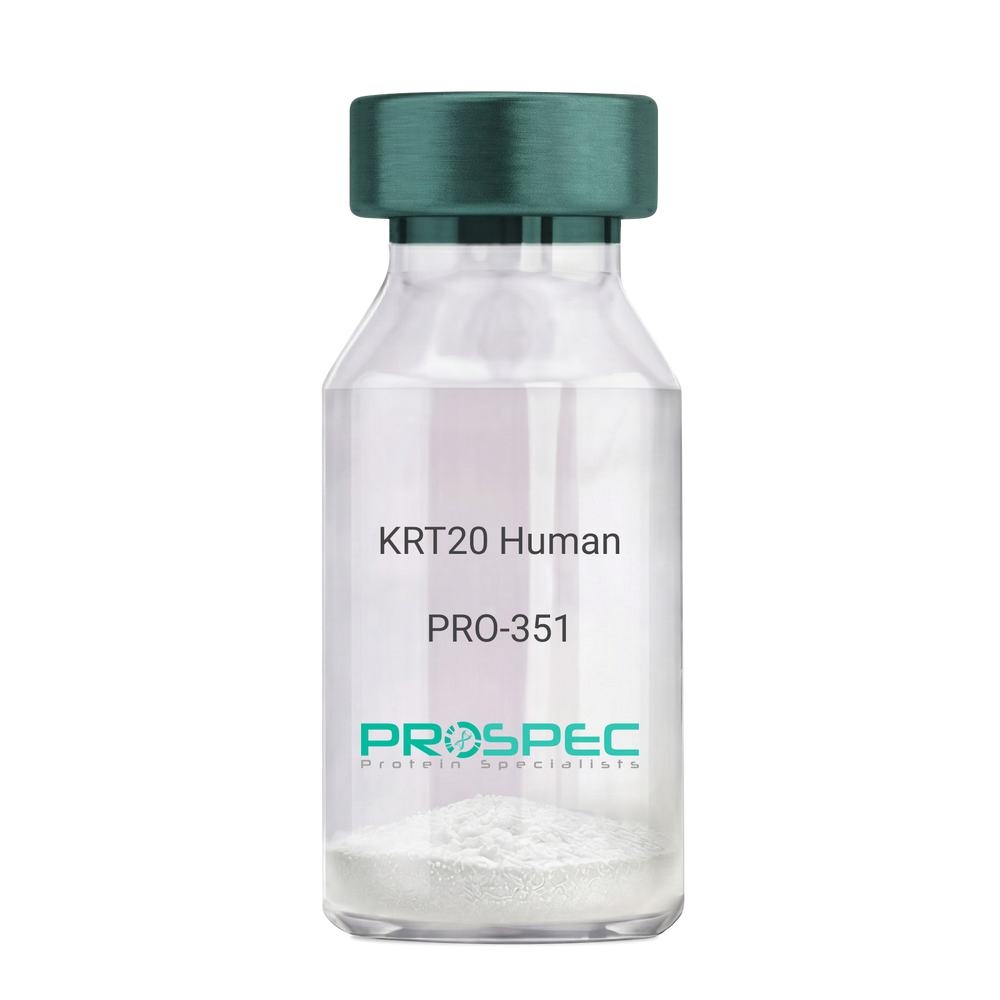
    Name :

    KRT20 Human

    Description:

    Cytokeratin 20 Human Recombinant

    Keratin type I cytoskeletal 20, Cytokeratin-20, CK-20, Keratin-20, K20, Protein IT, KRT20, CD20, CK20, KRT21, MGC35423.

    Product # :

    PRO-351

    Price :

    Quantity :

    Shipping Method :

    Room Temp Icon

    Shipped at Room temp

    Add To Cart

    More Info

    • description
    • source
    • formulation
    • purity
    • More Info

    Description

    Cytokeratin 20 Human Recombinant produced in E.Coli is a single,non-glycosylated polypeptide chain having a molecular mass of 48,553 Dalton. The KRT20 is purified by proprietary chromatographic techniques.

    Source

    Escherichia Coli.

    Formulation

    The protein (1mg/1ml) was lyophilized after from a sterile solution containing 30mM Tris-HCL pH-8, 9.5M urea, 2mM DDT, 2mM EDTA and 10mM methylammonium chloride.

    Purity

    Greater than 95.0% as determined by SDS-PAGE.

    More Info

    • Introduction

      KRT20 is a member of the keratin family. The keratins are intermediate filament proteins responsible for the structural integrity of epithelial cells and are subdivided into cytokeratins and hair keratins. The type I cytokeratins consist of acidic proteins which are arranged in pairs of heterotypic keratin chains. This cytokeratin is a major cellular protein of mature enterocytes and goblet cells and is specifically expressed in the gastric and intestinal mucosa. The type I cytokeratin genes are clustered in a region of chromosome 17q12-q21.

    • Synonyms

      Keratin type I cytoskeletal 20, Cytokeratin-20, CK-20, Keratin-20, K20, Protein IT, KRT20, CD20, CK20, KRT21, MGC35423.

    • Physical Appearance

      Sterile Filtered White lyophilized (freeze-dried) powder.

    • Stability

      Lyophilized KRT20 although stable at room temperature for 3 weeks, should be stored desiccated below -18°C. Upon reconstitution KRT20 should be stored at 4°C between 2-7 days and for future use below -18°C.For long term storage it is recommended to add a carrier protein (0.1% HSA or BSA).Please prevent freeze-thaw cycles.

    • Solubility

      It is recommended to reconstitute the lyophilized KRT20 in sterile 18MΩ-cm H2O not less than 100µg/ml, which can then be further diluted to other aqueous solutions.

    • Reconstitution to filaments

      Performed by mixing equimolar amounts of cytokeratins of type I and type II at concentrations of approx. 0.5 mg/ml, both dissolved in 9.5 M urea buffer (see above). Protofilaments and filament complexes are obtained by dialyzing the resulting polypeptide solution stepwise to a concentration of 4 M urea and then to low salt condition (50 mM NaCI, 2 mM dithiothreitol, 10 mM Tris-HCI, pH 7.4). For immunization purposes, the solution can be further dialyzed against PBS (phosphate buffered saline, e.g. Dulbecco's PBS).

    ProSpec's products are furnished for LABORATORY RESEARCH USE ONLY. The product may not be used as drugs, agricultural or pesticidal products, food additives or household chemicals.

    Krt20 Human
  • View Data Sheet

    Name :

    CD105 (27-581) Mouse

    Description:

    Endoglin (27-581) Mouse Recombinant

    Endoglin, Cell surface MJ7/18 antigen, CD105, Eng, Edg.

    Product # :

    CYT-972

    Price :

    Quantity :

    Shipping Method :

    Ice Icon

    Shipped with Ice Packs

    Add To Cart

    More Info

    • description
    • source
    • formulation
    • purity
    • More Info

    Description

    Endoglin Mouse Recombinant produced in Sf9 Baculovirus cells is a single, glycosylated polypeptide chain containing 563 amino acids (27-581 a.a.) and having a molecular mass of 60.9kDa (Migrates at 50-70kDa on SDS-PAGE under reducing conditions).Endoglin is expressed with an 8 amino acid His tag at C-Terminus and purified by proprietary chromatographic techniques.

    Source

    Sf9, Baculovirus cells.

    Formulation

    Endoglin protein solution (0.5mg/ml) containing Phosphate Buffered Saline (pH 7.4) and 10% glycerol.

    Purity

    Greater than 95.0% as determined by SDS-PAGE.

    More Info

    • Introduction

      Endoglin is a type I membrane glycoprotein located on cell surfaces and is part of the TGF beta receptor complex.
      The Endoglin protein consists of a homodimer of 180 kDA with disulfide links. Endoglin has been found on endothelial cells, activated macrophages, fibroblasts, and smooth muscle cells. Furthermore, Endoglin has been found to be part of the TGF-beta1 receptor complex. Endoglin thus may be involved in the binding of TGF-beta1, TGF-beta3, activin-A, BMP-2, and BMP-7. Beside TGF-beta signaling endoglin may have other functions. It has been postulated that endoglin is involved in the cytoskeletal organization affecting cell morphology and migration. Endoglin has a role in the development of the cardiovascular system and in vascular remodeling. Endoglin expression is regulated during heart development . Experimental mice without the endoglin gene die due to cardiovascular abnormalities.

    • Synonyms

      Endoglin, Cell surface MJ7/18 antigen, CD105, Eng, Edg.

    • Physical Appearance

      Sterile Filtered colorless solution.

    • Stability

      Store at 4°C if entire vial will be used within 2-4 weeks. Store, frozen at -20°C for longer periods of time. For long term storage it is recommended to add a carrier protein (0.1% HSA or BSA). Avoid multiple freeze-thaw cycles.

    • Amino Acid Sequence

      ERVGCDLQPV DPTRGEVTFT TSQVSEGCVA QAANAVREVH VLFLDFPGML SHLELTLQAS KQNGTETQEV FLVLVSNKNV FVKFQAPEIP LHLAYDSSLV IFQGQPRVNI TVLPSLTSRK QILDWAATKG AITSIAALDD PQSIVLQLGQ DPKAPFLCLP EAHKDMGATL EWQPRAQTPV QSCRLEGVSG HKEAYILRIL PGSEAGPRTV TVMMELSCTS GDAILILHGP PYVSWFIDIN HSMQILTTGE YSVKIFPGSK VKGVELPDTP QGLIAEARKL NASIVTSFVE LPLVSNVSLR ASSCGGVFQT TPAPVVTTPP KDTCSPVLLM SLIQPKCGNQ VMTLALNKKH VQTLQCTITG LTFWDSSCQA EDTDDHLVLS SAYSSCGMKV TAHVVSNEVI ISFPSGSPPL RKKVQCIDMD SLSFQLGLYL SPHFLQASNT IELGQQAFVQ VSVSPLTSEV TVQLDSCHLD LGPEGDMVEL IQSRTAKGSC VTLLSPSPEG DPRFSFLLRV YMVPTPTAGT LSCNLALRPS TLSQEVYKTV SMRLNIVSPD LSGKGLEHHH HHH

    • Background

      What is the molecular weight/Mw of CD105 Protein?
      CD105 Protein has a total Mw of 60.9kDa.

      What is the source or expression system of CD105 Protein?
      Sf9, Baculovirus cells.

      What is the Purity of CD105 Protein?
      CD105 Protein is >95% pure as determined by SDS-PAGE.

      What is the Biological Activity of CD105 Protein?
      The biological functionality of CD105 Protein will be determined in the future.

      What is the amino acid sequence of CD105 Protein?
      ERVGCDLQPV DPTRGEVTFT TSQVSEGCVA QAANAVREVH VLFLDFPGML SHLELTLQAS KQNGTETQEV FLVLVSNKNV FVKFQAPEIP LHLAYDSSLV IFQGQPRVNI TVLPSLTSRK QILDWAATKG AITSIAALDD PQSIVLQLGQ DPKAPFLCLP EAHKDMGATL EWQPRAQTPV QSCRLEGVSG HKEAYILRIL PGSEAGPRTV TVMMELSCTS GDAILILHGP PYVSWFIDIN HSMQILTTGE YSVKIFPGSK VKGVELPDTP QGLIAEARKL NASIVTSFVE LPLVSNVSLR ASSCGGVFQT TPAPVVTTPP KDTCSPVLLM SLIQPKCGNQ VMTLALNKKH VQTLQCTITG LTFWDSSCQA EDTDDHLVLS SAYSSCGMKV TAHVVSNEVI ISFPSGSPPL RKKVQCIDMD SLSFQLGLYL SPHFLQASNT IELGQQAFVQ VSVSPLTSEV TVQLDSCHLD LGPEGDMVEL IQSRTAKGSC VTLLSPSPEG DPRFSFLLRV YMVPTPTAGT LSCNLALRPS TLSQEVYKTV SMRLNIVSPD LSGKGLEHHH HHH

      What applications can CD105 Protein be used in?
      CD105 Protein can probably be used in western blot, ELISA and Lateral Flow.

      What is the endotoxin level for CD105 Protein?
      The endotoxin level is minimal, CD105 Protein was purified using conventional chromatography techniques.

    ProSpec's products are furnished for LABORATORY RESEARCH USE ONLY. The product may not be used as drugs, agricultural or pesticidal products, food additives or household chemicals.

    Endoglin 27 581 Mouse
  • View Data Sheet

    Name :

    BRMS1 Human

    Description:

    Breast Cancer Metastasis Suppressor 1 Human Recombinant

    Breast Cancer Metastasis Suppressor 1.

    Product # :

    PRO-1828

    Price :

    Quantity :

    Shipping Method :

    Ice Icon

    Shipped with Ice Packs

    Add To Cart

    More Info

    • description
    • source
    • formulation
    • purity
    • More Info

    Description

    BRMS1 Human Recombinant produced in E.coli is a single, non-glycosylated polypeptide chain containing 261 amino acids (1-246) and having a molecular mass of 29.9 kDa. BRMS1 is fused to a 15 amino acid T7-tag at N-terminus.

    Source

    Escherichia Coli.

    Formulation

    The BRMS1 solution (0.25mg/ml) contains 20mM Tris-HCl buffer (pH 8.0), 0.4M Urea and 10% glycerol.

    Purity

    Greater than 80% as determined by SDS-PAGE.

    More Info

    • Introduction

      BRMS1 protein, a member of the mSin3a family of HDAC (histone deacetylase complexes), is mainly restricted to the nucleus. BRMS1 holds two coiled-coil motifs and a few imperfect leucine zipper motifs. BRMS1 reduces the metastatic potential, but not the tumorogenicity, of melanoma cell lines and human breast cancer. Alternative splicing creates two transcript variants encoding different isoforms.

    • Synonyms

      Breast Cancer Metastasis Suppressor 1.

    • Physical Appearance

      Sterile Filtered clear solution.

    • Stability

      Store at 4°C if entire vial will be used within 2-4 weeks. Store, frozen at -20°C for longer periods of time. For long term storage it is recommended to add a carrier protein (0.1% HSA or BSA).Avoid multiple freeze-thaw cycles.

    • Amino Acid Sequence

      MASMTGGQQM GRGSHMPVQP PSKDTEEMEA EGDSAAEMNG EEEESEEERS GSQTESEEES SEMDDEDYER RRSECVSEML DLEKQFSELK EKLFRERLSQ LRLRLEEVGA ERAPEYTEPL GGLQRSLKIR IQVAGIYKGF CLDVIRNKYE CELQGAKQHL ESEKLLLYDT LQGELQERIQ RLEEDRQSLD LSSEWWDDKL HARGSSRSWD SLPPSKRKKA PLVSGPYIVY MLQEIDILED WTAIKKARAA VSPQKRKSDG P

    ProSpec's products are furnished for LABORATORY RESEARCH USE ONLY. The product may not be used as drugs, agricultural or pesticidal products, food additives or household chemicals.

    Brms1 Human
  • View Data Sheet

    Name :

    POLD4 Human

    Description:

    Polymerase Delta 4 Human Recombinant

    DNA polymerase delta subunit 4, p12, POLDS, DNA polymerase delta subunit p12, POLD4, Polymerase Delta 4.

    Product # :

    PRO-1667

    Price :

    Quantity :

    Shipping Method :

    Ice Icon

    Shipped with Ice Packs

    Add To Cart

    More Info

    • description
    • source
    • formulation
    • purity
    • More Info

    Description

    POLD4 Human Recombinant produced in E.coli is a single, non-glycosylated polypeptide chain containing 130 amino acids (1-107) and having a molecular mass of 14.8kDa.POLD4 is fused to a 23 amino acid His-tag at N-terminus & purified by proprietary chromatographic techniques.

    Source

    Escherichia Coli.

    Formulation

    The POLD4 solution (0.25mg/ml) contains 20mM Tris-HCl buffer (pH 8.0), 0.2M NaCl, 40% glycerol and 2mM DTT.

    Purity

    Greater than 90.0% as determined by SDS-PAGE.

    More Info

    • Introduction

      Polymerase Delta 4 also known as POLD4 is the smallest subunit of DNA polymerase delta. DNA polymerase delta which takes a vital part in DNA replication and repair possesses both polymerase and 3' to 5' exonuclease activity. POLD4 increases the activity of DNA polymerase delta and takes a part in fork repair and stabilization during interactions with the DNA helicase Bloom syndrome protein. POLD4 contributes to PCNA-dependent activity of DNA polymerase delta.

    • Synonyms

      DNA polymerase delta subunit 4, p12, POLDS, DNA polymerase delta subunit p12, POLD4, Polymerase Delta 4.

    • Physical Appearance

      Sterile Filtered colorless solution.

    • Stability

      Store at 4°C if entire vial will be used within 2-4 weeks. Store, frozen at -20°C for longer periods of time. For long term storage it is recommended to add a carrier protein (0.1% HSA or BSA).Avoid multiple freeze-thaw cycles.

    • Amino Acid Sequence

      MGSSHHHHHH SSGLVPRGSH MGSMGRKRLI TDSYPVVKRR EGPAGHSKGE LAPELGEEPQ PRDEEEAELE LLRQFDLAWQ YGPCTGITRL QRWCRAKQMG LEPPPEVWQV LKTHPGDPRF QCSLWHLYPL.

    ProSpec's products are furnished for LABORATORY RESEARCH USE ONLY. The product may not be used as drugs, agricultural or pesticidal products, food additives or household chemicals.

    Pold4 Human
  • View Data Sheet

    Name :

    MARCKSL1 Human

    Description:

    MARCKS-Like 1 Human Recombinant

    F52, MACMARCKS, MLP, MLP1, MRP, MARCKS-related protein, MARCKS-like protein 1, Macrophage myristoylated alanine-rich C kinase substrate, MARCKSL1.

    Product # :

    PRO-1423

    Price :

    Quantity :

    Shipping Method :

    Ice Icon

    Shipped with Ice Packs

    Add To Cart

    More Info

    • description
    • source
    • formulation
    • purity
    • More Info

    Description

    MARCKSL1 Human Recombinant produced in E. coli is a single polypeptide chain containing 218 amino acids (1-195) and having a molecular mass of 21.9kDa. MARCKSL1 is fused to a 23 amino acid His-tag at N-terminus & purified by proprietary chromatographic techniques.

    Source

    E.coli.

    Formulation

    The MARCKSL1 solution (0.25mg/ml) contains 20mM Tris-HCl buffer (pH 8.0), 0.1M NaCl and 20% glycerol.

    Purity

    Greater than 90% as determined by SDS-PAGE.

    More Info

    • Introduction

      MARCKS-related protein (MARCKSL1) which is a part of MARCKS family of PKC substrate is broadly used in the signal transduction studies as an indicator of PKC activation. MARCKSL1 plays a part in the coordination of membrane-cytoskeletal signaling events, including secretion, migration, phagocytosis and cell adhesion and is expressed in a variety of tissues with highest levels found in testis and uterus. Furthermore, MARCKSL1 serves as a regulator of Integrin activation and is thought to regulate Integrin-dependent signal transduction pathways, particularly those involved in macrophage spreading.

    • Synonyms

      F52, MACMARCKS, MLP, MLP1, MRP, MARCKS-related protein, MARCKS-like protein 1, Macrophage myristoylated alanine-rich C kinase substrate, MARCKSL1.

    • Physical Appearance

      Sterile Filtered colorless solution.

    • Stability

      Store at 4°C if entire vial will be used within 2-4 weeks. Store, frozen at -20°C for longer periods of time. For long term storage it is recommended to add a carrier protein (0.1% HSA or BSA).Avoid multiple freeze-thaw cycles.

    • Amino Acid Sequence

      MGSSHHHHHH SSGLVPRGSH MGSMGSQSSK APRGDVTAEE AAGASPAKAN GQENGHVKSN GDLSPKGEGE SPPVNGTDEA AGATGDAIEP APPSQGAEAK GEVPPKETPK KKKKFSFKKP FKLSGLSFKR NRKEGGGDSS ASSPTEEEQE QGEIGACSDE GTAQEGKAAA TPESQEPQAK GAEASAASEE EAGPQATEPS TPSGPESGPT PASAEQNE.

    ProSpec's products are furnished for LABORATORY RESEARCH USE ONLY. The product may not be used as drugs, agricultural or pesticidal products, food additives or household chemicals.

    Marcksl1 Human
  • View Data Sheet

    Name :

    RABL5 Human

    Description:

    RAB, Member RAS Oncogene Family-Like 5 Human Recombinant

    Rab-like protein 5 isoform a, Rab-like protein 5, RABL5, RAB, Member RAS Oncogene Family-Like 5.

    Product # :

    PRO-1472

    Price :

    Quantity :

    Shipping Method :

    Ice Icon

    Shipped with Ice Packs

    Add To Cart

    More Info

    • description
    • source
    • formulation
    • purity
    • More Info

    Description

    RABL5 Human Recombinant produced in E.coli is a single, non-glycosylated polypeptide chain containing 208 amino acids (1-185) and having a molecular mass of 23.2 kDa. RABL5 is fused to a 23 amino acid His-tag at N-terminus & purified by proprietary chromatographic techniques.

    Source

    E.coli.

    Formulation

    The RABL5 solution (0.5mg/1ml) contains 20mM Tris-HCl buffer (pH 8.0), 0.1M NaCl, 10% glycerol and 1mM DTT.

    Purity

    Greater than 95% as determined by SDS-PAGE.

    More Info

    • Introduction

      RAB, Member RAS Oncogene Family-Like 5 (RABL5) belongs to the Ras superfamily of small GTP-binding proteins. The Ras-related superfamily of guanine nucleotide binding proteins includes the R-Ras, Rap, Ral/Rec and Rho/Rab subfamilies. Rab proteins have an essential role in endocytosis or in biosynthetic protein transport. The transporting process of newly synthesized proteins from the endoplasmic reticulum to various stacks of the Golgi complex and to secretory vesicles includes the movement of carrier vesicles and requires Rab protein function.

    • Synonyms

      Rab-like protein 5 isoform a, Rab-like protein 5, RABL5, RAB, Member RAS Oncogene Family-Like 5.

    • Physical Appearance

      Sterile Filtered colorless solution.

    • Stability

      Store at 4°C if entire vial will be used within 2-4 weeks. Store, frozen at -20°C for longer periods of time. For long term storage it is recommended to add a carrier protein (0.1% HSA or BSA).Avoid multiple freeze-thaw cycles.

    • Amino Acid Sequence

      MGSSHHHHHH SSGLVPRGSH MGSMLKAKIL FVGPCESGKT VLANFLTESS DITEYSPTQG VRILEFENPH VTSNNKGTGC EFELWDCGGD AKFESCWPAL MKDAHGVVIV FNADIPSHRK EMEMWYSCFV QQPSLQDTQC MLIAHHKPGS GDDKGSLSLS PPLNKLKLVH SNLEDDPEEI RMEFIKYLKS IINSMSESRD REEMSIMT.

    ProSpec's products are furnished for LABORATORY RESEARCH USE ONLY. The product may not be used as drugs, agricultural or pesticidal products, food additives or household chemicals.

    Rabl5 Human
  • View Data Sheet

    Name :

    Endostatin Human

    Description:

    Endostatin Human Recombinant

    Product # :

    PRO-248

    Price :

    Quantity :

    Shipping Method :

    Ice Icon

    Shipped with Ice Packs

    Add To Cart

    More Info

    • description
    • source
    • formulation
    • purity
    • biological activity
    • More Info

    Description

    Endostatin Human Recombinant produced in E.Coli is a single, non-glycosylated, polypeptide having a predicted molecular mass of 20kDa.C-terminal fragment of collagen XVIII that has been shown to act as a potent inhibitor of angiogenesis and tumor growth in vitro and in vivo. Induces tyrosine phosphorylation of Shc (SH2 domain adapter protein) leading to specific inhibition in endothelial cell proliferation.The Endostatin is purified by proprietary chromatographic techniques.

    Source

    E.coli.

    Formulation

    The recombinant Human Endostatin is formulated with 30mM Sodium acetate buffer and Mannitol, pH-5.5.

    Purity

    Greater than 95.0% as determined by SDS-PAGE.

    Biological Activity

    The activity was found to be 16,000IU/mg.

    More Info

    • Introduction

      Once a cluster of cancer cells reaches a diameter of about 1–2 mm, it must develop a blood supply in order to grow larger. Given that diffusion is no longer adequate to supply the cancerous cells with oxygen and nutrients and to remove wastes. Therefore, these cells secrete substances that promote the formation of new blood vessels (angiogenesis), which are vital for the growth and persistence of solid tumors and their metastases.
      The production of several angiogenic factors (FGF-a, FGF-b, VEGF and VPF) is upregulated by tumors in order to stimulate angiogenesis. However, numerous malignant tumors also generate inhibitors of angiogenesis which include angiostatin and thrombospondin. The angiogenic phenotype is basically the end result of a net balance between the positive and negative regulators of neovascularization mentioned above. Endostatin’s role is to inhibit endothelial proliferation, therefore it is an effective angiogenesis inhibitor.

    • Physical Appearance

      Sterile filtered liquid formulation.

    • Stability

      Endostatin should be stored at 2-8°C.Do NOT Freeze!

    ProSpec's products are furnished for LABORATORY RESEARCH USE ONLY. The product may not be used as drugs, agricultural or pesticidal products, food additives or household chemicals.

    Endostatin Human
  • View Data Sheet

    Name :

    HPV 11

    Description:

    Human Papillomavirus 11 Recombinant

    Papillomavirus, HPV, Papilloma Virus.

    Product # :

    HPV-004

    Price :

    Quantity :

    Shipping Method :

    Ice Icon

    Shipped with Ice Packs

    Add To Cart

    More Info

    • description
    • source
    • formulation
    • purity
    • More Info

    Description

    Recombinant HPV-11 antigen is a 58.1kDa protein covering the full length of HPV-11 major capsid, its N-terminus is fused with a GST tag, having a total molecular weight of 80kDa. The HPV-11 was purified by proprietary chromatographic technique.

    Source

    E.Coli.

    Formulation

    Recombinant HPV11 solution in PBS, 2M Urea and 25mM K2CO3.

    Purity

    Protein is >90% pure as determined by 12% SDS-PAGE (coomassie staining).

    More Info

    • Introduction

      Human papillomaviruses (HPVs) are a group family with more than 150 related viruses. HP 6 and 11 considered as low-risk HPVs can be sexually transmitted, causing warts to emerge on or around the genitals or anus, known as condylomata acuminate. HPV 11 major/large capsid antigen is used in clinical diagnosis to test the specific antibody to this virus induced by the virus infection, the positive reaction of this antibody is deemed as a marker for present and past infection. Furthermore, HPV 11 large capsid is used as a potential candiadate for vaccine development.

    • Synonyms

      Papillomavirus, HPV, Papilloma Virus.

    • Physical Appearance

      Sterile filtered clear liquid formulation.

    • Stability

      Recombinant HPV-11 although stable at 4°C for 1 week, should be stored below -18°C. Please prevent freeze thaw cycles.

    • Amino Acid Sequence

      VDKLWRPSDSTVYVPPPNPVSKVVATDAYVKRTNIFYHASSSRLLAVGHPYYSIKKVNKTVVPK
      VSGYQYRVFKVVLPDPNKFALPDSSLFDPTTQRLVWACTGLEVGRGQPLGVGVSGHPLLNKYDD
      VENSGGYGGNPGQDNRVNVGMDYKQTQLCMVGCAPPLGEHWGKGTQCSNTSVQNGDCPPLELIT
      SVIQDGDMVDTGFGAMNFADLQTNKSDVPLDICGTVCKYPDYLQMAADPYGDRLFFYLRKEQMF
      ARHFFNRAGTVGEPVPDDLLVKGGNNRSSVASSIYVHTPSGSLVSSEAQLFNKPYWLQKAQGHN
      NGICWGNHLFVTVVDTTRSTNMTLCASVSKSATYTNSDYKEYMRHVEEFDLQFIFQLCSITLSA
      EVMAYIHTMNPSVLEDWNFGLSPPPNGTLEDTYRYVQSQAITCQKPTPEKEKQDPYKDMSFWEV
      NLKEKFSSELDQFPLGRKFLLQSGYRGRTSARTGIKRPAVSKPSTAPKRKRTKTKKKFGTKLSR.

    • Applications

      Each laboratory should determine an optimum working titer for use in its particular application.

    ProSpec's products are furnished for LABORATORY RESEARCH USE ONLY. The product may not be used as drugs, agricultural or pesticidal products, food additives or household chemicals.

    Hpv 11
  • View Data Sheet

    Name :

    HTLV-1 gp21

    Description:

    HTLV-1 gp21 Recombinant

    Product # :

    HIV-141

    Price :

    Quantity :

    Shipping Method :

    Ice Icon

    Shipped with Ice Packs

    Add To Cart

    More Info

    • description
    • formulation
    • purity
    • More Info

    Description

    The E.Coli derived recombinant protein contains the gp21 immunodominant region, 1-152 amino acids, the MW is 17.9 kDa. Fused with a His tag at C-Terminus.

    Formulation

    1mg/ml solution in PBS

    Purity

    Protein is > 90% pure as determined by SDS-PAGE.

    More Info

    • Introduction

      Human T-lymphotropic virus (HTLV) is a human, single-stranded RNA retrovirus that causes T-cell leukemia and T-cell lymphoma. The virus activates a subset of T-helper cellscalled Th1cells. The result is a proliferation of Th1 cells and overproduction of Th1 related cytokines (mainly IFN-gamma and TNF-alpha). Feedback mechanisms of these cytokines cause a suppression of the Th2 lymphocytes and a reduction of Th2 cytokine production (mainly IL-4, IL-5, IL-10 and IL-13). The end result is a reduction in the ability of the infected host to mount an adequate immune response to invading organisms that require a predominantly Th2 dependant response (these include parasitic infections and production of mucosal and humoral antibodies).

    • Stability

      HTLV-1 gp21 although stable at 4°C for 1 week, should be stored below -18°C. Please prevent freeze thaw cycles.

    • Purification Method

      HTLV-1 gp21 was purified by proprietary chromatographic technique.

    ProSpec's products are furnished for LABORATORY RESEARCH USE ONLY. The product may not be used as drugs, agricultural or pesticidal products, food additives or household chemicals.

    Htlv 1 Gp21
  • View Data Sheet

    Name :

    Anaplasma p44

    Description:

    Anaplasma phagocytophilum p44 Recombinant

    Product # :

    PRO-2566

    Price :

    Quantity :

    Shipping Method :

    Ice Icon

    Shipped with Ice Packs

    Add To Cart

    More Info

    • description
    • source
    • formulation
    • purity
    • More Info

    Description

    Recombinant Anaplasma p44 produced in E.Coli is a single, non-glycosylated polypeptide chain having a molecular mass of 49kDa. Anaplasma p44 is expressed with a -10x His tag at N-terminus and purified by proprietary chromatographic techniques.

    Source

    Escherichia Coli.

    Formulation

    Anaplasma p44 is supplied at a 20mM HEPES buffer pH-8.0, 250mM NaCl and 6M Urea.

    Purity

    Greater than 95% as determined by SDS-PAGE.

    More Info

    • Introduction

      Anaplasma p44 which belongs to the outer membrane antigen superfamily (OMP1/Msp2/p44), is a serodiagnostic antigen for HGA. Anaplasma p44 allows the bacterium to adhere to the host cell and prevents host immune surveillance.

    • Physical Appearance

      Sterile Filtered solution.

    • Stability

      Store at 4°C if entire vial will be used within 2-4 weeks. Store, frozen at -20°C for longer periods of time. Avoid multiple freeze-thaw cycles.

    • Immunological Functions

      1. Binds IgG- and IgM-type human antibodies. 2. Immunodot test with positive/negative samples.

    ProSpec's products are furnished for LABORATORY RESEARCH USE ONLY. The product may not be used as drugs, agricultural or pesticidal products, food additives or household chemicals.

    Anaplasma Phagocytophilum P44
  • View Data Sheet

    Name :

    Leptin Rat

    Description:

    Leptin Rat Recombinant

    OB Protein, Obesity Protein, OBS, Obesity factor.

    Product # :

    CYT-227

    Price :

    Quantity :

    Shipping Method :

    Room Temp Icon

    Shipped at Room temp

    Add To Cart

    More Info

    • description
    • source
    • formulation
    • purity
    • biological activity
    • More Info

    Description

    Leptin Rat Recombinant produced in E.Coli is a single, non-glycosylated, polypeptide chain containing 147 amino acids and having a molecular mass of 16 kDa.The Leptin is purified by proprietary chromatographic techniques.

    Source

    Escherichia Coli.

    Formulation

    The protein was lyophilized from a concentrated (1mg/ml) solution with 0.0045mM NaHCO3.

    Purity

    Greater than 95.0% as determined by:
    (a) Analysis by SEC-HPLC.
    (b) Analysis by SDS-PAGE.

    Biological Activity

    Biological activity of Leptin Rat is evidenced by inducing proliferation of BAF/3 cells stably transfected with the long form of human leptin receptor.

    More Info

    • Introduction

      A 16-kDa peptide hormone secreted from white adipocytes and implicated in the regulation of food intake and energy balance. Leptin provides the key afferent signal from fat cells in the feedback system that controls body fat stores.

    • Synonyms

      OB Protein, Obesity Protein, OBS, Obesity factor.

    • Physical Appearance

      Sterile Filtered White lyophilized (freeze-dried) powder.

    • Stability

      Lyophilized Leptin although stable at room temperature for 3 weeks, should be stored desiccated below -18°C. Upon reconstitution Leptin should be stored at 4°C between 2-7 days and for future use below -18°C.For long term storage it is recommended to add a carrier protein (0.1% HSA or BSA).Please prevent freeze-thaw cycles.

    • Solubility

      It is recommended to reconstitute the lyophilized Leptin in sterile 18MΩ-cm H2O not less than 100µg/ml, which can then be further diluted to other aqueous solutions.

    • Amino Acid Sequence

      The sequence of the first five N-terminal amino acids was determined and was found to be Ala-Val-Pro-Ile-His.

    • Protein content

      Protein quantitation was carried out by two independent methods:1. UV spectroscopy at 280 nm using the absorbency value of 0.201 as the extinction coefficient for a 0.1% (1mg/ml) solution. This value is calculated by the PC GENE computer analysis program of protein sequences (IntelliGenetics).2. Analysis by RP-HPLC, using a calibrated solution of Leptin rat as a Reference Standard.

    ProSpec's products are furnished for LABORATORY RESEARCH USE ONLY. The product may not be used as drugs, agricultural or pesticidal products, food additives or household chemicals.

    Leptin Rat
  • View Data Sheet

    Name :

    MMP 7 Human

    Description:

    Matrix Metalloproteinase-7 Human Recombinant

    Matrilysin, EC 3.4.24.23, Pump-1 protease, Uterine metalloproteinase, Matrix metalloproteinase-7, MMP-7, Matrin, MPSL1, PUMP-1, MMP7.

    Product # :

    ENZ-867

    Price :

    Quantity :

    Shipping Method :

    Ice Icon

    Shipped with Ice Packs

    Add To Cart

    More Info

    • description
    • source
    • formulation
    • purity
    • More Info

    Description

    MMP-7 Human Recombinant produced in E.Coli is a single, non-glycosylated polypeptide chain containing 174 amino acids (95-267 a.a) and having a molecular mass of 19.2kDa.MMP7 is purified by proprietary chromatographic techniques.

    Source

    Escherichia Coli.

    Formulation

    MMP7 protein solution (1mg/ml) containing 20mM Tris 8.0 and 10% glycerol.

    Purity

    Greater than 90% as determined by SDS-PAGE.

    More Info

    • Introduction

      Matrix metalloproteinase-7 (MMP-7) also known as matrilysin and PUMP (EC 3.4.24.23) cleaves a number of substrates including collagen types IV and X, elastin, fibronectin, gelatin, laminin and proteoglycans. MMP-7 is closely related to the stromelysin family members but is encoded by a different gene. MMP-7 is the smallest of all the MMPs consisting of a pro-peptide domain and a catalytic domain. It lacks the hemopexin-like domain common to other members of the MMPs. MMP-7 is secreted as a 28 kDa proenzyme and can be activated in vitro by organomercurials and trypsin and in vivo by MMP-3 to a 18 kDa active MMP-7 enzyme. Once activated, MMP-7 can activate pro-MMP-1 and pro-MMP-9 but not pro-MMP-2. MMP-7 is widely expressed having been reported in elevated levels in cycling endometrium as well as in colorectal cancers and adenomas, hepatocellular carcinomas, rectal carcinomas, and approximately 50% of gliomas.

    • Synonyms

      Matrilysin, EC 3.4.24.23, Pump-1 protease, Uterine metalloproteinase, Matrix metalloproteinase-7, MMP-7, Matrin, MPSL1, PUMP-1, MMP7.

    • Physical Appearance

      Sterile Filtered colorless solution.

    • Stability

      Store at 4°C if entire vial will be used within 2-4 weeks. Store, frozen at -20°C for longer periods of time. For long term storage it is recommended to add a carrier protein (0.1% HSA or BSA). Avoid multiple freeze-thaw cycles.

    • Amino Acid Sequence

      MYSLFPNSPK WTSKVVTYRI VSYTRDLPHI TVDRLVSKAL NMWGKEIPLH FRKVVWGTAD IMIGFARGAH GDSYPFDGPG NTLAHAFAPG TGLGGDAHFD EDERWTDGSS LGINFLYAAT HELGHSLGMG HSSDPNAVMY PTYGNGDPQN FKLSQDDIKG IQKLYGKRSN SRKK.

    ProSpec's products are furnished for LABORATORY RESEARCH USE ONLY. The product may not be used as drugs, agricultural or pesticidal products, food additives or household chemicals.

    Mmp 7 Human
  • View Data Sheet

    Name :

    Leptin Chicken

    Description:

    Leptin Chicken Recombinant

    OB Protein, Obesity Protein, OBS, Obesity factor.

    Product # :

    CYT-505

    Price :

    Quantity :

    Shipping Method :

    Room Temp Icon

    Shipped at Room temp

    Add To Cart

    More Info

    • description
    • source
    • formulation
    • purity
    • biological activity
    • More Info

    Description

    Leptin Chicken Recombinant produced in E.Coli is a single, non-glycosylated, polypeptide chain containing 145 amino acids and having a molecular mass of 16 kDa.The Leptin is purified by proprietary chromatographic techniques.

    Source

    Escherichia Coli.

    Formulation

    The protein was lyophilized from a concentrated (1mg/ml) solution with 0.0045mM NaHCO3.

    Purity

    Greater than 95.0% as determined by:
    (a) Analysis by SEC-HPLC.
    (b) Analysis by SDS-PAGE.

    Biological Activity

    Biological active as evidenced by inducing proliferation of BAF/3 cells stably transfected with the long form of human leptin receptor. Its activity is however 5-10 fold lower as compared to mammalian leptins.

    More Info

    • Introduction

      A 16-kDa peptide hormone secreted from white adipocytes and implicated in the regulation of food intake and energy balance. Leptin provides the key afferent signal from fat cells in the feedback system that controls body fat stores.

    • Synonyms

      OB Protein, Obesity Protein, OBS, Obesity factor.

    • Physical Appearance

      Sterile Filtered White lyophilized (freeze-dried) powder.

    • Stability

      Lyophilized Leptin although stable at room temperature for 3 weeks, should be stored desiccated below -18°C. Upon reconstitution Leptin should be stored at 4°C between 2-7 days and for future use below -18°C.For long term storage it is recommended to add a carrier protein (0.1% HSA or BSA).Please prevent freeze-thaw cycles.

    • Solubility

      It is recommended to reconstitute the lyophilized Leptin in sterile 18MΩ-cm H2O not less than 100µg/ml, which can then be further diluted to other aqueous solutions.

    • Amino Acid Sequence

      The sequence of the first five N-terminal amino acids was determined and was found to be Ala-Val-Pro-Cys-Gln.

      Recombinant Chicken leptin was produced according to the a.a. sequence published by the groups of Taouis & McMutry, see Raver et al. Protein Expr Purif. 1998 Dec; 14(3):403-8.

    • Protein content

      Protein quantitation was carried out by two independent methods1. UV spectroscopy at 280 nm using the absorbency value of 0.19 as the extinction coefficient for a 0.1% (1mg/ml) solution. This value is calculated by the PC GENE computer analysis program of protein sequences (IntelliGenetics). 2. Analysis by RP-HPLC,using calibrated solution of Leptin Chicken as a Reference Standard.

    ProSpec's products are furnished for LABORATORY RESEARCH USE ONLY. The product may not be used as drugs, agricultural or pesticidal products, food additives or household chemicals.

    Leptin Chicken
  • View Data Sheet

    Name :

    RPS5 Human

    Description:

    Ribosomal Protein S5 Human Recombinant

    40S ribosomal protein S5, S5, RPS5.

    Product # :

    PRO-1300

    Price :

    Quantity :

    Shipping Method :

    Ice Icon

    Shipped with Ice Packs

    Add To Cart

    More Info

    • description
    • source
    • formulation
    • purity
    • More Info

    Description

    RPS5 Human Recombinant produced in E.Coli is a single, non-glycosylated polypeptide chain containing 227 amino acids (1-204 a.a.) and having a molecular mass of 25.3kDa.RPS5 is fused to a 23 amino acid His-tag at N-terminus & purified by proprietary chromatographic techniques.

    Source

    Escherichia Coli.

    Formulation

    RPS5 protein solution (0.25mg/ml) contains 20mM Tris-HCl buffer, (pH 8.0), 0.2M NaCl, 50% glycerol and 2mM DTT.

    Purity

    Greater than 90% as determined by SDS-PAGE.

    More Info

    • Introduction

      40S ribosomal protein S5 (RPS5) is a ribosomal protein, which is a member of the ribosomal protein S7P family.Ribosomes, which are the organelles that catalyze protein synthesis, composed of a small subunit and a large subunit that comprise of over 80 distinct ribosomal proteins. RPS5 is a 204 amino acid component of the 40S complex. RPS5 proteins exist as multiple processed pseudogenes which are scattered throughout the genome. RPS5 is expressed at varying amounts in colorectal cancer cells, proposing a possible role in carconigenesis.

    • Synonyms

      40S ribosomal protein S5, S5, RPS5.

    • Physical Appearance

      Sterile filtered colorless solution.

    • Stability

      Store at 4°C if entire vial will be used within 2-4 weeks. Store, frozen at -20°C for longer periods of time. For long term storage it is recommended to add a carrier protein (0.1% HSA or BSA).Avoid multiple freeze-thaw cycles.

    • Amino Acid Sequence

      MGSSHHHHHH SSGLVPRGSH MGSMTEWETA APAVAETPDI KLFGKWSTDD VQINDISLQD YIAVKEKYAK YLPHSAGRYA AKRFRKAQCP IVERLTNSMM MHGRNNGKKL MTVRIVKHAF EIIHLLTGEN PLQVLVNAII NSGPREDSTR IGRAGTVRRQ AVDVSPLRRV NQAIWLLCTG AREAAFRNIK TIAECLADEL INAAKGSSNS YAIKKKDELE RVAKSNR.

    ProSpec's products are furnished for LABORATORY RESEARCH USE ONLY. The product may not be used as drugs, agricultural or pesticidal products, food additives or household chemicals.

    RPS5 Human
  • View Data Sheet

    Name :

    CCL14 Human, His

    Description:

    HCC-1 (CCL14) Human Recombinant, His Tag

    Small inducible cytokine A14, CCL14, Chemokine CC-1/CC-3, HCC-1/HCC-3, HCC-1(1-74), NCC-2, chemokine (C-C motif) ligand 14, CC-1, CC-3, CKb1, MCIF, SY14, HCC-1, HCC-3, SCYL2, SCYA14.

    Product # :

    CHM-253

    Price :

    Quantity :

    Shipping Method :

    Ice Icon

    Shipped with Ice Packs

    Add To Cart

    More Info

    • description
    • source
    • formulation
    • purity
    • More Info

    Description

    HCC-1 Human Recombinant fused with a 21 amino acid His tag at N-terminus produced in E.Coli is a single, non-glycosylated, polypeptide chain containing 95 amino acids (20-93 a.a.) and having a molecular mass of 10.9kDa. The HCC-1 is purified by proprietary chromatographic techniques.

    Source

    Escherichia Coli.

    Formulation

    The HCC-1 solution (0.5 mg/ml) contains Phosphate Buffered Saline pH7.4 containing 10% glycerol.

    Purity

    Greater than 95.0% as determined by SDS-PAGE.

    More Info

    • Introduction

      Chemokine (C-C motif) ligand 14 (CCL14) is a small cytokine belonging to the CC chemokine family. It is also commonly known as HCC-1. It is produced as a protein precursor that is procesed to generate a mature active protein containing 74 amino acids that and is 46% identical in amino acid composition to CCL3 and CCL4. This chemokine is expressed in various tissues including spleen, bone marrow, liver, muscle, and gut. CCL13 activates monocytes, but does not induce their chemotaxis. Human CCL13 is located on chromosome 17 within a cluster of other chemokines belonging to the CC family.

    • Synonyms

      Small inducible cytokine A14, CCL14, Chemokine CC-1/CC-3, HCC-1/HCC-3, HCC-1(1-74), NCC-2, chemokine (C-C motif) ligand 14, CC-1, CC-3, CKb1, MCIF, SY14, HCC-1, HCC-3, SCYL2, SCYA14.

    • Physical Appearance

      Sterile Filtered colorless solution.

    • Stability

      Store at 4°C if entire vial will be used within 2-4 weeks. Store, frozen at -20°C for longer periods of time. For long term storage it is recommended to add a carrier protein (0.1% HSA or BSA).Avoid multiple freeze-thaw cycles.

    • Amino Acid Sequence

      MGSSHHHHHH SSGLVPRGSH MTKTESSSRG PYHPSECCFT YTTYKIPRQR IMDYYETNSQ CSKPGIVFIT KRGHSVCTNP SDKWVQDYIK DMKEN.

    • Background

      What is the molecular weight/Mw of CCL14 HUMAN, HIS Protein?
      CCL14 HUMAN, HIS Protein has a total Mw of 10.9kDa.

      What is the source or expression system of CCL14 HUMAN, HIS Protein?
      Escherichia Coli.

      What is the Purity of CCL14 HUMAN, HIS Protein?
      CCL14 HUMAN, HIS Protein is >95% pure as determined by SDS-PAGE.

      What is the Biological Activity of CCL14 HUMAN, HIS Protein?
      The biological functionality of CCL14 HUMAN, HIS Protein will be determined in the future.

      What is the amino acid sequence of CCL14 HUMAN, HIS Protein?
      MGSSHHHHHH SSGLVPRGSH MTKTESSSRG PYHPSECCFT YTTYKIPRQR IMDYYETNSQ CSKPGIVFIT KRGHSVCTNP SDKWVQDYIK DMKEN.

      What applications can CCL14 HUMAN, HIS Protein be used in?
      CCL14 HUMAN, HIS Protein can probably be used in western blot, ELISA and Lateral Flow.

      What is the endotoxin level for CCL14 HUMAN, HIS Protein?
      The endotoxin level is minimal, CCL14 HUMAN, HIS Protein was purified using conventional chromatography techniques.


    ProSpec's products are furnished for LABORATORY RESEARCH USE ONLY. The product may not be used as drugs, agricultural or pesticidal products, food additives or household chemicals.

    Hcc 1 Human His
  • View Data Sheet

    Name :

    RTN4R Human

    Description:

    Reticulon 4 Receptor Human Recombinant

    Reticulon 4 Receptor, Nogo-66 Receptor, Nogo Receptor, NOGOR, NGR , Reticulon-4 Receptor, UNQ330/PRO526.

    Product # :

    PRO-2353

    Price :

    Quantity :

    Shipping Method :

    Ice Icon

    Shipped with Ice Packs

    Add To Cart

    More Info

    • description
    • source
    • formulation
    • purity
    • More Info

    Description

    RTN4R produced in Sf9 Baculovirus cells is a single, glycosylated polypeptide chain containing 429 amino acids (27-447 a.a.) and having a molecular mass of 46.3kDa (Molecular size on SDS-PAGE will appear at approximately 40-57 kDa). RTN4R is expressed with a 8 amino acid His tag at C-Terminus and purified by proprietary chromatographic techniques.

    Source

    Sf9, Baculovirus cells.

    Formulation

    RTN4R protein solution (0.5mg/ml) contains Phosphate Buffered Saline (pH 7.4) and 10% glycerol.

    Purity

    Greater than 90.0% as determined by SDS-PAGE.

    More Info

    • Introduction

      Reticulon 4 Receptor, also known as RTN4R, plays a role as a receptor for RTN4, OMG and MAG. RTN4R is a glycosylphosphoinositol (GPI)-anchored protein which is a part from the Nogo recptor family. RTN4R is expressed mainly in neurons and their axons and is regulates axonal regeneration and plasticity in the adult central nervous system. RTN4R is a potential drug target for treating various neurological cases such as spinal cord injury, CNS lesions, stroke and Alzheimer's disease.

    • Synonyms

      Reticulon 4 Receptor, Nogo-66 Receptor, Nogo Receptor, NOGOR, NGR , Reticulon-4 Receptor, UNQ330/PRO526.

    • Physical Appearance

      Sterile Filtered colorless solution.

    • Stability

      Store at 4°C if entire vial will be used within 2-4 weeks. Store, frozen at -20°C for longer periods of time. For long term storage it is recommended to add a carrier protein (0.1% HSA or BSA). Avoid multiple freeze-thaw cycles.

    • Amino Acid Sequence

      CPGACVCYNE PKVTTSCPQQ GLQAVPVGIP AASQRIFLHG NRISHVPAAS FRACRNLTIL WLHSNVLARI DAAAFTGLAL LEQLDLSDNA QLRSVDPATF HGLGRLHTLH LDRCGLQELG PGLFRGLAAL QYLYLQDNAL QALPDDTFRD LGNLTHLFLH GNRISSVPER AFRGLHSLDR LLLHQNRVAH VHPHAFRDLG RLMTLYLFAN NLSALPTEAL APLRALQYLR LNDNPWVCDC RARPLWAWLQ KFRGSSSEVP CSLPQRLAGR DLKRLAANDL QGCAVATGPY HPIWTGRATD EEPLGLPKCC QPDAADKASV LEPGRPASAG NALKGRVPPG DSPPGNGSGP RHINDSPFGT LPGSAEPPLT AVRPEGSEPP GFPTSGPRRR PGCSRKNRTR SHCRLGQAGS GGGGTGDSEG SLEHHHHHH.

    ProSpec's products are furnished for LABORATORY RESEARCH USE ONLY. The product may not be used as drugs, agricultural or pesticidal products, food additives or household chemicals.

    Rtn4R Human
  • 1
  • …
  • 40
  • 41
  • 42
Your browser does not support the video tag.

Products

  • Cytokines
  • Growth Factors
  • Chemokines
  • CD Antigens
  • Neurotrophins
  • Hormones
  • Enzymes
  • Viral Antigens
  • Recombinant Proteins
  • Natural Proteins
  • Monoclonal Antibodies
  • Polyclonal Antibodies
  • Thermal Packaging

About

  • Company
  • Founder
  • Contribution
  • Contact Us
  • My Account

Ordering

  • Ordering Method
  • Ordering - Credit Card
  • Ordering PO
  • Shipping Fees
  • FAQ's

Legal

  • Terms & Conditions
  • Privacy
  • Site Map
  • info@prospecbio.com
  • Facebook
  • Instagram
  • Linkedin Profile

© 2026 ProSpec-Tany TechnoGene Ltd. All Rights Reserved.

  • Choosing a selection results in a full page refresh.
  • Opens in a new window.