Skip to content

High-quality research proteins.

  • 1-800-805-6531

  • Mon - Sat 8.00-18.00, Sun - Closed

  • info@prospecbio.com

  • PO Box 6591 East Brunswick NJ 08816

  • Products
    • Cytokines
    • Growth factors
    • Chemokines
    • Cd antigens
    • Neurotrophins
    • Hormones
    • Enzymes
    • Viral antigens
    • Recombinant proteins
    • Natural proteins
    • Monoclonal antibodies
    • Polyclonal antibodies
    • Thermal Packaging
  • About
    • Company
    • Founder
    • Contribution
  • Customers
    • Eastern Asia
    • Eastern Europe
    • North America
    • South America
    • South East Asia
    • Southern Asia
    • Western Europe
  • Ordering
    • Ordering Method
    • Ordering - Credit Card
    • Ordering - PO
    • Shipping Fees
    • FAQs
  • Services
    • DNA Cloning
    • Protein Expression
    • Monoclonal Antibody
    • Fermentation
    • Technology License
  • Contact us
Log in

Country/region

  • USD $ | Albania
  • USD $ | Andorra
  • USD $ | Argentina
  • USD $ | Armenia
  • USD $ | Australia
  • USD $ | Austria
  • USD $ | Azerbaijan
  • USD $ | Belarus
  • USD $ | Belgium
  • USD $ | Bolivia
  • USD $ | Brazil
  • USD $ | Bulgaria
  • USD $ | Cambodia
  • USD $ | Canada
  • USD $ | Chile
  • USD $ | China
  • USD $ | Colombia
  • USD $ | Costa Rica
  • USD $ | Croatia
  • USD $ | Cyprus
  • USD $ | Czechia
  • USD $ | Denmark
  • USD $ | Estonia
  • USD $ | Finland
  • USD $ | France
  • USD $ | Georgia
  • USD $ | Germany
  • USD $ | Greece
  • USD $ | Hong Kong SAR
  • USD $ | Hungary
  • USD $ | Iceland
  • USD $ | India
  • USD $ | Ireland
  • USD $ | Israel
  • USD $ | Italy
  • USD $ | Japan
  • USD $ | Kazakhstan
  • USD $ | Latvia
  • USD $ | Liechtenstein
  • USD $ | Lithuania
  • USD $ | Madagascar
  • USD $ | Malta
  • USD $ | Mexico
  • USD $ | Moldova
  • USD $ | Monaco
  • USD $ | Netherlands
  • USD $ | New Zealand
  • USD $ | North Macedonia
  • USD $ | Norway
  • USD $ | Panama
  • USD $ | Paraguay
  • USD $ | Peru
  • USD $ | Philippines
  • USD $ | Poland
  • USD $ | Portugal
  • USD $ | Romania
  • USD $ | Singapore
  • USD $ | Slovakia
  • USD $ | Slovenia
  • USD $ | South Africa
  • USD $ | South Korea
  • USD $ | Spain
  • USD $ | Sri Lanka
  • USD $ | Sweden
  • USD $ | Switzerland
  • USD $ | Taiwan
  • USD $ | Thailand
  • USD $ | Türkiye
  • USD $ | Ukraine
  • USD $ | United Kingdom
  • USD $ | United States
  • USD $ | Uruguay
  • USD $ | Vatican City
  • USD $ | Venezuela
  • USD $ | Vietnam
  • Facebook
  • Instagram
logoProSpec - Recombinant Protein Manufacturer for academic and R&D industry
Become a distributor
Account Log in
Wishlist
Cart Cart(0)
  • Products
    +
    • Cytokines
    • Growth factors
    • Chemokines
    • Cd antigens
    • Neurotrophins
    • Hormones
    • Enzymes
    • Viral antigens
    • Recombinant proteins
    • Natural proteins
    • Monoclonal antibodies
    • Polyclonal antibodies
    • Thermal Packaging
  • About
    +
    • Company
    • Founder
    • Contribution
  • Customers
    +
    • Eastern Asia
    • Eastern Europe
    • North America
    • South America
    • South East Asia
    • Southern Asia
    • Western Europe
  • Ordering
    +
    • Ordering Method
    • Ordering - Credit Card
    • Ordering - PO
    • Shipping Fees
    • FAQs
  • Services
    +
    • DNA Cloning
    • Protein Expression
    • Monoclonal Antibody
    • Fermentation
    • Technology License
  • Contact us

Item added to your cart

View cart
View All
  • Cytokines
  • Growth factors
  • Chemokines
  • Cd antigens
  • Neurotrophins
  • Hormones
  • Enzymes
  • Viral antigens
  • Recombinant proteins
  • Natural proteins
  • Monoclonal antibodies
  • Polyclonal antibodies
  • Thermal Packaging
  • Tumor Necrosis Factor

    Tumor Necrosis Factor

    View All
  • 4-1BB

    4-1BB

    View All
  • Adiponectin

    Adiponectin

    View All
  • AIF1

    AIF1

    View All
  • Other Cytokines

    Other Cytokines

    View All
  • AITRL

    AITRL

    View All
  • Angiopoietin

    Angiopoietin

    View All
  • Apolipoprotein

    Apolipoprotein

    View All
  • B-Cell Activating Factor

    B-Cell Activating Factor

    View All
  • Beta Defensin

    Beta Defensin

    View All
  • Bone Morphogenetic Protein

    Bone Morphogenetic Protein

    View All
  • B type Natriuretic Peptide

    B type Natriuretic Peptide

    View All
  • BST

    BST

    View All
  • Betacellulin

    Betacellulin

    View All
  • Cardiotrophin

    Cardiotrophin

    View All
  • Activin

    Activin

    View All
  • Fibroblast Growth Factor

    Fibroblast Growth Factor

    View All
  • Other Growth Factors

    Other Growth Factors

    View All
  • CSF

    CSF

    View All
  • CTGF

    CTGF

    View All
  • IGFBP

    IGFBP

    View All
  • VEGF Protein

    VEGF Protein

    View All
  • EGF

    EGF

    View All
  • Epigen

    Epigen

    View All
  • Erythropoietin

    Erythropoietin

    View All
  • Insulin-Like Growth Factor

    Insulin-Like Growth Factor

    View All
  • Growth Hormone

    Growth Hormone

    View All
  • HDGF

    HDGF

    View All
  • Hepatocyte Growth Factor

    Hepatocyte Growth Factor

    View All
  • Insulin

    Insulin

    View All
  • BCA-1/ BLC (CXCL13)

    BCA-1/ BLC (CXCL13)

    View All
  • BRAK (CXCL14)

    BRAK (CXCL14)

    View All
  • C-10 (CCL6)

    C-10 (CCL6)

    View All
  • Other Chemokines

    Other Chemokines

    View All
  • MEC (CCL28)

    MEC (CCL28)

    View All
  • LD78-beta (CCL3L1)

    LD78-beta (CCL3L1)

    View All
  • CTACK (CCL27)

    CTACK (CCL27)

    View All
  • CXCL16

    CXCL16

    View All
  • CXCL17

    CXCL17

    View All
  • Platelet Factor-4 (CXCL4)

    Platelet Factor-4 (CXCL4)

    View All
  • ENA-78 (CXCL5)

    ENA-78 (CXCL5)

    View All
  • Eotaxin (CCL11,24,26)

    Eotaxin (CCL11,24,26)

    View All
  • Exodus-2 (CCL21)

    Exodus-2 (CCL21)

    View All
  • Fractalkine (CX3CL1)

    Fractalkine (CX3CL1)

    View All
  • CXCL6

    CXCL6

    View All
  • Other CD Antigens

    Other CD Antigens

    View All
  • CD14

    CD14

    View All
  • CD164

    CD164

    View All
  • CD1

    CD1

    View All
  • CD2

    CD2

    View All
  • CD200

    CD200

    View All
  • CD207

    CD207

    View All
  • CD226

    CD226

    View All
  • CD23

    CD23

    View All
  • CD244

    CD244

    View All
  • CD247

    CD247

    View All
  • CD27

    CD27

    View All
  • CD274

    CD274

    View All
  • CD300

    CD300

    View All
  • CD33

    CD33

    View All
  • Other Neurotrophins

    Other Neurotrophins

    View All
  • Beta-NGF

    Beta-NGF

    View All
  • BDNF

    BDNF

    View All
  • CDNF

    CDNF

    View All
  • CNTF

    CNTF

    View All
  • GDNF

    GDNF

    View All
  • Glia Maturation Factor

    Glia Maturation Factor

    View All
  • MANF

    MANF

    View All
  • Midkine

    Midkine

    View All
  • Neuroglobin

    Neuroglobin

    View All
  • Neurotrophic factors

    Neurotrophic factors

    View All
  • Neuregulin

    Neuregulin

    View All
  • Neuropilin

    Neuropilin

    View All
  • Pigment Epithelium-Derived Factor

    Pigment Epithelium-Derived Factor

    View All
  • Pleiotrophin

    Pleiotrophin

    View All
  • Peptide Hormones

    Peptide Hormones

    View All
  • Other Hormones

    Other Hormones

    View All
  • HCG

    HCG

    View All
  • Endothelin

    Endothelin

    View All
  • Exendin

    Exendin

    View All
  • FSH

    FSH

    View All
  • Glucagon

    Glucagon

    View All
  • GHRP

    GHRP

    View All
  • GLP

    GLP

    View All
  • Thyrostimulin

    Thyrostimulin

    View All
  • Inhibin A

    Inhibin A

    View All
  • LHRH

    LHRH

    View All
  • Melanotan

    Melanotan

    View All
  • Procalcitonin

    Procalcitonin

    View All
  • PTH

    PTH

    View All
  • Peroxiredoxin

    Peroxiredoxin

    View All
  • Peptidase

    Peptidase

    View All
  • Synthetase

    Synthetase

    View All
  • Transferase

    Transferase

    View All
  • Hydrolase

    Hydrolase

    View All
  • Dehydrogenase

    Dehydrogenase

    View All
  • ACE2

    ACE2

    View All
  • Esterase

    Esterase

    View All
  • Protein Kinases

    Protein Kinases

    View All
  • Other Enzymes

    Other Enzymes

    View All
  • Phosphatase

    Phosphatase

    View All
  • Deaminase

    Deaminase

    View All
  • Oxygenase

    Oxygenase

    View All
  • Adenylate Kinase

    Adenylate Kinase

    View All
  • Lyase

    Lyase

    View All
  • Chagas

    Chagas

    View All
  • SARS

    SARS

    View All
  • Influenza

    Influenza

    View All
  • ASFV

    ASFV

    View All
  • Astrovirus

    Astrovirus

    View All
  • Borrelia

    Borrelia

    View All
  • Helicobacter Pylori

    Helicobacter Pylori

    View All
  • Chikungunya

    Chikungunya

    View All
  • Chlamydia

    Chlamydia

    View All
  • Cytomegalo

    Cytomegalo

    View All
  • Dengue

    Dengue

    View All
  • EBV

    EBV

    View All
  • Ebola

    Ebola

    View All
  • Feline Leukemia Virus

    Feline Leukemia Virus

    View All
  • Hepatitis A

    Hepatitis A

    View All
  • Other

    Other

    View All
  • Actin

    Actin

    View All
  • ADAM

    ADAM

    View All
  • Complement Component

    Complement Component

    View All
  • Ag85

    Ag85

    View All
  • Eukaryotic Translation Initiation Factor

    Eukaryotic Translation Initiation Factor

    View All
  • Anterior Gradient Protein

    Anterior Gradient Protein

    View All
  • Heat Shock Protein

    Heat Shock Protein

    View All
  • Alpha-2-HS-Glycoprotein

    Alpha-2-HS-Glycoprotein

    View All
  • Hemoglobin

    Hemoglobin

    View All
  • Allergy

    Allergy

    View All
  • Anaplasma

    Anaplasma

    View All
  • Angiogenin

    Angiogenin

    View All
  • Ankyrin Repeat Domain

    Ankyrin Repeat Domain

    View All
  • Annexin

    Annexin

    View All
  • Other Natural Proteins

    Other Natural Proteins

    View All
  • Aprotinin

    Aprotinin

    View All
  • Transferrin

    Transferrin

    View All
  • Avidin

    Avidin

    View All
  • Anti Coagulation Factors

    Anti Coagulation Factors

    View All
  • Natural Albumin

    Natural Albumin

    View All
  • Natural Coagulation Factors

    Natural Coagulation Factors

    View All
  • Fibronectin

    Fibronectin

    View All
  • Thrombin

    Thrombin

    View All
  • Anti Human Enzyme

    Anti Human Enzyme

    View All
  • Other Monoclonal Antibodies

    Other Monoclonal Antibodies

    View All
  • Anti Human Cytokine

    Anti Human Cytokine

    View All
  • Anti Human Heat Shock Protein

    Anti Human Heat Shock Protein

    View All
  • Anti Mouse Lymphocyte

    Anti Mouse Lymphocyte

    View All
  • Anti Human Chemokine

    Anti Human Chemokine

    View All
  • Anti Human Lymphocyte

    Anti Human Lymphocyte

    View All
  • Anti Viral Monoclonal

    Anti Viral Monoclonal

    View All
  • Anti Mouse Cytokine

    Anti Mouse Cytokine

    View All
  • Anti-GST Monoclonal

    Anti-GST Monoclonal

    View All
  • Other Polyclonal Antibodies

    Other Polyclonal Antibodies

    View All
  • Anti Viral

    Anti Viral

    View All
  • Anti-GST Monoclonal

    Anti-GST Monoclonal

    View All
Back

Search results

1000 results found for “Prolactin PRL”

Name

Description

Product #

Price

Quantity

Shipping Method

  • View Data Sheet

    Name :

    Tirzepatide

    Description:

    Tirzepatide

    Product # :

    HOR-057

    Price :

    Quantity :

    Shipping Method :

    Room Temp Icon

    Shipped at Room temp

    Add To Cart

    More Info

    • description
    • formulation
    • purity
    • More Info

    Description

    Tirzepatide is a synthetic single, non-glycosylated polypeptide chain containing 39 amino acids, having a molecular mass of 4813 Dalton and a Molecular formula of C187H291N45O59.

    Formulation

    The protein was lyophilized with no additives.

    Purity

    Greater than 97.0% as determined by analysis by RP-HPLC.

    More Info

    • Physical Appearance

      Sterile Filtered White lyophilized (freeze-dried) powder.

    • Stability

      Lyophilized Tirzepatide although stable at room temperature for 3 weeks, should be stored desiccated below -18°C. Upon reconstitution Tirzepatide should be stored at 4°C between 2-7 days and for future use below -18°C.
      For long term storage it is recommended to add a carrier protein (0.1% HSA or BSA).
      Please prevent freeze-thaw cycles.

    • Solubility

      It is recommended to reconstitute the lyophilized Tirzepatide in sterile 18MΩ-cm H2O not less than 100 µg/ml, which can then be further diluted to other aqueous solutions.

    • Amino Acid Sequence

      His-Ala-Glu-Gly-Thr-Phe-Thr-Ser-Asp-Tyr-Ser-Ile-Aib-Leu-Asp-Lys-Ile-Ala-Gln-Lys (Eicosanedioyl-isoGlu-PEG2-PEG2)-Ala-Phe-Val-Gln-Trp-Leu-Ile-Ala-Gly-Gly-Pro-Ser-Ser-Gly-Ala-Pro-Pro-Pro-Ser-NH2.

    • Background

      Tirzepatide is a first-in-class dual glucose-dependent insulinotropic polypeptide and glucagon-like peptide-1 receptor agonist. Recent development suggests Tirzepatide as organ protection and systemic metabolic health while at first, it was only approved for Type 2 Diabetes and Chronic Weight Management. Preclinical data also indicates a promising future in neuroprotection and most likely to expand its clinical utility into neurodegenerative pathologies.

    ProSpec's products are furnished for LABORATORY RESEARCH USE ONLY. The product may not be used as drugs, agricultural or pesticidal products, food additives or household chemicals.

    Tirzepatide
  • View Data Sheet

    Name :

    LH Porcine

    Description:

    Luteinizing Hormone Porcine

    Product # :

    HOR-310

    Price :

    Quantity :

    Shipping Method :

    Room Temp Icon

    Shipped at Room temp

    Add To Cart

    More Info

    • description
    • source
    • formulation
    • More Info

    Description

    Porcine Luteinizing Hormone is a glycosylated, heterodimer polypeptide chain which stimulates maturation of follicle, induces ovulation, accelerates formation of corpus luteum and secretion of pregnanolone. Porcine Luteinizing Hormone delays ovulation and ovarian cyst.

    Source

    Porcine.

    Formulation

    The LH was lyophilized with no additives.

    More Info

    • Physical Appearance

      Sterile Filtered White lyophilized (freeze-dried) powder.

    • Stability

      Lyophilized Porcine LH although stable at room temperature for 3 weeks, should be stored desiccated below -18°C. Upon reconstitution LH should be stored at 4°C between 2-7 days and for future use below -18°C. For long term storage it is recommended to add a carrier protein (0.1% HSA or BSA).Please prevent freeze-thaw cycles.

    • Solubility

      It is recommended to reconstitute the lyophilized Porcine LH in sterile 18M-cm H2O at 100IU/4ml, which can then be further diluted to other aqueous solutions.

    ProSpec's products are furnished for LABORATORY RESEARCH USE ONLY. The product may not be used as drugs, agricultural or pesticidal products, food additives or household chemicals.

    Lh Porcine
  • View Data Sheet

    Name :

    MLLT11 Human

    Description:

    Myeloid/Lymphoid Leukemia Translocated To 11 Human Recombinant

    AF1Q, RP11-316M1.10, Protein AF1q, MLLT11.

    Product # :

    PRO-1991

    Price :

    Quantity :

    Shipping Method :

    Ice Icon

    Shipped with Ice Packs

    Add To Cart

    More Info

    • description
    • source
    • formulation
    • purity
    • More Info

    Description

    MLLT11 Human Recombinant produced in E.Coli is a single, non-glycosylated polypeptide chain containing 113 amino acids (1-90 a.a) and having a molecular mass of 12.4kDa. MLLT11 is fused to a 23 amino acid His-tag at N-terminus & purified by proprietary chromatographic techniques.

    Source

    Escherichia Coli.

    Formulation

    MLLT11 protein solution (0.25mg/ml) containing 20mM Tris-HCl buffer (pH 8.0), 0.4M Urea and 10% glycerol.

    Purity

    Greater than 80.0% as determined by SDS-PAGE.

    More Info

    • Introduction

      Myeloid/Lymphoid Leukemia Translocated To 11 (MLLT11) is a part of the Mixed-Lineage Leukemia protein family. MLLT11 which takes part in leukemogenesis and in the progression of severe monocytic leukemia (AML) is located on chromosome 11q23. MLLT11 which is also expressed in embryonic brain cortex is upregulated during neuronal differentiation and is taking part in the evolution of the central nervous system.

    • Synonyms

      AF1Q, RP11-316M1.10, Protein AF1q, MLLT11.

    • Physical Appearance

      Sterile Filtered colorless solution.

    • Stability

      Store at 4°C if entire vial will be used within 2-4 weeks. Store, frozen at -20°C for longer periods of time. For long term storage it is recommended to add a carrier protein (0.1% HSA or BSA).Avoid multiple freeze-thaw cycles.

    • Amino Acid Sequence

      MGSSHHHHHH SSGLVPRGSH MGSMRDPVSS QYSSFLFWRM PIPELDLSEL EGLGLSDTAT YKVKDSSVGK MIGQATAADQ EKNPEGDGLL EYSTFNFWRA PIASIHSFEL DLL.

    ProSpec's products are furnished for LABORATORY RESEARCH USE ONLY. The product may not be used as drugs, agricultural or pesticidal products, food additives or household chemicals.

    Mllt11 Human
  • View Data Sheet

    Name :

    CAMLG Human

    Description:

    Calcium Modulating Ligand Human Recombinant

    Calcium Modulating Ligand, Calcium-Modulating Cyclophilin Ligand, Calcium-Signal Modulating Cyclophilin Ligand, Cyclophilin B-Binding Protein, CAML.

    Product # :

    PRO-1612

    Price :

    Quantity :

    Shipping Method :

    Ice Icon

    Shipped with Ice Packs

    Add To Cart

    More Info

    • description
    • source
    • formulation
    • purity
    • More Info

    Description

    CAMLG Human Recombinant produced in E.coli is a single, non-glycosylated polypeptide chain containing 212 amino acids (1-189) and having a molecular mass of 23.2kDa.CAMLG is fused to a 23 amino acid His-tag at N-terminus & purified by proprietary chromatographic techniques.

    Source

    Escherichia Coli.

    Formulation

    The CAMLG solution contains 20mM Tris-HCl buffer (pH 8.0), 0.15M NaCl and 10% glycerol.

    Purity

    Greater than 85% as determined by SDS-PAGE.

    More Info

    • Introduction

      CAMLG binds to cyclophilin B and operates downstream of the TCR and upstream of calcineurin by causing an influx of calcium. CAMLG is an essential membrane protein that takes part in the calcium signal transduction pathway, connecting cyclophilin B to calcium signaling.

    • Synonyms

      Calcium Modulating Ligand, Calcium-Modulating Cyclophilin Ligand, Calcium-Signal Modulating Cyclophilin Ligand, Cyclophilin B-Binding Protein, CAML.

    • Physical Appearance

      Sterile filtered colorless solution.

    • Stability

      Store at 4°C if entire vial will be used within 2-4 weeks. Store, frozen at -20°C for longer periods of time. For long term storage it is recommended to add a carrier protein (0.1% HSA or BSA).Avoid multiple freeze-thaw cycles.

    • Amino Acid Sequence

      MGSSHHHHHH SSGLVPRGSH MGSMESMAVA TDGGERPGVP AGSGLSASQR RAELRRRKLL MNSEQRINRI MGFHRPGSGA EEESQTKSKQ QDSDKLNSLS VPSVSKRVVL GDSVSTGTTD QQGGVAEVKG TQLGDKLDSF IKPPECSSDV NLELRQRNRG DLTADSVQRG SRHGLEQYLS RFEEAMKLRK QLISEKPSQE DGNTTEEFDS FR

    ProSpec's products are furnished for LABORATORY RESEARCH USE ONLY. The product may not be used as drugs, agricultural or pesticidal products, food additives or household chemicals.

    Camlg Human
  • View Data Sheet

    Name :

    Activin-A, CHO Human

    Description:

    Activin-A Human Recombinant, CHO

    Inhba, Inhibin beta A, FSH releasing protein.

    Product # :

    CYT-1258

    Price :

    Quantity :

    Shipping Method :

    Room Temp Icon

    Shipped at Room temp

    Add To Cart

    More Info

    • description
    • source
    • formulation
    • purity
    • biological activity
    • More Info

    Description

    Activin-A Human Recombinant is a homodimeric, glycosylated, polypeptide chain containing 2 x 116 amino acids and having a molecular weight of 26.0kDa. The Active form Activin-A is purified by standard chromatographic techniques.

    Source

    CHO cells.

    Formulation

    Human Activin-A was lyophilized from a concentrated filtered solution in 35% (v/v) Acetonitrile and 0.1% (v/v) TFA.

    Purity

    Greater than 97.0% as determined by SDS-PAGE and SEC-HPLC analyses.

    Biological Activity

    Assessed by the ability to inhibit the proliferation of mouse MPC-11 cells. The expected ED50 for this effect is < 2.0 ng/ml, corresponding to a specific activity of ≥5.0 × 10⁵ units/mg.

    More Info

    • Synonyms

      Inhba, Inhibin beta A, FSH releasing protein.

    • Physical Appearance

      Lyophilized freeze dried powder.

    • Stability

      Lyophilized Activin-A although stable at room temperature for 3 weeks, should be stored desiccated below -18°C. Upon reconstitution Activin-A should be stored at 4°C between 2-7 days and for future use below -18°C.For long term storage it is recommended to add a carrier protein (0.1% HSA or BSA).Please prevent freeze-thaw cycles.

    • Solubility

      Human INHBA protein should be reconstituted in sterile 4mM HCl to a concentration of 0.1-1.0 mg/mL. Stock solutions should be apportioned into working aliquots and stored at ≤-20°C. Further dilutions should be made in appropriate buffered solutions.

    • Amino Acid Sequence

      GLECDGKVNI CCKKQFFVSF KDIGWNDWII APSGYHANYC EGECPSHIAG TSGSSLSFHS TVINHYRMRG HSPFANLKSC CVPTKLRPMS MLYYDDGQNI IKKDIQNMIV EECGCS.

    • Background

      What is the molecular weight / Mw of Activin A Protein?
      Activin A Protein has a total Mw of 26 kDa.
      What is the source or expression system of Activin A Protein?
      CHO Cells.

      What is the Purity of Activin A Protein?
      Activin A Protein is >97% pure as determined by SDS-PAGE.

      What is the Biological Activity of Activin A Protein?
      Assessed by the ability to inhibit the proliferation of mouse MPC-11 cells. The expected ED50 for this effect is < 2.0 ng/ml, corresponding to a specific activity of ≥5.0 × 10⁵ units/mg.

      What is the endotoxin level for Activin A Protein?
      The endotoxin level is minimal, ACTIVIN A Protein was purified using conventional chromatography techniques.

      What is the amino acid sequence of ACTIVIN A Protein?
      GLECDGKVNI CCKKQFFVSF KDIGWNDWII APSGYHANYC EGECPSHIAG TSGSSLSFHS TVINHYRMRG HSPFANLKSC CVPTKLRPMS MLYYDDGQNI IKKDIQNMIV EECGCS

      What applications can ACTIVIN A Protein be used in?
      ACTIVIN A Protein can probably be used in western blot, ELISA and Lateral Flow.


    ProSpec's products are furnished for LABORATORY RESEARCH USE ONLY. The product may not be used as drugs, agricultural or pesticidal products, food additives or household chemicals.

    Activin A Protein
  • View Data Sheet

    Name :

    CJC-1295 DAC

    Description:

    CJC-1295 DAC

    Product # :

    HOR-065

    Price :

    Quantity :

    Shipping Method :

    Room Temp Icon

    Shipped at Room temp

    Add To Cart

    More Info

    • description
    • formulation
    • purity
    • More Info

    Description

    CJC-1295 DAC is a synthetic single, non-glycosylated polypeptide chain containing 30 amino acids, having a molecular mass of 3647.18 Dalton and a Molecular formula of C165H269N47O46.

    Formulation

    The protein was lyophilized with no additives.

    Purity

    Greater than 97.0% as determined by analysis by RP-HPLC.

    More Info

    • Physical Appearance

      Sterile Filtered White lyophilized (freeze-dried) powder.

    • Stability

      Lyophilized CJC-1295 DAC although stable at room temperature for 3 weeks, should be stored desiccated below -18°C. Upon reconstitution CJC-1295 DAC should be stored at 4°C between 2-7 days and for future use below -18°C.
      For long term storage it is recommended to add a carrier protein (0.1% HSA or BSA).
      Please prevent freeze-thaw cycles.

    • Solubility

      It is recommended to reconstitute the lyophilized CJC-1295 DAC in sterile 18MΩ-cm H2O not less than 100 µg/ml, which can then be further diluted to other aqueous solutions.

    • Amino Acid Sequence

      H-Tyr-D-Ala-Asp-Ala-Ile-PheThr-Gln-Ser-Tyr-Arg-Lys-Val-Leu-Ala-Gln-Leu-Ser-Ala-Arg-Lys-LeuLeu-Gln-Asp-Ile-Leu-Ser-Arg-Lys(Mal)-NH2.

    • Background

      CJC-1295 DAC owns a Drug Affinity Complex (DAC), which allows it to bind to serum albumin, extending its half-life to 6–8 days. CJC-1295 DAC normalizes growth and metabolism while maintaining natural hormone pulsatility.

    ProSpec's products are furnished for LABORATORY RESEARCH USE ONLY. The product may not be used as drugs, agricultural or pesticidal products, food additives or household chemicals.

    CJC-1295-DAC
  • View Data Sheet

    Name :

    POMC Human

    Description:

    Proopiomelanocortin Human Recombinant

    Pro-opiomelanocortin, POMC, LPH, MSH, NPP, POC, ACTH, CLIP.

    Product # :

    PRO-236

    Price :

    Quantity :

    Shipping Method :

    Ice Icon

    Shipped with Ice Packs

    Add To Cart

    More Info

    • description
    • source
    • formulation
    • purity
    • More Info

    Description

    POMC produced in E.Coli is a single, non-glycosylated polypeptide chain containing 262 amino acids (27-267 a.a) and having a molecular mass of 28.9kDa (molecular weight on SDS-PAGE will appear higher).POMC is fused to a 21 amino acid His-tag at N-terminus & purified by proprietary chromatographic techniques.

    Source

    Escherichia Coli.

    Formulation

    POMC protein solution (0.25mg/ml) containing 20mM Tris-HCl buffer (pH 8.5), 1mM DTT, 50% glycerol, 0.1mM PMSF, 0.1M Imidazole and 0.2M NaCl.

    Purity

    Greater than 85.0% as determined by SDS-PAGE.

    More Info

    • Introduction

      Pro-opiomelanocortin preproprotein (POMC) is a polypeptide hormone precursor which experiences extensive, tissue-specific, post-translational processing via cleavage by subtilisin-like enzymes known as prohormone convertases. POMC regulates the corticosteroid production in the adrenal cortex. Furthermore, POMC is cleaved into ten hormone chains named NPP, g-MSH, ACTH, a-MSH, CLIP, Lipotropin b, Lipotropin g, b-MSH,b endorphin and Met-enkephalin. POMC gene defects are the cause of POMC deficiency, which is characterized by red hair and adrenal insufficiency.

    • Synonyms

      Pro-opiomelanocortin, POMC, LPH, MSH, NPP, POC, ACTH, CLIP.

    • Physical Appearance

      Sterile Filtered colorless solution.

    • Stability

      Store at 4°C if entire vial will be used within 2-4 weeks. Store, frozen at -20°C for longer periods of time. For long term storage it is recommended to add a carrier protein (0.1% HSA or BSA).Avoid multiple freeze-thaw cycles.

    • Amino Acid Sequence

      MGSSHHHHHH SSGLVPRGSH MWCLESSQCQ DLTTESNLLE CIRACKPDLS AETPMFPGNG DEQPLTENPR KYVMGHFRWD RFGRRNSSSS GSSGAGQKRE DVSAGEDCGP LPEGGPEPRS DGAKPGPREG KRSYSMEHFR WGKPVGKKRR PVKVYPNGAE DESAEAFPLE FKRELTGQRL
      REGDGPDGPA DDGAGAQADL EHSLLVAAEK KDEGPYRMEH FRWGSPPKDK RYGGFMTSEK SQTPLVTLFK NAIIKNAYKK GE.

    ProSpec's products are furnished for LABORATORY RESEARCH USE ONLY. The product may not be used as drugs, agricultural or pesticidal products, food additives or household chemicals.

    Pomc Human
  • View Data Sheet

    Name :

    CJC-1295

    Description:

    CJC-1295

    Product # :

    HOR-066

    Price :

    Quantity :

    Shipping Method :

    Room Temp Icon

    Shipped at Room temp

    Add To Cart

    More Info

    • description
    • formulation
    • purity
    • More Info

    Description

    CJC-1295 is a synthetic single, non-glycosylated polypeptide chain containing 29 amino acids, having a molecular mass of 3367.89 Dalton and a Molecular formula of C152H252N44O42.

    Formulation

    The protein was lyophilized with no additives.

    Purity

    Greater than 97.0% as determined by analysis by RP-HPLC.

    More Info

    • Physical Appearance

      Sterile Filtered White lyophilized (freeze-dried) powder.

    • Stability

      Lyophilized CJC-1295 although stable at room temperature for 3 weeks, should be stored desiccated below -18°C. Upon reconstitution CJC-1295 should be stored at 4°C between 2-7 days and for future use below -18°C.
      For long term storage it is recommended to add a carrier protein (0.1% HSA or BSA).
      Please prevent freeze-thaw cycles.

    • Solubility

      It is recommended to reconstitute the lyophilized CJC-1295 in sterile 18MΩ-cm H2O not less than 100 µg/ml, which can then be further diluted to other aqueous solutions.

    • Amino Acid Sequence

      H-Tyr-D-Ala-Asp-Ala-IlePhe-Thr-Gln-Ser-Tyr-Arg-Lys-Val-Leu-Ala-Gln-Leu-Ser-Ala-Arg-LysLeu-Leu-Gln-Asp-Ile-Leu-Ser-Arg-NH2.

    • Background

      CJC-1295 is a synthetic growth hormone-releasing hormone (GHRH) analog which regulates the GH–IGF-1 axis, aging biology, metabolism and peptide pharmacology. CJC-1295 identifies serum protein biomarkers downstream of GH/IGF-1 activation. CJC-1295 plays a role as a bridge compound between modified peptide therapeutics, native hypothalamic peptides and long-acting biologic hormone regulators.

    ProSpec's products are furnished for LABORATORY RESEARCH USE ONLY. The product may not be used as drugs, agricultural or pesticidal products, food additives or household chemicals.

    CJC-1295
  • View Data Sheet

    Name :

    P4HB Human

    Description:

    Prolyl 4-Hydroxylase Beta Human Recombinant

    P4Hbeta, PDI, PDIA1, PHD, PO4DB, PO4HB, ERBA2L.

    Product # :

    ENZ-252

    Price :

    Quantity :

    Shipping Method :

    Ice Icon

    Shipped with Ice Packs

    Add To Cart

    More Info

    • description
    • source
    • formulation
    • purity
    • More Info

    Description

    P4HB Human Recombinant produced in E.Coli is a single, non-glycosylated polypeptide chain containing 512 amino acids (18-508 a.a.) and having a molecular mass of 57.5 kDa. The P4HB is fused to a 21 amino acid His Tag and purified by conventional chromatography.

    Source

    Escherichia Coli.

    Formulation

    The P4HB 1mg/ml protein solution contains 20mM Tris-HCl pH-8, and 10% glycerol.

    Purity

    Greater than 90.0% as determined by SDS-PAGE.

    More Info

    • Introduction

      P4HB is a multifunctional and highly abundant enzyme that is part of the protein disulfide isomerase family. When present as a tetramer consisting of two alpha and two beta subunits, P4HB has a role in hydroxylation of prolyl residues in preprocollagen. P4HB is a disulfide isomerase containing two thioredoxin domains that catalyze the formation, breakage and rearrangement of disulfide bonds.

    • Synonyms

      P4Hbeta, PDI, PDIA1, PHD, PO4DB, PO4HB, ERBA2L.

    • Physical Appearance

      Sterile Filtered colorless solution.

    • Stability

      Store at 4°C if entire vial will be used within 2-4 weeks. Store, frozen at -20°C for longer periods of time. For long term storage it is recommended to add a carrier protein (0.1% HSA or BSA). Avoid multiple freeze-thaw cycles.

    • Amino Acid Sequence

      MGSSHHHHHH SSGLVPRGSH MDAPEEEDHV LVLRKSNFAE ALAAHKYLLV EFYAPWCGHC KALAPEYAKA AGKLKAEGSE IRLAKVDATE ESDLAQQYGV RGYPTIKFFR NGDTASPKEY TAGREADDIV NWLKKRTGPA ATTLPDGAAA ESLVESSEVA VIGFFKDVES DSAKQFLQAA
      EAIDDIPFGI TSNSDVFSKY QLDKDGVVLF KKFDEGRNNF EGEVTKENLL DFIKHNQLPL VIEFTEQTAP KIFGGEIKTH ILLFLPKSVS DYDGKLSNFK TAAESFKGKI LFIFIDSDHT DNQRILEFFG LKKEECPAVR LITLEEEMTK YKPESEELTA ERITEFCHRF LEGKIKPHLM
      SQELPEDWDK QPVKVLVGKN FEDVAFDEKK NVFVEFYAPW CGHCKQLAPI WDKLGETYKD HENIVIAKMD STANEVEAVK VHSFPTLKFF PASADRTVID YNGERTLDGF KKFLESGGQD GAGDDDDLED LEEAEEPDME EDDDQKAVKD EL.

    ProSpec's products are furnished for LABORATORY RESEARCH USE ONLY. The product may not be used as drugs, agricultural or pesticidal products, food additives or household chemicals.

    P4Hb Human
  • View Data Sheet

    Name :

    PRKACB Human

    Description:

    Protein Kinase CAMP-Dependent Catalytic Beta Human Recombinant

    Protein Kinase CAMP-Dependent Catalytic Beta, PKA C-Beta, EC 2.7.11.11, PKACB, CAMP-Dependent Protein Kinase Catalytic Beta Subunit Isoform 4ab, CAMP-Dependent Protein Kinase Catalytic Subunit Beta, Protein Kinase A Catalytic Subunit Beta, EC 2.7.11, PRKACB.

    Product # :

    PKA-366

    Price :

    Quantity :

    Shipping Method :

    Ice Icon

    Shipped with Ice Packs

    Add To Cart

    More Info

    • description
    • source
    • formulation
    • purity
    • More Info

    Description

    PRKACB Human Recombinant produced in E.coli is a single, non-glycosylated polypeptide chain containing 421 amino acids (1-398) and having a molecular mass of 48.6kDa. PRKACB is fused to a 23 amino acid His-tag at N-terminus & purified by proprietary chromatographic techniques.

    Source

    Escherichia Coli.

    Formulation

    The PRKACB solution (1mg/ml) contains 20mM Tris-HCl buffer (pH 8.0), 0.4M Urea and 10% glycerol.

    Purity

    Greater than 80.0% as determined by SDS-PAGE.

    More Info

    • Introduction

      Protein Kinase CAMP-Dependent Catalytic Beta (PRKACB) belongs to the Ser/Thr protein kinase family and is a catalytic subunit of cAMP-dependent protein kinase. cAMP is a signaling molecule imperative for various cellular functions. cAMP activates the cAMP-dependent protein kinase, which transduces the signal by way of phosphorylation of different target proteins. The inactive kinase holoenzyme is a tetramer composed of 2 regulatory and 2 catalytic subunits. cAMP triggers the dissociation of the inactive holoenzyme into a dimer of regulatory subunits bound to 4 cAMP and 2 free monomeric catalytic subunits. PRKACB mediates cAMP-dependent signaling initiated by receptor binding to GPCRs. PKA activation regulates various cellular processes such as cell proliferation, the cell cycle, differentiation and regulation of microtubule dynamics, chromatin condensation and decondensation, nuclear envelope disassembly and reassembly, in addition to regulation of intracellular transport mechanisms and ion flux. PRKACB regulates the abundance of compartmentalized pools of its regulatory subunits via phosphorylation of PJA2 which binds and ubiquitinates these subunits, leading to their consequent proteolysis.

    • Synonyms

      Protein Kinase CAMP-Dependent Catalytic Beta, PKA C-Beta, EC 2.7.11.11, PKACB, CAMP-Dependent Protein Kinase Catalytic Beta Subunit Isoform 4ab, CAMP-Dependent Protein Kinase Catalytic Subunit Beta, Protein Kinase A Catalytic Subunit Beta, EC 2.7.11, PRKACB.

    • Physical Appearance

      Sterile Filtered colorless solution.

    • Stability

      Store at 4°C if entire vial will be used within 2-4 weeks. Store, frozen at -20°C for longer periods of time. For long term storage it is recommended to add a carrier protein (0.1% HSA or BSA).Avoid multiple freeze-thaw cycles.

    • Amino Acid Sequence

      MGSSHHHHHH SSGLVPRGSH MGSMAAYREP PCNQYTGTTT ALQKLEGFAS RLFHRHSKGT AHDQKTALEN DSLHFSEHTA LWDRSMKEFL AKAKEDFLKK WENPTQNNAG LEDFERKKTL GTGSFGRVML VKHKATEQYY AMKILDKQKV VKLKQIEHTL NEKRILQAVN FPFLVRLEYA FKDNSNLYMV MEYVPGGEMF SHLRRIGRFS EPHARFYAAQ IVLTFEYLHS LDLIYRDLKP ENLLIDHQGY IQVTDFGFAK RVKGRTWTLC GTPEYLAPEI ILSKGYNKAV DWWALGVLIY EMAAGYPPFF ADQPIQIYEK IVSGKVRFPS HFSSDLKDLL RNLLQVDLTK RFGNLKNGVS DIKTHKWFAT TDWIAIYQRK VEAPFIPKFR GSGDTSNFDD YEEEDIRVSI TEKCAKEFGE F.

    ProSpec's products are furnished for LABORATORY RESEARCH USE ONLY. The product may not be used as drugs, agricultural or pesticidal products, food additives or household chemicals.

    Prkacb Human
  • View Data Sheet

    Name :

    P4HB Mouse

    Description:

    Prolyl 4-Hydroxylase Beta Mouse Recombinant

    Protein disulfide-isomerase, PDI, Cellular thyroid hormone-binding protein, Endoplasmic reticulum resident protein 59, ER protein 59, ERp59, Prolyl 4-hydroxylase subunit beta, p55.

    Product # :

    ENZ-935

    Price :

    Quantity :

    Shipping Method :

    Ice Icon

    Shipped with Ice Packs

    Add To Cart

    More Info

    • description
    • source
    • formulation
    • purity
    • More Info

    Description

    P4HB produced in Sf9 Baculovirus cells is a single, glycosylated polypeptide chain containing 498 amino acids (20-509a.a.) and having a molecular mass of 56.1kDa. P4HB is expressed with an 8 amino acid His tag at C-Terminus and purified by proprietary chromatographic techniques.

    Source

    Sf9, Baculovirus cells.

    Formulation

    P4HB protein solution (0.5mg/ml) contains Phosphate Buffered Saline (pH 7.4) and 10% glycerol.

    Purity

    Greater than 95.0% as determined by SDS-PAGE.

    More Info

    • Introduction

      P4HB is a multifunctional and highly abundant enzyme that is part of the protein disulfide isomerase family. When present as a tetramer consisting of two alpha and two beta subunits, P4HB has a role in hydroxylation of prolyl residues in preprocollagen. P4HB is a disulfide isomerase containing two thioredoxin domains that catalyze the formation, breakage and rearrangement of disulfide bonds.

    • Synonyms

      Protein disulfide-isomerase, PDI, Cellular thyroid hormone-binding protein, Endoplasmic reticulum resident protein 59, ER protein 59, ERp59, Prolyl 4-hydroxylase subunit beta, p55.

    • Physical Appearance

      Sterile Filtered colorless solution.

    • Stability

      Store at 4°C if entire vial will be used within 2-4 weeks. Store, frozen at -20°C for longer periods of time. For long term storage it is recommended to add a carrier protein (0.1% HSA or BSA).Avoid multiple freeze-thaw cycles.

    • Amino Acid Sequence

      DALEEEDNVL VLKKSNFEEA LAAHKYLLVE FYAPWCGHCK ALAPEYAKAA AKLKAEGSEI RLAKVDATEE SDLAQQYGVR GYPTIKFFKN GDTASPKEYT AGREADDIVN WLKKRTGPAA TTLSDTAAAE SLVDSSEVTV IGFFKDVESD SAKQFLLAAE AIDDIPFGIT SNSGVFSKYQ LDKDGVVLFK KFDEGRNNFE GEITKEKLLD FIKHNQLPLV IEFTEQTAPK IFGGEIKTHI LLFLPKSVSD YDGKLSSFKR AAEGFKGKIL FIFIDSDHTD NQRILEFFGL KKEECPAVRL ITLEEEMTKY KPESDELTAE KITEFCHRFL EGKIKPHLMS QEVPEDWDKQ PVKVLVGANF EEVAFDEKKN VFVEFYAPWC GHCKQLAPIW DKLGETYKDH ENIIIAKMDS TANEVEAVKV HSFPTLKFFP ASADRTVIDY NGERTLDGFK KFLESGGQDG AGDDEDLDLE EALEPDMEED DDQKAVKDEL LEHHHHHH.

    ProSpec's products are furnished for LABORATORY RESEARCH USE ONLY. The product may not be used as drugs, agricultural or pesticidal products, food additives or household chemicals.

    P4Hb Mouse
  • View Data Sheet

    Name :

    PCP4L1 Human

    Description:

    Purkinje Cell Protein 4 Like 1 Human Recombinant

    PCP4L1, Purkinje Cell Protein 4 Like 1, IQM1, PCP4-Like Protein 1, Purkinje Cell Protein 4-Like Protein 1.

    Product # :

    PRO-1797

    Price :

    Quantity :

    Shipping Method :

    Ice Icon

    Shipped with Ice Packs

    Add To Cart

    More Info

    • description
    • source
    • formulation
    • purity
    • More Info

    Description

    PCP4L1 Human Recombinant produced in E.Coli is a single, non-glycosylated polypeptide chain containing 91 amino acids (1-68 a.a) and having a molecular mass of 9.9kDa (Molecular size on SDS-PAGE will appear higher).PCP4L1 is fused to a 23 amino acid His-tag at N-terminus & purified by proprietary chromatographic techniques.

    Source

    Escherichia Coli.

    Formulation

    PCP4L1 protein solution (0.5mg/ml) containing 20mM Tris-HCl buffer (pH 8.0), 0.15M NaCl and 20% glycerol.

    Purity

    Greater than 85.0% as determined by SDS-PAGE.

    More Info

    • Introduction

      Purkinje cell protein 4-like protein 1 (PCP4L1) is a member of the PCP4 family and contains 1 IQ domain. PCP4L1 is a protein-coding gene.

    • Synonyms

      PCP4L1, Purkinje Cell Protein 4 Like 1, IQM1, PCP4-Like Protein 1, Purkinje Cell Protein 4-Like Protein 1.

    • Physical Appearance

      Sterile Filtered colorless solution.

    • Stability

      Store at 4°C if entire vial will be used within 2-4 weeks. Store, frozen at -20°C for longer periods of time. For long term storage it is recommended to add a carrier protein (0.1% HSA or BSA).Avoid multiple freeze-thaw cycles.

    • Amino Acid Sequence

      MGSSHHHHHH SSGLVPRGSH MGSMSELNTK TSPATNQAAG QEEKGKAGNV KKAEEEEEID IDLTAPETEK AALAIQGKFR RFQKRKKDPS S.

    ProSpec's products are furnished for LABORATORY RESEARCH USE ONLY. The product may not be used as drugs, agricultural or pesticidal products, food additives or household chemicals.

    Pcp4L1 Human
  • View Data Sheet

    Name :

    RPL34 Human

    Description:

    Ribosomal Protein L34 Human Recombinant

    Ribosomal Protein L34, 60S Ribosomal Protein L34, Leukemia-Associated Protein, L34.

    Product # :

    PRO-1704

    Price :

    Quantity :

    Shipping Method :

    Ice Icon

    Shipped with Ice Packs

    Add To Cart

    More Info

    • description
    • source
    • formulation
    • purity
    • More Info

    Description

    RPL34 Human Recombinant produced in E.coli is a single, non-glycosylated polypeptide chain containing 140 amino acids (1-117) and having a molecular mass of 15.7kDa.RPL34 is fused to a 23 amino acid His-tag at N-terminus & purified by proprietary chromatographic techniques.

    Source

    Escherichia Coli.

    Formulation

    The RPL34 solution (1mg/ml) contains 20mM Tris-HCl buffer (pH 8.0), 0.4M Urea and 10% glycerol.

    Purity

    Greater than 85.0% as determined by SDS-PAGE.

    More Info

    • Introduction

      Ribosomes, the organelles which catalyze protein synthesis, contain a small 40S subunit and a large 60S subunit. Together these subunits are composed of 4 RNA species and nearly 80 structurally different proteins. RPL34 is a member of the L34E family of ribosomal proteins and it encodes a ribosomal protein which is a component of the 60S subunit. RPL34 is found in the cytoplasm and has been mapped to 4q though it was initially believed it is located at 17q21. Transcript variants which are a result of alternative splicing, alternative transcription initiation sites, and/or alternative polyadenylation exist; all encode the same protein. As is typical for genes encoding ribosomal proteins, there are several processed pseudogenes of this gene spread all over the genome.

    • Synonyms

      Ribosomal Protein L34, 60S Ribosomal Protein L34, Leukemia-Associated Protein, L34.

    • Physical Appearance

      Sterile Filtered clear solution.

    • Stability

      Store at 4°C if entire vial will be used within 2-4 weeks. Store, frozen at -20°C for longer periods of time. For long term storage it is recommended to add a carrier protein (0.1% HSA or BSA).Avoid multiple freeze-thaw cycles.

    • Amino Acid Sequence

      MGSSHHHHHH SSGLVPRGSH MGSMVQRLTY RRRLSYNTAS NKTRLSRTPG NRIVYLYTKK VGKAPKSACG VCPGRLRGVR AVRPKVLMRL SKTKKHVSRA YGGSMCAKCV RDRIKRAFLI EEQKIVVKVL KAQAQSQKAK

    ProSpec's products are furnished for LABORATORY RESEARCH USE ONLY. The product may not be used as drugs, agricultural or pesticidal products, food additives or household chemicals.

    Rpl34 Human
  • View Data Sheet

    Name :

    RPL8 Human

    Description:

    Ribosomal Protein L8 Human Recombinant

    60S ribosomal protein L8, RPL8, L8.

    Product # :

    PRO-1053

    Price :

    Quantity :

    Shipping Method :

    Ice Icon

    Shipped with Ice Packs

    Add To Cart

    More Info

    • description
    • source
    • formulation
    • purity
    • More Info

    Description

    RPL8 Human Recombinant produced in E.Coli is a single, non-glycosylated polypeptide chain containing 277 amino acids (1-257 a.a) and having a molecular mass of 30.2kDa.RPL8 is fused to a 20 amino acid His-tag at N-terminus & purified by proprietary chromatographic techniques.

    Source

    Escherichia Coli.

    Formulation

    RPL8 protein solution (0.25mg/ml) containing 20mM Tris-HCl buffer (pH 8.0), 2mM DTT, 50% glycerol, 300mM NaCl and 2mM EDTA.

    Purity

    Greater than 90% as determined by SDS-PAGE.

    More Info

    • Introduction

      60S ribosomal protein L8 (RPL8) is a member of the ribosomal protein L2P family. Ribosomes consist of a small 40S subunit and a large 60S subunit. RPL8 is found in the cytoplasm and exists as a component of the 60S subunit where it is assumed to have role in aminoacyl-tRNA binding, specifically at the ribosomal subunit interface. In rats, the RPL8 protein connects with the 5.8S rRNA, and possibly participates in the binding of aminoacyl-tRNA, and is a component of the elongation factor 2-binding site at the ribosomal subunit interface.

    • Synonyms

      60S ribosomal protein L8, RPL8, L8.

    • Physical Appearance

      Sterile filtered colorless solution.

    • Stability

      Store at 4°C if entire vial will be used within 2-4 weeks. Store, frozen at -20°C for longer periods of time. For long term storage it is recommended to add a carrier protein (0.1% HSA or BSA).Avoid multiple freeze-thaw cycles.

    • Amino Acid Sequence

      MGSSHHHHHH SSGLVPRGSH MGRVIRGQRK GAGSVFRAHV KHRKGAARLR AVDFAERHGY IKGIVKDIIH DPGRGAPLAK VVFRDPYRFK KRTELFIAAE GIHTGQFVYC GKKAQLNIGN VLPVGTMPEG TIVCCLEEKP GDRGKLARAS GNYATVISHN PETKKTRVKL PSGSKKVISS ANRAVVGVVA GGGRIDKPIL KAGRAYHKYK AKRNCWPRVR GVAMNPVEHP FGGGNHQHIG KPSTIRRDAP AGRKVGLIAA RRTGRLRGTK TVQEKEN.

    ProSpec's products are furnished for LABORATORY RESEARCH USE ONLY. The product may not be used as drugs, agricultural or pesticidal products, food additives or household chemicals.

    Rpl8 Human
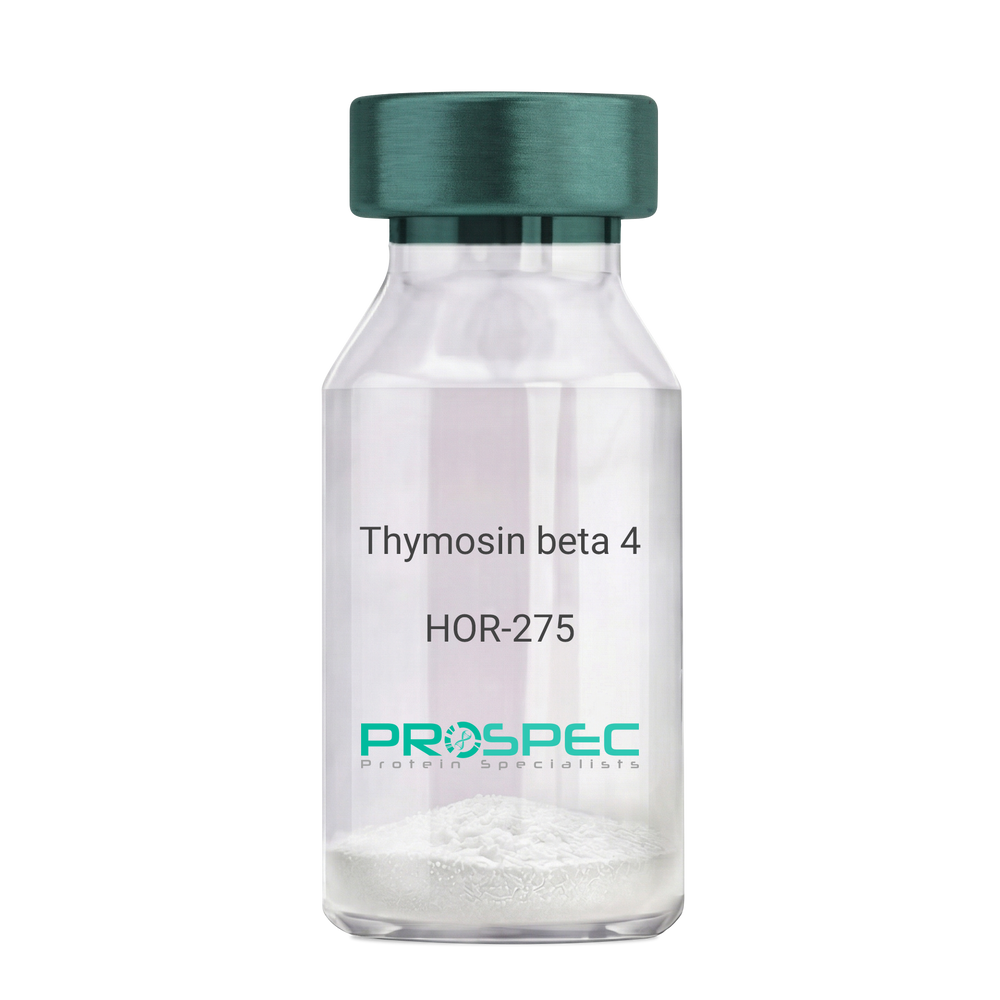
  • View Data Sheet

    Name :

    Thymosin beta 4

    Description:

    Thymosin β4

    Thymosin beta-4. TB500, TB-500

    Product # :

    HOR-275

    Price :

    Quantity :

    Shipping Method :

    Room Temp Icon

    Shipped at Room temp

    Add To Cart

    More Info

    • description
    • formulation
    • purity
    • More Info

    Description

    Thymosin b4 is a 43 amino acid peptide which is regarded as the main intracellular G-actin sequestering peptide. It has a molecular weight of 4963.55 Da, and its molecular formula is: C212H350N56O78S1. Extracellular Thymosin b4 may contribute to physiological processes such as angiogenesis, wound healing, and regulation of inflammation.

    Formulation

    The protein (1mg/ml) was lyophilized with no additives.

    Purity

    Greater than 98.0% as determined by RP-HPLC.

    More Info

    • Introduction

      Thymosin is a hormone secreted from the thymus. Its primary function is to stimulate the production of T cells, which are an important part of the immune system. Thymosin also assists in the development of B cells to plasma cells to produce antibodies. The predominant form of thymosin, thymosin b4, is a member of a highly conserved family of actin monomer-sequestering proteins. b-thymosins are the primary regulators of unpolymerized actin, and are essential for maintaining the small cytoplasmic pool of free G-actin monomers required for rapid filament elongation and allowing for the flux of monomers between the thymosin-bound pool and F-actin.

    • Synonyms

      Thymosin beta-4. TB500, TB-500

    • Physical Appearance

      Sterile Filtered White lyophilized (freeze-dried) powder.

    • Stability

      Lyophilized Thymosin b4 although stable at room temperature for 3 weeks, should be stored desiccated below -18°C. Upon reconstitution T beta 4 should be stored at 4°C between 2-7 days and for future use below -18°C.For long term storage it is recommended to add a carrier protein (0.1% HSA or BSA).Please prevent freeze-thaw cycles.

    • Solubility

      It is recommended to reconstitute the lyophilized Thymosin beta-4 in sterile 18MΩ-cm H2O not less than 100 µg/ml, which can then be further diluted to other aqueous solutions.

    • Amino Acid Sequence

      Thymosin b4 has an a.a. sequence of Ac-Ser-Asp-Lys-Pro-Asp-Met-Ala-Glu-Ile-Glu-Lys-Phe-Asp-Lys-Ser-Lys-Leu-Lys-Lys-Thr-Glu-Thr-Gln-Glu-Lys-Asn-Pro-Leu-Pro-Ser-Lys-Glu-Thr-Ile-Glu-Gln-Glu-Lys-Gln-Ala-Gly-Glu-Ser-OH.

    ProSpec's products are furnished for LABORATORY RESEARCH USE ONLY. The product may not be used as drugs, agricultural or pesticidal products, food additives or household chemicals.

    Thymosin Beta 4
  • View Data Sheet

    Name :

    Activin A Human Plant

    Description:

    Activin A Human Recombinant, Plant

    Inhba, Inhibin beta A, FSH releasing protein.

    Product # :

    CYT-052

    Price :

    Quantity :

    Shipping Method :

    Room Temp Icon

    Shipped at Room temp

    Add To Cart

    More Info

    • description
    • source
    • formulation
    • purity
    • More Info

    Description

    Activin A human Recombinant produced in Nicotiana benthamiana plant is a disulfide-linked homodimers of two betaA chains, each containing 116 amino residues (molecular formula C600H911N173O174S13) and 6-His-tag at the N-terminal having the total molecular mass of 27.4kDa.

    Source

    Nicotiana benthamiana plant

    Formulation

    Lyophilized from 1mg/ml solution in Tris HCl 0.05M buffer at pH 7.4.

    Purity

    Greater than 97.0% as determined by Analysis by SDS-PAGE.

    More Info

    • Introduction

      Activins are homodimers or heterodimers of the different ? subunit isoforms, part of the TGF? family. Mature Activin A has two 116 amino acids residues betaA subunits (bA-bA). Activin displays an extensive variety of biological activities, including mesoderm induction, neural cell differentiation, bone remodelling, haematopoiesis, and reproductive physiology. Activins takes part in the production and regulation of hormones such as FSH, LH, GnRH and ACTH. Cells that are identified to express Activin A include fibroblasts, endothelial cells, hepatocytes, vascular smooth muscle cells, macrophages, keratinocytes, osteoclasts, bone marrow monocytes, prostatic epithelium, neurons, chondrocytes, osteoblasts, Leydig cells, Sertoli cells, and ovarian granulosa cells.

    • Synonyms

      Inhba, Inhibin beta A, FSH releasing protein.

    • Physical Appearance

      Sterile Filtered White lyophilized (freeze-dried) powder.

    • Stability

      Lyophilized Activin A although stable at room temperature for 3 weeks, should be stored desiccated below -18°C. Upon reconstitution Activin A should be stored at 4°C between 2-7 days and for future use below -18°C. For long term storage it is recommended to add a carrier protein (0.1% HSA or BSA). Please prevent freeze-thaw cycles.

    • Solubility

      It is recommended to reconstitute the lyophilized Activin A in sterile 18MΩ-cm H2O not less than 100µg/ml, which can then be further diluted to other aqueous solutions.

    • Amino Acid Sequence

      HHHHHHGLEC DGKVNICCKK QFFVSFKDIG WNDWIIAPSG YHANYCEGEC PSHIAGTSGS SLSFHSTVIN HYRMRGHSPF ANLKSCCVPT KLRPMSMLYY DDGQNIIKKD IQNMIVEECG CS

    • Background

      What is the molecular weight / Mw of Activin A Protein?
      Activin A Protein has a total Mw of 27.4 kDa.
      What is the source or expression system of Activin A Protein?
      Nicotinia

      What is the Purity of Activin A Protein?
      Activin A Protein is >97% pure as determined by SDS-PAGE.

      What is the Biological Activity of Activin A Protein?
      The biological functionality of Activin-A Protein will be determined in the future.

      What is the endotoxin level for Activin A Protein?
      The endotoxin level is minimal, ACTIVIN A Protein was purified using conventional chromatography techniques.

      What is the amino acid sequence of ACTIVIN A Protein?
      HHHHHHGLEC DGKVNICCKK QFFVSFKDIG WNDWIIAPSG YHANYCEGEC PSHIAGTSGS SLSFHSTVIN HYRMRGHSPF ANLKSCCVPT KLRPMSMLYY DDGQNIIKKD IQNMIVEECG CS

      What applications can ACTIVIN A Protein be used in?
      ACTIVIN A Protein can probably be used in western blot, ELISA and Lateral Flow.

    • Serological Identification

      The protein was electrophoresed under reducing condition on a 15% SDS-polyacrylamide gel, transferred by electroblotting to a NC membrane and visualized by immune-detection with specific antibody Activin A.

    ProSpec's products are furnished for LABORATORY RESEARCH USE ONLY. The product may not be used as drugs, agricultural or pesticidal products, food additives or household chemicals.

    Activin A Human Plant
  • View Data Sheet

    Name :

    Thymulin

    Description:

    Thymulin

    Product # :

    HOR-047

    Price :

    Quantity :

    Shipping Method :

    Room Temp Icon

    Shipped at Room temp

    Add To Cart

    More Info

    • description
    • formulation
    • purity
    • More Info

    Description

    Thymulin Synthetic is a single, non-glycosylated polypeptide chain containing 9 amino acids, having a molecular mass of 858 Dalton and a Molecular formula of C33H54N12O15.

    Formulation

    The protein was lyophilized with no additives.

    Purity

    Greater than 97.0% as determined by analysis by RP-HPLC.

    More Info

    • Physical Appearance

      Sterile Filtered White lyophilized (freeze-dried) powder.

    • Stability

      Lyophilized Thymulin although stable at room temperature for 3 weeks, should be stored desiccated below -18°C. Upon reconstitution Thymulin should be stored at 4°C between 2-7 days and for future use below -18°C. For long term storage it is recommended to add a carrier protein (0.1% HSA or BSA). Please prevent freeze-thaw cycles.

    • Solubility

      It is recommended to reconstitute the lyophilized Thymulin in sterile 18MΩ-cm H2O not less than 100 µg/ml, which can then be further diluted to other aqueous solutions.

    • Amino Acid Sequence

      Pyr-Ala-Lys-Ser-Gln-Gly-Gly-Ser-Asn-OH.

    • Background

      Thymulin, a nonapeptide hormone, is produced primarily by the thymus gland and has been recognized for its pivotal role in the immune system. It plays a significant role in the maturation and differentiation of T lymphocytes, which are crucial for immune function. Beyond its immune-related functions, research has increasingly unveiled the diverse physiological roles of thymulin. This study aims to comprehensively investigate thymulin, shedding light on its immunological functions and exploring its potential applications in various aspects of health and medicine.

      The primary objective of this research is to elucidate the mechanisms underlying thymulin's role in immune regulation. In vitro and in vivo experiments will be conducted to explore thymulin's interactions with immune cells, its impact on T cell development and function, and its potential modulation of immune responses. Understanding these mechanisms is fundamental for harnessing thymulin's immunomodulatory properties.

      The second objective is to assess the clinical relevance of thymulin in immune-related disorders. Clinical trials and studies involving individuals with autoimmune diseases, immunodeficiencies, and age-related immune decline will be conducted to evaluate the potential therapeutic applications of thymulin. These investigations may offer insights into the use of thymulin as an immunomodulatory agent in various clinical settings.

      The third objective is to explore the broader implications of thymulin in health and medicine. Research will investigate its potential roles in areas beyond immunology, such as neuroprotection, wound healing, and tissue regeneration. Understanding the multifaceted properties of thymulin may open new avenues for therapeutic interventions in various medical specialties.

      By delving into the diverse functions of thymulin, this research aims to expand our knowledge of its physiological roles and clinical applications. The findings may have implications for the development of innovative approaches in immunology and healthcare, ultimately benefiting patients affected by immune-related disorders and other medical conditions.

    ProSpec's products are furnished for LABORATORY RESEARCH USE ONLY. The product may not be used as drugs, agricultural or pesticidal products, food additives or household chemicals.

    Thymulin
  • View Data Sheet

    Name :

    PCOLCE Human

    Description:

    Procollagen C-Endopeptidase Enhancer Human Recombinant

    Procollagen C-Endopeptidase Enhancer, Procollagen C-Proteinase Enhancer 1, Type I Procollagen COOH-Terminal Proteinase Enhancer, Type 1 Procollagen C-Proteinase Enhancer Protein, Procollagen COOH-Terminal Proteinase Enhancer 1, PCPE-1, PCPE1, Procollagen, Type 1, COOH-Terminal Proteinase Enhancer, Procollagen C-Endopeptidase Enhancer 1, COOH-Terminal Proteinase Enhancer, Procollagen, Type 1, PCPE, Procollagen C-endopeptidase enhancer 1.

    Product # :

    ENZ-863

    Price :

    Quantity :

    Shipping Method :

    Ice Icon

    Shipped with Ice Packs

    Add To Cart

    More Info

    • description
    • source
    • formulation
    • purity
    • More Info

    Description

    PCOLCE Human Recombinant produced in E.Coli is a single, non-glycosylated polypeptide chain containing 447 amino acids (26-449 a.a) and having a molecular mass of 47.9kDa. PCOLCE is fused to a 23 amino acid His-tag at N-terminus & purified by proprietary chromatographic techniques.

    Source

    Escherichia Coli.

    Formulation

    PCOLCE protein solution (1mg/ml) containing 20mM Tris-HCl buffer (pH 8.0) and 10% glycerol.

    Purity

    Greater than 85.0% as determined by SDS-PAGE.

    More Info

    • Introduction

      Procollagen C-endopeptidase enhancer 1, also known as PCOLCE binds to the C-terminal propeptide of type I procollagen and enhances procollagen C-proteinase activity. In addition, C-terminal processed part of PCPE (CT-PCPE) has a metalloproteinase inhibitory activity. Among the diseases which are associated with PCOLCE: bone fracture & oculopharyngeal muscular dystrophy.

    • Synonyms

      Procollagen C-Endopeptidase Enhancer, Procollagen C-Proteinase Enhancer 1, Type I Procollagen COOH-Terminal Proteinase Enhancer, Type 1 Procollagen C-Proteinase Enhancer Protein, Procollagen COOH-Terminal Proteinase Enhancer 1, PCPE-1, PCPE1, Procollagen, Type 1, COOH-Terminal Proteinase Enhancer, Procollagen C-Endopeptidase Enhancer 1, COOH-Terminal Proteinase Enhancer, Procollagen, Type 1, PCPE, Procollagen C-endopeptidase enhancer 1.

    • Physical Appearance

      Sterile filtered colorless solution.

    • Stability

      Store at 4°C if entire vial will be used within 2-4 weeks. Store, frozen at -20°C for longer periods of time. For long term storage it is recommended to add a carrier protein (0.1% HSA or BSA).Avoid multiple freeze-thaw cycles.

    • Amino Acid Sequence

      MGSSHHHHHH SSGLVPRGSH MGSQTPNYTR PVFLCGGDVK GESGYVASEG FPNLYPPNKE CIWTITVPEG QTVSLSFRVF DLELHPACRY DALEVFAGSG TSGQRLGRFC GTFRPAPLVA PGNQVTLRMT TDEGTGGRGF LLWYSGRATS GTEHQFCGGR LEKAQGTLTT PNWPESDYPP GISCSWHIIA PPDQVIALTF EKFDLEPDTY CRYDSVSVFN GAVSDDSRRL GKFCGDAVPG SISSEGNELL VQFVSDLSVT ADGFSASYKT LPRGTAKEGQ GPGPKRGTEP KVKLPPKSQP PEKTEESPSA PDAPTCPKQC RRTGTLQSNF CASSLVVTAT VKSMVREPGE GLAVTVSLIG AYKTGGLDLP SPPTGASLKF YVPCKQCPPM KKGVSYLLMG QVEENRGPVL PPESFVVLHR PNQDQILTNL SKRKCPSQPV RAAASQD.

    ProSpec's products are furnished for LABORATORY RESEARCH USE ONLY. The product may not be used as drugs, agricultural or pesticidal products, food additives or household chemicals.

    Pcolce Human
  • View Data Sheet

    Name :

    GHK-Cu

    Description:

    GHK-Cu

    Copper Tripeptide-1

    Product # :

    HOR-063

    Price :

    Quantity :

    Shipping Method :

    Room Temp Icon

    Shipped at Room temp

    Add To Cart

    More Info

    • description
    • formulation
    • purity
    • More Info

    Description

    GHK-Cu is a synthetic single, non-glycosylated polypeptide chain containing 3 amino acids, having a molecular mass of 401.91 Dalton and a Molecular formula of C14H22N6O4Cu.

    Formulation

    The protein was lyophilized with no additives.

    Purity

    Greater than 97.0% as determined by analysis by RP-HPLC.

    More Info

    • Physical Appearance

      Sterile Filtered White lyophilized (freeze-dried) powder.

    • Stability

      Lyophilized GHK-Cu although stable at room temperature for 3 weeks, should be stored desiccated below -18°C. Upon reconstitution GHK-Cu should be stored at 4°C between 2-7 days and for future use below -18°C.
      For long term storage it is recommended to add a carrier protein (0.1% HSA or BSA).
      Please prevent freeze-thaw cycles.


    • Solubility

      It is recommended to reconstitute the lyophilized GHK-Cu in sterile 18MΩ-cm H2O not less than 100 µg/ml, which can then be further diluted to other aqueous solutions.

    • Amino Acid Sequence

      Gly-His-Lys.

    • Background

      GHK-Cu is located in human plasma and has an ability to modify gene expression to a healthier state, influencing more than 4,000 human genes. GHK-Cu can change pathological gene expression to a healthy mode, mainly in chronic conditions as metastatic cancer, COPD and Ulcerative Colitis. GHK-Cu was discovered to be effective in systemic repair and neuroprotection.

    ProSpec's products are furnished for LABORATORY RESEARCH USE ONLY. The product may not be used as drugs, agricultural or pesticidal products, food additives or household chemicals.

    GHK-Cu
  • View Data Sheet

    Name :

    follicle stimulating hormone porcine

    Description:

    Porcine Follicle Stimulating Hormone

    Follitropin, Follicle-stimulating hormone, FSH.

    Product # :

    HOR-285

    Price :

    Quantity :

    Shipping Method :

    Room Temp Icon

    Shipped at Room temp

    Add To Cart

    More Info

    • description
    • source
    • formulation
    • More Info

    Description

    FSH Porcine is a glycoprotein produced from pituitaries of porcine. The FSH is purified by proprietary chromatographic techniques.

    Source

    Porcine pituitaries.

    Formulation

    The FSH was lyophilized with no additives.

    More Info

    • Introduction

      Follicle stimulating hormone (FSH) is a hormone synthesised and secreted by gonadotropes in the anterior pituitary gland. FSH and LH act synergistically in reproductionIn women, in the ovary FSH stimulates the growth of immature Graafian follicles to maturation. As the follicle grows it releases inhibin, which shuts off the FSH production.
      In men, FSH enhances the production of androgen-binding proteinby the Sertoli cells of the testes and is critical for spermatogenesis.
      In both males and females, FSH stimulates the maturation of germ cells. In females, FSH initiates follicular growth, specifically affecting granulosa cells. With the concomitant rise in inhibin B FSH levels then decline in the late follicular phase. This seems to be critical in selecting only the most advanced follicle to proceed to ovulation. At the end of the luteal phase, there is a slight rise in FSH that seems to be of importance to start the next ovulatory cycle.
      Like its partner, LH, FSH releas

    • Synonyms

      Follitropin, Follicle-stimulating hormone, FSH.

    • Physical Appearance

      Sterile Filtered White lyophilized (freeze-dried) powder.

    • Stability

      Lyophilized porcine FSH although stable at room temperature for 3 weeks, should be stored desiccated below -18°C. Upon reconstitution FSH-porcine should be stored at 4°C between 2-7 days and for future use below -18°C. For long term storage it is recommended to add a carrier protein (0.1% HSA or BSA).Please prevent freeze-thaw cycles.

    • Solubility

      It is recommended to reconstitute the lyophilized porcine FSH in sterile 18M-cm H2O not less than 100 µg/ml, which can then be further diluted to other aqueous solutions.

    • Specific Activity

      40 Units/1mg.

    ProSpec's products are furnished for LABORATORY RESEARCH USE ONLY. The product may not be used as drugs, agricultural or pesticidal products, food additives or household chemicals.

    Fsh Porcine
  • View Data Sheet

    Name :

    Vasopressin

    Description:

    Vasopressin

    Vasopressin-neurophysin 2-copeptin, AVP-NPII, VP, ADH, ARVP, AVRP, Argipressin, Arginine vasopressin, AVP, Vasopressin, Antidiuretic Hormone.

    Product # :

    HOR-280

    Price :

    Quantity :

    Shipping Method :

    Room Temp Icon

    Shipped at Room temp

    Add To Cart

    More Info

    • description
    • formulation
    • purity
    • More Info
    • HPLC, MS

    Description

    ProSpec’s 8-L-Arginine Vasopressin’s molecular weight is 1084.25 Dalton and the molecular formula is: C46H65N15O12S2.

    Formulation

    The protein (1 mg/ml) was lyophilized with no additives.

    Purity

    Greater than 98.0% as determined by by RP-HPLC.

    HPLC, MS

    vasopressin hplc - Product image 1
    vasopressin mass spec - Product image 2

    More Info

    • Introduction

      Arginine vasopressin (AVP), also known as argipressin or antidiuretic hormone (ADH), is a human hormonethat is released when the body is low on water; it causes the kidneysto conserve water, but not salt, by concentrating the urineand reducing urine volume. It also raises blood pressure by inducing moderate vasoconstriction. It has various effects in the brain.
      A very similar substance, lysine vasopressin (LVP) or lypressin, has the same function in pigsand is often used in human therapy.
      Vasopressin is a peptide hormone. It is derived from a preprohormoneprecursor that is synthesized in the hypothalamus, from which it is liberated during transport to the posterior pituitary. Most of it is stored in the posterior partof the pituitary glandto be released into the blood stream; some of it is also released directly into the brain.
      AVP allows water reabsorption by the introduction of additional water channels in cortical and inner medullary collecting ducts.

    • Synonyms

      Vasopressin-neurophysin 2-copeptin, AVP-NPII, VP, ADH, ARVP, AVRP, Argipressin, Arginine vasopressin, AVP, Vasopressin, Antidiuretic Hormone.

    • Physical Appearance

      Sterile Filtered White lyophilized (freeze-dried) powder.

    • Stability

      Lyophilized Vasopressin although stable at room temperature for 3 weeks, should be stored desiccated below -18°C. Upon reconstitution Vasopressin should be stored at 4°C between 2-7 days and for future use below -18°C.For long term storage it is recommended to add a carrier protein (0.1% HSA or BSA).Please prevent freeze-thaw cycles.

    • Solubility

      It is recommended to reconstitute the lyophilized Vasopressin in sterile 18MΩ-cm H2O not less than 100 µg/ml, which can then be further diluted to other aqueous solutions.

    • Amino Acid Sequence

      C[Cys-Tyr-Phe-Gln-Asn-Cys]-Pro-Arg-Gly-NH2.

    • Background

      What is the molecular weight/Mw of VASOPRESSIN Protein?
      VASOPRESSIN Protein has a total Mw of 1.08kDa.


      What is the Purity of VASOPRESSIN Protein?
      VASOPRESSIN Protein is >98% pure as determined by SDS-PAGE.

      What is the Biological Activity of VASOPRESSIN Protein?
      The biological functionality of VASOPRESSIN Protein will be determined in the future.

      What is the amino acid sequence of VASOPRESSIN Protein?
      C[Cys-Tyr-Phe-Gln-Asn-Cys]-Pro-Arg-Gly-NH2.

      What applications can VASOPRESSIN Protein be used in?
      VASOPRESSIN Protein can probably be used in western blot, ELISA and Lateral Flow.

      What is the endotoxin level for VASOPRESSIN Protein?
      The endotoxin level is minimal, VASOPRESSIN Protein was purified using conventional chromatography techniques.

    ProSpec's products are furnished for LABORATORY RESEARCH USE ONLY. The product may not be used as drugs, agricultural or pesticidal products, food additives or household chemicals.

    Vasopressin
  • View Data Sheet

    Name :

    GIP Human

    Description:

    Gastric Inhibitory Polypeptide Human Recombinant

    Gastric inhibitory polypeptide, GIP, Incretin hormone.

    Product # :

    PRO-1438

    Price :

    Quantity :

    Shipping Method :

    Ice Icon

    Shipped with Ice Packs

    Add To Cart

    More Info

    • description
    • source
    • formulation
    • purity
    • More Info

    Description

    GIP Human Recombinant produced in E. coli is a single polypeptide chain containing 155 amino acids (22-153) and having a molecular mass of 17.3kDa. GIP is fused to a 23 amino acid His-tag at N-terminus & purified by proprietary chromatographic techniques.

    Source

    E.coli.

    Formulation

    The GIP solution (0.25mg/ml) contains 20mM Tris-HCl buffer (pH8.0), 50% glycerol 0.1M NaCl and 2mM DTT.

    Purity

    Greater than 90% as determined by SDS-PAGE.

    More Info

    • Introduction

      Gastric Inhibitory Polypeptide (GIP) which is a significant hormone of the enteroinsular axis has a functional profile of possible therapeutic value for type 2 diabetes. GIP is an important incretin hormone released into the circulation from endocrine K-cells of the duodenum and jejunum after ingestion of food1. GIP was evaluated for his ability to elevate cellular cAMP production. GIP promotes plasma triglyceride clearance in response to oral fat loading.

    • Synonyms

      Gastric inhibitory polypeptide, GIP, Incretin hormone.

    • Physical Appearance

      Sterile Filtered colorless solution.

    • Stability

      Store at 4°C if entire vial will be used within 2-4 weeks. Store, frozen at -20°C for longer periods of time. For long term storage it is recommended to add a carrier protein (0.1% HSA or BSA).Avoid multiple freeze-thaw cycles.

    • Amino Acid Sequence

      MGSSHHHHHH SSGLVPRGSH MGSEKKEGHF SALPSLPVGS HAKVSSPQPR GPRYAEGTFI SDYSIAMDKI HQQDFVNWLL AQKGKKNDWK HNITQREARA LELAGQANRK EEEAVEPQSS PAKNPSDEDL LRDLLIQELL ACLLDQTNLC RLRSR.

    ProSpec's products are furnished for LABORATORY RESEARCH USE ONLY. The product may not be used as drugs, agricultural or pesticidal products, food additives or household chemicals.

    Gip Human
  • View Data Sheet

    Name :

    PKLR Antibody

    Description:

    Pyruvate Kinase, Liver and RBC, Mouse Anti Human

    PK1, PKL, RPK, pyruvate kinase isozyme R/L, Red cell/liver pyruvate kinase, PKRL.

    Product # :

    ANT-060

    Price :

    Quantity :

    Shipping Method :

    Ice Icon

    Shipped with Ice Packs

    Add To Cart

    More Info

    • formulation
    • More Info

    Formulation

    1mg/ml containing PBS, pH-7.4, & 0.1% Sodium Azide.

    More Info

    • Introduction

      PKLR is a pyruvate kinase which catalyzes the transphosphorylation of phohsphoenolpyruvate into pyruvate and ATP. That is the rate-limiting step of glycolysis. PKLR gene encodes the L- and R-type isoenzymes through alternate splicing events controlled by different promoters. L-type isoform can also appear as a tetramer and is upregulated by glucose with implications in maturity-onset diabetes of the young.

    • Synonyms

      PK1, PKL, RPK, pyruvate kinase isozyme R/L, Red cell/liver pyruvate kinase, PKRL.

    • Immunogen

      Anti-human PKLR mAb, is derived from hybridization of mouse FO myeloma cells with spleen cells from BALB/c mice immunized with recombinant human PKLR amino acids 47-574 purified from E. coli.

    • Ig Subclass

      Mouse IgG1 heavy chain and kappa light chain.

    • Clone

      PPKLRAT.

    • Applications

      PKLR antibody has been tested by ELISA, Western blot analysis to assure specificity and reactivity. Since application varies, however, each investigation should be titrated by the reagent to obtain optimal results.
      Recommended dilution range for Western blot analysis is 1:500.

    • Type

      Mouse Anti Human Monoclonal.

    • Storage Procedures

      For periods up to 1 month store at 4°C, for longer periods of time, store at -20°C. Prevent freeze thaw cycles.

    • Purification Method

      PKLR antibody was purified from mouse ascitic fluids by protein-G affinity chromatography.

    ProSpec's products are furnished for LABORATORY RESEARCH USE ONLY. The product may not be used as drugs, agricultural or pesticidal products, food additives or household chemicals.

    Pklr Antibody
  • View Data Sheet

    Name :

    P Selectin Human

    Description:

    P-selectin Human Recombinant

    P-selectin, Granule membrane protein 140, GMP-140, PADGEM, Leukocyte-endothelial cell adhesion molecule 3, LECAM3, CD62 antigen-like family member P, CD62P antigen, SELP, GMRP, GRMP, CD62, PSEL, CD62P, GMP140, FLJ45155.

    Product # :

    PRO-382

    Price :

    Quantity :

    Shipping Method :

    Ice Icon

    Shipped with Ice Packs

    Add To Cart

    More Info

    • description
    • source
    • formulation
    • purity
    • More Info

    Description

    P-Selectin Human Recombinant is expressed in E. coli containing 566 amino acids 197-761 fused to an amino terminal hexahistidine tag.

    Source

    Escherichia Coli.

    Formulation

    P-Selectin is supplied in 50% Glycerol.

    Purity

    Greater than 95% as determined by SDS-PAGE.
    Single band on Western Blot.

    More Info

    • Introduction

      P-Selectin also called Platelet Alpha-Granule Membrane Protein, CD62, and Granulocyte Membrane Protein GRMP belongs to a family of divalent cation-dependent carbohydrate-binding glycoproteins or adhesion molecules. Pselectin is expressed transiently on the surface of activated platelets and endothelial cells. P-Selectin is a 140 kDa protein which is stored in the alpha-granules of platelets and Weibel-Palade bodies of endothelial cells. Secreted P-selectin is thought to play a key role in the adhesion of platelets to monocytes and neutrophils during an inflammatory response. P-Selectin is a calcium-dependent receptor that binds to sialylated forms of Lewis blood group carbohydrate antigens on neutrophils and monocytes. Levels of P-Selectin may be elevated in a number of pathological conditions.

    • Synonyms

      P-selectin, Granule membrane protein 140, GMP-140, PADGEM, Leukocyte-endothelial cell adhesion molecule 3, LECAM3, CD62 antigen-like family member P, CD62P antigen, SELP, GMRP, GRMP, CD62, PSEL, CD62P, GMP140, FLJ45155.

    • Physical Appearance

      Sterile Filtered liquid formulation.

    • Stability

      Store at 4°C if entire vial will be used within 1-2 weeks. Store, frozen at -20°C for longer periods of time. Avoid multiple freeze-thaw cycles.

    • Applications

      P-Selectin can be used directly as a positive control in Western blotting, ELISA, immunoprecipitation and other immunological experiments.
      The biological activity of this product has not yet been tested.

    ProSpec's products are furnished for LABORATORY RESEARCH USE ONLY. The product may not be used as drugs, agricultural or pesticidal products, food additives or household chemicals.

    P Selectin Human
  • 1
  • …
  • 4
  • 5
  • 6
  • 7
  • 8
  • …
  • 42
Your browser does not support the video tag.

Products

  • Cytokines
  • Growth Factors
  • Chemokines
  • CD Antigens
  • Neurotrophins
  • Hormones
  • Enzymes
  • Viral Antigens
  • Recombinant Proteins
  • Natural Proteins
  • Monoclonal Antibodies
  • Polyclonal Antibodies
  • Thermal Packaging

About

  • Company
  • Founder
  • Contribution
  • Contact Us
  • My Account

Ordering

  • Ordering Method
  • Ordering - Credit Card
  • Ordering PO
  • Shipping Fees
  • FAQ's

Legal

  • Terms & Conditions
  • Privacy
  • Site Map
  • info@prospecbio.com
  • Facebook
  • Instagram
  • Linkedin Profile

© 2026 ProSpec-Tany TechnoGene Ltd. All Rights Reserved.

  • Choosing a selection results in a full page refresh.
  • Opens in a new window.