Skip to content

High-quality research proteins.

  • 1-800-805-6531

  • Mon - Sat 8.00-18.00, Sun - Closed

  • info@prospecbio.com

  • PO Box 6591 East Brunswick NJ 08816

  • Products
    • Cytokines
    • Growth factors
    • Chemokines
    • Cd antigens
    • Neurotrophins
    • Hormones
    • Enzymes
    • Viral antigens
    • Recombinant proteins
    • Natural proteins
    • Monoclonal antibodies
    • Polyclonal antibodies
    • Thermal Packaging
  • About
    • Company
    • Founder
    • Contribution
  • Customers
    • Eastern Asia
    • Eastern Europe
    • North America
    • South America
    • South East Asia
    • Southern Asia
    • Western Europe
  • Ordering
    • Ordering Method
    • Ordering - Credit Card
    • Ordering - PO
    • Shipping Fees
    • FAQs
  • Services
    • DNA Cloning
    • Protein Expression
    • Monoclonal Antibody
    • Fermentation
    • Technology License
  • Contact us
Log in

Country/region

  • USD $ | Albania
  • USD $ | Andorra
  • USD $ | Argentina
  • USD $ | Armenia
  • USD $ | Australia
  • USD $ | Austria
  • USD $ | Azerbaijan
  • USD $ | Belarus
  • USD $ | Belgium
  • USD $ | Bolivia
  • USD $ | Brazil
  • USD $ | Bulgaria
  • USD $ | Cambodia
  • USD $ | Canada
  • USD $ | Chile
  • USD $ | China
  • USD $ | Colombia
  • USD $ | Costa Rica
  • USD $ | Croatia
  • USD $ | Cyprus
  • USD $ | Czechia
  • USD $ | Denmark
  • USD $ | Estonia
  • USD $ | Finland
  • USD $ | France
  • USD $ | Georgia
  • USD $ | Germany
  • USD $ | Greece
  • USD $ | Hong Kong SAR
  • USD $ | Hungary
  • USD $ | Iceland
  • USD $ | India
  • USD $ | Ireland
  • USD $ | Israel
  • USD $ | Italy
  • USD $ | Japan
  • USD $ | Kazakhstan
  • USD $ | Latvia
  • USD $ | Liechtenstein
  • USD $ | Lithuania
  • USD $ | Madagascar
  • USD $ | Malta
  • USD $ | Mexico
  • USD $ | Moldova
  • USD $ | Monaco
  • USD $ | Netherlands
  • USD $ | New Zealand
  • USD $ | North Macedonia
  • USD $ | Norway
  • USD $ | Panama
  • USD $ | Paraguay
  • USD $ | Peru
  • USD $ | Philippines
  • USD $ | Poland
  • USD $ | Portugal
  • USD $ | Romania
  • USD $ | Singapore
  • USD $ | Slovakia
  • USD $ | Slovenia
  • USD $ | South Africa
  • USD $ | South Korea
  • USD $ | Spain
  • USD $ | Sri Lanka
  • USD $ | Sweden
  • USD $ | Switzerland
  • USD $ | Taiwan
  • USD $ | Thailand
  • USD $ | Türkiye
  • USD $ | Ukraine
  • USD $ | United Kingdom
  • USD $ | United States
  • USD $ | Uruguay
  • USD $ | Vatican City
  • USD $ | Venezuela
  • USD $ | Vietnam
  • Facebook
  • Instagram
logoProSpec - Recombinant Protein Manufacturer for academic and R&D industry
Become a distributor
Account Log in
Wishlist
Cart Cart(0)
  • Products
    +
    • Cytokines
    • Growth factors
    • Chemokines
    • Cd antigens
    • Neurotrophins
    • Hormones
    • Enzymes
    • Viral antigens
    • Recombinant proteins
    • Natural proteins
    • Monoclonal antibodies
    • Polyclonal antibodies
    • Thermal Packaging
  • About
    +
    • Company
    • Founder
    • Contribution
  • Customers
    +
    • Eastern Asia
    • Eastern Europe
    • North America
    • South America
    • South East Asia
    • Southern Asia
    • Western Europe
  • Ordering
    +
    • Ordering Method
    • Ordering - Credit Card
    • Ordering - PO
    • Shipping Fees
    • FAQs
  • Services
    +
    • DNA Cloning
    • Protein Expression
    • Monoclonal Antibody
    • Fermentation
    • Technology License
  • Contact us

Item added to your cart

View cart
View All
  • Cytokines
  • Growth factors
  • Chemokines
  • Cd antigens
  • Neurotrophins
  • Hormones
  • Enzymes
  • Viral antigens
  • Recombinant proteins
  • Natural proteins
  • Monoclonal antibodies
  • Polyclonal antibodies
  • Thermal Packaging
  • Tumor Necrosis Factor

    Tumor Necrosis Factor

    View All
  • 4-1BB

    4-1BB

    View All
  • Adiponectin

    Adiponectin

    View All
  • AIF1

    AIF1

    View All
  • Other Cytokines

    Other Cytokines

    View All
  • AITRL

    AITRL

    View All
  • Angiopoietin

    Angiopoietin

    View All
  • Apolipoprotein

    Apolipoprotein

    View All
  • B-Cell Activating Factor

    B-Cell Activating Factor

    View All
  • Beta Defensin

    Beta Defensin

    View All
  • Bone Morphogenetic Protein

    Bone Morphogenetic Protein

    View All
  • B type Natriuretic Peptide

    B type Natriuretic Peptide

    View All
  • BST

    BST

    View All
  • Betacellulin

    Betacellulin

    View All
  • Cardiotrophin

    Cardiotrophin

    View All
  • Activin

    Activin

    View All
  • Fibroblast Growth Factor

    Fibroblast Growth Factor

    View All
  • Other Growth Factors

    Other Growth Factors

    View All
  • CSF

    CSF

    View All
  • CTGF

    CTGF

    View All
  • IGFBP

    IGFBP

    View All
  • VEGF Protein

    VEGF Protein

    View All
  • EGF

    EGF

    View All
  • Epigen

    Epigen

    View All
  • Erythropoietin

    Erythropoietin

    View All
  • Insulin-Like Growth Factor

    Insulin-Like Growth Factor

    View All
  • Growth Hormone

    Growth Hormone

    View All
  • HDGF

    HDGF

    View All
  • Hepatocyte Growth Factor

    Hepatocyte Growth Factor

    View All
  • Insulin

    Insulin

    View All
  • BCA-1/ BLC (CXCL13)

    BCA-1/ BLC (CXCL13)

    View All
  • BRAK (CXCL14)

    BRAK (CXCL14)

    View All
  • C-10 (CCL6)

    C-10 (CCL6)

    View All
  • Other Chemokines

    Other Chemokines

    View All
  • MEC (CCL28)

    MEC (CCL28)

    View All
  • LD78-beta (CCL3L1)

    LD78-beta (CCL3L1)

    View All
  • CTACK (CCL27)

    CTACK (CCL27)

    View All
  • CXCL16

    CXCL16

    View All
  • CXCL17

    CXCL17

    View All
  • Platelet Factor-4 (CXCL4)

    Platelet Factor-4 (CXCL4)

    View All
  • ENA-78 (CXCL5)

    ENA-78 (CXCL5)

    View All
  • Eotaxin (CCL11,24,26)

    Eotaxin (CCL11,24,26)

    View All
  • Exodus-2 (CCL21)

    Exodus-2 (CCL21)

    View All
  • Fractalkine (CX3CL1)

    Fractalkine (CX3CL1)

    View All
  • CXCL6

    CXCL6

    View All
  • Other CD Antigens

    Other CD Antigens

    View All
  • CD14

    CD14

    View All
  • CD164

    CD164

    View All
  • CD1

    CD1

    View All
  • CD2

    CD2

    View All
  • CD200

    CD200

    View All
  • CD207

    CD207

    View All
  • CD226

    CD226

    View All
  • CD23

    CD23

    View All
  • CD244

    CD244

    View All
  • CD247

    CD247

    View All
  • CD27

    CD27

    View All
  • CD274

    CD274

    View All
  • CD300

    CD300

    View All
  • CD33

    CD33

    View All
  • Other Neurotrophins

    Other Neurotrophins

    View All
  • Beta-NGF

    Beta-NGF

    View All
  • BDNF

    BDNF

    View All
  • CDNF

    CDNF

    View All
  • CNTF

    CNTF

    View All
  • GDNF

    GDNF

    View All
  • Glia Maturation Factor

    Glia Maturation Factor

    View All
  • MANF

    MANF

    View All
  • Midkine

    Midkine

    View All
  • Neuroglobin

    Neuroglobin

    View All
  • Neurotrophic factors

    Neurotrophic factors

    View All
  • Neuregulin

    Neuregulin

    View All
  • Neuropilin

    Neuropilin

    View All
  • Pigment Epithelium-Derived Factor

    Pigment Epithelium-Derived Factor

    View All
  • Pleiotrophin

    Pleiotrophin

    View All
  • Peptide Hormones

    Peptide Hormones

    View All
  • Other Hormones

    Other Hormones

    View All
  • HCG

    HCG

    View All
  • Endothelin

    Endothelin

    View All
  • Exendin

    Exendin

    View All
  • FSH

    FSH

    View All
  • Glucagon

    Glucagon

    View All
  • GHRP

    GHRP

    View All
  • GLP

    GLP

    View All
  • Thyrostimulin

    Thyrostimulin

    View All
  • Inhibin A

    Inhibin A

    View All
  • LHRH

    LHRH

    View All
  • Melanotan

    Melanotan

    View All
  • Procalcitonin

    Procalcitonin

    View All
  • PTH

    PTH

    View All
  • Peroxiredoxin

    Peroxiredoxin

    View All
  • Peptidase

    Peptidase

    View All
  • Synthetase

    Synthetase

    View All
  • Transferase

    Transferase

    View All
  • Hydrolase

    Hydrolase

    View All
  • Dehydrogenase

    Dehydrogenase

    View All
  • ACE2

    ACE2

    View All
  • Esterase

    Esterase

    View All
  • Protein Kinases

    Protein Kinases

    View All
  • Other Enzymes

    Other Enzymes

    View All
  • Phosphatase

    Phosphatase

    View All
  • Deaminase

    Deaminase

    View All
  • Oxygenase

    Oxygenase

    View All
  • Adenylate Kinase

    Adenylate Kinase

    View All
  • Lyase

    Lyase

    View All
  • Chagas

    Chagas

    View All
  • SARS

    SARS

    View All
  • Influenza

    Influenza

    View All
  • ASFV

    ASFV

    View All
  • Astrovirus

    Astrovirus

    View All
  • Borrelia

    Borrelia

    View All
  • Helicobacter Pylori

    Helicobacter Pylori

    View All
  • Chikungunya

    Chikungunya

    View All
  • Chlamydia

    Chlamydia

    View All
  • Cytomegalo

    Cytomegalo

    View All
  • Dengue

    Dengue

    View All
  • EBV

    EBV

    View All
  • Ebola

    Ebola

    View All
  • Feline Leukemia Virus

    Feline Leukemia Virus

    View All
  • Hepatitis A

    Hepatitis A

    View All
  • Other

    Other

    View All
  • Actin

    Actin

    View All
  • ADAM

    ADAM

    View All
  • Complement Component

    Complement Component

    View All
  • Ag85

    Ag85

    View All
  • Eukaryotic Translation Initiation Factor

    Eukaryotic Translation Initiation Factor

    View All
  • Anterior Gradient Protein

    Anterior Gradient Protein

    View All
  • Heat Shock Protein

    Heat Shock Protein

    View All
  • Alpha-2-HS-Glycoprotein

    Alpha-2-HS-Glycoprotein

    View All
  • Hemoglobin

    Hemoglobin

    View All
  • Allergy

    Allergy

    View All
  • Anaplasma

    Anaplasma

    View All
  • Angiogenin

    Angiogenin

    View All
  • Ankyrin Repeat Domain

    Ankyrin Repeat Domain

    View All
  • Annexin

    Annexin

    View All
  • Other Natural Proteins

    Other Natural Proteins

    View All
  • Aprotinin

    Aprotinin

    View All
  • Transferrin

    Transferrin

    View All
  • Avidin

    Avidin

    View All
  • Anti Coagulation Factors

    Anti Coagulation Factors

    View All
  • Natural Albumin

    Natural Albumin

    View All
  • Natural Coagulation Factors

    Natural Coagulation Factors

    View All
  • Fibronectin

    Fibronectin

    View All
  • Thrombin

    Thrombin

    View All
  • Anti Human Enzyme

    Anti Human Enzyme

    View All
  • Other Monoclonal Antibodies

    Other Monoclonal Antibodies

    View All
  • Anti Human Cytokine

    Anti Human Cytokine

    View All
  • Anti Human Heat Shock Protein

    Anti Human Heat Shock Protein

    View All
  • Anti Mouse Lymphocyte

    Anti Mouse Lymphocyte

    View All
  • Anti Human Chemokine

    Anti Human Chemokine

    View All
  • Anti Human Lymphocyte

    Anti Human Lymphocyte

    View All
  • Anti Viral Monoclonal

    Anti Viral Monoclonal

    View All
  • Anti Mouse Cytokine

    Anti Mouse Cytokine

    View All
  • Anti-GST Monoclonal

    Anti-GST Monoclonal

    View All
  • Other Polyclonal Antibodies

    Other Polyclonal Antibodies

    View All
  • Anti Viral

    Anti Viral

    View All
  • Anti-GST Monoclonal

    Anti-GST Monoclonal

    View All
Back

Search results

897 results found for “BID”

Name

Description

Product #

Price

Quantity

Shipping Method

  • View Data Sheet

    Name :

    BIN2 Human

    Description:

    Bridging Integrator 2 Human Recombinant

    Bridging Integrator 2, Breast Cancer-Associated Protein 1, Breast Cancer Associated Protein BRAP1, BRAP-1, BRAP1, BIN2.

    Product # :

    PRO-2485

    Price :

    Quantity :

    Shipping Method :

    Ice Icon

    Shipped with Ice Packs

    Add To Cart

    More Info

    • description
    • source
    • formulation
    • purity
    • More Info

    Description

    BIN2 produced in Sf9 Baculovirus cells is a single, glycosylated polypeptide chain (1-597 a.a.) and fused to a 6 aa His Tag at C-terminus containing a total of 606 amino acids and having a molecular mass of 66.1kDa.BIN2 shows multiple bands between 70-100kDa on SDS-PAGE, reducing conditions and purified by proprietary chromatographic techniques.

    Source

    Sf9, Baculovirus cells.

    Formulation

    BIN2 protein solution (0.25mg/ml) contains Phosphate buffered saline (pH7.4), 20% glycerol, 1mM DTT and 0.1mM PMSF.

    Purity

    Greater than 80.0% as determined by SDS-PAGE.

    More Info

    • Introduction

      BIN2, also known as Bridging Integrator 2, is a cytoplasmic protein. BIN2 comprises one BAR domain and Interacts with BIN1. BIN2 is highly expressed in some hematopoietic tissues, including peripheral blood, colon, thymus and placenta. BIN2 stimulates cell motility and migration, most likely through its interaction with the cell membrane and with podosome proteins which mediate interaction with the cytoskeleton and likewise modulates membrane curvature & mediates membrane tubulation.

    • Synonyms

      Bridging Integrator 2, Breast Cancer-Associated Protein 1, Breast Cancer Associated Protein BRAP1, BRAP-1, BRAP1, BIN2.

    • Physical Appearance

      Sterile Filtered colorless solution.

    • Stability

      Store at 4°C if entire vial will be used within 2-4 weeks. Store, frozen at -20°C for longer periods of time. For long term storage it is recommended to add a carrier protein (0.1% HSA or BSA).Avoid multiple freeze-thaw cycles.

    • Amino Acid Sequence

      ADPMRGMPGA RTSSSGASEN HRARGQGGGP QGVGRMAEGK AGGAAGLFAK QVQKKFSRAQ EKVLQKLGKA VETKDERFEQ SASNFYQQQA EGHKLYKDLK NFLSAVKVMH ESSKRVSETL QEIYSSEWDG HEELKAIVWN NDLLWEDYEE KLADQAVRTM EIYVAQFSEI KERIAKRGRK LVDYDSARHH LEAVQNAKKK DEAKTAKAEE EFNKAQTVFE DLNQELLEEL PILYNSRIGC YVTIFQNISN LRDVFYREMS KLNHNLYEVM SKLEKQHSNK VFVVKGLSSS SRRSLVISPP VRTATVSSPL TSPTSPSTLS LKSESESVSA TEDLAPDAAQ GEDNSEIKEL LEEEEIEKEG SEASSSEEDE PLPACNGPAQ AQPSPTTERA KSQEEVLPSS TTPSPGGALS PSGQPSSSAT EVVLRTRTAS EGSEQPKKRA SIQRTSAPPS RPPPPRATAS PRPSSGNIPS SPTASGGGSP TSPRASLGTG TASPRTSLEV SPNPEPPEKP VRTPEAKENE NIHNQNPEEL CTSPTLMTSQ VASEPGEAKK MEDKEKDNKL ISANSSEGQD QLQVSMVPEN NNLTAPEPQE EVSTSENPQL HHHHHH

    ProSpec's products are furnished for LABORATORY RESEARCH USE ONLY. The product may not be used as drugs, agricultural or pesticidal products, food additives or household chemicals.

    Bin2 Human
  • View Data Sheet

    Name :

    IMPAD1 Human, Active

    Description:

    Inositol Monophosphatase Domain Containing 1 Human Recombinant, BioActive

    Inositol monophosphatase 3, IMP 3, IMPase 3, EC 3.1.3.25, EC 3.1.3.7, Golgi 3-prime phosphoadenosine 5-prime phosphate 3-prime phosphatase, Golgi-resident PAP phosphatase, gPAPP, Inositol monophosphatase domain-containing protein 1, Inositol-1(or 4)-monophosphatase 3, Myo-inositol monophosphatase A3, IMPAD1, IMPA3, GPAPP, IMP-3

    Product # :

    PRO-2638

    Price :

    Quantity :

    Shipping Method :

    Ice Icon

    Shipped with Ice Packs

    Add To Cart

    More Info

    • description
    • source
    • formulation
    • purity
    • biological activity
    • More Info

    Description

    IMPAD1 Human Recombinant produced in E.Coli is a single, non-glycosylated polypeptide chain containing 349 amino acids (34-359 a.a.) and having a molecular mass of 37.6kDa.IMPAD1 is fused to a 23 amino acid His-tag at N-terminus & purified by proprietary chromatographic techniques.

    Source

    Escherichia Coli.

    Formulation

    The IMPAD1 solution (0.25mg/ml) contains Phosphate-Buffered Saline (pH 7.4).

    Purity

    Greater than 90.0% as determined by SDS-PAGE.

    Biological Activity

    Specific activity is > 3300pmol/min/ug, and is defined as its ability to dephosphorylate adenosine 3'5'-diphosphate sodium slat at pH7.5, 25˚C.

    More Info

    • Introduction

      Inositol Monophosphatase Domain Containing 1 or IMPAD1 is a protein, part of the inositol monophosphatase group of proteins. The protein is found in Golgi apparatus and enhances phosphoadenosine phosphate hydrolysis to adenosine monophosphate. When Mutation in the IMPAD1 gene occurs leads to GRAPP type chondrodysplasia and therefore joint dislocations. On long arm chromosome 1 a pseudogene can be found.

    • Synonyms

      Inositol monophosphatase 3, IMP 3, IMPase 3, EC 3.1.3.25, EC 3.1.3.7, Golgi 3-prime phosphoadenosine 5-prime phosphate 3-prime phosphatase, Golgi-resident PAP phosphatase, gPAPP, Inositol monophosphatase domain-containing protein 1, Inositol-1(or 4)-monophosphatase 3, Myo-inositol monophosphatase A3, IMPAD1, IMPA3, GPAPP, IMP-3

    • Physical Appearance

      Sterile Filtered colorless solution.

    • Stability

      Store at 4°C if entire vial will be used within 2-4 weeks. Store, frozen at -20°C for longer periods of time. For long term storage it is recommended to add a carrier protein (0.1% HSA or BSA).Avoid multiple freeze-thaw cycles.

    • Amino Acid Sequence

      MGSSHHHHHH SSGLVPRGSH MGSGRFSLFG LGGEPGGGAA GPAAAADGGT VDLREMLAVS VLAAVRGGDE VRRVRESNVL HEKSKGKTRE GAEDKMTSGD VLSNRKMFYL LKTAFPSVQI NTEEHVDAAD QEVILWDHKI PEDILKEVTT PKEVPAESVT VWIDPLDATQ EYTEDLRKYV TTMVCVAVNG KPMLGVIHKP FSEYTAWAMV DGGSNVKARS SYNEKTPRIV VSRSHSGMVK QVALQTFGNQ TTIIPAGGAG YKVLALLDVP DKSQEKADLY IHVTYIKKWD ICAGNAILKA LGGHMTTLSG EEISYTGSDG IEGGLLASIR MNHQALVRKL PDLEKTGHK

    ProSpec's products are furnished for LABORATORY RESEARCH USE ONLY. The product may not be used as drugs, agricultural or pesticidal products, food additives or household chemicals.

    Impad1 Protein
  • View Data Sheet

    Name :

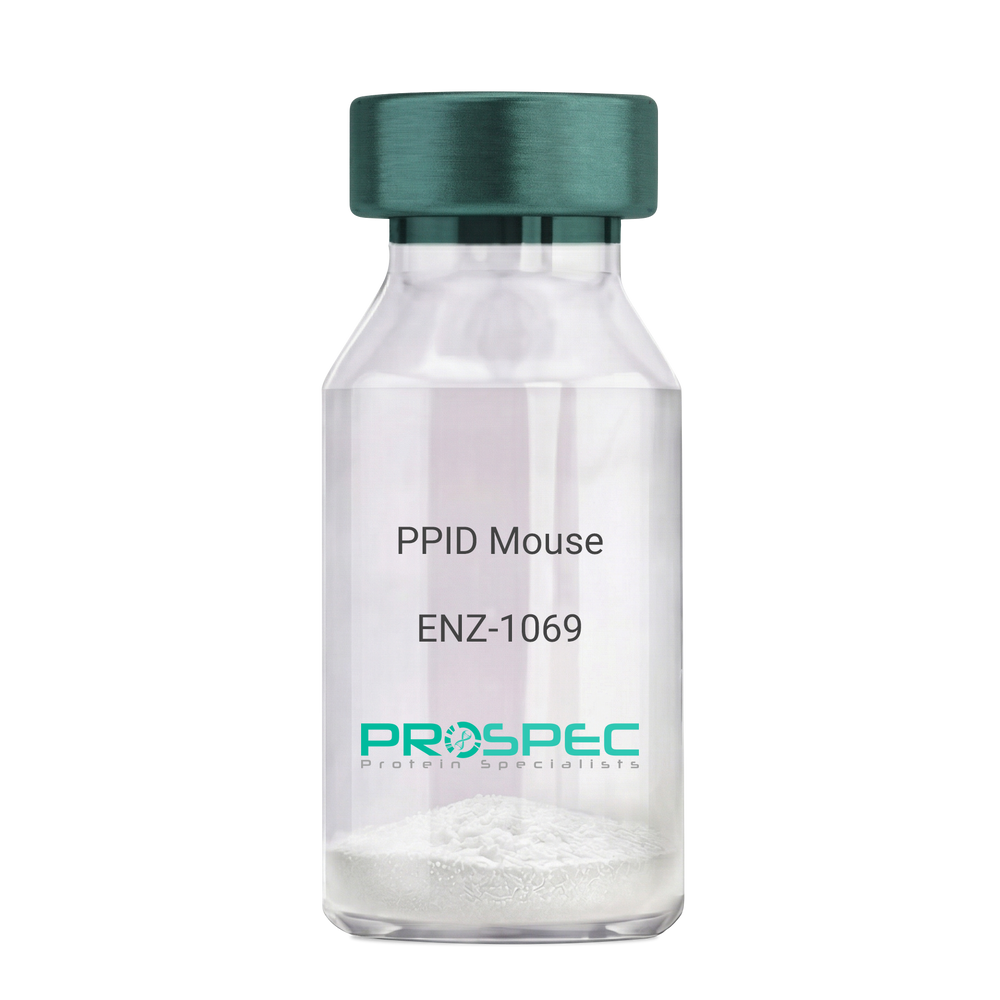
    PPID Mouse

    Description:

    Peptidylprolyl Isomerase D Mouse Recombinant

    Peptidyl-prolyl cis-trans isomerase D, PPIase D, 40 kDa peptidyl-prolyl cis-trans isomerase, Cyclophilin-40, CYP-40, Cyclophilin-related protein, CYP40, CYPD, PPID, Peptidylprolyl Isomerase D.

    Product # :

    ENZ-1069

    Price :

    Quantity :

    Shipping Method :

    Ice Icon

    Shipped with Ice Packs

    Add To Cart

    More Info

    • description
    • source
    • formulation
    • purity
    • biological activity
    • More Info

    Description

    PPID Mouse Recombinant produced in E.Coli is a single, non-glycosylated polypeptide chain containing 395 amino acids (1-370a.a.) and having a molecular mass of 43.4kDa. PPID is fused to a 25 amino acid His-tag at N-terminus & purified by proprietary chromatographic techniques.

    Source

    Escherichia Coli.

    Formulation

    PPID protein solution (1mg/ml) containing 20mM Tris-Hcl buffer (pH8.0), 10% glycerol and 1mM DTT.

    Purity

    Greater than 90.0% as determined by SDS-PAGE.

    Biological Activity

    Specific activity is > 700nmol/min/mg, and is defined as the amount of enzyme that cleaves 1umole of suc-AAFP-PNA per minute at 37°C in Tris–HCl pH 8.0 using chymotrypsin.

    More Info

    • Introduction

      Cyclophilin-D is a member of the peptidyl-prolyl cis-trans isomerase (PPIase) family. PPIases catalyze the cis-trans isomerization of proline imidic peptide bonds in oligopeptides and speeds up the protein folding. Cyclophilin-D possess PPIase activity and binds to the immunosuppressant cyclosporin-A. Cyclophilin-D is very well known that its overexpression suppresses the apoptosis in cancer cell. Cyclophilin-D suppresses apoptotic cell death by the use of mitochondrial hexokinase-2 dependent mechanism in cancer cells.

    • Synonyms

      Peptidyl-prolyl cis-trans isomerase D, PPIase D, 40 kDa peptidyl-prolyl cis-trans isomerase, Cyclophilin-40, CYP-40, Cyclophilin-related protein, CYP40, CYPD, PPID, Peptidylprolyl Isomerase D.

    • Physical Appearance

      Sterile Filtered colorless solution.

    • Stability

      Store at 4°C if entire vial will be used within 2-4 weeks. Store, frozen at -20°C for longer periods of time. For long term storage it is recommended to add a carrier protein (0.1% HSA or BSA). Please prevent freeze-thaw cycles.

    • Amino Acid Sequence

      MGSSHHHHHH SSGLVPRGSH MGSEFMSHAS PAAKPSNSKN PRVFFDVDIG GERVGRIVLE LFADIVPKTA ENFRALCTGE KGTGSTTGKP LHFKGCPFHR IIKKFMIQGG DFSNQNGTGG ESIYGEKFED ENFHYKHDRE GLLSMANAGP NTNGSQFFIT TVPTPHLDGK HVVFGQVIKG LGVARTLENV EVNGEKPAKL CVIAECGELK EGDDWGIFPK DGSGDSHPDF PEDADIDLKD VDKILLISED LKNIGNTFFK SQNWEMAIKK YAKVLRYVDS SKAVIEKADR SRLQPIALSC VLNIGACKLK MSNWQGAIDS CLEALEMDPS NTKALYRKAQ GWQGLKEYDQ ALADLKKAQE IAPGDKAIQA ELLKVKQMIK AQKDKEKAVY AKMFA.

    ProSpec's products are furnished for LABORATORY RESEARCH USE ONLY. The product may not be used as drugs, agricultural or pesticidal products, food additives or household chemicals.

    Ppid Mouse
  • View Data Sheet

    Name :

    CD14 Antibody, Biotin

    Description:

    CD14, Mouse Anti-Human Biotin

    Monocyte differentiation antigen CD14, Myeloid cell-specific leucine-rich glycoprotein.

    Product # :

    ANT-252

    Price :

    Quantity :

    Shipping Method :

    Room Temp Icon

    Shipped at Room temp

    Add To Cart

    More Info

    • formulation
    • More Info

    Formulation

    1mg/ml in PBS (after reconstitution).

    More Info

    • Introduction

      CD14 (also known lipopolysaccharide (LPS) receptor) is expressed strongly on monocytes and macrophage and weakly on the surface of neutrophils. CD14 is anchored to cells by linkage to glycosylphosphatidylinositol (GPI) and functions as a high affinity receptor for complexes of LPS and LPS binding protein (LBP). Soluble CD14, also binding to LPS, acts at physiological concentration as an LPS agonist and has, at higher concentrations, an LPS antagonizing effect in cell activation. CD14 has been shown to bind apoptotic cells.

    • Synonyms

      Monocyte differentiation antigen CD14, Myeloid cell-specific leucine-rich glycoprotein.

    • Solubility

      Reconstitute with of H20. Mix gently, wash the sides of the vial and wait 30-60 seconds before use.

    • Immunogen

      Purified human B Cells.

    • Ig Subclass

      Mouse IgG1.

    • Clone

      hCD4.

    • Applications

      For staining, use 10 µl/1,000,000 cells.

    • Available Conjugates

      This antibody is also available as purified antibody and conjugated to FITC.

    • Type

      Mouse Anti Human Monoclonal.

    • Storage Procedures

      Lyophilized: store at 4°C. After reconstitution, if not intended for use within a month, aliquot and store at -20°C.

    • Purification Method

      Ion exchange column.

    ProSpec's products are furnished for LABORATORY RESEARCH USE ONLY. The product may not be used as drugs, agricultural or pesticidal products, food additives or household chemicals.

    Cd14 Antibody Biotin
  • View Data Sheet

    Name :

    HINT2 Human

    Description:

    Histidine Triad Nucleotide Binding Protein 2 Human Recombinant

    Histidine triad nucleotide-binding protein 2 mitochondrial, HINT-2, HINT-3 HIT-17kDa, PKCI-1-related HIT protein, HINT2, histidine triad nucleotide binding protein 2, HIT-17.

    Product # :

    PRO-1455

    Price :

    Quantity :

    Shipping Method :

    Ice Icon

    Shipped with Ice Packs

    Add To Cart

    More Info

    • description
    • source
    • formulation
    • purity
    • More Info

    Description

    HINT2 Human Recombinant produced in E.Coli is a single, non-glycosylated polypeptide chain containing 169 amino acids (18-163 a.a) and having a molecular mass of 17.9kDa.HINT2 is fused to a 23 amino acid His-tag at N-terminus & purified by proprietary chromatographic techniques.

    Source

    Escherichia Coli.

    Formulation

    HINT2 protein solution (0.5mg/ml) containing 20mM Tris-HCl buffer (pH 8.0), 0.15M NaCl, 10% glycerol and 1mM DTT.

    Purity

    Greater than 90.0% as determined by SDS-PAGE.

    More Info

    • Introduction

      Histidine triad nucleotide-binding protein 2 (HINT2) belongs to the triad proteins, which are nucleotide hydrolases and transferases that act on the alpha-phosphate of ribonucleotides. Hydrolase is most likely involved in steroid biosynthesis, furthermore it might play a role in apoptosis. HINT2 shows high expression in liver and pancreas. Expression is significantly down-regulated in hepatocellular carcinoma (HCC) patients.

    • Synonyms

      Histidine triad nucleotide-binding protein 2 mitochondrial, HINT-2, HINT-3 HIT-17kDa, PKCI-1-related HIT protein, HINT2, histidine triad nucleotide binding protein 2, HIT-17.

    • Physical Appearance

      Sterile Filtered colorless solution.

    • Stability

      Store at 4°C if entire vial will be used within 2-4 weeks. Store, frozen at -20°C for longer periods of time. For long term storage it is recommended to add a carrier protein (0.1% HSA or BSA).Avoid multiple freeze-thaw cycles.

    • Amino Acid Sequence

      MGSSHHHHHH SSGLVPRGSH MGSVAATGVR GGQVRGAAGV TDGNEVAKAQ QATPGGAAPT IFSRILDKSL PADILYEDQQ CLVFRDVAPQ APVHFLVIPK KPIPRISQAE EEDQQLLGHL LLVAKQTAKA EGLGDGYRLV INDGKLGAQS VYHLHIHVLG GRQLQWPPG.

    ProSpec's products are furnished for LABORATORY RESEARCH USE ONLY. The product may not be used as drugs, agricultural or pesticidal products, food additives or household chemicals.

    Hint2 Human
  • View Data Sheet

    Name :

    MAEA Human

    Description:

    Macrophage Erythroblast Attacher Human Recombinant

    Macrophage Erythroblast Attacher, GID Complex Subunit 9 FYV10 Homolog, Lung Cancer-Related Protein 10, Proliferation-Inducing Gene 5, Human Lung Cancer Oncogene 10 Protein, Cell Proliferation-Inducing Gene 5 Protein, Erythroblast Macrophage Protein, FYV10 Homolog (S. Cerevisiae), GID Complex Subunit 9, EMLP, GID9, PIG5, HLC-10, EMP.

    Product # :

    PRO-1634

    Price :

    Quantity :

    Shipping Method :

    Ice Icon

    Shipped with Ice Packs

    Add To Cart

    More Info

    • description
    • source
    • formulation
    • purity
    • More Info

    Description

    MAEA Human Recombinant (isoform 1) produced in E.coli is a single, non-glycosylated polypeptide chain containing 419 amino acids (1-396) and having a molecular mass of 47.7kDa.MAEA is fused to a 23 amino acid His-tag at N-terminus & purified by proprietary chromatographic techniques.

    Source

    Escherichia Coli.

    Formulation

    The MAEA solution contains 20mM Tris-HCl buffer (pH 8.0), 1M Urea and 10% glycerol.

    Purity

    Greater than 85% as determined by SDS-PAGE.

    More Info

    • Introduction

      MAEA is a 396aa widely expressed adhesion protein which has 5 alternatively spliced isoforms. MAEA holds one CTLH domain and one LisH domain. MAEA forms a complex with F-actin, which takes part in regulating actin distribution in erythroblasts and macrophages and is known to assist in cell division and nuclear architecture. MAEA is confined with condensed chromatin at prophase, nuclear spindle poles at metaphase and in the contractile ring throughout cytokinesis phase and telophase.

    • Synonyms

      Macrophage Erythroblast Attacher, GID Complex Subunit 9 FYV10 Homolog, Lung Cancer-Related Protein 10, Proliferation-Inducing Gene 5, Human Lung Cancer Oncogene 10 Protein, Cell Proliferation-Inducing Gene 5 Protein, Erythroblast Macrophage Protein, FYV10 Homolog (S. Cerevisiae), GID Complex Subunit 9, EMLP, GID9, PIG5, HLC-10, EMP.

    • Physical Appearance

      Sterile filtered colorless solution.

    • Stability

      Store at 4°C if entire vial will be used within 2-4 weeks. Store, frozen at -20°C for longer periods of time. For long term storage it is recommended to add a carrier protein (0.1% HSA or BSA).Avoid multiple freeze-thaw cycles.

    • Amino Acid Sequence

      MGSSHHHHHH SSGLVPRGSH MGSMAVQESA AQLSMTLKVQ EYPTLKVPYE TLNKRFRAAQ KNIDRETSHV TMVVAELEKT LSGCPAVDSV VSLLDGVVEK LSVLKRKAVE SIQAEDESAK LCKRRIEHLK EHSSDQPAAA SVWKRKRMDR MMVEHLLRCG YYNTAVKLAR QSGIEDLVNI EMFLTAKEVE ESLERRETAT CLAWCHDNKS RLRKMKSCLE FSLRIQEFIE LIRQNKRLDA VRHARKHFSQ AEGSQLDEVR QAMGMLAFPP DTHISPYKDL LDPARWRMLI QQFRYDNYRL HQLGNNSVFT LTLQAGLSAI KTPQCYKEDG SSKSPDCPVC SRSLNKLAQP LPMAHCANSR LVCKISGDVM NENNPPMMLP NGYVYGYNSL LSIRQDDKVV CPRTKEVFHF SQAEKVYIM

    ProSpec's products are furnished for LABORATORY RESEARCH USE ONLY. The product may not be used as drugs, agricultural or pesticidal products, food additives or household chemicals.

    Maea Human
  • View Data Sheet

    Name :

    TARDBP Human

    Description:

    TAR DNA Binding Protein Human Recombinant

    ALS10, TDP43, TAR DNA-binding protein 43, TDP-43, TARDBP.

    Product # :

    PRO-1410

    Price :

    Quantity :

    Shipping Method :

    Ice Icon

    Shipped with Ice Packs

    Add To Cart

    More Info

    • description
    • source
    • formulation
    • purity
    • More Info

    Description

    TARDBP Human Recombinant produced in E.Coli is a single, non-glycosylated polypeptide chain containing 296 amino acids (1-260 a.a) and having a molecular mass of 33.6kDa. TARDBP is fused to a 36 amino acid His-tag at N-terminus & purified by proprietary chromatographic techniques.

    Source

    E.coli.

    Formulation

    TARDBP protein solution (0.5mg/ml) containing 20mM Tris-HCl buffer (pH8.0), 10% glycerol and 0.1M NaCl.

    Purity

    Greater than 90% as determined by SDS-PAGE.

    More Info

    • Introduction

      TARDBP binds both DNA and RNA and have numerous roles in transcriptional repression, pre-mRNA splicing and translational regulation. TARDBP was initially identified as a transcriptional repressor that binds to chromosomally integrated TAR DNA and represses HIV-1 transcription. TARDBP has also been identified in individuals diagnosed with chronic traumatic ncephalopathy, a condition which frequently mimics ALS and that has been associated with athletes who have experienced multiple concussions and other types of head injury. TARDBP may also be involved in microRNA biogenesis, apoptosis and cell division.

    • Synonyms

      ALS10, TDP43, TAR DNA-binding protein 43, TDP-43, TARDBP.

    • Physical Appearance

      Sterile Filtered colorless solution.

    • Stability

      Store at 4°C if entire vial will be used within 2-4 weeks. Store, frozen at -20°C for longer periods of time. For long term storage it is recommended to add a carrier protein (0.1% HSA or BSA).Avoid multiple freeze-thaw cycles.

    • Amino Acid Sequence

      MRGSHHHHHH GMASMTGGQQ MGRDLYDDDD KDRWGSMSEY IRVTEDENDE PIEIPSEDDG TVLLSTVTAQ FPGACGLRYR NPVSQCMRGV RLVEGILHAP DAGWGNLVYV VNYPKDNKRK MDETDASSAV KVKRAVQKTS DLIVLGLPWK TTEQDLKEYF STFGEVLMVQ VKKDLKTGHS KGFGFVRFTE YETQVKVMSQ RHMIDGRWCD CKLPNSKQSQ DEPLRSRKVF VGRCTEDMTE DELREFFSQY GDVMDVFIPK PFRAFAFVTF ADDQIAQSLC GEDLIIKGIS VHISNA.

    ProSpec's products are furnished for LABORATORY RESEARCH USE ONLY. The product may not be used as drugs, agricultural or pesticidal products, food additives or household chemicals.

    Tardbp Human
  • View Data Sheet

    Name :

    CTNNBIP1 Human

    Description:

    Catenin, Beta Interacting Protein 1 Human Recombinant

    ICAT, MGC15093, CNBP1, CTNNBIP1, Beta-catenin-interacting protein 1, Inhibitor of beta-catenin and Tcf-4.

    Product # :

    PRO-850

    Price :

    Quantity :

    Shipping Method :

    Ice Icon

    Shipped with Ice Packs

    Add To Cart

    More Info

    • description
    • source
    • formulation
    • purity
    • More Info

    Description

    CTNNBIP1 Recombinant E.coli produced in E.Coli is a single, non-glycosylated polypeptide chain containing 101 amino acids (1-81 a.a.) and having a molecular mass of 11.3 kDa. The CTNNBIP1 is fused to a 20 amino acid His-Tag at N-terminus and purified by proprietary chromatographic techniques.

    Source

    Escherichia Coli.

    Formulation

    CTNNBIP1 Human solution containing 20mM Tris-HCl pH-7.5, 2mM DTT, 0.1M NaCl & 20% glycerol.

    Purity

    Greater than 90.0% as determined by SDS-PAGE.

    More Info

    • Introduction

      CTNNBIP1 binds CTNNB1 and avoids interaction between CTNNB1 and TCF (T-cell transcription factor) family members. CTNNBIP1 is a negative regulator of the Wnt signaling pathway.

    • Synonyms

      ICAT, MGC15093, CNBP1, CTNNBIP1, Beta-catenin-interacting protein 1, Inhibitor of beta-catenin and Tcf-4.

    • Physical Appearance

      Sterile filtered colorless solution.

    • Stability

      Store at 4°C if entire vial will be used within 2-4 weeks. Store, frozen at -20°C for longer periods of time. For long term storage it is recommended to add a carrier protein (0.1% HSA or BSA).Avoid multiple freeze-thaw cycles.

    • Amino Acid Sequence

      MGSSHHHHHH SSGLVPRGSH MNREGAPGKS PEEMYIQQKV RVLLMLRKMG SNLTASEEEF LRTYAGVVNS QLSQLPPHSI DQGAEDVVMA FSRSETEDRR Q.

    ProSpec's products are furnished for LABORATORY RESEARCH USE ONLY. The product may not be used as drugs, agricultural or pesticidal products, food additives or household chemicals.

    Ctnnbip1 Human
  • View Data Sheet

    Name :

    PCID2 Human

    Description:

    PCI Domain Containing 2 Human Recombinant

    PCI Domain Containing 2, CSN12-Like Protein, PCI Domain-Containing Protein 2, F10, PCI domain-containing protein 2.

    Product # :

    PRO-2074

    Price :

    Quantity :

    Shipping Method :

    Ice Icon

    Shipped with Ice Packs

    Add To Cart

    More Info

    • description
    • source
    • formulation
    • purity
    • More Info

    Description

    PCID2 Human Recombinant produced in E.Coli is a single, non-glycosylated polypeptide chain containing 341 amino acids (80-399 a.a) and having a molecular mass of 39.3kDa. PCID2 is fused to a 21 amino acid His-tag at N-terminus & purified by proprietary chromatographic techniques.

    Source

    E.coli.

    Formulation

    PCID2 protein solution (1.0 mg/ml) containing 20mM Tris-HCl buffer (pH 8.0), 10% glycerol and 0.4M Urea.

    Purity

    Greater than 85% as determined by SDS-PAGE.

    More Info

    • Introduction

      PCI Domain Containing 2 (PCID2) is expressed in immature and early-stage B lymphocytes and regulates the expression of mitotic checkpoint protein MAD2. PCID2 is a component of the TREX-2 complex, transcription and export complex 2, this complex functions in docking export-competent ribonucleoprotein particles (mRNPs) to the nuclear entrance of the nuclear pore complex, nuclear basket.

    • Synonyms

      PCI Domain Containing 2, CSN12-Like Protein, PCI Domain-Containing Protein 2, F10, PCI domain-containing protein 2.

    • Physical Appearance

      Sterile Filtered colorless solution.

    • Stability

      Store at 4°C if entire vial will be used within 2-4 weeks. Store, frozen at -20°C for longer periods of time. For long term storage it is recommended to add a carrier protein (0.1% HSA or BSA).Avoid multiple freeze-thaw cycles.

    • Amino Acid Sequence

      MGSSHHHHHH SSGLVPRGSH MAYKCQTVIV QSFLRAFQAH KEENWALPVM YAVALDLRVF ANNADQQLVK KGKSKVGDML EKAAELLMSC FRVCASDTRA GIEDSKKWGM LFLVNQLFKI YFKINKLHLC KPLIRAIDSS NLKDDYSTAQ RVTYKYYVGR KAMFDSDFKQ AEEYLSFAFE HCHRSSQKNK RMILIYLLPV KMLLGHMPTV ELLKKYHLMQ FAEVTRAVSE GNLLLLHEAL AKHEAFFIRC GIFLILEKLK IITYRNLFKK VYLLLKTHQL SLDAFLVALK FMQVEDVDID EVQCILANLI YMGHVKGYIS HQHQKLVVSK QNPFPPLSTV C.

    ProSpec's products are furnished for LABORATORY RESEARCH USE ONLY. The product may not be used as drugs, agricultural or pesticidal products, food additives or household chemicals.

    Pcid2 Human
  • View Data Sheet

    Name :

    MBIP Human

    Description:

    MAP3K12 Binding Inhibitory Protein 1 Human Recombinant

    MAP3K12 binding inhibitory protein 1, MAPK upstream kinase-binding inhibitory protein, MUK-binding inhibitory protein, MBIP.

    Product # :

    PRO-1803

    Price :

    Quantity :

    Shipping Method :

    Ice Icon

    Shipped with Ice Packs

    Add To Cart

    More Info

    • description
    • source
    • formulation
    • purity
    • More Info

    Description

    MBIP Human Recombinant produced in E. coli is a single polypeptide chain containing 367 amino acids (1-344) and having a molecular mass of 41.7kDa. MBIP is fused to a 23 amino acid His-tag at N-terminus & purified by proprietary chromatographic techniques.

    Source

    Escherichia Coli.

    Formulation

    The MBIP solution (1mg/ml) contains 20mM Tris-HCl buffer (pH 8.0), 10% glycerol and 0.4M Urea.

    Purity

    Greater than 85% as determined by SDS-PAGE.

    More Info

    • Introduction

      MAP3K12 Binding Inhibitory Protein 1 (MBIP) is a part of the ATAC complex which consists of histones H3 and H4 with a histone acetyltransferase activity. MBIP inhibits the MAP3K12 activity in order to induce the activation of the JNK/SAPK pathway.

    • Synonyms

      MAP3K12 binding inhibitory protein 1, MAPK upstream kinase-binding inhibitory protein, MUK-binding inhibitory protein, MBIP.

    • Physical Appearance

      Sterile Filtered clear solution.

    • Stability

      Store at 4°C if entire vial will be used within 2-4 weeks. Store frozen at -20°C for longer periods of time. For long term storage it is recommended to add a carrier protein (0.1% HSA or BSA).Avoid multiple freeze-thaw cycles.

    • Amino Acid Sequence

      MGSSHHHHHH SSGLVPRGSH MGSMAAATEL NRPSSGDRNL ERRCRPNLSR EVLYEIFRSL HTLVGQLDLR DDVVKITIDW NKLQSLSAFQ PALLFSALEQ HILYLQPFLA KLQSPIKEEN TTAVEEIGRT EMGNKNEVND KFSIGDLQEE EKHKESDLRD VKKTQIHFDP EVVQIKAGKA EIDRRISAFI ERKQAEINEN NVREFCNVID CNQENSCART DAIFTPYPGF KSHVKVSRVV NTYGPQTRPE GIPGSGHKPN SMLRDCGNQA VEERLQNIEA HLRLQTGGPV PRDIYQRIKK LEDKILELEG ISPEYFQSVS FSGKRRKVQP PQQNYSLAEL DEKISALKQA LLRKSREAES MATHHLP.

    ProSpec's products are furnished for LABORATORY RESEARCH USE ONLY. The product may not be used as drugs, agricultural or pesticidal products, food additives or household chemicals.

    Mbip Human
  • View Data Sheet

    Name :

    FADD Antibody

    Description:

    Fas-Associated Death Domain, Mouse Anti Human

    GIG3, MORT1, MGC8528, FADD, Fas (TNFRSF6)-associated via death domain, Protein FADD, FAS-associated death domain protein, FAS-associating death domain-containing protein, Mediator of receptor induced toxicity, Growth-inhibiting gene 3 protein.

    Product # :

    ANT-344

    Price :

    Quantity :

    Shipping Method :

    Ice Icon

    Shipped with Ice Packs

    Add To Cart

    More Info

    • formulation
    • More Info

    Formulation

    1mg/ml containing PBS, pH-7.4, & 0.1% Sodium Azide.

    More Info

    • Introduction

      FADD is an adaptor protein that cooperates with a variety of cell surface receptors and mediates cell apoptotic signals. Using its C-terminal death domain, FADD is recruited by TNFRSF6/Fas-receptor, tumor necrosis factor receptor, TNFRSF25, and TNFSF10/TRAIL-receptor, and consequently it take parts in the death signaling initiated by these receptors. FADD interaction with the receptors reviels the N-terminal effector domain of, which allows it to recruit caspase-8, and thus initiate the cysteine protease cascade. Knockout studies in mice furthermore propose the significance of FADD in premature T cell development. FADD plays a role in survival/proliferation and cell cycle development. FADD also takes part in cellular sublocalization, protein phosphorylation, and inhibitory molecules.

    • Synonyms

      GIG3, MORT1, MGC8528, FADD, Fas (TNFRSF6)-associated via death domain, Protein FADD, FAS-associated death domain protein, FAS-associating death domain-containing protein, Mediator of receptor induced toxicity, Growth-inhibiting gene 3 protein.

    • Immunogen

      Anti-human FADD mAb is derived from hybridization of mouse FO myeloma cells with spleen cells from BALB/c mice immunized with recombinant human FADD amino acids 1-208 purified from E. coli.

    • Ig Subclass

      Mouse IgG2b heavy chain and κ light chain.

    • Clone

      PJ1D2AT.

    • Applications

      FADD antibody has been tested by ELISA, Western blot and immunohistochemistry analysis to assure specificity and reactivity. Since application varies, however, each investigation should be titrated by the reagent to obtain optimal results. Recommended dilution range for Western blot is 1:1,000~1:2,000 and immunohistochemistry analysis is 1:50~100. Recommended starting dilution for Western blot is 1:1,000 and Immunohistochemistry is 1:50.

    • Type

      Mouse Anti Human Monoclonal.

    • Storage Procedures

      For periods up to 1 month store at 4°C, for longer periods of time, store at -20°C. Prevent freeze thaw cycles.

    • Purification Method

      FADD antibody was purified from mouse ascitic fluids by protein-G affinity chromatography.

    ProSpec's products are furnished for LABORATORY RESEARCH USE ONLY. The product may not be used as drugs, agricultural or pesticidal products, food additives or household chemicals.

    Fadd Antibody
  • View Data Sheet

    Name :

    KIR2DL4 Human

    Description:

    Killer Cell Immunoglobulin-Like Receptor, 2 Domains Long Cytoplasmic Tail 4 Human Recombinant

    Killer Cell Immunoglobulin Like Receptor, Two Ig Domains And Long Cytoplasmic Tail 4,Killer Cell Immunoglobulin-Like Receptor, Two Domains, Long Cytoplasmic Tail 4,Killer Cell Inhibitory Receptor 103AS, MHC Class I NK Cell Receptor KIR103AS,CD158 Antigen-Like Family Member D, KIR-103AS, KIR103AS, CD158D, G9P, Killer Cell Immunoglobulin-Like Receptor 2DL4, CD158d Antigen, KIR-2DL4, KIR103, KIR2DL4.  

    Product # :

    PRO-2460

    Price :

    Quantity :

    Shipping Method :

    Ice Icon

    Shipped with Ice Packs

    Add To Cart

    More Info

    • description
    • source
    • formulation
    • purity
    • More Info

    Description

    KIR2DL4 Human Recombinant produced in Sf9 Insect cells is a single, glycosylated polypeptide chain containing 458 amino acids (24-242 a.a.) and having a molecular mass of 51kDa (Molecular size on SDS-PAGE will appear at approximately 50-70kDa). KIR2DL4 is expressed with a 239 amino acids hIgG-His tag at C-Terminus and purified by proprietary chromatographic techniques.

    Source

    Sf9, Baculovirus cells.

    Formulation

    KIR2DL4 protein solution (0.25mg/ml) contains Phosphate buffered saline (pH7.4) and 10% glycerol.

    Purity

    Greater than 85.0% as determined by SDS-PAGE.

    More Info

    • Introduction

      Killer cell immunoglobulin-like receptor 2DL4, also known as KIR2DL4 is part of the killer cell Ig-like receptor (KIR) family. KIR proteins with the long cytoplasmic domain transduce inhibitory signals through an immune tyrosine-based inhibitory motif (ITIM), whereas KIR proteins which contain the short cytoplasmic domain, lack the ITIM motif and as a substitute associate with the TYRO protein tyrosine kinase binding protein to transduce activating signals. KIR2DL4 stimulates NK cells to produce IFN-gamma and stimulation with IL-2 upregulates cell surface expression on CD56dimcells and leads to the inhibition of the cytolytic NK cell function.

    • Synonyms

      Killer Cell Immunoglobulin Like Receptor, Two Ig Domains And Long Cytoplasmic Tail 4,Killer Cell Immunoglobulin-Like Receptor, Two Domains, Long Cytoplasmic Tail 4,Killer Cell Inhibitory Receptor 103AS, MHC Class I NK Cell Receptor KIR103AS,CD158 Antigen-Like Family Member D, KIR-103AS, KIR103AS, CD158D, G9P, Killer Cell Immunoglobulin-Like Receptor 2DL4, CD158d Antigen, KIR-2DL4, KIR103, KIR2DL4.

    • Physical Appearance

      Sterile Filtered colorless solution.

    • Stability

      Store at 4°C if entire vial will be used within 2-4 weeks. Store, frozen at -20°C for longer periods of time. For long term storage it is recommended to add a carrier protein (0.1% HSA or BSA).Avoid multiple freeze-thaw cycles.

    • Amino Acid Sequence

      HVGGQDKPFC SAWPSAVVPQ GGHVTLRCHY RRGFNIFTLY KKDGVPVPEL YNRIFWNSFL ISPVTPAHAG TYRCRGFHPH SPTEWSAPSN PLVIMVTGLY EKPSLTARPG PTVRAGENVT LSCSSQSSFD IYHLSREGEA HELRLPAVPS INGTFQADFP LGPATHGETY RCFGSFHGSP
      YEWSDPSDPL PVSVTGNPSS SWPSPTEPSF KTGIARHLHL EPKSCDKTHT CPPCPAPELL GGPSVFLFPP KPKDTLMISR TPEVTCVVVD VSHEDPEVKF NWYVDGVEVH NAKTKPREEQ YNSTYRVVSV LTVLHQDWLN GKEYKCKVSN KALPAPIEKT ISKAKGQPRE PQVYTLPPSR
      DELTKNQVSL TCLVKGFYPS DIAVEWESNG QPENNYKTTP PVLDSDGSFF LYSKLTVDKS RWQQGNVFSC SVMHEALHNH YTQKSLSLSP GKHHHHHH

    ProSpec's products are furnished for LABORATORY RESEARCH USE ONLY. The product may not be used as drugs, agricultural or pesticidal products, food additives or household chemicals.

    Kir2Dl4 Human
  • View Data Sheet

    Name :

    MAD2L1 Human

    Description:

    MAD2 Mitotic Arrest Deficient-Like 1 Human Recombinant

    Mitotic spindle assembly checkpoint protein MAD2A, HsMAD2, Mitotic arrest deficient 2-like protein 1, MAD2-like protein 1, MAD2L1, MAD2.

    Product # :

    PRO-934

    Price :

    Quantity :

    Shipping Method :

    Ice Icon

    Shipped with Ice Packs

    Add To Cart

    More Info

    • description
    • source
    • formulation
    • purity
    • More Info

    Description

    MAD2L1 Human Recombinant produced in E.Coli is a single, non-glycosylated polypeptide chain containing 225 amino acids (1-205 a.a.) and having a molecular mass of 25.7kDa.MAD2L1 is fused to a 20 amino acid His-tag at N-terminus & purified by proprietary chromatographic techniques.

    Source

    Escherichia Coli.

    Formulation

    MAD2L1 protein solution (0.5mg/ml) containing 20mM Tris-HCl buffer (pH8.0), 20% glycerol, 0.1M NaCl and 1mM DTT.

    Purity

    Greater than 95.0% as determined by SDS-PAGE.

    More Info

    • Introduction

      MAD2L1-binding protein (MAD2L1) is a component of the mitotic spindle assembly checkpoint that prevents the onset of anaphase until all chromosomes are properly aligned at the metaphase plate. MAD2L1 is vital for the execution of the mitotic checkpoint which monitors the process of kinetochore-spindle attachment and inhibits the activity of the anaphase promoting complex by sequestering CDC20 until all chromosomes are aligned at the metaphase plate.

    • Synonyms

      Mitotic spindle assembly checkpoint protein MAD2A, HsMAD2, Mitotic arrest deficient 2-like protein 1, MAD2-like protein 1, MAD2L1, MAD2.

    • Physical Appearance

      Sterile Filtered colorless solution.

    • Stability

      Store at 4°C if entire vial will be used within 2-4 weeks. Store, frozen at -20°C for longer periods of time. For long term storage it is recommended to add a carrier protein (0.1% HSA or BSA).Avoid multiple freeze-thaw cycles.

    • Amino Acid Sequence

      MGSSHHHHHH SSGLVPRGSH MALQLSREQG ITLRGSAEIV AEFFSFGINS ILYQRGIYPS ETFTRVQKYG LTLLVTTDLE LIKYLNNVVE QLKDWLYKCS VQKLVVVISN IESGEVLERW QFDIECDKTA KDDSAPREKS QKAIQDEIRS VIRQITATVT FLPLLEVSCS FDLLIYTDKD LVVPEKWEES GPQFITNSEE VRLRSFTTTI HKVNSMVAYK IPVND.

    ProSpec's products are furnished for LABORATORY RESEARCH USE ONLY. The product may not be used as drugs, agricultural or pesticidal products, food additives or household chemicals.

    Mad2L1 Human
  • View Data Sheet

    Name :

    IDH1 Antibody

    Description:

    Isocitrate Dehydrogenase-1, Mouse Anti Human

    Isocitrate dehydrogenase [NADP] cytoplasmic, EC 1.1.1.42, Cytosolic NADP-isocitrate dehydrogenase, Oxalosuccinate decarboxylase, IDH, NADP(+)-specific ICDH, IDP, PICD.

    Product # :

    ANT-632

    Price :

    Quantity :

    Shipping Method :

    Ice Icon

    Shipped with Ice Packs

    Add To Cart

    More Info

    • formulation
    • More Info

    Formulation

    1mg/ml containing PBS, pH-7.4, 10% Glycerol and 0.02% Sodium Azide.

    More Info

    • Introduction

      Isocitrate Dehydrogenase is an enzyme of the oxidoreductase class that catalyzes the conversion of isocitrate and NAD+ to yield 2-ketoglutarate, carbon dioxide, and NADH. It occurs in cell mitochondria. The enzyme requires Mg2+, Mn2+; it is activated by ADP, citrate, and Ca2+, and inhibited by NADH, NADPH, and ATP. The reaction is the key rate-limiting step of the citric acid (tricarboxylic) cycle.

    • Synonyms

      Isocitrate dehydrogenase [NADP] cytoplasmic, EC 1.1.1.42, Cytosolic NADP-isocitrate dehydrogenase, Oxalosuccinate decarboxylase, IDH, NADP(+)-specific ICDH, IDP, PICD.

    • Physical Appearance

      Sterile filtered colorless solution.

    • Immunogen

      Anti-human IDH1 mAb, is derived from hybridization of mouse F0 myeloma cells with spleen cells from BALB/c mice immunized with a recombinant human IDH1 protein 1-414 amino acids purified from E. coli.

    • Ig Subclass

      Mouse IgG2a heavy chain and k light chain.

    • Clone

      PAT25H10AT.

    • Applications

      The antibody has been tested by ELISA, Western blot analysis, Flow cytometry and ICC/IF to assure specificity and reactivity. Since application varies, however, each investigation should be titrated by the reagent to obtain optimal results.

    • Type

      Mouse Anti Human Monoclonal.

    • Storage Procedures

      For periods up to 1 month store at 4°C, for longer periods of time, store at -20°C. Prevent freeze thaw cycles.

    • Purification Method

      IDH1 antibody was purified from mouse ascitic fluids by protein-A affinity chromatography.

    ProSpec's products are furnished for LABORATORY RESEARCH USE ONLY. The product may not be used as drugs, agricultural or pesticidal products, food additives or household chemicals.

    Idh1 Antibody
  • View Data Sheet

    Name :

    HCV NS3, Biotin

    Description:

    Hepatitis C Virus NS3, Biotin Recombinant

    Product # :

    HCV-244

    Price :

    Quantity :

    Shipping Method :

    Ice Icon

    Shipped with Ice Packs

    Add To Cart

    More Info

    • description
    • formulation
    • purity
    • More Info

    Description

    The E.coli derived recombinant Biotin Labeled protein contains the HCV NS3 immunodominant regions, a.a. 1450-1643, 22 kDa. The Biotin labeled protein is fused with a 6xHis-Tag at N-terminus.

    Formulation

    (1mg/ml) 1.5M urea, 20mM Tris-HCl pH 8.0 and 10mM β-mercaptoethanol.

    Purity

    HCV NS3 Biotin labeled protein is >95% pure as determined by 10% PAGE (coomassie staining).

    More Info

    • Introduction

      HCV is a small 50nm, enveloped, single-stranded, positive sense RNAvirus in the family Flaviviridae.
      HCV has a high rate of replication with approximately one trillion particles produced each day in an infected individual. Due to lack of proofreading by the HCV RNA polymerase, the HCV has an exceptionally high mutation rate, a factor that may help it elude the host's immune response. Hepatitis C virus is classified into six genotypes(1-6) with several subtypes within each genotype. The preponderance and distribution of HCV genotypes varies globally. Genotype is clinically important in determining potential response to interferon-based therapy and the required duration of such therapy. Genotypes 1 and 4 are less responsive to interferon-based treatment than are the other genotypes (2, 3, 5 and 6).

    • Stability

      HCV NS3 Biotin although stable at 4°C for 1 week, should be stored below -18°C. Please prevent freeze thaw cycles.

    • Applications

      HCV NS3 Biotin labeled antigen is suitable for ELISA and Western blots, excellent antigen for detection of HCV with minimal specificity problems.

    • Specificity

      Reactivity with human HCV positive serum undetermined.

    • Purification Method

      HCV NS3 Biotin labeled protein was purified by proprietary chromatographic technique.

    ProSpec's products are furnished for LABORATORY RESEARCH USE ONLY. The product may not be used as drugs, agricultural or pesticidal products, food additives or household chemicals.

    Hcv Ns3 Biotin
  • View Data Sheet

    Name :

    Borrelia DbpB

    Description:

    Borrelia Burgdorferi Decorin Binding Protein B Recombinant

    Product # :

    BOR-007

    Price :

    Quantity :

    Shipping Method :

    Ice Icon

    Shipped with Ice Packs

    Add To Cart

    More Info

    • description
    • source
    • formulation
    • purity
    • More Info

    Description

    Recombinant Borrelia Burgdorferi Decorin Binding Protein B produced in E.coli is a non-glycosylated, polypeptide chain having a calculated molecular mass of 19,353 Dalton. Borrelia DbpB is expressed with a -6x His tag at N-terminus and purified by proprietary chromatographic techniques.

    Source

    Escherichia Coli.

    Formulation

    Borrelia DbpB (1.11mg/1ml) is supplied in 16mM HEPES buffer pH-8.0, 300mM NaCl and 20% glycerol.

    Purity

    Greater than 80.0% as determined by SDS-PAGE.

    More Info

    • Introduction

      Borrelia belongs to a genus of bacteria of the spirochete phylum. Borrelia causes borreliosis, which is a zoonotic, vector-borne disease transmitted mainly by ticks and some by lice, depending on the species. Of the 36 known species of Borrelia, 12 are distinguished to cause Lyme disease or borreliosis and are transmitted by ticks. The main Borrelia species causing Lyme disease are Borrelia burgdorferi, Borrelia afzelii, and Borrelia garinii. The Borrelia genus members have a linear chromosome which is about 900 kbp in length as well as an excess of both linear and circular plasmids in the 5-220 kbp size range. The plasmids are atypical, as compared to most bacterial plasmids, since they contain many paralogous sequences, a large number of pseudogenes and, in some cases, essential genes. Moreover, a number of the plasmids have features suggesting that they are prophages.

    • Physical Appearance

      Sterile Filtered clear solution.

    • Stability

      Store at 4°C if entire vial will be used within 2-4 weeks. Store, frozen at -20°C for longer periods of time. Avoid multiple freeze-thaw cycles.

    • Applications

      Western blot with Lyme positive plasma.

    ProSpec's products are furnished for LABORATORY RESEARCH USE ONLY. The product may not be used as drugs, agricultural or pesticidal products, food additives or household chemicals.

    Borrelia Dbpb
  • View Data Sheet

    Name :

    IFN b Antibody

    Description:

    Interferon-beta, Mouse Anti-Human

    Leukocyte interferon, B cell interferon, Type I interferon, IFNB1, IFB, IFF, IFNB, IFN-b 1a MGC96956.

    Product # :

    ANT-185

    Price :

    Quantity :

    Shipping Method :

    Room Temp Icon

    Shipped at Room temp

    Add To Cart

    More Info

    • formulation
    • More Info

    Formulation

    1mg/ml in PBS (after reconstitution).

    More Info

    • Introduction

      Interferon-beta has antiviral, antibacterial and anticancer activities.

    • Synonyms

      Leukocyte interferon, B cell interferon, Type I interferon, IFNB1, IFB, IFF, IFNB, IFN-b 1a MGC96956.

    • Solubility

      Reconstitute with sterile H20. Mix gently, wash the sides of the vial and wait 30-60 seconds before use.

    • Immunogen

      r.Human IFN-b.

    • Ig Subclass

      Mouse IgG.

    • Clone

      NYRhIFN-b.

    • Titer

      By direct ELISA, 1:10,000 dilution will yield 0.5 O.D using alkaline phosphatase conjugated rabbit anti-mouse Ig (Jackson Laboratories).

    • Shipping Conditions

      Antibody is shipped lyophilized at ambient temperature.

    • Type

      Mouse Anti Human Monoclonal.

    • Storage Procedures

      In lyophilized form, for long periods, store at 4oC in a dry environment. After reconstitution, if not intended for use within a month, aliquot and store at -20oC.

    • Purification Method

      Protein-A.

    ProSpec's products are furnished for LABORATORY RESEARCH USE ONLY. The product may not be used as drugs, agricultural or pesticidal products, food additives or household chemicals.

    Interferon Beta Antibody
  • View Data Sheet

    Name :

    SARS MERS RBD

    Description:

    SARS MERS Spike Receptor Binding Domain Recombinant

    Middle East respiratory syndrome coronavirus, Human betacoronavirus 2c EMC/2012, MERS-CoV, MERS, MERSCoV RBD, MERS RBD, receptor binding domain, RBD, Spike RBD protein, Spike glycoprotein, S glycoprotein, E2, Peplomer protein

    Product # :

    SARS-054

    Price :

    Quantity :

    Shipping Method :

    Ice Icon

    Shipped with Ice Packs

    Add To Cart

    More Info

    • description
    • source
    • formulation
    • purity
    • More Info

    Description

    SARS MERS RBD Recombinant produced in Sf9 Baculovirus cells is a single, glycosylated polypeptide chain containing 258 amino acids (358-606 aa) and having a molecular mass of 28.2kDa.SARS MERS RBD is fused to a 6 amino acid His-tag at C-terminus & purified by proprietary chromatographic techniques.

    Source

    Sf9, Baculovirus cells.

    Formulation

    The SARS MERS RBD solution (0.5mg/ml) contains 10% glycerol and Phosphate-Buffered Saline (pH 7.4).

    Purity

    Greater than 90.0% as determined by SDS-PAGE.

    More Info

    • Introduction

      Since April 2012, cases of the Middle East Respiratory Syndrome Coronavirus (MERS-CoV) have been identified in various countries. Coronaviruses are the cause of the common cold, SARS (severe acute respiratory syndrome) and other severe illnesses with high mortality rates, all are classified into coronavirus family. MERS-CoV is a new type of SARS found in the coronavirus family causing severe pneumonia with sudden and serious respiratory illness with high mortality rates as well. Since January 27th 2015, the WHO has reported 956 human cases, including 351 deaths. More cases of the new coronavirus strain are expected. Like in other coronaviruses, large surface spike glycoprotein is a central structural protein of this virus; it is located above the virion surface to bind and enter into the target cell. Spike protein has 2 domains- S1 and S2. The S1 domain is responsible for cellular tropism and interaction with target cell, while the S2 domain is responsible for membrane fusion. The C-terminal of S1 domain contains a receptor binding domain, and is also a potential target for vaccine development and an antigen for diagnosis.

    • Synonyms

      Middle East respiratory syndrome coronavirus, Human betacoronavirus 2c EMC/2012, MERS-CoV, MERS, MERSCoV RBD, MERS RBD, receptor binding domain, RBD, Spike RBD protein, Spike glycoprotein, S glycoprotein, E2, Peplomer protein

    • Physical Appearance

      Sterile filtered colorless solution.

    • Stability

      Store at 4°C if entire vial will be used within 2-4 weeks.Store, frozen at -20°C for longer periods of time.For long term storage it is recommended to add a carrier protein (0.1% HSA or BSA).Avoid multiple freeze-thaw cycles.

    • Amino Acid Sequence

      ADPSGVYSVS SFEAKPSGSV VEQAEGVECD FSPLLSGTPP QVYNFKRLVF TNCNYNLTKL LSLFSVNDFT CSQISPAAIA SNCYSSLILD YFSYPLSMKS DLSVSSAGPI SQFNYKQSFS NPTCLILATV PHNLTTITKP LKYSYINKCS RLLSDDRTEV PQLVNANQYS PCVSIVPSTV WEDGDYYRKQ LSPLEGGGWL VASGSTVAMT EQLQMGFGIT VQYGTDTNSV CPKLEFANDT KIASQLGNCV EYHHHHHH

    ProSpec's products are furnished for LABORATORY RESEARCH USE ONLY. The product may not be used as drugs, agricultural or pesticidal products, food additives or household chemicals.

    product_image.jpg
  • View Data Sheet

    Name :

    CD44 Anti-Human, Biotin

    Description:

    CD44, Mouse Anti-Human Biotin

    MDU2, MDU3, MIC4, CDW44, CSPG8, HCELL, HUTCH-I, Phagocytic glycoprotein I, PGP-1, Extracellular matrix receptor-III, ECMR-III, Hermes antigen, Hyaluronate receptor, Heparan sulfate proteoglycan, Epican) CDw44.

    Product # :

    ANT-243

    Price :

    Quantity :

    Shipping Method :

    Room Temp Icon

    Shipped at Room temp

    Add To Cart

    More Info

    • formulation
    • More Info

    Formulation

    1mg/ml in PBS (after reconstitution).

    More Info

    • Introduction

      CD44 is a cell-surface glycoprotein that plays a role in cell-cell interactions, cell adhesion and migration. CD44 is a receptor for hyaluronic acid and also interacts with other ligands, such as osteopontin, collagens, and matrix metalloproteinases. CD44 participates in a wide variety of cellular functions such as lymphocyte activation, recirculation and homing, hematopoiesis, and tumor metastasis. CD44 and CD49d are putative activity markers and CD44 a potential novel therapeutic target in multiple sclerosis. Increased CD44 antigen is associated with relapses in non-small cell lung cancers.

    • Synonyms

      MDU2, MDU3, MIC4, CDW44, CSPG8, HCELL, HUTCH-I, Phagocytic glycoprotein I, PGP-1, Extracellular matrix receptor-III, ECMR-III, Hermes antigen, Hyaluronate receptor, Heparan sulfate proteoglycan, Epican) CDw44.

    • Solubility

      Reconstitute with of H20. Mix gently, wash the sides of the vial and wait 30-60 seconds before use.

    • Immunogen

      Purified human T-Cells.

    • Ig Subclass

      Mouse IgG2a.

    • Clone

      hCD44.

    • Applications

      Staining antibody. For staining, use 5-10µl/1,000,000 cells.

    • Available Conjugates

      This antibody is also available conjugated to biotin and FITC. For staining with biotin or FITC-conjugated antibody use 5-10µl/106 cells.

    • Type

      Mouse Anti Human Monoclonal.

    • Storage Procedures

      Lyophilized: store at 4°C. After reconstitution, if not intended for use within a month, aliquot and store at -20°C.

    • Purification Method

      Protein-A.

    ProSpec's products are furnished for LABORATORY RESEARCH USE ONLY. The product may not be used as drugs, agricultural or pesticidal products, food additives or household chemicals.

    Cd44 Antibody Biotin
  • View Data Sheet

    Name :

    4 1BBL Human

    Description:

    4-1BB Ligand Human Recombinant

    CD137L, CD137-L, 4-1BBL, 4-1BB Ligand, TNFSF9, Tumor Necrosis Factor (ligand) Superfamily Member 9.

    Product # :

    CYT-149

    Price :

    Quantity :

    Shipping Method :

    Room Temp Icon

    Shipped at Room temp

    Add To Cart

    More Info

    • description
    • source
    • formulation
    • purity
    • biological activity
    • More Info

    Description

    4 1BBL Human Recombinant produced in E.Coli is a single, non-glycosylated, polypeptide chain containing 184 amino acids and having a molecular mass of 19.5kDa.The 4 1BBL is purified by proprietary chromatographic techniques.

    Source

    Escherichia Coli.

    Formulation

    Lyophilized from a 0.2µm filtered concentrated solution in PBS, pH 7.4.

    Purity

    Greater than 95.0% as determined by SDS-PAGE.

    Biological Activity

    Fully biologically active when compared to standard. Determined by the dose-dependent stimulation of IL-8 production by human PBMC. The ED50 for this effect is 5-10ng/ml corresponding to a Specific Activity of 100,000-200,000IU/mg.

    More Info

    • Introduction

      4-1BBL is a transmembrane cytokine that is part of the tumor necrosis factor (TNF) ligand family. 4-1BBL is a bidirectional signal transducer that performs as a ligand for TNFRSF9, which is a costimulatory receptor molecule in T lymphocytes. TNFSF9 and its TNFRSF9 take part in the antigen presentation development and in the generation of cytotoxic T cells. 4-1BBR is absent from resting T lymphocytes but rapidly expressed upon antigenic stimulation. TNFSF9 reactivates anergic T lymphocytes as well as promoting T lymphocyte proliferation. 4-1BB Ligand is needed for the optimal CD8 responses in CD8 T cells. 4-1BBL is expressed in carcinoma cell lines, and is thought to be involved in T cell-tumor cell interaction. 4-1BBL is expressed by activated B cells, macrophages, dendritic cells, activated T cells, neurons and astrocytes. The interaction of 4-1BB with TNFRSF9 strongly regulates immunity and has been proposed to preferentially control T cell responses based on studies in various murin.

    • Synonyms

      CD137L, CD137-L, 4-1BBL, 4-1BB Ligand, TNFSF9, Tumor Necrosis Factor (ligand) Superfamily Member 9.

    • Physical Appearance

      Sterile Filtered White lyophilized (freeze-dried) powder.

    • Stability

      Lyophilized 4 1BBL although stable at room temperature for 3 weeks, should be stored desiccated below -18°C. Upon reconstitution 4 1BBL should be stored at 4°C between 2-7 days and for future use below -18°C.Please prevent freeze-thaw cycles.

    • Solubility

      It is recommended to reconstitute the lyophilized 4 1BBL in sterile 18M-cm H2O not less than 100µg/ml, which can then be further diluted to other aqueous solutions.

    • Amino Acid Sequence

      REGPELSPDD PAGLLDLRQG MFAQLVAQNV LLIDGPLSWY SDPGLAGVSL TGGLSYKEDT KELVVAKAGV YYVFFQLELR RVVAGEGSGS VSLALHLQPL RSAAGAAALA LTVDLPPASS EARNSAFGFQ GRLLHLSAGQ RLGVHLHTEA RARHAWQLTQ GATVLGLFRV TPEIPAGLPS PRSE

    ProSpec's products are furnished for LABORATORY RESEARCH USE ONLY. The product may not be used as drugs, agricultural or pesticidal products, food additives or household chemicals.

    4 1Bbl Human
  • View Data Sheet

    Name :

    MHC Class I, H-2K Antibody, Biotin

    Description:

    MHC Class I, (H-2K) Mouse Antibody, Biotin

    Product # :

    ANT-266

    Price :

    Quantity :

    Shipping Method :

    Room Temp Icon

    Shipped at Room temp

    Add To Cart

    More Info

    • formulation
    • More Info

    Formulation

    1mg/ml in PBS (after reconstitution).

    More Info

    • Introduction

      MHC Class I is a membrane spanning molecule consisting of 2 proteins. MHC Class I is just about 350 amino acids in length, with roughly 75 amino acids at the carboxylic end comprising the transmembrane and cytoplasmic portions. The remaining 270 amino acids, are divided into three globular domains labeled Alpha-1, Alpha-2 and Alpha-3 prime, with Alpha-1 being closest to the amino terminus and Alpha-3 closest to the membrane. The second portion of the molecule is a small globular protein called Beta-2 Microglobulin. It links primarily with the Alpha-3 prime domain and is essential for MHC stability.
      The MHC ability to show a vast range of antigenic peptides for T cell recognition needs a compromise between broad specificity and high affinity. Both MHC class I and MHC class II show an exceptional structure while the peptide main chain is tightly bound and peptide side chains show less restrictive interactions. It is primarily the peptide side-chain contacts and conformational variability that ensures that the peptide-MHC complex presents an antigenically unique surface to T cell receptors.

    • Solubility

      Reconstitute with of H20. Mix gently, wash the sides of the vial and wait 30-60 seconds before use.

    • Immunogen

      Purified mouse LN cells (C57Bl/6 anti-BALB/c).

    • Ig Subclass

      Mouse IgG2b.

    • Clone

      NYRmH-2K.

    • Applications

      Cytotoxic and staining antibody. For staining, use 10ml/1,000,000 cells. Titer for cytotoxicity should be determined by the investigator.

    • Specificity

      Recognizes most mouse H-2K haplotypes (k,p,q,r,s). Does NOT react with H-2kd.

    • Available Conjugates

      This antibody is also available as unconjugated antibody and conjugated to FITC.

    • Type

      Mouse Antibody Monoclonal.

    • Storage Procedures

      Lyophilized: store at 4°C. After reconstitution, if not intended for use within a month, aliquot and store at -20°C.

    • Purification Method

      Ion exchange column.

    ProSpec's products are furnished for LABORATORY RESEARCH USE ONLY. The product may not be used as drugs, agricultural or pesticidal products, food additives or household chemicals.

    Mhc Class I H 2K Antibody Biotin
  • View Data Sheet

    Name :

    TBEV Core

    Description:

    Tick-Borne Encephalitis Virus Core Protein Recombinant

    Product # :

    TBE-285

    Price :

    Quantity :

    Shipping Method :

    Ice Icon

    Shipped with Ice Packs

    Add To Cart

    More Info

    • description
    • source
    • formulation
    • purity
    • More Info

    Description

    The E.coli derived recombinant protein contains the Tick-borne Encephalitis Virus core protein epitopes.

    Source

    Escherichia Coli.

    Formulation

    20mM MES pH 6.5, 8M urea, 200mM NaCl & 0.05% Tween-20.

    Purity

    Encephalitis protein is >95% pure as determined by 10% PAGE (coomassie staining).

    More Info

    • Introduction

      TBE is caused by tick-borne encephalitis virus (TBEV), a member of the family Flaviviridae.
      A closely related virus in Far Eastern Eurasia, Russian spring-summer encephalitis virus (RSSEV).
      The family Flaviviridae includes other tick-borne viruses are closely related to TBEV and RSSEV, such as Omsk hemorrhagic fever virus & Kyasanur Forest virus.
      Louping ill virus is also a member of this family.

    • Stability

      Encephalitis protein although stable at 4°C for 1 week, should be stored below -18°C. Please prevent freeze thaw cycles.

    • Applications

      Encephalitis antigen is suitable for ELISA and Western blots, excellent antigen for detection of Tick-borne encephalitis virus with minimal specificity problems.

    • Specificity

      Immunoreactive with sera of encephalitis virus infected individuals.

    • Purification Method

      Encephalitis protein was purified by proprietary chromatographic technique.

    ProSpec's products are furnished for LABORATORY RESEARCH USE ONLY. The product may not be used as drugs, agricultural or pesticidal products, food additives or household chemicals.

    Tbev Core
  • View Data Sheet

    Name :

    NUCB2 Human, His

    Description:

    Nucleobindin-2 Human Recombinant, His Tag

    Nucleobindin-2, DNA-binding protein NEFA, Gastric cancer antigen Zg4, NUCB2, NEFA, Nesfatin.

    Product # :

    PRO-142

    Price :

    Quantity :

    Shipping Method :

    Room Temp Icon

    Shipped at Room temp

    Add To Cart

    More Info

    • description
    • source
    • formulation
    • More Info

    Description

    The Recombinant Human NUCB2 (Nesfatin) produced in E.coli has a molecular mass of 10.79kDa containing 92 amino acid residues of the human NUCB2 and fused to a 10 a.a. His tag at N-terminus.

    Source

    Escherichia Coli.

    Formulation

    NUCB2 (Nesfatin) was filtered (0.4 µm) and lyophilized from 0.5 mg/ml in 20mM Tris and 50mM NaCl, pH 7.5.

    More Info

    • Introduction

      Nucleobindin-2 (also known as NUCB2 or Nesfatin) is a EF-hand calcium-binding protein. Nucleobindin-2 takes part in calcium homeostasis and is a multifunctional protein that interacts with Ca(2+) nucleic acids & various regulatory proteins in different signaling pathways. NUCB2 (Nesfatin) is localized in neuronal perikarya and dendrites of mouse brain.

    • Synonyms

      Nucleobindin-2, DNA-binding protein NEFA, Gastric cancer antigen Zg4, NUCB2, NEFA, Nesfatin.

    • Stability

      Store lyophilized protein at -20°C. Aliquot the product after reconstitution to avoid repeated freezing/thawing cycles. Reconstituted protein can be stored at 4°C for a limited period of time; it does not show any change after two weeks at 4°C.

    • Solubility

      It is recommended to add deionized water to prepare a working stock solution of approximately 0.5 mg/ml and let the lyophilized pellet dissolve completely. Product is not sterile! Please filter the product by an appropriate sterile filter before using it in the cell culture.

    • Amino Acid Sequence

      MKHHHHHHAS VPIDIDKTKV QNIHPVESAK IEPPDTGLYY DEYLKQVIDV LETDKHFREK LQKADIEEIK SGRLSKELDL VPIDIDKTKV QNIHPVESAK IEPPDTGLYY DEYLKQVIDV LETDKHFREK LQKADIEEIK SGRLSKELDL VSHHVRTKLD EL.

    • Applications

      Western blotting.

    ProSpec's products are furnished for LABORATORY RESEARCH USE ONLY. The product may not be used as drugs, agricultural or pesticidal products, food additives or household chemicals.

    Nucb2 Human His
  • View Data Sheet

    Name :

    GNB2L1 Human

    Description:

    Guanine Nucleotide Binding Protein beta polypeptide 2-like 1 Human Recombinant

    Guanine nucleotide binding protein (G protein) beta polypeptide 2-like 1, RACK1, Receptor for Activated C Kinase 1, Gnb2-rs1, H12.3, Cell proliferation-inducing gene 21 protein, Guanine nucleotide-binding protein subunit beta-like protein 12.3, Human lung cancer oncogene 7 protein, Receptor of activated protein kinase C 1, HLC-7, PIG21, proliferation-inducing gene 21, protein homologous to chicken B complex protein guanine nucleotide binding.

    Product # :

    PRO-1023

    Price :

    Quantity :

    Shipping Method :

    Ice Icon

    Shipped with Ice Packs

    Add To Cart

    More Info

    • description
    • source
    • formulation
    • purity
    • More Info

    Description

    GNB2L1 Human Recombinant produced in E.coli is a single, non-glycosylated polypeptide chain containing 337 amino acids (1-317 and having a molecular mass of 37.2kDa.GNB2L1 is fused to a 20 amino acid His-tag at N-terminus & purified by proprietary chromatographic techniques.

    Source

    E.coli.

    Formulation

    The GNB2L1 solution (0.25mg/ml) contains 20mM Tris-HCl buffer (pH 8.0), 200mM NaCl, 5mM DTT and 50% glycerol.

    Purity

    Greater than 95% as determined by SDS-PAGE.

    More Info

    • Introduction

      GNB2L1 was first known as an anchoring protein for protein kinase C beta (PKCbeta), which it stabilizes in the active state and anchors to membranes or functional sites. But, there is now confirmation that GNB2L1 has an essential part of in critical biological responses. GNB2L1 binds specifically to the active form of PKCbeta isoforms and cooperates with numerous other vital signaling proteins such as the androgen receptor, the Src kinase family, integrin beta1, integrin beta2, integrin beta3 and integrin beta5, beta-spectrin and dynamin, RasGAP, IGF-1r, Epstein-Barr virus trans-activator protein BZLF1, p73 and pRB. GNB2L1 is highly expressed in tissues of higher mammals and humans including spleen, liver and brain.

    • Synonyms

      Guanine nucleotide binding protein (G protein) beta polypeptide 2-like 1, RACK1, Receptor for Activated C Kinase 1, Gnb2-rs1, H12.3, Cell proliferation-inducing gene 21 protein, Guanine nucleotide-binding protein subunit beta-like protein 12.3, Human lung cancer oncogene 7 protein, Receptor of activated protein kinase C 1, HLC-7, PIG21, proliferation-inducing gene 21, protein homologous to chicken B complex protein guanine nucleotide binding.

    • Physical Appearance

      Sterile Filtered colorless solution.

    • Stability

      Store at 4°C if entire vial will be used within 2-4 weeks. Store, frozen at -20°C for longer periods of time. For long term storage it is recommended to add a carrier protein (0.1% HSA or BSA).Avoid multiple freeze-thaw cycles.

    • Amino Acid Sequence

      MGSSHHHHHH SSGLVPRGSH MTEQMTLRGT LKGHNGWVTQ IATTPQFPDM ILSASRDKTI IMWKLTRDET NYGIPQRALR GHSHFVSDVV ISSDGQFALS GSWDGTLRLW DLTTGTTTRR FVGHTKDVLS VAFSSDNRQI VSGSRDKTIK LWNTLGVCKY TVQDESHSEW VSCVRFSPNS SNPIIVSCGW DKLVKVWNLA NCKLKTNHIG HTGYLNTVTV SPDGSLCASG GKDGQAMLWD LNEGKHLYTL DGGDIINALC FSPNRYWLCA ATGPSIKIWD LEGKIIVDEL KQEVISTSSK AEPPQCTSLA WSADGQTLFA GYTDNLVRVW QVTIGTR

    ProSpec's products are furnished for LABORATORY RESEARCH USE ONLY. The product may not be used as drugs, agricultural or pesticidal products, food additives or household chemicals.

    Gnb2L1 Human
  • 1
  • …
  • 4
  • 5
  • 6
  • 7
  • 8
  • …
  • 38
Your browser does not support the video tag.

Products

  • Cytokines
  • Growth Factors
  • Chemokines
  • CD Antigens
  • Neurotrophins
  • Hormones
  • Enzymes
  • Viral Antigens
  • Recombinant Proteins
  • Natural Proteins
  • Monoclonal Antibodies
  • Polyclonal Antibodies
  • Thermal Packaging

About

  • Company
  • Founder
  • Contribution
  • Contact Us
  • My Account

Ordering

  • Ordering Method
  • Ordering - Credit Card
  • Ordering PO
  • Shipping Fees
  • FAQ's

Legal

  • Terms & Conditions
  • Privacy
  • Site Map
  • info@prospecbio.com
  • Facebook
  • Instagram
  • Linkedin Profile

© 2026 ProSpec-Tany TechnoGene Ltd. All Rights Reserved.

  • Choosing a selection results in a full page refresh.
  • Opens in a new window.