Search results
1000 results found for “myoglobin”
Name
Description
Product #
Price
Quantity
Shipping Method
- View Data Sheet
Name :
MBP HumanDescription:
Myelin Basic Protein Human Recombinant
Myelin basic protein, MBP, Myelin A1 protein, Myelin membrane encephalitogenic protein.
Product # :
PRO-1713Price :
Quantity :
Shipping Method :
Shipped with Ice Packs
More Info
- description
- source
- formulation
- purity
- More Info
Description
MBP Human Recombinant produced in E.coli is a single, non-glycosylated polypeptide chain containing 220 amino acids (1-197) and having a molecular mass of 23.9kDa.MBP is fused to a 23 amino acid His-tag at N-terminus & purified by proprietary chromatographic techniques.
Source
Escherichia Coli.
Formulation
The MBP solution (0.5mg/ml) contains 20mM Tris-HCl buffer (pH8.0), 0.15M NaCl and 10% glycerol.
Purity
Greater than 85.0% as determined by SDS-PAGE.
More Info
-
Introduction
MBP is a major component of the myelin sheath of oligodendrocytes and Schwann cells in the nervous system, although, MBP-related transcripts are also present in the bone marrow and the immune system. These mRNAs emerge from the long MBP gene which holds three additional exons located upstream of the classic MBP exons. The Golli mRNAs contain three exons unique to Golli-MBP, spliced in-frame to one or more MBP exons. The second family of transcripts contains only MBP exons and produces the well characterized myelin basic proteins. MBP transcription unit is an essential part of the Golli transcription unit and the arrangement is important for the function and/or regulation of these genes.
-
Synonyms
Myelin basic protein, MBP, Myelin A1 protein, Myelin membrane encephalitogenic protein.
-
Physical Appearance
Sterile Filtered clear solution.
-
Stability
Store at 4°C if entire vial will be used within 2-4 weeks. Store, frozen at -20°C for longer periods of time. For long term storage it is recommended to add a carrier protein (0.1% HSA or BSA).Avoid multiple freeze-thaw cycles.
-
Amino Acid Sequence
MGSSHHHHHH SSGLVPRGSH MGSMGNHAGK RELNAEKAST NSETNRGESE KKRNLGELSR TTSEDNEVFG EADANQNNGT SSQDTAVTDS KRTADPKNAW QDAHPADPGS RPHLIRLFSR DAPGREDNTF KDRPSESDEL QTIQEDSAAT SESLDVMASQ KRPSQRHGSK YLATASTMDH ARHGFLPRHR DTGILDSIGR FFGGDRGAPK RGSGKVSSEE
ProSpec's products are furnished for LABORATORY RESEARCH USE ONLY. The product may not be used as drugs, agricultural or pesticidal products, food additives or household chemicals.
- View Data Sheet
Name :
HMOX1 AntibodyDescription:
Heme Oxygenase 1, Mouse Anti Human
HO-1, HSP32, bK286B10, HMOX-1, Heme oxygenase 1, HMOX1, HO, HO1.
Product # :
ANT-683Price :
Quantity :
Shipping Method :
Shipped with Ice Packs
More Info
- formulation
- More Info
Formulation
1mg/ml containing PBS, pH-7.4, 10% Glycerol and 0.02% Sodium Azide.
More Info
-
Introduction
HMOX1 cleaves the heme ring at the alpha methene bridge to form Biliverdin. Biliverdin is then converted to Bilirubin by Biliverdin reductase. In physiological state, the highest activity of HMOX1 is found in the spleen, where senescent erythrocytes are sequestrated and destroyed. Heme Oxygenase-1 is involved in the regulation of cardiovascular function and its adaptive response to a variety of stressors. HMOX1 is induced in the colon of ulcerative colitis. HMOX1 is found to overexpress with a higher extent of intraplaque angiogenesis implies a multi-faceted role for HMOX1 in modulating the progression of atherosclerosis. HMOX1 expression reduced LPS-stimulated secretion of MCP-1, IL-6, IL-10, and TNF-alpha in murine and human macrophages.
-
Synonyms
HO-1, HSP32, bK286B10, HMOX-1, Heme oxygenase 1, HMOX1, HO, HO1.
-
Physical Appearance
Sterile filtered colorless solution.
-
Immunogen
Anti-human HMOX1 mAb, is derived from hybridization of mouse F0 myeloma cells with spleen cells from BALB/c mice immunized with recombinant human HMOX1 amino acids 1-266 purified from E. coli.
-
Ig Subclass
Mouse IgG2a heavy chain and K light chain.
-
Clone
PAT1D6AT.
-
Applications
HMOX1 antibody has been tested by ELISA, Western blot analysis, Flow cytometry and ICC/IF to assure specificity and reactivity. Since application varies, however, each investigation should be titrated by the reagent to obtain optimal results.
-
Type
Mouse Anti Human Monoclonal.
-
Storage Procedures
For periods up to 1 month store at 4°C, for longer periods of time, store at -20°C. Prevent freeze thaw cycles.
-
Purification Method
HMOX1 antibody was purified from mouse ascitic fluids by protein-A affinity chromatography.
ProSpec's products are furnished for LABORATORY RESEARCH USE ONLY. The product may not be used as drugs, agricultural or pesticidal products, food additives or household chemicals.
- View Data Sheet
Name :
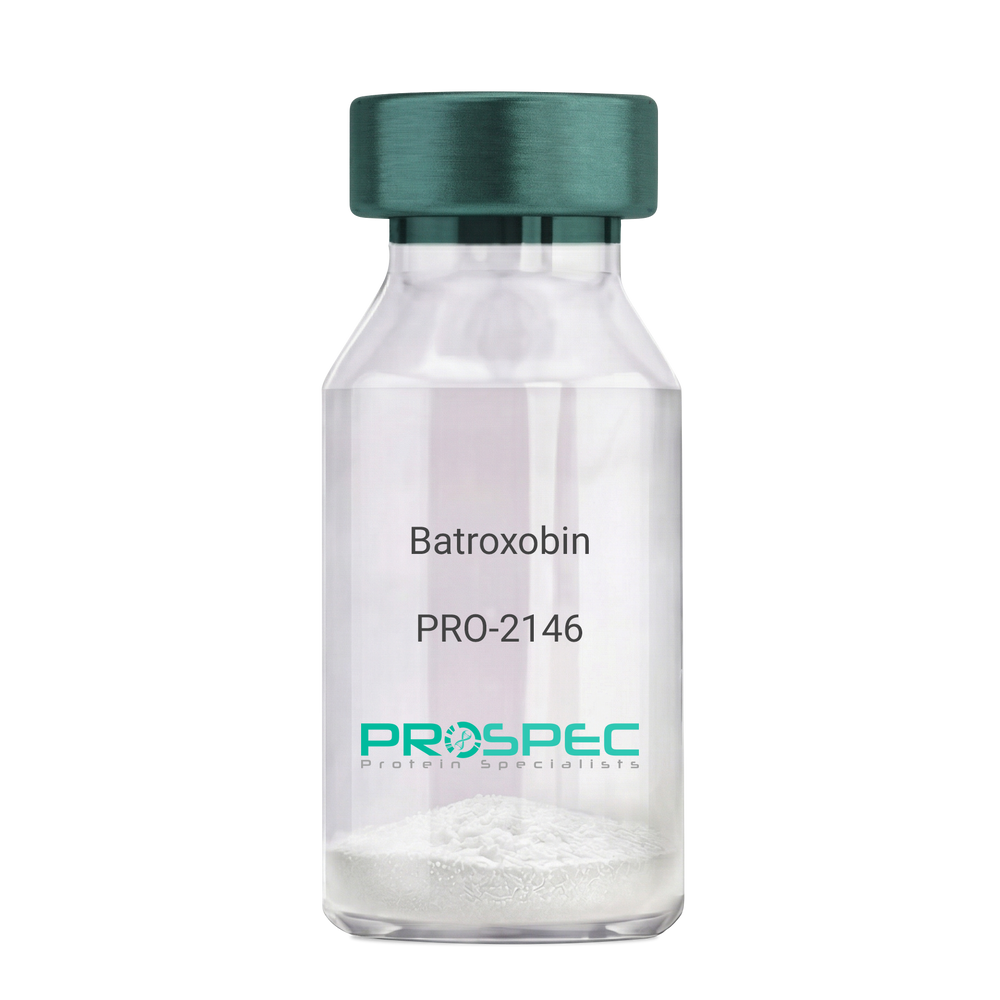
BatroxobinDescription:
Batroxobin
Thrombin-like enzyme batroxobin, EC 3.4.21.74, BX, Bothrops atrox serine proteinase, Venombin-A, Batroxobin.
Product # :
PRO-2146Price :
Quantity :
Shipping Method :
Shipped at Room temp
More Info
- description
- formulation
- More Info
Description
Batroxobin, isolated from Bothrops atrox snake venom, has an Mw of approximately 43kDa.
Formulation
The Batroxobin protein was lyophilized from a concentrated (1mg/ml) solution with no additives.
More Info
-
Introduction
Batroxobin is a serin protease that reduces fibronogen levels and is originally extracted from snake venom of Bothrops Atrox. Batroxobin is used in defibrinogenation and thrombolysis and also has an effect on c-fos gene and growth factor.
Batroxobin can efficiently restrain proliferation of VSMCs, by blocking the release and uptake of Ca2+, thus influencing [Ca2+]i.
Batroxobin converts fibrinogen to fibrin through the restricted release of fibrinopeptide-A from fibrinogen to promote blood to clot. Unlike thrombin, it is not affected by heparin and hirudin. -
Synonyms
Thrombin-like enzyme batroxobin, EC 3.4.21.74, BX, Bothrops atrox serine proteinase, Venombin-A, Batroxobin.
-
Physical Appearance
Sterile Filtered white lyophilized powder.
-
Stability
Store the lyophilized Batroxobin between 2-8°C. Do not freeze!
-
Solubility
It is recommended to reconstitute the lyophilized Batroxobin in sterile 18MΩ-cm H2O not less than 100µg/ml or more than 10mg/ml solutions.
-
Unit Definition
100BU [Batroxobin Units]=1mg.
ProSpec's products are furnished for LABORATORY RESEARCH USE ONLY. The product may not be used as drugs, agricultural or pesticidal products, food additives or household chemicals.
- View Data Sheet
Name :
Myostatin Propeptide HumanDescription:
Myostatin Propeptide Human Recombinant
GDF-8, MSTN, Growth Differentiation Factor 8, MSTN Muscle Hypertrophy.
Product # :
CYT-448Price :
Quantity :
Shipping Method :
Shipped at Room temp
More Info
- description
- source
- formulation
- purity
- biological activity
- More Info
Description
Recombinant Human Myostatin Propeptide is a 27.8kDa protein containing 244 amino acid residues of the human Myostatin Propeptide.
Source
Escherichia Coli.
Formulation
Lyophilized with no additives.
Purity
Greater than 95.0% as determined by SDS-PAGE.
Biological Activity
The protein has full biological activity when compared to a standard. The activity is determined by its ability to inhibit 50ng/ml of Myostatin on MPC-11 cells and is typically 0.13-0.2 μg/ml.More Info
-
Introduction
Myostatin (GDF-8), a member of the TGFbeta superfamily, is a potent and specific negative regulator of skeletal muscle mass. In serum, myostatin circulates as part of a latent complex containing myostatin propeptide and/or follistatin-related gene. The myostatin propeptide is known to bind and inhibit myostatin in vitro. This interaction is relevant in vivo, with a majority (>70%) of myostatin in serum bound to its propeptide. The myostatin propeptide is negative regulator of myostatin in vivo.
-
Synonyms
GDF-8, MSTN, Growth Differentiation Factor 8, MSTN Muscle Hypertrophy.
-
Physical Appearance
Sterile Filtered white lyophilized (freeze-dried) powder.
-
Stability
Store lyophilized protein at -20°C. Aliquot the product after reconstitution to avoid repeated freezing/thawing cycles. Reconstituted protein can be stored at 4°C for a limited period of time.
-
Solubility
It is recommended to reconstitute the lyophilized Myostatin Propeptide in sterile 20mM HCl at 0.1mg/ml, which can then be further diluted to other aqueous solutions.
-
Amino Acid Sequence
MNENSEQKE NVEKEGLCNA CTWRQNTKSS RIEAIKIQIL SKLRLETAPN ISKDVIRQLL PKAPPLRELI DQYDVQRDDS SDGSLEDDDY HATTETIITM PTESDFLMQV DGKPKCCFFK FSSKIQYNKV VKAQLWIYLR PVETPTTVFV QILRLIKPMK DGTRYTGIRS LKLDMNPGTG IWQSIDVKTV LQNWLKQPES NLGIEIKALD ENGHDLAVTF PGPGEDGLNP FLEVKVTDTP KRSRR.
ProSpec's products are furnished for LABORATORY RESEARCH USE ONLY. The product may not be used as drugs, agricultural or pesticidal products, food additives or household chemicals.
- View Data Sheet
Name :
HMOX2 HumanDescription:
Heme Oxygenase-2 Human Recombinant
EC 1.14.99.3, HO2, Heme oxygenase 2, HO-2, HMOX2.
Product # :
ENZ-478Price :
Quantity :
Shipping Method :
Shipped with Ice Packs
More Info
- description
- source
- formulation
- purity
- More Info
Description
HMOX2 Human Recombinant produced in E.Coli is a single, non-glycosylated, polypeptide chain containing 264 amino acids (1-264 a.a.) and having a molecular mass of 30.5 kDa. HMOX2 is purified by proprietary chromatographic techniques.
Source
Escherichia Coli.
Formulation
HMOX2 solution containing 20mM Tris pH-8, 1mM DTT and 10% glycerol.
Purity
Greater than 90% as determined by SDS-PAGE.
More Info
-
Introduction
HMOX2 cleaves the heme ring at the alpha methene bridge to form biliverdin. Biliverdin is subsequently transferred to bilirubin by biliverdin reductase. Under physiological conditions, the activity of HMOX2 is highest in the spleen, where senescent erythrocytes are sequestrated and destroyed. HMOX2 participates in the production of carbon monoxide in the brain where it operates as a neurotransmitter. HMOX2 is an essential enzyme in heme catabolism and is involved in cellular response to oxidative stress.
-
Synonyms
EC 1.14.99.3, HO2, Heme oxygenase 2, HO-2, HMOX2.
-
Physical Appearance
Sterile filtered colorless solution.
-
Stability
HMOX2 Human Recombinant although stable at 4°C for 1 week, should be stored below -18°C. Please prevent freeze thaw cycles.
-
Amino Acid Sequence
SAEVETSEG VDESEKKNSG ALEKENQMRM ADLSELLKEG TKEAHDRAEN TQFVKDFLKG NIKKELFKLA TTALYFTYSA LEEEMERNKD HPAFAPLYFP MELHRKEALT KDMEYFFGEN WEEQVQCPKA AQKYVERIHY IGQNEPELLV AHAYTRYMGD LSGGQVLKKV AQRALKLPST GEGTQFYLFE NVDNAQQFKQ LYRARMNALD LNMKTKERIV EEANKAFEYN MQIFNELDQA GSTLARETLE DGFPVHDGKG DMRK.
ProSpec's products are furnished for LABORATORY RESEARCH USE ONLY. The product may not be used as drugs, agricultural or pesticidal products, food additives or household chemicals.
- View Data Sheet
Name :
PDPN HumanDescription:
Podoplanin Human Recombinant
Podoplanin, Glycoprotein 36, PA2.26 antigen, T1A, GP36, GP40, Gp38, OTS8, T1A2, HT1A-1, PA2.26, T1-alpha, PDPN.
Product # :
PRO-626Price :
Quantity :
Shipping Method :
Shipped with Ice Packs
More Info
- description
- source
- formulation
- purity
- More Info
Description
PDPN Human Recombinant produced in E.Coli is a single, non-glycosylated polypeptide chain containing 130 amino acids (99-207 a.a) and having a molecular mass of 13.4kDa. PDPN is fused to a 21 amino acid His-tag at N-terminus & purified by proprietary chromatographic techniques.
Source
Escherichia Coli.
Formulation
The protein solution contains 20mM Tris-HCl pH7.5 & 0.1M NaCl.
Purity
Greater than 95.0% as determined by SDS-PAGE.
More Info
-
Introduction
Podoplanin is a small mucin-like type-1 transmembrane protein, typically expressed in various specialized cell types throughout the body. Podoplanin is a type-I integral membrane glycoprotein with diverse distribution in human tissues. PDPN physiological function is related to its mucin-type character. The homologous protein in other species has been described as a differentiation antigen and influenza-virus receptor.
PDPN is expressed in lymphatic progenitor cells and afterwards during mouse development in lymphatic endothelial cells. Podoplanin is a specific marker for lymph vessel endothelial cells. Over-expression of podoplanin significantly elevates endothelial cell adhesion, migration, and tube formation. Inhibition of Podoplanin expression decreases cell adhesion in human dermal lymphatic endothelial cells. Podoplanin is used as a specific marker for lymphatic endothelium in histopathology.
Podoplanin expression is increased in nearly all human colon, rectum, and small intestine tumors. AGGRUS may serve as a diagnostic marker that distinguishes seminomas, the majority of which over express the protein, from embryonal carcinoma in testicular germ cell tumors. -
Synonyms
Podoplanin, Glycoprotein 36, PA2.26 antigen, T1A, GP36, GP40, Gp38, OTS8, T1A2, HT1A-1, PA2.26, T1-alpha, PDPN.
-
Physical Appearance
Sterile Filtered colorless solution.
-
Stability
Store at 4°C if entire vial will be used within 2-4 weeks. Store, frozen at -20°C for longer periods of time. For long term storage it is recommended to add a carrier protein (0.1% HSA or BSA).Avoid multiple freeze-thaw cycles.
-
Amino Acid Sequence
MGSSHHHHHH SSGLVPRGSH MASTGQPEDD TETTGLEGGV AMPGAEDDVV TPGTSEDRYK SGLTTLVATS VNSVTGIRIE DLPTSESTVH AQEQSPSATA SNVATSHSTE KVDGDTQTTV EKDGLSTVTL.
ProSpec's products are furnished for LABORATORY RESEARCH USE ONLY. The product may not be used as drugs, agricultural or pesticidal products, food additives or household chemicals.
- View Data Sheet
Name :
YWHAB HumanDescription:
Tyr-3/Trp- 5 Monooxygenase Activation Protein Beta Human Recombinant
14-3-3 protein beta/alpha, Protein kinase C inhibitor protein 1, Protein 1054, YWHAB, HS1, GW128, KCIP-1, Tyr-3/Trp- 5 Monooxygenase Activation Protein Beta, 14-3-3 Beta.
Product # :
PKA-348Price :
Quantity :
Shipping Method :
Shipped with Ice Packs
More Info
- description
- source
- formulation
- purity
- More Info
Description
YWHAB Human Recombinant produced in E.Coli is a single, non-glycosylated, polypeptide chain containing 246 amino acids (1-246) and having a molecular mass of 28kDa. YWHAB is purified by proprietary chromatographic techniques.
Source
Escherichia Coli.
Formulation
The YWHAB protein solution (1mg/ml) containing 20mM Tris-HCl pH-8, 1mM EDTA & 50mM NaCl.
Purity
Greater than 90.0% as determined by SDS-PAGE.
More Info
-
Introduction
YWHAB belongs to the 14-3-3 family of proteins which are in charge for signal transduction by binding to phosphoserine-containing proteins. YWHAB is found in both plants and mammals. YWHAB protein interacts with RAF1 and CDC25 phosphatases,thus linking mitogenic signaling and the cell cycle machinery. YWHAB is an adapter protein involved in the regulation of a large spectrum of both general and specialized signaling pathway. YWHAB binds to a large number of proteins by recognition of a phosphoserine or phosphothreonine motif. Binding generally results in the modulation of the activity of the binding partner.
-
Synonyms
14-3-3 protein beta/alpha, Protein kinase C inhibitor protein 1, Protein 1054, YWHAB, HS1, GW128, KCIP-1, Tyr-3/Trp- 5 Monooxygenase Activation Protein Beta, 14-3-3 Beta.
-
Physical Appearance
Sterile filtered colorless solution.
-
Stability
Store at 4°C if entire vial will be used within 2-4 weeks. Store, frozen at -20°C for longer periods of time. For long term storage it is recommended to add a carrier protein (0.1% HSA or BSA).Avoid multiple freeze-thaw cycles.
-
Amino Acid Sequence
MTMDKSELVQ KAKLAEQAER YDDMAAAMKA VTEQGHELSN EERNLLSVAY KNVVGARRSS WRVISSIEQK TERNEKKQQM GKEYREKIEA ELQDICNDVL ELLDKYLIPN ATQPESKVFY LKMKGDYFRY LSEVASGDNK QTTVSNSQQA YQEAFEISKK EMQPTHPIRL GLALNFSVFY YEILNSPEKA CSLAKTAFDE AIAELDTLNE ESYKDSTLIM QLLRDNLTLW TSENQGDEGD
AGEGEN.
ProSpec's products are furnished for LABORATORY RESEARCH USE ONLY. The product may not be used as drugs, agricultural or pesticidal products, food additives or household chemicals.
- View Data Sheet
Name :
YWHAQ HumanDescription:
Tyr-3/Trp- 5 Monooxygenase Activation Protein Theta Human Recombinant
14-3-3 theta, 14-3-3 tau, 14-3-3 T-cell, HS1, YWHAQ, 1C5, 14-3-3 Tau, Tyr-3/Trp- 5 Monooxygenase Activation Protein Theta.
Product # :
PKA-254Price :
Quantity :
Shipping Method :
Shipped with Ice Packs
More Info
- description
- source
- formulation
- purity
- More Info
Description
YWHAQ Human Recombinant produced in E.Coli is a single, non-glycosylated, polypeptide chain containing 245 amino acids (1-245) and having a molecular mass of 27 kDa. YWHAQ is purified by proprietary chromatographic techniques.
Source
Escherichia Coli.
Formulation
YWHAQ solution containing 20mM Tris 7.5.
Purity
Greater than 95.0% as determined by SDS-PAGE.
More Info
-
Introduction
The 14-3-3 family of proteins plays a key regulatory role in signal transduction, checkpoint control, apoptotic and nutrient-sensing pathways. 14-3-3 proteins are highly conserved and ubiquitously expressed. There are at least seven isoforms, ?, ?, ?, ?, ?, ? and ? that have been identified in mammals. The 14-3-3 tau, a subtype of the 14-3-3 family of proteins, was found in T Cells, brain and testes. This 14-3-3 tau is upregulated in patients with amyotrophic lateral sclerosis.
-
Synonyms
14-3-3 theta, 14-3-3 tau, 14-3-3 T-cell, HS1, YWHAQ, 1C5, 14-3-3 Tau, Tyr-3/Trp- 5 Monooxygenase Activation Protein Theta.
-
Physical Appearance
Sterile filtered colorless solution.
-
Stability
YWHAQ Human Recombinant although stable at 4°C for 1 week, should be stored below -18°C. Please prevent freeze thaw cycles.
-
Amino Acid Sequence
MEKTELIQKA KLAEQAERYD DMATCMKAVT EQGAELSNEE RNLLSVAYKN VVGGRRSAWRVISSIEQKTD TSDKKLQLIK DYREKVESEL RSICTTVLEL LDKYLIANAT NPESKVFYLKMKGDYFRYLA EVACGDDRKQ TIDNSQGAYQ EAFDISKKEM QPTHPIRLGL ALNFSVFYYEILNNPELACT LAKTAFDEAI AELDTLNEDS YKDSTLIMQL LRDNLTLWTS DSAGEECDAA EGAEN.
ProSpec's products are furnished for LABORATORY RESEARCH USE ONLY. The product may not be used as drugs, agricultural or pesticidal products, food additives or household chemicals.
- View Data Sheet
Name :
YWHAZ HumanDescription:
Tyr-3/Trp- 5 Monooxygenase Activation Protein Zeta Human Recombinant
YWHAZ, KCIP-1, MGC111427, MGC126532, MGC138156, 14-3-3 protein zeta/delta, Protein kinase C inhibitor protein 1, Tyr-3/Trp- 5 Monooxygenase Activation Protein Zeta, 14-3-3 Zeta.
Product # :
PKA-257Price :
Quantity :
Shipping Method :
Shipped with Ice Packs
More Info
- description
- source
- formulation
- purity
- More Info
Description
YWHAZ fused to 37 His Tag at N-terminus Human Recombinant produced in E.Coli is a single, non-glycosylated, polypeptide chain containing 282 amino acids (1-245) and having a molecular mass of 32kDa.YWHAZ is purified by proprietary chromatographic techniques.
Source
Escherichia Coli.
Formulation
YWHAZ solution containing 1xPBS pH-7.
Purity
Greater than 95.0% as determined by SDS-PAGE.
More Info
-
Introduction
YWHAZ accession number NP_ 663723 belongs to the 14-3-3 family of proteins which are in charge for checkpoint control, apoptotic & nutrient sensing pathways as well as signal transduction by binding to phosphoserine-containing proteins. The 14-3-3 protein family is found in both plants and mammals, and KCIP-1 protein is 99% identical to the mouse, rat and sheep orthologs. KCIP-1 interacts with IRS1 protein, signifying a role in regulating insulin. 14-3-3 proteins are highly conserved and ubiquitously expressed. YWHAZ function as an adapter protein involved in the regulation of a large spectrum of both general and specialized signaling pathway. YWHAZ binds to a large number of partners, usually by recognition of a phosphoserine or phosphothreonine motif. Binding generally results in the modulation of the activity of the binding partner.
-
Synonyms
YWHAZ, KCIP-1, MGC111427, MGC126532, MGC138156, 14-3-3 protein zeta/delta, Protein kinase C inhibitor protein 1, Tyr-3/Trp- 5 Monooxygenase Activation Protein Zeta, 14-3-3 Zeta.
-
Physical Appearance
Sterile filtered colorless solution.
-
Stability
YWHAZ Human Recombinant although stable at 4°C for 1 week, should be stored below -18°C. Please prevent freeze thaw cycles.
-
Amino Acid Sequence
MRGSHHHHHH GMASMTGGQQ MGRDLYDDDD KDRWGSHMDK NELVQKAKLA EQAERYDDMA ACMKSVTEQG AELSNEERNL LSVAYKNVVG ARRSSWRVVS SIEQKTEGAE KKQQMAREYR EKIETELRDI CNDVLSLLEK FLIPNASQAE SKVFYLKMKG DYYRYLAEVA AGDDKKGIVD QSQQAYQEAF EISKKEMQPT HPIRLGLALN FSVFYYEILN SPEKACSLAK TAFDEAIAEL DTLSEESYKD STLIMQLLRD NLTLWTSDTQ GDEAEAGEGG EN.
ProSpec's products are furnished for LABORATORY RESEARCH USE ONLY. The product may not be used as drugs, agricultural or pesticidal products, food additives or household chemicals.
- View Data Sheet
Name :
MBP ProteinDescription:
Myelin Basic Protein Human
Maltose-binding periplasmic protein, MBP, MMBP, Maltodextrin-binding protein, malE, b4034, JW3994.
Product # :
PRO-2798Price :
Quantity :
Shipping Method :
Shipped at Room temp
More Info
- description
- source
- formulation
- purity
- More Info
Description
MBP Human produced in Human brain is checked using poly and monoclonal antibodies against MBP.
Source
Human brain.
Formulation
MBP was lyophilized containing no additives.
Purity
Greater than 95.0% as determined by SDS-PAGE.
More Info
-
Synonyms
Maltose-binding periplasmic protein, MBP, MMBP, Maltodextrin-binding protein, malE, b4034, JW3994.
-
Physical Appearance
Sterile Filtered White lyophilized (freeze-dried) powder.
-
Stability
Lyophilized MBP although stable at room temperature for 3 weeks, should be stored desiccated below -18°C. Upon reconstitution Myelin Basic Protein should be stored at 4°C between 2-7 days and for future use below -18°C. For long term storage it is recommended to add a carrier protein (0.1% HSA or BSA). Please prevent freeze-thaw cycles.
-
Solubility
It is recommended to reconstitute the lyophilized MBP in sterile 18MΩ-cm H2O not less than 100µg/ml, which can then be further diluted to other aqueous solutions.
-
Background
Myelin Basic Protein (MBP) stands as a cornerstone in the intricate architecture of the nervous system. As a vital component of the myelin sheath, MBP plays a pivotal role in ensuring the integrity and rapid transmission of nerve impulses. Over the years, scientific inquiry into MBP has revealed its multifaceted functions, not only as a structural element but also as a regulatory molecule involved in various cellular processes. This research seeks to unravel the complexities of MBP, exploring its structural characteristics, physiological significance, and its involvement in neurological disorders.
Structural Marvel of MBP:
MBP, an intrinsically disordered protein, boasts a unique structure allowing it to interact with lipid membranes, especially those found in the myelin sheath. Its high arginine and lysine content gives it a positive charge, enabling strong electrostatic interactions with the negatively charged lipids in myelin. This structural adaptation is crucial for the compact wrapping of myelin around axons, facilitating efficient electrical signal conduction.
Physiological Significance in Myelination:
In the central nervous system (CNS), oligodendrocytes produce myelin, a lipid-rich substance that insulates axons. MBP, as a major constituent of myelin, plays an indispensable role in this process. It stabilizes the myelin sheath’s structure, ensuring its tight adherence to the axon and promoting the fast, saltatory conduction of nerve impulses. Without functional MBP, myelin integrity is compromised, leading to reduced nerve conduction velocity and impaired neural communication.
Beyond Structural Functions:
Recent studies have revealed that MBP is not merely a structural protein but also possesses regulatory functions. It participates in signaling pathways crucial for oligodendrocyte development and myelination. Moreover, MBP’s interaction with cytoskeletal elements suggests its involvement in cellular processes such as axon guidance and neuronal plasticity. Understanding these regulatory roles provides insights into the broader impact of MBP on neural development and function.
Implications in Neurological Disorders:
Alterations in MBP have been linked to various neurological disorders, including multiple sclerosis (MS). In MS, the immune system erroneously targets MBP, leading to demyelination and subsequent neurological impairments. Research into MBP-related pathologies not only aids in understanding disease mechanisms but also offers potential therapeutic avenues. Targeting MBP-specific immune responses is a focus of research for developing MS treatments.
Conclusion:
MBP, as the guardian of neural transmission, stands as a testament to the marvels of biological architecture. Its intricate structure and multifaceted functions make it indispensable for the proper functioning of the nervous system. Beyond its role as a structural protein, MBP’s involvement in cellular signalling adds layers to its significance. In the realm of neurological disorders, MBP’s complexities provide both challenges and opportunities, guiding scientists toward innovative therapies. This research delves into the world of MBP, appreciating its contributions to neuroscience while aiming to decipher the mysteries that lie within its molecular intricacies.
ProSpec's products are furnished for LABORATORY RESEARCH USE ONLY. The product may not be used as drugs, agricultural or pesticidal products, food additives or household chemicals.
- View Data Sheet
Name :
MIA HumanDescription:
Melanoma Inhibitory Activity Human Recombinant
Melanoma-derived growth regulatory protein precursor, Cartilage-derived retinoic acid-sensitive protein, CD-RAP, MIA.
Product # :
CYT-310Price :
Quantity :
Shipping Method :
Shipped at Room temp
More Info
- description
- source
- formulation
- purity
- biological activity
- More Info
Description
Melanoma Inhibitory Activity Human Recombinant produced in E.Coli is a single, non-glycosylated, polypeptide chain consisting of 108 amino having a total molecular mass of 12237 Dalton.The MIA is purified by proprietary chromatographic techniques.
Source
Escherichia Coli.
Formulation
The protein was lyophilized from a concentrated (1mg/ml) solution containing 20mM Potassium-phosphate pH=7 and 150mM potassium chloride.
Purity
Greater than 95.0% as determined by:
(a) Analysis by RP-HPLC.
(b) Analysis by SDS-PAGE.Biological Activity
The biological activity is calculated by the inhibiting effect on the invasion of Mel In Tumor cells and found active in Mel In assay.More Info
-
Introduction
The Melanoma Inhibitory protein (MIA) was identified as an inhibitor of in vitro growth of malignant melanoma cells. The protein contains a SH3 domain.
MIA acts as a potent tumor cell growth inhibitor for malignant melanoma cells and some other neuroectodermal tumors, including gliomas, in an autocrine fashion. In a study of human melanoma cell lines with different metastatic capacity MIA mRNA expression appeared to be inversely correlated with pigmentation. MIA has been shown to represent a very sensitive and specific serum marker for systemic malignant melanoma that might be useful for staging of primary melanomas, detection of progression from localized to metastatic disease during follow-up, and monitoring therapy of advanced melanomas. -
Synonyms
Melanoma-derived growth regulatory protein precursor, Cartilage-derived retinoic acid-sensitive protein, CD-RAP, MIA.
-
Physical Appearance
Sterile Filtered White lyophilized (freeze-dried) powder.
-
Stability
Lyophilized MIA although stable at room temperature for 3 weeks, should be stored desiccated below -18°C. Upon reconstitution MIA should be stored at 4°C between 2-7 days and for future use below -18°C.Please prevent freeze-thaw cycles.
-
Solubility
It is recommended to reconstitute the lyophilized Melanoma Inhibitory Activity in sterile 18MΩ-cm H2O not less than 100µg/ml, which can then be further diluted to other aqueous solutions.
-
Amino Acid Sequence
Agrees with the sequence of native MIA human with an addition N-terminal Methionine residue.
MGPMPKLADRKLCADQECSSHPISMAVALQDYMAPDCRFLTIHRGQVV
YVFSLKGRGRFLWGGSVQGDYYGDLAARLGYFPSSIVREDQTLKVDVKT
DKWDFYCQ. -
Protein content
UV spectroscopy at 280 nm using the absorption coefficient of 19300 M-1cm-1.
ProSpec's products are furnished for LABORATORY RESEARCH USE ONLY. The product may not be used as drugs, agricultural or pesticidal products, food additives or household chemicals.
- View Data Sheet
Name :
CXCL9 BovineDescription:
MIG (CXCL9) Bovine Recombinant
Small inducible cytokine B9, CXCL9, Gamma INF-induced monokine, MIG, chemokine (C-X-C motif) ligand 9, CMK, Humig, SCYB9, crg-10, monokine induced by gamma-INF.
Product # :
CHM-041Price :
Quantity :
Shipping Method :
Shipped at Room temp
More Info
- description
- source
- formulation
- purity
- biological activity
- More Info
Description
MIG (CXCL9) BovineRecombinant produced in E.Coli is a non-glycosylated polypeptide chain containing 104 amino acids and having a molecular mass of approximately 18.0kDa.MIG is purified by proprietary chromatographic techniques.
Source
Escherichia Coli.
Formulation
Lyophilized from a 0.2μm filtered concentrated solution in 20 mM PB and 500mM NaCl, pH 7.0.
Purity
Greater than 96.0% as determined by:
(a) Analysis by RP-HPLC.
(b) Analysis by SDS-PAGE.Biological Activity
The biological activity determined by a chemotaxis bioassay using human lymphocytes is 0.1-1.0 ng/ml.
More Info
-
Introduction
Chemokine (C-X-C motif) ligand 9 (CXCL9) is a small cytokine belongs to the CXC chemokine family that is also known as Monokine induced by gamma INF (MIG). CXCL9 is closely related to two other CXC chemokines called CXCL10 and CXCL11, whose genes are located near the gene for CXCL9 on human chromosome 4. CXCL9, CXCL10 and CXCL11 all elicit their chemotactic functions by interacting with the chemokine receptor CXCR3.
-
Synonyms
Small inducible cytokine B9, CXCL9, Gamma INF-induced monokine, MIG, chemokine (C-X-C motif) ligand 9, CMK, Humig, SCYB9, crg-10, monokine induced by gamma-INF.
-
Physical Appearance
Sterile Filtered White lyophilized (freeze-dried) powder.
-
Stability
Lyophilized MIG although stable at room temperature for 3 weeks, should be stored desiccated below -18°C. Upon reconstitution MIG (CXCL9) should be stored at 4°C between 2-7 days and for future use below -18°C.Please prevent freeze-thaw cycles.
-
Solubility
It is recommended to reconstitute the lyophilized MIG (CXCL9) in sterile 18MΩ-cm H2O not less than 100µg/ml, which can then be further diluted to other aqueous solutions.
-
Amino Acid Sequence
VPAIRNGRCS CINTSQGMIH PKSLKDLKQF APSPSCEKTE IIATMKNGNE ACLNPDLPEV KELIKEWEKQ VNQKKKQRKG KKYKKTKKVP KVKRSQRPSQ KKTT.
-
Background
What is the molecular weight/Mw of CXCL9 BOVINE Protein?
CXCL9 BOVINE Protein has a total Mw of 18kDa.
What is the source or expression system of CXCL9 BOVINE Protein?
Escherichia Coli.
What is the Purity of CXCL9 BOVINE Protein?
CXCL9 BOVINE Protein is > 96% pure as determined by SDS-PAGE.
What is the Biological Activity of CXCL9 BOVINE Protein?
The biological activity determined by a chemotaxis bioassay using human lymphocytes is 0.1-1.0 ng/ml.
What is the amino acid sequence of CXCL9 BOVINE Protein?
VPAIRNGRCS CINTSQGMIH PKSLKDLKQF APSPSCEKTE IIATMKNGNE ACLNPDLPEV KELIKEWEKQ VNQKKKQRKG KKYKKTKKVP KVKRSQRPSQ KKTT.
What applications can CXCL9 BOVINE Protein be used in?
CXCL9 BOVINE Protein can probably be used in western blot, ELISA and Lateral Flow.
What is the endotoxin level for CXCL9 BOVINE Protein?
The endotoxin level is minimal, CXCL9 BOVINE Protein was purified using conventional chromatography techniques.
ProSpec's products are furnished for LABORATORY RESEARCH USE ONLY. The product may not be used as drugs, agricultural or pesticidal products, food additives or household chemicals.
- View Data Sheet
Name :
TNNI2 Human, HisDescription:
Troponin I Type 2 Human Recombinant, His Tag
AMCD2B, DA2B, FSSV, fsTnI, Troponin I, fast skeletal muscle, Troponin I, fast-twitch isoform.
Product # :
PRO-1283Price :
Quantity :
Shipping Method :
Shipped with Ice Packs
More Info
- description
- source
- formulation
- purity
- More Info
Description
TNNI2 Human Recombinant produced in E. coli is a single polypeptide chain containing 202 amino acids (1-182) and having a molecular mass of 23.5 kDa. TNNI2 is fused to 20 amino acid His-tag at N-terminus & purified by proprietary chromatographic techniques.
Source
E.coli.
Formulation
The TNNI2 solution (0.25mg/1ml) contains 20mM Tris-HCl buffer (pH 8.0), 2M Urea, 20% glycerol and 0.2M NaCl.
Purity
Greater than 90% as determined by SDS-PAGE.
More Info
-
Introduction
Troponin I, fast skeletal muscle (TNNI2), belongs to the troponin I gene family, and a part of the troponin complex including troponin T, troponin C and troponin I subunits. The troponin complex, along with tropomyosin, is responsible for the calcium-dependent regulation of striated muscle contraction. TNNI2 is also suppresses tumor growth in human ovarian carcinoma. Mutations in TNNI2 cause myopathy and distal arthrogryposis type 2B.
-
Synonyms
AMCD2B, DA2B, FSSV, fsTnI, Troponin I, fast skeletal muscle, Troponin I, fast-twitch isoform.
-
Physical Appearance
Sterile Filtered colorless solution.
-
Stability
Store at 4°C if entire vial will be used within 2-4 weeks. Store, frozen at -20°C for longer periods of time. For long term storage it is recommended to add a carrier protein (0.1% HSA or BSA).Avoid multiple freeze-thaw cycles.
-
Amino Acid Sequence
MGSSHHHHHH SSGLVPRGSH MGDEEKRNRA ITARRQHLKS VMLQIAATEL EKEESRREAE KQNYLAEHCP PLHIPGSMSE VQELCKQLHA KIDAAEEEKY DMEVRVQKTS KELEDMNQKL FDLRGKFKRP PLRRVRMSAD AMLKALLGSK HKVCMDLRAN LKQVKKEDTE KERDLRDVGD WRKNIEEKSG MEGRKKMFES ES.
ProSpec's products are furnished for LABORATORY RESEARCH USE ONLY. The product may not be used as drugs, agricultural or pesticidal products, food additives or household chemicals.
- View Data Sheet
Name :
TNNI3 Human NativeDescription:
Cardiac Troponin-I Human
Troponin I cardiac muscle, Cardiac troponin I, TNNI3, TNNC1, CMH7, RCM1, cTnI, CMD2A, MGC116817.
Product # :
PRO-2788Price :
Quantity :
Shipping Method :
Shipped at Room temp
More Info
- description
- source
- formulation
- purity
- More Info
Description
TNNI3 Native produced in Human heart tissue is a full length protein which has an additional amino acid residues on its N terminus that are not present on the skeletal form, making this protein a promising analyte for indicating cardiac specificity.TNNI3 Native is purified by proprietary chromatographic technique.
Source
Human heart tissue.
Formulation
TNNI3 was lyophilized from 0.01M HCl.
Purity
Greater than 98.0% as determined by SDS-PAGE.
More Info
-
Synonyms
Troponin I cardiac muscle, Cardiac troponin I, TNNI3, TNNC1, CMH7, RCM1, cTnI, CMD2A, MGC116817.
-
Physical Appearance
Sterile Filtered White lyophilized (freeze-dried) powder.
-
Stability
Lyophilized Cardiac Troponin-I although stable at room temperature for 3 weeks, should be stored desiccated below -18°C. Upon reconstitution TNNI3 should be stored at 4°C between 2-7 days and for future use below -18°C.For long term storage it is recommended to add a carrier protein (0.1% HSA or BSA).Please prevent freeze-thaw cycles.
-
Solubility
It is recommended to reconstitute the lyophilized TNNI3 in Tris/urea buffer (20mM Tris, pH 7.5, 7M urea, 5mM EDTA, 15mM 2-mercaptoethanol) not less than 100µg/ml, which can then be further diluted to other aqueous solutions.
-
Background
Troponin I, encoded by the TNNI3 gene, is a critical component of the troponin complex in cardiac muscle cells. It plays a central role in the regulation of cardiac muscle contraction by modulating the interaction between actin and myosin filaments.
While extensive research has been conducted on troponin I in the context of cardiac diseases, there is a growing need to investigate native human troponin I (TNNI3) in its unmodified form to gain a deeper understanding of its functions, structural significance, and implications for heart health. This research aims to provide a comprehensive exploration of TNNI3 in its native state, shedding light on its various roles and potential applications in cardiology and biomedical research.
The primary objective of this research is to elucidate the physiological role of native human TNNI3 in cardiac muscle contraction. Experiments involving human cardiac tissue samples and isolated myocytes will be conducted to investigate how TNNI3 interacts with other components of the troponin complex and influences calcium-mediated muscle contraction. Understanding these mechanisms is fundamental for deciphering the complexities of cardiac muscle physiology and its implications for heart health.
The second objective is to assess the clinical relevance of native TNNI3 in cardiac diseases. Clinical studies involving patients with various cardiac conditions will be conducted to evaluate the diagnostic and prognostic value of TNNI3 as a biomarker. These investigations may provide valuable insights into the use of native TNNI3 in the early detection and management of heart diseases.
The third objective is to explore the potential applications of native TNNI3 in biomedical research and drug development. Research will investigate the use of native TNNI3-expressing cells as models for studying cardiac disorders and for developing novel therapeutic interventions targeting the troponin complex.
By delving into the functions and roles of native human TNNI3, this research aims to expand our knowledge of cardiac muscle physiology, its implications for cardiac diseases, and its potential applications in cardiology and biomedical research.
ProSpec's products are furnished for LABORATORY RESEARCH USE ONLY. The product may not be used as drugs, agricultural or pesticidal products, food additives or household chemicals.
- View Data Sheet
Name :
B2M Human RecombinantDescription:
Beta 2 Microglobulin Human Recombinant
Beta-2-microglobulin, B2M.
Product # :
PRO-337Price :
Quantity :
Shipping Method :
Shipped at Room temp
More Info
- description
- source
- formulation
- purity
- More Info
Description
B2 Microglobulin Human Recombinant produced in E.Coli is a non-glycosylated polypeptide chain having a molecular mass of 12 kDa.
The B2M is purified by proprietary chromatographic techniques.
Source
Escherichia Coli.
Formulation
The protein was lyophilized from a concentrated solution (1mg/ml) containing Citrate-Na, PH 6.9.
Purity
Greater than 95.0% as determined by HPLC.
More Info
-
Introduction
B2 microglobulin is an 11 kDa protein associated with the outer membrane of many cells including lymphocytes. It is the small subunit of the MHC class I molecule. Association with beta 2-microglobulin is generally required for the transport of class I heavy chains from the endoplasmic reticulum to the cell surface. ?2 microglobulin associates with class I-like molecules such as CD1 and Qa as well as with the alpha chain of MHC class I molecules. Very limited amounts of MHC class I molecules can be found on the surface in the absence of ?2 microglobulin. CD8 T cells cannot develop in the absence of MHC class I.
Beta 2-microglobulin is present in small amounts in serum, csf, and urine of normal people, and to a much greater degree in the urine and plasma of patients with tubular proteinaemia, renal failure, or kidney transplants. Human Beta 2 microglobulin levels can rise either because its rate of synthesis has increased (e.g. in AIDS, malignant monoclonal plasma cell dyscrasia, solid tumors and autoimmune disease) or because of impaired renal filtration (e.g. due to renal insufficiency, graft rejection or nephrotoxicity induced by post-transplantation immunosuppressive therapy). Beta-2 microglobulin levels might also be elevated in multiple myeloma and lymphoma cases. Dialysis-related amyloidosis develops after a long-term hemodialysis, it can aggregate into amyloid fibers that deposit in joint spaces. -
Synonyms
Beta-2-microglobulin, B2M.
-
Physical Appearance
Sterile Filtered White lyophilized (freeze-dried) powder.
-
Stability
Lyophilized B2M although stable at room temperature for 3 weeks, should be stored desiccated below -18°C. Upon reconstitution B2M should be stored at 4°C between 2-7 days and for future use below -18°C.For long term storage it is recommended to add a carrier protein (0.1% HSA or BSA).Please prevent freeze-thaw cycles.
-
Solubility
It is recommended to reconstitute the lyophilized B2M in sterile 18MΩ-cm H2O not less than 100µg/ml, which can then be further diluted to other aqueous solutions.
ProSpec's products are furnished for LABORATORY RESEARCH USE ONLY. The product may not be used as drugs, agricultural or pesticidal products, food additives or household chemicals.
- View Data Sheet
Name :
LLO PEST freeDescription:
Listeriolysin-O PEST free Recombinant
Listeriolysin-O, LLO, hlyA.
Product # :
PRO-373Price :
Quantity :
Shipping Method :
Shipped with Ice Packs
More Info
- description
- source
- formulation
- purity
- biological activity
- More Info
Description
Recombinant Listeriolysin O s a single polypeptide protein encoded by the hlyA gene and composed of 529 residues. PEST sequence is 19 amino acids peptide located at the protein NH 2-terminus, that targets the toxin for degradation. This motif is essential for bacterial virulence.
Source
Escherichia Coli.
Formulation
The protein contains 50mM NaH2PO4, 1mM EDTA, 2.7mM KCl, 1mM DTT, 5% glycerol and 0.5M NaCl.
Purity
Greater than 90.0% as determined by SDS-PAGE.
Biological Activity
7x10⁴ HU/mg. 2mM DTT could be use to reactivate the toxin.
More Info
-
Introduction
Listeriolysin O (aka LLO) is a hemolysin produced by Listeria monocytogenes bacteria, the pathogen responsible for causing listeriosis. The toxin may be regarded as a virulence factor, since it is crucial for the virulence of L. monocytogenes. LLO is a single polypeptide protein encoded by the hlyA gene and composed of 529 residues. LLO is a thiol-activated cholesterol-dependent pore forming toxin protein; therefore, it is activated by reducing agents and inhibited by oxidizing agents. Still, LLO differs from other thiol-activated toxins, as its cytolytic activity is maximized at a pH of 5.5. Inside the acidic phagosomes (average pH ~ 5.9) of cells that have phagocytosed L. monocytogenes, LLO is selectively activated by maximizing activity at a pH of 5.5. Following the phagosome lysis by LLO, the bacterium breaks out into the cytosol, where it is able to grow intracellularly, and the toxin has reduced activity in the more basic cytosol. Thus, LLO permits L. monocytogenes to break out from the phagosomes into the cytosol without harming the plasma membrane of the infected cell, which allows the bacteria to live intracellularly, where they are sheltered from extracellular immune system factors such as the complement system and antibodies. LLO also brings about dephosphorylation of histone H3 and deacetylation of histone H4 in the early phases of infection, before entry of L. monocytogenes into the host cell. The pore-forming activity is not implicated in causing the histone modifications. The modifications of the histones affect the down regulation of genes encoding proteins involved in the inflammatory response. Therefore, LLO may be significant in subverting the host immune response to L. monocytogenes. At its NH2-terminus it possesses a 25 residues long typical signal sequence excited during the secretion process. Moreover, in its NH2-terminus there is also a 19 amino acids PEST- like sequence that may target this toxin for degradation. The PEST-like sequence found in LLO and is considered crucial for virulence, given that mutants lacking the sequence lysed the host cell. Nevertheless, contrary to PEST's supposed role in protein degradation, evidence implies that the PEST-like sequence may control LLO production in the cytosol rather than increase degradation of LLO.
-
Synonyms
Listeriolysin-O, LLO, hlyA.
-
Physical Appearance
Sterile Filtered clear solution.
-
Stability
Store at 4°C if entire vial will be used within 2-4 weeks. Store, frozen at -20°C for longer periods of time. Avoid multiple freeze-thaw cycles.
ProSpec's products are furnished for LABORATORY RESEARCH USE ONLY. The product may not be used as drugs, agricultural or pesticidal products, food additives or household chemicals.
- View Data Sheet
Name :
B2M AntibodyDescription:
Beta 2 Microglobulin, Mouse Anti Human
Beta-2-microglobulin, B2M.
Product # :
ANT-670Price :
Quantity :
Shipping Method :
Shipped with Ice Packs
More Info
- formulation
- More Info
Formulation
1mg/ml containing PBS, pH-7.4, 10% Glycerol and 0.02% Sodium Azide.
More Info
-
Introduction
Beta 2 microglobulin is an 11 kDa protein associated with the outer membrane of many cells including lymphocytes. It is the small subunit of the MHC class I molecule. Association with beta 2-microglobulin is generally required for the transport of class I heavy chains from the endoplasmic reticulum to the cell surface. Beta 2 microglobulin associates with class I-like molecules such as CD1 and Qa as well as with the alpha chain of MHC class I molecules. Very limited amounts of MHC class I molecules can be found on the surface in the absence of Beta 2 microglobulin. CD8 T cells cannot develop in the absence of MHC class I.
Beta 2-microglobulin is present in small amounts in serum, csf, and urine of normal people, and to a much greater degree in the urine and plasma of patients with tubular proteinaemia, renal failure, or kidney transplants. Human Beta 2 microglobulin levels can rise either because its rate of synthesis has increased (e.g. in AIDS, malignant monoclonal plasma cell dyscrasia, solid tumors and autoimmune disease) or because of impaired renal filtration (e.g. due to renal insufficiency, graft rejection or nephrotoxicity induced by post-transplantation immunosuppressive therapy). Beta-2 microglobulin levels might also be elevated in multiple myeloma and lymphoma cases. Dialysis-related amyloidosis develops after a long-term hemodialysis, it can aggregate into amyloid fibers that deposit in joint spaces.
-
Synonyms
Beta-2-microglobulin, B2M.
-
Physical Appearance
Sterile filtered colorless solution.
-
Immunogen
Anti-human B2M mAb, is derived from hybridization of mouse F0 myeloma cells with spleen cells from BALB/c mice immunized with a recombinant human B2M protein 21-119 amino acids purified from E. coli.
-
Ig Subclass
Mouse IgG2b heavy chain and k light chain.
-
Clone
PAT101F10AT.
-
Applications
The antibody has been tested by ELISA, Western blot analysis, Flow cytometry and ICC/IF to assure specificity and reactivity. Since application varies, however, each investigation should be titrated by the reagent to obtain optimal results.
-
Type
Mouse Anti Human Monoclonal.
-
Storage Procedures
For periods up to 1 month store at 4°C, for longer periods of time, store at -20°C. Prevent freeze thaw cycles.
-
Purification Method
B2M antibody was purified from mouse ascitic fluids by protein-A affinity chromatography.
ProSpec's products are furnished for LABORATORY RESEARCH USE ONLY. The product may not be used as drugs, agricultural or pesticidal products, food additives or household chemicals.
- View Data Sheet
Name :
MOB3B HumanDescription:
MOB Kinase Activator 3B Human Recombinant
MOB Kinase Activator 3B, Chromosome 9 Open Reading Frame 35, Monopolar Spindle 1 Binding, MOB1, Domain Containing, MOB1 Mps One Binder Kinase Activator-Like 2B, Mps One Binder Kinase Activator-Like 2B, Monopolar Spindle 1 Binding, Mob1 Homolog 2b, MOBKL2B, Domain Containing, C9orf35, MOB1D, MOB1.
Product # :
PKA-319Price :
Quantity :
Shipping Method :
Shipped with Ice Packs
More Info
- description
- source
- formulation
- purity
- More Info
Description
MOB3B Human Recombinant produced in E.coli is a single, non-glycosylated polypeptide chain containing 239 amino acids (1-216) and having a molecular mass of 27.9 kDa. MOB3B is fused to a 23 amino acid His-tag at N-terminus.
Source
Escherichia Coli.
Formulation
The MOB3B solution (0.5mg/ml) contains 20mM Tris-HCl buffer (pH 8.0), 0.15M NaCl, 1mM DTT and 20% glycerol.
Purity
Greater than 90% as determined by SDS-PAGE.
More Info
-
Introduction
MOB3B is similar to yeast Mob1 protein which binds Mps1p, a protein kinase vital for spindle pole body duplication and mitotic checkpoint regulation. MOB3B is situated on the opposite strand as the INF kappa precursor (IFNK) gene.
-
Synonyms
MOB Kinase Activator 3B, Chromosome 9 Open Reading Frame 35, Monopolar Spindle 1 Binding, MOB1, Domain Containing, MOB1 Mps One Binder Kinase Activator-Like 2B, Mps One Binder Kinase Activator-Like 2B, Monopolar Spindle 1 Binding, Mob1 Homolog 2b, MOBKL2B, Domain Containing, C9orf35, MOB1D, MOB1.
-
Physical Appearance
Sterile Filtered clear solution.
-
Stability
Store at 4°C if entire vial will be used within 2-4 weeks. Store, frozen at -20°C for longer periods of time. For long term storage it is recommended to add a carrier protein (0.1% HSA or BSA).Avoid multiple freeze-thaw cycles.
-
Amino Acid Sequence
MGSSHHHHHH SSGLVPRGSH MGSMSIALKQ VFNKDKTFRP KRKFEPGTQR FELHKRAQAS LNSGVDLKAA VQLPSGEDQN DWVAVHVVDF FNRINLIYGT ICEFCTERTC PVMSGGPKYE YRWQDDLKYK KPTALPAPQY MNLLMDWIEV QINNEEIFPT CVGVPFPKNF LQICKKILCR LFRVFVHVYI HHFDRVIVMG AEAHVNTCYK HFYYFVTEMN LIDRKELEPL KEMTSRMCH
ProSpec's products are furnished for LABORATORY RESEARCH USE ONLY. The product may not be used as drugs, agricultural or pesticidal products, food additives or household chemicals.
- View Data Sheet
Name :
MCAM HumanDescription:
Melanoma Cell Adhesion Molecule Human Recombinant
Cell surface glycoprotein MUC18, Cell surface glycoprotein P1H12, Melanoma cell adhesion molecule, Melanoma-associated antigen A32, Melanoma-associated antigen MUC18, S-endo 1 endothelial-associated antigen, CD146, MCAM, MUC18, Cell Surface Glycoprotein MUC18, Melanoma Adhesion Molecule, CD146 Antigen, CD146, Melanoma Cell Adhesion Molecule, S-Endo 1 Endothelial-Associated Antigen, Melanoma-Associated Antigen MUC18, Cell Surface Glycoprotein P1H12, Melanoma-Associated Antigen A32, Gicerin.
Product # :
PRO-2503Price :
Quantity :
Shipping Method :
Shipped with Ice Packs
More Info
- description
- source
- formulation
- purity
- More Info
Description
MCAM produced in Sf9 Insect cells is a single, glycosylated polypeptide chain containing 547 amino acids (24-559 a.a.) and having a molecular mass of 61.0kDa (Molecular size on SDS-PAGE will appear at approximately 70-100kDa).MCAM is expressed with a 6 amino acid His tag at C-Terminus and purified by proprietary chromatographic techniques.
Source
Sf9, Insect cells.
Formulation
MCAM protein solution (0.5mg/ml) contains Phosphate Buffered Saline (pH 7.4) and 10% glycerol.
Purity
Greater than 95.0% as determined by SDS-PAGE.
More Info
-
Introduction
Cell surface glycoprotein MUC18 (MCAM), is an integral membrane glycoprotein which is part of the immunoglobulin superfamily. MCAM is related with a variety of carcinomas such as tumor progression, metastasis and is also implicated in embryonic neural development. In Addition, MCAM takes part in cell adhesion, as well as in cohesion of the endothelial monolayer at the intercellular junctions in vascular tissue.
-
Synonyms
Cell surface glycoprotein MUC18, Cell surface glycoprotein P1H12, Melanoma cell adhesion molecule, Melanoma-associated antigen A32, Melanoma-associated antigen MUC18, S-endo 1 endothelial-associated antigen, CD146, MCAM, MUC18, Cell Surface Glycoprotein MUC18, Melanoma Adhesion Molecule, CD146 Antigen, CD146, Melanoma Cell Adhesion Molecule, S-Endo 1 Endothelial-Associated Antigen, Melanoma-Associated Antigen MUC18, Cell Surface Glycoprotein P1H12, Melanoma-Associated Antigen A32, Gicerin.
-
Physical Appearance
Sterile filtered colorless solution.
-
Stability
Store at 4°C if entire vial will be used within 2-4 weeks. Store, frozen at -20°C for longer periods of time. For long term storage it is recommended to add a carrier protein (0.1% HSA or BSA).Avoid multiple freeze-thaw cycles.
-
Amino Acid Sequence
VPGEAEQPAP ELVEVEVGST ALLKCGLSQS QGNLSHVDWF SVHKEKRTLI FRVRQGQGQS EPGEYEQRLS LQDRGATLAL TQVTPQDERI FLCQGKRPRS QEYRIQLRVY KAPEEPNIQV NPLGIPVNSK EPEEVATCVG RNGYPIPQVI WYKNGRPLKE EKNRVHIQSS QTVESSGLYT LQSILKAQLV KEDKDAQFYC ELNYRLPSGN HMKESREVTV PVFYPTEKVW LEVEPVGMLK EGDRVEIRCL ADGNPPPHFS ISKQNPSTRE AEEETTNDNG VLVLEPARKE HSGRYECQGL DLDTMISLLS EPQELLVNYV SDVRVSPAAP ERQEGSSLTL TCEAESSQDL EFQWLREETG QVLERGPVLQ LHDLKREAGG GYRCVASVPS IPGLNRTQLV NVAIFGPPWM AFKERKVWVK ENMVLNLSCE ASGHPRPTIS WNVNGTASEQ DQDPQRVLST LNVLVTPELL ETGVECTASN DLGKNTSILF LELVNLTTLT PDSNTTTGLS TSTASPHTRA NSTSTERKLP EPESRGAAAL EHHHHHH.
ProSpec's products are furnished for LABORATORY RESEARCH USE ONLY. The product may not be used as drugs, agricultural or pesticidal products, food additives or household chemicals.
- View Data Sheet
Name :
IMPA1 HumanDescription:
Inositol Monophosphatase 1 Human Recombinant
Inositol monophosphatase 1, IMP 1, IMPase 1, Inositol-1(or 4)-monophosphatase 1, Lithium-sensitive myo-inositol monophosphatase A1, IMPA1, IMPA, IMP.
Product # :
ENZ-006Price :
Quantity :
Shipping Method :
Shipped with Ice Packs
More Info
- description
- source
- formulation
- purity
- More Info
Description
IMPA1 Human Recombinant fused with a 20 amino acid His tag at N-terminus produced in E.Coli is a single, non-glycosylated, polypeptide chain containing 297 amino acids (1-277 a.a.) and having a molecular mass of 32.3kDa. The IMPA1 is purified by proprietary chromatographic techniques.
Source
Escherichia Coli.
Formulation
The IMPA1 solution (1mg/ml) contains 20mM Tris-HCl Buffer (pH 8.0) and 10% Glycerol.
Purity
Greater than 95.0% as determined by SDS-PAGE.
More Info
-
Introduction
Inositol monophosphatase1 (IMPA1) is responsible for the provision of inositol essential for synthesis of phosphatidylinositol and polyphosphoinositides. IMPA1 has a central role in the phosphatidylinositol signaling pathway by catalyzing the hydrolysis of inositol monophosphates. IMPA1 has been recognized as the pharmacological target for lithium action in the brain. The IMPA1 enzyme has a magnesium-dependent phosphatase activity and is inhibited by therapeutic concentrations of lithium. Inhibition of inositol monophosphate hydroylosis and ensuing depletion of inositol for phosphatidylinositol synthesis may perhaps explain the anti-manic and anti-depressive effects of lithium administered to treat bipolar disorder.
-
Synonyms
Inositol monophosphatase 1, IMP 1, IMPase 1, Inositol-1(or 4)-monophosphatase 1, Lithium-sensitive myo-inositol monophosphatase A1, IMPA1, IMPA, IMP.
-
Physical Appearance
Sterile Filtered colorless solution.
-
Stability
Store at 4°C if entire vial will be used within 2-4 weeks. Store, frozen at -20°C for longer periods of time. For long term storage it is recommended to add a carrier protein (0.1% HSA or BSA).Avoid multiple freeze-thaw cycles.
-
Amino Acid Sequence
MGSSHHHHHH SSGLVPRGSH MADPWQECMD YAVTLARQAG EVVCEAIKNE MNVMLKSSPV DLVTATDQKV EKMLISSIKE KYPSHSFIGE ESVAAGEKSI LTDNPTWIID PIDGTTNFVH RFPFVAVSIG FAVNKKIEFG VVYSCVEGKM YTARKGKGAF CNGQKLQVSQ QEDITKSLLV TELGSSRTPE TVRMVLSNME KLFCIPVHGI RSVGTAAVNM CLVATGGADA YYEMGIHCWD VAGAGIIVTE AGGVLMDVTG GPFDLMSRRV IAANNRILAE RIAKEIQVIP LQRDDED.
ProSpec's products are furnished for LABORATORY RESEARCH USE ONLY. The product may not be used as drugs, agricultural or pesticidal products, food additives or household chemicals.
- View Data Sheet
Name :
HIF1A Human, HisDescription:
Hypoxia-Inducible Factor-1 Alpha Human Recombinant, His Tag
Hypoxia-inducible factor 1 alpha, HIF-1 alpha, HIF1 alpha, ARNT-interacting protein, Member of PAS protein 1, Basic-helix-loop-helix-PAS protein MOP1, HIF1A, MOP1, HIF1, PASD8, HIF-1A.
Product # :
PRO-415Price :
Quantity :
Shipping Method :
Shipped with Ice Packs
More Info
- description
- source
- formulation
- purity
- More Info
Description
HIF1A Recombinant Human produced in E.Coli is a single, non-glycosylated polypeptide chain containing 231 amino acids (576-785 a.a.) and having a molecular mass of 25.1 kDa. The HIF1A is fused to a 21 amino acid His-Tag at N-terminus and purified by proprietary chromatographic techniques.
Source
Escherichia Coli.
Formulation
HIF1A Human solution containing 20mM Tris-HCl pH-8, 1mM DTT, 0.2M NaCl & 10% glycerol.
Purity
Greater than 85.0% as determined by SDS-PAGE.
More Info
-
Introduction
HIF1A has a role as a master transcriptional monitor of the adaptive response to hypoxia. Under hypoxic conditions HIF1A activates the transcription of over 40 genes, including, erythropoietin, glucose transporters, glycolytic enzymes, vascular endothelial growth factor, and genes whose protein products increase oxygen release or facilitate metabolic adaptation to hypoxia. HIF1A functions as an essential role in embryonic vascularization, tumor angiogenesis and pathophysiology of ischemic disease.
-
Synonyms
Hypoxia-inducible factor 1 alpha, HIF-1 alpha, HIF1 alpha, ARNT-interacting protein, Member of PAS protein 1, Basic-helix-loop-helix-PAS protein MOP1, HIF1A, MOP1, HIF1, PASD8, HIF-1A.
-
Physical Appearance
Sterile filtered colorless solution.
-
Stability
Store at 4°C if entire vial will be used within 2-4 weeks. Store, frozen at -20°C for longer periods of time. For long term storage it is recommended to add a carrier protein (0.1% HSA or BSA).Avoid multiple freeze-thaw cycles.
-
Amino Acid Sequence
MGSSHHHHHH SSGLVPRGSH MSFDQLSPLE SSSASPESAS PQSTVTVFQQ TQIQEPTANA TTTTATTDEL KTVTKDRMED IKILIASPSP THIHKETTSA TSSPYRDTQS RTASPNRAGK GVIEQTEKSH PRSPNVLSVA LSQRTTVPEE ELNPKILALQ NAQRKRKMEH DGSLFQAVGI GTLLQQPDDH AATTSLSWKR VKGCKSSEQN GMEQKTIILI PSDLACRLLG Q.
ProSpec's products are furnished for LABORATORY RESEARCH USE ONLY. The product may not be used as drugs, agricultural or pesticidal products, food additives or household chemicals.
- View Data Sheet
Name :
CXCL9 MouseDescription:
MIG Mouse Recombinant (CXCL9)
Small inducible cytokine B9, CXCL9, MIG, chemokine (C-X-C motif) ligand 9, CMK, Humig, SCYB9, crg-10, M119.
Product # :
CHM-337Price :
Quantity :
Shipping Method :
Shipped at Room temp
More Info
- description
- source
- formulation
- purity
- biological activity
- More Info
Description
MIG (CXCK9) Mouse Recombinant produced in E.Coli is a single, non-glycosylated, polypeptide chain containing 105 amino acids and having a molecular mass of 12208 Dalton. The MIG is purified by proprietary chromatographic techniques.
Source
Escherichia Coli.
Formulation
Filtered (0.2µm) and lyophilized from a concentrated (0.5mg/ml) solution in 20mM PB, pH7.4 and 100mM NaCl.
Purity
Greater than 97.0% as determined by:
(a) Analysis by RP-HPLC.
(b) Analysis by SDS-PAGE.Biological Activity
The Activity is calculated by the ability to chemoattract Human lymphocytes using a concentration of 0.1-1 ng/ml.More Info
-
Introduction
Chemokine (C-X-C motif) ligand 9 (CXCL9) is a small cytokine belonging to the CXC chemokine family that is also known as Monokine induced by MIG. CXCL9 is a T-cell chemoattractant. It is closely related to two other CXC chemokines called CXCL10 and CXCL11, whose genes are located near the gene for CXCL9 on human chromosome 4. CXCL9, CXCL10 and CXCL11 all elicit their chemotactic functions by interacting with the chemokine receptor CXCR3.
-
Synonyms
Small inducible cytokine B9, CXCL9, MIG, chemokine (C-X-C motif) ligand 9, CMK, Humig, SCYB9, crg-10, M119.
-
Physical Appearance
Sterile Filtered White lyophilized (freeze-dried) powder.
-
Stability
Lyophilized MIG although stable at room temperature for 3 weeks, should be stored desiccated below -18°C. Upon reconstitution CXCL9 should be stored at 4°C between 2-7 days and for future use below -18°C. For long term storage it is recommended to add a carrier protein (0.1% HSA or BSA).Please prevent freeze-thaw cycles.
-
Solubility
It is recommended to reconstitute the lyophilized MIG in sterile 18MΩ-cm H2O not less than 100µg/ml, which can then be further diluted to other aqueous solutions.
-
Amino Acid Sequence
TLVIRNARCS CISTSRGTIH YKSLKDLKQF APSPNCNKTE IIATLKNGDQ TCLDPDSANV KKLMKEWEKK INQKKKQKRG KKHQKNMKNR KPKTPQSRRR SRKTT.
-
Background
What is the molecular weight/Mw of CXCL9 MOUSE Protein?
CXCL9 MOUSE Protein has a total Mw of 12.2kDa.
What is the source or expression system of CXCL9 MOUSE Protein?
Escherichia Coli.
What is the Purity of CXCL9 MOUSE Protein?
CXCL9 MOUSE Protein is > 97% pure as determined by SDS-PAGE.
What is the Biological Activity of CXCL9 MOUSE Protein?
The Activity is calculated by the ability to chemoattract Human lymphocytes using a concentration of 0.1-1 ng/ml.
What is the amino acid sequence of CXCL9 MOUSE Protein?
TLVIRNARCS CISTSRGTIH YKSLKDLKQF APSPNCNKTE IIATLKNGDQ TCLDPDSANV KKLMKEWEKK INQKKKQKRG KKHQKNMKNR KPKTPQSRRR SRKTT.
What applications can CXCL9 MOUSE Protein be used in?
CXCL9 MOUSE Protein can probably be used in western blot, ELISA and Lateral Flow.
What is the endotoxin level for CXCL9 MOUSE Protein?
The endotoxin level is minimal, CXCL9 MOUSE Protein was purified using conventional chromatography techniques.
ProSpec's products are furnished for LABORATORY RESEARCH USE ONLY. The product may not be used as drugs, agricultural or pesticidal products, food additives or household chemicals.
- View Data Sheet
Name :
YWHAH Human, HisDescription:
Tyr-3/Trp-5 Monooxygenase Activation Protein ETA Human Recombinant, His Tag
14-3-3 ETA, YWHAH, YWHA1, Protein AS1, Tyr-3/Trp-5 Monooxygenase Activation Protein ETA.
Product # :
PKA-347Price :
Quantity :
Shipping Method :
Shipped with Ice Packs
More Info
- description
- source
- formulation
- purity
- More Info
Description
YWHAH Human Recombinant produced in E.Coli is a single, non-glycosylated, polypeptide chain containing 266 amino acids and having a molecular mass of 30.3 kDa. YWHAH is fused to an N-Terminal His Tag and purified by proprietary chromatographic techniques.
Source
Escherichia Coli.
Formulation
YWHAH solution containing 20mM Tris pH-8.
Purity
Greater than 95.0% as determined by SDS-PAGE.
More Info
-
Introduction
YWHAH belongs to the 14-3-3 family of proteins which mediate signal transduction by binding to phosphoserine-containing proteins. 14-3-3 ETA is found in plants and mammals, and there is 99% identity to the mouse, rat and bovine orthologs. YWHAH gene contains a 7 base pair repeat sequence in its 5' UTR, and changes in the number of this repeat has been associated with early-onset schizophrenia.
14-3-3 eta is specific to the site of joint inflammation.
14-3-3 proteins are colocalized with Lewy bodies in Parkinson disease, though there is no specific staining for the 14-3-3 eta subunit.
There are 3 different isoforms types of 14-3-3: Beta, Gamma and ETA that are DAL-1/Protein 4.1B-binding proteins. -
Synonyms
14-3-3 ETA, YWHAH, YWHA1, Protein AS1, Tyr-3/Trp-5 Monooxygenase Activation Protein ETA.
-
Physical Appearance
Sterile filtered colorless solution.
-
Stability
Store at 4°C if entire vial will be used within 2-4 weeks. Store, frozen at -20°C for longer periods of time. For long term storage it is recommended to add a carrier protein (0.1% HSA or BSA).Avoid multiple freeze-thaw cycles.
-
Amino Acid Sequence
MGSSHHHHHH SSGLVPRGSH MGDREQLLQR ARLAEQAERY DDMASAMKAV TELNEPLSNE DRNLLSVAYK NVVGARRSSW RVISSIEQKT MADGNEKKLE KVKAYREKIE KELETVCNDV LSLLDKFLIK NCNDFQYESK VFYLKMKGDY YRYLAEVASG EKKNSVVEAS EAAYKEAFEI SKEQMQPTHP IRLGLALNFS VFYYEIQNAP EQACLLAKQA FDDAIAELDT LNEDSYKDST LIMQLLRDNL TLWTSDQQDE EAGEGN.
ProSpec's products are furnished for LABORATORY RESEARCH USE ONLY. The product may not be used as drugs, agricultural or pesticidal products, food additives or household chemicals.
- View Data Sheet
Name :
MESDC2 MouseDescription:
Mesoderm Development Candidate 2 Mouse Recombinant
LDLR chaperone MESD, Mesoderm development candidate 2, Mesoderm development protein, Mesdc2, Mesd.
Product # :
PRO-2260Price :
Quantity :
Shipping Method :
Shipped with Ice Packs
More Info
- description
- source
- formulation
- purity
- More Info
Description
MESDC2 Mouse Recombinant produced in E.Coli is a single, non-glycosylated polypeptide chain containing 218 amino acids (30-224 a.a) and having a molecular mass of 24.4kDa. MESDC2 is fused to a 23 amino acid His-tag at N-terminus & purified by proprietary chromatographic techniques.
Source
Escherichia Coli.
Formulation
MESDC2 protein solution (1mg/ml) containing Phosphate Buffered Saline (pH 7.4) and 10% glycerol.
Purity
Greater than 90.0% as determined by SDS-PAGE.
More Info
-
Introduction
Mesoderm development candidate 2 (MESDC2) is required for formation of the primitive streak and mesoderm during embryogenesis. MESDC2 binds to the Wnt co-receptors LRP5 and LRP6 in the endoplasmic reticulum and is required for their proper folding and cell surface expression.
-
Synonyms
LDLR chaperone MESD, Mesoderm development candidate 2, Mesoderm development protein, Mesdc2, Mesd.
-
Physical Appearance
Sterile Filtered colorless solution.
-
Stability
Store at 4°C if entire vial will be used within 2-4 weeks. Store, frozen at -20°C for longer periods of time. For long term storage it is recommended to add a carrier protein (0.1% HSA or BSA).Avoid multiple freeze-thaw cycles.
-
Amino Acid Sequence
MGSSHHHHHH SSGLVPRGSH MGSADTPGEA TPPPRKKKDI RDYNDADMAR LLEQWEKDDD IEEGDLPEHK RPSAPIDFSK LDPGKPESIL KMTKKGKTLM MFVTVSGNPT EKETEEITSL WQGSLFNANY DVQRFIVGSD RAIFMLRDGS YAWEIKDFLV SQDRCAEVTL EGQMYPGKGG GSKEKNKTKP EKAKKKEGDP KPRASKEDNR AGSRREDL.
ProSpec's products are furnished for LABORATORY RESEARCH USE ONLY. The product may not be used as drugs, agricultural or pesticidal products, food additives or household chemicals.