Skip to content

High-quality research proteins.

  • 1-800-805-6531

  • Mon - Sat 8.00-18.00, Sun - Closed

  • info@prospecbio.com

  • PO Box 6591 East Brunswick NJ 08816

  • Products
    • Cytokines
    • Growth factors
    • Chemokines
    • Cd antigens
    • Neurotrophins
    • Hormones
    • Enzymes
    • Viral antigens
    • Recombinant proteins
    • Natural proteins
    • Monoclonal antibodies
    • Polyclonal antibodies
    • Thermal Packaging
  • About
    • Company
    • Founder
    • Contribution
  • Customers
    • Eastern Asia
    • Eastern Europe
    • North America
    • South America
    • South East Asia
    • Southern Asia
    • Western Europe
  • Ordering
    • Ordering Method
    • Ordering - Credit Card
    • Ordering - PO
    • Shipping Fees
    • FAQs
  • Services
    • DNA Cloning
    • Protein Expression
    • Monoclonal Antibody
    • Fermentation
    • Technology License
  • Contact us
Log in

Country/region

  • USD $ | Albania
  • USD $ | Andorra
  • USD $ | Argentina
  • USD $ | Armenia
  • USD $ | Australia
  • USD $ | Austria
  • USD $ | Azerbaijan
  • USD $ | Belarus
  • USD $ | Belgium
  • USD $ | Bolivia
  • USD $ | Brazil
  • USD $ | Bulgaria
  • USD $ | Cambodia
  • USD $ | Canada
  • USD $ | Chile
  • USD $ | China
  • USD $ | Colombia
  • USD $ | Costa Rica
  • USD $ | Croatia
  • USD $ | Cyprus
  • USD $ | Czechia
  • USD $ | Denmark
  • USD $ | Estonia
  • USD $ | Finland
  • USD $ | France
  • USD $ | Georgia
  • USD $ | Germany
  • USD $ | Greece
  • USD $ | Hong Kong SAR
  • USD $ | Hungary
  • USD $ | Iceland
  • USD $ | India
  • USD $ | Ireland
  • USD $ | Israel
  • USD $ | Italy
  • USD $ | Japan
  • USD $ | Kazakhstan
  • USD $ | Latvia
  • USD $ | Liechtenstein
  • USD $ | Lithuania
  • USD $ | Madagascar
  • USD $ | Malta
  • USD $ | Mexico
  • USD $ | Moldova
  • USD $ | Monaco
  • USD $ | Netherlands
  • USD $ | New Zealand
  • USD $ | North Macedonia
  • USD $ | Norway
  • USD $ | Panama
  • USD $ | Paraguay
  • USD $ | Peru
  • USD $ | Philippines
  • USD $ | Poland
  • USD $ | Portugal
  • USD $ | Romania
  • USD $ | Singapore
  • USD $ | Slovakia
  • USD $ | Slovenia
  • USD $ | South Africa
  • USD $ | South Korea
  • USD $ | Spain
  • USD $ | Sri Lanka
  • USD $ | Sweden
  • USD $ | Switzerland
  • USD $ | Taiwan
  • USD $ | Thailand
  • USD $ | Türkiye
  • USD $ | Ukraine
  • USD $ | United Kingdom
  • USD $ | United States
  • USD $ | Uruguay
  • USD $ | Vatican City
  • USD $ | Venezuela
  • USD $ | Vietnam
  • Facebook
  • Instagram
logoProSpec - Recombinant Protein Manufacturer for academic and R&D industry
Become a distributor
Account Log in
Wishlist
Cart Cart(0)
  • Products
    +
    • Cytokines
    • Growth factors
    • Chemokines
    • Cd antigens
    • Neurotrophins
    • Hormones
    • Enzymes
    • Viral antigens
    • Recombinant proteins
    • Natural proteins
    • Monoclonal antibodies
    • Polyclonal antibodies
    • Thermal Packaging
  • About
    +
    • Company
    • Founder
    • Contribution
  • Customers
    +
    • Eastern Asia
    • Eastern Europe
    • North America
    • South America
    • South East Asia
    • Southern Asia
    • Western Europe
  • Ordering
    +
    • Ordering Method
    • Ordering - Credit Card
    • Ordering - PO
    • Shipping Fees
    • FAQs
  • Services
    +
    • DNA Cloning
    • Protein Expression
    • Monoclonal Antibody
    • Fermentation
    • Technology License
  • Contact us

Item added to your cart

View cart
View All
  • Cytokines
  • Growth factors
  • Chemokines
  • Cd antigens
  • Neurotrophins
  • Hormones
  • Enzymes
  • Viral antigens
  • Recombinant proteins
  • Natural proteins
  • Monoclonal antibodies
  • Polyclonal antibodies
  • Thermal Packaging
  • Tumor Necrosis Factor

    Tumor Necrosis Factor

    View All
  • 4-1BB

    4-1BB

    View All
  • Adiponectin

    Adiponectin

    View All
  • AIF1

    AIF1

    View All
  • Other Cytokines

    Other Cytokines

    View All
  • AITRL

    AITRL

    View All
  • Angiopoietin

    Angiopoietin

    View All
  • Apolipoprotein

    Apolipoprotein

    View All
  • B-Cell Activating Factor

    B-Cell Activating Factor

    View All
  • Beta Defensin

    Beta Defensin

    View All
  • Bone Morphogenetic Protein

    Bone Morphogenetic Protein

    View All
  • B type Natriuretic Peptide

    B type Natriuretic Peptide

    View All
  • BST

    BST

    View All
  • Betacellulin

    Betacellulin

    View All
  • Cardiotrophin

    Cardiotrophin

    View All
  • Activin

    Activin

    View All
  • Fibroblast Growth Factor

    Fibroblast Growth Factor

    View All
  • Other Growth Factors

    Other Growth Factors

    View All
  • CSF

    CSF

    View All
  • CTGF

    CTGF

    View All
  • IGFBP

    IGFBP

    View All
  • VEGF Protein

    VEGF Protein

    View All
  • EGF

    EGF

    View All
  • Epigen

    Epigen

    View All
  • Erythropoietin

    Erythropoietin

    View All
  • Insulin-Like Growth Factor

    Insulin-Like Growth Factor

    View All
  • Growth Hormone

    Growth Hormone

    View All
  • HDGF

    HDGF

    View All
  • Hepatocyte Growth Factor

    Hepatocyte Growth Factor

    View All
  • Insulin

    Insulin

    View All
  • BCA-1/ BLC (CXCL13)

    BCA-1/ BLC (CXCL13)

    View All
  • BRAK (CXCL14)

    BRAK (CXCL14)

    View All
  • C-10 (CCL6)

    C-10 (CCL6)

    View All
  • Other Chemokines

    Other Chemokines

    View All
  • MEC (CCL28)

    MEC (CCL28)

    View All
  • LD78-beta (CCL3L1)

    LD78-beta (CCL3L1)

    View All
  • CTACK (CCL27)

    CTACK (CCL27)

    View All
  • CXCL16

    CXCL16

    View All
  • CXCL17

    CXCL17

    View All
  • Platelet Factor-4 (CXCL4)

    Platelet Factor-4 (CXCL4)

    View All
  • ENA-78 (CXCL5)

    ENA-78 (CXCL5)

    View All
  • Eotaxin (CCL11,24,26)

    Eotaxin (CCL11,24,26)

    View All
  • Exodus-2 (CCL21)

    Exodus-2 (CCL21)

    View All
  • Fractalkine (CX3CL1)

    Fractalkine (CX3CL1)

    View All
  • CXCL6

    CXCL6

    View All
  • Other CD Antigens

    Other CD Antigens

    View All
  • CD14

    CD14

    View All
  • CD164

    CD164

    View All
  • CD1

    CD1

    View All
  • CD2

    CD2

    View All
  • CD200

    CD200

    View All
  • CD207

    CD207

    View All
  • CD226

    CD226

    View All
  • CD23

    CD23

    View All
  • CD244

    CD244

    View All
  • CD247

    CD247

    View All
  • CD27

    CD27

    View All
  • CD274

    CD274

    View All
  • CD300

    CD300

    View All
  • CD33

    CD33

    View All
  • Other Neurotrophins

    Other Neurotrophins

    View All
  • Beta-NGF

    Beta-NGF

    View All
  • BDNF

    BDNF

    View All
  • CDNF

    CDNF

    View All
  • CNTF

    CNTF

    View All
  • GDNF

    GDNF

    View All
  • Glia Maturation Factor

    Glia Maturation Factor

    View All
  • MANF

    MANF

    View All
  • Midkine

    Midkine

    View All
  • Neuroglobin

    Neuroglobin

    View All
  • Neurotrophic factors

    Neurotrophic factors

    View All
  • Neuregulin

    Neuregulin

    View All
  • Neuropilin

    Neuropilin

    View All
  • Pigment Epithelium-Derived Factor

    Pigment Epithelium-Derived Factor

    View All
  • Pleiotrophin

    Pleiotrophin

    View All
  • Peptide Hormones

    Peptide Hormones

    View All
  • Other Hormones

    Other Hormones

    View All
  • HCG

    HCG

    View All
  • Endothelin

    Endothelin

    View All
  • Exendin

    Exendin

    View All
  • FSH

    FSH

    View All
  • Glucagon

    Glucagon

    View All
  • GHRP

    GHRP

    View All
  • GLP

    GLP

    View All
  • Thyrostimulin

    Thyrostimulin

    View All
  • Inhibin A

    Inhibin A

    View All
  • LHRH

    LHRH

    View All
  • Melanotan

    Melanotan

    View All
  • Procalcitonin

    Procalcitonin

    View All
  • PTH

    PTH

    View All
  • Peroxiredoxin

    Peroxiredoxin

    View All
  • Peptidase

    Peptidase

    View All
  • Synthetase

    Synthetase

    View All
  • Transferase

    Transferase

    View All
  • Hydrolase

    Hydrolase

    View All
  • Dehydrogenase

    Dehydrogenase

    View All
  • ACE2

    ACE2

    View All
  • Esterase

    Esterase

    View All
  • Protein Kinases

    Protein Kinases

    View All
  • Other Enzymes

    Other Enzymes

    View All
  • Phosphatase

    Phosphatase

    View All
  • Deaminase

    Deaminase

    View All
  • Oxygenase

    Oxygenase

    View All
  • Adenylate Kinase

    Adenylate Kinase

    View All
  • Lyase

    Lyase

    View All
  • Chagas

    Chagas

    View All
  • SARS

    SARS

    View All
  • Influenza

    Influenza

    View All
  • ASFV

    ASFV

    View All
  • Astrovirus

    Astrovirus

    View All
  • Borrelia

    Borrelia

    View All
  • Helicobacter Pylori

    Helicobacter Pylori

    View All
  • Chikungunya

    Chikungunya

    View All
  • Chlamydia

    Chlamydia

    View All
  • Cytomegalo

    Cytomegalo

    View All
  • Dengue

    Dengue

    View All
  • EBV

    EBV

    View All
  • Ebola

    Ebola

    View All
  • Feline Leukemia Virus

    Feline Leukemia Virus

    View All
  • Hepatitis A

    Hepatitis A

    View All
  • Other

    Other

    View All
  • Actin

    Actin

    View All
  • ADAM

    ADAM

    View All
  • Complement Component

    Complement Component

    View All
  • Ag85

    Ag85

    View All
  • Eukaryotic Translation Initiation Factor

    Eukaryotic Translation Initiation Factor

    View All
  • Anterior Gradient Protein

    Anterior Gradient Protein

    View All
  • Heat Shock Protein

    Heat Shock Protein

    View All
  • Alpha-2-HS-Glycoprotein

    Alpha-2-HS-Glycoprotein

    View All
  • Hemoglobin

    Hemoglobin

    View All
  • Allergy

    Allergy

    View All
  • Anaplasma

    Anaplasma

    View All
  • Angiogenin

    Angiogenin

    View All
  • Ankyrin Repeat Domain

    Ankyrin Repeat Domain

    View All
  • Annexin

    Annexin

    View All
  • Other Natural Proteins

    Other Natural Proteins

    View All
  • Aprotinin

    Aprotinin

    View All
  • Transferrin

    Transferrin

    View All
  • Avidin

    Avidin

    View All
  • Anti Coagulation Factors

    Anti Coagulation Factors

    View All
  • Natural Albumin

    Natural Albumin

    View All
  • Natural Coagulation Factors

    Natural Coagulation Factors

    View All
  • Fibronectin

    Fibronectin

    View All
  • Thrombin

    Thrombin

    View All
  • Anti Human Enzyme

    Anti Human Enzyme

    View All
  • Other Monoclonal Antibodies

    Other Monoclonal Antibodies

    View All
  • Anti Human Cytokine

    Anti Human Cytokine

    View All
  • Anti Human Heat Shock Protein

    Anti Human Heat Shock Protein

    View All
  • Anti Mouse Lymphocyte

    Anti Mouse Lymphocyte

    View All
  • Anti Human Chemokine

    Anti Human Chemokine

    View All
  • Anti Human Lymphocyte

    Anti Human Lymphocyte

    View All
  • Anti Viral Monoclonal

    Anti Viral Monoclonal

    View All
  • Anti Mouse Cytokine

    Anti Mouse Cytokine

    View All
  • Anti-GST Monoclonal

    Anti-GST Monoclonal

    View All
  • Other Polyclonal Antibodies

    Other Polyclonal Antibodies

    View All
  • Anti Viral

    Anti Viral

    View All
  • Anti-GST Monoclonal

    Anti-GST Monoclonal

    View All
Back

Search results

1000 results found for “Interleukin”

Name

Description

Product #

Price

Quantity

Shipping Method

  • View Data Sheet

    Name :

    LYN Human

    Description:

    v-yes-1 Yamaguchi Sarcoma Viral Related Oncogene Human Recombinant

    Tyrosine-protein kinase Lyn, Lck/Yes-related novel protein tyrosine kinase, V-yes-1 Yamaguchi sarcoma viral related oncogene homolog, p53Lyn, p56Lyn, JTK8, EC 2.7.10, LYN Proto-Oncogene, Src Family Tyrosine Kinase, V-Yes-1 Yamaguchi Sarcoma Viral Related Oncogene Homolog, Lck/Yes-Related Novel Protein Tyrosine Kinase, EC 2.7.10.2.

    Product # :

    PRO-136

    Price :

    Quantity :

    Shipping Method :

    Ice Icon

    Shipped with Ice Packs

    Add To Cart

    More Info

    • description
    • source
    • formulation
    • purity
    • More Info
    • Citations

    Description

    LYN Human Recombinant produced in E.coli is a single, non-glycosylated polypeptide chain containing 535 amino acids (1-512) and having a molecular mass of 61.0kDa. LYN is fused to a 23 amino acid His-tag at N-terminus.

    Source

    Escherichia Coli.

    Formulation

    The LYN solution (1mg/ml) contains 20mM Tris-HCl buffer (pH 8.0) ,0.4M urea and 10% glycerol.

    Purity

    Greater than 85.0% as determined by SDS-PAGE.

    Citations

    More Info

    • Introduction

      Tyrosine-protein kinase Lyn (LYN) belongs to the src family of non-receptor protein tyrosine kinases, which is primarily expressed in haematopoietic tissues. LYN protein is involved in induction of stress-activated protein kinase (SAPK), but not ERK or p38 MAPK, in response to genotoxic agents. LYN protein stimulates SAPK by a MKK7- and MEKK1-dependent mechanism. The LYN - MEKK1 - MKK7 - SAPK pathway is efficient in the induction of apoptosis by genotoxic agents.

    • Synonyms

      Tyrosine-protein kinase Lyn, Lck/Yes-related novel protein tyrosine kinase, V-yes-1 Yamaguchi sarcoma viral related oncogene homolog, p53Lyn, p56Lyn, JTK8, EC 2.7.10, LYN Proto-Oncogene, Src Family Tyrosine Kinase, V-Yes-1 Yamaguchi Sarcoma Viral Related Oncogene Homolog, Lck/Yes-Related Novel Protein Tyrosine Kinase, EC 2.7.10.2.

    • Physical Appearance

      Sterile Filtered colorless solution.

    • Stability

      Store at 4°C if entire vial will be used within 2-4 weeks. Store, frozen at -20°C for longer periods of time. For long term storage it is recommended to add a carrier protein (0.1% HSA or BSA).Avoid multiple freeze-thaw cycles.

    • Amino Acid Sequence

      MGSSHHHHHH SSGLVPRGSH MGSMGCIKSK GKDSLSDDGV DLKTQPVRNT ERTIYVRDPT SNKQQRPVPE SQLLPGQRFQ TKDPEEQGDI VVALYPYDGI HPDDLSFKKG EKMKVLEEHG EWWKAKSLLT KKEGFIPSNY VAKLNTLETE EWFFKDITRK DAERQLLAPG NSAGAFLIRE SETLKGSFSL SVRDFDPVHG DVIKHYKIRS LDNGGYYISP RITFPCISDM IKHYQKQADG LCRRLEKACI SPKPQKPWDK DAWEIPRESI KLVKRLGAGQ FGEVWMGYYN NSTKVAVKTL KPGTMSVQAF LEEANLMKTL QHDKLVRLYA VVTREEPIYI ITEYMAKGSL LDFLKSDEGG KVLLPKLIDF SAQIAEGMAY IERKNYIHRD LRAANVLVSE SLMCKIADFG LARVIEDNEY TAREGAKFPI KWTAPEAINF GCFTIKSDVW SFGILLYEIV TYGKIPYPGR TNADVMTALS QGYRMPRVEN CPDELYDIMK MCWKEKAEER PTFDYLQSVL DDFYTATEGQ YQQQP.

    ProSpec's products are furnished for LABORATORY RESEARCH USE ONLY. The product may not be used as drugs, agricultural or pesticidal products, food additives or household chemicals.

    Lyn Human
  • View Data Sheet

    Name :

    CCL7 Human

    Description:

    Monocyte Chemotactic Protein-3 Human Recombinant (CCL7)

    Small inducible cytokine A7, CCL7, Monocyte chemotactic protein 3, MCP-3, Monocyte chemoattractant protein 3, NC28, chemokine (C-C motif) ligand 7, FIC, MARC, MCP3, SCYA6, SCYA7, MGC138463, MGC138465.

    Product # :

    CHM-317

    Price :

    Quantity :

    Shipping Method :

    Room Temp Icon

    Shipped at Room temp

    Add To Cart

    More Info

    • description
    • source
    • formulation
    • purity
    • biological activity
    • More Info
    • Citations

    Description

    Monocyte Chemotactic Protein-3 Human Recombinant produced in E.Coli is a non-glycosylated, Polypeptide chain containing 76 amino acids and having a molecular mass of 9011 Dalton. The MCP-3 is purified by proprietary chromatographic techniques.

    Source

    Escherichia Coli.

    Formulation

    The protein was lyophilized from a concentrated (1mg/ml) sterile solution containing no additives.

    Purity

    Greater than 98.0% as determined by:
    (a) Analysis by RP-HPLC.
    (b) Analysis by SDS-PAGE.

    Biological Activity

    The specific activity as determined by the ability of MCP-3 to chemoattract human peripheral blood at 8 - 80ng/ml corresponding to a Specific Activity of 12,500-125,000IU/mg.

    Citations

    More Info

    • Introduction

      Chemokine (C-C motif) ligand 7 (CCL7) is a small cytokine known as a chemokine that was previously called monocyte-specific chemokine 3 (MCP3). Due to CCL7 possessing two adjacent N-terminal cysteine residues in its mature protein, it is classified among the subfamily of chemokines known as CC chemokines. CCL7 specifically attracts monocytes, and regulates macrophage function. It is produced by certain tumor cell lines and by macrophages. This chemokine is located on chromosome 17 in humans, in a large cluster containing many other CC chemokines and is most closely related to CCL2(previously called MCP1).

    • Synonyms

      Small inducible cytokine A7, CCL7, Monocyte chemotactic protein 3, MCP-3, Monocyte chemoattractant protein 3, NC28, chemokine (C-C motif) ligand 7, FIC, MARC, MCP3, SCYA6, SCYA7, MGC138463, MGC138465.

    • Physical Appearance

      Sterile Filtered White lyophilized (freeze-dried) powder.

    • Stability

      Lyophilized MCP-3 although stable at room temperature for 3 weeks, should be stored desiccated below -18°C. Upon reconstitution CCL7 should be stored at 4°C between 2-7 days and for future use below -18°C. For long term storage it is recommended to add a carrier protein (0.1% HSA or BSA).Please prevent freeze-thaw cycles.

    • Solubility

      It is recommended to reconstitute the lyophilized Monocyte Chemotactic Protein-3in sterile 18MΩ-cm H2O not less than 100µg/ml, which can then be further diluted to other aqueous solutions.

    • Amino Acid Sequence

      The sequence of the first five N-terminal amino acids was determined and was found to be Gln-Pro-Val-Gly-Ile.

    • Background

      What is the molecular weight/Mw of CCL7 HUMAN Protein?
      CCL7 HUMAN Protein has a total Mw of 9.01kDa.

      What is the source or expression system of CCL7 HUMAN Protein?
      Escherichia Coli.

      What is the Purity of CCL7 HUMAN Protein?
      CCL7 HUMAN Protein is >98% pure as determined by SDS-PAGE.

      What is the Biological Activity of CCL7 HUMAN Protein?
      The specific activity as determined by the ability of MCP-3 to chemoattract human peripheral blood at 8 - 80ng/ml corresponding to a Specific Activity of 12,500-125,000IU/mg.

      What is the amino acid sequence of CCL7 HUMAN Protein?
      The sequence of the first five N-terminal amino acids was determined and was found to be Gln-Pro-Val-Gly-Ile.

      What applications can CCL7 HUMAN Protein be used in?
      CCL7 HUMAN Protein can probably be used in western blot, ELISA and Lateral Flow.

      What is the endotoxin level for CCL7 HUMAN Protein?
      The endotoxin level is minimal, CCL7 HUMAN Protein was purified using conventional chromatography techniques.

    ProSpec's products are furnished for LABORATORY RESEARCH USE ONLY. The product may not be used as drugs, agricultural or pesticidal products, food additives or household chemicals.

    Mcp 3 Human
  • View Data Sheet

    Name :

    RELM a Mouse

    Description:

    RELM-alpha Mouse Recombinant

    Resistin-like alpha, RELMalpha, Cysteine-rich secreted protein FIZZ1, Parasite-induced macrophage novel gene 1 protein, Cysteine-rich secreted protein A12-gamma, RELM-a.

    Product # :

    CYT-309

    Price :

    Quantity :

    Shipping Method :

    Room Temp Icon

    Shipped at Room temp

    Add To Cart

    More Info

    • description
    • source
    • formulation
    • purity
    • More Info
    • Citations

    Description

    Mouse RELM-alpha Recombinant produced in E.Coli is a monomeric, non-glycosylated, polypeptide chain containing 88 amino acids and having a molecular mass of 10 kDa. The Mouse RELM-alpha is purified by proprietary chromatographic techniques.

    Source

    Escherichia Coli.

    Formulation

    Sterile filtered and lyophilized from 0.5mg/ml in 10mM sodium phosphate buffer, pH 7.5.

    Purity

    Greater than 98% as determined by SDS-PAGE & RP-HPLC.

    Citations

    More Info

    • Introduction

      Bronchoalveolar lavage fluid from mice with experimentally induced allergic pulmonary inflammation contains a novel 9.4 kDa cysteine-rich secreted protein, RELM-alpha (FIZZ1, found in inflammatory zone). RELM-alpha is a secreted protein that has a restricted tissue distribution with highest levels in adipose tissue stroma. Murine RELM-alpha (FIZZ1) is the founding member of a new gene family including two other murine genes expressed, respectively, in intestinal crypt epithelium (RELM-beta) and white adipose tissue (Resistin), and two related human genes.
      RELMalpha inhibits the differentiation of 3T3-L1 preadipocytes into adipocytes but has no effect on proliferation of 3T3-L1 preadipocytes. RELMalpha is able to form heterooligomers with resistin but not RELMbeta. Since RELMalpha is expressed by adipose tissue and it is a secreted factor, our findings suggest that RELMalpha may be involved in the control of the adipogenesis as well as in the process of muscle differentiation.
      In the lung, RELM-alpha is induced by hypoxia and was renamed as hypoxia-induced mitogenic factor (HIMF). HIMF strongly activated Akt phosphorylation. The phosphatidylinositol 3-kinase (PI3K) inhibitor LY294002 (10 micromol/L) inhibited HIMF-activated Akt phosphorylation. It also inhibited HIMF stimulated RPSM proliferation. Thus, the PI3K/Akt pathway, at least in part, mediates the proliferative effect of HIMF. Further studies showed that HIMF had angiogenic and vasoconstrictive properties. HIMF increased pulmonary arterial pressure and vascular resistance. Further studies suggest that HIMF regulates apoptosis and may participate in lung alveolarization and maturation.

    • Synonyms

      Resistin-like alpha, RELMalpha, Cysteine-rich secreted protein FIZZ1, Parasite-induced macrophage novel gene 1 protein, Cysteine-rich secreted protein A12-gamma, RELM-a.

    • Physical Appearance

      Sterile Filtered White lyophilized (freeze-dried) powder.

    • Stability

      Store lyophilized protein at -20°C. Aliquot the product after reconstitution to avoid repeated freezing/thawing cycles. Reconstituted protein can be stored at 4°C for a limited period of time; it does not show any change after two weeks at 4°C.

    • Solubility

      At 0.1mg/ml of deionized sterile water.

    • Amino Acid Sequence

      MDETIEIIVE NKVKELLANP ANYPSTVTKT LSCTSVKTMN RWASCPAGMT ATGCACGFAC GSWEIQSGDT CNCLCLLVDW TTARCCQLS.

    ProSpec's products are furnished for LABORATORY RESEARCH USE ONLY. The product may not be used as drugs, agricultural or pesticidal products, food additives or household chemicals.

    Relm Alpha Mouse
  • View Data Sheet

    Name :

    CCL24 Mouse

    Description:

    Eotaxin-2 Mouse Recombinant (CCL24)

    C-C motif chemokine 24, Small-inducible cytokine A24, Myeloid progenitor inhibitory factor 2, CK-beta-6, Eosinophil chemotactic protein 2, Eotaxin-2, CCL24, Ckb-6, MPIF2, MPIF-2, SCYA24, Eotaxin2, CCL-24.

    Product # :

    CHM-368

    Price :

    Quantity :

    Shipping Method :

    Room Temp Icon

    Shipped at Room temp

    Add To Cart

    More Info

    • description
    • source
    • formulation
    • purity
    • biological activity
    • More Info
    • Citations

    Description

    CCL24 Mouse Recombinant produced in E.Coli is a single, non-glycosylated polypeptide chain containing 93 amino acids and having a molecular mass of 10.3 kDa. The CCL24 is purified by proprietary chromatographic techniques.

    Source

    Escherichia Coli.

    Formulation

    The CCL24 protein was lyophilized from a concentrated (1mg/ml) sterile solution containing 20mM Phosphate buffer pH-7.4 and 0.15M sodium chloride.

    Purity

    Greater than 97.0% as determined by:(a) Analysis by RP-HPLC.
    (b) Analysis by SDS-PAGE.

    Biological Activity

    Determined by its ability to chemoattract murine lymphocytes using a concentration range of 10-100ng/ml corresponding to a Specific Activity of 10,000-100,000IU/mg.

    Citations

    More Info

    • Introduction

      Eotaxin-2, also called MPIF2 & Ckb6, is a novel CC chemokine produced by activated monocytes and T lymphocytes. Eotaxin-2 selectively chemoattracts cells expressing CCR3 including eosinophils, basophils, Th2 T cells, mast cells, and certain subsets of dendritic cells. Furthermore, Eotaxin-2 inhibits the proliferation of multipotential hematopoietic progenitor cells. The mature protein, which includes C-terminal truncation, contains 78 amino acids (92 amino acids for the mouse homolog, without C-terminal truncation).
      CCL24 functions as a chemotactic chemokine for resting t-lymphocytes, and eosinophils. CCL24 has lower chemotactic activity for neutrophils but none for monocytes and activated lymphocytes. CCL24 is a strong suppressor of colony formation by a multipotential hematopoietic progenitor cell line and binds to CCR3.

    • Synonyms

      C-C motif chemokine 24, Small-inducible cytokine A24, Myeloid progenitor inhibitory factor 2, CK-beta-6, Eosinophil chemotactic protein 2, Eotaxin-2, CCL24, Ckb-6, MPIF2, MPIF-2, SCYA24, Eotaxin2, CCL-24.

    • Physical Appearance

      Sterile Filtered White lyophilized (freeze-dried) powder.

    • Stability

      Lyophilized Eotaxin-2 although stable at room temperature for 3 weeks, should be stored desiccated below -18°C. Upon reconstitution CCL24 should be stored at 4°C between 2-7 days and for future use below -18°C. For long term storage it is recommended to add a carrier protein (0.1% HSA or BSA).Please prevent freeze-thaw cycles.

    • Solubility

      It is recommended to reconstitute the lyophilized CCL24 Mouse Recombinant in sterile 18MΩ-cm H2O not less than 100µg/ml, which can then be further diluted to other aqueous solutions.

    • Amino Acid Sequence

      VTIPSSCCTS FISKKIPENR VVSYQLANGS ICPKAGVIFI TKKGHKICTD PKLLWVQRHI QKLDAKKNQP SKGAKAVRTK FAVQRRRGNS TEV.

    • Background

      What is the molecular weight/Mw of CCL24 MOUSE Protein?
      CCL24 MOUSE Protein has a total Mw of 10.3kDa.

      What is the source or expression system of CCL24 MOUSE Protein?
      Escherichia Coli.

      What is the Purity of CCL24 MOUSE Protein?
      CCL24 MOUSE Protein is >97% pure as determined by SDS-PAGE.

      What is the Biological Activity of CCL24 MOUSE Protein?
      Determined by its ability to chemoattract murine lymphocytes using a concentration range of 10-100ng/ml corresponding to a Specific Activity of 10,000-100,000IU/mg.

      What is the amino acid sequence of CCL24 MOUSE Protein?
      VTIPSSCCTS FISKKIPENR VVSYQLANGS ICPKAGVIFI TKKGHKICTD PKLLWVQRHI QKLDAKKNQP SKGAKAVRTK FAVQRRRGNS TEV.

      What applications can CCL24 MOUSE Protein be used in?
      CCL24 MOUSE Protein can probably be used in western blot, ELISA and Lateral Flow.

      What is the endotoxin level for CCL24 MOUSE Protein?
      The endotoxin level is minimal, CCL24 MOUSE Protein was purified using conventional chromatography techniques.

      Who supplies recombinant CCL24 MOUSE that is in stock and available to order?
      ProSpec has the protein in stock and available for immediate delivery.

      Where can I order bulk mg quantities of CCL24 MOUSE?
      ProSpec supplies bulk mg quantities at affordable prices that meets research and academic budgets.

    ProSpec's products are furnished for LABORATORY RESEARCH USE ONLY. The product may not be used as drugs, agricultural or pesticidal products, food additives or household chemicals.

    Ccl24 Mouse
  • View Data Sheet

    Name :

    CSK Human

    Description:

    C-Src Tyrosine Kinase Human Recombinant

    Tyrosine-protein kinase CSK, C-Src kinase, Protein-tyrosine kinase CYL, CSK, C-Src Tyrosine Kinase.

    Product # :

    PKA-062

    Price :

    Quantity :

    Shipping Method :

    Ice Icon

    Shipped with Ice Packs

    Add To Cart

    More Info

    • description
    • source
    • formulation
    • purity
    • More Info
    • Citations

    Description

    CSK Human Recombinant produced in E.coli is a single, non-glycosylated polypeptide chain containing 473 amino acids (1-450) and having a molecular mass of 53.1 kDa.The CSK is fused to a 23 amino acid His-Tag at N-terminus and purified by proprietary chromatographic techniques.

    Source

    Escherichia Coli.

    Formulation

    CSK protein (0.5mg/ml) is containing Phosphate Buffered Saline (pH 7.4), 20% glycerol and 1mM DTT.

    Purity

    Greater than 95.0% as determined by SDS-PAGE.

    Citations

    More Info

    • Introduction

      C-Src Tyrosine Kinase, also known as CSK, regulates cell growth, migration, differentiation, and immune response. CSK Phosphorylates tyrosine residues located in the C-terminal tails of Src-family kinases. CSK is a protein coding gene which suppresses signaling by several surface receptors. Among CSK's related pathways are PI-3K cascade and Signaling by FGFR.

    • Synonyms

      Tyrosine-protein kinase CSK, C-Src kinase, Protein-tyrosine kinase CYL, CSK, C-Src Tyrosine Kinase.

    • Physical Appearance

      Sterile Filtered clear solution.

    • Stability

      Store at 4°C if entire vial will be used within 2-4 weeks. Store, frozen at -20°C for longer periods of time. For long term storage it is recommended to add a carrier protein (0.1% HSA or BSA).Avoid multiple freeze-thaw cycles.

    • Amino Acid Sequence

      MGSSHHHHHH SSGLVPRGSH MGSMSAIQAA WPSGTECIAK YNFHGTAEQD LPFCKGDVLT IVAVTKDPNW YKAKNKVGRE GIIPANYVQK REGVKAGTKL SLMPWFHGKI TREQAERLLY PPETGLFLVR ESTNYPGDYT LCVSCDGKVE HYRIMYHASK LSIDEEVYFE NLMQLVEHYT SDADGLCTRL IKPKVMEGTV AAQDEFYRSG WALNMKELKL LQTIGKGEFG DVMLGDYRGN KVAVKCIKND ATAQAFLAEA SVMTQLRHSN LVQLLGVIVE EKGGLYIVTE YMAKGSLVDY LRSRGRSVLG GDCLLKFSLD VCEAMEYLEG NNFVHRDLAA RNVLVSEDNV AKVSDFGLTK EASSTQDTGK LPVKWTAPEA LREKKFSTKS DVWSFGILLW EIYSFGRVPY PRIPLKDVVP RVEKGYKMDA PDGCPPAVYE VMKNCWHLDA AMRPSFLQLR EQLEHIKTHE LHL.

    ProSpec's products are furnished for LABORATORY RESEARCH USE ONLY. The product may not be used as drugs, agricultural or pesticidal products, food additives or household chemicals.

    Csk Human
  • View Data Sheet

    Name :

    MIP 1a Mouse, His

    Description:

    Macrophage Inflammatory Protein-1 Alpha Mouse Recombinant (CCL3), His Tag

    Small inducible cytokine A3, CCL3, Macrophage inflammatory protein 1-alpha, MIP-1-alpha, Tonsillar lymphocyte LD78 alpha protein, G0/G1 switch regulatory protein 19-1, G0S19-1 protein, SIS-beta, PAT 464.1, chemokine (C-C motif) ligand 3, MIP1A, SCYA3, G0S19-1, LD78ALPHA, TY-5, SIS-alpha, Heparin-binding chemotaxis protein, L2G25B.

    Product # :

    CHM-008

    Price :

    Quantity :

    Shipping Method :

    Ice Icon

    Shipped with Ice Packs

    Add To Cart

    More Info

    • description
    • source
    • formulation
    • purity
    • More Info
    • Citations

    Description

    MIP-1a Mouse Recombinant produced in E.Coli is a single, non-glycosylated polypeptide chain containing 93 amino acids (24-92 a.a.) and having a molecular mass of 10.4kDa.MIP-1a is fused to a 24 amino acid His-tag at N-terminus & purified by proprietary chromatographic techniques.

    Source

    Escherichia Coli.

    Formulation

    MIP-1a protein solution (0.5mg/ml) containing 20mM Sodium citrate buffer (pH 3.5) and 10% glycerol.

    Purity

    Greater than 90.0% as determined by SDS-PAGE.

    Citations

    More Info

    • Introduction

      Macrophage Inflammatory Proteins (MIP) belong to the family of chemotactic cytokines known as chemokines. In humans, there are two major forms, MIP-1a and MIP-1b that are now officially named CCL3 and CCL4 respectively. Both are major factors produced by macrophages after they are stimulated with bacterial endotoxins. They activate human granulocytes (neutrophils, eosinophils and basophils) which can lead to acute neutrophilic inflammation. They also induce the synthesis and release of other pro-inflammatory cytokines such as interleukin 1 (IL-1), IL-6 and TNF-a from fibroblasts and macrophages. The genes for CCL3 and CCL4 are both located on human chromosome 17.

    • Synonyms

      Small inducible cytokine A3, CCL3, Macrophage inflammatory protein 1-alpha, MIP-1-alpha, Tonsillar lymphocyte LD78 alpha protein, G0/G1 switch regulatory protein 19-1, G0S19-1 protein, SIS-beta, PAT 464.1, chemokine (C-C motif) ligand 3, MIP1A, SCYA3, G0S19-1, LD78ALPHA, TY-5, SIS-alpha, Heparin-binding chemotaxis protein, L2G25B.

    • Physical Appearance

      Sterile Filtered clear solution.

    • Stability

      Store at 4°C if entire vial will be used within 2-4 weeks. Store, frozen at -20°C for longer periods of time. For long term storage it is recommended to add a carrier protein (0.1% HSA or BSA).Avoid multiple freeze-thaw cycles.

    • Amino Acid Sequence

      MGSSHHHHHH SSGLVPRGSH MGSMAPYGAD TPTACCFSYS RKIPRQFIVD YFETSSLCSQ PGVIFLTKRN RQICADSKET WVQEYITDLE LNA.

    • Background

      What is the molecular weight/Mw of MIP 1A MOUSE, HIS Protein?
      MIP 1A MOUSE, HIS Protein has a total Mw of 10.4kDa.

      What is the source or expression system of MIP 1A MOUSE, HIS Protein?
      Escherichia Coli.

      What is the Purity of MIP 1A MOUSE, HIS Protein?
      MIP 1A MOUSE, HIS Protein is > 90% pure as determined by SDS-PAGE.

      What is the Biological Activity of MIP 1A MOUSE, HIS Protein?
      The biological functionality of MIP 1A MOUSE, HIS Protein will be determined in the future.

      What is the amino acid sequence of MIP 1A MOUSE, HIS Protein?
      MGSSHHHHHH SSGLVPRGSH MGSMAPYGAD TPTACCFSYS RKIPRQFIVD YFETSSLCSQ PGVIFLTKRN RQICADSKET WVQEYITDLE LNA..

      What applications can MIP 1A MOUSE, HIS Protein be used in?
      MIP 1A MOUSE, HIS Protein can probably be used in western blot, ELISA and Lateral Flow.

      What is the endotoxin level for MIP 1A MOUSE, HIS Protein?
      The endotoxin level is minimal, MIP 1A MOUSE, HIS Protein was purified using conventional chromatography techniques.


    ProSpec's products are furnished for LABORATORY RESEARCH USE ONLY. The product may not be used as drugs, agricultural or pesticidal products, food additives or household chemicals.

    Mip 1A Mouse His
  • View Data Sheet

    Name :

    FKBP2 Human

    Description:

    FK506 Binding Protein 2 Human Recombinant

    FKBP13, FKBP-2, Peptidyl-prolyl cis-trans isomerase FKBP2, PPIase FKBP2, FK506-binding protein 2, Rotamase, Immunophilin FKBP13, 13 kDa FK506-binding protein, 13 kDa FKBP, FKBP-13, FKBP2, PPIase.

    Product # :

    ENZ-503

    Price :

    Quantity :

    Shipping Method :

    Ice Icon

    Shipped with Ice Packs

    Add To Cart

    More Info

    • description
    • source
    • formulation
    • purity
    • biological activity
    • More Info
    • Citations

    Description

    FKBP2 Human Recombinant produced in E.Coli is a single, non-glycosylated, polypeptide chain containing 122 amino acids (22-142 a.a.) and having a molecular mass of 13.4 kDa. The FKBP2 is purified by proprietary chromatographic techniques.

    Source

    Escherichia Coli.

    Formulation

    The FKBP2 solution contains 20mM Tris-HCl pH-8, 1mM DTT, and 10% glycerol.

    Purity

    Greater than 90% as determined by SDS-PAGE.

    Biological Activity

    Specific activity is > 270 nmoles/min/ug, and is defined as the amount of enzyme that cleaves 1umole of suc-AAFP-pNA per minute at 25C in Tris-Hcl pH8.0 using chymotrypsin.

    Citations

    More Info

    • Introduction

      FKBP2 is part of the immunophilin protein family, which takes part in immunoregulation and basic cellular processes involving protein folding and trafficking. FKBP2 is a cis-trans prolyl isomerase that binds the immunosuppressants FK506 and rapamycin. FKBP2 functions as an ER chaperone and as a component of membrane cytoskeletal scaffolds.

    • Synonyms

      FKBP13, FKBP-2, Peptidyl-prolyl cis-trans isomerase FKBP2, PPIase FKBP2, FK506-binding protein 2, Rotamase, Immunophilin FKBP13, 13 kDa FK506-binding protein, 13 kDa FKBP, FKBP-13, FKBP2, PPIase.

    • Physical Appearance

      Sterile Filtered clear colorless solution.

    • Stability

      Store at 4°C if entire vial will be used within 2-4 weeks. Store, frozen at -20°C for longer periods of time.For long term storage it is recommended to add a carrier protein (0.1% HSA or BSA).Avoid multiple freeze-thaw cycles.

    • Amino Acid Sequence

      MATGAEGKRK LQIGVKKRVD HCPIKSRKGD VLHMHYTGKL EDGTEFDSSL PQNQPFVFSL GTGQVIKGWD QGLLGMCEGE KRKLVIPSEL GYGERGAPPK IPGGATLVFE VELLKIERRT EL.

    ProSpec's products are furnished for LABORATORY RESEARCH USE ONLY. The product may not be used as drugs, agricultural or pesticidal products, food additives or household chemicals.

    Fkbp2 Human
  • View Data Sheet

    Name :

    TINAGL1 Human

    Description:

    Tubulointerstitial Nephritis Antigen Like 1 Human Recombinant

    Tubulointerstitial nephritis antigen-like isoform 1, TINAGL1, Tubulointerstitial nephritis antigen-like, Glucocorticoid-inducible protein 5, Oxidized LDL-responsive gene 2 protein, OLRG-2, Tubulointerstitial nephritis antigen-related protein, TIN Ag-related protein, TIN-Ag-RP, GIS5, LCN7, OLRG2, TINAGL, PP6614, PSEC0088, UNQ204/PRO230.

    Product # :

    PRO-1675

    Price :

    Quantity :

    Shipping Method :

    Ice Icon

    Shipped with Ice Packs

    Add To Cart

    More Info

    • description
    • source
    • formulation
    • purity
    • More Info
    • Citations

    Description

    800x600 TINAGL1 Human Recombinant produced in E.coli is a single, non-glycosylated polypeptide chain containing 469 amino acids (22-467) and having a molecular mass of 52.5 kDa.TINAGL1 is fused to a 23 amino acid His-tag at N-terminus & purified by proprietary chromatographic techniques.

    Source

    Escherichia Coli.

    Formulation

    The TINAGL1 solution (0.25mg/ml) contains 20mM Tris-HCl buffer (pH 8.0), 0.4M Urea and 10% glycerol.

    Purity

    Greater than 85.0% as determined by SDS-PAGE.

    Citations

    More Info

    • Introduction

      Tubulointerstitial Nephritis Antigen Like 1 also known as TINAGL1 is similar in sequence to tubulointerstitial nephritis antigen, a secreted glycoprotein which is identified by antibodies in several types of immune-related tubulointerstitial nephritis. Three transcript variants encoding different isoforms are known for TINAGL1.

    • Synonyms

      Tubulointerstitial nephritis antigen-like isoform 1, TINAGL1, Tubulointerstitial nephritis antigen-like, Glucocorticoid-inducible protein 5, Oxidized LDL-responsive gene 2 protein, OLRG-2, Tubulointerstitial nephritis antigen-related protein, TIN Ag-related protein, TIN-Ag-RP, GIS5, LCN7, OLRG2, TINAGL, PP6614, PSEC0088, UNQ204/PRO230.

    • Physical Appearance

      Sterile Filtered colorless solution.

    • Stability

      Store at 4°C if entire vial will be used within 2-4 weeks. Store, frozen at -20°C for longer periods of time. For long term storage it is recommended to add a carrier protein (0.1% HSA or BSA).Avoid multiple freeze-thaw cycles.

    • Amino Acid Sequence

      MGSSHHHHHH SSGLVPRGSH MGSAQQGRGR RELAPGLHLR GIRDAGGRYC QEQDLCCRGR ADDCALPYLG AICYCDLFCN RTVSDCCPDF WDFCLGVPPP FPPIQGCMHG GRIYPVLGTY WDNCNRCTCQ ENRQWQCDQE PCLVDPDMIK AINQGNYGWQ AGNHSAFWGM TLDEGIRYRL GTIRPSSSVM NMHEIYTVLN PGEVLPTAFE ASEKWPNLIH EPLDQGNCAG SWAFSTAAVA SDRVSIHSLG HMTPVLSPQN LLSCDTHQQQ GCRGGRLDGA WWFLRRRGVV SDHCYPFSGR ERDEAGPAPP CMMHSRAMGR GKRQATAHCP NSYVNNNDIY QVTPVYRLGS NDKEIMKELM ENGPVQALME VHEDFFLYKG GIYSHTPVSL GRPERYRRHG THSVKITGWG EETLPDGRTL KYWTAANSWG PAWGERGHFR IVRGVNECDI ESFVLGVWGR VGMEDMGHH.

    ProSpec's products are furnished for LABORATORY RESEARCH USE ONLY. The product may not be used as drugs, agricultural or pesticidal products, food additives or household chemicals.

    Tinagl1 Human
  • View Data Sheet

    Name :

    CCL2 Mouse, His

    Description:

    Monocyte Chemotactic Protein-1 Mouse Recombinant (CCL2), His Tag

    Small inducible cytokine A2, CCL2, Monocyte chemotactic protein 1, MCP-1, Monocyte chemoattractant protein 1, Monocyte chemotactic and activating factor, MCAF, Monocyte secretory protein JE, HC11, chemokine (C-C motif) ligand 2, MCP1, SCYA2, GDCF-2, SMC-CF, HSMCR30, MGC9434, GDCF-2 HC11.

    Product # :

    CHM-014

    Price :

    Quantity :

    Shipping Method :

    Ice Icon

    Shipped with Ice Packs

    Add To Cart

    More Info

    • description
    • source
    • formulation
    • purity
    • More Info
    • SDS-PAGE
    • Citations

    Description

    MCP-1 Mouse Recombinant produced in E.Coli is a single, non-glycosylated polypeptide chain containing 146 amino acids (24-148 a.a) and having a molecular mass of 16kDa.MCP-1 is fused to a 21 amino acid His-tag at N-terminus & purified by proprietary chromatographic techniques.

    Source

    Escherichia Coli.

    Formulation

    MCP-1 protein solution (0.25mg/ml) containing PBS (pH 7.4) and 10% glycerol.

    Purity

    Greater than 90.0% as determined by SDS-PAGE.

    SDS-PAGE

    CCL2 Mouse, His-SDS-PAGE - Product image 1

    Citations

    More Info

    • Introduction

      Chemokine (C-C motif) ligand 2 (CCL2) is a small cytokine belonging to the CC chemokine family that is also known as monocyte chemotactic protein-1 (MCP-1). It is found at the site of tooth eruption and bone degradation. In the bone, CCL2 is expressed by mature osteoclasts and osteoblasts and is under the control of nuclear factor ?B (NF?B). CCL2 recruits immune cells, such as monocytes, to sites of tissue injury and infection. This chemokine is produced as a protein precursor containing signal peptide of 23 amino acids and a mature peptide of 76 amino acids. It is a monomeric polypeptide, with a molecular weight of approximately 13kDa. As with many other CC chemokines, CCL2 is located on chromosome 17 in humans. The cell surface receptors that bind CCL2 are CCR2 and CCR5.

    • Synonyms

      Small inducible cytokine A2, CCL2, Monocyte chemotactic protein 1, MCP-1, Monocyte chemoattractant protein 1, Monocyte chemotactic and activating factor, MCAF, Monocyte secretory protein JE, HC11, chemokine (C-C motif) ligand 2, MCP1, SCYA2, GDCF-2, SMC-CF, HSMCR30, MGC9434, GDCF-2 HC11.

    • Physical Appearance

      Sterile Filtered colorless clear solution.

    • Stability

      Store at 4°C if entire vial will be used within 2-4 weeks. Store, frozen at -20°C for longer periods of time. For long term storage it is recommended to add a carrier protein (0.1% HSA or BSA).Please avoid freeze thaw cycles.

    • Amino Acid Sequence

      MGSSHHHHHH SSGLVPRGSH MQPDAVNAPL TCCYSFTSKM IPMSRLESYK RITSSRCPKE AVVFVTKLKR EVCADPKKEW VQTYIKNLDR NQMRSEPTTL FKTASALRSS APLNVKLTRK SEANASTTFS TTTSSTSVGV TSVTVN.

    • Background

      What is the molecular weight/Mw of CCL2 MOUSE, HIS Protein?
      CCL2 MOUSE, HIS Protein has a total Mw of 16kDa.

      What is the source or expression system of CCL2 MOUSE, HIS Protein?
      Escherichia Coli.

      What is the Purity of CCL2 MOUSE, HIS Protein?
      CCL2 MOUSE, HIS Protein is >90% pure as determined by SDS-PAGE.

      What is the Biological Activity of CCL2 MOUSE, HIS Protein?
      The biological functionality of CCL2 MOUSE, HIS Protein will be determined in the future.

      What is the amino acid sequence of CCL2 MOUSE, HIS Protein?
      MGSSHHHHHH SSGLVPRGSH MQPDAVNAPL TCCYSFTSKM IPMSRLESYK RITSSRCPKE AVVFVTKLKR EVCADPKKEW VQTYIKNLDR NQMRSEPTTL FKTASALRSS APLNVKLTRK SEANASTTFS TTTSSTSVGV TSVTVN.

      What applications can CCL2 MOUSE, HIS Protein be used in?
      CCL2 MOUSE, HIS Protein can probably be used in western blot, ELISA and Lateral Flow.

      What is the endotoxin level for CCL2 MOUSE, HIS Protein?
      The endotoxin level is minimal, CCL2 MOUSE, HIS Protein was purified using conventional chromatography techniques.

      Who supplies recombinant CCL2 MOUSE, HIS that is in stock and available to order?
      ProSpec has the protein in stock and available for immediate delivery.

      Where can I order bulk mg quantities of CCL2 MOUSE, HIS?
      ProSpec supplies bulk mg quantities at affordable prices that meets research and academic budgets.

    ProSpec's products are furnished for LABORATORY RESEARCH USE ONLY. The product may not be used as drugs, agricultural or pesticidal products, food additives or household chemicals.

    Mcp 1 Mouse His
  • View Data Sheet

    Name :

    RCAN3 Human

    Description:

    Regulator of Calcineurin 3 Human Recombinant

    DSCR1L2, hRCN3, MCIP3, RCN3, Calcipressin-3, Down syndrome candidate region 1-like protein 2, Myocyte-enriched calcineurin-interacting protein 3, Regulator of calcineurin 3.

    Product # :

    PRO-1284

    Price :

    Quantity :

    Shipping Method :

    Ice Icon

    Shipped with Ice Packs

    Add To Cart

    More Info

    • description
    • source
    • formulation
    • purity
    • More Info
    • Citations

    Description

    RCAN3 Human Recombinant produced in E. coli is a single polypeptide chain containing 209 amino acids (56-241) and having a molecular mass of 23.5 kDa. RCAN3 is fused to 23 amino acid His-tag at N-terminus & purified by proprietary chromatographic techniques.

    Source

    E.coli.

    Formulation

    The RCAN3 solution (0.5mg/1ml) contains 20mM Tris-HCl buffer (pH 8.0), 2M Urea, 20% glycerol and 0.2M NaCl.

    Purity

    Greater than 90% as determined by SDS-PAGE.

    Citations

    More Info

    • Introduction

      Calcipressin-3 (RCAN3) takes part in central nervous system development. RCAN3 inhibits calcineurin-dependent transcriptional responses by binding to the catalytic domain of calcineurin A. Overexpression of calcipressin-3 results in inhibition of calcineurin activity towards the nuclear factor of activated T-cells (NFAT) transcription factors and also downregulates NFAT-dependent cytokine gene expression in activated Jurkat T-cells. Highest expression takes place s in heart, skeletal muscle kidney, liver and peripheral blood leukocytes.

    • Synonyms

      DSCR1L2, hRCN3, MCIP3, RCN3, Calcipressin-3, Down syndrome candidate region 1-like protein 2, Myocyte-enriched calcineurin-interacting protein 3, Regulator of calcineurin 3.

    • Physical Appearance

      Sterile Filtered colorless solution.

    • Stability

      Store at 4°C if entire vial will be used within 2-4 weeks. Store, frozen at -20°C for longer periods of time. For long term storage it is recommended to add a carrier protein (0.1% HSA or BSA).Avoid multiple freeze-thaw cycles.

    • Amino Acid Sequence

      MGSSHHHHHH SSGLVPRGSH MGSEAVFEAR EQKERFEALF TIYDDQVTFQ LFKSFRRVRI NFSKPEAAAR ARIELHETDF NGQKLKLYFA QVQMSGEVRD KSYLLPPQPV KQFLISPPAS PPVGWKQSED AMPVINYDLL CAVSKLGPGE KYELHAGTES TPSVVVHVCE SETEEEEETK NPKQKIAQTR RPDPPTAALN EPQTFDCAL.

    ProSpec's products are furnished for LABORATORY RESEARCH USE ONLY. The product may not be used as drugs, agricultural or pesticidal products, food additives or household chemicals.

    Rcan3 Human
  • View Data Sheet

    Name :

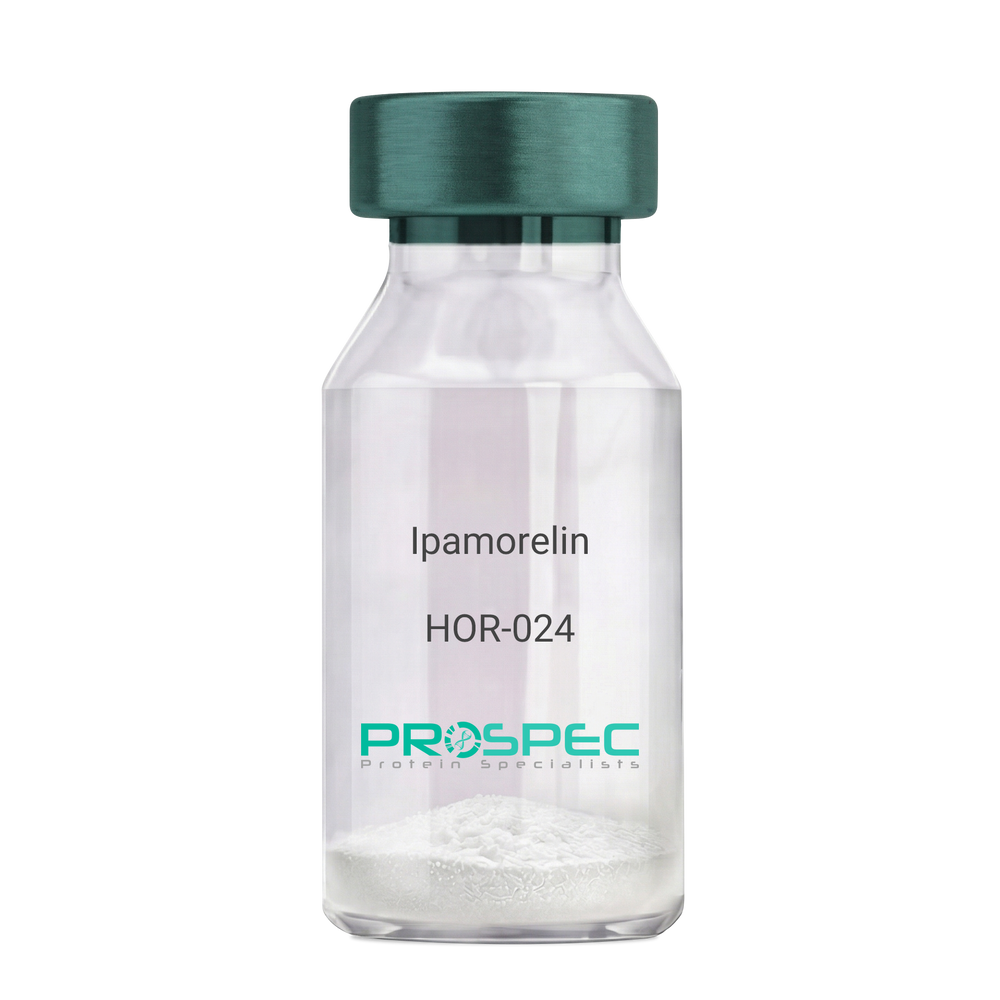
    Ipamorelin

    Description:

    Ipamorelin

    Ipamorelin

    Product # :

    HOR-024

    Price :

    Quantity :

    Shipping Method :

    Room Temp Icon

    Shipped at Room temp

    Add To Cart

    More Info

    • description
    • formulation
    • purity
    • More Info
    • Citations

    Description

    Ipamorelin Synthetic is a single, non-glycosylated polypeptide chain containing 4 amino acids, having a molecular mass of 711.85 Dalton and a Molecular formula of C38H49N9O5.

    Formulation

    The protein was lyophilized with no additives.

    Purity

    Greater than 97.0% as determined by analysis by RP-HPLC.

    Citations

    More Info

    • Introduction

      Ipamorelin is a peptide selective agonist of the ghrelin/growth hormone secretagogue receptor and a growth hormone secretagogue. Ipamorelin is a pentapeptide that was derived from GHRP1. Ipamorelin significantly increases plasma growth hormone levels in both animals and humans. Like pralmorelin and GHRP-6, ipamorelin does not affect prolactin, FSH, LH or TSH levels. However, unlike GHRP2 and GHRP6, but as growth hormone-releasing hormone (GHRH), ipamorelin does not stimulate the secretion of adrenocorticotropic hormone (ACTH) or cortisol, and is highly selective for inducing the secretion only of GH.

    • Synonyms

      Ipamorelin

    • Physical Appearance

      Sterile Filtered White lyophilized (freeze-dried) powder.

    • Stability

      Lyophilized Ipamorelin although stable at room temperature for 3 weeks, should be stored desiccated below -18°C. Upon reconstitution Ipamorelin should be stored at 4°C between 2-7 days and for future use below -18°C. For long term storage it is recommended to add a carrier protein (0.1% HSA or BSA). Please prevent freeze-thaw cycles.

    • Solubility

      It is recommended to reconstitute the lyophilized Ipamorelin in sterile 18MΩ-cm H2O not less than 100 µg/ml, which can then be further diluted to other aqueous solutions.

    • Amino Acid Sequence

      Aib-His-D-2-Nal-D-Phe-Lys-NH2.

    ProSpec's products are furnished for LABORATORY RESEARCH USE ONLY. The product may not be used as drugs, agricultural or pesticidal products, food additives or household chemicals.

    Ipamorelin
  • View Data Sheet

    Name :

    HLA-F Human

    Description:

    Major Histocompatibility Complex Class I F Human Recombinant

    CDA12, HLA-5.4, HLA-CDA12, HLAF, HLA class I histocompatibility antigen, alpha chain F, HLA F antigen, Leukocyte antigen F, MHC class I antigen F, HLA-F.

    Product # :

    PRO-2001

    Price :

    Quantity :

    Shipping Method :

    Ice Icon

    Shipped with Ice Packs

    Add To Cart

    More Info

    • description
    • source
    • formulation
    • purity
    • More Info
    • Citations

    Description

    HLA-F Human Recombinant produced in E.Coli is a single, non-glycosylated polypeptide chain containing 307 amino acids (22-305a.a) and having a molecular mass of 35.1kDa. HLA-F is fused to a 23 amino acid His-tag at N-terminus & purified by proprietary chromatographic techniques.

    Source

    Escherichia Coli.

    Formulation

    HLA-F protein solution (0.25mg/ml) containing 20mM Tris-HCl buffer (pH 8.0), 0.15M NaCl 20% glycerol and 1mM DTT.

    Purity

    Greater than 90.0% as determined by SDS-PAGE.

    Citations

    More Info

    • Introduction

      Major Histocompatibility Complex Class I F (HLA-F) belongs to the MHC family which takes part in the presentation of antigens to the T cell receptor. HLA-F is a member of the class I molecules which are expressed in virtually all cells. There are 2 classes of HLA antigens. Class I molecules takes an important part in the immune system by presenting peptides derived from the endoplasmic reticulum.

    • Synonyms

      CDA12, HLA-5.4, HLA-CDA12, HLAF, HLA class I histocompatibility antigen, alpha chain F, HLA F antigen, Leukocyte antigen F, MHC class I antigen F, HLA-F.

    • Physical Appearance

      Sterile Filtered colorless solution.

    • Stability

      Store at 4°C if entire vial will be used within 2-4 weeks. Store, frozen at -20°C for longer periods of time. For long term storage it is recommended to add a carrier protein (0.1% HSA or BSA).Avoid multiple freeze-thaw cycles.

    • Amino Acid Sequence

      MGSSHHHHHH SSGLVPRGSH MGSGSHSLRY FSTAVSRPGR GEPRYIAVEY VDDTQFLRFD SDAAIPRMEP REPWVEQEGP QYWEWTTGYA KANAQTDRVA LRNLLRRYNQ SEAGSHTLQG MNGCDMGPDG RLLRGYHQHA YDGKDYISLN EDLRSWTAAD TVAQITQRFY EAEEYAEEFR TYLEGECLEL LRRYLENGKE TLQRADPPKA HVAHHPISDH EATLRCWALG FYPAEITLTW QRDGEEQTQD TELVETRPAG DGTFQKWAAV VVPPGEEQRY TCHVQHEGLP QPLILRWEQS PQPTIPI.

    ProSpec's products are furnished for LABORATORY RESEARCH USE ONLY. The product may not be used as drugs, agricultural or pesticidal products, food additives or household chemicals.

    Hla F Human
  • View Data Sheet

    Name :

    CXCL4 Human, His

    Description:

    Platelet Factor-4 Human Recombinant (CXCL4), His Tag

    CXCL4, PF-4, PF4, Iroplact, Oncostatin-A, SCYB4, MGC138298.

    Product # :

    CHM-015

    Price :

    Quantity :

    Shipping Method :

    Ice Icon

    Shipped with Ice Packs

    Add To Cart

    More Info

    • description
    • source
    • formulation
    • purity
    • More Info
    • Citations

    Description

    PF4 Human Recombinant produced in E.Coli is a single, non-glycosylated polypeptide chain containing 91 amino acids (32-101 a.a) and having a molecular mass of 10kDa.PF4 is fused to a 21 amino acid His-tag at N-terminus & purified by proprietary chromatographic techniques.

    Source

    Escherichia Coli.

    Formulation

    PF4 protein solution (0.25mg/ml) contains 20mM Tris-HCl buffer (pH 8.0), 0.2M NaCl, 50% glycerol and 2mM DTT.

    Purity

    Greater than 85.0% as determined by SDS-PAGE.

    Citations

    More Info

    • Introduction

      Platelet factor-4 is a 70-amino acid protein that is released from the alpha-granules of activated platelets and binds with high affinity to heparin. Its major physiologic role appears to be neutralization of heparin-like molecules on the endothelial surface of blood vessels, thereby inhibiting local antithrombin III activity and promoting coagulation. As a strong chemoattractant for neutrophils and fibroblasts, PF4 probably has a role in inflammation and wound repair. Oncostatin-A is a member of the CXC chemokine family. Human PF4 is used for the proof of heparin-induced thrombocytopenia. Furthermore it is used as an inhibitor in the angiogenesis during tumor therapy.

    • Synonyms

      CXCL4, PF-4, PF4, Iroplact, Oncostatin-A, SCYB4, MGC138298.

    • Physical Appearance

      Sterile Filtered colorless clear solution.

    • Stability

      Store at 4°C if entire vial will be used within 2-4 weeks. Store, frozen at -20°C for longer periods of time. For long term storage it is recommended to add a carrier protein (0.1% HSA or BSA).Please avoid freeze thaw cycles.

    • Amino Acid Sequence

      MGSSHHHHHH SSGLVPRGSH MEAEEDGDLQ CLCVKTTSQV RPRHITSLEV IKAGPHCPTA QLIATLKNGR KICLDLQAPL YKKIIKKLLE S.

    • Background

      What is the molecular weight/Mw of CXCL4 HUMAN, HIS Protein?
      CXCL4 HUMAN, HIS Protein has a total Mw of 10kDa.

      What is the source or expression system of CXCL4 HUMAN, HIS Protein?
      Escherichia Coli.

      What is the Purity of CXCL4 HUMAN, HIS Protein?
      CXCL4 HUMAN, HIS Protein is > 85% pure as determined by SDS-PAGE.

      What is the Biological Activity of CXCL4 HUMAN, HIS Protein?
      The biological functionality of CXCL4 HUMAN, HIS Protein will be determined in the future.

      What is the amino acid sequence of CXCL4 HUMAN, HIS Protein?
      MGSSHHHHHH SSGLVPRGSH MEAEEDGDLQ CLCVKTTSQV RPRHITSLEV IKAGPHCPTA QLIATLKNGR KICLDLQAPL YKKIIKKLLE S.

      What applications can CXCL4 HUMAN, HIS Protein be used in?
      CXCL4 HUMAN, HIS Protein can probably be used in western blot, ELISA and Lateral Flow.

      What is the endotoxin level for CXCL4 HUMAN, HIS Protein?
      The endotoxin level is minimal, CXCL4 HUMAN, HIS Protein was purified using conventional chromatography techniques.

      Who supplies recombinant CXCL4 HUMAN, HIS that is in stock and available to order?
      ProSpec has the protein in stock and available for immediate delivery.

      Where can I order bulk mg quantities of CXCL4 HUMAN, HIS?
      ProSpec supplies bulk mg quantities at affordable prices that meets research and academic budgets.

    ProSpec's products are furnished for LABORATORY RESEARCH USE ONLY. The product may not be used as drugs, agricultural or pesticidal products, food additives or household chemicals.

    Pf4 Human His
  • View Data Sheet

    Name :

    CDKN2AIPNL Human

    Description:

    CDKN2A Interacting Protein N-Terminal Like Human Recombinant

    CDKN2AIP N-terminal-like protein, CDKN2A-interacting protein N-terminal-like protein, CDKN2AIPNL.

    Product # :

    PRO-1865

    Price :

    Quantity :

    Shipping Method :

    Ice Icon

    Shipped with Ice Packs

    Add To Cart

    More Info

    • description
    • source
    • formulation
    • purity
    • More Info
    • Citations

    Description

    CDKN2AIPNL Human Recombinant produced in E. coli is. a single polypeptide chain containing 139 amino acids (1-116) and having a molecular mass of 15.6kDa. CDKN2AIPNL is fused to a 23 amino acid His-tag at N-terminus & purified by proprietary chromatographic techniques.

    Source

    Escherichia Coli.

    Formulation

    The CDKN2AIPNL solution (0.25mg/ml) contains 20mM Tris-HCl buffer (pH 8.0), 0.15M NaCl, 20% glycerol and 1mM DTT.

    Purity

    Greater than 85% as determined by SDS-PAGE.

    Citations

    More Info

    • Introduction

      CDKN2A Interacting Protein N-Terminal Like (CDKN2AIPNL) is a part of the CARF family.

    • Synonyms

      CDKN2AIP N-terminal-like protein, CDKN2A-interacting protein N-terminal-like protein, CDKN2AIPNL.

    • Physical Appearance

      Sterile Filtered clear solution.

    • Stability

      Store at 4°C if entire vial will be used within 2-4 weeks. Store frozen at -20°C for longer periods of time. For long term storage it is recommended to add a carrier protein (0.1% HSA or BSA).Avoid multiple freeze-thaw cycles.

    • Amino Acid Sequence

      MGSSHHHHHH SSGLVPRGSH MGSMVGGEAA AAVEELVSGV RQAADFAEQF RSYSESEKQW KARMEFILRH LPDYRDPPDG SGRLDQLLSL SMVWANHLFL GCSYNKDLLD KVMEMADGIE VEDLPQFTTR SELMKKHQS.

    ProSpec's products are furnished for LABORATORY RESEARCH USE ONLY. The product may not be used as drugs, agricultural or pesticidal products, food additives or household chemicals.

    Cdkn2Aipnl Human
  • View Data Sheet

    Name :

    TNFRSF10A Human

    Description:

    TRAIL Receptor-1 Human Recombinant

    TNFRSF10A, TNF Receptor Superfamily Member 10a, Tumor Necrosis Factor Receptor Superfamily, Member 10a, TNF-Related Apoptosis-Inducing Ligand Receptor 1, Death Receptor 4, TRAIL Receptor 1, TRAIL-R1, TRAILR1, APO2, DR4, Tumor Necrosis Factor Receptor Superfamily Member 10a Variant 2, Tumor Necrosis Factor Receptor Superfamily Member 10A, Cytotoxic TRAIL Receptor, CD261 Antigen, TRAILR-1, CD261.          

    Product # :

    CYT-1043

    Price :

    Quantity :

    Shipping Method :

    Ice Icon

    Shipped with Ice Packs

    Add To Cart

    More Info

    • description
    • source
    • formulation
    • purity
    • More Info
    • Citations

    Description

    TNFRSF10A produced in Sf9 Baculovirus cells is a single, glycosylated polypeptide chain containing 224 amino acids (24-239a.a.) and having a molecular mass of 23.9kDa. TNFRSF10A is expressed with an 6 amino acid His tag at C-Terminus and purified by proprietary chromatographic techniques.

    Source

    Sf9, Baculovirus cells.

    Formulation

    TNFRSF10A protein solution (0.5mg/ml) contains Phosphate Buffered Saline (pH 7.4) and 10% glycerol.

    Purity

    Greater than 90.0% as determined by SDS-PAGE.

    Citations

    More Info

    • Introduction

      Human TNFRSF10A is a type 1 transmembrane protein in the TNF R superfamily. TNFRSF10A is not expressed in rodents. The trimeric ligand Trail binds TNFRSF10A and induces apoptosis, and recombinant, soluble forms of the receptor inhibit Trail-induced apoptosis. TNFRSF10A is expressed generally in damaged, infected, and malignant cells. TNFRSF10A functions in immune surveillance, inducing apoptosis in cancer cells but not normal cells.

    • Synonyms

      TNFRSF10A, TNF Receptor Superfamily Member 10a, Tumor Necrosis Factor Receptor Superfamily, Member 10a, TNF-Related Apoptosis-Inducing Ligand Receptor 1, Death Receptor 4, TRAIL Receptor 1, TRAIL-R1, TRAILR1, APO2, DR4, Tumor Necrosis Factor Receptor Superfamily Member 10a Variant 2, Tumor Necrosis Factor Receptor Superfamily Member 10A, Cytotoxic TRAIL Receptor, CD261 Antigen, TRAILR-1, CD261.

    • Physical Appearance

      Sterile Filtered colorless solution.

    • Stability

      Store at 4°C if entire vial will be used within 2-4 weeks. Store, frozen at -20°C for longer periods of time. For long term storage it is recommended to add a carrier protein (0.1% HSA or BSA). Avoid multiple freeze-thaw cycles.

    • Amino Acid Sequence

      ASGTEAAAAT PSKVWGSSAG RIEPRGGGRG ALPTSMGQHG PSARARAGRA PGPRPAREAS PRLRVHKTFK FVVVGVLLQV VPSSAATIKL HDQSIGTQQW EHSPLGELCP PGSHRSEHPG ACNRCTEGVG YTNASNNLFA CLPCTACKSD EEERSPCTTT RNTACQCKPG TFRNDNSAEM CRKCSRGCPR GMVKVKDCTP WSDIECVHKE SGNGHNLEHH HHHH

    ProSpec's products are furnished for LABORATORY RESEARCH USE ONLY. The product may not be used as drugs, agricultural or pesticidal products, food additives or household chemicals.

    TNFRSF10A Human
  • View Data Sheet

    Name :

    TACI Human, Sf9

    Description:

    Tumor Necrosis Factor Receptor 13B Human Recombinant, Sf9

    Tumor Necrosis Factor Receptor Superfamily Member 13B, Tumor Necrosis Factor Receptor Superfamily, Member 13B, Transmembrane Activator And CAML Interactor ,TACI , Tumor Necrosis Factor Receptor 13B, CD267 Antigen, TNFRSF14B, CD267, CVID2, IGAD2, CVID, RYZN.

    Product # :

    CYT-982

    Price :

    Quantity :

    Shipping Method :

    Ice Icon

    Shipped with Ice Packs

    Add To Cart

    More Info

    • description
    • source
    • formulation
    • purity
    • More Info
    • Citations

    Description

    TACI produced in Sf9 Insect cells is a single, glycosylated polypeptide chain containing 407 amino acids (1-165a.a.) and having a molecular mass of 45.8kDa (Molecular size on SDS-PAGE will appear at approximately 25-50kDa). TACI is expressed with a 242 amino acid hIgG-His tag at C-Terminus and purified by proprietary chromatographic techniques.

    Source

    Sf9, Insect cells.

    Formulation

    TACI a protein solution (0.25mg/ml) contains Phosphate Buffered Saline (pH 7.4), 30% glycerol and 1mM DTT.

    Purity

    Greater than 90.0% as determined by SDS-PAGE.

    Citations

    More Info

    • Introduction

      TNFRSF13B (TACI) is a transmembrane receptor protein found predominantly on the surface of B cells (a significant part of the immune system). TACI was at first discovered owing to its ability to interact with calcium-modulator and cyclophilin ligand (CAML). Later on, it was found that TACI plays a key role in humoral immunity by interacting with two members of the TNF family. Also, TACI controls T cell-independent B cell antibody responses, isotype switching, and B cell homeostasis.

    • Synonyms

      Tumor Necrosis Factor Receptor Superfamily Member 13B, Tumor Necrosis Factor Receptor Superfamily, Member 13B, Transmembrane Activator And CAML Interactor ,TACI , Tumor Necrosis Factor Receptor 13B, CD267 Antigen, TNFRSF14B, CD267, CVID2, IGAD2, CVID, RYZN.

    • Physical Appearance

      Sterile filtered colorless solution.

    • Stability

      Store at 4°C if entire vial will be used within 2-4 weeks.Store, frozen at -20°C for longer periods of time. For long term storage it is recommended to add a carrier protein (0.1% HSA or BSA).Avoid multiple freeze-thaw cycles.

    • Amino Acid Sequence

      ADLMSGLGRS RRGGRSRVDQ EERFPQGLWT GVAMRSCPEE QYWDPLLGTC MSCKTICNHQ SQRTCAAFCR SLSCRKEQGK FYDHLLRDCI SCASICGQHP KQCAYFCENK LRSPVNLPPE LRRQRSGEVE NNSDNSGRYQ GLEHRGSEAS PALPGLKLSA DQVALVYSLE PKSCDKTHTC PPCPAPELLG GPSVFLFPPK PKDTLMISRT PEVTCVVVDV SHEDPEVKFN WYVDGVEVHN AKTKPREEQY NSTYRVVSVL TVLHQDWLNG KEYKCKVSNK ALPAPIEKTI SKAKGQPREP QVYTLPPSRD ELTKNQVSLT CLVKGFYPSD IAVEWESNGQ PENNYKTTPP VLDSDGSFFL YSKLTVDKSR WQQGNVFSCS VMHEALHNHY TQKSLSLSPG KHHHHHH.

    ProSpec's products are furnished for LABORATORY RESEARCH USE ONLY. The product may not be used as drugs, agricultural or pesticidal products, food additives or household chemicals.

    Taci Human Sf9
  • View Data Sheet

    Name :

    FCGR3A Human, Sf9

    Description:

    CD16a Human Recombinant, Sf9

    Low affinity immunoglobulin gamma Fc region receptor III-A, CD16a antigen, Fc-gamma, RIII-alpha, Fc-gamma RIII, Fc-gamma RIIIa, FcRIII, FcRIIIa, FcR-10, IgG Fc receptor III-2, CD16a, FCGR3A, FCG3, FCGR3, IGFR3, CD16, FCGRIII.

    Product # :

    PRO-2360

    Price :

    Quantity :

    Shipping Method :

    Ice Icon

    Shipped with Ice Packs

    Add To Cart

    More Info

    • description
    • source
    • formulation
    • purity
    • More Info
    • Citations

    Description

    FCGR3A Human Recombinant produced in Sf9 Baculovirus cells is a single, glycosylated polypeptide chain containing 200 amino acids (18-208 a.a.) and having a molecular mass of 22.8kDa (Molecular size on SDS-PAGE will appear at approximately 28-40kDa).FCGR3A is fused with a 6 amino acids His tag at C-Terminus and purified by proprietary chromatographic techniques.

    Source

    Sf9, Baculovirus cells.

    Formulation

    FCGR3A protein solution (0.25mg/ml) contains Phosphate buffered saline (pH7.4) and 10% glycerol.

    Purity

    Greater than 95.0% as determined by SDS-PAGE.

    Citations

    More Info

    • Introduction

      Low affinity immunoglobulin gamma Fc region receptor III-A (FCGR3A) is a receptor for the Fc portion of immunoglobulin G, and is involved in the elimination of antigen-antibody complexes from the circulation, as well as other antibody-dependent responses. FCGR3A needs to associate with the gamma subunit of Fc epsilon. The FCGR3A receptor is expressed on natural killer (NK) cells as an integral membrane glycoprotein anchored through a transmembrane peptide, while FCGR3B is expressed on polymorphonuclear neutrophils (PMN) where the receptor is anchored through a phosphatidylinositol (PI) linkage. In addition, FCGR3A is expressed on macrophages, subpopulation of T-cells, immature thymocytes and placental trophoblasts. FCGR3A mediates antibody-dependent cellular cytotoxicity (ADCC) and other antibody-dependent responses, such as phagocytosis. FCGR3A gene mutations are linked with susceptibility to recurrent viral infections, susceptibility to systemic lupus erythematosus, and alloimmune neonatal neutropenia.

    • Synonyms

      Low affinity immunoglobulin gamma Fc region receptor III-A, CD16a antigen, Fc-gamma, RIII-alpha, Fc-gamma RIII, Fc-gamma RIIIa, FcRIII, FcRIIIa, FcR-10, IgG Fc receptor III-2, CD16a, FCGR3A, FCG3, FCGR3, IGFR3, CD16, FCGRIII.

    • Physical Appearance

      Sterile filtered colorless solution.

    • Stability

      Store at 4°C if entire vial will be used within 2-4 weeks. Store, frozen at -20°C for longer periods of time. For long term storage it is recommended to add a carrier protein (0.1% HSA or BSA).Avoid multiple freeze-thaw cycles.

    • Amino Acid Sequence

      ADPMRTEDLP KAVVFLEPQW YRVLEKDSVT LKCQGAYSPE DNSTQWFHNE SLISSQASSY FIDAATVDDS GEYRCQTNLS TLSDPVQLEV HIGWLLLQAP RWVFKEEDPI HLRCHSWKNT ALHKVTYLQN GKGRKYFHHN SDFYIPKATL KDSGSYFCRG LFGSKNVSSE TVNITITQGL AVSTISSFFP PGYQHHHHHH.

    • Background

      CD16A, also known as Fc gamma receptor IIIA (FcγRIIIA), is a key receptor involved in immune responses and antibody-dependent cell-mediated cytotoxicity (ADCC). This research paper aims to explore the structure, function, and therapeutic implications of CD16A, shedding light on its diverse roles in immune regulation and targeted therapies.

      CD16A is a transmembrane protein expressed primarily on natural killer (NK) cells, macrophages, and a subset of activated neutrophils. It interacts with the Fc portion of immunoglobulin G (IgG) antibodies, thereby mediating ADCC. Upon binding to IgG-coated target cells, CD16A triggers intracellular signaling cascades that initiate immune effector functions, leading to target cell destruction.

      The structure of CD16A consists of an extracellular domain responsible for IgG binding, a transmembrane domain, and an intracellular domain involved in signal transduction. Genetic polymorphisms in CD16A have been identified, leading to variations in its affinity for IgG subclasses and influencing immune responses and disease susceptibility.

      The function of CD16A extends beyond its role in ADCC. It also participates in immune cell activation, cytokine production, and regulation of immune responses. CD16A engagement on NK cells can trigger cytotoxicity and cytokine release, contributing to antiviral and antitumor immune responses. Moreover, CD16A-mediated cross-talk between immune cells modulates immune surveillance and inflammation.

      Therapeutically, CD16A has emerged as a potential target for immunotherapy. Monoclonal antibodies designed to enhance CD16A-mediated ADCC have shown promising results in the treatment of cancer. By engaging CD16A on immune effector cells, these antibodies facilitate targeted cell killing and tumor eradication. Additionally, CD16A-based immunotherapies have been explored in infectious diseases and autoimmune disorders.

      The availability of CD16A human recombinant proteins has facilitated extensive research and drug development efforts. Recombinant CD16A proteins serve as valuable tools for studying CD16A interactions, optimizing immunotherapeutic strategies, and evaluating the efficacy of novel therapeutic agents.

    ProSpec's products are furnished for LABORATORY RESEARCH USE ONLY. The product may not be used as drugs, agricultural or pesticidal products, food additives or household chemicals.

    Fcgr3A Human Sf9
  • View Data Sheet

    Name :

    TNF B Human, Sf9

    Description:

    Tumor Necrosis Factor-beta Human Recombinant, Sf9

    Lymphotoxin-alpha, LT-alpha, TNF-beta, Tumor necrosis factor ligand superfamily member 1, LTA, LT, TNFB, TNFSF1.

    Product # :

    CYT-989

    Price :

    Quantity :

    Shipping Method :

    Ice Icon

    Shipped with Ice Packs

    Add To Cart

    More Info

    • description
    • source
    • formulation
    • purity
    • biological activity
    • More Info
    • Citations

    Description

    Tumor Necrosis Factor-beta Human Recombinant produced in Sf9 Baculovirus cells is a single, glycosylated polypeptide chain containing 180 amino acids (35-205a.a.) and having a molecular mass of 19.7kDa (Molecular size on SDS-PAGE will appear at approximately 18-28kDa).TNFB is fused with a 6 amino acids His tag at C-Terminus and purified by proprietary chromatographic techniques.

    Source

    Sf9, Baculovirus cells.

    Formulation

    TNFB protein solution (0.5mg/ml) contains Phosphate Buffered Saline (pH7.4) and 10% glycerol.

    Purity

    Greater than 90.0% as determined by SDS-PAGE.

    Biological Activity

    Measured in a cytotoxicity assay using L-929 mouse fibrosarcoma cells in the presence of the metabolic inhibitor actinomycin D. The ED50 for this effect is ≤ 1ng/ml.

    Citations

    More Info

    • Introduction

      Lymphotoxin alpha, a member of the tumor necrosis factor family, is a cytokine produced by lymphocytes. LTA is highly inducible, secreted, and exists as homotrimeric molecule. LTA forms heterotrimers with lymphotoxin-beta which anchors lymphotoxin-alpha to the cell surface. LTA mediates a large variety of inflammatory, immunostimulatory, and antiviral responses. LTA is also involved in the formation of secondary lymphoid organs during development and plays a role in apoptosis.

    • Synonyms

      Lymphotoxin-alpha, LT-alpha, TNF-beta, Tumor necrosis factor ligand superfamily member 1, LTA, LT, TNFB, TNFSF1.

    • Physical Appearance

      Sterile filtered colorless solution.

    • Stability

      Store at 4°C if entire vial will be used within 2-4 weeks. Store, frozen at -20°C for longer periods of time. For long term storage it is recommended to add a carrier protein (0.1% HSA or BSA).Avoid multiple freeze-thaw cycles.

    • Amino Acid Sequence

      ADPLPGVGLT PSAAQTARQH PKMHLAHSTL KPAAHLIGDP SKQNSLLWRA NTDRAFLQDG FSLSNNSLLV PTSGIYFVYS QVVFSGKAYS PKATSSPLYL AHEVQLFSSQ YPFHVPLLSS QKMVYPGLQE PWLHSMYHGA AFQLTQGDQL STHTDGIPHL VLSPSTVFFG AFALHHHHHH.

    ProSpec's products are furnished for LABORATORY RESEARCH USE ONLY. The product may not be used as drugs, agricultural or pesticidal products, food additives or household chemicals.

    Tnfb Human Sf9
  • View Data Sheet

    Name :

    LAIR1 Mouse

    Description:

    Leukocyte-Associated Ig-Like Receptor 1 Mouse Recombinant

    Leukocyte-associated immunoglobulin-like receptor 1, LAIR-1, mLAIR1, CD305, LAIR1.

    Product # :

    PRO-2356

    Price :

    Quantity :

    Shipping Method :

    Ice Icon

    Shipped with Ice Packs

    Add To Cart

    More Info

    • description
    • source
    • formulation
    • purity
    • More Info
    • Citations

    Description

    LAIR1 Mouse Recombinant produced in Sf9 Baculovirus cells is a single, glycosylated polypeptide chain containing 132 amino acids (22-144 aa) and having a molecular mass of 15kDa (Migrates at 18-28kDa on SDS-PAGE under reducing conditions).LAIR1 is expressed with a 6 amino acid His tag at C-Terminus and purified by proprietary chromatographic techniques.

    Source

    Sf9, Baculovirus cells.

    Formulation

    LAIR1 protein solution (0.5mg/ml) contains Phosphate buffered saline (pH7.4) and 10% glycerol.

    Purity

    Greater than 90.0% as determined by SDS-PAGE.

    Citations

    More Info

    • Introduction

      LAIR1 is a glycoprotein expressed on the surface of the majority of human peripheral blood mononuclear leukocytes including T cells, B cells, NK cells, macrophages and dendritic cells. LAIR-1 functions as an inhibitory receptor in NK cells, T cells and B cells. Inhibitory receptors control the immune response to prevent lysis of cells recognized as self. Lair1 consists of a leader sequence, extracellular domain, transmembrane domain, cytoplasmic region.LAIR1 is a member of both the immunoglobulin superfamily and the leukocyte-associated inhibitory receptor family. LAIR1 maps to a region of 19q13.4 labeled the leukocyte receptor cluster, which contains at least 29 genes encoding leukocyte-expressed receptors of the immunoglobulin superfamily.

    • Synonyms

      Leukocyte-associated immunoglobulin-like receptor 1, LAIR-1, mLAIR1, CD305, LAIR1.

    • Physical Appearance

      Sterile filtered colorless solution.

    • Stability

      Store at 4°C if entire vial will be used within 2-4 weeks. Store, frozen at -20°C for longer periods of time. For long term storage it is recommended to add a carrier protein (0.1% HSA or BSA).Avoid multiple freeze-thaw cycles.

    • Amino Acid Sequence

      ADPQEGSLPD ITIFPNSSLM ISQGTFVTVV CSYSDKHDLY NMVRLEKDGS TFMEKSTEPY KTEDEFEIGP VNETITGHYS CIYSKGITWS ERSKTLELKV IKENVIQTPA PGPTSDTSWL KTYSIYHHHH HH

    ProSpec's products are furnished for LABORATORY RESEARCH USE ONLY. The product may not be used as drugs, agricultural or pesticidal products, food additives or household chemicals.

    Lair1 Mouse
  • View Data Sheet

    Name :

    CRKL Human

    Description:

    V-crk Sarcoma Virus CT10 Oncogene Homolog (Avian)-Like Human Recombinant

    Crk-like protein, CRKL.

    Product # :

    PRO-063

    Price :

    Quantity :

    Shipping Method :

    Ice Icon

    Shipped with Ice Packs

    Add To Cart

    More Info

    • description
    • source
    • formulation
    • purity
    • More Info
    • Citations

    Description

    CRKL Human Recombinant fused with a 20 amino acid His tag at N-terminus produced in E.Coli is a single, non-glycosylated, polypeptide chain containing 323 amino acids (1-303 a.a.) and having a molecular mass of 35.9kDa (Molecular size on SDS-PAGE will appear higher). The CRKL is purified by proprietary chromatographic techniques.

    Source

    Escherichia Coli.

    Formulation

    The CRKL solution (1 mg/ml) 20mM Tris-HCl buffer (pH 8.0), 10% glycerol, 2mM DTT and 0.1M NaCl.

    Purity

    Greater than 90.0% as determined by SDS-PAGE.

    Citations

    More Info

    • Introduction

      Crk-like protein (CRKL) is a protein kinase containing SH2 and SH3 (src homology) domains which activates the RAS and JUN kinase signaling pathways and transforms fibroblasts in a RAS-dependent manner. CRKL is a substitute of the BCR-ABL tyrosine kinase, it also has a role in fibroblast transformation by BCR-ABL, and has oncogenic potential.

    • Synonyms

      Crk-like protein, CRKL.

    • Physical Appearance

      Sterile Filtered colorless solution.

    • Stability

      Store at 4°C if entire vial will be used within 2-4 weeks. Store, frozen at -20°C for longer periods of time. For long term storage it is recommended to add a carrier protein (0.1% HSA or BSA).Avoid multiple freeze-thaw cycles.

    • Amino Acid Sequence

      MGSSHHHHHH SSGLVPRGSH MSSARFDSSD RSAWYMGPVS RQEAQTRLQG QRHGMFLVRDSSTCPGDYVL SVSENSRVSH YIINSLPNRR FKIGDQEFDH LPALLEFYKI HYLDTTTLIE PAPRYPSPPM GSVSAPNLPT AEDNLEYVRT LYDFPGNDAE DLPFKKGEIL VIIEKPEEQW WSARNKDGRV GMIPVPYVEK LVRSSPHGKH GNRNSNSYGI PEPAHAYAQP QTTTPLPAVS GSPGAAITPL PSTQNGPVFA KAIQKRVPCA YDKTALALEV GDIVKVTRMN INGQWEGEVN GRKGLFPFTH VKIFDPQNPD ENE.

    ProSpec's products are furnished for LABORATORY RESEARCH USE ONLY. The product may not be used as drugs, agricultural or pesticidal products, food additives or household chemicals.

    CRKL Human
  • View Data Sheet

    Name :

    CTACK Mouse

    Description:

    CTACK Mouse Recombinant (CCL27)

    C-C motif chemokine 27, CC chemokine ILC, Cutaneous T-cell-attracting chemokine, CTACK, ESkine, IL-11 R-alpha-locus chemokine, ALP, mILC, Skinkine, Small-inducible cytokine A27, Ccl27, Ilc, Scya27.

    Product # :

    CHM-013

    Price :

    Quantity :

    Shipping Method :

    Room Temp Icon

    Shipped at Room temp

    Add To Cart

    More Info

    • description
    • source
    • formulation
    • purity
    • biological activity
    • More Info
    • Citations

    Description

    CTACK Mouse Recombinant produced in E.Coli is a single, non-glycosylated, polypeptide chain containing 95 amino acids and having a molecular mass of 10.9kDa. The CTACK is purified by proprietary chromatographic techniques.

    Source

    Escherichia Coli.

    Formulation

    Lyophilized from a 0.2µm filtered concentrated solution in 20mM PB, pH7.4 and 300mM NaCl.

    Purity

    Greater than 98.0% as determined by:
    (a) Analysis by RP-HPLC.
    (b) Analysis by SDS-PAGE.

    Biological Activity

    The biological activity determined by a chemotaxis bioassay using human peripheral blood lymphocytes is in a concentration range of 10-100 ng/ml.

    Citations

    More Info

    • Introduction

      CTACK is a chemotactic factor that attracts skin-associated memory T-lymphocytes. CTACK is involved in mediating homing of lymphocytes to cutaneous sites. CTACK Binds to CCR10.

    • Synonyms

      C-C motif chemokine 27, CC chemokine ILC, Cutaneous T-cell-attracting chemokine, CTACK, ESkine, IL-11 R-alpha-locus chemokine, ALP, mILC, Skinkine, Small-inducible cytokine A27, Ccl27, Ilc, Scya27.

    • Physical Appearance

      Sterile Filtered White lyophilized (freeze-dried) powder.

    • Stability

      Lyophilized CTACK although stable at room temperature for 3 weeks, should be stored desiccated below -18°C. Upon reconstitution CTACK should be stored at 4°C between 2-7 days and for future use below -18°C. For long term storage it is recommended to add a carrier protein (0.1% HSA or BSA). Please prevent freeze-thaw cycles.

    • Solubility

      It is recommended to reconstitute the lyophilized CTACK in sterile 18MΩ-cm H2O not less than 100µg/ml, which can then be further diluted to other aqueous solutions.

    • Amino Acid Sequence

      LPLPSSTSCC TQLYRQPLPS RLLRRIVHME LQEADGDCHL QAVVLHLARR SVCVHPQNRS LARWLERQGK RLQGTVPSLN LVLQKKMYSN PQQQN.

    • Background

      What is the molecular weight/Mw of CTACK MOUSE Protein?
      CTACK MOUSE Protein has a total Mw of 10.9kDa.

      What is the source or expression system of CTACK MOUSE Protein?
      Escherichia Coli.

      What is the Purity of CTACK MOUSE Protein?
      CTACK MOUSE Protein is >98% pure as determined by SDS-PAGE.

      What is the Biological Activity of CTACK MOUSE Protein?
      The biological activity determined by a chemotaxis bioassay using human peripheral blood lymphocytes is in a concentration range of 10-100 ng/ml.

      What is the amino acid sequence of CTACK MOUSE Protein?
      LPLPSSTSCC TQLYRQPLPS RLLRRIVHME LQEADGDCHL QAVVLHLARR SVCVHPQNRS LARWLERQGK RLQGTVPSLN LVLQKKMYSN PQQQN.

      What applications can CTACK MOUSE Protein be used in?
      CTACK MOUSE Protein can probably be used in western blot, ELISA and Lateral Flow.

      What is the endotoxin level for CTACK MOUSE Protein?
      The endotoxin level is minimal, CTACK MOUSE Protein was purified using conventional chromatography techniques.

      Who supplies recombinant CTACK MOUSE that is in stock and available to order?
      ProSpec has the protein in stock and available for immediate delivery.

      Where can I order bulk mg quantities of CTACK MOUSE?
      ProSpec supplies bulk mg quantities at affordable prices that meets research and academic budgets.

    ProSpec's products are furnished for LABORATORY RESEARCH USE ONLY. The product may not be used as drugs, agricultural or pesticidal products, food additives or household chemicals.

    Ctack Mouse
  • View Data Sheet

    Name :

    CXCL12 Human alpha

    Description:

    Stromal Cell-Derived Factor-1 Alpha Human Recombinant (CXCL12)

    SDF-1, CXCL12, Pre-B cell growth-stimulating factor, PBSF, hIRH, chemokine (C-X-C motif) ligand 12, SDF1, SDF1A, TPAR1, SCYB12, SDF-1a, TLSF-a.

    Product # :

    CHM-262

    Price :

    Quantity :

    Shipping Method :

    Room Temp Icon

    Shipped at Room temp

    Add To Cart

    More Info

    • description
    • source
    • formulation
    • purity
    • biological activity
    • More Info
    • Citations

    Description

    Stromal Cell-Derived Factor-1 alpha Human Recombinant produced in E.Coli is a non-glycosylated, Polypeptide chain containing 68 amino acids and having a molecular mass of 8004 Dalton. The SDF-1a is purified by proprietary chromatographic techniques.

    Source

    Escherichia Coli.

    Formulation

    The protein was lyophilized from a concentrated (1 mg/ml) sterile solution containing no additives.

    Purity

    Greater than 98.0% as determined by:
    (a) Analysis by RP-HPLC.
    (b) Analysis by SDS-PAGE.

    Biological Activity

    The specific activity as determined by its ability to chemoattract human peripheral T cells activated with PHA and IL-2 using a concentation of 20-80 ng/ml corresponding to a Specific Activity of 12,500-50,000IU/mg.

    Citations

    More Info

    • Introduction

      SDF-1 (stromal cell-derived factor-1) is small cytokine belonging to the chemokine family that is officially designated Chemokine (C-X-C motif) ligand 12 (CXCL12). It is produced in two forms, SDF-1?/CXCL12a and SDF-1?/CXCL12b, by alternate splicing of the same gene. Chemokines are characterized by the presence of four conserved cysteines, which form two disulfide bonds. The CXCL12 proteins belong to the group of CXC chemokines, whose initial pair of cysteines are separated by one intervening amino acid. CXCL12 is strongly chemotactic for lymphocytes and has been implicated as an important cell co-ordinator during development. During embryogenesis it directs the migration of hematopoietic cells from foetal liver to bone marrow. Mice which were knocked-out for CXCL12 gene were lethal before the birth or within just 1 hour of life. As another role, CXCL12a alters also the electrophysiology of neurons. CXCL12 was shown to be expressend in many tissues in mice (including brain, thymus, heart, lung, liver, kidney, spleen and bone marrow).
      The receptor for this chemokine is CXCR4, which was previously called fusin. This CXCL12-CXCR4 interaction used to be considered exclusive (unlike for other chemokines and their receptors), but recently it was suggested that CXCL12 is also bound by CXCR7 receptor.
      The gene for CXCL12 is located on human chromosome 10. In human and mouse both CXCL12 and CXCR4 show high identity of sequence: 99% and 90%, respectively.

    • Synonyms

      SDF-1, CXCL12, Pre-B cell growth-stimulating factor, PBSF, hIRH, chemokine (C-X-C motif) ligand 12, SDF1, SDF1A, TPAR1, SCYB12, SDF-1a, TLSF-a.

    • Physical Appearance

      Sterile Filtered White lyophilized (freeze-dried) powder.

    • Stability

      Lyophilized SDF-1a although stable at room temperature for 3 weeks, should be stored desiccated below -18°C. Upon reconstitution CXCL12 should be stored at 4°C between 2-7 days and for future use below -18°C. For long term storage it is recommended to add a carrier protein (0.1% HSA or BSA).Please prevent freeze-thaw cycles.

    • Solubility

      It is recommended to reconstitute the lyophilized Stromal Cell-Derived Factor-1a in sterile 18MΩ-cm H2O not less than 100µg/ml, which can then be further diluted to other aqueous solutions.

    • Amino Acid Sequence

      KPVSLSYRCP CRFFESHVAR ANVKHLKILN TPNCALQIVA RLKNNNRQVC IDPKLKWIQE YLEKALNK

    • Background

      What is the molecular weight/Mw of CXCL12 HUMAN ALPHA Protein?
      CXCL12 HUMAN ALPHA Protein has a total Mw of 8kDa.

      What is the source or expression system of CXCL12 HUMAN ALPHA Protein?
      Escherichia Coli.

      What is the Purity of CXCL12 HUMAN ALPHA Protein?
      CXCL12 HUMAN ALPHA Protein is >98% pure as determined by SDS-PAGE.

      What is the Biological Activity of CXCL12 HUMAN ALPHA Protein?
      The specific activity as determined by its ability to chemoattract human peripheral T cells activated with PHA and IL-2 using a concentation of 20-80 ng/ml corresponding to a Specific Activity of 12,500-50,000IU/mg.

      What is the amino acid sequence of CXCL12 HUMAN ALPHA Protein?
      KPVSLSYRCP CRFFESHVAR ANVKHLKILN TPNCALQIVA RLKNNNRQVC IDPKLKWIQE YLEKALNK

      What applications can CXCL12 HUMAN ALPHA Protein be used in?
      CXCL12 HUMAN ALPHA Protein can probably be used in western blot, ELISA and Lateral Flow.

      What is the endotoxin level for CXCL12 HUMAN ALPHA Protein?
      The endotoxin level is minimal, CXCL12 HUMAN ALPHA Protein was purified using conventional chromatography techniques.

      Who supplies recombinant CXCL12 HUMAN ALPHA that is in stock and available to order?
      ProSpec has the protein in stock and available for immediate delivery.

      Where can I order bulk mg quantities of CXCL12 HUMAN ALPHA?
      ProSpec supplies bulk mg quantities at affordable prices that meets research and academic budgets.

    ProSpec's products are furnished for LABORATORY RESEARCH USE ONLY. The product may not be used as drugs, agricultural or pesticidal products, food additives or household chemicals.

    Sdf 1A Human
  • View Data Sheet

    Name :

    CXCL12 Mouse alpha

    Description:

    Stromal Cell-Derived Factor-1 Alpha Mouse Recombinant (CXCL12)

    SDF-1, CXCL12, Pre-B cell growth-stimulating factor, PBSF, hIRH, chemokine (C-X-C motif) ligand 12, SDF1, SDF1A, TPAR1, SCYB12, SDF-1a, TLSF-a, 12-O-tetradecanoylphorbol 13-acetate repressed protein 1, Thymic lymphoma cell-stimulating factor, TLSF.

    Product # :

    CHM-324

    Price :

    Quantity :

    Shipping Method :

    Room Temp Icon

    Shipped at Room temp

    Add To Cart

    More Info

    • description
    • source
    • formulation
    • purity
    • biological activity
    • More Info
    • Citations

    Description

    Stromal Cell-Derived Factor-1 alpha Mouse Recombinant produced in E.Coli is a non-glycosylated, Polypeptide chain containing 68 amino acids and having a molecular mass of 8 kDa. The SDF-1a is purified by proprietary chromatographic techniques.

    Source

    Escherichia Coli.

    Formulation

    The protein was Lyophilized from a sterile filtered aqueous solution containing 0.1% Trifluoroacetic Acid (TFA).

    Purity

    Greater than 95% as determined by SDS-PAGE.

    Biological Activity

    The specific activity as determined by its ability to chemoattract human peripheral blood monocytes at 50-100 ng/ml corresponding to a Specific Activity of 10,000-20,000IU/mg.

    Citations

    More Info

    • Introduction

      SDF-1 (stromal cell-derived factor-1) is small cytokine belonging to the chemokine family that is officially designated Chemokine (C-X-C motif) ligand 12 (CXCL12). It is produced in two forms, SDF-1?/CXCL12a and SDF-1?/CXCL12b, by alternate splicing of the same gene. Chemokines are characterized by the presence of four conserved cysteines, which form two disulfide bonds. The CXCL12 proteins belong to the group of CXC chemokines, whose initial pair of cysteines are separated by one intervening amino acid. CXCL12 is strongly chemotactic for lymphocytes and has been implicated as an important cell co-ordinator during development. During embryogenesis it directs the migration of hematopoietic cells from foetal liver to bone marrow. Mice which were knocked-out for CXCL12 gene were lethal before the birth or within just 1 hour of life. As another role, CXCL12a alters also the electrophysiology of neurons. CXCL12 was shown to be expressend in many tissues in mice (including brain, thymus, heart, lung, liver, kidney, spleen and bone marrow).
      The receptor for this chemokine is CXCR4, which was previously called fusin. This CXCL12-CXCR4 interaction used to be considered exclusive (unlike for other chemokines and their receptors), but recently it was suggested that CXCL12 is also bound by CXCR7 receptor.
      The gene for CXCL12 is located on human chromosome 10. In human and mouse both CXCL12 and CXCR4 show high identity of sequence: 99% and 90%, respectively.

    • Synonyms

      SDF-1, CXCL12, Pre-B cell growth-stimulating factor, PBSF, hIRH, chemokine (C-X-C motif) ligand 12, SDF1, SDF1A, TPAR1, SCYB12, SDF-1a, TLSF-a, 12-O-tetradecanoylphorbol 13-acetate repressed protein 1, Thymic lymphoma cell-stimulating factor, TLSF.

    • Physical Appearance

      Sterile Filtered White lyophilized (freeze-dried) powder.

    • Stability

      Lyophilized SDF-1a although stable at room temperature for 3 weeks, should be stored desiccated below -18°C. Upon reconstitution CXCL12 should be stored at 4°C between 2-7 days and for future use below -18°C. For long term storage it is recommended to add a carrier protein (0.1% HSA or BSA).Please prevent freeze-thaw cycles.

    • Solubility

      It is recommended to reconstitute the lyophilized Stromal Cell-Derived Factor-1a in sterile 18MΩ-cm H2O not less than 100µg/ml, which can then be further diluted to other aqueous solutions.

    • Amino Acid Sequence

      KPVSLSYRCP CRFFESHIAR ANVKHLKILN TPNCALQIVA RLKNNNRQVC IDPKLKWIQE
      YLEKALNK.

    • Background

      What is the molecular weight/Mw of CXCL12 MOUSE ALPHA Protein?
      CXCL12 MOUSE ALPHA Protein has a total Mw of 8kDa.

      What is the source or expression system of CXCL12 MOUSE ALPHA Protein?
      Escherichia Coli.

      What is the Purity of CXCL12 MOUSE ALPHA Protein?
      CXCL12 MOUSE ALPHA Protein is > 95% pure as determined by SDS-PAGE.

      What is the Biological Activity of CXCL12 MOUSE ALPHA Protein?
      The specific activity as determined by its ability to chemoattract human peripheral blood monocytes at 50-100 ng/ml corresponding to a Specific Activity of 10,000-20,000IU/mg.

      What is the amino acid sequence of CXCL12 MOUSE ALPHA Protein?
      KPVSLSYRCP CRFFESHIAR ANVKHLKILN TPNCALQIVA RLKNNNRQVC IDPKLKWIQE
      YLEKALNK.

      What applications can CXCL12 MOUSE ALPHA Protein be used in?
      CXCL12 MOUSE ALPHA Protein can probably be used in western blot, ELISA and Lateral Flow.

      What is the endotoxin level for CXCL12 MOUSE ALPHA Protein?
      The endotoxin level is minimal, CXCL12 MOUSE ALPHA Protein was purified using conventional chromatography techniques.

      Who supplies recombinant CXCL12 MOUSE ALPHA that is in stock and available to order?
      ProSpec has the protein in stock and available for immediate delivery.

      Where can I order bulk mg quantities of CXCL12 MOUSE ALPHA?
      ProSpec supplies bulk mg quantities at affordable prices that meets research and academic budgets.

    ProSpec's products are furnished for LABORATORY RESEARCH USE ONLY. The product may not be used as drugs, agricultural or pesticidal products, food additives or household chemicals.

    Sdf 1A Mouse
  • View Data Sheet

    Name :

    CXCL12 Rat beta

    Description:

    Stromal Cell-Derived Factor-1 beta Rat Recombinant (CXCL12)

    SDF-1, CXCL12, Pre-B cell growth-stimulating factor, PBSF, hIRH, chemokine (C-X-C motif) ligand 12, SDF1, SDF1B, TPAR1, SCYB12, SDF-1b, TLSF-b, 12-O-tetradecanoylphorbol 13-acetate repressed protein 1, Thymic lymphoma cell-stimulating factor, TLSF.

    Product # :

    CHM-248

    Price :

    Quantity :

    Shipping Method :

    Room Temp Icon

    Shipped at Room temp

    Add To Cart

    More Info

    • description
    • source
    • formulation
    • purity
    • biological activity
    • More Info
    • Citations

    Description

    SDF-1 beta Rat Recombinant produced in E.Coli is a non-glycosylated, Polypeptide chain containing 72 amino acids and having a molecular mass of 8.4 kDa. The Rat SDF-1b is purified by proprietary chromatographic techniques.

    Source

    Escherichia Coli.

    Formulation

    The Rat SDF1B protein was lyophilized from a concentrated (1mg/ml) sterile solution containing 20mM Phsophate buffer pH-7.4 and 0.15M NaCl.

    Purity

    Greater than 97.0% as determined by:
    (a) Analysis by RP-HPLC.
    (b) Analysis by SDS-PAGE.

    Biological Activity

    The specific activity as determined by its ability to chemoattract human peripheral blood monocytes at 100-150ng/ml corresponding to a Specific Activity of 6,667-10,000IU/mg.

    Citations

    More Info

    • Introduction

      SDF-1 (stromal cell-derived factor-1) is small cytokine belonging to the chemokine family that is officially designated Chemokine (C-X-C motif) ligand 12 (CXCL12). It is produced in two forms, SDF-1?/CXCL12a and SDF-1?/CXCL12b, by alternate splicing of the same gene. Chemokines are characterized by the presence of four conserved cysteines, which form two disulfide bonds. The CXCL12 proteins belong to the group of CXC chemokines, whose initial pair of cysteines are separated by one intervening amino acid. CXCL12 is strongly chemotactic for lymphocytes and has been implicated as an important cell co-ordinator during development. During embryogenesis it directs the migration of hematopoietic cells from foetal liver to bone marrow. Mice which were knocked-out for CXCL12 gene were lethal before the birth or within just 1 hour of life. As another role, CXCL12a alters also the electrophysiology of neurons. CXCL12 was shown to be expressend in many tissues in mice (including brain, thymus, heart, lung, liver, kidney, spleen and bone marrow).
      The receptor for this chemokine is CXCR4, which was previously called fusin. This CXCL12-CXCR4 interaction used to be considered exclusive (unlike for other chemokines and their receptors), but recently it was suggested that CXCL12 is also bound by CXCR7 receptor.
      The gene for CXCL12 is located on human chromosome 10. In human and mouse both CXCL12 and CXCR4 show high identity of sequence: 99% and 90%, respectively.

    • Synonyms

      SDF-1, CXCL12, Pre-B cell growth-stimulating factor, PBSF, hIRH, chemokine (C-X-C motif) ligand 12, SDF1, SDF1B, TPAR1, SCYB12, SDF-1b, TLSF-b, 12-O-tetradecanoylphorbol 13-acetate repressed protein 1, Thymic lymphoma cell-stimulating factor, TLSF.

    • Physical Appearance

      Sterile Filtered White lyophilized (freeze-dried) powder.

    • Stability

      Lyophilized SDF-1b although stable at room temperature for 3 weeks, should be stored desiccated below -18°C. Upon reconstitution CXCL12 should be stored at 4°C between 2-7 days and for future use below -18°C.For long term storage it is recommended to add a carrier protein (0.1% HSA or BSA).Please prevent freeze-thaw cycles.

    • Solubility

      It is recommended to reconstitute the lyophilized SDF-1b in sterile 18MΩ-cm H2O not less than 100µg/ml, which can then be further diluted to other aqueous solutions.

    • Amino Acid Sequence

      KPVSLSYRCP CRFFESHVAR ANVKHLKILN TPNCALQIVA RLKSNNRQVC IDPKLKWIQE YLDKALNKRL KM.

    • Background

      What is the molecular weight/Mw of CXCL12 RAT BETA Protein?
      CXCL12 RAT BETA Protein has a total Mw of 8.4kDa.

      What is the source or expression system of CXCL12 RAT BETA Protein?
      Escherichia Coli.

      What is the Purity of CXCL12 RAT BETA Protein?
      CXCL12 RAT BETA Protein is > 97% pure as determined by SDS-PAGE.

      What is the Biological Activity of CXCL12 RAT BETA Protein?
      The specific activity as determined by its ability to chemoattract human peripheral blood monocytes at 100-150ng/ml corresponding to a Specific Activity of 6,667-10,000IU/mg.

      What is the amino acid sequence of CXCL12 RAT BETA Protein?
      KPVSLSYRCP CRFFESHVAR ANVKHLKILN TPNCALQIVA RLKSNNRQVC IDPKLKWIQE YLDKALNKRL KM.

      What applications can CXCL12 RAT BETA Protein be used in?
      CXCL12 RAT BETA Protein can probably be used in western blot, ELISA and Lateral Flow.

      What is the endotoxin level for CXCL12 RAT BETA Protein?
      The endotoxin level is minimal, CXCL12 RAT BETA Protein was purified using conventional chromatography techniques.

      Who supplies recombinant CXCL12 RAT BETA that is in stock and available to order?
      ProSpec has the protein in stock and available for immediate delivery.

      Where can I order bulk mg quantities of CXCL12 RAT BETA?
      ProSpec supplies bulk mg quantities at affordable prices that meets research and academic budgets.

    ProSpec's products are furnished for LABORATORY RESEARCH USE ONLY. The product may not be used as drugs, agricultural or pesticidal products, food additives or household chemicals.

    Sdf 1B Rat
  • 1
  • …
  • 37
  • 38
  • 39
  • 40
  • 41
  • 42
Your browser does not support the video tag.

Products

  • Cytokines
  • Growth Factors
  • Chemokines
  • CD Antigens
  • Neurotrophins
  • Hormones
  • Enzymes
  • Viral Antigens
  • Recombinant Proteins
  • Natural Proteins
  • Monoclonal Antibodies
  • Polyclonal Antibodies
  • Thermal Packaging

About

  • Company
  • Founder
  • Contribution
  • Contact Us
  • My Account

Ordering

  • Ordering Method
  • Ordering - Credit Card
  • Ordering PO
  • Shipping Fees
  • FAQ's

Legal

  • Terms & Conditions
  • Privacy
  • Site Map
  • info@prospecbio.com
  • Facebook
  • Instagram
  • Linkedin Profile

© 2026 ProSpec-Tany TechnoGene Ltd. All Rights Reserved.

  • Choosing a selection results in a full page refresh.
  • Opens in a new window.