Search results
1000 results found for “peroxiredoxin”
Name
Description
Product #
Price
Quantity
Shipping Method
- View Data Sheet
Name :
DYRK1A HumanDescription:
Dual-Specificity Tyrosine-(Y)-Phosphorylation Regulated 1A Human Recombinant
Dual Specificity Yak1-related kinase, Dyrk; PSK47, Dual specificity tyrosine-phosphorylation-regulated kinase 1A, Dual specificity YAK1-related kinase, Protein kinase minibrain homolog, RP86, Dyrk1a, MNBH.
Product # :
PKA-310Price :
Quantity :
Shipping Method :
Shipped with Ice Packs
More Info
- description
- source
- formulation
- purity
- More Info
Description
DYRK1A Human Recombinant produced in E.coli is a single, non-glycosylated polypeptide chain containing 343 amino acids (159-479a.a) and having a molecular mass of 39.4kDa. DYRK1A is fused to a 22 amino acid His-tag at N-terminus & purified by proprietary chromatographic techniques.
Source
Escherichia Coli.
Formulation
The DYRK1A solution (1mg/ml) contains 20mM Tris-HCl buffer (pH 8.0), 10% glycerol and 0.4M Urea.
Purity
Greater than 80% as determined by SDS-PAGE.
More Info
-
Introduction
Dual-Specificity Tyrosine-(Y)-Phosphorylation Regulated 1A (DYRK1A) belongs to the dual-specificity tyrosine phosphorylation-regulated kinase (DYRK) family. DYRK1A includes a nuclear targeting signal sequence, a leucine zipper motif and a protein kinase domain. DYRK1A catalyzes its autophosphorylation on serine/threonine and tyrosine residues and takes part in a signaling pathway regulating cell proliferation. DYRK1A has a substrate preference for proline at position P+1 and arginine at position P-3.
-
Synonyms
Dual Specificity Yak1-related kinase, Dyrk; PSK47, Dual specificity tyrosine-phosphorylation-regulated kinase 1A, Dual specificity YAK1-related kinase, Protein kinase minibrain homolog, RP86, Dyrk1a, MNBH.
-
Physical Appearance
Sterile Filtered colorless solution.
-
Stability
Store at 4°C if entire vial will be used within 2-4 weeks. Store, frozen at -20°C for longer periods of time. For long term storage it is recommended to add a carrier protein (0.1% HSA or BSA). Avoid multiple freeze-thaw cycles.
-
Amino Acid Sequence
MGSSHHHHHH SSGLVPRGSH RSYEIDSLIG KGSFGQVVKA YDRVEQEWVA IKIIKNKKAF LNQAQIEVRL LELMNKHDTE MKYYIVHLKR HFMFRNHLCL VFEMLSYNLY DLLRNTNFRG VSLNLTRKFA QQMCTALLFL ATPELSIIHC DLKPENILLC NPKRSAIKIV DFGSSCQLGQ RIYQYIQSRF YRSPEVLLGM PYDLAIDMWS LGCILVEMHT GEPLFSGANE VDQMNKIVEV LGIPPAHILD QAPKARKFFE KLPDGTWSLK KTKDGKREYK PPGTRKLHNI LGVETGGPGG RRAGESGHTV ADYLKFKDLI LRMLDYDPKT RIQPYYALQH SFF.
ProSpec's products are furnished for LABORATORY RESEARCH USE ONLY. The product may not be used as drugs, agricultural or pesticidal products, food additives or household chemicals.
- View Data Sheet
Name :
CX3CL1 HumanDescription:
Fractalkine Human Recombinant (CX3CL1)
Fractalkine, CX3CL1, Neurotactin, CX3C membrane-anchored chemokine, Small inducible cytokine D1, NTN, NTT, CXC3, CXC3C, SCYD1, ABCD-3, C3Xkine.
Product # :
CHM-235Price :
Quantity :
Shipping Method :
Shipped at Room temp
More Info
- description
- source
- formulation
- purity
- biological activity
- More Info
Description
Fractalkine Human Recombinant- produced in E.Coli is a single,non-glycosylated, polypeptide chain containing 76 amino acids and having a molecular mass of 8638 Dalton. The Fractalkine is purified by proprietary chromatographic techniques.
Source
Escherichia Coli.
Formulation
The CX3CL1 was lyophilized from a 0.2μm filtered concentrated (1.0 mg/ml) solution in 20mM Phosphate buffer, pH 7.4, 50mM NaCl.
Purity
Greater than 97.0% as determined by:
(a) Analysis by RP-HPLC.
(b) Analysis by SDS-PAGE.Biological Activity
The Biological activity is calculated by its ability to chemoattract human T-Lymphocytes using a concentration range of 5.0-10.0 ng/ml corresponding to a Specific Activity of 100,000-200,000IU/mg.More Info
-
Introduction
Fractalkine soluble form is chemotactic for t-cells and monocytes, but not for neutrophils. Fractalkine membrane-bound form promotes adhesion of those leukocytes to endothelial cells. Fractalkine regulates leukocyte adhesion and migration processes at the endothelium and binds to CX3CR1. Natural Human Fractalkine is produced as a long protein (373-amino acid) with an extended mucin-like stalk and a chemokine domain on top. The mucin-like stalk permits it to bind to the cell surface. Fractalkine gene is located on human chromosome 16 along with some CC chemokines known as CCL17 and CCL22.
-
Synonyms
Fractalkine, CX3CL1, Neurotactin, CX3C membrane-anchored chemokine, Small inducible cytokine D1, NTN, NTT, CXC3, CXC3C, SCYD1, ABCD-3, C3Xkine.
-
Physical Appearance
Sterile Filtered White lyophilized (freeze-dried) powder.
-
Stability
Lyophilized CX3CL1 although stable at room temperature for 3 weeks, should be stored desiccated below -18°C. Upon reconstitution CX3CL1 should be stored at 4°C between 2-7 days and for future use below -18°C.For long term storage it is recommended to add a carrier protein (0.1% HSA or BSA).Please prevent freeze-thaw cycles.
-
Solubility
It is recommended to reconstitute the lyophilized CX3CL1 in sterile 18MΩ-cm H2O not less than 100µg/ml, which can then be further diluted to other aqueous solutions.
-
Amino Acid Sequence
QHHGVTKCNITCSKMTSKIPVALLIHYQQNQASCGKRAIILETRQHRLFCADPKEQW VKDAMQHLDRQAAALTRNG.
-
Background
What is the molecular weight/Mw of CX3CL1 HUMAN Protein?
CX3CL1 HUMAN Protein has a total Mw of 8.63kDa.
What is the source or expression system of CX3CL1 HUMAN Protein?
Escherichia Coli.
What is the Purity of CX3CL1 HUMAN Protein?
CX3CL1 HUMAN Protein is >97% pure as determined by SDS-PAGE.
What is the Biological Activity of CX3CL1 HUMAN Protein?
The Biological activity is calculated by its ability to chemoattract human T-Lymphocytes using a concentration range of 5.0-10.0 ng/ml corresponding to a Specific Activity of 100,000-200,000IU/mg.
What is the amino acid sequence of CX3CL1 HUMAN Protein?
QHHGVTKCNITCSKMTSKIPVALLIHYQQNQASCGKRAIILETRQHRLFCADPKEQW VKDAMQHLDRQAAALTRNG.
What applications can CX3CL1 HUMAN Protein be used in?
CX3CL1 HUMAN Protein can probably be used in western blot, ELISA and Lateral Flow.
What is the endotoxin level for CX3CL1 HUMAN Protein?
The endotoxin level is minimal, CX3CL1 HUMAN Protein was purified using conventional chromatography techniques.
ProSpec's products are furnished for LABORATORY RESEARCH USE ONLY. The product may not be used as drugs, agricultural or pesticidal products, food additives or household chemicals.
- View Data Sheet
Name :
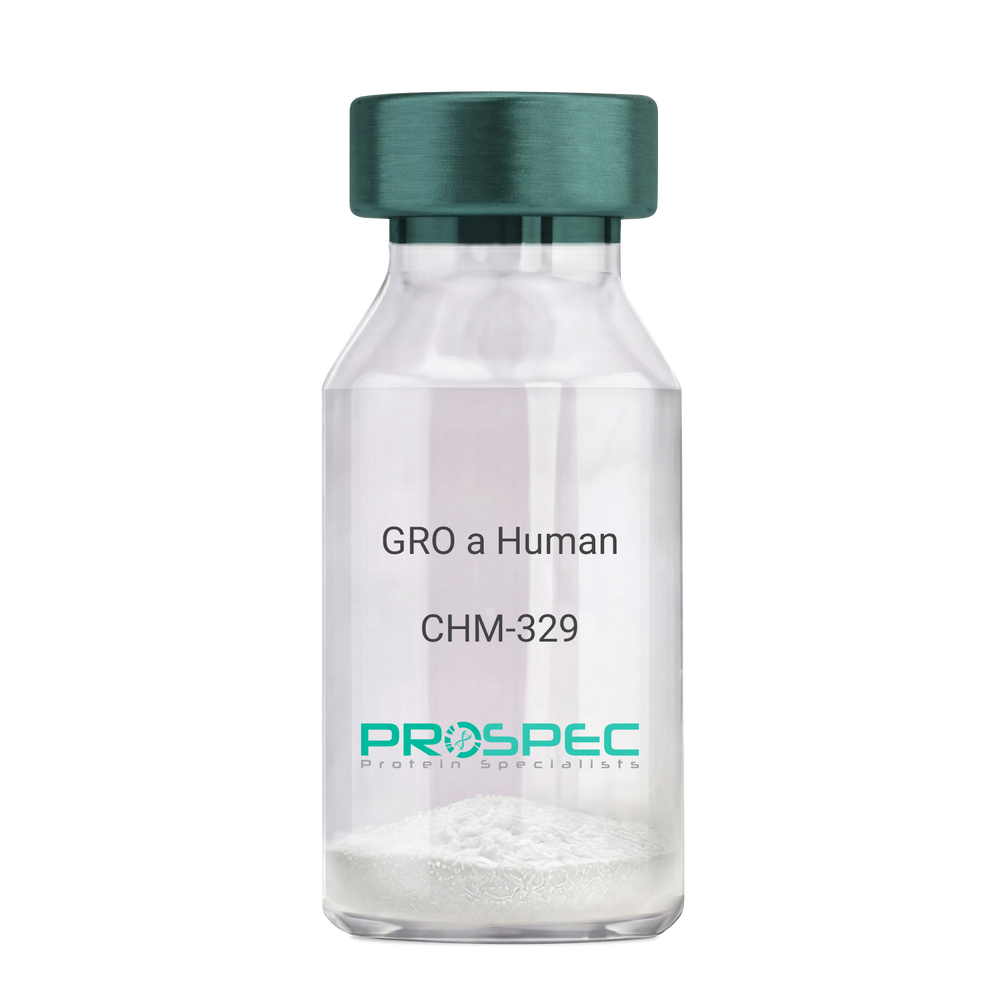
CXCL1 HumanDescription:
GRO-Alpha Human Recombinant (CXCL1)
Growth-regulated protein alpha, CXCL1, Melanoma growth stimulatory activity, MGSA, Neutrophil-activating protein 3, NAP-3, GRO-alpha (1-73), chemokine (C-X-C motif) ligand 1, GRO1, GROa, SCYB1, MGSA-a, MGSA alpha.
Product # :
CHM-329Price :
Quantity :
Shipping Method :
Shipped at Room temp
More Info
- description
- source
- formulation
- purity
- biological activity
- More Info
Description
GRO Alpha Human Recombinant produced in E.Coli is a single,non-glycosylated, polypeptide chain containing 73 amino acids and having a molecular mass of 7811 Dalton. The GRO-alpha is purified by proprietary chromatographic techniques.
Source
Escherichia Coli.
Formulation
Lyophilized from a 0.2µm filtered concentrated (1mg/ml) solution in 20mM PB, pH 7.4, 50mM NaCl.
Purity
Greater than 97.0% as determined by:
(a) Analysis by RP-HPLC.
(b) Analysis by SDS-PAGE.Biological Activity
Determined by its ability to chemoattract human peripheral blood neutrophils using a concentration range of 10.0-100.0 ng/ml.
More Info
-
Introduction
Chemokine (C-X-C motif) ligand 1 (CXCL1) is a small cytokine belonging to the CXC chemokine family that was previously called GRO1 oncogene, Neutrophil-activating protein 3 (NAP-3) and melanoma growth stimulating activity, alpha (MSGA-a). It is secreted by human melanoma cells, has mitogenic properties and is implicated in melanoma pathogenesis. CXCL1 is expressed by macrophages, neutrophilsand epithelial cells, and has neutrophil chemoattractant activity. CXCL1 plays a role in spinal cord development by inhibiting the migration of oligodendrocyte precursors and is involved in the processes of angiogenesis, inflammation, wound healing, and tumorigenesis. This chemokine elicits its effects by signaling through the chemokine receptor CXCR2. The gene for CXCL1 is located on human chromosome 4 amongst genes for other CXC chemokines.
-
Synonyms
Growth-regulated protein alpha, CXCL1, Melanoma growth stimulatory activity, MGSA, Neutrophil-activating protein 3, NAP-3, GRO-alpha (1-73), chemokine (C-X-C motif) ligand 1, GRO1, GROa, SCYB1, MGSA-a, MGSA alpha.
-
Physical Appearance
Sterile Filtered White lyophilized (freeze-dried) powder.
-
Stability
Lyophilized GRO-alpha although stable at room temperature for 3 weeks, should be stored desiccated below -18°C. Upon reconstitution CXCL1 should be stored at 4°C between 2-7 days and for future use below -18°C. For long term storage it is recommended to add a carrier protein (0.1% HSA or BSA).Please prevent freeze-thaw cycles.
-
Solubility
It is recommended to reconstitute the lyophilized CXCL1 in sterile 18MΩ-cm H2O not less than 100µg/ml, which can then be further diluted to other aqueous solutions.
-
Amino Acid Sequence
The sequence of the first five N-terminal amino acids was determined and was found to be Ala-Ser-Val-Ala-Thr.
-
Background
What is the molecular weight/Mw of CXCL1 HUMAN Protein?
CXCL1 HUMAN Protein has a total Mw of 7.81kDa.
What is the source or expression system of CXCL1 HUMAN Protein?
Escherichia Coli.
What is the Purity of CXCL1 HUMAN Protein?
CXCL1 HUMAN Protein is >97% pure as determined by SDS-PAGE.
What is the Biological Activity of CXCL1 HUMAN Protein?
Determined by its ability to chemoattract human peripheral blood neutrophils using a concentration range of 10.0-100.0 ng/ml.
What is the amino acid sequence of CXCL1 HUMAN Protein?
The sequence of the first five N-terminal amino acids was determined and was found to be Ala-Ser-Val-Ala-Thr.
What applications can CXCL1 HUMAN Protein be used in?
CXCL1 HUMAN Protein can probably be used in western blot, ELISA and Lateral Flow.
What is the endotoxin level for CXCL1 HUMAN Protein?
The endotoxin level is minimal, CXCL1 HUMAN Protein was purified using conventional chromatography techniques.
ProSpec's products are furnished for LABORATORY RESEARCH USE ONLY. The product may not be used as drugs, agricultural or pesticidal products, food additives or household chemicals.
- View Data Sheet
Name :
CXCL3 HumanDescription:
GRO-Gamma Human Recombinant (CXCL3)
Macrophage inflammatory protein 2-beta, MIP2-beta, CXCL3, Growth-regulated protein gamma, GRO-gamma, GRO-gamma(1-73), GRO3, GROg, MIP2B, SCYB3, MIP-2b, CINC-2b, MGSA gamma.
Product # :
CHM-310Price :
Quantity :
Shipping Method :
Shipped at Room temp
More Info
- description
- source
- formulation
- purity
- biological activity
- More Info
Description
GRO-Gamma Human Recombinant produced in E.Coli is a single, non-glycosylated, polypeptide chain containing 73 amino acids and having a molecular mass of 7902 Dalton. The CXCL3 is purified by proprietary chromatographic techniques.
Source
Escherichia Coli.
Formulation
The protein was lyophilized with no additives.
Purity
Greater than 98.0% as determined by:
(a) Analysis by RP-HPLC.
(b) Analysis by SDS-PAGE.Biological Activity
The Biological activity is calculated by its ability to chemoattract CXCR2 transfected 293 cells using 10-100ng/ml corresponding to a Specific Activity of 10,000-100,000IU/mg.More Info
-
Introduction
Chemokine (C-X-C motif) ligand 3 (CXCL3) is a small cytokine belonging to the CXC chemokine family that is also known as GRO3 oncogene (GRO3), GRO protein gamma (GROg) and macrophage inflammatory protein-2-beta (MIP2b). CXCL3 controls migration and adhesion of monocytes and mediates it effects on its target cell by interacting with a cell surface chemokine receptor called CXCR2. The gene for CXCL3 is located on chromosome 4 in a cluster of other CXC chemokines.
-
Synonyms
Macrophage inflammatory protein 2-beta, MIP2-beta, CXCL3, Growth-regulated protein gamma, GRO-gamma, GRO-gamma(1-73), GRO3, GROg, MIP2B, SCYB3, MIP-2b, CINC-2b, MGSA gamma.
-
Physical Appearance
Sterile Filtered White lyophilized (freeze-dried) powder.
-
Stability
Lyophilized GRO-gamma although stable at room temperature for 3 weeks, should be stored desiccated below -18°C. Upon reconstitution CXCL3 should be stored at 4°C between 2-7 days and for future use below -18°C. For long term storage it is recommended to add a carrier protein (0.1% HSA or BSA).Please prevent freeze-thaw cycles.
-
Solubility
It is recommended to reconstitute the lyophilized CXCL3 in sterile 18MΩ-cm H2O not less than 100µg/ml, which can then be further diluted to other aqueous solutions.
-
Amino Acid Sequence
The sequence of the first five N-terminal amino acids was determined and was found to be Ala-Ser-Val-Val-Thr.
-
Background
What is the molecular weight/Mw of CXCL3 HUMAN Protein?
CXCL3 HUMAN Protein has a total Mw of 7.9kDa.
What is the source or expression system of CXCL3 HUMAN Protein?
Escherichia Coli.
What is the Purity of CXCL3 HUMAN Protein?
CXCL3 HUMAN Protein is >98% pure as determined by SDS-PAGE.
What is the Biological Activity of CXCL3 HUMAN Protein?
The Biological activity is calculated by its ability to chemoattract CXCR2 transfected 293 cells using 10-100ng/ml corresponding to a Specific Activity of 10,000-100,000IU/mg.
What is the amino acid sequence of CXCL3 HUMAN Protein?
The sequence of the first five N-terminal amino acids was determined and was found to be Ala-Ser-Val-Val-Thr.
What applications can CXCL3 HUMAN Protein be used in?
CXCL3 HUMAN Protein can probably be used in western blot, ELISA and Lateral Flow.
What is the endotoxin level for CXCL3 HUMAN Protein?
The endotoxin level is minimal, CXCL3 HUMAN Protein was purified using conventional chromatography techniques.
ProSpec's products are furnished for LABORATORY RESEARCH USE ONLY. The product may not be used as drugs, agricultural or pesticidal products, food additives or household chemicals.
- View Data Sheet
Name :
CMPK1 HumanDescription:
Cytidine Monophosphate Kinase 1 Human Recombinant
UMP-CMP kinase, Cytidine monophosphate kinase, Cytidylate kinase, Deoxycytidylate kinase, Uridine monophosphate kinase, Uridine monophosphate/cytidine monophosphate kinase, UMP/CMP kinase, UMP/CMPK, CMPK1, CMK, CMPK, UCK, UMK, UMPK, UMP-CMPK, RP11-511I2.1.
Product # :
PKA-002Price :
Quantity :
Shipping Method :
Shipped with Ice Packs
More Info
- description
- source
- formulation
- purity
- More Info
Description
CMPK1 Human Recombinant produced in E.Coli is a single, non-glycosylated, polypeptide chain containing 248 amino acids (1-228) and having a molecular mass of 28kDa. CMPK1 is fused to a 20 a.a His-Tag at N-terminus and purified by proprietary chromatographic techniques.
Source
Escherichia Coli.
Formulation
CMPK1 solution (1mg/ml) containing 20mM Tris-HCl buffer (pH8.0), 20% glycerol, 1mM DTT and 100mM NaCl.
Purity
Greater than 90.0% as determined by SDS-PAGE.
More Info
-
Introduction
UMP-CMP kinase and deoxycytidylate kinase (CMPK1) is an enzyme which catalyzes the phosphoryl transfer from ATP to UMP, CMP and dCMP. This enzymatic reaction brings about the formation of ADP and the corresponding nucleoside diphosphate that are necessary for cellular nucleic acid synthesis. In addition, CMPK1 has a significant role in the activation of pyrimidine analogs, which are clinically useful anti-cancer and anti-viral drugs.
-
Synonyms
UMP-CMP kinase, Cytidine monophosphate kinase, Cytidylate kinase, Deoxycytidylate kinase, Uridine monophosphate kinase, Uridine monophosphate/cytidine monophosphate kinase, UMP/CMP kinase, UMP/CMPK, CMPK1, CMK, CMPK, UCK, UMK, UMPK, UMP-CMPK, RP11-511I2.1.
-
Physical Appearance
Sterile filtered colorless solution.
-
Stability
Store at 4°C if entire vial will be used within 2-4 weeks. Store, frozen at -20°C for longer periods of time. For long term storage it is recommended to add a carrier protein (0.1% HSA or BSA).Avoid multiple freeze-thaw cycles.
-
Amino Acid Sequence
MGSSHHHHHH SSGLVPRGSH MLSRCRSGLL HVLGLSFLLQ TRRPILLCSP RLMKPLVVFV LGGPGAGKGT QCARIVEKYG YTHLSAGELL RDERKNPDSQ YGELIEKYIK EGKIVPVEIT ISLLKREMDQ TMAANAQKNK FLIDGFPRNQ DNLQGWNKTM DGKADVSFVL FFDCNNEICI ERCLERGKSS GRSDDNRESL EKRIQTYLQS TKPIIDLYEE MGKVKKIDAS KSVDEVFDEV VQIFDKEG.
ProSpec's products are furnished for LABORATORY RESEARCH USE ONLY. The product may not be used as drugs, agricultural or pesticidal products, food additives or household chemicals.
- View Data Sheet
Name :
VAMP8 HumanDescription:
Endobrevin Human Recombinant
VAMP8, VAMP-8, Endobrevin, Vesicle-Associated Membrane Protein 8, EDB.
Product # :
PRO-660Price :
Quantity :
Shipping Method :
Shipped with Ice Packs
More Info
- description
- source
- formulation
- purity
- More Info
Description
VAMP8 Human Recombinant produced in E.Coli is a single, non-glycosylated polypeptide chain containing 96 amino acids (1-76 a.a.) and having a molecular mass of 10.9 kDa. The VAMP8 is fused to a 20 amino acid His Tag at N-terminus and purified by proprietary chromatography techniques.
Source
Escherichia Coli.
Formulation
The VAMP8 protein solution (0.25mg/ml) contains 20mM Tris pH-8, 0.1mM PMSF, 0.2M NaCl and 50% glycerol.
Purity
Greater than 85.0% as determined by SDS-PAGE.
More Info
-
Introduction
VAMP8 also called endobrevin, is the main component of a SNARE complex involved in the docking and fusion of synaptic vesicles with the presynaptic membrane. VAMP8 protein is involved in the regulatation of enzyme secretion in pancreatic acinar cells and plays a part in the abscission of the midbody during cell division, which leads to completely separate daughter cells. VAMP8 is essential for dense-granule secretion in platelets. VAMP8 is related with the perinuclear vesicular structures of the early endocytic compartment. VAMP8 interacts particularly with the soluble NSF-attachment protein (alpha-SNAP), through an VAMP8-containing SNARE complex.
-
Synonyms
VAMP8, VAMP-8, Endobrevin, Vesicle-Associated Membrane Protein 8, EDB.
-
Physical Appearance
Sterile Filtered colorless solution.
-
Stability
Store at 4°C if entire vial will be used within 2-4 weeks. Store, frozen at -20°C for longer periods of time. For long term storage it is recommended to add a carrier protein (0.1% HSA or BSA).Please prevent freeze-thaw cycles.
-
Amino Acid Sequence
MGSSHHHHHH SSGLVPRGSH MEEASEGGGN DRVRNLQSEV EGVKNIMTQN VERILARGEN LEHLRNKTED LEATSEHFKT TSQKVARKFW WKNVKM.
ProSpec's products are furnished for LABORATORY RESEARCH USE ONLY. The product may not be used as drugs, agricultural or pesticidal products, food additives or household chemicals.
- View Data Sheet
Name :
SAE1 HumanDescription:
SUMO1 Activating Enzyme Subunit 1 Human Recombinant
AOS1, HSPC140, SUA1, UBLE1A, SAE1, SUMO1 Activating Enzyme Subunit 1, FLJ3091.
Product # :
ENZ-534Price :
Quantity :
Shipping Method :
Shipped with Ice Packs
More Info
- description
- source
- formulation
- purity
- More Info
Description
SAE1 Recombinant Human produced in E.Coli is a single, non-glycosylated polypeptide chain containing 378 amino acids (1-346 a.a.) and having a molecular mass of 42.2 kDa. The SAE1 is fused to 32 amino acid T7-Tag at N-terminus and purified by proprietary chromatographic techniques.
Source
Escherichia Coli.
Formulation
SAE1 Human solution containing 20mM Tris pH-8, 1mM DTT & 10% glycerol.
Purity
Greater than 90.0% as determined by SDS-PAGE.
More Info
-
Introduction
SAE1 is part of the ubiquitin-activating E1 family of proteins and participates in the significant first step of the UBL1 conjugation pathway. Proteins conjugated to Ub are marked for progressive degradation by the 26S Proteasome. SAE1 acts as a UBLI E1 ligase mediating the ATP-dependent activation of UBL1. SAE1 binds with UBLE1A and UBLE1B to form a heterodimer which can bind UBL1. SAE1 is a dimeric enzyme that takes part as a E1 ligase for SUMO1, SUMO2, SUMO3, and probably SUMO4. SAE1 regulates ATP-dependent activation of SUMO proteins and formation of a thioester with a conserved cysteine residue on SAE2.
-
Synonyms
AOS1, HSPC140, SUA1, UBLE1A, SAE1, SUMO1 Activating Enzyme Subunit 1, FLJ3091.
-
Physical Appearance
Sterile filtered colorless solution.
-
Stability
Store at 4°C if entire vial will be used within 2-4 weeks. Store, frozen at -20°C for longer periods of time. For long term storage it is recommended to add a carrier protein (0.1% HSA or BSA).Avoid multiple freeze-thaw cycles.
-
Amino Acid Sequence
MHHHHHHMAS MTGGQQMGRD LYDDDDKDRW GSMVEKEEAG GGISEEEAAQ YDRQIRLWGL EAQKRLRASR VLLVGLKGLG AEIAKNLILA GVKGLTMLDH EQVTPEDPGA QFLIRTGSVG RNRAEASLER AQNLNPMVDV KVDTEDIEKK PESFFTQFDA VCLTCCSRDV IVKVDQICHK NSIKFFTGDV FGYHGYTFAN LGEHEFVEEK TKVAKVSQGV EDGPDTKRAK LDSSETTMVK KKVVFCPVKE ALEVDWSSEK AKAALKRTTS DYFLLQVLLK FRTDKGRDPS SDTYEEDSEL LLQIRNDVLD SLGISPDLLP EDFVRYCFSE MAPVCAVVGG ILAQEIVKAL SQRDPPHNNF FFFDGMKGNG IVECLGPK.
ProSpec's products are furnished for LABORATORY RESEARCH USE ONLY. The product may not be used as drugs, agricultural or pesticidal products, food additives or household chemicals.
- View Data Sheet
Name :
PFDN1 HumanDescription:
Prefoldin Subunit 1 Human Recombinant
Prefoldin subunit 1, PFDN1, PFD1, PDF.
Product # :
PRO-277Price :
Quantity :
Shipping Method :
Shipped with Ice Packs
More Info
- description
- source
- formulation
- purity
- More Info
Description
PFDN1 Human Recombinant fused with a 20 amino acid His tag at N-terminus produced in E.Coli is a single, non-glycosylated, polypeptide chain containing 130 amino acids (14-122 a.a.) and having a molecular mass of 15kDa. The PFDN1 is purified by proprietary chromatographic techniques.
Source
Escherichia Coli.
Formulation
The PFDN1 solution (0.5 mg/ml) contains 20mM Tris-HCl Buffer (pH 8.0) and 20% Glycerol.
Purity
Greater than 90.0% as determined by SDS-PAGE.
More Info
-
Introduction
PFDN1 is one of 6 subunits of prefoldin, which is a heterohexameric chaperone protein that assists in the proper folding of other proteins. The PFDN1 protein delivers nonnative target proteins, primarily actins and tubulins, to the eukaryotic cytosolic chaperonin for facilitated folding. Defects in PFDN1 presented phenotypes typical of defects in cytoskeletal function, including manifestations of ciliary dyskinesia, neuronal loss, and defects in B and T cell development and function.
-
Synonyms
Prefoldin subunit 1, PFDN1, PFD1, PDF.
-
Physical Appearance
Sterile Filtered colorless solution.
-
Stability
Store at 4°C if entire vial will be used within 2-4 weeks. Store, frozen at -20°C for longer periods of time. For long term storage it is recommended to add a carrier protein (0.1% HSA or BSA).Avoid multiple freeze-thaw cycles.
-
Amino Acid Sequence
MGSSHHHHHH SSGLVPRGSH MTELQAKVID TQQKVKLADI QIEQLNRTKK HAHLTDTEIM TLVDETNMYE GVGRMFILQS KEAIHSQLLE KQKIAEEKIK ELEQKKSYLE RSVKEAEDNI REMLMARRAQ.
ProSpec's products are furnished for LABORATORY RESEARCH USE ONLY. The product may not be used as drugs, agricultural or pesticidal products, food additives or household chemicals.
- View Data Sheet
Name :
CTF1 RatDescription:
Cardiotrophin-1 Rat Recombinant
Cardiotrophin-1, CT-1, Ctf1.
Product # :
CYT-199Price :
Quantity :
Shipping Method :
Shipped at Room temp
More Info
- description
- source
- formulation
- purity
- biological activity
- More Info
Description
Cardiotrophin-1 Rat Recombinant produced in E.Coli is a single, non-glycosylated, polypeptide chain containing 203 amino acids and having a molecular mass of 21.4kDa.The CTF1 Rat is purified by proprietary chromatographic techniques.
Source
Escherichia Coli.
Formulation
Lyophilized from a 0.2µm filtered concentrated solution in PBS, pH 7.4.
Purity
Greater than 95.0% as determined by SDS-PAGE and HPLC analyses.
Biological Activity
The ED50 as determined by the dose-dependent proliferation of TF-1 cells was found to be < 0.5ng/ml, corresponding to a specific activity of > 2.0×10⁶ units/mg.More Info
-
Introduction
Cardiotrophin 1 (CT-1) is a 201 amino acid member of the interleukin-6 superfamily. It was identified by its ability to induce hypertrophic response in cardiac myocytes. CT-1 mRNA levels were found both in cardiac myocytes and in cardiac nonmyocytes. CT 1 was also detected in abundance in normal adult human lung and was expressed in both fetal and adult airway smooth muscle cells. CT 1 activates gp130 dependent signaling and stimulates the Janus kinase/signal transducers and activators of transcription (JAK/STAT) pathway to transduce hypertrophic and cytoprotective signals in cardiac myocytes.
CT 1 has also a neurotrophic function. CTF1 deficiency causes increased motoneuron cell death in spinal cord and brainstem nuclei of mice during a period between embryonic day 14 and the first postnatal week. Moreover, CT-1 is a hepatocyte survival factor that efficiently reduces hepatocellular damage in animal models of acute liver injury. Cardiotrophin 1 expression is augmented after hypoxic stimulation and it can protect cardiac cells when added either prior to simulated ischaemia or at the time of reoxygenation following simulated ischaemia. Cardiotrophin 1 can induce expression of the protective heat shock proteins (hsps) in cardiac cells.
Cardiotrophin-1 increased ventricular expression of ANP, brain natriuretic peptide (BNP) and angiotensinogen mRNA.
Cardiophin 1 levels were significantly elevated in patients with heart failure, patients with dilatative cardiomyopathy, moderate/severe mitral regurgitation, stable and unstable angina and after acute myocardial infarction. -
Synonyms
Cardiotrophin-1, CT-1, Ctf1.
-
Physical Appearance
Sterile Filtered White lyophilized (freeze-dried) powder.
-
Stability
Lyophilized Cardiotrophin-1 Rat although stable at room temperature for 3 weeks, should be stored desiccated below -18°C. Upon reconstitution CTF1 Rat should be stored at 4°C between 2-7 days and for future use below -18°C.Please prevent freeze-thaw cycles.
-
Solubility
It is recommended to reconstitute the lyophilized CTF1 in sterile 4mM HCl not less than 100µg/ml, which can then be further diluted to other aqueous solutions.
-
Amino Acid Sequence
MSQREGSLED HQTDSSFSFL PHLEAKIRQT HNLARLLTKY ADQLLEEYVQ QQGEPFGLPG FSPPRLPLAG LSGPAPSHAG LPVSERLRQD AAALSALPAL LDAVRRRQAE LNPRAPRLLR SLEDAARQVR ALGAAVETVL AALGAAARGP VPEPVATSAL FTSNSAAGVF SAKVLGLHVC GLYGEWVSRT EGDLGQLVPG GVA.
-
Background
What is the molecular weight/Mw of CTF1 Protein?
CTF1 Protein has a total Mw of 21.4kDa.
What is the source or expression system of CTF1 Protein?
Escherichia Coli.
What is the Purity of CTF1 Protein?
CTF1 Protein is >95% pure as determined by SDS-PAGE.
What is the Biological Activity of CTF1 Protein?
The ED50 as determined by the dose-dependent proliferation of TF-1 cells was found to be < 0.5ng/ml, corresponding to a specific activity of > 2.0×10⁶ units/mg.
What is the amino acid sequence of CTF1 Protein?
MSQREGSLED HQTDSSFSFL PHLEAKIRQT HNLARLLTKY ADQLLEEYVQ QQGEPFGLPG FSPPRLPLAG LSGPAPSHAG LPVSERLRQD AAALSALPAL LDAVRRRQAE LNPRAPRLLR SLEDAARQVR ALGAAVETVL AALGAAARGP VPEPVATSAL FTSNSAAGVF SAKVLGLHVC GLYGEWVSRT EGDLGQLVPG GVA.
What applications can CTF1 Protein be used in?
CTF1 Protein can probably be used in western blot, ELISA and Lateral Flow.
What is the endotoxin level for CTF1 Protein?
The endotoxin level is minimal, CTF1 Protein was purified using conventional chromatography techniques.
ProSpec's products are furnished for LABORATORY RESEARCH USE ONLY. The product may not be used as drugs, agricultural or pesticidal products, food additives or household chemicals.
- View Data Sheet
Name :
LLODescription:
Listeriolysin-O Recombinant
Listeriolysin-O, LLO, hlyA.
Product # :
PRO-320Price :
Quantity :
Shipping Method :
Shipped with Ice Packs
More Info
- description
- source
- formulation
- purity
- biological activity
- More Info
Description
LLO is a single, non-glycosylated polypeptide chain containing 529 amino acids and having a molecular mass of 58kDa. (accession number: AAF64524).
Source
Escherichia Coli.
Formulation
The protein contains 50mM NaH2PO4, 1mM EDTA, 2.7mM KCl, pH 6.4, 1mM DTT, 5% (v/v) glycerol and 0.5M NaCl.
Purity
Greater than 90.0% as determined by SDS-PAGE.
Biological Activity
Hemolytic activity is 8,27E+05 HU/mg of protein where HU means hemolytic activity unit that is the amount of toxin needed to release half the hemoglobin (50% lysis) of the erythrocytes as determined by hemolysin assay.
More Info
-
Introduction
Listeriolysin O (aka LLO) is a hemolysin produced by Listeria monocytogenes bacteria, the pathogen responsible for causing listeriosis. The toxin may be regarded as a virulence factor, since it is crucial for the virulence of L. monocytogenes. LLO is a single polypeptide protein encoded by the hlyA gene and composed of 529 residues. LLO is a thiol-activated cholesterol-dependent pore forming toxin protein; therefore, it is activated by reducing agents and inhibited by oxidizing agents. Still, LLO differs from other thiol-activated toxins, as its cytolytic activity is maximized at a pH of 5.5. Inside the acidic phagosomes (average pH ~ 5.9) of cells that have phagocytosed L. monocytogenes, LLO is selectively activated by maximizing activity at a pH of 5.5. Following the phagosome lysis by LLO, the bacterium breaks out into the cytosol, where it is able to grow intracellularly, and the toxin has reduced activity in the more basic cytosol. Thus, LLO permits L. monocytogenes to break out from the phagosomes into the cytosol without harming the plasma membrane of the infected cell, which allows the bacteria to live intracellularly, where they are sheltered from extracellular immune system factors such as the complement system and antibodies. LLO also brings about dephosphorylation of histone H3 and deacetylation of histone H4 in the early phases of infection, before entry of L. monocytogenes into the host cell. The pore-forming activity is not implicated in causing the histone modifications. The modifications of the histones affect the down regulation of genes encoding proteins involved in the inflammatory response. Therefore, LLO may be significant in subverting the host immune response to L. monocytogenes. At its NH2-terminus it possesses a 25 residues long typical signal sequence excited during the secretion process. Moreover, in its NH2-terminus there is also a 19 amino acids PEST- like sequence that may target this toxin for degradation. The PEST-like sequence found in LLO and is considered crucial for virulence, given that mutants lacking the sequence lysed the host cell. Nevertheless, contrary to PEST's supposed role in protein degradation, evidence implies that the PEST-like sequence may control LLO production in the cytosol rather than increase degradation of LLO.
-
Synonyms
Listeriolysin-O, LLO, hlyA.
-
Physical Appearance
Sterile Filtered clear solution.
-
Stability
Store at 4°C if entire vial will be used within 2-4 weeks. Store, frozen at -20°C for longer periods of time. Avoid multiple freeze-thaw cycles.
ProSpec's products are furnished for LABORATORY RESEARCH USE ONLY. The product may not be used as drugs, agricultural or pesticidal products, food additives or household chemicals.
- View Data Sheet
Name :
CXCL4 Variant 1 HumanDescription:
Platelet Factor-4 Variant 1 Human Recombinant
CXCL4, PF-4, PF4, Iroplact, Oncostatin-A, SCYB4, MGC138298.
Product # :
CHM-243Price :
Quantity :
Shipping Method :
Shipped at Room temp
More Info
- description
- source
- formulation
- purity
- More Info
Description
CXCL4 Variant-1 Human Recombinant produced in E.Coli is a single, non-glycosylated polypeptide chain containing 77 amino acids and having a molecular mass of 8.7 kDa. The CXCL4 Variant-1 is fused to 6xHis tag at N-Terminus and purified by standard chromatography techniques.
Source
Escherichia Coli.
Formulation
The protein was lyophilized without additives.
Purity
Greater than 95.0% as determined by SDS-PAGE.
More Info
-
Introduction
Platelet factor-4 is a 70-amino acid protein that is released from the alpha-granules of activated platelets . Its major physiologic role appears to be neutralization of molecules on the endothelial surface of blood vessels, thereby inhibiting local antithrombin III activity and promoting coagulation. As a strong chemoattractant for neutrophils and fibroblasts, PF4 probably has a role in inflammation and wound repair. Oncostatin-A is a member of the CXC chemocinfamily. Human PF4 is used for the proof of induced thrombocytopenia. Furthermore it is used as an inhibitor in the angiogenesis during tumor therapy.
-
Synonyms
CXCL4, PF-4, PF4, Iroplact, Oncostatin-A, SCYB4, MGC138298.
-
Physical Appearance
Sterile Filtered white lyophilized powder.
-
Stability
Human CXCL4 although stable at 25°C 1 week, should be stored desiccated below -18°C. Please prevent freeze-thaw cycles.
-
Solubility
It is recommended to reconstitute the lyophilized CXCL4 in sterile 18MΩ-cm H2O not less than 100µg/ml, which can then be further diluted to other aqueous solutions.
-
Amino Acid Sequence
MHHHHHHEAE EDGDLQCLCV KTTSQVRPRH ITSLEVIKAG PHCPTAQLIA TLKNGRKICL DLQALLYKKI IKEHLES.
ProSpec's products are furnished for LABORATORY RESEARCH USE ONLY. The product may not be used as drugs, agricultural or pesticidal products, food additives or household chemicals.
- View Data Sheet
Name :
KLRF1 HumanDescription:
Killer Cell lectin-like Receptor Subfamily F Member 1 Human Recombinant
NKp80, KLRF1, C-type lectin domain family 5 member C, CLEC5C, ML, Killer cell lectin-like receptor F1, Killer cell lectin-like receptor subfamily F member 1,Killer cell lectin-like receptor subfamily F member 1 isoform 1, Lectin-like receptor F1, Activating coreceptor NKp80, CLEC5CMGC119908, MGC119907, MGC119909.
Product # :
PRO-2753Price :
Quantity :
Shipping Method :
Shipped with Ice Packs
More Info
- description
- source
- formulation
- purity
- biological activity
- More Info
Description
KLRF1 Human Recombinant produced in HEK293 Cells is a single, glycosylated polypeptide chain containing 414 amino acids (60-231a.a) and having a molecular mass of 47.1kDa.KLRF1 is fused to a 242 amino acid hIgG-His-Tag at C-terminus & purified by proprietary chromatographic techniques.
Source
HEK293 Cells.
Formulation
The KLRF1 solution (0.25mg/1ml) contains phosphate buffered saline (pH7.4) and 10% glycerol.
Purity
Greater than 85.0% as determined by SDS-PAGE.
Biological Activity
Measured by the ability of the immobilized protein to support the adhesion of U937 human histiocytic lymphoma cells. When cells are added to human KLRF1 coated plates 2 ug/ml. This effect is more to 60%.
More Info
-
Introduction
Killer cell lectin-like receptor subfamily F member 1, aka KLRF1, is a member of the C-type lectin family. KLRF1, an activating homodimeric C-type lectin-like receptor (CTLR), is expressed on nearly all natural killer (NK) cells and stimulates their cytoxicity and cytokine release. Killer cell lectin-like receptor subfamily F member 1 works through interaction with its ligand, AICL (activation-induced C-type lectin), which is selectively expressed on myeloid cells. AICL interaction regulates the immune responses at sites of inflammation by stimulating the release of proinflammatory cytokines. Diseases associated with KLRF1 include Developmental And Epileptic Encephalopathy 76.
-
Synonyms
NKp80, KLRF1, C-type lectin domain family 5 member C, CLEC5C, ML, Killer cell lectin-like receptor F1, Killer cell lectin-like receptor subfamily F member 1,Killer cell lectin-like receptor subfamily F member 1 isoform 1, Lectin-like receptor F1, Activating coreceptor NKp80, CLEC5CMGC119908, MGC119907, MGC119909.
-
Physical Appearance
Sterile filtered colorless solution.
-
Stability
Store at 4°C if entire vial will be used within 2-4 weeks.Store, frozen at -20°C for longer periods of time.For long term storage it is recommended to add a carrier protein (0.1% HSA or BSA).Avoid multiple freeze-thaw cycles.
-
Amino Acid Sequence
DGSLLVSQGV LLKCQKGSCS NATQYEDTGD LKVNNGTRRN ISNKDLCASR SADQTVLCQS EWLKYQGKCY WFSNEMKSWS DSYVYCLERK SHLLIIHDQL EMAFIQKNLR QLNYVWIGLN FTSLKMTWTW VDGSPIDSKI FFIKGPAKEN SCAAIKESKI FSETCSSVFK WICQYLEPKS CDRTHTCPPC PAPELLGGPS VFLFPPKPKD TLMISRTPEV TCVVVDVSHE DPEVKFNWYV DGVEVHNAKT KPREEQYNST YRVVSVLTVL HQDWLNGKEY KCKVSNKALP APIEKTISKA KGQPREPQVY TLPPSRDELT KNQVSLTCLV KGFYPSDIAV EWESNGQPEN NYKTTPPVLD SDGSFFLYSK LTVDKSRWQQ GNVFSCSVMH EALHNHYTQK SLSLSPGKHH HHHH
ProSpec's products are furnished for LABORATORY RESEARCH USE ONLY. The product may not be used as drugs, agricultural or pesticidal products, food additives or household chemicals.
- View Data Sheet
Name :
GGPS1 HumanDescription:
Geranylgeranyl Diphosphate Synthase 1 Human Recombinant
GGPPS, GGPPS1, GGPP synthetase.
Product # :
ENZ-555Price :
Quantity :
Shipping Method :
Shipped with Ice Packs
More Info
- description
- source
- formulation
- purity
- More Info
Description
GGPS1 Recombinant Human produced in E.Coli is a single, non-glycosylated polypeptide chain containing 320 amino acids (1-300 a.a.) and having a molecular mass of 37 kDa. The GGPS1 is fused to a 20 amino acids His-Tag at N-terminus and purified by proprietary chromatographic techniques.
Source
Escherichia Coli.
Formulation
GGPS1 Human recombinant (1mg/ml) protein solution contains 20mM Tris-HCl pH-8, 1mM DTT & 10% glycerol.
Purity
Greater than 90.0% as determined by SDS-PAGE.
More Info
-
Introduction
GGPS1 is PART of the prenyltransferase family. GGPS1 is widely expressed in testis, heart and skeletal muscle, GGPS1 is localized in the cytoplasm and catalyzes the formation of geranylgeranyl pyrophosphate, a precursor of geranylgeranylated proteins and carotenoids. GGPS1 is a significant enzyme that is responsible for the C20-prenylation of proteins and for the regulation of a nuclear hormone receptor.
-
Synonyms
GGPPS, GGPPS1, GGPP synthetase.
-
Physical Appearance
Sterile filtered colorless solution.
-
Stability
Store at 4°C if entire vial will be used within 2-4 weeks. Store, frozen at -20°C for longer periods of time. For long term storage it is recommended to add a carrier protein (0.1% HSA or BSA).Avoid multiple freeze-thaw cycles.
-
Amino Acid Sequence
MGSSHHHHHH SSGLVPRGSH MEKTQETVQR ILLEPYKYLL QLPGKQVRTK LSQAFNHWLK VPEDKLQIII EVTEMLHNAS LLIDDIEDNS KLRRGFPVAH SIYGIPSVIN SANYVYFLGL EKVLTLDHPD AVKLFTRQLL ELHQGQGLDI YWRDNYTCPT EEEYKAMVLQ KTGGLFGLAV
GLMQLFSDYK EDLKPLLNTL GLFFQIRDDY ANLHSKEYSE NKSFCEDLTE GKFSFPTIHA IWSRPESTQV QNILRQRTEN IDIKKYCVHY LEDVGSFEYT RNTLKELEAK AYKQIDARGG NPELVALVKH LSKMFKEENE.
ProSpec's products are furnished for LABORATORY RESEARCH USE ONLY. The product may not be used as drugs, agricultural or pesticidal products, food additives or household chemicals.
- View Data Sheet
Name :
EXOSC3 HumanDescription:
Exosome Component 3 Human Recombinant
bA3J10.7, CGI-102, hRrp-40, p10, PCH1B, RP11-3J10.8, RRP40, Rrp40p, Exosome complex component RRP40, Exosome component 3, Ribosomal RNA-processing protein 40, EXOSC3.
Product # :
PRO-1981Price :
Quantity :
Shipping Method :
Shipped with Ice Packs
More Info
- description
- source
- formulation
- purity
- More Info
Description
EXOSC3 Human Recombinant produced in E.Coli is a single, non-glycosylated polypeptide chain containing 298 amino acids (1-275 a.a) and having a molecular mass of 32.0kDa. EXOSC3 is fused to a 23 amino acid His-tag at N-terminus & purified by proprietary chromatographic techniques.
Source
Escherichia Coli.
Formulation
EXOSC3 protein solution (0.5mg/ml) containing 20mM Tris-HCl buffer (pH 7.5), 0.15M NaCl, 30% glycerol and 1mM DTT.
Purity
Greater than 85.0% as determined by SDS-PAGE.
More Info
-
Introduction
Exosome Component 3 (EXOSC3) is a non-catalytic component of the human exosome, a complex with 3'-5' exoribonuclease activity. EXOSC3 takes part in various RNA processing and degradation activities including degradation of histone mRNA. Linked pseudogenes of EXOSC3 are located on chromosome 19 and 21.
-
Synonyms
bA3J10.7, CGI-102, hRrp-40, p10, PCH1B, RP11-3J10.8, RRP40, Rrp40p, Exosome complex component RRP40, Exosome component 3, Ribosomal RNA-processing protein 40, EXOSC3.
-
Physical Appearance
Sterile Filtered colorless solution.
-
Stability
Store at 4°C if entire vial will be used within 2-4 weeks. Store, frozen at -20°C for longer periods of time. For long term storage it is recommended to add a carrier protein (0.1% HSA or BSA).Avoid multiple freeze-thaw cycles.
-
Amino Acid Sequence
MGSSHHHHHH SSGLVPRGSH MGSMAEPASV AAESLAGSRA RAARTVLGQV VLPGEELLLP EQEDAEGPGG AVERPLSLNA RACSRVRVVC GPGLRRCGDR LLVTKCGRLR HKEPGSGSGG GVYWVDSQQK RYVPVKGDHV IGIVTAKSGD IFKVDVGGSE PASLSYLSFE GATKRNRPNV QVGDLIYGQF VVANKDMEPE MVCIDSCGRA NGMGVIGQDG LLFKVTLGLI RKLLAPDCEI IQEVGKLYPL EIVFGMNGRI WVKAKTIQQT LILANILEAC EHMTSDQRKQ IFSRLAES.
ProSpec's products are furnished for LABORATORY RESEARCH USE ONLY. The product may not be used as drugs, agricultural or pesticidal products, food additives or household chemicals.
- View Data Sheet
Name :
C3 RatDescription:
Complement C3 Rat
Complement C3, C3 and PZP-like alpha-2-macroglobulin domain-containing protein 1, C3, CPAMD1.
Product # :
PRO-2706Price :
Quantity :
Shipping Method :
Shipped with Ice Packs
More Info
- description
- source
- formulation
- purity
- More Info
Description
Rat Complement C3 produced in Rat plasma having a molecular weight of 187kDa.
Source
Rat Plasma.
Formulation
C3 solution contains phosphate buffer saline.
Purity
Greater than 95.0% as determined by SDS-PAGE.
More Info
-
Introduction
C3 is central to the activation of all 3 pathways of complement activation. Initiation of each pathway generates proteolytic enzyme complexes which binds the target surface. These enzymes cleave a peptide bond in C3 releasing the anaphylatoxin C3a and activating C3b. Most of the C3 activated during complement activation never attaches to the surface due to its thioester reaction with water forming fluid phase C3b which is rapidly inactivated by factors H and I forming iC3b. Surface-bound C3b is necessary in all 3 pathways for efficient activation of C5 and formation of C5b-9 complexes that lyse the target cell membrane.
-
Synonyms
Complement C3, C3 and PZP-like alpha-2-macroglobulin domain-containing protein 1, C3, CPAMD1.
-
Physical Appearance
Sterile filtered solution.
-
Stability
C3 Mouse is stable at 4°C if entire vial will be used within 2-4 weeks.Store, frozen below -20°C for longer periods of time.For long term storage it is recommended to add a carrier protein (0.1% HSA or BSA).Avoid multiple freeze-thaw cycles.
ProSpec's products are furnished for LABORATORY RESEARCH USE ONLY. The product may not be used as drugs, agricultural or pesticidal products, food additives or household chemicals.
- View Data Sheet
Name :
PARD6B HumanDescription:
Par-6 Partitioning Defective 6 Homolog Beta Human Recombinant
Partitioning defective 6 homolog beta, PAR-6 beta, PAR-6B, PARD6B, PAR6B.
Product # :
PRO-1307Price :
Quantity :
Shipping Method :
Shipped with Ice Packs
More Info
- description
- source
- formulation
- purity
- More Info
Description
PARD6B Human Recombinant produced in E.coli is a single, non-glycosylated polypeptide chain containing 395 amino acids (1-372) and having a molecular mass of 43.6kDa.PARD6B is fused to a 23 amino acid His-tag at N-terminus & purified by proprietary chromatographic techniques.
Source
Escherichia Coli.
Formulation
The PARD6B solution (0.5mg/ml) contains 20mM Tris-HCl buffer (pH 8.0), 2M Urea, 20% glycerol and 0.2M NaCl.
Purity
Greater than 85.0% as determined by SDS-PAGE.
More Info
-
Introduction
Partitioning defective 6 homolog beta (PARD6B) belongs to the PAR6 family and encodes a protein with a PSD95/Discs-large/ZO1 (PDZ) domain, an OPR domain and a semi-Cdc42/Rac interactive binding (CRIB) domain. Cellular asymmetry is crucial for the development of multicellular organisms. PARD (partitioning-defective) proteins have central roles in asymmetric cell division and polarized growth, whereas Cdc42 and Rac mediate establishment of cell growth and polarity and contribute to oncogenic transformation by Ras. PARD6B is expressed in pancreas and in both the adult and the fetal kidney, and is weakly expressed in the placenta and the lung.
-
Synonyms
Partitioning defective 6 homolog beta, PAR-6 beta, PAR-6B, PARD6B, PAR6B.
-
Physical Appearance
Sterile Filtered colorless solution.
-
Stability
Store at 4°C if entire vial will be used within 2-4 weeks. Store, frozen at -20°C for longer periods of time. For long term storage it is recommended to add a carrier protein (0.1% HSA or BSA).Avoid multiple freeze-thaw cycles.
-
Amino Acid Sequence
MGSSHHHHHH SSGLVPRGSH MGSMNRSHRH GAGSGCLGTM EVKSKFGAEF RRFSLERSKP GKFEEFYGLL QHVHKIPNVD VLVGYADIHG DLLPINNDDN YHKAVSTANP LLRIFIQKKE EADYSAFGTD TLIKKKNVLT NVLRPDNHRK KPHIVISMPQ DFRPVSSIID VDILPETHRR VRLYKYGTEK PLGFYIRDGS SVRVTPHGLE KVPGIFISRL VPGGLAQSTG LLAVNDEVLE VNGIEVSGKS LDQVTDMMIA NSRNLIITVR PANQRNNVVR NSRTSGSSGQ STDNSLLGYP QQIEPSFEPE DEDSEEDDII IEDNGVPQQI PKAVPNTESL ESLTQIELSF ESGQNGFIPS NEVSLAAIAS SSNTEFETHA PDQKLLEEDG TIITL.
ProSpec's products are furnished for LABORATORY RESEARCH USE ONLY. The product may not be used as drugs, agricultural or pesticidal products, food additives or household chemicals.
- View Data Sheet
Name :
tPA Human, Sf9Description:
Tissue Plasminogen Activator Human Recombinant, Sf9
Tissue-type plasminogen activator, EC 3.4.21.68, tPA, t-PA, t-plasminogen activator, TPA, T-PA, DKFZp686I03148, PLAT and tPA.
Product # :
ENZ-1011Price :
Quantity :
Shipping Method :
Shipped with Ice Packs
More Info
- description
- source
- formulation
- purity
- More Info
Description
tPA Human Recombinant produced in Sf9 Baculovirus cells is a single, glycosylated polypeptide chain containing 545 amino acids (24-562 a.a) and having a molecular mass of 61.3kDa (Molecular size on SDS-PAGE will appear at approximately 50-70kDa).tPA is fused to a 6 amino acid His-tag at C-terminus & purified by proprietary chromatographic techniques.
Source
Sf9, Baculovirus cells.
Formulation
tPA protein solution (0.25mg/ml) containing 50mM MES buffer(pH 5.5 ), 40% glycerol, 5mM CaCl2, 1mM DTT and 0.5M NaCl.
Purity
Greater than 90.0% as determined by SDS-PAGE.
More Info
-
Introduction
Tissue plasminogen activator (abbreviated PLAT or tPA) is a secreted serine proteasewhich converts the proenzymeplasminogento plasmin, a fibrinolyticenzyme. Plasminogen is synthesized as a single chain which is cleaved by PLAT into the two chain disulfide linked plasmin.
This enzyme plays a role in cell migrationand tissue remodeling. Increased enzymatic activity causes hyperfibrinolysis, which manifests as excessive bleeding; decreased activity leads to hypofibrinolysiswhich can result in thrombosisor embolism. -
Synonyms
Tissue-type plasminogen activator, EC 3.4.21.68, tPA, t-PA, t-plasminogen activator, TPA, T-PA, DKFZp686I03148, PLAT and tPA.
-
Physical Appearance
Sterile Filtered colorless solution.
-
Stability
Store at 4°C if entire vial will be used within 2-4 weeks. Store, frozen at -20°C for longer periods of time. For long term storage it is recommended to add a carrier protein (0.1% HSA or BSA).Avoid multiple freeze-thaw cycles.
-
Amino Acid Sequence
QEIHARFRRG ARSYQVICRD EKTQMIYQQH QSWLRPVLRS NRVEYCWCNS GRAQCHSVPV KSCSEPRCFN GGTCQQALYF SDFVCQCPEG FAGKCCEIDT RATCYEDQGI SYRGTWSTAE SGAECTNWNS SALAQKPYSG RRPDAIRLGL GNHNYCRNPD RDSKPWCYVF KAGKYSSEFC STPACSEGNS DCYFGNGSAY RGTHSLTESG ASCLPWNSMI LIGKVYTAQN PSAQALGLGK HNYCRNPDGD AKPWCHVLKN RRLTWEYCDV PSCSTCGLRQ YSQPQFRIKG GLFADIASHP WQAAIFAKHR RSPGERFLCG GILISSCWIL SAAHCFQERF PPHHLTVILG RTYRVVPGEE EQKFEVEKYI VHKEFDDDTY DNDIALLQLK SDSSRCAQES SVVRTVCLPP ADLQLPDWTE CELSGYGKHE ALSPFYSERL KEAHVRLYPS SRCTSQHLLN RTVTDNMLCA GDTRSGGPQA NLHDACQGDS GGPLVCLNDG RMTLVGIISW GLGCGQKDVP GVYTKVTNYL DWIRDNMRPHHHHHH.
ProSpec's products are furnished for LABORATORY RESEARCH USE ONLY. The product may not be used as drugs, agricultural or pesticidal products, food additives or household chemicals.
- View Data Sheet
Name :
Borrelia Spielmanii DbpADescription:
Borrelia Spielmanii Decorin Binding Protein A Recombinant
Product # :
BOR-026Price :
Quantity :
Shipping Method :
Shipped with Ice Packs
More Info
- description
- source
- formulation
- purity
- More Info
Description
Recombinant Borrelia Spielmanii Decorin Binding Protein A produced in E.coli is a non-glycosylated, polypeptide chain having a calculated molecular mass of 17kDa. Borrelia Spielmanii DbpA is expressed with a -10x His tag at N-terminus and purified by proprietary chromatographic techniques.
Source
Escherichia Coli.
Formulation
Borrelia Spielmanii DbpA is supplied in 20mM HEPES buffer pH-7.6, 250mM NaCl and 20% glycerol.
Purity
Greater than 80.0% as determined by SDS-PAGE.
More Info
-
Introduction
Borrelia is a part of the genus of bacteria of the spirochete phylum. Borrelia causes borreliosis, which is a zoonotic, vector-borne disease transmitted mostly by ticks and some by lice, depending on the species. Of the 36 known species of Borrelia, 12 are distinguished to cause Lyme disease or borreliosis and are transmitted by ticks. The Gram-negative bacterium Borreliella spielmanii is one of the pathogens of the Borreliella burgdorferi sensu lato complex causing Lyme disease. DbpA, also known as p17 or Osp17, is a heterogeneous protein among the human pathogenic B. burgdorferi sensu lato species.
-
Physical Appearance
Sterile Filtered clear solution.
-
Stability
Store at 4°C if entire vial will be used within 2-4 weeks. Store, frozen at -20°C for longer periods of time. Avoid multiple freeze-thaw cycles.
-
Immunological Functions
1. Binds IgG- and IgM-type human antibodies.2. Immunodot test with Lyme disease positive/negative plasma.
-
Applications
Western blot with Lyme positive plasma.
ProSpec's products are furnished for LABORATORY RESEARCH USE ONLY. The product may not be used as drugs, agricultural or pesticidal products, food additives or household chemicals.
- View Data Sheet
Name :
GCDH HumanDescription:
Glutaryl-Coenzyme A Dehydrogenase Human Recombinant
ACAD5, GCD, EC 1.3.99.7, GCDH, Glutaryl-Coenzyme A Dehydrogenase, glutaryl-CoA dehydrogenase.
Product # :
ENZ-542Price :
Quantity :
Shipping Method :
Shipped with Ice Packs
More Info
- description
- source
- formulation
- purity
- More Info
Description
GCDH Recombinant Human produced in E.Coli is a single, non-glycosylated polypeptide chain containing 415 amino acids (45-438 a.a.) and having a molecular mass of 45.8 kDa. The GCDH is fused to 21 amino acid His-Tag at N-terminus and purified by proprietary chromatographic techniques.
Source
Escherichia Coli.
Formulation
0.5mg/ml solution containing 20mM Tris-HCl, pH-8, 5mM DTT, 0.2M NaCl & 20% glycerol.
Purity
Greater than 90.0% as determined by SDS-PAGE.
More Info
-
Introduction
GCDH is part of the acyl-CoA dehydrogenase family. GCDH is localized in the mitochondrial matrix as a homotetramer of 45-kD subunits. GCDH catalyzes the oxidative decarboxylation of glutaryl-CoA to crotonyl-CoA and CO(2) in the degradative pathway of L-lysine, L-hydroxylysine, and L-tryptophan metabolism. GCDH uses electron transfer flavoprotein as its electron acceptor.
-
Synonyms
ACAD5, GCD, EC 1.3.99.7, GCDH, Glutaryl-Coenzyme A Dehydrogenase, glutaryl-CoA dehydrogenase.
-
Physical Appearance
Sterile filtered colorless solution.
-
Stability
Store at 4°C if entire vial will be used within 2-4 weeks. Store, frozen at -20°C for longer periods of time. For long term storage it is recommended to add a carrier protein (0.1% HSA or BSA).Avoid multiple freeze-thaw cycles.
-
Amino Acid Sequence
MGSSHHHHHH SSGLVPRGSH MRPEFDWQDP LVLEEQLTTD EILIRDTFRT YCQERLMPRI LLANRNEVFH REIISEMGEL GVLGPTIKGY GCAGVSSVAY GLLARELERV DSGYRSAMSV QSSLVMHPIY AYGSEEQRQK YLPQLAKGEL LGCFGLTEPN SGSDPSSMET RAHYNSSNKS YTLNGTKTWI TNSPMADLFV VWARCEDGCI RGFLLEKGMR GLSAPRIQGK FSLRASATGM IIMDGVEVPE ENVLPGASSL GGPFGCLNNA RYGIAWGVLG ASEFCLHTAR QYALDRMQFG VPLARNQLIQ KKLADMLTEI TLGLHACLQL GRLKDQDKAA PEMVSLLKRN NCGKALDIAR QARDMLGGNG ISDEYHVIRH AMNLEAVNTY EGTHDIHALI LGRAITGIQA FTASK.
ProSpec's products are furnished for LABORATORY RESEARCH USE ONLY. The product may not be used as drugs, agricultural or pesticidal products, food additives or household chemicals.
- View Data Sheet
Name :
CoV-2-Spike (1-260)Description:
Coronavirus 2019 Spike (1-260 a.a.), Recombinant
Product # :
SARS-022Price :
Quantity :
Shipping Method :
Shipped with Ice Packs
More Info
- description
- source
- formulation
- purity
- More Info
Description
The HEK293 derived recombinant protein contains the Coronavirus 2019-Spike N-Terminal Domain, Wuhan-Hu-1 strain, amino acids 1-260 fused to Fc tag at C-terminal.
Source
HEK293
Formulation
CoV-2 spike protein solution is supplied in DPBS.
Purity
Protein is >95% pure as determined SDS-PAGE.
More Info
-
Introduction
A human infecting coronavirus (viral pneumonia) called 2019 novel coronavirus, 2019-nCoV was found in the fish market at the city of Wuhan, Hubei province of China on December 2019.
The 2019-nCoV shares an 87% identity to the 2 bat-derived severe acute respiratory syndrome 2018 SARS-CoV-2 located in Zhoushan of eastern China. 2019-nCoV has an analogous receptor-BD-structure to that of 2018 SARS-CoV, even though there is a.a. diversity so thus the 2019-nCoV might bind to ACE2 receptor protein (angiotensin-converting enzyme 2) in humans.
While bats are possibly the host of 2019-nCoV, researchers suspect that animal from the ocean sold at the seafood market was an intermediate host. RSCU analysis proposes that the 2019-nCoV is a recombinant within the viral spike glycoprotein between the bat coronavirus and an unknown coronavirus.
-
Physical Appearance
Sterile Filtered clear solution.
-
Stability
CoV-2 Spike Protein is shipped on ice packs. Upon arrival, Store at -20°C.
-
Purification Method
Purified by Protein-G chromatographic technique.
ProSpec's products are furnished for LABORATORY RESEARCH USE ONLY. The product may not be used as drugs, agricultural or pesticidal products, food additives or household chemicals.
- View Data Sheet
Name :
Tri a 14.0101Description:
Non-Specific Lipid-Transfer Protein Tri a 14 Recombinant
Non-specific lipid-transfer protein, ltp142.
Product # :
ALR-025Price :
Quantity :
Shipping Method :
Shipped with Ice Packs
More Info
- description
- source
- formulation
- purity
- More Info
Description
Recombinant Non-Specific Lipid-Transfer Protein Tri a 14 produced in SF9 is a glycosylated, polypeptide chain having a calculated molecular mass of 13kDa. Tri a 14.0101 is expressed with a 6xHis tag and purified by proprietary chromatographic techniques.
Source
Sf9 insect cells.
Formulation
Tri a 14.0101 is supplied in 20mM HEPES buffer pH-8.0, 200mM NaCl and 20% glycerol.
Purity
Greater than 80.0% as determined by SDS-PAGE.
More Info
-
Introduction
Tri a 14.0101 is a non-specific lipid transfer protein and a major wheat allergen. Those who are sensitive to this allergen may have baker’s asthma, a frequent occupational allergic disease caused mainly by inhalation of cereal flour, especially wheat flour. Tri a 14.0101 consists of 4 helical fragments and irregular C-terminal regions which are highly stable to heat treatment and proteolytic attack.
-
Synonyms
Non-specific lipid-transfer protein, ltp142.
-
Physical Appearance
Sterile Filtered clear solution.
-
Stability
Store at 4°C if entire vial will be used within 2-4 weeks. Store, frozen at -20°C for longer periods of time. Avoid multiple freeze-thaw cycles.
-
Immunological Functions
1. Binds IgE-type human antibodies.2. Immunodot test with positive/negative samples.
-
Applications
Tested by LAL (Limulus Amoebocyte Lysate) chromogenic endotoxin assay.
ProSpec's products are furnished for LABORATORY RESEARCH USE ONLY. The product may not be used as drugs, agricultural or pesticidal products, food additives or household chemicals.
- View Data Sheet
Name :
GAPDH HumanDescription:
Glyceraldehyde-3-Phosphate Dehydrogenase Human Recombinant
G3PD, GAPD, MGC88685, GAPDH, Glyceraldehyde-3-Phosphate Dehydrogenase.
Product # :
ENZ-350Price :
Quantity :
Shipping Method :
Shipped with Ice Packs
More Info
- description
- source
- formulation
- purity
- More Info
Description
GAPDH Human Recombinant produced in E.Coli is a single, non-glycosylated polypeptide chain containing 335 amino acids and having a molecular mass of 36kDa.The GAPDH is purified by proprietary chromatographic techniques.
Source
Escherichia Coli.
Formulation
The GAPDH protein (1 mg/ml) contains 20mM Tris-HCl buffer pH-8, 1mM EDTA, 1mM DTT and 20% glycerol.
Purity
Greater than 95.0% as determined by SDS-PAGE.
More Info
-
Introduction
GAPDH is a catalytic enzyme normally known to play a role in glycolysis. GAPDH exists as a tetramer composed of 36-kDa subunits and has a range of intracellular functions. GAPDH catalyzes the reversible reduction of 1,3-bisphosphoglycerate to glyceraldehyde 3-phosphophate in the presence of NADPH. Besides functioning as a glycolytic enzyme in cytoplasm, GAPDH has function in intracellular processes such as membrane fusion, microtubule bundling, phosphotransferase activity, nuclear RNA export, DNA replication and DNA repair. GAPDH catalyzes a vital energy-yielding step in carbohydrate metabolism, the reversible oxidative phosphorylation of glyceraldehyde-3-phosphate in the presence of inorganic phosphate and nicotinamide adenine dinucleotide (NAD). The enzyme exists as a tetramer of identical chains.
-
Synonyms
G3PD, GAPD, MGC88685, GAPDH, Glyceraldehyde-3-Phosphate Dehydrogenase.
-
Physical Appearance
Sterile filtered colorless solution.
-
Stability
Store at 4°C if entire vial will be used within 2-4 weeks. Store, frozen at -20°C for longer periods of time. For long term storage it is recommended to add a carrier protein (0.1% HSA or BSA).Avoid multiple freeze-thaw cycles.
-
Amino Acid Sequence
MGKVKVGVNG FGRIGRLVTR AAFNSGKVDI VAINDPFIDL NYMVYMFQYD STHGKFHGTV KAENGKLVIN GNPITIFQER DPSKIKWGDA GAEYVVESTG VFTTMEKAGA HLQGGAKRVI ISAPSADAPM FVMGVNHEKY DNSLKIISNA SCTTNCLAPL AKVIHDNFGI VEGLMTTVHA ITATQKTVDG PSGKLWRDGR GALQNIIPAS TGAAKAVGKV IPELNGKLTG MAFRVPTANV SVVDLTCRLE KPAKYDDIKK VVKQASEGPL KGILGYTEHQ VVSSDFNSDT HSSTFDAGAG IALNDHFVKL ISWYDNEFGY SNRVVDLMAH MASKE.
ProSpec's products are furnished for LABORATORY RESEARCH USE ONLY. The product may not be used as drugs, agricultural or pesticidal products, food additives or household chemicals.
- View Data Sheet
Name :
COA4 HumanDescription:
Cytochrome C Oxidase Assembly Factor 4 Human Recombinant
CHCHD8, CMC3, E2IG2, Cytochrome c oxidase assembly factor 4 homolog, mitochondrial, Coiled-coil-helix-coiled-coil-helix domain-containing protein 8, E2-induced gene 2 protein, COA4.
Product # :
PRO-1988Price :
Quantity :
Shipping Method :
Shipped with Ice Packs
More Info
- description
- source
- formulation
- purity
- More Info
Description
COA4 Human Recombinant produced in E.Coli is a single, non-glycosylated polypeptide chain containing 110 amino acids (1-87 a.a) and having a molecular mass of 12.5kDa. COA4 is fused to a 23 amino acid His-tag at N-terminus & purified by proprietary chromatographic techniques.
Source
Escherichia Coli.
Formulation
COA4 protein solution (0.25mg/ml) containing 20mM Tris-HCl buffer (pH 8.0), 0.15M NaCl, 10% glycerol and 1mM DTT.
Purity
Greater than 90.0% as determined by SDS-PAGE.
More Info
-
Introduction
Cytochrome c oxidase assembly factor 4 (COA4) is the last enzyme of the mitochondrial respiratory chain which needs a great number of accessory factors. COA4 is vital for oxidative phosphorylation and comprises multiple complexes including cytochrome c oxidase, assembled in macromolecular supercomplexes. COX4 is a protein-coding gene which defect in it causes an acute human encephalomyopathies.
-
Synonyms
CHCHD8, CMC3, E2IG2, Cytochrome c oxidase assembly factor 4 homolog, mitochondrial, Coiled-coil-helix-coiled-coil-helix domain-containing protein 8, E2-induced gene 2 protein, COA4.
-
Physical Appearance
Sterile Filtered colorless solution.
-
Stability
Store at 4°C if entire vial will be used within 2-4 weeks. Store, frozen at -20°C for longer periods of time. For long term storage it is recommended to add a carrier protein (0.1% HSA or BSA).Avoid multiple freeze-thaw cycles.
-
Amino Acid Sequence
MGSSHHHHHH SSGLVPRGSH MGSMSTSVPQ GHTWTQRVKK DDEEEDPLDQ LISRSGCAAS HFAVQECMAQ HQDWRQCQPQ VQAFKDCMSE QQARRQEELQ RRQEQAGAHH.
ProSpec's products are furnished for LABORATORY RESEARCH USE ONLY. The product may not be used as drugs, agricultural or pesticidal products, food additives or household chemicals.
- View Data Sheet
Name :
AK2 HumanDescription:
Adenylate Kinase 2 Human Recombinant
ADK2, AK-2, Adenylate kinase isoenzyme 2 mitochondrial, ATP-AMP transphosphorylase 2, adenylate kinase 2.
Product # :
PKA-260Price :
Quantity :
Shipping Method :
Shipped with Ice Packs
More Info
- description
- source
- formulation
- purity
- biological activity
- More Info
Description
AK2 Human Recombinant produced in E.Coli is a single, non-glycosylated, polypeptide chain containing 259 amino acids and having a molecular mass of 28.6 kDa. AK2 is fused to 20 a.a. His-Tag at N-terminus and purified by proprietary chromatographic techniques.
Source
Escherichia Coli.
Formulation
AK2 solution containing 20mM Tris pH-7.5, 5mM DTT and 20% glycerol.
Purity
Greater than 95.0% as determined by SDS-PAGE.
Biological Activity
Specific activity: > 1.5 units/ml. One unit will convert 2.0 umoles of ADP to ATP + AMP per minute at pH 7.5 at 25C.More Info
-
Introduction
Adenylate kinases play a role in regulating the adenine nucleotide composition within a cell by catalyzing the reversible transfer of phosphate groups among adenine nucleotides. There are 3 types of adenylate kinase isozymes, AK1, AK2, and AK3 in vertebrates. Expression of these isozymes are tissue-specific and developmentally regulated. AK2 is localized in the mitochondrial intermembrane space and is involved in apoptosis. AK2 is mutated in individuals with reticular dysgenesis.
-
Synonyms
ADK2, AK-2, Adenylate kinase isoenzyme 2 mitochondrial, ATP-AMP transphosphorylase 2, adenylate kinase 2.
-
Physical Appearance
Sterile filtered colorless solution.
-
Stability
AK2 Human Recombinant although stable at 4°C for 1 week, should be stored below -18°C. Please prevent freeze thaw cycles.
-
Amino Acid Sequence
MGSSHHHHHH SSGLVPRGSH MAPSVPAAEP EYPKGIRAVL LGPPGAGKGTQAPRLAENFC VCHLATGDML RAMVASGSEL GKKLKATMDA GKLVSDEMVV ELIEKNLETP LCKNGFLLDG FPRTVRQAEM LDDLMEKRKE KLDSVIEFSIPDSLLIRRIT GRLIHPKSGR SYHEEFNPPK EPMKDDITGE PLIRRSDDNE KALKIRLQAY HTQTTPLIEY YRKRGIHSAI DASQTPDVVF ASILAAFSKA TCKDLVMFI.
ProSpec's products are furnished for LABORATORY RESEARCH USE ONLY. The product may not be used as drugs, agricultural or pesticidal products, food additives or household chemicals.