Skip to content

High-quality research proteins.

  • 1-800-805-6531

  • Mon - Sat 8.00-18.00, Sun - Closed

  • info@prospecbio.com

  • PO Box 6591 East Brunswick NJ 08816

  • Products
    • Cytokines
    • Growth factors
    • Chemokines
    • Cd antigens
    • Neurotrophins
    • Hormones
    • Enzymes
    • Viral antigens
    • Recombinant proteins
    • Natural proteins
    • Monoclonal antibodies
    • Polyclonal antibodies
    • Thermal Packaging
  • About
    • Company
    • Founder
    • Contribution
  • Customers
    • Eastern Asia
    • Eastern Europe
    • North America
    • South America
    • South East Asia
    • Southern Asia
    • Western Europe
  • Ordering
    • Ordering Method
    • Ordering - Credit Card
    • Ordering - PO
    • Shipping Fees
    • FAQs
  • Services
    • DNA Cloning
    • Protein Expression
    • Monoclonal Antibody
    • Fermentation
    • Technology License
  • Contact us
Log in

Country/region

  • USD $ | Albania
  • USD $ | Andorra
  • USD $ | Argentina
  • USD $ | Armenia
  • USD $ | Australia
  • USD $ | Austria
  • USD $ | Azerbaijan
  • USD $ | Belarus
  • USD $ | Belgium
  • USD $ | Bolivia
  • USD $ | Brazil
  • USD $ | Bulgaria
  • USD $ | Cambodia
  • USD $ | Canada
  • USD $ | Chile
  • USD $ | China
  • USD $ | Colombia
  • USD $ | Costa Rica
  • USD $ | Croatia
  • USD $ | Cyprus
  • USD $ | Czechia
  • USD $ | Denmark
  • USD $ | Estonia
  • USD $ | Finland
  • USD $ | France
  • USD $ | Georgia
  • USD $ | Germany
  • USD $ | Greece
  • USD $ | Hong Kong SAR
  • USD $ | Hungary
  • USD $ | Iceland
  • USD $ | India
  • USD $ | Ireland
  • USD $ | Israel
  • USD $ | Italy
  • USD $ | Japan
  • USD $ | Kazakhstan
  • USD $ | Latvia
  • USD $ | Liechtenstein
  • USD $ | Lithuania
  • USD $ | Madagascar
  • USD $ | Malta
  • USD $ | Mexico
  • USD $ | Moldova
  • USD $ | Monaco
  • USD $ | Netherlands
  • USD $ | New Zealand
  • USD $ | North Macedonia
  • USD $ | Norway
  • USD $ | Panama
  • USD $ | Paraguay
  • USD $ | Peru
  • USD $ | Philippines
  • USD $ | Poland
  • USD $ | Portugal
  • USD $ | Romania
  • USD $ | Singapore
  • USD $ | Slovakia
  • USD $ | Slovenia
  • USD $ | South Africa
  • USD $ | South Korea
  • USD $ | Spain
  • USD $ | Sri Lanka
  • USD $ | Sweden
  • USD $ | Switzerland
  • USD $ | Taiwan
  • USD $ | Thailand
  • USD $ | Türkiye
  • USD $ | Ukraine
  • USD $ | United Kingdom
  • USD $ | United States
  • USD $ | Uruguay
  • USD $ | Vatican City
  • USD $ | Venezuela
  • USD $ | Vietnam
  • Facebook
  • Instagram
logoProSpec - Recombinant Protein Manufacturer for academic and R&D industry
Become a distributor
Account Log in
Wishlist
Cart Cart(0)
  • Products
    +
    • Cytokines
    • Growth factors
    • Chemokines
    • Cd antigens
    • Neurotrophins
    • Hormones
    • Enzymes
    • Viral antigens
    • Recombinant proteins
    • Natural proteins
    • Monoclonal antibodies
    • Polyclonal antibodies
    • Thermal Packaging
  • About
    +
    • Company
    • Founder
    • Contribution
  • Customers
    +
    • Eastern Asia
    • Eastern Europe
    • North America
    • South America
    • South East Asia
    • Southern Asia
    • Western Europe
  • Ordering
    +
    • Ordering Method
    • Ordering - Credit Card
    • Ordering - PO
    • Shipping Fees
    • FAQs
  • Services
    +
    • DNA Cloning
    • Protein Expression
    • Monoclonal Antibody
    • Fermentation
    • Technology License
  • Contact us

Item added to your cart

View cart
View All
  • Cytokines
  • Growth factors
  • Chemokines
  • Cd antigens
  • Neurotrophins
  • Hormones
  • Enzymes
  • Viral antigens
  • Recombinant proteins
  • Natural proteins
  • Monoclonal antibodies
  • Polyclonal antibodies
  • Thermal Packaging
  • Tumor Necrosis Factor

    Tumor Necrosis Factor

    View All
  • 4-1BB

    4-1BB

    View All
  • Adiponectin

    Adiponectin

    View All
  • AIF1

    AIF1

    View All
  • Other Cytokines

    Other Cytokines

    View All
  • AITRL

    AITRL

    View All
  • Angiopoietin

    Angiopoietin

    View All
  • Apolipoprotein

    Apolipoprotein

    View All
  • B-Cell Activating Factor

    B-Cell Activating Factor

    View All
  • Beta Defensin

    Beta Defensin

    View All
  • Bone Morphogenetic Protein

    Bone Morphogenetic Protein

    View All
  • B type Natriuretic Peptide

    B type Natriuretic Peptide

    View All
  • BST

    BST

    View All
  • Betacellulin

    Betacellulin

    View All
  • Cardiotrophin

    Cardiotrophin

    View All
  • Activin

    Activin

    View All
  • Fibroblast Growth Factor

    Fibroblast Growth Factor

    View All
  • Other Growth Factors

    Other Growth Factors

    View All
  • CSF

    CSF

    View All
  • CTGF

    CTGF

    View All
  • IGFBP

    IGFBP

    View All
  • VEGF Protein

    VEGF Protein

    View All
  • EGF

    EGF

    View All
  • Epigen

    Epigen

    View All
  • Erythropoietin

    Erythropoietin

    View All
  • Insulin-Like Growth Factor

    Insulin-Like Growth Factor

    View All
  • Growth Hormone

    Growth Hormone

    View All
  • HDGF

    HDGF

    View All
  • Hepatocyte Growth Factor

    Hepatocyte Growth Factor

    View All
  • Insulin

    Insulin

    View All
  • BCA-1/ BLC (CXCL13)

    BCA-1/ BLC (CXCL13)

    View All
  • BRAK (CXCL14)

    BRAK (CXCL14)

    View All
  • C-10 (CCL6)

    C-10 (CCL6)

    View All
  • Other Chemokines

    Other Chemokines

    View All
  • MEC (CCL28)

    MEC (CCL28)

    View All
  • LD78-beta (CCL3L1)

    LD78-beta (CCL3L1)

    View All
  • CTACK (CCL27)

    CTACK (CCL27)

    View All
  • CXCL16

    CXCL16

    View All
  • CXCL17

    CXCL17

    View All
  • Platelet Factor-4 (CXCL4)

    Platelet Factor-4 (CXCL4)

    View All
  • ENA-78 (CXCL5)

    ENA-78 (CXCL5)

    View All
  • Eotaxin (CCL11,24,26)

    Eotaxin (CCL11,24,26)

    View All
  • Exodus-2 (CCL21)

    Exodus-2 (CCL21)

    View All
  • Fractalkine (CX3CL1)

    Fractalkine (CX3CL1)

    View All
  • CXCL6

    CXCL6

    View All
  • Other CD Antigens

    Other CD Antigens

    View All
  • CD14

    CD14

    View All
  • CD164

    CD164

    View All
  • CD1

    CD1

    View All
  • CD2

    CD2

    View All
  • CD200

    CD200

    View All
  • CD207

    CD207

    View All
  • CD226

    CD226

    View All
  • CD23

    CD23

    View All
  • CD244

    CD244

    View All
  • CD247

    CD247

    View All
  • CD27

    CD27

    View All
  • CD274

    CD274

    View All
  • CD300

    CD300

    View All
  • CD33

    CD33

    View All
  • Other Neurotrophins

    Other Neurotrophins

    View All
  • Beta-NGF

    Beta-NGF

    View All
  • BDNF

    BDNF

    View All
  • CDNF

    CDNF

    View All
  • CNTF

    CNTF

    View All
  • GDNF

    GDNF

    View All
  • Glia Maturation Factor

    Glia Maturation Factor

    View All
  • MANF

    MANF

    View All
  • Midkine

    Midkine

    View All
  • Neuroglobin

    Neuroglobin

    View All
  • Neurotrophic factors

    Neurotrophic factors

    View All
  • Neuregulin

    Neuregulin

    View All
  • Neuropilin

    Neuropilin

    View All
  • Pigment Epithelium-Derived Factor

    Pigment Epithelium-Derived Factor

    View All
  • Pleiotrophin

    Pleiotrophin

    View All
  • Peptide Hormones

    Peptide Hormones

    View All
  • Other Hormones

    Other Hormones

    View All
  • HCG

    HCG

    View All
  • Endothelin

    Endothelin

    View All
  • Exendin

    Exendin

    View All
  • FSH

    FSH

    View All
  • Glucagon

    Glucagon

    View All
  • GHRP

    GHRP

    View All
  • GLP

    GLP

    View All
  • Thyrostimulin

    Thyrostimulin

    View All
  • Inhibin A

    Inhibin A

    View All
  • LHRH

    LHRH

    View All
  • Melanotan

    Melanotan

    View All
  • Procalcitonin

    Procalcitonin

    View All
  • PTH

    PTH

    View All
  • Peroxiredoxin

    Peroxiredoxin

    View All
  • Peptidase

    Peptidase

    View All
  • Synthetase

    Synthetase

    View All
  • Transferase

    Transferase

    View All
  • Hydrolase

    Hydrolase

    View All
  • Dehydrogenase

    Dehydrogenase

    View All
  • ACE2

    ACE2

    View All
  • Esterase

    Esterase

    View All
  • Protein Kinases

    Protein Kinases

    View All
  • Other Enzymes

    Other Enzymes

    View All
  • Phosphatase

    Phosphatase

    View All
  • Deaminase

    Deaminase

    View All
  • Oxygenase

    Oxygenase

    View All
  • Adenylate Kinase

    Adenylate Kinase

    View All
  • Lyase

    Lyase

    View All
  • Chagas

    Chagas

    View All
  • SARS

    SARS

    View All
  • Influenza

    Influenza

    View All
  • ASFV

    ASFV

    View All
  • Astrovirus

    Astrovirus

    View All
  • Borrelia

    Borrelia

    View All
  • Helicobacter Pylori

    Helicobacter Pylori

    View All
  • Chikungunya

    Chikungunya

    View All
  • Chlamydia

    Chlamydia

    View All
  • Cytomegalo

    Cytomegalo

    View All
  • Dengue

    Dengue

    View All
  • EBV

    EBV

    View All
  • Ebola

    Ebola

    View All
  • Feline Leukemia Virus

    Feline Leukemia Virus

    View All
  • Hepatitis A

    Hepatitis A

    View All
  • Other

    Other

    View All
  • Actin

    Actin

    View All
  • ADAM

    ADAM

    View All
  • Complement Component

    Complement Component

    View All
  • Ag85

    Ag85

    View All
  • Eukaryotic Translation Initiation Factor

    Eukaryotic Translation Initiation Factor

    View All
  • Anterior Gradient Protein

    Anterior Gradient Protein

    View All
  • Heat Shock Protein

    Heat Shock Protein

    View All
  • Alpha-2-HS-Glycoprotein

    Alpha-2-HS-Glycoprotein

    View All
  • Hemoglobin

    Hemoglobin

    View All
  • Allergy

    Allergy

    View All
  • Anaplasma

    Anaplasma

    View All
  • Angiogenin

    Angiogenin

    View All
  • Ankyrin Repeat Domain

    Ankyrin Repeat Domain

    View All
  • Annexin

    Annexin

    View All
  • Other Natural Proteins

    Other Natural Proteins

    View All
  • Aprotinin

    Aprotinin

    View All
  • Transferrin

    Transferrin

    View All
  • Avidin

    Avidin

    View All
  • Anti Coagulation Factors

    Anti Coagulation Factors

    View All
  • Natural Albumin

    Natural Albumin

    View All
  • Natural Coagulation Factors

    Natural Coagulation Factors

    View All
  • Fibronectin

    Fibronectin

    View All
  • Thrombin

    Thrombin

    View All
  • Anti Human Enzyme

    Anti Human Enzyme

    View All
  • Other Monoclonal Antibodies

    Other Monoclonal Antibodies

    View All
  • Anti Human Cytokine

    Anti Human Cytokine

    View All
  • Anti Human Heat Shock Protein

    Anti Human Heat Shock Protein

    View All
  • Anti Mouse Lymphocyte

    Anti Mouse Lymphocyte

    View All
  • Anti Human Chemokine

    Anti Human Chemokine

    View All
  • Anti Human Lymphocyte

    Anti Human Lymphocyte

    View All
  • Anti Viral Monoclonal

    Anti Viral Monoclonal

    View All
  • Anti Mouse Cytokine

    Anti Mouse Cytokine

    View All
  • Anti-GST Monoclonal

    Anti-GST Monoclonal

    View All
  • Other Polyclonal Antibodies

    Other Polyclonal Antibodies

    View All
  • Anti Viral

    Anti Viral

    View All
  • Anti-GST Monoclonal

    Anti-GST Monoclonal

    View All
Back

Search results

1000 results found for “peroxiredoxin”

Name

Description

Product #

Price

Quantity

Shipping Method

  • View Data Sheet

    Name :

    GAPDH Human

    Description:

    Glyceraldehyde-3-Phosphate Dehydrogenase Human Recombinant

    G3PD, GAPD, MGC88685, GAPDH, Glyceraldehyde-3-Phosphate Dehydrogenase.

    Product # :

    ENZ-350

    Price :

    Quantity :

    Shipping Method :

    Ice Icon

    Shipped with Ice Packs

    Add To Cart

    More Info

    • description
    • source
    • formulation
    • purity
    • More Info

    Description

    GAPDH Human Recombinant produced in E.Coli is a single, non-glycosylated polypeptide chain containing 335 amino acids and having a molecular mass of 36kDa.The GAPDH is purified by proprietary chromatographic techniques.

    Source

    Escherichia Coli.

    Formulation

    The GAPDH protein (1 mg/ml) contains 20mM Tris-HCl buffer pH-8, 1mM EDTA, 1mM DTT and 20% glycerol.

    Purity

    Greater than 95.0% as determined by SDS-PAGE.

    More Info

    • Introduction

      GAPDH is a catalytic enzyme normally known to play a role in glycolysis. GAPDH exists as a tetramer composed of 36-kDa subunits and has a range of intracellular functions. GAPDH catalyzes the reversible reduction of 1,3-bisphosphoglycerate to glyceraldehyde 3-phosphophate in the presence of NADPH. Besides functioning as a glycolytic enzyme in cytoplasm, GAPDH has function in intracellular processes such as membrane fusion, microtubule bundling, phosphotransferase activity, nuclear RNA export, DNA replication and DNA repair. GAPDH catalyzes a vital energy-yielding step in carbohydrate metabolism, the reversible oxidative phosphorylation of glyceraldehyde-3-phosphate in the presence of inorganic phosphate and nicotinamide adenine dinucleotide (NAD). The enzyme exists as a tetramer of identical chains.

    • Synonyms

      G3PD, GAPD, MGC88685, GAPDH, Glyceraldehyde-3-Phosphate Dehydrogenase.

    • Physical Appearance

      Sterile filtered colorless solution.

    • Stability

      Store at 4°C if entire vial will be used within 2-4 weeks. Store, frozen at -20°C for longer periods of time. For long term storage it is recommended to add a carrier protein (0.1% HSA or BSA).Avoid multiple freeze-thaw cycles.

    • Amino Acid Sequence

      MGKVKVGVNG FGRIGRLVTR AAFNSGKVDI VAINDPFIDL NYMVYMFQYD STHGKFHGTV KAENGKLVIN GNPITIFQER DPSKIKWGDA GAEYVVESTG VFTTMEKAGA HLQGGAKRVI ISAPSADAPM FVMGVNHEKY DNSLKIISNA SCTTNCLAPL AKVIHDNFGI VEGLMTTVHA ITATQKTVDG PSGKLWRDGR GALQNIIPAS TGAAKAVGKV IPELNGKLTG MAFRVPTANV SVVDLTCRLE KPAKYDDIKK VVKQASEGPL KGILGYTEHQ VVSSDFNSDT HSSTFDAGAG IALNDHFVKL ISWYDNEFGY SNRVVDLMAH MASKE.

    ProSpec's products are furnished for LABORATORY RESEARCH USE ONLY. The product may not be used as drugs, agricultural or pesticidal products, food additives or household chemicals.

    Gapdh Human
  • View Data Sheet

    Name :

    COA4 Human

    Description:

    Cytochrome C Oxidase Assembly Factor 4 Human Recombinant

    CHCHD8, CMC3, E2IG2, Cytochrome c oxidase assembly factor 4 homolog, mitochondrial, Coiled-coil-helix-coiled-coil-helix domain-containing protein 8, E2-induced gene 2 protein, COA4.

    Product # :

    PRO-1988

    Price :

    Quantity :

    Shipping Method :

    Ice Icon

    Shipped with Ice Packs

    Add To Cart

    More Info

    • description
    • source
    • formulation
    • purity
    • More Info

    Description

    COA4 Human Recombinant produced in E.Coli is a single, non-glycosylated polypeptide chain containing 110 amino acids (1-87 a.a) and having a molecular mass of 12.5kDa. COA4 is fused to a 23 amino acid His-tag at N-terminus & purified by proprietary chromatographic techniques.

    Source

    Escherichia Coli.

    Formulation

    COA4 protein solution (0.25mg/ml) containing 20mM Tris-HCl buffer (pH 8.0), 0.15M NaCl, 10% glycerol and 1mM DTT.

    Purity

    Greater than 90.0% as determined by SDS-PAGE.

    More Info

    • Introduction

      Cytochrome c oxidase assembly factor 4 (COA4) is the last enzyme of the mitochondrial respiratory chain which needs a great number of accessory factors. COA4 is vital for oxidative phosphorylation and comprises multiple complexes including cytochrome c oxidase, assembled in macromolecular supercomplexes. COX4 is a protein-coding gene which defect in it causes an acute human encephalomyopathies.

    • Synonyms

      CHCHD8, CMC3, E2IG2, Cytochrome c oxidase assembly factor 4 homolog, mitochondrial, Coiled-coil-helix-coiled-coil-helix domain-containing protein 8, E2-induced gene 2 protein, COA4.

    • Physical Appearance

      Sterile Filtered colorless solution.

    • Stability

      Store at 4°C if entire vial will be used within 2-4 weeks. Store, frozen at -20°C for longer periods of time. For long term storage it is recommended to add a carrier protein (0.1% HSA or BSA).Avoid multiple freeze-thaw cycles.

    • Amino Acid Sequence

      MGSSHHHHHH SSGLVPRGSH MGSMSTSVPQ GHTWTQRVKK DDEEEDPLDQ LISRSGCAAS HFAVQECMAQ HQDWRQCQPQ VQAFKDCMSE QQARRQEELQ RRQEQAGAHH.

    ProSpec's products are furnished for LABORATORY RESEARCH USE ONLY. The product may not be used as drugs, agricultural or pesticidal products, food additives or household chemicals.

    Coa4 Human
  • View Data Sheet

    Name :

    AK2 Human

    Description:

    Adenylate Kinase 2 Human Recombinant

    ADK2, AK-2, Adenylate kinase isoenzyme 2 mitochondrial, ATP-AMP transphosphorylase 2, adenylate kinase 2.

    Product # :

    PKA-260

    Price :

    Quantity :

    Shipping Method :

    Ice Icon

    Shipped with Ice Packs

    Add To Cart

    More Info

    • description
    • source
    • formulation
    • purity
    • biological activity
    • More Info

    Description

    AK2 Human Recombinant produced in E.Coli is a single, non-glycosylated, polypeptide chain containing 259 amino acids and having a molecular mass of 28.6 kDa. AK2 is fused to 20 a.a. His-Tag at N-terminus and purified by proprietary chromatographic techniques.

    Source

    Escherichia Coli.

    Formulation

    AK2 solution containing 20mM Tris pH-7.5, 5mM DTT and 20% glycerol.

    Purity

    Greater than 95.0% as determined by SDS-PAGE.

    Biological Activity

    Specific activity: > 1.5 units/ml. One unit will convert 2.0 umoles of ADP to ATP + AMP per minute at pH 7.5 at 25C.

    More Info

    • Introduction

      Adenylate kinases play a role in regulating the adenine nucleotide composition within a cell by catalyzing the reversible transfer of phosphate groups among adenine nucleotides. There are 3 types of adenylate kinase isozymes, AK1, AK2, and AK3 in vertebrates. Expression of these isozymes are tissue-specific and developmentally regulated. AK2 is localized in the mitochondrial intermembrane space and is involved in apoptosis. AK2 is mutated in individuals with reticular dysgenesis.

    • Synonyms

      ADK2, AK-2, Adenylate kinase isoenzyme 2 mitochondrial, ATP-AMP transphosphorylase 2, adenylate kinase 2.

    • Physical Appearance

      Sterile filtered colorless solution.

    • Stability

      AK2 Human Recombinant although stable at 4°C for 1 week, should be stored below -18°C. Please prevent freeze thaw cycles.

    • Amino Acid Sequence

      MGSSHHHHHH SSGLVPRGSH MAPSVPAAEP EYPKGIRAVL LGPPGAGKGTQAPRLAENFC VCHLATGDML RAMVASGSEL GKKLKATMDA GKLVSDEMVV ELIEKNLETP LCKNGFLLDG FPRTVRQAEM LDDLMEKRKE KLDSVIEFSIPDSLLIRRIT GRLIHPKSGR SYHEEFNPPK EPMKDDITGE PLIRRSDDNE KALKIRLQAY HTQTTPLIEY YRKRGIHSAI DASQTPDVVF ASILAAFSKA TCKDLVMFI.

    ProSpec's products are furnished for LABORATORY RESEARCH USE ONLY. The product may not be used as drugs, agricultural or pesticidal products, food additives or household chemicals.

    Ak2 Human
  • View Data Sheet

    Name :

    UBE2D3 Human

    Description:

    Ubiquitin Conjugating Enzyme E2D3 Human Recombinant

    Ubiquitin-conjugating enzyme E2 D3, EC 6.3.2.19, Ubiquitin-protein ligase D3, Ubiquitin carrier protein D3, Ubiquitin-conjugating enzyme E2-17 kDa 3, E2(17)KB 3, UBC4/5, UBCH5C, MGC5416, MGC43926, UBE2D3.

    Product # :

    ENZ-343

    Price :

    Quantity :

    Shipping Method :

    Ice Icon

    Shipped with Ice Packs

    Add To Cart

    More Info

    • description
    • source
    • formulation
    • purity
    • More Info

    Description

    UBE2D3 Human Recombinant produced in E.Coli is a single, non-glycosylated polypeptide chain containing 169 amino acids (1-149a.a.) and having a molecular mass of 19.1kDa. UBE2D3 is fused to a 20 amino acid His-tag at N-terminus & purified by proprietary chromatographic techniques.

    Source

    Escherichia Coli.

    Formulation

    The UBE2D3 solution (0.25mg/ml) contains 20mM Tris-HCl buffer (pH8.0), 40% glycerol, 0.15M NaCl and 1mM DTT.

    Purity

    Greater than 90.0% as determined by SDS-PAGE.

    More Info

    • Introduction

      UBE2D3 enzymes are human homologs of the yeast UBC4/5 family and play many important regulatory roles in inflammation and cancer. UbcH5a mediates the degradation of a myriad of short-lived regulatory proteins (such as p53 in the presence of E6/E6-AP or MDM2, c-Fos, I?B?, p105) and abnormal proteins. UBE2D3 has 88% and 89% sequence identity with UbcH5a and UbcH5b respectively.

    • Synonyms

      Ubiquitin-conjugating enzyme E2 D3, EC 6.3.2.19, Ubiquitin-protein ligase D3, Ubiquitin carrier protein D3, Ubiquitin-conjugating enzyme E2-17 kDa 3, E2(17)KB 3, UBC4/5, UBCH5C, MGC5416, MGC43926, UBE2D3.

    • Physical Appearance

      Sterile filtered colorless solution.

    • Stability

      Store at 4°C if entire vial will be used within 2-4 weeks. Store, frozen at -20°C for longer periods of time. For long term storage it is recommended to add a carrier protein (0.1% HSA or BSA).Avoid multiple freeze-thaw cycles.

    • Amino Acid Sequence

      MGSSHHHHHH SSGLVPRGSH MLSNRKCLSK ELSDLARDPP AQCSAGPVGD DMFHWQATIM GPNDSPYQGG VFFLTIHFPT DYPFKPPKVA FTTRIYHPNI NSNGSICLDI LRSQWSPALT ISKVLLSICS LLCDPNPDDP LVPEIARIYK TDRDKYNRIS REWTQKYAM.

    ProSpec's products are furnished for LABORATORY RESEARCH USE ONLY. The product may not be used as drugs, agricultural or pesticidal products, food additives or household chemicals.

    Ube2D3 Human
  • View Data Sheet

    Name :

    HAX1 Human

    Description:

    HCLS1 Associated Protein X-1 Human Recombinant

    HCLS1-associated protein X-1, HS1-associating protein X-1, HS1-binding protein 1, HAX-1, HSP1BP-1, HAX1, HS1BP1.

    Product # :

    PRO-1417

    Price :

    Quantity :

    Shipping Method :

    Ice Icon

    Shipped with Ice Packs

    Add To Cart

    More Info

    • description
    • source
    • formulation
    • purity
    • More Info

    Description

    HAX1 Human Recombinant produced in E. coli is a single polypeptide chain containing 299 amino acids (1-279) and having a molecular mass of 33.7kDa. HAX1 is fused to a 20 amino acid His-tag at N-terminus & purified by proprietary chromatographic techniques.

    Source

    E.coli.

    Formulation

    The HAX1 solution (0.5mg/ml) contains 20mM Tris-HCl buffer (pH8.0), 10% glycerol and 0.1M NaCl.

    Purity

    Greater than 80% as determined by SDS-PAGE.

    More Info

    • Introduction

      HAX1 associates with hematopoietic cell-specific Lyn substrate 1, which is a substrate of Src family tyrosine kinases. HAX1 also interacts with the product of the polycystic kidney disease 2 gene, mutations in which are associated with autosomal-dominant polycystic kidney disease, and with the F-actin-binding protein, cortactin. It was earlier thought HAX1 is mainly localized to the mitochondria, however, recent studies indicate it to be localized in the cell body. Mutations in the HAX1 gene result in autosomal recessive severe congenital neutropenia, aka Kostmann disease.

    • Synonyms

      HCLS1-associated protein X-1, HS1-associating protein X-1, HS1-binding protein 1, HAX-1, HSP1BP-1, HAX1, HS1BP1.

    • Physical Appearance

      Sterile Filtered colorless solution.

    • Stability

      Store at 4°C if entire vial will be used within 2-4 weeks. Store, frozen at -20°C for longer periods of time. For long term storage it is recommended to add a carrier protein (0.1% HSA or BSA).Avoid multiple freeze-thaw cycles.

    • Amino Acid Sequence

      MGSSHHHHHH SSGLVPRGSH MSLFDLFRGF FGFPGPRSHR DPFFGGMTRD EDDDEEEEEE GGSWGRGNPR FHSPQHPPEE FGFGFSFSPG GGIRFHDNFG FDDLVRDFNS IFSDMGAWTL PSHPPELPGP ESETPGERLR EGQTLRDSML KYPDSHQPRI FGGVLESDAR SESPQPAPDW GSQRPFHRFD DVWPMDPHPR TREDNDLDSQ VSQEGLGPVL QPQPKSYFKS ISVTKITKPD GIVEERRTVV DSEGRTETTV TRHEADSSPR GDPESPRPPA LDDAFSILDL FLGRWFRSR.

    ProSpec's products are furnished for LABORATORY RESEARCH USE ONLY. The product may not be used as drugs, agricultural or pesticidal products, food additives or household chemicals.

    Hax1 Human
  • View Data Sheet

    Name :

    STX4 Human

    Description:

    Syntaxin-4 Human Recombinant

    Syntaxin 4, syntaxin 4A (placental), STX4A, Renal carcinoma antigen NY-REN-31, p35-2.

    Product # :

    PRO-1176

    Price :

    Quantity :

    Shipping Method :

    Ice Icon

    Shipped with Ice Packs

    Add To Cart

    More Info

    • description
    • source
    • formulation
    • purity
    • More Info

    Description

    STX4 Human Recombinant produced in E. coli is a single polypeptide chain containing 300 amino acids (1-275) and having a molecular mass of 34.7 kDa.STX4 is fused to a 25 amino acid His-tag at N-terminus & purified by proprietary chromatographic techniques.

    Source

    E.coli.

    Formulation

    The STX4 solution (1mg/1ml) contains 20mM Tris-HCl buffer (pH 8.0), 100mM NaCl, 1mM DTT and 40% glycerol.

    Purity

    Greater than 90% as determined by SDS-PAGE.

    More Info

    • Introduction

      Syntaxin 4 (STX4) is a member of the syntaxin/epimorphin family of proteins. The Syntaxin family is cellular receptors for transport vesicles which participate in exocytosis in neutrophils. Syntaxin 4 is vital for normal regulation of glucose metabolism uptake in skeletal muscle and decline in STX4 protein levels lead to reduction of whole-body hormone-stimulated glucose metabolism. STX4 is expressed in neutrophils and neutrophil-differentiated HL-60 cells. The STX4 expression in neutrophils increases with differentiation.

    • Synonyms

      Syntaxin 4, syntaxin 4A (placental), STX4A, Renal carcinoma antigen NY-REN-31, p35-2.

    • Physical Appearance

      Sterile Filtered colorless solution.

    • Stability

      Store at 4°C if entire vial will be used within 2-4 weeks. Store, frozen at -20°C for longer periods of time. For long term storage it is recommended to add a carrier protein (0.1% HSA or BSA).Avoid multiple freeze-thaw cycles.

    • Amino Acid Sequence

      MGSSHHHHHH SSGLVPRGSH MGSHMMRDRT HELRQGDDSS DEEDKERVAL VVHPGTARLG SPDEEFFHKV RTIRQTIVKL GNKVQELEKQ QVTILATPLP EESMKQELQN LRDEIKQLGR EIRLQLKAIE PQKEEADENY NSVNTRMRKT QHGVLSQQFV ELINKCNSMQ SEYREKNVER IRRQLKITNA GMVSDEELEQ MLDSGQSEVF VSNILKDTQV TRQALNEISA RHSEIQQLER SIRELHDIFT FLATEVEMQG EMINRIEKNI LSSADYVERG QEHVKTALEN QKKARKKKVL

    ProSpec's products are furnished for LABORATORY RESEARCH USE ONLY. The product may not be used as drugs, agricultural or pesticidal products, food additives or household chemicals.

    Stx4 Human
  • View Data Sheet

    Name :

    CCL26 Human

    Description:

    Eotaxin-3 Human Recombinant (CCL26)

    C-C motif chemokine 26, Small-inducible cytokine A26, Eotaxin-3, Macrophage inflammatory protein 4-alpha, MIP-4-alpha, Thymic stroma chemokine-1, TSC-1, CC chemokine IMAC, CCL26, SCYA26, IMAC, MIP-4a, MGC126714, MIP-4alpha.

    Product # :

    CHM-362

    Price :

    Quantity :

    Shipping Method :

    Room Temp Icon

    Shipped at Room temp

    Add To Cart

    More Info

    • description
    • source
    • formulation
    • purity
    • biological activity
    • More Info
    • SDS-PAGE

    Description

    Eotaxin-3 Human Recombinant produced in E.Coli is a single, non-glycosylated, polypeptide chain containing 71 amino acids and having a molecular mass of 8.4kDa. The Eotaxin-3 is purified by proprietary chromatographic techniques.

    Source

    Escherichia Coli.

    Formulation

    Lyophilized from a 0.2μm filtered concentrated solution in PBS, pH 7.4.

    Purity

    Greater than 97.0% as determined by:(a) Analysis by RP-HPLC.(b) Analysis by SDS-PAGE.

    Biological Activity

    Determined by its ability to chemoattract BaF3 mouse pro-B cells transfected with mouse CCR3. The ED50 for this effect is typically 0.1-1.0 μg/ml.

    SDS-PAGE

    CCL26 Human-SDS-PAGE - Product image 1

    More Info

    • Introduction

      Eotaxin-3 (CCL26) is a small cytokine that belongs to the CC chemokine family also known as TARC (thymus and activation regulated chemokine). CCL26 is major eotaxin produced and released by alveolar epithelial cells which is involved in autoregulation of CCR3 receptors and other eotaxins. Eotaxin-3 is involved in immunoregulatory and inflammatory processes. Eotaxin-3 specifically binds and stimulates chemotaxis in T cells and elicits its effects by interacting with the chemokine receptor CCR4. CCL26 exhibits chemotactic activity for normal peripheral blood eosinophils and basophils. Eotaxin-3 may play a part in the eosinophil accumulation in atopic diseases. Eotaxin-3 is overexpressed in eosinophilic esophagitis, and the expression level correlates with disease severity. Eotaxin-3 is expressed constitutively in thymus, but only briefly in phytohemagglutinin-stimulated peripheral blood mononuclear cells. CCL26 is one of two Cys-Cys (CC) cytokine genes clustered on the q arm of chromosome 7.

    • Synonyms

      C-C motif chemokine 26, Small-inducible cytokine A26, Eotaxin-3, Macrophage inflammatory protein 4-alpha, MIP-4-alpha, Thymic stroma chemokine-1, TSC-1, CC chemokine IMAC, CCL26, SCYA26, IMAC, MIP-4a, MGC126714, MIP-4alpha.

    • Physical Appearance

      Sterile Filtered White lyophilized (freeze-dried) powder.

    • Stability

      Lyophilized Eotaxin-3 although stable at room temperature for 3 weeks, should be stored desiccated below -18°C. Upon reconstitution CCL26 should be stored at 4°C between 2-7 days and for future use below -18°C.For long term storage it is recommended to add a carrier protein (0.1% HSA or BSA).Please prevent freeze-thaw cycles.

    • Solubility

      It is recommended to reconstitute the lyophilized Eotaxin-3 in sterile 18MΩ-cm H2O not less than 100µg/ml, which can then be further diluted to other aqueous solutions.

    • Amino Acid Sequence

      TRGSDISKTC CFQYSHKPLP WTWVRSYEFT SNSCSQRAVI FTTKRGKKVC THPRKKWVQK YISLLKTPKQ L.

    • Background

      What is the molecular weight/Mw of CCL26 HUMAN Protein?
      CCL26 HUMAN Protein has a total Mw of 8.4kDa.

      What is the source or expression system of CCL26 HUMAN Protein?
      Escherichia Coli.

      What is the Purity of CCL26 HUMAN Protein?
      CCL26 HUMAN Protein is >97% pure as determined by SDS-PAGE.

      What is the Biological Activity of CCL26 HUMAN Protein?
      Determined by its ability to chemoattract BaF3 mouse pro-B cells transfected with mouse CCR3. The ED50 for this effect is typically 0.1-1.0 μg/ml.

      What is the amino acid sequence of CCL26 HUMAN Protein?
      TRGSDISKTC CFQYSHKPLP WTWVRSYEFT SNSCSQRAVI FTTKRGKKVC THPRKKWVQK YISLLKTPKQ L.

      What applications can CCL26 HUMAN Protein be used in?
      CCL26 HUMAN Protein can probably be used in western blot, ELISA and Lateral Flow.

      What is the endotoxin level for CCL26 HUMAN Protein?
      The endotoxin level is minimal, CCL26 HUMAN Protein was purified using conventional chromatography techniques.


    ProSpec's products are furnished for LABORATORY RESEARCH USE ONLY. The product may not be used as drugs, agricultural or pesticidal products, food additives or household chemicals.

    Eotaxin 3 Human
  • View Data Sheet

    Name :

    KLRC3 Human

    Description:

    Killer Cell Lectin-Like Receptor Subfamily C, Member 3 Human Recombinant

    Killer Cell Lectin-Like Receptor Subfamily C Member 3, NK Cell Receptor E, NKG2-E Type II Integral Membrane Protein, NKG2-E-Activating NK Receptor, NKG2E.

    Product # :

    PRO-1230

    Price :

    Quantity :

    Shipping Method :

    Ice Icon

    Shipped with Ice Packs

    Add To Cart

    More Info

    • description
    • source
    • formulation
    • purity
    • More Info

    Description

    KLRC3 Human Recombinant produced in E. coli is a single polypeptide chain containing 171 amino acids (94-240) and having a molecular mass of 19.0 kDa.KLRC3 is fused to a 24 amino acid His-tag at N-terminus & purified by proprietary chromatographic techniques.

    Source

    E.coli.

    Formulation

    The KLRC3 solution (1mg/1ml) contains 20mM Tris-HCl buffer (pH 8.0), 0.4M NaCl and 10% glycerol.

    Purity

    Greater than 90% as determined by SDS-PAGE.

    More Info

    • Introduction

      KLRC3 belongs to the NKG2 group that can be found mostly in natural killer (NK) cells and encodes a family of transmembrane proteins known for their C-type lectin domain and their type II membrane orientation (extracellular C terminus). The NKG2 gene family is situated inside the NK complex, a region which has quite a few C-type lectin genes mostly expressed on NK cells.

    • Synonyms

      Killer Cell Lectin-Like Receptor Subfamily C Member 3, NK Cell Receptor E, NKG2-E Type II Integral Membrane Protein, NKG2-E-Activating NK Receptor, NKG2E.

    • Physical Appearance

      Sterile Filtered colorless solution.

    • Stability

      Store at 4°C if entire vial will be used within 2-4 weeks. Store, frozen at -20°C for longer periods of time. For long term storage it is recommended to add a carrier protein (0.1% HSA or BSA).Avoid multiple freeze-thaw cycles.

    • Amino Acid Sequence

      MGSSHHHHHH SSGLVPRGSH MGSMIPFLEQ NNSSPNTRTQ KARPCGHCPE EWITYSNSCY YIGKERRTWE ESLQACASKN SSSLLSIDNE EEMKFLASIL PSSWIGVFRN SSHHPWVTIN GLAFKHEIKD SDHAERNCAM LHVRGLISDQ CGSSRIIRRG FIMLTRLVLN S

    ProSpec's products are furnished for LABORATORY RESEARCH USE ONLY. The product may not be used as drugs, agricultural or pesticidal products, food additives or household chemicals.

    Klrc3 Human
  • View Data Sheet

    Name :

    UCK2 Human

    Description:

    Uridine-Cytidine Kinase 2 Human Recombinant

    UK, UCK 2, Uridine-Cytidine Kinase 2, Uridine Monophosphate Kinase, Cytidine Monophosphokinase 2.

    Product # :

    PKA-332

    Price :

    Quantity :

    Shipping Method :

    Ice Icon

    Shipped with Ice Packs

    Add To Cart

    More Info

    • description
    • source
    • formulation
    • purity
    • More Info

    Description

    UCK2 produced in E.Coli is a single, non-glycosylated polypeptide chain containing 269 amino acids (1-261a.a.) and having a molecular mass of 30.3kDa.UCK2 is fused to an 8 amino acid His-tag at C-terminus & purified by proprietary chromatographic techniques.

    Source

    Escherichia Coli.

    Formulation

    The UCK2 protein solution (1mg/1ml) is formulated in 20mM Tris-HCl buffer (pH8.0), 2mM DTT, 100mM NaCl, 0.1mM PMSF, 1mM EDTA and 20% glycerol .

    Purity

    Greater than 90% as determined by SDS-PAGE.

    More Info

    • Introduction

      UCK2 is a member of the uridinekinase family. UCK2 catalyzes the phosphorylation of uridine monophosphate to uridine diphosphate and cytidine monophosphate. UCK2 has a part in the production of pyrimidine nucleoside triphosphates essential for RNA and DNA synthesis. Furthermore, an allele of this gene is an important player in mediating nonhumoral immunity to Hemophilus influenzae type B.

    • Synonyms

      UK, UCK 2, Uridine-Cytidine Kinase 2, Uridine Monophosphate Kinase, Cytidine Monophosphokinase 2.

    • Physical Appearance

      Sterile Filtered clear solution.

    • Stability

      Store at 4°C if entire vial will be used within 2-4 weeks. Store, frozen at -20°C for longer periods of time.Please avoid freeze thaw cycles.

    • Amino Acid Sequence

      MAGDSEQTLQ NHQQPNGGEP FLIGVSGGTA SGKSSVCAKI VQLLGQNEVD YRQKQVVILS QDSFYRVLTS EQKAKALKGQ FNFDHPDAFD NELILKTLKE ITEGKTVQIP VYDFVSHSRK EETVTVYPAD VVLFEGILAF YSQEVRDLFQ MKLFVDTDAD TRLSRRVLRD ISERGRDLEQ ILSQYITFVK PAFEEFCLPT KKYADVIIPR GADNLVAINL IVQHIQDILN GGPSKRQTNG CLNGYTPSRK RQASESSSRP HLEHHHHHH

    ProSpec's products are furnished for LABORATORY RESEARCH USE ONLY. The product may not be used as drugs, agricultural or pesticidal products, food additives or household chemicals.

    Uck2 Human
  • View Data Sheet

    Name :

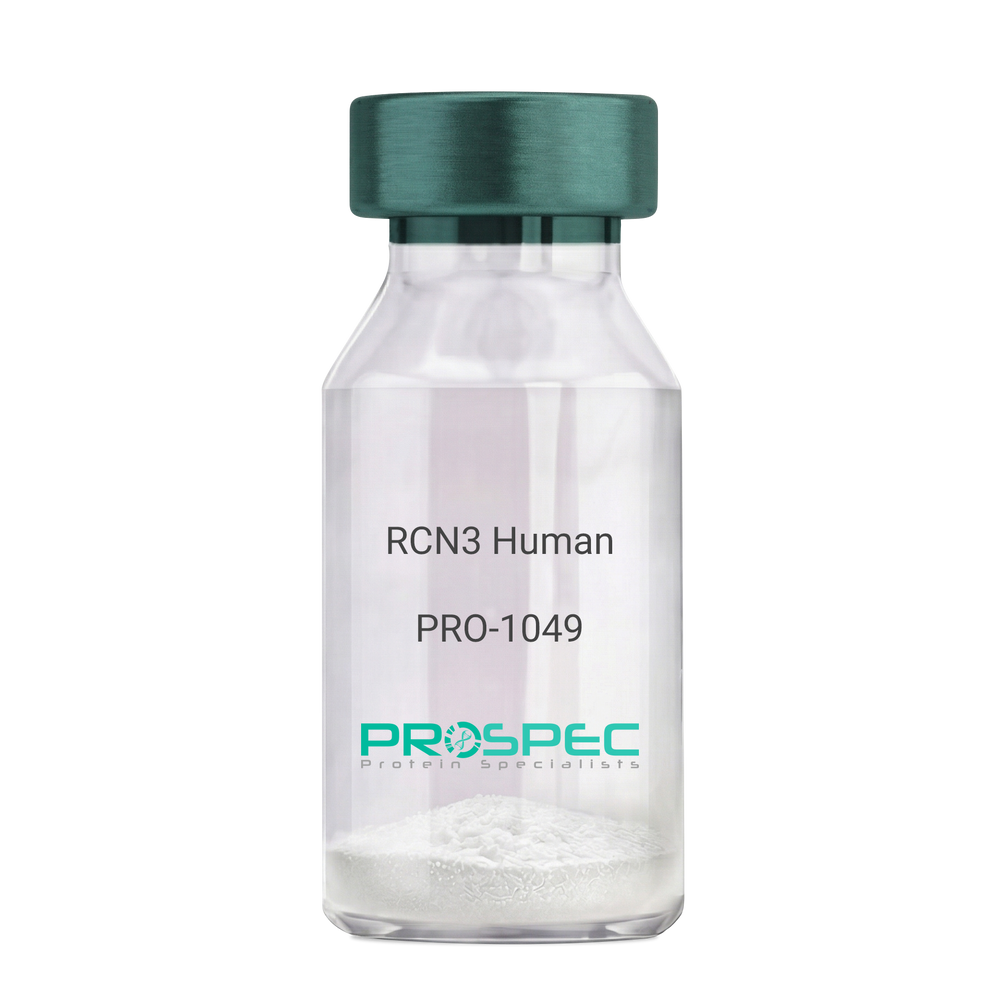
    RCN3 Human

    Description:

    Reticulocalbin 3 Human Recombinant

    Reticulocalbin-3, EF-hand calcium-binding protein RLP49, RCN3, RLP49.

    Product # :

    PRO-1049

    Price :

    Quantity :

    Shipping Method :

    Ice Icon

    Shipped with Ice Packs

    Add To Cart

    More Info

    • description
    • source
    • formulation
    • purity
    • More Info

    Description

    RCN3 Human Recombinant produced in E.Coli is a single, non-glycosylated polypeptide chain containing 333 amino acids (21-328 a.a) and having a molecular mass of 37.9kDa.RCN3 is fused to a 25 amino acid His-tag at N-terminus & purified by proprietary chromatographic techniques.

    Source

    Escherichia Coli.

    Formulation

    RCN3 protein solution (1mg/ml) containing 20mM Tris-HCl buffer (pH 8.0), 1mM DTT, 10% glycerol and 0.1M NaCl.

    Purity

    Greater than 95.0% as determined by SDS-PAGE.

    More Info

    • Introduction

      Reticulocalbin 3 (RCN3) belongs to the CREC (cab45/reticulocalbin/ ERC45/calumenin) family. RCN3 contains 5 Arg-Xaa-Xaa-Arg motifs, which function as target sequences of SPCs (subtilisin-like proprotein convertases), which is a family of serine endoproteases that proteolytically activate proproteins. The synthesis of PACE4 is induced by association and coexpression with RCN3.

    • Synonyms

      Reticulocalbin-3, EF-hand calcium-binding protein RLP49, RCN3, RLP49.

    • Physical Appearance

      Sterile Filtered colorless solution.

    • Stability

      Store at 4°C if entire vial will be used within 2-4 weeks. Store, frozen at -20°C for longer periods of time. For long term storage it is recommended to add a carrier protein (0.1% HSA or BSA).Avoid multiple freeze-thaw cycles.

    • Amino Acid Sequence

      MGSSHHHHHH SSGLVPRGSH MGSHMKPSPD AGPHGQGRVH QAAPLSDAPH DDAHGNFQYD HEAFLGREVA KEFDQLTPEE SQARLGRIVD RMDRAGDGDG WVSLAELRAW IAHTQQRHIR DSVSAAWDTY DTDRDGRVGW EELRNATYGH YAPGEEFHDV EDAETYKKML ARDERRFRVA DQDGDSMATR EELTAFLHPE EFPHMRDIVI AETLEDLDRN KDGYVQVEEY IADLYSAEPG EEEPAWVQTE RQQFRDFRDL NKDGHLDGSE VGHWVLPPAQ DQPLVEANHL LHESDTDKDG RLSKAEILGN WNMFVGSQAT NYGEDLTRHH DEL.

    ProSpec's products are furnished for LABORATORY RESEARCH USE ONLY. The product may not be used as drugs, agricultural or pesticidal products, food additives or household chemicals.

    Rcn3 Human
  • View Data Sheet

    Name :

    CTF1 Human

    Description:

    Cardiotrophin-1 Human Recombinant

    CTF1, CT1, CT-1, Cardiophin 1, Cardiotrophin-1.

    Product # :

    CYT-944

    Price :

    Quantity :

    Shipping Method :

    Room Temp Icon

    Shipped at Room temp

    Add To Cart

    More Info

    • description
    • source
    • formulation
    • purity
    • biological activity
    • More Info

    Description

    Cardiotrophin-1 Human Recombinant produced in E.coli is a single, non-glycosylated, polypeptide chain containing 201 amino acids and having a molecular mass of 21.2kDa.The CTF1 is purified by proprietary chromatographic techniques.

    Source

    Escherichia Coli.

    Formulation

    CTF-1 protein was lyophilized from a 0.2µm filtered concentrated solution in 30% Acetonitrile and 0.1% TFA.

    Purity

    Greater than 95.0% as determined by:
    (a) Analysis by RP-HPLC.
    (b) Analysis by SDS-PAGE.

    Biological Activity

    The ED50 as determined by a cell proliferation assay using human TF-1 cells is less than 1.0 ng/ml, corresponding to a specific activity of > 1.0×10⁶ IU/mg.

    More Info

    • Introduction

      Cardiotrophin 1 (CT-1) is a 201 amino acid member of the interleukin-6 superfamily. It was identified by its ability to induce hypertrophic response in cardiac myocytes. CT-1 mRNA levels were found both in cardiac myocytes and in cardiac nonmyocytes. CT 1 was also detected in abundance in normal adult human lung and was expressed in both fetal and adult airway smooth muscle cells. CT 1 activates gp130 dependent signaling and stimulates the Janus kinase/signal transducers and activators of transcription (JAK/STAT) pathway to transduce hypertrophic and cytoprotective signals in cardiac myocytes.
      CT 1 has also a neurotrophic function. CTF1 deficiency causes increased motoneuron cell death in spinal cord and brainstem nuclei of mice during a period between embryonic day 14 and the first postnatal week. Moreover, CT-1 is a hepatocyte survival factor that efficiently reduces hepatocellular damage in animal models of acute liver injury. Cardiotrophin 1 expression is augmented after hypoxic stimulation and it can protect cardiac cells when added either prior to simulated ischaemia or at the time of reoxygenation following simulated ischaemia. Cardiotrophin 1 can induce expression of the protective heat shock proteins (hsps) in cardiac cells.
      Cardiotrophin-1 increased ventricular expression of ANP, brain natriuretic peptide (BNP) and angiotensinogen mRNA.
      Cardiophin 1 levels were significantly elevated in patients with heart failure, patients with dilatative cardiomyopathy, moderate/severe mitral regurgitation, stable and unstable angina and after acute myocardial infarction.

    • Synonyms

      CTF1, CT1, CT-1, Cardiophin 1, Cardiotrophin-1.

    • Physical Appearance

      Sterile Filtered White lyophilized (freeze-dried) powder.

    • Stability

      Lyophilized CTF1 although stable at room temperature for 3 weeks, should be stored desiccated below -18°C. Upon reconstitution CTF-1 should be stored at 4°C between 2-7 days and for future use below -18°C. For long term storage it is recommended to add a carrier protein (0.1% HSA or BSA). Please prevent freeze-thaw cycles.

    • Solubility

      It is recommended to reconstitute the lyophilized CTF1 in sterile 4mM HCl not less than 100µg/ml, which can then be further diluted to other aqueous solutions.

    • Amino Acid Sequence

      MSRREGSLED PQTDSSVSLL PHLEAKIRQT HSLAHLLTKY AEQLLQEYVQ LQGDPFGLPS FSPPRLPVAG LSAPAPSHAG LPVHERLRLD AAALAALPPL LDAVCRRQAE LNPRAPRLLR RLEDAARQAR ALGAAVEALL AALGAANRGP RAEPPAATAS AASATGVFPA KVLGLRVCGL YREWLSRTEG DLGQLLPGGS A.

    • Background

      Title: Cardiotrophin-1 Human Recombinant: A Potential Therapeutic Target for Cardiovascular Diseases

      Abstract:


      Cardiotrophin-1 (CT-1) is a cytokine that plays a crucial role in cardiac development and homeostasis. This research paper provides a comprehensive analysis of human recombinant CT-1, focusing on its production, characterization, and potential therapeutic implications in cardiovascular diseases. The paper discusses the significance of CT-1 in cardiac cell survival, hypertrophy, and regeneration. Furthermore, it elucidates the ongoing research and clinical trials exploring the therapeutic potential of recombinant CT-1 in cardiovascular disorders. The information presented in this paper aims to enhance the understanding of human recombinant CT-1 and its utility as a research tool and a potential therapeutic agent for cardiovascular diseases.

      Introduction:


      Cardiotrophin-1 (CT-1) is a member of the interleukin-6 cytokine family, primarily produced by cardiac cells. It exerts its effects by binding to the CT-1 receptor complex, leading to the activation of various signaling pathways. Human recombinant CT-1, produced through genetic engineering techniques, provides researchers with a valuable tool to explore its biological functions and therapeutic potential.

      Production and Characterization:


      Recombinant CT-1 is typically produced using expression systems such as mammalian cells or bacteria. The protein is then purified and characterized to ensure its structural integrity and functional activity. Quality control measures are implemented to confirm the specificity and bioactivity of the recombinant CT-1.

      Role in Cardiovascular Physiology:


      CT-1 plays a critical role in cardiac cell survival, hypertrophy, and regeneration. It promotes cardiomyocyte growth and survival, contributing to the adaptation of the heart to stress and injury. CT-1 also exhibits angiogenic properties, stimulating the formation of new blood vessels in the heart. These functions make recombinant CT-1 an important tool for studying cardiac physiology and exploring potential therapeutic interventions.

      Therapeutic Implications:


      The dysregulation of CT-1 signaling has been implicated in various cardiovascular diseases, including heart failure, myocardial infarction, and cardiac hypertrophy. Recombinant CT-1 holds promise as a potential therapeutic agent for these conditions. Clinical trials are underway to evaluate the safety and efficacy of CT-1-based therapies, including recombinant CT-1 administration and gene therapy approaches.

      Conclusion:


      Human recombinant CT-1 is a valuable research tool and a potential therapeutic target for cardiovascular diseases. Its production, characterization, and applications in cardiac cell signaling contribute to our understanding of cardiovascular physiology and the development of novel treatments. Continued research and clinical trials exploring the therapeutic potential of recombinant CT-1 hold promise for improving outcomes in patients with cardiovascular disorders.

      What is the molecular weight/Mw of CTF1 Protein?
      CTF1 Protein has a total Mw of 21.2kDa.

      What is the source or expression system of CTF1 Protein?
      Escherichia Coli.

      What is the Purity of CTF1 Protein?
      CTF1 Protein is >95% pure as determined by SDS-PAGE.

      What is the Biological Activity of CTF1 Protein?
      The ED50 as determined by a cell proliferation assay using human TF-1 cells is less than 1.0 ng/ml, corresponding to a specific activity of > 1.0×10⁶ IU/mg.

      What is the amino acid sequence of CTF1 Protein?
      MSRREGSLED PQTDSSVSLL PHLEAKIRQT HSLAHLLTKY AEQLLQEYVQ LQGDPFGLPS FSPPRLPVAG LSAPAPSHAG LPVHERLRLD AAALAALPPL LDAVCRRQAE LNPRAPRLLR RLEDAARQAR ALGAAVEALL AALGAANRGP RAEPPAATAS AASATGVFPA KVLGLRVCGL YREWLSRTEG DLGQLLPGGS A.

      What applications can CTF1 Protein be used in?
      CTF1 Protein can probably be used in western blot, ELISA and Lateral Flow.

      What is the endotoxin level for CTF1 Protein?
      The endotoxin level is minimal, CTF1 Protein was purified using conventional chromatography techniques.

    ProSpec's products are furnished for LABORATORY RESEARCH USE ONLY. The product may not be used as drugs, agricultural or pesticidal products, food additives or household chemicals.

    Ctf1 Human
  • View Data Sheet

    Name :

    Chitodextrinase

    Description:

    Chitodextrinase Clostridium Botulinum Recombinant

    Product # :

    ENZ-032

    Price :

    Quantity :

    Shipping Method :

    Room Temp Icon

    Shipped at Room temp

    Add To Cart

    More Info

    • description
    • source
    • formulation
    • purity
    • More Info

    Description

    Chitodextrinase Clostridium Botulinum Recombinant fused with a 13 amino acid His tag at N-terminus produced in E.Coli is a single, non-glycosylated, polypeptide chain containing 590 amino acids and having a molecular mass of 66.9kDa. The Chitodextrinase is purified by proprietary chromatographic techniques.

    Source

    Escherichia Coli.

    Formulation

    Chitodextrinase lyophilized from a 0.2µm filtered concentrated solution in PBS.

    Purity

    Greater than 95.0% as determined by SDS-PAGE.

    More Info

    • Introduction

      Chitodextrinase is a unique membrane-bound endoenzyme. The chitodextrinase enzyme cleaves soluble oligomers, but not chitin, to the di- and trisaccharides. Chitodextrinase is unable to solubilize chitin, but it can catalyze the hydrolysis of high to low molecular weight soluble chitin oligosaccharides.

    • Physical Appearance

      Sterile Filtered White lyophilized (freeze-dried) powder.

    • Stability

      Lyophilized Chitodextrinase although stable at room temperature for 3 weeks, should be stored desiccated below -18°C. Upon reconstitution Chitodextrinase should be stored at 4°C between 2-7 days and for future use below -18°C.For long term storage it is recommended to add a carrier protein (0.1% HSA or BSA).Please prevent freeze-thaw cycles.

    • Solubility

      It is recommended to reconstitute the lyophilized Chitodextrinase in sterile 18MΩ-cm H2O not less than 100 µg/ml, which can then be further diluted to other aqueous solutions.

    • Amino Acid Sequence

      HMRGSGSHHHHHHKEKFKTTKIKNSSELNRKLVGYFPEWAYSSEAQGYFNVTD
      LQWDSLTHIQYSFAMVDPSTNKITLSNKHAAIEEDFSEFDLNYNGKKIELDPS
      LPYKGHFNVLQTMKKNYPDVSLLISVGGWTGTRCFYTMIDTDNRINTFADSCV
      DFIRKYGFDGVDIDFEYPSSTSQSGNPDDFDLSEPRRTKLNERYNILIKTLRE
      KIDMASKEDGKEYLLTAAVTASPWVLGGISDNTYAKYLDFLSIMSYDYHGGWN
      EYVEHLAGIYPNKEDRETVTQIMPTLCMDWAYRYYRGVLPAEKILMGIPYYTR
      GWENVQGGINGLHGSSKTPASGKYNILGDDLNNDGVLEPDGANPLWHVLNLME
      QDPNLKVYWDEISKVPYVWQNDKKVFVSFENEKSIDARLEYIQNKNLGGALIW
      VMNGDYGLNPNYVEGSNKINEGKYTFGDTLTKRLSQGLKKMGVCNKTPDDLNI
      SLEPINVDVKFNGKYDHPNYTYSIDITNYTDKEIKGGWNVSFDLPKSAVFKSS
      WGGTYSVTDNGDFNTITLTSGAWQNIAPNSTITVQGMIGLCFSGIRNVTFNGM
      NPIGNDK.

    ProSpec's products are furnished for LABORATORY RESEARCH USE ONLY. The product may not be used as drugs, agricultural or pesticidal products, food additives or household chemicals.

    Chitodextrinase
  • View Data Sheet

    Name :

    KRT19 Human

    Description:

    Cytokeratin 19 Human Recombinant

    Keratin type I cytoskeletal 19, Cytokeratin-19, CK-19, Keratin-19, K19, KRT19, CK19, K1CS, MGC15366.

    Product # :

    PRO-350

    Price :

    Quantity :

    Shipping Method :

    Room Temp Icon

    Shipped at Room temp

    Add To Cart

    More Info

    • description
    • source
    • formulation
    • purity
    • More Info

    Description

    Cytokeratin 19 Human Recombinant produced in E.Coli is a single, non-glycosylated polypeptide chain having a molecular mass of 44,098 Dalton. The KRT19 is purified by proprietary chromatographic techniques.

    Source

    Escherichia Coli.

    Formulation

    The protein (1mg/ml) was lyophilized after from a sterile solution containing 30mM Tris-HCl pH-8, 9.5M urea, 2mM DTT, 2mM EDTA and 10mM methylammonium chloride.

    Purity

    Greater than 95.0% as determined by SDS-PAGE.

    More Info

    • Introduction

      CTK-19 is a member of the keratin family. The keratins are intermediate filament proteins responsible for the structural integrity of epithelial cells and are subdivided into cytokeratins and hair keratins. The type I cytokeratins consist of acidic proteins which are arranged in pairs of heterotypic keratin chains. Unlike its related family members, this smallest known acidic cytokeratin is not paired with a basic cytokeratin in epithelial cells. It is specifically expressed in the periderm, the transiently superficial layer that envelopes the developing epidermis. The type I cytokeratins are clustered in a region of chromosome 17q12-q21.

    • Synonyms

      Keratin type I cytoskeletal 19, Cytokeratin-19, CK-19, Keratin-19, K19, KRT19, CK19, K1CS, MGC15366.

    • Physical Appearance

      Sterile Filtered White lyophilized (freeze-dried) powder.

    • Stability

      Lyophilized KRT19 although stable at room temperature for 3 weeks, should be stored desiccated below -18°C. Upon reconstitution KRT19 should be stored at 4°C between 2-7 days and for future use below -18°C.For long term storage it is recommended to add a carrier protein (0.1% HSA or BSA).Please prevent freeze-thaw cycles.

    • Solubility

      It is recommended to reconstitute the lyophilized KRT19 in sterile 18MΩ-cm H2O not less than 100µg/ml, which can then be further diluted to other aqueous solutions.

    • Reconstitution to filaments

      Performed by mixing equimolar amounts of cytokeratins of type I and type II at concentrations of approx. 0.5 mg/ml, both dissolved in 9.5 M urea buffer (see above). Protofilaments and filament complexes are obtained by dialyzing the resulting polypeptide solution stepwise to a concentration of 4 M urea and then to low salt condition (50 mM NaCl, 2 mM dithiothreitol, 10 mM Tris-HCl, pH 7.4). For immunization purposes, the solution can be further dialyzed against PBS (phosphate buffered saline, e.g. Dulbecco's PBS).

    ProSpec's products are furnished for LABORATORY RESEARCH USE ONLY. The product may not be used as drugs, agricultural or pesticidal products, food additives or household chemicals.

    Krt19 Human
  • View Data Sheet

    Name :

    PKAkt1/PKBa Human

    Description:

    Protein Kinase Akt1/PKB alpha, Inactive enzyme Human Recombinant

    RAC-alpha serine/threonine-protein kinase, EC 2.7.11.1, RAC-PK-alpha, Protein kinase B, PKB, C-AKT, AKT1, AKT, RAC, PRKBA, MGC99656, RAC-ALPHA.

    Product # :

    PKA-207

    Price :

    Quantity :

    Shipping Method :

    Ice Icon

    Shipped with Ice Packs

    Add To Cart

    More Info

    • description
    • source
    • formulation
    • purity
    • biological activity
    • More Info

    Description

    PKAkt1 is a glycosilated polypeptide having a molecular mass of 59.1 kDa, fused with a polyhistidine tag at N-terminus (to facilitate removal of Akt1 kinase from the reaction mixture).Inactive enzyme, suitable for negative control experiments or for phosphorylation as a substrate.Recombinant Protein Kinase B is purified by proprietary chromatographic techniques.

    Source

    Sf9 insect cells.

    Formulation

    PKAkt1 in 50mM Tris-HCl, 100mM NaCl, 1mM DTT, 25mM beta glycerophosphate, 50% glycerol, pH 8.5.

    Purity

    Greater than 90% as determined by SDS-PAGE.

    Biological Activity

    No protease activity (Twinning test). 
    The Specific activity is 235 U/mg.

    More Info

    • Introduction

      Akt1, also known as "Akt" or protein kinaseB (PKB) is an important molecule in mammaliancellular signaling.
      In humans, there are three genes in the "Akt family": Akt1, Akt2, and Akt3. These enzymesare members of the serine/threonine-specific protein kinasefamily (EC2.7.11.1).
      Akt1 is involved in cellular survival pathways, by inhibiting apoptoticprocesses. Akt1 is also able to induce protein synthesispathways, and is therefore a key signaling protein in the cellular pathways that lead to skeletal muscle hypertrophy, and general tissue growth. Since it can block apoptosis, and thereby promote cell survival, Akt1 has been implicated as a major factor in many types of cancer. Akt (now also called Akt1) was originally identified as the oncogenein the transforming retrovirus, AKT8.

    • Synonyms

      RAC-alpha serine/threonine-protein kinase, EC 2.7.11.1, RAC-PK-alpha, Protein kinase B, PKB, C-AKT, AKT1, AKT, RAC, PRKBA, MGC99656, RAC-ALPHA.

    • Physical Appearance

      Sterile Filtered clear solution.

    • Stability

      Store at 4°C if entire vial will be used within 2-4 weeks. Store, frozen at -20°C for longer periods of time. Avoid multiple freeze-thaw cycles.

    • Unit Definition

      1 Unit is defined as 1 picomole phosphate transferred to the synthetic peptide (RPRAATF) per min at 30°C.

    ProSpec's products are furnished for LABORATORY RESEARCH USE ONLY. The product may not be used as drugs, agricultural or pesticidal products, food additives or household chemicals.

    Akt1 Human Inactive Enzyme
  • View Data Sheet

    Name :

    Malaria Pf. MSP1

    Description:

    Malaria Falciparum MSP1 Recombinant

    Product # :

    MAL-004

    Price :

    Quantity :

    Shipping Method :

    Ice Icon

    Shipped with Ice Packs

    Add To Cart

    More Info

    • description
    • formulation
    • purity
    • More Info

    Description

    Merozoite surface antigen is a protein located on the outside of the merozoite, playing an imperative role in immune reaction. About 55% cases of malaria are infected by Plasmodium falciparum (Pf). Pf MSP1 has to be used with Plasmodium vivax (Pv) together for ELISA and rapid diagnostic test, Plasmodium falciparum and vivax infection takes about 95% of Plasmodium caused infection. Recombinant Malaria Falciparum MSP1 produced in E.coli, is a 62kDa protein fused to a GST tag at N-terminus and purified by proprietary chromatographic technique.

    Formulation

    Sterile Filtered solution containing PBS and 25mM K2CO3.

    Purity

    Protein is >90% pure as determined by 10% PAGE (coomassie staining).

    More Info

    • Introduction

      Plasmodium falciparum is a protozoan parasite, one of the species of Plasmodium that cause malaria. Malaria parasites are members of the Apicomplexa. Apicomplexa are characterized by a set of organelles found in some stages of the parasite's life cycle. These organelles, collectively known as apical organelles because of their localization at one end of the parasite, are involved in interactions between the parasite and host. In particular, the apical organelles have been implicated in the process of host cell invasion. In the case of Plasmodium, three distinct invasive forms have been identified: sporozoite, merozoite, and ookinete.

    • Physical Appearance

      Sterile Filtered clear solution.

    • Stability

      Pf. MSP1 although stable at 4°C for 1 week, should be stored below -18°C. Please prevent freeze thaw cycles.

    • Applications

      Rapid test and Immunoassay.

    ProSpec's products are furnished for LABORATORY RESEARCH USE ONLY. The product may not be used as drugs, agricultural or pesticidal products, food additives or household chemicals.

    Malaria Pf Msp1
  • View Data Sheet

    Name :

    Leptin Mouse, PEG

    Description:

    Pegylated Mouse Leptin Recombinant

    OB Protein, Obesity Protein, OBS, Obesity factor.

    Product # :

    CYT-591

    Price :

    Quantity :

    Shipping Method :

    Room Temp Icon

    Shipped at Room temp

    Add To Cart

    More Info

    • description
    • source
    • formulation
    • purity
    • biological activity
    • More Info

    Description

    Leptin Mono-Pegylated Mouse Recombinant produced in E.Coli is a single, non-glycosylated, polypeptide chain containing 146 amino acids and an additional Ala at N-terminus. Pegylated Mouse Leptin contains PEG 20 kDa at its N-terminus and having a molecular mass of 35.6 kDa as determined by mass spectrometry. Since its enlarged hydrodymanic volume Pegylated Leptin runs on SDS-PAGE as A 48 kDa protein and in gel-filtration on Superdex 200 as over 100 kDa protein. Pegylated Mouse Leptin half-life in circulation after SC injection was over 20 hours. Mouse Leptin was purified by proprietary chromatographic techniques according to Salomon et al (2006) Protein Expression and Purification 47, 128–136 and then pegylated.

    Source

    Escherichia Coli.

    Formulation

    The mouse Leptin was lyophilized from a concentrated (0.65mg/ml) solution containing 0.003mM NaHCO3.

    Purity

    Greater than 99.0% as determined by:
    (a) Analysis by Gel-Filtration.
    (b) Analysis by SDS-PAGE.

    Biological Activity

    Pegylated mouse Leptin is capable of stimulatng proliferation of BAF/3 cells stably transfected with the long form of human leptin receptor. Pegylated mouse Leptin in vitro activity is only slightly lower than the non-pegylated antagonist but in vivo it has profound weight reducing effect (as compared to the non-pegylated leptin), resulting mainly from reduced food intake.

    More Info

    • Introduction

      A 16-kDa peptide hormone secreted from white adipocytes and implicated in the regulation of food intake and energy balance. Leptin provides the key afferent signal from fat cells in the feedback system that controls body fat stores.

    • Synonyms

      OB Protein, Obesity Protein, OBS, Obesity factor.

    • Physical Appearance

      Sterile Filtered White lyophilized (freeze-dried) powder.

    • Stability

      Lyophilized Leptin although stable at room temperature for 3 weeks, should be stored desiccated below -18°C. Upon reconstitution Leptin should be stored at 4°C between 2-7 days and for future use below -18°C.For long term storage it is recommended to add a carrier protein (0.1% HSA or BSA).Please prevent freeze-thaw cycles.

    • Solubility

      It is recommended to reconstitute the lyophilized Leptin in sterile 0.4% NaHCO3 adjusted to pH-8.5 not less than 100µg/ml, which can then be further diluted to other aqueous solutions.

    ProSpec's products are furnished for LABORATORY RESEARCH USE ONLY. The product may not be used as drugs, agricultural or pesticidal products, food additives or household chemicals.

    Leptin Mouse Pegylated
  • View Data Sheet

    Name :

    CRP Paired Antibody

    Description:

    Anti Human C-Reactive Protein Paired Antibody Mouse

    Product # :

    ANT-783

    Price :

    Quantity :

    Shipping Method :

    Ice Icon

    Shipped with Ice Packs

    Add To Cart

    More Info

    • description
    • formulation
    • purity
    • More Info

    Description

    CRP Paired monoclonal antibodies are used to develop rapid test for CRP rapid test. Please note that when ordering for example: 100µg paired antibody, you receive 50µg from each antibody (100µg in total).

    Formulation

    * CRP conjugation antibody in PBS, NaCl and 0.095% NaN3.

    * CRP coating antibody in PBS, NaCl and 0.095% NaN3.

    Purity

    Greater than 95%.

    More Info

    • Physical Appearance

      2 vials of sterile Filtered clear colorless solution.

    • Stability

      For periods up to 1 month CRP Paired Antibody should be stored at 4°C, for longer periods of time, store at -20°C. Prevent freeze thaw cycles.

    • Applications

      Lateral flow immunoassay.

    • Background

      CRP is an important protein that correlates with inflammatory disease and is synthesized by hepatocytes during the acute phase response by IL-1 and TNF Alpha and Beta. CRP levels increase dramatically and serve as a useful marker of inflammation in such conditions as bacterial infection, viral infections, rheumatoid arthritis, transplantation rejection, myocardial infarction, meningitis, septicemia, osteomyelitis and others. CRP is also correlated to Serum Amyloid A levels.

    • Type

      Mouse antibody Monoclonal.

    • Purification Method

      Purified monoclonal IgG1 by protein A chromatography.

    ProSpec's products are furnished for LABORATORY RESEARCH USE ONLY. The product may not be used as drugs, agricultural or pesticidal products, food additives or household chemicals.

    Crp Antibodies Paired
  • View Data Sheet

    Name :

    MRPL2 Human

    Description:

    Mitochondrial Ribosomal Protein L2 Human Recombinant

    39S ribosomal protein L2, mitochondrial , CGI-22, MRP-L14, RPML14, L2mt, MRP-L2, CGI-22.

    Product # :

    PRO-2137

    Price :

    Quantity :

    Shipping Method :

    Ice Icon

    Shipped with Ice Packs

    Add To Cart

    More Info

    • description
    • source
    • formulation
    • purity
    • More Info

    Description

    MRPL2 Human Recombinant produced in E.Coli is a single, non-glycosylated polypeptide chain containing 142 amino acids (84-202 a.a) and having a molecular mass of 15.5kDa.MRPL2 is fused to a 23 amino acid His-tag at N-terminus & purified by proprietary chromatographic techniques.

    Source

    Escherichia Coli.

    Formulation

    MRPL2 protein solution (0.25mg/ml) containing 20mM Phosphate buffer (pH 8.0), 1mM EDTA, 50% glycerol and 2mM DTT.

    Purity

    Greater than 90.0% as determined by SDS-PAGE.

    More Info

    • Introduction

      Mammalian mitochondrial ribosomal proteins are encoded by nuclear genes and aid in protein synthesis within the mitochondrion. Mitochondrial ribosomes (mitoribosomes) comprised of a small 28S subunit and a large 39S subunit. Among different species, the proteins comprising the mitoribosome vary greatly in sequence, and sometimes in biochemical properties, thus preventing simple recognition by sequence homology. Mitochondrial Ribosomal Protein L2 (MRPL2) is a 39S subunit protein which is a member of the EcoL2 ribosomal protein family.

    • Synonyms

      39S ribosomal protein L2, mitochondrial , CGI-22, MRP-L14, RPML14, L2mt, MRP-L2, CGI-22.

    • Physical Appearance

      Sterile Filtered clear solution.

    • Stability

      Store at 4°C if entire vial will be used within 2-4 weeks. Store, frozen at -20°C for longer periods of time. For long term storage it is recommended to add a carrier protein (0.1% HSA or BSA).Avoid multiple freeze-thaw cycles.

    • Amino Acid Sequence

      MGSSHHHHHH SSGLVPRGSH MGSGRDHTGR IRVHGIGGGH KQRYRMIDFL RFRPEETKSG PFEEKVIQVR YDPCRSADIA LVAGGSRKRW IIATENMQAG DTILNSNHIG RMAVAAREGD AHPLGALPVG TLINNVESEP GR.

    ProSpec's products are furnished for LABORATORY RESEARCH USE ONLY. The product may not be used as drugs, agricultural or pesticidal products, food additives or household chemicals.

    Mrpl2 Human
  • View Data Sheet

    Name :

    HPRT1 Human

    Description:

    Hypoxanthine-Guanine Phosphoribosyltransferase Human Recombinant

    Hypoxanthine-Guanine Phosphoribosyltransferase , EC 2.4.2.8, HGPRT, HGPRTase, HPRT, HPRT1.

    Product # :

    ENZ-524

    Price :

    Quantity :

    Shipping Method :

    Ice Icon

    Shipped with Ice Packs

    Add To Cart

    More Info

    • description
    • source
    • formulation
    • purity
    • More Info

    Description

    HPRT1 Recombinant Human produced in E.Coli is a single, non-glycosylated polypeptide chain containing 238 amino acids (1-218 a.a.) and having a molecular mass of 26.7 kDa. The HPRT1 is fused to a 20 amino acids His-Tag at N-terminus and purified by proprietary chromatographic techniques.

    Source

    Escherichia Coli.

    Formulation

    HPRT1 Human solution containing 20mM Tris HCl pH-8, & 20% glycerol.

    Purity

    Greater than 95.0% as determined by SDS-PAGE.

    More Info

    • Introduction

      HPRT1 has a main part in the generation of purine nucleotides through the purine salvage pathway. HPRT1 primarily functions to salvage purines from degraded DNA to renewed purine synthesis. Therefore, it performs as a catalyst in the reaction between guanine and phosphoribosyl pyrophosphate to form GMP.

    • Synonyms

      Hypoxanthine-Guanine Phosphoribosyltransferase , EC 2.4.2.8, HGPRT, HGPRTase, HPRT, HPRT1.

    • Physical Appearance

      Sterile filtered colorless solution.

    • Stability

      Store at 4°C if entire vial will be used within 2-4 weeks. Store, frozen at -20°C for longer periods of time. For long term storage it is recommended to add a carrier protein (0.1% HSA or BSA).Avoid multiple freeze-thaw cycles.

    • Amino Acid Sequence

      MGSSHHHHHH SSGLVPRGSH MATRSPGVVI SDDEPGYDLD LFCIPNHYAE DLERVFIPHG LIMDRTERLA RDVMKEMGGH HIVALCVLKG GYKFFADLLD YIKALNRNSD RSIPMTVDFI RLKSYCNDQS TGDIKVIGGD DLSTLTGKNV LIVEDIIDTG KTMQTLLSLV RQYNPKMVKV ASLLVKRTPR SVGYKPDFVG FEIPDKFVVG YALDYNEYFR DLNHVCVISE TGKAKYKA.

    ProSpec's products are furnished for LABORATORY RESEARCH USE ONLY. The product may not be used as drugs, agricultural or pesticidal products, food additives or household chemicals.

    Hprt1 Human
  • View Data Sheet

    Name :

    SKP E. Coli

    Description:

    Chaperone Protein SKP E.Coli Recombinant

    hlpA, ompH, Chaperone protein skp, skp.

    Product # :

    HSP-034

    Price :

    Quantity :

    Shipping Method :

    Ice Icon

    Shipped with Ice Packs

    Add To Cart

    More Info

    • description
    • source
    • formulation
    • purity
    • More Info

    Description

    SKP Recombinant E.coli produced in E.Coli is a single, non-glycosylated polypeptide chain containing 162 amino acids (21-161 a.a.) and having a molecular mass of 17.9 kDa. The SKP is fused to a 21 amino acid His-Tag at N-terminus and purified by proprietary chromatographic techniques.

    Source

    Escherichia Coli.

    Formulation

    SKP E.Coli solution containing 20mM Tris-HCl pH-8 & 20% glycerol.

    Purity

    Greater than 95.0% as determined by SDS-PAGE.

    More Info

    • Introduction

      SKP is a 17kDa trimeric periplasmic chaperone that supports outer membrane proteins in their folding and insertion into membranes. SKP protein is necessary for the normal release of ompA from the inner membrane, the maintenance of its solubility in the periplasm, and, in association with lipopolysaccharide (LPS), for the efficient folding and insertion of ompA into the outer membrane.

    • Synonyms

      hlpA, ompH, Chaperone protein skp, skp.

    • Physical Appearance

      Sterile filtered colorless solution.

    • Stability

      Store at 4°C if entire vial will be used within 2-4 weeks. Store, frozen at -20°C for longer periods of time. For long term storage it is recommended to add a carrier protein (0.1% HSA or BSA).Avoid multiple freeze-thaw cycles.

    • Amino Acid Sequence

      MGSSHHHHHH SSGLVPRGSH MADKIAIVNM GSLFQQVAQK TGVSNTLENE FKGRASELQR METDLQAKMK KLQSMKAGSD RTKLEKDVMA QRQTFAQKAQ AFEQDRARRS NEERGKLVTR IQTAVKSVAN SQDIDLVVDA NAVAYNSSDV KDITADVLKQ VK.

    ProSpec's products are furnished for LABORATORY RESEARCH USE ONLY. The product may not be used as drugs, agricultural or pesticidal products, food additives or household chemicals.

    Skp E Coli
  • View Data Sheet

    Name :

    NUDT9 Human

    Description:

    Nudix Type Motif 9 Human Recombinant

    ADP-ribose pyrophosphatase mitochondrial, ADP-ribose diphosphatase, ADP-ribose phosphohydrolase, Adenosine diphosphoribose pyrophosphatase, ADPR-PPase, Nucleoside diphosphate-linked moiety X motif 9, Nudix motif 9, NUDT9, NUDT10, PSEC0099, UNQ3012/PRO9771.

    Product # :

    ENZ-137

    Price :

    Quantity :

    Shipping Method :

    Ice Icon

    Shipped with Ice Packs

    Add To Cart

    More Info

    • description
    • source
    • formulation
    • purity
    • More Info

    Description

    NUDT9 produced in E.Coli is a single, non-glycosylated polypeptide chain containing 325 amino acids (47-350 a.a.) and having a molecular mass of 36.5kDa (molecular weight on SDS-PAGE will appear higher).NUDT9 is fused to a 21 amino acid His-tag at N-terminus & purified by proprietary chromatographic techniques.

    Source

    Escherichia Coli.

    Formulation

    NUDT9 protein solution (1mg/ml) containing 20mM Tris-HCl buffer (pH 8.0), 10% glycerol, 1mM DTT and 0.1M NaCl.

    Purity

    Greater than 95.0% as determined by SDS-PAGE.

    More Info

    • Introduction

      NUDT9 is a member of a superfamily of Nudix hydrolases. NUDT9 functions as a highly specific adenosine diphosphate ribose pyrophosphatase which hydrolyzes ADP ribose to AMP and ribose 5'-phosphate. In addition, NUDT9 may be involved in the regulation of the menstrual cycle and may be related to the proliferation of glandular cells in the human endometrium.

    • Synonyms

      ADP-ribose pyrophosphatase mitochondrial, ADP-ribose diphosphatase, ADP-ribose phosphohydrolase, Adenosine diphosphoribose pyrophosphatase, ADPR-PPase, Nucleoside diphosphate-linked moiety X motif 9, Nudix motif 9, NUDT9, NUDT10, PSEC0099, UNQ3012/PRO9771.

    • Physical Appearance

      Sterile Filtered colorless solution.

    • Stability

      NUDT9 Human Recombinant although stable at 4°C for 1 week, should be stored below -18°C. Please prevent freeze thaw cycles.

    • Amino Acid Sequence

      MGSSHHHHHH SSGLVPRGSH MNTNVMSGSN GSKENSHNKA RTSPYPGSKV ERSQVPNEKV GWLVEWQDYK PVEYTAVSVL AGPRWADPQI SESNFSPKFN EKDGHVERKS KNGLYEIENG RPRNPAGRTG LVGRGLLGRW GPNHAADPII TRWKRDSSGN KIMHPVSGKH ILQFVAIKRK DCGEWAIPGG MVDPGEKISA TLKREFGEEA LNSLQKTSAE KREIEEKLHK LFSQDHLVIY KGYVDDPRNT DNAWMETEAV NYHDETGEIM DNLMLEAGDD AGKVKWVDIN DKLKLYASHS QFIKLVAEKR DAHWSEDSEA DCHAL.

    ProSpec's products are furnished for LABORATORY RESEARCH USE ONLY. The product may not be used as drugs, agricultural or pesticidal products, food additives or household chemicals.

    Nudt9 Human
  • View Data Sheet

    Name :

    C12ORF5 Human

    Description:

    Chromosome 12 Open Reading Frame 5 Human

    Fructose-2,6-bisphosphatase TIGAR, TP53-induced glycolysis and apoptosis regulator, TIGAR, C12orf5.

    Product # :

    PRO-1791

    Price :

    Quantity :

    Shipping Method :

    Room Temp Icon

    Shipped at Room temp

    Add To Cart

    More Info

    • description
    • source
    • formulation
    • purity
    • More Info

    Description

    TIGAR Human Recombinant produced in E.Coli is a single, non-glycosylated polypeptide chain containing 270 amino acids and having a molecular mass of 30.1kDa. The TIGAR is purified by proprietary chromatographic techniques.

    Source

    Escherichia Coli.

    Formulation

    TIGAR was Lyophilized from a 0.2 µm filtered concentrated solution in 20mM Tris-HCl, pH8.5, 150mM NaCl.

    Purity

    Greater than 95.0% as determined by:
    (a) Analysis by RP-HPLC.
    (b) Analysis by SDS-PAGE.

    More Info

    • Introduction

      TIGAR is a p53-inducible enzyme which catalyzes the hydrolysis of fructose-2-6 bisphosphate (F-2-6-BP) to fructose-6-phosphate and inorganic phosphate. F-2-6-BP is an influential activator of 6-phosphofructose-1 kinase (the rate limiting enzyme of glycolysis). By lowering the intracellular level of F-2-6-BP, TIGAR expression leads to increased glucose processing through the pentose phosphate pathway, the main cellular source for NADPH.

    • Synonyms

      Fructose-2,6-bisphosphatase TIGAR, TP53-induced glycolysis and apoptosis regulator, TIGAR, C12orf5.

    • Physical Appearance

      Sterile Filtered White lyophilized (freeze-dried) powder.

    • Stability

      Lyophilized TIGAR stable at room temperature for 3 weeks, should be stored desiccated below -18C. Upon reconstitution TIGAR should be stored at 4C between 2-7 days and for future use below -18C. For long term storage it is recommended to add a carrier protein (0.1% HSA or BSA). Please prevent freeze-thaw cycles.

    • Solubility

      It is recommended to reconstitute the lyophilized TIGAR in sterile 18M-cm H2O not less than 100µg/ml, which can then be further diluted to other aqueous solutions.

    • Amino Acid Sequence

      MARFALTVVR HGETRFNKEK IIQGQGVDEP LSETGFKQAA AAGIFLNNVK FTHAFSSDLM RTKQTMHGIL ERSKFCKDMT VKYDSRLRER KYGVVEGKAL SELRAMAKAA REECPVFTPP GGETLDQVKM RGIDFFEFLC QLILKEADQK EQFSQGSPSN CLETSLAEIF PLGKNHSSKV NSDSGIPGLA ASVLVVSHGA YMRSLFDYFL TDLKCSLPAT LSRSELMSVT PNTGMSLFII NFEEGREVKP TVQCICMNLQ DHLNGLTETR

    ProSpec's products are furnished for LABORATORY RESEARCH USE ONLY. The product may not be used as drugs, agricultural or pesticidal products, food additives or household chemicals.

    Tigar Human
  • View Data Sheet

    Name :

    PFN4 Human

    Description:

    Profilin-4 Human Recombinant

    PFN-4, Profilin-IV, Profilin4.

    Product # :

    PRO-818

    Price :

    Quantity :

    Shipping Method :

    Ice Icon

    Shipped with Ice Packs

    Add To Cart

    More Info

    • description
    • source
    • formulation
    • purity
    • More Info

    Description

    PFN4 Human Recombinant produced in E.Coli is a single, non-glycosylated, polypeptide chain containing 149 amino acids (1-129 a.a.) and having a molecular mass of 16.4 kDa. PFN4 protein is fused to a 20 amino acid His tag at N-terminus and purified by standard chromatography.

    Source

    Escherichia Coli.

    Formulation

    PFN4 Human solution containing 20mM Trsi HCL pH-8, 1mM DTT and 10% glycerol.

    Purity

    Greater than 95% as determined by SDS-PAGE.

    More Info

    • Introduction

      PFN4 is a small actin-binding protein that participates in the dynamic turnover and restructuring of the actin cytoskeleton. PFN4 is localized in all eukaryotic organisms in the majority of cells. PFN4 is crucial for spatially and temporally controlled growth of actin microfilaments, which is a necessary process in cellular locomotion and cell shape changes.

    • Synonyms

      PFN-4, Profilin-IV, Profilin4.

    • Physical Appearance

      Sterile filtered colorless solution.

    • Stability

      Store at 4°C if entire vial will be used within 2-4 weeks. Store, frozen at -20°C for longer periods of time. For long term storage it is recommended to add a carrier protein (0.1% HSA or BSA). Avoid multiple freeze-thaw cycles.

    • Amino Acid Sequence

      MGSSHHHHHH SSGLVPRGSH MSHLQSLLLD TLLGTKHVDS AALIKIQERS LCVASPGFNV TPSDVRTLVN GFAKNPLQAR REGLYFKGKD YRCVRADEYS LYAKNENTGV VVVKTHLYLL VATYTEGMYP SICVEATESL GDYLRKKGS.

    ProSpec's products are furnished for LABORATORY RESEARCH USE ONLY. The product may not be used as drugs, agricultural or pesticidal products, food additives or household chemicals.

    Pfn4 Human
  • View Data Sheet

    Name :

    Intein Bacillus Circulans

    Description:

    Intein Bacillus Circulans Recombinant

    Intein-CBD

    Product # :

    PRO-958

    Price :

    Quantity :

    Shipping Method :

    Ice Icon

    Shipped with Ice Packs

    Add To Cart

    More Info

    • description
    • source
    • formulation
    • purity
    • More Info

    Description

    Intein Bacillus Recombinant produced in E.coli is a single, non-glycosylated polypeptide chain containing 533 amino acids (3-518) and having a molecular mass of 59.4 kDa.Intein is fused to a 16 amino acid His-tag at C-terminus & purified by proprietary chromatographic techniques.

    Source

    E.coli.

    Formulation

    The Intein solution (1mg/ml) contains 20mM Tris-HCl buffer (pH 8.0), 1mM DTT, 0.1M NaCl and 10% glycerol.

    Purity

    Greater than 95% as determined by SDS-PAGE.

    More Info

    • Introduction

      Intein is a section of a protein which can remove itself and return the remaining segment with a peptide bond. In addition, Inteins hold an endonuclease domain which takes part in Intein proliferation. Actually, various genes have unrelated intein-coding segments inserted at altered positions and they were found in all three domains of life (eukaryotes, bacteria, and archaea) and in viruses.

    • Synonyms

      Intein-CBD

    • Physical Appearance

      Sterile Filtered colorless solution.

    • Stability

      Store at 4°C if entire vial will be used within 2-4 weeks. Store, frozen at -20°C for longer periods of time. For long term storage it is recommended to add a carrier protein (0.1% HSA or BSA).Avoid multiple freeze-thaw cycles.

    • Amino Acid Sequence

      MKIEEGKLVI GSLEGCFAKG TNVLMADGSI ECIENIEVGN KVMGKDGRPR EVIKLPRGRE TMYSVVQKSQ HRAHKSDSSR EVPELLKFTC NATHELVVRT PRSVRRLSRT IKGVEYFEVI TFEMGQKKAP DGRIVELVKE VSKSYPISEG PERANELVES YRKASNKAYF EWTIEARDLS LLGSHVRKAT YQTYAPILYE NDHFFDYMQK SKFHLTIEGP KVLAYLLGLW IGDGLSDRAT FSVDSRDTSL MERVTEYAEK LNLCAEYKDR KEPQVAKTVN LYSKVVRGAS TNPGVSAWQV NTAYTAGQLV TYNGKTYKCL QPHTSLAGWE PSNVPALWQL QGGHGGIRNN LNTENPLWDA IVGLGFLKDG VKNIPSFLST DNIGTRETFL AGLIDSDGYV TDEHGIKATI KTIHTSVRDG LVSLARSLGL VVSVNAEPAK VDMNVTKHKI SYAIYMSGGD VLLNVLSKCA GSKKFRPAPA AAFARECRGF YFELQELKED DYYGITLSDD SDHQFLLGSQ VVVQNLEHHH HHH

    ProSpec's products are furnished for LABORATORY RESEARCH USE ONLY. The product may not be used as drugs, agricultural or pesticidal products, food additives or household chemicals.

    Intein Bacillus Circulans
  • 1
  • …
  • 35
  • 36
  • 37
  • 38
  • 39
  • …
  • 42
Your browser does not support the video tag.

Products

  • Cytokines
  • Growth Factors
  • Chemokines
  • CD Antigens
  • Neurotrophins
  • Hormones
  • Enzymes
  • Viral Antigens
  • Recombinant Proteins
  • Natural Proteins
  • Monoclonal Antibodies
  • Polyclonal Antibodies
  • Thermal Packaging

About

  • Company
  • Founder
  • Contribution
  • Contact Us
  • My Account

Ordering

  • Ordering Method
  • Ordering - Credit Card
  • Ordering PO
  • Shipping Fees
  • FAQ's

Legal

  • Terms & Conditions
  • Privacy
  • Site Map
  • info@prospecbio.com
  • Facebook
  • Instagram
  • Linkedin Profile

© 2026 ProSpec-Tany TechnoGene Ltd. All Rights Reserved.

  • Choosing a selection results in a full page refresh.
  • Opens in a new window.