Search results
1000 results found for “peroxiredoxin”
Name
Description
Product #
Price
Quantity
Shipping Method
- View Data Sheet
Name :
HK1 AntibodyDescription:
Hexokinase-1, Mouse Anti Human
Hexokinase-1, EC 2.7.1.1, Hexokinase type I, HK I, Brain form hexokinase, HK1-ta, HK1-tb, HXK1, HK1.
Product # :
ANT-375Price :
Quantity :
Shipping Method :
Shipped with Ice Packs
More Info
- formulation
- More Info
Formulation
1mg/ml containing PBS, pH-7.4, & 0.1% Sodium Azide.
More Info
-
Introduction
Hexokinases phosphorylate glucose to produce glucose-6-phosphate, thus committing glucose to the glycolytic pathway. Hexokinase1 encodes a ubiquitous form of hexokinase which localizes to the outer membrane of mitochondria. Mutations in this gene have been associated with hemolytic anemia due to hexokinase deficiency. Alternative splicing of HXK1 results in five transcript variants which encode different isoforms, some of which are tissue-specific. Each isoform has a distinct N-terminus; the remainder of the protein is identical among all the isoforms. A sixth transcript variant has been described, but due to the presence of several stop codons, it is not thought to encode a protein.
-
Synonyms
Hexokinase-1, EC 2.7.1.1, Hexokinase type I, HK I, Brain form hexokinase, HK1-ta, HK1-tb, HXK1, HK1.
-
Physical Appearance
Sterile Filtered clear solution.
-
Immunogen
Anti-human Hexokinase-1 mAb is derived from hybridization of mouse SP2/0 myeloma cells with spleen cells from BALB/c mice immunized with recombinant human Hexokinase-1 amino acids 1-917 purified from E. coli.
-
Ig Subclass
Mouse IgG2a heavy chain and κ light chain.
-
Clone
P4D7AT.
-
Applications
Hexokinase-1 antibody has been tested by ELISA and Western blot analysis to assure specificity and reactivity. Since application varies, however, each investigation should be titrated by the reagent to obtain optimal results. Recommended dilution range for Western blot analysis is 1:1,000 ~ 2,000. Recommended starting dilution is 1:1,000.
-
Type
Mouse Anti Human Monoclonal.
-
Storage Procedures
For periods up to 1 month store at 4°C, for longer periods of time, store at -20°C. Prevent freeze thaw cycles.
-
Purification Method
Hexokinase-1 antibody was purified from mouse ascitic fluids by protein-G affinity chromatography.
ProSpec's products are furnished for LABORATORY RESEARCH USE ONLY. The product may not be used as drugs, agricultural or pesticidal products, food additives or household chemicals.
- View Data Sheet
Name :
ACOT11 HumanDescription:
Acyl-CoA Thioesterase 11 Human Recombinant
Acyl-CoA Thioesterase 11, StAR-Related Lipid Transfer (START) Domain Containing 14, Thioesterase, Adipose Associated, Acyl-CoA Thioester Hydrolase 11, Adipose-Associated Thioesterase, Brown Fat-Inducible Thioesterase, Thioesterase Superfamily Member 1, START Domain Containing 14, Acyl-Coenzyme A Thioesterase 11, STARD14, THEM1, THEA, BFIT, BFIT1, BFIT2, KIAA0707, EC 3.1.2.1.
Product # :
ENZ-756Price :
Quantity :
Shipping Method :
Shipped with Ice Packs
More Info
- description
- source
- formulation
- purity
- More Info
Description
ACOT11 Human Recombinant produced in E.Coli is a single, non-glycosylated polypeptide chain topological domain containing 268 amino acids (19-250 a.a) and having a molecular mass of 29.9kDa. ACOT11 is fused to a 36 amino acid His-tag at N-terminus.
Source
Escherichia Coli.
Formulation
ACOT11 protein solution (1mg/ml) containing 20mM Tris-HCl buffer (pH8.0), 0.4M Urea and 10% glycerol.
Purity
Greater than 90% as determined by SDS-PAGE.
More Info
-
Introduction
ACOT11 belongs to the acyl-CoA thioesterase family which catalyses the transformation of activated fatty acids to the equivalent non-esterified fatty acid and coenzyme A. Expression of a mouse homolog in brown adipose tissue is induced by low temperatures and inhibited by high temperatures. Obesity-resistant mice demonstrated High levels of expression compared with obesity-prone mice, indicating BFIT takes part in acyl-CoA thioesterase 11 in obesity. BFIT has acyl-CoA thioesterase activity towards medium (C12) and long-chain (C18) fatty acyl-CoA substrates.
-
Synonyms
Acyl-CoA Thioesterase 11, StAR-Related Lipid Transfer (START) Domain Containing 14, Thioesterase, Adipose Associated, Acyl-CoA Thioester Hydrolase 11, Adipose-Associated Thioesterase, Brown Fat-Inducible Thioesterase, Thioesterase Superfamily Member 1, START Domain Containing 14, Acyl-Coenzyme A Thioesterase 11, STARD14, THEM1, THEA, BFIT, BFIT1, BFIT2, KIAA0707, EC 3.1.2.1.
-
Physical Appearance
Sterile Filtered colorless solution.
-
Stability
Store at 4°C if entire vial will be used within 2-4 weeks. Store, frozen at -20°C for longer periods of time. For long term storage it is recommended to add a carrier protein (0.1% HSA or BSA).Avoid multiple freeze-thaw cycles.
-
Amino Acid Sequence
MRGSHHHHHH GMASMTGGQQ MGRDLYDDDD KDRWGSNRTS RKSALRAGND SAMADGEGYR NPTEVQMSQL VLPCHTNQRG ELSVGQLLKW IDTTACLSAE RHAGCPCVTA SMDDIYFEHT ISVGQVVNIK AKVNRAFNSS MEVGIQVASE DLCSEKQWNV CKALATFVAR REITKVKLKQ ITPRTEEEKM EHSVAAERRR MRLVYADTIK DLLANCAIQG DLESRDCSRM VPAEKTRVES VELVLPPHAN HQGNTFGGQI MAWMENVA
ProSpec's products are furnished for LABORATORY RESEARCH USE ONLY. The product may not be used as drugs, agricultural or pesticidal products, food additives or household chemicals.
- View Data Sheet
Name :
SAT1 HumanDescription:
Spermidine/Spermine N1-Acetyltransferase 1 Human Recombinant
Diamine acetyltransferase 1, Spermidine/spermine N(1)-acetyltransferase 1, Putrescine acetyltransferase, Polyamine N-acetyltransferase 1, SSAT-1, SSAT, SAT1, SAT, DC21, KFSD, KFSDX.
Product # :
ENZ-433Price :
Quantity :
Shipping Method :
Shipped with Ice Packs
More Info
- description
- source
- formulation
- purity
- More Info
Description
SAT1 Human Recombinant fused with a 20 amino acid His tag at N-terminus produced in E.Coli is a single, non-glycosylated, polypeptide chain containing 191 amino acids (1-171 a.a.) and having a molecular mass of 22.1kDa.The SAT1 is purified by proprietary chromatographic techniques.
Source
Escherichia Coli.
Formulation
The SAT1 solution contains 20mM Tris-HCl buffer (pH8.0) and 10% glycerol.
Purity
Greater than 95.0% as determined by SDS-PAGE.
More Info
-
Introduction
SAT-1 is a member the acetyltransferase family, and is a rate-limiting enzyme in the catabolic pathway of polyamine metabolism. SAT1 catalyzes the acetylation of spermidine and spermine, and is involved in the regulation of the intracellular concentration of polyamines and their transport out of cells. Therefore, SAT-1’s role is essential in polyamine homoeostasis, given that acetylated products are either excreted from the cell or oxidized by acetylpolyamine oxidase. Increased SAT1 activity causes variety of other effects which include pancreatic cells death, obstruction of regenerative tissue growth, behavioral changes, keratosis follicularis spinulosa decalvans (KFSD), and hair loss.
Defects in the SAT1 gene are linked to KFSD (keratosis follicularis spinulosa decalvans), which is a rare X-linked disorder affecting the skin and the eye. The KFSD affected men show thickening of the skin of the neck, ears, and extremities, particularly the palms and soles, loss of eyebrows, eyelashes and beard, thickening of the eyelids with blepharitis and ectropion, and corneal degeneration. Even though the majority of the affected families are compatible with an X-linked inheritance, KFSD are found to be clinically and genetically heterogeneous. -
Synonyms
Diamine acetyltransferase 1, Spermidine/spermine N(1)-acetyltransferase 1, Putrescine acetyltransferase, Polyamine N-acetyltransferase 1, SSAT-1, SSAT, SAT1, SAT, DC21, KFSD, KFSDX.
-
Physical Appearance
Sterile Filtered colorless solution.
-
Stability
Store at 4°C if entire vial will be used within 2-4 weeks. Store, frozen at -20°C for longer periods of time. For long term storage it is recommended to add a carrier protein (0.1% HSA or BSA).Avoid multiple freeze-thaw cycles.
-
Amino Acid Sequence
MGSSHHHHHH SSGLVPRGSH MAKFVIRPAT AADCSDILRL IKELAKYEYM EEQVILTEKD LLEDGFGEHP FYHCLVAEVP KEHWTPEGHS IVGFAMYYFT YDPWIGKLLY LEDFFVMSDY RGFGIGSEIL KNLSQVAMRC RCSSMHFLVA EWNEPSINFY KRRGASDLSS EEGWRLFKID KEYLLKMATE E.
ProSpec's products are furnished for LABORATORY RESEARCH USE ONLY. The product may not be used as drugs, agricultural or pesticidal products, food additives or household chemicals.
- View Data Sheet
Name :
NOL3 HumanDescription:
Nucleolar Protein 3 Human Recombinant
Nucleolar protein 3 (apoptosis repressor with CARD domain), Muscle-enriched cytoplasmic protein, Nucleolar protein of 30 kDa, Apoptosis repressor with CARD, nucleolar protein 3, NOP30, CARD2, ARC, NOP, MYP, MYC.
Product # :
PRO-1178Price :
Quantity :
Shipping Method :
Shipped with Ice Packs
More Info
- description
- source
- formulation
- purity
- More Info
Description
NOL3 Human Recombinant produced in E. coli is a single polypeptide chain containing 231 amino acids (1-208) and having a molecular mass of 25.0 kDa.NOL3 is fused to a 23 amino acid His-tag at N-terminus & purified by proprietary chromatographic techniques.
Source
E.coli.
Formulation
The NOL3 solution (1mg/1ml) contains 20mM Tris-HCl buffer (pH 8.0), 100mM NaCl, 1mM DTT, 1mM EDTA and 10% glycerol.
Purity
Greater than 90% as determined by SDS-PAGE.
More Info
-
Introduction
Nucleolar protein 3 (NOL3) is primarily expressed in the muscle and is appears in the nucleoplasm and concentrated in nucleoli. NOL3 is an anti-apoptotic protein which down-regulates the enzymatic activities of caspase 2, caspase 8 and tumor protein p53. NOL3 is highly expressed in the heart and skeletal muscle. NOL3 is identified at low levels in the placenta, liver, kidney and pancreas. The NOL3 mRNA and protein levels are stimulated by neuronal activity, which is vital in order to promote neuroplasticity, thus indicating a potential role for NOL3 in activity-dependent changes in dendrite function. NOL3 localizes to the cytoskeleton of neuronal cells and seems to colocalize with F-Actin, though it may connect with an actin-associated protein instead of directly with F-Actin.
-
Synonyms
Nucleolar protein 3 (apoptosis repressor with CARD domain), Muscle-enriched cytoplasmic protein, Nucleolar protein of 30 kDa, Apoptosis repressor with CARD, nucleolar protein 3, NOP30, CARD2, ARC, NOP, MYP, MYC.
-
Physical Appearance
Sterile Filtered colorless solution.
-
Stability
Store at 4°C if entire vial will be used within 2-4 weeks. Store, frozen at -20°C for longer periods of time. For long term storage it is recommended to add a carrier protein (0.1% HSA or BSA).Avoid multiple freeze-thaw cycles.
-
Amino Acid Sequence
MGSSHHHHHH SSGLVPRGSH MGSMGNAQER PSETIDRERK RLVETLQADS GLLLDALLAR GVLTGPEYEA LDALPDAERR VRRLLLLVQG KGEAACQELL RCAQRTAGAP DPAWDWQHVG PGYRDRSYDP PCPGHWTPEA PGSGTTCPGL PRASDPDEAG GPEGSEAVQS GTPEEPEPEL EAEASKEAEP EPEPEPELEP EAEAEPEPEL EPEPDPEPEP DFEERDESED S.
ProSpec's products are furnished for LABORATORY RESEARCH USE ONLY. The product may not be used as drugs, agricultural or pesticidal products, food additives or household chemicals.
- View Data Sheet
Name :
PEBP1 MouseDescription:
Phosphatidylethanolamine Binding Protein 1 Mouse Recombinant
Phosphatidylethanolamine-binding protein 1, PEBP-1, HCNPpp.
Product # :
PRO-2230Price :
Quantity :
Shipping Method :
Shipped with Ice Packs
More Info
- description
- source
- formulation
- purity
- More Info
Description
PEBP1 Mouse Recombinant produced in E.Coli is a single, non-glycosylated polypeptide chain containing 210 amino acids (1-187 a.a) and having a molecular mass of 23.2kDa. PEBP1 is fused to a 23 amino acid His-tag at N-terminus & purified by proprietary chromatographic techniques.
Source
Escherichia Coli.
Formulation
PEBP1 protein solution (1mg/ml) containing Phosphate Buffered Saline (pH7.4) and 10% glycerol.
Purity
Greater than 95.0% as determined by SDS-PAGE.
More Info
-
Introduction
PEBP1 (Phosphatidylethanolamine binding protein 1) belongs to the phosphatidylethanolamine-binding protein family and a serine protease inhibitor that inhibits thrombin, neuropsin. PEBP1 plays a key modulatory part in several protein kinase signaling cascades. PKC phosphorylates PEBP1, resulting in the release of Raf-1 and activation of MEK and ERK. PEBP1 is expressed in many tissues and implicated in the regulation of such physiological processes as membrane biosynthesis, spermatogenesis, neural development, and metastasis suppression.
PEBP1 binds ATP, opioids and phosphatidylethanolamine, however it has lower affinity for phosphatidylinositol and phosphatidylcholine. PEBP1 may also be involved in the function of the presynaptic cholinergic neurons of the CNS. PEBP1 increases the production of choline acetyltransferase although not acetylcholinesterase. Furtheremore, PEBP1 functions in potentially sequestering toxic compounds, including locostatin which may have harmful effects on cells.
Loss of PEBP1 expression may have a significant role as prognostic marker in Gastrointestinal stromal tumors. In addition, PEBP1 is found differentially expressed in the Wernicke's Area from schizophrenia patients. PEBP1 is also, an invasion suppressor protein in nasopharyngeal carcinoma. -
Synonyms
Phosphatidylethanolamine-binding protein 1, PEBP-1, HCNPpp.
-
Physical Appearance
Sterile Filtered colorless solution.
-
Stability
Store at 4°C if entire vial will be used within 2-4 weeks. Store, frozen at -20°C for longer periods of time. For long term storage it is recommended to add a carrier protein (0.1% HSA or BSA).Avoid multiple freeze-thaw cycles.
-
Amino Acid Sequence
MGSSHHHHHH SSGLVPRGSH MGSMAADISQ WAGPLCLQEV DEPPQHALRV DYAGVTVDEL GKVLTPTQVM NRPSSISWDG LDPGKLYTLV LTDPDAPSRK DPKFREWHHF LVVNMKGNDI SSGTVLSDYV GSGPPSGTGL HRYVWLVYEQ EQPLSCDEPI LSNKSGDNRG KFKVETFRKK YNLGAPVAGT CYQAEWDDYV PKLYEQLSGK.
ProSpec's products are furnished for LABORATORY RESEARCH USE ONLY. The product may not be used as drugs, agricultural or pesticidal products, food additives or household chemicals.
- View Data Sheet
Name :
PGM1 HumanDescription:
Phosphoglucomutase 1 Human Recombinant
PGM1, Phosphoglucomutase 1, Glucose Phosphomutase 1, EC 5.4.2.2, PGM 1, CDG1T, GSD14, Phosphoglucomutase-1, EC 5.4.2.
Product # :
ENZ-916Price :
Quantity :
Shipping Method :
Shipped with Ice Packs
More Info
- description
- source
- formulation
- purity
- More Info
Description
PGM1 Human Recombinant produced in E.Coli is a single, non-glycosylated polypeptide chain containing 585 amino acids (1-562 a.a) and having a molecular mass of 63.8kDa.PGM1 is fused to a 23 amino acid His-tag at N-terminus & purified by proprietary chromatographic techniques.
Source
Escherichia Coli.
Formulation
PGM1 protein solution (1mg/ml) containing Phosphate Buffered Saline (pH 7.4) and 10% glycerol.
Purity
Greater than 95% as determined by SDS-PAGE.
More Info
-
Introduction
Phosphoglucomutase-1 also known as PGM1 is a member of the phosphohexose mutase family. There are more than a few PGM isozymes, which catalyze the transfer of phosphate between the 1&6positions of glucose. In nearly all cell types, PGM1 isozymes predominate, representing around 90% of total PGM activity. It has been found that defects in PGM1 are the cause of glycogen storage disease type 14.
-
Synonyms
PGM1, Phosphoglucomutase 1, Glucose Phosphomutase 1, EC 5.4.2.2, PGM 1, CDG1T, GSD14, Phosphoglucomutase-1, EC 5.4.2.
-
Physical Appearance
Sterile Filtered clear colorless solution.
-
Stability
Store at 4°C if entire vial will be used within 2-4 weeks. Store, frozen at -20°C for longer periods of time. For long term storage it is recommended to add a carrier protein (0.1% HSA or BSA).Avoid multiple freeze-thaw cycles.
-
Amino Acid Sequence
MGSSHHHHHH SSGLVPRGSH MGSMVKIVTV KTQAYQDQKP GTSGLRKRVK VFQSSANYAE NFIQSIISTV EPAQRQEATL VVGGDGRFYM KEAIQLIARI AAANGIGRLV IGQNGILSTP AVSCIIRKIK AIGGIILTAS HNPGGPNGDF GIKFNISNGG PAPEAITDKI FQISKTIEEY AVCPDLKVDL GVLGKQQFDL ENKFKPFTVE IVDSVEAYAT MLRSIFDFSA LKELLSGPNR LKIRIDAMHG VVGPYVKKIL CEELGAPANS AVNCVPLEDF GGHHPDPNLT YAADLVETMK SGEHDFGAAF DGDGDRNMIL GKHGFFVNPS DSVAVIAANI FSIPYFQQTG VRGFARSMPT SGALDRVASA TKIALYETPT GWKFFGNLMD ASKLSLCGEE SFGTGSDHIR EKDGLWAVLA WLSILATRKQ SVEDILKDHW QKYGRNFFTR YDYEEVEAEG ANKMMKDLEA LMFDRSFVGK QFSANDKVYT VEKADNFEYS DPVDGSISRN QGLRLIFTDG SRIVFRLSGT GSAGATIRLY IDSYEKDVAK INQDPQVMLA PLISIALKVS QLQERTGRTA PTVIT.
ProSpec's products are furnished for LABORATORY RESEARCH USE ONLY. The product may not be used as drugs, agricultural or pesticidal products, food additives or household chemicals.
- View Data Sheet
Name :
TOMM34 HumanDescription:
Translocase Of Outer Mitochondrial Membrane 34 Human Recombinant
HTOM34P, TOM34, URCC3, Mitochondrial import, TOMM34 receptor subunit TOM34, hTom34, Translocase of outer membrane 34 kDa subunit.
Product # :
PRO-1501Price :
Quantity :
Shipping Method :
Shipped with Ice Packs
More Info
- description
- source
- formulation
- purity
- More Info
Description
TOMM34 Human Recombinant produced in E. coli is a single polypeptide chain containing 332 amino acids (1-309) and having a molecular mass of 36.9kDa. TOMM34 is fused to a 23 amino acid His-tag at N-terminus & purified by proprietary chromatographic techniques.
Source
Escherichia Coli.
Formulation
The TOMM34 solution (0.25mg/ml) contains 20mM Tris-HCl buffer (pH 8.0), 0.15M NaCl, 20% glycerol and 1mM DTT.
Purity
Greater than 85% as determined by SDS-PAGE.
More Info
-
Introduction
Translocase of Outer Mitochondrial Membrane 34 (TOMM34) which is found in the cytoplasm and sometimes associated with the outer mitochondrial membrane is involved in the import of precursor proteins into mitochondria. TOMM34 has a chaperone-like activity, binding the mature portion of unfolded proteins and aiding their import into mitochondria. TOMM34 has a weak ATPase activity and contains 6 TPR repeats.
-
Synonyms
HTOM34P, TOM34, URCC3, Mitochondrial import, TOMM34 receptor subunit TOM34, hTom34, Translocase of outer membrane 34 kDa subunit.
-
Physical Appearance
Sterile Filtered clear solution.
-
Stability
Store at 4°C if entire vial will be used within 2-4 weeks. Store, frozen at -20°C for longer periods of time. For long term storage it is recommended to add a carrier protein (0.1% HSA or BSA).Avoid multiple freeze-thaw cycles.
-
Amino Acid Sequence
MGSSHHHHHH SSGLVPRGSH MGSMAPKFPD SVEELRAAGN ESFRNGQYAE ASALYGRALR VLQAQGSSDP EEESVLYSNR AACHLKDGNC RDCIKDCTSA LALVPFSIKP LLRRASAYEA LEKYPMAYVD YKTVLQIDDN VTSAVEGINR MTRALMDSLG PEWRLKLPSI PLVPVSAQKR WNSLPSENHK EMAKSKSKET TATKNRVPSA GDVEKARVLK EEGNELVKKG NHKKAIEKYS ESLLCSNLES ATYSNRALCY LVLKQYTEAV KDCTEALKLD GKNVKAFYRR AQAHKALKDY KSSFADISNL LQIEPRNGPA QKLRQEVKQN LH.
ProSpec's products are furnished for LABORATORY RESEARCH USE ONLY. The product may not be used as drugs, agricultural or pesticidal products, food additives or household chemicals.
- View Data Sheet
Name :
PSMF1 HumanDescription:
Proteasome Inhibitor Subunit 1 Human Recombinant
Proteasome inhibitor PI31 subunit, hPI31, PSMF1, PI31.
Product # :
ENZ-224Price :
Quantity :
Shipping Method :
Shipped with Ice Packs
More Info
- description
- source
- formulation
- purity
- More Info
Description
PSMF1 Human Recombinant produced in E.coli is a single, non-glycosylated polypeptide chain containing 291 amino acids (1-271) and having a molecular mass of 31.9kDa.PSMF1 is fused to a 20 amino acid His-tag at N-terminus & purified by proprietary chromatographic techniques.
Source
Escherichia Coli.
Formulation
The PSMF1 solution (0.5mg/ml) contains 20mM Tris-HCl buffer (pH8.0), 20% glycerol, 1mM DTT and 0.1mM PMSF.
Purity
Greater than 85.0% as determined by SDS-PAGE.
More Info
-
Introduction
PSMF1 is a protein which hinders the activation of the proteasome by the 11S and 19S regulators. The 26S proteasome is a multicatalytic proteinase complex with an extremely ordered structure composed of 2 complexes, a 20S core and a 19S regulator. The 20S core is comprised of 4 rings of 28 non-identical subunits; 2 rings are composed of 7 alpha subunits and 2 rings are composed of 7 beta subunits.
-
Synonyms
Proteasome inhibitor PI31 subunit, hPI31, PSMF1, PI31.
-
Physical Appearance
Sterile Filtered colorless solution.
-
Stability
Store at 4°C if entire vial will be used within 2-4 weeks. Store, frozen at -20°C for longer periods of time. For long term storage it is recommended to add a carrier protein (0.1% HSA or BSA).Avoid multiple freeze-thaw cycles.
-
Amino Acid Sequence
MGSSHHHHHH SSGLVPRGSH MAGLEVLFAS AAPAITCRQD ALVCFLHWEV VTHGYCGLGV GDQPGPNDKK SELLPAGWNN NKDLYVLRYE YKDGSRKLLV KAITVESSMI LNVLEYGSQQ VADLTLNLDD YIDAEHLGDF HRTYKNSEEL RSRIVSGIIT PIHEQWEKAN VSSPHREFPP ATAREVDPLR IPPHHPHTSR QPPWCDPLGP FVVGGEDLDP FGPRRGGMIV DPLRSGFPRA LIDPSSGLPN RLPPGAVPPG ARFDPFGPIG TSPPGPNPDH LPPPGYDDMY L.
ProSpec's products are furnished for LABORATORY RESEARCH USE ONLY. The product may not be used as drugs, agricultural or pesticidal products, food additives or household chemicals.
- View Data Sheet
Name :
CLIC1 HumanDescription:
Chloride Intracellular Channel 1 Human Recombinant
ACBP, ACBD1, CCK-RP, EP, CLIC1, G6, NCC27, Nuclear chloride ion channel 27, Chloride channel ABP, Regulatory nuclear chloride ion channel protein, hRNCC, Chloride intracellular channel protein 1.
Product # :
PRO-833Price :
Quantity :
Shipping Method :
Shipped with Ice Packs
More Info
- description
- source
- formulation
- purity
- More Info
Description
CLIC1 Human Recombinant produced in E.Coli is a single, non-glycosylated, polypeptide chain containing 261amino acids (1-241a.a.) and having a molecular mass of 29 kDa. CLIC1 protein is fused to a 20 amino acid His tag at N-terminus and is purified by standard chromatography.
Source
Escherichia Coli.
Formulation
CLIC1 Human solution containing 20mM Tris-HCl pH-8, 0.1M NaCl & 10% glycerol.
Purity
Greater than 90% as determined by SDS-PAGE.
More Info
-
Introduction
Chloride channels are various group of proteins that control fundamental cellular processes including stabilization of cell membrane potential, transepithelial transport, regulation of intracellular pH, and maintenance of cell volume. CLIC1 is part of the p64 family and is localized to the cell nucleus. CLIC1 displays both nuclear and plasma membrane chloride ion channel activity. CLIC1 inserts into membranes and forms chloride ion channels. CLIC1 channel activity depends on the pH. CLIC1 membrane insertion is redox-regulated and happens under oxydizing conditions.
-
Synonyms
ACBP, ACBD1, CCK-RP, EP, CLIC1, G6, NCC27, Nuclear chloride ion channel 27, Chloride channel ABP, Regulatory nuclear chloride ion channel protein, hRNCC, Chloride intracellular channel protein 1.
-
Physical Appearance
Sterile filtered colorless solution.
-
Stability
Store at 4°C if entire vial will be used within 2-4 weeks. Store, frozen at -20°C for longer periods of time. For long term storage it is recommended to add a carrier protein (0.1% HSA or BSA).Avoid multiple freeze-thaw cycles.
-
Amino Acid Sequence
GSSHHHHHH SSGLVPRGSH MAEEQPQVEL FVKAGSDGAK IGNCPFSQRL FMVLWLKGVT FNVTTVDTKR RTETVQKLCP GGQLPFLLYG TEVHTDTNKI EEFLEAVLCP PRYPKLAALN PESNTAGLDI FAKFSAYIKN SNPALNDNLE KGLLKALKVL DNYLTSPLPE EVDETSAEDE GVSQRKFLDG NELTLADCNL LPKLHIVQVV CKKYRGFTIP EAFRGVHRYL SNAYAREEFA STCPDDEEIE LAYEQVAKAL K.
ProSpec's products are furnished for LABORATORY RESEARCH USE ONLY. The product may not be used as drugs, agricultural or pesticidal products, food additives or household chemicals.
- View Data Sheet
Name :
FDFT1 HumanDescription:
Farnesyl-Diphosphate Farnesyltransferase 1 Human Recombinant
Farnesyl-Diphosphate Farnesyltransferase 1, Squalene Synthase, SQS, SS, FPP:FPP Farnesyltransferase, EC 2.5.1.21, DGPT, ERG9, Presqualene-Di-Diphosphate Synthase, Squalene Synthetase, Farnesyl-Diphosphate, Farnesyltransferase, FDFT1.
Product # :
ENZ-820Price :
Quantity :
Shipping Method :
Shipped with Ice Packs
More Info
- description
- source
- formulation
- purity
- More Info
Description
FDFT1 Human Recombinant produced in E.Coli is a single, non-glycosylated polypeptide chain containing 306 amino acids (1-283 a.a) and having a molecular mass of 35.4 kDa. FDFT1 is fused to a 23 amino acid His-tag at N-terminus & purified by proprietary chromatographic techniques.
Source
Escherichia Coli.
Formulation
FDFT1 protein solution (0.25 mg/ml) containing 20mM Tris-HCl buffer (pH 8.0), 10% glycerol and 0.4M Urea.
Purity
Greater than 85.0% as determined by SDS-PAGE.
More Info
-
Introduction
Farnesyl-Diphosphate Farnesyltransferase 1, also known as FDFT1 is a membrane-associated enzyme sited at a branch point in the mevalonate pathway. FDFT1belongs to the phytoene/squalene synthase family. FDFT1 is the 1st specific enzyme in cholesterol biosynthesis, which catalyzes the dimerization of 2 molecules of farnesyl diphosphate in a two-step reaction to form squalene.
-
Synonyms
Farnesyl-Diphosphate Farnesyltransferase 1, Squalene Synthase, SQS, SS, FPP:FPP Farnesyltransferase, EC 2.5.1.21, DGPT, ERG9, Presqualene-Di-Diphosphate Synthase, Squalene Synthetase, Farnesyl-Diphosphate, Farnesyltransferase, FDFT1.
-
Physical Appearance
Sterile Filtered colorless solution.
-
Stability
Store at 4°C if entire vial will be used within 2-4 weeks. Store, frozen at -20°C for longer periods of time. For long term storage it is recommended to add a carrier protein (0.1% HSA or BSA).Avoid multiple freeze-thaw cycles.
-
Amino Acid Sequence
MGSSHHHHHH SSGLVPRGSH MGSMEFVKCL GHPEEFYNLV RFRIGGKRKV MPKMDQDSLS SSLKTCYKYL NQTSRSFAAV IQALDGEMRN AVCIFYLVLR ALDTLEDDMT ISVEKKVPLL HNFHSFLYQP DWRFMESKEK DRQVLEDFPT ISLEFRNLAE KYQTVIADIC RRMGIGMAEF LDKHVTSEQE WDKYCHYVAG LVGIGLSRLF SASEFEDPLV GEDTERANSM GLFLQKTNII RDYLEDQQGG REFWPQEVWS RYVKKLGDFA KPENIDLAVQ CLNELITNAL HHIPDVITYL SRLRNQ.
ProSpec's products are furnished for LABORATORY RESEARCH USE ONLY. The product may not be used as drugs, agricultural or pesticidal products, food additives or household chemicals.
- View Data Sheet
Name :
HTF HumanDescription:
Holo Transferrin Human
Serotransferrin, Transferrin, Siderophilin, Beta-1-metal-binding globulin, TF, PRO1557, PRO2086, DKFZp781D0156, Holo Transferrin, HTF.
Product # :
PRO-315Price :
Quantity :
Shipping Method :
Shipped at Room temp
More Info
- description
- source
- formulation
- purity
- More Info
Description
Human Holo Transferrin is a glycoprotein of approximately 77 kDa.
Source
Human serum.
Formulation
The protein (10mg/ml) was lyophilized from 20mM NH4HC03 solution.
May contain traces of buffer salts.Purity
Greater than 98.0% as determined by coomassie blue stained SDS-PAGE and Cellulose Acetate electrophoresis.
More Info
-
Introduction
Transferrin is the iron-transport protein of vertebrate serum and donates iron to cells through interaction with a specific membrane receptor, CD71. Transferrin appears to be indispensable for most cells growing in tissue culture.
It is referred to frequently as a growth factor because, in analogy to other growth factor-receptor interactions, proliferating cells express high numbers of transferrin receptors, and the binding of transferrin to their receptors is needed for cells to initiate and maintain their DNA synthesis. Apart from its role as an iron transport protein transferrin acts as a cytokine and has functions that may not be related to its iron-carrying capacity.
Human Transferrin is a crucial component for the cultivation of mammalian cells in-vitro. Human Transferrin is Critical for long-term cells growth in-vitro. Human Transferrin is used as detoxificant in media by binding contaminating metal ions. Human Transferrin is often used as a nutrient in fermentation media for recombinant protein and biopharmaceutical production. Additional common uses of Human Transferrin areMolecular weight, Affinity purification of anti-human transferrin antibodies and also as receptor mediated transfection of molecules such as DNA, into cells. -
Synonyms
Serotransferrin, Transferrin, Siderophilin, Beta-1-metal-binding globulin, TF, PRO1557, PRO2086, DKFZp781D0156, Holo Transferrin, HTF.
-
Physical Appearance
Sterile Filtered Pink lyophilized (freeze-dried) powder.
-
Stability
Store the lyophilized Holo Transferrin between 2-8°C, do not freeze. Upon reconstitution Apo Transferrin should be stored at 4°C between 2-7 days and for future use below -18°C.Please prevent freeze-thaw cycles.
-
Solubility
It is recommended to reconstitute the lyophilized Holo Transferrin in sterile 18MΩ-cm H2O not less than 100µg/ml, which can then be further diluted to other aqueous solutions.
-
Human Virus Test
FDA approved Plasma from each donor has been tested and found negative for antibodies to HIV-1 & 2, HCV, HBsAG, HBc, HBV, HAV, HIV and Syphilis.
-
Iron Content
The Iron content was estimated by ICP and was found to be 1232 ppm.
ProSpec's products are furnished for LABORATORY RESEARCH USE ONLY. The product may not be used as drugs, agricultural or pesticidal products, food additives or household chemicals.
- View Data Sheet
Name :
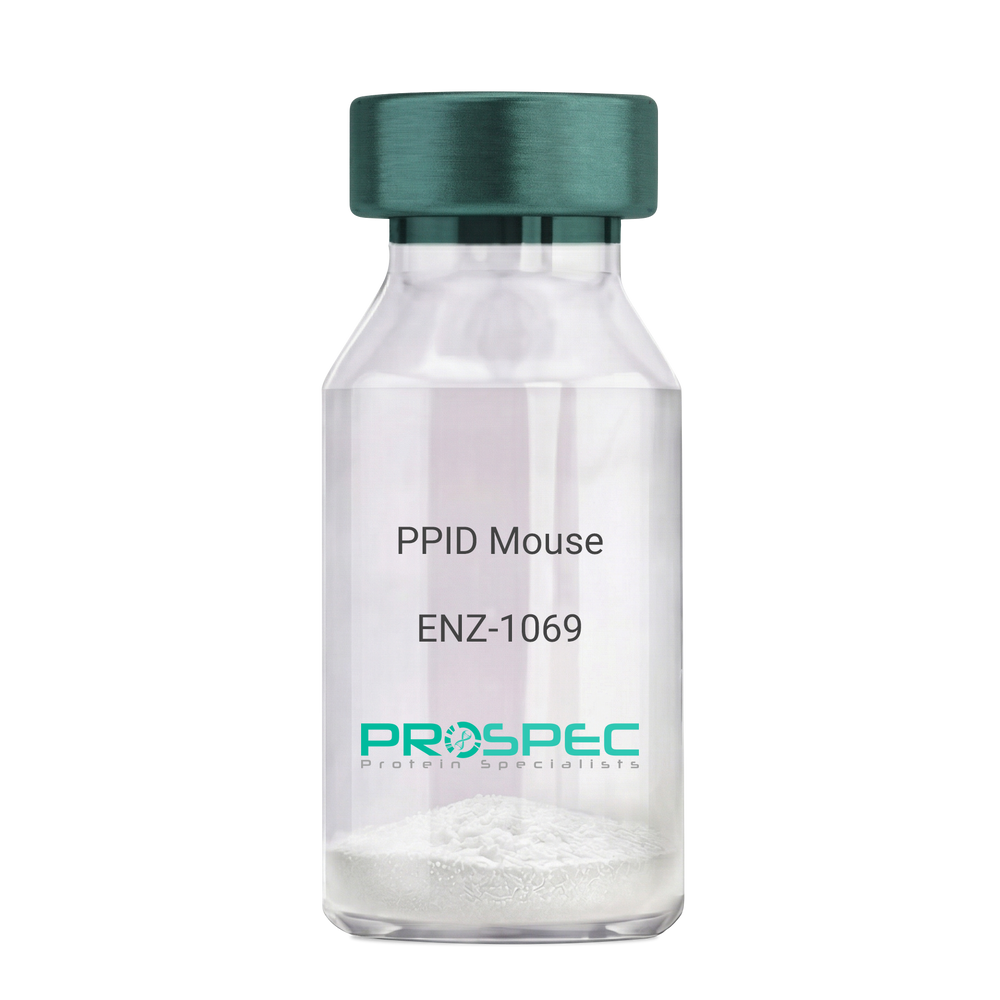
PPID MouseDescription:
Peptidylprolyl Isomerase D Mouse Recombinant
Peptidyl-prolyl cis-trans isomerase D, PPIase D, 40 kDa peptidyl-prolyl cis-trans isomerase, Cyclophilin-40, CYP-40, Cyclophilin-related protein, CYP40, CYPD, PPID, Peptidylprolyl Isomerase D.
Product # :
ENZ-1069Price :
Quantity :
Shipping Method :
Shipped with Ice Packs
More Info
- description
- source
- formulation
- purity
- biological activity
- More Info
Description
PPID Mouse Recombinant produced in E.Coli is a single, non-glycosylated polypeptide chain containing 395 amino acids (1-370a.a.) and having a molecular mass of 43.4kDa. PPID is fused to a 25 amino acid His-tag at N-terminus & purified by proprietary chromatographic techniques.
Source
Escherichia Coli.
Formulation
PPID protein solution (1mg/ml) containing 20mM Tris-Hcl buffer (pH8.0), 10% glycerol and 1mM DTT.
Purity
Greater than 90.0% as determined by SDS-PAGE.
Biological Activity
Specific activity is > 700nmol/min/mg, and is defined as the amount of enzyme that cleaves 1umole of suc-AAFP-PNA per minute at 37°C in Tris–HCl pH 8.0 using chymotrypsin.
More Info
-
Introduction
Cyclophilin-D is a member of the peptidyl-prolyl cis-trans isomerase (PPIase) family. PPIases catalyze the cis-trans isomerization of proline imidic peptide bonds in oligopeptides and speeds up the protein folding. Cyclophilin-D possess PPIase activity and binds to the immunosuppressant cyclosporin-A. Cyclophilin-D is very well known that its overexpression suppresses the apoptosis in cancer cell. Cyclophilin-D suppresses apoptotic cell death by the use of mitochondrial hexokinase-2 dependent mechanism in cancer cells.
-
Synonyms
Peptidyl-prolyl cis-trans isomerase D, PPIase D, 40 kDa peptidyl-prolyl cis-trans isomerase, Cyclophilin-40, CYP-40, Cyclophilin-related protein, CYP40, CYPD, PPID, Peptidylprolyl Isomerase D.
-
Physical Appearance
Sterile Filtered colorless solution.
-
Stability
Store at 4°C if entire vial will be used within 2-4 weeks. Store, frozen at -20°C for longer periods of time. For long term storage it is recommended to add a carrier protein (0.1% HSA or BSA). Please prevent freeze-thaw cycles.
-
Amino Acid Sequence
MGSSHHHHHH SSGLVPRGSH MGSEFMSHAS PAAKPSNSKN PRVFFDVDIG GERVGRIVLE LFADIVPKTA ENFRALCTGE KGTGSTTGKP LHFKGCPFHR IIKKFMIQGG DFSNQNGTGG ESIYGEKFED ENFHYKHDRE GLLSMANAGP NTNGSQFFIT TVPTPHLDGK HVVFGQVIKG LGVARTLENV EVNGEKPAKL CVIAECGELK EGDDWGIFPK DGSGDSHPDF PEDADIDLKD VDKILLISED LKNIGNTFFK SQNWEMAIKK YAKVLRYVDS SKAVIEKADR SRLQPIALSC VLNIGACKLK MSNWQGAIDS CLEALEMDPS NTKALYRKAQ GWQGLKEYDQ ALADLKKAQE IAPGDKAIQA ELLKVKQMIK AQKDKEKAVY AKMFA.
ProSpec's products are furnished for LABORATORY RESEARCH USE ONLY. The product may not be used as drugs, agricultural or pesticidal products, food additives or household chemicals.
- View Data Sheet
Name :
RTCA HumanDescription:
RNA 3'-Terminal Phosphate Cyclase Human Recombinant
RNA 3'-terminal phosphate cyclase, RPC, RTC1, RTCD1, RNA cyclase, RNA-3'-phosphate cyclase, RNA terminal phosphate cyclase domain-containing protein 1, RTC domain-containing protein 1, RTCA, RPC1.
Product # :
PRO-2003Price :
Quantity :
Shipping Method :
Shipped with Ice Packs
More Info
- description
- source
- formulation
- purity
- More Info
Description
RTCA Human Recombinant produced in E.Coli is a single, non-glycosylated polypeptide chain containing 389 amino acids (1-366a.a) and having a molecular mass of 41.7kDa. RTCA is fused to a 23 amino acid His-tag at N-terminus & purified by proprietary chromatographic techniques.
Source
Escherichia Coli.
Formulation
RTCA protein solution (0.25mg/ml) containing 20mM Tris-HCl buffer (pH 8.0), 0.15M NaCl, 20% glycerol and 1mM DTT.
Purity
Greater than 85.0% as determined by SDS-PAGE.
More Info
-
Introduction
RNA 3'-Terminal Phosphate Cyclase (RTCA) encodes a part of the RNA 3'-phosphate cyclase family. RTCA takes part in RNA metabolism by catalyzing the ATP-dependent conversion of the 3'-phosphate of RNA substrates to a 2',3'-cyclic phosphodiester. RTCA is involved in some phases of cellular RNA processing.
-
Synonyms
RNA 3'-terminal phosphate cyclase, RPC, RTC1, RTCD1, RNA cyclase, RNA-3'-phosphate cyclase, RNA terminal phosphate cyclase domain-containing protein 1, RTC domain-containing protein 1, RTCA, RPC1.
-
Physical Appearance
Sterile Filtered colorless solution.
-
Stability
Store at 4°C if entire vial will be used within 2-4 weeks. Store, frozen at -20°C for longer periods of time. For long term storage it is recommended to add a carrier protein (0.1% HSA or BSA).Avoid multiple freeze-thaw cycles.
-
Amino Acid Sequence
MGSSHHHHHH SSGLVPRGSH MGSMAGPRVE VDGSIMEGGG QILRVSTALS CLLGLPLRVQ KIRAGRSTPG LRPQHLSGLE MIRDLCDGQL EGAEIGSTEI TFTPEKIKGG IHTADTKTAG SVCLLMQVSM PCVLFAASPS ELHLKGGTNA EMAPQIDYTV MVFKPIVEKF GFIFNCDIKT RGYYPKGGGE VIVRMSPVKQ LNPINLTERG CVTKIYGRAF VAGVLPFKVA KDMAAAAVRC IRKEIRDLYV NIQPVQEPKD QAFGNGNGII IIAETSTGCL FAGSSLGKRG VNADKVGIEA AEMLLANLRH GGTVDEYLQD QLIVFMALAN GVSRIKTGPV TLHTQTAIHF AEQIAKAKFI VKKSEDEEDA AKDTYIIECQ GIGMTNPNL.
ProSpec's products are furnished for LABORATORY RESEARCH USE ONLY. The product may not be used as drugs, agricultural or pesticidal products, food additives or household chemicals.
- View Data Sheet
Name :
Myoglobin HumanDescription:
Myoglobin Human Recombinant
Myoglobin, MB, PVALB, MGC13548.
Product # :
PRO-336Price :
Quantity :
Shipping Method :
Shipped with Ice Packs
More Info
- description
- source
- formulation
- purity
- More Info
Description
Myoglobin Human Recombinant produced in E.Coli is a non-glycosylated polypeptide chain having a molecular mass of 17.67 kDa. The Myoglobin is purified by proprietary chromatographic techniques.
Source
Escherichia Coli.
Formulation
The sterile solution contains phosphate-buffered saline (pH 7.4) and 0.05% NaN3.
Purity
Greater than 95.0% as determined by SDS-PAGE.
More Info
-
Introduction
Myoglobin is a member of the globin superfamily and can be found in skeletal and cardiac muscles. It is a haemoprotein that contributs to intracellular oxygen storage and transcellular facilitated diffusion of oxygen. Myoglobin has a single-chain globular structure of 153 amino acids, containing a heme prosthetic group (iron-containing porphyrin) in the core around which the remaining apoprotein folds. Myoglobin has 8 alpha helices and a hydrophobic core. Myoglobin’s molecular weight is 16.7 kDa, and it is the primary oxygen-carrying pigment of muscle tissues. The binding of oxygen in myoglobin is different from the cooperative oxygen binding in hemoglobin, since positive collaboration is a property of multimeric/oligomeric proteins only. Instead, the binding of oxygen by myoglobin is uninfluenced by the oxygen pressure in the surrounding tissue. Myoglobin is frequently referred to as having an "instant binding tenacity" to oxygen given its hyperbolic oxygen dissociation curve. Different organisms are able to hold their breaths longer due to high concentrations of myoglobin in their muscle cells. Myoglobin is responsible for the pigments that make meat red. The color of the meat is partly determined by the charge of the iron atom in myoglobin and the oxygen attached to it. Myoglobin is found in Type I muscle, Type II A and Type II B, but it is mostly deemed that myoglobin is not found in smooth muscle. Myoglobin is discharged from damaged muscle tissue (rhabdomyolysis), which contains very high concentrations of myoglobin. Even though the released myoglobin is filtered by the kidneys, it is toxic to the renal tubular epithelium and thus may cause acute renal failure.
-
Synonyms
Myoglobin, MB, PVALB, MGC13548.
-
Physical Appearance
Sterile Filtered brownish solution.
-
Stability
Myoglobin should be stored at 4°C. For long term storage it is recommended to add a carrier protein (0.1% HSA or BSA).Please do not freeze.
ProSpec's products are furnished for LABORATORY RESEARCH USE ONLY. The product may not be used as drugs, agricultural or pesticidal products, food additives or household chemicals.
- View Data Sheet
Name :
Cyclophilin F RatDescription:
Cyclophilin F Rat Recombinant
Peptidyl-prolyl cis-trans isomerase F, mitochondrial, PPIase F, Cyclophilin D, CyP-D, CypD, Cyclophilin F, Rotamase F, Ppif, Peptidyl-prolyl cis-trans isomerase F, mitochondrial, PPIase.
Product # :
ENZ-903Price :
Quantity :
Shipping Method :
Shipped with Ice Packs
More Info
- description
- source
- formulation
- purity
- More Info
Description
Cyclophilin F Rat Recombinant produced in E.Coli is a single, non-glycosylated polypeptide chain containing 200 amino acids (30-206a.a.) and having a molecular mass of 21.2kDa.Cyclophilin F is fused to a 23 amino acid His-tag at N-terminus & purified by proprietary chromatographic techniques.
Source
Escherichia Coli.
Formulation
Cyclophilin F protein solution (1mg/ml) containing Phosphate buffered saline (pH7.4), 10% glycerol and 1mM DTT.
Purity
Greater than 90.0% as determined by SDS-PAGE.
More Info
-
Introduction
Peptidyl-prolyl cis-trans isomerase F, mitochondrial (Cyclophilin-F) accelerates the folding of proteins. Cyclophilin-F catalyzes the cis-trans isomerization of proline imidic peptide bonds in oligopeptides and involved in regulation of the mitochondrial permeability transition pore (mPTP). Cyclophilin-F, in cooperation with mitochondrial TP53, is involved in activating oxidative stress-induced necrosis. Cyclophilin-F is also involved in modulation of mitochondrial membrane F1F0 ATP synthase activity and regulation of mitochondrial matrix adenine nucleotide levels. Furthermore, Cyclophilin-F has anti-apoptotic activity independently of mPTP and in cooperation with BCL2 inhibits cytochrome c-dependent apoptosis.
-
Synonyms
Peptidyl-prolyl cis-trans isomerase F, mitochondrial, PPIase F, Cyclophilin D, CyP-D, CypD, Cyclophilin F, Rotamase F, Ppif, Peptidyl-prolyl cis-trans isomerase F, mitochondrial, PPIase.
-
Physical Appearance
Sterile Filtered clear solution.
-
Stability
Store at 4°C if entire vial will be used within 2-4 weeks. Store, frozen at -20°C for longer periods of time. For long term storage it is recommended to add a carrier protein (0.1% HSA or BSA).Avoid multiple freeze-thaw cycles.
-
Amino Acid Sequence
MGSSHHHHHH SSGLVPRGSH MGSCSDGGAR GANSSSQNPL VYLDVGADGQ PLGRVVLELK ADVVPKTAEN FRALCTGEKG FGYKGSTFHR VIPAFMCQAG DFTNHNGTGG KSIYGSRFPD ENFTLKHVGP GVLSMANAGP NTNGSQFFIC TIKTDWLDGK HVVFGHVKEG MDVVKKIESF GSKSGKTSKK IVITDCGQLS.
ProSpec's products are furnished for LABORATORY RESEARCH USE ONLY. The product may not be used as drugs, agricultural or pesticidal products, food additives or household chemicals.
- View Data Sheet
Name :
POLR3H HumanDescription:
Polymerase (RNA) III (DNA directed) Polypeptide H Human Recombinant
DNA-directed RNA polymerase III subunit RPC8, RNA polymerase III subunit C8, DNA-directed RNA polymerase III subunit H, RNA polymerase III subunit 22.9 kDa subunit, RPC22.9, POLR3H, KIAA1665, RPC8.
Product # :
PRO-1250Price :
Quantity :
Shipping Method :
Shipped with Ice Packs
More Info
- description
- source
- formulation
- purity
- More Info
Description
POLR3H Human Recombinant produced in E.Coli is a single, non-glycosylated polypeptide chain containing 227 amino acids (1-204 a.a.) and having a molecular mass of 25.3kDa (Molecular size on SDS-PAGE will appear higher).POLR3H is fused to a 23 amino acid His-tag at N-terminus & purified by proprietary chromatographic techniques.
Source
Escherichia Coli.
Formulation
POLR3H protein solution (0.5mg/ml) containing 20mM Tris-HCl buffer (pH 8.0), 0.1M NaCl, 10% glycerol and 1mM DTT.
Purity
Greater than 90.0% as determined by SDS-PAGE.
More Info
-
Introduction
Polymerase (RNA) III (DNA directed) Polypeptide H(POLR3H) is a member of the eukaryotic RPB7/RPC8 RNA polymerase subunit family. POLR3H is DNA-dependent RNA polymerase which catalyzes the transcription of DNA into RNA utilizing the 4 ribonucleoside triphosphates as substrates. POLR3H has a central role in sensing and curbing infection by intracellular bacteria and DNA viruses. POLR3H functions as nuclear and cytosolic DNA sensor which is involved in innate immune response.
-
Synonyms
DNA-directed RNA polymerase III subunit RPC8, RNA polymerase III subunit C8, DNA-directed RNA polymerase III subunit H, RNA polymerase III subunit 22.9 kDa subunit, RPC22.9, POLR3H, KIAA1665, RPC8.
-
Physical Appearance
Sterile Filtered clear solution.
-
Stability
Store at 4°C if entire vial will be used within 2-4 weeks. Store, frozen at -20°C for longer periods of time. For long term storage it is recommended to add a carrier protein (0.1% HSA or BSA).Avoid multiple freeze-thaw cycles.
-
Amino Acid Sequence
MGSSHHHHHH SSGLVPRGSH MGSMFVLVEM VDTVRIPPWQ FERKLNDSIA EELNKKLANK VVYNVGLCIC LFDITKLEDA YVFPGDGASHTKVHFRCVVF HPFLDEILIG KIKGCSPEGV HVSLGFFDDI LIPPESLQQP AKFDEAEQVW VWEYETEEGA HDLYMDTGEE IRFRVVDESF VDTSPTGPSS ADATTSSEEL PKKEAPYTLV GSISEPGLGL LSWWTSN.
ProSpec's products are furnished for LABORATORY RESEARCH USE ONLY. The product may not be used as drugs, agricultural or pesticidal products, food additives or household chemicals.
- View Data Sheet
Name :
MMP9 MouseDescription:
Matrix Metalloproteinase-9 Mouse Recombinant
AW743869, Matrix metalloproteinase-9, 92 kDa type IV collagenase, Gelatinase B, GELB, Mmp9, MANDP2, B/MMP, B/MMP9, Clg4, Clg4b, Gel B, MMP-9, pro-MMP-9, 92 kDa gelatinase.
Product # :
ENZ-1191Price :
Quantity :
Shipping Method :
Shipped with Ice Packs
More Info
- description
- source
- formulation
- purity
- biological activity
- More Info
Description
MMP9 Mouse Recombinant produced in HEK cells is a single, glycosylated, polypeptide chain (20-730 a.a) containing a total of 717 amino acids, having a molecular mass of 79.3kDa. MMP9 is fused to a 6 amino acid His-tag at C-terminus,and is purified by proprietary chromatographic techniques.
Source
HEK293 Cells.
Formulation
MMP9 protein solution (1mg/ml) containing 10% glycerol, 20mM Tris-HCl (pH 7.5), 1mM CaCl2 and 0.1M NaCl.
Purity
Greater than 90.0% as determined by SDS-PAGE.
Biological Activity
Specific activity is greater than 1,500 pmol/min/ug and is defined by the amount of enzyme that cleaves 1pmole of Mca-PLGLDpa-AR-NH2 per minute at pH 7.5 at 37˚C.
More Info
-
Synonyms
AW743869, Matrix metalloproteinase-9, 92 kDa type IV collagenase, Gelatinase B, GELB, Mmp9, MANDP2, B/MMP, B/MMP9, Clg4, Clg4b, Gel B, MMP-9, pro-MMP-9, 92 kDa gelatinase.
-
Physical Appearance
Sterile Filtered clear solution.
-
Stability
Store at 4°C if entire vial will be used within 2-4 weeks. Store, frozen at -20°C for longer periods of time. For long term storage it is recommended to add a carrier protein (0.1% HSA or BSA).Avoid multiple freeze-thaw cycles.
-
Amino Acid Sequence
APYQRQPTFV VFPKDLKTSN LTDTQLAEAY LYRYGYTRAA QMMGEKQSLR PALLMLQKQL SLPQTGELDS QTLKAIRTPR CGVPDVGRFQ TFKGLKWDHH NITYWIQNYS EDLPRDMIDD AFARAFAVWG EVAPLTFTRV YGPEADIVIQ FGVAEHGDGY PFDGKDGLLA HAFPPGAGVQ GDAHFDDDEL WSLGKGVVIP TYYGNSNGAP CHFPFTFEGR SYSACTTDGR NDGTPWCSTT ADYDKDGKFG FCPSERLYTE HGNGEGKPCV FPFIFEGRSY SACTTKGRSD GYRWCATTAN YDQDKLYGFC PTRVDATVVG GNSAGELCVF PFVFLGKQYS SCTSDGRRDG RLWCATTSNF DTDKKWGFCP DQGYSLFLVA AHEFGHALGL DHSSVPEALM YPLYSYLEGF PLNKDDIDGI QYLYGRGSKP DPRPPATTTT EPQPTAPPTM CPTIPPTAYP TVGPTVGPTG APSPGPTSSP SPGPTGAPSP GPTAPPTAGS SEASTESLSP ADNPCNVDVF DAIAEIQGAL HFFKDGWYWK FLNHRGSPLQ GPFLTARTWP ALPATLDSAF EDPQTKRVFF FSGRQMWVYT GKTVLGPRSL DKLGLGPEVT HVSGLLPRRL GKALLFSKGR VWRFDLKSQK VDPQSVIRVD KEFSGVPWNS HDIFQYQDKA YFCHGKFFWR VSFQNEVNKV DHEVNQVDDV GYVTYDLLQC PHHHHHH.
-
Background
The MMP9 mouse recombinant, a variant of the matrix metalloproteinase 9 enzyme, has emerged as a crucial focus of biomedical research due to its diverse biological functions and potential implications in various physiological and pathological processes. Matrix metalloproteinase 9 (MMP9) is a key enzyme involved in extracellular matrix remodeling, cell migration, and tissue homeostasis. The MMP9 mouse recombinant, generated through recombinant DNA technology, offers a valuable tool for investigating the molecular characteristics and biological roles of this enzyme.
Understanding the molecular characteristics of MMP9 is vital to unravel its functional significance. MMP9 belongs to the matrix metalloproteinase family, characterized by their ability to degrade various components of the extracellular matrix. MMP9 exhibits unique structural features, including a catalytic domain, a hemopexin-like domain, and a prodomain that regulates its activation. These characteristics contribute to the complexity of MMP9 and its involvement in multiple physiological and pathological processes.
MMP9 plays diverse roles in different biological contexts. It is involved in tissue remodeling processes, such as embryogenesis, wound healing, and tissue repair. Additionally, MMP9 participates in inflammatory responses, immune cell recruitment, and angiogenesis. The precise mechanisms underlying these functions are still being elucidated, highlighting the need for further investigation.
The MMP9 mouse recombinant offers exciting prospects for research and therapeutic applications. By utilizing this recombinant protein, scientists can investigate the role of MMP9 in disease progression, explore its interactions with other molecules, and potentially develop targeted therapies. MMP9 has been implicated in various diseases, including cancer metastasis, cardiovascular disorders, and neurodegenerative conditions, making it a promising candidate for therapeutic interventions.
This research aims to provide a comprehensive analysis of the MMP9 mouse recombinant, focusing on its molecular characteristics, biological roles, and potential therapeutic implications. By shedding light on the intricate nature of MMP9, we aim to contribute to a deeper understanding of its functional significance and pave the way for future research and therapeutic advancements.
ProSpec's products are furnished for LABORATORY RESEARCH USE ONLY. The product may not be used as drugs, agricultural or pesticidal products, food additives or household chemicals.
- View Data Sheet
Name :
CX3CL1 Human, Sf9Description:
Fractalkine (CX3CL1) Human Recombinant, Sf9
Fractalkine, CX3CL1, Neurotactin, CX3C membrane-anchored chemokine, Small inducible cytokine D1, NTN, NTT, CXC3, CXC3C, SCYD1, ABCD-3, C3Xkine.
Product # :
CHM-042Price :
Quantity :
Shipping Method :
Shipped with Ice Packs
More Info
- description
- source
- formulation
- purity
- More Info
- SDS-PAGE
Description
Fractalkine Human Recombinant produced in Sf9 Baculovirus cells is a single, glycosylated polypeptide chain containing 323 amino acids (25-339aa) and having a molecular mass of 34.3kDa.Fractalkine is fused to a 8 amino acid His tag at C-terminus and purified by proprietary chromatographic techniques.
Source
Sf9, Baculovirus cells.
Formulation
The Fractalkine solution (1 mg/ml) contains 10% Glycerol and Phosphate Buffered Saline (pH 7.4).
Purity
Greater than 90.0% as determined by SDS-PAGE.
SDS-PAGE
More Info
-
Introduction
Fractalkine soluble form is chemotactic for t-cells and monocytes, but not for neutrophils. Fractalkine membrane-bound form promotes adhesion of those leukocytes to endothelial cells. Fractalkine regulates leukocyte adhesion and migration processes at the endothelium and binds to CX3CR1. Fractalkine gene is located on human chromosome 16 along with some CC chemokines known as CCL17 and CCL22.
-
Synonyms
Fractalkine, CX3CL1, Neurotactin, CX3C membrane-anchored chemokine, Small inducible cytokine D1, NTN, NTT, CXC3, CXC3C, SCYD1, ABCD-3, C3Xkine.
-
Physical Appearance
Sterile Filtered colorless solution.
-
Stability
Store at 4°C if entire vial will be used within 2-4 weeks. Store, frozen at -20°C for longer periods of time. For long term storage it is recommended to add a carrier protein (0.1% HSA or BSA).Avoid multiple freeze-thaw cycles.
-
Amino Acid Sequence
QHHGVTKCNI TCSKMTSKIP VALLIHYQQN QASCGKRAII LETRQHRLFC ADPKEQWVKD
AMQHLDRQAA ALTRNGGTFE KQIGEVKPRT TPAAGGMDES VVLEPEATGE SSSLEPTPSS
QEAQRALGTS PELPTGVTGS SGTRLPPTPK AQDGGPVGTE LFRVPPVSTA ATWQSSAPHQ
PGPSLWAEAK TSEAPSTQDP STQASTASSP APEENAPSEG QRVWGQGQSP RPENSLEREE
MGPVPAHTDA FQDWGPGSMA HVSVVPVSSE GTPSREPVAS GSWTPKAEEP IHATMDPQRL GVLITPVPDA QAATRLEHHH HHH -
Background
What is the molecular weight/Mw of CX3CL1 HUMAN, SF9 Protein?
CX3CL1 HUMAN, SF9 Protein has a total Mw of 34.3kDa.
What is the source or expression system of CX3CL1 HUMAN, SF9 Protein?
Sf9, Baculovirus cells.
What is the Purity of CX3CL1 HUMAN, SF9 Protein?
CX3CL1 HUMAN, SF9 Protein is >90% pure as determined by SDS-PAGE.
What is the Biological Activity of CX3CL1 HUMAN, SF9 Protein?
The biological functionality of CX3CL1 HUMAN, SF9 Protein will be determined in the future.
What is the amino acid sequence of CX3CL1 HUMAN, SF9 Protein?
QHHGVTKCNI TCSKMTSKIP VALLIHYQQN QASCGKRAII LETRQHRLFC ADPKEQWVKD
AMQHLDRQAA ALTRNGGTFE KQIGEVKPRT TPAAGGMDES VVLEPEATGE SSSLEPTPSS
QEAQRALGTS PELPTGVTGS SGTRLPPTPK AQDGGPVGTE LFRVPPVSTA ATWQSSAPHQ
PGPSLWAEAK TSEAPSTQDP STQASTASSP APEENAPSEG QRVWGQGQSP RPENSLEREE
MGPVPAHTDA FQDWGPGSMA HVSVVPVSSE GTPSREPVAS GSWTPKAEEP IHATMDPQRL GVLITPVPDA QAATRLEHHH HHH
What applications can CX3CL1 HUMAN, SF9 Protein be used in?
CX3CL1 HUMAN, SF9 Protein can probably be used in western blot, ELISA and Lateral Flow.
What is the endotoxin level for CX3CL1 HUMAN, SF9 Protein?
The endotoxin level is minimal, CX3CL1 HUMAN, SF9 Protein was purified using conventional chromatography techniques.
ProSpec's products are furnished for LABORATORY RESEARCH USE ONLY. The product may not be used as drugs, agricultural or pesticidal products, food additives or household chemicals.
- View Data Sheet
Name :
YWHAG Human, HisDescription:
Tyr-3/Trp-5 Monooxygenase Activation Protein Gamma Human Recombinant, His Tag
14-3-3 protein gamma, Protein kinase C inhibitor protein 1, KCIP-1, YWHAG, Tyrosine 3-monooxygenase/tryptophan 5-monooxygenase activation protein, gamma polypeptide.
Product # :
PKA-262Price :
Quantity :
Shipping Method :
Shipped with Ice Packs
More Info
- description
- source
- formulation
- purity
- More Info
Description
YWHAG Human Recombinant produced in E.Coli is a single, non-glycosylated, polypeptide chain containing 246 amino acids (2-247) and having a molecular mass of 36 kDa. YWHAG is fused to His Tag and purified by proprietary chromatographic techniques.
Source
Escherichia Coli.
Formulation
YWHAG solution containing 1x PBS and 50% glycerol.
Purity
Greater than 95.0% as determined by SDS-PAGE.
More Info
-
Introduction
The 14-3-3 family of proteins plays a key regulatory role in signal transduction, checkpoint control, apoptotic and nutrient-sensing pathways. 14-3-3 proteins are highly conserved and ubiquitously expressed. There are at least seven isoforms that have been identified in mammals. The 14-3-3gamma, a subtype of the 14-3-3 family of proteins, was thought to be brain and neuron-specific. It has been shown to interact with RAF1 and protein kinase C, proteins involved in various signal transduction pathways.
-
Synonyms
14-3-3 protein gamma, Protein kinase C inhibitor protein 1, KCIP-1, YWHAG, Tyrosine 3-monooxygenase/tryptophan 5-monooxygenase activation protein, gamma polypeptide.
-
Physical Appearance
Sterile filtered colorless solution.
-
Stability
Store at 4°C if entire vial will be used within 2-4 weeks. Store, frozen at -20°C for longer periods of time. Avoid multiple freeze-thaw cycles.
ProSpec's products are furnished for LABORATORY RESEARCH USE ONLY. The product may not be used as drugs, agricultural or pesticidal products, food additives or household chemicals.
- View Data Sheet
Name :
G6PD HumanDescription:
Glucose-6-Phosphate Dehydrogenase Human Recombinant
G6PD, G6PD1, Glucose-6-phosphate 1-dehydrogenase.
Product # :
ENZ-608Price :
Quantity :
Shipping Method :
Shipped with Ice Packs
More Info
- description
- source
- formulation
- purity
- biological activity
- More Info
Description
G6PD Human Recombinant produced in Hi-5 cells is a single polypeptide chain containing 535 amino acids (1-515) and having a molecular mass of 61.4kDa.G6PD is fused to a 20 amino acid His-tag at N-terminus & purified by proprietary chromatographic techniques.
Source
Hi-5 cells.
Formulation
The G6PD solution (0.5mg/1ml) contains 20mM Tris-HCl buffer (pH 8.0), 0.1mM PMSF, 2mM EDTA, 2mM DTT, 200mM NaCl and 20% glycerol.
Purity
Greater than 95% as determined by SDS-PAGE.
Biological Activity
Specific activity is > 45 units/ml obtained by measuring the increase of beta-NADPH in absorbance at 340 nm resulting from the reduction of beta NADP. One unit oxidizes 1.0 umole D-glucose-6-phosphate to 6-phospho-D-gluconate per min in the presence of beta-NADP at pH 7.4 at 25C.
More Info
-
Introduction
G6PD is the rate-limiting enzyme of the pentose phosphate pathway, a metabolic pathway that supplies reducing energy to cells by maintaining the level of NADPH. G6PD converts glucose-6-phosphate into 6-phosphoglucono-?-lactone and at the same time produces NADPH. The NADPH maintains the level of glutathione in these cells that helps protect the red blood cells against oxidative damage. G6PD deficiency causes acute hemolytic anemia, neonatal jaundice or acute hemolysis. G6PD is a cytosolic enzyme encoded by an X-linked gene whose main function is to produce NADPH, a crucial electron donor in the defense against oxidizing agents and in reductive biosynthetic reactions. G6PD produces pentose sugars for nucleic acid synthesis and is a main producer of NADPH reducing power.
-
Synonyms
G6PD, G6PD1, Glucose-6-phosphate 1-dehydrogenase.
-
Physical Appearance
Sterile Filtered colorless solution.
-
Stability
Store at 4°C if entire vial will be used within 2-4 weeks. Store, frozen at -20°C for longer periods of time. For long term storage it is recommended to add a carrier protein (0.1% HSA or BSA).Avoid multiple freeze-thaw cycles.
-
Amino Acid Sequence
MGSSHHHHHH SSGLVPRGSH MAEQVALSRT QVCGILREEL FQGDAFHQSD THIFIIMGAS GDLAKKKIYP TIWWLFRDGL LPENTFIVGY ARSRLTVADI RKQSEPFFKA TPEEKLKLED FFARNSYVAG QYDDAASYQR LNSHMNALHL GSQANRLFYL ALPPTVYEAV TKNIHESCMS QIGWNRIIVE KPFGRDLQSS DRLSNHISSL FREDQIYRID HYLGKEMVQN LMVLRFANRI FGPIWNRDNI ACVILTFKEP FGTEGRGGYF DEFGIIRDVM QNHLLQMLCL VAMEKPASTN SDDVRDEKVK VLKCISEVQA NNVVLGQYVG NPDGEGEATK GYLDDPTVPR GSTTATFAAV VLYVENERWD GVPFILRCGK ALNERKAEVR LQFHDVAGDI FHQQCKRNEL VIRVQPNEAV YTKMMTKKPG MFFNPEESEL DLTYGNRYKN VKLPDAYERL ILDVFCGSQM HFVRSDELRE AWRIFTPLLH QIELEKPKPI PYIYGSRGPT EADELMKRVG FQYEGTYKWV NPHKL
ProSpec's products are furnished for LABORATORY RESEARCH USE ONLY. The product may not be used as drugs, agricultural or pesticidal products, food additives or household chemicals.
- View Data Sheet
Name :
GLB1 E.ColiDescription:
Galactosidase-Beta 1 E.coli Recombinant
lacZ, beta-gal, β-gal.
Product # :
ENZ-041Price :
Quantity :
Shipping Method :
Shipped with Ice Packs
More Info
- description
- source
- formulation
- purity
- More Info
Description
The E.Coli derived recombinant protein Beta-galactosidase (114 kDa) is enzymatically inactive and Non-reactive with human serum.
Source
Escherichia Coli.
Formulation
Beta-Galactosidase (1mg/1ml) is formulated in 8M urea, 20mM Tris-HCl pH 8.0, and 10mM beta-mercaptoethanol
Purity
Protein is >95% pure as determined by SDS-PAGE, by measuring optical density at 280 nm and by method of Bradford et al.
More Info
-
Introduction
Beta-galactosidase is a hydrolase enzyme that catalyzes the hydrolysis of Beta-galactosides into monosaccharides. Substrates of different Beta-galactosidases include ganglioside GM1, lactosylceramides, lactose, and various glycoproteins. Beta-galactosidase is produced In E. coli by activation of the lac operon as the lacZ gene.
-
Synonyms
lacZ, beta-gal, β-gal.
-
Physical Appearance
Sterile filtered colorless solution.
-
Stability
Protein should be stored for Short Term at 4°C and for long term at -20°C.
-
Purification Method
Purified by proprietary chromatographic technique.
ProSpec's products are furnished for LABORATORY RESEARCH USE ONLY. The product may not be used as drugs, agricultural or pesticidal products, food additives or household chemicals.
- View Data Sheet
Name :
PRKAA1 HumanDescription:
Protein Kinase, AMP-Activated, Alpha 1 Human Recombinant
5'-AMP-activated protein kinase catalytic subunit alpha-1, Protein Kinase, AMP-Activated, Alpha 1, PRKAA1, AMPK subunit alpha-1, Acetyl-CoA carboxylase kinase, ACACA kinase, Hydroxymethylglutaryl-CoA reductase kinase, HMGCR kinase, Tau-protein kinase PRKAA1, AMPK1, 5-AMP-activated protein kinase catalytic subunit alpha-1 isoform 1, AMPK, AMPKa11.
Product # :
PKA-074Price :
Quantity :
Shipping Method :
Shipped with Ice Packs
More Info
- description
- source
- formulation
- purity
- More Info
Description
PRKAA1 Human Recombinant produced in E.Coli is a single, non-glycosylated polypeptide chain containing 302 amino acids (1-279a.a) and having a molecular mass of 34.3kDa.PRKAA1 is fused to a 23 amino acid His-tag at N-terminus & purified by proprietary chromatographic techniques.
Source
E.coli.
Formulation
PRKAA1 solution (1mg/ml) contains 20mM Tris-HCl buffer (pH 8.0) and 10% glycerol.
Purity
Greater than 85% as determined by SDS-PAGE.
More Info
-
Introduction
Protein Kinase, AMP-Activated, Alpha 1 (PRKAA1) is a protein coding gene which is the catalytic subunit of AMPK. AMPK is an energy sensor protein kinase which regulates cellular energy metabolism. AMPK adjusts the activity of various important metabolic enzymes by direct phosphorylation. Among its other features, AMPK protects cells from stresses that cause ATP depletion by switching off ATP-consuming biosynthetic pathways.
-
Synonyms
5'-AMP-activated protein kinase catalytic subunit alpha-1, Protein Kinase, AMP-Activated, Alpha 1, PRKAA1, AMPK subunit alpha-1, Acetyl-CoA carboxylase kinase, ACACA kinase, Hydroxymethylglutaryl-CoA reductase kinase, HMGCR kinase, Tau-protein kinase PRKAA1, AMPK1, 5-AMP-activated protein kinase catalytic subunit alpha-1 isoform 1, AMPK, AMPKa11.
-
Physical Appearance
Sterile Filtered colorless solution.
-
Stability
Store at 4°C if entire vial will be used within 2-4 weeks. Store, frozen at -20°C for longer periods of time. For long term storage it is recommended to add a carrier protein (0.1% HSA or BSA).Avoid multiple freeze-thaw cycles.
-
Amino Acid Sequence
MGSSHHHHHH SSGLVPRGSH MGSMRRLSSW RKMATAEKQK HDGRVKIGHY ILGDTLGVGT FGKVKVGKHE LTGHKVAVKI LNRQKIRSLD VVGKIRREIQ NLKLFRHPHI IKLYQVISTP SDIFMVMEYV SGGELFDYIC KNGRLDEKES RRLFQQILSG VDYCHRHMVV HRDLKPENVL LDAHMNAKIA DFGLSNMMSD GEFLRTSCGS PNYAAPEVIS GRLYAGPEVD IWSSGVILYA LLCGTLPFDD DHVPTLFKKI CDGIFYTPQY LNPSVISLLK HMLQVDPMKR ATIKDIREHE WF.
ProSpec's products are furnished for LABORATORY RESEARCH USE ONLY. The product may not be used as drugs, agricultural or pesticidal products, food additives or household chemicals.
- View Data Sheet
Name :
SERPINE2 MouseDescription:
Plasminogen Activator Inhibitor-2 Mouse Recombinant
Serpnie2, B230326M24Rik, PAI-1, PI-7, PI7, PN-1, Spi4, Glia-derived nexin, GDN,Peptidase inhibitor 7, Protease nexin 1, Protease nexin I, Serine protease-inhibitor 4, Serpin E2.
Product # :
ENZ-972Price :
Quantity :
Shipping Method :
Shipped with Ice Packs
More Info
- description
- source
- formulation
- purity
- More Info
Description
SERPINE2 produced in Sf9 Baculovirus cells is a single, glycosylated polypeptide chain containing 386 amino acids (20-397a.a.) and having a molecular mass of 42.9kDa. SERPINE2 is expressed with a 8 amino acid His tag at C-Terminus and purified by proprietary chromatographic techniques.
Source
Sf9, Baculovirus cells.
Formulation
SERPINE2 protein solution (0.5mg/ml) contains Phosphate Buffered Saline (pH 7.4) and 10% glycerol.
Purity
Greater than 95.0% as determined by SDS-PAGE.
More Info
-
Introduction
Plasminogen Activator Inhibitor-2 (Serpine2) which inhibits thrombin, plasmin and plasminogen activators is a part of the Serpin superfamily of the serine protease inhibitors. Serpine2 is able to transform human embryonic kidney cells into neuron-like cells. Furthermore, Serpine2's over expression in mice leads to progressive neuronal and motor dysfunction.
-
Synonyms
Serpnie2, B230326M24Rik, PAI-1, PI-7, PI7, PN-1, Spi4, Glia-derived nexin, GDN,Peptidase inhibitor 7, Protease nexin 1, Protease nexin I, Serine protease-inhibitor 4, Serpin E2.
-
Physical Appearance
Sterile Filtered colorless solution.
-
Stability
Store at 4°C if entire vial will be used within 2-4 weeks. Store, frozen at -20°C for longer periods of time. For long term storage it is recommended to add a carrier protein (0.1% HSA or BSA). Avoid multiple freeze-thaw cycles.
-
Amino Acid Sequence
SQFNSLSLEE LGSNTGIQVF NQIIKSRPHE NVVVSPHGIA SILGMLQLGA DGKTKKQLST VMRYNVNGVG KVLKKINKAI VSKKNKDIVT VANAVFLRNG FKMEVPFAVR NKDVFQCEVQ NVNFQDPASA SESINFWVKN ETRGMIDNLL SPNLIDGALT RLVLVNAVYF KGLWKSRFQP ESTKKRTFVA GDGKSYQVPM LAQLSVFRSG STRTPNGLWY NFIELPYHGE SISMLIALPT ESSTPLSAII PHITTKTIDS WMNTMVPKRM QLVLPKFTAV AQTDLKEPLK ALGITEMFEP SKANFTKITR SESLHVSHIL QKAKIEVSED GTKASAATTA ILIARSSPPW FIVDRPFLFS IRHNPTGAIL FLGQVNKPLE HHHHHH.
ProSpec's products are furnished for LABORATORY RESEARCH USE ONLY. The product may not be used as drugs, agricultural or pesticidal products, food additives or household chemicals.
- View Data Sheet
Name :
GH HumanDescription:
Growth Hormone Human Recombinant
GH1, GH, GHN, GH-N, hGH-N,Pituitary growth hormone, Growth hormone 1, Somatotropin.
Product # :
CYT-202Price :
Quantity :
Shipping Method :
Shipped at Room temp
More Info
- description
- source
- formulation
- purity
- biological activity
- More Info
Description
GH Human Recombinant produced in E.Coli is a single, non-glycosylated, polypeptide chain containing 191 amino acids and having a molecular mass of 22kDa. Growth Hormone is purified by proprietary chromatographic techniques.
Source
Escherichia Coli.
Formulation
GH protein lyophilized from a 0.2µm filtered concentrated solution containing mannitol, and glycine.
Purity
Greater than 96.0% as determined by SDS-PAGE.
Biological Activity
The ED50 was determined by the proliferation assay of rat lymphoma NB2-11 cells and was found to be less than 0.1ng/ml.
More Info
-
Introduction
GH is a member of the somatotropin/prolactin family of hormones which play an important role in growth control. The gene, along with four other related genes, is located at the growth hormone locus on chromosome 17 where they are interspersed in the same transcriptional orientation; an arrangement which is thought to have evolved by a series of gene duplications. The five genes share a remarkably high degree of sequence identity. Alternative splicing generates additional isoforms of each of the five growth hormones, leading to further diversity and potential for specialization. This particular family member is expressed in the pituitary but not in placental tissue as is the case for the other four genes in the growth hormone locus. Mutations in or deletions of the gene lead to growth hormone deficiency and short stature.
-
Synonyms
GH1, GH, GHN, GH-N, hGH-N,Pituitary growth hormone, Growth hormone 1, Somatotropin.
-
Physical Appearance
Sterile Filtered White lyophilized (freeze-dried) powder.
-
Stability
Lyophilized GH although stable at room temperature for 3 weeks, should be stored desiccated below -18°C. Upon reconstitution HGH should be stored at 4°C between 2-7 days and for future use below -18°C.For long term storage it is recommended to add a carrier protein (0.1% HSA or BSA).Please prevent freeze-thaw cycles.
-
Solubility
It is recommended to reconstitute the lyophilized HGH in sterile 18MΩ-cm H2O not less than 100µg/ml, which can then be further diluted to other aqueous solutions.
-
Amino Acid Sequence
FPTIPLSRLF DNAMLRAHRL HQLAFDTYQE FEEAYIPKEQ KYSFLQNPQT SLCFSESIPT PSNREETQQK SNLELLRISL LLIQSWLEPV QFLRSVFANS LVYGASDSNV YDLLKDLEEG IQTLMGRLED GSPRTGQIFK QTYSKFDTNS HNDDALLKNY GLLYCFRKDM DKVETFLRIV QCRSVEGSCG F.
ProSpec's products are furnished for LABORATORY RESEARCH USE ONLY. The product may not be used as drugs, agricultural or pesticidal products, food additives or household chemicals.