Skip to content

High-quality research proteins.

  • 1-800-805-6531

  • Mon - Sat 8.00-18.00, Sun - Closed

  • info@prospecbio.com

  • PO Box 6591 East Brunswick NJ 08816

  • Products
    • Cytokines
    • Growth factors
    • Chemokines
    • Cd antigens
    • Neurotrophins
    • Hormones
    • Enzymes
    • Viral antigens
    • Recombinant proteins
    • Natural proteins
    • Monoclonal antibodies
    • Polyclonal antibodies
    • Thermal Packaging
  • About
    • Company
    • Founder
    • Contribution
  • Customers
    • Eastern Asia
    • Eastern Europe
    • North America
    • South America
    • South East Asia
    • Southern Asia
    • Western Europe
  • Ordering
    • Ordering Method
    • Ordering - Credit Card
    • Ordering - PO
    • Shipping Fees
    • FAQs
  • Services
    • DNA Cloning
    • Protein Expression
    • Monoclonal Antibody
    • Fermentation
    • Technology License
  • Contact us
Log in

Country/region

  • USD $ | Albania
  • USD $ | Andorra
  • USD $ | Argentina
  • USD $ | Armenia
  • USD $ | Australia
  • USD $ | Austria
  • USD $ | Azerbaijan
  • USD $ | Belarus
  • USD $ | Belgium
  • USD $ | Bolivia
  • USD $ | Brazil
  • USD $ | Bulgaria
  • USD $ | Cambodia
  • USD $ | Canada
  • USD $ | Chile
  • USD $ | China
  • USD $ | Colombia
  • USD $ | Costa Rica
  • USD $ | Croatia
  • USD $ | Cyprus
  • USD $ | Czechia
  • USD $ | Denmark
  • USD $ | Estonia
  • USD $ | Finland
  • USD $ | France
  • USD $ | Georgia
  • USD $ | Germany
  • USD $ | Greece
  • USD $ | Hong Kong SAR
  • USD $ | Hungary
  • USD $ | Iceland
  • USD $ | India
  • USD $ | Ireland
  • USD $ | Israel
  • USD $ | Italy
  • USD $ | Japan
  • USD $ | Kazakhstan
  • USD $ | Latvia
  • USD $ | Liechtenstein
  • USD $ | Lithuania
  • USD $ | Madagascar
  • USD $ | Malta
  • USD $ | Mexico
  • USD $ | Moldova
  • USD $ | Monaco
  • USD $ | Netherlands
  • USD $ | New Zealand
  • USD $ | North Macedonia
  • USD $ | Norway
  • USD $ | Panama
  • USD $ | Paraguay
  • USD $ | Peru
  • USD $ | Philippines
  • USD $ | Poland
  • USD $ | Portugal
  • USD $ | Romania
  • USD $ | Singapore
  • USD $ | Slovakia
  • USD $ | Slovenia
  • USD $ | South Africa
  • USD $ | South Korea
  • USD $ | Spain
  • USD $ | Sri Lanka
  • USD $ | Sweden
  • USD $ | Switzerland
  • USD $ | Taiwan
  • USD $ | Thailand
  • USD $ | Türkiye
  • USD $ | Ukraine
  • USD $ | United Kingdom
  • USD $ | United States
  • USD $ | Uruguay
  • USD $ | Vatican City
  • USD $ | Venezuela
  • USD $ | Vietnam
  • Facebook
  • Instagram
logoProSpec - Recombinant Protein Manufacturer for academic and R&D industry
Become a distributor
Account Log in
Wishlist
Cart Cart(0)
  • Products
    +
    • Cytokines
    • Growth factors
    • Chemokines
    • Cd antigens
    • Neurotrophins
    • Hormones
    • Enzymes
    • Viral antigens
    • Recombinant proteins
    • Natural proteins
    • Monoclonal antibodies
    • Polyclonal antibodies
    • Thermal Packaging
  • About
    +
    • Company
    • Founder
    • Contribution
  • Customers
    +
    • Eastern Asia
    • Eastern Europe
    • North America
    • South America
    • South East Asia
    • Southern Asia
    • Western Europe
  • Ordering
    +
    • Ordering Method
    • Ordering - Credit Card
    • Ordering - PO
    • Shipping Fees
    • FAQs
  • Services
    +
    • DNA Cloning
    • Protein Expression
    • Monoclonal Antibody
    • Fermentation
    • Technology License
  • Contact us

Item added to your cart

View cart
View All
  • Cytokines
  • Growth factors
  • Chemokines
  • Cd antigens
  • Neurotrophins
  • Hormones
  • Enzymes
  • Viral antigens
  • Recombinant proteins
  • Natural proteins
  • Monoclonal antibodies
  • Polyclonal antibodies
  • Thermal Packaging
  • Tumor Necrosis Factor

    Tumor Necrosis Factor

    View All
  • 4-1BB

    4-1BB

    View All
  • Adiponectin

    Adiponectin

    View All
  • AIF1

    AIF1

    View All
  • Other Cytokines

    Other Cytokines

    View All
  • AITRL

    AITRL

    View All
  • Angiopoietin

    Angiopoietin

    View All
  • Apolipoprotein

    Apolipoprotein

    View All
  • B-Cell Activating Factor

    B-Cell Activating Factor

    View All
  • Beta Defensin

    Beta Defensin

    View All
  • Bone Morphogenetic Protein

    Bone Morphogenetic Protein

    View All
  • B type Natriuretic Peptide

    B type Natriuretic Peptide

    View All
  • BST

    BST

    View All
  • Betacellulin

    Betacellulin

    View All
  • Cardiotrophin

    Cardiotrophin

    View All
  • Activin

    Activin

    View All
  • Fibroblast Growth Factor

    Fibroblast Growth Factor

    View All
  • Other Growth Factors

    Other Growth Factors

    View All
  • CSF

    CSF

    View All
  • CTGF

    CTGF

    View All
  • IGFBP

    IGFBP

    View All
  • VEGF Protein

    VEGF Protein

    View All
  • EGF

    EGF

    View All
  • Epigen

    Epigen

    View All
  • Erythropoietin

    Erythropoietin

    View All
  • Insulin-Like Growth Factor

    Insulin-Like Growth Factor

    View All
  • Growth Hormone

    Growth Hormone

    View All
  • HDGF

    HDGF

    View All
  • Hepatocyte Growth Factor

    Hepatocyte Growth Factor

    View All
  • Insulin

    Insulin

    View All
  • BCA-1/ BLC (CXCL13)

    BCA-1/ BLC (CXCL13)

    View All
  • BRAK (CXCL14)

    BRAK (CXCL14)

    View All
  • C-10 (CCL6)

    C-10 (CCL6)

    View All
  • Other Chemokines

    Other Chemokines

    View All
  • MEC (CCL28)

    MEC (CCL28)

    View All
  • LD78-beta (CCL3L1)

    LD78-beta (CCL3L1)

    View All
  • CTACK (CCL27)

    CTACK (CCL27)

    View All
  • CXCL16

    CXCL16

    View All
  • CXCL17

    CXCL17

    View All
  • Platelet Factor-4 (CXCL4)

    Platelet Factor-4 (CXCL4)

    View All
  • ENA-78 (CXCL5)

    ENA-78 (CXCL5)

    View All
  • Eotaxin (CCL11,24,26)

    Eotaxin (CCL11,24,26)

    View All
  • Exodus-2 (CCL21)

    Exodus-2 (CCL21)

    View All
  • Fractalkine (CX3CL1)

    Fractalkine (CX3CL1)

    View All
  • CXCL6

    CXCL6

    View All
  • Other CD Antigens

    Other CD Antigens

    View All
  • CD14

    CD14

    View All
  • CD164

    CD164

    View All
  • CD1

    CD1

    View All
  • CD2

    CD2

    View All
  • CD200

    CD200

    View All
  • CD207

    CD207

    View All
  • CD226

    CD226

    View All
  • CD23

    CD23

    View All
  • CD244

    CD244

    View All
  • CD247

    CD247

    View All
  • CD27

    CD27

    View All
  • CD274

    CD274

    View All
  • CD300

    CD300

    View All
  • CD33

    CD33

    View All
  • Other Neurotrophins

    Other Neurotrophins

    View All
  • Beta-NGF

    Beta-NGF

    View All
  • BDNF

    BDNF

    View All
  • CDNF

    CDNF

    View All
  • CNTF

    CNTF

    View All
  • GDNF

    GDNF

    View All
  • Glia Maturation Factor

    Glia Maturation Factor

    View All
  • MANF

    MANF

    View All
  • Midkine

    Midkine

    View All
  • Neuroglobin

    Neuroglobin

    View All
  • Neurotrophic factors

    Neurotrophic factors

    View All
  • Neuregulin

    Neuregulin

    View All
  • Neuropilin

    Neuropilin

    View All
  • Pigment Epithelium-Derived Factor

    Pigment Epithelium-Derived Factor

    View All
  • Pleiotrophin

    Pleiotrophin

    View All
  • Peptide Hormones

    Peptide Hormones

    View All
  • Other Hormones

    Other Hormones

    View All
  • HCG

    HCG

    View All
  • Endothelin

    Endothelin

    View All
  • Exendin

    Exendin

    View All
  • FSH

    FSH

    View All
  • Glucagon

    Glucagon

    View All
  • GHRP

    GHRP

    View All
  • GLP

    GLP

    View All
  • Thyrostimulin

    Thyrostimulin

    View All
  • Inhibin A

    Inhibin A

    View All
  • LHRH

    LHRH

    View All
  • Melanotan

    Melanotan

    View All
  • Procalcitonin

    Procalcitonin

    View All
  • PTH

    PTH

    View All
  • Peroxiredoxin

    Peroxiredoxin

    View All
  • Peptidase

    Peptidase

    View All
  • Synthetase

    Synthetase

    View All
  • Transferase

    Transferase

    View All
  • Hydrolase

    Hydrolase

    View All
  • Dehydrogenase

    Dehydrogenase

    View All
  • ACE2

    ACE2

    View All
  • Esterase

    Esterase

    View All
  • Protein Kinases

    Protein Kinases

    View All
  • Other Enzymes

    Other Enzymes

    View All
  • Phosphatase

    Phosphatase

    View All
  • Deaminase

    Deaminase

    View All
  • Oxygenase

    Oxygenase

    View All
  • Adenylate Kinase

    Adenylate Kinase

    View All
  • Lyase

    Lyase

    View All
  • Chagas

    Chagas

    View All
  • SARS

    SARS

    View All
  • Influenza

    Influenza

    View All
  • ASFV

    ASFV

    View All
  • Astrovirus

    Astrovirus

    View All
  • Borrelia

    Borrelia

    View All
  • Helicobacter Pylori

    Helicobacter Pylori

    View All
  • Chikungunya

    Chikungunya

    View All
  • Chlamydia

    Chlamydia

    View All
  • Cytomegalo

    Cytomegalo

    View All
  • Dengue

    Dengue

    View All
  • EBV

    EBV

    View All
  • Ebola

    Ebola

    View All
  • Feline Leukemia Virus

    Feline Leukemia Virus

    View All
  • Hepatitis A

    Hepatitis A

    View All
  • Other

    Other

    View All
  • Actin

    Actin

    View All
  • ADAM

    ADAM

    View All
  • Complement Component

    Complement Component

    View All
  • Ag85

    Ag85

    View All
  • Eukaryotic Translation Initiation Factor

    Eukaryotic Translation Initiation Factor

    View All
  • Anterior Gradient Protein

    Anterior Gradient Protein

    View All
  • Heat Shock Protein

    Heat Shock Protein

    View All
  • Alpha-2-HS-Glycoprotein

    Alpha-2-HS-Glycoprotein

    View All
  • Hemoglobin

    Hemoglobin

    View All
  • Allergy

    Allergy

    View All
  • Anaplasma

    Anaplasma

    View All
  • Angiogenin

    Angiogenin

    View All
  • Ankyrin Repeat Domain

    Ankyrin Repeat Domain

    View All
  • Annexin

    Annexin

    View All
  • Other Natural Proteins

    Other Natural Proteins

    View All
  • Aprotinin

    Aprotinin

    View All
  • Transferrin

    Transferrin

    View All
  • Avidin

    Avidin

    View All
  • Anti Coagulation Factors

    Anti Coagulation Factors

    View All
  • Natural Albumin

    Natural Albumin

    View All
  • Natural Coagulation Factors

    Natural Coagulation Factors

    View All
  • Fibronectin

    Fibronectin

    View All
  • Thrombin

    Thrombin

    View All
  • Anti Human Enzyme

    Anti Human Enzyme

    View All
  • Other Monoclonal Antibodies

    Other Monoclonal Antibodies

    View All
  • Anti Human Cytokine

    Anti Human Cytokine

    View All
  • Anti Human Heat Shock Protein

    Anti Human Heat Shock Protein

    View All
  • Anti Mouse Lymphocyte

    Anti Mouse Lymphocyte

    View All
  • Anti Human Chemokine

    Anti Human Chemokine

    View All
  • Anti Human Lymphocyte

    Anti Human Lymphocyte

    View All
  • Anti Viral Monoclonal

    Anti Viral Monoclonal

    View All
  • Anti Mouse Cytokine

    Anti Mouse Cytokine

    View All
  • Anti-GST Monoclonal

    Anti-GST Monoclonal

    View All
  • Other Polyclonal Antibodies

    Other Polyclonal Antibodies

    View All
  • Anti Viral

    Anti Viral

    View All
  • Anti-GST Monoclonal

    Anti-GST Monoclonal

    View All
Back

Search results

1000 results found for “hemoglobin”

Name

Description

Product #

Price

Quantity

Shipping Method

  • View Data Sheet

    Name :

    TFPI Human, Sf9

    Description:

    Tissue Factor Pathway Inhibitor Human Recombinant, Sf9

    Tissue Factor Pathway Inhibitor (Lipoprotein-Associated Coagulation Inhibitor), Extrinsic Pathway Inhibitor, Tissue Factor Pathway Inhibitor, anti-convertin, TFPI1, EPI, LACI, TFI.

    Product # :

    PRO-2441

    Price :

    Quantity :

    Shipping Method :

    Ice Icon

    Shipped with Ice Packs

    Add To Cart

    More Info

    • description
    • source
    • formulation
    • purity
    • More Info

    Description

    TFPI Human Recombinant produced in Sf9 Baculovirus cells is a single, glycosylated polypeptide chain containing 285 amino acids (29-304a.a.) and having a molecular mass of 33kDa (Molecular size on SDS-PAGE will appear at approximately 40-57kDa). TFPI is expressed with a 9 amino acids His tag at C-Terminus and purified by proprietary chromatographic techniques.

    Source

    Sf9, Baculovirus cells.

    Formulation

    TFPI protein solution (0.25mg/ml) contains Phosphate Buffered Saline (pH 7.4) and 10% glycerol.

    Purity

    Greater than 90.0% as determined by SDS-PAGE.

    More Info

    • Introduction

      TFPI is a protease inhibitor which controls the tissue factor (TF)-dependent pathway of blood coagulation. The coagulation process starts with the creation of a factor VIIa-TF complex, that proteolytically triggers additional proteases (factors IX and X) and eventually results in a fibrin clot. TFPI inhibits the activated factor X and VIIa-TF proteases in an autoregulatory loop. TFPI is glycosylated and predominantly located in the vascular endothelium and plasma in both free forms and complexed with plasma lipoproteins. A number of alternatively spliced transcript variants of this gene have are known, however the full-length nature of several of these variants were not yet established.

    • Synonyms

      Tissue Factor Pathway Inhibitor (Lipoprotein-Associated Coagulation Inhibitor), Extrinsic Pathway Inhibitor, Tissue Factor Pathway Inhibitor, anti-convertin, TFPI1, EPI, LACI, TFI.

    • Physical Appearance

      Sterile Filtered colorless solution.

    • Stability

      Store at 4°C if entire vial will be used within 2-4 weeks. Store, frozen at -20°C for longer periods of time. For long term storage it is recommended to add a carrier protein (0.1% HSA or BSA).Avoid multiple freeze-thaw cycles.

    • Amino Acid Sequence

      ADPDSEEDEE HTIITDTELP PLKLMHSFCA FKADDGPCKA IMKRFFFNIF TRQCEEFIYG GCEGNQNRFE SLEECKKMCT RDNANRIIKT TLQQEKPDFC FLEEDPGICR GYITRYFYNN QTKQCERFKY GGCLGNMNNF ETLEECKNIC EDGPNGFQVD NYGTQLNAVN NSLTPQSTKV PSLFEFHGPS WCLTPADRGL CRANENRFYY NSVIGKCRPF KYSGCGGNEN NFTSKQECLR ACKKGFIQRI SKGGLIKTKR KRKKQRVKIA YEEIFVKNMH HHHHH.

    ProSpec's products are furnished for LABORATORY RESEARCH USE ONLY. The product may not be used as drugs, agricultural or pesticidal products, food additives or household chemicals.

    Tfpi Protein
  • View Data Sheet

    Name :

    FGL1 Human

    Description:

    Fibrinogen Like 1 Human Recombinant

    Fibrinogen-like protein 1, HP-041, Hepassocin, Hepatocyte-derived fibrinogen-related protein 1, HFREP-1, Liver fibrinogen-related protein 1, LFIRE-1, FGL1, HFREP1.

    Product # :

    PRO-2580

    Price :

    Quantity :

    Shipping Method :

    Room Temp Icon

    Shipped at Room temp

    Add To Cart

    More Info

    • description
    • source
    • formulation
    • purity
    • More Info

    Description

    FGL1 Human Recombinant produced in E.Coli is a single, non-glycosylated, polypeptide chain (a.a 23-312) containing 300 amino acids including a 10 a.a N-terminal His tag. The total molecular mass is 35.3kDa (calculated).

    Source

    Escherichia Coli.

    Formulation

    FGL1 filtered (0.4 µm) and lyophilized from 0.5mg/ml in in 100 mM carbonate buffer, pH 9.2.

    Purity

    Greater than 90.0% as determined by SDS-PAGE.

    More Info

    • Introduction

      FGL1 belongs to the fibrinogen family. Fibrinogen Like 1 is homologous to the carboxy terminus of the fibrinogen beta- and gamma- subunits which comprises the 4 conserved cysteines of fibrinogens and fibrinogen related proteins. FGL1 lacks the platelet-binding site, cross-linking region and a thrombin-sensitive site which are necessary for fibrin clot formation. Fibrinogen takes part in the development of hepatocellular carcinomas.

    • Synonyms

      Fibrinogen-like protein 1, HP-041, Hepassocin, Hepatocyte-derived fibrinogen-related protein 1, HFREP-1, Liver fibrinogen-related protein 1, LFIRE-1, FGL1, HFREP1.

    • Physical Appearance

      Filtered White lyophilized (freeze-dried) powder.

    • Stability

      Store lyophilized protein at -20°C. Aliquot the product after reconstitution to avoid repeated freezing/thawing cycles. Reconstituted protein can be stored at 4°C for a limited period of time; it does not show any change after two weeks at 4°C.

    • Solubility

      It is recommended to add deionized water to prepare a working stock solution of approximately 0.5mg/ml and let the lyophilized pellet dissolve completely. FGL1 is not sterile! Please filter the product by an appropriate sterile filter before using it in the cell culture.

    • Amino Acid Sequence

      MKHHHHHHAS LEDCAQEQMR LRAQVRLLET RVKQQQVKIK QLLQENEVQF LDKGDENTVI DLGSKRQYAD CSEIFNDGYK LSGFYKIKPL QSPAEFSVYC DMSDGGGWTV IQRRSDGSEN FNRGWKDYEN GFGNFVQKHG EYWLGNKNLH FLTTQEDYTL KIDLADFEKN SRYAQYKNFK VGDEKNFYEL NIGEYSGTAG DSLAGNFHPE VQWWASHQRM KFSTWDRDHD NYEGNCAEED QSGWWFNRCH SANLNGVYYS GPYTAKTDNG IVWYTWHGWW YSLKSVVMKI RPNDFIPNVI.

    ProSpec's products are furnished for LABORATORY RESEARCH USE ONLY. The product may not be used as drugs, agricultural or pesticidal products, food additives or household chemicals.

    Fgl1 Human
  • View Data Sheet

    Name :

    GDF15 Human, His

    Description:

    Growth and Differentiation Factor 15 Human Recombinant, His Tag

    GDF-15, MIC1, MIC-1, NAG-1, PDF, PLAB, PTGFB, Growth/differentiation factor 15, Placental bone morphogenetic protein, Placental TGF-beta, Macrophage inhibitory cytokine 1, Prostate differentiation factor, NSAID-activated gene 1 protein, NSAID-regulated gene 1 protein, NRG-1, GDF15.

    Product # :

    CYT-691

    Price :

    Quantity :

    Shipping Method :

    Ice Icon

    Shipped with Ice Packs

    Add To Cart

    More Info

    • description
    • source
    • formulation
    • purity
    • More Info

    Description

    Recombinant Human GDF15 produced in E.Coli is a single, non-glycosylated polypeptide chain containing 151 amino acids (195-308) and having a molecular mass of 16.7 kDa(molecular weight on SDS-PAGE will appear higher).GDF15 is expressed with a 36 amino acid His tag fused at N-Terminus and purified by proprietary chromatographic techniques.

    Source

    Escherichia Coli.

    Formulation

    The GDF15 protein solution contains 10mM sodium citrate, pH-3.5 & 10% glycerol.

    Purity

    Greater than 95.0% as determined by SDS-PAGE.

    More Info

    • Introduction

      GDF15 is part of the TGF-Beta superfamily that is involved in regulating inflammatory and apoptotic pathways in injured tissues and throughout disease processes. GDF15 is most abundant in the liver. Its expression in liver can be considerably up-regulated in during injury of organs such as liver, kidney, heart and lung. GDF-15 promotes proliferation or growth arrest and differentiation due to differences in cellular differentiation. GDF15 prevents apoptosis in cerebellar granule neurons by activating Akt and inhibiting endogenously active ERK. GDF15 is a novel autocrine/endocrine factor that antagonizes the hypertrophic response and loss of ventricular performance.

    • Synonyms

      GDF-15, MIC1, MIC-1, NAG-1, PDF, PLAB, PTGFB, Growth/differentiation factor 15, Placental bone morphogenetic protein, Placental TGF-beta, Macrophage inhibitory cytokine 1, Prostate differentiation factor, NSAID-activated gene 1 protein, NSAID-regulated gene 1 protein, NRG-1, GDF15.

    • Physical Appearance

      Sterile filtered colorless solution.

    • Stability

      Store at 4°C if entire vial will be used within 2-4 weeks. Store, frozen at -20°C for longer periods of time. For long term storage it is recommended to add a carrier protein (0.1% HSA or BSA). Avoid multiple freeze-thaw cycles.

    • Amino Acid Sequence

      MRGSHHHHHH GMASMTGGQQ MGRDLYDDDD KDRWGSMARA RNGDHCPLGP GRCCRLHTVR ASLEDLGWAD WVLSPREVQV TMCIGACPSQ FRAANMHAQI KTSLHRLKPD TVPAPCCVPA SYNPMVLIQK TDTGVSLQTY DDLLAKDCHC I.

    • Background

      What is the molecular weight/Mw of GDF15 HUMAN, HIS Protein?
      GDF15 HUMAN, HIS Protein has a total Mw of 16.7kDa.

      What is the source or expression system of GDF15 HUMAN, HIS Protein?
      Escherichia Coli.

      What is the Purity of GDF15 HUMAN, HIS Protein?
      GDF15 HUMAN, HIS Protein is >95% pure as determined by SDS-PAGE.

      What is the Biological Activity of GDF15 HUMAN, HIS Protein?
      The biological functionality of GDF15 HUMAN, HIS Protein will be determined in the future.

      What is the amino acid sequence of GDF15 HUMAN, HIS Protein?
      MRGSHHHHHH GMASMTGGQQ MGRDLYDDDD KDRWGSMARA RNGDHCPLGP GRCCRLHTVR ASLEDLGWAD WVLSPREVQV TMCIGACPSQ FRAANMHAQI KTSLHRLKPD TVPAPCCVPA SYNPMVLIQK TDTGVSLQTY DDLLAKDCHC I.

      What applications can GDF15 HUMAN, HIS Protein be used in?
      GDF15 HUMAN, HIS Protein can probably be used in western blot, ELISA and
      Lateral Flow.

      What is the endotoxin level for GDF15 HUMAN, HIS Protein?
      The endotoxin level is minimal, GDF15 HUMAN, HIS Protein was purified using conventional chromatography techniques.

    ProSpec's products are furnished for LABORATORY RESEARCH USE ONLY. The product may not be used as drugs, agricultural or pesticidal products, food additives or household chemicals.

    Gdf15 Human
  • View Data Sheet

    Name :

    CRYBA4 Human

    Description:

    Crystallin Beta A4 Human Recombinant

    Beta-crystallin A4, Beta-A4 crystallin, CRYBA4, MCOPCT4.

    Product # :

    HSP-048

    Price :

    Quantity :

    Shipping Method :

    Ice Icon

    Shipped with Ice Packs

    Add To Cart

    More Info

    • description
    • source
    • formulation
    • purity
    • More Info

    Description

    CRYBA4 Human Recombinant produced in E.Coli is a single, non-glycosylated polypeptide chain containing 216 amino acids (1-196 a.a.) and having a molecular mass of 24.5kDa.CRYBA4 is fused to a 20 amino acid His-tag at N-terminus & purified by proprietary chromatographic techniques.

    Source

    Escherichia Coli.

    Formulation

    The CRYBA4 protein (1mg/ml) 20mM Tris-HCl buffer (pH8.0), 20% glycerol, 0.1M NaCl and 1mM DTT.

    Purity

    Greater than 95.0% as determined by SDS-PAGE.

    More Info

    • Introduction

      Beta-crystallin A4 (CRYBA4) is a member of the beta/gamma-crystallin family which are the dominant structural components of the vertebrate eye lens. Beta-crystallins construct aggregates of various sizes and are able to self-associate to form dimers or to form heterodimers with other beta-crystallins. The CRYBA4 gene being a beta acidic group member is part of a gene cluster with beta-B1, beta-B2, and beta-B3.

    • Synonyms

      Beta-crystallin A4, Beta-A4 crystallin, CRYBA4, MCOPCT4.

    • Physical Appearance

      Sterile filtered colorless solution.

    • Stability

      Store at 4°C if entire vial will be used within 2-4 weeks. Store, frozen at -20°C for longer periods of time. For long term storage it is recommended to add a carrier protein (0.1% HSA or BSA).Avoid multiple freeze-thaw cycles.

    • Amino Acid Sequence

      MGSSHHHHHH SSGLVPRGSH MTLQCTKSAG PWKMVVWDED GFQGRRHEFT AECPSVLELG FETVRSLKVL SGAWVGFEHA GFQGQQYILE RGEYPSWDAW GGNTAYPAER LTSFRPAACA NHRDSRLTIF EQENFLGKKG ELSDDYPSLQ AMGWEGNEVG SFHVHSGAWV CSQFPGYRGF QYVLECDHHS GDYKHFREWG SHAPTFQVQS IRRIQQ.

    ProSpec's products are furnished for LABORATORY RESEARCH USE ONLY. The product may not be used as drugs, agricultural or pesticidal products, food additives or household chemicals.

    Cryba4 Human
  • View Data Sheet

    Name :

    HOMER3 Human

    Description:

    Homer Homolog-3 Human Recombinant

    Homer homolog 3 (Drosophila)1 2 , HOMER-31 2 , homer protein homolog 32 , Homer neuronal immediate early gene 32, Homer-33, VESL32.

    Product # :

    PRO-1108

    Price :

    Quantity :

    Shipping Method :

    Ice Icon

    Shipped with Ice Packs

    Add To Cart

    More Info

    • description
    • source
    • formulation
    • purity
    • More Info

    Description

    HOMER3 Human Recombinant produced in E. coli is a single polypeptide chain containing 386 amino acids (1-361) and having a molecular mass of 42.5kDa.HOMER3 is fused to a 24 amino acid His-tag at N-terminus & purified by proprietary chromatographic techniques.

    Source

    E.coli.

    Formulation

    The HOMER3 solution (1mg/1ml) contains 20mM Tris-HCl buffer (pH 8.0), 150mM NaCl, 1mM DTT and 30% glycerol.

    Purity

    Greater than 90% as determined by SDS-PAGE.

    More Info

    • Introduction

      HOMER3 belongs to the HOMER family of postsynaptic density scaffolding proteins which have an analogous domain structure consisting of an N-terminal Enabled/vasodilator-stimulated phosphoprotein homology 1 domain that facilitates protein-protein relations, and two leucine zipper and a carboxy-terminal coiled-coil domain motifs which take part in self-oligomerization.

    • Synonyms

      Homer homolog 3 (Drosophila)1 2 , HOMER-31 2 , homer protein homolog 32 , Homer neuronal immediate early gene 32, Homer-33, VESL32.

    • Physical Appearance

      Sterile Filtered colorless solution.

    • Stability

      Store at 4°C if entire vial will be used within 2-4 weeks. Store, frozen at -20°C for longer periods of time. For long term storage it is recommended to add a carrier protein (0.1% HSA or BSA).Avoid multiple freeze-thaw cycles.

    • Amino Acid Sequence

      MGSSHHHHHH SSGLVPRGSH MGSHMMSTAR EQPIFSTRAH VFQIDPATKR NWIPAGKHAL TVSYFYDATR NVYRIISIGG AKAIINSTVT PNMTFTKTSQ KFGQWADSRA NTVYGLGFAS EQHLTQFAEK FQEVKEAARL AREKSQDGGE LTSPALGLAS HQVPPSPLVS ANGPGEEKLF RSQSADAPGP TERERLKKML SEGSVGEVQW EAEFFALQDS NNKLAGALRE ANAAAAQWRQ QLEAQRAEAE RLRQRVAELE AQAASEVTPT GEKEGLGQGQ SLEQLEALVQ TKDQEIQTLK SQTGGPREAL EAAEREETQQ KVQDLETRNA ELEHQLRAME RSLEEARAER ERARAEVGRA AQLLDVSLFE LSELREGLAR LAEAAP

    ProSpec's products are furnished for LABORATORY RESEARCH USE ONLY. The product may not be used as drugs, agricultural or pesticidal products, food additives or household chemicals.

    Homer3 Human
  • View Data Sheet

    Name :

    SMAC/DIABLO Human

    Description:

    SMAC/DIABLO Human Recombinant

    Diablo homolog mitochondrial, Second mitochondria-derived activator of caspase, Smac protein, Direct IAP-binding protein with low pI, DIABLO, SMAC, SMAC3, DIABLO-S, FLJ10537, FLJ25049.

    Product # :

    PRO-614

    Price :

    Quantity :

    Shipping Method :

    Ice Icon

    Shipped with Ice Packs

    Add To Cart

    More Info

    • description
    • source
    • formulation
    • purity
    • More Info

    Description

    Smac/Diablo Human Recombinant fused to N-terminal T7-Tag produced in E.Coli is a single, non-glycosylated polypeptide chain containing 199 amino acids and having a molecular mass of 22 kDa.

    Source

    Escherichia Coli.

    Formulation

    The Smac/Diablo solution contains 20mM Tris pH-7.5.

    Purity

    Greater than 95.0% as determined by:
    (a) Analysis by RP-HPLC.
    (b) Analysis by SDS-PAGE.

    More Info

    • Introduction

      Smac/Diablo is a proapoptotic protein that increases caspase activation in the cytochrome c/Apaf-1/caspase-9 pathway by its binding to the inhibitor of apoptosis proteins (IAPs) and removing their inhibitory activity. Smac/Diablo is a mitochondrial protein which enters the cytosol when cells go through apoptosis, and it moderates the caspase inhibition of IAPs.
      Smac/DIABLO expression is associated with the result of renal cell carcinoma.
      Dimeric form of Smac/DIABLO implies that once expressed in the cell the protein has a little probability of dissociation and, thus, loss of function.
      Survivin, Smac/DIABLO, & PKC-? play an important part in the inhibition of apoptosis by FGF-2 in human small cell lung cancer cells. Mitochondrial survivin associates with Smac/DIABLO, delaying its release. Decreased expression of Smac protein takes part in ovarian carcinogenesis and chemotherapeutic resistance. Smac/DIABLO plays a role in tumor cells during the pathway of apoptosis induction. SMAC protein is regulated by XIAP and degraded by proteasome. SMAC protein takes part inleukemic cell apoptosis.
      Smac is released during stress-induced apoptosis in multiple myeloma cells.

    • Synonyms

      Diablo homolog mitochondrial, Second mitochondria-derived activator of caspase, Smac protein, Direct IAP-binding protein with low pI, DIABLO, SMAC, SMAC3, DIABLO-S, FLJ10537, FLJ25049.

    • Physical Appearance

      Sterile Filtered colorless solution.

    • Stability

      Store at 4°C if entire vial will be used within 2-4 weeks. Store, frozen at -20°C for longer periods of time. For long term storage it is recommended to add a carrier protein (0.1% HSA or BSA).Avoid multiple freeze-thaw cycles.

    • Amino Acid Sequence

      MASMTGGQQM GRGSMAVPIA QKSEPHSLSS EALMRRAVSL VTDSTSTFLS QTTYALIEAI TEYTKAVYTL TSLYRQYTSL LGKMNSEEED EVWQVIIGAR AEMTSKHQEY LKLETTWMTA VGLSEMAAEA AYQTGADQAS ITARNHIQLV KLQVEEVHQL SRKAETKLAE AQIEELRQKT QEEGEERAES EQEAYLRED.

    ProSpec's products are furnished for LABORATORY RESEARCH USE ONLY. The product may not be used as drugs, agricultural or pesticidal products, food additives or household chemicals.

    Smac Diablo Human
  • View Data Sheet

    Name :

    BCL2 Human

    Description:

    B-Cell Leukemia/Lymphoma 2 Human Recombinant

    Apoptosis regulator Bcl-2, BCL2, B-cell CLL/lymphoma 2, Bcl-2.

    Product # :

    PRO-1574

    Price :

    Quantity :

    Shipping Method :

    Ice Icon

    Shipped with Ice Packs

    Add To Cart

    More Info

    • description
    • source
    • formulation
    • purity
    • More Info

    Description

    Recombinant Human BCL2 produced in E.coli cells is a non-glycosylated, homodimeric protein containing 210 amino acid chain and having a molecular mass of 23.2kDa. The Human BCL2 is purified by proprietary chromatographic techniques.

    Source

    Escherichia Coli.

    Formulation

    BCL2 is a 0.2µm filtered concentrated solution which contains 25 mM Tris-HCl, pH 8.0, 100mM NaCl, 1 mM DTT, 30 % Glycerol, and 0.01%Tween-80.

    Purity

    Greater than 95.0% as determined by:
    (a) Analysis by RP-HPLC.
    (b) Analysis by SDS-PAGE.

    More Info

    • Introduction

      BCL2 gene encodes an integral outer mitochondrial membrane protein that blocks the apoptotic death of some cells such as lymphocytes. Constitutive expression of BCL2, such as in the case of translocation of BCL2 to Ig heavy chain locus, is thought to be the cause of follicular lymphoma. Two transcript variants, produced by alternate splicing, differ in their C-terminal ends.

    • Synonyms

      Apoptosis regulator Bcl-2, BCL2, B-cell CLL/lymphoma 2, Bcl-2.

    • Physical Appearance

      Sterile Filtered clear solution.

    • Stability

      BCL2 although stable at room temperature for 3 weeks, should be stored at 4°C.For long term storage it is recommended to add a carrier protein (0.1% HSA or BSA).

    • Amino Acid Sequence

      AHAGRTGYDN REIVMKYIHY KLSQRGYEWD AGDVGAAPPG AAPAPGIFSS QPGHTPHPAA SRDPVARTSP LQTPAAPGAA AGPALSPVPP VVHLTLRQAG DDFSRRYRRD FAEMSSQLHL TPFTARGRFA TVVEELFRDG VNWGRIVAFF EFGGVMCVES VNREMSPLVD NIALWMTEYL NRHLHTWIQD NGGWDAFVEL YGPSMRPLFD

    ProSpec's products are furnished for LABORATORY RESEARCH USE ONLY. The product may not be used as drugs, agricultural or pesticidal products, food additives or household chemicals.

    Bcl2 Human
  • View Data Sheet

    Name :

    BCL2L2 Human

    Description:

    BCL2 Like 2 Human Recombinant

    B-Cell Lymphoma Protein 2, BCL2 Like 2, BCL2 Like protein 2, BCLW, Bcl2-L-2, Apoptosis regulator Bcl-W, BCL2L2, BCL-W, KIAA0271.

    Product # :

    PRO-1577

    Price :

    Quantity :

    Shipping Method :

    Ice Icon

    Shipped with Ice Packs

    Add To Cart

    More Info

    • description
    • source
    • formulation
    • purity
    • More Info

    Description

    Recombinant Human BCL2L2 produced in E.coli cells is a non-glycosylated, homodimeric protein containing 171 amino acid chain and having a molecular mass of 18.6kDa. The Human BCL2L2 is purified by proprietary chromatographic techniques.

    Source

    Escherichia Coli.

    Formulation

    BCL2L2 is a 0.2µm filtered concentrated solution which contains 25 mM Hepes, pH 7.4, 100 mM KCl, 10 % Glycerol, 5 % Trehalose, and 0.02 % Tween-80.

    Purity

    Greater than 95.0% as determined by:
    (a) Analysis by RP-HPLC.
    (b) Analysis by SDS-PAGE.

    More Info

    • Introduction

      BCL2L2 promotes cell survival. BCL2L2 mediates survival of postmitotic Sertoli cells by suppressing death-promoting activity of BAX. BCL2L2 is part of the BCL-2 protein family which form hetero- or homodimers and play an important role as anti and proapoptotic regulators. BCL2L2 causes reduced cell apoptosis under cytotoxic conditions. BCL2L2 is involved in the survival of NGF- and BDNF-dependent neurons. BCL2L2 plays an important role in adult spermatogenesis.

    • Synonyms

      B-Cell Lymphoma Protein 2, BCL2 Like 2, BCL2 Like protein 2, BCLW, Bcl2-L-2, Apoptosis regulator Bcl-W, BCL2L2, BCL-W, KIAA0271.

    • Physical Appearance

      Sterile Filtered clear solution.

    • Stability

      BCL2L2 although stable at room temperature for 3 weeks, should be stored at 4°C.For long term storage it is recommended to add a carrier protein (0.1% HSA or BSA).

    • Amino Acid Sequence

      ATPASAPDTR ALVADFVGYK LRQKGYVCGA GPGEGPAADP LHQAMRAAGD EFETRFRRTF SDLAAQLHVT PGSAQQRFTQ VSDELFQGGP NWGRLVAFFV FGAALCAESV NKEMEPLVGQ VQEWMVAYLE TQLADWIHSS GGWAEFTALY GDGALEEARR LREGNWASVR T

    ProSpec's products are furnished for LABORATORY RESEARCH USE ONLY. The product may not be used as drugs, agricultural or pesticidal products, food additives or household chemicals.

    Human Bcl2L2
  • View Data Sheet

    Name :

    HAV P3C

    Description:

    Hepatitis A Virus P3C Recombinant

    Product # :

    HAV-231

    Price :

    Quantity :

    Shipping Method :

    Ice Icon

    Shipped with Ice Packs

    Add To Cart

    More Info

    • description
    • source
    • formulation
    • purity
    • More Info

    Description

    The E.Coli derived 40 kDa recombinant protein contains the P3C immunodominant regions, amino acids 1643-1743.

    Source

    Escherichia Coli.

    Formulation

    10mM CBB, pH9.6, 0.1% SDS and 50% glycerol.

    Purity

    HAV P3C protein is >90% pure as determined by 10% PAGE(coomassie staining).

    More Info

    • Introduction

      Forty-two antigenic domains were identified across the hepatitis A virus (HAV) polyprotein by using a set of 237 overlapping 20-mer synthetic peptides spanning the entire HAV polyprotein. Nineteen antigenic domains were found within the structural proteins, and 22 were found within the nonstructural proteins, with 1 domain spanning the junction of VP1 and P2A proteins. Five of these domains were considered immunodominant, as judged by both the breadth and the strength of their immunoreactivity. One domain is located within the VP2 protein at position 57-90 aa. A second domain, located at position 767-842 aa, contains the C-terminal part of the VP1 protein and the entire P2A protein. A third domain, located at position 1403-1456 aa, comprises the C-terminal part of the P2C protein and the N-terminal half of the P3A protein. The fourth domain, located at position 1500-1519 aa, includes almost the entire P3B, and the last domain, located at position 1719-1764 aa, contains the C-terminal region of the P3C protein and the N-terminal region of the P3D protein. Four of the five most immunoreactive domains are derived from small HAV proteins and/or encompass protein cleavage sites separating different HAV proteins.

    • Stability

      HAV P3C protein although stable at 4°C for 1 week, should be stored below -18°C. Please prevent freeze thaw cycles.

    • Applications

      HAV P3C antigen is suitable for ELISA and Western blots, excellent antigen for detection of HAV with minimal specificity problems.

    • Specificity

      Immunoreactive with sera HAV-infected individuals.

    • Purification Method

      HAV P3C protein was purified by proprietary chromatographic technique.

    ProSpec's products are furnished for LABORATORY RESEARCH USE ONLY. The product may not be used as drugs, agricultural or pesticidal products, food additives or household chemicals.

    Hepatitis A Virus P3C
  • View Data Sheet

    Name :

    BIN1 Human

    Description:

    Bridging Integrator 1 Human Recombinant

    AMPH2, AMPHL, MGC10367, SH3P9, Amphiphysin II.

    Product # :

    PRO-546

    Price :

    Quantity :

    Shipping Method :

    Ice Icon

    Shipped with Ice Packs

    Add To Cart

    More Info

    • description
    • source
    • formulation
    • purity
    • More Info

    Description

    BIN1 Recombinant Human produced in E.Coli is a single, non-glycosylated polypeptide chain containing 459 amino acids (1-439 a.a) and having a molecular mass of 50.4 kDa. The BIN1 is fused to a 20 amino acid His-Tag at N-terminus and purified by proprietary chromatographic techniques.

    Source

    Escherichia Coli.

    Formulation

    BIN1 protein solution (1mg/ml) containing 20mM Tris buffer pH-8, 1mM DTT & 10% glycerol.

    Purity

    Greater than 90.0% as determined by SDS-PAGE.

    More Info

    • Introduction

      BIN1 is a nucleocytoplasmic adaptor protein, one of which was primarily identified as MYC-interacting protein having the characteristics of a tumor suppressor. BIN1 protein interacts with and inhibits the oncogenic activity of the myc oncoprotein that is a key player in many human cancers. The absence of Bin1 contributes to growth deregulation in cancer cells in carcinoma of the breast, colon, lung, cervix, prostate and liver.

    • Synonyms

      AMPH2, AMPHL, MGC10367, SH3P9, Amphiphysin II.

    • Physical Appearance

      Sterile filtered colorless solution.

    • Stability

      Store at 4°C if entire vial will be used within 2-4 weeks. Store, frozen at -20°C for longer periods of time. For long term storage it is recommended to add a carrier protein (0.1% HSA or BSA).Avoid multiple freeze-thaw cycles.

    • Amino Acid Sequence

      MGSSHHHHHH SSGLVPRGSH MAEMGSKGVT AGKIASNVQK KLTRAQEKVL QKLGKADETK DEQFEQCVQN FNKQLTEGTR LQKDLRTYLA SVKAMHEASK KLNECLQEVY EPDWPGRDEA NKIAENNDLL WMDYHQKLVD QALLTMDTYL GQFPDIKSRI AKRGRKLVDY DSARHHYESL QTAKKKDEAK IAKAEEELIK AQKVFEEMNV DLQEELPSLW NSRVGFYVNT FQSIAGLEEN FHKEMSKLNQ NLNDVLVGLE KQHGSNTFTV KAQPSDNAPA KGNKSPSPPD GSPAATPEIR VNHEPEPAGG ATPGATLPKS PSQPAEASEV AGGTQPAAGA QEPGETAASE AASSSLPAVV VETFPATVNG TVEGGSGAGR LDLPPGFMFK VQAQHDYTAT DTDELQLRAG DVVLVIPFQN PEEQDEGWLM GVKESDWNQH KELEKCRGVF PENFTERVP.

    ProSpec's products are furnished for LABORATORY RESEARCH USE ONLY. The product may not be used as drugs, agricultural or pesticidal products, food additives or household chemicals.

    Bin1 Human
  • View Data Sheet

    Name :

    ITGB3BP Human

    Description:

    Integrin Beta 3 Binding Protein Human Recombinant

    CENP-R, CENPR, HSU37139, NRIF3, TAP20, Centromere protein R, Beta-3-endonexin, Integrin beta-3-binding protein, Nuclear receptor-interacting factor 3, ITGB3BP.

    Product # :

    PRO-1435

    Price :

    Quantity :

    Shipping Method :

    Ice Icon

    Shipped with Ice Packs

    Add To Cart

    More Info

    • description
    • source
    • formulation
    • purity
    • More Info

    Description

    ITGB3BP Human Recombinant produced in E. coli is a single polypeptide chain containing 239 amino acids (1-216) and having a molecular mass of 27.1kDa. ITGB3BP is fused to a 23 amino acid His-tag at N-terminus & purified by proprietary chromatographic techniques.

    Source

    E.coli.

    Formulation

    The ITGB3BP solution (0.5mg/ml) contains 20mM Tris-HCl buffer (pH 8.0), 0.4M Urea and 10% glycerol.

    Purity

    Greater than 90% as determined by SDS-PAGE.

    More Info

    • Introduction

      Integrin Beta 3 Binding Protein (ITGB3BP1) is a broadly expressed protein which contains a DD1 or RepD1 domain and an LXXLL motif. ITGB3BP1 functions as a nuclear receptor coactivator while induced by estrogen. ITGB3BP1 is also relates with the CENP-A-CAD complex that is engaged in mitotic progression, the assembly of kinetochore proteins and chromosome segregation. ITGB3BP1 behave s as a transcriptional corepressor via its interaction with the NFKB1 NF-kappa-B subunit by interfering with the transactivation domain of NFKB1.

    • Synonyms

      CENP-R, CENPR, HSU37139, NRIF3, TAP20, Centromere protein R, Beta-3-endonexin, Integrin beta-3-binding protein, Nuclear receptor-interacting factor 3, ITGB3BP.

    • Physical Appearance

      Sterile Filtered colorless solution.

    • Stability

      Store at 4°C if entire vial will be used within 2-4 weeks. Store, frozen at -20°C for longer periods of time. For long term storage it is recommended to add a carrier protein (0.1% HSA or BSA).Avoid multiple freeze-thaw cycles.

    • Amino Acid Sequence

      MGSSHHHHHH SSGLVPRGSH MGSMPFAPVA QARVQWHDFR SLQHLLPAFK RFSCLSLGSS WDYSVKRSLK LDGLLEENSF DPSKITRKKS VITYSPTTGT CQMSLFASPT SSEEQKHRNG LSNEKRKKLN HPSLTESKES TTKDNDEFMM LLSKVEKLSE EIMEIMQNLS SIQALEGSRE LENLIGISCA SHFLKREMQK TKELMTKVNK QKLFEKSTGL PHKASRHLDS YEFLKAILN.

    ProSpec's products are furnished for LABORATORY RESEARCH USE ONLY. The product may not be used as drugs, agricultural or pesticidal products, food additives or household chemicals.

    Itgb3Bp Human
  • View Data Sheet

    Name :

    HCV NS4 (1916-1947 a.a.)

    Description:

    Hepatitis C Virus NS4 (1916-1947 a.a.) Recombinant

    Product # :

    HCV-202

    Price :

    Quantity :

    Shipping Method :

    Ice Icon

    Shipped with Ice Packs

    Add To Cart

    More Info

    • description
    • formulation
    • purity
    • More Info

    Description

    E.coli derived 30 kDa recombinant protein. Artificial mosaic polypeptide composite constructed from diagnostically relevant antigenic regions derived from the NS4 region.

    Formulation

    1.5M urea, 25mM Tris-HCl pH-8, 0.2% Triton-X & 50% Glycerol.

    Purity

    HCV NS4 protein is >95% pure as determined by 10% PAGE (coomassie staining).

    More Info

    • Introduction

      HCV is a small 50nm, enveloped, single-stranded, positive sense RNAvirus in the family Flaviviridae.
      HCV has a high rate of replication with approximately one trillion particles produced each day in an infected individual. Due to lack of proofreading by the HCV RNA polymerase, the HCV has an exceptionally high mutation rate, a factor that may help it elude the host's immune response. Hepatitis C virus is classified into six genotypes(1-6) with several subtypes within each genotype. The preponderance and distribution of HCV genotypes varies globally. Genotype is clinically important in determining potential response to IFN-based therapy and the required duration of such therapy. Genotypes 1 and 4 are less responsive to IFN-based treatment than are the other genotypes (2, 3, 5 and 6).

    • Stability

      HCV NS4 although stable at 4°C for 1 week, should be stored below -18°C. Please prevent freeze thaw cycles.

    • Applications

      HCV NS4 antigen is suitable for ELISA and Western blots, excellent antigen for detection of HCV with minimal specificity problems.

    • Specificity

      Immunoreactive with sera of HCV-infected individuals.

    • Purification Method

      HCV NS4 protein was purified by proprietary chromatographic technique.

    ProSpec's products are furnished for LABORATORY RESEARCH USE ONLY. The product may not be used as drugs, agricultural or pesticidal products, food additives or household chemicals.

    Hcv Ns4
  • View Data Sheet

    Name :

    Dengue-HRP

    Description:

    Dengue Horseradish Peroxidase Recombinant

    Product # :

    DEN-044

    Price :

    Quantity :

    Shipping Method :

    Ice Icon

    Shipped with Ice Packs

    Add To Cart

    More Info

    • description
    • source
    • formulation
    • More Info

    Description

    Recombinant Dengue-HRP is genetically designed dengue protein conjugated to Horseradish peroxidase which detects low titer dengue antibodies having a sharp OD value compared to the control with optimal dilutions. The proprietary Dengue-HRP protein sequence is designed for broad reactions to specific antibodies produced from the different serotypes of dengue infection. Potential applications for Dengue-HRP include indirect ELISA for the detection of dengue IgG or MAC ELISA for the detection of dengue IgM.

    Source

    Escherichia Coli.

    Formulation

    Phosphate buffered saline, pH 7.4 and 25% glycerol.

    More Info

    • Introduction

      The DENV is small structure that can only reproduce inside a host organism. There are 4 related dengue viruses- Degue-1, Dengue-2, Dengue-3, & Dengue4. All of them are present in the same areas of the world. The dengue virus has just about a sphere shaped structure comprised of the viral genome and capsid proteins bordered by an envelope and a shell of antigen. Subsequently infecting, the dengue virus takes over the host cell's system to replicate the viral RNA genome and viral antigens. Once matured, the resynthesized DENVs are discharged and continue to infect additional host cells.

    • Physical Appearance

      Sterile filtered colorless solution.

    • Stability

      Store at 4°C if entire vial will be used within 2-4 weeks. Store, frozen at -20°C for longer periods of time. For long term storage it is recommended to add a carrier protein (0.1% HSA or BSA). Avoid multiple freeze-thaw cycles.

    • Applications

      Indirect ELISA and MAC-ELISA 1:100-200 diluted Dengue-HRP produced 3 to 6 fold OD value compared to OD from the control. The OD value may vary depending on the concentration of specific IgG or IgM, sample fold dilution, sample loading volume and other variables.

    • Assay Conditions

      Coat each well with 1 to 3ug/well polyclonal or monoclonal anti-human IgG or IgM. Leave in 4C for overnight. Wash with wash buffer and block with 3% goat serum PBS for 1 hour at 37 C. Wash with wash buffer again. 1:20 dilution of sample with PBS. Add 100ul diluted sample into each well. Leave in 37 oC for 1 hour. Wash with wash buffer again. 1:100 to 200 dilute Den-HRP with PBS and add 100ul into each well. Incubate for 1 hour at 37C. After wash with wash buffer and add 100ul substrate for color reaction.

    ProSpec's products are furnished for LABORATORY RESEARCH USE ONLY. The product may not be used as drugs, agricultural or pesticidal products, food additives or household chemicals.

    Dengue Hrp
  • View Data Sheet

    Name :

    HIV-1 gp41 Long, HRP

    Description:

    HIV-1 gp41 Long Recombinant, HRP Labeled

    Product # :

    HIV-120

    Price :

    Quantity :

    Shipping Method :

    Ice Icon

    Shipped with Ice Packs

    Add To Cart

    More Info

    • description
    • source
    • formulation
    • purity
    • More Info

    Description

    The E.Coli derived HRP Labeled protein contains HIV immunodominant regions from HIV-I gp41 and is fused to beta-galactosidase (114 kDa) at the N-terminus.

    Source

    Escherichia Coli.

    Formulation

    8M urea, 20mM Tris-HCl pH 8.0, 10mM b-mercaptoethanol.

    Purity

    Greater than 95.0% as determined by SDS-PAGE.

    More Info

    • Introduction

      Human immunodeficiency virus (HIV) is a retrovirusthat can lead to a condition in which the immune systembegins to fail, leading to opportunistic infections. HIV primarily infects vital cells in the humanimmune systemsuch as helper T cells(specifically CD4+ T cells), macrophagesand dendritic cells. HIV infection leads to low levels of CD4+ T cells through three main mechanisms: firstly, direct viral killing of infected cells; secondly, increased rates of apoptosisin infected cells; and thirdly, killing of infected CD4+ T cells by CD8 cytotoxic lymphocytesthat recognize infected cells. When CD4+ T cell numbers decline below a critical level, cell-mediated immunityis lost, and the body becomes progressively more susceptible to opportunistic infections. HIV was classified as a member of the genus Lentivirus, part of the family of Retroviridae. Lentiviruses have many common morphologies and biological properties. Many species are infected by lentiviruses, which are characteristically responsible for long-duration illnesses with a long incubation period. Lentiviruses are transmitted as single-stranded, positive-sense, enveloped RNA viruses. Upon entry of the target cell, the viral RNA genomeis converted to double-stranded DNAby a virally encoded reverse transcriptasethat is present in the virus particle. This viral DNA is then integrated into the cellular DNA by a virally encoded integraseso that the genome can be transcribed. Once the virus has infected the cell, two pathways are possible: either the virus becomes latentand the infected cell continues to function, or the virus becomes active and replicates, and a large number of virus particles are liberated that can then infect other cells.

    • Physical Appearance

      Sterile filtered colorless clear solution.

    • Stability

      HIV-1 gp41 Long HRP although stable at 4°C for 1 week, should be stored below -18°C. Please prevent freeze thaw cycles.

    • Specificity

      Immunoreactive with HIV positive serum.

    ProSpec's products are furnished for LABORATORY RESEARCH USE ONLY. The product may not be used as drugs, agricultural or pesticidal products, food additives or household chemicals.

    Hiv 1 Gp41 Long Hrp
  • View Data Sheet

    Name :

    TFRC Native

    Description:

    Transferrin Receptor Human

    Transferrin receptor protein 1, TR, TfR, TfR1, Trfr, T9, p90, CD_antigen: CD71, Transferrin receptor, serum form, sTfR, TFRC, CD71

    Product # :

    PRO-2742

    Price :

    Quantity :

    Shipping Method :

    Ice Icon

    Shipped with Ice Packs

    Add To Cart

    More Info

    • description
    • source
    • formulation
    • More Info

    Description

    Human Transferrin Receptor Protein produced in human serum tissue having a molecular mass of 85kDa.

    Source

    Human serum.

    Formulation

    TFRC Native solution (0.2µm filtered) contains 250mM TRIS-HCl buffer, 0.15M NaCl, 0.09% NaN3, pH 8.0.

    More Info

    • Introduction

      Transferrin receptor protein 1 (TFRC) is required for iron delivery from transferring to cells. The TFRC protein is a transmembrane glycoprotein comprised of 2 disulfide-linked monomers joined by 2 disulfide bonds. Each monomer will bind one holo-transferrin molecule producing an iron-Tf-TfR complex which enters the cell by endocytosis.

    • Synonyms

      Transferrin receptor protein 1, TR, TfR, TfR1, Trfr, T9, p90, CD_antigen: CD71, Transferrin receptor, serum form, sTfR, TFRC, CD71

    • Physical Appearance

      Sterile Filtered brown solution.

    • Stability

      Store at 4°C if entire vial will be used within 2-4 weeks. Store, frozen at -20°C for longer periods of time. For long term storage it is recommended to add a carrier protein (0.1% HSA or BSA). Avoid multiple freeze-thaw cycles.

    • Human Virus Test

      Starting material donor has been tested and certified negative for antibodies to HIV-1, HIV-2, HCV, HBSAG, Parvovirus B19, Syphilis and HIV/HBV/HCV (PCR).

    ProSpec's products are furnished for LABORATORY RESEARCH USE ONLY. The product may not be used as drugs, agricultural or pesticidal products, food additives or household chemicals.

    Transferrin Receptor Tfrc
  • View Data Sheet

    Name :

    HCV NS5

    Description:

    Hepatitis C Virus NS5 Recombinant

    Product # :

    HCV-235

    Price :

    Quantity :

    Shipping Method :

    Ice Icon

    Shipped with Ice Packs

    Add To Cart

    More Info

    • description
    • formulation
    • purity
    • More Info

    Description

    The E.coli derived recombinant protein contains the HCV NS5a immunodominant regions, amino acids 2061-2302. The protein is fused with GST at N-terminus.

    Formulation

    1.5M Urea, 25mM Tris-HCl pH 8, 50% glycerol and 0.2% Triton-X.

    Purity

    HCV-NS5 protein is >95% pure as determined by 10% PAGE (coomassie staining).

    More Info

    • Introduction

      HCV is a small 50nm, enveloped, single-stranded, positive sense RNAvirus in the family Flaviviridae.
      HCV has a high rate of replication with approximately one trillion particles produced each day in an infected individual. Due to lack of proofreading by the HCV RNA polymerase, the HCV has an exceptionally high mutation rate, a factor that may help it elude the host's immune response. Hepatitis C virus is classified into six genotypes(1-6) with several subtypes within each genotype. The preponderance and distribution of HCV genotypes varies globally. Genotype is clinically important in determining potential response to interferon-based therapy and the required duration of such therapy. Genotypes 1 and 4 are less responsive to interferon-based treatment than are the other genotypes (2, 3, 5 and 6).

    • Stability

      HCV NS5 although stable at 4°C for 1 week, should be stored below -18°C. Please prevent freeze thaw cycles.

    • Applications

      HCV-NS5 antigen is suitable for ELISA and Western blots, excellent antigen for detection of HCV with minimal specificity problems.

    • Specificity

      Immunoreactive with sera of HCV-infected individuals.

    • Purification Method

      HCV-NS5 protein was purified by proprietary chromatographic technique.

    ProSpec's products are furnished for LABORATORY RESEARCH USE ONLY. The product may not be used as drugs, agricultural or pesticidal products, food additives or household chemicals.

    Hcv Ns5
  • View Data Sheet

    Name :

    ELOB Human

    Description:

    Elongin-B Human Recombinant

    ELOB, SIII, Elongin B, Transcription elongation factor B polypeptide 2, RNA polymerase II transcription factor SIII subunit B, SIII p18, Elongin 18 kDa subunit, TCEB2.

    Product # :

    PRO-664

    Price :

    Quantity :

    Shipping Method :

    Ice Icon

    Shipped with Ice Packs

    Add To Cart

    More Info

    • description
    • source
    • formulation
    • purity
    • More Info

    Description

    TCEB2 Human Recombinant produced in E.Coli is a single, non-glycosylated polypeptide chain containing 118 amino acids (1-118) and having a molecular mass of 13.1 kDa. TCEB2 is purified by standard chromatography techniques.

    Source

    Escherichia Coli.

    Formulation

    The TCEB2 protein solution contains 20mM Tris-HCl pH-8, 1mM DTT, 0.1mM PMSF, and 20% glycerol.

    Purity

    Greater than 95.0% as determined by SDS-PAGE.

    More Info

    • Introduction

      TCEB2 is a subunit of the SIIII complex which is a heterotrimer consisting of a transcriptionally active subunit (A) and two regulatory subunits (B and C). TCEB2 initiates elongation by RNA polymerase II by suppressing transient pausing of the polymerase at many sites within transcription units. The von Hippel-Lindau tumor suppressor protein binds to elongins B and C, and thereby inhibits transcription elongation.

    • Synonyms

      ELOB, SIII, Elongin B, Transcription elongation factor B polypeptide 2, RNA polymerase II transcription factor SIII subunit B, SIII p18, Elongin 18 kDa subunit, TCEB2.

    • Physical Appearance

      Sterile Filtered colorless solution.

    • Stability

      Store at 4°C if entire vial will be used within 2-4 weeks. Store, frozen at -20°C for longer periods of time. For long term storage it is recommended to add a carrier protein (0.1% HSA or BSA).Avoid multiple freeze-thaw cycles.

    • Amino Acid Sequence

      MDVFLMIRRH KTTIFTDAKE SSTVFELKRI VEGILKRPPD EQRLYKDDQL LDDGKTLGEC GFTSQTARPQ APATVGLAFR ADDTFEALCIEPFSSPPELP DVMKPQDSGS SANEQAVQ.

    ProSpec's products are furnished for LABORATORY RESEARCH USE ONLY. The product may not be used as drugs, agricultural or pesticidal products, food additives or household chemicals.

    Tceb2 Human
  • View Data Sheet

    Name :

    LGALS9 Human

    Description:

    Galectin-9 Human Recombinant

    Lectin galactoside-binding soluble 9, Urate transporter/channel protein, LGALS9A, MGC125973, HUAT, Ecalectin, Galectin-9, MGC117375, MGC125974, HOM-HD-21, LGALS9.

    Product # :

    CYT-708

    Price :

    Quantity :

    Shipping Method :

    Ice Icon

    Shipped with Ice Packs

    Add To Cart

    More Info

    • description
    • source
    • formulation
    • purity
    • More Info
    • SDS-PAGE

    Description

    LGALS9 produced in E.Coli is a single, non-glycosylated polypeptide chain containing 168 amino acids (1-148 a.a.) and having a molecular mass of 18.5 kDa. Galectin-9 is fused to a 20 amino acid His-Tag at N-terminus and purified by proprietary chromatographic techniques.

    Source

    Escherichia Coli.

    Formulation

    The LGALS9 protein solution contains 20mM Tris-HCl, pH-8, 100mM NaCl and 20% glycerol.

    Purity

    Greater than 90.0% as determined by SDS-PAGE.

    SDS-PAGE

    LGALS9 Human-SDS-PAG - Product image 1

    More Info

    • Introduction

      LGLAS9 binds galactosides and has high affinity for the Forssman pentasaccharide. LGLAS9 participates in thymocyte-epithelial interactions relevant to the biology of the thymus and Inhibits cell proliferation. LGLAS9 is a ligand for HAVCR2/TIM3. LGLAS9 Induces T-helper type 1 lymphocyte (Th1) death. LGLAS9 performs as an eosinophil chemoattractant LGLAS9 is an S-type lectin which is over-expressed in Hodgkin's disease tissue and takes part in the interaction between the H&RS cells with their surrounding cells.

    • Synonyms

      Lectin galactoside-binding soluble 9, Urate transporter/channel protein, LGALS9A, MGC125973, HUAT, Ecalectin, Galectin-9, MGC117375, MGC125974, HOM-HD-21, LGALS9.

    • Physical Appearance

      Sterile filtered colorless solution.

    • Stability

      Store at 4°C if entire vial will be used within 2-4 weeks. Store, frozen at -20°C for longer periods of time. For long term storage it is recommended to add a carrier protein (0.1% HSA or BSA). Avoid multiple freeze-thaw cycles.

    • Amino Acid Sequence

      MGSSHHHHHH SSGLVPRGSH MAFSGSQAPY LSPAVPFSGT IQGGLQDGLQ ITVNGTVLSS SGTRFAVNFQ TGFSGNDIAF HFNPRFEDGG YVVCNTRQNG SWGPEERKTH MPFQKGMPFD LCFLVQSSDF KVMVNGILFV QYFHRVPFHR VDTISVNGSV QLSYISFQ.

    • Background

      What is the molecular weight/Mw of LGALS9 HUMAN Protein?
      LGALS9 HUMAN Protein has a total Mw of 18.5kDa.

      What is the source or expression system of LGALS9 HUMAN Protein?
      Escherichia Coli.

      What is the Purity of LGALS9 HUMAN Protein?
      LGALS9 HUMAN Protein is >90% pure as determined by SDS-PAGE.

      What is the Biological Activity of LGALS9 HUMAN Protein?
      The biological functionality of LGALS9 HUMAN Protein will be determined in the future.

      What is the amino acid sequence of LGALS9 HUMAN Protein?
      MGSSHHHHHH SSGLVPRGSH MAFSGSQAPY LSPAVPFSGT IQGGLQDGLQ ITVNGTVLSS SGTRFAVNFQ TGFSGNDIAF HFNPRFEDGG YVVCNTRQNG SWGPEERKTH MPFQKGMPFD LCFLVQSSDF KVMVNGILFV QYFHRVPFHR VDTISVNGSV QLSYISFQ.

      What applications can LGALS9 HUMAN Protein be used in?
      LGALS9 HUMAN Protein can probably be used in western blot, ELISA and Lateral Flow.

      What is the endotoxin level for LGALS9 HUMAN Protein?
      The endotoxin level is minimal, LGALS9 HUMAN Protein was purified using conventional chromatography techniques.


    ProSpec's products are furnished for LABORATORY RESEARCH USE ONLY. The product may not be used as drugs, agricultural or pesticidal products, food additives or household chemicals.

    Lgals9 Human
  • View Data Sheet

    Name :

    UBE2K Human

    Description:

    Ubiquitin-Conjugating Enzyme E2K Human Recombinant

    HIP2, Huntingtin Interacting protein 2, HYPG, Ubiquitin-conjugating enzyme E2-25K kDa, Ubiquitin-protein ligase, Ubiquitin carrier protein, LIG, HIP-2, E2(25K), DKFZp686J24237, OTTHUMP00000218440, EC 6.3.2.19.

    Product # :

    ENZ-339

    Price :

    Quantity :

    Shipping Method :

    Ice Icon

    Shipped with Ice Packs

    Add To Cart

    More Info

    • description
    • source
    • formulation
    • purity
    • More Info

    Description

    UBE2K produced in E.Coli is a single, non-glycosylated polypeptide chain containing 236 amino acids (1-200a.a.) and having a molecular mass of 26.5kDa.UBE2K is fused to a 36 amino acid His-tag at N-terminus & purified by proprietary chromatographic techniques.

    Source

    Escherichia Coli.

    Formulation

    The UBE2K protein solution (1mg/1ml) is formulated in 20mM Tris-HCl buffer (pH7.5) 1mM DTT, 50mM NaCl, and 10% glycerol.

    Purity

    Greater than 95.0% as determined by: (a) Analysis by RP-HPLC.
    (b) Analysis by SDS-PAGE.

    More Info

    • Introduction

      UBE2K belongs to the ubiquitin-conjugating enzymes family which take part in many cellular processes such as selective protein degradation, DNA repair, cell cycle control, and sporulation. In this mechanism, the ATP-coupled activation and subsequent ligation of ubiquitin are catalyzed by separate enzymes functionally linked by ubiquitin carrier protein UBC1. In addition, UBE2K is involved in Alzheimer's disease, Huntington's disease and antigen processing through its interaction with amyloid-?, huntingtin, and MHC-heavy chain proteins.

    • Synonyms

      HIP2, Huntingtin Interacting protein 2, HYPG, Ubiquitin-conjugating enzyme E2-25K kDa, Ubiquitin-protein ligase, Ubiquitin carrier protein, LIG, HIP-2, E2(25K), DKFZp686J24237, OTTHUMP00000218440, EC 6.3.2.19.

    • Physical Appearance

      Sterile Filtered clear solution.

    • Stability

      Store at 4°C if entire vial will be used within 2-4 weeks. Store, frozen at -20°C for longer periods of time.Please avoid freeze thaw cycles.

    • Amino Acid Sequence

      MRGSHHHHHH GMASMTGGQQ MGRDLYDDDD KDRWGSMANI AVQRIKREFK EVLKSEETSK NQIKVDLVDE NFTELRGEIA GPPDTPYEGG RYQLEIKIPE TYPFNPPKVR FITKIWHPNI SSVTGAICLD ILKDQWAAAM TLRTVLLSLQ ALLAAAEPDD PQDAVVANQY KQNPEMFKQT ARLWAHVYAG APVSSPEYTK KIENLCAMGF DRNAVIVALS SKSWDVETAT ELLLSN.

    ProSpec's products are furnished for LABORATORY RESEARCH USE ONLY. The product may not be used as drugs, agricultural or pesticidal products, food additives or household chemicals.

    Ube2K Human
  • View Data Sheet

    Name :

    DHH (C23II) Human

    Description:

    Desert Hedgehog (C23II) Human Recombinant

    HHG-3, Desert Hedgehog homolog, MGC35145, Desert hedgehog protein, DHH.

    Product # :

    CYT-362

    Price :

    Quantity :

    Shipping Method :

    Room Temp Icon

    Shipped at Room temp

    Add To Cart

    More Info

    • description
    • source
    • formulation
    • purity
    • biological activity
    • More Info

    Description

    DHH (C23II) Human Recombinant produced in E.Coli is a single, non-glycosylated polypeptide chain containing 177 amino acids and having a molecular mass of 19.9kDa. The DHH (C23II) is purified by proprietary chromatographic techniques.

    Source

    Escherichia Coli.

    Formulation

    Lyophilized from a 0.2µm filtered concentrated solution in 1×PBS, pH 7.4.

    Purity

    Greater than 95.0% as determined by:
    (a) Analysis by RP-HPLC.
    (b) Analysis by SDS-PAGE.

    Biological Activity

    The Biological Activity was determined by its ability to induce alkaline phosphatase production by C3H/10T1/2 (CCL-226) cells. The expected ED50 for this effect is 15-45 μg/ml.

    More Info

    • Introduction

      DHH is part of the Hedgehog family which encodes signaling molecules that are involved in regulating morphogenesis. DHH protein is a precursor that is autocatalytically cleaved, the N-terminal portion is soluble and contains the signalling activity while the C-terminal portion is involved in precursor processing. Additionally, the C-terminal product covalently attaches a cholesterol moiety to the N-terminal product, restricting the N-terminal product to the cell surface and preventing it from freely diffusing throughout the organism. Defects in DHH protein have been associated with partial gonadal dysgenesis (PGD) accompanied by minifascicular polyneuropathy. DHH plays a role both male gonadal differentiation and perineurial development.
      DHH plays a role in intercellular signaling which is essential for a variety of patterning events during development. DHH functions as a spermatocyte survival factor in the testes & is essential for testes development.

    • Synonyms

      HHG-3, Desert Hedgehog homolog, MGC35145, Desert hedgehog protein, DHH.

    • Physical Appearance

      Sterile Filtered White lyophilized (freeze-dried) powder.

    • Stability

      Lyophilized DHH (C23II) although stable at room temperature for 3 weeks, should be stored desiccated below -18°C. Upon reconstitution DHH (C23II) should be stored at 4°C between 2-7 days and for future use below -18°C. For long term storage it is recommended to add a carrier protein (0.1% HSA or BSA).Please prevent freeze-thaw cycles.

    • Solubility

      It is recommended to reconstitute the lyophilized DHH (C23II) in sterile 18M-cm H2O not less than 100µg/ml, which can then be further diluted to other aqueous solutions.

    • Amino Acid Sequence

      IIGPGRGPVG RRRYARKQLV PLLYKQFVPG VPERTLGASG PAEGRVARGS ERFRDLVPNY NPDIIFKDEE NSGADRLMTE RCKERVNALA IAVMNMWPGV RLRVTEGWDE DGHHAQDSLH YEGRALDITT SDRDRNKYGL LARLAVEAGF DWVYYESRNH VHVSVKADNS LAVRAGG.

    ProSpec's products are furnished for LABORATORY RESEARCH USE ONLY. The product may not be used as drugs, agricultural or pesticidal products, food additives or household chemicals.

    Dhh C23Ii Human
  • View Data Sheet

    Name :

    HSBP 1 Human

    Description:

    Heat Shock Factor Binding Protein - 1 Human Recombinant

    NPC-A-13, HSBP1, Heat shock factor-binding protein 1, Nasopharyngeal carcinoma-associated antigen 13, HSF1BP, DKFZp686D1664, DKFZp686O24200.

    Product # :

    HSP-001

    Price :

    Quantity :

    Shipping Method :

    Ice Icon

    Shipped with Ice Packs

    Add To Cart

    More Info

    • description
    • source
    • formulation
    • purity
    • More Info

    Description

    Recombinant Human HSBP1 produced in E.Coli is a single,non-glycosylated polypeptide chain containing 76 amino acids and having a molecular mass of 8.5 kDa.

    Source

    Escherichia Coli.

    Formulation

    The HSBP1 protein (1mg/ml) solution contains 20mM Tris-HCl buffer pH-7.5, 50mM NaCl, 1mM EDTA and 20% Glycerol.

    Purity

    Greater than 95.0% as determined by SDS-PAGE.

    More Info

    • Introduction

      The heat-shock response is elicited by exposure of cells to thermal and chemical stress and through the activation of HSFs (heat shock factors) results in the elevated expression of heat-shock induced genes. Heat shock factor binding protein-1 (HSBP1), is a 76-amino-acid protein that binds to heat shock factor 1(HSF1), which is a transcription factor involved in the HS response. During HS response, HSF1 undergoes conformational transition from an inert non-DNA-binding monomer to active functional trimers. HSBP1 is nuclear-localized and interacts with the active trimeric state of HSF1 to negatively regulate HSF1 DNA-binding activity. Overexpression of HSBP1 in mammalian cells represses the transactivation activity of HSF1. When overexpressed in C.elegans HSBP1 has severe effects on survival of the animals after thermal and chemical stress consistent with a role of HSBP1 as a negative regulator of heat shock response.

    • Synonyms

      NPC-A-13, HSBP1, Heat shock factor-binding protein 1, Nasopharyngeal carcinoma-associated antigen 13, HSF1BP, DKFZp686D1664, DKFZp686O24200.

    • Physical Appearance

      Sterile filtered colorless solution.

    • Stability

      Store at 4°C if entire vial will be used within 2-4 weeks. Store, frozen at -20°C for longer periods of time. For long term storage it is recommended to add a carrier protein (0.1% HSA or BSA).Avoid multiple freeze-thaw cycles.

    • Amino Acid Sequence

      MAETDPKTVQ DLTSVVQTLL QQMQDKFQTM SDQIIGRIDD MSSRIDDLEK NIADLMTQAG VEELESENKI PATQKS.

    ProSpec's products are furnished for LABORATORY RESEARCH USE ONLY. The product may not be used as drugs, agricultural or pesticidal products, food additives or household chemicals.

    Hsbp 1 Human
  • View Data Sheet

    Name :

    Protein G

    Description:

    Protein G Recombinant

    Product # :

    PRO-402

    Price :

    Quantity :

    Shipping Method :

    Room Temp Icon

    Shipped at Room temp

    Add To Cart

    More Info

    • description
    • source
    • formulation
    • purity
    • More Info
    • sds-page

    Description

    The Protein G is a single, non-glycosylated protein contains 200 amino acids having a molecular mass of 21.8kDa. The Protein-G migrates on SDS-PAGE around 32kDa.

    Source

    Escherichia Coli.

    Formulation

    Lyophilized white powder containing no additives.

    Purity

    >96% as determined by SDS-PAGE and RP-HPLC.

    sds-page

    Protein-G sds-page - Product image 1

    More Info

    • Physical Appearance

      Sterile Filtered White lyophilized (freeze-dried) powder.

    • Stability

      Lyophilized Recombinant Protein G although stable at room temperature for 3 weeks, should be stored desiccated below -18°C. Upon reconstitution Protein G should be stored at 4°C between 2-7 days and for future use below -18°C.Please prevent freeze-thaw cycles.

    • Solubility

      Reconstitution with deionized water or PBS.

    • Amino Acid Sequence

      LPKTDTYKLILNGKTLKGETTTEAVDAATAEKVFKQYANDNGVDGEWTYDDAT KTFTVTEKPEVIDASELTPAVTTYKLVINGKTLKGETTTEAVDAATAEKVFK QYANDNGVDGEWTYDDATKTFTVTEKPEVIDASELTPAVTTYKLVINGKTL KGETTTKAVDAETAEKAFKQYANDNGVDGVWTYDDATKTFTVTE.

    ProSpec's products are furnished for LABORATORY RESEARCH USE ONLY. The product may not be used as drugs, agricultural or pesticidal products, food additives or household chemicals.

    Protein G
  • View Data Sheet

    Name :

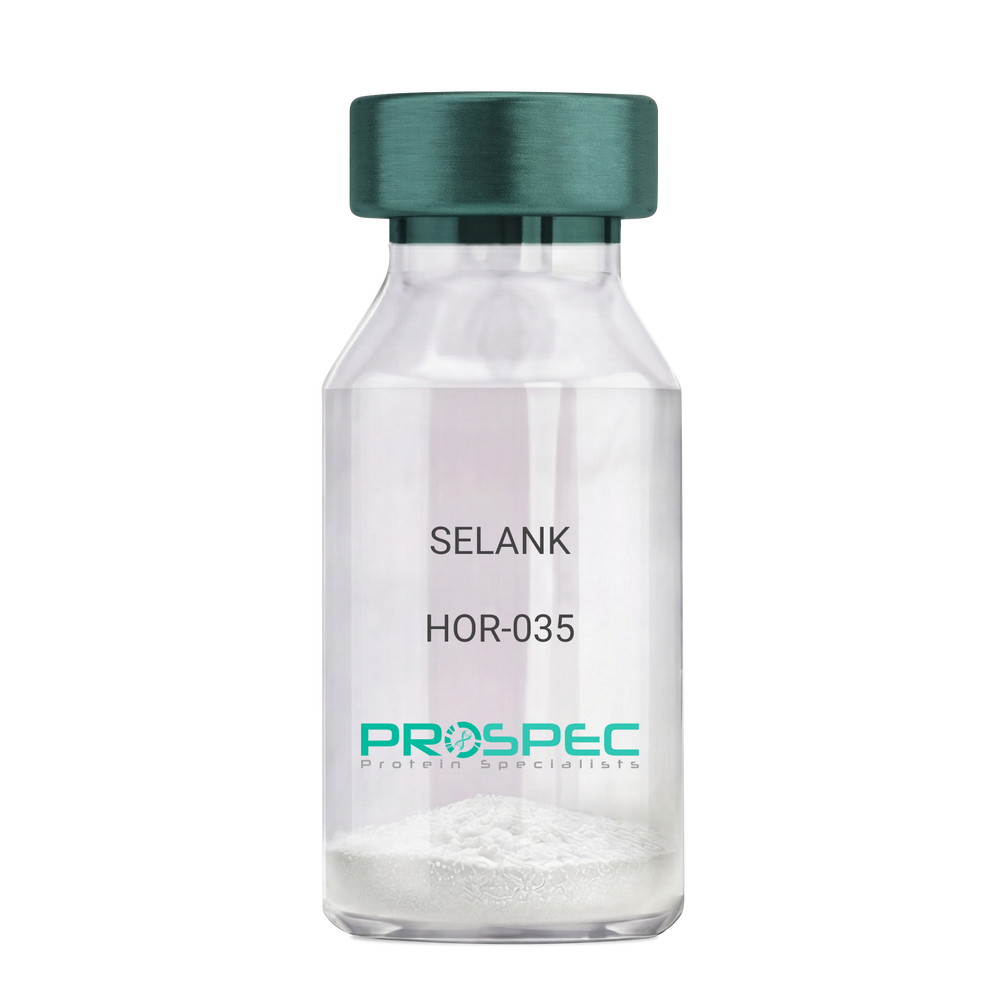
    SELANK

    Description:

    SELANK

    Product # :

    HOR-035

    Price :

    Quantity :

    Shipping Method :

    Room Temp Icon

    Shipped at Room temp

    Add To Cart

    More Info

    • description
    • formulation
    • purity
    • More Info

    Description

    SELANK Synthetic is a single, non-glycosylated polypeptide chain containing 7 amino acids, having a molecular mass of 751.89 Dalton and a Molecular formula of C33H57N11O9.

    Formulation

    The protein was lyophilized with no additives.

    Purity

    Greater than 97.0% as determined by analysis by RP-HPLC.

    More Info

    • Physical Appearance

      Sterile Filtered White lyophilized (freeze-dried) powder.

    • Stability

      Lyophilized SELANK although stable at room temperature for 3 weeks, should be stored desiccated below -18°C. Upon reconstitution SELANK should be stored at 4°C between 2-7 days and for future use below -18°C. For long term storage it is recommended to add a carrier protein (0.1% HSA or BSA). Please prevent freeze-thaw cycles.

    • Solubility

      It is recommended to reconstitute the lyophilized SELANK in sterile 18MΩ-cm H2O not less than 100 µg/ml, which can then be further diluted to other aqueous solutions.

    • Amino Acid Sequence

      H-Thr-Lys-Pro-Arg-Pro-Gly-Pro-OH.

    • Background

      Selank, also known as TP-7, is a synthetic peptide that has garnered significant attention in the scientific community due to its potential anxiolytic, neuroprotective, and nootropic effects. This heptapeptide, derived from the naturally occurring human tetrapeptide Tuftsin, has been shown to possess a wide range of biological activities, including enhancing memory, reducing anxiety, and potentially mitigating the effects of neurodegenerative diseases.

      Selank's primary mechanism of action involves its interaction with the GABAergic system, the body's main inhibitory neurotransmitter system. By modulating the activity of GABA receptors, Selank can exert a calming effect on the brain, reducing anxiety and enhancing cognitive function. Studies by Semenova et al. (2014) have demonstrated that Selank can enhance memory and learning in rats, suggesting potential applications in cognitive enhancement and the treatment of cognitive disorders.

      In addition to its anxiolytic and nootropic effects, Selank has been shown to possess neuroprotective properties. Research by Ershov et al. (2016) found that Selank could protect neurons from oxidative stress, suggesting potential applications in the treatment of neurodegenerative diseases such as Alzheimer's and Parkinson's disease.

      Given its anxiolytic, nootropic, and neuroprotective effects, Selank has been proposed as a potential therapeutic agent for a variety of conditions, including anxiety disorders, cognitive disorders, and neurodegenerative diseases. For instance, a study by Medvedev et al. (2017) found that Selank could improve symptoms in patients with generalized anxiety disorder, indicating its potential as a therapeutic agent in the treatment of anxiety disorders.

      While research on Selank is promising, it is important to note that most studies have been conducted in animals or in vitro. More research is needed to fully understand the potential effects and applications of Selank in humans. However, the existing body of research suggests that Selank could be a promising tool in the treatment of anxiety disorders, cognitive disorders, and neurodegenerative diseases.

    ProSpec's products are furnished for LABORATORY RESEARCH USE ONLY. The product may not be used as drugs, agricultural or pesticidal products, food additives or household chemicals.

    Selank
  • View Data Sheet

    Name :

    Adiponectin Porcine, HEK

    Description:

    Adiponectin Porcine Recombinant, HEK derived

    Acrp30, AdipoQ, GBP-28, APM-1, ACDC.

    Product # :

    CYT-696

    Price :

    Quantity :

    Shipping Method :

    Room Temp Icon

    Shipped at Room temp

    Add To Cart

    More Info

    • description
    • source
    • formulation
    • purity
    • More Info

    Description

    The Acrp30 Porcine Recombinant contains a total of 238 amino acids having a molecular Mass of 26kDa. The Porcine Adiponectin is fused to a 13 amino acid long N-terminal FLAG tag.

    Source

    HEK293 (Human Embryonic Kidney cell line).

    Formulation

    Sterile filtered and lyophilized from 0.5mg/ml in 20mM Tris buffer and 50mM NaCl pH-7.5.

    Purity

    Greater than 90% as determined by SDS PAGE.

    More Info

    • Introduction

      Adiponectin is a recently discovered 244 amino acid protein, the product of the apM1 gene, which is physiologically active and specifically and highly expressed in adipose cells (Adipokine). The protein belongs to the soluble defense collagen super family; it has a collagen-like domain structurally homologous with collagen VIII and X and complement factor C1q-like globular domain. APM-1 forms homotrimers, which are the building blocks for higher order complexes found circulating in serum.

    • Synonyms

      Acrp30, AdipoQ, GBP-28, APM-1, ACDC.

    • Stability

      For long term, store lyophilized AdipoQ at -20°C. Aliquot the product after reconstitution to avoid repeated freezing/thawing cycles. Reconstituted protein can be stored at 4°C for a limited period of time; it does not show any change after two weeks at 4°C.The lyophilized protein remains stable for 24 months when stored at -20°C.

    • Solubility

      Add deionized water and let the lyophilized pellet dissolve completely.

    • Amino Acid Sequence

      HVDYKDDDDK PAGETTEKPG ALLPMPKGAC AGWMAGIPGH PGHNGTPGRD GRDGVPGEKG EKGDTGLTGP KGDTGESGVT GVEGPRGFPG IPGRKGEPGE SAYVYRSAFS VGLETRVTVP NMPIRFTKIF YNQQNHYDVT TGKFHCNIPG LYYFSFHITV LKDVKVSLYK DKAVLFTYDQ QDKNVDQASG VLLYLEKGDQ WLQAYGDEEN GVYADNVNDS FTGFLLYHNIE.

    • Background

      What is the molecular weight/Mw of ADIPONECTIN Protein?
      ADIPONECTIN Protein has a total Mw of 26kDa.

      What is the source or expression system of ADIPONECTIN Protein?
      HEK293

      What is the Purity of ADIPONECTIN Protein?
      ADIPONECTIN Protein is >90% pure as determined by SDS-PAGE.

      What is the Biological Activity of ADIPONECTIN Protein?
      The biological functionality of ADIPONECTIN Protein will be determined in the future.

      What is the amino acid sequence of ADIPONECTIN Protein?
      HVDYKDDDDK PAGETTEKPG ALLPMPKGAC AGWMAGIPGH PGHNGTPGRD GRDGVPGEKG EKGDTGLTGP KGDTGESGVT GVEGPRGFPG IPGRKGEPGE SAYVYRSAFS VGLETRVTVP NMPIRFTKIF YNQQNHYDVT TGKFHCNIPG LYYFSFHITV LKDVKVSLYK DKAVLFTYDQ QDKNVDQASG VLLYLEKGDQ WLQAYGDEEN GVYADNVNDS FTGFLLYHNIE.

      What applications can ADIPONECTIN Protein be used in?
      ADIPONECTIN Protein can probably be used in western blot, ELISA and Lateral Flow.

      What is the endotoxin level for ADIPONECTIN Protein?
      The endotoxin level is minimal, ADIPONECTIN Protein was purified using conventional chromatography techniques.

    ProSpec's products are furnished for LABORATORY RESEARCH USE ONLY. The product may not be used as drugs, agricultural or pesticidal products, food additives or household chemicals.

    Adiponectin Porcine Hek
  • 1
  • …
  • 34
  • 35
  • 36
  • 37
  • 38
  • …
  • 42
Your browser does not support the video tag.

Products

  • Cytokines
  • Growth Factors
  • Chemokines
  • CD Antigens
  • Neurotrophins
  • Hormones
  • Enzymes
  • Viral Antigens
  • Recombinant Proteins
  • Natural Proteins
  • Monoclonal Antibodies
  • Polyclonal Antibodies
  • Thermal Packaging

About

  • Company
  • Founder
  • Contribution
  • Contact Us
  • My Account

Ordering

  • Ordering Method
  • Ordering - Credit Card
  • Ordering PO
  • Shipping Fees
  • FAQ's

Legal

  • Terms & Conditions
  • Privacy
  • Site Map
  • info@prospecbio.com
  • Facebook
  • Instagram
  • Linkedin Profile

© 2026 ProSpec-Tany TechnoGene Ltd. All Rights Reserved.

  • Choosing a selection results in a full page refresh.
  • Opens in a new window.