Search results
1000 results found for “BATF”
Name
Description
Product #
Price
Quantity
Shipping Method
- View Data Sheet
Name :
TARC MouseDescription:
Thymus and Activation Regulated Chemokine (CCL17) Mouse Recombinant
C-C motif chemokine 17, Small-inducible cytokine A17, Thymus and activation-regulated chemokine, CC chemokine TARC, ABCD-2, CCL17, CCL-17, SCYA17, TARC, A-152E5.3, MGC138271, MGC138273.
Product # :
CHM-270Price :
Quantity :
Shipping Method :
Shipped at Room temp
More Info
- description
- source
- formulation
- purity
- biological activity
- More Info
Description
TARC Mouse Recombinant produced in E.Coli is a non-glycosylated, Polypeptide chain containing 70 amino acids and having a molecular mass of 7.9kDa. The TARC Mouse is purified by proprietary chromatographic techniques.
Source
Escherichia Coli.
Formulation
The protein was lyophilized from a 0.2µm filtered concentrated solution in 1×PBS, pH7.4.
Purity
Greater than 97.0% as determined by
(a) Analysis by RP-HPLC.
(b) Analysis by SDS-PAGE.Biological Activity
The ED50 as determined by its ability to chemoattract BaF3 mouse pro-B cells transfected with human CCR4 is typically 2-10 ng/ml.More Info
-
Introduction
TARC cDNA encodes a 94 amino acid precursor protein with a 23 amino acid residue signal peptide that is cleaved off to generate the 71 amino acid residue mature secreted protein. Along with CC chemokine family members, CCL-17 has approximately 24-29% amino acid sequence identity with RANTES, MIP-1a, MIP-1b, MCP-1, MCP-2, MCP-3 and I-309. TARC is expressed in thymus, and at a lower level in the lung, colon, and small intestine. TARC is in addition transiently expressed in stimulated peripheral blood mononuclear cells. Recombinant TARC has been shown to be chemotactic for T cell lines but not monocytes or neutrophils. CCL-17 was recently identified to be a specific functional ligand for CCR4, a receptor that is selectively expressed on T cells. CCL17 is one of quite a few Cys-Cys (CC) cytokine genes clustered on the q arm of chromosome 16. CCL17 shows chemotactic activity for T lymphocytes, but not monocytes or granulocytes. CCL17 binds to chemokine receptors CCR4 and CCR8. This chemokine plays important roles in T cell development in thymus as well as in trafficking and activation of mature T cells.
-
Synonyms
C-C motif chemokine 17, Small-inducible cytokine A17, Thymus and activation-regulated chemokine, CC chemokine TARC, ABCD-2, CCL17, CCL-17, SCYA17, TARC, A-152E5.3, MGC138271, MGC138273.
-
Physical Appearance
Sterile Filtered White lyophilized (freeze-dried) powder.
-
Stability
Lyophilized TARC although stable at room temperature for 3 weeks, should be stored desiccated below -18C. Upon reconstitution TARC should be stored at 4C between 2-7 days and for future use below -18C. For long term storage it is recommended to add a carrier protein (0.1% HSA or BSA).Please prevent freeze-thaw cycles.
-
Solubility
It is recommended to reconstitute the lyophilized TARC in sterile 18M-cm H2O not less than 100µg/ml, which can then be further diluted to other aqueous solutions.
-
Amino Acid Sequence
ARATNVGREC CLDYFKGAIP IRKLVSWYKT SVECSRDAIV FLTVQGKLIC ADPKDKHVKK AIRLVKNPRP.
ProSpec's products are furnished for LABORATORY RESEARCH USE ONLY. The product may not be used as drugs, agricultural or pesticidal products, food additives or household chemicals.
- View Data Sheet
Name :
PDGF CC HumanDescription:
Platelet Derived Growth Factor-CC Human Recombinant
Platelet Derived Growth Factor C, Spinal Cord-Derived Growth Factor, FALLOTEIN, PDGF-C, VEGF-E, SCDGF, Secretory Growth Factor-Like Protein, Platelet-Derived Growth Factor C, PDGFC.
Product # :
CYT-872Price :
Quantity :
Shipping Method :
Shipped at Room temp
More Info
- description
- source
- formulation
- purity
- biological activity
- More Info
Description
PDGF-CC Human Recombinant (235-345) produced in E.Coli is a disulfide-linked homodimer containing 2x118 amino acids and having a total molecular mass of 26.8kDa.The PDGF-CC is fused to a 7 amino acid His tag [M-HHHHHH] at N-terminal and purified by proprietary chromatographic techniques.
Source
Escherichia Coli.
Formulation
Lyophilized from a 0.2µm filtered solution in Acetonitrile and TFA.
Purity
Greater than 97.0% as determined by SDS-PAGE.
Biological Activity
The ED50, as measured in a proliferation assay using mouse NR6R-3T3 cells, is less than 350ng/ml.More Info
-
Introduction
Platelet Derived Growth Factor-CC (PDGF-CC) belongs to the PGDF family of growth factors. PDGF-CC binds with high-affinity to PDGF R-a and activates PDGF R-ab heterodimers. During development, PDGF-CC is involved in ductal morphogenesis, cardiovascular smooth muscle cell proliferation; also PDGF-CC is an angiogenic factor. Furthermore, PDGF-CC is expressed in numerous tumors and tumor cell lines, and may be linked with tumorigenesis.
-
Synonyms
Platelet Derived Growth Factor C, Spinal Cord-Derived Growth Factor, FALLOTEIN, PDGF-C, VEGF-E, SCDGF, Secretory Growth Factor-Like Protein, Platelet-Derived Growth Factor C, PDGFC.
-
Physical Appearance
Sterile Filtered White lyophilized (freeze-dried) powder.
-
Stability
Lyophilized PDGF-CC although stable at room temperature for 3 weeks, should be stored desiccated below -18°C. Upon reconstitution PDGF-CC should be stored at 4°C between 2-7 days and for future use below -18°C.For long term storage it is recommended to add a carrier protein (0.1% HSA or BSA).Please prevent freeze-thaw cycles.
-
Solubility
It is recommended to reconstitute the lyophilized PDGF-CC in sterile 18M-cm H2O not less than 100µg/ml, which can then be further diluted to other aqueous solutions.
-
Amino Acid Sequence
MHHHHHHVVD LNLLTEEVRL YSCTPRNFSV SIREELKRTD TIFWPGCLLV KRCGGNCACC LHNCNECQCV PSKVTKKYHE VLQLRPKTGV RGLHKSLTDV ALEHHEECDC VCRGSTGG.
ProSpec's products are furnished for LABORATORY RESEARCH USE ONLY. The product may not be used as drugs, agricultural or pesticidal products, food additives or household chemicals.
- View Data Sheet
Name :
TBCA HumanDescription:
Tubulin Folding Cofactor A Human Recombinant
Tubulin-specific chaperone A, Tubulin-folding cofactor A, CFA, TCP1-chaperonin cofactor A, TBCA.
Product # :
PRO-705Price :
Quantity :
Shipping Method :
Shipped with Ice Packs
More Info
- description
- source
- formulation
- purity
- More Info
Description
TBCA Human Recombinant produced in E.Coli is a single, non-glycosylated, polypeptide chain containing 108 amino acids (1-108 a.a.) and having a molecular mass of 12.8 kDa.The TBCA is purified by proprietary chromatographic techniques.
Source
Escherichia Coli.
Formulation
The TBCA solution contains 20mM Tris-HCl buffer pH 7.5, 1mM DTT and 10% glycerol.
Purity
Greater than 95.0% as determined by SDS-PAGE.
More Info
-
Introduction
TBCA is a tubulin-folding protein which is involved in the early step of the tubulin folding pathway. TBCA is one of four proteins (cofactors A, D, E, and C) implicated in the pathway directing to properly folded beta-tubulin from folding intermediates. Cofactors A and D are thought to be a factor in capturing and stabilizing beta-tubulin in a quasi-native confirmation. TBCA is crucial for cell viability, if reduced it causes a decrease in the amount of soluble tubulin, alterations in microtubules and G1 cell cycle arrest. Cofactor E attaches to the cofactor D-tubulin complex, afterward, interaction with cofactor C triggers the release of tubulin polypeptides that are committed to the native state.
-
Synonyms
Tubulin-specific chaperone A, Tubulin-folding cofactor A, CFA, TCP1-chaperonin cofactor A, TBCA.
-
Physical Appearance
Sterile Filtered colorless solution.
-
Stability
Store at 4°C if entire vial will be used within 2-4 weeks. Store, frozen at -20°C for longer periods of time. For long term storage it is recommended to add a carrier protein (0.1% HSA or BSA).Avoid multiple freeze-thaw cycles.
-
Amino Acid Sequence
MADPRVRQIK IKTGVVKRLV KEKVMYEKEA KQQEEKIEKM RAEDGENYDI KKQAEILQES RMMIPDCQRR LEAAYLDLQR ILENEKDLEE AEEYKEARLV LDSVKLEA.
ProSpec's products are furnished for LABORATORY RESEARCH USE ONLY. The product may not be used as drugs, agricultural or pesticidal products, food additives or household chemicals.
- View Data Sheet
Name :
C4BPB HumanDescription:
Complement Component 4 Binding Protein, Beta Human Recombinant
C4b-binding protein beta chain, C4BPB, C4BP.
Product # :
PRO-1174Price :
Quantity :
Shipping Method :
Shipped with Ice Packs
More Info
- description
- source
- formulation
- purity
- More Info
Description
C4BPB Human Recombinant produced in E.Coli is a single, non-glycosylated polypeptide chain containing 260 amino acids (18-252 a.a) and having a molecular mass of 29kDa.C4BPB is fused to a 25 amino acid His-tag at N-terminus & purified by proprietary chromatographic techniques.
Source
E.coli.
Formulation
C4BPB protein solution (1mg/ml) containing 20mM Tris-HCl buffer (pH8.0) and 10% glycerol and 0.15M NaCl.
Purity
Greater than 90% as determined by SDS-PAGE.
More Info
-
Introduction
Complement Component 4 Binding Protein, Beta (C4BPB) belongs to a superfamily of proteins composed primarily of tandemly arrayed short consensus repeats of approximately 60 amino acids. C4BPB has a regulatory role in the coagulation system also, mediated via the beta-chain binding of protein S, a vitamin K-dependent protein which functions as a cofactor of activated protein C. A single, unique beta-chain of the C4BPB assembles with 7 identical alpha-chains into the principal isoform of C4BPB, which is a multimeric protein that controls activation of the complement cascade via the classical pathway. C4BPB binds as a cofactor to C3b/C4b inactivator (C3bINA), which subsequently hydrolyzes the complement fragment C4b. In addition, C4BPB accelerates the degradation of the C4bC2a complex (C3 convertase) by detaching the complement fragment C2a. Furthermore, C4BPB interacts with anticoagulant protein S and with serum amyloid P component.
-
Synonyms
C4b-binding protein beta chain, C4BPB, C4BP.
-
Physical Appearance
Sterile Filtered colorless solution.
-
Stability
Store at 4°C if entire vial will be used within 2-4 weeks. Store, frozen at -20°C for longer periods of time. For long term storage it is recommended to add a carrier protein (0.1% HSA or BSA).Avoid multiple freeze-thaw cycles.
-
Amino Acid Sequence
MGSSHHHHHH SSGLVPRGSH MGSHMSDAEH CPELPPVDNS IFVAKEVEGQ ILGTYVCIKG YHLVGKKTLF CNASKEWDNT TTECRLGHCP DPVLVNGEFS SSGPVNVSDK ITFMCNDHYI LKGSNRSQCL EDHTWAPPFP ICKSRDCDPP GNPVHGYFEG NNFTLGSTIS YYCEDRYYLV GVQEQQCVDG EWSSALPVCK LIQEAPKPEC EKALLAFQES KNLCEAMENF MQQLKESGMT MEELKYSLEL KKAELKAKLL.
ProSpec's products are furnished for LABORATORY RESEARCH USE ONLY. The product may not be used as drugs, agricultural or pesticidal products, food additives or household chemicals.
- View Data Sheet
Name :
TCEB1 HumanDescription:
Transcription Elongation Factor B Polypeptide 1 Human Recombinant
Transcription elongation factor B polypeptide 1, Elongin 15 kDa subunit, Elongin-C, EloC, RNA polymerase II transcription factor SIII subunit C, SIII p15, TCEB1, SIII.
Product # :
PRO-1017Price :
Quantity :
Shipping Method :
Shipped with Ice Packs
More Info
- description
- source
- formulation
- purity
- More Info
Description
TCEB1 Human Recombinant produced in E.Coli is a single, non-glycosylated polypeptide chain containing 132 amino acids (1-112 a.a.) and having a molecular mass of 14.6kDa. TCEB1 is fused to a 20 amino acid His-tag at N-terminus & purified by proprietary chromatographic techniques.
Source
Escherichia Coli.
Formulation
TCEB1 protein solution (1mg/ml) containing 20mM Tris-HCl buffer (pH 8.0), 10% glycerol, 1mM DTT and 0.15M NaCl.
Purity
Greater than 90.0% as determined by SDS-PAGE.
More Info
-
Introduction
TCEB1 (elongin C) is a subunit of elongin, which is a common transcription elongation factor that increases the RNA polymerase II transcription elongation past template encoded arresting sites. The SIII complex is comprised of elongins A/A2, B and C. The SIII complex activates elongation by RNA polymerase II by curbing transient pausing of the polymerase at numerous sites within transcription units. Elongin A acts as the transcriptionally active component of the SIII complex, while elongins B and C are regulatory subunits. Elongin A2 is specifically expressed in the testis, and able to forming a stable complex with elongins B and C. The VHL (von Hippel-Lindau) tumor suppressor protein binds to elongins B and C, and thus inhibits transcription elongation.
-
Synonyms
Transcription elongation factor B polypeptide 1, Elongin 15 kDa subunit, Elongin-C, EloC, RNA polymerase II transcription factor SIII subunit C, SIII p15, TCEB1, SIII.
-
Physical Appearance
Sterile Filtered colorless solution.
-
Stability
Store at 4°C if entire vial will be used within 2-4 weeks. Store, frozen at -20°C for longer periods of time. For long term storage it is recommended to add a carrier protein (0.1% HSA or BSA).Avoid multiple freeze-thaw cycles.
-
Amino Acid Sequence
MGSSHHHHHH SSGLVPRGSH MDGEEKTYGG CEGPDAMYVK LISSDGHEFI VKREHALTSG TIKAMLSGPG QFAENETNEV NFREIPSHVL SKVCMYFTYK VRYTNSSTEI PEFPIAPEIA LELLMAANFL DC.
ProSpec's products are furnished for LABORATORY RESEARCH USE ONLY. The product may not be used as drugs, agricultural or pesticidal products, food additives or household chemicals.
- View Data Sheet
Name :
TFPI HumanDescription:
Tissue Factor Pathway Inhibitor Human Recombinant
Tissue Factor Pathway Inhibitor (Lipoprotein-Associated Coagulation Inhibitor), Extrinsic Pathway Inhibitor, Tissue Factor Pathway Inhibitor, anti-convertin, TFPI1, EPI, LACI, TFI.
Product # :
PRO-1702Price :
Quantity :
Shipping Method :
Shipped with Ice Packs
More Info
- description
- source
- formulation
- purity
- More Info
Description
TFPI Human Recombinant produced in E.coli is a single, non-glycosylated polypeptide chain containing 299 amino acids (29-304) and having a molecular mass of 34.3kDa.TFPI is fused to a 23 amino acid His-tag at N-terminus & purified by proprietary chromatographic techniques.
Source
Escherichia Coli.
Formulation
The TFPI solution (1mg/ml) contains 20mM Tris-HCl buffer (pH 8.0), 0.4M Urea and 10% glycerol.
Purity
Greater than 85.0% as determined by SDS-PAGE.
More Info
-
Introduction
TFPI is a protease inhibitor which controls the tissue factor (TF)-dependent pathway of blood coagulation. The coagulation process starts with the creation of a factor VIIa-TF complex, that proteolytically triggers additional proteases (factors IX and X) and eventually results in a fibrin clot. TFPI inhibits the activated factor X and VIIa-TF proteases in an autoregulatory loop. TFPI is glycosylated and predominantly located in the vascular endothelium and plasma in both free forms and complexed with plasma lipoproteins. A number of alternatively spliced transcript variants of this gene have are known, however the full-length nature of several of these variants were not yet established.
-
Synonyms
Tissue Factor Pathway Inhibitor (Lipoprotein-Associated Coagulation Inhibitor), Extrinsic Pathway Inhibitor, Tissue Factor Pathway Inhibitor, anti-convertin, TFPI1, EPI, LACI, TFI.
-
Physical Appearance
Sterile Filtered clear solution.
-
Stability
Store at 4°C if entire vial will be used within 2-4 weeks. Store, frozen at -20°C for longer periods of time. For long term storage it is recommended to add a carrier protein (0.1% HSA or BSA).Avoid multiple freeze-thaw cycles.
-
Amino Acid Sequence
MGSSHHHHHH SSGLVPRGSH MGSDSEEDEE HTIITDTELP PLKLMHSFCA FKADDGPCKA IMKRFFFNIF TRQCEEFIYG GCEGNQNRFE SLEECKKMCT RDNANRIIKT TLQQEKPDFC FLEEDPGICR GYITRYFYNN QTKQCERFKY GGCLGNMNNF ETLEECKNIC EDGPNGFQVD NYGTQLNAVN NSLTPQSTKV PSLFEFHGPS WCLTPADRGL CRANENRFYY NSVIGKCRPF KYSGCGGNEN NFTSKQECLR ACKKGFIQRI SKGGLIKTKR KRKKQRVKIA YEEIFVKNM.
ProSpec's products are furnished for LABORATORY RESEARCH USE ONLY. The product may not be used as drugs, agricultural or pesticidal products, food additives or household chemicals.
- View Data Sheet
Name :
PFN4 HumanDescription:
Profilin-4 Human Recombinant
PFN-4, Profilin-IV, Profilin4.
Product # :
PRO-818Price :
Quantity :
Shipping Method :
Shipped with Ice Packs
More Info
- description
- source
- formulation
- purity
- More Info
Description
PFN4 Human Recombinant produced in E.Coli is a single, non-glycosylated, polypeptide chain containing 149 amino acids (1-129 a.a.) and having a molecular mass of 16.4 kDa. PFN4 protein is fused to a 20 amino acid His tag at N-terminus and purified by standard chromatography.
Source
Escherichia Coli.
Formulation
PFN4 Human solution containing 20mM Trsi HCL pH-8, 1mM DTT and 10% glycerol.
Purity
Greater than 95% as determined by SDS-PAGE.
More Info
-
Introduction
PFN4 is a small actin-binding protein that participates in the dynamic turnover and restructuring of the actin cytoskeleton. PFN4 is localized in all eukaryotic organisms in the majority of cells. PFN4 is crucial for spatially and temporally controlled growth of actin microfilaments, which is a necessary process in cellular locomotion and cell shape changes.
-
Synonyms
PFN-4, Profilin-IV, Profilin4.
-
Physical Appearance
Sterile filtered colorless solution.
-
Stability
Store at 4°C if entire vial will be used within 2-4 weeks. Store, frozen at -20°C for longer periods of time. For long term storage it is recommended to add a carrier protein (0.1% HSA or BSA). Avoid multiple freeze-thaw cycles.
-
Amino Acid Sequence
MGSSHHHHHH SSGLVPRGSH MSHLQSLLLD TLLGTKHVDS AALIKIQERS LCVASPGFNV TPSDVRTLVN GFAKNPLQAR REGLYFKGKD YRCVRADEYS LYAKNENTGV VVVKTHLYLL VATYTEGMYP SICVEATESL GDYLRKKGS.
ProSpec's products are furnished for LABORATORY RESEARCH USE ONLY. The product may not be used as drugs, agricultural or pesticidal products, food additives or household chemicals.
- View Data Sheet
Name :
CBX5 HumanDescription:
Chromobox Homolog 5 Human Recombinant
Chromobox homolog 5 (HP1 alpha homolog, Drosophila), Heterochromatin protein 1 homolog alpha, HP1Hs alpha, HP1 alpha homolog.
Product # :
PRO-1062Price :
Quantity :
Shipping Method :
Shipped with Ice Packs
More Info
- description
- source
- formulation
- purity
- More Info
Description
CBX5 Human Recombinant produced in E. coli is a single polypeptide chain containing 215 amino acids (1-191) and having a molecular mass of 24.8kDa.CBX5 is fused to a 24 amino acid His-tag at N-terminus & purified by proprietary chromatographic techniques.
Source
E.coli.
Formulation
The CBX5 solution (1mg/1ml) contains 20mM Tris-HCl buffer (pH 8.0), 100mM Nacl, 1mM DTT and 30% glycerol.
Purity
Greater than 90% as determined by SDS-PAGE.
More Info
-
Introduction
CBX5 belongs to the heterochromatin protein family. CBX5 is enriched in the heterochromatin and linked with centromeres. CBX5 takes part in the creation of functional kinetochore by interaction with important kinetochore proteins. CBX5 has a pseudogene situated on chromosome 3. Additionaly, The CBX5 proteins reconnect with chromatin at the end of mitosis, as Histone H3 is dephosphorylated.
-
Synonyms
Chromobox homolog 5 (HP1 alpha homolog, Drosophila), Heterochromatin protein 1 homolog alpha, HP1Hs alpha, HP1 alpha homolog.
-
Physical Appearance
Sterile Filtered colorless solution.
-
Stability
Store at 4°C if entire vial will be used within 2-4 weeks. Store, frozen at -20°C for longer periods of time. For long term storage it is recommended to add a carrier protein (0.1% HSA or BSA).Avoid multiple freeze-thaw cycles.
-
Amino Acid Sequence
MGSSHHHHHH SSGLVPRGSH MGSHMGKKTK RTADSSSSED EEEYVVEKVL DRRVVKGQVE YLLKWKGFSE EHNTWEPEKN LDCPELISEF MKKYKKMKEG ENNKPREKSE SNKRKSNFSN SADDIKSKKK REQSNDIARG FERGLEPEKI IGATDSCGDL MFLMKWKDTD EADLVLAKEA NVKCPQIVIA FYEERLTWHA YPEDAENKEK ETAKS.
ProSpec's products are furnished for LABORATORY RESEARCH USE ONLY. The product may not be used as drugs, agricultural or pesticidal products, food additives or household chemicals.
- View Data Sheet
Name :
CFL2 HumanDescription:
Cofilin-2 Human Recombinant
Cofilin-2, Cofilin- muscle isoform, CFL2, NEM7.
Product # :
PRO-912Price :
Quantity :
Shipping Method :
Shipped with Ice Packs
More Info
- description
- source
- formulation
- purity
- More Info
Description
CFL2 Human Recombinant produced in E.Coli is a single, non-glycosylated polypeptide chain containing 186 amino acids (1-166 a.a.) and having a molecular mass of 20.9kDa.CFL2 is fused to a 20 amino acid His-tag at N-terminus & purified by proprietary chromatographic techniques.
Source
Escherichia Coli.
Formulation
CFL2 protein solution (1mg/ml) containing 20mM Tris-HCl buffer (pH 8.0), 2mM DTT, 10% glycerol and 50mM NaCl.
Purity
Greater than 90.0% as determined by SDS-PAGE.
More Info
-
Introduction
CFL2 protein is a member of the actin-binding proteins ADF family which contains 1 ADF-H domain. Cofilin is a broadly distributed intracellular actin-modulating protein which binds and depolymerizes filamentous F-actin and inhibits the polymerization of monomeric G-actin in a pH-dependent manner. Defects in the CFL2 gene are the cause of nemaline myopathy type 7 (NEM7).
-
Synonyms
Cofilin-2, Cofilin- muscle isoform, CFL2, NEM7.
-
Physical Appearance
Sterile filtered colorless solution.
-
Stability
Store at 4°C if entire vial will be used within 2-4 weeks. Store, frozen at -20°C for longer periods of time. For long term storage it is recommended to add a carrier protein (0.1% HSA or BSA).Avoid multiple freeze-thaw cycles.
-
Amino Acid Sequence
MGSSHHHHHH SSGLVPRGSH MASGVTVNDE VIKVFNDMKV RKSSTQEEIK KRKKAVLFCL SDDKRQIIVE EAKQILVGDI GDTVEDPYTS FVKLLPLNDC RYALYDATYE TKESKKEDLV FIFWAPESAP LKSKMIYASS KDAIKKKFTG IKHEWQVNGL DDIKDRSTLG EKLGGNVVVS LEGKPL.
ProSpec's products are furnished for LABORATORY RESEARCH USE ONLY. The product may not be used as drugs, agricultural or pesticidal products, food additives or household chemicals.
- View Data Sheet
Name :
LIN28 Human, TATDescription:
LIN28-TAT Human Recombinant
CSDD1, FLJ12457, LIN-28, LIN28A, Protein lin-28 homolog A, ZCCHC1, Zinc finger CCHC domain-containing protein 1, Lin-28A, LIN28.
Product # :
PRO-2495Price :
Quantity :
Shipping Method :
Shipped with Ice Packs
More Info
- description
- source
- formulation
- purity
- More Info
Description
Recombinant Human LIN28 produced in E.Coli is a single, non-glycosylated polypeptide chain containing 222 amino acids (including 13- residue C-terminal TAT peptide) and having a molecular mass of 24.4kDa. The LIN28 is purified by proprietary chromatographic techniques.
Source
Escherichia Coli.
Formulation
The LIN28 protein solution was formulated in PBS with 50mM arginine
Purity
Greater than 90% as determined by SDS-PAGE (coomassie staining).
More Info
-
Introduction
LIN28 is a marker of undifferentiated human embryonic stem cells and it increases the productivity of the formation of induced pluripotent stem cells from human fibroblasts. LIN28 acts as a 'translational enhancer and therefore leading specific mRNAs to polysomes and causes an increased protein synthesis. LIN28 binds let-7 pre-miRNA and blocks production of the mature let-7 microRNA in mouse embryonic stem cells.
-
Synonyms
CSDD1, FLJ12457, LIN-28, LIN28A, Protein lin-28 homolog A, ZCCHC1, Zinc finger CCHC domain-containing protein 1, Lin-28A, LIN28.
-
Physical Appearance
Sterile filtered colorless solution.
-
Stability
Store at 4°C if entire vial will be used within 2-4 weeks. Store, frozen at -20°C for longer periods of time. For long term storage it is recommended to add a carrier protein (0.1% HSA or BSA). Avoid multiple freeze-thaw cycles.
-
Amino Acid Sequence
GPSVSNQQFA GGCAKAAEEA PEEAPEDAAR AADEPQLLHG AGICKWFNVR MGFGFLSMTA RAGVALDPPV DVFVHQSKLH MEGFRSLKEG EAVEFTFKKS AKGLESIRVT GPGGVFCIGS ERRPKGKSMQ KRRSKGDRCY NCGGLDHHAK ECKLPPQPKK CHFCQSISHM VASCPLKAQQ GPSAQGKPTY FREEEEEIHS PTLLPEAQNG GYGRKKRRQR RR.
ProSpec's products are furnished for LABORATORY RESEARCH USE ONLY. The product may not be used as drugs, agricultural or pesticidal products, food additives or household chemicals.
- View Data Sheet
Name :
MAP1LC3B HumanDescription:
Microtubule-Associated Protein 1 Light Chain 3 Beta Human Recombinant
Microtubule-Associated Protein 1 Light Chain 3 beta, ATG8F, Autophagy-related ubiquitin-like modifier LC3 B, MAP1 light chain 3-like protein 2, MAP1A/MAP1B LC3 B, LC3B, MAP1A/1BLC3, MAP1ALC3.
Product # :
PRO-076Price :
Quantity :
Shipping Method :
Shipped with Ice Packs
More Info
- description
- source
- formulation
- purity
- More Info
Description
MAP1LC3B produced in E.Coli is a single, non-glycosylated polypeptide chain containing 140 amino acids (1-120a.a.) and having a molecular mass of 16.2kDa.MAP1LC3B is fused to a 20 amino acid His-tag at N-terminus & purified by proprietary chromatographic techniques.
Source
Escherichia Coli.
Formulation
The MAP1LC3B protein solution (0.5mg/1ml) is formulated in 20mM Tris-HCl buffer (pH8.0)
1mM DTT, 100mM NaCl and 20% glycerol.Purity
Greater than 95% as determined by SDS-PAGE.
More Info
-
Introduction
MAP1LC3B is a member of the MAP1 LC3 family. MAP1LC3B is a subunit of neuronal microtubule-associated MAP1A and MAP1B proteins, that are involved in microtubule assembly and important for neurogenesis. In addition, MAP1LC3B takes part in formation of autophagosomal vacuoles and is expressed mainly in heart, testis, brain and skeletal muscle.
-
Synonyms
Microtubule-Associated Protein 1 Light Chain 3 beta, ATG8F, Autophagy-related ubiquitin-like modifier LC3 B, MAP1 light chain 3-like protein 2, MAP1A/MAP1B LC3 B, LC3B, MAP1A/1BLC3, MAP1ALC3.
-
Physical Appearance
Sterile Filtered clear solution.
-
Stability
Store at 4°C if entire vial will be used within 2-4 weeks. Store, frozen at -20°C for longer periods of time. For long term storage it is recommended to add a carrier protein (0.1% HSA or BSA).Avoid multiple freeze-thaw cycles.
-
Amino Acid Sequence
MGSSHHHHHH SSGLVPRGSH MPSEKTFKQR RTFEQRVEDV RLIREQHPTK IPVIIERYKG EKQLPVLDKT KFLVPDHVNM SELIKIIRRR LQLNANQAFF LLVNGHSMVS VSTPISEVYE SEKDEDGFLY MVYASQETFG
ProSpec's products are furnished for LABORATORY RESEARCH USE ONLY. The product may not be used as drugs, agricultural or pesticidal products, food additives or household chemicals.
- View Data Sheet
Name :
YY1 HumanDescription:
YY1 Transcription Factor Human Recombinant
YY1 transcription factor, YY1, DELTA, INO80S, NF-E1, UCRBP, YIN-YANG-1, Transcriptional repressor protein YY1, Delta transcription factor, Yin and yang 1, INO80 complex subunit S, YY-1.
Product # :
PRO-2108Price :
Quantity :
Shipping Method :
Shipped with Ice Packs
More Info
- description
- source
- formulation
- purity
- More Info
Description
YY1 Human Recombinant produced in E. coli is a single polypeptide chain containing 437 amino acids (1-414) and having a molecular mass of 47.1kDa.YY1 is fused to a 23 amino acid His-tag at N-terminus & purified by proprietary chromatographic techniques.
Source
Escherichia Coli.
Formulation
The YY1 solution (0.25mg/1ml) contains PBS, 20% glycerol and 1mM DTT.
Purity
Greater than 80.0% as determined by SDS-PAGE.
More Info
-
Introduction
YY1 Transcription Factor, also known as YY1, is a part of the GLI-Kruppel class of zinc finger proteins. YY1 has a positive and negative effect on a various cellular and viral genes by binding to sites overlapping the transcription start site. YY1 leads histone deacetylases and histone acetyltransferases to a promoter in order to activate or repress the promoter.
-
Synonyms
YY1 transcription factor, YY1, DELTA, INO80S, NF-E1, UCRBP, YIN-YANG-1, Transcriptional repressor protein YY1, Delta transcription factor, Yin and yang 1, INO80 complex subunit S, YY-1.
-
Physical Appearance
Sterile Filtered clear solution.
-
Stability
Store at 4°C if entire vial will be used within 2-4 weeks. Store, frozen at -20°C for longer periods of time. For long term storage it is recommended to add a carrier protein (0.1% HSA or BSA).Avoid multiple freeze-thaw cycles.
-
Amino Acid Sequence
MGSSHHHHHH SSGLVPRGSH MGSMASGDTL YIATDGSEMP AEIVELHEIE VETIPVETIE TTVVGEEEEE DDDDEDGGGG DHGGGGGHGH AGHHHHHHHH HHHPPMIALQ PLVTDDPTQV HHHQEVILVQ TREEVVGGDD SDGLRAEDGF EDQILIPVPA PAGGDDDYIE QTLVTVAAAG KSGGGGSSSS GGGRVKKGGG KKSGKKSYLS GGAGAAGGGG ADPGNKKWEQ KQVQIKTLEG EFSVTMWSSD EKKDIDHETV VEEQIIGENS PPDYSEYMTG KKLPPGGIPG IDLSDPKQLA EFARMKPRKI KEDDAPRTIA CPHKGCTKMF RDNSAMRKHL HTHGPRVHVC AECGKAFVES SKLKRHQLVH TGEKPFQCTF EGCGKRFSLD FNLRTHVRIH TGDRPYVCPF DGCNKKFAQS TNLKSHILTH AKAKNNQ.
ProSpec's products are furnished for LABORATORY RESEARCH USE ONLY. The product may not be used as drugs, agricultural or pesticidal products, food additives or household chemicals.
- View Data Sheet
Name :
RELM b MouseDescription:
RELM-Beta Mouse Recombinant
Resistin-like beta, RELM beta, Cysteine-rich secreted protein FIZZ2, Colon and small intestine-specific cysteine-rich protein, Cysteine-rich secreted protein A12-alpha-like 1, Colon carcinoma-related gene protein, RELM-b, XCP2, HXCP2.
Product # :
CYT-413Price :
Quantity :
Shipping Method :
Shipped at Room temp
More Info
- description
- source
- formulation
- purity
- More Info
Description
Mouse RELM-b Recombinant produced in E.Coli is a monomeric, non-glycosylated, polypeptide chain containing 83 amino acids and having a molecular mass of 8.9kDa. The Mouse RETNLB is purified by proprietary chromatographic techniques.
Source
Escherichia Coli.
Formulation
The protein was lyophilized from a concentrated (1mg/ml) protein solution containing 10mM Acetic Acid with 2:1 mannitol to protein.
Purity
Greater than 97% as determined by SDS-PAGE.
More Info
-
Introduction
RELM-beta (Resistin-Like Molecule-beta) is a member of a recently identified family of secreted proteins containing a conserved cystein-rich C-terminus. The RELM family consists of resistin (also called FIZZ3), RELM-alfa (FIZZ1), RELM-beta (FIZZ2) and RELM-gamma. Only resisistin and RELM-beta were found in humans whereas all four RELM family members were identified in rodents.
RELM-beta appears to be produced as a homodimer exclusively by intestinal goblet cells and can be found in high quantities in stool. Remarkably, stool of germ-free mice displaying sterile intestinal tract does not contain RELM-beta until bacterial colonization takes place after pathogen-free mice entered natural environment. Some, but not all, colon carcinoma cell lines secrete RELM-beta into the cell culture supernatant.
The physiological function of RELM-beta is not known. High doses of recombinant RELM-beta showed hyperglycemic effects including lowered glucose disposal and increased hepatic glucose production in mice. -
Synonyms
Resistin-like beta, RELM beta, Cysteine-rich secreted protein FIZZ2, Colon and small intestine-specific cysteine-rich protein, Cysteine-rich secreted protein A12-alpha-like 1, Colon carcinoma-related gene protein, RELM-b, XCP2, HXCP2.
-
Physical Appearance
Brownish lyophilized powder.
-
Stability
Lyophilized RETNLB is stable at -20°C. After reconstitution the protein should be kept at all times at -20°C. It is recommended to add a carrier protein (0.1% HSA or BSA) for long term storage.
-
Solubility
Reconstitute at 0.1 mg/ml with sterile pyrogen free water.
-
Amino Acid Sequence
MQCSFESLVD QRIKEALSRQ EPKTISCTSV TSSGRLASCP AGMVVTGCAC GYGCGSWDIR NGNTCHCQCS VMDWASARCC RMA.
ProSpec's products are furnished for LABORATORY RESEARCH USE ONLY. The product may not be used as drugs, agricultural or pesticidal products, food additives or household chemicals.
- View Data Sheet
Name :
BD 2 HumanDescription:
Beta Defensin-2 Human Recombinant
BD-2, hBD-2, Defensin beta 2, Skin-antimicrobial peptide 1, SAP1, DEFB4, DEFB102, DEFB2, DEFB4P, Beta-defensin 2.
Product # :
CYT-571Price :
Quantity :
Shipping Method :
Shipped at Room temp
More Info
- description
- source
- formulation
- purity
- biological activity
- More Info
Description
Beta Defensin-2 Human Recombinant produced in E.Coli is a single, non-glycosylated polypeptide chain containing 41 amino acids and having a molecular mass of 4.3 kDa. The BD-2 is purified by proprietary chromatographic techniques.
Source
Escherichia Coli.
Formulation
The Human BD-2 was lyophilized from a 0.2µm filtered concentrated (1mg/ml) solution containing 20mM PB pH-7.4 and 130mM NaCl.
Purity
Greater than 98.0% as determined by:
(a) Analysis by RP-HPLC.
(b) Analysis by SDS-PAGE.Biological Activity
Determined by the ability to chemoattract human dendritic immature cells at a concentration of 10-100ng/ml.More Info
-
Synonyms
BD-2, hBD-2, Defensin beta 2, Skin-antimicrobial peptide 1, SAP1, DEFB4, DEFB102, DEFB2, DEFB4P, Beta-defensin 2.
-
Physical Appearance
Sterile Filtered White lyophilized (freeze-dried) powder.
-
Stability
Lyophilized Beta Defensin-2 Recombinant although stable at room temperature for 3 weeks, should be stored desiccated below -18°C. Upon reconstitution BD-2 should be stored at 4°C between 2-7 days and for future use below -18°C.Please prevent freeze-thaw cycles.
-
Solubility
It is recommended to reconstitute the lyophilized Beta Defensin-2 in sterile 18MΩ-cm H2O not less than 100µg/ml, which can then be further diluted to other aqueous solutions.
-
Amino Acid Sequence
GIGDPVTCLK SGAICHPVFC PRRYKQIGTC GLPGTKCCKK P.
-
Background
Beta Defensin-2 Human Recombinant: Unveiling its Role in Innate Immunity and Therapeutic Potential
Abstract:
Beta Defensin-2 (BD-2), a member of the defensin family, plays a crucial role in innate immunity and host defense. This research paper provides an overview of BD-2 human recombinant, exploring its molecular characteristics, antimicrobial properties, and therapeutic applications. Understanding the multifaceted role of BD-2 offers new avenues for developing innovative immunotherapies. This article offers a concise analysis of BD-2, highlighting its impact on innate immunity and its therapeutic potential.Introduction:
Innate immunity serves as the first line of defense against invading pathogens. BD-2, a key antimicrobial peptide within the defensin family, plays a vital role in immune responses at epithelial surfaces. This paper provides an overview of BD-2, shedding light on its structure, function, and therapeutic potential.BD-2 Structure and Function:
BD-2 is a cationic peptide that exhibits a conserved cysteine motif, conferring its antimicrobial activity. It acts by disrupting microbial cell membranes, exerting a broad spectrum of antimicrobial effects against bacteria, fungi, and viruses. Additionally, BD-2 possesses immunomodulatory properties, regulating inflammatory responses and promoting wound healing.Antimicrobial Properties and Therapeutic Applications:
BD-2 demonstrates potent antimicrobial activity against a wide range of pathogens, including drug-resistant strains. Its ability to combat biofilm formation and enhance immune cell recruitment makes it a promising candidate for developing novel antimicrobial therapies. Furthermore, BD-2's immunomodulatory effects hold potential in treating inflammatory disorders.Therapeutic Potential of BD-2 Human Recombinant:
BD-2 human recombinant offers exciting prospects in immunotherapy. Strategies aimed at enhancing BD-2 expression or delivering exogenous BD-2 may boost innate immune responses in individuals with compromised immunity or chronic infections. BD-2-based therapeutics could be developed for wound healing, infectious diseases, and inflammatory conditions.Challenges and Future Directions:
While BD-2 shows great promise, challenges remain. Further research is needed to optimize delivery methods of BD-2 and evaluate its safety and efficacy in clinical settings. Understanding the interplay between BD-2 and other immune factors will enable the development of synergistic therapies for enhanced therapeutic outcomes.Conclusion:
BD-2 human recombinant represents a promising avenue for developing novel immunotherapies and combating antimicrobial resistance. Understanding the molecular mechanisms and functional implications of BD-2 in innate immunity opens new horizons for innovative treatments. Continued research in this field has the potential to revolutionize immunotherapy and improve patient outcomes.What is the molecular weight/Mw of BD2 Protein?
BD2 Protein has a total Mw of 4.3kDa.
What is the source or expression system of BD2 Protein?
Escherichia Coli.
What is the Purity of BD2 Protein?
BD2 Protein is >98% pure as determined by SDS-PAGE.
What is the Biological Activity of BD2 Protein?
Determined by the ability to chemoattract human dendritic immature cells at a concentration of 10-100ng/ml.
What is the amino acid sequence of BD2 Protein?
GIGDPVTCLK SGAICHPVFC PRRYKQIGTC GLPGTKCCKK P.
What applications can BD2 Protein be used in?
BD2 Protein can probably be used in western blot, ELISA and Lateral Flow.
What is the endotoxin level for BD2 Protein?
The endotoxin level is minimal, BD2 Protein was purified using conventional chromatography techniques.
ProSpec's products are furnished for LABORATORY RESEARCH USE ONLY. The product may not be used as drugs, agricultural or pesticidal products, food additives or household chemicals.
- View Data Sheet
Name :
4-1BBR MouseDescription:
4-1BB Receptor Mouse Recombinant
Tumor necrosis factor receptor superfamily member 9, 4-1BB ligand receptor, T-cell antigen 4-1BB, CD137.
Product # :
CYT-916Price :
Quantity :
Shipping Method :
Shipped with Ice Packs
More Info
- description
- source
- formulation
- purity
- More Info
Description
4-1BBR produced in Sf9 Baculovirus cells is a single, glycosylated polypeptide chain containing 172 amino acids (24-187 a.a.) and having a molecular mass of 18.6kDa (Migrates at 18-28kDa on SDS-PAGE under reducing conditions). 4-1BBR is expressed with an 8 amino acid His tag at C-Terminus and purified by proprietary chromatographic techniques.
Source
Sf9, Baculovirus cells.
Formulation
4-1BBR protein solution (0.5mg/ml) contains Phosphate Buffered Saline (pH 7.4) and 10% glycerol.
Purity
Greater than 90.0% as determined by SDS-PAGE.
More Info
-
Introduction
The protein encoded by this gene is a member of the TNF-receptor superfamily. This receptor contributes to the clonal expansion, survival, and development of T cells. It can also induce proliferation in peripheral monocytes, enhance T cell apoptosis induced by TCR/CD3 triggered activation, and regulate CD28 co-stimulation to promote Th1 cell responses. The expression of this receptor is induced by lymphocyte activation. TRAF adaptor proteins have been shown to bind to this receptor and transduce the signals leading to activation of NF-kappaB.
-
Synonyms
Tumor necrosis factor receptor superfamily member 9, 4-1BB ligand receptor, T-cell antigen 4-1BB, CD137.
-
Physical Appearance
Sterile Filtered colorless solution.
-
Stability
Store at 4°C if entire vial will be used within 2-4 weeks. Store, frozen at -20°C for longer periods of time. For long term storage it is recommended to add a carrier protein (0.1% HSA or BSA). Avoid multiple freeze-thaw cycles.
-
Amino Acid Sequence
VQNSCDNCQP GTFCRKYNPV CKSCPPSTFS SIGGQPNCNI CRVCAGYFRF KKFCSSTHNA ECECIEGFHC LGPQCTRCEK DCRPGQELTK QGCKTCSLGT FNDQNGTGVC RPWTNCSLDG RSVLKTGTTE KDVVCGPPVV SFSPSTTISV TPEGGPGGHS LQVLLEHHHH HH.
ProSpec's products are furnished for LABORATORY RESEARCH USE ONLY. The product may not be used as drugs, agricultural or pesticidal products, food additives or household chemicals.
- View Data Sheet
Name :
CD116 Human, sf9Description:
GM-CSF Receptor Alpha Sf9 Human Recombinant
Colony Stimulating Factor 2 Receptor Alpha Subunit, Colony Stimulating Factor 2 Receptor, Alpha, Low-Affinity (Granulocyte-Macrophage), Alpha-GM-CSF Receptor, GM-CSF-R-Alpha, CD116 Antigen, GMCSFR-Alpha, GMR-Alpha, CDw116, CSF2RY, CSF2R, Granulocyte-Macrophage Colony-Stimulating Factor Receptor Subunit Alpha, Granulocyte-Macrophage Colony-Stimulating Factor Receptor Alpha Chain, GM-CSF Receptor Alpha Subunit, AlphaGMR, CSF2RAX, CSF2RAY, CSF2RX, GMCSFR, CD116, SMDP4, GMR.
Product # :
CYT-1044Price :
Quantity :
Shipping Method :
Shipped with Ice Packs
More Info
- description
- source
- formulation
- purity
- biological activity
- More Info
Description
CSF2RA produced in Sf9 Baculovirus cells is a single, glycosylated polypeptide chain containing 310 amino acids (20-320a.a.) and having a molecular mass of 35.9kDa. (Molecular size on SDS-PAGE will appear at approximately 40-57kDa). CSF2RA is expressed with a 9 amino acid His tag at C-Terminus and purified by proprietary chromatographic techniques.
Source
Sf9, Baculovirus cells.
Formulation
CSF2RA protein solution (0.5mg/ml) contains Phosphate Buffered Saline (pH 7.4) and 10% glycerol.
Purity
Greater than 90.0% as determined by SDS-PAGE.
Biological Activity
Measured by its ability to inhibit GM-CSF dependent proliferation of TF1 human erythroleukemic cells. The ED50 for this effect is less or equal to 10ug/ml in the presence of 0.5ng/ml GM-CSF.
More Info
-
Introduction
GM-CSF Receptor Alpha (CSF2RA) is the alpha subunit of the heterodimeric receptor for colony stimulating factor 2, a cytokine which controls the production, differentiation, and function of granulocytes and macrophages. CSFR2 is also a member of the cytokine family of receptors. In addition, this gene is found in the pseudoautosomal region (PAR) of the X and Y chromosomes. Multiple transcript variants encoding various isoforms have been found for this gene, while some of the isoforms being membrane-bound and others being soluble. Diseases associated with CSF2RA include surfactant metabolism dysfunction, pulmonary 4, and csf2ra-related pulmonary surfactant metabolism dysfunction.
-
Synonyms
Colony Stimulating Factor 2 Receptor Alpha Subunit, Colony Stimulating Factor 2 Receptor, Alpha, Low-Affinity (Granulocyte-Macrophage), Alpha-GM-CSF Receptor, GM-CSF-R-Alpha, CD116 Antigen, GMCSFR-Alpha, GMR-Alpha, CDw116, CSF2RY, CSF2R, Granulocyte-Macrophage Colony-Stimulating Factor Receptor Subunit Alpha, Granulocyte-Macrophage Colony-Stimulating Factor Receptor Alpha Chain, GM-CSF Receptor Alpha Subunit, AlphaGMR, CSF2RAX, CSF2RAY, CSF2RX, GMCSFR, CD116, SMDP4, GMR.
-
Physical Appearance
Sterile Filtered colorless solution.
-
Stability
Store at 4°C if entire vial will be used within 2-4 weeks. Store, frozen at -20°C for longer periods of time. For long term storage it is recommended to add a carrier protein (0.1% HSA or BSA). Avoid multiple freeze-thaw cycles.
-
Amino Acid Sequence
ADPLIPEKSD LRTVAPASSL NVRFDSRTMN LSWDCQENTT FSKCFLTDKK NRVVEPRLSN NECSCTFREI CLHEGVTFEV HVNTSQRGFQ QKLLYPNSGR EGTAAQNFSC FIYNADLMNC TWARGPTAPR DVQYFLYIRN SKRRREIRCP YYIQDSGTHV GCHLDNLSGL TSRNYFLVNG TSREIGIQFF DSLLDTKKIE RFNPPSNVTV RCNTTHCLVR WKQPRTYQKL SYLDFQYQLD VHRKNTQPGT ENLLINVSGD LENRYNFPSS EPRAKHSVKI RAADVRILNW SSWSEAIEFG SDDGHHHHHH
-
Background
GM-CSF Receptor Alpha Human Recombinant: A Glimpse into Its Potential and Implications
Abstract:
Granulocyte-Macrophage Colony Stimulating Factor (GM-CSF) receptor alpha, a pivotal component in the GM-CSF signaling pathway, has been the focal point of numerous studies pertaining to hematopoiesis and immune responses. This paper provides an overview of the GM-CSF receptor alpha human recombinant, exploring its characteristics, production techniques, and potential therapeutic applications.
Introduction
GM-CSF, a cytokine responsible for the differentiation and proliferation of white blood cells, functions by binding to its receptor, GM-CSF receptor. The alpha subunit (GM-CSFRα) of this receptor plays a crucial role in ligand binding and is essential for initiating cellular responses. Modern biotechnological advancements have led to the successful production of its human recombinant form, offering new avenues in medical research.
Recombinant GM-CSFRα:
Production and Features Recombinant GM-CSFRα is synthesized using cutting-edge recombinant DNA technologies, predominantly in bacterial or mammalian expression systems. This human recombinant form retains its ability to bind to GM-CSF, maintaining its biological functionality and providing myriad research opportunities.
Therapeutic and Clinical Prospects
- Autoimmune Diseases: GM-CSF is often overexpressed in various autoimmune disorders. By utilizing recombinant GM-CSFRα as a potential decoy receptor, it's feasible to mitigate the effects of excessive GM-CSF, offering a new therapeutic strategy.
- Hematopoietic Disorders: Given its integral role in white blood cell development, recombinant GM-CSFRα might hold promise in treatments or as a diagnostic tool for certain hematological conditions.
- Research Paradigm: Beyond therapeutic applications, the recombinant GM-CSFRα can serve as an invaluable research tool to elucidate the nuances of GM-CSF signaling, aiding in the understanding of immune response mechanisms.
Conclusion:
GM-CSF receptor alpha human recombinant stands at the forefront of exciting research and therapeutic potential. While its full capabilities are yet to be realized, current insights underscore its significance in the realms of immunology and medicine.
What is the molecular weight/Mw of CD116 Protein?
CD116 Protein has a total Mw of 35.9kDa.
What is the source or expression system of CD116 Protein?
Sf9, Baculovirus cells.
What is the Purity of CD116 Protein?
CD116 Protein is >90% pure as determined by SDS-PAGE.
What is the Biological Activity of CD116 Protein?
Measured by its ability to inhibit GM-CSF dependent proliferation of TF1 human erythroleukemic cells. The ED50 for this effect is less or equal to 10ug/ml in the presence of 0.5ng/ml GM-CSF.
What is the amino acid sequence of CD116 Protein?
CD116 Protein is composed from 310 amino acids.
What applications can CD116 Protein be used in?
CD116 Protein can probably be used in western blot, ELISA and Lateral Flow.
What is the endotoxin level for CD116 Protein?
The endotoxin level is minimal, CD116 Protein was purified using conventional chromatography techniques
ProSpec's products are furnished for LABORATORY RESEARCH USE ONLY. The product may not be used as drugs, agricultural or pesticidal products, food additives or household chemicals.
- View Data Sheet
Name :
NAIF1 HumanDescription:
Nuclear Apoptosis Inducing Factor 1 Human Recombinant
bA379C10.2, C9orf90, RP11-379C10.2, Nuclear apoptosis-inducing factor 1, NAIF1.
Product # :
PRO-1978Price :
Quantity :
Shipping Method :
Shipped with Ice Packs
More Info
- description
- source
- formulation
- purity
- More Info
Description
NAIF1 Human Recombinant produced in E.Coli is a single, non-glycosylated polypeptide chain containing 350 amino acids (1-327 a.a) and having a molecular mass of 37.6kDa. NAIF1 is fused to a 23 amino acid His-tag at N-terminus & purified by proprietary chromatographic techniques.
Source
Escherichia Coli.
Formulation
NAIF1 protein solution (0.25mg/ml) containing 20mM Tris-HCl buffer (pH 8.0), 0.15M NaCl, 30% glycerol and 1mM DTT.
Purity
Greater than 90.0% as determined by SDS-PAGE.
More Info
-
Introduction
Nuclear Apoptosis Inducing Factor 1 (NAIF1) is a part of the NAIF1 family. NAIF1 Interacts with HARBI1 and Induces apoptosis.
-
Synonyms
bA379C10.2, C9orf90, RP11-379C10.2, Nuclear apoptosis-inducing factor 1, NAIF1.
-
Physical Appearance
Sterile Filtered colorless solution.
-
Stability
Store at 4°C if entire vial will be used within 2-4 weeks. Store, frozen at -20°C for longer periods of time. For long term storage it is recommended to add a carrier protein (0.1% HSA or BSA).Avoid multiple freeze-thaw cycles.
-
Amino Acid Sequence
MGSSHHHHHH SSGLVPRGSH MGSMAVPAKK RKMNFSEREV EIIVEELELK KHLLVNHFNA GVPLAAKSAA WHGILRRVNA VATCRRELPE VKKKWSDLKT EVRRKVAQVR AAVEGGEAPG PTEEDGAGGP GTGGGSGGGG PAVAPVLLTP MQQRICNLLG EATIISLPST TEIHPVALGP SATAAAATVT LTQIPTETTY HTLEEGVVEY CTAEAPPPLP PETPVDMMAQ HADTSVKPQA LKSRIALNSA KLIQEQRVTN LHVKEIAQHL EQQNDLLQMI RRSQEVQACA QERQAQAMEG TQAALSVLIQ VLRPMIKDFR RYLQSNTANP APASDPGQVA QNGQPDSIIQ.
ProSpec's products are furnished for LABORATORY RESEARCH USE ONLY. The product may not be used as drugs, agricultural or pesticidal products, food additives or household chemicals.
- View Data Sheet
Name :
NDUFS3 HumanDescription:
Histidine NADH Dehydrogenase Fe-S Protein 3 Human Recombinant
CI-30, NADH dehydrogenase [ubiquinone] iron-sulfur protein 3, mitochondria, Complex I-30kD, CI-30kD, NADH-ubiquinone oxidoreductase 30 kDa subunit.
Product # :
ENZ-662Price :
Quantity :
Shipping Method :
Shipped with Ice Packs
More Info
- description
- source
- formulation
- purity
- More Info
Description
Recombinant Human NDUFS3 produced in E.Coli is a single, non-glycosylated polypeptide chain containing 249amino acids (37-264 a.a.) and having a molecular mass of 28.7 kDa. NDUFS3 is fused to a 21 amino acid His Tag at N-terminus and purified by conventional chromatography techniques.
Source
Escherichia Coli.
Formulation
The NDUFS3 protein solution (0.25mg/ml) contains 20mM Tris-HCl buffer (pH 8.0), 0.15M NaCl, 10% glycerol and 1mM DTT.
Purity
Greater than 85.0% as determined by SDS-PAGE.
More Info
-
Introduction
NADH dehydrogenase [ubiquinone] iron-sulfur protein 3 (NDUFS3) is a member of the complex I 30 kDa subunit family. NDUFS3 is one of the iron-sulfur protein (IP) components of mitochondrial NADH:ubiquinone oxidoreductase (complex I). This complex is the first enzyme complex in the electron transport chain of mitochondria. The iron-sulfur protein (IP) fraction of complex I consists of seven subunits. NDUFS3 gene mutations are linked with Leigh syndrome resulting from mitochondrial complex indefficiency.
-
Synonyms
CI-30, NADH dehydrogenase [ubiquinone] iron-sulfur protein 3, mitochondria, Complex I-30kD, CI-30kD, NADH-ubiquinone oxidoreductase 30 kDa subunit.
-
Physical Appearance
Sterile Filtered colorless solution.
-
Stability
Store at 4°C if entire vial will be used within 2-4 weeks.Store, frozen at -20°C for longer periods of time. For long term storage it is recommended to add a carrier protein (0.1% HSA or BSA).Avoid multiple freeze-thaw cycles.
-
Amino Acid Sequence
MGSSHHHHHH SSGLVPRGSH MESAGADTRP TVRPRNDVAH KQLSAFGEYV AEILPKYVQQ VQVSCFNELE VCIHPDGVIP VLTFLRDHTN AQFKSLVDLT AVDVPTRQNR FEIVYNLLSL RFNSRIRVKT YTDELTPIES AVSVFKAANW YEREIWDMFG VFFANHPDLR RILTDYGFEG HPFRKDFPLS GYVELRYDDE VKRVVAEPVE LAQEFRKFDL NSPWEAFPVY RQPPESLKLE AGDKKPDAK
ProSpec's products are furnished for LABORATORY RESEARCH USE ONLY. The product may not be used as drugs, agricultural or pesticidal products, food additives or household chemicals.
- View Data Sheet
Name :
BCKDHA HumanDescription:
Branched Chain keto Acid Dehydrogenase E1 Alpha Human Recombinant
2-oxoisovalerate dehydrogenase subunit alpha mitochondrial, Branched-chain alpha-keto acid dehydrogenase E1 component alpha chain, BCKDE1A, BCKDH E1-alpha, BCKDHA, MSU, MSUD1, OVD1A, FLJ45695.
Product # :
ENZ-090Price :
Quantity :
Shipping Method :
Shipped with Ice Packs
More Info
- description
- source
- formulation
- purity
- More Info
Description
BCKDHA Human Recombinant fused with a 21 amino acid His tag at N-terminus produced in E.Coli is a single, non-glycosylated, polypeptide chain containing 421 amino acids (46-445 a.a.) and having a molecular mass of 47.8kDa. The BCKDHA is purified by proprietary chromatographic techniques.
Source
Escherichia Coli.
Formulation
The BCKDHA solution (0.25 mg/ml) contains 20mM Tris-HCl buffer (pH 8.0), 5mM DTT, 30% glycerol and 0.2M NaCl.
Purity
Greater than 80.0% as determined by SDS-PAGE.
More Info
-
Introduction
Branched-chain ?-keto acid dehydrogenase E1 component ? chain (BCKDHA) is a member of the BCKDHA family. The BCKD (branched-chain alpha-keto acid dehydrogenase) complex is an inner mitochondrial enzyme complex which catalyzes the second major step in the catabolism of the branched-chain amino acids leucine, isoleucine, and valine. This complex consists of 3 catalytic components: a heterotetrameric (alpha2-beta2) branched-chain alpha-keto acid decarboxylase (E1), a dihydrolipoyl transacylase (E2), and a dihydrolipoamide dehydrogenase (E3). Mutations in the BCKDHA gene result in maple syrup urine disease, type IA.
-
Synonyms
2-oxoisovalerate dehydrogenase subunit alpha mitochondrial, Branched-chain alpha-keto acid dehydrogenase E1 component alpha chain, BCKDE1A, BCKDH E1-alpha, BCKDHA, MSU, MSUD1, OVD1A, FLJ45695.
-
Physical Appearance
Sterile Filtered colorless solution.
-
Stability
Store at 4°C if entire vial will be used within 2-4 weeks. Store, frozen at -20°C for longer periods of time. For long term storage it is recommended to add a carrier protein (0.1% HSA or BSA).Avoid multiple freeze-thaw cycles.
-
Amino Acid Sequence
MGSSHHHHHH SSGLVPRGSH MSSLDDKPQF PGASAEFIDK LEFIQPNVIS GIPIYRVMDR QGQIINPSED PHLPKEKVLK LYKSMTLLNT MDRILYESQR QGRISFYMTN YGEEGTHVGS AAALDNTDLV FGQYREAGVL MYRDYPLELF MAQCYGNISD LGKGRQMPVH YGCKERHFVT ISSPLATQIP QAVGAAYAAK RANANRVVIC YFGEGAASEG DAHAGFNFAA TLECPIIFFC RNNGYAISTP TSEQYRGDGI AARGPGYGIM SIRVDGNDVF AVYNATKEAR RRAVAENQPF LIEAMTYRIG HHSTSDDSSA YRSVDEVNYW DKQDHPISRL RHYLLSQGWW DEEQEKAWRK QSRRKVMEAF EQAERKPKPN PNLLFSDVYQ EMPAQLRKQQ ESLARHLQTY GEHYPLDHFD K.
ProSpec's products are furnished for LABORATORY RESEARCH USE ONLY. The product may not be used as drugs, agricultural or pesticidal products, food additives or household chemicals.
- View Data Sheet
Name :
FGF 1 RatDescription:
Fibroblast Growth Factor-Acidic Rat Recombinant
Fibroblast growth factor 1, FGF-1, Acidic fibroblast growth factor, aFGF, binding growth factor 1, HBGF-1, Fgf1, Fgfa, HBGF1.
Product # :
CYT-075Price :
Quantity :
Shipping Method :
Shipped at Room temp
More Info
- description
- source
- formulation
- purity
- biological activity
- More Info
Description
Fibroblast Growth Factor-acidic Rat Recombinant (FGF-1) produced in E.Coli is a single, non-glycosylated, polypeptide chain containing 141 amino acids and having a molecular mass of 15.9 kDa.The FGF acidic is purified by proprietary chromatographic techniques.
Source
Escherichia Coli.
Formulation
Lyophilized at a concentration of 1 mg/ml in 5mM Na2PO4, pH-7.5 and 50mM NaCl.
Purity
Greater than 98.0% as determined by SDS-PAGE.
Biological Activity
The ED50 as determined by the dose-dependent proliferation of mouse BALB/c 3T3 cells, is less than 0.2ng/ml corresponding to a Specific Activity of 5x10⁶IU/mg.More Info
-
Introduction
Acidic fibroblast growth factor is a member of the fibroblast growth factor (FGF) family. FGF family members possess broad mitogenic and cell survival activities, and are involved in a variety of biological processes, including embryonic development, cell growth, morphogenesis, tissue repair, tumor growth and invasion. This protein functions as a modifier of endothelial cell migration and proliferation, as well as an angiogenic factor. It acts as a mitogen for a variety of mesoderm- and neuroectoderm-derived cells in vitro, thus is thought to be involved in organogenesis. Three alternatively spliced variants encoding different isoforms have been described. The binding growth factors are angiogenic agents in vivo and are potent mitogens for a variety of cell types in vitro. There are differences in the tissue distribution and concentration of these 2 growth factors.
-
Synonyms
Fibroblast growth factor 1, FGF-1, Acidic fibroblast growth factor, aFGF, binding growth factor 1, HBGF-1, Fgf1, Fgfa, HBGF1.
-
Physical Appearance
Sterile Filtered White lyophilized (freeze-dried) powder.
-
Stability
Lyophilized Fibroblast Growth Factor-1 although stable at room temperature for 3 weeks, should be stored desiccated below -18°C. Upon reconstitution FGF-a should be stored at 4°C between 2-7 days and for future use below -18°C.Please prevent freeze-thaw cycles.
-
Solubility
It is recommended to reconstitute the lyophilized Fibroblast Growth Factor-acidic in sterile 18MΩ-cm H2O not less than 100µg/ml, which can then be further diluted to other aqueous solutions.
-
Amino Acid Sequence
MFNLPLGNYK KPKLLYCSNG GHFLRILPDG TVDGTRDRSD QHIQLQLSAE SAGEVYIKGT ETGQYLAMDT EGLLYGSQTP NEECLFLERL EENHYNTYTS KKHAEKNWFV GLKKNGSCKR GPRTHYGQKA ILFLPLPVSS D.
-
Background
What is the molecular weight/Mw of FGF 1 Protein?
FGF 1 Protein has a total Mw of 15.9kDa.
What is the source or expression system of FGF 1 Protein?
Escherichia Coli.
What is the Purity of FGF 1 Protein?
FGF 1 Protein is >98% pure as determined by SDS-PAGE.
What is the Biological Activity of FGF 1 Protein?
The ED50 as determined by the dose-dependent proliferation of mouse BALB/c 3T3 cells, is less than 0.2ng/ml corresponding to a Specific Activity of 5x10⁶IU/mg.
What is the amino acid sequence of FGF 1 Protein?
MFNLPLGNYK KPKLLYCSNG GHFLRILPDG TVDGTRDRSD QHIQLQLSAE SAGEVYIKGT ETGQYLAMDT EGLLYGSQTP NEECLFLERL EENHYNTYTS KKHAEKNWFV GLKKNGSCKR GPRTHYGQKA ILFLPLPVSS D.
What applications can FGF 1 Protein be used in?
FGF 1 Protein can probably be used in western blot, ELISA and Lateral Flow.
What is the endotoxin level for FGF 1 Protein?
The endotoxin level is minimal, FGF 1 Protein was purified using conventional chromatography techniques.
ProSpec's products are furnished for LABORATORY RESEARCH USE ONLY. The product may not be used as drugs, agricultural or pesticidal products, food additives or household chemicals.
- View Data Sheet
Name :
FGF 2 MouseDescription:
Fibroblast Growth Factor-Basic Mouse Recombinant
HBGF-2, Prostatropin, FGF-2, FGB-b.
Product # :
CYT-386Price :
Quantity :
Shipping Method :
Shipped at Room temp
More Info
- description
- source
- formulation
- purity
- biological activity
- More Info
Description
Fibroblast Growth Factor-basic Mouse Recombinant (FGF-2) produced in E.Coli is a single, non-glycosylated, polypeptide chain containing 146 amino acids and having a molecular mass of 16.3kDa. The FGF-2 is purified by proprietary chromatographic techniques.
Source
Escherichia Coli.
Formulation
FGF-b was lyophilized from 5mM Na2PO4, pH7.5 and 50mM NaCl.
Purity
Greater than 95.0% as determined by SDS-PAGE.
Biological Activity
The activity as calculated by the dose-dependant proliferation of BALB/3T3 cells was found to be less than 1ng/ml corresponding to a specific activity of 1,000,000 units/mg.More Info
-
Introduction
FGF-basic is a member of the fibroblast growth factor (FGF) family. FGF family members bind and possess broad mitogenic and angiogenic activities. This protein has been implicated in diverse biological processes, such as limb and nervous system development, wound healing, and tumor growth. The mRNA for this gene contains multiple polyadenylation sites, and is alternatively translated from AUG and non-AUG (CUG) initiation codons resulting in five different isoforms with distinct properties. The CUG-initiated isoforms are localized in the nucleus and are responsible for the intracrine effect, whereas, the AUG-initiated form is mostly cytosolic and is responsible for the paracrine and autocrine effects of this FGF.
The binding growth factors are angiogenic agents in vivo and are potent mitogens for a variety of cell types in vitro. there are differences in the tissue distribution and concentration of these 2 growth factors. -
Synonyms
HBGF-2, Prostatropin, FGF-2, FGB-b.
-
Physical Appearance
Sterile Filtered White lyophilized (freeze-dried) powder.
-
Stability
Lyophilized Fibroblast Growth Factor-2 although stable at room temperature for 3 weeks, should be stored desiccated below -18°C. Upon reconstitution FGF-basic should be stored at 4°C between 2-7 days and for future use below -18°C.For long term storage it is recommended to add a carrier protein (0.1% HSA or BSA).Please prevent freeze-thaw cycles.
-
Solubility
It is recommended to reconstitute the lyophilized Fibroblast Growth Factor b in sterile 18M-cm H2O not less than 100µg/ml, which can then be further diluted to other aqueous solutions.
-
Amino Acid Sequence
MPALPEDGGA AFPPGHFKDP KRLYCKNGGF FLRIHPDGRV DGVREKSDPH VKLQLQAEER GVVSIKGVCA NRYLAMKEDG RLLASKCVTE ECFFFERLES NNYNTYRSRK YSSWYVALKR TGQYKLGSKT GPGQKAILFL PMSAKS.
-
Background
What is the molecular weight/Mw of FGF 2 MOUSE Protein?
FGF 2 MOUSE Protein has a total Mw of 16.3kDa.
What is the source or expression system of FGF 2 MOUSE Protein?
Escherichia Coli.
What is the Purity of FGF 2 MOUSE Protein?
FGF 2 MOUSE Protein is >95% pure as determined by SDS-PAGE.
What is the Biological Activity of FGF 2 MOUSE Protein?
The activity as calculated by the dose-dependant proliferation of BALB/3T3 cells was found to be less than 1ng/ml corresponding to a specific activity of 1,000,000 units/mg.
What is the amino acid sequence of FGF 2 MOUSE Protein?
MPALPEDGGA AFPPGHFKDP KRLYCKNGGF FLRIHPDGRV DGVREKSDPH VKLQLQAEER GVVSIKGVCA NRYLAMKEDG RLLASKCVTE ECFFFERLES NNYNTYRSRK YSSWYVALKR TGQYKLGSKT GPGQKAILFL PMSAKS.
What applications can FGF 2 MOUSE Protein be used in?
FGF 2 MOUSE Protein can probably be used in western blot, ELISA and Lateral Flow.
What is the endotoxin level for FGF 2 MOUSE Protein?
The endotoxin level is minimal, FGF 2 MOUSE Protein was purified using conventional chromatography techniques.
-
Protein content
Protein quantitation was carried out by two independent methods:1. UV spectroscopy at 280 nm using the absorbency value of 0.885 as the extinction coefficient for a 0.1% (1mg/ml) solution. This value is calculated by the PC GENE computer analysis program of protein sequences (IntelliGenetics). 2. Analysis by RP-HPLC, using a calibrated solution of FGF2 as a Reference Standard.
ProSpec's products are furnished for LABORATORY RESEARCH USE ONLY. The product may not be used as drugs, agricultural or pesticidal products, food additives or household chemicals.
- View Data Sheet
Name :
FLT1 Human, HEK ActiveDescription:
Vascular Endothelial Growth Factor receptor-1 Human Recombinant, HEK Active
FLT-1, FLT1, Tyrosine-protein kinase receptor FLT, Flt-1, Tyrosine-protein kinase FRT, Fms-like tyrosine kinase 1, VEGFR-1.
Product # :
PKA-134Price :
Quantity :
Shipping Method :
Shipped with Ice Packs
More Info
- description
- source
- formulation
- purity
- biological activity
- More Info
Description
FLT1 Human Recombinant is a single, glycosylated polypeptide chain containing 535 amino acids (27-328a.a) and having a molecular mass of 60.3kDa (calculated). FLT1 is fused to a 233 amino acid hIgG-Tag at C-terminus and is purified by proprietary chromatographic techniques.
Source
HEK293
Formulation
FLT1 protein solution (0.5mg/ml) contains 10% Glycerol and Phosphate-Buffered Saline (pH 7.4).
Purity
Greater than 90.0% as determined by SDS-PAGE.
Biological Activity
The ED50 range ≤ 60ng/ml and is measured by its ability to inhibit proliferation using HUVEC human umbilical vein endothelial cells in the
presence of Human VEGF165.More Info
-
Synonyms
FLT-1, FLT1, Tyrosine-protein kinase receptor FLT, Flt-1, Tyrosine-protein kinase FRT, Fms-like tyrosine kinase 1, VEGFR-1.
-
Physical Appearance
Filtered clear solution.
-
Stability
Store at 4°C if entire vial will be used within 2-4 weeks.Store, frozen at -20°C for longer periods of time.Avoid multiple freeze-thaw cycles.
-
Amino Acid Sequence
SKLKDPELSL KGTQHIMQAG QTLHLQCRGE AAHKWSLPEM VSKESERLSI TKSACGRNGK QFCSTLTLNT AQANHTGFYS CKYLAVPTSK KKETESAIYI FISDTGRPFV EMYSEIPEII HMTEGRELVI PCRVTSPNIT VTLKKFPLDT LIPDGKRIIW DSRKGFIISN ATYKEIGLLT CEATVNGHLY KTNYLTHRQT NTIIDVQIST PRPVKLLRGH TLVLNCTATT PLNTRVQMTW SYPDEKNKRA SVRRRIDQSN SHANIFYSVL TIDKMQNKDK GLYTCRVRSG PSFKSVNTSV HILEPKSCDK THTCPPCPAP ELLGGPSVFL FPPKPKDTLM ISRTPEVTCV VVDVSHEDPE VKFNWYVDGV EVHNAKTKPR EEQYNSTYRV VSVLTVLHQD WLNGKEYKCK VSNKALPAPI EKTISKAKGQ PREPQVYTLP PSRDELTKNQ VSLTCLVKGF YPSDIAVEWE SNGQPENNYK TTPPVLDSDG SFFLYSKLTV DKSRWQQGNV FSCSVMHEAL HNHYTQKSLS LSPGK.
-
Background
VEGFR-1 (Vascular Endothelial Growth Factor Receptor-1), also known as Flt-1 (Fms-like tyrosine kinase 1), is a critical receptor involved in angiogenesis and vascular development. This research paper delves into the structure, function, and therapeutic implications of VEGFR-1, shedding light on its multifaceted role in various physiological and pathological processes.
VEGFR-1 is a transmembrane receptor tyrosine kinase belonging to the VEGF receptor family. It is primarily expressed on endothelial cells and plays a pivotal role in mediating the cellular responses to VEGF ligands. Upon ligand binding, VEGFR-1 initiates intracellular signaling cascades that regulate endothelial cell proliferation, migration, and survival, ultimately contributing to the formation of new blood vessels.
The structure of VEGFR-1 comprises distinct domains, including an extracellular ligand-binding domain, a transmembrane domain, and an intracellular tyrosine kinase domain. The extracellular domain facilitates the interaction between VEGF ligands and the receptor, while the intracellular domain transduces downstream signals by phosphorylating specific tyrosine residues.
VEGFR-1 exhibits not only ligand-dependent but also ligand-independent functions. In addition to its role as a VEGF receptor, it can act as a decoy receptor, sequestering VEGF and modulating the bioavailability of VEGF ligands. This unique property allows VEGFR-1 to regulate VEGF signaling and influence angiogenic processes.
The signaling pathways activated by VEGFR-1 are diverse and intricate, involving multiple downstream effectors, such as PI3K/AKT, MAPK/ERK, and STAT proteins. These pathways regulate endothelial cell behaviors, including proliferation, migration, and differentiation, which are crucial for angiogenesis. Perturbations in VEGFR-1 signaling have been implicated in various pathological conditions, including cancer, retinopathy, and inflammatory disorders.
The therapeutic targeting of VEGFR-1 has gained considerable attention for its potential in managing angiogenesis-related diseases. Inhibitors specifically designed to block VEGFR-1 have been developed to suppress aberrant angiogenesis and impede tumor growth. Moreover, VEGFR-1-based therapies have been explored for ocular diseases like wet age-related macular degeneration (AMD) and diabetic retinopathy, aiming to alleviate pathological neovascularization.
The availability of VEGFR-1 human recombinant proteins has facilitated in-depth research and the development of potential therapeutic interventions. Recombinant VEGFR-1 proteins serve as valuable tools for investigating VEGF-VEGFR-1 interactions, screening drug candidates, and elucidating the underlying molecular mechanisms of VEGFR-1-mediated signaling pathways.
ProSpec's products are furnished for LABORATORY RESEARCH USE ONLY. The product may not be used as drugs, agricultural or pesticidal products, food additives or household chemicals.
- View Data Sheet
Name :
GDF5 HumanDescription:
Growth Differentiation Factor-5 Human Recombinant
Cartilage-derived morphogenetic protein-1, CDMP-1, LAP4, SYNS2, GDF-5, Radotermin, CDMP1, GDF5, Growth differentiation factor 5, BMP-14.
Product # :
CYT-442Price :
Quantity :
Shipping Method :
Shipped at Room temp
More Info
- description
- source
- formulation
- purity
- biological activity
- More Info
Description
Growth Differentiation Factor 5 Human Recombinant produced in E.Coli is a homodimer, non-glycosylated polypeptide chain containing 2 x 120 amino acids and having a total molecular mass of 27.4kDa. To enable bacterial expression the N-terminal sequence of Ala-Pro-Leu-Thr was replaced with a Lys.GDF5 is purified by proprietary chromatographic techniques.
Source
Escherichia Coli.
Formulation
The protein was lyophilized without any additives.
Purity
Greater than 98.0% as determined by:
(a) Analysis by RP-HPLC.
(b) Analysis by SDS-PAGE.Biological Activity
GDF-5 activity as determined by the induction of alkaline phosphatase activity in ATDC5 cells is typically 10-20ng/ml.More Info
-
Introduction
GDF-5 is a member of the bone morphogenetic protein (BMP) family and the TGF-beta superfamily. This group of proteins is characterized by a polybasic proteolytic processing site which is cleaved to produce a mature protein containing seven conserved cysteine residues. The members of this family are regulators of cell growth and differentiation in both embryonic and adult tissues. Mutations in this gene are associated with acromesomelic dysplasia, Hunter-Thompson type; brachydactyly, type C; and chondrodysplasia, Grebe type. These associations confirm that the gene product plays a role in skeletal development.
-
Synonyms
Cartilage-derived morphogenetic protein-1, CDMP-1, LAP4, SYNS2, GDF-5, Radotermin, CDMP1, GDF5, Growth differentiation factor 5, BMP-14.
-
Physical Appearance
Sterile Filtered White lyophilized (freeze-dried) powder.
-
Stability
Lyophilized Growth Differentiation Factor 5 although stable at room temperature for 3 weeks, should be stored desiccated below -18°C. Upon reconstitution Growth Differentiation Factor-5 should be stored at 4°C between 2-7 days and for future use below -18°C.For long term storage it is recommended to add a carrier protein (0.1% HSA or BSA).Please prevent freeze-thaw cycles.
-
Solubility
It is recommended to reconstitute the lyophilized Growth Differentiation Factor-5 in sterile 18MΩ-cm H2O not less than 100µg/ml, which can then be further diluted to other aqueous solutions.
-
Amino Acid Sequence
APSATRQGKR PSKNLKARCS RKALHVNFKD MGWDDWIIAP LEYEAFHCEG LCEFPLRSHL EPTNHAVIQT LMNSMDPEST PPTCCVPTRL SPISILFIDS ANNVVYKQYE DMVVESCGCR.
-
Background
What is the molecular weight/Mw of GDF5 HUMAN Protein?
GDF5 HUMAN Protein has a total Mw of 27.4kDa.
What is the source or expression system of GDF5 HUMAN Protein?
Escherichia Coli.
What is the Purity of GDF5 HUMAN Protein?
GDF5 HUMAN Protein is >98% pure as determined by SDS-PAGE.
What is the Biological Activity of GDF5 HUMAN Protein?
GDF-5 activity as determined by the induction of alkaline phosphatase activity in ATDC5 cells is typically 10-20ng/ml.
What is the amino acid sequence of GDF5 HUMAN Protein?
APSATRQGKR PSKNLKARCS RKALHVNFKD MGWDDWIIAP LEYEAFHCEG LCEFPLRSHL EPTNHAVIQT LMNSMDPEST PPTCCVPTRL SPISILFIDS ANNVVYKQYE DMVVESCGCR.
What applications can GDF5 HUMAN Protein be used in?
GDF5 HUMAN Protein can probably be used in western blot, ELISA and Lateral Flow.
What is the endotoxin level for GDF5 HUMAN Protein?
The endotoxin level is minimal, GDF5 HUMAN Protein was purified using conventional chromatography techniques.
-
Protein content
Protein quantitation was carried out by two independent methods:1. UV spectroscopy at 280 nm using the absorbency value of 1.15 as the extinction coefficient for a 0.1% (1mg/ml) solution. This value is calculated by the PC GENE computer analysis program of protein sequences (IntelliGenetics). 2. Analysis by RP-HPLC, using a standard solution of GDF5 as a Reference Standard.
ProSpec's products are furnished for LABORATORY RESEARCH USE ONLY. The product may not be used as drugs, agricultural or pesticidal products, food additives or household chemicals.
- View Data Sheet
Name :
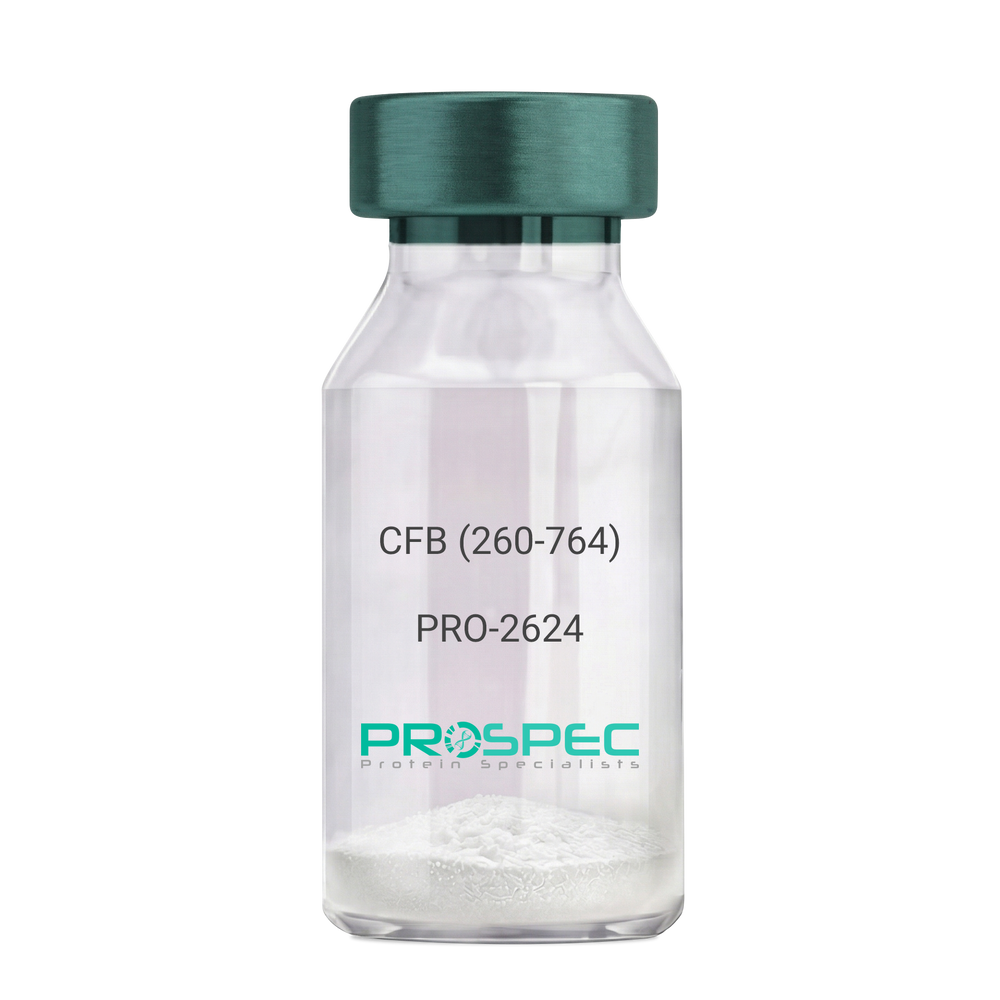
CFB (260-764) Human, Sf9Description:
Complement Factor B (260-764 a.a.) Human Recombinant, Sf9
CFB, C3/C5 convertase, Glycine-rich beta glycoprotein, GBG, PBF2, Properdin factor B, BF, BFD, AHUS4, ARMD14, CFAB, CFBD, FB, FBI12, GBG, H2-Bf.
Product # :
PRO-2624Price :
Quantity :
Shipping Method :
Shipped with Ice Packs
More Info
- description
- source
- formulation
- purity
- More Info
Description
CFB Human Recombinant produced in Sf9 Baculovirus cells is a single, glycosylated polypeptide chain containing 514 amino acids (260-764 a.a) and having a molecular mass of 58.1kDa.CFB is fused to an 9 amino acid His-tag at C-terminus & purified by proprietary chromatographic techniques.
Source
Sf9, Baculovirus cells.
Formulation
CFB protein solution (0.5mg/ml) containing Phosphate Buffered Saline (pH 7.4) and 20% glycerol.
Purity
Greater than 90.0% as determined by SDS-PAGE.
More Info
-
Introduction
Factor B is a protein, build from a single chain that circulates in the blood. Complement factor D cleaves and activates factor B, thus creating a catalytic subunit Bb and noncatalytic chain Ba. Subunit Bb is a serine protease that can bind to C3b and forms alternative pathway C3 convertase. Subunit Ba acts as an inhibitor for proliferation of lymphocytes, when Bb is part of the lymphocytes’ proliferation. The gene that codes for this protein is located on chromosome six.
-
Synonyms
CFB, C3/C5 convertase, Glycine-rich beta glycoprotein, GBG, PBF2, Properdin factor B, BF, BFD, AHUS4, ARMD14, CFAB, CFBD, FB, FBI12, GBG, H2-Bf.
-
Physical Appearance
Sterile Filtered colorless solution.
-
Stability
Store at 4°C if entire vial will be used within 2-4 weeks. Store, frozen at -20°C for longer periods of time. For long term storage it is recommended to add a carrier protein (0.1% HSA or BSA).Avoid multiple freeze-thaw cycles.
-
Amino Acid Sequence
ADPKIVLDPS GSMNIYLVLD GSDSIGASNF TGAKKCLVNL IEKVASYGVK PRYGLVTYAT
YPKIWVKVSE ADSSNADWVT KQLNEINYED HKLKSGTNTK KALQAVYSMM SWPDDVPPEG
WNRTRHVIIL MTDGLHNMGG DPITVIDEIR DLLYIGKDRK NPREDYLDVY VFGVGPLVNQ
VNINALASKK DNEQHVFKVK DMENLEDVFY QMIDESQSLS LCGMVWEHRK GTDYHKQPWQ
AKISVIRPSK GHESCMGAVV SEYFVLTAAH CFTVDDKEHS IKVSVGGEKR DLEIEVVLFH
PNYNINGKKE AGIPEFYDYD VALIKLKNKL KYGQTIRPIC LPCTEGTTRA LRLPPTTTCQ
QQKEELLPAQ DIKALFVSEE EKKLTRKEVY IKNGDKKGSC ERDAQYAPGY DKVKDISEVV
TPRFLCTGGV SPYADPNTCR GDSGGPLIVH KRSRFIQVGV ISWGVVDVCK NQKRQKQVPA HARDFHINLF QVLPWLKEKL QDEDLGFLHH HHHH
ProSpec's products are furnished for LABORATORY RESEARCH USE ONLY. The product may not be used as drugs, agricultural or pesticidal products, food additives or household chemicals.