Search results
1000 results found for “BATF”
Name
Description
Product #
Price
Quantity
Shipping Method
- View Data Sheet
Name :
Resistin Human (64-110)Description:
Resistin (64-110) Human Recombinant
Cysteine-rich secreted protein FIZZ3, Adipose tissue-specific secretory factor, ADSF.
Product # :
CYT-1232Price :
Quantity :
Shipping Method :
Shipped at Room temp
More Info
- description
- source
- formulation
- purity
- More Info
Description
The Resistin Human is created as a recombinant protein with a 4kda N-terminal fusion of His Tag. The Resistin His-Tagged Fusion Protein, produced in E. coli, is a 12kDa protein containing 47 amino acid residues of the Resistin Human, 64-110 amino acids.
Source
Escherichia Coli.
Formulation
Each mg was lyophilized with 1xPBS, 0.4% SDS and 4mM DTT.
Purity
Greater than 80% as determined by SDS-PAGE.
More Info
-
Synonyms
Cysteine-rich secreted protein FIZZ3, Adipose tissue-specific secretory factor, ADSF.
-
Physical Appearance
Filtered White lyophilized (freeze-dried) powder.
-
Stability
Store lyophilized Resistin at -20°C. Aliquot the product after reconstitution to avoid repeated freezing/thawing cycles. Reconstituted protein can be stored at 4°C for a limited period of time; it does not show any change after two weeks at 4°C.
-
Solubility
It is recommended to add deionized water to prepare a working stock solution of approximately 0.5mg/ml and let the lyophilized pellet dissolve completely. Product is not sterile! Please filter the product by an appropriate sterile filter before using it on cell culture.
-
Background
Human resistin is an adipokine primarily secreted by adipose tissue, mainly in response to obesity and inflammatory conditions.
Resistin Function
Resistin takes part in insulin resistance, which can be the cause of the development of type 2 diabetes. Resistin can also affect glucose metabolism and insulin signalling.
Regulation
Levels of resistin are influenced by factors such as inflammation, obesity and certain hormones. It tends to increase in conditions associated with obesity and metabolic syndrome.
Clinical Relevance
Elevated levels of resistin have been associated with obesity-related conditions, cardiovascular diseases, and metabolic disorders. Resisting is considered as a potential biomarker for these conditions.
Resistin Mechanism
Resistin promotes insulin resistance through different pathways such as the modulation of inflammatory processes and the inhibition of insulin signaling in target tissues like liver and muscle.
Research
Ongoing studies are exploring resistin’s role in metabolic regulation, the exact mechanisms of action of resistin and its potential as a therapeutic target for treating metabolic diseases.
Overall, resistin is a critical factor in metabolic health, mainly in the context of diabetes and obesity.
ProSpec's products are furnished for LABORATORY RESEARCH USE ONLY. The product may not be used as drugs, agricultural or pesticidal products, food additives or household chemicals.
- View Data Sheet
Name :
TBEV gE middleDescription:
Tick-Borne Encephalitis Virus gE Middle Recombinant
Product # :
TBE-283Price :
Quantity :
Shipping Method :
Shipped at Room temp
More Info
- description
- source
- formulation
- purity
- More Info
Description
The E.coli derived recombinant protein contains the Tick-borne Encephalitis Virus glycoprotein E middle regions, 50-250 amino acids.
Source
Escherichia Coli.
Formulation
20mM MES pH 6.5, 8M urea, 200mM NaCl and 0.05% Tween-20.
Purity
Encephalitis protein is >95% pure as determined by 10% PAGE (coomassie staining).
More Info
-
Introduction
TBE is caused by tick-borne encephalitis virus (TBEV), a member of the family Flaviviridae.
A closely related virus in Far Eastern Eurasia, Russian spring-summer encephalitis virus (RSSEV).
The family Flaviviridae includes other tick-borne viruses are closely related to TBEV and RSSEV, such as Omsk hemorrhagic fever virus & Kyasanur Forest virus.
Louping ill virus is also a member of this family. -
Physical Appearance
Sterile Filtered clear solution.
-
Stability
Encephalitis protein although stable at 4°C for 1 week, should be stored below -18°C. Please prevent freeze thaw cycles.
-
Applications
Encephalitis antigen is suitable for ELISA and Western blots, excellent antigen for detection of Tick-borne encephalitis virus with minimal specificity problems.
-
Specificity
Immunoreactive with sera of encephalitis virus infected individuals.
-
Purification Method
Encephalitis protein was purified by proprietary chromatographic technique.
ProSpec's products are furnished for LABORATORY RESEARCH USE ONLY. The product may not be used as drugs, agricultural or pesticidal products, food additives or household chemicals.
- View Data Sheet
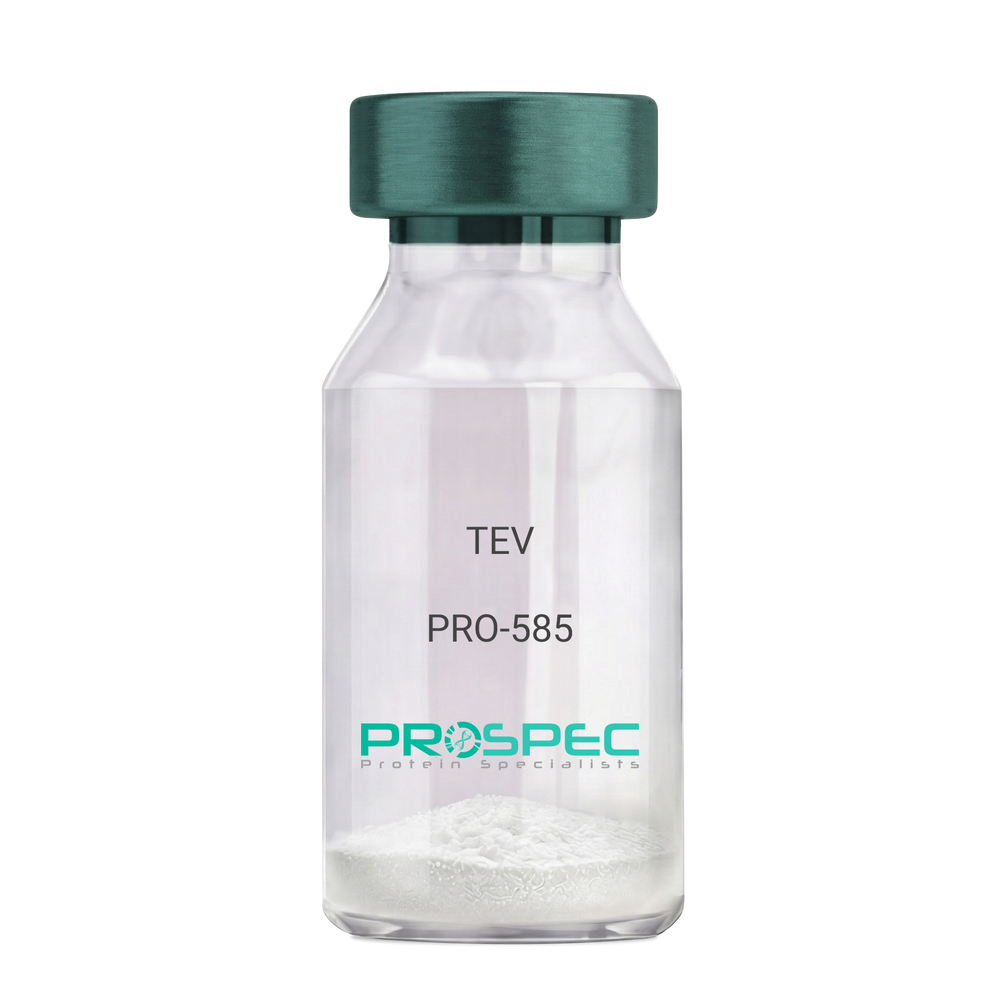
Name :
TEVDescription:
Tobacco Etch Virus Protease Recombinant
rTEV, TEV, P1 protease.
Product # :
PRO-585Price :
Quantity :
Shipping Method :
Shipped with Ice Packs
More Info
- description
- source
- formulation
- purity
- More Info
Description
Recombinant TEV Protease (rTEV) is a site-specific protease purified from E. coli. The protease can be used for the removal of affinity tags from fusion proteins. The seven-amino-acid recognition site for rTEV is Glu-Asn-Leu-Tyr-Phe-Gln-Gly with cleavage occurring between Gln and Gly. The optimal temperature for cleavage is 30°C; however, the enzyme can be used at temperatures as low as 4°C. The rTEV contains His tag.The rTEV is purified by proprietary chromatographic techniques.
Source
Escherichia Coli.
Formulation
The rTEV contains 25mM Tris, Ph 8.0, 75mM NaCl, 5mM EDTA, 10mM GSH, 50% Glycerol.
Purity
Greater than 90.0% as determined by analysis by SDS-PAGE.
More Info
-
Introduction
TEV protease is the common name for the 27 kDa catalytic domain of the Nuclear Inclusion a (NIa) protein encoded by the tobacco etch virus (TEV). Because its sequence specificity is far more stringent than that of factor Xa, thrombin, or enterokinase, TEV protease is a very useful reagent for cleaving fusion proteins. TEV protease recognizes a linear epitope of the general form E-Xaa-Xaa-Y -Xaa-Q-(G/S), with cleavage occurring between Q and G or Q and S. The most commonly used sequence is ENLYFQG.
-
Synonyms
rTEV, TEV, P1 protease.
-
Physical Appearance
Sterile liquid formulation.
-
Stability
rTEV although stable at 4°C for 1 week, should be stored below -18°C. Please prevent freeze thaw cycles.
-
Cleavage Conditions
A number of variables can be changed to optimize the cleavage of any specific protein. The amount of rTEV, the temperature of the incubation, and the time needed for cleavage may be examined. If the protein of interest is heat-labile, then 4°C incubations are recommended. Reactions at 4°C will require longer incubation times and/or more rTEV.
-
Unit Definition
One unit is defined as the amount of enzyme needed to cleave 3 ug of fusion protein in 1 hour to 85 % completion at 30°C in a buffer containing 50 mM Tris-HCl, pH 8.0, 0.5 mM EDTA, and 1 mM DTT.
ProSpec's products are furnished for LABORATORY RESEARCH USE ONLY. The product may not be used as drugs, agricultural or pesticidal products, food additives or household chemicals.
- View Data Sheet
Name :
VEGF E (Orf Virus)Description:
Vascular Endothelial Growth Factor-E Recombinant (Orf Virus)
Product # :
CYT-263Price :
Quantity :
Shipping Method :
Shipped at Room temp
More Info
- description
- source
- formulation
- purity
- biological activity
- More Info
Description
A DNA sequence encoding the mature variant of ovVEGF-E isolate D1701 (Dehio et al., 1999; GenBank accession No. AF106020) was expressed in E. coli as a 132 amino acid residue fusion protein with an N-terminal His-tag sequence and a thrombin cleavage site. Recombinant VEGF-E homodimer was dimerized in vitro and has a predicted mass of approximately 35 kDa.
Source
Escherichia Coli.
Formulation
The protein was lyophilized from a concentrated (1mg/ml) solution containing PBS.
Purity
Greater than 90.0% as determined by SDS-PAGE.
Biological Activity
The biological activity was determined (1) by the ability to induce VEGFR-2/KDR receptor phosphorylation in PAE/KDR cells and (2) in a cell proliferation assay using primary HUVECs. The ED50 for this effect is typically 1-5ng/ml.More Info
-
Introduction
Based on sequence similarity to VEGF-A, a gene encoding a VEGF homologue has recently been discovered in the genome of Orf virus (OV) (Lyttle et al., 1994). Different isolates of Orf virus show significant amino acid sequence similarity to VEGF-A and described as a viral virulence factor that appears to be derived from captured host genes. All eight cysteine residues of the central cysteine knot motif characteristic of members of the VEGF family are conserved among other residues in the VEGF-E proteins (Dehio et al., 1999; Wise et al., 1999). Alignment of all mammalian VEGF sequences indicated that VEGF-E is distinct from the previously described VEGFs but most closely related to VEGF-A. Like VEGF-A, VEGF-E was found to bind with high affinity to VEGF receptor-2 (KDR) resulting in receptor autophosphorylation, whilst in contrast to VEGF-A, VEGF-E can not bind to VEGF receptor-1 (Flt-1). Furthermore VEGF-E can also not bind to VEGF receptor-3 (FLT-4). Therefore VEGF-E is a potent angiog
-
Physical Appearance
Sterile Filtered White lyophilized (freeze-dried) powder.
-
Stability
Lyophilized Vascular Endothelial Growth Factor-E Orf Virus although stable at room temperature for 3 weeks, should be stored desiccated below -18°C. Upon reconstitution VEGF E -OV should be stored at 4°C between 2-7 days and for future use below -18°C.Please prevent freeze-thaw cycles.
-
Solubility
The lyophilized oVEGF-E Orf Virus should be reconstituted in water or medium to a concentration not lower than 50µg/ml. For long term storage we would recommend to add at least 0.1% human or bovine serum albumin.
-
Amino Acid Sequence
MGSSHHHHHH SSGLVPRGSH DSTKTWSEVF ENSGCKPRPM VFRVHDEHPE LTSQRFNPPC VTLMRCGGCC NDESLECVPT EEANVTMQLM GASVSGGNGM QHLSFVEHKK CDCKPPLTTT PPTTTRPPRR RR
ProSpec's products are furnished for LABORATORY RESEARCH USE ONLY. The product may not be used as drugs, agricultural or pesticidal products, food additives or household chemicals.
- View Data Sheet
Name :
EGF (1-51), HumanDescription:
Epidermal Growth Factor (1-51 a.a.)Human Recombinant
Urogastrone, URG, EGF.
Product # :
CYT-1115Price :
Quantity :
Shipping Method :
Shipped at Room temp
More Info
- description
- source
- formulation
- purity
- biological activity
- More Info
Description
Epidermal Growth Factor (1-51 a.a.) Human Recombinant produced in yeast is a single, glycosylated polypeptide chain containing 51 amino acids and having a molecular mass of 6.0kDa. The EGF is purified by proprietary chromatographic techniques.
Source
Saccharomyces cerevisiae
Formulation
Lyophilized from a 0.2μm filtered concentrated solution in PBS, pH 7.4.
Purity
Greater than 98.0% as determined by:
(a) Analysis by RP-HPLC.
(b) Analysis by SDS-PAGE.Biological Activity
The ED50 is determined by a cell proliferation assay using murine Balb/c 3T3 cells and is < than 0.1 ng/ml, corresponding to a specific activity of > 1.0 × 10⁷ IU/mg.
More Info
-
Introduction
Epidermal growth factor has a profound effect on the differentiation of specific cells in vivo and is a potent mitogenic factor for a variety of cultured cells of both ectodermal and mesodermal origin. The EGF precursor is believed to exist as a membrane-bound molecule which is proteolytically cleaved to generate the 53-amino acid peptide hormone that stimulates cells to divide. EGF stimulates the growth of several epidermal and epithelial tissues in vivo and in vitro and of some fibroblasts in cell culture.
-
Synonyms
Urogastrone, URG, EGF.
-
Physical Appearance
Sterile Filtered White lyophilized (freeze-dried) powder.
-
Stability
Lyophilized EGF although stable at room temperature for 3 weeks, should be stored desiccated below -18°C. Upon reconstitution Epidermal Growth Factor should be stored at 4°C between 2-7 days and for future use below -18°C.Please prevent freeze-thaw cycles.
-
Solubility
It is recommended to reconstitute the lyophilized Epidermal Growth Factor in sterile 18MΩ-cm H2O not less than 100µg/ml, which can then be further diluted to other aqueous solutions.
-
Amino Acid Sequence
NSDSECPLSH DGYCLHDGVC MYIEALDKYA CNCVVGYIGE RCQYRDLKWW E.
-
Background
Exploring the Potential of Epidermal Growth Factor (1-51 a.a.) Human Recombinant: Novel Insights and Therapeutic Prospects
Abstract:
Epidermal Growth Factor (EGF) stands as a pivotal cytokine orchestrating essential cellular processes. This concise research paper delves into the unique realm of Epidermal Growth Factor (1-51 a.a.) Human Recombinant, unveiling its intricate molecular dynamics, signaling cascades, and therapeutic promise. Employing cutting-edge methodologies encompassing in vitro assays and animal models, this study elucidates the multifaceted cellular responses sparked by this truncated EGF variant, paving the way for potential clinical applications.
Introduction:
The truncated form of EGF, spanning amino acids 1 to 51 (a.a.), carries distinct attributes that set it apart from the full-length counterpart. This paper centers on exploring the intriguing dimensions of Epidermal Growth Factor (1-51 a.a.) Human Recombinant, offering new insights into its interactions and potential utility.
Molecular Insights and Signaling Dynamics:
At the heart of its function lies the interplay between EGF (1-51 a.a.) and the epidermal growth factor receptor (EGFR). High-resolution structural analyses unveil the nuances of their binding interface, initiating a cascade of phosphorylation events that trigger canonical and non-canonical signaling pathways. The MAPK pathway and the PI3K/Akt pathway, intricately modulated by EGF (1-51 a.a.), propel cellular processes like proliferation, migration, and evasion of apoptosis.
In Vitro Profiling and Cellular Responses:
In dissecting the cellular responses, diverse in vitro assays have been employed. These encompass cell viability assays, wound healing assays, and intricate fluorescence resonance energy transfer (FRET) studies. These assays converge to illuminate the dynamic orchestration of EGF-induced cellular behaviors, showcasing its role in promoting cellular migration, division, and wound closure.
In Vivo Implications and Therapeutic Horizons:
Translating these insights into tangible therapeutic possibilities, in vivo studies present a compelling narrative. In animal models, EGF (1-51 a.a.) emerges as a potent player in cutaneous wound healing, fostering accelerated tissue regeneration. Moreover, its potential extends to oncology, as it not only influences tumor microenvironments but also demonstrates anti-apoptotic effects, hinting at its role in tailored cancer interventions.
Future Prospects and Challenges:
While these discoveries hold immense promise, challenges persist. The intricate network of signaling events demands further scrutiny, considering potential cross-talk and off-target effects. Refining delivery mechanisms and dosing regimens is essential for realizing the clinical potential of EGF (1-51 a.a.).
Conclusion:
In a synthesis of complex molecular insights and tangible therapeutic potential, Epidermal Growth Factor (1-51 a.a.) Human Recombinant emerges as a captivating subject. Its truncated structure and distinctive signaling cascades paint a canvas of cellular orchestration. As research advances, harnessing its therapeutic benefits could usher in novel interventions for wound healing and cancer therapy.
What is the molecular weight/Mw of EGF Protein?
EGF Protein has a total Mw of 6kDa.
What is the source or expression system of EGF Protein?
Saccharomyces cerevisiae
What is the Purity of EGF Protein?
EGF Protein is >98% pure as determined by SDS-PAGE.
What is the Biological Activity of EGF Protein?
The ED50 is determined by a cell proliferation assay using murine Balb/c 3T3 cells and is < than 0.1 ng/ml, corresponding to a specific activity of > 1.0 × 10⁷ IU/mg.
What is the amino acid sequence of EGF Protein?
NSDSECPLSH DGYCLHDGVC MYIEALDKYA CNCVVGYIGE RCQYRDLKWW E.
What applications can EGF Protein be used in?
EGF Protein can probably be used in western blot, ELISA and Lateral Flow.
What is the endotoxin level for EGF Protein?
The endotoxin level is minimal, EGF Protein was purified using conventional chromatography techniques.
ProSpec's products are furnished for LABORATORY RESEARCH USE ONLY. The product may not be used as drugs, agricultural or pesticidal products, food additives or household chemicals.
- View Data Sheet
Name :
SERF2 HumanDescription:
Small EDRK-Rich Factor 2 Human Recombinant
Small EDRK-rich factor 2, Gastric cancer-related protein VRG107, Protein 4F5-related, 4F5re, h4F5rel, FAM2C, HsT17089.
Product # :
PRO-1730Price :
Quantity :
Shipping Method :
Shipped with Ice Packs
More Info
- description
- source
- formulation
- purity
- More Info
Description
SERF2 Human Recombinant produced in E.Coli is a single, non-glycosylated polypeptide chain containing 82 amino acids (1-59 a.a) and having a molecular mass of 9.3kDa.SERF2 is fused to a 23 amino acid His-tag at N-terminus & purified by proprietary chromatographic techniques.
Source
Escherichia Coli.
Formulation
SERF2 protein solution (0.25mg/ml) containing 20mM Tris-HCl buffer (pH 8.0), 0.15M NaCl and 30% glycerol.
Purity
Greater than 85.0% as determined by SDS-PAGE.
More Info
-
Introduction
SERF2 (small EDRK-rich factor 2) is a member of the SERF family. SERF2 is a protein-coding gene. Among the diseases associated with SERF2 are spinal muscular atrophy, and muscular atrophy.
-
Synonyms
Small EDRK-rich factor 2, Gastric cancer-related protein VRG107, Protein 4F5-related, 4F5re, h4F5rel, FAM2C, HsT17089.
-
Physical Appearance
Sterile Filtered clear solution.
-
Stability
Store at 4°C if entire vial will be used within 2-4 weeks. Store, frozen at -20°C for longer periods of time. For long term storage it is recommended to add a carrier protein (0.1% HSA or BSA).Avoid multiple freeze-thaw cycles.
-
Amino Acid Sequence
MGSSHHHHHH SSGLVPRGSH MGSMTRGNQR ELARQKNMKK QSDSVKGKRR DDGLSAAARK QRDSEIMQQK QKKANEKKEE PK
ProSpec's products are furnished for LABORATORY RESEARCH USE ONLY. The product may not be used as drugs, agricultural or pesticidal products, food additives or household chemicals.
- View Data Sheet
Name :
SLAMF7 HumanDescription:
SLAMF7 Human Recombinant
SLAMF7, SLAM Family Member 7, CD2-Like Receptor-Activating Cytotoxic Cells, Membrane Protein FOAP-12, CD2 Subset 1, Protein 19A, CRACC, CS1, Novel LY9 (Lymphocyte Antigen 9) Like Protein, CD2-Like Receptor Activating Cytotoxic Cells, 19A24 Protein, CD319 Antigen, Novel Ly9, CD319, 19A.
Product # :
PRO-2261Price :
Quantity :
Shipping Method :
Shipped with Ice Packs
More Info
- description
- source
- formulation
- purity
- More Info
Description
SLAMF7 produced in Sf9 Baculovirus cells is a single, glycosylated polypeptide chain containing 212 amino acids (23-226a.a.) and having a molecular mass of 23.4kDa (Molecular size on SDS-PAGE will appear at approximately 28-40kDa). SLAMF7 is expressed with an 8 amino acid His tag at C-Terminus and purified by proprietary chromatographic techniques.
Source
Sf9, Baculovirus cells.
Formulation
SLAMF7 protein solution (0.5mg/ml) contains Phosphate Buffered Saline (pH 7.4) and 10% glycerol.
Purity
Greater than 95.0% as determined by SDS-PAGE.
More Info
-
Introduction
SLAMF7 belongs to the CS2 family of cell surface receptors. SLAMF7 is a single-pass type 1 membrane protein, SLAMF7 Isoform 1 mediates NK cell activation via aSH2D1A-independent extracellular signal-regulated ERK-mediated pathway. SLAMF7 functions in lymphocyteadhesion. Furthermore, SLAMF7 can exert activating of inhibitory influences on cells of the immune system depending on cellular context as well as the availability of effector proteins.
-
Synonyms
SLAMF7, SLAM Family Member 7, CD2-Like Receptor-Activating Cytotoxic Cells, Membrane Protein FOAP-12, CD2 Subset 1, Protein 19A, CRACC, CS1, Novel LY9 (Lymphocyte Antigen 9) Like Protein, CD2-Like Receptor Activating Cytotoxic Cells, 19A24 Protein, CD319 Antigen, Novel Ly9, CD319, 19A.
-
Physical Appearance
Sterile Filtered clear solution.
-
Stability
Store at 4°C if entire vial will be used within 2-4 weeks. Store, frozen at -20°C for longer periods of time. For long term storage it is recommended to add a carrier protein (0.1% HSA or BSA).Avoid multiple freeze-thaw cycles.
-
Amino Acid Sequence
SGPVKELVGS VGGAVTFPLK SKVKQVDSIV WTFNTTPLVT IQPEGGTIIV TQNRNRERVD FPDGGYSLKL SKLKKNDSGI YYVGIYSSSL QQPSTQEYVL HVYEHLSKPK VTMGLQSNKN GTCVTNLTCC MEHGEEDVIY TWKALGQAAN ESHNGSILPI SWRWGESDMT FICVARNPVS RNFSSPILAR KLCEGAADDP DSSMLEHHHH HH.
ProSpec's products are furnished for LABORATORY RESEARCH USE ONLY. The product may not be used as drugs, agricultural or pesticidal products, food additives or household chemicals.
- View Data Sheet
Name :
IGFBP6 MouseDescription:
Insulin Like Growth Factor Binding Protein-6 Mouse Recombinant
Insulin-like growth factor-binding protein 6, Igfbp6, IGFBP-6, IBP-6, IGF-binding protein 6, IGFBP-6, Igfbp-6.
Product # :
CYT-987Price :
Quantity :
Shipping Method :
Shipped with Ice Packs
More Info
- description
- source
- formulation
- purity
- More Info
Description
IGFBP6 Mouse Recombinant produced in Sf9 Baculovirus cells is a single, glycosylated polypeptide chain containing 221 amino acids (26-238 a.a.) and having a molecular mass of 23.7kDa (Migrates at 28-40kDa on SDS-PAGE under reducing conditions).IGFBP6 is expressed with a 8 amino acid His tag at C-Terminus and purified by proprietary chromatographic techniques.
Source
Sf9, Baculovirus cells.
Formulation
IGFBP6 protein solution (0.25mg/ml) contains Phosphate Buffered Saline (pH 7.4) and 40% glycerol.
Purity
Greater than 90.0% as determined by SDS-PAGE.
More Info
-
Introduction
IGFBP6 plays a role in lipoprotein assembly and dietary cholesterol absorption. in addition to its acyltransferase activity, it may act as a ligase. may provide cholesteryl esters for lipoprotein secretion from hepatocytes and intestinal mucosa.
-
Synonyms
Insulin-like growth factor-binding protein 6, Igfbp6, IGFBP-6, IBP-6, IGF-binding protein 6, IGFBP-6, Igfbp-6.
-
Physical Appearance
Sterile Filtered colorless solution.
-
Stability
Store at 4°C if entire vial will be used within 2-4 weeks. Store, frozen at -20°C for longer periods of time. For long term storage it is recommended to add a carrier protein (0.1% HSA or BSA). Avoid multiple freeze-thaw cycles.
-
Amino Acid Sequence
ALAGCPGCGA GMQTGCRGGC VEEEDAGSPA DGCTEAGGCL RREGQPCGVY SPKCAPGLQC QPRENEEAPL RALLIGQGRC QRARGPSEET TKESKPQGGA SRSRDTNHRD RQKNPRTSAA PIRPNPVQDS EMGPCRRHLD SVLQQLQTEV FRGGARGLYV PNCDLRGFYR KQQCRSSQGN RRGPCWCVDP MGQPLPVSPD GQGSTQCSAR SSGLEHHHHH H.
-
Background
What is the molecular weight/Mw of IGFBP6 MOUSE Protein?
IGFBP6 MOUSE Protein has a total Mw of 23.7kDa.
What is the source or expression system of IGFBP6 MOUSE Protein?
Sf9, Baculovirus cells.
What is the Purity of IGFBP6 MOUSE Protein?
IGFBP6 MOUSE Protein is >90% pure as determined by SDS-PAGE.
What is the Biological Activity of IGFBP6 MOUSE Protein?
The biological functionality of IGFBP6 MOUSE Protein will be determined in the future.
What is the amino acid sequence of IGFBP6 MOUSE Protein?
ALAGCPGCGA GMQTGCRGGC VEEEDAGSPA DGCTEAGGCL RREGQPCGVY SPKCAPGLQC QPRENEEAPL RALLIGQGRC QRARGPSEET TKESKPQGGA SRSRDTNHRD RQKNPRTSAA PIRPNPVQDS EMGPCRRHLD SVLQQLQTEV FRGGARGLYV PNCDLRGFYR KQQCRSSQGN RRGPCWCVDP MGQPLPVSPD GQGSTQCSAR SSGLEHHHHH H.
What applications can IGFBP6 MOUSE Protein be used in?
IGFBP6 MOUSE Protein can probably be used in western blot, ELISA and Lateral Flow.
What is the endotoxin level for IGFBP6 MOUSE Protein?
The endotoxin level is minimal, IGFBP6 MOUSE Protein was purified using conventional chromatography techniques.
ProSpec's products are furnished for LABORATORY RESEARCH USE ONLY. The product may not be used as drugs, agricultural or pesticidal products, food additives or household chemicals.
- View Data Sheet
Name :
Borrelia Afzelii BmpADescription:
Borrelia Afzelii Basic Membrane Protein A Recombinant
Product # :
BOR-012Price :
Quantity :
Shipping Method :
Shipped with Ice Packs
More Info
- description
- source
- formulation
- purity
- More Info
Description
Recombinant Borrelia Afzelii Basic Membrane Protein A produced in E.coli is a non-glycosylated, polypeptide chain having a calculated molecular mass of 36,227 Dalton. Borrelia Afzelii BmpA is expressed with a -6x His tag at N-terminus and purified by proprietary chromatographic techniques.
Source
Escherichia Coli.
Formulation
Borrelia Afzelii BmpA is supplied in 20mM HEPES buffer pH-7.6, 250mM NaCl and 20% glycerol.
Purity
Greater than 80.0% as determined by SDS-PAGE.
More Info
-
Introduction
Borrelia belongs to a genus of bacteria of the spirochete phylum. Borrelia causes borreliosis, which is a zoonotic, vector-borne disease transmitted mainly by ticks and some by lice, depending on the species. Of the 36 known species of Borrelia, 12 are distinguished to cause Lyme disease or borreliosis and are transmitted by ticks. The main Borrelia species causing Lyme disease are Borrelia burgdorferi, Borrelia afzelii, and Borrelia garinii. The Borrelia genus members have a linear chromosome which is about 900 kbp in length as well as an excess of both linear and circular plasmids in the 5-220 kbp size range. The plasmids are atypical, as compared to most bacterial plasmids, since they contain many paralogous sequences, a large number of pseudogenes and, in some cases, essential genes. Moreover, a number of the plasmids have features suggesting that they are prophages.
-
Physical Appearance
Sterile Filtered clear solution.
-
Stability
Store at 4°C if entire vial will be used within 2-4 weeks. Store, frozen at -20°C for longer periods of time. Avoid multiple freeze-thaw cycles.
-
Immunological Functions
1. Binds IgG- and IgM-type human antibodies.2. Immunodot test with Lyme disease positive/negative plasma; suitable for LTT (lymphocyte transformation test).
-
Applications
Western blot with Lyme positive plasma.
ProSpec's products are furnished for LABORATORY RESEARCH USE ONLY. The product may not be used as drugs, agricultural or pesticidal products, food additives or household chemicals.
- View Data Sheet
Name :
KGF Human, PlantDescription:
Keratinocyte Growth Factor Human Recombinant, Plant
HBGF-7, FGF7, FGF-7, KGF.
Product # :
CYT-1212Price :
Quantity :
Shipping Method :
Shipped at Room temp
More Info
- description
- source
- formulation
- purity
- biological activity
- More Info
Description
KGF Human Recombinant produced in Oryza Sativa is a single, polypeptide chain having a molecular mass of approximately 19.2kDa. The KGF is purified by proprietary chromatographic techniques.
Source
Rice Grain
Formulation
Lyophilized KGF from a 0.2μm filtered solution containing no stabilizers.
Purity
Greater than 95% as determined by SDS-PAGE.
Biological Activity
KGF has full biological activity when compared to standards. The activity is determined by the dose-dependent proliferation of HUVECs and is typically 10ng/ml corresponding to a specific activity of 100,000U/mg.
More Info
-
Introduction
KGF is a member of the fibroblast growth factor (FGF) family. FGF family members possess broad mitogenic and cell survival activities, and are involved in a variety of biological processes, including embryonic development, cell growth, morphogenesis, tissue repair, tumor growth and invasion. FGF7 is a potent epithelial cell-specific growth factor, whose mitogenic activity is predominantly exhibited in keratinocytes but not in fibroblasts and endothelial cells. Studies of mouse and rat homologs of this gene implicated roles in morphogenesis of epithelium, reepithelialization of wounds, hair development and early lung organogenesis.
-
Synonyms
HBGF-7, FGF7, FGF-7, KGF.
-
Physical Appearance
Sterile Filtered White lyophilized (freeze-dried) powder.
-
Stability
Lyophilized KGF although stable at room temperature for 3 weeks, should be stored desiccated below -18°C. Upon reconstitution FGF7 should be stored at 4°C between 2-7 days and for future use below -18°C.For long term storage it is recommended to add a carrier protein (0.1% HSA or BSA).Please prevent freeze-thaw cycles.
-
Solubility
It is recommended to reconstitute the lyophilized KGF in sterile 18MΩ-cm at 100µg/ml, which can then be further diluted to other aqueous solutions.
ProSpec's products are furnished for LABORATORY RESEARCH USE ONLY. The product may not be used as drugs, agricultural or pesticidal products, food additives or household chemicals.
- View Data Sheet
Name :
VEGFR2 HumanDescription:
Vascular Endothelial Growth Factor Receptor-2 Human Recombinant
KDR D1-7, sKDR D1-7, Kinase insert domain receptor, Protein-tyrosine kinase receptor Flk-1, CD309, type III receptor tyrosine kinase, FLK1, VEGFR-2.
Product # :
PKA-242Price :
Quantity :
Shipping Method :
Shipped at Room temp
More Info
- description
- source
- formulation
- purity
- More Info
Description
Soluble VEGFR-2 Human Recombinant produced in baculovirus is monomeric, glycosylated, polypeptide having a molecular mass of 116 kDa. The soluble receptor protein contains only the first 7 extracellular domains, which contain all the information necessary for ligand binding.The sKDR is purified by proprietary chromatographic techniques.
Source
Insect Cells.
Formulation
KDR was lyophilized from a concentrated (1mg/ml) sterile solution containing 25mM MES pH-5.5 and 100mM NaCl.
Purity
Greater than 95.0% as determined by SDS-PAGE.
More Info
-
Introduction
Endothelial cells express three different vascular endothelial growth factor (VEGF) receptors, belonging to the family of receptor tyrosine kinases (RTKs). They are named VEGFR-1 (Flt-1), VEGFR-2 (KDR/Flk-1), VEGFR-3 (Flt-4). Their expression is almost exclusively restricted to endothelial cells, but VEGFR-1 can also be found on monocytes. All VEGF-receptors have seven immunoglobulin-like extracellular domains, a single transmembrane region and an intracellular split tyrosine kinase domain. VEGFR-2 has a lower affinity for VEGF than the Flt-1 receptor, but a higher signaling activity. Mitogenic activity in endothelial cells is mainly mediated by VEGFR-2 leading to their proliferation.
Differential splicing of the flt-1 gene leads to the formation of a secreted, soluble variant of VEGFR-1 (sVEGFR-1). No naturally occuring, secreted forms of VEGFR-2 have so far been reported. The binding of VEGF165 to VEGFR-2 is dependent on heparin. -
Synonyms
KDR D1-7, sKDR D1-7, Kinase insert domain receptor, Protein-tyrosine kinase receptor Flk-1, CD309, type III receptor tyrosine kinase, FLK1, VEGFR-2.
-
Physical Appearance
Sterile Filtered White lyophilized (freeze-dried) powder.
-
Stability
Lyophilized VEGFR-2 although stable at room temperature for 3 weeks, should be stored desiccated below -18°C. Upon reconstitution FLK1 should be stored at 4°C between 2-7 days and for future use below -18°C.For long term storage it is recommended to add a carrier protein (0.1% HSA or BSA).Please prevent freeze-thaw cycles.
-
Solubility
It is recommended to reconstitute the lyophilized VEGFR2 in sterile water not less than 100µg/ml, which can then be further diluted to other aqueous solutions.
-
Amino Acid Sequence
ASVGLPSVSLD LPRLSIQKDI LTIKANTTLQ ITCRGQRDLD WLWPNNQSGS EQRVEVTECS DGLFCKTLTI PKVIGNDTGA YKCFYRETDL ASVIYVYVQD YRSPFIASVS DQHGVVYITE NKNKTVVIPC LGSISNLNVS LCARYPEKRF VPDGNRISWD SKKGFTIPSY MISYAGMVFC EAKINDESYQ SIMYIVVVVG YRIYDVVLSP SHGIELSVGE KLVLNCTART ELNVGIDFNW EYPSSKHQHK KLVNRDLKTQ SGSEMKKFLS TLTIDGVTRS DQGLYTCAAS SGLMTKKNST FVRVHEKPFV AFGSGMESLV EATVGERVRI PAKYLGYPPP EIKWYKNGIP LESNHTIKAG HVLTIMEVSE RDTGNYTVIL TNPISKEKQS HVVSLVVYVP PQIGEKSLIS PVDSYQYGTT QTLTCTVYAI PPPHHIHWYW QLEEECANEP SQAVSVTNPY PCEEWRSVED FQGGNKIEVN KNQFALIEGK NKTVSTLVIQ AANVSALYKC EAVNKVGRGE RVISFHVTRG PEITLQPDMQ PTEQESVSLW CTADRSTFEN LTWYKLGPQP LPIHVGELPT PVCKNLDTLW KLNATMFSNS TNDILIMELK NASLQDQGDY VCLAQDRKTK KRHCVVRQLT VLERVAPTIT GNLENQTTSI GESIEVSCTA SGNPPPQIMW FKDNETLVED SGIVLKDGNR NLTIRRVRKE DEGLYTCQAC SVLGCAKVEA FFIIEGA.
ProSpec's products are furnished for LABORATORY RESEARCH USE ONLY. The product may not be used as drugs, agricultural or pesticidal products, food additives or household chemicals.
- View Data Sheet
Name :
GDF15 Human, HisDescription:
Growth and Differentiation Factor 15 Human Recombinant, His Tag
GDF-15, MIC1, MIC-1, NAG-1, PDF, PLAB, PTGFB, Growth/differentiation factor 15, Placental bone morphogenetic protein, Placental TGF-beta, Macrophage inhibitory cytokine 1, Prostate differentiation factor, NSAID-activated gene 1 protein, NSAID-regulated gene 1 protein, NRG-1, GDF15.
Product # :
CYT-691Price :
Quantity :
Shipping Method :
Shipped with Ice Packs
More Info
- description
- source
- formulation
- purity
- More Info
Description
Recombinant Human GDF15 produced in E.Coli is a single, non-glycosylated polypeptide chain containing 151 amino acids (195-308) and having a molecular mass of 16.7 kDa(molecular weight on SDS-PAGE will appear higher).GDF15 is expressed with a 36 amino acid His tag fused at N-Terminus and purified by proprietary chromatographic techniques.
Source
Escherichia Coli.
Formulation
The GDF15 protein solution contains 10mM sodium citrate, pH-3.5 & 10% glycerol.
Purity
Greater than 95.0% as determined by SDS-PAGE.
More Info
-
Introduction
GDF15 is part of the TGF-Beta superfamily that is involved in regulating inflammatory and apoptotic pathways in injured tissues and throughout disease processes. GDF15 is most abundant in the liver. Its expression in liver can be considerably up-regulated in during injury of organs such as liver, kidney, heart and lung. GDF-15 promotes proliferation or growth arrest and differentiation due to differences in cellular differentiation. GDF15 prevents apoptosis in cerebellar granule neurons by activating Akt and inhibiting endogenously active ERK. GDF15 is a novel autocrine/endocrine factor that antagonizes the hypertrophic response and loss of ventricular performance.
-
Synonyms
GDF-15, MIC1, MIC-1, NAG-1, PDF, PLAB, PTGFB, Growth/differentiation factor 15, Placental bone morphogenetic protein, Placental TGF-beta, Macrophage inhibitory cytokine 1, Prostate differentiation factor, NSAID-activated gene 1 protein, NSAID-regulated gene 1 protein, NRG-1, GDF15.
-
Physical Appearance
Sterile filtered colorless solution.
-
Stability
Store at 4°C if entire vial will be used within 2-4 weeks. Store, frozen at -20°C for longer periods of time. For long term storage it is recommended to add a carrier protein (0.1% HSA or BSA). Avoid multiple freeze-thaw cycles.
-
Amino Acid Sequence
MRGSHHHHHH GMASMTGGQQ MGRDLYDDDD KDRWGSMARA RNGDHCPLGP GRCCRLHTVR ASLEDLGWAD WVLSPREVQV TMCIGACPSQ FRAANMHAQI KTSLHRLKPD TVPAPCCVPA SYNPMVLIQK TDTGVSLQTY DDLLAKDCHC I.
-
Background
What is the molecular weight/Mw of GDF15 HUMAN, HIS Protein?
GDF15 HUMAN, HIS Protein has a total Mw of 16.7kDa.
What is the source or expression system of GDF15 HUMAN, HIS Protein?
Escherichia Coli.
What is the Purity of GDF15 HUMAN, HIS Protein?
GDF15 HUMAN, HIS Protein is >95% pure as determined by SDS-PAGE.
What is the Biological Activity of GDF15 HUMAN, HIS Protein?
The biological functionality of GDF15 HUMAN, HIS Protein will be determined in the future.
What is the amino acid sequence of GDF15 HUMAN, HIS Protein?
MRGSHHHHHH GMASMTGGQQ MGRDLYDDDD KDRWGSMARA RNGDHCPLGP GRCCRLHTVR ASLEDLGWAD WVLSPREVQV TMCIGACPSQ FRAANMHAQI KTSLHRLKPD TVPAPCCVPA SYNPMVLIQK TDTGVSLQTY DDLLAKDCHC I.
What applications can GDF15 HUMAN, HIS Protein be used in?
GDF15 HUMAN, HIS Protein can probably be used in western blot, ELISA and
Lateral Flow.
What is the endotoxin level for GDF15 HUMAN, HIS Protein?
The endotoxin level is minimal, GDF15 HUMAN, HIS Protein was purified using conventional chromatography techniques.
ProSpec's products are furnished for LABORATORY RESEARCH USE ONLY. The product may not be used as drugs, agricultural or pesticidal products, food additives or household chemicals.
- View Data Sheet
Name :
4 1BBR HumanDescription:
4-1BB Receptor Human Recombinant
Tumor necrosis factor receptor superfamily member 9, 4-1BB ligand receptor T-cell, antigen 4-1BB homolog, T-cell antigen ILA, CD137 antigen, CDw137, ILA, 4-1BB, MGC2172, 4-1BBR, TNFRSF9.
Product # :
CYT-463Price :
Quantity :
Shipping Method :
Shipped at Room temp
More Info
- description
- source
- formulation
- purity
- biological activity
- More Info
Description
4-1BB Soluble Receptor Recombinant Human also called Tumor necrosis factor receptor superfamily member 9 produced in E.Coli is a single, non-glycosylated polypeptide chain containing 167 amino acids, having a molecular mass of 17718 Dalton and containing the cysteine rich TNFR-like extracellular domain of 4-1BB Receptor. The 4-1BB Receptor is purified by proprietary chromatographic techniques.
Source
Escherichia Coli.
Formulation
Lyophilized from a concentrated (1mg/ml) solution in water containing no additives.
Purity
Greater than 98.0% as determined by: (a) Analysis by RP-HPLC. (b) Analysis by SDS-PAGE.
Biological Activity
The activity was determined by the inhibition of 4-1BB ligand mediated stimulation of IL-8 production by human PBMC. Results: 90% inhibition using 1µg for both 4-1BB ligand and 4-1BB receptor.More Info
-
Introduction
The protein encoded by this gene is a member of the TNF-receptor superfamily. This receptor contributes to the clonal expansion, survival, and development of T cells. It can also induce proliferation in peripheral monocytes, enhance T cell apoptosis induced by TCR/CD3 triggered activation, and regulate CD28 co-stimulation to promote Th1 cell responses. The expression of this receptor is induced by lymphocyte activation. TRAF adaptor proteins have been shown to bind to this receptor and transduce the signals leading to activation of NF-kappaB.
-
Synonyms
Tumor necrosis factor receptor superfamily member 9, 4-1BB ligand receptor T-cell, antigen 4-1BB homolog, T-cell antigen ILA, CD137 antigen, CDw137, ILA, 4-1BB, MGC2172, 4-1BBR, TNFRSF9.
-
Physical Appearance
Sterile Filtered White lyophilized (freeze-dried) powder.
-
Stability
Lyophilized 4-1BB Receptor although stable at room temperature for 3 weeks, should be stored desiccated below -18°C. Upon reconstitution 4-1BBR should be stored at 4°C between 2-7 days and for future use below -18°C. For long term storage it is recommended to add a carrier protein (0.1% HSA or BSA). Please prevent freeze-thaw cycles.
-
Solubility
It is recommended to reconstitute the lyophilized 4-1BB Receptor in sterile 18MΩ-cm H2O not less than 100µg/ml, which can then be further diluted to other aqueous solutions.
-
Amino Acid Sequence
The sequence of the first five N-terminal amino acids was determined and was found to be Met-Glu-Arg-Thr-Arg.
ProSpec's products are furnished for LABORATORY RESEARCH USE ONLY. The product may not be used as drugs, agricultural or pesticidal products, food additives or household chemicals.
- View Data Sheet
Name :
HSBP 1 HumanDescription:
Heat Shock Factor Binding Protein - 1 Human Recombinant
NPC-A-13, HSBP1, Heat shock factor-binding protein 1, Nasopharyngeal carcinoma-associated antigen 13, HSF1BP, DKFZp686D1664, DKFZp686O24200.
Product # :
HSP-001Price :
Quantity :
Shipping Method :
Shipped with Ice Packs
More Info
- description
- source
- formulation
- purity
- More Info
Description
Recombinant Human HSBP1 produced in E.Coli is a single,non-glycosylated polypeptide chain containing 76 amino acids and having a molecular mass of 8.5 kDa.
Source
Escherichia Coli.
Formulation
The HSBP1 protein (1mg/ml) solution contains 20mM Tris-HCl buffer pH-7.5, 50mM NaCl, 1mM EDTA and 20% Glycerol.
Purity
Greater than 95.0% as determined by SDS-PAGE.
More Info
-
Introduction
The heat-shock response is elicited by exposure of cells to thermal and chemical stress and through the activation of HSFs (heat shock factors) results in the elevated expression of heat-shock induced genes. Heat shock factor binding protein-1 (HSBP1), is a 76-amino-acid protein that binds to heat shock factor 1(HSF1), which is a transcription factor involved in the HS response. During HS response, HSF1 undergoes conformational transition from an inert non-DNA-binding monomer to active functional trimers. HSBP1 is nuclear-localized and interacts with the active trimeric state of HSF1 to negatively regulate HSF1 DNA-binding activity. Overexpression of HSBP1 in mammalian cells represses the transactivation activity of HSF1. When overexpressed in C.elegans HSBP1 has severe effects on survival of the animals after thermal and chemical stress consistent with a role of HSBP1 as a negative regulator of heat shock response.
-
Synonyms
NPC-A-13, HSBP1, Heat shock factor-binding protein 1, Nasopharyngeal carcinoma-associated antigen 13, HSF1BP, DKFZp686D1664, DKFZp686O24200.
-
Physical Appearance
Sterile filtered colorless solution.
-
Stability
Store at 4°C if entire vial will be used within 2-4 weeks. Store, frozen at -20°C for longer periods of time. For long term storage it is recommended to add a carrier protein (0.1% HSA or BSA).Avoid multiple freeze-thaw cycles.
-
Amino Acid Sequence
MAETDPKTVQ DLTSVVQTLL QQMQDKFQTM SDQIIGRIDD MSSRIDDLEK NIADLMTQAG VEELESENKI PATQKS.
ProSpec's products are furnished for LABORATORY RESEARCH USE ONLY. The product may not be used as drugs, agricultural or pesticidal products, food additives or household chemicals.
- View Data Sheet
Name :
TARC RatDescription:
Thymus and Activation Regulated Chemokine (CCL17) Rat Recombinant
Thymus and activation-regulated chemokine, CCL17, SCYA17, TARC.
Product # :
CHM-012Price :
Quantity :
Shipping Method :
Shipped at Room temp
More Info
- description
- source
- formulation
- purity
- biological activity
- More Info
Description
TARC Rat Recombinant produced in E.Coli is a non-glycosylated, polypeptide chain containing 70 amino acids and having a molecular mass of 8.1kDa. The TARC Rat is purified by proprietary chromatographic techniques.
Source
Escherichia Coli.
Formulation
The protein was lyophilized from a 0.2µm filtered concentrated solution in 1×PBS, pH7.4.
Purity
Greater than 97.0% as determined by
(a) Analysis by RP-HPLC.
(b) Analysis by SDS-PAGE.Biological Activity
Determined by its ability to chemoattract human T-Lymphocytes using a concentration range of 1.0-10.0 ng/ml.More Info
-
Introduction
TARC cDNA encodes a 94 amino acid precursor protein with a 23 amino acid residue signal peptide that is cleaved off to generate the 71 amino acid residue mature secreted protein. Along with CC chemokine family members, CCL-17 has approximately 24-29% amino acid sequence identity with RANTES, MIP-1a, MIP-1b, MCP-1, MCP-2, MCP-3 and I-309. TARC is expressed in thymus, and at a lower level in the lung, colon, and small intestine. TARC is in addition transiently expressed in stimulated peripheral blood mononuclear cells. Recombinant TARC has been shown to be chemotactic for T cell lines but not monocytes or neutrophils. CCL-17 was recently identified to be a specific functional ligand for CCR4, a receptor that is selectively expressed on T cells. CCL17 is one of quite a few Cys-Cys (CC) cytokine genes clustered on the q arm of chromosome 16. CCL17 shows chemotactic activity for T lymphocytes, but not monocytes or granulocytes. CCL17 binds to chemokine receptors CCR4 and CCR8. This chemokine plays important roles in T cell development in thymus as well as in trafficking and activation of mature T cells.
-
Synonyms
Thymus and activation-regulated chemokine, CCL17, SCYA17, TARC.
-
Physical Appearance
Sterile Filtered White lyophilized (freeze-dried) powder.
-
Stability
Lyophilized TARC although stable at room temperature for 3 weeks, should be stored desiccated below -18C. Upon reconstitution TARC should be stored at 4C between 2-7 days and for future use below -18C. For long term storage it is recommended to add a carrier protein (0.1% HSA or BSA).Please prevent freeze-thaw cycles.
-
Solubility
It is recommended to reconstitute the lyophilized TARC in sterile 18M-cm H2O not less than 100µg/ml, which can then be further diluted to other aqueous solutions.
-
Amino Acid Sequence
ARATNVGREC CLDYFKGAIP IRKLVTWFRT SVECPKDAIV FETVQGRLIC TDPKDKHVKK AIRHLKNQRL.
ProSpec's products are furnished for LABORATORY RESEARCH USE ONLY. The product may not be used as drugs, agricultural or pesticidal products, food additives or household chemicals.
- View Data Sheet
Name :
GDF10 HumanDescription:
Growth differentiation factor 10 Human Recombinant
Bone morphogenetic protein 3b, BMP-3b, Growth/differentiation factor 10, GDF-10, Bone-inducing protein, BIP, GDF10, BMP3B.
Product # :
CYT-659Price :
Quantity :
Shipping Method :
Shipped with Ice Packs
More Info
- description
- source
- formulation
- purity
- More Info
- sds-page
Description
GDF10 Human Recombinant produced in E.Coli is a single, non-glycosylated, polypeptide chain containing 111 amino acids (369-478 a.a.) and having a total molecular mass of 12.5 kDa. GDF10 is purified by proprietary chromatographic techniques.
Source
Escherichia Coli.
Formulation
The GDF10 solution (1mg/ml) contains 10mM Sodium citrate (pH 3.5), 1mM DTT, 40% glycerol and 0.1M NaCl.
Purity
Greater than 95.0% as determined by SDS-PAGE.
sds-page
More Info
-
Introduction
GDF10 is a member of the BMP family and the TGF-beta superfamily. GDF10 is expressed in femur, brain, lung, skeletal, muscle, pancreas and testis, and has a role in head formation and possibly multiple roles in skeletal morphogenesis. In humans, GDF10 mRNA is found in the cochlea and lung of fetuses, and in testis, retina, pineal gland, and other neural tissues of adults. The BMP family members are regulators of cell growth and differentiation in both embryonic and adult tissues. These proteins are characterized by a polybasic proteolytic processing site which is cleaved to produce a mature protein containing 7 conserved cysteine residues.
-
Synonyms
Bone morphogenetic protein 3b, BMP-3b, Growth/differentiation factor 10, GDF-10, Bone-inducing protein, BIP, GDF10, BMP3B.
-
Physical Appearance
Sterile Filtered colorless solution.
-
Stability
Store at 4°C if entire vial will be used within 2-4 weeks. Store, frozen at -20°C for longer periods of time. For long term storage it is recommended to add a carrier protein (0.1% HSA or BSA).Avoid multiple freeze-thaw cycles.
-
Amino Acid Sequence
MQWDEPRVCS RRYLKVDFAD IGWNEWIISP KSFDAYYCAG ACEFPMPKIV RPSNHATIQS IVRAVGIIPG IPEPCCVPDK MNSLGVLFLD ENRNVVLKVY PNMSVDTCAC R.
-
Background
What is the molecular weight/Mw of GDF10 HUMAN Protein?
GDF10 HUMAN Protein has a total Mw of 12.5kDa.
What is the source or expression system of GDF10 HUMAN Protein?
Escherichia Coli.
What is the Purity of GDF10 HUMAN Protein?
GDF10 HUMAN Protein is >95% pure as determined by SDS-PAGE.
What is the Biological Activity of GDF10 HUMAN Protein?
The biological functionality of GDF10 HUMAN Protein will be determined in the future.
What is the amino acid sequence of GDF10 HUMAN Protein?
MQWDEPRVCS RRYLKVDFAD IGWNEWIISP KSFDAYYCAG ACEFPMPKIV RPSNHATIQS IVRAVGIIPG IPEPCCVPDK MNSLGVLFLD ENRNVVLKVY PNMSVDTCAC R.
What applications can GDF10 HUMAN Protein be used in?
GDF10 HUMAN Protein can probably be used in western blot, ELISA and Lateral Flow.
What is the endotoxin level for GDF10 HUMAN Protein?
The endotoxin level is minimal, GDF10 HUMAN Protein was purified using conventional chromatography techniques.
ProSpec's products are furnished for LABORATORY RESEARCH USE ONLY. The product may not be used as drugs, agricultural or pesticidal products, food additives or household chemicals.
- View Data Sheet
Name :
GM-CSF Human, PichiaDescription:
Granulocyte Macrophage-Colony Stimulating Factor Human Recombinant, Pichia
CSF-2, MGI-1GM, GM-CSF, Pluripoietin-alpha, Molgramostin, Sargramostim, MGC131935, MGC138897.
Product # :
CYT-324Price :
Quantity :
Shipping Method :
Shipped at Room temp
More Info
- description
- source
- formulation
- purity
- biological activity
- More Info
Description
Granulocyte Macrophage Colony Stimulating Factor Human Recombinant produced in Yeast is a single, glycosylated, polypeptide chain containing 127 amino acids and having a molecular mass of 26-32 kDa. rhGMCSF differs from the natural human GM-CSF by a substitution of leucine at position 23 (R to L), and the carbohydrate moiety may be different from the native protein. GM-CSF is purified by proprietary chromatographic techniques.
Source
Pichia Pastoris.
Formulation
The protein was lyophilized from a concentrated (1mg/ml) solution containing 10mM phosphate buffer pH 7.0, 40 mg mannitol and 10 mg sucrose.
Purity
Greater than 97.0% as determined by1. Analysis by RP-HPLC.
2. Analysis by SDS-PAGE.Biological Activity
The ED50 as determined by the dose-dependant stimulation of the proliferation of human TF-1 cells (human erythroleukemic indicator cell line) is < 0.183 ng/ml, corresponding to a Specific Activity of 5,500,000IU/mg.More Info
-
Introduction
GMCSF is a cytokine that controls the production, differentiation, and function of granulocytes and macrophages. The active form of the protein is found extracellularly as a homodimer. This gene has been localized to a cluster of related genes at chromosome region 5q31, which is known to be associated with interstitial deletions in the 5q- syndrome and acute myelogenous leukemia. Other genes in the cluster include those encoding interleukins 4, 5, and 13.
GM-CSF stimulates the growth and differentiation of hematopoietic precursor cells from various lineages, including granulocytes, macrophages, eosinophils and erythrocytes. -
Synonyms
CSF-2, MGI-1GM, GM-CSF, Pluripoietin-alpha, Molgramostin, Sargramostim, MGC131935, MGC138897.
-
Physical Appearance
Sterile Filtered White lyophilized (freeze-dried) powder.
-
Stability
Lyophilized Granulocyte Macrophage Colony Stimulating Factor although stable at room temperature for 3 weeks, should be stored desiccated below -18°C. Upon reconstitution GMCSF should be stored at 4°C between 2-7 days and for future use below -18°C.For long term storage it is recommended to add a carrier protein (0.1% HSA or BSA).Please prevent freeze-thaw cycles.
-
Solubility
It is recommended to reconstitute the lyophilized Granulocyte Macrophage Colony Stimulating Factor in sterile 18MΩ-cm H2O not less than 100µg/ml, which can then be further diluted to other aqueous solutions.
-
Amino Acid Sequence
The sequence of the first five N-terminal amino acids was determined and was found to be Ala-Pro-Ala-Arg-Ser.
-
Background
What is the molecular weight/Mw of GM-CSF HUMAN, PICHIA Protein?
GM-CSF HUMAN, PICHIA Protein has a total Mw of 29kDa.
What is the source or expression system of GM-CSF HUMAN, PICHIA Protein?
Pichia Pastoris.
What is the Purity of GM-CSF HUMAN, PICHIA Protein?
GM-CSF HUMAN, PICHIA Protein is >97% pure as determined by SDS-PAGE.
What is the Biological Activity of GM-CSF HUMAN, PICHIA Protein?
The ED50 as determined by the dose-dependant stimulation of the proliferation of human TF-1 cells (human erythroleukemic indicator cell line) is < 0.183 ng/ml, corresponding to a Specific Activity of 5,500,000IU/mg.
What is the amino acid sequence of GM-CSF HUMAN, PICHIA Protein?
The sequence of the first five N-terminal amino acids was determined and was found to be Ala-Pro-Ala-Arg-Ser.
What applications can GM-CSF HUMAN, PICHIA Protein be used in?
GM-CSF HUMAN, PICHIA Protein can probably be used in western blot, ELISA and Lateral Flow.
What is the endotoxin level for GM-CSF HUMAN, PICHIA Protein?
The endotoxin level is minimal, GM-CSF HUMAN, PICHIA Protein was purified using conventional chromatography techniques.
ProSpec's products are furnished for LABORATORY RESEARCH USE ONLY. The product may not be used as drugs, agricultural or pesticidal products, food additives or household chemicals.
- View Data Sheet
Name :
SCF Human, HEKDescription:
Stem Cell Factor Human Recombinant, HEK
Kit ligand Precursor, C-kit ligand, SCF, Mast cell growth factor, MGF, SF, KL-1, Kitl, DKFZp686F2250.
Product # :
CYT-111Price :
Quantity :
Shipping Method :
Shipped at Room temp
More Info
- description
- source
- formulation
- purity
- biological activity
- More Info
Description
SCF Human Recombinant produced in HEK cells is a glycosylated monomer, having a molecular weight range of 35-45kDa due to glycosylation.The SCF is purified by proprietary chromatographic techniques.
Source
HEK.
Formulation
SCF was lyophilized from a 0.2µm filtered solution (1mg/ml) containing 1xPBS.
Purity
Greater than 95% as obsereved by SDS-PAGE.
Biological Activity
The specific activity was determined by the dose-dependent stimulation of the proliferation of human TF-1 cells (human erythroleukemic indicator cell line).
The EC50 is 15.25ng/ml.More Info
-
Introduction
Stem cell factor / KIT ligand (SCF) is a cytokine which binds CD117(c-Kit). SCF is also known as "steel factor" or "c-kit ligand". SCF exists in two forms, cell surface bound SCF and soluble (or free) SCF. Soluble SCF is produced by the cleavage of surface bound SCF by metalloproteases. SCF is a growth factor important for the survival, proliferation, and differentiation of hematopoietic stem cells and other hematopoietic progenitor cells. One of its roles is to change the BFU-E (burst-forming unit-erythroid) cells, which are the earliest erythrocyte precursors in the erythrocytic series, into the CFU-E (colony-forming unit-erythroid).
-
Synonyms
Kit ligand Precursor, C-kit ligand, SCF, Mast cell growth factor, MGF, SF, KL-1, Kitl, DKFZp686F2250.
-
Physical Appearance
Sterile Filtered White lyophilized (freeze-dried) powder.
-
Stability
Lyophilized SCF although stable at room temperature for 3 weeks, should be stored desiccated below -18°C. Upon reconstitution SCF should be stored at 4°C between 2-7 days and for future use below -18°C.For long term storage it is recommended to add a carrier protein (0.1% HSA or BSA).Please prevent freeze-thaw cycles.
-
Solubility
It is recommended to reconstitute the lyophilized SCF in sterile PBS containing 0.1% endotoxin-free recombinant HSA.
ProSpec's products are furnished for LABORATORY RESEARCH USE ONLY. The product may not be used as drugs, agricultural or pesticidal products, food additives or household chemicals.
- View Data Sheet
Name :
ALCAM (CD166) MouseDescription:
Activated Leukocyte Cell Adhesion Molecule (CD166) Mouse Recombinant
Activated leukocyte cell adhesion molecule, ALCAM, Alcam, CD166 antigen, CD166 antigen isoform1, CD166, Protein DM-GRASP, AI853494 Protein, MuSC, SC1, BEN.
Product # :
PRO-2749Price :
Quantity :
Shipping Method :
Shipped with Ice Packs
More Info
- description
- source
- formulation
- purity
- biological activity
- More Info
Description
ALCAM mouse produced in Sf9 Baculovirus cells is a single, glycosylated polypeptide chain containing 739 amino acids (28-527a.a.) and having a molecular mass of 83.1kDa. ALCAM is expressed with a 239 amino acid hIgG-His-Tag at C-Terminus and purified by proprietary chromatographic techniques.
Source
Sf9, Baculovirus cells.
Formulation
ALCAM protein solution (0.25mg/ml) contains 50% glycerol and Phosphate-Buffered Saline (pH 7.4).
Purity
Greater than 90.0% as determined by SDS-PAGE.
Biological Activity
Measured by its ability to block the adhesion of Jurkat human acute T cell leukemia cells to immobilized Recombinant Human CD6. When cells are added to 1 ug/ml of mouse ALCAM binded to CD6, this effect is more to 50%.
More Info
-
Introduction
CD166 antigen isoform 2 (ALCAM) is a type 1 membrane glycoprotein and belongs to the immunoglobulin superfamily. ALCAM is expressed on thymic epithelium, microvascular endothelium, activated lymphocytes and monocytes, and monocyte-derived dendritic cells. CD166 and CD6 interaction plays a role in T cell development and T cell regulation, as well as in the binding of T cells and B cells to activated leukocytes.
-
Synonyms
Activated leukocyte cell adhesion molecule, ALCAM, Alcam, CD166 antigen, CD166 antigen isoform1, CD166, Protein DM-GRASP, AI853494 Protein, MuSC, SC1, BEN.
-
Physical Appearance
Sterile filtered colorless solution.
-
Stability
Store at 4°C if entire vial will be used within 2-4 weeks.Store, frozen at -20°C for longer periods of time.For long term storage it is recommended to add a carrier protein (0.1% HSA or BSA).Avoid multiple freeze-thaw cycles.
-
Amino Acid Sequence
WYTVNSAYGD TIVMPCRLDV PQNLMFGKWK YEKPDGSPVF IAFRSSTKKS VQYDDVPEYK DRLSLSENYT LSIANAKISD EKRFVCMLVT EDNVFEAPTL VKVFKQPSKP EIVNKAPFLE TDQLKKLGDC ISRDSYPDGN ITWYRNGKVL QPVEGEVAIL FKKEIDPGTQ LYTVTSSLEY KTTRSDIQMP FTCSVTYYGP SGQKTIYSEQ EIFDIYYPTE QVTIQVLPPK NAIKEGDNIT
LQCLGNGNPP PEEFMFYLPG QPEGIRSSNT YTLTDVRRNA TGDYKCSLID KRNMAASTTI TVHYLDLSLN PSGEVTKQIG DTLPVSCTIS ASRNATVVWM KDNIRLRSSP SFSSLHYQDA GNYVCETALQ EVEGLKKRES LTLIVEGKPQ IKMTKKTDPS GLSKTIICHV EGFPKPAIHW TITGSGSVIN QTEESPYING RYYSKIIISP EENVTLTCTA ENQLERTVNS LNVSAISIPE
HDEADDISDE NREKVNDQAK LEPKSCDKTH TCPPCPAPEL LGGPSVFLFP PKPKDTLMIS RTPEVTCVVV DVSHEDPEVK FNWYVDGVEV HNAKTKPREE QYNSTYRVVS VLTVLHQDWL NGKEYKCKVS NKALPAPIEK TISKAKGQPR EPQVYTLPPS RDELTKNQVS LTCLVKGFYP SDIAVEWESN GQPENNYKTT PPVLDSDGSF FLYSKLTVDK SRWQQGNVFS CSVMHEALHN HYTQKSLSLS PGK HHHHHH
ProSpec's products are furnished for LABORATORY RESEARCH USE ONLY. The product may not be used as drugs, agricultural or pesticidal products, food additives or household chemicals.
- View Data Sheet
Name :
ATG5 HumanDescription:
Autophagy Related 5 Human Recombinant
Autophagy protein 5, APG5-like, Apoptosis-specific protein, ATG5, ASP, APG5, APG5L, hAPG5.
Product # :
PRO-454Price :
Quantity :
Shipping Method :
Shipped with Ice Packs
More Info
- description
- source
- formulation
- purity
- More Info
Description
ATG5 produced in E.Coli is a single, non-glycosylated polypeptide chain containing 295 amino acids (1-275a.a.) and having a molecular mass of 34.6kDa.ATG5 is fused to a 20 amino acid His-tag at N-terminus & purified by proprietary chromatographic techniques.
Source
Escherichia Coli.
Formulation
ATG5 at a concentration of 0.25mg/ml containing 20mM Tris-HCl, pH 8.0, 1mM DTT , 0.2M NaCl and 40% glycerol.
Purity
Greater than 85.0% as determined by SDS-PAGE.
More Info
-
Introduction
ATG5 is a member of the autophagy-related (ATG) genes family. Autophagy is a catabolic process for the autophagosomic-lysosomal degradation of bulk cytoplasmic contents. ATG5 protein is essential for autophagy. It conjugates to ATG12 and associates with isolation membrane to form autophagosomes. In addition ATG5 takes a vital part in the apoptotic process and it is expressed relatively late in the apoptotic process, downstream of caspase activity.
-
Synonyms
Autophagy protein 5, APG5-like, Apoptosis-specific protein, ATG5, ASP, APG5, APG5L, hAPG5.
-
Physical Appearance
Sterile Filtered clear solution.
-
Stability
Store at 4°C if entire vial will be used within 2-4 weeks. Store, frozen at -20°C for longer periods of time. For long term storage it is recommended to add a carrier protein (0.1% HSA or BSA).Avoid multiple freeze-thaw cycles.
-
Amino Acid Sequence
MGSSHHHHHH SSGLVPRGSH MTDDKDVLRD VWFGRIPTCF TLYQDEITER EAEPYYLLLPRVSYLTLVTD KVKKHFQKVM RQEDISEIWF EYEGTPLKWH YPIGLLFDLL ASSSALPWNITVHFKSFPEK DLLHCPSKDA IEAHFMSCMK EADALKHKSQ VINEMQKKDH KQLWMGLQND RFDQFWAINR KLMEYPAEEN GFRYIPFRIY QTTTERPFIQ KLFRPVAADG QLHTLGDLLKEVCPSAIDPE DGEKKNQVMI HGIEPMLETP LQWLSEHLSY PDNFLHISII PQPTD
ProSpec's products are furnished for LABORATORY RESEARCH USE ONLY. The product may not be used as drugs, agricultural or pesticidal products, food additives or household chemicals.
- View Data Sheet
Name :
TARC Human, HisDescription:
Thymus and Activation Regulated Chemokine Human Recombinant (CCL17), His Tag
C-C motif chemokine 17, Small-inducible cytokine A17, Thymus and activation-regulated chemokine, CC chemokine TARC, ABCD-2, CCL17, CCL-17, SCYA17, TARC, A-152E5.3, MGC138271, MGC138273.
Product # :
CHM-359Price :
Quantity :
Shipping Method :
Shipped with Ice Packs
More Info
- description
- source
- formulation
- purity
- More Info
Description
TARC Human Recombinant produced in E.Coli is a non-glycosylated, Polypeptide chain containing 92 amino acids (24-94 a.a.) and having a molecular mass of 10.3 kDa. The TARC is fused to 21 amino acid His-Tag at N-terminus and purified by proprietary chromatographic techniques.
Source
Escherichia Coli.
Formulation
The TARC protein contains 1xPBS (pH7.4) and 10% glycerol.
Purity
Greater than 95% as determined by Analysis by SDS-PAGE.
More Info
-
Introduction
TARC cDNA encodes a 94 amino acid precursor protein with a 23 amino acid residue signal peptide that is cleaved off to generate the 71 amino acid residue mature secreted protein. Along with CC chemokine family members, CCL-17 has approximately 24-29% amino acid sequence identity with RANTES, MIP-1a, MIP-1b, MCP-1, MCP-2, MCP-3 and I-309. TARC is expressed in thymus, and at a lower level in the lung, colon, and small intestine. TARC is in addition transiently expressed in stimulated peripheral blood mononuclear cells. Recombinant TARC has been shown to be chemotactic for T cell lines but not monocytes or neutrophils. CCL-17 was recently identified to be a specific functional ligand for CCR4, a receptor that is selectively expressed on T cells. CCL17 is one of quite a few Cys-Cys (CC) cytokine genes clustered on the q arm of chromosome 16. CCL17 shows chemotactic activity for T lymphocytes, but not monocytes or granulocytes. CCL17 binds to chemokine receptors CCR4 and CCR8. This chemokine plays important roles in T cell development in thymus as well as in trafficking and activation of mature T cells.
-
Synonyms
C-C motif chemokine 17, Small-inducible cytokine A17, Thymus and activation-regulated chemokine, CC chemokine TARC, ABCD-2, CCL17, CCL-17, SCYA17, TARC, A-152E5.3, MGC138271, MGC138273.
-
Physical Appearance
Sterile filtered colorless solution.
-
Stability
Store at 4°C if entire vial will be used within 2-4 weeks. Store, frozen at -20°C for longer periods of time. For long term storage it is recommended to add a carrier protein (0.1% HSA or BSA). Avoid multiple freeze-thaw cycles.
-
Amino Acid Sequence
MGSSHHHHHH SSGLVPRGSH MARGTNVGRE CCLEYFKGAI PLRKLKTWYQ TSEDCSRDAI VFVTVQGRAI CSDPNNKRVK NAVKYLQSLE RS.
ProSpec's products are furnished for LABORATORY RESEARCH USE ONLY. The product may not be used as drugs, agricultural or pesticidal products, food additives or household chemicals.
- View Data Sheet
Name :
PDGFRB HumanDescription:
Platelet-Derived Growth Factor Receptor, Beta Human Recombinant
Platelet-derived growth factor receptor beta, PDGF-R-beta, PDGFR-beta, Beta platelet-derived growth factor receptor, Beta-type platelet-derived growth factor receptor, CD140 antigen-like family member B, Platelet-derived growth factor receptor 1, PDGFR-1, CD140b, PDGFRB, Beta Platelet-Derived Growth Factor Receptor, Activated Tyrosine Kinase PDGFRB, CD140b AntigenNDEL1-PDGFRB, EC 2.7.10, CD140B, IBGC4, JTK12, PENTT, IMF1, KOGS, Platelet Derived Growth Factor Receptor Beta, Platelet-Derived Growth Factor Receptor, Beta Polypeptide, Beta-Type Platelet-Derived Growth Factor Receptor, Platelet-Derived Growth Factor Receptor 1, CD140, Antigen-Like Family Member B, PDGF-R-Beta, EC 2.7.10.1, PDGFR-Beta, PDGFR-1, PDGFR1, PDGFR,Platelet-Derived Growth Factor Receptor Beta.
Product # :
CYT-1051Price :
Quantity :
Shipping Method :
Shipped with Ice Packs
More Info
- description
- source
- formulation
- purity
- More Info
Description
PDGFRB produced in Sf9 Insect cells is a single, glycosylated polypeptide chain containing 739 amino acids (33-532a.a.) and having a molecular mass of 83.3kDa (Molecular size on SDS-PAGE will appear at approximately 100-150kDa).PDGFRB is expressed with an 239 amino acid hIgG-His tag at C-Terminus and purified by proprietary chromatographic techniques.
Source
Sf9, Insect cells.
Formulation
PDGFRB protein solution (0.25mg/ml) contains Phosphate Buffered Saline (pH 7.4) and 10% glycerol.
Purity
Greater than 90.0% as determined by SDS-PAGE.
More Info
-
Introduction
Platelet-derived growth factor receptor beta (PDGFRB), belongs to the class III subfamily of receptor tyrosine kinases (RTK) which also consist of the receptors for Flt3-ligand, SCF and M-CSF. PDGFRB takes a vital part in blood vessel development by promoting growth, migration as well as recruitment of pericytes and smooth muscle cells to endothelial cells. PDGFRB helps in rearrangement of the actin cytoskeleton in addition the formation of membrane ruffles. PDGFRB phosphorylates, NCK1, PIK3R1, PTPN11, CBL, SHC1, RASA1/GAP and PLCG1.
-
Synonyms
Platelet-derived growth factor receptor beta, PDGF-R-beta, PDGFR-beta, Beta platelet-derived growth factor receptor, Beta-type platelet-derived growth factor receptor, CD140 antigen-like family member B, Platelet-derived growth factor receptor 1, PDGFR-1, CD140b, PDGFRB, Beta Platelet-Derived Growth Factor Receptor, Activated Tyrosine Kinase PDGFRB, CD140b Antigen
NDEL1-PDGFRB, EC 2.7.10, CD140B, IBGC4, JTK12, PENTT, IMF1, KOGS, Platelet Derived Growth Factor Receptor Beta, Platelet-Derived Growth Factor Receptor, Beta Polypeptide, Beta-Type Platelet-Derived Growth Factor Receptor, Platelet-Derived Growth Factor Receptor 1, CD140, Antigen-Like Family Member B, PDGF-R-Beta, EC 2.7.10.1, PDGFR-Beta, PDGFR-1, PDGFR1, PDGFR,
Platelet-Derived Growth Factor Receptor Beta. -
Physical Appearance
Sterile filtered colorless solution.
-
Stability
Store at 4°C if entire vial will be used within 2-4 weeks. Store, frozen at -20°C for longer periods of time. For long term storage it is recommended to add a carrier protein (0.1% HSA or BSA).Avoid multiple freeze-thaw cycles.
-
Amino Acid Sequence
LVVTPPGPEL VLNVSSTFVL TCSGSAPVVW ERMSQEPPQE MAKAQDGTFS SVLTLTNLTG LDTGEYFCTH NDSRGLETDE RKRLYIFVPD PTVGFLPNDA EELFIFLTEI TEITIPCRVT DPQLVVTLHE KKGDVALPVP YDHQRGFSGI FEDRSYICKT TIGDREVDSD AYYVYRLQVS SINVSVNAVQ TVVRQGENIT LMCIVIGNEV VNFEWTYPRK ESGRLVEPVT DFLLDMPYHI RSILHIPSAE LEDSGTYTCN VTESVNDHQD EKAINITVVE SGYVRLLGEV GTLQFAELHR SRTLQVVFEA YPPPTVLWFK DNRTLGDSSA GEIALSTRNV SETRYVSELT LVRVKVAEAG HYTMRAFHED AEVQLSFQLQ INVPVRVLEL SESHPDSGEQ TVRCRGRGMP QPNIIWSACR DLKRCPRELP PTLLGNSSEE ESQLETNVTY WEEEQEFEVV STLRLQHVDR PLSVRCTLRN AVGQDTQEVI VVPHSLPFKV LEPKSCDKTH TCPPCPAPEL LGGPSVFLFP PKPKDTLMIS RTPEVTCVVV DVSHEDPEVK FNWYVDGVEV HNAKTKPREE QYNSTYRVVS VLTVLHQDWL NGKEYKCKVS NKALPAPIEK TISKAKGQPR EPQVYTLPPS RDELTKNQVS LTCLVKGFYP SDIAVEWESN GQPENNYKTT PPVLDSDGSF FLYSKLTVDK SRWQQGNVFS CSVMHEALHN HYTQKSLSLS PGKHHHHHH.
ProSpec's products are furnished for LABORATORY RESEARCH USE ONLY. The product may not be used as drugs, agricultural or pesticidal products, food additives or household chemicals.
- View Data Sheet
Name :
PEF1 HumanDescription:
Penta-EF-Hand Domain Containing 1 Human Recombinant
Peflin, PEF protein with a long N-terminal hydrophobic domain, Penta-EF hand domain-containing protein 1, PEF1, ABP32, PEF1A.
Product # :
PRO-099Price :
Quantity :
Shipping Method :
Shipped with Ice Packs
More Info
- description
- source
- formulation
- purity
- More Info
Description
PEF1 Human Recombinant fused with a 36 amino acid His tag at N-terminus produced in E.Coli is a single, non-glycosylated, polypeptide chain containing 320 amino acids (1-284 a.a.) and having a molecular mass of 34.5kDa. The PEF1 is purified by proprietary chromatographic techniques.
Source
Escherichia Coli.
Formulation
The PEF1 solution (0.25 mg/ml) contains 20mM Tris-HCl buffer (pH 8.0), 1mM DTT, 50% glycerol and 0.2M NaCl.
Purity
Greater than 85.0% as determined by SDS-PAGE.
More Info
-
Introduction
Penta-EF-hand domain containing 1 (PEF1) is a member of the penta-EF-hand protein family, which shares similarities to the apoptosis linked gene ALG-2. PEF1 forms heterodimers with PDCD6/ALG2 and dissociates from PDCD6/ALG2 in the presence of Ca (2+). Furthermore, PEF1 proteins bind calcium and participate in a various calcium-dependent processes in vertebrates.
-
Synonyms
Peflin, PEF protein with a long N-terminal hydrophobic domain, Penta-EF hand domain-containing protein 1, PEF1, ABP32, PEF1A.
-
Physical Appearance
Sterile Filtered colorless solution.
-
Stability
Store at 4°C if entire vial will be used within 2-4 weeks. Store, frozen at -20°C for longer periods of time. For long term storage it is recommended to add a carrier protein (0.1% HSA or BSA).Avoid multiple freeze-thaw cycles.
-
Amino Acid Sequence
MRGSHHHHHH GMASMTGGQQ MGRDLYDDDD KDRWGSMASY PYRQGCPGAA GQAPGAPPGS
YYPGPPNSGG QYGSGLPPGG GYGGPAPGGP YGPPAGGGPY GHPNPGMFPS GTPGGPYGGA
APGGPYGQPP PSSYGAQQPG LYGQGGAPPN VDPEAYSWFQ SVDSDHSGYI SMKELKQALV
NCNWSSFNDE TCLMMINMFD KTKSGRIDVY GFSALWKFIQ QWKNLFQQYD RDRSGSISYT
ELQQALSQMG YNLSPQFTQL LVSRYCPRSA NPAMQLDRFI QVCTQLQVLT EAFREKDTAV
QGNIRLSFED FVTMTASRML.
ProSpec's products are furnished for LABORATORY RESEARCH USE ONLY. The product may not be used as drugs, agricultural or pesticidal products, food additives or household chemicals.
- View Data Sheet
Name :
PI3 Human, Sf9Description:
Peptidase Inhibitor 3 Human Recombinant, Sf9
Elafin, ESI, SKALP, WAP3, WFDC14.
Product # :
PRO-2653Price :
Quantity :
Shipping Method :
Shipped with Ice Packs
More Info
- description
- source
- formulation
- purity
- More Info
Description
PI3 Human Recombinant produced in Sf9 Baculovirus cells is a single, glycosylated polypeptide chain containing 101 amino acids (23-117a.a) and having a molecular mass of 10.7kDa.PI3 is fused to an 6 amino acid His-tag at C-terminus & purified by proprietary chromatographic techniques.
Source
Sf9, Baculovirus cells.
Formulation
The PI3 solution (0.2mg/ml) contains Phosphate-Buffered Saline (pH 7.4) and 10% glycerol.
Purity
Greater than 85.0% as determined by SDS-PAGE.
More Info
-
Introduction
Peptidase Inhibitor 3, also referred to PI3, is neutrophil and pancreatic elastase-specific inhibitor of skin. The protein may prevent elastase mediated tissue proteolysis. PI3 has shown inhibition of alpha-4-beta-2/CHRNA2-CHRNB2 nicotinic acetylcholine receptor, a weak inhibition on Kv11.1/KCNH2/ERG1 and on the transient receptor potential cation channel subfamily V member 1.
-
Synonyms
Elafin, ESI, SKALP, WAP3, WFDC14.
-
Physical Appearance
Sterile Filtered colorless solution.
-
Stability
Store at 4°C if entire vial will be used within 2-4 weeks. Store, frozen at -20°C for longer periods of time. For long term storage it is recommended to add a carrier protein (0.1% HSA or BSA).Avoid multiple freeze-thaw cycles.
-
Amino Acid Sequence
AVTGVPVKGQ DTVKGRVPFN GQDPVKGQVS VKGQDKVKAQ EPVKGPVSTK PGSCPIILIR CAMLNPPNRC LKDTDCPGIK KCCEGSCGMA CFVPQHHHHH H
ProSpec's products are furnished for LABORATORY RESEARCH USE ONLY. The product may not be used as drugs, agricultural or pesticidal products, food additives or household chemicals.