Skip to content

High-quality research proteins.

  • 1-800-805-6531

  • Mon - Sat 8.00-18.00, Sun - Closed

  • info@prospecbio.com

  • PO Box 6591 East Brunswick NJ 08816

  • Products
    • Cytokines
    • Growth factors
    • Chemokines
    • Cd antigens
    • Neurotrophins
    • Hormones
    • Enzymes
    • Viral antigens
    • Recombinant proteins
    • Natural proteins
    • Monoclonal antibodies
    • Polyclonal antibodies
    • Thermal Packaging
  • About
    • Company
    • Founder
    • Contribution
  • Customers
    • Eastern Asia
    • Eastern Europe
    • North America
    • South America
    • South East Asia
    • Southern Asia
    • Western Europe
  • Ordering
    • Ordering Method
    • Ordering - Credit Card
    • Ordering - PO
    • Shipping Fees
    • FAQs
  • Services
    • DNA Cloning
    • Protein Expression
    • Monoclonal Antibody
    • Fermentation
    • Technology License
  • Contact us
Log in

Country/region

  • USD $ | Albania
  • USD $ | Andorra
  • USD $ | Argentina
  • USD $ | Armenia
  • USD $ | Australia
  • USD $ | Austria
  • USD $ | Azerbaijan
  • USD $ | Belarus
  • USD $ | Belgium
  • USD $ | Bolivia
  • USD $ | Brazil
  • USD $ | Bulgaria
  • USD $ | Cambodia
  • USD $ | Canada
  • USD $ | Chile
  • USD $ | China
  • USD $ | Colombia
  • USD $ | Costa Rica
  • USD $ | Croatia
  • USD $ | Cyprus
  • USD $ | Czechia
  • USD $ | Denmark
  • USD $ | Estonia
  • USD $ | Finland
  • USD $ | France
  • USD $ | Georgia
  • USD $ | Germany
  • USD $ | Greece
  • USD $ | Hong Kong SAR
  • USD $ | Hungary
  • USD $ | Iceland
  • USD $ | India
  • USD $ | Ireland
  • USD $ | Israel
  • USD $ | Italy
  • USD $ | Japan
  • USD $ | Kazakhstan
  • USD $ | Latvia
  • USD $ | Liechtenstein
  • USD $ | Lithuania
  • USD $ | Madagascar
  • USD $ | Malta
  • USD $ | Mexico
  • USD $ | Moldova
  • USD $ | Monaco
  • USD $ | Netherlands
  • USD $ | New Zealand
  • USD $ | North Macedonia
  • USD $ | Norway
  • USD $ | Panama
  • USD $ | Paraguay
  • USD $ | Peru
  • USD $ | Philippines
  • USD $ | Poland
  • USD $ | Portugal
  • USD $ | Romania
  • USD $ | Singapore
  • USD $ | Slovakia
  • USD $ | Slovenia
  • USD $ | South Africa
  • USD $ | South Korea
  • USD $ | Spain
  • USD $ | Sri Lanka
  • USD $ | Sweden
  • USD $ | Switzerland
  • USD $ | Taiwan
  • USD $ | Thailand
  • USD $ | Türkiye
  • USD $ | Ukraine
  • USD $ | United Kingdom
  • USD $ | United States
  • USD $ | Uruguay
  • USD $ | Vatican City
  • USD $ | Venezuela
  • USD $ | Vietnam
  • Facebook
  • Instagram
logoProSpec - Recombinant Protein Manufacturer for academic and R&D industry
Become a distributor
Account Log in
Wishlist
Cart Cart(0)
  • Products
    +
    • Cytokines
    • Growth factors
    • Chemokines
    • Cd antigens
    • Neurotrophins
    • Hormones
    • Enzymes
    • Viral antigens
    • Recombinant proteins
    • Natural proteins
    • Monoclonal antibodies
    • Polyclonal antibodies
    • Thermal Packaging
  • About
    +
    • Company
    • Founder
    • Contribution
  • Customers
    +
    • Eastern Asia
    • Eastern Europe
    • North America
    • South America
    • South East Asia
    • Southern Asia
    • Western Europe
  • Ordering
    +
    • Ordering Method
    • Ordering - Credit Card
    • Ordering - PO
    • Shipping Fees
    • FAQs
  • Services
    +
    • DNA Cloning
    • Protein Expression
    • Monoclonal Antibody
    • Fermentation
    • Technology License
  • Contact us

Item added to your cart

View cart
View All
  • Cytokines
  • Growth factors
  • Chemokines
  • Cd antigens
  • Neurotrophins
  • Hormones
  • Enzymes
  • Viral antigens
  • Recombinant proteins
  • Natural proteins
  • Monoclonal antibodies
  • Polyclonal antibodies
  • Thermal Packaging
  • Tumor Necrosis Factor

    Tumor Necrosis Factor

    View All
  • 4-1BB

    4-1BB

    View All
  • Adiponectin

    Adiponectin

    View All
  • AIF1

    AIF1

    View All
  • Other Cytokines

    Other Cytokines

    View All
  • AITRL

    AITRL

    View All
  • Angiopoietin

    Angiopoietin

    View All
  • Apolipoprotein

    Apolipoprotein

    View All
  • B-Cell Activating Factor

    B-Cell Activating Factor

    View All
  • Beta Defensin

    Beta Defensin

    View All
  • Bone Morphogenetic Protein

    Bone Morphogenetic Protein

    View All
  • B type Natriuretic Peptide

    B type Natriuretic Peptide

    View All
  • BST

    BST

    View All
  • Betacellulin

    Betacellulin

    View All
  • Cardiotrophin

    Cardiotrophin

    View All
  • Activin

    Activin

    View All
  • Fibroblast Growth Factor

    Fibroblast Growth Factor

    View All
  • Other Growth Factors

    Other Growth Factors

    View All
  • CSF

    CSF

    View All
  • CTGF

    CTGF

    View All
  • IGFBP

    IGFBP

    View All
  • VEGF Protein

    VEGF Protein

    View All
  • EGF

    EGF

    View All
  • Epigen

    Epigen

    View All
  • Erythropoietin

    Erythropoietin

    View All
  • Insulin-Like Growth Factor

    Insulin-Like Growth Factor

    View All
  • Growth Hormone

    Growth Hormone

    View All
  • HDGF

    HDGF

    View All
  • Hepatocyte Growth Factor

    Hepatocyte Growth Factor

    View All
  • Insulin

    Insulin

    View All
  • BCA-1/ BLC (CXCL13)

    BCA-1/ BLC (CXCL13)

    View All
  • BRAK (CXCL14)

    BRAK (CXCL14)

    View All
  • C-10 (CCL6)

    C-10 (CCL6)

    View All
  • Other Chemokines

    Other Chemokines

    View All
  • MEC (CCL28)

    MEC (CCL28)

    View All
  • LD78-beta (CCL3L1)

    LD78-beta (CCL3L1)

    View All
  • CTACK (CCL27)

    CTACK (CCL27)

    View All
  • CXCL16

    CXCL16

    View All
  • CXCL17

    CXCL17

    View All
  • Platelet Factor-4 (CXCL4)

    Platelet Factor-4 (CXCL4)

    View All
  • ENA-78 (CXCL5)

    ENA-78 (CXCL5)

    View All
  • Eotaxin (CCL11,24,26)

    Eotaxin (CCL11,24,26)

    View All
  • Exodus-2 (CCL21)

    Exodus-2 (CCL21)

    View All
  • Fractalkine (CX3CL1)

    Fractalkine (CX3CL1)

    View All
  • CXCL6

    CXCL6

    View All
  • Other CD Antigens

    Other CD Antigens

    View All
  • CD14

    CD14

    View All
  • CD164

    CD164

    View All
  • CD1

    CD1

    View All
  • CD2

    CD2

    View All
  • CD200

    CD200

    View All
  • CD207

    CD207

    View All
  • CD226

    CD226

    View All
  • CD23

    CD23

    View All
  • CD244

    CD244

    View All
  • CD247

    CD247

    View All
  • CD27

    CD27

    View All
  • CD274

    CD274

    View All
  • CD300

    CD300

    View All
  • CD33

    CD33

    View All
  • Other Neurotrophins

    Other Neurotrophins

    View All
  • Beta-NGF

    Beta-NGF

    View All
  • BDNF

    BDNF

    View All
  • CDNF

    CDNF

    View All
  • CNTF

    CNTF

    View All
  • GDNF

    GDNF

    View All
  • Glia Maturation Factor

    Glia Maturation Factor

    View All
  • MANF

    MANF

    View All
  • Midkine

    Midkine

    View All
  • Neuroglobin

    Neuroglobin

    View All
  • Neurotrophic factors

    Neurotrophic factors

    View All
  • Neuregulin

    Neuregulin

    View All
  • Neuropilin

    Neuropilin

    View All
  • Pigment Epithelium-Derived Factor

    Pigment Epithelium-Derived Factor

    View All
  • Pleiotrophin

    Pleiotrophin

    View All
  • Peptide Hormones

    Peptide Hormones

    View All
  • Other Hormones

    Other Hormones

    View All
  • HCG

    HCG

    View All
  • Endothelin

    Endothelin

    View All
  • Exendin

    Exendin

    View All
  • FSH

    FSH

    View All
  • Glucagon

    Glucagon

    View All
  • GHRP

    GHRP

    View All
  • GLP

    GLP

    View All
  • Thyrostimulin

    Thyrostimulin

    View All
  • Inhibin A

    Inhibin A

    View All
  • LHRH

    LHRH

    View All
  • Melanotan

    Melanotan

    View All
  • Procalcitonin

    Procalcitonin

    View All
  • PTH

    PTH

    View All
  • Peroxiredoxin

    Peroxiredoxin

    View All
  • Peptidase

    Peptidase

    View All
  • Synthetase

    Synthetase

    View All
  • Transferase

    Transferase

    View All
  • Hydrolase

    Hydrolase

    View All
  • Dehydrogenase

    Dehydrogenase

    View All
  • ACE2

    ACE2

    View All
  • Esterase

    Esterase

    View All
  • Protein Kinases

    Protein Kinases

    View All
  • Other Enzymes

    Other Enzymes

    View All
  • Phosphatase

    Phosphatase

    View All
  • Deaminase

    Deaminase

    View All
  • Oxygenase

    Oxygenase

    View All
  • Adenylate Kinase

    Adenylate Kinase

    View All
  • Lyase

    Lyase

    View All
  • Chagas

    Chagas

    View All
  • SARS

    SARS

    View All
  • Influenza

    Influenza

    View All
  • ASFV

    ASFV

    View All
  • Astrovirus

    Astrovirus

    View All
  • Borrelia

    Borrelia

    View All
  • Helicobacter Pylori

    Helicobacter Pylori

    View All
  • Chikungunya

    Chikungunya

    View All
  • Chlamydia

    Chlamydia

    View All
  • Cytomegalo

    Cytomegalo

    View All
  • Dengue

    Dengue

    View All
  • EBV

    EBV

    View All
  • Ebola

    Ebola

    View All
  • Feline Leukemia Virus

    Feline Leukemia Virus

    View All
  • Hepatitis A

    Hepatitis A

    View All
  • Other

    Other

    View All
  • Actin

    Actin

    View All
  • ADAM

    ADAM

    View All
  • Complement Component

    Complement Component

    View All
  • Ag85

    Ag85

    View All
  • Eukaryotic Translation Initiation Factor

    Eukaryotic Translation Initiation Factor

    View All
  • Anterior Gradient Protein

    Anterior Gradient Protein

    View All
  • Heat Shock Protein

    Heat Shock Protein

    View All
  • Alpha-2-HS-Glycoprotein

    Alpha-2-HS-Glycoprotein

    View All
  • Hemoglobin

    Hemoglobin

    View All
  • Allergy

    Allergy

    View All
  • Anaplasma

    Anaplasma

    View All
  • Angiogenin

    Angiogenin

    View All
  • Ankyrin Repeat Domain

    Ankyrin Repeat Domain

    View All
  • Annexin

    Annexin

    View All
  • Other Natural Proteins

    Other Natural Proteins

    View All
  • Aprotinin

    Aprotinin

    View All
  • Transferrin

    Transferrin

    View All
  • Avidin

    Avidin

    View All
  • Anti Coagulation Factors

    Anti Coagulation Factors

    View All
  • Natural Albumin

    Natural Albumin

    View All
  • Natural Coagulation Factors

    Natural Coagulation Factors

    View All
  • Fibronectin

    Fibronectin

    View All
  • Thrombin

    Thrombin

    View All
  • Anti Human Enzyme

    Anti Human Enzyme

    View All
  • Other Monoclonal Antibodies

    Other Monoclonal Antibodies

    View All
  • Anti Human Cytokine

    Anti Human Cytokine

    View All
  • Anti Human Heat Shock Protein

    Anti Human Heat Shock Protein

    View All
  • Anti Mouse Lymphocyte

    Anti Mouse Lymphocyte

    View All
  • Anti Human Chemokine

    Anti Human Chemokine

    View All
  • Anti Human Lymphocyte

    Anti Human Lymphocyte

    View All
  • Anti Viral Monoclonal

    Anti Viral Monoclonal

    View All
  • Anti Mouse Cytokine

    Anti Mouse Cytokine

    View All
  • Anti-GST Monoclonal

    Anti-GST Monoclonal

    View All
  • Other Polyclonal Antibodies

    Other Polyclonal Antibodies

    View All
  • Anti Viral

    Anti Viral

    View All
  • Anti-GST Monoclonal

    Anti-GST Monoclonal

    View All
Back

Search results

1000 results found for “enolase”

Name

Description

Product #

Price

Quantity

Shipping Method

  • View Data Sheet

    Name :

    UPP1 Human

    Description:

    Uridine Phosphorylase 1 Human Recombinant

    UP, UPASE, UPP, UrdPase 1.

    Product # :

    ENZ-560

    Price :

    Quantity :

    Shipping Method :

    Ice Icon

    Shipped with Ice Packs

    Add To Cart

    More Info

    • description
    • source
    • formulation
    • purity
    • More Info

    Description

    UPP1 Human Recombinant protein produced in E.Coli is a single, non-glycosylated, polypeptide chain containing 330 amino acids (1-310) and having a molecular mass of 29.3 kDa. UPP1 is fused to a 20 amino acid His Tag at N-terminus and is purified by proprietary chromatographic techniques.

    Source

    Escherichia Coli.

    Formulation

    UPP1 protein solution (0.25mg/ml) contains 20mM Tris-HCl buffer (pH 8.0), 1mM DTT, 0.2M NaCl and 40% glycerol.

    Purity

    Greater than 90.0% as determined by SDS-PAGE.

    More Info

    • Introduction

      UPP1 catalyzes the reversible phosphorylytic cleavage of uridine and deoxyuridine to uracil and ribose- or deoxyribose-1-phosphate which are used as carbon and energy sources or in the release of pyrimidine bases for nucleotide synthesis. UPP1 is part of the family of glycosyltransferases, specifically the pentosyltransferases. Pyrimidine nucleoside phosphorylases add ribose or deoxyribose to pyrimidine bases to form nucleosides that can be incorporated into RNA or DNA.

    • Synonyms

      UP, UPASE, UPP, UrdPase 1.

    • Physical Appearance

      Sterile filtered colorless solution.

    • Stability

      Store at 4°C if entire vial will be used within 2-4 weeks. Store, frozen at -20°C for longer periods of time. For long term storage it is recommended to add a carrier protein (0.1% HSA or BSA).Avoid multiple freeze-thaw cycles.

    • Amino Acid Sequence

      MGSSHHHHHH SSGLVPRGSH MAATGANAEK AESHNDCPVR LLNPNIAKMK EDILYHFNLT TSRHNFPALF GDVKFVCVGG SPSRMKAFIR CVGAELGLDC PGRDYPNICA GTDRYAMYKV GPVLSVSHGM GIPSISIMLH ELIKLLYYAR
      CSNVTIIRIG TSGGIGLEPG TVVITEQAVD TCFKAEFEQI VLGKRVIRKT DLNKKLVQEL LLCSAELSEF TTVVGNTMCT LDFYEGQGRL DGALCSYTEK DKQAYLEAAY AAGVRNIEME SSVFAAMCSA CGLQAAVVCV TLLNRLEGDQ
      ISSPRNVLSE YQQRPQRLVS YFIKKKLSKA.

    ProSpec's products are furnished for LABORATORY RESEARCH USE ONLY. The product may not be used as drugs, agricultural or pesticidal products, food additives or household chemicals.

    Upp1 Human
  • View Data Sheet

    Name :

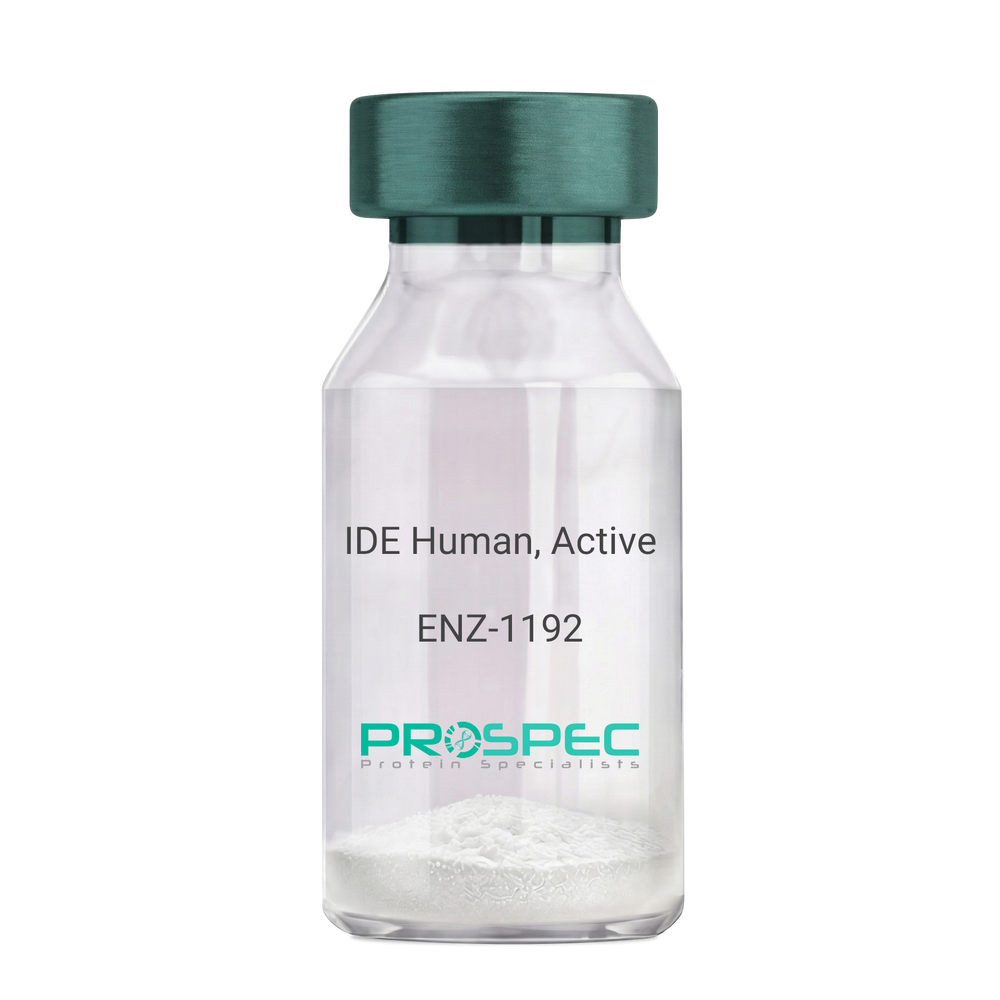
    IDE Human, Active

    Description:

    Insulin-Degrading Enzyme Human Recombinant

    Insulin-Degrading Enzyme, Abeta-Degrading Protease, Insulysin, EC 3.4.24.56, Insulinase, Insulin Protease, INSULYSIN, EC 3.4.24, IDE, insulin-degrading enzyme isoform 1. 

    Product # :

    ENZ-1192

    Price :

    Quantity :

    Shipping Method :

    Ice Icon

    Shipped with Ice Packs

    Add To Cart

    More Info

    • description
    • source
    • formulation
    • purity
    • biological activity
    • More Info

    Description

    IDE Human, Active Human Recombinant produced in E.Coli is a single, non-glycosylated, polypeptide chain (42-1019 a.a) containing a total of 984 amino acids, having a molecular mass of 114 kDa. IDE is fused to a 6 amino acid His-tag at C-terminus and is purified by proprietary chromatographic techniques.

    Source

    Escherichia Coli.

    Formulation

    The IDE solution (0.5mg/ml) contains 10% Glycerol, 100mM NaCl, 0.05% Brij35 and 20mM Tris-HCl buffer (pH 7.5).

    Purity

    Greater than 90.0% as determined by SDS-PAGE.

    Biological Activity

    Specific activity is greater than 3,000 pmol/min/ug in which 1 unit will convert 1.0 pmole of Mca-RPPGFSAFK(Dnp)-OH to MCA-Pro-Leu-OH per minute at pH 7.5 at 25°C.

    More Info

    • Synonyms

      Insulin-Degrading Enzyme, Abeta-Degrading Protease, Insulysin, EC 3.4.24.56, Insulinase, Insulin Protease, INSULYSIN, EC 3.4.24, IDE, insulin-degrading enzyme isoform 1.

    • Physical Appearance

      Filtered colorless solution.

    • Stability

      Store at 4°C if entire vial will be used within 2-4 weeks. Store, frozen at -20°C for longer periods of time. For long term storage it is recommended to add a carrier protein (0.1% HSA or BSA). Avoid multiple freeze-thaw cycles.

    • Amino Acid Sequence

      MNNPAIKRIG NHITKSPEDK REYRGLELAN GIKVLLISDP TTDKSSAALD VHIGSLSDPP NIAGLSHFCE HMLFLGTKKY PKENEYSQFL SEHAGSSNAF TSGEHTNYYF DVSHEHLEGA LDRFAQFFLC PLFDESCKDR EVNAVDSEHE KNVMNDAWRL FQLEKATGNP KHPFSKFGTG NKYTLETRPN QEGIDVRQEL LKFHSAYYSS NLMAVCVLGR ESLDDLTNLV VKLFSEVENK NVPLPEFPEH PFQEEHLKQL YKIVPIKDIR NLYVTFPIPD LQKYYKSNPG HYLGHLIGHE GPGSLLSELK SKGWVNTLVG GQKEGARGFM FFIINVDLTE EGLLHVEDII LHMFQYIQKL RAEGPQEWVF QECKDLNAVA FRFKDKERPR GYTSKIAGIL HYYPLEEVLT AEYLLEEFRP DLIEMVLDKL RPENVRVAIV SKSFEGKTDR TEEWYGTQYK QEAIPDEVIK KWQNADLNGK FKLPTKNEFI PTNFEILPLE KEATPYPALI KDTAMSKLWF KQDDKFFLPK ACLNFEFFSP FAYVDPLHCN MAYLYLELLK DSLNEYAYAA ELAGLSYDLQ NTIYGMYLSV KGYNDKQPIL LKKIIEKMAT FEIDEKRFEI IKEAYMRSLN NFRAEQPHQH AMYYLRLLMT EVAWTKDELK EALDDVTLPR LKAFIPQLLS RLHIEALLHG NITKQAALGI MQMVEDTLIE HAHTKPLLPS
      QLVRYREVQL PDRGWFVYQQ RNEVHNNCGI EIYYQTDMQS TSENMFLELF CQIISEPCFN TLRTKEQLGY IVFSGPRRAN GIQGLRFIIQ SEKPPHYLES RVEAFLITME KSIEDMTEEA FQKHIQALAI RRLDKPKKLS AECAKYWGEI ISQQYNFDRD NTEVAYLKTL TKEDIIKFYK EMLAVDAPRR HKVSVHVLAR EMDSCPVVGE FPCQNDINLS QAPALPQPEV IQNMTEFKRG LPLFPLVKPH INFMAAKLHH HHHH.

    • Background

      Insulin-degrading enzyme (IDE) is a crucial protease that plays a significant role in maintaining glucose homeostasis by degrading insulin and other bioactive peptides. Dysregulation of IDE has been implicated in various metabolic disorders, particularly type 2 diabetes mellitus. IDE is also associated with the clearance of amyloid-beta peptides in the brain, making it relevant to Alzheimer's disease pathology. Studying the recombinant form of IDE is fundamental to understanding its functional mechanisms and exploring potential avenues for therapeutic interventions.

      The primary goal of this research is to express and purify recombinant IDE using diverse expression systems. Recombinant DNA techniques will be employed to construct expression vectors containing the IDE gene, followed by expression in bacterial, yeast, or mammalian cell-based systems. The recombinant IDE will be purified using affinity chromatography or other appropriate methods, facilitating subsequent biochemical and biophysical characterization.

      The second objective is to investigate the substrate specificity and catalytic activity of the purified IDE. In vitro enzymatic assays will be conducted to analyse the ability of the recombinant IDE to degrade insulin and other potential substrates. The effects of various factors, such as pH, temperature, and potential modulators, on IDE activity will be evaluated. Additionally, the interactions between IDE and its substrates will be explored using binding assays.

      The third objective is to elucidate the three-dimensional structure of the IDE recombinant using techniques like X-ray crystallography or nuclear magnetic resonance (NMR) spectroscopy. Structural insights into the active site and binding pockets of IDE will provide valuable information for understanding its substrate recognition and catalytic mechanisms. This knowledge could be instrumental in designing targeted therapeutic compounds.

      By characterizing the IDE recombinant, this research aims to contribute to our understanding of its role in insulin metabolism, glucose regulation, and potential therapeutic applications. The findings from this study may have implications for the development of novel treatments for diabetes and other related disorders.

    ProSpec's products are furnished for LABORATORY RESEARCH USE ONLY. The product may not be used as drugs, agricultural or pesticidal products, food additives or household chemicals.

    Ide Human Active
  • View Data Sheet

    Name :

    LDHA Human

    Description:

    Lactate Dehydrogenase A Human Recombinant

    LDH-A, GSD11, LDH1, LDHM, PIG19, EC 1.1.1.27, lactate dehydrogenase M, LDH-M, LDH-1, L-lactate dehydrogenase A chain, LDH muscle subunit, Renal carcinoma antigen NY-REN-59, Cell proliferation-inducing gene 19 protein, LDHA.

    Product # :

    ENZ-491

    Price :

    Quantity :

    Shipping Method :

    Ice Icon

    Shipped with Ice Packs

    Add To Cart

    More Info

    • description
    • source
    • formulation
    • purity
    • biological activity
    • More Info

    Description

    LDHA Human Recombinant produced in E.Coli is a single, non-glycosylated polypeptide chain containing 352 amino acids (1-332 a.a.) and having a molecular mass of 38.8 kDa. The LDHA is fused to a 20 amino acid his tag at N-terminus and purified by conventional chromatography.

    Source

    Escherichia Coli.

    Formulation

    The LDHA protein solution (0.5mg/ml) contains 20mM Tris-HCl pH-8.0, 100mM NaCl and 20% glycerol.

    Purity

    Greater than 95.0% as determined by SDS-PAGE.

    Biological Activity

    Specific activity is > 20 units/mg. in which one unit will convert 1.0 umole of pyruvate to L-lactate and beta-NAD per minute at pH 7.5 at 37°C.

    More Info

    • Introduction

      LDHA catalyzes the conversion of L-lactate and NAD to pyruvate and NADH in the final step of anaerobic glycolysis. LDHA is localized primarily in muscle tissue and is part of the lactate dehydrogenase family. Mutations in LDHA have been linked to exertional myoglobinuria. LDH1 is decreased in essential thrombocythemia. LDHA is induced through a non-genomic pathway of estrogen action. Reduction in LDH-A activity results in stimulation of mitochondrial respiration and decrease of mitochondrial membrane potential.

    • Synonyms

      LDH-A, GSD11, LDH1, LDHM, PIG19, EC 1.1.1.27, lactate dehydrogenase M, LDH-M, LDH-1, L-lactate dehydrogenase A chain, LDH muscle subunit, Renal carcinoma antigen NY-REN-59, Cell proliferation-inducing gene 19 protein, LDHA.

    • Physical Appearance

      Sterile Filtered colorless solution.

    • Stability

      Store at 4°C if entire vial will be used within 2-4 weeks. Store, frozen at -20°C for longer periods of time. For long term storage it is recommended to add a carrier protein (0.1% HSA or BSA).Avoid multiple freeze-thaw cycles.

    • Amino Acid Sequence

      MGSSHHHHHH SSGLVPRGSH MATLKDQLIY NLLKEEQTPQ NKITVVGVGA VGMACAISIL MKDLADELAL VDVIEDKLKG EMMDLQHGSL FLRTPKIVSG KDYNVTANSK LVIITAGARQ QEGESRLNLV QRNVNIFKFI IPNVVKYSPN CKLLIVSNPV DILTYVAWKI SGFPKNRVIG SGCNLDSARF RYLMGERLGV HPLSCHGWVL GEHGDSSVPV WSGMNVAGVS LKTLHPDLGT DKDKEQWKEV HKQVVESAYE VIKLKGYTSW AIGLSVADLA ESIMKNLRRV HPVSTMIKGL YGIKDDVFLS VPCILGQNGI SDLVKVTLTS EEEARLKKSA DTLWGIQKEL QF.

    ProSpec's products are furnished for LABORATORY RESEARCH USE ONLY. The product may not be used as drugs, agricultural or pesticidal products, food additives or household chemicals.

    Ldha Human
  • View Data Sheet

    Name :

    MMP1 Human, sf9

    Description:

    Matrix Metalloproteinase-1 Human Recombinant, sf9

    Matrix Metallopeptidase 1, Interstitial Collagenase, Fibroblast Collagenase, EC 3.4.24.7, CLG, Matrix Metalloproteinase 1 (Interstitial Collagenase), Matrix Metallopeptidase 1 (Interstitial Collagenase), Matrix Metalloproteinase 1, Matrix Metalloproteinase-1, Matrix Metalloprotease 1, EC 3.4.24, MMP-1, CLGN, Fibroblast collagenase, Matrix metalloproteinase-1, MMP-1.

    Product # :

    ENZ-989

    Price :

    Quantity :

    Shipping Method :

    Ice Icon

    Shipped with Ice Packs

    Add To Cart

    More Info

    • description
    • source
    • formulation
    • purity
    • More Info

    Description

    MMP1 Human Recombinant produced in Sf9 Baculovirus cells is a single, non-glycosylated polypeptide chain containing 460 amino acids (18-469a.a) and having a molecular mass of 53.1kDa (Molecular size on SDS-PAGE will appear at approximately 50-70kDa). MMP1 is fused to an 8 amino acid His-tag at C-terminus & purified by proprietary chromatographic techniques.

    Source

    Sf9, Baculovirus cells.

    Formulation

    MMP1 protein solution (0.25mg/ml) containing 20mM MES buffer (pH 5.5), 10mM CaCl2, 100 mM NaCl, 0.05% Brij35 and 30% glycerol.

    Purity

    Greater than 95% as determined by SDS-PAGE.

    More Info

    • Introduction

      MMP-1 (interstitial collagenase) can break down a wide range of substrates including types I, II, III, VII, VIII, and X collagens as well as L-Selectin, pro-TNF, IL-1?, IGFBP-3, IGFBP-5, casein, gelatin, ?1 antitrypsin, myelin basic protein, pro-MMP2 and pro-MMP9. A significant function of MMP-1 is the degradation of fibrillar collagens in extracellular matrix remodeling. MMP-1 is expressed in fibroblasts, keratinocytes, endothelial cells, monocytes and macrophages. MMP1 can be divided into a number of distinct domains: a prodomain which is cleaved on activation, a catalytic domain containing the zinc binding site and a short hinge region with a carboxyl terminal domain. MMP1 is part of a cluster of MMP genes which localize to chromosome 11q22.3.

    • Synonyms

      Matrix Metallopeptidase 1, Interstitial Collagenase, Fibroblast Collagenase, EC 3.4.24.7, CLG, Matrix Metalloproteinase 1 (Interstitial Collagenase), Matrix Metallopeptidase 1 (Interstitial Collagenase), Matrix Metalloproteinase 1, Matrix Metalloproteinase-1, Matrix Metalloprotease 1, EC 3.4.24, MMP-1, CLGN, Fibroblast collagenase, Matrix metalloproteinase-1, MMP-1.

    • Physical Appearance

      Sterile Filtered colorless solution.

    • Stability

      Store at 4°C if entire vial will be used within 2-4 weeks. Store, frozen at -20°C for longer periods of time. For long term storage it is recommended to add a carrier protein (0.1% HSA or BSA). Avoid multiple freeze-thaw cycles.

    • Amino Acid Sequence

      HSFPATLETQ EQDVDLVQKY LEKYYNLKND GRQVEKRRNS GPVVEKLKQM QEFFGLKVTG KPDAETLKVM KQPRCGVPDV AQFVLTEGNP RWEQTHLTYR IENYTPDLPR ADVDHAIEKA FQLWSNVTPL TFTKVSEGQA DIMISFVRGD HRDNSPFDGP GGNLAHAFQP GPGIGGDAHF DEDERWTNNF REYNLHRVAA HELGHSLGLS HSTDIGALMY PSYTFSGDVQ LAQDDIDGIQ AIYGRSQNPV QPIGPQTPKA CDSKLTFDAI TTIRGEVMFF KDRFYMRTNP FYPEVELNFI SVFWPQLPNG LEAAYEFADR DEVRFFKGNK YWAVQGQNVL HGYPKDIYSS FGFPRTVKHI DAALSEENTG KTYFFVANKY WRYDEYKRSM DPGYPKMIAH DFPGIGHKVD AVFMKDGFFY FFHGTRQYKF DPKTKRILTL QKANSWFNCR KNLEHHHHHH.

    ProSpec's products are furnished for LABORATORY RESEARCH USE ONLY. The product may not be used as drugs, agricultural or pesticidal products, food additives or household chemicals.

    Mmp1 Human Sf9
  • View Data Sheet

    Name :

    RPIA Human

    Description:

    Ribose 5-Phosphate Isomerase A Human Recombinant

    Ribose-5-phosphate isomerase, Phosphoriboisomerase, RPIA, RPI.

    Product # :

    ENZ-228

    Price :

    Quantity :

    Shipping Method :

    Ice Icon

    Shipped with Ice Packs

    Add To Cart

    More Info

    • description
    • source
    • formulation
    • purity
    • More Info

    Description

    RPIA Human Recombinant produced in E.coli is a single, non-glycosylated polypeptide chain containing 331 amino acids (1-311) and having a molecular mass of 35.4kDa.RPIA is fused to a 20 amino acid His-tag at N-terminus & purified by proprietary chromatographic techniques.

    Source

    Escherichia Coli.

    Formulation

    The RPIA solution (0.25mg/ml) contains 20mM Tris-HCl buffer (pH 8.0), 2mM DTT,40% glycerol, 200mM NaCl, 2mM EDTA and 0.2mM PMSF.

    Purity

    Greater than 90% as determined by SDS-PAGE.

    More Info

    • Introduction

      Ribose-5-phosphate isomerase (RPIA) is a member of the ribose 5-phosphate isomerase family. RPIA is an enzyme which catalyzes the conversion between ribose-5-phosphate (R5P) and ribulose-5-phosphate (Ru5P). RPI occurs as 2 separate proteins forms, termed RPIA and RPIB. RPIA has a vital role in the metabolism of plants and animals, as it is involved in the Calvin cycle which takes place in plants, and the pentose phosphate pathway which occurs in plants as well as animals.

    • Synonyms

      Ribose-5-phosphate isomerase, Phosphoriboisomerase, RPIA, RPI.

    • Physical Appearance

      Sterile Filtered clear solution.

    • Stability

      Store at 4°C if entire vial will be used within 2-4 weeks. Store, frozen at -20°C for longer periods of time. For long term storage it is recommended to add a carrier protein (0.1% HSA or BSA).Avoid multiple freeze-thaw cycles.

    • Amino Acid Sequence

      MGSSHHHHHH SSGLVPRGSH MQRPGPFSTL YGRVLAPLPG RAGGAASGGG GNSWDLPGSH VRLPGRAQSG TRGGAGNTST SCGDSNSICP APSTMSKAEE AKKLAGRAAV ENHVRNNQVL GIGSGSTIVH AVQRIAERVK QENLNLVCIP TSFQARQLIL QYGLTLSDLD RHPEIDLAID GADEVDADLN LIKGGGGCLT QEKIVAGYAS RFIVIADFRK DSKNLGDQWH KGIPIEVIPM AYVPVSRAVS QKFGGVVELR MAVNKAGPVV TDNGNFILDW KFDRVHKWSE VNTAIKMIPG VVDTGLFINM AERVYFGMQD GSVNMREKPF C.

    ProSpec's products are furnished for LABORATORY RESEARCH USE ONLY. The product may not be used as drugs, agricultural or pesticidal products, food additives or household chemicals.

    Rpia Human
  • View Data Sheet

    Name :

    GATM Human

    Description:

    Glycine Amidinotransferase Human Recombinant

    Glycine amidinotransferase, mitochondrial, L-arginine:glycine amidinotransferase, Transamidinase, GATM, AGAT, AT.

    Product # :

    ENZ-583

    Price :

    Quantity :

    Shipping Method :

    Ice Icon

    Shipped with Ice Packs

    Add To Cart

    More Info

    • description
    • source
    • formulation
    • purity
    • More Info

    Description

    GATM Human Recombinant produced in E.coli is a single, non-glycosylated polypeptide chain containing 410 amino acids (38-423) and having a molecular mass of 46.9kDa (Molecular size on SDS-PAGE will appear higher).GATM is fused to a 24 amino acid His-tag at N-terminus & purified by proprietary chromatographic techniques.

    Source

    E.coli.

    Formulation

    The GATM solution (1mg/ml) contains 20mM Tris-HCl buffer (pH 8.0), 2mM DTT, 10% glycerol and 200mM NaCl.

    Purity

    Greater than 90% as determined by SDS-PAGE.

    More Info

    • Introduction

      Glycine amidinotransferase mitochondrial (GATM) is a mitochondrial enzyme which is a member of the amidinotransferase family. The GATM enzyme is involved in creatine biosynthesis, where it catalyzes the transfer of a guanido group from L-arginine to glycine, resulting in guanidinoacetic acid, the immediate precursor of creatine, which has an imperative role in energy metabolism in muscle tissues. GATM is significant in embryonic and central nervous system development. GATM gene mutations cause arginine:glycine amidinotransferase deficiency, an inborn error of creatine synthesis characterized by mental retardation, language impairment, and behavioral disorders.

    • Synonyms

      Glycine amidinotransferase, mitochondrial, L-arginine:glycine amidinotransferase, Transamidinase, GATM, AGAT, AT.

    • Physical Appearance

      Sterile Filtered colorless solution.

    • Stability

      Store at 4°C if entire vial will be used within 2-4 weeks. Store, frozen at -20°C for longer periods of time. For long term storage it is recommended to add a carrier protein (0.1% HSA or BSA).Avoid multiple freeze-thaw cycles.

    • Amino Acid Sequence

      MGSSHHHHHH SSGLVPRGSH MGSMSTQAAT ASSRNSCAAD DKATEPLPKD CPVSSYNEWD PLEEVIVGRA ENACVPPFTI EVKANTYEKY WPFYQKQGGH YFPKDHLKKA VAEIEEMCNI LKTEGVTVRR PDPIDWSLKY KTPDFESTGL YSAMPRDILI VVGNEIIEAP MAWRSRFFEY
      RAYRSIIKDY FHRGAKWTTA PKPTMADELY NQDYPIHSVE DRHKLAAQGK FVTTEFEPCF DAADFIRAGR DIFAQRSQVT NYLGIEWMRR HLAPDYRVHI ISFKDPNPMH IDATFNIIGP GIVLSNPDRP CHQIDLFKKA GWTIITPPTP IIPDDHPLWM SSKWLSMNVL MLDEKRVMVD
      ANEVPIQKMF EKLGITTIKV NIRNANSLGG GFHCWTCDVR RRGTLQSYLD.

    ProSpec's products are furnished for LABORATORY RESEARCH USE ONLY. The product may not be used as drugs, agricultural or pesticidal products, food additives or household chemicals.

    Gatm Human
  • View Data Sheet

    Name :

    tPA Human

    Description:

    Tissue Plasminogen Activator Human Recombinant

    Tissue-type plasminogen activator, EC 3.4.21.68, tPA, t-PA, t-plasminogen activator, TPA, T-PA, DKFZp686I03148.

    Product # :

    ENZ-263

    Price :

    Quantity :

    Shipping Method :

    Room Temp Icon

    Shipped at Room temp

    Add To Cart

    More Info

    • description
    • source
    • formulation
    • purity
    • More Info

    Description

    Tissue Plasminogen Activator Human Recombinant produced in CHO cells is a single, glycosylated polypeptide chain containing 527 amino acids and having a molecular mass of 59008.71 Dalton. tPA is a serine protease enzyme that converts plasminogen to plasmin. The tPA is purified by proprietary chromatographic techniques.

    Source

    Chinese Hamster Ovary Cells (CHO)

    Formulation

    Each mg of t-PA contains 1.7 gr L-arginine, 0.5 gr phosphoric acid and 4 mg tween 80.

    Purity

    Greater than 98.0% as determined by:
    (a) Analysis by RP-HPLC.
    (b) Analysis by SDS-PAGE.

    More Info

    • Introduction

      Tissue plasminogen activator (abbreviated PLAT or tPA) is a secreted serine proteasewhich converts the proenzymeplasminogento plasmin, a fibrinolyticenzyme. Plasminogen is synthesized as a single chain which is cleaved by PLAT into the two chain disulfide linked plasmin.
      This enzyme plays a role in cell migrationand tissue remodeling. Increased enzymatic activity causes hyperfibrinolysis, which manifests as excessive bleeding; decreased activity leads to hypofibrinolysiswhich can result in thrombosisor embolism.

    • Synonyms

      Tissue-type plasminogen activator, EC 3.4.21.68, tPA, t-PA, t-plasminogen activator, TPA, T-PA, DKFZp686I03148.

    • Physical Appearance

      Sterile Filtered White lyophilized (freeze-dried) powder.

    • Stability

      Lyophilized t-PA although stable at room temperature for 3 weeks, should be stored desiccated below -18°C. Upon reconstitution tPA should be stored at 4°C between 2-7 days and for future use below -18°C.For long term storage it is recommended to add a carrier protein (0.1% HSA or BSA).Please prevent freeze-thaw cycles.

    • Solubility

      It is recommended to reconstitute the lyophilized t-PA in sterile 18MΩ-cm H2O not less than 100 µg/ml, which can then be further diluted to other aqueous solutions.

    • Enzymatic Activity

      580,000 IU/mg.

    ProSpec's products are furnished for LABORATORY RESEARCH USE ONLY. The product may not be used as drugs, agricultural or pesticidal products, food additives or household chemicals.

    T Pa Human
  • View Data Sheet

    Name :

    UPRT Human

    Description:

    Uracil Phosphoribosyltransferase Human Recombinant

    Uracil phosphoribosyltransferase homolog, Uracil phosphoribosyltransferase (FUR1) homolog (S.cerevisiae), FUR1, Uracil Phosphoribosyltransferase, RP11-311P8.3, UPP, UPRT, UPRTase, UMP pyrophosphorylase, uprt.

    Product # :

    ENZ-742

    Price :

    Quantity :

    Shipping Method :

    Ice Icon

    Shipped with Ice Packs

    Add To Cart

    More Info

    • description
    • source
    • formulation
    • purity
    • More Info

    Description

    UPRT Human Recombinant produced in E.Coli is a single, non-glycosylated polypeptide chain containing 332 amino acids (1-309 a.a) and having a molecular mass of 36.2kDa.UPRT is fused to a 23 amino acid His-tag at N-terminus & purified by proprietary chromatographic techniques.

    Source

    Escherichia Coli.

    Formulation

    UPRT protein solution (0. 5mg/ml) containing 20mM Tris-HCl buffer (pH 8.0), 0.15M NaCl, 20% glycerol and 1mM DTT.

    Purity

    Greater than 90.0% as determined by SDS-PAGE.

    More Info

    • Introduction

      UPRT is a uracil phosphoribosyltransferase, that catalyzes the alteration of uracil and 5-phosphoribosyl-1-R-diphosphate to uridine monophosphate (UMP). This reaction is a significant part of nucleotide metabolism, specifically the pyrimidine salvage pathway. UPRT is restricted to the nucleus and cytoplasm and is a possible target for rational design of drugs to cure cancer and parasitic infections.

    • Synonyms

      Uracil phosphoribosyltransferase homolog, Uracil phosphoribosyltransferase (FUR1) homolog (S.cerevisiae), FUR1, Uracil Phosphoribosyltransferase, RP11-311P8.3, UPP, UPRT, UPRTase, UMP pyrophosphorylase, uprt.

    • Physical Appearance

      Sterile Filtered colorless solution.

    • Stability

      Store at 4°C if entire vial will be used within 2-4 weeks. Store, frozen at -20°C for longer periods of time. For long term storage it is recommended to add a carrier protein (0.1% HSA or BSA).Avoid multiple freeze-thaw cycles.

    • Amino Acid Sequence

      MGSSHHHHHH SSGLVPRGSH MGSMATELQC PDSMPCHNQQ VNSASTPSPE QLRPGDLILD HAGGNRASRA KVILLTGYAH SSLPAELDSG ACGGSSLNSE GNSGSGDSSS YDAPAGNSFL EDCELSRQIG AQLKLLPMND QIRELQTIIR DKTASRGDFM FSADRLIRLV VEEGLNQLPY KECMVTTPTG YKYEGVKFEK GNCGVSIMRS GEAMEQGLRD CCRSIRIGKI LIQSDEETQR AKVYYAKFPP DIYRRKVLLM YPILSTGNTV IEAVKVLIEH GVQPSVIILL SLFSTPHGAK SIIQEFPEIT ILTTEVHPVA PTHFGQKYFG TD.

    ProSpec's products are furnished for LABORATORY RESEARCH USE ONLY. The product may not be used as drugs, agricultural or pesticidal products, food additives or household chemicals.

    Uprt Human
  • View Data Sheet

    Name :

    TDO2 Human

    Description:

    Tryptophan 2,3-Dioxygenase Human Recombinant

    Tryptophan 2,3-dioxygenase, TDO, Tryptamin 2,3-dioxygenase, Tryptophan oxygenase, TO, TRPO, Tryptophan pyrrolase, Tryptophanase, TDO2, TPH2.

    Product # :

    ENZ-081

    Price :

    Quantity :

    Shipping Method :

    Ice Icon

    Shipped with Ice Packs

    Add To Cart

    More Info

    • description
    • source
    • formulation
    • purity
    • More Info

    Description

    TDO2 Human Recombinant fused with a 20 amino acid His tag at N-terminus produced in E.Coli is a single, non-glycosylated, polypeptide chain containing 426 amino acids (1-406 a.a.) and having a molecular mass of 50kDa. The TDO2 is purified by proprietary chromatographic techniques.

    Source

    Escherichia Coli.

    Formulation

    The TDO2 solution (0.25mg/ml) contains 20mM Tris-HCl buffer (pH8.0), 0.2M NaCl, 5mM DTT, 1mM EDTA and 30% glycerol.

    Purity

    Greater than 90.0% as determined by SDS-PAGE.

    More Info

    • Introduction

      TDO2 is a ferrous heme enzyme that catalyzes the first and rate-limiting step in the kynurenine pathway which is the major pathway of tryptophan metabolism. TDO2 integrates oxygen into the indole moiety of tryptophan. TDO2 has broad specificity towards tryptamine and derivatives including D- and L-tryptophan, 5-hydroxytryptophan and serotonin.

    • Synonyms

      Tryptophan 2,3-dioxygenase, TDO, Tryptamin 2,3-dioxygenase, Tryptophan oxygenase, TO, TRPO, Tryptophan pyrrolase, Tryptophanase, TDO2, TPH2.

    • Physical Appearance

      Sterile Filtered colorless solution.

    • Stability

      Store at 4°C if entire vial will be used within 2-4 weeks. Store, frozen at -20°C for longer periods of time. For long term storage it is recommended to add a carrier protein (0.1% HSA or BSA).Avoid multiple freeze-thaw cycles.

    • Amino Acid Sequence

      MGSSHHHHHH SSGLVPRGSH MSGCPFLGNN FGYTFKKLPV EGSEEDKSQT GVNRASKGGL IYGNYLHLEK VLNAQELQSE TKGNKIHDEH LFIITHQAYE LWFKQILWEL DSVREIFQNG HVRDERNMLK VVSRMHRVSV ILKLLVQQFS ILETMTALDF NDFREYLSPA SGFQSLQFRL LENKIGVLQN MRVPYNRRHY RDNFKGEENE LLLKSEQEKT LLELVEAWLE RTPGLEPHGF NFWGKLEKNI TRGLEEEFIR IQAKEESEEK EEQVAEFQKQ KEVLLSLFDE KRHEHLLSKG ERRLSYRALQ GALMIYFYRE EPRFQVPFQL LTSLMDIDSL MTKWRYNHVC MVHRMLGSKA GTGGSSGYHY LRSTVSDRYK VFVDLFNLST YLIPRHWIPK MNPTIHKFLY TAEYCDSSYF SSDESD.

    ProSpec's products are furnished for LABORATORY RESEARCH USE ONLY. The product may not be used as drugs, agricultural or pesticidal products, food additives or household chemicals.

    Tdo2 Human
  • View Data Sheet

    Name :

    tPA Human, Sf9

    Description:

    Tissue Plasminogen Activator Human Recombinant, Sf9

    Tissue-type plasminogen activator, EC 3.4.21.68, tPA, t-PA, t-plasminogen activator, TPA, T-PA, DKFZp686I03148, PLAT and tPA.

    Product # :

    ENZ-1011

    Price :

    Quantity :

    Shipping Method :

    Ice Icon

    Shipped with Ice Packs

    Add To Cart

    More Info

    • description
    • source
    • formulation
    • purity
    • More Info

    Description

    tPA Human Recombinant produced in Sf9 Baculovirus cells is a single, glycosylated polypeptide chain containing 545 amino acids (24-562 a.a) and having a molecular mass of 61.3kDa (Molecular size on SDS-PAGE will appear at approximately 50-70kDa).tPA is fused to a 6 amino acid His-tag at C-terminus & purified by proprietary chromatographic techniques.

    Source

    Sf9, Baculovirus cells.

    Formulation

    tPA protein solution (0.25mg/ml) containing 50mM MES buffer(pH 5.5 ), 40% glycerol, 5mM CaCl2, 1mM DTT and 0.5M NaCl.

    Purity

    Greater than 90.0% as determined by SDS-PAGE.

    More Info

    • Introduction

      Tissue plasminogen activator (abbreviated PLAT or tPA) is a secreted serine proteasewhich converts the proenzymeplasminogento plasmin, a fibrinolyticenzyme. Plasminogen is synthesized as a single chain which is cleaved by PLAT into the two chain disulfide linked plasmin.
      This enzyme plays a role in cell migrationand tissue remodeling. Increased enzymatic activity causes hyperfibrinolysis, which manifests as excessive bleeding; decreased activity leads to hypofibrinolysiswhich can result in thrombosisor embolism.

    • Synonyms

      Tissue-type plasminogen activator, EC 3.4.21.68, tPA, t-PA, t-plasminogen activator, TPA, T-PA, DKFZp686I03148, PLAT and tPA.

    • Physical Appearance

      Sterile Filtered colorless solution.

    • Stability

      Store at 4°C if entire vial will be used within 2-4 weeks. Store, frozen at -20°C for longer periods of time. For long term storage it is recommended to add a carrier protein (0.1% HSA or BSA).Avoid multiple freeze-thaw cycles.

    • Amino Acid Sequence

      QEIHARFRRG ARSYQVICRD EKTQMIYQQH QSWLRPVLRS NRVEYCWCNS GRAQCHSVPV KSCSEPRCFN GGTCQQALYF SDFVCQCPEG FAGKCCEIDT RATCYEDQGI SYRGTWSTAE SGAECTNWNS SALAQKPYSG RRPDAIRLGL GNHNYCRNPD RDSKPWCYVF KAGKYSSEFC STPACSEGNS DCYFGNGSAY RGTHSLTESG ASCLPWNSMI LIGKVYTAQN PSAQALGLGK HNYCRNPDGD AKPWCHVLKN RRLTWEYCDV PSCSTCGLRQ YSQPQFRIKG GLFADIASHP WQAAIFAKHR RSPGERFLCG GILISSCWIL SAAHCFQERF PPHHLTVILG RTYRVVPGEE EQKFEVEKYI VHKEFDDDTY DNDIALLQLK SDSSRCAQES SVVRTVCLPP ADLQLPDWTE CELSGYGKHE ALSPFYSERL KEAHVRLYPS SRCTSQHLLN RTVTDNMLCA GDTRSGGPQA NLHDACQGDS GGPLVCLNDG RMTLVGIISW GLGCGQKDVP GVYTKVTNYL DWIRDNMRPHHHHHH.

    ProSpec's products are furnished for LABORATORY RESEARCH USE ONLY. The product may not be used as drugs, agricultural or pesticidal products, food additives or household chemicals.

    Tpa Human Sf9
  • View Data Sheet

    Name :

    GMPR Human

    Description:

    Guanosine Monophosphate Reductase Human Recombinant

    GMP reductase 1, Guanosine 5'-monophosphate oxidoreductase 1, Guanosine monophosphate reductase 1, GMPR, GMPR1.

    Product # :

    ENZ-570

    Price :

    Quantity :

    Shipping Method :

    Ice Icon

    Shipped with Ice Packs

    Add To Cart

    More Info

    • description
    • source
    • formulation
    • purity
    • More Info

    Description

    GMPR Human Recombinant produced in E.coli is a single, non-glycosylated polypeptide chain containing 365 amino acids (1-345) and having a molecular mass of 39.5kDa.GMPR is fused to a 20 amino acid His-tag at N-terminus & purified by proprietary chromatographic techniques.

    Source

    Escherichia Coli.

    Formulation

    The GMPR solution (0.5mg/ml) contains 20mM Tris-HCl buffer (pH8.0), 40% glycerol, 0.15M NaCl and 1mM DTT.

    Purity

    Greater than 95.0% as determined by SDS-PAGE.

    More Info

    • Introduction

      Guanosine monophosphate reductase (GMPR) catalyzes the irreversible NADPH-dependent deamination of GMP to IMP. GMPR acts in the conversion of nucleobase, nucleoside and nucleotide derivatives of G to A nucleotides, and in upholding the intracellular balance of A and G nucleotides. In addition, the GMPR protein functions in the re-utilization of free intracellular bases and purine nucleosides.

    • Synonyms

      GMP reductase 1, Guanosine 5'-monophosphate oxidoreductase 1, Guanosine monophosphate reductase 1, GMPR, GMPR1.

    • Physical Appearance

      Sterile Filtered clear colorless solution.

    • Stability

      Store at 4°C if entire vial will be used within 2-4 weeks. Store, frozen at -20°C for longer periods of time. For long term storage it is recommended to add a carrier protein (0.1% HSA or BSA).Avoid multiple freeze-thaw cycles.

    • Amino Acid Sequence

      MGSSHHHHHH SSGLVPRGSH MPRIDADLKL DFKDVLLRPK RSSLKSRAEV DLERTFTFRN SKQTYSGIPI IVANMDTVGT FEMAAVMSQH SMFTAIHKHY SLDDWKLFAT NHPECLQNVA VSSGSGQNDL EKMTSILEAV PQVKFICLDV ANGYSEHFVE FVKLVRAKFP EHTIMAGNVV TGEMVEELIL SGADIIKVGV GPGSVCTTRT KTGVGYPQLS AVIECADSAH GLKGHIISDG GCTCPGDVAK AFGAGADFVM LGGMFSGHTE CAGEVIERNG RKLKLFYGMS SDTAMNKHAG GVAEYRASEG KTVEVPYKGD VENTILDILG GLRSTCTYVG AAKLKELSRR ATFIRVTQQH
      NTVFS.

    ProSpec's products are furnished for LABORATORY RESEARCH USE ONLY. The product may not be used as drugs, agricultural or pesticidal products, food additives or household chemicals.

    Gmpr Human
  • View Data Sheet

    Name :

    Chymotrypsin Porcine

    Description:

    Alpha Chymotrypsin Porcine

    a-chymotrypsin, alpha chymotrypsin.

    Product # :

    ENZ-1195

    Price :

    Quantity :

    Shipping Method :

    Room Temp Icon

    Shipped at Room temp

    Add To Cart

    More Info

    • description
    • source
    • formulation
    • biological activity
    • More Info

    Description

    Chymotrypsin purified from porcine pancreas, CAS: 9004-07-3, EC: 3.4.21.1 having a molecular mass of ~25kDa.

    Source

    Porcine Pancreas.

    Formulation

    The protein (1mg/ml) was lyophilized with no additives.

    Biological Activity

    Greater than 1500 USP U/mg.

    More Info

    • Synonyms

      a-chymotrypsin, alpha chymotrypsin.

    • Physical Appearance

      Sterile Filtered White lyophilized (freeze-dried) powder.

    • Stability

      Lyophilized Chymotrypsin although stable at room temperature for 3 weeks, should be stored desiccated below -18°C. Upon reconstitution Chymotrypsin should be stored at 4°C between 2-7 days and for future use below -18°C. For long term storage it is recommended to add a carrier protein (0.1% HSA or BSA). Please prevent freeze-thaw cycles.

    • Solubility

      It is recommended to reconstitute the lyophilized Chymotrypsin in sterile 18MΩ-cm H2O not less than 100µg/ml, which can then be further diluted to other aqueous solutions.

    • Background

      Porcine chymotrypsin, derived from the pancreas of pigs, stands as a cornerstone in enzymology, serving as a paradigmatic model for understanding proteolytic mechanisms and substrate specificity. Renowned for its catalytic prowess and structural intricacies, porcine chymotrypsin has garnered significant attention from researchers across various scientific disciplines.

      The fascination with porcine chymotrypsin stems from its ability to cleave peptide bonds selectively after large hydrophobic amino acids, such as tryptophan, tyrosine, and phenylalanine.

    ProSpec's products are furnished for LABORATORY RESEARCH USE ONLY. The product may not be used as drugs, agricultural or pesticidal products, food additives or household chemicals.

    Chymotrypsin Porcine
  • View Data Sheet

    Name :

    DHFR Human

    Description:

    Dihydrofolate Reductase Human Recombinant

    Dihydrofolate reductase, DHFR, DHFRP1.

    Product # :

    ENZ-443

    Price :

    Quantity :

    Shipping Method :

    Ice Icon

    Shipped with Ice Packs

    Add To Cart

    More Info

    • description
    • source
    • formulation
    • purity
    • biological activity
    • More Info
    • sds-page

    Description

    DHFR Human Recombinant fused with a 20 amino acids His tag at N-terminus produced in E.Coli is a single, non-glycosylated, polypeptide chain containing 207 amino acids (1-187 a.a.) and having a molecular mass of 23.6kDa.The DHFR is purified by proprietary chromatographic techniques.

    Source

    Escherichia Coli.

    Formulation

    The DHFR solution (1mg/ml) contains 20mM Tris-HCl buffer (pH8.0), 0.1M NaCl, 2mM DTT and 30% glycerol.

    Purity

    Greater than 95.0% as determined by SDS-PAGE.

    Biological Activity

    Specific activity is >2000 pmol/min/ug  is defined as the amount of enzyme that converts 1.0 pmole of dihydrofolic acid to tetrahydrofolic acid per minute at pH 6.5 at 25C.

    sds-page

    dhfr-human-sds-page - Product image 1

    More Info

    • Introduction

      Dihydrofolate reductase (DHFR) is an enzyme that reduces dihydrofolic acid to tetrahydrofolic acid, with NADPH as electron donor that can be converted to the kinds of tetrahydrofolate cofactors applied in 1-carbon transfer chemistry. DHFR converts dihydrofolate into tetrahydrofolate, which is a methyl group shuttle required for the de novo synthesis of purines, thymidylic acid, and specific amino acids. Even though the functional DHFR gene is mapped to chromosome 5, numerous intronless processed pseudogenes or dihydrofolate reductase-like genes are identified on separate chromosomes.
      DHFR deficiency is associated with megaloblastic anemia.
      DHFR knockdown plays a role in the anticancer activity of 2-hydroxyoleic acid.
      DHFR gene insertion/deletion polymorphism is linked to variation in serum and red blood cell folate concentrations in women.

    • Synonyms

      Dihydrofolate reductase, DHFR, DHFRP1.

    • Physical Appearance

      Sterile Filtered colorless solution.

    • Stability

      Store at 4°C if entire vial will be used within 2-4 weeks. Store, frozen at -20°C for longer periods of time. For long term storage it is recommended to add a carrier protein (0.1% HSA or BSA).Avoid multiple freeze-thaw cycles.

    • Amino Acid Sequence

      MGSSHHHHHH SSGLVPRGSH MVGSLNCIVA VSQNMGIGKN GDLPWPPLRN EFRYFQRMTT TSSVEGKQNL VIMGKKTWFS IPEKNRPLKG RINLVLSREL KEPPQGAHFL SRSLDDALKL TEQPELANKV DMVWIVGGSS VYKEAMNHPG HLKLFVTRIM QDFESDTFFP EIDLEKYKLL PEYPGVLSDV QEEKGIKYKF EVYEKND.

    ProSpec's products are furnished for LABORATORY RESEARCH USE ONLY. The product may not be used as drugs, agricultural or pesticidal products, food additives or household chemicals.

    Dhfr Human
  • View Data Sheet

    Name :

    CDO1 Human

    Description:

    Cysteine Dioxygenase Human Recombinant

    Cysteine dioxygenase type 1, Cysteine dioxygenase type I, CDO-I, CDO, CDO1.

    Product # :

    ENZ-449

    Price :

    Quantity :

    Shipping Method :

    Ice Icon

    Shipped with Ice Packs

    Add To Cart

    More Info

    • description
    • source
    • formulation
    • purity
    • More Info

    Description

    CDO1 Human Recombinant fused with a 37 amino acids His tag at N-terminus produced in E.Coli is a single, non-glycosylated, polypeptide chain containing 207 amino acids (1-170 a.a.) and having a molecular mass of 23.9kDa.The CDO1 is purified by proprietary chromatographic techniques.

    Source

    Escherichia Coli.

    Formulation

    The CDO1 solution contains 20mM Tris buffer(pH 8.0), 10% glycerol and 1mM DTT.

    Purity

    Greater than 90.0% as determined by SDS-PAGE.

    More Info

    • Introduction

      CDO1 (Cysteine dioxygenase) is a mammalian non-heme iron enzyme that initiates a number of significant metabolic pathways associated with pyruvate and several sulfurate compounds including sulfate, hypotaurine and taurine. CDO1 catalyzes the conversion of L-cysteine to cysteine sulfinic acid (cysteine sulfinate) by incorporation of dioxygen. CDO1 is a vital regulator of cellular cysteine concentrations and has an essential role in maintaining the hepatic concentration of intracellular free cysteine within a proper narrow range. CDO1 is able to alter intracellular cysteine levels and glutathione levels. CDO1 is highly expressed in the liver and placenta. On the other hand CDO1 has a low expression in heart, brain and pancreas. CDO1 can also be detected in hepatoblastoma HepG2 cells.

    • Synonyms

      Cysteine dioxygenase type 1, Cysteine dioxygenase type I, CDO-I, CDO, CDO1.

    • Physical Appearance

      Sterile Filtered colorless solution.

    • Stability

      Store at 4°C if entire vial will be used within 2-4 weeks. Store, frozen at -20°C for longer periods of time. For long term storage it is recommended to add a carrier protein (0.1% HSA or BSA).Avoid multiple freeze-thaw cycles.

    • Amino Acid Sequence

      MRGSHHHHHH GMASMTGGQQ MGRDLYDDDD KDRWGSHMEQ TEVLKPRTLA DLIRILHQLF AGDEVNVEEV QAIMEAYESD PTEWAMYAKF DQYRYTRNLV DQGNGKFNLM ILCWGEGHGS SIHDHTNSHC FLKMLQGNLK ETLFAWPDKK SNEMVKKSER VLRENQCAYI NDSVGLHRVE NISHTEPAVS LHLYSPPFDT CHAFDQR.

    ProSpec's products are furnished for LABORATORY RESEARCH USE ONLY. The product may not be used as drugs, agricultural or pesticidal products, food additives or household chemicals.

    Cdo1 Human
  • View Data Sheet

    Name :

    AK5 Human

    Description:

    Adenylate Kinase 5 Human Recombinant

    Adenylate kinase isoenzyme 5, AK 5, ATP-AMP transphosphorylase 5, AK5, AK6.

    Product # :

    PKA-011

    Price :

    Quantity :

    Shipping Method :

    Ice Icon

    Shipped with Ice Packs

    Add To Cart

    More Info

    • description
    • source
    • formulation
    • purity
    • More Info

    Description

    AK5 Human Recombinant produced in E.Coli is a single, non-glycosylated polypeptide chain containing 586 amino acids (1-562 a.a.) and having a molecular mass of 65.9kDa.AK5 is fused to a 24 amino acid His-tag at N-terminus & purified by proprietary chromatographic techniques.

    Source

    Escherichia Coli.

    Formulation

    AK5 protein solution (0.25mg/ml) containing 20mM Tris-HCl buffer (pH8.0), 20% glycerol and 1mM DTT.

    Purity

    Greater than 85% as determined by SDS-PAGE.

    More Info

    • Introduction

      Adenylate kinase isoenzyme 5 (AK5) belongs to the adenylate kinase family, which is involved in regulating the adenine nucleotide composition within a cell by catalyzing the reversible transfer of phosphate groups among adenine nucleotides. AK5 is related to the UMP/CMP kinase of several species. AK5 is located in the cytosol and expressed exclusively in the brain.

    • Synonyms

      Adenylate kinase isoenzyme 5, AK 5, ATP-AMP transphosphorylase 5, AK5, AK6.

    • Physical Appearance

      Sterile filtered colorless solution.

    • Stability

      Store at 4°C if entire vial will be used within 2-4 weeks. Store, frozen at -20°C for longer periods of time. For long term storage it is recommended to add a carrier protein (0.1% HSA or BSA).Avoid multiple freeze-thaw cycles.

    • Amino Acid Sequence

      MGSSHHHHHH SSGLVPRGSH MGSHMNTNDA KEYMARREIP QLFESLLNGL MCSKPEDPVE YLESCLQKVK ELGGCDKVKW DTFVSQEKKT LPPLNGGQSR RSFLRNVMPG NSNFPYRRYD RLPPIHQFSI ESDTDLSETA ELIEEYEVFD PTRPRPKIIL VIGGPGSGKG TQSLKIAERY GFQYISVGEL LRKKIHSTSS NRKWSLIAKI ITTGELAPQE TTITEIKQKL MQIPDEEGIV IDGFPRDVAQ ALSFEDQICT PDLVVFLACA NQRLKERLLK RAEQQGRPDD NVKATQRRLM NFKQNAAPLV KYFQEKGLIM TFDADRDEDE VFYDISMAVD NKLFPNKEAA AGSSDLDPSM ILDTGEIIDT GSDYEDQGDD QLNVFGEDTM GGFMEDLRKC KIIFIIGGPG SGKGTQCEKL VEKYGFTHLS TGELLREELA SESERSKLIR DIMERGDLVP SGIVLELLKE AMVASLGDTR GFLIDGYPRE VKQGEEFGRR IGDPQLVICM DCSADTMTNR LLQRSRSSLP VDDTTKTIAK RLEAYYRASI PVIAYYETKT QLHKINAEGT PEDVFLQLCT AIDSIF.

    ProSpec's products are furnished for LABORATORY RESEARCH USE ONLY. The product may not be used as drugs, agricultural or pesticidal products, food additives or household chemicals.

    Ak5 Human
  • View Data Sheet

    Name :

    HS3ST1 Human

    Description:

    Heparan Sulfate 3-O-Sulfotransferase 1 Human Recombinant

    Heparan sulfate glucosamine 3-O-sulfotransferase 1, Heparan sulfate D-glucosaminyl 3-O-sulfotransferase 1, 3-OST-1, Heparan sulfate 3-O-sulfotransferase 1, h3-OST-1, HS3ST1, 3OST, 3OST1, HS3S1.

    Product # :

    ENZ-744

    Price :

    Quantity :

    Shipping Method :

    Ice Icon

    Shipped with Ice Packs

    Add To Cart

    More Info

    • description
    • source
    • formulation
    • purity
    • More Info

    Description

    HS3ST1 Human Recombinant produced in E.Coli is a single, non-glycosylated polypeptide chain containing 310 amino acids (21-307 a.a) and having a molecular mass of 36.2kDa.HS3ST1 is fused to a 23 amino acid His-tag at N-terminus & purified by proprietary chromatographic techniques.

    Source

    Escherichia Coli.

    Formulation

    HS3ST1 protein solution (0.25mg/ml) containing 20mM Tris-HCl buffer (pH 8.0), 0.2M NaCl, 40% glycerol and 2mM DTT.

    Purity

    Greater than 90.0% as determined by SDS-PAGE.

    More Info

    • Introduction

      Heparan Sulfate 3-O-Sulfotransferase 1 (HS3ST1), is sulfotransferase which uses 3'-phospho-5'-adenylyl sulfate (PAPS) to catalyze the transfer of a sulfo group to position 3 of glucosamine residues in heparan. HS3ST1 catalyzes the rate limiting step in the biosynthesis of heparan sulfate (HSact). This modification is a vital part in the biosynthesis of anticoagulant heparan sulfate since it concludes the structure of the antithrombin pentasaccharide binding site.

    • Synonyms

      Heparan sulfate glucosamine 3-O-sulfotransferase 1, Heparan sulfate D-glucosaminyl 3-O-sulfotransferase 1, 3-OST-1, Heparan sulfate 3-O-sulfotransferase 1,
      h3-OST-1, HS3ST1, 3OST, 3OST1, HS3S1.

    • Physical Appearance

      Sterile Filtered colorless solution.

    • Stability

      Store at 4°C if entire vial will be used within 2-4 weeks. Store, frozen at -20°C for longer periods of time. For long term storage it is recommended to add a carrier protein (0.1% HSA or BSA).Avoid multiple freeze-thaw cycles.

    • Amino Acid Sequence

      MGSSHHHHHH SSGLVPRGSH MGSRPAELGQ QELLRKAGTL QDDVRDGVAP NGSAQQLPQT IIIGVRKGGT RALLEMLSLH PDVAAAENEV HFFDWEEHYS HGLGWYLSQM PFSWPHQLTV EKTPAYFTSP KVPERVYSMN PSIRLLLILR DPSERVLSDY TQVFYNHMQK HKPYPSIEEF LVRDGRLNVD YKALNRSLYH VHMQNWLRFF PLRHIHIVDG DRLIRDPFPE IQKVERFLKL SPQINASNFY FNKTKGFYCL RDSGRDRCLH ESKGRAHPQV DPKLLNKLHE YFHEPNKKFF ELVGRTFDWH.

    ProSpec's products are furnished for LABORATORY RESEARCH USE ONLY. The product may not be used as drugs, agricultural or pesticidal products, food additives or household chemicals.

    Hs3St1 Human
  • View Data Sheet

    Name :

    ALDH2 Mouse

    Description:

    Aldehyde Dehydrogenase 2 Mouse Recombinant

    Aldehyde dehydrogenase, mitochondrial, AHD-M1, ALDH class 2, ALDH-E2, ALDHI.

    Product # :

    ENZ-879

    Price :

    Quantity :

    Shipping Method :

    Ice Icon

    Shipped with Ice Packs

    Add To Cart

    More Info

    • description
    • source
    • formulation
    • purity
    • More Info

    Description

    ALDH2 Mouse Recombinant produced in E.Coli is a single, non-glycosylated polypeptide chain containing 523 amino acids (20-519 a.a) and having a molecular mass of 56.8kDa. ALDH2 is fused to a 23 amino acid His-tag at N-terminus & purified by proprietary chromatographic techniques.

    Source

    Escherichia Coli.

    Formulation

    ALDH2 protein e solution (0.5mg/ml) containing Phosphate buffered salin(pH7.4), 20% glycerol and 1mM DTT.

    Purity

    Greater than 85% as determined by SDS-PAGE.

    More Info

    • Introduction

      ALDH2 is part of the aldehyde dehydrogenase family of proteins which catalyze the chemical transformation from acetaldehyde to acetic acid. ALDH2 is the second enzyme of the major oxidative pathway of alcohol metabolism. ALDH2 has 2 major liver isoforms: cytosolic and mitochondrial, which differ by their electrophoretic mobilities, kinetic properties, and subcellular localizations. Nearly all Caucasians have 2 major isozymes, whereas roughly 50% of Orientals have only the cytosolic isozyme, omitting the mitochondrial isozyme. The extremely higher rate of acute alcohol intoxication with Orientals compared to Caucasians is due to the fact of the absence of mitochondrial isozyme. ALDH2 has a low Km for acetaldehydes, and is localized in mitochondrial matrix.

    • Synonyms

      Aldehyde dehydrogenase, mitochondrial, AHD-M1, ALDH class 2, ALDH-E2, ALDHI.

    • Physical Appearance

      Sterile Filtered clear solution.

    • Stability

      Store at 4°C if entire vial will be used within 2-4 weeks. Store, frozen at -20°C for longer periods of time. For long term storage it is recommended to add a carrier protein (0.1% HSA or BSA).Avoid multiple freeze-thaw cycles.

    • Amino Acid Sequence

      MGSSHHHHHH SSGLVPRGSH MGSSAAATSA VPAPNHQPEV FCNQIFINNE WHDAVSRKTF PTVNPSTGEV ICQVAEGNKE DVDKAVKAAR AAFQLGSPWR RMDASDRGRL LYRLADLIER DRTYLAALET LDNGKPYVIS YLVDLDMVLK CLRYYAGWAD KYHGKTIPID GDFFSYTRHE PVGVCGQIIP WNFPLLMQAW KLGPALATGN VVVMKVAEQT PLTALYVANL IKEAGFPPGV VNIVPGFGPT AGAAIASHEG VDKVAFTGST EVGHLIQVAA GSSNLKRVTL ELGGKSPNII MSDADMDWAV EQAHFALFFN QGQCCCAGSR TFVQENVYDE FVERSVARAK SRVVGNPFDS RTEQGPQVDE TQFKKILGYI KSGQQEGAKL LCGGGAAADR GYFIQPTVFG DVKDGMTIAK EEIFGPVMQI LKFKTIEEVV GRANDSKYGL AAAVFTKDLD KANYLSQALQ AGTVWINCYD VFGAQSPFGG YKMSGSGREL GEYGLQAYTE VKTVTVKVPQ KNS.

    ProSpec's products are furnished for LABORATORY RESEARCH USE ONLY. The product may not be used as drugs, agricultural or pesticidal products, food additives or household chemicals.

    Aldh2 Mouse
  • View Data Sheet

    Name :

    PFKM Human

    Description:

    Phosphofructokinase, Muscle Human Recombinant

    EC 2.7.1.11, GSD7, PFK-1, PFK1, PFKA, PFKX, Phosphofructokinase-M, Phosphofructokinase 1, Phosphohexokinase, Phosphofructo-1-kinase isozyme A, MGC8699, PFKM.

    Product # :

    PKA-365

    Price :

    Quantity :

    Shipping Method :

    Ice Icon

    Shipped with Ice Packs

    Add To Cart

    More Info

    • description
    • source
    • formulation
    • purity
    • More Info

    Description

    PFKM Human Recombinant produced in E.Coli is a single, non-glycosylated, polypeptide chain containing 800 amino acids (1-780 a.a.) and having a molecular mass of 87.3 kDa. PFKM protein is fused to a 20 amino acid His-Tag at N-terminus and purified by standard chromatography.

    Source

    Escherichia Coli.

    Formulation

    PFKM Human solution containing 20mM Trsi HCl pH-8, 5mM DTT, 0.2M NaCl and 20% glycerol.

    Purity

    Greater than 80% as determined by SDS-PAGE.

    More Info

    • Introduction

      PFKM is a regulatory glycolytic enzyme that converts fructose 6-phosphate and ATP into fructose 1,6-bisphosphate (through PFK-1), fructose 2,6-bisphosphate (through PFK-2) and ADP. Three phosphofructokinase isozymes exist in humans: muscle, liver and platelet. Mutations in PFKM gene have been related with glycogen storage disease type VII, also identified as Tarui disease.

    • Synonyms

      EC 2.7.1.11, GSD7, PFK-1, PFK1, PFKA, PFKX, Phosphofructokinase-M, Phosphofructokinase 1, Phosphohexokinase, Phosphofructo-1-kinase isozyme A, MGC8699, PFKM.

    • Physical Appearance

      Sterile filtered colorless solution.

    • Stability

      Store at 4°C if entire vial will be used within 2-4 weeks. Store, frozen at -20°C for longer periods of time. For long term storage it is recommended to add a carrier protein (0.1% HSA or BSA). Please prevent freeze thaw cycles.

    • Amino Acid Sequence

      MGSSHHHHHH SSGLVPRGSH MTHEEHHAAK TLGIGKAIAV LTSGGDAQGM NAAVRAVVRV GIFTGARVFF VHEGYQGLVD GGDHIKEATW ESVSMMLQLG GTVIGSARCK DFREREGRLR AAYNLVKRGI TNLCVIGGDG SLTGADTFRS EWSDLLSDLQ KAGKITDEEA TKSSYLNIVG LVGSIDNDFC GTDMTIGTDS ALHRIMEIVD AITTTAQSHQ RTFVLEVMGR HCGYLALVTS LSCGADWVFI PECPPDDDWE EHLCRRLSET RTRGSRLNII IVAEGAIDKN GKPITSEDIK NLVVKRLGYD TRVTVLGHVQ RGGTPSAFDR ILGSRMGVEA VMALLEGTPD TPACVVSLSG NQAVRLPLME CVQVTKDVTK AMDEKKFDEA LKLRGRSFMN NWEVYKLLAH VRPPVSKSGS HTVAVMNVGA PAAGMNAAVR STVRIGLIQG NRVLVVHDGF EGLAKGQIEE AGWSYVGGWT GQGGSKLGTK RTLPKKSFEQ ISANITKFNI QGLVIIGGFE AYTGGLELME GRKQFDELCI PFVVIPATVS NNVPGSDFSV GADTALNTIC TTCDRIKQSA AGTKRRVFII ETMGGYCGYL ATMAGLAAGA DAAYIFEEPF TIRDLQANVE HLVQKMKTTV KRGLVLRNEK CNENYTTDFI FNLYSEEGKG IFDSRKNVLG HMQQGGSPTP FDRNFATKMG AKAMNWMSGK IKESYRNGRI FANTPDSGCV LGMRKRALVF QPVAELKDQT DFEHRIPKEQ WWLKLRPILK ILAKYEIDLD TSDHAHLEHI TRKRSGEAAV.

    ProSpec's products are furnished for LABORATORY RESEARCH USE ONLY. The product may not be used as drugs, agricultural or pesticidal products, food additives or household chemicals.

    Pfkm Human
  • View Data Sheet

    Name :

    ALPP Human

    Description:

    Alkaline Phosphatase Placental Human Recombinant

    ALP, PLAP, Alkaline phosphatase placental type, EC 3.1.3.1, PLAP-1, Alkaline phosphatase Regan isozyme.

    Product # :

    ENZ-333

    Price :

    Quantity :

    Shipping Method :

    Ice Icon

    Shipped with Ice Packs

    Add To Cart

    More Info

    • description
    • source
    • formulation
    • More Info

    Description

    Placental Alkaline Phosphatase Human Recombinant encoding 154-287 amino acids expressed in E.coli, shows a 41kDa band on SDS-PAGE (including GST tag).PLAP Human Recombinant is purified by proprietary chromatographic techniques.

    Source

    Escherichia Coli.

    Formulation

    PLAP in 50mM Tris-Acetate, pH7.5, 1mM EDTA and 20% Glycerol.

    More Info

    • Introduction

      Placental alkaline phosphatase (PLAP) is a membrane-associated siaglycoprotein enzyme normally present at high concentration in syncytiotrophoblasts within the placenta during the third trimester of gestation. The expression of PLAP was originally thought to be restricted to term placenta but a human PLAP-like variant has been described which shares more than 85% homology with PLAP itself. PLAP is expressed only in normal term placenta, endocervix and fallopian tube and also in ovarian and proximal gastrointestinal tumors. It is also commonly expressed in germ cell tumors and more recently described in seminomas.

    • Synonyms

      ALP, PLAP, Alkaline phosphatase placental type, EC 3.1.3.1, PLAP-1, Alkaline phosphatase Regan isozyme.

    • Physical Appearance

      Sterile filtered liquid.

    • Stability

      Store vial at -20°C to -80°C. When stored at the recommended temperature, this protein is stable for 12 months. Please prevent freeze-thaw cycles.

    ProSpec's products are furnished for LABORATORY RESEARCH USE ONLY. The product may not be used as drugs, agricultural or pesticidal products, food additives or household chemicals.

    Plap Human
  • View Data Sheet

    Name :

    GAPDH Human

    Description:

    Glyceraldehyde-3-Phosphate Dehydrogenase Human Recombinant

    G3PD, GAPD, MGC88685, GAPDH, Glyceraldehyde-3-Phosphate Dehydrogenase.

    Product # :

    ENZ-350

    Price :

    Quantity :

    Shipping Method :

    Ice Icon

    Shipped with Ice Packs

    Add To Cart

    More Info

    • description
    • source
    • formulation
    • purity
    • More Info

    Description

    GAPDH Human Recombinant produced in E.Coli is a single, non-glycosylated polypeptide chain containing 335 amino acids and having a molecular mass of 36kDa.The GAPDH is purified by proprietary chromatographic techniques.

    Source

    Escherichia Coli.

    Formulation

    The GAPDH protein (1 mg/ml) contains 20mM Tris-HCl buffer pH-8, 1mM EDTA, 1mM DTT and 20% glycerol.

    Purity

    Greater than 95.0% as determined by SDS-PAGE.

    More Info

    • Introduction

      GAPDH is a catalytic enzyme normally known to play a role in glycolysis. GAPDH exists as a tetramer composed of 36-kDa subunits and has a range of intracellular functions. GAPDH catalyzes the reversible reduction of 1,3-bisphosphoglycerate to glyceraldehyde 3-phosphophate in the presence of NADPH. Besides functioning as a glycolytic enzyme in cytoplasm, GAPDH has function in intracellular processes such as membrane fusion, microtubule bundling, phosphotransferase activity, nuclear RNA export, DNA replication and DNA repair. GAPDH catalyzes a vital energy-yielding step in carbohydrate metabolism, the reversible oxidative phosphorylation of glyceraldehyde-3-phosphate in the presence of inorganic phosphate and nicotinamide adenine dinucleotide (NAD). The enzyme exists as a tetramer of identical chains.

    • Synonyms

      G3PD, GAPD, MGC88685, GAPDH, Glyceraldehyde-3-Phosphate Dehydrogenase.

    • Physical Appearance

      Sterile filtered colorless solution.

    • Stability

      Store at 4°C if entire vial will be used within 2-4 weeks. Store, frozen at -20°C for longer periods of time. For long term storage it is recommended to add a carrier protein (0.1% HSA or BSA).Avoid multiple freeze-thaw cycles.

    • Amino Acid Sequence

      MGKVKVGVNG FGRIGRLVTR AAFNSGKVDI VAINDPFIDL NYMVYMFQYD STHGKFHGTV KAENGKLVIN GNPITIFQER DPSKIKWGDA GAEYVVESTG VFTTMEKAGA HLQGGAKRVI ISAPSADAPM FVMGVNHEKY DNSLKIISNA SCTTNCLAPL AKVIHDNFGI VEGLMTTVHA ITATQKTVDG PSGKLWRDGR GALQNIIPAS TGAAKAVGKV IPELNGKLTG MAFRVPTANV SVVDLTCRLE KPAKYDDIKK VVKQASEGPL KGILGYTEHQ VVSSDFNSDT HSSTFDAGAG IALNDHFVKL ISWYDNEFGY SNRVVDLMAH MASKE.

    ProSpec's products are furnished for LABORATORY RESEARCH USE ONLY. The product may not be used as drugs, agricultural or pesticidal products, food additives or household chemicals.

    Gapdh Human
  • View Data Sheet

    Name :

    PCMT1 Human

    Description:

    Protein-L-Isoaspartate O-Methyltransferase Human Recombinant

    EC 2.1.1.77, PIMT, PCMT1, Protein-beta-aspartate methyltransferase, Protein L-isoaspartyl/D-aspartyl methyltransferase, L-isoaspartyl protein carboxyl methyltransferase.

    Product # :

    ENZ-522

    Price :

    Quantity :

    Shipping Method :

    Ice Icon

    Shipped with Ice Packs

    Add To Cart

    More Info

    • description
    • source
    • formulation
    • purity
    • More Info

    Description

    PCMT1 Recombinant Human produced in E.Coli is a single, non-glycosylated polypeptide chain containing 263 amino acids (1-227 a.a.) and having a molecular mass of 28.8 kDa. The PCMT1 is fused to a 36 amino acids His-Tag at N-terminus and purified by proprietary chromatographic techniques.

    Source

    Escherichia Coli.

    Formulation

    PCMT1 Human solution containing 20mM Tris-HCl pH-8, 0.1M NaCl, & 10% glycerol.

    Purity

    Greater than 95.0% as determined by SDS-PAGE.

    More Info

    • Introduction

      PCMT1 enzyme catalyses the methyl esterification of L-isoaspartyl and D-aspartyl residues in peptides and proteins that result from spontaneous decomposition of normal L-aspartyl and L-asparaginyl residues. PCMT1 is involved in the repair and/or degradation of damaged proteins.

    • Synonyms

      EC 2.1.1.77, PIMT, PCMT1, Protein-beta-aspartate methyltransferase, Protein L-isoaspartyl/D-aspartyl methyltransferase, L-isoaspartyl protein carboxyl methyltransferase.

    • Physical Appearance

      Sterile filtered colorless solution.

    • Stability

      Store at 4°C if entire vial will be used within 2-4 weeks. Store, frozen at -20°C for longer periods of time. For long term storage it is recommended to add a carrier protein (0.1% HSA or BSA).Avoid multiple freeze-thaw cycles.

    • Amino Acid Sequence

      RGSHHHHHH GMASMTGGQQ MGRDLYDDDD KDRWGSMAWK SGGASHSELI HNLRKNGIIK TDKVFEVMLA TDRSHYAKCN PYMDSPQSIG FQATISAPHM HAYALELLFD QLHEGAKALD VGSGSGILTA CFARMVGCTG KVIGIDHIKE LVDDSINNVR KDDPTLLSSG RVQLVVGDGR MGYAEEAPYD AIHVGAAAPV VPQALIDQLK PGGRLILPVG PAGGNQMLEQ YDKLQDGSIK MKPLMGVIYV PLTDKEKQWS RWK.

    ProSpec's products are furnished for LABORATORY RESEARCH USE ONLY. The product may not be used as drugs, agricultural or pesticidal products, food additives or household chemicals.

    Pcmt1 Human
  • View Data Sheet

    Name :

    FBP1 Human

    Description:

    Fructose-1,6-Bisphosphatase 1 Human Recombinant

    FBP1, FBP, D-fructose-1,6-bisphosphate 1-phosphohydrolase 1, FBPase 1, Fructose-1,6-bisphosphatase 1.

    Product # :

    ENZ-454

    Price :

    Quantity :

    Shipping Method :

    Ice Icon

    Shipped with Ice Packs

    Add To Cart

    More Info

    • description
    • source
    • formulation
    • purity
    • More Info

    Description

    The FBP1 Human recombinant protein is a single, non-glycosilated polypeptide chain produced in E. coli, having a molecular weight of 39kDa and containing 358 amino acids (1-338 a.a.). The FBP1 enzyme is fused to a 20 amino acid His-Tag at N-terminus and purified by proprietary chromatography techniques.

    Source

    Escherichia Coli.

    Formulation

    The FBP1 protein solution is formulated in 20mM Tris-HCl pH-8, 1mM DTT and 10% glycerol.

    Purity

    Greater than 90% as determined by SDS-PAGE.

    More Info

    • Introduction

      FBP1 is a gluconeogenesis regulatory protein which catalyzes the hydrolysis of fructose 1,6-bisphosphate to fructose 6-phosphate and inorganic phosphate. FBP1 deficiency is associated with hypoglycemia and metabolic acidosis. FBP1 regulates mouse endogenous glucose production. FBP1 coupled with phosphofructokinase (PFK) takes part in the metabolism of pancreatic islet cells.

    • Synonyms

      FBP1, FBP, D-fructose-1,6-bisphosphate 1-phosphohydrolase 1, FBPase 1, Fructose-1,6-bisphosphatase 1.

    • Physical Appearance

      Sterile Filtered clear solution.

    • Stability

      Store at 4°C if entire vial will be used within 2-4 weeks. Store, frozen at -20°C for longer periods of time. For long term storage it is recommended to add a carrier protein (0.1% HSA or BSA).Avoid multiple freeze-thaw cycles.

    • Amino Acid Sequence

      MGSSHHHHHH SSGLVPRGSH MADQAPFDTD VNTLTRFVME EGRKARGTGE LTQLLNSLCT AVKAISSAVR KAGIAHLYGI AGSTNVTGDQ VKKLDVLSND LVMNMLKSSF ATCVLVSEED KHAIIVEPEK RGKYVVCFDP LDGSSNIDCL VSVGTIFGIY RKKSTDEPSE KDALQPGRNL VAAGYALYGS ATMLVLAMDC GVNCFMLDPA IGEFILVDKD VKIKKKGKIY SLNEGYARDF DPAVTEYIQR KKFPPDNSAP YGARYVGSMV ADVHRTLVYG GIFLYPANKK SPNGKLRLLY ECNPMAYVME KAGGMATTGK EAVLDVIPTD IHQRAPVILG SPDDVLEFLK VYEKHSAQ.

    ProSpec's products are furnished for LABORATORY RESEARCH USE ONLY. The product may not be used as drugs, agricultural or pesticidal products, food additives or household chemicals.

    Fbp1 Human
  • View Data Sheet

    Name :

    Streptokinase

    Description:

    Streptokinase Recombinant

    Streptokinase, SK.

    Product # :

    ENZ-315

    Price :

    Quantity :

    Shipping Method :

    Room Temp Icon

    Shipped at Room temp

    Add To Cart

    More Info

    • description
    • source
    • formulation
    • purity
    • biological activity
    • More Info
    • sds-page

    Description

    Streptokinase Recombinant produced in E.Coli is a non-glycosylated polypeptide chain containing 414 amino acids and having a molecular weight of 47.3kDa.The Streptokinase is purified by proprietary chromatographic techniques.

    Source

    Escherichia Coli.

    Formulation

    Lyophilized from a 0.2µm filtered concentrated (1mg/ml) solution in PBS, pH 7.4.

    Purity

    Greater than 97.0% as determined by:
    (a) Analysis by RP-HPLC.
    (b) Analysis by SDS-PAGE.

    Biological Activity

    The specific biological activity measured by the ability of fibrin lysis in agarose plate was found to be 80000IU/mg.

    sds-page

    streptokinase sds-page - Product image 1

    More Info

    • Introduction

      Streptokinase is an extracellular metallo-enzymeproduced by beta-haemolytic streptococcusand is used as an effective and cheap clot-dissolving medicationin some cases of myocardial infarction(heart attack) and pulmonary embolism.
      It belongs to a group of medications known as fibrinolytics, and works by activating plasminogenthrough cleavage to produce plasmin.

    • Synonyms

      Streptokinase, SK.

    • Physical Appearance

      Sterile Filtered White lyophilized (freeze-dried) powder.

    • Stability

      Lyophilized Streptokinase although stable at room temperature for 3 weeks, should be stored desiccated below -18°C. Upon reconstitution Streptokinase should be stored at 4°C between 2-7 days and for future use below -18°C.Please prevent freeze-thaw cycles.

    • Solubility

      It is recommended to reconstitute the lyophilized Streptokinase in sterile 18M-cm H2O not less than 100µg/ml, which can then be further diluted to other aqueous solutions.

    • Amino Acid Sequence

      IAGPEWLLDR PSVNNSQLVV SVAGTVEGTN QDISLKFFEI DLTSRPAHGG KTEQGLSPKS KLFATDSGAM PHKLEKADLL KAIQEQLIAN VHSNDDYFEV IDFASDATIT DRNGKVYFAD KDGSVTLPIQ PVQEFLLKGH VRVRPYKEKP VQNQAKSVDV EYTVQFTPLN PDDDFRPALK DTKLLKTLAI GDTITSQELL AQAQSILNKN HPGYTIYERD SSIVTHDNDI FRTILPMDQE FTYHVKNREQ AYRINKKSGL NEEINNTDLI SEKYYVLKKG EKPYDPFDRS HLKLFTIKYV DVNTNELLKS EQLLTASERN LDFRDLYDPR DKAKLLYNNL DAFGIMDYTL TGKVEDNHDD TNRIITVYMG KRPEGENASY HLAYDKDRYT EEEREVYSYL RYTGTPIPDN PNDK.

    ProSpec's products are furnished for LABORATORY RESEARCH USE ONLY. The product may not be used as drugs, agricultural or pesticidal products, food additives or household chemicals.

    Streptokinase
  • View Data Sheet

    Name :

    GNMT Human

    Description:

    Glycine N-methyltransferase Human Recombinant

    Glycine N-methyltransferase, GNMT.

    Product # :

    ENZ-386

    Price :

    Quantity :

    Shipping Method :

    Ice Icon

    Shipped with Ice Packs

    Add To Cart

    More Info

    • description
    • source
    • formulation
    • purity
    • More Info

    Description

    GNMT Human Recombinant fused with 20 amino acid His-Tag tag at N-terminus produced in E.Coli is a single, non-glycosylated, polypeptide chain containing a total of 315 amino acids (1-295 a.a.) and having a molecular mass of 34.9 kDa.The GNMT is purified by proprietary chromatographic techniques.

    Source

    Escherichia Coli.

    Formulation

    The GNMT solution contains 20mM Tris pH 8.0 & 20% glycerol.

    Purity

    Greater than 95.0% as determined by SDS-PAGE.

    More Info

    • Introduction

      GNMT is an enzyme that catalyzes the conversion of S-adenosyl-L-methionine with glycine to S-adenosyl-L-homocysteine. GNMT is located in the cytoplasm and acts as a homotetramer. Defects in the GNMT gene causes of GNMT deficiency (hypermethioninemia). GNMT affects DNA methylation by regulating the ratio of S-adenosylmethionine to S-adenosylhomocystine and is involved in the detoxification pathway in liver cells. GNMT expression is diminished in human hepatocellular carcinoma (HCC). GNMT catalyzes the methylation of glycine by using s- adenosylmethionine (adomet) to form n-methylglycine with the concomitant production of s-adenosylhomocysteine (adohcy). GNMT plays an essential role in the regulation of tissue concentration of adomet and of metabolism of methionine.

    • Synonyms

      Glycine N-methyltransferase, GNMT.

    • Physical Appearance

      Sterile Filtered colorless solution.

    • Stability

      Store at 4°C if entire vial will be used within 2-4 weeks. Store, frozen at -20°C for longer periods of time. For long term storage it is recommended to add a carrier protein (0.1% HSA or BSA).Avoid multiple freeze-thaw cycles.

    • Amino Acid Sequence

      MGSSHHHHHH SSGLVPRGSH MVDSVYRTRS LGVAAEGLPD QYADGEAARV WQLYIGDTRS RTAEYKAWLL GLLRQHGCQR VLDVACGTGV DSIMLVEEGF SVTSVDASDK MLKYALKERW NRRHEPAFDK WVIEEANWMT LDKDVPQSAE GGFDAVICLG NSFAHLPDCK GDQSEHRLAL KNIASMVRAG GLLVIDHRNY DHILSTGCAP PGKNIYYKSD LTKDVTTSVL IVNNKAHMVT LDYTVQVPGA GQDGSPGLSK FRLSYYPHCL ASFTELLQAA FGGKCQHSVL GDFKPYKPGQ TYIPCYFIHV LKRTD.

    ProSpec's products are furnished for LABORATORY RESEARCH USE ONLY. The product may not be used as drugs, agricultural or pesticidal products, food additives or household chemicals.

    Gnmt Human
  • 1
  • …
  • 25
  • 26
  • 27
  • 28
  • 29
  • …
  • 42
Your browser does not support the video tag.

Products

  • Cytokines
  • Growth Factors
  • Chemokines
  • CD Antigens
  • Neurotrophins
  • Hormones
  • Enzymes
  • Viral Antigens
  • Recombinant Proteins
  • Natural Proteins
  • Monoclonal Antibodies
  • Polyclonal Antibodies
  • Thermal Packaging

About

  • Company
  • Founder
  • Contribution
  • Contact Us
  • My Account

Ordering

  • Ordering Method
  • Ordering - Credit Card
  • Ordering PO
  • Shipping Fees
  • FAQ's

Legal

  • Terms & Conditions
  • Privacy
  • Site Map
  • info@prospecbio.com
  • Facebook
  • Instagram
  • Linkedin Profile

© 2026 ProSpec-Tany TechnoGene Ltd. All Rights Reserved.

  • Choosing a selection results in a full page refresh.
  • Opens in a new window.