Search results
1000 results found for “enolase”
Name
Description
Product #
Price
Quantity
Shipping Method
- View Data Sheet
Name :
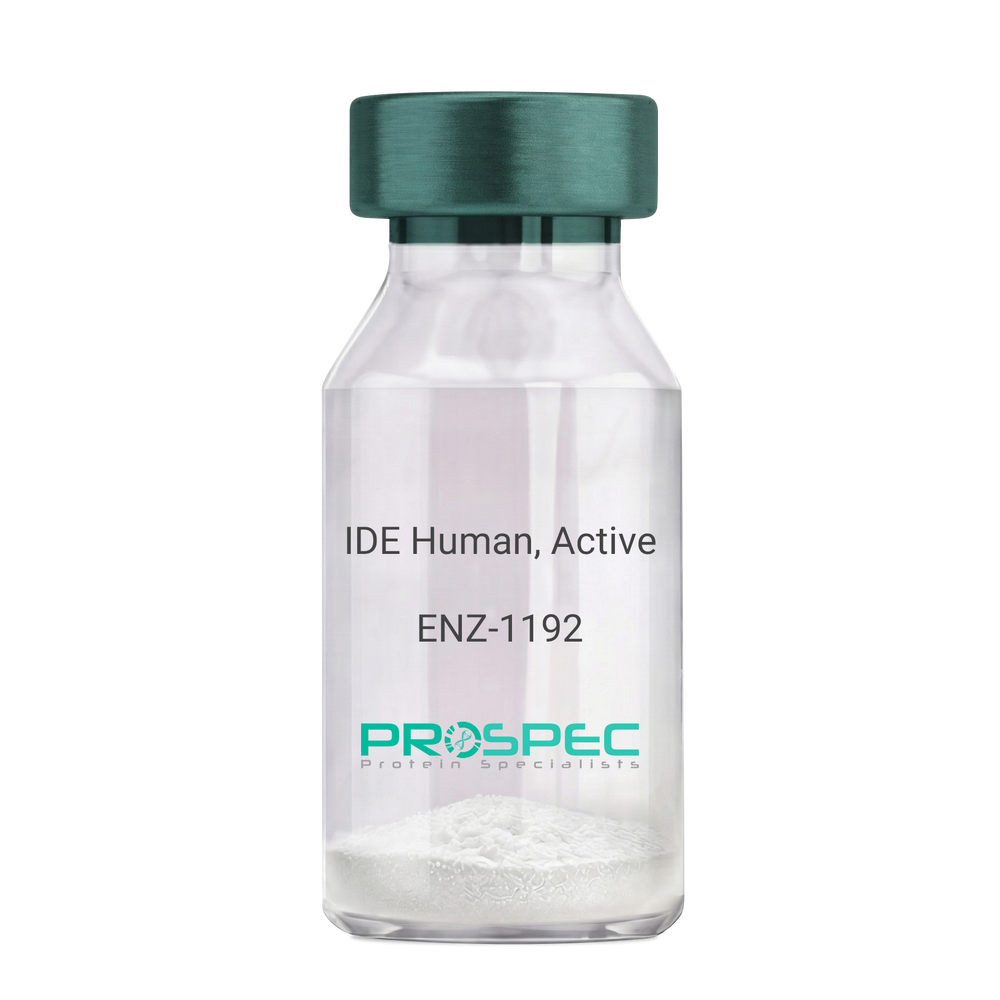
IDE Human, ActiveDescription:
Insulin-Degrading Enzyme Human Recombinant
Insulin-Degrading Enzyme, Abeta-Degrading Protease, Insulysin, EC 3.4.24.56, Insulinase, Insulin Protease, INSULYSIN, EC 3.4.24, IDE, insulin-degrading enzyme isoform 1.
Product # :
ENZ-1192Price :
Quantity :
Shipping Method :
Shipped with Ice Packs
More Info
- description
- source
- formulation
- purity
- biological activity
- More Info
Description
IDE Human, Active Human Recombinant produced in E.Coli is a single, non-glycosylated, polypeptide chain (42-1019 a.a) containing a total of 984 amino acids, having a molecular mass of 114 kDa. IDE is fused to a 6 amino acid His-tag at C-terminus and is purified by proprietary chromatographic techniques.
Source
Escherichia Coli.
Formulation
The IDE solution (0.5mg/ml) contains 10% Glycerol, 100mM NaCl, 0.05% Brij35 and 20mM Tris-HCl buffer (pH 7.5).
Purity
Greater than 90.0% as determined by SDS-PAGE.
Biological Activity
Specific activity is greater than 3,000 pmol/min/ug in which 1 unit will convert 1.0 pmole of Mca-RPPGFSAFK(Dnp)-OH to MCA-Pro-Leu-OH per minute at pH 7.5 at 25°C.
More Info
-
Synonyms
Insulin-Degrading Enzyme, Abeta-Degrading Protease, Insulysin, EC 3.4.24.56, Insulinase, Insulin Protease, INSULYSIN, EC 3.4.24, IDE, insulin-degrading enzyme isoform 1.
-
Physical Appearance
Filtered colorless solution.
-
Stability
Store at 4°C if entire vial will be used within 2-4 weeks. Store, frozen at -20°C for longer periods of time. For long term storage it is recommended to add a carrier protein (0.1% HSA or BSA). Avoid multiple freeze-thaw cycles.
-
Amino Acid Sequence
MNNPAIKRIG NHITKSPEDK REYRGLELAN GIKVLLISDP TTDKSSAALD VHIGSLSDPP NIAGLSHFCE HMLFLGTKKY PKENEYSQFL SEHAGSSNAF TSGEHTNYYF DVSHEHLEGA LDRFAQFFLC PLFDESCKDR EVNAVDSEHE KNVMNDAWRL FQLEKATGNP KHPFSKFGTG NKYTLETRPN QEGIDVRQEL LKFHSAYYSS NLMAVCVLGR ESLDDLTNLV VKLFSEVENK NVPLPEFPEH PFQEEHLKQL YKIVPIKDIR NLYVTFPIPD LQKYYKSNPG HYLGHLIGHE GPGSLLSELK SKGWVNTLVG GQKEGARGFM FFIINVDLTE EGLLHVEDII LHMFQYIQKL RAEGPQEWVF QECKDLNAVA FRFKDKERPR GYTSKIAGIL HYYPLEEVLT AEYLLEEFRP DLIEMVLDKL RPENVRVAIV SKSFEGKTDR TEEWYGTQYK QEAIPDEVIK KWQNADLNGK FKLPTKNEFI PTNFEILPLE KEATPYPALI KDTAMSKLWF KQDDKFFLPK ACLNFEFFSP FAYVDPLHCN MAYLYLELLK DSLNEYAYAA ELAGLSYDLQ NTIYGMYLSV KGYNDKQPIL LKKIIEKMAT FEIDEKRFEI IKEAYMRSLN NFRAEQPHQH AMYYLRLLMT EVAWTKDELK EALDDVTLPR LKAFIPQLLS RLHIEALLHG NITKQAALGI MQMVEDTLIE HAHTKPLLPS
QLVRYREVQL PDRGWFVYQQ RNEVHNNCGI EIYYQTDMQS TSENMFLELF CQIISEPCFN TLRTKEQLGY IVFSGPRRAN GIQGLRFIIQ SEKPPHYLES RVEAFLITME KSIEDMTEEA FQKHIQALAI RRLDKPKKLS AECAKYWGEI ISQQYNFDRD NTEVAYLKTL TKEDIIKFYK EMLAVDAPRR HKVSVHVLAR EMDSCPVVGE FPCQNDINLS QAPALPQPEV IQNMTEFKRG LPLFPLVKPH INFMAAKLHH HHHH. -
Background
Insulin-degrading enzyme (IDE) is a crucial protease that plays a significant role in maintaining glucose homeostasis by degrading insulin and other bioactive peptides. Dysregulation of IDE has been implicated in various metabolic disorders, particularly type 2 diabetes mellitus. IDE is also associated with the clearance of amyloid-beta peptides in the brain, making it relevant to Alzheimer's disease pathology. Studying the recombinant form of IDE is fundamental to understanding its functional mechanisms and exploring potential avenues for therapeutic interventions.
The primary goal of this research is to express and purify recombinant IDE using diverse expression systems. Recombinant DNA techniques will be employed to construct expression vectors containing the IDE gene, followed by expression in bacterial, yeast, or mammalian cell-based systems. The recombinant IDE will be purified using affinity chromatography or other appropriate methods, facilitating subsequent biochemical and biophysical characterization.
The second objective is to investigate the substrate specificity and catalytic activity of the purified IDE. In vitro enzymatic assays will be conducted to analyse the ability of the recombinant IDE to degrade insulin and other potential substrates. The effects of various factors, such as pH, temperature, and potential modulators, on IDE activity will be evaluated. Additionally, the interactions between IDE and its substrates will be explored using binding assays.
The third objective is to elucidate the three-dimensional structure of the IDE recombinant using techniques like X-ray crystallography or nuclear magnetic resonance (NMR) spectroscopy. Structural insights into the active site and binding pockets of IDE will provide valuable information for understanding its substrate recognition and catalytic mechanisms. This knowledge could be instrumental in designing targeted therapeutic compounds.
By characterizing the IDE recombinant, this research aims to contribute to our understanding of its role in insulin metabolism, glucose regulation, and potential therapeutic applications. The findings from this study may have implications for the development of novel treatments for diabetes and other related disorders.
ProSpec's products are furnished for LABORATORY RESEARCH USE ONLY. The product may not be used as drugs, agricultural or pesticidal products, food additives or household chemicals.
- View Data Sheet
Name :
TDO2 HumanDescription:
Tryptophan 2,3-Dioxygenase Human Recombinant
Tryptophan 2,3-dioxygenase, TDO, Tryptamin 2,3-dioxygenase, Tryptophan oxygenase, TO, TRPO, Tryptophan pyrrolase, Tryptophanase, TDO2, TPH2.
Product # :
ENZ-081Price :
Quantity :
Shipping Method :
Shipped with Ice Packs
More Info
- description
- source
- formulation
- purity
- More Info
Description
TDO2 Human Recombinant fused with a 20 amino acid His tag at N-terminus produced in E.Coli is a single, non-glycosylated, polypeptide chain containing 426 amino acids (1-406 a.a.) and having a molecular mass of 50kDa. The TDO2 is purified by proprietary chromatographic techniques.
Source
Escherichia Coli.
Formulation
The TDO2 solution (0.25mg/ml) contains 20mM Tris-HCl buffer (pH8.0), 0.2M NaCl, 5mM DTT, 1mM EDTA and 30% glycerol.
Purity
Greater than 90.0% as determined by SDS-PAGE.
More Info
-
Introduction
TDO2 is a ferrous heme enzyme that catalyzes the first and rate-limiting step in the kynurenine pathway which is the major pathway of tryptophan metabolism. TDO2 integrates oxygen into the indole moiety of tryptophan. TDO2 has broad specificity towards tryptamine and derivatives including D- and L-tryptophan, 5-hydroxytryptophan and serotonin.
-
Synonyms
Tryptophan 2,3-dioxygenase, TDO, Tryptamin 2,3-dioxygenase, Tryptophan oxygenase, TO, TRPO, Tryptophan pyrrolase, Tryptophanase, TDO2, TPH2.
-
Physical Appearance
Sterile Filtered colorless solution.
-
Stability
Store at 4°C if entire vial will be used within 2-4 weeks. Store, frozen at -20°C for longer periods of time. For long term storage it is recommended to add a carrier protein (0.1% HSA or BSA).Avoid multiple freeze-thaw cycles.
-
Amino Acid Sequence
MGSSHHHHHH SSGLVPRGSH MSGCPFLGNN FGYTFKKLPV EGSEEDKSQT GVNRASKGGL IYGNYLHLEK VLNAQELQSE TKGNKIHDEH LFIITHQAYE LWFKQILWEL DSVREIFQNG HVRDERNMLK VVSRMHRVSV ILKLLVQQFS ILETMTALDF NDFREYLSPA SGFQSLQFRL LENKIGVLQN MRVPYNRRHY RDNFKGEENE LLLKSEQEKT LLELVEAWLE RTPGLEPHGF NFWGKLEKNI TRGLEEEFIR IQAKEESEEK EEQVAEFQKQ KEVLLSLFDE KRHEHLLSKG ERRLSYRALQ GALMIYFYRE EPRFQVPFQL LTSLMDIDSL MTKWRYNHVC MVHRMLGSKA GTGGSSGYHY LRSTVSDRYK VFVDLFNLST YLIPRHWIPK MNPTIHKFLY TAEYCDSSYF SSDESD.
ProSpec's products are furnished for LABORATORY RESEARCH USE ONLY. The product may not be used as drugs, agricultural or pesticidal products, food additives or household chemicals.
- View Data Sheet
Name :
ACP2 HumanDescription:
Acid Phosphatase-2 Human Recombinant
Acid Phosphatase 2, Lysosoma, EC 3.1.3.2 LAP, Lysosomal Acid Phosphatase, ACP2.
Product # :
ENZ-849Price :
Quantity :
Shipping Method :
Shipped with Ice Packs
More Info
- description
- source
- formulation
- purity
- More Info
Description
ACP2 Human Recombinant produced in E.Coli is a single, non-glycosylated polypeptide chain containing 373 amino acids (31-380 a.a.) and having a molecular mass of 42.9kDa. ACP2 is fused to a 23 amino acid His-Tag at N-Terminus and purified by conventional chromatography techniques.
Source
Escherichia Coli.
Formulation
ACP2 protein solution (1mg/ml) contains 20mM Tris-HCl (pH8.0) and 10% glycerol.
Purity
Greater than 85.0% as determined by SDS-PAGE.
More Info
-
Introduction
Acid Phosphatase-2, also known as ACP2 is composed of two subunits, Alpha & beta, and is chemically as well as genetically distinct from red cell acid phosphatase. ACP2 belongs to a family of distinct isoenzymes which hydrolyze orthophosphoric monoesters to alcohol and phosphate. In addition, Acid phosphatase deficiency is caused by mutations in the ACP2-beta subunit as well as ACP3-alpha subunit genes.
-
Synonyms
Acid Phosphatase 2, Lysosoma, EC 3.1.3.2 LAP, Lysosomal Acid Phosphatase, ACP2.
-
Physical Appearance
Sterile filtered colorless solution.
-
Stability
Store at 4°C if entire vial will be used within 2-4 weeks. Store, frozen at -20°C for longer periods of time. For long term storage it is recommended to add a carrier protein (0.1% HSA or BSA).Avoid multiple freeze-thaw cycles.
-
Amino Acid Sequence
MGSSHHHHHH SSGLVPRGSH MGSRSLRFVT LLYRHGDRSP VKTYPKDPYQ EEEWPQGFGQ LTKEGMLQHW ELGQALRQRY HGFLNTSYHR QEVYVRSTDF DRTLMSAEAN LAGLFPPNGM QRFNPNISWQ PIPVHTVPIT EDRLLKFPLG PCPRYEQLQN ETRQTPEYQN ESSRNAQFLD MVANETGLTD LTLETVWNVY DTLFCEQTHG LRLPPWASPQ TMQRLSRLKD FSFRFLFGIY QQAEKARLQG GVLLAQIRKN LTLMATTSQL PKLLVYSAHD TTLVALQMAL DVYNGEQAPY ASCHIFELYQ EDSGNFSVEM YFRNESDKAP WPLSLPGCPH RCPLQDFLRL TEPVVPKDWQ QECQLASGPA DTE
ProSpec's products are furnished for LABORATORY RESEARCH USE ONLY. The product may not be used as drugs, agricultural or pesticidal products, food additives or household chemicals.
- View Data Sheet
Name :
Cyclophilin F Rat BioactiveDescription:
Cyclophilin-F Rat Recombinant Bioactive
Peptidyl-prolyl cis-trans isomerase F, mitochondrial, PPIase F, Cyclophilin D, CyP-D, CypD, Cyclophilin F, Rotamase F.
Product # :
ENZ-1019Price :
Quantity :
Shipping Method :
Shipped with Ice Packs
More Info
- description
- source
- formulation
- purity
- biological activity
- More Info
Description
Cyclophilin F Rat Recombinant produced in E.Coli is a single, non-glycosylated polypeptide chain containing 200 amino acids (30-206 a.a) and having a molecular mass of 21.2Da. Cyclophilin F is fused to a 23 amino acid His-tag at N-terminus & purified by proprietary chromatographic techniques.
Source
Escherichia Coli.
Formulation
Cyclophilin F protein solution (1mg/ml) containing Phosphate Buffered Saline (pH 7.4), 10% glycerol and 1mM DTT.
Purity
Greater than 90.0% as determined by SDS-PAGE.
Biological Activity
Specific activity is > 1,300 nmol/min/mg, and is defined as the amount of enzyme that cleaves 1nmol of suc-AAFP-PNA per minute at 37C in Tris–HCl pH 8.0 using chymotrypsin.More Info
-
Introduction
PPIF is a part of the peptidyl-prolyl cis-trans isomerase (PPIase) family. PPIF accelerates the folding of proteins. It catalyzes the cis-trans isomerization of proline imidic peptide bonds in oligopeptides. PPIF is key component of the mitochondrial permeability transition pore in the inner mitochondrial membrane. Activation of this pore is thought to be involved in the induction of apoptotic and necrotic cell death.
-
Synonyms
Peptidyl-prolyl cis-trans isomerase F, mitochondrial, PPIase F, Cyclophilin D, CyP-D, CypD, Cyclophilin F, Rotamase F.
-
Physical Appearance
Sterile filtered colorless solution.
-
Stability
Store at 4°C if entire vial will be used within 2-4 weeks. Store, frozen at -20°C for longer periods of time. For long term storage it is recommended to add a carrier protein (0.1% HSA or BSA).Avoid multiple freeze-thaw cycles.
-
Amino Acid Sequence
MGSSHHHHHH SSGLVPRGSH MGSCSDGGAR GANSSSQNPL VYLDVGADGQ PLGRVVLELK ADVVPKTAEN FRALCTGEKG FGYKGSTFHR VIPAFMCQAG DFTNHNGTGG KSIYGSRFPD ENFTLKHVGP GVLSMANAGP NTNGSQFFIC TIKTDWLDGK HVVFGHVKEG MDVVKKIESF GSKSGKTSKK IVITDCGQLS.
ProSpec's products are furnished for LABORATORY RESEARCH USE ONLY. The product may not be used as drugs, agricultural or pesticidal products, food additives or household chemicals.
- View Data Sheet
Name :
HPRT1 Human, ActiveDescription:
Hypoxanthine-Guanine Phosphoribosyltransferase, Human Recombinant, Active
Hypoxanthine Phosphoribosyltransferase 1, EC 2.4.2.8, HGPRTase, HGPRT, HPRT , Hypoxanthine-Guanine Phosphoribosyltransferase 1, Hypoxanthine-Guanine Phosphoribosyltransferase, Testicular Tissue Protein Li 89, Lesch-Nyhan Syndrome, HPRT1.
Product # :
ENZ-1006Price :
Quantity :
Shipping Method :
Shipped with Ice Packs
More Info
- description
- source
- formulation
- purity
- biological activity
- More Info
Description
HPRT1 Human Recombinant produced in E.Coli is a single, non-glycosylated polypeptide chain containing 238 amino acids (1-218 a.a) and having a molecular mass of 26.7kDa. HPRT1 is fused to a 20 amino acid His-tag at N-terminus & purified by proprietary chromatographic techniques.
Source
Escherichia Coli.
Formulation
HPRT1 protein solution (0.5mg/ml) containing 20mM Tris-HCl buffer (pH 8.0) and 20% glycerol.
Purity
Greater than 95.0% as determined by SDS-PAGE.
Biological Activity
Specific activity is > 15 units/mg and is defined as the amount of enzyme that catalyze the formation of 1 umole of guanosine 5’-monophosphate (GMP) per minute from guanine and phosphoribosyl pyrophosphate at pH 7.5 at 37C.More Info
-
Introduction
HPRT1 has a main part in the generation of purine nucleotides through the purine salvage pathway. HPRT1 primarily functions to salvage purines from degraded DNA to renewed purine synthesis. Therefore, it performs as a catalyst in the reaction between guanine and phosphoribosyl pyrophosphate to form GMP.
-
Synonyms
Hypoxanthine Phosphoribosyltransferase 1, EC 2.4.2.8, HGPRTase, HGPRT, HPRT , Hypoxanthine-Guanine Phosphoribosyltransferase 1, Hypoxanthine-Guanine Phosphoribosyltransferase, Testicular Tissue Protein Li 89, Lesch-Nyhan Syndrome, HPRT1.
-
Physical Appearance
Sterile Filtered clear solution.
-
Stability
Store at 4°C if entire vial will be used within 2-4 weeks. Store, frozen at -20°C for longer periods of time. For long term storage it is recommended to add a carrier protein (0.1% HSA or BSA).Avoid multiple freeze-thaw cycles.
-
Amino Acid Sequence
MGSSHHHHHH SSGLVPRGSH MATRSPGVVI SDDEPGYDLD LFCIPNHYAE DLERVFIPHG LIMDRTERLA RDVMKEMGGH HIVALCVLKG GYKFFADLLD YIKALNRNSD RSIPMTVDFI RLKSYCNDQS TGDIKVIGGD DLSTLTGKNV LIVEDIIDTG KTMQTLLSLV RQYNPKMVKVASLLVKRTPR SVGYKPDFVG FEIPDKFVVG YALDYNEYFR DLNHVCVISE TGKAKYKA
ProSpec's products are furnished for LABORATORY RESEARCH USE ONLY. The product may not be used as drugs, agricultural or pesticidal products, food additives or household chemicals.
- View Data Sheet
Name :
CTSF HumanDescription:
Cathepsin-F Human Recombinant
800x600 CATSF, CLN13, Cathepsin F, EC=3.4.22.41. Normal 0 false false false EN-US X-NONE HE MicrosoftInternetExplorer4 /* Style Definitions */ table.MsoNormalTable {mso-style-name:"Table Normal"; mso-tstyle-rowband-size:0; mso-tstyle-colband-size:0; mso-style-noshow:yes; mso-style-priority:99; mso-style-parent:""; mso-padding-alt:0cm 5.4pt 0cm 5.4pt; mso-para-margin:0cm; mso-para-margin-bottom:.0001pt; mso-pagination:widow-orphan; font-size:10.0pt; font-family:"Calibri","sans-serif";}
Product # :
ENZ-738Price :
Quantity :
Shipping Method :
Shipped with Ice Packs
More Info
- description
- source
- formulation
- purity
- More Info
Description
800x600 CTSF Human Recombinant produced in E.coli is a single, non-glycosylated polypeptide chain containing 237 amino acids (271-484) and having a molecular mass of 26kDa.CTSF is fused to a 23 amino acid His-tag at N-terminus & purified by proprietary chromatographic techniques.
Source
Escherichia Coli.
Formulation
The CTSF solution (1mg/ml) contains 20mM Tris-HCl buffer (pH 8.0), 0.4M Urea and 10% glycerol.
Purity
Greater than 90.0% as determined by SDS-PAGE.
More Info
-
Introduction
Cathepsin F ( CTSF) is a member of the peptidase C1 family. Cathepsins are papain familycysteine proteinases which are a main component of the lysosomal proteolytic system. The CTSF gene isubiquitously expressed, and it maps to chromosome 11q13, close to the gene encoding cathepsin W. CTSF plays a role in normal protein catabolism. CTSF involved in some degradative processes occurring in tumor progression since it is highly expressed in some cancer cell lines.
-
Synonyms
CATSF, CLN13, Cathepsin F, EC=3.4.22.41.
-
Physical Appearance
Sterile Filtered colorless solution.
-
Stability
Store at 4°C if entire vial will be used within 2-4 weeks. Store, frozen at -20°C for longer periods of time. For long term storage it is recommended to add a carrier protein (0.1% HSA or BSA).Avoid multiple freeze-thaw cycles.
-
Amino Acid Sequence
MGSSHHHHHH SSGLVPRGSH MGSAPPEWDW RSKGAVTKVK DQGMCGSCWA FSVTGNVEGQ WFLNQGTLLS LSEQELLDCD KMDKACMGGL PSNAYSAIKN LGGLETEDDY SYQGHMQSCN FSAEKAKVYI NDSVELSQNE QKLAAWLAKR GPISVAINAF GMQFYRHGIS RPLRPLCSPW LIDHAVLLVG YGNRSDVPFW AIKNSWGTDW GEKGYYYLHR GSGACGVNTM ASSAVVD.
ProSpec's products are furnished for LABORATORY RESEARCH USE ONLY. The product may not be used as drugs, agricultural or pesticidal products, food additives or household chemicals.
- View Data Sheet
Name :
PMM2 HumanDescription:
Phosphomannomutase 2 Human Recombinant
Phosphomannomutase 2, PMM 2, PMM2, CDG1, CDGS, CDG1a.
Product # :
ENZ-002Price :
Quantity :
Shipping Method :
Shipped with Ice Packs
More Info
- description
- source
- formulation
- purity
- More Info
Description
PMM2 Human Recombinant fused with a 20 amino acid His tag at N-terminus produced in E.Coli is a single, non-glycosylated, polypeptide chain containing 266 amino acids (1-246 a.a.) and having a molecular mass of 30.2kDa. The PMM2 is purified by proprietary chromatographic techniques.
Source
Escherichia Coli.
Formulation
The PMM2 solution (1 mg/ml) contains 20mM Tris-HCl buffer(pH 8.0), 10% glycerol,
1mM DTT and 0.1M NaCl.Purity
Greater than 95.0% as determined by SDS-PAGE.
More Info
-
Introduction
Phosphomannomutase 2 (PMM2) is a member of the eukaryotic PMM family. Phosphomannomutase 2 is involved in the synthesis of the GDP-mannose and dolichol-phosphate-mannose required for a number of critical mannosyl transfer reactions. PMM2 catalyzes the isomerization of mannose 6-phosphate to mannose 1-phosphate. PMM2 mutations are linked to congenital disorders of glycosylation (CDG)-Ia, an autosomal recessive disorder characterized by central nervous system dysfunction and multiorgan failure.
-
Synonyms
Phosphomannomutase 2, PMM 2, PMM2, CDG1, CDGS, CDG1a.
-
Physical Appearance
Sterile Filtered colorless solution.
-
Stability
Store at 4°C if entire vial will be used within 2-4 weeks. Store, frozen at -20°C for longer periods of time. For long term storage it is recommended to add a carrier protein (0.1% HSA or BSA).Avoid multiple freeze-thaw cycles.
-
Amino Acid Sequence
MGSSHHHHHH SSGLVPRGSH MAAPGPALCL FDVDGTLTAP RQKITKEMDD FLQKLRQKIK IGVVGGSDFE KVQEQLGNDV VEKYDYVFPE NGLVAYKDGK LLCRQNIQSH LGEALIQDLI NYCLSYIAKI KLPKKRGTFI EFRNGMLNVS PIGRSCSQEE RIEFYELDKK ENIRQKFVAD LRKEFAGKGL TFSIGGQISF DVFPDGWDKR YCLRHVENDG YKTIYFFGDK TMPGGNDHEI FTDPRTMGYS VTAPEDTRRI CELLFS.
ProSpec's products are furnished for LABORATORY RESEARCH USE ONLY. The product may not be used as drugs, agricultural or pesticidal products, food additives or household chemicals.
- View Data Sheet
Name :
LDHA HumanDescription:
Lactate Dehydrogenase A Human Recombinant
LDH-A, GSD11, LDH1, LDHM, PIG19, EC 1.1.1.27, lactate dehydrogenase M, LDH-M, LDH-1, L-lactate dehydrogenase A chain, LDH muscle subunit, Renal carcinoma antigen NY-REN-59, Cell proliferation-inducing gene 19 protein, LDHA.
Product # :
ENZ-491Price :
Quantity :
Shipping Method :
Shipped with Ice Packs
More Info
- description
- source
- formulation
- purity
- biological activity
- More Info
Description
LDHA Human Recombinant produced in E.Coli is a single, non-glycosylated polypeptide chain containing 352 amino acids (1-332 a.a.) and having a molecular mass of 38.8 kDa. The LDHA is fused to a 20 amino acid his tag at N-terminus and purified by conventional chromatography.
Source
Escherichia Coli.
Formulation
The LDHA protein solution (0.5mg/ml) contains 20mM Tris-HCl pH-8.0, 100mM NaCl and 20% glycerol.
Purity
Greater than 95.0% as determined by SDS-PAGE.
Biological Activity
Specific activity is > 20 units/mg. in which one unit will convert 1.0 umole of pyruvate to L-lactate and beta-NAD per minute at pH 7.5 at 37°C.More Info
-
Introduction
LDHA catalyzes the conversion of L-lactate and NAD to pyruvate and NADH in the final step of anaerobic glycolysis. LDHA is localized primarily in muscle tissue and is part of the lactate dehydrogenase family. Mutations in LDHA have been linked to exertional myoglobinuria. LDH1 is decreased in essential thrombocythemia. LDHA is induced through a non-genomic pathway of estrogen action. Reduction in LDH-A activity results in stimulation of mitochondrial respiration and decrease of mitochondrial membrane potential.
-
Synonyms
LDH-A, GSD11, LDH1, LDHM, PIG19, EC 1.1.1.27, lactate dehydrogenase M, LDH-M, LDH-1, L-lactate dehydrogenase A chain, LDH muscle subunit, Renal carcinoma antigen NY-REN-59, Cell proliferation-inducing gene 19 protein, LDHA.
-
Physical Appearance
Sterile Filtered colorless solution.
-
Stability
Store at 4°C if entire vial will be used within 2-4 weeks. Store, frozen at -20°C for longer periods of time. For long term storage it is recommended to add a carrier protein (0.1% HSA or BSA).Avoid multiple freeze-thaw cycles.
-
Amino Acid Sequence
MGSSHHHHHH SSGLVPRGSH MATLKDQLIY NLLKEEQTPQ NKITVVGVGA VGMACAISIL MKDLADELAL VDVIEDKLKG EMMDLQHGSL FLRTPKIVSG KDYNVTANSK LVIITAGARQ QEGESRLNLV QRNVNIFKFI IPNVVKYSPN CKLLIVSNPV DILTYVAWKI SGFPKNRVIG SGCNLDSARF RYLMGERLGV HPLSCHGWVL GEHGDSSVPV WSGMNVAGVS LKTLHPDLGT DKDKEQWKEV HKQVVESAYE VIKLKGYTSW AIGLSVADLA ESIMKNLRRV HPVSTMIKGL YGIKDDVFLS VPCILGQNGI SDLVKVTLTS EEEARLKKSA DTLWGIQKEL QF.
ProSpec's products are furnished for LABORATORY RESEARCH USE ONLY. The product may not be used as drugs, agricultural or pesticidal products, food additives or household chemicals.
- View Data Sheet
Name :
GNMT Human, ActiveDescription:
Glycine N-Methyltransferase Human Recombinant , Active
Glycine N-methyltransferase, GNMT, Glycine N-Methyltransferase, EC 2.1.1.20Epididymis Secretory Sperm Binding Protein Li 182mP, HEL-S-182mP.
Product # :
ENZ-1059Price :
Quantity :
Shipping Method :
Shipped with Ice Packs
More Info
- description
- source
- formulation
- purity
- biological activity
- More Info
Description
GNMT Human Recombinant produced in E.Coli is a single, non-glycosylated polypeptide chain containing 315 amino acids (1-295 a.a) and having a molecular mass of 34.9kDa.GNMT is fused to a 20 amino acid His-tag at N-terminus & purified by proprietary chromatographic techniques.
Source
Escherichia Coli.
Formulation
GNMT protein solution (1mg/ml) containing 20 mM Tris-HCl buffer (pH 8.0) and 20% glycerol.
Purity
Greater than 95.0% as determined by SDS-PAGE.
Biological Activity
Specific activity is > 100 nmol/min/mg, and is defined as the amount of enzyme that transfer 1.0 nmole of methyl group per minute at 37C.
More Info
-
Introduction
GNMT is an enzyme that catalyzes the conversion of S-adenosyl-L-methionine with glycine to S-adenosyl-L-homocysteine and sarcosine. GNMT is located in the cytoplasm and acts as a homotetramer. Defects in the GNMT gene causes of GNMT deficiency (hypermethioninemia). GNMT affects DNA methylation by regulating the ratio of S-adenosylmethionine to S-adenosylhomocystine and is involved in the detoxification pathway in liver cells. GNMT expression is diminished in human hepatocellular carcinoma (HCC). GNMT catalyzes the methylation of glycine by using s- adenosylmethionine (adomet) to form n-methylglycine (sarcosine) with the concomitant production of s-adenosylhomocysteine (adohcy). GNMT plays an essential role in the regulation of tissue concentration of adomet and of metabolism of methionine.
-
Synonyms
Glycine N-methyltransferase, GNMT, Glycine N-Methyltransferase, EC 2.1.1.20
Epididymis Secretory Sperm Binding Protein Li 182mP, HEL-S-182mP. -
Physical Appearance
Sterile filtered colorless solution.
-
Stability
Store at 4°C if entire vial will be used within 2-4 weeks. Store, frozen at -20°C for longer periods of time. For long term storage it is recommended to add a carrier protein (0.1% HSA or BSA).Avoid multiple freeze-thaw cycles.
-
Amino Acid Sequence
MGSSHHHHHH SSGLVPRGSH MVDSVYRTRS LGVAAEGLPD QYADGEAARV WQLYIGDTRS RTAEYKAWLL GLLRQHGCQR VLDVACGTGV DSIMLVEEGF SVTSVDASDK MLKYALKERW NRRHEPAFDK WVIEEANWMT LDKDVPQSAE GGFDAVICLG NSFAHLPDCK GDQSEHRLAL KNIASMVRAG GLLVIDHRNY DHILSTGCAP PGKNIYYKSD LTKDVTTSVL IVNNKAHMVT LDYTVQVPGA GQDGSPGLSK FRLSYYPHCL ASFTELLQAA FGGKCQHSVL GDFKPYKPGQ TYIPCYFIHV LKRTD.
ProSpec's products are furnished for LABORATORY RESEARCH USE ONLY. The product may not be used as drugs, agricultural or pesticidal products, food additives or household chemicals.
- View Data Sheet
Name :
MMP9 Human, Sf9Description:
Matrix Metalloproteinase-9 Human Recombinant, Sf9
Matrix metalloproteinase-9, MMP-9, 92 kDa gelatinase, Gelatinase B, GELB, MMP9, CLG4B.
Product # :
ENZ-1091Price :
Quantity :
Shipping Method :
Shipped with Ice Packs
More Info
- description
- source
- formulation
- purity
- More Info
Description
MMP9 produced in Sf9 Insect cells is a single, glycosylated polypeptide chain containing 694 amino acids (20-707a.a.) and having a molecular mass of 77.1 kDa (Molecular size on SDS-PAGE will appear at approximately 70-100kDa). MMP9 is expressed with a 6 amino acid His tag at C-Terminus and purified by proprietary chromatographic techniques.
Source
Sf9, Baculovirus cells.
Formulation
MMP9 protein solution ( 0.5mg/ml) contains Phosphate Buffered Saline (pH 7.4) and 10% glycerol.
Purity
Greater than 90% as determined by SDS-PAGE.
More Info
-
Introduction
MMP9 is part of the matrix metalloproteinase family. MMP enzymes take part in the dismantle of extracellular matrix in different physiological pathways, for instance wound healing, bone development, reproduction etc. the enzyme is also involved in pathological pathways: metastasis, arthritis and intracerebral hemorrhage.
-
Synonyms
Matrix metalloproteinase-9, MMP-9, 92 kDa gelatinase, Gelatinase B, GELB, MMP9, CLG4B.
-
Physical Appearance
Sterile Filtered colorless solution.
-
Stability
Store at 4°C if entire vial will be used within 2-4 weeks. Store, frozen at -20°C for longer periods of time. For long term storage it is recommended to add a carrier protein (0.1% HSA or BSA).Avoid multiple freeze-thaw cycles.
-
Amino Acid Sequence
APRQRQSTLV LFPGDLRTNL TDRQLAEEYL YRYGYTRVAE MRGESKSLGP ALLLLQKQLS LPETGELDSA TLKAMRTPRC GVPDLGRFQTFEGDLKWHHH NITYWIQNYS EDLPRAVIDD AFARAFALWS AVTPLTFTRV YSRDADIVIQ FGVAEHGDGY PFDGKDGLLA HAFPPGPGIQ GDAHFDDDEL WSLGKGVVVP TRFGNADGAA CHFPFIFEGR SYSACTTDGR SDGLPWCSTT ANYDTDDRFG FCPSERLYTQ DGNADGKPCQ FPFIFQGQSY SACTTDGRSD GYRWCATTAN YDRDKLFGFC PTRADSTVMG GNSAGELCVF PFTFLGKEYS TCTSEGRGDG RLWCATTSNF DSDKKWGFCP DQGYSLFLVA AHEFGHALGL DHSSVPEALM YPMYRFTEGP PLHKDDVNGI RHLYGPRPEP EPRPPTTTTP QPTAPPTVCP TGPPTVHPSE RPTAGPTGPP SAGPTGPPTA GPSTATTVPL SPVDDACNVN IFDAIAEIGN QLYLFKDGKY WRFSEGRGSR PQGPFLIADK WPALPRKLDS VFEERLSKKL FFFSGRQVWV YTGASVLGPR RLDKLGLGAD VAQVTGALRS GRGKMLLFSG RRLWRFDVKA QMVDPRSASE VDRMFPGVPL DTHDVFQYRE KAYFCQDRFY WRVSSRSELN QVDQVGYVTY DILQCPEDHH HHHH.
ProSpec's products are furnished for LABORATORY RESEARCH USE ONLY. The product may not be used as drugs, agricultural or pesticidal products, food additives or household chemicals.
- View Data Sheet
Name :
GMPR2 HumanDescription:
Guanosine Monophosphate Reductase 2 Human Recombinant
GMP reductase 2, Guanosine 5''-monophosphate oxidoreductase 2.
Product # :
ENZ-557Price :
Quantity :
Shipping Method :
Shipped with Ice Packs
More Info
- description
- source
- formulation
- purity
- More Info
Description
GMPR2 Human Recombinant produced in E.Coli is a single, non-glycosylated, polypeptide chain containing 368 amino acids (1-348 a.a.) and having a molecular mass of 40 kDa. GMPR2 is fused to a 20 amino acid His-tag at N-terminus and purified by proprietary chromatographic techniques.
Source
Escherichia Coli.
Formulation
GMPR2 1mg/ml solution contains 20mM Tris pH-8, 1mM DTT and 10% glycerol.
Purity
Greater than 90% as determined by SDS-PAGE.
More Info
-
Introduction
GMPR2 is the single known metabolic step by which guanine nucleotides can be transformed to the pivotal precursor of both adenine and guanine nucleotides. GMPR2 catalyzes the permanent NADPH-dependent reductive deamination of GMP to IMP, and is involved in re-utilization of free intracellular bases and purine nucleosides.
-
Synonyms
GMP reductase 2, Guanosine 5''-monophosphate oxidoreductase 2.
-
Physical Appearance
Sterile filtered colorless solution.
-
Stability
GMPR2 Human Recombinant although stable at 4°C for 1 week, should be stored below -18°C. Please prevent freeze thaw cycles.
-
Amino Acid Sequence
MGSSHHHHHH SSGLVPRGSH MPHIDNDVKL DFKDVLLRPK RSTLKSRSEV DLTRSFSFRN SKQTYSGVPI IAANMDTVGT FEMAKVLCKF
SLFTAVHKHY SLVQWQEFAG QNPDCLEHLA ASSGTGSSDF EQLEQILEAI PQVKYICLDV ANGYSEHFVE FVKDVRKRFP QHTIMAGNVV
TGEMVEELIL SGADIIKVGI GPGSVCTTRK KTGVGYPQLS AVMECADAAH GLKGHIISDG GCSCPGDVAK AFGAGADFVM LGGMLAGHSE
SGGELIERDG KKYKLFYGMS SEMAMKKYAG GVAEYRASEG KTVEVPFKGD VEHTIRDILG GIRSTCTYVG AAKLKELSRR TTFIRVTQQV
NPIFSEAC.
ProSpec's products are furnished for LABORATORY RESEARCH USE ONLY. The product may not be used as drugs, agricultural or pesticidal products, food additives or household chemicals.
- View Data Sheet
Name :
LDHB Human, HisDescription:
Lactate Dehydrogenase B Human Recombinant, His Tag
LDH-H, TRG-5, L-lactate dehydrogenase B chain, LDH-B, EC=1.1.1.27, Renal carcinoma antigen NY-REN-46, LDHB.
Product # :
ENZ-539Price :
Quantity :
Shipping Method :
Shipped with Ice Packs
More Info
- description
- source
- formulation
- purity
- biological activity
- More Info
Description
LDHB Recombinant Human produced in E.Coli is a single, non-glycosylated polypeptide chain containing 354 amino acids (1-334 a.a.) and having a molecular mass of 38.8 kDa. The LDHB is fused to a 20 amino acids His-Tag at N-terminus and purified by proprietary chromatographic techniques.
Source
Escherichia Coli.
Formulation
LDHB Human solution containing 20mM Tris-HCl pH-8, 1mM DTT & 10% glycerol.
Purity
Greater than 95.0% as determined by SDS-PAGE.
Biological Activity
Specific activity is > 6 units/mg. in which one unit will convert 1.0 umole of pyruvate to L-lactate and beta-NAD per minute at pH 7.5 at 37°C.More Info
-
Introduction
LDHB is part of the lactate dehydrogenase family. LDHB is an oxidoreductase which catalyses the interconversion of pyruvate and lactate with concomitant interconversion of NADH and NAD+. LDHB catalyzes the oxidation of hydroxybutyrate, and frequently called Hydroxybutyrate Dehydrogenase (HBD). The LDH family consists of three members, LDH-A, LDH-B and LDH-C. LDHs function as powerful markers for germ cell tumors.
-
Synonyms
LDH-H, TRG-5, L-lactate dehydrogenase B chain, LDH-B, EC=1.1.1.27, Renal carcinoma antigen NY-REN-46, LDHB.
-
Physical Appearance
Sterile filtered colorless solution.
-
Stability
Store at 4°C if entire vial will be used within 2-4 weeks. Store, frozen at -20°C for longer periods of time. For long term storage it is recommended to add a carrier protein (0.1% HSA or BSA).Avoid multiple freeze-thaw cycles.
-
Amino Acid Sequence
MGSSHHHHHH SSGLVPRGSH MATLKEKLIA PVAEEEATVP NNKITVVGVG QVGMACAISI LGKSLADELA LVDVLEDKLK GEMMDLQHGS LFLQTPKIVA DKDYSVTANS KIVVVTAGVR QQEGESRLNL VQRNVNVFKF IIPQIVKYSP DCIIIVVSNP VDILTYVTWK LSGLPKHRVI GSGCNLDSAR FRYLMAEKLG IHPSSCHGWI LGEHGDSSVA VWSGVNVAGV SLQELNPEMG TDNDSENWKE VHKMVVESAY EVIKLKGYTN WAIGLSVADL IESMLKNLSR IHPVSTMVKG MYGIENEVFL SLPCILNARG LTSVINQKLK DDEVAQLKKS ADTLWDIQKD LKDL.
ProSpec's products are furnished for LABORATORY RESEARCH USE ONLY. The product may not be used as drugs, agricultural or pesticidal products, food additives or household chemicals.
- View Data Sheet
Name :
MGMT HumanDescription:
O-6-Methylguanine-DNA Methyltransferase Human Recombinant
Methylated-DNA--protein-cysteine methyltransferase, 6-O-methylguanine-DNA methyltransferase, O-6-methylguanine-DNA-alkyltransferase, MGMT.
Product # :
ENZ-389Price :
Quantity :
Shipping Method :
Shipped with Ice Packs
More Info
- description
- source
- formulation
- purity
- More Info
Description
MGMT Human Recombinant fused to a 20 amino acid His Tag at N-terminal produced in E.Coli is a single, non-glycosylated, polypeptide chain containing 227 amino acids (1-207) and having a molecular mass of 23.8 kDa. The MGMT is purified by proprietary chromatographic techniques.
Source
Escherichia Coli.
Formulation
The MGMT solution contains 20mM Tris-HCl pH-7.5, 1mM DTT and 10% glycerol.
Purity
Greater than 95.0% as determined by SDS-PAGE.
More Info
-
Introduction
MGMT is an enzyme that repairs O-6-methylguanine, a mutagenic DNA base damaged by endogenous and environmental alkylating agents and takes part in the cellular defense against the biological effects of O-6-methylguanine in DNA. MGMT repairs alkylated guanine in DNA by stoichiometrically transferring the alkyl group at the O-6 position to a cysteine residue in the enzyme. abnormal MGMT expression correlates with the prognosis in human solid cancers. MGMT decrease of expression is correlated with methylation. The human MGMT is a negative regulator of estrogen receptor-mediated transcription upon alkylation DNA damage. MGMT promoter hypermethylation plays an important role in the early steps of colorectal carcinogenesis. Abnormal promoter hypermethylation of MGMT gene is associated with oral squamous cell carcinomas.
-
Synonyms
Methylated-DNA--protein-cysteine methyltransferase, 6-O-methylguanine-DNA methyltransferase, O-6-methylguanine-DNA-alkyltransferase, MGMT.
-
Physical Appearance
Sterile Filtered clear colorless solution.
-
Stability
Store at 4°C if entire vial will be used within 2-4 weeks. Store, frozen at -20°C for longer periods of time. For long term storage it is recommended to add a carrier protein (0.1% HSA or BSA).Avoid multiple freeze-thaw cycles.
-
Amino Acid Sequence
MGSSHHHHHH SSGLVPRGSH MDKDCEMKRT TLDSPLGKLE LSGCEQGLHE IKLLGKGTSA ADAVEVPAPA AVLGGPEPLM QCTAWLNAYF HQPEAIEEFP VPAFHHPVFQ QESFTRQVLW KLLKVVKFGE VISYQQLAAL AGNPKAARAV GGAMRGNPVP ILIPCHRVVC SSGAVGNYSG GLAVKEWLLA HEGHRLGKPG LGGSSGLAGA WLKGAGATSG SPPAGRN.
ProSpec's products are furnished for LABORATORY RESEARCH USE ONLY. The product may not be used as drugs, agricultural or pesticidal products, food additives or household chemicals.
- View Data Sheet
Name :
DCTPP1 HumanDescription:
dCTP Pyrophosphatase 1 Human Recombinant
dCTP pyrophosphatase 1, RS21C6, XTP3TPA, Deoxycytidine-triphosphatase 1, dCTPase 1, XTP3-transactivated gene A protein, CDA03, MGC5627, XTP3-transactivated protein A, EC 3.6.1.12.
Product # :
ENZ-234Price :
Quantity :
Shipping Method :
Shipped with Ice Packs
More Info
- description
- source
- formulation
- purity
- More Info
Description
DCTPP1 Human Recombinant produced in E.coli is a single, non-glycosylated polypeptide chain containing 194 amino acids (1-170) and having a molecular mass of 21.2kDa.DCTPP1 is fused to a 24 amino acid His-tag at N-terminus & purified by proprietary chromatographic techniques.
Source
E.coli.
Formulation
The DCTPP1 solution (0.5mg/ml) contains 20mM Tris-HCl buffer (pH 8.0), 100mM NaCl and 10% glycerol.
Purity
Greater than 90% as determined by SDS-PAGE.
More Info
-
Introduction
DCTPP1, also known as dCTP pyrophosphatase 1, contains an epilepsy-associated repeat (EAR) domain that is predicted to participate in protein-protein interactions, most likely involved in ligand recognition. This protein functions to hydrolyze abnormal nucleotide triphosphates (NTPs) in cancer cells that, if unregulated, could be incorporated into nascent DNA or RNA.
-
Synonyms
dCTP pyrophosphatase 1, RS21C6, XTP3TPA, Deoxycytidine-triphosphatase 1, dCTPase 1, XTP3-transactivated gene A protein, CDA03, MGC5627, XTP3-transactivated protein A, EC 3.6.1.12.
-
Physical Appearance
Sterile Filtered colorless solution.
-
Stability
Store at 4°C if entire vial will be used within 2-4 weeks. Store, frozen at -20°C for longer periods of time. For long term storage it is recommended to add a carrier protein (0.1% HSA or BSA).Avoid multiple freeze-thaw cycles.
-
Amino Acid Sequence
MGSSHHHHHH SSGLVPRGSH MGSHMSVAGG EIRGDTGGED TAAPGRFSFS PEPTLEDIRR LHAEFAAERD WEQFHQPRNL LLALVGEVGE LAELFQWKTD GEPGPQGWSP RERAALQEEL SDVLIYLVAL AARCRVDLPL AVLSKMDINR RRYPAHLARS SSRKYTELPH GAISEDQAVG PADIPCDSTG QTST.
ProSpec's products are furnished for LABORATORY RESEARCH USE ONLY. The product may not be used as drugs, agricultural or pesticidal products, food additives or household chemicals.
- View Data Sheet
Name :
BPGM HumanDescription:
2,3-Bisphosphoglycerate Mutase Human Recombinant
Bisphosphoglycerate mutase, EC 5.4.2.4, BPGM, 2,3-bisphosphoglycerate mutase erythrocyte, 2,3-bisphosphoglycerate synthase, BPG-dependent PGAM.
Product # :
ENZ-505Price :
Quantity :
Shipping Method :
Shipped with Ice Packs
More Info
- description
- source
- formulation
- purity
- More Info
Description
BPGM Human Recombinant produced in E.Coli is a single, non-glycosylated, polypeptide chain containing 267 amino acids (1-259 a.a.) and having a molecular mass of 31 kDa. The BPGM is fused to an 8 amino acid His Tag at C-Terminus and purified by proprietary chromatographic techniques.
Source
Escherichia Coli.
Formulation
The BPGM solution (0.5mg/ml) contains 20mM Tris-HCl (pH 8.0), 1mM DTT and 10% glycerol.
Purity
Greater than 95% as determined by SDS-PAGE.
More Info
-
Introduction
BPGM is found at high concentrations in red blood cells where it binds to and decreases the oxygen affinity of hemoglobin. PGM deficiency increases the oxygen affinity of cells. BPGM is a multifunctional enzyme that catalyzes 2,3-DPG synthesis through its synthetase activity, and 2,3-DPG degradation using its phosphatase activity. BPGM has phosphoglycerate phosphomutase activity. Mutations in BPGM cause hemolytic anemia. BPGM catalyzes the reaction of EC 5.4.2.1 (mutase) and EC 3.1.3.13 (phosphatase), but with a reduced activity.
-
Synonyms
Bisphosphoglycerate mutase, EC 5.4.2.4, BPGM, 2,3-bisphosphoglycerate mutase erythrocyte, 2,3-bisphosphoglycerate synthase, BPG-dependent PGAM.
-
Physical Appearance
Sterile Filtered clear colorless solution.
-
Stability
Store at 4°C if entire vial will be used within 2-4 weeks. Store, frozen at -20°C for longer periods of time. For long term storage it is recommended to add a carrier protein (0.1% HSA or BSA).Avoid multiple freeze-thaw cycles.
-
Amino Acid Sequence
MSKYKLIMLR HGEGAWNKEN RFCSWVDQKL NSEGMEEARN CGKQLKALNF EFDLVFTSVL NRSIHTAWLI LEELGQEWVP VESSWRLNERHYGALIGLNR EQMALNHGEE QVRLWRRSYN VTPPPIEESH PYYQEIYNDR RYKVCDVPLD QLPRSESLKD VLERLLPYWN ERIAPEVLRG KTILISAHGN SSRALLKHLE GISDEDIINI TLPTGVPILL ELDENLRAVG PHQFLGDQEA IQAAIKKVED QGKVKQAKKL EHHHHHH.
ProSpec's products are furnished for LABORATORY RESEARCH USE ONLY. The product may not be used as drugs, agricultural or pesticidal products, food additives or household chemicals.
- View Data Sheet
Name :
DHFR HumanDescription:
Dihydrofolate Reductase Human Recombinant
Dihydrofolate reductase, DHFR, DHFRP1.
Product # :
ENZ-443Price :
Quantity :
Shipping Method :
Shipped with Ice Packs
More Info
- description
- source
- formulation
- purity
- biological activity
- More Info
- sds-page
Description
DHFR Human Recombinant fused with a 20 amino acids His tag at N-terminus produced in E.Coli is a single, non-glycosylated, polypeptide chain containing 207 amino acids (1-187 a.a.) and having a molecular mass of 23.6kDa.The DHFR is purified by proprietary chromatographic techniques.
Source
Escherichia Coli.
Formulation
The DHFR solution (1mg/ml) contains 20mM Tris-HCl buffer (pH8.0), 0.1M NaCl, 2mM DTT and 30% glycerol.
Purity
Greater than 95.0% as determined by SDS-PAGE.
Biological Activity
Specific activity is >2000 pmol/min/ug is defined as the amount of enzyme that converts 1.0 pmole of dihydrofolic acid to tetrahydrofolic acid per minute at pH 6.5 at 25C.
sds-page
More Info
-
Introduction
Dihydrofolate reductase (DHFR) is an enzyme that reduces dihydrofolic acid to tetrahydrofolic acid, with NADPH as electron donor that can be converted to the kinds of tetrahydrofolate cofactors applied in 1-carbon transfer chemistry. DHFR converts dihydrofolate into tetrahydrofolate, which is a methyl group shuttle required for the de novo synthesis of purines, thymidylic acid, and specific amino acids. Even though the functional DHFR gene is mapped to chromosome 5, numerous intronless processed pseudogenes or dihydrofolate reductase-like genes are identified on separate chromosomes.
DHFR deficiency is associated with megaloblastic anemia.
DHFR knockdown plays a role in the anticancer activity of 2-hydroxyoleic acid.
DHFR gene insertion/deletion polymorphism is linked to variation in serum and red blood cell folate concentrations in women. -
Synonyms
Dihydrofolate reductase, DHFR, DHFRP1.
-
Physical Appearance
Sterile Filtered colorless solution.
-
Stability
Store at 4°C if entire vial will be used within 2-4 weeks. Store, frozen at -20°C for longer periods of time. For long term storage it is recommended to add a carrier protein (0.1% HSA or BSA).Avoid multiple freeze-thaw cycles.
-
Amino Acid Sequence
MGSSHHHHHH SSGLVPRGSH MVGSLNCIVA VSQNMGIGKN GDLPWPPLRN EFRYFQRMTT TSSVEGKQNL VIMGKKTWFS IPEKNRPLKG RINLVLSREL KEPPQGAHFL SRSLDDALKL TEQPELANKV DMVWIVGGSS VYKEAMNHPG HLKLFVTRIM QDFESDTFFP EIDLEKYKLL PEYPGVLSDV QEEKGIKYKF EVYEKND.
ProSpec's products are furnished for LABORATORY RESEARCH USE ONLY. The product may not be used as drugs, agricultural or pesticidal products, food additives or household chemicals.
- View Data Sheet
Name :
LGMN HumanDescription:
Legumain Human Recombinant
Legumain, PRSC1, Protease, Cysteine, 1 (Legumain), Asparaginyl Endopeptidase, Protease, Cysteine 1, EC 3.4.22.34, Cysteine Protease 1, LGMN1, AEP.
Product # :
ENZ-923Price :
Quantity :
Shipping Method :
Shipped with Ice Packs
More Info
- description
- source
- formulation
- purity
- More Info
- sds-page
Description
LGMN produced in Sf9 Baculovirus cells is a single, glycosylated polypeptide chain (18-433 a.a.) and fused to a 6 aa His Tag at C-terminus containing a total of 422 amino acids and having a molecular mass of 48.4kDa (Molecular size on SDS-PAGE will appear at approximately 40-57kDa).LGMN is purified by proprietary chromatographic techniques.
Source
Sf9, Baculovirus cells.
Formulation
LGMN protein solution (1mg/ml) contains Phosphate buffered saline (pH7.4) and 10% glycerol.
Purity
Greater than 95.0% as determined by SDS-PAGE.
sds-page
More Info
-
Introduction
Legumain, also known as LGMN, is a cysteine endopeptidase which demonstrates strict specificity for hydrolysis of asparaginyl bonds. Furthermore, LGMN can also cleave aspartyl bonds slowly, in particular under acidic conditions. LGMN plays an essential role in the endosomal/lysosomal degradation system as the Legumain deficiency causes the accumulation of pro cathepsins B, H & L, another group of lysosomal cysteine proteases. Furthermore, over expression of LGMN in tumors is important for invasion/metastasis.
-
Synonyms
Legumain, PRSC1, Protease, Cysteine, 1 (Legumain), Asparaginyl Endopeptidase, Protease, Cysteine 1, EC 3.4.22.34, Cysteine Protease 1, LGMN1, AEP.
-
Physical Appearance
Sterile filtered colorless solution.
-
Stability
Store at 4°C if entire vial will be used within 2-4 weeks. Store, frozen at -20°C for longer periods of time. For long term storage it is recommended to add a carrier protein (0.1% HSA or BSA).Avoid multiple freeze-thaw cycles.
-
Amino Acid Sequence
VPIDDPEDGG KHWVVIVAGS NGWYNYRHQA DACHAYQIIH RNGIPDEQIV VMMYDDIAYS EDNPTPGIVI NRPNGTDVYQ GVPKDYTGED VTPQNFLAVL RGDAEAVKGI GSGKVLKSGP QDHVFIYFTD HGSTGILVFP NEDLHVKDLN ETIHYMYKHK MYRKMVFYIE ACESGSMMNH LPDNINVYAT TAANPRESSY ACYYDEKRST YLGDWYSVNW MEDSDVEDLT KETLHKQYHL VKSHTNTSHV MQYGNKTIST MKVMQFQGMK RKASSPVPLP PVTHLDLTPS PDVPLTIMKR KLMNTNDLEE SRQLTEEIQR HLDARHLIEK SVRKIVSLLA ASEAEVEQLL SERAPLTGHS CYPEALLHFR THCFNWHSPT YEYALRHLYV LVNLCEKPYP LHRIKLSMDH VCLGHYHHHH HH.
ProSpec's products are furnished for LABORATORY RESEARCH USE ONLY. The product may not be used as drugs, agricultural or pesticidal products, food additives or household chemicals.
- View Data Sheet
Name :
RPIA HumanDescription:
Ribose 5-Phosphate Isomerase A Human Recombinant
Ribose-5-phosphate isomerase, Phosphoriboisomerase, RPIA, RPI.
Product # :
ENZ-228Price :
Quantity :
Shipping Method :
Shipped with Ice Packs
More Info
- description
- source
- formulation
- purity
- More Info
Description
RPIA Human Recombinant produced in E.coli is a single, non-glycosylated polypeptide chain containing 331 amino acids (1-311) and having a molecular mass of 35.4kDa.RPIA is fused to a 20 amino acid His-tag at N-terminus & purified by proprietary chromatographic techniques.
Source
Escherichia Coli.
Formulation
The RPIA solution (0.25mg/ml) contains 20mM Tris-HCl buffer (pH 8.0), 2mM DTT,40% glycerol, 200mM NaCl, 2mM EDTA and 0.2mM PMSF.
Purity
Greater than 90% as determined by SDS-PAGE.
More Info
-
Introduction
Ribose-5-phosphate isomerase (RPIA) is a member of the ribose 5-phosphate isomerase family. RPIA is an enzyme which catalyzes the conversion between ribose-5-phosphate (R5P) and ribulose-5-phosphate (Ru5P). RPI occurs as 2 separate proteins forms, termed RPIA and RPIB. RPIA has a vital role in the metabolism of plants and animals, as it is involved in the Calvin cycle which takes place in plants, and the pentose phosphate pathway which occurs in plants as well as animals.
-
Synonyms
Ribose-5-phosphate isomerase, Phosphoriboisomerase, RPIA, RPI.
-
Physical Appearance
Sterile Filtered clear solution.
-
Stability
Store at 4°C if entire vial will be used within 2-4 weeks. Store, frozen at -20°C for longer periods of time. For long term storage it is recommended to add a carrier protein (0.1% HSA or BSA).Avoid multiple freeze-thaw cycles.
-
Amino Acid Sequence
MGSSHHHHHH SSGLVPRGSH MQRPGPFSTL YGRVLAPLPG RAGGAASGGG GNSWDLPGSH VRLPGRAQSG TRGGAGNTST SCGDSNSICP APSTMSKAEE AKKLAGRAAV ENHVRNNQVL GIGSGSTIVH AVQRIAERVK QENLNLVCIP TSFQARQLIL QYGLTLSDLD RHPEIDLAID GADEVDADLN LIKGGGGCLT QEKIVAGYAS RFIVIADFRK DSKNLGDQWH KGIPIEVIPM AYVPVSRAVS QKFGGVVELR MAVNKAGPVV TDNGNFILDW KFDRVHKWSE VNTAIKMIPG VVDTGLFINM AERVYFGMQD GSVNMREKPF C.
ProSpec's products are furnished for LABORATORY RESEARCH USE ONLY. The product may not be used as drugs, agricultural or pesticidal products, food additives or household chemicals.
- View Data Sheet
Name :
DUSP19 HumanDescription:
Dual Specificity Phosphatase 19 Human Recombinant
Dual specificity protein phosphatase 19, Dual specificity phosphatase TS-DSP1, Low molecular weight dual specificity phosphatase 3, LMW-DSP3, Protein phosphatase, SKRP1, Stress-activated protein kinase pathway-regulating phosphatase 1, SAPK pathway-regulating phosphatase 1, DUSP19, DUSP17, LMWDSP3, TS-DSP1.
Product # :
ENZ-201Price :
Quantity :
Shipping Method :
Shipped with Ice Packs
More Info
- description
- source
- formulation
- purity
- More Info
Description
DUSP19 Human Recombinant produced in E.coli is a single, non-glycosylated polypeptide chain containing 176 amino acids (65-217) and having a molecular mass of 19.4kDa.DUSP19 is fused to a 23 amino acid His-tag at N-terminus & purified by proprietary chromatographic techniques.
Source
Escherichia Coli.
Formulation
The DUSP19 solution (0.5mg/ml) contains 20mM Tris-HCl buffer (pH 8.0), 1mM DTT, 30% glycerol and 0.1M NaCl.
Purity
Greater than 90.0% as determined by SDS-PAGE.
More Info
-
Introduction
DUSPs are distinguished by their ability to dephosphorylate both tyrosine and serine/threonine residues. DUSPs have been implicated as major modulators of critical signaling pathways. Dual specificity phosphatase 19 (DUSP19) belongs to the dual specificity protein phosphatase subfamily. DUSP19 is a protein phosphatase which functions as a stress-activated protein kinase pathway-regulating phosphatase. DUSP19 contains a variation of the consensus DUSP C-terminal catalytic domain, with the last serine residue replaced by alanine, and lacks the N-terminal CH2 domain found in the MKP class of DUSPs.
-
Synonyms
Dual specificity protein phosphatase 19, Dual specificity phosphatase TS-DSP1, Low molecular weight dual specificity phosphatase 3, LMW-DSP3, Protein phosphatase, SKRP1, Stress-activated protein kinase pathway-regulating phosphatase 1, SAPK pathway-regulating phosphatase 1, DUSP19, DUSP17, LMWDSP3, TS-DSP1.
-
Physical Appearance
Sterile Filtered colorless solution.
-
Stability
Store at 4°C if entire vial will be used within 2-4 weeks. Store, frozen at -20°C for longer periods of time. For long term storage it is recommended to add a carrier protein (0.1% HSA or BSA).Avoid multiple freeze-thaw cycles.
-
Amino Acid Sequence
MGSSHHHHHH SSGLVPRGSH MGSQVGVIKP WLLLGSQDAA HDLDTLKKNK VTHILNVAYG VENAFLSDFT YKSISILDLP ETNILSYFPE CFEFIEEAKR KDGVVLVHCN AGVSRAAAIV IGFLMNSEQT SFTSAFSLVK NARPSICPNS GFMEQLRTYQ EGKESNKCDR IQENSS.
ProSpec's products are furnished for LABORATORY RESEARCH USE ONLY. The product may not be used as drugs, agricultural or pesticidal products, food additives or household chemicals.
- View Data Sheet
Name :
NNMT Human, ActiveDescription:
Nicotinamide N-Methyltransferase Human Recombinant, Active
Nicotinamide N-methyltransferase, EC 2.1.1.1, NNMT.
Product # :
ENZ-1060Price :
Quantity :
Shipping Method :
Shipped with Ice Packs
More Info
- description
- source
- formulation
- purity
- biological activity
- More Info
Description
NNMT Human Recombinant produced in E.Coli is a single, non-glycosylated polypeptide chain containing 284 amino acids (1-264 a.a) and having a molecular mass of 37.7kDa.NNMT is fused to a 20 amino acid His-tag at N-terminus & purified by proprietary chromatographic techniques.
Source
Escherichia Coli.
Formulation
NNMT protein solution (1mg/ml) containing 20 mM Tris-HCl buffer (pH 8.0) and 20% glycerol.
Purity
Greater than 95.0% as determined by SDS-PAGE.
Biological Activity
Specific activity is > 100 nmol/min/mg, and is defined as the amount of enzyme that transfer 1.0 nmole of methyl group per minute at 37C.
More Info
-
Introduction
NNMT is part of the family of transferases, especially those transferring one-carbon group methyltransferases. NNMT is mostly expressed in the liver, and a lower expression is seen in the kidney, lung, skeletal muscle, placenta and heart. NNMT catalyzes the N-methylation of nicotinamide and other pyridines to form pyridinium ions. This activity is significant for biotransformation of many drugs and xenobiotic compounds. NNMT is accountable for the enzymatic activity which uses S-adenosyl methionine as the methyl donor. NNMT expression is related with tumor stage and DFS time in hepatocellular carcinoma cases. NNMT is a good candidate as a tumor marker of various kinds of cancers. NNMT serum levels have significance in the premature detection and in the management of patients with colorectal cancer.
-
Synonyms
Nicotinamide N-methyltransferase, EC 2.1.1.1, NNMT.
-
Physical Appearance
Sterile filtered colorless solution.
-
Stability
Store at 4°C if entire vial will be used within 2-4 weeks. Store, frozen at -20°C for longer periods of time. For long term storage it is recommended to add a carrier protein (0.1% HSA or BSA).Avoid multiple freeze-thaw cycles.
-
Amino Acid Sequence
MGSSHHHHHH SSGLVPRGSH MESGFTSKDT YLSHFNPRDY LEKYYKFGSR HSAESQILKH LLKNLFKIFC LDGVKGDLLI DIGSGPTIYQ LLSACESFKE IVVTDYSDQN LQELEKWLKK EPEAFDWSPV VTYVCDLEGN RVKGPEKEEK LRQAVKQVLK CDVTQSQPLG AVPLPPADCV LSTLCLDAAC PDLPTYCRAL RNLGSLLKPG GFLVIMDALK SSYYMIGEQK FSSLPLGREA VEAAVKEAGY TIEWFEVISQ SYSSTMANNE GLFSLVARKL SRPL.
ProSpec's products are furnished for LABORATORY RESEARCH USE ONLY. The product may not be used as drugs, agricultural or pesticidal products, food additives or household chemicals.
- View Data Sheet
Name :
CKMB1 HumanDescription:
Creatine Kinase MB Isoenzyme Type-1 Human Recombinant
Creatine Kinase MB 1, CKMB1
Product # :
CKI-269Price :
Quantity :
Shipping Method :
Shipped with Ice Packs
More Info
- description
- source
- formulation
- purity
- biological activity
- More Info
Description
CKMB1 Human Recombinant produced in E.Coli is a non covalently linked heterodimer that consists of 381 a.a. and having a total Mw of ~85.6kDa. The CKMB1 is purified by proprietary chromatographic techniques.
Source
E.Coli
Formulation
CKMB1 was lyophilized a concentrated solution containing 20mM Tris, 150mM NaCl, pH-8.
Purity
Greater than 95.0% as determined by SDS-PAGE.
Biological Activity
CKMB1 activity was measured kinetically by the CK-NAC assay at 37°C which was found to be between 500-600 units/mg. 1U converts 1µmole of creatine phosphate to creatine/min at 37˚CMore Info
-
Introduction
The three isoenzymes (MM, MB, and BB) are found in muscle, cardiac and brain tissues. These recombinant proteins are ideal for calibrating diagnostic instruments and researching neuromuscular diseases. Creatine Kinases can be used for indications in many neuromuscular applications. These disorders include cardiac disease, mitochondrial disorders, inflammatory myopathies, myasthenia, polymyositis, McArdle's disease, NMJ disorders, muscular dystrophy, ALS, hypo and hyperthyroid disorders, central core disease, acid maltase deficiency, myoglobinuria, rhabdomyolysis, motor neuron diseases, rheumatic diseases, and other that create elevated or reduced levels of Creatine Kinases.
-
Synonyms
Creatine Kinase MB Isoenzyme Type-1, CK MB1
-
Physical Appearance
Sterile Filtered white lyophilized powder.
-
Stability
Lyophilized CKMB1 although stable at room temperature for 3 weeks, should be stored desiccated below -18°C. Upon reconstitution MCSF should be stored at 4°C between 2-7 days and for future use below -18°C.Please prevent freeze-thaw cycles.
-
Solubility
It is recommended to reconstitute the lyophilized CKMB1 in sterile 18MΩ-cm H2O at 0.1 mg/ml, which can then be further diluted to other aqueous solutions.
-
Amino Acid Sequence
CKM1
MPFGNTHNKF KLNYKPEEEY PDLSKHNNHM AKVLTLELYK KLRDKETPSG FTVDDVIQTG VDNPGHPFIM TVGCVAGDEE SYEVFKELFD PIISDRHGGY KPTDKHKTDL NHENLKGGDD LDPNYVLSSR VRTGRSIKGY TLPPHCSRGE RRAVEKLSVE ALNSLTGEFK GKYYPLKSMT EKEQQQLIDD HFLFDKPVSP LLLASGMARD WPDARGIWHN DNKSFLVWVN EEDHLRVISM EKGGNMKEVF RRFCVGLQKI EEIFKKAGHP FMWNQHLGYV LTCPSNLGTG LRGGVHVKLA HLSKHPKFEE ILTRLRLQKR GTGGVDTAAV GSVFDVSNAD RLGSSEVEQV QLVVDGVKLM VEMEKKLEKG QSIDDMIPAQCKB
MPFSNSHNAL KLRFPAEDEF PDLSAHNNHM AKVLTPELYA ELRAKSTPSG FTLDDVIQTG VDNPGHPYIM TVGCVAGDEE SYEVFKDLFD PIIEDRHGGY KPSDEHKTDL NPDNLQGGDD LDPNYVLSSR VRTGRSIRGF CLPPHCSRGE RRAIEKLAVE ALSSLDGDLA GRYYALKSMT EAEQQQLIDD HFLFDKPVSP LLLASGMARD WPDARGIWHN DNKTFLVWVN EEDHLRVISM QKGGNMKEVF TRFCTGLTQI ETLFKSKDYE FMWNPHLGYI LTCPSNLGTG LRAGVHIKLP NLGKHEKFSE VLKRLRLQKR GTGGVDTAAV GGVFDVSNAD RLGFSEVELV QMVVDGVKLL IEMEQRLEQG QAIDDLMPAQ K
-
Background
What is the molecular weight / Mw of CKMB1 Protein?
CKMB1 Protein is a non covalently heterodimer having a total Mw of 85.6
What is the source or expression system of CKMB1 Protein?
Escherichia Coli.
What is the Purity of CKMB1 Protein?
CKMB1 Protein is >95% pure as determined by SDS-PAGE.
What is the Biological Activity of CKMB1 Protein?
The activity was determined kinetically by the CK-NAC assay at 37°C which ranges between 500-600 U/mg.
What is the amino acid sequence of CKMB1 Protein?
CKM1
MPFGNTHNKF KLNYKPEEEY PDLSKHNNHM AKVLTLELYK KLRDKETPSG FTVDDVIQTG VDNPGHPFIM TVGCVAGDEE SYEVFKELFD PIISDRHGGY KPTDKHKTDL NHENLKGGDD LDPNYVLSSR VRTGRSIKGY TLPPHCSRGE RRAVEKLSVE ALNSLTGEFK GKYYPLKSMT EKEQQQLIDD HFLFDKPVSP LLLASGMARD WPDARGIWHN DNKSFLVWVN EEDHLRVISM EKGGNMKEVF RRFCVGLQKI EEIFKKAGHP FMWNQHLGYV LTCPSNLGTG LRGGVHVKLA HLSKHPKFEE ILTRLRLQKR GTGGVDTAAV GSVFDVSNAD RLGSSEVEQV QLVVDGVKLM VEMEKKLEKG QSIDDMIPAQ
CKB
MPFSNSHNAL KLRFPAEDEF PDLSAHNNHM AKVLTPELYA ELRAKSTPSG FTLDDVIQTG VDNPGHPYIM TVGCVAGDEE SYEVFKDLFD PIIEDRHGGY KPSDEHKTDL NPDNLQGGDD LDPNYVLSSR VRTGRSIRGF CLPPHCSRGE RRAIEKLAVE ALSSLDGDLA GRYYALKSMT EAEQQQLIDD HFLFDKPVSP LLLASGMARD WPDARGIWHN DNKTFLVWVN EEDHLRVISM QKGGNMKEVF TRFCTGLTQI ETLFKSKDYE FMWNPHLGYI LTCPSNLGTG LRAGVHIKLP NLGKHEKFSE VLKRLRLQKR GTGGVDTAAV GGVFDVSNAD RLGFSEVELV QMVVDGVKLL IEMEQRLEQG QAIDDLMPAQ K
What applications can CKMB1 Protein be used in?
CKMB1 Protein can probably be used in western blot, ELISA and Lateral Flow.
What is the endotoxin level for CKMB1 Protein?
The endotoxin level is minimal, CKMB1 Protein was purified using conventional chromatography techniques.
ProSpec's products are furnished for LABORATORY RESEARCH USE ONLY. The product may not be used as drugs, agricultural or pesticidal products, food additives or household chemicals.
- View Data Sheet
Name :
MMP1 Human, sf9Description:
Matrix Metalloproteinase-1 Human Recombinant, sf9
Matrix Metallopeptidase 1, Interstitial Collagenase, Fibroblast Collagenase, EC 3.4.24.7, CLG, Matrix Metalloproteinase 1 (Interstitial Collagenase), Matrix Metallopeptidase 1 (Interstitial Collagenase), Matrix Metalloproteinase 1, Matrix Metalloproteinase-1, Matrix Metalloprotease 1, EC 3.4.24, MMP-1, CLGN, Fibroblast collagenase, Matrix metalloproteinase-1, MMP-1.
Product # :
ENZ-989Price :
Quantity :
Shipping Method :
Shipped with Ice Packs
More Info
- description
- source
- formulation
- purity
- More Info
Description
MMP1 Human Recombinant produced in Sf9 Baculovirus cells is a single, non-glycosylated polypeptide chain containing 460 amino acids (18-469a.a) and having a molecular mass of 53.1kDa (Molecular size on SDS-PAGE will appear at approximately 50-70kDa). MMP1 is fused to an 8 amino acid His-tag at C-terminus & purified by proprietary chromatographic techniques.
Source
Sf9, Baculovirus cells.
Formulation
MMP1 protein solution (0.25mg/ml) containing 20mM MES buffer (pH 5.5), 10mM CaCl2, 100 mM NaCl, 0.05% Brij35 and 30% glycerol.
Purity
Greater than 95% as determined by SDS-PAGE.
More Info
-
Introduction
MMP-1 (interstitial collagenase) can break down a wide range of substrates including types I, II, III, VII, VIII, and X collagens as well as L-Selectin, pro-TNF, IL-1?, IGFBP-3, IGFBP-5, casein, gelatin, ?1 antitrypsin, myelin basic protein, pro-MMP2 and pro-MMP9. A significant function of MMP-1 is the degradation of fibrillar collagens in extracellular matrix remodeling. MMP-1 is expressed in fibroblasts, keratinocytes, endothelial cells, monocytes and macrophages. MMP1 can be divided into a number of distinct domains: a prodomain which is cleaved on activation, a catalytic domain containing the zinc binding site and a short hinge region with a carboxyl terminal domain. MMP1 is part of a cluster of MMP genes which localize to chromosome 11q22.3.
-
Synonyms
Matrix Metallopeptidase 1, Interstitial Collagenase, Fibroblast Collagenase, EC 3.4.24.7, CLG, Matrix Metalloproteinase 1 (Interstitial Collagenase), Matrix Metallopeptidase 1 (Interstitial Collagenase), Matrix Metalloproteinase 1, Matrix Metalloproteinase-1, Matrix Metalloprotease 1, EC 3.4.24, MMP-1, CLGN, Fibroblast collagenase, Matrix metalloproteinase-1, MMP-1.
-
Physical Appearance
Sterile Filtered colorless solution.
-
Stability
Store at 4°C if entire vial will be used within 2-4 weeks. Store, frozen at -20°C for longer periods of time. For long term storage it is recommended to add a carrier protein (0.1% HSA or BSA). Avoid multiple freeze-thaw cycles.
-
Amino Acid Sequence
HSFPATLETQ EQDVDLVQKY LEKYYNLKND GRQVEKRRNS GPVVEKLKQM QEFFGLKVTG KPDAETLKVM KQPRCGVPDV AQFVLTEGNP RWEQTHLTYR IENYTPDLPR ADVDHAIEKA FQLWSNVTPL TFTKVSEGQA DIMISFVRGD HRDNSPFDGP GGNLAHAFQP GPGIGGDAHF DEDERWTNNF REYNLHRVAA HELGHSLGLS HSTDIGALMY PSYTFSGDVQ LAQDDIDGIQ AIYGRSQNPV QPIGPQTPKA CDSKLTFDAI TTIRGEVMFF KDRFYMRTNP FYPEVELNFI SVFWPQLPNG LEAAYEFADR DEVRFFKGNK YWAVQGQNVL HGYPKDIYSS FGFPRTVKHI DAALSEENTG KTYFFVANKY WRYDEYKRSM DPGYPKMIAH DFPGIGHKVD AVFMKDGFFY FFHGTRQYKF DPKTKRILTL QKANSWFNCR KNLEHHHHHH.
ProSpec's products are furnished for LABORATORY RESEARCH USE ONLY. The product may not be used as drugs, agricultural or pesticidal products, food additives or household chemicals.
- View Data Sheet
Name :
Welqut Protease, HisDescription:
Welqut Protease Staphylococcus aureus Recombinant, His Tag
Product # :
ENZ-1114Price :
Quantity :
Shipping Method :
Shipped with Ice Packs
More Info
- description
- source
- formulation
- purity
- More Info
Description
Welqut Protease Recombinant is a single, non-glycosylated polypeptide chain containing 210 amino acids and having a molecular mass of 22kDa. The Welqut Protease is fused to a 6 amino acid His tag at C-terminus and is purified by proprietary chromatographic techniques.
Source
Escherichia Coli.
Formulation
Welqut Protease contains 10 mM Na2HPO4, 50% glycerol, 1.8 mM KH2PO4, pH 7.3, 140 mM NaCl and 2.7 mM KCl.
Purity
Greater than 97% as determined by SDS-PAGE.
More Info
-
Introduction
WELQut Protease is an extremely specific and recombinant serine protease from Staphylococcus aureus. The WELQut Protease identifies and accurately cleaves recombinant proteins that has a recognition sequence added to them, with the amino acid sequence Trp, Glu, Leu, Gln, X (any amino acid). WELQut Protease cut externally from the recognition sequence, therefor doesn’t leave extra amino acids bound to the target protein. The protease isn’t temperature sensitive (works in 4-30°C) or pH sensitive (pH 6.5-9.0), also, there is no need in any particular buffers.
-
Physical Appearance
Sterile filtered colorless solution.
-
Stability
Store at 4°C if entire vial will be used within 2-4 weeks. Store, frozen at -20°C for longer periods of time. For long term storage it is recommended to add a carrier protein (0.1% HSA or BSA). Avoid multiple freeze-thaw cycles.
-
Unit Definition
Each unit is defined as the amount of enzyme required to cleave ≥99% of 100μg of a control protein in 16 h at 20°C. Enzyme activity is assayed in 100μl 100 mM Tris-HCl (pH 8.0).
ProSpec's products are furnished for LABORATORY RESEARCH USE ONLY. The product may not be used as drugs, agricultural or pesticidal products, food additives or household chemicals.
- View Data Sheet
Name :
tPA Human, Sf9Description:
Tissue Plasminogen Activator Human Recombinant, Sf9
Tissue-type plasminogen activator, EC 3.4.21.68, tPA, t-PA, t-plasminogen activator, TPA, T-PA, DKFZp686I03148, PLAT and tPA.
Product # :
ENZ-1011Price :
Quantity :
Shipping Method :
Shipped with Ice Packs
More Info
- description
- source
- formulation
- purity
- More Info
Description
tPA Human Recombinant produced in Sf9 Baculovirus cells is a single, glycosylated polypeptide chain containing 545 amino acids (24-562 a.a) and having a molecular mass of 61.3kDa (Molecular size on SDS-PAGE will appear at approximately 50-70kDa).tPA is fused to a 6 amino acid His-tag at C-terminus & purified by proprietary chromatographic techniques.
Source
Sf9, Baculovirus cells.
Formulation
tPA protein solution (0.25mg/ml) containing 50mM MES buffer(pH 5.5 ), 40% glycerol, 5mM CaCl2, 1mM DTT and 0.5M NaCl.
Purity
Greater than 90.0% as determined by SDS-PAGE.
More Info
-
Introduction
Tissue plasminogen activator (abbreviated PLAT or tPA) is a secreted serine proteasewhich converts the proenzymeplasminogento plasmin, a fibrinolyticenzyme. Plasminogen is synthesized as a single chain which is cleaved by PLAT into the two chain disulfide linked plasmin.
This enzyme plays a role in cell migrationand tissue remodeling. Increased enzymatic activity causes hyperfibrinolysis, which manifests as excessive bleeding; decreased activity leads to hypofibrinolysiswhich can result in thrombosisor embolism. -
Synonyms
Tissue-type plasminogen activator, EC 3.4.21.68, tPA, t-PA, t-plasminogen activator, TPA, T-PA, DKFZp686I03148, PLAT and tPA.
-
Physical Appearance
Sterile Filtered colorless solution.
-
Stability
Store at 4°C if entire vial will be used within 2-4 weeks. Store, frozen at -20°C for longer periods of time. For long term storage it is recommended to add a carrier protein (0.1% HSA or BSA).Avoid multiple freeze-thaw cycles.
-
Amino Acid Sequence
QEIHARFRRG ARSYQVICRD EKTQMIYQQH QSWLRPVLRS NRVEYCWCNS GRAQCHSVPV KSCSEPRCFN GGTCQQALYF SDFVCQCPEG FAGKCCEIDT RATCYEDQGI SYRGTWSTAE SGAECTNWNS SALAQKPYSG RRPDAIRLGL GNHNYCRNPD RDSKPWCYVF KAGKYSSEFC STPACSEGNS DCYFGNGSAY RGTHSLTESG ASCLPWNSMI LIGKVYTAQN PSAQALGLGK HNYCRNPDGD AKPWCHVLKN RRLTWEYCDV PSCSTCGLRQ YSQPQFRIKG GLFADIASHP WQAAIFAKHR RSPGERFLCG GILISSCWIL SAAHCFQERF PPHHLTVILG RTYRVVPGEE EQKFEVEKYI VHKEFDDDTY DNDIALLQLK SDSSRCAQES SVVRTVCLPP ADLQLPDWTE CELSGYGKHE ALSPFYSERL KEAHVRLYPS SRCTSQHLLN RTVTDNMLCA GDTRSGGPQA NLHDACQGDS GGPLVCLNDG RMTLVGIISW GLGCGQKDVP GVYTKVTNYL DWIRDNMRPHHHHHH.
ProSpec's products are furnished for LABORATORY RESEARCH USE ONLY. The product may not be used as drugs, agricultural or pesticidal products, food additives or household chemicals.