Skip to content

High-quality research proteins.

  • 1-800-805-6531

  • Mon - Sat 8.00-18.00, Sun - Closed

  • info@prospecbio.com

  • PO Box 6591 East Brunswick NJ 08816

  • Products
    • Cytokines
    • Growth factors
    • Chemokines
    • Cd antigens
    • Neurotrophins
    • Hormones
    • Enzymes
    • Viral antigens
    • Recombinant proteins
    • Natural proteins
    • Monoclonal antibodies
    • Polyclonal antibodies
    • Thermal Packaging
  • About
    • Company
    • Founder
    • Contribution
  • Customers
    • Eastern Asia
    • Eastern Europe
    • North America
    • South America
    • South East Asia
    • Southern Asia
    • Western Europe
  • Ordering
    • Ordering Method
    • Ordering - Credit Card
    • Ordering - PO
    • Shipping Fees
    • FAQs
  • Services
    • DNA Cloning
    • Protein Expression
    • Monoclonal Antibody
    • Fermentation
    • Technology License
  • Contact us
Log in

Country/region

  • USD $ | Albania
  • USD $ | Andorra
  • USD $ | Argentina
  • USD $ | Armenia
  • USD $ | Australia
  • USD $ | Austria
  • USD $ | Azerbaijan
  • USD $ | Belarus
  • USD $ | Belgium
  • USD $ | Bolivia
  • USD $ | Brazil
  • USD $ | Bulgaria
  • USD $ | Cambodia
  • USD $ | Canada
  • USD $ | Chile
  • USD $ | China
  • USD $ | Colombia
  • USD $ | Costa Rica
  • USD $ | Croatia
  • USD $ | Cyprus
  • USD $ | Czechia
  • USD $ | Denmark
  • USD $ | Estonia
  • USD $ | Finland
  • USD $ | France
  • USD $ | Georgia
  • USD $ | Germany
  • USD $ | Greece
  • USD $ | Hong Kong SAR
  • USD $ | Hungary
  • USD $ | Iceland
  • USD $ | India
  • USD $ | Ireland
  • USD $ | Israel
  • USD $ | Italy
  • USD $ | Japan
  • USD $ | Kazakhstan
  • USD $ | Latvia
  • USD $ | Liechtenstein
  • USD $ | Lithuania
  • USD $ | Madagascar
  • USD $ | Malta
  • USD $ | Mexico
  • USD $ | Moldova
  • USD $ | Monaco
  • USD $ | Netherlands
  • USD $ | New Zealand
  • USD $ | North Macedonia
  • USD $ | Norway
  • USD $ | Panama
  • USD $ | Paraguay
  • USD $ | Peru
  • USD $ | Philippines
  • USD $ | Poland
  • USD $ | Portugal
  • USD $ | Romania
  • USD $ | Singapore
  • USD $ | Slovakia
  • USD $ | Slovenia
  • USD $ | South Africa
  • USD $ | South Korea
  • USD $ | Spain
  • USD $ | Sri Lanka
  • USD $ | Sweden
  • USD $ | Switzerland
  • USD $ | Taiwan
  • USD $ | Thailand
  • USD $ | Türkiye
  • USD $ | Ukraine
  • USD $ | United Kingdom
  • USD $ | United States
  • USD $ | Uruguay
  • USD $ | Vatican City
  • USD $ | Venezuela
  • USD $ | Vietnam
  • Facebook
  • Instagram
logoProSpec - Recombinant Protein Manufacturer for academic and R&D industry
Become a distributor
Account Log in
Wishlist
Cart Cart(0)
  • Products
    +
    • Cytokines
    • Growth factors
    • Chemokines
    • Cd antigens
    • Neurotrophins
    • Hormones
    • Enzymes
    • Viral antigens
    • Recombinant proteins
    • Natural proteins
    • Monoclonal antibodies
    • Polyclonal antibodies
    • Thermal Packaging
  • About
    +
    • Company
    • Founder
    • Contribution
  • Customers
    +
    • Eastern Asia
    • Eastern Europe
    • North America
    • South America
    • South East Asia
    • Southern Asia
    • Western Europe
  • Ordering
    +
    • Ordering Method
    • Ordering - Credit Card
    • Ordering - PO
    • Shipping Fees
    • FAQs
  • Services
    +
    • DNA Cloning
    • Protein Expression
    • Monoclonal Antibody
    • Fermentation
    • Technology License
  • Contact us

Item added to your cart

View cart
View All
  • Cytokines
  • Growth factors
  • Chemokines
  • Cd antigens
  • Neurotrophins
  • Hormones
  • Enzymes
  • Viral antigens
  • Recombinant proteins
  • Natural proteins
  • Monoclonal antibodies
  • Polyclonal antibodies
  • Thermal Packaging
  • Tumor Necrosis Factor

    Tumor Necrosis Factor

    View All
  • 4-1BB

    4-1BB

    View All
  • Adiponectin

    Adiponectin

    View All
  • AIF1

    AIF1

    View All
  • Other Cytokines

    Other Cytokines

    View All
  • AITRL

    AITRL

    View All
  • Angiopoietin

    Angiopoietin

    View All
  • Apolipoprotein

    Apolipoprotein

    View All
  • B-Cell Activating Factor

    B-Cell Activating Factor

    View All
  • Beta Defensin

    Beta Defensin

    View All
  • Bone Morphogenetic Protein

    Bone Morphogenetic Protein

    View All
  • B type Natriuretic Peptide

    B type Natriuretic Peptide

    View All
  • BST

    BST

    View All
  • Betacellulin

    Betacellulin

    View All
  • Cardiotrophin

    Cardiotrophin

    View All
  • Activin

    Activin

    View All
  • Fibroblast Growth Factor

    Fibroblast Growth Factor

    View All
  • Other Growth Factors

    Other Growth Factors

    View All
  • CSF

    CSF

    View All
  • CTGF

    CTGF

    View All
  • IGFBP

    IGFBP

    View All
  • VEGF Protein

    VEGF Protein

    View All
  • EGF

    EGF

    View All
  • Epigen

    Epigen

    View All
  • Erythropoietin

    Erythropoietin

    View All
  • Insulin-Like Growth Factor

    Insulin-Like Growth Factor

    View All
  • Growth Hormone

    Growth Hormone

    View All
  • HDGF

    HDGF

    View All
  • Hepatocyte Growth Factor

    Hepatocyte Growth Factor

    View All
  • Insulin

    Insulin

    View All
  • BCA-1/ BLC (CXCL13)

    BCA-1/ BLC (CXCL13)

    View All
  • BRAK (CXCL14)

    BRAK (CXCL14)

    View All
  • C-10 (CCL6)

    C-10 (CCL6)

    View All
  • Other Chemokines

    Other Chemokines

    View All
  • MEC (CCL28)

    MEC (CCL28)

    View All
  • LD78-beta (CCL3L1)

    LD78-beta (CCL3L1)

    View All
  • CTACK (CCL27)

    CTACK (CCL27)

    View All
  • CXCL16

    CXCL16

    View All
  • CXCL17

    CXCL17

    View All
  • Platelet Factor-4 (CXCL4)

    Platelet Factor-4 (CXCL4)

    View All
  • ENA-78 (CXCL5)

    ENA-78 (CXCL5)

    View All
  • Eotaxin (CCL11,24,26)

    Eotaxin (CCL11,24,26)

    View All
  • Exodus-2 (CCL21)

    Exodus-2 (CCL21)

    View All
  • Fractalkine (CX3CL1)

    Fractalkine (CX3CL1)

    View All
  • CXCL6

    CXCL6

    View All
  • Other CD Antigens

    Other CD Antigens

    View All
  • CD14

    CD14

    View All
  • CD164

    CD164

    View All
  • CD1

    CD1

    View All
  • CD2

    CD2

    View All
  • CD200

    CD200

    View All
  • CD207

    CD207

    View All
  • CD226

    CD226

    View All
  • CD23

    CD23

    View All
  • CD244

    CD244

    View All
  • CD247

    CD247

    View All
  • CD27

    CD27

    View All
  • CD274

    CD274

    View All
  • CD300

    CD300

    View All
  • CD33

    CD33

    View All
  • Other Neurotrophins

    Other Neurotrophins

    View All
  • Beta-NGF

    Beta-NGF

    View All
  • BDNF

    BDNF

    View All
  • CDNF

    CDNF

    View All
  • CNTF

    CNTF

    View All
  • GDNF

    GDNF

    View All
  • Glia Maturation Factor

    Glia Maturation Factor

    View All
  • MANF

    MANF

    View All
  • Midkine

    Midkine

    View All
  • Neuroglobin

    Neuroglobin

    View All
  • Neurotrophic factors

    Neurotrophic factors

    View All
  • Neuregulin

    Neuregulin

    View All
  • Neuropilin

    Neuropilin

    View All
  • Pigment Epithelium-Derived Factor

    Pigment Epithelium-Derived Factor

    View All
  • Pleiotrophin

    Pleiotrophin

    View All
  • Peptide Hormones

    Peptide Hormones

    View All
  • Other Hormones

    Other Hormones

    View All
  • HCG

    HCG

    View All
  • Endothelin

    Endothelin

    View All
  • Exendin

    Exendin

    View All
  • FSH

    FSH

    View All
  • Glucagon

    Glucagon

    View All
  • GHRP

    GHRP

    View All
  • GLP

    GLP

    View All
  • Thyrostimulin

    Thyrostimulin

    View All
  • Inhibin A

    Inhibin A

    View All
  • LHRH

    LHRH

    View All
  • Melanotan

    Melanotan

    View All
  • Procalcitonin

    Procalcitonin

    View All
  • PTH

    PTH

    View All
  • Peroxiredoxin

    Peroxiredoxin

    View All
  • Peptidase

    Peptidase

    View All
  • Synthetase

    Synthetase

    View All
  • Transferase

    Transferase

    View All
  • Hydrolase

    Hydrolase

    View All
  • Dehydrogenase

    Dehydrogenase

    View All
  • ACE2

    ACE2

    View All
  • Esterase

    Esterase

    View All
  • Protein Kinases

    Protein Kinases

    View All
  • Other Enzymes

    Other Enzymes

    View All
  • Phosphatase

    Phosphatase

    View All
  • Deaminase

    Deaminase

    View All
  • Oxygenase

    Oxygenase

    View All
  • Adenylate Kinase

    Adenylate Kinase

    View All
  • Lyase

    Lyase

    View All
  • Chagas

    Chagas

    View All
  • SARS

    SARS

    View All
  • Influenza

    Influenza

    View All
  • ASFV

    ASFV

    View All
  • Astrovirus

    Astrovirus

    View All
  • Borrelia

    Borrelia

    View All
  • Helicobacter Pylori

    Helicobacter Pylori

    View All
  • Chikungunya

    Chikungunya

    View All
  • Chlamydia

    Chlamydia

    View All
  • Cytomegalo

    Cytomegalo

    View All
  • Dengue

    Dengue

    View All
  • EBV

    EBV

    View All
  • Ebola

    Ebola

    View All
  • Feline Leukemia Virus

    Feline Leukemia Virus

    View All
  • Hepatitis A

    Hepatitis A

    View All
  • Other

    Other

    View All
  • Actin

    Actin

    View All
  • ADAM

    ADAM

    View All
  • Complement Component

    Complement Component

    View All
  • Ag85

    Ag85

    View All
  • Eukaryotic Translation Initiation Factor

    Eukaryotic Translation Initiation Factor

    View All
  • Anterior Gradient Protein

    Anterior Gradient Protein

    View All
  • Heat Shock Protein

    Heat Shock Protein

    View All
  • Alpha-2-HS-Glycoprotein

    Alpha-2-HS-Glycoprotein

    View All
  • Hemoglobin

    Hemoglobin

    View All
  • Allergy

    Allergy

    View All
  • Anaplasma

    Anaplasma

    View All
  • Angiogenin

    Angiogenin

    View All
  • Ankyrin Repeat Domain

    Ankyrin Repeat Domain

    View All
  • Annexin

    Annexin

    View All
  • Other Natural Proteins

    Other Natural Proteins

    View All
  • Aprotinin

    Aprotinin

    View All
  • Transferrin

    Transferrin

    View All
  • Avidin

    Avidin

    View All
  • Anti Coagulation Factors

    Anti Coagulation Factors

    View All
  • Natural Albumin

    Natural Albumin

    View All
  • Natural Coagulation Factors

    Natural Coagulation Factors

    View All
  • Fibronectin

    Fibronectin

    View All
  • Thrombin

    Thrombin

    View All
  • Anti Human Enzyme

    Anti Human Enzyme

    View All
  • Other Monoclonal Antibodies

    Other Monoclonal Antibodies

    View All
  • Anti Human Cytokine

    Anti Human Cytokine

    View All
  • Anti Human Heat Shock Protein

    Anti Human Heat Shock Protein

    View All
  • Anti Mouse Lymphocyte

    Anti Mouse Lymphocyte

    View All
  • Anti Human Chemokine

    Anti Human Chemokine

    View All
  • Anti Human Lymphocyte

    Anti Human Lymphocyte

    View All
  • Anti Viral Monoclonal

    Anti Viral Monoclonal

    View All
  • Anti Mouse Cytokine

    Anti Mouse Cytokine

    View All
  • Anti-GST Monoclonal

    Anti-GST Monoclonal

    View All
  • Other Polyclonal Antibodies

    Other Polyclonal Antibodies

    View All
  • Anti Viral

    Anti Viral

    View All
  • Anti-GST Monoclonal

    Anti-GST Monoclonal

    View All
Back

Search results

1000 results found for “collagen”

Name

Description

Product #

Price

Quantity

Shipping Method

  • View Data Sheet

    Name :

    Transferrin Human, CHO

    Description:

    Transferrin Human Recombinant, CHO

    Serotransferrin, Transferrin, Siderophilin, Beta-1-metal-binding globulin, TF, PRO1557, PRO2086, DKFZp781D0156, HTF.

    Product # :

    PRO-2782

    Price :

    Quantity :

    Shipping Method :

    Room Temp Icon

    Shipped at Room temp

    Add To Cart

    More Info

    • description
    • source
    • formulation
    • purity
    • More Info

    Description

    Recombinant Human Transferrin produced in CHO cells is a glycosylated, polypeptide chain containing having a molecular mass of 76 kDa. Human Transferrin has homologous C and N-terminal domains, each of which binds one ion of ferric iron.

    Source

    Chinese Hamster Ovary cells.

    Formulation

    Transferrin solution contains 0.05% NaN3 and PBS.

    Purity

    Protein is >95% pure as determined by 10% PAGE (coomassie staining).

    More Info

    • Synonyms

      Serotransferrin, Transferrin, Siderophilin, Beta-1-metal-binding globulin, TF, PRO1557, PRO2086, DKFZp781D0156, HTF.

    • Physical Appearance

      Sterile Filtered clear solution.

    • Stability

      Store at 4°C if entire vial will be used within 2-4 weeks. Store, frozen at -20°C for longer periods of time. For long term storage it is recommended to add a carrier protein (0.1% HSA or BSA). Avoid multiple freeze-thaw cycles.

    • Applications

      Immunoassay, cell culture.

    • Background

      Human recombinant transferrin, a glycoprotein responsible for iron transport in the body, has gained increasing attention in the fields of biomedicine and health sciences. This multifaceted protein serves as an essential carrier of iron and is crucial for cellular growth, immunity, and various physiological processes. Its recombinant form, produced through advanced biotechnological methods, offers several advantages for therapeutic and research purposes. This study aims to provide a comprehensive exploration of human recombinant transferrin, shedding light on its various functions and potential applications in health and biomedicine.

      The primary objective of this research is to elucidate the essential role of transferrin in iron homeostasis and its significance for human health. In vitro and in vivo experiments will be conducted to investigate how recombinant transferrin interacts with cellular receptors, regulates iron uptake, and influences cellular proliferation. Understanding these mechanisms is fundamental for deciphering the complexities of iron metabolism and its impact on health and disease.

      The second objective is to assess the clinical relevance of human recombinant transferrin in medical interventions. Clinical trials and studies involving individuals with iron-related disorders, such as iron-deficiency anemia, will be conducted to evaluate the efficacy and safety of recombinant transferrin supplementation. These investigations may provide insights into the use of recombinant transferrin as a therapeutic agent in various clinical settings.

      The third objective is to explore the broader implications of human recombinant transferrin in biomedicine and research. Research will investigate its potential roles in areas beyond iron transport, such as drug delivery, tissue engineering, and cell culture. Understanding the multifaceted properties of recombinant transferrin may open new avenues for innovative approaches in various medical specialties and scientific research.

      By delving into the diverse functions of human recombinant transferrin, this research aims to expand our understanding of its physiological roles and clinical applications. The findings may contribute to the development of innovative strategies for the treatment of iron-related disorders and the advancement of biomedicine and scientific research.

    ProSpec's products are furnished for LABORATORY RESEARCH USE ONLY. The product may not be used as drugs, agricultural or pesticidal products, food additives or household chemicals.

    Transferrin Protein
  • View Data Sheet

    Name :

    SPA-Cys Long

    Description:

    Staphylococcal Protein-A Cys Long Form Recombinant

    Immunoglobulin G-binding protein A, IgG-binding protein A, Staphylococcal protein A, SPA.

    Product # :

    PRO-1924

    Price :

    Quantity :

    Shipping Method :

    Room Temp Icon

    Shipped at Room temp

    Add To Cart

    More Info

    • description
    • source
    • formulation
    • purity
    • More Info

    Description

    SPA-Cys long Recombinant produced in E.Coli is a single non-glycosylated polypeptide chain with a Cys on C-terminus. SPA-Cys is comprised of 5 IgG-binding domains E-D-A-B-C aligned in series containing 423 amino acids and having a molecular mass of 46.7kDa containing little or no carbohydrate.

    Source

    Escherichia Coli.

    Formulation

    SPA protein was lyophilized with no additives.

    Purity

    Greater than 97.0% as determined by analysis by SDS-PAGE.

    More Info

    • Introduction

      Protein A is a cell wall component produced by several strains of Staphylococcus aureus. The recombinant Protein A is genetically engineered protein and holds 5 IgG-binding regions of protein A. Recombinant Protein A functions basically the same as native Protein A and is perfect for purification of polyclonal or monoclonal IgG antibodies. Protein A binds to human IgG1, IgG2 and IgG4, mouse IgG2a, IgG2b and IgG3 and rat IgG2c. Protein A also binds to total IgG from rabbit, pig, dog, cat, and guinea pig.

    • Synonyms

      Immunoglobulin G-binding protein A, IgG-binding protein A, Staphylococcal protein A, SPA.

    • Physical Appearance

      Sterile Filtered White lyophilized (freeze-dried) powder.

    • Stability

      Lyophilized SPA although stable at room temperature for 3 weeks, should be stored desiccated below -18°C. Upon reconstitution SPA should be stored at 4°C between 2-7 days and for future use below -18°C. For long term storage it is recommended to add a carrier protein (0.1% HSA or BSA). Please prevent freeze-thaw cycles.

    • Solubility

      It is recommended to reconstitute the lyophilized SPA in sterile 18MΩ-cm H2O not less than 0.1mg/ml, which can then be further diluted to other aqueous solutions.

    • Amino Acid Sequence

      AQHDEAQQNA FYQVLNMPNL NADQRNGFIQ SLKDDPSQSA NVLGEAQKLN DSQAPKADAQ QNNFNKDQQS AFYEILNMPN LNEAQRNGFI QSLKDDPSQS TNVLGEAKKL NESQAPKADN NFNKEQQNAF YEILNMPNLN EEQRNGFIQS LKDDPSQSAN LLSEAKKLNE SQAPKADNKF NKEQQNAFYE ILHLPNLNEE QRNGFIQSLK DDPSQSANLL AEAKKLNDAQ APKADNKFNK EQQNAFYEIL HLPNLTEEQR NGFIQSLKDD PSVSKEILAE AKKLNDAQAP KEEDNKKPGK EDGNKPGKED GNKPGKEDNK KPGKEDGNKP GKEDNNKPGK EDGNKPGKED NNKPGKEDGN KPGKEDGNKP GKEDGNGVHV VKPGDTVNDI AKANGTTADK IAADNKLADK NMIKPGQELV VDC

    ProSpec's products are furnished for LABORATORY RESEARCH USE ONLY. The product may not be used as drugs, agricultural or pesticidal products, food additives or household chemicals.

    Spa Cys Long
  • View Data Sheet

    Name :

    BMP 4 Human

    Description:

    Bone Morphogenetic Protein-4 Human Recombinant

    BMP4, ZYME, BMP2B, BMP2B1.

    Product # :

    CYT-361

    Price :

    Quantity :

    Shipping Method :

    Room Temp Icon

    Shipped at Room temp

    Add To Cart

    More Info

    • description
    • source
    • formulation
    • purity
    • More Info

    Description

    Bone Morphogenetic Protein-4 Human Recombinant produced in E.Coli is a monomeric, non-glycosylated, Polypeptide chain containing 116 amino acids and having a molecular mass of 13kDa. The BMP-4 is purified by proprietary chromatographic techniques.

    Source

    Escherichia Coli.

    Formulation

    BMP-4 was lyophilized from a 0.2µm filtered concentrated (1mg/ml) solution in 20mM Na2CO3 buffer, pH 9.0.

    Purity

    Greater than 95.0% as determined by:
    (a) Analysis by RP-HPLC.
    (b) Analysis by SDS-PAGE.

    More Info

    • Introduction

      The protein encoded by this gene is a member of the bone morphogenetic protein family which is part of the transforming growth factor-beta superfamily. The superfamily includes large families of growth and differentiation factors. Bone morphogenetic proteins were originally identified by an ability of demineralized bone extract to induce endochondral osteogenesis in vivo in an extraskeletal site. This particular family member plays an important role in the onset of endochondral bone formation in humans, and a reduction in expression has been associated with a variety of bone diseases, including the heritable disorder Fibrodysplasia Ossificans Progressiva. Alternative splicing in the 5' untranslated region of this gene has been described and three variants are described, all encoding an identical protein.

    • Synonyms

      BMP4, ZYME, BMP2B, BMP2B1.

    • Physical Appearance

      Sterile Filtered White lyophilized (freeze-dried) powder.

    • Stability

      Lyophilized Bone Morphogenetic Protein-4 although stable at room temperature for 3 weeks, should be stored desiccated below -18°C. Upon reconstitution BMP4 should be stored at 4°C between 2-7 days and for future use below -18°C.For long term storage it is recommended to add a carrier protein (0.1% HSA or BSA).Please prevent freeze-thaw cycles.

    • Solubility

      It is recommended to reconstitute the lyophilized Bone Morphogenetic Protein-4 in sterile 18M-cm H2O not less than 100µg/ml, which can then be further diluted to other aqueous solutions.

    • Amino Acid Sequence

      SPKHHSQRAR KKNKNCRRHS LYVDFSDVGW NDWIVAPPGY QAFYCHGDCP FPLADHLNST NHAIVQTLVN SVNSSIPKAC CVPTELSAIS MLYLDEYDKV VLKNYQEMVV EGCGCR.

    • Background

      What You Should Know About Bone Morphogenetic Protein-4 (BMP-4) Human Recombinant

      As part of the transforming growth factor-beta (TGF-β) superfamily, Bone morphogenetic protein-4 (BMP-4) participates in multiple developmental processes, from embryogenesis to bone and cartilage formation.

      Since this signaling protein is involved in many physiological processes, its laboratory-produced version has been studied for different medical applications. Additionally, a reduction in BMP-4 expression has been associated with multiple diseases, leading to further research into its potential therapeutic benefits.

      Are you interested in learning more about Bone Morphogenetic Protein-4 (BMP-4) human recombinant? Read on to find more information!

      How Does Bone Morphogenetic Protein-4 (BMP-4) Work?

      Bone Morphogenetic Protein-4 (BMP-4) regulates microRNAs miR-494 and miR-126-5p expression, controlling endothelial cells' involvement and function in angiogenesis. As such, it has diverse effects on cell growth, differentiation, and survival.

      The Role of BMP-4

      This protein emits signals that promote the formation of different tissues and organs, including the bones and cartilage, kidneys, teeth, and the neural tube. In other words, it's essential for the development of the heart, skeleton, and central nervous system.

      However, the role of BMP-4 goes beyond these processes. It participates in different physiological activities, such as:

      • Embryonic development
      • Wound healing
      • Bone remodeling
      • Immune response modulation
      • Tissue repair
      • Cardiac development and function

      What Is Bone Morphogenetic Protein-4 (BMP-4) Human Recombinant?

      To replicate the effects of the BMP4 found in humans and explore its possible therapeutic applications, many laboratories have started producing this protein in Chinese hamster ovary (CHO) cells.

      As mentioned, decreased BMP-4 expression has been associated with different diseases, including bone disorders, fibrosis, and cancer, which can cause other conditions, such as organ dysfunction.

      More research is needed, but BMP-4 human recombinant (rhBMP4) produced in CHO has the potential to address these diseases and could be used for other medical applications. These are some examples:

      • Cancer therapy
      • Development of engineered tissues and organs
      • Bone regeneration for the treatment of osteoporosis and nonunion fractures
      • Bone growth and fusion in spinal fusion surgeries (the U.S. Food and Drug Administration approved some bone morphogenetic proteins for these procedures)
      • Promotion of tissue repair and regeneration

      Final Thoughts BMP-4

      Although BMP-4 human recombinant produced in CHO offers potential benefits, several challenges remain, including possible side effects, as high doses can cause inflammation, bone overgrowth, and other issues.

      However, the long-term effects of rhBMP4 are still under investigation. Further research will provide solutions to address these challenges and allow experts to explore this laboratory-produced protein's power in different medical fields.

      What is the molecular weight/Mw of BMP4 Protein?
      BMP4 Protein has a total Mw of 13kDa.

      What is the source or expression system of BMP4 Protein?
      Escherichia Coli.

      What is the Purity of BMP4 Protein?
      BMP4 Protein is >95% pure as determined by SDS-PAGE.

      What is the Biological Activity of BMP4 Protein?
      The biological functionality of BMP4 Protein will be determined in the future.

      What is the amino acid sequence of BMP4 Protein?
      SPKHHSQRAR KKNKNCRRHS LYVDFSDVGW NDWIVAPPGY QAFYCHGDCP FPLADHLNST NHAIVQTLVN SVNSSIPKAC CVPTELSAIS MLYLDEYDKV VLKNYQEMVV EGCGCR.

      What applications can BMP4 Protein be used in?
      BMP4 Protein can probably be used in western blot, ELISA and Lateral Flow.

      What is the endotoxin level for BMP4 Protein?
      The endotoxin level is minimal, BMP4 Protein was purified using conventional chromatography techniques.

    ProSpec's products are furnished for LABORATORY RESEARCH USE ONLY. The product may not be used as drugs, agricultural or pesticidal products, food additives or household chemicals.

    Bmp4 Human
  • View Data Sheet

    Name :

    UCP3 Human

    Description:

    Uncoupling protein 3 Human Recombinant

    Product # :

    PRO-2821

    Price :

    Quantity :

    Shipping Method :

    Room Temp Icon

    Shipped at Room temp

    Add To Cart

    More Info

    • description
    • source
    • formulation
    • purity
    • More Info

    Description

    The UCP3 Human is created as a recombinant protein with a 4kda N-terminal fusion of His Tag. The UCP3 His-Tagged Fusion Protein, produced in E. coli, is a 10kDa protein containing 34 amino acid residues of the Resistin Human, 181-214 amino acids.

    Source

    Escherichia Coli.

    Formulation

    Each mg was lyophilized with 1xPBS, 0.4% SDS and 4mM DTT.

    Purity

    Greater than 90% as determined by SDS-PAGE.

    More Info

    • Physical Appearance

      Sterile Filtered White lyophilized (freeze-dried) powder.

    • Stability

      Store lyophilized UCP3 at -20°C. Aliquot the product after reconstitution to avoid repeated freezing/thawing cycles. Reconstituted protein can be stored at 4°C for a limited period of time; it does not show any change after two weeks at 4°C.

    • Solubility

      It is recommended to add deionized water to prepare a working stock solution of approximately 0.5mg/ml and let the lyophilized pellet dissolve completely. Product is not sterile! Please filter the product by an appropriate sterile filter before using it on cell culture.

    • Background

      Uncoupling protein 3 (UCP3) is a mitochondrial protein which takes part in energy metabolism and thermoregulation.

      UCP3 Function

      Proton Uncoupling - UCP3 helps dissipate the proton gradient across the inner mitochondrial membrane. This uncoupling leads to the production of heat instead of ATP, a necessary process for thermogenesis.

      Energy Regulation - UCP3 takes part in the regulation of energy expenditure and can influence metabolic efficiency.

      UCP3 Location

      UCP3 is predominantly expressed in skeletal muscle and brown adipose tissue, where its activity is critical for energy metabolism.

      UCP3 Role in Metabolism

      according to some studies, UCP3 may improve insulin sensitivity and help manage body weight. In addition, UCP3 participates in the metabolism of fatty acids and may help reduce the accumulation of reactive oxygen species (ROS) by decreasing oxidative stress.

      UCP3 Regulation

      UCP3 expression can raise in response to physical activity, emphasising its role in adapting to varius energy demands during exercise.

      Changes in UCP3 levels have been associated with diabetes, obesity and other metabolic disorders.

      Clinical Relevance

      UCP3 is being investigated as a potential target for obesity and metabolic disease treatments because of its role in energy balance

      UCP3 is a central player in energy metabolism and thermogenesis, with implications for metabolic health and the body's response to exercise and diet.

    ProSpec's products are furnished for LABORATORY RESEARCH USE ONLY. The product may not be used as drugs, agricultural or pesticidal products, food additives or household chemicals.

    Ucp3 Human
  • View Data Sheet

    Name :

    MMP1 (24-207) Human

    Description:

    Matrix Metalloproteinase-1 (24-207 a.a) Human Recombinant, HEK

    nterstitial collagenase, Fibroblast collagenase, Matrix metalloproteinase-1, MMP-1, MMP1, CLG, CLGN.

    Product # :

    ENZ-1085

    Price :

    Quantity :

    Shipping Method :

    Room Temp Icon

    Shipped at Room temp

    Add To Cart

    More Info

    • description
    • source
    • formulation
    • purity
    • More Info

    Description

    MMP1 (24-207) Human Recombinant is a single, glycosylated polypeptide chain containing 190 amino acids and having a molecular mass of 21.2kDa. MMP1 (24-207) is fused to a 6 a.a C-terminal His tag.

    Source

    HEK293 Cells.

    Formulation

    MMP1 (24-207) filtered (0.4 µm) and lyophilized from 0.5mg/ml in PBS, pH7.5 and 5% (w/v) Threalose.

    Purity

    Greater than 95.0% as determined by SDS-PAGE.

    More Info

    • Introduction

      MMP-1 (interstitial collagenase) can break down a wide range of substrates including types I, II, III, VII, VIII, and X collagens as well as L-Selectin, pro-TNF, IGFBP-3, IGFBP-5, casein, gelatin, myelin basic protein, pro-MMP2 and pro-MMP9. A significant function of MMP-1 is the degradation of fibrillar collagens in extracellular matrix remodeling. MMP-1 is expressed in fibroblasts, keratinocytes, endothelial cells, monocytes and macrophages. MMP1 can be divided into a number of distinct domains: a prodomain which is cleaved on activation, a catalytic domain containing the zinc binding site and a short hinge region with a carboxyl terminal domain. MMP1 is part of a cluster of MMP genes which localize to chromosome 11q22.3.

    • Synonyms

      nterstitial collagenase, Fibroblast collagenase, Matrix metalloproteinase-1, MMP-1, MMP1, CLG, CLGN.

    • Physical Appearance

      Filtered White lyophilized (freeze-dried) powder.

    • Stability

      Store lyophilized protein at -20°C. Aliquot the product after reconstitution to avoid repeated freezing/thawing cycles. Reconstituted protein can be stored at 4°C for a limited period of time; it does not show any change after two weeks at 4°C.

    • Solubility

      It is recommended to add deionized water to prepare a working stock solution of approximately 0.5mg/ml and let the lyophilized pellet dissolve completely.

    • Amino Acid Sequence

      CTCVPPHPQT AFCNSDLVIR AKFVGTPEVN QTTLYQRYEI KMTKMYKGFQ ALGDAADIRF VYTPAMESVC GYFHRSHNRS EEFLIAGKLQ DGLLHITTCS FVAPWNSLSL AQRRGFTKTY TVGCEECTVF PCLSIPCKLQ SGTHCLWTDQ LLQGSEKGFQ SRHLACLPRE PGLCTWQSLR SQIAHHHHHH.

    ProSpec's products are furnished for LABORATORY RESEARCH USE ONLY. The product may not be used as drugs, agricultural or pesticidal products, food additives or household chemicals.

    Mmp1 Protein
  • View Data Sheet

    Name :

    CXCL17 Human, His

    Description:

    VEGF Co-regulated Chemokine 1, His Tag Human Recombinant

    Dcip1, DMC, MGC138300, UNQ473, VCC-1, VCC1, VEGF coregulated chemokine 1, C-X-C motif chemokine 17, Dendritic cell and monocyte chemokine-like protein.

    Product # :

    CHM-024

    Price :

    Quantity :

    Shipping Method :

    Ice Icon

    Shipped with Ice Packs

    Add To Cart

    More Info

    • description
    • source
    • formulation
    • purity
    • More Info
    • SDS-PAGE

    Description

    CXCL17 Human Recombinant produced in E.Coli is a single, non-glycosylated polypeptide chain containing 119 amino acids (22-119 a.a) and having a molecular mass of 13.7kDa.CXCL17 is fused to a 21 amino acid His-tag at N-terminus & purified by proprietary chromatographic techniques.

    Source

    Escherichia Coli.

    Formulation

    CXCL17 protein solution (0.5mg/ml) contains 20mM Tris-HCl buffer (pH 8.0), 0.4M Urea and 10% glycerol.

    Purity

    Greater than 85.0% as determined by SDS-PAGE.

    SDS-PAGE

    CXCL17 Human, His-SDS-PAGE - Product image 1

    More Info

    • Introduction

      Dendritic cell and monocyte chemokinelike protein (DMC/CXCL17/VEGF-correlated chemokine 1/VCC1), is a secreted molecule with a size and predicted 3-dimensional folding pattern similar to that of chemokines CXCL8/IL8 and CXCL14/BRAK. CXCL17 is constitutively generated by airway and intestinal epithelium. CXCL17 induces the chemotaxis of quiescent, but not LPS-activated peripheral blood monocytes and dendritic cells, and it also binds these cells specifically. The expression of CXCL17 is increased in endothelial cells when they are induced to form tubes in vitro. CXCL17, CXCL1/GRO and CXCL8/IL8 which have roles in angiogenesis, show significantly correlated expression with that of VEGF in primary lung, breast and esophageal tumors. Therefore, CXCL17 is suggested to have a role in tumor angiogenesis. The mature Rat CXCL17 shares 82%, 71% amino acid sequence identity with mouse, human CXCL17, respectively.

    • Synonyms

      Dcip1, DMC, MGC138300, UNQ473, VCC-1, VCC1, VEGF coregulated chemokine 1, C-X-C motif chemokine 17, Dendritic cell and monocyte chemokine-like protein.

    • Physical Appearance

      Sterile Filtered clear solution.

    • Stability

      Store at 4°C if entire vial will be used within 2-4 weeks. Store, frozen at -20°C for longer periods of time. For long term storage it is recommended to add a carrier protein (0.1% HSA or BSA).Avoid multiple freeze-thaw cycles.

    • Amino Acid Sequence

      MGSSHHHHHH SSGLVPRGSH MSSLNPGVAR GHRDRGQASR RWLQEGGQEC ECKDWFLRAP RRKFMTVSGL PKKQCPCDHF KGNVKKTRHQ RHHRKPNKHS RACQQFLKQC QLRSFALPL.

    • Background

      What is the molecular weight/Mw of CXCL17 HUMAN, HIS Protein?
      CXCL17 HUMAN, HIS Protein has a total Mw of 13.7kDa.

      What is the source or expression system of CXCL17 HUMAN, HIS Protein?
      Escherichia Coli.

      What is the Purity of CXCL17 HUMAN, HIS Protein?
      CXCL17 HUMAN, HIS Protein is >85% pure as determined by SDS-PAGE.

      What is the Biological Activity of CXCL17 HUMAN, HIS Protein?
      The biological functionality of CXCL17 HUMAN, HIS Protein will be determined in the future.

      What is the amino acid sequence of CXCL17 HUMAN, HIS Protein?
      MGSSHHHHHH SSGLVPRGSH MSSLNPGVAR GHRDRGQASR RWLQEGGQEC ECKDWFLRAP RRKFMTVSGL PKKQCPCDHF KGNVKKTRHQ RHHRKPNKHS RACQQFLKQC QLRSFALPL.

      What applications can CXCL17 HUMAN, HIS Protein be used in?
      CXCL17 HUMAN, HIS Protein can probably be used in western blot, ELISA and Lateral Flow.

      What is the endotoxin level for CXCL17 HUMAN, HIS Protein?
      The endotoxin level is minimal, CXCL17 HUMAN, HIS Protein was purified using conventional chromatography techniques.


    ProSpec's products are furnished for LABORATORY RESEARCH USE ONLY. The product may not be used as drugs, agricultural or pesticidal products, food additives or household chemicals.

    Cxcl17 Human His
  • View Data Sheet

    Name :

    SPARC Human, Sf9

    Description:

    Secreted Protein Acidic & Rich in Cysteine Human Recombinant, Sf9

    SPARC, Basement-membrane protein 40, BM-40, Osteonectin, ON, Secreted protein acidic and rich in cysteine, OI17.

    Product # :

    PRO-2623

    Price :

    Quantity :

    Shipping Method :

    Ice Icon

    Shipped with Ice Packs

    Add To Cart

    More Info

    • description
    • source
    • formulation
    • purity
    • More Info

    Description

    SPARC Human Recombinant produced in Sf9 Baculovirus cells is a single, glycosylated polypeptide chain containing 295 amino acids (18-303 a.a) and having a molecular mass of 33.8kDa.SPARC is fused to an 9 amino acid His-tag at C-terminus & purified by proprietary chromatographic techniques.

    Source

    Sf9, Baculovirus cells.

    Formulation

    SPARC protein solution (0.5mg/ml) Phosphate-Buffered Saline (pH 7.4) and 10% glycerol.

    Purity

    Greater than 90.0% as determined by SDS-PAGE.

    More Info

    • Introduction

      SPARC protein, or secreted protein acidic and rich in cysteine, or osteonectin or basement-membrane protein 40 is a protein that is coded by the SPARC gene in humans. It is a glycoprotein located in bones, that binds to calcium. The osteonectin is secreted from osteoblasts cells when boas are formed, mineralized and promotes the formation and creation of mineral crystals. Asides from calcium, it has been shown that this protein can also bind to collagen.

    • Synonyms

      SPARC, Basement-membrane protein 40, BM-40, Osteonectin, ON, Secreted protein acidic and rich in cysteine, OI17.

    • Physical Appearance

      Sterile Filtered colorless solution.

    • Stability

      Store at 4°C if entire vial will be used within 2-4 weeks. Store, frozen at -20°C for longer periods of time. For long term storage it is recommended to add a carrier protein (0.1% HSA or BSA).Avoid multiple freeze-thaw cycles.

    • Amino Acid Sequence

      ADPAPQQEAL PDETEVVEET VAEVTEVSVG ANPVQVEVGE FDDGAEETEE EVVAENPCQN
      HHCKHGKVCE LDENNTPMCV CQDPTSCPAP IGEFEKVCSN DNKTFDSSCH FFATKCTLEG
      TKKGHKLHLD YIGPCKYIPP CLDSELTEFP LRMRDWLKNV LVTLYERDED NNLLTEKQKL
      RVKKIHENEK RLEAGDHPVE LLARDFEKNY NMYIFPVHWQ FGQLDQHPID GYLSHTELAP
      LRAPLIPMEH CTTRFFETCD LDNDKYIALD EWAGCFGIKQ KDIDKDLVIH HHHHH

    ProSpec's products are furnished for LABORATORY RESEARCH USE ONLY. The product may not be used as drugs, agricultural or pesticidal products, food additives or household chemicals.

    Sparc Human
  • View Data Sheet

    Name :

    SPSB1 Human

    Description:

    SPRY Domain-Containing SOCS Cox Protein 1 Human Recombinant

    SPRY domain-containing SOCS box protein 1, SSB-1, SPSB1, SSB1.

    Product # :

    PRO-223

    Price :

    Quantity :

    Shipping Method :

    Ice Icon

    Shipped with Ice Packs

    Add To Cart

    More Info

    • description
    • source
    • formulation
    • purity
    • More Info

    Description

    SPSB1 produced in E.Coli is a single, non-glycosylated polypeptide chain containing 231 amino acids (24-223 a.a.) and having a molecular mass of 26.1kDa.SPSB1 is fused to a 21 amino acid His-tag at N-terminus & purified by proprietary chromatographic techniques.

    Source

    Escherichia Coli.

    Formulation

    SPSB1 protein solution (1mg/ml) containing 20mM Tris-HCl buffer (pH 8.0), 1mM DTT, 30% glycerol and 0.1M NaCl.

    Purity

    Greater than 90.0% as determined by SDS-PAGE.

    More Info

    • Introduction

      SPRY domain-containing SOCS box protein 1 (SPSB1) belongs to the SOCS box protein subfamily. SPSB1 includes a central SPRY domain and a C-terminal SOCS box. Even though, some of the SOCS protein subfamilies function as adaptors for a large family of ubiquitin-protein isopeptide ligases to regulate certain signaling pathways, the function of the SSB subfamily remains to be determined. SPSB1 may have an imperative role in enhancing the HGF-induced Erk-Elk-1-SRE pathway. SPSB1 overexpression exhibited no effect on the basal level or epidermal growth factor-induced SRE-luciferase activity.

    • Synonyms

      SPRY domain-containing SOCS box protein 1, SSB-1, SPSB1, SSB1.

    • Physical Appearance

      Sterile Filtered colorless solution.

    • Stability

      Store at 4°C if entire vial will be used within 2-4 weeks.Store, frozen at -20°C for longer periods of time. For long term storage it is recommended to add a carrier protein (0.1% HSA or BSA).Avoid multiple freeze-thaw cycles.

    • Amino Acid Sequence

      MGSSHHHHHH SSGLVPRGSH MQELQGLDYC KPTRLDLLLD MPPVSYDVQL LHSWNNNDRS LNVFVKEDDK LIFHRHPVAQ STDAIRGKVG YTRGLHVWQI TWAMRQRGTH AVVGVATADA PLHSVGYTTL VGNNHESWGW DLGRNRLYHD GKNQPSKTYP AFLEPDETFI VPDSFLVALD
      MDDGTLSFIV DGQYMGVAFR GLKGKKLYPV VSAVWGHCEI RMRYLNGLDP E.

    ProSpec's products are furnished for LABORATORY RESEARCH USE ONLY. The product may not be used as drugs, agricultural or pesticidal products, food additives or household chemicals.

    Spsb1 Human
  • View Data Sheet

    Name :

    C1QTNF8 Human

    Description:

    Complement C1q Tumor Necrosis Factor-Related Protein 8 Human Recombinant

    CTRP8, UNQ5829, C1q/TNF-related protein 8, Complement C1q tumor necrosis factor-related protein 8.

    Product # :

    PRO-134

    Price :

    Quantity :

    Shipping Method :

    Ice Icon

    Shipped with Ice Packs

    Add To Cart

    More Info

    • description
    • source
    • formulation
    • purity
    • More Info

    Description

    C1QTNF8 Human Recombinant produced in E.Coli is a single, non-glycosylated, polypeptide chain containing 255 amino acids including a 10 a.a N-terminal His tag. The total molecular mass is 28.4kDa (calculated).

    Source

    Escherichia Coli.

    Formulation

    C1QTNF8 filtered (0.4 µm) solution in 0.03M Acetate buffer pH-4.0.

    Purity

    Greater than 95.0% as determined by SDS-PAGE.

    More Info

    • Synonyms

      CTRP8, UNQ5829, C1q/TNF-related protein 8, Complement C1q tumor necrosis factor-related protein 8.

    • Physical Appearance

      Filtered colorless solution.

    • Stability

      Store at 4°C if entire vial will be used within 2-4 weeks. Store, frozen at -20°C for longer periods of time. For long term storage it is recommended to add a carrier protein (0.1% HSA or BSA).Avoid multiple freeze-thaw cycles.

    • Amino Acid Sequence

      MKHHHHHHAS WPGLPRRPCV HCCRPAWPPG PYARVSDRDL WRGDLWRGLP RVRPTIDIEI LKGEKGEAGV RGRAGRSGKE GPPGARGLQG RRGQKGQVGP PGAACRRAYA AFSVGRRAYA AFSVGRREGL HSSDHFQAVP FDTELVNLDG AFDLAAGRFL CTVPGVYFLS LNVHTWNYKE TYLHIMLNRR PAAVLYAQPS ERSVMQAQSL MLLLAAGDAV WVRMFQRDRD NAIYGEHGDL YITFSGHLVK PAAEL.

    ProSpec's products are furnished for LABORATORY RESEARCH USE ONLY. The product may not be used as drugs, agricultural or pesticidal products, food additives or household chemicals.

    C1Qtnf8 Human
  • View Data Sheet

    Name :

    Cardiac Actin Bovine

    Description:

    Cardiac Actin Bovine

    Actin alpha cardiac muscle 1, Alpha-cardiac actin, ACTC1, ACTC.

    Product # :

    PRO-519

    Price :

    Quantity :

    Shipping Method :

    Room Temp Icon

    Shipped at Room temp

    Add To Cart

    More Info

    • description
    • source
    • formulation
    • purity
    • More Info

    Description

    Ultra pure Cardiac Actin having a Molecular mass of 43,000 dalton.

    Source

    Bovine Heart.

    Formulation

    The protein was lyophilized from a 1mg/ml solution containing 10mM Tris-acetate buffer pH 8.0, 0.2mM CaCl2, 0.2mM ATP, 1mM DTT and 0.5% SDS.

    Purity

    Greater than 98.0% as determined by:
    (a) Analysis by RP-HPLC.
    (b) Analysis by SDS-PAGE.

    More Info

    • Introduction

      Alpha-cardiac actin belongs to the actin family which is comprised of three main groups of actin isoforms, alpha, beta, and gamma. The alpha actins are found in muscle tissues and are a major constituent of the contractile apparatus. Defects in the cardiac actin have been associated with idiopathic dilated cardiomyopathy (IDC) and familial hypertrophic cardiomyopathy (FHC).

    • Synonyms

      Actin alpha cardiac muscle 1, Alpha-cardiac actin, ACTC1, ACTC.

    • Physical Appearance

      Sterile Filtered White lyophilized (freeze-dried) powder.

    • Stability

      Lyophilized Cardiac-Actin although stable at room temperature for 3 weeks, should be stored desiccated below -18°C. Upon reconstitution Cardiac Actin should be stored at 4°C between 2-7 days and for future use below -18°C.For long term storage it is recommended to add a carrier protein (0.1% HSA or BSA).Please prevent freeze-thaw cycles.

    • Solubility

      It is recommended to reconstitute the lyophilized Cardiac Actin in sterile 18MΩ-cm H2O not less than 100µg/ml, which can then be further diluted to other aqueous solutions.

    • Applications

      Protein standard in 1D and 2D SDS gelelectrophoresis
      Immunoassays
      Immunization.

    ProSpec's products are furnished for LABORATORY RESEARCH USE ONLY. The product may not be used as drugs, agricultural or pesticidal products, food additives or household chemicals.

    Cardiac Actin
  • View Data Sheet

    Name :

    CLDN4 Human

    Description:

    Claudin-4 Human Recombinant

    Claudin 4, CPE-R, CPE-receptor, Clostridium perfringens enterotoxin receptor 1, WBSCR8, Williams-Beuren syndrome chromosomal region 8 protein, CPETR1.

    Product # :

    PRO-203

    Price :

    Quantity :

    Shipping Method :

    Room Temp Icon

    Shipped at Room temp

    Add To Cart

    More Info

    • description
    • source
    • formulation
    • purity
    • More Info

    Description

    The CLDN4 Protein Human is produced in E. coli, and its molecular weight is 10.63 kDa. The protein containing 93 amino acid residues of the human CLDN4,10 amino acid N-Terminal HisTag residues and 8 additional amino acid PreScission protease cleavage site. The protein is a fusion protein consisting of two extracellular domains of claudin-4 linked together with the PreScission protease LEVLFQGP cleavage site.

    Source

    Escherichia Coli.

    Formulation

    Filtered (0.4 µm) and lyophilized from 0.5 mg/ml in 0.05M Acetate buffer pH-4.

    Purity

    Greater than 90.0% as determined by SDS-PAGE.

    More Info

    • Introduction

      CLDN4 encodes an integral membrane protein that is a member of the claudin family. CLDN4 is a factor of tight junction strands and takes part in internal organ development and function in pre- and postnatal life.
      CLDN4 is removed in Williams-Beuren syndrome, a neurodevelopmental disorder affecting multiple systems.

    • Synonyms

      Claudin 4, CPE-R, CPE-receptor, Clostridium perfringens enterotoxin receptor 1, WBSCR8, Williams-Beuren syndrome chromosomal region 8 protein, CPETR1.

    • Physical Appearance

      Filtered White lyophilized (freeze-dried) powder.

    • Stability

      Store lyophilized protein at -20°C. Aliquot the product after reconstitution to avoid repeated freezing/thawing cycles. Reconstituted protein can be stored at 4°C for a limited period of time; it does not show any change after two weeks at 4°C.

    • Solubility

      It is recommended to add 0.1M Acetate buffer pH4 to prepare a working stock solution of approximately 0.5 mg/ml and let the lyophilized pellet dissolve completely. For conversion into higher pH value, we recommend intensive dilution by relevant buffer to a concentration of 10ug/ml. In higher concentrations the solubility of this antigen is limited. Product is not sterile! Please filter the product by an appropriate sterile filter before using it in the cell culture.

    • Amino Acid Sequence

      MKHHHHHHAS MWRVTAFIGS NIVTSQTIWE GLWMNCVVQS TGQMQCKVYD SLLALPQDLQ AAR LEVLFQG PTAHNIIQDF YNPLVASGQK REM MWRVTAFIGS NIVTSQTIWE GLWMNCVVQS TGQMQCKVYD SLLALPQDLQ AAR LEVLFQG PTAHNIIQDF YNPLVASGQK REM.

    ProSpec's products are furnished for LABORATORY RESEARCH USE ONLY. The product may not be used as drugs, agricultural or pesticidal products, food additives or household chemicals.

    Cldn4 Human
  • View Data Sheet

    Name :

    LIN7B Human

    Description:

    LIN7B Human Recombinant

    LIN-7B, MALS-2, MALS2, VELI2, Protein lin-7 homolog B, Veli-2, hVeli2, Mammalian lin-seven protein 2, Vertebrate lin-7 homolog 2, UNQ3116/PRO10200.

    Product # :

    PRO-1298

    Price :

    Quantity :

    Shipping Method :

    Ice Icon

    Shipped with Ice Packs

    Add To Cart

    More Info

    • description
    • source
    • formulation
    • purity
    • More Info

    Description

    LIN7B Human Recombinant produced in E.Coli is a single, non-glycosylated polypeptide chain containing 230 amino acids (1-207 a.a.) and having a molecular mass of 25.3kDa.LIN7B is fused to a 23 amino acid His-tag at N-terminus & purified by proprietary chromatographic techniques.

    Source

    Escherichia Coli.

    Formulation

    LIN7B protein solution (0.25mg/ml) contains 20mM Tris-HCl buffer, (pH 8.0), 0.2M NaCl, 50% glycerol and 2mM DTT.

    Purity

    Greater than 90.0% as determined by SDS-PAGE

    More Info

    • Introduction

      LIN7B (VELI2), is a member of the Velis family. Velis family contains minor synaptic proteins which interact with other proteins at the post-synaptic density (PSD) of neuronal synapses. Velis which contain the PDZ motif, participate in recruiting cell adhesion molecules, receptors, and channels. Lin7B protein is ubiquitously expressed with a high expression in the brain, liver, and testis. Lin7B localizes at the synaptic junctions in neurons, bind to CASK, which is a neurexin-binding protein highly concentrated in synapses, and Mint1, a binding partner with a vesicle trafficking protein.

    • Synonyms

      LIN-7B, MALS-2, MALS2, VELI2, Protein lin-7 homolog B, Veli-2, hVeli2, Mammalian lin-seven protein 2, Vertebrate lin-7 homolog 2, UNQ3116/PRO10200.

    • Physical Appearance

      Sterile filtered colorless solution.

    • Stability

      Store at 4°C if entire vial will be used within 2-4 weeks. Store, frozen at -20°C for longer periods of time. For long term storage it is recommended to add a carrier protein (0.1% HSA or BSA). Avoid multiple freeze-thaw cycles.

    • Amino Acid Sequence

      MGSSHHHHHH SSGLVPRGSH MGSMAALVEP LGLERDVSRA VELLERLQRS GELPPQKLQA LQRVLQSRFC SAIREVYEQL YDTLDITGSA EIRAHATAKA TVAAFTASEG HAHPRVVELP KTDEGLGFNI MGGKEQNSPI YISRVIPGGV ADRHGGLKRG DQLLSVNGVS VEGEQHEKAV ELLKAAQGSV KLVVRYTPRV LEEMEARFEK MRSARRRQQH QSYSSLESRG.

    ProSpec's products are furnished for LABORATORY RESEARCH USE ONLY. The product may not be used as drugs, agricultural or pesticidal products, food additives or household chemicals.

    Lin7B Human
  • View Data Sheet

    Name :

    LAGE3 Human

    Description:

    L Antigen Family Member 3 Human Recombinant

    CVG5, DXS9879E, DXS9951E, ESO3, ITBA2, EKC/KEOPS complex subunit LAGE3, L antigen family member 3, Protein ESO-3.

    Product # :

    PRO-1424

    Price :

    Quantity :

    Shipping Method :

    Ice Icon

    Shipped with Ice Packs

    Add To Cart

    More Info

    • description
    • source
    • formulation
    • purity
    • More Info

    Description

    LAGE3 Human Recombinant produced in E. coli is a single polypeptide chain containing 166 amino acids (1-143) and having a molecular mass of 17.2kDa. LAGE3 is fused to a 23 amino acid His-tag at N-terminus & purified by proprietary chromatographic techniques.

    Source

    E.coli.

    Formulation

    The LAGE3 solution (0.25mg/ml) contains 20mM Tris-HCl buffer (pH 8.0), 0.15M NaCl, 50% glycerol and 2mM DTT.

    Purity

    Greater than 85% as determined by SDS-PAGE.

    More Info

    • Introduction

      L antigen family member 3 (LAGE3) is a part of the CTAG family. LAGE3 is ubiquitously expressed in somatic tissues unlike the other family members, which are usually expressed only in testis and activated in a broad range of human tumors. LAGE3 is also highly conserved in mouse and rat, suggesting that the encoded protein is functionally significant.

    • Synonyms

      CVG5, DXS9879E, DXS9951E, ESO3, ITBA2, EKC/KEOPS complex subunit LAGE3, L antigen family member 3, Protein ESO-3.

    • Physical Appearance

      Sterile Filtered colorless solution.

    • Stability

      Store at 4°C if entire vial will be used within 2-4 weeks. Store, frozen at -20°C for longer periods of time. For long term storage it is recommended to add a carrier protein (0.1% HSA or BSA).Avoid multiple freeze-thaw cycles.

    • Amino Acid Sequence

      MGSSHHHHHH SSGLVPRGSH MGSMRDADAD AGGGADGGDG RGGHSCRGGV DTAAAPAGGA PPAHAPGPGR DAASAARGSR MRPHIFTLSV PFPTPLEAEI AHGSLAPDAE PHQRVVGKDL TVSGRILVVR WKAEDCRLLR ISVINFLDQL SLVVRTMQRF GPPVSR.

    ProSpec's products are furnished for LABORATORY RESEARCH USE ONLY. The product may not be used as drugs, agricultural or pesticidal products, food additives or household chemicals.

    Lage3 Human
  • View Data Sheet

    Name :

    Lymphotactin Human

    Description:

    Lymphotactin Human Recombinant (XCL1)

    XCL1, Cytokine SCM-1, ATAC, Lymphotaxin, SCM-1-alpha, Small inducible cytokine C1, XC chemokine ligand 1, LTN, LPTN, SCM1, SCM-1, SCYC1, SCM-1a.

    Product # :

    CHM-314

    Price :

    Quantity :

    Shipping Method :

    Room Temp Icon

    Shipped at Room temp

    Add To Cart

    More Info

    • description
    • source
    • formulation
    • purity
    • biological activity
    • More Info

    Description

    Lymphotactin Human Recombinant produced in E.Coli is a single, non-glycosylated, polypeptide chain containing 92 amino acids and having a molecular mass of 10007 Dalton. The Lymphotactin is purified by proprietary chromatographic techniques.

    Source

    Escherichia Coli.

    Formulation

    The XCL1 was lyophilized from a concentrated (1mg/ml) solution in water containing no additives.

    Purity

    Greater than 99.0% as determined by:
    (a) Analysis by RP-HPLC.
    (b) Analysis by SDS-PAGE.

    Biological Activity

    The Biological activity is calculated by its ability to chemoattract human T cells at 10-100ng/ml corresponding to a Specific Activity of 10,000-100,000IU/mg.

    More Info

    • Introduction

      Chemokine (C motif) ligand (XCL1) is a small cytokine belonging to the XC chemokine family that is also known as lymphotactin. It is found in high levels in spleen, thymus, intestine and peripheral blood leukocytes, and at lower levels in lung, prostate gland and ovary. Cellular sources for XCL1 include activated thymic and peripheral blood CD8+ T cells. This chemokine attracts T cells. In humans, XCL1 is closely related to another chemokine called XCL2, whose geneis found at the same locus on chromosome 1. XCL1 induces it chemotactic function by binding to a chemokine receptor called XCR1.

    • Synonyms

      XCL1, Cytokine SCM-1, ATAC, Lymphotaxin, SCM-1-alpha, Small inducible cytokine C1, XC chemokine ligand 1, LTN, LPTN, SCM1, SCM-1, SCYC1, SCM-1a.

    • Physical Appearance

      Sterile Filtered White lyophilized (freeze-dried) powder.

    • Stability

      Lyophilized Lymphotactin although stable at room temperature for 3 weeks, should be stored desiccated below -18°C. Upon reconstitution XCL1 should be stored at 4°C between 2-7 days and for future use below -18°C. For long term storage it is recommended to add a carrier protein (0.1% HSA or BSA). Please avoid freeze-thaw cycles.

    • Solubility

      It is recommended to reconstitute the lyophilized Lymphotactin in sterile 18MΩ-cm H2O not less than 100µg/ml, which can then be further diluted to other aqueous solutions.

    • Amino Acid Sequence

      The sequence of the first five N-terminal amino acids was determined and was found to be Gln-Ser-Glu-Val-Ser.

    ProSpec's products are furnished for LABORATORY RESEARCH USE ONLY. The product may not be used as drugs, agricultural or pesticidal products, food additives or household chemicals.

    Lymphotactin Human
  • View Data Sheet

    Name :

    UBQLN2 Human

    Description:

    Ubiquilin 2 Human Recombinant

    UBQLN2, Ubiquilin 2, CHAP1, PLIC2, Protein Linking IAP With Cytoskeleton 2, Ubiquitin-Like Product Chap1/Dsk2, ALS15, N4BP4, NEDD4 Binding Protein 4, Nedd4 Binding Protein 4, DSK2 Homolog, Ubiquilin-2, HRIHFB2157, HPLIC-2, PLIC-2, DSK2.

    Product # :

    PRO-2228

    Price :

    Quantity :

    Shipping Method :

    Ice Icon

    Shipped with Ice Packs

    Add To Cart

    More Info

    • description
    • source
    • formulation
    • purity
    • More Info

    Description

    UBQLN2 Human Recombinant produced in E.Coli is a single, non-glycosylated polypeptide chain containing 647 amino acids (1-624 a.a) and having a molecular mass of 68.1kDa. UBQLN2 is fused to a 23 amino acid His-tag at N-terminus & purified by proprietary chromatographic techniques.

    Source

    Escherichia Coli.

    Formulation

    UBQLN2 protein solution (0.25mg/ml) containing Phosphate Buffered Saline (pH7.4), 20% glycerol and 1mM DTT.

    Purity

    Greater than 90.0% as determined by SDS-PAGE.

    More Info

    • Introduction

      Ubiquilin-2, also known as UBQLN2 contains an N-terminal ubiquitin-like domain and a C-terminal ubiquitin-associated domain. UBQLN2 is physically linked with proteasomes as well as ubiquitin ligases, and therefore is considered to functionally connect the ubiquitination machinery to the proteasome in order to affect in vivo protein degradation. Furthermore, UBQLN2 binds the ATPase domain of the Hsp70-like Stch protein. Among the diseases which are associated with UBQLN2: Amyotrophic lateral sclerosis 15, with or without frontotemporal dementia as well as Amyotrophic lateral sclerosis type 15.

    • Synonyms

      UBQLN2, Ubiquilin 2, CHAP1, PLIC2, Protein Linking IAP With Cytoskeleton 2, Ubiquitin-Like Product Chap1/Dsk2, ALS15, N4BP4, NEDD4 Binding Protein 4, Nedd4 Binding Protein 4, DSK2 Homolog, Ubiquilin-2, HRIHFB2157, HPLIC-2, PLIC-2, DSK2.

    • Physical Appearance

      Sterile Filtered colorless solution.

    • Stability

      Store at 4°C if entire vial will be used within 2-4 weeks. Store, frozen at -20°C for longer periods of time. For long term storage it is recommended to add a carrier protein (0.1% HSA or BSA).Avoid multiple freeze-thaw cycles.

    • Amino Acid Sequence

      MGSSHHHHHH SSGLVPRGSH MGSMAENGES SGPPRPSRGP AAAQGSAAAP AEPKIIKVTV KTPKEKEEFA VPENSSVQQF KEAISKRFKS QTDQLVLIFA GKILKDQDTL IQHGIHDGLT VHLVIKSQNR PQGQSTQPSN AAGTNTTSAS TPRSNSTPIS TNSNPFGLGS LGGLAGLSSL GLSSTNFSEL QSQMQQQLMA SPEMMIQIME NPFVQSMLSN PDLMRQLIMA NPQMQQLIQR NPEISHLLNN PDIMRQTLEI ARNPAMMQEM MRNQDLALSN LESIPGGYNA LRRMYTDIQE PMLNAAQEQF GGNPFASVGS SSSSGEGTQP SRTENRDPLP NPWAPPPATQ SSATTSTTTS TGSGSGNSSS NATGNTVAAA NYVASIFSTP GMQSLLQQIT ENPQLIQNML SAPYMRSMMQ SLSQNPDLAA QMMLNSPLFT ANPQLQEQMR PQLPAFLQQM QNPDTLSAMS NPRAMQALMQ IQQGLQTLAT EAPGLIPSFT PGVGVGVLGT AIGPVGPVTP IGPIGPIVPF TPIGPIGPIG PTGPAAPPGS TGSGGPTGPT VSSAAPSETT SPTSESGPNQ QFIQQMVQAL AGANAPQLPN PEVRFQQQLE QLNAMGFLNR EANLQALIAT GGDINAAIER LLGSQPS.

    ProSpec's products are furnished for LABORATORY RESEARCH USE ONLY. The product may not be used as drugs, agricultural or pesticidal products, food additives or household chemicals.

    Ubqln2 Human
  • View Data Sheet

    Name :

    MMACHC Human

    Description:

    Methylmalonic Aciduria cblC type, with Homocystinuria Human Recombinant

    Methylmalonic aciduria and homocystinuria type C protein, MMACHC, cblC, RP11-291L19.3.

    Product # :

    PRO-1119

    Price :

    Quantity :

    Shipping Method :

    Ice Icon

    Shipped with Ice Packs

    Add To Cart

    More Info

    • description
    • source
    • formulation
    • purity
    • More Info

    Description

    MMACHC Human Recombinant produced in E.Coli is a single, non-glycosylated polypeptide chain containing 306 amino acids (1-282 a.a) and having a molecular mass of 34.3kDa.MMACHC is fused to a 24 amino acid His-tag at N-terminus & purified by proprietary chromatographic techniques.

    Source

    Escherichia Coli.

    Formulation

    MMACHC protein solution (0.5mg/ml) containing 20mM Tris-HCl buffer (pH 8.0), 0.15M NaCl, 10% glycerol and 1mM DTT.

    Purity

    Greater than 90.0% as determined by SDS-PAGE.

    More Info

    • Introduction

      Though the exact role of MMACHC is unknown, its C-terminal region shows similarity to TonB, which is a bacterial protein involved in energy transduction for cobalamin (vitamin B12) uptake. Therefore, it is suggested that MMACHC may have a role in the binding and intracellular trafficking of cobalamin. MMACHC mutations are linked with methylmalonic aciduria and homocystinuria type cblC. MMACHC is widely expressed, it is expressed at higher level in the fetal liver, however it is also expressed in the spleen, lymph node, thymus and bone marrow. MMACHC is weakly or not expressed in the peripheral blood leukocytes.

    • Synonyms

      Methylmalonic aciduria and homocystinuria type C protein, MMACHC, cblC, RP11-291L19.3.

    • Physical Appearance

      Sterile Filtered colorless solution.

    • Stability

      Store at 4°C if entire vial will be used within 2-4 weeks. Store, frozen at -20°C for longer periods of time. For long term storage it is recommended to add a carrier protein (0.1% HSA or BSA).Avoid multiple freeze-thaw cycles.

    • Amino Acid Sequence

      MGSSHHHHHH SSGLVPRGSH MGSHMEPKVA ELKQKIEDTL CPFGFEVYPF QVAWYNELLP PAFHLPLPGP TLAFLVLSTP AMFDRALKPF LQSCHLRMLT DPVDQCVAYH LGRVRESLPE LQIEIIADYE VHPNRRPKIL AQTAAHVAGA AYYYQRQDVE ADPWGNQRIS GVCIHPRFGG
      WFAIRGVVLL PGIEVPDLPP RKPHDCVPTR ADRIALLEGF NFHWRDWTYR DAVTPQERYS EEQKAYFSTP PAQRLALLGL AQPSEKPSSP SPDLPFTTPA PKKPGNPSRA RSWLSPRVSP PASPGP.

    ProSpec's products are furnished for LABORATORY RESEARCH USE ONLY. The product may not be used as drugs, agricultural or pesticidal products, food additives or household chemicals.

    Mmachc Human
  • View Data Sheet

    Name :

    BLVRB Human

    Description:

    Biliverdin Reductase B Human Recombinant

    FLR, BVRB, SDR43U1, MGC117413, BLVRB, Flavin reductase, FR, NADPH-dependent diaphorase, NADPH-flavin reductase, Biliverdin reductase B, BVR-B, Biliverdin-IX beta-reductase, Green heme-binding protein, GHBP.

    Product # :

    ENZ-387

    Price :

    Quantity :

    Shipping Method :

    Ice Icon

    Shipped with Ice Packs

    Add To Cart

    More Info

    • description
    • source
    • formulation
    • purity
    • More Info

    Description

    BLVRB Human Recombinant amino produced in E.Coli is a single, non-glycosylated polypeptide chain containing 206 amino acids having a molecular mass of 22.1 kDa.The BLVRB is purified by proprietary chromatographic techniques.

    Source

    Escherichia Coli.

    Formulation

    The protein contains 20mM Tris-HCl buffer pH 8.5, 10% glycerol, and 1mM DTT.

    Purity

    Greater than 95.0% as determined by SDS-PAGE.

    More Info

    • Introduction

      BLVRB (EC 1.3.1.24) catalyzes electron transfer from reduced pyridine nucleotides to flavins as well as methylene blue, pyrroloquinoline quinone, riboflavin, or methemoglobin. BLVRB is involved in protecting cells from oxidative damage or in regulating iron metabolism. BLVRB converts biliverdin to bilirubin in the liver, converting a double-bond between the second and third pyrrole ring into a single-bond. BLVRB plays a role as in human erythrocytic heme catabolic pathway and most mammalian species. Biliverdin reductase is abundantly expressed in kidney, spleen, liver and brain as well as at lower levels in the thymus and minimal levels being detected in testis.

    • Synonyms

      FLR, BVRB, SDR43U1, MGC117413, BLVRB, Flavin reductase, FR, NADPH-dependent diaphorase, NADPH-flavin reductase, Biliverdin reductase B, BVR-B, Biliverdin-IX beta-reductase, Green heme-binding protein, GHBP.

    • Physical Appearance

      Sterile filtered colorless solution.

    • Stability

      Store at 4°C if entire vial will be used within 2-4 weeks. Store, frozen at -20°C for longer periods of time. For long term storage it is recommended to add a carrier protein (0.1% HSA or BSA).Avoid multiple freeze-thaw cycles.

    • Amino Acid Sequence

      MAVKKIAIFG ATGQTGLTTL AQAVQAGYEV TVLVRDSSRL PSEGPRPAHV VVGDVLQAAD VDKTVAGQDA VIVLLGTRND LSPTTVMSEG ARNIVAAMKA HGVDKVVACT SAFLLWDPTK VPPRLQAVTD DHIRMHKVLR ESGLKYVAVM PPHIGDQPLT GAYTVTLDGR GPSRVISKHD LGHFMLRCLT TDEYDGHSTY PSHQYQ.

    ProSpec's products are furnished for LABORATORY RESEARCH USE ONLY. The product may not be used as drugs, agricultural or pesticidal products, food additives or household chemicals.

    Blvrb Human
  • View Data Sheet

    Name :

    STIP1 Human

    Description:

    Stress-Induced-Phosphoprotein 1 Human Recombinant

    Stress Induced Phosphoprotein 1, Transformation-Sensitive Protein IEF SSP 3521, Renal Carcinoma Antigen NY-REN-11, Stress-Induced-Phosphoprotein 1, Hsp70/Hsp90-Organizing Protein, Hsc70/Hsp90-Organizing Protein, STI1, HOP, Epididymis Secretory Sperm Binding Protein Li 94n, NY-REN-11 Antigen, IEF-SSP-3521, HEL-S-94n, STI1L, P60.

    Product # :

    PRO-2334

    Price :

    Quantity :

    Shipping Method :

    Ice Icon

    Shipped with Ice Packs

    Add To Cart

    More Info

    • description
    • source
    • formulation
    • purity
    • More Info

    Description

    STIP1 Human Recombinant produced in E.Coli is a single, non-glycosylated polypeptide chain containing 543 amino acids (1-543 a.a) and having a molecular mass of 62.6kDa. STIP1 is purified by proprietary chromatographic techniques.

    Source

    Escherichia Coli.

    Formulation

    STIP1 protein solution (0.5mg/ml) containing 20mM Tris-HCl (pH 8.0), 10% glycerol, 1mM DTT and 0.1M NaCl.

    Purity

    Greater than 95.0% as determined by SDS-PAGE.

    More Info

    • Introduction

      STIP1 is an adaptor protein that mediates the functions of HSP70 & HSP90 in protein folding. STIP1 supports the transfer of proteins from HSP70 to HSP90 by binding together HSP90 and substrate-bound HSP70. STIP1 stimulates the ATPase activity of HSP70 and inhibits the ATPase activity of HSP90, suggesting that it regulates both the conformations and ATPase cycles of these chaperones. STIP1 genetic variations are involved in regulating corticosteroid response in asthmatic subjects with reduced lung function.

    • Synonyms

      Stress Induced Phosphoprotein 1, Transformation-Sensitive Protein IEF SSP 3521, Renal Carcinoma Antigen NY-REN-11, Stress-Induced-Phosphoprotein 1, Hsp70/Hsp90-Organizing Protein, Hsc70/Hsp90-Organizing Protein, STI1, HOP, Epididymis Secretory Sperm Binding Protein Li 94n, NY-REN-11 Antigen, IEF-SSP-3521, HEL-S-94n, STI1L, P60.

    • Physical Appearance

      Sterile Filtered colorless solution.

    • Stability

      Store at 4°C if entire vial will be used within 2-4 weeks. Store, frozen at -20°C for longer periods of time. For long term storage it is recommended to add a carrier protein (0.1% HSA or BSA). Avoid multiple freeze-thaw cycles.

    • Amino Acid Sequence

      MEQVNELKEK GNKALSVGNI DDALQCYSEA IKLDPHNHVL YSNRSAAYAK KGDYQKAYED GCKTVDLKPD WGKGYSRKAA ALEFLNRFEE AKRTYEEGLK HEANNPQLKE GLQNMEARLA ERKFMNPFNM PNLYQKLESD PRTRTLLSDP TYRELIEQLR NKPSDLGTKL QDPRIMTTLS VLLGVDLGSM DEEEEIATPP PPPPPKKETK PEPMEEDLPE NKKQALKEKE LGNDAYKKKD FDTALKHYDK AKELDPTNMT YITNQAAVYF EKGDYNKCRE LCEKAIEVGR ENREDYRQIA KAYARIGNSY FKEEKYKDAI HFYNKSLAEH RTPDVLKKCQ QAEKILKEQE RLAYINPDLA LEEKNKGNEC FQKGDYPQAM KHYTEAIKRN PKDAKLYSNR AACYTKLLEF QLALKDCEEC IQLEPTFIKG YTRKAAALEA MKDYTKAMDV YQKALDLDSS CKEAADGYQR CMMAQYNRHD SPEDVKRRAM ADPEVQQIMS DPAMRLILEQ MQKDPQALSE HLKNPVIAQK IQKLMDVGLI AIR.

    ProSpec's products are furnished for LABORATORY RESEARCH USE ONLY. The product may not be used as drugs, agricultural or pesticidal products, food additives or household chemicals.

    Human Stip1
  • View Data Sheet

    Name :

    CCL21 Human

    Description:

    Exodus-2 Human Recombinant (CCL21)

    Small inducible cytokine A21, CCL21, Beta chemokine exodus-2, 6Ckine, Secondary lymphoid-tissue chemokine, SLC, chemokine (C-C motif) ligand 21, ECL, CKb9, TCA4, SCYA21, MGC34555.

    Product # :

    CHM-332

    Price :

    Quantity :

    Shipping Method :

    Room Temp Icon

    Shipped at Room temp

    Add To Cart

    More Info

    • description
    • source
    • formulation
    • purity
    • biological activity
    • More Info

    Description

    Exodus-2 Human Recombinant produced in E.Coli as a single, non-glycosylated, polypeptide chain containing 111 amino acids and having a molecular mass of 12219 Dalton. The CCL21 is purified by proprietary chromatographic techniques.

    Source

    Escherichia Coli.

    Formulation

    Lyophilized from a 0.2µm filtered concentrated solution in 20mM Phosphate Buffer, pH 7.4 and 150mM NaCl.

    Purity

    Greater than 97.0% as determined by:
    (a) Analysis by RP-HPLC.
    (b) Analysis by SDS-PAGE.

    Biological Activity

    Determined by its ability to chemoattract human total lymphocyte population using a concentration range of 10-100ng/ml.

    More Info

    • Introduction

      Chemokine (C-C motif) ligand 21 (CCL21) is a small cytokine belonging to the CC chemokine family. This chemokine is also known as 6Ckine (because it has six conserved cysteine residues instead of the four cysteines typical to chemokines), exodus-2, and secondary lymphoid-tissue chemokine (SLC). CCL21 is expressed predominantly in the lymph nodes and, in contrast to other CC chemokines, is chemotactic for lymphocytes. The gene for CCL21 is located on human chromosome 9. CCL21 elicits its effects by binding to a cell surface chemokine receptor known as CCR7.

    • Synonyms

      Small inducible cytokine A21, CCL21, Beta chemokine exodus-2, 6Ckine, Secondary lymphoid-tissue chemokine, SLC, chemokine (C-C motif) ligand 21, ECL, CKb9, TCA4, SCYA21, MGC34555.

    • Physical Appearance

      Sterile Filtered White lyophilized (freeze-dried) powder.

    • Stability

      Lyophilized Exodus-2 although stable at room temperature for 3 weeks, should be stored desiccated below -18°C. Upon reconstitution CCL21 should be stored at 4°C between 2-7 days and for future use below -18°C. For long term storage it is recommended to add a carrier protein (0.1% HSA or BSA).Please prevent freeze-thaw cycles.

    • Solubility

      It is recommended to reconstitute the lyophilized Exodus2 in sterile 18MΩ-cm H2O not less than 100µg/ml, which can then be further diluted to other aqueous solutions.

    • Amino Acid Sequence

      SDGGAQDCCL KYSQRKIPAK VVRSYRKQEP SLGCSIPAIL FLPRKRSQAE LCADPKELWV QQLMQHLDKT PSPQKPAQGC RKDRGASKTG KKGKGSKGCR KTERSQTPKG P.

    • Background

      What is the molecular weight/Mw of CCL21 HUMAN Protein?
      CCL21 HUMAN Protein has a total Mw of 12.21kDa.

      What is the source or expression system of CCL21 HUMAN Protein?
      Escherichia Coli.

      What is the Purity of CCL21 HUMAN Protein?
      CCL21 HUMAN Protein is >97% pure as determined by SDS-PAGE.

      What is the Biological Activity of CCL21 HUMAN Protein?
      Determined by its ability to chemoattract human total lymphocyte population using a concentration range of 10-100ng/ml.

      What is the amino acid sequence of CCL21 HUMAN Protein?
      SDGGAQDCCL KYSQRKIPAK VVRSYRKQEP SLGCSIPAIL FLPRKRSQAE LCADPKELWV QQLMQHLDKT PSPQKPAQGC RKDRGASKTG KKGKGSKGCR KTERSQTPKG P.

      What applications can CCL21 HUMAN Protein be used in?
      CCL21 HUMAN Protein can probably be used in western blot, ELISA and Lateral Flow.

      What is the endotoxin level for CCL21 HUMAN Protein?
      The endotoxin level is minimal, CCL21 HUMAN Protein was purified using conventional chromatography techniques.


    ProSpec's products are furnished for LABORATORY RESEARCH USE ONLY. The product may not be used as drugs, agricultural or pesticidal products, food additives or household chemicals.

    Ccl21 Human
  • View Data Sheet

    Name :

    POLE3 Human

    Description:

    Polymerase (DNA Directed), Epsilon 3 Human Recombinant

    CHARAC17, CHRAC17, p17, YBL1,DNA polymerase epsilon subunit 3, Arsenic-transactivated protein,AsTP, Chromatin accessibility complex 17 kDa protein, HuCHRAC17, DNA polymerase II subunit 3, DNA polymerase epsilon subunit p17, POLE3.

    Product # :

    PRO-1496

    Price :

    Quantity :

    Shipping Method :

    Ice Icon

    Shipped with Ice Packs

    Add To Cart

    More Info

    • description
    • source
    • formulation
    • purity
    • More Info

    Description

    POLE3 Human Recombinant produced in E. coli is a single polypeptide chain containing 170 amino acids (1-147) and having a molecular mass of 19kDa. POLE3 is fused to a 23 amino acid His-tag at N-terminus & purified by proprietary chromatographic techniques.

    Source

    Escherichia Coli.

    Formulation

    The POLE3 solution (0.5mg/ml) contains 20mM Tris-HCl buffer (pH 8.0), 0.2M NaCl, 20% glycerol and 1mM DTT.

    Purity

    Greater than 90.0% as determined by SDS-PAGE.

    More Info

    • Introduction

      Polymerase (DNA Directed), Epsilon 3, also know as POLE3, is a histone-fold protein which interacts with other histone-fold proteins to bind DNA in a sequence-independent manner. These histone-fold protein dimers merge into larger enzymatic complexes for DNA transcription, replication, and packaging.

    • Synonyms

      CHARAC17, CHRAC17, p17, YBL1,DNA polymerase epsilon subunit 3, Arsenic-transactivated protein,AsTP, Chromatin accessibility complex 17 kDa protein, HuCHRAC17, DNA polymerase II subunit 3, DNA polymerase epsilon subunit p17, POLE3.

    • Physical Appearance

      Sterile Filtered clear solution.

    • Stability

      Store at 4°C if entire vial will be used within 2-4 weeks. Store, frozen at -20°C for longer periods of time. For long term storage it is recommended to add a carrier protein (0.1% HSA or BSA).Avoid multiple freeze-thaw cycles.

    • Amino Acid Sequence

      MGSSHHHHHH SSGLVPRGSH MGSMAERPED LNLPNAVITR IIKEALPDGV NISKEARSAI SRAASVFVLY ATSCANNFAM KGKRKTLNAS DVLSAMEEME FQRFVTPLKE ALEAYRREQK GKKEASEQKK KDKDKKTDSE EQDKSRDEDN DEDEERLEEE EQNEEEEVDN.

    ProSpec's products are furnished for LABORATORY RESEARCH USE ONLY. The product may not be used as drugs, agricultural or pesticidal products, food additives or household chemicals.

    Pole3 Human
  • View Data Sheet

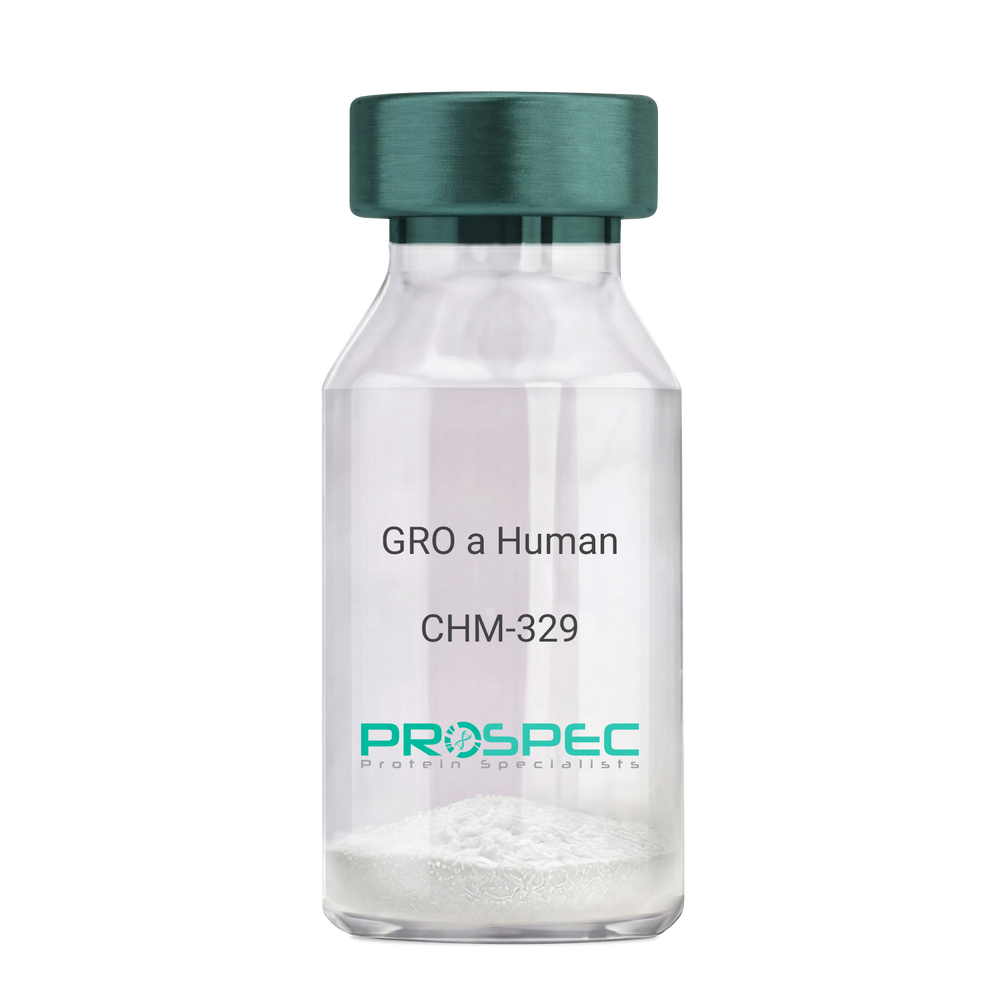
    Name :

    CXCL1 Human

    Description:

    GRO-Alpha Human Recombinant (CXCL1)

    Growth-regulated protein alpha, CXCL1, Melanoma growth stimulatory activity, MGSA, Neutrophil-activating protein 3, NAP-3, GRO-alpha (1-73), chemokine (C-X-C motif) ligand 1, GRO1, GROa, SCYB1, MGSA-a, MGSA alpha.

    Product # :

    CHM-329

    Price :

    Quantity :

    Shipping Method :

    Room Temp Icon

    Shipped at Room temp

    Add To Cart

    More Info

    • description
    • source
    • formulation
    • purity
    • biological activity
    • More Info

    Description

    GRO Alpha Human Recombinant produced in E.Coli is a single,non-glycosylated, polypeptide chain containing 73 amino acids and having a molecular mass of 7811 Dalton. The GRO-alpha is purified by proprietary chromatographic techniques.

    Source

    Escherichia Coli.

    Formulation

    Lyophilized from a 0.2µm filtered concentrated (1mg/ml) solution in 20mM PB, pH 7.4, 50mM NaCl.

    Purity

    Greater than 97.0% as determined by:
    (a) Analysis by RP-HPLC.
    (b) Analysis by SDS-PAGE.

    Biological Activity

    Determined by its ability to chemoattract human peripheral blood neutrophils using a concentration range of 10.0-100.0 ng/ml.

    More Info

    • Introduction

      Chemokine (C-X-C motif) ligand 1 (CXCL1) is a small cytokine belonging to the CXC chemokine family that was previously called GRO1 oncogene, Neutrophil-activating protein 3 (NAP-3) and melanoma growth stimulating activity, alpha (MSGA-a). It is secreted by human melanoma cells, has mitogenic properties and is implicated in melanoma pathogenesis. CXCL1 is expressed by macrophages, neutrophilsand epithelial cells, and has neutrophil chemoattractant activity. CXCL1 plays a role in spinal cord development by inhibiting the migration of oligodendrocyte precursors and is involved in the processes of angiogenesis, inflammation, wound healing, and tumorigenesis. This chemokine elicits its effects by signaling through the chemokine receptor CXCR2. The gene for CXCL1 is located on human chromosome 4 amongst genes for other CXC chemokines.

    • Synonyms

      Growth-regulated protein alpha, CXCL1, Melanoma growth stimulatory activity, MGSA, Neutrophil-activating protein 3, NAP-3, GRO-alpha (1-73), chemokine (C-X-C motif) ligand 1, GRO1, GROa, SCYB1, MGSA-a, MGSA alpha.

    • Physical Appearance

      Sterile Filtered White lyophilized (freeze-dried) powder.

    • Stability

      Lyophilized GRO-alpha although stable at room temperature for 3 weeks, should be stored desiccated below -18°C. Upon reconstitution CXCL1 should be stored at 4°C between 2-7 days and for future use below -18°C. For long term storage it is recommended to add a carrier protein (0.1% HSA or BSA).Please prevent freeze-thaw cycles.

    • Solubility

      It is recommended to reconstitute the lyophilized CXCL1 in sterile 18MΩ-cm H2O not less than 100µg/ml, which can then be further diluted to other aqueous solutions.

    • Amino Acid Sequence

      The sequence of the first five N-terminal amino acids was determined and was found to be Ala-Ser-Val-Ala-Thr.

    • Background

      What is the molecular weight/Mw of CXCL1 HUMAN Protein?
      CXCL1 HUMAN Protein has a total Mw of 7.81kDa.

      What is the source or expression system of CXCL1 HUMAN Protein?
      Escherichia Coli.

      What is the Purity of CXCL1 HUMAN Protein?
      CXCL1 HUMAN Protein is >97% pure as determined by SDS-PAGE.

      What is the Biological Activity of CXCL1 HUMAN Protein?
      Determined by its ability to chemoattract human peripheral blood neutrophils using a concentration range of 10.0-100.0 ng/ml.

      What is the amino acid sequence of CXCL1 HUMAN Protein?
      The sequence of the first five N-terminal amino acids was determined and was found to be Ala-Ser-Val-Ala-Thr.

      What applications can CXCL1 HUMAN Protein be used in?
      CXCL1 HUMAN Protein can probably be used in western blot, ELISA and Lateral Flow.

      What is the endotoxin level for CXCL1 HUMAN Protein?
      The endotoxin level is minimal, CXCL1 HUMAN Protein was purified using conventional chromatography techniques.


    ProSpec's products are furnished for LABORATORY RESEARCH USE ONLY. The product may not be used as drugs, agricultural or pesticidal products, food additives or household chemicals.

    Gro A Human
  • View Data Sheet

    Name :

    CLIC1 Human

    Description:

    Chloride Intracellular Channel 1 Human Recombinant

    ACBP, ACBD1, CCK-RP, EP, CLIC1, G6, NCC27, Nuclear chloride ion channel 27, Chloride channel ABP, Regulatory nuclear chloride ion channel protein, hRNCC, Chloride intracellular channel protein 1.

    Product # :

    PRO-833

    Price :

    Quantity :

    Shipping Method :

    Ice Icon

    Shipped with Ice Packs

    Add To Cart

    More Info

    • description
    • source
    • formulation
    • purity
    • More Info

    Description

    CLIC1 Human Recombinant produced in E.Coli is a single, non-glycosylated, polypeptide chain containing 261amino acids (1-241a.a.) and having a molecular mass of 29 kDa. CLIC1 protein is fused to a 20 amino acid His tag at N-terminus and is purified by standard chromatography.

    Source

    Escherichia Coli.

    Formulation

    CLIC1 Human solution containing 20mM Tris-HCl pH-8, 0.1M NaCl & 10% glycerol.

    Purity

    Greater than 90% as determined by SDS-PAGE.

    More Info

    • Introduction

      Chloride channels are various group of proteins that control fundamental cellular processes including stabilization of cell membrane potential, transepithelial transport, regulation of intracellular pH, and maintenance of cell volume. CLIC1 is part of the p64 family and is localized to the cell nucleus. CLIC1 displays both nuclear and plasma membrane chloride ion channel activity. CLIC1 inserts into membranes and forms chloride ion channels. CLIC1 channel activity depends on the pH. CLIC1 membrane insertion is redox-regulated and happens under oxydizing conditions.

    • Synonyms

      ACBP, ACBD1, CCK-RP, EP, CLIC1, G6, NCC27, Nuclear chloride ion channel 27, Chloride channel ABP, Regulatory nuclear chloride ion channel protein, hRNCC, Chloride intracellular channel protein 1.

    • Physical Appearance

      Sterile filtered colorless solution.

    • Stability

      Store at 4°C if entire vial will be used within 2-4 weeks. Store, frozen at -20°C for longer periods of time. For long term storage it is recommended to add a carrier protein (0.1% HSA or BSA).Avoid multiple freeze-thaw cycles.

    • Amino Acid Sequence

      GSSHHHHHH SSGLVPRGSH MAEEQPQVEL FVKAGSDGAK IGNCPFSQRL FMVLWLKGVT FNVTTVDTKR RTETVQKLCP GGQLPFLLYG TEVHTDTNKI EEFLEAVLCP PRYPKLAALN PESNTAGLDI FAKFSAYIKN SNPALNDNLE KGLLKALKVL DNYLTSPLPE EVDETSAEDE GVSQRKFLDG NELTLADCNL LPKLHIVQVV CKKYRGFTIP EAFRGVHRYL SNAYAREEFA STCPDDEEIE LAYEQVAKAL K.

    ProSpec's products are furnished for LABORATORY RESEARCH USE ONLY. The product may not be used as drugs, agricultural or pesticidal products, food additives or household chemicals.

    Clic1 Human
  • View Data Sheet

    Name :

    MAP1LC3A Human

    Description:

    Microtubule-Associated Protein 1 Light Chain 3 Alpha Human Recombinant

    ATG8E, LC3, LC3A, MAP1ALC3, MAP1BLC3, MLP3A.

    Product # :

    PRO-495

    Price :

    Quantity :

    Shipping Method :

    Ice Icon

    Shipped with Ice Packs

    Add To Cart

    More Info

    • description
    • source
    • formulation
    • purity
    • More Info

    Description

    MAP1LC3A Recombinant Human produced in E.Coli is a single, non-glycosylated polypeptide chain containing 128 amino acids (1-120 a.a.) and having a molecular mass of 15.1 kDa. The MAP1LC3A is fused to 8 amino acid His-Tag at C-terminus and purified by proprietary chromatographic techniques.

    Source

    Escherichia Coli.

    Formulation

    The MAP1LC3A solution (1mg/ml) contains 20mM Tris-HCl pH-8.0, 1mM DTT, 0.1M NaCl & 20% glycerol.

    Purity

    Greater than 95.0% as determined by SDS-PAGE.

    More Info

    • Introduction

      MAP1LC3A takes part in formation of autophagosomal vacuoles and is one of the light chain subunits that functions together with both MAP1A and/or MAP1B. MAP1LC3A has an important part in neuronal development and in maintaining the balance between neuronal plasticity and rigidity. MAP1LC3A is expressed as two alternatively spliced isoforms that are expressed in testis, brain, heart, liver and skeletal muscle, but are absent in thymus and peripheral blood leukocytes.

    • Synonyms

      ATG8E, LC3, LC3A, MAP1ALC3, MAP1BLC3, MLP3A.

    • Physical Appearance

      Sterile filtered colorless solution.

    • Stability

      Store at 4°C if entire vial will be used within 2-4 weeks. Store, frozen at -20°C for longer periods of time. For long term storage it is recommended to add a carrier protein (0.1% HSA or BSA).Avoid multiple freeze-thaw cycles.

    • Amino Acid Sequence

      MPSDRPFKQR RSFADRCKEV QQIRDQHPSK IPVIIERYKG EKQLPVLDKT KFLVPDHVNM SELVKIIRRR LQLNPTQAFF LLVNQHSMVS VSTPIADIYE QEKDEDGFLY MVYASQETFG LEHHHHHH.

    ProSpec's products are furnished for LABORATORY RESEARCH USE ONLY. The product may not be used as drugs, agricultural or pesticidal products, food additives or household chemicals.

    Map1Lc3A Human
  • View Data Sheet

    Name :

    MBL2 Human

    Description:

    Mannose-Binding Lectin 2 Human Recombinant

    COLEC1, HSMBPC, MBL, MBL2D, MBP, MBP-C, MBP1, Mannose-binding protein C, Collectin-1, Mannan-binding protein, Mannose-binding lectin.

    Product # :

    PRO-1285

    Price :

    Quantity :

    Shipping Method :

    Ice Icon

    Shipped with Ice Packs

    Add To Cart

    More Info

    • description
    • source
    • formulation
    • purity
    • More Info

    Description

    MBL2 Human Recombinant produced in E. coli is a single polypeptide chain containing 164 amino acids (108-248) and having a molecular mass of 18 kDa. MBL2 is fused to 23 amino acid His-tag at N-terminus & purified by proprietary chromatographic techniques.

    Source

    E.coli.

    Formulation

    The MBL2 solution (1mg/1ml) contains 20mM Tris-HCl buffer (pH 8.0), 2M Urea, 20% glycerol and 0.2M Nacl.

    Purity

    Greater than 90% as determined by SDS-PAGE.

    More Info

    • Introduction

      Mannose-binding protein C (MBL2),belongs to the collectin family of patternrecognition molecules and is an important component in the innate immune system. MBL2 is a secreted glycoprotein which recognizes mannose and N-acetylglucosamine on various microorganisms, and is capable of activating the classical complement pathway. Lacking MBL2 has been associated with susceptibility to autoimmune and infectious diseases.

    • Synonyms

      COLEC1, HSMBPC, MBL, MBL2D, MBP, MBP-C, MBP1, Mannose-binding protein C, Collectin-1, Mannan-binding protein, Mannose-binding lectin.

    • Physical Appearance

      Sterile Filtered colorless solution.

    • Stability

      Store at 4°C if entire vial will be used within 2-4 weeks. Store, frozen at -20°C for longer periods of time. For long term storage it is recommended to add a carrier protein (0.1% HSA or BSA).Avoid multiple freeze-thaw cycles.

    • Amino Acid Sequence

      MGSSHHHHHH SSGLVPRGSH MGSAASERKA LQTEMARIKK WLTFSLGKQV GNKFFLTNGE IMTFEKVKAL CVKFQASVAT PRNAAENGAI QNLIKEEAFL GITDEKTEGQ FVDLTGNRLT YTNWNEGEPN NAGSDEDCVL LLKNGQWNDV PCSTSHLAVC EFPI.

    ProSpec's products are furnished for LABORATORY RESEARCH USE ONLY. The product may not be used as drugs, agricultural or pesticidal products, food additives or household chemicals.

    Mbl2 Human
  • 1
  • …
  • 20
  • 21
  • 22
  • 23
  • 24
  • …
  • 42
Your browser does not support the video tag.

Products

  • Cytokines
  • Growth Factors
  • Chemokines
  • CD Antigens
  • Neurotrophins
  • Hormones
  • Enzymes
  • Viral Antigens
  • Recombinant Proteins
  • Natural Proteins
  • Monoclonal Antibodies
  • Polyclonal Antibodies
  • Thermal Packaging

About

  • Company
  • Founder
  • Contribution
  • Contact Us
  • My Account

Ordering

  • Ordering Method
  • Ordering - Credit Card
  • Ordering PO
  • Shipping Fees
  • FAQ's

Legal

  • Terms & Conditions
  • Privacy
  • Site Map
  • info@prospecbio.com
  • Facebook
  • Instagram
  • Linkedin Profile

© 2026 ProSpec-Tany TechnoGene Ltd. All Rights Reserved.

  • Choosing a selection results in a full page refresh.
  • Opens in a new window.