Skip to content

High-quality research proteins.

  • 1-800-805-6531

  • Mon - Sat 8.00-18.00, Sun - Closed

  • info@prospecbio.com

  • PO Box 6591 East Brunswick NJ 08816

  • Products
    • Cytokines
    • Growth factors
    • Chemokines
    • Cd antigens
    • Neurotrophins
    • Hormones
    • Enzymes
    • Viral antigens
    • Recombinant proteins
    • Natural proteins
    • Monoclonal antibodies
    • Polyclonal antibodies
    • Thermal Packaging
  • About
    • Company
    • Founder
    • Contribution
  • Customers
    • Eastern Asia
    • Eastern Europe
    • North America
    • South America
    • South East Asia
    • Southern Asia
    • Western Europe
  • Ordering
    • Ordering Method
    • Ordering - Credit Card
    • Ordering - PO
    • Shipping Fees
    • FAQs
  • Services
    • DNA Cloning
    • Protein Expression
    • Monoclonal Antibody
    • Fermentation
    • Technology License
  • Contact us
Log in

Country/region

  • USD $ | Albania
  • USD $ | Andorra
  • USD $ | Argentina
  • USD $ | Armenia
  • USD $ | Australia
  • USD $ | Austria
  • USD $ | Azerbaijan
  • USD $ | Belarus
  • USD $ | Belgium
  • USD $ | Bolivia
  • USD $ | Brazil
  • USD $ | Bulgaria
  • USD $ | Cambodia
  • USD $ | Canada
  • USD $ | Chile
  • USD $ | China
  • USD $ | Colombia
  • USD $ | Costa Rica
  • USD $ | Croatia
  • USD $ | Cyprus
  • USD $ | Czechia
  • USD $ | Denmark
  • USD $ | Estonia
  • USD $ | Finland
  • USD $ | France
  • USD $ | Georgia
  • USD $ | Germany
  • USD $ | Greece
  • USD $ | Hong Kong SAR
  • USD $ | Hungary
  • USD $ | Iceland
  • USD $ | India
  • USD $ | Ireland
  • USD $ | Israel
  • USD $ | Italy
  • USD $ | Japan
  • USD $ | Kazakhstan
  • USD $ | Latvia
  • USD $ | Liechtenstein
  • USD $ | Lithuania
  • USD $ | Madagascar
  • USD $ | Malta
  • USD $ | Mexico
  • USD $ | Moldova
  • USD $ | Monaco
  • USD $ | Netherlands
  • USD $ | New Zealand
  • USD $ | North Macedonia
  • USD $ | Norway
  • USD $ | Panama
  • USD $ | Paraguay
  • USD $ | Peru
  • USD $ | Philippines
  • USD $ | Poland
  • USD $ | Portugal
  • USD $ | Romania
  • USD $ | Singapore
  • USD $ | Slovakia
  • USD $ | Slovenia
  • USD $ | South Africa
  • USD $ | South Korea
  • USD $ | Spain
  • USD $ | Sri Lanka
  • USD $ | Sweden
  • USD $ | Switzerland
  • USD $ | Taiwan
  • USD $ | Thailand
  • USD $ | Türkiye
  • USD $ | Ukraine
  • USD $ | United Kingdom
  • USD $ | United States
  • USD $ | Uruguay
  • USD $ | Vatican City
  • USD $ | Venezuela
  • USD $ | Vietnam
  • Facebook
  • Instagram
logoProSpec - Recombinant Protein Manufacturer for academic and R&D industry
Become a distributor
Account Log in
Wishlist
Cart Cart(0)
  • Products
    +
    • Cytokines
    • Growth factors
    • Chemokines
    • Cd antigens
    • Neurotrophins
    • Hormones
    • Enzymes
    • Viral antigens
    • Recombinant proteins
    • Natural proteins
    • Monoclonal antibodies
    • Polyclonal antibodies
    • Thermal Packaging
  • About
    +
    • Company
    • Founder
    • Contribution
  • Customers
    +
    • Eastern Asia
    • Eastern Europe
    • North America
    • South America
    • South East Asia
    • Southern Asia
    • Western Europe
  • Ordering
    +
    • Ordering Method
    • Ordering - Credit Card
    • Ordering - PO
    • Shipping Fees
    • FAQs
  • Services
    +
    • DNA Cloning
    • Protein Expression
    • Monoclonal Antibody
    • Fermentation
    • Technology License
  • Contact us

Item added to your cart

View cart
View All
  • Cytokines
  • Growth factors
  • Chemokines
  • Cd antigens
  • Neurotrophins
  • Hormones
  • Enzymes
  • Viral antigens
  • Recombinant proteins
  • Natural proteins
  • Monoclonal antibodies
  • Polyclonal antibodies
  • Thermal Packaging
  • Tumor Necrosis Factor

    Tumor Necrosis Factor

    View All
  • 4-1BB

    4-1BB

    View All
  • Adiponectin

    Adiponectin

    View All
  • AIF1

    AIF1

    View All
  • Other Cytokines

    Other Cytokines

    View All
  • AITRL

    AITRL

    View All
  • Angiopoietin

    Angiopoietin

    View All
  • Apolipoprotein

    Apolipoprotein

    View All
  • B-Cell Activating Factor

    B-Cell Activating Factor

    View All
  • Beta Defensin

    Beta Defensin

    View All
  • Bone Morphogenetic Protein

    Bone Morphogenetic Protein

    View All
  • B type Natriuretic Peptide

    B type Natriuretic Peptide

    View All
  • BST

    BST

    View All
  • Betacellulin

    Betacellulin

    View All
  • Cardiotrophin

    Cardiotrophin

    View All
  • Activin

    Activin

    View All
  • Fibroblast Growth Factor

    Fibroblast Growth Factor

    View All
  • Other Growth Factors

    Other Growth Factors

    View All
  • CSF

    CSF

    View All
  • CTGF

    CTGF

    View All
  • IGFBP

    IGFBP

    View All
  • VEGF Protein

    VEGF Protein

    View All
  • EGF

    EGF

    View All
  • Epigen

    Epigen

    View All
  • Erythropoietin

    Erythropoietin

    View All
  • Insulin-Like Growth Factor

    Insulin-Like Growth Factor

    View All
  • Growth Hormone

    Growth Hormone

    View All
  • HDGF

    HDGF

    View All
  • Hepatocyte Growth Factor

    Hepatocyte Growth Factor

    View All
  • Insulin

    Insulin

    View All
  • BCA-1/ BLC (CXCL13)

    BCA-1/ BLC (CXCL13)

    View All
  • BRAK (CXCL14)

    BRAK (CXCL14)

    View All
  • C-10 (CCL6)

    C-10 (CCL6)

    View All
  • Other Chemokines

    Other Chemokines

    View All
  • MEC (CCL28)

    MEC (CCL28)

    View All
  • LD78-beta (CCL3L1)

    LD78-beta (CCL3L1)

    View All
  • CTACK (CCL27)

    CTACK (CCL27)

    View All
  • CXCL16

    CXCL16

    View All
  • CXCL17

    CXCL17

    View All
  • Platelet Factor-4 (CXCL4)

    Platelet Factor-4 (CXCL4)

    View All
  • ENA-78 (CXCL5)

    ENA-78 (CXCL5)

    View All
  • Eotaxin (CCL11,24,26)

    Eotaxin (CCL11,24,26)

    View All
  • Exodus-2 (CCL21)

    Exodus-2 (CCL21)

    View All
  • Fractalkine (CX3CL1)

    Fractalkine (CX3CL1)

    View All
  • CXCL6

    CXCL6

    View All
  • Other CD Antigens

    Other CD Antigens

    View All
  • CD14

    CD14

    View All
  • CD164

    CD164

    View All
  • CD1

    CD1

    View All
  • CD2

    CD2

    View All
  • CD200

    CD200

    View All
  • CD207

    CD207

    View All
  • CD226

    CD226

    View All
  • CD23

    CD23

    View All
  • CD244

    CD244

    View All
  • CD247

    CD247

    View All
  • CD27

    CD27

    View All
  • CD274

    CD274

    View All
  • CD300

    CD300

    View All
  • CD33

    CD33

    View All
  • Other Neurotrophins

    Other Neurotrophins

    View All
  • Beta-NGF

    Beta-NGF

    View All
  • BDNF

    BDNF

    View All
  • CDNF

    CDNF

    View All
  • CNTF

    CNTF

    View All
  • GDNF

    GDNF

    View All
  • Glia Maturation Factor

    Glia Maturation Factor

    View All
  • MANF

    MANF

    View All
  • Midkine

    Midkine

    View All
  • Neuroglobin

    Neuroglobin

    View All
  • Neurotrophic factors

    Neurotrophic factors

    View All
  • Neuregulin

    Neuregulin

    View All
  • Neuropilin

    Neuropilin

    View All
  • Pigment Epithelium-Derived Factor

    Pigment Epithelium-Derived Factor

    View All
  • Pleiotrophin

    Pleiotrophin

    View All
  • Peptide Hormones

    Peptide Hormones

    View All
  • Other Hormones

    Other Hormones

    View All
  • HCG

    HCG

    View All
  • Endothelin

    Endothelin

    View All
  • Exendin

    Exendin

    View All
  • FSH

    FSH

    View All
  • Glucagon

    Glucagon

    View All
  • GHRP

    GHRP

    View All
  • GLP

    GLP

    View All
  • Thyrostimulin

    Thyrostimulin

    View All
  • Inhibin A

    Inhibin A

    View All
  • LHRH

    LHRH

    View All
  • Melanotan

    Melanotan

    View All
  • Procalcitonin

    Procalcitonin

    View All
  • PTH

    PTH

    View All
  • Peroxiredoxin

    Peroxiredoxin

    View All
  • Peptidase

    Peptidase

    View All
  • Synthetase

    Synthetase

    View All
  • Transferase

    Transferase

    View All
  • Hydrolase

    Hydrolase

    View All
  • Dehydrogenase

    Dehydrogenase

    View All
  • ACE2

    ACE2

    View All
  • Esterase

    Esterase

    View All
  • Protein Kinases

    Protein Kinases

    View All
  • Other Enzymes

    Other Enzymes

    View All
  • Phosphatase

    Phosphatase

    View All
  • Deaminase

    Deaminase

    View All
  • Oxygenase

    Oxygenase

    View All
  • Adenylate Kinase

    Adenylate Kinase

    View All
  • Lyase

    Lyase

    View All
  • Chagas

    Chagas

    View All
  • SARS

    SARS

    View All
  • Influenza

    Influenza

    View All
  • ASFV

    ASFV

    View All
  • Astrovirus

    Astrovirus

    View All
  • Borrelia

    Borrelia

    View All
  • Helicobacter Pylori

    Helicobacter Pylori

    View All
  • Chikungunya

    Chikungunya

    View All
  • Chlamydia

    Chlamydia

    View All
  • Cytomegalo

    Cytomegalo

    View All
  • Dengue

    Dengue

    View All
  • EBV

    EBV

    View All
  • Ebola

    Ebola

    View All
  • Feline Leukemia Virus

    Feline Leukemia Virus

    View All
  • Hepatitis A

    Hepatitis A

    View All
  • Other

    Other

    View All
  • Actin

    Actin

    View All
  • ADAM

    ADAM

    View All
  • Complement Component

    Complement Component

    View All
  • Ag85

    Ag85

    View All
  • Eukaryotic Translation Initiation Factor

    Eukaryotic Translation Initiation Factor

    View All
  • Anterior Gradient Protein

    Anterior Gradient Protein

    View All
  • Heat Shock Protein

    Heat Shock Protein

    View All
  • Alpha-2-HS-Glycoprotein

    Alpha-2-HS-Glycoprotein

    View All
  • Hemoglobin

    Hemoglobin

    View All
  • Allergy

    Allergy

    View All
  • Anaplasma

    Anaplasma

    View All
  • Angiogenin

    Angiogenin

    View All
  • Ankyrin Repeat Domain

    Ankyrin Repeat Domain

    View All
  • Annexin

    Annexin

    View All
  • Other Natural Proteins

    Other Natural Proteins

    View All
  • Aprotinin

    Aprotinin

    View All
  • Transferrin

    Transferrin

    View All
  • Avidin

    Avidin

    View All
  • Anti Coagulation Factors

    Anti Coagulation Factors

    View All
  • Natural Albumin

    Natural Albumin

    View All
  • Natural Coagulation Factors

    Natural Coagulation Factors

    View All
  • Fibronectin

    Fibronectin

    View All
  • Thrombin

    Thrombin

    View All
  • Anti Human Enzyme

    Anti Human Enzyme

    View All
  • Other Monoclonal Antibodies

    Other Monoclonal Antibodies

    View All
  • Anti Human Cytokine

    Anti Human Cytokine

    View All
  • Anti Human Heat Shock Protein

    Anti Human Heat Shock Protein

    View All
  • Anti Mouse Lymphocyte

    Anti Mouse Lymphocyte

    View All
  • Anti Human Chemokine

    Anti Human Chemokine

    View All
  • Anti Human Lymphocyte

    Anti Human Lymphocyte

    View All
  • Anti Viral Monoclonal

    Anti Viral Monoclonal

    View All
  • Anti Mouse Cytokine

    Anti Mouse Cytokine

    View All
  • Anti-GST Monoclonal

    Anti-GST Monoclonal

    View All
  • Other Polyclonal Antibodies

    Other Polyclonal Antibodies

    View All
  • Anti Viral

    Anti Viral

    View All
  • Anti-GST Monoclonal

    Anti-GST Monoclonal

    View All
Back

Search results

1000 results found for “Neuregulin”

Name

Description

Product #

Price

Quantity

Shipping Method

  • View Data Sheet

    Name :

    Insulin Human, His

    Description:

    Insulin Human Recombinant, His Tag

    Insulin, Insulin-Dependent Diabetes Mellitus 2, Preproinsulin, Proinsulin, MODY10, IDDM1, IDDM2, IDDM, ILPR, IRDN.    

    Product # :

    CYT-1076

    Price :

    Quantity :

    Shipping Method :

    Ice Icon

    Shipped with Ice Packs

    Add To Cart

    More Info

    • description
    • source
    • formulation
    • purity
    • biological activity
    • More Info

    Description

    Insulin Recombinant produced in E.Coli is a single, non-glycosylated polypeptide chain containing 109 amino acids (25-110 a.a) and having a molecular mass of 11.8kDa. Insulin is fused to a 23 amino acid His-tag at N-terminus & purified by proprietary chromatographic techniques.

    Source

    Escherichia Coli.

    Formulation

    Insulin protein solution (0.5mg/ml) containing Phosphate-Buffered Saline (pH 7.4) and 10% Glycerol.

    Purity

    Greater than 95.0% as determined by SDS-PAGE.

    Biological Activity

    Measured in a cell proliferation assay using MCF7 human breast cancer cell. The ED50 for this effect is less or equal to 4 ug/ml.

    More Info

    • Introduction

      Insulin decreases blood glucose concentration. it increases cell permeability to monosaccharides, amino acids and fatty acids. it accelerates glycolysis, the pentose phosphate cycle, and glycogen synthesis in liver.

    • Synonyms

      Insulin, Insulin-Dependent Diabetes Mellitus 2, Preproinsulin, Proinsulin, MODY10, IDDM1, IDDM2, IDDM, ILPR, IRDN.

    • Physical Appearance

      Sterile Filtered clear solution.

    • Stability

      Store at 4°C if entire vial will be used within 2-4 weeks. Store, frozen at -20°C for longer periods of time. For long term storage it is recommended to add a carrier protein (0.1% HSA or BSA).Avoid multiple freeze-thaw cycles.

    • Amino Acid Sequence

      MGSSHHHHHH SSGLVPRGSH MGSFVNQHLC GSHLVEALYL VCGERGFFYT PKTRREAEDL QVGQVELGGG PGAGSLQPLA LEGSLQKRGI VEQCCTSICS LYQLENYCN

    ProSpec's products are furnished for LABORATORY RESEARCH USE ONLY. The product may not be used as drugs, agricultural or pesticidal products, food additives or household chemicals.

    Insulin 2
  • View Data Sheet

    Name :

    CRYGD Mouse

    Description:

    Crystallin, Gamma D Mouse Recombinant

    Gamma-crystallin D, Gamma-D-crystallin , Gamma-crystallin 1, CRYGD.

    Product # :

    PRO-2484

    Price :

    Quantity :

    Shipping Method :

    Ice Icon

    Shipped with Ice Packs

    Add To Cart

    More Info

    • description
    • source
    • formulation
    • purity
    • More Info

    Description

    CRYGD Mouse Recombinant produced in E.Coli is a single, non-glycosylated polypeptide chain containing 197 amino acids (1-174 a.a.) and having a molecular mass of 23.5kDa.CRYGD is fused to a 23 amino acid His-tag at N-terminus & purified by proprietary chromatographic techniques.

    Source

    Escherichia Coli.

    Formulation

    CRYGD protein solution (1mg/ml) containing 20mM Tris-HCl buffer (pH 8.0), 0.1M NaCl and 10% glycerol.

    Purity

    Greater than 95.0% as determined by SDS-PAGE.

    More Info

    • Introduction

      CRYGD is a member of the beta/gamma-crystallin family. Crystallins are the principal structural components of the vertebrate eye lens. The mammalian lens crystallins are divided into alpha, beta, and gamma families. Gamma-crystallins are involved in cataract formation. Defects in the CRYGD gene are responsible for cataract autosomal dominant (ADC), cataract congenital non-nuclear polymorphic autosomal dominant (CCP), cataract congenital cerulean type 3 (CCA3) and cataract crystalline aculeiform (CACA).

    • Synonyms

      Gamma-crystallin D, Gamma-D-crystallin , Gamma-crystallin 1, CRYGD.

    • Physical Appearance

      Sterile filtered colorless solution.

    • Stability

      Store at 4°C if entire vial will be used within 2-4 weeks. Store, frozen at -20°C for longer periods of time. For long term storage it is recommended to add a carrier protein (0.1% HSA or BSA).Avoid multiple freeze-thaw cycles.

    • Amino Acid Sequence

      MGSSHHHHHH SSGLVPRGSH MGSMGKITFY EDRGFQGRHY ECSTDHSNLQ PYFSRCNSVR VDSGCWMLYE QPNFTGCQYF LRRGDYPDYQ QWMGFSDSVR SCRLIPHAGS HRIRLYEREE YRGQMIEFTE DCPSLQDRFH FNEIYSLNVL EGCWVLYDMT NYRGRQYLLR PGEYRRYHDW
      GAMNARVGSL RRVMDFY

    ProSpec's products are furnished for LABORATORY RESEARCH USE ONLY. The product may not be used as drugs, agricultural or pesticidal products, food additives or household chemicals.

    Crygd Mouse
  • View Data Sheet

    Name :

    Midkine Human, His

    Description:

    Midkine Human Recombinant, His Tag

    NEGF-2, Neurite Growth-Promoting Factor 2, MK, Neurite outgrowth-promoting protein, Midgestation and kidney protein, Amphiregulin-associated protein, ARAP, Neurite outgrowth-promoting factor 2, FLJ27379, Midkine, MK1, NEGF2.

    Product # :

    CYT-444

    Price :

    Quantity :

    Shipping Method :

    Room Temp Icon

    Shipped at Room temp

    Add To Cart

    More Info

    • description
    • source
    • formulation
    • purity
    • More Info

    Description

    Midkine Human Recombinant is manufactured with N-terminal fusion of His Tag, having a molecular mass of 14.6 kDa protein and containing 121 amino acid residues of the Midkine human and 10 additional amino acid residues – His Tag (underlined).

    Source

    Escherichia Coli.

    Formulation

    Lyophilized from 0.5mg/ml in 0.05M phosphate buffer and 0.1M NaCl, pH 7.2.

    Purity

    Greater than 95% as determined by SDS-PAGE.

    More Info

    • Introduction

      Midkine (MK) is the product of a retinoic acid responsive gene, MK, and is a member of a family of heparin binding factors. It contains 121 amino acid residues including 10 conserved cysteine residues, all of which appear to be disulphide linked.
      Midkine is expressed during embryogenesis, showing an expression pattern that suggests functions in neurogenesis, cell migration, secondary organogenetic induction, and mesoderm-epithelial interaction.
      The widespread downregulation of MK in the adult human is reverted in a number of cancers, in which polypeptides are able to act as both transforming growth factors and promoters of angiogenesis.
      Midkine (MK), induces chemotaxis of human neutrophils and was found to trigger mobilization of intracellular calcium of these cells.
      Midkine induces histamine release from rat peritoneal mast cells with a rapid response in a dose dependent manner.
      Midkine is also a potent stimulator of collagen and glycosaminoglycan synthesis.

    • Synonyms

      NEGF-2, Neurite Growth-Promoting Factor 2, MK, Neurite outgrowth-promoting protein, Midgestation and kidney protein, Amphiregulin-associated protein, ARAP, Neurite outgrowth-promoting factor 2, FLJ27379, Midkine, MK1, NEGF2.

    • Physical Appearance

      Filtered White lyophilized (freeze-dried) powder.

    • Stability

      Store lyophilized protein at -20°C. Aliquot the product after reconstitution to avoid repeated freezing/thawing cycles. Reconstituted protein can be stored at 4°C for a limited period of time; it does not show any change after two weeks at 4°C.

    • Solubility

      Add 0.2 ml of PBS pH 7.2 and let the lyophilized pellet dissolve completely.

    • Amino Acid Sequence

      MKHHHHHHHM KKKDKVKKGG PGSECAEWAW GPCTPSSKDC GVGFREGTCG AQTQRIRCRV PCNWKKEFGA DCKYKFENWG ACDGGTGTKV RQGTLKKARY NAQCQETIRV TKPCTPKTKA KAKAKKGKGK D.

    ProSpec's products are furnished for LABORATORY RESEARCH USE ONLY. The product may not be used as drugs, agricultural or pesticidal products, food additives or household chemicals.

    Midkine Human His
  • View Data Sheet

    Name :

    CXCL1 Human

    Description:

    GRO-Alpha Human Recombinant (CXCL1)

    Growth-regulated protein alpha, CXCL1, Melanoma growth stimulatory activity, MGSA, Neutrophil-activating protein 3, NAP-3, GRO-alpha (1-73), chemokine (C-X-C motif) ligand 1, GRO1, GROa, SCYB1, MGSA-a, MGSA alpha.

    Product # :

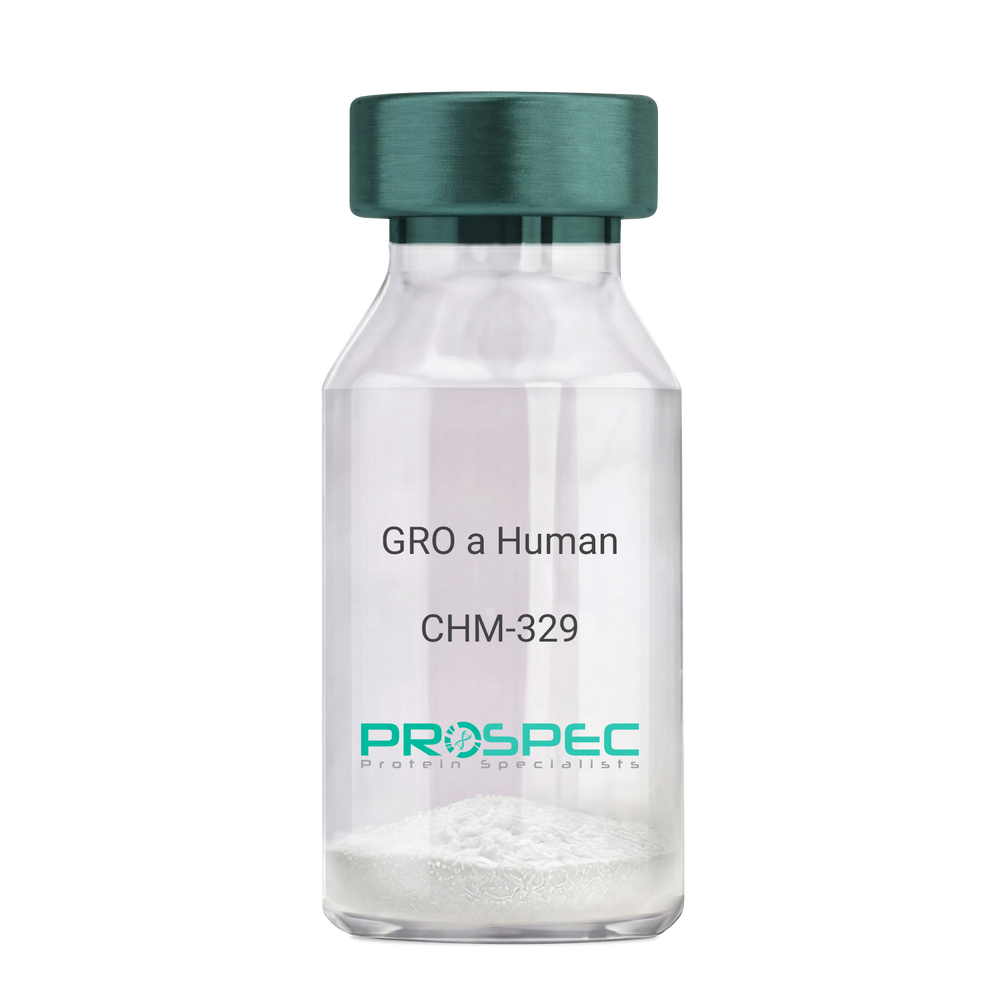
    CHM-329

    Price :

    Quantity :

    Shipping Method :

    Room Temp Icon

    Shipped at Room temp

    Add To Cart

    More Info

    • description
    • source
    • formulation
    • purity
    • biological activity
    • More Info

    Description

    GRO Alpha Human Recombinant produced in E.Coli is a single,non-glycosylated, polypeptide chain containing 73 amino acids and having a molecular mass of 7811 Dalton. The GRO-alpha is purified by proprietary chromatographic techniques.

    Source

    Escherichia Coli.

    Formulation

    Lyophilized from a 0.2µm filtered concentrated (1mg/ml) solution in 20mM PB, pH 7.4, 50mM NaCl.

    Purity

    Greater than 97.0% as determined by:
    (a) Analysis by RP-HPLC.
    (b) Analysis by SDS-PAGE.

    Biological Activity

    Determined by its ability to chemoattract human peripheral blood neutrophils using a concentration range of 10.0-100.0 ng/ml.

    More Info

    • Introduction

      Chemokine (C-X-C motif) ligand 1 (CXCL1) is a small cytokine belonging to the CXC chemokine family that was previously called GRO1 oncogene, Neutrophil-activating protein 3 (NAP-3) and melanoma growth stimulating activity, alpha (MSGA-a). It is secreted by human melanoma cells, has mitogenic properties and is implicated in melanoma pathogenesis. CXCL1 is expressed by macrophages, neutrophilsand epithelial cells, and has neutrophil chemoattractant activity. CXCL1 plays a role in spinal cord development by inhibiting the migration of oligodendrocyte precursors and is involved in the processes of angiogenesis, inflammation, wound healing, and tumorigenesis. This chemokine elicits its effects by signaling through the chemokine receptor CXCR2. The gene for CXCL1 is located on human chromosome 4 amongst genes for other CXC chemokines.

    • Synonyms

      Growth-regulated protein alpha, CXCL1, Melanoma growth stimulatory activity, MGSA, Neutrophil-activating protein 3, NAP-3, GRO-alpha (1-73), chemokine (C-X-C motif) ligand 1, GRO1, GROa, SCYB1, MGSA-a, MGSA alpha.

    • Physical Appearance

      Sterile Filtered White lyophilized (freeze-dried) powder.

    • Stability

      Lyophilized GRO-alpha although stable at room temperature for 3 weeks, should be stored desiccated below -18°C. Upon reconstitution CXCL1 should be stored at 4°C between 2-7 days and for future use below -18°C. For long term storage it is recommended to add a carrier protein (0.1% HSA or BSA).Please prevent freeze-thaw cycles.

    • Solubility

      It is recommended to reconstitute the lyophilized CXCL1 in sterile 18MΩ-cm H2O not less than 100µg/ml, which can then be further diluted to other aqueous solutions.

    • Amino Acid Sequence

      The sequence of the first five N-terminal amino acids was determined and was found to be Ala-Ser-Val-Ala-Thr.

    • Background

      What is the molecular weight/Mw of CXCL1 HUMAN Protein?
      CXCL1 HUMAN Protein has a total Mw of 7.81kDa.

      What is the source or expression system of CXCL1 HUMAN Protein?
      Escherichia Coli.

      What is the Purity of CXCL1 HUMAN Protein?
      CXCL1 HUMAN Protein is >97% pure as determined by SDS-PAGE.

      What is the Biological Activity of CXCL1 HUMAN Protein?
      Determined by its ability to chemoattract human peripheral blood neutrophils using a concentration range of 10.0-100.0 ng/ml.

      What is the amino acid sequence of CXCL1 HUMAN Protein?
      The sequence of the first five N-terminal amino acids was determined and was found to be Ala-Ser-Val-Ala-Thr.

      What applications can CXCL1 HUMAN Protein be used in?
      CXCL1 HUMAN Protein can probably be used in western blot, ELISA and Lateral Flow.

      What is the endotoxin level for CXCL1 HUMAN Protein?
      The endotoxin level is minimal, CXCL1 HUMAN Protein was purified using conventional chromatography techniques.


    ProSpec's products are furnished for LABORATORY RESEARCH USE ONLY. The product may not be used as drugs, agricultural or pesticidal products, food additives or household chemicals.

    Gro A Human
  • View Data Sheet

    Name :

    Adiponectin Rat

    Description:

    Adiponectin Rat Recombinant

    Adipocyte C1q and collagen domain-containing protein, Adipocyte complement-related 30kDa protein, Adipose most abundant gene transcript 1 protein, gelatin-binding protein, Acrp30, AdipoQ, GBP-28, APM-1, ACDC.

    Product # :

    CYT-831

    Price :

    Quantity :

    Shipping Method :

    Room Temp Icon

    Shipped at Room temp

    Add To Cart

    More Info

    • description
    • source
    • formulation
    • purity
    • More Info

    Description

    ACRP30 Rat Recombinant produced in 293 cell line is a polypeptide chain containing 238 amino acids and having a total molecular mass of 25.7 kDa. ACRP30 contains a C-Terminal linker (3 AA residue) and a C-Terminal Flag- tag (8 AA residue).

    Source

    HEK293 cell line.

    Formulation

    Filtered (0.4 µm) and lyophilized in 20 mM Tris buffer, 50 mM NaCl, pH 7.5.

    Purity

    Greater than 90.0% as determined by SDS-PAGE.

    More Info

    • Introduction

      Adiponectin, also referred to as Acrp30, AdipoQ and GBP-28, is a recently discovered 244 amino acid protein, the product of the apM1 gene, which is physiologically active and specifically and highly expressed in adipose cells (Adipokine). The protein belongs to the soluble defense collagen super family; it has a collagen-like domain structurally homologous with collagen VIII and X and complement factor C1q-like globular domain. APM-1 forms homotrimers, which are the building blocks for higher order complexes found circulating in serum.

    • Synonyms

      Adipocyte C1q and collagen domain-containing protein, Adipocyte complement-related 30kDa protein, Adipose most abundant gene transcript 1 protein, gelatin-binding protein, Acrp30, AdipoQ, GBP-28, APM-1, ACDC.

    • Physical Appearance

      White lyophilized (freeze-dried) powder.

    • Stability

      Lyophilized ACRP30 although stable at room temperature for 3 weeks, should be stored desiccated below -18°C. Upon reconstitution ACRP30 should be stored at 4°C between 2-7 days and for future use below -18°C.For long term storage it is recommended to add a carrier protein (0.1% HSA or BSA).Please prevent freeze-thaw cycles.

    • Solubility

      Add deionized water to a working concentration approximately 0.5 mg/ml and let the lyophilized pellet dissolve completely. Product is not sterile! Please filter the product by appropriate sterile filter before using it in the cell culture.

    • Amino Acid Sequence

      GITATEGPGA LVPPPKETCA GWMAGIPGYP GHNGIPGRDG RDGTPGEKGE KGDAGVLGPK GDPGDAGMTG AEGPRGFPGT PGRKGEPGEA AYMYHSAFSV GLETRVTVPN VPIRFTKIFY NQQNHYDGST GKFHCNIPGL YYFSYHITVY MKDVKVSLFK KDKAVLFTYD QYQEKNVDQA SGSMLLHLEV GDQVWLQVYG EGDNNGLYAD NVNDSTFTGF LLYHDTNAAADYKDDDDK

    • Background

      What is the molecular weight/Mw of ADIPONECTIN Protein?
      ADIPONECTIN Protein has a total Mw of 25.7kDa.

      What is the source or expression system of ADIPONECTIN Protein?
      HEK293 cell line.

      What is the Purity of ADIPONECTIN Protein?
      ADIPONECTIN Protein is >90% pure as determined by SDS-PAGE.

      What is the Biological Activity of ADIPONECTIN Protein?
      The biological functionality of ADIPONECTIN Protein will be determined in the future.

      What is the amino acid sequence of ADIPONECTIN Protein?
      GITATEGPGA LVPPPKETCA GWMAGIPGYP GHNGIPGRDG RDGTPGEKGE KGDAGVLGPK GDPGDAGMTG AEGPRGFPGT PGRKGEPGEA AYMYHSAFSV GLETRVTVPN VPIRFTKIFY NQQNHYDGST GKFHCNIPGL YYFSYHITVY MKDVKVSLFK KDKAVLFTYD QYQEKNVDQA SGSMLLHLEV GDQVWLQVYG EGDNNGLYAD NVNDSTFTGF LLYHDTNAAADYKDDDDK.

      What applications can ADIPONECTIN Protein be used in?
      ADIPONECTIN Protein can probably be used in western blot, ELISA and Lateral Flow.

      What is the endotoxin level for ADIPONECTIN Protein?
      The endotoxin level is minimal, ADIPONECTIN Protein was purified using conventional chromatography techniques.

    ProSpec's products are furnished for LABORATORY RESEARCH USE ONLY. The product may not be used as drugs, agricultural or pesticidal products, food additives or household chemicals.

    Acrp30 Rat
  • View Data Sheet

    Name :

    Resistin Human (64-110)

    Description:

    Resistin (64-110) Human Recombinant

    Cysteine-rich secreted protein FIZZ3, Adipose tissue-specific secretory factor, ADSF.

    Product # :

    CYT-1232

    Price :

    Quantity :

    Shipping Method :

    Room Temp Icon

    Shipped at Room temp

    Add To Cart

    More Info

    • description
    • source
    • formulation
    • purity
    • More Info

    Description

    The Resistin Human is created as a recombinant protein with a 4kda N-terminal fusion of His Tag. The Resistin His-Tagged Fusion Protein, produced in E. coli, is a 12kDa protein containing 47 amino acid residues of the Resistin Human, 64-110 amino acids.

    Source

    Escherichia Coli.

    Formulation

    Each mg was lyophilized with 1xPBS, 0.4% SDS and 4mM DTT.

    Purity

    Greater than 80% as determined by SDS-PAGE.

    More Info

    • Synonyms

      Cysteine-rich secreted protein FIZZ3, Adipose tissue-specific secretory factor, ADSF.

    • Physical Appearance

      Filtered White lyophilized (freeze-dried) powder.

    • Stability

      Store lyophilized Resistin at -20°C. Aliquot the product after reconstitution to avoid repeated freezing/thawing cycles. Reconstituted protein can be stored at 4°C for a limited period of time; it does not show any change after two weeks at 4°C.

    • Solubility

      It is recommended to add deionized water to prepare a working stock solution of approximately 0.5mg/ml and let the lyophilized pellet dissolve completely. Product is not sterile! Please filter the product by an appropriate sterile filter before using it on cell culture.

    • Background

      Human resistin is an adipokine primarily secreted by adipose tissue, mainly in response to obesity and inflammatory conditions.

      Resistin Function

      Resistin takes part in insulin resistance, which can be the cause of the development of type 2 diabetes. Resistin can also affect glucose metabolism and insulin signalling.

      Regulation

      Levels of resistin are influenced by factors such as inflammation, obesity and certain hormones. It tends to increase in conditions associated with obesity and metabolic syndrome.

      Clinical Relevance

      Elevated levels of resistin have been associated with obesity-related conditions, cardiovascular diseases, and metabolic disorders. Resisting is considered as a potential biomarker for these conditions.

      Resistin Mechanism

      Resistin promotes insulin resistance through different pathways such as the modulation of inflammatory processes and the inhibition of insulin signaling in target tissues like liver and muscle.

      Research

      Ongoing studies are exploring resistin’s role in metabolic regulation, the exact mechanisms of action of resistin and its potential as a therapeutic target for treating metabolic diseases.

      Overall, resistin is a critical factor in metabolic health, mainly in the context of diabetes and obesity.

    ProSpec's products are furnished for LABORATORY RESEARCH USE ONLY. The product may not be used as drugs, agricultural or pesticidal products, food additives or household chemicals.

    Resistin Human Protein
  • View Data Sheet

    Name :

    S100A8 Human, His

    Description:

    S100 Calcium Binding Protein A8 Human Recombinant, His Tag

    Calgranulin A, MRP8, CAGA, CGLA, CFAG, Protein S100-A8, S100 calcium-binding protein A8, Migration inhibitory factor-related protein 8, MRP-8, p8, Cystic fibrosis antigen, Leukocyte L1 complex light chain, Calprotectin L1L subunit, Urinary stone protein band A, S100A8, MIF, NIF, L1Ag, CP-10, MA387, 60B8AG.

    Product # :

    PRO-150

    Price :

    Quantity :

    Shipping Method :

    Room Temp Icon

    Shipped at Room temp

    Add To Cart

    More Info

    • description
    • source
    • formulation
    • More Info

    Description

    The Recombinant Human S100A8 produced in E.coli has a molecular mass of 12.08kDa containing 103 amino acid residues of the human S100A8 and fused to a 10 a.a. His tag at N-terminus.

    Source

    Escherichia Coli.

    Formulation

    S100A8 was filtered (0.4µm) and lyophilized in 0.5mg/ml in 20mM Tris and 100mM NaCl, pH 7.5.

    More Info

    • Introduction

      S100A8 is a part of the S100 family of proteins containing 2 EF-hand calcium-binding motifs. S100 proteins are localized in the cytoplasm and/or nucleus of a broad range of cells, and participate in the regulation of cellular processes such as cell cycle progression and differentiation. S100A8 plays a role in the inhibition of casein kinase and as a cytokine. S100A8 altered expression is related with cystic fibrosis disease. S100A8 is a calcium-binding protein that has antimicrobial activity against bacteria and fungi.S100A8 is crucial for resistance towards invasion by pathogenic bacteria. S100A8 up-regulates transcription of genes that are under the control of NF-kappa-B. S100A8 plays a role in the development of endotoxic shock in response to bacterial lipopolysaccharide. S100A8 endorses tubulin polymerization and promotes phagocyte migration and infiltration of granulocytes at sites of wounding. S100A8 takes part as a pro-inflammatory mediator in acute and chronic inflammation and up-regulates the release of IL8 and cell-surface expression of ICAM1.

    • Synonyms

      Calgranulin A, MRP8, CAGA, CGLA, CFAG, Protein S100-A8, S100 calcium-binding protein A8, Migration inhibitory factor-related protein 8, MRP-8, p8, Cystic fibrosis antigen, Leukocyte L1 complex light chain, Calprotectin L1L subunit, Urinary stone protein band A, S100A8, MIF, NIF, L1Ag, CP-10, MA387, 60B8AG.

    • Stability

      Store lyophilized protein at -20°C. Aliquot the product after reconstitution to avoid repeated freezing/thawing cycles. Reconstituted protein can be stored at 4°C for a limited period of time; it does not show any change after two weeks at 4°C.

    • Solubility

      It is recommended to add deionized water to prepare a working stock solution of approximately 0.5 mg/ml and let the lyophilized pellet dissolve completely. Product is not sterile! Please filter the product by an appropriate sterile filter before using it in the cell culture.

    • Amino Acid Sequence

      MKHHHHHHAS MLTELEKALN SIIDVYHKYS LIKGNFHAVY RDDLKKLLET ECPQYIRKKG ADVWFKELDI NTDGAVNFQEMLTELEKALN SIIDVYHKYS LIKGNFHAVY RDDLKKLLET ECPQYIRKKG ADVWFKELDI NTDGAVNFQE FLILVIKMGV AAHKKSHEES HKE.

    ProSpec's products are furnished for LABORATORY RESEARCH USE ONLY. The product may not be used as drugs, agricultural or pesticidal products, food additives or household chemicals.

    S100A8 Human His
  • View Data Sheet

    Name :

    Bcl 2 Human (minus NWGR domain)

    Description:

    B-Cell Leukemia/Lymphoma 2 Human Recombinant (–NWGR)

    Apoptosis regulator Bcl-2, BCL2, B-cell CLL/lymphoma 2, Bcl-2.

    Product # :

    PRO-634

    Price :

    Quantity :

    Shipping Method :

    Room Temp Icon

    Shipped at Room temp

    Add To Cart

    More Info

    • description
    • source
    • formulation
    • purity
    • More Info

    Description

    Bcl-2 Des NWGR domain (143-146 residues) Human Recombinant produced in E.Coli is a single, non-glycosylated polypeptide chain containing 214 amino acids 1-142 and 147-218.The Bcl-2 is expressed as His-Tag fusion protein and purified by proprietary chromatographic techniques.

    Source

    Escherichia Coli.

    Formulation

    The protein contains 10mM Tris-HCL pH-8, 1mM EDTA and 250mM NaCl.

    Purity

    Greater than 95.0% as determined by(a) Analysis by RP-HPLC.
    (b) Analysis by SDS-PAGE.

    More Info

    • Introduction

      BCL2 gene encodes an integral outer mitochondrial membrane protein that blocks the apoptotic death of some cells such as lymphocytes. Constitutive expression of BCL2, such as in the case of translocation of BCL2 to Ig heavy chain locus, is thought to be the cause of follicular lymphoma. Two transcript variants, produced by alternate splicing, differ in their C-terminal ends.

    • Synonyms

      Apoptosis regulator Bcl-2, BCL2, B-cell CLL/lymphoma 2, Bcl-2.

    • Physical Appearance

      Sterile Filtered White lyophilized (freeze-dried) powder.

    • Stability

      Lyophilized Bcl-2 although stable at room temperature for 3 weeks, should be stored desiccated below -18°C. Upon reconstitution Bcl-2 should be stored at 4°C between 2-7 days and for future use below -18°C.For long term storage it is recommended to add a carrier protein (0.1% HSA or BSA).Please prevent freeze-thaw cycles.

    • Solubility

      Suspend Bcl-2 in 100?l of 0.5M Acetic acid, over night at 4°C.
      Dilute 10 fold into selected buffer system.
      BCL-2 has tendency to form intramolecular disulfide bond, 5mM DTT is recommended in assay buffer. When running SDS-PAGE gel, 10mM DTT is recommended.

    • Applications

      Input marker or positive control (Western Blotting).
      Function study.

    ProSpec's products are furnished for LABORATORY RESEARCH USE ONLY. The product may not be used as drugs, agricultural or pesticidal products, food additives or household chemicals.

    Bcl2 Human Des Nwgr
  • View Data Sheet

    Name :

    C19ORF80 Mouse

    Description:

    Chromosome 19 Open Reading Frame 80 Mouse Recombinant

    Betatrophin, Angiopoietin-like protein 8, Lipasin, Refeeding-induced fat and liver protein, Gm6484, Angptl8, Rifl, EG624219.

    Product # :

    PRO-1576

    Price :

    Quantity :

    Shipping Method :

    Room Temp Icon

    Shipped at Room temp

    Add To Cart

    More Info

    • description
    • source
    • formulation
    • purity
    • More Info

    Description

    C19ORF80 Mouse Recombinant produced in E.Coli is a single, non-glycosylated, polypeptide chain (a.a 16-198) containing 193 amino acids including a 10 a.a N-terminal His tag. The total molecular mass is 21.8kDa (calculated).

    Source

    Escherichia Coli.

    Formulation

    C19ORF80 filtered (0.4 µm) and lyophilized from 0.5mg/ml in 30mM acetate buffer, pH-4.

    Purity

    Greater than 95.0% as determined by SDS-PAGE.

    More Info

    • Introduction

      Chromosome 19 Open Reading Frame 80 (C19ORF80) is a significant new regulator of lipid metabolism which regulates serum triglyceride levels, possibly by promoting ANGPTL3 cleavage. C19ORF80 belongs to the ANGPTL protein family. C19ORF80 is a hormone which specifically promotes pancreatic beta cell proliferation and beta cell mass expansion, thus improving glucose tolerance. C19ORF80 is mainly expressed in the liver; it is also expressed in adipose tissues. C19ORF80 is expressed in response to food intake and stimulated by insulin.

    • Synonyms

      Betatrophin, Angiopoietin-like protein 8, Lipasin, Refeeding-induced fat and liver protein, Gm6484, Angptl8, Rifl, EG624219.

    • Physical Appearance

      Filtered White lyophilized (freeze-dried) powder.

    • Stability

      Store lyophilized protein at -20°C. Aliquot the product after reconstitution to avoid repeated freezing/thawing cycles. Reconstituted protein can be stored at 4°C for a limited period of time; it does not show any change after two weeks at 4°C.

    • Solubility

      It is recommended to add 0.1M Acetate buffer pH-4 to prepare a working stock solution of approximately 0.5mg/ml and let the lyophilized pellet dissolve completely. For conversion into higher pH value, we recommend intensive dilution by relevant buffer to a concentration of 10µg/ml. In higher concentrations the solubility of this antigen is limited. C19ORF80 is not sterile! Please filter the product by an appropriate sterile filter before using it in the cell culture.

    • Amino Acid Sequence

      MKHHHHHHASVRPAPVAPLG GPEPAQYEEL TLLFHGALQL GQALNGVYRA TEARLTEAGH SLGLYDRALE FLGTEVRQGQ DATQELRTSL SEIQVEEDAL HLRAEATARS LGEVARAQQA LRDTVRRLQV QLRGAWLGQA HQEFETLKAR ADKQSHLLWA LTGHVQRQQR EMAEQQQWLR QIQQRLHTAA LPA.

    ProSpec's products are furnished for LABORATORY RESEARCH USE ONLY. The product may not be used as drugs, agricultural or pesticidal products, food additives or household chemicals.

    C19Orf80 Mouse
  • View Data Sheet

    Name :

    CECR1 Human

    Description:

    Cat Eye Syndrome Chromosome Region Candidate 1 Human Recombinant

    Cat Eye Syndrome Chromosome Region, Candidate 1, Cat Eye Syndrome Critical Region Protein 1, IDGFL, ADA2, ADGF, Adenosine Deaminase 2, EC 3.5.4.4, SNEDS, PAN, CECR1.

    Product # :

    PRO-2323

    Price :

    Quantity :

    Shipping Method :

    Ice Icon

    Shipped with Ice Packs

    Add To Cart

    More Info

    • description
    • source
    • formulation
    • purity
    • More Info

    Description

    CECR1 Human Recombinant produced in Sf9 Baculovirus cells is a single, glycosylated polypeptide chain containing 490 amino acids (30-511a.a.) and having a molecular mass of 56.9kDa (Molecular size on SDS-PAGE will appear at approximately 50-70kDa).CECR1 is expressed with an 8 amino acid His tag at C-Terminus and purified by proprietary chromatographic techniques.

    Source

    Insect Cell.

    Formulation

    CECR1 protein solution (0.5mg/ml) containing Phosphate Buffered Saline (pH 7.4) and 10% glycerol.

    Purity

    Greater than 90.0% as determined by SDS-PAGE.

    More Info

    • Introduction

      Adenosine deaminase CECR1 isoform (CECR1) belongs to a family of adenosine deaminase-related growth factors. Adenosine deaminase is a key enzyme of purine nucleotide metabolism. CECR1 is a secreted protein, which is expressed in various tissues, with the highest expression in the lymphoblasts, heart, lung, and the placenta.

    • Synonyms

      Cat Eye Syndrome Chromosome Region, Candidate 1, Cat Eye Syndrome Critical Region Protein 1, IDGFL, ADA2, ADGF, Adenosine Deaminase 2, EC 3.5.4.4, SNEDS, PAN, CECR1.

    • Physical Appearance

      Sterile filtered colorless solution.

    • Stability

      Store at 4°C if entire vial will be used within 2-4 weeks.Store, frozen at -20°C for longer periods of time. For long term storage it is recommended to add a carrier protein (0.1% HSA or BSA).Avoid multiple freeze-thaw cycles.

    • Amino Acid Sequence

      IDETRAHLLL KEKMMRLGGR LVLNTKEELA NERLMTLKIA EMKEAMRTLI FPPSMHFFQA KHLIERSQVF NILRMMPKGA ALHLHDIGIV TMDWLVRNVT YRPHCHICFT PRGIMQFRFA HPTPRPSEKC SKWILLEDYR KRVQNVTEFD DSLLRNFTLV TQHPEVIYTN QNVVWSKFET IFFTISGLIH YAPVFRDYVF RSMQEFYEDN VLYMEIRARL LPVYELSGEH HDEEWSVKTY QEVAQKFVET HPEFIGIKII YSDHRSKDVA VIAESIRMAM GLRIKFPTVV AGFDLVGHED TGHSLHDYKE ALMIPAKDGV KLPYFFHAGE TDWQGTSIDR NILDALMLNT TRIGHGFALS KHPAVRTYSW KKDIPIEVCP ISNQVLKLVS DLRNHPVATL MATGHPMVIS SDDPAMFGAK GLSYDFYEVF MGIGGMKADL RTLKQLAMNS IKYSTLLESE KNTFMEIWKK RWDKFIADVA TKLEHHHHHH

    ProSpec's products are furnished for LABORATORY RESEARCH USE ONLY. The product may not be used as drugs, agricultural or pesticidal products, food additives or household chemicals.

    Cecr1 Human
  • View Data Sheet

    Name :

    WHSC2 Human

    Description:

    Wolf-Hirschhorn Syndrome Candidate 2 Human Recombinant

    Negative elongation factor A, NELF-A, Wolf-Hirschhorn syndrome candidate 2 protein, WHSC2, NELFA, FLJ10442, FLJ25112, P/OKcl.15.

    Product # :

    PRO-062

    Price :

    Quantity :

    Shipping Method :

    Ice Icon

    Shipped with Ice Packs

    Add To Cart

    More Info

    • description
    • source
    • formulation
    • purity
    • More Info

    Description

    WHSC2 Human Recombinant fused with a 20 amino acid His tag at N-terminus produced in E.Coli is a single, non-glycosylated, polypeptide chain containing 559 amino acids (1-539 a.a.) and having a molecular mass of 60.6kDa. The WHSC2 is purified by proprietary chromatographic techniques.

    Source

    Escherichia Coli.

    Formulation

    The WHSC2 solution (0.25 mg/ml) 20mM Tris-HCl buffer (pH8.0), 0.2M NaCl, 5mM DTT, 1mM EDTA and 20% glycerol.

    Purity

    Greater than 85.0% as determined by SDS-PAGE.

    More Info

    • Introduction

      WHSC2 (NELF-A) is a protein factor required for DRB-sensitive transcription. WHSC2 is one of the 5 components of the multisubunit NELF complex which cooperates with DSIF to repress RNA polymerase II elongation. The Wolf-Hirschhorn syndrome is a multiple malformation syndrome characterized by mental and developmental defects resulting from a hemizygous deletion of the distal short arm of chromosome 4 (4p16.3).

    • Synonyms

      Negative elongation factor A, NELF-A, Wolf-Hirschhorn syndrome candidate 2 protein, WHSC2, NELFA, FLJ10442, FLJ25112, P/OKcl.15.

    • Physical Appearance

      Sterile Filtered colorless solution.

    • Stability

      Store at 4°C if entire vial will be used within 2-4 weeks. Store, frozen at -20°C for longer periods of time. For long term storage it is recommended to add a carrier protein (0.1% HSA or BSA).Avoid multiple freeze-thaw cycles.

    • Amino Acid Sequence

      MGSSHHHHHH SSGLVPRGSH MPGQRRALSP KMASMRESDT GLWLHNKLGA TDELWAPPSI ASLLTAAVID NIRLCFHGLS SAVKLKLLLG TLHLPRRTVD EMKGALMEII QLASLDSDPW VLMVADILKS FPDTGSLNLE LEEQNPNVQD ILGELREKVG ECEASAMLPL ECQYLNKNAL TTLAGPLTPP VKHFQLKRKP KSATLRAELL QKSTETAQQL KRSAGVPFHA KGRGLLRKMD TTTPLKGIPK QAPFRSPTAP SVFSPTGNRT PIPPSRTLLR KERGVKLLDI SELDMVGAGR EAKRRRKTLD AEVVEKPAKE ETVVENATPD YAAGLVSTQK LGSLNNEPAL PSTSYLPSTP SVVPASSYIP SSETPPAPSS REASRPPEEP SAPSPTLPAQ FKQRAPMYNS GLSPATPTPA APTSPLTPTT PPAVAPTTQT PPVAMVAPQT QAPAQQQPKK NLSLTREQMF AAQEMFKTAN KVTRPEKALI LGFMAGSREN PCQEQGDVIQ IKLSEHTEDL PKADGQGSTT MLVDTVFEMN YATGQWTRFK KYKPMTNVS.

    ProSpec's products are furnished for LABORATORY RESEARCH USE ONLY. The product may not be used as drugs, agricultural or pesticidal products, food additives or household chemicals.

    Whsc2 Human
  • View Data Sheet

    Name :

    CREG1 Mouse

    Description:

    Cellular Repressor of E1A-Stimulated Genes 1 Mouse Recombinant

    Protein CREG1, Cellular repressor of E1A-stimulated genes 1, Creg1, Creg.

    Product # :

    PRO-2387

    Price :

    Quantity :

    Shipping Method :

    Ice Icon

    Shipped with Ice Packs

    Add To Cart

    More Info

    • description
    • source
    • formulation
    • purity
    • More Info

    Description

    CREG1 Mouse Recombinant produced in E. coli is a single polypeptide chain containing 213 amino acids (32-220) and having a molecular mass of 24kDa. CREG1 is fused to a 24 amino acid His-tag at N-terminus & purified by proprietary chromatographic techniques.

    Source

    E.coli.

    Formulation

    The CREG1 solution (1mg/ml) contains 20mM Tris-HCl buffer (pH8.0), 10% glycerol and 0.15M NaCl.

    Purity

    Greater than 95% as determined by SDS-PAGE.

    More Info

    • Introduction

      Cellular Repressor of E1A-Stimulated Genes 1 (CREG1) both activates and inhibits gene expression to stimulate cellular proliferation and hinder differentiation. CREG1 antagonizes transcriptional activation and cellular transformation by E1A. CREG1 shares partial sequence similarity with E1A and binds both the general transcription factor TBP and the tumor suppressor pRb in vitro. CREG1 contributes to the transcriptional control of cell growth and differentiation.

    • Synonyms

      Protein CREG1, Cellular repressor of E1A-stimulated genes 1, Creg1, Creg.

    • Physical Appearance

      Sterile Filtered colorless solution.

    • Stability

      Store at 4°C if entire vial will be used within 2-4 weeks. Store, frozen at -20°C for longer periods of time. For long term storage it is recommended to add a carrier protein (0.1% HSA or BSA).Avoid multiple freeze-thaw cycles.

    • Amino Acid Sequence

      MGSSHHHHHH SSGLVPRGSH MGSMRGGRDH GDWDVDRRLP PLPPREDGPR VARFVTHVSD WGSLATISTI KEVRGWPFAD IISISDGPPG EGTGEPYMYL SPLQQAVSDL QENPEATLTM SLAQTVYCRN HGFDPQSPLC VHIMMSGTVT KVNKTEEDYA RDSLFVRHPE MKHWPSSHNW FFAKLKISRI WVLDYFGGPK VVTPEEYFNV TLQ.

    ProSpec's products are furnished for LABORATORY RESEARCH USE ONLY. The product may not be used as drugs, agricultural or pesticidal products, food additives or household chemicals.

    Creg1 Mouse
  • View Data Sheet

    Name :

    CRYGD Human

    Description:

    Crystallin, Gamma D Human Recombinant

    Gamma-crystallin D, Gamma-D-crystallin, Gamma-crystallin 4, CRYGD, CRYG4, CCP; CACA, CCA3, cry-g-D.

    Product # :

    PRO-913

    Price :

    Quantity :

    Shipping Method :

    Ice Icon

    Shipped with Ice Packs

    Add To Cart

    More Info

    • description
    • source
    • formulation
    • purity
    • More Info

    Description

    CRYGD Human Recombinant produced in E.Coli is a single, non-glycosylated polypeptide chain containing 194 amino acids (1-174 a.a.) and having a molecular mass of 22.9kDa.CRYGD is fused to a 20 amino acid His-tag at N-terminus & purified by proprietary chromatographic techniques.

    Source

    Escherichia Coli.

    Formulation

    CRYGD protein solution (1mg/ml) containing 20mM Tris-HCl buffer (pH 8.0), 5mM DTT, 10% glycerol and 200mM NaCl.

    Purity

    Greater than 95.0% as determined by SDS-PAGE.

    More Info

    • Introduction

      CRYGD is a member of the beta/gamma-crystallin family. Crystallins are the principal structural components of the vertebrate eye lens. The mammalian lens crystallins are divided into alpha, beta, and gamma families. Gamma-crystallins are involved in cataract formation. Defects in the CRYGD gene are responsible for cataract autosomal dominant (ADC), cataract congenital non-nuclear polymorphic autosomal dominant (CCP), cataract congenital cerulean type 3 (CCA3) and cataract crystalline aculeiform (CACA).

    • Synonyms

      Gamma-crystallin D, Gamma-D-crystallin, Gamma-crystallin 4, CRYGD, CRYG4, CCP; CACA, CCA3, cry-g-D.

    • Physical Appearance

      Sterile filtered colorless solution.

    • Stability

      Store at 4°C if entire vial will be used within 2-4 weeks. Store, frozen at -20°C for longer periods of time. For long term storage it is recommended to add a carrier protein (0.1% HSA or BSA).Avoid multiple freeze-thaw cycles.

    • Amino Acid Sequence

      MGSSHHHHHH SSGLVPRGSH MGKITLYEDR GFQGRHYECS SDHPNLQPYL SRCNSARVDS GCWMLYEQPN YSGLQYFLRR GDYADHQQWM GLSDSVRSCR LIPHSGSHRI RLYEREDYRG QMIEFTEDCS CLQDRFRFNE IHSLNVLEGS WVLYELSNYR GRQYLLMPGD YRRYQDWGAT NARVGSLRRV IDFS.

    ProSpec's products are furnished for LABORATORY RESEARCH USE ONLY. The product may not be used as drugs, agricultural or pesticidal products, food additives or household chemicals.

    Crygd Human
  • View Data Sheet

    Name :

    ANXA5 Human

    Description:

    Annexin A5 Human Recombinant

    PP4, ANX5, ENX2, ANXA5, Annexin A5, Annexin-5, Annexin V, Lipocortin V, Endonexin II, Calphobindin I, CBP-I, Placental anticoagulant protein I, PAP-I, Placental anticoagulant protein 4, Thromboplastin inhibitor, Vascular anticoagulant-alpha, VAC-alpha, Anchorin CII.

    Product # :

    PRO-732

    Price :

    Quantity :

    Shipping Method :

    Ice Icon

    Shipped with Ice Packs

    Add To Cart

    More Info

    • description
    • source
    • formulation
    • purity
    • More Info

    Description

    ANXA5 produced in E.Coli is a single, non-glycosylated polypeptide chain containing 320 amino acids (1-320 a.a.) and having a molecular mass of 35.9 kDa.ANXA5 is purified by proprietary chromatographic techniques.

    Source

    Escherichia Coli.

    Formulation

    The ANXA5 protein solution contains 20mM Tris-HCl, pH-8, 1mM DTT and 10% glycerol.

    Purity

    Greater than 95.0% as determined by SDS-PAGE.

    More Info

    • Introduction

      ANXA5 is a member of the annexin family of calcium-dependent phospholipid binding proteins which are involved in membrane-related activity along exocytotic and endocytotic pathways. ANXA5 is a phospholipase A2 and protein kinase C inhibitory protein with calcium channel properties and takes part in cellular signal transduction, inflammation, growth and differentiation. ANXA5 is an anticoagulant protein that acts as an indirect inhibitor of the thromboplastin-specific complex, which is involved in the blood coagulation cascade. ANXA5 regulates coagulability in the blood stream by binding to phosphatidylserine and sulfatide. ANXA5 protects sinsuoidal endothelial cells from ischemia reperfusion damage. ANXA5 is necessary for normal CFTR chloride channel activity.

    • Synonyms

      PP4, ANX5, ENX2, ANXA5, Annexin A5, Annexin-5, Annexin V, Lipocortin V, Endonexin II, Calphobindin I, CBP-I, Placental anticoagulant protein I, PAP-I, Placental anticoagulant protein 4, Thromboplastin inhibitor, Vascular anticoagulant-alpha, VAC-alpha, Anchorin CII.

    • Physical Appearance

      Sterile filtered colorless solution.

    • Stability

      Store at 4°C if entire vial will be used within 2-4 weeks. Store, frozen at -20°C for longer periods of time. For long term storage it is recommended to add a carrier protein (0.1% HSA or BSA).Avoid multiple freeze-thaw cycles.

    • Amino Acid Sequence

      MAQVLRGTVT DFPGFDERAD AETLRKAMKG LGTDEESILT LLTSRSNAQR QEISAAFKTL FGRDLLDDLK SELTGKFEKL IVALMKPSRL YDAYELKHAL KGAGTNEKVL TEIIASRTPE ELRAIKQVYE EEYGSSLEDD VVGDTSGYYQ RMLVVLLQAN RDPDAGIDEA QVEQDAQALF QAGELKWGTD EEKFITIFGT RSVSHLRKVF DKYMTISGFQ IEETIDRETS GNLEQLLLAV VKSIRSIPAY LAETLYYAMK GAGTDDHTLI RVMVSRSEID LFNIRKEFRK NFATSLYSMI KGDTSGDYKK ALLLLCGEDD.

    ProSpec's products are furnished for LABORATORY RESEARCH USE ONLY. The product may not be used as drugs, agricultural or pesticidal products, food additives or household chemicals.

    Anxa5 Human
  • View Data Sheet

    Name :

    CXCL5 Rat

    Description:

    Epithelial Neutrophil-Activating Protein 78 Rat Recombinant (CXCL5)

    C-X-C motif chemokine 5, Small-inducible cytokine B5, Cytokine LIX, Cxcl5, Scyb5, LIX, GCP-2, Scyb6, ENA-78, AMCF-II.

    Product # :

    CHM-267

    Price :

    Quantity :

    Shipping Method :

    Room Temp Icon

    Shipped at Room temp

    Add To Cart

    More Info

    • description
    • source
    • formulation
    • purity
    • biological activity
    • More Info

    Description

    Epithelial Neutrophil-Activating Protein 78 Rat Recombinant produced in E.Coli is a single, non-glycosylated, polypeptide chain containing 93 amino acids and having a molecular mass of 10.0kDa.The CXCL5 is purified by proprietary chromatographic techniques.

    Source

    Escherichia Coli.

    Formulation

    Lyophilized from a 0.2µm filtered concentrated (1.0mg/ml) solution in 1×PBS, pH 7.4.

    Purity

    Greater than 97.0% as determined by
    (a) Analysis by RP-HPLC.
    (b) Analysis by SDS-PAGE.

    Biological Activity

    Determined by its ability to chemoattract human peripheral blood neutrophils using a concentration range of 10.0-100.0 ng/ml.

    More Info

    • Introduction

      Chemokine (C-X-C motif) ligand 5 (CXCL5) is a small cytokine belonging to the CXC chemokine family that is also known as epithelial-derived neutrophil-activating peptide 78 (ENA-78). It is produced following stimulation of cells with the inflammatory cytokines interleukin-1 or tumor necrosis factor-alpha. Expression of CXCL5 has also been observed in eosinophils. This chemokine stimulates the chemotaxis of neutrophils possesses angiogenic properties. It elicits these effects by interacting with the cell surface chemokine receptor CXCR2. The gene for CXCL5 is encoded on four exons and is located on human chromosome 4 amongst several other CXC chemokine genes. CXCL5 has been implicated in connective tissue remodelling.

    • Synonyms

      C-X-C motif chemokine 5, Small-inducible cytokine B5, Cytokine LIX, Cxcl5, Scyb5, LIX, GCP-2, Scyb6, ENA-78, AMCF-II.

    • Physical Appearance

      Sterile Filtered White lyophilized (freeze-dried) powder.

    • Stability

      Lyophilized ENA-78 although stable at room temperature for 3 weeks, should be stored desiccated below -18°C. Upon reconstitution CXCL5 should be stored at 4°C between 2-7 days and for future use below -18°C.For long term storage it is recommended to add a carrier protein (0.1% HSA or BSA).Please prevent freeze-thaw cycles.

    • Solubility

      It is recommended to reconstitute the lyophilized ENA-78 in sterile 18M-cm H2O not less than 100µg/ml, which can then be further diluted to other aqueous solutions.

    • Amino Acid Sequence

      APFSAMVATE LRCVCLTLAP RINPKMIANL EVIPAGPHCP KVEVIAKLKN QKDNVCLDPQ APLIKKVIQK ILGSENKKTK RNALALVRSA STQ.

    • Background

      What is the molecular weight/Mw of CXCL5 RAT Protein?
      CXCL5 RAT Protein has a total Mw of 10.0kDa.

      What is the source or expression system of CXCL5 RAT Protein?
      Escherichia Coli.

      What is the Purity of CXCL5 RAT Protein?
      CXCL5 RAT Protein is >97% pure as determined by SDS-PAGE.

      What is the Biological Activity of CXCL5 RAT Protein?
      Determined by its ability to chemoattract human peripheral blood neutrophils using a concentration range of 10.0-100.0 ng/ml.

      What is the amino acid sequence of CXCL5 RAT Protein?
      APFSAMVATE LRCVCLTLAP RINPKMIANL EVIPAGPHCP KVEVIAKLKN QKDNVCLDPQ APLIKKVIQK ILGSENKKTK RNALALVRSA STQ.

      What applications can CXCL5 RAT Protein be used in?
      CXCL5 RAT Protein can probably be used in western blot, ELISA and Lateral Flow.

      What is the endotoxin level for CXCL5 RAT Protein?
      The endotoxin level is minimal, CXCL5 RAT Protein was purified using conventional chromatography techniques.


    ProSpec's products are furnished for LABORATORY RESEARCH USE ONLY. The product may not be used as drugs, agricultural or pesticidal products, food additives or household chemicals.

    Ena 78 Rat
  • View Data Sheet

    Name :

    FGF 9 Rat

    Description:

    Fibroblast Growth Factor-9 Rat Recombinant

    GAF (Glia-activating factor), HBGF-9, MGC119914, MGC119915, FGF-9.

    Product # :

    CYT-558

    Price :

    Quantity :

    Shipping Method :

    Room Temp Icon

    Shipped at Room temp

    Add To Cart

    More Info

    • description
    • source
    • formulation
    • purity
    • biological activity
    • More Info

    Description

    Rat FGF9 Recombinant produced in E.Coli is a single, non-glycosylated, polypeptide chain containing 207 amino acids and having a molecular mass of 23.3kDa.The FGF-9 Mouse Recombinant is purified by proprietary chromatographic techniques.

    Source

    Escherichia Coli.

    Formulation

    The FGF-9 was lyophilized from a concentrated (1mg/ml) sterile solution containing 10mM NaP, pH-7.5 &, 75mM Ammonium Sulfate.

    Purity

    Greater than 95.0% as determined by:
    (a) Analysis by RP-HPLC.
    (b) Analysis by SDS-PAGE.

    Biological Activity

    The ED50, calculated by the dose-dependant proliferation of BAF3 cells expressing FGF receptors (measured by 3H-thymidine uptake) is <0.5 ng/ml, corresponding to a specific activity of 2,000,000 Units/mg.

    More Info

    • Introduction

      Rat and mouse FGF-9 show a very high homology to human FGF-9. The transcripts for FGF-9 have been found in brain and in kidney tissue. Fibroblast Growth Factor-9 is a member of the fibroblast growth factor (FGF) family. FGF family members possess broad mitogenic and cell survival activities, and are involved in a variety of biological processes, including embryonic development, cell growth, morphogenesis, tissue repair, tumor growth and invasion. FGF9 was isolated as a secreted factor that exhibits a growth-stimulating effect on cultured glial cells. In nervous system, this protein is produced mainly by neurons and may be important for glial cell development. Expression of the mouse homolog of this gene was found to be dependent on Sonic hedgehog (Shh) signaling. Mice lacking the homolog gene displayed a male-to-female sex reversal phenotype, which suggested a role in testicular embryogenesis Fibroblast Growth Factor 9 may have a role in glial cell growth and differentiation during development, gliosis during repair and regeneration of brain tissue after damage, differentiation and survival of neuronal cells, and growth stimulation of glial tumors.

    • Synonyms

      GAF (Glia-activating factor), HBGF-9, MGC119914, MGC119915, FGF-9.

    • Physical Appearance

      Sterile Filtered White lyophilized (freeze-dried) powder.

    • Stability

      Lyophilized Rat Fibroblast Growth Factor-9 although stable at room temperature for 3 weeks, should be stored desiccated below -18°C. Upon reconstitution FGF9 Rat Recombinant should be stored at 4°C between 2-7 days and for future use below -18°C.For long term storage it is recommended to add a carrier protein (0.1% HSA or BSA).Please prevent freeze-thaw cycles.

    • Solubility

      It is recommended to reconstitute the lyophilized Rat FGF-9 in sterile 18MΩ-cm H2O not less than 100µg/ml, which can then be further diluted to other aqueous solutions.

    • Amino Acid Sequence

      MPLGEVGSYFG VQDAVPFGNV PVLPVDSPVL LNDHLGQSEA GGLPRGPAVT DLDHLKGILR RRQLYCRTGF HLEIFPNGTI QGTRKDHSRF GILEFISIAV GLVSIRGVDS GLYLGMNEKG ELYGSEKLTQ ECVFREQFEE NWYNTYSSNL YKHVDTGRRY YVALNKDGTP REGTRTKRHQ KFTHFLPRPV DPDKVPELYK DILSQS.

    • Background

      What is the molecular weight/Mw of FGF9 Protein?
      FGF9 Protein has a total Mw of 23.3kDa.

      What is the source or expression system of FGF9 Protein?
      Escherichia Coli.

      What is the Purity of FGF9 Protein?
      FGF9 Protein is >95% pure as determined by SDS-PAGE.

      What is the Biological Activity of FGF9 Protein?
      The ED50, calculated by the dose-dependant proliferation of BAF3 cells expressing FGF receptors (measured by 3H-thymidine uptake) is <0.5 ng/ml, corresponding to a specific activity of 2,000,000 Units/mg.

      What is the amino acid sequence of FGF9 Protein?
      MPLGEVGSYFG VQDAVPFGNV PVLPVDSPVL LNDHLGQSEA GGLPRGPAVT DLDHLKGILR RRQLYCRTGF HLEIFPNGTI QGTRKDHSRF GILEFISIAV GLVSIRGVDS GLYLGMNEKG ELYGSEKLTQ ECVFREQFEE NWYNTYSSNL YKHVDTGRRY YVALNKDGTP REGTRTKRHQ KFTHFLPRPV DPDKVPELYK DILSQS.

      What applications can FGF9 Protein be used in?
      FGF9 Protein can probably be used in western blot, ELISA and Lateral Flow.

      What is the endotoxin level for FGF9 Protein?
      The endotoxin level is minimal, FGF9 Protein was purified using conventional chromatography techniques.

    ProSpec's products are furnished for LABORATORY RESEARCH USE ONLY. The product may not be used as drugs, agricultural or pesticidal products, food additives or household chemicals.

    Fgf9 Rat
  • View Data Sheet

    Name :

    Visfatin Human

    Description:

    Visfatin Human Recombinant

    PBEF, Pre-B cell colony-enhancing factor, Nicotinamide phosphoribosyltransferase NAmPRTase, Nampt, MGC117256, DKFZP666B131, 1110035O14Rik.

    Product # :

    CYT-318

    Price :

    Quantity :

    Shipping Method :

    Room Temp Icon

    Shipped at Room temp

    Add To Cart

    More Info

    • description
    • source
    • formulation
    • purity
    • biological activity
    • More Info

    Description

    Visfatin Human Recombinant produced in E.Coli is a single, non-glycosylated, polypeptide chain containing 466 amino acids. The total molecular mass is 52.6kDa (calculated). The Visfatin is purified by Flag-affinity chromatography.

    Source

    Escherichia Coli.

    Formulation

    Visfatin was lyophilized with no additives.

    Purity

    Greater than 90.0% as determined by SDS-PAGE.

    Biological Activity

    The activity is determined by its ability to induce IL-6, IL-1 beta and TNF alpha production from human PBMCs at 100ng/ml.

    More Info

    • Introduction

      Excess adiposity is the most important risk in the development of type 2 diabetes mellitus (T2DM). Adipose tissue produces several proteins (adipocytokines) such as leptin, adiponectin, resistin, tumor necrosis factor-a, and IL-6, that modulate sensitivity and appear to play an important role in the pathogenesis, diabetes, dyslipidemia, inflammation, and atherosclerosis. Visfatin, also known as pre-B cell colony-enhancing factor (PBEF), is a cytokine that is highly expressed in visceral fat and was originally isolated as a secreted factor that synergizes with IL-7 and stem cell factors to promote the growth of B cell precursors. Visfatin homologs have been identified in carp, invertebrate mollusks, and bacteria, as well as in vertebrates, including humans and the mouse. It has been postulated to play a role in innate immunity.
      Visfatin exerts mimetic effects that are dose-dependent and quantitatively similar to stimulating muscle and adipocyte glucose transport, and in inhibiting hepatocyte glucose production. Intravenous injection of recombinant visfatin in mice decreased plasma glucose in a dose-dependent fashion. In keeping with its mimetic effects, visfatin was as effective in reducing hyperglycemia in deficient diabetic mice. Visfatin was also found to be bound to and activate receptor, causing receptor phosphorylation and the activation of downstream signaling molecules. However, visfatin did not compete for binding to the receptor, indicating that the two proteins were recognized by different regions of the receptor. Thus, visfatin might play a role in glucose homeostasis and dysregulation in biosynthesis or signal transduction, and might contribute to the pathogenesis of diabetes.

    • Synonyms

      PBEF, Pre-B cell colony-enhancing factor, Nicotinamide phosphoribosyltransferase NAmPRTase, Nampt, MGC117256, DKFZP666B131, 1110035O14Rik.

    • Physical Appearance

      Filtered White lyophilized (freeze-dried) powder.

    • Stability

      Lyophilized Visfatin although stable at room temperature for 3 weeks, should be stored desiccated below -18°C. Upon reconstitution Visfatin should be stored at 4°C between 2-7 days and for future use below -18°C.For long term storage it is recommended to add a carrier protein (0.1% HSA or BSA).Please prevent freeze-thaw cycles.

    • Solubility

      Centrifuge vial before opening. When reconstituting the product, gently pipet and wash down the sides of the vial to ensure full recovery of the protein into solution. It is recommended to reconstitute the lyophilized product with 20 mM HCl at a concentration of 0.1 mg/mL, which can be further diluted into other aqueous solutions. Wait several minutes for full reconstitution and solubility.

    • Amino Acid Sequence

      MPPNTSKVYS YFECREKKTE NSKLRKVKYE ETVFYGLQYI LNKYLKGKVV TKEKIQEAKD VYKEHFQDDV FNEKGWNYIL EKYDGHLPIE IKAVPEGFVI PRGNVLFTVE NTDPECYWLT NWIETILVQS WYPITVATNS REQKKILAKY LLETSGNLDG LEYKLHDFGY RGVSSQETAG IGASAHLVNF KGTDTVAGLA LIKKYYGTKD PVPGYSVPAA EHSTITAWGK DHEKDAFEHI VTQFSSVPVS VVSDSYDIYN ACEKIWGEDL RHLIVSRSTQ APLIIRPDSG NPLDTVLKVL EILGKKFPVT ENSKGYKLLP PYLRVIQGDG VDINTLQEIV EGMKQKMWSI ENIAFGSGGG LLQKLTRDLL NCSFKCSYVV TNGLGINVFK DPVADPNKRS KKGRLSLHRT PAGNFVTLEE GKGDLEEYGQ DLLHTVFKNG KVTKSYSFDE IRKNAQLNIE LEAAHH.

    • Background

      About Visfatin Human


      Visfatin is a cytokine expressed in visceral fat that was originally isolated as a secreted
      element that synergized with stem cell factors and IL-7. One of its main functions is to
      enhance the development of B cell precursors.

      The cytokine is also known as the “Pre-B Cell Colony-Enhancing Factor (PBEF).” It has been
      identified in vertebrates, including mice and humans, and it’s being studied due to its link
      to inflammatory conditions, beta cell function, and cardiovascular disease.


      What’s the Function of Visfatin Human Recombinant?

      Visfatin human recombinant is produced in E. Coli. It’s a single, non-glycosylated,
      polypeptide chain that contains 466 amino acids, it’s purified by FLAG-affinity
      chromatography, and it contains a total molecular mass of 52.6 kDa.


      What Are the Main Applications of Visfatin Human Recombinant?

      The cytokine is being researched because of its involvement in glucose homeostasis,
      dysregulation in biosynthesis and signal transduction, and the pathogenesis of diabetes.
      Visfatin human recombinant is tailored exclusively for laboratory research, ensuring
      experts can get further answers regarding the cytokine’s involvement in different
      processes, including pathogenesis, diabetes, inflammation, dyslipidemia, and
      atherosclerosis.

      Findings can also help during the identification of high-risk people for cardiovascular
      disease and diabetes.

    ProSpec's products are furnished for LABORATORY RESEARCH USE ONLY. The product may not be used as drugs, agricultural or pesticidal products, food additives or household chemicals.

    Visfatin Human
  • View Data Sheet

    Name :

    4-1BBR Human, Sf9

    Description:

    4-1BB Receptor Human Recombinant, Sf9

    Tumor Necrosis Factor Receptor Superfamily, Member 9, T-Cell Antigen 4-1BB Homolog, 4-1BB Ligand Receptor, T-Cell Antigen ILA, CD137 Antigen, CDw137, CD137, ILA, Interleukin-Activated Receptor, Homolog Of Mouse Ly63, Induced By Lymphocyte Activation (ILA), Homolog Of Mouse 4-1BB, Receptor Protein 4-1BB, T Cell Antigen ILA, 4-1BB, Tumor necrosis factor receptor superfamily member 9.

    Product # :

    CYT-931

    Price :

    Quantity :

    Shipping Method :

    Ice Icon

    Shipped with Ice Packs

    Add To Cart

    More Info

    • description
    • source
    • formulation
    • purity
    • More Info

    Description

    4-1BBR produced in Sf9 Baculovirus cells is a single, glycosylated polypeptide chain containing 411 amino acids (18-186a.a.) and having a molecular mass of 45.3kDa. (Molecular size on SDS-PAGE will appear at approximately 40-57kDa). 4-1BBR is expressed with a 242 amino acid hIgG-His-tag at C-Terminus and purified by proprietary chromatographic techniques.

    Source

    Sf9, Baculovirus cells.

    Formulation

    4-1BBR protein solution (0.5mg/ml) contains Phosphate Buffered Saline (pH 7.4) and 10% glycerol.

    Purity

    Greater than 90.0% as determined by SDS-PAGE

    More Info

    • Introduction

      4-1BBR is a member of the TNF-receptor superfamily. 4-1BB receptor contributes to the clonal expansion, survival, and development of T cells.4-1BBRcan also induce proliferation in peripheral monocytes, enhance T cell apoptosis induced by TCR/CD3 triggered activation, and regulate CD28 co-stimulation to promote Th1 cell responses. The expression of this receptor is induced by lymphocyte activation. TRAF adaptor proteins have been shown to bind to this receptor and transduce the signals leading to activation of NF-kappaB.

    • Synonyms

      Tumor Necrosis Factor Receptor Superfamily, Member 9, T-Cell Antigen 4-1BB Homolog, 4-1BB Ligand Receptor, T-Cell Antigen ILA, CD137 Antigen, CDw137, CD137, ILA, Interleukin-Activated Receptor, Homolog Of Mouse Ly63, Induced By Lymphocyte Activation (ILA), Homolog Of Mouse 4-1BB, Receptor Protein 4-1BB, T Cell Antigen ILA, 4-1BB, Tumor necrosis factor receptor superfamily member 9.

    • Physical Appearance

      Sterile Filtered colorless solution.

    • Stability

      Store at 4°C if entire vial will be used within 2-4 weeks. Store, frozen at -20°C for longer periods of time. For long term storage it is recommended to add a carrier protein (0.1% HSA or BSA).Avoid multiple freeze-thaw cycles.

    • Amino Acid Sequence

      ADLFERTRSL QDPCSNCPAG TFCDNNRNQI CSPCPPNSFS SAGGQRTCDI CRQCKGVFRT RKECSSTSNA ECDCTPGFHC LGAGCSMCEQ DCKQGQELTK KGCKDCCFGT FNDQKRGICR PWTNCSLDGK SVLVNGTKER DVVCGPSPAD LSPGASSVTP PAPAREPGHS PQLEPKSCDK THTCPPCPAP ELLGGPSVFL FPPKPKDTLM ISRTPEVTCV VVDVSHEDPE VKFNWYVDGV EVHNAKTKPR EEQYNSTYRV VSVLTVLHQD WLNGKEYKCK VSNKALPAPI EKTISKAKGQ PREPQVYTLP PSRDELTKNQ VSLTCLVKGF YPSDIAVEWE SNGQPENNYK TTPPVLDSDG SFFLYSKLTV DKSRWQQGNV FSCSVMHEAL HNHYTQKSLS LSPGKHHHHH H.

    ProSpec's products are furnished for LABORATORY RESEARCH USE ONLY. The product may not be used as drugs, agricultural or pesticidal products, food additives or household chemicals.

    4-1BBR Human, Sf9
  • View Data Sheet

    Name :

    TANK Human

    Description:

    TRAF Family Member-Associated NFKB Activator Human Recombinant

    TRAF, TRAF2, TRAF-interacting protein, ITRAF.

    Product # :

    PRO-1348

    Price :

    Quantity :

    Shipping Method :

    Ice Icon

    Shipped with Ice Packs

    Add To Cart

    More Info

    • description
    • source
    • formulation
    • purity
    • More Info

    Description

    TANK Human Recombinant produced in E.Coli is a single, non-glycosylated polypeptide chain containing 448 amino acids (1-425a.a) and having a molecular mass of 50.2kDa. TANK is fused to a 23 amino acid His-tag at N-terminus & purified by proprietary chromatographic techniques.

    Source

    Escherichia Coli.

    Formulation

    TANK protein solution (0.5mg/ml) contains 20mM Tris-HCl buffer (pH 8.0), 0.2M NaCl, 50% glycerol and 2mM DTT.

    Purity

    Greater than 85.0% as determined by SDS-PAGE.

    More Info

    • Introduction

      TRAF Family Member-Associated NFKB Activator (TANK) is located in the cytoplasm and binds Either TRAF1, TRAF2 or TRAF3. TANK is an inhibitor of TRAF function which regulates TRAF protein activity via sequestering TRAFs in a dormant position in the cytoplasm. Overexpression of TANK, inhibits TRAF2-mediated NF-Kappa-B activation signaled by CD40 and both TNF receptors and also inhibits LMP1-mediated NFkappa-B activation by blocking the connection of TRAF2 with LMP1.

    • Synonyms

      TRAF, TRAF2, TRAF-interacting protein, ITRAF.

    • Physical Appearance

      Sterile Filtered colorless solution.

    • Stability

      Store at 4°C if entire vial will be used within 2-4 weeks. Store, frozen at -20°C for longer periods of time. For long term storage it is recommended to add a carrier protein (0.1% HSA or BSA).Avoid multiple freeze-thaw cycles.

    • Amino Acid Sequence

      MGSSHHHHHH SSGLVPRGSH MGSMDKNIGE QLNKAYEAFR QACMDRDSAV KELQQKTENY EQRIREQQEQ LSLQQTIIDK LKSQLLLVNS TQDNNYGCVP LLEDSETRKN NLTLDQPQDK VISGIAREKL PKVRRQEVSS PRKETSARSL GSPLLHERGN IEKTFWDLKE EFHKICMLAK AQKDHLSKLN IPDTATETQC SVPIQCTDKT DKQEALFKPQ AKDDINRGAP SITSVTPRGL CRDEEDTSFE SLSKFNVKFP PMDNDSTFLH STPERPGILS PATSEAVCQE KFNMEFRDNP GNFVKTEETL FEIQGIDPIA SAIQNLKTTD KTKPSNLVNT CIRTTLDRAA CLPPGDHNAL YVNSFPLLDP SDAPFPSLDS PGKAIRGPQQ PIWKPFPNQD SDSVVLSGTD SELHIPRVCE FCQAVFPPSI TSRGDFLRHL NSHFNGET.

    ProSpec's products are furnished for LABORATORY RESEARCH USE ONLY. The product may not be used as drugs, agricultural or pesticidal products, food additives or household chemicals.

    Tank Human
  • View Data Sheet

    Name :

    HIV-1 nef

    Description:

    HIV-1 nef Recombinant

    Product # :

    HIV-124

    Price :

    Quantity :

    Shipping Method :

    Ice Icon

    Shipped with Ice Packs

    Add To Cart

    More Info

    • description
    • source
    • formulation
    • purity
    • More Info

    Description

    The E.coli derived 20kDa recombinant protein genotype IIIB is a non-glycosylated polypeptide chain, containing the HIV-1 nef immunodominant regions, 3-190 amino acids. The HIV-1 nef is fused to beta-galactosidase (114 kDa) at the N-terminus.

    Source

    Escherichia Coli.

    Formulation

    HIV-1 nef protein solution in 8M urea, 20mM Tris-HCl pH 8.0, 10mM b-mercaptoethanol.

    Purity

    Greater than 95.0% as determined by HPLC analysis and SDS-PAGE.

    More Info

    • Introduction

      Human immunodeficiency virus (HIV) is a retrovirus that can lead to a condition in which the immune system begins to fail, leading to opportunistic infections. HIV primarily infects vital cells in the human immune system such as helper T cells (specifically CD4+ T cells), macrophages and dendritic cells. HIV infection leads to low levels of CD4+ T cells through three main mechanisms: firstly, direct viral killing of infected cells; secondly, increased rates of apoptosis in infected cells; and thirdly, killing of infected CD4+ T cells by CD8 cytotoxic lymphocytes that recognize infected cells. When CD4+ T cell numbers decline below a critical level, cell-mediated immunity is lost, and the body becomes progressively more susceptible to opportunistic infections. HIV was classified as a member of the genus Lentivirus, part of the family of Retroviridae. Lentiviruses have many common morphologies and biological properties. Many species are infected by lentiviruses, which are characteristically responsible for long-duration illnesses with a long incubation period. Lentiviruses are transmitted as single-stranded, positive-sense, enveloped RNA viruses. Upon entry of the target cell, the viral RNA genome is converted to double-stranded DNA by a virally encoded reverse transcriptase that is present in the virus particle. This viral DNA is then integrated into the cellular DNA by a virally encoded integrase so that the genome can be transcribed. Once the virus has infected the cell, two pathways are possible: either the virus becomes latent and the infected cell continues to function, or the virus becomes active and replicates, and a large number of virus particles are liberated that can then infect other cells.

    • Physical Appearance

      Sterile filtered colorless clear solution.

    • Stability

      HIV-1 nef although stable at 4°C for 1 week, should be stored below -18°C. Please prevent freeze thaw cycles.

    • Amino Acid Sequence

      kwskssv igwptvrerm rraepaadgv gaasqdlekh gaitssntaa tnadcawlea
      qeeeevgfpv tpqvplrpmt ykaavdlshf lkekgglegl ihsqrrqdil dlwiyhtqgy
      fpdwqnytpg pgirypltfg wcyklvpvep ekleeankge ntsllhpvsl hgmddperev
      lewrfdsrla.

    ProSpec's products are furnished for LABORATORY RESEARCH USE ONLY. The product may not be used as drugs, agricultural or pesticidal products, food additives or household chemicals.

    Hiv1 Nef
  • View Data Sheet

    Name :

    CAPG Human

    Description:

    Capping Protein Gelsolin-Like Human Recombinant

    AFCP, CAPG, Macrophage-capping protein, Actin regulatory protein CAP-G, MCP.

    Product # :

    PRO-759

    Price :

    Quantity :

    Shipping Method :

    Ice Icon

    Shipped with Ice Packs

    Add To Cart

    More Info

    • description
    • source
    • formulation
    • purity
    • More Info

    Description

    CAPG Human Recombinant produced in E.Coli is a single, non-glycosylated polypeptide chain containing 348 amino acids (1-348 a.a.) and having a molecular mass of 38.5 kDa. The CAPG protein is purified by standard chromatography techniques.

    Source

    Escherichia Coli.

    Formulation

    The protein solution (1mg/ml) contains 20mM Tris buffer pH-8, 1mM DTT and 10% glycerol.

    Purity

    Greater than 95.0% as determined by SDS-PAGE.

    More Info

    • Introduction

      CAPG is part of the gelsolin/villin family of actin-regulatory proteins. CAPG reversibly blocks the barbed ends of F-actin filaments in a Ca2+ and phosphoinositide-regulated method, though it does not separate preformed actin filaments. By capping the barbed ends of actin filaments, CAPG contributes to the control of actin-based motility in non-muscle cells. CAPG is involved in macrophage function. CAPG is involved in regulating cytoplasmic and/or nuclear structures via possible interactions with actin. CAPG binds DNA. CAPG lacks a nuclear export sequence present in structurally related proteins. CAPG is a tumor suppressor protein that plays a role in the tumorigenic progression of certain cancers. Dysregulated expression of CAPG was found in premalignant and malignant oral carcinogenesis.

    • Synonyms

      AFCP, CAPG, Macrophage-capping protein, Actin regulatory protein CAP-G, MCP.

    • Physical Appearance

      Sterile filtered colorless solution.

    • Stability

      Store at 4°C if entire vial will be used within 2-4 weeks. Store, frozen at -20°C for longer periods of time. For long term storage it is recommended to add a carrier protein (0.1% HSA or BSA). Avoid multiple freeze-thaw cycles.

    • Amino Acid Sequence

      MYTAIPQSGS PFPGSVQDPG LHVWRVEKLK PVPVAQENQG VFFSGDSYLV LHNGPEEVSH LHLWIGQQSS RDEQGACAVL AVHLNTLLGE RPVQHREVQG NESDLFMSYF PRGLKYQEGG VESAFHKTST GAPAAIKKLY QVKGKKNIRA TERALNWDSF NTGDCFILDL GQNIFAWCGG KSNILERNKA RDLALAIRDS ERQGKAQVEI VTDGEEPAEM IQVLGPKPAL KEGNPEEDLT ADKANAQAAA LYKVSDATGQ MNLTKVADSS PFALELLISD DCFVLDNGLC GKIYIWKGRK ANEKERQAAL QVAEGFISRM QYAPNTQVEI LPQGRESPIF KQFFKDWK.

    ProSpec's products are furnished for LABORATORY RESEARCH USE ONLY. The product may not be used as drugs, agricultural or pesticidal products, food additives or household chemicals.

    Capg Human
  • View Data Sheet

    Name :

    CFL2 Human

    Description:

    Cofilin-2 Human Recombinant

    Cofilin-2, Cofilin- muscle isoform, CFL2, NEM7.

    Product # :

    PRO-912

    Price :

    Quantity :

    Shipping Method :

    Ice Icon

    Shipped with Ice Packs

    Add To Cart

    More Info

    • description
    • source
    • formulation
    • purity
    • More Info

    Description

    CFL2 Human Recombinant produced in E.Coli is a single, non-glycosylated polypeptide chain containing 186 amino acids (1-166 a.a.) and having a molecular mass of 20.9kDa.CFL2 is fused to a 20 amino acid His-tag at N-terminus & purified by proprietary chromatographic techniques.

    Source

    Escherichia Coli.

    Formulation

    CFL2 protein solution (1mg/ml) containing 20mM Tris-HCl buffer (pH 8.0), 2mM DTT, 10% glycerol and 50mM NaCl.

    Purity

    Greater than 90.0% as determined by SDS-PAGE.

    More Info

    • Introduction

      CFL2 protein is a member of the actin-binding proteins ADF family which contains 1 ADF-H domain. Cofilin is a broadly distributed intracellular actin-modulating protein which binds and depolymerizes filamentous F-actin and inhibits the polymerization of monomeric G-actin in a pH-dependent manner. Defects in the CFL2 gene are the cause of nemaline myopathy type 7 (NEM7).

    • Synonyms

      Cofilin-2, Cofilin- muscle isoform, CFL2, NEM7.

    • Physical Appearance

      Sterile filtered colorless solution.

    • Stability

      Store at 4°C if entire vial will be used within 2-4 weeks. Store, frozen at -20°C for longer periods of time. For long term storage it is recommended to add a carrier protein (0.1% HSA or BSA).Avoid multiple freeze-thaw cycles.

    • Amino Acid Sequence

      MGSSHHHHHH SSGLVPRGSH MASGVTVNDE VIKVFNDMKV RKSSTQEEIK KRKKAVLFCL SDDKRQIIVE EAKQILVGDI GDTVEDPYTS FVKLLPLNDC RYALYDATYE TKESKKEDLV FIFWAPESAP LKSKMIYASS KDAIKKKFTG IKHEWQVNGL DDIKDRSTLG EKLGGNVVVS LEGKPL.

    ProSpec's products are furnished for LABORATORY RESEARCH USE ONLY. The product may not be used as drugs, agricultural or pesticidal products, food additives or household chemicals.

    Cfl2 Human
  • View Data Sheet

    Name :

    VEGI Human

    Description:

    Human Vascular Endothelial Growth Inhibitor Recombinant

    Tumor necrosis factor ligand superfamily member 15, TNFSF-15, TNFSF15, TNF ligand-related molecule 1, VEGI, TL-1, TL1, TL1A, VEGI192A, VEGI-192, MGC129934, MGC129935.

    Product # :

    CYT-517

    Price :

    Quantity :

    Shipping Method :

    Room Temp Icon

    Shipped at Room temp

    Add To Cart

    More Info

    • description
    • source
    • formulation
    • purity
    • biological activity
    • More Info

    Description

    TNFSF15 Human Recombinant produced in E.Coli is a single, non-glycosylated, polypeptide chain containing 180 amino acids and having a molecular mass of 20.5kDa. The TNFSF15 is purified by proprietary chromatographic techniques.

    Source

    Escherichia Coli.

    Formulation

    The TNFSF15 was lyophilized from a 0.2µm filtered concentrated solution in PBS, pH 7.4 with 0.02% Tween-20.

    Purity

    Greater than 95.0% as determined by:
    (a) Analysis by RP-HPLC.
    (b) Analysis by SDS-PAGE.

    Biological Activity

    The ED50 as determined by its ability to induce apoptosis using human TF-1 cells is less than 20ng/ml, corresponding to a specific activity of > 5.0×10⁴ IU/mg.

    More Info

    • Introduction

      TNFSF15 is a cytokine that belongs to the tumor necrosis factor (TNF) ligand family. This protein is abundantly expressed in endothelial cells, but is not expressed in either B or T cells. The expression of TNFSF15 is inducible by TNF and IL-1 alpha. This cytokine is a ligand for receptor TNFRSF25 and decoy receptor TNFRSF21/DR6. It can activate NF-kappaB and MAP kinases, and acts as an autocrine factor to induce apoptosis in endothelial cells. TNFSF15 is also found to inhibit endothelial cell proliferation, and thus may function as an angiogenesis inhibitor. An additional isoform encoded by an alternatively spliced transcript variant has been reported but the sequence of this transcript has not been determined.

    • Synonyms

      Tumor necrosis factor ligand superfamily member 15, TNFSF-15, TNFSF15, TNF ligand-related molecule 1, VEGI, TL-1, TL1, TL1A, VEGI192A, VEGI-192, MGC129934, MGC129935.

    • Physical Appearance

      Sterile Filtered White lyophilized (freeze-dried) powder.

    • Stability

      TNFSF15 although stable at room temperature for 3 weeks, should be stored desiccated below -18°C. Upon reconstitution VEGI should be stored at 4°C between 2-7 days and for future use below -18°C.For long term storage it is recommended to add a carrier protein (0.1% HSA or BSA).Please prevent freeze-thaw cycles.

    • Solubility

      It is recommended to reconstitute the lyophilized TNFSF15 in sterile 18MΩ-cm H2O not less than 100 µg/ml, which can then be further diluted to other aqueous solutions.

    • Amino Acid Sequence

      MQLTKGRLHFSHPLSHTKHISPFVTDAPLRADGDKPRAHL
      TVVRQTPTQHFKNQFPALHWEHELGLAFTKNRMNYTNKF
      LLIPESGDYFIYSQVTFRGMTSECSEIRQAGRPNKPDSIT
      VVITKVTDSYPEPTQLLMGTKSVCEVGSNWFQPIYLGAM
      FSLQEGDKLMVNVSDISLVDYTKEDKTFFGAFLL.

    ProSpec's products are furnished for LABORATORY RESEARCH USE ONLY. The product may not be used as drugs, agricultural or pesticidal products, food additives or household chemicals.

    Vegi Human
  • View Data Sheet

    Name :

    BAFF R Human

    Description:

    B-cell Activating Factor Receptor Human Recombinant

    TNFRSF13C, CD268, BAFF-R, MGC138235, B cell-activating factor receptor.

    Product # :

    CYT-429

    Price :

    Quantity :

    Shipping Method :

    Room Temp Icon

    Shipped at Room temp

    Add To Cart

    More Info

    • description
    • source
    • formulation
    • purity
    • biological activity
    • More Info

    Description

    B Lymphocyte Stimulator Receptor Human Recombinant extracellular produced in E.Coli is a single, non-glycosylated polypeptide chain containing 76 amino acids and having a molecular mass of 7.7 kDa.The BAFF-R is purified by proprietary chromatographic techniques.

    Source

    Escherichia Coli.

    Formulation

    Lyophilized from a 0.2μm filtered concentrated (1.0mg/ml) solution in 20mM PB, pH 8.0, 500mM NaCl.

    Purity

    Greater than 95.0% as determined by:
    (a) Analysis by RP-HPLC.
    (b) Analysis by SDS-PAGE.

    Biological Activity

    Determined by its ability to block BAFF induced mouse splenocyte survival. The expected ED50 for this effect is 1.0-5.0 µg/ml in the presence of 1.0µg/ml of human soluble BAFF.

    More Info

    • Introduction

      B cell-activating factor (BAFF) enhances B-cell survival in vitro and is a regulator of the peripheral B-cell population. Overexpression of Baff in mice results in mature B-cell hyperplasia and symptoms of systemic lupus erythematosus (SLE). Also, some SLE patients have increased levels of BAFF in serum. Therefore, it has been proposed that abnormally high levels of BAFF may contribute to the pathogenesis of autoimmune diseases by enhancing the survival of autoreactive B cells. The protein encoded by this gene is a receptor for BAFF and is a type III transmembrane protein containing a single extracellular cysteine-rich domain. It is thought that this receptor is the principal receptor required for BAFF-mediated mature B-cell survival.

    • Synonyms

      TNFRSF13C, CD268, BAFF-R, MGC138235, B cell-activating factor receptor.

    • Physical Appearance

      Sterile Filtered White lyophilized (freeze-dried) powder.

    • Stability

      Lyophilized BAFF-R although stable at room temperature for 3 weeks, should be stored desiccated below -18°C. Upon reconstitution B Lymphocyte Stimulator Receptor should be stored at 4°C between 2-7 days and for future use below -18°C.Please prevent freeze-thaw cycles.

    • Solubility

      It is recommended to reconstitute the lyophilized B Lymphocyte Stimulator Receptor Recombinant in sterile 18MΩ-cm H2O not less than 100µg/ml, which can then be further diluted to other aqueous solutions.

    • Amino Acid Sequence

      MRRGPRSLRGRDAPAPTPCVPAECFDLLVRHCVACGLLRTPRPKPAG
      ASSPAPRTALQPQESVGAGAGEAALPLPG.

    • Background

      B-cell Activating Factor Receptor Human Recombinant: Unlocking the Potential of a Key Immunomodulatory Target

      Abstract:

      B-cell Activating Factor Receptor (BAFF-R) human recombinant is a critical component of the B-cell immune response, playing a pivotal role in B-cell survival, maturation, and antibody production. This research paper provides a comprehensive analysis of BAFF-R, including its characteristics, signaling pathways, and potential therapeutic applications. Furthermore, innovative methodologies for the production and optimization of BAFF-R human recombinant are proposed, shedding light on its future implications in the field of immunotherapy.

      Introduction:

      The immune system relies on the precise regulation of B-cell functions, with BAFF-R serving as a key modulator of B-cell development and activation. This paper explores the unique features of BAFF-R and presents novel approaches for its production and optimization, aiming to uncover its therapeutic potential.

      Characteristics and Signaling Pathways:

      BAFF-R is a type III transmembrane protein expressed primarily on B-cells. It belongs to the tumor necrosis factor receptor superfamily and binds specifically to B-cell activating factor (BAFF). Engagement of BAFF-R by BAFF initiates intracellular signaling cascades, including the activation of nuclear factor-kappa B (NF-κB) and mitogen-activated protein kinase (MAPK) pathways, promoting B-cell survival, proliferation, and differentiation.

      Production of BAFF-R Human Recombinant:

      Efficient production methodologies are crucial for the therapeutic application of BAFF-R human recombinant. Various expression systems, such as mammalian cell-based platforms, have been explored to ensure proper folding and post-translational modifications of the protein. Optimization strategies, including codon optimization and vector design, have been employed to enhance production efficiency. Purification techniques, such as affinity chromatography and size exclusion chromatography, have been optimized to isolate high-quality BAFF-R recombinant.

      Potential Therapeutic Applications:

      BAFF-R human recombinant holds great promise in the field of immunotherapy. Dysregulation of the BAFF/BAFF-R signaling axis has been implicated in autoimmune diseases, such as systemic lupus erythematosus and rheumatoid arthritis. Thus, modulating BAFF-R activity using BAFF-R human recombinant may provide a targeted therapeutic approach for these conditions. Additionally, BAFF-R represents a potential target for B-cell malignancies, and BAFF-R human recombinant may serve as an adjuvant therapy in combination with existing treatments.

      Conclusion:

      BAFF-R human recombinant represents a crucial immunomodulatory target with diverse therapeutic applications in immunotherapy. Optimizing production methodologies and further understanding its signaling pathways will enhance its clinical utility. With its potential implications in autoimmune diseases and B-cell malignancies, BAFF-R human recombinant holds immense promise as an innovative therapeutic tool for immune-related disorders.

      What is the molecular weight/Mw of BAFF R Protein?
      BAFF R Protein has a total Mw of 7.7kDa.

      What is the source or expression system of BAFF R Protein?
      Escherichia Coli.

      What is the Purity of BAFF R Protein?
      BAFF R Protein is >95% pure as determined by SDS-PAGE.

      What is the Biological Activity of BAFF R Protein?
      Determined by its ability to block BAFF induced mouse splenocyte survival. The expected ED50 for this effect is 1.0-5.0 µg/ml in the presence of 1.0µg/ml of human soluble BAFF.

      What is the amino acid sequence of BAFF R Protein?
      MRRGPRSLRGRDAPAPTPCVPAECFDLLVRHCVACGLLRTPRPKPAG
      ASSPAPRTALQPQESVGAGAGEAALPLPG.

      What applications can BAFF R Protein be used in?
      BAFF R Protein can probably be used in western blot, ELISA and Lateral Flow.

      What is the endotoxin level for BAFF R Protein?
      The endotoxin level is minimal, BAFF R Protein was purified using conventional chromatography techniques.

    ProSpec's products are furnished for LABORATORY RESEARCH USE ONLY. The product may not be used as drugs, agricultural or pesticidal products, food additives or household chemicals.

    Baff R Human
  • 1
  • …
  • 11
  • 12
  • 13
  • 14
  • 15
  • …
  • 42
Your browser does not support the video tag.

Products

  • Cytokines
  • Growth Factors
  • Chemokines
  • CD Antigens
  • Neurotrophins
  • Hormones
  • Enzymes
  • Viral Antigens
  • Recombinant Proteins
  • Natural Proteins
  • Monoclonal Antibodies
  • Polyclonal Antibodies
  • Thermal Packaging

About

  • Company
  • Founder
  • Contribution
  • Contact Us
  • My Account

Ordering

  • Ordering Method
  • Ordering - Credit Card
  • Ordering PO
  • Shipping Fees
  • FAQ's

Legal

  • Terms & Conditions
  • Privacy
  • Site Map
  • info@prospecbio.com
  • Facebook
  • Instagram
  • Linkedin Profile

© 2026 ProSpec-Tany TechnoGene Ltd. All Rights Reserved.

  • Choosing a selection results in a full page refresh.
  • Opens in a new window.