Skip to content

High-quality research proteins.

  • 1-800-805-6531

  • Mon - Sat 8.00-18.00, Sun - Closed

  • info@prospecbio.com

  • PO Box 6591 East Brunswick NJ 08816

  • Products
    • Cytokines
    • Growth factors
    • Chemokines
    • Cd antigens
    • Neurotrophins
    • Hormones
    • Enzymes
    • Viral antigens
    • Recombinant proteins
    • Natural proteins
    • Monoclonal antibodies
    • Polyclonal antibodies
    • Thermal Packaging
  • About
    • Company
    • Founder
    • Contribution
  • Customers
    • Eastern Asia
    • Eastern Europe
    • North America
    • South America
    • South East Asia
    • Southern Asia
    • Western Europe
  • Ordering
    • Ordering Method
    • Ordering - Credit Card
    • Ordering - PO
    • Shipping Fees
    • FAQs
  • Services
    • DNA Cloning
    • Protein Expression
    • Monoclonal Antibody
    • Fermentation
    • Technology License
  • Contact us
Log in

Country/region

  • USD $ | Albania
  • USD $ | Andorra
  • USD $ | Argentina
  • USD $ | Armenia
  • USD $ | Australia
  • USD $ | Austria
  • USD $ | Azerbaijan
  • USD $ | Belarus
  • USD $ | Belgium
  • USD $ | Bolivia
  • USD $ | Brazil
  • USD $ | Bulgaria
  • USD $ | Cambodia
  • USD $ | Canada
  • USD $ | Chile
  • USD $ | China
  • USD $ | Colombia
  • USD $ | Costa Rica
  • USD $ | Croatia
  • USD $ | Cyprus
  • USD $ | Czechia
  • USD $ | Denmark
  • USD $ | Estonia
  • USD $ | Finland
  • USD $ | France
  • USD $ | Georgia
  • USD $ | Germany
  • USD $ | Greece
  • USD $ | Hong Kong SAR
  • USD $ | Hungary
  • USD $ | Iceland
  • USD $ | India
  • USD $ | Ireland
  • USD $ | Israel
  • USD $ | Italy
  • USD $ | Japan
  • USD $ | Kazakhstan
  • USD $ | Latvia
  • USD $ | Liechtenstein
  • USD $ | Lithuania
  • USD $ | Madagascar
  • USD $ | Malta
  • USD $ | Mexico
  • USD $ | Moldova
  • USD $ | Monaco
  • USD $ | Netherlands
  • USD $ | New Zealand
  • USD $ | North Macedonia
  • USD $ | Norway
  • USD $ | Panama
  • USD $ | Paraguay
  • USD $ | Peru
  • USD $ | Philippines
  • USD $ | Poland
  • USD $ | Portugal
  • USD $ | Romania
  • USD $ | Singapore
  • USD $ | Slovakia
  • USD $ | Slovenia
  • USD $ | South Africa
  • USD $ | South Korea
  • USD $ | Spain
  • USD $ | Sri Lanka
  • USD $ | Sweden
  • USD $ | Switzerland
  • USD $ | Taiwan
  • USD $ | Thailand
  • USD $ | Türkiye
  • USD $ | Ukraine
  • USD $ | United Kingdom
  • USD $ | United States
  • USD $ | Uruguay
  • USD $ | Vatican City
  • USD $ | Venezuela
  • USD $ | Vietnam
  • Facebook
  • Instagram
logoProSpec - Recombinant Protein Manufacturer for academic and R&D industry
Become a distributor
Account Log in
Wishlist
Cart Cart(0)
  • Products
    +
    • Cytokines
    • Growth factors
    • Chemokines
    • Cd antigens
    • Neurotrophins
    • Hormones
    • Enzymes
    • Viral antigens
    • Recombinant proteins
    • Natural proteins
    • Monoclonal antibodies
    • Polyclonal antibodies
    • Thermal Packaging
  • About
    +
    • Company
    • Founder
    • Contribution
  • Customers
    +
    • Eastern Asia
    • Eastern Europe
    • North America
    • South America
    • South East Asia
    • Southern Asia
    • Western Europe
  • Ordering
    +
    • Ordering Method
    • Ordering - Credit Card
    • Ordering - PO
    • Shipping Fees
    • FAQs
  • Services
    +
    • DNA Cloning
    • Protein Expression
    • Monoclonal Antibody
    • Fermentation
    • Technology License
  • Contact us

Item added to your cart

View cart
View All
  • Cytokines
  • Growth factors
  • Chemokines
  • Cd antigens
  • Neurotrophins
  • Hormones
  • Enzymes
  • Viral antigens
  • Recombinant proteins
  • Natural proteins
  • Monoclonal antibodies
  • Polyclonal antibodies
  • Thermal Packaging
  • Tumor Necrosis Factor

    Tumor Necrosis Factor

    View All
  • 4-1BB

    4-1BB

    View All
  • Adiponectin

    Adiponectin

    View All
  • AIF1

    AIF1

    View All
  • Other Cytokines

    Other Cytokines

    View All
  • AITRL

    AITRL

    View All
  • Angiopoietin

    Angiopoietin

    View All
  • Apolipoprotein

    Apolipoprotein

    View All
  • B-Cell Activating Factor

    B-Cell Activating Factor

    View All
  • Beta Defensin

    Beta Defensin

    View All
  • Bone Morphogenetic Protein

    Bone Morphogenetic Protein

    View All
  • B type Natriuretic Peptide

    B type Natriuretic Peptide

    View All
  • BST

    BST

    View All
  • Betacellulin

    Betacellulin

    View All
  • Cardiotrophin

    Cardiotrophin

    View All
  • Activin

    Activin

    View All
  • Fibroblast Growth Factor

    Fibroblast Growth Factor

    View All
  • Other Growth Factors

    Other Growth Factors

    View All
  • CSF

    CSF

    View All
  • CTGF

    CTGF

    View All
  • IGFBP

    IGFBP

    View All
  • VEGF Protein

    VEGF Protein

    View All
  • EGF

    EGF

    View All
  • Epigen

    Epigen

    View All
  • Erythropoietin

    Erythropoietin

    View All
  • Insulin-Like Growth Factor

    Insulin-Like Growth Factor

    View All
  • Growth Hormone

    Growth Hormone

    View All
  • HDGF

    HDGF

    View All
  • Hepatocyte Growth Factor

    Hepatocyte Growth Factor

    View All
  • Insulin

    Insulin

    View All
  • BCA-1/ BLC (CXCL13)

    BCA-1/ BLC (CXCL13)

    View All
  • BRAK (CXCL14)

    BRAK (CXCL14)

    View All
  • C-10 (CCL6)

    C-10 (CCL6)

    View All
  • Other Chemokines

    Other Chemokines

    View All
  • MEC (CCL28)

    MEC (CCL28)

    View All
  • LD78-beta (CCL3L1)

    LD78-beta (CCL3L1)

    View All
  • CTACK (CCL27)

    CTACK (CCL27)

    View All
  • CXCL16

    CXCL16

    View All
  • CXCL17

    CXCL17

    View All
  • Platelet Factor-4 (CXCL4)

    Platelet Factor-4 (CXCL4)

    View All
  • ENA-78 (CXCL5)

    ENA-78 (CXCL5)

    View All
  • Eotaxin (CCL11,24,26)

    Eotaxin (CCL11,24,26)

    View All
  • Exodus-2 (CCL21)

    Exodus-2 (CCL21)

    View All
  • Fractalkine (CX3CL1)

    Fractalkine (CX3CL1)

    View All
  • CXCL6

    CXCL6

    View All
  • Other CD Antigens

    Other CD Antigens

    View All
  • CD14

    CD14

    View All
  • CD164

    CD164

    View All
  • CD1

    CD1

    View All
  • CD2

    CD2

    View All
  • CD200

    CD200

    View All
  • CD207

    CD207

    View All
  • CD226

    CD226

    View All
  • CD23

    CD23

    View All
  • CD244

    CD244

    View All
  • CD247

    CD247

    View All
  • CD27

    CD27

    View All
  • CD274

    CD274

    View All
  • CD300

    CD300

    View All
  • CD33

    CD33

    View All
  • Other Neurotrophins

    Other Neurotrophins

    View All
  • Beta-NGF

    Beta-NGF

    View All
  • BDNF

    BDNF

    View All
  • CDNF

    CDNF

    View All
  • CNTF

    CNTF

    View All
  • GDNF

    GDNF

    View All
  • Glia Maturation Factor

    Glia Maturation Factor

    View All
  • MANF

    MANF

    View All
  • Midkine

    Midkine

    View All
  • Neuroglobin

    Neuroglobin

    View All
  • Neurotrophic factors

    Neurotrophic factors

    View All
  • Neuregulin

    Neuregulin

    View All
  • Neuropilin

    Neuropilin

    View All
  • Pigment Epithelium-Derived Factor

    Pigment Epithelium-Derived Factor

    View All
  • Pleiotrophin

    Pleiotrophin

    View All
  • Peptide Hormones

    Peptide Hormones

    View All
  • Other Hormones

    Other Hormones

    View All
  • HCG

    HCG

    View All
  • Endothelin

    Endothelin

    View All
  • Exendin

    Exendin

    View All
  • FSH

    FSH

    View All
  • Glucagon

    Glucagon

    View All
  • GHRP

    GHRP

    View All
  • GLP

    GLP

    View All
  • Thyrostimulin

    Thyrostimulin

    View All
  • Inhibin A

    Inhibin A

    View All
  • LHRH

    LHRH

    View All
  • Melanotan

    Melanotan

    View All
  • Procalcitonin

    Procalcitonin

    View All
  • PTH

    PTH

    View All
  • Peroxiredoxin

    Peroxiredoxin

    View All
  • Peptidase

    Peptidase

    View All
  • Synthetase

    Synthetase

    View All
  • Transferase

    Transferase

    View All
  • Hydrolase

    Hydrolase

    View All
  • Dehydrogenase

    Dehydrogenase

    View All
  • ACE2

    ACE2

    View All
  • Esterase

    Esterase

    View All
  • Protein Kinases

    Protein Kinases

    View All
  • Other Enzymes

    Other Enzymes

    View All
  • Phosphatase

    Phosphatase

    View All
  • Deaminase

    Deaminase

    View All
  • Oxygenase

    Oxygenase

    View All
  • Adenylate Kinase

    Adenylate Kinase

    View All
  • Lyase

    Lyase

    View All
  • Chagas

    Chagas

    View All
  • SARS

    SARS

    View All
  • Influenza

    Influenza

    View All
  • ASFV

    ASFV

    View All
  • Astrovirus

    Astrovirus

    View All
  • Borrelia

    Borrelia

    View All
  • Helicobacter Pylori

    Helicobacter Pylori

    View All
  • Chikungunya

    Chikungunya

    View All
  • Chlamydia

    Chlamydia

    View All
  • Cytomegalo

    Cytomegalo

    View All
  • Dengue

    Dengue

    View All
  • EBV

    EBV

    View All
  • Ebola

    Ebola

    View All
  • Feline Leukemia Virus

    Feline Leukemia Virus

    View All
  • Hepatitis A

    Hepatitis A

    View All
  • Other

    Other

    View All
  • Actin

    Actin

    View All
  • ADAM

    ADAM

    View All
  • Complement Component

    Complement Component

    View All
  • Ag85

    Ag85

    View All
  • Eukaryotic Translation Initiation Factor

    Eukaryotic Translation Initiation Factor

    View All
  • Anterior Gradient Protein

    Anterior Gradient Protein

    View All
  • Heat Shock Protein

    Heat Shock Protein

    View All
  • Alpha-2-HS-Glycoprotein

    Alpha-2-HS-Glycoprotein

    View All
  • Hemoglobin

    Hemoglobin

    View All
  • Allergy

    Allergy

    View All
  • Anaplasma

    Anaplasma

    View All
  • Angiogenin

    Angiogenin

    View All
  • Ankyrin Repeat Domain

    Ankyrin Repeat Domain

    View All
  • Annexin

    Annexin

    View All
  • Other Natural Proteins

    Other Natural Proteins

    View All
  • Aprotinin

    Aprotinin

    View All
  • Transferrin

    Transferrin

    View All
  • Avidin

    Avidin

    View All
  • Anti Coagulation Factors

    Anti Coagulation Factors

    View All
  • Natural Albumin

    Natural Albumin

    View All
  • Natural Coagulation Factors

    Natural Coagulation Factors

    View All
  • Fibronectin

    Fibronectin

    View All
  • Thrombin

    Thrombin

    View All
  • Anti Human Enzyme

    Anti Human Enzyme

    View All
  • Other Monoclonal Antibodies

    Other Monoclonal Antibodies

    View All
  • Anti Human Cytokine

    Anti Human Cytokine

    View All
  • Anti Human Heat Shock Protein

    Anti Human Heat Shock Protein

    View All
  • Anti Mouse Lymphocyte

    Anti Mouse Lymphocyte

    View All
  • Anti Human Chemokine

    Anti Human Chemokine

    View All
  • Anti Human Lymphocyte

    Anti Human Lymphocyte

    View All
  • Anti Viral Monoclonal

    Anti Viral Monoclonal

    View All
  • Anti Mouse Cytokine

    Anti Mouse Cytokine

    View All
  • Anti-GST Monoclonal

    Anti-GST Monoclonal

    View All
  • Other Polyclonal Antibodies

    Other Polyclonal Antibodies

    View All
  • Anti Viral

    Anti Viral

    View All
  • Anti-GST Monoclonal

    Anti-GST Monoclonal

    View All
Back

Search results

1000 results found for “Neuregulin”

Name

Description

Product #

Price

Quantity

Shipping Method

  • View Data Sheet

    Name :

    NUDC Human

    Description:

    NudC Nuclear Distribution Protein Human Recombinant

    Nuclear Distribution C Dynein Complex Regulator, NudC Nuclear Distribution Protein, Nuclear Distribution Protein C Homolog, Nuclear Distribution Gene C Homolog, Nuclear Distribution C Homolog, Nuclear Migration Protein NudC, NPD011, HNUDC, MNUDC, NUDC.

    Product # :

    PRO-2347

    Price :

    Quantity :

    Shipping Method :

    Ice Icon

    Shipped with Ice Packs

    Add To Cart

    More Info

    • description
    • source
    • formulation
    • purity
    • More Info

    Description

    NUDC Human Recombinant produced in E.Coli is a single, non-glycosylated polypeptide chain containing 354 amino acids (1-331 a.a) and having a molecular mass of 40.6kDa. NUDC is fused to a 23 amino acid His-tag at N-terminus & purified by proprietary chromatographic techniques.

    Source

    Escherichia Coli.

    Formulation

    NUDC protein solution (1mg/ml) containing 20mM Tris-HCl (pH 8.0), 10% glycerol and 1mM DTT.

    Purity

    Greater than 90.0% as determined by SDS-PAGE.

    More Info

    • Introduction

      Nuclear distribution gene C homolog (NUDC) is a nuclear distribution protein. The NUDC protein has a key role in mitosis and cytokinesis. NUDC is involved in spindle formation during mitosis and in microtubule organization during cytokinesis. NUDC is required for correct formation of mitotic spindles and chromosome separation during mitosis, as well as cell proliferation. NUDC also has a role in neurogenesis and neuronal migration.

    • Synonyms

      Nuclear Distribution C Dynein Complex Regulator, NudC Nuclear Distribution Protein, Nuclear Distribution Protein C Homolog, Nuclear Distribution Gene C Homolog, Nuclear Distribution C Homolog, Nuclear Migration Protein NudC, NPD011, HNUDC, MNUDC, NUDC.

    • Physical Appearance

      Sterile Filtered colorless solution.

    • Stability

      Store at 4°C if entire vial will be used within 2-4 weeks. Store, frozen at -20°C for longer periods of time. For long term storage it is recommended to add a carrier protein (0.1% HSA or BSA).Avoid multiple freeze-thaw cycles.

    • Amino Acid Sequence

      MGSSHHHHHH SSGLVPRGSH MGSMGGEQEE ERFDGMLLAM AQQHEGGVQE LVNTFFSFLR RKTDFFIGGE EGMAEKLITQ TFSHHNQLAQ KTRREKRARQ EAERREKAER AARLAKEAKS ETSGPQIKEL TDEEAERLQL EIDQKKDAEN HEAQLKNGSL DSPGKQDTEE DEEEDEKDKG KLKPNLGNGA DLPNYRWTQT LSELDLAVPF CVNFRLKGKD MVVDIQRRHL RVGLKGQPAI IDGELYNEVK VEESSWLIED GKVVTVHLEK INKMEWWSRL VSSDPEINTK KINPENSKLS DLDSETRSMV EKMMYDQRQK SMGLPTSDEQ KKQEILKKFM DQHPEMDFSK AKFN.

    ProSpec's products are furnished for LABORATORY RESEARCH USE ONLY. The product may not be used as drugs, agricultural or pesticidal products, food additives or household chemicals.

    Nudc Human
  • View Data Sheet

    Name :

    IL 11 Human, Pichia

    Description:

    Interleukin-11 Human Recombinant, Pichia

    Interleukin-11, IL-11, Adipogenesis inhibitory factor, AGIF, Oprelvekin, IL11.

    Product # :

    CYT-013

    Price :

    Quantity :

    Shipping Method :

    Room Temp Icon

    Shipped at Room temp

    Add To Cart

    More Info

    • description
    • source
    • formulation
    • purity
    • biological activity
    • More Info

    Description

    IL11 Human Recombinant produced in Pichia Pastoris is a single, non-glycosylated, Polypeptide chain containing 177 amino acids (it differs from the 178 amino acid length of the native IL11 only in lack of the N-terminal praline residue) and having a molecular mass of 19kDa.The IL11 is purified by proprietary chromatographic techniques.

    Source

    Pichia Pastoris.

    Formulation

    IL11 was Lyophilized from a 0.2 µm filtered concentrated solution of 20mM PB, pH7.2 and 2% Glycine buffer.

    Purity

    Greater than 95% as determined by SDS-PAGE.

    Biological Activity

    The ED50 as determined by the dose-dependent stimulation of the proliferation of murine 7TD1 was found to be less then 0.2ng-0.8ng/ml, corresponding to a Specific Activity of greater than 1,000,000 IU/ mg.

    More Info

    • Introduction

      IL11 is a member of the gp130 family of cytokines. These cytokines drive the assembly of multisubunit receptor complexes, all of which contain at least one molecule of the transmembrane signaling receptor IL6ST (gp130). IL-11 is shown to stimulate the T-cell-dependent development of immunoglobulin-producing B cells. It is also found to support the proliferation of hematopoietic stem cells and megakaryocyte progenitor cells.

    • Synonyms

      Interleukin-11, IL-11, Adipogenesis inhibitory factor, AGIF, Oprelvekin, IL11.

    • Physical Appearance

      Sterile Filtered White lyophilized (freeze-dried) powder.

    • Stability

      Lyophilized IL11 although stable at room temperature for 3 weeks, should be stored desiccated below -18°C. Upon reconstitution IL11 should be stored at 4°C between 2-7 days and for future use below -18°C.Please prevent freeze-thaw cycles.

    • Solubility

      It is recommended to reconstitute the lyophilized Interleukin -11 in sterile 18MΩ-cm H2O not less than 100µg/ml, which can then be further diluted to other aqueous solutions.

    • Amino Acid Sequence

      The sequence of the first five N-terminal amino acids was determined and was found to be Gly-Pro-Pro-Pro-Gly.

    ProSpec's products are furnished for LABORATORY RESEARCH USE ONLY. The product may not be used as drugs, agricultural or pesticidal products, food additives or household chemicals.

    Il 11 Human Pichia
  • View Data Sheet

    Name :

    UPK3A Human

    Description:

    Uroplakin 3A Human Recombinant

    Uroplakin 3A, UPK3, UPIII, Uroplakin III, UP3A.

    Product # :

    PRO-988

    Price :

    Quantity :

    Shipping Method :

    Ice Icon

    Shipped with Ice Packs

    Add To Cart

    More Info

    • description
    • source
    • formulation
    • purity
    • More Info

    Description

    UPK3A Human Recombinant produced in E.Coli is a single, non-glycosylated polypeptide chain containing 214 amino acids (19-207 a.a.) and having a molecular mass of 23.1kDa.UPK3A is fused to a 25 amino acid His-tag at N-terminus & purified by proprietary chromatographic techniques.

    Source

    E.coli.

    Formulation

    UPK3A protein solution (0.25mg/ml) containing 20mM Tris-HCl buffer (pH8.0), 150mM NaCl, 2mM DTT and 20% glycerol.

    Purity

    Greater than 90% as determined by SDS-PAGE.

    More Info

    • Introduction

      UPK3A is a member of the uroplakin-3 family. Uroplakins (UP) which are transmembrane proteins are important components of the urothelium that pass the lipid bilayer once (UPII, UPIIIa, and UPIIIb) or four times (UPIa and UPIb; both members of the "tetraspanin" family). All hold great luminal/extracellular domains, but only UPIIIa and UPIIIb have significant cytoplasmic shares in their C-termini. UPK3A is an extremely specific and moderately sensitive immunohistochemical marker for primary and metastatic urothelial carcinomas. Alterations in this gene are related to renal adysplasia.

    • Synonyms

      Uroplakin 3A, UPK3, UPIII, Uroplakin III, UP3A.

    • Physical Appearance

      Sterile Filtered colorless solution.

    • Stability

      Store at 4°C if entire vial will be used within 2-4 weeks. Store, frozen at -20°C for longer periods of time. For long term storage it is recommended to add a carrier protein (0.1% HSA or BSA).Avoid multiple freeze-thaw cycles.

    • Amino Acid Sequence

      MGSSHHHHHH SSGLVPRGSH MGSHMVNLQP QLASVTFATN NPTLTTVALE KPLCMFDSKE ALTGTHEVYL YVLVDSAISR NASVQDSTNT PLGSTFLQTE GGRTGPYKAV AFDLIPCSDL PSLDAIGDVS KASQILNAYL VRVGANGTCL WDPNFQGLCN PPLSAATEYR FKYVLVNMST GLVEDQTLWS DPIRTNQLTP YSTIDTWPGR RSGG.

    ProSpec's products are furnished for LABORATORY RESEARCH USE ONLY. The product may not be used as drugs, agricultural or pesticidal products, food additives or household chemicals.

    Upk3A Human
  • View Data Sheet

    Name :

    NCF1 Human

    Description:

    Neutrophil Cytosolic Factor 1 Human Recombinant

    NCF1A, NOXO2, p47phox, SH3PXD1A .

    Product # :

    PRO-488

    Price :

    Quantity :

    Shipping Method :

    Ice Icon

    Shipped with Ice Packs

    Add To Cart

    More Info

    • description
    • source
    • formulation
    • purity
    • More Info

    Description

    NCF1 Recombinant Human produced in E.Coli is a single, non-glycosylated polypeptide chain containing 398 amino acids (1-390 a.a.) and having a molecular mass of 45.7 kDa. The NCF1 is fused to an 8 amino acid His-Tag at C-terminus and purified by proprietary chromatographic techniques.

    Source

    Escherichia Coli.

    Formulation

    0.5mg/ml solution containing 20mM Tris-HCl pH-8, 1mM DTT, 0.1M NaCl & 20% glycerol.

    Purity

    Greater than 90.0% as determined by SDS-PAGE.

    More Info

    • Introduction

      NCF1 is a cytosolic subunit protein of neutrophil NADPH oxidase which a
      Multi-component enzyme that is activates production of superoxide anion. NCF1, along with NCF2 and a membrane bound cytochrome b558, is necessary for activation of the latent NADPH oxidase necessary for superoxide production. Mutations in this NCF1 have been related with chronic granulomatous disease.

    • Synonyms

      NCF1A, NOXO2, p47phox, SH3PXD1A .

    • Physical Appearance

      Sterile filtered colorless solution.

    • Stability

      Store at 4°C if entire vial will be used within 2-4 weeks. Store, frozen at -20°C for longer periods of time. For long term storage it is recommended to add a carrier protein (0.1% HSA or BSA).Avoid multiple freeze-thaw cycles.

    • Amino Acid Sequence

      MGDTFIRHIA LLGFEKRFVP SQHYVYMFLV KWQDLSEKVV YRRFTEIYEF HKTLKEMFPI EAGAINPENR IIPHLPAPKW FDGQRAAENR QGTLTEYCST LMSLPTKISR CPHLLDFFKV RPDDLKLPTD NQTKKPETYL MPKDGKSTAT DITGPIILQT YRAIANYEKT SGSEMALSTG DVVEVVEKSE SGWWFCQMKA KRGWIPASFL EPLDSPDETE DPEPNYAGEP YVAIKAYTAV EGDEVSLLEG EAVEVIHKLL DGWWVIRKDDVTGYFPSMYL QKSGQDVSQA QRQIKRGAPP RRSSIRNAHS IHQRSRKRLS QDAYRRNSVR FLQQRRRQAR PGPQSPGSPL EEERQTQRSK PQPAVPPRPS ADLILNRCSE STKRKLASAV VEHHHHHH.

    ProSpec's products are furnished for LABORATORY RESEARCH USE ONLY. The product may not be used as drugs, agricultural or pesticidal products, food additives or household chemicals.

    Ncf1 Human
  • View Data Sheet

    Name :

    SNRPC Human

    Description:

    Small Nuclear Ribonucleoprotein Polypeptide C Human Recombinant

    U1 small nuclear ribonucleoprotein C, U1 snRNP C, U1-C, U1C, SNRPC, Yhc1.

    Product # :

    PRO-1004

    Price :

    Quantity :

    Shipping Method :

    Ice Icon

    Shipped with Ice Packs

    Add To Cart

    More Info

    • description
    • source
    • formulation
    • purity
    • More Info

    Description

    SNRPC Human Recombinant produced in E.Coli is a single, non-glycosylated polypeptide chain containing 182 amino acids (1-159 a.a.) and having a molecular mass of 19.8kDa (Molecular weight on SDS-PAGE will appear higher).SNRPC is fused to a 23 amino acid His-tag at N-terminus & purified by proprietary chromatographic techniques.

    Source

    Escherichia Coli.

    Formulation

    SNRPC protein solution (0.25mg/ml) containing 20mM Tris-HCl buffer (pH8.0), 50% glycerol, 0.3M NaCl, 5mM DTT and 2mM EDTA.

    Purity

    Greater than 85% as determined by SDS-PAGE.

    More Info

    • Introduction

      SNRPC is a member of the U1 small nuclear ribonucleoprotein C family. The SNRPC protein component of the U1 small nuclear ribonucleoprotein (snRNP) particle required for the formation of the spliceosome. SNRPC participates in the processing of nuclear precursor messenger RNA splicing. snRNP particles are tackled by autoantibodies frequently produced by patients with connective tissue diseases.

    • Synonyms

      U1 small nuclear ribonucleoprotein C, U1 snRNP C, U1-C, U1C, SNRPC, Yhc1.

    • Physical Appearance

      Sterile Filtered clear solution.

    • Stability

      Store at 4°C if entire vial will be used within 2-4 weeks. Store, frozen at -20°C for longer periods of time. For long term storage it is recommended to add a carrier protein (0.1% HSA or BSA).Avoid multiple freeze-thaw cycles.

    • Amino Acid Sequence

      MGSSHHHHHH SSGLVPRGSH MGSMPKFYCD YCDTYLTHDS PSVRKTHCSG RKHKENVKDY YQKWMEEQAQ SLIDKTTAAF QQGKIPPTPF SAPPPAGAMI PPPPSLPGPP RPGMMPAPHM GGPPMMPMMG PPPPGMMPVG PAPGMRPPMG GHMPMMPGPP MMRPPARPMM VPTRPGMTRP DR.

    ProSpec's products are furnished for LABORATORY RESEARCH USE ONLY. The product may not be used as drugs, agricultural or pesticidal products, food additives or household chemicals.

    Snrpc Human
  • View Data Sheet

    Name :

    NUCB2 Mouse

    Description:

    Nucleobindin-2 Mouse Recombinant

    Nefa, Calnuc, AI607786, Nucleobindin-2, DNA-binding protein NEFA, Nucb2.

    Product # :

    PRO-605

    Price :

    Quantity :

    Shipping Method :

    Ice Icon

    Shipped with Ice Packs

    Add To Cart

    More Info

    • description
    • source
    • formulation
    • purity
    • More Info

    Description

    NUCB2 Mouse Recombinant fused to N-terminal His-Tag produced in E.Coli is a single, non-glycosylated polypeptide chain (amino acids 25-420) containing 417 amino acids and having a molecular mass of 49kDa.NUCB2 is fused to a 21 amino acid His-tag at N-terminus & purified by proprietary chromatographic techniques.

    Source

    Escherichia Coli.

    Formulation

    The protein solution (1mg/ml) contains 20mM Tris-HCl pH-8, 0.1M NaCl and 1mM EDTA.

    Purity

    Greater than 95.0% as determined by SDS-PAGE.

    More Info

    • Introduction

      Nucleobindin-2 (NUCB2) is a EF-hand calcium-binding protein. Nucleobindin-2 takes part in calcium homeostasis and is a multifunctional protein that interacts with Ca(2+) nucleic acids & various regulatory proteins in different signaling pathways. NUCB2 is localized in neuronal perikarya and dendrites of mouse brain.

    • Synonyms

      Nefa, Calnuc, AI607786, Nucleobindin-2, DNA-binding protein NEFA, Nucb2.

    • Physical Appearance

      Sterile Filtered colorless solution.

    • Stability

      Store at 4°C if entire vial will be used within 2-4 weeks. Store, frozen at -20°C for longer periods of time. For long term storage it is recommended to add a carrier protein (0.1% HSA or BSA).Avoid multiple freeze-thaw cycles.

    • Amino Acid Sequence

      MGSSHHHHHH SSGLVPRGSH MVPIDVDKTK VHNTEPVENA RIEPPDTGLY YDEYLKQVIE VLETDPHFRE KLQKADIEEI RSGRLSQELD LVSHKVRTRL DELKRQEVGR LRMLIKAKLD ALQDTGMNHH LLLKQFEHLN HQNPNTFESR DLDMLIKAAT ADLEQYDRTR HEEFKKYEMMKEHERREYLK TLSEEKRKEE ESKFEEMKRK HEDHPKVNHP GSKDQLKEVW EETDGLDPND FDPKTFFKLH DVNNDGFLDE QELEALFTRE LEKVYNPQNA EDDMIEMEEE RLRMREHVMS EIDNNKDRLV TLEEFLRATE KKEFLEPDSW ETLDQQQLFT EDELKEYESI IAIQENELKKRAEELQKQKE DLQRQHDHLE AQKQEYHQAV QHLEQKKLQQ GIAPSGPAGE LKFEPHT.

    ProSpec's products are furnished for LABORATORY RESEARCH USE ONLY. The product may not be used as drugs, agricultural or pesticidal products, food additives or household chemicals.

    Nucb2 Mouse
  • View Data Sheet

    Name :

    CD105 Mouse

    Description:

    Endoglin Mouse Recombinant

    CD105, ENG, END, ORW, HHT1, ORW1, FLJ41744, Cell surface MJ7/18 antigen, Endoglin.

    Product # :

    CYT-424

    Price :

    Quantity :

    Shipping Method :

    Room Temp Icon

    Shipped at Room temp

    Add To Cart

    More Info

    • description
    • source
    • formulation
    • purity
    • biological activity
    • More Info

    Description

    CD105 Mouse Recombinant extracellular domain produced in baculovirus is a homodimeric, glycosylated, Polypeptide containing 581 amino acids and having a molecular mass of 61 kDa but as a result of glycosylation, migrates at 75-85 kDa under reducing conditions in SDS-PAGE. Based on N-terminal sequence analysis, the primary structure of recombinant mature Endoglin starts at Glu 26. The CD105 is fused to a C-terminal His-tag (6xHis) and purified by proprietary chromatographic techniques.

    Source

    Insect Cells.

    Formulation

    Endoglin was lyophilized from a concentrated (1mg/ml) sterile solution containing no additives.

    Purity

    Greater than 95.0% as determined by(a) Analysis by RP-HPLC.
    (b) Analysis by SDS-PAGE.

    Biological Activity

    Measured by its ability to bind with rhTGF-beta RII/Fc in a functional ELISA. Optimal dilutions should be determined by each laboratory for each application.

    More Info

    • Introduction

      Endoglin is a type I membrane glycoprotein located on cell surfaces and is part of the TGF beta receptor complex.
      The protein consists of a homodimer of 180 kDA with disulfide links. It has been found on endothelial cells, activated macrophages, fibroblasts, and smooth muscle cells. Endoglin has been found to be part of the TGF-beta1 receptor complex. It thus may be involved in the binding of TGF-beta1, TGF-beta3, activin-A, BMP-2, and BMP-7. Beside TGF-beta signaling endoglin may have other functions. It has been postulated that endoglin is involved in the cytoskeletal organization affecting cell morphology and migration. Endoglin has a role in the development of the cardiovascular system and in vascular remodeling. Its expression is regulated during heart development . Experimental mice without the endoglin gene die due to cardiovascular abnormalities.

    • Synonyms

      CD105, ENG, END, ORW, HHT1, ORW1, FLJ41744, Cell surface MJ7/18 antigen, Endoglin.

    • Physical Appearance

      Sterile Filtered White lyophilized (freeze-dried) powder.

    • Stability

      Lyophilized Endoglin although stable at room temperature for 3 weeks, should be stored desiccated below -18°C. Upon reconstitution CD105 should be stored at 4°C between 2-7 days and for future use below -18°C.For long term storage it is recommended to add a carrier protein (0.1% HSA or BSA).Please prevent freeze-thaw cycles.

    • Solubility

      It is recommended to reconstitute the lyophilized CD-105 in sterile PBS not less than 100 µg/ml, which can then be further diluted to other aqueous solutions.

    • Amino Acid Sequence

      MDRGVLPLPITLLFVIYSFVPTTGLAERVGCDLQPVDPTRGEVT

      FTTSQVSEGCVAQAANAVREVHVLFLDFPGMLSHLELTLQASKQNGTETQEVF

      LVLVSNKNVFVKFQAPEIPLHLAYDSSLVIFQGQPRVNITVLPSLTSRKQILDWA

      ATKGAITSIAALDDPQSIVLQLGQDPKAPFLCLPEAHKDMGATLEWQPRAQTP

      VQSCRLEGVSGHKEAYILRILPGSEAGPRTVTVMMELSCTSGDAILILHGPPYVS


    • Background

      What is the molecular weight/Mw of CD105 Protein?
      CD105 Protein has a total Mw of 61kDa.

      What is the source or expression system of CD105 Protein?
      Insect Cells.

      What is the Purity of CD105 Protein?
      CD105 Protein is >95% pure as determined by SDS-PAGE.

      What is the Biological Activity of CD105 Protein?
      Measured by its ability to bind with rhTGF-beta RII/Fc in a functional ELISA. Optimal dilutions should be determined by each laboratory for each application.

      What is the amino acid sequence of CD105 Protein?
      MDRGVLPLPITLLFVIYSFVPTTGLAERVGCDLQPVDPTRGEVT
      FTTSQVSEGCVAQAANAVREVHVLFLDFPGMLSHLELTLQASKQNGTETQEVF
      LVLVSNKNVFVKFQAPEIPLHLAYDSSLVIFQGQPRVNITVLPSLTSRKQILDWA
      ATKGAITSIAALDDPQSIVLQLGQDPKAPFLCLPEAHKDMGATLEWQPRAQTP
      VQSCRLEGVSGHKEAYILRILPGSEAGPRTVTVMMELSCTSGDAILILHGPPYVS

      What applications can CD105 Protein be used in?
      CD105 Protein can probably be used in western blot, ELISA and Lateral Flow.

      What is the endotoxin level for CD105 Protein?
      The endotoxin level is minimal, CD105 Protein was purified using conventional chromatography techniques.

    ProSpec's products are furnished for LABORATORY RESEARCH USE ONLY. The product may not be used as drugs, agricultural or pesticidal products, food additives or household chemicals.

    Endoglin Mouse
  • View Data Sheet

    Name :

    KLRC2 Human

    Description:

    Killer Cell Lectin-Like Receptor Subfamily C, Member 2 Human Recombinant

    Killer cell lectin-like receptor subfamily C member 2, NKG2-C type II integral membrane protein, NKG2-C-activating NK receptor, CD159 antigen-like family member C, NK cell receptor C, NKG2C, CD159c.

    Product # :

    PRO-1190

    Price :

    Quantity :

    Shipping Method :

    Ice Icon

    Shipped with Ice Packs

    Add To Cart

    More Info

    • description
    • source
    • formulation
    • purity
    • More Info

    Description

    KLRC2 Human Recombinant produced in E. coli is a single polypeptide chain containing 162 amino acids (94-231) and having a molecular mass of 18.4 kDa.KLRC2 is fused to a 24 amino acid His-tag at N-terminus & purified by proprietary chromatographic techniques.

    Source

    E.coli.

    Formulation

    The KLRC2 solution (0.5mg/1ml) contains 20mM Tris-HCl buffer (pH 8.0), 0.4M urea and 10% glycerol.

    Purity

    Greater than 85% as determined by SDS-PAGE.

    More Info

    • Introduction

      KLRC2 has a part as a receptor for the recognition of MHC class I HLA-E molecules by NK cells and some cytotoxic T-cells. The group, designated KLRC (NKG2) are expressed mainly in natural killer (NK) cells and encodes a family of transmembrane proteins categorized by a type II membrane orientation (extracellular C terminus) and the presence of a C-type lectin domain. The KLRC (NKG2) gene family is situated inside the NK complex, a region which holds a few C-type lectin genes specially expressed on NK cells. KLRC2 alternative splice variants are known but their full-length nature is yet to be determined.

    • Synonyms

      Killer cell lectin-like receptor subfamily C member 2, NKG2-C type II integral membrane protein, NKG2-C-activating NK receptor, CD159 antigen-like family member C, NK cell receptor C, NKG2C, CD159c.

    • Physical Appearance

      Sterile Filtered colorless solution.

    • Stability

      Store at 4°C if entire vial will be used within 2-4 weeks. Store, frozen at -20°C for longer periods of time. For long term storage it is recommended to add a carrier protein (0.1% HSA or BSA).Avoid multiple freeze-thaw cycles.

    • Amino Acid Sequence

      MGSSHHHHHH SSGLVPRGSH MGSMIPFLEQ NNFSPNTRTQ KARHCGHCPE EWITYSNSCY YIGKERRTWE ESLLACTSKN SSLLSIDNEE EMKFLASILP SSWIGVFRNS SHHPWVTING LAFKHKIKDS DNAELNCAVL QVNRLKSAQC GSSMIYHCKH KL

    ProSpec's products are furnished for LABORATORY RESEARCH USE ONLY. The product may not be used as drugs, agricultural or pesticidal products, food additives or household chemicals.

    Klrc2 Human
  • View Data Sheet

    Name :

    Darbepoetin

    Description:

    Darbepoetin-Alpha Human Recombinant

    Erythropoietin-Mutant, EPO-mutant, NESP, Novel Erythropoiesis Stimulating Protein, EPO Mutant.

    Product # :

    CYT-1263

    Price :

    Quantity :

    Shipping Method :

    Room Temp Icon

    Shipped at Room temp

    Add To Cart

    More Info

    • description
    • source
    • formulation
    • purity
    • biological activity
    • More Info

    Description

    Darbepoetin-alpha Human Recombinant is produced in Chinese hamster ovary (CHO) cells by recombinant DNA technology is a glycosylated polypeptide chain containing 165 amino acids and having a predicted molecular mass of 18,200 Dalton and apparent glycosylated molecular mass of 37-40kDa. Darbepoetin is purified by proprietary chromatographic techniques.

    Source

    Chinese Hamster Ovary Cells(CHO).

    Formulation

    Each mg of lyophilized Darbepoetin powder contains 20mM Phosphate Buffer, 0.15M NaCl pH-6.2 & 0.005% Tween-80.

    Purity

    Greater than 97.0% as determined by SDS-PAGE.

    Biological Activity

    The Specific Activity was measured by Normocyth -aemic mice and was found to be 1,000,000 IU/mg.

    More Info

    • Introduction

      Darbepoetin is a mutant recombinant human EPO-Alpha protein re-engineered, containing 5 amino acid changes at N30, T32, V87, N88, T90. Darbepoetin exhibits longer half-life stimulating red blood cell production than Erythropoietin. Darbepoetin maintains hemoglobin more effectively compared to EPO-Alpha.

    • Synonyms

      NESP, Novel Erythropoiesis Stimulating Protein, EPO Mutant.

    • Physical Appearance

      Sterile Filtered White lyophilized (freeze-dried) powder.

    • Stability

      Lyophilized Darbepoetin although stable at room temperature for 3 weeks, should be stored desiccated below -18°C. Upon reconstitution Darbepoetin should be stored at 4°C between 2-7 days and for future use below -18°C.For long term storage it is recommended to add a carrier protein (0.1% HSA or BSA).Please prevent freeze-thaw cycles.

    • Solubility

      It is recommended to reconstitute the lyophilized Darbepoetin in sterile 18MΩ-cm H2O not less than 100µg/ml, which can then be further diluted to other aqueous solutions.

    • Amino Acid Sequence

      APPRLICDSR VLERYLLEAK EAENITTGCN ETCSLNENIT VPDTKVNFYA WKRMEVGQQA VEVWQGLALL SEAVLRGQAL LVNSSQVNET LQLHVDKAVS GLRSLTTLLR ALGAQKEAIS PPDAASAAPL RTITADTFRK LFRVYSNFLR GKLKLYTGEA CRTGD.

    • Background

      What is the molecular weight/Mw of DARBEPOETIN Protein?
      DARBEPOETIN Protein has a total Mw of 38.5kDa.

      What is the source or expression system of DARBEPOETIN Protein?
      Chinese Hamster Ovary Cells(CHO).

      What is the Purity of DARBEPOETIN Protein?
      DARBEPOETIN Protein is >97% pure as determined by SDS-PAGE.

      What is the Biological Activity of DARBEPOETIN Protein?
      The Specific Activity was measured by Normocyth -aemic mice and was found to be 1,000,000 IU/mg.

      What is the amino acid sequence of DARBEPOETIN Protein?
      APPRLICDSR VLERYLLEAK EAENITTGCN ETCSLNENIT VPDTKVNFYA WKRMEVGQQA VEVWQGLALL SEAVLRGQAL LVNSSQVNET LQLHVDKAVS GLRSLTTLLR ALGAQKEAIS PPDAASAAPL RTITADTFRK LFRVYSNFLR GKLKLYTGEA CRTGD

      What applications can DARBEPOETIN Protein be used in?
      DARBEPOETIN Protein can probably be used in western blot, ELISA and Lateral Flow.

      What is the endotoxin level for DARBEPOETIN Protein?
      The endotoxin level is minimal, DARBEPOETIN Protein was purified using conventional chromatography techniques

    ProSpec's products are furnished for LABORATORY RESEARCH USE ONLY. The product may not be used as drugs, agricultural or pesticidal products, food additives or household chemicals.

    Darbepoetin
  • View Data Sheet

    Name :

    BNIP1 Human

    Description:

    BCL2/Adenovirus E1B 19kDa Interacting Protein 1 Human Recombinant

    BCL2/Adenovirus E1B 19kDa Interacting Protein 1, NIP1, BCL2/Adenovirus E1B 19 KDa Protein-Interacting Protein 1, Transformation-Related Gene 8 Protein, TRG-8, BCL2/Adenovirus E1B 19kD-Interacting Protein 1, Vesicle Transport Protein SEC20, SEC20L, SEC20, Vesicle transport protein SEC20.

    Product # :

    PRO-2150

    Price :

    Quantity :

    Shipping Method :

    Ice Icon

    Shipped with Ice Packs

    Add To Cart

    More Info

    • description
    • source
    • formulation
    • purity
    • More Info

    Description

    BNIP1 Human Recombinant produced in E.Coli is a single, non-glycosylated polypeptide chain containing 222 amino acids (1-199 a.a) and having a molecular mass of 25.2kDa. BNIP1 is fused to a 23 amino acid His-tag at N-terminus & purified by proprietary chromatographic techniques.

    Source

    Escherichia Coli.

    Formulation

    BNIP1 protein solution (1.0 mg/ml) containing 20mM Tris-HCl (pH8.0) and 10% glycerol.

    Purity

    Greater than 95% as determined by SDS-PAGE.

    More Info

    • Introduction

      BNIP1 belongs to the of the BCL2/adenovirus E1B 19 kd-interacting protein (BNIP) family. BNIP1 interacts with the E1B 19 kDa protein, which defends cells from virally-induced cell death. In addition, BNIP1 interacts with E1B 19 kDa-like sequences of BCL2 which is an additional apoptotic protector. Adding up, BNIP1 is implicated in vesicle transport into the endoplasmic reticulum. Alternative splicing results of BNIP1 in four protein products with identical N- and C-termini have been found.

    • Synonyms

      BCL2/Adenovirus E1B 19kDa Interacting Protein 1, NIP1, BCL2/Adenovirus E1B 19 KDa Protein-Interacting Protein 1, Transformation-Related Gene 8 Protein, TRG-8, BCL2/Adenovirus E1B 19kD-Interacting Protein 1, Vesicle Transport Protein SEC20, SEC20L, SEC20, Vesicle transport protein SEC20.

    • Physical Appearance

      Sterile filtered colorless solution.

    • Stability

      Store at 4°C if entire vial will be used within 2-4 weeks. Store, frozen at -20°C for longer periods of time. For long term storage it is recommended to add a carrier protein (0.1% HSA or BSA).Avoid multiple freeze-thaw cycles.

    • Amino Acid Sequence

      MGSSHHHHHH SSGLVPRGSH MGSMAAPQDV HVRICNQEIV KFDLEVKALI QDIRDCSGPL SALTELNTKV KEKFQQLRHR IQDLEQLAKE QDKESEKQLL LQEVENHKKQ MLSNQASWRK ANLTCKIAID NLEKAELLQG GDLLRQRKTT KESLAQTSST ITESLMGISR MMAQQVQQSE EAMQSLVTSS RTILDANEEF KSMSGTIQLG RKLITKYNRR EL.

    ProSpec's products are furnished for LABORATORY RESEARCH USE ONLY. The product may not be used as drugs, agricultural or pesticidal products, food additives or household chemicals.

    Bnip1 Human
  • View Data Sheet

    Name :

    TNFR2 Human

    Description:

    Tumor Necrosis Factor Receptor Type 2 Human Recombinant

    Tumor necrosis factor receptor superfamily member 1B, Tumor necrosis factor receptor 2, TNF-R2, Tumor necrosis factor receptor type II, TNF-RII, TNFR-II, p75, p80 TNF-alpha receptor, TNFRSF1B, TNFBR, TNFR2.

    Product # :

    CYT-769

    Price :

    Quantity :

    Shipping Method :

    Room Temp Icon

    Shipped at Room temp

    Add To Cart

    More Info

    • description
    • source
    • formulation
    • purity
    • biological activity
    • More Info

    Description

    TNFR2 Human produced in E.Coli is a single, non-glycosylated polypeptide chain containing 184 amino acids and having a molecular mass of 20kDa. The TNFR2 is purified by proprietary chromatographic techniques.

    Source

    Escherichia Coli.

    Formulation

    TNFR2 was Lyophilized from a 0.2µm filtered concentrated solution in PBS, pH7.4.

    Purity

    Greater than 97.0% as determined by SDS-PAGE.

    Biological Activity

    The ED50 as determined by its ability to inhibit the TNF-a mediated cytotoxicity in the L-929 cells is less than 0.2µg/ml, corresponding to a specific activity of > 5000IU/mg in the presence of 0.25ng/mL of rHuTNF-a.

    More Info

    • Introduction

      TNFR2 belongs to the TNF-receptor superfamily. TNFR2 is receptor with high affinity for TNFSF2/TNF-alpha and approximately 5-fold lower affinity for homotrimeric TNFSF1/lymphotoxin-alpha. TNFR2 mediates the majority of the metabolic effects of TNF-alpha. In addition, knockout studies in mice propose a role for TNFR2 in protecting neurons from apoptosis by stimulating antioxidative pathways. TNFR2 expression might have a significant role in the angiogenesis, tumor cell proliferation and metastasis of Invasive micropapillary carcinoma of the breast.
      There are 2 types of soluble TNF receptors: sTNFR-I and sTNFR-II, which act to neutralize the biological activities of TNF alpha and TNF beta. The levels of these soluble receptors seem to increase as a result of shedding of the extracellular domains of the membrane bound receptors. High levels of soluble TNF receptors are found in the amniotic fluid of pregnant women. TNFR2 and TNFR1 form a heterocomplex which mediates the recruitment of 2 anti-apoptotic proteins, c-IAP1 and c-IAP2, which possess E3 ubiquitin ligase activity. IAPs’ function in TNF-receptor signaling is unknown; nevertheless, c-IAP1 is believed to potentiate TNF-induced apoptosis by the ubiquitination and degradation of TNF-receptor-associated factor 2, which mediates anti-apoptotic signals. Oxidative stress promotes TNFR1 and TNFR2 self-interaction, ligand-independent and enhanced ligand-dependent TNF signaling. TNF-a, TNFR1 and TNFR2 have roles in cellular differentiation. TNFR1 and TNFR2 function in cell type-specific renal injury.

    • Synonyms

      Tumor necrosis factor receptor superfamily member 1B, Tumor necrosis factor receptor 2, TNF-R2, Tumor necrosis factor receptor type II, TNF-RII, TNFR-II, p75, p80 TNF-alpha receptor, TNFRSF1B, TNFBR, TNFR2.

    • Physical Appearance

      Sterile Filtered White lyophilized (freeze-dried) powder.

    • Stability

      Lyophilized TNFR2 although stable at room temperature for 3 weeks, should be stored desiccated below -18C. Upon reconstitution TNFR2 should be stored at 4C between 2-7 days and for future use below -18C. For long term storage it is recommended to add a carrier protein (0.1% HSA or BSA). Please prevent freeze-thaw cycles.

    • Solubility

      It is recommended to reconstitute the lyophilized TNFR2 in sterile 18M-cm H2O not less than 100µg/ml, which can then be further diluted to other aqueous solutions.

    • Amino Acid Sequence

      MPAQVAFTPY APEPGSTCRL REYYDQTAQM CCSKCSPGQH AKVFCTKTSD TVCDSCEDST YTQLWNWVPE CLSCGSRCSS DQVETQACTR EQNRICTCRP GWYCALSKQE GCRLCAPLRK CRPGFGVARP GTETSDVVCK PCAPGTFSNT TSSTDICRPH QICNVVAIPG NASMDAVCTS TSPT.

    ProSpec's products are furnished for LABORATORY RESEARCH USE ONLY. The product may not be used as drugs, agricultural or pesticidal products, food additives or household chemicals.

    Human Tnfr2
  • View Data Sheet

    Name :

    Lymphotactin Rat

    Description:

    Lymphotactin (XCL1) Rat Recombinant

    XCL1, Cytokine SCM-1, ATAC, Lymphotaxin, SCM-1-alpha, Small inducible cytokine C1, XC chemokine ligand 1, LTN, LPTN, SCM1, SCM-1, SCYC1, SCM-1a.

    Product # :

    CHM-038

    Price :

    Quantity :

    Shipping Method :

    Room Temp Icon

    Shipped at Room temp

    Add To Cart

    More Info

    • description
    • source
    • formulation
    • purity
    • biological activity
    • More Info

    Description

    Lymphotactin (XCL1) Rat Recombinant produced in E.Coli is a non-glycosylated polypeptide chain containing 93 amino acids and having a molecular mass of approximately 10.0kDa.Lymphotactin is purified by proprietary chromatographic techniques.

    Source

    Escherichia Coli.

    Formulation

    Lyophilized from a 0.2μm filtered concentrated solution in PBS, pH 7.4.

    Purity

    Greater than 97.0% as determined by:
    (a) Analysis by RP-HPLC.
    (b) Analysis by SDS-PAGE.

    Biological Activity

    The ED50 as determined by a chemotaxis bioassay using human XCR1 transfected murine BaF3 cells < 100 ng/ml, corresponding to a specific activity of > 1.0 × 10⁴ IU/mg.

    More Info

    • Introduction

      XCL1 is a small cytokine belongs to the XC chemokine family that is also known as lymphotactin. XCL1 is found in high levels in spleen, thymus, intestine and peripheral blood leukocytes, and at lower levels in lung, prostate gland and ovary. Cellular sources for XCL1 include activated thymic and peripheral blood CD8+ T cells. This chemokine attracts T cells. In humans, XCL1 is closely related to XCL2, whose gene is found at the same locus on chromosome 1. XCL1 induces it chemotactic function by binding to a chemokine receptor called XCR1.

    • Synonyms

      XCL1, Cytokine SCM-1, ATAC, Lymphotaxin, SCM-1-alpha, Small inducible cytokine C1, XC chemokine ligand 1, LTN, LPTN, SCM1, SCM-1, SCYC1, SCM-1a.

    • Physical Appearance

      Sterile Filtered White lyophilized (freeze-dried) powder.

    • Stability

      Lyophilized XCL1 although stable at room temperature for 3 weeks, should be stored desiccated below -18°C. Upon reconstitution Lymphotactin should be stored at 4°C between 2-7 days and for future use below -18°C.Please prevent freeze-thaw cycles.

    • Solubility

      It is recommended to reconstitute the lyophilized Lymphotactin in sterile 18MΩ-cm H2O not less than 100µg/ml, which can then be further diluted to other aqueous solutions.

    • Amino Acid Sequence

      VGTEVLQESI CVSLRTQRLP VQKIKTYTIK EGAMRAVIFV TKRGLRICAD PQAKWVKTAI KTVDGRASAS KSKAETIPTQ AQRSASTAVT LTG.

    ProSpec's products are furnished for LABORATORY RESEARCH USE ONLY. The product may not be used as drugs, agricultural or pesticidal products, food additives or household chemicals.

    Lymphotactin Rat
  • View Data Sheet

    Name :

    HTF Human

    Description:

    Holo Transferrin Human

    Serotransferrin, Transferrin, Siderophilin, Beta-1-metal-binding globulin, TF, PRO1557, PRO2086, DKFZp781D0156, Holo Transferrin, HTF.

    Product # :

    PRO-315

    Price :

    Quantity :

    Shipping Method :

    Room Temp Icon

    Shipped at Room temp

    Add To Cart

    More Info

    • description
    • source
    • formulation
    • purity
    • More Info

    Description

    Human Holo Transferrin is a glycoprotein of approximately 77 kDa.

    Source

    Human serum.

    Formulation

    The protein (10mg/ml) was lyophilized from 20mM NH4HC03 solution.
    May contain traces of buffer salts.

    Purity

    Greater than 98.0% as determined by coomassie blue stained SDS-PAGE and Cellulose Acetate electrophoresis.

    More Info

    • Introduction

      Transferrin is the iron-transport protein of vertebrate serum and donates iron to cells through interaction with a specific membrane receptor, CD71. Transferrin appears to be indispensable for most cells growing in tissue culture.
      It is referred to frequently as a growth factor because, in analogy to other growth factor-receptor interactions, proliferating cells express high numbers of transferrin receptors, and the binding of transferrin to their receptors is needed for cells to initiate and maintain their DNA synthesis. Apart from its role as an iron transport protein transferrin acts as a cytokine and has functions that may not be related to its iron-carrying capacity.
      Human Transferrin is a crucial component for the cultivation of mammalian cells in-vitro. Human Transferrin is Critical for long-term cells growth in-vitro. Human Transferrin is used as detoxificant in media by binding contaminating metal ions. Human Transferrin is often used as a nutrient in fermentation media for recombinant protein and biopharmaceutical production. Additional common uses of Human Transferrin areMolecular weight, Affinity purification of anti-human transferrin antibodies and also as receptor mediated transfection of molecules such as DNA, into cells.

    • Synonyms

      Serotransferrin, Transferrin, Siderophilin, Beta-1-metal-binding globulin, TF, PRO1557, PRO2086, DKFZp781D0156, Holo Transferrin, HTF.

    • Physical Appearance

      Sterile Filtered Pink lyophilized (freeze-dried) powder.

    • Stability

      Store the lyophilized Holo Transferrin between 2-8°C, do not freeze. Upon reconstitution Apo Transferrin should be stored at 4°C between 2-7 days and for future use below -18°C.Please prevent freeze-thaw cycles.

    • Solubility

      It is recommended to reconstitute the lyophilized Holo Transferrin in sterile 18MΩ-cm H2O not less than 100µg/ml, which can then be further diluted to other aqueous solutions.

    • Human Virus Test

      FDA approved Plasma from each donor has been tested and found negative for antibodies to HIV-1 & 2, HCV, HBsAG, HBc, HBV, HAV, HIV and Syphilis.

    • Iron Content

      The Iron content was estimated by ICP and was found to be 1232 ppm.

    ProSpec's products are furnished for LABORATORY RESEARCH USE ONLY. The product may not be used as drugs, agricultural or pesticidal products, food additives or household chemicals.

    Holo Transferrin Human
  • View Data Sheet

    Name :

    BAIAP2 Human

    Description:

    BAI1-Associated Protein 2 Human Recombinant

    Brain-specific angiogenesis inhibitor 1-associated protein 2, BAI1-associated protein 2, Protein BAP2, Fas ligand-associated factor 3, FLAF3, IRS-58, IRSp53/58, IRSP53.

    Product # :

    PRO-1022

    Price :

    Quantity :

    Shipping Method :

    Ice Icon

    Shipped with Ice Packs

    Add To Cart

    More Info

    • description
    • source
    • formulation
    • purity
    • More Info

    Description

    BAIAP2 Human Recombinant produced in E.coli is a single, non-glycosylated polypeptide chain containing 530 amino acids (1-522) and having a molecular mass of 58.4kDa.BAIAP2 is fused to an 8 amino acid His-tag at C-terminus & purified by proprietary chromatographic techniques.

    Source

    E.coli.

    Formulation

    The BAIAP2 solution (0.5mg/ml) contains 20mM Tris-HCl buffer (pH 8.0), 100mM NaCl, 1mM DTT and 30% glycerol.

    Purity

    Greater than 90% as determined by SDS-PAGE.

    More Info

    • Introduction

      BAIAP2 is a ubiquitous regulator of the actin cytoskeleton. Controled by the Rho-family GTPases BAIAP2 facilitates filopodia development. BAIAP2 is expressed in the cytoplasm and binds small membrane-bound G-proteins to cytoplasmic effector proteins. BAIAP2 was identified as interacting with the dentatorubral-pallidoluysian atrophy gene, which is related to an autosomal dominant neurodegenerative disease.

    • Synonyms

      Brain-specific angiogenesis inhibitor 1-associated protein 2, BAI1-associated protein 2, Protein BAP2, Fas ligand-associated factor 3, FLAF3, IRS-58, IRSp53/58, IRSP53.

    • Physical Appearance

      Sterile Filtered colorless solution.

    • Stability

      Store at 4°C if entire vial will be used within 2-4 weeks. Store, frozen at -20°C for longer periods of time. For long term storage it is recommended to add a carrier protein (0.1% HSA or BSA).Avoid multiple freeze-thaw cycles.

    • Amino Acid Sequence

      MSLSRSEEMH RLTENVYKTI MEQFNPSLRN FIAMGKNYEK ALAGVTYAAK GYFDALVKMG ELASESQGSK ELGDVLFQMA EVHRQIQNQL EEMLKSFHNE LLTQLEQKVE LDSRYLSAAL KKYQTEQRSK GDALDKCQAE LKKLRKKSQG SKNPQKYSDK ELQYIDAISN KQGELENYVS DGYKTALTEE RRRFCFLVEK QCAVAKNSAA YHSKGKELLA QKLPLWQQAC ADPSKIPERA VQLMQQVASN GATLPSALSA SKSNLVISDP IPGAKPLPVP PELAPFVGRM SAQESTPIMN GVTGPDGEDY SPWADRKAAQ PKSLSPPQSQ SKLSDSYSNT LPVRKSVTPK NSYATTAENK TLPRSSSMAA GLERNGRMRV KAIFSHAAGD NSTLLSFKEG DLITLLVPEA RDGWHYGESE KTKMRGWFPF SYTRVLDSDG SDRLHMSLQQ GKSSSTGNLL DKDDLAIPPP DYGAASRAFP AQTASGFKQR PYSVAVPAFS QGLDDYGARS MSSGSGTLVS TVVEHHHHHH

    ProSpec's products are furnished for LABORATORY RESEARCH USE ONLY. The product may not be used as drugs, agricultural or pesticidal products, food additives or household chemicals.

    Baiap2 Human
  • View Data Sheet

    Name :

    NAIF1 Human

    Description:

    Nuclear Apoptosis Inducing Factor 1 Human Recombinant

    bA379C10.2, C9orf90, RP11-379C10.2, Nuclear apoptosis-inducing factor 1, NAIF1.

    Product # :

    PRO-1978

    Price :

    Quantity :

    Shipping Method :

    Ice Icon

    Shipped with Ice Packs

    Add To Cart

    More Info

    • description
    • source
    • formulation
    • purity
    • More Info

    Description

    NAIF1 Human Recombinant produced in E.Coli is a single, non-glycosylated polypeptide chain containing 350 amino acids (1-327 a.a) and having a molecular mass of 37.6kDa. NAIF1 is fused to a 23 amino acid His-tag at N-terminus & purified by proprietary chromatographic techniques.

    Source

    Escherichia Coli.

    Formulation

    NAIF1 protein solution (0.25mg/ml) containing 20mM Tris-HCl buffer (pH 8.0), 0.15M NaCl, 30% glycerol and 1mM DTT.

    Purity

    Greater than 90.0% as determined by SDS-PAGE.

    More Info

    • Introduction

      Nuclear Apoptosis Inducing Factor 1 (NAIF1) is a part of the NAIF1 family. NAIF1 Interacts with HARBI1 and Induces apoptosis.

    • Synonyms

      bA379C10.2, C9orf90, RP11-379C10.2, Nuclear apoptosis-inducing factor 1, NAIF1.

    • Physical Appearance

      Sterile Filtered colorless solution.

    • Stability

      Store at 4°C if entire vial will be used within 2-4 weeks. Store, frozen at -20°C for longer periods of time. For long term storage it is recommended to add a carrier protein (0.1% HSA or BSA).Avoid multiple freeze-thaw cycles.

    • Amino Acid Sequence

      MGSSHHHHHH SSGLVPRGSH MGSMAVPAKK RKMNFSEREV EIIVEELELK KHLLVNHFNA GVPLAAKSAA WHGILRRVNA VATCRRELPE VKKKWSDLKT EVRRKVAQVR AAVEGGEAPG PTEEDGAGGP GTGGGSGGGG PAVAPVLLTP MQQRICNLLG EATIISLPST TEIHPVALGP SATAAAATVT LTQIPTETTY HTLEEGVVEY CTAEAPPPLP PETPVDMMAQ HADTSVKPQA LKSRIALNSA KLIQEQRVTN LHVKEIAQHL EQQNDLLQMI RRSQEVQACA QERQAQAMEG TQAALSVLIQ VLRPMIKDFR RYLQSNTANP APASDPGQVA QNGQPDSIIQ.

    ProSpec's products are furnished for LABORATORY RESEARCH USE ONLY. The product may not be used as drugs, agricultural or pesticidal products, food additives or household chemicals.

    Naif1 Human
  • View Data Sheet

    Name :

    ARTN Human

    Description:

    Artemin Human Recombinant

    ART, ARTN , EVN, NBN.

    Product # :

    CYT-306

    Price :

    Quantity :

    Shipping Method :

    Room Temp Icon

    Shipped at Room temp

    Add To Cart

    More Info

    • description
    • source
    • formulation
    • purity
    • biological activity
    • More Info

    Description

    Artemin Human Recombinant produced in E.Coli is a disulfide-linked homodimer, non-glycosylated, polypeptide chain containing 2 x 113 amino acids and having a total molecular mass of 24.2 kDa. Artemin is purified by proprietary chromatographic techniques.

    Source

    Escherichia Coli.

    Formulation

    Artemin was lyophilized after extensive dialysis against 10mM sodium citrate pH-4.5 and 25mM sodium chloride.

    Purity

    Greater than 98.0% as determined by:
    (a) Analysis by RP-HPLC.
    (b) Analysis by SDS-PAGE.

    Biological Activity

    The activity is determined by the dose-dependent proliferation of the SH-SY5Y cell line and is typically 4-8 ng/mL. The activity can also be determined by its ability to promote survival and neurite outgrowth.

    More Info

    • Introduction

      The protein encoded by this gene is a member of the glial cell line-derived neurotophic factor (GDNF) family of ligands which are a group of ligands within the TGF-beta superfamily of signaling molecules. GDNFs are unique in having neurotrophic properties and have potential use for gene therapy in neurodegenrative disease. Artemin has been shown in culture to support the survival of a number of periferal neuron populations and at least one population of dopaminergic CNS neurons. Its role in the PNS and CNS is further substantiated by its expression pattern in the proximity of these neurons. This protein is a ligand for the RET receptor and uses GFR-alpha 3 as a coreceptor. Four alternatively spliced transcripts have been described, two of which encode the same protein.

    • Synonyms

      ART, ARTN , EVN, NBN.

    • Physical Appearance

      Sterile Filtered White lyophilized (freeze-dried) powder.

    • Stability

      Lyophilized Artemin although stable at room temperature for 3 weeks, should be stored desiccated below -18°C. Upon reconstitution Artemin Human Recombinant should be stored at 4°C between 2-7 days and for future use below -18°C.For long term storage it is recommended to add a carrier protein (0.1% HSA or BSA).Please prevent freeze-thaw cycles.

    • Solubility

      It is recommended to reconstitute the lyophilized Artemin in sterile 18MΩ-cm H2O not less than 100µg/ml, which can then be further diluted to other aqueous solutions.

    • Amino Acid Sequence

      AGGPGSRARA AGARGCRLRS QLVPVRALGL GHRSDELVRF RFCSGSCRRA RSPHDLSLAS LLGAGALRPP PGSRPVSQPC CRPTRYEAVS FMDVNSTWRT VDRLSATACG CLG.

    • Background

      Artemin Human Recombinant: Unraveling its Role in Neurobiology and Therapeutic Applications

      Abstract:

      Artemin, a member of the glial cell line-derived neurotrophic factor (GDNF) family, holds significant potential in neurobiology and therapeutic interventions. This research paper provides an overview of Artemin human recombinant, elucidating its molecular characteristics, signaling pathways, and therapeutic implications in neurological disorders. Understanding the multifaceted role of Artemin offers new avenues for targeted therapies. This article offers a concise analysis of Artemin, highlighting its impact on neurobiology and its therapeutic applications.

      Introduction:

      Neurological disorders represent a major challenge in healthcare, necessitating innovative therapeutic strategies. Artemin, a member of the GDNF family, has emerged as a promising molecule in neurobiology. This paper provides an overview of Artemin, shedding light on its structure, function, and therapeutic potential.

      Artemin Signaling and Mechanisms:

      Artemin binds to its receptor, Ret tyrosine kinase, and activates downstream signaling pathways, including the PI3K/AKT and MAPK pathways. These signaling cascades play crucial roles in neuronal survival, growth, and differentiation, highlighting the significance of Artemin in neurodevelopment and neuroprotection.

      Artemin in Neurological Disorders:

      Artemin has been implicated in various neurological disorders, including peripheral neuropathies and neurodegenerative diseases. Its neuroprotective properties and ability to enhance neuronal survival and regeneration make it a promising target for therapeutic interventions. Furthermore, Artemin may play a role in pain modulation and sensory neuron function.

      Therapeutic Potential of Artemin Human Recombinant:

      Artemin human recombinant offers promising prospects in the field of neurotherapeutics. Strategies aimed at modulating Artemin signaling or delivering exogenous Artemin hold potential for promoting neuronal survival, regeneration, and functional recovery. Artemin-based therapies could be developed for a range of neurological disorders, including peripheral neuropathies, Parkinson's disease, and spinal cord injuries.

      Challenges and Future Directions:

      While the therapeutic targeting of Artemin shows promise, several challenges lie ahead. Further research is needed to understand the precise mechanisms underlying Artemin's effects and its interactions with other signaling pathways. Additionally, the development of effective delivery methods and the identification of patient subgroups that may benefit from Artemin-based therapies are important considerations for clinical translation.

      Conclusion:

      Artemin human recombinant represents a promising avenue for therapeutic interventions in neurological disorders. Understanding the molecular mechanisms and functional implications of Artemin in neurobiology offers new opportunities for developing innovative treatments. Continued research in this field has the potential to improve the lives of individuals affected by neurological conditions and advance the field of neurotherapeutics.

      What is the molecular weight/Mw of ARTN Protein?
      ARTN Protein has a total Mw of 24.2kDa.

      What is the source or expression system of ARTN Protein?
      Escherichia Coli.

      What is the Purity of ARTN Protein?
      ARTN Protein is >98% pure as determined by SDS-PAGE.

      What is the Biological Activity of ARTN Protein?
      The activity is determined by the dose-dependent proliferation of the SH-SY5Y cell line and is typically 4-8 ng/mL. The activity can also be determined by its ability to promote survival and neurite outgrowth.

      What is the amino acid sequence of ARTN Protein?
      AGGPGSRARA AGARGCRLRS QLVPVRALGL GHRSDELVRF RFCSGSCRRA RSPHDLSLAS LLGAGALRPP PGSRPVSQPC CRPTRYEAVS FMDVNSTWRT VDRLSATACG CLG.

      What applications can ARTN Protein be used in?
      ARTN Protein can probably be used in western blot, ELISA and Lateral Flow.

      What is the endotoxin level for ARTN Protein?
      The endotoxin level is minimal, ARTN Protein was purified using conventional chromatography techniques.

    ProSpec's products are furnished for LABORATORY RESEARCH USE ONLY. The product may not be used as drugs, agricultural or pesticidal products, food additives or household chemicals.

    Artemin Human
  • View Data Sheet

    Name :

    Exenatide

    Description:

    Exenatide

    Exendin-4.

    Product # :

    HOR-246

    Price :

    Quantity :

    Shipping Method :

    Room Temp Icon

    Shipped at Room temp

    Add To Cart

    More Info

    • description
    • formulation
    • purity
    • More Info

    Description

    Exenatide is a single, non-glycosylated, peptide containing 39 amino acids and having a molecular mass of 4186.6 Dalton. Exenatide has the empirical formula C184H282N50O60S.

    Formulation

    The Exenatide peptide was lyophilized from a concentrated solution with no additives.

    Purity

    Greater than 99.0% as determined by:
    (a) Analysis by RP-HPLC.
    (b) Analysis by SDS-PAGE.

    More Info

    • Introduction

      Exenatide Derived from the saliva of the gila monster, is a 39 amino acid peptide that mimics the GLP-1 incretin, an insulin secretagogue with glucoregulatory effects. Typical responses to exenatide include improvements in the initial rapid release of endogenous insulin, suppression of glucagon release by the pancreas, regulation of gastric empyting, and reduced appetite - all of which function to lower blood glucose. Exenatide is self-regulating in that it lowers blood sugar when levels are elevated but does not continue to lower blood sugar when levels return to normal, unlike with sulfonylureas or insulins.

    • Synonyms

      Exendin-4.

    • Physical Appearance

      Sterile Filtered White lyophilized (freeze-dried) powder.

    • Stability

      Lyophilized Exenatide although stable at room temperature for 3 weeks, should be stored desiccated below -18°C. Upon reconstitution Exenatide should be stored at 4°C between 2-7 days and for future use below -18°C. For long term storage it is recommended to add a carrier protein (0.1% HSA or BSA).Please prevent freeze-thaw cycles.

    • Solubility

      It is recommended to reconstitute the lyophilized Exenatide in sterile 18MΩ-cm H2O not less than 100 µg/ml, which can then be further diluted to other aqueous solutions.

    • Amino Acid Sequence

      H-His-Gly-Glu-Gly-Thr-Phe-Thr-Ser-Asp-Leu-Ser-Lys-Gln-Met-Glu-Glu-Glu-Ala-Val-Arg-Leu-Phe-Ile-Glu-Trp-Leu-Lys-Asn-Gly-Gly-Pro-Ser-Ser-Gly-Ala-Pro-Pro-Pro-Ser-NH2.

    ProSpec's products are furnished for LABORATORY RESEARCH USE ONLY. The product may not be used as drugs, agricultural or pesticidal products, food additives or household chemicals.

    Exenatide
  • View Data Sheet

    Name :

    Triptorelin

    Description:

    Triptorelin Acetate

    Product # :

    HOR-238

    Price :

    Quantity :

    Shipping Method :

    Room Temp Icon

    Shipped at Room temp

    Add To Cart

    More Info

    • description
    • formulation
    • purity
    • More Info

    Description

    Triptorelin C64H82N18O13, Pyr-His-Trp-Ser-Tyr-D-Trp-Leu-Arg-Pro-Gly-NH2 is a synthetic analogue of gonadorelin (GnRH). As a result of the substitution of the 6th amino acid residue in the native molecule, the agonistic effect is more pronounced and the plasma half-life prolonged.

    Formulation

    The protein (1 mg/ml) was lyophilized with no additives.

    Purity

    Greater than 98.0% as determined by:
    (a) Analysis by RP-HPLC.
    (b) Analysis by SDS-PAGE.

    More Info

    • Physical Appearance

      Sterile Filtered White lyophilized (freeze-dried) powder.

    • Stability

      Lyophilized Trp although stable at room temperature for 3 weeks, should be stored desiccated below -18°C. Upon reconstitution Trp should be stored at 4°C between 2-7 days and for future use below -18°C.For long term storage it is recommended to add a carrier protein (0.1% HSA or BSA).Please prevent freeze-thaw cycles.

    • Solubility

      It is recommended to reconstitute the lyophilized Trp in sterile 18MΩ-cm H2O not less than 100 µg/ml, which can then be further diluted to other aqueous solutions.

    • Background

      What is the Purity of TRIPTORELIN Protein?
      TRIPTORELIN Protein is >98% pure as determined by SDS-PAGE.

      What is the Biological Activity of TRIPTORELIN Protein?
      The biological functionality of TRIPTORELIN Protein will be determined in the future.

      What applications can TRIPTORELIN Protein be used in?
      TRIPTORELIN Protein can probably be used in western blot, ELISA and Lateral Flow.

      What is the endotoxin level for TRIPTORELIN Protein?
      The endotoxin level is minimal, TRIPTORELIN Protein was purified using conventional chromatography techniques.

    ProSpec's products are furnished for LABORATORY RESEARCH USE ONLY. The product may not be used as drugs, agricultural or pesticidal products, food additives or household chemicals.

    Triptorelin
  • View Data Sheet

    Name :

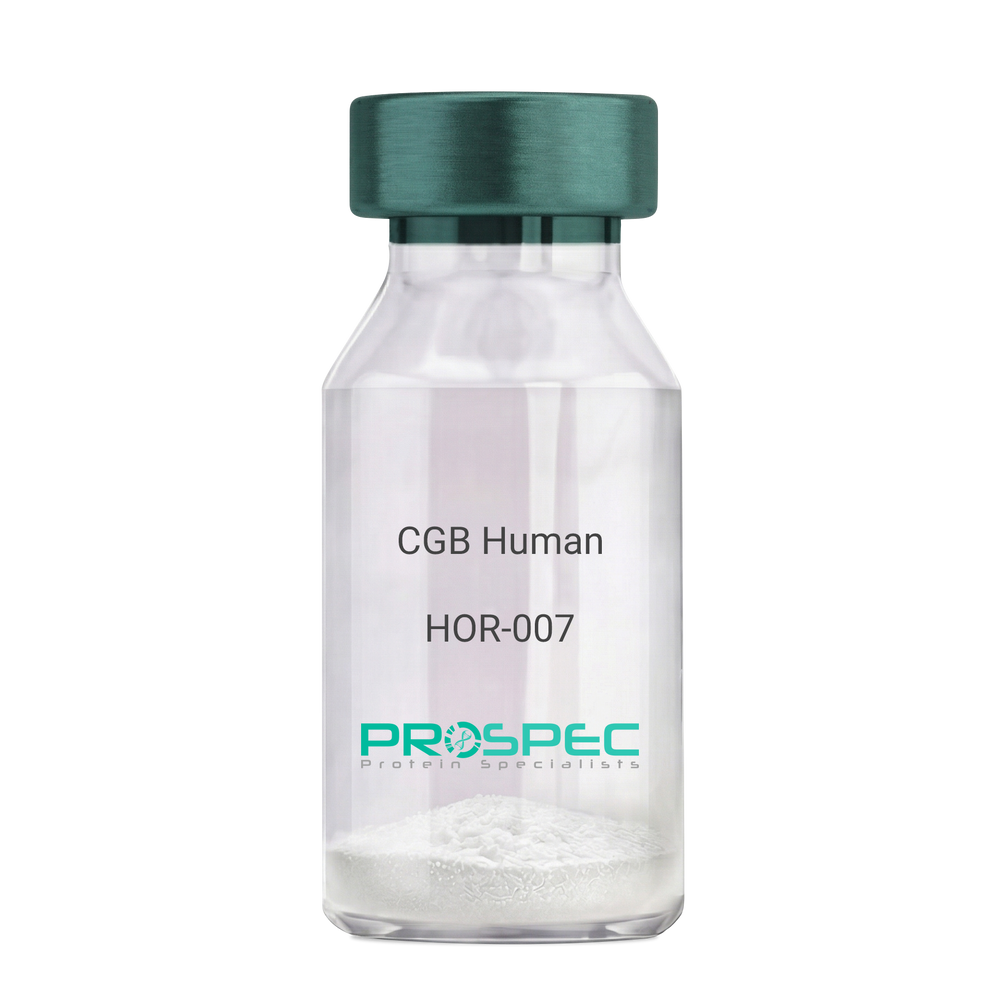
    CGB Human

    Description:

    CGB Human Recombinant

    CGB3, CGB5, CGB7, CGB8, hCGB,  CG-beta, CGB.

    Product # :

    HOR-007

    Price :

    Quantity :

    Shipping Method :

    Ice Icon

    Shipped with Ice Packs

    Add To Cart

    More Info

    • description
    • source
    • formulation
    • purity
    • More Info

    Description

    CGB Human Recombinant produced in E.Coli is a single, non-glycosylated polypeptide chain containing 168 amino acids (21-165 a.a.) and having a molecular mass of 17.9kDa. CGB is fused to a 23 amino acid His-tag at N-terminus & purified by proprietary chromatographic techniques.

    Source

    Escherichia Coli.

    Formulation

    CGB protein solution (0.5mg/ml) containing 20mM Tris-HCl buffer (pH 8.0), 0.4M Urea and 10% glycerol.

    Purity

    Greater than 85.0% as determined by SDS-PAGE.

    More Info

    • Introduction

      Glycoprotein hormones are heterodimers consisting of a common alpha subunit and a unique beta subunit which confers biological specificity. CGB is a member of the glycoprotein hormone beta chain family and is the beta 3 subunit of (CG). CG is produced by the trophoblastic cells of the placenta and stimulates the ovaries. The beta subunit of CG is encoded by 6 genes which are arranged in tandem and inverted pairs on chromosome 19q13.3 and contiguous with the luteinizing hormone beta subunit gene.

    • Synonyms

      CGB3, CGB5, CGB7, CGB8, hCGB, CG-beta, CGB.

    • Physical Appearance

      Sterile filtered colorless solution.

    • Stability

      Store at 4°C if entire vial will be used within 2-4 weeks. Store, frozen at -20°C for longer periods of time. For long term storage it is recommended to add a carrier protein (0.1% HSA or BSA).Avoid multiple freeze-thaw cycles.

    • Amino Acid Sequence

      MGSSHHHHHH SSGLVPRGSH MGSSKEPLRP RCRPINATLA VEKEGCPVCI TVNTTICAGY CPTMTRVLQG VLPALPQVVC NYRDVRFESI RLPGCPRGVN PVVSYAVALS CQCALCRRST TDCGGPKDHP LTCDDPRFQD SSSSKAPPPS LPSPSRLPGP SDTPILPQ.

    ProSpec's products are furnished for LABORATORY RESEARCH USE ONLY. The product may not be used as drugs, agricultural or pesticidal products, food additives or household chemicals.

    Cgb Human
  • View Data Sheet

    Name :

    sRANKL (158-316) Mouse

    Description:

    Soluble RANK Ligand (158-316 a.a) Mouse Recombinant

    Soluble Receptor Activator of NFkB Ligand, TNFSF11, TRANCE, TNF-related activation-induced cytokine, OPGL, ODF, Osteoclast differentiation factor, Tumor necrosis factor ligand superfamily member 11, Receptor activator of nuclear factor kappa B ligand, RANKL, Osteoprotegerin ligand, CD254 antigen, sRANKL, sOdf.

    Product # :

    CYT-958

    Price :

    Quantity :

    Shipping Method :

    Ice Icon

    Shipped with Ice Packs

    Add To Cart

    More Info

    • description
    • source
    • formulation
    • purity
    • biological activity
    • More Info

    Description

    sRANKL Mouse Recombinant produced in E.Coli is a single, non-glycosylated polypeptide chain containing 160 amino acids (158-316 a.a.) and having a molecular mass of 17.9kDa. sRANKL is purified by proprietary chromatographic techniques.

    Source

    Escherichia Coli.

    Formulation

    sRANKL protein solution (1mg/ml) containing Tris-Hcl buffer pH-8.5 and 0.1M NaCl.

    Purity

    Greater than 90% as determined by SDS-PAGE.

    Biological Activity

    The ED50, as measured by its ability to induce osteoclast differentiation of RAW 264.7 mouse monocyte/macrophage cells, is less than 2ng/ml.

    More Info

    • Introduction

      RANKL binds to tnfrsf11b/opg and to tnfrsf11a/rank. Osteoclast differentiation and activation factor. augments the ability of dendritic cells to stimulate naive t-cell proliferation. May be an important regulator of interactions between t-cells and dendritic cells and may play a role in the regulation of the t-cell-dependent immune response. sRANKL may also play an important role in enhanced bone-resorption in humoral hypercalcemia of malignancy.

    • Synonyms

      Soluble Receptor Activator of NFkB Ligand, TNFSF11, TRANCE, TNF-related activation-induced cytokine, OPGL, ODF, Osteoclast differentiation factor, Tumor necrosis factor ligand superfamily member 11, Receptor activator of nuclear factor kappa B ligand, RANKL, Osteoprotegerin ligand, CD254 antigen, sRANKL, sOdf.

    • Physical Appearance

      Sterile Filtered colorless solution.

    • Stability

      Store at 4°C if entire vial will be used within 2-4 weeks. Store, frozen at -20°C for longer periods of time. For long term storage it is recommended to add a carrier protein (0.1% HSA or BSA). Avoid multiple freeze-thaw cycles.

    • Amino Acid Sequence

      MKPEAQPFAH LTINAASIPS GSHKVTLSSW YHDRGWAKIS NMTLSNGKLR VNQDGFYYLY ANICFRHHET SGSVPTDYLQ LMVYVVKTSI KIPSSHNLMK GGSTKNWSGN SEFHFYSINV GGFFKLRAGE EISIQVSNPS LLDPDQDATY FGAFKVQDID

    ProSpec's products are furnished for LABORATORY RESEARCH USE ONLY. The product may not be used as drugs, agricultural or pesticidal products, food additives or household chemicals.

    Srankl 158 316 Mouse
  • View Data Sheet

    Name :

    AGR2 Human

    Description:

    Anterior Gradient Protein 2 Homolog Human Recombinant

    Anterior gradient protein 2 homolog, Secreted cement gland protein XAG-2 homolog, AG-2, hAG-2, HPC8, AGR2, AG2, GOB-4, HAG-2, XAG-2.

    Product # :

    PRO-580

    Price :

    Quantity :

    Shipping Method :

    Ice Icon

    Shipped with Ice Packs

    Add To Cart

    More Info

    • description
    • source
    • formulation
    • purity
    • More Info

    Description

    AGR2 Human Recombinant produced in E.Coli is a single, non-glycosylated, polypeptide chain containing 191 amino acids (21-175 a.a.) and having a molecular mass of 21.9 kDa. AGR2 protein is fused to a 36 amino acid His-Tag at N-terminus and purified by standard chromatography.

    Source

    Escherichia Coli.

    Formulation

    The protein contains 20mM Tris-HCl pH 8.0, 1mM DTT, 1mM EDTA and 10% Glycerol.

    Purity

    Greater than 95.0% as determined by SDS-PAGE.

    More Info

    • Introduction

      AGR2 (Anterior gradient 2 homolog) is the human orthologue of the secreted Xenopus laevis Anterior Gradient protein (XAG-2). This is a small, possibly secreted molecule of yet weakly defined functions that is widely expressed in human tissues. Expression of AGR2 shows a positive correlation with expression of estrogen receptor in breast carcinoma and a negative correlation with expression of EGF receptor.

    • Synonyms

      Anterior gradient protein 2 homolog, Secreted cement gland protein XAG-2 homolog, AG-2, hAG-2, HPC8, AGR2, AG2, GOB-4, HAG-2, XAG-2.

    • Physical Appearance

      Sterile filtered colorless solution.

    • Stability

      Store at 4°C if entire vial will be used within 2-4 weeks. Store, frozen at -20°C for longer periods of time. For long term storage it is recommended to add a carrier protein (0.1% HSA or BSA). Avoid multiple freeze-thaw cycles.

    • Amino Acid Sequence

      MRGSHHHHHH GMASMTGGQQ MGRDLYDDDD KDRWGSMRDT TVKPGAKKDT KDSRPKLPQT LSRGWGDQLI WTQTYEEALY KSKTSNKPLM IIHHLDECPH SQALKKVFAE NKEIQKLAEQ FVLLNLVYET TDKHLSPDGQ YVPRIMFVDP SLTVRADITG RYSNRLYAYE PADTALLLDN MKKALKLLKT EL.

    ProSpec's products are furnished for LABORATORY RESEARCH USE ONLY. The product may not be used as drugs, agricultural or pesticidal products, food additives or household chemicals.

    Agr2 Human
  • View Data Sheet

    Name :

    TNFR Human, His

    Description:

    Tumor Necrosis Factor Receptor Type Human Recombinant, His Tag

    Tumor necrosis factor receptor superfamily member 1A, Tumor necrosis factor receptor 1, Tumor necrosis factor receptor type I, TNF-R1, TNF-RI, TNFR-I, p60, p55, CD120a, TNFRSF1A, TNFAR, TNFR1, FPF, TBP1, TNF-R, p55-R, TNFR55, TNFR60, TNF-R-I, TNF-R55, MGC19588.

    Product # :

    CYT-673

    Price :

    Quantity :

    Shipping Method :

    Ice Icon

    Shipped with Ice Packs

    Add To Cart

    More Info

    • description
    • source
    • formulation
    • purity
    • More Info

    Description

    TNFR Human Recombinant produced in E.Coli is a single, non-glycosylated, Polypeptide chain containing 161 amino acids fragment (41-201) having a molecular weight of 22.68kDa and fused with a 4.5kDa amino-terminal hexahistidine tag. The TNFR His Tag is purified by proprietary chromatographic techniques.

    Source

    Escherichia Coli.

    Formulation

    TNFR His Tag protein is supplied in 1xPBS, 50% glycerol.

    Purity

    Greater than 95.0% as determined by SDS-PAGE.

    More Info

    • Introduction

      TNFR1 belongs to the TNF-receptor superfamily. TNFR1 is a receptor for TNFSF2/TNF-alpha and homotrimeric TNFSF1/lymphotoxin-alpha.
      There are 2 types of soluble TNF receptors: sTNFR-I and sTNFR-II, which act to neutralize the biological activities of TNF alpha and TNF beta. The levels of these soluble receptors seem to increase as a result of shedding of the extracellular domains of the membrane bound receptors. TNF-a, TNFR1 and TNFR2 have roles in cellular differentiation. TNFR1 and TNFR2 function in cell type-specific renal injury.
      TNFR1 is capable of signaling both cell survival and apoptosis. TNFR1-induced apoptosis requires 2 sequential signaling complexes. TNFR1 is capable of activating NF-kappaB, mediate apoptosis, and function as a regulator of inflammation. Oxidative stress promotes TNFR1 and TNFR2 self-interaction, ligand-independent and enhanced ligand-dependent TNF signaling. TNFR1 contributes to the induction of non-cytocidal TNF effects including anti-viral state and activation of the acid sphingomyelinase. Human TNFR1 has a major region which controls cell surface expression. High levels of soluble TNF receptors are found in the amniotic fluid of pregnant women.
      Germline mutations of the extracellular domains of TNFR1 are linked to the autosomal dominant periodic fever syndrome. The impaired receptor clearance is believed to be a mechanism of the disease. Familial hibernian fever (FHF) is caused by defects in TNFRSF1A gene.

    • Synonyms

      Tumor necrosis factor receptor superfamily member 1A, Tumor necrosis factor receptor 1, Tumor necrosis factor receptor type I, TNF-R1, TNF-RI, TNFR-I, p60, p55, CD120a, TNFRSF1A, TNFAR, TNFR1, FPF, TBP1, TNF-R, p55-R, TNFR55, TNFR60, TNF-R-I, TNF-R55, MGC19588.

    • Physical Appearance

      Sterile Filtered clear solution.

    • Stability

      Store at 4°C if entire vial will be used within 2-4 weeks. Store, frozen at -20°C for longer periods of time. Please avoid freeze thaw cycles.

    • Amino Acid Sequence

      DSVCPQGKYIHPQNNSICCTKCHKGTYLYNDCPGPGQ
      DTDCRECESGSFTASENHLRHCLSCSKCRKEMGQVE
      ISSCTVDRDTVCGCRKNQYRHYWSENLFQCFNCSLCL
      NGTVHLSCQEKQNTVCTCHAGFFLRENECVSCSNCKK
      SLECTKLCLPQIEN.

    ProSpec's products are furnished for LABORATORY RESEARCH USE ONLY. The product may not be used as drugs, agricultural or pesticidal products, food additives or household chemicals.

    Tnfr Human His
  • View Data Sheet

    Name :

    ErbB2 (146-192) Human

    Description:

    Tyrosine Kinase ErbB-2 (146-192) Human Recombinant

    erbB-2, EC 2.7.10.1, p185erbB2, C-erbB-2.

    Product # :

    PKA-136

    Price :

    Quantity :

    Shipping Method :

    Room Temp Icon

    Shipped at Room temp

    Add To Cart

    More Info

    • description
    • source
    • formulation
    • purity
    • More Info

    Description

    The ErbB2 Human is created as a recombinant protein with a 4kda N-terminal fusion of His Tag. The ErbB2 His-Tagged Fusion Protein, produced in E. coli, is a 14kDa protein containing 47 amino acid residues of the ErbB2 Human, 146-192amino acids.

    Source

    Escherichia Coli.

    Formulation

    Each mg was lyophilized with 1xPBS, 0.4% SDS and 4mM DTT.

    Purity

    Greater than 90% as determined by SDS-PAGE.

    More Info

    • Synonyms

      erbB-2, EC 2.7.10.1, p185erbB2, C-erbB-2.

    • Physical Appearance

      Filtered White lyophilized (freeze-dried) powder.

    • Stability

      Store lyophilized ErbB2 at -20°C. Aliquot the product after reconstitution to avoid repeated freezing/thawing cycles. Reconstituted protein can be stored at 4°C for a limited period of time; it does not show any change after two weeks at 4°C.

    • Solubility

      It is recommended to add deionized water to prepare a working stock solution of approximately 0.5mg/ml and let the lyophilized pellet dissolve completely. Product is not sterile! Please filter the product by an appropriate sterile filter before using it on cell culture.

    • Background

      HER2 / ErbB2 (human epidermal growth factor receptor 2) is a member of the ErbB family of receptor tyrosine kinases. It plays a role in cell signalling related to growth, differentiation and proliferation.

      erbB-2 encodes a 185-kDa orphan receptor tyrosine kinase that is constitutively active as a dimer and displays potent oncogenic activity when overexpressed.

      ErbB2 works as a receptor that, upon ligand binding activates downstream signalling pathways such as the MAPK and PI3K/AKT pathways, promoting cell proliferation and survival.

      The activation of ErbB2 leads to enhanced cell growth and survival, making it critical in normal cellular functions and in the pathogenesis of cancer.

      Herstatin, as the product of alternative HER-2 transcript, retains intron 8.
      The herstatin mRNA is expressed in normal human fetal kidney and liver, but is at reduced levels relative to p185HER-2 mRNA in carcinoma cells that contain an amplified HER-2 gene. Herstatin appears to be an inhibitor of p185HER-2, because it disrupts dimers, reduces tyrosine phosphorylation of p185, and inhibits the anchorage-independent growth of transformed cells that overexpress HER-2.

    ProSpec's products are furnished for LABORATORY RESEARCH USE ONLY. The product may not be used as drugs, agricultural or pesticidal products, food additives or household chemicals.

    Erbb2 Protein
  • View Data Sheet

    Name :

    NHLH1 Human

    Description:

    Nescient Helix Loop Helix 1 Human Recombinant

    Nescient Helix Loop Helix 1, Class A Basic Helix-Loop-Helix Protein 35, Helix-Loop-Helix Protein 1, BHLHA35, NSCL1, HEN1.

    Product # :

    PRO-1547

    Price :

    Quantity :

    Shipping Method :

    Ice Icon

    Shipped with Ice Packs

    Add To Cart

    More Info

    • description
    • source
    • formulation
    • purity
    • More Info

    Description

    NHLH1 Human Recombinant produced in E.coli is a single, non-glycosylated polypeptide chain containing 156 amino acids (1-133) and having a molecular mass of 17.0kDa.NHLH1 is fused to a 23 amino acid His-tag at N-terminus & purified by proprietary chromatographic techniques.

    Source

    Escherichia Coli.

    Formulation

    The NHLH1 solution (0.25mg/ml) contains 20mM Tris-HCl buffer (pH 8.0), 0.2M NaCl, 2mM DTT and 40% glycerol.

    Purity

    Greater than 85% as determined by SDS-PAGE.

    More Info

    • Introduction

      HLH (helix-loop-helix) proteins are a putative transcription factors family. Several HLH proteins take part in growth and development of an extensive range of tissues and species. NHLH1 functions as a DNA-binding protein and has a role in the regulation of cell-type determination in the developing nervous system.

    • Synonyms

      Nescient Helix Loop Helix 1, Class A Basic Helix-Loop-Helix Protein 35, Helix-Loop-Helix Protein 1, BHLHA35, NSCL1, HEN1.

    • Physical Appearance

      Sterile Filtered clear solution.

    • Stability

      Store at 4°C if entire vial will be used within 2-4 weeks. Store, frozen at -20°C for longer periods of time. For long term storage it is recommended to add a carrier protein (0.1% HSA or BSA).Avoid multiple freeze-thaw cycles.

    • Amino Acid Sequence

      MGSSHHHHHH SSGLVPRGSH MGSMMLNSDT MELDLPPTHS ETESGFSDCG GGAGPDGAGP GGPGGGQARG PEPGEPGRKD LQHLSREERR RRRRATAKYR TAHATRERIR VEAFNLAFAE LRKLLPTLPP DKKLSKIEIL RLAICYISYL NHVLDV

    ProSpec's products are furnished for LABORATORY RESEARCH USE ONLY. The product may not be used as drugs, agricultural or pesticidal products, food additives or household chemicals.

    Nhlh1 Human
  • 1
  • …
  • 12
  • 13
  • 14
  • 15
  • 16
  • …
  • 42
Your browser does not support the video tag.

Products

  • Cytokines
  • Growth Factors
  • Chemokines
  • CD Antigens
  • Neurotrophins
  • Hormones
  • Enzymes
  • Viral Antigens
  • Recombinant Proteins
  • Natural Proteins
  • Monoclonal Antibodies
  • Polyclonal Antibodies
  • Thermal Packaging

About

  • Company
  • Founder
  • Contribution
  • Contact Us
  • My Account

Ordering

  • Ordering Method
  • Ordering - Credit Card
  • Ordering PO
  • Shipping Fees
  • FAQ's

Legal

  • Terms & Conditions
  • Privacy
  • Site Map
  • info@prospecbio.com
  • Facebook
  • Instagram
  • Linkedin Profile

© 2026 ProSpec-Tany TechnoGene Ltd. All Rights Reserved.

  • Choosing a selection results in a full page refresh.
  • Opens in a new window.