Search results
1000 results found for “mmp”
Name
Description
Product #
Price
Quantity
Shipping Method
- View Data Sheet
Name :
PTPRN HumanDescription:
Protein Tyrosine Phosphatase Receptor Type N Human Recombinant
Receptor-type tyrosine-protein phosphatase-like N, R-PTP-N, Islet cell antigen 512, ICA 512, Islet cell autoantigen 3, PTP IA-2, PTPRN, ICA3, ICA512.
Product # :
ENZ-1162Price :
Quantity :
Shipping Method :
Shipped with Ice Packs
More Info
- description
- source
- formulation
- purity
- More Info
Description
Recombinant Human Protein Tyrosine Phosphatase Receptor Type N produced in SF9 is a glycosylated, polypeptide chain having a calculated molecular mass of 46kDa. PTPRN is expressed with a 6xHis tag and purified by proprietary chromatographic techniques.
Source
Sf9 insect cells.
Formulation
PTPRN is supplied in 50mM Sodium phosphate (pH 8.0) and 20% Glycerol.
Purity
Greater than 95.0% as determined by SDS-PAGE.
More Info
-
Introduction
Protein Tyrosine Phosphatase Receptor Type N (PTPRN) is a catalytically inactive protein and a major target of autoimmune response in diabetes mellitus. The long C-terminal intracellular tail covers the majority of autoantibody epitopes. PTPRN is expressed in neural, neuroendocrine and pancreatic islet cells.
-
Synonyms
Receptor-type tyrosine-protein phosphatase-like N, R-PTP-N, Islet cell antigen 512, ICA 512, Islet cell autoantigen 3, PTP IA-2, PTPRN, ICA3, ICA512.
-
Physical Appearance
Sterile Filtered colorless solution.
-
Stability
Store at 4°C if entire vial will be used within 2-4 weeks. Store, frozen at -20°C for longer periods of time. Avoid multiple freeze-thaw cycles.
ProSpec's products are furnished for LABORATORY RESEARCH USE ONLY. The product may not be used as drugs, agricultural or pesticidal products, food additives or household chemicals.
- View Data Sheet
Name :
ENPP1 HumanDescription:
Ectonucleotide Pyrophosphatase Human Recombinant
Ectonucleotide pyrophosphatase/phosphodiesterase family member 1, E-NPP 1, Membrane component chromosome 6 surface marker 1, Phosphodiesterase I/nucleotide pyrophosphatase 1, Plasma-cell membrane glycoprotein PC-1, ENPP1, M6S1, NPPS, PC1, PDNP1, NPP1, PC-1, PCA1, ARHR2, COLED.
Product # :
ENZ-729Price :
Quantity :
Shipping Method :
Shipped at Room temp
More Info
- description
- source
- formulation
- purity
- More Info
Description
ENPP1 Human Recombinant produced in HEK cells is a single, glycosylated, polypeptide chain (a.a 98-925) containing a total of 840 amino acids, having a molecular mass of 96.5kDa (calculated) though it migrates at approximately 110kDa on SDS PAGE, the ENPP1 is also composed of a 2 a.a N-terminal linker, a 4 a.a C-terminal linker and fused to a 6 a.a His tag at C-Terminus.The Human ENPP1 is purified by proprietary chromatographic techniques.
Source
HEK 293.
Formulation
Filtered (0.4µm) and lyophilized from 0.5mg/ml in 0.05M phosphate buffer and 0.075M NaCl, pH 7.4.
Purity
Greater than 90.0% as determined by SDS-PAGE.
More Info
-
Introduction
Ectonucleotide Pyrophosphatase (ENPP1) belongs to the ecto-nucleotide pyrophosphatase/phosphodiesterase (ENPP) family. ENPP1 is a type II transmembrane glycoprotein comprised of 2 identical disulfide-bonded subunits. The ENPP1 protein has broad specificity and cleaves various substrates, including phosphodiester bonds of nucleotides and nucleotide sugars and pyrophosphate bonds of nucleotides and nucleotide sugars. The ENPP1 protein can hydrolyze nucleoside 5' triphosphates to their corresponding monophosphates and it may also hydrolyze diadenosine polyphosphates. ENPP1 gene mutations are linked with 'idiopathic' infantile arterial calcification and ossification of the posterior longitudinal ligament of the spine (OPLL).
-
Synonyms
Ectonucleotide pyrophosphatase/phosphodiesterase family member 1, E-NPP 1, Membrane component chromosome 6 surface marker 1, Phosphodiesterase I/nucleotide pyrophosphatase 1, Plasma-cell membrane glycoprotein PC-1, ENPP1, M6S1, NPPS, PC1, PDNP1, NPP1, PC-1, PCA1, ARHR2, COLED.
-
Physical Appearance
Filtered lyophilized (freeze-dried) powder.
-
Stability
Store lyophilized protein at -20°C. Aliquot the product after reconstitution to avoid repeated freezing/thawing cycles. Reconstituted protein can be stored at 4°C for a limited period of time.
-
Solubility
It is recommended to add deionized water to a working concentration of 0.5mg/ml and let the lyophilized pellet dissolve completely. Product is not sterile! Please filter the product by an appropriate sterile filter before using it in the cell culture.
-
Amino Acid Sequence
ASKPSCAKEV KSCKGRCFER TFGNCRCDAA CVELGNCCLD YQETCIEPEH IWTCNKFRCG EKRLTRSLCA CSDDCKDKGD CCINYSSVCQ GEKSWVEEPC ESINEPQCPA GFETPPTLLF SLDGFRAEYL HTWGGLLPVI SKLKKCGTYT KNMRPVYPTK TFPNHYSIVT GLYPESHGII DNKMYDPKMN ASFSLKSKEK FNPEWYKGEP IWVTAKYQGL KSGTFFWPGS DVEINGIFPD IYKMYNGSVP FEERILAVLQ WLQLPKDERP HFYTLYLEEP DSSGHSYGPV SSEVIKALQR VDGMVGMLMD GLKELNLHRC LNLILISDHG MEQGSCKKYI YLNKYLGDVK NIKVIYGPAA RLRPSDVPDK YYSFNYEGIA RNLSCREPNQ HFKPYLKHFL PKRLHFAKSD RIEPLTFYLD PQWQLALNPS ERKYCGSGFH GSDNVFSNMQ ALFVGYGPGF KHGIEADTFE NIEVYNLMCD LLNLTPAPNN GTHGSLNHLL KNPVYTPKHP KEVHPLVQCP FTRNPRDNLG CSCNPSILPI EDFQTQFNLT VAEEKIIKHE TLPYGRPRVL QKENTICLLS QHQFMSGYSQ DILMPLWTSY TVDRNDSFST EDFSNCLYQD FRIPLSPVHK CSFYKNNTKV SYGFLSPPQL NKNSSGIYSE ALLTTNIVPM YQSFQVIWRY FHDTLLRKYA EERNGVNVVS GPVFDFDYDG RCDSLENLRQ KRRVIRNQEI LIPTHFFIVL TSCKDTSQTP LHCENLDTLA FILPHRTDNS ESCVHGKHDS SWVEELLMLH RARITDVEHI TGLSFYQQRK EPVSDILKLK THLPTFSQED GPKLHHHHHH.
ProSpec's products are furnished for LABORATORY RESEARCH USE ONLY. The product may not be used as drugs, agricultural or pesticidal products, food additives or household chemicals.
- View Data Sheet
Name :
MIP 3a MouseDescription:
Macrophage Inflammatory Protein-3 alpha Mouse Recombinant (CCL20)
Small inducible cytokine A20 precursor, CCL20, Macrophage inflammatory protein 3 alpha, MIP-3-alpha, Liver and activation- regulated chemokine, CC chemokine LARC, Beta chemokine exodus-1, CKb4, LARC, ST38, MIP3A, MIP-3a, SCYA20, C-C motif chemokine 20, CC chemokine ST38, exodus-1.
Product # :
CHM-236Price :
Quantity :
Shipping Method :
Shipped at Room temp
More Info
- description
- source
- formulation
- purity
- biological activity
- More Info
Description
Macrophage Inflammatory Protein-3 alpha Mouse Recombinant produced in E.Coli is a single, non-glycosylated, polypeptide chain containing 70 amino acids and having a molecular mass of 7.9 kDa. The MIP-3a is purified by proprietary chromatographic techniques.
Source
Escherichia Coli.
Formulation
Lyophilized from a concentrated (1mg/ml) solution in water containing no additives.
Purity
Greater than 95.0% as determined by(a) Analysis by RP-HPLC.
(b) Analysis by SDS-PAGE.Biological Activity
The Activity is calculated by its ability to chemoattract primary human T cells at 2-20ng/ml, corresponding to a specific activity of 50,000-500,000 units/mg.
More Info
-
Introduction
CCL20 is a chemotactic factor that draws lymphocytes & neutrophils, rather than monocytes. MIP-3 alpha inhibits proliferation of myeloid progenitors in colony formation assays. MIP3A plays a role in the formation and function of the mucosal lymphoid tissues by attracting lymphocytes and dendritic cells towards epithelial cells. C-terminal processed forms have been shown to be equally chemotactically active for leukocytes. CCL20 holdes antibacterial activity e.coli atcc 25922 and s.aureus atcc 29213. CCL20 gene transcription is activated by H. pylori, which activates NF-kappaB through intracellular signal pathway which involves IkappaB kinase and NF-kappaB-inducing kinase. MIP-3 alpha is invloved in chemokine-mediated lymphocyte trafficking during gastric inflammation in Helicobacter infection. CCL20 expression is involved in the recruitment of CD45R0-positive T cell subsets into the intestinal lamina propria.
MIP-3A is in charge of the advancement of pulpal inflammation through the recruitment of C-C motif Receptor 6-expressing lymphocytes Vaginal epithelial cells respond to factors present in semen by secreting MIP-3 alpha, which increases langerhans cells recruitment during HIV transmission. -
Synonyms
Small inducible cytokine A20 precursor, CCL20, Macrophage inflammatory protein 3 alpha, MIP-3-alpha, Liver and activation- regulated chemokine, CC chemokine LARC, Beta chemokine exodus-1, CKb4, LARC, ST38, MIP3A, MIP-3a, SCYA20, C-C motif chemokine 20, CC chemokine ST38, exodus-1.
-
Physical Appearance
Sterile Filtered White lyophilized (freeze-dried) powder.
-
Stability
Lyophilized MIP-3a although stable at room temperature for 3 weeks, should be stored desiccated below -18°C. Upon reconstitution CCL-20 should be stored at 4°C between 2-7 days and for future use below -18°C.For long term storage it is recommended to add a carrier protein (0.1% HSA or BSA).Please prevent freeze-thaw cycles.
-
Solubility
It is recommended to reconstitute the lyophilized MIP-3a in sterile 18MΩ-cm H2O not less than 100µg/ml, which can then be further diluted to other aqueous solutions.
-
Amino Acid Sequence
ASNYDCCLSY IQTPLPSRAI VGFTRQMADE ACDINAIIFH TKKRKSVCAD PKQNWVKRAV NLLSLRVKKM.
ProSpec's products are furnished for LABORATORY RESEARCH USE ONLY. The product may not be used as drugs, agricultural or pesticidal products, food additives or household chemicals.
- View Data Sheet
Name :
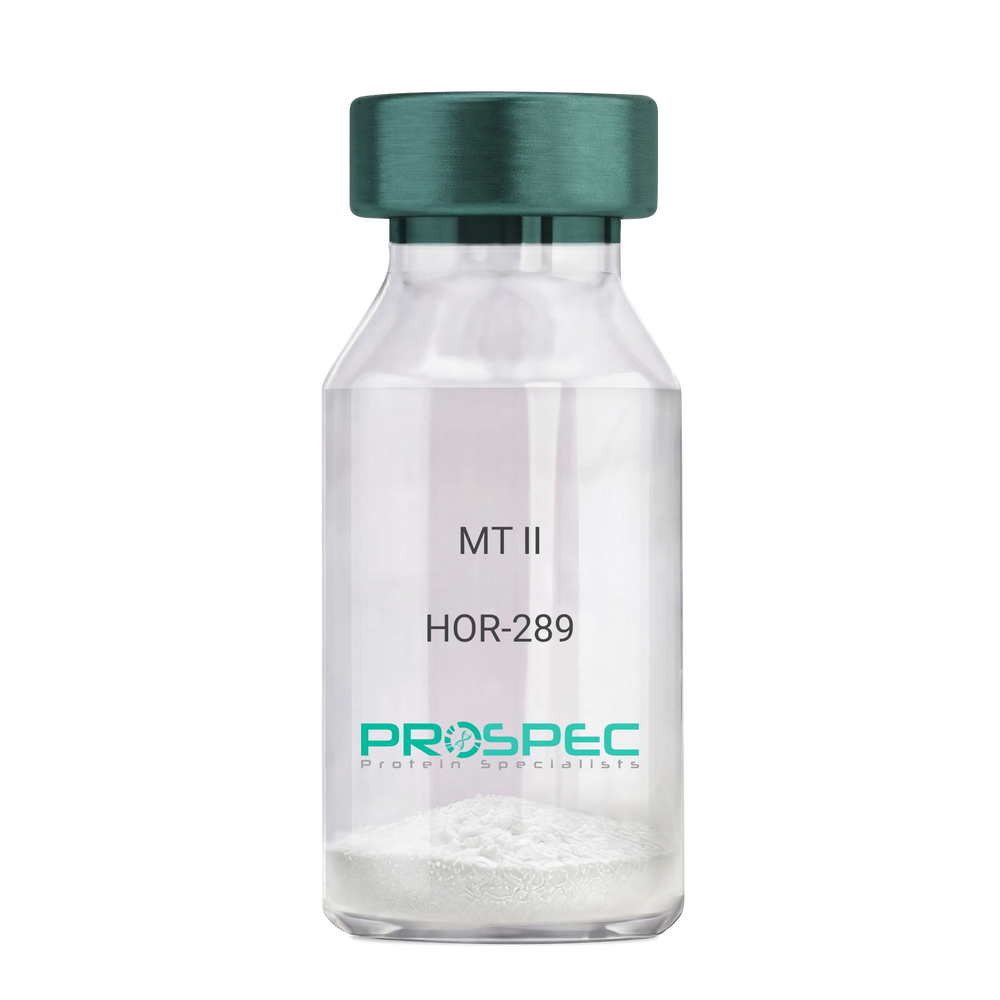
MT IIDescription:
Melanotan-II
Melanotan-II, MT-II, Melanotan.
Product # :
HOR-289Price :
Quantity :
Shipping Method :
Shipped at Room temp
More Info
- description
- formulation
- purity
- More Info
Description
The molecular formula of Melanotan-II is C50H69N15O9. It has the amino acid sequence of Ac-Nle-cyclo [Asp-His-D-Phe-Arg-Trp-Lys]-NH2 and a molecular weight of 1024.2 Dalton. The CAS Number is 121062-08-6.
Formulation
The protein (1mg/ml) was lyophilized with no additives.
Purity
Greater than 99% as determined by by RP-HPLC.
More Info
-
Introduction
Melanotan and Melanotan-II are both analogs of the peptide hormone alpha melanocyte stimulating hormone (a-MSH) that tend to induce skin tanning. Unlike Melanotan, Melanotan-II has the additional effect of increasing libido. Melanotan II has aphrodisiac properties.
-
Synonyms
Melanotan-II, MT-II, Melanotan.
-
Physical Appearance
Sterile Filtered White lyophilized (freeze-dried) powder.
-
Stability
Lyophilized Melanotan-II although stable at room temperature for 3 weeks, should be stored desiccated below -18°C. Upon reconstitution MT-II should be stored at 4°C between 2-7 days and for future use below -18°C.For long term storage it is recommended to add a carrier protein (0.1% HSA or BSA).Please prevent freeze-thaw cycles.
-
Solubility
It is recommended to reconstitute the lyophilized Melanotan-II in sterile 18MΩ-cm H2O not less than 100 µg/ml, which can then be further diluted to other aqueous solutions.
ProSpec's products are furnished for LABORATORY RESEARCH USE ONLY. The product may not be used as drugs, agricultural or pesticidal products, food additives or household chemicals.
- View Data Sheet
Name :
M.Pneumoniae P30Description:
Mycoplasma Pneumoniae P30 Recombinant
Product # :
PRO-2738Price :
Quantity :
Shipping Method :
Shipped with Ice Packs
More Info
- description
- source
- formulation
- purity
- More Info
Description
M.Pneumoniae P30 Recombinant produced in E.Coli is a non-glycosylated polypeptide chain having a molecular mass of 18-19kDa.M.Pneumoniae P30 is fused to a 6 amino acid His-tag at C-terminus & purified by proprietary chromatographic techniques.
Source
Escherichia Coli.
Formulation
MP-P30c solution contains 25mM K2CO3, 0.025% NaN3 and PBS.
Purity
Protein is >95% pure as determined by 10% PAGE (coomassie staining).
More Info
-
Introduction
Mycoplasma pneumonia is part of the atypical pneumonia subtype which is caused by the bacteria M. pneumoniae. Mycoplasma pneumonia affects individuals younger than 40. It makes up 15 - 50% of all pneumonia cases in adults and especially in school-aged children. People at great risk for mycoplasma pneumonia comprise of those living or working in busy areas such as schools and homeless shelters, although many people who contract mycoplasma pneumonia have no identifiable risk factor. P1, P30, and P116 of mycoplasma pneumonia membrane proteins have been recognized as adhesive factors, P1 is considered as a main adhesion protein of the organism colonization.
-
Physical Appearance
Sterile Filtered clear solution.
-
Stability
The Recombinant MP-P30c protein although stable at 4°C for 1 week, should be stored below -18°C. For long term storage it is recommended to add a carrier protein (0.1% HSA or BSA). Please prevent freeze-thaw cycles.
-
Applications
Immunoassay.
ProSpec's products are furnished for LABORATORY RESEARCH USE ONLY. The product may not be used as drugs, agricultural or pesticidal products, food additives or household chemicals.
- View Data Sheet
Name :
XPNPEP1 AntibodyDescription:
X-Prolyl Aminopeptidase-1, Mouse Anti Human
X-Prolyl Aminopeptidase (Aminopeptidase P) 1, Soluble, XPNPEPL, SAMP, X-Prolyl Aminopeptidase 1, Soluble, Aminoacylproline Aminopeptidase, Cytosolic Aminopeptidase P, Soluble Aminopeptidase P, X-Pro Aminopeptidase 1, EC 3.4.11.9, XPNPEPL1, X-Prolyl Aminopeptidase (Aminopeptidase P)-Like, Aminopeptidase P, Cytosolic, Xaa-Pro Aminopeptidase 1, XPNPEP, APP1, Xaa-Pro aminopeptidase 1.
Product # :
ANT-692Price :
Quantity :
Shipping Method :
Shipped with Ice Packs
More Info
- formulation
- More Info
Formulation
1mg/ml containing PBS, pH-7.4, 10% Glycerol and 0.02% Sodium Azide.
More Info
-
Introduction
X-Prolyl Aminopeptidase-1, also known as XPNPEP1 is a member of the peptidase M24B family. XPNPEP1 encodes the cytosolic form of a metalloaminopeptidase which catalyzes the cleavage of the N-terminal amino acid adjacent to a proline residue. Furthermore, XPNPEP1 plays a role in degradation as well as maturation of tachykinins, neuropeptides and peptide hormones.
-
Synonyms
X-Prolyl Aminopeptidase (Aminopeptidase P) 1, Soluble, XPNPEPL, SAMP, X-Prolyl Aminopeptidase 1, Soluble, Aminoacylproline Aminopeptidase, Cytosolic Aminopeptidase P, Soluble Aminopeptidase P, X-Pro Aminopeptidase 1, EC 3.4.11.9, XPNPEPL1, X-Prolyl Aminopeptidase (Aminopeptidase P)-Like, Aminopeptidase P, Cytosolic, Xaa-Pro Aminopeptidase 1, XPNPEP, APP1, Xaa-Pro aminopeptidase 1.
-
Physical Appearance
Sterile filtered colorless solution.
-
Immunogen
Anti-human XPNPEP1 mAb, is derived from hybridization of mouse F0 myeloma cells with spleen cells from BALB/c mice immunized with recombinant human XPNPEP1 amino acids 1-623 purified from E. coli.
-
Ig Subclass
Mouse IgG2b heavy chain and κ light chain.
-
Clone
PAT9C7AT.
-
Applications
XPNPEP1 antibody has been tested by ELISA, Western blot analysis and ICC/IF to assure specificity and reactivity. Since application varies, however, each investigation should be titrated by the reagent to obtain optimal results.
-
Type
Mouse Anti Human Monoclonal.
-
Storage Procedures
For periods up to 1 month store at 4°C, for longer periods of time, store at -20°C. Prevent freeze thaw cycles.
-
Purification Method
XPNPEP1 antibody was purified from mouse ascitic fluids by protein-A affinity chromatography.
ProSpec's products are furnished for LABORATORY RESEARCH USE ONLY. The product may not be used as drugs, agricultural or pesticidal products, food additives or household chemicals.
- View Data Sheet
Name :
GMFB MouseDescription:
Glia Maturation Factor Beta Mouse Recombinant
Glia maturation factor beta, GMFB, GMF-B, GMF-beta, GMF, C79176, AI851627, D14Ertd630e, 3110001H22Rik, 3110001O16Rik.
Product # :
CYT-006Price :
Quantity :
Shipping Method :
Shipped at Room temp
More Info
- description
- source
- formulation
- purity
- More Info
Description
Glia Maturation Factor-Beta (GMF-Beta) Mouse Recombinant produced in E.Coli is a signle, non-glycosylated, polypeptide chain containing 141 amino acids and having a total molecular mass of 16.6kDa. GMF-Beta, Mouse Recombinant is purified by proprietary chromatographic techniques.
Source
Escherichia Coli.
Formulation
The GMF-beta protein was lyophilized from a 0.2µm filtered concentrated solution in PBS, pH 7.4.
Purity
Greater than 97.0% as determined by:
(a) Analysis by RP-HPLC.
(b) Analysis by SDS-PAGE.More Info
-
Introduction
GMFB is part of the GMF subfamily of the larger actin-binding protein ADF family. GMFB is phosphorylated after phorbol ester stimulation, and is crucial for the nervous system. GMFB causes brain cell differentiation, stimulates neural regeneration and inhibits tumor cell proliferation. GMFB overexpression in astrocytes results in the increase of BDNF production. GMFB expression is increased by exercise, thus BDNF is important for exercise-induction of BDNF.
-
Synonyms
Glia maturation factor beta, GMFB, GMF-B, GMF-beta, GMF, C79176, AI851627, D14Ertd630e, 3110001H22Rik, 3110001O16Rik.
-
Physical Appearance
Sterile Filtered White lyophilized (freeze-dried) powder.
-
Stability
Lyophilized GMF-B although stable at room temperature for 3 weeks, should be stored desiccated below -18°C. Upon reconstitution GMF-beta should be stored at 4°C between 2-7 days and for future use below -18°C.For long term storage it is recommended to add a carrier protein (0.1% HSA or BSA).Please prevent freeze-thaw cycles.
-
Solubility
It is recommended to reconstitute the lyophilized GMFB in sterile 18MΩ-cm H2O not less than 100µg/ml, which can then be further diluted to other aqueous solutions.
-
Amino Acid Sequence
SESLVVCDVA EDLVEKLRKF RFRKETHNAA IIMKIDKDER LVVLDEELEG
VSPDELKDEL PERQPRFIVY SYKYQHDDGR VSYPLCFIFS SPVGCKPEQQ
MMYAGSKNKL VQTAELTKVF EIRNTEDLTE EWLREKLGFF H. -
Background
What is the molecular weight/Mw of GMFB MOUSE Protein?
GMFB MOUSE Protein has a total Mw of 16.6kDa.
What is the source or expression system of GMFB MOUSE Protein?
Escherichia Coli.
What is the Purity of GMFB MOUSE Protein?
GMFB MOUSE Protein is >97% pure as determined by SDS-PAGE.
What is the Biological Activity of GMFB MOUSE Protein?
The biological functionality of GMFB MOUSE Protein will be determined in the future.
What is the amino acid sequence of GMFB MOUSE Protein?
SESLVVCDVA EDLVEKLRKF RFRKETHNAA IIMKIDKDER LVVLDEELEG
VSPDELKDEL PERQPRFIVY SYKYQHDDGR VSYPLCFIFS SPVGCKPEQQ
MMYAGSKNKL VQTAELTKVF EIRNTEDLTE EWLREKLGFF H.
What applications can GMFB MOUSE Protein be used in?
GMFB MOUSE Protein can probably be used in western blot, ELISA and Lateral Flow.
What is the endotoxin level for GMFB MOUSE Protein?
The endotoxin level is minimal, GMFB MOUSE Protein was purified using conventional chromatography techniques.
ProSpec's products are furnished for LABORATORY RESEARCH USE ONLY. The product may not be used as drugs, agricultural or pesticidal products, food additives or household chemicals.
- View Data Sheet
Name :
MTDH HumanDescription:
Metadherin Human Recombinant
Metadherin, Lysine-Rich CEACAM1 Co-Isolated Protein, Astrocyte Elevated Gene-1 Protein, Metastasis Adhesion Protein, Astrocyte Elevated Gene 1, 3D3/LYRIC, AEG-1, LYRIC, AEG1, LYRIC/3D3, 3D3, MTDH.
Product # :
PRO-2290Price :
Quantity :
Shipping Method :
Shipped at Room temp
More Info
- description
- source
- formulation
- purity
- More Info
Description
Metadherin Human Recombinant produced in E.Coli is a single, non-glycosylated, polypeptide chain (Val271-Asn456) containing 196 amino acids including a 10 aa His tag at N-terminus. The total calculated molecular mass is 21.5kDa.
Source
Escherichia Coli.
Formulation
MTDH was filtered (0.4µm) and lyophilized in 20mM Tris buffer and 50mM NaCl, pH 7.5.
Purity
Greater than 90.0% as determined by SDS-PAGE.
More Info
-
Introduction
Metadherin (MTDH) downregulates SLC1A2/EAAT2 promoter activity when expressed ectopically. MTDH activates the nuclear factor kappa-B (NF-kappa-B) transcription factor. Furthermore, MTDH promotes anchorage-independent growth of immortalized melanocytes and astrocytes which is a central component in tumor cell expansion. In addition, MTDH promotes lung metastasis and also has an effect on bone and brain metastasis, possibly by enhancing the seeding of tumor cells to the target organ endothelium. Metadherin also induces chemoresistance.
-
Synonyms
Metadherin, Lysine-Rich CEACAM1 Co-Isolated Protein, Astrocyte Elevated Gene-1 Protein, Metastasis Adhesion Protein, Astrocyte Elevated Gene 1, 3D3/LYRIC, AEG-1, LYRIC, AEG1, LYRIC/3D3, 3D3, MTDH.
-
Physical Appearance
Filtered White lyophilized (freeze-dried) powder.
-
Stability
Store lyophilized protein at -20°C. Aliquot the product after reconstitution to avoid repeated freezing/thawing cycles. Reconstituted protein can be stored at 4°C for a limited period of time; it does not show any change after two weeks at 4°C.
-
Solubility
It is recommended to add deionized water to prepare a working stock solution of approximately 0.5mg/ml and let the lyophilized pellet dissolve completely. MTDH is not sterile! Please filter the product by an appropriate sterile filter before using it in the cell culture.
-
Amino Acid Sequence
MKHHHHHHASVSSGLNENLT VNGGGWNEKS VKLSSQISAG EEKWNSVSPA SAGKRKAEPS AWSQDTGDAN TNGKDWGRSW SDRSIFSGIG STAEPVSQST TSDYQWDVSR NQPYIDDEWS GLNGLSSADP NSDWNAPAEE WGNWVDEERA SLLKSQEPIP DDQKVSDDDK EKGEGALPTG KSKKKKKKKK KQGEDN.
ProSpec's products are furnished for LABORATORY RESEARCH USE ONLY. The product may not be used as drugs, agricultural or pesticidal products, food additives or household chemicals.
- View Data Sheet
Name :
MYL6 HumanDescription:
Myosin Light Chain 6 Human Recombinant
Myosin light polypeptide 6, 17 kDa myosin light chain, LC17, Myosin light chain 3, MLC-3, Myosin light chain alkali 3, Myosin light chain A3, Smooth muscle and nonmuscle myosin light chain alkali 6, MYL6, ESMLC, LC17A, LC17B, MLC1SM, MLC3NM, MLC3SM, LC17-GI, LC17-NM.
Product # :
PRO-171Price :
Quantity :
Shipping Method :
Shipped with Ice Packs
More Info
- description
- source
- formulation
- purity
- More Info
Description
MYL6 Human Recombinant fused with a 20 amino acid His tag at N-terminus produced in E.Coli is a single, non-glycosylated, polypeptide chain containing 171 amino acids (1-151 a.a.) and having a molecular mass of 19.1kDa. The MYL6 is purified by proprietary chromatographic techniques.
Source
Escherichia Coli.
Formulation
The MYL6 solution (0.5 mg/ml) contains 20mM Tris-HCl buffer (pH 8.0), 1mM DTT and 10% glycerol.
Purity
Greater than 90.0% as determined by SDS-PAGE.
More Info
-
Introduction
Myosin light polypeptide 6 (MYL6) is a hexameric ATPase cellular motor protein. MYL6 is composed of 2 heavy chains, 2 nonphosphorylatable alkali light chains, and 2o phosphorylatable regulatory light chains. MYL6 is a myosin alkali light chain which is expressed in smooth muscle and non-muscle tissues. MYL6 partakes in generating the force for cellular movements, thus having an imperative role in overall cellular function.
-
Synonyms
Myosin light polypeptide 6, 17 kDa myosin light chain, LC17, Myosin light chain 3, MLC-3, Myosin light chain alkali 3, Myosin light chain A3, Smooth muscle and nonmuscle myosin light chain alkali 6, MYL6, ESMLC, LC17A, LC17B, MLC1SM, MLC3NM, MLC3SM, LC17-GI, LC17-NM.
-
Physical Appearance
Sterile Filtered colorless solution.
-
Stability
Store at 4°C if entire vial will be used within 2-4 weeks. Store, frozen at -20°C for longer periods of time. For long term storage it is recommended to add a carrier protein (0.1% HSA or BSA).Avoid multiple freeze-thaw cycles.
-
Amino Acid Sequence
MGSSHHHHHH SSGLVPRGSH MCDFTEDQTA EFKEAFQLFD RTGDGKILYS QCGDVMRALG QNPTNAEVLK VLGNPKSDEM NVKVLDFEHF LPMLQTVAKN KDQGTYEDYV EGLRVFDKEG NGTVMGAEIR HVLVTLGEKM TEEEVEMLVA GHEDSNGCIN YEELVRMVLN G.
ProSpec's products are furnished for LABORATORY RESEARCH USE ONLY. The product may not be used as drugs, agricultural or pesticidal products, food additives or household chemicals.
- View Data Sheet
Name :
PSPN MouseDescription:
Persephin Mouse Recombinant
Persephin, PSPN.
Product # :
CYT-802Price :
Quantity :
Shipping Method :
Shipped at Room temp
More Info
- description
- source
- formulation
- purity
- biological activity
- More Info
Description
PSPN Mouse Recombinant produced in E.Coli is a disulfide-linked homodimer containing 2x96 amino acids and having a molecular mass of 20.7kDa. The PSPN is purified by proprietary chromatographic techniques.
Source
Escherichia Coli.
Formulation
Lyophilized from a 0.2?m filtered concentrated solution in 30 %ACN, 0.1 %TFA, 150mM NaCl.
Purity
Greater than 95.0% as determined by:
(a) Analysis by RP-HPLC.
(b) Analysis by SDS-PAGE.Biological Activity
Fully biologically active when compared to standard. The ED50 as determined by a cell proliferation assay using human TT medullary thyroid cancer cells is less than 0.1ng/ml, corresponding to a specific activity of > 1.0 × 10,000,000 IU/mg.More Info
-
Introduction
Persephin is a member of the GDNF ligand subfamily of the TGF-beta superfamily. PSPN encourages the existence and growth of key dopaminergic and motor neurons, as well as taking part in kidney development. Nonetheless, persephin does not support existence of peripheral neurons.
-
Synonyms
Persephin, PSPN.
-
Physical Appearance
Sterile Filtered White lyophilized (freeze-dried) powder.
-
Stability
Lyophilized PSPN although stable at room temperature for 3 weeks, should be stored desiccated below -18°C. Upon reconstitution PSPN should be stored at 4°C between 2-7 days and for future use below -18°C. For long term storage it is recommended to add a carrier protein (0.1% HSA or BSA). Please prevent freeze-thaw cycles.
-
Solubility
It is recommended to reconstitute the lyophilized PSPN in sterile 18MΩ-cm H2O not less than 100µg/ml, which can then be further diluted to other aqueous solutions.
-
Amino Acid Sequence
ALAGSCRLWS LTLPVAELGL GYASEEKVIF RYCAGSCPQE ARTQHSLVLA RLRGRGRAHG RPCCQPTSYA DVTFLDDQHH WQQLPQLSAA ACGCGG
ProSpec's products are furnished for LABORATORY RESEARCH USE ONLY. The product may not be used as drugs, agricultural or pesticidal products, food additives or household chemicals.
- View Data Sheet
Name :
METAP1 HumanDescription:
Methionyl Aminopeptidase 1 Human Recombinant
Methionine aminopeptidase 1, MAP 1, MetAP 1, Peptidase M 1, METAP1, KIAA0094, MAP1A, MetAP1A.
Product # :
ENZ-604Price :
Quantity :
Shipping Method :
Shipped with Ice Packs
More Info
- description
- source
- formulation
- purity
- More Info
Description
METAP1 Human Recombinant produced in E.coli is a single, non-glycosylated polypeptide chain containing 409 amino acids (1-386) and having a molecular mass of 45.7kDa.METAP1 is fused to a 23 amino acid His-tag at N-terminus & purified by proprietary chromatographic techniques.
Source
Escherichia Coli.
Formulation
The METAP1 solution (1mg/ml) contains 20mM Tris-HCl buffer (pH 8.0), 3mM DTT, 40% glycerol, 200mM NaCl and 0.1mM PMSF.
Purity
Greater than 90.0% as determined by SDS-PAGE.
More Info
-
Introduction
Methionine aminopeptidase 1 (METAP1) is a member of the peptidase M24A family. METAP1 removes the amino-terminal methionine from nascent proteins. METAP1 releases N-terminal amino acids, preferentially methionine, from peptides and arylamides. METAP1 is essential for normal progression through the cell cycle. The active site of METAP1 contains 2 adjacent divalent metal ions linked by a water molecule or hydroxide ion.
-
Synonyms
Methionine aminopeptidase 1, MAP 1, MetAP 1, Peptidase M 1, METAP1, KIAA0094, MAP1A, MetAP1A.
-
Physical Appearance
Sterile filtered colorless solution.
-
Stability
Store at 4°C if entire vial will be used within 2-4 weeks. Store, frozen at -20°C for longer periods of time. For long term storage it is recommended to add a carrier protein (0.1% HSA or BSA).Avoid multiple freeze-thaw cycles.
-
Amino Acid Sequence
MGSSHHHHHH SSGLVPRGSH MGSMAAVETR VCETDGCSSE AKLQCPTCIK LGIQGSYFCS QECFKGSWAT HKLLHKKAKD EKAKREVSSW TVEGDINTDP WAGYRYTGKL RPHYPLMPTR PVPSYIQRPD YADHPLGMSE SEQALKGTSQ IKLLSSEDIE GMRLVCRLAR EVLDVAAGMI
KPGVTTEEID HAVHLACIAR NCYPSPLNYY NFPKSCCTSV NEVICHGIPD RRPLQEGDIV NVDITLYRNG YHGDLNETFF VGEVDDGARK LVQTTYECLM QAIDAVKPGV RYRELGNIIQ KHAQANGFSV VRSYCGHGIH KLFHTAPNVP HYAKNKAVGV MKSGHVFTIE PMICEGGWQD
ETWPDGWTAV TRDGKRSAQF EHTLLVTDTG CEILTRRLDS ARPHFMSQF.
ProSpec's products are furnished for LABORATORY RESEARCH USE ONLY. The product may not be used as drugs, agricultural or pesticidal products, food additives or household chemicals.
- View Data Sheet
Name :
MIP 1a Human, HisDescription:
Macrophage Inflammatory Protein-1 Alpha Human Recombinant (CCL3), His Tag
Small inducible cytokine A3, CCL3, Macrophage inflammatory protein 1-alpha, MIP-1-alpha, Tonsillar lymphocyte LD78 alpha protein, G0/G1 switch regulatory protein 19-1, G0S19-1 protein, SIS-beta, PAT 464.1, chemokine (C-C motif) ligand 3, MIP1A, SCYA3, G0S19-1, LD78ALPHA.
Product # :
CHM-347Price :
Quantity :
Shipping Method :
Shipped with Ice Packs
More Info
- description
- source
- formulation
- purity
- More Info
Description
MIP-1a Mouse Recombinant produced in E.Coli is a single, non-glycosylated polypeptide chain containing 90 amino acids (24-92 a.a.) and having a molecular mass of 10.0kDa. MIP-1a is fused to a 21 amino acid His-tag at N-terminus & purified by proprietary chromatographic techniques.
Source
Escherichia Coli.
Formulation
MIP-1a protein solution (0.25mg/ml) containing 10mM Sodium Citrate buffer (pH 3.5) and 20% glycerol.
Purity
Greater than 90.0% as determined by SDS-PAGE.
More Info
-
Introduction
Macrophage Inflammatory Proteins (MIP) belong to the family of chemotactic cytokines known as chemokines. In humans, there are two major forms, MIP-1a and MIP-1b that are now officially named CCL3 and CCL4 respectively. Both are major factors produced by macrophages after they are stimulated with bacterial endotoxins. They activate human granulocytes (neutrophils, eosinophils and basophils) which can lead to acute neutrophilic inflammation. They also induce the synthesis and release of other pro-inflammatory cytokines such as interleukin 1 (IL-1), IL-6 and TNF-a from fibroblasts and macrophages. The genes for CCL3 and CCL4 are both located on human chromosome 17.
-
Synonyms
Small inducible cytokine A3, CCL3, Macrophage inflammatory protein 1-alpha, MIP-1-alpha, Tonsillar lymphocyte LD78 alpha protein, G0/G1 switch regulatory protein 19-1, G0S19-1 protein, SIS-beta, PAT 464.1, chemokine (C-C motif) ligand 3, MIP1A, SCYA3, G0S19-1, LD78ALPHA.
-
Physical Appearance
Sterile Filtered clear solution.
-
Stability
Store at 4°C if entire vial will be used within 2-4 weeks. Store, frozen at -20°C for longer periods of time. For long term storage it is recommended to add a carrier protein (0.1% HSA or BSA). Avoid multiple freeze-thaw cycles.
-
Amino Acid Sequence
MGSSHHHHHH SSGLVPRGSH MSLAADTPTA CCFSYTSRQI PQNFIADYFE TSSQCSKPGV IFLTKRSRQVCADPSEEWVQ KYVSDLELSA.
-
Background
What is the molecular weight/Mw of MIP 1A HUMAN, HIS Protein?
MIP 1A HUMAN, HIS Protein has a total Mw of 10kDa.
What is the source or expression system of MIP 1A HUMAN, HIS Protein?
Escherichia Coli.
What is the Purity of MIP 1A HUMAN, HIS Protein?
MIP 1A HUMAN, HIS Protein is > 90% pure as determined by SDS-PAGE.
What is the Biological Activity of MIP 1A HUMAN, HIS Protein?
The biological functionality of MIP 1A HUMAN, HIS Protein will be determined in the future.
What is the amino acid sequence of MIP 1A HUMAN, HIS Protein?
MGSSHHHHHH SSGLVPRGSH MSLAADTPTA CCFSYTSRQI PQNFIADYFE TSSQCSKPGV IFLTKRSRQVCADPSEEWVQ KYVSDLELSA.
What applications can MIP 1A HUMAN, HIS Protein be used in?
MIP 1A HUMAN, HIS Protein can probably be used in western blot, ELISA and Lateral Flow.
What is the endotoxin level for MIP 1A HUMAN, HIS Protein?
The endotoxin level is minimal, MIP 1A HUMAN, HIS Protein was purified using conventional chromatography techniques.
ProSpec's products are furnished for LABORATORY RESEARCH USE ONLY. The product may not be used as drugs, agricultural or pesticidal products, food additives or household chemicals.
- View Data Sheet
Name :
MYL6B HumanDescription:
Myosin Light Chain 6B Human Recombinant
Myosin light chain 6B, Myosin light chain 1 slow-twitch muscle A isoform, MLC1sa, Smooth muscle and nonmuscle myosin light chain alkali 6B, MYL6B, MLC1SA.
Product # :
PRO-964Price :
Quantity :
Shipping Method :
Shipped with Ice Packs
More Info
- description
- source
- formulation
- purity
- More Info
Description
MYL6B Human Recombinant produced in E.coli is a single, non-glycosylated polypeptide chain containing 231 amino acids (1-208) and having a molecular mass of 25.2 kDa.The MYL6B is fused to a 23 amino acid His-Tag at N-terminus and purified by proprietary chromatographic techniques.
Source
E.coli.
Formulation
The MYL6B solution (1mg/ml) contains 20mM Tris-HCl buffer (pH 8.0), 2mM DTT and 10% glycerol.
Purity
Greater than 95% as determined by SDS-PAGE.
More Info
-
Introduction
Myosin Light Chain 6B (MYL6B) is a heavy chain regulator located in smooth muscle and non-muscle Myosin complexes. Contractile activity in the smooth muscle is regulated by the calcium/calmodulin-dependent phosphorylation of Myosin light chain by Myosin light chain kinase. MYL6B doesn’t bind calcium during contraction. MYL6B is mostly found as a hexamer consisting of 4 light chains and 2 heavy chains. MYL6B usually interacts with Myosin Va, an Actin based motor which moves in large steps. MYL6B is expressed in the majority of tissues with neurons, while smooth muscle tissue having the highest expression.
-
Synonyms
Myosin light chain 6B, Myosin light chain 1 slow-twitch muscle A isoform, MLC1sa, Smooth muscle and nonmuscle myosin light chain alkali 6B, MYL6B, MLC1SA.
-
Physical Appearance
Sterile Filtered colorless solution.
-
Stability
Store at 4°C if entire vial will be used within 2-4 weeks. Store, frozen at -20°C for longer periods of time. For long term storage it is recommended to add a carrier protein (0.1% HSA or BSA).Avoid multiple freeze-thaw cycles.
-
Amino Acid Sequence
MGSSHHHHHH SSGLVPRGSH MGSMPPKKDV PVKKPAGPSI SKPAAKPAAA GAPPAKTKAE PAVPQAPQKT QEPPVDLSKV VIEFNKDQLE EFKEAFELFD RVGDGKILYS QCGDVMRALG QNPTNAEVLK VLGNPKSDEL KSRRVDFETF LPMLQAVAKN RGQGTYEDYL EGFRVFDKEG NGKVMGAELR HVLTTLGEKM TEEEVETVLA GHEDSNGCIN YEAFLKHILS V.
ProSpec's products are furnished for LABORATORY RESEARCH USE ONLY. The product may not be used as drugs, agricultural or pesticidal products, food additives or household chemicals.
- View Data Sheet
Name :
BMP 2 Protein HumanDescription:
Bone Morphogenetic Protein-2 Human Recombinant
BMP-2, BMP2A.
Product # :
CYT-261Price :
Quantity :
Shipping Method :
Shipped at Room temp
More Info
- description
- source
- formulation
- purity
- biological activity
- More Info
Description
Bone Morphogenetic Protein-2 Human Recombinant produced in E.Coli is a homodimeric, non-glycosylated polypeptide chain containing 2x115 amino acids and having a molecular mass of 26kDa. The BMP-2 is purified by proprietary chromatographic techniques.
Source
Escherichia Coli.
Formulation
BMP2 was lyophilized from a concentrated (1mg/ml) sterile solution containing 10mM sodium citrate pH=3.5.
Purity
Greater than 95.0% as determined by:
(a) Analysis by RP-HPLC.
(b) Analysis by SDS-PAGE.Biological Activity
The ED50 as determined by its ability to induce alkaline phosphatase production by ATDC-5 cells is 0.5-1.0 µg/ml.More Info
-
Introduction
BMP2 belongs to the transforming growth factor-beta (TGFB) superfamily. Bone morphogenic protein induces bone formation. BMP2 is a candidate gene for the autosomal dominant disease of fibrodysplasia (myositis) ossificans progressiva.
-
Synonyms
BMP-2, BMP2A.
-
Physical Appearance
Sterile Filtered White lyophilized (freeze-dried) powder.
-
Stability
Lyophilized Bone Morphogenetic Protein-2 although stable at room temperature for 3 weeks, should be stored desiccated below -18°C. Upon reconstitution BMP2 should be stored at 4°C between 2-7 days and for future use below -18°C.For long term storage it is recommended to add a carrier protein (0.1% HSA or BSA).Please prevent freeze-thaw cycles.
-
Solubility
It is recommended to reconstitute the lyophilized Bone Morphogenetic Protein-2 in sterile 20mM AcOH (acetic Acid) not less than 100µg/ml, which can then be further diluted to other aqueous solutions.
-
Amino Acid Sequence
MQAKHKQRKR LKSSCKRHPL YVDFSDVGWN DWIVAPPGYH AFYCHGECPF PLADHLNSTN HAIVQTLVNS VNSKIPKACC VPTELSAISM LYLDENEKVV LKNYQDMVVE GCGCR.
-
Background
What is the molecular weight/Mw of BMP2 Protein?
BMP2 Protein has a total Mw of 26kDa.
What is the source or expression system of BMP2 Protein?
Escherichia Coli.
What is the Purity of BMP2 Protein?
BMP2 Protein is >95% pure as determined by SDS-PAGE.
What is the Biological Activity of BMP2 Protein?
The ED50 as determined by its ability to induce alkaline phosphatase production by ATDC-5 cells is 0.5-1.0 µg/ml.
What is the amino acid sequence of BMP2 Protein?
MQAKHKQRKR LKSSCKRHPL YVDFSDVGWN DWIVAPPGYH AFYCHGECPF PLADHLNSTN HAIVQTLVNS VNSKIPKACC VPTELSAISM LYLDENEKVV LKNYQDMVVE GCGCR.
What applications can BMP2 Protein be used in?
BMP2 Protein can probably be used in western blot, ELISA and Lateral Flow.
What is the endotoxin level for BMP2 Protein?
The endotoxin level is minimal, BMP2 Protein was purified using conventional chromatography techniques.
-
Protein content
Protein quantitation was carried out by two independent methods:1. UV spectroscopy at 280 nm using the absorbency value of 1.4 as the extinction coefficient for a 0.1% (1mg/ml) solution. This value is calculated by the PC GENE computer analysis program of protein sequences (IntelliGenetics). 2. Analysis by RP-HPLC, using a standard solution of BMP-2 as a Reference Standard.
ProSpec's products are furnished for LABORATORY RESEARCH USE ONLY. The product may not be used as drugs, agricultural or pesticidal products, food additives or household chemicals.
- View Data Sheet
Name :
MAPK14 HumanDescription:
Mitogen-Activated Protein Kinase 14 Human Recombinant
Mitogen-activated protein kinase 14, Mitogen-activated protein kinase p38 alpha, CSBP1, CSBP2, Mxi2, PRKM14, MAP kinase p38 alpha, MAX-interacting protein 2, EXIP, PRKM15, p38, Cytokine suppressive anti-inflammatory drug-binding protein, MAP kinase MXI2, Stress-activated protein kinase 2a, RK, CSAID binding protein, p38alpha Exip, SAPK2A, EC 2.7.11, EC 2.7.11.24.
Product # :
PKA-014Price :
Quantity :
Shipping Method :
Shipped with Ice Packs
More Info
- description
- source
- formulation
- purity
- More Info
Description
MAPK14 Human Recombinant produced in E.Coli is a single, non-glycosylated polypeptide chain containing 383 amino acids (1-360 a.a.) and having a molecular mass of 43.7kDa.MAPK14 is fused to a 23 amino acid His-tag at N-terminus & purified by proprietary chromatographic techniques.
Source
Escherichia Coli.
Formulation
MAPK14 protein solution (0.5mg/ml) containing 20mM Tris-HCl buffer (pH8.0), 1mM DTT, 100mM NaCl and 10% glycerol.
Purity
Greater than 90.0% as determined by SDS-PAGE analysis.
More Info
-
Introduction
MAPK14 belongs to the MAP kinase family and is most associated with p38 MAP kinases(MAPKs). MAPKs are activated mainly as a reaction to cellular stress and inflammatory cytokines, and inhibitors that target the MAPK14 and MAPK11 have demonstrated ability to cure inflammatory disease. The substrates of this kinase contain transcription regulator ATF2, MEF2C, and MAX, cell cycle regulator CDC25B, and tumor suppressor p53, which demonstrate the parts of MAPK14 in stress-related transcription, cell cycle regulation and genotoxic stress response.
-
Synonyms
Mitogen-activated protein kinase 14, Mitogen-activated protein kinase p38 alpha, CSBP1, CSBP2, Mxi2, PRKM14, MAP kinase p38 alpha, MAX-interacting protein 2, EXIP, PRKM15, p38, Cytokine suppressive anti-inflammatory drug-binding protein, MAP kinase MXI2, Stress-activated protein kinase 2a, RK, CSAID binding protein, p38alpha Exip, SAPK2A, EC 2.7.11, EC 2.7.11.24.
-
Physical Appearance
Sterile Filtered colorless solution.
-
Stability
Store at 4°C if entire vial will be used within 2-4 weeks.Store, frozen at -20°C for longer periods of time. For long term storage it is recommended to add a carrier protein (0.1% HSA or BSA).Avoid multiple freeze-thaw cycles.
-
Amino Acid Sequence
MGSSHHHHHH SSGLVPRGSH MGSMSQERPT FYRQELNKTI WEVPERYQNL SPVGSGAYGS VCAAFDTKTG LRVAVKKLSR PFQSIIHAKR TYRELRLLKH MKHENVIGLL DVFTPARSLE EFNDVYLVTH LMGADLNNIV KCQKLTDDHV QFLIYQILRG LKYIHSADII HRDLKPSNLA VNEDCELKIL DFGLARHTDD EMTGYVATRW YRAPEIMLNW MHYNQTVDIW SVGCIMAELL TGRTLFPGTD HIDQLKLILR LVGTPGAELL KKISSESARN YIQSLTQMPK MNFANVFIGA NPLAVDLLEK MLVLDSDKRI TAAQALAHAY FAQYHDPDDE PVADPYDQSF ESRDLLIDEW KSLTYDEVIS FVPPPLDQEE MES.
ProSpec's products are furnished for LABORATORY RESEARCH USE ONLY. The product may not be used as drugs, agricultural or pesticidal products, food additives or household chemicals.
- View Data Sheet
Name :
M.Pneumoniae P1-CDescription:
Mycoplasma Pneumoniae P1-C Recombinant
Product # :
PRO-801Price :
Quantity :
Shipping Method :
Shipped with Ice Packs
More Info
- description
- source
- formulation
- purity
- More Info
Description
The Recombinant Mycoplasma Pneumoniae C-terminal region (P1C) of the P1 protein was expressed in E. coli containing 362 amino acids. The protein is fused to a 6 His Tag. This peptide can be used as an antigen in the diagnosis of M. pneumoniae infection.
Source
E.Coli
Formulation
Mycoplasma Pneumoniae P1-C is formulated in 1x PBS pH 7.4.
Purity
Greater than 95% as determined by 12% PAGE (Coomassie staining).
More Info
-
Introduction
Mycoplasma pneumonia is part of the atypical pneumonia subtype which is caused by the bacteria M. pneumoniae. Mycoplasma pneumonia affects individuals younger than 40. It makes up 15 - 50% of all pneumonia cases in adults and especially in school-aged children. People at great risk for mycoplasma pneumonia comprise of those living or working in busy areas such as schools and homeless shelters, although many people who contract mycoplasma pneumonia have no identifiable risk factor. P1, P30, and P116 of mycoplasma pneumonia membrane proteins have been recognized as adhensive factors, P1 is considered as a main adhension protein of the organism colonization.
-
Physical Appearance
Streile filtered colorless solution.
-
Stability
Upon arrival, Store at -20°C.Please prevent freeze-thaw cycles.
-
Applications
Immunoassay.
-
Purification Method
The recombinant fusion protein was purified by GSH affinity chromatography technique.
ProSpec's products are furnished for LABORATORY RESEARCH USE ONLY. The product may not be used as drugs, agricultural or pesticidal products, food additives or household chemicals.
- View Data Sheet
Name :
proBNP HumanDescription:
Pro B-type Natriuretic Protein Human Recombinant
NPPB, Natriuretic Peptide Precursor B, BNP, B-type Natriuretic Peptide
Product # :
CYT-1205Price :
Quantity :
Shipping Method :
Shipped with Ice Packs
More Info
- description
- source
- formulation
- purity
- More Info
Description
Recombinant Human Pro B-type Natriuretic Protein produced in E.Coli is a single, non-glycosylated, polypeptide chain (aa1-108), fused to His-tag and having a molecular weight of ~13kDa.The proBNP is purified by proprietary chromatographic techniques.
Source
Escherichia Coli.
Formulation
Human proBNP solution contains 500 mM NaCl, 20mM Tris-HCl, 4mM CaCl2, 4mM MgCl2and 60 mM B-mercaptoethanol, pH 7.5.
Purity
Greater than 90.0% as determined by SDS-PAGE.
More Info
-
Introduction
Natriuretic Peptide Precursor B acts as a cardiac hormone with a variety of biological actions including natriuresis, diuresis, vasorelaxation, and inhibition of renin and aldosterone secretion. It is thought to play a key role in cardiovascular homeostasis. Helps restore the body's salt and water balance. Improves heart function.
-
Synonyms
NPPB, Natriuretic Peptide Precursor B, BNP, B-type Natriuretic Peptide
-
Physical Appearance
Sterile Filtered colorless liquid formulation.
-
Stability
proBNP although stable at 10°C for 7 days, should be stored below -18°C.Please prevent freeze-thaw cycles.
-
Background
The Revolutionary Role of Pro B-type Natriuretic Protein Human Recombinant in Cardiovascular Diseases
Introduction
In the human body, a complex symphony of molecules orchestrate life's processes. Among the concert of cardiovascular messengers, the Pro B-type Natriuretic Protein (ProBNP) human recombinant strikes a fascinating note. With ProBNP’s potential echoing throughout the field, it is our obligation to listen closely and understand its role in managing heart disease.
Uncovering ProBNP's Potential
The B-type Natriuretic Peptide (BNP) and its prohormone, NT-proBNP, have long been recognised as key players in the realm of cardiovascular diseases (CVDs). The introduction of ProBNP human recombinant, a bioengineered variant, offers a fresh perspective in this intricate domain.
In Vitro Revelations
Like an artist crafting a masterpiece, we used E. coli to produce ProBNP human recombinant. Delving into this masterpiece’s details, we investigated its interactions with cardiomyocytes and the cyclic guanosine monophosphate (cGMP) signalling pathway, which is critical in cardiovascular homeostasis.
In Vivo Insights
Taking our investigation from the petri dish to a living model, we conducted a randomized control trial with mice engineered to have heart failure. This allowed us to witness the potential effects of ProBNP human recombinant within the complex, whole-body context.
Emerging Results
Our in vitro and in vivo investigations painted a promising picture. ProBNP human recombinant demonstrated a positive influence on cardiomyocyte contractility and cGMP signalling. Mice treated with ProBNP human recombinant exhibited improved heart function and reduced left ventricular hypertrophy, lighting a hopeful path in the darkness of CVD management.
Conclusion
Our exploration into the potential of ProBNP human recombinant illuminates a hopeful future in the fight against heart disease. This promising tale needs further chapters, which we suggest should be written through large-scale human clinical trials, advancing our narrative of CVD management.
What is the molecular weight / Mw of ProBNP Human?
ProBNP Human has a total Mw of 13kDa.
What is the source or expression system of ProBNP Human?
Escherichia Coli.
What is the Purity of ProBNP Human?
ProBNP Human is >90% pure as determined by SDS-PAGE.
What is the Biological Activity of ProBNP Human?
The biological functionality of ProBNP Human will be determined in the future.
What is the amino acid sequence of ProBNP Human?
proBNP Human Protein is composed from 108 amino acids.
What applications can ProBNP Human be used in?
ProBNP Human can probably be used in western blot, ELISA and Lateral Flow.
What is the endotoxin level for ProBNP Human?
The endotoxin level is minimal, ProBNP Human was purified using conventional chromatography techniques.
ProSpec's products are furnished for LABORATORY RESEARCH USE ONLY. The product may not be used as drugs, agricultural or pesticidal products, food additives or household chemicals.
- View Data Sheet
Name :
CRP Human RecombinantDescription:
c-Reactive Protein Human Recombinant
C-reactive protein, CRP, PTX1, MGC88244, MGC149895.
Product # :
PRO-335Price :
Quantity :
Shipping Method :
Shipped with Ice Packs
More Info
- description
- source
- formulation
- purity
- More Info
- sds-page
Description
Recombinant Human CRP produced in E.Coli is a non-glycosylated polypeptide chain having a total molecular mass of 115 kDa that corresponds to the pentamer structure of 23 kDa monomer determined by amino acid sequence. The CRP is purified by proprietary chromatographic techniques.
Source
Escherichia Coli.
Formulation
The sterile protein solution contains 20mM Tris (pH 7.5), 2mM CaCl2, 0.14M NaCl and 0.05% NaN3.
Purity
Greater than 95.0% as determined by Analysis by SDS-PAGE.
sds-page
More Info
-
Introduction
CRP is an acute phase protein that correlates with inflammatory disease and is synthesized by hepatocytes during the acute phase response by certain cytokines (IL-1 and TNF Alpha and Beta). CRP levels increase dramatically (up to 1,000 fold) and serve as a useful marker of inflammation in such conditions as bacterial infection, rheumatoid arthritis, viral infections, transplantation rejection, meningitis, myocardial infarction, septicemia, osteomyelitis and others. CRP is also highly correlated to Serum Amyloid A levels.
-
Synonyms
C-reactive protein, CRP, PTX1, MGC88244, MGC149895.
-
Physical Appearance
Sterile Filtered clear solution.
-
Stability
CRP should be stored at all times at 4°C.
ProSpec's products are furnished for LABORATORY RESEARCH USE ONLY. The product may not be used as drugs, agricultural or pesticidal products, food additives or household chemicals.
- View Data Sheet
Name :
Myostatin Propeptide HumanDescription:
Myostatin Propeptide Human Recombinant
GDF-8, MSTN, Growth Differentiation Factor 8, MSTN Muscle Hypertrophy.
Product # :
CYT-448Price :
Quantity :
Shipping Method :
Shipped at Room temp
More Info
- description
- source
- formulation
- purity
- biological activity
- More Info
Description
Recombinant Human Myostatin Propeptide is a 27.8kDa protein containing 244 amino acid residues of the human Myostatin Propeptide.
Source
Escherichia Coli.
Formulation
Lyophilized with no additives.
Purity
Greater than 95.0% as determined by SDS-PAGE.
Biological Activity
The protein has full biological activity when compared to a standard. The activity is determined by its ability to inhibit 50ng/ml of Myostatin on MPC-11 cells and is typically 0.13-0.2 μg/ml.More Info
-
Introduction
Myostatin (GDF-8), a member of the TGFbeta superfamily, is a potent and specific negative regulator of skeletal muscle mass. In serum, myostatin circulates as part of a latent complex containing myostatin propeptide and/or follistatin-related gene. The myostatin propeptide is known to bind and inhibit myostatin in vitro. This interaction is relevant in vivo, with a majority (>70%) of myostatin in serum bound to its propeptide. The myostatin propeptide is negative regulator of myostatin in vivo.
-
Synonyms
GDF-8, MSTN, Growth Differentiation Factor 8, MSTN Muscle Hypertrophy.
-
Physical Appearance
Sterile Filtered white lyophilized (freeze-dried) powder.
-
Stability
Store lyophilized protein at -20°C. Aliquot the product after reconstitution to avoid repeated freezing/thawing cycles. Reconstituted protein can be stored at 4°C for a limited period of time.
-
Solubility
It is recommended to reconstitute the lyophilized Myostatin Propeptide in sterile 20mM HCl at 0.1mg/ml, which can then be further diluted to other aqueous solutions.
-
Amino Acid Sequence
MNENSEQKE NVEKEGLCNA CTWRQNTKSS RIEAIKIQIL SKLRLETAPN ISKDVIRQLL PKAPPLRELI DQYDVQRDDS SDGSLEDDDY HATTETIITM PTESDFLMQV DGKPKCCFFK FSSKIQYNKV VKAQLWIYLR PVETPTTVFV QILRLIKPMK DGTRYTGIRS LKLDMNPGTG IWQSIDVKTV LQNWLKQPES NLGIEIKALD ENGHDLAVTF PGPGEDGLNP FLEVKVTDTP KRSRR.
ProSpec's products are furnished for LABORATORY RESEARCH USE ONLY. The product may not be used as drugs, agricultural or pesticidal products, food additives or household chemicals.
- View Data Sheet
Name :
NUP62 HumanDescription:
Nucleopurin 62kDa Human Recombinant
Nuclear pore glycoprotein p62, 62 kDa nucleoporin, Nucleoporin Nup62, NUP62, p62, IBSN, SNDI.
Product # :
PRO-999Price :
Quantity :
Shipping Method :
Shipped with Ice Packs
More Info
- description
- source
- formulation
- purity
- More Info
Description
NUP62 Human Recombinant produced in SF9 is a glycosylated, polypeptide chain having a calculated molecular mass of 66 kDa. NUP62 is expressed with a -10x His tag at N-terminus and purified by proprietary chromatographic techniques.
Source
Sf9 insect cells.
Formulation
NUP62 is supplied in 20mM HEPES buffer pH-8, 200mM NaCl and 20% glycerol.
Purity
Greater than 95% as determined by SDS-PAGE.
More Info
-
Introduction
Nucleopurin 62kDa (NUP62) belongs to the FG-repeat containing nucleoporins and is localized to the nuclear pore central plug. Nucleoporins are the principal components of the nuclear pore complex in eukaryotic cells. This complex is a colossal structure which extends across the nuclear envelope, forming an entryway that regulates the stream of macromolecules between the nucleus and the cytoplasm. NUP62 associates with the importin alpha/beta complex that is involved in the import of proteins containing nuclear localization signals. Defects in the NUP62 are the cause of SNDI (infantile striatonigral degeneration), aka infantile bilateral striatal necrosis (IBSN) or familial striatal degeneration.
-
Synonyms
Nuclear pore glycoprotein p62, 62 kDa nucleoporin, Nucleoporin Nup62, NUP62, p62, IBSN, SNDI.
-
Physical Appearance
Sterile Filtered clear solution.
-
Stability
Store at 4°C if entire vial will be used within 2-4 weeks. Store, frozen at -20°C for longer periods of time. Avoid multiple freeze-thaw cycles.
-
Immunological Functions
1. Binds IgG-type human auto-antibodies.2. Standard ELISA test (checker-board analysis of positive/negative sera), immunodot analysis with positive/negative samples.
-
coating concentration
0.5-1.0 µg/ml (depending on the type of ELISA plate and coating buffer). Suitable for labeling of functional groups.
-
Applications
Western blot with Polyclonal anti-Nup62 antibodies.
ProSpec's products are furnished for LABORATORY RESEARCH USE ONLY. The product may not be used as drugs, agricultural or pesticidal products, food additives or household chemicals.
- View Data Sheet
Name :
GYPA HumanDescription:
Glycophorin A Human Recombinant
Glycophorin A (MNS Blood Group), Glycophorin A (MN Blood Group), Sialoglycoprotein Alpha, MN Sialoglycoprotein, PAS-2, GPA, Erythroid-Lineage-Specific Membrane Sialoglycoprotein, Recombinant Glycophorin A-B Miltenberger-DR, Glycophorin A (Includes MN Blood Group), Mi.V Glycoprotein (24 AA), Glycophorin Sta Type C, Glycophorin A, GPA, Glycophorin Erik, Glycophorin MiV, Glycophorin SAT, CD235a Antigen, Glycophorin-A, HGpSta(C), HGpMiXI, CD235a, GPErik, HGpMiV, GPSAT, MNS, MN.
Product # :
PRO-2426Price :
Quantity :
Shipping Method :
Shipped with Ice Packs
More Info
- description
- source
- formulation
- purity
- More Info
Description
GYPA Human Recombinant produced in Sf9 Insect cells is a single, glycosylated polypeptide chain containing 81 amino acids (20-91a.a.) and having a molecular mass of 9.1kDa. (Molecular size on SDS-PAGE under reducing conditions 18-28kDa).GYPA is expressed with a 9 amino acids His tag at C-Terminus and purified by proprietary chromatographic techniques.
Source
Sf9, Insect cells.
Formulation
GYPA protein solution (1mg/ml) containing Phosphate Buffered Saline (pH 7.4) and 10% glycerol.
Purity
Greater than 85.0% as determined by SDS-PAGE.
More Info
-
Introduction
Glycophorins A & B (GYPA &GYPB) are the main sialoglycoproteins of the human erythrocyte membrane which carry the antigenic determinants for the MN and Ss blood groups. Along with the M or N and S or s antigens which normally occur in all populations, approximately 40 related variant phenotypes were identified. These variants comprise all the variants of the Miltenberger complex and some isoforms of Sta, as well as Dantu, Sat, He, Mg, and deletion variants Ena, S-s-U- and Mk. GYPA is significant for the function of SLC4A1 and is necessary for high activity of SLC4A1. GYPA is involved in translocation of SLC4A1 to the plasma membrane. GYPA is also a receptor for: the influenza virus, Plasmodium falciparum erythrocyte-binding antigen 175 (EBA-175); binding of EBA-175 is dependent on sialic acid residues of the O-linked glycans and is also a receptor for Hepatitis A virus (HAV).
-
Synonyms
Glycophorin A (MNS Blood Group), Glycophorin A (MN Blood Group), Sialoglycoprotein Alpha, MN Sialoglycoprotein, PAS-2, GPA, Erythroid-Lineage-Specific Membrane Sialoglycoprotein, Recombinant Glycophorin A-B Miltenberger-DR, Glycophorin A (Includes MN Blood Group), Mi.V Glycoprotein (24 AA), Glycophorin Sta Type C, Glycophorin A, GPA, Glycophorin Erik, Glycophorin MiV, Glycophorin SAT, CD235a Antigen, Glycophorin-A, HGpSta(C), HGpMiXI, CD235a, GPErik, HGpMiV, GPSAT, MNS, MN.
-
Physical Appearance
Sterile Filtered colorless solution.
-
Stability
Store at 4°C if entire vial will be used within 2-4 weeks. Store, frozen at -20°C for longer periods of time. For long term storage it is recommended to add a carrier protein (0.1% HSA or BSA).Avoid multiple freeze-thaw cycles.
-
Amino Acid Sequence
ADPLSTTEVA MHTSTSSSVT KSYISSQTND THKRDTYAAT PRAHEVSEIS VRTVYPPEEE TGERVQLAHH FSEPEHHHHH H
ProSpec's products are furnished for LABORATORY RESEARCH USE ONLY. The product may not be used as drugs, agricultural or pesticidal products, food additives or household chemicals.
- View Data Sheet
Name :
MIS12 HumanDescription:
MIS12 Human Recombinant
hMis12, KNTC2AP, MTW1, Protein MIS12 homolog.
Product # :
PRO-022Price :
Quantity :
Shipping Method :
Shipped with Ice Packs
More Info
- description
- source
- formulation
- purity
- More Info
Description
MIS12 Human Recombinant produced in E.Coli is a single, non-glycosylated polypeptide chain containing 228 amino acids (1-205 a.a.) and having a molecular mass of 26.5kDa. MIS12 is fused to a 23 amino acid His-tag at N-terminus & purified by proprietary chromatographic techniques.
Source
Escherichia Coli.
Formulation
MIS12 protein solution (1mg/ml) containing 20mM Tris-HCl buffer, (pH 8.0) ,2M Urea and10% glycerol.
Purity
Greater than 90.0% as determined by SDS-PAGE.
More Info
-
Introduction
Protein MIS12 Belongs to the mis12 family. MIS12 is an element of the MIS12 complex, which is necessary for kinetochore formation during mitosis and normal chromosome alignment and segregation. The MIS12 complex which comprised of MIS12,DSN1 , NSL1 and PMF-1. MIS12 is section of a network of complexes that supply microtubule attachment and generates pulling forces from depolymerization.
-
Synonyms
hMis12, KNTC2AP, MTW1, Protein MIS12 homolog.
-
Physical Appearance
Sterile Filtered clear solution.
-
Stability
Store at 4°C if entire vial will be used within 2-4 weeks. Store, frozen at -20°C for longer periods of time. For long term storage it is recommended to add a carrier protein (0.1% HSA or BSA).Avoid multiple freeze-thaw cycles.
-
Amino Acid Sequence
MGSSHHHHHH SSGLVPRGSH MGSMSVDPMT YEAQFFGFTP QTCMLRIYIA FQDYLFEVMQ AVEQVILKKL DGIPDCDISP VQIRKCTEKF LCFMKGHFDN LFSKMEQLFL QLILRIPSNI LLPEDKCKET PYSEEDFQHL QKEIEQLQEK YKTELCTKQA LLAELEEQKI VQAKLKQTLT FFDELHNVGR DHGTSDFRES LVSLVQNSRK LQNIRDNVEK ESKRLKIS.
ProSpec's products are furnished for LABORATORY RESEARCH USE ONLY. The product may not be used as drugs, agricultural or pesticidal products, food additives or household chemicals.
- View Data Sheet
Name :
MPST HumanDescription:
Mercaptopyruvate Sulfurtransferase Human Recombinant
3-mercaptopyruvate sulfurtransferase, MST, MPST, TST2.
Product # :
ENZ-676Price :
Quantity :
Shipping Method :
Shipped with Ice Packs
More Info
- description
- source
- formulation
- purity
- More Info
Description
MPST Human Recombinant produced in E.coli is a single, non-glycosylated polypeptide chain containing 321 amino acids (1-297) and having a molecular mass of 35kDa.MPST is fused to a 24 amino acid His-tag at N-terminus & purified by proprietary chromatographic techniques.
Source
Escherichia Coli.
Formulation
The MPST solution (0.5mg/ml) contains 20mM Tris-HCl buffer (pH 8.0), 0.15M NaCl, 20% glycerol and 1mM DTT.
Purity
Greater than 95.0% as determined by SDS-PAGE.
More Info
-
Introduction
Mercaptopyruvate Sulfurtransferase (MPST) catalyzes the transfer of a sulfur ion from 3-mercaptopyruvate to cyanide or other thiol compounds. MPST might be involved in cysteine degradation and cyanide detoxification. The MPST enzyme is regulated by oxidative stress and thioredoxin. In oxidative stress conditions, the catalytic cysteine site is transformed to a sulfenate which inhibits the MPST enzyme activity. The reduced thioredoxin cleaves an intersubunit disulfide bond to activate the redox switch and reactivate the enzyme. A deficiency in MPST activity is implicated in a rare inheritable condition known as MCDU (mercaptolactate-cysteine disulfiduria).
-
Synonyms
3-mercaptopyruvate sulfurtransferase, MST, MPST, TST2.
-
Physical Appearance
Sterile Filtered clear solution.
-
Stability
Store at 4°C if entire vial will be used within 2-4 weeks. Store, frozen at -20°C for longer periods of time. For long term storage it is recommended to add a carrier protein (0.1% HSA or BSA).Avoid multiple freeze-thaw cycles.
-
Amino Acid Sequence
MGSSHHHHHH SSGLVPRGSH MGSHMASPQL CRALVSAQWV AEALRAPRAG QPLQLLDASW YLPKLGRDAR REFEERHIPG AAFFDIDQCS DRTSPYDHML PGAEHFAEYA GRLGVGAATH VVIYDASDQG LYSAPRVWWM FRAFGHHAVS LLDGGLRHWL RQNLPLSSGK SQPAPAEFRA QLDPAFIKTY EDIKENLESR RFQVVDSRAT GRFRGTEPEP RDGIEPGHIP GTVNIPFTDF LSQEGLEKSP EEIRHLFQEK KVDLSKPLVA TCGSGVTACH VALGAYLCGK PDVPIYDGSW VEWYMRARPE DVISEGRGKT H.
ProSpec's products are furnished for LABORATORY RESEARCH USE ONLY. The product may not be used as drugs, agricultural or pesticidal products, food additives or household chemicals.
- View Data Sheet
Name :
NKp46 HumanDescription:
Natural Cytotoxicity Receptor NKp46 Human Recombinant
Natural cytotoxicity triggering receptor 1, Natural killer cell p46-related protein, hNKp46, NK-p46, NKp46, NK cell-activating receptor, Lymphocyte antigen 94 homolog, CD335 antigen, NCR1, LY94, NCRNKp46, CD335.
Product # :
PRO-432Price :
Quantity :
Shipping Method :
Shipped with Ice Packs
More Info
- description
- source
- formulation
- purity
- More Info
Description
NKp46 Human Recombinant produced in E.Coli is a single, non-glycosylated polypeptide chain containing 235 amino acids (22-255) and having a molecular mass of 26.6kDa. NKp46 is purified by proprietary chromatographic techniques.
Source
Escherichia Coli.
Formulation
NKp46 (1mg/ml) contains phosphate buffered saline (pH7.4) & 1mM EDTA.
Purity
Greater than 95.0% as determined by SDS-PAGE.
More Info
-
Introduction
A natural cytotoxicity receptor (NCR) NKp46 has been shown to represent a novel NK cell-specific molecule involved in human NK cell activation. The natural cytotoxicity receptors (NCRs) are a recently characterized family of Ig-like activation receptors that appear to be major triggering receptors in tumor cell recognition. The three known NCRs include NKp46 and NKp30, which are expressed on circulating NKcells, and NKp44, which is expressed only on activating NK cells. NKp46 has been implicated in NK cell-mediated lysis of several autologous tumor cells, pathogen-infected cell lines and mononuclear phagocytes infected with an intracellular bacterium. The Lysis of tumor cells by NK-cells involves recognition by NKp46 of heparan sulfate moieties of membrane heparan sulfate proteoglycans. Furthermore, NKp46 is a surface receptor involved in NK-cell cell death by apoptosis. NKp46 has two extracellular Ig-like domains followed by a ~40 residue stalk region, a type I transmembrane domain, and a short cytoplasmic tail. The extracellular Ig-like domain of NKp46 (22-255aa) is purified by FPLC gel-filtration chromatography, after refolding of the isolated inclusion bodies in a redox buffer. In addition, engagement of the antigen with the monoclonal antibody stimulates intracellular calcium levels and the synthesis of cytokines. CD59 is an NKp46 coreceptor (by physical association) together they activate cytotoxicity of human NK-cells, their engagement results in tyrosine phosphorylation of CD3-zeta chains associated with NKp46. Reduced cell surface expression of NKp46 and other NK-cell receptors is linked to the impaired NK-cell cytolytic function in viremic HIV-1 infection.
-
Synonyms
Natural cytotoxicity triggering receptor 1, Natural killer cell p46-related protein, hNKp46, NK-p46, NKp46, NK cell-activating receptor, Lymphocyte antigen 94 homolog, CD335 antigen, NCR1, LY94, NCRNKp46, CD335.
-
Physical Appearance
Sterile filtered colorless solution.
-
Stability
Store at 4°C if entire vial will be used within 2-4 weeks. Store, frozen at -20°C for longer periods of time. For long term storage it is recommended to add a carrier protein (0.1% HSA or BSA). Avoid multiple freeze-thaw cycles.
-
Amino Acid Sequence
MQQQTLPKPF IWAEPHFMVP KEKQVTICCQ GNYGAVEYQL HFEGSLFAVD RPKPPERINKVKFYIPDMNS RMAGQYSCIY RVGELWSEPS NLLDLVVTEM YDTPTLSVHP GPEVISGEEV TFYCRLDTAT SMFLLLKEGR SSHVQRGYGK VQAEFPLGPV TTAHRGTYRX FGSYNNHAWSFPSEPVKLLV TGDIENTSLA PEDPTFSADT WGTYLLTTET GLQKDHALWD HTAQN.
ProSpec's products are furnished for LABORATORY RESEARCH USE ONLY. The product may not be used as drugs, agricultural or pesticidal products, food additives or household chemicals.