Skip to content

High-quality research proteins.

  • 1-800-805-6531

  • Mon - Sat 8.00-18.00, Sun - Closed

  • info@prospecbio.com

  • PO Box 6591 East Brunswick NJ 08816

  • Products
    • Cytokines
    • Growth factors
    • Chemokines
    • Cd antigens
    • Neurotrophins
    • Hormones
    • Enzymes
    • Viral antigens
    • Recombinant proteins
    • Natural proteins
    • Monoclonal antibodies
    • Polyclonal antibodies
    • Thermal Packaging
  • About
    • Company
    • Founder
    • Contribution
  • Customers
    • Eastern Asia
    • Eastern Europe
    • North America
    • South America
    • South East Asia
    • Southern Asia
    • Western Europe
  • Ordering
    • Ordering Method
    • Ordering - Credit Card
    • Ordering - PO
    • Shipping Fees
    • FAQs
  • Services
    • DNA Cloning
    • Protein Expression
    • Monoclonal Antibody
    • Fermentation
    • Technology License
  • Contact us
Log in

Country/region

  • USD $ | Albania
  • USD $ | Andorra
  • USD $ | Argentina
  • USD $ | Armenia
  • USD $ | Australia
  • USD $ | Austria
  • USD $ | Azerbaijan
  • USD $ | Belarus
  • USD $ | Belgium
  • USD $ | Bolivia
  • USD $ | Brazil
  • USD $ | Bulgaria
  • USD $ | Cambodia
  • USD $ | Canada
  • USD $ | Chile
  • USD $ | China
  • USD $ | Colombia
  • USD $ | Costa Rica
  • USD $ | Croatia
  • USD $ | Cyprus
  • USD $ | Czechia
  • USD $ | Denmark
  • USD $ | Estonia
  • USD $ | Finland
  • USD $ | France
  • USD $ | Georgia
  • USD $ | Germany
  • USD $ | Greece
  • USD $ | Hong Kong SAR
  • USD $ | Hungary
  • USD $ | Iceland
  • USD $ | India
  • USD $ | Ireland
  • USD $ | Israel
  • USD $ | Italy
  • USD $ | Japan
  • USD $ | Kazakhstan
  • USD $ | Latvia
  • USD $ | Liechtenstein
  • USD $ | Lithuania
  • USD $ | Madagascar
  • USD $ | Malta
  • USD $ | Mexico
  • USD $ | Moldova
  • USD $ | Monaco
  • USD $ | Netherlands
  • USD $ | New Zealand
  • USD $ | North Macedonia
  • USD $ | Norway
  • USD $ | Panama
  • USD $ | Paraguay
  • USD $ | Peru
  • USD $ | Philippines
  • USD $ | Poland
  • USD $ | Portugal
  • USD $ | Romania
  • USD $ | Singapore
  • USD $ | Slovakia
  • USD $ | Slovenia
  • USD $ | South Africa
  • USD $ | South Korea
  • USD $ | Spain
  • USD $ | Sri Lanka
  • USD $ | Sweden
  • USD $ | Switzerland
  • USD $ | Taiwan
  • USD $ | Thailand
  • USD $ | Türkiye
  • USD $ | Ukraine
  • USD $ | United Kingdom
  • USD $ | United States
  • USD $ | Uruguay
  • USD $ | Vatican City
  • USD $ | Venezuela
  • USD $ | Vietnam
  • Facebook
  • Instagram
logoProSpec - Recombinant Protein Manufacturer for academic and R&D industry
Become a distributor
Account Log in
Wishlist
Cart Cart(0)
  • Products
    +
    • Cytokines
    • Growth factors
    • Chemokines
    • Cd antigens
    • Neurotrophins
    • Hormones
    • Enzymes
    • Viral antigens
    • Recombinant proteins
    • Natural proteins
    • Monoclonal antibodies
    • Polyclonal antibodies
    • Thermal Packaging
  • About
    +
    • Company
    • Founder
    • Contribution
  • Customers
    +
    • Eastern Asia
    • Eastern Europe
    • North America
    • South America
    • South East Asia
    • Southern Asia
    • Western Europe
  • Ordering
    +
    • Ordering Method
    • Ordering - Credit Card
    • Ordering - PO
    • Shipping Fees
    • FAQs
  • Services
    +
    • DNA Cloning
    • Protein Expression
    • Monoclonal Antibody
    • Fermentation
    • Technology License
  • Contact us

Item added to your cart

View cart
View All
  • Cytokines
  • Growth factors
  • Chemokines
  • Cd antigens
  • Neurotrophins
  • Hormones
  • Enzymes
  • Viral antigens
  • Recombinant proteins
  • Natural proteins
  • Monoclonal antibodies
  • Polyclonal antibodies
  • Thermal Packaging
  • Tumor Necrosis Factor

    Tumor Necrosis Factor

    View All
  • 4-1BB

    4-1BB

    View All
  • Adiponectin

    Adiponectin

    View All
  • AIF1

    AIF1

    View All
  • Other Cytokines

    Other Cytokines

    View All
  • AITRL

    AITRL

    View All
  • Angiopoietin

    Angiopoietin

    View All
  • Apolipoprotein

    Apolipoprotein

    View All
  • B-Cell Activating Factor

    B-Cell Activating Factor

    View All
  • Beta Defensin

    Beta Defensin

    View All
  • Bone Morphogenetic Protein

    Bone Morphogenetic Protein

    View All
  • B type Natriuretic Peptide

    B type Natriuretic Peptide

    View All
  • BST

    BST

    View All
  • Betacellulin

    Betacellulin

    View All
  • Cardiotrophin

    Cardiotrophin

    View All
  • Activin

    Activin

    View All
  • Fibroblast Growth Factor

    Fibroblast Growth Factor

    View All
  • Other Growth Factors

    Other Growth Factors

    View All
  • CSF

    CSF

    View All
  • CTGF

    CTGF

    View All
  • IGFBP

    IGFBP

    View All
  • VEGF Protein

    VEGF Protein

    View All
  • EGF

    EGF

    View All
  • Epigen

    Epigen

    View All
  • Erythropoietin

    Erythropoietin

    View All
  • Insulin-Like Growth Factor

    Insulin-Like Growth Factor

    View All
  • Growth Hormone

    Growth Hormone

    View All
  • HDGF

    HDGF

    View All
  • Hepatocyte Growth Factor

    Hepatocyte Growth Factor

    View All
  • Insulin

    Insulin

    View All
  • BCA-1/ BLC (CXCL13)

    BCA-1/ BLC (CXCL13)

    View All
  • BRAK (CXCL14)

    BRAK (CXCL14)

    View All
  • C-10 (CCL6)

    C-10 (CCL6)

    View All
  • Other Chemokines

    Other Chemokines

    View All
  • MEC (CCL28)

    MEC (CCL28)

    View All
  • LD78-beta (CCL3L1)

    LD78-beta (CCL3L1)

    View All
  • CTACK (CCL27)

    CTACK (CCL27)

    View All
  • CXCL16

    CXCL16

    View All
  • CXCL17

    CXCL17

    View All
  • Platelet Factor-4 (CXCL4)

    Platelet Factor-4 (CXCL4)

    View All
  • ENA-78 (CXCL5)

    ENA-78 (CXCL5)

    View All
  • Eotaxin (CCL11,24,26)

    Eotaxin (CCL11,24,26)

    View All
  • Exodus-2 (CCL21)

    Exodus-2 (CCL21)

    View All
  • Fractalkine (CX3CL1)

    Fractalkine (CX3CL1)

    View All
  • CXCL6

    CXCL6

    View All
  • Other CD Antigens

    Other CD Antigens

    View All
  • CD14

    CD14

    View All
  • CD164

    CD164

    View All
  • CD1

    CD1

    View All
  • CD2

    CD2

    View All
  • CD200

    CD200

    View All
  • CD207

    CD207

    View All
  • CD226

    CD226

    View All
  • CD23

    CD23

    View All
  • CD244

    CD244

    View All
  • CD247

    CD247

    View All
  • CD27

    CD27

    View All
  • CD274

    CD274

    View All
  • CD300

    CD300

    View All
  • CD33

    CD33

    View All
  • Other Neurotrophins

    Other Neurotrophins

    View All
  • Beta-NGF

    Beta-NGF

    View All
  • BDNF

    BDNF

    View All
  • CDNF

    CDNF

    View All
  • CNTF

    CNTF

    View All
  • GDNF

    GDNF

    View All
  • Glia Maturation Factor

    Glia Maturation Factor

    View All
  • MANF

    MANF

    View All
  • Midkine

    Midkine

    View All
  • Neuroglobin

    Neuroglobin

    View All
  • Neurotrophic factors

    Neurotrophic factors

    View All
  • Neuregulin

    Neuregulin

    View All
  • Neuropilin

    Neuropilin

    View All
  • Pigment Epithelium-Derived Factor

    Pigment Epithelium-Derived Factor

    View All
  • Pleiotrophin

    Pleiotrophin

    View All
  • Peptide Hormones

    Peptide Hormones

    View All
  • Other Hormones

    Other Hormones

    View All
  • HCG

    HCG

    View All
  • Endothelin

    Endothelin

    View All
  • Exendin

    Exendin

    View All
  • FSH

    FSH

    View All
  • Glucagon

    Glucagon

    View All
  • GHRP

    GHRP

    View All
  • GLP

    GLP

    View All
  • Thyrostimulin

    Thyrostimulin

    View All
  • Inhibin A

    Inhibin A

    View All
  • LHRH

    LHRH

    View All
  • Melanotan

    Melanotan

    View All
  • Procalcitonin

    Procalcitonin

    View All
  • PTH

    PTH

    View All
  • Peroxiredoxin

    Peroxiredoxin

    View All
  • Peptidase

    Peptidase

    View All
  • Synthetase

    Synthetase

    View All
  • Transferase

    Transferase

    View All
  • Hydrolase

    Hydrolase

    View All
  • Dehydrogenase

    Dehydrogenase

    View All
  • ACE2

    ACE2

    View All
  • Esterase

    Esterase

    View All
  • Protein Kinases

    Protein Kinases

    View All
  • Other Enzymes

    Other Enzymes

    View All
  • Phosphatase

    Phosphatase

    View All
  • Deaminase

    Deaminase

    View All
  • Oxygenase

    Oxygenase

    View All
  • Adenylate Kinase

    Adenylate Kinase

    View All
  • Lyase

    Lyase

    View All
  • Chagas

    Chagas

    View All
  • SARS

    SARS

    View All
  • Influenza

    Influenza

    View All
  • ASFV

    ASFV

    View All
  • Astrovirus

    Astrovirus

    View All
  • Borrelia

    Borrelia

    View All
  • Helicobacter Pylori

    Helicobacter Pylori

    View All
  • Chikungunya

    Chikungunya

    View All
  • Chlamydia

    Chlamydia

    View All
  • Cytomegalo

    Cytomegalo

    View All
  • Dengue

    Dengue

    View All
  • EBV

    EBV

    View All
  • Ebola

    Ebola

    View All
  • Feline Leukemia Virus

    Feline Leukemia Virus

    View All
  • Hepatitis A

    Hepatitis A

    View All
  • Other

    Other

    View All
  • Actin

    Actin

    View All
  • ADAM

    ADAM

    View All
  • Complement Component

    Complement Component

    View All
  • Ag85

    Ag85

    View All
  • Eukaryotic Translation Initiation Factor

    Eukaryotic Translation Initiation Factor

    View All
  • Anterior Gradient Protein

    Anterior Gradient Protein

    View All
  • Heat Shock Protein

    Heat Shock Protein

    View All
  • Alpha-2-HS-Glycoprotein

    Alpha-2-HS-Glycoprotein

    View All
  • Hemoglobin

    Hemoglobin

    View All
  • Allergy

    Allergy

    View All
  • Anaplasma

    Anaplasma

    View All
  • Angiogenin

    Angiogenin

    View All
  • Ankyrin Repeat Domain

    Ankyrin Repeat Domain

    View All
  • Annexin

    Annexin

    View All
  • Other Natural Proteins

    Other Natural Proteins

    View All
  • Aprotinin

    Aprotinin

    View All
  • Transferrin

    Transferrin

    View All
  • Avidin

    Avidin

    View All
  • Anti Coagulation Factors

    Anti Coagulation Factors

    View All
  • Natural Albumin

    Natural Albumin

    View All
  • Natural Coagulation Factors

    Natural Coagulation Factors

    View All
  • Fibronectin

    Fibronectin

    View All
  • Thrombin

    Thrombin

    View All
  • Anti Human Enzyme

    Anti Human Enzyme

    View All
  • Other Monoclonal Antibodies

    Other Monoclonal Antibodies

    View All
  • Anti Human Cytokine

    Anti Human Cytokine

    View All
  • Anti Human Heat Shock Protein

    Anti Human Heat Shock Protein

    View All
  • Anti Mouse Lymphocyte

    Anti Mouse Lymphocyte

    View All
  • Anti Human Chemokine

    Anti Human Chemokine

    View All
  • Anti Human Lymphocyte

    Anti Human Lymphocyte

    View All
  • Anti Viral Monoclonal

    Anti Viral Monoclonal

    View All
  • Anti Mouse Cytokine

    Anti Mouse Cytokine

    View All
  • Anti-GST Monoclonal

    Anti-GST Monoclonal

    View All
  • Other Polyclonal Antibodies

    Other Polyclonal Antibodies

    View All
  • Anti Viral

    Anti Viral

    View All
  • Anti-GST Monoclonal

    Anti-GST Monoclonal

    View All
Back

Search results

1000 results found for “mmp”

Name

Description

Product #

Price

Quantity

Shipping Method

  • View Data Sheet

    Name :

    MAPT Human 383a.a.

    Description:

    Microtubule-Associated Protein Tau 383 a.a. Human Recombinant

    Microtubule-associated protein tau, Neurofibrillary tangle protein, Paired helical filament-tau, PHF-tau, MAPT, MAPTL, MTBT1, TAU, MSTD, PPND, DDPAC, MTBT2, FTDP-17, FLJ31424, MGC138549.

    Product # :

    PRO-012

    Price :

    Quantity :

    Shipping Method :

    Ice Icon

    Shipped with Ice Packs

    Add To Cart

    More Info

    • description
    • source
    • formulation
    • purity
    • More Info

    Description

    MAPT Human Recombinant (Isoform 3) fused with a 20 amino acid His tag at N-terminus produced in E.Coli is a single, non-glycosylated, polypeptide chain containing 403 amino acids (1-383 a.a.) and having a molecular mass of 42.1kDa (Molecular size on SDS-PAGE will appear higher). The MAPT is purified by proprietary chromatographic techniques.

    Source

    Escherichia Coli.

    Formulation

    The MAPT solution (1 mg/ml) contains 20mM Tris-HCl buffer (pH8.0), 10% glycerol and 0.1M NaCl.

    Purity

    Greater than 90.0% as determined by SDS-PAGE.

    More Info

    • Introduction

      MAPT is a neuronal microtubule associated protein localized mostly on axons.
      MAPT promotes tubulin polymerisation and stabilizes microtubules, however it also serves to connect certain signalling pathways to the cytoskeleton. MAPT, in its hyperphosphorylated form, is the main part of paired helical filaments (PHF) and neurofibrillary lesions in Alzheimer''s disease (AD) brain.

    • Synonyms

      Microtubule-associated protein tau, Neurofibrillary tangle protein, Paired helical filament-tau, PHF-tau, MAPT, MAPTL, MTBT1, TAU, MSTD, PPND, DDPAC, MTBT2, FTDP-17, FLJ31424, MGC138549.

    • Physical Appearance

      Sterile Filtered colorless solution.

    • Stability

      Store at 4°C if entire vial will be used within 2-4 weeks. Store, frozen at -20°C for longer periods of time. For long term storage it is recommended to add a carrier protein (0.1% HSA or BSA).Please prevent freeze-thaw cycles.

    • Amino Acid Sequence

      MGSSHHHHHH SSGLVPRGSH MAEPRQEFEV MEDHAGTYGL GDRKDQGGYT MHQDQEGDTD AGLKAEEAGI GDTPSLEDEA AGHVTQARMV SKSKDGTGSD DKKAKGADGK TKIATPRGAA PPGQKGQANA TRIPAKTPPA PKTPPSSGEP PKSGDRSGYS SPGSPGTPGS RSRTPSLPTP PTREPKKVAV VRTPPKSPSS AKSRLQTAPV PMPDLKNVKS KIGSTENLKH QPGGGKVQII NKKLDLSNVQ SKCGSKDNIK HVPGGGSVQI VYKPVDLSKV TSKCGSLGNI HHKPGGGQVE VKSEKLDFKD RVQSKIGSLD NITHVPGGGN KKIETHKLTF RENAKAKTDH GAEIVYKSPV VSGDTSPRHL SNVSSTGSID MVDSPQLATL ADEVSASLAK QGL.

    ProSpec's products are furnished for LABORATORY RESEARCH USE ONLY. The product may not be used as drugs, agricultural or pesticidal products, food additives or household chemicals.

    Mapt Human 383Aa
  • View Data Sheet

    Name :

    CRMP1 Mouse

    Description:

    Collapsin Response Mediator Protein-1 Mouse Recombinant

    Dihydropyrimidinase-related protein 1, DRP-1, Collapsin response mediator protein 1, CRMP-1, Unc-33-like phosphoprotein 3, ULIP-3.

    Product # :

    PRO-2521

    Price :

    Quantity :

    Shipping Method :

    Ice Icon

    Shipped with Ice Packs

    Add To Cart

    More Info

    • description
    • source
    • formulation
    • purity
    • More Info

    Description

    CRMP1 Mouse Recombinant produced in E.Coli is a single, non-glycosylated polypeptide chain containing 597 amino acids (1-572 a.a) and having a molecular mass of 64.8kDa.CRMP1 is fused to a 25 amino acid His-tag at N-terminus & purified by proprietary chromatographic techniques.

    Source

    Escherichia Coli.

    Formulation

    CRMP1 protein solution (0.25mg/ml) contains 40% glycerol, 20mM Tris-HCl (pH 8.5), 0.2M NaCl & 0.1mM PMSF.

    Purity

    Greater than 95.0% as determined by SDS-PAGE.

    More Info

    • Introduction

      Collapsin response mediator proteins (CRMPs) are cytosolic phosphoproteins involved in neuronal differentiation as well as axonal guidance. CRMP2 was previously shown to mediate the repulsive effect of Sema3A on axons and to participate in axonal specification. The X-ray crystal structure of murine CRMP1 was determined at 2.1 resolution and demonstrates that CRMP1 is a bilobed ‘lung-shaped’ protein forming a tetrameric assembly.

    • Synonyms

      Dihydropyrimidinase-related protein 1, DRP-1, Collapsin response mediator protein 1, CRMP-1, Unc-33-like phosphoprotein 3, ULIP-3.

    • Physical Appearance

      Sterile Filtered clear solution.

    • Stability

      Store at 4°C if entire vial will be used within 2-4 weeks. Store, frozen at -20°C for longer periods of time. For long term storage it is recommended to add a carrier protein (0.1% HSA or BSA).Avoid multiple freeze-thaw cycles.

    • Amino Acid Sequence

      MGSSHHHHHH SSGLVPRGSH MGSEFMSHQG KKSIPHITSD RLLIRGGRII NDDQSFYADV YLEDGLIKQI GENLIVPGGV KTIEANGRMV IPGGIDVNTY LQKPSQGMTS ADDFFQGTKA ALAGGTTMII DHVVPEPGSS LLTSFEKWHE AADTKSCCDY SLHVDITSWY DGVREELEVL VQDKGVNSFQ VYMAYKDLYQ MSDSQLYEAF TFLKGLGAVI LVHAENGDLI AQEQKRILEM GITGPEGHAL SRPEELEAEA VFRAIAIAGR INCPVYITKV MSKSAADIIA LARKKGPLVF GEPIAASLGT DGTHYWSKNW AKAAAFVTSP PLSPDPTTPD YLTSLLACGD LQVTGSGHCP YSTAQKAVGK DNFTLIPEGV NGIEERMTVV WDKAVATGKM DENQFVAVTS TNAAKIFNLY PRKGRIAVGS DADVVIWDPD KMKTITAKSH KSTVEYNIFE GMECHGSPLV VISQGKIVFE DGNISVSKGM GRFIPRKPFP EHLYQRVRIR SKVFGLHSVS RGMYDGPVYE VPATPKHAAP APSAKSSPSK HQPPPIRNLH QSNFSLSGAQ IDDNNPRRTG HRIVAPPGGR SNITSLG.

    ProSpec's products are furnished for LABORATORY RESEARCH USE ONLY. The product may not be used as drugs, agricultural or pesticidal products, food additives or household chemicals.

    CRMP1 Mouse
  • View Data Sheet

    Name :

    MEMO1 Human

    Description:

    Mediator of Cell Motility 1 Human Recombinant

    Protein MEMO1, C21orf19-like protein, Hepatitis C virus NS5A-transactivated protein 7, HCV NS5A-transactivated protein 7, Mediator of ErbB2-driven cell motility 1, Mediator of cell motility 1, Memo-1, MEMO1, C2orf4, MEMO, NS5ATP7, CGI-27.

    Product # :

    PRO-1148

    Price :

    Quantity :

    Shipping Method :

    Ice Icon

    Shipped with Ice Packs

    Add To Cart

    More Info

    • description
    • source
    • formulation
    • purity
    • More Info

    Description

    MEMO1 Human Recombinant produced in E.Coli is a single, non-glycosylated polypeptide chain containing 322 amino acids (1-297 a.a) and having a molecular mass of 36.4kDa.MEMO1 is fused to a 25 amino acid His-tag at N-terminus & purified by proprietary chromatographic techniques.

    Source

    Escherichia Coli.

    Formulation

    MEMO1 protein solution (0.5mg/ml) containing 20mM Tris-HCl buffer, pH8.0, 50% glycerol, 5mM DTT, 300mM NaCl and 2mM EDTA.

    Purity

    Greater than 95.0% as determined by SDS-PAGE.

    More Info

    • Introduction

      Mediator of ErbB2-driven cell motility 1 (MEMO1) is a member of the UPF0103 family. MEMO1 regulates cell migration by transmitting extracellular chemotactic signals to the microtubule cytoskeleton. Furthermore, MEMO1 controls the localization of APC and CLASP2 to the cell membrane, using the regulation of GSK3B activity. MEMO1 is essential for breast carcinoma cell migration, suggesting a key role in tumorigenesis. MEMO1 is also a mediator of ERBB2 signaling.

    • Synonyms

      Protein MEMO1, C21orf19-like protein, Hepatitis C virus NS5A-transactivated protein 7, HCV NS5A-transactivated protein 7, Mediator of ErbB2-driven cell motility 1, Mediator of cell motility 1, Memo-1, MEMO1, C2orf4, MEMO, NS5ATP7, CGI-27.

    • Physical Appearance

      Sterile Filtered colorless solution.

    • Stability

      Store at 4°C if entire vial will be used within 2-4 weeks. Store, frozen at -20°C for longer periods of time. For long term storage it is recommended to add a carrier protein (0.1% HSA or BSA).Avoid multiple freeze-thaw cycles.

    • Amino Acid Sequence

      MGSSHHHHHH SSGLVPRGSH MGSHMMSNRV VCREASHAGS WYTASGPQLN AQLEGWLSQV QSTKRPARAI IAPHAGYTYC GSCAAHAYKQ VDPSITRRIF ILGPSHHVPL SRCALSSVDI YRTPLYDLRI DQKIYGELWK TGMFERMSLQ TDEDEHSIEM HLPYTAKAME SHKDEFTIIP VLVGALSESK EQEFGKLFSK YLADPSNLFV VSSDFCHWGQ RFRYSYYDES QGEIYRSIEH LDKMGMSIIE QLDPVSFSNY LKKYHNTICG RHPIGVLLNA ITELQKNGMN MSFSFLNYAQ SSQCRNWQDS SVSYAAGALT VH.

    ProSpec's products are furnished for LABORATORY RESEARCH USE ONLY. The product may not be used as drugs, agricultural or pesticidal products, food additives or household chemicals.

    MEMO1 Human
  • View Data Sheet

    Name :

    METRN Mouse

    Description:

    Meteorin Mouse Recombinant

    Meteorin, Hypoxia/reoxygenation regulatory factor, Metrn, 1810034B16Rik, Hyrac.

    Product # :

    PRO-2241

    Price :

    Quantity :

    Shipping Method :

    Ice Icon

    Shipped with Ice Packs

    Add To Cart

    More Info

    • description
    • source
    • formulation
    • purity
    • More Info

    Description

    METRN produced in Sf9 Baculovirus cells is a single, glycosylated polypeptide chain containing 276 amino acids (22-291 a.a.) and having a molecular mass of 30.2kDa (Migrates at 28-40kDa on SDS-PAGE under reducing conditions). METRN is expressed with a 6 amino acid His tag at C-Terminus and purified by proprietary chromatographic techniques.

    Source

    Sf9, Baculovirus cells.

    Formulation

    METRN protein solution (0.25mg/ml) contains Phosphate Buffered Saline (pH 7.4) and 10% glycerol.

    Purity

    Greater than 90.0% as determined by SDS-PAGE.

    More Info

    • Introduction

      Meteorin (METRN) is involved in both glial cell differentiation and axonal network formation during neurogenesis. METRN promotes astrocyte differentiation and transforms cerebellar astrocytes into radial glia. Moreover, the METRN protein stimulates axonal extension in small and intermediate neurons of sensory ganglia by activating nearby satellite glia.

    • Synonyms

      Meteorin, Hypoxia/reoxygenation regulatory factor, Metrn, 1810034B16Rik, Hyrac.

    • Physical Appearance

      Sterile Filtered colorless solution.

    • Stability

      Store at 4°C if entire vial will be used within 2-4 weeks. Store, frozen at -20°C for longer periods of time. For long term storage it is recommended to add a carrier protein (0.1% HSA or BSA). Avoid multiple freeze-thaw cycles.

    • Amino Acid Sequence

      GYSEDRCSWR GSGLTQEPGS VGQLTLDCTE GAIEWLYPAG ALRLTLGGPD PGTRPSIVCL RPERPFAGAQ VFAERMTGNL ELLLAEGPDL AGGRCMRWGP RERRALFLQA TPHRDISRRV AAFRFELHED QRAEMSPQAQ GLGVDGACRP CSDAELLLAA CTSDFVIHGT IHGVAHDTEL QESVITVVVA RVIRQTLPLF KEGSSEGQGR ASIRTLLRCG VRPGPGSFLF MGWSRFGEAW LGCAPRFQEF SRVYSAALTT HLNPCEMALD HHHHHH.

    ProSpec's products are furnished for LABORATORY RESEARCH USE ONLY. The product may not be used as drugs, agricultural or pesticidal products, food additives or household chemicals.

    Metrn Mouse
  • View Data Sheet

    Name :

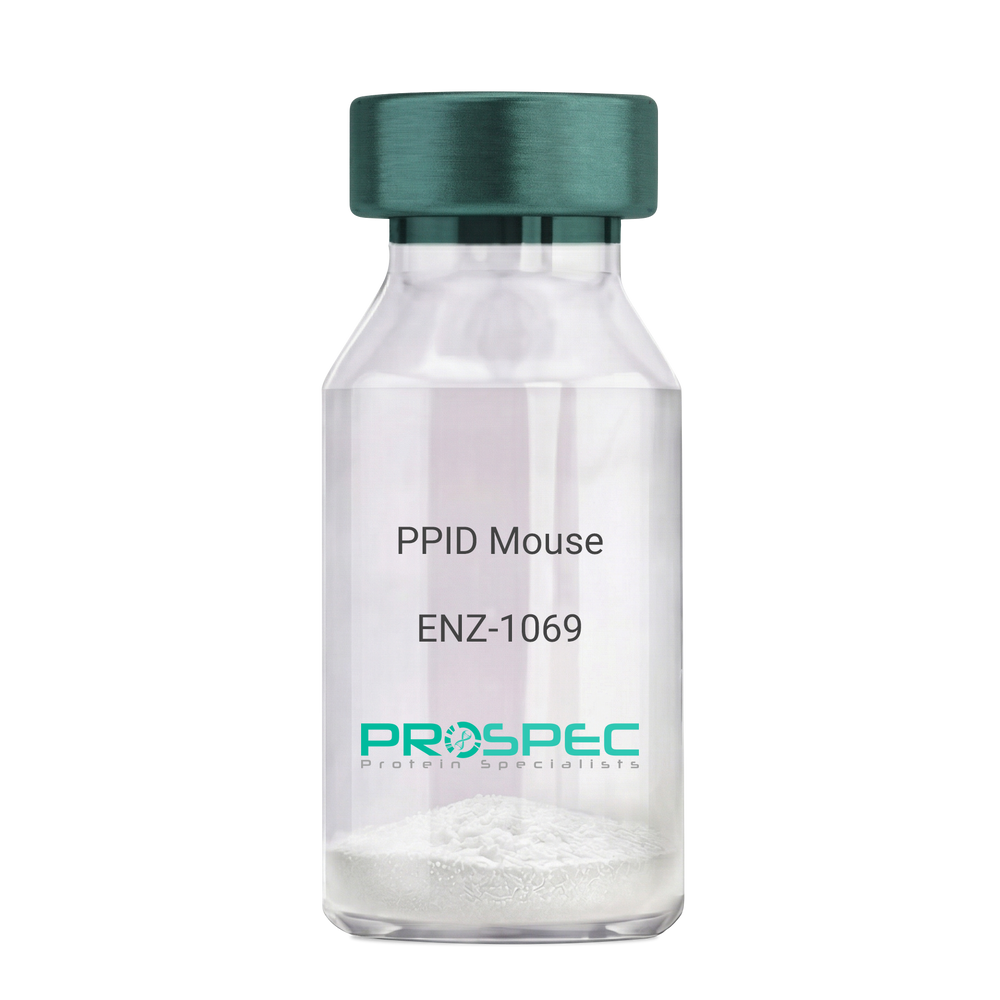
    PPID Mouse

    Description:

    Peptidylprolyl Isomerase D Mouse Recombinant

    Peptidyl-prolyl cis-trans isomerase D, PPIase D, 40 kDa peptidyl-prolyl cis-trans isomerase, Cyclophilin-40, CYP-40, Cyclophilin-related protein, CYP40, CYPD, PPID, Peptidylprolyl Isomerase D.

    Product # :

    ENZ-1069

    Price :

    Quantity :

    Shipping Method :

    Ice Icon

    Shipped with Ice Packs

    Add To Cart

    More Info

    • description
    • source
    • formulation
    • purity
    • biological activity
    • More Info

    Description

    PPID Mouse Recombinant produced in E.Coli is a single, non-glycosylated polypeptide chain containing 395 amino acids (1-370a.a.) and having a molecular mass of 43.4kDa. PPID is fused to a 25 amino acid His-tag at N-terminus & purified by proprietary chromatographic techniques.

    Source

    Escherichia Coli.

    Formulation

    PPID protein solution (1mg/ml) containing 20mM Tris-Hcl buffer (pH8.0), 10% glycerol and 1mM DTT.

    Purity

    Greater than 90.0% as determined by SDS-PAGE.

    Biological Activity

    Specific activity is > 700nmol/min/mg, and is defined as the amount of enzyme that cleaves 1umole of suc-AAFP-PNA per minute at 37°C in Tris–HCl pH 8.0 using chymotrypsin.

    More Info

    • Introduction

      Cyclophilin-D is a member of the peptidyl-prolyl cis-trans isomerase (PPIase) family. PPIases catalyze the cis-trans isomerization of proline imidic peptide bonds in oligopeptides and speeds up the protein folding. Cyclophilin-D possess PPIase activity and binds to the immunosuppressant cyclosporin-A. Cyclophilin-D is very well known that its overexpression suppresses the apoptosis in cancer cell. Cyclophilin-D suppresses apoptotic cell death by the use of mitochondrial hexokinase-2 dependent mechanism in cancer cells.

    • Synonyms

      Peptidyl-prolyl cis-trans isomerase D, PPIase D, 40 kDa peptidyl-prolyl cis-trans isomerase, Cyclophilin-40, CYP-40, Cyclophilin-related protein, CYP40, CYPD, PPID, Peptidylprolyl Isomerase D.

    • Physical Appearance

      Sterile Filtered colorless solution.

    • Stability

      Store at 4°C if entire vial will be used within 2-4 weeks. Store, frozen at -20°C for longer periods of time. For long term storage it is recommended to add a carrier protein (0.1% HSA or BSA). Please prevent freeze-thaw cycles.

    • Amino Acid Sequence

      MGSSHHHHHH SSGLVPRGSH MGSEFMSHAS PAAKPSNSKN PRVFFDVDIG GERVGRIVLE LFADIVPKTA ENFRALCTGE KGTGSTTGKP LHFKGCPFHR IIKKFMIQGG DFSNQNGTGG ESIYGEKFED ENFHYKHDRE GLLSMANAGP NTNGSQFFIT TVPTPHLDGK HVVFGQVIKG LGVARTLENV EVNGEKPAKL CVIAECGELK EGDDWGIFPK DGSGDSHPDF PEDADIDLKD VDKILLISED LKNIGNTFFK SQNWEMAIKK YAKVLRYVDS SKAVIEKADR SRLQPIALSC VLNIGACKLK MSNWQGAIDS CLEALEMDPS NTKALYRKAQ GWQGLKEYDQ ALADLKKAQE IAPGDKAIQA ELLKVKQMIK AQKDKEKAVY AKMFA.

    ProSpec's products are furnished for LABORATORY RESEARCH USE ONLY. The product may not be used as drugs, agricultural or pesticidal products, food additives or household chemicals.

    Ppid Mouse
  • View Data Sheet

    Name :

    MAGEB10 Human

    Description:

    Melanoma Antigen Family B,10 Human Recombinant

    Melanoma Antigen Family B,10, MAGE-B10 Antigen, MAGE Family Testis And Tumor-Specific Protein, Melanoma-Associated Antigen B10, MAGE-B10 antigen.

    Product # :

    PRO-1755

    Price :

    Quantity :

    Shipping Method :

    Ice Icon

    Shipped with Ice Packs

    Add To Cart

    More Info

    • description
    • source
    • formulation
    • purity
    • More Info

    Description

    MAGEB10 Human Recombinant produced in E.Coli is a single, non-glycosylated polypeptide chain containing 370 amino acids (1-347 a.a) and having a molecular mass of 41.4kDa.MAGEB10 is fused to a 23 amino acid His-tag at N-terminus & purified by proprietary chromatographic techniques.

    Source

    Escherichia Coli.

    Formulation

    MAGEB10 protein solution (0.25mg/ml) containing 20mM Tris-HCl buffer (pH 8.0), 0.15M NaCl, 10% glycerol, 1mM DTT and 0.1mM PMSF.

    Purity

    Greater than 85% as determined by SDS-PAGE.

    More Info

    • Introduction

      Melanoma Antigen Family B,10 also known as MAGEB10 is a member of the B subfamily of the melanoma associated antigen protein family. MAGEB10 is specifically expressed in testis and tumor cells. One of the diseases associated with MAGEB10 is melanoma.

    • Synonyms

      Melanoma Antigen Family B,10, MAGE-B10 Antigen, MAGE Family Testis And Tumor-Specific Protein, Melanoma-Associated Antigen B10, MAGE-B10 antigen.

    • Physical Appearance

      Sterile Filtered clear solution.

    • Stability

      Store at 4°C if entire vial will be used within 2-4 weeks. Store, frozen at -20°C for longer periods of time.For long term storage it is recommended to add a carrier protein (0.1% HSA or BSA).Please avoid freeze thaw cycles.

    • Amino Acid Sequence

      MGSSHHHHHH SSGLVPRGSH MGSMPRGQKS KLRAREKRRQ ARGGLEDLID ALDILEEEEE SPPSASACLK DVFQSSLDGA SNNPHGLREA QSTSTSATAA SHTRHPEGVN DQMEERPICT QDLEATDSFP RGPVDEKVII LVHYLLYKYQ MKEPITKADM LRNVTQMSKS QFPVILSRAS EHLELIFGLD LKEVEPNKHI YVLVNKLDLG CDAKLSDETG VPKTGLLMTV LGIIFTNGNC VAEEEVWKVF NTMGLYDGIE HFMFGEPRKL LTKDLVKENY LEYQQVPNSD PPRYQFLWGP RAHAETSKMK VLEFLAKVND TAPSEFSNWY TEALQDEEER ARARVAAKAR VSATAGARSK VKSSKSSQLQ

    ProSpec's products are furnished for LABORATORY RESEARCH USE ONLY. The product may not be used as drugs, agricultural or pesticidal products, food additives or household chemicals.

    Mageb10 Human
  • View Data Sheet

    Name :

    DUSP6 Human

    Description:

    Dual Specificity Phosphatase 6 Human Recombinant

    Dual specificity protein phosphatase 6, Dual specificity protein phosphatase PYST1, Mitogen-activated protein kinase phosphatase 3, MAP kinase phosphatase 3, MKP-3, DUSP6, MKP3, PYST1, Dual Specificity Phosphatase 6, Dual specificity phosphatase 6 isoform a.

    Product # :

    ENZ-817

    Price :

    Quantity :

    Shipping Method :

    Ice Icon

    Shipped with Ice Packs

    Add To Cart

    More Info

    • description
    • source
    • formulation
    • purity
    • More Info

    Description

    DUSP6 Human Recombinant produced in E.Coli is a single, non-glycosylated polypeptide chain containing 401 amino acids (1-381 a.a) and having a molecular mass of 44.4kDa.DUSP6 is fused to a 20 amino acid His-tag at N-terminus & purified by proprietary chromatographic techniques.

    Source

    Escherichia Coli.

    Formulation

    DUSP6 protein solution (0.25mg/ml) containing 20mM Tris-HCl buffer (pH 8.0), 0.15M NaCl, 10% glycerol and 1mM DTT.

    Purity

    Greater than 85.0% as determined by SDS-PAGE.

    More Info

    • Introduction

      Dual Specificity Phosphatase 6, also known as DUSP6 belongs to the dual specificity protein phosphatase subfamily. DUSP6 is a Protein coding gene which inactivates MAP kinases. Various members of the family of dual specificity phosphatases show diverse tissue distribution, subcellular localization, and different modes of inducibility of their expression by extracellular stimuli.

    • Synonyms

      Dual specificity protein phosphatase 6, Dual specificity protein phosphatase PYST1, Mitogen-activated protein kinase phosphatase 3, MAP kinase phosphatase 3, MKP-3, DUSP6, MKP3, PYST1, Dual Specificity Phosphatase 6, Dual specificity phosphatase 6 isoform a.

    • Physical Appearance

      Sterile Filtered colorless solution.

    • Stability

      Store at 4°C if entire vial will be used within 2-4 weeks. Store, frozen at -20°C for longer periods of time. For long term storage it is recommended to add a carrier protein (0.1% HSA or BSA).Avoid multiple freeze-thaw cycles.

    • Amino Acid Sequence

      MGSSHHHHHH SSGLVPRGSH MIDTLRPVPF ASEMAISKTV AWLNEQLELG NERLLLMDCR PQELYESSHI ESAINVAIPG IMLRRLQKGN LPVRALFTRG EDRDRFTRRC GTDTVVLYDE SSSDWNENTG GESVLGLLLK KLKDEGCRAF YLEGGFSKFQ AEFSLHCETN LDGSCSSSSP PLPVLGLGGL RISSDSSSDI ESDLDRDPNS ATDSDGSPLS NSQPSFPVEI LPFLYLGCAK DSTNLDVLEE FGIKYILNVT PNLPNLFENA GEFKYKQIPI SDHWSQNLSQ FFPEAISFID EARGKNCGVL VHCLAGISRS VTVTVAYLMQ KLNLSMNDAY DIVKMKKSNI SPNFNFMGQL LDFERTLGLS SPCDNRVPAQ QLYFTTPSNQ NVYQVDSLQS T.

    ProSpec's products are furnished for LABORATORY RESEARCH USE ONLY. The product may not be used as drugs, agricultural or pesticidal products, food additives or household chemicals.

    Dusp6 Human
  • View Data Sheet

    Name :

    MAPKSP1 antibody

    Description:

    MAPK Scaffold Protein 1, Mouse Anti Human

    MAPBP, MP1, MAPK Scaffold Protein 1, Interacting Protein 1, MEK binding partner 1, Mitogen-Activated Protein Kinase kinase 1.

    Product # :

    ANT-734

    Price :

    Quantity :

    Shipping Method :

    Ice Icon

    Shipped with Ice Packs

    Add To Cart

    More Info

    • formulation
    • More Info

    Formulation

    1mg/ml containing PBS, pH-7.4, 10% Glycerol and 0.02% Sodium Azide.

    More Info

    • Introduction

      MAPKSP1 is a scaffold protein which operates in the extracellular signal-regulated kinase (ERK) cascade. MAPKSP1 protein is restricted to late endosomes by the mitogen-activated protein-binding protein-interacting protein, and binds specifically to MAP kinase kinase MAP2K1/MEK1, MAP kinase MAPK3/ERK1, and MAP kinase MAPK1/ERK2.

    • Synonyms

      MAPBP, MP1, MAPK Scaffold Protein 1, Interacting Protein 1, MEK binding partner 1, Mitogen-Activated Protein Kinase kinase 1.

    • Physical Appearance

      Sterile filtered colorless solution.

    • Immunogen

      Anti-human MAPKSP1 mAb, is derived from hybridization of mouse F0 myeloma cells with spleen cells from BALB/c mice immunized with a recombinant human MAPKSP1 protein 1-124 amino acids purified from E. coli.

    • Ig Subclass

      Mouse IgG2b heavy chain and k light chain.

    • Clone

      PAT1F10AT.

    • Applications

      The antibody has been tested by ELISA, Western blot analysis, Flow cytometry and ICC/IF to assure specificity and reactivity. Since application varies, however, each investigation should be titrated by the reagent to obtain optimal results.

    • Type

      Mouse Anti Human Monoclonal.

    • Storage Procedures

      For periods up to 1 month store at 4°C, for longer periods of time, store at -20°C. Prevent freeze thaw cycles.

    • Purification Method

      MAPKSP1 antibody was purified from mouse ascitic fluids by protein-A affinity chromatography.

    ProSpec's products are furnished for LABORATORY RESEARCH USE ONLY. The product may not be used as drugs, agricultural or pesticidal products, food additives or household chemicals.

    Mapksp1 Antibody 2
  • View Data Sheet

    Name :

    MMADHC Human

    Description:

    Methylmalonic Aciduria cblD type, with Homocystinuria Human Recombinant

    Chromosome 2 Open Reading Frame 25, Methylmalonic Aciduria (Cobalamin Deficiency) CblD Type With Homocystinuria, Methylmalonic Aciduria And Homocystinuria Type D Protein Mitochondrial, Protein C2orf25 Mitochondrial, CL25022, C2orf25, cblD.

    Product # :

    PRO-1850

    Price :

    Quantity :

    Shipping Method :

    Ice Icon

    Shipped with Ice Packs

    Add To Cart

    More Info

    • description
    • source
    • formulation
    • purity
    • More Info

    Description

    MMADHC Human Recombinant produced in E.coli is a single, non-glycosylated polypeptide chain containing 281 amino acids (39-296) and having a molecular mass of 31.0 kDa. MMADHC is fused to a 23 amino acid His-tag at N-terminus.

    Source

    Escherichia Coli.

    Formulation

    The MMADHC solution (1mg/ml) contains 20mM Tris-HCl buffer (pH 8.0), 0.15M NaCl, 1mM DTT and 10% glycerol.

    Purity

    Greater than 90% as determined by SDS-PAGE.

    More Info

    • Introduction

      MMADHC is a mitochondrial protein which takes part in an early step of vitamin B1 2 metabolism. Vitamin B12 (cobalamin) is vital for regular development and existence in humans. Mutations in MMADHC can result in methylmalonic aciduria and homocystinuria type cblD, a cobalamin metabolism syndrome which is characterized by decreased levels of the coenzymes methylcobalamin and adenosylcobalamin.

    • Synonyms

      Chromosome 2 Open Reading Frame 25, Methylmalonic Aciduria (Cobalamin Deficiency) CblD Type With Homocystinuria, Methylmalonic Aciduria And Homocystinuria Type D Protein Mitochondrial, Protein C2orf25 Mitochondrial, CL25022, C2orf25, cblD.

    • Physical Appearance

      Sterile Filtered clear solution.

    • Stability

      Store at 4°C if entire vial will be used within 2-4 weeks. Store, frozen at -20°C for longer periods of time. For long term storage it is recommended to add a carrier protein (0.1% HSA or BSA).Avoid multiple freeze-thaw cycles.

    • Amino Acid Sequence

      MGSSHHHHHH SSGLVPRGSH MGSSDESHVA AAPPDICSRT VWPDETMGPF GPQDQRFQLP GNIGFDCHLN GTASQKKSLV HKTLPDVLAE PLSSERHEFV MAQYVNEFQG NDAPVEQEIN SAETYFESAR VECAIQTCPE LLRKDFESLF PEVANGKLMI LTVTQKTKND MTVWSEEVEI EREVLLEKFI NGAKEICYAL RAEGYWADFI DPSSGLAFFG PYTNNTLFET DERYRHLGFS VDDLGCCKVI RHSLWGTHVV VGSIFTNATP DSHIMKKLSG N

    ProSpec's products are furnished for LABORATORY RESEARCH USE ONLY. The product may not be used as drugs, agricultural or pesticidal products, food additives or household chemicals.

    Mmadhc Human
  • View Data Sheet

    Name :

    MYD88 Human

    Description:

    Myeloid Differentiation Primary Response 88 Human Recombinant

    Myeloid differentiation primary response protein MyD88, MYD88, MYD88D.

    Product # :

    PRO-1377

    Price :

    Quantity :

    Shipping Method :

    Ice Icon

    Shipped with Ice Packs

    Add To Cart

    More Info

    • description
    • source
    • formulation
    • purity
    • More Info

    Description

    MYD88 Human Recombinant produced in E.Coli is a single, non-glycosylated polypeptide chain containing 345 amino acids (1-309 a.a) and having a molecular mass of 38.7kDa.MYD88 is fused to a 36 amino acid His-tag at N-terminus & purified by proprietary chromatographic techniques.

    Source

    Escherichia Coli.

    Formulation

    MYD88 protein solution (1mg/ml) containing 20mM Tris-HCl buffer (pH 8.0), 0.4M urea and 10% glycerol.

    Purity

    Greater than 90.0% as determined by SDS-PAGE.

    More Info

    • Introduction

      Myeloid differentiation primary response gene 88 (MYD88) is a cytosolic adapter protein, which has a central role in the innate and adaptive immune response. MYD88 functions as a vital signal transducer in the interleukin-1 and Toll-like receptor signaling pathways. MYD88 acts via IRAK1, IRAK2, IRF7 and TRAF6, leading to NF-kappa-B activation, cytokine secretion and the inflammatory response. The MYD88 protein increases IL-8 transcription. MYD88 is involved in IL-18-mediated signaling pathway. MYD88 activates IRF1, resulting in its rapid migration into the nucleus to mediate an efficient induction of IFN-beta, NOS2/INOS, and IL12A genes. MYD88 is comprised of an N-terminal death domain and a C-terminal Toll-interleukin1 receptor domain. Patients with defects in the MYD88 gene have an increased susceptibility to pyogenic bacterial infections.

    • Synonyms

      Myeloid differentiation primary response protein MyD88, MYD88, MYD88D.

    • Physical Appearance

      Sterile Filtered colorless solution.

    • Stability

      Store at 4°C if entire vial will be used within 2-4 weeks. Store, frozen at -20°C for longer periods of time. For long term storage it is recommended to add a carrier protein (0.1% HSA or BSA).Avoid multiple freeze-thaw cycles.

    • Amino Acid Sequence

      MRGSHHHHHH GMASMTGGQQ MGRDLYDDDD KDRWGSMRPD RAEAPGPPAM AAGGPGAGSA APVSSTSSLP LAALNMRVRR RLSLFLNVRT QVAADWTALA EEMDFEYLEI RQLETQADPT GRLLDAWQGR PGASVGRLLE LLTKLGRDDV LLELGPSIEE DCQKYILKQQ QEEAEKPLQV AAVDSSVPRT AELAGITTLD DPLGHMPERF DAFICYCPSD IQFVQEMIRQ LEQTNYRLKL CVSDRDVLPG TCVWSIASEL IEKRCRRMVV VVSDDYLQSK ECDFQTKFAL SLSPGAHQKR LIPIKYKAMK KEFPSILRFI TVCDYTNPCT KSWFWTRLAK ALSLP.

    ProSpec's products are furnished for LABORATORY RESEARCH USE ONLY. The product may not be used as drugs, agricultural or pesticidal products, food additives or household chemicals.

    Myd88 Human
  • View Data Sheet

    Name :

    MYL12B Human

    Description:

    Myosin Light Chain 12B Human Recombinant

    Myosin light chain 12B regulatory, Myosin regulatory light chain 2-B smooth muscle isoform, Myosin regulatory light chain 20 kDa, Myosin regulatory light chain MRLC2, MYLC2B, MRLC2, MLC-2A, MLC-B, SHUJUN-1 MLC20.  

    Product # :

    PRO-1124

    Price :

    Quantity :

    Shipping Method :

    Ice Icon

    Shipped with Ice Packs

    Add To Cart

    More Info

    • description
    • source
    • formulation
    • purity
    • More Info

    Description

    MYL12B Human Recombinant produced in E. coli is a single polypeptide chain containing 196 amino acids (1-172) and having a molecular mass of 22.3kDa.MYL12B is fused to a 24 amino acid His-tag at N-terminus & purified by proprietary chromatographic techniques.

    Source

    E.coli.

    Formulation

    The MYL12B solution (1mg/ml) contains 20mM Tris-HCl buffer (pH 8.0), 200mM Nacl, 2mM DTT and 40% glycerol.

    Purity

    Greater than 90% as determined by SDS-PAGE.

    More Info

    • Introduction

      Myosin is composed of 2 nonphosphorylatable alkali light chains, 2 heavy chains and 2 phosphorylatable regulatory light chains. MYL12B is a hexameric ATPase cellular motor protein which controls contraction in smooth muscle and non-muscle cells through phosphorylation by myosin light chain kinase (MLCK). Phosphorylation of myosin regulatory light chains catalyzed by MLCK in the presence of calcium and calmodulin, rises Actin-activated myosin ATPase activity, thus regulating contractile activity.

    • Synonyms

      Myosin light chain 12B regulatory, Myosin regulatory light chain 2-B smooth muscle isoform, Myosin regulatory light chain 20 kDa, Myosin regulatory light chain MRLC2, MYLC2B, MRLC2, MLC-2A, MLC-B, SHUJUN-1 MLC20.

    • Physical Appearance

      Sterile Filtered colorless solution.

    • Stability

      Store at 4°C if entire vial will be used within 2-4 weeks. Store, frozen at -20°C for longer periods of time. For long term storage it is recommended to add a carrier protein (0.1% HSA or BSA).Avoid multiple freeze-thaw cycles.

    • Amino Acid Sequence

      MGSSHHHHHH SSGLVPRGSH MGSHMSSKKA KTKTTKKRPQ RATSNVFAMF DQSQIQEFKE AFNMIDQNRD GFIDKEDLHD MLASLGKNPT DAYLDAMMNE APGPINFTMF LTMFGEKLNG TDPEDVIRNA FACFDEEATG TIQEDYLREL LTTMGDRFTD EEVDELYREA PIDKKGNFNY IEFTRILKHG AKDKDD

    ProSpec's products are furnished for LABORATORY RESEARCH USE ONLY. The product may not be used as drugs, agricultural or pesticidal products, food additives or household chemicals.

    Myl12B Human
  • View Data Sheet

    Name :

    PEBP1 Mouse

    Description:

    Phosphatidylethanolamine Binding Protein 1 Mouse Recombinant

    Phosphatidylethanolamine-binding protein 1, PEBP-1, HCNPpp.

    Product # :

    PRO-2230

    Price :

    Quantity :

    Shipping Method :

    Ice Icon

    Shipped with Ice Packs

    Add To Cart

    More Info

    • description
    • source
    • formulation
    • purity
    • More Info

    Description

    PEBP1 Mouse Recombinant produced in E.Coli is a single, non-glycosylated polypeptide chain containing 210 amino acids (1-187 a.a) and having a molecular mass of 23.2kDa. PEBP1 is fused to a 23 amino acid His-tag at N-terminus & purified by proprietary chromatographic techniques.

    Source

    Escherichia Coli.

    Formulation

    PEBP1 protein solution (1mg/ml) containing Phosphate Buffered Saline (pH7.4) and 10% glycerol.

    Purity

    Greater than 95.0% as determined by SDS-PAGE.

    More Info

    • Introduction

      PEBP1 (Phosphatidylethanolamine binding protein 1) belongs to the phosphatidylethanolamine-binding protein family and a serine protease inhibitor that inhibits thrombin, neuropsin. PEBP1 plays a key modulatory part in several protein kinase signaling cascades. PKC phosphorylates PEBP1, resulting in the release of Raf-1 and activation of MEK and ERK. PEBP1 is expressed in many tissues and implicated in the regulation of such physiological processes as membrane biosynthesis, spermatogenesis, neural development, and metastasis suppression.
      PEBP1 binds ATP, opioids and phosphatidylethanolamine, however it has lower affinity for phosphatidylinositol and phosphatidylcholine. PEBP1 may also be involved in the function of the presynaptic cholinergic neurons of the CNS. PEBP1 increases the production of choline acetyltransferase although not acetylcholinesterase. Furtheremore, PEBP1 functions in potentially sequestering toxic compounds, including locostatin which may have harmful effects on cells.
      Loss of PEBP1 expression may have a significant role as prognostic marker in Gastrointestinal stromal tumors. In addition, PEBP1 is found differentially expressed in the Wernicke's Area from schizophrenia patients. PEBP1 is also, an invasion suppressor protein in nasopharyngeal carcinoma.

    • Synonyms

      Phosphatidylethanolamine-binding protein 1, PEBP-1, HCNPpp.

    • Physical Appearance

      Sterile Filtered colorless solution.

    • Stability

      Store at 4°C if entire vial will be used within 2-4 weeks. Store, frozen at -20°C for longer periods of time. For long term storage it is recommended to add a carrier protein (0.1% HSA or BSA).Avoid multiple freeze-thaw cycles.

    • Amino Acid Sequence

      MGSSHHHHHH SSGLVPRGSH MGSMAADISQ WAGPLCLQEV DEPPQHALRV DYAGVTVDEL GKVLTPTQVM NRPSSISWDG LDPGKLYTLV LTDPDAPSRK DPKFREWHHF LVVNMKGNDI SSGTVLSDYV GSGPPSGTGL HRYVWLVYEQ EQPLSCDEPI LSNKSGDNRG KFKVETFRKK YNLGAPVAGT CYQAEWDDYV PKLYEQLSGK.

    ProSpec's products are furnished for LABORATORY RESEARCH USE ONLY. The product may not be used as drugs, agricultural or pesticidal products, food additives or household chemicals.

    Pebp1 Mouse
  • View Data Sheet

    Name :

    VCPKMT Human

    Description:

    Valosin Containing Protein Lysine Methyltransferase Human Recombinant

    Valosin Containing Protein Lysine (K) Methyltransferase, Methyltransferase-Like Protein 21D, VCP Lysine Methyltransferase, Protein-Lysine Methyltransferase METTL21D, Chromosome 14 Open Reading Frame 138, C14orf138, METTL21D, VCP-KMT, EC 2.1.1.- .

    Product # :

    PRO-2145

    Price :

    Quantity :

    Shipping Method :

    Ice Icon

    Shipped with Ice Packs

    Add To Cart

    More Info

    • description
    • source
    • formulation
    • purity
    • More Info

    Description

    VCPKMT Human Recombinant produced in E.Coli is a single, non-glycosylated polypeptide chain containing 252 amino acids (1-229 a.a.) and having a molecular mass of 28.2kDa.VCPKMT is fused to a 23 amino acid His-tag at N-terminus & purified by proprietary chromatographic techniques.

    Source

    Escherichia Coli.

    Formulation

    VCPKMT protein solution (1mg/ml) containing 20mM Phosphate buffer saline (pH 8.0), 1mM DTT and 10% glycerol.

    Purity

    Greater than 95.0% as determined by SDS-PAGE.

    More Info

    • Introduction

      VCPKMT is a member of the methyltransferase superfamily. VCPKMT is a protein-lysine N-methyltransferase which specifically trimethylates 'Lys-315' of VCP/p97; this alteration reduces VCP ATPase activity.

    • Synonyms

      Valosin Containing Protein Lysine (K) Methyltransferase, Methyltransferase-Like Protein 21D, VCP Lysine Methyltransferase, Protein-Lysine Methyltransferase METTL21D, Chromosome 14 Open Reading Frame 138, C14orf138, METTL21D, VCP-KMT, EC 2.1.1.- .

    • Physical Appearance

      Sterile Filtered colorless solution.

    • Stability

      Store at 4°C if entire vial will be used within 2-4 weeks. Store, frozen at -20°C for longer periods of time. For long term storage it is recommended to add a carrier protein (0.1% HSA or BSA).Avoid multiple freeze-thaw cycles.

    • Amino Acid Sequence

      MGSSHHHHHH SSGLVPRGSH MGSMADTLES SLEDPLRSFV RVLEKRDGTV LRLQQYSSGG VGCVVWDAAI VLSKYLETPE FSGDGAHALS RRSVLELGSG TGAVGLMAAT LGADVVVTDL EELQDLLKMN INMNKHLVTG SVQAKVLKWG EEIEGFPSPP DFILMADCIY YEESLEPLLK TLKDISGFET CIICCYEQRT MGKNPEIEKK YFELLQLDFD FEKIPLEKHD EEYRSEDIHI IYIRKKKSKF PS

    ProSpec's products are furnished for LABORATORY RESEARCH USE ONLY. The product may not be used as drugs, agricultural or pesticidal products, food additives or household chemicals.

    Vcpkmt Human
  • View Data Sheet

    Name :

    MRRF Antibody

    Description:

    Mitochondrial Ribosome Recycling Factor, Mouse Anti Human

    MRFF, MTRRF, RRF, Ribosome-recycling factor, mitochondrial, Ribosome-releasing factor, mitochondrial.

    Product # :

    ANT-098

    Price :

    Quantity :

    Shipping Method :

    Ice Icon

    Shipped with Ice Packs

    Add To Cart

    More Info

    • formulation
    • More Info

    Formulation

    1mg/ml containing PBS, pH-7.4, 10% Glycerol and 0.01% Sodium Azide.

    More Info

    • Introduction

      Mitochondrial Ribosome Recycling Factor (MRRF) is a member of the RRF family. MRRF attaches to the large ribosomal subunit in the cleft which has a peptidyl transferase center. MRRF controls the release of ribosome from messenger RNA at the termination of protein biosynthesis. Also, it may intensify the efficacy of translation by recycling ribosome from one round of translation to another.

    • Synonyms

      MRFF, MTRRF, RRF, Ribosome-recycling factor, mitochondrial, Ribosome-releasing factor, mitochondrial.

    • Physical Appearance

      Sterile Filtered colorless solution.

    • Immunogen

      Anti-human MRRF mAb, clone PAT7D10A, is derived from hybridization of mouse F0 myeloma cells with spleen cells from BALB/c mice immunized with a recombinant human MRRF protein 56-262 amino acids purified from E. coli.

    • Ig Subclass

      Mouse IgG1 heavy chain and Kappa light chain.

    • Clone

      PAT7D10A.

    • Applications

      The antibody has been tested by ELISA and Western blot analysis to assure specificity and reactivity. Since application varies, however, each investigation should be titrated by the reagent to obtain optimal results. Recommended starting dilution is 1:1000.

    • Type

      Mouse Anti Human Monoclonal.

    • Storage Procedures

      For periods up to 1 month store at 4°C, for longer periods of time, store at -20°C. Prevent freeze thaw cycles.

    • Purification Method

      MRRF antibody was purified from mouse ascitic fluids by protein-G affinity chromatography.

    ProSpec's products are furnished for LABORATORY RESEARCH USE ONLY. The product may not be used as drugs, agricultural or pesticidal products, food additives or household chemicals.

    Mrrf Antibody
  • View Data Sheet

    Name :

    PRPS1 Antibody

    Description:

    Phosphoribosyl Pyrophosphate Synthetase 1, Mouse Anti Human

    ARTS, CMTX5, PPRibP, PRSI, DFN2, Ribose-phosphate pyrophosphokinase 1, DFNX1, Phosphoribosyl pyrophosphate synthase I, PRS-I, PRPS1, KIAA0967.

    Product # :

    ANT-503

    Price :

    Quantity :

    Shipping Method :

    Ice Icon

    Shipped with Ice Packs

    Add To Cart

    More Info

    • formulation
    • More Info

    Formulation

    1mg/ml containing PBS, pH-7.4, 10% Glycerol and 0.02% Sodium Azide.

    More Info

    • Introduction

      PRPS1 catalyzes the synthesis of phosphoribosylpyrophosphate (PRPP) that is essential for nucleotide synthesis. PRPS1 catalyzes the phosphoribosylation of ribose 5-phosphate to 5-phosphoribosyl-1-pyrophosphate, which is essential for purine metabolism and nucleotide biosynthesis. Defects in PRPS1 result in phosphoribosylpyrophosphate synthetase superactivity, Charcot-Marie-Tooth disease X-linked recessive type 5 and Arts Syndrome.

    • Synonyms

      ARTS, CMTX5, PPRibP, PRSI, DFN2, Ribose-phosphate pyrophosphokinase 1, DFNX1, Phosphoribosyl pyrophosphate synthase I, PRS-I, PRPS1, KIAA0967.

    • Physical Appearance

      Sterile filtered colorless solution.

    • Immunogen

      Anti-human PRPS1 mAb, clone PAT1E11AT, is derived from hybridization of mouse F0 myeloma cells with spleen cells from BALB/c mice immunized with a recombinant human PRPS1 protein 1-318 amino acids purified from E. coli.

    • Ig Subclass

      Mouse IgG2a heavy chain and k light chain.

    • Clone

      PAT1E11AT.

    • Applications

      The antibody has been tested by ELISA, Western blot analysis to assure specificity and reactivity. Since application varies, however, each investigation should be titrated by the reagent to obtain optimal results. Recommended starting dilution is 1:1000.

    • Type

      Mouse Anti Human Monoclonal.

    • Storage Procedures

      For periods up to 1 month store at 4°C, for longer periods of time, store at -20°C. Prevent freeze thaw cycles.

    • Purification Method

      PRPS1 antibody was purified from mouse ascitic fluids by protein-A affinity chromatography.

    ProSpec's products are furnished for LABORATORY RESEARCH USE ONLY. The product may not be used as drugs, agricultural or pesticidal products, food additives or household chemicals.

    Prps1 Antibody
  • View Data Sheet

    Name :

    CXCL9 Mouse

    Description:

    MIG Mouse Recombinant (CXCL9)

    Small inducible cytokine B9, CXCL9, MIG, chemokine (C-X-C motif) ligand 9, CMK, Humig, SCYB9, crg-10, M119.

    Product # :

    CHM-337

    Price :

    Quantity :

    Shipping Method :

    Room Temp Icon

    Shipped at Room temp

    Add To Cart

    More Info

    • description
    • source
    • formulation
    • purity
    • biological activity
    • More Info

    Description

    MIG (CXCK9) Mouse Recombinant produced in E.Coli is a single, non-glycosylated, polypeptide chain containing 105 amino acids and having a molecular mass of 12208 Dalton. The MIG is purified by proprietary chromatographic techniques.

    Source

    Escherichia Coli.

    Formulation

    Filtered (0.2µm) and lyophilized from a concentrated (0.5mg/ml) solution in 20mM PB, pH7.4 and 100mM NaCl.

    Purity

    Greater than 97.0% as determined by:
    (a) Analysis by RP-HPLC.
    (b) Analysis by SDS-PAGE.

    Biological Activity

    The Activity is calculated by the ability to chemoattract Human lymphocytes using a concentration of 0.1-1 ng/ml.

    More Info

    • Introduction

      Chemokine (C-X-C motif) ligand 9 (CXCL9) is a small cytokine belonging to the CXC chemokine family that is also known as Monokine induced by MIG. CXCL9 is a T-cell chemoattractant. It is closely related to two other CXC chemokines called CXCL10 and CXCL11, whose genes are located near the gene for CXCL9 on human chromosome 4. CXCL9, CXCL10 and CXCL11 all elicit their chemotactic functions by interacting with the chemokine receptor CXCR3.

    • Synonyms

      Small inducible cytokine B9, CXCL9, MIG, chemokine (C-X-C motif) ligand 9, CMK, Humig, SCYB9, crg-10, M119.

    • Physical Appearance

      Sterile Filtered White lyophilized (freeze-dried) powder.

    • Stability

      Lyophilized MIG although stable at room temperature for 3 weeks, should be stored desiccated below -18°C. Upon reconstitution CXCL9 should be stored at 4°C between 2-7 days and for future use below -18°C. For long term storage it is recommended to add a carrier protein (0.1% HSA or BSA).Please prevent freeze-thaw cycles.

    • Solubility

      It is recommended to reconstitute the lyophilized MIG in sterile 18MΩ-cm H2O not less than 100µg/ml, which can then be further diluted to other aqueous solutions.

    • Amino Acid Sequence

      TLVIRNARCS CISTSRGTIH YKSLKDLKQF APSPNCNKTE IIATLKNGDQ TCLDPDSANV KKLMKEWEKK INQKKKQKRG KKHQKNMKNR KPKTPQSRRR SRKTT.

    • Background

      What is the molecular weight/Mw of CXCL9 MOUSE Protein?
      CXCL9 MOUSE Protein has a total Mw of 12.2kDa.

      What is the source or expression system of CXCL9 MOUSE Protein?
      Escherichia Coli.

      What is the Purity of CXCL9 MOUSE Protein?
      CXCL9 MOUSE Protein is > 97% pure as determined by SDS-PAGE.

      What is the Biological Activity of CXCL9 MOUSE Protein?
      The Activity is calculated by the ability to chemoattract Human lymphocytes using a concentration of 0.1-1 ng/ml.

      What is the amino acid sequence of CXCL9 MOUSE Protein?
      TLVIRNARCS CISTSRGTIH YKSLKDLKQF APSPNCNKTE IIATLKNGDQ TCLDPDSANV KKLMKEWEKK INQKKKQKRG KKHQKNMKNR KPKTPQSRRR SRKTT.

      What applications can CXCL9 MOUSE Protein be used in?
      CXCL9 MOUSE Protein can probably be used in western blot, ELISA and Lateral Flow.

      What is the endotoxin level for CXCL9 MOUSE Protein?
      The endotoxin level is minimal, CXCL9 MOUSE Protein was purified using conventional chromatography techniques.


    ProSpec's products are furnished for LABORATORY RESEARCH USE ONLY. The product may not be used as drugs, agricultural or pesticidal products, food additives or household chemicals.

    Mig Mouse
  • View Data Sheet

    Name :

    PPM1G Human, 546 a.a.

    Description:

    Protein Phosphatase 1G 546 a.a. Human Recombinant

    Protein Phosphatase 1G, PP2CG, PPP2CG, MGC1675, MGC2870, PP2C GAMMA, EC 3.1.3.16, Protein phosphatase 2C isoform gamma, PP2C-gamma, Protein phosphatase magnesium-dependent 1 gamma, Protein phosphatase 1C, PPM1G, PPM1C.

    Product # :

    ENZ-156

    Price :

    Quantity :

    Shipping Method :

    Ice Icon

    Shipped with Ice Packs

    Add To Cart

    More Info

    • description
    • source
    • formulation
    • purity
    • More Info

    Description

    PPM1G Human Recombinant produced in E.coli is a single, non-glycosylated polypeptide chain containing 566 amino acids (1-546) and having a molecular mass of 61.4 kDa. The PPM1G is fused to a 20 amino acid His-Tag at N-terminus and purified by proprietary chromatographic techniques.

    Source

    E.coli.

    Formulation

    The PPM1G solution (1mg/ml) contains 20mM Tris-HCl buffer (pH 8.0), 1mM DTT, 0.1M NaCl, 0.1mM PMSF and 20% glycerol.

    Purity

    Greater than 85% as determined by SDS-PAGE.

    More Info

    • Introduction

      PPM1G is part of the PP2C family of Ser/Thr protein phosphatases which are known to be negative regulators of cell stress response pathways. PPM1G is accountable for the dephosphorylation of Pre-mRNA splicing factors, an important factor for the formation of functional spliceosome. PPM1G regulates cell cycle progression.
      PPM1G mediates histone dephosphorylation/exchange in response to DNA damage or checkpoint recovery in higher eukaryotes.
      The degradation of p21/WAF1 induced by PPM1G is mediated in a proteasome-dependent manner.
      Protein phosphatase 1G regulates assembly and function of the beta-catenin degradation complex.

    • Synonyms

      Protein Phosphatase 1G, PP2CG, PPP2CG, MGC1675, MGC2870, PP2C GAMMA, EC 3.1.3.16, Protein phosphatase 2C isoform gamma, PP2C-gamma, Protein phosphatase magnesium-dependent 1 gamma, Protein phosphatase 1C, PPM1G, PPM1C.

    • Physical Appearance

      Sterile Filtered colorless solution.

    • Stability

      Store at 4°C if entire vial will be used within 2-4 weeks. Store, frozen at -20°C for longer periods of time. For long term storage it is recommended to add a carrier protein (0.1% HSA or BSA).Avoid multiple freeze-thaw cycles.

    • Amino Acid Sequence

      MGSSHHHHHH SSGLVPRGSH MGAYLSQPNT VKCSGDGVGA PRLPLPYGFS AMQGWRVSME DAHNCIPELD SETAMFSVYD GHGGEEVALY CAKYLPDIIK DQKAYKEGKL QKALEDAFLA IDAKLTTEEV IKELAQIAGR PTEDEDEKEK VADEDDVDNE EAALLHEEAT MTIEELLTRY GQNCHKGPPH SKSGGGTGEE PGSQGLNGEA GPEDSTRETP SQENGPTAKA YTGFSSNSER GTEAGQVGEP GIPTGEAGPS CSSASDKLPR VAKSKFFEDS EDESDEAEEE EEDSEECSEE EDGYSSEEAE NEEDEDDTEE AEEDDEEEEE EMMVPGMEGK EEPGSDSGTT AVVALIRGKQ LIVANAGDSR CVVSEAGKAL DMSYDHKPED EVELARIKNA GGKVTMDGRV NGGLNLSRAI GDHFYKRNKN LPPEEQMISA LPDIKVLTLT DDHEFMVIAC DGIWNVMSSQ EVVDFIQSKI SQRDENGELR LLSSIVEELL DQCLAPDTSG DGTGCDNMTC IIICFKPRNT AELQPESGKR KLEEVLSTEG AEENGNSDKK KKAKRD

    ProSpec's products are furnished for LABORATORY RESEARCH USE ONLY. The product may not be used as drugs, agricultural or pesticidal products, food additives or household chemicals.

    Ppm1G Human 546Aa
  • View Data Sheet

    Name :

    MOG Human

    Description:

    Myelin Oligodendrocyte Glycoprotein Human Recombinant

    Myelin Oligodendrocyte Glycoprotein, MOG, MOGIG-2, MGC26137.

    Product # :

    PRO-466

    Price :

    Quantity :

    Shipping Method :

    Room Temp Icon

    Shipped at Room temp

    Add To Cart

    More Info

    • description
    • source
    • formulation
    • purity
    • More Info

    Description

    Myelin Oligodendrocyte Glycoprotein produced in E.Coli is a single, non-glycosylated polypeptide chain containing a total of 132 amino acids (Met + 30-154 a.a. + 6x His tag at C-terminus) and having a total molecular mass of 15.2 kDa.

    Source

    Escherichia Coli.

    Formulation

    The Myelin Oligodendrocyte Glycoprotein was lyophilized from a 0.2µm filtered solution in 20mM HAc-NaAc and 150mM NaCl pH-4.5

    Purity

    Greater than 95.0% as determined by SDS-PAGE.

    More Info

    • Introduction

      Myelin Oligodendrocyte Glycoprotein is a membrane protein expressed on the oligodendrocyte cell surface and the outermost surface of myelin sheaths. Due to this localization, it is a prime target antigen that plays a role in immune-mediated demyelination. Myelin Oligodendrocyte Glycoprotein is involved in completion and maintenance of the myelin sheath and in cell-cell communication. MOG protein was found to differentially expressed in the dorsolateral prefrontal cortex and in the temporal lobe from patients with schizophrenia. MOG-specific antibody is crucial to the initiation of MOG-induced murine experimental autoimmune encephalomyelitis.

    • Synonyms

      Myelin Oligodendrocyte Glycoprotein, MOG, MOGIG-2, MGC26137.

    • Physical Appearance

      Sterile Filtered White lyophilized (freeze-dried) powder.

    • Stability

      Lyophilized MOG although stable at room temperature for 3 weeks, should be stored desiccated below -18°C. Upon reconstitution MOG should be stored at 4°C between 2-7 days and for future use below -18°C.For long term storage it is recommended to add a carrier protein (0.1% HSA or BSA).Please prevent freeze-thaw cycles.

    • Solubility

      It is recommended to reconstitute the lyophilized MOG in sterile 50mM Acetic acid not less than 100µg/ml, which can then be further diluted to other aqueous solutions.

    • Amino Acid Sequence

      MGQFRVIGPRHPIRALVGDEVELPCRISPGKNATGMEVGWYRPPFSRVVHLYRN
      GKDQDGDQAPEYRGRTELLKDAIGEGKVTLRIRNVRFSDEGGFTCFFRDHSYQE
      EAAMELKVEDPFYWVSPGHHHHHH.

    ProSpec's products are furnished for LABORATORY RESEARCH USE ONLY. The product may not be used as drugs, agricultural or pesticidal products, food additives or household chemicals.

    Mog Human
  • View Data Sheet

    Name :

    IPP-POZ Human

    Description:

    IPP-POZ Human Recombinant

    Intracisternal A Particle-Promoted Polypeptide, Actin-binding protein IPP, MIPP protein, Kelch-like protein 27, IPP, KLHL27, IPP-POZ.

    Product # :

    PRO-436

    Price :

    Quantity :

    Shipping Method :

    Ice Icon

    Shipped with Ice Packs

    Add To Cart

    More Info

    • description
    • source
    • formulation
    • purity
    • More Info

    Description

    IPP-POZ Human Recombinant produced in E.Coli is a single, non-glycosylated polypeptide chain containing 157 amino acids & having a molecular mass of 17.3 kDa.

    Source

    Escherichia Coli.

    Formulation

    The protein (1mg/ml) containing 10mM HEPES (pH7.4) and 25mM NaCl.

    Purity

    Greater than 95.0% as determined by(a) Analysis by RP-HPLC.
    (b) Analysis by SDS-PAGE.

    More Info

    • Introduction

      Intracisternal A particle-promoted polypeptide (IPP) is a 66kDa protein (584 amino acids), which contains an N-terminal POZ protein-protein interaction domain and a C-terminal kelch repeat domain consisting of six tandem arranged repeats. The POZ domain (also called BTB domain) is present near the N-terminus of a fraction of zinc finger proteins and in protein that contain the pfam01344 motif such as kelch and pox virus proteins. The BTB/POZ domain mediates homomeric dimerization and in some instances heteromeric dimerization. POZ domains from several zinc finger proteins have been shown to mediate transcriptional repression and to interact with components of histone deacetylase co-repressor complexes including N-coR and SMRT.

    • Synonyms

      Intracisternal A Particle-Promoted Polypeptide, Actin-binding protein IPP, MIPP protein, Kelch-like protein 27, IPP, KLHL27, IPP-POZ.

    • Physical Appearance

      Sterile filtered colorless solution.

    • Stability

      Store at 4°C if entire vial will be used within 2-4 weeks. Store, frozen at -20°C for longer periods of time. For long term storage it is recommended to add a carrier protein (0.1% HSA or BSA). Avoid multiple freeze-thaw cycles.

    • Amino Acid Sequence

      MANEDCPKAA DSPFSSDKHA QLILAQINKM RNGQHFCDVQ LQVGQESFKA HRLVLAASSPYFAALFTGGM KESSKDVVPI LGIEAGIFQI LLDFIYTGIV NIGVNNVQEL IIAADMLQLTEVVHLCCEFL KGQIDPLNCI GIFQFSEQIA CHDLLEF.

    ProSpec's products are furnished for LABORATORY RESEARCH USE ONLY. The product may not be used as drugs, agricultural or pesticidal products, food additives or household chemicals.

    Ipp Poz Human
  • View Data Sheet

    Name :

    NPPC Human

    Description:

    Natriuretic Peptide C Human Recombinant

    Natriuretic Peptide Precursor C, C-Type Natriuretic Peptide, CNP2, CNP.

    Product # :

    CYT-760

    Price :

    Quantity :

    Shipping Method :

    Ice Icon

    Shipped with Ice Packs

    Add To Cart

    More Info

    • description
    • source
    • formulation
    • purity
    • More Info

    Description

    NPPC Human Recombinant produced in E.coli is a single, non-glycosylated polypeptide chain containing 126 amino acids (24-126) and having a molecular mass of 13.2kDa.NPPC is fused to a 23 amino acid His-tag at N-terminus & purified by proprietary chromatographic techniques.

    Source

    Escherichia Coli.

    Formulation

    The NPPC solution (0.25mg/ml) contains 20mM Tris-HCl buffer (pH 8.0), 0.15M NaCl and 10% glycerol.

    Purity

    Greater than 85% as determined by SDS-PAGE.

    More Info

    • Introduction

      NPPC is proteolytically managed to create a secreted hormone of the natriuretic peptide family. NPPC is vasoactive and natriuretic and controls the evolution and differentiation of cartilaginous growth plate chondrocytes.

    • Synonyms

      Natriuretic Peptide Precursor C, C-Type Natriuretic Peptide, CNP2, CNP.

    • Physical Appearance

      Sterile Filtered clear solution.

    • Stability

      Store at 4°C if entire vial will be used within 2-4 weeks. Store, frozen at -20°C for longer periods of time. For long term storage it is recommended to add a carrier protein (0.1% HSA or BSA).Avoid multiple freeze-thaw cycles.

    • Amino Acid Sequence

      MGSSHHHHHH SSGLVPRGSH MGSKPGAPPK VPRTPPAEEL AEPQAAGGGQ KKGDKAPGGG GANLKGDRSR LLRDLRVDTK SRAAWARLLQ EHPNARKYKG ANKKGLSKGC FGLKLDRIGS MSGLGC

    ProSpec's products are furnished for LABORATORY RESEARCH USE ONLY. The product may not be used as drugs, agricultural or pesticidal products, food additives or household chemicals.

    Nppc Human
  • View Data Sheet

    Name :

    ALPP Human, Active

    Description:

    Alkaline Phosphatase Placental Human Recombinant, BioActive

    3 ALPP, Alkaline phosphatase Regan isozyme, Placental alkaline phosphatase 1, PLAP-1, ALP, PLAP, Alkaline phosphatase placental type, EC 3.1.3.1, PLAP-1, Alkaline phosphatase Regan isozyme.

    Product # :

    ENZ-1133

    Price :

    Quantity :

    Shipping Method :

    Ice Icon

    Shipped with Ice Packs

    Add To Cart

    More Info

    • description
    • source
    • formulation
    • purity
    • biological activity
    • More Info

    Description

    ALPP Human produced in Sf9 Baculovirus cells is a single, glycosylated polypeptide chain containing 494 amino acids (23-506 a.a.) and having a molecular mass of 53.9kDa. ALPP is expressed with a 10 amino acid His tag at C-Terminus and purified by proprietary chromatographic techniques.

    Source

    Sf9, Baculovirus cells.

    Formulation

    ALPP protein solution (0.5mg/ml) containing Phosphate-Buffered Saline (pH 7.4) and 10% glycerol.

    Purity

    Greater than 95.0% as determined by SDS-PAGE.

    Biological Activity

    Specific activity is > 2,500unit/mg, and is defined as the amount of enzyme that hydrolyze 1.0nmole of pnitrophenyl phosphate (pNPP) per minute at pH 7.5 at 37C.

    More Info

    • Introduction

      Placental alkaline phosphatase also known as PLAP is a membranal siaglycoprotein enzyme typicallyfoundin high concentration in syncytiotrophoblasts in the placenta amid the 3th trimester of gestation. The expression of PLAP was at firstconsidered to be onlyin the term placenta, though, a human PLAP-like variant has been found,thathas more than 85% homology with PLAP itself. PLAP is expressed strictly in normal term placenta, endocervix & fallopian tube and in ovarian and proximal gastrointestinal tumors. It is also widely expressed in germ cell tumors and more recently found in seminomas.

    • Synonyms

      3 ALPP, Alkaline phosphatase Regan isozyme, Placental alkaline phosphatase 1, PLAP-1, ALP, PLAP, Alkaline phosphatase placental type, EC 3.1.3.1, PLAP-1, Alkaline phosphatase Regan isozyme.

    • Physical Appearance

      Sterile Filtered colorless solution.

    • Stability

      Store at 4°C if entire vial will be used within 2-4 weeks. Store, frozen at -20°C for longer periods of time. For long term storage it is recommended to add a carrier protein (0.1% HSA or BSA).Avoid multiple freeze-thaw cycles.

    • Amino Acid Sequence

      ADLMIIPVEE ENPDFWNREA AEALGAAKKL QPAQTAAKNL IIFLGDGMGV STVTAARILK GQKKDKLGPE LPLAMDRFPY VALSKTYNVD KHVPDSGATA TAYLCGVKGN FQTIGLSAAA RFNQCNTTRG NEVISVMNRA KKAGKSVGVV TTTRVQHASP AGTYAHTVNR NWYSDADVPA SARQEGCQDI ATQLISNMDI DVILGGGRKY MFRMGTPDPE YPDDYSQGGT RLDGKNLVQE WLAKRQGARY VWNRTELMQA SLDPSVTHLM GLFEPGDMKY EIHRDSTLDP SLMEMTEAAL RLLSRNPRGF FLFVEGGRID HGHHESRAYR ALTETIMFDD AIERAGQLTS EEDTLSLVTA DHSHVFSFGG YPLRGSSIFG LAPGKARDRK AYTVLLYGNG PGYVLKDGAR PDVTESESGS PEYRQQSAVP LDEETHAGED VAVFARGPQA HLVHGVQEQT FIAHVMAFAA CLEPYTACDL APPAGTTDHH HHHH.

    ProSpec's products are furnished for LABORATORY RESEARCH USE ONLY. The product may not be used as drugs, agricultural or pesticidal products, food additives or household chemicals.

    Alpp Human
  • View Data Sheet

    Name :

    ALPP Human

    Description:

    Alkaline Phosphatase Placental Human Recombinant

    ALP, PLAP, Alkaline phosphatase placental type, EC 3.1.3.1, PLAP-1, Alkaline phosphatase Regan isozyme.

    Product # :

    ENZ-333

    Price :

    Quantity :

    Shipping Method :

    Ice Icon

    Shipped with Ice Packs

    Add To Cart

    More Info

    • description
    • source
    • formulation
    • More Info

    Description

    Placental Alkaline Phosphatase Human Recombinant encoding 154-287 amino acids expressed in E.coli, shows a 41kDa band on SDS-PAGE (including GST tag).PLAP Human Recombinant is purified by proprietary chromatographic techniques.

    Source

    Escherichia Coli.

    Formulation

    PLAP in 50mM Tris-Acetate, pH7.5, 1mM EDTA and 20% Glycerol.

    More Info

    • Introduction

      Placental alkaline phosphatase (PLAP) is a membrane-associated siaglycoprotein enzyme normally present at high concentration in syncytiotrophoblasts within the placenta during the third trimester of gestation. The expression of PLAP was originally thought to be restricted to term placenta but a human PLAP-like variant has been described which shares more than 85% homology with PLAP itself. PLAP is expressed only in normal term placenta, endocervix and fallopian tube and also in ovarian and proximal gastrointestinal tumors. It is also commonly expressed in germ cell tumors and more recently described in seminomas.

    • Synonyms

      ALP, PLAP, Alkaline phosphatase placental type, EC 3.1.3.1, PLAP-1, Alkaline phosphatase Regan isozyme.

    • Physical Appearance

      Sterile filtered liquid.

    • Stability

      Store vial at -20°C to -80°C. When stored at the recommended temperature, this protein is stable for 12 months. Please prevent freeze-thaw cycles.

    ProSpec's products are furnished for LABORATORY RESEARCH USE ONLY. The product may not be used as drugs, agricultural or pesticidal products, food additives or household chemicals.

    Plap Human
  • View Data Sheet

    Name :

    S100A9 Human

    Description:

    S100 Calcium Binding Protein A9 Human Recombinant

    Calgranulin B, 60B8AG, CAGB, CFAG, CGLB, L1AG, LIAG, MAC387, MIF, MRP14, NIF, P14, Protein S100-A9, S100 calcium-binding protein A9.

    Product # :

    PRO-814

    Price :

    Quantity :

    Shipping Method :

    Ice Icon

    Shipped with Ice Packs

    Add To Cart

    More Info

    • description
    • source
    • formulation
    • purity
    • More Info

    Description

    S100A9 Human Recombinant produced in E.Coli is a single, non-glycosylated, polypeptide chain containing 122 amino acids (1-114 a.a.) and having a molecular mass of 14.3kDa. S100A9 protein is fused to an 8 amino acid His-Tag at C-terminus and purified by standard chromatography.

    Source

    Escherichia Coli.

    Formulation

    S100A9 Human solution containing 20mM Tris HCl pH-8, 0.1M NaCl and 10% glycerol.

    Purity

    Greater than 90% as determined by SDS-PAGE.

    More Info

    • Introduction

      S100A9 is part of the S100 family of proteins containing 2 EF-hand calcium-binding motifs. S100A9 protein is localized in the cytoplasm and/or nucleus of a wide range of cells, and participates in the regulation of several cellular processes such as cell cycle progression and differentiation. S100 genes include no less than 13 proteins which are localized as a cluster on chromosome 1q21. S100A9 is involved in the inhibition of casein kinase and altered expression of this protein is associated with the disease cystic fibrosis.

    • Synonyms

      Calgranulin B, 60B8AG, CAGB, CFAG, CGLB, L1AG, LIAG, MAC387, MIF, MRP14, NIF, P14, Protein S100-A9, S100 calcium-binding protein A9.

    • Physical Appearance

      Sterile filtered colorless solution.

    • Stability

      Store at 4°C if entire vial will be used within 2-4 weeks. Store, frozen at -20°C for longer periods of time. For long term storage it is recommended to add a carrier protein (0.1% HSA or BSA).Avoid multiple freeze-thaw cycles.

    • Amino Acid Sequence

      MTCKMSQLER NIETIINTFH QYSVKLGHPD TLNQGEFKEL VRKDLQNFLK KENKNEKVIE HIMEDLDTNA DKQLSFEEFI MLMARLTWAS HEKMHEGDEG PGHHHKPGLG EGTPLEHHHH HH.

    ProSpec's products are furnished for LABORATORY RESEARCH USE ONLY. The product may not be used as drugs, agricultural or pesticidal products, food additives or household chemicals.

    S100A9 Human
  • View Data Sheet

    Name :

    T.pallidum TmpA

    Description:

    Treponema pallidum TmpA Recombinant

    Product # :

    TRP-250

    Price :

    Quantity :

    Shipping Method :

    Ice Icon

    Shipped with Ice Packs

    Add To Cart

    More Info

    • description
    • source
    • formulation
    • purity
    • More Info

    Description

    The E.Coli derived recombinant protein contains the T.Pallidum TmpA immunodominant regions. The protein contains beta- galactosidase (114 kDa) fused at the N- terminus.

    Source

    Escherichia Coli.

    Formulation

    8M urea, 20mM Tris-HCl pH-8 & 10mM B-ME.

    Purity

    Treponema Pallidum protein is >90% pure as determined by 10% PAGE (coomassie staining).

    More Info

    • Introduction

      Treponema pallidum is a gram-negative spirochaete bacterium and is considered to be metabolically crippled. There are at least four known subspecies: T. pallidum pallidum, T. pallidum pertenue, T. pallidum carateum and T. pallidum endemicum. The helical structure of T. pallidum pallidum allows it to move in a corkscrew motion through viscous mediums such as mucus. Treponema pallidum sub sp. pallidum has one of the smallest bacterial genomes at 1.14 million base pairs (Mb) and has limited metabolic capabilities, reflecting its adaptation through genome reduction to the rich environment of mammalian tissue.

    • Stability

      Treponema Pallidum protein although stable at 4°C for 1 week, should be stored below -18°C. Please prevent freeze thaw cycles.

    • Applications

      Treponema Pallidum protein binds to murine anti-TmpA protein monoclonal antibodies and Treponema pallidum converted human serum polyclonal antibodies in ELISA and Western Elisa. Dot Blots and Lateral Flow immunochromatographic diagnostics test.

    • Specificity

      Immunoreactive with sera of T.Pallidum infected individuals.

    • Purification Method

      Treponema Pallidum protein was purified by proprietary chromatographic technique.

    ProSpec's products are furnished for LABORATORY RESEARCH USE ONLY. The product may not be used as drugs, agricultural or pesticidal products, food additives or household chemicals.

    Tpallidum Tmpa
  • 1
  • …
  • 9
  • 10
  • 11
  • 12
  • 13
  • …
  • 42
Your browser does not support the video tag.

Products

  • Cytokines
  • Growth Factors
  • Chemokines
  • CD Antigens
  • Neurotrophins
  • Hormones
  • Enzymes
  • Viral Antigens
  • Recombinant Proteins
  • Natural Proteins
  • Monoclonal Antibodies
  • Polyclonal Antibodies
  • Thermal Packaging

About

  • Company
  • Founder
  • Contribution
  • Contact Us
  • My Account

Ordering

  • Ordering Method
  • Ordering - Credit Card
  • Ordering PO
  • Shipping Fees
  • FAQ's

Legal

  • Terms & Conditions
  • Privacy
  • Site Map
  • info@prospecbio.com
  • Facebook
  • Instagram
  • Linkedin Profile

© 2026 ProSpec-Tany TechnoGene Ltd. All Rights Reserved.

  • Choosing a selection results in a full page refresh.
  • Opens in a new window.