Skip to content

High-quality research proteins.

  • 1-800-805-6531

  • Mon - Sat 8.00-18.00, Sun - Closed

  • info@prospecbio.com

  • PO Box 6591 East Brunswick NJ 08816

  • Products
    • Cytokines
    • Growth factors
    • Chemokines
    • Cd antigens
    • Neurotrophins
    • Hormones
    • Enzymes
    • Viral antigens
    • Recombinant proteins
    • Natural proteins
    • Monoclonal antibodies
    • Polyclonal antibodies
    • Thermal Packaging
  • About
    • Company
    • Founder
    • Contribution
  • Customers
    • Eastern Asia
    • Eastern Europe
    • North America
    • South America
    • South East Asia
    • Southern Asia
    • Western Europe
  • Ordering
    • Ordering Method
    • Ordering - Credit Card
    • Ordering - PO
    • Shipping Fees
    • FAQs
  • Services
    • DNA Cloning
    • Protein Expression
    • Monoclonal Antibody
    • Fermentation
    • Technology License
  • Contact us
Log in

Country/region

  • USD $ | Albania
  • USD $ | Andorra
  • USD $ | Argentina
  • USD $ | Armenia
  • USD $ | Australia
  • USD $ | Austria
  • USD $ | Azerbaijan
  • USD $ | Belarus
  • USD $ | Belgium
  • USD $ | Bolivia
  • USD $ | Brazil
  • USD $ | Bulgaria
  • USD $ | Cambodia
  • USD $ | Canada
  • USD $ | Chile
  • USD $ | China
  • USD $ | Colombia
  • USD $ | Costa Rica
  • USD $ | Croatia
  • USD $ | Cyprus
  • USD $ | Czechia
  • USD $ | Denmark
  • USD $ | Estonia
  • USD $ | Finland
  • USD $ | France
  • USD $ | Georgia
  • USD $ | Germany
  • USD $ | Greece
  • USD $ | Hong Kong SAR
  • USD $ | Hungary
  • USD $ | Iceland
  • USD $ | India
  • USD $ | Ireland
  • USD $ | Israel
  • USD $ | Italy
  • USD $ | Japan
  • USD $ | Kazakhstan
  • USD $ | Latvia
  • USD $ | Liechtenstein
  • USD $ | Lithuania
  • USD $ | Madagascar
  • USD $ | Malta
  • USD $ | Mexico
  • USD $ | Moldova
  • USD $ | Monaco
  • USD $ | Netherlands
  • USD $ | New Zealand
  • USD $ | North Macedonia
  • USD $ | Norway
  • USD $ | Panama
  • USD $ | Paraguay
  • USD $ | Peru
  • USD $ | Philippines
  • USD $ | Poland
  • USD $ | Portugal
  • USD $ | Romania
  • USD $ | Singapore
  • USD $ | Slovakia
  • USD $ | Slovenia
  • USD $ | South Africa
  • USD $ | South Korea
  • USD $ | Spain
  • USD $ | Sri Lanka
  • USD $ | Sweden
  • USD $ | Switzerland
  • USD $ | Taiwan
  • USD $ | Thailand
  • USD $ | Türkiye
  • USD $ | Ukraine
  • USD $ | United Kingdom
  • USD $ | United States
  • USD $ | Uruguay
  • USD $ | Vatican City
  • USD $ | Venezuela
  • USD $ | Vietnam
  • Facebook
  • Instagram
logoProSpec - Recombinant Protein Manufacturer for academic and R&D industry
Become a distributor
Account Log in
Wishlist
Cart Cart(0)
  • Products
    +
    • Cytokines
    • Growth factors
    • Chemokines
    • Cd antigens
    • Neurotrophins
    • Hormones
    • Enzymes
    • Viral antigens
    • Recombinant proteins
    • Natural proteins
    • Monoclonal antibodies
    • Polyclonal antibodies
    • Thermal Packaging
  • About
    +
    • Company
    • Founder
    • Contribution
  • Customers
    +
    • Eastern Asia
    • Eastern Europe
    • North America
    • South America
    • South East Asia
    • Southern Asia
    • Western Europe
  • Ordering
    +
    • Ordering Method
    • Ordering - Credit Card
    • Ordering - PO
    • Shipping Fees
    • FAQs
  • Services
    +
    • DNA Cloning
    • Protein Expression
    • Monoclonal Antibody
    • Fermentation
    • Technology License
  • Contact us

Item added to your cart

View cart
View All
  • Cytokines
  • Growth factors
  • Chemokines
  • Cd antigens
  • Neurotrophins
  • Hormones
  • Enzymes
  • Viral antigens
  • Recombinant proteins
  • Natural proteins
  • Monoclonal antibodies
  • Polyclonal antibodies
  • Thermal Packaging
  • Tumor Necrosis Factor

    Tumor Necrosis Factor

    View All
  • 4-1BB

    4-1BB

    View All
  • Adiponectin

    Adiponectin

    View All
  • AIF1

    AIF1

    View All
  • Other Cytokines

    Other Cytokines

    View All
  • AITRL

    AITRL

    View All
  • Angiopoietin

    Angiopoietin

    View All
  • Apolipoprotein

    Apolipoprotein

    View All
  • B-Cell Activating Factor

    B-Cell Activating Factor

    View All
  • Beta Defensin

    Beta Defensin

    View All
  • Bone Morphogenetic Protein

    Bone Morphogenetic Protein

    View All
  • B type Natriuretic Peptide

    B type Natriuretic Peptide

    View All
  • BST

    BST

    View All
  • Betacellulin

    Betacellulin

    View All
  • Cardiotrophin

    Cardiotrophin

    View All
  • Activin

    Activin

    View All
  • Fibroblast Growth Factor

    Fibroblast Growth Factor

    View All
  • Other Growth Factors

    Other Growth Factors

    View All
  • CSF

    CSF

    View All
  • CTGF

    CTGF

    View All
  • IGFBP

    IGFBP

    View All
  • VEGF Protein

    VEGF Protein

    View All
  • EGF

    EGF

    View All
  • Epigen

    Epigen

    View All
  • Erythropoietin

    Erythropoietin

    View All
  • Insulin-Like Growth Factor

    Insulin-Like Growth Factor

    View All
  • Growth Hormone

    Growth Hormone

    View All
  • HDGF

    HDGF

    View All
  • Hepatocyte Growth Factor

    Hepatocyte Growth Factor

    View All
  • Insulin

    Insulin

    View All
  • BCA-1/ BLC (CXCL13)

    BCA-1/ BLC (CXCL13)

    View All
  • BRAK (CXCL14)

    BRAK (CXCL14)

    View All
  • C-10 (CCL6)

    C-10 (CCL6)

    View All
  • Other Chemokines

    Other Chemokines

    View All
  • MEC (CCL28)

    MEC (CCL28)

    View All
  • LD78-beta (CCL3L1)

    LD78-beta (CCL3L1)

    View All
  • CTACK (CCL27)

    CTACK (CCL27)

    View All
  • CXCL16

    CXCL16

    View All
  • CXCL17

    CXCL17

    View All
  • Platelet Factor-4 (CXCL4)

    Platelet Factor-4 (CXCL4)

    View All
  • ENA-78 (CXCL5)

    ENA-78 (CXCL5)

    View All
  • Eotaxin (CCL11,24,26)

    Eotaxin (CCL11,24,26)

    View All
  • Exodus-2 (CCL21)

    Exodus-2 (CCL21)

    View All
  • Fractalkine (CX3CL1)

    Fractalkine (CX3CL1)

    View All
  • CXCL6

    CXCL6

    View All
  • Other CD Antigens

    Other CD Antigens

    View All
  • CD14

    CD14

    View All
  • CD164

    CD164

    View All
  • CD1

    CD1

    View All
  • CD2

    CD2

    View All
  • CD200

    CD200

    View All
  • CD207

    CD207

    View All
  • CD226

    CD226

    View All
  • CD23

    CD23

    View All
  • CD244

    CD244

    View All
  • CD247

    CD247

    View All
  • CD27

    CD27

    View All
  • CD274

    CD274

    View All
  • CD300

    CD300

    View All
  • CD33

    CD33

    View All
  • Other Neurotrophins

    Other Neurotrophins

    View All
  • Beta-NGF

    Beta-NGF

    View All
  • BDNF

    BDNF

    View All
  • CDNF

    CDNF

    View All
  • CNTF

    CNTF

    View All
  • GDNF

    GDNF

    View All
  • Glia Maturation Factor

    Glia Maturation Factor

    View All
  • MANF

    MANF

    View All
  • Midkine

    Midkine

    View All
  • Neuroglobin

    Neuroglobin

    View All
  • Neurotrophic factors

    Neurotrophic factors

    View All
  • Neuregulin

    Neuregulin

    View All
  • Neuropilin

    Neuropilin

    View All
  • Pigment Epithelium-Derived Factor

    Pigment Epithelium-Derived Factor

    View All
  • Pleiotrophin

    Pleiotrophin

    View All
  • Peptide Hormones

    Peptide Hormones

    View All
  • Other Hormones

    Other Hormones

    View All
  • HCG

    HCG

    View All
  • Endothelin

    Endothelin

    View All
  • Exendin

    Exendin

    View All
  • FSH

    FSH

    View All
  • Glucagon

    Glucagon

    View All
  • GHRP

    GHRP

    View All
  • GLP

    GLP

    View All
  • Thyrostimulin

    Thyrostimulin

    View All
  • Inhibin A

    Inhibin A

    View All
  • LHRH

    LHRH

    View All
  • Melanotan

    Melanotan

    View All
  • Procalcitonin

    Procalcitonin

    View All
  • PTH

    PTH

    View All
  • Peroxiredoxin

    Peroxiredoxin

    View All
  • Peptidase

    Peptidase

    View All
  • Synthetase

    Synthetase

    View All
  • Transferase

    Transferase

    View All
  • Hydrolase

    Hydrolase

    View All
  • Dehydrogenase

    Dehydrogenase

    View All
  • ACE2

    ACE2

    View All
  • Esterase

    Esterase

    View All
  • Protein Kinases

    Protein Kinases

    View All
  • Other Enzymes

    Other Enzymes

    View All
  • Phosphatase

    Phosphatase

    View All
  • Deaminase

    Deaminase

    View All
  • Oxygenase

    Oxygenase

    View All
  • Adenylate Kinase

    Adenylate Kinase

    View All
  • Lyase

    Lyase

    View All
  • Chagas

    Chagas

    View All
  • SARS

    SARS

    View All
  • Influenza

    Influenza

    View All
  • ASFV

    ASFV

    View All
  • Astrovirus

    Astrovirus

    View All
  • Borrelia

    Borrelia

    View All
  • Helicobacter Pylori

    Helicobacter Pylori

    View All
  • Chikungunya

    Chikungunya

    View All
  • Chlamydia

    Chlamydia

    View All
  • Cytomegalo

    Cytomegalo

    View All
  • Dengue

    Dengue

    View All
  • EBV

    EBV

    View All
  • Ebola

    Ebola

    View All
  • Feline Leukemia Virus

    Feline Leukemia Virus

    View All
  • Hepatitis A

    Hepatitis A

    View All
  • Other

    Other

    View All
  • Actin

    Actin

    View All
  • ADAM

    ADAM

    View All
  • Complement Component

    Complement Component

    View All
  • Ag85

    Ag85

    View All
  • Eukaryotic Translation Initiation Factor

    Eukaryotic Translation Initiation Factor

    View All
  • Anterior Gradient Protein

    Anterior Gradient Protein

    View All
  • Heat Shock Protein

    Heat Shock Protein

    View All
  • Alpha-2-HS-Glycoprotein

    Alpha-2-HS-Glycoprotein

    View All
  • Hemoglobin

    Hemoglobin

    View All
  • Allergy

    Allergy

    View All
  • Anaplasma

    Anaplasma

    View All
  • Angiogenin

    Angiogenin

    View All
  • Ankyrin Repeat Domain

    Ankyrin Repeat Domain

    View All
  • Annexin

    Annexin

    View All
  • Other Natural Proteins

    Other Natural Proteins

    View All
  • Aprotinin

    Aprotinin

    View All
  • Transferrin

    Transferrin

    View All
  • Avidin

    Avidin

    View All
  • Anti Coagulation Factors

    Anti Coagulation Factors

    View All
  • Natural Albumin

    Natural Albumin

    View All
  • Natural Coagulation Factors

    Natural Coagulation Factors

    View All
  • Fibronectin

    Fibronectin

    View All
  • Thrombin

    Thrombin

    View All
  • Anti Human Enzyme

    Anti Human Enzyme

    View All
  • Other Monoclonal Antibodies

    Other Monoclonal Antibodies

    View All
  • Anti Human Cytokine

    Anti Human Cytokine

    View All
  • Anti Human Heat Shock Protein

    Anti Human Heat Shock Protein

    View All
  • Anti Mouse Lymphocyte

    Anti Mouse Lymphocyte

    View All
  • Anti Human Chemokine

    Anti Human Chemokine

    View All
  • Anti Human Lymphocyte

    Anti Human Lymphocyte

    View All
  • Anti Viral Monoclonal

    Anti Viral Monoclonal

    View All
  • Anti Mouse Cytokine

    Anti Mouse Cytokine

    View All
  • Anti-GST Monoclonal

    Anti-GST Monoclonal

    View All
  • Other Polyclonal Antibodies

    Other Polyclonal Antibodies

    View All
  • Anti Viral

    Anti Viral

    View All
  • Anti-GST Monoclonal

    Anti-GST Monoclonal

    View All
Back

Search results

1000 results found for “uromodulin”

Name

Description

Product #

Price

Quantity

Shipping Method

  • View Data Sheet

    Name :

    ICOSLG Human

    Description:

    Inducible T-Cell Costimulator Ligand Human Recombinant

    Inducible T-Cell Costimulator Ligand, B7-Related Protein 1, B7 Homolog 2, B7-Like Protein Gl50, B7 Homologue 2, B7RP-1, ICOSL, B7-H2, B7RP1, B7H2, Transmembrane Protein B7-H2 ICOS Ligand, Inducible T-Cell Co-Stimulator Ligand, CD275 Antigen, ICOS Ligand, KIAA0653, ICOS-L, CD275, LICOS, GL50, ICOS ligand, B7 homolog 2, B7-H2, B7-like protein Gl50, B7-related protein 1, B7RP-1.

    Product # :

    PRO-2431

    Price :

    Quantity :

    Shipping Method :

    Ice Icon

    Shipped with Ice Packs

    Add To Cart

    More Info

    • description
    • source
    • formulation
    • purity
    • More Info

    Description

    ICOSLG produced in Sf9 Baculovirus cells is a single, glycosylated polypeptide chain containing 480 amino acids (19-256a.a.) and having a molecular mass of 53.7kDa (Molecular size on SDS-PAGE will appear at approximately 50-70kDa).ICOSLG is expressed with a 239 amino acid hIgG-His-tag at C-Terminus and purified by proprietary chromatographic techniques.

    Source

    Sf9, Baculovirus cells.

    Formulation

    ICOSLG protein solution (1mg/ml) contains Phosphate Buffered Saline (pH 7.4) and 10% glycerol.

    Purity

    Greater than 90.0% as determined by SDS-PAGE.

    More Info

    • Introduction

      Inducible T-Cell Costimulator Ligand also known as ICOSLG, is part of the B7 family of co-stimulatory molecules related to B7-1 and B7-2. ICOSLG is a transmembrane glycoprotein with extracellular IgV and IgC domains, in addition it binds to ICOS on activated T cells. The dependent signaling of ICOSLG takes part in a proliferative response.

    • Synonyms

      Inducible T-Cell Costimulator Ligand, B7-Related Protein 1, B7 Homolog 2, B7-Like Protein Gl50, B7 Homologue 2, B7RP-1, ICOSL, B7-H2, B7RP1, B7H2, Transmembrane Protein B7-H2 ICOS Ligand, Inducible T-Cell Co-Stimulator Ligand, CD275 Antigen, ICOS Ligand, KIAA0653, ICOS-L, CD275, LICOS, GL50, ICOS ligand, B7 homolog 2, B7-H2, B7-like protein Gl50, B7-related protein 1, B7RP-1.

    • Physical Appearance

      Sterile Filtered colorless solution.

    • Stability

      Store at 4°C if entire vial will be used within 2-4 weeks. Store, frozen at -20°C for longer periods of time. For long term storage it is recommended to add a carrier protein (0.1% HSA or BSA).Avoid multiple freeze-thaw cycles.

    • Amino Acid Sequence

      ADPDTQEKEV RAMVGSDVEL SCACPEGSRF DLNDVYVYWQ TSESKTVVTY HIPQNSSLEN VDSRYRNRAL MSPAGMLRGD FSLRLFNVTP QDEQKFHCLV LSQSLGFQEV LSVEVTLHVA ANFSVPVVSA PHSPSQDELT FTCTSINGYP RPNVYWINKT DNSLLDQALQ NDTVFLNMRG LYDVVSVLRI ARTPSVNIGC CIENVLLQQN LTVGSQTGND IGERDKITEN PVSTGEKNAA TLEPKSCDKT HTCPPCPAPE LLGGPSVFLF PPKPKDTLMI SRTPEVTCVV VDVSHEDPEV KFNWYVDGVE VHNAKTKPRE EQYNSTYRVV SVLTVLHQDW LNGKEYKCKV SNKALPAPIE KTISKAKGQP REPQVYTLPP SRDELTKNQV SLTCLVKGFY PSDIAVEWES NGQPENNYKT TPPVLDSDGS FFLYSKLTVD KSRWQQGNVF SCSVMHEALH NHYTQKSLSL SPGKHHHHHH.

    ProSpec's products are furnished for LABORATORY RESEARCH USE ONLY. The product may not be used as drugs, agricultural or pesticidal products, food additives or household chemicals.

    Icoslg Human
  • View Data Sheet

    Name :

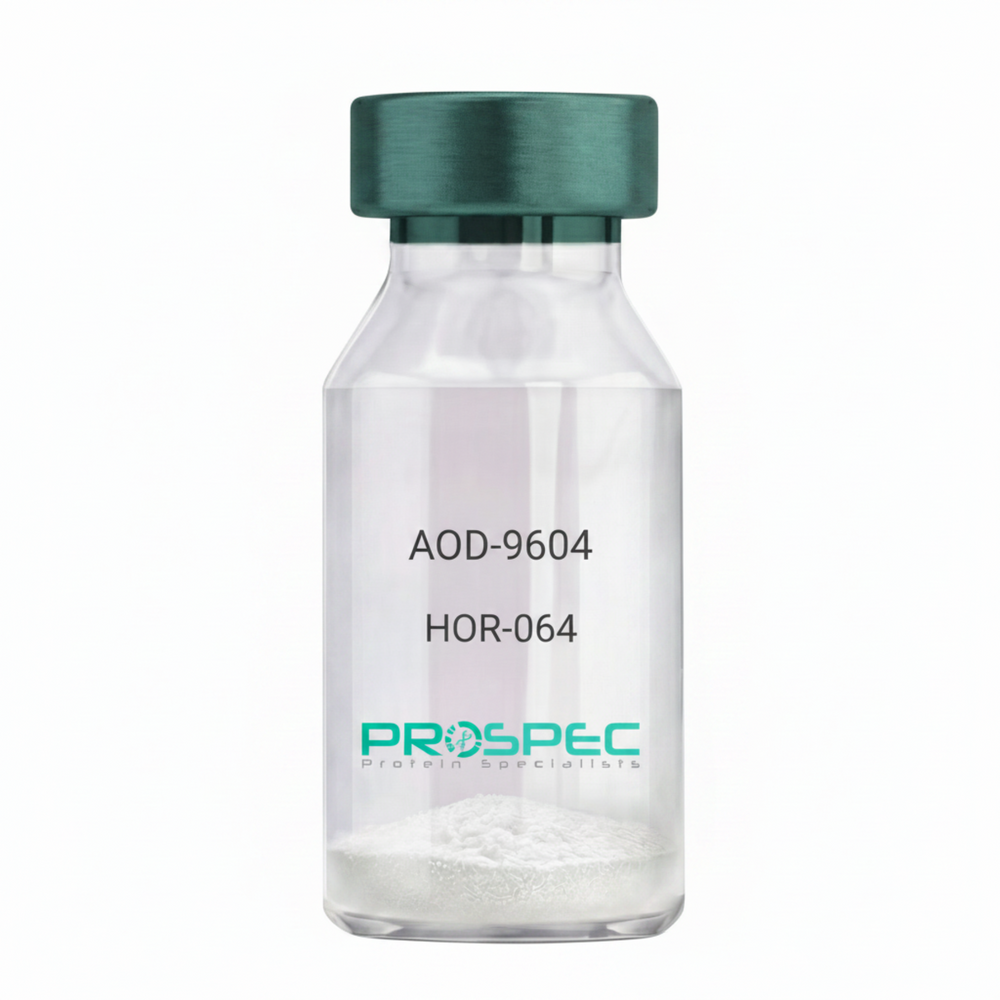
    AOD-9604

    Description:

    AOD-9604

    Product # :

    HOR-064

    Price :

    Quantity :

    Shipping Method :

    Room Temp Icon

    Shipped at Room temp

    Add To Cart

    More Info

    • description
    • formulation
    • purity
    • More Info

    Description

    AOD-9604 is a synthetic single, non-glycosylated polypeptide chain containing 16 amino acids, having a molecular mass of 1815 Dalton and a Molecular formula of C78H123N23O23 S2.

    Formulation

    The protein was lyophilized with no additives.

    Purity

    Greater than 97.0% as determined by analysis by RP-HPLC.

    More Info

    • Physical Appearance

      Sterile Filtered White lyophilized (freeze-dried) powder.

    • Stability

      Lyophilized AOD-9604 although stable at room temperature for 3 weeks, should be stored desiccated below -18°C. Upon reconstitution AOD-9604 should be stored at 4°C between 2-7 days and for future use below -18°C.
      For long term storage it is recommended to add a carrier protein (0.1% HSA or BSA).
      Please prevent freeze-thaw cycles.

    • Solubility

      It is recommended to reconstitute the lyophilized AOD-9604 in sterile 18MΩ-cm H2O not less than 100 µg/ml, which can then be further diluted to other aqueous solutions.

    • Amino Acid Sequence

      H-Tyr-Leu-Arg-Ile-Val-Gln-Cys-Arg-SerVal-Glu-Gly-Ser-Cys-Gly-Phe-OH (Disulfide bond).

    • Background

      AOD-9604 is a synthetic analog of the C-terminal fragment (177–191) AOD-9604 stimulates lipolysis (fat breakdown) without the unwanted growth-promoting or insulin-antagonizing effects of full-length hGH. AOD-9604 is a potent lipolytic tool in animal models and researchers focus on its regenerative properties in joint health and its ability to modulate beta3 adrenergic receptors without the systemic risks of growth hormone.

    ProSpec's products are furnished for LABORATORY RESEARCH USE ONLY. The product may not be used as drugs, agricultural or pesticidal products, food additives or household chemicals.

    AOD-9604
  • View Data Sheet

    Name :

    Osteocrin Human, HEK

    Description:

    Osteocrin Human Recombinant, HEK

    Osteocrin, Musclin, OSTN.

    Product # :

    PRO-2818

    Price :

    Quantity :

    Shipping Method :

    Ice Icon

    Shipped with Ice Packs

    Add To Cart

    More Info

    • description
    • source
    • formulation
    • purity
    • biological activity
    • More Info

    Description

    Osteocrin Human Recombinant is a single, glycosylated, polypeptide chain (28-133 a.a) containing a total of 112 amino acids and having a molecular mass of 12.5 kDa. Osteocrin is fused to a 6 a.a His-Tag at C-terminus and is purified by proprietary chromatographic techniques.

    Source

    HEK293 Cells.

    Formulation

    The Osteocrin solution (0.5mg/ml) contains 10% Glycerol and Phosphate-Buffered Saline (pH 7.4).

    Purity

    Greater than 95.0% as determined by SDS-PAGE.

    Biological Activity

    The ED50 range ≤ 20 ng/ml measured by its binding ability in a functional ELISA with Human NPRC.

    More Info

    • Synonyms

      Osteocrin, Musclin, OSTN.

    • Physical Appearance

      Sterile Filtered colorless solution.

    • Stability

      Store at 4°C if entire vial will be used within 2-4 weeks. Store, frozen at -20°C for longer periods of time. For long term storage it is recommended to add a carrier protein (0.1% HSA or BSA). Avoid multiple freeze-thaw cycles.

    • Amino Acid Sequence

      VDVTTTEAFD SGVIDVQSTP TVREEKSATD LTAKLLLLDE LVSLENDVIE TKKKRSFSGF GSPLDRLSAG SVDHKGKQRK VVDHPKRRFG IPMDRIGRNR LSNSRGHHHH HH.

    • Background

      Research has demonstrated that osteocrin influences bone formation by enhancing the anabolic effects of osteoblasts, the cells responsible for new bone formation. In addition to its skeletal roles, osteocrin has been shown to regulate cardiovascular functions by modulating blood pressure and cardiac hypertrophy. Furthermore, emerging evidence suggests that osteocrin may play a role in the central nervous system, impacting cognitive function and neuroprotection.

    ProSpec's products are furnished for LABORATORY RESEARCH USE ONLY. The product may not be used as drugs, agricultural or pesticidal products, food additives or household chemicals.

    Osteocrin Human
  • View Data Sheet

    Name :

    Lanreotide

    Description:

    Lanreotide

    Product # :

    HOR-282

    Price :

    Quantity :

    Shipping Method :

    Room Temp Icon

    Shipped at Room temp

    Add To Cart

    More Info

    • description
    • formulation
    • purity
    • More Info

    Description

    Lanreotide is an octapeptide, an analogue of a naturally occurring hormone, somatostatin.

    Formulation

    The protein (1mg/ml) was lyophilized with 5mg manntitol and 0.04mg tween-80.

    Purity

    Greater than 99.0% as determined by:
    (a) Analysis by RP-HPLC.
    (b) Analysis by SDS-PAGE.

    More Info

    • Introduction

      Lanreotide is a peptide inhibitor of a number of endocrine, neuroendocrine, exocrine and paracrine functions. It shows good affinity for peripheral somatostatin receptors (anterior pituitary and pancreatic). In contrast, its affinity for central receptors is much lower. This profile confers a good specificity of action at the level of growth hormone and digestive hormone secretion. Lanreotide shows a much longer duration of action than natural somatostatin. In addition, its marked selectivity for the secretion of growth hormone, compared to that of insulin, makes it a suitable candidate for the treatment of acromegaly. By inhibiting the synthesis of thyroid stimulating hormone (TSH), lanreotide also normalised thyroid function of patients with thyrotrophin secreting adenomas in 50% (8/16) of the per-protocol population treated for 6 months. There was no significant reduction in the size of the adenoma. Furthermore, the inhibitory action of lanreotide on intestinal exocrine secretion, d

    • Physical Appearance

      Sterile Filtered White lyophilized (freeze-dried) powder.

    • Stability

      Lyophilized Lanreotide although stable at room temperature for 3 weeks, should be stored desiccated below -18°C. Upon reconstitution Lanreotide should be stored at 4°C between 2-7 days and for future use below -18°C.For long term storage it is recommended to add a carrier protein (0.1% HSA or BSA).Please prevent freeze-thaw cycles.

    • Solubility

      It is recommended to reconstitute the lyophilized Lanreotide in sterile 18MΩ-cm H2O not less than 100 µg/ml, which can then be further diluted to other aqueous solutions.

    ProSpec's products are furnished for LABORATORY RESEARCH USE ONLY. The product may not be used as drugs, agricultural or pesticidal products, food additives or household chemicals.

    Lanreotide
  • View Data Sheet

    Name :

    Vimentin Human

    Description:

    Vimentin Human Recombinant

    Vimentin, Vim, FLJ36605.

    Product # :

    PRO-309

    Price :

    Quantity :

    Shipping Method :

    Room Temp Icon

    Shipped at Room temp

    Add To Cart

    More Info

    • description
    • source
    • formulation
    • purity
    • More Info

    Description

    Vimentin Human Recombinant produced in E.coli cells is a single non-glycosylated protein containing 465 amino acids chain and having a molecular mass of 53.5kDa. The Vimentin is purified by proprietary chromatographic techniques.

    Source

    Escherichia Coli.

    Formulation

    The Vimentin was lyophilized from a 0.2µm filtered concentrated solution in 30% Acetonitrile and 0.1% TFA.

    Purity

    Greater than 95.0% as determined by:
    (a) Analysis by RP-HPLC.
    (b) Analysis by SDS-PAGE.

    More Info

    • Introduction

      Vimentin expression in human malignant glioma cells depends on cellular density, algorithms of drug delivery and chemo/radio treatment. Vimentin and detyrosinated microtubules provide structural support for the extensive microtentacles observed in detached tumor cells and a mechanism to promote successful metastatic spread. Primary colorectal carcinomas display aberrant expression of vimentin, and have activated Notch and TGFbeta signaling pathways. Vimentin is a strong arterial substrate for transglutaminases. Transglutaminase-mediated vimentin dimerization results in a novel unifying pathway by which vasodilatory and remodeling responses may be regulated. Ablation of vimentin expression inhibits migration and invasion of colon and breast cancer cell lines. Vimentin is the main intermediate filament protein in mesenchymal cells and is therefore of value in the differential diagnosis of undifferentiated neoplasms.

    • Synonyms

      Vimentin, Vim, FLJ36605.

    • Physical Appearance

      Sterile Filtered White lyophilized (freeze-dried) powder.

    • Stability

      Lyophilized Vimentin although stable at room temperature for 3 weeks, should be stored desiccated below -18°C. Upon reconstitution Vimentin should be stored at 4°C between 2-7 days and for future use below -18°C.For long term storage it is recommended to add a carrier protein (0.1% HSA or BSA).Please prevent freeze-thaw cycles.

    • Solubility

      It is recommended to reconstitute the lyophilized Vimentin in sterile 4mM HCl not less than 100µg/ml, which can then be further diluted to other aqueous solutions.

    • Amino Acid Sequence

      STRSVSSSSY RRMFGGPGTA SRPSSSRSYV TTSTRTYSLG SALRPSTSRS LYASSPGGVY ATRSSAVRLR SSVPGVRLLQ DSVDFSLADA INTEFKNTRT NEKVELQELN DRFANYIDKV RFLEQQNKIL LAELEQLKGQ GKSRLGDLYE EEMRELRRQV DQLTNDKARV EVERDNLAED IMRLREKLQE EMLQREEAEN TLQSFRQDVD NASLARLDLE RKVESLQEEI AFLKKLHEEE IQELQAQIQE QHVQIDVDVS KPDLTAALRD VRQQYESVAA KNLQEAEEWY KSKFADLSEA ANRNNDALRQ AKQESTEYRR QVQSLTCEVD ALKGTNESLE RQMREMEENF AVEAANYQDT IGRLQDEIQN MKEEMARHLR EYQDLLNVKM ALDIEIATYR KLLEGEESRI SLPLPNFSSL NLRETNLDSL PLVDTHSKRT LLIKTVETRD GQVINETSQH HDDLE.

    ProSpec's products are furnished for LABORATORY RESEARCH USE ONLY. The product may not be used as drugs, agricultural or pesticidal products, food additives or household chemicals.

    Vimentin Human
  • View Data Sheet

    Name :

    EGF (Leu 21) Human

    Description:

    Epidermal Growth Factor (Leu-21) Human Recombinant

    Urogastrone, URG, EGF.

    Product # :

    CYT-466

    Price :

    Quantity :

    Shipping Method :

    Room Temp Icon

    Shipped at Room temp

    Add To Cart

    More Info

    • description
    • source
    • formulation
    • purity
    • biological activity
    • More Info

    Description

    EGF 21-Leu Human Recombinant produced in E.Coli is a single, non-glycosylated, polypeptide chain containing 53 amino acids and having a molecular mass of 6205 Dalton.The EGF 21-Leu is purified by proprietary chromatographic techniques.

    Source

    Escherichia Coli.

    Formulation

    The protein was lyophilized from a concentrated (1mg/ml) solution with no additives.

    Purity

    Greater than 98.0% as determined by(a) Analysis by RP-HPLC.
    (b) Analysis by SDS-PAGE.

    Biological Activity

    The ED50, calculated by the dose-dependant proliferation of MDCK cells is < 10ng/ml concentration corresponding to a Specific Activity of 100,000IU/mg.

    More Info

    • Introduction

      Epidermal growth factor has a profound effect on the differentiation of specific cells in vivo and is a potent mitogenic factor for a variety of cultured cells of both ectodermal and mesodermal origin. The EGF precursor is believed to exist as a membrane-bound molecule which is proteolytically cleaved to generate the 53-amino acid peptide hormone that stimulates cells to divide. EGF stimulates the growth of various epidermal and epithelial tissues in vivo and in vitro and of some fibroblasts in cell culture.

    • Synonyms

      Urogastrone, URG, EGF.

    • Physical Appearance

      Sterile Filtered White lyophilized (freeze-dried) powder.

    • Stability

      Lyophilized Epidermal Growth Factor 21 Leu although stable at room temperature for 3 weeks, should be stored desiccated below -18°C. Upon reconstitution EGF 21-Leu should be stored at 4°C between 2-7 days and for future use below -18°C.For long term storage it is recommended to add a carrier protein (0.1% HSA or BSA).Please prevent freeze-thaw cycles.

    • Solubility

      It is recommended to reconstitute the lyophilized Epidermal Growth Factor 21-Leu in sterile 18MΩ-cm H2O not less than 100µg/ml, which can then be further diluted to other aqueous solutions.

    • Amino Acid Sequence

      The sequence of the first five N-terminal amino acids was determined and was found to be Asn-Ser-Asp-Ser-Glu.

    • Background

      Deciphering the Potential of Epidermal Growth Factor (Leu-21) Human Recombinant: Unveiling Novel Insights and Therapeutic Implications

      Abstract:

      This concise research paper delves into the enigmatic landscape of Epidermal Growth Factor (Leu-21) Human Recombinant, illuminating its intricate molecular characteristics, signaling pathways, and promising therapeutic avenues. Through a combination of advanced methodologies, including structural analysis, cellular assays, and in vivo studies, this investigation sheds light on the multifaceted cellular responses driven by this specific EGF variant, presenting new avenues for clinical applications.

      Introduction:

      Central to cellular processes, Epidermal Growth Factor (EGF) stands as a pivotal cytokine. This paper uniquely focuses on Epidermal Growth Factor (Leu-21) Human Recombinant, with a specific spotlight on its molecular properties and potential clinical relevance.

      Molecular Insights and Signaling Dynamics:

      The crux of its functionality lies in the interaction between Epidermal Growth Factor (Leu-21) and its cognate receptor, initiating a cascade of intracellular events. Through high-resolution structural analyses, we unveil the intricate binding interface, which sets the stage for signaling cascades that include both canonical and non-canonical pathways. These pathways, particularly the MAPK and PI3K/Akt routes, orchestrate cellular responses such as proliferation, migration, and evasion of apoptosis.

      Experimental Profiling and Cellular Responses:

      In decoding the cellular ramifications, a repertoire of in vitro assays has been meticulously employed. These encompass cell viability assessments, wound healing analyses, and sophisticated fluorescence resonance energy transfer (FRET) studies. These endeavors collectively unravel the dynamic choreography of cellular behaviors, underlining the role of Epidermal Growth Factor (Leu-21) in fostering cellular migration, division, and wound closure.

      In Vivo Implications and Therapeutic Prospects:

      Translating these in vitro insights to clinical potential, in vivo investigations present a compelling narrative. Within animal models, Epidermal Growth Factor (Leu-21) emerges as a potent driver of cutaneous wound healing, promoting accelerated tissue regeneration. Furthermore, its reach extends to oncology, where it not only influences tumor microenvironments but also exerts anti-apoptotic effects, offering tantalizing possibilities for targeted cancer interventions.

      Future Challenges and Prospects:

      While these discoveries hold immense promise, challenges linger. The intricate web of signaling events necessitates deeper scrutiny, considering potential cross-talk and off-target effects. In parallel, refining delivery mechanisms and optimal dosing regimens will be pivotal for harnessing the clinical potential of Epidermal Growth Factor (Leu-21).

      Conclusion:

      In a symphony of complex molecular insights and tangible therapeutic potential, Epidermal Growth Factor (Leu-21) Human Recombinant emerges as a captivating enigma. Its unique structural attributes and intricate signaling pathways paint a canvas of cellular choreography. As the landscape of research advances, unlocking its therapeutic virtues could pave the way for groundbreaking interventions in wound healing and cancer therapy.

      What is the molecular weight/Mw of EGF Protein?
      EGF Protein has a total Mw of 6.2kDa.

      What is the source or expression system of EGF Protein?
      Escherichia Coli.

      What is the Purity of EGF Protein?
      EGF Protein is >98% pure as determined by SDS-PAGE.

      What is the Biological Activity of EGF Protein?
      The ED50, calculated by the dose-dependant proliferation of MDCK cells is < 10ng/ml concentration corresponding to a Specific Activity of 100,000IU/mg.

      What is the amino acid sequence of EGF Protein?
      EGF Protein is composed from 53 amino acids.

      What applications can EGF Protein be used in?
      EGF Protein can probably be used in western blot, ELISA and Lateral Flow.

      What is the endotoxin level for EGF Protein?
      The endotoxin level is minimal, EGF Protein was purified using conventional chromatography techniques.

    ProSpec's products are furnished for LABORATORY RESEARCH USE ONLY. The product may not be used as drugs, agricultural or pesticidal products, food additives or household chemicals.

    Egf 21 Leu Human
  • View Data Sheet

    Name :

    RLN2 Human, Sf9

    Description:

    Relaxin-2 Human Recombinant, Sf9

    Relaxin 2, Relaxin, Ovarian, Of Pregnancy, Prorelaxin H2, Relaxin H2, H2-Preprorelaxin, Relaxin 2 (H2), BA12D24.1.1, BA12D24.1.2, H2-RLX, RLXH2, H2.

    Product # :

    PRO-2406

    Price :

    Quantity :

    Shipping Method :

    Ice Icon

    Shipped with Ice Packs

    Add To Cart

    More Info

    • description
    • source
    • formulation
    • purity
    • More Info

    Description

    RLN2 Human Recombinant produced in Sf9 Baculovirus cells is a single, glycosylated polypeptide chain containing 170 amino acids (25-185a.a.) and having a molecular mass of 19.3kDa (Molecular size on SDS-PAGE will appear at approximately 18-28kDa).RLN2 is expressed with a 6 amino acids His tag at C-Terminus and purified by proprietary chromatographic techniques.

    Source

    Sf9, Baculovirus cells.

    Formulation

    RLN2 protein solution (0.5mg/ml) contains Phosphate Buffered Saline (pH 7.4) and 10% glycerol.

    Purity

    Greater than 85.0% as determined by SDS-PAGE.

    More Info

    • Introduction

      Prorelaxin H2 (RLN2) is a member of the insulin gene superfamily. This family which is produced by the ovary, targets the mammalian reproductive system to ripen the cervix, elongate the pubic symphysis and inhibit uterine contraction. It may also have other roles in boosting sperm motility, regulating blood pressure, controlling heart rate and releasing oxytocin and vasopressin. RLN2 is a peptide hormone linked to several therapeutically relevant physiological effects, including regulation of collagen metabolism and multiple vascular control pathways. The active form of the RLN2 protein consists of an A chain and a B chain linked by disulfide bonds.

    • Synonyms

      Relaxin 2, Relaxin, Ovarian, Of Pregnancy, Prorelaxin H2, Relaxin H2, H2-Preprorelaxin, Relaxin 2 (H2), BA12D24.1.1, BA12D24.1.2, H2-RLX, RLXH2, H2.

    • Physical Appearance

      Sterile Filtered colorless solution.

    • Stability

      Store at 4°C if entire vial will be used within 2-4 weeks. Store, frozen at -20°C for longer periods of time. For long term storage it is recommended to add a carrier protein (0.1% HSA or BSA).Avoid multiple freeze-thaw cycles.

    • Amino Acid Sequence

      ADPDSWMEEV IKLCGRELVR AQIAICGMST WSKRSLSQED APQTPRPVAE IVPSFINKDT ETINMMSEFV ANLPQELKLT LSEMQPALPQ LQQHVPVLKD SSLLFEEFKK LIRNRQSEAA DSSPSELKYL GLDTHSRKKR QLYSALANKC CHVGCTKRSL ARFCHHHHHH.

    ProSpec's products are furnished for LABORATORY RESEARCH USE ONLY. The product may not be used as drugs, agricultural or pesticidal products, food additives or household chemicals.

    Rln2 Human Sf9
  • View Data Sheet

    Name :

    Y.Enterocolitica (O:9) YopD

    Description:

    Yersinia Enterocolitica (O:9) YopD Recombinant

    Product # :

    PRO-2276

    Price :

    Quantity :

    Shipping Method :

    Ice Icon

    Shipped with Ice Packs

    Add To Cart

    More Info

    • description
    • source
    • formulation
    • purity
    • More Info

    Description

    Recombinant Yersinia Enterocolitica (O:9) YopD produced in SF9 is a glycosylated, polypeptide chain having a calculated molecular mass of 34,603 Dalton. Y.Enterocolitica (O:9) YopD is expressed with a 10xHis tag at N-terminus and purified by proprietary chromatographic techniques.

    Source

    Escherichia Coli.

    Formulation

    Y.Enterocolitica (O:9) YopD is supplied in 20mM HEPES buffer pH-7.6, 250mM NaCl and 20% glycerol.

    Purity

    Greater than 80.0% as determined by SDS-PAGE.

    More Info

    • Introduction

      Yersinia enterocolitica is a Gram-negative bacillus-shaped bacterium, which is a member of the Enterobacteriaceae family. Y.Enterocolitica is motile at temperatures between 22-29°C, however becomes non-motile at normal human body temperature. Y. Enterocolitica infection causes the yersiniosis disease, which is an animal-borne disease occurring in humans, as well as in a various groups of animals such as cattle, deer, pigs, and birds. Yersinia enterocolitica is a heterogeneous group of strains, which are conventionally classified by bio-typing into six bio-groups on the basis of phenotypic characteristics, and by serotyping into more than 57 “O” serogroups, on the basis of their O (lipopolysaccharide or LPS) surface antigen. Five of the six biogroups (1B and 2–5) are considered as pathogens. Nevertheless, only a few of these serogroups have been linked with disease in either humans or animals. Strains which belong to serogroups O:3 (biogroup 4), O:5,27 (biogroups 2 and 3), O:8 (biogroup 1B), and O:9 (biogroup 2) are most frequently isolated worldwide from human samples. Still, the main Y. enterocolitica serogroup in many European countries is serogroup O:3 followed by O:9, whereas the serogroup O:8 is mostly detected in the United States.

    • Physical Appearance

      Sterile Filtered clear solution.

    • Stability

      Store at 4°C if entire vial will be used within 2-4 weeks. Store, frozen at -20°C for longer periods of time. Avoid multiple freeze-thaw cycles.

    • Immunological Functions

      1. Binds IgG- and IgM- and IgA-type human antibodies.2. Immunodot test with positive/negative sera panels.

    ProSpec's products are furnished for LABORATORY RESEARCH USE ONLY. The product may not be used as drugs, agricultural or pesticidal products, food additives or household chemicals.

    Yenterocolitica O 9 Yopd
  • View Data Sheet

    Name :

    LGMN Mouse

    Description:

    Legumain Mouse Recombinant

    Legumain, Asparaginyl endopeptidase, Protease, cysteine 1.

    Product # :

    ENZ-933

    Price :

    Quantity :

    Shipping Method :

    Ice Icon

    Shipped with Ice Packs

    Add To Cart

    More Info

    • description
    • source
    • formulation
    • purity
    • More Info
    • sds-page

    Description

    LGMN produced in Sf9 Baculovirus cells is a single, glycosylated polypeptide chain containing 426 amino acids (18-435a.a.) and having a molecular mass of 48.6kDa. LGMN is expressed with an 8 amino acid His tag at C-Terminus and purified by proprietary chromatographic techniques.

    Source

    Sf9, Baculovirus cells.

    Formulation

    LGMN protein solution (0.5mg/ml) contains Phosphate Buffered Saline (pH 7.4) and 10% glycerol.

    Purity

    Greater than 90.0% as determined by SDS-PAGE.

    sds-page

    LGMN Mouse sds-page - Product image 1

    More Info

    • Introduction

      Legumain, also known as LGMN is a lysosomal cysteine protease which is found in all mouse tissues, however it was mainly abundant in the kidney as well as placenta. LGMN plays an essential role in the endosomal/lysosomal degradation system as the Legumain deficiency causes the accumulation of pro cathepsins B, H & L, another group of lysosomal cysteine proteases. Furthermore, over expression of LGMN in tumors is important for invasion/metastasis.

    • Synonyms

      Legumain, Asparaginyl endopeptidase, Protease, cysteine 1.

    • Physical Appearance

      Sterile filtered colorless solution.

    • Stability

      Store at 4°C if entire vial will be used within 2-4 weeks.Store, frozen at -20°C for longer periods of time. For long term storage it is recommended to add a carrier protein (0.1% HSA or BSA).Avoid multiple freeze-thaw cycles.

    • Amino Acid Sequence

      VPVGVDDPED GGKHWVVIVA GSNGWYNYRH QADACHAYQI IHRNGIPDEQ IIVMMYDDIA NSEENPTPGV VINRPNGTDV YKGVLKDYTG EDVTPENFLA VLRGDAEAVK GKGSGKVLKS GPRDHVFIYF TDHGATGILV FPNDDLHVKD LNKTIRYMYE HKMYQKMVFY IEACESGSMM NHLPDDINVY ATTAANPKES SYACYYDEER GTYLGDWYSV NWMEDSDVED LTKETLHKQY HLVKSHTNTS HVMQYGNKSI STMKVMQFQG MKHRASSPIS LPPVTHLDLT PSPDVPLTIL KRKLLRTNDV KESQNLIGQI QQFLDARHVI EKSVHKIVSL LAGFGETAER HLSERTMLTA HDCYQEAVTH FRTHCFNWHS VTYEHALRYL YVLANLCEAP YPIDRIEMAM DKVCLSHYLE HHHHHH.

    ProSpec's products are furnished for LABORATORY RESEARCH USE ONLY. The product may not be used as drugs, agricultural or pesticidal products, food additives or household chemicals.

    Lgmn Mouse
  • View Data Sheet

    Name :

    CHGB Human

    Description:

    Chromogranin B Human Recombinant

    SCG1, Secretogranin 1, secretogranin B, CHGB, Sgl, CgB.

    Product # :

    PRO-824

    Price :

    Quantity :

    Shipping Method :

    Ice Icon

    Shipped with Ice Packs

    Add To Cart

    More Info

    • description
    • source
    • formulation
    • purity
    • More Info

    Description

    CHGB Human Recombinant produced in E.Coli is a single, non-glycosylated, polypeptide chain containing 677 amino acids (21-677 a.a.) and having a molecular mass of 78.4kDa. CHGB protein is fused to a 20 amino acid His-Tag at N-terminus and purified by standard chromatography.

    Source

    Escherichia Coli.

    Formulation

    The CHGB protein 0.25mg/ml solution containing 20mM Tris-HCl pH-8, 0.15M NaCl & 10% glycerol.

    Purity

    Greater than 80% as determined by SDS-PAGE.

    More Info

    • Introduction

      CHGB is a neuroendocrine secretory granule protein, that is the precursor for other biologically active peptides. CHGB is part of the chromogranin/secretogranin protein family and is expressed in the adrenal medulla, and in pheochromocytoma.

    • Synonyms

      SCG1, Secretogranin 1, secretogranin B, CHGB, Sgl, CgB.

    • Physical Appearance

      Sterile filtered colorless solution.

    • Stability

      Store at 4°C if entire vial will be used within 2-4 weeks. Store, frozen at -20°C for longer periods of time. For long term storage it is recommended to add a carrier protein (0.1% HSA or BSA).Avoid multiple freeze-thaw cycles.

    • Amino Acid Sequence

      MGSSHHHHHH SSGLVPRGSH MPVDNRNHNE GMVTRCIIEV LSNALSKSSA PPITPECRQV LKTSRKDVKD KETTENENTK FEVRLLRDPA DASEAHESSS RGEAGAPGEE DIQGPTKADT EKWAEGGGHS RERADEPQWS LYPSDSQVSE EVKTRHSEKS QREDEEEEEG ENYQKGERGE DSSEEKHLEE PGETQNAFLN ERKQASAIKK EELVARSETH AAGHSQEKTH SREKSSQESG EEAGSQENHP QESKGQPRSQ EESEEGEEDA TSEVDKRRTR PRHHHGRSRP DRSSQGGSLP SEEKGHPQEE SEESNVSMAS LGEKRDHHST HYRASEEEPE YGEEIKGYPG VQAPEDLEWE RYRGRGSEEY RAPRPQSEES WDEEDKRNYP SLELDKMAHG YGEESEEERG LEPGKGRHHR GRGGEPRAYF MSDTREEKRF LGEGHHRVQE NQMDKARRHP QGAWKELDRN YLNYGEEGAP GKWQQQGDLQ DTKENREEAR FQDKQYSSHH TAEKRKRLGE LFNPYYDPLQ WKSSHFERRD NMNDNFLEGE EENELTLNEK NFFPEYNYDW WEKKPFSEDV NWGYEKRNLA RVPKLDLKRQ YDRVAQLDQL LHYRKKSAEF PDFYDSEEPV STHQEAENEK DRADQTVLTE DEKKELENLA AMDLELQKIA EKFSQRG.

    ProSpec's products are furnished for LABORATORY RESEARCH USE ONLY. The product may not be used as drugs, agricultural or pesticidal products, food additives or household chemicals.

    Chgb Human
  • View Data Sheet

    Name :

    PSMB2 Human

    Description:

    Proteasome Subunit Beta Type 2 Human Recombinant

    Proteasome subunit beta type-2, Macropain subunit C7-I, Multicatalytic endopeptidase complex subunit C7-I, Proteasome component C7-I, PSMB2, HC7-I.

    Product # :

    ENZ-204

    Price :

    Quantity :

    Shipping Method :

    Ice Icon

    Shipped with Ice Packs

    Add To Cart

    More Info

    • description
    • source
    • formulation
    • purity
    • More Info

    Description

    PSMB2 Human Recombinant produced in E.coli is a single, non-glycosylated polypeptide chain containing 221 amino acids (1-201) and having a molecular mass of 24.9kDa.PSMB2 is fused to a 20 amino acid His-tag at N-terminus & purified by proprietary chromatographic techniques.

    Source

    Escherichia Coli.

    Formulation

    The PSMB2 solution (0.5mg/ml) contains 20mM Tris-HCl buffer (pH 8.0), 1mM DTT, 30% glycerol and 0.1M NaCl.

    Purity

    Greater than 90.0% as determined by SDS-PAGE.

    More Info

    • Introduction

      Proteasome subunit beta type-2 (PSMB2) belongs to the proteasome T1B family, which is a 20S core beta subunit. The proteasome is a multicatalytic proteinase complex with a highly ordered ring-shaped 20S core structure. Proteasomes are spread throughout eukaryotic cells at a high concentration and cleave peptides in an ATP/ubiquitin-dependent process in a non-lysosomal pathway. A crucial function of a modified proteasome, the immunoproteasome, is the processing of class I MHC peptides. PSMB2 is up-regulated in ovarian cancer cell lines.

    • Synonyms

      Proteasome subunit beta type-2, Macropain subunit C7-I, Multicatalytic endopeptidase complex subunit C7-I, Proteasome component C7-I, PSMB2, HC7-I.

    • Physical Appearance

      Sterile Filtered colorless solution.

    • Stability

      Store at 4°C if entire vial will be used within 2-4 weeks. Store, frozen at -20°C for longer periods of time. For long term storage it is recommended to add a carrier protein (0.1% HSA or BSA).Avoid multiple freeze-thaw cycles.

    • Amino Acid Sequence

      MGSSHHHHHH SSGLVPRGSH MEYLIGIQGP DYVLVASDRV AASNIVQMKD DHDKMFKMSE KILLLCVGEA GDTVQFAEYI QKNVQLYKMR NGYELSPTAA ANFTRRNLAD CLRSRTPYHV NLLLAGYDEH EGPALYYMDY LAALAKAPFA AHGYGAFLTL SILDRYYTPT ISRERAVELL
      RKCLEELQKR FILNLPTFSV RIIDKNGIHD LDNISFPKQG S.

    ProSpec's products are furnished for LABORATORY RESEARCH USE ONLY. The product may not be used as drugs, agricultural or pesticidal products, food additives or household chemicals.

    Psmb2 Human
  • View Data Sheet

    Name :

    Resistin Human, HEK

    Description:

    Resistin Human Recombinant, HEK

    RETN,ADSF,FIZZ3,RETN1,RSTN,XCP1,resistin precursor, Adipose tissue-specific secretory factor, ADSFMGC126609, C/EBP-epsilon-regulated myeloid-specific secreted cysteine-rich protein, Cysteine-rich secreted protein A12-alpha-like 2, Cysteine-rich secreted protein FIZZ3, FIZZ3; FIZZ3MGC126603, found in inflammatory zone 3, HXCP1.

    Product # :

    CYT-1183

    Price :

    Quantity :

    Shipping Method :

    Ice Icon

    Shipped with Ice Packs

    Add To Cart

    More Info

    • description
    • source
    • formulation
    • purity
    • More Info

    Description

    Resistin Human Recombinant produced in HEK293 cells is a single, glycosylated polypeptide chain (19-108 a.a) containing 96 amino acids and having a molecular mass of 10.3 kDa.Resistin is fused to a 6 amino acid His-tag at C-terminus & purified by proprietary chromatographic techniques.

    Source

    HEK293 cells.

    Formulation

    Resistin protein (1mg/ml) contains 20% glycerol and 20mM Sodium citrate (pH3.0).

    Purity

    Greater than 95.0% as determined by SDS-PAGE.

    More Info

    • Introduction

      Resistin, also known as adipose tissue-specific secretory factor (ADSF) is a cysteine-rich peptide derived from adipose tissue. Resistin takes part in the inflammatory response, glucose metabolism, and angiogenesis.Resistin blocks insulinstimulated uptake of glucose by adipocytes and promote glucose release by hepatocytes. As such,Resistin considered to participate in diet‑induced insulin-sensitivity. Resistin causes high levels of lowdensity lipoprotein (LDL), increasing the risk of heart disease.

    • Synonyms

      RETN,ADSF,FIZZ3,RETN1,RSTN,XCP1,resistin precursor, Adipose tissue-specific secretory factor, ADSFMGC126609, C/EBP-epsilon-regulated myeloid-specific secreted cysteine-rich protein, Cysteine-rich secreted protein A12-alpha-like 2, Cysteine-rich secreted protein FIZZ3, FIZZ3; FIZZ3MGC126603, found in inflammatory zone 3, HXCP1.

    • Physical Appearance

      Sterile Filtered colorless solution.

    • Stability

      Store at 4°C if entire vial will be used within 2-4 weeks. Store, frozen at -20°C for longer periods of time. For long term storage it is recommended to add a carrier protein (0.1% HSA or BSA).Avoid multiple freeze-thaw cycles.

    • Amino Acid Sequence

      KTLCSMEEAI NERIQEVAGS LIFRAISSIG LECQSVTSRG DLATCPRGFA VTGCTCGSAC GSWDVRAETT CHCQCAGMDW TGARCCRVQP HHHHHH

    ProSpec's products are furnished for LABORATORY RESEARCH USE ONLY. The product may not be used as drugs, agricultural or pesticidal products, food additives or household chemicals.

    Resistin Protein
  • View Data Sheet

    Name :

    SPP1 Human, Active

    Description:

    Osteopontin Human Recombinant, BioActive

    OPN, SPP-1, BNSP, BSPI, ETA-1, Bone sialoprotein 1, BSP I.Early T lymphocyte activation 1, ETA 1, ETA1, MGC110940, Nephropontin, Secreted phosphoprotein 1, SPP 1, SPP1, urinary stone protein, uropontin.

    Product # :

    CYT-1166

    Price :

    Quantity :

    Shipping Method :

    Ice Icon

    Shipped with Ice Packs

    Add To Cart

    More Info

    • description
    • source
    • formulation
    • purity
    • biological activity
    • More Info

    Description

    SPP1 Human Recombinant produced in E.Coli is a single, non-glycosylated polypeptide chain containing 321 amino acids (17-314 a.a.) and having a molecular mass of 36.2kDa. SPP1 is fused to a 23 amino acid His tag at N-Terminus and purified by proprietary chromatographic techniques.

    Source

    Escherichia Coli.

    Formulation

    The SPP1 solution (1mg/ml) contains 20mM Tris-HCl buffer (pH 7.5), 1mM DTT, 10% glycerol and 2mM EDTA.

    Purity

    Greater than 90.0% as determined by SDS-PAGE.

    Biological Activity

    Measured by the ability of the immobilized protein to support the adhesion of HEK293 human embryonic kidney cells. When cells are added to OPN coated plates 10ug/ml. This effect is more to 40%.

    More Info

    • Introduction

      Osteopontin is a glycoprotein that was primarilyfound in osteoblasts and takes part in bone remodeling, immune functions in fibroblasts, macrophages, & lymphocytes during inflammation and wound healing. SPP1 highlybinds to hydroxyapatite. SPP1 forms an integral part of the mineralized matrix. SPP1 is vital to cell-matrix interaction.
      Secreted Phosphoprotein-1 protects against cardiac ischemia-reperfusion injury through late preconditioning. Expression of Ostepontin and CD44 in hepatocellular carcinoma is linked to advanced tumor stage &leads to prognosis information. SPP1 is the most over-expressed gene in intrahepatic cholangiocarcinoma. Secreted Phosphoprotein-1 overexpression is related with interstitial lung diseases.

    • Synonyms

      OPN, SPP-1, BNSP, BSPI, ETA-1, Bone sialoprotein 1, BSP I.Early T lymphocyte activation 1, ETA 1, ETA1, MGC110940, Nephropontin, Secreted phosphoprotein 1, SPP 1, SPP1, urinary stone protein, uropontin.

    • Physical Appearance

      Sterile Filtered clear colorless solution.

    • Stability

      Store at 4°C if entire vial will be used within 2-4 weeks. Store, frozen at -20°C for longer periods of time. For long term storage it is recommended to add a carrier protein (0.1% HSA or BSA).Avoid multiple freeze-thaw cycles.

    • Amino Acid Sequence

      MGSSHHHHHH SSGLVPRGSH RSMIPVKQAD SGSSEEKQLY NKYPDAVATW LNPDPSQKQN LLAPQNAVSS EETNDFKQET LPSKSNESHD HMDDMDDEDD DDHVDSQDSI DSNDSDDVDD TDDSHQSDES HHSDESDELV TDFPTDLPAT EVFTPVVPTV DTYDGRGDSV VYGLRSKSKK FRRPDIQYPD ATDEDITSHM ESEELNGAYK AIPVAQDLNA PSDWDSRGKD SYETSQLDDQ SAETHSHKQS RLYKRKANDE SNEHSDVIDS QELSKVSREF HSHEFHSHED MLVVDPKSKE EDKHLKFRIS HELDSASSEV N.

    ProSpec's products are furnished for LABORATORY RESEARCH USE ONLY. The product may not be used as drugs, agricultural or pesticidal products, food additives or household chemicals.

    Osteopontin Human
  • View Data Sheet

    Name :

    ERH Human

    Description:

    Enhancer of Rudimentary Human Recombinant

    Enhancer of rudimentary homolog, ERH, DROER, FLJ27340.

    Product # :

    PRO-121

    Price :

    Quantity :

    Shipping Method :

    Ice Icon

    Shipped with Ice Packs

    Add To Cart

    More Info

    • description
    • source
    • formulation
    • purity
    • More Info

    Description

    ERH Human Recombinant fused with a 23 amino acid His tag at N-terminus produced in E.Coli is a single, non-glycosylated, polypeptide chain containing 127 amino acids (1-104 a.a.) and having a molecular mass of 14.6kDa. The ERH is purified by proprietary chromatographic techniques.

    Source

    Escherichia Coli.

    Formulation

    The ERH solution (1 mg/ml) contains 20mM Tris-HCl buffer (pH8.0), 20% glycerol and 0.1M NaCl.

    Purity

    Greater than 95.0% as determined by SDS-PAGE.

    More Info

    • Introduction

      Enhancer of rudimentary homolog (ERH) is a ubiquitously expressed transcriptional coregulator which is highly conserved among eukaryotes. ERH may have a role in cell cycle regulation and pyrimidine biosynthesis. ERH has two casein kinase II phosphorylation sites which are thought to upset the ability of ERH to dimerize.

    • Synonyms

      Enhancer of rudimentary homolog, ERH, DROER, FLJ27340.

    • Physical Appearance

      Sterile Filtered colorless solution.

    • Stability

      Store at 4°C if entire vial will be used within 2-4 weeks. Store, frozen at -20°C for longer periods of time. For long term storage it is recommended to add a carrier protein (0.1% HSA or BSA).Avoid multiple freeze-thaw cycles.

    • Amino Acid Sequence

      MGSSHHHHHH SSGLVPRGSH MGSMSHTILL VQPTKRPEGR TYADYESVNE CMEGVCKMYE EHLKRMNPNS PSITYDISQL FDFIDDLADL SCLVYRADTQ TYQPYNKDWI KEKIYVLLRR QAQQAGK.

    ProSpec's products are furnished for LABORATORY RESEARCH USE ONLY. The product may not be used as drugs, agricultural or pesticidal products, food additives or household chemicals.

    Erh Human
  • View Data Sheet

    Name :

    IFIH1 Human

    Description:

    Interferon Induced With Helicase C Domain 1 Human Recombinant

    Interferon-induced helicase C domain-containing protein 1, Clinically amyopathic dermatomyositis autoantigen 140 kDa, CADM-140 autoantigen, Helicase with 2 CARD domains, Helicard, Interferon-induced with helicase C domain protein 1, Melanoma differentiation-associated protein 5, MDA-5, Murabutide down-regulated protein, RIG-I-like receptor 2, RLR-2, RNA helicase-DEAD box protein 116, IFIH1, MDA5, RH116, Hlcd, IDDM19.

    Product # :

    PRO-1505

    Price :

    Quantity :

    Shipping Method :

    Ice Icon

    Shipped with Ice Packs

    Add To Cart

    More Info

    • description
    • source
    • formulation
    • purity
    • More Info

    Description

    IFIH1 Human Recombinant produced in SF9 is a glycosylated, polypeptide chain having a calculated molecular mass of 152,000 Dalton. IFIH1 is expressed with a -10xHis tag at N-terminus and purified by proprietary chromatographic techniques.

    Source

    Sf9 Insect Cells.

    Formulation

    IFIH1 is supplied in 20mM HEPES buffer pH-7.9, 550mM NaCl and 6M Urea.

    Purity

    Greater than 93.0% as determined by SDS-PAGE.

    More Info

    • Introduction

      IFIH1 is a DEAD box protein which is upregulated in response to treatment with beta-interferon and a protein kinase C-activating compound, mezerein. Irreversible reprogramming of melanomas can be attained by therapy with both these agents; treatment with either agent alone only achieves reversible differentiation. DEAD box proteins are implicated in several cellular processes involving alteration of RNA secondary structure such as translation initiation, nuclear and mitochondrial splicing, and ribosome and spliceosome assembly.

    • Synonyms

      Interferon-induced helicase C domain-containing protein 1, Clinically amyopathic dermatomyositis autoantigen 140 kDa, CADM-140 autoantigen, Helicase with 2 CARD domains, Helicard, Interferon-induced with helicase C domain protein 1, Melanoma differentiation-associated protein 5, MDA-5, Murabutide down-regulated protein, RIG-I-like receptor 2, RLR-2, RNA helicase-DEAD box protein 116, IFIH1, MDA5, RH116, Hlcd, IDDM19.

    • Physical Appearance

      Sterile Filtered clear solution.

    • Stability

      Store at 4°C if entire vial will be used within 2-4 weeks. Store, frozen at -20°C for longer periods of time. Avoid multiple freeze-thaw cycles.

    ProSpec's products are furnished for LABORATORY RESEARCH USE ONLY. The product may not be used as drugs, agricultural or pesticidal products, food additives or household chemicals.

    Ifih1 Human
  • View Data Sheet

    Name :

    HERC5 Human

    Description:

    HECT and RLD Domain Containing E3 Ubiquitin Protein Ligase 5 Human Recombinant

    HERC5, HECT and RLD Domain Containing E3 Ubiquitin Protein Ligase 5, CEB1, Hect Domain and RLD 5, Cyclin-E-Binding Protein 1, CEBP1, HECT Domain and RCC1-Like Domain-Containing Protein 5, E3 ISG15--Protein Ligase HERC5, Probable E3 Ubiquitin-Protein Ligase HERC5, EC 6.3.2.- , EC 6.3.2.

    Product # :

    ENZ-797

    Price :

    Quantity :

    Shipping Method :

    Ice Icon

    Shipped with Ice Packs

    Add To Cart

    More Info

    • description
    • source
    • formulation
    • purity
    • More Info

    Description

    HERC5 Human Recombinant produced in E.Coli is a single, non-glycosylated polypeptide chain containing 367 amino acids (681-1024 a.a.) and having a molecular mass of 43kDa. HERC5 is fused to a 23 amino acid His-tag at N-terminus.

    Source

    Escherichia Coli.

    Formulation

    HERC5 protein solution (1mg/ml) contains 20mM Tris-HCl buffer (pH 8.0), 0.4M Urea and 10% glycerol.

    Purity

    Greater than 90.0% as determined by SDS-PAGE.

    More Info

    • Introduction

      HECT and RLD Domain Containing E3 Ubiquitin Protein Ligase 5 (HERC5) is a member of the HERC family of ubiquitin ligases, found in a cluster of HERC family genes on chromosome 4. HERC5 is a protein with a HECT domain and 5 RCC1 repeats. The HERC5 protein localizes to the cytoplasm and perinuclear region and serves as an INF-induced E3 protein ligase that mediates ISGylation of protein targets. HERC5 exhibits antiviral activity towards HIV-1, influenza A virus and human papillomavirus. HERC5 is a major E3 ligase for ISG15 conjugation. HERC5 also serves as a positive regulator of innate antiviral response in cells induced by INF. Pro-inflammatory cytokines upregulate HERC5 in endothelial cells. HERC5 is physically connected with polyribosomes, broadly modifies recently synthesized proteins in a cotranslational fashion.

    • Synonyms

      HERC5, HECT and RLD Domain Containing E3 Ubiquitin Protein Ligase 5, CEB1, Hect Domain and RLD 5, Cyclin-E-Binding Protein 1, CEBP1, HECT Domain and RCC1-Like Domain-Containing Protein 5, E3 ISG15--Protein Ligase HERC5, Probable E3 Ubiquitin-Protein Ligase HERC5, EC 6.3.2.- , EC 6.3.2.

    • Physical Appearance

      Sterile Filtered colorless solution.

    • Stability

      Store at 4°C if entire vial will be used within 2-4 weeks. Store, frozen at -20°C for longer periods of time. For long term storage it is recommended to add a carrier protein (0.1% HSA or BSA).Avoid multiple freeze-thaw cycles.

    • Amino Acid Sequence

      MGSSHHHHHH SSGLVPRGSH MGSFDLTVRR NHLIEDVLNQ LSQFENEDLR KELWVSFSGE IGYDLGGVKK EFFYCLFAEM IQPEYGMFMY PEGASCMWFP VKPKFEKKRY FFFGVLCGLS LFNCNVANLP FPLALFKKLL DQMPSLEDLK ELSPDLGKNL QTLLDDEGDN FEEVFYIHFN VHWDRNDTNL IPNGSSITVN QTNKRDYVSK YINYIFNDSV KAVYEEFRRG FYKMCDEDII KLFHPEELKD VIVGNTDYDW KTFEKNARYE PGYNSSHPTI VMFWKAFHKL TLEEKKKFLV FLTGTDRLQM KDLNNMKITF CCPESWNERD PIRALTCFSV LFLPKYSTME TVEEALQEAI NNNRGFG.

    ProSpec's products are furnished for LABORATORY RESEARCH USE ONLY. The product may not be used as drugs, agricultural or pesticidal products, food additives or household chemicals.

    Herc5 Human
  • View Data Sheet

    Name :

    SCRN1 Human

    Description:

    Secernin 1 Human Recombinant

    Secernin-1, SES1, KIAA0193, Secernin 1.

    Product # :

    PRO-2212

    Price :

    Quantity :

    Shipping Method :

    Ice Icon

    Shipped with Ice Packs

    Add To Cart

    More Info

    • description
    • source
    • formulation
    • purity
    • More Info

    Description

    SCRN1 Human Recombinant produced in E.Coli is a single, non-glycosylated polypeptide chain containing 437 amino acids (1-414 a.a) and having a molecular mass of 48.8kDa. SCRN1 is fused to a 23 amino acid His-tag at N-terminus & purified by proprietary chromatographic techniques.

    Source

    Escherichia Coli.

    Formulation

    SCRN1 protein solution (0.5mg/ml) containing Phosphate buffered saline (pH7.4) , 10% glycerol and 1mM DTT.

    Purity

    Greater than 90.0% as determined by SDS-PAGE.

    More Info

    • Introduction

      Secernin 1 (SCRN1) which is a member of the peptidase C69 family, regulates exocytosis in mast cells. SCRN1 increases both the level of secretion and the sensitivity of mast cells to stimulation with calcium.

    • Synonyms

      Secernin-1, SES1, KIAA0193, Secernin 1.

    • Physical Appearance

      Sterile Filtered colorless solution.

    • Stability

      Store at 4°C if entire vial will be used within 2-4 weeks. Store, frozen at -20°C for longer periods of time. For long term storage it is recommended to add a carrier protein (0.1% HSA or BSA). Avoid multiple freeze-thaw cycles.

    • Amino Acid Sequence

      GSSHHHHHH SSGLVPRGSH MGSMAAAPPS YCFVAFPPRA KDGLVVFGKN SARPRDEVQE VVYFSAADHE PESKVECTYI SIDQVPRTYA IMISRPAWLW GAEMGANEHG VCIANEAINT REPAAEIEAL LGMDLVRLGL ERGETAKEAL DVIVSLLEEH GQGGNYFEDA NSCHSFQSAY LIVDRDEAWV LETIGKYWAA EKVTEGVRCI CSQLSLTTKM DAEHPELRSY AQSQGWWTGE GEFNFSEVFS PVEDHLDCGA GKDSLEKQEE SITVQTMMNT LRDKASGVCI DSEFFLTTAS GVSVLPQNRS SPCIHYFTGT PDPSRSIFKP FIFVDDVKLV PKTQSPCFGD DDPAKKEPRF QEKPDRRHEL YKAHEWARAI IESDQEQGRK LRSTMLELEK QGLEAMEEIL TSSEPLDPAE VGDLFYDCVD TEIKFFK.

    ProSpec's products are furnished for LABORATORY RESEARCH USE ONLY. The product may not be used as drugs, agricultural or pesticidal products, food additives or household chemicals.

    Scrn1 Human
  • View Data Sheet

    Name :

    ESM1 Human

    Description:

    Endothelial Cell-Specific Molecule 1 Human Recombinant

    Endothelial cell-specific molecule 1, ESM-1, ESM1, endocan.

    Product # :

    PRO-1328

    Price :

    Quantity :

    Shipping Method :

    Ice Icon

    Shipped with Ice Packs

    Add To Cart

    More Info

    • description
    • source
    • formulation
    • purity
    • More Info

    Description

    ESM1 Human Recombinant produced in E.Coli is a single, non-glycosylated polypeptide chain containing 188 amino acids (20-184 a.a.) and having a molecular mass of 20.5kDa.ESM1 is fused to a 23 amino acid His-tag at N-terminus & purified by proprietary chromatographic techniques.

    Source

    Escherichia Coli.

    Formulation

    ESM1 protein solution (1mg/ml) contains 20mM Tris-HCl buffer (pH 8.0), 2M Urea and 10% glycerol.

    Purity

    Greater than 90.0% as determined by SDS-PAGE.

    More Info

    • Introduction

      Endothelial cell-specific molecule 1 (ESM1) is a proteoglycan secreted by endothelial cells (mostly in the human lung and kidney tissues) and its mRNA expression is regulated by inflammatory cytokines. ESM1 has potent implications in lung endothelial cell-leukocyte interactions. In addition, ESM1 expression is detected in various epithelia and in adipocytes. ESM1 is involved in angiogenesis and it also promotes angiogenic sprouting. ESM1 expression is upregulated by TNF alpha, IL1 beta, or lipopolysaccharide and downregulated by IFN gamma. Genetically engineered cells overexpressing ESM1 induce tumor formation, implying that ESM1 might be involved in the pathophysiology of tumor growth in vivo.

    • Synonyms

      Endothelial cell-specific molecule 1, ESM-1, ESM1, endocan.

    • Physical Appearance

      Sterile Filtered colorless solution.

    • Stability

      Store at 4°C if entire vial will be used within 2-4 weeks. Store, frozen at -20°C for longer periods of time. For long term storage it is recommended to add a carrier protein (0.1% HSA or BSA).Avoid multiple freeze-thaw cycles.

    • Amino Acid Sequence

      MGSSHHHHHH SSGLVPRGSH MGSWSNNYAV DCPQHCDSSE CKSSPRCKRT VLDDCGCCRV CAAGRGETCY RTVSGMDGMK CGPGLRCQPS NGEDPFGEEF GICKDCPYGT FGMDCRETCN CQSGICDRGT GKCLKFPFFQ YSVTKSSNRF VSLTEHDMAS GDGNIVREEV VKENAAGSPV MRKWLNPR.

    ProSpec's products are furnished for LABORATORY RESEARCH USE ONLY. The product may not be used as drugs, agricultural or pesticidal products, food additives or household chemicals.

    Esm1 Human
  • View Data Sheet

    Name :

    KRT5 Human

    Description:

    Cytokeratin 5 Human Recombinant

    Keratin 5, KRT5, EBS2, Epidermolysis Bullosa Simplex 2 Dowling-Meara/Kobner/Weber-Cockayne Types, Keratin 5 (Epidermolysis Bullosa Simplex,Dowling-Meara/Kobner/Weber-Cockayne Types), 58 KDa Cytokeratin, Type-II Keratin Kb5, CK-5, K5, DDD1, CK5, DDD, KRT5A, cytokeratin-5, Keratin, Type II Cytoskeletal 5, Cytokeratin-5, Keratin-5.

    Product # :

    PRO-1940

    Price :

    Quantity :

    Shipping Method :

    Ice Icon

    Shipped with Ice Packs

    Add To Cart

    More Info

    • description
    • source
    • formulation
    • purity
    • More Info

    Description

    KRT5 Human Recombinant produced in E.coli is a single, non-glycosylated polypeptide chain containing 613 amino acids (1-590) and having a molecular mass of 64.8 kDa.KRT5 is fused to a 23 amino acid His-tag at N-terminus.

    Source

    Escherichia Coli.

    Formulation

    The KRT5 solution (1mg/ml) contains 20mM Tris-HCl buffer (pH 8.0), 10% glycerol and 0.4M Urea.

    Purity

    Greater than 85% as determined by SDS-PAGE.

    More Info

    • Introduction

      Cytokeratin 5 (KRT5) belongs to the keratin gene family. The type II cytokeratins are comprised of basic or neutral proteins which are arranged in pairs of heterotypic keratin chains coexpressed throughout differentiation of simple and stratified epithelial tissues. The type II cytokeratins are clustered in a region of chromosome 12q12-q13. The KRT5 type II cytokeratin is specifically expressed in the basal layer of the epidermis with family member KRT14. Mutations in these genes are linked with a complex of diseases termed epidermolysis bullosa simplex.

    • Synonyms

      Keratin 5, KRT5, EBS2, Epidermolysis Bullosa Simplex 2 Dowling-Meara/Kobner/Weber-Cockayne Types, Keratin 5 (Epidermolysis Bullosa Simplex,Dowling-Meara/Kobner/Weber-Cockayne Types), 58 KDa Cytokeratin, Type-II Keratin Kb5, CK-5, K5, DDD1, CK5, DDD, KRT5A, cytokeratin-5, Keratin, Type II Cytoskeletal 5, Cytokeratin-5, Keratin-5.

    • Physical Appearance

      Sterile Filtered clear solution.

    • Stability

      Store at 4°C if entire vial will be used within 2-4 weeks. Store, frozen at -20°C for longer periods of time.For long term storage it is recommended to add a carrier protein (0.1% HSA or BSA).Please avoid freeze thaw cycles.

    • Amino Acid Sequence

      MGSSHHHHHH SSGLVPRGSH MGSMSRQSSV SFRSGGSRSF STASAITPSV SRTSFTSVSR SGGGGGGGFG RVSLAGACGV GGYGSRSLYN LGGSKRISIS TSGGSFRNRF GAGAGGGYGF GGGAGSGFGF GGGAGGGFGL GGGAGFGGGF GGPGFPVCPP GGIQEVTVNQ SLLTPLNLQI DPSIQRVRTE EREQIKTLNN KFASFIDKVR FLEQQNKVLD TKWTLLQEQG TKTVRQNLEP LFEQYINNLR RQLDSIVGER GRLDSELRNM QDLVEDFKNK YEDEINKRTT AENEFVMLKK DVDAAYMNKV ELEAKVDALM DEINFMKMFF DAELSQMQTH VSDTSVVLSM DNNRNLDLDS IIAEVKAQYE EIANRSRTEA ESWYQTKYEE LQQTAGRHGD DLRNTKHEIS EMNRMIQRLR AEIDNVKKQC ANLQNAIADA EQRGELALKD ARNKLAELEE ALQKAKQDMA RLLREYQELM NTKLALDVEI ATYRKLLEGE ECRLSGEGVG PVNISVVTSS VSSGYGSGSG YGGGLGGGLG GGLGGGLAGG GSGSYYSSSS GGVGLSGGLS VGGSGFSASS GRGLGVGFGS GGGSSSSVKF VSTTSSSRKS FKS.

    ProSpec's products are furnished for LABORATORY RESEARCH USE ONLY. The product may not be used as drugs, agricultural or pesticidal products, food additives or household chemicals.

    Krt5 Human
  • View Data Sheet

    Name :

    UBE2A Human

    Description:

    Ubiquitin Conjugating Enzyme E2A Human Recombinant

    HHR6A, HR6A, RAD6A, UBC2, UBE2A, EC=6.3.2.19, Ubiquitin-conjugating enzyme E2 A, Ubiquitin-protein ligase A, Ubiquitin carrier protein A, RAD6 homolog A.

    Product # :

    ENZ-514

    Price :

    Quantity :

    Shipping Method :

    Ice Icon

    Shipped with Ice Packs

    Add To Cart

    More Info

    • description
    • source
    • formulation
    • purity
    • More Info

    Description

    UBE2A Human Recombinant produced in E.Coli is a single, non-glycosylated, polypeptide chain containing 172 amino acids (1-152 a.a.) and having a molecular mass of 19.4 kDa. UBE2A protein is fused to a 20 amino acid His tag at N-terminus and is purified by standard chromatography.

    Source

    Escherichia Coli.

    Formulation

    UBE2A Human solution containing 20mM Tris HCl pH-8, 1mM DTT, 1mM EDTA and 20% glycerol.

    Purity

    Greater than 95% as determined by SDS-PAGE.

    More Info

    • Introduction

      The alteration of proteins with ubiquitin is a vital cellular mechanism for targeting atypical or short-lived proteins for degradation. Ubiquitination involves noT less than three classes of enzymes: ubiquitin-activating enzymes, or E1s, ubiquitin-conjugating enzymes, or E2s, and ubiquitin-protein ligases, or E3s. UBE2A is part of the E2 ubiquitin-conjugating enzyme family. UBE2A is necessary for post-replicative DNA damage repair. UBE2A catalyzes the covalent attachment of ubiquitin to other proteins. UBE2A is necessary for postreplication repair of UV-damaged DNA.

    • Synonyms

      HHR6A, HR6A, RAD6A, UBC2, UBE2A, EC=6.3.2.19, Ubiquitin-conjugating enzyme E2 A, Ubiquitin-protein ligase A, Ubiquitin carrier protein A, RAD6 homolog A.

    • Physical Appearance

      Sterile filtered colorless solution.

    • Stability

      Store at 4°C if entire vial will be used within 2-4 weeks. Store, frozen at -20°C for longer periods of time. For long term storage it is recommended to add a carrier protein (0.1% HSA or BSA).Avoid multiple freeze-thaw cycles.

    • Amino Acid Sequence

      MGSSHHHHHH SSGLVPRGSH MSTPARRRLM RDFKRLQEDP PAGVSGAPSE NNIMVWNAVI FGPEGTPFED GTFKLTIEFT EEYPNKPPTV RFVSKMFHPN VYADGSICLD ILQNRWSPTY DVSSILTSIQ SLLDEPNPNS PANSQAAQLY QENKREYEKR VSAIVEQSWR DC.

    ProSpec's products are furnished for LABORATORY RESEARCH USE ONLY. The product may not be used as drugs, agricultural or pesticidal products, food additives or household chemicals.

    Ube2A Human
  • View Data Sheet

    Name :

    UBE2L3 Human His

    Description:

    Ubiquitin-Conjugating Enzyme E2L 3 Human Recombinant, His Tag

    Ubiquitin-conjugating enzyme E2 L3, EC 6.3.2.19, Ubiquitin-protein ligase L3,Ubiquitin carrier protein L3, UbcH7, E2-F1, L-UBC, UbcM4.

    Product # :

    ENZ-344

    Price :

    Quantity :

    Shipping Method :

    Room Temp Icon

    Shipped at Room temp

    Add To Cart

    More Info

    • description
    • source
    • formulation
    • purity
    • More Info

    Description

    Ubiquitin-Conjugating Enzyme E2L 3 Human Recombinant produced in E.coli is an 18.9 kDa protein containing 162 amino acids.The UBE2L3 protein contains 6xHis tag and is purified by proprietary chromatographic techniques.

    Source

    Escherichia Coli.

    Formulation

    Lyophilized from a 0.2μm filtered concentrated (1 mg/ml) solution in 1X PBS and 1mM DTT, pH 7.5.

    Purity

    Greater than 95.0% as determined by: (a) Analysis by RP-HPLC.
    (b) Analysis by SDS-PAGE.

    More Info

    • Introduction

      Human Ubquitin Conjugating Enzyme 7 (UbcH7) is a class I enzyme which functions in the stress response and the control of transcription factors. The enzyme is ubiquitously expressed with high levels of expression seen in adult muscle. UbcH7 mediates the selective degradation of short-lived and abnormal proteins and is highly homologous to UbcH5. It has been demonstrated to participate in the ubiquitinylation of p53, c-Fos and NF-?B. UbcH7 is one of two E2s (UbcH5 being the other) with which HECT domain proteins interact with UbcH7 being able to efficiently substitute for UbcH5 in E6-AP-dependent ubiquitinylation.

    • Synonyms

      Ubiquitin-conjugating enzyme E2 L3, EC 6.3.2.19, Ubiquitin-protein ligase L3,Ubiquitin carrier protein L3, UbcH7, E2-F1, L-UBC, UbcM4.

    • Physical Appearance

      Sterile Filtered white lyophilized powder.

    • Stability

      Lyophilized UBE2L3 although stable at room temperature for 3 weeks, should be stored desiccated below -18°C. Upon reconstitution UBE2L3 should be stored at 4°C between 2-7 days and for future use below -18°C.For long term storage it is recommended to add a carrier protein (0.1% HSA or BSA).Please prevent freeze-thaw cycles.

    • Solubility

      It is recommended to reconstitute the lyophilized UBE2L3 in sterile water not less than 100µg/ml, which can then be further diluted to other aqueous solutions.

    • Amino Acid Sequence

      MHHHHHHAMAASRRLMKELEEIRKCGMKNFRNIQVDEANLLTWQGLIVP
      DNPPYDKGAFRIEINFPAEYPFKPPKITFKTKIYHPNIDEKGQVCLPVISAEN
      WKPATKTDQVIQSLIALVNDPQPEHPLRADLAEEYSKDRKKFCKNAEEFT
      KKYGEKRPVD.

    ProSpec's products are furnished for LABORATORY RESEARCH USE ONLY. The product may not be used as drugs, agricultural or pesticidal products, food additives or household chemicals.

    Ube2L3 Human His
  • View Data Sheet

    Name :

    UTP23 Human

    Description:

    UTP23, Small Subunit Processome Component Human Recombinant

    UTP23 Small Subunit (SSU) Processome Component, Homolog (Yeast), Chromosome 8 Open Reading Frame 53, RRNA-Processing Protein UTP23 Homolog, MGC14595, C8orf53.

    Product # :

    PRO-1235

    Price :

    Quantity :

    Shipping Method :

    Ice Icon

    Shipped with Ice Packs

    Add To Cart

    More Info

    • description
    • source
    • formulation
    • purity
    • More Info

    Description

    UTP23 Human Recombinant produced in E. coli is a single polypeptide chain containing 272 amino acids (1-249) and having a molecular mass of 30.8 kDa.UTP23 is fused to a 23 amino acid His-tag at N-terminus & purified by proprietary chromatographic techniques.

    Source

    E.coli.

    Formulation

    The UTP23 solution contains 20mM Tris-HCl buffer (pH 8.0), 0.2M NaCl, 1mM DTT and 20% glycerol.

    Purity

    Greater than 90% as determined by SDS-PAGE.

    More Info

    • Introduction

      rRNA-processing protein UTP23 homolog (UTP23) is a small subunit (SSU) processome component. The SSU processome is a complex involved in ribosome biogenesis and essential for pre-18S rRNA maturation. UTP23 is vital for the first 3 cleavage steps in 18S rRNA maturation. Furthermore, single-point mutations in the conserved putative active site of Utp24 but not Utp23 annul its function in ribosome biogenesis.

    • Synonyms

      UTP23 Small Subunit (SSU) Processome Component, Homolog (Yeast), Chromosome 8 Open Reading Frame 53, RRNA-Processing Protein UTP23 Homolog, MGC14595, C8orf53.

    • Physical Appearance

      Sterile Filtered colorless solution.

    • Stability

      Store at 4°C if entire vial will be used within 2-4 weeks. Store, frozen at -20°C for longer periods of time. For long term storage it is recommended to add a carrier protein (0.1% HSA or BSA).Avoid multiple freeze-thaw cycles.

    • Amino Acid Sequence

      MGSSHHHHHH SSGLVPRGSH MGSMKITRQK HAKKHLGFFR NNFGVREPYQ ILLDGTFCQA ALRGRIQLRE QLPRYLMGET QLCTTRCVLK ELETLGKDLY GAKLIAQKCQ VRNCPHFKNA VSGSECLLSM VEEGNPHHYF VATQDQNLSV KVKKKPGVPL MFIIQNTMVL DKPSPKTIAF VKAVESGQLV SVHEKESIKH LKEEQGLVKN TEQSRRKKRK KISGPNPLSC LKKKKKAPDT QSSASEKKRK RKRIRNRSNP KVLSEKQNAE GE

    ProSpec's products are furnished for LABORATORY RESEARCH USE ONLY. The product may not be used as drugs, agricultural or pesticidal products, food additives or household chemicals.

    Utp23 Human
  • View Data Sheet

    Name :

    UBE2S Antibody

    Description:

    Ubiquitin Conjugating Enzyme E2S, Mouse Anti Human

    Ubiquitin-conjugating enzyme E2 S, Ubiquitin-protein ligase S, Ubiquitin carrier protein S, Ubiquitin-conjugating enzyme E2-24 kDa, E2-EPF5, E2-EPF, UBE2S, E2EPF, EPF5.

    Product # :

    ANT-396

    Price :

    Quantity :

    Shipping Method :

    Ice Icon

    Shipped with Ice Packs

    Add To Cart

    More Info

    • formulation
    • More Info

    Formulation

    1mg/ml containing PBS, pH-7.4, & 0.1% Sodium Azide.

    More Info

    • Introduction

      Ubiquitin-conjugating enzyme E2S (UBE2S) belongs to the ubiquitin-conjugating enzyme family. UBE2S is able to form a thiol ester linkage with ubiquitin in a ubiquitin activating enzyme-dependent manner, a typical property of ubiquitin carrier proteins. UBE2S catalyzes the covalent attachment of ubiquitin to other proteins. UBE2S acts as a crucial factor of the anaphase promoting complex/cyclosome (APC/C), which is a cell cycle-regulated ubiquitin ligase that controls progression through mitosis. UBE2S acts by purposely elongating ''Lys-11''-linked polyubiquitin chains initiated by the E2 enzyme UBE2C/UBCH10 on APC/C substrates, augmenting the degradation of APC/C substrates by the proteasome and promoting mitotic exit. UBE2S also acts by elongating ubiquitin chains initiated by the E2 enzyme UBE2D1/UBCH5 in vitro; it is nevertheless uncertain whether UBE2D1/UBCH5 acts as an E2 enzyme for the APC/C in vivo. UBE2S is also involved in ubiquitination and consequent degradation of VHL, resu

    • Synonyms

      Ubiquitin-conjugating enzyme E2 S, Ubiquitin-protein ligase S, Ubiquitin carrier protein S, Ubiquitin-conjugating enzyme E2-24 kDa, E2-EPF5, E2-EPF, UBE2S, E2EPF, EPF5.

    • Immunogen

      Anti-human UBE2S mAb is derived from hybridization of mouse F0 myeloma cells with spleen cells from BALB/c mice immunized with recombinant human UBE2S amino acids 1-222 purified from E. coli.

    • Ig Subclass

      Mouse IgG2a heavy chain and κ light chain.

    • Clone

      PAT2N6AT.

    • Applications

      UBE2S antibody has been tested by ELISA, Western blot and Immunofluorescence analysis to assure specificity and reactivity. Since application varies, however, each investigation should be titrated by the reagent to obtain optimal results. Recommended dilution range for Western blot analysis and Immunofluorescence is 1:250 ~ 500. Recommended starting dilution is 1:250.

    • Type

      Mouse Anti Human Monoclonal.

    • Storage Procedures

      For periods up to 1 month store at 4°C, for longer periods of time, store at -20°C. Prevent freeze thaw cycles.

    • Purification Method

      UBE2S antibody was purified from mouse ascitic fluids by protein-G affinity chromatography.

    ProSpec's products are furnished for LABORATORY RESEARCH USE ONLY. The product may not be used as drugs, agricultural or pesticidal products, food additives or household chemicals.

    Ube2S Antibody
  • View Data Sheet

    Name :

    UCHL3 Mouse

    Description:

    Ubiquitin Carboxyl-Terminal Esterase L3 Mouse Recombinant

    Ubiquitin carboxyl-terminal hydrolase isozyme L3, UCH-L3, UCHL3, Ubiquitin Carboxyl-Terminal Esterase L3, Ubiquitin thioesterase L3, Uchl3, Ubiquitin carboxyl-terminal esterase L3.

    Product # :

    ENZ-978

    Price :

    Quantity :

    Shipping Method :

    Ice Icon

    Shipped with Ice Packs

    Add To Cart

    More Info

    • description
    • source
    • formulation
    • purity
    • biological activity
    • More Info

    Description

    UCHL3 Mouse Recombinant produced in Sf9 Baculovirus cells is a single, glycosylated polypeptide chain containing 238 amino acids (1-230) and having a molecular mass of 27.2kDa (Molecular size on SDS-PAGE will appear at approximately 28-40kDa).UCHL3 is fused to 8 amino acid His-Tag at C-terminus and purified by proprietary chromatographic techniques.

    Source

    Sf9, Baculovirus cells.

    Formulation

    UCHL3 protein solution (0.5mg/ml) containing Phosphate buffered saline (pH7.4) and 10% glycerol.

    Purity

    Greater than 90.0% as determined by SDS-PAGE.

    Biological Activity

    Specific activity is > 9,000 pmol/min/mg, and is defined as the amount of enzyme that hydrolysis 1.0 pmole of ubiquitin-AMC per minute at pH 7.5, at 37°C.

    More Info

    • Introduction

      Ubiquitin carboxyl-terminal hydrolase isozyme L3 belongs to a gene family whose products hydrolyze small C-terminal adducts of ubiquitin to produce the ubiquitin monomer. UCHL3 takes part in the regulation of neuronal development and spermatogenesis and is associated to neurodegenerative diseases. UCHL3 has a 54% homology to UCHL1.

    • Synonyms

      Ubiquitin carboxyl-terminal hydrolase isozyme L3, UCH-L3, UCHL3, Ubiquitin Carboxyl-Terminal Esterase L3, Ubiquitin thioesterase L3, Uchl3, Ubiquitin carboxyl-terminal esterase L3.

    • Physical Appearance

      Sterile Filtered clear solution.

    • Stability

      Store at 4°C if entire vial will be used within 2-4 weeks. Store, frozen at -20°C for longer periods of time. For long term storage it is recommended to add a carrier protein (0.1% HSA or BSA).Avoid multiple freeze-thaw cycles.

    • Amino Acid Sequence

      MEGQRWLPLE ANPEVTNQFL KQLGLHPNWQ FVDVYGMEPE LLSMVPRPVC AVLLLFPITE KYEVFRTEEE EKIKSQGQDV TSSVYFMKQT ISNACGTIGL IHAIANNKDK MHFESGSTLK KFLEESVSMS PEERAKFLEN YDAIRVTHET SAHEGQTEAP SIDEKVDLHF IALVHVDGHL YELDGRKPFP INHGKTSDET LLEDAIEVCK KFMERDPDEL RFNAIALSAA LEHHHHHH.

    ProSpec's products are furnished for LABORATORY RESEARCH USE ONLY. The product may not be used as drugs, agricultural or pesticidal products, food additives or household chemicals.

    Uchl3 Mouse
  • 1
  • …
  • 9
  • 10
  • 11
  • 12
  • 13
  • …
  • 42
Your browser does not support the video tag.

Products

  • Cytokines
  • Growth Factors
  • Chemokines
  • CD Antigens
  • Neurotrophins
  • Hormones
  • Enzymes
  • Viral Antigens
  • Recombinant Proteins
  • Natural Proteins
  • Monoclonal Antibodies
  • Polyclonal Antibodies
  • Thermal Packaging

About

  • Company
  • Founder
  • Contribution
  • Contact Us
  • My Account

Ordering

  • Ordering Method
  • Ordering - Credit Card
  • Ordering PO
  • Shipping Fees
  • FAQ's

Legal

  • Terms & Conditions
  • Privacy
  • Site Map
  • info@prospecbio.com
  • Facebook
  • Instagram
  • Linkedin Profile

© 2026 ProSpec-Tany TechnoGene Ltd. All Rights Reserved.

  • Choosing a selection results in a full page refresh.
  • Opens in a new window.