Skip to content

High-quality research proteins.

  • 1-800-805-6531

  • Mon - Sat 8.00-18.00, Sun - Closed

  • info@prospecbio.com

  • PO Box 6591 East Brunswick NJ 08816

  • Products
    • Cytokines
    • Growth factors
    • Chemokines
    • Cd antigens
    • Neurotrophins
    • Hormones
    • Enzymes
    • Viral antigens
    • Recombinant proteins
    • Natural proteins
    • Monoclonal antibodies
    • Polyclonal antibodies
    • Thermal Packaging
  • About
    • Company
    • Founder
    • Contribution
  • Customers
    • Eastern Asia
    • Eastern Europe
    • North America
    • South America
    • South East Asia
    • Southern Asia
    • Western Europe
  • Ordering
    • Ordering Method
    • Ordering - Credit Card
    • Ordering - PO
    • Shipping Fees
    • FAQs
  • Services
    • DNA Cloning
    • Protein Expression
    • Monoclonal Antibody
    • Fermentation
    • Technology License
  • Contact us
Log in

Country/region

  • USD $ | Albania
  • USD $ | Andorra
  • USD $ | Argentina
  • USD $ | Armenia
  • USD $ | Australia
  • USD $ | Austria
  • USD $ | Azerbaijan
  • USD $ | Belarus
  • USD $ | Belgium
  • USD $ | Bolivia
  • USD $ | Brazil
  • USD $ | Bulgaria
  • USD $ | Cambodia
  • USD $ | Canada
  • USD $ | Chile
  • USD $ | China
  • USD $ | Colombia
  • USD $ | Costa Rica
  • USD $ | Croatia
  • USD $ | Cyprus
  • USD $ | Czechia
  • USD $ | Denmark
  • USD $ | Estonia
  • USD $ | Finland
  • USD $ | France
  • USD $ | Georgia
  • USD $ | Germany
  • USD $ | Greece
  • USD $ | Hong Kong SAR
  • USD $ | Hungary
  • USD $ | Iceland
  • USD $ | India
  • USD $ | Ireland
  • USD $ | Israel
  • USD $ | Italy
  • USD $ | Japan
  • USD $ | Kazakhstan
  • USD $ | Latvia
  • USD $ | Liechtenstein
  • USD $ | Lithuania
  • USD $ | Madagascar
  • USD $ | Malta
  • USD $ | Mexico
  • USD $ | Moldova
  • USD $ | Monaco
  • USD $ | Netherlands
  • USD $ | New Zealand
  • USD $ | North Macedonia
  • USD $ | Norway
  • USD $ | Panama
  • USD $ | Paraguay
  • USD $ | Peru
  • USD $ | Philippines
  • USD $ | Poland
  • USD $ | Portugal
  • USD $ | Romania
  • USD $ | Singapore
  • USD $ | Slovakia
  • USD $ | Slovenia
  • USD $ | South Africa
  • USD $ | South Korea
  • USD $ | Spain
  • USD $ | Sri Lanka
  • USD $ | Sweden
  • USD $ | Switzerland
  • USD $ | Taiwan
  • USD $ | Thailand
  • USD $ | Türkiye
  • USD $ | Ukraine
  • USD $ | United Kingdom
  • USD $ | United States
  • USD $ | Uruguay
  • USD $ | Vatican City
  • USD $ | Venezuela
  • USD $ | Vietnam
  • Facebook
  • Instagram
logoProSpec - Recombinant Protein Manufacturer for academic and R&D industry
Become a distributor
Account Log in
Wishlist
Cart Cart(0)
  • Products
    +
    • Cytokines
    • Growth factors
    • Chemokines
    • Cd antigens
    • Neurotrophins
    • Hormones
    • Enzymes
    • Viral antigens
    • Recombinant proteins
    • Natural proteins
    • Monoclonal antibodies
    • Polyclonal antibodies
    • Thermal Packaging
  • About
    +
    • Company
    • Founder
    • Contribution
  • Customers
    +
    • Eastern Asia
    • Eastern Europe
    • North America
    • South America
    • South East Asia
    • Southern Asia
    • Western Europe
  • Ordering
    +
    • Ordering Method
    • Ordering - Credit Card
    • Ordering - PO
    • Shipping Fees
    • FAQs
  • Services
    +
    • DNA Cloning
    • Protein Expression
    • Monoclonal Antibody
    • Fermentation
    • Technology License
  • Contact us

Item added to your cart

View cart
View All
  • Cytokines
  • Growth factors
  • Chemokines
  • Cd antigens
  • Neurotrophins
  • Hormones
  • Enzymes
  • Viral antigens
  • Recombinant proteins
  • Natural proteins
  • Monoclonal antibodies
  • Polyclonal antibodies
  • Thermal Packaging
  • Tumor Necrosis Factor

    Tumor Necrosis Factor

    View All
  • 4-1BB

    4-1BB

    View All
  • Adiponectin

    Adiponectin

    View All
  • AIF1

    AIF1

    View All
  • Other Cytokines

    Other Cytokines

    View All
  • AITRL

    AITRL

    View All
  • Angiopoietin

    Angiopoietin

    View All
  • Apolipoprotein

    Apolipoprotein

    View All
  • B-Cell Activating Factor

    B-Cell Activating Factor

    View All
  • Beta Defensin

    Beta Defensin

    View All
  • Bone Morphogenetic Protein

    Bone Morphogenetic Protein

    View All
  • B type Natriuretic Peptide

    B type Natriuretic Peptide

    View All
  • BST

    BST

    View All
  • Betacellulin

    Betacellulin

    View All
  • Cardiotrophin

    Cardiotrophin

    View All
  • Activin

    Activin

    View All
  • Fibroblast Growth Factor

    Fibroblast Growth Factor

    View All
  • Other Growth Factors

    Other Growth Factors

    View All
  • CSF

    CSF

    View All
  • CTGF

    CTGF

    View All
  • IGFBP

    IGFBP

    View All
  • VEGF Protein

    VEGF Protein

    View All
  • EGF

    EGF

    View All
  • Epigen

    Epigen

    View All
  • Erythropoietin

    Erythropoietin

    View All
  • Insulin-Like Growth Factor

    Insulin-Like Growth Factor

    View All
  • Growth Hormone

    Growth Hormone

    View All
  • HDGF

    HDGF

    View All
  • Hepatocyte Growth Factor

    Hepatocyte Growth Factor

    View All
  • Insulin

    Insulin

    View All
  • BCA-1/ BLC (CXCL13)

    BCA-1/ BLC (CXCL13)

    View All
  • BRAK (CXCL14)

    BRAK (CXCL14)

    View All
  • C-10 (CCL6)

    C-10 (CCL6)

    View All
  • Other Chemokines

    Other Chemokines

    View All
  • MEC (CCL28)

    MEC (CCL28)

    View All
  • LD78-beta (CCL3L1)

    LD78-beta (CCL3L1)

    View All
  • CTACK (CCL27)

    CTACK (CCL27)

    View All
  • CXCL16

    CXCL16

    View All
  • CXCL17

    CXCL17

    View All
  • Platelet Factor-4 (CXCL4)

    Platelet Factor-4 (CXCL4)

    View All
  • ENA-78 (CXCL5)

    ENA-78 (CXCL5)

    View All
  • Eotaxin (CCL11,24,26)

    Eotaxin (CCL11,24,26)

    View All
  • Exodus-2 (CCL21)

    Exodus-2 (CCL21)

    View All
  • Fractalkine (CX3CL1)

    Fractalkine (CX3CL1)

    View All
  • CXCL6

    CXCL6

    View All
  • Other CD Antigens

    Other CD Antigens

    View All
  • CD14

    CD14

    View All
  • CD164

    CD164

    View All
  • CD1

    CD1

    View All
  • CD2

    CD2

    View All
  • CD200

    CD200

    View All
  • CD207

    CD207

    View All
  • CD226

    CD226

    View All
  • CD23

    CD23

    View All
  • CD244

    CD244

    View All
  • CD247

    CD247

    View All
  • CD27

    CD27

    View All
  • CD274

    CD274

    View All
  • CD300

    CD300

    View All
  • CD33

    CD33

    View All
  • Other Neurotrophins

    Other Neurotrophins

    View All
  • Beta-NGF

    Beta-NGF

    View All
  • BDNF

    BDNF

    View All
  • CDNF

    CDNF

    View All
  • CNTF

    CNTF

    View All
  • GDNF

    GDNF

    View All
  • Glia Maturation Factor

    Glia Maturation Factor

    View All
  • MANF

    MANF

    View All
  • Midkine

    Midkine

    View All
  • Neuroglobin

    Neuroglobin

    View All
  • Neurotrophic factors

    Neurotrophic factors

    View All
  • Neuregulin

    Neuregulin

    View All
  • Neuropilin

    Neuropilin

    View All
  • Pigment Epithelium-Derived Factor

    Pigment Epithelium-Derived Factor

    View All
  • Pleiotrophin

    Pleiotrophin

    View All
  • Peptide Hormones

    Peptide Hormones

    View All
  • Other Hormones

    Other Hormones

    View All
  • HCG

    HCG

    View All
  • Endothelin

    Endothelin

    View All
  • Exendin

    Exendin

    View All
  • FSH

    FSH

    View All
  • Glucagon

    Glucagon

    View All
  • GHRP

    GHRP

    View All
  • GLP

    GLP

    View All
  • Thyrostimulin

    Thyrostimulin

    View All
  • Inhibin A

    Inhibin A

    View All
  • LHRH

    LHRH

    View All
  • Melanotan

    Melanotan

    View All
  • Procalcitonin

    Procalcitonin

    View All
  • PTH

    PTH

    View All
  • Peroxiredoxin

    Peroxiredoxin

    View All
  • Peptidase

    Peptidase

    View All
  • Synthetase

    Synthetase

    View All
  • Transferase

    Transferase

    View All
  • Hydrolase

    Hydrolase

    View All
  • Dehydrogenase

    Dehydrogenase

    View All
  • ACE2

    ACE2

    View All
  • Esterase

    Esterase

    View All
  • Protein Kinases

    Protein Kinases

    View All
  • Other Enzymes

    Other Enzymes

    View All
  • Phosphatase

    Phosphatase

    View All
  • Deaminase

    Deaminase

    View All
  • Oxygenase

    Oxygenase

    View All
  • Adenylate Kinase

    Adenylate Kinase

    View All
  • Lyase

    Lyase

    View All
  • Chagas

    Chagas

    View All
  • SARS

    SARS

    View All
  • Influenza

    Influenza

    View All
  • ASFV

    ASFV

    View All
  • Astrovirus

    Astrovirus

    View All
  • Borrelia

    Borrelia

    View All
  • Helicobacter Pylori

    Helicobacter Pylori

    View All
  • Chikungunya

    Chikungunya

    View All
  • Chlamydia

    Chlamydia

    View All
  • Cytomegalo

    Cytomegalo

    View All
  • Dengue

    Dengue

    View All
  • EBV

    EBV

    View All
  • Ebola

    Ebola

    View All
  • Feline Leukemia Virus

    Feline Leukemia Virus

    View All
  • Hepatitis A

    Hepatitis A

    View All
  • Other

    Other

    View All
  • Actin

    Actin

    View All
  • ADAM

    ADAM

    View All
  • Complement Component

    Complement Component

    View All
  • Ag85

    Ag85

    View All
  • Eukaryotic Translation Initiation Factor

    Eukaryotic Translation Initiation Factor

    View All
  • Anterior Gradient Protein

    Anterior Gradient Protein

    View All
  • Heat Shock Protein

    Heat Shock Protein

    View All
  • Alpha-2-HS-Glycoprotein

    Alpha-2-HS-Glycoprotein

    View All
  • Hemoglobin

    Hemoglobin

    View All
  • Allergy

    Allergy

    View All
  • Anaplasma

    Anaplasma

    View All
  • Angiogenin

    Angiogenin

    View All
  • Ankyrin Repeat Domain

    Ankyrin Repeat Domain

    View All
  • Annexin

    Annexin

    View All
  • Other Natural Proteins

    Other Natural Proteins

    View All
  • Aprotinin

    Aprotinin

    View All
  • Transferrin

    Transferrin

    View All
  • Avidin

    Avidin

    View All
  • Anti Coagulation Factors

    Anti Coagulation Factors

    View All
  • Natural Albumin

    Natural Albumin

    View All
  • Natural Coagulation Factors

    Natural Coagulation Factors

    View All
  • Fibronectin

    Fibronectin

    View All
  • Thrombin

    Thrombin

    View All
  • Anti Human Enzyme

    Anti Human Enzyme

    View All
  • Other Monoclonal Antibodies

    Other Monoclonal Antibodies

    View All
  • Anti Human Cytokine

    Anti Human Cytokine

    View All
  • Anti Human Heat Shock Protein

    Anti Human Heat Shock Protein

    View All
  • Anti Mouse Lymphocyte

    Anti Mouse Lymphocyte

    View All
  • Anti Human Chemokine

    Anti Human Chemokine

    View All
  • Anti Human Lymphocyte

    Anti Human Lymphocyte

    View All
  • Anti Viral Monoclonal

    Anti Viral Monoclonal

    View All
  • Anti Mouse Cytokine

    Anti Mouse Cytokine

    View All
  • Anti-GST Monoclonal

    Anti-GST Monoclonal

    View All
  • Other Polyclonal Antibodies

    Other Polyclonal Antibodies

    View All
  • Anti Viral

    Anti Viral

    View All
  • Anti-GST Monoclonal

    Anti-GST Monoclonal

    View All
Back

Search results

1000 results found for “uromodulin”

Name

Description

Product #

Price

Quantity

Shipping Method

  • View Data Sheet

    Name :

    CXCL5 Human (8-78 a.a)

    Description:

    Epithelial Neutrophil-Activating Protein 78, 8-78 a.a. Human Recombinant (CXCL5)

    Small inducible cytokine B5, CXCL5, Epithelial-derived neutrophil-activating protein 78, Neutrophil-activating peptide ENA-78, ENA-78(1-78), chemokine (C-X-C motif) ligand 5, SCYB5.

    Product # :

    CHM-265

    Price :

    Quantity :

    Shipping Method :

    Room Temp Icon

    Shipped at Room temp

    Add To Cart

    More Info

    • description
    • source
    • formulation
    • purity
    • biological activity
    • More Info

    Description

    Epithelial Neutrophil-Activating Protein 78 Human Recombinant produced in E.Coli is a single, non-glycosylated, polypeptide chain containing 71 amino acids (8-78 a.a.) and having a molecular mass of 7.8kDa. The CXCL5 is purified by proprietary chromatographic techniques.

    Source

    Escherichia Coli.

    Formulation

    Lyophilized from a 0.2µm filtered concentrated solution in 1xPBS, pH 7.4.

    Purity

    Greater than 97.0% as determined by:
    (a) Analysis by RP-HPLC.
    (b) Analysis by SDS-PAGE.

    Biological Activity

    The biological activity was determined by its ability to chemoattract human peripheral blood neutrophils using a concentration range of 10.0-100.0 ng/ml.

    More Info

    • Introduction

      Chemokine (C-X-C motif) ligand 5 (CXCL5) is a small cytokine belonging to the CXC chemokine family that is also known as epithelial-derived neutrophil-activating peptide 78 (ENA-78). It is produced following stimulation of cells with the inflammatory cytokines interleukin-1 or tumor necrosis factor-alpha. Expression of CXCL5 has also been observed in eosinophils, and can be inhibited with the type II interferon IFN-?. This chemokine stimulates the chemotaxis of neutrophils possesses angiogenic properties. It elicits these effects by interacting with the cell surface chemokine receptor CXCR2. The gene for CXCL5 is encoded on four exons and is located on human chromosome 4 amongst several other CXC chemokine genes. CXCL5 has been implicated in connective tissue remodelling.

    • Synonyms

      Small inducible cytokine B5, CXCL5, Epithelial-derived neutrophil-activating protein 78, Neutrophil-activating peptide ENA-78, ENA-78(1-78), chemokine (C-X-C motif) ligand 5, SCYB5.

    • Physical Appearance

      Sterile Filtered White lyophilized (freeze-dried) powder.

    • Stability

      Lyophilized ENA78 although stable at room temperature for 3 weeks, should be stored desiccated below -18°C. Upon reconstitution CXCL5 should be stored at 4°C between 2-7 days and for future use below -18°C.For long term storage it is recommended to add a carrier protein (0.1% HSA or BSA).Please prevent freeze-thaw cycles.

    • Solubility

      It is recommended to reconstitute the lyophilized ENA-78 in sterile 18MΩ-cm H2O not less than 100µg/ml, which can then be further diluted to other aqueous solutions.

    • Amino Acid Sequence

      LRELRCVCLQ TTQGVHPKMI SNLQVFAIGP QCSKVEVVAS LKNGKEICLD PEAPFLKKVI QKILDGGNKE N.

    • Background

      What is the molecular weight/Mw of CXCL5 HUMAN (8-78 A.A) Protein?
      CXCL5 HUMAN (8-78 A.A) Protein has a total Mw of 7.8kDa.

      What is the source or expression system of CXCL5 HUMAN (8-78 A.A) Protein?
      Escherichia Coli.

      What is the Purity of CXCL5 HUMAN (8-78 A.A) Protein?
      CXCL5 HUMAN (8-78 A.A) Protein is >97% pure as determined by SDS-PAGE.

      What is the Biological Activity of CXCL5 HUMAN (8-78 A.A) Protein?
      The biological activity was determined by its ability to chemoattract human peripheral blood neutrophils using a concentration range of 10.0-100.0 ng/ml.

      What is the amino acid sequence of CXCL5 HUMAN (8-78 A.A) Protein?
      LRELRCVCLQ TTQGVHPKMI SNLQVFAIGP QCSKVEVVAS LKNGKEICLD PEAPFLKKVI QKILDGGNKE N.

      What applications can CXCL5 HUMAN (8-78 A.A) Protein be used in?
      CXCL5 HUMAN (8-78 A.A) Protein can probably be used in western blot, ELISA and Lateral Flow.

      What is the endotoxin level for CXCL5 HUMAN (8-78 A.A) Protein?
      The endotoxin level is minimal, CXCL5 HUMAN (8-78 A.A) Protein was purified using conventional chromatography techniques.


    ProSpec's products are furnished for LABORATORY RESEARCH USE ONLY. The product may not be used as drugs, agricultural or pesticidal products, food additives or household chemicals.

    Ena 78 Human 8 78 Aa
  • View Data Sheet

    Name :

    PGAM1 Human

    Description:

    Phosphoglycerate Mutase 1 Human Recombinant

    Phosphoglycerate mutase isozyme B, PGAM-B, PGAMA.

    Product # :

    ENZ-337

    Price :

    Quantity :

    Shipping Method :

    Ice Icon

    Shipped with Ice Packs

    Add To Cart

    More Info

    • description
    • source
    • formulation
    • purity
    • More Info

    Description

    PGAM1 Human Recombinant produced in E.Coli is a single, non-glycosylated, polypeptide chain containing 274 amino acids (1-254 a.a.) and having a molecular mass of 30.9 kDa. The PGAM1 is fused to a 20 amino acid His Tag at N-Terminus and purified by proprietary chromatographic techniques.

    Source

    Escherichia Coli.

    Formulation

    The PGAM1 1mg/ml protein solution contains 20mM Tris-HCl pH-8, 1mM DTT, and 10% glycerol.

    Purity

    Greater than 90% as determined by SDS-PAGE.

    More Info

    • Introduction

      PGAM1 is part of the phosphoglycerate mutase family. PGAM1 is an essential component of glucose and 2,3-BPGA (2,3-bisphosphoglycerate) metabolism and catalyzes the reversible reaction of 3-phosphoglycerate (3-PGA) to 2-phosphoglycerate (2-PGA) in the glycolytic pathway. PGAM1 is a dimeric enzyme containing, in different tissues, different proportions of a slow-migrating muscle (MM) isozyme, a fast-migrating brain (BB) isozyme, and a hybrid form (MB). PGAM1 mutations lead to muscle phosphoglycerate mutase deficiency, a.k.a. glycogen storage disease X.

    • Synonyms

      Phosphoglycerate mutase isozyme B, PGAM-B, PGAMA.

    • Physical Appearance

      Sterile Filtered clear colorless solution.

    • Stability

      Store at 4°C if entire vial will be used within 2-4 weeks. Store, frozen at -20°C for longer periods of time. For long term storage it is recommended to add a carrier protein (0.1% HSA or BSA).Avoid multiple freeze-thaw cycles.

    • Amino Acid Sequence

      MGSSHHHHHH SSGLVPRGSH MAAYKLVLIR HGESAWNLEN RFSGWYDADL SPAGHEEAKR GGQALRDAGY EFDICFTSVQ KRAIRTLWTV LDAIDQMWLP VVRTWRLNER HYGGLTGLNK AETAAKHGEA QVKIWRRSYD VPPPPMEPDH PFYSNISKDR RYADLTEDQL PSCESLKDTI ARALPFWNEE IVPQIKEGKR VLIAAHGNSL RGIVKHLEGL SEEAIMELNL PTGIPIVYEL DKNLKPIKPM QFLGDEETVR KAMEAVAAQG KAKK.

    ProSpec's products are furnished for LABORATORY RESEARCH USE ONLY. The product may not be used as drugs, agricultural or pesticidal products, food additives or household chemicals.

    Pgam1 Human
  • View Data Sheet

    Name :

    THBS1 Human

    Description:

    Thrombospondin-1 Human Recombinant

    Thrombospondin-1, THBS1, TSP, TSP1, THBS, THBS-1.

    Product # :

    PRO-288

    Price :

    Quantity :

    Shipping Method :

    Ice Icon

    Shipped with Ice Packs

    Add To Cart

    More Info

    • description
    • source
    • formulation
    • purity
    • More Info

    Description

    Recombinant Human THBS1 is glycosylated with N-linked sugars and produced using baculovirus vectors in insect cells. Recombinant Human THBS1 is Reactive with A4.1 anti-TSP mAb and its Mw is 140,000 Dalton.

    Source

    Baculovirus Insect Cells.

    Formulation

    The sterile protein solution contains 20mM Sodium phosphate, pH 6.0 and 300mM NaCl.

    Purity

    Greater than 90.0% as determined by SDS-PAGE.

    More Info

    • Introduction

      Thrombospondin-1 (TSP1) is a member of the Thrombospondin family and is encoded by the gene THBS1 which is a subunit of a disulfide-linked homotrimeric protein. Thrombospondin-1 is an adhesive glycoprotein that mediates cell-to-cell and cell-to-matrix interactions. Thrombospondin-1 can bind to fibrinogen, fibronectin, laminin, type V collagen and integrins alpha-V/beta-1. TSP1 has been shown to play roles in platelet aggregation, angiogenesis, and tumorigenesis. TSP1 has been shown to be a natural inhibitor of neovascularization and tumorigenesis in healthy tissue. TSP1 interacts with no less than 12 cell adhesion receptors, including CD36, av integrins, b1 integrins, syndecan, and integrin-associated protein (IAP or CD47). It also interacts with various proteases involved in angiogenesis, including plasminogen, matrix metalloproteinase, thrombin, cathepsin, and elastase. Positive and negative modulation of endothelial cell adhesion, motility, and growth are attributed to TSP1. Recently, thrombospondin-1 was found to bind to the reelin receptors, ApoER2 and VLDLR, in so doing affecting neuronal migration in the rostral migratory stream.

    • Synonyms

      Thrombospondin-1, THBS1, TSP, TSP1, THBS, THBS-1.

    • Physical Appearance

      Sterile Filtered clear solution.

    • Stability

      Recombinant Human TSP should be stored between 2°C- 8°C. For long term storage it is recommended to add a carrier protein (0.1% HSA or BSA).

    ProSpec's products are furnished for LABORATORY RESEARCH USE ONLY. The product may not be used as drugs, agricultural or pesticidal products, food additives or household chemicals.

    Thbs1 Human
  • View Data Sheet

    Name :

    CCL16 Human

    Description:

    LEC/NCC-4 Human Recombinant

    C-C motif chemokine 16, Small-inducible cytokine A16, IL-10-inducible chemokine, Chemokine LEC, Monotactin-1, Chemokine CC-4, Lymphocyte and monocyte chemoattractant, CCL-16, HCC-4, HCC4, NCC4, NCC-4, Liver Expressed Chemokine, LMC, LCC-1, LCC1, MTN-1, MTN1, SCYL4, ckB12, SCYA16, LEC, ILINCK, MGC117051.

    Product # :

    CHM-237

    Price :

    Quantity :

    Shipping Method :

    Room Temp Icon

    Shipped at Room temp

    Add To Cart

    More Info

    • description
    • source
    • formulation
    • purity
    • biological activity
    • More Info

    Description

    CCL16 Human Recombinant produced in E.Coli is a non-glycosylated, Polypeptide chain containing 97 amino acids and having a molecular mass of 11.2 kDa. The CCL16 is purified by proprietary chromatographic techniques.

    Source

    Escherichia Coli.

    Formulation

    The CCL16 protein was lyophilized from a concentrated (1mg/ml) sterile solution containing 20mM PBS pH-7.4 and 0.15M sodium chloride.

    Purity

    Greater than 97.0% as determined by:
    (a) Analysis by RP-HPLC.
    (b) Analysis by SDS-PAGE.

    Biological Activity

    Determined by its ability to chemoattract total human monocytes using a concentration range of 10-100 ng/ml corresponding to a Specific Activity of 10,000-100,000IU/mg.

    More Info

    • Introduction

      Human CCL16, also called HCC-4, liver-expressed chemokine (LEC), and lymphocyte and monocyte chemoattractant (LMC), is a novel CC chemokine recognized by bioinformatics. NCC-4 cDNA encodes a 120 amino acids along with a 23 amino acids signal peptide that is cleaved to generate 97 amino acid protein. HCC4 is vaguely related to other CC chemokines, showing less than 30% sequence identity. Among CC chemokines, CCL-16 has the largest similarity to HCC-1. 2 potential polyadenylation signals are present on the human HCC-4 gene, and as a result, 2 transcripts containing roughly 1,500 base pairs and 500 base pairs have been detected. HCC-4 is expressed weakly by some lymphocytes, including NK cells, T cells, and some T cell clones. The expression of HCC-4 in monocytes is greatly upregulated in the presence of IL-10.
      CCL16 shows chemotactic activity for lymphocytes and monocytes rather than to neutrophils. NCC-4 has potent myelosuppressive activity, suppresses proliferation of myeloid progenitor cells. CCL16 demonstrates chemotactic activity for monocytes and thp-1 monocytes, rather than for resting lymphocytes and neutrophils. HCC-4 induces a calcium flux in thp-1 cells that desensitized prior to the expression of rantes.

    • Synonyms

      C-C motif chemokine 16, Small-inducible cytokine A16, IL-10-inducible chemokine, Chemokine LEC, Monotactin-1, Chemokine CC-4, Lymphocyte and monocyte chemoattractant, CCL-16, HCC-4, HCC4, NCC4, NCC-4, Liver Expressed Chemokine, LMC, LCC-1, LCC1, MTN-1, MTN1, SCYL4, ckB12, SCYA16, LEC, ILINCK, MGC117051.

    • Physical Appearance

      Sterile Filtered White lyophilized (freeze-dried) powder.

    • Stability

      Lyophilized CCL16 although stable at room temperature for 3 weeks, should be stored desiccated below -18°C. Upon reconstitution CCL16 should be stored at 4°C between 2-7 days and for future use below -18°C.For long term storage it is recommended to add a carrier protein (0.1% HSA or BSA).Please prevent freeze-thaw cycles.

    • Solubility

      It is recommended to reconstitute the lyophilized CCL16in sterile 18MΩ-cm H2O not less than 100µg/ml, which can then be further diluted to other aqueous solutions.

    • Amino Acid Sequence

      QPKVPEWVNTPSTCCLKYYEKVLPRRLVVGYRKALNCHLPAIIFVTKRNREVCTNP NDDWVQEYIKDPNLPLLPTRNLSTVKIITAKNGQPQLLNSQ.

    • Background

      What is the molecular weight/Mw of CCL16 HUMAN Protein?
      CCL16 HUMAN Protein has a total Mw of 11.2kDa.

      What is the source or expression system of CCL16 HUMAN Protein?
      Escherichia Coli.

      What is the Purity of CCL16 HUMAN Protein?
      CCL16 HUMAN Protein is >97% pure as determined by SDS-PAGE.

      What is the Biological Activity of CCL16 HUMAN Protein?
      Determined by its ability to chemoattract total human monocytes using a concentration range of 10-100 ng/ml corresponding to a Specific Activity of 10,000-100,000IU/mg.

      What is the amino acid sequence of CCL16 HUMAN Protein?
      QPKVPEWVNTPSTCCLKYYEKVLPRRLVVGYRKALNCHLPAIIFVTKRNREVCTNP NDDWVQEYIKDPNLPLLPTRNLSTVKIITAKNGQPQLLNSQ.

      What applications can CCL16 HUMAN Protein be used in?
      CCL16 HUMAN Protein can probably be used in western blot, ELISA and Lateral Flow.

      What is the endotoxin level for CCL16 HUMAN Protein?
      The endotoxin level is minimal, CCL16 HUMAN Protein was purified using conventional chromatography techniques.


    ProSpec's products are furnished for LABORATORY RESEARCH USE ONLY. The product may not be used as drugs, agricultural or pesticidal products, food additives or household chemicals.

    Ccl16 Human
  • View Data Sheet

    Name :

    TOR1A Human

    Description:

    Torsin Family 1 Member A Human Recombinant

    DQ2, DYT1, Torsin-1A, Dystonia 1 protein, Torsin family 1 member A, TOR1A.

    Product # :

    PRO-1430

    Price :

    Quantity :

    Shipping Method :

    Ice Icon

    Shipped with Ice Packs

    Add To Cart

    More Info

    • description
    • source
    • formulation
    • purity
    • More Info

    Description

    TOR1A Human Recombinant produced in E. coli is a single polypeptide chain containing 333 amino acids (21-332) and having a molecular mass of 38kDa. TOR1A is fused to a 21 amino acid His-tag at N-terminus & purified by proprietary chromatographic techniques.

    Source

    E.coli.

    Formulation

    The TOR1A solution (1mg/ml) contains 20mM Tris-HCl buffer (pH 8.0), 0.4M Urea and 10% glycerol.

    Purity

    Greater than 90% as determined by SDS-PAGE.

    More Info

    • Introduction

      TOR1A which is a member of the AAA family of adenosine triphosphatases (ATPases) is associated to the Clp protease/heat shock family and is expressed highly in the substantia nigra pars compacta.TOR1A functions as a molecular chaperone assisting in the suitable folding of secreted and/or membrane proteins. Mutations in TOR1A result in the autosomal dominant disorder, torsion dystonia one.

    • Synonyms

      DQ2, DYT1, Torsin-1A, Dystonia 1 protein, Torsin family 1 member A, TOR1A.

    • Physical Appearance

      Sterile Filtered colorless solution.

    • Stability

      Store at 4°C if entire vial will be used within 2-4 weeks. Store, frozen at -20°C for longer periods of time. For long term storage it is recommended to add a carrier protein (0.1% HSA or BSA).Avoid multiple freeze-thaw cycles.

    • Amino Acid Sequence

      MGSSHHHHHH SSGLVPRGSH MVEPISLGLA LAGVLTGYIY PRLYCLFAEC CGQKRSLSRE ALQKDLDDNL FGQHLAKKII LNAVFGFINN PKPKKPLTLS LHGWTGTGKN FVSKIIAENI YEGGLNSDYV HLFVATLHFP HASNITLYKD QLQLWIRGNV SACARSIFIF DEMDKMHAGL IDAIKPFLDY YDLVDGVSYQ KAMFIFLSNA GAERITDVAL DFWRSGKQRE DIKLKDIEHA LSVSVFNNKN SGFWHSSLIH RNLIDYFVPF LPLEYKHLKM CIRVEMQSRG YEIDEDIVSR VAEEMTFFPK EERVFSDKGC KTVFTKLDYY YDD.

    ProSpec's products are furnished for LABORATORY RESEARCH USE ONLY. The product may not be used as drugs, agricultural or pesticidal products, food additives or household chemicals.

    Tor1A Human
  • View Data Sheet

    Name :

    VPS28 Human

    Description:

    Vacuolar Protein Sorting 28 Human Recombinant

    Vacuolar protein sorting-associated protein 28 homolog, ESCRT-I complex subunit VPS28, H-Vps28, VPS28, MGC60323.

    Product # :

    PRO-730

    Price :

    Quantity :

    Shipping Method :

    Ice Icon

    Shipped with Ice Packs

    Add To Cart

    More Info

    • description
    • source
    • formulation
    • purity
    • More Info

    Description

    VPS28 Human Recombinant produced in E.Coli is a single, non-glycosylated, polypeptide chain containing 221 amino acids (1-221 a.a.) and having a molecular mass of 25.4kDa.The VPS28 is purified by proprietary chromatographic techniques.

    Source

    Escherichia Coli.

    Formulation

    The VPS28 protein solution contains 20mM Tris-HCl buffer (pH 7.5), 1mM DTT and 10% Glycerol.

    Purity

    Greater than 95.0% as determined by SDS-PAGE.

    More Info

    • Introduction

      VPS28 is a subunit of the ESCRT-I complex (endosomal complexes required for transport) involved in the sorting of ubiquitinated proteins. VPS28 is involved in endosomal sorting of cell surface receptors using a multivesicular body/late endosome pathway. VSP28 binding with the TSG101 may have significant roles in budding of Retroviruses, such as HIV-1 and Ebola virus.
      VSP28 interacts with TSG101, VPS37B, VPS37C, FAM125A and FAM125B, and also with VPS36, this interaction mediates the association with the ESCRT-II complex. Furthermore it interacts with SNF8 and VPS25 and CEP55.

    • Synonyms

      Vacuolar protein sorting-associated protein 28 homolog, ESCRT-I complex subunit VPS28, H-Vps28, VPS28, MGC60323.

    • Physical Appearance

      Sterile Filtered colorless solution.

    • Stability

      Store at 4°C if entire vial will be used within 2-4 weeks. Store, frozen at -20°C for longer periods of time. For long term storage it is recommended to add a carrier protein (0.1% HSA or BSA).Avoid multiple freeze-thaw cycles.

    • Amino Acid Sequence

      MFHGIPATPG IGAPGNKPEL YEEVKLYKNA REREKYDNMA ELFAVVKTMQ ALEKAYIKDC VSPSEYTAAC SRLLVQYKAA FRQVQGSEIS SIDEFCRKFR LDCPLAMERI KEDRPITIKD DKGNLNRCIA DVVSLFITVM DKLRLEIRAM DEIQPDLREL METMHRMSHL PPDFEGRQTV SQWLQTLSGM SASDELDDSQ VRQMLFDLES AYNAFNRFLH A.

    ProSpec's products are furnished for LABORATORY RESEARCH USE ONLY. The product may not be used as drugs, agricultural or pesticidal products, food additives or household chemicals.

    Vps28 Human
  • View Data Sheet

    Name :

    VSNL1 Human

    Description:

    Visinin-Like Protein-1 Human Recombinant

    VISL1, VISL-1, VIS1, VIS-1, VILIP, HLP3, Hippocalcin-like protein 3, VSNL1, VILIP-1, VILIP1, HLP-3, HPCAL3, HUVISL1, Visinin-like protein 1.

    Product # :

    PRO-723

    Price :

    Quantity :

    Shipping Method :

    Ice Icon

    Shipped with Ice Packs

    Add To Cart

    More Info

    • description
    • source
    • formulation
    • purity
    • More Info

    Description

    VSNL1 Human Recombinant produced in E.Coli is a single, non-glycosylated, polypeptide chain containing 191 amino acids (1-191 a.a.) and having a molecular mass of 22.1kDa.The VSNL1 is purified by proprietary chromatographic techniques.

    Source

    Escherichia Coli.

    Formulation

    The VSNL1 protein solution contains 20mM Tris-HCl buffer (pH8.0), 1mM DTT and 10% glycerol.

    Purity

    Greater than 95.0% as determined by SDS-PAGE.

    More Info

    • Introduction

      VSNL1 is a member of the visinin/recoverin subfamily of neuronal calcium sensor proteins. VILIP1 is strongly expressed in granule cells of the cerebellum where it associates with membranes in a calcium-dependent manner and modulates intracellular signaling pathways of the central nervous system by directly or indirectly regulating the activity of adenylyl cyclase. Changes in cellular expression of VSNL1 were found in hipppocampi of schizophrenics, since more interneurons showed immunoreactivity.
      VILIP1 is expressed in pancreatic beta-cells. VILIP-1 interacts with cell membrane and actin-based cytoskeleton. VSNL1 modulates cAMP-accumulation in C6 glioma cells. HLP3 modulates cGMP-accumulation in transfected neural cells and cerebellar granule neurons.

    • Synonyms

      VISL1, VISL-1, VIS1, VIS-1, VILIP, HLP3, Hippocalcin-like protein 3, VSNL1, VILIP-1, VILIP1, HLP-3, HPCAL3, HUVISL1, Visinin-like protein 1.

    • Physical Appearance

      Sterile Filtered colorless solution.

    • Stability

      Store at 4°C if entire vial will be used within 2-4 weeks. Store, frozen at -20°C for longer periods of time. For long term storage it is recommended to add a carrier protein (0.1% HSA or BSA).Please prevent freeze-thaw cycles.

    • Amino Acid Sequence

      MGKQNSKLAP EVMEDLVKST EFNEHELKQW YKGFLKDCPS GRLNLEEFQQ LYVKFFPYGD ASKFAQHAFR TFDKNGDGTI DFREFICALS ITSRGSFEQK LNWAFNMYDL DGDGKITRVE MLEIIEAIYK MVGTVIMMKM NEDGLTPEQR VDKIFSKMDK NKDDQITLDE FKEAAKSDPS IVLLLQCDIQ K.

    ProSpec's products are furnished for LABORATORY RESEARCH USE ONLY. The product may not be used as drugs, agricultural or pesticidal products, food additives or household chemicals.

    Vsnl1 Human
  • View Data Sheet

    Name :

    CPPED1 Human

    Description:

    Calcineurin-Like Phosphoesterase Domain Containing 1 Human Recombinant

    CSTP1, Calcineurin-like phosphoesterase domain-containing protein 1, Complete S-transactivated protein 1, CPPED1.

    Product # :

    PRO-1500

    Price :

    Quantity :

    Shipping Method :

    Ice Icon

    Shipped with Ice Packs

    Add To Cart

    More Info

    • description
    • source
    • formulation
    • purity
    • More Info

    Description

    CPPED1 Human Recombinant produced in E. coli is a single polypeptide chain containing 337 amino acids (1-314) and having a molecular mass of 37.9kDa. CPPED1 is fused to a 23 amino acid His-tag at N-terminus & purified by proprietary chromatographic techniques.

    Source

    Escherichia Coli.

    Formulation

    The CPPED1 solution (0.5mg/ml) contains 20mM Tris-HCl buffer (pH 8.0), 0.15M NaCl and 20% glycerol.

    Purity

    Greater than 85% as determined by SDS-PAGE.

    More Info

    • Introduction

      CPPED1 which is a part of the metallophosphoesterase superfamily takes part in glucose uptake by adipocytes. CPPED1 binds two divalent metal cations and is transactivated by the great envelope protein of the hepatitis B virus.

    • Synonyms

      CSTP1, Calcineurin-like phosphoesterase domain-containing protein 1, Complete S-transactivated protein 1, CPPED1.

    • Physical Appearance

      Sterile Filtered clear solution.

    • Stability

      Store at 4°C if entire vial will be used within 2-4 weeks. Store, frozen at -20°C for longer periods of time. For long term storage it is recommended to add a carrier protein (0.1% HSA or BSA).Avoid multiple freeze-thaw cycles.

    • Amino Acid Sequence

      MGSSHHHHHH SSGLVPRGSH MGSMSAAEAG GVFHRARGRT LAAFPAEKES EWKGPFYFIL GADPQFGLIK AWSTGDCDNG GDEWEQEIRL TEQAVQAINK LNPKPKFFVL CGDLIHAMPG KPWRTEQTED LKRVLRAVDR AIPLVLVSGN HDIGNTPTAE TVEEFCRTWG DDYFSFWVGG VLFLVLNSQF YENPSKCPSL KQAQDQWLDE QLSIARQRHC QHAIVFQHIP LFLESIDEDD DYYFNLSKST RKKLADKFIH AGVKVVFSGH YHRNAGGTYQ NLDMVVSSAI GCQLGRDPHG LRVVVVTAEK IVHRYYSLDE LSEKGIEDDL MDLIKKK.

    ProSpec's products are furnished for LABORATORY RESEARCH USE ONLY. The product may not be used as drugs, agricultural or pesticidal products, food additives or household chemicals.

    Cpped1 Human
  • View Data Sheet

    Name :

    RHOG Human

    Description:

    Ras Homolog Gene Family Member G Human Recombinant

    Ras homolog family member G(rho G), rho-related GTP-binding protein RhoG, MGC125836, RhoG, ARHG, MGC125835.

    Product # :

    PRO-1136

    Price :

    Quantity :

    Shipping Method :

    Ice Icon

    Shipped with Ice Packs

    Add To Cart

    More Info

    • description
    • source
    • formulation
    • purity
    • More Info

    Description

    RHOG Human Recombinant produced in E. coli is a single polypeptide chain containing 225 amino acids (1-188) and having a molecular mass of 25.2 kDa. RHOG is fused to a 37 amino acid His-tag at N-terminus & purified by proprietary chromatographic techniques.

    Source

    E.coli.

    Formulation

    The RHOG solution (0.25mg/ml) contains 20mM Tris-HCl buffer (pH 8.0), 0.5M NaCl, 50mM Imidazole and 20% glycerol.

    Purity

    Greater than 90% as determined by SDS-PAGE.

    More Info

    • Introduction

      RHOG belongs to the Rac subfamily of the Rho family of small G proteins. RHOG is a small monomeric GTP-binding protein (G protein), and is a key element of several intracellular signalling pathways. RHOG is needed for the formation of membrane ruffles during macropinocytosis. RHOG takes part in cell migration and is essential for the formation of cup-like structures during trans-endothelial migration of leukocytes. Similar to various small G proteins RHOG has a role in several cellular signalling mechanisms such as cell motility, gene transcription, endocytosis, neurite outgrowth, protection from anoikis and regulation of the neutrophil NADPH oxidase.

    • Synonyms

      Ras homolog family member G(rho G), rho-related GTP-binding protein RhoG, MGC125836, RhoG, ARHG, MGC125835.

    • Physical Appearance

      Sterile Filtered colorless solution.

    • Stability

      Store at 4°C if entire vial will be used within 2-4 weeks. Store, frozen at -20°C for longer periods of time. For long term storage it is recommended to add a carrier protein (0.1% HSA or BSA).Avoid multiple freeze-thaw cycles.

    • Amino Acid Sequence

      MRGSHHHHHH GMASMTGGQQ MGRDLYDDDD KDRWGSHMQS IKCVVVGDGA VGKTCLLICY TTNAFPKEYI PTVFDNYSAQ SAVDGRTVNL NLWDTAGQEE YDRLRTLSYP QTNVFVICFS IASPPSYENV RHKWHPEVCH HCPDVPILLV GTKKDLRAQP DTLRRLKEQG QAPITPQQGQ ALAKQIHAVR YLECSALQQD GVKEVFAEAV RAVLNPTPIK RGRSC

    ProSpec's products are furnished for LABORATORY RESEARCH USE ONLY. The product may not be used as drugs, agricultural or pesticidal products, food additives or household chemicals.

    Rhog Human
  • View Data Sheet

    Name :

    MutS

    Description:

    Thermus Aquaticus DNA Mismatch Repair Protein MutS Recombinant

    MutS, Thermus Aquaticus DNA Mismatch Repair Protein, DNA mismatch repair protein MutS.

    Product # :

    PRO-2573

    Price :

    Quantity :

    Shipping Method :

    Ice Icon

    Shipped with Ice Packs

    Add To Cart

    More Info

    • description
    • source
    • formulation
    • purity
    • More Info

    Description

    DNA Mismatch Repair Protein MutS Thermus Aquaticus Recombinant produced in E.coli is a single, non-glycosylated polypeptide chain containing 819 amino acids and having a molecular mass of 91.7kDa. The Thermus Aquaticus is fused to a 6 amino acid His-Tag at C-terminus and purified by proprietary chromatographic techniques.

    Source

    Escherichia Coli.

    Formulation

    The MutS protein is supplied in 20mM Tris-HCl, pH-8, 250mM NaCl, 0.1mM EDTA, 1mM DTT and 50% Glycerol.

    Purity

    Greater than 95.0% as determined by SDS-PAGE.

    More Info

    • Introduction

      The MutS DNA Mismatch Protein Identifies heteroduplex DNAs comprising mis-paired or unpaired bases. The MutS DNA Mismatch Protein binds in vitro to heteroduplex DNAs comprising mis-paired or unpaired bases over a varied temperature range from 4-70 °C and obtains a thermostable ATPase activity. The MutS DNA Mismatch Protein is active at temperature between 0 to 75°C. Since The MutS DNA Mismatch Protein competently binds to 1-4 bases deletion (or insertion) and mismatch base pairs of GT, CT and AG, it is suitable for sensing these mutations. Mutations can be distinguished in polyacrylamide gels or on a solid phase such as Ni agarose or beads or magnetic Ni-NTA particles.

    • Synonyms

      MutS, Thermus Aquaticus DNA Mismatch Repair Protein, DNA mismatch repair protein MutS.

    • Physical Appearance

      Sterile filtered colorless solution.

    • Stability

      Store at 4°C if entire vial will be used within 2-4 weeks. Store, frozen at -20°C for longer periods of time. For long term storage it is recommended to add a carrier protein (0.1% HSA or BSA). Avoid multiple freeze-thaw cycles.

    • Amino Acid Sequence

      MEGMLKGEGPGPLPPLLQQYVELRDQYPDYLLLFQVGDFYECFGEDAERLARALG
      LVLTHKTSKDFTTPMAGIPLRAFEAYAERLLKMGFRLAVADQVEPAEEAEGLVRRE
      VTQLLTPGTLLQESLLPREANYLAAIATGDGWGLAFLDVSTGEFKGTVLKSKSALY
      DELFRHRPAEVLLAPELLENGAFLDEFRKRFPVMLSEAPFEPEGEGPLALRRARGA
      LLAYAQRTQGGALSLQPFRFYDPGAFMRLPEATLRALEVFEPLRGQDTLFSVLDETR
      TAPGRRLLQSWLRHPLLDRGPLEARLDRVEGFVREGALREGVRRLLYRLADLERLAT
      RLELGRASPKDLGALRRSLQILPELRALLGEEVGLPDLSPLKEELEAALVEDPPLKVS
      EGGLIREGYDPDLDALRAAHREGVAYFLELEERERERTGIPTLKVGYNAVFGYYLEVT
      RPYYERVPKEYRPVQTLKDRQRYTLPEMKEKEREVYRLEALIRRREEEVFLEVRERAK
      RQAEALREAARILAELDVYAALAEVAVRYGYVRPRFGDRLQIRAGRHPVVERRTEFVP
      NDLEMAHELVLITGPNMAGKSTFLRQTALIALLAQVGSFVPAEEAHLPLFDGIYTRIG
      ASDDLAGGKSTFMVEMEEVALILKEATENSLVLLDEVGRGTSSLDGVAIATAVAEALH
      ERRAYTLFATHYFELTALGLPRLKNLHVAAREEAGGLVFYHQVLPGPASKSYGVEVAAM
      AGLPKEVVARARALLQAMAARREGALDAVLERLLALDPDRLTPLEALRLLQELKALALGAPLDTMKGLEHHHHHH

    • Applications

      Recommended Applications:

      1. Remove mismatch DNA (error correction) from gene synthesis reaction

      2. Mutation detection and removal

      3. Rapid isothermal SNP detection

    • Reaction Conditions

      100mM KCl, 50mM Tris-HCl, pH-8.5, 10mM MgCl2, 0.1mM EDTA, 1mM DTT and 2% Glycerol.

    • Preparation protocol

      1. After first round PCR, purify PCR fragments using Qiagen QIAquick PCR purification kit with elution in dH2O.
      2. Dilute PCR product to 250 ng/µl in 10 mM Tris–HCl, pH 7.8, 50 mM NaCl and heat to 95 °C for 5 min followed by cooling at 0.1°C /s to 25 °C.
      3. Add reaction buffer (100mM KCl, 50 mM Tris-HCl, pH 8.5, 10 mM MgCl2, 0.1 mM EDTA, 1 mM DTT, 2% Glycerol) to annealed PCR product, adjust DNA concentration to 11.5 ng/µl, add 6×His-MutS dimers to 950 nM.
      4. Incubate the mixture at room temperature for 10 min, then add an equal volume of Ni-NTA beads pre-equilibrated with 1×binding buffer, and incubate for 30 min at room temperature. 5. Gently spin down beads and save supernatant for subsequent processing (second round PCR, cloning etc).

    ProSpec's products are furnished for LABORATORY RESEARCH USE ONLY. The product may not be used as drugs, agricultural or pesticidal products, food additives or household chemicals.

    Muts Dna Mismatch Repair Protein
  • View Data Sheet

    Name :

    VEGF E (Orf Virus)

    Description:

    Vascular Endothelial Growth Factor-E Recombinant (Orf Virus)

    Product # :

    CYT-263

    Price :

    Quantity :

    Shipping Method :

    Room Temp Icon

    Shipped at Room temp

    Add To Cart

    More Info

    • description
    • source
    • formulation
    • purity
    • biological activity
    • More Info

    Description

    A DNA sequence encoding the mature variant of ovVEGF-E isolate D1701 (Dehio et al., 1999; GenBank accession No. AF106020) was expressed in E. coli as a 132 amino acid residue fusion protein with an N-terminal His-tag sequence and a thrombin cleavage site. Recombinant VEGF-E homodimer was dimerized in vitro and has a predicted mass of approximately 35 kDa.

    Source

    Escherichia Coli.

    Formulation

    The protein was lyophilized from a concentrated (1mg/ml) solution containing PBS.

    Purity

    Greater than 90.0% as determined by SDS-PAGE.

    Biological Activity

    The biological activity was determined (1) by the ability to induce VEGFR-2/KDR receptor phosphorylation in PAE/KDR cells and (2) in a cell proliferation assay using primary HUVECs. The ED50 for this effect is typically 1-5ng/ml.

    More Info

    • Introduction

      Based on sequence similarity to VEGF-A, a gene encoding a VEGF homologue has recently been discovered in the genome of Orf virus (OV) (Lyttle et al., 1994). Different isolates of Orf virus show significant amino acid sequence similarity to VEGF-A and described as a viral virulence factor that appears to be derived from captured host genes. All eight cysteine residues of the central cysteine knot motif characteristic of members of the VEGF family are conserved among other residues in the VEGF-E proteins (Dehio et al., 1999; Wise et al., 1999). Alignment of all mammalian VEGF sequences indicated that VEGF-E is distinct from the previously described VEGFs but most closely related to VEGF-A. Like VEGF-A, VEGF-E was found to bind with high affinity to VEGF receptor-2 (KDR) resulting in receptor autophosphorylation, whilst in contrast to VEGF-A, VEGF-E can not bind to VEGF receptor-1 (Flt-1). Furthermore VEGF-E can also not bind to VEGF receptor-3 (FLT-4). Therefore VEGF-E is a potent angiog

    • Physical Appearance

      Sterile Filtered White lyophilized (freeze-dried) powder.

    • Stability

      Lyophilized Vascular Endothelial Growth Factor-E Orf Virus although stable at room temperature for 3 weeks, should be stored desiccated below -18°C. Upon reconstitution VEGF E -OV should be stored at 4°C between 2-7 days and for future use below -18°C.Please prevent freeze-thaw cycles.

    • Solubility

      The lyophilized oVEGF-E Orf Virus should be reconstituted in water or medium to a concentration not lower than 50µg/ml. For long term storage we would recommend to add at least 0.1% human or bovine serum albumin.

    • Amino Acid Sequence

      MGSSHHHHHH SSGLVPRGSH DSTKTWSEVF ENSGCKPRPM VFRVHDEHPE LTSQRFNPPC VTLMRCGGCC NDESLECVPT EEANVTMQLM GASVSGGNGM QHLSFVEHKK CDCKPPLTTT PPTTTRPPRR RR

    ProSpec's products are furnished for LABORATORY RESEARCH USE ONLY. The product may not be used as drugs, agricultural or pesticidal products, food additives or household chemicals.

    Vegf E Orf Virus
  • View Data Sheet

    Name :

    Leptin Ovine, MTS

    Description:

    Leptin Ovine Recombinant, MTS tag

    OB Protein, Obesity Protein, OBS, Obesity factor.

    Product # :

    CYT-531

    Price :

    Quantity :

    Shipping Method :

    Room Temp Icon

    Shipped at Room temp

    Add To Cart

    More Info

    • description
    • source
    • formulation
    • purity
    • biological activity
    • More Info

    Description

    Leptin Ovine MTS tagged Recombinant produced in E.Coli is a single, non-glycosylated, polypeptide chain containing 157 amino acids and having a molecular mass of 17.5 kDa.The Leptin is purified by proprietary chromatographic techniques. The membrane translocating sequence Tag is composed of 10 amino acids Val-Leu-Leu-Pro-Val-Leu-Leu-Ala-Ala-Pro located at the N-terminus.

    Source

    Escherichia Coli.

    Formulation

    The protein was lyophilized from a concentrated (1mg/ml) solution with 0.02% NaHCO3.

    Purity

    Greater than 98.0% as determined by:
    (a) Gel filtration analysis.
    (b) Analysis by SDS-PAGE.

    Biological Activity

    Biological active as evidenced by inducing proliferation of BAF/3 cells stably transfected with the long form of human leptin receptor.

    More Info

    • Introduction

      A 16-kDa peptide hormone secreted from white adipocytes and implicated in the regulation of food intake and energy balance. Leptin provides the key afferent signal from fat cells in the feedback system that controls body fat stores.

    • Synonyms

      OB Protein, Obesity Protein, OBS, Obesity factor.

    • Physical Appearance

      Sterile Filtered White lyophilized (freeze-dried) powder.

    • Stability

      Lyophilized Leptin Ovine MTS tagged although stable at room temperature for 3 weeks, should be stored desiccated below -18°C. Upon reconstitution Leptin should be stored at 4°C between 2-7 days and for future use below -18°C.For long term storage it is recommended to add a carrier protein (0.1% HSA or BSA).Please prevent freeze-thaw cycles.

    • Solubility

      It is recommended to reconstitute the lyophilized Leptin in sterile 0.02% NaHCO3 not less than 100µg/ml, which can then be further diluted to other aqueous solutions.

    • Amino Acid Sequence

      The sequence of the first five N-terminal amino acids was determined and was found to be Ala-Val-Leu-Leu-Pro.

    • Protein content

      Protein quantization was carried out by UV spectroscopy at 280 nm using the absorbency value of 0.18 as the extinction coefficient for a 0.1% (1mg/ml) solution at pH 8.0. This value is calculated by the PC GENE computer analysis program of protein sequences (IntelliGenetics).

    ProSpec's products are furnished for LABORATORY RESEARCH USE ONLY. The product may not be used as drugs, agricultural or pesticidal products, food additives or household chemicals.

    Leptin Ovine Mts
  • View Data Sheet

    Name :

    ProInsulin Human

    Description:

    ProInsulin C-Peptide Analogue Human Recombinant

    Insulin, Insulin-Dependent Diabetes Mellitus 2, Preproinsulin, Proinsulin, MODY10, IDDM1, IDDM2, IDDM, ILPR, IRDN. 

    Product # :

    CYT-1120

    Price :

    Quantity :

    Shipping Method :

    Room Temp Icon

    Shipped at Room temp

    Add To Cart

    More Info

    • description
    • source
    • formulation
    • purity
    • More Info

    Description

    ProInsulin C-Peptide Analogue Human Recombinant produced in E.Coli is a non-glycosylated polypeptide chain containing 35 amino acid and having a molecular mass of approximately 3.6kDa.ProInsulin is purified by proprietary chromatographic techniques.

    Source

    Escherichia Coli.

    Formulation

    Lyophilized from a 0.2μm filtered concentrated solution in PBS, pH 7.4.

    Purity

    Greater than 95.0% as determined by:
    (a) Analysis by RP-HPLC.
    (b) Analysis by SDS-PAGE.

    More Info

    • Introduction

      Insulin decreases blood glucose concentration. Insulin increases cell permeability to monosaccharides, amino acids and fatty acids. Insulin accelerates glycolysis, the pentose phosphate cycle, and glycogen synthesis in liver.

    • Synonyms

      Insulin, Insulin-Dependent Diabetes Mellitus 2, Preproinsulin, Proinsulin, MODY10, IDDM1, IDDM2, IDDM, ILPR, IRDN.

    • Physical Appearance

      Sterile Filtered White lyophilized (freeze-dried) powder.

    • Stability

      Lyophilized ProInsulin although stable at room temperature for 3 weeks, should be stored desiccated below -18°C. Upon reconstitution ProInsulin C-Peptide Analogue should be stored at 4°C between 2-7 days and for future use below -18°C.Please prevent freeze-thaw cycles.

    • Solubility

      It is recommended to reconstitute the lyophilized ProInsulin C-Peptide Analogue in sterile 18MΩ-cm H2O not less than 100µg/ml, which can then be further diluted to other aqueous solutions.

    • Amino Acid Sequence

      RREAEDLQVG QVELGGGPGA GSLQPLALEG SLQKR.

    ProSpec's products are furnished for LABORATORY RESEARCH USE ONLY. The product may not be used as drugs, agricultural or pesticidal products, food additives or household chemicals.

    Proinsulin C Peptide
  • View Data Sheet

    Name :

    IL 7 Human, HEK

    Description:

    Interleukin-7 Human Recombinant, HEK

    Lymphopoietin 1 (LP-1), pre-B cell factor, IL-7.

    Product # :

    CYT-197

    Price :

    Quantity :

    Shipping Method :

    Room Temp Icon

    Shipped at Room temp

    Add To Cart

    More Info

    • description
    • source
    • formulation
    • purity
    • biological activity
    • More Info

    Description

    IL-7 Human Recombinant produced in HEK cells is a glycosylated monomer, having a molecular weight range of 19-30kDa due to glycosylation.The IL-7 is purified by proprietary chromatographic techniques.

    Source

    HEK.

    Formulation

    The IL7 was lyophilized from 1mg/ml in 1xPBS.

    Purity

    Greater than 95% as obsereved by SDS-PAGE.

    Biological Activity

    The activity was determined by the dose dependent stimulation of the proliferation of murine 2E8 cells and is typically 0.3ng/ml corresponding to a specific activity of 3,333,334units/mg.

    More Info

    • Introduction

      IL-7 is a cytokine important for B and T cell development. This cytokine and the hepatocyte growth factor (HGF) form a heterodimer that functions as a pre-pro-B cell growth-stimulating factor. This cytokine is found to be a cofactor for V(D)J rearrangement of the T cell receptor beta (TCRB) during early T cell development. This cytokine can be produced locally by intestinal epithelial and epithelial goblet cells, and may serve as a regulatory factor for intestinal mucosal lymphocytes. Knockout studies in mice suggested that this cytokine plays an essential role in lymphoid cell survival.

    • Synonyms

      Lymphopoietin 1 (LP-1), pre-B cell factor, IL-7.

    • Physical Appearance

      Sterile Filtered White lyophilized (freeze-dried) powder.

    • Stability

      Lyophilized IL-7 although stable at room temperature for 3 weeks, should be stored desiccated below -18°C. Upon reconstitution IL7 should be stored at 4°C between 2-7 days and for future use below -18°C.For long term storage it is recommended to add a carrier protein (0.1% HSA or BSA).Please prevent freeze-thaw cycles.

    • Solubility

      It is recommended to reconstitute the lyophilized IL-7 in sterile PBS containing 0.1% endotoxin-free recombinant HSA.

    ProSpec's products are furnished for LABORATORY RESEARCH USE ONLY. The product may not be used as drugs, agricultural or pesticidal products, food additives or household chemicals.

    Il 7 Human Hek
  • View Data Sheet

    Name :

    Norovirus Group-1 P-Domain

    Description:

    Norovirus Group-1 Capsid P-Domain Recombinant

    Product # :

    NRV-215

    Price :

    Quantity :

    Shipping Method :

    Ice Icon

    Shipped with Ice Packs

    Add To Cart

    More Info

    • description
    • source
    • formulation
    • purity
    • More Info

    Description

    The Recombinant Norovirus Group-1 Capsid P-Domain, E.Coli derived, Norwalk strain contains a.a. from 225-520 having a Mw of 30kDa. The protein is fused to a 6xHis tag at N-terminal and purified by chromatography techniques. P-domain (225-520 a.a.) forms P1- P2-P1 structure. P-domain has a receptor binding region to recognize human histo-blood group antigens (HBGAs). P-domain expressed in bacteria can spontaneously form a P dime and a P particle aggregated by 12 P dimmers. P-particle displays an enhanced binding activity to HBGAs higher than virus-like particle (VLP) formed by the full length capsid.

    Source

    Escherichia Coli.

    Formulation

    Phosphate buffer and 10 mM K2CO3.

    Purity

    Protein is >95% pure as determined by 12% PAGE (coomassie staining).

    More Info

    • Introduction

      Human norovirus is classified into two groups, group 1& group 2. Norwalk virus is the species which belongs to group 1 and was discovered in 1968 at Ohio. Norovirus is a familiar virus which causes human gastroenteritis with the following symptoms vomiting, diarrhea and sickness. CDC report revealed that there are 19-21 million Americans infected by Nororvirus annually with 800 deaths, 1 in 15 people with infection. Around the world, this virus affects about 267 million people and causes over 200,000 deaths each year; these losses are mostly in less developed countries and in the very young, elderly and immuno-suppressed population, though, most cases are self-limited with a full recovery within just a few days. Norovirus is extremely contagious and can spread from human to human through infected food, water or contaminated surfaces. The outbreaks usually occur from November-April, while the peak is in January. Norovirus is a positive sense RNA virus with 7.5 kb nucleotides, encoding a major structural protein VP1 with 50-55kDa. The full length of VP1 capsid comprises the internal N-terminal, Hinge, shell (S) and protruding (P) domains. P domain from 225 to 520 forms P1- P2-P1 structure. Moreover, P domain has a receptor binding region which recognizes human histo-blood group antigens (HBGAs). P domain expressed in bacteria can spontaneously form a P dime as well as a P particle aggregated by 12 P dimmers. P particle displays an increased binding activity to HBGAs higher than virus-like particle (VLP) formed by the full-length capsid. For norovirus vaccine development, we consider P domain as a good candidate.

    • Physical Appearance

      Sterile Filtered clear solution.

    • Stability

      The Recombinant Norovirus Group-1 P-Domain although stable at 4°C for 1 week, should be stored below -18°C. Please prevent freeze thaw cycles.

    ProSpec's products are furnished for LABORATORY RESEARCH USE ONLY. The product may not be used as drugs, agricultural or pesticidal products, food additives or household chemicals.

    Norovirus Group 1 P Domain
  • View Data Sheet

    Name :

    RhD Human

    Description:

    Rh Blood Group D Antigen Human Recombinant

    SLC42A5, CD240D, DIIIc, RhPI, RhII, Rh4.

    Product # :

    PRO-2822

    Price :

    Quantity :

    Shipping Method :

    Room Temp Icon

    Shipped at Room temp

    Add To Cart

    More Info

    • description
    • source
    • formulation
    • purity
    • More Info

    Description

    The RhD Human is created as a recombinant protein with a 4kda N-terminal fusion of His Tag. The RhD His-Tagged Fusion Protein, produced in E. coli, is a 13kDa protein containing 58 amino acid residues of the RhD Human, 108-165 amino acids.

    Source

    Escherichia Coli.

    Formulation

    Each mg was lyophilized with 1xPBS, 0.4% SDS and 4mM DTT.

    Purity

    Greater than 90% as determined by SDS-PAGE.

    More Info

    • Synonyms

      SLC42A5, CD240D, DIIIc, RhPI, RhII, Rh4.

    • Physical Appearance

      Filtered White lyophilized (freeze-dried) powder.

    • Stability

      Store lyophilized RhD at -20°C. Aliquot the product after reconstitution to avoid repeated freezing/thawing cycles. Reconstituted protein can be stored at 4°C for a limited period of time; it does not show any change after two weeks at 4°C.

    • Solubility

      It is recommended to add deionized water to prepare a working stock solution of approximately 0.5mg/ml and let the lyophilized pellet dissolve completely. Product is not sterile!

      Please filter the product by an appropriate sterile filter before using it on cell culture.

    • Background

      The Rh blood group system is one of the major blood group systems in humans and the D antigen is the main component of this system.

      D Antigen

      The presence of the D antigen on the surface of red blood cells indicates a positive Rh factor. Individuals with this antigen are classified as Rh-positive (Rh+), while those without it are Rh-negative (Rh-).

      Genetics

      The Rh factor is inherited in a Mendelian manner, with the D antigen being monitored by the RHD gene located on chromosome 1. The presence of the D allele (RHD) results in Rh positivity.

      Immunization

      Rh-negative individuals can develop antibodies against the D antigen if exposed to Rh-positive blood. In order to prevent such interaction, Rh-negative mothers are often given Rh immunoglobulin (Rho(D) immune globulin) during and after pregnancy.

      Clinical Significance

      The Rh D antigen is vital in blood transfusions and pregnancy. Rh incompatibility can occur when an Rh- mother carries an Rh+ fetus, which may lead to hemolytic disease of the newborn (HDN).

      Blood Transfusions

      Rh compatibility is very important in transfusions. Rh- individuals should receive Rh- blood to avoid an immune reaction.

    ProSpec's products are furnished for LABORATORY RESEARCH USE ONLY. The product may not be used as drugs, agricultural or pesticidal products, food additives or household chemicals.

    Rhd Human
  • View Data Sheet

    Name :

    Resistin Human, Antagonist

    Description:

    Resistin Antagonist Human Recombinant

    Cysteine-rich secreted protein FIZZ3, Adipose tissue-specific secretory factor, ADSF, C/EBP-epsilon-regulated myeloid-specific secreted cysteine-rich protein, Cysteine-rich secreted protein A12-alpha-like 2, RSTN, XCP1, RETN1, MGC126603, MGC126609.

    Product # :

    CYT-1255

    Price :

    Quantity :

    Shipping Method :

    Room Temp Icon

    Shipped at Room temp

    Add To Cart

    More Info

    • description
    • source
    • formulation
    • purity
    • biological activity
    • More Info

    Description

    Resistin Human antagonist is a monomeric C7A mutant that does not form covalent dimers. Resistin Human antagonist is purified by proprietary chromatographic techniques.

    Source

    Escherichia coli.

    Formulation

    Resistin was lyophilized from a concentrated (1mg/ml) solution with 0.03% NaHCO3.

    Purity

    Greater than 98.0% as determined by:

    (a) Analysis by Gel Filtration.

    (b) Analysis by SDS-PAGE.

    (c) Analysis by RP-HPLC.

    Biological Activity

    The biological activity was evidenced by resistin antagonist activity to inhibit resistin-induced Akt phosphorylation in two cell lines. It also reduced the weight (mainly the visceral fat) and normalized GTT and ITT inHFD-fed mice.

    More Info

    • Synonyms

      Cysteine-rich secreted protein FIZZ3, Adipose tissue-specific secretory factor, ADSF, C/EBP-epsilon-regulated myeloid-specific secreted cysteine-rich protein, Cysteine-rich secreted protein A12-alpha-like 2, RSTN, XCP1, RETN1, MGC126603, MGC126609.

    • Physical Appearance

      Sterile Filtered White lyophilized (freeze-dried) powder.

    • Stability

      Lyophilized Resistin although stable at room temperature for 3 weeks, should be stored desiccated below -18°C. Upon reconstitution Resistin Mouse should be stored at 4°C between 2-7 days and for future use below -18°C. For long term storage it is recommended to add a carrier protein (0.1% HSA or BSA). Please prevent freeze-thaw cycles.

    • Solubility

      It is recommended to reconstitute the lyophilized Resistin in sterile 18MΩ-cm H2O at a concentration of 100µg/ml, which can then be further diluted to other aqueous solutions.

    • Amino Acid Sequence

      The sequence of the first seven N-terminal amino acids was determined and was found to be Ala-Ser-Ser-Lys-Thr-Leu-Ala.

    • Background

      Resistin, also known as adipose tissue-specific secretory factor (ADSF) is a cysteine-rich peptide derived from adipose tissue. Resistin takes part in the inflammatory response, glucose metabolism, and angiogenesis. Resistin blocks insulin stimulated uptake of glucose by adipocytes and promote glucose release by hepatocytes. As such,Resistin considered to participate in diet‑induced insulin-sensitivity. Resistin causes high levels of low-density lipoprotein (LDL), increasing the risk of heart disease.

    ProSpec's products are furnished for LABORATORY RESEARCH USE ONLY. The product may not be used as drugs, agricultural or pesticidal products, food additives or household chemicals.

    Resistin Antagonist
  • View Data Sheet

    Name :

    GDF15 Human

    Description:

    Growth and Differentiation Factor 15 Human Recombinant

    GDF-15, MIC1, MIC-1, NAG-1, PDF, PLAB, PTGFB, Growth/differentiation factor 15, Placental bone morphogenetic protein, Placental TGF-beta, Macrophage inhibitory cytokine 1, Prostate differentiation factor, NSAID-activated gene 1 protein, NSAID-regulated gene 1 protein, NRG-1, GDF15.

    Product # :

    CYT-335

    Price :

    Quantity :

    Shipping Method :

    Room Temp Icon

    Shipped at Room temp

    Add To Cart

    More Info

    • description
    • source
    • formulation
    • purity
    • More Info

    Description

    GDF15 Human Recombinant produced in E.Coli is a homodimeric, non-glycosylated, Polypeptide chain containing 2x113 amino acids and having a molecular mass of 24.8 kDa. The GDF15 is purified by proprietary chromatographic techniques.

    Source

    Escherichia Coli.

    Formulation

    GDF15 is lyophilized from a sterile filtered solution containing 0.1% Trifluoroacetic Acid (TFA).

    Purity

    Greater than 95.0% as determined by SDS-PAGE.

    More Info

    • Introduction

      GDF15 is part of the TGF-Beta superfamily that is involved in regulating inflammatory and apoptotic pathways in injured tissues and throughout disease processes. GDF15 is most abundant in the liver. Its expression in liver can be considerably up-regulated in during injury of organs such as liver, kidney, heart and lung. GDF-15 promotes proliferation or growth arrest and differentiation due to differences in cellular differentiation. GDF15 prevents apoptosis in cerebellar granule neurons by activating Akt and inhibiting endogenously active ERK. GDF15 is a novel autocrine/endocrine factor that antagonizes the hypertrophic response and loss of ventricular performance.

    • Synonyms

      GDF-15, MIC1, MIC-1, NAG-1, PDF, PLAB, PTGFB, Growth/differentiation factor 15, Placental bone morphogenetic protein, Placental TGF-beta, Macrophage inhibitory cytokine 1, Prostate differentiation factor, NSAID-activated gene 1 protein, NSAID-regulated gene 1 protein, NRG-1, GDF15.

    • Physical Appearance

      Sterile Filtered White lyophilized (freeze-dried) powder.

    • Stability

      Lyophilized GDF15 although stable at room temperature for 3 weeks, should be stored desiccated below -18°C. Upon reconstitution GDF15 should be stored at 4°C between 2-7 days and for future use below -18°C.For long term storage it is recommended to add a carrier protein (0.1% HSA or BSA).Please prevent freeze-thaw cycles.

    • Solubility

      It is recommended to reconstitute the lyophilized GDF15 in sterile 18M-cm H2O at a concentration of 100µg/ml, which can then be further diluted to other aqueous solutions.

    • Amino Acid Sequence

      MARNGDHCPL GPGRCCRLHT VRASLEDLGW ADWVLSPREV QVTMCIGACP SQFRAANMHA QIKTSLHRLK PDTVPAPCCV PASYNPMVLI QKTDTGVSLQ TYDDLLAKDC HCI.

    • Background

      What is the molecular weight/Mw of GDF15 HUMAN Protein?
      GDF15 HUMAN Protein has a total Mw of 24.8kDa.

      What is the source or expression system of GDF15 HUMAN Protein?
      Escherichia Coli.

      What is the Purity of GDF15 HUMAN Protein?
      GDF15 HUMAN Protein is >95% pure as determined by SDS-PAGE.

      What is the Biological Activity of GDF15 HUMAN Protein?
      The biological functionality of GDF15 HUMAN Protein will be determined in the future.

      What is the amino acid sequence of GDF15 HUMAN Protein?
      MARNGDHCPL GPGRCCRLHT VRASLEDLGW ADWVLSPREV QVTMCIGACP SQFRAANMHA QIKTSLHRLK PDTVPAPCCV PASYNPMVLI QKTDTGVSLQ TYDDLLAKDC HCI.

      What applications can GDF15 HUMAN Protein be used in?
      GDF15 HUMAN Protein can probably be used in western blot, ELISA and Lateral Flow.

      What is the endotoxin level for GDF15 HUMAN Protein?
      The endotoxin level is minimal, GDF15 HUMAN Protein was purified using conventional chromatography techniques.


    ProSpec's products are furnished for LABORATORY RESEARCH USE ONLY. The product may not be used as drugs, agricultural or pesticidal products, food additives or household chemicals.

    Gdf15 H Human
  • View Data Sheet

    Name :

    Cys-Protein-G

    Description:

    Cys-Protein G Recombinant

    Product # :

    PRO-1238

    Price :

    Quantity :

    Shipping Method :

    Room Temp Icon

    Shipped at Room temp

    Add To Cart

    More Info

    • description
    • source
    • formulation
    • purity
    • More Info

    Description

    Cys-Protein G Recombinant produced in E.Coli, is a single non-glycosylated polypeptide chain containing 201 amino acids and having a cys on N-terminal. Cys-Protein G has a predicted molecular mass of approximately 21.9kDa but it migrates with an apparent molecular mass of 40kDa in SDS-PAGE. The Cys-Protein G is purified by proprietary chromatographic techniques.

    Source

    Escherichia Coli.

    Formulation

    Lyophilized without any additives.

    Purity

    Greater than 95.0% as determined by SDS-PAGE and HPLC analyses.

    More Info

    • Physical Appearance

      Sterile Filtered White lyophilized (freeze-dried) powder.

    • Stability

      Lyophilized Protein G although stable at room temperature for 3 weeks, should be stored desiccated below -18°C. Upon reconstitution Protein G should be stored at 4°C between 2-7 days and for future use below -18°C.Please prevent freeze-thaw cycles.

    • Solubility

      It is recommended to reconstitute the lyophilized Protein G in sterile 18M-cm H2O not less than 100µg/ml, which can then be further diluted to other aqueous solutions.

    • Amino Acid Sequence

      CLPKTDTYKL ILNGKTLKGE TTTEAVDAAT AEKVFKQYAN DNGVDGEWTY DDATKTFTVT EKPEVIDASE LTPAVTTYKL VINGKTLKGE TTTEAVDAAT AEKVFKQYAN DNGVDGEWTY DDATKTFTVT EKPEVIDASE LTPAVTTYKL VINGKTLKGE TTTKAVDAET AEKAFKQYAN DNGVDGVWTY DDATKTFTVT E.

    • Specificity

      The recombinant Protein G is a genetically engineered protein contains 3 IgG-binding regions of protein G.

    ProSpec's products are furnished for LABORATORY RESEARCH USE ONLY. The product may not be used as drugs, agricultural or pesticidal products, food additives or household chemicals.

    Cys Protein G His
  • View Data Sheet

    Name :

    SERF2 Human

    Description:

    Small EDRK-Rich Factor 2 Human Recombinant

    Small EDRK-rich factor 2, Gastric cancer-related protein VRG107, Protein 4F5-related, 4F5re, h4F5rel, FAM2C, HsT17089.

    Product # :

    PRO-1730

    Price :

    Quantity :

    Shipping Method :

    Ice Icon

    Shipped with Ice Packs

    Add To Cart

    More Info

    • description
    • source
    • formulation
    • purity
    • More Info

    Description

    SERF2 Human Recombinant produced in E.Coli is a single, non-glycosylated polypeptide chain containing 82 amino acids (1-59 a.a) and having a molecular mass of 9.3kDa.SERF2 is fused to a 23 amino acid His-tag at N-terminus & purified by proprietary chromatographic techniques.

    Source

    Escherichia Coli.

    Formulation

    SERF2 protein solution (0.25mg/ml) containing 20mM Tris-HCl buffer (pH 8.0), 0.15M NaCl and 30% glycerol.

    Purity

    Greater than 85.0% as determined by SDS-PAGE.

    More Info

    • Introduction

      SERF2 (small EDRK-rich factor 2) is a member of the SERF family. SERF2 is a protein-coding gene. Among the diseases associated with SERF2 are spinal muscular atrophy, and muscular atrophy.

    • Synonyms

      Small EDRK-rich factor 2, Gastric cancer-related protein VRG107, Protein 4F5-related, 4F5re, h4F5rel, FAM2C, HsT17089.

    • Physical Appearance

      Sterile Filtered clear solution.

    • Stability

      Store at 4°C if entire vial will be used within 2-4 weeks. Store, frozen at -20°C for longer periods of time. For long term storage it is recommended to add a carrier protein (0.1% HSA or BSA).Avoid multiple freeze-thaw cycles.

    • Amino Acid Sequence

      MGSSHHHHHH SSGLVPRGSH MGSMTRGNQR ELARQKNMKK QSDSVKGKRR DDGLSAAARK QRDSEIMQQK QKKANEKKEE PK

    ProSpec's products are furnished for LABORATORY RESEARCH USE ONLY. The product may not be used as drugs, agricultural or pesticidal products, food additives or household chemicals.

    Serf2 Human
  • View Data Sheet

    Name :

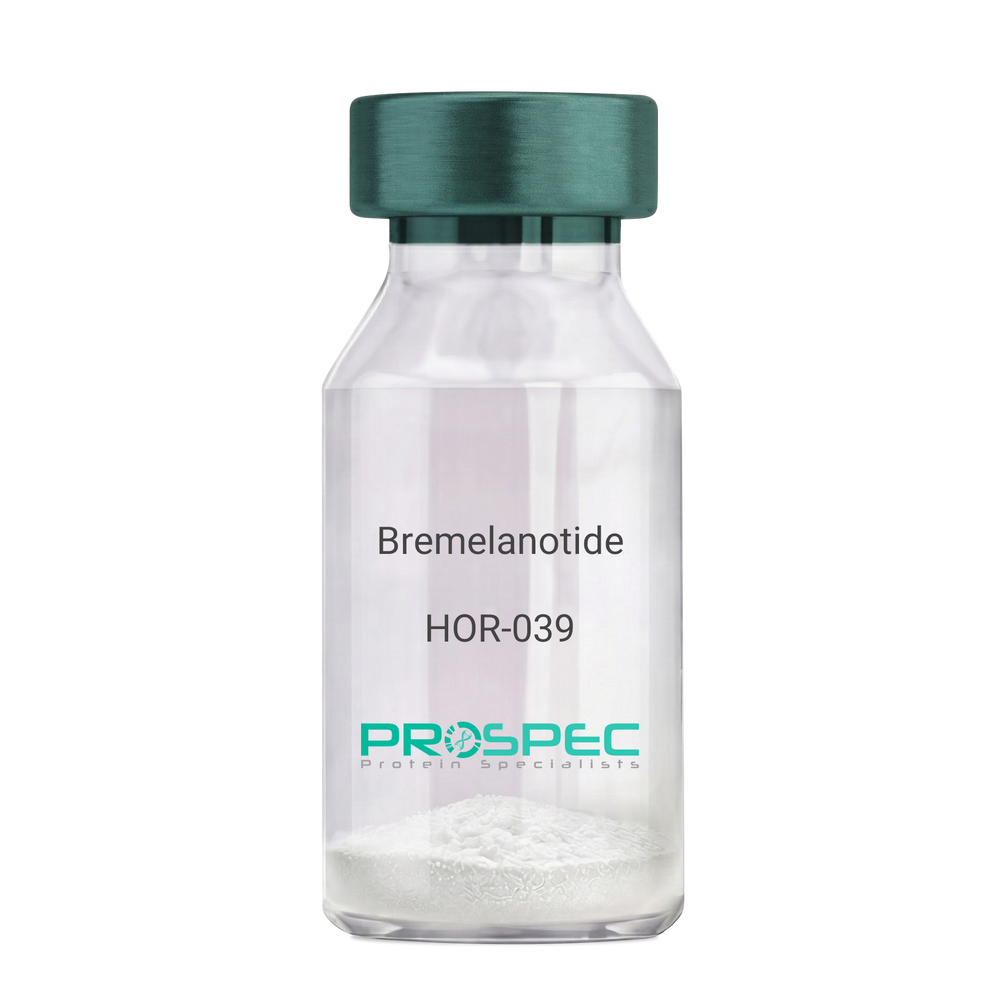
    Bremelanotide

    Description:

    Bremelanotide

    PT-141, Rekynda, bremelanotide acetate.

    Product # :

    HOR-039

    Price :

    Quantity :

    Shipping Method :

    Room Temp Icon

    Shipped at Room temp

    Add To Cart

    More Info

    • description
    • formulation
    • purity
    • More Info

    Description

    Bremelanotide Synthetic is a single, non-glycosylated polypeptide chain containing 6 amino acids, having a molecular mass of 1025.16 Dalton and a Molecular formula of C50H68N40O10.

    Formulation

    The protein was lyophilized with no additives.

    Purity

    Greater than 97.0% as determined by analysis by RP-HPLC.

    More Info

    • Synonyms

      PT-141, Rekynda, bremelanotide acetate.

    • Physical Appearance

      Sterile Filtered White lyophilized (freeze-dried) powder.

    • Stability

      Lyophilized Bremelanotide although stable at room temperature for 3 weeks, should be stored desiccated below -18°C. Upon reconstitution Bremelanotide should be stored at 4°C between 2-7 days and for future use below -18°C. For long term storage it is recommended to add a carrier protein (0.1% HSA or BSA). Please prevent freeze-thaw cycles.

    • Solubility

      It is recommended to reconstitute the lyophilized Bremelanotide in sterile 18MΩ-cm H2O not less than 100 µg/ml, which can then be further diluted to other aqueous solutions.

    • Amino Acid Sequence

      Ac-Nle-cyclo(-Asp-His-D-Phe-Arg-Trp-Lys)-OH.

    • Background

      Bremelanotide (PT-141), a synthetic heptapeptide, is a novel therapeutic agent primarily utilized for the treatment of sexual dysfunction. This paper provides an exhaustive review of Bremelanotide, detailing its biochemical structure, mechanism of action, therapeutic applications, and future prospects in clinical medicine.

      Bremelanotide (PT-141), derived from Melanotan II, is a synthetic peptide developed for its role in treating sexual dysfunction in both men and women (Clayton et al., 2016). This paper presents a comprehensive examination of Bremelanotide, its biological properties, and potential therapeutic uses.

      Bremelanotide acts as a non-selective agonist of the melanocortin receptors, primarily MC3R and MC4R, present in the central nervous system. The peptide initiates its action in the hypothalamus, leading to downstream effects on sexual desire and arousal (King et al., 2007).

      The US Food and Drug Administration approved Bremelanotide for the treatment of premenopausal women with hypoactive sexual desire disorder (HSDD) in 2019. In clinical trials, it demonstrated efficacy in enhancing sexual desire and reducing distress associated with HSDD (Kingsberg et al., 2019).

      While the current focus of Bremelanotide is on treating sexual dysfunction, its future potential may extend to other areas due to its unique mechanism of action. Further research is needed to explore the full therapeutic potential of this intriguing peptide. In conclusion, Bremelanotide represents a significant advance in sexual dysfunction therapeutics, with potential implications extending beyond this realm.

    ProSpec's products are furnished for LABORATORY RESEARCH USE ONLY. The product may not be used as drugs, agricultural or pesticidal products, food additives or household chemicals.

    Bremelanotide
  • View Data Sheet

    Name :

    FGF 2 Human (147 a.a.)

    Description:

    Fibroblast Growth Factor Basic 147 a.a. Human Recombinant

    Prostatropin, HBGH-2, HBGF-2, FGF-2, FGF-b.

    Product # :

    CYT-557

    Price :

    Quantity :

    Shipping Method :

    Room Temp Icon

    Shipped at Room temp

    Add To Cart

    More Info

    • description
    • source
    • formulation
    • purity
    • biological activity
    • More Info

    Description

    Fibroblast Growth Factor-2 Human Recombinant (FGF-2) produced in E.Coli is a single, non-glycosylated, polypeptide chain containing 147 amino acids and having a molecular mass of 16.5kDa. The FGF2 is purified by proprietary chromatographic techniques.

    Source

    Escherichia Coli.

    Formulation

    The bFGF was lyophilized from a sterile filtered solution containing 20mM Tris-HCl, pH 7.6 and 150mM NaCl.

    Purity

    Greater than 98.0% as determined by SDS-PAGE.

    Biological Activity

    The ED50, Calculated by the dose- dependent proliferation of mouse BALB/c 3T3 cells is < 0.05ng/ml corresponding to a specific activity of 2.0x10⁷ units/mg.

    More Info

    • Introduction

      FGF-basic is a member of the fibroblast growth factor (FGF) family. FGF family members possess broad mitogenic and cell survival activities, and are involved in a variety of biological processes, including embryonic development, cell growth, morphogenesis, tissue repair, tumor growth and invasion. This protein functions as a modifier of endothelial cell migration and proliferation, as well as an angiogenic factor. It acts as a mitogen for a variety of mesoderm- and neuroectoderm-derived cells in vitro, thus is thought to be involved in organogenesis. Three alternatively spliced variants encoding different isoforms have been described. The heparin-binding growth factors are angiogenic agents in vivo and are potent mitogens for a variety of cell types in vitro. There are differences in the tissue distribution and concentration of these 2 growth factors.

    • Synonyms

      Prostatropin, HBGH-2, HBGF-2, FGF-2, FGF-b.

    • Physical Appearance

      Sterile Filtered White lyophilized (freeze-dried) powder.

    • Stability

      Lyophilized basic-FGF although stable at room temperature for 3 weeks, should be stored desiccated below -18°C. Upon reconstitution FGFb should be stored at 4°C between 2-7 days and for future use below -18°C.For long term storage it is recommended to add a carrier protein (0.1% HSA or BSA).Please prevent freeze-thaw cycles.

    • Solubility

      It is recommended to reconstitute the lyophilized FGF-B in sterile 18MΩ-cm H2O not less than 100µg/ml, which can then be further diluted to other aqueous solutions.

    • Amino Acid Sequence

      MPALPEDGGS GAFPPGHFKD PKRLYCKNGG FFLRIHPDGR VDGVREKSDP HIKLQLQAEE RGVVSIKGVC ANRYLAMKED GRLLASKCVT DECFFFERLE SNNYNTYRSR KYTSWYVALK RTGQYKLGSK TGPGQKAILF LPMSAKS.

    • Background

      What is the molecular weight/Mw of FGF 2 Protein?
      FGF 2 Protein has a total Mw of 16.5kDa.

      What is the source or expression system of FGF 2 Protein?
      Escherichia Coli.

      What is the Purity of FGF 2 Protein?
      FGF 2 Protein is >98% pure as determined by SDS-PAGE.

      What is the Biological Activity of FGF 2 Protein?
      The ED50, Calculated by the dose- dependent proliferation of mouse BALB/c 3T3 cells is < 0.05ng/ml corresponding to a specific activity of 2.0x10⁷ units/mg.

      What is the amino acid sequence of FGF 2 Protein?
      MPALPEDGGS GAFPPGHFKD PKRLYCKNGG FFLRIHPDGR VDGVREKSDP HIKLQLQAEE RGVVSIKGVC ANRYLAMKED GRLLASKCVT DECFFFERLE SNNYNTYRSR KYTSWYVALK RTGQYKLGSK TGPGQKAILF LPMSAKS.

      What applications can FGF 2 Protein be used in?
      FGF 2 Protein can probably be used in western blot, ELISA and Lateral Flow.

      What is the endotoxin level for FGF 2 Protein?
      The endotoxin level is minimal, FGF 2 Protein was purified using conventional chromatography techniques.

    ProSpec's products are furnished for LABORATORY RESEARCH USE ONLY. The product may not be used as drugs, agricultural or pesticidal products, food additives or household chemicals.

    Fgf 2 147 Aa Human
  • View Data Sheet

    Name :

    SIT1 Human

    Description:

    Signaling Threshold Regulating Transmembrane Adaptor 1 Human Recombinant

    Signaling threshold-regulating transmembrane adapter 1, SHP2-interacting transmembrane adapter protein, Suppression-inducing transmembrane adapter 1, gp30/40, SIT1, SIT, RP11-331F9.5, MGC125908, MGC125909, MGC125910.

    Product # :

    PRO-928

    Price :

    Quantity :

    Shipping Method :

    Ice Icon

    Shipped with Ice Packs

    Add To Cart

    More Info

    • description
    • source
    • formulation
    • purity
    • More Info

    Description

    SIT1 Human Recombinant produced in E.Coli is a single, non-glycosylated polypeptide chain containing 156 amino acids (62-196 a.a.) and having a molecular mass of 16.9kDa (Molecular weight on SDS-PAGE will appear higher).SIT1 is fused to a 21 amino acid His-tag at N-terminus & purified by proprietary chromatographic techniques.

    Source

    Escherichia Coli.

    Formulation

    SIT1 protein solution (0.25mg/ml) containing 20mM Tris-HCl buffer (pH8.0) and 20% glycerol.

    Purity

    Greater than 90.0% as determined by SDS-PAGE.

    More Info

    • Introduction

      Signaling threshold-regulating transmembrane adapter 1 (SIT1) negatively regulates T-cell antigen receptor (TCR)-mediated signaling in T-cells. SIT1 is involved in positive selection of T-cells. SIT1 is specifically expressed in T- and B-cells. SIT1 is also present in plasma cells but not in germinal center B-cells (at protein level). SIT1 is expressed in T- and B-cell lymphoma.

    • Synonyms

      Signaling threshold-regulating transmembrane adapter 1, SHP2-interacting transmembrane adapter protein, Suppression-inducing transmembrane adapter 1, gp30/40, SIT1, SIT, RP11-331F9.5, MGC125908, MGC125909, MGC125910.

    • Physical Appearance

      Sterile Filtered colorless solution.

    • Stability

      Store at 4°C if entire vial will be used within 2-4 weeks. Store, frozen at -20°C for longer periods of time. For long term storage it is recommended to add a carrier protein (0.1% HSA or BSA).Avoid multiple freeze-thaw cycles.

    • Amino Acid Sequence

      MGSSHHHHHH SSGLVPRGSH MHLSQWTRGR SRSHPGQGRS GESVEEVPLY GNLHYLQTGR LSQDPEPDQQ DPTLGGPARA AEEVMCYTSL QLRPPQGRIP GPGTPVKYSE VVLDSEPKSQ ASGPEPELYA SVCAQTRRAR ASFPDQAYAN SQPAAS.

    ProSpec's products are furnished for LABORATORY RESEARCH USE ONLY. The product may not be used as drugs, agricultural or pesticidal products, food additives or household chemicals.

    Sit1 Human
  • View Data Sheet

    Name :

    ORC6 Human

    Description:

    Origin Recognition Complex, Subunit 6 Human Recombinant

    Origin Recognition Complex Subunit 6, Origin Recognition Complex Subunit 6 Homolog-Like (Yeast), ORC6L.

    Product # :

    PRO-1716

    Price :

    Quantity :

    Shipping Method :

    Ice Icon

    Shipped with Ice Packs

    Add To Cart

    More Info

    • description
    • source
    • formulation
    • purity
    • More Info

    Description

    ORC6 Human Recombinant produced in E.coli is a single, non-glycosylated polypeptide chain containing 275 amino acids (1-252) and having a molecular mass of 30.5kDa.ORC6 is fused to a 23 amino acid His-tag at N-terminus & purified by proprietary chromatographic techniques.

    Source

    Escherichia Coli.

    Formulation

    The ORC6 solution (0.25mg/ml) contains 20mM Tris-HCl buffer (pH8.0), 0.2M NaCl, 2mM DTT and 40% glycerol.

    Purity

    Greater than 90.0% as determined by SDS-PAGE.

    More Info

    • Introduction

      ORC6 is a member of the origin recognition complex (ORC) which is a highly conserved heterohexameric protein complex. ORC contacts to DNA at or near sites of initiation of DNA replication and all of its six subunits are vital for initiation of DNA replication. Additionally, ORC takes part in regulation of gene expression in response to stress. ORC6 is regularly expressed throughout the cell cycle. ORC2, ORC3, ORC4 and ORC5 form a primary complex at which point ORC6 and ORC1 assemble.

    • Synonyms

      Origin Recognition Complex Subunit 6, Origin Recognition Complex Subunit 6 Homolog-Like (Yeast), ORC6L.

    • Physical Appearance

      Sterile Filtered clear solution.

    • Stability

      Store at 4°C if entire vial will be used within 2-4 weeks. Store, frozen at -20°C for longer periods of time. For long term storage it is recommended to add a carrier protein (0.1% HSA or BSA).Avoid multiple freeze-thaw cycles.

    • Amino Acid Sequence

      MGSSHHHHHH SSGLVPRGSH MGSMGSELIG RLAPRLGLAE PDMLRKAEEY LRLSRVKCVG LSARTTETSS AVMCLDLAAS WMKCPLDRAY LIKLSGLNKE TYQSCLKSFE CLLGLNSNIG IRDLAVQFSC IEAVNMASKI LKSYESSLPQ TQQVDLDLSR PLFTSAALLS ACKILKLKVD KNKMVATSGV KKAIFDRLCK QLEKIGQQVD REPGDVATPP RKRKKIVVEA PAKEMEKVEE MPHKPQKDED LTQDYEEWKR KILENAASAQ KATAE

    ProSpec's products are furnished for LABORATORY RESEARCH USE ONLY. The product may not be used as drugs, agricultural or pesticidal products, food additives or household chemicals.

    Orc6 Human
  • 1
  • …
  • 40
  • 41
  • 42
Your browser does not support the video tag.

Products

  • Cytokines
  • Growth Factors
  • Chemokines
  • CD Antigens
  • Neurotrophins
  • Hormones
  • Enzymes
  • Viral Antigens
  • Recombinant Proteins
  • Natural Proteins
  • Monoclonal Antibodies
  • Polyclonal Antibodies
  • Thermal Packaging

About

  • Company
  • Founder
  • Contribution
  • Contact Us
  • My Account

Ordering

  • Ordering Method
  • Ordering - Credit Card
  • Ordering PO
  • Shipping Fees
  • FAQ's

Legal

  • Terms & Conditions
  • Privacy
  • Site Map
  • info@prospecbio.com
  • Facebook
  • Instagram
  • Linkedin Profile

© 2026 ProSpec-Tany TechnoGene Ltd. All Rights Reserved.

  • Choosing a selection results in a full page refresh.
  • Opens in a new window.