Skip to content

High-quality research proteins.

  • 1-800-805-6531

  • Mon - Sat 8.00-18.00, Sun - Closed

  • info@prospecbio.com

  • PO Box 6591 East Brunswick NJ 08816

  • Products
    • Cytokines
    • Growth factors
    • Chemokines
    • Cd antigens
    • Neurotrophins
    • Hormones
    • Enzymes
    • Viral antigens
    • Recombinant proteins
    • Natural proteins
    • Monoclonal antibodies
    • Polyclonal antibodies
    • Thermal Packaging
  • About
    • Company
    • Founder
    • Contribution
  • Customers
    • Eastern Asia
    • Eastern Europe
    • North America
    • South America
    • South East Asia
    • Southern Asia
    • Western Europe
  • Ordering
    • Ordering Method
    • Ordering - Credit Card
    • Ordering - PO
    • Shipping Fees
    • FAQs
  • Services
    • DNA Cloning
    • Protein Expression
    • Monoclonal Antibody
    • Fermentation
    • Technology License
  • Contact us
Log in

Country/region

  • USD $ | Albania
  • USD $ | Andorra
  • USD $ | Argentina
  • USD $ | Armenia
  • USD $ | Australia
  • USD $ | Austria
  • USD $ | Azerbaijan
  • USD $ | Belarus
  • USD $ | Belgium
  • USD $ | Bolivia
  • USD $ | Brazil
  • USD $ | Bulgaria
  • USD $ | Cambodia
  • USD $ | Canada
  • USD $ | Chile
  • USD $ | China
  • USD $ | Colombia
  • USD $ | Costa Rica
  • USD $ | Croatia
  • USD $ | Cyprus
  • USD $ | Czechia
  • USD $ | Denmark
  • USD $ | Estonia
  • USD $ | Finland
  • USD $ | France
  • USD $ | Georgia
  • USD $ | Germany
  • USD $ | Greece
  • USD $ | Hong Kong SAR
  • USD $ | Hungary
  • USD $ | Iceland
  • USD $ | India
  • USD $ | Ireland
  • USD $ | Israel
  • USD $ | Italy
  • USD $ | Japan
  • USD $ | Kazakhstan
  • USD $ | Latvia
  • USD $ | Liechtenstein
  • USD $ | Lithuania
  • USD $ | Madagascar
  • USD $ | Malta
  • USD $ | Mexico
  • USD $ | Moldova
  • USD $ | Monaco
  • USD $ | Netherlands
  • USD $ | New Zealand
  • USD $ | North Macedonia
  • USD $ | Norway
  • USD $ | Panama
  • USD $ | Paraguay
  • USD $ | Peru
  • USD $ | Philippines
  • USD $ | Poland
  • USD $ | Portugal
  • USD $ | Romania
  • USD $ | Singapore
  • USD $ | Slovakia
  • USD $ | Slovenia
  • USD $ | South Africa
  • USD $ | South Korea
  • USD $ | Spain
  • USD $ | Sri Lanka
  • USD $ | Sweden
  • USD $ | Switzerland
  • USD $ | Taiwan
  • USD $ | Thailand
  • USD $ | Türkiye
  • USD $ | Ukraine
  • USD $ | United Kingdom
  • USD $ | United States
  • USD $ | Uruguay
  • USD $ | Vatican City
  • USD $ | Venezuela
  • USD $ | Vietnam
  • Facebook
  • Instagram
logoProSpec - Recombinant Protein Manufacturer for academic and R&D industry
Become a distributor
Account Log in
Wishlist
Cart Cart(0)
  • Products
    +
    • Cytokines
    • Growth factors
    • Chemokines
    • Cd antigens
    • Neurotrophins
    • Hormones
    • Enzymes
    • Viral antigens
    • Recombinant proteins
    • Natural proteins
    • Monoclonal antibodies
    • Polyclonal antibodies
    • Thermal Packaging
  • About
    +
    • Company
    • Founder
    • Contribution
  • Customers
    +
    • Eastern Asia
    • Eastern Europe
    • North America
    • South America
    • South East Asia
    • Southern Asia
    • Western Europe
  • Ordering
    +
    • Ordering Method
    • Ordering - Credit Card
    • Ordering - PO
    • Shipping Fees
    • FAQs
  • Services
    +
    • DNA Cloning
    • Protein Expression
    • Monoclonal Antibody
    • Fermentation
    • Technology License
  • Contact us

Item added to your cart

View cart
View All
  • Cytokines
  • Growth factors
  • Chemokines
  • Cd antigens
  • Neurotrophins
  • Hormones
  • Enzymes
  • Viral antigens
  • Recombinant proteins
  • Natural proteins
  • Monoclonal antibodies
  • Polyclonal antibodies
  • Thermal Packaging
  • Tumor Necrosis Factor

    Tumor Necrosis Factor

    View All
  • 4-1BB

    4-1BB

    View All
  • Adiponectin

    Adiponectin

    View All
  • AIF1

    AIF1

    View All
  • Other Cytokines

    Other Cytokines

    View All
  • AITRL

    AITRL

    View All
  • Angiopoietin

    Angiopoietin

    View All
  • Apolipoprotein

    Apolipoprotein

    View All
  • B-Cell Activating Factor

    B-Cell Activating Factor

    View All
  • Beta Defensin

    Beta Defensin

    View All
  • Bone Morphogenetic Protein

    Bone Morphogenetic Protein

    View All
  • B type Natriuretic Peptide

    B type Natriuretic Peptide

    View All
  • BST

    BST

    View All
  • Betacellulin

    Betacellulin

    View All
  • Cardiotrophin

    Cardiotrophin

    View All
  • Activin

    Activin

    View All
  • Fibroblast Growth Factor

    Fibroblast Growth Factor

    View All
  • Other Growth Factors

    Other Growth Factors

    View All
  • CSF

    CSF

    View All
  • CTGF

    CTGF

    View All
  • IGFBP

    IGFBP

    View All
  • VEGF Protein

    VEGF Protein

    View All
  • EGF

    EGF

    View All
  • Epigen

    Epigen

    View All
  • Erythropoietin

    Erythropoietin

    View All
  • Insulin-Like Growth Factor

    Insulin-Like Growth Factor

    View All
  • Growth Hormone

    Growth Hormone

    View All
  • HDGF

    HDGF

    View All
  • Hepatocyte Growth Factor

    Hepatocyte Growth Factor

    View All
  • Insulin

    Insulin

    View All
  • BCA-1/ BLC (CXCL13)

    BCA-1/ BLC (CXCL13)

    View All
  • BRAK (CXCL14)

    BRAK (CXCL14)

    View All
  • C-10 (CCL6)

    C-10 (CCL6)

    View All
  • Other Chemokines

    Other Chemokines

    View All
  • MEC (CCL28)

    MEC (CCL28)

    View All
  • LD78-beta (CCL3L1)

    LD78-beta (CCL3L1)

    View All
  • CTACK (CCL27)

    CTACK (CCL27)

    View All
  • CXCL16

    CXCL16

    View All
  • CXCL17

    CXCL17

    View All
  • Platelet Factor-4 (CXCL4)

    Platelet Factor-4 (CXCL4)

    View All
  • ENA-78 (CXCL5)

    ENA-78 (CXCL5)

    View All
  • Eotaxin (CCL11,24,26)

    Eotaxin (CCL11,24,26)

    View All
  • Exodus-2 (CCL21)

    Exodus-2 (CCL21)

    View All
  • Fractalkine (CX3CL1)

    Fractalkine (CX3CL1)

    View All
  • CXCL6

    CXCL6

    View All
  • Other CD Antigens

    Other CD Antigens

    View All
  • CD14

    CD14

    View All
  • CD164

    CD164

    View All
  • CD1

    CD1

    View All
  • CD2

    CD2

    View All
  • CD200

    CD200

    View All
  • CD207

    CD207

    View All
  • CD226

    CD226

    View All
  • CD23

    CD23

    View All
  • CD244

    CD244

    View All
  • CD247

    CD247

    View All
  • CD27

    CD27

    View All
  • CD274

    CD274

    View All
  • CD300

    CD300

    View All
  • CD33

    CD33

    View All
  • Other Neurotrophins

    Other Neurotrophins

    View All
  • Beta-NGF

    Beta-NGF

    View All
  • BDNF

    BDNF

    View All
  • CDNF

    CDNF

    View All
  • CNTF

    CNTF

    View All
  • GDNF

    GDNF

    View All
  • Glia Maturation Factor

    Glia Maturation Factor

    View All
  • MANF

    MANF

    View All
  • Midkine

    Midkine

    View All
  • Neuroglobin

    Neuroglobin

    View All
  • Neurotrophic factors

    Neurotrophic factors

    View All
  • Neuregulin

    Neuregulin

    View All
  • Neuropilin

    Neuropilin

    View All
  • Pigment Epithelium-Derived Factor

    Pigment Epithelium-Derived Factor

    View All
  • Pleiotrophin

    Pleiotrophin

    View All
  • Peptide Hormones

    Peptide Hormones

    View All
  • Other Hormones

    Other Hormones

    View All
  • HCG

    HCG

    View All
  • Endothelin

    Endothelin

    View All
  • Exendin

    Exendin

    View All
  • FSH

    FSH

    View All
  • Glucagon

    Glucagon

    View All
  • GHRP

    GHRP

    View All
  • GLP

    GLP

    View All
  • Thyrostimulin

    Thyrostimulin

    View All
  • Inhibin A

    Inhibin A

    View All
  • LHRH

    LHRH

    View All
  • Melanotan

    Melanotan

    View All
  • Procalcitonin

    Procalcitonin

    View All
  • PTH

    PTH

    View All
  • Peroxiredoxin

    Peroxiredoxin

    View All
  • Peptidase

    Peptidase

    View All
  • Synthetase

    Synthetase

    View All
  • Transferase

    Transferase

    View All
  • Hydrolase

    Hydrolase

    View All
  • Dehydrogenase

    Dehydrogenase

    View All
  • ACE2

    ACE2

    View All
  • Esterase

    Esterase

    View All
  • Protein Kinases

    Protein Kinases

    View All
  • Other Enzymes

    Other Enzymes

    View All
  • Phosphatase

    Phosphatase

    View All
  • Deaminase

    Deaminase

    View All
  • Oxygenase

    Oxygenase

    View All
  • Adenylate Kinase

    Adenylate Kinase

    View All
  • Lyase

    Lyase

    View All
  • Chagas

    Chagas

    View All
  • SARS

    SARS

    View All
  • Influenza

    Influenza

    View All
  • ASFV

    ASFV

    View All
  • Astrovirus

    Astrovirus

    View All
  • Borrelia

    Borrelia

    View All
  • Helicobacter Pylori

    Helicobacter Pylori

    View All
  • Chikungunya

    Chikungunya

    View All
  • Chlamydia

    Chlamydia

    View All
  • Cytomegalo

    Cytomegalo

    View All
  • Dengue

    Dengue

    View All
  • EBV

    EBV

    View All
  • Ebola

    Ebola

    View All
  • Feline Leukemia Virus

    Feline Leukemia Virus

    View All
  • Hepatitis A

    Hepatitis A

    View All
  • Other

    Other

    View All
  • Actin

    Actin

    View All
  • ADAM

    ADAM

    View All
  • Complement Component

    Complement Component

    View All
  • Ag85

    Ag85

    View All
  • Eukaryotic Translation Initiation Factor

    Eukaryotic Translation Initiation Factor

    View All
  • Anterior Gradient Protein

    Anterior Gradient Protein

    View All
  • Heat Shock Protein

    Heat Shock Protein

    View All
  • Alpha-2-HS-Glycoprotein

    Alpha-2-HS-Glycoprotein

    View All
  • Hemoglobin

    Hemoglobin

    View All
  • Allergy

    Allergy

    View All
  • Anaplasma

    Anaplasma

    View All
  • Angiogenin

    Angiogenin

    View All
  • Ankyrin Repeat Domain

    Ankyrin Repeat Domain

    View All
  • Annexin

    Annexin

    View All
  • Other Natural Proteins

    Other Natural Proteins

    View All
  • Aprotinin

    Aprotinin

    View All
  • Transferrin

    Transferrin

    View All
  • Avidin

    Avidin

    View All
  • Anti Coagulation Factors

    Anti Coagulation Factors

    View All
  • Natural Albumin

    Natural Albumin

    View All
  • Natural Coagulation Factors

    Natural Coagulation Factors

    View All
  • Fibronectin

    Fibronectin

    View All
  • Thrombin

    Thrombin

    View All
  • Anti Human Enzyme

    Anti Human Enzyme

    View All
  • Other Monoclonal Antibodies

    Other Monoclonal Antibodies

    View All
  • Anti Human Cytokine

    Anti Human Cytokine

    View All
  • Anti Human Heat Shock Protein

    Anti Human Heat Shock Protein

    View All
  • Anti Mouse Lymphocyte

    Anti Mouse Lymphocyte

    View All
  • Anti Human Chemokine

    Anti Human Chemokine

    View All
  • Anti Human Lymphocyte

    Anti Human Lymphocyte

    View All
  • Anti Viral Monoclonal

    Anti Viral Monoclonal

    View All
  • Anti Mouse Cytokine

    Anti Mouse Cytokine

    View All
  • Anti-GST Monoclonal

    Anti-GST Monoclonal

    View All
  • Other Polyclonal Antibodies

    Other Polyclonal Antibodies

    View All
  • Anti Viral

    Anti Viral

    View All
  • Anti-GST Monoclonal

    Anti-GST Monoclonal

    View All
Back

Search results

1000 results found for “GDNF”

Name

Description

Product #

Price

Quantity

Shipping Method

  • View Data Sheet

    Name :

    SDF 1b Human, His

    Description:

    Stromal Cell-Derived Factor-1 beta Human Recombinant (CXCL12), His Tag

    SDF-1, CXCL12, Pre-B cell growth-stimulating factor, PBSF, hIRH, chemokine (C-X-C motif) ligand 12, SDF1, SDF1B, TPAR1, SCYB12, SDF-1b, TLSF-b, 12-O-tetradecanoylphorbol 13-acetate repressed protein 1, Thymic lymphoma cell-stimulating factor, TLSF.

    Product # :

    CHM-249

    Price :

    Quantity :

    Shipping Method :

    Ice Icon

    Shipped with Ice Packs

    Add To Cart

    More Info

    • description
    • source
    • formulation
    • purity
    • More Info

    Description

    SDF-1 beta Human Recombinant produced in E.Coli is a non-glycosylated, Polypeptide chain containing 93 amino acids (22-93 a.a.) and having a molecular mass of 10.8 KDa. The SDF-1b is fused to 20 amino acid His-Tag at N-terminus and purified by proprietary chromatographic techniques.

    Source

    Escherichia Coli.

    Formulation

    The SDF-1 beta His Tag protein contains 20mM Tris-HCl buffer pH-8 and 10% glycerol.

    Purity

    Greater than 90% as determined by Analysis by SDS-PAGE.

    More Info

    • Introduction

      SDF-1 (stromal cell-derived factor-1) is small cytokine belonging to the chemokine family that is officially designated Chemokine (C-X-C motif) ligand 12 (CXCL12). It is produced in two forms, SDF-1?/CXCL12a and SDF-1?/CXCL12b, by alternate splicing of the same gene. Chemokines are characterized by the presence of four conserved cysteines, which form two disulfide bonds. The CXCL12 proteins belong to the group of CXC chemokines, whose initial pair of cysteines are separated by one intervening amino acid. CXCL12 is strongly chemotactic for lymphocytes and has been implicated as an important cell co-ordinator during development. During embryogenesis it directs the migration of hematopoietic cells from foetal liver to bone marrow. Mice which were knocked-out for CXCL12 gene were lethal before the birth or within just 1 hour of life. As another role, CXCL12a alters also the electrophysiology of neurons. CXCL12 was shown to be expressend in many tissues in mice (including brain, thymus, heart, lung, liver, kidney, spleen and bone marrow).
      The receptor for this chemokine is CXCR4, which was previously called fusin. This CXCL12-CXCR4 interaction used to be considered exclusive (unlike for other chemokines and their receptors), but recently it was suggested that CXCL12 is also bound by CXCR7 receptor. The gene for CXCL12 is located on human chromosome 10. In human and mouse both CXCL12 and CXCR4 show high identity of sequence: 99% and 90%, respectively.

    • Synonyms

      SDF-1, CXCL12, Pre-B cell growth-stimulating factor, PBSF, hIRH, chemokine (C-X-C motif) ligand 12, SDF1, SDF1B, TPAR1, SCYB12, SDF-1b, TLSF-b, 12-O-tetradecanoylphorbol 13-acetate repressed protein 1, Thymic lymphoma cell-stimulating factor, TLSF.

    • Physical Appearance

      Sterile filtered colorless solution.

    • Stability

      Store at 4°C if entire vial will be used within 2-4 weeks. Store, frozen at -20°C for longer periods of time. For long term storage it is recommended to add a carrier protein (0.1% HSA or BSA). Avoid multiple freeze-thaw cycles.

    • Amino Acid Sequence

      MGSSHHHHHH SSGLVPRGSH MKPVSLSYRC PCRFFESHVA RANVKHLKIL NTPNCALQIV ARLKNNNRQV CIDPKLKWIQ EYLEKALNKR FKM.

    ProSpec's products are furnished for LABORATORY RESEARCH USE ONLY. The product may not be used as drugs, agricultural or pesticidal products, food additives or household chemicals.

    Sdf 1B Human His
  • View Data Sheet

    Name :

    EGFR Human Sf9, Active

    Description:

    Epidermal Growth Factor Receptor Human Recombinant Sf9, Active

    Epidermal growth factor receptor, EC 2.7.10.1, Receptor tyrosine-protein kinase ErbB-1, ERBB, mENA, ERBB1, EGFR.

    Product # :

    PKA-335

    Price :

    Quantity :

    Shipping Method :

    Ice Icon

    Shipped with Ice Packs

    Add To Cart

    More Info

    • description
    • source
    • formulation
    • biological activity
    • More Info

    Description

    EGFR Human Recombinant encoding a.a. 672-1210 expressed in Baculovirus infected Sf9 cells, fused with a GST-tag at N-terminus with thrombin cleavage sites, having a molecular weight of 89,171 Dalton.EGFR is purified by proprietary chromatographic techniques.

    Source

    Baculovirus infected Sf9 cells.

    Formulation

    EGFR in 50mM HEPES pH 7.5, 100mM NaCl, 5mM DTT, 15mM reduced glutathione and 20% glycerol.

    Biological Activity

    Determination of Km value by Filter binding assay MAFC membrane.

    More Info

    • Introduction

      The epidermal growth factor receptor (EGF R) subfamily of receptor tyrosine kinases comprises four members: EGF R (also known as HER1, ErbB1 or ErbB), ErbB2 (Neu, HER-2), ErbB3 (HER-3), and ErbB4 (HER-4). All family members are type I transmembrane glycoprotein that has an extracellular domain which contains two cysteine-rich domains separated by a spacer region that is involved in ligand-binding, and a cytoplasmic domain which has a membrane-proximal tyrosine kinase domain and a C-terminal tail with multiple tyrosine autophosphorylation sites. The human EGF R gene encodes a 1210 amino acid (aa) residue precursor with a 24 aa putative signal peptide, a 621 aa extracellular domain, a 23 aa transmembrane domain, and a 542 aa cytoplasmic domain. EGF R has been shown to bind a subset of the EGF family ligands, including EGF, amphiregulin, TGF-a , betacellulin, epiregulin, heparin-binding EGF and neuregulin-2 in the absence of a co-receptor. Ligand binding induces EGF R homodimerization as well as heterdimerization with ErbB2, resulting in kinase activation, tyrosine phosphorylation and cell signaling. EGF R can also be recruited to form heterodimers with the ligand-activated ErbB3 or ErbB4. EGF R signaling has been shown to regulate multiple biological functions including cell proliferation, differentiation, motility and apoptosis. In addition, EGF R signaling has also been shown to play a role in carcinogenesis.

    • Synonyms

      Epidermal growth factor receptor, EC 2.7.10.1, Receptor tyrosine-protein kinase ErbB-1, ERBB, mENA, ERBB1, EGFR.

    • Physical Appearance

      Sterile filtered liquid.

    • Stability

      Store vial at -20°C to -80°C. When stored at the recommended temperature, this protein is stable for 12 months. Please avoid freeze-thaw cycles.

    • Specific Activity

      30 pmol/µgxmin.

    ProSpec's products are furnished for LABORATORY RESEARCH USE ONLY. The product may not be used as drugs, agricultural or pesticidal products, food additives or household chemicals.

    Egfr Sf9 Human
  • View Data Sheet

    Name :

    FGF 2 Human

    Description:

    Fibroblast Growth Factor-Basic Human Recombinant

    Prostatropin, FGF-basic, fgf2, Basic FGF, HBGF-2, FGF-2, FGF-b.

    Product # :

    CYT-218

    Price :

    Quantity :

    Shipping Method :

    Room Temp Icon

    Shipped at Room temp

    Add To Cart

    More Info

    • description
    • source
    • formulation
    • purity
    • biological activity
    • More Info

    Description

    Fibroblast Growth Factor-2 Human Recombinant (FGF-2) produced in E.Coli is a single, non-glycosylated, polypeptide chain containing 154 amino acids and having a molecular mass of 17.2kDa.The FGF-b is purified by proprietary chromatographic techniques.

    Source

    Escherichia Coli.

    Formulation

    The protein was lyophilized from a concentrated (1mg/ml) solution in 20mM Tris-HCl, pH7.4 and 1M NaCl.

    Purity

    Greater than 98.0% as determined by Analysis by SDS-PAGE.

    Biological Activity

    The ED50, calculated by the dose-dependant proliferation of murine balb/c 3T3 cells is <0.1ng/ml, corresponding to a specific activity of graeter than 1.0x10⁷ Units/mg.

    More Info

    • Introduction

      Basic fibroblast growth factor is a member of the fibroblast growth factor (FGF) family. FGF family members possess broad mitogenic and cell survival activities, and are involved in a variety of biological processes, including embryonic development, cell growth, morphogenesis, tissue repair, tumor growth and invasion. This protein functions as a modifier of endothelial cell migration and proliferation, as well as an angiogenic factor. It acts as a mitogen for a variety of mesoderm- and neuroectoderm-derived cells in vitro, thus is thought to be involved in organogenesis. Three alternatively spliced variants encoding different isoforms have been described. The HPR -binding growth factors are angiogenic agents in vivo and are potent mitogens for a variety of cell types in vitro. There are differences in the tissue distribution and concentration of these 2 growth factors.

    • Synonyms

      Prostatropin, FGF-basic, fgf2, Basic FGF, HBGF-2, FGF-2, FGF-b.

    • Physical Appearance

      Sterile Filtered White lyophilized (freeze-dried) powder.

    • Stability

      Lyophilized Fibroblast Growth Factor-2 although stable at room temperature for 3 weeks, should be stored desiccated below -18°C. Upon reconstitution FGF-b should be stored at 4°C between 2-7 days and for future use below -18°C.For long term storage it is recommended to add a carrier protein (0.1% HSA or BSA).Please prevent freeze-thaw cycles.

    • Solubility

      It is recommended to reconstitute the lyophilized Fibroblast Growth Factor Basic in sterile 18MΩ-cm H2O not less than 100µg/ml, which can then be further diluted to other aqueous solutions.

    • Amino Acid Sequence

      AAGSITTLPA LPEDGGSGAF PPGHFKDPKR LYCKNGGFFL RIHPDGRVDG VREKSDPHIK LQLQAEERGV VSIKGVCANR YLAMKEDGRL LASKCVTDEC FFFERLESNN YNTYRSRKYT SWYVALKRTG QYKLGSKTGP GQKAILFLPM SAKS.

    • Background

      FGF 2 HUMAN: Insights into Fibroblast Growth Factor-2

      Basic Fibroblast Growth Factor or FGF 2 HUMAN is a protein with crucial roles in cell growth, tissue repair, and embryonic development. This is part of the larger fibroblast growth factor family and is vital for various biological processes, including the modulation of cell survival activities.

      Production and Properties

      Produced in E. coli, FGF 2 is a non-glycosylated polypeptide chain possessing 154 amino acids with a molecular weight of about 17.2 kDa. It is purified through advanced chromatographic techniques, ensuring high purity and activity for laboratory use.

      Physical Characteristics and Preparation

      The physical form of FGF 2 HUMAN is a sterile, white lyophilized powder. For experimental use, it is reconstituted with sterile water to at least 100µg/ml. This reconstitution is crucial for maintaining the integrity and effectiveness of the protein in various research applications.

      Storage and Handling

      To maintain stability, lyophilized FGF 2 should be stored at -18°C and used within three weeks if kept at room temperature. Once reconstituted, it should be kept at 4°C and used within 2-7 days or stored at -18°C for longer-term storage.

      Proper handling and avoiding repeated freeze-thaw cycles are essential to preserve the protein's functionality.

      Purity and Biological Activity

      FGF 2 is characterized by a purity greater than 98%, verified by SDS-PAGE analysis. Its biological activity is primarily defined by its efficacy in promoting the proliferation of specific cell lines, with an effective dose (ED50) typically below 0.1 ng/ml.

      Research Applications and Impact

      In the research context, FGF 2 is used extensively to study its effects on cell migration, proliferation, and angiogenesis. Moreover, its role in disease models, particularly in cancer and tissue repair studies, makes it a valuable resource for developing new therapeutic approaches.

      Usage Guidelines

      FGF 2 HUMAN is strictly for laboratory research use and is not suitable for drug development, food production, or cosmetic applications. Researchers are advised to comply with safety and handling guidelines to ensure that experiments are conducted under optimal conditions.

      The Broad Impact on Development and Disease

      FGF-2 is known for its multifunctional role across numerous biological processes such as tissue repair, embryonic development, angiogenesis, and even tumorigenesis.

      This growth factor, existing in various synonymous forms such as Basic FGF, FGF-b, and HBGF-2, is essential in cellular processes that underpin both health and disease.

      Furthermore, FGF-2's ability to bind to cellular receptors triggers a cascade of signaling pathways, including PI3K/Akt, MAPK/ERK, and PLCγ, which in turn influence cell growth, migration, and survival.

      These pathways are pivotal in mediating the factor's diverse effects on cell behavior, contributing to its critical roles in wound healing, angiogenesis, and tissue remodeling.

      What is the molecular weight/Mw of FGF 2 Protein?
      FGF 2 Protein has a total Mw of 17.2kDa.

      What is the source or expression system of FGF 2 Protein?
      Escherichia Coli.

      What is the Purity of FGF 2 Protein?
      FGF 2 Protein is >98% pure as determined by SDS-PAGE.

      What is the Biological Activity of FGF 2 Protein?
      The ED50, calculated by the dose-dependant proliferation of murine balb/c 3T3 cells is <0.1ng/ml, corresponding to a specific activity of graeter than 1.0x10⁷ Units/mg.

      What is the amino acid sequence of FGF 2 Protein?
      AAGSITTLPA LPEDGGSGAF PPGHFKDPKR LYCKNGGFFL RIHPDGRVDG VREKSDPHIK LQLQAEERGV VSIKGVCANR YLAMKEDGRL LASKCVTDEC FFFERLESNN YNTYRSRKYT SWYVALKRTG QYKLGSKTGP GQKAILFLPM SAKS.

      What applications can FGF 2 Protein be used in?
      FGF 2 Protein can probably be used in western blot, ELISA and Lateral Flow.

      What is the endotoxin level for FGF 2 Protein?
      The endotoxin level is minimal, FGF 2 Protein was purified using conventional chromatography techniques.

    ProSpec's products are furnished for LABORATORY RESEARCH USE ONLY. The product may not be used as drugs, agricultural or pesticidal products, food additives or household chemicals.

    Fgf 2 Human
  • View Data Sheet

    Name :

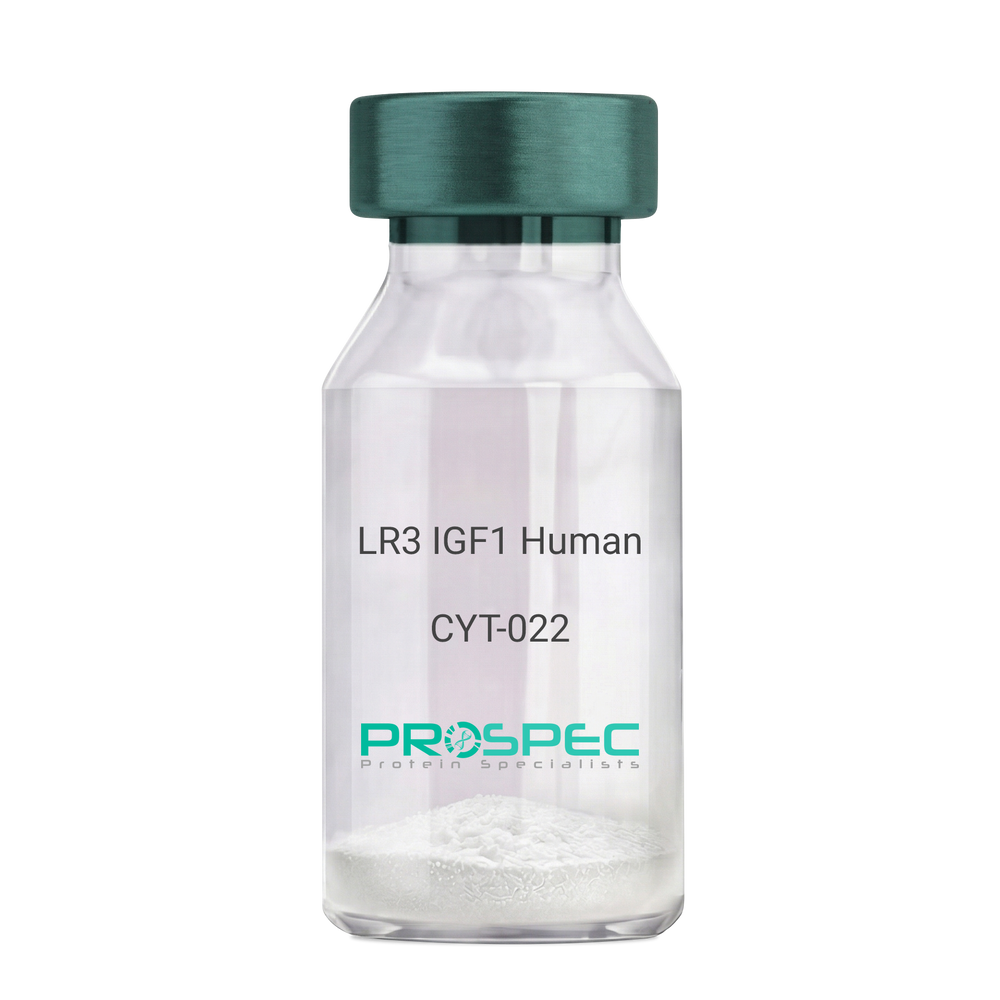
    LR3 IGF1 Human

    Description:

    LR3 Insulin Like Growth Factor-1 Human Recombinant

    R3 IGF1, R3 IGF-1, R3IGF1, R3IGF-1, LONG IGF1, LONG IGF-1, LONG R3 IGF1, LONG R3IGF1, LONG R3 IGF-1, LONG R3IGF-1.

    Product # :

    CYT-022

    Price :

    Quantity :

    Shipping Method :

    Room Temp Icon

    Shipped at Room temp

    Add To Cart

    More Info

    • description
    • source
    • formulation
    • purity
    • biological activity
    • More Info
    • sds-page

    Description

    The LR3 is a long-term analog of human IGF-1, specifically designed and manufactured for mammalian cell culture to support large-scale manufacturing of recombinant biopharmaceuticals. Recombinant Human LR3 Insulin Like Growth Factor-1 produced in E.Coli is a single, non-glycosylated, polypeptide chain containing 83 amino acids and having a molecular mass of 9.1kDa.

    Source

    Escherichia Coli.

    Formulation

    Lyophilized from a 0.2µm filtered concentrated solution in 20mM PB, pH 7.2.

    Purity

    Greater than 98.0% as determined by SDS-PAGE.

    Biological Activity

    The ED50 as determined by the stimulation of protein synthesis in L6 myoblasts is less than 10ng/ml, corresponding to a specific activity of 100,000units/mg.

    sds-page

    LR3 IGF1 sds-page - Product image 1

    More Info

    • Introduction

      IGF-1 (Insulin-like growth factor-1) is a major hormonal mediator of statural growth. Under regular circumstances, GH (growth hormone) binds to its receptor in the liver, and other tissues, and stimulates the synthesis/secretion of IGF-1. In target tissues, the Type 1 IGF receptor, that is homologous to the insulin receptor, is activated by IGF-1, leading to intracellular signaling which stimulates multiple processes leading to statural growth. IGF-1 metabolic actions are partly directed at stimulating the uptake of glucose, fatty acids, and amino acids so that metabolism supports growing tissues.

    • Synonyms

      R3 IGF1, R3 IGF-1, R3IGF1, R3IGF-1, LONG IGF1, LONG IGF-1, LONG R3 IGF1, LONG R3IGF1, LONG R3 IGF-1, LONG R3IGF-1.

    • Physical Appearance

      Sterile Filtered White lyophilized (freeze-dried) powder.

    • Stability

      Lyophilized LR3 IGF1 although stable at room temperature for 3 weeks, should be stored desiccated below -18°C. Upon reconstitution the LR3 IGF1 should be stored at 4°C between 2-7 days and for future use below -18°C.For long term storage it is recommended to add a carrier protein (0.1% HSA or BSA).Please prevent freeze-thaw cycles.

    • Solubility

      It is recommended to reconstitute the lyophilized LR3 IGF1 in sterile 18M-cm H2O at a concentration of 100µg/ml, which can then be further diluted to other aqueous solutions.

    • Amino Acid Sequence

      MFPAMPLSSLFVNGPRTLCGAELVDALQFVCGDRGFYFNKPTGYGSSSRRAPQTGIV DECCFRSCDLRRLEMYCAPLKPAKSA.

    ProSpec's products are furnished for LABORATORY RESEARCH USE ONLY. The product may not be used as drugs, agricultural or pesticidal products, food additives or household chemicals.

    Long R3 Igf1 Human
  • View Data Sheet

    Name :

    VEGF Mouse, His

    Description:

    Vascular Endothelial Growth Factor Mouse Recombinant, His Tag

    Vascular endothelial growth factor A, VEGF-A, Vascular permeability factor, VPF, VEGF, Vegf120, Vegf164, Vegf188, Vegfa.

    Product # :

    CYT-680

    Price :

    Quantity :

    Shipping Method :

    Ice Icon

    Shipped with Ice Packs

    Add To Cart

    More Info

    • description
    • source
    • formulation
    • purity
    • biological activity
    • More Info

    Description

    VEGF Mouse Recombinant produced in E.Coli is a single, non-glycosylated, polypeptide chain containing 141 amino acids (205-324 a.a.) and having a total molecular mass of 16.3kDa. Mouse VEGF is fused to 20 amino acid His Tag at N-terminus and purified by proprietary chromatographic techniques.

    Source

    Escherichia Coli.

    Formulation

    The Mouse VEGF contains 20mM Tris-HCl buffer (pH8.0) and 10% glycerol.

    Purity

    Greater than 90.0% as determined by SDS-PAGE.

    Biological Activity

    Measured in a cell proliferation assay using NIH-3T3 mouse embryonic fibroblast. The ED50 for this effect is 0.5-1.5ng/ml.

    More Info

    • Introduction

      Vascular endothelial growth factor is an important signaling protein involved in both vasculogenesis and angiogenesis. As its name implies, VEGF activity has been mostly studied on cells of the vascular endothelium, although it does have effects on a number of other cell types (e.g. stimulation monocyte/macrophage migration, neurons, cancer cells, kidney epithelial cells ).VEGF mediates increased vascular permeability, induces angiogenesis, vasculogenesis and endothelial cell growth, promotes cell migration, and inhibits apoptosis. In vitro, VEGF has been shown to stimulate endothelial cell mitogenesis and cell migration. VEGF is also a vasodilator and increases microvascular permeability and was originally referred to as vascular permeability factor.
      Elevated levels of this protein is linked to POEMS syndrome, also known as Crow-Fukase syndrome. Mutations in this gene have been associated with proliferative and nonproliferative diabetic retinopathy.

    • Synonyms

      Vascular endothelial growth factor A, VEGF-A, Vascular permeability factor, VPF, VEGF, Vegf120, Vegf164, Vegf188, Vegfa.

    • Physical Appearance

      Sterile Filtered colorless solution.

    • Stability

      Store at 4°C if entire vial will be used within 2-4 weeks. Store, frozen at -20°C for longer periods of time. For long term storage it is recommended to add a carrier protein (0.1% HSA or BSA).Avoid multiple freeze-thaw cycles.

    • Amino Acid Sequence

      MGSSHHHHHH SSGLVPRGSH MAPTTEGEQK SHEVIKFMDV YQRSYCRPIE TLVDIFQEYP DEIEYIFKPS CVPLMRCAGC CNDEALECVP TSESNITMQI MRIKPHQSQH IGEMSFLQHS RCECRPKKDR TKPEKCDKPR R.

    ProSpec's products are furnished for LABORATORY RESEARCH USE ONLY. The product may not be used as drugs, agricultural or pesticidal products, food additives or household chemicals.

    Vegf Mouse His
  • View Data Sheet

    Name :

    TGFB2 Rat

    Description:

    Transforming Growth Factor-Beta 2 Rat Recombinant

    Transforming growth factor beta-2, TGF-beta-2, G-TSF, Tgfb-2, TGFbeta2.

    Product # :

    CYT-1267

    Price :

    Quantity :

    Shipping Method :

    Room Temp Icon

    Shipped at Room temp

    Add To Cart

    More Info

    • description
    • source
    • formulation
    • purity
    • biological activity
    • More Info

    Description

    Transforming Growth Factor-Beta 2 Rat Recombinant produced in CHO is a homodimer, polypeptide chain containing 2 x 112 amino acids and having a total molecular mass of 25.4kDa.
    TGFB2 Rat Recombinant is purified by proprietary chromatographic techniques.

    Source

    CHO Cells.

    Formulation

    The protein was lyophilized with 0.1% (v/v) TFA and 35% (v/v) Acetonitrile.

    Purity

    Greater than 97.0% as determined by SDS-PAGE and SEC-HPLC analyses.

    Biological Activity

    The biological activity was determined by TGFB2 ability to inhibit the mouse IL-4-dependent proliferation of mouse HT-2 cells. The expected ED50 for this effect is <0.05ng/ml, corresponding to a specific activity of ≥ 2.0 × 10⁷ units/mg.

    More Info

    • Synonyms

      Transforming growth factor, beta 2, cetermin, Glioblastoma-derived T-cell suppressor factor, polyergin, G-TSF, TGF-beta2, TGF-beta-2, transforming growth factor beta-2, BSC-1 cell growth inhibitor, TGFB-2.

    • Physical Appearance

      Sterile Filtered White lyophilized (freeze-dried) powder.

    • Stability

      Lyophilized TGFB2 although stable at room temperature for 3 weeks, should be stored desiccated below -18°C. Upon reconstitution Transforming Growth Factor-Beta 2 should be stored at 4°C between 2-7 days and for future use below -18°C.
      For long term storage it is recommended to add a carrier protein (0.1% HSA or BSA).
      Please prevent freeze-thaw cycles.

    • Solubility

      It is recommended to reconstitute the lyophilized Transforming Growth Factor-Beta 2 in sterile 4mM HCl not less than 100µg/ml, which can then be further diluted to other aqueous solutions.

    • Amino Acid Sequence

      ALDAAYCFRN VQDNCCLRPL YIDFKRDLGW KWIHEPKGYN ANFCAGACPY LWSSDTQHTK VLSLYNTINP EASASPCCVS QDLEPLTILY YIGNTPKIEQ LSNMIVKSCK CS.

    • Background

      Rat TGFB22 signals through TGFBR2, TGFBR1 using an accessory co-receptor TGFBR3 (betaglycan) that enhances presentation of TGFβ2
      Rat TGFB2 is a potent inducer of epithelial–mesenchymal transition (EMT) therefore is used in Cancer metastasis, Fibrosis, Retinal disorders, Developmental biology and Wound healing

      What is the source or expression system of Rat TGFB2 Protein?
      CHO Cells

      What is the Purity of Rat TGFB2 Protein?
      Rat TGFB2 Protein is >97% pure as determined by SDS-PAGE.

      What is the molecular weight / Mw of Rat TGFB2 Protein?
      Rat TGFB2 Protein having a total Mw of 25.6kDa.

      What is the Biological Activity of Rat TGFB2 Protein?
      The biological functionality of Rat TGFB2 Protein is determined by mouse HT-2 cells.

      What is the endotoxin level for Rat TGFB2 Protein?
      The endotoxin level is minimal, Rat TGFB2 Protein was purified using conventional chromatography techniques.

      What is the amino acid sequence of Rat TGF beta 2 Protein?
      If there is sequence put it instead of the sentence

      Is TGFB2 a homodimer / homodimeric protein?
      Yes, TGFB1 is homo dimer consisting of 2 identical chains.

    ProSpec's products are furnished for LABORATORY RESEARCH USE ONLY. The product may not be used as drugs, agricultural or pesticidal products, food additives or household chemicals.

    tgfb2 rat
  • View Data Sheet

    Name :

    Hepatocyte Growth Factor Human, CHO

    Description:

    Hepatocyte Growth Factor Human Recombinant, CHO

    Scatter Factor (SF), Hepatopoietin (HPTA), HGF.

    Product # :

    CYT-251

    Price :

    Quantity :

    Shipping Method :

    Room Temp Icon

    Shipped at Room temp

    Add To Cart

    More Info

    • description
    • source
    • formulation
    • purity
    • biological activity
    • More Info

    Description

    Hepatocyte Growth Factor Human Recombinant produced in CHO is a heterodimer, non-glycosylated, polypeptide chain consisting an a-chain of 463 amino acids and b-chain of 234 having a total molecular mass of approximately 75kDa. The HGF is purified by proprietary chromatographic techniques.

    Source

    Chinese Hamster Ovarian Cells.

    Formulation

    The protein was lyophilized from a concentrated (1.4mg/ml) solution containing Phosphate-Buffered Saline with 0.02% Tween 80, pH 7.4.

    Purity

    Greater than 97.0% as determined by SDS-PAGE.

    Biological Activity

    The ED50, calculated by the dose-dependant proliferation of monkey 4MBr-5 indicator cells was found to be 20-40 ng/ml.

    More Info

    • Introduction

      Hepatocyte Growth Factor (HGF) is a multifunctional growth factor which regulates both cell growth and cell motility. It exerts a strong mitogenic effect on hepatocytes and primary epithelial cells. HGF synergizes with Interleukin-3 and GM-CSF to stimulate colony formation of hematopoietic progenitor cells in vitro and may, therefore, also modulate hematopoiesis.

    • Synonyms

      Scatter Factor (SF), Hepatopoietin (HPTA), HGF.

    • Physical Appearance

      Sterile Filtered White lyophilized (freeze-dried) powder.

    • Stability

      Lyophilized Hepatocyte Growth Factor although stable at room temperature for 3 weeks, should be stored desiccated below -18°C. Upon reconstitution HGF should be stored at 4°C between 2-7 days and for future use below -18°C.For long term storage it is recommended to add a carrier protein (0.1% HSA or BSA).Please prevent freeze-thaw cycles.

    • Solubility

      It is recommended to reconstitute the lyophilized Hepatocyte Growth Factor in sterile 18MΩ-cm H2O not less than 100µg/ml, which can then be further diluted to other aqueous solutions.

    • Amino Acid Sequence

      Agrees with the sequence of native human HGF.

    • Background

      What is the molecular weight/Mw of HEPATOCYTE GROWTH FACTOR HUMAN, CHO Protein?
      HEPATOCYTE GROWTH FACTOR HUMAN, CHO Protein has a total Mw of 75kDa.

      What is the source or expression system of HEPATOCYTE GROWTH FACTOR HUMAN, CHO Protein?
      Chinese Hamster Ovarian Cells.

      What is the Purity of HEPATOCYTE GROWTH FACTOR HUMAN, CHO Protein?
      HEPATOCYTE GROWTH FACTOR HUMAN, CHO Protein is >97% pure as determined by SDS-PAGE.

      What is the Biological Activity of HEPATOCYTE GROWTH FACTOR HUMAN, CHO Protein?
      The ED50, calculated by the dose-dependant proliferation of monkey 4MBr-5 indicator cells was found to be 20-40 ng/ml.

      What is the amino acid sequence of HEPATOCYTE GROWTH FACTOR HUMAN, CHO Protein?
      Agrees with the sequence of native human HGF.

      What applications can HEPATOCYTE GROWTH FACTOR HUMAN, CHO Protein be used in?
      HEPATOCYTE GROWTH FACTOR HUMAN, CHO Protein can probably be used in western blot, ELISA and Lateral Flow.

      What is the endotoxin level for HEPATOCYTE GROWTH FACTOR HUMAN, CHO Protein?
      The endotoxin level is minimal, HEPATOCYTE GROWTH FACTOR HUMAN, CHO Protein was purified using conventional chromatography techniques.

    ProSpec's products are furnished for LABORATORY RESEARCH USE ONLY. The product may not be used as drugs, agricultural or pesticidal products, food additives or household chemicals.

    Hgf Human Cho
  • View Data Sheet

    Name :

    TNFRSF10B Human, Sf9

    Description:

    TNF Ligand Receptor Superfamily Member 10B Human Recombinant, Sf9

    TNFRSF10B, CD262, DR5, KILLER, KILLER/DR5, TRAIL-R2, TRAILR2, TRICK2, TRICK2A, TRICK2B, TRICKB, ZTNFR9, Death receptor 5, TNF-related apoptosis-inducing ligand receptor 2.

    Product # :

    CYT-1055

    Price :

    Quantity :

    Shipping Method :

    Ice Icon

    Shipped with Ice Packs

    Add To Cart

    More Info

    • description
    • source
    • formulation
    • purity
    • biological activity
    • More Info

    Description

    TNFRSF10B produced in Sf9 Baculovirus cells is a single, glycosylated polypeptide chain containing 394 amino acids (56-210a.a.) and having a molecular mass of 43.9kDa. (Molecular size on SDS-PAGE will appear at approximately 40-57kDa).TNFRSF10B is expressed with a 239 amino acid hIgG-His tag at C-Terminus and purified by proprietary chromatographic techniques.

    Source

    Sf9, Insect cells.

    Formulation

    TNFRSF10B protein solution (1mg/ml) contains Phosphate Buffered Saline (pH 7.4) and 10% glycerol.

    Purity

    Greater than 90% as determined by SDS-PAGE.

    Biological Activity

    Measured by its ability to inhibit cytotoxicity assay using Jurkat human T lymphocyte. The ED50 for this effect ≤ to 5ng/ml with TRAIL


    .

    More Info

    • Introduction

      TRAIL Receptor-1 (DR4) and TRAIL Receptor-2(DR5) are members of the TNFR superfamily of transmembrane proteins and contain a cytoplasmic "death domain", which is capable of activating the cell's apoptotic machinery. These receptors are activated by binding to either membrane anchored or soluble TRAIL/Apo2L.

    • Synonyms

      TNFRSF10B, CD262, DR5, KILLER, KILLER/DR5, TRAIL-R2, TRAILR2, TRICK2, TRICK2A, TRICK2B, TRICKB, ZTNFR9, Death receptor 5, TNF-related apoptosis-inducing ligand receptor 2.

    • Physical Appearance

      Sterile Filtered colorless solution.

    • Stability

      Store at 4°C if entire vial will be used within 2-4 weeks. Store, frozen at -20°C for longer periods of time. For long term storage it is recommended to add a carrier protein (0.1% HSA or BSA).Avoid multiple freeze-thaw cycles.

    • Amino Acid Sequence

      ITQQDLAPQQ RAAPQQKRSS PSEGLCPPGH HISEDGRDCI SCKYGQDYST HWNDLLFCLR CTRCDSGEVE LSPCTTTRNT VCQCEEGTFR EEDSPEMCRK CRTGCPRGMV KVGDCTPWSD IECVHKESGT KHSGEVPAVE ETVTSSPGTP ASPCSLEPKS CDKTHTCPPC PAPELLGGPS
      VFLFPPKPKD TLMISRTPEV TCVVVDVSHE DPEVKFNWYV DGVEVHNAKT KPREEQYNST YRVVSVLTVL HQDWLNGKEY KCKVSNKALP APIEKTISKA KGQPREPQVY TLPPSRDELT KNQVSLTCLV KGFYPSDIAV EWESNGQPEN NYKTTPPVLD SDGSFFLYSK LTVDKSRWQQ
      GNVFSCSVMH EALHNHYTQK SLSLSPGKHH HHHH.

    ProSpec's products are furnished for LABORATORY RESEARCH USE ONLY. The product may not be used as drugs, agricultural or pesticidal products, food additives or household chemicals.

    Tnfrsf10B
  • View Data Sheet

    Name :

    NTRK3 Mouse

    Description:

    Neurotrophic Receptor Tyrosine Kinase 3 Mouse Recombinant

    NT-3 growth factor receptor, GP145-TrkC, Trk-C, Neurotrophic tyrosine kinase receptor type 3, TrkC tyrosine kinase, Ntrk3, TrkC, AW125844, Ntrk3_tv3

    Product # :

    CYT-1163

    Price :

    Quantity :

    Shipping Method :

    Ice Icon

    Shipped with Ice Packs

    Add To Cart

    More Info

    • description
    • source
    • formulation
    • purity
    • More Info

    Description

    NTRK3 Mouse Recombinant produced in Baculovirus is a single glycosylated polypeptide chain containing 404 amino acids (32-429 aa) and having a molecular mass of 45.4kDa.NTRK3 is fused to a 6 amino acid His tag at C-terminus and purified by proprietary chromatographic techniques.

    Source

    Sf9, Baculovirus cells.

    Formulation

    NTRK3 protein (0.25mg/ml) contains 10% glycerol and Phosphate-Buffered Saline (pH 7.4).

    Purity

    Greater than 90.0% as determined by SDS-PAGE.

    More Info

    • Introduction

      Neurotrophic Receptor Tyrosine Kinase 3 (NTRK3)belongs to the receptor tyrosine kinases family and is a high affinity catalytic receptor of neurotrophin NT-3. NTRK3 mediates multiple effects of this neurotrophic factor, which includes neuronal differentiation and survival. NTRK3 inducesvarious pleiotorpic responses in malignant cells, including enhanced tumor cell invasiveness and chemotoxis.Increased NTRK3 expression was observed in neuroblastoma, medulloblastoma, and in neuroectodermal brain tumors.

    • Synonyms

      NT-3 growth factor receptor, GP145-TrkC, Trk-C, Neurotrophic tyrosine kinase receptor type 3, TrkC tyrosine kinase, Ntrk3, TrkC, AW125844, Ntrk3_tv3

    • Physical Appearance

      Sterile Filtered colorless solution.

    • Stability

      Store at 4°C if entire vial will be used within 2-4 weeks. Store, frozen at -20°C for longer periods of time. For long term storage it is recommended to add a carrier protein (0.1% HSA or BSA).Avoid multiple freeze-thaw cycles.

    • Amino Acid Sequence

      CPANCVCSKT EINCRRPDDG NLFPLLEGQD SGNSNGNASI NITDISRNIT SIHIENWRGL HTLNAVDMEL YTGLQKLTIK NSGLRNIQPR AFAKNPHLRY INLSSNRLTT LSWQLFQTLS LRELRLEQNF FNCSCDIRWM QLWQEQGEAR LDSQSLYCIS ADGSQLPLFR MNISQCDLPE ISVSHVNLTV REGDNAVITC NGSGSPLPDV DWIVTGLQSI NTHQTNLNWT NVHAINLTLV NVTSEDNGFT LTCIAENVVG MSNASVALTV YYPPRVVSLV EPEVRLEHCI EFVVRGNPTP TLHWLYNGQP LRESKIIHMD YYQEGEVSEG CLLFNKPTHY NNGNYTLIAK NALGTANQTI NGHFLKEPFP ESTDFFDFES DASPTPPITV THKPEEDTHH HHHH

    ProSpec's products are furnished for LABORATORY RESEARCH USE ONLY. The product may not be used as drugs, agricultural or pesticidal products, food additives or household chemicals.

    Ntrk3 Mouse
  • View Data Sheet

    Name :

    FGF 1 Rat

    Description:

    Fibroblast Growth Factor-Acidic Rat Recombinant

    Fibroblast growth factor 1, FGF-1, Acidic fibroblast growth factor, aFGF, binding growth factor 1, HBGF-1, Fgf1, Fgfa, HBGF1.

    Product # :

    CYT-075

    Price :

    Quantity :

    Shipping Method :

    Room Temp Icon

    Shipped at Room temp

    Add To Cart

    More Info

    • description
    • source
    • formulation
    • purity
    • biological activity
    • More Info

    Description

    Fibroblast Growth Factor-acidic Rat Recombinant (FGF-1) produced in E.Coli is a single, non-glycosylated, polypeptide chain containing 141 amino acids and having a molecular mass of 15.9 kDa.The FGF acidic is purified by proprietary chromatographic techniques.

    Source

    Escherichia Coli.

    Formulation

    Lyophilized at a concentration of 1 mg/ml in 5mM Na2PO4, pH-7.5 and 50mM NaCl.

    Purity

    Greater than 98.0% as determined by SDS-PAGE.

    Biological Activity

    The ED50 as determined by the dose-dependent proliferation of mouse BALB/c 3T3 cells, is less than 0.2ng/ml corresponding to a Specific Activity of 5x10⁶IU/mg.

    More Info

    • Introduction

      Acidic fibroblast growth factor is a member of the fibroblast growth factor (FGF) family. FGF family members possess broad mitogenic and cell survival activities, and are involved in a variety of biological processes, including embryonic development, cell growth, morphogenesis, tissue repair, tumor growth and invasion. This protein functions as a modifier of endothelial cell migration and proliferation, as well as an angiogenic factor. It acts as a mitogen for a variety of mesoderm- and neuroectoderm-derived cells in vitro, thus is thought to be involved in organogenesis. Three alternatively spliced variants encoding different isoforms have been described. The binding growth factors are angiogenic agents in vivo and are potent mitogens for a variety of cell types in vitro. There are differences in the tissue distribution and concentration of these 2 growth factors.

    • Synonyms

      Fibroblast growth factor 1, FGF-1, Acidic fibroblast growth factor, aFGF, binding growth factor 1, HBGF-1, Fgf1, Fgfa, HBGF1.

    • Physical Appearance

      Sterile Filtered White lyophilized (freeze-dried) powder.

    • Stability

      Lyophilized Fibroblast Growth Factor-1 although stable at room temperature for 3 weeks, should be stored desiccated below -18°C. Upon reconstitution FGF-a should be stored at 4°C between 2-7 days and for future use below -18°C.Please prevent freeze-thaw cycles.

    • Solubility

      It is recommended to reconstitute the lyophilized Fibroblast Growth Factor-acidic in sterile 18MΩ-cm H2O not less than 100µg/ml, which can then be further diluted to other aqueous solutions.

    • Amino Acid Sequence

      MFNLPLGNYK KPKLLYCSNG GHFLRILPDG TVDGTRDRSD QHIQLQLSAE SAGEVYIKGT ETGQYLAMDT EGLLYGSQTP NEECLFLERL EENHYNTYTS KKHAEKNWFV GLKKNGSCKR GPRTHYGQKA ILFLPLPVSS D.

    • Background

      What is the molecular weight/Mw of FGF 1 Protein?
      FGF 1 Protein has a total Mw of 15.9kDa.

      What is the source or expression system of FGF 1 Protein?
      Escherichia Coli.

      What is the Purity of FGF 1 Protein?
      FGF 1 Protein is >98% pure as determined by SDS-PAGE.

      What is the Biological Activity of FGF 1 Protein?
      The ED50 as determined by the dose-dependent proliferation of mouse BALB/c 3T3 cells, is less than 0.2ng/ml corresponding to a Specific Activity of 5x10⁶IU/mg.

      What is the amino acid sequence of FGF 1 Protein?
      MFNLPLGNYK KPKLLYCSNG GHFLRILPDG TVDGTRDRSD QHIQLQLSAE SAGEVYIKGT ETGQYLAMDT EGLLYGSQTP NEECLFLERL EENHYNTYTS KKHAEKNWFV GLKKNGSCKR GPRTHYGQKA ILFLPLPVSS D.

      What applications can FGF 1 Protein be used in?
      FGF 1 Protein can probably be used in western blot, ELISA and Lateral Flow.

      What is the endotoxin level for FGF 1 Protein?
      The endotoxin level is minimal, FGF 1 Protein was purified using conventional chromatography techniques.

    ProSpec's products are furnished for LABORATORY RESEARCH USE ONLY. The product may not be used as drugs, agricultural or pesticidal products, food additives or household chemicals.

    Fgf 1 Rat
  • View Data Sheet

    Name :

    NOV Human, HEK

    Description:

    Nephroblastoma Overexpressed Human Recombinant, HEK

    Protein NOV homolog, NovH, CCN family member 3, nsulin-like growth factor-binding protein 9, IBP-9, IGF-binding protein 9, IGFBP-9, Nephroblastoma-overexpressed gene protein homolog, NOV, CCN3, IGFBP9, NOVH.

    Product # :

    CYT-1032

    Price :

    Quantity :

    Shipping Method :

    Room Temp Icon

    Shipped at Room temp

    Add To Cart

    More Info

    • description
    • source
    • formulation
    • purity
    • More Info

    Description

    NOV Human Recombinant produced in HEK293 cells is a single, glycosylated polypeptide chain (a.a 33-357) containing 331 amino acids including a 6 a.a C-terminal His tag. The total molecular mass is 36.5kDa (calculated).

    Source

    HEK293 cells.

    Formulation

    NOV filtered (0.4 µm) and lyophilized from 0.5mg/ml in PBS and 5 % (w/v) trehalose.

    Purity

    Greater than 90.0% as determined by SDS-PAGE.

    More Info

    • Introduction

      Nephroblastoma Overexpressed (NOV) which is encoded by the NOV gene is a part of the CCN (CTGF/CYR61/NOV) family. NOV takes part in reducing tumorgenicity and proliferation of certain cancer cell lines. NOV interacts with numerous proteins and is involved in both internal and external cell signaling. NOV is expressed in particular tumors, including Wilm’s tumor and most nephroblastomas and is also exerts proangiogenic activities.

    • Synonyms

      Protein NOV homolog, NovH, CCN family member 3, nsulin-like growth factor-binding protein 9, IBP-9, IGF-binding protein 9, IGFBP-9, Nephroblastoma-overexpressed gene protein homolog, NOV, CCN3, IGFBP9, NOVH.

    • Physical Appearance

      Filtered White lyophilized (freeze-dried) powder.

    • Stability

      Store lyophilized protein at -20°C. Aliquot the product after reconstitution to avoid repeated freezing/thawing cycles. Reconstituted protein can be stored at 4°C for a limited period of time; it does not show any change after one week at 4°C.

    • Solubility

      It is recommended to add deionized water to prepare a working stock solution of approximately 0.5mg/ml and let the lyophilized pellet dissolve completely. NOV is not sterile! Please filter the product by an appropriate sterile filter before using it in the cell culture.

    • Amino Acid Sequence

      QRCPPQCPGR CPATPPTCAP GVRAVLDGCS CCLVCARQRG ESCSDLEPCD ESSGLYCDRS ADPSNQTGIC TAVEGDNCVF DGVIYRSGEK FQPSCKFQCT CRDGQIGCVP RCQLDVLLPE PNCPAPRKVE VPGECCEKWI CGPDEEDSLG GLTLAAYRPE ATLGVEVSDS SVNCIEQTTE WTACSKSCGM GFSTRVTNRN RQCEMLKQTR LCMVRPCEQE PEQPTDKKGK KCLRTKKSLK AIHLQFKNCT SLHTYKPRFC GVCSDGRCCT PHNTKTIQAE FQCSPGQIVK KPVMVIGTCT CHTNCPKNNE AFLQELELKT TRGKMHHHHH H.

    ProSpec's products are furnished for LABORATORY RESEARCH USE ONLY. The product may not be used as drugs, agricultural or pesticidal products, food additives or household chemicals.

    Nov Protein
  • View Data Sheet

    Name :

    GAGA-POZ

    Description:

    GAGA-POZ Drosophila Melanogaster Recombinant

    Transcription factor GAGA, Trithorax-like protein, GAGA factor, GAF, Adh transcription factor 2, Neural conserved at 70F, Trl, Adf-2, GAGA, Nc70F, TFGAGA, CG33261, GAGA-POZ.

    Product # :

    PRO-435

    Price :

    Quantity :

    Shipping Method :

    Ice Icon

    Shipped with Ice Packs

    Add To Cart

    More Info

    • description
    • source
    • formulation
    • purity
    • More Info

    Description

    GAGA-POZ Drosophila Melanogaster Recombinant produced in E.Coli is a single, non-glycosylated polypeptide chain containing 130 amino acids & having a molecular mass of 14 kDa.

    Source

    Escherichia Coli.

    Formulation

    The protein containing 10mM HEPES (pH-7.4) and 25mM NaCl.

    Purity

    Greater than 95% as determined by SDS-PAGE.

    More Info

    • Introduction

      The GAGA factor is a sequence-specific DNA-binding protein, which participates in the regulation of the expression of a variety of different classes of genes in Drosophila such as many developmentally regulated genes, stress induced genes, and cell cycle regulated genes, as well as housekeeping genes. GAGA contains a C-terminal glutamine-rich domain and a highly conserved N-terminal POZ domain which reported to be involved in self-oligomerization in a number of other POZ domain containing proteins. In case of GAGA protein, the N-terminal POZ domain mediates the formation of oligomers both in vitro and in vivo.

    • Synonyms

      Transcription factor GAGA, Trithorax-like protein, GAGA factor, GAF, Adh transcription factor 2, Neural conserved at 70F, Trl, Adf-2, GAGA, Nc70F, TFGAGA, CG33261, GAGA-POZ.

    • Physical Appearance

      Sterile filtered colorless solution.

    • Stability

      Store at 4°C if entire vial will be used within 2-4 weeks. Store, frozen at -20°C for longer periods of time. For long term storage it is recommended to add a carrier protein (0.1% HSA or BSA). Avoid multiple freeze-thaw cycles.

    • Amino Acid Sequence

      MSLPMNSLYS LTWGDYGTSL VSAIQLLRCH GDLVDCTLAA GGRSFPAHKI VLCAASPFLLDLLKNTPCKH PVVMLAGVNA NDLEALLEFV YRGEVSVDHA QLPSLLQAAQ CLNIQGLAPQTVTKDDYTTH.

    ProSpec's products are furnished for LABORATORY RESEARCH USE ONLY. The product may not be used as drugs, agricultural or pesticidal products, food additives or household chemicals.

    Gaga Factor
  • View Data Sheet

    Name :

    NDUFAF2 Human

    Description:

    NADH Dehydrogenase 1 Alpha Subcomplex, Assembly Factor 2 Human Recombinant

    Mimitin mitochondrial, B17.2-like, B17.2L, Myc-induced mitochondrial protein, MMTN, NADH dehydrogenase [ubiquinone] 1 alpha subcomplex assembly factor 2, NDUFA12-like protein, NDUFAF2, NDUFA12L, mimitin.

    Product # :

    ENZ-150

    Price :

    Quantity :

    Shipping Method :

    Ice Icon

    Shipped with Ice Packs

    Add To Cart

    More Info

    • description
    • source
    • formulation
    • purity
    • More Info

    Description

    NDUFAF2 Human Recombinant produced in E.Coli is a single, non-glycosylated polypeptide chain containing 189 amino acids (1-169 a.a.) and having a molecular mass of 22kDa.NDUFAF2 is fused to a 20 amino acid His-tag at N-terminus & purified by proprietary chromatographic techniques.

    Source

    Escherichia Coli.

    Formulation

    NDUFAF2 protein solution (0.5mg/ml) containing 20mM Tris-HCl buffer (pH 8.0), 1mM DTT, 20% glycerol and 200mM NaCl.

    Purity

    Greater than 85.0% as determined by SDS-PAGE.

    More Info

    • Introduction

      Mimitin (NDUFAF2) is a member of the complex I NDUFA12 subunit family.NADH dehydrogenase is an enzyme located in the inner mitochondrial membrane, which catalyzes the transfer of electrons from NADH to coenzyme Q (CoQ). NDUFAF2 is the "entry enzyme" of oxidative phosphorylation in the mitochondria. Mimitin protein functions as a molecular chaperone for mitochondrial complex I assembly.

    • Synonyms

      Mimitin mitochondrial, B17.2-like, B17.2L, Myc-induced mitochondrial protein, MMTN, NADH dehydrogenase [ubiquinone] 1 alpha subcomplex assembly factor 2, NDUFA12-like protein, NDUFAF2, NDUFA12L, mimitin.

    • Physical Appearance

      Sterile Filtered colorless solution.

    • Stability

      Store at 4°C if entire vial will be used within 2-4 weeks.Store, frozen at -20°C for longer periods of time. For long term storage it is recommended to add a carrier protein (0.1% HSA or BSA).Avoid multiple freeze-thaw cycles.

    • Amino Acid Sequence

      MGSSHHHHHH SSGLVPRGSH MGWSQDLFRA LWRSLSREVK EHVGTDQFGN KYYYIPQYKN WRGQTIREKR IVEAANKKEV DYEAGDIPTE WEAWIRRTRK TPPTMEEILK NEKHREEIKI KSQDFYEKEK LLSKETSEEL LPPPVQTQIK GHASAPYFGK EEPSVAPSST GKTFQPGSWM PRDGKSHNQ.

    ProSpec's products are furnished for LABORATORY RESEARCH USE ONLY. The product may not be used as drugs, agricultural or pesticidal products, food additives or household chemicals.

    Ndufaf2 Human
  • View Data Sheet

    Name :

    aFGF Bovine

    Description:

    Fibroblast Growth Factor Acidic Bovine

    HBGF-1, ECGF-beta, FIBP, FGFIBP, FIBP-1, ECGF, ECGFA, GLIO703, FGF1, FGF-a.

    Product # :

    CYT-613

    Price :

    Quantity :

    Shipping Method :

    Room Temp Icon

    Shipped at Room temp

    Add To Cart

    More Info

    • description
    • source
    • formulation
    • purity
    • biological activity
    • More Info

    Description

    Fibroblast Growth Factor-acidic Bovine (FGF-1) purified from Bovine Brain contains a 17 kDa and a 20 kDa polypeptide chain. The 17 kDa peptide is derived from the 20K peptide by restricted proteolysis. (See Jaye et al²). The FGF acidic is purified by proprietary chromatographic techniques.

    Source

    Bovine Brain.

    Formulation

    Each 5µg aFGF were lyophilized from 0.5ml solution containing 1mM sodium phosphate, pH 7 after filtration over a low binding membrane.

    Purity

    Greater than 90%.

    Biological Activity

    Stimulates growth of bovine capillary endothelial cells by 3-5 fold over 5% calf serum at 10-25ng/ml FGF.

    More Info

    • Introduction

      Acidic fibroblast growth factor is a member of the fibroblast growth factor (FGF) family. FGF family members possess broad mitogenic and cell survival activities, and are involved in a variety of biological processes, including embryonic development, cell growth, morphogenesis, tissue repair, tumor growth and invasion. This protein functions as a modifier of endothelial cell migration and proliferation, as well as an angiogenic factor. It acts as a mitogen for a variety of mesoderm- and neuroectoderm-derived cells in vitro, thus is thought to be involved in organogenesis. Three alternatively spliced variants encoding different isoforms have been described. The binding growth factors are angiogenic agents in vivo and are potent mitogens for a variety of cell types in vitro. There are differences in the tissue distribution and concentration of these 2 growth factors.

    • Synonyms

      HBGF-1, ECGF-beta, FIBP, FGFIBP, FIBP-1, ECGF, ECGFA, GLIO703, FGF1, FGF-a.

    • Physical Appearance

      Sterile Filtered White lyophilized (freeze-dried) powder.

    • Stability

      Lyophilized aFGF although stable at room temperature for 2 weeks, should be stored desiccated below -18°C. Upon reconstitution aFGF should be stored at 4°C between 2-3 weeks and for future use below -18°C.Please prevent freeze-thaw cycles.

    • Solubility

      It is recommended to reconstitute the lyophilized aFGF in sterile 50mM Na2HPO4 pH-7, and 0.5% albumin. The Recommended concentration in cell culture: 1-20ng/ml.

    • Background

      What is the molecular weight/Mw of AFGF Protein?
      AFGF Protein has a total Mw of 17kDa.

      What is the source or expression system of AFGF Protein?
      Bovine Brain.

      What is the Purity of AFGF Protein?
      AFGF Protein is >90% pure as determined by SDS-PAGE.

      What is the Biological Activity of AFGF Protein?
      Stimulates growth of bovine capillary endothelial cells by 3-5 fold over 5% calf serum at 10-25ng/ml FGF.

      What applications can AFGF Protein be used in?
      AFGF Protein can probably be used in western blot, ELISA and Lateral Flow.

      What is the endotoxin level for AFGF Protein?
      The endotoxin level is minimal, AFGF Protein was purified using conventional chromatography techniques.

    ProSpec's products are furnished for LABORATORY RESEARCH USE ONLY. The product may not be used as drugs, agricultural or pesticidal products, food additives or household chemicals.

    Afgf Bovine
  • View Data Sheet

    Name :

    NOV Human

    Description:

    Nephroblastoma Overexpressed Human Recombinant

    Protein NOV homolog, NovH, CCN family member 3, nsulin-like growth factor-binding protein 9, IBP-9, IGF-binding protein 9, IGFBP-9, Nephroblastoma-overexpressed gene protein homolog, NOV, CCN3, IGFBP9, NOVH.

    Product # :

    CYT-805

    Price :

    Quantity :

    Shipping Method :

    Room Temp Icon

    Shipped at Room temp

    Add To Cart

    More Info

    • description
    • source
    • formulation
    • purity
    • biological activity
    • More Info

    Description

    Nephroblastoma Overexpressed Human Recombinant produced in E.Coli is a single, non-glycosylated, polypeptide chain containing 331 amino acids and having a molecular mass of 36.2 kDa. The NOV is purified by proprietary chromatographic techniques.

    Source

    Escherichia Coli.

    Formulation

    Lyophilized from a 0.2µm filtered concentrated solution in 20mM Tris-HCl, pH 8.6 and 150 mM NaCl.

    Purity

    Greater than 95.0% as determined by:(a) Analysis by RP-HPLC.(b) Analysis by SDS-PAGE.

    Biological Activity

    Determined by a cell proliferation assay using murine Balb/c 3T3 cells is less than 1.0 µg/ml, corresponding to a specific activity of > 1000 IU/mg. range of 10.0 -50.0 ng/ml, corresponding to a specific activity of 20,000-100,000units/mg.

    More Info

    • Introduction

      Nephroblastoma Overexpressed (NOV) which is encoded by the NOV gene is a part of the CCN (CTGF/CYR61/NOV) family. NOV takes part in reducing tumorgenicity and proliferation of certain cancer cell lines. NOV interacts with numerous proteins and is involved in both internal and external cell signaling. NOV is expressed in particular tumors, including Wilm’s tumor and most nephroblastomas and is also exerts proangiogenic activities.

    • Synonyms

      Protein NOV homolog, NovH, CCN family member 3, nsulin-like growth factor-binding protein 9, IBP-9, IGF-binding protein 9, IGFBP-9, Nephroblastoma-overexpressed gene protein homolog, NOV, CCN3, IGFBP9, NOVH.

    • Physical Appearance

      Sterile Filtered White lyophilized (freeze-dried) powder.

    • Stability

      Lyophilized NOV although stable at room temperature for 3 weeks, should be stored desiccated below -18°C. Upon reconstitution NOV should be stored at 4°C between 2-7 days and for future use below -18°C. For long term storage it is recommended to add a carrier protein (0.1% HSA or BSA). Please prevent freeze-thaw cycles.

    • Solubility

      It is recommended to reconstitute the lyophilized NOV in sterile 18M-cm H2O not less than 100µg/ml, which can then be further diluted to other aqueous solutions.

    • Amino Acid Sequence

      MQVAATQRCP PQCPGRCPAT PPTCAPGVRA VLDGCSCCLV CARQRGESCS DLEPCDESSG LYCDRSADPS NQTGICTAVE GDNCVFDGVI YRSGEKFQPS CKFQCTCRDG QIGCVPRCQL DVLLPEPNCP APRKVEVPGE CCEKWICGPD EEDSLGGLTL AAYRPEATLG VEVSDSSVNC IEQTTEWTAC SKSCGMGFST RVTNRNRQCE MLKQTRLCMV RPCEQEPEQP TDKKGKKCLR TKKSLKAIHL QFKNCTSLHT YKPRFCGVCS DGRCCTPHNT KTIQAEFQCS PGQIVKKPVM VIGTCTCHTN CPKNNEAFLQ ELELKTTRGK M.

    ProSpec's products are furnished for LABORATORY RESEARCH USE ONLY. The product may not be used as drugs, agricultural or pesticidal products, food additives or household chemicals.

    Nov Human
  • View Data Sheet

    Name :

    TGFB3 (24-412 a.a.) Human

    Description:

    Transforming Growth Factor-Beta 3 (24-412 a.a.) Human Recombinant

    Transforming Growth Factor, Beta 3, Prepro-Transforming Growth Factor Beta-3, TGF-Beta-3, ARVD1, RNHF, Arrhythmogenic Right Ventricular Dysplasia 1, Transforming Growth Factor Beta-3, TGF-Beta3, ARVD, Transforming growth factor beta-3, TGF-beta-3.

    Product # :

    CYT-886

    Price :

    Quantity :

    Shipping Method :

    Ice Icon

    Shipped with Ice Packs

    Add To Cart

    More Info

    • description
    • source
    • formulation
    • purity
    • More Info

    Description

    TGFB3 Human Recombinant produced in E.Coli is a single, non-glycosylated polypeptide chain containing 412 amino acids (24-412 a.a) and having a molecular mass of 47.2kDa. TGFB3 is fused to a 23 amino acid His-tag at N-terminus & purified by proprietary chromatographic techniques.

    Source

    Escherichia Coli.

    Formulation

    TGFB3 protein solution (0.5mg/ml) containing 20mM Tris-HCl (pH8.0) and 10% glycerol.

    Purity

    Greater than 85.0% as determined by SDS-PAGE.

    More Info

    • Introduction

      Transforming growth factor betas (TGF Betas) mediate many cell-cell interactions that occur during embryonic development. Three TGF Betas have been identified in mammals. TGF Beta 1, TGF Beta 2 and TGF Beta 3 are each synthesized as precursor proteins that are very similar in that each is cleaved to yield a 112 amino acid polypeptide that remains associated with the latent portion of the molecule.

    • Synonyms

      Transforming Growth Factor, Beta 3, Prepro-Transforming Growth Factor Beta-3, TGF-Beta-3, ARVD1, RNHF, Arrhythmogenic Right Ventricular Dysplasia 1, Transforming Growth Factor Beta-3, TGF-Beta3, ARVD, Transforming growth factor beta-3, TGF-beta-3.

    • Physical Appearance

      Sterile Filtered colorless solution.

    • Stability

      Store at 4°C if entire vial will be used within 2-4 weeks. Store, frozen at -20°C for longer periods of time. For long term storage it is recommended to add a carrier protein (0.1% HSA or BSA).Avoid multiple freeze-thaw cycles.

    • Amino Acid Sequence

      MGSSHHHHHH SSGLVPRGSH MGSLSTCTTL DFGHIKKKRV EAIRGQILSK LRLTSPPEPT VMTHVPYQVL ALYNSTRELL EEMHGEREEG CTQENTESEY YAKEIHKFDM IQGLAEHNEL AVCPKGITSK VFRFNVSSVE KNRTNLFRAE FRVLRVPNPS SKRNEQRIEL FQILRPDEHI AKQRYIGGKN LPTRGTAEWL SFDVTDTVRE WLLRRESNLG LEISIHCPCH TFQPNGDILE NIHEVMEIKF KGVDNEDDHG RGDLGRLKKQ KDHHNPHLIL MMIPPHRLDN PGQGGQRKKR ALDTNYCFRN LEENCCVRPL YIDFRQDLGW KWVHEPKGYY ANFCSGPCPY LRSADTTHST VLGLYNTLNP EASASPCCVP QDLEPLTILY YVGRTPKVEQ LSNMVVKSCK CS.

    ProSpec's products are furnished for LABORATORY RESEARCH USE ONLY. The product may not be used as drugs, agricultural or pesticidal products, food additives or household chemicals.

    Tgfb3 24 412 Aa Human
  • View Data Sheet

    Name :

    IGF1 Gilthead Seabream

    Description:

    IGF1 Gilthead Seabream Recombinant

    Somatomedin C, IGF-I, IGFI.

    Product # :

    CYT-295

    Price :

    Quantity :

    Shipping Method :

    Room Temp Icon

    Shipped at Room temp

    Add To Cart

    More Info

    • description
    • source
    • formulation
    • purity
    • biological activity
    • More Info

    Description

    IGF1 Gilthead SeabreamRecombinant produced in E.Coli is a single, non-glycosylated, polypeptide chain containing 68 amino acids and having a molecular mass of 7545.4 Dalton, the predicted pI=7.72.IGF-1 is purified by proprietary chromatographic techniques.

    Source

    Escherichia Coli.

    Formulation

    The protein was lyophilized from a concentrated (1mg/ml) solution with 0.02% NaHCO3.

    Purity

    Greater than 98.0% as determined by:
    (a) Analysis by SEC-HPLC.
    (b) Analysis by SDS-PAGE.

    Biological Activity

    Binding assays of the 125I-Gealthead Seabream IGF1 to Gilthead Seabream or carp (Cyprinus carpio) sera resulted in high specific binding, indicating the existence of one or more IGF-binding proteins. In binding experiments to crude Gilthead Seabream brain homogenate, using human (h) IGF-I as a ligand, the respective IC50 value of hIGF1 was about fourfold lower than that of Gilthead Seabream IGF-1. Recombinant Gilthead Seabream IGF-1 exhibited mitogenic activity in a mouse mammary gland-derived MME-L1 cell line which was approximately 200-fold lower than that of hIGF1. Binding experiments to intact MME-L1 cells suggests that this difference most likely results from a correspondingly lower affinity for IGF1 receptor in these cells. In contrast, the activities of Gilthead Seabream IGF-I and hIGF-I measured by 35S uptake by gill arches from the goldfish (Carassius auratus) were identical, indicating that the recombinant Gilthead Seabream IGF-I is biologically active.

    More Info

    • Introduction

      The somatomedins, or IGFs, comprise a family of peptides that play important roles in mammalian growth and development. IGF1 mediates many of the growth-promoting effects of GH. Early studies showed that GH did not directly stimulate the incorporation of sulfate into cartilage, but rather acted through a serum factor, termed 'sulfation factor,' which later became known as somatomedin. Three main somatomedins have been characterized: somatomedin C (IGF1), somatomedin A (IGF2), and somatomedin B.

    • Synonyms

      Somatomedin C, IGF-I, IGFI.

    • Physical Appearance

      Sterile Filtered White lyophilized (freeze-dried) powder.

    • Stability

      Lyophilized IGF1 although stable at room temperature for 3 weeks, should be stored desiccated below -18°C. Upon reconstitution IGF1 should be stored at 4°C between 2-7 days and for future use below -18°C.For long term storage it is recommended to add a carrier protein (0.1% HSA or BSA).Please prevent freeze-thaw cycles.

    • Solubility

      It is recommended to reconstitute the lyophilized IGF-1 in sterile 0.4% NaHCO3 adjusted to ph 8-9, not less than 100µg/ml, which can then be further diluted to other aqueous solutions.

    • Amino Acid Sequence

      MSPETLCGAELVDTLQFVCGERGFYFSKPGYGPNARRSRGIVDECCFQSCELRRLEMYCAPAKTSK

    • Protein content

      Somatomedin C quantitation was carried out by two independent methods1. UV spectroscopy at 280 nm using the absorbency value of 0.60 as the extinction coefficient for a 0.1% (1mg/ml) solution at pH 8.0. This value is calculated by the PC GENE computer analysis program of protein sequences (IntelliGenetics). 2. Analysis by RP-HPLC, using a calibrated solution of IGF1 as a Reference Standard.

    ProSpec's products are furnished for LABORATORY RESEARCH USE ONLY. The product may not be used as drugs, agricultural or pesticidal products, food additives or household chemicals.

    Igf 1 Denis
  • View Data Sheet

    Name :

    MCSFR Human

    Description:

    Colony Stimulating Factor 1 Receptor Human Recombinant

    Macrophage colony-stimulating factor 1 receptor, CSF-1 receptor (EC:2.7.10.1), CSF-1-R, CSF-1R, M-CSF-R, Proto-oncogene c-Fms, CD115, CSF1R, FMS. 

    Product # :

    CYT-1068

    Price :

    Quantity :

    Shipping Method :

    Ice Icon

    Shipped with Ice Packs

    Add To Cart

    More Info

    • description
    • source
    • formulation
    • purity
    • biological activity
    • More Info

    Description

    MCSFR produced in Sf9 Baculovirus cells is a single, glycosylated polypeptide chain containing 737 amino acids (20-517a.a.) and having a molecular mass of 82.1kDa. (Molecular size on SDS-PAGE will appear at approximately 70-100kDa).MCSFR is expressed with a 239 amino acid hIgG-His tag at C-Terminus and purified by proprietary chromatographic techniques.

    Source

    Sf9, Baculovirus cells.

    Formulation

    MCSFR protein solution (0.25mg/ml) contains Phosphate Buffered Saline (pH 7.4) and 10% glycerol.

    Purity

    Greater than 90.0% as determined by SDS-PAGE.

    Biological Activity

    Measured by its ability to inhibit M-CSF dependent proliferation of M-NFS-60 mouse myelogenous leukemia lymphoblast cells. The ED50 for this effect is less or equal to 100ng/ml in the presence of 10 ng/ml M-CSF.

    More Info

    • Introduction

      MCSFR which is also familiar as CSF1R, is part of the type3 subfamily of receptor tyrosine kinases. MCSFR is expressed mainly on cells of the monocyte and macrophage lineage, stem cells, and in the growing placenta. Most of the biological effects of this cytokine are mediated by MCSFR. MCSFR contains an extracellular ligand-binding domain, a single membrane-spanning segment, and an intracellular tyrosine kinase domain. Originally CSF1 and this receptor were implicated as vital for normal trophoblastic implantation as well as monocyte development. The role of CSF1/CSF1R in normal mammary gland development is actually very interesting since this connection has also been discovered in the biology of breast cancer with the results of abnormal expression of CSF1 and its receptor. Likewise, in Alzheimer's disease and after brain injuries an increased level of CSF1R was found in the microglia, which causes the microglia to become more active.

    • Synonyms

      Macrophage colony-stimulating factor 1 receptor, CSF-1 receptor (EC:2.7.10.1), CSF-1-R, CSF-1R, M-CSF-R, Proto-oncogene c-Fms, CD115, CSF1R, FMS.

    • Physical Appearance

      Sterile filtered colorless solution.

    • Stability

      Store at 4°C if entire vial will be used within 2-4 weeks. Store, frozen at -20°C for longer periods of time. For long term storage it is recommended to add a carrier protein (0.1% HSA or BSA).Avoid multiple freeze-thaw cycles.

    • Amino Acid Sequence

      IPVIEPSVPE LVVKPGATVT LRCVGNGSVE WDGPPSPHWT LYSDGSSSIL STNNATFQNT GTYRCTEPGD PLGGSAAIHL YVKDPARPWN VLAQEVVVFE DQDALLPCLL TDPVLEAGVS LVRVRGRPLM RHTNYSFSPW HGFTIHRAKF IQSQDYQCSA LMGGRKVMSI SIRLKVQKVI PGPPALTLVP AELVRIRGEA AQIVCSASSV DVNFDVFLQH NNTKLAIPQQ SDFHNNRYQK VLTLNLDQVD FQHAGNYSCV ASNVQGKHST SMFFRVVESA YLNLSSEQNL IQEVTVGEGL NLKVMVEAYP GLQGFNWTYL GPFSDHQPEP KLANATTKDT YRHTFTLSLP RLKPSEAGRY SFLARNPGGW RALTFELTLR YPPEVSVIWT FINGSGTLLC AASGYPQPNV TWLQCSGHTD RCDEAQVLQV WDDPYPEVLS QEPFHKVTVQ SLLTVETLEH NQTYECRAHN SVGSGSWAFI PISAGAHTHP PDEFLFTPLE PKSCDKTHTC PPCPAPELLG GPSVFLFPPK PKDTLMISRT PEVTCVVVDV SHEDPEVKFN WYVDGVEVHN AKTKPREEQY NSTYRVVSVL TVLHQDWLNG KEYKCKVSNK ALPAPIEKTI SKAKGQPREP QVYTLPPSRD ELTKNQVSLT CLVKGFYPSD IAVEWESNGQ PENNYKTTPP VLDSDGSFFL YSKLTVDKSR WQQGNVFSCS VMHEALHNHY TQKSLSLSPG KHHHHHH.

    ProSpec's products are furnished for LABORATORY RESEARCH USE ONLY. The product may not be used as drugs, agricultural or pesticidal products, food additives or household chemicals.

    Csf1R Human
  • View Data Sheet

    Name :

    TNFRSF8 igG-His Human

    Description:

    CD30 Ligand Receptor, IgG-His Tag Human Recombinant

    Tumor Necrosis Factor Receptor Superfamily Member 8, Tumor Necrosis Factor Receptor Superfamily, Member 8, Lymphocyte Activation Antigen CD30, CD30L Receptor, Ki-1 Antigen, D1S166E, CD30, Cytokine Receptor CD30, CD30 Antigen, Ki-1.

    Product # :

    CYT-983

    Price :

    Quantity :

    Shipping Method :

    Ice Icon

    Shipped with Ice Packs

    Add To Cart

    More Info

    • description
    • source
    • formulation
    • purity
    • More Info

    Description

    TNFRSF8 produced in Sf9 Baculovirus cells is a single, glycosylated polypeptide chain containing 613 amino acids (19-379 a.a.) and having a molecular mass of 66.7kDa (Molecular size on SDS-PAGE will appear at approximately 25-100kDa). TNFRSF8 is expressed with a 252 amino acid hIgG-His-tag at C-Terminus and purified by proprietary chromatographic techniques.

    Source

    Sf9, Baculovirus cells.

    Formulation

    TNFRSF8 protein solution (0.5mg/ml) contains Phosphate Buffered Saline (pH 7.4) and 10% glycerol.

    Purity

    Greater than 85.0% as determined by SDS-PAGE.

    More Info

    • Introduction

      Tumor necrosis factor receptor superfamily member 8 (TNFRSF8) is a receptor for TNFSF8/CD30L. TNFRSF8 has a role in the regulation of cellular growth and transformation of activated lymphoblasts. In addition, the TNFRSF8 protein regulates gene expression via activation of NF-kappa-B. TNFRSF8 being a regulator of apoptosis, induces cell death or proliferation, depending on the cell type.

    • Synonyms

      Tumor Necrosis Factor Receptor Superfamily Member 8, Tumor Necrosis Factor Receptor Superfamily, Member 8, Lymphocyte Activation Antigen CD30, CD30L Receptor, Ki-1 Antigen, D1S166E, CD30, Cytokine Receptor CD30, CD30 Antigen, Ki-1.

    • Physical Appearance

      Sterile Filtered colorless solution.

    • Stability

      Store at 4°C if entire vial will be used within 2-4 weeks. Store, frozen at -20°C for longer periods of time. For long term storage it is recommended to add a carrier protein (0.1% HSA or BSA). Avoid multiple freeze-thaw cycles.

    • Amino Acid Sequence

      ADPFPQDRPF EDTCHGNPSH YYDKAVRRCC YRCPMGLFPT QQCPQRPTDC RKQCEPDYYL DEADRCTACV TCSRDDLVEK TPCAWNSSRV CECRPGMFCS TSAVNSCARC FFHSVCPAGM IVKFPGTAQK NTVCEPASPG VSPACASPEN CKEPSSGTIP QAKPTPVSPA TSSASTMPVR GGTRLAQEAA SKLTRAPDSP SSVGRPSSDP GLSPTQPCPE GSGDCRKQCE PDYYLDEAGR CTACVSCSRD DLVEKTPCAW NSSRTCECRP GMICATSATN SCARCVPYPI CAAETVTKPQ DMAEKDTTFE APPLGTQPDC NPTPENGEAP ASTSPTQSLL VDSQASKTLP IPTSAPVALS STGKAAAFES RACSLEPKSC DKTHTCPPCP APELLGGPSV FLFPPKPKDT LMISRTPEVT CVVVDVSHED PEVKFNWYVD GVEVHNAKTK PREEQYNSTY RVVSVLTVLH QDWLNGKEYK CKVSNKALPA PIEKTISKAK GQPREPQVYT LPPSRDELTK NQVSLTCLVK GFYPSDIAVE WESNGQPENN YKTTPPVLDS DGSFFLYSKL TVDKSRWQQG NVFSCSVMHE ALHNHYTQKS LSLSPGKHHH HHH.

    ProSpec's products are furnished for LABORATORY RESEARCH USE ONLY. The product may not be used as drugs, agricultural or pesticidal products, food additives or household chemicals.

    Tnfrsf8 Igg His Human
  • View Data Sheet

    Name :

    GADD45G Human

    Description:

    Growth Arrest and DNA-Damage-Inducible Gamma Human Recombinant

    DDIT2, GADD45gamma, GADD45G, Growth arrest and DNA-damage-inducible protein GADD45 gamma, Cytokine-responsive protein CR6, DNA-damage-inducible transcript 2, DDIT-2, CR6, GRP17.

    Product # :

    PRO-570

    Price :

    Quantity :

    Shipping Method :

    Ice Icon

    Shipped with Ice Packs

    Add To Cart

    More Info

    • description
    • source
    • formulation
    • purity
    • More Info

    Description

    GADD45G Human Recombinant produced in E.Coli is a single, non-glycosylated polypeptide chain containing 159 amino acids and having a molecular mass of 17.1 kDa.

    Source

    Escherichia Coli.

    Formulation

    The GADD45G protein solution (1mg/ml) contains 20mM Tris-HCl pH-7.

    Purity

    Greater than 95.0% as determined by SDS-PAGE.

    More Info

    • Introduction

      GADD45G is part of the nuclear proteins to interact with various proteins whose transcript levels are raised after stressful growth arrest conditions and treatment with DNA-damaging agents. GADD45G reacts to environmental stresses by mediating activation of the p38/JNK pathway which is mediated through their protein binding and activating MTK1/MEKK4 kinase, which is an upstream activator of both p38 and JNK MAPKs. GADD45G acts as a new-age tumor suppressor however is being frequently inactivated epigenetically in multiple tumors. GADD45G mRNA expression is down-regulated in hepatocellular carcinoma. GADD45G causes cell cycle arrest at G2/M transition when transfected into Hep-G2 cells. GADD45 Gamma induction by androgens involves new protein synthesis. Overexpression of GADD45 Gamma inhibits cell growth and causes morphological modifications in prostate cell lines thus GADD45 gamma takes part in differentiation induction by androgens.

    • Synonyms

      DDIT2, GADD45gamma, GADD45G, Growth arrest and DNA-damage-inducible protein GADD45 gamma, Cytokine-responsive protein CR6, DNA-damage-inducible transcript 2, DDIT-2, CR6, GRP17.

    • Physical Appearance

      Sterile Filtered colorless solution.

    • Stability

      Store at 4°C if entire vial will be used within 2-4 weeks. Store, frozen at -20°C for longer periods of time. For long term storage it is recommended to add a carrier protein (0.1% HSA or BSA).Avoid multiple freeze-thaw cycles.

    • Amino Acid Sequence

      MTLEEVRGQD TVPESTARMQ GAGKALHELL LSAQRQGCLT AGVYESAKVL NVDPDNVTFC VLAAGEEDEG DIALQIHFTL IQAFCCENDIDIVRVGDVQR LAAIVGAGEE AGAPGDLHCI LISNPNEDAW KDPALEKLSL FCEESRSVND WVPSITLPE.

    ProSpec's products are furnished for LABORATORY RESEARCH USE ONLY. The product may not be used as drugs, agricultural or pesticidal products, food additives or household chemicals.

    Gadd45G Human
  • View Data Sheet

    Name :

    DDX39A Human

    Description:

    DEAD Box Protein 39A Human Recombinant

    DEAD (Asp-Glu-Ala-Asp) box polypeptide 39A, BAT1, BAT1L, DDX39, DDXL, URH49, ATP-dependent RNA helicase DDX39A, DEAD box protein 39, Nuclear RNA helicase URH49, DDX39A.

    Product # :

    PRO-1990

    Price :

    Quantity :

    Shipping Method :

    Ice Icon

    Shipped with Ice Packs

    Add To Cart

    More Info

    • description
    • source
    • formulation
    • purity
    • More Info

    Description

    DDX39A Human Recombinant produced in E.Coli is a single, non-glycosylated polypeptide chain containing 274 amino acids (1-249 a.a) and having a molecular mass of 31kDa. DDX39A is fused to a 25 amino acid His-tag at N-terminus & purified by proprietary chromatographic techniques.

    Source

    Escherichia Coli.

    Formulation

    DDX39A protein solution (1mg/ml) containing 20mM Tris-HCl buffer (pH 8.0), 10% glycerol and 0.4M Urea.

    Purity

    Greater than 80.0% as determined by SDS-PAGE.

    More Info

    • Introduction

      DDX39A which is a part of the DEAD box protein family is characterized by the conserved motif Asp-Glu-Ala-Asp. This pattern is implicated in a various cellular processes involving alteration of RNA secondary structure, nuclear and mitochondrial splicing, and ribosome and spliceosome assembly. Several members of the DEAD box protein family are taking part in embryogenesis, spermatogenesis, and cellular growth and division.

    • Synonyms

      DEAD (Asp-Glu-Ala-Asp) box polypeptide 39A, BAT1, BAT1L, DDX39, DDXL, URH49, ATP-dependent RNA helicase DDX39A, DEAD box protein 39, Nuclear RNA helicase URH49, DDX39A.

    • Physical Appearance

      Sterile Filtered colorless solution.

    • Stability

      Store at 4°C if entire vial will be used within 2-4 weeks. Store, frozen at -20°C for longer periods of time. For long term storage it is recommended to add a carrier protein (0.1% HSA or BSA).Avoid multiple freeze-thaw cycles.

    • Amino Acid Sequence

      MGSSHHHHHH SSGLVPRGSH MGSEFMAEQD VENDLLDYDE EEEPQAPQES TPAPPKKDIK GSYVSIHSSG FRDFLLKPEL LRAIVDCGFE HPSEVQHECI PQAILGMDVL CQAKSGMGKT AVFVLATLQQ IEPVNGQVTV LVMCHTRELA FQISKEYERF SKYMPSVKVS VFFGGLSIKK DEEVLKKNCP HVVVGTPGRI LALVRNRSFS LKNVKHFVLD ECDKMLEQLD MRRDVQEIFR LTPHEKQCMM FSATLSKDIR PVCRKFMQDP MEVF.

    ProSpec's products are furnished for LABORATORY RESEARCH USE ONLY. The product may not be used as drugs, agricultural or pesticidal products, food additives or household chemicals.

    Ddx39A Human
  • View Data Sheet

    Name :

    GPD1 Human

    Description:

    Glycerol-3-Phosphate Dehydrogenase 1 Human Recombinant

    EC 1.1.1.8, Glycerol-3-phosphate dehydrogenase [NAD+], GPDH-C, GPD-C, GPD1.

    Product # :

    ENZ-489

    Price :

    Quantity :

    Shipping Method :

    Ice Icon

    Shipped with Ice Packs

    Add To Cart

    More Info

    • description
    • source
    • formulation
    • purity
    • More Info

    Description

    GPD1 Human Recombinant produced in E.Coli is a single, non-glycosylated polypeptide chain containing 349 amino acids (1-349 a.a.) and having a molecular mass of 37.5 kDa. The GPD1 is purified by conventional chromatography.

    Source

    Escherichia Coli.

    Formulation

    The GPD1 protein solution contains 20mM Tris-HCl pH-8, and 10% glycerol.

    Purity

    Greater than 90.0% as determined by SDS-PAGE.

    More Info

    • Introduction

      GPD1 enzyme catalyzes the reduction of dihydroxyacetone phosphate to sn-glycerol 3-phosphate. (sn-glycerol 3-phosphate + NAD+ = glycerone phosphate + NADH) previous names for glycerol-3-phosphate dehydrogenase include alpha glycerol-3-phosphate dehydrogenase and glycerolphosphate dehydrogenase. However, GPD1 differs from glyceraldehyde 3-phosphate dehydrogenase (GAPDH) whose substrate is an aldehyde not an alcohol.

    • Synonyms

      EC 1.1.1.8, Glycerol-3-phosphate dehydrogenase [NAD+], GPDH-C, GPD-C, GPD1.

    • Physical Appearance

      Sterile Filtered colorless solution.

    • Stability

      Store at 4°C if entire vial will be used within 2-4 weeks. Store, frozen at -20°C for longer periods of time. For long term storage it is recommended to add a carrier protein (0.1% HSA or BSA).Avoid multiple freeze-thaw cycles.

    • Amino Acid Sequence

      MASKKVCIVG SGNWGSAIAK IVGGNAAQLA QFDPRVTMWV FEEDIGGKKL TEIINTQHEN VKYLPGHKLP PNVVAVPDVV QAAEDADILI FVVPHQFIGK ICDQLKGHLK ANATGISLIK GVDEGPNGLK LISEVIGERL GIPMSVLMGA NIASEVADEK FCETTIGCKD PAQGQLLKEL MQTPNFRITV VQEVDTVEIC GALKNVVAVG AGFCDGLGFG DNTKAAVIRL GLMEMIAFAK LFCSGPVSSA TFLESCGVAD LITTCYGGRN RKVAEAFART GKSIEQLEKE LLNGQKLQGP ETARELYSIL QHKGLVDKFP LFMAVYKVCY EGQPVGEFIH CLQNHPEHM.

    ProSpec's products are furnished for LABORATORY RESEARCH USE ONLY. The product may not be used as drugs, agricultural or pesticidal products, food additives or household chemicals.

    Gpd1 Human
  • View Data Sheet

    Name :

    FGF2 Human, Thermostable

    Description:

    Fibroblast Growth Factor-basic Human Recombinant, Thermostable

    HBGH-2, HBGF-2, FGF-2, FGF-b, HBGH2, HBGF2, FGF2, FGFb, FGF2 Thermostable, FGF-2 Thermostable.

    Product # :

    CYT-943

    Price :

    Quantity :

    Shipping Method :

    Room Temp Icon

    Shipped at Room temp

    Add To Cart

    More Info

    • description
    • source
    • formulation
    • purity
    • biological activity
    • More Info

    Description

    FGF2 Thermostable is a stabilized form of FGF2 growth factor which enables a novel method to produce FGF2-dependent cell cultures more efficiently, having less media changes. FGF2 Thermostable can maintain its biological activity even after five days at 37°C. The increase in the stability of FGF2 in cell-culture enables a more homogenous, undifferentiated stem cell culture, while saving scientists crucial time and money, as frequent supplementation of FGF-basic and the everyday medium change is not necessary. Thermostable FGF-2 is a hyperstable protein. The Thermal stability of the protein is increased by 15°C compared to the wild-type FGF-2. Thermostable FGF-2 is more than 5-times prolonged half-life in human cell culture incubated at 37°C. The FGF-2 Thermostable protein is engineered with fully retained biological function and has no harmful stabilizing additives.Thermostable FGF2 Human Recombinant produced in E.Coli is a single, non-glycosylated, polypeptide chain containing 154 amino acids and having a total calculated molecular mass is 17.2kDa.

    Source

    Escherichia Coli.

    Formulation

    FGF Basic Thermostable was lyophilized from 20mM Tris-HCl, 150mM NaCl & 5% Trehalose, pH-7.6.

    Purity

    Purity is greater than 95% as determined by SDS-PAGE.

    Biological Activity

    The ED50 as calculated by the dose-dependent proliferation of murine balb/c 3T3 cells is less than 0.05ng/ml, corresponding to a specific activity of >20,000,000 units/mg

    More Info

    • Synonyms

      FGF2 Thermostable, FGF-basic Thermostable.

    • Physical Appearance

      Filtered White lyophilized (freeze-dried) powder.

    • Stability

      Lyophilized Thermostable FGF2 although stable at room temperature for 3 weeks, should be stored desiccated below -18°C. Upon reconstitution FGF2 Thermostable should be stored at 4°C between 2-7 days and for future use below -18°C.For long term storage it is recommended to add a carrier protein (0.1% HSA or BSA).Please prevent freeze-thaw cycles.

    • Solubility

      It is recommended to reconstitute the lyophilized FGF2 thermostable protein in sterile 18MΩ-cm H2O not less than 100µg/ml, which can then be further diluted to other aqueous solutions.

    • Amino Acid Sequence

      AAGSITTLPA LPEDGGSGAF PPGHFKDPKL LYCKNGGFFL RIHPDGRVDG TRDKSDPFIK LQLQAEERGV VSIKGVCANR YLAMKEDGRL YAIKNVTDEC FFFERLEENN YNTYRSRKYP SWYVALKRTG QYKLGSKTGP GQKAILFLPM SAKS

    • Background

      Why Choose FGF2 Thermostable?
      FGF2 can lose much of its activity after 1-2 days at 37°C due to unfolding and degradation. Thermostable FGF2 is engineered with amino acid substitutions that increase structural stability without significantly altering receptor binding or biological function.

      What are the advantages of FGF2 Protein?
      *Better maintenance of pluripotency markers
      *Higher colony quality
      *Faster expansion rates
      *Reduced spontaneous differentiation
      *Greater viability after passaging

      What is the source or expression system of FGF2 Protein?
      Escherichia Coli.

      What is the Purity of FGF2 Protein?

      FGF2 Protein is >95% pure as determined by SDS-PAGE.

      What is the molecular weight / Mw of FGF2 Protein?
      FGF2 Protein having a total Mw of 17.2kDa.

      What is the Biological Activity of FGF2 Protein?
      The ED50 as calculated by the dose-dependent proliferation of murine balb/c 3T3 cells is less than 0.05ng/ml, corresponding to a specific activity of >20,000,000 units/mg.

      What is the endotoxin level for FGF2 Protein?
      The endotoxin level is minimal, FGF2 Protein was purified using conventional chromatography techniques.

      What is the amino acid sequence of FGF2 Protein?
      AAGSITTLPA LPEDGGSGAF PPGHFKDPKL LYCKNGGFFL RIHPDGRVDG TRDKSDPFIK LQLQAEERGV VSIKGVCANR YLAMKEDGRL YAIKNVTDEC FFFERLEENN YNTYRSRKYP SWYVALKRTG QYKLGSKTGP GQKAILFLPM SAKS

      Is FGF2 Protein conjugated to a Tag?
      FGF2 Protein is not conjugated to a tag.

      What applications can FGF2 Protein be used in?
      FGF2 Protein can probably be used in western blot, ELISA and Lateral Flow.

    ProSpec's products are furnished for LABORATORY RESEARCH USE ONLY. The product may not be used as drugs, agricultural or pesticidal products, food additives or household chemicals.

    Fgf2 Human Thermostable
  • View Data Sheet

    Name :

    FGF-18 Rat

    Description:

    Fibroblast Growth Factor-18 Rat Recombinant

    Fibroblast growth factor 18, FGF-18, zFGF5, Fgf18, D130055P09Rik.

    Product # :

    CYT-176

    Price :

    Quantity :

    Shipping Method :

    Room Temp Icon

    Shipped at Room temp

    Add To Cart

    More Info

    • description
    • source
    • formulation
    • purity
    • biological activity
    • More Info
    • sds-page

    Description

    FGF18 Rat Recombinant produced in E.Coli is a single, non-glycosylated, polypeptide chain containing 180 amino acids and having a molecular mass of 21.0kDa.The FGF 18 Rat is purified by proprietary chromatographic techniques.

    Source

    Escherichia Coli.

    Formulation

    Lyophilized from a 0.2um filtered concentrated solution in PBS and 0.5M NaCl, pH 7.4.

    Purity

    Greater than 95.0% as determined by SDS-PAGE and HPLC analyses.

    Biological Activity

    The ED50 as determined by the dose-dependent stimulation of thymidine uptake by BaF3 cells expressing FGF-receptors is < 0.5ng/ml, corresponding to a specific activity of > 2.0×1,000,000 units/mg.

    sds-page

    FGF18 Rat sds-page - Product image 1

    More Info

    • Introduction

      Fibroblast growth factor 18 (FGF18) is a member of the large FGF family which has at least 23 members. FGF18 is a growth factor with a core 120 amino acid FGF domain which allows for a common tertiary structure. FGFs are expressed in the course of the embryonic development and in restricted adult tissues. FGF-18 is an indispensable regulator of long bone and calvarial development. FGF-18 signals via FGFR 1c, 2c, 3c, and 4.

    • Synonyms

      Fibroblast growth factor 18, FGF-18, zFGF5, Fgf18, D130055P09Rik.

    • Physical Appearance

      Sterile Filtered White lyophilized (freeze-dried) powder.

    • Stability

      Lyophilized FGF 18 Rat although stable at room temperature for 3 weeks, should be stored desiccated below -18°C. Upon reconstitution FGF 18 Rat should be stored at 4°C between 2-7 days and for future use below -18°C.Please prevent freeze-thaw cycles.

    • Solubility

      It is recommended to reconstitute the lyophilized FGF 18 in sterile 18M-cm H2O not less than 100µg/ml, which can then be further diluted to other aqueous solutions.

    • Amino Acid Sequence

      EENVDFRIHV ENQTRARDDV SRKQLRLYQL YSRTSGKHIQ VLGRRISARG EDGDKYAQLL VETDTFGSQV RIKGKETEFY LCMNRKGKLV GKPDGTSKEC VFIEKVLENN YTALMSAKYS GWYVGFTKKG RPRKGPKTRE NQQDVHFMKR YPKGQTELQK PFKYTTVTKR SRRIRPTHPG

    • Background

      What is the molecular weight/Mw of FGF18-RAT Protein?
      FGF18-RAT Protein has a total Mw of 21kDa.

      What is the source or expression system of FGF18-RAT Protein?
      Escherichia Coli.

      What is the Purity of FGF18-RAT Protein?
      FGF18-RAT Protein is >95% pure as determined by SDS-PAGE.

      What is the Biological Activity of FGF18-RAT Protein?
      The ED50 as determined by the dose-dependent stimulation of thymidine uptake by BaF3 cells expressing FGF-receptors is < 0.5ng/ml, corresponding to a specific activity of > 2.0×1,000,000 units/mg.

      What is the amino acid sequence of FGF18-RAT Protein?
      EENVDFRIHV ENQTRARDDV SRKQLRLYQL YSRTSGKHIQ VLGRRISARG EDGDKYAQLL VETDTFGSQV RIKGKETEFY LCMNRKGKLV GKPDGTSKEC VFIEKVLENN YTALMSAKYS GWYVGFTKKG RPRKGPKTRE NQQDVHFMKR YPKGQTELQK PFKYTTVTKR SRRIRPTHPG

      What applications can FGF18-RAT Protein be used in?
      FGF18-RAT Protein can probably be used in western blot, ELISA and Lateral Flow.

      What is the endotoxin level for FGF18-RAT Protein?
      The endotoxin level is minimal, FGF18-RAT Protein was purified using conventional chromatography techniques.

    ProSpec's products are furnished for LABORATORY RESEARCH USE ONLY. The product may not be used as drugs, agricultural or pesticidal products, food additives or household chemicals.

    Fgf 18 Rat
  • 1
  • …
  • 9
  • 10
  • 11
  • 12
  • 13
  • …
  • 42
Your browser does not support the video tag.

Products

  • Cytokines
  • Growth Factors
  • Chemokines
  • CD Antigens
  • Neurotrophins
  • Hormones
  • Enzymes
  • Viral Antigens
  • Recombinant Proteins
  • Natural Proteins
  • Monoclonal Antibodies
  • Polyclonal Antibodies
  • Thermal Packaging

About

  • Company
  • Founder
  • Contribution
  • Contact Us
  • My Account

Ordering

  • Ordering Method
  • Ordering - Credit Card
  • Ordering PO
  • Shipping Fees
  • FAQ's

Legal

  • Terms & Conditions
  • Privacy
  • Site Map
  • info@prospecbio.com
  • Facebook
  • Instagram
  • Linkedin Profile

© 2026 ProSpec-Tany TechnoGene Ltd. All Rights Reserved.

  • Choosing a selection results in a full page refresh.
  • Opens in a new window.