Search results
1000 results found for “isomerase”
Name
Description
Product #
Price
Quantity
Shipping Method
- View Data Sheet
Name :
GMPR HumanDescription:
Guanosine Monophosphate Reductase Human Recombinant
GMP reductase 1, Guanosine 5'-monophosphate oxidoreductase 1, Guanosine monophosphate reductase 1, GMPR, GMPR1.
Product # :
ENZ-570Price :
Quantity :
Shipping Method :
Shipped with Ice Packs
More Info
- description
- source
- formulation
- purity
- More Info
Description
GMPR Human Recombinant produced in E.coli is a single, non-glycosylated polypeptide chain containing 365 amino acids (1-345) and having a molecular mass of 39.5kDa.GMPR is fused to a 20 amino acid His-tag at N-terminus & purified by proprietary chromatographic techniques.
Source
Escherichia Coli.
Formulation
The GMPR solution (0.5mg/ml) contains 20mM Tris-HCl buffer (pH8.0), 40% glycerol, 0.15M NaCl and 1mM DTT.
Purity
Greater than 95.0% as determined by SDS-PAGE.
More Info
-
Introduction
Guanosine monophosphate reductase (GMPR) catalyzes the irreversible NADPH-dependent deamination of GMP to IMP. GMPR acts in the conversion of nucleobase, nucleoside and nucleotide derivatives of G to A nucleotides, and in upholding the intracellular balance of A and G nucleotides. In addition, the GMPR protein functions in the re-utilization of free intracellular bases and purine nucleosides.
-
Synonyms
GMP reductase 1, Guanosine 5'-monophosphate oxidoreductase 1, Guanosine monophosphate reductase 1, GMPR, GMPR1.
-
Physical Appearance
Sterile Filtered clear colorless solution.
-
Stability
Store at 4°C if entire vial will be used within 2-4 weeks. Store, frozen at -20°C for longer periods of time. For long term storage it is recommended to add a carrier protein (0.1% HSA or BSA).Avoid multiple freeze-thaw cycles.
-
Amino Acid Sequence
MGSSHHHHHH SSGLVPRGSH MPRIDADLKL DFKDVLLRPK RSSLKSRAEV DLERTFTFRN SKQTYSGIPI IVANMDTVGT FEMAAVMSQH SMFTAIHKHY SLDDWKLFAT NHPECLQNVA VSSGSGQNDL EKMTSILEAV PQVKFICLDV ANGYSEHFVE FVKLVRAKFP EHTIMAGNVV TGEMVEELIL SGADIIKVGV GPGSVCTTRT KTGVGYPQLS AVIECADSAH GLKGHIISDG GCTCPGDVAK AFGAGADFVM LGGMFSGHTE CAGEVIERNG RKLKLFYGMS SDTAMNKHAG GVAEYRASEG KTVEVPYKGD VENTILDILG GLRSTCTYVG AAKLKELSRR ATFIRVTQQH
NTVFS.
ProSpec's products are furnished for LABORATORY RESEARCH USE ONLY. The product may not be used as drugs, agricultural or pesticidal products, food additives or household chemicals.
- View Data Sheet
Name :
LYPLA1 MouseDescription:
Lysophospholipase I Mouse Recombinant
Acyl-protein thioesterase 1, LYPLA1, APT-1, LPL1, LYSOPLA.
Product # :
ENZ-565Price :
Quantity :
Shipping Method :
Shipped with Ice Packs
More Info
- description
- source
- formulation
- purity
- More Info
Description
LYPLA1 produced in E.Coli is a single, non-glycosylated polypeptide chain containing 250 amino acids (1-230a.a.) and having a molecular mass of 26.8kDa.LYPLA1 is fused to a 20 amino acid His-tag at N-terminus & purified by proprietary chromatographic techniques.
Source
Escherichia Coli.
Formulation
The LYPLA1 protein solution (0.5mg/1ml) is formulated in 20mM Tris-HCl buffer (pH8.0)0.1M NaCl,1mM DTT and 10% glycerol.
Purity
Greater than 90% as determined by SDS-PAGE.
More Info
-
Introduction
LYPLA1 is lysophospholipase which performs on biological membranes to regulate the multifunctional lysophospholipids. LYPLA1 protein hydrolyzes fatty acids from S-acylated cysteine residues in proteins like trimeric G alpha proteins or HRAS and in addition has depalmitoylating activity.
-
Synonyms
Acyl-protein thioesterase 1, LYPLA1, APT-1, LPL1, LYSOPLA.
-
Physical Appearance
Sterile Filtered clear solution.
-
Stability
Store at 4°C if entire vial will be used within 2-4 weeks. Store, frozen at -20°C for longer periods of time. For long term storage it is recommended to add a carrier protein (0.1% HSA or BSA).Avoid multiple freeze-thaw cycles.
-
Amino Acid Sequence
MGSSHHHHHH SSGLVPRGSH MCGNNMSAPM PAVVPAARKA TAAVIFLHGL GDTGHGWAEA FAGIKSPHIK YICPHAPVMP VTLNMNMAMP SWFDIVGLSP DSQEDESGIK QAAETVKALI DQEVKNGIPS NRIILGGFSQ GGALSLYTAL TTQQKLAGVT ALSCWLPLRA SFSQGPINSA NRDISVLQCH GDCDPLVPLM FGSLTVERLK ALINPANVTF KIYEGMMHSS CQQEMMDVKH FIDKLLPPID.
ProSpec's products are furnished for LABORATORY RESEARCH USE ONLY. The product may not be used as drugs, agricultural or pesticidal products, food additives or household chemicals.
- View Data Sheet
Name :
HPSE ActiveDescription:
Recombinant Human Heparanase-1 Active
Product # :
ENZ-1032Price :
Quantity :
Shipping Method :
Shipped with Ice Packs
More Info
- description
- formulation
- purity
- biological activity
- More Info
Description
Heparanase Active Enzyme is produced in CHO cells.The protein is purified by several orthogonal chromatography steps.
Formulation
Heparanase Active Enzyme is supplied in20mM Acetate buffer and 750mM NaCl pH 5.4.
Purity
Greater than 95.0% as determined by:
(a) Analysis by RP-HPLC.
(b) Analysis by SDS-PAGE.Biological Activity
The specific activity of Heparanase Active Enzyme in-house standard is about 0.7 Units (1 unit = 1 μmole of reducing ends of heparan sulfate substrate formed per minute per mg Heparanase Active Enzyme at 37°C). The enzymatic activity of each Heparanase Active Enzyme batch is comparable to the standard as determined by activity assay in which immobilized heparan, released due to heparanase activity, is quantified colorimetrically. Recommended reaction buffer: 20 mM Citrate Phosphate buffer, pH 5.4; 50mM NaCl; 1mM CaCl2.
More Info
-
Introduction
Heparanase is an endo β-D-glucuronidase, which degrades heparan sulfate side chains of heparan sulfate proteoglycans (HSPGs) in the extracellular matrix. Heparanase plays an important role in ECM degradation, facilitating the migration and extravasation of tumor cells and inflammatory leukocytes (1,2,3). Upon degradation, heparanase releases growth factors and cytokines that stimulate cell proliferation and chemotaxis (4,5). Heparanase is a heterodimer comprised of a 50 kDa subunit harboring the active site and a 8 kDa subunit. It is produced as a latent 65 kDa precursor and proteolytically processed to its active form (1,6). Heparanase is highly expressed in myeloid leukocytes (i.e. neutrophils) in platelets and in human placenta. Human heparanase was found to be upregulated in various types of primary tumors, correlating in some cases with increased tumor invasiveness and vascularity and with poor prospective survival (7,8).
-
Data Sheet
To view the FULL VERSION data sheet click Heparanase-1 Active Enzyme
-
Specificity
Heparanase Active Enzyme is identified by Western blot analysis with polyclonalrabbit anti-HPA1 antibodies as 2 subunits of 8-kDa and 50-kDa.
-
Shipping Conditions
Heparanase Active Enzyme is shipped frozen on dry ice unless stated otherwise by the customer. Shipping fees to N. America and W. Europe is $400 Shipping fees to Asia, Australia and E. Europe is $500
-
Storage Procedures
Store at –80ºC, avoid repeated freeze-thaw cycles.
ProSpec's products are furnished for LABORATORY RESEARCH USE ONLY. The product may not be used as drugs, agricultural or pesticidal products, food additives or household chemicals.
- View Data Sheet
Name :
UricaseDescription:
Urate Oxidase Recombinant
Urate Oxidase, Uricase, Urate Oxygen, Oxidoreductase, UOX, UO, EC 1.7.3.
Product # :
ENZ-312Price :
Quantity :
Shipping Method :
Shipped at Room temp
More Info
- description
- source
- formulation
- purity
- biological activity
- More Info
Description
Urate Oxidase Recombinant produced in E.Coli is a tetrameric, non-glycosylated polypeptide chain containing 302 amino acids, having a molecular formula of C1523H2383N417O462S7 and a molecular mass of 34,247 Dalton.The cDNA coding for urate-oxidase was cloned from a strain of Aspergillus flavus . The monomer protein has no intra- or inter-disulfide bridges.
Source
Escherichia Coli.
Formulation
Each 1.5mg Uricase contains 5mg sucrose, 25mg glycine, 0.1mg Tween-80, 13.6 mg Na2HPO4*12H20 and 0.33 mg NaH2PO4*2H20.
Purity
Greater than 90.0% as determined by SDS-PAGE.
Biological Activity
The specific activity was found to be 10U/mg.
One Unit oxidizes one micromole of uric acid per minute at 25°C, at pH 8.5.More Info
-
Introduction
Urate oxidase catalyzes the enzymatic oxidation (degrades) of uric acid into allantoin, an inactive and soluble metabolite, which is 5 to 10 fold more soluble than uric acid . Urate oxidase is an enzyme of the purine breakdown pathway that catalyses the oxidation of uric acid to allantoin. Uricase is present in numerous diverse organisms, but not in higher primates including human. Hyperuricaemia is most commonly associated with gout and also occurs in mammalians with malignancy, especially those with lymphoid malignancies due to rapid cell turnover and an increased rate of purine metabolism. Uricase is effective in the prevention and treatment of hyperuricaemia in mammalians with malignancy and in those who have undergone transplantation. It appears to act rapidly, safely and induces a more dramatic decrease in plasma levels of uric acid.
-
Synonyms
Urate Oxidase, Uricase, Urate Oxygen, Oxidoreductase, UOX, UO, EC 1.7.3.
-
Physical Appearance
Sterile Filtered White lyophilized (freeze-dried) powder.
-
Stability
Lyophilized Urate Oxidase although stable at room temperature for 3 weeks, should be stored desiccated below -18°C. Upon reconstitution Uricase should be stored at 4°C between 2-7 days and for future use below -18°C.Please prevent freeze-thaw cycles.
-
Solubility
We highly recommend reconstituting the lyophilized Uricase in 50mM borate buffer containing 0.001%Triton X-100 and 1.0mM EDTA, pH 8.5 for activity assay.
-
Amino Acid Sequence
msavkaaryg kdnvrvykvh kdektgvqtv yemtvcvlle geietsytka dnsvivatds ikntiyitak qnpvtppelf gsilgthfie kynhihaahv nivchrwtrm didgkphphs firdseekrn vqvdvvegkg idiksslsgl tvlkstnsqf wgflrdeytt lketwdrils tdvdatwqwk nfsglqevrs hvpkfdatwa tarevtlktf aednsasvqa tmykmaeqil arqqlietve yslpnkhyfe idlswhkglq ntgknaevfa pqsdpnglik ctvgrsslks kl.
ProSpec's products are furnished for LABORATORY RESEARCH USE ONLY. The product may not be used as drugs, agricultural or pesticidal products, food additives or household chemicals.
- View Data Sheet
Name :
NMT2 HumanDescription:
N-Myristoyltransferase 2 Human Recombinant
Glycylpeptide N-tetradecanoyltransferase 2, Myristoyl-CoA:protein N-myristoyltransferase 2, NMT 2, Peptide N-myristoyltransferase 2, Type II N-myristoyltransferase, NMT2.
Product # :
ENZ-068Price :
Quantity :
Shipping Method :
Shipped with Ice Packs
More Info
- description
- source
- formulation
- purity
- More Info
Description
NMT2 Human Recombinant fused with a 20 amino acid His tag at N-terminus produced in E.Coli is a single, non-glycosylated, polypeptide chain containing 518 amino acids (1-498 a.a.) and having a molecular mass of 59.1kDa. The NMT2 is purified by proprietary chromatographic techniques.
Source
Escherichia Coli.
Formulation
The NMT2 solution (1 mg/ml) contains 20mM Tris-HCl buffer (pH 8.0), 10% glycerol, 2mM DTT and 0.1M NaCl.
Purity
Greater than 85.0% as determined by SDS-PAGE.
More Info
-
Introduction
Glycylpeptide N-tetradecan-oyltransferases 2 (NMT2) is a cytoplasmic protein which is a member of the NMT family of proteins. The proteins in the NMT family catalyze the addition of a myristoyl group to the N-terminal glycine residue of eukaryotic, fungal and viral proteins. These proteins are mostly detected in the heart, gut, kidney, liver and placenta. NMT catalyzes the reaction of N-terminal myristoylation of various signaling proteins. NMT transfers myristic acid from myristoyl coenzyme A to the amino group of a protein's N-terminal glycine residue. There are several distinct NMTs which vary in the molecular weight and /or subcellular distribution.
-
Synonyms
Glycylpeptide N-tetradecanoyltransferase 2, Myristoyl-CoA:protein N-myristoyltransferase 2, NMT 2, Peptide N-myristoyltransferase 2, Type II N-myristoyltransferase, NMT2.
-
Physical Appearance
Sterile Filtered colorless solution.
-
Stability
Store at 4°C if entire vial will be used within 2-4 weeks. Store, frozen at -20°C for longer periods of time. For long term storage it is recommended to add a carrier protein (0.1% HSA or BSA).Please prevent freeze-thaw cycles.
-
Amino Acid Sequence
MGSSHHHHHH SSGLVPRGSH MAEDSESAAS QQSLELDDQD TCGIDGDNEE ETEHAKGSPG GYLGAKKKKK KQKRKKEKPN SGGTKSDSAS DSQEIKIQQP SKNPSVPMQK LQDIQRAMEL LSACQGPARN IDEAAKHRYQ FWDTQPVPKL DEVITSHGAI EPDKDNVRQE PYSLPQGFMW DTLDLSDAEV LKELYTLLNE NYVEDDDNMF RFDYSPEFLL WALRPPGWLL QWHCGVRVSS NKKLVGFISA IPANIRIYDS VKKMVEINFL CVHKKLRSKR VAPVLIREIT RRVNLEGIFQ AVYTAGVVLP KPIATCRYWH RSLNPKKLVE VKFSHLSRNM TLQRTMKLYR LPDVTKTSGL RPMEPKDIKS VRELINTYLK QFHLAPVMDE EEVAHWFLPR EHIIDTFVVE SPNGKLTDFL SFYTLPSTVM HHPAHKSLKA AYSFYNIHTE TPLLDLMSDA LILAKSKGFD VFNALDLMEN KTFLEKLKFG IGDGNLQYYL YNWRCPGTDS EKVGLVLQ.
ProSpec's products are furnished for LABORATORY RESEARCH USE ONLY. The product may not be used as drugs, agricultural or pesticidal products, food additives or household chemicals.
- View Data Sheet
Name :
ASPRV1 HumanDescription:
Aspartic Peptidase, Retroviral-Like 1 Human Recombinant
Retroviral-like aspartic protease 1, Skin-specific retroviral-like aspartic protease, SASPase, Skin aspartic protease, TPA-inducible aspartic proteinase-like protein, TAPS, ASPRV1, SASP, MUNO.
Product # :
ENZ-659Price :
Quantity :
Shipping Method :
Shipped with Ice Packs
More Info
- description
- source
- formulation
- purity
- More Info
Description
ASPRV1 Human Recombinant produced in E.coli is a single, non-glycosylated polypeptide chain containing 159 amino acids (191-326) and having a molecular mass of 17.2kDa.ASPRV1 is fused to a 23 amino acid His-tag at N-terminus & purified by proprietary chromatographic techniques.
Source
Escherichia Coli.
Formulation
The ASPRV1 solution (0.25mg/ml) contains 20mM Tris-HCl buffer (pH 8.0), 0.15M NaCl, 10% glycerol and 1mM DTT.
Purity
Greater than 90.0% as determined by SDS-PAGE.
More Info
-
Introduction
Aspartic Peptidase, Retroviral-Like 1 (ASPRV1) is a protein which contains one peptidase A2 domain. ASPRV1 undergoes autocleavage which is essential for activation of the protein. ASPRV1 is expressed mostly in the granular layer of the epidermis and inner root sheath of hair follicles and localized to membrane region. In the psoriatic skin, ASPRV1 is expressed throughout the stratum corneum. In the ulcerated skin, ASPRV1 is expressed in the stratum granulosum of intact epidermis; however it is virtually nonexistent from ulcerated regions. In addition, ASPRV1 is expressed in differentiated areas of squamous cell carcinomas but not in the undifferentiated tumors.
-
Synonyms
Retroviral-like aspartic protease 1, Skin-specific retroviral-like aspartic protease, SASPase, Skin aspartic protease, TPA-inducible aspartic proteinase-like protein, TAPS, ASPRV1, SASP, MUNO.
-
Physical Appearance
Sterile filtered colorless solution.
-
Stability
Store at 4°C if entire vial will be used within 2-4 weeks. Store, frozen at -20°C for longer periods of time. For long term storage it is recommended to add a carrier protein (0.1% HSA or BSA).Avoid multiple freeze-thaw cycles.
-
Amino Acid Sequence
MGSSHHHHHH SSGLVPRGSH MGSSMGKGYY LKGKIGKVPV RFLVDSGAQV SVVHPNLWEE VTDGDLDTLQ PFENVVKVAN GAEMKILGVW DTAVSLGKLK LKAQFLVANA SAEEAIIGTD VLQDHNAILD FEHRTCTLKG KKFRLLPVGG SLEDEFDLE.
ProSpec's products are furnished for LABORATORY RESEARCH USE ONLY. The product may not be used as drugs, agricultural or pesticidal products, food additives or household chemicals.
- View Data Sheet
Name :
ACO1 HumanDescription:
Aconitase-1 Human Recombinant
Onitase 1 Soluble, IRP1, IREB1, IREBP, Citrate hydro-lyase, Iron regulatory protein 1, Ferritin repressor protein, Iron-responsive element-binding protein 1, ACONS, Aconitate Hydratase, EC 4.2.1.3, Aconitase.
Product # :
ENZ-056Price :
Quantity :
Shipping Method :
Shipped with Ice Packs
More Info
- description
- source
- formulation
- purity
- More Info
Description
ACO1 produced in E.Coli is a single, non-glycosylated polypeptide chain containing 912 amino acids (1-889a.a.) and having a molecular mass of 100.8kDa.ACO1 is fused to a 23 amino acid His-tag at N-terminus & purified by proprietary chromatographic techniques.
Source
Escherichia Coli.
Formulation
The ACO1 protein solution (0.5mg/1ml) is formulated in 20mM Tris-HCl buffer (pH8.0)
2mM DTT, 100mM NaCl and 10% glycerol.Purity
Greater than 90% as determined by SDS-PAGE.
More Info
-
Introduction
ACO1 has a part in an iron sensor. ACO1 catalyzes the stereo-specific isomerization of citrate to isocitrate via cis-aconitate in the tricarboxylic acid cycle, a non-redox-active process.
-
Synonyms
Onitase 1 Soluble, IRP1, IREB1, IREBP, Citrate hydro-lyase, Iron regulatory protein 1, Ferritin repressor protein, Iron-responsive element-binding protein 1, ACONS, Aconitate Hydratase, EC 4.2.1.3, Aconitase.
-
Physical Appearance
Sterile Filtered clear solution.
-
Stability
Store at 4°C if entire vial will be used within 2-4 weeks. Store, frozen at -20°C for longer periods of time.For long term storage it is recommended to add a carrier protein (0.1% HSA or BSA).Please avoid freeze thaw cycles.
-
Amino Acid Sequence
MGSSHHHHHH SSGLVPRGSH MGSMSNPFAH LAEPLDPVQP GKKFFNLNKL EDSRYGRLPF SIRVLLEAAI RNCDEFLVKK QDIENILHWN VTQHKNIEVP FKPARVILQD FTGVPAVVDF AAMRDAVKKL GGDPEKINPV CPADLVIDHS IQVDFNRRAD SLQKNQDLEF ERNRERFEFL KWGSQAFHNM RIIPPGSGII HQVNLEYLAR VVFDQDGYYY PDSLVGTDSH TTMIDGLGIL GWGVGGIEAE AVMLGQPISM VLPQVIGYRL MGKPHPLVTS TDIVLTITKH LRQVGVVGKF VEFFGPGVAQ LSIADRATIA NMCPEYGATA AFFPVDEVSI TYLVQTGRDE EKLKYIKKYL QAVGMFRDFN DPSQDPDFTQ VVELDLKTVV PCCSGPKRPQ DKVAVSDMKK DFESCLGAKQ GFKGFQVAPE HHNDHKTFIY DNTEFTLAHG SVVIAAITSC TNTSNPSVML GAGLLAKKAV DAGLNVMPYI KTSLSPGSGV VTYYLQESGV MPYLSQLGFD VVGYGCMTCI GNSGPLPEPV VEAITQGDLV AVGVLSGNRN FEGRVHPNTR ANYLASPPLV IAYAIAGTIR IDFEKEPLGV NAKGQQVFLK DIWPTRDEIQ AVERQYVIPG MFKEVYQKIE TVNESWNALA TPSDKLFFWN SKSTYIKSPP FFENLTLDLQ PPKSIVDAYV LLNLGDSVTT DHISPAGNIA RNSPAARYLT NRGLTPREFN SYGSRRGNDA VMARGTFANI RLLNRFLNKQ APQTIHLPSG EILDVFDAAE RYQQAGLPLI VLAGKEYGAG SSRDWAAKGP FLLGIKAVLA ESYERIHRSN LVGMGVIPLE YLPGENADAL GLTGQERYTI IIPENLKPQM KVQVKLDTGK TFQAVMRFDT DVELTYFLNG GILNYMIRKM AK
ProSpec's products are furnished for LABORATORY RESEARCH USE ONLY. The product may not be used as drugs, agricultural or pesticidal products, food additives or household chemicals.
- View Data Sheet
Name :
PGPEP1 HumanDescription:
Pyroglutamyl-Peptidase I Human Recombinant
Pyroglutamyl-peptidase 1, EC 3.4.19.3, 5-oxoprolyl-peptidase, Pyroglutamyl aminopeptidase I, PAP-I, Pyroglutamyl-peptidase I, PGP-I, Pyrrolidone-carboxylate peptidase, PGPEP1, PGPI, PGP, Pcp.
Product # :
ENZ-672Price :
Quantity :
Shipping Method :
Shipped with Ice Packs
More Info
- description
- source
- formulation
- purity
- More Info
Description
PGPEP1 Human Recombinant produced in E.coli is a single, non-glycosylated polypeptide chain containing 232 amino acids (1-209) and having a molecular mass of 25.5kDa.PGPEP1 is fused to a 23 amino acid His-tag at N-terminus & purified by proprietary chromatographic techniques.
Source
Escherichia Coli.
Formulation
The PGPEP1 solution (1mg/ml) contains 20mM Tris-HCl buffer (pH 8.0), 0.15M NaCl, 20% glycerol and 1mM DTT.
Purity
Greater than 95.0% as determined by SDS-PAGE.
More Info
-
Introduction
Pyroglutamyl-Peptidase I (PGPEP1) is an omega peptidase which detaches pyroglutamyl residues from the amino termini of peptides and proteins. PGPEP1 is a cytosolic cysteine peptidase which is expressed in most cell types. PGPEP1 enzyme has need of s a thiol-reducing agent for activity. PGPEP1 is possibly involved in the inactivation of biologically active peptides which have an amino terminal pyroglutamyl group, for instance peptides as neurotensin, luteinizing hormone releasing hormone, and thyrotropinreleasing hormone.
-
Synonyms
Pyroglutamyl-peptidase 1, EC 3.4.19.3, 5-oxoprolyl-peptidase, Pyroglutamyl aminopeptidase I, PAP-I, Pyroglutamyl-peptidase I, PGP-I, Pyrrolidone-carboxylate peptidase, PGPEP1, PGPI, PGP, Pcp.
-
Physical Appearance
Sterile filtered colorless solution.
-
Stability
Store at 4°C if entire vial will be used within 2-4 weeks. Store, frozen at -20°C for longer periods of time. For long term storage it is recommended to add a carrier protein (0.1% HSA or BSA).Avoid multiple freeze-thaw cycles.
-
Amino Acid Sequence
MGSSHHHHHH SSGLVPRGSH MGSMEQPRKA VVVTGFGPFG EHTVNASWIA VQELEKLGLG DSVDLHVYEI PVEYQTVQRL IPALWEKHSP QLVVHVGVSG MATTVTLEKC GHNKGYKGLD NCRFCPGSQC CVEDGPESID SIIDMDAVCK RVTTLGLDVS VTISQDAGRY LCDFTYYTSL YQSHGRSAFV HVPPLGKPYN ADQLGRALRA IIEEMLDLLE QSEGKINYCH KH.
ProSpec's products are furnished for LABORATORY RESEARCH USE ONLY. The product may not be used as drugs, agricultural or pesticidal products, food additives or household chemicals.
- View Data Sheet
Name :
Enterokinase Bovine HisDescription:
Enteropeptidase/ Enterokinase Bovine Recombinant His Tag
Enteropeptidase, EC 3.4.21.9, Enterokinase, Serine protease 7, ENTK, MGC133046.
Product # :
ENZ-655Price :
Quantity :
Shipping Method :
Shipped with Ice Packs
More Info
- description
- source
- formulation
- More Info
Description
Enterokinase Bovine Recombinant produced in E.Coli is a single, non-glycosylated, polypeptide chain containing 241 amino acids with a 6 × His at C-terminus and having a molecular mass of 28.0kDa.The Enterokinase Bovine is purified by proprietary chromatographic techniques.
Source
Escherichia Coli.
Formulation
Bovine EK is supplied in 50mM Tris-HCl, pH 8.0, 0.5M NaCl and 50% glycerol.
More Info
-
Introduction
Enteropeptidase or enterokinase is an enzymeinvolved in human digestion. It is produced by cells in the duodenum wall, and is secreted from duodenum's glands, the crypts of Lieberk?hn, whenever ingested food enters the duodenum from the stomach. Enteropeptidase has the critical job of turning trypsinogen(a zymogen) to trypsin, indirectly activating a number of pancreaticdigestive enzymes.
Enteropeptidase is a serine proteaseenzyme(EC3.4.21.9). Enteropeptidase is a part of the Chymotrypsin-clan of serine proteases, and is structurally similar to these proteins. -
Synonyms
Enteropeptidase, EC 3.4.21.9, Enterokinase, Serine protease 7, ENTK, MGC133046.
-
Physical Appearance
Sterile liquid solution.
-
Stability
One year when stored at -20°C. Please avoid freeze-thaw cycles.
-
Unit Definition
One unit is defined as the amount of enzyme needed to cleave 50ug of fusion protein in 16 hours to 95% completion at 25°C in a buffer containing 25mM Tris-HCl, pH 7.6, 50mM NaCl, and 2mM CaCl2.
ProSpec's products are furnished for LABORATORY RESEARCH USE ONLY. The product may not be used as drugs, agricultural or pesticidal products, food additives or household chemicals.
- View Data Sheet
Name :
AICDA HumanDescription:
Activation-Induced Cytidine Deaminase Human Recombinant
Single-stranded DNA cytosine deaminase, Activation-induced cytidine deaminase, Cytidine aminohydrolase, AICDA, AID, ARP2, CDA2, HIGM2.
Product # :
ENZ-651Price :
Quantity :
Shipping Method :
Shipped with Ice Packs
More Info
- description
- source
- formulation
- purity
- More Info
Description
AICDA Human Recombinant produced in E.coli is a single, non-glycosylated polypeptide chain containing 218 amino acids (1-198) and having a molecular mass of 26.1kDa.AICDA is fused to a 20 amino acid His-tag at N-terminus & purified by proprietary chromatographic techniques.
Source
Escherichia Coli.
Formulation
The AICDA solution (0.5mg/ml) contains 20mM Tris-HCl buffer (pH 8.0), 0.4M urea and 10% glycerol.
Purity
Greater than 85.0% as determined by SDS-PAGE.
More Info
-
Introduction
Activation-Induced Cytidine Deaminase (AICDA) belongs to the the cytidine deaminase family. AICDA is involved in somatic hypermutation, gene conversion, and class-switch recombination in B-lymphocytes. AICDA is necessary for a number of crucial steps of B-cell terminal differentiation needed for efficient antibody responses. AICDA has a role in the epigenetic regulation of gene expression by participating in DNA demethylation. AICDA is strongly expressed in the lymph nodes and tonsils.
-
Synonyms
Single-stranded DNA cytosine deaminase, Activation-induced cytidine deaminase, Cytidine aminohydrolase, AICDA, AID, ARP2, CDA2, HIGM2.
-
Physical Appearance
Sterile filtered colorless solution.
-
Stability
Store at 4°C if entire vial will be used within 2-4 weeks. Store, frozen at -20°C for longer periods of time. For long term storage it is recommended to add a carrier protein (0.1% HSA or BSA).Avoid multiple freeze-thaw cycles.
-
Amino Acid Sequence
MGSSHHHHHH SSGLVPRGSH MDSLLMNRRK FLYQFKNVRW AKGRRETYLC YVVKRRDSAT SFSLDFGYLR NKNGCHVELL FLRYISDWDL DPGRCYRVTW FTSWSPCYDC ARHVADFLRG NPNLSLRIFT ARLYFCEDRK AEPEGLRRLH RAGVQIAIMT FKDYFYCWNT FVENHERTFK
AWEGLHENSV RLSRQLRRIL LPLYEVDDLR DAFRTLGL.
ProSpec's products are furnished for LABORATORY RESEARCH USE ONLY. The product may not be used as drugs, agricultural or pesticidal products, food additives or household chemicals.
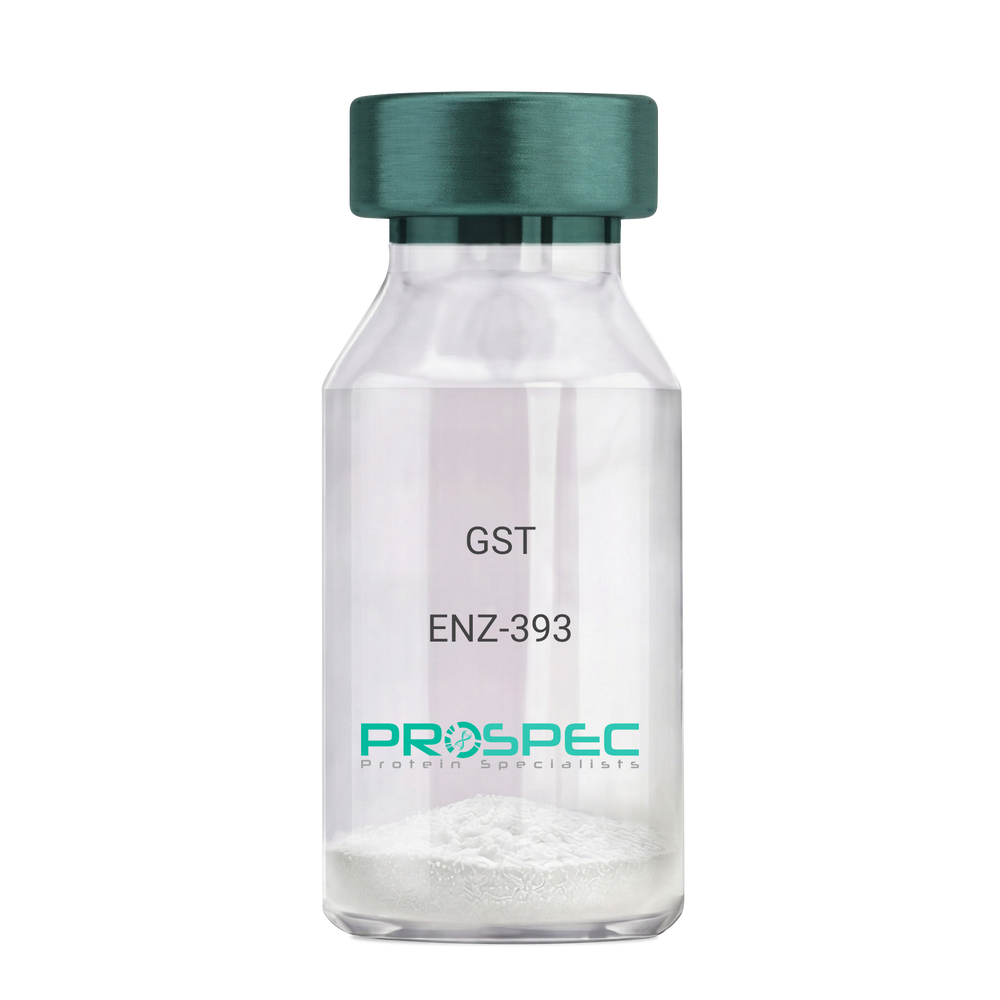
- View Data Sheet
Name :
GSTDescription:
Glutathione S-Transferase Recombinant
Glutathione S-Transferase, GST, Glutathione S-transferase class-mu 26 kDa isozyme, GST 26, Sj26 antigen, SjGST.
Product # :
ENZ-393Price :
Quantity :
Shipping Method :
Shipped with Ice Packs
More Info
- description
- source
- formulation
- purity
- biological activity
- More Info
Description
Recombinant Glutathione S-Transferase full length protein (1-218a.a.) expressed in E.coli, having a molecular mass of 26kDa. GST was isolated from an E. coli strain that carries the coding sequence for Schistosoma japonicum GST under the control of a T7 promoter. The GST is purified by proprietary chromatographic techniques.
Source
Escherichia Coli.
Formulation
GST supplied in Phosphate Buffered Saline pH 7.4.
Purity
Greater than 95% as determined by SDS-PAGE.
Biological Activity
Specific activity is >20 units/mg. A unit is defined as the amount of enzyme that conjugate 1.0 u mole of 1-chloro-2,4-dinitrobenzene (CDNB) with reduced glutathione per minute at pH 6.5 at 25°C.More Info
-
Introduction
Antioxidant enzyme Glutathione S- Transferase (GST) is thought to do the primary cellular defense mechanism against reactive oxygen species. GST reduces lipid hydroperoxides through its Se-independent glutathione peroxidase activity. The enzyme also detoxifies lipid peroxidation end products such as 4-hydroxynonenal (4-HNE).
The soluble GST is a 26 kDa protein which occurs as a dimer in all aerobic organisms. Each monomer has two domains, one that binds GSH and is an /-structure similar to thioredoxin and the other, all helical, that binds the hydrophobic substrate. The GST -fusion protein expression system is a widely used recombinant protein expression system that allows a peptide or a regulatory protein domain to be expressed as a fusion to the C-terminus of Schistosoma japonicum GST. Fusion proteins also possess GST -enzymatic activity and can undergo dimerization similar to in vivo. The fusion protein can be purified via GST -affinity column chromatography. In most cases, the desired peptides or domains are removed from GST by applying a specific protease that recognizes and cleaves the linker between the protein domain and GST. The technique has been widely used to generate different kinds of proteins for crystallization, molecular immunology studies, the production of vaccines and studies involving protein-protein and protein-DNA interactions. -
Synonyms
Glutathione S-Transferase, GST, Glutathione S-transferase class-mu 26 kDa isozyme, GST 26, Sj26 antigen, SjGST.
-
Physical Appearance
Sterile Filtered clear solution.
-
Stability
Store at 4°C if entire vial will be used within 2-4 weeks. Store, frozen at -20°C for longer periods of time. For long term storage it is recommended to add a carrier protein (0.1% HSA or BSA).Avoid multiple freeze-thaw cycles.
-
Amino Acid Sequence
MSPILGYWKI KGLVQPTRLL LEYLEEKYEE HLYERDEGDK WRNKKFELGL EFPNLPYYID GDVKLTQSMA IIRYIADKHN MLGGCPKERA EISMLEGAVL DIRYGVSRIA YSKDFETLKV DFLSKLPEML KMFEDRLCHK TYLNGDHVTH PDFMLYDALD VVLYMDPMCL DAFPKLVCFK KRIEAIPQID KYLKSSKYIA WPLQGWQATF GGGDHPPKSD LVPR.
ProSpec's products are furnished for LABORATORY RESEARCH USE ONLY. The product may not be used as drugs, agricultural or pesticidal products, food additives or household chemicals.
- View Data Sheet
Name :
CEL MouseDescription:
Carboxyl Ester Lipase Mouse Recombinant
Bile salt-activated lipase, BAL, EC 3.1.1.13, EC 3.1.1.3, Bile salt-stimulated lipase, BSSL, Bucelipase, Carboxyl ester lipase, Cholesterol esterase, Pancreatic lysophospholipase, Sterol esterase, CEL, FAP, BSDL, CELL, FAPP, LIPA, Cease, MODY8.
Product # :
ENZ-1115Price :
Quantity :
Shipping Method :
Shipped with Ice Packs
More Info
- description
- source
- formulation
- purity
- biological activity
- More Info
Description
CEL Mouse produced in Sf9 Baculovirus cells is a single, glycosylated polypeptide chain containing 585 amino acids (21-599 aa) and having a molecular mass of 64.5kDa.CEL is fused to a 6 amino acid His tag at C-terminus and purified by proprietary chromatographic techniques.
Source
Sf9, Baculovirus cells.
Formulation
The CEL solution (0.5 mg/ml) contains 10% Glycerol and Phosphate-Buffered Saline (pH 7.4).
Purity
Greater than 90.0% as determined by SDS-PAGE.
Biological Activity
Specific activity is > 100,000 pmol/min/ug. Measured by the amount of enzyme that hydrolyze 1.0 umole of p-nitrophenyl butyrate to p-nitrophenol per minute at pH7.5 at 25C˚.
More Info
-
Introduction
Carboxyl ester lipase also known as CEL, formely called cholesterol esterase or bile salt-stimulated lipase, is an enzyme with lipolytic capablity of hydrolyzing cholesteryl esters, tri-, di-, and mono- phospholipids, acylglycerol, ceramide and lysophospholipids. The carboxyl terminus of the enzyme controls enzymatic activity by creating hydrogen bonds with the surface loop to partlyshield the active site. The active catalytic site triad of serine-histidine-aspartate is centrally located in the enzyme structure and is partly covered by a surface loop. Bile salt binding to the loop domain set free the active site for accessibility by water-insoluble substrates. CEL is produced mainly in the pancreas and lactating mammary gland, thus the protein is also expressed in liver, macrophages, and in the vessel wall.
-
Synonyms
Bile salt-activated lipase, BAL, EC 3.1.1.13, EC 3.1.1.3, Bile salt-stimulated lipase, BSSL, Bucelipase, Carboxyl ester lipase, Cholesterol esterase, Pancreatic lysophospholipase, Sterol esterase, CEL, FAP, BSDL, CELL, FAPP, LIPA, Cease, MODY8.
-
Physical Appearance
Sterile Filtered colorless solution.
-
Stability
Store at 4°C if entire vial will be used within 2-4 weeks. Store, frozen at -20°C for longer periods of time. For long term storage it is recommended to add a carrier protein (0.1% HSA or BSA).Avoid multiple freeze-thaw cycles.
-
Amino Acid Sequence
AKLGAVYTEG GFVEGVNKKL SLLGGDSVDI FKGIPFATAK TLENPQRHPG WQGTLKATNF
KKRCLQATIT QDNTYGQEDC LYLNIWVPQG RKQVSHNLPV MVWIYGGAFL MGSGQGANFL
KNYLYDGEEI ATRGNVIVVT FNYRVGPLGF LSTGDANLPG NFGLRDQHMA IAWVKRNIAA
FGGDPDNITI FGESAGAASV SLQTLSPYNK GLIRRAISQS GMALSPWAIQ KNPLFWAKTI
AKKVGCPTED TGKMAACLKI TDPRALTLAY KLPVKKQEYP VVHYLAFIPV IDGDFIPDDP
INLYNNTADI DYIAGINNMD GHLFATIDVP AVDKTKQTVT EEDFYRLVSG HTVAKGLKGA
QATFDIYTES WAQDPSQENM KKTVVAFETD VLFLIPTEIA LAQHKAHAKS AKTYSYLFSH
PSRMPIYPKW MGADHADDLQ YVFGKPFATP LGYRPQDRAV SKAMIAYWTN FARSGDPNMG
NSPVPTHWYP YTLENGNYLD ITKTITSASM KEHLREKFLK FWAVTFEVLP TVTGDQDTLT
PPEDDSEVAP DPPSDDSQVV PVPPTDDSVE AQMPATIGFH HHHHH
ProSpec's products are furnished for LABORATORY RESEARCH USE ONLY. The product may not be used as drugs, agricultural or pesticidal products, food additives or household chemicals.
- View Data Sheet
Name :
PCOLCE HumanDescription:
Procollagen C-Endopeptidase Enhancer Human Recombinant
Procollagen C-Endopeptidase Enhancer, Procollagen C-Proteinase Enhancer 1, Type I Procollagen COOH-Terminal Proteinase Enhancer, Type 1 Procollagen C-Proteinase Enhancer Protein, Procollagen COOH-Terminal Proteinase Enhancer 1, PCPE-1, PCPE1, Procollagen, Type 1, COOH-Terminal Proteinase Enhancer, Procollagen C-Endopeptidase Enhancer 1, COOH-Terminal Proteinase Enhancer, Procollagen, Type 1, PCPE, Procollagen C-endopeptidase enhancer 1.
Product # :
ENZ-863Price :
Quantity :
Shipping Method :
Shipped with Ice Packs
More Info
- description
- source
- formulation
- purity
- More Info
Description
PCOLCE Human Recombinant produced in E.Coli is a single, non-glycosylated polypeptide chain containing 447 amino acids (26-449 a.a) and having a molecular mass of 47.9kDa. PCOLCE is fused to a 23 amino acid His-tag at N-terminus & purified by proprietary chromatographic techniques.
Source
Escherichia Coli.
Formulation
PCOLCE protein solution (1mg/ml) containing 20mM Tris-HCl buffer (pH 8.0) and 10% glycerol.
Purity
Greater than 85.0% as determined by SDS-PAGE.
More Info
-
Introduction
Procollagen C-endopeptidase enhancer 1, also known as PCOLCE binds to the C-terminal propeptide of type I procollagen and enhances procollagen C-proteinase activity. In addition, C-terminal processed part of PCPE (CT-PCPE) has a metalloproteinase inhibitory activity. Among the diseases which are associated with PCOLCE: bone fracture & oculopharyngeal muscular dystrophy.
-
Synonyms
Procollagen C-Endopeptidase Enhancer, Procollagen C-Proteinase Enhancer 1, Type I Procollagen COOH-Terminal Proteinase Enhancer, Type 1 Procollagen C-Proteinase Enhancer Protein, Procollagen COOH-Terminal Proteinase Enhancer 1, PCPE-1, PCPE1, Procollagen, Type 1, COOH-Terminal Proteinase Enhancer, Procollagen C-Endopeptidase Enhancer 1, COOH-Terminal Proteinase Enhancer, Procollagen, Type 1, PCPE, Procollagen C-endopeptidase enhancer 1.
-
Physical Appearance
Sterile filtered colorless solution.
-
Stability
Store at 4°C if entire vial will be used within 2-4 weeks. Store, frozen at -20°C for longer periods of time. For long term storage it is recommended to add a carrier protein (0.1% HSA or BSA).Avoid multiple freeze-thaw cycles.
-
Amino Acid Sequence
MGSSHHHHHH SSGLVPRGSH MGSQTPNYTR PVFLCGGDVK GESGYVASEG FPNLYPPNKE CIWTITVPEG QTVSLSFRVF DLELHPACRY DALEVFAGSG TSGQRLGRFC GTFRPAPLVA PGNQVTLRMT TDEGTGGRGF LLWYSGRATS GTEHQFCGGR LEKAQGTLTT PNWPESDYPP GISCSWHIIA PPDQVIALTF EKFDLEPDTY CRYDSVSVFN GAVSDDSRRL GKFCGDAVPG SISSEGNELL VQFVSDLSVT ADGFSASYKT LPRGTAKEGQ GPGPKRGTEP KVKLPPKSQP PEKTEESPSA PDAPTCPKQC RRTGTLQSNF CASSLVVTAT VKSMVREPGE GLAVTVSLIG AYKTGGLDLP SPPTGASLKF YVPCKQCPPM KKGVSYLLMG QVEENRGPVL PPESFVVLHR PNQDQILTNL SKRKCPSQPV RAAASQD.
ProSpec's products are furnished for LABORATORY RESEARCH USE ONLY. The product may not be used as drugs, agricultural or pesticidal products, food additives or household chemicals.
- View Data Sheet
Name :
PDE6H HumanDescription:
Phosphodiesterase 6H cGMP-Specific Cone Gamma Human Recombinant
Phosphodiesterase 6H, CGMP-Specific, Cone, Gamma, Retinal Cone Rhodopsin-Sensitive CGMP 3',5'-Cyclic Phosphodiesterase, Subunit Gamma, EC 3.1.4.35, EC 3.1.4.17, RCD3, GMP-PDE Gamma, ACHM6, PDE6H.
Product # :
ENZ-819Price :
Quantity :
Shipping Method :
Shipped with Ice Packs
More Info
- description
- source
- formulation
- purity
- More Info
Description
PDE6H Human Recombinant produced in E.Coli is a single, non-glycosylated polypeptide chain containing 106 amino acids (1-83 a.a) and having a molecular mass of 11.5 kDa. PDE6H is fused to a 23 amino acid His-tag at N-terminus & purified by proprietary chromatographic techniques.
Source
Escherichia Coli.
Formulation
PDE6H protein solution (0.5mg/ml) containing 20mM Tris-HCl buffer (pH 8.0), 0.2M NaCl, 40% glycerol, 2mM DTT and 0.1mM PMSF.
Purity
Greater than 80% as determined by SDS-PAGE.
More Info
-
Introduction
PDE6H belongs to the rod/cone cGMP-PDE gamma subunit family, which selectively catalyze the hydrolysis of 3 cyclic phosphate bonds in adenosine and/or guanine 3,5 cyclic monophosphate (cAMP and/or cGMP). This family regulates the cellular levels, localization and duration of action of these second messengers by controlling the rate of their degradation. PDE6H is the inhibitory (or gamma) subunit of the cone-specific cGMP phosphodiesterase, which is atetramer composed of two catalytic chains (alpha and beta), and two inhibitory chains (gamma). PDE6H is particularly expressed in the retina, and is implicated in the transmission and amplification of the visual signal. Mutations in PDE6H have been associated with retinal cone dystrophy type 3A.
-
Synonyms
Phosphodiesterase 6H, CGMP-Specific, Cone, Gamma, Retinal Cone Rhodopsin-Sensitive CGMP 3',5'-Cyclic Phosphodiesterase, Subunit Gamma, EC 3.1.4.35, EC 3.1.4.17, RCD3, GMP-PDE Gamma, ACHM6, PDE6H.
-
Physical Appearance
Sterile Filtered colorless solution.
-
Stability
Store at 4°C if entire vial will be used within 2-4 weeks. Store, frozen at -20°C for longer periods of time. For long term storage it is recommended to add a carrier protein (0.1% HSA or BSA).Avoid multiple freeze-thaw cycles.
-
Amino Acid Sequence
MGSSHHHHHH SSGLVPRGSH MGSMSDNTTL PAPASNQGPT TPRKGPPKFK QRQTRQFKSK PPKKGVKGFG DDIPGMEGLG TDITVICPWE AFSHLELHEL AQFGII.
ProSpec's products are furnished for LABORATORY RESEARCH USE ONLY. The product may not be used as drugs, agricultural or pesticidal products, food additives or household chemicals.
- View Data Sheet
Name :
QDPR HumanDescription:
Quinoid Dihydropteridine Reductase Human Recombinant
Dihydropteridine reductase, HDHPR, Quinoid dihydropteridine reductase, QDPR, DHPR, PKU2, SDR33C1.
Product # :
ENZ-163Price :
Quantity :
Shipping Method :
Shipped with Ice Packs
More Info
- description
- source
- formulation
- purity
- More Info
Description
QDPR Human Recombinant produced in E.Coli is a single, non-glycosylated polypeptide chain containing 267 amino acids (1-244 a.a.) and having a molecular mass of 28.2kDa.QDPR is fused to a 23 amino acid His-tag at N-terminus & purified by proprietary chromatographic techniques.
Source
Escherichia Coli.
Formulation
QDPR protein solution (1mg/ml) containing 20mM Tris-HCl buffer (pH 8.0), 10% glycerol and 2mM DTT.
Purity
Greater than 90.0% as determined by SDS-PAGE.
More Info
-
Introduction
QDPR belongs to the short-chain dehydrogenases/reductase (SDR) family of enzymes. Operating as a homodimer, QDPR has an imperative role in the recycling of tetrahydrobiopterin (BH4), a vital cofactor for the hydroxylation of the aromatic amino acids (tryptophan, tyrosine and phenylalanine). More precisely, QDPR catalyzes the regeneration of BH4 from quinonoid dihydrobiopterin (qBH2), the product generated from the hydroxylation reactions. Mutations in the QDPR gene may lead to phenylketonuria II.
-
Synonyms
Dihydropteridine reductase, HDHPR, Quinoid dihydropteridine reductase, QDPR, DHPR, PKU2, SDR33C1.
-
Physical Appearance
Sterile Filtered colorless solution.
-
Stability
Store at 4°C if entire vial will be used within 2-4 weeks.Store, frozen at -20°C for longer periods of time. For long term storage it is recommended to add a carrier protein (0.1% HSA or BSA).Avoid multiple freeze-thaw cycles.
-
Amino Acid Sequence
MGSSHHHHHH SSGLVPRGSH MGSMAAAAAA GEARRVLVYG GRGALGSRCV QAFRARNWWV ASVDVVENEE ASASIIVKMT DSFTEQADQV TAEVGKLLGE EKVDAILCVA GGWAGGNAKS KSLFKNCDLM WKQSIWTSTI SSHLATKHLK EGGLLTLAGA KAALDGTPGM IGYGMAKGAV HQLCQSLAGK NSGMPPGAAA IAVLPVTLDT PMNRKSMPEA DFSSWTPLEF LVETFHDWIT GKNRPSSGSL IQVVTTEGRT ELTPAYF.
ProSpec's products are furnished for LABORATORY RESEARCH USE ONLY. The product may not be used as drugs, agricultural or pesticidal products, food additives or household chemicals.
- View Data Sheet
Name :
DUT Pyrococcus FruriosusDescription:
Thermostable dUTPase Pyrococcus Fruriosus Recombinant
Thermostable dUTPase, dUTPase.
Product # :
ENZ-281Price :
Quantity :
Shipping Method :
Shipped with Ice Packs
More Info
- source
- formulation
- purity
- More Info
Source
Escherichia Coli.
Formulation
dUTPase is supplied in 20mM Tris-HCl (pH 8.2), 1mM DTT, 0.1mM EDTA, 100mM KCl, 0.1% Nonidet P40, 0.1% Tween 20 and 50% glycerol at a concentration of 1000U/µl of the enzyme.
Purity
Greater than 95.0% as determined by SDS-PAGE.
More Info
-
Synonyms
Thermostable dUTPase, dUTPase.
-
Physical Appearance
Sterile filtered liquid formulation.
-
Stability
Store at 4°C if entire vial will be used within 2-4 weeks. Store, frozen at -20°C for longer periods of time. For long term storage it is recommended to add a carrier protein (0.1% HSA or BSA).Avoid multiple freeze-thaw cycles.
-
Unit Definition
One unit of enzyme catalyzes hadrylazation of 10 nanomoles of dUTP to dUMP in one hour at 85 Centigrade.
-
Specific Activity
10³U/ug.
ProSpec's products are furnished for LABORATORY RESEARCH USE ONLY. The product may not be used as drugs, agricultural or pesticidal products, food additives or household chemicals.
- View Data Sheet
Name :
SARS HumanDescription:
Seryl-tRNA Synthetase Human Recombinant
Serine--tRNA ligase cytoplasmic, Seryl-tRNA synthetase, SerRS, Seryl-tRNA(Ser/Sec) synthetase, SARS, SERS.
Product # :
ENZ-229Price :
Quantity :
Shipping Method :
Shipped with Ice Packs
More Info
- description
- source
- formulation
- purity
- More Info
Description
SARS Human Recombinant produced in E.coli is a single, non-glycosylated polypeptide chain containing 537 amino acids (1-514) and having a molecular mass of 61.2kDa.SARS is fused to a 23 amino acid His-tag at N-terminus & purified by proprietary chromatographic techniques.
Source
Escherichia Coli.
Formulation
The SARS solution (0.5mg/ml) contains 20mM Tris-HCl buffer (pH 8.0), 1mM DTT, 10% glycerol and 100mM NaCl.
Purity
Greater than 90.0% as determined by SDS-PAGE.
More Info
-
Introduction
Seryl-tRNA synthetase, cytoplasmic (SARS) is a member of the class-II aminoacyl-tRNA synthetase family. Aminoacyl-tRNA synthetases’ role is to catalyze the aminoacylation of tRNAs by their corresponding amino acids, as a result linking amino acids with tRNA-contained nucleotide triplets. The SARS enzyme catalyzes the attachment of serine to tRNA (Ser). SARS enzyme is probably able to aminoacylate tRNA (Sec) with serine, to form the misacylated tRNA L-seryl-tRNA (Sec), which will be then converted into selenocysteinyl-tRNA (Sec).
-
Synonyms
Serine--tRNA ligase cytoplasmic, Seryl-tRNA synthetase, SerRS, Seryl-tRNA(Ser/Sec) synthetase, SARS, SERS.
-
Physical Appearance
Sterile Filtered colorless solution.
-
Stability
Store at 4°C if entire vial will be used within 2-4 weeks. Store, frozen at -20°C for longer periods of time. For long term storage it is recommended to add a carrier protein (0.1% HSA or BSA).Avoid multiple freeze-thaw cycles.
-
Amino Acid Sequence
MGSSHHHHHH SSGLVPRGSH MGSMVLDLDL FRVDKGGDPA LIRETQEKRF KDPGLVDQLV KADSEWRRCR FRADNLNKLK NLCSKTIGEK MKKKEPVGDD ESVPENVLSF DDLTADALAN LKVSQIKKVR LLIDEAILKC DAERIKLEAE RFENLREIGN LLHPSVPISN DEDVDNKVER IWGDCTVRKK YSHVDLVVMV DGFEGEKGAV VAGSRGYFLK GVLVFLEQAL IQYALRTLGS RGYIPIYTPF FMRKEVMQEV AQLSQFDEEL YKVIGKGSEK SDDNSYDEKY LIATSEQPIA ALHRDEWLRP EDLPIKYAGL STCFRQEVGS HGRDTRGIFR VHQFEKIEQF VYSSPHDNKS WEMFEEMITT AEEFYQSLGI PYHIVNIVSG SLNHAASKKL DLEAWFPGSG AFRELVSCSN CTDYQARRLR IRYGQTKKMM DKVEFVHMLN ATMCATTRTI CAILENYQTE KGITVPEKLK EFMPPGLQEL IPFVKPAPIE QEPSKKQKKQ HEGSKKKAAA RDVTLENRLQ NMEVTDA.
ProSpec's products are furnished for LABORATORY RESEARCH USE ONLY. The product may not be used as drugs, agricultural or pesticidal products, food additives or household chemicals.
- View Data Sheet
Name :
CA13 HumanDescription:
Carbonic Anhydrase XIII Human Recombinant
Carbonic Anhydrase XIII, Carbonate Dehydratase XIII, EC 4.2.1.1, CA-XIII, Carbonic, Anhydrase 13, CAXIII.
Product # :
ENZ-902Price :
Quantity :
Shipping Method :
Shipped with Ice Packs
More Info
- description
- source
- formulation
- purity
- biological activity
- More Info
Description
CA13 Human Recombinant produced in E.Coli is a single, non-glycosylated polypeptide chain containing 285 amino acids (1-262a.a) and having a molecular mass of 31.8kDa.CA13 is fused to a 23 amino acid His-tag at N-terminus & purified by proprietary chromatographic techniques.
Source
Escherichia Coli.
Formulation
CA13 protein solution (0.5mg/ml) containing Phosphate buffered saline (pH7.4),10% glycerol and 1mM DTT.
Purity
Greater than 90.0% as determined by SDS-PAGE.
Biological Activity
Specific activity is > 2,500 pmol/min/ug, and is defined as the amount of enzyme that hydrolyze 1.0 pmole of 4-nitrophenyl acetate to 4-nitrophenol per minute at pH 7.5 at 37C.More Info
-
Introduction
Carbonic Anhydrase XIII, also known as CA13 is a member of the alpha-carbonic anhydrase family, which catalyzes the rapid interconversion of carbon dioxide and water tobicarbonate and protons, a reversible reaction which occurs relatively slowly in the absence of catalyst. Furthermore, the active siteof nearly all carbonic anhydrases contains a zinc ion; they have been classified as metalloenzymes. At least fivedistinct CA families (?, ?, ?, ? and ?) have been found. These families have no significant a.a sequence resemblance and in just about allcases are considered to be an example of convergent evolution. The ?-CAs have been demonstrated in humans.
-
Synonyms
Carbonic Anhydrase XIII, Carbonate Dehydratase XIII, EC 4.2.1.1, CA-XIII, Carbonic, Anhydrase 13, CAXIII.
-
Physical Appearance
Sterile Filtered clear solution.
-
Stability
Store at 4°C if entire vial will be used within 2-4 weeks.Store, frozen at -20°C for longer periods of time. For long term storage it is recommended to add a carrier protein (0.1% HSA or BSA).Avoid multiple freeze-thaw cycles.
-
Amino Acid Sequence
MGSSHHHHHH SSGLVPRGSP MGSMSRLSWG YREHNGPIHW KEFFPIADGD QQSPIEIKTK EVKYDSSLRP LSIKYDPSSA KIISNSGHSF NVDFDDTENK SVLRGGPLTG SYRLRQVHLH WGSADDHGSE HIVDGVSYAA ELHVVHWNSD KYPSFVEAAH EPDGLAVLGV FLQIGEPNSQ LQKITDTLDS IKEKGKQTRF TNFDLLSLLP PSWDYWTYPG SLTVPPLLES VTWIVLKQPI NISSQQLAKF RSLLCTAEGE AAAFLVSNHR PPQPLKGRKV RASFH.
ProSpec's products are furnished for LABORATORY RESEARCH USE ONLY. The product may not be used as drugs, agricultural or pesticidal products, food additives or household chemicals.
- View Data Sheet
Name :
CBR4 HumanDescription:
Carbonyl Reductase-4 Human Recombinant
Carbonyl reductase family member 4, 3-oxoacyl-[acyl-carrier-protein] reductase, Quinone reductase CBR4, CBR4, SDR45C1, FLJ14431.
Product # :
ENZ-022Price :
Quantity :
Shipping Method :
Shipped with Ice Packs
More Info
- description
- source
- formulation
- purity
- More Info
Description
CBR4 Human Recombinant fused with a 20 amino acid His tag at N-terminus produced in E.Coli is a single, non-glycosylated, polypeptide chain containing 257 amino acids (1-237 a.a.) and having a molecular mass of 27.5kDa. The CBR4 is purified by proprietary chromatographic techniques.
Source
Escherichia Coli.
Formulation
The CBR4 solution (0.5 mg/ml) contains 20mM Tris-HCl buffer (pH8.0), 10% glycerol, 5mM DTT and 200mM NaCl.
Purity
Greater than 95.0% as determined by SDS-PAGE.
More Info
-
Introduction
CBR4 is a member of the short-chain dehydrogenase/reductase family. CBR4 has a role in biosynthesis of fatty acids in the mitochondria and a broad substrate specificity and reduces 9,10-phenanthrenequinone, 1,4-benzoquinone and a range of other o-quinones and p-quinones (in vitro). CBR4 formation of a heteroteramer with HSD17B8 has NADH-dependent 3-ketoacyl-acyl carrier protein reductase activity for o- and p-quinones.
-
Synonyms
Carbonyl reductase family member 4, 3-oxoacyl-[acyl-carrier-protein] reductase, Quinone reductase CBR4, CBR4, SDR45C1, FLJ14431.
-
Physical Appearance
Sterile Filtered colorless solution.
-
Stability
Store at 4°C if entire vial will be used within 2-4 weeks. Store, frozen at -20°C for longer periods of time. For long term storage it is recommended to add a carrier protein (0.1% HSA or BSA).Avoid multiple freeze-thaw cycles.
-
Amino Acid Sequence
MGSSHHHHHH SSGLVPRGSH MDKVCAVFGG SRGIGRAVAQ LMARKGYRLA VIARNLEGAK AAAGDLGGDH LAFSCDVAKE HDVQNTFEEM EKHLGRVNFL VNAAGINRDG LLVRTKTEDM VSQLHTNLLG SMLTCKAAMR TMIQQQGGSI VNVGSIVGLK GNSGQSVYSA SKGGLVGFSR ALAKEVARKK IRVNVVAPGF VHTDMTKDLK EEHLKKNIPL GRFGETIEVA HAVVFLLESP YITGHVLVVD GGLQLIL.
ProSpec's products are furnished for LABORATORY RESEARCH USE ONLY. The product may not be used as drugs, agricultural or pesticidal products, food additives or household chemicals.
- View Data Sheet
Name :
PYCR1 HumanDescription:
Pyrroline-5-Carboxylate Reductase 1 Human Recombinant
P5C, PRO3, P5CR 1, Pyrroline-5-Carboxylate Reductase 1 mitochondrial, ARCL2B, PYCR, PIG45, PP222, Proliferation-Inducing Protein 45.
Product # :
ENZ-035Price :
Quantity :
Shipping Method :
Shipped with Ice Packs
More Info
- description
- source
- formulation
- purity
- More Info
Description
PYCR1 produced in E.Coli is a single, non-glycosylated polypeptide chain containing 339 amino acids (1-319a.a.) and having a molecular mass of 35.5kDa.PYCR1 is fused to a 20 amino acid His-tag at N-terminus & purified by proprietary chromatographic techniques.
Source
Escherichia Coli.
Formulation
The PYCR1 protein solution (0.5mg/1ml) is formulated in 20 mM Tris-HCl Buffer (pH 8.5) and 10% Glycerol.
Purity
Greater than 90% as determined by SDS-PAGE.
More Info
-
Introduction
PYCR1 is a universal housekeeping enzyme which catalyzes the NAD(P)H-dependent conversion of pyrroline-5-carboxylate to proline. PYCR1 enzyme also takes a physiologic part in the generation of NADP(+) in certain cell types. PYCR1 forms a homopolymer and localizes to the mitochondrion. Mutations in PYCR1 are the source of cutis laxa autosomal recessive type 2B (ARCL2B).
-
Synonyms
P5C, PRO3, P5CR 1, Pyrroline-5-Carboxylate Reductase 1 mitochondrial, ARCL2B, PYCR, PIG45, PP222, Proliferation-Inducing Protein 45.
-
Physical Appearance
Sterile Filtered clear solution.
-
Stability
Store at 4°C if entire vial will be used within 2-4 weeks. Store, frozen at -20°C for longer periods of time. For long term storage it is recommended to add a carrier protein (0.1% HSA or BSA).Avoid multiple freeze-thaw cycles.
-
Amino Acid Sequence
MGSSHHHHHH SSGLVPRGSH MSVGFIGAGQ LAFALAKGFT AAGVLAAHKI MASSPDMDLA TVSALRKMGV KLTPHNKETV QHSDVLFLAV KPHIIPFILD EIGADIEDRH IVVSCAAGVT ISSIEKKLSA FRPAPRVIRC MTNTPVVVRE GATVYATGTH AQVEDGRLME QLLSSVGFCT EVEEDLIDAV TGLSGSGPAY AFTALDALAD GGVKMGLPRR LAVRLGAQAL LGAAKMLLHS EQHPGQLKDN VSSPGGATIH ALHVLESGGF RSLLINAVEA SCIRTRELQS MADQEQVSPA AIKKTILDKV KLDSPAGTAL SPSGHTKLLP RSLAPAGKD
ProSpec's products are furnished for LABORATORY RESEARCH USE ONLY. The product may not be used as drugs, agricultural or pesticidal products, food additives or household chemicals.
- View Data Sheet
Name :
IMPAD1 HumanDescription:
Inositol Monophosphatase Domain Containing 1 Human Recombinant
Inositol monophosphatase 3, IMP 3, IMPase 3, EC 3.1.3.25, EC 3.1.3.7, Golgi 3-prime phosphoadenosine 5-prime phosphate 3-prime phosphatase, Golgi-resident PAP phosphatase, gPAPP, Inositol monophosphatase domain-containing protein 1, Inositol-1(or 4)-monophosphatase 3, Myo-inositol monophosphatase A3, IMPAD1, IMPA3, GPAPP, IMP-3.
Product # :
PRO-1346Price :
Quantity :
Shipping Method :
Shipped with Ice Packs
More Info
- description
- source
- formulation
- purity
- More Info
Description
IMPAD1 Human Recombinant produced in E.Coli is a single, non-glycosylated polypeptide chain containing 349 amino acids (34-359 a.a) and having a molecular mass of 37.6kDa.IMPAD1 is fused to a 23 amino acid His-tag at N-terminus & purified by proprietary chromatographic techniques.
Source
Escherichia Coli.
Formulation
IMPAD1 protein solution (1mg/ml) containing 20mM Tris-HCl buffer (pH 8.0), 2M Urea and 20% glycerol.
Purity
Greater than 90.0% as determined by SDS-PAGE.
More Info
-
Introduction
Inositol monophosphatase 3 (IMPAD1) belongs to the inositol monophosphatase family. IMPAD1 is restricted to the Golgi apparatus and catalyzes the hydrolysis of phosphoadenosine phosphate (PAP) to adenosine monophosphate (AMP). IMPAD1 gene mutations cause the GRAPP type chondrodysplasia with joint dislocations, and a pseudogene of the IMPAD1 gene is located on the long arm of chromosome 1.
-
Synonyms
Inositol monophosphatase 3, IMP 3, IMPase 3, EC 3.1.3.25, EC 3.1.3.7, Golgi 3-prime phosphoadenosine 5-prime phosphate 3-prime phosphatase, Golgi-resident PAP phosphatase, gPAPP, Inositol monophosphatase domain-containing protein 1, Inositol-1(or 4)-monophosphatase 3, Myo-inositol monophosphatase A3, IMPAD1, IMPA3, GPAPP, IMP-3.
-
Physical Appearance
Sterile Filtered colorless solution.
-
Stability
Store at 4°C if entire vial will be used within 2-4 weeks. Store, frozen at -20°C for longer periods of time. For long term storage it is recommended to add a carrier protein (0.1% HSA or BSA).Avoid multiple freeze-thaw cycles.
-
Amino Acid Sequence
MGSSHHHHHH SSGLVPRGSH MGSGRFSLFG LGGEPGGGAA GPAAAADGGT VDLREMLAVS VLAAVRGGDE VRRVRESNVL HEKSKGKTRE GAEDKMTSGD VLSNRKMFYL LKTAFPSVQI NTEEHVDAAD QEVILWDHKI PEDILKEVTT PKEVPAESVT VWIDPLDATQ EYTEDLRKYV TTMVCVAVNG KPMLGVIHKP FSEYTAWAMV DGGSNVKARS SYNEKTPRIV VSRSHSGMVK QVALQTFGNQ TTIIPAGGAG YKVLALLDVP DKSQEKADLY IHVTYIKKWD ICAGNAILKA LGGHMTTLSG EEISYTGSDG IEGGLLASIR MNHQALVRKL PDLEKTGHK.
ProSpec's products are furnished for LABORATORY RESEARCH USE ONLY. The product may not be used as drugs, agricultural or pesticidal products, food additives or household chemicals.
- View Data Sheet
Name :
PGAM1 Mouse, ActiveDescription:
Phosphoglycerate Mutase 1 Mouse Recombinant, Active
Phosphoglycerate mutase 1, BPG-dependent PGAM 1, Phosphoglycerate mutase isozyme B, PGAM-B, Pgam1, Pgam-1, 2310050F24Rik.
Product # :
ENZ-980Price :
Quantity :
Shipping Method :
Shipped with Ice Packs
More Info
- description
- source
- formulation
- purity
- biological activity
- More Info
Description
PGAM1 Mouse Recombinant produced in E.coli is a single, non-glycosylated polypeptide chain containing 278 amino acids (1-254) and having a molecular mass of 31.4kDa.PGAM1 is fused to a 24 amino acid His-tag at N-terminus & purified by proprietary chromatographic techniques.
Source
Escherichia Coli.
Formulation
The PGAM1 solution (1mg/ml) contains 20mM Tris-HCl buffer (pH8.0), 20% glycerol, 0.1M NaCl and 1mM DTT.
Purity
Greater than 95% as determined by SDS-PAGE.
Biological Activity
Specific activity is >150units/mg, in which One unit will convert 1.0 umole of 3-phosphoglycerate to 2-phosphoglcerate per minute at pH 7.6 at 37C.More Info
-
Introduction
PGAM1 is part of the phosphoglycerate mutase family. PGAM1 is an essential component of glucose and 2,3-BPGA (2,3-bisphosphoglycerate) metabolism and catalyzes the reversible reaction of 3-phosphoglycerate (3-PGA) to 2-phosphoglycerate (2-PGA) in the glycolytic pathway. PGAM1 is a dimeric enzyme containing, in different tissues, different proportions of a slow-migrating muscle (MM) isozyme, a fast-migrating brain (BB) isozyme, and a hybrid form (MB). PGAM1 mutations lead to muscle phosphoglycerate mutase deficiency, a.k.a. glycogen storage disease X.
-
Synonyms
Phosphoglycerate mutase 1, BPG-dependent PGAM 1, Phosphoglycerate mutase isozyme B, PGAM-B, Pgam1, Pgam-1, 2310050F24Rik.
-
Physical Appearance
Sterile Filtered clear colorless solution.
-
Stability
Store at 4°C if entire vial will be used within 2-4 weeks. Store, frozen at -20°C for longer periods of time. For long term storage it is recommended to add a carrier protein (0.1% HSA or BSA).Avoid multiple freeze-thaw cycles.
-
Amino Acid Sequence
MGSSHHHHHH SSGLVPRGSH MGSHMAAYKL VLIRHGESAW NLENRFSGWY DADLSPAGHE EAKRGGQALR DAGYEFDICF TSVQKRAIRT LWTVLDAIDQ MWLPVVRTWR LNERHYGGLT GLNKAETAAK HGEAQVKIWR RSYDVPPPPM EPDHPFYSNI SKDRRYADLT EDQLPSCESL KDTIARALPF WNEEIVPQIK EGKRVLIAAH GNSLRGIVKH LEGLSEEAIM ELNLPTGIPI VYELDKNLKP IKPMQFLGDE ETVRKAMEAV AAQGKVKK.
ProSpec's products are furnished for LABORATORY RESEARCH USE ONLY. The product may not be used as drugs, agricultural or pesticidal products, food additives or household chemicals.
- View Data Sheet
Name :
Carbonic Anhydrase II E.coliDescription:
Carbonic Anhydrase II E.coli Recombinant
Carbonic anhydrase 2, Carbonate dehydratase 2, can, cynT2, yadF, b0126, JW0122, Carbonic Anhydrase II.
Product # :
ENZ-373Price :
Quantity :
Shipping Method :
Shipped with Ice Packs
More Info
- description
- source
- formulation
- purity
- More Info
Description
Carbonic anhydrase II is an E.coli Recombinant protein produced in E.Coli containing 240 amino acids (1-220) and having a molecular mass of 27 kDa. Carbonic anhydrase is expressedwith an amino-terminal hexahistidine tag.The Carbonic anhydrase 2 is purified by proprietary chromatographic techniques.
Source
Escherichia Coli.
Formulation
The Carbonic Anhydrase 2 enzyme is supplied in 20mM Tris pH-8 and 1mM DTT.
Purity
Greater than 95.0% as determined by(a) Analysis by RP-HPLC.
(b) Analysis by SDS-PAGE.More Info
-
Introduction
The enzyme Carbonic anhydrase II having an accession number of NP_414668 is also called carbonate dehydratase which is part of the enzyme family that catalyses rapid inter-conversion of carbon dioxide & water to bicarbonate, carbonic acid and protons (CO2 + H2O ? HCO3? + H+), a reaction that occurs rather slowly in the absence of a catalyst. The majority of carbonic anhydrases enclose a zinc ion in their active site and therefore is classified as metalloenzymes.
The most important function of Carbonic anhydrase is known to preserve acid-base balance in blood and other tissues, and to help transport carbon dioxide of tissues. Carbonic anhydrases have been found in all kingdoms of life. Carbonic anhydrase has 3 different classes: alpha, beta and gamma which share very little sequence or structural similarity, thus far they all perform the same function and require a zinc ion at the active site. Mammalian carbonic anhydrase is monomeric and belongs to the alpha class. Plant carbonic anhydrase is dimeric and belongs to the beta class.
Methane-producing bacteria carbonic anhydrase is trimeric and grows in hot springs which forms the gamma class. -
Synonyms
Carbonic anhydrase 2, Carbonate dehydratase 2, can, cynT2, yadF, b0126, JW0122, Carbonic Anhydrase II.
-
Physical Appearance
Sterile Filtered colorless solution.
-
Stability
Store at 4°C if entire vial will be used within 2-4 weeks. Store, frozen at -20°C for longer periods of time. For long term storage it is recommended to add a carrier protein (0.1% HSA or BSA).Avoid multiple freeze-thaw cycles.
-
Amino Acid Sequence
MGSSHHHHHH SSGLVPRGSH MKDIDTLISN NALWSKMLVE EDPGFFEKLAQAQKPRFLWI GCSDSRVPAE RLTGLEPGEL FVHRNVANLV IHTDLNCLSV VQYAVDVLEV EHIIICGHYG CGGVQAAVEN PELGLINNWL HIRDIWFKH SSLLGEMPQE RRLDTLCELN VMEQVYNLGH STIMQSAWKR GQKVTIHGWA YGIHDGLLRD LDVTATNRET LEQRYRHGIS NLKLKHANHK.
ProSpec's products are furnished for LABORATORY RESEARCH USE ONLY. The product may not be used as drugs, agricultural or pesticidal products, food additives or household chemicals.
- View Data Sheet
Name :
LACTB E.coli, HisDescription:
Beta Lactamase E.coli Recombinant, His Tag
Beta-lactamase, Cephalosporinase, ampC, ampA, b4150, JW4111.
Product # :
ENZ-088Price :
Quantity :
Shipping Method :
Shipped with Ice Packs
More Info
- description
- source
- formulation
- purity
- More Info
Description
Beta Lactamase is an E.coli Recombinant protein produced in E.Coli containing 379 amino acids (20-377) and having a molecular mass of 41.8kDa. Beta Lactamase is expressed with a 21 N-terminal His tag.The LACTB is purified by proprietary chromatographic techniques.
Source
Escherichia Coli.
Formulation
The LACTB enzyme (1mg/ml) is supplied in 20mM Tris-HCl buffer (pH8.0) and 10% glycerol.
Purity
Greater than 95.0% as determined by SDS-PAGE.
More Info
-
Introduction
Beta-lactamase is a type of enzyme (EC 3.5.2.6) produced by some bacteria that is responsible for their resistance to beta-lactam antibiotics like penicillins, cephalosporins, cephamycins and carbapenems. These antibiotics have a common element in their molecular structure: a four-atom ring known as a beta-lactam. The lactamase enzyme breaks that ring open, deactivating the molecule's antibacterial properties.
-
Synonyms
Beta-lactamase, Cephalosporinase, ampC, ampA, b4150, JW4111.
-
Physical Appearance
Sterile Filtered colorless solution.
-
Stability
Store at 4°C if entire vial will be used within 2-4 weeks. Store, frozen at -20°C for longer periods of time. For long term storage it is recommended to add a carrier protein (0.1% HSA or BSA).Avoid multiple freeze-thaw cycles.
-
Amino Acid Sequence
MGSSHHHHHH SSGLVPRGSH MAPQQINDIV HRTITPLIEQ QKIPGMAVAV IYQGKPYYFT WGYADIAKKQ PVTQQTLFEL GSVSKTFTGV LGGDAIARGE IKLSDPTTKY WPELTAKQWN GITLLHLATY TAGGLPLQVP DEVKSSSDLL RFYQNWQPAW APGTQRLYAN SSIGLFGALA VKPSGLSFEQ AMQTRVFQPL KLNHTWINVP PAEEKNYAWG YREGKAVHVS PGALDAEAYG VKSTIEDMAR WVQSNLKPLD INEKTLQQGI QLAQSRYWQT GDMYQGLGWE MLDWPVNPDS IINGSDNKIA LAARPVKAIT PPTPAVRASW VHKTGATGGF GSYVAFIPEK ELGIVMLANK NYPNPARVDA AWQILNALQ.
ProSpec's products are furnished for LABORATORY RESEARCH USE ONLY. The product may not be used as drugs, agricultural or pesticidal products, food additives or household chemicals.