Skip to content

High-quality research proteins.

  • 1-800-805-6531

  • Mon - Sat 8.00-18.00, Sun - Closed

  • info@prospecbio.com

  • PO Box 6591 East Brunswick NJ 08816

  • Products
    • Cytokines
    • Growth factors
    • Chemokines
    • Cd antigens
    • Neurotrophins
    • Hormones
    • Enzymes
    • Viral antigens
    • Recombinant proteins
    • Natural proteins
    • Monoclonal antibodies
    • Polyclonal antibodies
    • Thermal Packaging
  • About
    • Company
    • Founder
    • Contribution
  • Customers
    • Eastern Asia
    • Eastern Europe
    • North America
    • South America
    • South East Asia
    • Southern Asia
    • Western Europe
  • Ordering
    • Ordering Method
    • Ordering - Credit Card
    • Ordering - PO
    • Shipping Fees
    • FAQs
  • Services
    • DNA Cloning
    • Protein Expression
    • Monoclonal Antibody
    • Fermentation
    • Technology License
  • Contact us
Log in

Country/region

  • USD $ | Albania
  • USD $ | Andorra
  • USD $ | Argentina
  • USD $ | Armenia
  • USD $ | Australia
  • USD $ | Austria
  • USD $ | Azerbaijan
  • USD $ | Belarus
  • USD $ | Belgium
  • USD $ | Bolivia
  • USD $ | Brazil
  • USD $ | Bulgaria
  • USD $ | Cambodia
  • USD $ | Canada
  • USD $ | Chile
  • USD $ | China
  • USD $ | Colombia
  • USD $ | Costa Rica
  • USD $ | Croatia
  • USD $ | Cyprus
  • USD $ | Czechia
  • USD $ | Denmark
  • USD $ | Estonia
  • USD $ | Finland
  • USD $ | France
  • USD $ | Georgia
  • USD $ | Germany
  • USD $ | Greece
  • USD $ | Hong Kong SAR
  • USD $ | Hungary
  • USD $ | Iceland
  • USD $ | India
  • USD $ | Ireland
  • USD $ | Israel
  • USD $ | Italy
  • USD $ | Japan
  • USD $ | Kazakhstan
  • USD $ | Latvia
  • USD $ | Liechtenstein
  • USD $ | Lithuania
  • USD $ | Madagascar
  • USD $ | Malta
  • USD $ | Mexico
  • USD $ | Moldova
  • USD $ | Monaco
  • USD $ | Netherlands
  • USD $ | New Zealand
  • USD $ | North Macedonia
  • USD $ | Norway
  • USD $ | Panama
  • USD $ | Paraguay
  • USD $ | Peru
  • USD $ | Philippines
  • USD $ | Poland
  • USD $ | Portugal
  • USD $ | Romania
  • USD $ | Singapore
  • USD $ | Slovakia
  • USD $ | Slovenia
  • USD $ | South Africa
  • USD $ | South Korea
  • USD $ | Spain
  • USD $ | Sri Lanka
  • USD $ | Sweden
  • USD $ | Switzerland
  • USD $ | Taiwan
  • USD $ | Thailand
  • USD $ | Türkiye
  • USD $ | Ukraine
  • USD $ | United Kingdom
  • USD $ | United States
  • USD $ | Uruguay
  • USD $ | Vatican City
  • USD $ | Venezuela
  • USD $ | Vietnam
  • Facebook
  • Instagram
logoProSpec - Recombinant Protein Manufacturer for academic and R&D industry
Become a distributor
Account Log in
Wishlist
Cart Cart(0)
  • Products
    +
    • Cytokines
    • Growth factors
    • Chemokines
    • Cd antigens
    • Neurotrophins
    • Hormones
    • Enzymes
    • Viral antigens
    • Recombinant proteins
    • Natural proteins
    • Monoclonal antibodies
    • Polyclonal antibodies
    • Thermal Packaging
  • About
    +
    • Company
    • Founder
    • Contribution
  • Customers
    +
    • Eastern Asia
    • Eastern Europe
    • North America
    • South America
    • South East Asia
    • Southern Asia
    • Western Europe
  • Ordering
    +
    • Ordering Method
    • Ordering - Credit Card
    • Ordering - PO
    • Shipping Fees
    • FAQs
  • Services
    +
    • DNA Cloning
    • Protein Expression
    • Monoclonal Antibody
    • Fermentation
    • Technology License
  • Contact us

Item added to your cart

View cart
View All
  • Cytokines
  • Growth factors
  • Chemokines
  • Cd antigens
  • Neurotrophins
  • Hormones
  • Enzymes
  • Viral antigens
  • Recombinant proteins
  • Natural proteins
  • Monoclonal antibodies
  • Polyclonal antibodies
  • Thermal Packaging
  • Tumor Necrosis Factor

    Tumor Necrosis Factor

    View All
  • 4-1BB

    4-1BB

    View All
  • Adiponectin

    Adiponectin

    View All
  • AIF1

    AIF1

    View All
  • Other Cytokines

    Other Cytokines

    View All
  • AITRL

    AITRL

    View All
  • Angiopoietin

    Angiopoietin

    View All
  • Apolipoprotein

    Apolipoprotein

    View All
  • B-Cell Activating Factor

    B-Cell Activating Factor

    View All
  • Beta Defensin

    Beta Defensin

    View All
  • Bone Morphogenetic Protein

    Bone Morphogenetic Protein

    View All
  • B type Natriuretic Peptide

    B type Natriuretic Peptide

    View All
  • BST

    BST

    View All
  • Betacellulin

    Betacellulin

    View All
  • Cardiotrophin

    Cardiotrophin

    View All
  • Activin

    Activin

    View All
  • Fibroblast Growth Factor

    Fibroblast Growth Factor

    View All
  • Other Growth Factors

    Other Growth Factors

    View All
  • CSF

    CSF

    View All
  • CTGF

    CTGF

    View All
  • IGFBP

    IGFBP

    View All
  • VEGF Protein

    VEGF Protein

    View All
  • EGF

    EGF

    View All
  • Epigen

    Epigen

    View All
  • Erythropoietin

    Erythropoietin

    View All
  • Insulin-Like Growth Factor

    Insulin-Like Growth Factor

    View All
  • Growth Hormone

    Growth Hormone

    View All
  • HDGF

    HDGF

    View All
  • Hepatocyte Growth Factor

    Hepatocyte Growth Factor

    View All
  • Insulin

    Insulin

    View All
  • BCA-1/ BLC (CXCL13)

    BCA-1/ BLC (CXCL13)

    View All
  • BRAK (CXCL14)

    BRAK (CXCL14)

    View All
  • C-10 (CCL6)

    C-10 (CCL6)

    View All
  • Other Chemokines

    Other Chemokines

    View All
  • MEC (CCL28)

    MEC (CCL28)

    View All
  • LD78-beta (CCL3L1)

    LD78-beta (CCL3L1)

    View All
  • CTACK (CCL27)

    CTACK (CCL27)

    View All
  • CXCL16

    CXCL16

    View All
  • CXCL17

    CXCL17

    View All
  • Platelet Factor-4 (CXCL4)

    Platelet Factor-4 (CXCL4)

    View All
  • ENA-78 (CXCL5)

    ENA-78 (CXCL5)

    View All
  • Eotaxin (CCL11,24,26)

    Eotaxin (CCL11,24,26)

    View All
  • Exodus-2 (CCL21)

    Exodus-2 (CCL21)

    View All
  • Fractalkine (CX3CL1)

    Fractalkine (CX3CL1)

    View All
  • CXCL6

    CXCL6

    View All
  • Other CD Antigens

    Other CD Antigens

    View All
  • CD14

    CD14

    View All
  • CD164

    CD164

    View All
  • CD1

    CD1

    View All
  • CD2

    CD2

    View All
  • CD200

    CD200

    View All
  • CD207

    CD207

    View All
  • CD226

    CD226

    View All
  • CD23

    CD23

    View All
  • CD244

    CD244

    View All
  • CD247

    CD247

    View All
  • CD27

    CD27

    View All
  • CD274

    CD274

    View All
  • CD300

    CD300

    View All
  • CD33

    CD33

    View All
  • Other Neurotrophins

    Other Neurotrophins

    View All
  • Beta-NGF

    Beta-NGF

    View All
  • BDNF

    BDNF

    View All
  • CDNF

    CDNF

    View All
  • CNTF

    CNTF

    View All
  • GDNF

    GDNF

    View All
  • Glia Maturation Factor

    Glia Maturation Factor

    View All
  • MANF

    MANF

    View All
  • Midkine

    Midkine

    View All
  • Neuroglobin

    Neuroglobin

    View All
  • Neurotrophic factors

    Neurotrophic factors

    View All
  • Neuregulin

    Neuregulin

    View All
  • Neuropilin

    Neuropilin

    View All
  • Pigment Epithelium-Derived Factor

    Pigment Epithelium-Derived Factor

    View All
  • Pleiotrophin

    Pleiotrophin

    View All
  • Peptide Hormones

    Peptide Hormones

    View All
  • Other Hormones

    Other Hormones

    View All
  • HCG

    HCG

    View All
  • Endothelin

    Endothelin

    View All
  • Exendin

    Exendin

    View All
  • FSH

    FSH

    View All
  • Glucagon

    Glucagon

    View All
  • GHRP

    GHRP

    View All
  • GLP

    GLP

    View All
  • Thyrostimulin

    Thyrostimulin

    View All
  • Inhibin A

    Inhibin A

    View All
  • LHRH

    LHRH

    View All
  • Melanotan

    Melanotan

    View All
  • Procalcitonin

    Procalcitonin

    View All
  • PTH

    PTH

    View All
  • Peroxiredoxin

    Peroxiredoxin

    View All
  • Peptidase

    Peptidase

    View All
  • Synthetase

    Synthetase

    View All
  • Transferase

    Transferase

    View All
  • Hydrolase

    Hydrolase

    View All
  • Dehydrogenase

    Dehydrogenase

    View All
  • ACE2

    ACE2

    View All
  • Esterase

    Esterase

    View All
  • Protein Kinases

    Protein Kinases

    View All
  • Other Enzymes

    Other Enzymes

    View All
  • Phosphatase

    Phosphatase

    View All
  • Deaminase

    Deaminase

    View All
  • Oxygenase

    Oxygenase

    View All
  • Adenylate Kinase

    Adenylate Kinase

    View All
  • Lyase

    Lyase

    View All
  • Chagas

    Chagas

    View All
  • SARS

    SARS

    View All
  • Influenza

    Influenza

    View All
  • ASFV

    ASFV

    View All
  • Astrovirus

    Astrovirus

    View All
  • Borrelia

    Borrelia

    View All
  • Helicobacter Pylori

    Helicobacter Pylori

    View All
  • Chikungunya

    Chikungunya

    View All
  • Chlamydia

    Chlamydia

    View All
  • Cytomegalo

    Cytomegalo

    View All
  • Dengue

    Dengue

    View All
  • EBV

    EBV

    View All
  • Ebola

    Ebola

    View All
  • Feline Leukemia Virus

    Feline Leukemia Virus

    View All
  • Hepatitis A

    Hepatitis A

    View All
  • Other

    Other

    View All
  • Actin

    Actin

    View All
  • ADAM

    ADAM

    View All
  • Complement Component

    Complement Component

    View All
  • Ag85

    Ag85

    View All
  • Eukaryotic Translation Initiation Factor

    Eukaryotic Translation Initiation Factor

    View All
  • Anterior Gradient Protein

    Anterior Gradient Protein

    View All
  • Heat Shock Protein

    Heat Shock Protein

    View All
  • Alpha-2-HS-Glycoprotein

    Alpha-2-HS-Glycoprotein

    View All
  • Hemoglobin

    Hemoglobin

    View All
  • Allergy

    Allergy

    View All
  • Anaplasma

    Anaplasma

    View All
  • Angiogenin

    Angiogenin

    View All
  • Ankyrin Repeat Domain

    Ankyrin Repeat Domain

    View All
  • Annexin

    Annexin

    View All
  • Other Natural Proteins

    Other Natural Proteins

    View All
  • Aprotinin

    Aprotinin

    View All
  • Transferrin

    Transferrin

    View All
  • Avidin

    Avidin

    View All
  • Anti Coagulation Factors

    Anti Coagulation Factors

    View All
  • Natural Albumin

    Natural Albumin

    View All
  • Natural Coagulation Factors

    Natural Coagulation Factors

    View All
  • Fibronectin

    Fibronectin

    View All
  • Thrombin

    Thrombin

    View All
  • Anti Human Enzyme

    Anti Human Enzyme

    View All
  • Other Monoclonal Antibodies

    Other Monoclonal Antibodies

    View All
  • Anti Human Cytokine

    Anti Human Cytokine

    View All
  • Anti Human Heat Shock Protein

    Anti Human Heat Shock Protein

    View All
  • Anti Mouse Lymphocyte

    Anti Mouse Lymphocyte

    View All
  • Anti Human Chemokine

    Anti Human Chemokine

    View All
  • Anti Human Lymphocyte

    Anti Human Lymphocyte

    View All
  • Anti Viral Monoclonal

    Anti Viral Monoclonal

    View All
  • Anti Mouse Cytokine

    Anti Mouse Cytokine

    View All
  • Anti-GST Monoclonal

    Anti-GST Monoclonal

    View All
  • Other Polyclonal Antibodies

    Other Polyclonal Antibodies

    View All
  • Anti Viral

    Anti Viral

    View All
  • Anti-GST Monoclonal

    Anti-GST Monoclonal

    View All
Back

Search results

1000 results found for “Glycophorin”

Name

Description

Product #

Price

Quantity

Shipping Method

  • View Data Sheet

    Name :

    MYLPF Human

    Description:

    Myosin Light chain, Phosphorylatable, Fast Skeletal Muscle Human Recombinant

    Myosin regulatory light chain 2 skeletal muscle isoform, Fast skeletal myosin light chain 2, MLC2B, MYLPF, MRLC2, MYL11, HUMMLC2B.

    Product # :

    PRO-243

    Price :

    Quantity :

    Shipping Method :

    Ice Icon

    Shipped with Ice Packs

    Add To Cart

    More Info

    • description
    • source
    • formulation
    • purity
    • More Info

    Description

    MYLPF produced in E.Coli is a single, non-glycosylated polypeptide chain containing 189 amino acids (1-169 a.a) and having a molecular mass of 21.2kDa.MYLPF is fused to a 20 amino acid His-tag at N-terminus & purified by proprietary chromatographic techniques.

    Source

    Escherichia Coli.

    Formulation

    MYLPF protein solution (0.25mg/ml) containing 20mM Tris-HCl buffer (pH 8.0), 1mM DTT, 10% glycerol and 100mM NaCl.

    Purity

    Greater than 85.0% as determined by SDS-PAGE.

    More Info

    • Introduction

      Myosin regulatory light chains, including MRCL3, MYLPF and MYL9, regulate contraction in smooth muscle and non-muscle cells via phosphorylation by MLCK (myosin light chain kinase). Phosphorylation of myosin regulatory light chains, catalyzed by MLCK in the presence of calcium and calmodulin, increases the actin-activated myosin ATPase activity, thus regulating the contractile activity. MYLPF is vital for fast and slow skeletal muscle development.

    • Synonyms

      Myosin regulatory light chain 2 skeletal muscle isoform, Fast skeletal myosin light chain 2, MLC2B, MYLPF, MRLC2, MYL11, HUMMLC2B.

    • Physical Appearance

      Sterile Filtered colorless solution.

    • Stability

      Store at 4°C if entire vial will be used within 2-4 weeks. Store, frozen at -20°C for longer periods of time. For long term storage it is recommended to add a carrier protein (0.1% HSA or BSA).Avoid multiple freeze-thaw cycles.

    • Amino Acid Sequence

      MGSSHHHHHH SSGLVPRGSH MAPKRAKRRT VEGGSSSVFS MFDQTQIQEF KEAFTVIDQN RDGIIDKEDL RDTFAAMGRL NVKNEELDAM MKEASGPINF TVFLTMFGEK LKGADPEDVI TGAFKVLDPE GKGTIKKKFL EELLTTQCDR FSQEEIKNMW AAFPPDVGGN VDYKNICYVI THGDAKDQE.

    ProSpec's products are furnished for LABORATORY RESEARCH USE ONLY. The product may not be used as drugs, agricultural or pesticidal products, food additives or household chemicals.

    Mylpf Human
  • View Data Sheet

    Name :

    Myostatin Human, HEK

    Description:

    Myostatin Human Recombinant, HEK

    GDF-8, MSTN, Growth Differentiation Factor 8, MSTN Muscle Hypertrophy.

    Product # :

    CYT-833

    Price :

    Quantity :

    Shipping Method :

    Ice Icon

    Shipped with Ice Packs

    Add To Cart

    More Info

    • description
    • source
    • formulation
    • purity
    • More Info

    Description

    Myostatin Human Recombinant produced in HEK cells is a single, glycosylated, polypeptide chain (Asn24-Ser375) containing a total of 360 amino acids, having a calculated molecular mass of 41.1kDa. Myostatin is fused to a 2 aa N-terminal linker and a 6 aa His tag at N-Terminus.

    Source

    HEK 293.

    Formulation

    Myostatin solution at a concentration of 0.25mg/ml in phosphate buffered saline (PBS) pH 8.0 and 20% (w/v) glycerol.

    Purity

    Greater than 95.0% as determined by SDS-PAGE.

    More Info

    • Introduction

      GDF8 is a member of the bone morphogenetic protein (BMP) family and the TGF-beta superfamily. This group of proteins is characterized by a polybasic proteolytic processing site which is cleaved to produce a mature protein containing seven conserved cysteine residues. The members of this family are regulators of cell growth and differentiation in both embryonic and adult tissues. This gene is thought to encode a secreted protein which negatively regulates skeletal muscle growth.

    • Synonyms

      GDF-8, MSTN, Growth Differentiation Factor 8, MSTN Muscle Hypertrophy.

    • Physical Appearance

      Filtered colorless solution.

    • Stability

      Store at 4°C if entire vial will be used within 2-4 weeks. Store, frozen at -20°C for longer periods of time. For long term storage it is recommended to add a carrier protein (0.1% HSA or BSA).Avoid multiple freeze-thaw cycles.

    • Amino Acid Sequence

      HHHHHHASNE NSEQKENVEK EGLCNACTWR QNTKSSRIEA IKIQILSKLR LETAPNISKD VIRQLLPKAP PLRELIDQYD VQRDDSSDGS LEDDDYHATT ETIITMPTES DFLMQVDGKP KCCFFKFSSK IQYNKVVKAQ LWIYLRPVET PTTVFVQILR LIKPMKDGTR YTGIRSLKLD MNPGTGIWQS IDVKTVLQNW LKQPESNLGI EIKALDENGH DLAVTFPGPG EDGLNPFLEV KVTDTPKRSR RDFGLDCDEH STESRCCRYP LTVDFEAFGW DWIIAPKRYK ANYCSGECEF VFLQKYPHTH LVHQANPRGS AGPCCTPTKM SPINMLYFNG KEQIIYGKIP AMVVDRCGCS.

    ProSpec's products are furnished for LABORATORY RESEARCH USE ONLY. The product may not be used as drugs, agricultural or pesticidal products, food additives or household chemicals.

    Myostatin Human Hek
  • View Data Sheet

    Name :

    SIGLEC9 Human

    Description:

    Sialic Acid Binding Ig Like Lectin 9 Human Recombinant

    Sialic Acid Binding Ig Like Lectin 9, Protein FOAP-9, Siglec-9, CDw329, Sialic Acid Binding Ig-Like Lectin 9, Sialic Acid-Binding Ig-Like Lectin 9, CD329 Antigen, OBBP-LIKE, FOAP-9, CD329.

    Product # :

    PRO-2447

    Price :

    Quantity :

    Shipping Method :

    Ice Icon

    Shipped with Ice Packs

    Add To Cart

    More Info

    • description
    • source
    • formulation
    • purity
    • More Info

    Description

    SIGLEC9 Human Recombinant produced in Sf9 Insect cells is a single, glycosylated polypeptide chain containing 573 amino acids (18-348a.a.) and having a molecular mass of 63.3kDa (Molecular size on SDS-PAGE will appear at approximately 70-100kDa).SIGLEC9 is expressed with a 239 amino acids hIgG-His tag at C-Terminus and purified by proprietary chromatographic techniques.

    Source

    Sf9, Baculovirus cells.

    Formulation

    SIGLEC9 protein solution (0.5mg/ml) contains Phosphate Buffered Saline (pH 7.4) and 10% glycerol.

    Purity

    Greater than 95.0% as determined by SDS-PAGE.

    More Info

    • Introduction

      Sialic Acid Binding Ig Like Lectin 9 (SIGLEC9) is a member of the sialic acid-binding Ig-like lectin family, which is a part of the immunoglobulin superfamily expressed mostly on human blood leukocytes. SIGLEC9 is a Putative adhesion molecule which is expressed in bone marrow, placenta, spleen, and fetal liver. SIGLEC9 is also a part of the recently characterized CD33-related Siglec family of sialic acid binding protein.

    • Synonyms

      Sialic Acid Binding Ig Like Lectin 9, Protein FOAP-9, Siglec-9, CDw329, Sialic Acid Binding Ig-Like Lectin 9, Sialic Acid-Binding Ig-Like Lectin 9, CD329 Antigen, OBBP-LIKE, FOAP-9, CD329.

    • Physical Appearance

      Sterile Filtered colorless solution.

    • Stability

      Store at 4°C if entire vial will be used within 2-4 weeks. Store, frozen at -20°C for longer periods of time. For long term storage it is recommended to add a carrier protein (0.1% HSA or BSA).Avoid multiple freeze-thaw cycles.

    • Amino Acid Sequence

      ADPQTSKLLT MQSSVTVQEG LCVHVPCSFS YPSHGWIYPG PVVHGYWFRE GANTDQDAPV ATNNPARAVW EETRDRFHLL GDPHTKNCTL SIRDARRSDA GRYFFRMEKG SIKWNYKHHR LSVNVTALTH RPNILIPGTL ESGCPQNLTC SVPWACEQGT PPMISWIGTS VSPLDPSTTR SSVLTLIPQP QDHGTSLTCQ VTFPGASVTT NKTVHLNVSY PPQNLTMTVF QGDGTVSTVL GNGSSLSLPE GQSLRLVCAV DAVDSNPPAR LSLSWRGLTL CPSQPSNPGV LELPWVHLRD AAEFTCRAQN PLGSQQVYLN VSLQSKATSG VTQGLEPKSC DKTHTCPPCP APELLGGPSV FLFPPKPKDT LMISRTPEVT CVVVDVSHED PEVKFNWYVD GVEVHNAKTK PREEQYNSTY RVVSVLTVLH QDWLNGKEYK CKVSNKALPA PIEKTISKAK GQPREPQVYT LPPSRDELTK NQVSLTCLVK GFYPSDIAVE WESNGQPENN YKTTPPVLDS DGSFFLYSKL TVDKSRWQQG NVFSCSVMHE ALHNHYTQKS LSLSPGKHHH HHH.

    ProSpec's products are furnished for LABORATORY RESEARCH USE ONLY. The product may not be used as drugs, agricultural or pesticidal products, food additives or household chemicals.

    Siglec9 Human
  • View Data Sheet

    Name :

    Resistin Human, HEK

    Description:

    Resistin Human Recombinant, HEK

    RETN,ADSF,FIZZ3,RETN1,RSTN,XCP1,resistin precursor, Adipose tissue-specific secretory factor, ADSFMGC126609, C/EBP-epsilon-regulated myeloid-specific secreted cysteine-rich protein, Cysteine-rich secreted protein A12-alpha-like 2, Cysteine-rich secreted protein FIZZ3, FIZZ3; FIZZ3MGC126603, found in inflammatory zone 3, HXCP1.

    Product # :

    CYT-1183

    Price :

    Quantity :

    Shipping Method :

    Ice Icon

    Shipped with Ice Packs

    Add To Cart

    More Info

    • description
    • source
    • formulation
    • purity
    • More Info

    Description

    Resistin Human Recombinant produced in HEK293 cells is a single, glycosylated polypeptide chain (19-108 a.a) containing 96 amino acids and having a molecular mass of 10.3 kDa.Resistin is fused to a 6 amino acid His-tag at C-terminus & purified by proprietary chromatographic techniques.

    Source

    HEK293 cells.

    Formulation

    Resistin protein (1mg/ml) contains 20% glycerol and 20mM Sodium citrate (pH3.0).

    Purity

    Greater than 95.0% as determined by SDS-PAGE.

    More Info

    • Introduction

      Resistin, also known as adipose tissue-specific secretory factor (ADSF) is a cysteine-rich peptide derived from adipose tissue. Resistin takes part in the inflammatory response, glucose metabolism, and angiogenesis.Resistin blocks insulinstimulated uptake of glucose by adipocytes and promote glucose release by hepatocytes. As such,Resistin considered to participate in diet‑induced insulin-sensitivity. Resistin causes high levels of lowdensity lipoprotein (LDL), increasing the risk of heart disease.

    • Synonyms

      RETN,ADSF,FIZZ3,RETN1,RSTN,XCP1,resistin precursor, Adipose tissue-specific secretory factor, ADSFMGC126609, C/EBP-epsilon-regulated myeloid-specific secreted cysteine-rich protein, Cysteine-rich secreted protein A12-alpha-like 2, Cysteine-rich secreted protein FIZZ3, FIZZ3; FIZZ3MGC126603, found in inflammatory zone 3, HXCP1.

    • Physical Appearance

      Sterile Filtered colorless solution.

    • Stability

      Store at 4°C if entire vial will be used within 2-4 weeks. Store, frozen at -20°C for longer periods of time. For long term storage it is recommended to add a carrier protein (0.1% HSA or BSA).Avoid multiple freeze-thaw cycles.

    • Amino Acid Sequence

      KTLCSMEEAI NERIQEVAGS LIFRAISSIG LECQSVTSRG DLATCPRGFA VTGCTCGSAC GSWDVRAETT CHCQCAGMDW TGARCCRVQP HHHHHH

    ProSpec's products are furnished for LABORATORY RESEARCH USE ONLY. The product may not be used as drugs, agricultural or pesticidal products, food additives or household chemicals.

    Resistin Protein
  • View Data Sheet

    Name :

    DGCR6 Human

    Description:

    DiGeorge Syndrome Critical Region Gene 6 Human Recombinant

    DiGeorge syndrome critical region gene 6, Protein DGCR6, DGCR6.

    Product # :

    PRO-1372

    Price :

    Quantity :

    Shipping Method :

    Ice Icon

    Shipped with Ice Packs

    Add To Cart

    More Info

    • description
    • source
    • formulation
    • purity
    • More Info

    Description

    DGCR6 Human Recombinant produced in E.Coli is a single, non-glycosylated polypeptide chain containing 243 amino acids (1-220 a.a) and having a molecular mass of 27kDa. DGCR6 is fused to a 23 amino acid His-tag at N-terminus & purified by proprietary chromatographic techniques.

    Source

    E.coli.

    Formulation

    DGCR6 protein solution (0.5mg/ml) containing 20mM Tris-HCl buffer (pH 8.0), 0.2M NaCl and 20% glycerol.

    Purity

    Greater than 95% as determined by SDS-PAGE.

    More Info

    • Introduction

      DiGeorge syndrome critical region gene 6 (DGCR6) shares homology with the Drosophila melanogaster gonadal protein, that participates in gonadal and germ cell development, and also with the gamma-1 subunit of human laminin. DGCR6 is involved in DiGeorge syndrome pathology and in schizophrenia.

    • Synonyms

      DiGeorge syndrome critical region gene 6, Protein DGCR6, DGCR6.

    • Physical Appearance

      Sterile Filtered colorless solution.

    • Stability

      Store at 4°C if entire vial will be used within 2-4 weeks. Store, frozen at -20°C for longer periods of time. For long term storage it is recommended to add a carrier protein (0.1% HSA or BSA).Avoid multiple freeze-thaw cycles.

    • Amino Acid Sequence

      MGSSHHHHHH SSGLVPRGSH MGSMERYAGA LEEVADGARQ QERHYQLLSA LQSLVKELPS SFQQRLSYTT LSDLALALLD GTVFEIVQGL LEIQHLTEKS LYNQRLRLQN EHRVLRQALR QKHQEAQQAC RPHNLPVLQA AQQRELEAVE HRIREEQRAM DQKIVLELDR KVADQQSTLE KAGVAGFYVT TNPQELMLQM NLLELIRKLQ QRGCWAGKAA LGLGGPWQLP AAQCDQKGSP VPP.

    ProSpec's products are furnished for LABORATORY RESEARCH USE ONLY. The product may not be used as drugs, agricultural or pesticidal products, food additives or household chemicals.

    Dgcr6 Human
  • View Data Sheet

    Name :

    SGCD Human

    Description:

    Sarcoglycan Delta Human Recombinant

    35DAG, CMD1L, DAGD, SG-delta, SGCDP, SGD, Delta-sarcoglycan, 35 kDa dystrophin-associated glycoprotein.

    Product # :

    PRO-1373

    Price :

    Quantity :

    Shipping Method :

    Ice Icon

    Shipped with Ice Packs

    Add To Cart

    More Info

    • description
    • source
    • formulation
    • purity
    • More Info

    Description

    SGCD Human Recombinant produced in E.Coli is a single, non-glycosylated polypeptide chain containing 257 amino acids (57-289a.a) and having a molecular mass of 28kDa. SGCD is fused to a 24 amino acid His-tag at N-terminus & purified by proprietary chromatographic techniques.

    Source

    E.coli.

    Formulation

    SGCD protein solution (1mg/ml) containing 20mM Tris-HCl buffer (pH 8.0), 0.4M Urea and 10% glycerol.

    Purity

    Greater than 85% as determined by SDS-PAGE.

    More Info

    • Introduction

      Sarcoglycan Delta (SGCD) is one of the four known components of the sarcoglycan complex, which is a subcomplex of the dystrophin-glycoprotein complex (DGC) and is expressed mainly in skeletal and cardiac muscle. DGC forms a link between the F-actin cytoskeleton and the extracellular matrix. SGCD protein’s mutations have been associated with autosomal recessive limb-girdle muscular dystrophy and dilated cardiomyopathy. SGCD gene expression is regulated by MITF In melanocytic cells.

    • Synonyms

      35DAG, CMD1L, DAGD, SG-delta, SGCDP, SGD, Delta-sarcoglycan, 35 kDa dystrophin-associated glycoprotein.

    • Physical Appearance

      Sterile Filtered colorless solution.

    • Stability

      Store at 4°C if entire vial will be used within 2-4 weeks. Store, frozen at -20°C for longer periods of time. For long term storage it is recommended to add a carrier protein (0.1% HSA or BSA).Avoid multiple freeze-thaw cycles.

    • Amino Acid Sequence

      MGSSHHHHHH SSGLVPRGSH RSHMKVMNFT IDGMGNLRIT EKGLKLEGDS EFLQPLYAKE IQSRPGNALY FKSARNVTVN ILNDQTKVLT QLITGPKAVE AYGKKFEVKT VSGKLLFSAD NNEVVVGAER LRVLGAEGTV FPKSIETPNV RADPFKELRL ESPTRSLVME APKGVEINAE AGNMEATCRT ELRLESKDGE IKLDAAKIRL PRLPHGSYTP TGTRQKVFEI CVCANGRLFL SQAGAGSTCQ INTSVCL.

    ProSpec's products are furnished for LABORATORY RESEARCH USE ONLY. The product may not be used as drugs, agricultural or pesticidal products, food additives or household chemicals.

    Sgcd Human
  • View Data Sheet

    Name :

    CX3CL1 Human

    Description:

    Fractalkine Human Recombinant (CX3CL1)

    Fractalkine, CX3CL1, Neurotactin, CX3C membrane-anchored chemokine, Small inducible cytokine D1, NTN, NTT, CXC3, CXC3C, SCYD1, ABCD-3, C3Xkine.

    Product # :

    CHM-235

    Price :

    Quantity :

    Shipping Method :

    Room Temp Icon

    Shipped at Room temp

    Add To Cart

    More Info

    • description
    • source
    • formulation
    • purity
    • biological activity
    • More Info

    Description

    Fractalkine Human Recombinant- produced in E.Coli is a single,non-glycosylated, polypeptide chain containing 76 amino acids and having a molecular mass of 8638 Dalton. The Fractalkine is purified by proprietary chromatographic techniques.

    Source

    Escherichia Coli.

    Formulation

    The CX3CL1 was lyophilized from a 0.2μm filtered concentrated (1.0 mg/ml) solution in 20mM Phosphate buffer, pH 7.4, 50mM NaCl.

    Purity

    Greater than 97.0% as determined by:
    (a) Analysis by RP-HPLC.
    (b) Analysis by SDS-PAGE.

    Biological Activity

    The Biological activity is calculated by its ability to chemoattract human T-Lymphocytes using a concentration range of 5.0-10.0 ng/ml corresponding to a Specific Activity of 100,000-200,000IU/mg.

    More Info

    • Introduction

      Fractalkine soluble form is chemotactic for t-cells and monocytes, but not for neutrophils. Fractalkine membrane-bound form promotes adhesion of those leukocytes to endothelial cells. Fractalkine regulates leukocyte adhesion and migration processes at the endothelium and binds to CX3CR1. Natural Human Fractalkine is produced as a long protein (373-amino acid) with an extended mucin-like stalk and a chemokine domain on top. The mucin-like stalk permits it to bind to the cell surface. Fractalkine gene is located on human chromosome 16 along with some CC chemokines known as CCL17 and CCL22.

    • Synonyms

      Fractalkine, CX3CL1, Neurotactin, CX3C membrane-anchored chemokine, Small inducible cytokine D1, NTN, NTT, CXC3, CXC3C, SCYD1, ABCD-3, C3Xkine.

    • Physical Appearance

      Sterile Filtered White lyophilized (freeze-dried) powder.

    • Stability

      Lyophilized CX3CL1 although stable at room temperature for 3 weeks, should be stored desiccated below -18°C. Upon reconstitution CX3CL1 should be stored at 4°C between 2-7 days and for future use below -18°C.For long term storage it is recommended to add a carrier protein (0.1% HSA or BSA).Please prevent freeze-thaw cycles.

    • Solubility

      It is recommended to reconstitute the lyophilized CX3CL1 in sterile 18MΩ-cm H2O not less than 100µg/ml, which can then be further diluted to other aqueous solutions.

    • Amino Acid Sequence

      QHHGVTKCNITCSKMTSKIPVALLIHYQQNQASCGKRAIILETRQHRLFCADPKEQW VKDAMQHLDRQAAALTRNG.

    • Background

      What is the molecular weight/Mw of CX3CL1 HUMAN Protein?
      CX3CL1 HUMAN Protein has a total Mw of 8.63kDa.

      What is the source or expression system of CX3CL1 HUMAN Protein?
      Escherichia Coli.

      What is the Purity of CX3CL1 HUMAN Protein?
      CX3CL1 HUMAN Protein is >97% pure as determined by SDS-PAGE.

      What is the Biological Activity of CX3CL1 HUMAN Protein?
      The Biological activity is calculated by its ability to chemoattract human T-Lymphocytes using a concentration range of 5.0-10.0 ng/ml corresponding to a Specific Activity of 100,000-200,000IU/mg.

      What is the amino acid sequence of CX3CL1 HUMAN Protein?
      QHHGVTKCNITCSKMTSKIPVALLIHYQQNQASCGKRAIILETRQHRLFCADPKEQW VKDAMQHLDRQAAALTRNG.

      What applications can CX3CL1 HUMAN Protein be used in?
      CX3CL1 HUMAN Protein can probably be used in western blot, ELISA and Lateral Flow.

      What is the endotoxin level for CX3CL1 HUMAN Protein?
      The endotoxin level is minimal, CX3CL1 HUMAN Protein was purified using conventional chromatography techniques.


    ProSpec's products are furnished for LABORATORY RESEARCH USE ONLY. The product may not be used as drugs, agricultural or pesticidal products, food additives or household chemicals.

    Fractalkine Human
  • View Data Sheet

    Name :

    GNLY Human

    Description:

    Granulysin Human Recombinant

    LAG2, Lymphokine LAG-2, TLA519, NKG5, LAG2, D2S69E, Granulysin, T-cell activation protein 519, GNLY, D2S69E.

    Product # :

    PRO-852

    Price :

    Quantity :

    Shipping Method :

    Room Temp Icon

    Shipped at Room temp

    Add To Cart

    More Info

    • description
    • source
    • formulation
    • purity
    • More Info

    Description

    GNLY Human Recombinant produced in E.Coli is a single, non-glycosylated, polypeptide chain containing 159 amino acids and fused to a double His Tag (N+C terminus) and having a total molecular mass of 18.1 kDa.The GNLY is purified by proprietary chromatographic techniques.

    Source

    Escherichia Coli.

    Formulation

    The Granulysin protein was lyophilized from a concentrated (1mg/ml) solution containing no additives.

    Purity

    Greater than 95.0% as determined by SDS-PAGE.

    More Info

    • Introduction

      GNLY is part of the SAPLIP family and is located in the cytotoxic granules of T cells, which are discharged upon antigen stimulation. GNLY is localized in cytotoxic granules of cytotoxic T lymphocytes and natural killer cells, and it has antimicrobial activity against M. tuberculosis and other organisms. GNLY is an antimicrobial protein that kills intracellular pathogens. GNLY is active against a wide range of microbes, including Gram-positive and Gram-negative bacteria, fungi, and parasites. Kills Mycobacterium tuberculosis.

    • Synonyms

      LAG2, Lymphokine LAG-2, TLA519, NKG5, LAG2, D2S69E, Granulysin, T-cell activation protein 519, GNLY, D2S69E.

    • Physical Appearance

      Sterile Filtered White lyophilized (freeze-dried) powder.

    • Stability

      Lyophilized Granulysin although stable at room temperature for 3 weeks, should be stored desiccated below -18°C. Upon reconstitution Granulysin should be stored at 4°C between 2-7 days and for future use below -18°C. For long term storage it is recommended to add a carrier protein (0.1% HSA or BSA). Please prevent freeze-thaw cycles.

    • Solubility

      It is recommended to reconstitute the lyophilized Granulysin in sterile 18MΩ-cm H2O not less than 100µg/ml, which can then be further diluted to other aqueous solutions.

    • Amino Acid Sequence

      MGSSHHHHHHSSGLVPRGSHMMEGLVFSRLSPEYYD
      LARAHLRDEEKSCPCLAQEGPQGDLLTKTQELGRDYR
      TCLTIVQKLKKMVDKPTQRSVSNAATRVCRTGRSRWR
      DVCRNFMRRYQSRVTQGLVAGETAQQICEDLRLCIPS
      TGPLGSHHHHHH.

    ProSpec's products are furnished for LABORATORY RESEARCH USE ONLY. The product may not be used as drugs, agricultural or pesticidal products, food additives or household chemicals.

    Gnly Human
  • View Data Sheet

    Name :

    AMBP

    Description:

    Alpha-1 Microglobulin Human Recombinant

    Alpha-1-microglobulin/bikunin precursor, HCP, ITIL, ITI, EDC1, HI30, IATIL, ITILC, UTI, A1M, bikunin, complex-forming glycoprotein heterogeneous in charge, growth-inhibiting protein 19, inter-alpha-trypsin inhibitor light chain, protein AMBP, protein HC, trypstatin, uristatin, uronic-acid-rich protein.

    Product # :

    PRO-957

    Price :

    Quantity :

    Shipping Method :

    Ice Icon

    Shipped with Ice Packs

    Add To Cart

    More Info

    • description
    • source
    • formulation
    • purity
    • More Info

    Description

    AMBP Human Recombinant produced in E.coli is a single, non-glycosylated polypeptide chain containing 205 amino acids (20-203) and having a molecular mass of 23.1 kDa.AMBP is fused to a 21 amino acid His-tag at N-terminus & purified by proprietary chromatographic techniques.

    Source

    E.coli.

    Formulation

    The AMBP solution (0.5mg/ml) contains 20mM Tris-HCl buffer (pH 8.0), 1mM DTT, 0.1M NaCl and 10% glycerol.

    Purity

    Greater than 90% as determined by SDS-PAGE.

    More Info

    • Introduction

      Alpha 1-microglobulin (A1M) is a lipocalin superfamily member (kernal lipocalins). A1M is a low molecular weight protein component of plasma. A1M is distributed in plasma and extravascular compartments of all organs. Alpha-1 Microglobulin is found in mammals, birds, amphibians and fish. The primary sites of A1M synthesis are the liver and the kidney. Around the opening of the lipocalin pocket three lysyl residues are situated; those residues carry yellow-brown modification derived from the binding and degradation of heme and kynurenin (a tryptophan metabolite). A1-Microglobulin’s reductase and dehydrogenase have broad biological substrate specificity properties due to its’ free cysteine side-chain which is located in a flexible loop. Alpha-1-microglobulin is glycosylated by three separate carbohydrate chains: two complex carbohydrates which are N-linked to asparagines at residues 17 and 96, and the other simple carbohydrate which is O-linked to threonine at position 5. The carbohydrates comprise 22% of the total molecular mass of the protein. The glycosylation varies between species.
      A1M exists in two forms- a free form and complexed to other macromolecules: in humans- complexed to immunoglobulin A (IgA), in rat- complexed to alpha-1-inhibitor-3. Free A1M is exceptionally heterogeneous in charge (therefore also known as protein HC), and is found tightly linked to a chromophore. The free Alpha-1-microglobulin is a monomeric protein composed of one 188 residue polypeptide and contains three cysteines, two of which (residues 75 and 173) form a conserved intra-molecular disulphide link. The chromophoric group is covalently bound to the free cysteine residue at position 34. A1M binds retinol as a major ligand, but this is probably distinct from its covalent chromophore.
      Half of all human plasma A1M (approximately 0.03mg/ml) forms a 1:1 complex with about 5% of plasma immunoglobulin A. The resulting macromolecular complexes’ molecular weight is 200000, and a plasma concentration of 0.3mg/ml. The complex can exhibit both antibody activity and affect many of the biological actions of free Alpha-1-microglobulin.
      Alpha-1-microglobulin was first discovered in pathological human urine.
      It was suggested that A1M might be involved in tissue defense against reactive oxygen species, oxidation by heme and kynurenin. Evidence also suggests that A1M functions in the regulation of the immune system. Other functions include inhibition of stimulation of cultured lymphocytes by protein antigens; induction of cell division of lymphocytes, a mitogenic effect that can either be enhanced or inhibited by the action of other plasma components; inhibition of neutrophil granulocyte migration in vitro; and inhibition of chemotaxis.

    • Synonyms

      Alpha-1-microglobulin/bikunin precursor, HCP, ITIL, ITI, EDC1, HI30, IATIL, ITILC, UTI, A1M, bikunin, complex-forming glycoprotein heterogeneous in charge, growth-inhibiting protein 19, inter-alpha-trypsin inhibitor light chain, protein AMBP, protein HC, trypstatin, uristatin,
      uronic-acid-rich protein.

    • Physical Appearance

      Sterile Filtered colorless solution.

    • Stability

      Store at 4°C if entire vial will be used within 2-4 weeks. Store, frozen at -20°C for longer periods of time. For long term storage it is recommended to add a carrier protein (0.1% HSA or BSA).Avoid multiple freeze-thaw cycles.

    • Amino Acid Sequence

      MGSSHHHHHH SSGLVPRGSH MGPVPTPPDN IQVQENFNIS RIYGKWYNLA IGSTCPWLKK IMDRMTVSTL VLGEGATEAE ISMTSTRWRK GVCEETSGAY EKTDTDGKFL YHKSKWNITM ESYVVHTNYD EYAIFLTKKF SRHHGPTITA KLYGRAPQLR ETLLQDFRVV AQGVGIPEDS IFTMADRGEC VPGEQEPEPI LIPRV.

    ProSpec's products are furnished for LABORATORY RESEARCH USE ONLY. The product may not be used as drugs, agricultural or pesticidal products, food additives or household chemicals.

    Ambp Human
  • View Data Sheet

    Name :

    GKN2 Human

    Description:

    Gastrokine 2 Human Recombinant

    Gastrokine-2, Blottin, Down-regulated in gastric cancer, Trefoil factor interactions(z) 1, GKN2, BLOT, GDDR, TFIZ1, PRO813, BRICD1B, VLTI465.

    Product # :

    PRO-1588

    Price :

    Quantity :

    Shipping Method :

    Room Temp Icon

    Shipped at Room temp

    Add To Cart

    More Info

    • description
    • source
    • formulation
    • purity
    • More Info

    Description

    Gastrokine 2 Human Recombinant produced in E.Coli is a single, non-glycosylated, polypeptide chain (a.a 21-184) containing 174 amino acids including a 10 a.a N-terminal His tag. The total molecular mass is 19.6kDa (calculated).

    Source

    Escherichia Coli.

    Formulation

    GKN2 filtered (0.4 µm) and lyophilized from 0.5mg/ml in 0.05M Acetate buffer pH-4.0.

    Purity

    Greater than 90.0% as determined by SDS-PAGE.

    More Info

    • Introduction

      Gastrokine-2 (GKN2) is expressed in the gastric mucosa. GKN2 forms a heterodimer with TFF1- disulfide linked. GKN2 interacts with TFF2.

    • Synonyms

      Gastrokine-2, Blottin, Down-regulated in gastric cancer, Trefoil factor interactions(z) 1, GKN2, BLOT, GDDR, TFIZ1, PRO813, BRICD1B, VLTI465.

    • Physical Appearance

      Filtered White lyophilized (freeze-dried) powder.

    • Stability

      Store lyophilized protein at -20°C. Aliquot the product after reconstitution to avoid repeated freezing/thawing cycles. Reconstituted protein can be stored at 4°C for a limited period of time; it does not show any change after two weeks at 4°C.

    • Solubility

      It is recommended to add 0.1M Acetate buffer pH-4 to prepare a working stock solution of approximately 0.5mg/ml and let the lyophilized pellet dissolve completely at 37°C. For conversion into higher pH value, we recommend intensive dilution by relevant buffer to a concentration of 10µg/ml. In higher concentrations the solubility of this antigen is limited. GKN2 is not sterile! Please filter the product by an appropriate sterile filter before using it in the cell culture.

    • Amino Acid Sequence

      MKHHHHHHASYEVFNIISPS NNGGNVQETV TIDNEKNTAI INIHAGSCSS TTIFDYKHGY IASRVLSRRA CFILKMDHQN IPPLNNLQWY IYEKQALDNM FSSKYTWVKY NPLESLIKDV DWFLLGSPIE KLCKHIPLYK GEVVENTHNV GAGGCAKAGL LGILGISICA DIHV.

    ProSpec's products are furnished for LABORATORY RESEARCH USE ONLY. The product may not be used as drugs, agricultural or pesticidal products, food additives or household chemicals.

    Gkn2 Human
  • View Data Sheet

    Name :

    Transferrin Human

    Description:

    Transferrin Human Recombinant

    Serotransferrin, Transferrin, Siderophilin, Beta-1-metal-binding globulin, TF, PRO1557, PRO2086, DKFZp781D0156, HTF.

    Product # :

    PRO-747

    Price :

    Quantity :

    Shipping Method :

    Room Temp Icon

    Shipped at Room temp

    Add To Cart

    More Info

    • description
    • source
    • formulation
    • purity
    • biological activity
    • More Info

    Description

    Recombinant Human Transferrin produced in Plant is a non-glycosylated, polypeptide chain containing 679 amino acids and having a molecular mass of 76 kDa. The Recombinant Human Transferrin is purified by proprietary chromatographic techniques.

    Source

    Oryza sativa (rice).

    Formulation

    The protein (1mg/ml) was lyophilized with no additives.

    Purity

    Purity as determined by SDS-PAGE is 97%.

    Biological Activity

    One mg of Recombinant Human Transferrin will bind to approximately 2 micrograms of Fe.

    More Info

    • Introduction

      Transferrin is the iron-transport protein of vertebrate serum and donates iron to cells through interaction with a specific membrane receptor, CD71. Transferrin appears to be indispensable for most cells growing in tissue culture.
      It is referred to frequently as a growth factor because, in analogy to other growth factor-receptor interactions, proliferating cells express high numbers of transferrin receptors, and the binding of transferrin to their receptors is needed for cells to initiate and maintain their DNA synthesis. Apart from its role as an iron transport protein transferrin acts as a cytokine and has functions that may not be related to its iron-carrying capacity.

    • Synonyms

      Serotransferrin, Transferrin, Siderophilin, Beta-1-metal-binding globulin, TF, PRO1557, PRO2086, DKFZp781D0156, HTF.

    • Physical Appearance

      Sterile Filtered lyophilized (freeze-dried) powder.

    • Stability

      Lyophilized Transferrin although stable at room temperature for 3 weeks, should be stored desiccated below -18°C. Upon reconstitution Transferrin Human Recombinant should be stored at 4°C between 2-7 days and for future use below -18°C.For long term storage it is recommended to add a carrier protein (0.1% HSA or BSA).Please prevent freeze-thaw cycles.

    • Solubility

      Stock solutions can be prepared by dissolving gently into PBS for several minutes. Recommended stock concentrations are 5mg/ml to 20 mg/ml in PBS, though others can be used as well. Please try to avoid the formation of bubbles when dissolving the protein. Sterile filter through 0.2µm filter.

    ProSpec's products are furnished for LABORATORY RESEARCH USE ONLY. The product may not be used as drugs, agricultural or pesticidal products, food additives or household chemicals.

    Transferrin Human
  • View Data Sheet

    Name :

    AGRP Human

    Description:

    Agouti–Related Protein Human Recombinant

    ART, AGRT, ASIP2, MGC118963, AGRP.

    Product # :

    HOR-283

    Price :

    Quantity :

    Shipping Method :

    Room Temp Icon

    Shipped at Room temp

    Add To Cart

    More Info

    • description
    • source
    • formulation
    • purity
    • More Info

    Description

    The Human Agouti-related protein is created as a recombinant protein with N-terminal fusion of His Tag.The Human Agouti-related protein His-Tagged Fusion Protein, produced in E. coli, is 14.4 kDa (calculated) protein containing 112 amino acid residues of the human AGRP and 16 additional amino acid residues - His Tag, thrombin cleavage site (highlighted).The AGRP is purified by proprietary chromatographic techniques.

    Source

    Escherichia Coli.

    Formulation

    AGRP protein was lyophilized from 0.5mg/ml in 5mM TRIS, 25mM NaCl, pH 7.5.

    Purity

    Purity of Agouti–related protein recombinant human is >95% as determined by SDS-PAGE.

    More Info

    • Introduction

      Agouti-related protein is an endogenous antagonist of hypothalamic alpha-melanocortin receptors MC3R and MC4R with potent orexigenic activity. Although a complete deletion of the AGRP gene does not produce any significant metabolic phenotypes, reduction in AGRP expression by RNA interference is associated with increased metabolic rate along with reduced weight gain. In hypothalamus, it is produced by neurons in the medial portion of arcuate nucleus, which produce also the potent orexigenic peptide Neuropeptide Y (NP-Y). Another site of central AGRP production is the hypothalamic nucleus. AGRP encompasses 132 amino acid residues and its alpha-melanocortin inhibiting activity results in a 34 amino acid cystine knot domain within the C-terminal (87-132) portion of the protein. Both AGRP and NP-Y expression was shown to be suppressed by leptin. Central administration of AGRP induces hyperphagia and increased gain in body weight in rodents, but may also exert metabolic effects even when hyperphagia is prevented. In the absence of hyperphagia, intracerebralventricular administration of AGRP caused significant increases in plasma leptin and insulin concentrations (twofold and 1.5-fold, respectively) and fat pad mass.
      In the periphery, AGRP mRNA was found in adrenal glands, lung, testis, ovary, skeletal muscle and adipose tissue in humans or rodents. In the adrenals, it was shown that AGRP antagonizes glucosteroid production mediated by MC4R. AGRP could then modulate locally the functions of some peripheral tissues such as adrenals.
      In human and rat serum, detectable levels of AGRP-like activity were reported in the lower picogram range. The serum AGRP levels were elevated in obese humans compared to lean controls and increased with fasting in rats.

    • Synonyms

      ART, AGRT, ASIP2, MGC118963, AGRP.

    • Physical Appearance

      Sterile Filtered White lyophilized (freeze-dried) powder.

    • Stability

      Store lyophilized AGRP protein at -20°C. Aliquot the product after reconstitution to avoid repeated freezing/thawing cycles. Reconstituted protein can be stored at 4°C for a limited period of time; it does not show any change after two weeks at 4°C.

    • Solubility

      Add deionized water to prepare a working stock solution of approximately 0.5mg/ml and let the lyophilized pellet dissolve completely.

    • Amino Acid Sequence

      MKHHHHHHHM LVPRGSAQMG LAPMEGIRRP DQALLPELPG LGLRAPLKKT TAEQAEEDLL QEAQALAEVL DLQDREPRSS RRCVRLHESC LGQQVPCCDP CATCYCRFFN AFCYCRKLGT AMNPCSRT.

    ProSpec's products are furnished for LABORATORY RESEARCH USE ONLY. The product may not be used as drugs, agricultural or pesticidal products, food additives or household chemicals.

    Agrp Human
  • View Data Sheet

    Name :

    DKK3 Human, HEK

    Description:

    Dickkopf-Related Protein 3 Human Recombinant, HEK

    Dickkopf 3 homolog (Xenopus laevis), dickkopf-related protein 3, regulated in glioma, RIG, RIG-like 7-1, RIG-like 5-6, Dkk-3, REIC.

    Product # :

    PRO-1638

    Price :

    Quantity :

    Shipping Method :

    Room Temp Icon

    Shipped at Room temp

    Add To Cart

    More Info

    • description
    • source
    • formulation
    • purity
    • More Info

    Description

    DKK3 Human Recombinant is a single polypeptide chain containing 337 amino acids (22-350). DKK3 is fused to 8 amino acid His-tag at C-terminus & purified by proprietary chromatographic techniques.

    Source

    HEK293 cells.

    Formulation

    DKK3 was lyophilized from a 0.2µM filtered solution of 20mM PB and 150mM NaCl, pH 7.2.

    Purity

    Greater than 95% as determined by SDS-PAGE.

    More Info

    • Introduction

      Dickkopf-related protein 3 (DKK3) belongs to the DKK protein family including Dkk-1, 2, 3 and -4. DKK3 is a 350 amino acid secreted glycoprotein which is comprised of an N-terminal signal peptide and 2 conserved cysteine-rich domains that are separated by a 12 amino acid linker region. DKK3 is involved in embryonic development through its inhibition of the WNT signaling pathway. DKK3 gene expression is decreased in a variety of cancer cell lines and it may act as a tumor suppressor gene.

    • Synonyms

      Dickkopf 3 homolog (Xenopus laevis), dickkopf-related protein 3, regulated in glioma, RIG, RIG-like 7-1, RIG-like 5-6, Dkk-3, REIC.

    • Physical Appearance

      Sterile Filtered White lyophilized (freeze-dried) powder.

    • Stability

      Lyophilized DKK3 although stable at room temperature for 3 weeks, should be stored desiccated below -18°C. Upon reconstitution DKK3 should be stored at 4°C between 2-7 days and for future use below -18°C. Please prevent freeze-thaw cycles.

    • Solubility

      It is recommended to reconstitute the lyophilized DKK3 in 1xPBS to a concentration no less than 100 µg/ml, which can then be further diluted to other aqueous solutions.

    • Amino Acid Sequence

      APAPTATSAPVKPGPALSYPQEEATLNEMFREVEELMEDTQHKLRSAVEEMEAEEAAA
      KASSEVNLANLPPSYHNETNTDTKVGNNTIHVHREIHKITNNQTGQMVFSETVITSVG
      DEEGRRSHECIIDEDCGPSMYCQFASFQYTCQPCRGQRMLCTRDSECCGDQLCVWGHC
      TKMATRGSNGTICDNQRDCQPGLCCAFQRGLLFPVCTPLPVEGELCHDPASRLLDLIT
      WELEPDGALDRCPCASGLLCQPHSHSLVYVCKPTFVGSRDQDGEILLPREVPDEYEVG
      SFMEEVRQELEDLERSLTEEMALGEPAAAAAALLGGEEIVDHHHHHH.

    ProSpec's products are furnished for LABORATORY RESEARCH USE ONLY. The product may not be used as drugs, agricultural or pesticidal products, food additives or household chemicals.

    Dkk3 Human Hek
  • View Data Sheet

    Name :

    C17ORF103 Human

    Description:

    Chromosome 17 Open Reading Frame 103 Human Recombinant

    Chromosome 17 Open Reading Frame 103, Transcript Expressed During Hematopoiesis 2, Gene Trap Locus F3b, Gtlf3b, Protein GTLF3B.

    Product # :

    PRO-1619

    Price :

    Quantity :

    Shipping Method :

    Ice Icon

    Shipped with Ice Packs

    Add To Cart

    More Info

    • description
    • source
    • formulation
    • purity
    • More Info

    Description

    C17ORF103 Human Recombinant produced in E.coli is a single, non-glycosylated polypeptide chain containing 136 amino acids (1-113) and having a molecular mass of 15.4kDa.C17ORF103 is fused to a 23 amino acid His-tag at N-terminus & purified by proprietary chromatographic techniques.

    Source

    Escherichia Coli.

    Formulation

    The C17ORF103 solution contains 20mM Tris-HCl buffer (pH 8.0), 0.1M NaCl, 1mM DTT and 20% glycerol.

    Purity

    Greater than 95% as determined by SDS-PAGE.

    More Info

    • Introduction

      C17orf103 is a member of the GTLF3B family and is encoded by a gene which is located in human chromosome 17p11.2. BRCA1 and p53 are 2 main tumor suppressor genes which are linked to chromosome 17. Tumor suppressor p53 is necessary for maintenance of cellular genetic integrity by moderating cell fate through DNA repair versus cell death. C17orf103 is also related to neurofibromatosis, a disorder characterized by neural and epidermal lesions, and dysregulated Schwann cell growth.

    • Synonyms

      Chromosome 17 Open Reading Frame 103, Transcript Expressed During Hematopoiesis 2, Gene Trap Locus F3b, Gtlf3b, Protein GTLF3B.

    • Physical Appearance

      Sterile filtered colorless solution.

    • Stability

      Store at 4°C if entire vial will be used within 2-4 weeks. Store, frozen at -20°C for longer periods of time. For long term storage it is recommended to add a carrier protein (0.1% HSA or BSA).Avoid multiple freeze-thaw cycles.

    • Amino Acid Sequence

      MGSSHHHHHH SSGLVPRGSH MGSMAHSAAA VPLGALEQGC PIRVEHDRRR RQFTVRLNGC HDRAVLLYEY VGKRIVDLQH TEVPDAYRGR GIAKHLAKAA LDFVVEEDLK AHLTCWYIQK YVKENPLPQY LERLQP

    ProSpec's products are furnished for LABORATORY RESEARCH USE ONLY. The product may not be used as drugs, agricultural or pesticidal products, food additives or household chemicals.

    C17Orf103 Human
  • View Data Sheet

    Name :

    GCSAM Human

    Description:

    Germinal Center-Associated, Signaling and Motility Human Recombinant

    GCAT2, HGAL, Germinal center-associated signaling and motility protein, Germinal center B-cell-expressed transcript 2 protein, Germinal center-associated lymphoma protein, GAL, GCET2 .

    Product # :

    PRO-1282

    Price :

    Quantity :

    Shipping Method :

    Ice Icon

    Shipped with Ice Packs

    Add To Cart

    More Info

    • description
    • source
    • formulation
    • purity
    • More Info

    Description

    GCSAM Human Recombinant produced in E. coli is a single polypeptide chain containing 201 amino acids (1-178) and having a molecular mass of 23 kDa. GCSAM is fused to 23 amino acid His-tag at N-terminus & purified by proprietary chromatographic techniques.

    Source

    E.coli.

    Formulation

    The GCSAM solution (0.5mg/1ml) contains 20mM Tris-HCl buffer (pH 8.0), 0.2M NaCl, 50% glycerol and 1mM DTT.

    Purity

    Greater than 85% as determined by SDS-PAGE.

    More Info

    • Introduction

      GCSAM is a protein which functions in signal transduction pathways and whose expression raises in germinal cell lymphomas. GCSAM contains a putative PDZ-interacting domain, an immunoreceptor tyrosine-based activation motif (ITAM), and two putative SH2 binding sites. In B cells, GCSAM expression is particularly induced by interleukin-4.

    • Synonyms

      GCAT2, HGAL, Germinal center-associated signaling and motility protein, Germinal center B-cell-expressed transcript 2 protein, Germinal center-associated lymphoma protein, GAL, GCET2 .

    • Physical Appearance

      Sterile Filtered colorless solution.

    • Stability

      Store at 4°C if entire vial will be used within 2-4 weeks. Store, frozen at -20°C for longer periods of time. For long term storage it is recommended to add a carrier protein (0.1% HSA or BSA).Avoid multiple freeze-thaw cycles.

    • Amino Acid Sequence

      MGSSHHHHHH SSGLVPRGSH MGSMGNSLLR ENRRQQNTQE MPWNVRMQSP KQRTSRCWDH HIAEGCFCLP WKKILIFEKR QDSQNENERM SSTPIQDNVD QTYSEELCYT LINHRVLCTR PSGNSAEEYY ENVPCKAERP RESLGGTETE YSLLHMPSTD PRHARSPEDE YELLMPHRIS SHFLQQPRPL MAPSETQFSH L.

    ProSpec's products are furnished for LABORATORY RESEARCH USE ONLY. The product may not be used as drugs, agricultural or pesticidal products, food additives or household chemicals.

    Gcsam Human
  • View Data Sheet

    Name :

    LCN2 Mouse

    Description:

    Neutrophil Gelatinase Associated Lipocalin/Lipocalin-2 Mouse Recombinant

    Neutrophil gelatinase-associated lipocalin, NGAL, Lipocalin-2, SV-40-induced 24P3 protein, Siderocalin LCN2, p25.

    Product # :

    ENZ-875

    Price :

    Quantity :

    Shipping Method :

    Ice Icon

    Shipped with Ice Packs

    Add To Cart

    More Info

    • description
    • source
    • formulation
    • purity
    • More Info

    Description

    LCN2 Mouse Recombinant produced in E.Coli is a single, non-glycosylated polypeptide chain containing 203 amino acids (21-200 a.a) and having a molecular mass of 23.3kDa. LCN2 is fused to a 23 amino acid His-tag at N-terminus & purified by proprietary chromatographic techniques.

    Source

    Escherichia Coli.

    Formulation

    LCN2 protein solution (0.5mg/ml) containing Phosphate buffered saline (pH7.4), 10% glycerol and 1mM DTT.

    Purity

    Greater than 85.0% as determined by SDS-PAGE.

    More Info

    • Introduction

      Lipocalin-2 also called Neutrophil Gelatinase Associated Lipocalin (NGAL) belongs to a family of lipocans which include 25 proteins (including a1-microglobulin and b-lactoglobulin), which are characterized by their ability to bind small lipophilic substances in their hydrophobic core.
      They thereby serve as transporters of substances like retinal, biliverdins & prostaglandins. There are indications that NGAL is involved in modulation of the inflammatory response and is found in the plasma of patients after stroke.

    • Synonyms

      Neutrophil gelatinase-associated lipocalin, NGAL, Lipocalin-2, SV-40-induced 24P3 protein, Siderocalin LCN2, p25.

    • Physical Appearance

      Sterile Filtered colorless solution.

    • Stability

      Store at 4°C if entire vial will be used within 2-4 weeks. Store, frozen at -20°C for longer periods of time. For long term storage it is recommended to add a carrier protein (0.1% HSA or BSA). Avoid multiple freeze-thaw cycles.

    • Amino Acid Sequence

      MGSSHHHHHH SSGLVPRGSH MGSQDSTQNL IPAPSLLTVP LQPDFRSDQF RGRWYVVGLA GNAVQKKTEG SFTMYSTIYE LQENNSYNVT SILVRDQDQG CRYWIRTFVP SSRAGQFTLG NMHRYPQVQS YNVQVATTDY NQFAMVFFRK TSENKQYFKI TLYGRTKELS PELKERFTRF AKSLGLKDDN IIFSVPTDQC IDN.

    ProSpec's products are furnished for LABORATORY RESEARCH USE ONLY. The product may not be used as drugs, agricultural or pesticidal products, food additives or household chemicals.

    Lcn2 Mouse
  • View Data Sheet

    Name :

    GLRX3 Human

    Description:

    Glutaredoxin-3 Human Recombinant

    Glutaredoxin-3, Thioredoxin-like protein 2, PKC-interacting cousin of thioredoxin, PKC-theta-interacting protein, PKCq-interacting protein, GLRX3, PICOT, TXNL2, GRX3, GRX4, GLRX4, TXNL3, FLJ11864, bA500G10.4.

    Product # :

    ENZ-482

    Price :

    Quantity :

    Shipping Method :

    Ice Icon

    Shipped with Ice Packs

    Add To Cart

    More Info

    • description
    • source
    • formulation
    • purity
    • More Info

    Description

    GLRX3 Human Recombinant produced in E.Coli is a single, non-glycosylated polypeptide chain containing 355 amino acids (1-335 a.a.) and having a molecular mass of 39.6kDa. GLRX3 is fused to a 20 amino acid His Tag at N-terminus and purified by proprietary chromatographic techniques.

    Source

    Escherichia Coli.

    Formulation

    GLRX3 solution containing 20mM Tris-HCl buffer (pH8.0), 10% glycerol and 1mM DTT.

    Purity

    Greater than 95% as determined by SDS-PAGE.

    More Info

    • Introduction

      Glutaredoxin belongs to the thiol-disulfide oxidoreductase family. Glutraredoxins catalyze the reversible reduction of protein-glutathionyl mixed disulfides to free sulfhydryl groups though a monothiol mechanism. Glutaredoxin-3 (GRX3) is an important protein involved in the regulation of signal transduction, for example during immune cell activation and development of cardiac hypertrophy, apparently in response to redox signals. GRX3 interacts with PRKCQ. GRX3 may have a role in the regulation the function of the thioredoxin system. GRX3 is expressed in the heart, spleen, testis and, to a lower extent, in the thymus and peripheral blood leukocytes. GRX3 is weakly expressed in lung, placenta, colon and small intestine.

    • Synonyms

      Glutaredoxin-3, Thioredoxin-like protein 2, PKC-interacting cousin of thioredoxin, PKC-theta-interacting protein, PKCq-interacting protein, GLRX3, PICOT, TXNL2, GRX3, GRX4, GLRX4, TXNL3, FLJ11864, bA500G10.4.

    • Physical Appearance

      Sterile filtered colorless solution.

    • Stability

      Store at 4°C if entire vial will be used within 2-4 weeks. Store, frozen at -20°C for longer periods of time. For long term storage it is recommended to add a carrier protein (0.1% HSA or BSA).Avoid multiple freeze-thaw cycles.

    • Amino Acid Sequence

      MGSSHHHHHH SSGLVPRGSH MAAGAAEAAV AAVEEVGSAG QFEELLRLKA KSLLVVHFWA PWAPQCAQMN EVMAELAKEL PQVSFVKLEA EGVPEVSEKY EISSVPTFLF FKNSQKIDRL DGAHAPELTK KVQRHASSGS FLPSANEHLK EDLNLRLKKL THAAPCMLFM KGTPQEPRCG FSKQMVEILH KHNIQFSSFD IFSDEEVRQG LKAYSSWPTY PQLYVSGELI GGLDIIKELE ASEELDTICP KAPKLEERLK VLTNKASVML FMKGNKQEAK CGFSKQILEI LNSTGVEYET FDILEDEEVR QGLKAYSNWP TYPQLYVKGE LVGGLDIVKE LKENGELLPI LRGEN.

    ProSpec's products are furnished for LABORATORY RESEARCH USE ONLY. The product may not be used as drugs, agricultural or pesticidal products, food additives or household chemicals.

    Glrx3 Human
  • View Data Sheet

    Name :

    LGALS7 Mouse

    Description:

    Galectin-7 Mouse Recombinant

    Galectin-7, Gal-7, HKL-14, PI7, p53-induced gene 1 protein, LGALS7, PIG1, LGALS7B, GAL7, LGALS7A.

    Product # :

    CYT-184

    Price :

    Quantity :

    Shipping Method :

    Ice Icon

    Shipped with Ice Packs

    Add To Cart

    More Info

    • description
    • source
    • formulation
    • purity
    • More Info
    • SDS-PAGE

    Description

    LGALS7 mouse Recombinant produced E. coli is a single polypeptide chain containing 159 amino acids (1-136) and having a molecular mass of 17.6kDa.LGALS7 is fused to a 23 amino acid His-tag at N-terminus & purified by proprietary chromatographic techniques.

    Source

    Escherichia Coli.

    Formulation

    The LGALS7 solution (1mg/ml) contains 20mM Tris-HCl buffer (pH 8.0), 0.1M NaCl, 20% glycerol and 2mM DTT.

    Purity

    Greater than 95.0% as determined by SDS-PAGE.

    SDS-PAGE

    LGALS7 Mouse-SDS-PAGE - Product image 1

    More Info

    • Introduction

      Galectins are a family of animal lectins with an affinity for beta-galactosides. This family has at least 14 identified members. Galectins share similarities in the CRD (the carbohydrate recognition domain). Galectins are synthesized as cytosolic proteins. Though localized principally in the cytoplasm and lacking a classical signal peptide, galectins can also be stimulated to secretion by non-classical pathways or alternatively targeted to the nucleus. Galectins are involved in modulating cell-cell and cell-matrix interactions. Human Galectin-7 belongs to the prototypical Galectins containing a single CRD, which is initially identified in human epidermis as a monomer. The Galectin-7 expression is induced by tumor suppressor protein p53 and associated with apoptosis. Galectin-7 is a pro-apoptotic protein which functions intracellularlly upstream of JNK activation and mitochondrial cytochrome c release. The correlation of Galectin-7 with the UV-induced apoptosis of keratinocytes presents a critical mechanism in the maintenance of epidermal homeostasis. Human Galectin-7 is localized in both nucleus and cytoplasm.

    • Synonyms

      Galectin-7, Gal-7, HKL-14, PI7, p53-induced gene 1 protein, LGALS7, PIG1, LGALS7B, GAL7, LGALS7A.

    • Physical Appearance

      Sterile Filtered colorless solution.

    • Stability

      Store at 4°C if entire vial will be used within 2-4 weeks. Store, frozen at -20°C for longer periods of time. For long term storage it is recommended to add a carrier protein (0.1% HSA or BSA).Avoid multiple freeze-thaw cycles.

    • Amino Acid Sequence

      MGSSHHHHHH SSGLVPRGSH MGSMSATQHK TSLPQGVRVG TVMRIRGMVP DQAGRFHVNL LCGEEQGADA ALHFNPRLDT SEVVFNTKEQ GKWGREERGT GIPFERGQPF EVLLIATEEG FKAVVGDDEY LHFHHRMPPA RVRLVEVGGD VQLHSVKIF.

    • Background

      What is the molecular weight/Mw of LGALS7 MOUSE Protein?
      LGALS7 MOUSE Protein has a total Mw of 17.6kDa.

      What is the source or expression system of LGALS7 MOUSE Protein?
      Escherichia Coli.

      What is the Purity of LGALS7 MOUSE Protein?
      LGALS7 MOUSE Protein is >95% pure as determined by SDS-PAGE.

      What is the Biological Activity of LGALS7 MOUSE Protein?
      The biological functionality of LGALS7 MOUSE Protein will be determined in the future.

      What is the amino acid sequence of LGALS7 MOUSE Protein?
      MGSSHHHHHH SSGLVPRGSH MGSMSATQHK TSLPQGVRVG TVMRIRGMVP DQAGRFHVNL LCGEEQGADA ALHFNPRLDT SEVVFNTKEQ GKWGREERGT GIPFERGQPF EVLLIATEEG FKAVVGDDEY LHFHHRMPPA RVRLVEVGGD VQLHSVKIF.

      What applications can LGALS7 MOUSE Protein be used in?
      LGALS7 MOUSE Protein can probably be used in western blot, ELISA and Lateral Flow.

      What is the endotoxin level for LGALS7 MOUSE Protein?
      The endotoxin level is minimal, LGALS7 MOUSE Protein was purified using conventional chromatography techniques.


    ProSpec's products are furnished for LABORATORY RESEARCH USE ONLY. The product may not be used as drugs, agricultural or pesticidal products, food additives or household chemicals.

    Lgals7 Mouse
  • View Data Sheet

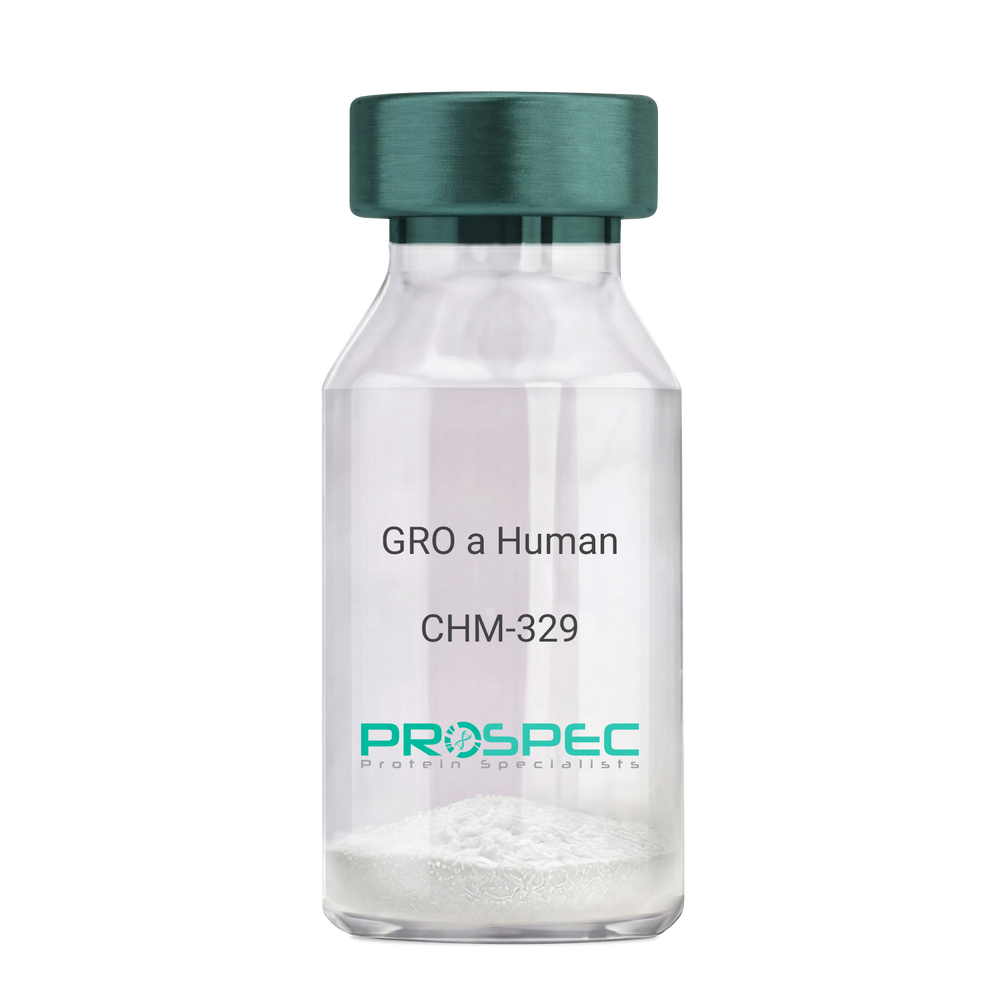
    Name :

    CXCL1 Human

    Description:

    GRO-Alpha Human Recombinant (CXCL1)

    Growth-regulated protein alpha, CXCL1, Melanoma growth stimulatory activity, MGSA, Neutrophil-activating protein 3, NAP-3, GRO-alpha (1-73), chemokine (C-X-C motif) ligand 1, GRO1, GROa, SCYB1, MGSA-a, MGSA alpha.

    Product # :

    CHM-329

    Price :

    Quantity :

    Shipping Method :

    Room Temp Icon

    Shipped at Room temp

    Add To Cart

    More Info

    • description
    • source
    • formulation
    • purity
    • biological activity
    • More Info

    Description

    GRO Alpha Human Recombinant produced in E.Coli is a single,non-glycosylated, polypeptide chain containing 73 amino acids and having a molecular mass of 7811 Dalton. The GRO-alpha is purified by proprietary chromatographic techniques.

    Source

    Escherichia Coli.

    Formulation

    Lyophilized from a 0.2µm filtered concentrated (1mg/ml) solution in 20mM PB, pH 7.4, 50mM NaCl.

    Purity

    Greater than 97.0% as determined by:
    (a) Analysis by RP-HPLC.
    (b) Analysis by SDS-PAGE.

    Biological Activity

    Determined by its ability to chemoattract human peripheral blood neutrophils using a concentration range of 10.0-100.0 ng/ml.

    More Info

    • Introduction

      Chemokine (C-X-C motif) ligand 1 (CXCL1) is a small cytokine belonging to the CXC chemokine family that was previously called GRO1 oncogene, Neutrophil-activating protein 3 (NAP-3) and melanoma growth stimulating activity, alpha (MSGA-a). It is secreted by human melanoma cells, has mitogenic properties and is implicated in melanoma pathogenesis. CXCL1 is expressed by macrophages, neutrophilsand epithelial cells, and has neutrophil chemoattractant activity. CXCL1 plays a role in spinal cord development by inhibiting the migration of oligodendrocyte precursors and is involved in the processes of angiogenesis, inflammation, wound healing, and tumorigenesis. This chemokine elicits its effects by signaling through the chemokine receptor CXCR2. The gene for CXCL1 is located on human chromosome 4 amongst genes for other CXC chemokines.

    • Synonyms

      Growth-regulated protein alpha, CXCL1, Melanoma growth stimulatory activity, MGSA, Neutrophil-activating protein 3, NAP-3, GRO-alpha (1-73), chemokine (C-X-C motif) ligand 1, GRO1, GROa, SCYB1, MGSA-a, MGSA alpha.

    • Physical Appearance

      Sterile Filtered White lyophilized (freeze-dried) powder.

    • Stability

      Lyophilized GRO-alpha although stable at room temperature for 3 weeks, should be stored desiccated below -18°C. Upon reconstitution CXCL1 should be stored at 4°C between 2-7 days and for future use below -18°C. For long term storage it is recommended to add a carrier protein (0.1% HSA or BSA).Please prevent freeze-thaw cycles.

    • Solubility

      It is recommended to reconstitute the lyophilized CXCL1 in sterile 18MΩ-cm H2O not less than 100µg/ml, which can then be further diluted to other aqueous solutions.

    • Amino Acid Sequence

      The sequence of the first five N-terminal amino acids was determined and was found to be Ala-Ser-Val-Ala-Thr.

    • Background

      What is the molecular weight/Mw of CXCL1 HUMAN Protein?
      CXCL1 HUMAN Protein has a total Mw of 7.81kDa.

      What is the source or expression system of CXCL1 HUMAN Protein?
      Escherichia Coli.

      What is the Purity of CXCL1 HUMAN Protein?
      CXCL1 HUMAN Protein is >97% pure as determined by SDS-PAGE.

      What is the Biological Activity of CXCL1 HUMAN Protein?
      Determined by its ability to chemoattract human peripheral blood neutrophils using a concentration range of 10.0-100.0 ng/ml.

      What is the amino acid sequence of CXCL1 HUMAN Protein?
      The sequence of the first five N-terminal amino acids was determined and was found to be Ala-Ser-Val-Ala-Thr.

      What applications can CXCL1 HUMAN Protein be used in?
      CXCL1 HUMAN Protein can probably be used in western blot, ELISA and Lateral Flow.

      What is the endotoxin level for CXCL1 HUMAN Protein?
      The endotoxin level is minimal, CXCL1 HUMAN Protein was purified using conventional chromatography techniques.


    ProSpec's products are furnished for LABORATORY RESEARCH USE ONLY. The product may not be used as drugs, agricultural or pesticidal products, food additives or household chemicals.

    Gro A Human
  • View Data Sheet

    Name :

    VAMP5 Human

    Description:

    Vesicle-associated membrane protein 5 Human Recombinant

    VAMP5, Vesicle-associated membrane protein 5, VAMP-5, Myobrevin, HSPC191.

    Product # :

    PRO-681

    Price :

    Quantity :

    Shipping Method :

    Ice Icon

    Shipped with Ice Packs

    Add To Cart

    More Info

    • description
    • source
    • formulation
    • purity
    • More Info

    Description

    VAMP5 produced in E.Coli is a single,non-glycosylated polypeptide chain containing 109 amino acids (1-72 a.a.) and having a molecular mass of 12.7 kDa.VAMP5 is fused to 37 amino acids His Tag at N-terminus and purified by proprietary chromatographic techniques.

    Source

    Escherichia Coli.

    Formulation

    The VAMP5 (0.5mg/ml) protein solution contains 20mM Tris-HCl (pH 8.0), 0.2M NaCl, 5mM DTT, 0.5mM EDTA and 20% glycerol.

    Purity

    Greater than 90.0% as determined by SDS-PAGE.

    More Info

    • Introduction

      VAMP5 is part of the vesicle-associated membrane protein (VAMP)/synaptobrevin family and the SNARE superfamily. VAMP5 is involved is vesicle trafficking events that are associated with myogenesis.

    • Synonyms

      VAMP5, Vesicle-associated membrane protein 5, VAMP-5, Myobrevin, HSPC191.

    • Physical Appearance

      Sterile filtered colorless solution.

    • Stability

      Store at 4°C if entire vial will be used within 2-4 weeks. Store, frozen at -20°C for longer periods of time. For long term storage it is recommended to add a carrier protein (0.1% HSA or BSA).Avoid multiple freeze-thaw cycles.

    • Amino Acid Sequence

      MRGSHHHHHH GMASMTGGQQ MGRDLYDDDD KDRWGSHMAG IELERCQQQA NEVTEIMRNN FGKVLERGVK LAELQQRSDQ LLDMSSTFNK TTQNLAQKKC WENIRYRIC.

    ProSpec's products are furnished for LABORATORY RESEARCH USE ONLY. The product may not be used as drugs, agricultural or pesticidal products, food additives or household chemicals.

    Vamp5 Human
  • View Data Sheet

    Name :

    Cyclophilin F Rat Bioactive

    Description:

    Cyclophilin-F Rat Recombinant Bioactive

    Peptidyl-prolyl cis-trans isomerase F, mitochondrial, PPIase F, Cyclophilin D, CyP-D, CypD, Cyclophilin F, Rotamase F.

    Product # :

    ENZ-1019

    Price :

    Quantity :

    Shipping Method :

    Ice Icon

    Shipped with Ice Packs

    Add To Cart

    More Info

    • description
    • source
    • formulation
    • purity
    • biological activity
    • More Info

    Description

    Cyclophilin F Rat Recombinant produced in E.Coli is a single, non-glycosylated polypeptide chain containing 200 amino acids (30-206 a.a) and having a molecular mass of 21.2Da. Cyclophilin F is fused to a 23 amino acid His-tag at N-terminus & purified by proprietary chromatographic techniques.

    Source

    Escherichia Coli.

    Formulation

    Cyclophilin F protein solution (1mg/ml) containing Phosphate Buffered Saline (pH 7.4), 10% glycerol and 1mM DTT.

    Purity

    Greater than 90.0% as determined by SDS-PAGE.

    Biological Activity

    Specific activity is > 1,300 nmol/min/mg, and is defined as the amount of enzyme that cleaves 1nmol of suc-AAFP-PNA per minute at 37C in Tris–HCl pH 8.0 using chymotrypsin.

    More Info

    • Introduction

      PPIF is a part of the peptidyl-prolyl cis-trans isomerase (PPIase) family. PPIF accelerates the folding of proteins. It catalyzes the cis-trans isomerization of proline imidic peptide bonds in oligopeptides. PPIF is key component of the mitochondrial permeability transition pore in the inner mitochondrial membrane. Activation of this pore is thought to be involved in the induction of apoptotic and necrotic cell death.

    • Synonyms

      Peptidyl-prolyl cis-trans isomerase F, mitochondrial, PPIase F, Cyclophilin D, CyP-D, CypD, Cyclophilin F, Rotamase F.

    • Physical Appearance

      Sterile filtered colorless solution.

    • Stability

      Store at 4°C if entire vial will be used within 2-4 weeks. Store, frozen at -20°C for longer periods of time. For long term storage it is recommended to add a carrier protein (0.1% HSA or BSA).Avoid multiple freeze-thaw cycles.

    • Amino Acid Sequence

      MGSSHHHHHH SSGLVPRGSH MGSCSDGGAR GANSSSQNPL VYLDVGADGQ PLGRVVLELK ADVVPKTAEN FRALCTGEKG FGYKGSTFHR VIPAFMCQAG DFTNHNGTGG KSIYGSRFPD ENFTLKHVGP GVLSMANAGP NTNGSQFFIC TIKTDWLDGK HVVFGHVKEG MDVVKKIESF GSKSGKTSKK IVITDCGQLS.

    ProSpec's products are furnished for LABORATORY RESEARCH USE ONLY. The product may not be used as drugs, agricultural or pesticidal products, food additives or household chemicals.

    Cyclophilin F Rat Bioactive
  • View Data Sheet

    Name :

    G CSF Human, CHO

    Description:

    Granulocyte-Colony Stimulating Factor Human Recombinant, CHO

    CSF-3, MGI-1G, GM-CSF beta, Pluripoietin, Filgrastim, Lenograstim, G-CSF, MGC45931, GCSF.

    Product # :

    CYT-329

    Price :

    Quantity :

    Shipping Method :

    Room Temp Icon

    Shipped at Room temp

    Add To Cart

    More Info

    • description
    • source
    • formulation
    • purity
    • biological activity
    • More Info

    Description

    Granulocyte Colony Stimulating Factor Human Recombinant produced in CHO cells is a single, glycosylated, polypeptide chain containing 174 amino acids and having a molecular mass of approximately 18 kDa.G-CSF is purified by proprietary chromatographic techniques.

    Source

    Chinese Hamster Ovary Cells (CHO).

    Formulation

    G-CSF was lyophilized from a concentrated (1mg/ml) solution containing 10mM Hydrochloric Acid pH=6.5, 0.4mg tween 20, 100mg mannitol, 160mg L-arginine, 40mg phenylalanine and 4mg methionine.

    Purity

    Greater than 97.0% as determined by SDS-PAGE.

    Biological Activity

    The ED50, calculated by the dose-dependant proliferation of murine NFS-60 indicator cells (measured by 3H-thymidine uptake) is < 0.07 ng/ml, corresponding to a Specific Activity of 1.27 x 10⁸ IU/mg.

    More Info

    • Introduction

      Granulocyte Colony Stimulating Factor is a growth factor and/or cytokine produced by the endothelium, macrophages and a number of other immune cells. GCSF stimulates the bone marrow to produce granulocytes and also to stimulate the survival, proliferation, differentiation and function of neutrophil granulocyte progenator cells and mature neutrophils.

    • Synonyms

      CSF-3, MGI-1G, GM-CSF beta, Pluripoietin, Filgrastim, Lenograstim, G-CSF, MGC45931, GCSF.

    • Physical Appearance

      Sterile Filtered White lyophilized (freeze-dried) powder.

    • Stability

      Lyophilized Granulocyte Colony Stimulating Factor although stable at room temperature for 3 weeks, should be stored desiccated below -18°C. Upon reconstitution G-CSF should be stored at 4°C between 2-7 days and for future use below -18°C.For long term storage it is recommended to add a carrier protein (0.1% HSA or BSA).Please prevent freeze-thaw cycles.

    • Solubility

      It is recommended to reconstitute the lyophilized Granulocyte Colony Stimulating Factor in sterile 18MΩ-cm H2O not less than 100µg/ml, which can then be further diluted to other aqueous solutions.

    • Amino Acid Sequence

      TPLGPASSLP QSFLLKCLEQ VRKIQGDGAA LQEKLCATYK LCHPEELVLL GHSLGIPWAP LSSCPSQALQ LAGCLSQLHS GLFLYQGLLQ ALEGISPELG PTLDTLQLDV ADFATTIWQQ MEELGMAPAL QPTQGAMPAF ASAFQRRAGG VLVASHLQSF LEVSYRVLRH LAQP.

    • Background

      What is the molecular weight/Mw of G CSF Protein?
      G CSF Protein has a total Mw of 18kDa.

      What is the source or expression system of G CSF Protein?
      Chinese Hamster Ovary Cells (CHO).

      What is the Purity of G CSF Protein?
      G CSF Protein is >97% pure as determined by SDS-PAGE.

      What is the Biological Activity of G CSF Protein?
      The ED50, calculated by the dose-dependant proliferation of murine NFS-60 indicator cells (measured by 3H-thymidine uptake) is < 0.07 ng/ml, corresponding to a Specific Activity of 1.27 x 10⁸ IU/mg.

      What is the amino acid sequence of G CSF Protein?
      TPLGPASSLP QSFLLKCLEQ VRKIQGDGAA LQEKLCATYK LCHPEELVLL GHSLGIPWAP LSSCPSQALQ LAGCLSQLHS GLFLYQGLLQ ALEGISPELG PTLDTLQLDV ADFATTIWQQ MEELGMAPAL QPTQGAMPAF ASAFQRRAGG VLVASHLQSF LEVSYRVLRH LAQP.

      What applications can G CSF Protein be used in?
      G CSF Protein can probably be used in western blot, ELISA and Lateral Flow.

      What is the endotoxin level for G CSF Protein?
      The endotoxin level is minimal, G CSF Protein was purified using conventional chromatography techniques.

    ProSpec's products are furnished for LABORATORY RESEARCH USE ONLY. The product may not be used as drugs, agricultural or pesticidal products, food additives or household chemicals.

    G Csf Human Cho
  • View Data Sheet

    Name :

    Lymphotactin Mouse

    Description:

    Lymphotactin (XCL1) Mouse Recombinant

    XCL1, Cytokine SCM-1, ATAC, Lymphotaxin, SCM-1-alpha, Small inducible cytokine C1, XC chemokine ligand 1, LTN, LPTN, SCM1, SCM-1, SCYC1, SCM-1a.

    Product # :

    CHM-037

    Price :

    Quantity :

    Shipping Method :

    Room Temp Icon

    Shipped at Room temp

    Add To Cart

    More Info

    • description
    • source
    • formulation
    • purity
    • biological activity
    • More Info

    Description

    Lymphotactin (XCL1) Mouse Recombinant produced in E.Coli is a non-glycosylated polypeptide chain containing 93 amino acids and having a molecular mass of approximately 10.1kDa.Lymphotactin is purified by proprietary chromatographic techniques.

    Source

    Escherichia Coli.

    Formulation

    Lyophilized from a 0.2μm filtered concentrated solution in PBS, pH 7.4.

    Purity

    reater than 97.0% as determined by:
    (a) Analysis by RP-HPLC.
    (b) Analysis by SDS-PAGE.

    Biological Activity

    The ED50 as determined by a chemotaxis bioassay using human XCR1 transfected murine BaF3 cells is < 100 ng/ml, corresponding to a specific activity of > 1.0 × 10⁴ IU/mg.

    More Info

    • Introduction

      XCL1 is a small cytokine belongs to the XC chemokine family that is also known as lymphotactin. XCL1 is found in high levels in spleen, thymus, intestine and peripheral blood leukocytes, and at lower levels in lung, prostate gland and ovary. Cellular sources for XCL1 include activated thymic and peripheral blood CD8+ T cells. This chemokine attracts T cells. In humans, XCL1 is closely related to XCL2, whose gene is found at the same locus on chromosome 1. XCL1 induces it chemotactic function by binding to a chemokine receptor called XCR1.

    • Synonyms

      XCL1, Cytokine SCM-1, ATAC, Lymphotaxin, SCM-1-alpha, Small inducible cytokine C1, XC chemokine ligand 1, LTN, LPTN, SCM1, SCM-1, SCYC1, SCM-1a.

    • Physical Appearance

      Sterile Filtered White lyophilized (freeze-dried) powder.

    • Stability

      Lyophilized XCL1 although stable at room temperature for 3 weeks, should be stored desiccated below -18°C. Upon reconstitution Lymphotactin should be stored at 4°C between 2-7 days and for future use below -18°C.Please prevent freeze-thaw cycles.

    • Solubility

      It is recommended to reconstitute the lyophilized Lymphotactin in sterile 18MΩ-cm H2O not less than 100µg/ml, which can then be further diluted to other aqueous solutions.

    • Amino Acid Sequence

      VGTEVLEESS CVNLQTQRLP VQKIKTYIIW EGAMRAVIFV TKRGLKICAD PEAKWVKAAI KTVDGRASTR KNMAETVPTG AQRSTSTAIT LTG.

    ProSpec's products are furnished for LABORATORY RESEARCH USE ONLY. The product may not be used as drugs, agricultural or pesticidal products, food additives or household chemicals.

    Lymphotactin Mouse
  • View Data Sheet

    Name :

    SPP1 Human, Active

    Description:

    Osteopontin Human Recombinant, BioActive

    OPN, SPP-1, BNSP, BSPI, ETA-1, Bone sialoprotein 1, BSP I.Early T lymphocyte activation 1, ETA 1, ETA1, MGC110940, Nephropontin, Secreted phosphoprotein 1, SPP 1, SPP1, urinary stone protein, uropontin.

    Product # :

    CYT-1166

    Price :

    Quantity :

    Shipping Method :

    Ice Icon

    Shipped with Ice Packs

    Add To Cart

    More Info

    • description
    • source
    • formulation
    • purity
    • biological activity
    • More Info

    Description

    SPP1 Human Recombinant produced in E.Coli is a single, non-glycosylated polypeptide chain containing 321 amino acids (17-314 a.a.) and having a molecular mass of 36.2kDa. SPP1 is fused to a 23 amino acid His tag at N-Terminus and purified by proprietary chromatographic techniques.

    Source

    Escherichia Coli.

    Formulation

    The SPP1 solution (1mg/ml) contains 20mM Tris-HCl buffer (pH 7.5), 1mM DTT, 10% glycerol and 2mM EDTA.

    Purity

    Greater than 90.0% as determined by SDS-PAGE.

    Biological Activity

    Measured by the ability of the immobilized protein to support the adhesion of HEK293 human embryonic kidney cells. When cells are added to OPN coated plates 10ug/ml. This effect is more to 40%.

    More Info

    • Introduction

      Osteopontin is a glycoprotein that was primarilyfound in osteoblasts and takes part in bone remodeling, immune functions in fibroblasts, macrophages, & lymphocytes during inflammation and wound healing. SPP1 highlybinds to hydroxyapatite. SPP1 forms an integral part of the mineralized matrix. SPP1 is vital to cell-matrix interaction.
      Secreted Phosphoprotein-1 protects against cardiac ischemia-reperfusion injury through late preconditioning. Expression of Ostepontin and CD44 in hepatocellular carcinoma is linked to advanced tumor stage &leads to prognosis information. SPP1 is the most over-expressed gene in intrahepatic cholangiocarcinoma. Secreted Phosphoprotein-1 overexpression is related with interstitial lung diseases.

    • Synonyms

      OPN, SPP-1, BNSP, BSPI, ETA-1, Bone sialoprotein 1, BSP I.Early T lymphocyte activation 1, ETA 1, ETA1, MGC110940, Nephropontin, Secreted phosphoprotein 1, SPP 1, SPP1, urinary stone protein, uropontin.

    • Physical Appearance

      Sterile Filtered clear colorless solution.

    • Stability

      Store at 4°C if entire vial will be used within 2-4 weeks. Store, frozen at -20°C for longer periods of time. For long term storage it is recommended to add a carrier protein (0.1% HSA or BSA).Avoid multiple freeze-thaw cycles.

    • Amino Acid Sequence

      MGSSHHHHHH SSGLVPRGSH RSMIPVKQAD SGSSEEKQLY NKYPDAVATW LNPDPSQKQN LLAPQNAVSS EETNDFKQET LPSKSNESHD HMDDMDDEDD DDHVDSQDSI DSNDSDDVDD TDDSHQSDES HHSDESDELV TDFPTDLPAT EVFTPVVPTV DTYDGRGDSV VYGLRSKSKK FRRPDIQYPD ATDEDITSHM ESEELNGAYK AIPVAQDLNA PSDWDSRGKD SYETSQLDDQ SAETHSHKQS RLYKRKANDE SNEHSDVIDS QELSKVSREF HSHEFHSHED MLVVDPKSKE EDKHLKFRIS HELDSASSEV N.

    ProSpec's products are furnished for LABORATORY RESEARCH USE ONLY. The product may not be used as drugs, agricultural or pesticidal products, food additives or household chemicals.

    Osteopontin Human
  • 1
  • …
  • 7
  • 8
  • 9
  • 10
  • 11
  • …
  • 42
Your browser does not support the video tag.

Products

  • Cytokines
  • Growth Factors
  • Chemokines
  • CD Antigens
  • Neurotrophins
  • Hormones
  • Enzymes
  • Viral Antigens
  • Recombinant Proteins
  • Natural Proteins
  • Monoclonal Antibodies
  • Polyclonal Antibodies
  • Thermal Packaging

About

  • Company
  • Founder
  • Contribution
  • Contact Us
  • My Account

Ordering

  • Ordering Method
  • Ordering - Credit Card
  • Ordering PO
  • Shipping Fees
  • FAQ's

Legal

  • Terms & Conditions
  • Privacy
  • Site Map
  • info@prospecbio.com
  • Facebook
  • Instagram
  • Linkedin Profile

© 2026 ProSpec-Tany TechnoGene Ltd. All Rights Reserved.

  • Choosing a selection results in a full page refresh.
  • Opens in a new window.