Skip to content

High-quality research proteins.

  • 1-800-805-6531

  • Mon - Sat 8.00-18.00, Sun - Closed

  • info@prospecbio.com

  • PO Box 6591 East Brunswick NJ 08816

  • Products
    • Cytokines
    • Growth factors
    • Chemokines
    • Cd antigens
    • Neurotrophins
    • Hormones
    • Enzymes
    • Viral antigens
    • Recombinant proteins
    • Natural proteins
    • Monoclonal antibodies
    • Polyclonal antibodies
    • Thermal Packaging
  • About
    • Company
    • Founder
    • Contribution
  • Customers
    • Eastern Asia
    • Eastern Europe
    • North America
    • South America
    • South East Asia
    • Southern Asia
    • Western Europe
  • Ordering
    • Ordering Method
    • Ordering - Credit Card
    • Ordering - PO
    • Shipping Fees
    • FAQs
  • Services
    • DNA Cloning
    • Protein Expression
    • Monoclonal Antibody
    • Fermentation
    • Technology License
  • Contact us
Log in

Country/region

  • USD $ | Albania
  • USD $ | Andorra
  • USD $ | Argentina
  • USD $ | Armenia
  • USD $ | Australia
  • USD $ | Austria
  • USD $ | Azerbaijan
  • USD $ | Belarus
  • USD $ | Belgium
  • USD $ | Bolivia
  • USD $ | Brazil
  • USD $ | Bulgaria
  • USD $ | Cambodia
  • USD $ | Canada
  • USD $ | Chile
  • USD $ | China
  • USD $ | Colombia
  • USD $ | Costa Rica
  • USD $ | Croatia
  • USD $ | Cyprus
  • USD $ | Czechia
  • USD $ | Denmark
  • USD $ | Estonia
  • USD $ | Finland
  • USD $ | France
  • USD $ | Georgia
  • USD $ | Germany
  • USD $ | Greece
  • USD $ | Hong Kong SAR
  • USD $ | Hungary
  • USD $ | Iceland
  • USD $ | India
  • USD $ | Ireland
  • USD $ | Israel
  • USD $ | Italy
  • USD $ | Japan
  • USD $ | Kazakhstan
  • USD $ | Latvia
  • USD $ | Liechtenstein
  • USD $ | Lithuania
  • USD $ | Madagascar
  • USD $ | Malta
  • USD $ | Mexico
  • USD $ | Moldova
  • USD $ | Monaco
  • USD $ | Netherlands
  • USD $ | New Zealand
  • USD $ | North Macedonia
  • USD $ | Norway
  • USD $ | Panama
  • USD $ | Paraguay
  • USD $ | Peru
  • USD $ | Philippines
  • USD $ | Poland
  • USD $ | Portugal
  • USD $ | Romania
  • USD $ | Singapore
  • USD $ | Slovakia
  • USD $ | Slovenia
  • USD $ | South Africa
  • USD $ | South Korea
  • USD $ | Spain
  • USD $ | Sri Lanka
  • USD $ | Sweden
  • USD $ | Switzerland
  • USD $ | Taiwan
  • USD $ | Thailand
  • USD $ | Türkiye
  • USD $ | Ukraine
  • USD $ | United Kingdom
  • USD $ | United States
  • USD $ | Uruguay
  • USD $ | Vatican City
  • USD $ | Venezuela
  • USD $ | Vietnam
  • Facebook
  • Instagram
logoProSpec - Recombinant Protein Manufacturer for academic and R&D industry
Become a distributor
Account Log in
Wishlist
Cart Cart(0)
  • Products
    +
    • Cytokines
    • Growth factors
    • Chemokines
    • Cd antigens
    • Neurotrophins
    • Hormones
    • Enzymes
    • Viral antigens
    • Recombinant proteins
    • Natural proteins
    • Monoclonal antibodies
    • Polyclonal antibodies
    • Thermal Packaging
  • About
    +
    • Company
    • Founder
    • Contribution
  • Customers
    +
    • Eastern Asia
    • Eastern Europe
    • North America
    • South America
    • South East Asia
    • Southern Asia
    • Western Europe
  • Ordering
    +
    • Ordering Method
    • Ordering - Credit Card
    • Ordering - PO
    • Shipping Fees
    • FAQs
  • Services
    +
    • DNA Cloning
    • Protein Expression
    • Monoclonal Antibody
    • Fermentation
    • Technology License
  • Contact us

Item added to your cart

View cart
View All
  • Cytokines
  • Growth factors
  • Chemokines
  • Cd antigens
  • Neurotrophins
  • Hormones
  • Enzymes
  • Viral antigens
  • Recombinant proteins
  • Natural proteins
  • Monoclonal antibodies
  • Polyclonal antibodies
  • Thermal Packaging
  • Tumor Necrosis Factor

    Tumor Necrosis Factor

    View All
  • 4-1BB

    4-1BB

    View All
  • Adiponectin

    Adiponectin

    View All
  • AIF1

    AIF1

    View All
  • Other Cytokines

    Other Cytokines

    View All
  • AITRL

    AITRL

    View All
  • Angiopoietin

    Angiopoietin

    View All
  • Apolipoprotein

    Apolipoprotein

    View All
  • B-Cell Activating Factor

    B-Cell Activating Factor

    View All
  • Beta Defensin

    Beta Defensin

    View All
  • Bone Morphogenetic Protein

    Bone Morphogenetic Protein

    View All
  • B type Natriuretic Peptide

    B type Natriuretic Peptide

    View All
  • BST

    BST

    View All
  • Betacellulin

    Betacellulin

    View All
  • Cardiotrophin

    Cardiotrophin

    View All
  • Activin

    Activin

    View All
  • Fibroblast Growth Factor

    Fibroblast Growth Factor

    View All
  • Other Growth Factors

    Other Growth Factors

    View All
  • CSF

    CSF

    View All
  • CTGF

    CTGF

    View All
  • IGFBP

    IGFBP

    View All
  • VEGF Protein

    VEGF Protein

    View All
  • EGF

    EGF

    View All
  • Epigen

    Epigen

    View All
  • Erythropoietin

    Erythropoietin

    View All
  • Insulin-Like Growth Factor

    Insulin-Like Growth Factor

    View All
  • Growth Hormone

    Growth Hormone

    View All
  • HDGF

    HDGF

    View All
  • Hepatocyte Growth Factor

    Hepatocyte Growth Factor

    View All
  • Insulin

    Insulin

    View All
  • BCA-1/ BLC (CXCL13)

    BCA-1/ BLC (CXCL13)

    View All
  • BRAK (CXCL14)

    BRAK (CXCL14)

    View All
  • C-10 (CCL6)

    C-10 (CCL6)

    View All
  • Other Chemokines

    Other Chemokines

    View All
  • MEC (CCL28)

    MEC (CCL28)

    View All
  • LD78-beta (CCL3L1)

    LD78-beta (CCL3L1)

    View All
  • CTACK (CCL27)

    CTACK (CCL27)

    View All
  • CXCL16

    CXCL16

    View All
  • CXCL17

    CXCL17

    View All
  • Platelet Factor-4 (CXCL4)

    Platelet Factor-4 (CXCL4)

    View All
  • ENA-78 (CXCL5)

    ENA-78 (CXCL5)

    View All
  • Eotaxin (CCL11,24,26)

    Eotaxin (CCL11,24,26)

    View All
  • Exodus-2 (CCL21)

    Exodus-2 (CCL21)

    View All
  • Fractalkine (CX3CL1)

    Fractalkine (CX3CL1)

    View All
  • CXCL6

    CXCL6

    View All
  • Other CD Antigens

    Other CD Antigens

    View All
  • CD14

    CD14

    View All
  • CD164

    CD164

    View All
  • CD1

    CD1

    View All
  • CD2

    CD2

    View All
  • CD200

    CD200

    View All
  • CD207

    CD207

    View All
  • CD226

    CD226

    View All
  • CD23

    CD23

    View All
  • CD244

    CD244

    View All
  • CD247

    CD247

    View All
  • CD27

    CD27

    View All
  • CD274

    CD274

    View All
  • CD300

    CD300

    View All
  • CD33

    CD33

    View All
  • Other Neurotrophins

    Other Neurotrophins

    View All
  • Beta-NGF

    Beta-NGF

    View All
  • BDNF

    BDNF

    View All
  • CDNF

    CDNF

    View All
  • CNTF

    CNTF

    View All
  • GDNF

    GDNF

    View All
  • Glia Maturation Factor

    Glia Maturation Factor

    View All
  • MANF

    MANF

    View All
  • Midkine

    Midkine

    View All
  • Neuroglobin

    Neuroglobin

    View All
  • Neurotrophic factors

    Neurotrophic factors

    View All
  • Neuregulin

    Neuregulin

    View All
  • Neuropilin

    Neuropilin

    View All
  • Pigment Epithelium-Derived Factor

    Pigment Epithelium-Derived Factor

    View All
  • Pleiotrophin

    Pleiotrophin

    View All
  • Peptide Hormones

    Peptide Hormones

    View All
  • Other Hormones

    Other Hormones

    View All
  • HCG

    HCG

    View All
  • Endothelin

    Endothelin

    View All
  • Exendin

    Exendin

    View All
  • FSH

    FSH

    View All
  • Glucagon

    Glucagon

    View All
  • GHRP

    GHRP

    View All
  • GLP

    GLP

    View All
  • Thyrostimulin

    Thyrostimulin

    View All
  • Inhibin A

    Inhibin A

    View All
  • LHRH

    LHRH

    View All
  • Melanotan

    Melanotan

    View All
  • Procalcitonin

    Procalcitonin

    View All
  • PTH

    PTH

    View All
  • Peroxiredoxin

    Peroxiredoxin

    View All
  • Peptidase

    Peptidase

    View All
  • Synthetase

    Synthetase

    View All
  • Transferase

    Transferase

    View All
  • Hydrolase

    Hydrolase

    View All
  • Dehydrogenase

    Dehydrogenase

    View All
  • ACE2

    ACE2

    View All
  • Esterase

    Esterase

    View All
  • Protein Kinases

    Protein Kinases

    View All
  • Other Enzymes

    Other Enzymes

    View All
  • Phosphatase

    Phosphatase

    View All
  • Deaminase

    Deaminase

    View All
  • Oxygenase

    Oxygenase

    View All
  • Adenylate Kinase

    Adenylate Kinase

    View All
  • Lyase

    Lyase

    View All
  • Chagas

    Chagas

    View All
  • SARS

    SARS

    View All
  • Influenza

    Influenza

    View All
  • ASFV

    ASFV

    View All
  • Astrovirus

    Astrovirus

    View All
  • Borrelia

    Borrelia

    View All
  • Helicobacter Pylori

    Helicobacter Pylori

    View All
  • Chikungunya

    Chikungunya

    View All
  • Chlamydia

    Chlamydia

    View All
  • Cytomegalo

    Cytomegalo

    View All
  • Dengue

    Dengue

    View All
  • EBV

    EBV

    View All
  • Ebola

    Ebola

    View All
  • Feline Leukemia Virus

    Feline Leukemia Virus

    View All
  • Hepatitis A

    Hepatitis A

    View All
  • Other

    Other

    View All
  • Actin

    Actin

    View All
  • ADAM

    ADAM

    View All
  • Complement Component

    Complement Component

    View All
  • Ag85

    Ag85

    View All
  • Eukaryotic Translation Initiation Factor

    Eukaryotic Translation Initiation Factor

    View All
  • Anterior Gradient Protein

    Anterior Gradient Protein

    View All
  • Heat Shock Protein

    Heat Shock Protein

    View All
  • Alpha-2-HS-Glycoprotein

    Alpha-2-HS-Glycoprotein

    View All
  • Hemoglobin

    Hemoglobin

    View All
  • Allergy

    Allergy

    View All
  • Anaplasma

    Anaplasma

    View All
  • Angiogenin

    Angiogenin

    View All
  • Ankyrin Repeat Domain

    Ankyrin Repeat Domain

    View All
  • Annexin

    Annexin

    View All
  • Other Natural Proteins

    Other Natural Proteins

    View All
  • Aprotinin

    Aprotinin

    View All
  • Transferrin

    Transferrin

    View All
  • Avidin

    Avidin

    View All
  • Anti Coagulation Factors

    Anti Coagulation Factors

    View All
  • Natural Albumin

    Natural Albumin

    View All
  • Natural Coagulation Factors

    Natural Coagulation Factors

    View All
  • Fibronectin

    Fibronectin

    View All
  • Thrombin

    Thrombin

    View All
  • Anti Human Enzyme

    Anti Human Enzyme

    View All
  • Other Monoclonal Antibodies

    Other Monoclonal Antibodies

    View All
  • Anti Human Cytokine

    Anti Human Cytokine

    View All
  • Anti Human Heat Shock Protein

    Anti Human Heat Shock Protein

    View All
  • Anti Mouse Lymphocyte

    Anti Mouse Lymphocyte

    View All
  • Anti Human Chemokine

    Anti Human Chemokine

    View All
  • Anti Human Lymphocyte

    Anti Human Lymphocyte

    View All
  • Anti Viral Monoclonal

    Anti Viral Monoclonal

    View All
  • Anti Mouse Cytokine

    Anti Mouse Cytokine

    View All
  • Anti-GST Monoclonal

    Anti-GST Monoclonal

    View All
  • Other Polyclonal Antibodies

    Other Polyclonal Antibodies

    View All
  • Anti Viral

    Anti Viral

    View All
  • Anti-GST Monoclonal

    Anti-GST Monoclonal

    View All
Back

Search results

1000 results found for “glypican”

Name

Description

Product #

Price

Quantity

Shipping Method

  • View Data Sheet

    Name :

    GABARAPL1 Human

    Description:

    GABA(A) Receptor-Associated Protein Like 1 Human Recombinant

    Gamma-aminobutyric acid receptor-associated protein-like 1, Early estrogen-regulated protein, GABA(A) receptor-associated protein-like 1, Glandular epithelial cell protein 1, GEC-1, GABARAPL1, GEC1, ATG8, APG8L, ATG8B, ATG8L, APG8-LIKE.

    Product # :

    PRO-048

    Price :

    Quantity :

    Shipping Method :

    Ice Icon

    Shipped with Ice Packs

    Add To Cart

    More Info

    • description
    • source
    • formulation
    • purity
    • More Info

    Description

    GABARAPL1 Human Recombinant fused with a 20 amino acid His tag at N-terminus produced in E.Coli is a single, non-glycosylated, polypeptide chain containing 137 amino acids (1-117 a.a.) and having a molecular mass of 16.2kDa (Molecular size on SDS-PAGE will appear higher). The GABARAPL1 is purified by proprietary chromatographic techniques.

    Source

    Escherichia Coli.

    Formulation

    The GABARAPL1 solution (1 mg/ml) contains 20mM Tris buffer (pH 8.0), 10% glycerol, 1mM DTT and 0.1M NaCl.

    Purity

    Greater than 85.0% as determined by SDS-PAGE.

    More Info

    • Introduction

      GABARAPL1 [Gamma-aminobutyric acid (GABA) receptor-associated protein-like 1] is a member of the MAP1 LC3 family. GABARAPL1 increases cell surface expression of kappa type opioid receptor through facilitating anterograde intracellular trafficking of the receptor.

    • Synonyms

      Gamma-aminobutyric acid receptor-associated protein-like 1, Early estrogen-regulated protein, GABA(A) receptor-associated protein-like 1, Glandular epithelial cell protein 1, GEC-1, GABARAPL1, GEC1, ATG8, APG8L, ATG8B, ATG8L, APG8-LIKE.

    • Physical Appearance

      Sterile Filtered colorless solution.

    • Stability

      Store at 4°C if entire vial will be used within 2-4 weeks. Store, frozen at -20°C for longer periods of time. For long term storage it is recommended to add a carrier protein (0.1% HSA or BSA).Avoid multiple freeze-thaw cycles.

    • Amino Acid Sequence

      MGSSHHHHHH SSGLVPRGSH MKFQYKEDHP FEYRKKEGEK IRKKYPDRVP VIVEKAPKAR VPDLDKRKYL VPSDLTVGQF YFLIRKRIHL RPEDALFFFV NNTIPPTSAT MGQLYEDNHE EDYFLYVAYS DESVYGK.

    ProSpec's products are furnished for LABORATORY RESEARCH USE ONLY. The product may not be used as drugs, agricultural or pesticidal products, food additives or household chemicals.

    Gabarapl1 Human
  • View Data Sheet

    Name :

    GFAP Human

    Description:

    Glial Fibrillary Acidic Protein Human Recombinant

    Glial fibrillary acidic protein, GFAP

    Product # :

    PRO-2802

    Price :

    Quantity :

    Shipping Method :

    Room Temp Icon

    Shipped at Room temp

    Add To Cart

    More Info

    • description
    • source
    • formulation
    • purity
    • More Info

    Description

    GFAP Human produced in E.coli is a single, non-glycosylated polypeptide chain (60-383 a.a.) and having a molecular mass of 37906 Dalton.

    Source

    Escherichia Coli.

    Formulation

    GFAP was lyophilized from 50mM Tris-HCl pH-7.5, 4M Urea 150mM NaCl.

    Purity

    Greater than 90.0% as determined by SDS-PAGE.

    More Info

    • Synonyms

      Glial fibrillary acidic protein, GFAP

    • Physical Appearance

      Sterile Filtered White lyophilized (freeze-dried) powder.

    • Stability

      Lyophilized GFAP although stable at room temperature for 3 weeks, should be stored desiccated below -18°C. Upon reconstitution Glial Fibrillary Acidic Protein should be stored at 4°C between 2-7 days and for future use below -18°C. For long term storage it is recommended to add a carrier protein (0.1% HSA or BSA). Please prevent freeze-thaw cycles.

    • Solubility

      It is recommended to reconstitute the lyophilized GFAP in sterile 18MΩ-cm H2O not less than 100µg/ml, which can then be further diluted to other aqueous solutions.

    • Background

      Glial Fibrillary Acidic Protein (GFAP), a key intermediate filament protein predominantly found in astrocytes, plays a fundamental role in the central nervous system. Initially recognized for its structural functions, GFAP has emerged as a multifaceted molecule with implications in neural development, synaptic plasticity, and various neurological disorders. This research delves into the realm of GFAP human recombinant protein, shedding light on its structural properties, physiological significance, and its diverse roles in both health and disease.

      Structural Complexity of GFAP:

      GFAP belongs to the family of intermediate filament proteins, conferring structural support to astrocytes. Its unique structure comprises a central α-helical rod domain flanked by non-helical head and tail domains. This structural complexity allows GFAP to form stable filaments, providing structural integrity to astrocytes and contributing to the architecture of the central nervous system.

      Physiological Functions in Glial Cells:

      Beyond its structural role, GFAP participates in various physiological processes within glial cells. It is involved in the regulation of astrocyte morphology, motility, and migration, crucial for their interactions with neurons and blood vessels. Additionally, GFAP contributes to the formation and maintenance of the blood-brain barrier, highlighting its significance in the brain's homeostasis.

      Implications in Neurological Disorders:

      Aberrant GFAP expression and aggregation are associated with several neurological disorders. In Alexander disease, a rare neurodegenerative disorder, mutations in the GFAP gene lead to the formation of GFAP aggregates, contributing to disease pathology. Moreover, elevated levels of GFAP in cerebrospinal fluid serve as a biomarker for various neurological conditions, including traumatic brain injury, Alzheimer's disease, and multiple sclerosis, indicating its involvement in the brain's response to injury and neuroinflammation.

      GFAP in Neural Regeneration:

      Recent studies have unveiled GFAP’s role in neural regeneration and repair processes. In response to brain injury, GFAP-expressing astrocytes become reactive, forming a glial scar that isolates damaged areas. While this scar formation initially limits tissue damage, persistent scar formation can impede neural regeneration. Understanding the dynamics of GFAP expression in reactive astrocytes is crucial for developing therapies that promote neural regeneration following brain injuries or neurodegenerative diseases.

      GFAP human recombinant protein, once thought of as a structural element in astrocytes, has proven to be a pivotal player in the complex landscape of glial biology and neurological disorders. Its intricate functions extend beyond providing structural support, encompassing roles in neural development, disease pathology, and tissue repair. As research continues to uncover the nuances of GFAP’s involvement in health and disease, it offers promising avenues for developing targeted therapies and diagnostic tools, emphasizing its significance in the intricate workings of the central nervous system.

    ProSpec's products are furnished for LABORATORY RESEARCH USE ONLY. The product may not be used as drugs, agricultural or pesticidal products, food additives or household chemicals.

    Gfap Human
  • View Data Sheet

    Name :

    S100A9 Mouse

    Description:

    S100 Calcium Binding Protein A9 Mouse Recombinant

    Calgranulin B, 60B8AG, CAGB, CFAG, CGLB, L1AG, LIAG, MAC387, MIF, MRP14, NIF, P14, Protein S100-A9, S100 calcium-binding protein A9.

    Product # :

    PRO-878

    Price :

    Quantity :

    Shipping Method :

    Ice Icon

    Shipped with Ice Packs

    Add To Cart

    More Info

    • description
    • source
    • formulation
    • purity
    • More Info

    Description

    S100A9 Mouse Recombinant produced in E.coli is a single, non-glycosylated polypeptide chain containing 133 amino acids (1-113) and having a molecular mass of 15.2 kDa.The S100A9 is fused to a 20 amino acid His-Tag at N-terminus and purified by proprietary chromatographic techniques.

    Source

    Escherichia Coli.

    Formulation

    S100A9 protein (0.5mg/ml) is supplied in 20mM Tris-HCL, pH-8, 1mM DTT and 20% Glycerol.

    Purity

    Greater than 90.0% as determined by SDS-PAGE.

    More Info

    • Introduction

      S100A9 is part of the S100 family of proteins containing 2 EF-hand calcium-binding motifs. S100A9 protein is localized in the cytoplasm and/or nucleus of a wide range of cells, and participates in the regulation of several cellular processes such as cell cycle progression and differentiation. S100 genes include no less than 13 proteins which are localized as a cluster on chromosome 1q21. S100A9 is involved in the inhibition of casein kinase and altered expression of this protein is associated with the disease cystic fibrosis.

    • Synonyms

      Calgranulin B, 60B8AG, CAGB, CFAG, CGLB, L1AG, LIAG, MAC387, MIF, MRP14, NIF, P14, Protein S100-A9, S100 calcium-binding protein A9.

    • Physical Appearance

      S100A9 is supplied as a sterile filtered yellowish solution.

    • Stability

      Store at 4°C if entire vial will be used within 2-4 weeks. Store, frozen at -20°C for longer periods of time. For long term storage it is recommended to add a carrier protein (0.1% HSA or BSA).Avoid multiple freeze-thaw cycles.

    • Amino Acid Sequence

      MGSSHHHHHH SSGLVPRGSH MANKAPSQME RSITTIIDTF HQYSRKEGHP DTLSKKEFRQ MVEAQLATFM KKEKRNEALI NDIMEDLDTN QDNQLSFEEC MMLMAKLIFA CHEKLHENNP RGHGHSHGKG CGK

    ProSpec's products are furnished for LABORATORY RESEARCH USE ONLY. The product may not be used as drugs, agricultural or pesticidal products, food additives or household chemicals.

    S100A9 Mouse
  • View Data Sheet

    Name :

    KGF Mouse

    Description:

    Keratinocye Growth Factor Mouse Recombinant

    HBGF-7, FGF7, FGF-7, KGF, Keratinocyte growth factor, Fibroblast growth factor 7, Heparin-binding growth factor 7.

    Product # :

    CYT-721

    Price :

    Quantity :

    Shipping Method :

    Room Temp Icon

    Shipped at Room temp

    Add To Cart

    More Info

    • description
    • source
    • formulation
    • purity
    • biological activity
    • More Info

    Description

    Keratinocyte Growth Factor-1 Mouse Recombinant produced in E.Coli is a single, non-glycosylated, polypeptide chain containing 164 amino acids and having a molecular mass of 18.9 kDa. The FGF-7 is purified by proprietary chromatographic techniques.

    Source

    Escherichia Coli.

    Formulation

    The protein was lyophilized from a concentrated (1mg/ml) solution containing 20mM Phosphate buffer pH-8 and 0.1M NaCl.

    Purity

    Greater than 95.0% as determined by: (a) Analysis by HPLC. (b) Analysis by SDS-PAGE.

    Biological Activity

    The ED50, calculated by the dose-dependant stimulation of KGF-responsive BaF3 indicator cells (measured by 3H-thymidine uptake) is < 10ng/ml corresponding to a specific activity of 100,000 Units/mg.

    More Info

    • Introduction

      KGF is a member of the fibroblast growth factor (FGF) family. FGF family members possess broad mitogenic and cell survival activities, and are involved in a variety of biological processes, including embryonic development, cell growth, morphogenesis, tissue repair, tumor growth and invasion. FGF7 is a potent epithelial cell-specific growth factor, whose mitogenic activity is predominantly exhibited in keratinocytes but not in fibroblasts and endothelial cells. Studies of mouse and rat homologs of this gene implicated roles in morphogenesis of epithelium, reepithelialization of wounds, hair development and early lung organogenesis.

    • Synonyms

      HBGF-7, FGF7, FGF-7, KGF, Keratinocyte growth factor, Fibroblast growth factor 7, Heparin-binding growth factor 7.

    • Physical Appearance

      Sterile Filtered White lyophilized (freeze-dried) powder.

    • Stability

      Lyophilized KGF although stable at room temperature for 3 weeks, should be stored desiccated below -18°C. Upon reconstitution FGF7 should be stored at 4°C between 2-7 days and for future use below -18°C. For long term storage it is recommended to add a carrier protein (0.1% HSA or BSA). Please prevent freeze-thaw cycles.

    • Solubility

      It is recommended to reconstitute the lyophilized KGF in sterile 18MΩ-cm H2O not less than 100µg/ml, which can then be further diluted to other aqueous solutions.

    • Amino Acid Sequence

      MCNDMSPEQT ATSVNCSSPE RHTRSYDYME GGDIRVRRLF CRTQWYLRID KRGKVKGTQE MKNSYNIMEI RTVAVGIVAI KGVESEYYLA MNKEGKLYAK KECNEDCNFK ELILENHYNT YASAKWTHSG GEMFVALNQK GIPVKGKKTK KEQKTAHFLP MAIT.

    ProSpec's products are furnished for LABORATORY RESEARCH USE ONLY. The product may not be used as drugs, agricultural or pesticidal products, food additives or household chemicals.

    Kgf Mouse
  • View Data Sheet

    Name :

    Adiponectin (108-244) Human

    Description:

    Adiponectin (108-244 a.a.) Human Recombinant

    Acrp30, AdipoQ, GBP-28, APM-1, ACDC.

    Product # :

    CYT-073

    Price :

    Quantity :

    Shipping Method :

    Ice Icon

    Shipped with Ice Packs

    Add To Cart

    More Info

    • description
    • source
    • formulation
    • purity
    • More Info
    • sds-page

    Description

    Acrp30 Human Recombinant produced in E.Coli is a single, non-glycosylated polypeptide chain containing 158 amino acids (108-244 a.a.) and having a molecular mass of 18.1kDa.Acrp30 is fused to a 21 amino acid His-tag at N-terminus & purified by proprietary chromatographic techniques.

    Source

    Escherichia Coli.

    Formulation

    Acrp30 protein solution (1mg/ml) contains 20mM Tris-HCl buffer (pH 8.0), 10% glycerol and 0.4M Urea.

    Purity

    Greater than 80.0% as determined by SDS-PAGE.

    sds-page

    Adiponectin-sds-page - Product image 1

    More Info

    • Introduction

      Adiponectin is an adipocyte specific secreted protein that circulates in the plasma. It is induced during adipocyte differentiation and its secretion is stimulated by insulin. Mouse adiponectin shares about 83% amino acid identity with that human. Adiponectin plays a role in various physiological processes such as energy homeostasis and obesity. Adiponectin is reduced in obese humans, and decreased level is associated with insulin resistance and hyperinsulinemia.

    • Synonyms

      Acrp30, AdipoQ, GBP-28, APM-1, ACDC.

    • Stability

      Store at 4°C if entire vial will be used within 2-4 weeks. Store, frozen at -20°C for longer periods of time. For long term storage it is recommended to add a carrier protein (0.1% HSA or BSA).Avoid multiple freeze-thaw cycles.

    • Amino Acid Sequence

      MGSSHHHHHH SSGLVPRGSH MAYVYRSAFS VGLETYVTIP NMPIRFTKIF YNQQNHYDGS TGKFHCNIPG LYYFAYHITV YMKDVKVSLF KKDKAMLFTY DQYQENNVDQ ASGSVLLHLE VGDQVWLQVY GEGERNGLYA DNDNDSTFTG FLLYHDTN.

    • Background

      What is the molecular weight / Mw of ADIPONECTIN Protein?
      ADIPONECTIN Protein has a total Mw of 18.1kDa.

      What is the source or expression system of ADIPONECTIN Protein?
      Escherichia Coli.

      What is the Purity of ADIPONECTIN Protein?
      ADIPONECTIN Protein is >80% pure as determined by SDS-PAGE.

      What is the Biological Activity of ADIPONECTIN Protein?
      The biological functionality of ADIPONECTIN Protein will be determined in the future.

      What is the amino acid sequence of ADIPONECTIN Protein? MGSSHHHHHH SSGLVPRGSH MAYVYRSAFS VGLETYVTIP NMPIRFTKIF YNQQNHYDGS TGKFHCNIPG LYYFAYHITV YMKDVKVSLF KKDKAMLFTY DQYQENNVDQ ASGSVLLHLE VGDQVWLQVY GEGERNGLYA DNDNDSTFTG FLLYHDTN..

      What applications can ADIPONECTIN Protein be used in?
      ADIPONECTIN Protein can probably be used in western blot, ELISA and Lateral Flow.

      What is the endotoxin level for ADIPONECTIN Protein?
      The endotoxin level is minimal, ADIPONECTIN Protein was purified using conventional chromatography techniques

    ProSpec's products are furnished for LABORATORY RESEARCH USE ONLY. The product may not be used as drugs, agricultural or pesticidal products, food additives or household chemicals.

    Acrp30 108 244 Human
  • View Data Sheet

    Name :

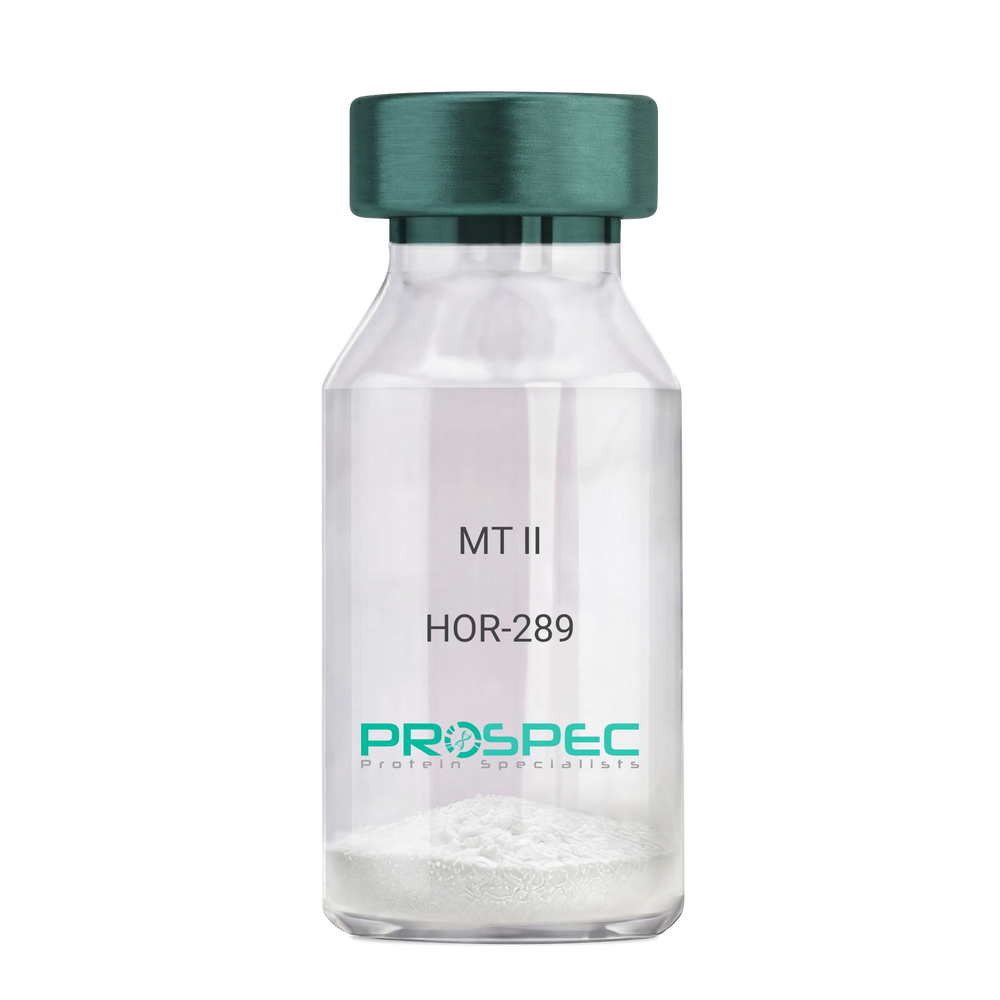
    MT II

    Description:

    Melanotan-II

    Melanotan-II, MT-II, Melanotan.

    Product # :

    HOR-289

    Price :

    Quantity :

    Shipping Method :

    Room Temp Icon

    Shipped at Room temp

    Add To Cart

    More Info

    • description
    • formulation
    • purity
    • More Info

    Description

    The molecular formula of Melanotan-II is C50H69N15O9. It has the amino acid sequence of Ac-Nle-cyclo [Asp-His-D-Phe-Arg-Trp-Lys]-NH2 and a molecular weight of 1024.2 Dalton. The CAS Number is 121062-08-6.

    Formulation

    The protein (1mg/ml) was lyophilized with no additives.

    Purity

    Greater than 99% as determined by by RP-HPLC.

    More Info

    • Introduction

      Melanotan and Melanotan-II are both analogs of the peptide hormone alpha melanocyte stimulating hormone (a-MSH) that tend to induce skin tanning. Unlike Melanotan, Melanotan-II has the additional effect of increasing libido. Melanotan II has aphrodisiac properties.

    • Synonyms

      Melanotan-II, MT-II, Melanotan.

    • Physical Appearance

      Sterile Filtered White lyophilized (freeze-dried) powder.

    • Stability

      Lyophilized Melanotan-II although stable at room temperature for 3 weeks, should be stored desiccated below -18°C. Upon reconstitution MT-II should be stored at 4°C between 2-7 days and for future use below -18°C.For long term storage it is recommended to add a carrier protein (0.1% HSA or BSA).Please prevent freeze-thaw cycles.

    • Solubility

      It is recommended to reconstitute the lyophilized Melanotan-II in sterile 18MΩ-cm H2O not less than 100 µg/ml, which can then be further diluted to other aqueous solutions.

    ProSpec's products are furnished for LABORATORY RESEARCH USE ONLY. The product may not be used as drugs, agricultural or pesticidal products, food additives or household chemicals.

    Melanotan Ii
  • View Data Sheet

    Name :

    SERPINA8 Human

    Description:

    Serpin Peptidase Inhibitor, Clade A Member 8 Human Recombinant

    Angiotensinogen, Serpin A8, AGT, SERPINA8, ANHU.

    Product # :

    PRO-1572

    Price :

    Quantity :

    Shipping Method :

    Room Temp Icon

    Shipped at Room temp

    Add To Cart

    More Info

    • description
    • source
    • formulation
    • purity
    • More Info

    Description

    SERPINA8 Human Recombinant produced in HEK cells is a single, glycosylated, polypeptide chain (a.a 34-485) containing a total of 462 amino acids, having a molecular mass of 51.0kDa (calculated) and fused to a 2 a.a C-terminal linker and an 8 a.a Flag tag at C-Terminus.The Human SERPINA8 is purified by proprietary chromatographic techniques.

    Source

    HEK 293.

    Formulation

    Filtered (0.4µm) and lyophilized from 0.5mg/ml in 20mM Tris buffer and 50mM NaCl, pH 7.5.

    Purity

    Greater than 95.0% as determined by SDS-PAGE.

    More Info

    • Introduction

      Serpin Peptidase Inhibitor, Clade A Member 8 (SERPINA8), which is a pre-angiotensinogen or angiotensinogen precursor, is expressed in the liver and cleaved by the enzyme renin in response to lowered blood pressure. The ensuing product, angiotensin I, is at that point cleaved by angiotensin converting enzyme (ACE) to produce the physiologically active enzyme angiotensin II. SERPINA8 protein is involved in maintaining blood pressure and in the pathogenesis of essential hypertension and preeclampsia. SERPINA8 gene mutations are linked with susceptibility to essential hypertension, and may cause renal tubular dysgenesis, which is a severe disorder of renal tubular development. Defects in the SERPINA8 gene are also linked with non-familial structural atrial fibrillation, and inflammatory bowel disease.

    • Synonyms

      Angiotensinogen, Serpin A8, AGT, SERPINA8, ANHU.

    • Physical Appearance

      Filtered White lyophilized (freeze-dried) powder.

    • Stability

      Store lyophilized protein at -20°C. Aliquot the product after reconstitution to avoid repeated freezing/thawing cycles. Reconstituted protein can be stored at 4°C for a limited period of time; it does not show any change after two weeks at 4°C.

    • Solubility

      It is recommended to add deionized water to a working concentration of 0.5mg/ml and let the lyophilized pellet dissolve completely. SERPINA8 is not sterile! Please filter the product by an appropriate sterile filter before using it in the cell culture.

    • Amino Acid Sequence

      DRVYIHPFHL VIHNESTCEQ LAKANAGKPK DPTFIPAPIQ AKTSPVDEKA LQDQLVLVAA KLDTEDKLRA AMVGMLANFL GFRIYGMHSE LWGVVHGATV LSPTAVFGTL ASLYLGALDH TADRLQAILG VPWKDKNCTS RLDAHKVLSA LQAVQGLLVA QGRADSQAQL LLSTVVGVFT APGLHLKQPF VQGLALYTPV VLPRSLDFTE LDVAAEKIDR FMQAVTGWKT GCSLTGASVD STLAFNTYVH FQGKMKGFSL LAEPQEFWVD NSTSVSVPML SGMGTFQHWS DIQDNFSVTQ VSFTESACLL LIQPHYASDL DKVEGLTFQQ NSLNWMKKLS PRTIHLTMPQ LVLQGSYDLQ DLLAQAELPA ILHTELNLQK LSNDRIRVGE VLNSIFFELE ADEREPTEST QQLNKPEVLE VTLNRPFLFA VYDQSATALH FLGRVANPLS TART DYKDDD DK.

    ProSpec's products are furnished for LABORATORY RESEARCH USE ONLY. The product may not be used as drugs, agricultural or pesticidal products, food additives or household chemicals.

    Serpina8 Human
  • View Data Sheet

    Name :

    SDC4 Human

    Description:

    Syndecan-4 Human Recombinant

    SDC-4, SYND4, SYND-4, Amphiglycan, Ryudocan core protein, Syndecan-4.

    Product # :

    PRO-778

    Price :

    Quantity :

    Shipping Method :

    Ice Icon

    Shipped with Ice Packs

    Add To Cart

    More Info

    • description
    • source
    • formulation
    • purity
    • More Info

    Description

    SDC4 Human Recombinant produced in E.Coli is a single, non-glycosylated, polypeptide chain containing 128 amino acids (19-145a.a.) and having a molecular mass of 13.9 kDa. SDC4 is purified by proprietary chromatographic techniques.

    Source

    Escherichia Coli.

    Formulation

    Syndecan-4 (1mg/ml) protein solution containing 20mM Tris-HCl pH-8, and 10% glycerol.

    Purity

    Greater than 85% as determined by SDS-PAGE.

    More Info

    • Introduction

      Syndecan-4 is a type I integral membrane heparan sulfate proteoglycan (HSPG), which was originally isolated from cloned rat microvascular endothelial cells as an antithrombin-binding molecule, and is now known to be a member of the syndecan family. Syndecan-4 binds to basic fibroblast growth factor (bFGF), midkine, and tissue factor pathway inhibitor via its heparan sulfate chains, and is thought to be involved in various biologic functions such as signaling of bFGF, anticoagulation, and focal adhesion formation. A previous study demonstrated that syndecan-4 is expressed in various tissues, and its level of expression in the kidney is stronger than those of other syndecan family members. Thus, syndecan-4 is thought to play certain roles in maintaining renal function. Moreover, it has been reported that proteoglycans, especially sulfated proteoglycans, are involved in organogenesis of the kidney.

    • Synonyms

      SDC-4, SYND4, SYND-4, Amphiglycan, Ryudocan core protein, Syndecan-4.

    • Physical Appearance

      Sterile filtered colorless solution.

    • Stability

      Store at 4°C if entire vial will be used within 2-4 weeks. Store, frozen at -20°C for longer periods of time. For long term storage it is recommended to add a carrier protein (0.1% HSA or BSA). Please prevent freeze thaw cycles.

    • Amino Acid Sequence

      MESIRETEVI DPQDLLEGRY FSGALPDDED VVGPGQESDD FELSGSGDLD DLEDSMIGPE VVHPLVPLDN HIPERAGSGS QVPTEPKKLE ENEVIPKRIS PVEESEDVSN KVSMSSTVQG SNIFERTE.

    ProSpec's products are furnished for LABORATORY RESEARCH USE ONLY. The product may not be used as drugs, agricultural or pesticidal products, food additives or household chemicals.

    Sdc4 Human
  • View Data Sheet

    Name :

    LGALS8 Human

    Description:

    Galectin-8 Human Recombinant

    Galectin-8, Gal-8, Po66 carbohydrate-binding protein, Po66-CBP, Prostate carcinoma tumor antigen 1, PCTA-1, LGALS8.

    Product # :

    CYT-017

    Price :

    Quantity :

    Shipping Method :

    Room Temp Icon

    Shipped at Room temp

    Add To Cart

    More Info

    • description
    • source
    • formulation
    • purity
    • biological activity
    • More Info

    Description

    Galectin-8 Human Recombinant produced in E.Coli is a single, non-glycosylated, Polypeptide chain containing 317 amino acids and having a molecular mass of 35.8kDa.The LGALS8 is purified by proprietary chromatographic techniques.

    Source

    Escherichia Coli.

    Formulation

    LGALS8 was lyophilized from a concentrated (1mg/ml) solution in 20mM PBS, pH 7.4.

    Purity

    Greater than 95.0% as determined by:
    (a) Analysis by RP-HPLC.
    (b) Analysis by SDS-PAGE.

    Biological Activity

    The ED50 of Galectin-8 as determined by its ability to agglutinate human red blood cells is 0.8~4 µg/ml.

    More Info

    • Introduction

      Galectins are a family of animal lectins with an affinity for beta-galactosides. This family has at least 14 identified members. Galectins share similarities in the CRD (the carbohydrate recognition domain). Galectins are synthesized as cytosolic proteins. Though localized principally in the cytoplasm and lacking a classical signal peptide, galectins can also be stimulated to secretion by non-classical pathways or alternatively targeted to the nucleus. Galectins are involved in modulating cell-cell and cell-matrix interactions. Galectin-8 is a tandem-repeat-type member of the galectin family, consisting of 2 CRDs attached by a linker peptide. Galectin-8 is greatly expressed in lung carcinomas, a number of forms of prostate carcinomas, in addition to other tumor cells. Galectin-8 attaches to a subset of cell surface integrins to modulate ECM-integrin interactions. Once immobilized, Galectin-8 promotes cell adhesion by ligation and clustering of cell surface integrin receptors. On the other hand, as a soluble ligand, Galectin-8 can inhibit cell adhesion.

    • Synonyms

      Galectin-8, Gal-8, Po66 carbohydrate-binding protein, Po66-CBP, Prostate carcinoma tumor antigen 1, PCTA-1, LGALS8.

    • Physical Appearance

      Sterile Filtered White lyophilized (freeze-dried) powder.

    • Stability

      Lyophilized LGALS8 although stable at room temperature for 3 weeks, should be stored desiccated below -18°C. Upon reconstitution Galectin-8 should be stored at 4°C between 2-7 days and for future use below -18°C.Please prevent freeze-thaw cycles.

    • Solubility

      It is recommended to reconstitute the lyophilized Galectin-8 in sterile 18M-cm H2O not less than 100µg/ml, which can then be further diluted to other aqueous solutions.

    • Amino Acid Sequence

      The sequence of the first five N-terminal amino acids was determined and was found to be Met-Met-Leu-Ser-Leu.

    • Background

      What is the molecular weight/Mw of LGALS8 HUMAN Protein?
      LGALS8 HUMAN Protein has a total Mw of 35.8kDa.

      What is the source or expression system of LGALS8 HUMAN Protein?
      Escherichia Coli.

      What is the Purity of LGALS8 HUMAN Protein?
      LGALS8 HUMAN Protein is >95% pure as determined by SDS-PAGE.

      What is the Biological Activity of LGALS8 HUMAN Protein?
      The ED50 of Galectin-8 as determined by its ability to agglutinate human red blood cells is 0.8~4 µg/ml.

      What is the amino acid sequence of LGALS8 HUMAN Protein?
      LGALS8 HUMAN Protein is composed from 317 amino acids.

      What applications can LGALS8 HUMAN Protein be used in?
      LGALS8 HUMAN Protein can probably be used in western blot, ELISA and Lateral Flow.

      What is the endotoxin level for LGALS8 HUMAN Protein?
      The endotoxin level is minimal, LGALS8 HUMAN Protein was purified using conventional chromatography techniques.


    ProSpec's products are furnished for LABORATORY RESEARCH USE ONLY. The product may not be used as drugs, agricultural or pesticidal products, food additives or household chemicals.

    Lgals8 Human
  • View Data Sheet

    Name :

    GLC8 Yeast

    Description:

    GLC8 Yeast Recombinant

    Protein GLC8, GLC8, YMR311C, YM9924.03C.

    Product # :

    PRO-540

    Price :

    Quantity :

    Shipping Method :

    Ice Icon

    Shipped with Ice Packs

    Add To Cart

    More Info

    • description
    • source
    • formulation
    • purity
    • More Info

    Description

    GLC8 Yeast (Saccharomyces cerevisiae) Recombinant produced in E.coli is a single, glycosylated polypeptide chain containing 265 amino acids (1-229) and having a molecular mass of 30.7 kDa (molecular size on SDS-PAGE will appear higher). The GLC8 is fused to a 35 amino acid His Tag at N-Terminus and purified by standard chromatography techniques.

    Source

    Escherichia Coli.

    Formulation

    The protein solution (1mg/ml) contains 20mM Tris-HCl pH-8, 1mM DTT, and 10% glycerol.

    Purity

    Greater than 95% as determined by SDS-PAGE.

    More Info

    • Introduction

      GLC8 is a regulatory subunit of protein phosphatase 1 (Glc7p). GLC8 plays a role in glycogen metabolism and chromosome segregation, and regulates Glc7p activity through conformational alteration; ortholog of the mammalian protein phosphatase inhibitor 2. Under regular conditions, GLC8 triggers GLC7, but when GLC8 is over epxressed, it inhibits Glc7p function. GLC8 is activated upon phosphoylation by Pho85p complexed with four cyclins (Pcl6p, Pcl7p, Pcl8p, or Pcl10p).

    • Synonyms

      Protein GLC8, GLC8, YMR311C, YM9924.03C.

    • Physical Appearance

      Sterile Filtered colorless solution.

    • Stability

      Store at 4°C if entire vial will be used within 2-4 weeks. Store, frozen at -20°C for longer periods of time. For long term storage it is recommended to add a carrier protein (0.1% HSA or BSA). Avoid multiple freeze-thaw cycles.

    • Amino Acid Sequence

      MRGSHHHHHH GMASMTGGQQ MGRDLYDDDD KDRWGSMGGI LKNPLALSPE QLAQQDPETL EEFRRQVYEN TQKNAKLTSH KRNIPGLDNT KEEGEIIGTS STFLPKDTLS LKHEQDMLAK MTPEERVQWN QRNLAENEIT KKQFQDIHID EPKTPYQGAV DPHGEYYRVD DDEDEDNSDK KPCQVANDDI DDLSLGEPEF EIKENKQPDF ETNDENDEDS PEARHKKFEE MRKKHYDVRA IFNKKSREAL KDEDEDEDDS TTKEP.

    ProSpec's products are furnished for LABORATORY RESEARCH USE ONLY. The product may not be used as drugs, agricultural or pesticidal products, food additives or household chemicals.

    Glc8
  • View Data Sheet

    Name :

    LGALS2 Mouse

    Description:

    Galectin-2 Mouse Recombinant

    Galectin-2, Gal-2, Lgals2, AI324147, 2200008F12Rik.

    Product # :

    CYT-019

    Price :

    Quantity :

    Shipping Method :

    Ice Icon

    Shipped with Ice Packs

    Add To Cart

    More Info

    • description
    • source
    • formulation
    • purity
    • More Info
    • SDS-PAGE

    Description

    LGALS2 mouse Recombinant produced E. coli is a single polypeptide chain containing 153 amino acids (1-130) and having a molecular mass of 17.3kDa.LGALS2 is fused to a 23 amino acid His-tag at N-terminus & purified by proprietary chromatographic techniques.

    Source

    Escherichia Coli.

    Formulation

    The LGALS2 solution (1mg/ml) contains 20mM Tris-HCl buffer (pH 8.0), 0.1M NaCl, 10% glycerol and 1mM DTT.

    Purity

    Greater than 95.0% as determined by SDS-PAGE.

    SDS-PAGE

    LGALS2 Mouse-SDS-PAGE - Product image 1

    More Info

    • Introduction

      LGALS2 is a soluble beta-galactoside binding lectin that controls cell-to-cell adhesion and cell-to-extracellular matrix interactions and takes part in tumor progression, pre-mRNA splicing and apoptosis. LGALS2 induces apoptosis in activated T cells and binds to the cytokine lymphotoxin-alpha (LTA) with threat of myocardial infarction.

    • Synonyms

      Galectin-2, Gal-2, Lgals2, AI324147, 2200008F12Rik.

    • Physical Appearance

      Sterile Filtered colorless solution.

    • Stability

      Store at 4°C if entire vial will be used within 2-4 weeks. Store, frozen at -20°C for longer periods of time. For long term storage it is recommended to add a carrier protein (0.1% HSA or BSA).Avoid multiple freeze-thaw cycles.

    • Amino Acid Sequence

      MGSSHHHHHH SSGLVPRGSH MGSMSEKFEV KDLNMKPGMS LKIKGKIHND VDRFLINLGQ GKETLNLHFN PRFDESTIVC NTSEGGRWGQ EQRENHMCFS PGSEVKITIT FQDKDFKVTL PDGHQLTFPN RLGHNQLHYL SMGGLQISSF KLE.

    • Background

      What is the molecular weight/Mw of LGALS2 MOUSE Protein?
      LGALS2 MOUSE Protein has a total Mw of 17.3kDa.

      What is the source or expression system of LGALS2 MOUSE Protein?
      Escherichia Coli.

      What is the Purity of LGALS2 MOUSE Protein?
      LGALS2 MOUSE Protein is >95% pure as determined by SDS-PAGE.

      What is the Biological Activity of LGALS2 MOUSE Protein?
      The biological functionality of LGALS2 MOUSE Protein will be determined in the future.

      What is the amino acid sequence of LGALS2 MOUSE Protein?
      MGSSHHHHHH SSGLVPRGSH MGSMSEKFEV KDLNMKPGMS LKIKGKIHND VDRFLINLGQ GKETLNLHFN PRFDESTIVC NTSEGGRWGQ EQRENHMCFS PGSEVKITIT FQDKDFKVTL PDGHQLTFPN RLGHNQLHYL SMGGLQISSF KLE.

      What applications can LGALS2 MOUSE Protein be used in?
      LGALS2 MOUSE Protein can probably be used in western blot, ELISA and Lateral Flow.

      What is the endotoxin level for LGALS2 MOUSE Protein?
      The endotoxin level is minimal, LGALS2 MOUSE Protein was purified using conventional chromatography techniques.


    ProSpec's products are furnished for LABORATORY RESEARCH USE ONLY. The product may not be used as drugs, agricultural or pesticidal products, food additives or household chemicals.

    Lgals2 Mouse
  • View Data Sheet

    Name :

    RGS19 Human

    Description:

    Regulator of G-Protein Signaling 19 Human Recombinant

    GAIP, Regulator of G-protein signalling 19, G alpha interacting protein, GNAI3IP.

    Product # :

    PRO-037

    Price :

    Quantity :

    Shipping Method :

    Ice Icon

    Shipped with Ice Packs

    Add To Cart

    More Info

    • description
    • source
    • formulation
    • purity
    • More Info

    Description

    RGS19 produced in E.Coli is a single, non-glycosylated polypeptide chain containing 237 amino acids (1-217a.a.) and having a molecular mass of 26.7kDa.RGS19 is fused to a 20 amino acid His-tag at N-terminus & purified by proprietary chromatographic techniques.

    Source

    Escherichia Coli.

    Formulation

    The RGS19 protein solution (0.5mg/1ml) is formulated in Phosphate Buffered Saline (pH7.4) and 10% Glycerol.

    Purity

    Greater than 90% as determined by SDS-PAGE.

    More Info

    • Introduction

      RGS19 is a member of RGS (regulator of G protein signaling) family and negatively regulates G protein coupled receptor signaling. RGS19 protein specifically cooperates with heterotrimeric GTP-binding protein G alpha i3 (GAI3).

    • Synonyms

      GAIP, Regulator of G-protein signalling 19, G alpha interacting protein, GNAI3IP.

    • Physical Appearance

      Sterile Filtered clear solution.

    • Stability

      Store at 4°C if entire vial will be used within 2-4 weeks. Store, frozen at -20°C for longer periods of time.Please avoid freeze thaw cycles.

    • Amino Acid Sequence

      MGSSHHHHHH SSGLVPRGSH MPTPHEAEKQ ITGPEEADRP PSMSSHDTAS PAAPSRNPCC LCWCCCCSCS WNQERRRAWQ ASRESKLQPL PSCEVCATPS PEEVQSWAQS FDKLMHSPAG RSVFRAFLRT EYSEENMLFW LACEELKAEA NQHVVDEKAR LIYEDYVSIL SPKEVSLDSR VREGINKKMQ EPSAHTFDDA QLQIYTLMHR DSYPRFLSSP TYRALLLQGP SQSSSEA

    ProSpec's products are furnished for LABORATORY RESEARCH USE ONLY. The product may not be used as drugs, agricultural or pesticidal products, food additives or household chemicals.

    Rgs19 Human
  • View Data Sheet

    Name :

    CRYGC Human

    Description:

    Crystallin, Gamma C Human Recombinant

    Crystallin, gamma C, Gamma-crystallin 2-1, Gamma-crystallin 3, CRYG3, CCL.

    Product # :

    PRO-1095

    Price :

    Quantity :

    Shipping Method :

    Ice Icon

    Shipped with Ice Packs

    Add To Cart

    More Info

    • description
    • source
    • formulation
    • purity
    • More Info

    Description

    CRYGC Human Recombinant produced in E. coli is a single polypeptide chain containing 198 amino acids (1-174) and having a molecular mass of 23.5kDa.CRYGC is fused to a 24 amino acid His-tag at N-terminus & purified by proprietary chromatographic techniques.

    Source

    E.coli.

    Formulation

    The CRYGC solution (1mg/1ml) contains 20mM Tris-HCl buffer (pH 8.0), 200mM NaCl, 2mM DTT and 10% glycerol.

    Purity

    Greater than 95% as determined by SDS-PAGE.

    More Info

    • Introduction

      CRYGC is a member of the beta/gamma-crystallin family. Mammalian lens crystallins are distributed into alpha, beta, and gamma families; beta and gamma crystallins are also considered as a superfamily. Gamma-crystallins are a homogeneous group of extremely symmetrical, monomeric proteins usually missing connecting peptides and terminal extensions and are differentially regulated after early development. Three pseudogenes (gamma-E,F,G) and four gamma-crystallin genes (gamma-A,B,C,D) are structured in a genomic sector as a gene cluster. Gamma-crystallins are involved in cataract formation as a result of aging or mutations in specific genes. Mutations in CRYGC result in cataract Coppock-like (CCL) and cataract autosomal dominant (ADC).

    • Synonyms

      Crystallin, gamma C, Gamma-crystallin 2-1, Gamma-crystallin 3, CRYG3, CCL.

    • Physical Appearance

      Sterile Filtered colorless solution.

    • Stability

      Store at 4°C if entire vial will be used within 2-4 weeks. Store, frozen at -20°C for longer periods of time. For long term storage it is recommended to add a carrier protein (0.1% HSA or BSA).Avoid multiple freeze-thaw cycles.

    • Amino Acid Sequence

      MGSSHHHHHH SSGLVPRGSH MGSHMGKITF YEDRAFQGRS YETTTDCPNL QPYFSRCNSI RVESGCWMLY ERPNYQGQQY LLRRGEYPDY QQWMGLSDSI RSCCLIPQTV SHRLRLYERE DHKGLMMELS EDCPSIQDRF HLSEIRSLHV LEGCWVLYEL PNYRGRQYLL RPQEYRRCQD WGAMDAKAGS LRRVVDLY

    ProSpec's products are furnished for LABORATORY RESEARCH USE ONLY. The product may not be used as drugs, agricultural or pesticidal products, food additives or household chemicals.

    Crygc Human
  • View Data Sheet

    Name :

    MYOZ1 Human

    Description:

    Myozenin 1 Human Recombinant

    CS-2, FATZ, MYOZ, Calsarcin-2, Filamin-, actinin- and telethonin-binding protein,Protein FATZ, MYOZ1.

    Product # :

    PRO-1652

    Price :

    Quantity :

    Shipping Method :

    Ice Icon

    Shipped with Ice Packs

    Add To Cart

    More Info

    • description
    • source
    • formulation
    • purity
    • More Info

    Description

    MYOZ1 Human Recombinant produced in E.Coli is a single, non-glycosylated polypeptide chain containing 322 amino acids (1-299 a.a.) and having a molecular mass of 34.1kDa.MYOZ1 is fused to a 23 amino acid His-tag at N-terminus & purified by proprietary chromatographic techniques.

    Source

    Escherichia Coli.

    Formulation

    MYOZ1 protein solution (1mg/ml) contains 20mM Tris-HCl buffer, (pH 8.0), 0.4M UREA and 10% glycerol.

    Purity

    Greater than 90.0% as determined by SDS-PAGE.

    More Info

    • Introduction

      Myozenin 1 (MYOZ1) is a member of the myozenin family. MYOZ1 is mostly expressed in the skeletal muscle. Members of the myozenin family act as calcineurin-interacting proteins which helps tether calcineurin to the sarcomere of cardiac and skeletal muscle. The myozenin family plays a significant role in modulation of calcineurin signaling.

    • Synonyms

      CS-2, FATZ, MYOZ, Calsarcin-2, Filamin-, actinin- and telethonin-binding protein,Protein FATZ, MYOZ1.

    • Physical Appearance

      Sterile Filtered clear solution.

    • Stability

      Store at 4°C if entire vial will be used within 2-4 weeks. Store, frozen at -20°C for longer periods of time. For long term storage it is recommended to add a carrier protein (0.1% HSA or BSA).Avoid multiple freeze-thaw cycles.

    • Amino Acid Sequence

      MGSSHHHHHH SSGLVPRGSH MGSMPLSGTP APNKKRKSSK LIMELTGGGQ ESSGLNLGKK ISVPRDVMLE ELSLLTNRGS KMFKLRQMRV EKFIYENHPD VFSDSSMDHF QKFLPTVGGQ LGTAGQGFSY SKSNGRGGSQ AGGSGSAGQY GSDQQHHLGS GSGAGGTGGP AGQAGRGGAA GTAGVGETGS GDQAGGEGKH ITVFKTYISP WERAMGVDPQ QKMELGIDLL AYGAKAELPK YKSFNRTAMP YGGYEKASKR MTFQMPKFDL GPLLSEPLVL YNQNLSNRPS FNRTPIPWLS SGEPVDYNVD IGIPLDGETE EL.

    ProSpec's products are furnished for LABORATORY RESEARCH USE ONLY. The product may not be used as drugs, agricultural or pesticidal products, food additives or household chemicals.

    Myoz1 Human
  • View Data Sheet

    Name :

    SERPINB5 Human, His

    Description:

    Serpin Peptidase Inhibitor, Clade B Member 5 Human Recombinant, His tag

    PI5, maspin, SERPINB5, serpin peptidase inhibitor clade B (ovalbumin) member 5, Serpin B5, Protease inhibitor 5.

    Product # :

    PRO-704

    Price :

    Quantity :

    Shipping Method :

    Ice Icon

    Shipped with Ice Packs

    Add To Cart

    More Info

    • description
    • source
    • formulation
    • purity
    • More Info

    Description

    SERPINB5 Human Recombinant fused with a 20 amino acid His tag at N-terminus produced in E.Coli is a single, non-glycosylated, polypeptide chain containing 395 amino acids (1-375 a.a.) and having a molecular mass of 44.2 kDa.The SERPINB5 is purified by proprietary chromatographic techniques.

    Source

    Escherichia Coli.

    Formulation

    The SERPINB5 solution (1mg/ml) contains 20mM Tris-HCl buffer (pH 8.0), 1mM DTT and 10% glycerol.

    Purity

    Greater than 95.0% as determined by SDS-PAGE.

    More Info

    • Introduction

      SERPINB5 (Maspin) is a tumor suppressor protein of the serine proteinase inhibitor family. Maspin plays a vital role in embryonic development through critical functions in cell adhesion. In addition, Maspin is present in normal breast and prostatic epithelial cells although down regulated in the particular carcinomas. SERPINB5 impedes the growth, invasion, and metastatic properties of mammary tumors as well as the invasive ability of pancreatic ductal adenocarcinoma cells. SERPINB5 being a breast tumor suppressor gene is a significant marker of the disease progression in breast neoplasms. Furthermore, high expression of maspin is linked to squamous cell carcinoma in non-small-cell lung cancer. Moreover, maspin expression has been directly linked with the biological aggressiveness of ovarian carcinoma. Maspin exhibits no serine protease inhibitory activity since it does not undergo the stressed to relaxed conformational transition typical of active serpins.

    • Synonyms

      PI5, maspin, SERPINB5, serpin peptidase inhibitor clade B (ovalbumin) member 5, Serpin B5, Protease inhibitor 5.

    • Physical Appearance

      Sterile Filtered colorless solution.

    • Stability

      Store at 4°C if entire vial will be used within 2-4 weeks. Store, frozen at -20°C for longer periods of time. For long term storage it is recommended to add a carrier protein (0.1% HSA or BSA).Avoid multiple freeze-thaw cycles.

    • Amino Acid Sequence

      MGSSHHHHHH SSGLVPRGSH MDALQLANSA FAVDLFKQLC EKEPLGNVLF SPICLSTSLS LAQVGAKGDT ANEIGQVLHF ENVKDVPFGF QTVTSDVNKL SSFYSLKLIK RLYVDKSLNL STEFISSTKR PYAKELETVD FKDKLEETKG QINNSIKDLT DGHFENILAD NSVNDQTKILVVNAAYFVGK WMKKFPESET KECPFRVNKT DTKPVQMMNM EATFCMGNID SINCKIMELP FQNKHLSMFI LLPKDVEDES TGLEKIEKQLNSESLSQWTN PSTMANAKVK LSIPKFKVEK MIDPKACLEN LGLKHIFSED TSDFSGMSET KGVALSNVIH KVCLEITEDG GDSIEVPGAR ILQHKDELNA DHPFIYIIRH NKTRNIIFFG KFCSP.

    ProSpec's products are furnished for LABORATORY RESEARCH USE ONLY. The product may not be used as drugs, agricultural or pesticidal products, food additives or household chemicals.

    Serpinb5 Human
  • View Data Sheet

    Name :

    HPSE Human

    Description:

    Heparanase-1 Human Recombinant

    Heparanase, HPA, HSE1, HPA1, HPR1, HPSE1, heparanase-1, EC 3.2.1.166, Endo-glucoronidase, HEP, Heparanase-1, Hpa1.

    Product # :

    ENZ-778

    Price :

    Quantity :

    Shipping Method :

    Ice Icon

    Shipped with Ice Packs

    Add To Cart

    More Info

    • description
    • source
    • formulation
    • purity
    • More Info

    Description

    HPSE Human Recombinant produced in E.Coli is a single, non-glycosylated polypeptide chain containing 531 amino acids (36-543 a.a) and having a molecular mass of 60kDa.HPSE is fused to a 23 amino acid His-tag at N-terminus.

    Source

    Escherichia Coli.

    Formulation

    HPSE protein solution (1mg/ml) containing 20mM Tris-HCl (pH 8.0), 10% glycerol and 0.4M Urea.

    Purity

    Greater than 85% as determined by SDS-PAGE.

    More Info

    • Introduction

      HPSE also known as Heparanase-1 is an enzyme which cleaves heparan sulfate proteoglycans to allow cell movement through changing the extracellular matrix. In fact, the Heparan sulfate proteoglycans are major components of the basement membrane and extracellular matrix. In addition, this cleavage can release bioactive molecules from the extracellular matrix. HPSE is significant for the overall degradation of proteins in lysosomes.

    • Synonyms

      Heparanase, HPA, HSE1, HPA1, HPR1, HPSE1, heparanase-1, EC 3.2.1.166, Endo-glucoronidase, HEP, Heparanase-1, Hpa1.

    • Physical Appearance

      Sterile Filtered clear solution.

    • Stability

      Store at 4°C if entire vial will be used within 2-4 weeks. Store, frozen at -20°C for longer periods of time.For long term storage it is recommended to add a carrier protein (0.1% HSA or BSA).Please avoid freeze thaw cycles.

    • Amino Acid Sequence

      MGSSHHHHHH SSGLVPRGSH MGSQDVVDLD FFTQEPLHLV SPSFLSVTID ANLATDPRFL ILLGSPKLRT LARGLSPAYL RFGGTKTDFL IFDPKKESTF EERSYWQSQV NQDICKYGSI PPDVEEKLRL EWPYQEQLLL REHYQKKFKN STYSRSSVDV LYTFANCSGL DLIFGLNALL RTADLQWNSS NAQLLLDYCS SKGYNISWEL GNEPNSFLKK ADIFINGSQL GEDFIQLHKL LRKSTFKNAK LYGPDVGQPR RKTAKMLKSF LKAGGEVIDS VTWHHYYLNG RTATKEDFLN PDVLDIFISS VQKVFQVVES TRPGKKVWLG ETSSAYGGGA PLLSDTFAAG FMWLDKLGLS ARMGIEVVMR QVFFGAGNYH LVDENFDPLP DYWLSLLFKK LVGTKVLMAS VQGSKRRKLR VYLHCTNTDN PRYKEGDLTL YAINLHNVTK YLRLPYPFSN KQVDKYLLRP LGPHGLLSKS VQLNGLTLKM VDDQTLPPLM EKPLRPGSSL GLPAFSYSFF VIRNAKVAAC I.

    ProSpec's products are furnished for LABORATORY RESEARCH USE ONLY. The product may not be used as drugs, agricultural or pesticidal products, food additives or household chemicals.

    Hpse Human
  • View Data Sheet

    Name :

    PPIL1 Human

    Description:

    Peptidylprolyl Isomerase (Cyclophilin)-Like 1 Human Recombinant

    Peptidyl-Prolyl Cis-Trans Isomerase-Like 1, PPIL-1, CYPL1, hCyPX, MGC678, PPIase, CGI-124, PPIL1.

    Product # :

    ENZ-388

    Price :

    Quantity :

    Shipping Method :

    Ice Icon

    Shipped with Ice Packs

    Add To Cart

    More Info

    • description
    • source
    • formulation
    • purity
    • biological activity
    • More Info
    • sds-page

    Description

    PPIL1 Human Recombinant protein produced in E.Coli is a single, non-glycosylated, polypeptide chain containing 174 amino acids (1-166) and having a molecular mass of 19.3 kDa. PPIL1 is fused to 8 amino acid His Tag at C-terminus and is purified by proprietary chromatographic techniques.

    Source

    Escherichia Coli.

    Formulation

    PPIL1 solution containing 20 mM Tris-HCl buffer (pH 8.0) and 20% glycerol

    Purity

    Greater than 95.0% as determined by SDS-PAGE.

    Biological Activity

    Specific activity is > 300 nmoles/min/mg, and is defined as the amount of enzyme that cleaves 1umole of suc-AAFP-pNA per minute at 25C in Tris-Hcl pH8.0 using chymotrypsin.

    sds-page

    PPIL1 Human SDS-PAGE - Product image 1

    More Info

    • Introduction

      PPIL1 belongs to the cyclophilin family of peptidylprolyl isomerases (PPIases).
      The cyclophilins are a well conserved, ubiquitous family, members of which take an significant part in protein folding, immunosuppression by cyclosporin A, and infection of HIV-1 virions. PPIL1 protein increases the folding of proteins and catalyze the cis-trans isomerization of proline imidic peptide bonds in oligopeptides. PPIL1 is involved in proliferation of cancer cells through modulation of phosphorylation of stathmin. PPIL1 is a novel molecular target for colon-cancer therapy.

    • Synonyms

      Peptidyl-Prolyl Cis-Trans Isomerase-Like 1, PPIL-1, CYPL1, hCyPX, MGC678, PPIase, CGI-124, PPIL1.

    • Physical Appearance

      Sterile filtered colorless solution.

    • Stability

      Store at 4°C if entire vial will be used within 2-4 weeks. Store, frozen at -20°C for longer periods of time. For long term storage it is recommended to add a carrier protein (0.1% HSA or BSA).Avoid multiple freeze-thaw cycles.

    • Amino Acid Sequence

      MAAIPPDSWQ PPNVYLETSM GIIVLELYWK HAPKTCKNFA ELARRGYYNG TKFHRIIKDF MIQGGDPTGT GRGGASIYGK QFEDELHPDL KFTGAGILAM ANAGPDTNGS QFFVTLAPTQ WLDGKHTIFG RVCQGIGMVN RVGMVETNSQ DRPVDDVKII KAYPSGLEHH HHHH.

    ProSpec's products are furnished for LABORATORY RESEARCH USE ONLY. The product may not be used as drugs, agricultural or pesticidal products, food additives or household chemicals.

    Ppil1 Human
  • View Data Sheet

    Name :

    LUM Human

    Description:

    Lumican Human Recombinant

    Lumican, LDC, Lumican Proteoglycan, Keratan Sulfate Proteoglycan Lumican, SLRR2D, KSPG Lumican.

    Product # :

    PRO-1821

    Price :

    Quantity :

    Shipping Method :

    Ice Icon

    Shipped with Ice Packs

    Add To Cart

    More Info

    • description
    • source
    • formulation
    • purity
    • More Info

    Description

    LUM Human Recombinant produced in E.Coli is a single, non-glycosylated polypeptide chain containing 343 amino acids (19-338a.a) and having a molecular mass of 39kDa. LUM is fused to a 23 amino acid His-tag at N-terminus & purified by proprietary chromatographic techniques.

    Source

    Escherichia Coli.

    Formulation

    LUM protein solution (1mg/ml) containing 20mM Tris-HCl buffer (pH 8.0), 0.4M Urea and 10% glycerol.

    Purity

    Greater than 90.0% as determined by SDS-PAGE.

    More Info

    • Introduction

      Lumican also known as LUM belongs to the small leucine-rich proteoglycan (SLRP) family which comprises decorin, biglycan, fibromodulin, keratocan, epiphycan, and osteoglycin. Furthermore we can see that in these bifunctional molecules, the protein moiety binds collagen fibrils and the highly charged hydrophilic glycosaminoglycans regulate interfibrillar spacings. Lumican is the main keratan sulfate proteoglycan of the cornea however LUM is also distributed in interstitial collagenous matrices throughout the body. Lumican regulates collagen fibril organization and circumferential growth, corneal transparency, epithelial cell migration and tissue repair. Among the diseases associated with LUM is posterior amorphous corneal dystrophy.

    • Synonyms

      Lumican, LDC, Lumican Proteoglycan, Keratan Sulfate Proteoglycan Lumican, SLRR2D, KSPG Lumican.

    • Physical Appearance

      Sterile Filtered clear solution.

    • Stability

      Store at 4°C if entire vial will be used within 2-4 weeks. Store, frozen at -20°C for longer periods of time.For long term storage it is recommended to add a carrier protein (0.1% HSA or BSA).Please avoid freeze thaw cycles.

    • Amino Acid Sequence

      MGSSHHHHHH SSGLVPRGSH MGSQYYDYDF PLSIYGQSSP NCAPECNCPE SYPSAMYCDE LKLKSVPMVP PGIKYLYLRN NQIDHIDEKA FENVTDLQWL ILDHNLLENS KIKGRVFSKL KQLKKLHINH NNLTESVGPL PKSLEDLQLT HNKITKLGSF EGLVNLTFIH LQHNRLKEDA VSAAFKGLKS LEYLDLSFNQ IARLPSGLPV SLLTLYLDNN KISNIPDEYF KRFNALQYLR LSHNELADSG IPGNSFNVSS LVELDLSYNK LKNIPTVNEN LENYYLEVNQ LEKFDIKSFC KILGPLSYSK IKHLRLDGNR ISETSLPPDM YECLRVANEV TLN.

    ProSpec's products are furnished for LABORATORY RESEARCH USE ONLY. The product may not be used as drugs, agricultural or pesticidal products, food additives or household chemicals.

    Lum Human
  • View Data Sheet

    Name :

    VAMP8 Human

    Description:

    Endobrevin Human Recombinant

    VAMP8, VAMP-8, Endobrevin, Vesicle-Associated Membrane Protein 8, EDB.

    Product # :

    PRO-660

    Price :

    Quantity :

    Shipping Method :

    Ice Icon

    Shipped with Ice Packs

    Add To Cart

    More Info

    • description
    • source
    • formulation
    • purity
    • More Info

    Description

    VAMP8 Human Recombinant produced in E.Coli is a single, non-glycosylated polypeptide chain containing 96 amino acids (1-76 a.a.) and having a molecular mass of 10.9 kDa. The VAMP8 is fused to a 20 amino acid His Tag at N-terminus and purified by proprietary chromatography techniques.

    Source

    Escherichia Coli.

    Formulation

    The VAMP8 protein solution (0.25mg/ml) contains 20mM Tris pH-8, 0.1mM PMSF, 0.2M NaCl and 50% glycerol.

    Purity

    Greater than 85.0% as determined by SDS-PAGE.

    More Info

    • Introduction

      VAMP8 also called endobrevin, is the main component of a SNARE complex involved in the docking and fusion of synaptic vesicles with the presynaptic membrane. VAMP8 protein is involved in the regulatation of enzyme secretion in pancreatic acinar cells and plays a part in the abscission of the midbody during cell division, which leads to completely separate daughter cells. VAMP8 is essential for dense-granule secretion in platelets. VAMP8 is related with the perinuclear vesicular structures of the early endocytic compartment. VAMP8 interacts particularly with the soluble NSF-attachment protein (alpha-SNAP), through an VAMP8-containing SNARE complex.

    • Synonyms

      VAMP8, VAMP-8, Endobrevin, Vesicle-Associated Membrane Protein 8, EDB.

    • Physical Appearance

      Sterile Filtered colorless solution.

    • Stability

      Store at 4°C if entire vial will be used within 2-4 weeks. Store, frozen at -20°C for longer periods of time. For long term storage it is recommended to add a carrier protein (0.1% HSA or BSA).Please prevent freeze-thaw cycles.

    • Amino Acid Sequence

      MGSSHHHHHH SSGLVPRGSH MEEASEGGGN DRVRNLQSEV EGVKNIMTQN VERILARGEN LEHLRNKTED LEATSEHFKT TSQKVARKFW WKNVKM.

    ProSpec's products are furnished for LABORATORY RESEARCH USE ONLY. The product may not be used as drugs, agricultural or pesticidal products, food additives or household chemicals.

    Vamp8 Human
  • View Data Sheet

    Name :

    Gliadin Gamma Wheat

    Description:

    Gliadin Gamma Wheat Recombinant

    Product # :

    PRO-2148

    Price :

    Quantity :

    Shipping Method :

    Ice Icon

    Shipped with Ice Packs

    Add To Cart

    More Info

    • description
    • source
    • formulation
    • purity
    • More Info

    Description

    Recombinant Wheat Gliadin Gamma protein produced in E.Coli and fused to a 6 His Tag at C-terminus, having a theoretical Mw of 37945.14 Dalton, pI 7.70.Purified by proprietary chromatographic technique.

    Source

    Escherichia Coli.

    Formulation

    Gliadin Gamma protein solution (1mg/ml) in 10mM Tris-HCl pH 7.2.

    Purity

    Protein is >90% pure.

    More Info

    • Introduction

      Wheat Gliadin and related gluten components from barley, rye and possibly oats can cause an abnormal immune response called Celiac disease which is a chronic gastrointestinal disorder. Celiac disease characteristics are flattening of the jejunal mucosa and intestinal lesions of variable severity in hereditarily inclined individuals. Even though Celiac disease is not a classic autoimmune disease it is related to anti-tissue transglutaminase antibodies and gliadin antibodies tests are most recommended in screening populations at risk for CD and other gluten-sensitive enteropathies. In the past, serologic tests for gliadin antibodies usually were not very precise and were not enough for accurate diagnosis due to missing deamidated epitopes within the authentic gliadin fraction traditionally used in diagnostic test kits. ProSpec's deamidated Gliadin isoform matches to the deamidated neo-epitopes, which in the natural antigen are formed by transglutaminase-mediated glutamine side chain deamidation.

    • Physical Appearance

      Sterile Filtered clear solution.

    • Stability

      Gliadin Gamma although stable at 4°C for 1 week, should be stored below -18°C. Please prevent freeze thaw cycles.

    • Amino Acid Sequence

      MKTLLILTILAMAITIGTANIQVDPSGQVQWLQQQLVPQLQQPLSQQPQQTFPQPQQTFPH
      QPQQQVPQPQQPQQPFLQPQQPFPQQPQQPFPQTQQPQQPFPQQPQQPFPQTQQPQQ
      PFPQQPQQPFPQTQQPQQPFPQLQQPQQPFPQPQQQLPQPQQPQQSFPQQQRPFIQPSL
      QQQLNCKNILLQQSKPASLVSSLWSIIWPQSDCQVMRQQCCQQLAQIPQQLQCAAIHSVVH
      SIIMQQQQQQQQQQGIDIFLPLSQHEQVGQGSLVQGQGIIQPQQPAQLEAIRSLVLQTLPSM
      CNVYVPPECSIMRAPFASIVAGIGGQHHHHHH.

    ProSpec's products are furnished for LABORATORY RESEARCH USE ONLY. The product may not be used as drugs, agricultural or pesticidal products, food additives or household chemicals.

    Gliadin Gamma Wheat
  • View Data Sheet

    Name :

    Heparanase 1 Clone HP3/17

    Description:

    Heparanase 1 (HPA1), Monoclonal Anti-Human Antibody

    Product # :

    ANT-154

    Price :

    Quantity :

    Shipping Method :

    Ice Icon

    Shipped with Ice Packs

    Add To Cart

    More Info

    • source
    • formulation
    • purity
    • More Info

    Source

    Mab HP3/17 is a Protein G affinity purified monoclonal antibody raised against a polypeptide from the 50 kDa subunit of Heparanase.

    Formulation

    Each vial contains 50, 100 or 150 μg in 14, 28 or 42 μl respectively, of 0.22 micron filtered solution of 20 mM Sodium Phosphate; 150 mM NaCl; pH 7.2, containing 0.01% Thimerosal.

    Purity

    >98% on SDS-PAGE when loaded 50 μg/lane.

    More Info

    • Introduction

      Heparanase is an endo-β-D-glucuronidase, which degrades heparan sulfate side chains of heparan sulfate proteoglycans (HSPGs) in the extracellular matrix. Heparanase plays an important role in ECM degradation, facilitating the migration and extravasation of tumor cells and inflammatory leukocytes (1,2,3). Upon degradation, heparanase releases growth factors and cytokines that stimulate cell proliferation and chemotaxis (4,5). Heparanase is a heterodimer comprised of a 50 kDa subunit harboring the active site and a 8 kDa subunit. It is produced as a latent 65 kDa precursor and proteolytically processed to its active form (1,6). Heparanase is highly expressed in myeloid leukocytes (i.e. neutrophils) in platelets and in human placenta. Human heparanase was found to be upregulated in various types of primary tumors, correlating in some cases with increased tumor invasiveness and vascularity and with poor prospective survival (7,8).

    • Stability

      Store at 4°C. Stable for six months from the date of shipment. For extended storage, freeze in working aliquots at -20°C. Avoid repeated freeze-thaw cycles.

    • Ig Subclass

      Mouse IgG2Bκ

    • Applications

      Western blot
      Immunohistochemistry

    • Data Sheet

      To view the FULL VERSION click Monoclonal Anti-Human Heparanase 1:

    • Patent Protected Countries

      Anti-heparanase antibodies and their uses, including HP3/17 and its uses, are protected by US. Patents No. 6,177,545; 6,531,129, additional US patent applications and patents and patent applications worldwide.

    • Specificity

      HP3/17 reacts with the 50 kDa subunit and with the 65 kDa precursor of human or mouse Heparanase by Western blotting and immunohistochemistry.Recommended dilution range for Western blot analysis: 1:4000.Recommended dilution range for immunohistochemistry: 1:40.

    ProSpec's products are furnished for LABORATORY RESEARCH USE ONLY. The product may not be used as drugs, agricultural or pesticidal products, food additives or household chemicals.

    Heparanase 1 Clone Hp3 17 Antibody
  • View Data Sheet

    Name :

    Adiponectin Human, Sf9

    Description:

    Adiponectin Human Recombinant, Sf9

    Adiponectin, C1Q And Collagen Domain Containing, Adipose Most Abundant Gene Transcript 1 Protein, Adipocyte Complement-Related 30 KDa Protein, 30 KDa Adipocyte Complement-Related Protein, ACRP30, APM-1, GBP28, ACDC, APM1, Adipocyte, C1q And Collagen Domain-Containing Protein, Adipocyte, C1Q And Collagen Domain Containing, Adipose Most Abundant Gene Transcript 1, Adipose Specific Collagen-Like Factor, Gelatin-Binding Protein 28, Gelatin-Binding Protein, Adiponectin Precursor, Adiponectin, ADIPQTL1, ADPN, 30 kDa adipocyte complement-related protein, dipocyte complement-related 30 kDa protein, ACRP30, Adipocyte, C1q and collagen domain-containing protein, Adipose most abundant gene transcript 1 protein, apM-1, Gelatin-binding protein.

    Product # :

    CYT-1002

    Price :

    Quantity :

    Shipping Method :

    Ice Icon

    Shipped with Ice Packs

    Add To Cart

    More Info

    • description
    • source
    • formulation
    • purity
    • More Info
    • sds-page

    Description

    Acrp30 Human Recombinant produced in Sf9 Baculovirus cells is a single, glycosylated polypeptide chain containing 146 amino acids (106-242a.a.) and having a molecular mass of 16.9kDa. (Molecular size on SDS-PAGE will appear at approximately 13.5-18kDa). Acrp30 is expressed with a 6 amino acid His tag at C-Terminus and purified by proprietary chromatographic techniques.

    Source

    Sf9, Baculovirus cells.

    Formulation

    Acrp30 protein solution (0.5mg/ml) contains Phosphate Buffered Saline (pH 7.4) and 10% glycerol.

    Purity

    Greater than 95.0% as determined by SDS-PAGE.

    sds-page

    Adiponectin-sds-page - Product image 1

    More Info

    • Introduction

      The adipose tissue exclusively expresses and secretes Adiponectin (Acrp30). Acrp30 is involved in various physiological processes such as energy homeostasis, insulin sensitivity, hormonal processes, fatty acid metabolism and obesity.
      Adiponectin circulates in the plasma. Decreased levels of Adiponectin are associated with insulin resistance and hyperinsulinemia, as seen in people with obesity insulin resistance, and diabetes type 2, whose plasma levels of adiponectin are reduced.
      The modular structure of Acrp30 is comprised of N-terminal collagenous domain followed by a C-terminal globular domain.
      Acrp30 also acts as a significant negative regulator in hematopoiesis and immune systems; it may be involved in ending inflammatory responses through its inhibitory functions. Adiponectin inhibits endothelial NF-kappa-b signaling through a cAMP-dependent pathway, it also inhibits TNF-alpha- induced expression of endothelial adhesion molecules.

    • Synonyms

      Adiponectin, C1Q And Collagen Domain Containing, Adipose Most Abundant Gene Transcript 1 Protein, Adipocyte Complement-Related 30 KDa Protein, 30 KDa Adipocyte Complement-Related Protein, ACRP30, APM-1, GBP28, ACDC, APM1, Adipocyte, C1q And Collagen Domain-Containing Protein, Adipocyte, C1Q And Collagen Domain Containing, Adipose Most Abundant Gene Transcript 1, Adipose Specific Collagen-Like Factor, Gelatin-Binding Protein 28, Gelatin-Binding Protein, Adiponectin Precursor, Adiponectin, ADIPQTL1, ADPN, 30 kDa adipocyte complement-related protein, dipocyte complement-related 30 kDa protein, ACRP30, Adipocyte, C1q and collagen domain-containing protein, Adipose most abundant gene transcript 1 protein, apM-1, Gelatin-binding protein.

    • Physical Appearance

      Sterile Filtered clear solution.

    • Stability

      Store at 4°C if entire vial will be used within 2-4 weeks. Store, frozen at -20°C for longer periods of time. For long term storage it is recommended to add a carrier protein (0.1% HSA or BSA).Avoid multiple freeze-thaw cycles.

    • Amino Acid Sequence

      ADPEGAYVYR SAFSVGLETY VTIPNMPIRF TKIFYNQQNH YDGSTGKFHC NIPGLYYFAY HITVYMKDVK VSLFKKDKAM LFTYDQYQEN NVDQASGSVL LHLEVGDQVW LQVYGEGERN GLYADNDNDS TFTGFLLYHD HHHHHH.

    • Background

      What is the molecular weight/Mw of ADIPONECTIN Protein?
      ADIPONECTIN Protein has a total Mw of 16.9kDa.

      What is the source or expression system of ADIPONECTIN Protein?
      Sf9, Baculovirus cells.

      What is the Purity of ADIPONECTIN Protein?
      ADIPONECTIN Protein is >95% pure as determined by SDS-PAGE.

      What is the Biological Activity of ADIPONECTIN Protein?
      The biological functionality of ADIPONECTIN Protein will be determined in the future.

      What is the amino acid sequence of ADIPONECTIN Protein?
      ADPEGAYVYR SAFSVGLETY VTIPNMPIRF TKIFYNQQNH YDGSTGKFHC NIPGLYYFAY HITVYMKDVK VSLFKKDKAM LFTYDQYQEN NVDQASGSVL LHLEVGDQVW LQVYGEGERN GLYADNDNDS TFTGFLLYHD HHHHHH.

      What applications can ADIPONECTIN Protein be used in?
      ADIPONECTIN Protein can probably be used in western blot, ELISA and Lateral Flow.

      What is the endotoxin level for ADIPONECTIN Protein?
      The endotoxin level is minimal, ADIPONECTIN Protein was purified using conventional chromatography techniques.

    ProSpec's products are furnished for LABORATORY RESEARCH USE ONLY. The product may not be used as drugs, agricultural or pesticidal products, food additives or household chemicals.

    Acrp30 Human Sf9
  • View Data Sheet

    Name :

    SORBS3 Human

    Description:

    Sorbin And SH3 Domain Containing 3 Human Recombinant

    Sorbin And SH3 Domain Containing 3, SCAM1, Vinexin Beta (SH3-Containing Adaptor Molecule-1), vinexin, SH3-Containing Adapter Molecule 1.

    Product # :

    PRO-1829

    Price :

    Quantity :

    Shipping Method :

    Ice Icon

    Shipped with Ice Packs

    Add To Cart

    More Info

    • description
    • source
    • formulation
    • purity
    • More Info

    Description

    SORBS3 Human Recombinant produced in E.coli is a single, non-glycosylated polypeptide chain containing 352 amino acids (1-329) and having a molecular mass of 39.1 kDa. SORBS3 is fused to a 23 amino acid His-tag at N-terminus.

    Source

    Escherichia Coli.

    Formulation

    The SORBS3 solution (0.25mg/ml) contains 20mM Tris-HCl buffer (pH 8.0), 1mM DTT and 20% glycerol.

    Purity

    Greater than 90% as determined by SDS-PAGE.

    More Info

    • Introduction

      SORBS3 is an SH3 domain-containing adaptor protein. The existence of SH3 domains in the SORBS3 protein have a role in its capability to attach to other cytoplasmic molecules and contribute to cystoskeletal organization, cell adhesion and migration, signaling, and gene expression. Various transcript variants encoding different isoforms are known for this gene.

    • Synonyms

      Sorbin And SH3 Domain Containing 3, SCAM1, Vinexin Beta (SH3-Containing Adaptor Molecule-1), vinexin, SH3-Containing Adapter Molecule 1.

    • Physical Appearance

      Sterile Filtered clear solution.

    • Stability

      Store at 4°C if entire vial will be used within 2-4 weeks. Store, frozen at -20°C for longer periods of time. For long term storage it is recommended to add a carrier protein (0.1% HSA or BSA).Avoid multiple freeze-thaw cycles.

    • Amino Acid Sequence

      MGSSHHHHHH SSGLVPRGSH MGSMADGGSP FLGRRDFVYP SSTRDPSASN GGGSPARREE KKRKAARLKF DFQAQSPKEL TLQKGDIVYI HKEVDKNWLE GEHHGRLGIF PANYVEVLPA DEIPKPIKPP TYQVLEYGEA VAQYTFKGDL EVELSFRKGE HICLIRKVNE NWYEGRITGT GRQGIFPASY VQVSREPRLR LCDDGPQLPT SPRLTAAARS ARHPSSPSAL RSPADPIDLG GQTSPRRTGF SFPTQEPRPQ TQNLGTPGPA LSHSRGPSHP LDLGTSSPNT SQIHWTPYRA MYQYRPQNED ELELREGDRV DVMQQCDDGW FVGVSRRTQK FGTFPGNYVA PV

    ProSpec's products are furnished for LABORATORY RESEARCH USE ONLY. The product may not be used as drugs, agricultural or pesticidal products, food additives or household chemicals.

    Sorbs3 Human
  • View Data Sheet

    Name :

    MAGEA8 Human

    Description:

    Melanoma Antigen Family A, 8 Human Recombinant

    Melanoma Antigen Family A8, MAGE-8 Antigen, MAGE8, Cancer/Testis Antigen 1.8, CT1.8, Cancer/Testis Antigen Family 1, Member 8, Cancer/Testis Antigen Family 1, Melanoma-Associated Antigen 8, Melanoma Antigen Family A, 8, Member 8, MAGEA8.

    Product # :

    PRO-2206

    Price :

    Quantity :

    Shipping Method :

    Ice Icon

    Shipped with Ice Packs

    Add To Cart

    More Info

    • description
    • source
    • formulation
    • purity
    • More Info

    Description

    MAGEA8 Human Recombinant produced in E.Coli is a single, non-glycosylated polypeptide chain containing 341 amino acids (1-318 a.a) and having a molecular mass of 37.6kDa.MAGEA8 is fused to a 23 amino acid His-tag at N-terminus & purified by proprietary chromatographic techniques.

    Source

    Escherichia Coli.

    Formulation

    MAGEA8 protein solution (0.25mg/ml) containing Phosphate Buffered Saline, 10% glycerol and 1mM DTT.

    Purity

    Greater than 85% as determined by SDS-PAGE.

    More Info

    • Introduction

      Melanoma Antigen Family A 8, also known as MAGEA8 belongs to the MAGE gene family, which includes twelve known genes, of which six are expressed in tumors. Furthermore, the MAGE genes were at first isolated from different kinds of tumors, and according to their virtually exclusive tumor-specific expression in adult tissues, they have been used as targets for cancer immunotherapy.

    • Synonyms

      Melanoma Antigen Family A8, MAGE-8 Antigen, MAGE8, Cancer/Testis Antigen 1.8, CT1.8, Cancer/Testis Antigen Family 1, Member 8, Cancer/Testis Antigen Family 1, Melanoma-Associated Antigen 8, Melanoma Antigen Family A, 8, Member 8, MAGEA8.

    • Physical Appearance

      Sterile Filtered clear solution.

    • Stability

      Store at 4°C if entire vial will be used within 2-4 weeks.Store, frozen at -20°C for longer periods of time. For long term storage it is recommended to add a carrier protein (0.1% HSA or BSA).Avoid multiple freeze-thaw cycles.

    • Amino Acid Sequence

      MGSSHHHHHH SSGLVPRGSH MGSMLLGQKS QRYKAEEGLQ AQGEAPGLMD VQIPTAEEQK AASSSSTLIM GTLEEVTDSG SPSPPQSPEG ASSSLTVTDS TLWSQSDEGS SSNEEEGPST SPDPAHLESL FREALDEKVA ELVRFLLRKY QIKEPVTKAE MLESVIKNYK NHFPDIFSKA SECMQVIFGI DVKEVDPAGH SYILVTCLGL SYDGLLGDDQ STPKTGLLII VLGMILMEGS RAPEEAIWEA LSVMGLYDGR EHSVYWKLRK LLTQEWVQEN YLEYRQAPGS DPVRYEFLWG PRALAETSYV KVLEHVVRVN ARVRISYPSL HEEALGEEKG V.

    ProSpec's products are furnished for LABORATORY RESEARCH USE ONLY. The product may not be used as drugs, agricultural or pesticidal products, food additives or household chemicals.

    Magea8 Human
  • 1
  • …
  • 6
  • 7
  • 8
  • 9
  • 10
  • …
  • 42
Your browser does not support the video tag.

Products

  • Cytokines
  • Growth Factors
  • Chemokines
  • CD Antigens
  • Neurotrophins
  • Hormones
  • Enzymes
  • Viral Antigens
  • Recombinant Proteins
  • Natural Proteins
  • Monoclonal Antibodies
  • Polyclonal Antibodies
  • Thermal Packaging

About

  • Company
  • Founder
  • Contribution
  • Contact Us
  • My Account

Ordering

  • Ordering Method
  • Ordering - Credit Card
  • Ordering PO
  • Shipping Fees
  • FAQ's

Legal

  • Terms & Conditions
  • Privacy
  • Site Map
  • info@prospecbio.com
  • Facebook
  • Instagram
  • Linkedin Profile

© 2026 ProSpec-Tany TechnoGene Ltd. All Rights Reserved.

  • Choosing a selection results in a full page refresh.
  • Opens in a new window.