Skip to content

High-quality research proteins.

  • 1-800-805-6531

  • Mon - Sat 8.00-18.00, Sun - Closed

  • info@prospecbio.com

  • PO Box 6591 East Brunswick NJ 08816

  • Products
    • Cytokines
    • Growth factors
    • Chemokines
    • Cd antigens
    • Neurotrophins
    • Hormones
    • Enzymes
    • Viral antigens
    • Recombinant proteins
    • Natural proteins
    • Monoclonal antibodies
    • Polyclonal antibodies
    • Thermal Packaging
  • About
    • Company
    • Founder
    • Contribution
  • Customers
    • Eastern Asia
    • Eastern Europe
    • North America
    • South America
    • South East Asia
    • Southern Asia
    • Western Europe
  • Ordering
    • Ordering Method
    • Ordering - Credit Card
    • Ordering - PO
    • Shipping Fees
    • FAQs
  • Services
    • DNA Cloning
    • Protein Expression
    • Monoclonal Antibody
    • Fermentation
    • Technology License
  • Contact us
Log in

Country/region

  • USD $ | Albania
  • USD $ | Andorra
  • USD $ | Argentina
  • USD $ | Armenia
  • USD $ | Australia
  • USD $ | Austria
  • USD $ | Azerbaijan
  • USD $ | Belarus
  • USD $ | Belgium
  • USD $ | Bolivia
  • USD $ | Brazil
  • USD $ | Bulgaria
  • USD $ | Cambodia
  • USD $ | Canada
  • USD $ | Chile
  • USD $ | China
  • USD $ | Colombia
  • USD $ | Costa Rica
  • USD $ | Croatia
  • USD $ | Cyprus
  • USD $ | Czechia
  • USD $ | Denmark
  • USD $ | Estonia
  • USD $ | Finland
  • USD $ | France
  • USD $ | Georgia
  • USD $ | Germany
  • USD $ | Greece
  • USD $ | Hong Kong SAR
  • USD $ | Hungary
  • USD $ | Iceland
  • USD $ | India
  • USD $ | Ireland
  • USD $ | Israel
  • USD $ | Italy
  • USD $ | Japan
  • USD $ | Kazakhstan
  • USD $ | Latvia
  • USD $ | Liechtenstein
  • USD $ | Lithuania
  • USD $ | Madagascar
  • USD $ | Malta
  • USD $ | Mexico
  • USD $ | Moldova
  • USD $ | Monaco
  • USD $ | Netherlands
  • USD $ | New Zealand
  • USD $ | North Macedonia
  • USD $ | Norway
  • USD $ | Panama
  • USD $ | Paraguay
  • USD $ | Peru
  • USD $ | Philippines
  • USD $ | Poland
  • USD $ | Portugal
  • USD $ | Romania
  • USD $ | Singapore
  • USD $ | Slovakia
  • USD $ | Slovenia
  • USD $ | South Africa
  • USD $ | South Korea
  • USD $ | Spain
  • USD $ | Sri Lanka
  • USD $ | Sweden
  • USD $ | Switzerland
  • USD $ | Taiwan
  • USD $ | Thailand
  • USD $ | Türkiye
  • USD $ | Ukraine
  • USD $ | United Kingdom
  • USD $ | United States
  • USD $ | Uruguay
  • USD $ | Vatican City
  • USD $ | Venezuela
  • USD $ | Vietnam
  • Facebook
  • Instagram
logoProSpec - Recombinant Protein Manufacturer for academic and R&D industry
Become a distributor
Account Log in
Wishlist
Cart Cart(0)
  • Products
    +
    • Cytokines
    • Growth factors
    • Chemokines
    • Cd antigens
    • Neurotrophins
    • Hormones
    • Enzymes
    • Viral antigens
    • Recombinant proteins
    • Natural proteins
    • Monoclonal antibodies
    • Polyclonal antibodies
    • Thermal Packaging
  • About
    +
    • Company
    • Founder
    • Contribution
  • Customers
    +
    • Eastern Asia
    • Eastern Europe
    • North America
    • South America
    • South East Asia
    • Southern Asia
    • Western Europe
  • Ordering
    +
    • Ordering Method
    • Ordering - Credit Card
    • Ordering - PO
    • Shipping Fees
    • FAQs
  • Services
    +
    • DNA Cloning
    • Protein Expression
    • Monoclonal Antibody
    • Fermentation
    • Technology License
  • Contact us

Item added to your cart

View cart
View All
  • Cytokines
  • Growth factors
  • Chemokines
  • Cd antigens
  • Neurotrophins
  • Hormones
  • Enzymes
  • Viral antigens
  • Recombinant proteins
  • Natural proteins
  • Monoclonal antibodies
  • Polyclonal antibodies
  • Thermal Packaging
  • Tumor Necrosis Factor

    Tumor Necrosis Factor

    View All
  • 4-1BB

    4-1BB

    View All
  • Adiponectin

    Adiponectin

    View All
  • AIF1

    AIF1

    View All
  • Other Cytokines

    Other Cytokines

    View All
  • AITRL

    AITRL

    View All
  • Angiopoietin

    Angiopoietin

    View All
  • Apolipoprotein

    Apolipoprotein

    View All
  • B-Cell Activating Factor

    B-Cell Activating Factor

    View All
  • Beta Defensin

    Beta Defensin

    View All
  • Bone Morphogenetic Protein

    Bone Morphogenetic Protein

    View All
  • B type Natriuretic Peptide

    B type Natriuretic Peptide

    View All
  • BST

    BST

    View All
  • Betacellulin

    Betacellulin

    View All
  • Cardiotrophin

    Cardiotrophin

    View All
  • Activin

    Activin

    View All
  • Fibroblast Growth Factor

    Fibroblast Growth Factor

    View All
  • Other Growth Factors

    Other Growth Factors

    View All
  • CSF

    CSF

    View All
  • CTGF

    CTGF

    View All
  • IGFBP

    IGFBP

    View All
  • VEGF Protein

    VEGF Protein

    View All
  • EGF

    EGF

    View All
  • Epigen

    Epigen

    View All
  • Erythropoietin

    Erythropoietin

    View All
  • Insulin-Like Growth Factor

    Insulin-Like Growth Factor

    View All
  • Growth Hormone

    Growth Hormone

    View All
  • HDGF

    HDGF

    View All
  • Hepatocyte Growth Factor

    Hepatocyte Growth Factor

    View All
  • Insulin

    Insulin

    View All
  • BCA-1/ BLC (CXCL13)

    BCA-1/ BLC (CXCL13)

    View All
  • BRAK (CXCL14)

    BRAK (CXCL14)

    View All
  • C-10 (CCL6)

    C-10 (CCL6)

    View All
  • Other Chemokines

    Other Chemokines

    View All
  • MEC (CCL28)

    MEC (CCL28)

    View All
  • LD78-beta (CCL3L1)

    LD78-beta (CCL3L1)

    View All
  • CTACK (CCL27)

    CTACK (CCL27)

    View All
  • CXCL16

    CXCL16

    View All
  • CXCL17

    CXCL17

    View All
  • Platelet Factor-4 (CXCL4)

    Platelet Factor-4 (CXCL4)

    View All
  • ENA-78 (CXCL5)

    ENA-78 (CXCL5)

    View All
  • Eotaxin (CCL11,24,26)

    Eotaxin (CCL11,24,26)

    View All
  • Exodus-2 (CCL21)

    Exodus-2 (CCL21)

    View All
  • Fractalkine (CX3CL1)

    Fractalkine (CX3CL1)

    View All
  • CXCL6

    CXCL6

    View All
  • Other CD Antigens

    Other CD Antigens

    View All
  • CD14

    CD14

    View All
  • CD164

    CD164

    View All
  • CD1

    CD1

    View All
  • CD2

    CD2

    View All
  • CD200

    CD200

    View All
  • CD207

    CD207

    View All
  • CD226

    CD226

    View All
  • CD23

    CD23

    View All
  • CD244

    CD244

    View All
  • CD247

    CD247

    View All
  • CD27

    CD27

    View All
  • CD274

    CD274

    View All
  • CD300

    CD300

    View All
  • CD33

    CD33

    View All
  • Other Neurotrophins

    Other Neurotrophins

    View All
  • Beta-NGF

    Beta-NGF

    View All
  • BDNF

    BDNF

    View All
  • CDNF

    CDNF

    View All
  • CNTF

    CNTF

    View All
  • GDNF

    GDNF

    View All
  • Glia Maturation Factor

    Glia Maturation Factor

    View All
  • MANF

    MANF

    View All
  • Midkine

    Midkine

    View All
  • Neuroglobin

    Neuroglobin

    View All
  • Neurotrophic factors

    Neurotrophic factors

    View All
  • Neuregulin

    Neuregulin

    View All
  • Neuropilin

    Neuropilin

    View All
  • Pigment Epithelium-Derived Factor

    Pigment Epithelium-Derived Factor

    View All
  • Pleiotrophin

    Pleiotrophin

    View All
  • Peptide Hormones

    Peptide Hormones

    View All
  • Other Hormones

    Other Hormones

    View All
  • HCG

    HCG

    View All
  • Endothelin

    Endothelin

    View All
  • Exendin

    Exendin

    View All
  • FSH

    FSH

    View All
  • Glucagon

    Glucagon

    View All
  • GHRP

    GHRP

    View All
  • GLP

    GLP

    View All
  • Thyrostimulin

    Thyrostimulin

    View All
  • Inhibin A

    Inhibin A

    View All
  • LHRH

    LHRH

    View All
  • Melanotan

    Melanotan

    View All
  • Procalcitonin

    Procalcitonin

    View All
  • PTH

    PTH

    View All
  • Peroxiredoxin

    Peroxiredoxin

    View All
  • Peptidase

    Peptidase

    View All
  • Synthetase

    Synthetase

    View All
  • Transferase

    Transferase

    View All
  • Hydrolase

    Hydrolase

    View All
  • Dehydrogenase

    Dehydrogenase

    View All
  • ACE2

    ACE2

    View All
  • Esterase

    Esterase

    View All
  • Protein Kinases

    Protein Kinases

    View All
  • Other Enzymes

    Other Enzymes

    View All
  • Phosphatase

    Phosphatase

    View All
  • Deaminase

    Deaminase

    View All
  • Oxygenase

    Oxygenase

    View All
  • Adenylate Kinase

    Adenylate Kinase

    View All
  • Lyase

    Lyase

    View All
  • Chagas

    Chagas

    View All
  • SARS

    SARS

    View All
  • Influenza

    Influenza

    View All
  • ASFV

    ASFV

    View All
  • Astrovirus

    Astrovirus

    View All
  • Borrelia

    Borrelia

    View All
  • Helicobacter Pylori

    Helicobacter Pylori

    View All
  • Chikungunya

    Chikungunya

    View All
  • Chlamydia

    Chlamydia

    View All
  • Cytomegalo

    Cytomegalo

    View All
  • Dengue

    Dengue

    View All
  • EBV

    EBV

    View All
  • Ebola

    Ebola

    View All
  • Feline Leukemia Virus

    Feline Leukemia Virus

    View All
  • Hepatitis A

    Hepatitis A

    View All
  • Other

    Other

    View All
  • Actin

    Actin

    View All
  • ADAM

    ADAM

    View All
  • Complement Component

    Complement Component

    View All
  • Ag85

    Ag85

    View All
  • Eukaryotic Translation Initiation Factor

    Eukaryotic Translation Initiation Factor

    View All
  • Anterior Gradient Protein

    Anterior Gradient Protein

    View All
  • Heat Shock Protein

    Heat Shock Protein

    View All
  • Alpha-2-HS-Glycoprotein

    Alpha-2-HS-Glycoprotein

    View All
  • Hemoglobin

    Hemoglobin

    View All
  • Allergy

    Allergy

    View All
  • Anaplasma

    Anaplasma

    View All
  • Angiogenin

    Angiogenin

    View All
  • Ankyrin Repeat Domain

    Ankyrin Repeat Domain

    View All
  • Annexin

    Annexin

    View All
  • Other Natural Proteins

    Other Natural Proteins

    View All
  • Aprotinin

    Aprotinin

    View All
  • Transferrin

    Transferrin

    View All
  • Avidin

    Avidin

    View All
  • Anti Coagulation Factors

    Anti Coagulation Factors

    View All
  • Natural Albumin

    Natural Albumin

    View All
  • Natural Coagulation Factors

    Natural Coagulation Factors

    View All
  • Fibronectin

    Fibronectin

    View All
  • Thrombin

    Thrombin

    View All
  • Anti Human Enzyme

    Anti Human Enzyme

    View All
  • Other Monoclonal Antibodies

    Other Monoclonal Antibodies

    View All
  • Anti Human Cytokine

    Anti Human Cytokine

    View All
  • Anti Human Heat Shock Protein

    Anti Human Heat Shock Protein

    View All
  • Anti Mouse Lymphocyte

    Anti Mouse Lymphocyte

    View All
  • Anti Human Chemokine

    Anti Human Chemokine

    View All
  • Anti Human Lymphocyte

    Anti Human Lymphocyte

    View All
  • Anti Viral Monoclonal

    Anti Viral Monoclonal

    View All
  • Anti Mouse Cytokine

    Anti Mouse Cytokine

    View All
  • Anti-GST Monoclonal

    Anti-GST Monoclonal

    View All
  • Other Polyclonal Antibodies

    Other Polyclonal Antibodies

    View All
  • Anti Viral

    Anti Viral

    View All
  • Anti-GST Monoclonal

    Anti-GST Monoclonal

    View All
Back

Search results

1000 results found for “coagulation factors”

Name

Description

Product #

Price

Quantity

Shipping Method

  • View Data Sheet

    Name :

    TRAF1 Human

    Description:

    TNF receptor-Associated Factor 1 Human Recombinant

    TRAF-1, EBI6, Epstein-Barr virus-induced protein 6, TNF Receptor-Associated Factor 1, MGC:10353.

    Product # :

    PRO-834

    Price :

    Quantity :

    Shipping Method :

    Ice Icon

    Shipped with Ice Packs

    Add To Cart

    More Info

    • description
    • source
    • formulation
    • purity
    • More Info

    Description

    TRAF1 Human Recombinant produced in E.Coli is a single, non-glycosylated, polypeptide chain containing 172 amino acids (266-416 a.a.) and having a molecular mass of 19.5 kDa. TRAF1 protein is fused to a 21 amino acid His tag at N-terminus and is purified by standard chromatography.

    Source

    Escherichia Coli.

    Formulation

    TRAF1 Human solution containing 20mM Tris-HCl pH-8, 0.1M NaCl, 1mM DTT & 20% glycerol.

    Purity

    Greater than 95% as determined by SDS-PAGE.

    More Info

    • Introduction

      TRAF1 is an adapter protein and signal transducer that connects members of the TNFR family to different signaling pathways by association with the receptor cytoplasmic domain and kinases. TRAF1 mediates activation of NF-kappa-B and JNK and participates in apoptosis. The TRAF1/TRAF2 complex recruits the apoptotic suppressors BIRC2 and BIRC3 to TNFRSF1B/TNFR2.

    • Synonyms

      TRAF-1, EBI6, Epstein-Barr virus-induced protein 6, TNF Receptor-Associated Factor 1, MGC:10353.

    • Physical Appearance

      Sterile filtered colorless solution.

    • Stability

      Store at 4°C if entire vial will be used within 2-4 weeks. Store, frozen at -20°C for longer periods of time. For long term storage it is recommended to add a carrier protein (0.1% HSA or BSA).Avoid multiple freeze-thaw cycles.

    • Amino Acid Sequence

      MGSSHHHHHH SSGLVPRGSH MDGTFLWKIT NVTRRCHESA CGRTVSLFSP AFYTAKYGYK LCLRLYLNGD GTGKRTHLSL FIVIMRGEYD ALLPWPFRNK VTFMLLDQNN REHAIDAFRP DLSSASFQRP QSETNVASGC PLFFPLSKLQ SPKHAYVKDD TMFLKCIVET ST.

    ProSpec's products are furnished for LABORATORY RESEARCH USE ONLY. The product may not be used as drugs, agricultural or pesticidal products, food additives or household chemicals.

    Traf1 Human
  • View Data Sheet

    Name :

    Hepatocyte Growth Factor Human

    Description:

    Hepatocyte Growth Factor Human Recombinant

    Scatter Factor (SF), Hepatopoietin (HPTA), HGF, HGFB, F-TCF.

    Product # :

    CYT-244

    Price :

    Quantity :

    Shipping Method :

    Room Temp Icon

    Shipped at Room temp

    Add To Cart

    More Info

    • description
    • source
    • formulation
    • purity
    • biological activity
    • More Info

    Description

    Hepatocyte Growth Factor Human Recombinant produced in Baculovirus is a heterodimer, non-glycosylated, polypeptide chain containing 697 a.a and having a total molecular mass of 78.0 KDa.The HGF is purified by proprietary chromatographic techniques.

    Source

    Insect cells.

    Formulation

    The sterile protein powder (1 mg/ml) is lyophilized from a solution containing 50mM acetic acid.

    Purity

    Greater than 95.0% as determined by SDS-PAGE.

    Biological Activity

    The activity was assayed for scattering activity in the MDCK cell assay. The ED50 for this effect is typically at 2.0-5.0 ng/ml.

    More Info

    • Introduction

      Hepatocyte Growth Factor (HGF) is a multifunctional growth factor which regulates both cell growth and cell motility. It exerts a strong mitogenic effect on hepatocytes and primary epithelial cells. HGF synergizes with Interleukin-3 and GM-CSF to stimulate colony formation of hematopoietic progenitor cells in vitro and may, therefore, also modulate hematopoiesis.

    • Synonyms

      Scatter Factor (SF), Hepatopoietin (HPTA), HGF, HGFB, F-TCF.

    • Physical Appearance

      Sterile Filtered White lyophilized (freeze-dried) powder.

    • Stability

      Lyophilized Hepatocyte Growth Factor although stable at room temperature for 3 weeks, should be stored desiccated below -18°C. Upon reconstitution HGF should be stored at 4°C between 2-7 days and for future use below -18°C. For long term storage it is recommended to add a carrier protein (0.1% HSA or BSA).Please prevent freeze-thaw cycles.

    • Solubility

      It is recommended to reconstitute the lyophilized Hepatocyte Growth Factor in 50mM acetic acid to a concentration not less than 100µg/ml. Further dilutions should be made using buffer containing protein.

    • Amino Acid Sequence

      QRKRRNTIHEFKKSAKTTLIKIDPALKIKTKKVNTADQCANRCTRNKGLPFTCK
      AFVFDKARKQCLWFPFNSMSSGVKKEFGHEFDLYENKDYIRNCIIGKGRSYKGT
      VSITKSGIKCQPWSSMIPHEHSYRGKDLQENYCRNPRGEEGGPWCFTSNPEVRY
      EVCDIPQCSEVECMTCNGESYRGLMDHTESGKICQRWDHQTPHRHKFLPERYPD
      KGFDDNYCRNPDGQPRPWCYTLDPHTRWEYCAIKTCADNTMNDTDVPLETTECI
      QGQGEGYRGTVNTIWNGIPCQRWDSQYPHEHDMTPENFKCKDLRENYCRNPDGS
      ESPWCFTTDPNIRVGYCSQIPNCDMSHGQDCYRGNGKNYMGNLSQTRSGLTCSM
      WDKNMEDLHRHIFWEPDASKLNENYCRNPDDDAHGPWCYTGNPLIPWDYCPISR
      CEGDTTPTIVNLDHPVISCAKTKQLRVVNGIPTRTNIGWMVSLRYRNKHICGGS
      LIKESWVLTARQCFPSRDLKDYEAWLGIHDVHGRGDEKCKQVLNVSQLVYGPEG
      SDLVLMKLARPAVLDDFVSTIDLPNYGCTIPEKTSCSVYGWGYTGLINYDGLLR
      VAHLYIMGNEKCSQHHRGKVTLNESEICAGAEKIGSGPCEGDYGGPLVCEQHKM
      RMVLGVIVPGRGCAIPNRPGIFVRVAYYAKWIHKIILTYKVPQS.

    • Background

      What is the molecular weight/Mw of HEPATOCYTE GROWTH FACTOR HUMAN, Protein?
      HEPATOCYTE GROWTH FACTOR HUMAN, Protein has a total Mw of 78kDa.

      What is the source or expression system of HEPATOCYTE GROWTH FACTOR HUMAN, Protein?
      Insect cells.
      What is the Purity of HEPATOCYTE GROWTH FACTOR HUMAN, Protein?
      HEPATOCYTE GROWTH FACTOR HUMAN, Protein is >95% pure as determined by SDS-PAGE.

      What is the Biological Activity of HEPATOCYTE GROWTH FACTOR HUMAN, Protein?
      The activity was assayed for scattering activity in the MDCK cell assay. The ED50 for this effect is typically at 2.0-5.0 ng/ml.

      What is the amino acid sequence of HEPATOCYTE GROWTH FACTOR HUMAN, Protein?
      QRKRRNTIHEFKKSAKTTLIKIDPALKIKTKKVNTADQCANRCTRNKGLPFTCK
      AFVFDKARKQCLWFPFNSMSSGVKKEFGHEFDLYENKDYIRNCIIGKGRSYKGT
      VSITKSGIKCQPWSSMIPHEHSYRGKDLQENYCRNPRGEEGGPWCFTSNPEVRY
      EVCDIPQCSEVECMTCNGESYRGLMDHTESGKICQRWDHQTPHRHKFLPERYPD
      KGFDDNYCRNPDGQPRPWCYTLDPHTRWEYCAIKTCADNTMNDTDVPLETTECI
      QGQGEGYRGTVNTIWNGIPCQRWDSQYPHEHDMTPENFKCKDLRENYCRNPDGS
      ESPWCFTTDPNIRVGYCSQIPNCDMSHGQDCYRGNGKNYMGNLSQTRSGLTCSM
      WDKNMEDLHRHIFWEPDASKLNENYCRNPDDDAHGPWCYTGNPLIPWDYCPISR
      CEGDTTPTIVNLDHPVISCAKTKQLRVVNGIPTRTNIGWMVSLRYRNKHICGGS
      LIKESWVLTARQCFPSRDLKDYEAWLGIHDVHGRGDEKCKQVLNVSQLVYGPEG
      SDLVLMKLARPAVLDDFVSTIDLPNYGCTIPEKTSCSVYGWGYTGLINYDGLLR
      VAHLYIMGNEKCSQHHRGKVTLNESEICAGAEKIGSGPCEGDYGGPLVCEQHKM
      RMVLGVIVPGRGCAIPNRPGIFVRVAYYAKWIHKIILTYKVPQS.What applications can

      HEPATOCYTE GROWTH FACTOR HUMAN, Protein be used in?
      HEPATOCYTE GROWTH FACTOR HUMAN, Protein can probably be used in western blot, ELISA and Lateral Flow.

      What is the endotoxin level for HEPATOCYTE GROWTH FACTOR HUMAN, Protein?
      The endotoxin level is minimal, HEPATOCYTE GROWTH FACTOR HUMAN, Protein was purified using conventional chromatography techniques.

    ProSpec's products are furnished for LABORATORY RESEARCH USE ONLY. The product may not be used as drugs, agricultural or pesticidal products, food additives or household chemicals.

    Hgf Human
  • View Data Sheet

    Name :

    CFP Human, Native

    Description:

    Complement Factor Properdin Human

    Properdin, Complement factor P, CFP, PFC, Complement factor properdin, BFD, PFD, Properdin.

    Product # :

    PRO-2702

    Price :

    Quantity :

    Shipping Method :

    Ice Icon

    Shipped with Ice Packs

    Add To Cart

    More Info

    • description
    • source
    • formulation
    • purity
    • More Info

    Description

    CFP Human produced in Human plasma having a molecular weight of 53kDa.

    Source

    Human Plasma.

    Formulation

    CFP solution contains PBS, pH 7.2.

    Purity

    Greater than 95.0% as determined by SDS-PAGE.

    More Info

    • Introduction

      Complement Factor Properdin (CFP) which is a plasma glycoprotein, is a positive regulator of the alternative complement pathway of the innate immune system. CFP binds and stabilizes the C3- and C5-convertase enzyme complexes in a feedback loop that eventually ends with formation of the membrane attack complex and lysis of the target cell. Mutations in CFP lead to 2 forms of properdin deficiency that cause high susceptibility to meningococcal infections.

    • Synonyms

      Properdin, Complement factor P, CFP, PFC, Complement factor properdin, BFD, PFD, Properdin.

    • Physical Appearance

      Sterile filtered solution.

    • Stability

      CFP Human is stable at 4°C if entire vial will be used within 2-4 weeks.Store, frozen below -20°C for longer periods of time.For long term storage it is recommended to add a carrier protein (0.1% HSA or BSA).Avoid multiple freeze-thaw cycles.

    • Human Virus Test

      Plasma from each donor has been tested and found negative for antibody to HIV-1, HIV-2, HCV, HTLV-I &II, STS and HBSAG.

    ProSpec's products are furnished for LABORATORY RESEARCH USE ONLY. The product may not be used as drugs, agricultural or pesticidal products, food additives or household chemicals.

    Complement Factor Properdin
  • View Data Sheet

    Name :

    G CSF Human, CHO

    Description:

    Granulocyte-Colony Stimulating Factor Human Recombinant, CHO

    CSF-3, MGI-1G, GM-CSF beta, Pluripoietin, Filgrastim, Lenograstim, G-CSF, MGC45931, GCSF.

    Product # :

    CYT-329

    Price :

    Quantity :

    Shipping Method :

    Room Temp Icon

    Shipped at Room temp

    Add To Cart

    More Info

    • description
    • source
    • formulation
    • purity
    • biological activity
    • More Info

    Description

    Granulocyte Colony Stimulating Factor Human Recombinant produced in CHO cells is a single, glycosylated, polypeptide chain containing 174 amino acids and having a molecular mass of approximately 18 kDa.G-CSF is purified by proprietary chromatographic techniques.

    Source

    Chinese Hamster Ovary Cells (CHO).

    Formulation

    G-CSF was lyophilized from a concentrated (1mg/ml) solution containing 10mM Hydrochloric Acid pH=6.5, 0.4mg tween 20, 100mg mannitol, 160mg L-arginine, 40mg phenylalanine and 4mg methionine.

    Purity

    Greater than 97.0% as determined by SDS-PAGE.

    Biological Activity

    The ED50, calculated by the dose-dependant proliferation of murine NFS-60 indicator cells (measured by 3H-thymidine uptake) is < 0.07 ng/ml, corresponding to a Specific Activity of 1.27 x 10⁸ IU/mg.

    More Info

    • Introduction

      Granulocyte Colony Stimulating Factor is a growth factor and/or cytokine produced by the endothelium, macrophages and a number of other immune cells. GCSF stimulates the bone marrow to produce granulocytes and also to stimulate the survival, proliferation, differentiation and function of neutrophil granulocyte progenator cells and mature neutrophils.

    • Synonyms

      CSF-3, MGI-1G, GM-CSF beta, Pluripoietin, Filgrastim, Lenograstim, G-CSF, MGC45931, GCSF.

    • Physical Appearance

      Sterile Filtered White lyophilized (freeze-dried) powder.

    • Stability

      Lyophilized Granulocyte Colony Stimulating Factor although stable at room temperature for 3 weeks, should be stored desiccated below -18°C. Upon reconstitution G-CSF should be stored at 4°C between 2-7 days and for future use below -18°C.For long term storage it is recommended to add a carrier protein (0.1% HSA or BSA).Please prevent freeze-thaw cycles.

    • Solubility

      It is recommended to reconstitute the lyophilized Granulocyte Colony Stimulating Factor in sterile 18MΩ-cm H2O not less than 100µg/ml, which can then be further diluted to other aqueous solutions.

    • Amino Acid Sequence

      TPLGPASSLP QSFLLKCLEQ VRKIQGDGAA LQEKLCATYK LCHPEELVLL GHSLGIPWAP LSSCPSQALQ LAGCLSQLHS GLFLYQGLLQ ALEGISPELG PTLDTLQLDV ADFATTIWQQ MEELGMAPAL QPTQGAMPAF ASAFQRRAGG VLVASHLQSF LEVSYRVLRH LAQP.

    • Background

      What is the molecular weight/Mw of G CSF Protein?
      G CSF Protein has a total Mw of 18kDa.

      What is the source or expression system of G CSF Protein?
      Chinese Hamster Ovary Cells (CHO).

      What is the Purity of G CSF Protein?
      G CSF Protein is >97% pure as determined by SDS-PAGE.

      What is the Biological Activity of G CSF Protein?
      The ED50, calculated by the dose-dependant proliferation of murine NFS-60 indicator cells (measured by 3H-thymidine uptake) is < 0.07 ng/ml, corresponding to a Specific Activity of 1.27 x 10⁸ IU/mg.

      What is the amino acid sequence of G CSF Protein?
      TPLGPASSLP QSFLLKCLEQ VRKIQGDGAA LQEKLCATYK LCHPEELVLL GHSLGIPWAP LSSCPSQALQ LAGCLSQLHS GLFLYQGLLQ ALEGISPELG PTLDTLQLDV ADFATTIWQQ MEELGMAPAL QPTQGAMPAF ASAFQRRAGG VLVASHLQSF LEVSYRVLRH LAQP.

      What applications can G CSF Protein be used in?
      G CSF Protein can probably be used in western blot, ELISA and Lateral Flow.

      What is the endotoxin level for G CSF Protein?
      The endotoxin level is minimal, G CSF Protein was purified using conventional chromatography techniques.

    ProSpec's products are furnished for LABORATORY RESEARCH USE ONLY. The product may not be used as drugs, agricultural or pesticidal products, food additives or household chemicals.

    G Csf Human Cho
  • View Data Sheet

    Name :

    TGFA Human

    Description:

    Transforming Growth Factor-Alpha Human Recombinant

    Transforming Growth Factor Alpha, Protransforming Growth Factor Alpha, TGF-Alpha, TGFA.

    Product # :

    CYT-871

    Price :

    Quantity :

    Shipping Method :

    Room Temp Icon

    Shipped at Room temp

    Add To Cart

    More Info

    • description
    • source
    • formulation
    • purity
    • biological activity
    • More Info

    Description

    TGFA Human Recombinant (40-89) produced in E.Coli is a single, non-glycosylated, polypeptide chain containing 50 amino acids and having a molecular mass of 5.6kDa. The TGFA is purified by proprietary chromatographic techniques.

    Source

    Escherichia Coli.

    Formulation

    Lyophilized from a 0.2µm filtered solution in 0.1% TFA.

    Purity

    Greater than 95.0% as determined by SDS-PAGE.

    Biological Activity

    The ED50, as measured in a proliferation assay using mouse BALB/c 3T3 cells, is 0.395ng/ml.

    More Info

    • Introduction

      Transforming Growth Factor-Alpha (TGF-alpha) belongs to the EGF family of cytokines. TGFA soluble form is discharged from the membrane by proteolytic cleavage. Membrane-bound proTGF-alpha is biologically active and has a role in cell-cell adhesion or in the stimulation of adjacent cells. TGFA expression is common in transformed cells. Additionally, TGFA is expressed in normal tissues during embryogenesis and in adult cells/tissues, including the pituitary, keratinocytes, and macrophages.

    • Synonyms

      Transforming Growth Factor Alpha, Protransforming Growth Factor Alpha, TGF-Alpha, TGFA.

    • Physical Appearance

      Sterile Filtered White lyophilized (freeze-dried) powder.

    • Stability

      Lyophilized TGFA although stable at room temperature for 3 weeks, should be stored desiccated below -18°C. Upon reconstitution TGFA should be stored at 4°C between 2-7 days and for future use below -18°C.For long term storage it is recommended to add a carrier protein (0.1% HSA or BSA).Please prevent freeze-thaw cycles.

    • Solubility

      It is recommended to reconstitute the lyophilized TGFA in sterile 18M-cm H2O not less than 100µg/ml, which can then be further diluted to other aqueous solutions.

    • Amino Acid Sequence

      VVSHFNDCPD SHTQFCFHGT CRFLVQEDKP ACVCHSGYVG ARCEHADLLA.

    • Background

      Title: Transforming Growth Factor-Alpha Human Recombinant, Yeast: A Versatile Biopharmaceutical for Therapeutic Applications

      Abstract:


      Transforming Growth Factor-Alpha (TGF-α) is a potent growth factor involved in numerous physiological processes, including cell proliferation, differentiation, and tissue repair. The development of TGF-α human recombinant using yeast expression systems has provided a valuable biopharmaceutical tool for therapeutic applications. This research paper explores the production process, characteristics, and potential therapeutic applications of TGF-α human recombinant derived from yeast, highlighting its versatility and clinical significance.

      Introduction:


      TGF-α is a crucial growth factor that regulates cellular functions and plays a vital role in tissue development and repair. Harnessing the therapeutic potential of TGF-α has been limited by challenges in its production and stability. However, the development of TGF-α human recombinant using yeast expression systems has overcome these limitations, making it an attractive biopharmaceutical for therapeutic interventions.

      Production Process and Characteristics:


      TGF-α human recombinant derived from yeast is produced through recombinant DNA technology, utilizing yeast cells as expression hosts. Yeast expression systems offer several advantages, including high expression yields, cost-effectiveness, and the ability to produce correctly folded and biologically active TGF-α. The resulting TGF-α human recombinant closely resembles native TGF-α in terms of structure and function, allowing for effective therapeutic intervention.

      Therapeutic Applications:


      TGF-α human recombinant derived from yeast has shown promise in various therapeutic applications. It has been investigated for its wound-healing properties, where it promotes tissue regeneration and accelerates the healing process. Additionally, TGF-α has been explored in tissue engineering and regenerative medicine, playing a crucial role in stimulating cell proliferation and tissue development. Furthermore, TGF-α has been studied in the context of cancer research, as it is involved in tumor growth and angiogenesis, making it a potential target for anticancer therapies.

      Advantages and Challenges:


      The use of yeast expression systems for producing TGF-α human recombinant offers several advantages, including scalability, cost-effectiveness, and the ability to produce bioactive protein. However, challenges remain, such as optimizing production processes, purification methods, and ensuring product consistency and stability. Further research is needed to address these challenges and maximize the clinical potential of TGF-α human recombinant derived from yeast.

      Conclusion:


      TGF-α human recombinant derived from yeast represents a versatile biopharmaceutical tool with significant therapeutic potential. Its production using yeast expression systems offers advantages in terms of scalability, cost-effectiveness, and bioactivity. The therapeutic applications of TGF-α human recombinant extend to wound healing, tissue engineering, and cancer research. Continued research and development efforts are crucial to optimizing production processes, overcoming challenges, and fully exploiting the clinical benefits of TGF-α human recombinant as a therapeutic agent.

    ProSpec's products are furnished for LABORATORY RESEARCH USE ONLY. The product may not be used as drugs, agricultural or pesticidal products, food additives or household chemicals.

    Tgfa Human
  • View Data Sheet

    Name :

    OSTF1 Human

    Description:

    Osteoclast Stimulating Factor-1 Human Recombinant

    SH3P2, OSF, OSTF-1, Osteoclast-stimulating factor 1, OSTF1, FLJ20559, bA235O14.1.

    Product # :

    CYT-630

    Price :

    Quantity :

    Shipping Method :

    Ice Icon

    Shipped with Ice Packs

    Add To Cart

    More Info

    • description
    • source
    • formulation
    • purity
    • More Info

    Description

    OSTF1 Human Recombinant produced in E.Coli is a monomeric, non-glycosylated, polypeptide chain containing 225 amino acids (1-217) and having a molecular mass of 25.1kDa. The OSTF1 is fused to an 8 amino acid His Tag at C-terminus & purified by proprietary chromatographic techniques.

    Source

    Escherichia Coli.

    Formulation

    OSTF1 protein (1mg/ml) solution contains 20mM Tris-HCl buffer pH 8, 0.5mM DTT and 10% glycerol.

    Purity

    Greater than 95.0% as determined by SDS-PAGE.

    More Info

    • Introduction

      OSTF1 is an intracellular protein produced by osteoclasts that induces bone resorption, via signaling cascade which results in the secretion of factors enhancing osteoclast formation and activity.

    • Synonyms

      SH3P2, OSF, OSTF-1, Osteoclast-stimulating factor 1, OSTF1, FLJ20559, bA235O14.1.

    • Physical Appearance

      Sterile Filtered colorless solution.

    • Stability

      Store at 4°C if entire vial will be used within 2-4 weeks. Store, frozen at -20°C for longer periods of time. For long term storage it is recommended to add a carrier protein (0.1% HSA or BSA).Please avoid freeze thaw cycles.

    • Amino Acid Sequence

      MSKPPPKPVK PGEGGQVKVF RALYTFEPRT PDELYFEEGD IIYITDMSDT NWWKGTSKGR TGLIPSNYVA EQAESIDNPL HEAAKRGNLS WLRECLDNRV GVNGLDKAGS TALYWACHGG HKDIVEMLFT QPNIELNQQN KLGDTALHAA AWKGYADIVQ LFLAKGARTD LRNIEKKLAF DMATNAACAS LLKKKQGTDA VRTLSNAEDY LDDEDSDLEH HHHHH.

    ProSpec's products are furnished for LABORATORY RESEARCH USE ONLY. The product may not be used as drugs, agricultural or pesticidal products, food additives or household chemicals.

    Ostf1 Human
  • View Data Sheet

    Name :

    PGF1 Mouse

    Description:

    Placental Growth Factor-1 Mouse Recombinant

    Placenta growth factor, PlGF, PGF1.

    Product # :

    CYT-907

    Price :

    Quantity :

    Shipping Method :

    Ice Icon

    Shipped with Ice Packs

    Add To Cart

    More Info

    • description
    • source
    • formulation
    • purity
    • More Info

    Description

    PGF1 Mouse Recombinant produced in Sf9 Baculovirus cells is a single, glycosylated polypeptide chain containing 138 amino acids (27-158a.a.) and having a molecular mass of 15.9kDa (Molecular size on SDS-PAGE will appear at approximately 18-28kDa). PGF1 is expressed with a 6 amino acid His tag at C-Terminus and purified by proprietary chromatographic techniques.

    Source

    Sf9, Baculovirus cells.

    Formulation

    PGF1 protein solution (1mg/ml) containing Phosphate Buffered Saline (pH 7.4), 0.1mM PMSF and 10% glycerol.

    Purity

    Greater than 85.0% as determined by SDS-PAGE.

    More Info

    • Introduction

      Placental Growth Factor, also known as PGF is rich in trophoblastic giant cells which are linked with the parietal yolk sac at early stages of embryogenesis. Furthermore, the secretion of PGF by trophoblastic giant cells is the signal which initiates as well as co-ordinates vascularization in the deciduum and placenta during early embryogenesis.

    • Synonyms

      Placenta growth factor, PlGF, PGF1.

    • Physical Appearance

      Sterile Filtered clear solution.

    • Stability

      Store at 4°C if entire vial will be used within 2-4 weeks. Store, frozen at -20°C for longer periods of time. For long term storage it is recommended to add a carrier protein (0.1% HSA or BSA). Avoid multiple freeze-thaw cycles.

    • Amino Acid Sequence

      AGNNSTEVEV VPFNEVWGRS YCRPMEKLVY ILDEYPDEVS HIFSPSCVLL SRCSGCCGDE GLHCVPIKTA NITMQILKIP PNRDPHFYVE MTFSQDVLCE CRPILETTKA ERRKTKGKRK RSRNSQTEEP HPHHHHHH.

    ProSpec's products are furnished for LABORATORY RESEARCH USE ONLY. The product may not be used as drugs, agricultural or pesticidal products, food additives or household chemicals.

    Pgf Mouse
  • View Data Sheet

    Name :

    TGFB3 (207 a.a.) Human

    Description:

    Transforming Growth Factor-Beta 3 (207 a.a.) Human Recombinant

    Transforming Growth Factor-beta3, TGFB3, ARVD, FLJ16571, TGF-beta3.

    Product # :

    CYT-319

    Price :

    Quantity :

    Shipping Method :

    Ice Icon

    Shipped with Ice Packs

    Add To Cart

    More Info

    • description
    • source
    • formulation
    • More Info

    Description

    TGFB3 Human Recombinant protein encoding amino acids 644-850 and total molecular mass of 50 kDa (Including GST Tag).

    Source

    Escherichia Coli.

    Formulation

    100µl purified human TGF Beta 3protein at 100µg/ml in 50mM Tris-Acetate, pH-7.5, 1mM EDTA and 20% Glycerol.

    More Info

    • Introduction

      Transforming growth factor betas (TGF Betas) mediate many cell-cell interactions that occur during embryonic development. Three TGF Betas have been identified in mammals. TGF Beta 1, TGF Beta 2 and TGF Beta 3 are each synthesized as precursor proteins that are very similar in that each is cleaved to yield a 112 amino acid polypeptide that remains associated with the latent portion of the molecule.

    • Synonyms

      Transforming Growth Factor-beta3, TGFB3, ARVD, FLJ16571, TGF-beta3.

    • Physical Appearance

      Sterile Filtered clear solution.

    • Stability

      TGF-beta 3 Human Recombinant although stable at 4°C for 1 week, should be stored at -20°C. For long term storage it is recommended to add a carrier protein (0.1% HSA or BSA).Please avoid freeze-thaw cycles.

    • Applications

      (a) ELISA.
      (b) Western Blotting.
      (c) Inhibition Assays.

    ProSpec's products are furnished for LABORATORY RESEARCH USE ONLY. The product may not be used as drugs, agricultural or pesticidal products, food additives or household chemicals.

    Tgf Beta 3 207 Human
  • View Data Sheet

    Name :

    HDGFL1 Human

    Description:

    Hepatoma Derived Growth Factor-Like 1 Human Recombinant

    Hepatoma-derived growth factor-like protein 1, DJ309H15.1, PWWP1, PWWP domain-containing protein 1.

    Product # :

    CYT-850

    Price :

    Quantity :

    Shipping Method :

    Ice Icon

    Shipped with Ice Packs

    Add To Cart

    More Info

    • description
    • source
    • formulation
    • purity
    • More Info

    Description

    HDGFL1 Human Recombinant produced in E.Coli is a single, non-glycosylated polypeptide chain containing 274 amino acids (1-251 a.a) and having a molecular mass of 29.6kDa.HDGFL1 is fused to a 23 amino acid His-tag at N-terminus & purified by proprietary chromatographic techniques.

    Source

    Escherichia Coli.

    Formulation

    HDGFL1 protein solution (0.25mg/ml) containing Phosphate buffered saline, (pH7.4) and 10% glycerol.

    Purity

    Greater than 95.0% as determined by SDS-PAGE.

    More Info

    • Introduction

      Hepatoma Derived Growth Factor-Like 1 (HDGFL1) is a member of the HDGF family and contains 1 PWWP domain.

    • Synonyms

      Hepatoma-derived growth factor-like protein 1, DJ309H15.1, PWWP1, PWWP domain-containing protein 1.

    • Physical Appearance

      Sterile Filtered clear solution.

    • Stability

      Store at 4°C if entire vial will be used within 2-4 weeks. Store, frozen at -20°C for longer periods of time. For long term storage it is recommended to add a carrier protein (0.1% HSA or BSA).Avoid multiple freeze-thaw cycles.

    • Amino Acid Sequence

      MGSSHHHHHH SSGLVPRGSH MGSMSAYGMP MYKSGDLVFA KLKGYAHWPA RIEHMTQPNR YQVFFFGTHE TAFLSPKRLF PYKECKEKFG KPNKRRGFSA GLWEIENNPT VQASDCPLAS EKGSGDGPWP EPEAAEGDED KPTHAGGGGD ELGKPDDDKP TEEEKGPLKR SAGDPPEDAP KRPKEAAPDQ EEEAEAERAA EAERAAAAAA ATAVDEESPF LVAVENGSAP SEPGLVCEPP QPEEEELREE EVADEEASQE WHAEAPGGGD RDSL.

    • Background

      What is the molecular weight/Mw of HDGFL1 HUMAN Protein?
      HDGFL1 HUMAN Protein has a total Mw of 29.6kDa.

      What is the source or expression system of HDGFL1 HUMAN Protein?
      Escherichia Coli.

      What is the Purity of HDGFL1 HUMAN Protein?
      HDGFL1 HUMAN Protein is >95% pure as determined by SDS-PAGE.

      What is the Biological Activity of HDGFL1 HUMAN Protein?
      The biological functionality of HDGFL1 HUMAN Protein will be determined in the future.

      What is the amino acid sequence of HDGFL1 HUMAN Protein?
      MGSSHHHHHH SSGLVPRGSH MGSMSAYGMP MYKSGDLVFA KLKGYAHWPA RIEHMTQPNR YQVFFFGTHE TAFLSPKRLF PYKECKEKFG KPNKRRGFSA GLWEIENNPT VQASDCPLAS EKGSGDGPWP EPEAAEGDED KPTHAGGGGD ELGKPDDDKP TEEEKGPLKR SAGDPPEDAP KRPKEAAPDQ EEEAEAERAA EAERAAAAAA ATAVDEESPF LVAVENGSAP SEPGLVCEPP QPEEEELREE EVADEEASQE WHAEAPGGGD RDSL.

      What applications can HDGFL1 HUMAN Protein be used in?
      HDGFL1 HUMAN Protein can probably be used in western blot, ELISA and Lateral Flow.

      What is the endotoxin level for HDGFL1 HUMAN Protein?
      The endotoxin level is minimal, HDGFL1 HUMAN Protein was purified using conventional chromatography techniques.


    ProSpec's products are furnished for LABORATORY RESEARCH USE ONLY. The product may not be used as drugs, agricultural or pesticidal products, food additives or household chemicals.

    Hdgfl1 Human
  • View Data Sheet

    Name :

    HGF B Human

    Description:

    Hepatocyte Growth Factor B Chain Human Recombinant

    Scatter Factor, SF, Hepatopoietin, HPTA, HGF, HGFB, F-TCF, DFNB39, Hepatocyte growth factor, Hepatocyte growth factor beta chain.

    Product # :

    CYT-665

    Price :

    Quantity :

    Shipping Method :

    Ice Icon

    Shipped with Ice Packs

    Add To Cart

    More Info

    • description
    • source
    • formulation
    • purity
    • More Info

    Description

    HGF-B Human Recombinant produced in E.Coli is a single, non-glycosylated, Polypeptide chain containing 234 amino acids fragment (495-728) having a molecular weight of 34kDa and fused with a 4.5kDa amino-terminal hexahistidine tag. The HGF-B is purified by proprietary chromatographic techniques.

    Source

    Escherichia Coli.

    Formulation

    HGF-B protein is supplied in 25mM Na. Acetate, pH 4.8, 1mM EDTA and 50% glycerol.

    Purity

    Greater than 95.0% as determined by SDS-PAGE.

    More Info

    • Introduction

      Hepatocyte Growth Factor (HGF) is a multifunctional growth factor which regulates both cell growth and cell motility. It exerts a strong mitogenic effect on hepatocytes and primary epithelial cells. HGF synergizes with Interleukin-3 and GM-CSF to stimulate colony formation of hematopoietic progenitor cells in vitro and may, therefore, also modulate hematopoiesis. HGF is secreted as a single inactive polypeptide which is cleaved by serine proteases into a 69kDa Alpha chain and 34kDa Beta chain. A disulfide bond linking the alpha and beta chains produces the active heterodimeric molecule.

    • Synonyms

      Scatter Factor, SF, Hepatopoietin, HPTA, HGF, HGFB, F-TCF, DFNB39, Hepatocyte growth factor, Hepatocyte growth factor beta chain.

    • Physical Appearance

      Sterile Filtered clear solution.

    • Stability

      Store at 4°C if entire vial will be used within 2-4 weeks. Store, frozen at -20°C for longer periods of time. Please avoid freeze thaw cycles.

    • Amino Acid Sequence

      VVNGIPTRTNIGWMVSLRYRNKHICGGSLIKESWVLTAR
      QCFPSRDLKDYEAWLGIHDVHGRGDEKCKQVLNVSQLV
      YGPEGSDLVLMKLARPAVLDDFVSTIDLPNYGCTIPEKTS
      CSVYGWGYTGLINYDGLLRVAHLYIMGNEKCSQHHRGK
      VTLNESEICAGAEKIGSGPCEGDYGGPLVCEQHKMRMV
      LGVIVPGRGCAIPNRPGIFVRVAYYAKWIHKIILTYKVPQS.

    ProSpec's products are furnished for LABORATORY RESEARCH USE ONLY. The product may not be used as drugs, agricultural or pesticidal products, food additives or household chemicals.

    Hgf B Human
  • View Data Sheet

    Name :

    TNF a Human, Sf9

    Description:

    Tumor Necrosis Factor-alpha Human Recombinant, Sf9

    Tumor Necrosis Factor, TNFA, Tumor Necrosis Factor Ligand Superfamily Member 2, Cachectin, TNF-Alpha, TNFSF2, TNF-A, Tumor Necrosis Factor (TNF Superfamily, Member 2), Tumor Necrosis Factor-Alpha, TNF, Macrophage-Derived, TNF, Monocyte-Derived, TNF Superfamily, APC1 Protein, Member 2, DIF, Tumor necrosis factor.

    Product # :

    CYT-903

    Price :

    Quantity :

    Shipping Method :

    Ice Icon

    Shipped with Ice Packs

    Add To Cart

    More Info

    • description
    • source
    • formulation
    • purity
    • biological activity
    • More Info

    Description

    TNF a produced in Sf9 Baculovirus cells is a single, glycosylated polypeptide chain containing 163 amino acids (77-233a.a.) and having a molecular mass of 18.1kDa. (Molecular size on SDS-PAGE will appear at approximately 18-28kDa). TNF a is expressed with a 6 amino acid His tag at C-Terminus and purified by proprietary chromatographic techniques.

    Source

    Sf9, Baculovirus cells.

    Formulation

    TNF a protein solution (1mg/ml) contains Phosphate Buffered Saline (pH 7.4) and 10% glycerol.

    Purity

    Greater than 90.0% as determined bySDS-PAGE.

    Biological Activity

    Measured in a cytotoxicity assay using L929 mouse fibrosarcoma cells in the presence of the metabolic inhibitor actinomycin D. 
    The ED50 for this effect is ≤ 0.2 ng/ml.

    More Info

    • Introduction

      Tumor necrosis factor is a cytokine involved in systemic inflammation and is a member of a group of cytokines that all stimulate the acute phase reaction. TNF is mainly secreted by macrophages.
      TNF causes apoptotic cell death, cellular proliferation, differentiation, inflammation, tumorigenesis and viral replication, TNF is also involved in lipid metabolism, and coagulation. TNF's primary role is in the regulation of immune cells.
      Dysregulation and, in particular, overproduction of TNF have been implicated in a variety of human diseases- autoimmune diseases, insulin resistance, and cancer.

    • Synonyms

      Tumor Necrosis Factor, TNFA, Tumor Necrosis Factor Ligand Superfamily Member 2, Cachectin, TNF-Alpha, TNFSF2, TNF-A, Tumor Necrosis Factor (TNF Superfamily, Member 2), Tumor Necrosis Factor-Alpha, TNF, Macrophage-Derived, TNF, Monocyte-Derived, TNF Superfamily, APC1 Protein, Member 2, DIF, Tumor necrosis factor.

    • Physical Appearance

      Sterile Filtered clear solution.

    • Stability

      Store at 4°C if entire vial will be used within 2-4 weeks. Store, frozen at -20°C for longer periods of time. For long term storage it is recommended to add a carrier protein (0.1% HSA or BSA).Please avoid freeze thaw cycles.

    • Amino Acid Sequence

      VRSSSRTPSD KPVAHVVANP QAEGQLQWLN RRANALLANG VELRDNQLVV PSEGLYLIYS QVLFKGQGCP STHVLLTHTI SRIAVSYQTK VNLLSAIKSP CQRETPEGAE AKPWYEPIYL GGVFQLEKGD RLSAEINRPD YLDFAESGQV YFGIIALHHH HHH.

    ProSpec's products are furnished for LABORATORY RESEARCH USE ONLY. The product may not be used as drugs, agricultural or pesticidal products, food additives or household chemicals.

    Tnf A Human Sf9
  • View Data Sheet

    Name :

    M CSF Rat HEK

    Description:

    Macrophage Colony Stimulating Factor Rat Recombinant HEK

    CSF-1, Lanimostim, MCSF, MGC31930, M-CSF.

    Product # :

    CYT-046

    Price :

    Quantity :

    Shipping Method :

    Room Temp Icon

    Shipped at Room temp

    Add To Cart

    More Info

    • description
    • source
    • formulation
    • purity
    • biological activity
    • More Info

    Description

    MCSF Rat Recombinant produced in HEK-293 cells is a secreted protein (amino acids Glu33-Arg254). M-CSF is disulfide-linked homodimer containing 2 x 222 a.a chains.

    Source

    HEK293

    Formulation

    The recombinant MCSF was lyophilized after extensive dialysis against PBS.

    Purity

    Greater than 95.0% as determined by SDS-PAGE.

    Biological Activity

    The ED50 of 3-4ng/ml is measured by its ability to stimulate the proliferation of mouse M-NFS-60 cells.

    More Info

    • Introduction

      Granulocyte/Macrophage Colony-Stimulating Factors are cytokines that act in hematopoiesis by controlling the production, differentiation, and function of 2 related white cell populations of the blood, the granulocytes and the monocytes-macrophages. CSF-1 induces cells of the monocyte/macrophage lineage. It plays a role in immunological defenses, bone metabolism, lipoproteins clearance, fertility and pregnancy.

    • Synonyms

      CSF-1, Lanimostim, MCSF, MGC31930, M-CSF.

    • Physical Appearance

      Sterile Filtered White lyophilized (freeze-dried) powder.

    • Stability

      Lyophilized MCSF although stable at room temperature for 3 weeks, should be stored desiccated below -18°C. Upon reconstitution MCSF should be stored at 4°C between 2-7 days and for future use below -18°C.For long term storage it is recommended to add a carrier protein (0.1% HSA or BSA).Please prevent freeze-thaw cycles.

    • Solubility

      It is recommended to reconstitute the MCSF in sterile PBS not less than 100 µg/ml, which can then be further diluted to other aqueous solutions.

    ProSpec's products are furnished for LABORATORY RESEARCH USE ONLY. The product may not be used as drugs, agricultural or pesticidal products, food additives or household chemicals.

    M Csf Rat
  • View Data Sheet

    Name :

    SDF 1b Human

    Description:

    Stromal Cell Derived Factor-1 Beta Human Recombinant (CXCL12)

    SDF-1, CXCL12, Pre-B cell growth-stimulating factor, PBSF, hIRH, chemokine (C-X-C motif) ligand 12, SDF1, SDF1B, TPAR1, SCYB12, SDF-1b, TLSF-b.

    Product # :

    CHM-325

    Price :

    Quantity :

    Shipping Method :

    Room Temp Icon

    Shipped at Room temp

    Add To Cart

    More Info

    • description
    • source
    • formulation
    • purity
    • biological activity
    • More Info

    Description

    Stromal Cell-Derived Factor-1 beta Human Recombinant produced in E.Coli is a non-glycosylated, Polypeptide chain containing 72 amino acids and having a molecular mass of 8508 Dalton. The SDF-1b is purified by proprietary chromatographic techniques.

    Source

    Escherichia Coli.

    Formulation

    The CXCL12 protein was lyophilized from a concentrated (1mg/ml) sterile solution containing no additives.

    Purity

    Greater than 98.0% as determined by:
    (a) Analysis by RP-HPLC.
    (b) Analysis by SDS-PAGE.

    Biological Activity

    The specific activity as determined by its ability to chemoattract human peripheral T cells activated with PHA and IL-2 using a concentation of 20-80ng/ml corresponding to a Specific Activity of 12,500-50,000IU/mg.

    More Info

    • Introduction

      SDF-1 (stromal cell-derived factor-1) is small cytokine belonging to the chemokine family that is officially designated Chemokine (C-X-C motif) ligand 12 (CXCL12). It is produced in two forms, SDF-1?/CXCL12a and SDF-1?/CXCL12b, by alternate splicing of the same gene. Chemokines are characterized by the presence of four conserved cysteines, which form two disulfide bonds. The CXCL12 proteins belong to the group of CXC chemokines, whose initial pair of cysteines are separated by one intervening amino acid. CXCL12 is strongly chemotactic for lymphocytes and has been implicated as an important cell co-ordinator during development. During embryogenesis it directs the migration of hematopoietic cells from foetal liver to bone marrow. Mice which were knocked-out for CXCL12 gene were lethal before the birth or within just 1 hour of life. As another role, CXCL12a alters also the electrophysiology of neurons. CXCL12 was shown to be expressend in many tissues in mice (including brain, thymus, heart, lung, liver, kidney, spleen and bone marrow).
      The receptor for this chemokine is CXCR4, which was previously called fusin. This CXCL12-CXCR4 interaction used to be considered exclusive (unlike for other chemokines and their receptors), but recently it was suggested that CXCL12 is also bound by CXCR7 receptor.
      The gene for CXCL12 is located on human chromosome 10. In human and mouse both CXCL12 and CXCR4 show high identity of sequence: 99% and 90%, respectively.

    • Synonyms

      SDF-1, CXCL12, Pre-B cell growth-stimulating factor, PBSF, hIRH, chemokine (C-X-C motif) ligand 12, SDF1, SDF1B, TPAR1, SCYB12, SDF-1b, TLSF-b.

    • Physical Appearance

      Sterile Filtered White lyophilized (freeze-dried) powder.

    • Stability

      Lyophilized SDF-1b although stable at room temperature for 3 weeks, should be stored desiccated below -18°C. Upon reconstitution CXCL12 should be stored at 4°C between 2-7 days and for future use below -18°C. For long term storage it is recommended to add a carrier protein (0.1% HSA or BSA).Please prevent freeze-thaw cycles.

    • Solubility

      It is recommended to reconstitute the lyophilized Stromal Cell-Derived Factor-1b in sterile 18MΩ-cm H2O not less than 100µg/ml, which can then be further diluted to other aqueous solutions.

    • Amino Acid Sequence

      The sequence of the first five N-terminal amino acids was determined and was found to be Lys-Pro-Val-Ser-Leu.

    • Protein content

      Protein quantitation was carried out by two independent methods: 1. UV spectroscopy at 280 nm using the absorbency value of 1.06 as the extinction coefficient for a 0.1% (1mg/ml) solution. This value is calculated by the PC GENE computer analysis program of protein sequences (IntelliGenetics). 2. Analysis by RP-HPLC, using a standard solution of SDF-1b as a Reference Standard.

    ProSpec's products are furnished for LABORATORY RESEARCH USE ONLY. The product may not be used as drugs, agricultural or pesticidal products, food additives or household chemicals.

    Sdf 1 B Human
  • View Data Sheet

    Name :

    DCAF7 Human

    Description:

    DDB1 and CUL4 Associated Factor 7 Human Recombinant

    DDB1- and CUL4-associated factor 7, WD repeat-containing protein 68, WD repeat-containing protein An11 homolog, DCAF7, HAN11, WDR68, AN11, SWAN-1.

    Product # :

    PRO-909

    Price :

    Quantity :

    Shipping Method :

    Ice Icon

    Shipped with Ice Packs

    Add To Cart

    More Info

    • description
    • source
    • formulation
    • purity
    • More Info

    Description

    DCAF7 Human Recombinant produced in E.Coli is a single, non-glycosylated polypeptide chain containing 298 amino acids (19-295 a.a) and having a molecular mass of 33.6kDa.DCAF7 is fused to a 21 amino acid His-tag at N-terminus & purified by proprietary chromatographic techniques.

    Source

    Escherichia Coli.

    Formulation

    DCAF7 protein solution (1mg/ml) containing 20mM Tris-HCl buffer (pH8.0), 0.4M urea and 1mM DTT.

    Purity

    Greater than 90.0% as determined by SDS-PAGE.

    More Info

    • Introduction

      DDB1-and CUL4-associated factor (DCAF7) is involved in craniofacial development. The DCAF7 protein acts upstream of the EDN1 pathway and is essential for formation of the upper jaw equivalent, the palatoquadrate. The activity necessary for the EDN1 pathway function varies between the first and second arches. DCAF7 associates with DIAPH1 and controls GLI1 transcriptional activity. DCAF7 may be involved in normal and diseased skin development.

    • Synonyms

      DDB1- and CUL4-associated factor 7, WD repeat-containing protein 68, WD repeat-containing protein An11 homolog, DCAF7, HAN11, WDR68, AN11, SWAN-1.

    • Physical Appearance

      Sterile filtered colorless solution.

    • Stability

      Store at 4°C if entire vial will be used within 2-4 weeks. Store, frozen at -20°C for longer periods of time. For long term storage it is recommended to add a carrier protein (0.1% HSA or BSA).Avoid multiple freeze-thaw cycles.

    • Amino Acid Sequence

      MGSSHHHHHH SSGLVPRGSH MVYAMNWSVR PDKRFRLALG SFVEEYNNKV QLVGLDEESS EFICRNTFDH PYPTTKLMWI PDTKGVYPDL LATSGDYLRV WRVGETETRL ECLLNNNKNS DFCAPLTSFD WNEVDPYLLG TSSIDTTCTI WGLETGQVLG RVNLVSGHVK TQLIAHDKEV YDIAFSRAGG GRDMFASVGA DGSVRMFDLR HLEHSTIIYE DPQHHPLLRL CWNKQDPNYL ATMAMDGMEV VILDVRVPCT PVARLNNHRA CVNGIAWAPH SSCHICTAAD DHQALIWD.

    ProSpec's products are furnished for LABORATORY RESEARCH USE ONLY. The product may not be used as drugs, agricultural or pesticidal products, food additives or household chemicals.

    Dcaf7 Human
  • View Data Sheet

    Name :

    COA4 Human

    Description:

    Cytochrome C Oxidase Assembly Factor 4 Human Recombinant

    CHCHD8, CMC3, E2IG2, Cytochrome c oxidase assembly factor 4 homolog, mitochondrial, Coiled-coil-helix-coiled-coil-helix domain-containing protein 8, E2-induced gene 2 protein, COA4.

    Product # :

    PRO-1988

    Price :

    Quantity :

    Shipping Method :

    Ice Icon

    Shipped with Ice Packs

    Add To Cart

    More Info

    • description
    • source
    • formulation
    • purity
    • More Info

    Description

    COA4 Human Recombinant produced in E.Coli is a single, non-glycosylated polypeptide chain containing 110 amino acids (1-87 a.a) and having a molecular mass of 12.5kDa. COA4 is fused to a 23 amino acid His-tag at N-terminus & purified by proprietary chromatographic techniques.

    Source

    Escherichia Coli.

    Formulation

    COA4 protein solution (0.25mg/ml) containing 20mM Tris-HCl buffer (pH 8.0), 0.15M NaCl, 10% glycerol and 1mM DTT.

    Purity

    Greater than 90.0% as determined by SDS-PAGE.

    More Info

    • Introduction

      Cytochrome c oxidase assembly factor 4 (COA4) is the last enzyme of the mitochondrial respiratory chain which needs a great number of accessory factors. COA4 is vital for oxidative phosphorylation and comprises multiple complexes including cytochrome c oxidase, assembled in macromolecular supercomplexes. COX4 is a protein-coding gene which defect in it causes an acute human encephalomyopathies.

    • Synonyms

      CHCHD8, CMC3, E2IG2, Cytochrome c oxidase assembly factor 4 homolog, mitochondrial, Coiled-coil-helix-coiled-coil-helix domain-containing protein 8, E2-induced gene 2 protein, COA4.

    • Physical Appearance

      Sterile Filtered colorless solution.

    • Stability

      Store at 4°C if entire vial will be used within 2-4 weeks. Store, frozen at -20°C for longer periods of time. For long term storage it is recommended to add a carrier protein (0.1% HSA or BSA).Avoid multiple freeze-thaw cycles.

    • Amino Acid Sequence

      MGSSHHHHHH SSGLVPRGSH MGSMSTSVPQ GHTWTQRVKK DDEEEDPLDQ LISRSGCAAS HFAVQECMAQ HQDWRQCQPQ VQAFKDCMSE QQARRQEELQ RRQEQAGAHH.

    ProSpec's products are furnished for LABORATORY RESEARCH USE ONLY. The product may not be used as drugs, agricultural or pesticidal products, food additives or household chemicals.

    Coa4 Human
  • View Data Sheet

    Name :

    TGFB1 (113 a.a.) Human

    Description:

    Transforming Growth Factor-Beta 1 (113 a.a.) Human Recombinant

    Transforming growth factor beta-1, TGF-beta-1, CED, DPD1, TGFB, TGF-b 1.

    Product # :

    CYT-679

    Price :

    Quantity :

    Shipping Method :

    Ice Icon

    Shipped with Ice Packs

    Add To Cart

    More Info

    • description
    • source
    • formulation
    • purity
    • More Info

    Description

    TGF-b 1 Human Recombinant produced in E.Coli is a single, non-glycosylated, polypeptide chain containing 113 amino acids (279-390 a.a.) and having a total molecular mass of 12.9 kDa. TGF-b 1 (113 a.a.) is purified by proprietary chromatographic techniques.

    Source

    Escherichia Coli.

    Formulation

    The TGF-b 1 solution contains 10mM Sodium Citrate (pH3.5) and 10% glycerol.

    Purity

    Greater than 95.0% as determined by SDS-PAGE.

    More Info

    • Introduction

      Transforming growth factor betas (TGFBetas) mediate many cell-cell interactions that occur during embryonic development. Three TGFBetas have been identified in mammals. TGFBeta1, TGFBeta2 and TGFBeta3 are each synthesized as precursor proteins that are very similar in that each is cleaved to yield a 112 amino acid polypeptide that remains associated with the latent portion of the molecule.

    • Synonyms

      Transforming growth factor beta-1, TGF-beta-1, CED, DPD1, TGFB, TGF-b 1.

    • Physical Appearance

      Sterile Filtered colorless solution.

    • Stability

      Store at 4°C if entire vial will be used within 2-4 weeks. Store, frozen at -20°C for longer periods of time. For long term storage it is recommended to add a carrier protein (0.1% HSA or BSA).Avoid multiple freeze-thaw cycles.

    • Amino Acid Sequence

      MALDTNYCFS STEKNCCVRQ LYIDFRKDLG WKWIHEPKGY HANFCLGPCP YIWSLDTQYS KVLALYNQHN PGASAAPCCV PQALEPLPIVYYVGRKPKVE QLSNMIVRSC KCS.

    • Background

      Title: Transforming Growth Factor-Beta 1 (113 a.a.) Human Recombinant: A Key Regulator of Cellular Processes with Therapeutic Potential

      Abstract:


      Transforming Growth Factor-Beta 1 (TGF-β1) is a multifunctional cytokine that plays a crucial role in various cellular processes, including cell growth, differentiation, and immune modulation. The development of TGF-β1 human recombinant proteins has provided valuable tools for studying its biological functions and therapeutic applications. This research paper explores the production process, characteristics, and potential therapeutic uses of TGF-β1 human recombinant, highlighting its importance and clinical significance.

      Introduction:


      TGF-β1 is a pivotal cytokine involved in numerous physiological and pathological processes, such as embryonic development, tissue repair, and immune regulation. Harnessing the therapeutic potential of TGF-β1 has been facilitated by the development of TGF-β1 human recombinant proteins using recombinant DNA technology. These recombinant proteins have become valuable tools for investigating the biological functions of TGF-β1 and exploring its therapeutic applications.

      Production Process and Characteristics:


      TGF-β1 human recombinant proteins are produced using recombinant DNA technology, allowing for the expression of the TGF-β1 gene in different host systems. The resulting recombinant proteins possess similar structural and functional characteristics to native TGF-β1. They exhibit the ability to bind to the TGF-β receptor, initiate intracellular signaling pathways, and modulate various cellular responses.

      Therapeutic Applications:


      TGF-β1 human recombinant proteins have shown promise in a wide range of therapeutic applications. They have been investigated for their potential in tissue regeneration and wound healing, as TGF-β1 plays a crucial role in promoting cell proliferation and extracellular matrix production. Additionally, TGF-β1 has been studied in the context of fibrotic diseases, such as pulmonary fibrosis and liver fibrosis, where it is implicated in the fibrotic cascade. Furthermore, TGF-β1 has been explored as a potential target for antitumor therapies due to its involvement in tumor progression and immune evasion.

      Advantages and Challenges:


      The use of TGF-β1 human recombinant proteins offers several advantages, including the ability to study and manipulate its biological functions in a controlled manner. Recombinant proteins also provide a consistent and reproducible source of TGF-β1, overcoming the challenges associated with sourcing native TGF-β1 from biological samples. However, challenges remain in optimizing production processes, ensuring correct protein folding, and maintaining protein stability.

      Conclusion:


      TGF-β1 human recombinant proteins have emerged as valuable tools for studying the biological functions of TGF-β1 and exploring its therapeutic applications. The production of TGF-β1 recombinant proteins using recombinant DNA technology allows for the investigation of its diverse roles in cellular processes. The therapeutic potential of TGF-β1 human recombinant proteins extends to tissue regeneration, fibrotic diseases, and cancer research. Continued research and development efforts are essential to further optimize production processes, address challenges, and fully exploit the clinical benefits of TGF-β1 human recombinant proteins.

    ProSpec's products are furnished for LABORATORY RESEARCH USE ONLY. The product may not be used as drugs, agricultural or pesticidal products, food additives or household chemicals.

    Tgf Beta 1 Human 113 Aa
  • View Data Sheet

    Name :

    HB-EGF Rat

    Description:

    Proheparin-Binding EGF-like Growth Factor Rat Recombinant

    Proheparin-binding EGF-like growth factor, Heparin-binding EGF-like growth factor, HB-EGF, HBEGF, Dtr, Hegfl, GFHB.

    Product # :

    CYT-170

    Price :

    Quantity :

    Shipping Method :

    Room Temp Icon

    Shipped at Room temp

    Add To Cart

    More Info

    • description
    • source
    • formulation
    • purity
    • biological activity
    • More Info

    Description

    HB-EGF Rat Recombinant produced in E.Coli is a single, non-glycosylated, polypeptide chain containing 86 amino acids and having a molecular mass of 9.7kDa.The HB-EGF is purified by proprietary chromatographic techniques.

    Source

    Escherichia Coli.

    Formulation

    The protein was filtered (0.2µm) and lyophilized from a concentrated solution containing PBS, 300mM NaCl, pH 7.4 and 5% trehalose.

    Purity

    Greater than 95.0% as determined by:
    (a) Analysis by RP-HPLC.
    (b) Analysis by SDS-PAGE.

    Biological Activity

    The ED50 as determined by a cell proliferation assay using balb/c 3T3 cells is < 1.0 ng/ml, corresponding to a specific activity of > 1.0×10⁶ units/mg.

    More Info

    • Introduction

      HB-EGF is an EGF related growth factor which signals via the EGF receptor, and stimulates the proliferation of SMC (smooth muscle cells), fibroblasts, epithelial cells and keratinocytes. HB-EGF is expressed in various cell types and tissues, including vascular endothelial cells and SMC, macrophages, skeletal muscle, keratinocytes and particular tumor cells. HB-EGF’s ability to explicitly bind heparin and heparin sulfate proteoglycans is dissimilar from other EGF-like molecules, and might be related to the enhanced mitogenic activity, relative to EGF, that HB-EGF exerts on smooth muscle cells.

    • Synonyms

      Proheparin-binding EGF-like growth factor, Heparin-binding EGF-like growth factor, HB-EGF, HBEGF, Dtr, Hegfl, GFHB.

    • Physical Appearance

      Sterile Filtered White lyophilized (freeze-dried) powder.

    • Stability

      Lyophilized Rat HB-EGF Recombinant although stable at room temperature for 3 weeks, should be stored desiccated below -18°C. Upon reconstitution HB-EGF should be stored at 4°C between 2-7 days and for future use below -18°C.For long term storage it is recommended to add a carrier protein (0.1% HSA or BSA).Please prevent freeze-thaw cycles.

    • Solubility

      It is recommended to reconstitute the lyophilized Rat HB-EGF in sterile 18M-cm H2O not less than 100 µg/ml, which can then be further diluted to other aqueous solutions.

    • Amino Acid Sequence

      DLEGTDLDLF KVAFSSKPQA LATPGKEKNG KKKRKGKGLG KKRDPCLKKY KDYCIHGECR YLKELRIPSC HCLPGYHGQR CHGLTL.

    • Background

      What is the molecular weight/Mw of HB-EGF Protein?
      HB-EGF Protein has a total Mw of 9.7kDa.

      What is the source or expression system of HB-EGF Protein?
      Escherichia Coli.

      What is the Purity of HB-EGF Protein?
      HB-EGF Protein is >95% pure as determined by SDS-PAGE.

      What is the Biological Activity of HB-EGF Protein?
      The ED50 as determined by a cell proliferation assay using balb/c 3T3 cells is < 1.0 ng/ml, corresponding to a specific activity of > 1.0×10⁶ units/mg.

      What is the amino acid sequence of HB-EGF Protein?
      DLEGTDLDLF KVAFSSKPQA LATPGKEKNG KKKRKGKGLG KKRDPCLKKY KDYCIHGECR YLKELRIPSC HCLPGYHGQR CHGLTL.

      What applications can HB-EGF Protein be used in?
      HB-EGF Protein can probably be used in western blot, ELISA and Lateral Flow.

      What is the endotoxin level for HB-EGF Protein?
      The endotoxin level is minimal, HB-EGF Protein was purified using conventional chromatography techniques.

    ProSpec's products are furnished for LABORATORY RESEARCH USE ONLY. The product may not be used as drugs, agricultural or pesticidal products, food additives or household chemicals.

    Hb Egf Rat
  • View Data Sheet

    Name :

    C1QTNF1 Human

    Description:

    Complement C1q Tumor Necrosis Factor-Related Protein 1 Human Recombinant

    GIP, CTRP1, ZSIG37, FLJ90694, C1QTNF1, Complement C1q Tumor Necrosis Factor-Related Protein 1, G protein-coupled receptor-interacting protein.

    Product # :

    PRO-654

    Price :

    Quantity :

    Shipping Method :

    Room Temp Icon

    Shipped at Room temp

    Add To Cart

    More Info

    • description
    • source
    • formulation
    • purity
    • More Info

    Description

    C1QTNF1 Human Recombinant produced in E.Coli is a single, non-glycosylated, Polypeptide chain containing 266 amino acids and having a molecular mass of 30.45 kDa. The protein contains an extra His tag at N-terminus. The C1QTNF1 amino acid sequence is identical to UniProtKB/Swiss-Prot entry Q9BXJ1 amino acids 26–281.The C1QTNF1 is purified by proprietary chromatographic techniques.

    Source

    Escherichia Coli.

    Formulation

    Human C1QTNF1 was lyophilized from 50mM Acetate Buffer pH-4.

    Purity

    Greater than 95% as determined by SDS PAGE.

    More Info

    • Introduction

      C1QTNF1 is a novel adipokine, providing a significant framework to further address the physiological functions and mechanisms of the action of this family of secreted glycoproteins in normal and disease states. C1QTNF1 increases the production of aldosterone. C1QTNF1 is vastly expressed in obese subjects as well as up-regulated in hypertensive patients, C1QTNF1 is identified molecular link between obesity and hypertension. C1QTNF1 expression may be associated with a low-grade chronic inflammation status in adipose tissues.

    • Synonyms

      GIP, CTRP1, ZSIG37, FLJ90694, C1QTNF1, Complement C1q Tumor Necrosis Factor-Related Protein 1, G protein-coupled receptor-interacting protein.

    • Stability

      Store lyophilized protein at -20°C. Aliquot the product after reconstitution to avoid repeated freezing/thawing cycles. Reconstituted protein can be stored at 4°C for a limited period of time; it does not show any change after two weeks at 4°C.

    • Solubility

      Add 0.1M Acetate buffer pH4 to prepare a working stock solution of approximately 0.5mg/mL and let the lyophilized pellet dissolve completely. For conversion into higher pH value, we recommend intensive dilution by relevant buffer to a concentration of 10μg/ml. In higher concentrations the solubility of this antigen is limited. Product is not sterile! Please filter the product by an appropriate sterile filter before using it in the cell culture.

    • Amino Acid Sequence

      MKHHHHHHAS RVPHVQGEQQ EWEGTEELPS PPDHAERAEE QHEKYRPSQD QGLPASRCLR CCDPGTSMYP ATAVPQINIT ILKGEKGDRG DRGLQGKYGK TGSAGARGHT GPKGQKGSMG APGERCKSHY AAFSVGRKKP MHSNHYYQTV IFDTEFVNLY DHFNMFTGKF YCYVPGLYFF SLNVHTWNQK ETYLHIMKNE EEVVILFAQV GDRSIMQSQS LMLELREQDQ VWVRLYKGER ENAIFSEELD TYITFSGYLVKHATEP.

    ProSpec's products are furnished for LABORATORY RESEARCH USE ONLY. The product may not be used as drugs, agricultural or pesticidal products, food additives or household chemicals.

    C1Qtnf1 Human
  • View Data Sheet

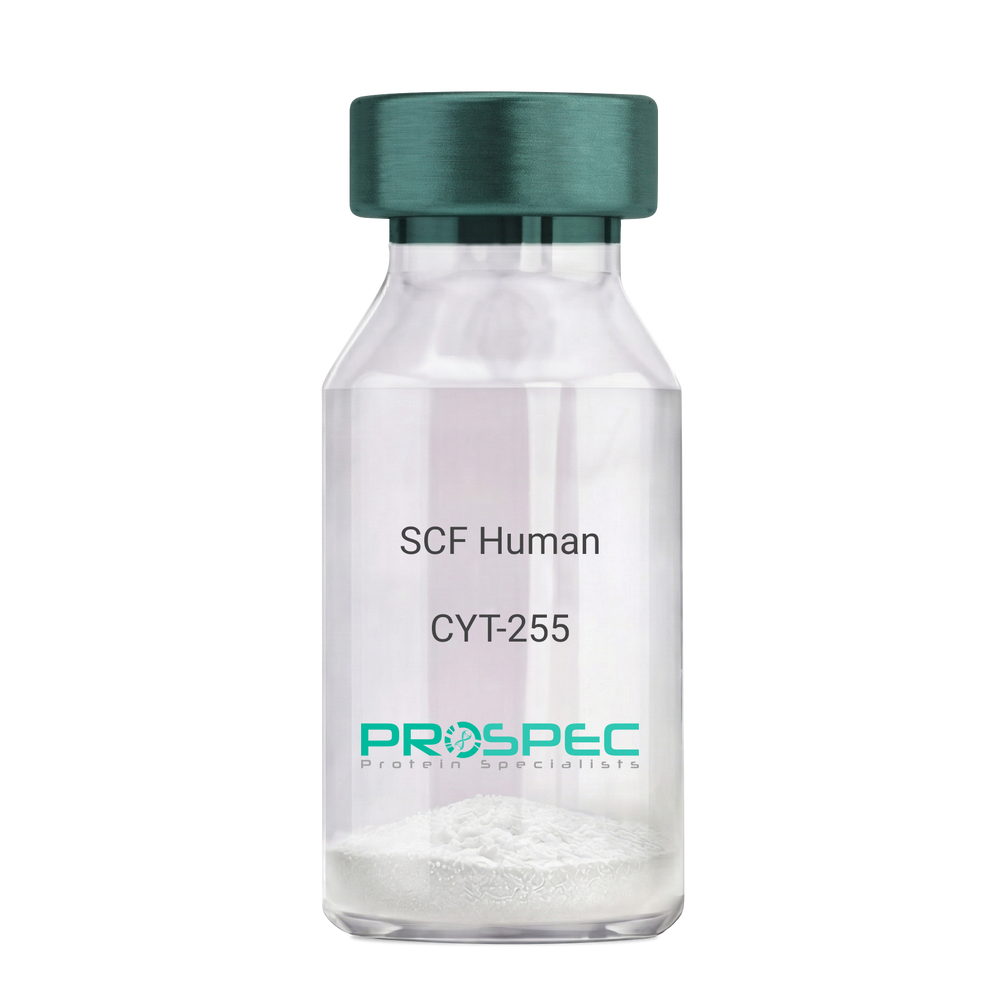
    Name :

    SCF Human

    Description:

    Stem Cell Factor Human Recombinant

    Kit ligand Precursor, C-kit ligand, SCF, Mast cell growth factor, MGF, SF, KL-1, Kitl, DKFZp686F2250.

    Product # :

    CYT-255

    Price :

    Quantity :

    Shipping Method :

    Room Temp Icon

    Shipped at Room temp

    Add To Cart

    More Info

    • description
    • source
    • formulation
    • purity
    • biological activity
    • More Info

    Description

    Stem Cell Factor Human Recombinant produced in E.Coli is a single, non-glycosylated polypeptide chain containing 165 amino acids and having a molecular mass of 18409 Dalton. The SCF is purified by proprietary chromatographic techniques.

    Source

    Escherichia Coli.

    Formulation

    Lyophilized from a concentrated (1mg/ml) solution in water containing 0.02% NaHCO3.

    Purity

    Greater than 98.0% as determined by:
    (a) Analysis by SEC-HPLC.
    (b) Analysis by SDS-PAGE.

    Biological Activity

    The ED50 as determined by the dose-dependant stimulation of Human TF-1 cells is < 2 ng/ml, corresponding to a Specific Activity of 500,000 IU/mg.

    More Info

    • Introduction

      Stem cell factor / KIT ligand (SCF) is a cytokine which binds CD117(c-Kit). SCF is also known as "steel factor" or "c-kit ligand". SCF exists in two forms, cell surface bound SCF and soluble (or free) SCF. Soluble SCF is produced by the cleavage of surface bound SCF by metalloproteases. SCF is a growth factor important for the survival, proliferation, and differentiation of hematopoietic stem cells and other hematopoietic progenitor cells. One of its roles is to change the BFU-E (burst-forming unit-erythroid) cells, which are the earliest erythrocyte precursors in the erythrocytic series, into the CFU-E (colony-forming unit-erythroid).

    • Synonyms

      Kit ligand Precursor, C-kit ligand, SCF, Mast cell growth factor, MGF, SF, KL-1, Kitl, DKFZp686F2250.

    • Physical Appearance

      Sterile Filtered White lyophilized (freeze-dried) powder.

    • Stability

      Lyophilized KIT ligand although stable at room temperature for 3 weeks, should be stored desiccated below -18°C. Upon reconstitution SCF should be stored at 4°C between 2-7 days and for future use below -18°C.For long term storage it is recommended to add a carrier protein (0.1% HSA or BSA).Please prevent freeze-thaw cycles.

    • Solubility

      It is recommended to reconstitute the lyophilized Stem Cell Factor in sterile 18MΩ-cm H2O not less than 100µg/ml, which can then be further diluted to other aqueous solutions.

    • Amino Acid Sequence

      The sequence of the first five N-terminal amino acids was determined and was found to be Met-Glu-Gly-Ile-Cys.

    • Protein content

      Protein quantitation was carried out by two independent methods1. UV spectroscopy at 280 nm using the absorbency value of 0.52 as the extinction coefficient for a 0.1% (1mg/ml) solution. This value is calculated by the PC GENE computer analysis program of protein sequences (IntelliGenetics). 2. Analysis by RP-HPLC, using a standard solution of Stem Cell Factor as a Reference Standard.

    ProSpec's products are furnished for LABORATORY RESEARCH USE ONLY. The product may not be used as drugs, agricultural or pesticidal products, food additives or household chemicals.

    Scf Human
  • View Data Sheet

    Name :

    KLF6 Human

    Description:

    Kruppel-Like Factor 6 Human Recombinant

    Krueppel-like factor 6, B-cell-derived protein 1, Core promoter element-binding protein, GC-rich sites-binding factor GBF, Proto-oncogene BCD1, Suppressor of tumorigenicity 12 protein, Transcription factor Zf9, KLF6, BCD1, COPEB, CPBP, ST12.

    Product # :

    PRO-1864

    Price :

    Quantity :

    Shipping Method :

    Ice Icon

    Shipped with Ice Packs

    Add To Cart

    More Info

    • description
    • source
    • formulation
    • purity
    • More Info

    Description

    KLF6 Human Recombinant produced in E. coli is. a single polypeptide chain containing 306 amino acids (1-283) and having a molecular mass of 34.3kDa. KLF6 is fused to a 23 amino acid His-tag at N-terminus & purified by proprietary chromatographic techniques.

    Source

    Escherichia Coli.

    Formulation

    The KLF6 solution (1mg/ml) contains 20mM Tris-HCl buffer (pH8.0), 20% glycerol and 1mM DTT.

    Purity

    Greater than 85% as determined by SDS-PAGE.

    More Info

    • Introduction

      Kruppel-Like Factor 6 (KLF6) is a nuclear protein which has 3 zinc fingers. The zinc fingers of KLF6 are accountable for the specific DNA binding with the guanine-rich core promoter factors. The central region is involved in activation or posttranslational regulatory pathways, and the acidic N terminal domain takes part in the process of transcriptional activation.

    • Synonyms

      Krueppel-like factor 6, B-cell-derived protein 1, Core promoter element-binding protein, GC-rich sites-binding factor GBF, Proto-oncogene BCD1, Suppressor of tumorigenicity 12 protein, Transcription factor Zf9, KLF6, BCD1, COPEB, CPBP, ST12.

    • Physical Appearance

      Sterile Filtered clear solution.

    • Stability

      Store at 4°C if entire vial will be used within 2-4 weeks. Store frozen at -20°C for longer periods of time. For long term storage it is recommended to add a carrier protein (0.1% HSA or BSA).Avoid multiple freeze-thaw cycles.

    • Amino Acid Sequence

      MGSSHHHHHH SSGLVPRGSH MGSMDVLPMC SIFQELQIVH ETGYFSALPS LEEYWQQTCL ELERYLQSEP CYVSASEIKF DSQEDLWTKI ILAREKKEES ELKISSSPPE DTLISPSFCY NLETNSLNSD VSSESSDSSE ELSPTAKFTS DPIGEVLVSS GKLSSSVTST PPSSPELSRE PSQLWGCVPG ELPSPGKVRS GTSGKPGDKG NGDASPDGRR RVHRCHFNGC RKVYTKSSHL KAHQRTHTGE KPYRCSWEGC EWRFARSDEL TRHFRKHTGA KPFKCSHCDR CFSRSDHLAL HMKRHL.

    ProSpec's products are furnished for LABORATORY RESEARCH USE ONLY. The product may not be used as drugs, agricultural or pesticidal products, food additives or household chemicals.

    Klf6 Human
  • View Data Sheet

    Name :

    PLGF2 Human, HEK

    Description:

    Placental Growth Factor-2, HEK Human Recombinant

    PIGF, PGF, PlGF-2, PLGF-2.

    Product # :

    CYT-1228

    Price :

    Quantity :

    Shipping Method :

    Ice Icon

    Shipped with Ice Packs

    Add To Cart

    More Info

    • description
    • source
    • formulation
    • purity
    • biological activity
    • More Info

    Description

    PLGF2 Human Recombinant produced in HEK293 cells is a single, glycosylated polypeptide chain (a.a 19-170) containing 158 amino acids and having a molecular mass of 18.1kDa. PLGF2 is fused to a 6 amino acid His tag at C-terminus and purified by proprietary chromatographic techniques.

    Source

    HEK293 cells.

    Formulation

    PLGF2 protein (0.5mg/ml) contains Phosphate-Buffered Saline (pH 7.4) and 10% glycerol.

    Purity

    Greater than 90.0% as determined by SDS-PAGE.

    Biological Activity

    Measured by its binding ability in a functional ELISA with Human VEGFR1/Flt-1.

    More Info

    • Synonyms

      PIGF, PGF, PlGF-2, PLGF-2.

    • Physical Appearance

      Sterile Filtered colorless solution.

    • Stability

      Store at 4°C if entire vial will be used within 2-4 weeks. Store, frozen at -20°C for longer periods of time. For long term storage it is recommended to add a carrier protein (0.1% HSA or BSA). Avoid multiple freeze-thaw cycles.

    • Amino Acid Sequence

      LPAVPPQQWA LSAGNGSSEV EVVPFQEVWG RSYCRALERL VDVVSEYPSE VEHMFSPSCV SLLRCTGCCG DENLHCVPVE TANVTMQLLK IRSGDRPSYV ELTFSQHVRC ECRPLREKMK PERRRPKGRG KRRREKQRPT DCHLCGDAVP RRHHHHHH.

    • Background

      PLGF2, a homodimeric glycoprotein, exhibits a unique structural configuration essential for its interactions with VEGF receptors and other signaling molecules. The human recombinant form provides a controlled platform for studying the three-dimensional structure of PLGF2, elucidating its binding affinities and conformational dynamics. Understanding its structure is fundamental for deciphering how PLGF2 mediates angiogenic signaling and vascular remodeling.

    ProSpec's products are furnished for LABORATORY RESEARCH USE ONLY. The product may not be used as drugs, agricultural or pesticidal products, food additives or household chemicals.

    Pigf2 Human
  • View Data Sheet

    Name :

    GTF3C6 Human

    Description:

    General Transcription Factor IIIC Polypeptide 6 Human Recombinant

    bA397G5.3, C6orf51, TFIIIC35, General transcription factor 3C polypeptide 6, Transcription factor IIIC 35 kDa subunit, TFIIIC 35 kDa subunit, TFIIIC35, Transcription factor IIIC subunit 6, CDA020, NPD020.

    Product # :

    PRO-2127

    Price :

    Quantity :

    Shipping Method :

    Ice Icon

    Shipped with Ice Packs

    Add To Cart

    More Info

    • description
    • source
    • formulation
    • purity
    • More Info

    Description

    GTF3C6 Human Recombinant produced in E.Coli is a single, non-glycosylated polypeptide chain containing 236 amino acids (1-213 a.a) and having a molecular mass of 26.4kDa.GTF3C6 is fused to a 23 amino acid His-tag at N-terminus & purified by proprietary chromatographic techniques.

    Source

    Escherichia Coli.

    Formulation

    GTF3C6 protein solution (0.5mg/ml) containing PBS buffer (pH 7.4), 10% glycerol and 1mM DTT.

    Purity

    Greater than 85.0% as determined by SDS-PAGE.

    More Info

    • Introduction

      In the absence of additional proteins - the general transcription factors (GTFs) RNA polymerases are unable to initiate RNA synthesis. GTFs accumulate in a complex on the DNA promoter and recruit the RNA polymerase. GTF3C family proteins are vital for RNA polymerase III to produce several small nuclear and cytoplasmic RNAs, including 5S RNA, tRNA, and adenovirus-associated (VA) RNA of both cellular and viral origin.

    • Synonyms

      bA397G5.3, C6orf51, TFIIIC35, General transcription factor 3C polypeptide 6, Transcription factor IIIC 35 kDa subunit, TFIIIC 35 kDa subunit, TFIIIC35, Transcription factor IIIC subunit 6, CDA020, NPD020.

    • Physical Appearance

      Sterile Filtered clear solution.

    • Stability

      Store at 4°C if entire vial will be used within 2-4 weeks. Store, frozen at -20°C for longer periods of time. For long term storage it is recommended to add a carrier protein (0.1% HSA or BSA).Avoid multiple freeze-thaw cycles.

    • Amino Acid Sequence

      MGSSHHHHHH SSGLVPRGSH MGSMAAAADE RSPEDGEDEE EEEQLVLVEL SGIIDSDFLS KCENKCKVLG IDTERPILQV DSCVFAGEYE DTLGTCVIFE ENVEHADTEG NNKTVLKYKC HTMKKLSMTR TLLTEKKEGE ENIGGVEWLQ IKDNDFSYRP NMICNFLHEN EDEEVVASAP DKSLELEEEE IQMNDSSNLS CEQEKPMHLE IEDSGPLIDI PSETEGSVFM ETQMLP.

    ProSpec's products are furnished for LABORATORY RESEARCH USE ONLY. The product may not be used as drugs, agricultural or pesticidal products, food additives or household chemicals.

    Gtf3C6 Human
  • View Data Sheet

    Name :

    Recombinant VEGF Antibody

    Description:

    Recombinant Human Anti Vascular Endothelial Growth Factor

    Product # :

    ANT-601

    Price :

    Quantity :

    Shipping Method :

    Ice Icon

    Shipped with Ice Packs

    Add To Cart

    More Info

    • description
    • source
    • formulation
    • purity
    • biological activity
    • More Info

    Description

    Recombinant Human Anti Vascular Endothelial Growth Factor that binds to and inhibits the biologic activity of human VEGF in vitro. Recombinant VEGF Antibody contains human framework regions and the complementarity-determining regions of a murine antibody that binds to VEGF. Recombinant VEGF Antibody is produced in a Chinese Hamster Ovary mammalian cell expression system in a serum-free medium and has a molecular weight of approximately 149 kDa.

    Source

    CHO.

    Formulation

    The protein 25.7mg/ml solution contains 60 mg/ml of a,a-trehalose dihydrate, 5.8 mg/ml of sodium phosphate (monobasic, monohydrate), 1.2 mg/ml of sodium phosphate (dibasic, anhydrous) and 0.4 mg/ml of polysorbate 20, pH-6.

    Purity

    Greater than 95.0% as determined by:
    (a) Analysis by SEC-HPLC.
    (b) Analysis by SDS-PAGE.

    Biological Activity

    The ED50 as determined by the proliferation inhibition of HUVEC cell, Perform a comparison of a dilution series of the Sample solution with a dilution series of the Standard solution, measured potency was found to be 1.1 X 10⁴EU/mg.

    More Info

    • Introduction

      Vascular endothelial growth factoris an important signaling proteininvolved in both vasculogenesisand angiogenesis. As its name implies, VEGF activity has been mostly studied on cells of the vascular endothelium, although it does have effects on a number of other cell types (e.g. stimulation monocyte/macrophagemigration, neurons, cancer cells, kidney epithelial cells ).VEGF mediates increased vascular permeability, induces angiogenesis, vasculogenesis and endothelial cell growth, promotes cell migration, and inhibits apoptosis. In vitro, VEGF has been shown to stimulate endothelial cell mitogenesisand cell migration. VEGF is also a vasodilator and increases microvascular permeability and was originally referred to as vascular permeability factor.
      Elevated levels of this protein is linked to POEMS syndrome, also known as Crow-Fukase syndrome. Mutations in this gene have been associated with proliferative and nonproliferative diabetic retinopathy.

    • Physical Appearance

      Clear, colorless solution.

    • Stability

      Recombinant VEGF Antibody should be stored between 2-8°C and should be protected from light. DO NOT FREEZE.

    • Amino Acid Sequence

      LIGHT CHAIN:
      DIQMTQSPSS LSASVGDRVT ITCSASQDIS NYLNWYQQKP GKAPKVLIYF TSSLHSGVPS RFSGSGSGTD FTLTISSLQP EDFATYYCQQ YSTVPWTFGQ GTKVEIKRTV AAPSVFIFPP SDEQLKSGTA SVVCLLNNFY PREAKVQWKV DNALQSGNSQ ESVTEQDSKD STYSLSSTLT LSKADYEKHK VYACEVTHQG LSSPVTKSFN
      RGEC.

      HEAVY CHAIN:
      EVQLVESGGG LVQPGGSLRL SCAASGYTFT NYGMNWVRQA PGKGLEWVGW INTYTGEPTY AADFKRRFTF SLDTSKSTAY LQMNSLRAED TAVYYCAKYP HYYGSSHWYF DVWGQGTLVT VSSASTKGPS VFPLAPSSKS TSGGTAALGC LVKDYFPEPV TVSWNSGALT SGVHTFPAVL QSSGLYSLSS VVTVPSSSLG TQTYICNVNH KPSNTKVDKK VEPKSCDKTH TCPPCPAPEL
      LGGPSVFLFP PKPKDTLMIS RTPEVTCVVV DVSHEDPEVK FNWYVDGVEV HNAKTKPREE QYNSTYRVVS VLTVLHQDWL NGKEYKCKVS NKALPAPIEK TISKAKGQPR EPQVYTLPPS REEMTKNQVS LTCLVKGFYP SDIAVEWESN GQPENNYKTT PPVLDSDGSF FLYSKLTVDK SRWQQGNVFS CSVMHEALHN HYTQKSLSLS
      PGK.

    ProSpec's products are furnished for LABORATORY RESEARCH USE ONLY. The product may not be used as drugs, agricultural or pesticidal products, food additives or household chemicals.

    Recombinant Vegf Antibody
  • View Data Sheet

    Name :

    TNFRSF17 Human

    Description:

    B-Cell Maturation Antigen Human Recombinant

    BCMA, CD269, Tumor Necrosis Factor Receptor Superfamily Member 17, BCM, TNFRSF17, B-cell maturation protein, CD269 antigen.

    Product # :

    CYT-598

    Price :

    Quantity :

    Shipping Method :

    Room Temp Icon

    Shipped at Room temp

    Add To Cart

    More Info

    • description
    • source
    • formulation
    • purity
    • More Info

    Description

    TNFRSF17 Human Recombinant produced in E.Coli is a single, non-glycosylated, polypeptide chain containing 50 amino acids and having a molecular mass of 5.3 kDa. The TNFRSF17 is purified by standard chromatographic techniques.

    Source

    Escherichia Coli.

    Formulation

    1mg of TNFRSF17 Human contain 20mM sodium phosphate buffer, pH-7.4, and 130mM NaCl.

    Purity

    Greater than 98.0% as determined by:
    (a) Analysis by RP-HPLC.
    (b) Analysis by SDS-PAGE.

    More Info

    • Introduction

      TNFRSF17 is a receptor for tnfsf13b/blys/baff and tnfsf13/april. TNFRSF17 promotes b-cell survival and plays a role in the regulation of humoral immunity. TNFRSF17 activates nf-kappa-b and jnk. TNFRSF17 is a member of the TNF-receptor superfamily. TNFRSF17 is expressed in mature B lymphocytes, and is invloved in B cell development and autoimmune response. TNFRSF17 specifically binds to the tumor TNFSF13B/TALL-1/BAFF, which causes NF-kappaB and MAPK8/JNK activation. TNFRSF17 binds to a variety of TRAF family members, and therefore transduces signals for cell survival and proliferation. TNFRSF17 is a type III membrane protein having 1 extracellular cysteine rich domain. Within the TNFRSF, it shares the highest homology with TACI. BCMA and TACI have both been shown to bind to APRIL and BAFF, members of the TNF ligand superfamily. BCMA expression has been found in immune organs. TNFRSF17 appears to be localized to the Golgi compartment. The binding of BCMA to APRIL or BAFF has been shown to stimulate IgM production in peripheral blood B cells and increase the survival of cultured B cells.

    • Synonyms

      BCMA, CD269, Tumor Necrosis Factor Receptor Superfamily Member 17, BCM, TNFRSF17, B-cell maturation protein, CD269 antigen.

    • Physical Appearance

      Sterile Filtered White lyophilized (freeze-dried) powder.

    • Stability

      Lyophilized TNFRSF17 although stable at room temperature for 3 weeks, should be stored desiccated below -18°C. Upon reconstitution TNFRSF17 should be stored at 4°C between 2-7 days and for future use below -18°C.For long term storage it is recommended to add a carrier protein (0.1% HSA or BSA).Please prevent freeze-thaw cycles.

    • Solubility

      It is recommended to reconstitute the lyophilized TNFRSF17 in sterile 18MΩ-cm H2O not less than 100µg/ml, which can then be further diluted to other aqueous solutions.

    • Amino Acid Sequence

      AGQCSQNEYF DSLLHACIPC QLRCSSNTPP LTCQRYCNAS VTNSVKGTNA.

    ProSpec's products are furnished for LABORATORY RESEARCH USE ONLY. The product may not be used as drugs, agricultural or pesticidal products, food additives or household chemicals.

    Tnfrsf17 Human
  • 1
  • …
  • 6
  • 7
  • 8
  • 9
  • 10
  • …
  • 42
Your browser does not support the video tag.

Products

  • Cytokines
  • Growth Factors
  • Chemokines
  • CD Antigens
  • Neurotrophins
  • Hormones
  • Enzymes
  • Viral Antigens
  • Recombinant Proteins
  • Natural Proteins
  • Monoclonal Antibodies
  • Polyclonal Antibodies
  • Thermal Packaging

About

  • Company
  • Founder
  • Contribution
  • Contact Us
  • My Account

Ordering

  • Ordering Method
  • Ordering - Credit Card
  • Ordering PO
  • Shipping Fees
  • FAQ's

Legal

  • Terms & Conditions
  • Privacy
  • Site Map
  • info@prospecbio.com
  • Facebook
  • Instagram
  • Linkedin Profile

© 2026 ProSpec-Tany TechnoGene Ltd. All Rights Reserved.

  • Choosing a selection results in a full page refresh.
  • Opens in a new window.