Skip to content

High-quality research proteins.

  • 1-800-805-6531

  • Mon - Sat 8.00-18.00, Sun - Closed

  • info@prospecbio.com

  • PO Box 6591 East Brunswick NJ 08816

  • Products
    • Cytokines
    • Growth factors
    • Chemokines
    • Cd antigens
    • Neurotrophins
    • Hormones
    • Enzymes
    • Viral antigens
    • Recombinant proteins
    • Natural proteins
    • Monoclonal antibodies
    • Polyclonal antibodies
    • Thermal Packaging
  • About
    • Company
    • Founder
    • Contribution
  • Customers
    • Eastern Asia
    • Eastern Europe
    • North America
    • South America
    • South East Asia
    • Southern Asia
    • Western Europe
  • Ordering
    • Ordering Method
    • Ordering - Credit Card
    • Ordering - PO
    • Shipping Fees
    • FAQs
  • Services
    • DNA Cloning
    • Protein Expression
    • Monoclonal Antibody
    • Fermentation
    • Technology License
  • Contact us
Log in

Country/region

  • USD $ | Albania
  • USD $ | Andorra
  • USD $ | Argentina
  • USD $ | Armenia
  • USD $ | Australia
  • USD $ | Austria
  • USD $ | Azerbaijan
  • USD $ | Belarus
  • USD $ | Belgium
  • USD $ | Bolivia
  • USD $ | Brazil
  • USD $ | Bulgaria
  • USD $ | Cambodia
  • USD $ | Canada
  • USD $ | Chile
  • USD $ | China
  • USD $ | Colombia
  • USD $ | Costa Rica
  • USD $ | Croatia
  • USD $ | Cyprus
  • USD $ | Czechia
  • USD $ | Denmark
  • USD $ | Estonia
  • USD $ | Finland
  • USD $ | France
  • USD $ | Georgia
  • USD $ | Germany
  • USD $ | Greece
  • USD $ | Hong Kong SAR
  • USD $ | Hungary
  • USD $ | Iceland
  • USD $ | India
  • USD $ | Ireland
  • USD $ | Israel
  • USD $ | Italy
  • USD $ | Japan
  • USD $ | Kazakhstan
  • USD $ | Latvia
  • USD $ | Liechtenstein
  • USD $ | Lithuania
  • USD $ | Madagascar
  • USD $ | Malta
  • USD $ | Mexico
  • USD $ | Moldova
  • USD $ | Monaco
  • USD $ | Netherlands
  • USD $ | New Zealand
  • USD $ | North Macedonia
  • USD $ | Norway
  • USD $ | Panama
  • USD $ | Paraguay
  • USD $ | Peru
  • USD $ | Philippines
  • USD $ | Poland
  • USD $ | Portugal
  • USD $ | Romania
  • USD $ | Singapore
  • USD $ | Slovakia
  • USD $ | Slovenia
  • USD $ | South Africa
  • USD $ | South Korea
  • USD $ | Spain
  • USD $ | Sri Lanka
  • USD $ | Sweden
  • USD $ | Switzerland
  • USD $ | Taiwan
  • USD $ | Thailand
  • USD $ | Türkiye
  • USD $ | Ukraine
  • USD $ | United Kingdom
  • USD $ | United States
  • USD $ | Uruguay
  • USD $ | Vatican City
  • USD $ | Venezuela
  • USD $ | Vietnam
  • Facebook
  • Instagram
logoProSpec - Recombinant Protein Manufacturer for academic and R&D industry
Become a distributor
Account Log in
Wishlist
Cart Cart(0)
  • Products
    +
    • Cytokines
    • Growth factors
    • Chemokines
    • Cd antigens
    • Neurotrophins
    • Hormones
    • Enzymes
    • Viral antigens
    • Recombinant proteins
    • Natural proteins
    • Monoclonal antibodies
    • Polyclonal antibodies
    • Thermal Packaging
  • About
    +
    • Company
    • Founder
    • Contribution
  • Customers
    +
    • Eastern Asia
    • Eastern Europe
    • North America
    • South America
    • South East Asia
    • Southern Asia
    • Western Europe
  • Ordering
    +
    • Ordering Method
    • Ordering - Credit Card
    • Ordering - PO
    • Shipping Fees
    • FAQs
  • Services
    +
    • DNA Cloning
    • Protein Expression
    • Monoclonal Antibody
    • Fermentation
    • Technology License
  • Contact us

Item added to your cart

View cart
View All
  • Cytokines
  • Growth factors
  • Chemokines
  • Cd antigens
  • Neurotrophins
  • Hormones
  • Enzymes
  • Viral antigens
  • Recombinant proteins
  • Natural proteins
  • Monoclonal antibodies
  • Polyclonal antibodies
  • Thermal Packaging
  • Tumor Necrosis Factor

    Tumor Necrosis Factor

    View All
  • 4-1BB

    4-1BB

    View All
  • Adiponectin

    Adiponectin

    View All
  • AIF1

    AIF1

    View All
  • Other Cytokines

    Other Cytokines

    View All
  • AITRL

    AITRL

    View All
  • Angiopoietin

    Angiopoietin

    View All
  • Apolipoprotein

    Apolipoprotein

    View All
  • B-Cell Activating Factor

    B-Cell Activating Factor

    View All
  • Beta Defensin

    Beta Defensin

    View All
  • Bone Morphogenetic Protein

    Bone Morphogenetic Protein

    View All
  • B type Natriuretic Peptide

    B type Natriuretic Peptide

    View All
  • BST

    BST

    View All
  • Betacellulin

    Betacellulin

    View All
  • Cardiotrophin

    Cardiotrophin

    View All
  • Activin

    Activin

    View All
  • Fibroblast Growth Factor

    Fibroblast Growth Factor

    View All
  • Other Growth Factors

    Other Growth Factors

    View All
  • CSF

    CSF

    View All
  • CTGF

    CTGF

    View All
  • IGFBP

    IGFBP

    View All
  • VEGF Protein

    VEGF Protein

    View All
  • EGF

    EGF

    View All
  • Epigen

    Epigen

    View All
  • Erythropoietin

    Erythropoietin

    View All
  • Insulin-Like Growth Factor

    Insulin-Like Growth Factor

    View All
  • Growth Hormone

    Growth Hormone

    View All
  • HDGF

    HDGF

    View All
  • Hepatocyte Growth Factor

    Hepatocyte Growth Factor

    View All
  • Insulin

    Insulin

    View All
  • BCA-1/ BLC (CXCL13)

    BCA-1/ BLC (CXCL13)

    View All
  • BRAK (CXCL14)

    BRAK (CXCL14)

    View All
  • C-10 (CCL6)

    C-10 (CCL6)

    View All
  • Other Chemokines

    Other Chemokines

    View All
  • MEC (CCL28)

    MEC (CCL28)

    View All
  • LD78-beta (CCL3L1)

    LD78-beta (CCL3L1)

    View All
  • CTACK (CCL27)

    CTACK (CCL27)

    View All
  • CXCL16

    CXCL16

    View All
  • CXCL17

    CXCL17

    View All
  • Platelet Factor-4 (CXCL4)

    Platelet Factor-4 (CXCL4)

    View All
  • ENA-78 (CXCL5)

    ENA-78 (CXCL5)

    View All
  • Eotaxin (CCL11,24,26)

    Eotaxin (CCL11,24,26)

    View All
  • Exodus-2 (CCL21)

    Exodus-2 (CCL21)

    View All
  • Fractalkine (CX3CL1)

    Fractalkine (CX3CL1)

    View All
  • CXCL6

    CXCL6

    View All
  • Other CD Antigens

    Other CD Antigens

    View All
  • CD14

    CD14

    View All
  • CD164

    CD164

    View All
  • CD1

    CD1

    View All
  • CD2

    CD2

    View All
  • CD200

    CD200

    View All
  • CD207

    CD207

    View All
  • CD226

    CD226

    View All
  • CD23

    CD23

    View All
  • CD244

    CD244

    View All
  • CD247

    CD247

    View All
  • CD27

    CD27

    View All
  • CD274

    CD274

    View All
  • CD300

    CD300

    View All
  • CD33

    CD33

    View All
  • Other Neurotrophins

    Other Neurotrophins

    View All
  • Beta-NGF

    Beta-NGF

    View All
  • BDNF

    BDNF

    View All
  • CDNF

    CDNF

    View All
  • CNTF

    CNTF

    View All
  • GDNF

    GDNF

    View All
  • Glia Maturation Factor

    Glia Maturation Factor

    View All
  • MANF

    MANF

    View All
  • Midkine

    Midkine

    View All
  • Neuroglobin

    Neuroglobin

    View All
  • Neurotrophic factors

    Neurotrophic factors

    View All
  • Neuregulin

    Neuregulin

    View All
  • Neuropilin

    Neuropilin

    View All
  • Pigment Epithelium-Derived Factor

    Pigment Epithelium-Derived Factor

    View All
  • Pleiotrophin

    Pleiotrophin

    View All
  • Peptide Hormones

    Peptide Hormones

    View All
  • Other Hormones

    Other Hormones

    View All
  • HCG

    HCG

    View All
  • Endothelin

    Endothelin

    View All
  • Exendin

    Exendin

    View All
  • FSH

    FSH

    View All
  • Glucagon

    Glucagon

    View All
  • GHRP

    GHRP

    View All
  • GLP

    GLP

    View All
  • Thyrostimulin

    Thyrostimulin

    View All
  • Inhibin A

    Inhibin A

    View All
  • LHRH

    LHRH

    View All
  • Melanotan

    Melanotan

    View All
  • Procalcitonin

    Procalcitonin

    View All
  • PTH

    PTH

    View All
  • Peroxiredoxin

    Peroxiredoxin

    View All
  • Peptidase

    Peptidase

    View All
  • Synthetase

    Synthetase

    View All
  • Transferase

    Transferase

    View All
  • Hydrolase

    Hydrolase

    View All
  • Dehydrogenase

    Dehydrogenase

    View All
  • ACE2

    ACE2

    View All
  • Esterase

    Esterase

    View All
  • Protein Kinases

    Protein Kinases

    View All
  • Other Enzymes

    Other Enzymes

    View All
  • Phosphatase

    Phosphatase

    View All
  • Deaminase

    Deaminase

    View All
  • Oxygenase

    Oxygenase

    View All
  • Adenylate Kinase

    Adenylate Kinase

    View All
  • Lyase

    Lyase

    View All
  • Chagas

    Chagas

    View All
  • SARS

    SARS

    View All
  • Influenza

    Influenza

    View All
  • ASFV

    ASFV

    View All
  • Astrovirus

    Astrovirus

    View All
  • Borrelia

    Borrelia

    View All
  • Helicobacter Pylori

    Helicobacter Pylori

    View All
  • Chikungunya

    Chikungunya

    View All
  • Chlamydia

    Chlamydia

    View All
  • Cytomegalo

    Cytomegalo

    View All
  • Dengue

    Dengue

    View All
  • EBV

    EBV

    View All
  • Ebola

    Ebola

    View All
  • Feline Leukemia Virus

    Feline Leukemia Virus

    View All
  • Hepatitis A

    Hepatitis A

    View All
  • Other

    Other

    View All
  • Actin

    Actin

    View All
  • ADAM

    ADAM

    View All
  • Complement Component

    Complement Component

    View All
  • Ag85

    Ag85

    View All
  • Eukaryotic Translation Initiation Factor

    Eukaryotic Translation Initiation Factor

    View All
  • Anterior Gradient Protein

    Anterior Gradient Protein

    View All
  • Heat Shock Protein

    Heat Shock Protein

    View All
  • Alpha-2-HS-Glycoprotein

    Alpha-2-HS-Glycoprotein

    View All
  • Hemoglobin

    Hemoglobin

    View All
  • Allergy

    Allergy

    View All
  • Anaplasma

    Anaplasma

    View All
  • Angiogenin

    Angiogenin

    View All
  • Ankyrin Repeat Domain

    Ankyrin Repeat Domain

    View All
  • Annexin

    Annexin

    View All
  • Other Natural Proteins

    Other Natural Proteins

    View All
  • Aprotinin

    Aprotinin

    View All
  • Transferrin

    Transferrin

    View All
  • Avidin

    Avidin

    View All
  • Anti Coagulation Factors

    Anti Coagulation Factors

    View All
  • Natural Albumin

    Natural Albumin

    View All
  • Natural Coagulation Factors

    Natural Coagulation Factors

    View All
  • Fibronectin

    Fibronectin

    View All
  • Thrombin

    Thrombin

    View All
  • Anti Human Enzyme

    Anti Human Enzyme

    View All
  • Other Monoclonal Antibodies

    Other Monoclonal Antibodies

    View All
  • Anti Human Cytokine

    Anti Human Cytokine

    View All
  • Anti Human Heat Shock Protein

    Anti Human Heat Shock Protein

    View All
  • Anti Mouse Lymphocyte

    Anti Mouse Lymphocyte

    View All
  • Anti Human Chemokine

    Anti Human Chemokine

    View All
  • Anti Human Lymphocyte

    Anti Human Lymphocyte

    View All
  • Anti Viral Monoclonal

    Anti Viral Monoclonal

    View All
  • Anti Mouse Cytokine

    Anti Mouse Cytokine

    View All
  • Anti-GST Monoclonal

    Anti-GST Monoclonal

    View All
  • Other Polyclonal Antibodies

    Other Polyclonal Antibodies

    View All
  • Anti Viral

    Anti Viral

    View All
  • Anti-GST Monoclonal

    Anti-GST Monoclonal

    View All
Back

Search results

1000 results found for “calponin”

Name

Description

Product #

Price

Quantity

Shipping Method

  • View Data Sheet

    Name :

    CEA Protein

    Description:

    Carcinoembryonic Antigen Human

    CEACAM5, Meconium Antigen 100, Carcinoembryonic Antigen, CD66e Antigen, CD66e, Carcinoembryonic Antigen, CEA, oncofetal antigen.

    Product # :

    PRO-2801

    Price :

    Quantity :

    Shipping Method :

    Ice Icon

    Shipped with Ice Packs

    Add To Cart

    More Info

    • description
    • source
    • formulation
    • purity
    • More Info

    Description

    CEA produced from patient source colon carcinoma liver metastatic tissue can be used as general marker in screening and monitoring malignant disease states.

    Source

    Liver tissue.

    Formulation

    CEA protein solution contains 0.1M PBS, pH 7.4, 0.09 % NaN3 and 2 % methyl-mannoside.

    Purity

    Greater than 95.0% as determined by SDS-PAGE.

    More Info

    • Synonyms

      CEACAM5, Meconium Antigen 100, Carcinoembryonic Antigen, CD66e Antigen, CD66e, Carcinoembryonic Antigen, CEA, oncofetal antigen.

    • Physical Appearance

      Sterile Filtered colorless solution.

    • Stability

      Store at 4°C if entire vial will be used within 2-4 weeks. Store, frozen at -20°C for longer periods of time. For long term storage it is recommended to add a carrier protein (0.1% HSA or BSA). Avoid multiple freeze-thaw cycles.

    • Applications

      Blood samples from tissue donors were tested and found to be negative for HBsAg, HIV-1 and HIV-2 antibodies and HCV.

    • Background

      Carcinoembryonic Antigen, commonly known as CEA, is a glycoprotein that was initially identified as a tumor marker. Over the years, research into CEA has unveiled its intricate involvement in various physiological processes, not only in cancer but also in the context of normal development and inflammatory conditions. This research aims to delve into the multifaceted roles of CEA, exploring its structural intricacies, regulatory mechanisms, and its implications in health, disease, and beyond.

      Structural Complexity of CEA:

      CEA, belonging to the immunoglobulin superfamily, is a complex glycoprotein featuring multiple structural domains. Its diverse forms and glycosylation patterns contribute to its functional versatility. CEA is primarily expressed in fetal tissues, but its presence is often detected in adults under pathological conditions, especially in various types of cancer.

      CEA in Cancer Biology:

      CEA was first recognized as a biomarker for colorectal cancer, but its overexpression is not limited to this context. Elevated CEA levels have been associated with several other malignancies, including breast, lung, and pancreatic cancers. CEA’s involvement in cancer biology ranges from promoting angiogenesis and metastasis to inhibiting immune responses, making it a critical player in tumor progression and evasion.

      Beyond Cancer: CEA in Development and Inflammation:

      While CEA’s role in cancer is prominent, recent studies have uncovered its participation in normal physiological processes. During embryonic development, CEA is involved in cell adhesion, contributing to tissue organization and morphogenesis. Additionally, CEA expression can be induced in inflammatory conditions, suggesting its involvement in immune responses and tissue repair mechanisms.

      CEA as a Diagnostic and Therapeutic Target:

      The diverse expression patterns of CEA in various diseases make it a valuable diagnostic tool. CEA assays are widely used for cancer screening, monitoring disease progression, and assessing treatment efficacy. Moreover, CEA’s presence on the surface of cancer cells has made it a target for immunotherapy, enabling the development of targeted therapies aimed at specifically eradicating CEA-positive tumor cells.

    ProSpec's products are furnished for LABORATORY RESEARCH USE ONLY. The product may not be used as drugs, agricultural or pesticidal products, food additives or household chemicals.

    Cea Human
  • View Data Sheet

    Name :

    TNNI1 Paired Antibody

    Description:

    Mouse Anti Human Troponin I Type 1 Paired

    DKFZp451O223, SSTNI, TNN1, Troponin I, slow skeletal muscle ,Troponin I, slow-twitch isoform.

    Product # :

    ANT-724

    Price :

    Quantity :

    Shipping Method :

    Ice Icon

    Shipped with Ice Packs

    Add To Cart

    More Info

    • description
    • formulation
    • purity
    • More Info

    Description

    TNNI1 conjugation antibody and TNNI1 coating antibody are used to develop rapid test for TNNI1 rapid test.

    Please note that when ordering for example: 100µg antibody we ship 50µg from each of the antibodies (100µg in total).

    Formulation

    * TNNI1 conjugation in 50mM Na-citrate, pH 6.0, 0.9% NaCl and 0.095 % NaN3.

    * TNNI1 coating antibody in 50mM Na-citrate, pH 6.0 0.9% NaCl and 0.095 % NaN3.

    Purity

    Greater than 95%.

    More Info

    • Introduction

      Troponin I, (TNNI1) is a member of the troponin I family. Troponin complex has 3 subunits, TNNI1 known as the inhibitory Subunit which prevents the actin-myosin interactions and thus mediating striated muscle relaxation. TNNI1 combines with tropomyosin and regulates calcium sensitivity of striated muscles by structural modifications in actin-myosin complexes.

    • Synonyms

      DKFZp451O223, SSTNI, TNN1, Troponin I, slow skeletal muscle ,Troponin I, slow-twitch isoform.

    • Physical Appearance

      2 vials of sterile Filtered clear colorless solution.

    • Applications

      Lateral flow immunoassay.

    • Type

      Mouse Anti Human Monoclonal.

    • Purification Method

      Purified monoclonal IgG by protein A chromatography.

    ProSpec's products are furnished for LABORATORY RESEARCH USE ONLY. The product may not be used as drugs, agricultural or pesticidal products, food additives or household chemicals.

    Tnni1 Paired Antibody
  • View Data Sheet

    Name :

    STMN2 Human

    Description:

    Stathmin Like-2 Human Recombinant

    SCG10, STMB2, SCGN10, AI159727, STMN-2, Stathmin-2, Superior cervical ganglion-10 protein, Protein SCG10, STMN2, SGC10, stathmin-like 2.

    Product # :

    PRO-752

    Price :

    Quantity :

    Shipping Method :

    Ice Icon

    Shipped with Ice Packs

    Add To Cart

    More Info

    • description
    • source
    • formulation
    • purity
    • More Info

    Description

    Recombinant Human Stathmin Like-2 produced in E.Coli is a single, non-glycosylated polypeptide chain containing 142 amino acids (39-179 a.a) and having a molecular mass of 16.4 kDa. STMN2 is purified by conventional chromatography techniques.

    Source

    Escherichia Coli.

    Formulation

    The STMN2 protein solution contains 50mM MES, pH-6.0, 0.1mM PMSF, 1 mM EDTA and 10% Glycerol.

    Purity

    Greater than 85.0% as determined by SDS-PAGE.

    More Info

    • Introduction

      STMN2 is a neuronal growth-associated protein which shares a majority of its amino acid sequence with the phosphoprotein stathmin. STMN2 is involved in neuronal differentiation and in modulating membrane interaction with the cytoskeleton through neurite outgrowth. STMN2 is necessary for maintaining the anchorage-independent growth state of beta-catenin/TCF-activated hepatoma cells. SCG10 is a novel indicator of osteogenesis and osteoblast that takes part in the regulation of the adipocyte/osteoblast balance. STMN2 plays a role as an effector downstream of Rnd1 to regulate axon extensions by modulating microtubule organization.

    • Synonyms

      SCG10, STMB2, SCGN10, AI159727, STMN-2, Stathmin-2, Superior cervical ganglion-10 protein, Protein SCG10, STMN2, SGC10, stathmin-like 2.

    • Physical Appearance

      Sterile filtered colorless solution.

    • Stability

      Store at 4°C if entire vial will be used within 2-4 weeks. Store, frozen at -20°C for longer periods of time. For long term storage it is recommended to add a carrier protein (0.1% HSA or BSA).Avoid multiple freeze-thaw cycles.

    • Amino Acid Sequence

      MDMEVKQINK RASGQAFELI LKPPSPISEA PRTLASPKKK DLSLEEIQKK LEAAEERRKS QEAQVLKQLA EKREHEREVL QKALEENNNF SKMAEEKLIL KMEQIKENRE ANLAAIIERL QEKERHAAEV RRNKELQVEL SG.

    ProSpec's products are furnished for LABORATORY RESEARCH USE ONLY. The product may not be used as drugs, agricultural or pesticidal products, food additives or household chemicals.

    Stmn2 Human
  • View Data Sheet

    Name :

    MIEN1 Human

    Description:

    Migration And Invasion Enhancer 1 Human Recombinant

    C17orf37, C35, ORB3, RDX12, XTP4, HBV X-transactivated gene 4 protein, HBV XAg-transactivated protein 4, Protein C35, Migration and invasion enhancer 1.

    Product # :

    PRO-1657

    Price :

    Quantity :

    Shipping Method :

    Ice Icon

    Shipped with Ice Packs

    Add To Cart

    More Info

    • description
    • source
    • formulation
    • purity
    • More Info

    Description

    MIEN1 Human Recombinant produced in E.Coli is a single, non-glycosylated polypeptide chain containing 135 amino acids (1-112 a.a.) and having a molecular mass of 14.5kDa.MIEN1 is fused to a 23 amino acid His-tag at N-terminus & purified by proprietary chromatographic techniques.

    Source

    Escherichia Coli.

    Formulation

    MIEN1 protein solution (0.5mg/ml) contains 20mM Tris-HCl buffer (pH 8.0), 0.15M NaCl, 10% glycerol and 1mM DTT.

    Purity

    Greater than 95.0% as determined by SDS-PAGE.

    More Info

    • Introduction

      Migration And Invasion Enhancer 1 (MIEN1) is a member of the SelWTH family. MIEN1 enhances cell migration by stimulating filopodia formation at the leading edge of migrating cells and takes parts in regulation of apoptosis, probably via control of CASP3. MIEN1 participates in a redox-related process as well.

    • Synonyms

      C17orf37, C35, ORB3, RDX12, XTP4, HBV X-transactivated gene 4 protein, HBV XAg-transactivated protein 4, Protein C35, Migration and invasion enhancer 1.

    • Physical Appearance

      Sterile Filtered clear solution.

    • Stability

      Store at 4°C if entire vial will be used within 2-4 weeks. Store, frozen at -20°C for longer periods of time. For long term storage it is recommended to add a carrier protein (0.1% HSA or BSA).Avoid multiple freeze-thaw cycles.

    • Amino Acid Sequence

      MGSSHHHHHH SSGLVPRGSH MGSMSGEPGQ TSVAPPPEEV EPGSGVRIVV EYCEPCGFEA TYLELASAVK EQYPGIEIES RLGGTGAFEI EINGQLVFSK LENGGFPYEK DLIEAIRRAS NGETLEKITN SRPPC.

    ProSpec's products are furnished for LABORATORY RESEARCH USE ONLY. The product may not be used as drugs, agricultural or pesticidal products, food additives or household chemicals.

    Mien1 Human
  • View Data Sheet

    Name :

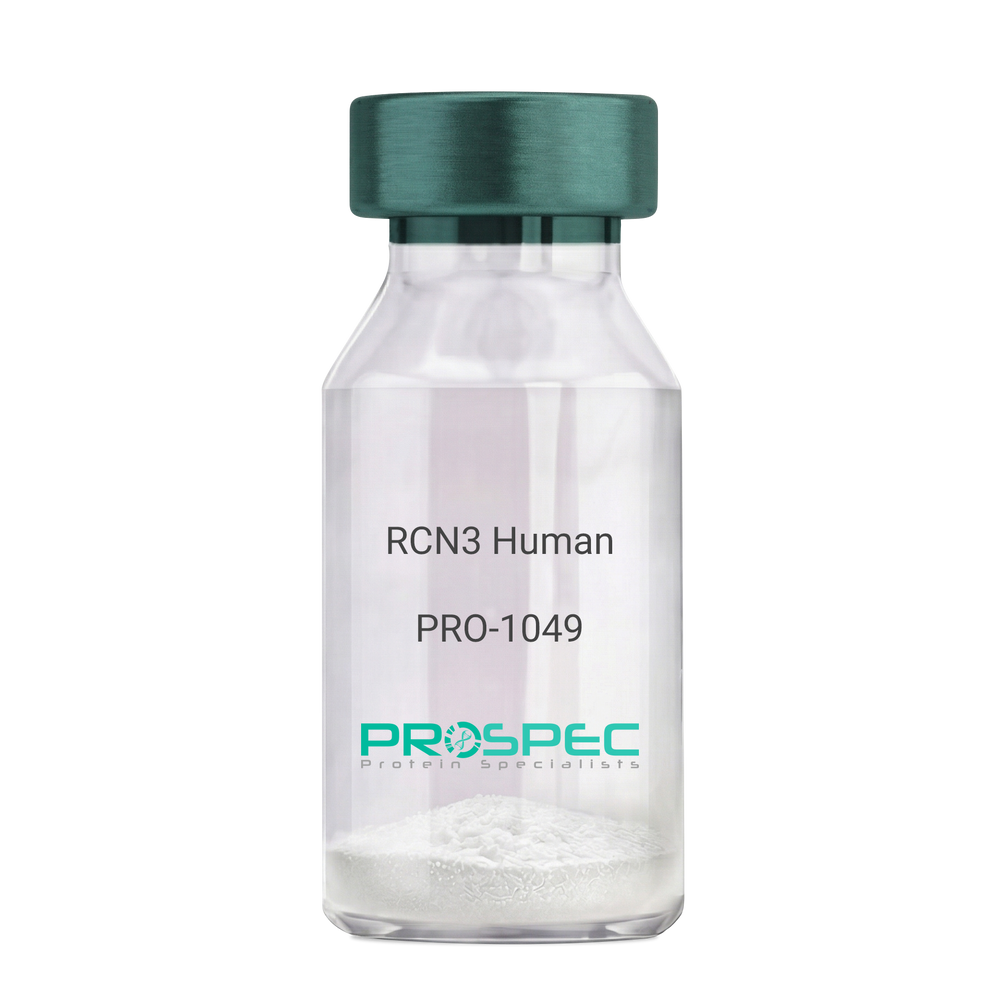
    RCN3 Human

    Description:

    Reticulocalbin 3 Human Recombinant

    Reticulocalbin-3, EF-hand calcium-binding protein RLP49, RCN3, RLP49.

    Product # :

    PRO-1049

    Price :

    Quantity :

    Shipping Method :

    Ice Icon

    Shipped with Ice Packs

    Add To Cart

    More Info

    • description
    • source
    • formulation
    • purity
    • More Info

    Description

    RCN3 Human Recombinant produced in E.Coli is a single, non-glycosylated polypeptide chain containing 333 amino acids (21-328 a.a) and having a molecular mass of 37.9kDa.RCN3 is fused to a 25 amino acid His-tag at N-terminus & purified by proprietary chromatographic techniques.

    Source

    Escherichia Coli.

    Formulation

    RCN3 protein solution (1mg/ml) containing 20mM Tris-HCl buffer (pH 8.0), 1mM DTT, 10% glycerol and 0.1M NaCl.

    Purity

    Greater than 95.0% as determined by SDS-PAGE.

    More Info

    • Introduction

      Reticulocalbin 3 (RCN3) belongs to the CREC (cab45/reticulocalbin/ ERC45/calumenin) family. RCN3 contains 5 Arg-Xaa-Xaa-Arg motifs, which function as target sequences of SPCs (subtilisin-like proprotein convertases), which is a family of serine endoproteases that proteolytically activate proproteins. The synthesis of PACE4 is induced by association and coexpression with RCN3.

    • Synonyms

      Reticulocalbin-3, EF-hand calcium-binding protein RLP49, RCN3, RLP49.

    • Physical Appearance

      Sterile Filtered colorless solution.

    • Stability

      Store at 4°C if entire vial will be used within 2-4 weeks. Store, frozen at -20°C for longer periods of time. For long term storage it is recommended to add a carrier protein (0.1% HSA or BSA).Avoid multiple freeze-thaw cycles.

    • Amino Acid Sequence

      MGSSHHHHHH SSGLVPRGSH MGSHMKPSPD AGPHGQGRVH QAAPLSDAPH DDAHGNFQYD HEAFLGREVA KEFDQLTPEE SQARLGRIVD RMDRAGDGDG WVSLAELRAW IAHTQQRHIR DSVSAAWDTY DTDRDGRVGW EELRNATYGH YAPGEEFHDV EDAETYKKML ARDERRFRVA DQDGDSMATR EELTAFLHPE EFPHMRDIVI AETLEDLDRN KDGYVQVEEY IADLYSAEPG EEEPAWVQTE RQQFRDFRDL NKDGHLDGSE VGHWVLPPAQ DQPLVEANHL LHESDTDKDG RLSKAEILGN WNMFVGSQAT NYGEDLTRHH DEL.

    ProSpec's products are furnished for LABORATORY RESEARCH USE ONLY. The product may not be used as drugs, agricultural or pesticidal products, food additives or household chemicals.

    Rcn3 Human
  • View Data Sheet

    Name :

    LGALS8 Human, His

    Description:

    Galectin-8 Human Recombinant, His Tag

    Gal-8, PCTA1, Po66-CBP, Prostate carcinoma tumor antigen 1.

    Product # :

    CYT-727

    Price :

    Quantity :

    Shipping Method :

    Ice Icon

    Shipped with Ice Packs

    Add To Cart

    More Info

    • description
    • source
    • formulation
    • purity
    • biological activity
    • More Info
    • SDS-PAGE

    Description

    LGALS8 Human Recombinant produced in E.Coli is a single, non-glycosylated, polypeptide chain containing 337 amino acids (1-317 a.a.) and having a molecular mass of 37.9 kDa. The LGALS8 is fused to a 20 amino acid His-Tag at N-terminus and purified by proprietary chromatographic techniques.

    Source

    Escherichia Coli.

    Formulation

    The Galectin-8 His tag 0.5mg/ml protein solution contains 20mM Tris-HCl pH-8, 0.1M NaCl, 10% glycerol & 1mM DTT.

    Purity

    Greater than 90.0% as determined by SDS-PAGE.

    Biological Activity

    The ED50 for this effect is 5–10ug/ml. Measured by its ability to agglutinate human red blood cells corresponding to a specific activity of 100-200IU/mg.

    SDS-PAGE

    LGALS8 Human, His-SDS-PAGE - Product image 1

    More Info

    • Introduction

      LGALS8 is a prostate-specific antigen that is solely overexpressed in malignant tumors and thus is a supplementary specific identifier of malignancies. LGALS8 is part of the galectin gene family which facilitates both cell-cell and cell matrix interactions in a method parallel to the selectin subgroup of C-type lectins.

    • Synonyms

      Gal-8, PCTA1, Po66-CBP, Prostate carcinoma tumor antigen 1.

    • Physical Appearance

      Sterile Filtered colorless solution.

    • Stability

      Store at 4°C if entire vial will be used within 2-4 weeks. Store, frozen at -20°C for longer periods of time. For long term storage it is recommended to add a carrier protein (0.1% HSA or BSA).Avoid multiple freeze-thaw cycles.

    • Amino Acid Sequence

      MGSSHHHHHH SSGLVPRGSH MMLSLNNLQN IIYNPVIPFV GTIPDQLDPG TLIVIRGHVP SDADRFQVDL QNGSSMKPRA DVAFHFNPRF
      KRAGCIVCNT LINEKWGREE ITYDTPFKRE KSFEIVIMVL KDKFQVAVNG KHTLLYGHRI GPEKIDTLGI YGKVNIHSIG FSFSSDLQST
      QASSLELTEI SRENVPKSGT PQLRLPFAAR LNTPMGPGRT VVVKGEVNAN AKSFNVDLLA GKSKDIALHL NPRLNIKAFV RNSFLQESWG
      EEERNITSFP FSPGMYFEMI IYCDVREFKV AVNGVHSLEY KHRFKELSSI DTLEINGDIH LLEVRSW.

    • Background

      What is the molecular weight/Mw of LGALS8 HUMAN, HIS Protein?
      LGALS8 HUMAN, HIS Protein has a total Mw of 37.9kDa.

      What is the source or expression system of LGALS8 HUMAN, HIS Protein?
      Escherichia Coli.

      What is the Purity of LGALS8 HUMAN, HIS Protein?
      LGALS8 HUMAN, HIS Protein is >90% pure as determined by SDS-PAGE.

      What is the Biological Activity of LGALS8 HUMAN, HIS Protein?
      The ED50 for this effect is 5–10ug/ml. Measured by its ability to agglutinate human red blood cells corresponding to a specific activity of 100-200IU/mg.What is the amino acid
      sequence of LGALS8 HUMAN, HIS Protein?
      MGSSHHHHHH SSGLVPRGSH MMLSLNNLQN IIYNPVIPFV GTIPDQLDPG TLIVIRGHVP SDADRFQVDL QNGSSMKPRA DVAFHFNPRF
      KRAGCIVCNT LINEKWGREE ITYDTPFKRE KSFEIVIMVL KDKFQVAVNG KHTLLYGHRI GPEKIDTLGI YGKVNIHSIG FSFSSDLQST
      QASSLELTEI SRENVPKSGT PQLRLPFAAR LNTPMGPGRT VVVKGEVNAN AKSFNVDLLA GKSKDIALHL NPRLNIKAFV RNSFLQESWG
      EEERNITSFP FSPGMYFEMI IYCDVREFKV AVNGVHSLEY KHRFKELSSI DTLEINGDIH LLEVRSW.

      What applications can LGALS8 HUMAN, HIS Protein be used in?
      LGALS8 HUMAN, HIS Protein can probably be used in western blot, ELISA and Lateral Flow.

      What is the endotoxin level for LGALS8 HUMAN, HIS Protein?
      The endotoxin level is minimal, LGALS8 HUMAN, HIS Protein was purified using conventional chromatography techniques.


    ProSpec's products are furnished for LABORATORY RESEARCH USE ONLY. The product may not be used as drugs, agricultural or pesticidal products, food additives or household chemicals.

    Lgals8 Human His
  • View Data Sheet

    Name :

    SOST Human

    Description:

    Sclerostin Human Recombinant

    Sclerostin, SOST, CDD, VBCH.

    Product # :

    PRO-1601

    Price :

    Quantity :

    Shipping Method :

    Room Temp Icon

    Shipped at Room temp

    Add To Cart

    More Info

    • description
    • source
    • formulation
    • purity
    • More Info

    Description

    SOST Human Recombinant produced in E.Coli is a single, non-glycosylated, polypeptide chain (a.a 24-213) containing 200 amino acids including a 10 a.a N-terminal His tag. The total molecular mass is 22.8kDa (calculated).

    Source

    Escherichia Coli.

    Formulation

    SOST filtered (0.4 µm) and lyophilized from 0.5mg/ml in 0.03M Acetate buffer pH-4.0.

    Purity

    Greater than 90.0% as determined by SDS-PAGE.

    More Info

    • Introduction

      Sclerostin (SOST) is a secreted glycoprotein with a C-terminal cysteine knot-like (CTCK) domain and sequence similarity to the DAN (differential screening-selected gene aberrative in neuroblastoma) family of bone morphogenetic protein (BMP) antagonists. Sclerostin functions as a negative regulator of bone growth, by inhibiting bone formation. SOST is widely expressed at low levels, with highest levels in the bone, cartilage, kidney, liver, bone marrow and primary osteoblasts differentiated for 21 days. SOST gene defects cause sclerosteosis and bone dysplasia.

    • Synonyms

      Sclerostin, SOST, CDD, VBCH.

    • Physical Appearance

      Filtered White lyophilized (freeze-dried) powder.

    • Stability

      Store lyophilized protein at -20°C. Aliquot the product after reconstitution to avoid repeated freezing/thawing cycles. Reconstituted protein can be stored at 4°C for a limited period of time; it does not show any change after two weeks at 4°C.

    • Solubility

      It is recommended to add 0.1M Acetate buffer pH-4 to prepare a working stock solution of approximately 0.5mg/ml and let the lyophilized pellet dissolve completely. For conversion into higher pH value, we recommend intensive dilution by relevant buffer to a concentration of 10µg/ml. In higher concentrations the solubility of this antigen is limited. SOST is not sterile! Please filter the product by an appropriate sterile filter before using it in the cell culture.

    • Amino Acid Sequence

      MKHHHHHHASQGWQAFKNDA TEIIPELGEY PEPPPELENN KTMNRAENGG RPPHHPFETK DVSEYSCREL HFTRYVTDGP CRSAKPVTEL VCSGQCGPAR LLPNAIGRGK WWRPSGPDFR CIPDRYRAQR VQLLCPGGEA PRARKVRLVA SCKCKRLTRF HNQSELKDFG TEAARPQKGR KPRPRARSAK ANQAELENAY.

    ProSpec's products are furnished for LABORATORY RESEARCH USE ONLY. The product may not be used as drugs, agricultural or pesticidal products, food additives or household chemicals.

    Sost Human
  • View Data Sheet

    Name :

    CAMK4 Human

    Description:

    Calcium/Calmodulin-Dependent Protein Kinase IV Human Recombinant

    Calcium/calmodulin-dependent protein kinase type IV catalytic chain, CaMK-GR, CaM kinase-GR, CaMK IV, IV, brain Ca(2+)-calmodulin-dependent protein kinase type IV, caMK, CAM kinase IV, EC 2.7.11.17.

    Product # :

    PKA-021

    Price :

    Quantity :

    Shipping Method :

    Ice Icon

    Shipped with Ice Packs

    Add To Cart

    More Info

    • description
    • source
    • formulation
    • purity
    • More Info

    Description

    CAMK4 Human Recombinant produced in E.coli is a single, non-glycosylated polypeptide chain containing 497 amino acids (1-473) and having a molecular mass of 54.5kDa.CAMK4 is fused to a 24 amino acid His-tag at N-terminus & purified by proprietary chromatographic techniques.

    Source

    E.coli.

    Formulation

    The CAMK4 solution (0.5mg/ml) contains 20mM Tris-HCl buffer (pH 8.0), 100mM NaCl and 10% glycerol.

    Purity

    Greater than 85% as determined by SDS-PAGE.

    More Info

    • Introduction

      CAMK4 is a member of the serine/threonine protein kinase family, and of the Ca(2+)/calmodulin-dependent protein kinase subfamily. CAMK4 is a multifunctional serine/threonine protein kinase with restricted tissue distribution which is associated to transcriptional regulation in lymphocytes, neurons and male germ cells.

    • Synonyms

      Calcium/calmodulin-dependent protein kinase type IV catalytic chain, CaMK-GR, CaM kinase-GR, CaMK IV, IV, brain Ca(2+)-calmodulin-dependent protein kinase type IV, caMK, CAM kinase IV, EC 2.7.11.17.

    • Physical Appearance

      Sterile Filtered colorless solution.

    • Stability

      Store at 4°C if entire vial will be used within 2-4 weeks. Store, frozen at -20°C for longer periods of time. For long term storage it is recommended to add a carrier protein (0.1% HSA or BSA).Avoid multiple freeze-thaw cycles.

    • Amino Acid Sequence

      MGSSHHHHHH SSGLVPRGSH MGSHMLKVTV PSCSASSCSS VTASAAPGTA SLVPDYWIDG SNRDALSDFF EVESELGRGA TSIVYRCKQK GTQKPYALKV LKKTVDKKIV RTEIGVLLRL SHPNIIKLKE IFETPTEISL VLELVTGGEL FDRIVEKGYY SERDAADAVK QILEAVAYLH ENGIVHRDLK PENLLYATPA PDAPLKIADF GLSKIVEHQV LMKTVCGTPG YCAPEILRGC AYGPEVDMWS VGIITYILLC GFEPFYDERG DQFMFRRILN CEYYFISPWW DEVSLNAKDL VRKLIVLDPK KRLTTFQALQ HPWVTGKAAN FVHMDTAQKK LQEFNARRKL KAAVKAVVAS SRLGSASSSH GSIQESHKAS RDPSPIQDGN EDMKAIPEGE KIQGDGAQAA VKGAQAELMK VQALEKVKGA DINAEEAPKM VPKAVEDGIK VADLELEEGL AEEKLKTVEE AAAPREGQGS SAVGFEVPQQ DVILPEY.

    ProSpec's products are furnished for LABORATORY RESEARCH USE ONLY. The product may not be used as drugs, agricultural or pesticidal products, food additives or household chemicals.

    Camk4 Human
  • View Data Sheet

    Name :

    PODXL Mouse

    Description:

    Podocalyxin-Like Mouse Recombinant

    Podocalyxin, Podocalyxin-like protein 1, PC, PCLP-1.

    Product # :

    PRO-2310

    Price :

    Quantity :

    Shipping Method :

    Ice Icon

    Shipped with Ice Packs

    Add To Cart

    More Info

    • description
    • source
    • formulation
    • purity
    • More Info

    Description

    PODXL Mouse Recombinant produced in Sf9 Baculovirus cells is a single, glycosylated polypeptide chain containing 391 amino acids (22-404a.a.) and having a molecular mass of 41.0kDa (Molecular size on SDS-PAGE will appear at approximately 70-100kDa). PODXL is expressed with an 8 amino acid His tag at C-Terminus and purified by proprietary chromatographic techniques.

    Source

    Sf9, Baculovirus cells.

    Formulation

    PODXL protein solution (0.5mg/ml) containing Phosphate Buffered Saline (pH 7.4) and 10% glycerol.

    Purity

    Greater than 95% as determined by SDS-PAGE.

    More Info

    • Introduction

      Podocalyxin (PODXL) is a greatly glycosylated transmembrane sialoprotein in the CD34 and endoglycan family. The PODXL protein is involved in the regulation of both adhesion and cell morphology and cancer progression. PODXL functions as an anti-adhesive molecule, which retains an open filtration pathway between neighboring foot processes in the podocyte by charge repulsion. Moreover, PODXL serves as a pro-adhesive molecule, enhancing the adherence of cells to immobilized ligands, increasing the rate of migration and cell-cell contacts in an integrin-dependent manner.

    • Synonyms

      Podocalyxin, Podocalyxin-like protein 1, PC, PCLP-1.

    • Physical Appearance

      Sterile Filtered clear solution.

    • Stability

      Store at 4°C if entire vial will be used within 2-4 weeks. Store, frozen at -20°C for longer periods of time.For long term storage it is recommended to add a carrier protein (0.1% HSA or BSA).Please avoid freeze thaw cycles.

    • Amino Acid Sequence

      HNGNETSTSA IKSSTVQSHQ SATTSTEVTT GHPVASTLAS TQPSNPTPFT TSTQSPSMPT STPNPTSNQS GGNLTSSVSE VDKTKTSSPS STAFTSSSGQ TASSGGKSGD SFTTAPTTTL GLINVSSQPT DLNTTSKLLS TPTTDNTTSP QQPVDSSPST ASHPVGQHTP AAVPSSSGST PSTDNSTLTW KPTTHKPLGT SEATQPLTSQ TPGITTLPVS TLQQSMASTV GTTTEEFTHL ISNGTPVAPP GPSTPSPIWA FGNYQLNCEP PIRPDEELLI LNLTRASLCE RSPLDEKEKL VELLCHSVKA SFKPAEDLCT LHVAPILDNQ AVAVKRIIIE TKLSPKAVYE LLKDRWDDLT EAGVSDMKLG KEGPPEVNED RFSLEHHHHH H.

    ProSpec's products are furnished for LABORATORY RESEARCH USE ONLY. The product may not be used as drugs, agricultural or pesticidal products, food additives or household chemicals.

    Podxl Mouse
  • View Data Sheet

    Name :

    NEFM

    Description:

    Neurofilament Medium Polypeptide Bovine

    Neurofilament medium polypeptide, NF-M, Neurofilament triplet M protein, 160 kDa neurofilament protein, Neurofilament 3, NEFM, NEF3, NFM.

    Product # :

    PRO-523

    Price :

    Quantity :

    Shipping Method :

    Room Temp Icon

    Shipped at Room temp

    Add To Cart

    More Info

    • description
    • source
    • formulation
    • purity
    • More Info

    Description

    Ultra Pure NeuroFilament Protein having a Molecular mass of 160 kDa produced from Bovine Spinal Cord.

    Source

    Bovine Spinal Cord.

    Formulation

    The protein was lyophilized from a 1mg/ml solution containing 10mM sodium phosphate, pH-7.5, 2mM DTT, 6M urea, 10mM methylammonium chloride and 1mM EDTA.

    Purity

    Greater than 95.0% as determined by SDS-PAGE.

    More Info

    • Introduction

      Neurofilaments are type IV intermediate filament heteropolymers that are composed of light, medium, and heavy chains. Neurofilaments comprise the axoskeleton and functionally maintain neuronal caliber and may also have a role in intracellular transport to axons and dendrites.
      NeuroFilament 160kDa is a medium neurofilament protein, which is commonly used as a biomarker of neuronal damage.

    • Synonyms

      Neurofilament medium polypeptide, NF-M, Neurofilament triplet M protein, 160 kDa neurofilament protein, Neurofilament 3, NEFM, NEF3, NFM.

    • Physical Appearance

      Sterile Filtered White lyophilized (freeze-dried) powder.

    • Stability

      Store the lyophilized NEFM between 2-8°C, do not freeze. Upon reconstitution NEFM should be stored below -18°C. Please prevent freeze-thaw cycles.

    • Solubility

      It is recommended to reconstitute the lyophilized NEFM in sterile 18MΩ-cm H2O.

    ProSpec's products are furnished for LABORATORY RESEARCH USE ONLY. The product may not be used as drugs, agricultural or pesticidal products, food additives or household chemicals.

    Nefm Bovine
  • View Data Sheet

    Name :

    Actin Rabbit

    Description:

    Actin Rabbit

    Product # :

    PRO-517

    Price :

    Quantity :

    Shipping Method :

    Room Temp Icon

    Shipped at Room temp

    Add To Cart

    More Info

    • description
    • source
    • formulation
    • purity
    • More Info

    Description

    Ultra pure Actin consists in the alpha-skeletal muscle isoform and is purified from rabbit striated muscle.The purification method used (according to Spudich & Watts) results in a highly purified protein having a Molecular mass of 43,000 dalton.

    Source

    Rabbit Muscle.

    Formulation

    The protein was lyophilized from a 1mg/ml solution containing 10mM Tris/HCl buffer pH 8.0, 0.2mM CaCl2, 0.2mM ATP, 1mM DTT and 0.5% (w/v) SDS.

    Purity

    Greater than 98.0% as determined by SDS-PAGE.

    More Info

    • Introduction

      Actin is a muscle protein localized in the I band of the myofibrils; acting along with myosin, it is responsible for contraction and relaxation of muscle. Each actin protomer binds one molecule of ATP and has one high affinity site for either calcium or magnesium ions, as well as several low affinity sites. Actin exists as a monomer in low salt concentrations, but filaments form rapidly as salt concentration rises, with the consequent hydrolysis of ATP. It occurs in globular (G-actin) and fibrous (F-actin) forms. Actin is found in all eukaryotic cells (except for nematode sperm). Actin is one of the most highly-conserved proteins, differing by no more than 20% in species as diverse as algae and humans. Its other functions include cell motility, cell division and cytokinesis, vesicle and organelle movement, cell signaling, and the establishment and maintenance of cell junctions and cell shape.

    • Physical Appearance

      Sterile Filtered White lyophilized (freeze-dried) powder.

    • Stability

      Store the Lyophilized Actin between 2-8°C, do not freeze. Upon reconstitution Actin should be stored at 4°C between 2-7 days and for future use below -18°C. Please prevent freeze-thaw cycles.

    • Solubility

      It is recommended to reconstitute the lyophilized Actin in sterile 18MΩ-cm H2O not less than 1mg/ml, which can then be further diluted to other aqueous solutions.

    ProSpec's products are furnished for LABORATORY RESEARCH USE ONLY. The product may not be used as drugs, agricultural or pesticidal products, food additives or household chemicals.

    Actin
  • View Data Sheet

    Name :

    CCL6 Mouse

    Description:

    C-10 Mouse Recombinant (CCL6)

    Small inducible cytokine A6, CCL6, C10 protein, c10, MRP-1, Scya6, chemokine (C-C motif) ligand 6.

    Product # :

    CHM-307

    Price :

    Quantity :

    Shipping Method :

    Room Temp Icon

    Shipped at Room temp

    Add To Cart

    More Info

    • description
    • source
    • formulation
    • purity
    • biological activity
    • More Info

    Description

    C-10 Mouse Recombinant produced in E.Coli is a single,non-glycosylated, polypeptide chain containing 95 amino acids and having a molecular mass of 10.7kDa.The CCL6 is purified by proprietary chromatographic techniques.

    Source

    Escherichia Coli.

    Formulation

    CCL6 Mouse was lyophilized from a 0.2µm filtered concentrated solution in 1×PBS, pH 7.4.

    Purity

    Greater than 95.0% as determined by:
    (a) Analysis by RP-HPLC.
    (b) Analysis by SDS-PAGE.

    Biological Activity

    The Biological activity was determined by its ability to chemoattract human CCR1 transfected BaF3 mouse proB cells using a concentration range of 0.05-0.25µg/ml.

    More Info

    • Introduction

      Chemokine (C-C motif) ligand 6 (CCL6) is a small cytokine belonging to the CC chemokine family that has only been identified in rodents.
      In mice, CCL6 is expressed in cells from neutrophil and macrophage lineages, and can be greatly induced under conditions suitable for myeloid cell differentiation. It is highly expressed in bone marrow cultures that have been stimulated with the cytokine GM-CSF. Some low levels of gene expression also occur in certain cell lines of myeloid origin (e.g. the immature myeloid cell lines DA3 and 32D cl3, and the macrophage cell line P388D) that can also be greatly induced in culture with GM-CSF. However, in activated T cell lines, expression of CCL6 is greatly reduced. CCL6 can also be induced in the mouse lung by the cytokine interleukin 13. Mouse CCL6 is located on chromosome 11. The cell surface receptor for CCL6 is believed to be the chemokine receptor CCR1.

    • Synonyms

      Small inducible cytokine A6, CCL6, C10 protein, c10, MRP-1, Scya6, chemokine (C-C motif) ligand 6.

    • Physical Appearance

      Sterile Filtered White lyophilized (freeze-dried) powder.

    • Stability

      Lyophilized C10 protein although stable at room temperature for 3 weeks, should be stored desiccated below -18°C. Upon reconstitution CCL6 should be stored at 4°C between 2-7 days and for future use below -18°C. For long term storage it is recommended to add a carrier protein (0.1% HSA or BSA).Please prevent freeze-thaw cycles.

    • Solubility

      It is recommended to reconstitute the lyophilized C10 protein in sterile 18MΩ-cm H2O not less than 100µg/ml, which can then be further diluted to other aqueous solutions.

    • Amino Acid Sequence

      GLIQEIEKED RRYNPPIIHQ GFQDTSSDCC FSYATQIPCK RFIYYFPTSG GCIKPGIIFI SRRGTQVCAD PSDRRVQRCL STLKQGPRSG NKVIA.

    • Background

      What is the molecular weight/Mw of CCL6 MOUSE Protein?
      CCL6 MOUSE Protein has a total Mw of 10.7kDa.

      What is the source or expression system of CCL6 MOUSE Protein?
      Escherichia Coli.

      What is the Purity of CCL6 MOUSE Protein?
      CCL6 MOUSE Protein is >95% pure as determined by SDS-PAGE.

      What is the Biological Activity of CCL6 MOUSE Protein?
      The Biological activity was determined by its ability to chemoattract human CCR1 transfected BaF3 mouse proB cells using a concentration range of 0.05-0.25µg/ml.

      What is the amino acid sequence of CCL6 MOUSE Protein?
      GLIQEIEKED RRYNPPIIHQ GFQDTSSDCC FSYATQIPCK RFIYYFPTSG GCIKPGIIFI SRRGTQVCAD PSDRRVQRCL STLKQGPRSG NKVIA.

      What applications can CCL6 MOUSE Protein be used in?
      CCL6 MOUSE Protein can probably be used in western blot, ELISA and Lateral Flow.

      What is the endotoxin level for CCL6 MOUSE Protein?
      The endotoxin level is minimal, CCL6 MOUSE Protein was purified using conventional chromatography techniques.


    ProSpec's products are furnished for LABORATORY RESEARCH USE ONLY. The product may not be used as drugs, agricultural or pesticidal products, food additives or household chemicals.

    C 10 Mouse
  • View Data Sheet

    Name :

    Activin-A Mouse

    Description:

    Activin-A Mouse Recombinant

    Inhba, Inhibin beta A, FSH releasing protein.

    Product # :

    CYT-146

    Price :

    Quantity :

    Shipping Method :

    Room Temp Icon

    Shipped at Room temp

    Add To Cart

    More Info

    • description
    • source
    • formulation
    • purity
    • biological activity
    • More Info

    Description

    Active form Activin-A Murine Recombinant produced in e.coli is a homodimeric, non-glycosylated, polypeptide chain containing 2 x 117 amino acids and having a molecular weight of 26.2kDa.The Active form Activin-A is purified by standard chromatographic techniques.

    Source

    E.Coli.

    Formulation

    Mouse Activin-A lyophilized from a concentrated 1mg/ml protein solution containing 0.1% TFA.

    Purity

    Greater than 95% as obsereved by SDS-PAGE.

    Biological Activity

    Biological activity is assessed by the ability to induce cytoxicity of MPC-11 cells and was found to be 8.8ng/ml corresponding to a specific activity of 1.1 x 10⁵ units/mg.

    More Info

    • Introduction

      Activins are homodimers or heterodimers of the different β subunit isoforms, part of the TGFβ family. Mature Activin A has two 116 amino acids residues βA subunits (βA-βA). Activin displays an extensive variety of biological activities, including mesoderm induction, neural cell differentiation, bone remodelling, haematopoiesis, and reproductive physiology. Activins takes part in the production and regulation of hormones such as FSH, LH, GnRH and ACTH. Cells that are identified to express Activin A include fibroblasts, endothelial cells, hepatocytes, vascular smooth muscle cells, macrophages, keratinocytes, osteoclasts, bone marrow monocytes, prostatic epithelium, neurons, chondrocytes, osteoblasts, Leydig cells, Sertoli cells, and ovarian granulosa cells.

    • Synonyms

      Inhba, Inhibin beta A, FSH releasing protein.

    • Physical Appearance

      Lyophilized freeze dried powder.

    • Stability

      Lyophilized Activin-A although stable at room temperature for 3 weeks, should be stored desiccated below -18°C. Upon reconstitution Activin-A should be stored at 4°C between 2-7 days and for future use below -18°C.For long term storage it is recommended to add a carrier protein (0.1% HSA or BSA).Please prevent freeze-thaw cycles.

    • Solubility

      Murine INHBA protein should be reconstituted in distilled pyrogen free water to a concentration of 100ug /ml which can then be further diluted to other aqueous solutions.

    • Amino Acid Sequence

      MGLECDGKVN ICCKKQFFVS FKDIGWNDWI IAPSGYHANY CEGECPSHIA GTSGSSLSFH STVINHYRMR GHSPFANLKS CCVPTKLRPM SMLYYDDGQN IIKKDIQNMI VEECGCS.

    • Background

      What is the molecular weight / Mw of Activin A Protein?
      Activin A Protein has a total Mw of 26.2 kDa.

      What is the source or expression system of Activin A Protein?
      Ecoli

      What is the Purity of Activin A Protein?
      Activin A Protein is >95% pure as determined by SDS-PAGE.

      What is the Biological Activity of Activin A Protein?
      Biological activity is assessed by the ability to induce cytoxicity of MPC-11 cells and was found to be 8.8ng/ml corresponding to a specific activity of 110,000 units/mg.

      What is the endotoxin level for Activin A Protein?
      The endotoxin level is minimal, ACTIVIN A Protein was purified using conventional chromatography techniques.

      What is the amino acid sequence of ACTIVIN A Protein?
      MGLECDGKVN ICCKKQFFVS FKDIGWNDWI IAPSGYHANY CEGECPSHIA GTSGSSLSFH STVINHYRMR GHSPFANLKS CCVPTKLRPM SMLYYDDGQN IIKKDIQNMI VEECGCS.

      What applications can ACTIVIN A Protein be used in?
      ACTIVIN A Protein can probably be used in western blot, ELISA and Lateral Flow.

    ProSpec's products are furnished for LABORATORY RESEARCH USE ONLY. The product may not be used as drugs, agricultural or pesticidal products, food additives or household chemicals.

    Inhba Mouse
  • View Data Sheet

    Name :

    KEL Mouse

    Description:

    Kell Metallo-Endopeptidase Mouse Recombinant

    kell blood group antigen, kell blood group glycoprotein, Kell blood group, Kell blood group glycoprotein homolog, KEL, Kell, CD238 antigen, CD238, ECE3, Kell blood group-metalloendopeptidase, Kell blood group-metalloendopeptidase.

    Product # :

    ENZ-1158

    Price :

    Quantity :

    Shipping Method :

    Ice Icon

    Shipped with Ice Packs

    Add To Cart

    More Info

    • description
    • source
    • formulation
    • purity
    • More Info

    Description

    KEL Mouse produced in Sf9 Baculovirus cells is a single, glycosylated polypeptide chain containing 674 amino acids (49-713 aa) and having a molecular mass of 76.3kDa.KEL is fused to a 9 amino acid His tag at C-terminus and purified by proprietary chromatographic techniques.

    Source

    Sf9, Baculovirus cells.

    Formulation

    The KEL solution (0.25mg/ml) contains 10% Glycerol and Phosphate-Buffered Saline (pH 7.4).

    Purity

    Greater than 90.0% as determined by SDS-PAGE.

    More Info

    • Introduction

      Kell blood group glycoprotein homolog or KEL, is an enzyme, part of the zinc endopeptidase of the neprilysin (NEP) group of proteins. KEL has a crucial part in the production of the potent bioactive ET-3, which also includes enzymes that are endothelin convertingenzymes (PEX, XCE, DINE &various NEP-like proteins). KEL uses a single disulfide bond to XK, a gated membranal transporter. The Kell antigen system that includes two proteins, is very crucial among blood group systems.

    • Synonyms

      kell blood group antigen, kell blood group glycoprotein, Kell blood group, Kell blood group glycoprotein homolog, KEL, Kell, CD238 antigen, CD238, ECE3, Kell blood group-metalloendopeptidase, Kell blood group-metalloendopeptidase.

    • Physical Appearance

      Sterile Filtered colorless solution.

    • Stability

      Store at 4°C if entire vial will be used within 2-4 weeks. Store, frozen at -20°C for longer periods of time. For long term storage it is recommended to add a carrier protein (0.1% HSA or BSA).Avoid multiple freeze-thaw cycles.

    • Amino Acid Sequence

      ADPIFRNCGP CPCETPVCME LLDHYLASGN RSVAPCTDFF SFACEKANGT SDSFQALTEE NKSRLWRLLE APGSWHLGSG EEKAFQFYNS CMDTDAIEAS GSGPLIQIIE ELGGWNITGN WTSLDFNQNL RLLMSQYGHF PFFRAYLRPH PAPPHTPIIQ IDQPEFDILL QQEQEQKVYA QILREYVTYL NRLGTLLGSN PQEAQQHASW SIVFTSRLFQ FLRPQQQQQA QDKLFHVVTI DELQEMAPAI DWLSCLQAIF TPMSLNSSQT LVVHDLDYLR NMSQLVEEGL LNHRESIQSY MILGLVDTLS PALDTKFQEA RRELIQELRK LKERPPLPAY PRWMKCVEQT GAFFEPTLAA LFVREAFGPS IQSAAMELFA EIKDAVIIRL KKLSWISEET QKEALNKLAQ LQVEMGAPKR AVKPDIATQE YNDIQLGPSF LQSFLSCVRS LRARNVQSFL QPFPYHRWQK SPWEVNAYYS ISDHMVVFPA GLLQPPFFHP GYPRAVNFGA AGSIMAHELL HIFYQLLLPG GCPACDTHVL QEALLCLERH YAAFPLPSIS SFNGSHTLLE NAADIGGVAI AFQAYSKRIV EHTGELTLPN LDLSPYQLFF RSYAQVMCRG LSSQDPQDPH SPPSLRVHGP LSNTPDFAKH FHCPRGTLLN PSARCKLWHH HHHH.

    ProSpec's products are furnished for LABORATORY RESEARCH USE ONLY. The product may not be used as drugs, agricultural or pesticidal products, food additives or household chemicals.

    Cd238 Mouse
  • View Data Sheet

    Name :

    S100A5 Mouse

    Description:

    S100 Calcium Binding Protein A5 Mouse Recombinant

    Protein S100-A5, Protein S-100D, S100 calcium-binding protein A5, S100a5, S100d, S100D9.

    Product # :

    PRO-1084

    Price :

    Quantity :

    Shipping Method :

    Ice Icon

    Shipped with Ice Packs

    Add To Cart

    More Info

    • description
    • source
    • formulation
    • purity
    • More Info

    Description

    S100A5 Mouse Recombinant produced in E.coli is a single, non-glycosylated polypeptide chain containing 117 amino acids (1-93) and having a molecular mass of 13.4kDa.The S100A5 is fused to a 24 amino acid His-Tag at N-terminus and purified by proprietary chromatographic techniques.

    Source

    Escherichia Coli.

    Formulation

    S100A5 protein (1mg/ml) is supplied in 20mM Tris-HCl buffer, pH8.0, 40% glycerol, 3mM DTT and 200mM NaCl.

    Purity

    Greater than 95.0% as determined by SDS-PAGE.

    More Info

    • Introduction

      S100 calcium binding protein A5 (S100A5) belongs to the S100 family of proteins containing 2 EF-hand calcium-binding motifs. S100 family members are localized in the cytoplasm and/or nucleus of a wide range of cells, and are involved in the regulation of a number of cellular processes such as cell cycle progression and differentiation. S100A5 has a Ca2+ affinity 20-100 fold higher than the other S100 proteins investigated under identical conditions. Furthermore, S100A5 protein binds Zn2+ and Cu2+, and Cu2+ strongly which harms the binding of Ca2+. S100A5 is expressed in very limited regions of the adult brain.

    • Synonyms

      Protein S100-A5, Protein S-100D, S100 calcium-binding protein A5, S100a5, S100d, S100D9.

    • Physical Appearance

      S100A9 is supplied as a sterile filtered clear solution.

    • Stability

      Store at 4°C if entire vial will be used within 2-4 weeks. Store, frozen at -20°C for longer periods of time. For long term storage it is recommended to add a carrier protein (0.1% HSA or BSA).Avoid multiple freeze-thaw cycles.

    • Amino Acid Sequence

      MGSSHHHHHH SSGLVPRGSH MGSHMETPLE KALTTMVTTF HKYSGREGSK LTLSRKELKE LIKTELSLAE KMKESSIDNL MKSLDKNSDQ EIDFKEYSVF LTTLCMAYND FFLEDNK.

    ProSpec's products are furnished for LABORATORY RESEARCH USE ONLY. The product may not be used as drugs, agricultural or pesticidal products, food additives or household chemicals.

    S100A5 Mouse
  • View Data Sheet

    Name :

    CFL1 Human

    Description:

    Cofilin-1 Human Recombinant

    CFL-1, CFL1, Cofilin1, Cofilin-1, Cofilin, non-muscle isoform, 18 kDa phosphoprotein, p18.

    Product # :

    PRO-591

    Price :

    Quantity :

    Shipping Method :

    Ice Icon

    Shipped with Ice Packs

    Add To Cart

    More Info

    • description
    • source
    • formulation
    • purity
    • More Info

    Description

    Cofilin1 Human Recombinant (aa 1-166) fused to a 20 aa N-terminal His-Tag produced in E.Coli is a single, non-glycosylated polypeptide chain containing a total of 186 amino acids and having a molecular mass of 20kDa.

    Source

    Escherichia Coli.

    Formulation

    The protein solution contains 20mM Tris pH-8 and 10% glycerol.

    Purity

    Greater than 95.0% as determined by Analysis by SDS-PAGE.

    More Info

    • Introduction

      Cofilin is a family of actin-binding proteins which disassembles actin filaments. It is a widely distributed intracellular actin-modulating protein that binds and depolymerizes filamentous F-actin and inhibits the polymerization of monomeric G-actin in a pH-dependent manner. It is involved in the translocation of actin-cofilin complex from cytoplasm to nucleus.

    • Synonyms

      CFL-1, CFL1, Cofilin1, Cofilin-1, Cofilin, non-muscle isoform, 18 kDa phosphoprotein, p18.

    • Physical Appearance

      Sterile Filtered colorless solution.

    • Stability

      Store at 4°C if entire vial will be used within 2-4 weeks. Store, frozen at -20°C for longer periods of time. For long term storage it is recommended to add a carrier protein (0.1% HSA or BSA).Please prevent freeze-thaw cycles.

    • Amino Acid Sequence

      MGSSHHHHHH SSGLVPRGSH MASGVAVSDG VIKVFNDMKV RKSSTPEEVK KRKKAVLFCLSEDKKNIILE EGKEILVGDV GQTVDDPYAT FVKMLPDKDC RYALYDATYE TKESKKEDLVFIFWAPESAP LKSKMIYASS KDAIKKKLTG IKHELQANCY EEVKDRCTLA EKLGGSAVIS LEGKPL.

    ProSpec's products are furnished for LABORATORY RESEARCH USE ONLY. The product may not be used as drugs, agricultural or pesticidal products, food additives or household chemicals.

    Cfl1 Human
  • View Data Sheet

    Name :

    PMSG

    Description:

    Pregnant Mare Serum Gonadotropin

    Product # :

    HOR-272

    Price :

    Quantity :

    Shipping Method :

    Room Temp Icon

    Shipped at Room temp

    Add To Cart

    More Info

    • description
    • source
    • formulation
    • More Info

    Description

    PMSG is a complex glycoprotein obtained from the serum of pregnant mares. This 43-63 kda protein is capable of supplementing and being substituted for the follicle stimulating and interstitial cell-stimulating hormone of the anterior pituitary gland in both the male and female. Thus PMSG-Intervet stimulates development of the ovarian follicle in the female.

    Source

    Serum of pregnant mares.

    Formulation

    The PMSG was lyophilized with no additives.

    More Info

    • Introduction

      PMSG Hormone is a well know used hormone together with progestogen to increase ovulation just before to artificial insemination. PMSG hormone is a placental glycoprotein produced from the serum of pregnant mares. PMSG comprises of an alfa subunit and a beta subunit. PMSG hormone is secreted from endometrial cups within the pregnant mare uterus aging from 40 to 130 days into their maturation, and once extracted, it can been used to promote artificially estrus in female animals. These assemblies produce PMSG hormone to induce mare's ovarian and repsouctive structures. PMSG can induce the growth of follicles by ovaries and results in ovulatation. PMSG hormone has an about a 4 day half-life of bioactivity in species other than horses. The extended biological activity can cause ovarian stimulation and ovulation. However, PMSG use alone often causes cystic ovarian disease because of the unrestrained ovarian stimulation and due to the sugar molecules which decrease clearance of the hormone. PMSG is more likely to be used than other pituitary hormones due to the extended circulatory half-life. PMSG solely exhibits luteinizing hormone like activity, however in other animal classes it has FSH & LH like activity.

    • Physical Appearance

      Sterile Filtered White lyophilized (freeze-dried) powder.

    • Stability

      Lyophilized PMSG although stable at room temperature for 3 weeks, should be stored between 2-8°C.

    • Solubility

      It is recommended to reconstitute the lyophilized PMSG in sterile 18M-cm H2O at a concentration of 1000 IU/ml, which can then be further diluted to other aqueous solutions.

    ProSpec's products are furnished for LABORATORY RESEARCH USE ONLY. The product may not be used as drugs, agricultural or pesticidal products, food additives or household chemicals.

    Pmsg
  • View Data Sheet

    Name :

    SPOCK3 Mouse

    Description:

    Sparc/Osteonectin 3 Mouse Recombinant

    Testican-3, SPARC/osteonectin, CWCV, Kazal-like domains proteoglycan 3, Spock3.

    Product # :

    PRO-2328

    Price :

    Quantity :

    Shipping Method :

    Ice Icon

    Shipped with Ice Packs

    Add To Cart

    More Info

    • description
    • source
    • formulation
    • purity
    • More Info

    Description

    SPOCK3 Mouse Recombinant produced in Sf9 Baculovirus cells is a single, glycosylated polypeptide chain containing 423 amino acids (22-436 a.a.) and having a molecular mass of 47.9kDa (Migrates at 40-57kDa on SDS-PAGE under reducing conditions).SPOCK3 is expressed with an 8 amino acid His tag at C-Terminus and purified by proprietary chromatographic techniques.

    Source

    Sf9, Baculovirus cells.

    Formulation

    SPOCK3 protein solution (0.25mg/ml) containing Phosphate Buffered Saline (pH 7.4) and 10% glycerol.

    Purity

    Greater than 90% as determined by SDS-PAGE.

    More Info

    • Introduction

      Testican-3 (Spock3) is a nervous system-expressed heparan sulfate proteoglycan belonging to a subgroup of the BM-40/SPARC/osteonectin family, whose role of in brain development is unclear. Spock3 inhibits the processing of pro-matrix metalloproteinase 2(MMP-2) by MT1-MMP and MT3-MMP. Spock3 is mostly confined to the developmental stage of the brain.

    • Synonyms

      Testican-3, SPARC/osteonectin, CWCV, Kazal-like domains proteoglycan 3, Spock3.

    • Physical Appearance

      Sterile Filtered colorless solution.

    • Stability

      Store at 4°C if entire vial will be used within 2-4 weeks. Store, frozen at -20°C for longer periods of time. For long term storage it is recommended to add a carrier protein (0.1% HSA or BSA).Avoid multiple freeze-thaw cycles.

    • Amino Acid Sequence

      AAAAVAVAGG RSDGGNFLDE KQWLTTISQY DKEVGQWNKF RDEVEDDYFR TWNPGKPFDQ ALDPAKDPCL KTKCSRHKVC ITQDAQTALC ISHRRLTHSM KEVGGSHKQW RGLPSSTCKP CPIAYASPVC GSDGHSYSSQ CKLEYQACVL GKQISIKCEG RCPCPSDKSM NIGRNVKRAC
      SDLEFREVAN RLRDWFKALH ESGSQNKKTK ALLRPERSRF DTSILPICKD SLGWMFNRLD TNYDLLLDQS ELGSIYLDKN EQCTKAFFNS CDTYKDSLIS NNEWCYCFQR QQDPPCHTEL SNIQKRQGIK KLLGQYIPLC DEDGYYKPTQ CHGSVGQCWC VDRYGNEVVG SRINGVADCA
      IDFEISGDFA SGDFREWTDD EGEEDDIMND KDDIEDDDED EGDDDDDGDV HDGYILEHHH HHH

    ProSpec's products are furnished for LABORATORY RESEARCH USE ONLY. The product may not be used as drugs, agricultural or pesticidal products, food additives or household chemicals.

    Spock3 Mouse
  • View Data Sheet

    Name :

    CADM1 Human

    Description:

    Cell Adhesion Molecule 1 Human Recombinant

    Cell Adhesion Molecule 1, Tumor Suppressor In Lung Cancer 1, IGSF4, Spermatogenic Immunoglobulin Superfamily, Immunoglobulin Superfamily, Member 4, Immunoglobulin Superfamily Member 4, Synaptic Cell Adhesion Molecule, Nectin-Like Protein 2, Nectin-Like 2, Necl-2, SgIGSF, IGSF4A, SYNCAM, TSLC-1, TSLC1, NECL2, Immunoglobulin Superfamily, Member 4D Variant 1, Immunoglobulin Superfamily, Member 4D Variant 2, TSLC1/Nectin-Like 2/IGSF4, Truncated CADM1 Protein, STSLC-1, SynCAM1, RA175, ST17, BL2, Cell adhesion molecule 1.

    Product # :

    PRO-2098

    Price :

    Quantity :

    Shipping Method :

    Ice Icon

    Shipped with Ice Packs

    Add To Cart

    More Info

    • description
    • source
    • formulation
    • purity
    • More Info

    Description

    CADM1 Human Recombinant produced in E.Coli is a single, non-glycosylated polypeptide chain containing 353 amino acids (45-374 a.a) and having a molecular mass of 39.4 kDa. CADM1 is fused to a 23 amino acid His-tag at N-terminus & purified by proprietary chromatographic techniques.

    Source

    Escherichia Coli.

    Formulation

    CADM1 protein solution (0.25 mg/ml) containing Phosphate buffered saline (pH7.4), 10% glycerol and 1mM DTT.

    Purity

    Greater than 85.0% as determined by SDS-PAGE.

    More Info

    • Introduction

      Cell Adhesion Molecule 1, also known as CADM1 belongs to the nectin family. CADM1 mediates homophilic cell-cell adhesion in a Ca2+-independent manner as well as mediating heterophilic cell-cell adhesion with CADM3 and PVRL3 in a Ca2+-independent manner. Furthermore, CADM1 perform as a tumor suppressor in non-small-cell lung cancer, NSCLC, cells. The interaction with CRTAM promotes natural killer (NK) cell cytotoxicity & IFN-gamma secretion by CD8+ cells in vitro over and above NK cell-mediated rejection of tumors expressing CADM3 in vivo.

    • Synonyms

      Cell Adhesion Molecule 1, Tumor Suppressor In Lung Cancer 1, IGSF4, Spermatogenic Immunoglobulin Superfamily, Immunoglobulin Superfamily, Member 4, Immunoglobulin Superfamily Member 4, Synaptic Cell Adhesion Molecule, Nectin-Like Protein 2, Nectin-Like 2, Necl-2, SgIGSF, IGSF4A, SYNCAM, TSLC-1, TSLC1, NECL2, Immunoglobulin Superfamily, Member 4D Variant 1, Immunoglobulin Superfamily, Member 4D Variant 2, TSLC1/Nectin-Like 2/IGSF4, Truncated CADM1 Protein, STSLC-1, SynCAM1, RA175, ST17, BL2, Cell adhesion molecule 1.

    • Physical Appearance

      Sterile Filtered colorless solution.

    • Stability

      Store at 4°C if entire vial will be used within 2-4 weeks. Store, frozen at -20°C for longer periods of time. For long term storage it is recommended to add a carrier protein (0.1% HSA or BSA).Avoid multiple freeze-thaw cycles.

    • Amino Acid Sequence

      MGSSHHHHHH SSGLVPRGSH MGSQNLFTKD VTVIEGEVAT ISCQVNKSDD SVIQLLNPNR QTIYFRDFRP LKDSRFQLLN FSSSELKVSL TNVSISDEGR YFCQLYTDPP QESYTTITVL VPPRNLMIDI QKDTAVEGEE IEVNCTAMAS KPATTIRWFK GNTELKGKSE VEEWSDMYTV TSQLMLKVHK EDDGVPVICQ VEHPAVTGNL QTQRYLEVQY KPQVHIQMTY PLQGLTREGD ALELTCEAIG KPQPVMVTWV RVDDEMPQHA VLSGPNLFIN NLNKTDNGTY RCEASNIVGK AHSDYMLYVY DPPTTIPPPT TTTTTTTTTT TTILTIITDS RAGEEGSIRA VDH.

    ProSpec's products are furnished for LABORATORY RESEARCH USE ONLY. The product may not be used as drugs, agricultural or pesticidal products, food additives or household chemicals.

    Cadm1 Human
  • View Data Sheet

    Name :

    CAMP Human

    Description:

    Cathelicidin Antimicrobial Peptide Human Recombinant

    CAP-18, CAP18, CRAMP, FALL-39, FALL39, HSD26, LL37, 18 kDa cationic antimicrobial protein, FALL-39 peptide antibiotic, Cathelicidin antimicrobial peptide.

    Product # :

    PRO-1405

    Price :

    Quantity :

    Shipping Method :

    Ice Icon

    Shipped with Ice Packs

    Add To Cart

    More Info

    • description
    • source
    • formulation
    • purity
    • More Info

    Description

    CAMP Human Recombinant produced in E.Coli is a single, non-glycosylated polypeptide chain containing 163 amino acids (34-173 a.a.) and having a molecular mass of 18.4kDa.CAMP is fused to a 23 amino acid His-tag at N-terminus.

    Source

    Escherichia Coli.

    Formulation

    CAMP protein solution (0.5mg/ml) contains 20mM Tris-HCl buffer (pH 8.0), 0.4M UREA and 10% glycerol.

    Purity

    Greater than 85.0% as determined by SDS-PAGE.

    More Info

    • Introduction

      CAMP belongs to the antimicrobial peptide family, contains highly conserved N-terminal signal peptide, a cathelin domain and a structurally variable cationic antimicrobial peptide that produced by extracellular proteolysis from the C-terminus. CAMP has numerous functions besides the antimicrobial activity such as: cell chemotaxis, immune mediator induction and inflammatory response regulation.

    • Synonyms

      CAP-18, CAP18, CRAMP, FALL-39, FALL39, HSD26, LL37, 18 kDa cationic antimicrobial protein, FALL-39 peptide antibiotic, Cathelicidin antimicrobial peptide.

    • Physical Appearance

      Sterile Filtered clear solution.

    • Stability

      Store at 4°C if entire vial will be used within 2-4 weeks. Store, frozen at -20°C for longer periods of time. For long term storage it is recommended to add a carrier protein (0.1% HSA or BSA).Avoid multiple freeze-thaw cycles.

    • Amino Acid Sequence

      MGSSHHHHHH SSGLVPRGSH MGSQVLSYKE AVLRAIDGIN QRSSDANLYR LLDLDPRPTM DGDPDTPKPV SFTVKETVCP RTTQQSPEDC DFKKDGLVKR CMGTVTLNQA RGSFDISCDK DNKRFALLGD FFRKSKEKIG KEFKRIVQRI KDFLRNLVPR TES.

    ProSpec's products are furnished for LABORATORY RESEARCH USE ONLY. The product may not be used as drugs, agricultural or pesticidal products, food additives or household chemicals.

    Camp Human
  • View Data Sheet

    Name :

    CCM2 Human

    Description:

    Cerebral Cavernous Malformation 2 Human Recombinant

    Cerebral Cavernous Malformation 2, C7orf22, malcavernin, Cerebral Cavernous Malformations 2 Protein, Chromosome 7 Open Reading Frame 22, OSM, MGC4067.

    Product # :

    PRO-1825

    Price :

    Quantity :

    Shipping Method :

    Ice Icon

    Shipped with Ice Packs

    Add To Cart

    More Info

    • description
    • source
    • formulation
    • purity
    • More Info

    Description

    CCM2 Human Recombinant produced in E.Coli is a single, non-glycosylated polypeptide chain containing 311 amino acids (66-353 a.a) and having a molecular mass of 34.3kDa.CCM2 is fused to a 23 amino acid His-tag at N-terminus & purified by proprietary chromatographic techniques.

    Source

    Escherichia Coli.

    Formulation

    CCM2 protein solution (0.5mg/ml) containing 20mM Tris-HCl buffer (pH8.0), 20% glycerol and 1mM DTT.

    Purity

    Greater than 90.0% as determined by SDS-PAGE.

    More Info

    • Introduction

      Cerebral Cavernous Malformation 2, also known as CCM2 is a piece of the CCM signaling pathway which is a vital regulator of heart and vessel formation as well as integrity. CCM2 performs through the stabilization of endothelial cell junctions. In addition, CCM2 functions as a scaffold protein for MAP2K3-MAP3K3 signaling. CCM2 plays a key role in the modulation of MAP3K3-dependent p38 activation induced by hyperosmotic shock. Mutations in CCM2 result in cerebral cavernous malformations. Multiple transcript variants encoding dissimilar isoforms have been discovered for CCM2.

    • Synonyms

      Cerebral Cavernous Malformation 2, C7orf22, malcavernin, Cerebral Cavernous Malformations 2 Protein, Chromosome 7 Open Reading Frame 22, OSM, MGC4067.

    • Physical Appearance

      Sterile Filtered clear solution.

    • Stability

      Store at 4°C if entire vial will be used within 2-4 weeks. Store, frozen at -20°C for longer periods of time.For long term storage it is recommended to add a carrier protein (0.1% HSA or BSA).Please avoid freeze thaw cycles.

    • Amino Acid Sequence

      MGSSHHHHHH SSGLVPRGSH MGSEVKYLGQ LTSIPGYLNP SSRTEILHFI DNAKRAHQLP GHLTQEHDAV LSLSAYNVKL AWRDGEDIIL RVPIHDIAAV SYVRDDAAHL VVLKTDDSST KVDIKETYEV EASTFCFPES VDVGGASPHS KTISESELSA SATELLQDYM LTLRTKLSSQ EIQQFAALLH EYRNGASIHE FCINLRQLYG DSRKFLLLGL RPFIPEKDSQ HFENFLETIG VKDGRGIITD SFGRHRRALS TTSSSTTNGN RATGSSDDRS APSEGDEWDR MISDISSDIE ALGCSMDQDS A

    ProSpec's products are furnished for LABORATORY RESEARCH USE ONLY. The product may not be used as drugs, agricultural or pesticidal products, food additives or household chemicals.

    Ccm2 Human
  • View Data Sheet

    Name :

    LGMN Mouse

    Description:

    Legumain Mouse Recombinant

    Legumain, Asparaginyl endopeptidase, Protease, cysteine 1.

    Product # :

    ENZ-933

    Price :

    Quantity :

    Shipping Method :

    Ice Icon

    Shipped with Ice Packs

    Add To Cart

    More Info

    • description
    • source
    • formulation
    • purity
    • More Info
    • sds-page

    Description

    LGMN produced in Sf9 Baculovirus cells is a single, glycosylated polypeptide chain containing 426 amino acids (18-435a.a.) and having a molecular mass of 48.6kDa. LGMN is expressed with an 8 amino acid His tag at C-Terminus and purified by proprietary chromatographic techniques.

    Source

    Sf9, Baculovirus cells.

    Formulation

    LGMN protein solution (0.5mg/ml) contains Phosphate Buffered Saline (pH 7.4) and 10% glycerol.

    Purity

    Greater than 90.0% as determined by SDS-PAGE.

    sds-page

    LGMN Mouse sds-page - Product image 1

    More Info

    • Introduction

      Legumain, also known as LGMN is a lysosomal cysteine protease which is found in all mouse tissues, however it was mainly abundant in the kidney as well as placenta. LGMN plays an essential role in the endosomal/lysosomal degradation system as the Legumain deficiency causes the accumulation of pro cathepsins B, H & L, another group of lysosomal cysteine proteases. Furthermore, over expression of LGMN in tumors is important for invasion/metastasis.

    • Synonyms

      Legumain, Asparaginyl endopeptidase, Protease, cysteine 1.

    • Physical Appearance

      Sterile filtered colorless solution.

    • Stability

      Store at 4°C if entire vial will be used within 2-4 weeks.Store, frozen at -20°C for longer periods of time. For long term storage it is recommended to add a carrier protein (0.1% HSA or BSA).Avoid multiple freeze-thaw cycles.

    • Amino Acid Sequence

      VPVGVDDPED GGKHWVVIVA GSNGWYNYRH QADACHAYQI IHRNGIPDEQ IIVMMYDDIA NSEENPTPGV VINRPNGTDV YKGVLKDYTG EDVTPENFLA VLRGDAEAVK GKGSGKVLKS GPRDHVFIYF TDHGATGILV FPNDDLHVKD LNKTIRYMYE HKMYQKMVFY IEACESGSMM NHLPDDINVY ATTAANPKES SYACYYDEER GTYLGDWYSV NWMEDSDVED LTKETLHKQY HLVKSHTNTS HVMQYGNKSI STMKVMQFQG MKHRASSPIS LPPVTHLDLT PSPDVPLTIL KRKLLRTNDV KESQNLIGQI QQFLDARHVI EKSVHKIVSL LAGFGETAER HLSERTMLTA HDCYQEAVTH FRTHCFNWHS VTYEHALRYL YVLANLCEAP YPIDRIEMAM DKVCLSHYLE HHHHHH.

    ProSpec's products are furnished for LABORATORY RESEARCH USE ONLY. The product may not be used as drugs, agricultural or pesticidal products, food additives or household chemicals.

    Lgmn Mouse
  • View Data Sheet

    Name :

    S100b Rhesus Macaque

    Description:

    S100 Calcium Binding Protein B Rhesus Macaque Recombinant

    Protein S100-B, S100 calcium-binding protein B, S-100 protein subunit beta, S-100 protein beta chain, S100B, NEF, S100, S100beta.

    Product # :

    PRO-1236

    Price :

    Quantity :

    Shipping Method :

    Room Temp Icon

    Shipped at Room temp

    Add To Cart

    More Info

    • description
    • source
    • formulation
    • purity
    • More Info

    Description

    S100B Rhesus Macaque Recombinant produced in E.Coli is a single, non-glycosylated, polypeptide chain containing 91 amino acids and having a molecular mass of 10.7kDa.The S100B Rhesus Macaque is purified by proprietary chromatographic techniques.

    Source

    Escherichia Coli.

    Formulation

    Lyophilized from a 0.2um filtered concentrated solution in PBS, pH 7.4.

    Purity

    Greater than 97.0% as determined by SDS-PAGE and HPLC analyses.

    More Info

    • Introduction

      S100b is a member of the S100 family of proteins which are a family of EF-hand calcium binding proteins that exist mostly as dimers of the 20 currently identified individual S100 monomers. The S100B homodimer is expressed in cells of the central nervous system, glial cells and in certain peripheral cells e.g. Schwann cells, melanocytes, adipocytes and chondrocytes. S100 proteins are localized either in the cytoplasm or the nucleus of a wide range of cells. S100 proteins are involved in the regulation of a number of cellular processes such as cell cycle progression and differentiation. There are at least 13 members in the S100 gene family, which are located as a cluster on chromosome 1q21; however, S100b is located at 21q22.3. The determination of S100B in serum levels may be used to monitor the extent of brain injury and malignant melanoma. S100b proteins may have a role in Neurite extension, proliferation of melanoma cells, stimulation of Ca2+ fluxes, inhibition of PKC-mediated phosphorylation, astrocytosis and axonal proliferation, and inhibition of microtubule assembly. Chromosomal rearrangements and altered expression of the S100b gene are implicated in several neurological, neoplastic, and other types of diseases, including Alzheimer's disease, Down's syndrome, epilepsy, amyotrophic lateral sclerosis, melanoma, and type I diabetes.

    • Synonyms

      Protein S100-B, S100 calcium-binding protein B, S-100 protein subunit beta, S-100 protein beta chain, S100B, NEF, S100, S100beta.

    • Physical Appearance

      Sterile Filtered White lyophilized (freeze-dried) powder.

    • Stability

      Lyophilized S100B Rhesus Macaque although stable at room temperature for 3 weeks, should be stored desiccated below -18°C. Upon reconstitution S100B Rhesus Macaque should be stored at 4°C between 2-7 days and for future use below -18°C.Please prevent freeze-thaw cycles.

    • Solubility

      It is recommended to reconstitute the lyophilized S100B in sterile 18MΩ-cm H2O not less than 100µg/ml, which can then be further diluted to other aqueous solutions.

    • Amino Acid Sequence

      SELEKAMVAL IDVFHQYSGR EGDKHKLKKS ELKELINNEL SHFLEEIKEQ EVVDKVMETL DSDGDGECDF QEFMAFVAMV TTACHEFFEH E

    ProSpec's products are furnished for LABORATORY RESEARCH USE ONLY. The product may not be used as drugs, agricultural or pesticidal products, food additives or household chemicals.

    S100B Rhesus Macaque
  • View Data Sheet

    Name :

    Collagen-II Bovine

    Description:

    Bovine Collagen-II

    Product # :

    PRO-2679

    Price :

    Quantity :

    Shipping Method :

    Room Temp Icon

    Shipped at Room temp

    Add To Cart

    More Info

    • description
    • source
    • formulation
    • purity
    • More Info

    Description

    Bovine Collagen-II is a natural protein purified from bovine knee joint. Collagen-II is purified by proprietary chromatographic techniques.

    Source

    Bovine knee joint.

    Formulation

    Collagen-II was lyophilized without additives.

    Purity

    > 95.0% .

    More Info

    • Introduction

      Collagen, a major component of the extracellular matrix, is a fibrous protein that provides tensile strength to tissues giving them structural integrity. Collagen and its derivative, gelatin, have been widely used in medical, pharmaceutical and consumer products for more than 100 years. The supply of these materials, created from animal remains, is both abundant and inexpensive. However, most formulations are not highly purified and have the potential to cause an inflammatory reaction in some product users. In addition, concerns have been raised over the last several years about the potential for contamination of bovine products with the agent that causes mad cow disease and its human variant, Creutzfeldt-Jakob Disease. Animal collagens are subject to extensive modifications that continue over the life of the molecule in the extracellular space. These differences influence both the extractability of collagens from tissue and the biophysical characteristics of these collagens. As a result, collagens isolated from tissues exhibit significant lot-to-lot variability and, as bulk materials, are often analytically intractable. Products that contain animal-derived collagen can induce potentially harmful inflammatory or immune responses in humans and pose risk of contamination with viruses or prions, potentially life-threatening pathogens. Recombinant collagens are essentially identical to the native collagen protein thereby reducing the risk of inflammation, immune response, and disease as compared to animal-sourced collagen.

    • Physical Appearance

      Filtered White lyophilized (freeze-dried) powder.

    • Stability

      Lyophilized Collagen-II although stable at room temperature for 3 weeks, should be stored desiccated below -18C. Upon reconstitution Collagen-II should be stored at 4C between 2-7 days and for future use below -18C.For long term storage it is recommended to add a carrier protein (0.1% HSA or BSA).Please prevent freeze-thaw cycles.

    • Solubility

      It is recommended to Add 50 mM acetic acid to prepare a working stock solution of approximately 1-5mg/ml and let the lyophilized pellet dissolve completely.

    ProSpec's products are furnished for LABORATORY RESEARCH USE ONLY. The product may not be used as drugs, agricultural or pesticidal products, food additives or household chemicals.

    Collagen Ii Bovine
  • 1
  • …
  • 6
  • 7
  • 8
  • 9
  • 10
  • …
  • 42
Your browser does not support the video tag.

Products

  • Cytokines
  • Growth Factors
  • Chemokines
  • CD Antigens
  • Neurotrophins
  • Hormones
  • Enzymes
  • Viral Antigens
  • Recombinant Proteins
  • Natural Proteins
  • Monoclonal Antibodies
  • Polyclonal Antibodies
  • Thermal Packaging

About

  • Company
  • Founder
  • Contribution
  • Contact Us
  • My Account

Ordering

  • Ordering Method
  • Ordering - Credit Card
  • Ordering PO
  • Shipping Fees
  • FAQ's

Legal

  • Terms & Conditions
  • Privacy
  • Site Map
  • info@prospecbio.com
  • Facebook
  • Instagram
  • Linkedin Profile

© 2026 ProSpec-Tany TechnoGene Ltd. All Rights Reserved.

  • Choosing a selection results in a full page refresh.
  • Opens in a new window.