Skip to content

High-quality research proteins.

  • 1-800-805-6531

  • Mon - Sat 8.00-18.00, Sun - Closed

  • info@prospecbio.com

  • PO Box 6591 East Brunswick NJ 08816

  • Products
    • Cytokines
    • Growth factors
    • Chemokines
    • Cd antigens
    • Neurotrophins
    • Hormones
    • Enzymes
    • Viral antigens
    • Recombinant proteins
    • Natural proteins
    • Monoclonal antibodies
    • Polyclonal antibodies
    • Thermal Packaging
  • About
    • Company
    • Founder
    • Contribution
  • Customers
    • Eastern Asia
    • Eastern Europe
    • North America
    • South America
    • South East Asia
    • Southern Asia
    • Western Europe
  • Ordering
    • Ordering Method
    • Ordering - Credit Card
    • Ordering - PO
    • Shipping Fees
    • FAQs
  • Services
    • DNA Cloning
    • Protein Expression
    • Monoclonal Antibody
    • Fermentation
    • Technology License
  • Contact us
Log in

Country/region

  • USD $ | Albania
  • USD $ | Andorra
  • USD $ | Argentina
  • USD $ | Armenia
  • USD $ | Australia
  • USD $ | Austria
  • USD $ | Azerbaijan
  • USD $ | Belarus
  • USD $ | Belgium
  • USD $ | Bolivia
  • USD $ | Brazil
  • USD $ | Bulgaria
  • USD $ | Cambodia
  • USD $ | Canada
  • USD $ | Chile
  • USD $ | China
  • USD $ | Colombia
  • USD $ | Costa Rica
  • USD $ | Croatia
  • USD $ | Cyprus
  • USD $ | Czechia
  • USD $ | Denmark
  • USD $ | Estonia
  • USD $ | Finland
  • USD $ | France
  • USD $ | Georgia
  • USD $ | Germany
  • USD $ | Greece
  • USD $ | Hong Kong SAR
  • USD $ | Hungary
  • USD $ | Iceland
  • USD $ | India
  • USD $ | Ireland
  • USD $ | Israel
  • USD $ | Italy
  • USD $ | Japan
  • USD $ | Kazakhstan
  • USD $ | Latvia
  • USD $ | Liechtenstein
  • USD $ | Lithuania
  • USD $ | Madagascar
  • USD $ | Malta
  • USD $ | Mexico
  • USD $ | Moldova
  • USD $ | Monaco
  • USD $ | Netherlands
  • USD $ | New Zealand
  • USD $ | North Macedonia
  • USD $ | Norway
  • USD $ | Panama
  • USD $ | Paraguay
  • USD $ | Peru
  • USD $ | Philippines
  • USD $ | Poland
  • USD $ | Portugal
  • USD $ | Romania
  • USD $ | Singapore
  • USD $ | Slovakia
  • USD $ | Slovenia
  • USD $ | South Africa
  • USD $ | South Korea
  • USD $ | Spain
  • USD $ | Sri Lanka
  • USD $ | Sweden
  • USD $ | Switzerland
  • USD $ | Taiwan
  • USD $ | Thailand
  • USD $ | Türkiye
  • USD $ | Ukraine
  • USD $ | United Kingdom
  • USD $ | United States
  • USD $ | Uruguay
  • USD $ | Vatican City
  • USD $ | Venezuela
  • USD $ | Vietnam
  • Facebook
  • Instagram
logoProSpec - Recombinant Protein Manufacturer for academic and R&D industry
Become a distributor
Account Log in
Wishlist
Cart Cart(0)
  • Products
    +
    • Cytokines
    • Growth factors
    • Chemokines
    • Cd antigens
    • Neurotrophins
    • Hormones
    • Enzymes
    • Viral antigens
    • Recombinant proteins
    • Natural proteins
    • Monoclonal antibodies
    • Polyclonal antibodies
    • Thermal Packaging
  • About
    +
    • Company
    • Founder
    • Contribution
  • Customers
    +
    • Eastern Asia
    • Eastern Europe
    • North America
    • South America
    • South East Asia
    • Southern Asia
    • Western Europe
  • Ordering
    +
    • Ordering Method
    • Ordering - Credit Card
    • Ordering - PO
    • Shipping Fees
    • FAQs
  • Services
    +
    • DNA Cloning
    • Protein Expression
    • Monoclonal Antibody
    • Fermentation
    • Technology License
  • Contact us

Item added to your cart

View cart
View All
  • Cytokines
  • Growth factors
  • Chemokines
  • Cd antigens
  • Neurotrophins
  • Hormones
  • Enzymes
  • Viral antigens
  • Recombinant proteins
  • Natural proteins
  • Monoclonal antibodies
  • Polyclonal antibodies
  • Thermal Packaging
  • Tumor Necrosis Factor

    Tumor Necrosis Factor

    View All
  • 4-1BB

    4-1BB

    View All
  • Adiponectin

    Adiponectin

    View All
  • AIF1

    AIF1

    View All
  • Other Cytokines

    Other Cytokines

    View All
  • AITRL

    AITRL

    View All
  • Angiopoietin

    Angiopoietin

    View All
  • Apolipoprotein

    Apolipoprotein

    View All
  • B-Cell Activating Factor

    B-Cell Activating Factor

    View All
  • Beta Defensin

    Beta Defensin

    View All
  • Bone Morphogenetic Protein

    Bone Morphogenetic Protein

    View All
  • B type Natriuretic Peptide

    B type Natriuretic Peptide

    View All
  • BST

    BST

    View All
  • Betacellulin

    Betacellulin

    View All
  • Cardiotrophin

    Cardiotrophin

    View All
  • Activin

    Activin

    View All
  • Fibroblast Growth Factor

    Fibroblast Growth Factor

    View All
  • Other Growth Factors

    Other Growth Factors

    View All
  • CSF

    CSF

    View All
  • CTGF

    CTGF

    View All
  • IGFBP

    IGFBP

    View All
  • VEGF Protein

    VEGF Protein

    View All
  • EGF

    EGF

    View All
  • Epigen

    Epigen

    View All
  • Erythropoietin

    Erythropoietin

    View All
  • Insulin-Like Growth Factor

    Insulin-Like Growth Factor

    View All
  • Growth Hormone

    Growth Hormone

    View All
  • HDGF

    HDGF

    View All
  • Hepatocyte Growth Factor

    Hepatocyte Growth Factor

    View All
  • Insulin

    Insulin

    View All
  • BCA-1/ BLC (CXCL13)

    BCA-1/ BLC (CXCL13)

    View All
  • BRAK (CXCL14)

    BRAK (CXCL14)

    View All
  • C-10 (CCL6)

    C-10 (CCL6)

    View All
  • Other Chemokines

    Other Chemokines

    View All
  • MEC (CCL28)

    MEC (CCL28)

    View All
  • LD78-beta (CCL3L1)

    LD78-beta (CCL3L1)

    View All
  • CTACK (CCL27)

    CTACK (CCL27)

    View All
  • CXCL16

    CXCL16

    View All
  • CXCL17

    CXCL17

    View All
  • Platelet Factor-4 (CXCL4)

    Platelet Factor-4 (CXCL4)

    View All
  • ENA-78 (CXCL5)

    ENA-78 (CXCL5)

    View All
  • Eotaxin (CCL11,24,26)

    Eotaxin (CCL11,24,26)

    View All
  • Exodus-2 (CCL21)

    Exodus-2 (CCL21)

    View All
  • Fractalkine (CX3CL1)

    Fractalkine (CX3CL1)

    View All
  • CXCL6

    CXCL6

    View All
  • Other CD Antigens

    Other CD Antigens

    View All
  • CD14

    CD14

    View All
  • CD164

    CD164

    View All
  • CD1

    CD1

    View All
  • CD2

    CD2

    View All
  • CD200

    CD200

    View All
  • CD207

    CD207

    View All
  • CD226

    CD226

    View All
  • CD23

    CD23

    View All
  • CD244

    CD244

    View All
  • CD247

    CD247

    View All
  • CD27

    CD27

    View All
  • CD274

    CD274

    View All
  • CD300

    CD300

    View All
  • CD33

    CD33

    View All
  • Other Neurotrophins

    Other Neurotrophins

    View All
  • Beta-NGF

    Beta-NGF

    View All
  • BDNF

    BDNF

    View All
  • CDNF

    CDNF

    View All
  • CNTF

    CNTF

    View All
  • GDNF

    GDNF

    View All
  • Glia Maturation Factor

    Glia Maturation Factor

    View All
  • MANF

    MANF

    View All
  • Midkine

    Midkine

    View All
  • Neuroglobin

    Neuroglobin

    View All
  • Neurotrophic factors

    Neurotrophic factors

    View All
  • Neuregulin

    Neuregulin

    View All
  • Neuropilin

    Neuropilin

    View All
  • Pigment Epithelium-Derived Factor

    Pigment Epithelium-Derived Factor

    View All
  • Pleiotrophin

    Pleiotrophin

    View All
  • Peptide Hormones

    Peptide Hormones

    View All
  • Other Hormones

    Other Hormones

    View All
  • HCG

    HCG

    View All
  • Endothelin

    Endothelin

    View All
  • Exendin

    Exendin

    View All
  • FSH

    FSH

    View All
  • Glucagon

    Glucagon

    View All
  • GHRP

    GHRP

    View All
  • GLP

    GLP

    View All
  • Thyrostimulin

    Thyrostimulin

    View All
  • Inhibin A

    Inhibin A

    View All
  • LHRH

    LHRH

    View All
  • Melanotan

    Melanotan

    View All
  • Procalcitonin

    Procalcitonin

    View All
  • PTH

    PTH

    View All
  • Peroxiredoxin

    Peroxiredoxin

    View All
  • Peptidase

    Peptidase

    View All
  • Synthetase

    Synthetase

    View All
  • Transferase

    Transferase

    View All
  • Hydrolase

    Hydrolase

    View All
  • Dehydrogenase

    Dehydrogenase

    View All
  • ACE2

    ACE2

    View All
  • Esterase

    Esterase

    View All
  • Protein Kinases

    Protein Kinases

    View All
  • Other Enzymes

    Other Enzymes

    View All
  • Phosphatase

    Phosphatase

    View All
  • Deaminase

    Deaminase

    View All
  • Oxygenase

    Oxygenase

    View All
  • Adenylate Kinase

    Adenylate Kinase

    View All
  • Lyase

    Lyase

    View All
  • Chagas

    Chagas

    View All
  • SARS

    SARS

    View All
  • Influenza

    Influenza

    View All
  • ASFV

    ASFV

    View All
  • Astrovirus

    Astrovirus

    View All
  • Borrelia

    Borrelia

    View All
  • Helicobacter Pylori

    Helicobacter Pylori

    View All
  • Chikungunya

    Chikungunya

    View All
  • Chlamydia

    Chlamydia

    View All
  • Cytomegalo

    Cytomegalo

    View All
  • Dengue

    Dengue

    View All
  • EBV

    EBV

    View All
  • Ebola

    Ebola

    View All
  • Feline Leukemia Virus

    Feline Leukemia Virus

    View All
  • Hepatitis A

    Hepatitis A

    View All
  • Other

    Other

    View All
  • Actin

    Actin

    View All
  • ADAM

    ADAM

    View All
  • Complement Component

    Complement Component

    View All
  • Ag85

    Ag85

    View All
  • Eukaryotic Translation Initiation Factor

    Eukaryotic Translation Initiation Factor

    View All
  • Anterior Gradient Protein

    Anterior Gradient Protein

    View All
  • Heat Shock Protein

    Heat Shock Protein

    View All
  • Alpha-2-HS-Glycoprotein

    Alpha-2-HS-Glycoprotein

    View All
  • Hemoglobin

    Hemoglobin

    View All
  • Allergy

    Allergy

    View All
  • Anaplasma

    Anaplasma

    View All
  • Angiogenin

    Angiogenin

    View All
  • Ankyrin Repeat Domain

    Ankyrin Repeat Domain

    View All
  • Annexin

    Annexin

    View All
  • Other Natural Proteins

    Other Natural Proteins

    View All
  • Aprotinin

    Aprotinin

    View All
  • Transferrin

    Transferrin

    View All
  • Avidin

    Avidin

    View All
  • Anti Coagulation Factors

    Anti Coagulation Factors

    View All
  • Natural Albumin

    Natural Albumin

    View All
  • Natural Coagulation Factors

    Natural Coagulation Factors

    View All
  • Fibronectin

    Fibronectin

    View All
  • Thrombin

    Thrombin

    View All
  • Anti Human Enzyme

    Anti Human Enzyme

    View All
  • Other Monoclonal Antibodies

    Other Monoclonal Antibodies

    View All
  • Anti Human Cytokine

    Anti Human Cytokine

    View All
  • Anti Human Heat Shock Protein

    Anti Human Heat Shock Protein

    View All
  • Anti Mouse Lymphocyte

    Anti Mouse Lymphocyte

    View All
  • Anti Human Chemokine

    Anti Human Chemokine

    View All
  • Anti Human Lymphocyte

    Anti Human Lymphocyte

    View All
  • Anti Viral Monoclonal

    Anti Viral Monoclonal

    View All
  • Anti Mouse Cytokine

    Anti Mouse Cytokine

    View All
  • Anti-GST Monoclonal

    Anti-GST Monoclonal

    View All
  • Other Polyclonal Antibodies

    Other Polyclonal Antibodies

    View All
  • Anti Viral

    Anti Viral

    View All
  • Anti-GST Monoclonal

    Anti-GST Monoclonal

    View All
Back

Search results

1000 results found for “calponin”

Name

Description

Product #

Price

Quantity

Shipping Method

  • View Data Sheet

    Name :

    SOST Human, HEK

    Description:

    Sclerostin Human Recombinant, HEK

    Sclerostin, SOST, CDD, VBCH.

    Product # :

    PRO-2481

    Price :

    Quantity :

    Shipping Method :

    Room Temp Icon

    Shipped at Room temp

    Add To Cart

    More Info

    • description
    • source
    • formulation
    • purity
    • More Info

    Description

    SOST Human Recombinant produced in HEK293 cells is a single, glycosylated polypeptide chain (a.a 24-213) containing 196 amino acids including a 6 a.a C-terminal His tag. The total molecular mass is 22.4kDa (calculated).

    Source

    HEK293 Cells.

    Formulation

    SOST filtered (0.4 µm) and lyophilized from 0.5mg/ml in PBS and 5 % (w/v) trehalose, pH 7.4.

    Purity

    Greater than 95.0% as determined by SDS-PAGE.

    More Info

    • Introduction

      Sclerostin (SOST) is a secreted glycoprotein with a C-terminal cysteine knot-like (CTCK) domain and sequence similarity to the DAN (differential screening-selected gene aberrative in neuroblastoma) family of bone morphogenetic protein (BMP) antagonists. Sclerostin functions as a negative regulator of bone growth, by inhibiting bone formation. SOST is widely expressed at low levels, with highest levels in the bone, cartilage, kidney, liver, bone marrow and primary osteoblasts differentiated for 21 days. SOST gene defects cause sclerosteosis and bone dysplasia.

    • Synonyms

      Sclerostin, SOST, CDD, VBCH.

    • Physical Appearance

      Filtered White lyophilized (freeze-dried) powder.

    • Stability

      Store lyophilized protein at -20°C. Aliquot the product after reconstitution to avoid repeated freezing/thawing cycles. Reconstituted protein can be stored at 4°C for a limited period of time; it does not show any change after one week at 4°C.

    • Solubility

      It is recommended to add deionized water to prepare a working stock solution of approximately 0.5mg/ml and let the lyophilized pellet dissolve completely. SOST is not sterile! Please filter the product by an appropriate sterile filter before using it in the cell culture.

    • Amino Acid Sequence

      QGWQAFKNDA TEIIPELGEY PEPPPELENN KTMNRAENGG RPPHHPFETK DVSEYSCREL HFTRYVTDGP CRSAKPVTEL VCSGQCGPAR LLPNAIGRGK WWRPSGPDFR CIPDRYRAQR VQLLCPGGEA PRARKVRLVA SCKCKRLTRF HNQSELKDFG TEAARPQKGR KPRPRARSAK ANQAELENAY HHHHHH.

    ProSpec's products are furnished for LABORATORY RESEARCH USE ONLY. The product may not be used as drugs, agricultural or pesticidal products, food additives or household chemicals.

    Sost Protein
  • View Data Sheet

    Name :

    IFIH1 Human

    Description:

    Interferon Induced With Helicase C Domain 1 Human Recombinant

    Interferon-induced helicase C domain-containing protein 1, Clinically amyopathic dermatomyositis autoantigen 140 kDa, CADM-140 autoantigen, Helicase with 2 CARD domains, Helicard, Interferon-induced with helicase C domain protein 1, Melanoma differentiation-associated protein 5, MDA-5, Murabutide down-regulated protein, RIG-I-like receptor 2, RLR-2, RNA helicase-DEAD box protein 116, IFIH1, MDA5, RH116, Hlcd, IDDM19.

    Product # :

    PRO-1505

    Price :

    Quantity :

    Shipping Method :

    Ice Icon

    Shipped with Ice Packs

    Add To Cart

    More Info

    • description
    • source
    • formulation
    • purity
    • More Info

    Description

    IFIH1 Human Recombinant produced in SF9 is a glycosylated, polypeptide chain having a calculated molecular mass of 152,000 Dalton. IFIH1 is expressed with a -10xHis tag at N-terminus and purified by proprietary chromatographic techniques.

    Source

    Sf9 Insect Cells.

    Formulation

    IFIH1 is supplied in 20mM HEPES buffer pH-7.9, 550mM NaCl and 6M Urea.

    Purity

    Greater than 93.0% as determined by SDS-PAGE.

    More Info

    • Introduction

      IFIH1 is a DEAD box protein which is upregulated in response to treatment with beta-interferon and a protein kinase C-activating compound, mezerein. Irreversible reprogramming of melanomas can be attained by therapy with both these agents; treatment with either agent alone only achieves reversible differentiation. DEAD box proteins are implicated in several cellular processes involving alteration of RNA secondary structure such as translation initiation, nuclear and mitochondrial splicing, and ribosome and spliceosome assembly.

    • Synonyms

      Interferon-induced helicase C domain-containing protein 1, Clinically amyopathic dermatomyositis autoantigen 140 kDa, CADM-140 autoantigen, Helicase with 2 CARD domains, Helicard, Interferon-induced with helicase C domain protein 1, Melanoma differentiation-associated protein 5, MDA-5, Murabutide down-regulated protein, RIG-I-like receptor 2, RLR-2, RNA helicase-DEAD box protein 116, IFIH1, MDA5, RH116, Hlcd, IDDM19.

    • Physical Appearance

      Sterile Filtered clear solution.

    • Stability

      Store at 4°C if entire vial will be used within 2-4 weeks. Store, frozen at -20°C for longer periods of time. Avoid multiple freeze-thaw cycles.

    ProSpec's products are furnished for LABORATORY RESEARCH USE ONLY. The product may not be used as drugs, agricultural or pesticidal products, food additives or household chemicals.

    Ifih1 Human
  • View Data Sheet

    Name :

    SPARC Mouse

    Description:

    Secreted Protein Acidic & Rich in Cysteine Mouse Recombinant

    Osteonectin, ON, Basement-membrane protein 40, BM-40, SPARC, Secreted Protein acidic and Rich in Cysteine

    Product # :

    PRO-2658

    Price :

    Quantity :

    Shipping Method :

    Ice Icon

    Shipped with Ice Packs

    Add To Cart

    More Info

    • description
    • source
    • formulation
    • purity
    • More Info

    Description

    SPARC Mouse Recombinant produced in Sf9 Baculovirus cells is a single, glycosylated polypeptide chain containing 291 amino acids (18-302a.a) and having a molecular mass of 33.3kDa.SPARC is fused to a 6 amino acid His-tag at C-terminus & purified by proprietary chromatographic techniques.

    Source

    Sf9, Baculovirus cells.

    Formulation

    The SPARC solution (0.25mg/ml) contains Phosphate-Buffered Saline (pH 7.4) and 10% glycerol.

    Purity

    Greater than 95.0% as determined by SDS-PAGE.

    More Info

    • Introduction

      Secreted Protein Acidic & Rich in Cysteine (SPARC) protein is coded by the SPARC gene in humans. SPARC is a glycoprotein located in bones that binds to calcium. SPARC is produced by fibroblasts, capillary endothelial cells, platelets and macrophages, mainly in areas of tissue morphogenesis and remodelling. Asides from calcium, SPARC can also bind to collagen.

    • Synonyms

      Osteonectin, ON, Basement-membrane protein 40, BM-40, SPARC, Secreted Protein acidic and Rich in Cysteine

    • Physical Appearance

      Sterile Filtered colorless solution.

    • Stability

      Store at 4°C if entire vial will be used within 2-4 weeks. Store, frozen at -20°C for longer periods of time. For long term storage it is recommended to add a carrier protein (0.1% HSA or BSA).Avoid multiple freeze-thaw cycles.

    • Amino Acid Sequence

      APQQTEVAEE IVEEETVVEE TGVPVGANPV QVEMGEFEDG AEETVEEVVA DNPCQNHHCK HGKVCELDES NTPMCVCQDP TSCPAPIGEF EKVCSNDNKT FDSSCHFFAT KCTLEGTKKG HKLHLDYIGP CKYIAPCLDS ELTEFPLRMR DWLKNVLVTL YERDEGNNLL TEKQKLRVKK IHENEKRLEA GDHPVELLAR DFEKNYNMYI FPVHWQFGQL DQHPIDGYLS HTELAPLRAP LIPMEHCTTR FFETCDLDND KYIALEEWAG CFGIKEQDIN KDLVIHHHHH H

    ProSpec's products are furnished for LABORATORY RESEARCH USE ONLY. The product may not be used as drugs, agricultural or pesticidal products, food additives or household chemicals.

    Sparc Mouse
  • View Data Sheet

    Name :

    IP 10 Mouse

    Description:

    IP-10 Mouse Recombinant (CXCL10)

    Small inducible cytokine B10, CXCL10, 10 kDa, Gamma-IP10, IP-10, chemokine (C-X-C motif) ligand 10, C7, IFI10, INP10, crg-2, mob-1, SCYB10, gIP-10.

    Product # :

    CHM-336

    Price :

    Quantity :

    Shipping Method :

    Room Temp Icon

    Shipped at Room temp

    Add To Cart

    More Info

    • description
    • source
    • formulation
    • purity
    • biological activity
    • More Info
    • sds-page

    Description

    IP-10 Mouse Recombinant produced in E.Coli is a single,non-glycosylated, polypeptide chain containing 77 amino acids and having a molecular mass of 8701 Dalton. The IP-10 is purified by proprietary chromatographic techniques.

    Source

    Escherichia Coli.

    Formulation

    IP-10 was lyophilized from a 0.2µm filtered concentrated solution in 1×PBS, pH 7.4.

    Purity

    Greater than 97.0% as determined by:
    (a) Analysis by RP-HPLC.
    (b) Analysis by SDS-PAGE.

    Biological Activity

    Determined by its ability to chemoattract hCXCR3/HEK293 cells using a concentration range of 100.0-500.0 ng/ml.

    sds-page

    cxcl10 mouse sds-page - Product image 1

    More Info

    • Introduction

      Chemokine (C-X-C motif) ligand 10 (CXCL10) is a small cytokine belonging to the CXC chemokine family. CXCL10 is secreted by several cell types. These cell types include monocytes, endothelial cells and fibroblasts. CXCL10 has been attributed to several roles, such as chemoattraction for monocytes and T cells, promotion of T cell adhesion to endothelial cells, antitumor activity, and inhibition of bone marrow colony formation and angiogenesis. The gene for CXCL10 is located on human chromosome 4 in a cluster among several other CXC chemokines. This chemokine elicits its effects by binding to the cell surface chemokine receptor CXCR3. The three-dimensional crystal structure of this chemokine has been determined under 3 different conditions to a resolution of up to 1.92A.

    • Synonyms

      Small inducible cytokine B10, CXCL10, 10 kDa, Gamma-IP10, IP-10, chemokine (C-X-C motif) ligand 10, C7, IFI10, INP10, crg-2, mob-1, SCYB10, gIP-10.

    • Physical Appearance

      Sterile Filtered White lyophilized (freeze-dried) powder.

    • Stability

      Lyophilized IP-10 although stable at room temperature for 3 weeks, should be stored desiccated below -18°C. Upon reconstitution CXCL10 should be stored at 4°C between 2-7 days and for future use below -18°C. For long term storage it is recommended to add a carrier protein (0.1% HSA or BSA).Please prevent freeze-thaw cycles.

    • Solubility

      It is recommended to reconstitute the lyophilized IP-10 in sterile 18MΩ-cm H2O not less than 100µg/ml, which can then be further diluted to other aqueous solutions.

    • Amino Acid Sequence

      IPLARTVRCN CIHIDDGPVR MRAIGKLEII PASLSCPRVE IIATMKKNDE QRCLNPESKT IKNLMKAFSQ KRSKRAP.

    • Protein content

      Protein quantitation was carried out by two independent methods:1. UV spectroscopy at 280 nm using the absorbency value of 0.02 as the extinction coefficient for a 0.1% (1mg/ml) solution. This value is calculated by the PC GENE computer analysis program of protein sequences (IntelliGenetics). 2. Analysis by RP-HPLC, using a standard solution of IP-10 as a Reference Standard.

    ProSpec's products are furnished for LABORATORY RESEARCH USE ONLY. The product may not be used as drugs, agricultural or pesticidal products, food additives or household chemicals.

    Ip 10 Mouse
  • View Data Sheet

    Name :

    Collagen-I Mouse

    Description:

    Mouse Collagen-I

    Product # :

    PRO-2681

    Price :

    Quantity :

    Shipping Method :

    Room Temp Icon

    Shipped at Room temp

    Add To Cart

    More Info

    • description
    • source
    • formulation
    • purity
    • More Info

    Description

    Mouse Collagen-I is a natural protein purified from Mouse tail tendon. Collagen-I is purified by proprietary chromatographic techniques.

    Source

    Mouse tail tendon.

    Formulation

    Collagen-I was lyophilized without additives.

    Purity

    > 90.0%.

    More Info

    • Introduction

      Collagen, a major component of the extracellular matrix, is a fibrous protein that provides tensile strength to tissues giving them structural integrity. Collagen and its derivative, gelatin, have been widely used in medical, pharmaceutical and consumer products for more than 100 years. The supply of these materials, created from animal remains, is both abundant and inexpensive. However, most formulations are not highly purified and have the potential to cause an inflammatory reaction in some product users. In addition, concerns have been raised over the last several years about the potential for contamination of bovine products with the agent that causes mad cow disease and its human variant, Creutzfeldt-Jakob Disease. Animal collagens are subject to extensive modifications that continue over the life of the molecule in the extracellular space. These differences influence both the extractability of collagens from tissue and the biophysical characteristics of these collagens. As a result, collagens isolated from tissues exhibit significant lot-to-lot variability and, as bulk materials, are often analytically intractable. Products that contain animal-derived collagen can induce potentially harmful inflammatory or immune responses in humans and pose risk of contamination with viruses or prions, potentially life-threatening pathogens. Recombinant collagens are essentially identical to the native collagen protein thereby reducing the risk of inflammation, immune response, and disease as compared to animal-sourced collagen.

    • Physical Appearance

      Filtered White lyophilized (freeze-dried) powder.

    • Stability

      Lyophilized Collagen-I although stable at room temperature for 3 weeks, should be stored desiccated below -18C. Upon reconstitution Collagen-I should be stored at 4C between 2-7 days and for future use below -18C.For long term storage it is recommended to add a carrier protein (0.1% HSA or BSA).Please prevent freeze-thaw cycles.

    • Solubility

      It is recommended to Add 0.5 M acetic acid, pH 3 at 4°C to prepare a working stock solution not less than 100µg/ml, which can then be further diluted to other aqueous solutions.

    ProSpec's products are furnished for LABORATORY RESEARCH USE ONLY. The product may not be used as drugs, agricultural or pesticidal products, food additives or household chemicals.

    Collagen I Mouse
  • View Data Sheet

    Name :

    SPP1 Human

    Description:

    Osteopontin Human Recombinant

    Secreted Phosphoprotein-1, OPN, BNSP, BSPI, ETA-1, MGC110940, SPP-1, Osteopontin, Bone sialoprotein 1, Urinary stone protein, Nephropontin, Uropontin, SPP1.

    Product # :

    CYT-635

    Price :

    Quantity :

    Shipping Method :

    Ice Icon

    Shipped with Ice Packs

    Add To Cart

    More Info

    • description
    • source
    • formulation
    • purity
    • More Info

    Description

    Secreted Phosphoprotein-1 Human Recombinant produced in E.Coli is single, a non-glycosylated, Polypeptide chain containing 321 amino acids fragment (17-314) and having a total molecular mass of 36.2 kDa(molecular weight on SDS-PAGE will shift up). The SPP1 protein is fused to a 20 amino acid His-Tag at N-terminus and purified by proprietary chromatographic techniques.

    Source

    Escherichia Coli.

    Formulation

    Osteopontin is supplied in 20mM Tris-HCl buffer pH-7.5, 1mM DTT, 2mM EDTA and 10% glycerol.

    Purity

    Greater than 90.0% as determined by SDS-PAGE.

    More Info

    • Introduction

      Osteopontin is a glycoprotein that was first identified in osteoblasts and is involved in bone remodeling, immune functions in fibroblasts, macrophages, and lymphocytes during inflammation and wound healing. SPP1 binds tightly to hydroxyapatite. SPP1 forms an integral part of the mineralized matrix. SPP1 is vital to cell-matrix interaction.
      Secreted Phosphoprotein-1 protects against cardiac ischemia-reperfusion injury via late preconditioning. Expression of both Ostepontin and CD44 in hepatocellular carcinoma is linked with advanced tumor stage and contributes to prognosis information. SPP1 is the most over-expressed gene in intrahepatic cholangiocarcinoma. Secreted Phosphoprotein-1 overexpression is related with interstitial lung diseases.

    • Synonyms

      Secreted Phosphoprotein-1, OPN, BNSP, BSPI, ETA-1, MGC110940, SPP-1, Osteopontin, Bone sialoprotein 1, Urinary stone protein, Nephropontin, Uropontin, SPP1.

    • Physical Appearance

      Sterile Filtered clear colorless solution.

    • Stability

      Store at 4°C if entire vial will be used within 2-4 weeks. Store, frozen at -20°C for longer periods of time. For long term storage it is recommended to add a carrier protein (0.1% HSA or BSA).Avoid multiple freeze-thaw cycles.

    • Amino Acid Sequence

      MGSSHHHHHH SSGLVPRGSH RSMIPVKQAD SGSSEEKQLY NKYPDAVATW LNPDPSQKQN LLAPQNAVSS EETNDFKQET LPSKSNESHD HMDDMDDEDD DDHVDSQDSI DSNDSDDVDD TDDSHQSDES HHSDESDELV TDFPTDLPAT EVFTPVVPTV DTYDGRGDSV VYGLRSKSKK FRRPDIQYPD ATDEDITSHM ESEELNGAYK AIPVAQDLNA PSDWDSRGKD SYETSQLDDQ SAETHSHKQS RLYKRKANDE SNEHSDVIDS QELSKVSREF HSHEFHSHED MLVVDPKSKE EDKHLKFRIS HELDSASSEV N.

    ProSpec's products are furnished for LABORATORY RESEARCH USE ONLY. The product may not be used as drugs, agricultural or pesticidal products, food additives or household chemicals.

    Spp1 Human
  • View Data Sheet

    Name :

    PCOLCE Human

    Description:

    Procollagen C-Endopeptidase Enhancer Human Recombinant

    Procollagen C-Endopeptidase Enhancer, Procollagen C-Proteinase Enhancer 1, Type I Procollagen COOH-Terminal Proteinase Enhancer, Type 1 Procollagen C-Proteinase Enhancer Protein, Procollagen COOH-Terminal Proteinase Enhancer 1, PCPE-1, PCPE1, Procollagen, Type 1, COOH-Terminal Proteinase Enhancer, Procollagen C-Endopeptidase Enhancer 1, COOH-Terminal Proteinase Enhancer, Procollagen, Type 1, PCPE, Procollagen C-endopeptidase enhancer 1.

    Product # :

    ENZ-863

    Price :

    Quantity :

    Shipping Method :

    Ice Icon

    Shipped with Ice Packs

    Add To Cart

    More Info

    • description
    • source
    • formulation
    • purity
    • More Info

    Description

    PCOLCE Human Recombinant produced in E.Coli is a single, non-glycosylated polypeptide chain containing 447 amino acids (26-449 a.a) and having a molecular mass of 47.9kDa. PCOLCE is fused to a 23 amino acid His-tag at N-terminus & purified by proprietary chromatographic techniques.

    Source

    Escherichia Coli.

    Formulation

    PCOLCE protein solution (1mg/ml) containing 20mM Tris-HCl buffer (pH 8.0) and 10% glycerol.

    Purity

    Greater than 85.0% as determined by SDS-PAGE.

    More Info

    • Introduction

      Procollagen C-endopeptidase enhancer 1, also known as PCOLCE binds to the C-terminal propeptide of type I procollagen and enhances procollagen C-proteinase activity. In addition, C-terminal processed part of PCPE (CT-PCPE) has a metalloproteinase inhibitory activity. Among the diseases which are associated with PCOLCE: bone fracture & oculopharyngeal muscular dystrophy.

    • Synonyms

      Procollagen C-Endopeptidase Enhancer, Procollagen C-Proteinase Enhancer 1, Type I Procollagen COOH-Terminal Proteinase Enhancer, Type 1 Procollagen C-Proteinase Enhancer Protein, Procollagen COOH-Terminal Proteinase Enhancer 1, PCPE-1, PCPE1, Procollagen, Type 1, COOH-Terminal Proteinase Enhancer, Procollagen C-Endopeptidase Enhancer 1, COOH-Terminal Proteinase Enhancer, Procollagen, Type 1, PCPE, Procollagen C-endopeptidase enhancer 1.

    • Physical Appearance

      Sterile filtered colorless solution.

    • Stability

      Store at 4°C if entire vial will be used within 2-4 weeks. Store, frozen at -20°C for longer periods of time. For long term storage it is recommended to add a carrier protein (0.1% HSA or BSA).Avoid multiple freeze-thaw cycles.

    • Amino Acid Sequence

      MGSSHHHHHH SSGLVPRGSH MGSQTPNYTR PVFLCGGDVK GESGYVASEG FPNLYPPNKE CIWTITVPEG QTVSLSFRVF DLELHPACRY DALEVFAGSG TSGQRLGRFC GTFRPAPLVA PGNQVTLRMT TDEGTGGRGF LLWYSGRATS GTEHQFCGGR LEKAQGTLTT PNWPESDYPP GISCSWHIIA PPDQVIALTF EKFDLEPDTY CRYDSVSVFN GAVSDDSRRL GKFCGDAVPG SISSEGNELL VQFVSDLSVT ADGFSASYKT LPRGTAKEGQ GPGPKRGTEP KVKLPPKSQP PEKTEESPSA PDAPTCPKQC RRTGTLQSNF CASSLVVTAT VKSMVREPGE GLAVTVSLIG AYKTGGLDLP SPPTGASLKF YVPCKQCPPM KKGVSYLLMG QVEENRGPVL PPESFVVLHR PNQDQILTNL SKRKCPSQPV RAAASQD.

    ProSpec's products are furnished for LABORATORY RESEARCH USE ONLY. The product may not be used as drugs, agricultural or pesticidal products, food additives or household chemicals.

    Pcolce Human
  • View Data Sheet

    Name :

    STC 1 Human

    Description:

    Stanniocalcin-1 Human Recombinant

    Stanniocalcin-1, STC, STC-1.

    Product # :

    HOR-259

    Price :

    Quantity :

    Shipping Method :

    Room Temp Icon

    Shipped at Room temp

    Add To Cart

    More Info

    • description
    • source
    • formulation
    • purity
    • More Info

    Description

    Stanniocalcin-1 Human Recombinant produced in 293 cell line is a single, glycosylated, polypeptide chain containing 240 amino acids and having a total molecular mass of 25.9 kDa. The Stanniocalcin contains 10 residues form the C-Terminal Flag- tag. Stanniocalcin is purified by proprietary chromatographic techniques.

    Source

    293 cell line (Human embryonic kidney).

    Formulation

    Filtered (0.4µm) and lyophilized in 0.5mg/ml in 20mM Tris buffer, 50mM NaCl, pH 7.5.

    Purity

    Greater than 95.0% as determined by SDS-PAGE.

    More Info

    • Introduction

      Stanniocalcin 1 (STC1) is the mammalian homologue of STC, which was originally identified as a calcium/phosphate-regulating hormone in bony fishes. In contrast, STC1 may play an autocrine and paracrine role with pleiotropic effects in mammals. It is expressed in a wide variety of tissues, but unexpectedly is not detected in the circulation under normal circumstances, which is possibly caused by its attaching to soluble and tethered forms of a high-affinity binding protein. STC-1 can affect calcium homeostasis, bone and muscle mass and structure, and angiogenesis through effects on osteoblasts, osteoclasts, myoblasts/myocytes, and endothelial cells in mouse model. Differential regulation of myocardial STC1 protein expression was reported in heart failure. In addition, STC1 may regulate calcium currents in cardiomyocytes and may contribute to the alterations in calcium homeostasis of the failing heart. STC1 was found to be a selective modulator of hepatocyte growth factor (HGF)-induced endothelial migration and morphogenesis, an inhibitor of macrophage chemotaxis and chemokinesis, suppressor of progesterone and luteinization inhibitor. Together with STC-2, it may play important roles in the processes of implantation and decidualization in the rat. In terminally differentiated adipocytes, it may function as a "survival factor", which contributes to the maintenance of the integrity of mature adipose tissue. In context with its possible role in gestation, a Big STC, a three highermolecular- mass variant has been described. STC1 was identified as one of hypoxia-responsive genes coupled to hypoxia-driven angiogenesis.
      Current research indicates that STC-1 might be a useful molecular marker to detect tumor cells in blood and bone marrow from patients with various types of malignancies.

    • Synonyms

      Stanniocalcin-1, STC, STC-1.

    • Physical Appearance

      White lyophilized (freeze-dried) powder.

    • Stability

      Lyophilized STC-1 although stable at room temperature for 3 weeks, should be stored desiccated below -18°C. Upon reconstitution Stanniocalcin should be stored at 4°C between 2-7 days and for future use below -18°C.For long term storage it is recommended to add a carrier protein (0.1% HSA or BSA).Please prevent freeze-thaw cycles.

    • Solubility

      Add deionized water to a working concentration approximately 0.5mg/ml and let the lyophilized pellet dissolve completely. Product is not sterile! Please filter the product by appropriate sterile filter before using it in the cell culture.

    • Amino Acid Sequence

      THEAEQNDSV SPRKSRVAAQ NSAEVVRCLN SALQVGCGAF ACLENSTCDT DGMYDICKSF LYSAAKFDTQ GKAFVKESLK CIANGVTSKV FLAIRRCSTF QRMIAEVQEE CYSKLNVCSI AKRNPEAITE VVQLPNHFSN RYYNRLVRSL LECDEDTVST IRDSLMEKIG PNMASLFHIL QTDHCAQTHP RADFNRRRTN EPQKLKVLLR NLRGEEDSPS HIKRTSHESA ASDYKDDDDK.

    ProSpec's products are furnished for LABORATORY RESEARCH USE ONLY. The product may not be used as drugs, agricultural or pesticidal products, food additives or household chemicals.

    Stc 1 Human
  • View Data Sheet

    Name :

    CXCL13 Mouse

    Description:

    BCA-1/BLC Mouse Recombinant (CXCL13)

    C-X-C motif chemokine 13, B lymphocyte chemoattractant, CXC chemokine BLC, Small-inducible cytokine B13, Cxcl13, Blc, Scyb13.

    Product # :

    CHM-030

    Price :

    Quantity :

    Shipping Method :

    Room Temp Icon

    Shipped at Room temp

    Add To Cart

    More Info

    • description
    • source
    • formulation
    • purity
    • biological activity
    • More Info

    Description

    CXCL13 Mouse Recombinant (22-109) produced in E.Coli is a single, non-glycosylated, polypeptide chain containing 88 amino acids and having a molecular mass of 10kDa.The BCA-1 is purified by proprietary chromatographic techniques.

    Source

    Escherichia Coli.

    Formulation

    The BCA1 protein was lyophilized from a 0.2µm filtered solution in Acetonitrile and TFA.

    Purity

    Greater than 97.0% as determined by SDS-PAGE.

    Biological Activity

    The ED50, as measured by its ability to chemoattract human CXCR5-transfected mouse BaF3 cells, is less than 2µg/ml.

    More Info

    • Introduction

      BCA-1 is a CXC chemokine that is highly expressed in thesecondary lymphoid organs, such as follicles of the spleen, lymph nodes, and Peyer's patches. CXCL13 promotes the migration of B lymphocytes (compared to T cells and macrophages), by stimulating calcium influx into, and chemotaxis of, cells expressing Burkitt's lymphoma receptor 1 (BLR1). BCA1 therefore function in the homing of B lymphocytes to follicles. Human BCA-1 shares a 64% amino acid sequence similarity with the mouse protein and 23 - 34% amino acid sequence identity with other known CXC chemokines. Recombinant or chemically synthesized BCA1 is a potent chemoattractant for B lymphocytes but not T lymphocytes, monocytes or neutrophils. BLR1, a G protein-coupled receptor originally isolated from Burkitt’s lymphoma cells, has now been shown to be the specific receptor for BCA1. Among cells of the hematopoietic lineages, the expression of BLR-1, now designated CXCR-5, is restricted to B lymphocytes and a subpopulation of T helper memory cells.

    • Synonyms

      C-X-C motif chemokine 13, B lymphocyte chemoattractant, CXC chemokine BLC, Small-inducible cytokine B13, Cxcl13, Blc, Scyb13.

    • Physical Appearance

      Sterile Filtered White lyophilized (freeze-dried) powder.

    • Stability

      Lyophilized BCA1 although stable at room temperature for 3 weeks, should be stored desiccated below -18°C. Upon reconstitution BCA1 should be stored at 4°C between 2-7 days and for future use below -18°C.For long term storage it is recommended to add a carrier protein (0.1% HSA or BSA).Please prevent freeze-thaw cycles.

    • Solubility

      It is recommended to reconstitute the lyophilized CXCL13 in sterile 18MΩ-cm H2O not less than 100µg/ml, which can then be further diluted to other aqueous solutions.

    • Amino Acid Sequence

      ILEAHYTNLK CRCSGVISTV VGLNIIDRIQ VTPPGNGCPK TEVVIWTKMK KVICVNPRAK WLQRLLRHVQ SKSLSSTPQA PVSKRRAA.

    • Background

      What is the molecular weight/Mw of CXCL13 MOUSE Protein?
      CXCL13 MOUSE Protein has a total Mw of 10kDa.

      What is the source or expression system of CXCL13 MOUSE Protein?
      Escherichia Coli.

      What is the Purity of CXCL13 MOUSE Protein?
      CXCL13 MOUSE Protein is >97% pure as determined by SDS-PAGE.

      What is the Biological Activity of CXCL13 MOUSE Protein?
      The ED50, as measured by its ability to chemoattract human CXCR5-transfected mouse BaF3 cells, is less than 2µg/ml.

      What is the amino acid sequence of CXCL13 MOUSE Protein?
      ILEAHYTNLK CRCSGVISTV VGLNIIDRIQ VTPPGNGCPK TEVVIWTKMK KVICVNPRAK WLQRLLRHVQ SKSLSSTPQA PVSKRRAA.

      What applications can CXCL13 MOUSE Protein be used in?
      CXCL13 MOUSE Protein can probably be used in western blot, ELISA and Lateral Flow.

      What is the endotoxin level for CXCL13 MOUSE Protein?
      The endotoxin level is minimal, CXCL13 MOUSE Protein was purified using conventional chromatography techniques.


    ProSpec's products are furnished for LABORATORY RESEARCH USE ONLY. The product may not be used as drugs, agricultural or pesticidal products, food additives or household chemicals.

    Bca 1 Mouse
  • View Data Sheet

    Name :

    BLyS Human, Plant

    Description:

    BAFF (BLyS) Human Recombinant, Plant

    BAFF, BLYS, CD257, TALL1, THANK, ZTNF4, TALL-1, TNFSF20, TNFSF13B, B-cell Activating Factor.

    Product # :

    CYT-054

    Price :

    Quantity :

    Shipping Method :

    Room Temp Icon

    Shipped at Room temp

    Add To Cart

    More Info

    • description
    • source
    • formulation
    • purity
    • biological activity
    • More Info

    Description

    BAFF human Recombinant produced in Nicotiana benthamiana plant is a single glycosilated polypeptide chain containing 151 amino acids fragment (134-285).BAFF (C830H1277N223O242S5) is fused to a 10-His-tag at the N-terminal having the total molecular mass of 18-20kDa and purified by standard chromatographic techniques.

    Source

    Nicotiana benthamiana plant

    Formulation

    Lyophilized from 1mg/ml solution in 20 mM PBS buffer pH 7 and 0.2 M NaCl.

    Purity

    Greater than 97.0% as determined by Analysis by SDS-PAGE.

    Biological Activity

    The activity is determined by dose-dependent stimulation of proliferation B cell from Human PBMC. Cell proliferation was measured by MTT method.
    *activity results may vary with PBMC donors.
    ED50 ? 50ng/ml

    More Info

    • Introduction

      BAFF binds to tnfrsf13b/taci and tnfrsf17/bcma. Tnfsf13/april binds to the same 2 receptors, together, they form a 2 ligands -2 receptors pathway involved in the stimulation of b- and t-cell function and the regulation of humoral immunity.A third b-cell specific baff-receptor (baffr/br3) promotes the survival of mature b-cells and the b-cell response.
      B Lymphocyte Stimulator functions as a potent B-cell growth factor in costimulation assays.
      Administration of BAFF Human recombinant to mice disrupts splenic B-cell and T-cell zones and results in elevated levels of serum immunoglobulin.

    • Synonyms

      BAFF, BLYS, CD257, TALL1, THANK, ZTNF4, TALL-1, TNFSF20, TNFSF13B, B-cell Activating Factor.

    • Physical Appearance

      Sterile Filtered White lyophilized (freeze-dried) powder.

    • Stability

      Lyophilized BAFF although stable at room temperature for 3 weeks, should be stored desiccated below -18°C. Upon reconstitution BAFF should be stored at 4°C between 2-7 days and for future use below -18°C. For long term storage it is recommended to add a carrier protein (0.1% HSA or BSA). Please prevent freeze-thaw cycles.

    • Solubility

      It is recommended to reconstitute the lyophilized BAFF in sterile 18M-cm H2O not less than 100µg/ml, which can then be further diluted to other aqueous solutions.

    • Amino Acid Sequence

      HHHHHHHHHH AVQGPEETVT QDCLQLIADS ETPTIQKGSY TFVPWLLSFK RGSALEEKEN KILVKETGYF FIYGQVLYTD KTYAMGHLIQ RKKVHVFGDE LSLVTLFRCI QNMPETLPNN SCYSAGIAKL EEGDELQLAI PRENAQISLD GDVTFFGALK LL

    • Background

      What is the molecular weight/Mw of BLYS Protein?
      BLYS Protein has a total Mw of 19kDa.

      What is the source or expression system of BLYS Protein?
      Escherichia Coli.

      What is the Purity of BLYS Protein?
      BLYS Protein is >97% pure as determined by SDS-PAGE.

      What is the Biological Activity of BLYS Protein?
      The activity is determined by dose-dependent stimulation of proliferation B cell from Human PBMC. Cell proliferation was measured by MTT method.

      What is the amino acid sequence of BLYS Protein?
      HHHHHHHHHH AVQGPEETVT QDCLQLIADS ETPTIQKGSY TFVPWLLSFK RGSALEEKEN KILVKETGYF FIYGQVLYTD KTYAMGHLIQ RKKVHVFGDE LSLVTLFRCI QNMPETLPNN SCYSAGIAKL EEGDELQLAI PRENAQISLD GDVTFFGALK LL

      What applications can BLYS Protein be used in?
      BLYS Protein can probably be used in western blot, ELISA and Lateral Flow.

      What is the endotoxin level for BLYS Protein?
      The endotoxin level is minimal, BLYS Protein was purified using conventional chromatography techniques.

    ProSpec's products are furnished for LABORATORY RESEARCH USE ONLY. The product may not be used as drugs, agricultural or pesticidal products, food additives or household chemicals.

    Baff Human Plant
  • View Data Sheet

    Name :

    Der P1

    Description:

    Der P1 Protein Recombinant

    Peptidase 1, Major mite fecal allergen Der p 1, Allergen Der p I, Der p 1, DERP1, Der-P1.

    Product # :

    ALR-003

    Price :

    Quantity :

    Shipping Method :

    Ice Icon

    Shipped with Ice Packs

    Add To Cart

    More Info

    • description
    • source
    • formulation
    • purity
    • More Info

    Description

    The E.Coli derived recombinant protein contains the Dermatophagoides pteronyssinus Dust Mite Der P1 protein (a.a. 20-320) and fused to a 6 His Tag at C-terminus, having a total Mw of 34.5kDa, pI 5.6.

    Source

    Escherichia Coli.

    Formulation

    60mM NaCl and 50mM Tris-HCl pH 8.0.

    Purity

    Protein is >95% pure as determined by 10% SDS-PAGE (coomassie staining).

    More Info

    • Introduction

      DERP1 is a thiol protease, with a preference for substrates with a large hydrophobic side chain in the P2 position, or with basic residues. DERP1 is a C1 peptidase family member. DERP1 has extensive endopeptidase specificity. DERP1 is N-glycosylated. N-glycanase treatment does not completely remove carbohydrates, suggesting that the protein contains additional glycosylation sites. DERP1 causes an allergic reaction in humans. Common symptoms of mite allergy are bronchial asthma, allergic rhinitis and conjunctivitis. DERP1 binds to IgE in 80% of patients with house dust allergy.

    • Synonyms

      Peptidase 1, Major mite fecal allergen Der p 1, Allergen Der p I, Der p 1, DERP1, Der-P1.

    • Physical Appearance

      Sterile filtered colorless solution.

    • Stability

      Der-P1 although stable at 4°C for 1 week, should be stored below -18°C. Please prevent freeze thaw cycles.

    • Amino Acid Sequence

      MSIKTFEEYKKAFNKSYATFEDEEAARKNFLESVKYVQSNGGAINHLSDLSLDEFKNRFLMSAEAFEHLKTQFDLNAETNACSINGNAPAEIDLRQMRTVTPIRMQGGCGSAWAFSGVAATESAYLAYRNQSLDLAEQELVDCASQHGCHGDTIPRGIEYIQHNGVVQESYYRYVAREQSCRRPNAQRFGISNYCQIYPPNVNKIREALAQTHSAIAVIIGIKDLDAFRHYDGRTIIQRDNGYQPNYHAVNIVGYSNAQGVDYWIVRNSWDTNWGDNGYGYFAANIDLMMIEEYPYVVILHHHHHH.

    • Purification Method

      Purified by proprietary chromatographic technique.

    ProSpec's products are furnished for LABORATORY RESEARCH USE ONLY. The product may not be used as drugs, agricultural or pesticidal products, food additives or household chemicals.

    Der P1
  • View Data Sheet

    Name :

    CXCL9 Bovine

    Description:

    MIG (CXCL9) Bovine Recombinant

    Small inducible cytokine B9, CXCL9, Gamma INF-induced monokine, MIG, chemokine (C-X-C motif) ligand 9, CMK, Humig, SCYB9, crg-10, monokine induced by gamma-INF.

    Product # :

    CHM-041

    Price :

    Quantity :

    Shipping Method :

    Room Temp Icon

    Shipped at Room temp

    Add To Cart

    More Info

    • description
    • source
    • formulation
    • purity
    • biological activity
    • More Info

    Description

    MIG (CXCL9) BovineRecombinant produced in E.Coli is a non-glycosylated polypeptide chain containing 104 amino acids and having a molecular mass of approximately 18.0kDa.MIG is purified by proprietary chromatographic techniques.

    Source

    Escherichia Coli.

    Formulation

    Lyophilized from a 0.2μm filtered concentrated solution in 20 mM PB and 500mM NaCl, pH 7.0.

    Purity

    Greater than 96.0% as determined by:
    (a) Analysis by RP-HPLC.
    (b) Analysis by SDS-PAGE.

    Biological Activity

    The biological activity determined by a chemotaxis bioassay using human lymphocytes is 0.1-1.0 ng/ml.

    More Info

    • Introduction

      Chemokine (C-X-C motif) ligand 9 (CXCL9) is a small cytokine belongs to the CXC chemokine family that is also known as Monokine induced by gamma INF (MIG). CXCL9 is closely related to two other CXC chemokines called CXCL10 and CXCL11, whose genes are located near the gene for CXCL9 on human chromosome 4. CXCL9, CXCL10 and CXCL11 all elicit their chemotactic functions by interacting with the chemokine receptor CXCR3.

    • Synonyms

      Small inducible cytokine B9, CXCL9, Gamma INF-induced monokine, MIG, chemokine (C-X-C motif) ligand 9, CMK, Humig, SCYB9, crg-10, monokine induced by gamma-INF.

    • Physical Appearance

      Sterile Filtered White lyophilized (freeze-dried) powder.

    • Stability

      Lyophilized MIG although stable at room temperature for 3 weeks, should be stored desiccated below -18°C. Upon reconstitution MIG (CXCL9) should be stored at 4°C between 2-7 days and for future use below -18°C.Please prevent freeze-thaw cycles.

    • Solubility

      It is recommended to reconstitute the lyophilized MIG (CXCL9) in sterile 18MΩ-cm H2O not less than 100µg/ml, which can then be further diluted to other aqueous solutions.

    • Amino Acid Sequence

      VPAIRNGRCS CINTSQGMIH PKSLKDLKQF APSPSCEKTE IIATMKNGNE ACLNPDLPEV KELIKEWEKQ VNQKKKQRKG KKYKKTKKVP KVKRSQRPSQ KKTT.

    • Background

      What is the molecular weight/Mw of CXCL9 BOVINE Protein?
      CXCL9 BOVINE Protein has a total Mw of 18kDa.

      What is the source or expression system of CXCL9 BOVINE Protein?
      Escherichia Coli.

      What is the Purity of CXCL9 BOVINE Protein?
      CXCL9 BOVINE Protein is > 96% pure as determined by SDS-PAGE.

      What is the Biological Activity of CXCL9 BOVINE Protein?
      The biological activity determined by a chemotaxis bioassay using human lymphocytes is 0.1-1.0 ng/ml.

      What is the amino acid sequence of CXCL9 BOVINE Protein?
      VPAIRNGRCS CINTSQGMIH PKSLKDLKQF APSPSCEKTE IIATMKNGNE ACLNPDLPEV KELIKEWEKQ VNQKKKQRKG KKYKKTKKVP KVKRSQRPSQ KKTT.

      What applications can CXCL9 BOVINE Protein be used in?
      CXCL9 BOVINE Protein can probably be used in western blot, ELISA and Lateral Flow.

      What is the endotoxin level for CXCL9 BOVINE Protein?
      The endotoxin level is minimal, CXCL9 BOVINE Protein was purified using conventional chromatography techniques.


    ProSpec's products are furnished for LABORATORY RESEARCH USE ONLY. The product may not be used as drugs, agricultural or pesticidal products, food additives or household chemicals.

    Cxcl9 Bovine
  • View Data Sheet

    Name :

    CXCL6 Bovine

    Description:

    Granulocyte Chemotactic Protein 2 (CXCL6) Bovine Recombinant

    C-X-C motif chemokine 6, Chemokine alpha 3, CKA-3, Granulocyte chemotactic protein 2, GCP-2, Small-inducible cytokine B6.

    Product # :

    CHM-040

    Price :

    Quantity :

    Shipping Method :

    Room Temp Icon

    Shipped at Room temp

    Add To Cart

    More Info

    • description
    • source
    • formulation
    • purity
    • biological activity
    • More Info

    Description

    Granulocyte Chemotactic Protein 2 (CXCL6) Bovine Recombinant produced in E.Coli is a non-glycosylated polypeptide chain containing 76 amino acids and having a molecular mass of approximately 8.0kDa.GCP2 is purified by proprietary chromatographic techniques.

    Source

    Escherichia Coli.

    Formulation

    Lyophilized from a 0.2μm filtered concentrated solution in 20 mM PB and 500mM NaCl, pH 7.0.

    Purity

    Greater than 97.0% as determined by:
    (a) Analysis by RP-HPLC.
    (b) Analysis by SDS-PAGE.

    Biological Activity

    The biological activity determined by a chemotaxis bioassay using human neutrophils is 10-50 ng/ml.

    More Info

    • Introduction

      Granulocyte Chemotactic Protein 2 (CXCL6), also known as GCP-2, is a Chemotactic for neutrophil granulocytes. GCP-2 signals through binding and activation of its receptors (CXCR1 and CXCR2). GCP-2 has strong antibacterial activity against Gram-positive and Gram-negative bacteria in addition to its chemotactic and angiogenic property.

    • Synonyms

      C-X-C motif chemokine 6, Chemokine alpha 3, CKA-3, Granulocyte chemotactic protein 2, GCP-2, Small-inducible cytokine B6.

    • Physical Appearance

      Sterile Filtered White lyophilized (freeze-dried) powder.

    • Stability

      Lyophilized GCP2 although stable at room temperature for 3 weeks, should be stored desiccated below -18°C. Upon reconstitution Granulocyte Chemotactic Protein 2 (CXCL6) should be stored at 4°C between 2-7 days and for future use below -18°C.Please prevent freeze-thaw cycles.

    • Solubility

      It is recommended to reconstitute the lyophilized Granulocyte Chemotactic Protein 2 (CXCL6) in sterile 18MΩ-cm H2O not less than 100µg/ml, which can then be further diluted to other aqueous solutions.

    • Amino Acid Sequence

      GPVAAVVREL RCVCLTTTPG IHPKTVSDLQ VIAAGPQCSK VEVIATLKNG REVCLDPEAP LIKKIVQKIL DSGKNN.

    • Background

      What is the molecular weight/Mw of CXCL6 BOVINE Protein?
      CXCL6 BOVINE Protein has a total Mw of 8.0kDa.

      What is the source or expression system of CXCL6 BOVINE Protein?
      Escherichia Coli.

      What is the Purity of CXCL6 BOVINE Protein?
      CXCL6 BOVINE Protein is >97% pure as determined by SDS-PAGE.

      What is the Biological Activity of CXCL6 BOVINE Protein?
      The biological activity determined by a chemotaxis bioassay using human neutrophils is 10-50 ng/ml.

      What is the amino acid sequence of CXCL6 BOVINE Protein?
      GPVAAVVREL RCVCLTTTPG IHPKTVSDLQ VIAAGPQCSK VEVIATLKNG REVCLDPEAP LIKKIVQKIL DSGKNN.

      What applications can CXCL6 BOVINE Protein be used in?
      CXCL6 BOVINE Protein can probably be used in western blot, ELISA and Lateral Flow.

      What is the endotoxin level for CXCL6 BOVINE Protein?
      The endotoxin level is minimal, CXCL6 BOVINE Protein was purified using conventional chromatography techniques.


    ProSpec's products are furnished for LABORATORY RESEARCH USE ONLY. The product may not be used as drugs, agricultural or pesticidal products, food additives or household chemicals.

    Gcp2 Bovine
  • View Data Sheet

    Name :

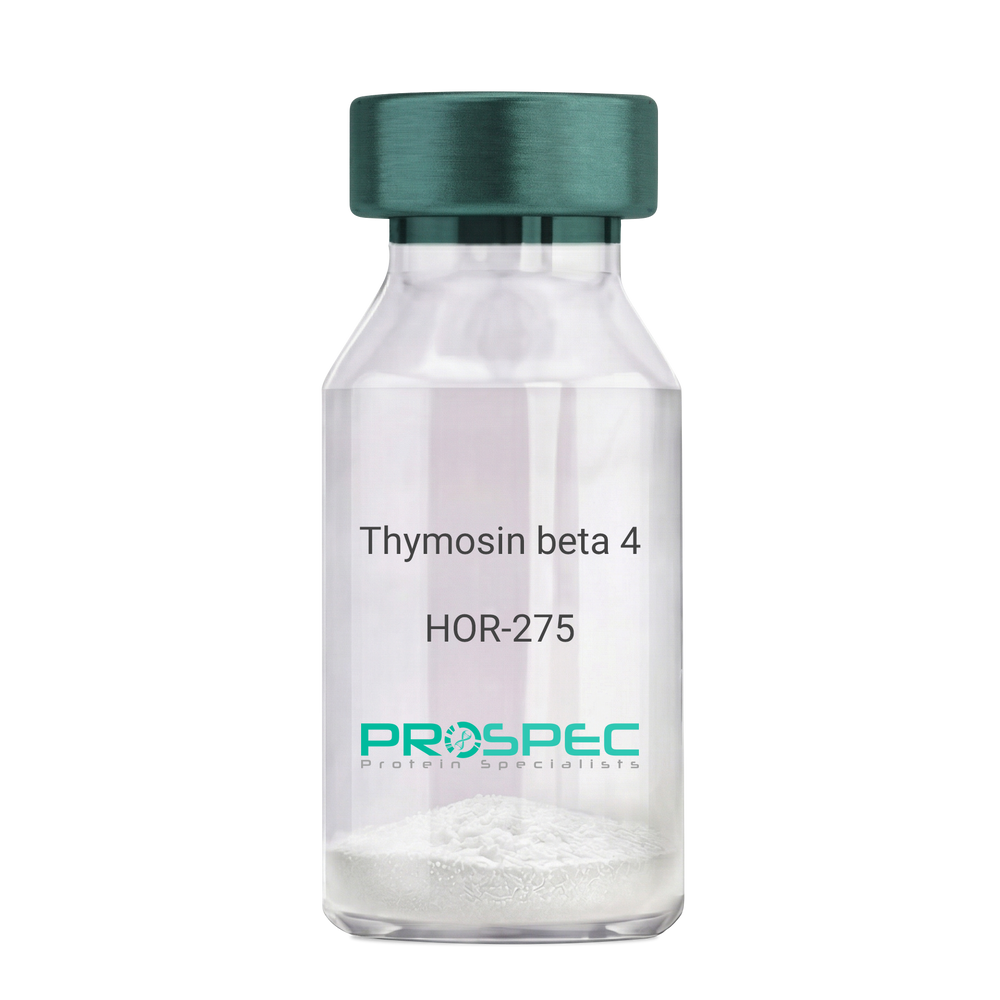
    Thymosin beta 4

    Description:

    Thymosin β4

    Thymosin beta-4. TB500, TB-500

    Product # :

    HOR-275

    Price :

    Quantity :

    Shipping Method :

    Room Temp Icon

    Shipped at Room temp

    Add To Cart

    More Info

    • description
    • formulation
    • purity
    • More Info

    Description

    Thymosin b4 is a 43 amino acid peptide which is regarded as the main intracellular G-actin sequestering peptide. It has a molecular weight of 4963.55 Da, and its molecular formula is: C212H350N56O78S1. Extracellular Thymosin b4 may contribute to physiological processes such as angiogenesis, wound healing, and regulation of inflammation.

    Formulation

    The protein (1mg/ml) was lyophilized with no additives.

    Purity

    Greater than 98.0% as determined by RP-HPLC.

    More Info

    • Introduction

      Thymosin is a hormone secreted from the thymus. Its primary function is to stimulate the production of T cells, which are an important part of the immune system. Thymosin also assists in the development of B cells to plasma cells to produce antibodies. The predominant form of thymosin, thymosin b4, is a member of a highly conserved family of actin monomer-sequestering proteins. b-thymosins are the primary regulators of unpolymerized actin, and are essential for maintaining the small cytoplasmic pool of free G-actin monomers required for rapid filament elongation and allowing for the flux of monomers between the thymosin-bound pool and F-actin.

    • Synonyms

      Thymosin beta-4. TB500, TB-500

    • Physical Appearance

      Sterile Filtered White lyophilized (freeze-dried) powder.

    • Stability

      Lyophilized Thymosin b4 although stable at room temperature for 3 weeks, should be stored desiccated below -18°C. Upon reconstitution T beta 4 should be stored at 4°C between 2-7 days and for future use below -18°C.For long term storage it is recommended to add a carrier protein (0.1% HSA or BSA).Please prevent freeze-thaw cycles.

    • Solubility

      It is recommended to reconstitute the lyophilized Thymosin beta-4 in sterile 18MΩ-cm H2O not less than 100 µg/ml, which can then be further diluted to other aqueous solutions.

    • Amino Acid Sequence

      Thymosin b4 has an a.a. sequence of Ac-Ser-Asp-Lys-Pro-Asp-Met-Ala-Glu-Ile-Glu-Lys-Phe-Asp-Lys-Ser-Lys-Leu-Lys-Lys-Thr-Glu-Thr-Gln-Glu-Lys-Asn-Pro-Leu-Pro-Ser-Lys-Glu-Thr-Ile-Glu-Gln-Glu-Lys-Gln-Ala-Gly-Glu-Ser-OH.

    ProSpec's products are furnished for LABORATORY RESEARCH USE ONLY. The product may not be used as drugs, agricultural or pesticidal products, food additives or household chemicals.

    Thymosin Beta 4
  • View Data Sheet

    Name :

    YWHAG Human, His

    Description:

    Tyr-3/Trp-5 Monooxygenase Activation Protein Gamma Human Recombinant, His Tag

    14-3-3 protein gamma, Protein kinase C inhibitor protein 1, KCIP-1, YWHAG, Tyrosine 3-monooxygenase/tryptophan 5-monooxygenase activation protein, gamma polypeptide.

    Product # :

    PKA-262

    Price :

    Quantity :

    Shipping Method :

    Ice Icon

    Shipped with Ice Packs

    Add To Cart

    More Info

    • description
    • source
    • formulation
    • purity
    • More Info

    Description

    YWHAG Human Recombinant produced in E.Coli is a single, non-glycosylated, polypeptide chain containing 246 amino acids (2-247) and having a molecular mass of 36 kDa. YWHAG is fused to His Tag and purified by proprietary chromatographic techniques.

    Source

    Escherichia Coli.

    Formulation

    YWHAG solution containing 1x PBS and 50% glycerol.

    Purity

    Greater than 95.0% as determined by SDS-PAGE.

    More Info

    • Introduction

      The 14-3-3 family of proteins plays a key regulatory role in signal transduction, checkpoint control, apoptotic and nutrient-sensing pathways. 14-3-3 proteins are highly conserved and ubiquitously expressed. There are at least seven isoforms that have been identified in mammals. The 14-3-3gamma, a subtype of the 14-3-3 family of proteins, was thought to be brain and neuron-specific. It has been shown to interact with RAF1 and protein kinase C, proteins involved in various signal transduction pathways.

    • Synonyms

      14-3-3 protein gamma, Protein kinase C inhibitor protein 1, KCIP-1, YWHAG, Tyrosine 3-monooxygenase/tryptophan 5-monooxygenase activation protein, gamma polypeptide.

    • Physical Appearance

      Sterile filtered colorless solution.

    • Stability

      Store at 4°C if entire vial will be used within 2-4 weeks. Store, frozen at -20°C for longer periods of time. Avoid multiple freeze-thaw cycles.

    ProSpec's products are furnished for LABORATORY RESEARCH USE ONLY. The product may not be used as drugs, agricultural or pesticidal products, food additives or household chemicals.

    Ywhag Human His
  • View Data Sheet

    Name :

    G CSF Human, PEG

    Description:

    Granulocyte-Colony Stimulating Factor Pegylated Human Recombinant

    CSF-3, MGI-1G, GM-CSF beta, Pluripoietin, Filgrastim, Lenograstim, G-CSF, MGC45931, GCSF.

    Product # :

    CYT-018

    Price :

    Quantity :

    Shipping Method :

    Ice Icon

    Shipped with Ice Packs

    Add To Cart

    More Info

    • description
    • source
    • formulation
    • purity
    • biological activity
    • More Info

    Description

    Granulocyte Colony Stimulating Factor Human Recombinant produced in E.coli is a single, non-glycosylated, polypeptide chain containing 175 amino acids and having a molecular mass of 18.8kDa. The Pegylated G-CSF is produced by attaching a 20kDa methoxypolyethylene glycol propionaldehyde (mPEG-ALD) to the N-terminal amino acid of G-CSF giving a total molecular mass of 38.8kDa. G-CSF is purified by proprietary chromatographic techniques.

    Source

    Escherichia Coli.

    Formulation

    G-CSF is supplied in solution (0.69mg/ml) containing 10mM Acetate Buffer (pH 4.0), and 0.004% Polysorbate 80.

    Purity

    Greater than 95.0% as determined by SEC-HPLC.

    Biological Activity

    The ED50, calculated by the dose-dependent proliferation of murine NFS-60 indicator cells is less than 0.1 ng/ml, corresponding to a Specific Activity of 10,000,000IU/mg.

    More Info

    • Introduction

      GCSF is a cytokine that controls the production, differentiation, and function of granulocytes. The active protein is found extracellularly. Three transcript variants encoding three different isoforms have been found for this gene. Granulocyte/macrophage colony-stimulating factors are cytokines that act in hematopoiesis by controlling the production, differentiation, and function of 2 related white cell populations of the blood, the granulocytes and the monocytes-macrophages. This csf induces granulocytes.

    • Synonyms

      CSF-3, MGI-1G, GM-CSF beta, Pluripoietin, Filgrastim, Lenograstim, G-CSF, MGC45931, GCSF.

    • Physical Appearance

      Colorless, clear and transparent solution.

    • Stability

      G-CSF PEG should be stored refrigerated at 2° to 8°C. Vials should be kept in theirpackaging to protect from light until the time of use. Shaking and freezing should be avoided.

    • Background

      What is the molecular weight/Mw of G CSF HUMAN, PEG Protein?
      G CSF HUMAN, PEG Protein has a total Mw of 18.8kDa.

      What is the source or expression system of G CSF HUMAN, PEG Protein?
      Escherichia Coli.

      What is the Purity of G CSF HUMAN, PEG Protein?
      G CSF HUMAN, PEG Protein is >95% pure as determined by SDS-PAGE.

      What is the Biological Activity of G CSF HUMAN, PEG Protein?
      The ED50, calculated by the dose-dependent proliferation of murine NFS-60 indicator cells is less than 0.1 ng/ml, corresponding to a Specific Activity of 10,000,000IU/mg.

      What is the amino acid sequence of G CSF HUMAN, PEG Protein?
      G CSF HUMAN, PEG Protein is composed from 175 amino acids.

      What applications can G CSF HUMAN, PEG Protein be used in?
      G CSF HUMAN, PEG Protein can probably be used in western blot, ELISA and Lateral Flow.

      What is the endotoxin level for G CSF HUMAN, PEG Protein?
      The endotoxin level is minimal, G CSF HUMAN, PEG Protein was purified using conventional chromatography techniques.


    ProSpec's products are furnished for LABORATORY RESEARCH USE ONLY. The product may not be used as drugs, agricultural or pesticidal products, food additives or household chemicals.

    G Csf Human Pegylated
  • View Data Sheet

    Name :

    CTSW Human

    Description:

    Cathepsin-W Human Recombinant

    Cathepsin W (Lymphopain), LYPN, lymphopain, EC 3.4.22.-.

    Product # :

    ENZ-762

    Price :

    Quantity :

    Shipping Method :

    Ice Icon

    Shipped with Ice Packs

    Add To Cart

    More Info

    • description
    • source
    • formulation
    • purity
    • More Info

    Description

    CTSW Human Recombinant produced in E.coli is a single, non-glycosylated polypeptide chain containing 378 amino acids (22-376) and having a molecular mass of 42.0 kDa. CTSW is fused to a 23 amino acid His-tag at N-terminus.

    Source

    Escherichia Coli.

    Formulation

    The CTSW solution (0.5mg/ml) contains 20mM Tris-HCl buffer (pH 8.0), 0.4M Urea and 10% glycerol.

    Purity

    Greater than 85% as determined by SDS-PAGE.

    More Info

    • Introduction

      CTSW protein belongs to the peptidase C1 family. CTSW is a cysteine proteinase with a detailed role in the regulation and mechanism of T-cell cytolytic activity. The encoded CTSW is linked to the membrane inside the endoplasmic reticulum of natural killer and cytotoxic T-cells. CTSW expression is up-regulated by interleukin-2.

    • Synonyms

      Cathepsin W (Lymphopain), LYPN, lymphopain, EC 3.4.22.-.

    • Physical Appearance

      Sterile Filtered clear solution.

    • Stability

      Store at 4°C if entire vial will be used within 2-4 weeks. Store, frozen at -20°C for longer periods of time. For long term storage it is recommended to add a carrier protein (0.1% HSA or BSA).Avoid multiple freeze-thaw cycles.

    • Amino Acid Sequence

      MGSSHHHHHH SSGLVPRGSH MGSIRGPLRA QDLGPQPLEL KEAFKLFQIQ FNRSYLSPEE HAHRLDIFAH NLAQAQRLQE EDLGTAEFGV TPFSDLTEEE FGQLYGYRRA AGGVPSMGRE IRSEEPEESV PFSCDWRKVA GAISPIKDQK NCNCCWAMAA AGNIETLWRI SFWDFVDVSV QELLDCGRCG DGCHGGFVWD AFITVLNNSG LASEKDYPFQ GKVRAHRCHP KKYQKVAWIQ DFIMLQNNEH RIAQYLATYG PITVTINMKP LQLYRKGVIK ATPTTCDPQL VDHSVLLVGF GSVKSEEGIW AETVSSQSQP QPPHPTPYWI LKNSWGAQWG EKGYFRLHRG SNTCGITKFP LTARVQKPDM KPRVSCPP.

    ProSpec's products are furnished for LABORATORY RESEARCH USE ONLY. The product may not be used as drugs, agricultural or pesticidal products, food additives or household chemicals.

    Ctsw Human
  • View Data Sheet

    Name :

    Betacellulin His Human

    Description:

    Betacellulin Human Recombinant, His Tag

    Betacellulin, Probetacellulin. 

    Product # :

    CYT-077

    Price :

    Quantity :

    Shipping Method :

    Ice Icon

    Shipped with Ice Packs

    Add To Cart

    More Info

    • description
    • source
    • formulation
    • purity
    • More Info
    • sds-page

    Description

    BTC Human Recombinant produced in E.coli is a single, non-glycosylated polypeptide chain containing 101 amino acids (32-111) and having a molecular mass of 11.3 kDa.BTC is fused to a 21 amino acid His-tag at N-terminus & purified by proprietary chromatographic techniques.

    Source

    E.coli.

    Formulation

    The BTC solution (0.25mg/ml) contains 20mM Tris-HCl buffer (pH 8.0), 5mM DTT, 0.2M NaCl and 20% glycerol.

    Purity

    Greater than 90% as determined by SDS-PAGE.

    sds-page

    Betacellulin-sds-page - Product image 1

    More Info

    • Introduction

      Btc is a potent mitogen for retinal pigment epithelial cells and vascular smooth muscle cells. The effects of betacellulin are probably mediated by the egf receptor and other related receptors.

    • Synonyms

      Betacellulin, Probetacellulin.

    • Physical Appearance

      Sterile Filtered colorless solution.

    • Stability

      Store at 4°C if entire vial will be used within 2-4 weeks. Store, frozen at -20°C for longer periods of time. For long term storage it is recommended to add a carrier protein (0.1% HSA or BSA).Avoid multiple freeze-thaw cycles.

    • Amino Acid Sequence

      MGSSHHHHHH SSGLVPRGSH MDGNSTRSPE TNGLLCGDPE ENCAATTTQS KRKGHFSRCP KQYKHYCIKG RCRFVVAEQT PSCVCDEGYI GARCERVDLF Y

    • Background

      What is the molecular weight/Mw of BETACELLULIN Protein?
      BETACELLULIN Protein has a total Mw of 11.3kDa.

      What is the source or expression system of BETACELLULIN Protein?
      Escherichia Coli.

      What is the Purity of BETACELLULIN Protein?
      BETACELLULIN Protein is >90% pure as determined by SDS-PAGE.

      What is the Biological Activity of BETACELLULIN Protein?
      The biological functionality of BETACELLULIN Protein will be determined in the future.

      What is the amino acid sequence of BETACELLULIN Protein?
      MGSSHHHHHH SSGLVPRGSH MDGNSTRSPE TNGLLCGDPE ENCAATTTQS KRKGHFSRCP KQYKHYCIKG RCRFVVAEQT PSCVCDEGYI GARCERVDLF Y

      What applications can BETACELLULIN Protein be used in?
      BETACELLULIN Protein can probably be used in western blot, ELISA and Lateral Flow.

      What is the endotoxin level for BETACELLULIN Protein?
      The endotoxin level is minimal, BETACELLULIN Protein was purified using conventional chromatography techniques.

    ProSpec's products are furnished for LABORATORY RESEARCH USE ONLY. The product may not be used as drugs, agricultural or pesticidal products, food additives or household chemicals.

    Btc His Human
  • View Data Sheet

    Name :

    LGALS8 Mouse

    Description:

    Galectin-8 Mouse Recombinant

    Galectin-8, Gal-8, LGALS-8, AI326142, D13Ertd524e, 1200015E08Rik.

    Product # :

    CYT-185

    Price :

    Quantity :

    Shipping Method :

    Ice Icon

    Shipped with Ice Packs

    Add To Cart

    More Info

    • description
    • source
    • formulation
    • purity
    • biological activity
    • More Info
    • SDS-PAGE

    Description

    LGALS8 mouse Recombinant produced E. coli is a single polypeptide chain containing 339 amino acids (1-316) and having a molecular mass of 38kDa.LGALS8 is fused to a 23 amino acid His-tag at N-terminus & purified by proprietary chromatographic techniques.

    Source

    Escherichia Coli.

    Formulation

    The LGALS8 solution (0.5mg/ml) contains 20mM Tris-HCl buffer (pH 8.0), 0.15M NaCl, 20% glycerol and 1mM DTT.

    Purity

    Greater than 90.0% as determined by SDS-PAGE.

    Biological Activity

    The ED50 for this effect is ≤ 2ug/ml. Measured by its ability to agglutinate human red blood cells.

    SDS-PAGE

    LGALS8 Mouse-SDS-PAGE - Product image 1

    More Info

    • Introduction

      LGALS8 is a prostate-specific antigen that is solely overexpressed in malignant tumors and thus is a supplementary specific identifier of malignancies. LGALS8 is part of the galectin gene family which facilitates both cell-cell and cell matrix interactions in a method parallel to the selectin subgroup of C-type lectins.

    • Synonyms

      Galectin-8, Gal-8, LGALS-8, AI326142, D13Ertd524e, 1200015E08Rik.

    • Physical Appearance

      Sterile Filtered colorless solution.

    • Stability

      Store at 4°C if entire vial will be used within 2-4 weeks. Store, frozen at -20°C for longer periods of time. For long term storage it is recommended to add a carrier protein (0.1% HSA or BSA).Avoid multiple freeze-thaw cycles.

    • Amino Acid Sequence

      MGSSHHHHHH SSGLVPRGSH MGSMLSLNNL QNIIYNPIIP YVGTITEQLK PGSLIVIRGH VPKDSERFQV DFQLGNSLKP RADVAFHFNP RFKRSSCIVC NTLTQEKWGW EEITYDMPFR KEKSFEIVFM VLKNKFQVAV NGRHVLLYAH RISPEQIDTV GIYGKVNIHS IGFRFSSDLQ
      SMETSALGLT QINRENIQKP GKLQLSLPFE ARLNASMGPG RTVVIKGEVN TNARSFNVDL VAGKTRDIAL HLNPRLNVKA FVRNSFLQDA WGEEERNITC FPFSSGMYFE MIIYCDVREF KVAINGVHSL EYKHRFKDLS SIDTLSVDGD IRLLDVRSW.

    • Background

      What is the molecular weight/Mw of LGALS8 MOUSE Protein?
      LGALS8 MOUSE Protein has a total Mw of 38kDa.

      What is the source or expression system of LGALS8 MOUSE Protein?
      Escherichia Coli.

      What is the Purity of LGALS8 MOUSE Protein?
      LGALS8 MOUSE Protein is >90% pure as determined by SDS-PAGE.

      What is the Biological Activity of LGALS8 MOUSE Protein?
      The biological functionality of LGALS8 MOUSE Protein will be determined in the future.

      What is the amino acid sequence of LGALS8 MOUSE Protein?
      MGSSHHHHHH SSGLVPRGSH MGSMLSLNNL QNIIYNPIIP YVGTITEQLK PGSLIVIRGH VPKDSERFQV DFQLGNSLKP RADVAFHFNP RFKRSSCIVC NTLTQEKWGW EEITYDMPFR KEKSFEIVFM VLKNKFQVAV NGRHVLLYAH RISPEQIDTV GIYGKVNIHS IGFRFSSDLQ
      SMETSALGLT QINRENIQKP GKLQLSLPFE ARLNASMGPG RTVVIKGEVN TNARSFNVDL VAGKTRDIAL HLNPRLNVKA FVRNSFLQDA WGEEERNITC FPFSSGMYFE MIIYCDVREF KVAINGVHSL EYKHRFKDLS SIDTLSVDGD IRLLDVRSW.

      What applications can LGALS8 MOUSE Protein be used in?
      LGALS8 MOUSE Protein can probably be used in western blot, ELISA and Lateral Flow.

      What is the endotoxin level for LGALS8 MOUSE Protein?
      The endotoxin level is minimal, LGALS8 MOUSE Protein was purified using conventional chromatography techniques.


    • Assay Conditions

      1. Mix equal volumes of human blood and Alsever’s solution (pH 7.0). (Alsever’s solution: NaCl 0.42g, Sodium citric acid 0.8g, Citric acid 0.055g, D-glucose 2.05g in DW100 ml).2. Centrifuge at 15000rpm for 10 minutes and wash 4 times with PBS.3. Dilute packed cells in a 0.5mg/ml trypsin-EDTA solution to give 4% red cell suspension.4. Incubate for 1 hour at 37°C and wash 4 times with PBS.5. Dilute packed cells in PBS to give a 4% red cell suspension.6. Load 50µl of 0.5%BSA-in-0.15M-NaCl solution and 25µl of 4%-Red-Cell-in-PBS in U shaped wells.7. Add 25µl of serial diluted galectin protein in PBS to each well plate (Round bottom 96 well plate).8. Incubate for 30 minutes at room temperature to observe visible agglutination.

    ProSpec's products are furnished for LABORATORY RESEARCH USE ONLY. The product may not be used as drugs, agricultural or pesticidal products, food additives or household chemicals.

    Lgals8 Mouse
  • View Data Sheet

    Name :

    LGALS3 Human

    Description:

    Galectin-3 Human Recombinant

    Galectin-3, GAL3, MAC2, CBP35, GALB, GALIG, LGALS2, LGALS3, Galactose-specific lectin 3, Mac-2 antigen, IgE-binding protein, 35 kDa lectin, Carbohydrate-binding protein 35, CBP 35, Laminin-binding protein, Lectin L-29, L-31, Galactoside-binding protein, GALBP.

    Product # :

    CYT-606

    Price :

    Quantity :

    Shipping Method :

    Room Temp Icon

    Shipped at Room temp

    Add To Cart

    More Info

    • description
    • source
    • formulation
    • purity
    • More Info

    Description

    LGALS3 Human Recombinant produced in E.Coli is a single, non-glycosylated, polypeptide chain containing 250 amino acids and having a molecular mass of 26.2kDa. The LGALS3 is purified by proprietary chromatographic techniques.

    Source

    Escherichia Coli.

    Formulation

    The Galectin-3 protein was lyophilized from a sterile 0.2 micron filtered aqueous solution containing 10 mM sodium phosphate and 50mM sodium chloride, pH 7.5.

    Purity

    Greater than 95.0% as determined by analysis by SDS-PAGE.

    More Info

    • Introduction

      Galectin-3 mediates with the alpha-3, beta-1 integrin the stimulation by cspg4 of endothelial cells migration. Galectin-3 plays an necessary part during the acquisition of vasculogenic mimicry and angiogenic properties associated with melanoma progression. LGALS3 overexpression is highly expressed in early stages of papillary carcinoma, and its expression intensity declines during tumor progression. Serum levels of LGALS3 are high in patients with thyroid malignancy but there is considerable overlap in serum LGALS3 concentrations between those with benign and malignant nodular thyroid disease. LGLAS3 takes part as an immune regulator to inhibit T-cell immune responses and promote tumor growth, as a result providing a new mechanism for tumor immune tolerance.

    • Synonyms

      Galectin-3, GAL3, MAC2, CBP35, GALB, GALIG, LGALS2, LGALS3, Galactose-specific lectin 3, Mac-2 antigen, IgE-binding protein, 35 kDa lectin, Carbohydrate-binding protein 35, CBP 35, Laminin-binding protein, Lectin L-29, L-31, Galactoside-binding protein, GALBP.

    • Physical Appearance

      Sterile Filtered White lyophilized (freeze-dried) powder.

    • Stability

      Lyophilized Galectin-3 Recombinant although stable at room temperature for 3 weeks, should be stored desiccated below -18°C. Upon reconstitution Galectin-3 should be stored at 4°C between 2-7 days and for future use below -18°C.For long term storage it is recommended to add a carrier protein (0.1% HSA or BSA).Please prevent freeze-thaw cycles.

    • Solubility

      It is recommended to reconstitute the lyophilized LGALS3 in sterile 18MΩ-cm H2O not less than 100µg/ml, which can then be further diluted to other aqueous solutions.

    • Amino Acid Sequence

      MADNFSLHDAL SGSGNPNPQG WPGAWGNQPA GAGGYPGASY PGAYPGQAPP GAYPGQAPPG AYPGAPGAYP GAPAPGVYPG PPSGPGAYPS SGQPSATGAY PATGPYGAPA GPLIVPYNLP LPGGVVPRML ITILGTVKPN ANRIALDFQR GNDVAFHFNP RFNENNRRVI VCNTKLDNNW GREERQSVFP FESGKPFKIQ VLVEPDHFKV AVNDAHLLQY NHRVKKLNEI SKLGISGDID LTSASYTMI.

    • Background

      What is the molecular weight/Mw of LGALS3 HUMAN Protein?
      LGALS3 HUMAN Protein has a total Mw of 26.2kDa.

      What is the source or expression system of LGALS3 HUMAN Protein?
      Escherichia Coli.

      What is the Purity of LGALS3 HUMAN Protein?
      LGALS3 HUMAN Protein is >95% pure as determined by SDS-PAGE.

      What is the Biological Activity of LGALS3 HUMAN Protein?
      The biological functionality of LGALS3 HUMAN Protein will be determined in the future.

      What is the amino acid sequence of LGALS3 HUMAN Protein?
      MADNFSLHDAL SGSGNPNPQG WPGAWGNQPA GAGGYPGASY PGAYPGQAPP GAYPGQAPPG AYPGAPGAYP GAPAPGVYPG PPSGPGAYPS SGQPSATGAY PATGPYGAPA GPLIVPYNLP LPGGVVPRML ITILGTVKPN ANRIALDFQR GNDVAFHFNP RFNENNRRVI VCNTKLDNNW GREERQSVFP FESGKPFKIQ VLVEPDHFKV AVNDAHLLQY NHRVKKLNEI SKLGISGDID LTSASYTMI.

      What applications can LGALS3 HUMAN Protein be used in?
      LGALS3 HUMAN Protein can probably be used in western blot, ELISA and Lateral Flow.

      What is the endotoxin level for LGALS3 HUMAN Protein?
      The endotoxin level is minimal, LGALS3 HUMAN Protein was purified using conventional chromatography techniques.


    ProSpec's products are furnished for LABORATORY RESEARCH USE ONLY. The product may not be used as drugs, agricultural or pesticidal products, food additives or household chemicals.

    Galectin 3 Human
  • View Data Sheet

    Name :

    Elcatonin

    Description:

    Elcatonin

    Product # :

    HOR-302

    Price :

    Quantity :

    Shipping Method :

    Room Temp Icon

    Shipped at Room temp

    Add To Cart

    More Info

    • description
    • formulation
    • purity
    • biological activity
    • More Info

    Description

    Elcatonin Synthetic is a single, non-glycosylated polypeptide chain containing 31 amino acids, having a molecular mass of 3363.2 Dalton and a Molecular formula of C148H244N42O47.

    Formulation

    The protein was lyophilized with no additives.

    Purity

    Greater than 93.3% as determined by:
    (a) Analysis by RP-HPLC.
    (b) Analysis by SDS-PAGE.

    Biological Activity

    Biological Activity (based on net peptide) was found to be 6695.2 IU/mg.

    More Info

    • Introduction

      Elcatonin is a Calcitonin derivative which is transformed from eel´s calcitonin by changing the S-S bond into the stable C-N bond. It inhibits the absorption and autolysis of bones, thus leads to blood calcium descending. In addition, it inhibits the bone salts dissolving and transferring and promotes the excretion of calcium and phosphorus in urine. Meanwhile, it inhibits renal tubules reabsorbing calcium, phosphorus and sodium and keeps blood calcium at normal level. It is mainly used for remitting or eliminating the pain caused by Osteoporosis.

    • Physical Appearance

      Sterile Filtered White lyophilized (freeze-dried) powder.

    • Stability

      Lyophilized Elcatonin although stable at room temperature for 3 weeks, should be stored desiccated below -18°C. Upon reconstitution Elcatonin should be stored at 4°C between 2-7 days and for future use below -18°C. For long term storage it is recommended to add a carrier protein (0.1% HSA or BSA).Please prevent freeze-thaw cycles.

    • Solubility

      It is recommended to reconstitute the lyophilized Elcatonin in sterile 18MΩ-cm H2O not less than 100 µg/ml, which can then be further diluted to other aqueous solutions.

    • Amino Acid Sequence

      Ser-Asn-Leu-Ser-Thr-Asu-Val-Leu-Gly-Lys-Leu-Ser-Gln-Glu-Leu-His-Lys-Leu-Gln-Thr-Tyr-Pro-Arg-Thr-Asn-Val-Gly-Ala-Gly-Thr-Pro-NH2.

    ProSpec's products are furnished for LABORATORY RESEARCH USE ONLY. The product may not be used as drugs, agricultural or pesticidal products, food additives or household chemicals.

    Elcatonin
  • View Data Sheet

    Name :

    GCA Human

    Description:

    Grancalcin Human Recombinant

    Grancalcin EF-hand calcium binding protein, GCL, Grancalcin penta-EF-hand protein.

    Product # :

    PRO-080

    Price :

    Quantity :

    Shipping Method :

    Ice Icon

    Shipped with Ice Packs

    Add To Cart

    More Info

    • description
    • source
    • formulation
    • purity
    • More Info

    Description

    GCA produced in E.Coli is a single, non-glycosylated polypeptide chain containing 237 amino acids (1-217.a.) and having a molecular mass of 26.1kDa. GCA is fused to a 20 amino acid His-tag at N-terminus & purified by proprietary chromatographic techniques.

    Source

    Escherichia Coli.

    Formulation

    The GCA protein solution (1mg/1ml) is formulated in 20mM Tris-HCl buffer (pH8.0) 0.1M NaCl and 20% glycerol.

    Purity

    Greater than 95% as determined by SDS-PAGE.

    More Info

    • Introduction

      Grancalcin is calcium-binding protein which is particularly abundant in human neutrophils. GCA is a member of the penta EF-hand (PEF) subfamily of EF-hand proteins, who also comprises calpain, sorcin, peflin, and ALG-2. GCA undergoes essential conformational changes upon binding of calcium, which subsequently exposes hydrophobic amino acid residues, that direct the protein to hydrophobic surfaces. GCA cooperates with L-plastin, a protein known to have actin bundling activity, which suggests that GCA has a part in the regulation of neutrophils adhesion.

    • Synonyms

      Grancalcin EF-hand calcium binding protein, GCL, Grancalcin penta-EF-hand protein.

    • Physical Appearance

      Sterile Filtered clear solution.

    • Stability

      Store at 4°C if entire vial will be used within 2-4 weeks. Store, frozen at -20°C for longer periods of time.Please avoid freeze thaw cycles.

    • Amino Acid Sequence

      MGSSHHHHHH SSGLVPRGSH MAYPGYGGGF GNFSIQVPGM QMGQPVPETG PAILLDGYSG PAYSDTYSSA GDSVYTYFSA VAGQDGEVDA EELQRCLTQS GINGTYSPFS LETCRIMIAM LDRDHTGKMG FNAFKELWAA LNAWKENFMT VDQDGSGTVE HHELRQAIGL MGYRLSPQTL TTIVKRYSKN GRIFFDDYVA CCVKLRALTD FFRKRDHLQQ GSANFIYDDF LQGTMAI

    ProSpec's products are furnished for LABORATORY RESEARCH USE ONLY. The product may not be used as drugs, agricultural or pesticidal products, food additives or household chemicals.

    Gca Human
  • View Data Sheet

    Name :

    Car b 1.0109

    Description:

    Pollen allergen Car b 1 isoform Recombinant

    Pollen allergen Car b 1 isoform, Car b 1, Car b 1.0109.

    Product # :

    PRO-2284

    Price :

    Quantity :

    Shipping Method :

    Ice Icon

    Shipped with Ice Packs

    Add To Cart

    More Info

    • description
    • source
    • formulation
    • purity
    • More Info

    Description

    Recombinant Pollen allergen Car b 1 isoform produced in E.coli is a non-glycosylated, polypeptide chain having a calculated molecular mass of 18kDa. Car b 1.0109 is expressed with a 10xHis tag at N-terminus and purified by proprietary chromatographic techniques.

    Source

    Escherichia Coli.

    Formulation

    Car b 1.0109 is supplied in 20mM HEPES buffer pH-8.0, 20% Glycerol and 200mM NaCl.

    Purity

    Greater than 95.0% as determined by SDS-PAGE.

    More Info

    • Introduction

      Pollen allergen Car b 1 isoform (Car b 1.0109) causes an allergic reaction in humans.

    • Synonyms

      Pollen allergen Car b 1 isoform, Car b 1, Car b 1.0109.

    • Physical Appearance

      Sterile Filtered clear solution.

    • Stability

      Store at 4°C if entire vial will be used within 2-4 weeks. Store, frozen at -20°C for longer periods of time. Avoid multiple freeze-thaw cycles.

    • Immunological Functions

      1. Binds IgE type human antibodies. 2. Immunodot test with positive/negative sera panels.

    • Molar extinction coefficient

      8940; A280(1mg/ml)=0.477

    ProSpec's products are furnished for LABORATORY RESEARCH USE ONLY. The product may not be used as drugs, agricultural or pesticidal products, food additives or household chemicals.

    Car B 10109
  • View Data Sheet

    Name :

    Placental Lactogen Bovine

    Description:

    Placental Lactogen Bovine Recombinant

    Chorionic Somatomammotropin Hormone 1, CSH1, CSB, CS-1, hCS-B, BPL, BPLP-I.

    Product # :

    CYT-511

    Price :

    Quantity :

    Shipping Method :

    Room Temp Icon

    Shipped at Room temp

    Add To Cart

    More Info

    • description
    • source
    • formulation
    • purity
    • biological activity
    • More Info

    Description

    Placental Lactogen Bovine Recombinant, is a single polypeptide chain containing 199 amino acids and an additional Ala at the N-terminus having a molecular mass of 23 kDa. Placental Lactogen Recombinant is purified by proprietary chromatographic techniques.

    Source

    Escherichia Coli.

    Formulation

    The protein was lyophilized from a concentrated (1mg/ml) solution with 0.02-0.03% NaHCO3.

    Purity

    Greater than 99.0% as determined by:
    (a) Analysis by SEC-HPLC.
    (b) Analysis by SDS-PAGE.

    Biological Activity

    Placental Lactogen Bovine is biologically active as evidenced by inducing proliferation of Nb2 cells.

    More Info

    • Introduction

      Placental Lactogen is a polypeptide hormone that is produced by the Syncytiotrophoblasts of the Placenta, also known as chorionic somatomammotropin. It has both Growth Hormone and Prolactin activities on growth, lactation, and luteal steroid production. In women, placental lactogen secretion begins soon after implantation and increases to 1 g or more a day in late pregnancy. Placental lactogen is also an insulin antagonist.
      Placental Lactogen Bovine is also capable of activating human and other heterologous GH receptors but not ruminat GH receptors.

    • Synonyms

      Chorionic Somatomammotropin Hormone 1, CSH1, CSB, CS-1, hCS-B, BPL, BPLP-I.

    • Physical Appearance

      Sterile Filtered White lyophilized (freeze-dried) powder.

    • Stability

      Lyophilized Placental Lactogen Bovine Recombinant although stable at room temperature for 3 weeks, should be stored desiccated below -18°C. Upon reconstitution Placental Lactogen should be stored at 4°C between 2-7 days and for future use below -18°C. For long term storage it is recommended to add a carrier protein (0.1% HSA or BSA).Please prevent freeze-thaw cycles.

    • Solubility

      It is recommended to reconstitute the lyophilized Placental Lactogen in sterile 18MΩ-cm H2O not less than 100µg/ml, which can then be further diluted to other aqueous solutions.

    • Amino Acid Sequence

      The sequence of the first six N-terminal amino acids was determined and was found to be Ala-Glu-Asp-Tyr-Ala-Pro.

    • Protein content

      UV spectroscopy at 280 nm using the absorbency value of 0.86 as the extinction coefficient for a 0.1% (1mg/ml) solution at pH 8. This value is calculated by the DNAman computer analysis program of protein sequences.

    ProSpec's products are furnished for LABORATORY RESEARCH USE ONLY. The product may not be used as drugs, agricultural or pesticidal products, food additives or household chemicals.

    Placental Lactogen Bovine
  • 1
  • …
  • 8
  • 9
  • 10
  • 11
  • 12
  • …
  • 42
Your browser does not support the video tag.

Products

  • Cytokines
  • Growth Factors
  • Chemokines
  • CD Antigens
  • Neurotrophins
  • Hormones
  • Enzymes
  • Viral Antigens
  • Recombinant Proteins
  • Natural Proteins
  • Monoclonal Antibodies
  • Polyclonal Antibodies
  • Thermal Packaging

About

  • Company
  • Founder
  • Contribution
  • Contact Us
  • My Account

Ordering

  • Ordering Method
  • Ordering - Credit Card
  • Ordering PO
  • Shipping Fees
  • FAQ's

Legal

  • Terms & Conditions
  • Privacy
  • Site Map
  • info@prospecbio.com
  • Facebook
  • Instagram
  • Linkedin Profile

© 2026 ProSpec-Tany TechnoGene Ltd. All Rights Reserved.

  • Choosing a selection results in a full page refresh.
  • Opens in a new window.