Skip to content

High-quality research proteins.

  • 1-800-805-6531

  • Mon - Sat 8.00-18.00, Sun - Closed

  • info@prospecbio.com

  • PO Box 6591 East Brunswick NJ 08816

  • Products
    • Cytokines
    • Growth factors
    • Chemokines
    • Cd antigens
    • Neurotrophins
    • Hormones
    • Enzymes
    • Viral antigens
    • Recombinant proteins
    • Natural proteins
    • Monoclonal antibodies
    • Polyclonal antibodies
    • Thermal Packaging
  • About
    • Company
    • Founder
    • Contribution
  • Customers
    • Eastern Asia
    • Eastern Europe
    • North America
    • South America
    • South East Asia
    • Southern Asia
    • Western Europe
  • Ordering
    • Ordering Method
    • Ordering - Credit Card
    • Ordering - PO
    • Shipping Fees
    • FAQs
  • Services
    • DNA Cloning
    • Protein Expression
    • Monoclonal Antibody
    • Fermentation
    • Technology License
  • Contact us
Log in

Country/region

  • USD $ | Albania
  • USD $ | Andorra
  • USD $ | Argentina
  • USD $ | Armenia
  • USD $ | Australia
  • USD $ | Austria
  • USD $ | Azerbaijan
  • USD $ | Belarus
  • USD $ | Belgium
  • USD $ | Bolivia
  • USD $ | Brazil
  • USD $ | Bulgaria
  • USD $ | Cambodia
  • USD $ | Canada
  • USD $ | Chile
  • USD $ | China
  • USD $ | Colombia
  • USD $ | Costa Rica
  • USD $ | Croatia
  • USD $ | Cyprus
  • USD $ | Czechia
  • USD $ | Denmark
  • USD $ | Estonia
  • USD $ | Finland
  • USD $ | France
  • USD $ | Georgia
  • USD $ | Germany
  • USD $ | Greece
  • USD $ | Hong Kong SAR
  • USD $ | Hungary
  • USD $ | Iceland
  • USD $ | India
  • USD $ | Ireland
  • USD $ | Israel
  • USD $ | Italy
  • USD $ | Japan
  • USD $ | Kazakhstan
  • USD $ | Latvia
  • USD $ | Liechtenstein
  • USD $ | Lithuania
  • USD $ | Madagascar
  • USD $ | Malta
  • USD $ | Mexico
  • USD $ | Moldova
  • USD $ | Monaco
  • USD $ | Netherlands
  • USD $ | New Zealand
  • USD $ | North Macedonia
  • USD $ | Norway
  • USD $ | Panama
  • USD $ | Paraguay
  • USD $ | Peru
  • USD $ | Philippines
  • USD $ | Poland
  • USD $ | Portugal
  • USD $ | Romania
  • USD $ | Singapore
  • USD $ | Slovakia
  • USD $ | Slovenia
  • USD $ | South Africa
  • USD $ | South Korea
  • USD $ | Spain
  • USD $ | Sri Lanka
  • USD $ | Sweden
  • USD $ | Switzerland
  • USD $ | Taiwan
  • USD $ | Thailand
  • USD $ | Türkiye
  • USD $ | Ukraine
  • USD $ | United Kingdom
  • USD $ | United States
  • USD $ | Uruguay
  • USD $ | Vatican City
  • USD $ | Venezuela
  • USD $ | Vietnam
  • Facebook
  • Instagram
logoProSpec - Recombinant Protein Manufacturer for academic and R&D industry
Become a distributor
Account Log in
Wishlist
Cart Cart(0)
  • Products
    +
    • Cytokines
    • Growth factors
    • Chemokines
    • Cd antigens
    • Neurotrophins
    • Hormones
    • Enzymes
    • Viral antigens
    • Recombinant proteins
    • Natural proteins
    • Monoclonal antibodies
    • Polyclonal antibodies
    • Thermal Packaging
  • About
    +
    • Company
    • Founder
    • Contribution
  • Customers
    +
    • Eastern Asia
    • Eastern Europe
    • North America
    • South America
    • South East Asia
    • Southern Asia
    • Western Europe
  • Ordering
    +
    • Ordering Method
    • Ordering - Credit Card
    • Ordering - PO
    • Shipping Fees
    • FAQs
  • Services
    +
    • DNA Cloning
    • Protein Expression
    • Monoclonal Antibody
    • Fermentation
    • Technology License
  • Contact us

Item added to your cart

View cart
View All
  • Cytokines
  • Growth factors
  • Chemokines
  • Cd antigens
  • Neurotrophins
  • Hormones
  • Enzymes
  • Viral antigens
  • Recombinant proteins
  • Natural proteins
  • Monoclonal antibodies
  • Polyclonal antibodies
  • Thermal Packaging
  • Tumor Necrosis Factor

    Tumor Necrosis Factor

    View All
  • 4-1BB

    4-1BB

    View All
  • Adiponectin

    Adiponectin

    View All
  • AIF1

    AIF1

    View All
  • Other Cytokines

    Other Cytokines

    View All
  • AITRL

    AITRL

    View All
  • Angiopoietin

    Angiopoietin

    View All
  • Apolipoprotein

    Apolipoprotein

    View All
  • B-Cell Activating Factor

    B-Cell Activating Factor

    View All
  • Beta Defensin

    Beta Defensin

    View All
  • Bone Morphogenetic Protein

    Bone Morphogenetic Protein

    View All
  • B type Natriuretic Peptide

    B type Natriuretic Peptide

    View All
  • BST

    BST

    View All
  • Betacellulin

    Betacellulin

    View All
  • Cardiotrophin

    Cardiotrophin

    View All
  • Activin

    Activin

    View All
  • Fibroblast Growth Factor

    Fibroblast Growth Factor

    View All
  • Other Growth Factors

    Other Growth Factors

    View All
  • CSF

    CSF

    View All
  • CTGF

    CTGF

    View All
  • IGFBP

    IGFBP

    View All
  • VEGF Protein

    VEGF Protein

    View All
  • EGF

    EGF

    View All
  • Epigen

    Epigen

    View All
  • Erythropoietin

    Erythropoietin

    View All
  • Insulin-Like Growth Factor

    Insulin-Like Growth Factor

    View All
  • Growth Hormone

    Growth Hormone

    View All
  • HDGF

    HDGF

    View All
  • Hepatocyte Growth Factor

    Hepatocyte Growth Factor

    View All
  • Insulin

    Insulin

    View All
  • BCA-1/ BLC (CXCL13)

    BCA-1/ BLC (CXCL13)

    View All
  • BRAK (CXCL14)

    BRAK (CXCL14)

    View All
  • C-10 (CCL6)

    C-10 (CCL6)

    View All
  • Other Chemokines

    Other Chemokines

    View All
  • MEC (CCL28)

    MEC (CCL28)

    View All
  • LD78-beta (CCL3L1)

    LD78-beta (CCL3L1)

    View All
  • CTACK (CCL27)

    CTACK (CCL27)

    View All
  • CXCL16

    CXCL16

    View All
  • CXCL17

    CXCL17

    View All
  • Platelet Factor-4 (CXCL4)

    Platelet Factor-4 (CXCL4)

    View All
  • ENA-78 (CXCL5)

    ENA-78 (CXCL5)

    View All
  • Eotaxin (CCL11,24,26)

    Eotaxin (CCL11,24,26)

    View All
  • Exodus-2 (CCL21)

    Exodus-2 (CCL21)

    View All
  • Fractalkine (CX3CL1)

    Fractalkine (CX3CL1)

    View All
  • CXCL6

    CXCL6

    View All
  • Other CD Antigens

    Other CD Antigens

    View All
  • CD14

    CD14

    View All
  • CD164

    CD164

    View All
  • CD1

    CD1

    View All
  • CD2

    CD2

    View All
  • CD200

    CD200

    View All
  • CD207

    CD207

    View All
  • CD226

    CD226

    View All
  • CD23

    CD23

    View All
  • CD244

    CD244

    View All
  • CD247

    CD247

    View All
  • CD27

    CD27

    View All
  • CD274

    CD274

    View All
  • CD300

    CD300

    View All
  • CD33

    CD33

    View All
  • Other Neurotrophins

    Other Neurotrophins

    View All
  • Beta-NGF

    Beta-NGF

    View All
  • BDNF

    BDNF

    View All
  • CDNF

    CDNF

    View All
  • CNTF

    CNTF

    View All
  • GDNF

    GDNF

    View All
  • Glia Maturation Factor

    Glia Maturation Factor

    View All
  • MANF

    MANF

    View All
  • Midkine

    Midkine

    View All
  • Neuroglobin

    Neuroglobin

    View All
  • Neurotrophic factors

    Neurotrophic factors

    View All
  • Neuregulin

    Neuregulin

    View All
  • Neuropilin

    Neuropilin

    View All
  • Pigment Epithelium-Derived Factor

    Pigment Epithelium-Derived Factor

    View All
  • Pleiotrophin

    Pleiotrophin

    View All
  • Peptide Hormones

    Peptide Hormones

    View All
  • Other Hormones

    Other Hormones

    View All
  • HCG

    HCG

    View All
  • Endothelin

    Endothelin

    View All
  • Exendin

    Exendin

    View All
  • FSH

    FSH

    View All
  • Glucagon

    Glucagon

    View All
  • GHRP

    GHRP

    View All
  • GLP

    GLP

    View All
  • Thyrostimulin

    Thyrostimulin

    View All
  • Inhibin A

    Inhibin A

    View All
  • LHRH

    LHRH

    View All
  • Melanotan

    Melanotan

    View All
  • Procalcitonin

    Procalcitonin

    View All
  • PTH

    PTH

    View All
  • Peroxiredoxin

    Peroxiredoxin

    View All
  • Peptidase

    Peptidase

    View All
  • Synthetase

    Synthetase

    View All
  • Transferase

    Transferase

    View All
  • Hydrolase

    Hydrolase

    View All
  • Dehydrogenase

    Dehydrogenase

    View All
  • ACE2

    ACE2

    View All
  • Esterase

    Esterase

    View All
  • Protein Kinases

    Protein Kinases

    View All
  • Other Enzymes

    Other Enzymes

    View All
  • Phosphatase

    Phosphatase

    View All
  • Deaminase

    Deaminase

    View All
  • Oxygenase

    Oxygenase

    View All
  • Adenylate Kinase

    Adenylate Kinase

    View All
  • Lyase

    Lyase

    View All
  • Chagas

    Chagas

    View All
  • SARS

    SARS

    View All
  • Influenza

    Influenza

    View All
  • ASFV

    ASFV

    View All
  • Astrovirus

    Astrovirus

    View All
  • Borrelia

    Borrelia

    View All
  • Helicobacter Pylori

    Helicobacter Pylori

    View All
  • Chikungunya

    Chikungunya

    View All
  • Chlamydia

    Chlamydia

    View All
  • Cytomegalo

    Cytomegalo

    View All
  • Dengue

    Dengue

    View All
  • EBV

    EBV

    View All
  • Ebola

    Ebola

    View All
  • Feline Leukemia Virus

    Feline Leukemia Virus

    View All
  • Hepatitis A

    Hepatitis A

    View All
  • Other

    Other

    View All
  • Actin

    Actin

    View All
  • ADAM

    ADAM

    View All
  • Complement Component

    Complement Component

    View All
  • Ag85

    Ag85

    View All
  • Eukaryotic Translation Initiation Factor

    Eukaryotic Translation Initiation Factor

    View All
  • Anterior Gradient Protein

    Anterior Gradient Protein

    View All
  • Heat Shock Protein

    Heat Shock Protein

    View All
  • Alpha-2-HS-Glycoprotein

    Alpha-2-HS-Glycoprotein

    View All
  • Hemoglobin

    Hemoglobin

    View All
  • Allergy

    Allergy

    View All
  • Anaplasma

    Anaplasma

    View All
  • Angiogenin

    Angiogenin

    View All
  • Ankyrin Repeat Domain

    Ankyrin Repeat Domain

    View All
  • Annexin

    Annexin

    View All
  • Other Natural Proteins

    Other Natural Proteins

    View All
  • Aprotinin

    Aprotinin

    View All
  • Transferrin

    Transferrin

    View All
  • Avidin

    Avidin

    View All
  • Anti Coagulation Factors

    Anti Coagulation Factors

    View All
  • Natural Albumin

    Natural Albumin

    View All
  • Natural Coagulation Factors

    Natural Coagulation Factors

    View All
  • Fibronectin

    Fibronectin

    View All
  • Thrombin

    Thrombin

    View All
  • Anti Human Enzyme

    Anti Human Enzyme

    View All
  • Other Monoclonal Antibodies

    Other Monoclonal Antibodies

    View All
  • Anti Human Cytokine

    Anti Human Cytokine

    View All
  • Anti Human Heat Shock Protein

    Anti Human Heat Shock Protein

    View All
  • Anti Mouse Lymphocyte

    Anti Mouse Lymphocyte

    View All
  • Anti Human Chemokine

    Anti Human Chemokine

    View All
  • Anti Human Lymphocyte

    Anti Human Lymphocyte

    View All
  • Anti Viral Monoclonal

    Anti Viral Monoclonal

    View All
  • Anti Mouse Cytokine

    Anti Mouse Cytokine

    View All
  • Anti-GST Monoclonal

    Anti-GST Monoclonal

    View All
  • Other Polyclonal Antibodies

    Other Polyclonal Antibodies

    View All
  • Anti Viral

    Anti Viral

    View All
  • Anti-GST Monoclonal

    Anti-GST Monoclonal

    View All
Back

Search results

1000 results found for “MANF”

Name

Description

Product #

Price

Quantity

Shipping Method

  • View Data Sheet

    Name :

    SNF8 Human

    Description:

    SNF8, ESCRT-II Complex Subunit Human Recombinant

    SNF8 ESCRT-II complex subunit homolog (S. cerevisiae), ESCRT-II complex subunit VPS22, ELL-associated protein of 30 kDa, EAP30 subunit of ELL complex, vacuolar-sorting protein SNF8, EAP30, VPS22, Dot3.

    Product # :

    PRO-1135

    Price :

    Quantity :

    Shipping Method :

    Ice Icon

    Shipped with Ice Packs

    Add To Cart

    More Info

    • description
    • source
    • formulation
    • purity
    • More Info

    Description

    SNF8 Human Recombinant produced in E. coli is a single polypeptide chain containing 282 amino acids (1-258) and having a molecular mass of 31.4 kDa.SNF8 is fused to a 24 amino acid His-tag at N-terminus & purified by proprietary chromatographic techniques.

    Source

    E.coli.

    Formulation

    The SNF8 solution (0.25mg/ml) contains 20mM Tris-HCl buffer (pH 8.0), 0.2M NaCl, 2mM DTT and 50% glycerol.

    Purity

    Greater than 90% as determined by SDS-PAGE.

    More Info

    • Introduction

      SNF8 belongs to the SNF8 family of vacuolar sorting proteins and is restricts to both the nucleus and the cytoplasm. SNF8 is a subunit of the endosomal sorting complex essential for transport II (ESCRT-II), which is necessary for multivesicular body (MVB) formation and sorting of endosomal cargo proteins into MVBs. The MVB pathway facilitates transfer of transmembrane proteins into the lumen of the lysosome for degradation. Additionally, the ESCRT-II complex takes part in transcription regulation by contributing to derepression of transcription by RNA polymerase II, probably by its interface with ELL.

    • Synonyms

      SNF8 ESCRT-II complex subunit homolog (S. cerevisiae), ESCRT-II complex subunit VPS22, ELL-associated protein of 30 kDa, EAP30 subunit of ELL complex, vacuolar-sorting protein SNF8, EAP30, VPS22, Dot3.

    • Physical Appearance

      Sterile Filtered colorless solution.

    • Stability

      Store at 4°C if entire vial will be used within 2-4 weeks. Store, frozen at -20°C for longer periods of time. For long term storage it is recommended to add a carrier protein (0.1% HSA or BSA).Avoid multiple freeze-thaw cycles.

    • Amino Acid Sequence

      MGSSHHHHHH SSGLVPRGSH MGSHMHRRGV GAGAIAKKKL AEAKYKERGT VLAEDQLAQM SKQLDMFKTN LEEFASKHKQ EIRKNPEFRV QFQDMCATIG VDPLASGKGF WSEMLGVGDF YYELGVQIIE VCLALKHRNG GLITLEELHQ QVLKGRGKFA QDVSQDDLIR AIKKLKALGT GFGIIPVGGT YLIQSVPAEL NMDHTVVLQL AEKNGYVTVS EIKASLKWET ERARQVLEHL LKEGLAWLDL QAPGEAHYWL PALFTDLYSQ EITAEEAREA LP

    ProSpec's products are furnished for LABORATORY RESEARCH USE ONLY. The product may not be used as drugs, agricultural or pesticidal products, food additives or household chemicals.

    Snf8 Human
  • View Data Sheet

    Name :

    TNF b Human

    Description:

    Tumor Necrosis Factor-Beta Human Recombinant

    Lymphotoxin-alpha, LT-alpha, TNF-beta, Tumor necrosis factor ligand superfamily member 1, LTA, LT, TNFB, TNFSF1.

    Product # :

    CYT-224

    Price :

    Quantity :

    Shipping Method :

    Room Temp Icon

    Shipped at Room temp

    Add To Cart

    More Info

    • description
    • source
    • formulation
    • purity
    • biological activity
    • More Info

    Description

    Tumor Necrosis Factor-b Human Recombinant (Lymphotoxin) produced in E.Coli is a single, non-glycosylated, polypeptide chain containing 172 amino acids and having a molecular mass of 18645 Dalton. The TNF-b is purified by standard chromatographic techniques.

    Source

    Escherichia Coli.

    Formulation

    Lyophilized protein with no additives.

    Purity

    Greater than 98.0% as determined by:
    (a) Analysis by RP-HPLC.
    (b) Analysis by SDS-PAG.

    Biological Activity

    The ED50 as determined by the cytolysis of murine L929 cells in the presence of Actinomycin D is < 0.05ng/ml, corresponding to a Specific Activity of 20,000,000IU/mg.

    More Info

    • Introduction

      Lymphotoxin alpha, a member of the tumor necrosis factor family, is a cytokine produced by lymphocytes. LTA is highly inducible, secreted, and exists as homotrimeric molecule. LTA forms heterotrimers with lymphotoxin-beta which anchors lymphotoxin-alpha to the cell surface. LTA mediates a large variety of inflammatory, immunostimulatory, and antiviral responses. LTA is also involved in the formation of secondary lymphoid organs during development and plays a role in apoptosis.

    • Synonyms

      Lymphotoxin-alpha, LT-alpha, TNF-beta, Tumor necrosis factor ligand superfamily member 1, LTA, LT, TNFB, TNFSF1.

    • Physical Appearance

      Sterile Filtered White lyophilized (freeze-dried) powder.

    • Stability

      Lyophilized Tumor Necrosis Factor-b although stable at room temperature for 3 weeks, should be stored desiccated below -18°C. Upon reconstitution TNF-b should be stored at 4°C between 2-7 days and for future use below -18°C.For long term storage it is recommended to add a carrier protein (0.1% HSA or BSA).Please prevent freeze-thaw cycles.

    • Solubility

      It is recommended to reconstitute the lyophilized Tumor Necrosis Factor-beta in sterile 18MΩ-cm H2O not less than 100µg/ml, which can then be further diluted to other aqueous solutions.

    • Amino Acid Sequence

      MLPGVGLTPS AAQTARQHPK MHLAHSTLKP AAHLIGDPSK QNSLLWRANT DRAFLQDGFS LSNNSLLVPT SGIYFVYSQV VFSGKAYSPK ATSSPLYLAH EVQLFSSQYP FHVPLLSSQK MVYPGLQEPW LHSMYHGAAF QLTQGDQLST HTDGIPHLVL SPSTVFFGAF AL.

    • Protein content

      Protein quantitation was carried out by two independent methods:1. UV spectroscopy at 280 nm using the absorbency value of 1.082 as the extinction coefficient for a 0.1% (1mg/ml) solution. This value is calculated by the PC GENE computer analysis program of protein sequences (IntelliGenetics). 2. Analysis by RP-HPLC, using a calibrated solution of TNF-b as a Reference Standard.

    ProSpec's products are furnished for LABORATORY RESEARCH USE ONLY. The product may not be used as drugs, agricultural or pesticidal products, food additives or household chemicals.

    Tnf Beta Human
  • View Data Sheet

    Name :

    RNF7 Human

    Description:

    Ring Finger Protein 7 Human Recombinant

    RING-box protein 2 isoform 1, Ring finger protein 7, CKBBP1, ROC2, SAG, RING-box protein 2, Rbx2, CKII beta-binding protein 1, Regulator of cullins 2, Sensitive to apoptosis gene protein, RBX2, RNF7.

    Product # :

    PRO-1671

    Price :

    Quantity :

    Shipping Method :

    Ice Icon

    Shipped with Ice Packs

    Add To Cart

    More Info

    • description
    • source
    • formulation
    • purity
    • More Info

    Description

    RNF7 Human Recombinant produced in E.Coli is a single, non-glycosylated polypeptide chain containing 136 amino acids (1-113 a.a) and having a molecular mass of 15.1kDa.RNF7 is fused to a 23 amino acid His-tag at N-terminus & purified by proprietary chromatographic techniques.

    Source

    Escherichia Coli.

    Formulation

    RNF7 protein solution (1mg/ml) containing 20mM Tris-HCl buffer (pH 8.0), 10% glycerol and 0.4M Urea.

    Purity

    Greater than 90.0% as determined by SDS-PAGE.

    More Info

    • Introduction

      Ring Finger Protein 7, also known as RNF7, is an extremely conserved ring finger protein. RNF7 is a vital subunit of SKP1-cullin/CDC53-F box protein ubiquitin ligases that are a part of the protein degradation machinery important for cell cycle progression and signal transduction. RNF7 is a substrate of casein kinase II (CSNK2A1/CKII) and also interacts with it. The phosphorylation of RNF7 by CSNK2A1 promotes the degradation of IkappaBalpha (CHUK/IKK-alpha/IKBKA) and p27Kip1(CDKN1B).

    • Synonyms

      RING-box protein 2 isoform 1, Ring finger protein 7, CKBBP1, ROC2, SAG, RING-box protein 2, Rbx2, CKII beta-binding protein 1, Regulator of cullins 2, Sensitive to apoptosis gene protein, RBX2, RNF7.

    • Physical Appearance

      Sterile Filtered colorless solution.

    • Stability

      Store at 4°C if entire vial will be used within 2-4 weeks. Store, frozen at -20°C for longer periods of time. For long term storage it is recommended to add a carrier protein (0.1% HSA or BSA).Avoid multiple freeze-thaw cycles.

    • Amino Acid Sequence

      MGSSHHHHHH SSGLVPRGSH MGSMADVEDG EETCALASHS GSSGSKSGGD KMFSLKKWNA VAMWSWDVEC DTCAICRVQV MDACLRCQAE NKQEDCVVVW GECNHSFHNC CMSLWVKQNN RCPLCQQDWV VQRIGK.

    ProSpec's products are furnished for LABORATORY RESEARCH USE ONLY. The product may not be used as drugs, agricultural or pesticidal products, food additives or household chemicals.

    Rnf7 Human
  • View Data Sheet

    Name :

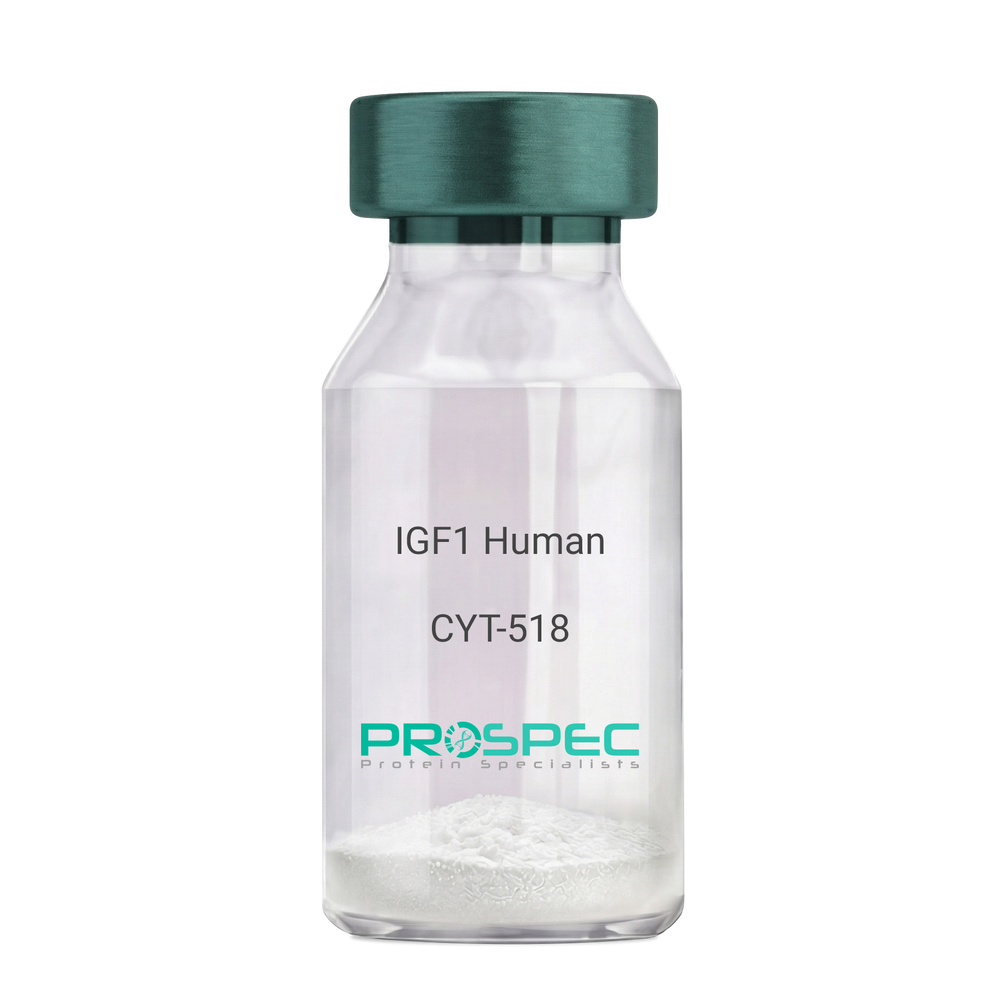
    IGF1 Human Des1-3

    Description:

    Insulin-Like Growth Factor 1 Des (1-3) Human Recombinant

    Somatomedin C, IGF-I, IGFI, IGF1, IGF-IA, Mechano growth factor, MGF, Des(1-3), Des1-3, Des 1-3, Des (1-3), IGF-1 (4-70).

    Product # :

    CYT-518

    Price :

    Quantity :

    Shipping Method :

    Room Temp Icon

    Shipped at Room temp

    Add To Cart

    More Info

    • description
    • source
    • formulation
    • purity
    • biological activity
    • More Info

    Description

    IGF-I Des(1-3) Human Recombinant produced in E.Coli is a single, non-glycosylated, polypeptide chain containing 67 amino acids (aa 4-70) and having a molecular mass of 7368.5 Dalton. IGF-1 Des1-3 is purified by proprietary chromatographic techniques.

    Source

    Escherichia Coli.

    Formulation

    The protein (1mg/ml) was lyophilized was lyophilized from a 0.2µm filtered concentrated solution in 20mM PBS, pH 7.0.

    Purity

    Greater than 97% as determined by:
    (a) Analysis by RP-HPLC.
    (b) Analysis by SDS-PAGE.

    Biological Activity

    The ED50 as determined by a cell proliferation assay using FDC-P1 cells is less than 2.0 ng/ml, corresponding to a specific activity of > 5×10⁵ units/mg.

    More Info

    • Introduction

      The somatomedins, or insulin-like growth factors (IGFs), comprise a family of peptides that play important roles in mammalian growth and development. IGF1 mediates many of the growth-promoting effects of growth hormone (GH; MIM 139250). Early studies showed that growth hormone did not directly stimulate the incorporation of sulfate into cartilage, but rather acted through a serum factor, termed 'sulfation factor,' which later became known as 'somatomedin' (Daughaday et al., 1972). Three main somatomedins have been characterized: somatomedin C (IGF1), somatomedin A (IGF2; MIM 147470), and somatomedin B (MIM 193190) (Rotwein, 1986; Rosenfeld, 2003).

    • Synonyms

      Somatomedin C, IGF-I, IGFI, IGF1, IGF-IA, Mechano growth factor, MGF, Des(1-3), Des1-3, Des 1-3, Des (1-3), IGF-1 (4-70).

    • Physical Appearance

      Sterile Filtered White lyophilized (freeze-dried) powder.

    • Stability

      Lyophilized IGF-I des(1-3) although stable at room temperature for 3 weeks, should be stored desiccated below -18°C. Upon reconstitution IGF1 des-1-3 should be stored at 4°C between 2-7 days and for future use below -18°C.For long term storage it is recommended to add a carrier protein (0.1% HSA or BSA).Please prevent freeze-thaw cycles.

    • Solubility

      It is recommended to reconstitute the IGF-I des(1-3) in sterile 18M-cm H2O not less than 100µg/ml, which can then be further diluted to other aqueous solutions.

    • Amino Acid Sequence

      TLCGAELVDA LQFVCGDRGF YFNKPTGYGS SSRRAPQTGI VDECCFRSCD LRRLEMYCAP LKPAKSA.

    • Background

      What is the molecular weight/Mw of IGF1 HUMAN DES1-3 Protein?
      IGF1 HUMAN DES1-3 Protein has a total Mw of 7.3kDa.

      What is the source or expression system of IGF1 HUMAN DES1-3 Protein?
      Escherichia Coli.

      What is the Purity of IGF1 HUMAN DES1-3 Protein?
      IGF1 HUMAN DES1-3 Protein is >97% pure as determined by SDS-PAGE.

      What is the Biological Activity of IGF1 HUMAN DES1-3 Protein?
      The ED50 as determined by a cell proliferation assay using FDC-P1 cells is less than 2.0 ng/ml, corresponding to a specific activity of > 5×10⁵ units/mg.

      What is the amino acid sequence of IGF1 HUMAN DES1-3 Protein?
      TLCGAELVDA LQFVCGDRGF YFNKPTGYGS SSRRAPQTGI VDECCFRSCD LRRLEMYCAP LKPAKSA.

      What applications can IGF1 HUMAN DES1-3 Protein be used in?
      IGF1 HUMAN DES1-3 Protein can probably be used in western blot, ELISA and Lateral Flow.

      What is the endotoxin level for IGF1 HUMAN DES1-3 Protein?
      The endotoxin level is minimal, IGF1 HUMAN DES1-3 Protein was purified using conventional chromatography techniques.


    ProSpec's products are furnished for LABORATORY RESEARCH USE ONLY. The product may not be used as drugs, agricultural or pesticidal products, food additives or household chemicals.

    Igf I Des1 3 Human
  • View Data Sheet

    Name :

    USF1 Human

    Description:

    Upstream Transcription Factor 1 Human Recombinant

    Upstream Transcription Factor 1, Class B Basic Helix-Loop-Helix Protein 11, Major Late Transcription Factor 1, bHLHb11, HYPLIP1, FCHL, FCHL1, MLTF, MLTFI, UEF, Upstream Stimulatory Factor 1, BHLHB11, USF, USF1.

    Product # :

    PRO-1783

    Price :

    Quantity :

    Shipping Method :

    Ice Icon

    Shipped with Ice Packs

    Add To Cart

    More Info

    • description
    • source
    • formulation
    • purity
    • More Info

    Description

    USF1 Human Recombinant produced in E.Coli is a single, non-glycosylated polypeptide chain containing 333 amino acids (1-310 a.a) and having a molecular mass of 35.9kDa.USF1 is fused to a 23 amino acid His-tag at N-terminus & purified by proprietary chromatographic techniques.

    Source

    Escherichia Coli.

    Formulation

    USF1 protein solution (0.25mg/ml) containing 20mM Tris-HCl buffer (pH 8.0), 0.15M NaCl, 20% glycerol and 1mM DTT.

    Purity

    Greater than 90.0% as determined by SDS-PAGE.

    More Info

    • Introduction

      Upstream Transcription Factor 1 (USF1) belongs to the basic helix-loop-helix leucine zipper family, and functions as a cellular transcription factor. USF1 activates transcription via pyrimidine-rich initiator (Inr) elements and E-box motifs. The USF1 gene has been linked to familial combined hyperlipidemia (FCHL). USF1 is a transcription factor which binds to a symmetrical DNA sequence (E-boxes) (5'-CACGTG-3') found in a various viral and cellular promoters.

    • Synonyms

      Upstream Transcription Factor 1, Class B Basic Helix-Loop-Helix Protein 11, Major Late Transcription Factor 1, bHLHb11, HYPLIP1, FCHL, FCHL1, MLTF, MLTFI, UEF, Upstream Stimulatory Factor 1, BHLHB11, USF, USF1.

    • Physical Appearance

      Sterile Filtered colorless solution.

    • Stability

      Store at 4°C if entire vial will be used within 2-4 weeks. Store, frozen at -20°C for longer periods of time. For long term storage it is recommended to add a carrier protein (0.1% HSA or BSA).Avoid multiple freeze-thaw cycles.

    • Amino Acid Sequence

      MGSSHHHHHH SSGLVPRGSH MGSMKGQQKT AETEEGTVQI QEGAVATGED PTSVAIASIQ SAATFPDPNV KYVFRTENGG QVMYRVIQVS EGQLDGQTEG TGAISGYPAT QSMTQAVIQG AFTSDDAVDT EGTAAETHYT YFPSTAVGDG AGGTTSGSTA AVVTTQGSEA LLGQATPPGT GQFFVMMSPQ EVLQGGSQRS IAPRTHPYSP KSEAPRTTRD EKRRAQHNEV ERRRRDKINN WIVQLSKIIP DCSMESTKSG QSKGGILSKA CDYIQELRQS NHRLSEELQG LDQLQLDNDV LRQQVEDLKN KNLLLRAQLR HHGLEVVIKN DSN.

    ProSpec's products are furnished for LABORATORY RESEARCH USE ONLY. The product may not be used as drugs, agricultural or pesticidal products, food additives or household chemicals.

    Usf1 Human
  • View Data Sheet

    Name :

    IGF1 Human

    Description:

    IGF-1 Human Recombinant

    Somatomedin C, IGF-I, IGFI, IGF1, IGF-IA MGF.

    Product # :

    CYT-216

    Price :

    Quantity :

    Shipping Method :

    Room Temp Icon

    Shipped at Room temp

    Add To Cart

    More Info

    • description
    • source
    • formulation
    • purity
    • biological activity
    • More Info

    Description

    IGF1 Human Recombinant produced in E.Coli is a single, non-glycosylated, polypeptide chain containing 70 amino acids and having a molecular mass of 7.6kDa.IGF-1 is purified by proprietary chromatographic techniques.

    Source

    Escherichia Coli.

    Formulation

    The protein was lyophilized from a concentrated solution in PBS, pH 7.0.

    Purity

    Greater than 97.0% as determined by:
    (a) Analysis by RP-HPLC.
    (b) Analysis by SDS-PAGE.

    Biological Activity

    The biological activity was determined by the cell proliferation assay using serum free human MCF-7 cells in <2ng/ml, corresponding to a Specific Activity of >5.0 x 10⁵IU/mg.

    More Info

    • Introduction

      The somatomedins, IGFs, comprise a family of peptides that play important roles in mammalian growth and development. IGF1 mediates many of the growth-promoting effects of GH. Early studies showed that GH did not directly stimulate the incorporation of sulfate into cartilage, but rather acted through a serum factor, termed 'sulfation factor,' which later became known as 'somatomedin. Three main somatomedins have been characterized: somatomedin C (IGF1), somatomedin A (IGF2; MIM 147470), and somatomedin B.

    • Synonyms

      Somatomedin C, IGF-I, IGFI, IGF1, IGF-IA MGF.

    • Physical Appearance

      Sterile Filtered White lyophilized (freeze-dried) powder.

    • Stability

      Lyophilized IGF1 although stable at room temperature for 3 weeks, should be stored desiccated below -18°C. Upon reconstitution IGF1 should be stored at 4°C between 2-7 days and for future use below -18°C.For long term storage it is recommended to add a carrier protein (0.1% HSA or BSA).Please prevent freeze-thaw cycles.

    • Solubility

      It is recommended to reconstitute the lyophilized IGF-1 in sterile 18MΩ-cm H2O not less than 100µg/ml, which can then be further diluted to other aqueous solutions.

    • Amino Acid Sequence

      GPETLCGAEL VDALQFVCGD RGFYFNKPTG YGSSSRRAPQ TGIVDECCFR SCDLRRLEMY CAPLKPAKSA.

    • Background

      IGF stands for INS like growth factors, which are proteins that have a high similarity to INS. They are part of a complicated process that uses cells to communication with the physiologic environment around them. IGF’s complex system is often called the ‘axis’. This consists of:
      ● Two cell-surface receptors (IGF1R and IGF2R)
      ● Two ligands (IGF-1 and IGF-2)
      ● A family of six high-affinity IGF-binding proteins.
      ● Proteases.

      The Effect IGF Has On The Body
      Many unique tissue types express the IGF-1 receptor, and the effects can vary. It induces the survival of neurons, may catalyse skeletal muscle hypertrophy by inducing protein synthesis, and by blocking muscle atrophy. It works as a protector for cartilage cells, and may work to be an anabolic factor for the bones. When used in high concentrations, it can activate the INS receptor, and can even complement the effects that INS has on the body.

      Diseases And IGF
      Diseases and IGF are closely related, and a number of them can be affected. The INS IGF axis is thought to have an effect on aging, with an increased life span shown in fruit flies when used in studies.
      It is also important to note the crucial role that IGF plays in cancer and diabetes - IGF- 1 has been shown to stimulate growth in both prostate and breast cancer cells. The degree of risk that IGF-1 poses is up for debate, and many scientists are not in agreement. IGF has also shown to have the ability to decrease blood glucose levels, although not quite as effective as INS.

      How Was IGF Discovered?
      Investigators began studying the effects of biological substances on cells and tissues outside the body when IGFs were discovered. The name is self explanatory in the fact that IGF performs INS actions in some tissues, but is less potent than INS at decreasing blood sugar. Its fundamental action is to stimulate growth, whether that be within the epidermal growth factor or the nerve growth factor.

      What’s The Difference Between IGF-1 And IGF-2?
      The two types of IGF are IGF-1 and IGF-2. Although the names are similar, the specific actions that they take are different - they bind and activate completely difference receptors. The major actor in them both is the effect that they have on cell growth. Most of the actions of the pituitary GH are mediated by IGFs, but predominantly IGF-1. GH works to stimulate many tissues within the body, especially the liver which then secretes IGF-1. This then causes hypertrophy, or in layman's terms, an increase in cell size, as well as hyperplasia which is an increase in the number of cells.
      The IGF-1 concentration will increase during childhood and hit peak during puberty, but will then decrease afterwards, as does the hormone secretion itself. It has been proven that children and adults with a deficiency of the GH have low serum IGF-1 concentrations when put in comparison with others in the same age range. Patients who have conditions like acromegaly have been shown to have increased serum IGF-1 concentrations. The production of IGF-2 is less dependent on the secretion of GH than IGF-1, and is much less important for stimulating linear growth.

      What is the molecular weight/Mw of IGF1 HUMAN Protein?
      IGF1 HUMAN Protein has a total Mw of 7.6kDa.

      What is the source or expression system of IGF1 HUMAN Protein?
      Escherichia Coli.

      What is the Purity of IGF1 HUMAN Protein?
      IGF1 HUMAN Protein is >97% pure as determined by SDS-PAGE.

      What is the Biological Activity of IGF1 HUMAN Protein?
      The biological activity was determined by the cell proliferation assay using serum free human MCF-7 cells in <2ng/ml, corresponding to a Specific Activity of >5.0 x 10⁵IU/mg.
      What is the amino acid sequence of IGF1 HUMAN Protein?
      GPETLCGAEL VDALQFVCGD RGFYFNKPTG YGSSSRRAPQ TGIVDECCFR SCDLRRLEMY CAPLKPAKSA.

      What applications can IGF1 HUMAN Protein be used in?
      IGF1 HUMAN Protein can probably be used in western blot, ELISA and Lateral Flow.

      What is the endotoxin level for IGF1 HUMAN Protein?
      The endotoxin level is minimal, IGF1 HUMAN Protein was purified using conventional chromatography techniques.


    ProSpec's products are furnished for LABORATORY RESEARCH USE ONLY. The product may not be used as drugs, agricultural or pesticidal products, food additives or household chemicals.

    Igf 1 Human
  • View Data Sheet

    Name :

    TACI Human, Sf9

    Description:

    Tumor Necrosis Factor Receptor 13B Human Recombinant, Sf9

    Tumor Necrosis Factor Receptor Superfamily Member 13B, Tumor Necrosis Factor Receptor Superfamily, Member 13B, Transmembrane Activator And CAML Interactor ,TACI , Tumor Necrosis Factor Receptor 13B, CD267 Antigen, TNFRSF14B, CD267, CVID2, IGAD2, CVID, RYZN.

    Product # :

    CYT-982

    Price :

    Quantity :

    Shipping Method :

    Ice Icon

    Shipped with Ice Packs

    Add To Cart

    More Info

    • description
    • source
    • formulation
    • purity
    • More Info

    Description

    TACI produced in Sf9 Insect cells is a single, glycosylated polypeptide chain containing 407 amino acids (1-165a.a.) and having a molecular mass of 45.8kDa (Molecular size on SDS-PAGE will appear at approximately 25-50kDa). TACI is expressed with a 242 amino acid hIgG-His tag at C-Terminus and purified by proprietary chromatographic techniques.

    Source

    Sf9, Insect cells.

    Formulation

    TACI a protein solution (0.25mg/ml) contains Phosphate Buffered Saline (pH 7.4), 30% glycerol and 1mM DTT.

    Purity

    Greater than 90.0% as determined by SDS-PAGE.

    More Info

    • Introduction

      TNFRSF13B (TACI) is a transmembrane receptor protein found predominantly on the surface of B cells (a significant part of the immune system). TACI was at first discovered owing to its ability to interact with calcium-modulator and cyclophilin ligand (CAML). Later on, it was found that TACI plays a key role in humoral immunity by interacting with two members of the TNF family. Also, TACI controls T cell-independent B cell antibody responses, isotype switching, and B cell homeostasis.

    • Synonyms

      Tumor Necrosis Factor Receptor Superfamily Member 13B, Tumor Necrosis Factor Receptor Superfamily, Member 13B, Transmembrane Activator And CAML Interactor ,TACI , Tumor Necrosis Factor Receptor 13B, CD267 Antigen, TNFRSF14B, CD267, CVID2, IGAD2, CVID, RYZN.

    • Physical Appearance

      Sterile filtered colorless solution.

    • Stability

      Store at 4°C if entire vial will be used within 2-4 weeks.Store, frozen at -20°C for longer periods of time. For long term storage it is recommended to add a carrier protein (0.1% HSA or BSA).Avoid multiple freeze-thaw cycles.

    • Amino Acid Sequence

      ADLMSGLGRS RRGGRSRVDQ EERFPQGLWT GVAMRSCPEE QYWDPLLGTC MSCKTICNHQ SQRTCAAFCR SLSCRKEQGK FYDHLLRDCI SCASICGQHP KQCAYFCENK LRSPVNLPPE LRRQRSGEVE NNSDNSGRYQ GLEHRGSEAS PALPGLKLSA DQVALVYSLE PKSCDKTHTC PPCPAPELLG GPSVFLFPPK PKDTLMISRT PEVTCVVVDV SHEDPEVKFN WYVDGVEVHN AKTKPREEQY NSTYRVVSVL TVLHQDWLNG KEYKCKVSNK ALPAPIEKTI SKAKGQPREP QVYTLPPSRD ELTKNQVSLT CLVKGFYPSD IAVEWESNGQ PENNYKTTPP VLDSDGSFFL YSKLTVDKSR WQQGNVFSCS VMHEALHNHY TQKSLSLSPG KHHHHHH.

    ProSpec's products are furnished for LABORATORY RESEARCH USE ONLY. The product may not be used as drugs, agricultural or pesticidal products, food additives or household chemicals.

    Taci Human Sf9
  • View Data Sheet

    Name :

    G CSF Human, CHO

    Description:

    Granulocyte-Colony Stimulating Factor Human Recombinant, CHO

    CSF-3, MGI-1G, GM-CSF beta, Pluripoietin, Filgrastim, Lenograstim, G-CSF, MGC45931, GCSF.

    Product # :

    CYT-329

    Price :

    Quantity :

    Shipping Method :

    Room Temp Icon

    Shipped at Room temp

    Add To Cart

    More Info

    • description
    • source
    • formulation
    • purity
    • biological activity
    • More Info

    Description

    Granulocyte Colony Stimulating Factor Human Recombinant produced in CHO cells is a single, glycosylated, polypeptide chain containing 174 amino acids and having a molecular mass of approximately 18 kDa.G-CSF is purified by proprietary chromatographic techniques.

    Source

    Chinese Hamster Ovary Cells (CHO).

    Formulation

    G-CSF was lyophilized from a concentrated (1mg/ml) solution containing 10mM Hydrochloric Acid pH=6.5, 0.4mg tween 20, 100mg mannitol, 160mg L-arginine, 40mg phenylalanine and 4mg methionine.

    Purity

    Greater than 97.0% as determined by SDS-PAGE.

    Biological Activity

    The ED50, calculated by the dose-dependant proliferation of murine NFS-60 indicator cells (measured by 3H-thymidine uptake) is < 0.07 ng/ml, corresponding to a Specific Activity of 1.27 x 10⁸ IU/mg.

    More Info

    • Introduction

      Granulocyte Colony Stimulating Factor is a growth factor and/or cytokine produced by the endothelium, macrophages and a number of other immune cells. GCSF stimulates the bone marrow to produce granulocytes and also to stimulate the survival, proliferation, differentiation and function of neutrophil granulocyte progenator cells and mature neutrophils.

    • Synonyms

      CSF-3, MGI-1G, GM-CSF beta, Pluripoietin, Filgrastim, Lenograstim, G-CSF, MGC45931, GCSF.

    • Physical Appearance

      Sterile Filtered White lyophilized (freeze-dried) powder.

    • Stability

      Lyophilized Granulocyte Colony Stimulating Factor although stable at room temperature for 3 weeks, should be stored desiccated below -18°C. Upon reconstitution G-CSF should be stored at 4°C between 2-7 days and for future use below -18°C.For long term storage it is recommended to add a carrier protein (0.1% HSA or BSA).Please prevent freeze-thaw cycles.

    • Solubility

      It is recommended to reconstitute the lyophilized Granulocyte Colony Stimulating Factor in sterile 18MΩ-cm H2O not less than 100µg/ml, which can then be further diluted to other aqueous solutions.

    • Amino Acid Sequence

      TPLGPASSLP QSFLLKCLEQ VRKIQGDGAA LQEKLCATYK LCHPEELVLL GHSLGIPWAP LSSCPSQALQ LAGCLSQLHS GLFLYQGLLQ ALEGISPELG PTLDTLQLDV ADFATTIWQQ MEELGMAPAL QPTQGAMPAF ASAFQRRAGG VLVASHLQSF LEVSYRVLRH LAQP.

    • Background

      What is the molecular weight/Mw of G CSF Protein?
      G CSF Protein has a total Mw of 18kDa.

      What is the source or expression system of G CSF Protein?
      Chinese Hamster Ovary Cells (CHO).

      What is the Purity of G CSF Protein?
      G CSF Protein is >97% pure as determined by SDS-PAGE.

      What is the Biological Activity of G CSF Protein?
      The ED50, calculated by the dose-dependant proliferation of murine NFS-60 indicator cells (measured by 3H-thymidine uptake) is < 0.07 ng/ml, corresponding to a Specific Activity of 1.27 x 10⁸ IU/mg.

      What is the amino acid sequence of G CSF Protein?
      TPLGPASSLP QSFLLKCLEQ VRKIQGDGAA LQEKLCATYK LCHPEELVLL GHSLGIPWAP LSSCPSQALQ LAGCLSQLHS GLFLYQGLLQ ALEGISPELG PTLDTLQLDV ADFATTIWQQ MEELGMAPAL QPTQGAMPAF ASAFQRRAGG VLVASHLQSF LEVSYRVLRH LAQP.

      What applications can G CSF Protein be used in?
      G CSF Protein can probably be used in western blot, ELISA and Lateral Flow.

      What is the endotoxin level for G CSF Protein?
      The endotoxin level is minimal, G CSF Protein was purified using conventional chromatography techniques.

    ProSpec's products are furnished for LABORATORY RESEARCH USE ONLY. The product may not be used as drugs, agricultural or pesticidal products, food additives or household chemicals.

    G Csf Human Cho
  • View Data Sheet

    Name :

    G CSF Human, HEK

    Description:

    Granulocyte-Colony Stimulating Factor Human Recombinant, HEK

    CSF-3, MGI-1G, GM-CSF beta, Pluripoietin, Filgrastim, Lenograstim, G-CSF, MGC45931, GCSF.

    Product # :

    CYT-088

    Price :

    Quantity :

    Shipping Method :

    Room Temp Icon

    Shipped at Room temp

    Add To Cart

    More Info

    • description
    • source
    • formulation
    • purity
    • biological activity
    • More Info

    Description

    G-CSF Human Recombinant produced in HEK cells is a glycosylated monomer, having a molecular weight range of 21-25kDa due to glycosylation.The G-CSF is purified by proprietary chromatographic techniques.

    Source

    HEK.

    Formulation

    The G-CSF was lyophilized from 1mg/ml in 1xPBS.

    Purity

    Greater than 95% as obsereved by SDS-PAGE.

    Biological Activity

    The specific activity was determined by the dose-dependent stimulation of the proliferation of murine M-NFS-60 cells (Mouse Myeloid Leukemia indicator cell line), the ED50 is <0.01ng/ml.

    More Info

    • Introduction

      GCSF is a cytokine that controls the production, differentiation, and function of granulocytes. The active protein is found extracellularly. Three transcript variants encoding three different isoforms have been found for the GCSF gene. Granulocyte/macrophage colony-stimulating factors are cytokines that act in hematopoiesis by controlling the production, differentiation, and function of 2 related white cell populations of the blood, the granulocytes and the monocytes-macrophages. This csf induces granulocytes.

    • Synonyms

      CSF-3, MGI-1G, GM-CSF beta, Pluripoietin, Filgrastim, Lenograstim, G-CSF, MGC45931, GCSF.

    • Physical Appearance

      Sterile Filtered White lyophilized (freeze-dried) powder.

    • Stability

      Lyophilized G-CSF although stable at room temperature for 3 weeks, should be stored desiccated below -18°C. Upon reconstitution G-CSF should be stored at 4°C between 2-7 days and for future use below -18°C.For long term storage it is recommended to add a carrier protein (0.1% HSA or BSA).Please prevent freeze-thaw cycles.

    • Solubility

      It is recommended to reconstitute the lyophilized G-CSF in sterile 1xPBS containing 0.1% endotoxin-free recombinant HSA.

    • Background

      What is the molecular weight/Mw of G CSF HUMAN, HEK Protein?
      G CSF HUMAN, HEK Protein has a total Mw of 23kDa.

      What is the source or expression system of G CSF HUMAN, HEK Protein?
      HEK.

      What is the Purity of G CSF HUMAN, HEK Protein?
      G CSF HUMAN, HEK Protein is >95% pure as determined by SDS-PAGE.

      What is the Biological Activity of G CSF HUMAN, HEK Protein?
      The specific activity was determined by the dose-dependent stimulation of the proliferation of murine M-NFS-60 cells (Mouse Myeloid Leukemia indicator cell line), the ED50 is <0.01ng/ml.

      What applications can G CSF HUMAN, HEK Protein be used in?
      G CSF HUMAN, HEK Protein can probably be used in western blot, ELISA and Lateral Flow.

      What is the endotoxin level for G CSF HUMAN, HEK Protein?
      The endotoxin level is minimal, G CSF HUMAN, HEK Protein was purified using conventional chromatography techniques.


    ProSpec's products are furnished for LABORATORY RESEARCH USE ONLY. The product may not be used as drugs, agricultural or pesticidal products, food additives or household chemicals.

    G Csf Human Hek
  • View Data Sheet

    Name :

    MIF Human, GST

    Description:

    Macrophage Migration Inhibitor Factor Human Recombinant, GST tag

    Macrophage Migration Inhibitory Factor (Glycosylation-Inhibiting Factor), Phenylpyruvate Tautomerase, L-Dopachrome Tautomerase, L-Dopachrome Isomerase, GLIF, MMIF, GIF, Macrophage Migration Inhibitory Factor, Glycosylation-Inhibiting Factor, EC 5.3.3.12, EC 5.3.2.1, Macrophage migration inhibitory factor.

    Product # :

    CYT-401

    Price :

    Quantity :

    Shipping Method :

    Ice Icon

    Shipped with Ice Packs

    Add To Cart

    More Info

    • description
    • source
    • formulation
    • purity
    • More Info

    Description

    MIF Human Recombinant produced in E.Coli is a single, non-glycosylated polypeptide chain containing 345 amino acids (1-115 a.a) and having a molecular mass of 39.2kDa. MIF is fused to a 230 amino acid GST-tag at N-terminus & purified by proprietary chromatographic techniques.

    Source

    Escherichia Coli.

    Formulation

    MIF protein solution (1mg/ml) containing Phosphate Buffered Saline (pH7.4) and 10% glycerol.

    Purity

    Greater than 90.0% as determined by SDS-PAGE.

    More Info

    • Introduction

      The cytokine Macrophage migration inhibitory factor (MIF) has been identified to be secreted by the pituitary gland and the monocyte/macrophage and to play an important role in endotoxic shock. MIF has the unique property of being released from macrophages and T cells in response to physiological concentrations of glucocorticoids. The secretion of MIF is tightly regulated and decreases at high, anti-inflammatory steroid concentration.

    • Synonyms

      Macrophage Migration Inhibitory Factor (Glycosylation-Inhibiting Factor), Phenylpyruvate Tautomerase, L-Dopachrome Tautomerase, L-Dopachrome Isomerase, GLIF, MMIF, GIF, Macrophage Migration Inhibitory Factor, Glycosylation-Inhibiting Factor, EC 5.3.3.12, EC 5.3.2.1, Macrophage migration inhibitory factor.

    • Physical Appearance

      Sterile Filtered clear solution.

    • Stability

      Store at 4°C if entire vial will be used within 2-4 weeks. Store, frozen at -20°C for longer periods of time. For long term storage it is recommended to add a carrier protein (0.1% HSA or BSA).Avoid multiple freeze-thaw cycles.

    • Amino Acid Sequence

      MSPILGYWKI KGLVQPTRLL LEYLEEKYEE HLYERDEGDK WRNKKFELGL EFPNLPYYID GDVKLTQSMA IIRYIADKHN MLGGCPKERA EISMLEGAVL DIRYGVSRIA YSKDFETLKV DFLSKLPEML KMFEDRLCHK TYLNGDHVTH PDFMLYDALD VVLYMDPMCL DAFPKLVCFK KRIEAIPQID KYLKSSKYIA WPLQGWQATF GGGDHPPKSD LVPRGSPEFA MPMFIVNTNV PRASVPDGFL SELTQQLAQA TGKPPQYIAV HVVPDQLMAF GGSSEPCALC SLHSIGKIGG AQNRSYSKLL CGLLAERLRI SPDRVYINYY DMNAANVGWN NSTFA.

    ProSpec's products are furnished for LABORATORY RESEARCH USE ONLY. The product may not be used as drugs, agricultural or pesticidal products, food additives or household chemicals.

    Mif Human Gst
  • View Data Sheet

    Name :

    GDF15 Human, His

    Description:

    Growth and Differentiation Factor 15 Human Recombinant, His Tag

    GDF-15, MIC1, MIC-1, NAG-1, PDF, PLAB, PTGFB, Growth/differentiation factor 15, Placental bone morphogenetic protein, Placental TGF-beta, Macrophage inhibitory cytokine 1, Prostate differentiation factor, NSAID-activated gene 1 protein, NSAID-regulated gene 1 protein, NRG-1, GDF15.

    Product # :

    CYT-691

    Price :

    Quantity :

    Shipping Method :

    Ice Icon

    Shipped with Ice Packs

    Add To Cart

    More Info

    • description
    • source
    • formulation
    • purity
    • More Info

    Description

    Recombinant Human GDF15 produced in E.Coli is a single, non-glycosylated polypeptide chain containing 151 amino acids (195-308) and having a molecular mass of 16.7 kDa(molecular weight on SDS-PAGE will appear higher).GDF15 is expressed with a 36 amino acid His tag fused at N-Terminus and purified by proprietary chromatographic techniques.

    Source

    Escherichia Coli.

    Formulation

    The GDF15 protein solution contains 10mM sodium citrate, pH-3.5 & 10% glycerol.

    Purity

    Greater than 95.0% as determined by SDS-PAGE.

    More Info

    • Introduction

      GDF15 is part of the TGF-Beta superfamily that is involved in regulating inflammatory and apoptotic pathways in injured tissues and throughout disease processes. GDF15 is most abundant in the liver. Its expression in liver can be considerably up-regulated in during injury of organs such as liver, kidney, heart and lung. GDF-15 promotes proliferation or growth arrest and differentiation due to differences in cellular differentiation. GDF15 prevents apoptosis in cerebellar granule neurons by activating Akt and inhibiting endogenously active ERK. GDF15 is a novel autocrine/endocrine factor that antagonizes the hypertrophic response and loss of ventricular performance.

    • Synonyms

      GDF-15, MIC1, MIC-1, NAG-1, PDF, PLAB, PTGFB, Growth/differentiation factor 15, Placental bone morphogenetic protein, Placental TGF-beta, Macrophage inhibitory cytokine 1, Prostate differentiation factor, NSAID-activated gene 1 protein, NSAID-regulated gene 1 protein, NRG-1, GDF15.

    • Physical Appearance

      Sterile filtered colorless solution.

    • Stability

      Store at 4°C if entire vial will be used within 2-4 weeks. Store, frozen at -20°C for longer periods of time. For long term storage it is recommended to add a carrier protein (0.1% HSA or BSA). Avoid multiple freeze-thaw cycles.

    • Amino Acid Sequence

      MRGSHHHHHH GMASMTGGQQ MGRDLYDDDD KDRWGSMARA RNGDHCPLGP GRCCRLHTVR ASLEDLGWAD WVLSPREVQV TMCIGACPSQ FRAANMHAQI KTSLHRLKPD TVPAPCCVPA SYNPMVLIQK TDTGVSLQTY DDLLAKDCHC I.

    • Background

      What is the molecular weight/Mw of GDF15 HUMAN, HIS Protein?
      GDF15 HUMAN, HIS Protein has a total Mw of 16.7kDa.

      What is the source or expression system of GDF15 HUMAN, HIS Protein?
      Escherichia Coli.

      What is the Purity of GDF15 HUMAN, HIS Protein?
      GDF15 HUMAN, HIS Protein is >95% pure as determined by SDS-PAGE.

      What is the Biological Activity of GDF15 HUMAN, HIS Protein?
      The biological functionality of GDF15 HUMAN, HIS Protein will be determined in the future.

      What is the amino acid sequence of GDF15 HUMAN, HIS Protein?
      MRGSHHHHHH GMASMTGGQQ MGRDLYDDDD KDRWGSMARA RNGDHCPLGP GRCCRLHTVR ASLEDLGWAD WVLSPREVQV TMCIGACPSQ FRAANMHAQI KTSLHRLKPD TVPAPCCVPA SYNPMVLIQK TDTGVSLQTY DDLLAKDCHC I.

      What applications can GDF15 HUMAN, HIS Protein be used in?
      GDF15 HUMAN, HIS Protein can probably be used in western blot, ELISA and
      Lateral Flow.

      What is the endotoxin level for GDF15 HUMAN, HIS Protein?
      The endotoxin level is minimal, GDF15 HUMAN, HIS Protein was purified using conventional chromatography techniques.

    ProSpec's products are furnished for LABORATORY RESEARCH USE ONLY. The product may not be used as drugs, agricultural or pesticidal products, food additives or household chemicals.

    Gdf15 Human
  • View Data Sheet

    Name :

    BTF3 Human

    Description:

    Basic Transcription Factor 3 Human Recombinant

    Transcription factor BTF3, RNA polymerase B transcription factor 3, BTF3, NACB, BTF3a; BTF3b, BETA-NAC.

    Product # :

    PRO-1333

    Price :

    Quantity :

    Shipping Method :

    Ice Icon

    Shipped with Ice Packs

    Add To Cart

    More Info

    • description
    • source
    • formulation
    • purity
    • More Info

    Description

    BTF3 Human Recombinant produced in E.Coli is a single, non-glycosylated polypeptide chain containing 229 amino acids (1-206 a.a) and having a molecular mass of 24.6kDa.BTF3 is fused to a 23 amino acid His-tag at N-terminus & purified by proprietary chromatographic techniques.

    Source

    Escherichia Coli.

    Formulation

    BTF3 protein solution (0.25mg/ml) containing 20mM Tris-HCl buffer (pH 8.0), 0.2M NaCl, 50% glycerol and 2mM DTT.

    Purity

    Greater than 85.0% as determined by SDS-PAGE.

    More Info

    • Introduction

      Basic transcription factor 3 (BTF3), which is a member of the NAC-beta family, forms a stable complex with RNA polymerase II. The BTF3 protein is vital for the initiation of transcription.

    • Synonyms

      Transcription factor BTF3, RNA polymerase B transcription factor 3, BTF3, NACB, BTF3a; BTF3b, BETA-NAC.

    • Physical Appearance

      Sterile Filtered colorless solution.

    • Stability

      Store at 4°C if entire vial will be used within 2-4 weeks. Store, frozen at -20°C for longer periods of time. For long term storage it is recommended to add a carrier protein (0.1% HSA or BSA).Avoid multiple freeze-thaw cycles.

    • Amino Acid Sequence

      MGSSHHHHHH SSGLVPRGSH MGSMRRTGAP AQADSRGRGR ARGGCPGGEA TLSQPPPRGG TRGQEPQMKE TIMNQEKLAK LQAQVRIGGK GTARRKKKVV HRTATADDKK LQFSLKKLGV NNISGIEEVN MFTNQGTVIH FNNPKVQASL AANTFTITGH AETKQLTEML PSILNQLGAD SLTSLRRLAE ALPKQSVDGK APLATGEDDD DEVPDLVENF DEASKNEAN.

    ProSpec's products are furnished for LABORATORY RESEARCH USE ONLY. The product may not be used as drugs, agricultural or pesticidal products, food additives or household chemicals.

    Btf3 Human
  • View Data Sheet

    Name :

    TNFSF7 Human

    Description:

    CD70 Human Recombinant

    CD70 Molecule, TNFSF7, CD27L, Tumor Necrosis Factor (Ligand) Superfamily, Member 7, Tumor Necrosis Factor Ligand Superfamily Member 7, CD70 Antigen, CD27 Ligand, CD27LG, CD27-L, Surface Antigen CD70, Ki-24 Antigen, CD70 antigen.

    Product # :

    CYT-880

    Price :

    Quantity :

    Shipping Method :

    Ice Icon

    Shipped with Ice Packs

    Add To Cart

    More Info

    • description
    • source
    • formulation
    • purity
    • More Info

    Description

    TNFSF7 Human Recombinant produced in E.Coli is a single, non-glycosylated polypeptide chain containing 178 amino acids (39-193 a.a) and having a molecular mass of 19.5kDa. TNFSF7 is fused to a 23 amino acid His-tag at N-terminus & purified by proprietary chromatographic techniques.

    Source

    Escherichia Coli.

    Formulation

    TNFSF7 protein solution (1mg/ml) containing 20mM Tris-HCl buffer (pH 8.0) and 10% glycerol.

    Purity

    Greater than 80% as determined by SDS-PAGE.

    More Info

    • Introduction

      CD70 also known as TNFSF7 is a cytokine which binds to CD27. TNFSF7 takes part in T-cell activation as well as induces the proliferation of costimulated T-cells. Moreover, TNFSF7 enhances the generation of cytolytic T-cells. Among the diseases which are associated with TNFSF7: Include acute myocarditis & Myocarditis.

    • Synonyms

      CD70 Molecule, TNFSF7, CD27L, Tumor Necrosis Factor (Ligand) Superfamily, Member 7, Tumor Necrosis Factor Ligand Superfamily Member 7, CD70 Antigen, CD27 Ligand, CD27LG, CD27-L, Surface Antigen CD70, Ki-24 Antigen, CD70 antigen.

    • Physical Appearance

      Sterile filtered colorless solution.

    • Stability

      Store at 4°C if entire vial will be used within 2-4 weeks. Store, frozen at -20°C for longer periods of time. For long term storage it is recommended to add a carrier protein (0.1% HSA or BSA).Avoid multiple freeze-thaw cycles.

    • Amino Acid Sequence

      MGSSHHHHHH SSGLVPRGSH MGSQRFAQAQ QQLPLESLGW DVAELQLNHT GPQQDPRLYW QGGPALGRSF LHGPELDKGQ LRIHRDGIYM VHIQVTLAIC SSTTASRHHP TTLAVGICSP ASRSISLLRL SFHQGCTIAS QRLTPLARGD TLCTNLTGTL LPSRNTDETF FGVQWVRP.

    ProSpec's products are furnished for LABORATORY RESEARCH USE ONLY. The product may not be used as drugs, agricultural or pesticidal products, food additives or household chemicals.

    Tnfsf7 Human
  • View Data Sheet

    Name :

    HDGF Human

    Description:

    Hepatoma-Derived Growth Factor Human Recombinant

    High-mobility group protein 1-like 2, HMG1L2, HMG-1L2, Hepatoma-derived growth factor, HDGF, FLJ96580, DKFZp686J1764.

    Product # :

    CYT-681

    Price :

    Quantity :

    Shipping Method :

    Ice Icon

    Shipped with Ice Packs

    Add To Cart

    More Info

    • description
    • source
    • formulation
    • purity
    • More Info
    • SDS-PAGE

    Description

    The HDGF Human recombinant protein is a single, non-glycosylated polypeptide chain produced in E. coli, having a molecular weight of 11.5kDa and containing 100 amino acids.The HDGF is purified by proprietary chromatographic techniques.

    Source

    Escherichia Coli.

    Formulation

    The HDGF protein solution (1mg/ml) is formulated in 20mM Tris-HCl pH-7.5, 1mM DTT, 10% glycerol and 1mM EDTA.

    Purity

    Greater than 95% as determined by SDS-PAGE.

    SDS-PAGE

    HDGF Human - Product image 1

    More Info

    • Introduction

      HDGF is a member of the hepatoma-derived growth factor family. HDGF plays a role as a secreted mitogen from the human hepatoma cell line Huh-7. HDGF is a nuclear targeted vascular smooth muscle cell mitogen as well as a heparin-binding protein that is greatly expressed in tumor cells where it stimulates proliferation. HDGF takes part in organ development and lung remodeling after injury by promoting proliferation of lung epithelial cells. HDGF plays a role in the carcinogenesis of gastric epithelial cells through promotion of cell proliferation by Erk1/2 activation. HDGF is linked with tumorigenesis and the growth of cancer. HDGF is a self-regulating factor connected with the prognosis of liver cancer, non-small cell lung cancer and pancreatic cancer. HDGF has proliferative, angiogenic, and neurotrophic activity. HDGF is a distinctive nuclear targeting growth factor that is vastly expressed in HCC cells and is a prognostic factor for HCC.

    • Synonyms

      High-mobility group protein 1-like 2, HMG1L2, HMG-1L2, Hepatoma-derived growth factor, HDGF, FLJ96580, DKFZp686J1764.

    • Physical Appearance

      Sterile Filtered clear solution.

    • Stability

      Store at 4°C if entire vial will be used within 2-4 weeks. Store, frozen at -20°C for longer periods of time. For long term storage it is recommended to add a carrier protein (0.1% HSA or BSA).Avoid multiple freeze-thaw cycles.

    • Amino Acid Sequence

      MSRSNRQKEY KCGDLVFAKM KGYPHWPARI DEMPEAAVKS TANKYQVFFF GTHETAFLGP KDLFPYEESK EKFGKPNKRK GFSEGLWEIE NNPTVKASGY.

    • Background

      What is the molecular weight/Mw of HDGF HUMAN Protein?
      HDGF HUMAN Protein has a total Mw of 11.5kDa.

      What is the source or expression system of HDGF HUMAN Protein?
      Escherichia Coli.

      What is the Purity of HDGF HUMAN Protein?
      HDGF HUMAN Protein is >95% pure as determined by SDS-PAGE.

      What is the Biological Activity of HDGF HUMAN Protein?
      The biological functionality of HDGF HUMAN Protein will be determined in the future.

      What is the amino acid sequence of HDGF HUMAN Protein?
      MSRSNRQKEY KCGDLVFAKM KGYPHWPARI DEMPEAAVKS TANKYQVFFF GTHETAFLGP KDLFPYEESK EKFGKPNKRK GFSEGLWEIE NNPTVKASGY.

      What applications can HDGF HUMAN Protein be used in?
      HDGF HUMAN Protein can probably be used in western blot, ELISA and Lateral Flow.

      What is the endotoxin level for HDGF HUMAN Protein?
      The endotoxin level is minimal, HDGF HUMAN Protein was purified using conventional chromatography techniques.


    ProSpec's products are furnished for LABORATORY RESEARCH USE ONLY. The product may not be used as drugs, agricultural or pesticidal products, food additives or household chemicals.

    Hdgf Human
  • View Data Sheet

    Name :

    NFU1 Human

    Description:

    NFU1 Human Recombinant

    CGI-33, HIRIP, HIRIP5, MMDS1, Nfu, NifU, NIFUC, NFU1 iron-sulfur cluster scaffold homolog, mitochondrial, HIRA-interacting protein 5.

    Product # :

    PRO-2129

    Price :

    Quantity :

    Shipping Method :

    Ice Icon

    Shipped with Ice Packs

    Add To Cart

    More Info

    • description
    • source
    • formulation
    • purity
    • More Info

    Description

    NFU1 Human Recombinant produced in E.Coli is a single, non-glycosylated polypeptide chain containing 268 amino acids (10-254 a.a) and having a molecular mass of 29.9kDa.NFU1 is fused to a 23 amino acid His-tag at N-terminus & purified by proprietary chromatographic techniques.

    Source

    Escherichia Coli.

    Formulation

    NFU1 protein solution (0.5mg/ml) containing Phosphate buffer saline (pH 7.4), 20% glycerol and 1mM DTT.

    Purity

    Greater than 90.0% as determined by SDS-PAGE.

    More Info

    • Introduction

      NFU1 is a protein which is localized to mitochondria and plays a vital role in iron-sulfur cluster biogenesis. The NFU1 protein constructs and transfers 4Fe-4S clusters to target apoproteins including succinate dehydrogenase and lipoic acid synthase. NFU1 gene mutations cause multiple mitochondrial dysfunctions syndrome-1, and pseudogenes of the NFU1 gene are located on the short arms of chromosomes 1 and 3.

    • Synonyms

      CGI-33, HIRIP, HIRIP5, MMDS1, Nfu, NifU, NIFUC, NFU1 iron-sulfur cluster scaffold homolog, mitochondrial, HIRA-interacting protein 5.

    • Physical Appearance

      Sterile Filtered clear solution.

    • Stability

      Store at 4°C if entire vial will be used within 2-4 weeks. Store, frozen at -20°C for longer periods of time. For long term storage it is recommended to add a carrier protein (0.1% HSA or BSA).Avoid multiple freeze-thaw cycles.

    • Amino Acid Sequence

      MGSSHHHHHH SSGLVPRGSH MGSGAAAVAA GLRRRFCHML KNPYTIKKQP LHQFVQRPLF PLPAAFYHPV RYMFIQTQDT PNPNSLKFIP GKPVLETRTM DFPTPAAAFR SPLARQLFRI EGVKSVFFGP DFITVTKENE ELDWNLLKPD IYATIMDFFA SGLPLVTEET PSGEAGSEED DEVVAMIKEL LDTRIRPTVQ EDGGDVIYKG FEDGIVQLKL QGSCTSCPSS IITLKNGIQN MLQFYIPEVE GVEQVMDDES DEKEANSP.

    ProSpec's products are furnished for LABORATORY RESEARCH USE ONLY. The product may not be used as drugs, agricultural or pesticidal products, food additives or household chemicals.

    Nfu1 Human
  • View Data Sheet

    Name :

    NXT2 Human

    Description:

    NTF2-like Export Factor 2 Human Recombinant

    NTF2-related export protein 2, Protein p15-2, NXT2, BM-025, DC9, P15-2.

    Product # :

    PRO-1051

    Price :

    Quantity :

    Shipping Method :

    Ice Icon

    Shipped with Ice Packs

    Add To Cart

    More Info

    • description
    • source
    • formulation
    • purity
    • More Info

    Description

    NXT2 Human Recombinant produced in E.Coli is a single, non-glycosylated polypeptide chain containing 221 amino acids (1-197 a.a) and having a molecular mass of 25.3kDa.NXT2 is fused to a 24 amino acid His-tag at N-terminus & purified by proprietary chromatographic techniques.

    Source

    Escherichia Coli.

    Formulation

    NXT2 protein solution (1mg/ml) containing 20mM Tris-HCl buffer (pH 8.0), 2mM DTT, 40% glycerol and 200mM NaCl.

    Purity

    Greater than 95.0% as determined by SDS-PAGE.

    More Info

    • Introduction

      Nuclear transport factor 2-like export factor 2 (NXT2) belongs to the NXT family proteins which are commonly involved in exporting nuclear RNA in eukaryotic cells. The NXT2 protein is a regulator of protein export for NES-containing proteins. In addition, NXT2 associates with NXF1, NXF2, NXF3 and NXF5 and has a role in mRNA nuclear export. NXT2 has a critical role in upholding morphogenetic integrity of embryonic heart in vertebrate species. The NXT2 protein contains a nuclear transport factor 2 (NTF2) domain, which has a vital role in the trafficking of macromolecules, ions, and small molecules between the cytoplasm and nucleus, it may also have a role in mRNA nuclear export.

    • Synonyms

      NTF2-related export protein 2, Protein p15-2, NXT2, BM-025, DC9, P15-2.

    • Physical Appearance

      Sterile Filtered clear solution.

    • Stability

      Store at 4°C if entire vial will be used within 2-4 weeks. Store, frozen at -20°C for longer periods of time. For long term storage it is recommended to add a carrier protein (0.1% HSA or BSA).Avoid multiple freeze-thaw cycles.

    • Amino Acid Sequence

      MGSSHHHHHH SSGLVPRGSH MGSHMRKYRS HWSQGDREGY QRRSNYYEGP HTSHSSPADR TREEVVTPTL PEHTATRSQM ATSLDFKTYV DQACRAAEEF VNIYYETMDK RRRALTRLYL DKATLIWNGN AVSGLDALNN FFDTLPSSEF QVNMLDCQPV HEQATQSQTT VLVVTSGTVK
      FDGNKQHFFN QNFLLTAQST PNNTVWKIAS DCFRFQDWSS S.

    ProSpec's products are furnished for LABORATORY RESEARCH USE ONLY. The product may not be used as drugs, agricultural or pesticidal products, food additives or household chemicals.

    Nxt2 Human
  • View Data Sheet

    Name :

    M6PR (1-60) Human

    Description:

    Mannose-6-Phosphate Receptor (1-60) Human Recombinant

    CD-MPR, MPR46, MPR 46, 46-KDa Mannose 6-Phosphate Receptor, MPR-46.

    Product # :

    PRO-2827

    Price :

    Quantity :

    Shipping Method :

    Room Temp Icon

    Shipped at Room temp

    Add To Cart

    More Info

    • description
    • source
    • formulation
    • purity
    • More Info

    Description

    The M6PRHuman is created as a recombinant protein with a 4kda N-terminal fusion of His Tag. The M6PRHis-Tagged Fusion Protein, produced in E. coli, is a 12kDa protein containing 60 amino acid residues of the M6PRHuman, 1-60 amino acids.

    Source

    Escherichia Coli.

    Formulation

    Each mg was lyophilized with 1xPBS, 0.4% SDS and 4mM DTT.

    Purity

    Greater than 90% as determined by SDS-PAGE.

    More Info

    • Synonyms

      CD-MPR, MPR46, MPR 46, 46-KDa Mannose 6-Phosphate Receptor, MPR-46.

    • Physical Appearance

      Filtered White lyophilized (freeze-dried) powder.

    • Stability

      Store lyophilized M6PRat -20°C. Aliquot the product after reconstitution to avoid repeated freezing/thawing cycles. Reconstituted protein can be stored at 4°C for a limited period of time; it does not show any change after two weeks at 4°C.

    • Solubility

      It is recommended to add deionized water to prepare a working stock solution of approximately 0.5mg/ml and let the lyophilized pellet dissolve completely. Product is not sterile! Please filter the product by an appropriate sterile filter before using it on cell culture.

    • Background

      Mannose-6-Phosphate Receptor (M6PR) is a part of the P-type lectin family.

      P-type lectins have an important part in lysosome function through the specific transport of mannose-6-phosphate-containing acid hydrolases from the Golgi complex to lysosomes.

      The M6PR protein plays a role as a homodimer and needs divalent cations for ligand binding.

      Lysosomal enzymes carrying phosphomannosyl residues bind specifically to mannose-6-phosphate receptors in the Golgi apparatus and the ensuing receptor-ligand complex is transferred to an acidic prelyosomal compartment where the low pH mediates the dissociation of the complex.

    ProSpec's products are furnished for LABORATORY RESEARCH USE ONLY. The product may not be used as drugs, agricultural or pesticidal products, food additives or household chemicals.

    M6Pr Protein
  • View Data Sheet

    Name :

    SNURF Human

    Description:

    SNRPN Upstream Reading Frame Human Recombinant

    SNRPN Upstream Reading Frame Protein.

    Product # :

    PRO-1849

    Price :

    Quantity :

    Shipping Method :

    Ice Icon

    Shipped with Ice Packs

    Add To Cart

    More Info

    • description
    • source
    • formulation
    • purity
    • More Info

    Description

    SNURF Human Recombinant produced in E.coli is a single, non-glycosylated polypeptide chain containing 94 amino acids (1-71) and having a molecular mass of 10.8 kDa. SNURF is fused to a 23 amino acid His-tag at N-terminus.

    Source

    Escherichia Coli.

    Formulation

    The SNURF solution (0.25mg/ml) contains 20mM Tris-HCl buffer (pH 8.0), 0.15M NaCl, 1mM DTT and 40% glycerol.

    Purity

    Greater than 90% as determined by SDS-PAGE.

    More Info

    • Introduction

      SNURF is an extremely basic protein restricted to the nucleus. The evolutionarily reserved open reading frame is located on a bicistronic transcript which has a downstream ORF encoding the small nuclear ribonucleoprotein polypeptide N. The first three exons of the transcript are exploited by the upstream coding region which is known as an imprinting center. The full-length nature of these transcripts is yet to be determined but multiple transcription initiation sites have been identified and large scale alternative splicing takes place in the 5' untranslated region. An alternate exon which substitutes for exon 4 and leads to a truncated, monocistronic transcript was identified. Deletion or alternative splicing produced by a translocation event in the 5' UTR or coding region of this gene results in Prader-Willi syndrome or Angelman syndrome because of parental imprint switch failure.

    • Synonyms

      SNRPN Upstream Reading Frame Protein.

    • Physical Appearance

      Sterile Filtered clear solution.

    • Stability

      Store at 4°C if entire vial will be used within 2-4 weeks. Store, frozen at -20°C for longer periods of time. For long term storage it is recommended to add a carrier protein (0.1% HSA or BSA).Avoid multiple freeze-thaw cycles.

    • Amino Acid Sequence

      MGSSHHHHHH SSGLVPRGSH MGSMERARDR LHLRRTTEQH VPEVEVQVKR RRTASLSNQE CQLYPRRSQQ QQVPVVDFQA ELRQAFLAET PRGG

    ProSpec's products are furnished for LABORATORY RESEARCH USE ONLY. The product may not be used as drugs, agricultural or pesticidal products, food additives or household chemicals.

    Snurf Human
  • View Data Sheet

    Name :

    TNFR2 Human, His

    Description:

    Tumor Necrosis Factor Receptor Type 2 Human Recombinant, His Tag

    Tumor necrosis factor receptor superfamily member 1B, Tumor necrosis factor receptor 2, Tumor necrosis factor receptor type II, p75, p80 TNF-alpha receptor, CD120b, Etanercept, TNF-R2, TNF-RII, TNFR-II, TNFRSF1B, TNFBR, TNFR2, TBPII, TNFR2, TNFR1B, TNFR80, TNF-R75, p75TNFR, TNF-R-II.

    Product # :

    CYT-674

    Price :

    Quantity :

    Shipping Method :

    Ice Icon

    Shipped with Ice Packs

    Add To Cart

    More Info

    • description
    • source
    • formulation
    • purity
    • More Info

    Description

    TNFR2 Human Recombinant produced in E.Coli is a single, non-glycosylated, Polypeptide chain containing 184 amino acids fragment (23-206) having a molecular weight of 24.45kDa and fused with a 4.5kDa amino-terminal hexahistidine tag. The TNFR2 is purified by proprietary chromatographic techniques.

    Source

    Escherichia Coli.

    Formulation

    TNFR2 protein is supplied in 20mM Tris HCl pH-8, 5mM EDTA and 50% glycerol.

    Purity

    Greater than 95.0% as determined by SDS-PAGE.

    More Info

    • Introduction

      TNFR2 belongs to the TNF-receptor superfamily. TNFR2 is receptor with high affinity for TNFSF2/TNF-alpha and approximately 5-fold lower affinity for homotrimeric TNFSF1/lymphotoxin-alpha. TNFR2 mediates the majority of the metabolic effects of TNF-alpha. In addition, knockout studies in mice propose a role for TNFR2 in protecting neurons from apoptosis by stimulating antioxidative pathways. TNFR2 expression might have a significant role in the angiogenesis, tumor cell proliferation and metastasis of Invasive micropapillary carcinoma of the breast.
      There are 2 types of soluble TNF receptors: sTNFR-I and sTNFR-II, which act to neutralize the biological activities of TNF alpha and TNF beta. The levels of these soluble receptors seem to increase as a result of shedding of the extracellular domains of the membrane bound receptors. High levels of soluble TNF receptors are found in the amniotic fluid of pregnant women. TNFR2 and TNFR1 form a heterocomplex which mediates the recruitment of 2 anti-apoptotic proteins, c-IAP1 and c-IAP2, which possess E3 ubiquitin ligase activity. IAPs’ function in TNF-receptor signaling is unknown; nevertheless, c-IAP1 is believed to potentiate TNF-induced apoptosis by the ubiquitination and degradation of TNF-receptor-associated factor 2, which mediates anti-apoptotic signals. Oxidative stress promotes TNFR1 and TNFR2 self-interaction, ligand-independent and enhanced ligand-dependent TNF signaling. TNF-a, TNFR1 and TNFR2 have roles in cellular differentiation. TNFR1 and TNFR2 function in cell type-specific renal injury.

    • Synonyms

      Tumor necrosis factor receptor superfamily member 1B, Tumor necrosis factor receptor 2, Tumor necrosis factor receptor type II, p75, p80 TNF-alpha receptor, CD120b, Etanercept, TNF-R2, TNF-RII, TNFR-II, TNFRSF1B, TNFBR, TNFR2, TBPII, TNFR2, TNFR1B, TNFR80, TNF-R75, p75TNFR, TNF-R-II.

    • Physical Appearance

      Sterile Filtered clear solution.

    • Stability

      Store at 4°C if entire vial will be used within 2-4 weeks. Store, frozen at -20°C for longer periods of time. Please avoid freeze thaw cycles.

    • Amino Acid Sequence

      LPAQVAFTPYAPEPGSTCRLREYYDQTAQMCCSKCSPGQHAKVFCTKTSDTVCDSCEDSTYTQLWNWV
      PECLSCGSRCSSDQVETQACTREQNRICTCRPGWYCALSKQEGCRLCAPLRKCRPGFGVARPGTETSD
      VVCKPCAPGTFSNTTSSTDICRPHQICNVVAIPGNASMDAVCTSTSPT.

    ProSpec's products are furnished for LABORATORY RESEARCH USE ONLY. The product may not be used as drugs, agricultural or pesticidal products, food additives or household chemicals.

    Tnfr2 Human
  • View Data Sheet

    Name :

    CLCF1 Human, His

    Description:

    Neurotrophin-1 Human Recombinant, His Tag

    Cardiotrophin-like cytokine factor 1, B-cell-stimulating factor 3, BSF-3, Novel neurotrophin-1, NNT-1, CLCF1, BSF3, CLC, NNT1, NR6, CISS2.

    Product # :

    CYT-071

    Price :

    Quantity :

    Shipping Method :

    Ice Icon

    Shipped with Ice Packs

    Add To Cart

    More Info

    • description
    • source
    • formulation
    • purity
    • More Info
    • sds-page

    Description

    CLCF1 Human Recombinant produced in E.Coli is a single, non-glycosylated polypeptide chain containing 219 amino acids (28-225 a.a) and having a molecular mass of 24.6kDa.CLCF1 is fused to a 21 amino acid His-tag at N-terminus & purified by proprietary chromatographic techniques.

    Source

    Escherichia Coli.

    Formulation

    CLCF1 protein solution (1mg/ml) containing 20mM sodium citrate (pH 3.5), 0.4M Urea and 10% glycerol.

    Purity

    Greater than 90% as determined by SDS-PAGE.

    sds-page

    CLCF-sds-page - Product image 1

    More Info

    • Introduction

      Cardiotrophin-like cytokine factor 1 (CLCF1) is a member of the interleukin 6 family of cytokines, which are involved in cell signaling via phosphorylation of gp130. CLCF1 has a sequence of 225 amino acids with a 27 aa signal peptide, having a molecular mass of 22kDa in the mature form, and the maximum homology to cardiotrophin-1 and ciliary neurotrophic factor. CLCF1 is actively secreted from cells by forming a complex with soluble type I CRLF1 or soluble CNTFR. Defects in the CLCF1 gene cause cold-induced sweating syndrome 2 (CISS2). The CISS2 syndrome is typified by profuse sweating after exposure to cold as well as congenital physical abnormalities of the head and spine.

    • Synonyms

      Cardiotrophin-like cytokine factor 1, B-cell-stimulating factor 3, BSF-3, Novel neurotrophin-1, NNT-1, CLCF1, BSF3, CLC, NNT1, NR6, CISS2.

    • Physical Appearance

      Sterile Filtered clear solution.

    • Stability

      Store at 4°C if entire vial will be used within 2-4 weeks. Store, frozen at -20°C for longer periods of time. For long term storage it is recommended to add a carrier protein (0.1% HSA or BSA).Avoid multiple freeze-thaw cycles.

    • Amino Acid Sequence

      MGSSHHHHHH SSGLVPRGSH MLNRTGDPGP GPSIQKTYDL TRYLEHQLRS LAGTYLNYLG PPFNEPDFNP PRLGAETLPR ATVDLEVWRS LNDKLRLTQN YEAYSHLLCY LRGLNRQAAT AELRRSLAHF CTSLQGLLGS IAGVMAALGY PLPQPLPGTE PTWTPGPAHS DFLQKMDDFW LLKELQTWLW RSAKDFNRLK KKMQPPAAAV TLHLGAHGF.

    • Background

      Cardiotrophin-Like Cytokine Factor 1 Human Recombinant: A Significant Player in Neuronal Development and Immune Regulation

      Cardiotrophin-like cytokine factor 1 (CLCF1) has emerged as a crucial player in neuronal development and immune regulation. As a heterodimeric neurotropic cytokine, CLCF1 in complex with cytokine-like factor-1 (CLF-1) has demonstrated vital roles in neuronal development. Studies show that mice lacking this heterodimer exhibit reduced motor neurons and die shortly after birth due to suckling defects. In humans, mutations in the genes encoding for CLCF1 and CLF-1 manifest as Sohar-Crisponi or cold-induced sweating syndrome, with individuals at high risk of early death​1​.

      CLCF1 also exhibits a significant role in the regulation of hematopoiesis, particularly skewing towards myeloid cell differentiation. It has been demonstrated that in mice, CLCF1 promotes B-cell expansion, enhances humoral responses, and triggers autoimmunity. Further, CLCF1 administration resulted in an increase in circulating myeloid cells, along with augmented hematopoietic progenitor cells in the bone marrow. These findings underscore CLCF1's crucial role in modulating the immune system, particularly in the context of bonemarrow transplants and recovery following sub-lethal irradiation​2​.

      Interestingly, CLCF1 is a member of the IL-6 family of cytokines, known for their significant roles in immune regulation and stem cell biology. Like other family members, CLCF1 is secreted as a composite cytokine with CRLF1 and signals through the heterodimerization of the signaling chains LIFRβ and gp130. This suggests overlapping functions with leukemia inhibitor factor (LIF), another IL-6 family member. Expression of CLCF1 is documented in lymph nodes, spleen, and circulating lymphocytes, further establishing its role in immune modulation. However, the comprehensive implications of CLCF1 in immune regulation and hematopoiesis remain an active area of investigation​3​.

      In summary, Cardiotrophin-like cytokine factor 1 human recombinant represents a promising area of research with potential therapeutic implications in neurodevelopmental disorders and immune regulation.

      What is the molecular weight/Mw of CLCF Protein?
      CLCF Protein has a total Mw of 24.6kDa.

      What is the source or expression system of CLCF Protein?
      Escherichia Coli.

      What is the Purity of CLCF Protein?
      CLCF Protein is >90% pure as determined by SDS-PAGE.

      What is the Biological Activity of CLCF Protein?
      The biological functionality of CLCF Protein will be determined in the future.

      What is the amino acid sequence of CLCF Protein?
      MGSSHHHHHH SSGLVPRGSH MLNRTGDPGP GPSIQKTYDL TRYLEHQLRS LAGTYLNYLG PPFNEPDFNP PRLGAETLPR ATVDLEVWRS LNDKLRLTQN YEAYSHLLCY LRGLNRQAAT AELRRSLAHF CTSLQGLLGS IAGVMAALGY PLPQPLPGTE PTWTPGPAHS DFLQKMDDFW LLKELQTWLW RSAKDFNRLK KKMQPPAAAV TLHLGAHGF.

      What applications can CLCF Protein be used in?
      CLCF Protein can probably be used in western blot, ELISA and Lateral Flow.

      What is the endotoxin level for CLCF Protein?
      The endotoxin level is minimal, CLCF Protein was purified using conventional chromatography techniqu

    ProSpec's products are furnished for LABORATORY RESEARCH USE ONLY. The product may not be used as drugs, agricultural or pesticidal products, food additives or household chemicals.

    Clcf1 Human
  • View Data Sheet

    Name :

    RNF34 Human

    Description:

    Ring Finger Protein 34 Human Recombinant

    Ring Finger Protein 34, E3 Ubiquitin Protein Ligase, RING Finger Protein 34, Caspase Regulator CARP1, Caspases-8 And -10-Associated RING Finger Protein 1, FYVE-RING Finger Protein Momo, Human RING Finger Homologous To Inhibitor Of Apoptosis Protein, CARP-1, hRFI, RING Finger Protein RIFF, RFI, CARP1, RIF, RIFF, E3 Ubiquitin-Protein Ligase RNF34, EC 6.3.2.

    Product # :

    PRO-1761

    Price :

    Quantity :

    Shipping Method :

    Ice Icon

    Shipped with Ice Packs

    Add To Cart

    More Info

    • description
    • source
    • formulation
    • purity
    • More Info

    Description

    RNF34 Human Recombinant produced in E.Coli is a single, non-glycosylated polypeptide chain containing 396 amino acids (1-373a.a) and having a molecular mass of 44.2kDa.RNF34 is fused to a 23 amino acid His-tag at N-terminus & purified by proprietary chromatographic techniques.

    Source

    Escherichia Coli.

    Formulation

    RNF34 protein solution (1mg/ml) containing 20mM Tris-HCl buffer (pH8.0), 10% glycerol, 0.1M NaCl and 1mM DTT.

    Purity

    Greater than 90.0% as determined by SDS-PAGE.

    More Info

    • Introduction

      Ring Finger Protein 34 (RNF34) has E3 ubiquitin-protein ligase activity. RNF34 has a RINF finger, a motif recognized to be involved in protein-protein and protein-DNA interactions. RNF34 regulates the levels of CASP8 and CASP10 by targeting them for proteasomal degradation. In addition, RNF34 protects cells against apoptosis induced by TNF. RNF34 also binds phosphatidylinositol 5-phosphateand phosphatidylinositol 3-phosphate. Alternatively splicing results in multiple transcript variants encoding distinct isoforms.

    • Synonyms

      Ring Finger Protein 34, E3 Ubiquitin Protein Ligase, RING Finger Protein 34, Caspase Regulator CARP1, Caspases-8 And -10-Associated RING Finger Protein 1, FYVE-RING Finger Protein Momo, Human RING Finger Homologous To Inhibitor Of Apoptosis Protein, CARP-1, hRFI, RING Finger Protein RIFF, RFI, CARP1, RIF, RIFF, E3 Ubiquitin-Protein Ligase RNF34, EC 6.3.2.

    • Physical Appearance

      Sterile Filtered clear solution.

    • Stability

      Store at 4°C if entire vial will be used within 2-4 weeks. Store, frozen at -20°C for longer periods of time.For long term storage it is recommended to add a carrier protein (0.1% HSA or BSA).Please avoid freeze thaw cycles.

    • Amino Acid Sequence

      MGSSHHHHHH SSGLVPRGSH MGS MRKAGAT SMWASCCGLL NEVMGTGAVR GQQSAFAGAT GPFRFTPNPE FSTYPPAATE GPNIVCKACG LSFSVFRKKH VCCDCKKDFC SVCSVLQENL RRCSTCHLLQ ETAFQRPQLM RLKVKDLRQY LILRNIPIDT CREKEDLVDL VLCHHGLGSE DDMDTSSLNS SRSQTSSFFT RSFFSNYTAP SATMSSFQGE LMDGDQTSRS GVPAQVQSEI TSANTEDDDD DDDEDDDDEE ENAEDRNPGL SKERVRASLS DLSSLDDVEG MSVRQLKEIL ARNFVNYSGC CEKWELVEKV NRLYKENEEN QKSYGERLQL QDEEDDSLCR ICMDAVIDCV LLECGHMVTC TKCGKRMSEC PICRQYVVRA VHVFKS

    ProSpec's products are furnished for LABORATORY RESEARCH USE ONLY. The product may not be used as drugs, agricultural or pesticidal products, food additives or household chemicals.

    Rnf34 Human
  • View Data Sheet

    Name :

    TNFSF8 Human

    Description:

    CD30 Ligand Human Recombinant

    Tumor necrosis factor ligand superfamily member 8, CD30 ligand, CD30-L, CD153, TNFSF8, CD30L, CD30LG, CD30 Antigen Ligand, CD153 Antigen.

    Product # :

    CYT-824

    Price :

    Quantity :

    Shipping Method :

    Ice Icon

    Shipped with Ice Packs

    Add To Cart

    More Info

    • description
    • source
    • formulation
    • purity
    • More Info

    Description

    TNFSF8 Human Recombinant produced in E.Coli is a single, non-glycosylated polypeptide chain containing 195 amino acids (63-234 a.a.) and having a molecular mass of 22kDa.TNFSF8 is fused to a 23 amino acid His-tag at N-terminus & purified by proprietary chromatographic techniques.

    Source

    Escherichia Coli.

    Formulation

    TNFSF8 protein solution (0.5mg/ml) contains 20mM Tris-HCl buffer (pH 8.0), 10% glycerol and 0.4M Urea.

    Purity

    Greater than 80% as determined by SDS-PAGE.

    More Info

    • Introduction

      CD30 Ligand (TNFSF8) is a cytokine which is a member of the tumor necrosis factor (TNF) ligand family. The TNFSF8 cytokine is a ligand for TNFRSF8/CD30, which is a cell surface antigen and a marker for Hodgkin lymphoma and related hematologic malignancies. The employment of the TNFSF8 cytokine expressed on B cell surface has an inhibitory role in modulating Ig class switch. TNFSF8 enhances cell proliferation of some lymphoma cell lines, while inducing cell death and reducing cell proliferation of other lymphoma cell lines. The pleiotropic biological activities of the TNFSF8 cytokine on different CD30+ lymphoma cell lines has a pathophysiologic role in Hodgkin's and some non-Hodgkin's lymphomas.

    • Synonyms

      Tumor necrosis factor ligand superfamily member 8, CD30 ligand, CD30-L, CD153, TNFSF8, CD30L, CD30LG, CD30 Antigen Ligand, CD153 Antigen.

    • Physical Appearance

      Sterile Filtered clear solution.

    • Stability

      Store at 4°C if entire vial will be used within 2-4 weeks. Store, frozen at -20°C for longer periods of time.For long term storage it is recommended to add a carrier protein (0.1% HSA or BSA).Please avoid freeze thaw cycles.

    • Amino Acid Sequence

      MGSSHHHHHH SSGLVPRGSH MGSQRTDSIP NSPDNVPLKG GNCSEDLLCI LKRAPFKKSW AYLQVAKHLN KTKLSWNKDG ILHGVRYQDG NLVIQFPGLY FIICQLQFLV QCPNNSVDLK LELLINKHIK KQALVTVCES GMQTKHVYQN LSQFLLDYLQ VNTTISVNVD TFQYIDTSTF PLENVLSIFL YSNSD.

    ProSpec's products are furnished for LABORATORY RESEARCH USE ONLY. The product may not be used as drugs, agricultural or pesticidal products, food additives or household chemicals.

    Tnfsf8 Human
  • View Data Sheet

    Name :

    Midkine Human

    Description:

    Midkine Human Recombinant

    NEGF-2, Neurite Growth-Promoting Factor 2, MK, Neurite outgrowth-promoting protein, Midgestation and kidney protein, Amphiregulin-associated protein, ARAP, Neurite outgrowth-promoting factor 2, FLJ27379, Midkine, MK1, NEGF2.

    Product # :

    CYT-192

    Price :

    Quantity :

    Shipping Method :

    Room Temp Icon

    Shipped at Room temp

    Add To Cart

    More Info

    • description
    • source
    • formulation
    • purity
    • biological activity
    • More Info

    Description

    Midkine Human Recombinant produced in E.Coli is a single, non-glycosylated polypeptide chain containing 123 amino acids and having a molecular mass of 13.4kDa. The Midkine is purified by proprietary chromatographic techniques.

    Source

    Escherichia Coli.

    Formulation

    Lyophilized from a 0.2µm filtered concentrated solution in 1×PBS, pH 7.4.

    Purity

    Greater than 95.0% as determined by:
    (a) Analysis by RP-HPLC.
    (b) Analysis by SDS-PAGE.

    Biological Activity

    Determined by its ability to chemoattract human neutrophils using a concentration range of 0.1-10 ng/ml corresponding to a specific activity of 100,000-10,000,000IU/mg.

    More Info

    • Introduction

      Midkine (MK) is the product of a retinoic acid responsive gene. It contains 121 amino acid residues including 10 conserved cysteine residues, all of which appear to be disulphide linked.
      Midkine is expressed during embryogenesis, showing an expression pattern that suggests functions in neurogenesis, cell migration, secondary organogenetic induction, and mesoderm-epithelial interaction.
      The widespread downregulation of MK in the adult human is reverted in a number of cancers, in which polypeptides are able to act as both transforming growth factors and promoters of angiogenesis.
      Midkine (MK), induces chemotaxis of human neutrophils and was found to trigger mobilization of intracellular calcium of these cells.
      Midkine induces histamine release from rat peritoneal mast cells with a rapid response in a dose dependent manner.
      Midkine is also a potent stimulator of collagen and glycosaminoglycan synthesis.

    • Synonyms

      NEGF-2, Neurite Growth-Promoting Factor 2, MK, Neurite outgrowth-promoting protein, Midgestation and kidney protein, Amphiregulin-associated protein, ARAP, Neurite outgrowth-promoting factor 2, FLJ27379, Midkine, MK1, NEGF2.

    • Physical Appearance

      Sterile Filtered White lyophilized (freeze-dried) powder.

    • Stability

      Lyophilized Midkine although stable at room temperature for 3 weeks, should be stored desiccated below -18°C. Upon reconstitution Midkine should be stored at 4°C between 2-7 days and for future use below -18°C. For long term storage it is recommended to add a carrier protein (0.1% HSA or BSA).Please prevent freeze-thaw cycles.

    • Solubility

      It is recommended to reconstitute the lyophilized Midkine in sterile 18M-cm H2O not less than 100µg/ml, which can then be further diluted to other aqueous solutions.

    • Amino Acid Sequence

      VAKKKDKVKK GGPGSECAEW AWGPCTPSSK DCGVGFREGT CGAQTQRIRC RVPCNWKKEF GADCKYKFEN WGACDGGTGT KVRQGTLKKA RYNAQCQETI RVTKPCTPKT KAKAKAKKGK GKD.

    ProSpec's products are furnished for LABORATORY RESEARCH USE ONLY. The product may not be used as drugs, agricultural or pesticidal products, food additives or household chemicals.

    Midkine Human
  • View Data Sheet

    Name :

    NRG1 Human

    Description:

    Heregulin-B2 Human Recombinant

    Neuregulin-1, NRG1, GGF, HGL, HRGA, NDF, SMDF, HRG, ARIA, GGF2, HRG1.

    Product # :

    CYT-407

    Price :

    Quantity :

    Shipping Method :

    Room Temp Icon

    Shipped at Room temp

    Add To Cart

    More Info

    • description
    • source
    • formulation
    • purity
    • biological activity
    • More Info

    Description

    Recombinant Human Neuregulin-1 beta 2 produced in E.Coli is a single, non-glycosylated, polypeptide chain containing 61 amino acids and having a total molecular mass of 7.0kDa. NRG-1 is purified by proprietary chromatographic techniques.

    Source

    Escherichia Coli.

    Formulation

    Lyophilized from a 0.2µm filtered solution in PBS, pH 7.4.

    Purity

    Greater than 96.0% as determined by:
    (a) Analysis by RP-HPLC.
    (b) Analysis by SDS-PAGE.

    Biological Activity

    The ED50 as determined by a cell proliferation assay using serum free human MCF-7 cells is less than 5ng/ml, corresponding to a specific activity of > 2.0 × 10⁵ U/mg.

    More Info

    • Introduction

      Neuregulin is a signaling protein for ErbB2/ErbB4 receptor heterodimers on the cardiac muscle cells, playing an important role in heart structure and function through inducing ErbB2/ErbB4 receptor phosphorylation and cardiomyocyte differentiation. Research on molecular level discovered that neuregulin recombinant could make disturbed myocardial cell structure into order and strengthen the connection between myocardial cells by intercalated discs re-organization. Pharmacodynamic experiments in animals showed that neuregulin (NRG1) recombinant can reduce the degree of damage on myocardial cells caused by ischemia, hypoxia and viral infection.

    • Synonyms

      Neuregulin-1, NRG1, GGF, HGL, HRGA, NDF, SMDF, HRG, ARIA, GGF2, HRG1.

    • Physical Appearance

      Sterile Filtered White lyophilized (freeze-dried) powder.

    • Stability

      Lyophilized NRG1 although stable at room temperature for 3 weeks, should be stored desiccated below -18°C. Upon reconstitution Heregulin should be stored at 4°C between 2-7 days and for future use below -18°C.Please prevent freeze-thaw cycles.

    • Solubility

      It is recommended to reconstitute the lyophilized NRG1 in sterile 18MΩ-cm H2O not less than 100µg/ml, which can then be further diluted to other aqueous solutions.

    • Amino Acid Sequence

      SHLVKCAEKEKTFCVNGGECFMVKDLSNPSRYLCKCPNEFTGDRCQNYVMASFYKAEELYQ.

    ProSpec's products are furnished for LABORATORY RESEARCH USE ONLY. The product may not be used as drugs, agricultural or pesticidal products, food additives or household chemicals.

    Neuregulin Human
  • 1
  • …
  • 6
  • 7
  • 8
  • 9
  • 10
  • …
  • 42
Your browser does not support the video tag.

Products

  • Cytokines
  • Growth Factors
  • Chemokines
  • CD Antigens
  • Neurotrophins
  • Hormones
  • Enzymes
  • Viral Antigens
  • Recombinant Proteins
  • Natural Proteins
  • Monoclonal Antibodies
  • Polyclonal Antibodies
  • Thermal Packaging

About

  • Company
  • Founder
  • Contribution
  • Contact Us
  • My Account

Ordering

  • Ordering Method
  • Ordering - Credit Card
  • Ordering PO
  • Shipping Fees
  • FAQ's

Legal

  • Terms & Conditions
  • Privacy
  • Site Map
  • info@prospecbio.com
  • Facebook
  • Instagram
  • Linkedin Profile

© 2026 ProSpec-Tany TechnoGene Ltd. All Rights Reserved.

  • Choosing a selection results in a full page refresh.
  • Opens in a new window.