Search results
1000 results found for “chitinase”
Name
Description
Product #
Price
Quantity
Shipping Method
- View Data Sheet
Name :
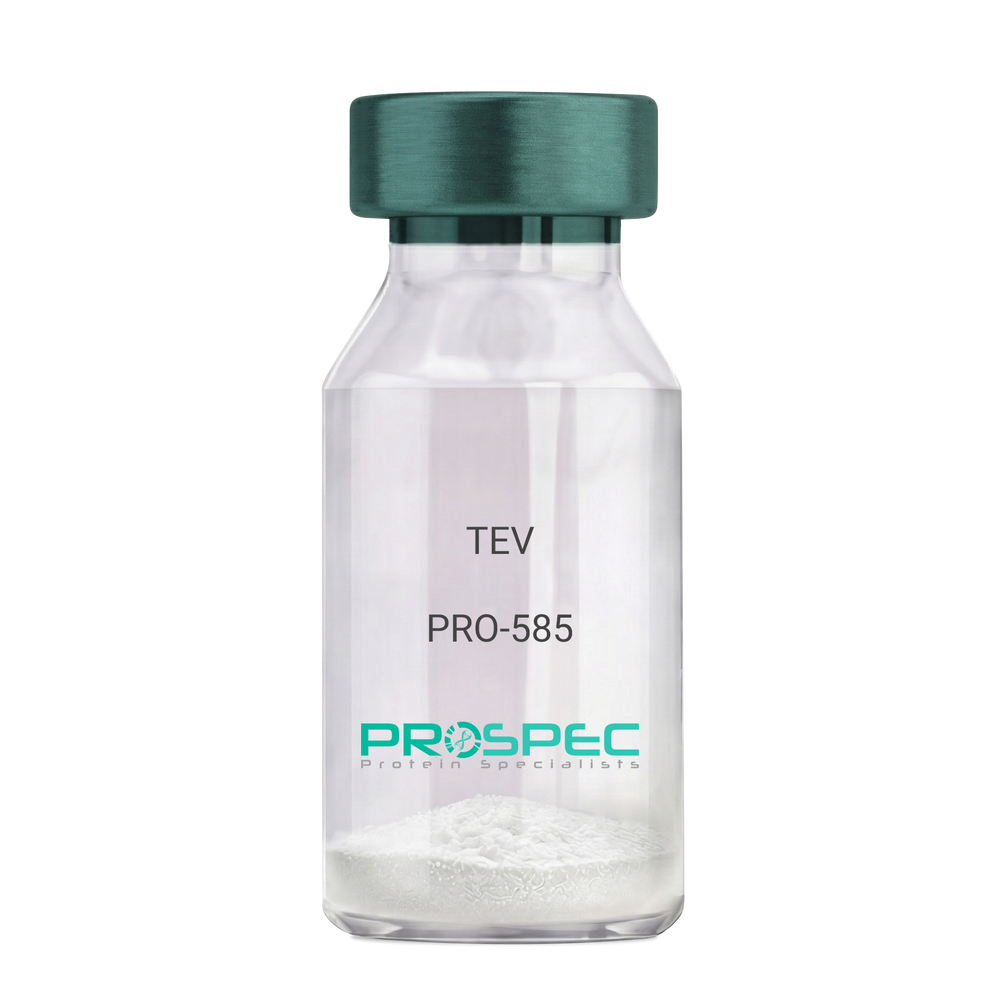
TEVDescription:
Tobacco Etch Virus Protease Recombinant
rTEV, TEV, P1 protease.
Product # :
PRO-585Price :
Quantity :
Shipping Method :
Shipped with Ice Packs
More Info
- description
- source
- formulation
- purity
- More Info
Description
Recombinant TEV Protease (rTEV) is a site-specific protease purified from E. coli. The protease can be used for the removal of affinity tags from fusion proteins. The seven-amino-acid recognition site for rTEV is Glu-Asn-Leu-Tyr-Phe-Gln-Gly with cleavage occurring between Gln and Gly. The optimal temperature for cleavage is 30°C; however, the enzyme can be used at temperatures as low as 4°C. The rTEV contains His tag.The rTEV is purified by proprietary chromatographic techniques.
Source
Escherichia Coli.
Formulation
The rTEV contains 25mM Tris, Ph 8.0, 75mM NaCl, 5mM EDTA, 10mM GSH, 50% Glycerol.
Purity
Greater than 90.0% as determined by analysis by SDS-PAGE.
More Info
-
Introduction
TEV protease is the common name for the 27 kDa catalytic domain of the Nuclear Inclusion a (NIa) protein encoded by the tobacco etch virus (TEV). Because its sequence specificity is far more stringent than that of factor Xa, thrombin, or enterokinase, TEV protease is a very useful reagent for cleaving fusion proteins. TEV protease recognizes a linear epitope of the general form E-Xaa-Xaa-Y -Xaa-Q-(G/S), with cleavage occurring between Q and G or Q and S. The most commonly used sequence is ENLYFQG.
-
Synonyms
rTEV, TEV, P1 protease.
-
Physical Appearance
Sterile liquid formulation.
-
Stability
rTEV although stable at 4°C for 1 week, should be stored below -18°C. Please prevent freeze thaw cycles.
-
Cleavage Conditions
A number of variables can be changed to optimize the cleavage of any specific protein. The amount of rTEV, the temperature of the incubation, and the time needed for cleavage may be examined. If the protein of interest is heat-labile, then 4°C incubations are recommended. Reactions at 4°C will require longer incubation times and/or more rTEV.
-
Unit Definition
One unit is defined as the amount of enzyme needed to cleave 3 ug of fusion protein in 1 hour to 85 % completion at 30°C in a buffer containing 50 mM Tris-HCl, pH 8.0, 0.5 mM EDTA, and 1 mM DTT.
ProSpec's products are furnished for LABORATORY RESEARCH USE ONLY. The product may not be used as drugs, agricultural or pesticidal products, food additives or household chemicals.
- View Data Sheet
Name :
BACE1 HumanDescription:
Beta-Secretase 1 Human Recombinant
Beta-Secretase, Membrane-Associated Aspartic Protease, Beta-Site APP Cleaving Enzyme, Beta-Site APP-Cleaving Enzyme, Aspartyl Protease, EC 3.4.23.46, Memapsin-2, Asp, BACE, ASP2, Beta-Site Amyloid Beta A4 Precursor Protein-Cleaving Enzyme, Beta-Site Amyloid Precursor Protein Cleaving Enzyme, Transmembrane Aspartic Proteinase Asp2, Beta-Secretase 1 Precursor Variant, Beta-Site APP-Cleaving Enzyme, APP Beta-Secretase, EC 3.4.23, KIAA1149, HSPC104.
Product # :
ENZ-1119Price :
Quantity :
Shipping Method :
Shipped with Ice Packs
More Info
- description
- source
- formulation
- purity
- biological activity
- More Info
Description
BACE1 Human produced in Sf9 Baculovirus cells is a single, glycosylated polypeptide chain containing 442 amino acids (22-457 a.a.) and having a molecular mass of 49.2kDa. BACE1 is expressed with a 6 amino acid His tag at C-Terminus and purified by proprietary chromatographic techniques.
Source
Sf9, Baculovirus cells.
Formulation
BACE1 protein solution containing Phosphate-Buffered Saline (pH 7.4) containing 10% glycerol.
Purity
Greater than 90.0% as determined by SDS-PAGE.
Biological Activity
Specific activity is > 5 pmol/min/ug in which one unit will convert 1.0 pmole of Mca-SEVNLDAEFRK(Dnp)RR-NH2 to MCA- Pro-Leu-OH per minute at pH 3.5 at 25C.
More Info
-
Introduction
Beta-secretase 1 or BACE1 or beta-site amyloid precursor protein cleaving enzyme 1, is a protein that is encoded by the BACE1 gene in humans. Expression of BACE1 is seen primarily in neurons as it is crucial for the creation of myelin sheats in the peripheric nervous system. Beta-secretase 1 is a proteas that is located in the cell membrane (transmembrane). The enzyme consists of 2 active sites (aspartate residues) in the extracellular domain that can act as a dimer.
-
Synonyms
Beta-Secretase, Membrane-Associated Aspartic Protease, Beta-Site APP Cleaving Enzyme, Beta-Site APP-Cleaving Enzyme, Aspartyl Protease, EC 3.4.23.46, Memapsin-2, Asp, BACE, ASP2, Beta-Site Amyloid Beta A4 Precursor Protein-Cleaving Enzyme, Beta-Site Amyloid Precursor Protein Cleaving Enzyme, Transmembrane Aspartic Proteinase Asp2, Beta-Secretase 1 Precursor Variant, Beta-Site APP-Cleaving Enzyme, APP Beta-Secretase, EC 3.4.23, KIAA1149, HSPC104.
-
Physical Appearance
Sterile Filtered colorless solution.
-
Stability
Store at 4°C if entire vial will be used within 2-4 weeks. Store, frozen at -20°C for longer periods of time. For long term storage it is recommended to add a carrier protein (0.1% HSA or BSA).Avoid multiple freeze-thaw cycles.
-
Amino Acid Sequence
TQHGIRLPLR SGLGGAPLGL RLPRETDEEP EEPGRRGSFV EMVDNLRGKS GQGYYVEMTV GSPPQTLNIL VDTGSSNFAV GAAPHPFLHR YYQRQLSSTY RDLRKGVYVP YTQGKWEGEL GTDLVSIPHG PNVTVRANIA AITESDKFFI NGSNWEGILG LAYAEIARPD DSLEPFFDSL VKQTHVPNLF SLQLCGAGFP LNQSEVLASV GGSMIIGGID HSLYTGSLWY TPIRREWYYE VIIVRVEING QDLKMDCKEY NYDKSIVDSG TTNLRLPKKV FEAAVKSIKA ASSTEKFPDG FWLGEQLVCW QAGTTPWNIF PVISLYLMGE VTNQSFRITI LPQQYLRPVE DVATSQDDCY KFAISQSSTG TVMGAVIMEG FYVVFDRARK RIGFAVSACH VHDEFRTAAV EGPFVTLDME DCGYNIPQTD ESTLMTHHHH HH.
ProSpec's products are furnished for LABORATORY RESEARCH USE ONLY. The product may not be used as drugs, agricultural or pesticidal products, food additives or household chemicals.
- View Data Sheet
Name :
DNMT3L HumanDescription:
DNA Cytosine-5--Methyltransferase 3-Like Human Recombinant
DNMT3L, DNA (Cytosine-5-)-Methyltransferase 3-Like, Human Cytosine-5-Methyltransferase 3-Like Protein 11, Cytosine-5-Methyltransferase 3-Like Protein, DNA (Cytosine-5)-Methyltransferase 3-Like.
Product # :
ENZ-787Price :
Quantity :
Shipping Method :
Shipped with Ice Packs
More Info
- description
- source
- formulation
- purity
- More Info
Description
DNMT3L Human Recombinant produced in E.coli is a single, non-glycosylated polypeptide chain containing 411 amino acids (1-386) and having a molecular mass of 46.2kDa.DNMT3L is fused to a 25 amino acid His-tag at N-terminus & purified by proprietary chromatographic techniques.
Source
Escherichia Coli.
Formulation
The DNMT3L solution (0.25mg/ml) contains 20mM Tris-HCl buffer (pH 8.0), 0.15M NaCl, 10% glycerol and 1mM DTT.
Purity
Greater than 90.0% as determined by SDS-PAGE.
More Info
-
Introduction
DNA Cytosine-5--Methyltransferase 3-Like (DNMT3L) is a nuclear protein with similarity to DNA methyltransferases, but is not believed to act as a DNA methyltransferase since it doesn’t contain the amino acid residues needed for methyltransferase activity. Nevertheless, DNMT3L stimulates de novo methylation by DNA cytosine methyltransferase 3 alpha and is assumed to be required for the formation of maternal genomic imprints. DNMT3L also mediates transcriptional repression as a result of interaction with histone deacetylase 1. DNMT3L is a catalytically inactive regulatory factor of DNA methyltransferases, which is vital for the function of DNMT3A and DNMT3B. DNMT3L activates DNMT3A and DNMT3B by binding to their catalytic domain. Furthermore, DNMT3L accelerates the binding of DNA and AdoMet to the methyltransferases and dissociates from the complex after DNA binding to the methyltransferases.
-
Synonyms
DNMT3L, DNA (Cytosine-5-)-Methyltransferase 3-Like, Human Cytosine-5-Methyltransferase 3-Like Protein 11, Cytosine-5-Methyltransferase 3-Like Protein, DNA (Cytosine-5)-Methyltransferase 3-Like.
-
Physical Appearance
Sterile Filtered clear solution.
-
Stability
Store at 4°C if entire vial will be used within 2-4 weeks. Store, frozen at -20°C for longer periods of time. For long term storage it is recommended to add a carrier protein (0.1% HSA or BSA).Avoid multiple freeze-thaw cycles.
-
Amino Acid Sequence
MGSSHHHHHH SSGLVPRGSH MGSEFMAAIP ALDPEAEPSM DVILVGSSEL SSSVSPGTGR DLIAYEVKAN QRNIEDICIC CGSLQVHTQH PLFEGGICAP CKDKFLDALF LYDDDGYQSY CSICCSGETL LICGNPDCTR CYCFECVDSL VGPGTSGKVH AMSNWVCYLC LPSSRSGLLQ RRRKWRSQLK AFYDRESENP LEMFETVPVW RRQPVRVLSL FEDIKKELTS LGFLESGSDP GQLKHVVDVT DTVRKDVEEW GPFDLVYGAT PPLGHTCDRP PSWYLFQFHR LLQYARPKPG SPRPFFWMFV DNLVLNKEDL DVASRFLEME PVTIPDVHGG SLQNAVRVWS NIPAIRSRHW ALVSEEELSL LAQNKQSSKL AAKWPTKLVK NCFLPLREYF KYFSTELTSS L.
ProSpec's products are furnished for LABORATORY RESEARCH USE ONLY. The product may not be used as drugs, agricultural or pesticidal products, food additives or household chemicals.
- View Data Sheet
Name :
StaphylokinaseDescription:
Staphylokinase Recombinant
Staphylokinase, SakSTAR, Neutral proteinase, Protease III, SAK.
Product # :
ENZ-288Price :
Quantity :
Shipping Method :
Shipped at Room temp
More Info
- description
- source
- formulation
- purity
- biological activity
- More Info
- sds-page
Description
Staphylokinase Recombinant produced in E.Coli is a non-glycosylated polypeptide chain containing 136 amino acids and having a molecular weight of 16kDa.The Staphylokinase is purified by proprietary chromatographic techniques.
Source
Escherichia Coli.
Formulation
Lyophilized from a 0.2µm filtered concentrated solution in PBS, pH 7.4.
Purity
Greater than 95.0% as determined by:
(a) Analysis by RP-HPLC.
(b) Analysis by SDS-PAGE.Biological Activity
The biological activity measured by the ability of fibrin lysis in agarose plate was found to be 50,000IU/mg.sds-page
More Info
-
Introduction
Staphylokinase (SAK) is a 136-amino acidenzymefrom Staphylococcus aureus. It is positively regulated by the "agr" gene regulator. It activates plasminogen, which in turn can degrade various host proteins during infection.
-
Synonyms
Staphylokinase, SakSTAR, Neutral proteinase, Protease III, SAK.
-
Physical Appearance
Sterile Filtered White lyophilized (freeze-dried) powder.
-
Stability
Lyophilized SAK although stable at room temperature for 3 weeks, should be stored desiccated below -18°C. Upon reconstitution SAK should be stored at 4°C between 2-7 days and for future use below -18°C.Please prevent freeze-thaw cycles.
-
Solubility
It is recommended to reconstitute the lyophilized SAKin sterile 18MΩ-cm H2O not less than 100µg/ml, which can then be further diluted to other aqueous solutions.
ProSpec's products are furnished for LABORATORY RESEARCH USE ONLY. The product may not be used as drugs, agricultural or pesticidal products, food additives or household chemicals.
- View Data Sheet
Name :
ACP2 HumanDescription:
Acid Phosphatase-2 Human Recombinant
Acid Phosphatase 2, Lysosoma, EC 3.1.3.2 LAP, Lysosomal Acid Phosphatase, ACP2.
Product # :
ENZ-849Price :
Quantity :
Shipping Method :
Shipped with Ice Packs
More Info
- description
- source
- formulation
- purity
- More Info
Description
ACP2 Human Recombinant produced in E.Coli is a single, non-glycosylated polypeptide chain containing 373 amino acids (31-380 a.a.) and having a molecular mass of 42.9kDa. ACP2 is fused to a 23 amino acid His-Tag at N-Terminus and purified by conventional chromatography techniques.
Source
Escherichia Coli.
Formulation
ACP2 protein solution (1mg/ml) contains 20mM Tris-HCl (pH8.0) and 10% glycerol.
Purity
Greater than 85.0% as determined by SDS-PAGE.
More Info
-
Introduction
Acid Phosphatase-2, also known as ACP2 is composed of two subunits, Alpha & beta, and is chemically as well as genetically distinct from red cell acid phosphatase. ACP2 belongs to a family of distinct isoenzymes which hydrolyze orthophosphoric monoesters to alcohol and phosphate. In addition, Acid phosphatase deficiency is caused by mutations in the ACP2-beta subunit as well as ACP3-alpha subunit genes.
-
Synonyms
Acid Phosphatase 2, Lysosoma, EC 3.1.3.2 LAP, Lysosomal Acid Phosphatase, ACP2.
-
Physical Appearance
Sterile filtered colorless solution.
-
Stability
Store at 4°C if entire vial will be used within 2-4 weeks. Store, frozen at -20°C for longer periods of time. For long term storage it is recommended to add a carrier protein (0.1% HSA or BSA).Avoid multiple freeze-thaw cycles.
-
Amino Acid Sequence
MGSSHHHHHH SSGLVPRGSH MGSRSLRFVT LLYRHGDRSP VKTYPKDPYQ EEEWPQGFGQ LTKEGMLQHW ELGQALRQRY HGFLNTSYHR QEVYVRSTDF DRTLMSAEAN LAGLFPPNGM QRFNPNISWQ PIPVHTVPIT EDRLLKFPLG PCPRYEQLQN ETRQTPEYQN ESSRNAQFLD MVANETGLTD LTLETVWNVY DTLFCEQTHG LRLPPWASPQ TMQRLSRLKD FSFRFLFGIY QQAEKARLQG GVLLAQIRKN LTLMATTSQL PKLLVYSAHD TTLVALQMAL DVYNGEQAPY ASCHIFELYQ EDSGNFSVEM YFRNESDKAP WPLSLPGCPH RCPLQDFLRL TEPVVPKDWQ QECQLASGPA DTE
ProSpec's products are furnished for LABORATORY RESEARCH USE ONLY. The product may not be used as drugs, agricultural or pesticidal products, food additives or household chemicals.
- View Data Sheet
Name :
GYG1 HumanDescription:
Glycogenin-1 Human Recombinant
Glycogenin-1, GYG1, GYG.
Product # :
ENZ-431Price :
Quantity :
Shipping Method :
Shipped with Ice Packs
More Info
- description
- source
- formulation
- purity
- More Info
Description
GYG1 Human Recombinant fused with a 32 amino acid His-T7 tag at N-terminus produced in E.Coli is a single, non-glycosylated, polypeptide chain containing 365 amino acids (1-333 a.a.) and having a molecular mass of 41.2kDa.The GYG1 is purified by proprietary chromatographic techniques.
Source
Escherichia Coli.
Formulation
The GYG1 solution contains 20mM Tris-HCl buffer (pH 8.0), 1mM DTT and 10% glycerol.
Purity
Greater than 90.0% as determined by SDS-PAGE.
More Info
-
Introduction
Glycogenin-1 (GYG1) is an enzyme involved in glycogen biosynthesis. GYG1 is the chief enzyme involved in glycogen polymerisation. Glycogenin-1 is vital for the function of self-glucosylates, using an inter-subunit mechanism, to form an oligosaccharide primer which acts as substrate for glycogen synthase. In addition, GYG1 has a role in regulating glycogen metabolism and the achievement of maximal glycogen levels in skeletal muscle. GYG1 mRNA and protein content and activity increase in the muscle during recovery from prolonged and exhaustive exercise. GYG1 is inactivated with glycogen catabolism which concurs with an increase in glycogenin gene expression as exercise and glycogenolysis advance. Glycogenin will remain covalently attached to the reducing end of the glycogen molecule.
-
Synonyms
Glycogenin-1, GYG1, GYG.
-
Physical Appearance
Sterile Filtered colorless solution.
-
Stability
Store at 4°C if entire vial will be used within 2-4 weeks. Store, frozen at -20°C for longer periods of time. For long term storage it is recommended to add a carrier protein (0.1% HSA or BSA).Avoid multiple freeze-thaw cycles.
-
Amino Acid Sequence
MHHHHHHMAS MTGGQQMGRD LYDDDDKDRW GSMTDQAFVT LTTNDAYAKG ALVLGSSLKQ HRTTRRLVVL ATPQVSDSMR KVLETVFDEV IMVDVLDSGD SAHLTLMKRP ELGVTLTKLH CWSLTQYSKC VFMDADTLVL ANIDDLFDRE ELSAAPDPGW PDCFNSGVFV YQPSVETYNQ LLHLASEQGS FDGGDQGILN TFFSSWATTD IRKHLPFIYN LSSISIYSYL PAFKVFGASA KVVHFLGRVK PWNYTYDPKT KSVKSEAHDP NMTHPEFLIL WWNIFTTNVL PLLQQFGLVK DTCSYVNVED VSGAISHLSL GEIPAMAQPF VSSEERKERW EQGQADYMGA DSFDNIKRKL DTYLQ.
ProSpec's products are furnished for LABORATORY RESEARCH USE ONLY. The product may not be used as drugs, agricultural or pesticidal products, food additives or household chemicals.
- View Data Sheet
Name :
XPNPEP1 HumanDescription:
X-Prolyl Aminopeptidase-1 Human Recombinant
X-Prolyl Aminopeptidase (Aminopeptidase P) 1, Soluble, XPNPEPL, SAMP, X-Prolyl Aminopeptidase 1, Soluble, Aminoacylproline Aminopeptidase, Cytosolic Aminopeptidase P, Soluble Aminopeptidase P, X-Pro Aminopeptidase 1, EC 3.4.11.9, XPNPEPL1, X-Prolyl Aminopeptidase (Aminopeptidase P)-Like, Aminopeptidase P, Cytosolic, Xaa-Pro Aminopeptidase 1, XPNPEP, APP1, Xaa-Pro aminopeptidase 1.
Product # :
ENZ-880Price :
Quantity :
Shipping Method :
Shipped with Ice Packs
More Info
- description
- source
- formulation
- purity
- More Info
Description
XPNPEP1 Human Recombinant produced in E.Coli is a single, non-glycosylated polypeptide chain containing 655 amino acids (1-623 a.a) and having a molecular mass of 73.4kDa. XPNPEP1 is fused to a 32 amino acid His-tag at N-terminus & purified by proprietary chromatographic techniques.
Source
Escherichia Coli.
Formulation
XPNPEP1 protein solution (1mg/ml) containing Phosphate buffered saline (pH7.4) and 20% glycerol.
Purity
Greater than 85.0% as determined by SDS-PAGE.
More Info
-
Introduction
X-Prolyl Aminopeptidase-1, also known as XPNPEP1 is a member of the peptidase M24B family. XPNPEP1 encodes the cytosolic form of a metalloaminopeptidase which catalyzes the cleavage of the N-terminal amino acid adjacent to a proline residue. Furthermore, XPNPEP1 plays a role in degradation as well as maturation of tachykinins, neuropeptides and peptide hormones.
-
Synonyms
X-Prolyl Aminopeptidase (Aminopeptidase P) 1, Soluble, XPNPEPL, SAMP, X-Prolyl Aminopeptidase 1, Soluble, Aminoacylproline Aminopeptidase, Cytosolic Aminopeptidase P, Soluble Aminopeptidase P, X-Pro Aminopeptidase 1, EC 3.4.11.9, XPNPEPL1, X-Prolyl Aminopeptidase (Aminopeptidase P)-Like, Aminopeptidase P, Cytosolic, Xaa-Pro Aminopeptidase 1, XPNPEP, APP1, Xaa-Pro aminopeptidase 1.
-
Physical Appearance
Sterile filtered colorless solution.
-
Stability
Store at 4°C if entire vial will be used within 2-4 weeks. Store, frozen at -20°C for longer periods of time. For long term storage it is recommended to add a carrier protein (0.1% HSA or BSA).Avoid multiple freeze-thaw cycles.
-
Amino Acid Sequence
MGSSHHHHHH SSGLVPRGSH MGSEFELRRQ ASMPPKVTSE LLRQLRQAMR NSEYVTEPIQ AYIIPSGDAH QSEYIAPCDC RRAFVSGFDG SAGTAIITEE HAAMWTDGRY FLQAAKQMDS NWTLMKMGLK DTPTQEDWLV SVLPEGSRVG VDPLIIPTDY WKKMAKVLRS AGHHLIPVKE NLVDKIWTDR PERPCKPLLT LGLDYTGISW KDKVADLRLK MAERNVMWFV VTALDEIAWL FNLRGSDVEH NPVFFSYAII GLETIMLFID GDRIDAPSVK EHLLLDLGLE AEYRIQVHPY KSILSELKAL CADLSPREKV WVSDKASYAV SETIPKDHRC CMPYTPICIA KAVKNSAESE GMRRAHIKDA VALCELFNWL EKEVPKGGVT EISAADKAEE FRRQQADFVD LSFPTISSTG PNGAIIHYAP VPETNRTLSL DEVYLIDSGA QYKDGTTDVT RTMHFGTPTA YEKECFTYVL KGHIAVSAAV FPTGTKGHLL DSFARSALWD SGLDYLHGTG HGVGSFLNVH EGPCGISYKT FSDEPLEAGM IVTDEPGYYE DGAFGIRIEN VVLVVPVKTK YNFNNRGSLT FEPLTLVPIQ TKMIDVDSLT DKECDWLNNY HLTCRDVIGK ELQKQGRQEA LEWLIRETQP ISKQH.
ProSpec's products are furnished for LABORATORY RESEARCH USE ONLY. The product may not be used as drugs, agricultural or pesticidal products, food additives or household chemicals.
- View Data Sheet
Name :
GLRX1 YeastDescription:
Glutaredoxin 1 Yeast Recombinant
Thioltransferase, GRX, GLRX1, GRX1, GRX-1, GLRX-1, Glutathione-dependent oxidoreductase 1, Glutaredoxin 1.
Product # :
ENZ-361Price :
Quantity :
Shipping Method :
Shipped with Ice Packs
More Info
- description
- source
- formulation
- purity
- More Info
Description
Glutaredoxin Saccharamyces cerevisiae Recombinant containing 6x His tag at C-Terminus produced in E.Coli is a single, non-glycosylated, Polypeptide chain having a molecular mass of 16 kDa.
Source
Escherichia Coli.
Formulation
Glutaredoxin solution contains PBS, pH-7.5 & 0.01% Na Azide.
Purity
Greater than 95% as determined by SDS-PAGE.
More Info
-
Introduction
GLRX1 has a glutathione-disulfide oxidoreductase activity in the presence of nadph and glutathione reductase. reduces low molecular weight disulfides and proteins. Glutaredoxin is a glutathione (GSH)-dependent hydrogen donor for ribonucleotide reductase and also catalyzes glutathione-disulfide oxidoreduction reactions in the presence of NADPH and glutathione reductase. GLRX1 is multifunctional enzyme with glutathione-dependent oxidoreductase, glutathione peroxidase and glutathione S-transferase (GST) activity. The disulfide bond functions as an electron carrier in the glutathione-dependent synthesis of deoxyribonucleotides by the enzyme ribonucleotide reductase. In addition, it is also involved in reducing cytosolic protein- and non-protein-disulfides in a coupled system with glutathione reductase. Required for resistance to reactive oxygen species (ROS) by directly reducing hydroperoxides and for the detoxification of ROS-mediated damage.
-
Synonyms
Thioltransferase, GRX, GLRX1, GRX1, GRX-1, GLRX-1, Glutathione-dependent oxidoreductase 1, Glutaredoxin 1.
-
Physical Appearance
Sterile Filtered clear colorless solution.
-
Stability
1 week at 2-10°C. For long term store at -20 to -80°C.
ProSpec's products are furnished for LABORATORY RESEARCH USE ONLY. The product may not be used as drugs, agricultural or pesticidal products, food additives or household chemicals.
- View Data Sheet
Name :
TGM2 HumanDescription:
Tissue Transglutaminase Human Recombinant
Protein gamma-glutamyltransferase 2, EC 2.3.2.13, Tissue transglutaminase, TGase C, TGC, TG(C), Transglutaminase-2, TGase-H, TG2, TGM2.
Product # :
ENZ-394Price :
Quantity :
Shipping Method :
Shipped with Ice Packs
More Info
- description
- source
- formulation
- purity
- More Info
Description
Tissue Transglutaminase Human Recombinant produced in E.coli is a non-glycosylated, polypeptide chain having a molecular mass of 78,018 Dalton. tTG is expressed with a -6xHis tag and purified by proprietary chromatographic techniques. By point mutation of the active center the catalytic transglutaminase activity has been eliminated, resulting in increased stability during storage and coating.
Source
Escherichia Coli.
Formulation
TGM2 is supplied in 16mM HEPES buffer pH-8.0, 400mM NaCl, and 20% glycerol.
Purity
Greater than 95% as determined by SDS-PAGE.
More Info
-
Introduction
Celiac disease is an enteropathy that is characterized by intestinal lesions of variable severity. Tissue-type transglutaminase (tTG) is believed to be the predominant autoantigen for celiac disease and the corresponding autoantibodies show higher sensitivity and specificity than anti-gliadin antibodies. Highly pure recombinant human tTG is now available to replace the traditionally used tTG fraction from guinea pig.
Tissue-type transglutaminase antigens have been specifically modified for improved handling: exchange of an active site amino acid eliminates the protein cross-linking activity of the enzyme, while maintaining the native three-dimensional structure and the enzyme's secondary GTPase activity. This engineering assures reproducible properties of the antigen preparations through the absence of variable and ill-defined covalent aggregates of tTG antigen and host cell proteins. -
Synonyms
Protein gamma-glutamyltransferase 2, EC 2.3.2.13, Tissue transglutaminase, TGase C, TGC, TG(C), Transglutaminase-2, TGase-H, TG2, TGM2.
-
Physical Appearance
Sterile Filtered clear solution.
-
Stability
Store at 4°C if entire vial will be used within 2-4 weeks. Store, frozen at -20°C for longer periods of time. Avoid multiple freeze-thaw cycles.
ProSpec's products are furnished for LABORATORY RESEARCH USE ONLY. The product may not be used as drugs, agricultural or pesticidal products, food additives or household chemicals.
- View Data Sheet
Name :
ProMatrilysinDescription:
ProMatrix Metalloproteinase-7 Recombinant
Product # :
ENZ-272Price :
Quantity :
Shipping Method :
Shipped with Ice Packs
More Info
- description
- source
- formulation
- purity
- biological activity
- More Info
Description
Matrix metalloproteinase-7 (MMP-7) also known as matrilysin and PUMP (EC 3.4.24.23) cleaves a number of substrates including collagen types IV and X, elastin, fibronectin, gelatin, laminin and proteoglycans. MMP-7 is closely related to the stromelysin family members but is encoded by a different gene. MMP-7 is the smallest of all the MMPs consisting of a pro-peptide domain and a catalytic domain. It lacks the hemopexin-like domain common to other members of the MMPs. MMP-7 is secreted as a 28 kDa proenzyme and can be activated in vitro by organomercurials and trypsin and in vivo by MMP-3 to a 18 kDa active MMP-7 enzyme. Once activated, MMP-7 can activate pro-MMP-1 and pro-MMP-9 but not pro-MMP-2. MMP-7 is widely expressed having been reported in elevated levels in cycling endometrium as well as in colorectal cancers and adenomas, hepatocellular carcinomas, rectal carcinomas, and approximately 50% of gliomas.
Source
Escherichia Coli.
Formulation
The protein contains the following additives 25mM Tris-HCl (pH 7.5),150mM NaCl, 5mM CaCl2, 0.01% Brij-35 and 0.02% NaN3.
Purity
Greater than 95.0% as determined by(a) Analysis by RP-HPLC.
(b) Analysis by SDS-PAGE.Biological Activity
The specific activity was found to be 1400 IU/mg.More Info
-
Physical Appearance
Sterile clear liquid solution.
-
Stability
Store at 4°C if entire vial will be used within 2-4 weeks. Store, frozen at -20°C for longer periods of time. For long term storage it is recommended to add a carrier protein (0.1% HSA or BSA).Avoid multiple freeze-thaw cycles.
-
Unit Definition
One unit is defined as the digestion of 1 µg Azocoll/min at 37°C.
ProSpec's products are furnished for LABORATORY RESEARCH USE ONLY. The product may not be used as drugs, agricultural or pesticidal products, food additives or household chemicals.
- View Data Sheet
Name :
T5 ExonucleaseDescription:
T5 Exonuclease Recombinant
T5 Exonuclease
Product # :
ENZ-1184Price :
Quantity :
Shipping Method :
Shipped with Ice Packs
More Info
- description
- source
- formulation
- purity
- More Info
Description
T5 Exonuclease T5 phage D15 gene Recombinant produced in E.Coli is a single, non-glycosylated polypeptide. T5 Exonuclease is purified by proprietary chromatographic techniques.
Source
Escherichia Coli.
Formulation
10U/ul, 50mM Tris-HCl (25℃, pH 7.5), 100mM NaCl, 0.1mM EDTA, 1mM DTT, 0.1% Triton X-100 and 50% glycerol.
Purity
Greater than 95% as determined by SDS-PAGE.
More Info
-
Introduction
T5 Exonuclease is an important enzyme that belongs to the family of exonucleases and plays a vital role in DNA metabolism and genetic engineering. This research paper aims to provide an overview of T5 Exonuclease, including its structure, function, and diverse applications in molecular biology.
T5 Exonuclease is derived from the bacteriophage T5, and it possesses a remarkable ability to selectively degrade single-stranded DNA in a 5' to 3' direction. It is a highly processive enzyme, meaning it can cleave multiple nucleotides consecutively without dissociating from the DNA substrate. The enzyme exhibits high specificity for single-stranded DNA, making it a valuable tool for various molecular biology applications.
The primary function of T5 Exonuclease is to remove nucleotides from the 5' ends of single-stranded DNA molecules. By digesting DNA in a processive manner, T5 Exonuclease is involved in DNA repair mechanisms, such as the removal of damaged or mismatched nucleotides. It is also widely utilized in molecular cloning techniques to generate DNA fragments with precise ends for subsequent DNA ligation reactions.
-
Synonyms
T5 Exonuclease
-
Physical Appearance
Sterile Filtered colorless solution.
-
Stability
Store at 4°C if entire vial will be used within 2-4 weeks. Store, frozen at -20°C for longer periods of time. For long term storage it is recommended to add a carrier protein (0.1% HSA or BSA). Avoid multiple freeze-thaw cycles.
-
Applications
Gibson Assembly
-
Background
The structural features of T5 Exonuclease play a crucial role in its enzymatic activity. The enzyme consists of distinct functional domains, including an N-terminal domain responsible for DNA binding and a C-terminal domain containing the exonuclease active site. Understanding the three-dimensional structure of T5 Exonuclease provides insights into its catalytic mechanism and substrate specificity.
The versatility of T5 Exonuclease extends beyond DNA repair and cloning applications. It has been employed in various molecular biology techniques, such as site-directed mutagenesis, DNA sequencing, and preparation of DNA templates for in vitro transcription. Additionally, T5 Exonuclease has found utility in research areas like next-generation sequencing library preparation, restriction fragment length polymorphism (RFLP) analysis, and gene expression studies.
In recent years, the use of T5 Exonuclease in genome editing technologies, such as CRISPR-Cas9, has gained attention. T5 Exonuclease can be employed to remove unwanted DNA sequences or overhangs, enabling precise and efficient genome editing. This application highlights the significance of T5 Exonuclease in advancing genetic engineering and synthetic biology research.
-
Unit Definition
1 unit of T5 Exonuclease is defined as the amount of enzyme required to cause the change of 0.00032 A260nm/min at 37° C in 1xReaction Buffer: 20mM Tris-acetate (pH 7.9 @ 25°C), 50mM Potassium Acetate, 10mM Magnesium Acetate and 1mM DTT.
ProSpec's products are furnished for LABORATORY RESEARCH USE ONLY. The product may not be used as drugs, agricultural or pesticidal products, food additives or household chemicals.
- View Data Sheet
Name :
melA E. coliDescription:
Alpha-Galactosidase E.coli Recombinant
Mel-7, Alpha-galactosidase, b4119, JW4080.
Product # :
ENZ-609Price :
Quantity :
Shipping Method :
Shipped with Ice Packs
More Info
- description
- source
- formulation
- purity
- More Info
Description
melA E. coli Recombinant produced in E. coli is a single polypeptide chain containing 474 amino acids (1-451) and having a molecular mass of 53.0kDa.melA is fused to a 23 amino acid His-tag at N-terminus & purified by proprietary chromatographic techniques.
Source
E.coli.
Formulation
The melA solution (1mg/1ml) contains 20mM Tris-HCl buffer (pH 8.0), 1mM DTT, 0.1M NaCl and 10% glycerol.
Purity
Greater than 90% as determined by SDS-PAGE.
More Info
-
Introduction
melA is a member of the glycosyl hydrolase 4 family. melA catalyze the hydrolysis of saccharides containing o-1,6,-galactoside bonds. melA catalyze the same reaction in E.coli, human and yeast but is found in different cellular sections: The E.coli melA is a cytoplasmic protein and the human and yeast melA are secretory proteins. Thus, even though the active enzyme from all three species has almost an equal molecular weight, structural resemblances, as well as dissimilarities, are probable.
-
Synonyms
Mel-7, Alpha-galactosidase, b4119, JW4080.
-
Physical Appearance
Sterile Filtered colorless solution.
-
Stability
Store at 4°C if entire vial will be used within 2-4 weeks. Store, frozen at -20°C for longer periods of time. For long term storage it is recommended to add a carrier protein (0.1% HSA or BSA).Avoid multiple freeze-thaw cycles.
-
Amino Acid Sequence
MGSSHHHHHH SSGLVPRGSH MGSMMSAPKI TFIGAGSTIF VKNILGDVFH REALKTAHIA LMDIDPTRLE ESHIVVRKLM DSAGASGKIT CHTQQKEALE DADFVVVAFQ IGGYEPCTVT DFEVCKRHGL EQTIADTLGP GGIMRALRTI PHLWQICEDM TEVCPDATML NYVNPMAMNT WAMYARYPHI KQVGLCHSVQ GTAEELARDL NIDPATLRYR CAGINHMAFY LELERKTADG SYVNLYPELL AAYEAGQAPK PNIHGNTRCQ NIVRYEMFKK LGYFVTESSE HFAEYTPWFI KPGREDLIER YKVPLDEYPK RCVEQLANWH KELEEYKKAS RIDIKPSREY ASTIMNAIWT GEPSVIYGNV RNDGLIDNLP QGCCVEVACL VDANGIQPTK VGTLPSHLAA LMQTNINVQT LLTEAILTEN RDRVYHAAMM DPHTAAVLGI DEIYALVDDL IAAHGDWLPG WLHR.
ProSpec's products are furnished for LABORATORY RESEARCH USE ONLY. The product may not be used as drugs, agricultural or pesticidal products, food additives or household chemicals.
- View Data Sheet
Name :
PPA YeastDescription:
Inorganic Pyrophosphatase Yeast Recombinant
Inorganic pyrophosphatase, PPA.
Product # :
ENZ-1181Price :
Quantity :
Shipping Method :
Shipped with Ice Packs
More Info
- description
- source
- formulation
- purity
- More Info
Description
PPA Yeast Recombinant produced in E.Coli is a single, non-glycosylated polypeptide chain containing 286 amino acids and having a molecular mass of 35kDa. Inorganic Pyrophosphatase is purified by proprietary chromatographic techniques.
Source
Escherichia Coli.
Formulation
Inorganic pyrophosphatase protein solution (100U/ml) containing 20mM Tris-HCl (25℃, pH 8.0), 100mM KCl, 0.1mM EDTA, 1mM DTT and 50% glycerol.
Purity
Greater than 98.0% as determined by SDS-PAGE.
More Info
-
Introduction
Inorganic pyrophosphatase (ppa) is a member of the Ppase family. PPA is an enzyme which catalyzes the conversion of one molecule of pyrophosphate to two phosphate ions. Since this is a highly exergonic reaction, it can therefore be coupled to unfavorable biochemical transformations in order to drive these transformations to completion. The role of the PPA enzyme is a critical one in the lipid metabolism (including lipid synthesis and degradation), calcium absorption and bone formation, DNA synthesis, as well as other biochemical transformations.
-
Synonyms
Inorganic pyrophosphatase, PPA.
-
Physical Appearance
Sterile filtered colorless solution.
-
Stability
Store at 4°C if entire vial will be used within 2-4 weeks. Store, frozen at -20°C for longer periods of time. Do not store at -70C. For long term storage it is recommended to add a carrier protein (0.1% HSA or BSA). Avoid multiple freeze-thaw cycles.
-
Unit Definition
Under standard conditions, 1U is defined as the amount of enzyme required to catalyze the hydrolysis of pyrophosphate (PPi)/min. to produce 1μmol of orthophosphate (Pi). Optimal reaction temp. is 25℃ , activity at 16 ~ 37℃. Cofactor: Mg+2
ProSpec's products are furnished for LABORATORY RESEARCH USE ONLY. The product may not be used as drugs, agricultural or pesticidal products, food additives or household chemicals.
- View Data Sheet
Name :
ARG2 HumanDescription:
Arginase Type II Human Recombinant
Kidney Arginase, Non-Hepatic Arginase, EC 3.5.3.1, Arginase-2, Type II arginase, Kidney-type arginase, Arginase-2 mitochondrial.
Product # :
ENZ-526Price :
Quantity :
Shipping Method :
Shipped with Ice Packs
More Info
- description
- source
- formulation
- purity
- More Info
Description
ARG2 Recombinant E.coli produced in E.Coli is a single, non-glycosylated polypeptide chain containing 353 amino acids (23-354 a.a.) and having a molecular mass of 38.3 kDa. The ARG2 is fused to a 21 amino acid His-Tag at N-terminus and purified by proprietary chromatographic techniques.
Source
Escherichia Coli.
Formulation
ARG2 Human solution containing 20mM Tris-HCl pH-8, & 10% glycerol.
Purity
Greater than 95.0% as determined by SDS-PAGE.
More Info
-
Introduction
ARG2 participates in the regulation of extra-urea cycle arginine metabolism and also in down-regulation of nitric oxide synthesis. Extrahepatic arginase functions to regulate L-arginine bioavailability to NO synthase. Since NO synthase is found in the penile corpus cavernosum smooth muscle, the clitoral corpus cavernosum and the vagina, ARG2 takes part in both male and female sexual arousal and therefore a potential target for the treatment of male and female sexual arousal disorders.
-
Synonyms
Kidney Arginase, Non-Hepatic Arginase, EC 3.5.3.1, Arginase-2, Type II arginase, Kidney-type arginase, Arginase-2 mitochondrial.
-
Physical Appearance
Sterile filtered colorless solution.
-
Stability
Store at 4°C if entire vial will be used within 2-4 weeks.Store, frozen at -20°C for longer periods of time. For long term storage it is recommended to add a carrier protein (0.1% HSA or BSA).Avoid multiple freeze-thaw cycles.
-
Amino Acid Sequence
MGSSHHHHHH SSGLVPRGSH MVHSVAVIGA PFSQGQKRKG VEHGPAAIRE AGLMKRLSSL GCHLKDFGDL SFTPVPKDDL YNNLIVNPRS VGLANQELAE VVSRAVSDGY SCVTLGGDHS LAIGTISGHA RHCPDLCVVW VDAHADINTP LTTSSGNLHG QPVSFLLREL QDKVPQLPGF SWIKPCISSA SIVYIGLRDV DPPEHFILKN YDIQYFSMRD IDRLGIQKVM ERTFDLLIGK RQRPIHLSFD IDAFDPTLAP ATFTPVVGGL TYREGMYIAE EIHNTGLLSA LDLVEVNPQL ATSEEEAKTT ANLAVDVIAS SFGQTREGGH IVYDQLPTPS SPDESENQAR VRI.
ProSpec's products are furnished for LABORATORY RESEARCH USE ONLY. The product may not be used as drugs, agricultural or pesticidal products, food additives or household chemicals.
- View Data Sheet
Name :
HARS Human, Sf9Description:
Histidyl-tRNA Synthetase Human Recombinant, Sf9
Histidyl-tRNA synthetase, EC 6.1.1.21, Histidine-tRNA ligase, HisRS, HRS, FLJ20491, JO-1.
Product # :
ENZ-335Price :
Quantity :
Shipping Method :
Shipped with Ice Packs
More Info
- description
- source
- formulation
- purity
- More Info
Description
Histidyl-tRNA Synthetase Human Recombinant produced in baculovirus is a single, glycosylated, polypeptide chain having a molecular mass of 58.3 kDa.The Histidyl-tRNA Synthetase is fused to 6x His Tag and purified by proprietary chromatographic techniques.
Source
Sf9 Insect Cells.
Formulation
The protein solution contains 20mM HEPES, 250mM sodium chloride 0.1% and 20% Glycerol, (pH 7.5).
Purity
Greater than 90.0% as determined by SDS-PAGE.
More Info
-
Introduction
Aminoacyl-tRNA synthetases are a class of enzymes that charge tRNAs with their cognate amino acids. The protein encoded by this gene is a cytoplasmic enzyme which belongs to the class II family of aminoacyl-tRNA synthetases. The enzyme is responsible for the synthesis of histidyl-transfer RNA, which is essential for the incorporation of histidine into proteins. The gene is located in a head-to-head orientation with HARSL on chromosome five, where the homologous genes share a bidirectional promoter. The gene product is a frequent target of autoantibodies in the human autoimmune disease polymyositis/dermatomyositis.
-
Synonyms
Histidyl-tRNA synthetase, EC 6.1.1.21, Histidine-tRNA ligase, HisRS, HRS, FLJ20491, JO-1.
-
Physical Appearance
Sterile Filtered clear solution.
-
Stability
Histidyl-tRNA Synthetase although stable at 4°C for 3 weeks, should be stored below -18°C.Please prevent freeze-thaw cycles.
-
Applications
Western Blot: Strongly reactive with human anti Histidyl-tRNA Synthetase antisera.
-
Protein content
Protein quantitation was carried out by using 0.25 - 2.0 mg/ml Bradford assay vs. BSA.
ProSpec's products are furnished for LABORATORY RESEARCH USE ONLY. The product may not be used as drugs, agricultural or pesticidal products, food additives or household chemicals.
- View Data Sheet
Name :
DCTD HumanDescription:
dCMP Deaminase Human Recombinant
Deoxycytidylate deaminase, EC 3.5.4.12, dCMP Deaminase, DCTD, MGC111062.
Product # :
ENZ-538Price :
Quantity :
Shipping Method :
Shipped with Ice Packs
More Info
- description
- source
- formulation
- purity
- More Info
Description
DCTD Recombinant Human produced in E.Coli is a single, non-glycosylated polypeptide chain containing 198 amino acids (1-178 a.a.) and having a molecular mass of 22.1 kDa. The DCTD is fused to a 20 amino acid His-Tag at N-terminus and purified by proprietary chromatographic techniques.
Source
Escherichia Coli.
Formulation
The DCTD solution (0.5mg/ml) contains 20mM Tris-HCl pH-8, 1mM DTT, 1mM EDTA & 20% glycerol.
Purity
Greater than 90.0% as determined by SDS-PAGE.
More Info
-
Introduction
DCTD is an allosteric enzyme that exists as a homohexamer and is part of the cytidine and deoxycytidylate deaminase protein family. DTCD uses zinc as a cofactor to catalyze the deamination of dCMP to dUMP, thus making the nucleotide substrate (dUMP) that is used by thymidylate synthase.
-
Synonyms
Deoxycytidylate deaminase, EC 3.5.4.12, dCMP Deaminase, DCTD, MGC111062.
-
Physical Appearance
Sterile filtered colorless solution.
-
Stability
Store at 4°C if entire vial will be used within 2-4 weeks. Store, frozen at -20°C for longer periods of time. For long term storage it is recommended to add a carrier protein (0.1% HSA or BSA).Avoid multiple freeze-thaw cycles.
-
Amino Acid Sequence
MGSSHHHHHH SSGLVPRGSH MSEVSCKKRD DYLEWPEYFM AVAFLSAQRS KDPNSQVGAC IVNSENKIVG IGYNGMPNGC SDDVLPWRRT AENKLDTKYP YVCHAELNAI MNKNSTDVKG CSMYVALFPC NECAKLIIQA GIKEVIFMSD KYHDSDEATA ARLLFNMAGV TFRKFIPKCS KIVIDFDSIN SRPSQKLQ.
ProSpec's products are furnished for LABORATORY RESEARCH USE ONLY. The product may not be used as drugs, agricultural or pesticidal products, food additives or household chemicals.
- View Data Sheet
Name :
AHCY MouseDescription:
Adenosylhomocysteinase Mouse Recombinant
EC 3.3.1.1, SAHH, AdoHcyase, S-adenosyl-L-homocysteine hydrolase, Adenosylhomocysteinase.
Product # :
ENZ-1054Price :
Quantity :
Shipping Method :
Shipped with Ice Packs
More Info
- description
- source
- formulation
- purity
- More Info
Description
AHCY Mouse Recombinant produced in E.Coli is a single, non-glycosylated polypeptide chain containing 456 amino acids (1-432 a.a) and having a molecular mass of 50.2kDa.AHCY is fused to a 24 amino acid His-tag at N-terminus & purified by proprietary chromatographic techniques.
Source
Escherichia Coli.
Formulation
AHCY protein solution (0.25mg/ml) containing 20mM Tris-Hcl buffer (pH8.0) containing 40% glycerol 0.2M NaCl, 1mM DTT.
Purity
Greater than 90.0% as determined by SDS-PAGE.
More Info
-
Introduction
AHCY is an enzyme that catalyzes the reversible hydrolysis of S-adenosylhomocysteine (AdoHcy) to adenosine (Ado) and L-homocysteine (Hcy). AHCY controls the intracellular S-adenosylhomocysteine (SAH) concentration that is crucial for transmethylation reactions. AHCY deficiency causes hypermethioninemia.
-
Synonyms
EC 3.3.1.1, SAHH, AdoHcyase, S-adenosyl-L-homocysteine hydrolase, Adenosylhomocysteinase.
-
Physical Appearance
Sterile filtered colorless solution.
-
Stability
Store at 4°C if entire vial will be used within 2-4 weeks. Store, frozen at -20°C for longer periods of time. For long term storage, it is recommended to add a carrier protein (0.1% HSA or BSA).Avoid multiple freeze-thaw cycles.
-
Amino Acid Sequence
MGSSHHHHHH SSGLVPRGSH MGSHMSDKLP YKVADIGLAA WGRKALDIAE NEMPGLMRMR EMYSASKPLK GARIAGCLHM TVETAVLIET LVALGAEVRW SSCNIFSTQD HAAAAIAKAG IPVFAWKGET DEEYLWCIEQ TLHFKDGPLN MILDDGGDLT NLIHTKYPQL LSGIRGISEE TTTGVHNLYK MMSNGILKVP AINVNDSVTK SKFDNLYGCR ESLIDGIKRA TDVMIAGKVA VVAGYGDVGK GCAQALRGFG ARVIITEIDP INALQAAMEG YEVTTMDEAC KEGNIFVTTT GCVDIILGRH FEQMKDDAIV CNIGHFDVEI DVKWLNENAV EKVNIKPQVD RYWLKNGRRI ILLAEGRLVN LGCAMGHPSF VMSNSFTNQV MAQIELWTHP DKYPVGVHFL PKKLDEAVAE AHLGKLNVKL TKLTEKQAQY LGMPINGPFK PDHYRY.
ProSpec's products are furnished for LABORATORY RESEARCH USE ONLY. The product may not be used as drugs, agricultural or pesticidal products, food additives or household chemicals.
- View Data Sheet
Name :
POFUT1 HumanDescription:
Protein O-Fucosyltransferase 1 Human Recombinant
FUT12, O-Fuc-T, O-FucT-1, O-FUT, GDP-fucose protein O-fucosyltransferase 1, Peptide-O-fucosyltraferase 1,KIAA0180.
Product # :
ENZ-679Price :
Quantity :
Shipping Method :
Shipped with Ice Packs
More Info
- description
- source
- formulation
- purity
- More Info
Description
POFUT1 Human Recombinant produced in E. coli is a single polypeptide chain containing 385 amino acids (27-388) and having a molecular mass of 43.7 kDa. POFUT1 is fused to a 23 amino acid His-tag at N-terminus & purified by proprietary chromatographic techniques.
Source
Escherichia Coli.
Formulation
The POFUT1 solution (1mg/1ml) contains 20mM Tris-HCl buffer (pH 8.0), 2M Urea and 10% glycerol.
Purity
Greater than 85.0% as determined by SDS-PAGE.
More Info
-
Introduction
GDP-fucose protein O-fucosyltransferase 1 (POUFUT1), belongs to the glycosyltransferase O-Fuc family. POUFUT1 encodes a member of the glycosyltransferase O-Fuc family and Expressed mainly in pancreas, kidney, lung, heart, brain, liver, placenta and skeletal muscle.POUFUT1 adds O-fucose through an O-glycosidic linkage to Preserve serine or threonine residues in the epidermal growth factor-like repeats of a number of cell surface and emitted proteins. POUFUT1 is involved in ligand-induced receptor signaling. Alternative splicing of this gene results in 2 transcript variants encoding different isoforms.POFUT1 participates in Notch signaling, as Notch ligands can use as POFUT1 substrates.
-
Synonyms
FUT12, O-Fuc-T, O-FucT-1, O-FUT, GDP-fucose protein O-fucosyltransferase 1, Peptide-O-fucosyltraferase 1,KIAA0180.
-
Physical Appearance
Sterile Filtered colorless solution.
-
Stability
Store at 4°C if entire vial will be used within 2-4 weeks. Store, frozen at -20°C for longer periods of time. For long term storage it is recommended to add a carrier protein (0.1% HSA or BSA).Avoid multiple freeze-thaw cycles.
-
Amino Acid Sequence
MGSSHHHHHH SSGLVPRGSH MGSGSWDPAG YLLYCPCMGR FGNQADHFLG SLAFAKLLNR TLAVPPWIEY QHHKPPFTNL HVSYQKYFKL EPLQAYHRVI SLEDFMEKLA PTHWPPEKRV AYCFEVAAQR SPDKKTCPMK EGNPFGPFWD QFHVSFNKSE LFTGISFSAS YREQWSQRFS PKEHPVLALP GAPAQFPVLE EHRPLQKYMV WSDEMVKTGE AQIHAHLVRP YVGIHLRIGS DWKNACAMLK DGTAGSHFMA SPQCVGYSRS TAAPLTMTMC LPDLKEIQRA VKLWVRSLDA QSVYVATDSE SYVPELQQLF KGKVKVVSLK PEVAQVDLYI LGQADHFIGN CVSSFTAFVK RERDLQGRPS SFFGMDRPPK LRDEF.
ProSpec's products are furnished for LABORATORY RESEARCH USE ONLY. The product may not be used as drugs, agricultural or pesticidal products, food additives or household chemicals.
- View Data Sheet
Name :
ELANE MouseDescription:
Elastase-2 Mouse Recombinant
Elane, Ela2, F430011M15Rik, NE, Neutrophil elastase, Elastase-2, Leukocyte elastase.
Product # :
ENZ-1105Price :
Quantity :
Shipping Method :
Shipped with Ice Packs
More Info
- description
- source
- formulation
- purity
- More Info
Description
ELANE Mouse produced in Sf9 Insect cells is a single, glycosylated polypeptide chain (27-265a.a.) fused to a 6 aa His Tag at C-terminus containing 245 amino acids and having a molecular mass of 26.8kDa.ELANE shows multiple bands between 28-40kDa on SDS-PAGE, reducing conditions and purified by proprietary chromatographic techniques.
Source
Sf9, Insect cells.
Formulation
ELANE protein solution (0.25mg/ml) contains 20mM Tris-HCl buffer (pH 8.0), 30% Glycerol and 0.1M NaCl.
Purity
Greater than 90.0% as determined by SDS-PAGE.
More Info
-
Introduction
Elastase-2 (ELANE) is a serine protease that belongs to the chymotrypsin family. ELANE breaks down elastin, an elastic fiber together with collagen and controls the mechanical properties of connective tissue. The neutrophil form breaks down the Outer membrane protein A (OmpA) of E. coli and other Gram-negative bacteria. ELANEis inhibited by the acute-phase protein alpha 1-antitrypsin (A1AT), which binds almost irreversibly to the active site of elastase and trypsin.A1AT is usually secreted by the liver cells into the serum. A1AD leads to uninhibited destruction of elastic fiber by elastase.
-
Synonyms
Elane, Ela2, F430011M15Rik, NE, Neutrophil elastase, Elastase-2, Leukocyte elastase.
-
Physical Appearance
Sterile Filtered colorless solution.
-
Stability
Store at 4°C if entire vial will be used within 2-4 weeks. Store, frozen at -20°C for longer periods of time. For long term storage it is recommended to add a carrier protein (0.1% HSA or BSA).Avoid multiple freeze-thaw cycles.
-
Amino Acid Sequence
SEIVGGRPAR PHAWPFMASL QRRGGHFCGA TLIARNFVMS AAHCVNGLNF RSVQVVLGAH
DLRRQERTRQ TFSVQRIFEN GFDPSQLLND IVIIQLNGSA TINANVQVAQ LPAQGQGVGD
RTPCLAMGWG RLGTNRPSPS VLQELNVTVV TNMCRRRVNV CTLVPRRQAG ICFGDSGGPL
VCNNLVQGID SFIRGGCGSG LYPDAFAPVA EFADWINSII RSHNDHLLTH PKDREGRTNH HHHHH
ProSpec's products are furnished for LABORATORY RESEARCH USE ONLY. The product may not be used as drugs, agricultural or pesticidal products, food additives or household chemicals.
- View Data Sheet
Name :
FUCA2 HumanDescription:
Fucosidase Alpha-L- 2 Plasma Human Recombinant
Fucosidase, alpha-L- 2, plasma, dJ20N2.5, RP1-20N2.5, Plasma alpha-L-fucosidase, Alpha-L-fucoside fucohydrolase 2, Alpha-L-fucosidase 2, PSEC0151, UNQ227/PRO260.
Product # :
ENZ-840Price :
Quantity :
Shipping Method :
Shipped with Ice Packs
More Info
- description
- source
- formulation
- purity
- More Info
Description
FUCA2 Human Recombinant produced in E.Coli is a single, non-glycosylated polypeptide chain containing 462 amino acids (29-467 a.a) and having a molecular mass of 53.3kDa.FUCA2 is fused to a 23 amino acid His-tag at N-terminus & purified by proprietary chromatographic techniques.
Source
Escherichia Coli.
Formulation
FUCA2 protein solution (1mg/ml) containing 20mM phosphate (pH8.0) and 10% glycerol.
Purity
Greater than 85.0% as determined by SDS-PAGE.
More Info
-
Introduction
Fucosidase Alpha-L- 2 Plasma (FUCA2) is a plasma alpha-L-fucosidase, which represents 10-20% of the total cellular fucosidase activity. FUCA2 protein belongs to the glycosyl hydrolase 29 family, and catalyzes the hydrolysis of the alpha-1,6-linked fucose fused to the reducing-end N-acetylglucosamine of the carbohydrate moieties of glycoproteins. FUCA2 is crucial for Helicobacter pylori adhesion to human gastric cancer cells.
-
Synonyms
Fucosidase, alpha-L- 2, plasma, dJ20N2.5, RP1-20N2.5, Plasma alpha-L-fucosidase, Alpha-L-fucoside fucohydrolase 2, Alpha-L-fucosidase 2, PSEC0151, UNQ227/PRO260.
-
Physical Appearance
Sterile Filtered colorless solution.
-
Stability
Store at 4°C if entire vial will be used within 2-4 weeks. Store, frozen at -20°C for longer periods of time. For long term storage it is recommended to add a carrier protein (0.1% HSA or BSA).Avoid multiple freeze-thaw cycles.
-
Amino Acid Sequence
MGSSHHHHHH SSGLVPRGSH MGSHSATRFD PTWESLDARQ LPAWFDQAKF GIFIHWGVFS VPSFGSEWFW WYWQKEKIPK YVEFMKDNYP PSFKYEDFGP LFTAKFFNAN QWADIFQASG AKYIVLTSKH HEGFTLWGSE YSWNWNAIDE GPKRDIVKEL EVAIRNRTDL RFGLYYSLFE WFHPLFLEDE SSSFHKRQFP VSKTLPELYE LVNNYQPEVL WSDGDGGAPD QYWNSTGFLA WLYNESPVRG TVVTNDRWGA GSICKHGGFY TCSDRYNPGH LLPHKWENCM TIDKLSWGYR REAGISDYLT IEELVKQLVE TVSCGGNLLM NIGPTLDGTI SVVFEERLRQ MGSWLKVNGE AIYETHTWRS QNDTVTPDVW YTSKPKEKLV YAIFLKWPTS GQLFLGHPKA ILGATEVKLL GHGQPLNWIS LEQNGIMVEL PQLTIHQMPC KWGWALALTN VI.
ProSpec's products are furnished for LABORATORY RESEARCH USE ONLY. The product may not be used as drugs, agricultural or pesticidal products, food additives or household chemicals.
- View Data Sheet
Name :
NIT2 HumanDescription:
Nitrilase Family Member 2 Human Recombinant
Nitrilase homolog 2, Nitrilase family member 2, omega-amidase NIT2, MGC111199, Nit protein 2, EC 3.5.1.3.
Product # :
ENZ-039Price :
Quantity :
Shipping Method :
Shipped with Ice Packs
More Info
- description
- source
- formulation
- purity
- More Info
Description
NIT2 produced in E.Coli is a single, non-glycosylated polypeptide chain containing 299 amino acids (1-276a.a.) and having a molecular mass of 33kDa.NIT2 is fused to a 23 amino acid His-tag at N-terminus & purified by proprietary chromatographic techniques.
Source
Escherichia Coli.
Formulation
The NIT2 protein solution (1mg/1ml) is formulated in 20mM Tris-HCl buffer (pH 8.0) 1mM DTT, 0.1M NaCl, and 10% glycerol.
Purity
Greater than 95% as determined by SDS-PAGE.
More Info
-
Introduction
NIT2 is a member of the nitrilase superfamily. NIT2 protein has an omega-amidase activity which removes potentially toxic intermediates by converting alpha-ketoglutaramate and alpha-ketosuccinamate to biologically useful alpha-ketoglutarate and oxaloacetate, respectively. In addition, Nit2 is widely distributed in nature and is thought to be a tumor suppressor protein.
-
Synonyms
Nitrilase homolog 2, Nitrilase family member 2, omega-amidase NIT2, MGC111199, Nit protein 2, EC 3.5.1.3.
-
Physical Appearance
Sterile Filtered clear solution.
-
Stability
Store at 4°C if entire vial will be used within 2-4 weeks. Store, frozen at -20°C for longer periods of time.For long term storage it is recommended to add a carrier protein (0.1% HSA or BSA).Please avoid freeze thaw cycles.
-
Amino Acid Sequence
MGSSHHHHHH SSGLVPRGSH MGSMTSFRLA LIQLQISSIK SDNVTRACSF IREAATQGAK IVSLPECFNS PYGAKYFPEY AEKIPGESTQ KLSEVAKECS IYLIGGSIPE EDAGKLYNTC AVFGPDGTLL AKYRKIHLFD IDVPGKITFQ ESKTLSPGDS FSTFDTPYCR VGLGICYDMR FAELAQIYAQ RGCQLLVYPG AFNLTTGPAH WELLQRSRAV DNQVYVATAS PARDDKASYV AWGHSTVVNP WGEVLAKAGT EEAIVYSDID LKKLAEIRQQ IPVFRQKRSD LYAVEMKKP
ProSpec's products are furnished for LABORATORY RESEARCH USE ONLY. The product may not be used as drugs, agricultural or pesticidal products, food additives or household chemicals.
- View Data Sheet
Name :
PGLS HumanDescription:
6-Phosphogluconolactonase Human Recombinant
6PGL, 6-Phosphogluconolactonase.
Product # :
ENZ-016Price :
Quantity :
Shipping Method :
Shipped with Ice Packs
More Info
- description
- source
- formulation
- purity
- More Info
Description
PGLS produced in E.Coli is a single, non-glycosylated polypeptide chain containing 278 amino acids (1-258a.a.) and having a molecular mass of 29.7kDa.PGLS is fused to a 20 amino acid His-tag at N-terminus & purified by proprietary chromatographic techniques.
Source
Escherichia Coli.
Formulation
The PGLS protein solution (1mg/1ml) is formulated in 20mM Tris-HCl buffer (pH 8.0) 1mM DTT, 100mM NaCl and 10% glycerol.
Purity
Greater than 95% as determined by SDS-PAGE.
More Info
-
Introduction
PGLS is an enzyme in the second step pentose phosphate pathway. 6-Phosphogluconolactonase is crucial for the synthesis of nucleotide sugars and NADPH, the key cause for decreasing power. PGLS transforms 6-phosphogluconolactone to 6-phosphogluconate.
-
Synonyms
6PGL, 6-Phosphogluconolactonase.
-
Physical Appearance
Sterile Filtered clear solution.
-
Stability
Store at 4°C if entire vial will be used within 2-4 weeks. Store, frozen at -20°C for longer periods of time.Please avoid freeze thaw cycles.
-
Amino Acid Sequence
MGSSHHHHHH SSGLVPRGSH MAAPAPGLIS VFSSSQELGA ALAQLVAQRA ACCLAGARAR FALGLSGGSL VSMLARELPA AVAPAGPASL ARWTLGFCDE RLVPFDHAES TYGLYRTHLL SRLPIPESQV ITINPELPVE EAAEDYAKKL RQAFQGDSIP VFDLLILGVG PDGHTCSLFP DHPLLQEREK IVAPISDSPK PPPQRVTLTL PVLNAARTVI FVATGEGKAA VLKRILEDQE ENPLPAALVQ PHTGKLCWFL DEAAARLLTV PFEKHSTL
ProSpec's products are furnished for LABORATORY RESEARCH USE ONLY. The product may not be used as drugs, agricultural or pesticidal products, food additives or household chemicals.
- View Data Sheet
Name :
CHST5 HumanDescription:
Carbohydrate Sulfotransferase 5 Human Recombinant
Carbohydrate sulfotransferase 5, Galactose/N-acetylglucosamine/N-acetylglucosamine 6-O-sulfotransferase 4, GST4, Intestinal N-acetylglucosamine-6-O-sulfotransferase, I-GlcNAc6ST, Intestinal GlcNAc-6-sulfotransferase, mIGn6ST, N-acetylglucosamine 6-O-sulfotransferase 3, GlcNAc6ST-3, Gn6st-3, Chst5, Gst4.
Product # :
ENZ-1165Price :
Quantity :
Shipping Method :
Shipped with Ice Packs
More Info
- description
- source
- formulation
- purity
- biological activity
- More Info
Description
CHST5 Human produced in Sf9 Baculovirus cells is a single, glycosylated polypeptide chain containing 380 amino acids (27-395 a.a.) and having a molecular mass of 42.9kDa.CHST5 is expressed with a 6 amino acid His tag at C-Terminus and purified by proprietary chromatographic techniques.
Source
Sf9, Baculovirus cells.
Formulation
CHST5 protein solution (0.25mg/ml) containing 20% glycerol and Phosphate-Buffered Saline (pH 7.4).
Purity
Greater than 90.0% as determined by SDS-PAGE.
Biological Activity
Specific activity is greater than 10,000 pmol/min/ug, and is defined as the amount of enzyme that sulfate from PAPS to Nacetyl-D-glucosamine per minute at pH 7.5, at 37˚C.
More Info
-
Introduction
Carbohydrate Sulfotransferase 5 (CHST5) is a Golgi-embedded enzyme that is found in B cells, T cells and intestinal epithelium and is also mediates sulfation of keratan in cornea. CHST5 is a sulfotransferase that utilizes 3'-phospho-5'-adenylyl sulfate (PAPS) as sulfonate donor to catalyze the transfer of sulfate to position 6 of non-reducing N-acetylglucosamine residues of keratan. CHST5 works on the non-reducing terminal GlcNAc of short andlong carbohydrate substrates that have poly-N-acetyllactosamine structures.
-
Synonyms
Carbohydrate sulfotransferase 5, Galactose/N-acetylglucosamine/N-acetylglucosamine 6-O-sulfotransferase 4, GST4, Intestinal N-acetylglucosamine-6-O-sulfotransferase, I-GlcNAc6ST, Intestinal GlcNAc-6-sulfotransferase, mIGn6ST, N-acetylglucosamine 6-O-sulfotransferase 3, GlcNAc6ST-3, Gn6st-3, Chst5, Gst4.
-
Physical Appearance
Sterile filtered colorless solution.
-
Stability
Store at 4°C if entire vial will be used within 2-4 weeks.Store, frozen at -20°C for longer periods of time.For long term storage it is recommended to add a carrier protein (0.1% HSA or BSA).Avoid multiple freeze-thaw cycles.
-
Amino Acid Sequence
ADPEFSRQVP SSPAGLGERV HVLVLSSWRS GSSFVGQLFS QHPDVFYLME PAWHVWDTLS QGSAPALHMA VRDLIRSVFL CDMDVFDAYL PWRRNISDLF QWAVSRALCS PPVCEAFARG NISSEEVCKP LCATRPFGLA QEACSSYSHV VLKEVRFFNL QVLYPLLSDP ALNLRIVHLV RDPRAVLRSR EQTAKALARD NGIVLGTNGT WVEADPRLRV VNEVCRSHVR IAEAALHKPP PFLQDRYRLV RYEDLARDPL TVIRELYAFT GLGLTPQLQT WIHNITHGSG PGARREAFKT TSRDALSVSQ AWRHTLPFAK IRRVQELCGG ALQLLGYRSV HSELEQRDLS LDLLLPRGMD SFKWASSTEK QPESHHHHHH
ProSpec's products are furnished for LABORATORY RESEARCH USE ONLY. The product may not be used as drugs, agricultural or pesticidal products, food additives or household chemicals.
- View Data Sheet
Name :
NANP HumanDescription:
N-Acetylneuraminic Acid Phosphatase Human Recombinant
N-acylneuraminate-9-phosphatase, Haloacid dehalogenase-like hydrolase domain-containing protein 4, Neu5Ac-9-Pase, NANP, HDHD4, MGC26833, C20orf147, dJ694B14.3.
Product # :
ENZ-009Price :
Quantity :
Shipping Method :
Shipped with Ice Packs
More Info
- description
- source
- formulation
- purity
- More Info
Description
NANP Human Recombinant fused with a 36 amino acid His tag at N-terminus produced in E.Coli is a single, non-glycosylated, polypeptide chain containing 284 amino acids (1-248 a.a.) and having a molecular mass of 31.9kDa. The NANP is purified by proprietary chromatographic techniques.
Source
Escherichia Coli.
Formulation
The NANP solution (0.5 mg/ml) contains 20mM Tris-HCl buffer (pH8.0) containing 10% glycerol, 2mM DTT and 100mM NaCl.
Purity
Greater than 90.0% as determined by SDS-PAGE.
More Info
-
Introduction
N-acylneuraminate-9-phosphatase (NANP) belongs to the haloacid dehalogenase (HAD) family and is responsible for dephosphorylating N-acylneuraminate 9-phosphate to form N-acylneuraminate (N-acylneuraminate 9-phosphate + H2O = N-acylneuraminate + phosphate). The catalytic activity of NANP is relies on the presence of magnesium and is inhibited by vanadate and calcium, which is typical of the HAD phosphatase family.
-
Synonyms
N-acylneuraminate-9-phosphatase, Haloacid dehalogenase-like hydrolase domain-containing protein 4, Neu5Ac-9-Pase, NANP, HDHD4, MGC26833, C20orf147, dJ694B14.3.
-
Physical Appearance
Sterile Filtered colorless solution.
-
Stability
Store at 4°C if entire vial will be used within 2-4 weeks. Store, frozen at -20°C for longer periods of time. For long term storage it is recommended to add a carrier protein (0.1% HSA or BSA).Avoid multiple freeze-thaw cycles.
-
Amino Acid Sequence
MRGSHHHHHH GMASMTGGQQ MGRDLYDDDD KDRWGSMGLS RVRAVFFDLD NTLIDTAGAS RRGMLEVIKL LQSKYHYKEE AEIICDKVQV KLSKECFHPY NTCITDLRTS HWEEAIQETK GGAANRKLAE ECYFLWKSTR LQHMTLAEDV KAMLTELRKE VRLLLLTNGD RQTQREKIEA CACQSYFDAV VVGGEQREEK PAPSIFYYCC NLLGVQPGDC VMVGDTLETD IQGGLNAGLK ATVWINKNGI VPLKSSPVPH YMVSSVLELP ALLQSIDCKV SMST.
ProSpec's products are furnished for LABORATORY RESEARCH USE ONLY. The product may not be used as drugs, agricultural or pesticidal products, food additives or household chemicals.