Skip to content

High-quality research proteins.

  • 1-800-805-6531

  • Mon - Sat 8.00-18.00, Sun - Closed

  • info@prospecbio.com

  • PO Box 6591 East Brunswick NJ 08816

  • Products
    • Cytokines
    • Growth factors
    • Chemokines
    • Cd antigens
    • Neurotrophins
    • Hormones
    • Enzymes
    • Viral antigens
    • Recombinant proteins
    • Natural proteins
    • Monoclonal antibodies
    • Polyclonal antibodies
    • Thermal Packaging
  • About
    • Company
    • Founder
    • Contribution
  • Customers
    • Eastern Asia
    • Eastern Europe
    • North America
    • South America
    • South East Asia
    • Southern Asia
    • Western Europe
  • Ordering
    • Ordering Method
    • Ordering - Credit Card
    • Ordering - PO
    • Shipping Fees
    • FAQs
  • Services
    • DNA Cloning
    • Protein Expression
    • Monoclonal Antibody
    • Fermentation
    • Technology License
  • Contact us
Log in

Country/region

  • USD $ | Albania
  • USD $ | Andorra
  • USD $ | Argentina
  • USD $ | Armenia
  • USD $ | Australia
  • USD $ | Austria
  • USD $ | Azerbaijan
  • USD $ | Belarus
  • USD $ | Belgium
  • USD $ | Bolivia
  • USD $ | Brazil
  • USD $ | Bulgaria
  • USD $ | Cambodia
  • USD $ | Canada
  • USD $ | Chile
  • USD $ | China
  • USD $ | Colombia
  • USD $ | Costa Rica
  • USD $ | Croatia
  • USD $ | Cyprus
  • USD $ | Czechia
  • USD $ | Denmark
  • USD $ | Estonia
  • USD $ | Finland
  • USD $ | France
  • USD $ | Georgia
  • USD $ | Germany
  • USD $ | Greece
  • USD $ | Hong Kong SAR
  • USD $ | Hungary
  • USD $ | Iceland
  • USD $ | India
  • USD $ | Ireland
  • USD $ | Israel
  • USD $ | Italy
  • USD $ | Japan
  • USD $ | Kazakhstan
  • USD $ | Latvia
  • USD $ | Liechtenstein
  • USD $ | Lithuania
  • USD $ | Madagascar
  • USD $ | Malta
  • USD $ | Mexico
  • USD $ | Moldova
  • USD $ | Monaco
  • USD $ | Netherlands
  • USD $ | New Zealand
  • USD $ | North Macedonia
  • USD $ | Norway
  • USD $ | Panama
  • USD $ | Paraguay
  • USD $ | Peru
  • USD $ | Philippines
  • USD $ | Poland
  • USD $ | Portugal
  • USD $ | Romania
  • USD $ | Singapore
  • USD $ | Slovakia
  • USD $ | Slovenia
  • USD $ | South Africa
  • USD $ | South Korea
  • USD $ | Spain
  • USD $ | Sri Lanka
  • USD $ | Sweden
  • USD $ | Switzerland
  • USD $ | Taiwan
  • USD $ | Thailand
  • USD $ | Türkiye
  • USD $ | Ukraine
  • USD $ | United Kingdom
  • USD $ | United States
  • USD $ | Uruguay
  • USD $ | Vatican City
  • USD $ | Venezuela
  • USD $ | Vietnam
  • Facebook
  • Instagram
logoProSpec - Recombinant Protein Manufacturer for academic and R&D industry
Become a distributor
Account Log in
Wishlist
Cart Cart(0)
  • Products
    +
    • Cytokines
    • Growth factors
    • Chemokines
    • Cd antigens
    • Neurotrophins
    • Hormones
    • Enzymes
    • Viral antigens
    • Recombinant proteins
    • Natural proteins
    • Monoclonal antibodies
    • Polyclonal antibodies
    • Thermal Packaging
  • About
    +
    • Company
    • Founder
    • Contribution
  • Customers
    +
    • Eastern Asia
    • Eastern Europe
    • North America
    • South America
    • South East Asia
    • Southern Asia
    • Western Europe
  • Ordering
    +
    • Ordering Method
    • Ordering - Credit Card
    • Ordering - PO
    • Shipping Fees
    • FAQs
  • Services
    +
    • DNA Cloning
    • Protein Expression
    • Monoclonal Antibody
    • Fermentation
    • Technology License
  • Contact us

Item added to your cart

View cart
View All
  • Cytokines
  • Growth factors
  • Chemokines
  • Cd antigens
  • Neurotrophins
  • Hormones
  • Enzymes
  • Viral antigens
  • Recombinant proteins
  • Natural proteins
  • Monoclonal antibodies
  • Polyclonal antibodies
  • Thermal Packaging
  • Tumor Necrosis Factor

    Tumor Necrosis Factor

    View All
  • 4-1BB

    4-1BB

    View All
  • Adiponectin

    Adiponectin

    View All
  • AIF1

    AIF1

    View All
  • Other Cytokines

    Other Cytokines

    View All
  • AITRL

    AITRL

    View All
  • Angiopoietin

    Angiopoietin

    View All
  • Apolipoprotein

    Apolipoprotein

    View All
  • B-Cell Activating Factor

    B-Cell Activating Factor

    View All
  • Beta Defensin

    Beta Defensin

    View All
  • Bone Morphogenetic Protein

    Bone Morphogenetic Protein

    View All
  • B type Natriuretic Peptide

    B type Natriuretic Peptide

    View All
  • BST

    BST

    View All
  • Betacellulin

    Betacellulin

    View All
  • Cardiotrophin

    Cardiotrophin

    View All
  • Activin

    Activin

    View All
  • Fibroblast Growth Factor

    Fibroblast Growth Factor

    View All
  • Other Growth Factors

    Other Growth Factors

    View All
  • CSF

    CSF

    View All
  • CTGF

    CTGF

    View All
  • IGFBP

    IGFBP

    View All
  • VEGF Protein

    VEGF Protein

    View All
  • EGF

    EGF

    View All
  • Epigen

    Epigen

    View All
  • Erythropoietin

    Erythropoietin

    View All
  • Insulin-Like Growth Factor

    Insulin-Like Growth Factor

    View All
  • Growth Hormone

    Growth Hormone

    View All
  • HDGF

    HDGF

    View All
  • Hepatocyte Growth Factor

    Hepatocyte Growth Factor

    View All
  • Insulin

    Insulin

    View All
  • BCA-1/ BLC (CXCL13)

    BCA-1/ BLC (CXCL13)

    View All
  • BRAK (CXCL14)

    BRAK (CXCL14)

    View All
  • C-10 (CCL6)

    C-10 (CCL6)

    View All
  • Other Chemokines

    Other Chemokines

    View All
  • MEC (CCL28)

    MEC (CCL28)

    View All
  • LD78-beta (CCL3L1)

    LD78-beta (CCL3L1)

    View All
  • CTACK (CCL27)

    CTACK (CCL27)

    View All
  • CXCL16

    CXCL16

    View All
  • CXCL17

    CXCL17

    View All
  • Platelet Factor-4 (CXCL4)

    Platelet Factor-4 (CXCL4)

    View All
  • ENA-78 (CXCL5)

    ENA-78 (CXCL5)

    View All
  • Eotaxin (CCL11,24,26)

    Eotaxin (CCL11,24,26)

    View All
  • Exodus-2 (CCL21)

    Exodus-2 (CCL21)

    View All
  • Fractalkine (CX3CL1)

    Fractalkine (CX3CL1)

    View All
  • CXCL6

    CXCL6

    View All
  • Other CD Antigens

    Other CD Antigens

    View All
  • CD14

    CD14

    View All
  • CD164

    CD164

    View All
  • CD1

    CD1

    View All
  • CD2

    CD2

    View All
  • CD200

    CD200

    View All
  • CD207

    CD207

    View All
  • CD226

    CD226

    View All
  • CD23

    CD23

    View All
  • CD244

    CD244

    View All
  • CD247

    CD247

    View All
  • CD27

    CD27

    View All
  • CD274

    CD274

    View All
  • CD300

    CD300

    View All
  • CD33

    CD33

    View All
  • Other Neurotrophins

    Other Neurotrophins

    View All
  • Beta-NGF

    Beta-NGF

    View All
  • BDNF

    BDNF

    View All
  • CDNF

    CDNF

    View All
  • CNTF

    CNTF

    View All
  • GDNF

    GDNF

    View All
  • Glia Maturation Factor

    Glia Maturation Factor

    View All
  • MANF

    MANF

    View All
  • Midkine

    Midkine

    View All
  • Neuroglobin

    Neuroglobin

    View All
  • Neurotrophic factors

    Neurotrophic factors

    View All
  • Neuregulin

    Neuregulin

    View All
  • Neuropilin

    Neuropilin

    View All
  • Pigment Epithelium-Derived Factor

    Pigment Epithelium-Derived Factor

    View All
  • Pleiotrophin

    Pleiotrophin

    View All
  • Peptide Hormones

    Peptide Hormones

    View All
  • Other Hormones

    Other Hormones

    View All
  • HCG

    HCG

    View All
  • Endothelin

    Endothelin

    View All
  • Exendin

    Exendin

    View All
  • FSH

    FSH

    View All
  • Glucagon

    Glucagon

    View All
  • GHRP

    GHRP

    View All
  • GLP

    GLP

    View All
  • Thyrostimulin

    Thyrostimulin

    View All
  • Inhibin A

    Inhibin A

    View All
  • LHRH

    LHRH

    View All
  • Melanotan

    Melanotan

    View All
  • Procalcitonin

    Procalcitonin

    View All
  • PTH

    PTH

    View All
  • Peroxiredoxin

    Peroxiredoxin

    View All
  • Peptidase

    Peptidase

    View All
  • Synthetase

    Synthetase

    View All
  • Transferase

    Transferase

    View All
  • Hydrolase

    Hydrolase

    View All
  • Dehydrogenase

    Dehydrogenase

    View All
  • ACE2

    ACE2

    View All
  • Esterase

    Esterase

    View All
  • Protein Kinases

    Protein Kinases

    View All
  • Other Enzymes

    Other Enzymes

    View All
  • Phosphatase

    Phosphatase

    View All
  • Deaminase

    Deaminase

    View All
  • Oxygenase

    Oxygenase

    View All
  • Adenylate Kinase

    Adenylate Kinase

    View All
  • Lyase

    Lyase

    View All
  • Chagas

    Chagas

    View All
  • SARS

    SARS

    View All
  • Influenza

    Influenza

    View All
  • ASFV

    ASFV

    View All
  • Astrovirus

    Astrovirus

    View All
  • Borrelia

    Borrelia

    View All
  • Helicobacter Pylori

    Helicobacter Pylori

    View All
  • Chikungunya

    Chikungunya

    View All
  • Chlamydia

    Chlamydia

    View All
  • Cytomegalo

    Cytomegalo

    View All
  • Dengue

    Dengue

    View All
  • EBV

    EBV

    View All
  • Ebola

    Ebola

    View All
  • Feline Leukemia Virus

    Feline Leukemia Virus

    View All
  • Hepatitis A

    Hepatitis A

    View All
  • Other

    Other

    View All
  • Actin

    Actin

    View All
  • ADAM

    ADAM

    View All
  • Complement Component

    Complement Component

    View All
  • Ag85

    Ag85

    View All
  • Eukaryotic Translation Initiation Factor

    Eukaryotic Translation Initiation Factor

    View All
  • Anterior Gradient Protein

    Anterior Gradient Protein

    View All
  • Heat Shock Protein

    Heat Shock Protein

    View All
  • Alpha-2-HS-Glycoprotein

    Alpha-2-HS-Glycoprotein

    View All
  • Hemoglobin

    Hemoglobin

    View All
  • Allergy

    Allergy

    View All
  • Anaplasma

    Anaplasma

    View All
  • Angiogenin

    Angiogenin

    View All
  • Ankyrin Repeat Domain

    Ankyrin Repeat Domain

    View All
  • Annexin

    Annexin

    View All
  • Other Natural Proteins

    Other Natural Proteins

    View All
  • Aprotinin

    Aprotinin

    View All
  • Transferrin

    Transferrin

    View All
  • Avidin

    Avidin

    View All
  • Anti Coagulation Factors

    Anti Coagulation Factors

    View All
  • Natural Albumin

    Natural Albumin

    View All
  • Natural Coagulation Factors

    Natural Coagulation Factors

    View All
  • Fibronectin

    Fibronectin

    View All
  • Thrombin

    Thrombin

    View All
  • Anti Human Enzyme

    Anti Human Enzyme

    View All
  • Other Monoclonal Antibodies

    Other Monoclonal Antibodies

    View All
  • Anti Human Cytokine

    Anti Human Cytokine

    View All
  • Anti Human Heat Shock Protein

    Anti Human Heat Shock Protein

    View All
  • Anti Mouse Lymphocyte

    Anti Mouse Lymphocyte

    View All
  • Anti Human Chemokine

    Anti Human Chemokine

    View All
  • Anti Human Lymphocyte

    Anti Human Lymphocyte

    View All
  • Anti Viral Monoclonal

    Anti Viral Monoclonal

    View All
  • Anti Mouse Cytokine

    Anti Mouse Cytokine

    View All
  • Anti-GST Monoclonal

    Anti-GST Monoclonal

    View All
  • Other Polyclonal Antibodies

    Other Polyclonal Antibodies

    View All
  • Anti Viral

    Anti Viral

    View All
  • Anti-GST Monoclonal

    Anti-GST Monoclonal

    View All
Back

Search results

920 results found for “signal sequence receptor”

Name

Description

Product #

Price

Quantity

Shipping Method

  • View Data Sheet

    Name :

    KIR2DL5A Human

    Description:

    Killer Cell Immunoglobulin-Like Receptor, 2 Domains Long Cytoplasmic Tail 5A Human Recombinant

    Killer Cell Immunoglobulin Like Receptor, Two Ig Domains And Long Cytoplasmic Tail 5A, Killer Cell Immunoglobulin-Like Receptor, Two Domains, Long Cytoplasmic Tail 5A, KIR2DL5, CD158F, Killer Cell Immunoglobulin-Like Receptor, Two Domains, Long Cytoplasmic Tail, 5, Killer Cell Immunoglobulin-Like Receptor KIR2DL5A, Killer Cell Immunoglobulin-Like Receptor 2DL5A, CD158f1 Antigen, KIR2DL5.1, KIR2DL5.3, CD158F1, KIR2DL5A.

    Product # :

    PRO-2448

    Price :

    Quantity :

    Shipping Method :

    Ice Icon

    Shipped with Ice Packs

    Add To Cart

    More Info

    • description
    • source
    • formulation
    • purity
    • More Info

    Description

    KIR2DL5A Human Recombinant produced in Sf9 Baculovirus cells is a single, glycosylated polypeptide chain containing 459 amino acids (22-238a.a.) and having a molecular mass of 50.5kDa (Molecular size on SDS-PAGE will appear at approximately 50-70kDa). KIR2DL5A is expressed with a 239 amino acids hIgG-His tag at C-Terminus and purified by proprietary chromatographic techniques.

    Source

    Sf9, Baculovirus cells.

    Formulation

    KIR2DL5A protein solution (0.25mg/ml) contains Phosphate Buffered Saline (pH 7.4) and 10% glycerol.

    Purity

    Greater than 90.0% as determined by SDS-PAGE.

    More Info

    • Introduction

      Killer cell immunoglobulin-like receptor 2DL5A (KIR2DL5A) is a type I transmembrane glycoprotein which is a member of the killer cell Ig-like receptor (KIR) family.KIR2DL5A is detected on the cell surface as a monomer which, upon tyrosine phosphorylation, recruits the Src homology region 2-containing protein tyrosine phosphatase-2. Therefore, KIR2DL5A is an inhibitory receptor gathering a combination of genetic, structural, and functional features unique among KIR, suggesting that KIR2DL5A plays a specialized role in innate immunity.

    • Synonyms

      Killer Cell Immunoglobulin Like Receptor, Two Ig Domains And Long Cytoplasmic Tail 5A, Killer Cell Immunoglobulin-Like Receptor, Two Domains, Long Cytoplasmic Tail 5A, KIR2DL5, CD158F, Killer Cell Immunoglobulin-Like Receptor, Two Domains, Long Cytoplasmic Tail, 5, Killer Cell Immunoglobulin-Like Receptor KIR2DL5A, Killer Cell Immunoglobulin-Like Receptor 2DL5A, CD158f1 Antigen, KIR2DL5.1, KIR2DL5.3, CD158F1, KIR2DL5A.

    • Physical Appearance

      Sterile filtered colorless solution.

    • Stability

      Store at 4°C if entire vial will be used within 2-4 weeks. Store, frozen at -20°C for longer periods of time. For long term storage it is recommended to add a carrier protein (0.1% HSA or BSA).Avoid multiple freeze-thaw cycles.

    • Amino Acid Sequence

      ADPHEGGQDK PLLSAWPSAV VPRGGHVTLL CRSRLGFTIF SLYKEDGVPV PELYNKIFWK SILMGPVTPA HAGTYRCRGS HPRSPIEWSA PSNPLVIVVT GLFGKPSLSA QPGPTVRTGE NVTLSCSSRS SFDMYHLSRE GRAHEPRLPA VPSVNGTFQA DFPLGPATHG GTYTCFGSLH DSPYEWSDPS DPLLVSVTGN SSSSSSSPTE PSSKTGIRRH VEPKSCDKTH TCPPCPAPEL LGGPSVFLFP PKPKDTLMIS RTPEVTCVVV DVSHEDPEVK FNWYVDGVEV HNAKTKPREE QYNSTYRVVS VLTVLHQDWL NGKEYKCKVS NKALPAPIEK TISKAKGQPR EPQVYTLPPS RDELTKNQVS LTCLVKGFYP SDIAVEWESN GQPENNYKTT PPVLDSDGSF FLYSKLTVDK SRWQQGNVFS CSVMHEALHN HYTQKSLSLS PGKHHHHHH.

    ProSpec's products are furnished for LABORATORY RESEARCH USE ONLY. The product may not be used as drugs, agricultural or pesticidal products, food additives or household chemicals.

    Kir2Dl5A Human
  • View Data Sheet

    Name :

    LINGO1 Human

    Description:

    Leucine Rich Repeat And Ig Domain Containing 1 Human Recombinant

    Leucine Rich Repeat And Ig Domain Containing 1, LRRN6A, Leucine-Rich Repeat And Immunoglobulin Domain-Containing Protein 1, Leucine-Rich Repeat Neuronal Protein 1, Leucine Rich Repeat Neuronal 6A, LERN1, Leucine-Rich Repeat And Immunoglobulin-Like Domain-Containing Nogo Receptor-Interacting Protein 1, Leucine-Rich Repeat Neuronal Protein 6A, UNQ201, LERN1, Leucine-rich repeat and immunoglobulin-like domain-containing nogo receptor-interacting protein 1.

    Product # :

    PRO-2187

    Price :

    Quantity :

    Shipping Method :

    Ice Icon

    Shipped with Ice Packs

    Add To Cart

    More Info

    • description
    • source
    • formulation
    • purity
    • More Info

    Description

    LINGO1 Human Recombinant produced in E.Coli is a single, non-glycosylated polypeptide chain containing 133 amino acids (241-337 a.a) and having a molecular mass of 15.1kDa. LINGO1 is fused to a 36 amino acid His-tag at N-terminus & purified by proprietary chromatographic techniques.

    Source

    Escherichia Coli.

    Formulation

    LINGO1 protein solution (1mg/ml) containing 20mM Tris-HCl buffer (pH 8.0) and 10% glycerol.

    Purity

    Greater than 90.0% as determined by SDS-PAGE.

    More Info

    • Introduction

      Leucine Rich Repeat And Ig Domain Containing 1, also known as Lingo1 is primarily expressed in neuronal tissue, and most abundantly in the cortex. In addition, Lingo 1 is involved in the inhibition of axon regeneration all the way through a ternary complex formed with NgR1 (ligand-binding subunit) and p75 (signal transducing subunit). The inhibitory action is accomplished through RhoA-GTP upregulation in response to the presence of MOG, MAG or Nogo-66 in the central nervous system. Furthermore, LINGO-1 inhibits oligodendrocyte precursor differentiation as well as myelination, by a mechanism which also involves activation of RhoA, however it appears that it does not require 75 or NgR1.

    • Synonyms

      Leucine Rich Repeat And Ig Domain Containing 1, LRRN6A, Leucine-Rich Repeat And Immunoglobulin Domain-Containing Protein 1, Leucine-Rich Repeat Neuronal Protein 1, Leucine Rich Repeat Neuronal 6A, LERN1, Leucine-Rich Repeat And Immunoglobulin-Like Domain-Containing Nogo Receptor-Interacting Protein 1, Leucine-Rich Repeat Neuronal Protein 6A, UNQ201, LERN1, Leucine-rich repeat and immunoglobulin-like domain-containing nogo receptor-interacting protein 1.

    • Physical Appearance

      Sterile Filtered colorless solution.

    • Stability

      Store at 4°C if entire vial will be used within 2-4 weeks. Store, frozen at -20°C for longer periods of time. For long term storage it is recommended to add a carrier protein (0.1% HSA or BSA).Avoid multiple freeze-thaw cycles.

    • Amino Acid Sequence

      MRGSHHHHHH GMASMTGGQQ MGRDLYDDDD KDRWGSLKVL EISHWPYLDT MTPNCLYGLN LTSLSITHCN LTAVPYLAVR HLVYLRFLNL SYNPISTIEG SMLHELLRLQ EIQLVGGQLA VVEPYAFRGL NYL.

    ProSpec's products are furnished for LABORATORY RESEARCH USE ONLY. The product may not be used as drugs, agricultural or pesticidal products, food additives or household chemicals.

    Lingo1 Human
  • View Data Sheet

    Name :

    RARRES2 Human, Sf9

    Description:

    Retinoic Acid Receptor Responder 2 Human Recombinant, Sf9

    Retinoic Acid Receptor Responder 2, Chemerin, Retinoic Acid Receptor Responder (Tazarotene Induced) 2, Tazarotene-Induced Gene 2 Protein, RAR-Responsive Protein TIG2, TIG2, Retinoic Acid Receptor Responder Protein 2, HP10433, Retinoic acid receptor responder protein 2, Chemerin, RAR-responsive protein TIG2, Tazarotene-induced gene 2 protein.

    Product # :

    PRO-2382

    Price :

    Quantity :

    Shipping Method :

    Ice Icon

    Shipped with Ice Packs

    Add To Cart

    More Info

    • description
    • source
    • formulation
    • purity
    • More Info

    Description

    RARRES2 produced in Sf9 Baculovirus cells is a single, glycosylated polypeptide chain containing 146 amino acids (21-157a.a.) and having a molecular mass of 16.9kDa. (Molecular size on SDS-PAGE will appear at approximately 18-28kDa). RARRES2 is expressed with a 6 amino acid His tag at C-Terminus and purified by proprietary chromatographic techniques.

    Source

    Sf9, Baculovirus cells.

    Formulation

    RARRES2 protein solution (0.5mg/ml) contains Phosphate Buffered Saline (pH 7.4) and 10% glycerol.

    Purity

    Greater than 90.0% as determined by SDS-PAGE.

    More Info

    • Introduction

      RARRES2 is a secreted chemotactic protein that initiates chemotaxis through the ChemR23 G protein-coupled seven-transmembrane domain ligand. RARRES2 is upregulated by the synthetic retinoid tazarotene and found in a vast variety of tissues. RARRES2 acts as an adipokine, and is truncated on both termini from the proprotein. RARRES2 is structurally related to the cathelicidin precursors, cystatin C and kininogens. RARRES2 promotes calcium mobilization and chemotaxis of immature dendritic cells and macrophages. RARRES2 is secreted as a precursor of little biological activity, which requires proteolytic cleavage of its COOH-terminal domain to be exchangeed into a potent and highly specific agonist of ChemR23. RARRES2 signals via its receptor, ChemR23 (CMKLR1), as a positive regulator of adipocyte differentiation and metabolic function. The Chemerin receptor acts as a coreceptor for SIV and some primary HIV-1 strains. The Chemerin receptor has another ligand, called tazarotene-induced gene.

    • Synonyms

      Retinoic Acid Receptor Responder 2, Chemerin, Retinoic Acid Receptor Responder (Tazarotene Induced) 2, Tazarotene-Induced Gene 2 Protein, RAR-Responsive Protein TIG2, TIG2, Retinoic Acid Receptor Responder Protein 2, HP10433, Retinoic acid receptor responder protein 2, Chemerin, RAR-responsive protein TIG2, Tazarotene-induced gene 2 protein.

    • Physical Appearance

      Sterile Filtered colorless solution.

    • Stability

      Store at 4°C if entire vial will be used within 2-4 weeks. Store, frozen at -20°C for longer periods of time. For long term storage it is recommended to add a carrier protein (0.1% HSA or BSA).Avoid multiple freeze-thaw cycles.

    • Amino Acid Sequence

      ADPELTEAQR RGLQVALEEF HKHPPVQWAF QETSVESAVD TPFPAGIFVR LEFKLQQTSC RKRDWKKPEC KVRPNGRKRK CLACIKLGSE DKVLGRLVHC PIETQVLREA EEHQETQCLR VQRAGEDPHS FYFPGQFAFS HHHHHH.

    ProSpec's products are furnished for LABORATORY RESEARCH USE ONLY. The product may not be used as drugs, agricultural or pesticidal products, food additives or household chemicals.

    Rarres2 Human Sf9
  • View Data Sheet

    Name :

    TGFBR1 Human

    Description:

    Transforming Growth Factor Beta Receptor I Human Recombinant

    TGFBR1, AAT5, ACVRLK4, ALK-5, ALK5, ESS1, LDS1, LDS1A, LDS2A, MSSE, SKR4, tbetaR-I, TGFR-1.

    Product # :

    PKA-111

    Price :

    Quantity :

    Shipping Method :

    Ice Icon

    Shipped with Ice Packs

    Add To Cart

    More Info

    • description
    • source
    • formulation
    • purity
    • More Info

    Description

    TGFBR1produced in Sf9 Baculovirus cells is a single, glycosylated polypeptide chain containing 342 amino acids (27-126a.a.) and having a molecular mass of 38.0kDa. (Molecular size on SDS-PAGE will appear at approximately 40-57kDa).TGFBR1is expressed with a 242 amino acid hIgG-His tag at C-Terminus and purified by proprietary chromatographic techniques.

    Source

    Sf9, Baculovirus cells.

    Formulation

    TGFBR1protein solution (0.5mg/ml) Phosphate Buffered Saline (pH 7.4) containing 10% glycerol.

    Purity

    Greater than 90.0% as determined by SDS-PAGE.

    More Info

    • Introduction

      TGFBR1 is a single-pass type 1 membrane protein which is a part of the TGFB receptor subfamily and the protein kinase superfamily. TGFBR1 is a secreted protein that performs many cellular functions such as the control of cell growth, cell differentiation, cell proliferation and apoptosis. TGFBR1 also controls the immune system and shows different activities on various types of cell, or cells at different developmental stages.

    • Synonyms

      TGFBR1, AAT5, ACVRLK4, ALK-5, ALK5, ESS1, LDS1, LDS1A, LDS2A, MSSE, SKR4, tbetaR-I, TGFR-1.

    • Physical Appearance

      Sterile filtered colorless solution.

    • Stability

      Store at 4°C if entire vial will be used within 2-4 weeks. Store, frozen at -20°C for longer periods of time. For long term storage it is recommended to add a carrier protein (0.1% HSA or BSA).Avoid multiple freeze-thaw cycles.

    • Amino Acid Sequence

      ADLLLPGATA LQCFCHLCTK DNFTCVTDGL CFVSVTETTD KVIHNSMCIA EIDLIPRDRP FVCAPSSKTG SVTTTYCCNQ DHCNKIELPT TVKSSPGLGP VELVEPKSCD KTHTCPPCPA PELLGGPSVF LFPPKPKDTL MISRTPEVTC VVVDVSHEDP EVKFNWYVDG VEVHNAKTKP REEQYNSTYR VVSVLTVLHQ DWLNGKEYKC KVSNKALPAP IEKTISKAKG QPREPQVYTL PPSRDELTKN QVSLTCLVKG FYPSDIAVEW ESNGQPENNY KTTPPVLDSD GSFFLYSKLT VDKSRWQQGN VFSCSVMHEA LHNHYTQKSL SLSPGKHHHH HH.

    ProSpec's products are furnished for LABORATORY RESEARCH USE ONLY. The product may not be used as drugs, agricultural or pesticidal products, food additives or household chemicals.

    Tgfbr1 Human
  • View Data Sheet

    Name :

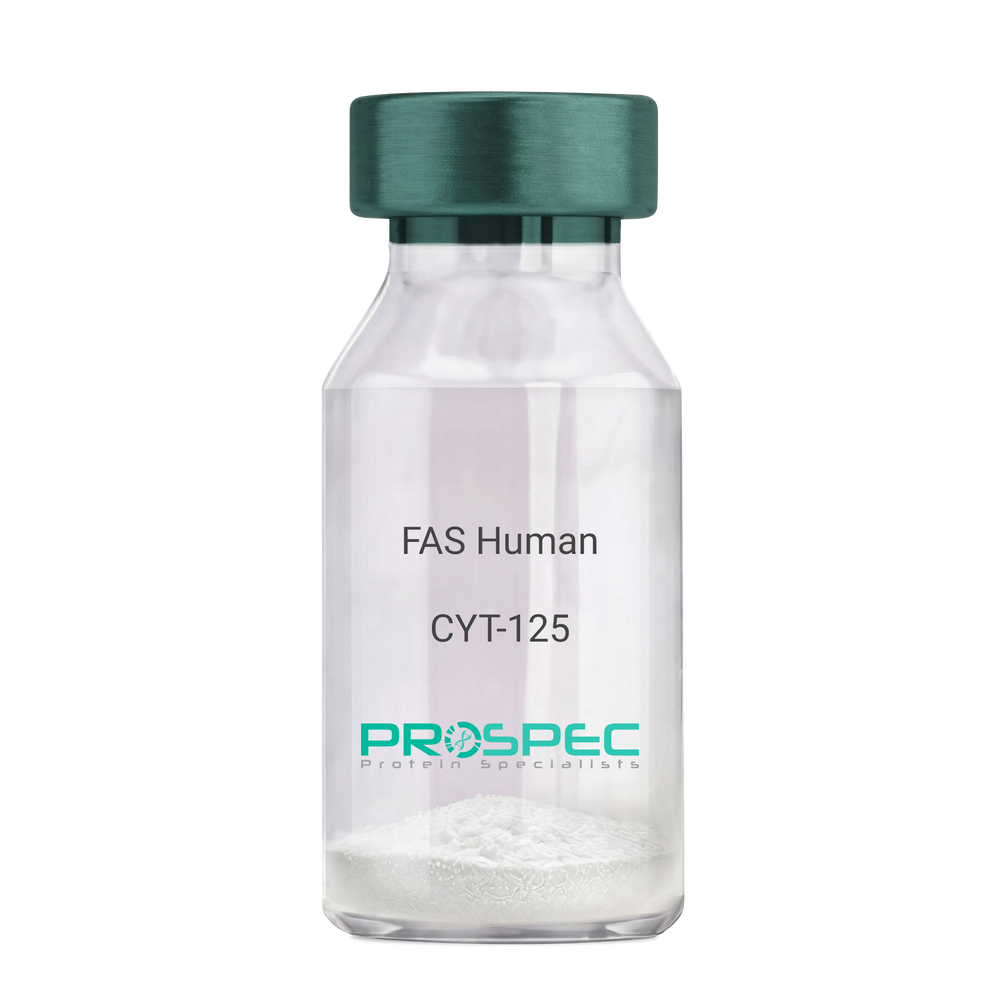
    FAS Human

    Description:

    sFas Receptor Human Recombinant

    Tumor necrosis factor receptor superfamily member 6, Apo-1 antigen, Apoptosis-mediating surface antigen FAS, FASLG receptor, CD95, FAS, APT1, FAS1, APO-1, FASTM, ALPS1A, TNFRSF6.

    Product # :

    CYT-125

    Price :

    Quantity :

    Shipping Method :

    Room Temp Icon

    Shipped at Room temp

    Add To Cart

    More Info

    • description
    • source
    • formulation
    • purity
    • biological activity
    • More Info

    Description

    sFas Receptor Human Recombinant produced in E.coli is a single, non-glycosylated polypeptide chain containing 157 amino acids and having a molecular mass of 17.6kDa.The FAS is purified by proprietary chromatographic techniques.

    Source

    Escherichia Coli.

    Formulation

    FAS protein was lyophilized from a 0.2µm filtered concentrated solution in 1×PBS, pH 7.4.

    Purity

    Greater than 95.0% as determined by:
    (a) Analysis by RP-HPLC.
    (b) Analysis by SDS-PAGE.

    Biological Activity

    The ED50 was determined by its ability to inhibit the cytotoxicity of Jurkat cells is between 10-15 µg/ml in the presence of 2ng/ml of hFasL.

    More Info

    • Introduction

      Fas and Fas Ligand (FasL) are members of the TNF superfamily and are type I and type II transmembrane proteins, respectively. Binding of FasL to Fas initiates apoptosis in Fas-bearing cells. The apoptosis mechanism involves the recruitment of pro-caspase 8 through an adaptor molecule named FADD followed by processing of the pro-enzyme to active forms. These active caspases subsequently cleave a variety of cellular substrates leading to the eventual cell death. sFasR is able to inhibit FasL-induced apoptosis by acting as a decoy receptor whicht serves as a sink for FasL. The full length Fas Receptor is a 319 a.a type I transmembrane protein, which contains a 157 a.a extracellular domain, a 17 a.a transmembrane domain, and 145 a.a cytoplasmic domain. The mature human Fas ECD shares 55%, 58%, a.a sequence identity with the mouse, rat, Fas, respectively.

    • Synonyms

      Tumor necrosis factor receptor superfamily member 6, Apo-1 antigen, Apoptosis-mediating surface antigen FAS, FASLG receptor, CD95, FAS, APT1, FAS1, APO-1, FASTM, ALPS1A, TNFRSF6.

    • Physical Appearance

      Sterile Filtered White lyophilized (freeze-dried) powder.

    • Stability

      Lyophilized FAS although stable at room temperature for 3 weeks, should be stored desiccated below -18°C. Upon reconstitution FAS should be stored at 4°C between 2-7 days and for future use below -18°C. For long term storage it is recommended to add a carrier protein (0.1% HSA or BSA). Please prevent freeze-thaw cycles.

    • Solubility

      It is recommended to reconstitute the lyophilized FAS in sterile 18M-cm H2O not less than 100µg/ml, which can then be further diluted to other aqueous solutions.

    • Amino Acid Sequence

      MRLSSKSVNA QVTDINSKGL ELRKTVTTVE TQNLEGLHHD GQFCHKPCPP GERKARDCTV NGDEPDCVPC QEGKEYTDKA HFSSKCRRCR LCDEGHGLEV EINCTRTQNT KCRCKPNFFC NSTVCEHCDP CTKCEHGIIK ECTLTSNTKC KEEGSRS.

    • Background

      What is the molecular weight/Mw of FAS Protein?
      FAS Protein has a total Mw of 17.6kDa.

      What is the source or expression system of FAS Protein?
      Escherichia Coli.

      What is the Purity of FAS Protein?
      FAS Protein is >95% pure as determined by SDS-PAGE.

      What is the Biological Activity of FAS Protein?
      The ED50 was determined by its ability to inhibit the cytotoxicity of Jurkat cells is between 10-15 µg/ml in the presence of 2ng/ml of hFasL.

      What is the amino acid sequence of FAS Protein?
      MRLSSKSVNA QVTDINSKGL ELRKTVTTVE TQNLEGLHHD GQFCHKPCPP GERKARDCTV NGDEPDCVPC QEGKEYTDKA HFSSKCRRCR LCDEGHGLEV EINCTRTQNT KCRCKPNFFC NSTVCEHCDP CTKCEHGIIK ECTLTSNTKC KEEGSRS.

      What applications can FAS Protein be used in?
      FAS Protein can probably be used in western blot, ELISA and Lateral Flow.

      What is the endotoxin level for FAS Protein?
      The endotoxin level is minimal, FAS Protein was purified using conventional chromatography techniques..

    ProSpec's products are furnished for LABORATORY RESEARCH USE ONLY. The product may not be used as drugs, agricultural or pesticidal products, food additives or household chemicals.

    Fas Human
  • View Data Sheet

    Name :

    RTN4R Human

    Description:

    Reticulon 4 Receptor Human Recombinant

    Reticulon 4 Receptor, Nogo-66 Receptor, Nogo Receptor, NOGOR, NGR , Reticulon-4 Receptor, UNQ330/PRO526.

    Product # :

    PRO-2353

    Price :

    Quantity :

    Shipping Method :

    Ice Icon

    Shipped with Ice Packs

    Add To Cart

    More Info

    • description
    • source
    • formulation
    • purity
    • More Info

    Description

    RTN4R produced in Sf9 Baculovirus cells is a single, glycosylated polypeptide chain containing 429 amino acids (27-447 a.a.) and having a molecular mass of 46.3kDa (Molecular size on SDS-PAGE will appear at approximately 40-57 kDa). RTN4R is expressed with a 8 amino acid His tag at C-Terminus and purified by proprietary chromatographic techniques.

    Source

    Sf9, Baculovirus cells.

    Formulation

    RTN4R protein solution (0.5mg/ml) contains Phosphate Buffered Saline (pH 7.4) and 10% glycerol.

    Purity

    Greater than 90.0% as determined by SDS-PAGE.

    More Info

    • Introduction

      Reticulon 4 Receptor, also known as RTN4R, plays a role as a receptor for RTN4, OMG and MAG. RTN4R is a glycosylphosphoinositol (GPI)-anchored protein which is a part from the Nogo recptor family. RTN4R is expressed mainly in neurons and their axons and is regulates axonal regeneration and plasticity in the adult central nervous system. RTN4R is a potential drug target for treating various neurological cases such as spinal cord injury, CNS lesions, stroke and Alzheimer's disease.

    • Synonyms

      Reticulon 4 Receptor, Nogo-66 Receptor, Nogo Receptor, NOGOR, NGR , Reticulon-4 Receptor, UNQ330/PRO526.

    • Physical Appearance

      Sterile Filtered colorless solution.

    • Stability

      Store at 4°C if entire vial will be used within 2-4 weeks. Store, frozen at -20°C for longer periods of time. For long term storage it is recommended to add a carrier protein (0.1% HSA or BSA). Avoid multiple freeze-thaw cycles.

    • Amino Acid Sequence

      CPGACVCYNE PKVTTSCPQQ GLQAVPVGIP AASQRIFLHG NRISHVPAAS FRACRNLTIL WLHSNVLARI DAAAFTGLAL LEQLDLSDNA QLRSVDPATF HGLGRLHTLH LDRCGLQELG PGLFRGLAAL QYLYLQDNAL QALPDDTFRD LGNLTHLFLH GNRISSVPER AFRGLHSLDR LLLHQNRVAH VHPHAFRDLG RLMTLYLFAN NLSALPTEAL APLRALQYLR LNDNPWVCDC RARPLWAWLQ KFRGSSSEVP CSLPQRLAGR DLKRLAANDL QGCAVATGPY HPIWTGRATD EEPLGLPKCC QPDAADKASV LEPGRPASAG NALKGRVPPG DSPPGNGSGP RHINDSPFGT LPGSAEPPLT AVRPEGSEPP GFPTSGPRRR PGCSRKNRTR SHCRLGQAGS GGGGTGDSEG SLEHHHHHH.

    ProSpec's products are furnished for LABORATORY RESEARCH USE ONLY. The product may not be used as drugs, agricultural or pesticidal products, food additives or household chemicals.

    Rtn4R Human
  • View Data Sheet

    Name :

    SYT13 Human

    Description:

    Synaptotagmin XIII Human Recombinant

    Synaptotagmin XIII, KIAA1427, synaptotagmin-13, sytXIII.

    Product # :

    PRO-1550

    Price :

    Quantity :

    Shipping Method :

    Ice Icon

    Shipped with Ice Packs

    Add To Cart

    More Info

    • description
    • source
    • formulation
    • purity
    • More Info

    Description

    SYT13 Human Recombinant produced in E.coli is a single, non-glycosylated polypeptide chain containing 420 amino acids (30-426) and having a molecular mass of 46.5kDa.SYT13 is fused to a 23 amino acid His-tag at N-terminus & purified by proprietary chromatographic techniques.

    Source

    Escherichia Coli.

    Formulation

    The SYT13 solution (0.25mg/ml) contains 20mM Tris-HCl buffer (pH 8.0), 0.15M NaCl, 1mM DTT, 1mM PMSF, 1mM EDTA and 30% glycerol.

    Purity

    Greater than 85% as determined by SDS-PAGE.

    More Info

    • Introduction

      SYT13 belongs to the great synaptotagmin protein family which contain 2 domains: cytoplasmic C terminus with two tandem C2 domains (C2A and C2B) and extracellular N-terminal transmembrane domain. Synaptotogmin family members have dissimilar biochemical properties and developmental profiles, and patterns of tissue distribution. Additionally, Synaptotogmins formulate homo- and heteromeric complexes with each other. Synaptotagmins operate as membrane traffickers in multicellular organisms.

    • Synonyms

      Synaptotagmin XIII, KIAA1427, synaptotagmin-13, sytXIII.

    • Physical Appearance

      Sterile Filtered clear solution.

    • Stability

      Store at 4°C if entire vial will be used within 2-4 weeks. Store, frozen at -20°C for longer periods of time. For long term storage it is recommended to add a carrier protein (0.1% HSA or BSA).Avoid multiple freeze-thaw cycles.

    • Amino Acid Sequence

      MGSSHHHHHH SSGLVPRGSH MGSCRHMHPK KGLLPRDQDP DLEKAKPSLL GSAQQFNVKK STEPVQPRAL LKFPDIYGPR PAVTAPEVIN YADYSLRSTE EPTAPASPQP PNDSRLKRQV TEELFILPQN GVVEDVCVME TWNPEKAASW NQAPKLHYCL DYDCQKAELF VTRLEAVTSN HDGGCDCYVQ GSVANRTGSV EAQTALKKRQ LHTTWEEGLV LPLAEEELPT ATLTLTLRTC DRFSRHSVAG ELRLGLDGTS VPLGAAQWGE LKTSAKEPSA GAGEVLLSIS YLPAANRLLV VLIKAKNLHS NQSKELLGKD VSVKVTLKHQ ARKLKKKQTK RAKHKINPVW NEMIMFELPD DLLQASSVEL EVLGQDDSGQ SCALGHCSLG LHTSGSERSH WEEMLKNPRR QIAMWHQLHL

    ProSpec's products are furnished for LABORATORY RESEARCH USE ONLY. The product may not be used as drugs, agricultural or pesticidal products, food additives or household chemicals.

    Syt13 Human
  • View Data Sheet

    Name :

    S100A6 Mouse

    Description:

    S100 Calcium Binding Protein A6 Mouse Recombinant

    Protein S100-A6, S100 calcium-binding protein A6, Calcyclin, Prolactin receptor-associated protein, 5B10, S100a6, Cacy, 2A9, PRA.

    Product # :

    PRO-240

    Price :

    Quantity :

    Shipping Method :

    Ice Icon

    Shipped with Ice Packs

    Add To Cart

    More Info

    • description
    • source
    • formulation
    • purity
    • More Info

    Description

    S100A6 produced in E.Coli is a single, non-glycosylated polypeptide chain containing 109 amino acids (1-89 a.a) and having a molecular mass of 12.2kDa.S100A6 is fused to a 20 amino acid His-tag at N-terminus & purified by proprietary chromatographic techniques.

    Source

    Escherichia Coli.

    Formulation

    S100A6 protein solution (0.5mg/ml) containing 20mM Tris-HCl buffer (pH 8.0), 1mM DTT, 30% glycerol and 100mM NaCl.

    Purity

    Greater than 95.0% as determined by SDS-PAGE.

    More Info

    • Introduction

      S100A6 is a member of the S100 family of proteins containing 2 EF-hand calcium-binding motifs. S100 proteins are localized either in the cytoplasm or the nucleus of a wide range of cells. S100 proteins are involved in the regulation of a number of cellular processes such as cell cycle progression and differentiation. There are at least 13 members in the S100 gene family, which are located as a cluster on chromosome 1q21.
      S100A6 may function in stimulation prolactin secretion, and exocytosis. Chromosomal rearrangements and altered expression of the S100A6 gene are implicated in melanoma.

    • Synonyms

      Protein S100-A6, S100 calcium-binding protein A6, Calcyclin, Prolactin receptor-associated protein, 5B10, S100a6, Cacy, 2A9, PRA.

    • Physical Appearance

      Sterile Filtered clear solution.

    • Stability

      Store at 4°C if entire vial will be used within 2-4 weeks. Store, frozen at -20°C for longer periods of time. For long term storage it is recommended to add a carrier protein (0.1% HSA or BSA).Avoid multiple freeze-thaw cycles.

    • Amino Acid Sequence

      MGSSHHHHHH SSGLVPRGSH MACPLDQAIG LLVAIFHKYS GKEGDKHTLS KKELKELIQK ELTIGSKLQD AEIARLMDDL DRNKDQEVNF QEYVAFLGAL ALIYNEALK.

    ProSpec's products are furnished for LABORATORY RESEARCH USE ONLY. The product may not be used as drugs, agricultural or pesticidal products, food additives or household chemicals.

    S100A6 Mouse
  • View Data Sheet

    Name :

    RELT Human

    Description:

    RELT Human Recombinant

    RELT, TNF Receptor, Receptor Expressed In Lymphoid Tissues, Tumor Necrosis Factor Receptor Superfamily Member 19L, RELT Tumor Necrosis Factor Receptor, TNFRSF19L, Tumor Necrosis Factor Receptor Superfamily, Member 19-Like, TRLT.

    Product # :

    CYT-1101

    Price :

    Quantity :

    Shipping Method :

    Ice Icon

    Shipped with Ice Packs

    Add To Cart

    More Info

    • description
    • source
    • formulation
    • purity
    • More Info

    Description

    RELT produced in Sf9 Baculovirus cells is a single, glycosylated polypeptide chain containing 376 amino acids (26-162a.a.) and having a molecular mass of 41.4kDa. (Molecular size on SDS-PAGE will appear at approximately 40-57kDa).RELT is expressed with a 239 amino acid hIgG-His-tag at C-Terminus and purified by proprietary chromatographic techniques.

    Source

    Sf9, Baculovirus cells.

    Formulation

    RELT protein solution (0.5mg/ml) contains 10% glycerol & Phosphate Buffered Saline (pH 7.4).

    Purity

    Greater than 90% as determined by SDS-PAGE.

    More Info

    • Introduction

      RELTis expressed in hematopoietic tissues and peripheral blood leukocytesand is a part of thetumor necrosis factor receptor superfamily. RELT mediates activation of NF-kappa-B and takes part in T-cell activation.overexpression of RELT in HEK-293 cells induces p38 and JNK signalling and leads to apoptosis. it can also costimulate T-cell proliferation in the presence of CD3 signalling.

    • Synonyms

      RELT, TNF Receptor, Receptor Expressed In Lymphoid Tissues, Tumor Necrosis Factor Receptor Superfamily Member 19L, RELT Tumor Necrosis Factor Receptor, TNFRSF19L, Tumor Necrosis Factor Receptor Superfamily, Member 19-Like, TRLT.

    • Physical Appearance

      Sterile filtered colorless solution.

    • Stability

      Store at 4°C if entire vial will be used within 2-4 weeks. Store, frozen at -20°C for longer periods of time. For long term storage it is recommended to add a carrier protein (0.1% HSA or BSA).Avoid multiple freeze-thaw cycles.

    • Amino Acid Sequence

      STTLWQCPPG EEPDLDPGQG TLCRPCPPGT FSAAWGSSPC QPHARCSLWR RLEAQVGMAT
      RDTLCGDCWP GWFGPWGVPR VPCQPCSWAPLGTHGCDEWG RRARRGVEVA AGASSGGETR QPGNGTRAGG PEETAAQVEP KSCDKTHTCP PCPAPELLGG PSVFLFPPKP KDTLMISRTP EVTCVVVDVS HEDPEVKFNW YVDGVEVHNA KTKPREEQYN STYRVVSVLT VLHQDWLNGK EYKCKVSNKA LPAPIEKTIS KAKGQPREPQ VYTLPPSRDE LTKNQVSLTC LVKGFYPSDI AVEWESNGQP ENNYKTTPPV LDSDGSFFLY SKLTVDKSRW QQGNVFSCSV MHEALHNHYT QKSLSLSPGK HHHHHH

    ProSpec's products are furnished for LABORATORY RESEARCH USE ONLY. The product may not be used as drugs, agricultural or pesticidal products, food additives or household chemicals.

    Relt Human
  • View Data Sheet

    Name :

    SLA2 Human

    Description:

    Src-Like-Adaptor 2 Human Recombinant

    Src-like-adapter 2, Modulator of antigen receptor signaling, MARS, Src-like adapter protein 2, SLAP-2, SLA2, C20orf156, SLAP2, Src-like-adapter 2 isoform a, Src-like-adaptor 2, C20orf156, MARS, SLAP-2, SLAP2.

    Product # :

    PRO-1810

    Price :

    Quantity :

    Shipping Method :

    Ice Icon

    Shipped with Ice Packs

    Add To Cart

    More Info

    • description
    • source
    • formulation
    • purity
    • More Info

    Description

    SLA2 Human Recombinant produced in E.Coli is a single, non-glycosylated polypeptide chain containing 284 amino acids (1-261 a.a.) and having a molecular mass of 31kDa.SLA2 is fused to a 23 amino acid His-tag at N-terminus & purified by proprietary chromatographic techniques.

    Source

    Escherichia Coli.

    Formulation

    SLA2 protein solution (0.5mg/ml) contains 20mM Tris-HCl buffer, (pH 8.0), 10% glycerol and 0.4M Urea.

    Purity

    Greater than 80.0% as determined by SDS-PAGE.

    More Info

    • Introduction

      Src-Like-Adaptor 2, also known as SLA2, is a part of the SLAP family of adapter proteins. SLA2 acts as a significant receptor-proximal in downregulating T and B cell-mediated responses and inhibits antigen receptor-induced calcium mobilization. SLA2 interacts with Cas-Br-M (murine) ecotropic retroviral transforming sequence c.

    • Synonyms

      Src-like-adapter 2, Modulator of antigen receptor signaling, MARS, Src-like adapter protein 2, SLAP-2, SLA2, C20orf156, SLAP2, Src-like-adapter 2 isoform a, Src-like-adaptor 2, C20orf156, MARS, SLAP-2, SLAP2.

    • Physical Appearance

      Sterile Filtered colorless solution.

    • Stability

      Store at 4°C if entire vial will be used within 2-4 weeks. Store, frozen at -20°C for longer periods of time. For long term storage it is recommended to add a carrier protein (0.1% HSA or BSA).Avoid multiple freeze-thaw cycles.

    • Amino Acid Sequence

      MGSSHHHHHH SSGLVPRGSH MGSMGSLPSR RKSLPSPSLS SSVQGQGPVT MEAERSKATA VALGSFPAGG PAELSLRLGE PLTIVSEDGD WWTVLSEVSG REYNIPSVHV AKVSHGWLYE GLSREKAEEL LLLPGNPGGA FLIRESQTRR GSYSLSVRLS RPASWDRIRH YRIHCLDNGW LYISPRLTFP SLQALVDHYS ELADDICCLL KEPCVLQRAG PLPGKDIPLP VTVQRTPLNW KELDSSLLFS EAATGEESLL SEGLRESLSF YISLNDEAVS LDDA.

    ProSpec's products are furnished for LABORATORY RESEARCH USE ONLY. The product may not be used as drugs, agricultural or pesticidal products, food additives or household chemicals.

    Sla2 Human
  • View Data Sheet

    Name :

    HAVCR2 Human

    Description:

    Hepatitis A Virus Cellular Receptor 2 Human Recombinant

    Hepatitis A virus cellular receptor 2, HAVcr-2, T-cell immunoglobulin and mucin domain-containing protein 3, TIMD-3, T-cell membrane protein 3, TIM-3, HAVCR2, TIM3, TIMD3, TIM3, KIM-3.

    Product # :

    HAV-224

    Price :

    Quantity :

    Shipping Method :

    Ice Icon

    Shipped with Ice Packs

    Add To Cart

    More Info

    • description
    • source
    • formulation
    • purity
    • More Info

    Description

    Recombinant Human HAVCR2 produced in E. coli is a single polypeptide chain containing 206 amino acids (aa 22-202) and having a molecular mass of 22.7kDa.HAVCR2 is fused to a 25 amino acid His-tag at N-terminus & purified by proprietary chromatographic techniques.

    Source

    Escherichia Coli.

    Formulation

    The HAVCR2 solution (1mg/ml) contains 20mM Tris-HCl buffer (pH 8.0), 0.4M urea and 10% glycerol.

    Purity

    Greater than 90% as determined by SDS-PAGE.

    More Info

    • Introduction

      Hepatitis A Virus Cellular Receptor 2 (HAVCR2) is a member of the immunoglobulin superfamily. HACVR2 controls macrophage activation. HACVR2 inhibits T-helper type 1 lymphocyte (Th1)-mediated auto- and alloimmune responses and stimulates immunological tolerance.

    • Synonyms

      Hepatitis A virus cellular receptor 2, HAVcr-2, T-cell immunoglobulin and mucin domain-containing protein 3, TIMD-3, T-cell membrane protein 3, TIM-3, HAVCR2, TIM3, TIMD3, TIM3, KIM-3.

    • Physical Appearance

      Sterile filtered colorless solution.

    • Stability

      Store at 4°C if entire vial will be used within 2-4 weeks. Store, frozen at -20°C for longer periods of time. For long term storage it is recommended to add a carrier protein (0.1% HSA or BSA).Avoid multiple freeze-thaw cycles.

    • Amino Acid Sequence

      MGSSHHHHHH SSGLVPRGSH MGSHMSEVEY RAEVGQNAYL PCFYTPAAPG NLVPVCWGKG ACPVFECGNV VLRTDERDVN YWTSRYWLNG DFRKGDVSLT IENVTLADSG IYCCRIQIPG IMNDEKFNLK LVIKPAKVTP APTLQRDFTA AFPRMLTTRG HGPAETQTLG SLPDINLTQI STLANELRDS RLANDLRDSG ATIRIG.

    ProSpec's products are furnished for LABORATORY RESEARCH USE ONLY. The product may not be used as drugs, agricultural or pesticidal products, food additives or household chemicals.

    Havcr2 Human
  • View Data Sheet

    Name :

    DDR2 Human

    Description:

    Discoidin Domain Receptor Tyrosine Kinase 2 Human Recombinant

    Discoidin domain-containing receptor 2, DDR2, MIG20a, NTRKR3, TKT, TYR010, Discoidin Domain Receptor Tyrosine Kinase 2, CD167 antigen-like family member B, Discoidin domain-containing receptor tyrosine kinase 2, Neurotrophic tyrosine kinase, receptor-related 3, Receptor protein-tyrosine kinase TKT, Tyrosine-protein kinase TYRO10, CD_antigen: CD167b.

    Product # :

    PKA-329

    Price :

    Quantity :

    Shipping Method :

    Ice Icon

    Shipped with Ice Packs

    Add To Cart

    More Info

    • description
    • source
    • formulation
    • purity
    • More Info

    Description

    DDR2 Human Recombinant produced in Sf9 Baculovirus cells is a single, glycosylated polypeptide chain containing 386 amino acids (22-399a.a) and having a molecular mass of 43.7kDa. (Molecular size on SDS-PAGE will appear at approximately 40-57kDa).DDR2 is fused to 8 amino acid His-tag at C-terminus & purified by proprietary chromatographic techniques.

    Source

    Sf9, Baculovirus cells.

    Formulation

    DDR2 solution (0.5mg/ml) contains Phosphate Buffered Saline (pH 7.4) and 10% glycerol.

    Purity

    Greater than 90% as determined by SDS-PAGE.

    More Info

    • Introduction

      Discoidin Domain Receptor Tyrosine Kinase 2 (DDR2) which is mostly expressed in mesenchymal cells is a part of the discoidin-like domain containing subfamily of receptor tyrosine kinases. DDR2 whose ligand is fibrillar collagen rather than a growth factor-like peptide is unique among RTKs. DDR2 regulates cell differentiation, remodeling of the extracellular matrix, cell migration and cell proliferation. DDR2 is also essential for normal bone development.

    • Synonyms

      Discoidin domain-containing receptor 2, DDR2, MIG20a, NTRKR3, TKT, TYR010, Discoidin Domain Receptor Tyrosine Kinase 2, CD167 antigen-like family member B, Discoidin domain-containing receptor tyrosine kinase 2, Neurotrophic tyrosine kinase, receptor-related 3, Receptor protein-tyrosine kinase TKT, Tyrosine-protein kinase TYRO10, CD_antigen: CD167b.

    • Physical Appearance

      Sterile Filtered colorless solution.

    • Stability

      Store at 4°C if entire vial will be used within 2-4 weeks. Store, frozen at -20°C for longer periods of time. For long term storage it is recommended to add a carrier protein (0.1% HSA or BSA).Avoid multiple freeze-thaw cycles.

    • Amino Acid Sequence

      KAQVNPAICR YPLGMSGGQI PDEDITASSQ WSESTAAKYG RLDSEEGDGA WCPEIPVEPD DLKEFLQIDL HTLHFITLVG TQGRHAGGHG IEFAPMYKIN YSRDGTRWIS WRNRHGKQVL DGNSNPYDIF LKDLEPPIVA RFVRFIPVTD HSMNVCMRVE LYGCVWLDGL VSYNAPAGQQ FVLPGGSIIY LNDSVYDGAV GYSMTEGLGQ LTDGVSGLDD FTQTHEYHVW PGYDYVGWRN ESATNGYIEI MFEFDRIRNF TTMKVHCNNM FAKGVKIFKE VQCYFRSEAS EWEPNAISFP LVLDDVNPSA RFVTVPLHHR MASAIKCQYH FADTWMMFSE ITFQSDAAMY NNSEALPTSP MAPTTYDPML KVDDSNTRLE HHHHHH.

    ProSpec's products are furnished for LABORATORY RESEARCH USE ONLY. The product may not be used as drugs, agricultural or pesticidal products, food additives or household chemicals.

    Ddr2 Human
  • View Data Sheet

    Name :

    M6PR (1-60) Human

    Description:

    Mannose-6-Phosphate Receptor (1-60) Human Recombinant

    CD-MPR, MPR46, MPR 46, 46-KDa Mannose 6-Phosphate Receptor, MPR-46.

    Product # :

    PRO-2827

    Price :

    Quantity :

    Shipping Method :

    Room Temp Icon

    Shipped at Room temp

    Add To Cart

    More Info

    • description
    • source
    • formulation
    • purity
    • More Info

    Description

    The M6PRHuman is created as a recombinant protein with a 4kda N-terminal fusion of His Tag. The M6PRHis-Tagged Fusion Protein, produced in E. coli, is a 12kDa protein containing 60 amino acid residues of the M6PRHuman, 1-60 amino acids.

    Source

    Escherichia Coli.

    Formulation

    Each mg was lyophilized with 1xPBS, 0.4% SDS and 4mM DTT.

    Purity

    Greater than 90% as determined by SDS-PAGE.

    More Info

    • Synonyms

      CD-MPR, MPR46, MPR 46, 46-KDa Mannose 6-Phosphate Receptor, MPR-46.

    • Physical Appearance

      Filtered White lyophilized (freeze-dried) powder.

    • Stability

      Store lyophilized M6PRat -20°C. Aliquot the product after reconstitution to avoid repeated freezing/thawing cycles. Reconstituted protein can be stored at 4°C for a limited period of time; it does not show any change after two weeks at 4°C.

    • Solubility

      It is recommended to add deionized water to prepare a working stock solution of approximately 0.5mg/ml and let the lyophilized pellet dissolve completely. Product is not sterile! Please filter the product by an appropriate sterile filter before using it on cell culture.

    • Background

      Mannose-6-Phosphate Receptor (M6PR) is a part of the P-type lectin family.

      P-type lectins have an important part in lysosome function through the specific transport of mannose-6-phosphate-containing acid hydrolases from the Golgi complex to lysosomes.

      The M6PR protein plays a role as a homodimer and needs divalent cations for ligand binding.

      Lysosomal enzymes carrying phosphomannosyl residues bind specifically to mannose-6-phosphate receptors in the Golgi apparatus and the ensuing receptor-ligand complex is transferred to an acidic prelyosomal compartment where the low pH mediates the dissociation of the complex.

    ProSpec's products are furnished for LABORATORY RESEARCH USE ONLY. The product may not be used as drugs, agricultural or pesticidal products, food additives or household chemicals.

    M6Pr Protein
  • View Data Sheet

    Name :

    TNFRSF10A Human Fc

    Description:

    TRAIL Receptor-1 Human Recombinant Fc

    Tumor Necrosis Factor Receptor Superfamily Member 10a, TRAILR1, APO2, DR4, TNF-Related Apoptosis-Inducing Ligand Receptor 1, Death Receptor 4, TRAIL Receptor 1, TRAIL-R1, Tumor Necrosis Factor Receptor Superfamily Member 10a Variant 2, Tumor Necrosis Factor Receptor Superfamily Member 10A, Cytotoxic TRAIL Receptor, CD261 Antigen, TRAILR-1, CD261, TNFRSF10A.

    Product # :

    CYT-877

    Price :

    Quantity :

    Shipping Method :

    Room Temp Icon

    Shipped at Room temp

    Add To Cart

    More Info

    • description
    • source
    • formulation
    • purity
    • biological activity
    • More Info

    Description

    TRAIL R1 Fc Human Recombinant (24-240) produced in E.Coli is a non-glycosylated, disulfide-linked homodimer containing two polypeptide chains of 217 amino acids each and having a molecular mass of 41kDa [including tag] each chain. TRAILR1 is fused to a 236 amino acid Fc tag at C-terminal and purified by proprietary chromatographic techniques.

    Source

    Escherichia Coli.

    Formulation

    Lyophilized from a 0.2µm filtered solution in PBS.

    Purity

    Greater than 95.0% as determined by SDS-PAGE.

    Biological Activity

    The ED50, as measured by its ability to inhibit Trail-mediated cytotoxicity in mouse L-929 cells, is less than 1.25ng/ml.

    More Info

    • Introduction

      Human TNFRSF10A is a type 1 transmembrane protein in the TNF R superfamily. TNFRSF10A is not expressed in rodents. The trimeric ligand Trail binds TNFRSF10A and induces apoptosis, and recombinant, soluble forms of the receptor inhibit Trail-induced apoptosis. TNFRSF10A is expressed generally in damaged, infected, and malignant cells. TNFRSF10A functions in immune surveillance, inducing apoptosis in cancer cells but not normal cells.

    • Synonyms

      Tumor Necrosis Factor Receptor Superfamily Member 10a, TRAILR1, APO2, DR4, TNF-Related Apoptosis-Inducing Ligand Receptor 1, Death Receptor 4, TRAIL Receptor 1, TRAIL-R1, Tumor Necrosis Factor Receptor Superfamily Member 10a Variant 2, Tumor Necrosis Factor Receptor Superfamily Member 10A, Cytotoxic TRAIL Receptor, CD261 Antigen, TRAILR-1, CD261, TNFRSF10A.

    • Physical Appearance

      Sterile Filtered White lyophilized (freeze-dried) powder.

    • Stability

      Lyophilized TNFRSF10A although stable at room temperature for 3 weeks, should be stored desiccated below -18°C. Upon reconstitution TRAIL-R1 should be stored at 4°C between 2-7 days and for future use below -18°C.For long term storage it is recommended to add a carrier protein (0.1% HSA or BSA).Please prevent freeze-thaw cycles.

    • Solubility

      It is recommended to reconstitute the lyophilized TNFRSF10A in sterile 18M-cm H2O not less than 100µg/ml, which can then be further diluted to other aqueous solutions.

    • Amino Acid Sequence

      ASGTEAAAAT PSKVWGSSAG RIEPRGGGRG ALPTSMGQHG PSARARAGRA PGPRPAREAS PRLRVHKTFK FVVVGVLLQV VPSSAATIKL HDQSIGTQQW EHSPLGELCP PGSHRSERPG ACNRCTEGVG YTNASNNLFA CLPCTACKSD EEERSPCTTT RNTACQCKPG TFRNDNSAEM CRKCSTGCPR GMVKVKDCTP WSDIECVHKE SGNGHNIEGR MDPKSCDKTH TCPPCPAPEL LGGPSVFLFP PKPKDTLMIS RTPEVTCVVV DVSHEDPEVK FNWYVDGVEV HNAKTKPREE QYNSTYRVVS VLTVLHQDWL NGKEYKCKVS NKALPAPIEK TISKAKGQPR EPQVYTLPPS RDELTKNQVS LTCLVKGFYP SDIAVEWESN GQPENNYKTT PPVLDSDGSF FLYSKLTVDK SRWQQGNVFS CSVMHEALHN HYTQKSLSLS PGK.

    ProSpec's products are furnished for LABORATORY RESEARCH USE ONLY. The product may not be used as drugs, agricultural or pesticidal products, food additives or household chemicals.

    Tnfrsf10A Human Fc
  • View Data Sheet

    Name :

    PRL R Rat

    Description:

    Prolactin Soluble Receptor Rat Recombinant

    PRL-R, Prolactin receptor, Lactogen receptor, Prlr.

    Product # :

    CYT-533

    Price :

    Quantity :

    Shipping Method :

    Room Temp Icon

    Shipped at Room temp

    Add To Cart

    More Info

    • description
    • source
    • formulation
    • purity
    • biological activity
    • More Info

    Description

    Prolactin Receptor Rat Extra Celleular Domain Recombinant produced in E.Coli is a non-glycosylated, Polypeptide chain containing 206 amino acids and having a molecular mass of 24120 Dalton. The Prolactin Receptor is purified by proprietary chromatographic techniques.

    Source

    Escherichia Coli.

    Formulation

    The protein was lyophilized from a concentrated (1mg/ml) solution with 0.0045mM NaHCO3.

    Purity

    Greater than 97.0% as determined by:
    (a) Analysis by SEC-HPLC.
    (b) Analysis by SDS-PAGE.

    Biological Activity

    Activity is determined by the dose-dependant inhibition of Prolactin-stimuled proliferation of Nb2 cells and by high affinity binding of oPLR and other lactogenic hormones.

    More Info

    • Introduction

      Prolactin is a pituitary hormone involved in the stimulation of milk production, salt and water regulation, growth, development and reproduction. The initial step in its action is the binding to a specific membrane receptor (prolactin receptor) which belongs to the superfamily of class 1 cytokine receptors. The function of the prolactin receptor is mediated, at least in part, by two families of signaling molecules: Janus kinases and signal transducers and activators of transcription. Prolactin (PRL) is a hormone involved in a variety of important functions including ion transport and osmoregulation, stimulation of milk, protein synthesis as well as the regulation of numerous reproductive functions. PRL exerts its influence on different cell types through a signal transduction pathway which begins with the binding of the hormone to a transmembrane PRL receptor. Immunoreactive PRL receptor, a member of the cytokine receptor family, varies in size (short and long forms) with tissue source and species, from ~40 kDa to 100 kDa. The PRL receptor consists of at least three separate domains: an extracellular region with 5 cysteines which contains the prolactin binding site, a single transmembrane domain and a cytoplasmic region, the length of which appears to influence ligand binding and regulate cellular function.

    • Synonyms

      PRL-R, Prolactin receptor, Lactogen receptor, Prlr.

    • Physical Appearance

      Sterile Filtered White lyophilized (freeze-dried) powder.

    • Stability

      Lyophilized PRL-R although stable at room temperature for 3 weeks, should be stored desiccated below -18°C. Upon reconstitution Prolactin Receptor should be stored at 4°C between 2-7 days and for future use below -18°C.For long term storage it is recommended to add a carrier protein (0.1% HSA or BSA).Please prevent freeze-thaw cycles.

    • Solubility

      It is recommended to reconstitute the lyophilized PRL-R in sterile 18MΩ-cm H2O not less than 100µg/ml, which can then be further diluted to other aqueous solutions.

    • Amino Acid Sequence

      The sequence of the first five N-terminal amino acids was determined and was found to be Gly-Lys-Pro-Glu-Ile.

    • Protein content

      Protein quantitation was carried out by two independent methods 1. UV spectroscopy at 280 nm using the absorbency value of 2.48 as the extinction coefficient for a 0.1% (1mg/ml) solution. This value is calculated by the PC GENE computer analysis program of protein sequences (IntelliGenetics).2. Analysis by RP-HPLC, using a standard solution of PRLr-ECD as a Reference Standard.

    ProSpec's products are furnished for LABORATORY RESEARCH USE ONLY. The product may not be used as drugs, agricultural or pesticidal products, food additives or household chemicals.

    Prlr Rat
  • View Data Sheet

    Name :

    IL5RA Mouse

    Description:

    Interleukin-5 Receptor Alpha Mouse Recombinant

    Interleukin-5 receptor subunit alpha, IL-5 receptor subunit alpha, IL-5R subunit alpha, IL-5R-alpha, IL-5RA, CD125.

    Product # :

    CYT-955

    Price :

    Quantity :

    Shipping Method :

    Ice Icon

    Shipped with Ice Packs

    Add To Cart

    More Info

    • description
    • source
    • formulation
    • purity
    • More Info

    Description

    IL5RA Mouse Recombinant produced in Sf9 Baculovirus cells is a single, glycosylated polypeptide chain containing 330 amino acids (18-339a.a.) and having a molecular mass of 37.8kDa (Molecular size on SDS-PAGE will appear at approximately 40-57kDa). IL5RA is expressed with an 8 amino acid His tag at C-Terminus and purified by proprietary chromatographic techniques.

    Source

    Sf9, Baculovirus cells.

    Formulation

    IL5RA protein solution (0.5mg/ml) containing Phosphate Buffered Saline (pH 7.4) and 10% glycerol.

    Purity

    Greater than 90.0% as determined by SDS-PAGE.

    More Info

    • Introduction

      Interleukin-5 receptor subunit alpha (Il5ra) regulates the development and function of eosinophils. The Il5ra protein is a therapeutic target for hypereosinophilic diseases including allergic inflammations and asthma. Oct2 enhances antibody-secreting cell differentiation via regulation of Il5ra chain expression on activated B cells.

    • Synonyms

      Interleukin-5 receptor subunit alpha, IL-5 receptor subunit alpha, IL-5R subunit alpha, IL-5R-alpha, IL-5RA, CD125.

    • Physical Appearance

      Sterile filtered colorless solution.

    • Stability

      Store at 4°C if entire vial will be used within 2-4 weeks. Store, frozen at -20°C for longer periods of time. For long term storage it is recommended to add a carrier protein (0.1% HSA or BSA).Avoid multiple freeze-thaw cycles.

    • Amino Acid Sequence

      DLLNHKKFLL LPPVNFTIKA TGLAQVLLHW DPNPDQEQRH VDLEYHVKIN APQEDEYDTR KTESKCVTPL HEGFAASVRT ILKSSHTTLA SSWVSAELKA PPGSPGTSVT NLTCTTHTVV SSHTHLRPYQ VSLRCTWLVG KDAPEDTQYF LYYRFGVLTE KCQEYSRDAL NRNTACWFPR TFINSKGFEQ LAVHINGSSK RAAIKPFDQL FSPLAIDQVN PPRNVTVEIE SNSLYIQWEK PLSAFPDHCF NYELKIYNTK NGHIQKEKLI ANKFISKIDD VSTYSIQVRA AVSSPCRMPG RWGEWSQPIY VGKERKSLVE WHLEHHHHHH.

    ProSpec's products are furnished for LABORATORY RESEARCH USE ONLY. The product may not be used as drugs, agricultural or pesticidal products, food additives or household chemicals.

    Il5Ra Mouse
  • View Data Sheet

    Name :

    OSCAR Human, Sf9

    Description:

    Osteoclast Associated, Immunoglobulin-Like Receptor Human Recombinant, Sf9

    OSCAR, PIgR-3, PIGR3, hOSCAR, PIgR-3, Poly-Ig Receptor 3.

    Product # :

    PRO-2546

    Price :

    Quantity :

    Shipping Method :

    Ice Icon

    Shipped with Ice Packs

    Add To Cart

    More Info

    • description
    • source
    • formulation
    • purity
    • More Info

    Description

    OSCAR produced in Sf9 Baculovirus cells is a single, glycosylated polypeptide chain (19-282 a.a.) and fused to a 6 aa His Tag at C-terminus containing a total of 270 amino acids and having a molecular mass of 29.2kDa.OSCAR shows multiple bands between 40-57kDa on SDS-PAGE, reducing conditions and purified by proprietary chromatographic techniques.

    Source

    Sf9, Baculovirus cells.

    Formulation

    OSCAR protein solution (0.25mg/ml) contains Phosphate Buffered Saline (pH 7.4) & 10% glycerol.

    Purity

    Greater than 90.0% as determined by SDS-PAGE.

    More Info

    • Introduction

      Osteoclast-associated immunoglobulin-like receptor isoform 6 or OSCAR, is a receptor for surfactant protein D that can be found on human myeloid cells. OSCAR is part of the TNF-α release from human CCR2+ inflammatory monocytes process. The protein is involved in antigen presentation and activation of dendritic cells. Preosteoclasts or mature osteoclasts express the OSCAR protein. Patients that suffer from RA (rheumatoid arthritis) has upregulations on monocytes which present increased proosteoclastogenic potential.

    • Synonyms

      OSCAR, PIgR-3, PIGR3, hOSCAR, PIgR-3, Poly-Ig Receptor 3.

    • Physical Appearance

      Sterile Filtered colorless solution.

    • Stability

      Store at 4°C if entire vial will be used within 2-4 weeks. Store, frozen at -20°C for longer periods of time. For long term storage it is recommended to add a carrier protein (0.1% HSA or BSA). Avoid multiple freeze-thaw cycles.

    • Amino Acid Sequence

      DITPSVPPAS YHPKPWLGAQ PATVVTPGVN VTLRCRAPQP AWRFGLFKPG EIAPLLFRDV SSELAEFFLE EVTPAQGGSY RCCYRRPDWG PGVWSQPSDV LELLVTEELP RPSLVALPGP VVGPGANVSL RCAGRLRNMS FVLYREGVAA PLQYRHSAQP WADFTLLGAR APGTYSCYYH TPSAPYVLSQ RSEVLVISWE GEGPEARPAS SAPGMQAPGP PPSDPGAQAP SLSSFRPRGL VLQPLLPQTQ DSWDPAPPPS DPGVHHHHHH.

    ProSpec's products are furnished for LABORATORY RESEARCH USE ONLY. The product may not be used as drugs, agricultural or pesticidal products, food additives or household chemicals.

    Oscar Protein
  • View Data Sheet

    Name :

    IL2RA Human, sf9

    Description:

    Interleukin-2 Receptor alpha Human Recombinant, sf9

    Interleukin 2 Receptor Subunit Alpha, Interleukin 2 Receptor, Alpha, IL-2 Receptor Subunit Alpha, IL-2R Subunit Alpha, TAC Antigen, P55, Insulin-Dependent Diabetes Mellitus 10, Interleukin-2 Receptor Subunit Alpha, CD25 Antigen, IL-2-RA, IDDM10, IL2-RA, IMD41, TCGFR, CD25, IL2R.

    Product # :

    CYT-1020

    Price :

    Quantity :

    Shipping Method :

    Ice Icon

    Shipped with Ice Packs

    Add To Cart

    More Info

    • description
    • source
    • formulation
    • purity
    • More Info

    Description

    IL2RA produced in Sf9 Baculovirus cells is a single, glycosylated polypeptide chain containing 461 amino acids (22-240 a.a.) and having a molecular mass of 52.1kDa (Molecular size on SDS-PAGE will appear at approximately 50-70kDa).IL2RA is expressed with a 239 amino acid hIgG-His tag at C-Terminus and purified by proprietary chromatographic techniques.

    Source

    Sf9, Baculovirus cells.

    Formulation

    IL2RA protein solution (0.5mg/ml) contains Phosphate Buffered Saline (pH 7.4) and 10% glycerol.

    Purity

    Greater than 90.0% as determined by SDS-PAGE.

    More Info

    • Introduction

      IL2-Ra is one of the three constituent subunits of the IL2 receptor.
      IL-2Ra is released into the serum after increased cellular expression such as increased activation of B and T cells. Clinical manifestations of IL2-Ra elevation include autoimmune conditions and some leukemias and lymphomas.

    • Synonyms

      Interleukin 2 Receptor Subunit Alpha, Interleukin 2 Receptor, Alpha, IL-2 Receptor Subunit Alpha, IL-2R Subunit Alpha, TAC Antigen, P55, Insulin-Dependent Diabetes Mellitus 10, Interleukin-2 Receptor Subunit Alpha, CD25 Antigen, IL-2-RA, IDDM10, IL2-RA, IMD41, TCGFR, CD25, IL2R.

    • Physical Appearance

      Sterile Filtered colorless solution.

    • Stability

      Store at 4°C if entire vial will be used within 2-4 weeks. Store, frozen at -20°C for longer periods of time. For long term storage it is recommended to add a carrier protein (0.1% HSA or BSA). Avoid multiple freeze-thaw cycles.

    • Amino Acid Sequence

      ADPELCDDDP PEIPHATFKA MAYKEGTMLN CECKRGFRRI KSGSLYMLCT GNSSHSSWDN QCQCTSSATR NTTKQVTPQP EEQKERKTTE MQSPMQPVDQ ASLPGHCREP PPWENEATER IYHFVVGQMV YYQCVQGYRA LHRGPAESVC KMTHGKTRWT QPQLICTGEM ETSQFPGEEK PQASPEGRPE SETSCLVTTT DFQIQTEMAA TMETSIFTTE YQLEPKSCDK THTCPPCPAP ELLGGPSVFL FPPKPKDTLM ISRTPEVTCV VVDVSHEDPE VKFNWYVDGV EVHNAKTKPR EEQYNSTYRV VSVLTVLHQD WLNGKEYKCK VSNKALPAPI EKTISKAKGQ PREPQVYTLP PSRDELTKNQ VSLTCLVKGF YPSDIAVEWE SNGQPENNYK TTPPVLDSDG SFFLYSKLTV DKSRWQQGNV FSCSVMHEAL HNHYTQKSLS LSPGKHHHHH H.

    ProSpec's products are furnished for LABORATORY RESEARCH USE ONLY. The product may not be used as drugs, agricultural or pesticidal products, food additives or household chemicals.

    Il2Ra Protein
  • View Data Sheet

    Name :

    NCS1 213 a.a. Human

    Description:

    Neuronal Calcium Sensor 1 213 a.a. Human Recombinant

    Neuronal Calcium Sensor 1, Frequenin-Like Ubiquitous Protein, Frequenin-Like Protein, Frequenin Homolog, FREQ, FLUP, Frequenin (Drosophila) Homolog, Frequenin Homolog (Drosophila), FREQ, NCS-1, Neuronal calcium sensor 1.

    Product # :

    PRO-2075

    Price :

    Quantity :

    Shipping Method :

    Ice Icon

    Shipped with Ice Packs

    Add To Cart

    More Info

    • description
    • source
    • formulation
    • purity
    • More Info

    Description

    NCS1 213 a.a. Human Recombinant produced in E.Coli is a single, non-glycosylated polypeptide chain containing 213 amino acids (1-190 a.a) and having a molecular mass of 24.3kDa. NCS1 213 a.a. is fused to a 23 amino acid His-tag at N-terminus & purified by proprietary chromatographic techniques.

    Source

    Escherichia Coli.

    Formulation

    NCS1 213 a.a. protein solution (1mg/ml) containing 20mM Tris-HCl buffer (pH 8.0), 0.15M NaCl, 30% glycerol and 1mM DTT.

    Purity

    Greater than 95% as determined by SDS-PAGE.

    More Info

    • Introduction

      NCS1 is part of the neuronal calcium sensor gene family, which encode calcium-binding proteins expressed primarily in neurons. NCS1 regulates G protein-coupled receptor phosphorylation in a calcium-dependent manner and can substitute for calmodulin. NCS1 is related with secretory granules and modulates synaptic transmission and synaptic plasticity. NCS1 regulates GRK1 and substitutes for calmodulin. NCS1 stimulates PI4KB kinase activity and participates in long-term synaptic plasticity through its interaction with PICK1. NCS1 takes part in neuron differentiation through inhibition of the activity of N-type voltage-gated calcium channel.

    • Synonyms

      Neuronal Calcium Sensor 1, Frequenin-Like Ubiquitous Protein, Frequenin-Like Protein, Frequenin Homolog, FREQ, FLUP, Frequenin (Drosophila) Homolog, Frequenin Homolog (Drosophila), FREQ, NCS-1, Neuronal calcium sensor 1.

    • Physical Appearance

      Sterile Filtered clear colorless solution.

    • Stability

      Store at 4°C if entire vial will be used within 2-4 weeks. Store, frozen at -20°C for longer periods of time. For long term storage it is recommended to add a carrier protein (0.1% HSA or BSA).Avoid multiple freeze-thaw cycles.

    • Amino Acid Sequence

      MGSSHHHHHH SSGLVPRGSH MGSMGKSNSK LKPEVVEELT RKTYFTEKEV QQWYKGFIKD CPSGQLDAAG FQKIYKQFFP FGDPTKFATF VFNVFDENKD GRIEFSEFIQ ALSVTSRGTL DEKLRWAFKL YDLDNDGYIT RNEMLDIVDA IYQMVGNTVE LPEEENTPEK RVDRIFAMMD KNADGKLTLQ EFQEGSKADP SIVQALSLYD GLV.

    ProSpec's products are furnished for LABORATORY RESEARCH USE ONLY. The product may not be used as drugs, agricultural or pesticidal products, food additives or household chemicals.

    Ncs1 213 Aa Human
  • View Data Sheet

    Name :

    GFRA1 Rat

    Description:

    GDNF Family Receptor Alpha 1 Rat Recombinant

    GDNF family receptor alpha-1, GDNF receptor alpha-1, GDNFR-alpha-1, GFR-alpha-1, RET ligand 1, TGF-beta-related neurotrophic factor receptor 1, Gfra1, Gdnfra, Retl1, Trnr1.

    Product # :

    CYT-1012

    Price :

    Quantity :

    Shipping Method :

    Ice Icon

    Shipped with Ice Packs

    Add To Cart

    More Info

    • description
    • source
    • formulation
    • purity
    • More Info

    Description

    GFRA1 Rat Recombinant produced in Sf9 Baculovirus cells is a single, glycosylated polypeptide chain containing 645 amino acids (25-430a.a.) and having a molecular mass of 72.3kDa (Molecular size on SDS-PAGE will appear at approximately 70-100kDa). GFRA1 is expressed with a 239 amino acid hIgG-His tag at C-Terminus and purified by proprietary chromatographic techniques.

    Source

    Sf9, Baculovirus cells.

    Formulation

    GFRA1 protein solution (0.25mg/ml) contains Phosphate Buffered Saline (pH 7.4) and 10% glycerol.

    Purity

    Greater than 85% as determined by SDS-PAGE.

    More Info

    • Introduction

      GDNF family receptor alpha-1 (GFRA1) belongs to the GDNF receptor family. GFRA1 is a glycosyl-phosphatidylinositol(GPI)-linked cell surface receptor for both Glial cell line-derived growth factor (GDNF), neurturin (NTN), and mediates activation of the RET tyrosine kinase receptor. The GFRA1 protein is a potent survival factor for central and peripheral neurons, and is vital for the development of kidneys and the enteric nervous system.

    • Synonyms

      GDNF family receptor alpha-1, GDNF receptor alpha-1, GDNFR-alpha-1, GFR-alpha-1, RET ligand 1, TGF-beta-related neurotrophic factor receptor 1, Gfra1, Gdnfra, Retl1, Trnr1.

    • Physical Appearance

      Sterile Filtered colorless solution.

    • Stability

      Store at 4°C if entire vial will be used within 2-4 weeks. Store, frozen at -20°C for longer periods of time. For long term storage it is recommended to add a carrier protein (0.1% HSA or BSA).Avoid multiple freeze-thaw cycles.

    • Amino Acid Sequence

      DRLDCVKASD QCLKEQSCST KYRTLRQCVA GKETNFSLTS GLEAKDECRS AMEALKQKSL YNCRCKRGMK KEKNCLRIYW SMYQSLQGND LLEDSPYEPV NSRLSDIFRA VPFISDVFQQ VEHISKGNNC LDAAKACNLD DTCKKYRSAY ITPCTTSMSN EVCNRRKCHK ALRQFFDKVP AKHSYGMLFC SCRDIACTER RRQTIVPVCS YEERERPNCL SLQDSCKTNY ICRSRLADFF TNCQPESRSV SNCLKENYAD CLLAYSGLIG TVMTPNYVDS SSLSVAPWCD CSNSGNDLED CLKFLNFFKD NTCLKNAIQA FGNGSDVTMW QPAPPVQTTT ATTTTAFRVK NKPLGPAGSE NEIPTHVLPP CANLQAQKLK SNVSGSTHLC LSDSDFGKDG LAGASSLEPK SCDKTHTCPP CPAPELLGGP SVFLFPPKPK DTLMISRTPE VTCVVVDVSH EDPEVKFNWY VDGVEVHNAK TKPREEQYNS TYRVVSVLTV LHQDWLNGKE YKCKVSNKAL PAPIEKTISK AKGQPREPQV YTLPPSRDEL TKNQVSLTCL VKGFYPSDIA VEWESNGQPE NNYKTTPPVL DSDGSFFLYS KLTVDKSRWQ QGNVFSCSVM HEALHNHYTQ KSLSLSPGKH HHHHH.

    • Background

      What is the molecular weight/Mw of GFRA1 RAT Protein?
      GFRA1 RAT Protein has a total Mw of 72.3kDa.

      What is the source or expression system of GFRA1 RAT Protein?
      Sf9, Baculovirus cells.

      What is the Purity of GFRA1 RAT Protein?
      GFRA1 RAT Protein is >85% pure as determined by SDS-PAGE.

      What is the Biological Activity of GFRA1 RAT Protein?
      The biological functionality of GFRA1 RAT Protein will be determined in the future.

      What is the amino acid sequence of GFRA1 RAT Protein?
      DRLDCVKASD QCLKEQSCST KYRTLRQCVA GKETNFSLTS GLEAKDECRS AMEALKQKSL YNCRCKRGMK KEKNCLRIYW SMYQSLQGND LLEDSPYEPV NSRLSDIFRA VPFISDVFQQ VEHISKGNNC LDAAKACNLD DTCKKYRSAY ITPCTTSMSN EVCNRRKCHK ALRQFFDKVP AKHSYGMLFC SCRDIACTER RRQTIVPVCS YEERERPNCL SLQDSCKTNY ICRSRLADFF TNCQPESRSV SNCLKENYAD CLLAYSGLIG TVMTPNYVDS SSLSVAPWCD CSNSGNDLED CLKFLNFFKD NTCLKNAIQA FGNGSDVTMW QPAPPVQTTT ATTTTAFRVK NKPLGPAGSE NEIPTHVLPP CANLQAQKLK SNVSGSTHLC LSDSDFGKDG LAGASSLEPK SCDKTHTCPP CPAPELLGGP SVFLFPPKPK DTLMISRTPE VTCVVVDVSH EDPEVKFNWY VDGVEVHNAK TKPREEQYNS TYRVVSVLTV LHQDWLNGKE YKCKVSNKAL PAPIEKTISK AKGQPREPQV YTLPPSRDEL TKNQVSLTCL VKGFYPSDIA VEWESNGQPE NNYKTTPPVL DSDGSFFLYS KLTVDKSRWQ QGNVFSCSVM HEALHNHYTQ KSLSLSPGKH HHHHH.

      What applications can GFRA1 RAT Protein be used in?
      GFRA1 RAT Protein can probably be used in western blot, ELISA and Lateral Flow.

      What is the endotoxin level for GFRA1 RAT Protein?
      The endotoxin level is minimal, GFRA1 RAT Protein was purified using conventional chromatography techniques.


    ProSpec's products are furnished for LABORATORY RESEARCH USE ONLY. The product may not be used as drugs, agricultural or pesticidal products, food additives or household chemicals.

    Gfra1 Rat
  • View Data Sheet

    Name :

    CoV-2-S1 (319-541)

    Description:

    Coronavirus 2019 Spike Glycoprotein-S1 Receptor Binding Domain (319-541 a.a), Recombinant

    Product # :

    SARS-021

    Price :

    Quantity :

    Shipping Method :

    Ice Icon

    Shipped with Ice Packs

    Add To Cart

    More Info

    • description
    • source
    • formulation
    • purity
    • biological activity
    • More Info

    Description

    The HEK293 derived recombinant protein contains the Coronavirus 2019 Spike Glycoprotein S1 Receptor Binding Domain [ RBD ], Wuhan-Hu-1 strain, amino acids 319-541 fused to His tag at C-terminal.

    Source

    HEK293 Cells.

    Formulation

    CoV-S1 RBD protein is 1mg/ml contains 20mM sodium phosphate (NaPP), 300mM NaCl, pH7.2

    Purity

    Protein is >90% pure as determined SDS-PAGE.

    Biological Activity

    SARS CoV-2 Spike Glycoprotein S1 RBD was tested for its biological functionality by its binding to recombinant ACE2 receptor protein confirmed by structural complementation reporter assay (NanoBiT®).

    More Info

    • Introduction

      A human infecting coronavirus (viral pneumonia) called 2019 novel coronavirus, 2019-nCoV was found in the fish market at the city of Wuhan, Hubei province of China on December 2019.

      The 2019-nCoV shares an 87% identity to the 2 bat-derived severe acute respiratory syndrome 2018 SARS-CoV-2 located in Zhoushan of eastern China. 2019-nCoV has an analogous receptor-BD-structure to that of 2018 SARS-CoV, even though there is a.a. diversity so thus the 2019-nCoV might bind to ACE2 receptor protein (angiotensin-converting enzyme 2) in humans.

      While bats are possibly the host of 2019-nCoV, researchers suspect that animal from the ocean sold at the seafood market was an intermediate host. RSCU analysis proposes that the 2019-nCoV is a recombinant within the viral spike glycoprotein between the bat coronavirus and an unknown coronavirus.

    • Physical Appearance

      Sterile Filtered clear solution.

    • Stability

      CoV-2 S1 RBD Protein is shipped on ice packs. Upon arrival, Store at -20°C.

    • Purification Method

      Purified by Metal-Afinity chromatographic technique.

    ProSpec's products are furnished for LABORATORY RESEARCH USE ONLY. The product may not be used as drugs, agricultural or pesticidal products, food additives or household chemicals.

    product_image.jpg
  • View Data Sheet

    Name :

    sRANKL Human

    Description:

    RANK Ligand Soluble Human Recombinant

    Soluble Receptor Activator of NFkB Ligand, TNFSF11, TRANCE, TNF-related activation-induced cytokine, OPGL, ODF, Osteoclast differentiation factor, Tumor necrosis factor ligand superfamily member 11, Receptor activator of nuclear factor kappa B ligand, RANKL, Osteoprotegerin ligand, CD254 antigen, sRANKL, sOdf, hRANKL2.

    Product # :

    CYT-334

    Price :

    Quantity :

    Shipping Method :

    Room Temp Icon

    Shipped at Room temp

    Add To Cart

    More Info

    • description
    • source
    • formulation
    • purity
    • biological activity
    • More Info
    • HPLC, SDS-PAGE

    Description

    sRANKL Human Recombinant produced in E.Coli is a single, non-glycosylated polypeptide chain containing 175 amino acids and having a molecular mass of 19.7kDa.

    Source

    Escherichia Coli.

    Formulation

    The protein was lyophilized from a concentrated (1mg/ml) solution containing 10mM Sodium phosphate, pH-7.5.

    Purity

    Greater than 95.0% as determined by analysis by SDS-PAGE.

    Biological Activity

    The activity of RAW-Blue was measured to be 46.96 ng/ml, corresponding to a specific activity of 2.1x10⁴ units/mg.

    HPLC, SDS-PAGE

    sRANKL Human HPLC - Product image 1
    sRANKL Human SDS PAGE - Product image 2

    More Info

    • Introduction

      RANKL binds to tnfrsf11b/opg and to tnfrsf11a/rank. Osteoclast differentiation and activation factor. Augments the ability of dendritic cells to stimulate naive t-cell proliferation. May be an important regulator of interactions between t-cells and dendritic cells and may play a role in the regulation of the t-cell-dependent immune response. sRANKL may also play an important role in enhanced bone-resorption in humoral hypercalcemia of malignancy.

    • Synonyms

      Soluble Receptor Activator of NFkB Ligand, TNFSF11, TRANCE, TNF-related activation-induced cytokine, OPGL, ODF, Osteoclast differentiation factor, Tumor necrosis factor ligand superfamily member 11, Receptor activator of nuclear factor kappa B ligand, RANKL, Osteoprotegerin ligand, CD254 antigen, sRANKL, sOdf, hRANKL2.

    • Physical Appearance

      Sterile Filtered White lyophilized (freeze-dried) powder.

    • Stability

      Lyophilized TNFSF11 although stable at room temperature for 3 weeks, should be stored desiccated below -18°C. Upon reconstitution sRANKL should be stored at 4°C between 2-7 days and for future use below -18°C.For long term storage it is recommended to add a carrier protein (0.1% HSA or BSA).Please prevent freeze-thaw cycles.

    • Solubility

      It is recommended to reconstitute the lyophilized sRANKL in sterile 18MΩ-cm H2O at a concentration of 100µg/ml, which can then be further diluted to other aqueous solutions.

    • Amino Acid Sequence

      EKAMVDGSW LDLAKRSKLE AQPFAHLTIN ATDIPSGSHK VSLSSWYHDR GWAKISNMTF SNGKLIVNQD GFYYLYANIC FRHHETSGDL ATEYLQLMVY VTKTSIKIPS SHTLMKGGST KYWSGNSEFH FYSINVGGFF KLRSGEEISI EVSNPSLLDP DQDATYFGAF KVRDID.

    ProSpec's products are furnished for LABORATORY RESEARCH USE ONLY. The product may not be used as drugs, agricultural or pesticidal products, food additives or household chemicals.

    Rankl Human
  • View Data Sheet

    Name :

    GFRA1 Human

    Description:

    GDNF Family Receptor Alpha 1 Human Recombinant

    GDNF receptor alpha-1, GDNFR-alpha-1, GFRalpha-1, RET ligand 1, TGF-beta-related neurotrophic factor receptor 1, GDNFRA1, RET1L2, RETL1, Glial Cell LineDerived Neurotrophic Factor Receptor Alpha, TRNR1, GPILinked Anchor Protein, PI-Linked Cell-Surface.

    Product # :

    CYT-1026

    Price :

    Quantity :

    Shipping Method :

    Room Temp Icon

    Shipped at Room temp

    Add To Cart

    More Info

    • description
    • source
    • formulation
    • purity
    • More Info

    Description

    GFRA1 Human Recombinant produced in HEK293 cells is a single, glycosylated polypeptide chain (a.a 25-423) containing 409 amino acids including a 10 a.a C-terminal His tag. The total molecular mass is 46.0kDa (calculated).

    Source

    HEK293 cells.

    Formulation

    GFRA1 filtered (0.4 µm) and lyophilized from 0.5mg/ml in phosphate buffered saline pH 7.5 containing 5 % (w/v) trehalose.

    Purity

    Greater than 95.0% as determined by SDS-PAGE.

    More Info

    • Introduction

      GDNF family receptor alpha-1 (GFRA1) belongs to the GDNF receptor family. GFRA1 is a glycosyl-phosphatidylinositol(GPI)-linked cell surface receptor for both Glial cell line-derived growth factor (GDNF), neurturin (NTN), and mediates activation of the RET tyrosine kinase receptor. The GFRA1 protein is a potent survival factor for central and peripheral neurons, and is vital for the development of kidneys and the enteric nervous system.

    • Synonyms

      GDNF receptor alpha-1, GDNFR-alpha-1, GFRalpha-1, RET ligand 1, TGF-beta-related neurotrophic factor receptor 1, GDNFRA1, RET1L2, RETL1, Glial Cell LineDerived Neurotrophic Factor Receptor Alpha, TRNR1, GPILinked Anchor Protein, PI-Linked Cell-Surface.

    • Physical Appearance

      Filtered White lyophilized (freeze-dried) powder.

    • Stability

      Store lyophilized protein at -20°C. Aliquot the product after reconstitution to avoid repeated freezing/thawing cycles. Reconstituted protein can be stored at 4°C for a limited period of time; it does not show any change after two weeks at 4°C.

    • Solubility

      It is recommended to add deionized water to prepare a working stock solution of approximately 0.5mg/ml and let the lyophilized pellet dissolve completely. GFRA1 is not sterile! Please filter the product by an appropriate sterile filter before using it in the cell culture.

    • Amino Acid Sequence

      DRLDCVKASD QCLKEQSCST KYRTLRQCVA GKETNFSLAS GLEAKDECRS AMEALKQKSL YNCRCKRGMK KEKNCLRIYW SMYQSLQGND LLEDSPYEPV NSRLSDIFRV VPFISVEHIP KGNNCLDAAK ACNLDDICKK YRSAYITPCT TSVSNDVCNR RKCHKALRQF FDKVPAKHSY GMLFCSCRDI ACTERRRQTI VPVCSYEERE KPNCLNLQDS CKTNYICRSR LADFFTNCQP ESRSVSSCLK ENYADCLLAY SGLIGTVMTP NYIDSSSLSV APWCDCSNSG NDLEECLKFL NFFKDNTCLK NAIQAFGNGS DVTVWQPAFP VQTTTATTTT ALRVKNKPLG PAGSENEIPT HVLPPCANLQ AQKLKSNVSG NTHLCISNGN YEKEGLGAS H HHHHHHHHH.

    • Background

      What is the molecular weight/Mw of GFRA1 Protein?
      GFRA1 Protein has a total Mw of 46kDa.

      What is the source or expression system of GFRA1 Protein?
      HEK293 cells.
      What is the Purity of GFRA1 Protein?
      GFRA1 Protein is >95% pure as determined by SDS-PAGE.

      What is the Biological Activity of GFRA1 Protein?
      The biological functionality of GFRA1 Protein will be determined in the future.

      What is the amino acid sequence of GFRA1 Protein?
      DRLDCVKASD QCLKEQSCST KYRTLRQCVA GKETNFSLAS GLEAKDECRS AMEALKQKSL YNCRCKRGMK KEKNCLRIYW SMYQSLQGND LLEDSPYEPV NSRLSDIFRV VPFISVEHIP KGNNCLDAAK ACNLDDICKK YRSAYITPCT TSVSNDVCNR RKCHKALRQF FDKVPAKHSY GMLFCSCRDI ACTERRRQTI VPVCSYEERE KPNCLNLQDS CKTNYICRSR LADFFTNCQP ESRSVSSCLK ENYADCLLAY SGLIGTVMTP NYIDSSSLSV APWCDCSNSG NDLEECLKFL NFFKDNTCLK NAIQAFGNGS DVTVWQPAFP VQTTTATTTT ALRVKNKPLG PAGSENEIPT HVLPPCANLQ AQKLKSNVSG NTHLCISNGN YEKEGLGAS H HHHHHHHHH.

      What applications can GFRA1 Protein be used in?
      GFRA1 Protein can probably be used in western blot, ELISA and Lateral Flow.

      What is the endotoxin level for GFRA1 Protein?
      The endotoxin level is minimal, GFRA1 Protein was purified using conventional chromatography techniques.


    ProSpec's products are furnished for LABORATORY RESEARCH USE ONLY. The product may not be used as drugs, agricultural or pesticidal products, food additives or household chemicals.

    Gfra1 Human
  • View Data Sheet

    Name :

    EPHA2 Human, sf9

    Description:

    EPH Receptor A2 Human Recombinant, sf9

    EPHA2, ARCC2, CTPA, CTPP1, CTRCT6, ECK, EPHA2, sf9, EPH Receptor A2, sf9, Ephrin type-A receptor 2.

    Product # :

    PRO-2332

    Price :

    Quantity :

    Shipping Method :

    Ice Icon

    Shipped with Ice Packs

    Add To Cart

    More Info

    • description
    • source
    • formulation
    • purity
    • More Info

    Description

    EPHA2 Human Recombinant produced in Sf9 Baculovirus cells is a single, glycosylated polypeptide chain containing 520 amino acids (27-537) and having a molecular mass of 57.3kDa (Molecular size on SDS-PAGE will appear at approximately 50-70kDa).EPHA2 is fused to 6 amino acid His-Tag at C-terminus and purified by proprietary chromatographic techniques.

    Source

    Sf9, Baculovirus cells.

    Formulation

    EPHA2 protein solution (0.5mg/ml) containing Phosphate Buffered Saline (pH 7.4) and 10% glycerol.

    Purity

    Greater than 95.0% as determined by analysis by SDS-PAGE.

    More Info

    • Introduction

      EPH Receptor A2 (EPHA2) is a member of the ephrin receptor subfamily of the protein-tyrosine kinase family. EPHA2 is a protein which binds ephrin-A ligands. EPH and EPH-related receptors are associated with mediating developmental events, particularly in the nervous system. Receptors in the EPH subfamily normally have a single kinase domain and an extracellular region containing a Cys-rich domain and 2 fibronectin type III repeats. The ephrin receptors are divided into two groups based on the similarity of their extracellular domain sequences and their affinities for binding ephrin-A and ephrin-B ligands. EPHA2 gene mutations are the cause of certain genetically-related cataract disorders.

    • Synonyms

      EPHA2, ARCC2, CTPA, CTPP1, CTRCT6, ECK, EPHA2, sf9, EPH Receptor A2, sf9, Ephrin type-A receptor 2.

    • Physical Appearance

      Sterile Filtered clear solution.

    • Stability

      Store at 4°C if entire vial will be used within 2-4 weeks. Store, frozen at -20°C for longer periods of time. For long term storage it is recommended to add a carrier protein (0.1% HSA or BSA).Avoid multiple freeze-thaw cycles.

    • Amino Acid Sequence

      ADPKEVVLLD FAAAGGELGW LTHPYGKGWD LMQNIMNDMP IYMYSVCNVM SGDQDNWLRT NWVYRGEAER IFIELKFTVR DCNSFPGGAS SCKETFNLYY AESDLDYGTN FQKRLFTKID TIAPDEITVS SDFEARHVKL NVEERSVGPL TRKGFYLAFQ DIGACVALLS VRVYYKKCPE LLQGLAHFPE TIAGSDAPSL ATVAGTCVDH AVVPPGGEEP RMHCAVDGEW LVPIGQCLCQ AGYEKVEDAC QACSPGFFKF EASESPCLEC PEHTLPSPEG ATSCECEEGF FRAPQDPASM PCTRPPSAPH YLTAVGMGAK VELRWTPPQD SGGREDIVYS VTCEQCWPES GECGPCEASV RYSEPPHGLT RTSVTVSDLE PHMNYTFTVE ARNGVSGLVT SRSFRTASVS INQTEPPKVR LEGRSTTSLS VSWSIPPPQQ SRVWKYEVTY RKKGDSNSYN VRRTEGFSVT LDDLAPDTTY LVQVQALTQE GQGAGSKVHE FQTLSPEGSG NLAVHHHHHH.

    ProSpec's products are furnished for LABORATORY RESEARCH USE ONLY. The product may not be used as drugs, agricultural or pesticidal products, food additives or household chemicals.

    Epha2 Human Sf9
  • 1
  • …
  • 4
  • 5
  • 6
  • 7
  • 8
  • …
  • 39
Your browser does not support the video tag.

Products

  • Cytokines
  • Growth Factors
  • Chemokines
  • CD Antigens
  • Neurotrophins
  • Hormones
  • Enzymes
  • Viral Antigens
  • Recombinant Proteins
  • Natural Proteins
  • Monoclonal Antibodies
  • Polyclonal Antibodies
  • Thermal Packaging

About

  • Company
  • Founder
  • Contribution
  • Contact Us
  • My Account

Ordering

  • Ordering Method
  • Ordering - Credit Card
  • Ordering PO
  • Shipping Fees
  • FAQ's

Legal

  • Terms & Conditions
  • Privacy
  • Site Map
  • info@prospecbio.com
  • Facebook
  • Instagram
  • Linkedin Profile

© 2026 ProSpec-Tany TechnoGene Ltd. All Rights Reserved.

  • Choosing a selection results in a full page refresh.
  • Opens in a new window.