Search results
928 results found for “signal sequence receptor”
Name
Description
Product #
Price
Quantity
Shipping Method
- View Data Sheet
Name :
EEF1A1 AntibodyDescription:
Eukaryotic Translation Elongation Factor 1 Alpha 1, Mouse Anti Human
Eukaryotic Translation Elongation Factor 1 Alpha 1, EF1A, EEF1A, LENG7, Leukocyte Receptor Cluster (LRC) Member 7, Elongation Factor Tu, Eukaryotic Elongation Factor 1 A-1, Leukocyte Receptor Cluster Member 7, EF-1-alpha-1, EF-Tu, eEF1A-1, CCS-3, CCS3, EE1A1, EEF-1, GRAF-1EF, HNGC:16303, PTI1, Cervical Cancer Suppressor 3, CTCL Tumor Antigen, EF1a-Like Protein, Elongation Factor 1 Alpha Subunit, Elongation Factor 1-Alpha 1, Eukaryotic Translation Elongation Factor 1 Alpha 1-Like 14, Glucocorticoid Receptor AF-1 Specific Elongation Factor, Prostate Tumor-Inducing Protein 1, Translation Elongation Factor 1 Alpha 1-Like 14.
Product # :
ANT-578Price :
Quantity :
Shipping Method :
Shipped with Ice Packs
More Info
- formulation
- More Info
Formulation
1mg/ml containing PBS, pH-7.4, 10% Glycerol and 0.02% Sodium Azide.
More Info
-
Introduction
EEF1A1 is an isoform of the alpha subunit of the elongation factor-1 complex, which is responsible for the enzymatic release of aminoacyl tRNAs to the ribosome. EEF1A1 is expressed in brain, placenta, lung, liver, kidney, and pancreas, and the other isoform (alpha 2) is expressed in brain, heart and skeletal muscle.
-
Synonyms
Eukaryotic Translation Elongation Factor 1 Alpha 1, EF1A, EEF1A, LENG7, Leukocyte Receptor Cluster (LRC) Member 7, Elongation Factor Tu, Eukaryotic Elongation Factor 1 A-1, Leukocyte Receptor Cluster Member 7, EF-1-alpha-1, EF-Tu, eEF1A-1, CCS-3, CCS3, EE1A1, EEF-1, GRAF-1EF, HNGC:16303, PTI1, Cervical Cancer Suppressor 3, CTCL Tumor Antigen, EF1a-Like Protein, Elongation Factor 1 Alpha Subunit, Elongation Factor 1-Alpha 1, Eukaryotic Translation Elongation Factor 1 Alpha 1-Like 14, Glucocorticoid Receptor AF-1 Specific Elongation Factor, Prostate Tumor-Inducing Protein 1, Translation Elongation Factor 1 Alpha 1-Like 14.
-
Physical Appearance
Sterile filtered colorless solution.
-
Immunogen
Anti-human EEF1A1 mAb, is derived from hybridization of mouse F0 myeloma cells with spleen cells from BALB/c mice immunized with a recombinant human EEF1A1 protein 1-462 amino acids purified from E. coli.
-
Ig Subclass
Mouse IgG2a heavy chain and k light chain.
-
Clone
PAT23C11AT.
-
Applications
EEF1A1 antibody has been tested by ELISA, Western blot analysis and Flow cytometry to assure specificity and reactivity. Since application varies, however, each investigation should be titrated by the reagent to obtain optimal results.
-
Type
Mouse Anti Human Monoclonal.
-
Storage Procedures
For periods up to 1 month store at 4°C, for longer periods of time, store at -20°C. Prevent freeze thaw cycles.
-
Purification Method
EEF1A1 antibody was purified from mouse ascitic fluids by protein-A affinity chromatography.
ProSpec's products are furnished for LABORATORY RESEARCH USE ONLY. The product may not be used as drugs, agricultural or pesticidal products, food additives or household chemicals.
- View Data Sheet
Name :
TATDN3 HumanDescription:
TatD DNase Domain Containing 3 Human Recombinant
TatD DNase domain containing 3, putative deoxyribonuclease TATDN3, EC 3.1.21.
Product # :
ENZ-611Price :
Quantity :
Shipping Method :
Shipped with Ice Packs
More Info
- description
- source
- formulation
- purity
- More Info
Description
SULT1B1 Human Recombinant produced in E. coli is a single polypeptide chain containing 320 amino acids (1-296) and having a molecular mass of 37.4kDa.SULT1B1 is fused to a 24 amino acid His-tag at N-terminus & purified by proprietary chromatographic techniques.
Source
E.coli.
Formulation
The TATDN3 solution (0.5mg/1ml) contains 20mM Tris-HCl buffer (pH 8.0), 1mM DTT, 200mM NaCl and 20% glycerol.
Purity
Greater than 90% as determined by SDS-PAGE.
More Info
-
Introduction
TATDN3 is a member of the great superfamily of metalloenzymes. TATDN3 binds 2 divalent metal cations per subunit.
-
Synonyms
TatD DNase domain containing 3, putative deoxyribonuclease TATDN3, EC 3.1.21.
-
Physical Appearance
Sterile Filtered colorless solution.
-
Stability
Store at 4°C if entire vial will be used within 2-4 weeks. Store, frozen at -20°C for longer periods of time. For long term storage it is recommended to add a carrier protein (0.1% HSA or BSA).Avoid multiple freeze-thaw cycles.
-
Amino Acid Sequence
MGSSHHHHHH SSGLVPRGSH MGSHMRAAGV GLVDCHCHLS APDFDRDLDD VLEKAKKANV VALVAVAEHS GEFEKIMQLS ERYNGFVLPC LGVHPVQGLP PEDQRSVTLK DLDVALPIIE NYKDRLLAIG EVGLDFSPRF AGTGEQKEEQ RQVLIRQIQL AKRLNLPVNV HSRSAGRPTI NLLQEQGAEK VLLHAFDGRP SVAMEGVRAG YFFSIPPSII RSGQKQKLVK QLPLTSICLE TDSPALGPEK QVRNEPWNIS ISAEYIAQVK GISVEEVIEV TTQNALKLFP KLRHLLQK
ProSpec's products are furnished for LABORATORY RESEARCH USE ONLY. The product may not be used as drugs, agricultural or pesticidal products, food additives or household chemicals.
- View Data Sheet
Name :
MYL12A HumanDescription:
Myosin Light Chain 12A Human Recombinant
Myosin regulatory light chain 12A, MLC-2B, Myosin RLC, Myosin regulatory light chain 2 nonsarcomeric, Myosin regulatory light chain MRLC3, MYL12A, MLCB, MRLC3, RLC, MRCL3, MYL2B.
Product # :
PRO-902Price :
Quantity :
Shipping Method :
Shipped with Ice Packs
More Info
- description
- source
- formulation
- purity
- More Info
Description
MYL12A Human Recombinant produced in E.Coli is a single, non-glycosylated polypeptide chain containing 195 amino acids (1-171 a.a.) and having a molecular mass of 22.4kDa.MYL12A is fused to a 24 amino acid His-tag at N-terminus & purified by proprietary chromatographic techniques.
Source
Escherichia Coli.
Formulation
MYL12A protein solution (0.25mg/ml) containing 20mM Tris-HCl buffer (pH8.0), 20% glycerol and 1mM DTT.
Purity
Greater than 90.0% as determined by SDS-PAGE.
More Info
-
Introduction
Myosin regulatory light chain 12A (MYL12A) has a vital role in regulation of both smooth muscle and nonmuscle cell contractile activity via its phosphorylation. The MYL12A protein is involved in cytokinesis, receptor capping, and cell locomotion.
-
Synonyms
Myosin regulatory light chain 12A, MLC-2B, Myosin RLC, Myosin regulatory light chain 2 nonsarcomeric, Myosin regulatory light chain MRLC3, MYL12A, MLCB, MRLC3, RLC, MRCL3, MYL2B.
-
Physical Appearance
Sterile Filtered colorless solution.
-
Stability
Store at 4°C if entire vial will be used within 2-4 weeks. Store, frozen at -20°C for longer periods of time. For long term storage it is recommended to add a carrier protein (0.1% HSA or BSA).Avoid multiple freeze-thaw cycles.
-
Amino Acid Sequence
MGSSHHHHHH SSGLVPRGSH MGSHMSSKRT KTKTKKRPQR ATSNVFAMFD QSQIQEFKEA FNMIDQNRDG FIDKEDLHDM LASLGKNPTD EYLDAMMNEA PGPINFTMFL TMFGEKLNGT DPEDVIRNAF ACFDEEATGT IQEDYLRELL TTMGDRFTDE EVDELYREAP IDKKGNFNYI EFTRILKHGA KDKDD.
ProSpec's products are furnished for LABORATORY RESEARCH USE ONLY. The product may not be used as drugs, agricultural or pesticidal products, food additives or household chemicals.
- View Data Sheet
Name :
MVK AntibodyDescription:
Mevalonate Kinase, Mouse Anti Human
Mevalonate Kinase (Mevalonic Aciduria), LH Receptor MRNA-Binding Protein, LRBP, Mevalonate Kinase 1, MK, MVLK, EC 2.7.1.36.
Product # :
ANT-478Price :
Quantity :
Shipping Method :
Shipped with Ice Packs
More Info
- formulation
- More Info
Formulation
1mg/ml containing PBS, pH-7.4, 10% Glycerol and 0.02% Sodium Azide.
More Info
-
Introduction
MVK is a member of the GHMP kinase family. Mevalonate is a vital mediator, and MVK an important early enzyme, in isoprenoid and sterol synthesis. MVK deficiency can result in gene mutation associated with Mevalonic aciduria, an illness which causes psychomotor retardation, failure to thrive hepatosplenomegaly, anemia and frequent febrile crises. Mutations in this gene also cause hyperimmunoglobulinaemia D and sporadic fever syndrome, in which the person suffers from recurrent episodes of fever related with lymphadenopathy, skin rash, gastrointestinal dismay and arthralgia.
-
Synonyms
Mevalonate Kinase (Mevalonic Aciduria), LH Receptor MRNA-Binding Protein, LRBP, Mevalonate Kinase 1, MK, MVLK, EC 2.7.1.36.
-
Physical Appearance
Sterile filtered colorless solution.
-
Immunogen
Anti-human MVK mAb, clone PAT14F6A, is derived from hybridization of mouse F0 myeloma cells with spleen cells from BALB/c mice immunized with a recombinant human MVK protein 1-396 amino acids purified from E. coli.
-
Ig Subclass
Mouse IgG3 heavy chain and Kappa light chain.
-
Clone
PAT14F6A.
-
Applications
The antibody has been tested by ELISA, Western blot analysis to assure specificity and reactivity. Since application varies, however, each investigation should be titrated by the reagent to obtain optimal results. Recommended dilution range for Western blot analysis is 1:500 ~ 1:5000. Recommended starting dilution is 1:1000.
-
Type
Mouse Anti Human Monoclonal.
-
Storage Procedures
For periods up to 1 month store at 4°C, for longer periods of time, store at -20°C. Prevent freeze thaw cycles.
-
Purification Method
MVK antibody was purified by protein-A affinity chromatography.
ProSpec's products are furnished for LABORATORY RESEARCH USE ONLY. The product may not be used as drugs, agricultural or pesticidal products, food additives or household chemicals.
- View Data Sheet
Name :
IL 6 Human, HisDescription:
Interleukin-6 Human Recombinant, His Tag
IFN-b2, B cell differentiation factor, BCDF, BSF-2, HPGF, HSF, MGI-2, B-cell stimulatory factor 2, Interferon beta-2, Hybridoma growth factor, CTL differentiation factor, CDF, IL-6, HGF.
Product # :
CYT-484Price :
Quantity :
Shipping Method :
Shipped with Ice Packs
More Info
- description
- source
- formulation
- purity
- More Info
Description
IL-6 Human Recombinant produced in E.Coli migrates to 25kDa and is fused to a 6 amino acid his tag at its C-terminus. IL-6 is purified by proprietary chromatographic technique.
Source
Escherichia Coli.
Formulation
Interleukin-6 His-Tag protein is supplied in Phosphate buffered saline and 25mM K2CO3
Purity
Protein is >95% pure as determined by 10% PAGE (coomassie staining).
More Info
-
Introduction
Interleukin-6 is a potent pro-inflammatory cytokine primarily produced by activated T cells and an assortment of other cells including endothelial cells and macrophages. IL-6 affects B and T lymphocytes and has been shown to have a role in host defense, acute phase reactions, immune responses and hematopoiesis.
-
Synonyms
IFN-b2, B cell differentiation factor, BCDF, BSF-2, HPGF, HSF, MGI-2, B-cell stimulatory factor 2, Interferon beta-2, Hybridoma growth factor, CTL differentiation factor, CDF, IL-6, HGF.
-
Physical Appearance
Sterile Filtered clear solution.
-
Stability
Store at 4°C if entire vial will be used within 2-4 weeks. Store, frozen at -20°C for longer periods of time. For long term storage it is recommended to add a carrier protein (0.1% HSA or BSA).Avoid multiple freeze-thaw cycles.
-
Background
Research Paper on Interleukin-6 Human Recombinant, His Tag
Abstract:
Interleukin-6 (IL-6) Human Recombinant, tagged with His, serves as a cornerstone in unraveling the intricacies of immune modulation. This research paper delves into its molecular attributes and implications within immunological studies. Through an exploration of its functions, synonyms like DIF, TNFA, and TNFSF2, and potential applications, we gain insights into its pivotal role in shaping immune responses.
Introduction:
IL-6 Human Recombinant, bearing a His tag, holds a pivotal position in immunology research. This paper aims to comprehensively elucidate its molecular characteristics and its contribution to our understanding of immune mechanisms.
Molecular Structure and Insights:
Analyzing the molecular architecture of IL-6 Human Recombinant, His Tag, we unearth its pivotal role in immune signaling. Its interactions and functions contribute to orchestrating immune responses.
Navigating Immune Dynamics:
The well-established role of IL-6 in immune cell activation and inflammation forms a foundation. IL-6 Human Recombinant, His Tag, enables a deeper exploration of these immune processes, enriching our comprehension of cytokine-mediated functions.
Synonyms and Network Connections:
Understanding synonyms linked with IL-6, such as DIF, TNFA, and TNFSF2, enhances our grasp of immune signaling networks. IL-6 Human Recombinant, His Tag, plays a vital role in unraveling the intricacies of these interconnected pathways.
Potential Applications in Research and Beyond:
IL-6 Human Recombinant, His Tag, extends beyond research realms, holding promise in elucidating immune-related diseases. Its significance stretches to potential therapeutic interventions and diagnostic applications.
Clinical Implications and Future Prospects:
The clinical relevance of IL-6 Human Recombinant, His Tag, is underscored by its role in diseases marked by dysregulated IL-6 signaling. Exploring its therapeutic potential paves the way for innovative strategies in disease management.
Conclusion:
Within the landscape of immunology, IL-6 Human Recombinant, His Tag, stands as a vital tool. Its molecular insights, fundamental functions, and potential implications position it as a cornerstone in advancing our understanding of immune regulation.
ProSpec's products are furnished for LABORATORY RESEARCH USE ONLY. The product may not be used as drugs, agricultural or pesticidal products, food additives or household chemicals.
- View Data Sheet
Name :
PRDX2 HumanDescription:
Peroxiredoxin-2 Human Recombinant
PRP, TSA, PRX2, NKEFB, PRXII, TDPX1, MGC4104, PRDX2, Peroxiredoxin-2, Thioredoxin peroxidase 1, Thioredoxin-dependent peroxide reductase 1, Thiol-specific antioxidant protein, Natural killer cell-enhancing factor B, NKEF-B.
Product # :
ENZ-414Price :
Quantity :
Shipping Method :
Shipped with Ice Packs
More Info
- description
- source
- formulation
- purity
- biological activity
- More Info
Description
PRDX2 Human Recombinant produced in E.Coli is a single, non-glycosylated, polypeptide chain containing 198 amino acids and having a molecular mass of 21.8 kDa.The PRDX2 is purified by proprietary chromatographic techniques.
Source
Escherichia Coli.
Formulation
The Peroxiredoxin solution contains 20mM Tris-HCl pH-8, & 10% glycerol.
Purity
Greater than 90.0% as determined by SDS-PAGE.
Biological Activity
The specific activity is > 2000 pmole/min/µg. Enzymatic activity is defined as the amount of hydroperoxide that 1ug of enzyme can reduce at 25°C for 1 minute.
More Info
-
Introduction
PRDX2 is part of the peroxiredoxin family of antioxidant enzymes, which reduce hydrogen peroxide and alkyl hydroperoxides. PRDX2 takes part as an antioxidant protective role in cells, and contributes to the antiviral activity of CD8(+) T-cells. PRDX2 has proliferative effect in cancer development or progression.
If PRDX2 protection is insufficient against peroxidases, the DNA damage results in neurological disease such as Alzheimer's or DNA damage leading to cancer. -
Synonyms
PRP, TSA, PRX2, NKEFB, PRXII, TDPX1, MGC4104, PRDX2, Peroxiredoxin-2, Thioredoxin peroxidase 1, Thioredoxin-dependent peroxide reductase 1, Thiol-specific antioxidant protein, Natural killer cell-enhancing factor B, NKEF-B.
-
Physical Appearance
Sterile Filtered colorless solution.
-
Stability
Store at 4°C if entire vial will be used within 2-4 weeks. Store, frozen at -20°C for longer periods of time. For long term storage it is recommended to add a carrier protein (0.1% HSA or BSA).Avoid multiple freeze-thaw cycles.
-
Amino Acid Sequence
MASGNARIGK PAPDFKATAV VDGAFKEVKL SDYKGKYVVL FFYPLDFTFV CPTEIIAFSN RAEDFRKLGC EVLGVSVDSQ FTHLAWINTP RKEGGLGPLN IPLLADVTRR LSEDYGVLKT DEGIAYRGLF IIDGKGVLRQ ITVNDLPVGR SVDEALRLVQ AFQYTDEHGE VCPAGWKPGS DTIKPNVDDS KEYFSKHN.
ProSpec's products are furnished for LABORATORY RESEARCH USE ONLY. The product may not be used as drugs, agricultural or pesticidal products, food additives or household chemicals.
- View Data Sheet
Name :
AURKB HumanDescription:
Aurora Kinase B Human Recombinant
Serine/threonine-protein kinase 12, Aurora kinase B, Serine/threonine-protein kinase aurora-B, Aurora- and Ipl1-like midbody-associated protein 1, Aurora/IPL1-related kinase 2, Aurora-related kinase 2, AIM-1, ARK-2, STK-1, AURKB, AIK2, AIM1, ARK2, STK12, AurB, IPL1, STK5, aurkb-sv1, aurkb-sv2.
Product # :
PKA-355Price :
Quantity :
Shipping Method :
Shipped with Ice Packs
More Info
- description
- source
- formulation
- purity
- More Info
Description
AURKB Human Recombinant produced in E.Coli is a single, non-glycosylated, polypeptide chain containing 364 amino acids (1-344) and having a molecular mass of 41.4kDa. AURKB is fused to 20 a.a. His-Tag at N-terminus and purified by proprietary chromatographic techniques.
Source
Escherichia Coli.
Formulation
The AURKB solution containing 20mM Tris-HCl buffer (pH8.0), 0.5mM DTT, 20% glycerol, 0.1mM EDTA, 0.1mM EGTA, 0.1M NaCl and 0.1mM PMSF.
Purity
Greater than 90.0% as determined by SDS-PAGE.
More Info
-
Introduction
Aurora Kinase B (AURKB) belongs to a family of mitotic serine/threonine kinases. AURKB connects with chromosomes for the period of prophase prior to relocalizing to the spindle at anaphase. AURKB localizes to microtubules near kinetochores, specifically to the specialized microtubules called K-fibers. AURKB controls chromosome segregation through the control of microtubule-kinetochore attachment and cytokinesis. AURKB is required for kinetochore localization of BUB1 and SGOL1. AURKB expression during the G2/M phase transition is firmly coordinated with histone H3 phosphorylation, while overexpression is seen in many kinds of cancers. AURKB phosphorylates 'Ser-10' and 'Ser-28' of histone H3 during mitosis. AURKB is a component of the CPC (chromosomal passenger complex), which is a complex that acts as a key regulator of mitosis.
High level expression of AURKB is seen in the thymus, which is also expressed in the spleen, lung, testis, colon, placenta and fetal liver. AURKB is expressed during S and G2/M phase and expression is up-regulated in cancer cells during M phase. -
Synonyms
Serine/threonine-protein kinase 12, Aurora kinase B, Serine/threonine-protein kinase aurora-B, Aurora- and Ipl1-like midbody-associated protein 1, Aurora/IPL1-related kinase 2, Aurora-related kinase 2, AIM-1, ARK-2, STK-1, AURKB, AIK2, AIM1, ARK2, STK12, AurB, IPL1, STK5, aurkb-sv1, aurkb-sv2.
-
Physical Appearance
Sterile filtered colorless solution.
-
Stability
AURKB although stable at 4°C for 1 week, should be stored below -18°C. For long term storage it is recommended to add a carrier protein (0.1% HSA or BSA).Please prevent freeze thaw cycles.
-
Amino Acid Sequence
MGSSHHHHHH SSGLVPRGSH MAQKENSYPW PYGRQTAPSG LSTLPQRVLR KEPVTPSALV LMSRSNVQPT AAPGQKVMEN SSGTPDILTR HFTIDDFEIG RPLGKGKFGN VYLAREKKSH FIVALKVLFK SQIEKEGVEH QLRREIEIQA HLHHPNILRL YNYFYDRRRI YLILEYAPRG ELYKELQKSC TFDEQRTATI MEELADALMY CHGKKVIHRD IKPENLLLGL KGELKIADFG WSVHAPSLRR KTMCGTLDYL PPEMIEGRMH NEKVDLWCIG VLCYELLVGN PPFESASHNE TYRRIVKVDL KFPASVPMGA QDLISKLLRH NPSERLPLAQ VSAHPWVRAN SRRVLPPSAL QSVA.
ProSpec's products are furnished for LABORATORY RESEARCH USE ONLY. The product may not be used as drugs, agricultural or pesticidal products, food additives or household chemicals.
- View Data Sheet
Name :
LY86 HumanDescription:
Lymphocyte Antigen 86 Human Recombinant
Lymphocyte Antigen 86, MD-1 RP105-Associated, Protein MD-1, Ly-86, MMD-1, dJ80N2.1.
Product # :
PRO-1559Price :
Quantity :
Shipping Method :
Shipped with Ice Packs
More Info
- description
- source
- formulation
- purity
- More Info
Description
LY86 Human Recombinant produced in E.coli is a single, non-glycosylated polypeptide chain containing 165 amino acids (21-162) and having a molecular mass of 18.1kDa.LY86 is fused to a 23 amino acid His-tag at N-terminus & purified by proprietary chromatographic techniques.
Source
Escherichia Coli.
Formulation
The LY86 solution (1mg/ml) contains 20mM Tris-HCl buffer (pH 8.0), 0.4M Urea and 10% glycerol.
Purity
Greater than 85% as determined by SDS-PAGE.
More Info
-
Introduction
LY86 is vital for effective CD180 cell surface expression and is vastly expressed in B-cells, tonsil and monocytes. LY86 collaborate with TLR4 and CD180 to facilitate the essential immune response to bacterial lipopolysaccharide (LPS) and cytokine production.
-
Synonyms
Lymphocyte Antigen 86, MD-1 RP105-Associated, Protein MD-1, Ly-86, MMD-1, dJ80N2.1.
-
Physical Appearance
Sterile Filtered clear solution.
-
Stability
Store at 4°C if entire vial will be used within 2-4 weeks. Store, frozen at -20°C for longer periods of time. For long term storage it is recommended to add a carrier protein (0.1% HSA or BSA).Avoid multiple freeze-thaw cycles.
-
Amino Acid Sequence
MGSSHHHHHH SSGLVPRGSH MGSGGGGKAW PTHVVCSDSG LEVLYQSCDP LQDFGFSVEK CSKQLKSNIN IRFGIILRED IKELFLDLAL MSQGSSVLNF SYPICEAALP KFSFCGRRKG EQIYYAGPVN NPEFTIPQGE YQVLLELYTE KRSTVACANA TIMCS
ProSpec's products are furnished for LABORATORY RESEARCH USE ONLY. The product may not be used as drugs, agricultural or pesticidal products, food additives or household chemicals.
- View Data Sheet
Name :
TNF a MouseDescription:
Tumor Necrosis Factor-Alpha Mouse Recombinant
TNF-alpha, Tumor necrosis factor ligand superfamily member 2, TNF-a, Cachectin, DIF, TNFA, TNFSF2.
Product # :
CYT-252Price :
Quantity :
Shipping Method :
Shipped at Room temp
More Info
- description
- source
- formulation
- purity
- biological activity
- More Info
Description
Tumor Necrosis Factor-a Mouse Recombinant produced in E. coli is a single, non glycosylated, polypeptide chain containing 157 amino acids and having a molecular mass of 17301.32 Dalton. The TNF-alpha is purified by standard chromatographic techniques.
Source
Escherichia Coli.
Formulation
Lyophilized from a 0.2µm filtered concentrated solution in PBS, pH 7.2.
Purity
Greater than 97.0% as determined by:
(a) Analysis by RP-HPLC.
(c) Analysis by SDS-PAGE.Biological Activity
The ED50 as determined by the cytolysis of murine L929 cells in the presence of Actinomycin D is < 0.1ng/ml, corresponding to a Specific Activity of 10,000,000 Units/mg.More Info
-
Introduction
Tumor necrosis factor is a cytokine involved in systemic inflammation and is a member of a group of cytokines that all stimulate the acute phase reaction. TNF is mainly secreted by macrophages.
TNF causes apoptotic cell death, cellular proliferation, differentiation, inflammation, tumorigenesis and viral replication, TNF is also involved in lipid metabolism, and coagulation. TNF's primary role is in the regulation of immune cells.
Dysregulation and, in particular, overproduction of TNF have been implicated in a variety of human diseases- autoimmune diseases, insulin resistance, and cancer. -
Synonyms
TNF-alpha, Tumor necrosis factor ligand superfamily member 2, TNF-a, Cachectin, DIF, TNFA, TNFSF2.
-
Physical Appearance
Sterile Filtered White lyophilized (freeze-dried) powder.
-
Stability
Lyophilized Tumor Necrosis Factor-a although stable at room temperature for 3 weeks, should be stored desiccated below -18°C. Upon reconstitution TNF-a should be stored at 4°C between 2-7 days and for future use below -18°C.For long term storage it is recommended to add a carrier protein (0.1% HSA or BSA).Please prevent freeze-thaw cycles.
-
Solubility
It is recommended to reconstitute the lyophilized Tumor Necrosis Factor-alpha in sterile 18M-cm H2O not less than 100µg/ml, which can then be further diluted to other aqueous solutions.
-
Amino Acid Sequence
MLRSSSQNSS DKPVAHVVAN HQVEEQLEWL SQRANALLAN GMDLKDNQLV VPADGLYLVY SQVLFKGQGC PDYVLLTHTV SRFAISYQEK VNLLSAVKSP CPKDTPEGAE LKPWYEPIYL GGVFQLEKGD QLSAEVNLPK YLDFAESGQV YFGVIAL
-
Background
Tumor Necrosis Factor-alpha (TNF-α) is a pro-inflammatory cytokine that plays a critical role in the regulation of immune responses, inflammation, and cell survival. It is primarily produced by activated macrophages, but can also be secreted by other immune cells, such as T cells, natural killer cells, and mast cells. TNF-α is involved in a wide range of physiological and pathological processes, including the defense against infections, the development of autoimmune diseases, and the progression of cancer.
TNF-α exerts its effects by binding to two distinct cell surface receptors, TNF receptor 1 (TNFR1) and TNF receptor 2 (TNFR2). Upon binding to its receptors, TNF-α activates multiple signaling pathways, including the nuclear factor-kappa B (NF-κB) pathway, the mitogen-activated protein kinase (MAPK) pathway, and the apoptotic pathway. These signaling pathways regulate various cellular processes, such as inflammation, cell proliferation, differentiation, and apoptosis.
In the context of infections, TNF-α plays a crucial role in the body's defense against pathogens. It promotes the recruitment and activation of immune cells, enhances the production of other pro-inflammatory cytokines, and stimulates the expression of adhesion molecules on endothelial cells, facilitating the migration of immune cells to the site of infection. TNF-α also helps to induce fever, which is an important component of the body's immune response to infections.
However, excessive or prolonged production of TNF-α can contribute to the development of chronic inflammatory diseases, such as rheumatoid arthritis, inflammatory bowel disease, and psoriasis. In these conditions, elevated levels of TNF-α promote the infiltration of immune cells into the affected tissues, leading to tissue damage and the perpetuation of inflammation. The central role of TNF-α in the pathogenesis of these diseases has led to the development of anti-TNF-α therapies, which have revolutionized the treatment of chronic inflammatory diseases. These therapies include monoclonal antibodies, such as infliximab and adalimumab, and soluble TNF receptor fusion proteins, such as etanercept. Anti-TNF-α therapies have been shown to be effective in reducing inflammation, improving symptoms, and slowing disease progression in patients with chronic inflammatory diseases.
In the context of cancer, TNF-α has complex and context-dependent effects on tumor development and progression. On one hand, TNF-α can promote anti-tumor immunity by activating immune cells and stimulating the production of other pro-inflammatory cytokines. On the other hand, chronic inflammation driven by TNF-α can promote tumor growth, angiogenesis, and metastasis. Therefore, the role of TNF-α in cancer is still an area of active research, and the development of TNF-α-targeted therapies for cancer remains a challenge.
In conclusion, TNF-α is a pro-inflammatory cytokine that plays a critical role in the regulation of immune responses, inflammation, and cell survival. Its involvement in various physiological and pathological processes has made it an important target for the development of therapies for chronic inflammatory diseases and cancer. Anti-TNF-α therapies have revolutionized the treatment of chronic inflammatory diseases, but the complex role of TNF-α in cancer remains an area of ongoing research. Understanding the precise mechanisms by which TNF-α contributes to disease pathogenesis will be crucial for the development of more effective and targeted therapies.
-
Protein content
Protein quantitation was carried out by two independent methods1. UV spectroscopy at 280 nm using the absorbency value of 1.24 as the extinction coefficient for a 0.1% (1mg/ml) solution. This value is calculated by the PC GENE computer analysis program of protein sequences (IntelliGenetics). 2. Analysis by RP-HPLC, using a calibrated solution of TNF-a as a Reference Standard.
ProSpec's products are furnished for LABORATORY RESEARCH USE ONLY. The product may not be used as drugs, agricultural or pesticidal products, food additives or household chemicals.
- View Data Sheet
Name :
HBZ HumanDescription:
Hemoglobin-Zeta Human Recombinant
Zeta-globin, HBAZ, HBZ2, Hemoglobin subunit zeta, Hemoglobin zeta chain, HBZ.
Product # :
PRO-803Price :
Quantity :
Shipping Method :
Shipped with Ice Packs
More Info
- description
- source
- formulation
- purity
- More Info
Description
HBZ Human Recombinant produced in E.Coli is a single, non-glycosylated, polypeptide chain containing 150 amino acids (1-142 a.a.) and having a molecular mass of 16.7 kDa. The HBZ is fused to an 8 amino acid His Tag at C-Terminus and purified by proprietary chromatographic techniques.
Source
Escherichia Coli.
Formulation
The HBZ solution contains 20mM Tris-HCl pH-8, 1mM DTT, 0.1M NaCl and 20% glycerol.
Purity
Greater than 90% as determined by SDS-PAGE.
More Info
-
Introduction
Hemoglobin subunit zeta (HBZ) is part of the globin family. Hemoglobin Zeta is alpha-like hemoglobin. The HBZ polypeptide is synthesized in the yolk sac of the early embryo, while alpha-globin is produced throughout fetal and adult life.
-
Synonyms
Zeta-globin, HBAZ, HBZ2, Hemoglobin subunit zeta, Hemoglobin zeta chain, HBZ.
-
Physical Appearance
Sterile Filtered clear colorless solution.
-
Stability
Store at 4°C if entire vial will be used within 2-4 weeks. Store, frozen at -20°C for longer periods of time. For long term storage it is recommended to add a carrier protein (0.1% HSA or BSA).Avoid multiple freeze-thaw cycles.
-
Amino Acid Sequence
MSLTKTERTI IVSMWAKIST QADTIGTETL ERLFLSHPQT KTYFPHFDLH PGSAQLRAHG SKVVAAVGDA VKSIDDIGGA LSKLSELHAY ILRVDPVNFK LLSHCLLVTL AARFPADFTA EAHAAWDKFL SVVSSVLTEK YRLEHHHHHH.
ProSpec's products are furnished for LABORATORY RESEARCH USE ONLY. The product may not be used as drugs, agricultural or pesticidal products, food additives or household chemicals.
- View Data Sheet
Name :
Leptin PufferfishDescription:
Leptin Pufferfish Recombinant
OB Protein, Obesity Protein, OBS, Obesity factor.
Product # :
CYT-530Price :
Quantity :
Shipping Method :
Shipped at Room temp
More Info
- description
- source
- formulation
- purity
- biological activity
- More Info
Description
Leptin Pufferfish (Takifugu rubripes) Recombinant produced in E.Coli is a single, non-glycosylated, polypeptide chain having a molecular mass of 16 kDa. Bioactive Leptin Pufferfish (Takifugu rubripes) Recombinant was prepared according to the sequence published by Kurokawa et al. (2005)Peptides 26, 745-750 in two forms: monomer and covalent dimer. MS analysis revealed molecular masses of 15,291 and 30,585 Da, close to the theoretical values of 15,270 and 30,540 Da. CD spectra revealed high similarity to mammalian leptins. Other details of its preparation will be soon published by Yacobovitz et al (in press), General and Comparative Endocrinology.The Pufferfish Leptin is purified by proprietary chromatographic techniques.
Source
Escherichia Coli.
Formulation
The Pufferfish Leptin was lyophilized from a concentrated (0.85mg/ml) solution with 0.003mM NaHCO3.
Purity
Greater than 99.0% as determined by:
(a) Analysis by SEC-HPLC.
(b) Analysis by SDS-PAGE.Biological Activity
Biological active as evidenced by inducing proliferation of BAF/3 cells stably transfected with the long form of human leptin receptor. The affinity of human leptin receptors is considerably lower campared to mammalian leptins.More Info
-
Introduction
A 16-kDa peptide hormone secreted from white adipocytes and implicated in the regulation of food intake and energy balance. Leptin provides the key afferent signal from fat cells in the feedback system that controls body fat stores.
-
Synonyms
OB Protein, Obesity Protein, OBS, Obesity factor.
-
Physical Appearance
Sterile Filtered White lyophilized (freeze-dried) powder.
-
Stability
Lyophilized Pufferfish Leptin although stable at room temperature for 3 weeks, should be stored desiccated below -18°C. Upon reconstitution Leptin should be stored at 4°C between 2-7 days and for future use below -18°C.For long term storage it is recommended to add a carrier protein (0.1% HSA or BSA).Please prevent freeze-thaw cycles.
-
Solubility
It is recommended to reconstitute the lyophilized Pufferfish Leptin in sterile 0.4% NaHCO3 pH-9 not less than 100µg/ml, which can then be further diluted to other aqueous solutions.
-
Amino Acid Sequence
ALPGALDAMDVEKMKSKVTWKAQGLVARIDKHFPDRGLRFDTDKVE
GSTSVVASLESYNNLISDRFGGVSQIKTEISSLAGYLNHWREGNCQE
QQPKVWPRRNIFNHTVSLEALMRVREFLKLLQKNVDLLERC
-
Protein content
Protein quantitation was carried out by UV spectroscopy at 280 nm using the absorbency value of 1.28 as the extinction coefficient for a 0.1% (1mg/ml) solution. This value is calculated by the PC GENE computer analysis program of protein sequences (IntelliGenetics).
ProSpec's products are furnished for LABORATORY RESEARCH USE ONLY. The product may not be used as drugs, agricultural or pesticidal products, food additives or household chemicals.
- View Data Sheet
Name :
NKp44 AntibodyDescription:
Natural killer cell p44-related protein, Mouse Anti Human
Natural cytotoxicity triggering receptor 2, Natural killer cell p44-related protein, NK cell-activating receptor, Lymphocyte antigen 95 homolog, NK-p44, NKp44, CD336, NCR2, LY95, dJ149M18.1.
Product # :
ANT-548Price :
Quantity :
Shipping Method :
Shipped with Ice Packs
More Info
- formulation
- More Info
Formulation
1mg/ml containing PBS, pH-7.4, 10% Glycerol and 0.02% Sodium Azide.
More Info
-
Introduction
NCR2 (NKp44) belongs to the natural cytotoxicity receptor (NCR) family which is expressed on activated human NK cells. NKp44 exhibits a single extracellular Ig-like V domain and a transmembrane portion containing the charged residue (Lysine), possibly involved in the association with KARAP/DAP12 molecules. The gene coding for NKp44 maps on human chromosome 6p21.1.
-
Synonyms
Natural cytotoxicity triggering receptor 2, Natural killer cell p44-related protein, NK cell-activating receptor, Lymphocyte antigen 95 homolog, NK-p44, NKp44, CD336, NCR2, LY95, dJ149M18.1.
-
Physical Appearance
Sterile filtered colorless solution.
-
Immunogen
Anti-human NKp44 mAb, is derived from hybridization of mouse F0 myeloma cells with spleen cells from BALB/c mice immunized with a recombinant human NKp44 protein 19-130 amino acids purified from E. coli.
-
Ig Subclass
Mouse IgG2a heavy chain and k light chain.
-
Clone
PAT1G6AT.
-
Applications
NKp44 antibody has been tested by ELISA, Western blot analysis to assure specificity and reactivity. Since application varies, however, each investigation should be titrated by the reagent to obtain optimal results. Recommended starting dilution is 1:1000.
-
Type
Mouse Anti Human Monoclonal.
-
Storage Procedures
For periods up to 1 month store at 4°C, for longer periods of time, store at -20°C. Prevent freeze thaw cycles.
-
Purification Method
NKp44 antibody was purified from mouse ascitic fluids by protein-A affinity chromatography.
ProSpec's products are furnished for LABORATORY RESEARCH USE ONLY. The product may not be used as drugs, agricultural or pesticidal products, food additives or household chemicals.
- View Data Sheet
Name :
TNNI3 Human, (1-210)Description:
Cardiac Troponin-I Human Recombinant (1-210 a.a.)
Troponin I cardiac muscle, Cardiac troponin I, TNNI3, TNNC1, CMH7, RCM1, cTnI, CMD2A, MGC116817.
Product # :
PRO-2591Price :
Quantity :
Shipping Method :
Shipped with Ice Packs
More Info
- description
- source
- formulation
- purity
- More Info
Description
TNNI3 Human Recombinant produced in E.Coli is a single, non-glycosylated polypeptide chain containing 233 amino acids (1-210 a.a) and having a molecular mass of 26.4 kDa.TNNI3 is fused to a 23 amino acid His-tag at N-terminus & purified by proprietary chromatographic techniques.
Source
Escherichia Coli.
Formulation
TNNI3 protein solution (0.25mg/ml) contains 30% glycerol, 20mM Tris-HCl buffer (pH 7.5), 0.1M NaCl, 0.1mMPMSF & 1mM DTT.
Purity
Greater than 90.0% as determined by both SDS-PAGE.
More Info
-
Introduction
Troponin I (TnI), troponin T (TnT) and troponin C (TnC) form the troponin complex of the thin filaments of striated muscle. TnI acts as the inhibitory subunit by blocking actin-myosin interactions and thereby mediating striated muscle relaxation. The TnI subfamily contains 3 genes: TnI-skeletal-fast-twitch, TnI-skeletal-slow-twitch, and TnI-cardiac. The TNNI3 gene encodes the TnI-cardiac protein and isexpressed solely in cardiac muscle tissues. Mutations in the TNNI3 gene cause familial hypertrophic cardiomyopathy type 7 (CMH7) and familial restrictive cardiomyopathy (RCM).
-
Synonyms
Troponin I cardiac muscle, Cardiac troponin I, TNNI3, TNNC1, CMH7, RCM1, cTnI, CMD2A, MGC116817.
-
Physical Appearance
Sterile Filtered colorless liquid formulation.
-
Stability
Store at 4°C if entire vial will be used within 2-4 weeks. Store, frozen at -20°C for longer periods of time. For long term storage it is recommended to add a carrier protein (0.1% HSA or BSA).Avoid multiple freeze-thaw cycles.
-
Amino Acid Sequence
MGSSHHHHHH SSGLVPRGSH MGSMADGSSD AAREPRPAPA PIRRRSSNYR AYATEPHAKK KSKISASRKL QLKTLLLQIA KQELEREAEERRGEKGRALS TRCQPLELAG LGFAELQDLC RQLHARVDKV DEERYDIEAK VTKNITEIAD LTQKIFDLRG KFKRPTLRRV RISADAMMQALLGARAKESL DLRAHLKQVK KEDTEKENRE VGDWRKNIDA LSGMEGRKKK FES
ProSpec's products are furnished for LABORATORY RESEARCH USE ONLY. The product may not be used as drugs, agricultural or pesticidal products, food additives or household chemicals.
- View Data Sheet
Name :
CLCF1 HumanDescription:
Neurotrophin-1 Human Recombinant
Cardiotrophin-Like Cytokine Factor 1, Novel Neurotrophin-1 , BSF3, CLC, CRLF1 Associated Cytokine-Like Factor 1, B-Cell Stimulating Factor 3, B-Cell-Stimulating Factor 3, BSF-3, NNT-1, NNT1, Neurotrophin-1/B-Cell Stimulating Factor-3, Cold-Induced Sweating Syndrome 2, B-Cell Stimulatory Factor 3, CISS2, NR6, CLCF1.
Product # :
CYT-869Price :
Quantity :
Shipping Method :
Shipped at Room temp
More Info
- description
- source
- formulation
- purity
- biological activity
- More Info
Description
Neurotrophin-1 Human Recombinant (28-225) produced in E.Coli is a single, non-glycosylated, polypeptide chain containing 199 amino acids and having a molecular mass of 22kDa.The NNT-1 is purified by proprietary chromatographic techniques.
Source
Escherichia Coli.
Formulation
NNT-1 protein was lyophilized from a 0.2µm filtered solution in Acetonitrile and TFA.
Purity
Greater than 95.0% as determined by SDS-PAGE.
Biological Activity
The ED50, as measured in a cell proliferation assay using human TF?1 cells transfected with human CNTF R?, is less than 15ng/ml.More Info
-
Introduction
Cardiotrophin-like cytokine (CLC/ NNT-1) belongs to the IL-6 family of cytokines. All family members share the receptor subunit gp130, which belongs to the type I cytokine receptor superfamily. NNT1 is a trophic factor for motor neurons, a stimulator of ACTH release from corticotrophs, and an inducer of IgE synthesis and B cell proliferation. Cells expressing NNT-1 include embryonic muscle, lung epithelium, and mesenchyme. NNT1 binds to and activates the ILST/gp130 receptor.
-
Synonyms
Cardiotrophin-Like Cytokine Factor 1, Novel Neurotrophin-1 , BSF3, CLC, CRLF1 Associated Cytokine-Like Factor 1, B-Cell Stimulating Factor 3, B-Cell-Stimulating Factor 3, BSF-3, NNT-1, NNT1, Neurotrophin-1/B-Cell Stimulating Factor-3, Cold-Induced Sweating Syndrome 2, B-Cell Stimulatory Factor 3, CISS2, NR6, CLCF1.
-
Physical Appearance
Sterile Filtered White lyophilized (freeze-dried) powder.
-
Stability
Lyophilized Neurotrophin-1 although stable at room temperature for 3 weeks, should be stored desiccated below -18°C. Upon reconstitution NNT1 should be stored at 4°C between 2-7 days and for future use below -18°C. For long term storage it is recommended to add a carrier protein (0.1% HSA or BSA). Please prevent freeze-thaw cycles.
-
Solubility
It is recommended to reconstitute the lyophilized NNT1 in sterile 18M-cm H2O not less than 0.5mg/ml, which can then be further diluted to other aqueous solutions.
-
Amino Acid Sequence
MLNRTGDPGP GPSIQKTYDL TRYLEHQLRS LAGTYLNYLG PPFNEPDFNP PRLGAETLPR ATVDLEVWRS LNDKLRLTQN YEAYSHLLCY LRGLNRQAAT AELRRSLAHF CTSLQGLLGS IAGVMAALGY PLPQPLPGTE PTWTPGPAHS DFLQKMDDFW LLKELQTWLW RSAKDFNRLK KKMQPPAAAV TLHLGAHGF.
-
Background
What is the molecular weight/Mw of CLCF Protein?
CLCF Protein has a total Mw of 22kDa.
What is the source or expression system of CLCF Protein?
Escherichia Coli.
What is the Purity of CLCF Protein?
CLCF Protein is >95% pure as determined by SDS-PAGE.
What is the Biological Activity of CLCF Protein?
The ED50, as measured in a cell proliferation assay using human TF?1 cells transfected with human CNTF R?, is less than 15ng/ml.
What is the amino acid sequence of CLCF Protein?
MLNRTGDPGP GPSIQKTYDL TRYLEHQLRS LAGTYLNYLG PPFNEPDFNP PRLGAETLPR ATVDLEVWRS LNDKLRLTQN YEAYSHLLCY LRGLNRQAAT AELRRSLAHF CTSLQGLLGS IAGVMAALGY PLPQPLPGTE PTWTPGPAHS DFLQKMDDFW LLKELQTWLW RSAKDFNRLK KKMQPPAAAV TLHLGAHGF.
What applications can CLCF Protein be used in?
CLCF Protein can probably be used in western blot, ELISA and Lateral Flow.
What is the endotoxin level for CLCF Protein?
The endotoxin level is minimal, CLCF Protein was purified using conventional chromatography techniques.
ProSpec's products are furnished for LABORATORY RESEARCH USE ONLY. The product may not be used as drugs, agricultural or pesticidal products, food additives or household chemicals.
- View Data Sheet
Name :
BCL2 Human, HisDescription:
B-Cell Lymphoma Protein 2 Alpha Human Recombinant, His Tag
Apoptosis regulator Bcl-2, BCL2, B-cell CLL/lymphoma 2, Bcl-2.
Product # :
PRO-683Price :
Quantity :
Shipping Method :
Shipped with Ice Packs
More Info
- description
- source
- formulation
- purity
- More Info
Description
BCL2 Human Recombinant produced in E.Coli is a single, non-glycosylated polypeptide chain containing amino acids 1-211 and having a molecular mass of 25.4 kDa. The BCL2 is fused to a 20 a.a. His-Tag at N-terminus and purified by proprietary chromatographic techniques.
Source
Escherichia Coli.
Formulation
The BCL2 protein solution contains 20mM Tris-HCl, pH-8, 2mM DTT and 20% glycerol.
Purity
Greater than 90.0% as determined by SDS-PAGE.
More Info
-
Introduction
BCL2 gene encodes an integral outer mitochondrial membrane protein that blocks the apoptotic death of some cells such as lymphocytes. Constitutive expression of BCL2, such as in the case of translocation of BCL2 to Ig heavy chain locus, is thought to be the cause of follicular lymphoma. Two transcript variants, produced by alternate splicing, differ in their C-terminal ends.
-
Synonyms
Apoptosis regulator Bcl-2, BCL2, B-cell CLL/lymphoma 2, Bcl-2.
-
Physical Appearance
Sterile filtered colorless solution.
-
Stability
Store at 4°C if entire vial will be used within 2-4 weeks. Store, frozen at -20°C for longer periods of time. For long term storage it is recommended to add a carrier protein (0.1% HSA or BSA).Avoid multiple freeze-thaw cycles.
-
Amino Acid Sequence
MGSSHHHHHH SSGLVPRGSH MAHAGRTGYD NREIVMKYIH YKLSQRGYEW DAGDVGAAPP GAAPAPGIFS SQPGHTPHPA ASRDPVARTS PLQTPAAPGA AAGPALSPVP PVVHLTLRQA GDDFSRRYRR DFAEMSSQLH LTPFTARGRF ATVVEELFRD GVNWGRIVAF FEFGGVMCVE SVNREMSPLV DNIALWMTEY LNRHLHTWIQ DNGGWDAFVE LYGPSMRPLF D.
ProSpec's products are furnished for LABORATORY RESEARCH USE ONLY. The product may not be used as drugs, agricultural or pesticidal products, food additives or household chemicals.
- View Data Sheet
Name :
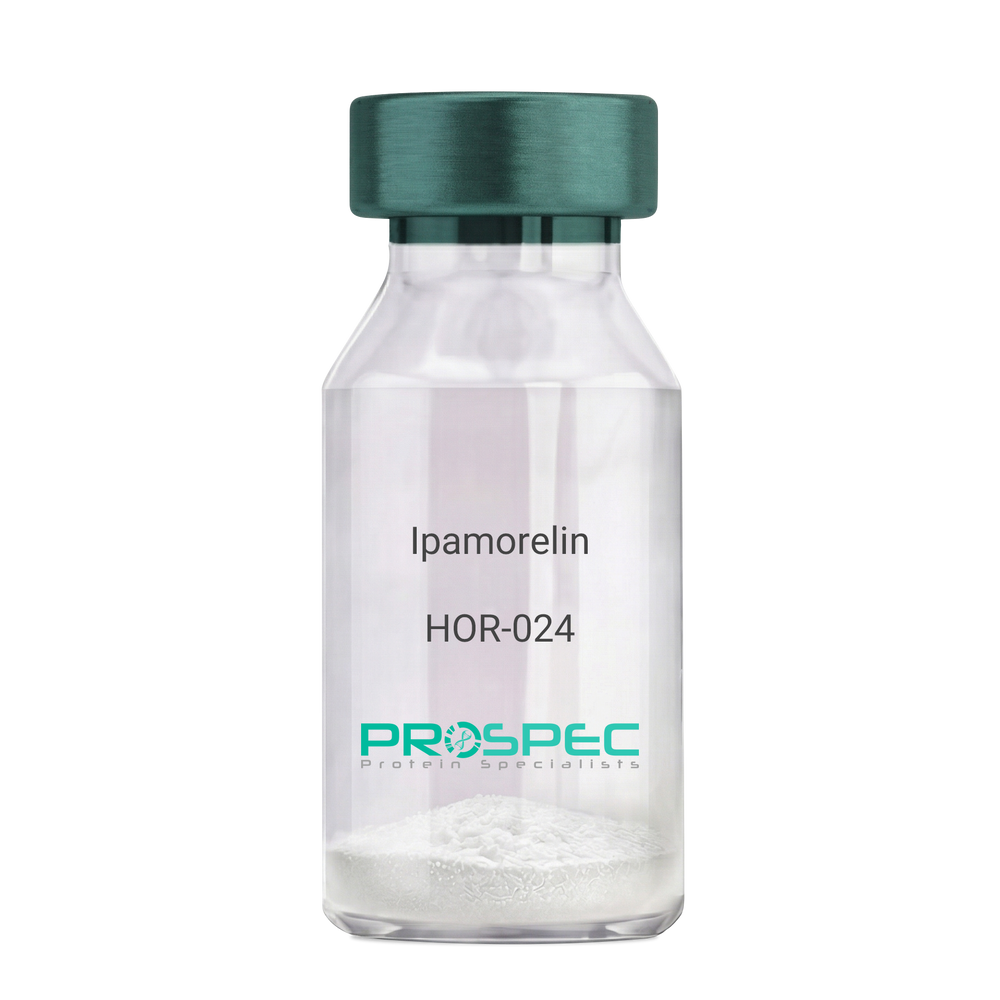
IpamorelinDescription:
Ipamorelin
Ipamorelin
Product # :
HOR-024Price :
Quantity :
Shipping Method :
Shipped at Room temp
More Info
- description
- formulation
- purity
- More Info
Description
Ipamorelin Synthetic is a single, non-glycosylated polypeptide chain containing 4 amino acids, having a molecular mass of 711.85 Dalton and a Molecular formula of C38H49N9O5.
Formulation
The protein was lyophilized with no additives.
Purity
Greater than 97.0% as determined by analysis by RP-HPLC.
More Info
-
Introduction
Ipamorelin is a peptide selective agonist of the ghrelin/growth hormone secretagogue receptor and a growth hormone secretagogue. Ipamorelin is a pentapeptide that was derived from GHRP1. Ipamorelin significantly increases plasma growth hormone levels in both animals and humans. Like pralmorelin and GHRP-6, ipamorelin does not affect prolactin, FSH, LH or TSH levels. However, unlike GHRP2 and GHRP6, but as growth hormone-releasing hormone (GHRH), ipamorelin does not stimulate the secretion of adrenocorticotropic hormone (ACTH) or cortisol, and is highly selective for inducing the secretion only of GH.
-
Synonyms
Ipamorelin
-
Physical Appearance
Sterile Filtered White lyophilized (freeze-dried) powder.
-
Stability
Lyophilized Ipamorelin although stable at room temperature for 3 weeks, should be stored desiccated below -18°C. Upon reconstitution Ipamorelin should be stored at 4°C between 2-7 days and for future use below -18°C. For long term storage it is recommended to add a carrier protein (0.1% HSA or BSA). Please prevent freeze-thaw cycles.
-
Solubility
It is recommended to reconstitute the lyophilized Ipamorelin in sterile 18MΩ-cm H2O not less than 100 µg/ml, which can then be further diluted to other aqueous solutions.
-
Amino Acid Sequence
Aib-His-D-2-Nal-D-Phe-Lys-NH2.
ProSpec's products are furnished for LABORATORY RESEARCH USE ONLY. The product may not be used as drugs, agricultural or pesticidal products, food additives or household chemicals.