Skip to content

High-quality research proteins.

  • 1-800-805-6531

  • Mon - Sat 8.00-18.00, Sun - Closed

  • info@prospecbio.com

  • PO Box 6591 East Brunswick NJ 08816

  • Products
    • Cytokines
    • Growth factors
    • Chemokines
    • Cd antigens
    • Neurotrophins
    • Hormones
    • Enzymes
    • Viral antigens
    • Recombinant proteins
    • Natural proteins
    • Monoclonal antibodies
    • Polyclonal antibodies
    • Thermal Packaging
  • About
    • Company
    • Founder
    • Contribution
  • Customers
    • Eastern Asia
    • Eastern Europe
    • North America
    • South America
    • South East Asia
    • Southern Asia
    • Western Europe
  • Ordering
    • Ordering Method
    • Ordering - Credit Card
    • Ordering - PO
    • Shipping Fees
    • FAQs
  • Services
    • DNA Cloning
    • Protein Expression
    • Monoclonal Antibody
    • Fermentation
    • Technology License
  • Contact us
Log in

Country/region

  • USD $ | Albania
  • USD $ | Andorra
  • USD $ | Argentina
  • USD $ | Armenia
  • USD $ | Australia
  • USD $ | Austria
  • USD $ | Azerbaijan
  • USD $ | Belarus
  • USD $ | Belgium
  • USD $ | Bolivia
  • USD $ | Brazil
  • USD $ | Bulgaria
  • USD $ | Cambodia
  • USD $ | Canada
  • USD $ | Chile
  • USD $ | China
  • USD $ | Colombia
  • USD $ | Costa Rica
  • USD $ | Croatia
  • USD $ | Cyprus
  • USD $ | Czechia
  • USD $ | Denmark
  • USD $ | Estonia
  • USD $ | Finland
  • USD $ | France
  • USD $ | Georgia
  • USD $ | Germany
  • USD $ | Greece
  • USD $ | Hong Kong SAR
  • USD $ | Hungary
  • USD $ | Iceland
  • USD $ | India
  • USD $ | Ireland
  • USD $ | Israel
  • USD $ | Italy
  • USD $ | Japan
  • USD $ | Kazakhstan
  • USD $ | Latvia
  • USD $ | Liechtenstein
  • USD $ | Lithuania
  • USD $ | Madagascar
  • USD $ | Malta
  • USD $ | Mexico
  • USD $ | Moldova
  • USD $ | Monaco
  • USD $ | Netherlands
  • USD $ | New Zealand
  • USD $ | North Macedonia
  • USD $ | Norway
  • USD $ | Panama
  • USD $ | Paraguay
  • USD $ | Peru
  • USD $ | Philippines
  • USD $ | Poland
  • USD $ | Portugal
  • USD $ | Romania
  • USD $ | Singapore
  • USD $ | Slovakia
  • USD $ | Slovenia
  • USD $ | South Africa
  • USD $ | South Korea
  • USD $ | Spain
  • USD $ | Sri Lanka
  • USD $ | Sweden
  • USD $ | Switzerland
  • USD $ | Taiwan
  • USD $ | Thailand
  • USD $ | Türkiye
  • USD $ | Ukraine
  • USD $ | United Kingdom
  • USD $ | United States
  • USD $ | Uruguay
  • USD $ | Vatican City
  • USD $ | Venezuela
  • USD $ | Vietnam
  • Facebook
  • Instagram
logoProSpec - Recombinant Protein Manufacturer for academic and R&D industry
Become a distributor
Account Log in
Wishlist
Cart Cart(0)
  • Products
    +
    • Cytokines
    • Growth factors
    • Chemokines
    • Cd antigens
    • Neurotrophins
    • Hormones
    • Enzymes
    • Viral antigens
    • Recombinant proteins
    • Natural proteins
    • Monoclonal antibodies
    • Polyclonal antibodies
    • Thermal Packaging
  • About
    +
    • Company
    • Founder
    • Contribution
  • Customers
    +
    • Eastern Asia
    • Eastern Europe
    • North America
    • South America
    • South East Asia
    • Southern Asia
    • Western Europe
  • Ordering
    +
    • Ordering Method
    • Ordering - Credit Card
    • Ordering - PO
    • Shipping Fees
    • FAQs
  • Services
    +
    • DNA Cloning
    • Protein Expression
    • Monoclonal Antibody
    • Fermentation
    • Technology License
  • Contact us

Item added to your cart

View cart
View All
  • Cytokines
  • Growth factors
  • Chemokines
  • Cd antigens
  • Neurotrophins
  • Hormones
  • Enzymes
  • Viral antigens
  • Recombinant proteins
  • Natural proteins
  • Monoclonal antibodies
  • Polyclonal antibodies
  • Thermal Packaging
  • Tumor Necrosis Factor

    Tumor Necrosis Factor

    View All
  • 4-1BB

    4-1BB

    View All
  • Adiponectin

    Adiponectin

    View All
  • AIF1

    AIF1

    View All
  • Other Cytokines

    Other Cytokines

    View All
  • AITRL

    AITRL

    View All
  • Angiopoietin

    Angiopoietin

    View All
  • Apolipoprotein

    Apolipoprotein

    View All
  • B-Cell Activating Factor

    B-Cell Activating Factor

    View All
  • Beta Defensin

    Beta Defensin

    View All
  • Bone Morphogenetic Protein

    Bone Morphogenetic Protein

    View All
  • B type Natriuretic Peptide

    B type Natriuretic Peptide

    View All
  • BST

    BST

    View All
  • Betacellulin

    Betacellulin

    View All
  • Cardiotrophin

    Cardiotrophin

    View All
  • Activin

    Activin

    View All
  • Fibroblast Growth Factor

    Fibroblast Growth Factor

    View All
  • Other Growth Factors

    Other Growth Factors

    View All
  • CSF

    CSF

    View All
  • CTGF

    CTGF

    View All
  • IGFBP

    IGFBP

    View All
  • VEGF Protein

    VEGF Protein

    View All
  • EGF

    EGF

    View All
  • Epigen

    Epigen

    View All
  • Erythropoietin

    Erythropoietin

    View All
  • Insulin-Like Growth Factor

    Insulin-Like Growth Factor

    View All
  • Growth Hormone

    Growth Hormone

    View All
  • HDGF

    HDGF

    View All
  • Hepatocyte Growth Factor

    Hepatocyte Growth Factor

    View All
  • Insulin

    Insulin

    View All
  • BCA-1/ BLC (CXCL13)

    BCA-1/ BLC (CXCL13)

    View All
  • BRAK (CXCL14)

    BRAK (CXCL14)

    View All
  • C-10 (CCL6)

    C-10 (CCL6)

    View All
  • Other Chemokines

    Other Chemokines

    View All
  • MEC (CCL28)

    MEC (CCL28)

    View All
  • LD78-beta (CCL3L1)

    LD78-beta (CCL3L1)

    View All
  • CTACK (CCL27)

    CTACK (CCL27)

    View All
  • CXCL16

    CXCL16

    View All
  • CXCL17

    CXCL17

    View All
  • Platelet Factor-4 (CXCL4)

    Platelet Factor-4 (CXCL4)

    View All
  • ENA-78 (CXCL5)

    ENA-78 (CXCL5)

    View All
  • Eotaxin (CCL11,24,26)

    Eotaxin (CCL11,24,26)

    View All
  • Exodus-2 (CCL21)

    Exodus-2 (CCL21)

    View All
  • Fractalkine (CX3CL1)

    Fractalkine (CX3CL1)

    View All
  • CXCL6

    CXCL6

    View All
  • Other CD Antigens

    Other CD Antigens

    View All
  • CD14

    CD14

    View All
  • CD164

    CD164

    View All
  • CD1

    CD1

    View All
  • CD2

    CD2

    View All
  • CD200

    CD200

    View All
  • CD207

    CD207

    View All
  • CD226

    CD226

    View All
  • CD23

    CD23

    View All
  • CD244

    CD244

    View All
  • CD247

    CD247

    View All
  • CD27

    CD27

    View All
  • CD274

    CD274

    View All
  • CD300

    CD300

    View All
  • CD33

    CD33

    View All
  • Other Neurotrophins

    Other Neurotrophins

    View All
  • Beta-NGF

    Beta-NGF

    View All
  • BDNF

    BDNF

    View All
  • CDNF

    CDNF

    View All
  • CNTF

    CNTF

    View All
  • GDNF

    GDNF

    View All
  • Glia Maturation Factor

    Glia Maturation Factor

    View All
  • MANF

    MANF

    View All
  • Midkine

    Midkine

    View All
  • Neuroglobin

    Neuroglobin

    View All
  • Neurotrophic factors

    Neurotrophic factors

    View All
  • Neuregulin

    Neuregulin

    View All
  • Neuropilin

    Neuropilin

    View All
  • Pigment Epithelium-Derived Factor

    Pigment Epithelium-Derived Factor

    View All
  • Pleiotrophin

    Pleiotrophin

    View All
  • Peptide Hormones

    Peptide Hormones

    View All
  • Other Hormones

    Other Hormones

    View All
  • HCG

    HCG

    View All
  • Endothelin

    Endothelin

    View All
  • Exendin

    Exendin

    View All
  • FSH

    FSH

    View All
  • Glucagon

    Glucagon

    View All
  • GHRP

    GHRP

    View All
  • GLP

    GLP

    View All
  • Thyrostimulin

    Thyrostimulin

    View All
  • Inhibin A

    Inhibin A

    View All
  • LHRH

    LHRH

    View All
  • Melanotan

    Melanotan

    View All
  • Procalcitonin

    Procalcitonin

    View All
  • PTH

    PTH

    View All
  • Peroxiredoxin

    Peroxiredoxin

    View All
  • Peptidase

    Peptidase

    View All
  • Synthetase

    Synthetase

    View All
  • Transferase

    Transferase

    View All
  • Hydrolase

    Hydrolase

    View All
  • Dehydrogenase

    Dehydrogenase

    View All
  • ACE2

    ACE2

    View All
  • Esterase

    Esterase

    View All
  • Protein Kinases

    Protein Kinases

    View All
  • Other Enzymes

    Other Enzymes

    View All
  • Phosphatase

    Phosphatase

    View All
  • Deaminase

    Deaminase

    View All
  • Oxygenase

    Oxygenase

    View All
  • Adenylate Kinase

    Adenylate Kinase

    View All
  • Lyase

    Lyase

    View All
  • Chagas

    Chagas

    View All
  • SARS

    SARS

    View All
  • Influenza

    Influenza

    View All
  • ASFV

    ASFV

    View All
  • Astrovirus

    Astrovirus

    View All
  • Borrelia

    Borrelia

    View All
  • Helicobacter Pylori

    Helicobacter Pylori

    View All
  • Chikungunya

    Chikungunya

    View All
  • Chlamydia

    Chlamydia

    View All
  • Cytomegalo

    Cytomegalo

    View All
  • Dengue

    Dengue

    View All
  • EBV

    EBV

    View All
  • Ebola

    Ebola

    View All
  • Feline Leukemia Virus

    Feline Leukemia Virus

    View All
  • Hepatitis A

    Hepatitis A

    View All
  • Other

    Other

    View All
  • Actin

    Actin

    View All
  • ADAM

    ADAM

    View All
  • Complement Component

    Complement Component

    View All
  • Ag85

    Ag85

    View All
  • Eukaryotic Translation Initiation Factor

    Eukaryotic Translation Initiation Factor

    View All
  • Anterior Gradient Protein

    Anterior Gradient Protein

    View All
  • Heat Shock Protein

    Heat Shock Protein

    View All
  • Alpha-2-HS-Glycoprotein

    Alpha-2-HS-Glycoprotein

    View All
  • Hemoglobin

    Hemoglobin

    View All
  • Allergy

    Allergy

    View All
  • Anaplasma

    Anaplasma

    View All
  • Angiogenin

    Angiogenin

    View All
  • Ankyrin Repeat Domain

    Ankyrin Repeat Domain

    View All
  • Annexin

    Annexin

    View All
  • Other Natural Proteins

    Other Natural Proteins

    View All
  • Aprotinin

    Aprotinin

    View All
  • Transferrin

    Transferrin

    View All
  • Avidin

    Avidin

    View All
  • Anti Coagulation Factors

    Anti Coagulation Factors

    View All
  • Natural Albumin

    Natural Albumin

    View All
  • Natural Coagulation Factors

    Natural Coagulation Factors

    View All
  • Fibronectin

    Fibronectin

    View All
  • Thrombin

    Thrombin

    View All
  • Anti Human Enzyme

    Anti Human Enzyme

    View All
  • Other Monoclonal Antibodies

    Other Monoclonal Antibodies

    View All
  • Anti Human Cytokine

    Anti Human Cytokine

    View All
  • Anti Human Heat Shock Protein

    Anti Human Heat Shock Protein

    View All
  • Anti Mouse Lymphocyte

    Anti Mouse Lymphocyte

    View All
  • Anti Human Chemokine

    Anti Human Chemokine

    View All
  • Anti Human Lymphocyte

    Anti Human Lymphocyte

    View All
  • Anti Viral Monoclonal

    Anti Viral Monoclonal

    View All
  • Anti Mouse Cytokine

    Anti Mouse Cytokine

    View All
  • Anti-GST Monoclonal

    Anti-GST Monoclonal

    View All
  • Other Polyclonal Antibodies

    Other Polyclonal Antibodies

    View All
  • Anti Viral

    Anti Viral

    View All
  • Anti-GST Monoclonal

    Anti-GST Monoclonal

    View All
Back

Search results

1000 results found for “prefoldin”

Name

Description

Product #

Price

Quantity

Shipping Method

  • View Data Sheet

    Name :

    BIN1 Human

    Description:

    Bridging Integrator 1 Human Recombinant

    AMPH2, AMPHL, MGC10367, SH3P9, Amphiphysin II.

    Product # :

    PRO-546

    Price :

    Quantity :

    Shipping Method :

    Ice Icon

    Shipped with Ice Packs

    Add To Cart

    More Info

    • description
    • source
    • formulation
    • purity
    • More Info

    Description

    BIN1 Recombinant Human produced in E.Coli is a single, non-glycosylated polypeptide chain containing 459 amino acids (1-439 a.a) and having a molecular mass of 50.4 kDa. The BIN1 is fused to a 20 amino acid His-Tag at N-terminus and purified by proprietary chromatographic techniques.

    Source

    Escherichia Coli.

    Formulation

    BIN1 protein solution (1mg/ml) containing 20mM Tris buffer pH-8, 1mM DTT & 10% glycerol.

    Purity

    Greater than 90.0% as determined by SDS-PAGE.

    More Info

    • Introduction

      BIN1 is a nucleocytoplasmic adaptor protein, one of which was primarily identified as MYC-interacting protein having the characteristics of a tumor suppressor. BIN1 protein interacts with and inhibits the oncogenic activity of the myc oncoprotein that is a key player in many human cancers. The absence of Bin1 contributes to growth deregulation in cancer cells in carcinoma of the breast, colon, lung, cervix, prostate and liver.

    • Synonyms

      AMPH2, AMPHL, MGC10367, SH3P9, Amphiphysin II.

    • Physical Appearance

      Sterile filtered colorless solution.

    • Stability

      Store at 4°C if entire vial will be used within 2-4 weeks. Store, frozen at -20°C for longer periods of time. For long term storage it is recommended to add a carrier protein (0.1% HSA or BSA).Avoid multiple freeze-thaw cycles.

    • Amino Acid Sequence

      MGSSHHHHHH SSGLVPRGSH MAEMGSKGVT AGKIASNVQK KLTRAQEKVL QKLGKADETK DEQFEQCVQN FNKQLTEGTR LQKDLRTYLA SVKAMHEASK KLNECLQEVY EPDWPGRDEA NKIAENNDLL WMDYHQKLVD QALLTMDTYL GQFPDIKSRI AKRGRKLVDY DSARHHYESL QTAKKKDEAK IAKAEEELIK AQKVFEEMNV DLQEELPSLW NSRVGFYVNT FQSIAGLEEN FHKEMSKLNQ NLNDVLVGLE KQHGSNTFTV KAQPSDNAPA KGNKSPSPPD GSPAATPEIR VNHEPEPAGG ATPGATLPKS PSQPAEASEV AGGTQPAAGA QEPGETAASE AASSSLPAVV VETFPATVNG TVEGGSGAGR LDLPPGFMFK VQAQHDYTAT DTDELQLRAG DVVLVIPFQN PEEQDEGWLM GVKESDWNQH KELEKCRGVF PENFTERVP.

    ProSpec's products are furnished for LABORATORY RESEARCH USE ONLY. The product may not be used as drugs, agricultural or pesticidal products, food additives or household chemicals.

    Bin1 Human
  • View Data Sheet

    Name :

    PPIL1 Human

    Description:

    Peptidylprolyl Isomerase (Cyclophilin)-Like 1 Human Recombinant

    Peptidyl-Prolyl Cis-Trans Isomerase-Like 1, PPIL-1, CYPL1, hCyPX, MGC678, PPIase, CGI-124, PPIL1.

    Product # :

    ENZ-388

    Price :

    Quantity :

    Shipping Method :

    Ice Icon

    Shipped with Ice Packs

    Add To Cart

    More Info

    • description
    • source
    • formulation
    • purity
    • biological activity
    • More Info
    • sds-page

    Description

    PPIL1 Human Recombinant protein produced in E.Coli is a single, non-glycosylated, polypeptide chain containing 174 amino acids (1-166) and having a molecular mass of 19.3 kDa. PPIL1 is fused to 8 amino acid His Tag at C-terminus and is purified by proprietary chromatographic techniques.

    Source

    Escherichia Coli.

    Formulation

    PPIL1 solution containing 20 mM Tris-HCl buffer (pH 8.0) and 20% glycerol

    Purity

    Greater than 95.0% as determined by SDS-PAGE.

    Biological Activity

    Specific activity is > 300 nmoles/min/mg, and is defined as the amount of enzyme that cleaves 1umole of suc-AAFP-pNA per minute at 25C in Tris-Hcl pH8.0 using chymotrypsin.

    sds-page

    PPIL1 Human SDS-PAGE - Product image 1

    More Info

    • Introduction

      PPIL1 belongs to the cyclophilin family of peptidylprolyl isomerases (PPIases).
      The cyclophilins are a well conserved, ubiquitous family, members of which take an significant part in protein folding, immunosuppression by cyclosporin A, and infection of HIV-1 virions. PPIL1 protein increases the folding of proteins and catalyze the cis-trans isomerization of proline imidic peptide bonds in oligopeptides. PPIL1 is involved in proliferation of cancer cells through modulation of phosphorylation of stathmin. PPIL1 is a novel molecular target for colon-cancer therapy.

    • Synonyms

      Peptidyl-Prolyl Cis-Trans Isomerase-Like 1, PPIL-1, CYPL1, hCyPX, MGC678, PPIase, CGI-124, PPIL1.

    • Physical Appearance

      Sterile filtered colorless solution.

    • Stability

      Store at 4°C if entire vial will be used within 2-4 weeks. Store, frozen at -20°C for longer periods of time. For long term storage it is recommended to add a carrier protein (0.1% HSA or BSA).Avoid multiple freeze-thaw cycles.

    • Amino Acid Sequence

      MAAIPPDSWQ PPNVYLETSM GIIVLELYWK HAPKTCKNFA ELARRGYYNG TKFHRIIKDF MIQGGDPTGT GRGGASIYGK QFEDELHPDL KFTGAGILAM ANAGPDTNGS QFFVTLAPTQ WLDGKHTIFG RVCQGIGMVN RVGMVETNSQ DRPVDDVKII KAYPSGLEHH HHHH.

    ProSpec's products are furnished for LABORATORY RESEARCH USE ONLY. The product may not be used as drugs, agricultural or pesticidal products, food additives or household chemicals.

    Ppil1 Human
  • View Data Sheet

    Name :

    PRKACA Human

    Description:

    cAMP-Dependent Protein Kinase A catalytic subunit α Human Recombinant

    cAMP-dependent protein kinase alpha-catalytic subunit, EC 2.7.11.11, PKA C-alpha, PKACA, PRKACA, MGC48865, MGC102831.

    Product # :

    PKA-200

    Price :

    Quantity :

    Shipping Method :

    Ice Icon

    Shipped with Ice Packs

    Add To Cart

    More Info

    • description
    • source
    • formulation
    • purity
    • More Info

    Description

    cAMP-dependent PKA is an ubiquitous serine/threonine protein kinase present in a variety of tissues (e.g. brain, skeletal muscle, heart). The intracellular cAMP level regulates cellular responses by altering the interaction between the catalytic C and regulatory R subunits of PKA. The inactive tetrameric PKA holoenzyme R2C2 is activated when cAMP binds to R2, which dissociates the tetramer to R2 cAMP 4 and two active catalytic subunits. Free Catalytic subunits of PKA can phosphorylate a wide variety of intracellular target proteins. In response to hormone- induced high cAMP levels, PKA phosphorylates glycogen synthetase (inhibition of the enzyme activity) and phosphorylase kinase to block glycogen synthesis. Different isoforms of catalytic and regulatory subunits suggest specific functions. The recombinant PKA catalytic subunit a is a 41kDa protein. The a-isoform is the predominant form with a broad tissue distribution and can be used for in vitro enzymological studies of neural and hormonal signal transduction or to phosphorylate target proteins in vivo including Ion channels, transcriptional activator proteins and regulatory enzymes of glycogen metabolism.

    Source

    Escherichia Coli.

    Formulation

    PKA catalytic subunit a is supplied in a buffer containing 20mM MOPS pH7, 150mM NaCl, 1mM DTT, 1mM EDTA and 50% Glycerin.

    Purity

    Greater than 95% as determined by SDS-PAGE.

    More Info

    • Synonyms

      cAMP-dependent protein kinase alpha-catalytic subunit, EC 2.7.11.11, PKA C-alpha, PKACA, PRKACA, MGC48865, MGC102831.

    • Stability

      Store at 4°C if entire vial will be used within 2-4 weeks. Store, frozen at -20°C for longer periods of time. Avoid multiple freeze-thaw cycles.

    • Amino Acid Sequence

      MGNAAAAKKG SEQESVKEFL AKAKEDFLKK WESPAQNTAH LDQFERIKTL GTGSFGRVML VKHKETGNHY AMKILDKQKV VKLKQIEHTL NEKRILQAVN FPFLVKLEFS FKDNSNLYMV MEYVPGGEMF SHLRRIGRFS EPHARFYAAQ IVLTFEYLHS LDLIYRDLKP ENLLIDQQGY IQVTDFGFAK RVKGRTWTLC GTPEYLAPEI ILSKGYNKAV DWWALGVLIY EMAAGYPPFF ADQPIQIYEK IVSGKVRFPS HFSSDLKDLL RNLLQVDLTK RFGNLKNGVN DIKNHKWFAT TDWIAIYQRK VEAPFIPKFK GPGDTSNFDD YEEEEIRVSI NEKCGKEFSE F.

    • Assay Conditions

      Roskoski-AssayProtein kinase activity can be measured using a modified radioactive assay according to Roskoski et al.The assay will be performed in a mixture containing 50mM MOPS (pH7.0), 10mM MgCI2, 0.25 mg/ml bovine serum albumin, 100 IJM Kemptide (peptide substrate), 100 IJM unlabeled ATP mixed with [y_32p] ATP (500-1000 cpm/pmol) and Ca subunit in a final volume of 50 IJI. Reaction is started by addition of the Ca subunit and can be stopped after 5 minutes incubation at 30°C by spotting the reaction mix onto Whatman P-81 filters and soaking the filters four times in 75mM phosphoric acid (10 ml per sample) for at least 5 minutes. After four washing steps rinse filters with ethanol, dry and count. Roskoski, R., Jr. (1983) Methods Enzymol. 99, 3-6For the detection of phosphorylation in substrate proteins the phosphotransferase reaction can alternatively be stopped by taking aliquots of the mixture and adding SDS sample buffer. The phosphorylation status of the substrate proteins can subsequently be analysed using SDS PAGE and autoradiography. Zimmermann, B. (1999) Journal of Biological Chemistry.274, 9, 5370-78.

    • Unit Definition

      One unit is defined as the amount of cAMP-Dependent Protein Kinase, recombinant C? catalytic subunit, required to incorporate 1 pmol of phosphate into the specific substrate peptide kemptide (LRRASLG) in one minute at 30°C.

    • Specific Activity

      The specific activity of the recombinant PKA catalytic subunit alpha, is >10,000,000 U/mg.

    ProSpec's products are furnished for LABORATORY RESEARCH USE ONLY. The product may not be used as drugs, agricultural or pesticidal products, food additives or household chemicals.

    Prkaca
  • View Data Sheet

    Name :

    GMNN Human

    Description:

    Geminin Human Recombinant

    GMNN, Geminin, DNA Replication Inhibitor, Gem, RP3-369A17.3.

    Product # :

    PRO-579

    Price :

    Quantity :

    Shipping Method :

    Ice Icon

    Shipped with Ice Packs

    Add To Cart

    More Info

    • description
    • source
    • formulation
    • purity
    • More Info

    Description

    Geminin Human Recombinant fused to N-terminal His-Tag produced in E.Coli is a single, non-glycosylated polypeptide chain containing 245 amino acids and having a molecular mass of 27.7 kDa.

    Source

    Escherichia Coli.

    Formulation

    The protein solution contains 20mM Tris pH 8, 100mM NaCl and 10% glycerol.

    Purity

    Greater than 95.0% as determined by:
    (a) Analysis by RP-HPLC.
    (b) Analysis by SDS-PAGE.

    More Info

    • Introduction

      Geminin is a 25 kDa nuclear protein, which inhibits DNA replication and is degraded during the mitotic phase of the cell cycle. Geminin controls replication by binding to the licensing factor Cdt1, and is involved in neural differentiation. In addition, Geminin directly interacts with Six3 and Hox homeodomain proteins during embryogenesis and inhibits their functions. Geminin can also promote DNA replication. Geminin has 2 roles in 2 different stages of the cell cycle: Geminin is a negative regulator of DNA replication during the “S phase” of the cell cycle. Inhibition of Geminin during the “S phase” (by RNAi) results in an additional round of replication of portions of the genome. During the “M phase” of the cell cycle (mitosis) Geminin stabilizes the replication factor Cdt1 promoting DNA replication during the next cell cycle. Moreover, inhibition of Geminin during mitosis (by RNAi) causes destabilization of Cdt1 protein and impairment of DNA replication during the next cell cycle. Geminin thus guarantees that only one round of replication occurs during each cell cycle. It was discovered that Geminin is overexpressed in a number of malignancies and cancer cell lines. This maintains the concept that Geminin has also a positive role in DNA replication and cell cycle progression. Geminin accumulates through S, G2 and M phases of the cell cycle but is absent during the G1 phase. During the metaphase/anaphase transition of mitosis Geminin levels decrease.

    • Synonyms

      GMNN, Geminin, DNA Replication Inhibitor, Gem, RP3-369A17.3.

    • Physical Appearance

      Sterile Filtered colorless solution.

    • Stability

      Store at 4°C if entire vial will be used within 2-4 weeks. Store, frozen at -20°C for longer periods of time. For long term storage it is recommended to add a carrier protein (0.1% HSA or BSA).Avoid multiple freeze-thaw cycles.

    • Amino Acid Sequence

      MRGSHHHHHH GMASMTGGQQ MGRDLYDDDD KDRWGSMNPS MKQKQEEIKE NIKNSSVPRR TLKMIQPSAS GSLVGRENEL SAGLSKRKHR NDHLTSTTSS PGVIVPESSE NKNLGGVTQE SFDLMIKENP SSQYWKEVAE KRRKALYEAL KENEKLHKEI EQKDNEIARL KKENKELAEV AEHVQYMAEL IERLNGEPLD NFESLDNQEF DSEEETVEDS LVEDSEIGTC AEGTVSSSTD
      AKPCI.

    ProSpec's products are furnished for LABORATORY RESEARCH USE ONLY. The product may not be used as drugs, agricultural or pesticidal products, food additives or household chemicals.

    Geminin Human
  • View Data Sheet

    Name :

    Visfatin Human

    Description:

    Visfatin Human Recombinant

    PBEF, Pre-B cell colony-enhancing factor, Nicotinamide phosphoribosyltransferase NAmPRTase, Nampt, MGC117256, DKFZP666B131, 1110035O14Rik.

    Product # :

    CYT-318

    Price :

    Quantity :

    Shipping Method :

    Room Temp Icon

    Shipped at Room temp

    Add To Cart

    More Info

    • description
    • source
    • formulation
    • purity
    • biological activity
    • More Info

    Description

    Visfatin Human Recombinant produced in E.Coli is a single, non-glycosylated, polypeptide chain containing 466 amino acids. The total molecular mass is 52.6kDa (calculated). The Visfatin is purified by Flag-affinity chromatography.

    Source

    Escherichia Coli.

    Formulation

    Visfatin was lyophilized with no additives.

    Purity

    Greater than 90.0% as determined by SDS-PAGE.

    Biological Activity

    The activity is determined by its ability to induce IL-6, IL-1 beta and TNF alpha production from human PBMCs at 100ng/ml.

    More Info

    • Introduction

      Excess adiposity is the most important risk in the development of type 2 diabetes mellitus (T2DM). Adipose tissue produces several proteins (adipocytokines) such as leptin, adiponectin, resistin, tumor necrosis factor-a, and IL-6, that modulate sensitivity and appear to play an important role in the pathogenesis, diabetes, dyslipidemia, inflammation, and atherosclerosis. Visfatin, also known as pre-B cell colony-enhancing factor (PBEF), is a cytokine that is highly expressed in visceral fat and was originally isolated as a secreted factor that synergizes with IL-7 and stem cell factors to promote the growth of B cell precursors. Visfatin homologs have been identified in carp, invertebrate mollusks, and bacteria, as well as in vertebrates, including humans and the mouse. It has been postulated to play a role in innate immunity.
      Visfatin exerts mimetic effects that are dose-dependent and quantitatively similar to stimulating muscle and adipocyte glucose transport, and in inhibiting hepatocyte glucose production. Intravenous injection of recombinant visfatin in mice decreased plasma glucose in a dose-dependent fashion. In keeping with its mimetic effects, visfatin was as effective in reducing hyperglycemia in deficient diabetic mice. Visfatin was also found to be bound to and activate receptor, causing receptor phosphorylation and the activation of downstream signaling molecules. However, visfatin did not compete for binding to the receptor, indicating that the two proteins were recognized by different regions of the receptor. Thus, visfatin might play a role in glucose homeostasis and dysregulation in biosynthesis or signal transduction, and might contribute to the pathogenesis of diabetes.

    • Synonyms

      PBEF, Pre-B cell colony-enhancing factor, Nicotinamide phosphoribosyltransferase NAmPRTase, Nampt, MGC117256, DKFZP666B131, 1110035O14Rik.

    • Physical Appearance

      Filtered White lyophilized (freeze-dried) powder.

    • Stability

      Lyophilized Visfatin although stable at room temperature for 3 weeks, should be stored desiccated below -18°C. Upon reconstitution Visfatin should be stored at 4°C between 2-7 days and for future use below -18°C.For long term storage it is recommended to add a carrier protein (0.1% HSA or BSA).Please prevent freeze-thaw cycles.

    • Solubility

      Centrifuge vial before opening. When reconstituting the product, gently pipet and wash down the sides of the vial to ensure full recovery of the protein into solution. It is recommended to reconstitute the lyophilized product with 20 mM HCl at a concentration of 0.1 mg/mL, which can be further diluted into other aqueous solutions. Wait several minutes for full reconstitution and solubility.

    • Amino Acid Sequence

      MPPNTSKVYS YFECREKKTE NSKLRKVKYE ETVFYGLQYI LNKYLKGKVV TKEKIQEAKD VYKEHFQDDV FNEKGWNYIL EKYDGHLPIE IKAVPEGFVI PRGNVLFTVE NTDPECYWLT NWIETILVQS WYPITVATNS REQKKILAKY LLETSGNLDG LEYKLHDFGY RGVSSQETAG IGASAHLVNF KGTDTVAGLA LIKKYYGTKD PVPGYSVPAA EHSTITAWGK DHEKDAFEHI VTQFSSVPVS VVSDSYDIYN ACEKIWGEDL RHLIVSRSTQ APLIIRPDSG NPLDTVLKVL EILGKKFPVT ENSKGYKLLP PYLRVIQGDG VDINTLQEIV EGMKQKMWSI ENIAFGSGGG LLQKLTRDLL NCSFKCSYVV TNGLGINVFK DPVADPNKRS KKGRLSLHRT PAGNFVTLEE GKGDLEEYGQ DLLHTVFKNG KVTKSYSFDE IRKNAQLNIE LEAAHH.

    • Background

      About Visfatin Human


      Visfatin is a cytokine expressed in visceral fat that was originally isolated as a secreted
      element that synergized with stem cell factors and IL-7. One of its main functions is to
      enhance the development of B cell precursors.

      The cytokine is also known as the “Pre-B Cell Colony-Enhancing Factor (PBEF).” It has been
      identified in vertebrates, including mice and humans, and it’s being studied due to its link
      to inflammatory conditions, beta cell function, and cardiovascular disease.


      What’s the Function of Visfatin Human Recombinant?

      Visfatin human recombinant is produced in E. Coli. It’s a single, non-glycosylated,
      polypeptide chain that contains 466 amino acids, it’s purified by FLAG-affinity
      chromatography, and it contains a total molecular mass of 52.6 kDa.


      What Are the Main Applications of Visfatin Human Recombinant?

      The cytokine is being researched because of its involvement in glucose homeostasis,
      dysregulation in biosynthesis and signal transduction, and the pathogenesis of diabetes.
      Visfatin human recombinant is tailored exclusively for laboratory research, ensuring
      experts can get further answers regarding the cytokine’s involvement in different
      processes, including pathogenesis, diabetes, inflammation, dyslipidemia, and
      atherosclerosis.

      Findings can also help during the identification of high-risk people for cardiovascular
      disease and diabetes.

    ProSpec's products are furnished for LABORATORY RESEARCH USE ONLY. The product may not be used as drugs, agricultural or pesticidal products, food additives or household chemicals.

    Visfatin Human
  • View Data Sheet

    Name :

    FGF 2 Human (147 a.a.)

    Description:

    Fibroblast Growth Factor Basic 147 a.a. Human Recombinant

    Prostatropin, HBGH-2, HBGF-2, FGF-2, FGF-b.

    Product # :

    CYT-557

    Price :

    Quantity :

    Shipping Method :

    Room Temp Icon

    Shipped at Room temp

    Add To Cart

    More Info

    • description
    • source
    • formulation
    • purity
    • biological activity
    • More Info

    Description

    Fibroblast Growth Factor-2 Human Recombinant (FGF-2) produced in E.Coli is a single, non-glycosylated, polypeptide chain containing 147 amino acids and having a molecular mass of 16.5kDa. The FGF2 is purified by proprietary chromatographic techniques.

    Source

    Escherichia Coli.

    Formulation

    The bFGF was lyophilized from a sterile filtered solution containing 20mM Tris-HCl, pH 7.6 and 150mM NaCl.

    Purity

    Greater than 98.0% as determined by SDS-PAGE.

    Biological Activity

    The ED50, Calculated by the dose- dependent proliferation of mouse BALB/c 3T3 cells is < 0.05ng/ml corresponding to a specific activity of 2.0x10⁷ units/mg.

    More Info

    • Introduction

      FGF-basic is a member of the fibroblast growth factor (FGF) family. FGF family members possess broad mitogenic and cell survival activities, and are involved in a variety of biological processes, including embryonic development, cell growth, morphogenesis, tissue repair, tumor growth and invasion. This protein functions as a modifier of endothelial cell migration and proliferation, as well as an angiogenic factor. It acts as a mitogen for a variety of mesoderm- and neuroectoderm-derived cells in vitro, thus is thought to be involved in organogenesis. Three alternatively spliced variants encoding different isoforms have been described. The heparin-binding growth factors are angiogenic agents in vivo and are potent mitogens for a variety of cell types in vitro. There are differences in the tissue distribution and concentration of these 2 growth factors.

    • Synonyms

      Prostatropin, HBGH-2, HBGF-2, FGF-2, FGF-b.

    • Physical Appearance

      Sterile Filtered White lyophilized (freeze-dried) powder.

    • Stability

      Lyophilized basic-FGF although stable at room temperature for 3 weeks, should be stored desiccated below -18°C. Upon reconstitution FGFb should be stored at 4°C between 2-7 days and for future use below -18°C.For long term storage it is recommended to add a carrier protein (0.1% HSA or BSA).Please prevent freeze-thaw cycles.

    • Solubility

      It is recommended to reconstitute the lyophilized FGF-B in sterile 18MΩ-cm H2O not less than 100µg/ml, which can then be further diluted to other aqueous solutions.

    • Amino Acid Sequence

      MPALPEDGGS GAFPPGHFKD PKRLYCKNGG FFLRIHPDGR VDGVREKSDP HIKLQLQAEE RGVVSIKGVC ANRYLAMKED GRLLASKCVT DECFFFERLE SNNYNTYRSR KYTSWYVALK RTGQYKLGSK TGPGQKAILF LPMSAKS.

    • Background

      What is the molecular weight/Mw of FGF 2 Protein?
      FGF 2 Protein has a total Mw of 16.5kDa.

      What is the source or expression system of FGF 2 Protein?
      Escherichia Coli.

      What is the Purity of FGF 2 Protein?
      FGF 2 Protein is >98% pure as determined by SDS-PAGE.

      What is the Biological Activity of FGF 2 Protein?
      The ED50, Calculated by the dose- dependent proliferation of mouse BALB/c 3T3 cells is < 0.05ng/ml corresponding to a specific activity of 2.0x10⁷ units/mg.

      What is the amino acid sequence of FGF 2 Protein?
      MPALPEDGGS GAFPPGHFKD PKRLYCKNGG FFLRIHPDGR VDGVREKSDP HIKLQLQAEE RGVVSIKGVC ANRYLAMKED GRLLASKCVT DECFFFERLE SNNYNTYRSR KYTSWYVALK RTGQYKLGSK TGPGQKAILF LPMSAKS.

      What applications can FGF 2 Protein be used in?
      FGF 2 Protein can probably be used in western blot, ELISA and Lateral Flow.

      What is the endotoxin level for FGF 2 Protein?
      The endotoxin level is minimal, FGF 2 Protein was purified using conventional chromatography techniques.

    ProSpec's products are furnished for LABORATORY RESEARCH USE ONLY. The product may not be used as drugs, agricultural or pesticidal products, food additives or household chemicals.

    Fgf 2 147 Aa Human
  • View Data Sheet

    Name :

    ARFIP1 Human

    Description:

    ADP-Ribosylation Factor Interacting Protein 1 Human Recombinant

    HSU52521, Arfaptin-1, ADP-ribosylation factor-interacting protein 1.

    Product # :

    PRO-2088

    Price :

    Quantity :

    Shipping Method :

    Ice Icon

    Shipped with Ice Packs

    Add To Cart

    More Info

    • description
    • source
    • formulation
    • purity
    • More Info

    Description

    ARFIP1 Human Recombinant produced in E.Coli is a single, non-glycosylated polypeptide chain containing 396 amino acids (1-373 a.a) and having a molecular mass of 44.1kDa.ARFIP1 is fused to a 23 amino acid His-tag at N-terminus & purified by proprietary chromatographic techniques.

    Source

    Escherichia Coli.

    Formulation

    ARFIP1 protein solution (0.25mg/ml) containing Phosphate buffered saline (pH7.4), 20% glycerol and 1mM DTT.

    Purity

    Greater than 90.0% as determined by SDS-PAGE.

    More Info

    • Introduction

      ADP-Ribosylation Factor Interacting Protein 1 (ARFIP1) contains 1 AH domain and is a putative target protein of ADP-ribosylation factor.

    • Synonyms

      HSU52521, Arfaptin-1, ADP-ribosylation factor-interacting protein 1.

    • Physical Appearance

      Sterile Filtered clear solution.

    • Stability

      Store at 4°C if entire vial will be used within 2-4 weeks. Store, frozen at -20°C for longer periods of time. For long term storage it is recommended to add a carrier protein (0.1% HSA or BSA).Avoid multiple freeze-thaw cycles.

    • Amino Acid Sequence

      MGSSHHHHHH SSGLVPRGSH MGSMAQESPK NSAAEIPVTS NGEVDDSREH SFNRDLKHSL PSGLGLSETQ ITSHGFDNTK EGVIEAGAFQ GSPAPPLPSV MSPSRVAASR LAQQGSDLIV PAGGQRTQTK SGPVILADEI KNPAMEKLEL VRKWSLNTYK CTRQIISEKL GRGSRTVDLE LEAQIDILRD NKKKYENILK LAQTLSTQLF QMVHTQRQLG DAFADLSLKS LELHEEFGYN ADTQKLLAKN GETLLGAINF FIASVNTLVN KTIEDTLMTV KQYESARIEY DAYRTDLEEL NLGPRDANTL PKIEQSQHLF QAHKEKYDKM RNDVSVKLKF LEENKVKVLH NQLVLFHNAI AAYFAGNQKQ LEQTLKQFHI KLKTPGVDAP SWLEEQ.

    ProSpec's products are furnished for LABORATORY RESEARCH USE ONLY. The product may not be used as drugs, agricultural or pesticidal products, food additives or household chemicals.

    Arfip1 Human
  • View Data Sheet

    Name :

    SF3B14 Human

    Description:

    Splicing Factor 3B, 14 kDa Subunit Human Recombinant

    Pre-mRNA branch site protein p14, SF3b 14 kDa subunit, SF3B14, CGI-110, HSPC175, HT006, P14, SAP14, SF3B14a.

    Product # :

    PRO-105

    Price :

    Quantity :

    Shipping Method :

    Ice Icon

    Shipped with Ice Packs

    Add To Cart

    More Info

    • description
    • source
    • formulation
    • purity
    • More Info

    Description

    SF3B14 Human Recombinant fused with a 20 amino acid His tag at N-terminus produced in E.Coli is a single, non-glycosylated, polypeptide chain containing 145 amino acids (1-125a.a.) and having a molecular mass of 16.7kDa. The SF3B14 is purified by proprietary chromatographic techniques.

    Source

    Escherichia Coli.

    Formulation

    The SF3B14 solution (0.5 mg/ml) contains 20mM Tris-HCl buffer (pH8.0), 0.2M NaCl, 5mM DTT, 1mM EDTA and 30% glycerol.

    Purity

    Greater than 95.0% as determined by SDS-PAGE.

    More Info

    • Introduction

      SF3B14 is a 125 amino acid nuclear protein which is a component of the splicing factor 3b complex. Splicing factor 3b is involved with s with both the U2 and U11/U12 small nuclear ribonucleoprotein complexes (U2 snRNP) of spliceosomes. SF3B14 which is required for the splicing of pre-mRNA enters the spliceosome and connect with the pre-mRNA branch site facilitating the interaction of snRNP with the branch sites of U2 and U12 of the 17S U2 and the 18S U11/U12 snRNP complex.

    • Synonyms

      Pre-mRNA branch site protein p14, SF3b 14 kDa subunit, SF3B14, CGI-110, HSPC175, HT006, P14, SAP14, SF3B14a.

    • Physical Appearance

      Sterile Filtered colorless solution.

    • Stability

      Store at 4°C if entire vial will be used within 2-4 weeks. Store, frozen at -20°C for longer periods of time. For long term storage it is recommended to add a carrier protein (0.1% HSA or BSA). Avoid multiple freeze-thaw cycles.

    • Amino Acid Sequence

      MGSSHHHHHH SSGLVPRGSH MAMQAAKRAN IRLPPEVNRI LYIRNLPYKI TAEEMYDIFG KYGPIRQIRV GNTPETRGTA YVVYEDIFDA KNACDHLSGF NVCNRYLVVL YYNANRAFQK MDTKKKEEQL KLLKEKYGIN TDPPK.

    ProSpec's products are furnished for LABORATORY RESEARCH USE ONLY. The product may not be used as drugs, agricultural or pesticidal products, food additives or household chemicals.

    Sf3B14 Human
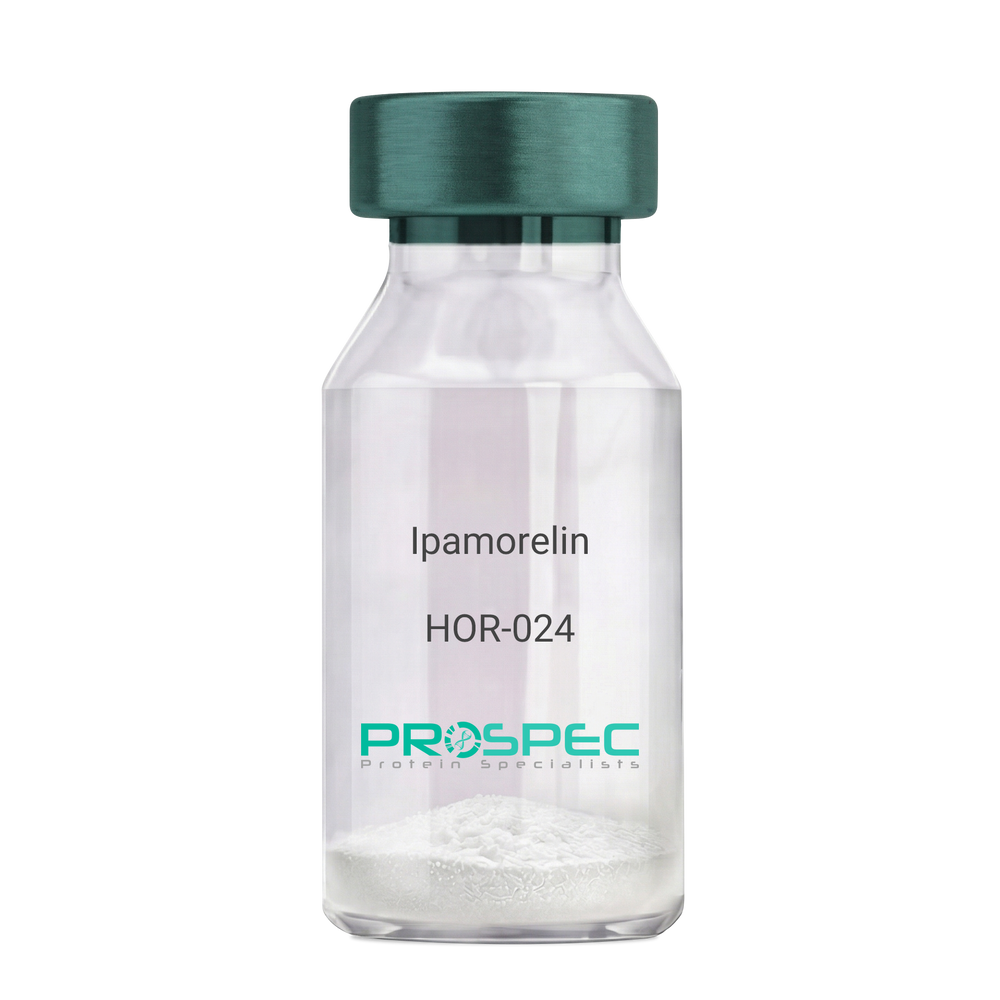
  • View Data Sheet

    Name :

    Ipamorelin

    Description:

    Ipamorelin

    Ipamorelin

    Product # :

    HOR-024

    Price :

    Quantity :

    Shipping Method :

    Room Temp Icon

    Shipped at Room temp

    Add To Cart

    More Info

    • description
    • formulation
    • purity
    • More Info

    Description

    Ipamorelin Synthetic is a single, non-glycosylated polypeptide chain containing 4 amino acids, having a molecular mass of 711.85 Dalton and a Molecular formula of C38H49N9O5.

    Formulation

    The protein was lyophilized with no additives.

    Purity

    Greater than 97.0% as determined by analysis by RP-HPLC.

    More Info

    • Introduction

      Ipamorelin is a peptide selective agonist of the ghrelin/growth hormone secretagogue receptor and a growth hormone secretagogue. Ipamorelin is a pentapeptide that was derived from GHRP1. Ipamorelin significantly increases plasma growth hormone levels in both animals and humans. Like pralmorelin and GHRP-6, ipamorelin does not affect prolactin, FSH, LH or TSH levels. However, unlike GHRP2 and GHRP6, but as growth hormone-releasing hormone (GHRH), ipamorelin does not stimulate the secretion of adrenocorticotropic hormone (ACTH) or cortisol, and is highly selective for inducing the secretion only of GH.

    • Synonyms

      Ipamorelin

    • Physical Appearance

      Sterile Filtered White lyophilized (freeze-dried) powder.

    • Stability

      Lyophilized Ipamorelin although stable at room temperature for 3 weeks, should be stored desiccated below -18°C. Upon reconstitution Ipamorelin should be stored at 4°C between 2-7 days and for future use below -18°C. For long term storage it is recommended to add a carrier protein (0.1% HSA or BSA). Please prevent freeze-thaw cycles.

    • Solubility

      It is recommended to reconstitute the lyophilized Ipamorelin in sterile 18MΩ-cm H2O not less than 100 µg/ml, which can then be further diluted to other aqueous solutions.

    • Amino Acid Sequence

      Aib-His-D-2-Nal-D-Phe-Lys-NH2.

    ProSpec's products are furnished for LABORATORY RESEARCH USE ONLY. The product may not be used as drugs, agricultural or pesticidal products, food additives or household chemicals.

    Ipamorelin
  • View Data Sheet

    Name :

    Cagrilintide

    Description:

    Cagrilintide

    Product # :

    HOR-059

    Price :

    Quantity :

    Shipping Method :

    Room Temp Icon

    Shipped at Room temp

    Add To Cart

    More Info

    • description
    • formulation
    • purity
    • More Info

    Description

    Cagrilintide is a synthetic single, non-glycosylated polypeptide chain containing 37 amino acids, having a molecular mass of 4409 Dalton and a Molecular formula of C194H312N54O59.

    Formulation

    The protein was lyophilized with no additives.

    Purity

    Greater than 97.0% as determined by analysis by RP-HPLC.

    More Info

    • Physical Appearance

      Sterile Filtered White lyophilized (freeze-dried) powder.

    • Stability

      Lyophilized Cagrilintide although stable at room temperature for 3 weeks, should be stored desiccated below -18°C. Upon reconstitution Cagrilintide should be stored at 4°C between 2-7 days and for future use below -18°C.
      For long term storage it is recommended to add a carrier protein (0.1% HSA or BSA).
      Please prevent freeze-thaw cycles.

    • Solubility

      It is recommended to reconstitute the lyophilized Cagrilintide in sterile 18MΩ-cm H2O not less than 100 µg/ml, which can then be further diluted to other aqueous solutions.

    • Amino Acid Sequence

      (Eicosanedioic acid-γ-Glu)-Lys-CysAsn-Thr-Ala-Thr-Cys-Ala-Thr-Gln-Arg-Leu-Ala-Glu-Phe-Leu-Arg-HisSer-Ser-Asn-Asn-Phe-Gly-Pro-Ile-Leu-Pro-Pro-Thr-Asn-Val-Gly-SerAsn-Thr-Pro-NH2 (Disulfide bridge:Cys3-Cys8).

    • Background

      Cagrilintide plays a role as a pioneering long-acting amylin analogue and integrates into the fixed-dose combination CagriSema (Cagrilintide + Semaglutide). Unlike GLP-1 agonists, Cagrilintide mimics amylin, a hormone co-secreted with insulin takes part in regulating satiety and slows gastric emptying through brainstem pathways.

    ProSpec's products are furnished for LABORATORY RESEARCH USE ONLY. The product may not be used as drugs, agricultural or pesticidal products, food additives or household chemicals.

    Cagrilintide
  • View Data Sheet

    Name :

    SNX1 Human

    Description:

    Sorting Nexin 1 Human Recombinant

    HsT17379, SNX1A, Vps5.

    Product # :

    PRO-665

    Price :

    Quantity :

    Shipping Method :

    Ice Icon

    Shipped with Ice Packs

    Add To Cart

    More Info

    • description
    • source
    • formulation
    • purity
    • More Info

    Description

    SNX1 Human Recombinant produced in E.Coli is a single, non-glycosylated, polypeptide chain containing 415 amino acids (146-522 a.a.) and having a molecular mass of 48 kDa. SNX1 is fused to 38 a.a. His-Tag at N-terminus and purified by proprietary chromatographic techniques.

    Source

    Escherichia Coli.

    Formulation

    The SNX1 0.25mg/ml solution contains 20mM Tris-HCl buffer pH-8, 0.1M NaCl, 1mM DTT and 10% glycerol.

    Purity

    Greater than 90.0% as determined by SDS-PAGE.

    More Info

    • Introduction

      SNX1 belongs to the large family of hydrophilic proteins that interact with a range of receptor types that participate in intracellular trafficking. SNX1 and the associated splice variant, SNX1A, bind the EGFR, enable its transport to the lysosome, and thus contribute to the degradation of the receptor. SNX1 is related with cellular membranes, and they, also, associate with EGF, PDGF and the receptor tyrosine kinases.

    • Synonyms

      HsT17379, SNX1A, Vps5.

    • Physical Appearance

      Sterile filtered colorless solution.

    • Stability

      SNX1 although stable at 4°C for 1 week, should be stored below -18°C. For long term storage it is recommended to add a carrier protein (0.1% HSA or BSA). Please prevent freeze thaw cycles.

    • Amino Acid Sequence

      MRGSHHHHHH GMASMTGGQQ MGRDLYDDDD KDRWGGSMTV GITDPEKIGD GMNAYVAYKV TTQTSLPLFR SKQFAVKRRF SDFLGLYEKL
      SEKHSQNGFI VPPPPEKSLI GMTKVKVGKE DSSSAEFLEK RRAALERYLQ RIVNHPTMLQ DPDVREFLEK EELPRAVGTQ TLSGAGLLKM
      FNKATDAVSK MTIKMNESDI WFEEKLQEVE CEEQRLRKLH AVVETLVNHR KELALNTAQF AKSLAMLGSS EDNTALSRAL SQLAEVEEKI
      EQLHQEQANN DFFLLAELLS DYIRLLAIVR AAFDQRMKTW QRWQDAQATL QKKREAEARL LWANKPDKLQ QAKDEILEWE SRVTQYERDF
      ERISTVVRKE VIRFEKEKSK DFKNHVIKYL ETLLYSQQQL AKYWEAFLPE AKAIS.

    ProSpec's products are furnished for LABORATORY RESEARCH USE ONLY. The product may not be used as drugs, agricultural or pesticidal products, food additives or household chemicals.

    Snx1 Human
  • View Data Sheet

    Name :

    RLN2 Human, Sf9

    Description:

    Relaxin-2 Human Recombinant, Sf9

    Relaxin 2, Relaxin, Ovarian, Of Pregnancy, Prorelaxin H2, Relaxin H2, H2-Preprorelaxin, Relaxin 2 (H2), BA12D24.1.1, BA12D24.1.2, H2-RLX, RLXH2, H2.

    Product # :

    PRO-2406

    Price :

    Quantity :

    Shipping Method :

    Ice Icon

    Shipped with Ice Packs

    Add To Cart

    More Info

    • description
    • source
    • formulation
    • purity
    • More Info

    Description

    RLN2 Human Recombinant produced in Sf9 Baculovirus cells is a single, glycosylated polypeptide chain containing 170 amino acids (25-185a.a.) and having a molecular mass of 19.3kDa (Molecular size on SDS-PAGE will appear at approximately 18-28kDa).RLN2 is expressed with a 6 amino acids His tag at C-Terminus and purified by proprietary chromatographic techniques.

    Source

    Sf9, Baculovirus cells.

    Formulation

    RLN2 protein solution (0.5mg/ml) contains Phosphate Buffered Saline (pH 7.4) and 10% glycerol.

    Purity

    Greater than 85.0% as determined by SDS-PAGE.

    More Info

    • Introduction

      Prorelaxin H2 (RLN2) is a member of the insulin gene superfamily. This family which is produced by the ovary, targets the mammalian reproductive system to ripen the cervix, elongate the pubic symphysis and inhibit uterine contraction. It may also have other roles in boosting sperm motility, regulating blood pressure, controlling heart rate and releasing oxytocin and vasopressin. RLN2 is a peptide hormone linked to several therapeutically relevant physiological effects, including regulation of collagen metabolism and multiple vascular control pathways. The active form of the RLN2 protein consists of an A chain and a B chain linked by disulfide bonds.

    • Synonyms

      Relaxin 2, Relaxin, Ovarian, Of Pregnancy, Prorelaxin H2, Relaxin H2, H2-Preprorelaxin, Relaxin 2 (H2), BA12D24.1.1, BA12D24.1.2, H2-RLX, RLXH2, H2.

    • Physical Appearance

      Sterile Filtered colorless solution.

    • Stability

      Store at 4°C if entire vial will be used within 2-4 weeks. Store, frozen at -20°C for longer periods of time. For long term storage it is recommended to add a carrier protein (0.1% HSA or BSA).Avoid multiple freeze-thaw cycles.

    • Amino Acid Sequence

      ADPDSWMEEV IKLCGRELVR AQIAICGMST WSKRSLSQED APQTPRPVAE IVPSFINKDT ETINMMSEFV ANLPQELKLT LSEMQPALPQ LQQHVPVLKD SSLLFEEFKK LIRNRQSEAA DSSPSELKYL GLDTHSRKKR QLYSALANKC CHVGCTKRSL ARFCHHHHHH.

    ProSpec's products are furnished for LABORATORY RESEARCH USE ONLY. The product may not be used as drugs, agricultural or pesticidal products, food additives or household chemicals.

    Rln2 Human Sf9
  • View Data Sheet

    Name :

    WIF1 Human

    Description:

    WNT Inhibitory Factor 1 Human Recombinant

    WIF1, WIF-1, Wnt inhibitory factor 1.

    Product # :

    PRO-684

    Price :

    Quantity :

    Shipping Method :

    Ice Icon

    Shipped with Ice Packs

    Add To Cart

    More Info

    • description
    • source
    • formulation
    • purity
    • More Info

    Description

    WIF1 Human is a single, glycosylated polypeptide chain containing 360 amino acids (29-379 a.a.) and having a molecular mass of 39.5 kDaWIF1 is fused to 6 amino acid His Tag at C-Terminus and purified by proprietary chromatographic techniques.

    Source

    Sf9, Baculovirus cells.

    Formulation

    The WIF1 protein solution contains 1X PBS pH 7.4, 20% glycerol, 1mM DTT and 0.1mM PMSF.

    Purity

    Greater than 90.0% as determined by SDS-PAGE.

    More Info

    • Introduction

      WIF1 binds to wnt proteins and inhibits their activities. WIF1 plays a role in mesoderm segmentation. WNT proteins are extracellular signaling molecules that take part in the control of embryonic development & cancer. WIF1 protein contains a WNT inhibitory factor (WIF) domain and 5 epidermal growth factor (EGF)-like domains. WIF1 takes part in mesoderm segmentation. WIF1 protein is found to be present in fish, amphibia and mammals. WIF1 is a recurrent target in human salivary gland oncogenesis. Downregulation of WIF1 takes part in the development and progression of pleomorphic adenomas. WIF1 is a tumor suppressor, specifically in nonfunctioning pituitary tumors.

    • Synonyms

      WIF1, WIF-1, Wnt inhibitory factor 1.

    • Physical Appearance

      Sterile filtered colorless solution.

    • Stability

      Store at 4°C if entire vial will be used within 2-4 weeks. Store, frozen at -20°C for longer periods of time.For long term storage it is recommended to add a carrier protein (0.1% HSA or BSA).Avoid multiple freeze-thaw cycles.

    • Amino Acid Sequence

      ADLGPPQEES LYLWIDAHQA RVLIGFEEDI LIVSEGKMAP FTHDFRKAQQ RMPAIPVNIH SMNFTWQAAG QAEYFYEFLS LRSLDKGIMA DPTVNVPLLG TVPHKASVVQ VGFPCLGKQD GVAAFEVDVI VMNSEGNTIL QTPQNAIFFK TCQQAECPGG CRNGGFCNER RICECPDGFH GPHCEKALCT PRCMNGGLCV TPGFCICPPG FYGVNCDKAN CSTTCFNGGT CFYPGKCICP PGLEGEQCEI SKCPQPCRNG GKCIGKSKCK CSKGYQGDLC SKPVCEPGCG AHGTCHEPNK CQCQEGWHGR HCNKRYEASL IHALRPAGAQ LRQHTPSLKK AEERRDPPES NYIWHHHHHH

    ProSpec's products are furnished for LABORATORY RESEARCH USE ONLY. The product may not be used as drugs, agricultural or pesticidal products, food additives or household chemicals.

    Wif1 Human
  • View Data Sheet

    Name :

    S100A9 Human

    Description:

    S100 Calcium Binding Protein A9 Human Recombinant

    Calgranulin B, 60B8AG, CAGB, CFAG, CGLB, L1AG, LIAG, MAC387, MIF, MRP14, NIF, P14, Protein S100-A9, S100 calcium-binding protein A9.

    Product # :

    PRO-814

    Price :

    Quantity :

    Shipping Method :

    Ice Icon

    Shipped with Ice Packs

    Add To Cart

    More Info

    • description
    • source
    • formulation
    • purity
    • More Info

    Description

    S100A9 Human Recombinant produced in E.Coli is a single, non-glycosylated, polypeptide chain containing 122 amino acids (1-114 a.a.) and having a molecular mass of 14.3kDa. S100A9 protein is fused to an 8 amino acid His-Tag at C-terminus and purified by standard chromatography.

    Source

    Escherichia Coli.

    Formulation

    S100A9 Human solution containing 20mM Tris HCl pH-8, 0.1M NaCl and 10% glycerol.

    Purity

    Greater than 90% as determined by SDS-PAGE.

    More Info

    • Introduction

      S100A9 is part of the S100 family of proteins containing 2 EF-hand calcium-binding motifs. S100A9 protein is localized in the cytoplasm and/or nucleus of a wide range of cells, and participates in the regulation of several cellular processes such as cell cycle progression and differentiation. S100 genes include no less than 13 proteins which are localized as a cluster on chromosome 1q21. S100A9 is involved in the inhibition of casein kinase and altered expression of this protein is associated with the disease cystic fibrosis.

    • Synonyms

      Calgranulin B, 60B8AG, CAGB, CFAG, CGLB, L1AG, LIAG, MAC387, MIF, MRP14, NIF, P14, Protein S100-A9, S100 calcium-binding protein A9.

    • Physical Appearance

      Sterile filtered colorless solution.

    • Stability

      Store at 4°C if entire vial will be used within 2-4 weeks. Store, frozen at -20°C for longer periods of time. For long term storage it is recommended to add a carrier protein (0.1% HSA or BSA).Avoid multiple freeze-thaw cycles.

    • Amino Acid Sequence

      MTCKMSQLER NIETIINTFH QYSVKLGHPD TLNQGEFKEL VRKDLQNFLK KENKNEKVIE HIMEDLDTNA DKQLSFEEFI MLMARLTWAS HEKMHEGDEG PGHHHKPGLG EGTPLEHHHH HH.

    ProSpec's products are furnished for LABORATORY RESEARCH USE ONLY. The product may not be used as drugs, agricultural or pesticidal products, food additives or household chemicals.

    S100A9 Human
  • View Data Sheet

    Name :

    FOLR1 Human, Sf9

    Description:

    Folate Receptor 1 Human Recombinant, sf9

    Folate Receptor 1, Ovarian Tumor-Associated Antigen MOv18, Adult Folate-Binding Protein, Folate Receptor 1 (Adult), Folate Receptor Adult, Folate Receptor Alpha, KB Cells FBP, FR-Alpha, FOLR, FBP, Folate Binding Protein, FOLR1.

    Product # :

    PRO-2389

    Price :

    Quantity :

    Shipping Method :

    Ice Icon

    Shipped with Ice Packs

    Add To Cart

    More Info

    • description
    • source
    • formulation
    • purity
    • More Info

    Description

    FOLR1 Human Recombinant produced in Sf9 Baculovirus cells is a single, glycosylated polypeptide chain containing 218 amino acids (26-234a.a.) and having a molecular mass of 25.6kDa (Molecular size on SDS-PAGE will appear at approximately 28-40kDa).FOLR1 is expressed with a 6 amino acid His tag at C-Terminus and purified by proprietary chromatographic techniques.

    Source

    Sf9, Baculovirus cells.

    Formulation

    FOLR1 protein solution (0.25mg/ml) contains Phosphate Buffered Saline (pH 7.4) and 10% glycerol.

    Purity

    Greater than 90.0% as determined by SDS-PAGE.

    More Info

    • Introduction

      Folate Receptor 1, also known as FOLR1, is a part of the folate receptor family whose members bind folic acid. FOLR1 binds to folate and reduced folic acid derivatives and facilitates transfer of 5-methyltetrahydrofolate and folate analogs into the cells. FOLR1 is either attaches to membranes through a glycosyl-phosphatidylinositol linkage or exists in a soluble form. FOLR1 is also needed for embryonic development and normal cell proliferation.

    • Synonyms

      Folate Receptor 1, Ovarian Tumor-Associated Antigen MOv18, Adult Folate-Binding Protein, Folate Receptor 1 (Adult), Folate Receptor Adult, Folate Receptor Alpha, KB Cells FBP, FR-Alpha, FOLR, FBP, Folate Binding Protein, FOLR1.

    • Physical Appearance

      Sterile Filtered colorless solution.

    • Stability

      Store at 4°C if entire vial will be used within 2-4 weeks. Store, frozen at -20°C for longer periods of time. For long term storage it is recommended to add a carrier protein (0.1% HSA or BSA). Avoid multiple freeze-thaw cycles.

    • Amino Acid Sequence

      ADLIAWARTE LLNVCMNAKH HKEKPGPEDK LHEQCRPWRK NACCSTNTSQ EAHKDVSYLY RFNWNHCGEM APACKRHFIQ DTCLYECSPN LGPWIQQVDQ SWRKERVLNV PLCKEDCEQW WEDCRTSYTC KSNWHKGWNW TSGFNKCAVG AACQPFHFYF PTPTVLCNEI WTHSYKVSNY SRGSGRCIQM WFDPAQGNPN EEVARFYAAA MSHHHHHH.

    ProSpec's products are furnished for LABORATORY RESEARCH USE ONLY. The product may not be used as drugs, agricultural or pesticidal products, food additives or household chemicals.

    Folr1 Human Sf9
  • View Data Sheet

    Name :

    NEFL Human

    Description:

    Neurofilament Light Human Recombinant

    Neurofilament light polypeptide, NF-L, NEFL, NF68, NFL, 68 kDa neurofilament protein.

    Product # :

    PRO-2584

    Price :

    Quantity :

    Shipping Method :

    Room Temp Icon

    Shipped at Room temp

    Add To Cart

    More Info

    • description
    • source
    • formulation
    • purity
    • More Info

    Description

    NEFL Human Recombinant produced in E.Coli is a single, non-glycosylated, polypeptide chain (2-543 a.a) containing 551 amino acids including a 9 a.a N-terminal His tag. The total molecular mass is 62.5kDa (calculated).

    Source

    Escherichia Coli.

    Formulation

    NEFL filtered (0.4 µm) and lyophilized from 0.5mg/ml solution in 15mM Tris and 85mM Glycine, pH 8.5.

    Purity

    Greater than 90.0% as determined by SDS-PAGE.

    More Info

    • Introduction

      NEFL or Neurofilament light polypeptide is a protein that is encoded through the NEFL gene. NEFL is correlated to a disease called Charcot–Marie–Tooth. The protein’s light subunit is determined by immunoassays in the plasma and cerebrospinal fluid, if present, it can indicate on axonal damage in neurological diseases. By doing so, NEFL can act as a marker for Huntington's disease, Amyotrophic Lateral Sclerosis and multiple sclerosis.

    • Synonyms

      Neurofilament light polypeptide, NF-L, NEFL, NF68, NFL, 68 kDa neurofilament protein.

    • Physical Appearance

      Filtered White lyophilized (freeze-dried) powder.

    • Stability

      Store lyophilized protein at -20°C. Aliquot the product after reconstitution to avoid repeated freezing/thawing cycles. Reconstituted protein can be stored at 4°C for a limited period of time; it does not show any change after two weeks at 4°C.

    • Solubility

      It is recommended to add deionized water to prepare a working stock solution of approximately 0.5mg/ml and let the lyophilized pellet dissolve completely.

    • Amino Acid Sequence

      MKHHHHHHAS SFSYEPYYST SYKRRYVETP RVHISSVRSG YSTARSAYSS YSAPVSSSLS VRRSYSSSSG SLMPSLENLD LSQVAAISND LKSIRTQEKA QLQDLNDRFA SFIERVHELE QQNKVLEAEL LVLRQKHSEP SRFRALYEQE IRDLRLAAED ATNEKQALQG EREGLEETLR NLQARYEEEV LSREDAEGRL MEARKGADEA ALARAELEKR IDSLMDEISF LKKVHEEEIA ELQAQIQYAQ ISVEMDVTKP DLSAALKDIR AQYEKLAAKN MQNAEEWFKS RFTVLTESAA KNTDAVRAAK DEVSESRRLL KAKTLEIEAC RGMNEALEKQ LQELEDKQNA DISAMQDTIN KLENELRTTK SEMARYLKEY QDLLNVKMAL DIEIAAYRKL LEGEETRLSF TSVGSITSGY SQSSQVFGRS AYGGLQTSSY LMSTRSFPSY YTSHVQEEQI EVEETIEAAK AEEAKDEPPS EGEAEEEEKD KEEAEEEEAA EEEEAAKEES EEAKEEEEGG EGEEGEETKE AEEEEKKVEG AGEEQAAKKK D.

    ProSpec's products are furnished for LABORATORY RESEARCH USE ONLY. The product may not be used as drugs, agricultural or pesticidal products, food additives or household chemicals.

    Hepsin Human
  • View Data Sheet

    Name :

    Placental Lactogen Bovine

    Description:

    Placental Lactogen Bovine Recombinant

    Chorionic Somatomammotropin Hormone 1, CSH1, CSB, CS-1, hCS-B, BPL, BPLP-I.

    Product # :

    CYT-511

    Price :

    Quantity :

    Shipping Method :

    Room Temp Icon

    Shipped at Room temp

    Add To Cart

    More Info

    • description
    • source
    • formulation
    • purity
    • biological activity
    • More Info

    Description

    Placental Lactogen Bovine Recombinant, is a single polypeptide chain containing 199 amino acids and an additional Ala at the N-terminus having a molecular mass of 23 kDa. Placental Lactogen Recombinant is purified by proprietary chromatographic techniques.

    Source

    Escherichia Coli.

    Formulation

    The protein was lyophilized from a concentrated (1mg/ml) solution with 0.02-0.03% NaHCO3.

    Purity

    Greater than 99.0% as determined by:
    (a) Analysis by SEC-HPLC.
    (b) Analysis by SDS-PAGE.

    Biological Activity

    Placental Lactogen Bovine is biologically active as evidenced by inducing proliferation of Nb2 cells.

    More Info

    • Introduction

      Placental Lactogen is a polypeptide hormone that is produced by the Syncytiotrophoblasts of the Placenta, also known as chorionic somatomammotropin. It has both Growth Hormone and Prolactin activities on growth, lactation, and luteal steroid production. In women, placental lactogen secretion begins soon after implantation and increases to 1 g or more a day in late pregnancy. Placental lactogen is also an insulin antagonist.
      Placental Lactogen Bovine is also capable of activating human and other heterologous GH receptors but not ruminat GH receptors.

    • Synonyms

      Chorionic Somatomammotropin Hormone 1, CSH1, CSB, CS-1, hCS-B, BPL, BPLP-I.

    • Physical Appearance

      Sterile Filtered White lyophilized (freeze-dried) powder.

    • Stability

      Lyophilized Placental Lactogen Bovine Recombinant although stable at room temperature for 3 weeks, should be stored desiccated below -18°C. Upon reconstitution Placental Lactogen should be stored at 4°C between 2-7 days and for future use below -18°C. For long term storage it is recommended to add a carrier protein (0.1% HSA or BSA).Please prevent freeze-thaw cycles.

    • Solubility

      It is recommended to reconstitute the lyophilized Placental Lactogen in sterile 18MΩ-cm H2O not less than 100µg/ml, which can then be further diluted to other aqueous solutions.

    • Amino Acid Sequence

      The sequence of the first six N-terminal amino acids was determined and was found to be Ala-Glu-Asp-Tyr-Ala-Pro.

    • Protein content

      UV spectroscopy at 280 nm using the absorbency value of 0.86 as the extinction coefficient for a 0.1% (1mg/ml) solution at pH 8. This value is calculated by the DNAman computer analysis program of protein sequences.

    ProSpec's products are furnished for LABORATORY RESEARCH USE ONLY. The product may not be used as drugs, agricultural or pesticidal products, food additives or household chemicals.

    Placental Lactogen Bovine
  • View Data Sheet

    Name :

    FOLH1 Human

    Description:

    Folate Hydrolase 1 Human Recombinant

    Glutamate carboxypeptidase 2 isoform 1,Cell growth-inhibiting gene 27 protein, Folate hydrolase 1, Folylpolygamma-glutamate carboxypeptidase, Glutamate carboxypeptidase II, Membrane glutamate carboxypeptidase, Nacetylated-alpha-linked acidic dipeptidase I, Prostate-specific membrane antigen, Pteroylpoly-gamma glutamate carboxypeptidase, Folh1, FGCP, FOLH, GCP2, GCPII, mGCP, NAALAD1, NAALAdase, PSM, PSMA

    Product # :

    ENZ-1170

    Price :

    Quantity :

    Shipping Method :

    Ice Icon

    Shipped with Ice Packs

    Add To Cart

    More Info

    • description
    • source
    • formulation
    • purity
    • More Info

    Description

    FOLH1 produced in Sf9 Baculovirus cells is a single, glycosylated polypeptide chain containing 717 amino acids (44-750 a.a) and having a molecular mass of 80.7kDa.FOLH1 is expressed with a 6 amino acid His tag at C-Terminus and purified by proprietary chromatographic techniques.

    Source

    Sf9, Baculovirus cells.

    Formulation

    FOLH1 protein solution (0.25mg/ml) contains Phosphate buffered saline (pH 7.4) and 20% glycerol.

    Purity

    Greater than 90.0% as determined by SDS-PAGE.

    More Info

    • Introduction

      FOLH1, also known as glutamate carboxypeptidase 2 (GCPII), is a single pass type 2 membrane protein which belongs to the peptidase M28 family. FOLH1 is highly produced in prostate epithelium. FOLH1 is also found in ovary, live, stomach, small intestine colon, urinary bladder, kidney, testis, and the capillary endothelium of a variety of tumours. Therefore, it plays a role in directed imaging and therapy of recurrent of metastatic disease. FOLH1 is a zinc metalloenzyme that resides in membranes and catalyses the hydrolysis of N-acetylaspartylglutamate to glutamate and N-acetylaspartate.

    • Synonyms

      Glutamate carboxypeptidase 2 isoform 1,Cell growth-inhibiting gene 27 protein, Folate hydrolase 1, Folylpolygamma-glutamate carboxypeptidase, Glutamate carboxypeptidase II, Membrane glutamate carboxypeptidase, Nacetylated-alpha-linked acidic dipeptidase I, Prostate-specific membrane antigen, Pteroylpoly-gamma glutamate carboxypeptidase, Folh1, FGCP, FOLH, GCP2, GCPII, mGCP, NAALAD1, NAALAdase, PSM, PSMA

    • Physical Appearance

      Sterile Filtered colorless solution.

    • Stability

      Store at 4°C if entire vial will be used within 2-4 weeks.Store, frozen at -20°C for longer periods of time.For long term storage it is recommended to add a carrier protein (0.1% HSA or BSA).Avoid multiple freeze-thaw cycles.

    • Amino Acid Sequence

      ADPMKSSNEA TNITPKHNMK AFLDELKAEN IKKFLYNFTQ IPHLAGTEQN FQLAKQIQSQ WKEFGLDSVE LAHYDVLLSY PNKTHPNYIS IINEDGNEIF NTSLFEPPPP GYENVSDIVP PFSAFSPQGM PEGDLVYVNY ARTEDFFKLE RDMKINCSGK IVIARYGKVF RGNKVKNAQL AGAKGVILYS DPADYFAPGV KSYPDGWNLP GGGVQRGNIL NLNGAGDPLT PGYPANEYAY RRGIAEAVGL PSIPVHPIGY YDAQKLLEKM GGSAPPDSSW RGSLKVPYNV GPGFTGNFST QKVKMHIHST NEVTRIYNVI GTLRGAVEPD RYVILGGHRD SWVFGGIDPQ SGAAVVHEIV RSFGTLKKEG WRPRRTILFA SWDAEEFGLL GSTEWAEENS RLLQERGVAY INADSSIEGN YTLRVDCTPL MYSLVHNLTK ELKSPDEGFE GKSLYESWTK KSPSPEFSGM PRISKLGSGN DFEVFFQRLG IASGRARYTK NWETNKFSGY PLYHSVYETY ELVEKFYDPM FKYHLTVAQV RGGMVFELAN SIVLPFDCRD YAVVLRKYAD KIYSISMKHP QEMKTYSVSF DSLFSAVKNF TEIASKFSER LQDFDKSNPI VLRMMNDQLM FLERAFIDPL GLPDRPFYRH VIYAPSSHNK YAGESFPGIY DALFDIESKV DPSKAWGEVK RQIYVAAFTV QAAAETLSEV AHHHHHH

    ProSpec's products are furnished for LABORATORY RESEARCH USE ONLY. The product may not be used as drugs, agricultural or pesticidal products, food additives or household chemicals.

    Folh1 Human
  • View Data Sheet

    Name :

    HBV Pre-S

    Description:

    Hepatitis B Virus Pre-S Recombinant

    Product # :

    HBV-231

    Price :

    Quantity :

    Shipping Method :

    Ice Icon

    Shipped with Ice Packs

    Add To Cart

    More Info

    • description
    • source
    • formulation
    • purity
    • More Info

    Description

    Recombinant Hepatitis B Virus Pre-S produced in E.coli is a full length Pre-S of HBV subtype adw2, containing 174 amino acids, having a molecular weight of about 25kDa including a vector sequence and linked with a 6xHis tag at C- terminus.

    Source

    Escherichia Coli.

    Formulation

    Sterile Filtered solution containing PBS, and 25mM K2CO3.

    Purity

    Protein is >95% pure as determined by 12% PAGE (coomassie staining).

    More Info

    • Introduction

      Hepatitis B virus surface gene encodes 3 proteins: small (HBs), middle (MHBs) and large (LHBs) surface protein. These 3 proteins are translated from distinct start codons, however share a common reading frame and stop codon. HBs contains 226 amino acids, it is a major viral envelope component. MHBs has extra 55 amino acids (Pre-S2) located to the N-terminus of HBs, LHBs has an additional 119 amino acids (Pre-S1). Pre-S is a region is comprised of Pre-S1 and S2, Pre-S1 has a vital role in receptor recognition, while Pre-S2 plays a part in translocation of virus into host cell. Clinically, HBV pre-S is linked with HBsAg and HBV DNA copies, which indicates active replication of virus, reduction of pre-S is typically associated with decreased HBV DNA copies, pointing to an improved predictor of treatment. In addition, Pre-S is a potential vaccine under development to enhance currently used HBsAg vaccine.

    • Physical Appearance

      Sterile Filtered solution.

    • Stability

      HBV Pre-S although stable at 4°C for 1 week, should be stored below -18°C. Please prevent freeze thaw cycles.

    • Applications

      Immunoassay.

    • Purification Method

      Purified by proprietary chromatographic technique.

    ProSpec's products are furnished for LABORATORY RESEARCH USE ONLY. The product may not be used as drugs, agricultural or pesticidal products, food additives or household chemicals.

    HBV Pre-S
  • View Data Sheet

    Name :

    Follicle Stimulating Hormone Human

    Description:

    Human Follicle Stimulating Hormone

    Follitropin subunit beta, Follicle-stimulating hormone beta subunit, FSH-beta, FSH-B, Follitropin beta chain, FSH.

    Product # :

    HOR-249

    Price :

    Quantity :

    Shipping Method :

    Room Temp Icon

    Shipped at Room temp

    Add To Cart

    More Info

    • description
    • source
    • formulation
    • More Info

    Description

    FSH Human is a glycoprotein produced from urine of post-menopausal women and having a total molecular mass of 30,000 Dalton.FSH is a heterodimeric hormone consisting of 92 amino acids a chain and 111 amino acids b chain.The FSH is purified by proprietary chromatographic techniques.

    Source

    Urine of post-menopausal women.

    Formulation

    The FSH was lyophilized with no additives.

    More Info

    • Introduction

      Follicle stimulating hormone (FSH) is a hormone synthesised and secreted by gonadotropes in the anterior pituitary gland. FSH and LH act synergistically in reproductionIn women, in the ovary FSH stimulates the growth of immature Graafian follicles to maturation. As the follicle grows it releases inhibin, which shuts off the FSH production.
      In men, FSH enhances the production of androgen-binding proteinby the Sertoli cells of the testes and is critical for spermatogenesis.
      In both males and females, FSH stimulates the maturation of germ cells. In females, FSH initiates follicular growth, specifically affecting granulosa cells. With the concomitant rise in inhibin B FSH levels then decline in the late follicular phase. This seems to be critical in selecting only the most advanced follicle to proceed to ovulation. At the end of the luteal phase, there is a slight rise in FSH that seems to be of importance to start the next ovulatory cycle.
      Like its partner, LH, FSH release at the pituitary gland is controlled by pulses of gonadotropin-releasing hormone(GnRH). Those pulses, in turn, are subject to the estrogen feed-back from the gonads.

    • Synonyms

      Follitropin subunit beta, Follicle-stimulating hormone beta subunit, FSH-beta, FSH-B, Follitropin beta chain, FSH.

    • Physical Appearance

      Sterile Filtered White lyophilized (freeze-dried) powder.

    • Stability

      Lyophilized FSH although stable at room temperature for 3 weeks, should be stored desiccated below -18°C. Upon reconstitution FSH-beta should be stored at 4°C between 2-7 days and for future use below -18°C. For long term storage it is recommended to add a carrier protein (0.1% HSA or BSA).Please prevent freeze-thaw cycles.

    • Solubility

      It is recommended to reconstitute the lyophilized Follicle Stimulating Hormone in sterile pyrogen free water at 2,000IU/1ml, which can then be further diluted to other aqueous solutions.

    • Background

      What is the molecular weight/Mw of FOLLICLE STIMULATING HORMONE HUMAN Protein?
      FOLLICLE STIMULATING HORMONE HUMAN Protein has a total Mw of 30kDa.

      What is the source or expression system of FOLLICLE STIMULATING HORMONE HUMAN Protein?
      Urine of post-menopausal women.

      What is the Biological Activity of FOLLICLE STIMULATING HORMONE HUMAN Protein?
      The biological functionality of FOLLICLE STIMULATING HORMONE HUMAN Protein will be determined in the future.

      What is the amino acid sequence of FOLLICLE STIMULATING HORMONE HUMAN Protein?
      FOLLICLE STIMULATING HORMONE HUMAN Protein is composed from 92 amino acids a chain and 111 amino acids b chain.

      What applications can FOLLICLE STIMULATING HORMONE HUMAN Protein be used in?
      FOLLICLE STIMULATING HORMONE HUMAN Protein can probably be used in western blot, ELISA and Lateral Flow.

      What is the endotoxin level for FOLLICLE STIMULATING HORMONE HUMAN Protein?
      The endotoxin level is minimal, FOLLICLE STIMULATING HORMONE HUMAN Protein was purified using conventional chromatography techniques.


    • Contaminants

      Less than: 0.1% hCG, 0.5%TSH, 0.5% LH, 0.5%GH and 0.5%Prl.Free of HbsAg, antibodies to HIV and HCV.

    ProSpec's products are furnished for LABORATORY RESEARCH USE ONLY. The product may not be used as drugs, agricultural or pesticidal products, food additives or household chemicals.

    Fsh Human
  • View Data Sheet

    Name :

    CST3 Mouse, Active

    Description:

    Cystatin-C Mouse Recombinant, Active

    Cystatin-C, Cystatin-3,  Cst3,  CST3    

    Product # :

    PRO-2433

    Price :

    Quantity :

    Shipping Method :

    Ice Icon

    Shipped with Ice Packs

    Add To Cart

    More Info

    • description
    • source
    • formulation
    • purity
    • biological activity
    • More Info

    Description

    CST3 Mouse produced in Sf9 Insect cells is a single, glycosylated polypeptide chain containing 126 amino acids (21-140 a.a.) and having a molecular mass of 14.2kDa (Molecular size on SDS-PAGE will appear at approximately 13.5-18kDa).CST3 is expressed with a 6 amino acid His tag at C-Terminus and purified by proprietary chromatographic techniques.

    Source

    Sf9, Baculovirus cells.

    Formulation

    CST3 protein solution (1mg/ml) contains Phosphate Buffered Saline (pH 7.4) and 10% glycerol.

    Purity

    Greater than 95% as determined by SDS-PAGE.

    Biological Activity

    The IC50 value is < 1.0nM. The inhibitory function of Cystatin 3 on protease activity of papain was measured by a fluorometric assay using Z-FR-AMC at pH 7.5 at 25°C.

    More Info

    • Introduction

      Cystatins are a superfamily of cysteine proteinase inhibitors found in both plants and animals. They comprise a group of proteinase inhibitors, widely distributed in tissues and body fluids, and form tight complexes with cysteine proteases such as cathepsin B, H, L and S. Cystatin C, a secreted molecule of this family, is of interest from biochemical, medicine and evolutionary points of view. Cystatin C, with molecular weight of 13260 Da, is composed of 120 amino acids, lacks carbohydrate and has two disulfide bridges located near the carboxyl terminus. Cystatin C is increased in patients with malignant diseases, and is related to the insufficiency of renal function and appears to be a better marker than creatinine. On the other hand, low levels of cystatin C involve cause the breakdown of the elastic laminae and, subsequently, the atherosclerosis and abdominal aortic aneurysm.

    • Synonyms

      Cystatin-C, Cystatin-3, Cst3, CST3

    • Physical Appearance

      Sterile Filtered colorless solution.

    • Stability

      Store at 4°C if entire vial will be used within 2-4 weeks. Store, frozen at -20°C for longer periods of time. For long term storage it is recommended to add a carrier protein (0.1% HSA or BSA). Avoid multiple freeze-thaw cycles.

    • Amino Acid Sequence

      ATPKQGPRML GAPEEADANE EGVRRALDFA VSEYNKGSND AYHSRAIQVV RARKQLVAGV NYFLDVEMGR TTCTKSQTNL TDCPFHDQPH LMRKALCSFQ IYSVPWKGTH SLTKFSCKNA HHHHHH

    ProSpec's products are furnished for LABORATORY RESEARCH USE ONLY. The product may not be used as drugs, agricultural or pesticidal products, food additives or household chemicals.

    Cst3 Mouse Active
  • View Data Sheet

    Name :

    CSNK2A1 Human, His

    Description:

    Casein Kinase 2 alpha 1 Human Recombinant, His

    Casein kinase II subunit alpha, EC 2.7.11.1, CK II, CK2A1, CKII alpha, CSNK2A1, PKCK2, CSK21.

    Product # :

    PKA-225

    Price :

    Quantity :

    Shipping Method :

    Ice Icon

    Shipped with Ice Packs

    Add To Cart

    More Info

    • description
    • source
    • formulation
    • purity
    • More Info

    Description

    CK2A Human Recombinant produced in E.Coli is a single, non-glycosylated, polypeptide chain encoding the sequence of 411 amino acids and having a molecular mass of 47.3 kDa.Casein Kinase 2 alpha subunit is purified by proprietary chromatographic techniques.

    Source

    Escherichia Coli.

    Formulation

    CSNK2A1 is supplied in 20mM Tris pH-8.0 , 500mM NaCl, 1mM DTT and 50% glycerol.

    Purity

    Greater than 90% as determined by SDS-PAGE.

    More Info

    • Introduction

      The Casein kinase 2 (EC2.7.11.1) is a serine/threonine-selective protein kinasethat is a tetramer of two alpha subunits and two beta subunits. The alpha subunits have the catalytic kinase domain. Casein kinase 2 has been implicated in cell cyclecontrol, DNA repair, regulation of the circadian rhythmand other cellular processes.
      Casein kinase 2 activity has been reported to be activated following Wnt signaling pathwayactivation. A Pertussis toxin-sensitive G proteinand Disheveled appear to be an intermediary between Wnt-mediated activation of the Frizzled receptor and activation of casein kinase 2.
      Mice that lack casein kinase 2 alpha prime have a defect in the morphology of developing sperm.

    • Synonyms

      Casein kinase II subunit alpha, EC 2.7.11.1, CK II, CK2A1, CKII alpha, CSNK2A1, PKCK2, CSK21.

    • Physical Appearance

      Sterile Filtered clear solution.

    • Stability

      Store at 4°C if entire vial will be used within 2-4 weeks. Store, frozen at -20°C for longer periods of time. Avoid multiple freeze-thaw cycles.

    • Amino Acid Sequence

      MGSSHHHHHH SSGLVPRGSH MSGPVPSRAR VYTDVNTHRP REYWDYESHV VEWGNQDDYQLVRKLGRGKY SEVFEAINIT NNEKVVVKIL KPVKKKKIKR EIKILENLRG GPNIITLADI VKDPVSRTPA LVFEHVNNTD FKQLYQTLTD YDIRFYMYEI LKALDYCHSM GIMHRDVKPH NVMIDHEHRK LRLIDWGLAE FYHPGQEYNV RVASRYFKGP ELLVDYQMYD YSLDMWSLGC MLASMIFRKE PFFHGHDNYD QLVRIAKVLG TEDLYDYIDK YNIELDPRFN DILGRHSRKRWERFVHSENQ HLVSPEALDF LDKLLRYDHQ SRLTAREAME HPYFYTVVKD QARMGSSSMP GGSTPVSSAN MMSGISSVPT PSPLGPLAGS PVIAAANPLG MPVPAAAGAQ Q.

    ProSpec's products are furnished for LABORATORY RESEARCH USE ONLY. The product may not be used as drugs, agricultural or pesticidal products, food additives or household chemicals.

    Csnk2A1 Human His
  • View Data Sheet

    Name :

    Cyclophilin B Human, His

    Description:

    Cyclophilin-B Human Recombinant, His Tag

    Peptidylprolyl isomerase B, PPIase, Rotamase, S-cyclophilin, PPIB, cyclophilin-like protein, peptidyl-prolyl cis-trans isomerase B, Cyclophilin B, SCYLP, CYPB, CYP-S1, MGC2224, MGC14109.

    Product # :

    ENZ-808

    Price :

    Quantity :

    Shipping Method :

    Room Temp Icon

    Shipped at Room temp

    Add To Cart

    More Info

    • description
    • source
    • formulation
    • purity
    • More Info

    Description

    Cyclophilin-B Human Recombinant produced in E.Coli is a single, non-glycosylated, polypeptide chain (Asp34-Glu216) containing 193 amino acids including a 10 aa His tag at N-terminus. The total calculated molecular mass is 22kDa.

    Source

    Escherichia Coli.

    Formulation

    Cyclophilin-B was filtered (0.4 µm) and lyophilized in 20mM Tris buffer and 50mM NaCl, pH 7.5.

    Purity

    Greater than 95.0% as determined by SDS-PAGE.

    More Info

    • Introduction

      Cyclophilin B (also known as PPIB, peptidylpropyl isomerase B) is a cyclosporine-binding protein and is mainly located within the endoplasmic reticulum. It is associated with the secretory pathway and released in biological fluids. This protein can bind to cells derived from T- and B-lymphocytes, and may regulate cyclosporine A-mediated immunosuppression.

    • Synonyms

      Peptidylprolyl isomerase B, PPIase, Rotamase, S-cyclophilin, PPIB, cyclophilin-like protein, peptidyl-prolyl cis-trans isomerase B, Cyclophilin B, SCYLP, CYPB, CYP-S1, MGC2224, MGC14109.

    • Physical Appearance

      Filtered White lyophilized (freeze-dried) powder.

    • Stability

      Store lyophilized protein at -20°C. Aliquot the product after reconstitution to avoid repeated freezing/thawing cycles. Reconstituted protein can be stored at 4°C for a limited period of time; it does not show any change after two weeks at 4°C.

    • Solubility

      It is recommended to add deionized water to prepare a working stock solution of approximately 0.5mg/ml and let the lyophilized pellet dissolve completely. Cyclophilin-B is not sterile! Please filter the product by an appropriate sterile filter before using it in the cell culture.

    • Amino Acid Sequence

      MKHHHHHHAS DEKKKGPKVT VKVYFDLRIG DEDVGRVIFG LFGKTVPKTV DNFVALATGE KGFGYKNSKF HRVIKDFMIQ GGDFTRGDGT GGKSIYGERF PDENFKLKHY GPGWVSMANA GKDTNGSQFF ITTVKTAWLD GKHVVFGKVL EGMEVVRKVE STKTDSRDKP LKDVIIADCG KIEVEKPFAI AKE.

    ProSpec's products are furnished for LABORATORY RESEARCH USE ONLY. The product may not be used as drugs, agricultural or pesticidal products, food additives or household chemicals.

    Cyclophilin B Human His
  • View Data Sheet

    Name :

    EIF4EBP3 Human

    Description:

    Eukaryotic Translation Initiation Factor 4E-Binding Protein 3 Human Recombinant

    Eukaryotic translation initiation factor 4E-binding protein 3, 4E-BP3, eIF4E-binding protein 3, EIF4EBP3, 4EBP3.

    Product # :

    PRO-2054

    Price :

    Quantity :

    Shipping Method :

    Ice Icon

    Shipped with Ice Packs

    Add To Cart

    More Info

    • description
    • source
    • formulation
    • purity
    • More Info

    Description

    EIF4EBP3 Human Recombinant produced in E.coli is a single, non-glycosylated polypeptide chain containing 123 amino acids (1-100) and having a molecular mass of 13.3 kDa.EIF4EBP3 is fused to a 23 amino acid His-Tag at N-terminus and purified by proprietary chromatographic techniques.

    Source

    E.coli.

    Formulation

    The EIF4EBP3 solution (0.25mg/ml) contains 20mM Tris-HCl buffer (pH 8.0), 0.15M NaCl, 10% glycerol and 1mM DTT.

    Purity

    Greater than 85% as determined by SDS-PAGE.

    More Info

    • Introduction

      Eukaryotic Translation Initiation Factor 4E-Binding Protein 3 (EIF4EBP3) belongs to the EIF4EBP family whose proteins bind to eukaryotic initiation factor 4E and regulate its assembly into EIF4F, the multi-subunit translation initiation factor that identifies the mRNA cap structure.

    • Synonyms

      Eukaryotic translation initiation factor 4E-binding protein 3, 4E-BP3, eIF4E-binding protein 3, EIF4EBP3, 4EBP3.

    • Physical Appearance

      Sterile Filtered colorless solution.

    • Stability

      Store at 4°C if entire vial will be used within 2-4 weeks. Store, frozen at -20°C for longer periods of time. For long term storage it is recommended to add a carrier protein (0.1% HSA or BSA).Avoid multiple freeze-thaw cycles.

    • Amino Acid Sequence

      MGSSHHHHHH SSGLVPRGSH MGSMSTSTSC PIPGGRDQLP DCYSTTPGGT LYATTPGGTR IIYDRKFLLE CKNSPIARTP PCCLPQIPGV TTPPTAPLSK LEELKEQETE EEIPDDAQFE MDI.

    ProSpec's products are furnished for LABORATORY RESEARCH USE ONLY. The product may not be used as drugs, agricultural or pesticidal products, food additives or household chemicals.

    Eif4Ebp3 Human
  • 1
  • …
  • 4
  • 5
  • 6
  • 7
  • 8
  • …
  • 42
Your browser does not support the video tag.

Products

  • Cytokines
  • Growth Factors
  • Chemokines
  • CD Antigens
  • Neurotrophins
  • Hormones
  • Enzymes
  • Viral Antigens
  • Recombinant Proteins
  • Natural Proteins
  • Monoclonal Antibodies
  • Polyclonal Antibodies
  • Thermal Packaging

About

  • Company
  • Founder
  • Contribution
  • Contact Us
  • My Account

Ordering

  • Ordering Method
  • Ordering - Credit Card
  • Ordering PO
  • Shipping Fees
  • FAQ's

Legal

  • Terms & Conditions
  • Privacy
  • Site Map
  • info@prospecbio.com
  • Facebook
  • Instagram
  • Linkedin Profile

© 2026 ProSpec-Tany TechnoGene Ltd. All Rights Reserved.

  • Choosing a selection results in a full page refresh.
  • Opens in a new window.