Search results
1000 results found for “Tachykinin”
Name
Description
Product #
Price
Quantity
Shipping Method
- View Data Sheet
Name :
STX3 HumanDescription:
Syntaxin-3 Human Recombinant
Syntaxin-3, STX3, STX3A.
Product # :
PRO-1082Price :
Quantity :
Shipping Method :
Shipped with Ice Packs
More Info
- description
- source
- formulation
- purity
- More Info
Description
STX3 Human Recombinant produced in E.Coli is a single, non-glycosylated polypeptide chain containing 288 amino acids (1-263 a.a) and having a molecular mass of 33.2kDa.STX3 is fused to a 25 amino acid His-tag at N-terminus & purified by proprietary chromatographic techniques.
Source
E.coli.
Formulation
STX3 protein solution (1mg/ml) containing 20mM Tris-HCl buffer (pH 8.0), 2mM DTT, 10% glycerol and 100mM NaCl.
Purity
Greater than 95% as determined by SDS-PAGE.
More Info
-
Introduction
Syntaxin 3 (STX3) is a member of the syntaxin family. The syntaxin family members are cellular receptors for transport vesicles which participate in exocytosis in neutrophils. STX3 has a significant role in the growth of neurites and functions as a direct target for omega-6 arachidonic acid. STX3 is steered to the apical membrane of epithelial cells where it forms clusters and is vital in establishing and maintaining polarity required for protein trafficking involving vesicle fusion and exocytosis.
-
Synonyms
Syntaxin-3, STX3, STX3A.
-
Physical Appearance
Sterile Filtered colorless solution.
-
Stability
Store at 4°C if entire vial will be used within 2-4 weeks. Store, frozen at -20°C for longer periods of time. For long term storage it is recommended to add a carrier protein (0.1% HSA or BSA).Avoid multiple freeze-thaw cycles.
-
Amino Acid Sequence
MGSSHHHHHH SSGLVPRGSH MGSHMMKDRL EQLKAKQLTQ DDDTDAVEIA IDNTAFMDEF FSEIEETRLN IDKISEHVEE AKKLYSIILS APIPEPKTKD DLEQLTTEIK KRANNVRNKL KSMEKHIEED EVRSSADLRI RKSQHSVLSR KFVEVMTKYN EAQVDFRERS KGRIQRQLEI TGKKTTDEEL EEMLESGNPA IFTSGIIDSQ ISKQALSEIE GRHKDIVRLE SSIKELHDMF MDIAMLVENQ GEMLDNIELN VMHTVDHVEK ARDETKKAVK YQSQARKK.
ProSpec's products are furnished for LABORATORY RESEARCH USE ONLY. The product may not be used as drugs, agricultural or pesticidal products, food additives or household chemicals.
- View Data Sheet
Name :
IL 13 Variant HumanDescription:
Interleukin-13 Variant Human Recombinant
Interleukin-13, NC30, ALRH, BHR1, P600, IL-13, MGC116786, MGC116788, MGC116789.
Product # :
CYT-682Price :
Quantity :
Shipping Method :
Shipped at Room temp
More Info
- description
- source
- formulation
- purity
- biological activity
- More Info
Description
Interleukin-13 Variant Human Recombinant produced in E.Coli is a single, non-glycosylated polypeptide chain containing 114 amino acids, with a substitution of Q for R at position 112 compared with the wild type IL-13, having a molecular mass of 12.5 kDa. The IL-13 Variant is purified by proprietary chromatographic techniques.
Source
Escherichia Coli.
Formulation
Lyophilized from a 0.2µm filtered concentrated solution in 1xPBS, pH 7.2, containing 5% trehalose.
Purity
Greater than 95% as determined by(a) Analysis by RP-HPLC.
(b) Analysis by SDS-PAGE.Biological Activity
The ED50 was determined by the dose dependent prolifiration of TF-1 cells and was found to be < 1ng/ml, corresponding to a specific activity of >1,000,000 units/mg. This analog has also been shown to exhibit increased in vivo activity compared to wild type IL-13.More Info
-
Introduction
IL13 is an immunoregulatory cytokine produced primarily by activated Th2 cells. IL-13 is involved in several stages of B-cell maturation and differentiation. It up-regulates CD23 and MHC class II expression, and promotes IgE isotype switching of B cells. This cytokine down-regulates macrophage activity, thereby inhibits the production of pro-inflammatory cytokines and chemokines. This cytokine is found to be critical to the pathogenesis of allergen-induced asthma but operates through mechanisms independent of IgE and eosinophils. This gene, IL3, IL5, IL4, and CSF2 form a cytokine gene cluster on chromosome 5q, with this gene particularly close to IL4.
-
Synonyms
Interleukin-13, NC30, ALRH, BHR1, P600, IL-13, MGC116786, MGC116788, MGC116789.
-
Physical Appearance
Sterile Filtered White lyophilized (freeze-dried) powder.
-
Stability
Lyophilized Interleukin-13 Variant although stable at room temperature for 3 weeks, should be stored desiccated below -18°C. Upon reconstitution IL13 Variant should be stored at 4°C between 2-7 days and for future use below -18°C.For long term storage it is recommended to add a carrier protein (0.1% HSA or BSA).Please prevent freeze-thaw cycles.
-
Solubility
It is recommended to reconstitute the lyophilized Interleukin 13 Variant in sterile 18MΩ-cm H2O not less than 100µg/ml, which can then be further diluted to other aqueous solutions.
-
Amino Acid Sequence
SPGPVPPSTA LRELIEELVN ITQNQKAPLC NGSMVWSINL TAGMYCAALE SLINVSGCSA IEKTQRMLSG FCPHKVSAGQ FSSLHVRDTK IEVAQFVKDL LLHLKKLFRE GQFN.
ProSpec's products are furnished for LABORATORY RESEARCH USE ONLY. The product may not be used as drugs, agricultural or pesticidal products, food additives or household chemicals.
- View Data Sheet
Name :
IL 22 RatDescription:
Interleukin-22 Rat Recombinant
IL-TIF, TIFa, IL-10-related T-cell-derived-inducible factor, IL-22, ILTIF, IL-D110, zcyto18, MGC79382, MGC79384, TIFIL-23.
Product # :
CYT-173Price :
Quantity :
Shipping Method :
Shipped at Room temp
More Info
- description
- source
- formulation
- purity
- biological activity
- More Info
Description
IL-22 Rat Recombinant produced in E.Coli is a single, non-glycosylated, polypeptide chain containing 146 amino acids and having a molecular mass of 16.6kDa.The IL22 is purified by proprietary chromatographic techniques.
Source
Escherichia Coli.
Formulation
Lyophilized from a 0.2µm filtered concentrated solution in 1xPBS, pH 7.4.
Purity
Greater than 97.0% as determined by:
(a) Analysis by RP-HPLC.
(b) Analysis by SDS-PAGE.Biological Activity
The biological activity is measured by its ability to induce IL-10 secretion in COLO 205 (human colon carcinoma cells). The expected ED50 for this effect is 0.15-0.75ng/ml.More Info
-
Introduction
IL-22 is a member of the IL-10 family of regulatory cytokines.Members of this family share partial homology in their amino acid sequences, but they are dissimilar in their biological functions. Produced by T lymphocytes, IL-22 inhibits IL-4 production by Th2 cells, and induces acute phase reactants in the liver and pancreas. IL-22 signals through a receptor system consisting of IL-10R-beta/CRF2-4 and IL-22R, both of which are members of the class II cytokine-receptor family.
-
Synonyms
IL-TIF, TIFa, IL-10-related T-cell-derived-inducible factor, IL-22, ILTIF, IL-D110, zcyto18, MGC79382, MGC79384, TIFIL-23.
-
Physical Appearance
Sterile Filtered White lyophilized (freeze-dried) powder.
-
Stability
Lyophilized Interleukin-22 although stable at room temperature for 3 weeks, should be stored desiccated below -18°C. Upon reconstitution IL22 should be stored at 4°C between 2-7 days and for future use below -18°C.Please prevent freeze-thaw cycles.
-
Solubility
It is recommended to reconstitute the lyophilized Interleukin -22 in sterile 18MΩ-cm H2O not less than 100µg/ml, which can then be further diluted to other aqueous solutions.
-
Amino Acid Sequence
LPINSQCKLE AANFQQPYIV NRTFMLAKEA SLADNNTDVR LIGEELFRGV KAKDQCYLMK QVLNFTLEDV LLPQSDRFQP YMQEVVPFLT KLSIHLSPCH ISGDDQNIQK NVRQLKETVQ KLGESGEIKA IGELDLLFMS LRNACV.
ProSpec's products are furnished for LABORATORY RESEARCH USE ONLY. The product may not be used as drugs, agricultural or pesticidal products, food additives or household chemicals.
- View Data Sheet
Name :
IL 33 HumanDescription:
Interleukin-33 Human Recombinant
Interleukin 33, DVS27, NF-HEV, NKHEV, C9orf26, Interleukin-1 family member 11, IL- 1F11, Nuclear factor from high endothelial venules, NFEHEV, DKFZp586H0523, RP11-575C20.2, IL-33.
Product # :
CYT-425Price :
Quantity :
Shipping Method :
Shipped at Room temp
More Info
- description
- source
- formulation
- purity
- More Info
Description
Interleukin33 Human Recombinant produced in E.Coli is a single, non-glycosylated, polypeptide chain containing 160 amino acids and having a molecular mass of 18,125 Dalton. The IL-33 is purified by proprietary chromatographic techniques.
Source
Escherichia Coli.
Formulation
Lyophilized from 10mM NaP pH-7.5.
Purity
Greater than 95.0% as determined by:
(a) Analysis by RP-HPLC.
(b) Analysis by SDS-PAGE.More Info
-
Introduction
Interleukin 33 (IL-33) is a 32kDa proinflammatory cytokine that may also regulate gene transcription in producer cells. IL-33 is structurally related to IL-1, which induces helper T cells to produce type 2 cytokines and acts through the receptor IL1RL-1 (IL1 receptor-like-1), which is known also as ST2. Binding of IL-33 to this receptor activates NF-kappa-B and MAP kinases and induces in vitro Th2 cells to produce cytokines. In vivo, IL-33 induces expression of IL-4, IL-5, IL-13 and leads to severe pathological changes in mucosal organs and in vitro, it can be divided to N-terminal fragment of 12kDa and C-terminal fragment of 18kDa by cleavage of caspase-1.
-
Synonyms
Interleukin 33, DVS27, NF-HEV, NKHEV, C9orf26, Interleukin-1 family member 11, IL- 1F11, Nuclear factor from high endothelial venules, NFEHEV, DKFZp586H0523, RP11-575C20.2, IL-33.
-
Physical Appearance
Sterile Filtered White lyophilized (freeze-dried) powder.
-
Stability
Lyophilized IL-33 although stable at room temperature for 3 weeks, should be stored desiccated below -18°C. Upon reconstitution IL33 should be stored at 4°C between 2-7 days and for future use below -18°C. For long term storage it is recommended to add a carrier protein (0.1% HSA or BSA).Please prevent freeze-thaw cycles.
-
Solubility
It is recommended to reconstitute the lyophilized IL-33 in sterile 18MΩ-cm H2O not less than 100µg/ml, which can then be further diluted to other aqueous solutions.
-
Amino Acid Sequence
MSITGISPIT EYLASLSTYN DQSITFALED ESYEIYVEDL KKDEKKDKVL LSYYESQHPS NESGDGVDGK MLMVTLSPTK DFWLHANNKE HSVELHKCEK PLPDQAFFVL HNMHSNCVSF ECKTDPGVFI GVKDNHLALI KVDSSENLCT ENILFKLSET.
ProSpec's products are furnished for LABORATORY RESEARCH USE ONLY. The product may not be used as drugs, agricultural or pesticidal products, food additives or household chemicals.
- View Data Sheet
Name :
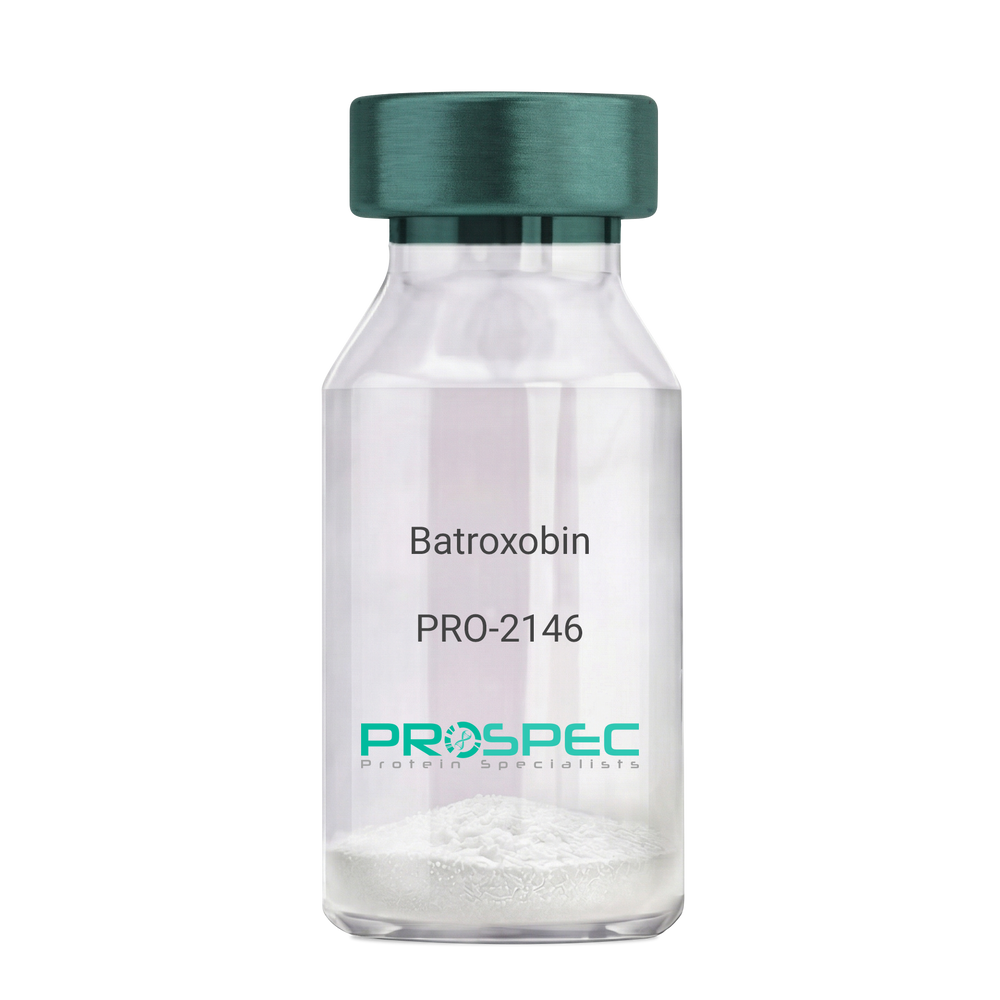
BatroxobinDescription:
Batroxobin
Thrombin-like enzyme batroxobin, EC 3.4.21.74, BX, Bothrops atrox serine proteinase, Venombin-A, Batroxobin.
Product # :
PRO-2146Price :
Quantity :
Shipping Method :
Shipped at Room temp
More Info
- description
- formulation
- More Info
Description
Batroxobin, isolated from Bothrops atrox snake venom, has an Mw of approximately 43kDa.
Formulation
The Batroxobin protein was lyophilized from a concentrated (1mg/ml) solution with no additives.
More Info
-
Introduction
Batroxobin is a serin protease that reduces fibronogen levels and is originally extracted from snake venom of Bothrops Atrox. Batroxobin is used in defibrinogenation and thrombolysis and also has an effect on c-fos gene and growth factor.
Batroxobin can efficiently restrain proliferation of VSMCs, by blocking the release and uptake of Ca2+, thus influencing [Ca2+]i.
Batroxobin converts fibrinogen to fibrin through the restricted release of fibrinopeptide-A from fibrinogen to promote blood to clot. Unlike thrombin, it is not affected by heparin and hirudin. -
Synonyms
Thrombin-like enzyme batroxobin, EC 3.4.21.74, BX, Bothrops atrox serine proteinase, Venombin-A, Batroxobin.
-
Physical Appearance
Sterile Filtered white lyophilized powder.
-
Stability
Store the lyophilized Batroxobin between 2-8°C. Do not freeze!
-
Solubility
It is recommended to reconstitute the lyophilized Batroxobin in sterile 18MΩ-cm H2O not less than 100µg/ml or more than 10mg/ml solutions.
-
Unit Definition
100BU [Batroxobin Units]=1mg.
ProSpec's products are furnished for LABORATORY RESEARCH USE ONLY. The product may not be used as drugs, agricultural or pesticidal products, food additives or household chemicals.
- View Data Sheet
Name :
STX1A (1-265) HumanDescription:
Syntaxin-1A (1-265 a.a) Human Recombinant
Syntaxin 1A, Neuron-Specific Antigen HPC-1, Syntaxin 1A (Brain), STX1, Syntaxin-1A, HPC-1, P35-1, SYN1A.
Product # :
PRO-2335Price :
Quantity :
Shipping Method :
Shipped with Ice Packs
More Info
- description
- source
- formulation
- purity
- More Info
Description
STX1A Human Recombinant produced in E.Coli is a single, non-glycosylated polypeptide chain containing 265 amino acids (1-265 a.a) and having a molecular mass of 30.7kDa. STX1A is purified by proprietary chromatographic techniques.
Source
Escherichia Coli.
Formulation
STX1A protein solution (1mg/ml) containing phosphate buffered saline (pH 7.4), 10% glycerol and 1mM DTT.
Purity
Greater than 95.0% as determined by SDS-PAGE.
More Info
-
Introduction
Syntaxin is membrane integrated Q-SNARE protein participating in exocytosis. Syntaxin is composed of an N-terminal regulatory domain (Habc), a SNARE domain (known as H3), and a single C-terminal transmembrane domain. The SNARE (H3) domain binds to both synaptobrevin and SNAP-25 forming the core SNARE complex. Synaptic vesicles store neurotransmitters that are released during calcium-regulated exocytosis. The specificity of neurotransmitter release requires the localization of both synaptic vesicles and calcium channels to the presynaptic active zone. Syntaxins function in this vesicle fusion process. Syntaxins also serve as a substrate for botulinum neurotoxin type C, a metalloprotease that blocks exocytosis and has high affinity for a molecular complex that includes the alpha-latrotoxin receptor which produces exocytosis.
-
Synonyms
Syntaxin 1A, Neuron-Specific Antigen HPC-1, Syntaxin 1A (Brain), STX1, Syntaxin-1A, HPC-1, P35-1, SYN1A.
-
Physical Appearance
Sterile Filtered colorless solution.
-
Stability
Store at 4°C if entire vial will be used within 2-4 weeks. Store, frozen at -20°C for longer periods of time. For long term storage it is recommended to add a carrier protein (0.1% HSA or BSA). Avoid multiple freeze-thaw cycles.
-
Amino Acid Sequence
MKDRTQELRT AKDSDDDDDV AVTVDRDRFM DEFFEQVEEI RGFIDKIAEN VEEVKRKHSA ILASPNPDEK TKEELEELMS DIKKTANKVR SKLKSIEQSI EQEEGLNRSS ADLRIRKTQH STLSRKFVEV MSEYNATQSD YRERCKGRIQ RQLEITGRTT TSEELEDMLE SGNPAIFASG IIMDSSISKQ ALSEIETRHS EIIKLENSIR ELHDMFMDMA MLVESQGEMI DRIEYNVEHA VDYVERAVSD TKKAVKYQSK ARRKK.
ProSpec's products are furnished for LABORATORY RESEARCH USE ONLY. The product may not be used as drugs, agricultural or pesticidal products, food additives or household chemicals.
- View Data Sheet
Name :
KLK13 Human, sf9Description:
Kallikrein-13 Human Recombinant, sf9
Kallikrein-Related Peptidase 13, KLKL4, Kallikrein-Like Protein 4, Kallikrein 13, KLK-L4, Kallikrein-Like Gene 4, Kallikrein-13, EC 3.4.21.-, EC 3.4.21, Kallikrein-13.
Product # :
ENZ-911Price :
Quantity :
Shipping Method :
Shipped with Ice Packs
More Info
- description
- source
- formulation
- purity
- biological activity
- More Info
Description
KLK13 produced in Sf9 Baculovirus cells is a single, glycosylated polypeptide chain containing 267 amino acids (17-277a.a.) and having a molecular mass of 29.7kDa. (Molecular size on SDS-PAGE will appear at approximately 28-40kDa). KLK13 is expressed with a 6 amino acid His tag at C-Terminus and purified by proprietary chromatographic techniques.
Source
Sf9, Baculovirus cells.
Formulation
KLK13 protein solution (0.5mg/ml) contains Phosphate Buffered Saline (pH 7.4) and 10% glycerol.
Purity
Greater than 90% as determined by SDS-PAGE.
Biological Activity
Specific activity is > 8,000 pmol/min/ug. One unit will hydrolyze 1.0 pmole of BAEE to Na-Benzoyl-L-arginine per minute at pH8.0 at 25C.More Info
-
Introduction
Kallikreins are a subgroup of serine proteases having various physiological functions. Many kallikreins are implicated in carcinogenesis and some have potential of becoming novel cancer and other disease biomarkers. Kallikrein-13 (KLK13) is one of the fifteen kallikrein subfamily members located in a cluster on chromosome 19. KLK13 gene expression is regulated by steroid hormones and may be useful as a marker for breast cancer.
-
Synonyms
Kallikrein-Related Peptidase 13, KLKL4, Kallikrein-Like Protein 4, Kallikrein 13, KLK-L4, Kallikrein-Like Gene 4, Kallikrein-13, EC 3.4.21.-, EC 3.4.21, Kallikrein-13.
-
Physical Appearance
Sterile Filtered colorless solution.
-
Stability
Store at 4°C if entire vial will be used within 2-4 weeks. Store, frozen at -20°C for longer periods of time. For long term storage it is recommended to add a carrier protein (0.1% HSA or BSA).Avoid multiple freeze-thaw cycles.
-
Amino Acid Sequence
GGVSQESSKV LNTNGTSGFL PGGYTCFPHS QPWQAALLVQ GRLLCGGVLV HPKWVLTAAH CLKEGLKVYL GKHALGRVEA GEQVREVVHS IPHPEYRRSP THLNHDHDIM LLELQSPVQL TGYIQTLPLS HNNRLTPGTT CRVSGWGTTT SPQVNYPKTL QCANIQLRSD EECRQVYPGK ITDNMLCAGT KEGGKDSCEG DSGGPLVCNR TLYGIVSWGD FPCGQPDRPG VYTRVSRYVL WIRETIRKYE TQQQKWLKGP QHHHHHH.
ProSpec's products are furnished for LABORATORY RESEARCH USE ONLY. The product may not be used as drugs, agricultural or pesticidal products, food additives or household chemicals.
- View Data Sheet
Name :
DCN MouseDescription:
Decorin Mouse Recombinant
Decorin, Bone proteoglycan II, PG-S2, PG40, DCN.
Product # :
PRO-2234Price :
Quantity :
Shipping Method :
Shipped with Ice Packs
More Info
- description
- source
- formulation
- purity
- More Info
Description
DCN produced in Sf9 Baculovirus cells is a single, glycosylated polypeptide chain (17-354 a.a.) and fused to a 6 aa His Tag at C-terminus containing a total of 344 amino acids and having a molecular mass of 38.8kDa.DCN shows multiple bands between 40-57kDa on SDS-PAGE, reducing conditions and purified by proprietary chromatographic techniques.
Source
Sf9, Baculovirus cells.
Formulation
DCN protein solution (0.25mg/ml) contains Phosphate buffered saline (pH7.4), 30% glycerol and 0.1mM PMSF.
Purity
Greater than 90.0% as determined by SDS-PAGE.
More Info
-
Introduction
Decorin (DCN) is a small cellular or pericellular matrix proteoglycan which is closely related in structure to biglycan protein. Decorin is a secreted protein which binds to collagen and fibronectin in extracellular matrix. Decorin appears in different glycoforms, substituted with chondroitin sulfate or dermatan sulfate consistent with the original tissue. DCN contains one attached glycosaminoglycan chain. Decorin influences the rate of fibril formation. Decorin is capable of suppressing the growth of various tumor cell lines. DCN gene defects cause corneal dystrophy. The DCN gene is a candidate gene for Marfan syndrome.
-
Synonyms
Decorin, Bone proteoglycan II, PG-S2, PG40, DCN.
-
Physical Appearance
Sterile filtered colorless solution.
-
Stability
Store at 4°C if entire vial will be used within 2-4 weeks. Store, frozen at -20°C for longer periods of time. For long term storage it is recommended to add a carrier protein (0.1% HSA or BSA).Avoid multiple freeze-thaw cycles.
-
Amino Acid Sequence
GPFEQRGLFD FMLEDEASGI IPYDPDNPLI SMCPYRCQCH LRVVQCSDLG LDKVPWDFPP DTTLLDLQNN KITEIKEGAF KNLKDLHTLI LVNNKISKIS PEAFKPLVKL ERLYLSKNQL KELPEKMPRT LQELRVHENE ITKLRKSDFN GLNNVLVIEL GGNPLKNSGI ENGAFQGLKS LSYIRISDTN ITAIPQGLPT SLTEVHLDGN KITKVDAPSL KGLINLSKLG LSFNSITVME NGSLANVPHL RELHLDNNKL LRVPAGLAQH KYIQVVYLHN NNISAVGQND FCRAGHPSRK ASYSAVSLYG NPVRYWEIFP NTFRCVYVRS AIQLGNYKHH HHHH
ProSpec's products are furnished for LABORATORY RESEARCH USE ONLY. The product may not be used as drugs, agricultural or pesticidal products, food additives or household chemicals.
- View Data Sheet
Name :
IL22RA (Y51A) MouseDescription:
Interleukin-22 Receptor Antagonist (Y51A) Mouse Recombinant
IL-TIF, TIFa, IL-10-related T-cell-derived-inducible factor, IL-22, ILTIF, IL-D110, zcyto18, MGC79382, MGC79384, TIFIL-23.
Product # :
CYT-1239Price :
Quantity :
Shipping Method :
Shipped at Room temp
More Info
- description
- source
- formulation
- purity
- biological activity
- More Info
Description
IL22RA (Y51A) Mouse Recombinant produced in E.Coli is a single, non-glycosylated polypeptide chain containing 147 amino acids and having a molecular mass of 16.7 kDa. IL22RA (Y51A) is purified by proprietary chromatographic techniques.
Source
Escherichia coli.
Formulation
The protein was lyophilized from a concentrated (1mg/ml) solution with NaHCO3.
Purity
Greater than 98.0% as determined by:
(a) Gel filtration chromatography.
(b) Analysis by SDS-PAGE.
Biological Activity
IL22RA (Y51A) Is capable of full inhibition of STAT3 phosphorylation induced by mouse interleukin 22 in HepG cells. Its affinity toward immobilized mIL-22 receptor α1 extracellular domain (mIL-22 Rα1-ECD) or IL-22 binding protein is similar to the non-mutated mouse interleukin 22. Mouse IL-22 antagonist (Y51A) has no agonistic activity in this bioassay.
More Info
-
Synonyms
IL-TIF, TIFa, IL-10-related T-cell-derived-inducible factor, IL-22, ILTIF, IL-D110, zcyto18, MGC79382, MGC79384, TIFIL-23.
-
Physical Appearance
Sterile Filtered White lyophilized (freeze-dried) powder.
-
Stability
Lyophilized IL22RA (Y51A) although stable at room temperature for 3 weeks, should be stored desiccated below -18°C. Upon reconstitution IL22RA (Y51A) should be stored at 4°C between 2-7 days and for future use below -18°C. For long term storage it is recommended to add a carrier protein (0.1% HSA or BSA). Please prevent freeze-thaw cycles.
-
Solubility
It is recommended to reconstitute the lyophilized IL22RA (Y51A) in sterile 18MΩ-cm not less than 100µg/ml, which can then be further diluted to other aqueous solutions.
-
Amino Acid Sequence
The sequence of the first five N-terminal amino acids was determined and was found to be Ala-Leu-Pro-Val-Asn.
-
Background
IL-22 belongs to the IL-10 family of regulatory cytokines and produced by several populations of immune cells at a site of inflammation. Members of this family share partial homology in their amino acid sequences, but varies in their biological functions. IL-22 takes effect on non-hematopoietic cells. IL-22 takes pat in wound healing and in protection against microbs.Produced by T lymphocytes, IL-22 inhibits IL-4 production by Th2 cells, and induces acute phase reactants in the pancreas and liver.
-
Protein content
Protein quantitation was carried out by UV spectroscopy at 280 nm using the absorbency value of 0.18 as the extinction coefficient for a 0.1% (1mg/ml) solution. This value is calculated by the DNAman computer analysis program of protein sequences.
ProSpec's products are furnished for LABORATORY RESEARCH USE ONLY. The product may not be used as drugs, agricultural or pesticidal products, food additives or household chemicals.
- View Data Sheet
Name :
PTX2 MouseDescription:
Pentraxin-2 Mouse Recombinant
Serum amyloid P-component, SAP, Apcs, Sap, Ptx2.
Product # :
PRO-2598Price :
Quantity :
Shipping Method :
Shipped with Ice Packs
More Info
- description
- source
- formulation
- purity
- More Info
Description
PTX2 Mouse Recombinant produced in Sf9 Insect cells is a single, glycosylated polypeptide chain containing 210 amino acids (21-224 a.a) and having a molecular mass of 24.6kDa. (Molecular size on SDS-PAGE will appear at approximately 28-40kDa). PTX2 is fused to a 6 amino acid His-tag at C-terminus & purified by proprietary chromatographic techniques.
Source
HEK293.
Formulation
PTX2 protein solution (0.25mg/ml) contains 10% glycerol in Phosphate Buffered Saline (pH 7.4).
Purity
Greater than 90.0% as determined by SDS-PAGE.
More Info
-
Introduction
PTX-2 or Pentraxin-2 is a phylogenetically conserved protein, commonly moving with homopentameric blood protein or with a protein that recognizes receptors of the innate immune system. The protein’s specific binding abilities may show that PTX-2 is specially bound in sites where injury accrued, therefore helps to eliminate damaged tissue by ways that are not phlogistics.
-
Synonyms
Serum amyloid P-component, SAP, Apcs, Sap, Ptx2.
-
Physical Appearance
Sterile Filtered clear solution.
-
Stability
Store at 4°C if entire vial will be used within 2-4 weeks. Store, frozen at -20°C for longer periods of time. For long term storage it is recommended to add a carrier protein (0.1% HSA or BSA).Avoid multiple freeze-thaw cycles.
-
Amino Acid Sequence
QTDLKRKVFV FPRESETDHV KLIPHLEKPL QNFTLCFRTY SDLSRSQSLF SYSVKGRDNE LLIYKEKVGE YSLYIGQSKV TVRGMEEYLS PVHLCTTWES SSGIVEFWVN GKPWVKKSLQ REYTVKAPPS IVLGQEQDNY GGGFQRSQSF VGEFSDLYMW DYVLTPQDIL FVYRDSPVNP NILNWQALNY EINGYVVIRP RVWDHHHHHH.
ProSpec's products are furnished for LABORATORY RESEARCH USE ONLY. The product may not be used as drugs, agricultural or pesticidal products, food additives or household chemicals.
- View Data Sheet
Name :
Noggin MouseDescription:
Noggin Mouse Recombinant
Noggin, SYM1, SYNS1, NOG.
Product # :
CYT-600Price :
Quantity :
Shipping Method :
Shipped at Room temp
More Info
- description
- source
- formulation
- purity
- biological activity
- More Info
Description
Noggin Mouse Recombinant produced in E.Coli is a non-glycosylated, disulfide-linked protein consisting of two 206 amino acid polypeptide chains, having a total molecular mass of approximately 46.4 kDa (each chain 23.2 kDa).
Source
Escherichia Coli.
Formulation
Lyophilized from a 0.2μm filtered solution in 30% acetonitrile, 0.1% TFA.
Purity
Greater than 95.0% as determined by SDS-PAGE.
Biological Activity
The ED50 as determined by inhibiting BMP-4-induced alkaline phosphatase production of murine ATDC5 cells is less than 2ng/ml, corresponding to a specific activity of > 5.0 × 10⁵ IU/mg in the presence of 5ng/ml BMP-4.More Info
-
Introduction
The secreted polypeptide noggin, encoded by the NOG gene, binds and inactivates members of the transforming growth factor-beta (TGF-beta) superfamily signaling proteins, such as bone morphogenetic protein-4 (BMP4). By diffusing through extracellular matrices more efficiently than members of the TGF-beta superfamily, noggin may have a principal role in creating morphogenic gradients. Noggin appears to have pleiotropic effect, both early in development as well as in later stages. It was originally isolated from Xenopus based on its ability to restore normal dorsal-ventral body axis in embryos that had been artificially ventralized by UV treatment. The results of the mouse knockout of noggin suggest that it is involved in numerous developmental processes, such as neural tube fusion and joint formation. Recently, several dominant human NOG mutations in unrelated families with proximal symphalangism (SYM1) and multiple synostoses syndrome (SYNS1) were identified; both SYM1 and SYNS1 have multiple joint fusion as their principal feature, and map to the same region (17q22) as NOG. All NOG mutations altered evolutionarily conserved amino acid residues. The amino acid sequence of human noggin is highly homologous to that of Xenopus, rat and mouse.
-
Synonyms
Noggin, SYM1, SYNS1, NOG.
-
Physical Appearance
Sterile Filtered White lyophilized (freeze-dried) powder.
-
Stability
Lyophilized Mouse Noggin although stable at room temperature for 3 weeks, should be stored desiccated below -18°C. Upon reconstitution Mouse Noggin should be stored at 4°C between 2-7 days and for future use below -18°C.For long term storage it is recommended to add a carrier protein (0.1% HSA or BSA).Please prevent freeze-thaw cycles.
-
Solubility
It is recommended to be briefly centrifuged prior to opening to bring the contents to the bottom. Reconstitute in 10mM HAc to a concentration of 0.1-1.0 mg/ml. Further dilutions should be made in appropriate buffered solutions.
-
Amino Acid Sequence
MQHYLHIRPAPSDNLPLVDLIEHPDPIFDPKEKDLNETLLRSLLGGHYD
PGFMATSPPEDRPGGGGGPAGGAEDLAELDQLLRQRPSGAMPSEIKG
LEFSEGLAQGKKQRLSKKLRRKLQMWLWSQTFCPVLYAWNDLGSRF
WPRYVKVGSCFSKRSCSVPEGMVCKPSKSVHLTVLRWRCQRRGQR
CGWIPIQYPIISECKCSC.
ProSpec's products are furnished for LABORATORY RESEARCH USE ONLY. The product may not be used as drugs, agricultural or pesticidal products, food additives or household chemicals.
- View Data Sheet
Name :
TXNDC17 HumanDescription:
Thioredoxin Domain Containing 17 Human Recombinant
Thioredoxin domain containing 17, Thioredoxin-like protein 5, Protein 42-9-9, thioredoxin (Trx)-related protein 14 kDa, TRP14, TXNL5, MGC14353.
Product # :
PRO-1055Price :
Quantity :
Shipping Method :
Shipped with Ice Packs
More Info
- description
- source
- formulation
- purity
- More Info
Description
TXNDC17 Human Recombinant produced in E. coli is a single polypeptide chain containing 147 amino acids (1-123) and having a molecular mass of 16.5kDa.TXNDC17 is fused to a 24 amino acid His-tag at N-terminus & purified by proprietary chromatographic techniques.
Source
E.coli.
Formulation
The TXNDC17 solution (1mg/ml) contains 20mM Tris-HCl buffer (pH 8.0), 50mM Nacl and 10% glycerol.
Purity
Greater than 95% as determined by SDS-PAGE.
More Info
-
Introduction
TXNDC17 is a disulfide reductase that takes part in several redox reactions using the reversible oxidation of its active center dithiol to a disulfide and catalyzes dithiol-disulfide exchange reactions. TXNDC17 has peroxidase activity and assists to eliminate cellular hydrogen peroxide.
-
Synonyms
Thioredoxin domain containing 17, Thioredoxin-like protein 5, Protein 42-9-9, thioredoxin (Trx)-related protein 14 kDa, TRP14, TXNL5, MGC14353.
-
Physical Appearance
Sterile Filtered colorless solution.
-
Stability
Store at 4°C if entire vial will be used within 2-4 weeks. Store, frozen at -20°C for longer periods of time. For long term storage it is recommended to add a carrier protein (0.1% HSA or BSA).Avoid multiple freeze-thaw cycles.
-
Amino Acid Sequence
MGSSHHHHHH SSGLVPRGSH MGSHMARYEE VSVSGFEEFH RAVEQHNGKT IFAYFTGSKD AGGKSWCPDC VQAEPVVREG LKHISEGCVF IYCQVGEKPY WKDPNNDFRK NLKVTAVPTL LKYGTPQKLV ESECLQANLV EMLFSED
ProSpec's products are furnished for LABORATORY RESEARCH USE ONLY. The product may not be used as drugs, agricultural or pesticidal products, food additives or household chemicals.
- View Data Sheet
Name :
PTX3 HumanDescription:
Pentraxin-3 Human Recombinant
TSG-14, TNFAIP5, PTX3, Pentraxin-related protein PTX3, Pentaxin-related protein PTX3, Tumor necrosis factor-inducible gene 14 protein, TSG14, pentraxin-related gene rapidly induced by IL-1 beta.
Product # :
PRO-694Price :
Quantity :
Shipping Method :
Shipped with Ice Packs
More Info
- description
- source
- formulation
- purity
- More Info
Description
Recombinant Human PTX3 produced in E.Coli is a single, non-glycosylated polypeptide chain containing 401 amino acids (18-381 a.a) and having a molecular mass of 44.4 kDa. PTX3 is fused to a 37 amino acid His Tag at N-terminus and purified by proprietary chromatographic techniques.
Source
Escherichia Coli.
Formulation
The PTX3 protein contains 20mM Tris-HCl buffer pH-8, 1mM DTT and 10% glycerol.
Purity
Greater than 90% as determined by Analysis by SDS-PAGE.
More Info
-
Introduction
PTX3 is part of the pentraxin family sharing the C-terminal domain with short pentraxins and containing a unique N-terminal domain. PTX3 is produced and released at inflammatory sites by various cell types including monocytes/macrophages, endothelial cells, vascular smooth muscle cells, fibroblasts, and adipocytes. PTX3 is involved in the regulation of innate resistance to pathogens, inflammatory reactions, possibly clearance of self-components and female fertility. PTX3 is used as a marker for disease activity of psoriasis. High serum PTX3 levels are associated with the disease severity of systemic sclerosis. Elevated serum PTX3 is associated with pulmonary fungal infections.
-
Synonyms
TSG-14, TNFAIP5, PTX3, Pentraxin-related protein PTX3, Pentaxin-related protein PTX3, Tumor necrosis factor-inducible gene 14 protein, TSG14, pentraxin-related gene rapidly induced by IL-1 beta.
-
Physical Appearance
Sterile filtered colorless solution.
-
Stability
Store at 4°C if entire vial will be used within 2-4 weeks. Store, frozen at -20°C for longer periods of time. For long term storage it is recommended to add a carrier protein (0.1% HSA or BSA). Avoid multiple freeze-thaw cycles.
-
Amino Acid Sequence
MRGSHHHHHH GMASMTGGQQ MGRDLYDDDD KDRWGSMENS DDYDLMYVNL DNEIDNGLHP TEDPTPCDCG QEHSEWDKLF IMLENSQMRE RMLLQATDDV LRGELQRLRE ELGRLAESLA RPCAPGAPAE ARLTSALDEL LQATRDAGRR LARMEGAEAQ RPEEAGRALA AVLEELRQTR ADLHAVQGWA ARSWLPAGCE TAILFPMRSK KIFGSVHPVR PMRLESFSAC IWVKATDVLN KTILFSYGTK RNPYEIQLYL SYQSIVFVVG GEENKLVAEA MVSLGRWTHL CGTWNSEEGL TSLWVNGELA ATTVEMATGH IVPEGGILQI GQEKNGCCVG GGFDETLAFS GRLTGFNIWD SVLSNEEIRE TGGAESCHIR GNIVGWGVTE IQPHGGAQYV S.
ProSpec's products are furnished for LABORATORY RESEARCH USE ONLY. The product may not be used as drugs, agricultural or pesticidal products, food additives or household chemicals.
- View Data Sheet
Name :
MAPKAPK3 HumanDescription:
Mitogen-Activated Protein Kinase-Activated Protein Kinase 3 Human Recombinant
3PK, MAPKAP-K3, MAPKAP3, MAPKAPK-3, MK-3, MAP kinase-activated protein kinase 3, MAPK-activated protein kinase 3, MAPKAP kinase 3,MAPKAPK-3, MK-3,MAPKAPK3.
Product # :
PKA-045Price :
Quantity :
Shipping Method :
Shipped with Ice Packs
More Info
- description
- source
- formulation
- purity
- More Info
Description
MAPKAPK3 Human Recombinant produced in E.Coli is a single, non-glycosylated polypeptide chain containing 405 amino acids (1-382 a.a) and having a molecular mass of 45.4kDa. MAPKAPK3 is fused to a 23 amino acid His-tag at N-terminus & purified by proprietary chromatographic techniques.
Source
E.coli.
Formulation
MAPKAPK3 protein solution (1mg/ml) containing 20mM Tris-HCl buffer (pH 8.0), 0.2M NaCl, 20% glycerol and 1mM DTT.
Purity
Greater than 95% as determined by SDS-PAGE.
More Info
-
Introduction
MAP kinase-activated protein kinase 3 (MAPKAPK3) is involved in inflammatory Reaction by regulating tumor necrosis factor (TNF) and IL6 production post-transcriptionally. MAPKAPK3 phosphorylates AU-rich elements (AREs)-binding proteins, like TTP/ZFP36, leading to control of stability and translation of TNF and IL6 mRNAs. Phosphorylation of TTP/ZFP36 (a major post-transcriptional regulator of TNF), promotes its binding to 14-3-3 proteins and reduces its ARE mRNA affinity resulting in inhibition of dependent degradation of ARE-containing transcript. MAPKAPK3 is activated by growth inducers and stress stimulation of cells.
-
Synonyms
3PK, MAPKAP-K3, MAPKAP3, MAPKAPK-3, MK-3, MAP kinase-activated protein kinase 3, MAPK-activated protein kinase 3, MAPKAP kinase 3,MAPKAPK-3, MK-3,MAPKAPK3.
-
Physical Appearance
Sterile Filtered colorless solution.
-
Stability
Store at 4°C if entire vial will be used within 2-4 weeks. Store, frozen at -20°C for longer periods of time. For long term storage it is recommended to add a carrier protein (0.1% HSA or BSA).Avoid multiple freeze-thaw cycles.
-
Amino Acid Sequence
MGSSHHHHHH SSGLVPRGSH MGSMDGETAE EQGGPVPPPV APGGPGLGGA PGGRREPKKY AVTDDYQLSK QVLGLGVNGK VLECFHRRTG QKCALKLLYD SPKARQEVDH HWQASGGPHI VCILDVYENM HHGKRCLLII MECMEGGELF SRIQERGDQA FTEREAAEIM RDIGTAIQFL HSHNIAHRDV KPENLLYTSK EKDAVLKLTD FGFAKETTQN ALQTPCYTPY YVAPEVLGPE KYDKSCDMWS LGVIMYILLC GFPPFYSNTG QAISPGMKRR IRLGQYGFPN PEWSEVSEDA KQLIRLLLKT DPTERLTITQ FMNHPWINQS MVVPQTPLHT ARVLQEDKDH WDEVKEEMTS ALATMRVDYD QVKIKDLKTS NNRLLNKRRK KQAGSSSASQ GCNNQ.
ProSpec's products are furnished for LABORATORY RESEARCH USE ONLY. The product may not be used as drugs, agricultural or pesticidal products, food additives or household chemicals.
- View Data Sheet
Name :
YWHAG HumanDescription:
Tyr-3/Trp-5 Monooxygenase Activation Protein Gamma Human Recombinant
14-3-3 protein gamma, Protein kinase C inhibitor protein 1, KCIP-1, YWHAG, Tyrosine 3-monooxygenase/tryptophan 5-monooxygenase activation protein, gamma polypeptide.
Product # :
PKA-238Price :
Quantity :
Shipping Method :
Shipped with Ice Packs
More Info
- description
- source
- formulation
- purity
- More Info
Description
YWHAG Human Recombinant produced in E.Coli is a single, non-glycosylated, polypeptide chain containing 247 amino acids (1-247) and having a molecular mass of 28 kDa. YWHAG is purified by proprietary chromatographic techniques.
Source
Escherichia Coli.
Formulation
YWHAG solution containing 20mM Tris 7.5.
Purity
Greater than 95.0% as determined by SDS-PAGE.
More Info
-
Introduction
The 14-3-3 family of proteins plays a key regulatory role in signal transduction, checkpoint control, apoptotic and nutrient-sensing pathways. 14-3-3 proteins are highly conserved and ubiquitously expressed. There are at least seven isoforms that have been identified in mammals. The 14-3-3gamma, a subtype of the 14-3-3 family of proteins, was thought to be brain and neuron-specific. It has been shown to interact with RAF1 and protein kinase C, proteins involved in various signal transduction pathways.
-
Synonyms
14-3-3 protein gamma, Protein kinase C inhibitor protein 1, KCIP-1, YWHAG, Tyrosine 3-monooxygenase/tryptophan 5-monooxygenase activation protein, gamma polypeptide.
-
Physical Appearance
Sterile filtered colorless solution.
-
Stability
Store at 4°C if entire vial will be used within 2-4 weeks. Store, frozen at -20°C for longer periods of time. For long term storage it is recommended to add a carrier protein (0.1% HSA or BSA).Avoid multiple freeze-thaw cycles.
-
Amino Acid Sequence
MVDREQLVQK ARLAEQAERY DDMAAAMKNV TELNEPLSNE ERNLLSVAYK NVVGARRSSW RVISSIEQKT SADGNEKKIE MVRAYREKIE KELEAVCQDV LSLLDNYLIK NCSETQYESK VFYLKMKGDY YRYLAEVATG EKRATVVESS EKAYSEAHEI SKEHMQPTHP IRLGLALNYS VFYYEIQNAP EQACHLAKTA FDDAIAELDT LNEDSYKDST LIMQLLRDNL TLWTSDQQDD DGGEGNN.
ProSpec's products are furnished for LABORATORY RESEARCH USE ONLY. The product may not be used as drugs, agricultural or pesticidal products, food additives or household chemicals.
- View Data Sheet
Name :
MIF Human His NDescription:
Macrophage Migration Inhibitory Factor Human, Recombinant His Tag N-Terminus
Phenylpyruvate tautomerase, Glycosylation-inhibiting factor, GIF, MMIF, MIF.
Product # :
CYT-431Price :
Quantity :
Shipping Method :
Shipped with Ice Packs
More Info
- description
- source
- formulation
- purity
- More Info
Description
MIF human Recombinant, fused to 40 a.a. His-tag at N-terminus, was cloned into an E. coli expression vector and was purified to apparent homogeneity by using conventional column chromatography techniques. Macrophage Inducing Factor Human Recombinant ( 1-115 a.a. ) is a single, non-glycosylated, polypeptide chain having a total amino acids of 155 and molecular mass of 17kDa.
Source
Escherichia Coli.
Formulation
1mg/ml solution containing PBS pH-7.4.
Purity
Greater than 95.0% as determined by:
(a) Analysis by RP-HPLC.
(b) Analysis by SDS-PAGE.More Info
-
Introduction
The cytokine Macrophage migration inhibitory factor (MIF) has been identified to be secreted by the pituitary gland and the monocyte/macrophage and to play an important role in endotoxic shock. MIF has the unique property of being released from macrophages and T cells in response to physiological concentrations of glucocorticoids. The secretion of MIF is tightly regulated and decreases at high, anti-inflammatory steroid concentration.
-
Synonyms
Phenylpyruvate tautomerase, Glycosylation-inhibiting factor, GIF, MMIF, MIF.
-
Physical Appearance
Sterile filtered colorless solution.
-
Stability
Liquid MIF although stable 4°C for 1 week, should be stored below -18°C. Please prevent freeze-thaw cycles.
-
Amino Acid Sequence
MRGSHHHHHHGMASMTGGQQMGRDLYDDDDKDRWGSMPMFIVNTNV PRASVPDGFL SELTQQLAQA TGKPPQYIAV HVVPDQLMAF GGSSEPCALC LHSIGKIGGA QNRSYSKLLC GLLAERLRIS PDRVYINYYD MNAANVGWNN STFA.
ProSpec's products are furnished for LABORATORY RESEARCH USE ONLY. The product may not be used as drugs, agricultural or pesticidal products, food additives or household chemicals.
- View Data Sheet
Name :
Lymphotactin HumanDescription:
Lymphotactin Human Recombinant (XCL1)
XCL1, Cytokine SCM-1, ATAC, Lymphotaxin, SCM-1-alpha, Small inducible cytokine C1, XC chemokine ligand 1, LTN, LPTN, SCM1, SCM-1, SCYC1, SCM-1a.
Product # :
CHM-314Price :
Quantity :
Shipping Method :
Shipped at Room temp
More Info
- description
- source
- formulation
- purity
- biological activity
- More Info
Description
Lymphotactin Human Recombinant produced in E.Coli is a single, non-glycosylated, polypeptide chain containing 92 amino acids and having a molecular mass of 10007 Dalton. The Lymphotactin is purified by proprietary chromatographic techniques.
Source
Escherichia Coli.
Formulation
The XCL1 was lyophilized from a concentrated (1mg/ml) solution in water containing no additives.
Purity
Greater than 99.0% as determined by:
(a) Analysis by RP-HPLC.
(b) Analysis by SDS-PAGE.Biological Activity
The Biological activity is calculated by its ability to chemoattract human T cells at 10-100ng/ml corresponding to a Specific Activity of 10,000-100,000IU/mg.More Info
-
Introduction
Chemokine (C motif) ligand (XCL1) is a small cytokine belonging to the XC chemokine family that is also known as lymphotactin. It is found in high levels in spleen, thymus, intestine and peripheral blood leukocytes, and at lower levels in lung, prostate gland and ovary. Cellular sources for XCL1 include activated thymic and peripheral blood CD8+ T cells. This chemokine attracts T cells. In humans, XCL1 is closely related to another chemokine called XCL2, whose geneis found at the same locus on chromosome 1. XCL1 induces it chemotactic function by binding to a chemokine receptor called XCR1.
-
Synonyms
XCL1, Cytokine SCM-1, ATAC, Lymphotaxin, SCM-1-alpha, Small inducible cytokine C1, XC chemokine ligand 1, LTN, LPTN, SCM1, SCM-1, SCYC1, SCM-1a.
-
Physical Appearance
Sterile Filtered White lyophilized (freeze-dried) powder.
-
Stability
Lyophilized Lymphotactin although stable at room temperature for 3 weeks, should be stored desiccated below -18°C. Upon reconstitution XCL1 should be stored at 4°C between 2-7 days and for future use below -18°C. For long term storage it is recommended to add a carrier protein (0.1% HSA or BSA). Please avoid freeze-thaw cycles.
-
Solubility
It is recommended to reconstitute the lyophilized Lymphotactin in sterile 18MΩ-cm H2O not less than 100µg/ml, which can then be further diluted to other aqueous solutions.
-
Amino Acid Sequence
The sequence of the first five N-terminal amino acids was determined and was found to be Gln-Ser-Glu-Val-Ser.
ProSpec's products are furnished for LABORATORY RESEARCH USE ONLY. The product may not be used as drugs, agricultural or pesticidal products, food additives or household chemicals.
- View Data Sheet
Name :
NTRK2 HumanDescription:
Neurotrophic Receptor Tyrosine Kinase 2 Human Recombinant
GP145-TrkB, trk-B, TRKB, NTRK2
Product # :
CYT-1159Price :
Quantity :
Shipping Method :
Shipped with Ice Packs
More Info
- description
- source
- formulation
- purity
- More Info
Description
NTRK2 Human produced in Sf9 Baculovirus cells is a single, glycosylated polypeptide chain containing 407 amino acids (32-430a.a) and having a molecular mass of 45.2kDa.NTRK2 is fused to an 8 amino acid His tag at C-terminus and purified by proprietary chromatographic techniques.
Source
Sf9, Baculovirus cells.
Formulation
The NTRK2 solution (0. 5mg/ml) contains 10% Glycerol and Phosphate-Buffered Saline (pH 7.4).
Purity
Greater than 95% as determined by SDS-PAGE.
More Info
-
Introduction
Neurotrophic Receptor Tyrosine Kinase 2, also referred to NTRK2, is a tyrosine-protein kinase receptor which takes part in the development & the maturation of the central and the peripheral nervous systems through regulation of neuron survival, migration, proliferation, differentiation and synapse formation & plasticity. NTRK2 acts in learning and memory by regulating both short term synaptic function and long-term potentiation. The substrates that are known for the TRK family receptors are: SHC1, PI-3 kinase and PLC-gamma-1.
-
Synonyms
GP145-TrkB, trk-B, TRKB, NTRK2
-
Physical Appearance
Sterile Filtered colorless solution.
-
Stability
Store at 4°C if entire vial will be used within 2-4 weeks. Store, frozen at -20°C for longer periods of time. For long term storage it is recommended to add a carrier protein (0.1% HSA or BSA).Avoid multiple freeze-thaw cycles.
-
Amino Acid Sequence
CPTSCKCSAS RIWCSDPSPG IVAFPRLEPN SVDPENITEI FIANQKRLEI INEDDVEAYV GLRNLTIVDS GLKFVAHKAF LKNSNLQHIN FTRNKLTSLS RKHFRHLDLS ELILVGNPFT CSCDIMWIKT LQEAKSSPDT QDLYCLNESS KNIPLANLQI PNCGLPSANL AAPNLTVEEG KSITLSCSVA GDPVPNMYWD VGNLVSKHMN ETSHTQGSLR ITNISSDDSG KQISCVAENL VGEDQDSVNL TVHFAPTITF LESPTSDHHW CIPFTVKGNP KPALQWFYNG AILNESKYIC TKIHVTNHTE YHGCLQLDNP THMNNGDYTL IAKNEYGKDE KQISAHFMGW PGIDDGANPN YPDVIYEDYG TAANDIGDTT NRSNEIPSTD VTDKTGREHL EHHHHHH
ProSpec's products are furnished for LABORATORY RESEARCH USE ONLY. The product may not be used as drugs, agricultural or pesticidal products, food additives or household chemicals.
- View Data Sheet
Name :
IL28B HumanDescription:
Interleukin 28B Human Recombinant
Lambda 3, IL28B, Interleukin 28B (IFN, Lambda 3), Cytokine Zcyto22, Interleukin-28B, Interleukin-28C, IFN-Lambda-3, IL-28B, IL-28C, IL28C, Lambda 4, Interleukin 28B, Interleukin 28C, IFN-Lambda-4, ZCYTO22, IFNL3.
Product # :
CYT-893Price :
Quantity :
Shipping Method :
Shipped with Ice Packs
More Info
- description
- source
- formulation
- purity
- More Info
Description
IL 28B produced in Sf9 Baculovirus cells is a single, glycosylated polypeptide chain (22-196 a.a.) and fused to a 6 aa His Tag at C-terminus containing a total of 181 amino acids and having a molecular mass of 20.4kDa.IL 28B shows multiple bands between 18-28kDa on SDS-PAGE, reducing conditions and purified by proprietary chromatographic techniques.
Source
Sf9, Baculovirus cells.
Formulation
IL 28B protein solution (0.25mg/ml) contains Phosphate buffered saline (pH7.4), 20% glycerol, 1mM EDTA and 0.1mM PMSF.
Purity
Greater than 85.0% as determined by SDS-PAGE.
More Info
-
Introduction
IL-28B is a cytokine remotely related to type I IFNs and the IL-10 family. Interleukin-28B, interleukin 28A (IL28A), and interleukin 29 (IL29) are 3 closely related cytokine genes which form a cytokine gene cluster on a chromosomal region mapped to 19q13. Expression of the cytokines encoded by these 3 genes can be induced by viral infection. All 3 cytokines interact with a heterodimeric class II cytokine receptor which consists of interleukin 10 receptor, beta (IL10RB) and interleukin 28 receptor, alpha (IL28RA).
-
Synonyms
Lambda 3, IL28B, Interleukin 28B (IFN, Lambda 3), Cytokine Zcyto22, Interleukin-28B, Interleukin-28C, IFN-Lambda-3, IL-28B, IL-28C, IL28C, Lambda 4, Interleukin 28B, Interleukin 28C, IFN-Lambda-4, ZCYTO22, IFNL3.
-
Physical Appearance
Sterile filtered colorless solution.
-
Stability
Store at 4°C if entire vial will be used within 2-4 weeks. Store, frozen at -20°C for longer periods of time. For long term storage it is recommended to add a carrier protein (0.1% HSA or BSA).Avoid multiple freeze-thaw cycles.
-
Amino Acid Sequence
VPVARLRGAL PDARGCHIAQ FKSLSPQELQ AFKRAKDALE ESLLLKDCKC RSRLFPRTWD LRQLQVRERP VALEAELALT LKVLEATADT DPALGDVLDQ PLHTLHHILS QLRACIQPQP TAGPRTRGRL HHWLHRLQEA PKKESPGCLE ASVTFNLFRL LTRDLNCVAS GDLCVHHHHHH.
ProSpec's products are furnished for LABORATORY RESEARCH USE ONLY. The product may not be used as drugs, agricultural or pesticidal products, food additives or household chemicals.
- View Data Sheet
Name :
SNX5 HumanDescription:
Sorting Nexin 5 Human Recombinant
Sorting nexin-5 isoform a, Sorting nexin-5, SNX5.
Product # :
PRO-786Price :
Quantity :
Shipping Method :
Shipped with Ice Packs
More Info
- description
- source
- formulation
- purity
- More Info
Description
SNX5 Human Recombinant produced in E.Coli is a single, non-glycosylated polypeptide chain containing 427 amino acids (1-404 a.a) and having a molecular mass of 49.2kDa.SNX5 is fused to a 23 amino acid His-tag at N-terminus & purified by proprietary chromatographic techniques.
Source
Escherichia Coli.
Formulation
SNX5 protein solution (0.25mg/ml) in phosphate buffered saline (pH7.4), 20% glycerol and 1mM DTT.
Purity
Greater than 85.0% as determined by SDS-PAGE.
More Info
-
Introduction
Sorting nexin-5 (SNX5) belongs to the sorting nexin family, whose members contains a phox (PX) domain, (which is a phosphoinositide binding domain) and are involved in intracellular trafficking. SNX5 protein is a component of the mammalian retromer complex, which facilitates cargo recovery from endosomes to the trans-Golgi network. SNX5 binds to the Fanconi anemia, complementation group A protein.
-
Synonyms
Sorting nexin-5 isoform a, Sorting nexin-5, SNX5.
-
Physical Appearance
Sterile Filtered clear solution.
-
Stability
Store at 4°C if entire vial will be used within 2-4 weeks. Store, frozen at -20°C for longer periods of time. For long term storage it is recommended to add a carrier protein (0.1% HSA or BSA).Avoid multiple freeze-thaw cycles.
-
Amino Acid Sequence
MGSSHHHHHH SSGLVPRGSH MGSMAAVPEL LQQQEEDRSK LRSVSVDLNV DPSLQIDIPD ALSERDKVKF TVHTKTTLPT FQSPEFSVTR QHEDFVWLHD TLIETTDYAG LIIPPAPTKP DFDGPREKMQ KLGEGEGSMT KEEFAKMKQE LEAEYLAVFK KTVSSHEVFL QRLSSHPVLS KDRNFHVFLE YDQDLSVRRK NTKEMFGGFF KSVVKSADEV LFTGVKEVDD FFEQEKNFLI NYYNRIKDSC VKADKMTRSH KNVADDYIHT AACLHSLALE EPTVIKKYLL KVAELFEKLR KVEGRVSSDE DLKLTELLRY YMLNIEAAKD LLYRRTKALI DYENSNKALD KARLKSKDVK LAEAHQQECC QKFEQLSESA KEELINFKRK RVAAFRKNLI EMSELEIKHA RNNVSLLQSC IDLFKNN.
ProSpec's products are furnished for LABORATORY RESEARCH USE ONLY. The product may not be used as drugs, agricultural or pesticidal products, food additives or household chemicals.
- View Data Sheet
Name :
TIPIN HumanDescription:
TIMELESS Interacting Protein Human Recombinant
TIMELESS Interacting Protein, CSM3 Homolog.
Product # :
PRO-1710Price :
Quantity :
Shipping Method :
Shipped with Ice Packs
More Info
- description
- source
- formulation
- purity
- More Info
Description
TIPIN Human Recombinant produced in E.coli is a single, non-glycosylated polypeptide chain containing 324 amino acids (1-301) and having a molecular mass of 36.9kDa.TIPIN is fused to a 23 amino acid His-tag at N-terminus & purified by proprietary chromatographic techniques.
Source
Escherichia Coli.
Formulation
The TIPIN solution (0.5mg/ml) contains 20mM Tris-HCl buffer (pH8.0), 0.15M NaCl, 1mM DTT and 10% glycerol.
Purity
Greater than 85.0% as determined by SDS-PAGE.
More Info
-
Introduction
TIPIN is a member of the CSM3 family. TIPIN protein is essential for normal advancement of S-phase and vital for cell existence after DNA damage or replication stress. TIPIN is specifically necessary for the ATR - CHEK1 pathway in the replication checkpoint induced by ultraviolet light.
-
Synonyms
TIMELESS Interacting Protein, CSM3 Homolog.
-
Physical Appearance
Sterile Filtered clear solution.
-
Stability
Store at 4°C if entire vial will be used within 2-4 weeks. Store, frozen at -20°C for longer periods of time. For long term storage it is recommended to add a carrier protein (0.1% HSA or BSA).Avoid multiple freeze-thaw cycles.
-
Amino Acid Sequence
MGSSHHHHHH SSGLVPRGSH MGSMLEPQEN GVIDLPDYEH VEDETFPPFP PPASPERQDG EGTEPDEESG NGAPVPVPPK RTVKRNIPKL DAQRLISERG LPALRHVFDK AKFKGKGHEA EDLKMLIRHM EHWAHRLFPK LQFEDFIDRV EYLGSKKEVQ TCLKRIRLDL PILHEDFVSN NDEVAENNEH DVTSTELDPF LTNLSESEMF ASELSRSLTE EQQQRIERNK QLALERRQAK LLSNSQTLGN DMLMNTPRAH TVEEVNTDED QKEESNGLNE DILDNPCNDA IANTLNEEET LLDQSFKNVQ QQLDATSRNI TEAR
ProSpec's products are furnished for LABORATORY RESEARCH USE ONLY. The product may not be used as drugs, agricultural or pesticidal products, food additives or household chemicals.
- View Data Sheet
Name :
KLK1 Human, HEKDescription:
Kallikrein-1 Human Recombinant, HEK
KLK1, KLK-1, HK1, HK-1, KLKR, KLK6, Tissue Kallikrein, hKLK1, EC 3.4.21.35, Kidney/pancreas/salivary gland kallikrein, Kallikrein-1.
Product # :
ENZ-293Price :
Quantity :
Shipping Method :
Shipped with Ice Packs
More Info
- description
- source
- formulation
- purity
- More Info
Description
KLK1 Human Recombinant produced in HEK293 cells is a single, glycosylated, polypeptide chain containing 244 amino acids ( Pro19-Ser262 ).KLK-1 is expressed with an 6 amino acid His tag at C-Terminus and purified by proprietary chromatographic techniques.
Source
HEK293 cells
Formulation
Provided as a solution in 20mM TrisHCl, 150mM NaCl, 2mM CaCl2, pH- 8.
Purity
Greater than 95.0% as determined by SDS-PAGE.
More Info
-
Introduction
Kallikreins are serine protease enzymes having various physiological functions.
Kallikreins are implicated in carcinogenesis and have potenital as novel cancer disease biomarkers. KLK1 is one of the fifteen kallikrein subfamily members located in a cluster on chromosome 19. KLK1 is functionally conserved in its ability to release the vasoactive peptide, Lys-bradykinin, from low molecular weight kininogen.
Human Kallikrein-1, also called as Kallidinogenase, Kininogenase or Kininogenin, is an active protein enzyme present in saliva, pancreatic juices, and urine that catalyzes the proteolysis of bradykininogen to bradykinin.
Kallikrein-1, which derived from human or porcine, have been used as drugs for a long time, they are mainly used in the treatment f light to medium hypertension and occlusion of cerebral and surrounding blood vessels.
KLK1 demonstrates both trypsin- and chymotrypsin-like selectivities with Tyr/Arg preferred at site P1, Ser/Arg strongly preferred at P1', and Phe/Leu at P2.
rs5517 in the KLK1 gene is considerably connected with hypertension in a Chinese Han population. KLK1 is expressed de novo in endothelial cells and mediates relaxation of human umbilical veins. The K allele of KLK1 promoter and TT genotype of TGF-beta1 are a genetic KLK1 -130 GN and -128 G-C, and the defenselessness factor contributing to progressive renal descent in Taiwanese primary vesicoureteric reflux children.
Induction of KLK1 in carotid arteriosclerosis doesn’t lead to kallikrein-kinins pathway activation. Transgenic rats expressing KLK1 have impaired renal response to acute volume expansion Endothelial cells synthesize and release active form of KLK1on the surface which is important function in maintenance of circulation homeostasis.
KLK1 participates in epidermal desquamation through cleavage of desmoglein 1 and regulation by lympho-epithelial Kazal-type-related inhibitor (LEKTI). -
Synonyms
KLK1, KLK-1, HK1, HK-1, KLKR, KLK6, Tissue Kallikrein, hKLK1, EC 3.4.21.35, Kidney/pancreas/salivary gland kallikrein, Kallikrein-1.
-
Physical Appearance
Sterile Filtered clear solution.
-
Stability
Store KLK1 at 4°C if entire vial will be used within 2-4 weeks.Store, frozen at -20°C for longer periods of time.For long term storage it is recommended to add a carrier protein (0.1% HSA or BSA). Please avoid freeze thaw cycles.
ProSpec's products are furnished for LABORATORY RESEARCH USE ONLY. The product may not be used as drugs, agricultural or pesticidal products, food additives or household chemicals.
- View Data Sheet
Name :
Eotaxin Rhesus MacaqueDescription:
Eotaxin Rhesus Macaque Recombinant (CCL11)
Small inducible cytokine A11, CCL11, Eosinophil chemotactic protein, chemokine (C-C motif) ligand 11, SCYA11, MGC22554.
Product # :
CHM-022Price :
Quantity :
Shipping Method :
Shipped at Room temp
More Info
- description
- source
- formulation
- purity
- biological activity
- More Info
Description
Recombinant Eotaxin Rhesus Macaque produced in E.coli cells is a non-glycosylated, homodimeric protein containing 74 amino acid chain and having a molecular mass of 8.4kDa. The Eotaxin is purified by proprietary chromatographic techniques.
Source
Escherichia Coli.
Formulation
The Eotaxin was lyophilized from a 0.2µm filtered concentrated solution in 2×PBS, pH 7.0.
Purity
Greater than 98.0% as determined by:
(a) Analysis by RP-HPLC.
(b) Analysis by SDS-PAGE.Biological Activity
Fully biologically active when compared to standard. The biological activity determined by a chemotaxis bioassay using human peripheral blood eosinophils is in a concentration range of 0.1-10.0 ng/ml corresponding to a specific activity of 1.0 × 10⁵ - 1.0 × 10⁷ IU/mg.More Info
-
Introduction
Chemokine (C-C motif) ligand 11 (CCL11) is a small cytokine belonging to the CC chemokine family that is also known as eotaxin. CCL11 selectively recruits eosinophils by inducing their chemotaxis, and therefore, is implicated in allergic responses. The effects of CCL11 are mediated by its binding to a G-protein-linked receptor known as a chemokine receptor. Chemokine receptors for which CCL11 is a ligand include CCR2, CCR3 and CCR5. The gene for human CCL11 (scya11) is encoded on three exons and is located on chromosome 17.
-
Synonyms
Small inducible cytokine A11, CCL11, Eosinophil chemotactic protein, chemokine (C-C motif) ligand 11, SCYA11, MGC22554.
-
Physical Appearance
Sterile Filtered White lyophilized (freeze-dried) powder.
-
Stability
Lyophilized Eotaxin although stable at room temperature for 3 weeks, should be stored desiccated below -18°C. Upon reconstitution Eotaxin should be stored at 4°C between 2-7 days and for future use below -18°C.For long term storage it is recommended to add a carrier protein (0.1% HSA or BSA).Please prevent freeze-thaw cycles.
-
Solubility
It is recommended to reconstitute the lyophilized Eotaxin Recombinant in sterile distilled H2O not less than 100µg/ml, which can then be further diluted to other aqueous solutions.
-
Amino Acid Sequence
GPDSVATTCC FTLTNKKIPL QRLESYRRII SGKCPQKAVI FKTKLAKDIC ADPKKKWVQD SMKYLDRKSP TPKP
-
Background
What is the molecular weight/Mw of EOTAXIN RHESUS MACAQUE Protein?
EOTAXIN RHESUS MACAQUE Protein has a total Mw of 8.4kDa.
What is the source or expression system of EOTAXIN RHESUS MACAQUE Protein?
Escherichia Coli.
What is the Purity of EOTAXIN RHESUS MACAQUE Protein?
EOTAXIN RHESUS MACAQUE Protein is >98% pure as determined by SDS-PAGE.
What is the Biological Activity of EOTAXIN RHESUS MACAQUE Protein?
Fully biologically active when compared to standard. The biological activity determined by a chemotaxis bioassay using human peripheral blood eosinophils is in a concentration range of 0.1-10.0 ng/ml corresponding to a specific activity of 1.0 × 10⁵ - 1.0 × 10⁷ IU/mg.
What is the amino acid sequence of EOTAXIN RHESUS MACAQUE Protein?
GPDSVATTCC FTLTNKKIPL QRLESYRRII SGKCPQKAVI FKTKLAKDIC ADPKKKWVQD SMKYLDRKSP TPKP
What applications can EOTAXIN RHESUS MACAQUE Protein be used in?
EOTAXIN RHESUS MACAQUE Protein can probably be used in western blot, ELISA and Lateral Flow.
What is the endotoxin level for EOTAXIN RHESUS MACAQUE Protein?
The endotoxin level is minimal, EOTAXIN RHESUS MACAQUE Protein was purified using conventional chromatography techniques.
ProSpec's products are furnished for LABORATORY RESEARCH USE ONLY. The product may not be used as drugs, agricultural or pesticidal products, food additives or household chemicals.
- View Data Sheet
Name :
KLK2 HumanDescription:
Kallikrein-2 Human Recombinant
hK2, KLK2A2, Kallikrein-2, Glandular kallikrein-1, hGK-1, issue kallikrein-2, KLK2.
Product # :
ENZ-719Price :
Quantity :
Shipping Method :
Shipped with Ice Packs
More Info
- description
- source
- formulation
- purity
- More Info
Description
KLK2 Human Recombinant produced in E. coli is a single polypeptide chain containing 260 amino acids (25-261) and having a molecular mass of 28.5kDa. KLK2 is fused to a 23 amino acid His-tag at N-terminus & purified by proprietary chromatographic techniques.
Source
Escherichia Coli.
Formulation
The KLK2 solution (1mg/ml) contains 20mM Tris-HCl buffer (pH 8.0), 0.4M urea and 10% glycerol.
Purity
Greater than 90% as determined by SDS-PAGE.
More Info
-
Introduction
KLK2 is a part of the grandular kallikrein protein family whose Members are engaged in a diverse array of biological functions. Kallikreins are a subgroup of serine proteases which are clustered on chromosome 19. KLK2 is a highly active trypsin-like serine protease which selectively cleaves at arginine remains. KLK2 is mostly expressed in prostatic tissue and is accountable for cleaving pro-prostate-specific antigen into its enzymatically active form. KLK2 is greatly expressed in prostate tumor cells and may possibly be a prognostic maker for prostate cancer risk.
-
Synonyms
hK2, KLK2A2, Kallikrein-2, Glandular kallikrein-1, hGK-1, issue kallikrein-2, KLK2.
-
Physical Appearance
Sterile Filtered colorless solution.
-
Stability
Store at 4°C if entire vial will be used within 2-4 weeks. Store, frozen at -20°C for longer periods of time. For long term storage it is recommended to add a carrier protein (0.1% HSA or BSA).Avoid multiple freeze-thaw cycles.
-
Amino Acid Sequence
MGSSHHHHHH SSGLVPRGSH MGSIVGGWEC EKHSQPWQVA VYSHGWAHCG GVLVHPQWVL TAAHCLKKNS QVWLGRHNLF EPEDTGQRVP VSHSFPHPLY NMSLLKHQSL RPDEDSSHDL MLLRLSEPAK ITDVVKVLGL PTQEPALGTT CYASGWGSIE PEEFLRPRSL QCVSLHLLSN DMCARAYSEK VTEFMLCAGL WTGGKDTCGG DSGGPLVCNG VLQGITSWGP EPCALPEKPA VYTKVVHYRK WIKDTIAANP.
ProSpec's products are furnished for LABORATORY RESEARCH USE ONLY. The product may not be used as drugs, agricultural or pesticidal products, food additives or household chemicals.