Skip to content

High-quality research proteins.

  • 1-800-805-6531

  • Mon - Sat 8.00-18.00, Sun - Closed

  • info@prospecbio.com

  • PO Box 6591 East Brunswick NJ 08816

  • Products
    • Cytokines
    • Growth factors
    • Chemokines
    • Cd antigens
    • Neurotrophins
    • Hormones
    • Enzymes
    • Viral antigens
    • Recombinant proteins
    • Natural proteins
    • Monoclonal antibodies
    • Polyclonal antibodies
    • Thermal Packaging
  • About
    • Company
    • Founder
    • Contribution
  • Customers
    • Eastern Asia
    • Eastern Europe
    • North America
    • South America
    • South East Asia
    • Southern Asia
    • Western Europe
  • Ordering
    • Ordering Method
    • Ordering - Credit Card
    • Ordering - PO
    • Shipping Fees
    • FAQs
  • Services
    • DNA Cloning
    • Protein Expression
    • Monoclonal Antibody
    • Fermentation
    • Technology License
  • Contact us
Log in

Country/region

  • USD $ | Albania
  • USD $ | Andorra
  • USD $ | Argentina
  • USD $ | Armenia
  • USD $ | Australia
  • USD $ | Austria
  • USD $ | Azerbaijan
  • USD $ | Belarus
  • USD $ | Belgium
  • USD $ | Bolivia
  • USD $ | Brazil
  • USD $ | Bulgaria
  • USD $ | Cambodia
  • USD $ | Canada
  • USD $ | Chile
  • USD $ | China
  • USD $ | Colombia
  • USD $ | Costa Rica
  • USD $ | Croatia
  • USD $ | Cyprus
  • USD $ | Czechia
  • USD $ | Denmark
  • USD $ | Estonia
  • USD $ | Finland
  • USD $ | France
  • USD $ | Georgia
  • USD $ | Germany
  • USD $ | Greece
  • USD $ | Hong Kong SAR
  • USD $ | Hungary
  • USD $ | Iceland
  • USD $ | India
  • USD $ | Ireland
  • USD $ | Israel
  • USD $ | Italy
  • USD $ | Japan
  • USD $ | Kazakhstan
  • USD $ | Latvia
  • USD $ | Liechtenstein
  • USD $ | Lithuania
  • USD $ | Madagascar
  • USD $ | Malta
  • USD $ | Mexico
  • USD $ | Moldova
  • USD $ | Monaco
  • USD $ | Netherlands
  • USD $ | New Zealand
  • USD $ | North Macedonia
  • USD $ | Norway
  • USD $ | Panama
  • USD $ | Paraguay
  • USD $ | Peru
  • USD $ | Philippines
  • USD $ | Poland
  • USD $ | Portugal
  • USD $ | Romania
  • USD $ | Singapore
  • USD $ | Slovakia
  • USD $ | Slovenia
  • USD $ | South Africa
  • USD $ | South Korea
  • USD $ | Spain
  • USD $ | Sri Lanka
  • USD $ | Sweden
  • USD $ | Switzerland
  • USD $ | Taiwan
  • USD $ | Thailand
  • USD $ | Türkiye
  • USD $ | Ukraine
  • USD $ | United Kingdom
  • USD $ | United States
  • USD $ | Uruguay
  • USD $ | Vatican City
  • USD $ | Venezuela
  • USD $ | Vietnam
  • Facebook
  • Instagram
logoProSpec - Recombinant Protein Manufacturer for academic and R&D industry
Become a distributor
Account Log in
Wishlist
Cart Cart(0)
  • Products
    +
    • Cytokines
    • Growth factors
    • Chemokines
    • Cd antigens
    • Neurotrophins
    • Hormones
    • Enzymes
    • Viral antigens
    • Recombinant proteins
    • Natural proteins
    • Monoclonal antibodies
    • Polyclonal antibodies
    • Thermal Packaging
  • About
    +
    • Company
    • Founder
    • Contribution
  • Customers
    +
    • Eastern Asia
    • Eastern Europe
    • North America
    • South America
    • South East Asia
    • Southern Asia
    • Western Europe
  • Ordering
    +
    • Ordering Method
    • Ordering - Credit Card
    • Ordering - PO
    • Shipping Fees
    • FAQs
  • Services
    +
    • DNA Cloning
    • Protein Expression
    • Monoclonal Antibody
    • Fermentation
    • Technology License
  • Contact us

Item added to your cart

View cart
View All
  • Cytokines
  • Growth factors
  • Chemokines
  • Cd antigens
  • Neurotrophins
  • Hormones
  • Enzymes
  • Viral antigens
  • Recombinant proteins
  • Natural proteins
  • Monoclonal antibodies
  • Polyclonal antibodies
  • Thermal Packaging
  • Tumor Necrosis Factor

    Tumor Necrosis Factor

    View All
  • 4-1BB

    4-1BB

    View All
  • Adiponectin

    Adiponectin

    View All
  • AIF1

    AIF1

    View All
  • Other Cytokines

    Other Cytokines

    View All
  • AITRL

    AITRL

    View All
  • Angiopoietin

    Angiopoietin

    View All
  • Apolipoprotein

    Apolipoprotein

    View All
  • B-Cell Activating Factor

    B-Cell Activating Factor

    View All
  • Beta Defensin

    Beta Defensin

    View All
  • Bone Morphogenetic Protein

    Bone Morphogenetic Protein

    View All
  • B type Natriuretic Peptide

    B type Natriuretic Peptide

    View All
  • BST

    BST

    View All
  • Betacellulin

    Betacellulin

    View All
  • Cardiotrophin

    Cardiotrophin

    View All
  • Activin

    Activin

    View All
  • Fibroblast Growth Factor

    Fibroblast Growth Factor

    View All
  • Other Growth Factors

    Other Growth Factors

    View All
  • CSF

    CSF

    View All
  • CTGF

    CTGF

    View All
  • IGFBP

    IGFBP

    View All
  • VEGF Protein

    VEGF Protein

    View All
  • EGF

    EGF

    View All
  • Epigen

    Epigen

    View All
  • Erythropoietin

    Erythropoietin

    View All
  • Insulin-Like Growth Factor

    Insulin-Like Growth Factor

    View All
  • Growth Hormone

    Growth Hormone

    View All
  • HDGF

    HDGF

    View All
  • Hepatocyte Growth Factor

    Hepatocyte Growth Factor

    View All
  • Insulin

    Insulin

    View All
  • BCA-1/ BLC (CXCL13)

    BCA-1/ BLC (CXCL13)

    View All
  • BRAK (CXCL14)

    BRAK (CXCL14)

    View All
  • C-10 (CCL6)

    C-10 (CCL6)

    View All
  • Other Chemokines

    Other Chemokines

    View All
  • MEC (CCL28)

    MEC (CCL28)

    View All
  • LD78-beta (CCL3L1)

    LD78-beta (CCL3L1)

    View All
  • CTACK (CCL27)

    CTACK (CCL27)

    View All
  • CXCL16

    CXCL16

    View All
  • CXCL17

    CXCL17

    View All
  • Platelet Factor-4 (CXCL4)

    Platelet Factor-4 (CXCL4)

    View All
  • ENA-78 (CXCL5)

    ENA-78 (CXCL5)

    View All
  • Eotaxin (CCL11,24,26)

    Eotaxin (CCL11,24,26)

    View All
  • Exodus-2 (CCL21)

    Exodus-2 (CCL21)

    View All
  • Fractalkine (CX3CL1)

    Fractalkine (CX3CL1)

    View All
  • CXCL6

    CXCL6

    View All
  • Other CD Antigens

    Other CD Antigens

    View All
  • CD14

    CD14

    View All
  • CD164

    CD164

    View All
  • CD1

    CD1

    View All
  • CD2

    CD2

    View All
  • CD200

    CD200

    View All
  • CD207

    CD207

    View All
  • CD226

    CD226

    View All
  • CD23

    CD23

    View All
  • CD244

    CD244

    View All
  • CD247

    CD247

    View All
  • CD27

    CD27

    View All
  • CD274

    CD274

    View All
  • CD300

    CD300

    View All
  • CD33

    CD33

    View All
  • Other Neurotrophins

    Other Neurotrophins

    View All
  • Beta-NGF

    Beta-NGF

    View All
  • BDNF

    BDNF

    View All
  • CDNF

    CDNF

    View All
  • CNTF

    CNTF

    View All
  • GDNF

    GDNF

    View All
  • Glia Maturation Factor

    Glia Maturation Factor

    View All
  • MANF

    MANF

    View All
  • Midkine

    Midkine

    View All
  • Neuroglobin

    Neuroglobin

    View All
  • Neurotrophic factors

    Neurotrophic factors

    View All
  • Neuregulin

    Neuregulin

    View All
  • Neuropilin

    Neuropilin

    View All
  • Pigment Epithelium-Derived Factor

    Pigment Epithelium-Derived Factor

    View All
  • Pleiotrophin

    Pleiotrophin

    View All
  • Peptide Hormones

    Peptide Hormones

    View All
  • Other Hormones

    Other Hormones

    View All
  • HCG

    HCG

    View All
  • Endothelin

    Endothelin

    View All
  • Exendin

    Exendin

    View All
  • FSH

    FSH

    View All
  • Glucagon

    Glucagon

    View All
  • GHRP

    GHRP

    View All
  • GLP

    GLP

    View All
  • Thyrostimulin

    Thyrostimulin

    View All
  • Inhibin A

    Inhibin A

    View All
  • LHRH

    LHRH

    View All
  • Melanotan

    Melanotan

    View All
  • Procalcitonin

    Procalcitonin

    View All
  • PTH

    PTH

    View All
  • Peroxiredoxin

    Peroxiredoxin

    View All
  • Peptidase

    Peptidase

    View All
  • Synthetase

    Synthetase

    View All
  • Transferase

    Transferase

    View All
  • Hydrolase

    Hydrolase

    View All
  • Dehydrogenase

    Dehydrogenase

    View All
  • ACE2

    ACE2

    View All
  • Esterase

    Esterase

    View All
  • Protein Kinases

    Protein Kinases

    View All
  • Other Enzymes

    Other Enzymes

    View All
  • Phosphatase

    Phosphatase

    View All
  • Deaminase

    Deaminase

    View All
  • Oxygenase

    Oxygenase

    View All
  • Adenylate Kinase

    Adenylate Kinase

    View All
  • Lyase

    Lyase

    View All
  • Chagas

    Chagas

    View All
  • SARS

    SARS

    View All
  • Influenza

    Influenza

    View All
  • ASFV

    ASFV

    View All
  • Astrovirus

    Astrovirus

    View All
  • Borrelia

    Borrelia

    View All
  • Helicobacter Pylori

    Helicobacter Pylori

    View All
  • Chikungunya

    Chikungunya

    View All
  • Chlamydia

    Chlamydia

    View All
  • Cytomegalo

    Cytomegalo

    View All
  • Dengue

    Dengue

    View All
  • EBV

    EBV

    View All
  • Ebola

    Ebola

    View All
  • Feline Leukemia Virus

    Feline Leukemia Virus

    View All
  • Hepatitis A

    Hepatitis A

    View All
  • Other

    Other

    View All
  • Actin

    Actin

    View All
  • ADAM

    ADAM

    View All
  • Complement Component

    Complement Component

    View All
  • Ag85

    Ag85

    View All
  • Eukaryotic Translation Initiation Factor

    Eukaryotic Translation Initiation Factor

    View All
  • Anterior Gradient Protein

    Anterior Gradient Protein

    View All
  • Heat Shock Protein

    Heat Shock Protein

    View All
  • Alpha-2-HS-Glycoprotein

    Alpha-2-HS-Glycoprotein

    View All
  • Hemoglobin

    Hemoglobin

    View All
  • Allergy

    Allergy

    View All
  • Anaplasma

    Anaplasma

    View All
  • Angiogenin

    Angiogenin

    View All
  • Ankyrin Repeat Domain

    Ankyrin Repeat Domain

    View All
  • Annexin

    Annexin

    View All
  • Other Natural Proteins

    Other Natural Proteins

    View All
  • Aprotinin

    Aprotinin

    View All
  • Transferrin

    Transferrin

    View All
  • Avidin

    Avidin

    View All
  • Anti Coagulation Factors

    Anti Coagulation Factors

    View All
  • Natural Albumin

    Natural Albumin

    View All
  • Natural Coagulation Factors

    Natural Coagulation Factors

    View All
  • Fibronectin

    Fibronectin

    View All
  • Thrombin

    Thrombin

    View All
  • Anti Human Enzyme

    Anti Human Enzyme

    View All
  • Other Monoclonal Antibodies

    Other Monoclonal Antibodies

    View All
  • Anti Human Cytokine

    Anti Human Cytokine

    View All
  • Anti Human Heat Shock Protein

    Anti Human Heat Shock Protein

    View All
  • Anti Mouse Lymphocyte

    Anti Mouse Lymphocyte

    View All
  • Anti Human Chemokine

    Anti Human Chemokine

    View All
  • Anti Human Lymphocyte

    Anti Human Lymphocyte

    View All
  • Anti Viral Monoclonal

    Anti Viral Monoclonal

    View All
  • Anti Mouse Cytokine

    Anti Mouse Cytokine

    View All
  • Anti-GST Monoclonal

    Anti-GST Monoclonal

    View All
  • Other Polyclonal Antibodies

    Other Polyclonal Antibodies

    View All
  • Anti Viral

    Anti Viral

    View All
  • Anti-GST Monoclonal

    Anti-GST Monoclonal

    View All
Back

Search results

1000 results found for “smad”

Name

Description

Product #

Price

Quantity

Shipping Method

  • View Data Sheet

    Name :

    STC 1 Human

    Description:

    Stanniocalcin-1 Human Recombinant

    Stanniocalcin-1, STC, STC-1.

    Product # :

    HOR-259

    Price :

    Quantity :

    Shipping Method :

    Room Temp Icon

    Shipped at Room temp

    Add To Cart

    More Info

    • description
    • source
    • formulation
    • purity
    • More Info

    Description

    Stanniocalcin-1 Human Recombinant produced in 293 cell line is a single, glycosylated, polypeptide chain containing 240 amino acids and having a total molecular mass of 25.9 kDa. The Stanniocalcin contains 10 residues form the C-Terminal Flag- tag. Stanniocalcin is purified by proprietary chromatographic techniques.

    Source

    293 cell line (Human embryonic kidney).

    Formulation

    Filtered (0.4µm) and lyophilized in 0.5mg/ml in 20mM Tris buffer, 50mM NaCl, pH 7.5.

    Purity

    Greater than 95.0% as determined by SDS-PAGE.

    More Info

    • Introduction

      Stanniocalcin 1 (STC1) is the mammalian homologue of STC, which was originally identified as a calcium/phosphate-regulating hormone in bony fishes. In contrast, STC1 may play an autocrine and paracrine role with pleiotropic effects in mammals. It is expressed in a wide variety of tissues, but unexpectedly is not detected in the circulation under normal circumstances, which is possibly caused by its attaching to soluble and tethered forms of a high-affinity binding protein. STC-1 can affect calcium homeostasis, bone and muscle mass and structure, and angiogenesis through effects on osteoblasts, osteoclasts, myoblasts/myocytes, and endothelial cells in mouse model. Differential regulation of myocardial STC1 protein expression was reported in heart failure. In addition, STC1 may regulate calcium currents in cardiomyocytes and may contribute to the alterations in calcium homeostasis of the failing heart. STC1 was found to be a selective modulator of hepatocyte growth factor (HGF)-induced endothelial migration and morphogenesis, an inhibitor of macrophage chemotaxis and chemokinesis, suppressor of progesterone and luteinization inhibitor. Together with STC-2, it may play important roles in the processes of implantation and decidualization in the rat. In terminally differentiated adipocytes, it may function as a "survival factor", which contributes to the maintenance of the integrity of mature adipose tissue. In context with its possible role in gestation, a Big STC, a three highermolecular- mass variant has been described. STC1 was identified as one of hypoxia-responsive genes coupled to hypoxia-driven angiogenesis.
      Current research indicates that STC-1 might be a useful molecular marker to detect tumor cells in blood and bone marrow from patients with various types of malignancies.

    • Synonyms

      Stanniocalcin-1, STC, STC-1.

    • Physical Appearance

      White lyophilized (freeze-dried) powder.

    • Stability

      Lyophilized STC-1 although stable at room temperature for 3 weeks, should be stored desiccated below -18°C. Upon reconstitution Stanniocalcin should be stored at 4°C between 2-7 days and for future use below -18°C.For long term storage it is recommended to add a carrier protein (0.1% HSA or BSA).Please prevent freeze-thaw cycles.

    • Solubility

      Add deionized water to a working concentration approximately 0.5mg/ml and let the lyophilized pellet dissolve completely. Product is not sterile! Please filter the product by appropriate sterile filter before using it in the cell culture.

    • Amino Acid Sequence

      THEAEQNDSV SPRKSRVAAQ NSAEVVRCLN SALQVGCGAF ACLENSTCDT DGMYDICKSF LYSAAKFDTQ GKAFVKESLK CIANGVTSKV FLAIRRCSTF QRMIAEVQEE CYSKLNVCSI AKRNPEAITE VVQLPNHFSN RYYNRLVRSL LECDEDTVST IRDSLMEKIG PNMASLFHIL QTDHCAQTHP RADFNRRRTN EPQKLKVLLR NLRGEEDSPS HIKRTSHESA ASDYKDDDDK.

    ProSpec's products are furnished for LABORATORY RESEARCH USE ONLY. The product may not be used as drugs, agricultural or pesticidal products, food additives or household chemicals.

    Stc 1 Human
  • View Data Sheet

    Name :

    PSMA Antibody

    Description:

    Prostate Specific Cancer Antigen, Mouse Anti Human

    PSMA, Prostate Specific Cancer Antigen, PSM, FGCP, FOLH, GCP2, mGCP, GCPII, NAALAD1, NAALAdase, FOLH1, Glutamate carboxypeptidase 2, Glutamate carboxypeptidase II, Membrane glutamate carboxypeptidase, N-acetylated-alpha-linked acidic dipeptidase I, Pteroylpoly-gamma-glutamate carboxypeptidase, Folylpoly-gamma-glutamate carboxypeptidase, Folate hydrolase 1, Prostate-specific membrane antigen, Cell growth-inhibiting protein 27.

    Product # :

    ANT-450

    Price :

    Quantity :

    Shipping Method :

    Ice Icon

    Shipped with Ice Packs

    Add To Cart

    More Info

    • formulation
    • More Info

    Formulation

    1mg/ml containing PBS, pH-7.4, 0.02% Sodium Azide & 10% Glycerol.

    More Info

    • Introduction

      PSMA is a cancer antigen that is widely expressed as a noncovalent homodimer on the surface of prostate cancer cells, rather than on normal cells, therefore it is an interesting target to image prostate tissues when being used with radioactive antibodies. PSMA is expressed on the surface of novel blood vessels that nourish a broad range of other solid tumors. PSMA is a type II membrane protein with folate hydrolase activity produced by prostatic epithelium. PSMA expression is found in extraprostatic tissues, including small bowel and brain.

    • Synonyms

      PSMA, Prostate Specific Cancer Antigen, PSM, FGCP, FOLH, GCP2, mGCP, GCPII, NAALAD1, NAALAdase, FOLH1, Glutamate carboxypeptidase 2, Glutamate carboxypeptidase II, Membrane glutamate carboxypeptidase, N-acetylated-alpha-linked acidic dipeptidase I, Pteroylpoly-gamma-glutamate carboxypeptidase, Folylpoly-gamma-glutamate carboxypeptidase, Folate hydrolase 1, Prostate-specific membrane antigen, Cell growth-inhibiting protein 27.

    • Immunogen

      Anti-human PSMA mAb is derived from hybridization of mouse FO myeloma cells with spleen cells from BALB/c mice immunized with recombinant human PSMA amino acids 117-351 purified from E. coli.

    • Ig Subclass

      Mouse IgG1 heavy chain and κ light chain.

    • Clone

      Pk1H7AT.

    • Applications

      PSMA antibody has been tested by ELISA, Western blot analysis, ICC/IF and Flow cytometry to assure specificity and reactivity. Since application varies, however, each investigation should be titrated by the reagent to obtain optimal results. Recommended dilution range for Western blot analysis is 1:1,000~1:2000, ICC/IF is 1:100 and Flow cytometry is 1:200.

    • Type

      Mouse Anti Human Monoclonal.

    • Storage Procedures

      For periods up to 1 month store at 4°C, for longer periods of time, store at -20°C. Prevent freeze thaw cycles.

    • Purification Method

      PSMA antibody was purified from mouse ascitic fluids by protein-G affinity chromatography.

    ProSpec's products are furnished for LABORATORY RESEARCH USE ONLY. The product may not be used as drugs, agricultural or pesticidal products, food additives or household chemicals.

    Psma Antibody
  • View Data Sheet

    Name :

    MMP1 Human, sf9

    Description:

    Matrix Metalloproteinase-1 Human Recombinant, sf9

    Matrix Metallopeptidase 1, Interstitial Collagenase, Fibroblast Collagenase, EC 3.4.24.7, CLG, Matrix Metalloproteinase 1 (Interstitial Collagenase), Matrix Metallopeptidase 1 (Interstitial Collagenase), Matrix Metalloproteinase 1, Matrix Metalloproteinase-1, Matrix Metalloprotease 1, EC 3.4.24, MMP-1, CLGN, Fibroblast collagenase, Matrix metalloproteinase-1, MMP-1.

    Product # :

    ENZ-989

    Price :

    Quantity :

    Shipping Method :

    Ice Icon

    Shipped with Ice Packs

    Add To Cart

    More Info

    • description
    • source
    • formulation
    • purity
    • More Info

    Description

    MMP1 Human Recombinant produced in Sf9 Baculovirus cells is a single, non-glycosylated polypeptide chain containing 460 amino acids (18-469a.a) and having a molecular mass of 53.1kDa (Molecular size on SDS-PAGE will appear at approximately 50-70kDa). MMP1 is fused to an 8 amino acid His-tag at C-terminus & purified by proprietary chromatographic techniques.

    Source

    Sf9, Baculovirus cells.

    Formulation

    MMP1 protein solution (0.25mg/ml) containing 20mM MES buffer (pH 5.5), 10mM CaCl2, 100 mM NaCl, 0.05% Brij35 and 30% glycerol.

    Purity

    Greater than 95% as determined by SDS-PAGE.

    More Info

    • Introduction

      MMP-1 (interstitial collagenase) can break down a wide range of substrates including types I, II, III, VII, VIII, and X collagens as well as L-Selectin, pro-TNF, IL-1?, IGFBP-3, IGFBP-5, casein, gelatin, ?1 antitrypsin, myelin basic protein, pro-MMP2 and pro-MMP9. A significant function of MMP-1 is the degradation of fibrillar collagens in extracellular matrix remodeling. MMP-1 is expressed in fibroblasts, keratinocytes, endothelial cells, monocytes and macrophages. MMP1 can be divided into a number of distinct domains: a prodomain which is cleaved on activation, a catalytic domain containing the zinc binding site and a short hinge region with a carboxyl terminal domain. MMP1 is part of a cluster of MMP genes which localize to chromosome 11q22.3.

    • Synonyms

      Matrix Metallopeptidase 1, Interstitial Collagenase, Fibroblast Collagenase, EC 3.4.24.7, CLG, Matrix Metalloproteinase 1 (Interstitial Collagenase), Matrix Metallopeptidase 1 (Interstitial Collagenase), Matrix Metalloproteinase 1, Matrix Metalloproteinase-1, Matrix Metalloprotease 1, EC 3.4.24, MMP-1, CLGN, Fibroblast collagenase, Matrix metalloproteinase-1, MMP-1.

    • Physical Appearance

      Sterile Filtered colorless solution.

    • Stability

      Store at 4°C if entire vial will be used within 2-4 weeks. Store, frozen at -20°C for longer periods of time. For long term storage it is recommended to add a carrier protein (0.1% HSA or BSA). Avoid multiple freeze-thaw cycles.

    • Amino Acid Sequence

      HSFPATLETQ EQDVDLVQKY LEKYYNLKND GRQVEKRRNS GPVVEKLKQM QEFFGLKVTG KPDAETLKVM KQPRCGVPDV AQFVLTEGNP RWEQTHLTYR IENYTPDLPR ADVDHAIEKA FQLWSNVTPL TFTKVSEGQA DIMISFVRGD HRDNSPFDGP GGNLAHAFQP GPGIGGDAHF DEDERWTNNF REYNLHRVAA HELGHSLGLS HSTDIGALMY PSYTFSGDVQ LAQDDIDGIQ AIYGRSQNPV QPIGPQTPKA CDSKLTFDAI TTIRGEVMFF KDRFYMRTNP FYPEVELNFI SVFWPQLPNG LEAAYEFADR DEVRFFKGNK YWAVQGQNVL HGYPKDIYSS FGFPRTVKHI DAALSEENTG KTYFFVANKY WRYDEYKRSM DPGYPKMIAH DFPGIGHKVD AVFMKDGFFY FFHGTRQYKF DPKTKRILTL QKANSWFNCR KNLEHHHHHH.

    ProSpec's products are furnished for LABORATORY RESEARCH USE ONLY. The product may not be used as drugs, agricultural or pesticidal products, food additives or household chemicals.

    Mmp1 Human Sf9
  • View Data Sheet

    Name :

    SMCP Human

    Description:

    Sperm Mitochondria-Associated Cysteine-Rich Protein Human Recombinant

    Sperm Mitochondria-Associated Cysteine-Rich Protein, MCSP, MCS, Mitochondrial Capsule Selenoprotein, HSMCSGEN1, Sperm Mitochondrial-Associated Cysteine-Rich Protein.

    Product # :

    PRO-1719

    Price :

    Quantity :

    Shipping Method :

    Ice Icon

    Shipped with Ice Packs

    Add To Cart

    More Info

    • description
    • source
    • formulation
    • purity
    • More Info

    Description

    SMCP Human Recombinant produced in E.Coli is a single, non-glycosylated polypeptide chain containing 139 amino acids (1-116 a.a) and having a molecular mass of 15.2kDa (Molecular size on SDS-PAGE will appear higher). SMCP is fused to a 23 amino acid His-tag at N-terminus & purified by proprietary chromatographic techniques.

    Source

    Escherichia Coli.

    Formulation

    SMCP protein solution (0.5mg/ml) containing 20mM Tris-HCl buffer (pH 8.0), 0.15M NaCl, 20% glycerol, 1mM EDTA and 0.1mM PMSF.

    Purity

    Greater than 85.0% as determined by SDS-PAGE.

    More Info

    • Introduction

      SMCP is a protein-coding gene. SMCP localizes to the capsule linked with the mitochondrial outer membranes and assumed to function in the organization and stabilization of the helical structure of the sperm's mitochondrial sheath. Sperm mitochondria vary in morphology and subcellular localization from those of somatic cells. They are elongated, flattened, and arranged circumferentially construct a helical coiled sheath in the midpiece of the sperm flagellum. Diseases associated with SMCP include middle ear disease, and hard palate cancer.

    • Synonyms

      Sperm Mitochondria-Associated Cysteine-Rich Protein, MCSP, MCS, Mitochondrial Capsule Selenoprotein, HSMCSGEN1, Sperm Mitochondrial-Associated Cysteine-Rich Protein.

    • Physical Appearance

      Sterile Filtered clear solution.

    • Stability

      Store at 4°C if entire vial will be used within 2-4 weeks. Store, frozen at -20°C for longer periods of time. For long term storage it is recommended to add a carrier protein (0.1% HSA or BSA).Avoid multiple freeze-thaw cycles.

    • Amino Acid Sequence

      MGSSHHHHHH SSGLVPRGSH MGSMCDQTKH SKCCPAKGNQ CCPPQQNQCC QSKGNQCCPP KQNQCCQPKG SQCCPPKHNH CCQPKPPCCI QARCCGLETK PEVSPLNMES EPNSPQTQDK GCQTQQQPHS PQNESRPSK.

    ProSpec's products are furnished for LABORATORY RESEARCH USE ONLY. The product may not be used as drugs, agricultural or pesticidal products, food additives or household chemicals.

    Smcp Human
  • View Data Sheet

    Name :

    EDAR Human, Sf9

    Description:

    Ectodysplasin A Receptor Human Recombinant, Sf9

    Ectodysplasin A Receptor, Ectodysplasin 1, Anhidrotic Receptor, Anhidrotic Ectodysplasin Receptor 1, Ectodermal Dysplasia Receptor, Downless Homolog, EDA-A1 Receptor, DL, Tumor Necrosis Factor Receptor Superfamily Member EDAR, Downless, Mouse, Homolog Of, Ectodysplasin-A Receptor, ECTD10A, ECTD10B, EDA-A1R, EDA1R, ED1R, EDA3, HRM1, ED5, ED3.

    Product # :

    PRO-2510

    Price :

    Quantity :

    Shipping Method :

    Ice Icon

    Shipped with Ice Packs

    Add To Cart

    More Info

    • description
    • source
    • formulation
    • purity
    • More Info

    Description

    EDAR produced in Sf9 Baculovirus cells is a single, glycosylated polypeptide chain containing 413 amino acids (27-187a.a.) and having a molecular mass of 45.6kDa. (Molecular size on SDS-PAGE will appear at approximately 40-57kDa).EDAR is expressed with a 249 amino acid hIgG-His-tag at C-Terminus and purified by proprietary chromatographic techniques.

    Source

    Sf9, Baculovirus cells.

    Formulation

    EDAR protein solution (0.5mg/ml) contains 10% glycerol & Phosphate Buffered Saline (pH 7.4).

    Purity

    Greater than 90.0% as determined by SDS-PAGE.

    More Info

    • Introduction

      Ectodysplasin A Receptor, also known as EDAR belongs to the tumor necrosis factor receptor family. EDAR is a receptor for the soluble ligand ectodysplasin A, and is capable of activating the nuclear factor-kappaB, JNK, as well as caspase-independent cell death pathways. EDAR is necessary for the development of hair, teeth, and other ectodermal derivatives. Furthermore, mutations in EDAR resulted in autosomal dominant and recessive forms of hypohidrotic ectodermal dysplasia.

    • Synonyms

      Ectodysplasin A Receptor, Ectodysplasin 1, Anhidrotic Receptor, Anhidrotic Ectodysplasin Receptor 1, Ectodermal Dysplasia Receptor, Downless Homolog, EDA-A1 Receptor, DL, Tumor Necrosis Factor Receptor Superfamily Member EDAR, Downless, Mouse, Homolog Of, Ectodysplasin-A Receptor, ECTD10A, ECTD10B, EDA-A1R, EDA1R, ED1R, EDA3, HRM1, ED5, ED3.

    • Physical Appearance

      Sterile filtered colorless solution.

    • Stability

      Store at 4°C if entire vial will be used within 2-4 weeks. Store, frozen at -20°C for longer periods of time.For long term storage it is recommended to add a carrier protein (0.1% HSA or BSA).Please avoid freeze thaw cycles.

    • Amino Acid Sequence

      ADPEYSNCGE NEYYNQTTGL CQECPPCGPG EEPYLSCGYG TKDEDYGCVP CPAEKFSKGG YQICRRHKDC EGFFRATVLT PGDMENDAEC GPCLPGYYML ENRPRNIYGM VCYSCLLAPP NTKECVGATS GASANFPGTS GSSTLSPFQH AHKELSGQGH LATAAAAFES ACSLEPKSC DKTHTCPPCP APELLGGPSV FLFPPKPKDT LMISRTPEVT CVVVDVSHED PEVKFNWYVD GVEVHNAKTK PREEQYNSTY RVVSVLTVLH QDWLNGKEYK CKVSNKALPA PIEKTISKAK GQPREPQVYT LPPSRDELTK NQVSLTCLVK GFYPSDIAVE WESNGQPENN YKTTPPVLDS DGSFFLYSKL TVDKSRWQQG NVFSCSVMHE ALHNHYTQKS LSLSPGKHHH HHH.

    ProSpec's products are furnished for LABORATORY RESEARCH USE ONLY. The product may not be used as drugs, agricultural or pesticidal products, food additives or household chemicals.

    Edar Protein
  • View Data Sheet

    Name :

    OSM Rat

    Description:

    Oncostatin-M Rat Recombinant

    Oncostatin-M, OSM, OncoM.

    Product # :

    CYT-169

    Price :

    Quantity :

    Shipping Method :

    Room Temp Icon

    Shipped at Room temp

    Add To Cart

    More Info

    • description
    • source
    • formulation
    • purity
    • biological activity
    • More Info

    Description

    OSM Rat Recombinant produced in E.coli is a single, non-glycosylated polypeptide chain containing 214 amino acids and having a molecular mass of 24.3kDa.The OSM is purified by proprietary chromatographic techniques.

    Source

    Escherichia Coli.

    Formulation

    OSM protein was lyophilized from a 0.2µm filtered concentrated solution in 1xPBS, pH 7.4.

    Purity

    Greater than 95.0% as determined by:
    (a) Analysis by RP-HPLC.
    (b) Analysis by SDS-PAGE.

    Biological Activity

    The ED50 as determined by the dose-dependent stimulation of the proliferation of rat C6 cells is < 5.0 µg/ml, corresponding to a specific activity of > 200 units/mg.

    More Info

    • Introduction

      Oncostatin M is a member of a cytokine family that includes leukemia-inhibitory factor, granulocyte colony-stimulating factor, and interleukin 6. This gene encodes a growth regulator which inhibits the proliferation of a number of tumor cell lines. It regulates cytokine production, including IL-6, G-CSF and GM-CSF from endothelial cells.

    • Synonyms

      Oncostatin-M, OSM, OncoM.

    • Physical Appearance

      Sterile Filtered White lyophilized (freeze-dried) powder.

    • Stability

      Lyophilized Oncostatin M although stable at room temperature for 3 weeks, should be stored desiccated below -18°C. Upon reconstitution Oncostatin should be stored at 4°C between 2-7 days and for future use below -18°C.For long term storage it is recommended to add a carrier protein (0.1% HSA or BSA).Please prevent freeze-thaw cycles.

    • Solubility

      It is recommended to reconstitute the lyophilized Oncostatin M in sterile 18MΩ-cm H2O not less than 100µg/ml, which can then be further diluted to other aqueous solutions.

    • Amino Acid Sequence

      KRGCSSSSPK LLSQLKSQAN ITGNTASLLE PYILHQNLNT LTLRAACTEH PVAFPSEDML RQLSKPDFLS TVHATLGRVW HQLGAFRQQF PKIQDFPELE RARQNIQGIR NNVYCMARLL HPPLEIPEPT QADSGTSRPT TTAPGIFQIK IDSCRFLWGY HRFMGSVGRV FEEWGDGSRR SR RHSPLWAW LKGDHRIRPS RSSQSAMLRS LVPR.

    ProSpec's products are furnished for LABORATORY RESEARCH USE ONLY. The product may not be used as drugs, agricultural or pesticidal products, food additives or household chemicals.

    Osm Rat
  • View Data Sheet

    Name :

    ESM1 Human, HEK

    Description:

    Endothelial Cell-Specific Molecule 1 Human Recombinant, HEK

    Endothelial cell-specific molecule 1, ESM-1, ESM1, endocan. 

    Product # :

    PRO-2476

    Price :

    Quantity :

    Shipping Method :

    Room Temp Icon

    Shipped at Room temp

    Add To Cart

    More Info

    • description
    • source
    • formulation
    • purity
    • More Info

    Description

    ESM1 Human Recombinant produced in HEK293 cells is a single, glycosylated polypeptide chain (a.a 20-184) containing 175 amino acids including a 10 a.a C-terminal His tag. The total molecular mass is 19.5kDa (calculated).

    Source

    HEK293 cells.

    Formulation

    ESM1 filtered (0.4 µm) and lyophilized from 0.5mg/ml in phosphate buffered saline.

    Purity

    Greater than 95.0% as determined by SDS-PAGE.

    More Info

    • Introduction

      Endothelial cell-specific molecule 1 (ESM1) is a proteoglycan secreted by endothelial cells (mostly in the human lung and kidney tissues) and its mRNA expression is regulated by inflammatory cytokines. ESM1 has potent implications in lung endothelial cell-leukocyte interactions. In addition, ESM1 expression is detected in various epithelia and in adipocytes. ESM1 is involved in angiogenesis and it also promotes angiogenic sprouting. ESM1 expression is upregulated by TNF alpha, IL1 beta, or lipopolysaccharide and downregulated by IFN gamma. Genetically engineered cells overexpressing ESM1 induce tumor formation, implying that ESM1 might be involved in the pathophysiology of tumor growth in vivo.

    • Synonyms

      Endothelial cell-specific molecule 1, ESM-1, ESM1, endocan.

    • Physical Appearance

      Filtered White lyophilized (freeze-dried) powder.

    • Stability

      Store lyophilized protein at -20°C. Aliquot the product after reconstitution to avoid repeated freezing/thawing cycles. Reconstituted protein can be stored at 4°C for a limited period of time; it does not show any change after two weeks at 4°C.

    • Solubility

      It is recommended to add deionized water to prepare a working stock solution of approximately 0.5mg/ml and let the lyophilized pellet dissolve completely. ESM1 is not sterile! Please filter the product by an appropriate sterile filter before using it in the cell culture.

    • Amino Acid Sequence

      WSNNYAVDCP QHCDSSECKS SPRCKRTVLD DCGCCRVCAA GRGETCYRTV SGMDGMKCGP GLRCQPSNGE DPFGEEFGIC KDCPYGTFGM DCRETCNCQS GICDRGTGKC LKFPFFQYSV TKSSNRFVSL TEHDMASGDG NIVREEVVKE NAAGSPVMRK WLNPR HHHHH HHHHH.

    ProSpec's products are furnished for LABORATORY RESEARCH USE ONLY. The product may not be used as drugs, agricultural or pesticidal products, food additives or household chemicals.

    Esm1 Protein
  • View Data Sheet

    Name :

    S100A5 Human

    Description:

    S100 Calcium Binding Protein A5 Human Recombinant

    Protein S100-A5, Protein S-100D, S100 calcium-binding protein A5, S100A5, S100D.

    Product # :

    PRO-147

    Price :

    Quantity :

    Shipping Method :

    Ice Icon

    Shipped with Ice Packs

    Add To Cart

    More Info

    • description
    • source
    • formulation
    • purity
    • More Info

    Description

    S100A5 Human Recombinant fused with a 20 amino acid His tag at N-terminus produced in E.Coli is a single, non-glycosylated, polypeptide chain containing 112 amino acids (1-92 a.a.) and having a molecular mass of 12.9kDa. The S100A5 is purified by proprietary chromatographic techniques.

    Source

    Escherichia Coli.

    Formulation

    The S100A5 solution (1mg/1ml) contains 20mM Tris-HCl buffer (pH 8.0), 1mM DTT, 30% glycerol, 0.1M NaCl and 0.1mM PMSF.

    Purity

    Greater than 90.0% as determined by SDS-PAGE.

    More Info

    • Introduction

      S100 calcium binding protein A5 (S100A5) belongs to the S100 family of proteins containing 2 EF-hand calcium-binding motifs. S100 family members are localized in the cytoplasm and/or nucleus of a wide range of cells, and are involved in the regulation of a number of cellular processes such as cell cycle progression and differentiation. S100A5 has a Ca2+ affinity 20-100 fold higher than the other S100 proteins investigated under identical conditions. Furthermore, S100A5 protein binds Zn2+ and Cu2+, and Cu2+ strongly which harms the binding of Ca2+. S100A5 is expressed in very limited regions of the adult brain.

    • Synonyms

      Protein S100-A5, Protein S-100D, S100 calcium-binding protein A5, S100A5, S100D.

    • Physical Appearance

      Sterile Filtered colorless solution.

    • Stability

      Store at 4°C if entire vial will be used within 2-4 weeks. Store, frozen at -20°C for longer periods of time. For long term storage it is recommended to add a carrier protein (0.1% HSA or BSA).Avoid multiple freeze-thaw cycles.

    • Amino Acid Sequence

      MGSSHHHHHH SSGLVPRGSH METPLEKALT TMVTTFHKYS GREGSKLTLS RKELKELIKK ELCLGEMKES SIDDLMKSLD KNSDQEIDFK EYSVFLTMLC MAYNDFFLED NK.

    ProSpec's products are furnished for LABORATORY RESEARCH USE ONLY. The product may not be used as drugs, agricultural or pesticidal products, food additives or household chemicals.

    S100A5 Human
  • View Data Sheet

    Name :

    SNCA Mouse

    Description:

    Alpha-Synuclein Mouse Recombinant

    Alpha-synuclein, Non-A beta component of AD amyloid, Non-A4 component of amyloid precursor, NACP, PD1, PARK1, PARK4, MGC110988, α-Synuclein, SNCA, Syn, SNCA.

    Product # :

    PRO-858

    Price :

    Quantity :

    Shipping Method :

    Ice Icon

    Shipped with Ice Packs

    Add To Cart

    More Info

    • description
    • source
    • formulation
    • purity
    • More Info

    Description

    SNCA Recombinant Mouse produced in E.Coli is a single, non-glycosylated polypeptide chain containing 140 amino acids (1-140 a.a.) and having a molecular mass of 14.4 kDa. The SNCA is purified by proprietary chromatographic techniques.

    Source

    Escherichia Coli.

    Formulation

    The SNCA protein contains 20mM Tris-HCl buffer (pH 7.5) and 10% glycerol.

    Purity

    Greater than 95.0% as determined by SDS-PAGE.

    More Info

    • Introduction

      a-Synuclein (amino acids 1-140), an acidic neuronal protein of 140 amino acids, is extremely heat-resistant and is natively unfolded with an extended structure primarily composed of random coils. a-synuclein has been suggested to be implicated in the pathogenesis of Parkinson’s disease and related neurodegenerative disorders, and more recently, to be an important regulatory component of vesicular transport in neuronal cells. Moreover, recent studies have shown that a-synuclein has chaperone activity and that this activity is lost upon removing its C-terminal acidic tail (amino acids 96-140).

    • Synonyms

      Alpha-synuclein, Non-A beta component of AD amyloid, Non-A4 component of amyloid precursor, NACP, PD1, PARK1, PARK4, MGC110988, α-Synuclein, SNCA, Syn, SNCA.

    • Physical Appearance

      Sterile filtered colorless solution.

    • Stability

      Store at 4°C if entire vial will be used within 2-4 weeks. Store, frozen at -20°C for longer periods of time. For long term storage it is recommended to add a carrier protein (0.1% HSA or BSA). Avoid multiple freeze-thaw cycles.

    • Amino Acid Sequence

      MDVFMKGLSK AKEGVVAAAE KTKQGVAEAA GKTKEGVLYV GSKTKEGVVH GVTTVAEKTK EQVTNVGGAV VTGVTAVAQK TVEGAGNIAA ATGFVKKDQM GKGEEGYPQE GILEDMPVDP GSEAYEMPSE EGYQDYEPEA.

    ProSpec's products are furnished for LABORATORY RESEARCH USE ONLY. The product may not be used as drugs, agricultural or pesticidal products, food additives or household chemicals.

    Snca Mouse
  • View Data Sheet

    Name :

    SODA E.Coli

    Description:

    Superoxide Dismutase E.Coli Recombinant

    Superoxide dismutase [Mn], MnSOD, soda, b3908, JW3879.

    Product # :

    PRO-208

    Price :

    Quantity :

    Shipping Method :

    Ice Icon

    Shipped with Ice Packs

    Add To Cart

    More Info

    • description
    • source
    • formulation
    • purity
    • biological activity
    • More Info

    Description

    SODA produced in E.Coli is a single, non-glycosylated polypeptide chain containing 226 amino acids (1-206 a.a.) and having a molecular mass of 25.2kDa.SODA is fused to a 20 amino acid His-tag at N-terminus & purified by proprietary chromatographic techniques.

    Source

    Escherichia Coli.

    Formulation

    SODA E.coli solution (1mg/ml) containining 20mM Tris-HCl buffer (pH 8.0), 1mM DTT, 10% glycerol and 0.1M NaCl.

    Purity

    Greater than 95% as determined by SDS-PAGE.

    Biological Activity

    Specific activity is > 350 units/mg, in which one unit will inhibit the rate of reduction of cytochrome c by 50% in a coupled system, using xanthine and xanthine oxidase at pH 7.8 at 25C in a 1.5 ml reaction volume.

    More Info

    • Introduction

      Superoxide dismutase Mn (soda) belongs to the iron/manganese superoxide dismutase family. SodA destroys radicals that are typically produced within the cells and which are toxic to biological systems. SodA works by catalyzing the dismutation of the superoxide radical O2- to O2 and H2O2, which are then metabolized to H2O and O2 by catalase and glutathione peroxidase.

    • Synonyms

      Superoxide dismutase [Mn], MnSOD, soda, b3908, JW3879.

    • Physical Appearance

      Sterile filtered colorless solution.

    • Stability

      Store at 4°C if entire vial will be used within 2-4 weeks. Store, frozen at -20°C for longer periods of time. For long term storage it is recommended to add a carrier protein (0.1% HSA or BSA).Avoid multiple freeze-thaw cycles.

    • Amino Acid Sequence

      MGSSHHHHHH SSGLVPRGSH MSYTLPSLPY AYDALEPHFD KQTMEIHHTK HHQTYVNNAN AALESLPEFA NLPVEELITK LDQLPADKKT VLRNNAGGHA NHSLFWKGLK KGTTLQGDLK AAIERDFGSV DNFKAEFEKA AASRFGSGWA WLVLKGDKLA VVSTANQDSP LMGEAISGAS
      GFPIMGLDVW EHAYYLKFQN RRPDYIKEFW NVVNWDEAAA RFAAKK.

    ProSpec's products are furnished for LABORATORY RESEARCH USE ONLY. The product may not be used as drugs, agricultural or pesticidal products, food additives or household chemicals.

    Soda Ecoli
  • View Data Sheet

    Name :

    STAC Human

    Description:

    SH3 And Cysteine Rich Domain Human Recombinant

    SH3 and cysteine rich domain, STAC, STAC1, SH3 and cysteine-rich domain-containing protein, Src homology 3 and cysteine-rich domain-containing protein.

    Product # :

    PRO-2010

    Price :

    Quantity :

    Shipping Method :

    Ice Icon

    Shipped with Ice Packs

    Add To Cart

    More Info

    • description
    • source
    • formulation
    • purity
    • More Info

    Description

    STAC Human Recombinant produced in E.Coli is a single, non-glycosylated polypeptide chain containing 425 amino acids (1-402 a.a.) and having a molecular mass of 46.9kDa.STAC is fused to a 23 amino acid His-tag at N-terminus & purified by proprietary chromatographic techniques.

    Source

    Escherichia Coli.

    Formulation

    STAC protein solution (1mg/ml) containing 20mM Tris-HCl buffer (pH 8.0), 0.4M Urea and 10% glycerol.

    Purity

    Greater than 85.0% as determined by SDS-PAGE.

    More Info

    • Introduction

      SH3 and Cysteine Rich Domain, which is also known as STAC, holds one phorbol-ester/DAG-type zinc finger and one SH3 domain. STAC takes part in a neuron-specific signal transduction.

    • Synonyms

      SH3 and cysteine rich domain, STAC, STAC1, SH3 and cysteine-rich domain-containing protein, Src homology 3 and cysteine-rich domain-containing protein.

    • Physical Appearance

      Sterile Filtered colorless solution.

    • Stability

      Store at 4°C if entire vial will be used within 2-4 weeks. Store, frozen at -20°C for longer periods of time. For long term storage it is recommended to add a carrier protein (0.1% HSA or BSA).Avoid multiple freeze-thaw cycles.

    • Amino Acid Sequence

      MGSSHHHHHH SSGLVPRGSH MGSMIPPSSP REDGVDGLPK EAVGAEQPPS PASTSSQESK LQKLKRSLSF KTKSLRSKSA DNFFQRTNSE DMKLQAHMVA EISPSSSPLP APGSLTSTPA RAGLHPGGKA HAFQEYIFKK PTFCDVCNHM IVGTNAKHGL RCKACKMSIH HKCTDGLAPQ RCMGKLPKGF RRYYSSPLLI HEQFGCIKEV MPIACGNKVD PVYETLRFGT SLAQRTKKGS SGSGSDSPHR TSTSDLVEVP EEANGPGGGY DLRKRSNSVF TYPENGTDDF RDPAKNINHQ GSLSKDPLQM NTYVALYKFV PQENEDLEMR PGDIITLLED SNEDWWKGKI QDRIGFFPAN FVQRLQQNEK IFRCVRTFIG CKEQGQITLK ENQICVSSEE EQDGFIRVLS GKKKGLIPLD VLENI.

    ProSpec's products are furnished for LABORATORY RESEARCH USE ONLY. The product may not be used as drugs, agricultural or pesticidal products, food additives or household chemicals.

    Stac Human
  • View Data Sheet

    Name :

    STRADA Human

    Description:

    STE20-Related Kinase Adaptor Alpha Human Recombinant

    LYK5, NY-BR-96, PMSE, Stlk, STRAD, STE20-related kinase adapter protein alpha, STRAD alpha, STE20-related adapter protein, Serologically defined breast cancer antigen NY-BR-96, STRADA.

    Product # :

    PRO-1992

    Price :

    Quantity :

    Shipping Method :

    Ice Icon

    Shipped with Ice Packs

    Add To Cart

    More Info

    • description
    • source
    • formulation
    • purity
    • More Info

    Description

    STRADA Human Recombinant produced in E.Coli is a single, non-glycosylated polypeptide chain containing 337 amino acids (1-314a.a) and having a molecular mass of 37kDa. STRADA is fused to a 23 amino acid His-tag at N-terminus & purified by proprietary chromatographic techniques.

    Source

    Escherichia Coli.

    Formulation

    STRADA protein solution (1mg/ml) containing 20mM Tris-HCl buffer (pH 8.0), 0.4M Urea and 10% glycerol.

    Purity

    Greater than 85.0% as determined by SDS-PAGE.

    More Info

    • Introduction

      STE20-Related Kinase Adaptor Alpha (STRADA) is a part of the STE- 20 like kinase family which stimulates MAPK pathways by activating MAPKKK. STRADA is an upstream activator of LKB1 and also leads the sub-cellular localization of LKB1 by fixing it in the cytoplasm. The interaction between STRADA-LKB1 leads to phosphorylation of STRADA and enhanced autophosphorylation of LKB1.

    • Synonyms

      LYK5, NY-BR-96, PMSE, Stlk, STRAD, STE20-related kinase adapter protein alpha, STRAD alpha, STE20-related adapter protein, Serologically defined breast cancer antigen NY-BR-96, STRADA.

    • Physical Appearance

      Sterile Filtered colorless solution.

    • Stability

      Store at 4°C if entire vial will be used within 2-4 weeks. Store, frozen at -20°C for longer periods of time. For long term storage it is recommended to add a carrier protein (0.1% HSA or BSA).Avoid multiple freeze-thaw cycles.

    • Amino Acid Sequence

      MGSSHHHHHH SSGLVPRGSH MGSMSFLVSK PERIRTNDAS SESIASFSKQ EVMSSFLPEG GCYELLTVIG KGFEDLMTVN LARYKPTGEY VTVRRINLEA CSNEMVTFLQ GELHVSKLFN HPNIVPYRAT FIADNELWVV TSFMAYGSAK DLICTHFMDG MNELAIAYIL QGVLKALDYI HHMGYVHRSV KASHILISVD GKVYLSGLRS NLSMISHGQR QRVVHDFPKY SVKVLPWLSP EVLQQNLQGY DAKSDIYSVG ITACELANGH VPFKDMPATQ MLLEKLNGTV PCLLDTSTIP AEELTMSPSR SVANSGLSDS LTTSTPRPSN GPVPAPS.

    ProSpec's products are furnished for LABORATORY RESEARCH USE ONLY. The product may not be used as drugs, agricultural or pesticidal products, food additives or household chemicals.

    Strada Human
  • View Data Sheet

    Name :

    MED7 Human

    Description:

    Mediator Complex Subunit 7 Human Recombinant

    Mediator complex subunit 7, cofactor required for Sp1 transcriptional activation subunit 9 33kDa, Activator-recruited cofactor 34 kDa component, Transcriptional coactivator CRSP33, RNA polymerase transcriptional regulation mediator subunit 7 homolog, mediator of RNA polymerase II transcription subunit 7, CRSP complex subunit 9, CRSP33, CRSP9, ARC34, hMED7.

    Product # :

    PRO-1319

    Price :

    Quantity :

    Shipping Method :

    Ice Icon

    Shipped with Ice Packs

    Add To Cart

    More Info

    • description
    • source
    • formulation
    • purity
    • More Info

    Description

    MED7 Human Recombinant produced in E. coli is a single polypeptide chain containing 256 amino acids (1-233) and having a molecular mass of 29.7 kDa.MED7 is fused to a 23 amino acid His-tag at N-terminus & purified by proprietary chromatographic techniques.

    Source

    E.coli.

    Formulation

    The MED7 solution (0.5mg/1ml) contains 20mM Tris-HCl buffer (pH 8.0), 0.1M NaCl, and 10% glycerol.

    Purity

    Greater than 85% as determined by SDS-PAGE.

    More Info

    • Introduction

      MED7 is a member of the Mediator complex subunit 7 family. The activation of gene transcription is a multistep course which is initiated by factors which identify transcriptional enhancer sites in DNA and collaborate with co-activators to direct transcriptional initiation by the RNA polymerase II apparatus. The gene encode a subunit of the CRSP (cofactor required for SP1 activation) complex, that, together with TFIID, is needed for effective activation by SP1. Additionally, MED7 is also an element of other multisubunit complexes e.g. thyroid hormone receptor-(TR-) associated proteins that cooperate with TR and enables TR function on DNA templates in conjunction with initiation factors and cofactors.

    • Synonyms

      Mediator complex subunit 7, cofactor required for Sp1 transcriptional activation subunit 9 33kDa, Activator-recruited cofactor 34 kDa component, Transcriptional coactivator CRSP33, RNA polymerase transcriptional regulation mediator subunit 7 homolog, mediator of RNA polymerase II transcription subunit 7, CRSP complex subunit 9, CRSP33, CRSP9, ARC34, hMED7.

    • Physical Appearance

      Sterile Filtered colorless solution.

    • Stability

      Store at 4°C if entire vial will be used within 2-4 weeks. Store, frozen at -20°C for longer periods of time. For long term storage it is recommended to add a carrier protein (0.1% HSA or BSA).Avoid multiple freeze-thaw cycles.

    • Amino Acid Sequence

      MGSSHHHHHH SSGLVPRGSH MGSMGEPQQV SALPPPPMQY IKEYTDENIQ EGLAPKPPPP IKDSYMMFGN QFQCDDLIIR PLESQGIERL HPMQFDHKKE LRKLNMSILI NFLDLLDILI RSPGSIKREE KLEDLKLLFV HVHHLINEYR PHQARETLRV MMEVQKRQRL ETAERFQKHL ERVIEMIQNC LASLPDDLPH SEAGMRVKTE PMDADDSNNC TGQNEHQREN SGHRRDQIIE KDAALCVLID EMNERP

    ProSpec's products are furnished for LABORATORY RESEARCH USE ONLY. The product may not be used as drugs, agricultural or pesticidal products, food additives or household chemicals.

    Med7 Human
  • View Data Sheet

    Name :

    SUMO1 Human

    Description:

    SUMO1 Human Recombinant

    Small ubiquitin-related modifier 1, SUMO-1, Sentrin, Ubiquitin-like protein SMT3C, SMT3 homolog 3, Ubiquitin-homology domain protein PIC1, Ubiquitin-like protein UBL1, GAP-modifying protein 1, GMP1, SUMO1, SMT3C, SMT3H3, UBL1, PIC1, SMT3, DAP-1, OFC10, SENP2.

    Product # :

    PRO-326

    Price :

    Quantity :

    Shipping Method :

    Ice Icon

    Shipped with Ice Packs

    Add To Cart

    More Info

    • description
    • source
    • formulation
    • purity
    • More Info

    Description

    The active human SUMO-I (the 1-97 animo acid region of the Ubiquitin-like protein SMT3C precursor). The enzyme contains a single polypeptide band of 11 kDa. The predicted molecular weight of hSOMO I is 11 kDa. The The final fraction of enzyme contains single polypeptide band of approximately 20 kDa on SDS PAGE.

    Source

    Escherichia Coli.

    Formulation

    10mM sodium chloride, 100mM imidazole, 0.5mM PMSF, 1mM DTT and 10% glycerol.

    Purity

    Greater than 98.0% as determined by(a) Analysis by RP-HPLC.
    (b) Analysis by SDS-PAGE.

    More Info

    • Introduction

      SUMO1 is a protein that belongs to the SUMO (small ubiquitin-like modifier) protein family. SUMO1 functions in a manner similar to ubiquitin in that it is bound to target proteins as part of a post-translational modification system. Still, unlike ubiquitin which targets proteins for degradation, SUMO1 is involved in a variety of cellular processes, for example nuclear transport, transcriptional regulation, apoptosis, and protein stability. SUMO1 is not active until the last four amino acids of the carboxy-terminus are cleaved off.

    • Synonyms

      Small ubiquitin-related modifier 1, SUMO-1, Sentrin, Ubiquitin-like protein SMT3C, SMT3 homolog 3, Ubiquitin-homology domain protein PIC1, Ubiquitin-like protein UBL1, GAP-modifying protein 1, GMP1, SUMO1, SMT3C, SMT3H3, UBL1, PIC1, SMT3, DAP-1, OFC10, SENP2.

    • Physical Appearance

      Sterile Filtered clear solution.

    • Stability

      Store at 4°C if entire vial will be used within 2-4 weeks. Store, frozen at -20°C for longer periods of time. For long term storage it is recommended to add a carrier protein (0.1% HSA or BSA).Avoid multiple freeze-thaw cycles.

    ProSpec's products are furnished for LABORATORY RESEARCH USE ONLY. The product may not be used as drugs, agricultural or pesticidal products, food additives or household chemicals.

    Sumo1 Human
  • View Data Sheet

    Name :

    S100A1 Mouse

    Description:

    S100 Calcium Binding Protein A1 Mouse Recombinant

    Protein S100-A1, S-100 protein alpha chain, S-100 protein subunit alpha, S100 calcium-binding protein A1, S100a1, S100, S100a, AI266795.

    Product # :

    PRO-237

    Price :

    Quantity :

    Shipping Method :

    Ice Icon

    Shipped with Ice Packs

    Add To Cart

    More Info

    • description
    • source
    • formulation
    • purity
    • More Info

    Description

    S100A1 produced in E.Coli is a single, non-glycosylated polypeptide chain containing 114 amino acids (1-94 a.a) and having a molecular mass of 12.6kDa (molecular weight on SDS-PAGE will appear higher).S100A1 is fused to a 20 amino acid His-tag at N-terminus & purified by proprietary chromatographic techniques.

    Source

    Escherichia Coli.

    Formulation

    S100A1 protein solution (1mg/ml) containing 20mM Tris-HCl buffer (pH 8.0), 1mM DTT, 30% glycerol and 0.1M NaCl.

    Purity

    Greater than 90.0% as determined by SDS-PAGE.

    More Info

    • Introduction

      S100A1 is a member of the S100 family of calcium binding proteins with EF-hand type Ca+2 binding motive. S100A1 (Calcium Binding Protein A1) is involved in the activation of sarcoplasmatic calcium release and the regulation of intermediate filament polymerization. S100A1 may function in stimulation of Ca2+-induced Ca2+ release, inhibition of microtubule assembly, and inhibition of protein kinase C-mediated phosphorylation. Reduced expression of S100A1 has been implicated in cardiomyopathies.
      S100 proteins are localized either in the cytoplasm or the nucleus of a wide range of cells. There are at least 13 members in the S100 gene family, which are located as a cluster on chromosome 1q21.

    • Synonyms

      Protein S100-A1, S-100 protein alpha chain, S-100 protein subunit alpha, S100 calcium-binding protein A1, S100a1, S100, S100a, AI266795.

    • Physical Appearance

      Sterile Filtered clear solution.

    • Stability

      Store at 4°C if entire vial will be used within 2-4 weeks. Store, frozen at -20°C for longer periods of time. For long term storage it is recommended to add a carrier protein (0.1% HSA or BSA).Avoid multiple freeze-thaw cycles.

    • Amino Acid Sequence

      MGSSHHHHHH SSGLVPRGSH MGSELESAME TLINVFHAHS GKEGDKYKLS KKELKDLLQT ELSGFLDVQK DADAVDKVMK ELDENGDGEV DFKEYVVLVA ALTVACNNFF WETS.

    ProSpec's products are furnished for LABORATORY RESEARCH USE ONLY. The product may not be used as drugs, agricultural or pesticidal products, food additives or household chemicals.

    S100A1 Mouse
  • View Data Sheet

    Name :

    VTA1 Human

    Description:

    Vps20-Associated 1 Homolog Human Recombinant

    Vacuolar protein sorting-associated protein VTA1 homolog, DRG-1, LYST-interacting protein 5, LIP5, SKD1-binding protein 1, SBP1, VTA1, C6orf55, DRG1My012, HSPC228.

    Product # :

    PRO-1044

    Price :

    Quantity :

    Shipping Method :

    Ice Icon

    Shipped with Ice Packs

    Add To Cart

    More Info

    • description
    • source
    • formulation
    • purity
    • More Info

    Description

    VTA1 Human Recombinant produced in E.Coli is a single, non-glycosylated polypeptide chain containing 331 amino acids (1-307 a.a.) and having a molecular mass of 36.5kDa.VTA1 is fused to a 24 amino acid His-tag at N-terminus & purified by proprietary chromatographic techniques.

    Source

    Escherichia Coli.

    Formulation

    VTA1 protein solution (1mg/ml) containing 20mM Tris-HCl buffer (pH 8.0), 2mM DTT, 10% glycerol and 200mM NaCl.

    Purity

    Greater than 95.0% as determined by SDS-PAGE.

    More Info

    • Introduction

      Vps20-associated 1 homolog (VTA1) is a member of the VTA1 family. The VTA1 protein is involved in the endosomal multivesicular bodies (MVB) pathway. Furthermore, VTA1 is interacts with CHMP1B, CHMP2A, CHMP5, VPS4B, KIAA0174 (IST1) and possibly CHMP3. VTA1 is believed to be a cofactor of VPS4A/B, which catalyzes membrane-associated ESCRT-III assemblies. In addition, VTA1 is involved in the sorting and down-regulation of EGFR and also in HIV-1 budding.

    • Synonyms

      Vacuolar protein sorting-associated protein VTA1 homolog, DRG-1, LYST-interacting protein 5, LIP5, SKD1-binding protein 1, SBP1, VTA1, C6orf55, DRG1My012, HSPC228.

    • Physical Appearance

      Sterile filtered colorless solution.

    • Stability

      Store at 4°C if entire vial will be used within 2-4 weeks. Store, frozen at -20°C for longer periods of time. For long term storage it is recommended to add a carrier protein (0.1% HSA or BSA).Avoid multiple freeze-thaw cycles.

    • Amino Acid Sequence

      MGSSHHHHHH SSGLVPRGSH MGSHMAALAP LPPLPAQFKS IQHHLRTAQE HDKRDPVVAY YCRLYAMQTG MKIDSKTPEC RKFLSKLMDQ LEALKKQLGD NEAITQEIVG CAHLENYALK MFLYADNEDR AGRFHKNMIK SFYTASLLID VITVFGELTD ENVKHRKYAR WKATYIHNCL KNGETPQAGP VGIEEDNDIE ENEDAGAASL PTQPTQPSSS STYDPSNMPS GNYTGIQIPP GAHAPANTPA EVPHSTGVAS NTIQPTPQTI PAIDPALFNT ISQGDVRLTP EDFARAQKYC KYAGSALQYE DVSTAVQNLQ KALKLLTTGR E.

    ProSpec's products are furnished for LABORATORY RESEARCH USE ONLY. The product may not be used as drugs, agricultural or pesticidal products, food additives or household chemicals.

    Vta1 Human
  • View Data Sheet

    Name :

    SDCBP2 Human

    Description:

    Syndecan Binding Protein 2 Human Recombinant

    SITAC, SITAC18, ST-2, Syntenin-2, Syndecan-binding protein 2.

    Product # :

    PRO-1297

    Price :

    Quantity :

    Shipping Method :

    Ice Icon

    Shipped with Ice Packs

    Add To Cart

    More Info

    • description
    • source
    • formulation
    • purity
    • More Info

    Description

    SDCBP2 Human Recombinant produced in E.Coli is a single, non-glycosylated polypeptide chain containing 315 amino acids (1-292 a.a.) and having a molecular mass of 34.0kDa. SDCBP2 is fused to a 23 amino acid His-tag at N-terminus & purified by proprietary chromatographic techniques.

    Source

    Escherichia Coli.

    Formulation

    SDCBP2 protein solution (0.5mg/ml) contains 20mM Tris-HCl buffer (pH 8.0), 0.15M NaCl, 10% glycerol and 1mM DTT.

    Purity

    Greater than 95.0% as determined by SDS-PAGE.

    More Info

    • Introduction

      SDCBP2 has two class II PDZ domains. PDZ domains assist protein-protein interactions by attaching to the cytoplasmic C-terminus of transmembrane proteins, and PDZ-containing proteins mediate cell signaling and the organization of protein complexes. SDCBP2 attaches to phosphatidylinositol 4, 5-bisphosphate (PIP2) and take part in nuclear PIP2 arrangement and cell division.

    • Synonyms

      SITAC, SITAC18, ST-2, Syntenin-2, Syndecan-binding protein 2.

    • Physical Appearance

      Sterile Filtered clear solution.

    • Stability

      Store at 4°C if entire vial will be used within 2-4 weeks. Store, frozen at -20°C for longer periods of time. For long term storage it is recommended to add a carrier protein (0.1% HSA or BSA).Avoid multiple freeze-thaw cycles.

    • Amino Acid Sequence

      MGSSHHHHHH SSGLVPRGSH MGSMSSLYPS LEDLKVDQAI QAQVRASPKM PALPVQATAI SPPPVLYPNL AELENYMGLS LSSQEVQESL LQIPEGDSTA VSGPGPGQMV APVTGYSLGV RRAEIKPGVR EIHLCKDERG KTGLRLRKVD QGLFVQLVQA NTPASLVGLR FGDQLLQIDG RDCAGWSSHK AHQVVKKASG DKIVVVVRDR PFQRTVTMHK DSMGHVGFVI KKGKIVSLVK GSSAARNGLL TNHYVCEVDG QNVIGLKDKK IMEILATAGN VVTLTIIPSV IYEHMVKKLP PVLLHHTMDH SIPDA.

    ProSpec's products are furnished for LABORATORY RESEARCH USE ONLY. The product may not be used as drugs, agricultural or pesticidal products, food additives or household chemicals.

    Sdcbp2 Human
  • View Data Sheet

    Name :

    EDA2R Human, Sf9

    Description:

    Ectodysplasin A2 Receptor Human Recombinant, Sf9

    Tumor necrosis factor receptor superfamily member 27, X-linked ectodysplasin-A2 receptor, EDA-A2 receptor, Ectodysplasin A2 Receptor, X-Linked Ectodysplasin-A2 Receptor, EDA-A2 Receptor, TNFRSF27, XEDAR, Tumor Necrosis Factor Receptor Superfamily Member XEDAR, Tumor Necrosis Factor Receptor Superfamily Member 27, Ectodysplasin A2 Isoform Receptor, EDA-A2R, EDAA2R.

    Product # :

    PRO-2399

    Price :

    Quantity :

    Shipping Method :

    Ice Icon

    Shipped with Ice Packs

    Add To Cart

    More Info

    • description
    • source
    • formulation
    • purity
    • More Info

    Description

    EDA2R Human Recombinant produced in Sf9 Baculovirus cells is a single, glycosylated polypeptide chain containing 380 amino acids (1-138a.a.) and having a molecular mass of 42.5kDa (Molecular size on SDS-PAGE will appear at approximately 40-57kDa). EDA2R is expressed with a 242 amino acid hIgG-His tag at C-Terminus and purified by proprietary chromatographic techniques.

    Source

    Sf9, Baculovirus cells.

    Formulation

    EDA2R protein solution (0.5mg/ml) contains Phosphate Buffered Saline (pH 7.4), 20% glycerol and 1mM DTT.

    Purity

    Greater than 90.0% as determined by SDS-PAGE.

    More Info

    • Introduction

      EDA2R (ectodysplasin A2 receptor) mediates the activation of the NF-kappa-B and JNK pathways. Activation seems to be mediated through binding to TRAF3 and TRAF6. In addition, Mutations in EDA give rise to a clinical syndrome characterized by loss of hair, sweat glands, and teeth. EDA2R specifically binds to EDA-A2 isoform. This protein is a type III transmembrane protein of the TNFR (tumor necrosis factor receptor) superfamily, and contains 3 cysteine-rich repeats and a single transmembrane domain however it lacks an N-terminal signal peptide. Alternatively spliced transcript variants have been found for this gene. Among the diseases associated with EDA2R are ectodermal dysplasia 1, hypohidrotic, x-linked, and hypohidrotic ectodermal dysplasia.

    • Synonyms

      Tumor necrosis factor receptor superfamily member 27, X-linked ectodysplasin-A2 receptor, EDA-A2 receptor, Ectodysplasin A2 Receptor, X-Linked Ectodysplasin-A2 Receptor, EDA-A2 Receptor, TNFRSF27, XEDAR, Tumor Necrosis Factor Receptor Superfamily Member XEDAR, Tumor Necrosis Factor Receptor Superfamily Member 27, Ectodysplasin A2 Isoform Receptor, EDA-A2R, EDAA2R.

    • Physical Appearance

      Sterile Filtered clear solution.

    • Stability

      Store at 4°C if entire vial will be used within 2-4 weeks. Store, frozen at -20°C for longer periods of time.For long term storage it is recommended to add a carrier protein (0.1% HSA or BSA).Please avoid freeze thaw cycles.

    • Amino Acid Sequence

      ADPMDCQENE YWDQWGRCVT CQRCGPGQEL SKDCGYGEGG DAYCTACPPR RYKSSWGHHR CQSCITCAVI NRVQKVNCTA TSNAVCGDCL PRFYRKTRIG GLQDQECIPC TKQTPTSEVQ CAFQLSLVEA DAPTVPPQEA TLEPKSCDKT HTCPPCPAPE LLGGPSVFLF PPKPKDTLMI SRTPEVTCVV VDVSHEDPEV KFNWYVDGVE VHNAKTKPRE EQYNSTYRVV SVLTVLHQDW LNGKEYKCKV SNKALPAPIE KTISKAKGQP REPQVYTLPP SRDELTKNQV SLTCLVKGFY PSDIAVEWES NGQPENNYKT TPPVLDSDGS FFLYSKLTVD KSRWQQGNVF SCSVMHEALH NHYTQKSLSL SPGKHHHHHH.

    ProSpec's products are furnished for LABORATORY RESEARCH USE ONLY. The product may not be used as drugs, agricultural or pesticidal products, food additives or household chemicals.

    Eda2R Sf9
  • View Data Sheet

    Name :

    TRIM21 Human

    Description:

    Tripartite Motif Containing 21 (RO52) Human Recombinant

    52 kDa Ro protein, Sjoegren syndrome type A antigen, SS-A, Ro(SS-A), 52 kDa ribonucleoprotein autoantigen Ro/SS-A, Tripartite motif-containing protein 21, RING finger protein 81, TRIM21, RNF81, RO52, SSA1, SSA, RO-52.

    Product # :

    PRO-328

    Price :

    Quantity :

    Shipping Method :

    Ice Icon

    Shipped with Ice Packs

    Add To Cart

    More Info

    • description
    • source
    • formulation
    • purity
    • More Info

    Description

    TRIM21 Human Recombinant produced in SF9 is a polypeptide chain having a calculated molecular mass of 52 kDa. TRIM21 is expressed with a -6x His tag at N-terminus and purified by proprietary chromatographic techniques.

    Source

    Sf9 insect cells.

    Formulation

    TRIM21 solution is supplied in 20mM HEPES pH-7.5, 0.01mM EDTA and 0.02% SDS.

    Purity

    Greater than 95% as determined by SDS-PAGE.

    More Info

    • Introduction

      TRIM21 is a member of the tripartite motif (TRIM) family. The TRIM motif includes three zinc-binding domains, a RING, a B-box type 1 and a B-box type 2, and a coiled-coil region. The 52 kDa Ro protein is part of the RoSSA ribonucleoprotein, which includes a single polypeptide and one of four small RNA molecules. The RoSSA particle localizes to both the cytoplasm and the nucleus. Ro/SSA interacts with autoantigens in patients with Sjogren syndrome and systemic lupus erythematosus. Ribonucleoprotein particle is composed of a single polypeptide and one of four small RNA molecules. The RoSSA is present in all mammalian cells studied but has no known function. At least 2 isoforms are present in nucleated and red blood cells, and tissue specific differences in Ro/SSA proteins were identified.

    • Synonyms

      52 kDa Ro protein, Sjoegren syndrome type A antigen, SS-A, Ro(SS-A), 52 kDa ribonucleoprotein autoantigen Ro/SS-A, Tripartite motif-containing protein 21, RING finger protein 81, TRIM21, RNF81, RO52, SSA1, SSA, RO-52.

    • Physical Appearance

      Sterile Filtered clear solution.

    • Stability

      Store at 4°C if entire vial will be used within 2-4 weeks. Store, frozen at -20°C for longer periods of time. Avoid multiple freeze-thaw cycles.

    ProSpec's products are furnished for LABORATORY RESEARCH USE ONLY. The product may not be used as drugs, agricultural or pesticidal products, food additives or household chemicals.

    Trim21 Human
  • View Data Sheet

    Name :

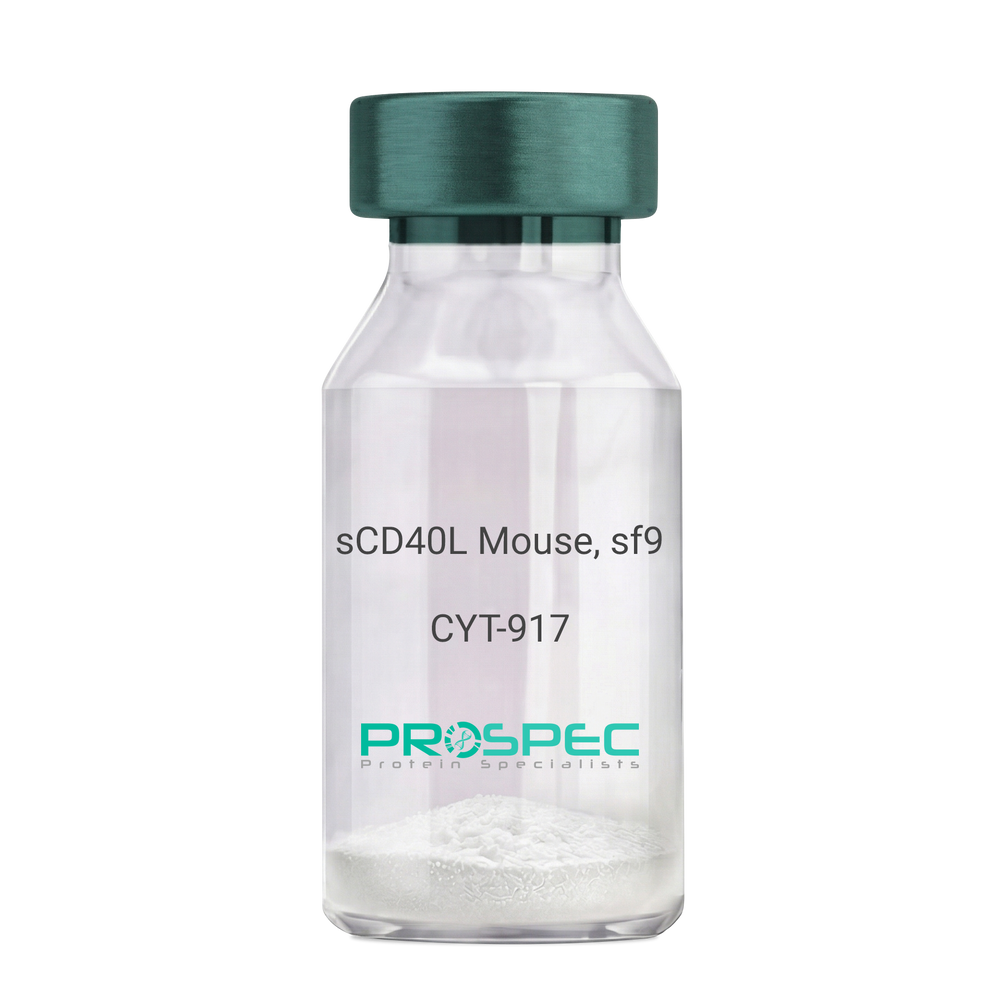
    sCD40L Mouse, sf9

    Description:

    soluble CD40 Ligand/TRAPMouse Recombinant, sf9

    CD40 ligand, T-cell antigen Gp39, TNF-related activation protein, TRAP, Tumor necrosis factor ligand superfamily member 5, CD154, CD40lg, CD154, CD40-L, Cd40l, gp39, HIGM1, IGM, IMD3, Ly-62, Ly62, T-BAM, Tnfsf5.

    Product # :

    CYT-917

    Price :

    Quantity :

    Shipping Method :

    Ice Icon

    Shipped with Ice Packs

    Add To Cart

    More Info

    • description
    • source
    • formulation
    • purity
    • More Info

    Description

    sCD40 Mouse Recombinant produced in Sf9 Baculovirus cells is a single, glycosylated polypeptide chain containing 155 amino acids (112-260 a.a.) and having a molecular mass of 17.2kDa (Migrates at 18-28kDa on SDS-PAGE under reducing conditions).sCD40 is expressed with a 6 amino acid His tag at C-Terminus and purified by proprietary chromatographic techniques.

    Source

    Sf9, Baculovirus cells.

    Formulation

    sCD40 protein solution (0.25mg/ml) contains Phosphate Buffered Saline (pH 7.4) and 10% glycerol.

    Purity

    Greater than 95.0% as determined by SDS-PAGE.

    More Info

    • Introduction

      CD40L or CD154 is a membrane glycoprotein and differentiation antigen expressed on the surface of T-cells. The CD40 ligand stimulates B-cell proliferation and secretion of all immunoglobulin isotypes in the presence of cytokines . CD40 ligand has been shown to induce cytokine production and tumoricidal activity in peripheral blood monocytes. It also costimulates proliferation of activated T-cells and this is accompanied by the production of IFN-gamma , TNF-alpha , and IL2.

    • Synonyms

      CD40 ligand, T-cell antigen Gp39, TNF-related activation protein, TRAP, Tumor necrosis factor ligand superfamily member 5, CD154, CD40lg, CD154, CD40-L, Cd40l, gp39, HIGM1, IGM, IMD3, Ly-62, Ly62, T-BAM, Tnfsf5.

    • Physical Appearance

      Sterile Filtered colorless solution.

    • Stability

      Store at 4°C if entire vial will be used within 2-4 weeks. Store, frozen at -20°C for longer periods of time. For long term storage it is recommended to add a carrier protein (0.1% HSA or BSA). Avoid multiple freeze-thaw cycles.

    • Amino Acid Sequence

      MQRGDEDPQI AAHVVSEANS NAASVLQWAK KGYYTMKSNL VMLENGKQLT VKREGLYYVY TQVTFCSNRE PSSQRPFIVG LWLKPSSGSE RILLKAANTH SSSQLCEQQS VHLGGVFELQ AGASVFVNVT EASQVIHRVG FSSFGLLKLH HHHHH.

    ProSpec's products are furnished for LABORATORY RESEARCH USE ONLY. The product may not be used as drugs, agricultural or pesticidal products, food additives or household chemicals.

    Scd40L Mouse Sf9
  • View Data Sheet

    Name :

    S100A4 Human

    Description:

    S100 Calcium-Binding Protein A4 Human Recombinant

    Protein S100-A4, S100 calcium-binding protein A4, Metastasin, Protein Mts1, Placental calcium-binding protein, Calvasculin, S100A4, CAPL, MTS1, 42A, 18A2, FSP1, P9KA, PEL98.

    Product # :

    PRO-698

    Price :

    Quantity :

    Shipping Method :

    Ice Icon

    Shipped with Ice Packs

    Add To Cart

    More Info

    • description
    • source
    • formulation
    • purity
    • More Info

    Description

    S100A4 Human Recombinant produced in E.coli is a single, non-glycosylated polypeptide chain containing 121 amino acids (1-101) and having a molecular mass of 13.8 kDa.The S100A4 is fused to a 20 amino acid His-Tag at N-terminus and purified by proprietary chromatographic techniques.

    Source

    Escherichia Coli.

    Formulation

    S100A4 protein at in 20mM Tris-HCl, pH-8 & 10% Glycerol.

    Purity

    Greater than 95.0% as determined by SDS-PAGE.

    More Info

    • Introduction

      S100A4 is part of the S100 super-family of proteins containing 2 EF-hand calcium binding domains. S100A4 is ubiquitously overexpressed and is localized in the cytoplasm and/or nucleus. S100A4 is involved in motility, invasion, and tubulin polymerization. Chromosomal rearrangements and altered expression of the S100A4 gene have been implicated in tumor metastasis.

    • Synonyms

      Protein S100-A4, S100 calcium-binding protein A4, Metastasin, Protein Mts1, Placental calcium-binding protein, Calvasculin, S100A4, CAPL, MTS1, 42A, 18A2, FSP1, P9KA, PEL98.

    • Physical Appearance

      Sterile Filtered clear solution.

    • Stability

      Store at 4°C if entire vial will be used within 2-4 weeks. Store, frozen at -20°C for longer periods of time. For long term storage it is recommended to add a carrier protein (0.1% HSA or BSA).Avoid multiple freeze-thaw cycles.

    • Amino Acid Sequence

      MGSSHHHHHH SSGLVPRGSH MACPLEKALD VMVSTFHKYS GKEGDKFKLN KSELKELLTR ELPSFLGKRT DEAAFQKLMS NLDSNRDNEVDFQEYCVFLS CIAMMCNEFF EGFPDKQPRK K.

    ProSpec's products are furnished for LABORATORY RESEARCH USE ONLY. The product may not be used as drugs, agricultural or pesticidal products, food additives or household chemicals.

    S100A4 Human His
  • View Data Sheet

    Name :

    S100A5 Mouse

    Description:

    S100 Calcium Binding Protein A5 Mouse Recombinant

    Protein S100-A5, Protein S-100D, S100 calcium-binding protein A5, S100a5, S100d, S100D9.

    Product # :

    PRO-1084

    Price :

    Quantity :

    Shipping Method :

    Ice Icon

    Shipped with Ice Packs

    Add To Cart

    More Info

    • description
    • source
    • formulation
    • purity
    • More Info

    Description

    S100A5 Mouse Recombinant produced in E.coli is a single, non-glycosylated polypeptide chain containing 117 amino acids (1-93) and having a molecular mass of 13.4kDa.The S100A5 is fused to a 24 amino acid His-Tag at N-terminus and purified by proprietary chromatographic techniques.

    Source

    Escherichia Coli.

    Formulation

    S100A5 protein (1mg/ml) is supplied in 20mM Tris-HCl buffer, pH8.0, 40% glycerol, 3mM DTT and 200mM NaCl.

    Purity

    Greater than 95.0% as determined by SDS-PAGE.

    More Info

    • Introduction

      S100 calcium binding protein A5 (S100A5) belongs to the S100 family of proteins containing 2 EF-hand calcium-binding motifs. S100 family members are localized in the cytoplasm and/or nucleus of a wide range of cells, and are involved in the regulation of a number of cellular processes such as cell cycle progression and differentiation. S100A5 has a Ca2+ affinity 20-100 fold higher than the other S100 proteins investigated under identical conditions. Furthermore, S100A5 protein binds Zn2+ and Cu2+, and Cu2+ strongly which harms the binding of Ca2+. S100A5 is expressed in very limited regions of the adult brain.

    • Synonyms

      Protein S100-A5, Protein S-100D, S100 calcium-binding protein A5, S100a5, S100d, S100D9.

    • Physical Appearance

      S100A9 is supplied as a sterile filtered clear solution.

    • Stability

      Store at 4°C if entire vial will be used within 2-4 weeks. Store, frozen at -20°C for longer periods of time. For long term storage it is recommended to add a carrier protein (0.1% HSA or BSA).Avoid multiple freeze-thaw cycles.

    • Amino Acid Sequence

      MGSSHHHHHH SSGLVPRGSH MGSHMETPLE KALTTMVTTF HKYSGREGSK LTLSRKELKE LIKTELSLAE KMKESSIDNL MKSLDKNSDQ EIDFKEYSVF LTTLCMAYND FFLEDNK.

    ProSpec's products are furnished for LABORATORY RESEARCH USE ONLY. The product may not be used as drugs, agricultural or pesticidal products, food additives or household chemicals.

    S100A5 Mouse
  • View Data Sheet

    Name :

    SAP18 Human

    Description:

    Sin3A-Associated Protein 18kDa Human Recombinant

    Histone deacetylase complex subunit SAP18, Sin3-associated polypeptide 18 kDa, Sin3-associated polypeptide p18, Cell growth-inhibiting protein 38, 2HOR0202, SAP18, GIG38.

    Product # :

    PRO-707

    Price :

    Quantity :

    Shipping Method :

    Ice Icon

    Shipped with Ice Packs

    Add To Cart

    More Info

    • description
    • source
    • formulation
    • purity
    • More Info

    Description

    SAP18 Human Recombinant fused with 20 amino acid His tag at N-terminus produced in E.Coli is a single, non-glycosylated, polypeptide chain containing 173 amino acids (20- 172 a.a.) and having a molecular mass of 19.7 kDa.The SAP18 is purified by proprietary chromatographic techniques.

    Source

    Escherichia Coli.

    Formulation

    The SAP18 solution contains 20mM Tris-HCl buffer (pH8.0), 0.1M NaCl, 30% glycerol, 1mM DTT.

    Purity

    Greater than 90.0% as determined by SDS-PAGE.

    More Info

    • Introduction

      SAP18 is a component of the histone deacetylase complex which has a significant role in the regulation of eukaryotic gene expression. SAP18 directly interacts with SIN3 and enhances SIN3-mediated transcriptional repression once bound to the promoter. SAP18 plays an important part in gene-specific recruitment of the HDAC complex by a number of transcription factors including Gli, GAGA, and Bicoid. Histone acetylation is significant in the regulation of eukaryotic gene expression. Histone acetylation and deacetylation is catalyzed by multisubunit complexes. SAP18 is a component of the histone deacetylase complex, which includes SIN3, SAP30, HDAC1, HDAC2, RbAp46, RbAp48, and other polypeptides. SAP18 is a component of a splicing-dependent multiprotein EJC (exon junction complex) placed at splice junction on mRNAs.

    • Synonyms

      Histone deacetylase complex subunit SAP18, Sin3-associated polypeptide 18 kDa, Sin3-associated polypeptide p18, Cell growth-inhibiting protein 38, 2HOR0202, SAP18, GIG38.

    • Physical Appearance

      Sterile Filtered colorless solution.

    • Stability

      Store at 4°C if entire vial will be used within 2-4 weeks. Store, frozen at -20°C for longer periods of time. For long term storage it is recommended to add a carrier protein (0.1% HSA or BSA).Avoid multiple freeze-thaw cycles.

    • Amino Acid Sequence

      MGSSHHHHHH SSGLVPRGSH MAVESRVTQE EIKKEPEKPI DREKTCPLLL RVFTTNNGRH HRMDEFSRGN VPSSELQIYT WMDATLKELT SLVKEVYPEA RKKGTHFNFA IVFTDVKRPG YRVKEIGSTM SGRKGTDDSM TLQSQKFQIG DYLDIAITPP NRAPPPSGRM RPY.

    ProSpec's products are furnished for LABORATORY RESEARCH USE ONLY. The product may not be used as drugs, agricultural or pesticidal products, food additives or household chemicals.

    Sap18 Human
  • View Data Sheet

    Name :

    SGCB Human

    Description:

    Sarcoglycan Beta Human Recombinant

    Beta-sarcoglycan, Beta-SG, 43 kDa dystrophin-associated glycoprotein, 43DAG, A3b, LGMD2E, Sarcoglycan, Beta (43kDa Dystrophin-Associated Glycoprotein), Limb Girdle Muscular Dystrophy 2E (Non-Linked Families), SGC.

    Product # :

    PRO-2211

    Price :

    Quantity :

    Shipping Method :

    Ice Icon

    Shipped with Ice Packs

    Add To Cart

    More Info

    • description
    • source
    • formulation
    • purity
    • More Info

    Description

    SGCB Human Recombinant produced in E.Coli is a single, non-glycosylated polypeptide chain containing 255 amino acids (87-318 a.a) and having a molecular mass of 27.8kDa.SGCB is fused to a 23 amino acid His-tag at N-terminus & purified by proprietary chromatographic techniques.

    Source

    Escherichia Coli.

    Formulation

    SGCB protein solution (0.5mg/ml) containing 20mM Tris-HCl buffer(pH8.0) and 10% glycerol.

    Purity

    Greater than 90.0% as determined by SDS-PAGE.

    More Info

    • Introduction

      Sarcoglycan Beta, also known as SGCB, is a part of the sarcoglycan family. SGCB belongs to the sarcoglycan complex which is a subcomplex of the dystrophin-glycoprotein complex that connects between the F-actin cytoskeleton and the extracellular matrix.

    • Synonyms

      Beta-sarcoglycan, Beta-SG, 43 kDa dystrophin-associated glycoprotein, 43DAG, A3b, LGMD2E, Sarcoglycan, Beta (43kDa Dystrophin-Associated Glycoprotein), Limb Girdle Muscular Dystrophy 2E (Non-Linked Families), SGC.

    • Physical Appearance

      Sterile Filtered colorless solution.

    • Stability

      Store at 4°C if entire vial will be used within 2-4 weeks. Store, frozen at -20°C for longer periods of time. For long term storage it is recommended to add a carrier protein (0.1% HSA or BSA). Avoid multiple freeze-thaw cycles.

    • Amino Acid Sequence

      MGSSHHHHHH SSGLVPRGSH MGSWAVIRIG PNGCDSMEFH ESGLLRFKQV SDMGVIHPLY KSTVGGRRNE NLVITGNNQP IVFQQGTTKL SVENNKTSIT SDIGMQFFDP RTQNILFSTD YETHEFHLPS GVKSLNVQKA STERITSNAT SDLNIKVDGR AIVRGNEGVF IMGKTIEFHM GGNMELKAEN SIILNGSVMV STTRLPSSSS GDQLGSGDWV RYKLCMCADG TLFKVQVTSQ NMGCQISDNP CGNTH.

    ProSpec's products are furnished for LABORATORY RESEARCH USE ONLY. The product may not be used as drugs, agricultural or pesticidal products, food additives or household chemicals.

    Sgcb Human
  • 1
  • …
  • 3
  • 4
  • 5
  • 6
  • 7
  • …
  • 42
Your browser does not support the video tag.

Products

  • Cytokines
  • Growth Factors
  • Chemokines
  • CD Antigens
  • Neurotrophins
  • Hormones
  • Enzymes
  • Viral Antigens
  • Recombinant Proteins
  • Natural Proteins
  • Monoclonal Antibodies
  • Polyclonal Antibodies
  • Thermal Packaging

About

  • Company
  • Founder
  • Contribution
  • Contact Us
  • My Account

Ordering

  • Ordering Method
  • Ordering - Credit Card
  • Ordering PO
  • Shipping Fees
  • FAQ's

Legal

  • Terms & Conditions
  • Privacy
  • Site Map
  • info@prospecbio.com
  • Facebook
  • Instagram
  • Linkedin Profile

© 2026 ProSpec-Tany TechnoGene Ltd. All Rights Reserved.

  • Choosing a selection results in a full page refresh.
  • Opens in a new window.