Skip to content

High-quality research proteins.

  • 1-800-805-6531

  • Mon - Sat 8.00-18.00, Sun - Closed

  • info@prospecbio.com

  • PO Box 6591 East Brunswick NJ 08816

  • Products
    • Cytokines
    • Growth factors
    • Chemokines
    • Cd antigens
    • Neurotrophins
    • Hormones
    • Enzymes
    • Viral antigens
    • Recombinant proteins
    • Natural proteins
    • Monoclonal antibodies
    • Polyclonal antibodies
    • Thermal Packaging
  • About
    • Company
    • Founder
    • Contribution
  • Customers
    • Eastern Asia
    • Eastern Europe
    • North America
    • South America
    • South East Asia
    • Southern Asia
    • Western Europe
  • Ordering
    • Ordering Method
    • Ordering - Credit Card
    • Ordering - PO
    • Shipping Fees
    • FAQs
  • Services
    • DNA Cloning
    • Protein Expression
    • Monoclonal Antibody
    • Fermentation
    • Technology License
  • Contact us
Log in

Country/region

  • USD $ | Albania
  • USD $ | Andorra
  • USD $ | Argentina
  • USD $ | Armenia
  • USD $ | Australia
  • USD $ | Austria
  • USD $ | Azerbaijan
  • USD $ | Belarus
  • USD $ | Belgium
  • USD $ | Bolivia
  • USD $ | Brazil
  • USD $ | Bulgaria
  • USD $ | Cambodia
  • USD $ | Canada
  • USD $ | Chile
  • USD $ | China
  • USD $ | Colombia
  • USD $ | Costa Rica
  • USD $ | Croatia
  • USD $ | Cyprus
  • USD $ | Czechia
  • USD $ | Denmark
  • USD $ | Estonia
  • USD $ | Finland
  • USD $ | France
  • USD $ | Georgia
  • USD $ | Germany
  • USD $ | Greece
  • USD $ | Hong Kong SAR
  • USD $ | Hungary
  • USD $ | Iceland
  • USD $ | India
  • USD $ | Ireland
  • USD $ | Israel
  • USD $ | Italy
  • USD $ | Japan
  • USD $ | Kazakhstan
  • USD $ | Latvia
  • USD $ | Liechtenstein
  • USD $ | Lithuania
  • USD $ | Madagascar
  • USD $ | Malta
  • USD $ | Mexico
  • USD $ | Moldova
  • USD $ | Monaco
  • USD $ | Netherlands
  • USD $ | New Zealand
  • USD $ | North Macedonia
  • USD $ | Norway
  • USD $ | Panama
  • USD $ | Paraguay
  • USD $ | Peru
  • USD $ | Philippines
  • USD $ | Poland
  • USD $ | Portugal
  • USD $ | Romania
  • USD $ | Singapore
  • USD $ | Slovakia
  • USD $ | Slovenia
  • USD $ | South Africa
  • USD $ | South Korea
  • USD $ | Spain
  • USD $ | Sri Lanka
  • USD $ | Sweden
  • USD $ | Switzerland
  • USD $ | Taiwan
  • USD $ | Thailand
  • USD $ | Türkiye
  • USD $ | Ukraine
  • USD $ | United Kingdom
  • USD $ | United States
  • USD $ | Uruguay
  • USD $ | Vatican City
  • USD $ | Venezuela
  • USD $ | Vietnam
  • Facebook
  • Instagram
logoProSpec - Recombinant Protein Manufacturer for academic and R&D industry
Become a distributor
Account Log in
Wishlist
Cart Cart(0)
  • Products
    +
    • Cytokines
    • Growth factors
    • Chemokines
    • Cd antigens
    • Neurotrophins
    • Hormones
    • Enzymes
    • Viral antigens
    • Recombinant proteins
    • Natural proteins
    • Monoclonal antibodies
    • Polyclonal antibodies
    • Thermal Packaging
  • About
    +
    • Company
    • Founder
    • Contribution
  • Customers
    +
    • Eastern Asia
    • Eastern Europe
    • North America
    • South America
    • South East Asia
    • Southern Asia
    • Western Europe
  • Ordering
    +
    • Ordering Method
    • Ordering - Credit Card
    • Ordering - PO
    • Shipping Fees
    • FAQs
  • Services
    +
    • DNA Cloning
    • Protein Expression
    • Monoclonal Antibody
    • Fermentation
    • Technology License
  • Contact us

Item added to your cart

View cart
View All
  • Cytokines
  • Growth factors
  • Chemokines
  • Cd antigens
  • Neurotrophins
  • Hormones
  • Enzymes
  • Viral antigens
  • Recombinant proteins
  • Natural proteins
  • Monoclonal antibodies
  • Polyclonal antibodies
  • Thermal Packaging
  • Tumor Necrosis Factor

    Tumor Necrosis Factor

    View All
  • 4-1BB

    4-1BB

    View All
  • Adiponectin

    Adiponectin

    View All
  • AIF1

    AIF1

    View All
  • Other Cytokines

    Other Cytokines

    View All
  • AITRL

    AITRL

    View All
  • Angiopoietin

    Angiopoietin

    View All
  • Apolipoprotein

    Apolipoprotein

    View All
  • B-Cell Activating Factor

    B-Cell Activating Factor

    View All
  • Beta Defensin

    Beta Defensin

    View All
  • Bone Morphogenetic Protein

    Bone Morphogenetic Protein

    View All
  • B type Natriuretic Peptide

    B type Natriuretic Peptide

    View All
  • BST

    BST

    View All
  • Betacellulin

    Betacellulin

    View All
  • Cardiotrophin

    Cardiotrophin

    View All
  • Activin

    Activin

    View All
  • Fibroblast Growth Factor

    Fibroblast Growth Factor

    View All
  • Other Growth Factors

    Other Growth Factors

    View All
  • CSF

    CSF

    View All
  • CTGF

    CTGF

    View All
  • IGFBP

    IGFBP

    View All
  • VEGF Protein

    VEGF Protein

    View All
  • EGF

    EGF

    View All
  • Epigen

    Epigen

    View All
  • Erythropoietin

    Erythropoietin

    View All
  • Insulin-Like Growth Factor

    Insulin-Like Growth Factor

    View All
  • Growth Hormone

    Growth Hormone

    View All
  • HDGF

    HDGF

    View All
  • Hepatocyte Growth Factor

    Hepatocyte Growth Factor

    View All
  • Insulin

    Insulin

    View All
  • BCA-1/ BLC (CXCL13)

    BCA-1/ BLC (CXCL13)

    View All
  • BRAK (CXCL14)

    BRAK (CXCL14)

    View All
  • C-10 (CCL6)

    C-10 (CCL6)

    View All
  • Other Chemokines

    Other Chemokines

    View All
  • MEC (CCL28)

    MEC (CCL28)

    View All
  • LD78-beta (CCL3L1)

    LD78-beta (CCL3L1)

    View All
  • CTACK (CCL27)

    CTACK (CCL27)

    View All
  • CXCL16

    CXCL16

    View All
  • CXCL17

    CXCL17

    View All
  • Platelet Factor-4 (CXCL4)

    Platelet Factor-4 (CXCL4)

    View All
  • ENA-78 (CXCL5)

    ENA-78 (CXCL5)

    View All
  • Eotaxin (CCL11,24,26)

    Eotaxin (CCL11,24,26)

    View All
  • Exodus-2 (CCL21)

    Exodus-2 (CCL21)

    View All
  • Fractalkine (CX3CL1)

    Fractalkine (CX3CL1)

    View All
  • CXCL6

    CXCL6

    View All
  • Other CD Antigens

    Other CD Antigens

    View All
  • CD14

    CD14

    View All
  • CD164

    CD164

    View All
  • CD1

    CD1

    View All
  • CD2

    CD2

    View All
  • CD200

    CD200

    View All
  • CD207

    CD207

    View All
  • CD226

    CD226

    View All
  • CD23

    CD23

    View All
  • CD244

    CD244

    View All
  • CD247

    CD247

    View All
  • CD27

    CD27

    View All
  • CD274

    CD274

    View All
  • CD300

    CD300

    View All
  • CD33

    CD33

    View All
  • Other Neurotrophins

    Other Neurotrophins

    View All
  • Beta-NGF

    Beta-NGF

    View All
  • BDNF

    BDNF

    View All
  • CDNF

    CDNF

    View All
  • CNTF

    CNTF

    View All
  • GDNF

    GDNF

    View All
  • Glia Maturation Factor

    Glia Maturation Factor

    View All
  • MANF

    MANF

    View All
  • Midkine

    Midkine

    View All
  • Neuroglobin

    Neuroglobin

    View All
  • Neurotrophic factors

    Neurotrophic factors

    View All
  • Neuregulin

    Neuregulin

    View All
  • Neuropilin

    Neuropilin

    View All
  • Pigment Epithelium-Derived Factor

    Pigment Epithelium-Derived Factor

    View All
  • Pleiotrophin

    Pleiotrophin

    View All
  • Peptide Hormones

    Peptide Hormones

    View All
  • Other Hormones

    Other Hormones

    View All
  • HCG

    HCG

    View All
  • Endothelin

    Endothelin

    View All
  • Exendin

    Exendin

    View All
  • FSH

    FSH

    View All
  • Glucagon

    Glucagon

    View All
  • GHRP

    GHRP

    View All
  • GLP

    GLP

    View All
  • Thyrostimulin

    Thyrostimulin

    View All
  • Inhibin A

    Inhibin A

    View All
  • LHRH

    LHRH

    View All
  • Melanotan

    Melanotan

    View All
  • Procalcitonin

    Procalcitonin

    View All
  • PTH

    PTH

    View All
  • Peroxiredoxin

    Peroxiredoxin

    View All
  • Peptidase

    Peptidase

    View All
  • Synthetase

    Synthetase

    View All
  • Transferase

    Transferase

    View All
  • Hydrolase

    Hydrolase

    View All
  • Dehydrogenase

    Dehydrogenase

    View All
  • ACE2

    ACE2

    View All
  • Esterase

    Esterase

    View All
  • Protein Kinases

    Protein Kinases

    View All
  • Other Enzymes

    Other Enzymes

    View All
  • Phosphatase

    Phosphatase

    View All
  • Deaminase

    Deaminase

    View All
  • Oxygenase

    Oxygenase

    View All
  • Adenylate Kinase

    Adenylate Kinase

    View All
  • Lyase

    Lyase

    View All
  • Chagas

    Chagas

    View All
  • SARS

    SARS

    View All
  • Influenza

    Influenza

    View All
  • ASFV

    ASFV

    View All
  • Astrovirus

    Astrovirus

    View All
  • Borrelia

    Borrelia

    View All
  • Helicobacter Pylori

    Helicobacter Pylori

    View All
  • Chikungunya

    Chikungunya

    View All
  • Chlamydia

    Chlamydia

    View All
  • Cytomegalo

    Cytomegalo

    View All
  • Dengue

    Dengue

    View All
  • EBV

    EBV

    View All
  • Ebola

    Ebola

    View All
  • Feline Leukemia Virus

    Feline Leukemia Virus

    View All
  • Hepatitis A

    Hepatitis A

    View All
  • Other

    Other

    View All
  • Actin

    Actin

    View All
  • ADAM

    ADAM

    View All
  • Complement Component

    Complement Component

    View All
  • Ag85

    Ag85

    View All
  • Eukaryotic Translation Initiation Factor

    Eukaryotic Translation Initiation Factor

    View All
  • Anterior Gradient Protein

    Anterior Gradient Protein

    View All
  • Heat Shock Protein

    Heat Shock Protein

    View All
  • Alpha-2-HS-Glycoprotein

    Alpha-2-HS-Glycoprotein

    View All
  • Hemoglobin

    Hemoglobin

    View All
  • Allergy

    Allergy

    View All
  • Anaplasma

    Anaplasma

    View All
  • Angiogenin

    Angiogenin

    View All
  • Ankyrin Repeat Domain

    Ankyrin Repeat Domain

    View All
  • Annexin

    Annexin

    View All
  • Other Natural Proteins

    Other Natural Proteins

    View All
  • Aprotinin

    Aprotinin

    View All
  • Transferrin

    Transferrin

    View All
  • Avidin

    Avidin

    View All
  • Anti Coagulation Factors

    Anti Coagulation Factors

    View All
  • Natural Albumin

    Natural Albumin

    View All
  • Natural Coagulation Factors

    Natural Coagulation Factors

    View All
  • Fibronectin

    Fibronectin

    View All
  • Thrombin

    Thrombin

    View All
  • Anti Human Enzyme

    Anti Human Enzyme

    View All
  • Other Monoclonal Antibodies

    Other Monoclonal Antibodies

    View All
  • Anti Human Cytokine

    Anti Human Cytokine

    View All
  • Anti Human Heat Shock Protein

    Anti Human Heat Shock Protein

    View All
  • Anti Mouse Lymphocyte

    Anti Mouse Lymphocyte

    View All
  • Anti Human Chemokine

    Anti Human Chemokine

    View All
  • Anti Human Lymphocyte

    Anti Human Lymphocyte

    View All
  • Anti Viral Monoclonal

    Anti Viral Monoclonal

    View All
  • Anti Mouse Cytokine

    Anti Mouse Cytokine

    View All
  • Anti-GST Monoclonal

    Anti-GST Monoclonal

    View All
  • Other Polyclonal Antibodies

    Other Polyclonal Antibodies

    View All
  • Anti Viral

    Anti Viral

    View All
  • Anti-GST Monoclonal

    Anti-GST Monoclonal

    View All
Back

Search results

1000 results found for “f-box protein”

Name

Description

Product #

Price

Quantity

Shipping Method

  • View Data Sheet

    Name :

    C10ORF54 Human

    Description:

    Chromosome 10 Open Reading Frame 54 Human Recombinant

    C10orf54, Chromosome 10 Open Reading Frame 54, V-Domain Ig Suppressor Of T Cell Activation, Stress-Induced Secreted Protein-1, Sisp-1, SISP1, Stress Induced Secreted Protein 1, Death Domain1alpha, DD1alpha, PP2135, B7-H5, VISTA, B7H5, GI24.

    Product # :

    PRO-2259

    Price :

    Quantity :

    Shipping Method :

    Ice Icon

    Shipped with Ice Packs

    Add To Cart

    More Info

    • description
    • source
    • formulation
    • purity
    • More Info
    • Citations

    Description

    C10ORF54 Human Recombinant produced in Sf9 Baculovirus cells is a single, glycosylated polypeptide chain containing 170 amino acids (33-194 a.a) and having a molecular mass of 19.1kDa. (Migrates at 28-40kDa on SDS-PAGE under reducing conditions). C10ORF54 is fused to an 8 amino acid His-tag at C-terminus & purified by proprietary chromatographic techniques.

    Source

    Sf9, Baculovirus cells.

    Formulation

    C10ORF54 protein solution (0.5mg/ml) containing Phosphate Buffered Saline (pH 7.4) and 10% glycerol.

    Purity

    Greater than 95.0% as determined by SDS-PAGE.

    Citations

    More Info

    • Introduction

      Chromosome 10 Open Reading Frame 54, also known as C10ORF54 is part of the immunoglobulin superfamily. Like a transmembrane molecule, C10ORF54 is expressed in the bone on embryonic stem cells (ESCs), and on tumor cell surface as well. Accordingly, C10ORF54 supports the differentiation of ESC and ehhances BMP4 induced signaling in ESC, however C10ORF54 is also down regulated following to BMP4 exposure.

    • Synonyms

      C10orf54, Chromosome 10 Open Reading Frame 54, V-Domain Ig Suppressor Of T Cell Activation, Stress-Induced Secreted Protein-1, Sisp-1, SISP1, Stress Induced Secreted Protein 1, Death Domain1alpha, DD1alpha, PP2135, B7-H5, VISTA, B7H5, GI24.

    • Physical Appearance

      Sterile Filtered colorless solution.

    • Stability

      Store at 4°C if entire vial will be used within 2-4 weeks. Store, frozen at -20°C for longer periods of time. For long term storage it is recommended to add a carrier protein (0.1% HSA or BSA).Avoid multiple freeze-thaw cycles.

    • Amino Acid Sequence

      FKVATPYSLY VCPEGQNVTL TCRLLGPVDK GHDVTFYKTW YRSSRGEVQT CSERRPIRNL TFQDLHLHHG GHQAANTSHD LAQRHGLESA SDHHGNFSIT MRNLTLLDSG LYCCLVVEIR HHHSEHRVHG AMELQVQTGK DAPSNCVVYP SSSQDSENIT AAVEHHHHHH.

    ProSpec's products are furnished for LABORATORY RESEARCH USE ONLY. The product may not be used as drugs, agricultural or pesticidal products, food additives or household chemicals.

    C10Orf54 Human
  • View Data Sheet

    Name :

    FKBPL Human

    Description:

    FK506 Binding Protein Like Human Recombinant

    WISP39, DIR1, NG7, FK506-binding protein-like, WAF-1/CIP1 stabilizing protein 39, FKBPL.

    Product # :

    ENZ-543

    Price :

    Quantity :

    Shipping Method :

    Ice Icon

    Shipped with Ice Packs

    Add To Cart

    More Info

    • description
    • source
    • formulation
    • purity
    • biological activity
    • More Info
    • Citations

    Description

    FKBPL Recombinant Human produced in E.Coli is a single, non-glycosylated polypeptide chain containing 357 amino acids (1-349 a.a.) and having a molecular mass of 39.2 kDa. The FKBPL is fused to an 8 amino acid His-Tag at C-terminus and purified by proprietary chromatographic techniques.

    Source

    Escherichia Coli.

    Formulation

    FKBPL Human solution containing 20mM Trsi pH-8, 2mM DTT, 0.1M NaCl & 20% glycerol.

    Purity

    Greater than 90.0% as determined by SDS-PAGE.

    Biological Activity

    Specific activity is > 210 nmoles/min/mg, and is defined as the amount of enzyme that cleaves 1umole of suc-AAFP-pNA per minute at 25C in Tris-Hcl pH8.0 using chymotrypsin.

    Citations

    More Info

    • Introduction

      FKBPL is related to the immunophilin protein family, which take part in immunoregulation and regular cellular processes involving protein folding and trafficking. FKBPL has an important function in the induced radioresistance and participates in the control of the cell cycle. FKBPL has a role in cellular response to stress. FKBPL interacts with Hsp90, glucocorticoid receptor and dynamitin and is involved in signalling, like other FKBPs.

    • Synonyms

      WISP39, DIR1, NG7, FK506-binding protein-like, WAF-1/CIP1 stabilizing protein 39, FKBPL.

    • Physical Appearance

      Sterile filtered colorless solution.

    • Stability

      Store at 4°C if entire vial will be used within 2-4 weeks. Store, frozen at -20°C for longer periods of time. For long term storage it is recommended to add a carrier protein (0.1% HSA or BSA).Avoid multiple freeze-thaw cycles.

    • Amino Acid Sequence

      METPPVNTIG EKDTSQPQQE WEKNLRENLD SVIQIRQQPR DPPTETLELE VSPDPASQIL EHTQGAEKLV AELEGDSHKS HGSTSQMPEA LQASDLWYCP DGSFVKKIVI RGHGLDKPKL GSCCRVLALG FPFGSGPPEG WTELTMGVGP WREETWGELI EKCLESMCQG EEAELQLPGH SGPPVRLTLA SFTQGRDSWE LETSEKEALA REERARGTEL FRAGNPEGAA RCYGRALRLL LTLPPPGPPE RTVLHANLAA CQLLLGQPQL AAQSCDRVLE REPGHLKALY RRGVAQAALG NLEKATADLK KVLAIDPKNR AAQEELGKVV IQGKNQDAGL AQGLRKMFGL EHHHHHH.

    ProSpec's products are furnished for LABORATORY RESEARCH USE ONLY. The product may not be used as drugs, agricultural or pesticidal products, food additives or household chemicals.

    Fkbpl Human
  • View Data Sheet

    Name :

    PFDN6 Human

    Description:

    Prefoldin Subunit 6 Human Recombinant

    Prefoldin Subunit 6, PFD6, H2-KE2, KE-2, HKE2, HLA class II region expressed gene KE2, MGC70744.

    Product # :

    PRO-178

    Price :

    Quantity :

    Shipping Method :

    Ice Icon

    Shipped with Ice Packs

    Add To Cart

    More Info

    • description
    • source
    • formulation
    • purity
    • More Info
    • Citations

    Description

    PFDN6 produced in E.Coli is a single, non-glycosylated polypeptide chain containing 149 amino acids (1-129a.a.) and having a molecular mass of 16.7 kDa. PFDN6 is fused to a 20 amino acid His-tag at N-terminus & purified by proprietary chromatographic techniques.

    Source

    Escherichia Coli.

    Formulation

    The PFDN6 protein solution (0.5mg/1ml) is formulated in 20 mM Tris-HCl buffer (pH8.0), 100mM NaCl, 1mM DTT and 10% glycerol.

    Purity

    Greater than 95% as determined by SDS-PAGE.

    Citations

    More Info

    • Introduction

      PFDN6 is a subunit of the heteromeric prefoldin complex that chaperones developing actin and alpha- and beta-tubulin chains until they are transferred to the cytosolic chaperonin containing TCP1 (CCT) complex. PFDN6 binds specifically to cytosolic chaperonin (c-CPN), transfers target proteins to it and bind to developing polypeptide chain to promote folding in a setting where there are many competing pathways for nonnative proteins.

    • Synonyms

      Prefoldin Subunit 6, PFD6, H2-KE2, KE-2, HKE2, HLA class II region expressed gene KE2, MGC70744.

    • Physical Appearance

      Sterile Filtered clear solution.

    • Stability

      Store at 4°C if entire vial will be used within 2-4 weeks. Store, frozen at -20°C for longer periods of time. For long term storage it is recommended to add a carrier protein (0.1% HSA or BSA).Avoid multiple freeze-thaw cycles.

    • Amino Acid Sequence

      MGSSHHHHHH SSGLVPRGSH MAELIQKKLQ GEVEKYQQLQ KDLSKSMSGR QKLEAQLTEN NIVKEELALL DGSNVVFKLL GPVLVKQELG EARATVGKRL DYITAEIKRY ESQLRDLERQ SEQQRETLAQ LQQEFQRAQA AKAGAPGKA

    ProSpec's products are furnished for LABORATORY RESEARCH USE ONLY. The product may not be used as drugs, agricultural or pesticidal products, food additives or household chemicals.

    Pfdn6 Human
  • View Data Sheet

    Name :

    POU5F1 Human

    Description:

    POU Class 5 Homeobox 1 Human Recombinant

    POU domain class 5 transcription factor 1, Octamer-binding protein 3, Oct-3, Octamer-binding protein 4, Oct-4, Octamer-binding transcription factor 3, OTF-3, POU5F1, OCT3, OCT4, OTF3, OTF4, MGC22487.

    Product # :

    PRO-088

    Price :

    Quantity :

    Shipping Method :

    Ice Icon

    Shipped with Ice Packs

    Add To Cart

    More Info

    • description
    • source
    • formulation
    • purity
    • More Info
    • Citations

    Description

    POU5F1 Human Recombinant produced in E. coli is a single polypeptide chain containing 285 amino acids (1-265) and having a molecular mass of 32.2 kDa.POU5F1 is fused to a 20 amino acid His-tag at N-terminus & purified by proprietary chromatographic techniques.

    Source

    Escherichia Coli.

    Formulation

    The POU5F1 solution contains 20mM Tris-HCl buffer (pH 8.0), 0.4M Urea and 10% glycerol.

    Purity

    Greater than 85% as determined by SDS-PAGE.

    Citations

    More Info

    • Introduction

      POU5F1 is a homeodomain transcription factor of the POU family, expressed in embryonic stem (ES) cells and embryonic carcinoma (EC) cells.POU5F1 is significantly involved in the signaling pathway for maintaining self-renewal and pluripotency of ES cells. POU5F1 has 2 distinct DNA binding domains which independently bind half-sites of the canonical octamer motif. This flexibility allows POU5F1 to bind with distinct DNA motifs by forming heterodimers with other transcription factors or by forming homodimers in several conformations. Human POU5F1 contains a 75aa POU specific (POUS) domain and a 60aa POU-Homeo-(POUH) domain connected by a linker region. The Human POU5F1 specifically interacts with Octamer motif ATGCAAAT. In addition, 2 proline-rich domains in the N-terminal and C-terminal regions are vital for POU5F1 transactivation. POU5F1 regulates a number of target genes and has been shown to work jointly with other transcription factors including Sox2 as well as Nanog to sustain stem cell potency and self-renewal.

    • Synonyms

      POU domain class 5 transcription factor 1, Octamer-binding protein 3, Oct-3, Octamer-binding protein 4, Oct-4, Octamer-binding transcription factor 3, OTF-3, POU5F1, OCT3, OCT4, OTF3, OTF4, MGC22487.

    • Physical Appearance

      Sterile filtered colorless solution.

    • Stability

      Store at 4°C if entire vial will be used within 2-4 weeks. Store, frozen at -20°C for longer periods of time. For long term storage it is recommended to add a carrier protein (0.1% HSA or BSA).Avoid multiple freeze-thaw cycles.

    • Amino Acid Sequence

      MGSSHHHHHH SSGLVPRGSH MHFYRLFLGA TRRFLNPEWK GEIDNWCVYV LTSLLPFKIQ SQDIKALQKE LEQFAKLLKQ KRITLGYTQA DVGLTLGVLF GKVFSQTTIC RFEALQLSFK NMCKLRPLLQ KWVEEADNNE NLQEICKAET LVQARKRKRT SIENRVRGNL ENLFLQCPKP TLQQISHIAQ QLGLEKDVVR VWFCNRRQKG KRSSSDYAQR EDFEAAGSPF SGGPVSFPLA PGPHFGTPGY GSPHFTALYS SVPFPEGEAF PPVSVTTLGS PMHSN.

    ProSpec's products are furnished for LABORATORY RESEARCH USE ONLY. The product may not be used as drugs, agricultural or pesticidal products, food additives or household chemicals.

    Pou5F1 Human
  • View Data Sheet

    Name :

    Fra e 1.0101

    Description:

    Allergen Fra e 1.0101 Recombinant

    Allergen Fra e 1.0101, Fra e 1.0101, Fra e 1.

    Product # :

    PRO-2286

    Price :

    Quantity :

    Shipping Method :

    Ice Icon

    Shipped with Ice Packs

    Add To Cart

    More Info

    • description
    • source
    • formulation
    • purity
    • More Info
    • Citations

    Description

    Recombinant Allergen Fra e 1.0101 produced in SF9 is a glycosylated, polypeptide chain having a calculated molecular mass of 17,794 Dalton. Fra e 1.0101 is expressed with a 10xHis tag at N-terminus and purified by proprietary chromatographic techniques.

    Source

    Sf9 insect cells.

    Formulation

    Fra e 1.0101 is supplied in 20mM HEPES buffer pH-7.9 and 6M Urea.

    Purity

    Greater than 80.0% as determined by SDS-PAGE.

    Citations

    More Info
    • Introduction

      Allergen Fra e 1.0101 (Fra e 1.0101) causes an allergic reaction in humans.

    • Synonyms

      Allergen Fra e 1.0101, Fra e 1.0101, Fra e 1.

    • Physical Appearance

      Sterile Filtered clear solution.

    • Stability

      Store at 4°C if entire vial will be used within 2-4 weeks. Store, frozen at -20°C for longer periods of time. Avoid multiple freeze-thaw cycles.

    • Immunological Functions

      1. Binds IgE type human antibodies. 2. Immunodot test with positive/negative sera panels.

    • Molar extinction coefficient

      14815; A280(1mg/ml)=0.833

    ProSpec's products are furnished for LABORATORY RESEARCH USE ONLY. The product may not be used as drugs, agricultural or pesticidal products, food additives or household chemicals.

    Fra E 10101
  • View Data Sheet

    Name :

    TIFA Human

    Description:

    TRAF-Interacting Protein with Forkhead-Associated Domain Human Recombinant

    TRAF-interacting protein with FHA domain-containing protein A, Putative MAPK-activating protein PM14, Putative NF-kappa-B-activating protein 20, TRAF2-binding protein, TIFA, T2BP, T6BP, TIFAA.

    Product # :

    PRO-1041

    Price :

    Quantity :

    Shipping Method :

    Ice Icon

    Shipped with Ice Packs

    Add To Cart

    More Info

    • description
    • source
    • formulation
    • purity
    • More Info
    • Citations

    Description

    TIFA Human Recombinant produced in E.Coli is a single, non-glycosylated polypeptide chain containing 208 amino acids (1-184 a.a.) and having a molecular mass of 24kDa.TIFA is fused to a 24 amino acid His-tag at N-terminus & purified by proprietary chromatographic techniques.

    Source

    Escherichia Coli.

    Formulation

    TIFA protein solution (0.5mg/ml) containing 20mM Tris-HCl buffer (pH8.0), 20% glycerol and 1mM DTT.

    Purity

    Greater than 90.0% as determined by SDS-PAGE.

    Citations

    More Info

    • Introduction

      TRAF-interacting protein with FHA domain-containing protein A (TIFA) is an adapter protein that mediates the IRAK1 and TRAF6 interaction following IL-1 stimulation, triggering the downstream activation of NF-kappa-B and AP-1 pathways. The TIFA protein stimulates the oligomerization and polyubiquitination of TRAF6, leading to the activation of TAK1 and IKK through a proteasome-independent mechanism.

    • Synonyms

      TRAF-interacting protein with FHA domain-containing protein A, Putative MAPK-activating protein PM14, Putative NF-kappa-B-activating protein 20, TRAF2-binding protein, TIFA, T2BP, T6BP, TIFAA.

    • Physical Appearance

      Sterile Filtered clear solution.

    • Stability

      Store at 4°C if entire vial will be used within 2-4 weeks. Store, frozen at -20°C for longer periods of time. For long term storage it is recommended to add a carrier protein (0.1% HSA or BSA).Avoid multiple freeze-thaw cycles.

    • Amino Acid Sequence

      MGSSHHHHHH SSGLVPRGSH MGSHMTSFED ADTEETVTCL QMTVYHPGQL QCGIFQSISF NREKLPSSEV VKFGRNSNIC HYTFQDKQVS RVQFSLQLFK KFNSSVLSFE IKNMSKKTNL IVDSRELGYL NKMDLPYRCM VRFGEYQFLM EKEDGESLEF FETQFILSPR SLLQENNWPP HRPIPEYGTY SLCSSQSSSP TEMDENES.

    ProSpec's products are furnished for LABORATORY RESEARCH USE ONLY. The product may not be used as drugs, agricultural or pesticidal products, food additives or household chemicals.

    Tifa Human
  • View Data Sheet

    Name :

    EFNB1 Human, Sf9

    Description:

    Ephrin-B1 Human Recombinant, Sf9

    Ephrin B1, ELK Ligand, Ephrin-B1, Elk-L, EPLG2, LERK2, EFL3, Craniofrontonasal Syndrome (Craniofrontonasal Dysplasia), Eph-Related Receptor Tyrosine Kinase Ligand 2, EPH-Related Receptor Tyrosine Kinase Ligand 2, LERK-2, EFL-3, CFND, EFB1, CFNS, ELK ligand, ELK-L, EPH-related receptor tyrosine kinase ligand 2. 

    Product # :

    PRO-2543

    Price :

    Quantity :

    Shipping Method :

    Ice Icon

    Shipped with Ice Packs

    Add To Cart

    More Info

    • description
    • source
    • formulation
    • purity
    • More Info
    • Citations

    Description

    EFNB1 produced in Sf9 Baculovirus cells is a single, glycosylated polypeptide chain containing 452 amino acids (28-237a.a.) and having a molecular mass of 50.3kDa. (Molecular size on SDS-PAGE will appear at approximately 50-70kDa).EFNB1 is expressed with a 242 amino acid hIgG-His-tag at C-Terminus and purified by proprietary chromatographic techniques.

    Source

    Sf9, Baculovirus cells.

    Formulation

    EFNB1 protein solution (1mg/ml) contains 10% glycerol & Phosphate Buffered Saline (pH 7.4).

    Purity

    Greater than 90% as determined by SDS-PAGE.

    Citations

    More Info

    • Introduction

      EFNB1 is a member of the Eph family. The cell-surface proteins Ephrins split into two groups, ephrin-A and ephrin-B, based on their structure and function and perform as ligands for Eph receptors. The transmembrane EFNB1 proteins have conserved cytoplasmic tyrosine residues that are phosphorylated upon interaction with an EphB receptor. In addition, EFNB1 transduces outside-in signals by C-terminal protein interfaces which influence integrin-mediated cell attachment and migration.

    • Synonyms

      Ephrin B1, ELK Ligand, Ephrin-B1, Elk-L, EPLG2, LERK2, EFL3, Craniofrontonasal Syndrome (Craniofrontonasal Dysplasia), Eph-Related Receptor Tyrosine Kinase Ligand 2, EPH-Related Receptor Tyrosine Kinase Ligand 2, LERK-2, EFL-3, CFND, EFB1, CFNS, ELK ligand, ELK-L, EPH-related receptor tyrosine kinase ligand 2.

    • Physical Appearance

      Sterile Filtered colorless solution.

    • Stability

      Store at 4°C if entire vial will be used within 2-4 weeks. Store, frozen at -20°C for longer periods of time. For long term storage it is recommended to add a carrier protein (0.1% HSA or BSA).Avoid multiple freeze-thaw cycles.

    • Amino Acid Sequence

      ADPLAKNLEP VSWSSLNPKF LSGKGLVIYP KIGDKLDIIC PRAEAGRPYE YYKLYLVRPE QAAACSTVLD PNVLVTCNRP EQEIRFTIKF QEFSPNYMGL EFKKHHDYYI TSTSNGSLEG LENREGGVCR TRTMKIIMKV GQDPNAVTPE QLTTSRPSKE ADNTVKMATQ APGSRGSLGD
      SDGKHETVNQ EEKSGPGASG GSSGDPDGFF NSKLEPKSCD KTHTCPPCPA PELLGGPSVF LFPPKPKDTL MISRTPEVTC VVVDVSHEDP EVKFNWYVDG VEVHNAKTKP REEQYNSTYR VVSVLTVLHQ DWLNGKEYKC KVSNKALPAP IEKTISKAKG QPREPQVYTL PPSRDELTKN
      QVSLTCLVKG FYPSDIAVEW ESNGQPENNY KTTPPVLDSD GSFFLYSKLT VDKSRWQQGN VFSCSVMHEA LHNHYTQKSL SLSPGKHHHH HH.

    ProSpec's products are furnished for LABORATORY RESEARCH USE ONLY. The product may not be used as drugs, agricultural or pesticidal products, food additives or household chemicals.

    Ephrin B1
  • View Data Sheet

    Name :

    CST3 Protein, His

    Description:

    Cystatin-C Human Recombinant, His Tag

    Cystatin-C, Cystatin-3, Neuroendocrine basic polypeptide, Gamma-trace, Post-gamma-globulin, CST3, MGC117328.

    Product # :

    PRO-656

    Price :

    Quantity :

    Shipping Method :

    Room Temp Icon

    Shipped at Room temp

    Add To Cart

    More Info

    • description
    • source
    • formulation
    • purity
    • More Info
    • Citations

    Description

    Cystatin-C Human Recombinant produced in E.Coli is a single, non-glycosylated, Polypeptide chain containing 129 amino acids and having a molecular mass of 14.5 kDa. The protein contains an extra His tag at N-terminus. The Cystatin-C amino acid sequence is identical to UniProtKB/Swiss-Prot entry Q6FGW9 amino acids 28–146.The Cystatin-C is purified by proprietary chromatographic techniques.

    Source

    Escherichia Coli.

    Formulation

    Filtered (0.4µm) and lyophilized from 0.5mg/ml in 20mM Tris buffer and 50mM NaCl pH-7.5.

    Purity

    Greater than 95% as determined by SDS PAGE.

    Citations

    More Info

    • Introduction

      Cystatins are a superfamily of cysteine proteinase inhibitors found in both plants and animals. They comprise a group of proteinase inhibitors, widely distributed in tissues and body fluids, and form tight complexes with cysteine proteases such as cathepsin B, H, L and S. Cystatin C, a secreted molecule of this family, is of interest from biochemical, medicine and evolutionary points of view. Cystatin C, with molecular weight of 13260 Da, is composed of 120 amino acids, lacks carbohydrate and has two disulfide bridges located near the carboxyl terminus. Cystatin C is increased in patients with malignant diseases, and is related to the insufficiency of renal function and appears to be a better marker than creatinine. On the other hand, low levels of cystatin C involve cause the breakdown of the elastic laminae and, subsequently, the atherosclerosis and abdominal aortic aneurysm.

    • Synonyms

      Cystatin-C, Cystatin-3, Neuroendocrine basic polypeptide, Gamma-trace, Post-gamma-globulin, CST3, MGC117328.

    • Physical Appearance

      Filtered White lyophilized (freeze-dried) powder.

    • Stability

      Store lyophilized protein at –20°C. Aliquot reconstituted protein to avoid repeated freezing/thawing cycles and store at –80°C for long term storage. Reconstituted protein can be stored at 4°C for a limited period of time; it does not show any change after two weeks at 4°C.

    • Solubility

      Add deionized water to prepare a working stock solution of approximately 0.5mg/ml and let the lyophilized pellet dissolve completely. Product is not sterile! Please filter the product by an appropriate sterile filter before using it in the cell culture.

    ProSpec's products are furnished for LABORATORY RESEARCH USE ONLY. The product may not be used as drugs, agricultural or pesticidal products, food additives or household chemicals.

    Cystatin C Human Recombinant
  • View Data Sheet

    Name :

    Protein-L

    Description:

    Protein L Recombinant

    SPL.

    Product # :

    PRO-1790

    Price :

    Quantity :

    Shipping Method :

    Room Temp Icon

    Shipped at Room temp

    Add To Cart

    More Info

    • description
    • source
    • formulation
    • purity
    • More Info
    • Citations

    Description

    Protein-L Recombinant produced in E.coli is a single, non-glycosylated polypeptide chain containing 365 amino acids and having a molecular mass of 40.5 kDa but it migrates with an apparent molecular mass of 45 kDa in SDS-PAGE.The Protein-L is purified by proprietary chromatographic techniques.

    Source

    Escherichia Coli.

    Formulation

    Protein-L was lyophilized with no additives.

    Purity

    Greater than 97.0% as determined by:
    (a) Analysis by SEC-HPLC.
    (b) Analysis by SDS-PAGE.

    Citations

    More Info

    • Introduction

      The recombinant Protein L is genetically engineered protein and holds 5 IgG-binding regions of protein L and it has the exclusive capability to bind through kappa light chain interactions without interfering with the antibody’s antigen-binding site. Cell wall binding region, cell membrane binding region and albumin binding region were removed to ensure the highest specific IgG binding. The recombinant Protein L is perfect for purification of polyclonal or monoclonal IgG antibodies and it binds to human, mouse, rat and pig IgG.

    • Synonyms

      SPL.

    • Physical Appearance

      Sterile Filtered White lyophilized (freeze-dried) powder.

    • Stability

      Lyophilized Protein-L although stable at room temperature for 3 weeks, should be stored desiccated below -18°C. Upon reconstitution Protein-L should be stored at 4°C between 2-7 days and for future use below -18°C. For long term storage it is recommended to add a carrier protein (0.1% HSA or BSA). Please prevent freeze-thaw cycles.

    • Solubility

      It is recommended to reconstitute the lyophilized Protein-L in sterile water or saline not less than 100µg/ml, which can then be further diluted to other aqueous solutions.

    • Amino Acid Sequence

      KEETPETPET DSEEEVTIKA NLIFANGSTQ TAEFKGTFEK ATSEAYAYAD TLKKDNGEYT VDVADKGYTL NIKFAGKEKT PEEPKEEVTI KANLIYADGK TQTAEFKGTF EEATAEAYRY ADALKKDNGE YTVDVADKGY TLNIKFAGKE KTPEEPKEEV TIKANLIYAD GKTQTAEFKG TFEEATAEAY RYADLLAKEN GKYTVDVADK GYTLNIKFAG KEKTPEEPKE EVTIKANLIY ADGKTQTAEF KGTFAEATAE AYRYADLLAK ENGKYTADLE DGGYTINIRF AGKKVDEKPEEKEQVTIKEN IYFEDGTVQT ATFKGTFAEA TAEAYRYADL LSKEHGKYTA DLEDGGYTIN IRFAG

    ProSpec's products are furnished for LABORATORY RESEARCH USE ONLY. The product may not be used as drugs, agricultural or pesticidal products, food additives or household chemicals.

    Protein L
  • View Data Sheet

    Name :

    FURIN Human

    Description:

    Furin Human Recombinant

    Furin (Paired Basic Amino Acid Cleaving Enzyme), PCSK3, PACE, FUR, Paired Basic Amino Acid Residue-Cleaving Enzyme, EC 3.4.21.75, Paired Basic Amino Acid Cleaving Enzyme (Furin, Membrane Associated Receptor Protein), Proprotein Convertase Subtilisin/Kexin Type 3, Furin, Membrane Associated Receptor Protein, Dibasic Processing Enzyme, Dibasic-Processing Enzyme, FES Upstream Region, EC 3.4.21, Furin, SPC1, Dibasic-processing enzyme, Paired basic amino acid residue-cleaving enzyme.

    Product # :

    PRO-2199

    Price :

    Quantity :

    Shipping Method :

    Ice Icon

    Shipped with Ice Packs

    Add To Cart

    More Info

    • description
    • source
    • formulation
    • purity
    • More Info
    • Citations

    Description

    FURIN Human Recombinant produced in E.Coli is a single, non-glycosylated polypeptide chain containing 645 amino acids (108-715 a.a) and having a molecular mass of 69.8kDa. FURIN is fused to a 37 amino acid His-tag at N-terminus & purified by proprietary chromatographic techniques.

    Source

    Escherichia Coli.

    Formulation

    FURIN protein solution (1mg/ml) containing 20mM Tris-HCl (pH8.0) and 10% glycerol.

    Purity

    Greater than 85.0% as determined by SDS-PAGE.

    Citations

    More Info

    • Introduction

      Furin is a member of the peptidase S8 family. Furin signifies the ubiquitous endoprotease activity within constitutive secretory pathwaysas well as capable of cleavage at the RX (K/R) R consensus motif.Furin is considered to be one of the proteases responsible for the activation of HIV envelope glycoproteins gp160 as well as gp140 and might take part in tumor progression. Among the diseases associated with FURIN are dementia, familial british and plague.

    • Synonyms

      Furin (Paired Basic Amino Acid Cleaving Enzyme), PCSK3, PACE, FUR, Paired Basic Amino Acid Residue-Cleaving Enzyme, EC 3.4.21.75, Paired Basic Amino Acid Cleaving Enzyme (Furin, Membrane Associated Receptor Protein), Proprotein Convertase Subtilisin/Kexin Type 3, Furin, Membrane Associated Receptor Protein, Dibasic Processing Enzyme, Dibasic-Processing Enzyme, FES Upstream Region, EC 3.4.21, Furin, SPC1, Dibasic-processing enzyme, Paired basic amino acid residue-cleaving enzyme.

    • Physical Appearance

      Sterile Filtered clear solution.

    • Stability

      Store at 4°C if entire vial will be used within 2-4 weeks. Store, frozen at -20°C for longer periods of time. For long term storage it is recommended to add a carrier protein (0.1% HSA or BSA).Avoid multiple freeze-thaw cycles.

    • Amino Acid Sequence

      MRGSHHHHHH GMASMTGGQQ MGRDLYDDDD KDRWGSMDVY QEPTDPKFPQ QWYLSGVTQR DLNVKAAWAQ GYTGHGIVVS ILDDGIEKNH PDLAGNYDPG ASFDVNDQDP DPQPRYTQMN DNRHGTRCAG EVAAVANNGV CGVGVAYNAR IGGVRMLDGE VTDAVEARSL GLNPNHIHIY SASWGPEDDG KTVDGPARLA EEAFFRGVSQ GRGGLGSIFV WASGNGGREH DSCNCDGYTN SIYTLSISSA TQFGNVPWYS EACSSTLATT YSSGNQNEKQ IVTTDLRQKC TESHTGTSAS APLAAGIIAL TLEANKNLTW RDMQHLVVQT SKPAHLNAND WATNGVGRKV SHSYGYGLLD AGAMVALAQN WTTVAPQRKC IIDILTEPKD IGKRLEVRKT VTACLGEPNH ITRLEHAQAR LTLSYNRRGD LAIHLVSPMG TRSTLLAARP HDYSADGFND WAFMTTHSWD EDPSGEWVLE IENTSEANNY GTLTKFTLVL YGTAPEGLPV PPESSGCKTL TSSQACVVCE EGFSLHQKSC VQHCPPGFAP QVLDTHYSTE NDVETIRASV CAPCHASCAT CQGPALTDCL SCPSHASLDP VEQTCSRQSQ SSRESPPQQQ PPRLPPEVEA GQRLRAGLLP SHLPE.

    ProSpec's products are furnished for LABORATORY RESEARCH USE ONLY. The product may not be used as drugs, agricultural or pesticidal products, food additives or household chemicals.

    Furin Human
  • View Data Sheet

    Name :

    DLX3 Human

    Description:

    Distal-Less Homeobox 3 Human Recombinant

    Homeobox protein DLX-3, DLX3, Distal-Less Homeobox 3, AI4, TDO.

    Product # :

    PRO-1816

    Price :

    Quantity :

    Shipping Method :

    Ice Icon

    Shipped with Ice Packs

    Add To Cart

    More Info

    • description
    • source
    • formulation
    • purity
    • More Info
    • Citations

    Description

    DLX3 Human Recombinant produced in E.Coli is a single, non-glycosylated polypeptide chain containing 209 amino acids (1-186 a.a) and having a molecular mass of 23.4kDa.DLX3 is fused to a 23 amino acid His-tag at N-terminus & purified by proprietary chromatographic techniques.

    Source

    Escherichia Coli.

    Formulation

    DLX3 protein solution (1mg/ml) containing 20mM Tris-HCl buffer (pH8.0) and 10% glycerol.

    Purity

    Greater than 85% as determined by SDS-PAGE.

    Citations

    More Info

    • Introduction

      DLX3 belongs to the Distal-less (Dlx) family of genes which includes at least 6 different members. DLX3 plays a regulatory role in the development of the ventral forebrain and also in craniofacial patterning and morphogenesis. Mutation in DLX3 is correlated with Trichodentoosseous syndrome which is an autosomal dominant condition. DLX3 is located in a tail-to-tail configuration with another member of the gene family on the long arm of chromosome 17.

    • Synonyms

      Homeobox protein DLX-3, DLX3, Distal-Less Homeobox 3, AI4, TDO.

    • Physical Appearance

      Sterile filtered colorless solution.

    • Stability

      Store at 4°C if entire vial will be used within 2-4 weeks. Store, frozen at -20°C for longer periods of time. For long term storage it is recommended to add a carrier protein (0.1% HSA or BSA).Avoid multiple freeze-thaw cycles.

    • Amino Acid Sequence

      MGSSHHHHHH SSGLVPRGSH MGSMSGSFDR KLSSILTDIS SSLSCHAGSK DSPTLPESSV TDLGYYSAPQ HDYYSGQPYG QTVNPYTYHH QFNLNGLAGT GAYSPKSEYT YGASYRQYGA YREQPLPAQD PVSVKEEPEA EVRMVNGKPK KVRKPRTIYS SYQLAALQRR FQKAQYLALP ERAELAAQLG LTQTQVKIWF QNRRSKFKK.

    ProSpec's products are furnished for LABORATORY RESEARCH USE ONLY. The product may not be used as drugs, agricultural or pesticidal products, food additives or household chemicals.

    Dlx3 Human
  • View Data Sheet

    Name :

    HHEX Human

    Description:

    Hematopoietically Expressed Homeobox Human Recombinant

    Hematopoietically Expressed Homeobox, Hematopoietically-Expressed Homeobox Protein HHEX, Homeobox Hematopoietically Expressed, Proline-Rich Homeodomain-Containing Transcription Factor, Homeobox Protein PRH, Homeobox Protein HEX, HOX11L-PEN, PRHX, HMPH, PRH, HEX.

    Product # :

    PRO-1624

    Price :

    Quantity :

    Shipping Method :

    Ice Icon

    Shipped with Ice Packs

    Add To Cart

    More Info

    • description
    • source
    • formulation
    • purity
    • More Info
    • Citations

    Description

    HHEX Human Recombinant produced in E.coli is a single, non-glycosylated polypeptide chain containing 293 amino acids (1-270) and having a molecular mass of 32.4kDa. HHEX is fused to a 23 amino acid His-tag at N-terminus & purified by proprietary chromatographic techniques.

    Source

    Escherichia Coli.

    Formulation

    The HHEX solution contains 20mM Tris-HCl buffer (pH 8.0), 0.15M NaCl, 1mM DTT and 40% glycerol.

    Purity

    Greater than 85% as determined by SDS-PAGE.

    Citations

    More Info

    • Introduction

      The homeobox protein family of transcription factors has many members that take part in developmental processes such as HHEX. HHEX is known to interact with Promyelocytic leukemia protein and expression in specific hematopoietic lines indicates that this protein is involved in hematopoietic differentiation.

    • Synonyms

      Hematopoietically Expressed Homeobox, Hematopoietically-Expressed Homeobox Protein HHEX, Homeobox Hematopoietically Expressed, Proline-Rich Homeodomain-Containing Transcription Factor, Homeobox Protein PRH, Homeobox Protein HEX, HOX11L-PEN, PRHX, HMPH, PRH, HEX.

    • Physical Appearance

      Sterile filtered colorless solution.

    • Stability

      Store at 4°C if entire vial will be used within 2-4 weeks. Store, frozen at -20°C for longer periods of time. For long term storage it is recommended to add a carrier protein (0.1% HSA or BSA).Avoid multiple freeze-thaw cycles.

    • Amino Acid Sequence

      MGSSHHHHHH SSGLVPRGSH MGSMQYPHPG PAAGAVGVPL YAPTPLLQPA HPTPFYIEDI LGRGPAAPTP APTLPSPNSS FTSLVSPYRT PVYEPTPIHP AFSHHSAAAL AAAYGPGGFG GPLYPFPRTV NDYTHALLRH DPLGKPLLWS PFLQRPLHKR KGGQVRFSND QTIELEKKFE TQKYLSPPER KRLAKMLQLS ERQVKTWFQN RRAKWRRLKQ ENPQSNKKEE LESLDSSCDQ RQDLPSEQNK GASLDSSQCS PSPASQEDLE SEISEDSDQE VDIEGDKSYF NAG

    ProSpec's products are furnished for LABORATORY RESEARCH USE ONLY. The product may not be used as drugs, agricultural or pesticidal products, food additives or household chemicals.

    Hhex Human
  • View Data Sheet

    Name :

    FCER1A Human

    Description:

    Fc-Epsilon RI-Alpha Human Recombinant

    Fc Fragment Of IgE, High Affinity I, Receptor For; Alpha Polypeptide, FCE1A, IgE Fc Receptor Subunit Alpha, FcERI, Fc-Epsilon RI-Alpha, Fc Epsilon RI Alpha-Chain, Fc IgE Receptor, Alpha Polypeptide, High Affinity Immunoglobulin Epsilon Receptor Alpha-Subunit, High Affinity Immunoglobulin Epsilon Receptor Subunit Alpha, Immunoglobulin E Receptor, High-Affinity, Of Mast Cells, Alpha Polypeptide.

    Product # :

    PRO-1741

    Price :

    Quantity :

    Shipping Method :

    Ice Icon

    Shipped with Ice Packs

    Add To Cart

    More Info

    • description
    • source
    • formulation
    • purity
    • More Info
    • Citations

    Description

    FCER1A Human Recombinant produced in E.Coli is a single, non-glycosylated polypeptide chain containing 203 amino acids (26-205aa) and having a molecular mass of 23.4kDa.FCER1A is fused to a 23 amino acid His-tag at N-terminus & purified by proprietary chromatographic techniques.

    Source

    Escherichia Coli.

    Formulation

    FCER1A protein solution (0.25mg/ml) containing 20mM Tris-HCl buffer (pH 8.0), 0.15M NaCl, 30% glycerol and 1mM DTT.

    Purity

    Greater than 85% as determined by SDS-PAGE.

    Citations

    More Info

    • Introduction

      Fc fragment of IgE, high affinity I, receptor for; alpha polypeptide (FCER1A) binds to the Fc region of immunoglobulins epsilon. FCER1A is a high affinity receptor. In addition FCER1A is responsible for starting the allergic response. Binding of allergen to receptor-bound IgE leads to cell activation and the release of mediators such as histamine which is responsible for the manifestations of allergy. This receptor is contains of an alpha subunit, a beta subunit, and two gamma subunits. FCER1A stands for the alpha subunit. Among the diseases associated with FCER1A are mast-cell leukemia, and allergic asthma.

    • Synonyms

      Fc Fragment Of IgE, High Affinity I, Receptor For; Alpha Polypeptide, FCE1A, IgE Fc Receptor Subunit Alpha, FcERI, Fc-Epsilon RI-Alpha, Fc Epsilon RI Alpha-Chain, Fc IgE Receptor, Alpha Polypeptide, High Affinity Immunoglobulin Epsilon Receptor Alpha-Subunit, High Affinity Immunoglobulin Epsilon Receptor Subunit Alpha, Immunoglobulin E Receptor, High-Affinity, Of Mast Cells, Alpha Polypeptide.

    • Physical Appearance

      Sterile Filtered clear solution.

    • Stability

      Store at 4°C if entire vial will be used within 2-4 weeks. Store, frozen at -20°C for longer periods of time.For long term storage it is recommended to add a carrier protein (0.1% HSA or BSA).Please avoid freeze thaw cycles.

    • Amino Acid Sequence

      MGSSHHHHHH SSGLVPRGSH MGSVPQKPKV SLNPPWNRIF KGENVTLTCN GNNFFEVSST KWFHNGSLSE ETNSSLNIVN AKFEDSGEYK CQHQQVNESE PVYLEVFSDW LLLQASAEVV MEGQPLFLRC HGWRNWDVYK VIYYKDGEAL KYWYENHNIS ITNATVEDSG TYYCTGKVWQ LDYESEPLNI TVIKAPREKY WLQ

    ProSpec's products are furnished for LABORATORY RESEARCH USE ONLY. The product may not be used as drugs, agricultural or pesticidal products, food additives or household chemicals.

    Fcer1A Human
  • View Data Sheet

    Name :

    EGF Mouse Protein

    Description:

    Epidermal Growth Factor Mouse Recombinant

    Urogastrone, URG, EGF.

    Product # :

    CYT-326

    Price :

    Quantity :

    Shipping Method :

    Room Temp Icon

    Shipped at Room temp

    Add To Cart

    More Info

    • description
    • source
    • formulation
    • purity
    • biological activity
    • More Info
    • Citations

    Description

    Epidermal Growth Factor Mouse Recombinant produced in E.Coli is a single, non-glycosylated, polypeptide chain containing 53 amino acids including 3 intramolecular disulfide-bonds and having a molecular mass of 6 kDa.The EGF is purified by proprietary chromatographic techniques.

    Source

    Escherichia Coli.

    Formulation

    The protein was lyophilized with no additives.

    Purity

    Greater than 98.0% as determined by:
    (a) Analysis by RP-HPLC.
    (b) Analysis by SDS-PAGE.

    Biological Activity

    The activity is determined by the dose-dependent proliferation of mouse BALB/c 3T3 cells and is typically less than 0.1ng/ml.

    Citations

    More Info

    • Introduction

      Epidermal growth factor has a profound effect on the differentiation of specific cells in vivo and is a potent mitogenic factor for a variety of cultured cells of both ectodermal and mesodermal origin. The EGF precursor is believed to exist as a membrane-bound molecule which is proteolytically cleaved to generate the 53-amino acid peptide hormone that stimulates cells to divide. EGF stimulates the growth of various epidermal and epithelial tissues in vivo and in vitro and of some fibroblasts in cell culture.

    • Synonyms

      Urogastrone, URG, EGF.

    • Physical Appearance

      Sterile Filtered White lyophilized (freeze-dried) powder.

    • Stability

      Lyophilized Epidermal Growth Factor Recombinant although stable at room temperature for 3 weeks, should be stored desiccated below -18°C. Upon reconstitution EGF should be stored at 4°C between 2-7 days and for future use below -18°C.For long term storage it is recommended to add a carrier protein (0.1% HSA or BSA).Please prevent freeze-thaw cycles.

    • Solubility

      It is recommended to reconstitute the lyophilized Epidermal Growth Factor in sterile 18MΩ-cm H2O not less than 100µg/ml, which can then be further diluted to other aqueous solutions.

    • Amino Acid Sequence

      NSYPGCPSSY DGYCLNGGVC MHIESLDSYT CNCVIGYSGD RCQTRDLRWW ELR.

    • Background

      Exploring Novel Frontiers: Epidermal Growth Factor Mouse Recombinant and its Potential Therapeutic Implications

      Abstract:

      This research paper delves into the uncharted realm of Epidermal Growth Factor Mouse Recombinant (EGF-MR), unraveling its intricate molecular attributes, cellular signaling, and therapeutic prospects. Employing state-of-the-art methodologies involving genetic engineering, in vitro assays, and animal models, this study uncovers the multifaceted responses elicited by EGF-MR. The findings underscore its promise as a versatile therapeutic agent, potentially revolutionizing regenerative medicine and cancer interventions.

      Introduction:

      Epidermal Growth Factor (EGF) plays a pivotal role in cellular dynamics. This paper ventures into the nuanced landscape of Epidermal Growth Factor Mouse Recombinant (EGF-MR), delving into its unique molecular characteristics and exploring the therapeutic horizons it presents.

      Molecular Insights and Receptor Binding:

      EGF-MR's interaction with the epidermal growth factor receptor (EGFR) sets the stage for intricate intracellular events. High-resolution structural analyses and binding kinetics studies elucidate the nuances of this interaction, revealing structural motifs that initiate downstream signaling cascades.

      Cellular Signaling and Functional Responses:

      EGF-MR initiates canonical and non-canonical signaling pathways, including the mitogen-activated protein kinase (MAPK) and phosphoinositide 3-kinase (PI3K)/Akt pathways. Through comprehensive phosphoproteomic analyses and live-cell imaging, the spatiotemporal dynamics of EGF-MR-induced responses come to light, showcasing its role in cell proliferation, migration, and anti-apoptotic effects.

      Genetic Engineering and In Vitro Assays:

      Precise genetic manipulation ensures optimal EGF-MR expression. Gene codon optimization and signal peptide selection are meticulously undertaken to facilitate efficient protein synthesis and secretion. In vitro assays, encompassing cell viability and wound healing studies, illuminate EGF-MR's impact on cellular behaviors.

      In Vivo Implications and Therapeutic Prospects:

      In animal models, EGF-MR emerges as a transformative factor in tissue regeneration. Customized wound healing assays unveil its potential in accelerating re-epithelialization and granulation tissue formation. Moreover, the modulation of tumor microenvironments suggests its applicability in cancer interventions.

      Future Directions and Challenges:

      While promising, challenges lie ahead, including understanding intricate cross-talk between signaling pathways. Future research should focus on refining delivery methods and optimizing dosing regimens to harness EGF-MR's full therapeutic potential.

      Conclusion:

      In a convergence of advanced methodologies and visionary therapeutic possibilities, Epidermal Growth Factor Mouse Recombinant takes center stage. Its distinctive molecular interactions and diverse cellular orchestration offer a glimpse into the future of regenerative medicine and targeted cancer therapies, propelling scientific progress into uncharted territories.

      What is the molecular weight/Mw of EGF Protein?
      EGF Protein has a total Mw of 6 kDa.

      What is the source or expression system of EGF Protein?
      Escherichia Coli.

      What is the Purity of EGF Protein?
      EGF Protein is >98% pure as determined by SDS-PAGE.

      What is the Biological Activity of EGF Protein?
      The activity is determined by the dose-dependent proliferation of mouse BALB/c 3T3 cells and is typically less than 0.1ng/ml.

      What is the amino acid sequence of EGF Protein?
      NSYPGCPSSY DGYCLNGGVC MHIESLDSYT CNCVIGYSGD RCQTRDLRWW ELR.
      What applications can EGF Protein be used in?
      EGF Protein can probably be used in western blot, ELISA and Lateral Flow.

      What is the endotoxin level for EGF Protein?
      The endotoxin level is minimal, EGF Protein was purified using conventional chromatography techniques.

    ProSpec's products are furnished for LABORATORY RESEARCH USE ONLY. The product may not be used as drugs, agricultural or pesticidal products, food additives or household chemicals.

    Egf Mouse Recombinant
  • View Data Sheet

    Name :

    POU6F1 Human

    Description:

    POU Class 6 Homeobox 1 Human Recombinant

    BRN5, MPOU, TCFB1, Brain-5, Brn-5, mPOU homeobox protein, Brain-specific homeobox/POU domain protein 5.

    Product # :

    PRO-1484

    Price :

    Quantity :

    Shipping Method :

    Ice Icon

    Shipped with Ice Packs

    Add To Cart

    More Info

    • description
    • source
    • formulation
    • purity
    • More Info
    • Citations

    Description

    POU6F1 Human Recombinant produced in E.Coli is a single, non-glycosylated polypeptide chain containing 324 amino acids (1-301 a.a.) and having a molecular mass of 35kDa.POU6F1 is fused to a 23 amino acid His-tag at N-terminus & purified by proprietary chromatographic techniques.

    Source

    Escherichia Coli.

    Formulation

    The POU5F1 solution contains 20mM Tris-HCl buffer (pH 8.0), 0.4M Urea and 10% glycerol.

    Purity

    Greater than 85% as determined by SDS-PAGE.

    Citations

    More Info

    • Introduction

      POU6F1 is a member of the POU transcription factor family. POU6F1 is transcription factor that binds favorably to a variant of the octamer motif (5'-ATGATAAT-3'). POU6F1 is exclusively expressed in the embryo in the developing brain, however in the adult its expression is confined to the brain, heart, skeletal muscle and lung. In the brain, the highest expression levels are found in specific cell layers of the cortex, the olfactory bulb, the hippocampus and the cerebellum.

    • Synonyms

      BRN5, MPOU, TCFB1, Brain-5, Brn-5, mPOU homeobox protein, Brain-specific homeobox/POU domain protein 5.

    • Physical Appearance

      Sterile filtered colorless solution.

    • Stability

      Store at 4°C if entire vial will be used within 2-4 weeks. Store, frozen at -20°C for longer periods of time. For long term storage it is recommended to add a carrier protein (0.1% HSA or BSA).Avoid multiple freeze-thaw cycles.

    • Amino Acid Sequence

      MGSSHHHHHH SSGLVPRGSH MGSMPGISSQ ILTNAQGQVI GTLPWVVNSA SVAAPAPAQS LQVQAVTPQL LLNAQGQVIA TLASSPLPPP VAVRKPSTPE SPAKSEVQPI QPTPTVPQPA VVIASPAPAA KPSASAPIPI TCSETPTVSQ LVSKPHTPSL DEDGINLEEI REFAKNFKIR RLSLGLTQTQ VGQALTATEG PAYSQSAICR FEKLDITPKS AQKLKPVLEK WLNEAELRNQ EGQQNLMEFV GGEPSKKRKR RTSFTPQAIE ALNAYFEKNP LPTGQEITEI AKELNYDREV VRVWFCNRRQ TLKNTSKLNV FQIP.

    ProSpec's products are furnished for LABORATORY RESEARCH USE ONLY. The product may not be used as drugs, agricultural or pesticidal products, food additives or household chemicals.

    Pou6F1 Human
  • View Data Sheet

    Name :

    Adiponectin Human, Sf9

    Description:

    Adiponectin Human Recombinant, Sf9

    Adiponectin, C1Q And Collagen Domain Containing, Adipose Most Abundant Gene Transcript 1 Protein, Adipocyte Complement-Related 30 KDa Protein, 30 KDa Adipocyte Complement-Related Protein, ACRP30, APM-1, GBP28, ACDC, APM1, Adipocyte, C1q And Collagen Domain-Containing Protein, Adipocyte, C1Q And Collagen Domain Containing, Adipose Most Abundant Gene Transcript 1, Adipose Specific Collagen-Like Factor, Gelatin-Binding Protein 28, Gelatin-Binding Protein, Adiponectin Precursor, Adiponectin, ADIPQTL1, ADPN, 30 kDa adipocyte complement-related protein, dipocyte complement-related 30 kDa protein, ACRP30, Adipocyte, C1q and collagen domain-containing protein, Adipose most abundant gene transcript 1 protein, apM-1, Gelatin-binding protein.

    Product # :

    CYT-1002

    Price :

    Quantity :

    Shipping Method :

    Ice Icon

    Shipped with Ice Packs

    Add To Cart

    More Info

    • description
    • source
    • formulation
    • purity
    • More Info
    • sds-page
    • Citations

    Description

    Acrp30 Human Recombinant produced in Sf9 Baculovirus cells is a single, glycosylated polypeptide chain containing 146 amino acids (106-242a.a.) and having a molecular mass of 16.9kDa. (Molecular size on SDS-PAGE will appear at approximately 13.5-18kDa). Acrp30 is expressed with a 6 amino acid His tag at C-Terminus and purified by proprietary chromatographic techniques.

    Source

    Sf9, Baculovirus cells.

    Formulation

    Acrp30 protein solution (0.5mg/ml) contains Phosphate Buffered Saline (pH 7.4) and 10% glycerol.

    Purity

    Greater than 95.0% as determined by SDS-PAGE.

    sds-page

    Adiponectin sds-page - Product image 1

    Citations

    More Info

    • Introduction

      The adipose tissue exclusively expresses and secretes Adiponectin (Acrp30). Acrp30 is involved in various physiological processes such as energy homeostasis, insulin sensitivity, hormonal processes, fatty acid metabolism and obesity.
      Adiponectin circulates in the plasma. Decreased levels of Adiponectin are associated with insulin resistance and hyperinsulinemia, as seen in people with obesity insulin resistance, and diabetes type 2, whose plasma levels of adiponectin are reduced.
      The modular structure of Acrp30 is comprised of N-terminal collagenous domain followed by a C-terminal globular domain.
      Acrp30 also acts as a significant negative regulator in hematopoiesis and immune systems; it may be involved in ending inflammatory responses through its inhibitory functions. Adiponectin inhibits endothelial NF-kappa-b signaling through a cAMP-dependent pathway, it also inhibits TNF-alpha- induced expression of endothelial adhesion molecules.

    • Synonyms

      Adiponectin, C1Q And Collagen Domain Containing, Adipose Most Abundant Gene Transcript 1 Protein, Adipocyte Complement-Related 30 KDa Protein, 30 KDa Adipocyte Complement-Related Protein, ACRP30, APM-1, GBP28, ACDC, APM1, Adipocyte, C1q And Collagen Domain-Containing Protein, Adipocyte, C1Q And Collagen Domain Containing, Adipose Most Abundant Gene Transcript 1, Adipose Specific Collagen-Like Factor, Gelatin-Binding Protein 28, Gelatin-Binding Protein, Adiponectin Precursor, Adiponectin, ADIPQTL1, ADPN, 30 kDa adipocyte complement-related protein, dipocyte complement-related 30 kDa protein, ACRP30, Adipocyte, C1q and collagen domain-containing protein, Adipose most abundant gene transcript 1 protein, apM-1, Gelatin-binding protein.

    • Physical Appearance

      Sterile Filtered clear solution.

    • Stability

      Store at 4°C if entire vial will be used within 2-4 weeks. Store, frozen at -20°C for longer periods of time. For long term storage it is recommended to add a carrier protein (0.1% HSA or BSA).Avoid multiple freeze-thaw cycles.

    • Amino Acid Sequence

      ADPEGAYVYR SAFSVGLETY VTIPNMPIRF TKIFYNQQNH YDGSTGKFHC NIPGLYYFAY HITVYMKDVK VSLFKKDKAM LFTYDQYQEN NVDQASGSVL LHLEVGDQVW LQVYGEGERN GLYADNDNDS TFTGFLLYHD HHHHHH.

    • Background

      What is the molecular weight/Mw of ADIPONECTIN Protein?
      ADIPONECTIN Protein has a total Mw of 16.9kDa.

      What is the source or expression system of ADIPONECTIN Protein?
      Sf9, Baculovirus cells.

      What is the Purity of ADIPONECTIN Protein?
      ADIPONECTIN Protein is >95% pure as determined by SDS-PAGE.

      What is the Biological Activity of ADIPONECTIN Protein?
      The biological functionality of ADIPONECTIN Protein will be determined in the future.

      What is the amino acid sequence of ADIPONECTIN Protein?
      ADPEGAYVYR SAFSVGLETY VTIPNMPIRF TKIFYNQQNH YDGSTGKFHC NIPGLYYFAY HITVYMKDVK VSLFKKDKAM LFTYDQYQEN NVDQASGSVL LHLEVGDQVW LQVYGEGERN GLYADNDNDS TFTGFLLYHD HHHHHH.

      What applications can ADIPONECTIN Protein be used in?
      ADIPONECTIN Protein can probably be used in western blot, ELISA and Lateral Flow.

      What is the endotoxin level for ADIPONECTIN Protein?
      The endotoxin level is minimal, ADIPONECTIN Protein was purified using conventional chromatography techniques.

    ProSpec's products are furnished for LABORATORY RESEARCH USE ONLY. The product may not be used as drugs, agricultural or pesticidal products, food additives or household chemicals.

    Acrp30 Human Sf9
  • View Data Sheet

    Name :

    p59-Fyn Human

    Description:

    p59-Fyn Human Recombinant

    Proto-oncogene tyrosine-protein kinase Fyn, EC 2.7.10.2, p59-Fyn, Protooncogene Syn, SLK, FYN, MGC45350, Fyn p59.

    Product # :

    PRO-506

    Price :

    Quantity :

    Shipping Method :

    Ice Icon

    Shipped with Ice Packs

    Add To Cart

    More Info

    • description
    • source
    • formulation
    • More Info
    • Citations

    Description

    p59-Fyn Human Recombinant (a.a. 23-216) expressed in E.coli, shows a 50 kDa SDS-PAGE (Including GST tag).The p59-Fyn is purified by proprietary chromatographic techniques.

    Source

    Escherichia Coli.

    Formulation

    p59-Fyn in 50mM Tris-Acetate, pH7.5, 1mM EDTA and 20% Glycerol.

    Citations

    More Info

    • Introduction

      p59-Fyn is a member of the protein-tyrosine kinase oncogene family. p59fyn is a membrane-associated non-receptor protein tyrosine kinase that belongs to the Src-family of kinases. p59-Fyn encodes a membrane-associated tyrosine kinase which is implicated in the control of cell growth. p59-Fyn associates with the p85 subunit of phosphatidylinositol 3-kinase and interacts with the fyn-binding protein. The unique N-terminal domain of p59fyn interacts with the CD3 and eta chains of the TcR. p59fyn can bind other proteins (p82 and p116) through its SH2 and SH3 domains, which may act as substrates or regulators of fyn activity. p59fyn is highly expressed in brain suggesting that it may have a role in the sensory nervous network and in myelination at early stages of CNS formation. Distinct isoforms exist due to alternative splicing.

    • Synonyms

      Proto-oncogene tyrosine-protein kinase Fyn, EC 2.7.10.2, p59-Fyn, Protooncogene Syn, SLK, FYN, MGC45350, Fyn p59.

    • Physical Appearance

      Sterile Filtered clear solution.

    • Stability

      Store vial at -20°C to -80°C. When stored at the recommended temperature, this protein is stable for 12 months.Please prevent freeze-thaw cycles.

    • Applications

      • ELISA
      • Inhibition Assays
      • Western Blotting.

    ProSpec's products are furnished for LABORATORY RESEARCH USE ONLY. The product may not be used as drugs, agricultural or pesticidal products, food additives or household chemicals.

    P59 Fyn Human
  • View Data Sheet

    Name :

    Avidin Protein

    Description:

    Avidin

    Avidin, AVD, AVID.

    Product # :

    PRO-500

    Price :

    Quantity :

    Shipping Method :

    Room Temp Icon

    Shipped at Room temp

    Add To Cart

    More Info

    • description
    • source
    • biological activity
    • More Info
    • Citations

    Description

    Avidin is a glycosylated polypeptide chain having a molecular mass of 68kDa and containing 4 subunits each with a binding site for biotin. The Avidin is purified by affinity chromatographic techniques.The purification procedure ensures minimal contamination by other proteins or DNA.The resulting high activity and purity of the product gives very low non-specific binding (NSB).

    Source

    Hen's egg white.

    Biological Activity

    15.0 units/mg protein, 1 unit binds 1µg biotin.

    Citations

    More Info

    • Introduction

      Avidin is a tetrameric protein of 4 identical subunits (homotetramer) each of which can bind to biotin with a high degree of affinity and specificity. Avidin molecular weight in its tetrameric form is estimated to be between 66-69 kDa. Avidin is produced in the oviducts of birds, reptiles and amphibians and is subsequently deposited in the whites of their eggs. In the chicken egg white, avidin makes up roughly 0.05% of total protein (approximately 1.8 mg per egg). 10% of Avidin’s molecular weight is ascribed to carbohydrate content which is composed of four to five mannose and three N-acetylglucosamine residues. Avidin has at least three distinctive oligosaccharide structural type which are similar in structure and composition. The dissociation constant (KD) of avidin is approximately 10-15M, making it one of the strongest known non-covalent bonds.

    • Synonyms

      Avidin, AVD, AVID.

    • Physical Appearance

      Sterile Filtered white lyophilized powder.

    • Stability

      Lyophilized Avidin although stable at room temperature for 3 weeks, should be stored desiccated below -18°C. Upon reconstitution Avidin should be stored at 4°C between 2-7 days and for future use below -18°C.For long term storage it is recommended to add a carrier protein (0.1% HSA or BSA).Please prevent freeze-thaw cycles.

    • Solubility

      It is recommended to reconstitute the lyophilized Avidin in sterile 18MΩ-cm H2O not less than 100µg/ml or more than 10mg/ml solutions.

    ProSpec's products are furnished for LABORATORY RESEARCH USE ONLY. The product may not be used as drugs, agricultural or pesticidal products, food additives or household chemicals.

    Avidin Avid
  • View Data Sheet

    Name :

    FGB Human

    Description:

    Fibrinogen Beta Chain Human Recombinant

    Fibrinogen beta chain, Fibrinopeptide B, Fibrinogen, B Beta Polypeptide, Epididymis Secretory Sperm Binding Protein Li 78p, HEL-S-78p.

    Product # :

    PRO-2210

    Price :

    Quantity :

    Shipping Method :

    Ice Icon

    Shipped with Ice Packs

    Add To Cart

    More Info

    • description
    • source
    • formulation
    • purity
    • More Info
    • Citations

    Description

    FGB Human Recombinant produced in E.Coli is a single, non-glycosylated polypeptide chain containing 351 amino acids (164-491a.a) and having a molecular mass of 40kDa. FGB is fused to a 23 amino acid His-tag at N-terminus & purified by proprietary chromatographic techniques.

    Source

    Escherichia Coli.

    Formulation

    FGB protein solution (1mg/ml) containing 20mM Tris-HCl buffer (pH8.0) and 10% glycerol.

    Purity

    Greater than 85.0% as determined by SDS-PAGE.

    Citations

    More Info

    • Introduction

      Fibrinogen Beta Chain 9 (FGB) is the beta component of fibrinogen, a blood-borne glycoprotein composed of 3 pairs of nonidentical polypeptide chains. When vascular injury accrues, fibrinogen is cleaved by thrombin to form fibrin which is found in abundance in blood clots.

    • Synonyms

      Fibrinogen beta chain, Fibrinopeptide B, Fibrinogen, B Beta Polypeptide, Epididymis Secretory Sperm Binding Protein Li 78p, HEL-S-78p.

    • Physical Appearance

      Sterile Filtered colorless solution.

    • Stability

      Store at 4°C if entire vial will be used within 2-4 weeks. Store, frozen at -20°C for longer periods of time. For long term storage it is recommended to add a carrier protein (0.1% HSA or BSA). Avoid multiple freeze-thaw cycles.

    • Amino Acid Sequence

      MGSSHHHHHH SSGLVPRGSH MGSDNENVVN EYSSELEKHQ LYIDETVNSN IPTNLRVLRS ILENLRSKIQ KLESDVSAQM EYCRTPCTVS CNIPVVSGKE CEEIIRKGGE TSEMYLIQPD SSVKPYRVYC DMNTENGGWT VIQNRQDGSV DFGRKWDPYK QGFGNVATNT DGKNYCGLPG EYWLGNDKIS QLTRMGPTEL LIEMEDWKGD KVKAHYGGFT VQNEANKYQI SVNKYRGTAG NALMDGASQL MGENRTMTIH NGMFFSTYDR DNDGWLTSDP RKQCSKEDGG GWWYNRCHAA NPNGRYYWGG QYTWDMAKHG TDDGVVWMNW KGSWYSMRKM SMKIRPFFPQ Q.

    ProSpec's products are furnished for LABORATORY RESEARCH USE ONLY. The product may not be used as drugs, agricultural or pesticidal products, food additives or household chemicals.

    Fgb Human
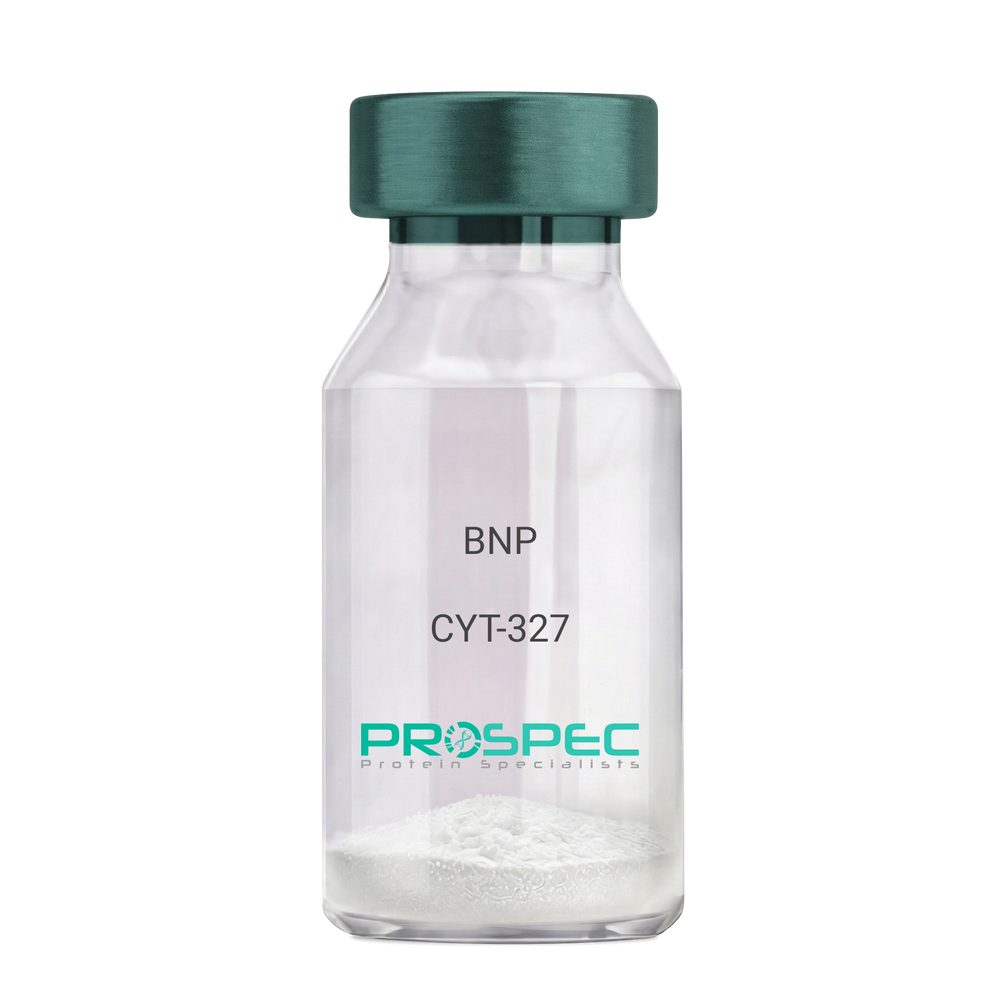
  • View Data Sheet

    Name :

    BNP Protein

    Description:

    B-type Natriuretic Peptide Human Recombinant

    NPPB, Natriuretic Peptide Precursor B, BNP, B-type Natriuretic Peptide.

    Product # :

    CYT-327

    Price :

    Quantity :

    Shipping Method :

    Room Temp Icon

    Shipped at Room temp

    Add To Cart

    More Info

    • description
    • source
    • formulation
    • purity
    • More Info
    • Citations

    Description

    B-type Natriuretic Peptide Recombinant Human produced in E.Coli is a single, non-glycosylated, polypeptide chain containing 32 amino acids and having a molecular mass of 3,500 Dalton. NPPB is purified by proprietary chromatographic techniques.

    Source

    Escherichia Coli.

    Formulation

    Natriuretic Peptide Precursor B was lyophilized from a 0.2 µm filtered concentrated solution in PBS, pH 7.4.

    Purity

    Greater than 97.0% as determined by:
    (a) Analysis by RP-HPLC.
    (b) Analysis by SDS-PAGE.

    Citations

    More Info

    • Introduction

      Natriuretic Peptide Precursor B acts as a cardiac hormone with a variety of biological actions including natriuresis, diuresis, vasorelaxation, and inhibition of renin and aldosterone secretion. It is thought to play a key role in cardiovascular homeostasis. Helps restore the body's salt and water balance. Improves heart function.

    • Synonyms

      NPPB, Natriuretic Peptide Precursor B, BNP, B-type Natriuretic Peptide.

    • Physical Appearance

      Sterile Filtered White lyophilized (freeze-dried) powder.

    • Stability

      Lyophilized B-type Natriuretic Peptide although stable at room temperature for 3 weeks, should be stored desiccated below -18°C. Upon reconstitution NPPB should be stored at 4°C between 2-7 days and for future use below -18°C.For long term storage it is recommended to add a carrier protein (0.1% HSA or BSA).Please prevent freeze-thaw cycles.

    • Solubility

      It is recommended to reconstitute the lyophilized B-type Natriuretic Peptide in sterile 18MΩ-cm H2O not less than 100µg/ml, which can then be further diluted to other aqueous solutions.

    • Amino Acid Sequence

      SPKMVQGSGCFGRKMDRISSSSGLGCKVLRRH.

    • Background

      What is the molecular weight / Mw of BNP Protein?
      BNP Protein has a total Mw of 3.5kDa.

      What is the source or expression system of BNP Protein?

      Escherichia Coli.

      What is the Purity of BNP Protein?
      BNP Protein is >97% pure as determined by SDS-PAGE.

      What is the Biological Activity of BNP Protein?
      The biological functionality of BNP Protein will be determined in the future.

      What is the amino acid sequence of BNP Protein?

      SPKMVQGSGCFGRKMDRISSSSGLGCKVLRRH.

      What applications can BNP Protein Protein be used in?
      BNP Protein can probably be used in western blot, ELISA and Lateral Flow.

      What is the endotoxin level for BNP Protein?

      The endotoxin level is minimal, BNP Protein was purified using conventional chromatography techniques.

    ProSpec's products are furnished for LABORATORY RESEARCH USE ONLY. The product may not be used as drugs, agricultural or pesticidal products, food additives or household chemicals.

    Nppb Human Recombinant
  • View Data Sheet

    Name :

    FANK1 Human

    Description:

    Fibronectin Type III And Ankyrin Repeat Domains 1 Human Recombinant

    Fibronectin Type 3 And Ankyrin Repeat Domains 1, 1700007B22Rik.

    Product # :

    PRO-1768

    Price :

    Quantity :

    Shipping Method :

    Ice Icon

    Shipped with Ice Packs

    Add To Cart

    More Info

    • description
    • source
    • formulation
    • purity
    • More Info
    • Citations

    Description

    FANK1 Human Recombinant produced in E.Coli is a single, non-glycosylated polypeptide chain containing 368 amino acids (1-345 a.a) and having a molecular mass of 40.7kDa.FANK1 is fused to a 23 amino acid His-tag at N-terminus & purified by proprietary chromatographic techniques.

    Source

    Escherichia Coli.

    Formulation

    FANK1 protein solution (1mg/ml) containing 20mM Tris-HCl buffer (pH8.0), 0.15M NaCl, 1mM DTT, 0.1mM PMSF and 20% glycerol.

    Purity

    Greater than 90.0% as determined by SDS-PAGE.

    Citations

    More Info

    • Introduction

      FANK1 was localized in the nuclei of identical cells in the seminiferous epithelium. Depending on its nuclear localization, a gene ontology analysis proposes that FANK1 has a DNA binding activity therefor operates as a transcription factor. The extremely controlled expression of FANK1, suggests that it takes part in regulating gene expression in the transition from the meiotic phase to the haploid phase throughout spermatogenesis.

    • Synonyms

      Fibronectin Type 3 And Ankyrin Repeat Domains 1, 1700007B22Rik.

    • Physical Appearance

      Sterile Filtered clear solution.

    • Stability

      Store at 4°C if entire vial will be used within 2-4 weeks. Store, frozen at -20°C for longer periods of time.For long term storage it is recommended to add a carrier protein (0.1% HSA or BSA).Please avoid freeze thaw cycles.

    • Amino Acid Sequence

      MGSSHHHHHH SSGLVPRGSH MGSMEPQKIM PPSKPHPPVV GKVTHHSIEL YWDLEKKAKR QGPQEQWFRF SIEEEDPKMH TYGIIYTGYA TKHVVEGLEP RTLYRFRLKV TSPSGECEYS PLVSVSTTRE PISSEHLHRA VSVNDEDLLV RILQGGRVKV DVPNKFGFTA LMVAAQKGYT RLVKILVSNG TDVNLKNGSG KDSLMLACYA GHLDVVKYLR RHGASWQARD LGGCTALHWA ADGGHCSVIE WMIKDGCEVD VVDTGSGWTP LMRVSAVSGN QRVASLLIDA GANVNVKDRN GKTPLMVAVL NNHEELVQLL LDKGADASVK NEFGKGVLEM ARVFDRQSVV SLLEERKKKQ RPKKSCVC

    ProSpec's products are furnished for LABORATORY RESEARCH USE ONLY. The product may not be used as drugs, agricultural or pesticidal products, food additives or household chemicals.

    Fank1 Human
  • View Data Sheet

    Name :

    CFB Human

    Description:

    Complement Factor B Human Recombinant

    Complement factor B (EC:3.4.21.47), C3/C5 convertase, Glycine-rich beta glycoprotein, GBG, PBF2, Properdin factor B, Complement factor B Ba fragment, Complement factor B Bb fragment, CFB, Complement Factor B, BFD, AHUS4, BF, BFD, CFAB, FB, FBI12, H2-Bf.

    Product # :

    PRO-1813

    Price :

    Quantity :

    Shipping Method :

    Ice Icon

    Shipped with Ice Packs

    Add To Cart

    More Info

    • description
    • source
    • formulation
    • purity
    • More Info
    • Citations

    Description

    CFB Human Recombinant produced in E.coli is a single, non-glycosylated polypeptide chain containing 528 amino acids (260-764) and having a molecular mass of 59.4 kDa.CFB is fused to a 23 amino acid His-Tag at N-terminus and purified by proprietary chromatographic techniques.

    Source

    Escherichia Coli.

    Formulation

    The CFB solution (1mg/ml) contains 20mM Tris-HCl buffer (pH 8.0), 0.4M UREA and 10% glycerol.

    Purity

    Greater than 85.0% as determined by SDS-PAGE.

    Citations

    More Info

    • Introduction

      Complement Factor B, also known as CFB, encodes complement factor B which is a component of the alternative pathway of complement activation. Factor B circulates in the blood as a single chain polypeptide. Once the alternative pathway is activated it is cleaved by complement factor D yielding the noncatalytic chain Ba and the catalytic subunit Bb. The active subunit Bb is a serine protease which connects with C3b to form the alternative pathway C3 convertase. Also, Bb is involved in the proliferation of preactivated B lymphocytes, while Ba inhibits their proliferation.

    • Synonyms

      Complement factor B (EC:3.4.21.47), C3/C5 convertase, Glycine-rich beta glycoprotein, GBG, PBF2, Properdin factor B, Complement factor B Ba fragment, Complement factor B Bb fragment, CFB, Complement Factor B, BFD, AHUS4, BF, BFD, CFAB, FB, FBI12, H2-Bf.

    • Physical Appearance

      Sterile Filtered colorless solution.

    • Stability

      Store at 4°C if entire vial will be used within 2-4 weeks. Store, frozen at -20°C for longer periods of time. For long term storage it is recommended to add a carrier protein (0.1% HSA or BSA).Avoid multiple freeze-thaw cycles.

    • Amino Acid Sequence

      MGSSHHHHHH SSGLVPRGSH MGSKIVLDPS GSMNIYLVLD GSDSIGASNF TGAKKCLVNL IEKVASYGVK PRYGLVTYAT YPKIWVKVSE ADSSNADWVT KQLNEINYED HKLKSGTNTK KALQAVYSMM SWPDDVPPEG WNRTRHVIIL MTDGLHNMGG DPITVIDEIR DLLYIGKDRK NPREDYLDVY VFGVGPLVNQ VNINALASKK DNEQHVFKVK DMENLEDVFY QMIDESQSLS LCGMVWEHRK GTDYHKQPWQ AKISVIRPSK GHESCMGAVV SEYFVLTAAH CFTVDDKEHS IKVSVGGEKR DLEIEVVLFH PNYNINGKKE AGIPEFYDYD VALIKLKNKL KYGQTIRPIC LPCTEGTTRA LRLPPTTTCQ QQKEELLPAQ DIKALFVSEE EKKLTRKEVY IKNGDKKGSC ERDAQYAPGY DKVKDISEVV TPRFLCTGGV SPYADPNTCR GDSGGPLIVH KRSRFIQVGV ISWGVVDVCK NQKRQKQVPA HARDFHINLF QVLPWLKEKL QDEDLGFL.

    ProSpec's products are furnished for LABORATORY RESEARCH USE ONLY. The product may not be used as drugs, agricultural or pesticidal products, food additives or household chemicals.

    Cfb Human
  • View Data Sheet

    Name :

    Y.Enterocolitica (O:9) YopH

    Description:

    Yersinia Enterocolitica (O:9) YopH Recombinant

    Product # :

    PRO-2275

    Price :

    Quantity :

    Shipping Method :

    Ice Icon

    Shipped with Ice Packs

    Add To Cart

    More Info

    • description
    • source
    • formulation
    • purity
    • More Info
    • Citations

    Description

    Recombinant Yersinia Enterocolitica (O:9) YopH produced in E.coli is a non-glycosylated, polypeptide chain having a calculated molecular mass of 52,311 Dalton. Y.Enterocolitica (O:9) YopH is expressed with a 10xHis tag at N-terminus and purified by proprietary chromatographic techniques.

    Source

    Escherichia Coli.

    Formulation

    Y.Enterocolitica (O:9) YopH is supplied in 20mM HEPES buffer pH-7.6, 250mM NaCl and 20% glycerol.

    Purity

    Greater than 80.0% as determined by SDS-PAGE.

    Citations

    More Info

    • Introduction

      Yersinia enterocolitica is a Gram-negative bacillus-shaped bacterium, which is a member of the Enterobacteriaceae family. Y.Enterocolitica is motile at temperatures between 22-29°C, however becomes non-motile at normal human body temperature. Y. Enterocolitica infection causes the yersiniosis disease, which is an animal-borne disease occurring in humans, as well as in a various groups of animals such as cattle, deer, pigs, and birds. Yersinia enterocolitica is a heterogeneous group of strains, which are conventionally classified by bio-typing into six bio-groups on the basis of phenotypic characteristics, and by serotyping into more than 57 “O” serogroups, on the basis of their O (lipopolysaccharide or LPS) surface antigen. Five of the six biogroups (1B and 2–5) are considered as pathogens. Nevertheless, only a few of these serogroups have been linked with disease in either humans or animals. Strains which belong to serogroups O:3 (biogroup 4), O:5,27 (biogroups 2 and 3), O:8 (biogroup 1B), and O:9 (biogroup 2) are most frequently isolated worldwide from human samples. Still, the main Y. enterocolitica serogroup in many European countries is serogroup O:3 followed by O:9, whereas the serogroup O:8 is mostly detected in the United States.

    • Physical Appearance

      Sterile Filtered clear solution.

    • Stability

      Store at 4°C if entire vial will be used within 2-4 weeks. Store, frozen at -20°C for longer periods of time. Avoid multiple freeze-thaw cycles.

    • Immunological Functions

      1. Binds IgG- and IgM- and IgA-type human antibodies.2. Immunodot test with positive/negative sera panels.

    ProSpec's products are furnished for LABORATORY RESEARCH USE ONLY. The product may not be used as drugs, agricultural or pesticidal products, food additives or household chemicals.

    Yenterocolitica O 9 Yoph
  • View Data Sheet

    Name :

    PHF11 Human

    Description:

    PHF11 Protein Human Recombinant

    PHD finger protein 11, BRCA1 C-terminus-associated protein, Renal carcinoma antigen NY-REN-34, PHF11, BCAP, APY, IGEL, IGER, IGHER, NYREN34, NY-REN-34, RP11-185C18.3.

    Product # :

    PRO-1268

    Price :

    Quantity :

    Shipping Method :

    Ice Icon

    Shipped with Ice Packs

    Add To Cart

    More Info

    • description
    • source
    • formulation
    • purity
    • More Info
    • Citations

    Description

    PHF11 Human Recombinant produced in E.Coli is a single, non-glycosylated polypeptide chain containing 351 amino acids (1-331 a.a.) and having a molecular mass of 39.7kDa.PHF11 is fused to a 20 amino acid His-tag at N-terminus & purified by proprietary chromatographic techniques.

    Source

    Escherichia Coli.

    Formulation

    PHF11 protein solution (1mg/ml) contains 20mM Tris-HCl buffer (pH 8.0), 0.4M urea and 10% glycerol.

    Purity

    Greater than 85.0% as determined by SDS-PAGE.

    Citations

    More Info

    • Introduction

      PHD finger protein 11 (PHF11) is a regulator of TH1-type cytokine gene expression. The decline in PHF11 expression observed with an AD-associated genotype may promote the intense TH2 reactions which characterize numerous allergic individuals. PHF11 is linked with raised total serum IgE levels, asthma and acute atopic dermatitis (AD) in children. Even though PHF11 includes a plant homeodomain, a motif frequently found in transcriptional regulators, PHF11 function of has yet been examined.

    • Synonyms

      PHD finger protein 11, BRCA1 C-terminus-associated protein, Renal carcinoma antigen NY-REN-34, PHF11, BCAP, APY, IGEL, IGER, IGHER, NYREN34, NY-REN-34, RP11-185C18.3.

    • Physical Appearance

      Sterile Filtered clear solution.

    • Stability

      Store at 4°C if entire vial will be used within 2-4 weeks. Store, frozen at -20°C for longer periods of time. For long term storage it is recommended to add a carrier protein (0.1% HSA or BSA).Avoid multiple freeze-thaw cycles.

    • Amino Acid Sequence

      MGSSHHHHHH SSGLVPRGSH MAQASPPRPE RVLGASSPEA RPAQEALLLP TGVFQVAEKM EKRTCALCPK DVEYNVLYFA QSENIAAHEN CLLYSSGLVE CEDQDPLNPD RSFDVESVKK EIQRGRKLKC KFCHKRGATV GCDLKNCNKN YHFFCAKKDD AVPQSDGVRG IYKLLCQQHA QFPIIAQSAK FSGVKRKRGR KKPLSGNHVQ PPETMKCNTF IRQVKEEHGR HTDATVKVPF LKKCKEAGLL NYLLEEILDK VHSIPEKLMD ETTSESDYEE IGSALFDCRL FEDTFVNFQA AIEKKIHASQ QRWQQLKEEI ELLQDLKQTL CSFQENRDLM SSSTSISSLS Y.

    ProSpec's products are furnished for LABORATORY RESEARCH USE ONLY. The product may not be used as drugs, agricultural or pesticidal products, food additives or household chemicals.

    Phf11 Human
  • 1
  • …
  • 3
  • 4
  • 5
  • 6
  • 7
  • …
  • 42
Your browser does not support the video tag.

Products

  • Cytokines
  • Growth Factors
  • Chemokines
  • CD Antigens
  • Neurotrophins
  • Hormones
  • Enzymes
  • Viral Antigens
  • Recombinant Proteins
  • Natural Proteins
  • Monoclonal Antibodies
  • Polyclonal Antibodies
  • Thermal Packaging

About

  • Company
  • Founder
  • Contribution
  • Contact Us
  • My Account

Ordering

  • Ordering Method
  • Ordering - Credit Card
  • Ordering PO
  • Shipping Fees
  • FAQ's

Legal

  • Terms & Conditions
  • Privacy
  • Site Map
  • info@prospecbio.com
  • Facebook
  • Instagram
  • Linkedin Profile

© 2026 ProSpec-Tany TechnoGene Ltd. All Rights Reserved.

  • Choosing a selection results in a full page refresh.
  • Opens in a new window.