Skip to content

High-quality research proteins.

  • 1-800-805-6531

  • Mon - Sat 8.00-18.00, Sun - Closed

  • info@prospecbio.com

  • PO Box 6591 East Brunswick NJ 08816

  • Products
    • Cytokines
    • Growth factors
    • Chemokines
    • Cd antigens
    • Neurotrophins
    • Hormones
    • Enzymes
    • Viral antigens
    • Recombinant proteins
    • Natural proteins
    • Monoclonal antibodies
    • Polyclonal antibodies
    • Thermal Packaging
  • About
    • Company
    • Founder
    • Contribution
  • Customers
    • Eastern Asia
    • Eastern Europe
    • North America
    • South America
    • South East Asia
    • Southern Asia
    • Western Europe
  • Ordering
    • Ordering Method
    • Ordering - Credit Card
    • Ordering - PO
    • Shipping Fees
    • FAQs
  • Services
    • DNA Cloning
    • Protein Expression
    • Monoclonal Antibody
    • Fermentation
    • Technology License
  • Contact us
Log in

Country/region

  • USD $ | Albania
  • USD $ | Andorra
  • USD $ | Argentina
  • USD $ | Armenia
  • USD $ | Australia
  • USD $ | Austria
  • USD $ | Azerbaijan
  • USD $ | Belarus
  • USD $ | Belgium
  • USD $ | Bolivia
  • USD $ | Brazil
  • USD $ | Bulgaria
  • USD $ | Cambodia
  • USD $ | Canada
  • USD $ | Chile
  • USD $ | China
  • USD $ | Colombia
  • USD $ | Costa Rica
  • USD $ | Croatia
  • USD $ | Cyprus
  • USD $ | Czechia
  • USD $ | Denmark
  • USD $ | Estonia
  • USD $ | Finland
  • USD $ | France
  • USD $ | Georgia
  • USD $ | Germany
  • USD $ | Greece
  • USD $ | Hong Kong SAR
  • USD $ | Hungary
  • USD $ | Iceland
  • USD $ | India
  • USD $ | Ireland
  • USD $ | Israel
  • USD $ | Italy
  • USD $ | Japan
  • USD $ | Kazakhstan
  • USD $ | Latvia
  • USD $ | Liechtenstein
  • USD $ | Lithuania
  • USD $ | Madagascar
  • USD $ | Malta
  • USD $ | Mexico
  • USD $ | Moldova
  • USD $ | Monaco
  • USD $ | Netherlands
  • USD $ | New Zealand
  • USD $ | North Macedonia
  • USD $ | Norway
  • USD $ | Panama
  • USD $ | Paraguay
  • USD $ | Peru
  • USD $ | Philippines
  • USD $ | Poland
  • USD $ | Portugal
  • USD $ | Romania
  • USD $ | Singapore
  • USD $ | Slovakia
  • USD $ | Slovenia
  • USD $ | South Africa
  • USD $ | South Korea
  • USD $ | Spain
  • USD $ | Sri Lanka
  • USD $ | Sweden
  • USD $ | Switzerland
  • USD $ | Taiwan
  • USD $ | Thailand
  • USD $ | Türkiye
  • USD $ | Ukraine
  • USD $ | United Kingdom
  • USD $ | United States
  • USD $ | Uruguay
  • USD $ | Vatican City
  • USD $ | Venezuela
  • USD $ | Vietnam
  • Facebook
  • Instagram
logoProSpec - Recombinant Protein Manufacturer for academic and R&D industry
Become a distributor
Account Log in
Wishlist
Cart Cart(0)
  • Products
    +
    • Cytokines
    • Growth factors
    • Chemokines
    • Cd antigens
    • Neurotrophins
    • Hormones
    • Enzymes
    • Viral antigens
    • Recombinant proteins
    • Natural proteins
    • Monoclonal antibodies
    • Polyclonal antibodies
    • Thermal Packaging
  • About
    +
    • Company
    • Founder
    • Contribution
  • Customers
    +
    • Eastern Asia
    • Eastern Europe
    • North America
    • South America
    • South East Asia
    • Southern Asia
    • Western Europe
  • Ordering
    +
    • Ordering Method
    • Ordering - Credit Card
    • Ordering - PO
    • Shipping Fees
    • FAQs
  • Services
    +
    • DNA Cloning
    • Protein Expression
    • Monoclonal Antibody
    • Fermentation
    • Technology License
  • Contact us

Item added to your cart

View cart
View All
  • Cytokines
  • Growth factors
  • Chemokines
  • Cd antigens
  • Neurotrophins
  • Hormones
  • Enzymes
  • Viral antigens
  • Recombinant proteins
  • Natural proteins
  • Monoclonal antibodies
  • Polyclonal antibodies
  • Thermal Packaging
  • Tumor Necrosis Factor

    Tumor Necrosis Factor

    View All
  • 4-1BB

    4-1BB

    View All
  • Adiponectin

    Adiponectin

    View All
  • AIF1

    AIF1

    View All
  • Other Cytokines

    Other Cytokines

    View All
  • AITRL

    AITRL

    View All
  • Angiopoietin

    Angiopoietin

    View All
  • Apolipoprotein

    Apolipoprotein

    View All
  • B-Cell Activating Factor

    B-Cell Activating Factor

    View All
  • Beta Defensin

    Beta Defensin

    View All
  • Bone Morphogenetic Protein

    Bone Morphogenetic Protein

    View All
  • B type Natriuretic Peptide

    B type Natriuretic Peptide

    View All
  • BST

    BST

    View All
  • Betacellulin

    Betacellulin

    View All
  • Cardiotrophin

    Cardiotrophin

    View All
  • Activin

    Activin

    View All
  • Fibroblast Growth Factor

    Fibroblast Growth Factor

    View All
  • Other Growth Factors

    Other Growth Factors

    View All
  • CSF

    CSF

    View All
  • CTGF

    CTGF

    View All
  • IGFBP

    IGFBP

    View All
  • VEGF Protein

    VEGF Protein

    View All
  • EGF

    EGF

    View All
  • Epigen

    Epigen

    View All
  • Erythropoietin

    Erythropoietin

    View All
  • Insulin-Like Growth Factor

    Insulin-Like Growth Factor

    View All
  • Growth Hormone

    Growth Hormone

    View All
  • HDGF

    HDGF

    View All
  • Hepatocyte Growth Factor

    Hepatocyte Growth Factor

    View All
  • Insulin

    Insulin

    View All
  • BCA-1/ BLC (CXCL13)

    BCA-1/ BLC (CXCL13)

    View All
  • BRAK (CXCL14)

    BRAK (CXCL14)

    View All
  • C-10 (CCL6)

    C-10 (CCL6)

    View All
  • Other Chemokines

    Other Chemokines

    View All
  • MEC (CCL28)

    MEC (CCL28)

    View All
  • LD78-beta (CCL3L1)

    LD78-beta (CCL3L1)

    View All
  • CTACK (CCL27)

    CTACK (CCL27)

    View All
  • CXCL16

    CXCL16

    View All
  • CXCL17

    CXCL17

    View All
  • Platelet Factor-4 (CXCL4)

    Platelet Factor-4 (CXCL4)

    View All
  • ENA-78 (CXCL5)

    ENA-78 (CXCL5)

    View All
  • Eotaxin (CCL11,24,26)

    Eotaxin (CCL11,24,26)

    View All
  • Exodus-2 (CCL21)

    Exodus-2 (CCL21)

    View All
  • Fractalkine (CX3CL1)

    Fractalkine (CX3CL1)

    View All
  • CXCL6

    CXCL6

    View All
  • Other CD Antigens

    Other CD Antigens

    View All
  • CD14

    CD14

    View All
  • CD164

    CD164

    View All
  • CD1

    CD1

    View All
  • CD2

    CD2

    View All
  • CD200

    CD200

    View All
  • CD207

    CD207

    View All
  • CD226

    CD226

    View All
  • CD23

    CD23

    View All
  • CD244

    CD244

    View All
  • CD247

    CD247

    View All
  • CD27

    CD27

    View All
  • CD274

    CD274

    View All
  • CD300

    CD300

    View All
  • CD33

    CD33

    View All
  • Other Neurotrophins

    Other Neurotrophins

    View All
  • Beta-NGF

    Beta-NGF

    View All
  • BDNF

    BDNF

    View All
  • CDNF

    CDNF

    View All
  • CNTF

    CNTF

    View All
  • GDNF

    GDNF

    View All
  • Glia Maturation Factor

    Glia Maturation Factor

    View All
  • MANF

    MANF

    View All
  • Midkine

    Midkine

    View All
  • Neuroglobin

    Neuroglobin

    View All
  • Neurotrophic factors

    Neurotrophic factors

    View All
  • Neuregulin

    Neuregulin

    View All
  • Neuropilin

    Neuropilin

    View All
  • Pigment Epithelium-Derived Factor

    Pigment Epithelium-Derived Factor

    View All
  • Pleiotrophin

    Pleiotrophin

    View All
  • Peptide Hormones

    Peptide Hormones

    View All
  • Other Hormones

    Other Hormones

    View All
  • HCG

    HCG

    View All
  • Endothelin

    Endothelin

    View All
  • Exendin

    Exendin

    View All
  • FSH

    FSH

    View All
  • Glucagon

    Glucagon

    View All
  • GHRP

    GHRP

    View All
  • GLP

    GLP

    View All
  • Thyrostimulin

    Thyrostimulin

    View All
  • Inhibin A

    Inhibin A

    View All
  • LHRH

    LHRH

    View All
  • Melanotan

    Melanotan

    View All
  • Procalcitonin

    Procalcitonin

    View All
  • PTH

    PTH

    View All
  • Peroxiredoxin

    Peroxiredoxin

    View All
  • Peptidase

    Peptidase

    View All
  • Synthetase

    Synthetase

    View All
  • Transferase

    Transferase

    View All
  • Hydrolase

    Hydrolase

    View All
  • Dehydrogenase

    Dehydrogenase

    View All
  • ACE2

    ACE2

    View All
  • Esterase

    Esterase

    View All
  • Protein Kinases

    Protein Kinases

    View All
  • Other Enzymes

    Other Enzymes

    View All
  • Phosphatase

    Phosphatase

    View All
  • Deaminase

    Deaminase

    View All
  • Oxygenase

    Oxygenase

    View All
  • Adenylate Kinase

    Adenylate Kinase

    View All
  • Lyase

    Lyase

    View All
  • Chagas

    Chagas

    View All
  • SARS

    SARS

    View All
  • Influenza

    Influenza

    View All
  • ASFV

    ASFV

    View All
  • Astrovirus

    Astrovirus

    View All
  • Borrelia

    Borrelia

    View All
  • Helicobacter Pylori

    Helicobacter Pylori

    View All
  • Chikungunya

    Chikungunya

    View All
  • Chlamydia

    Chlamydia

    View All
  • Cytomegalo

    Cytomegalo

    View All
  • Dengue

    Dengue

    View All
  • EBV

    EBV

    View All
  • Ebola

    Ebola

    View All
  • Feline Leukemia Virus

    Feline Leukemia Virus

    View All
  • Hepatitis A

    Hepatitis A

    View All
  • Other

    Other

    View All
  • Actin

    Actin

    View All
  • ADAM

    ADAM

    View All
  • Complement Component

    Complement Component

    View All
  • Ag85

    Ag85

    View All
  • Eukaryotic Translation Initiation Factor

    Eukaryotic Translation Initiation Factor

    View All
  • Anterior Gradient Protein

    Anterior Gradient Protein

    View All
  • Heat Shock Protein

    Heat Shock Protein

    View All
  • Alpha-2-HS-Glycoprotein

    Alpha-2-HS-Glycoprotein

    View All
  • Hemoglobin

    Hemoglobin

    View All
  • Allergy

    Allergy

    View All
  • Anaplasma

    Anaplasma

    View All
  • Angiogenin

    Angiogenin

    View All
  • Ankyrin Repeat Domain

    Ankyrin Repeat Domain

    View All
  • Annexin

    Annexin

    View All
  • Other Natural Proteins

    Other Natural Proteins

    View All
  • Aprotinin

    Aprotinin

    View All
  • Transferrin

    Transferrin

    View All
  • Avidin

    Avidin

    View All
  • Anti Coagulation Factors

    Anti Coagulation Factors

    View All
  • Natural Albumin

    Natural Albumin

    View All
  • Natural Coagulation Factors

    Natural Coagulation Factors

    View All
  • Fibronectin

    Fibronectin

    View All
  • Thrombin

    Thrombin

    View All
  • Anti Human Enzyme

    Anti Human Enzyme

    View All
  • Other Monoclonal Antibodies

    Other Monoclonal Antibodies

    View All
  • Anti Human Cytokine

    Anti Human Cytokine

    View All
  • Anti Human Heat Shock Protein

    Anti Human Heat Shock Protein

    View All
  • Anti Mouse Lymphocyte

    Anti Mouse Lymphocyte

    View All
  • Anti Human Chemokine

    Anti Human Chemokine

    View All
  • Anti Human Lymphocyte

    Anti Human Lymphocyte

    View All
  • Anti Viral Monoclonal

    Anti Viral Monoclonal

    View All
  • Anti Mouse Cytokine

    Anti Mouse Cytokine

    View All
  • Anti-GST Monoclonal

    Anti-GST Monoclonal

    View All
  • Other Polyclonal Antibodies

    Other Polyclonal Antibodies

    View All
  • Anti Viral

    Anti Viral

    View All
  • Anti-GST Monoclonal

    Anti-GST Monoclonal

    View All
Back

Search results

1000 results found for “eph receptor”

Name

Description

Product #

Price

Quantity

Shipping Method

  • View Data Sheet

    Name :

    TNFRSF8 Mouse

    Description:

    CD30 Ligand Receptor Mouse Recombinant

    Tumor Necrosis Factor Receptor Superfamily, Member 8, Lymphocyte Activation Antigen CD30, CD30L Receptor, Ki-1 Antigen, D1S166E, CD30, Cytokine Receptor CD30, CD30 Antigen, Ki-1

    Product # :

    CYT-1165

    Price :

    Quantity :

    Shipping Method :

    Ice Icon

    Shipped with Ice Packs

    Add To Cart

    More Info

    • description
    • source
    • formulation
    • purity
    • More Info

    Description

    TNFRSF8 Mouse Recombinant produced in Baculovirus is a single glycosylated polypeptide chain containing 479 amino acids (19-258 aa) and having a molecular mass of 52.2kDa.TNFRSF8 is fused to a 239 amino acid hIgG-His tag at C-terminus and purified by proprietary chromatographic techniques.

    Source

    Sf9, Baculovirus cells.

    Formulation

    TNFRSF8 protein (1mg/ml) contains 10% glycerol and Phosphate-Buffered Saline (pH 7.4).

    Purity

    Greater than 90.0% as determined by SDS-PAGE.

    More Info

    • Introduction

      Tumor necrosis factor receptor superfamily member 8 (TNFRSF8) is a receptor for TNFSF8/CD30L. TNFRSF8 has a role in the regulation of cellular growth and transformation of activated lymphoblasts. In addition, the TNFRSF8 protein regulates gene expression via activation of NF-kappa-B. TNFRSF8 being a regulator of apoptosis, induces cell death or proliferation, depending on the cell type.

    • Synonyms

      Tumor Necrosis Factor Receptor Superfamily, Member 8, Lymphocyte Activation Antigen CD30, CD30L Receptor, Ki-1 Antigen, D1S166E, CD30, Cytokine Receptor CD30, CD30 Antigen, Ki-1

    • Physical Appearance

      Sterile Filtered colorless solution.

    • Stability

      Store at 4°C if entire vial will be used within 2-4 weeks. Store, frozen at -20°C for longer periods of time. For long term storage it is recommended to add a carrier protein (0.1% HSA or BSA).Avoid multiple freeze-thaw cycles.

    • Amino Acid Sequence

      FPTDRPLKTT CAGDLSHYPG EAARNCCYQC PSGLSPTQPC PRGPAHCRKQ CAPDYYVNED GKCTACVTCL PGLVEKAPCS GNSPRICECQ PGMHCCTPAV NSCARCKLHC SGEEVVKSPG TAKKDTICEL PSSGSGPNCS NPGDRKTLTS HATPQAMPTL ESPANDSARS LLPMRVTNLV QEDATELVKV PESSSSKARE PSPDPGNAEK NMTLELPSPG TLPDISTSEN SKEPASTAST LEPKSCDKTH TCPPCPAPEL LGGPSVFLFP PKPKDTLMIS RTPEVTCVVV DVSHEDPEVK FNWYVDGVEV HNAKTKPREE QYNSTYRVVS VLTVLHQDWL NGKEYKCKVS NKALPAPIEK TISKAKGQPR EPQVYTLPPS RDELTKNQVS LTCLVKGFYP SDIAVEWESN GQPENNYKTT PPVLDSDGSF FLYSKLTVDK SRWQQGNVFS CSVMHEALHN HYTQKSLSLS PGKHHHHHH

    ProSpec's products are furnished for LABORATORY RESEARCH USE ONLY. The product may not be used as drugs, agricultural or pesticidal products, food additives or household chemicals.

    Cd30 Mouse
  • View Data Sheet

    Name :

    CD21 Human

    Description:

    CD21 Human Recombinant

    Complement receptor type 2, Cr2, Complement C3d receptor, Epstein-Barr virus receptor, EBV receptor, CD21 antigen, CR2, C3DR, CD21, SLEB9.

    Product # :

    PRO-2615

    Price :

    Quantity :

    Shipping Method :

    Ice Icon

    Shipped with Ice Packs

    Add To Cart

    More Info

    • description
    • source
    • formulation
    • purity
    • More Info

    Description

    CD21 Human Recombinant produced in Sf9 Baculovirus cells is a single, glycosylated polypeptide chain containing 959 amino acids (21-971aa) and having a molecular mass of 105.2kDa.CD21 is fused to an 8 amino acid His-Tag at C-terminus and purified by proprietary chromatographic techniques.

    Source

    Sf9, Baculovirus cells.

    Formulation

    The CD21 solution (0.5mg/ml) contains 10% Glycerol and Phosphate Buffered Saline (pH 7.4).

    Purity

    Greater than 95.0% as determined by SDS-PAGE.

    More Info

    • Introduction

      CD21 is expressed strongly on mature B cells, follicular dentritic cells and weakly on immature thymocytes and T lymphocytes. In B-cell ontogeny, CD21 appears after the pre-B-stage, is maintained during peripheral B-cell development and is lost upon terminal differentiation into plasma cells. CD21 expression is also gradually lost after stimulation of B cells in vitro. CD21 functions as receptor for C3d, C3dg and iC3b Complement components, for EBV and for IFNalpha. CD21 binds to CD23 and associates with CD19, CD81 and Leu13 to form a large signal-transduction complex involved in B cell activation.

    • Synonyms

      Complement receptor type 2, Cr2, Complement C3d receptor, Epstein-Barr virus receptor, EBV receptor, CD21 antigen, CR2, C3DR, CD21, SLEB9.

    • Physical Appearance

      Sterile Filtered colorless solution.

    • Stability

      Store at 4°C if entire vial will be used within 2-4 weeks. Store, frozen at -20°C for longer periods of time. For long term storage it is recommended to add a carrier protein (0.1% HSA or BSA).Avoid multiple freeze-thaw cycles.

    • Amino Acid Sequence

      ISCGSPPPIL NGRISYYSTP IAVGTVIRYS CSGTFRLIGE KSLLCITKDK VDGTWDKPAP
      KCEYFNKYSS CPEPIVPGGY KIRGSTPYRH GDSVTFACKT NFSMNGNKSV WCQANNMWGP
      TRLPTCVSVF PLECPALPMI HNGHHTSENV GSIAPGLSVT YSCESGYLLV GEKIINCLSS
      GKWSAVPPTC EEARCKSLGR FPNGKVKEPP ILRVGVTANF FCDEGYRLQG PPSSRCVIAG
      QGVAWTKMPV CEEIFCPSPP PILNGRHIGN SLANVSYGSI VTYTCDPDPE EGVNFILIGE
      STLRCTVDSQ KTGTWSGPAP RCELSTSAVQ CPHPQILRGR MVSGQKDRYT YNDTVIFACM
      FGFTLKGSKQ IRCNAQGTWE PSAPVCEKEC QAPPNILNGQ KEDRHMVRFD PGTSIKYSCN
      PGYVLVGEES IQCTSEGVWT PPVPQCKVAA CEATGRQLLT KPQHQFVRPD VNSSCGEGYK
      LSGSVYQECQ GTIPWFMEIR LCKEITCPPP PVIYNGAHTG SSLEDFPYGT TVTYTCNPGP
      ERGVEFSLIG ESTIRCTSND QERGTWSGPA PLCKLSLLAV QCSHVHIANG YKISGKEAPY
      FYNDTVTFKC YSGFTLKGSS QIRCKADNTW DPEIPVCEKE TCQHVRQSLQ ELPAGSRVEL
      VNTSCQDGYQ LTGHAYQMCQ DAENGIWFKK IPLCKVIHCH PPPVIVNGKH TGMMAENFLY
      GNEVSYECDQ GFYLLGEKKL QCRSDSKGHG SWSGPSPQCL RSPPVTRCPN PEVKHGYKLN
      KTHSAYSHND IVYVDCNPGF IMNGSRVIRC HTDNTWVPGV PTCIKKAFIG CPPPPKTPNG
      NHTGGNIARF SPGMSILYSC DQGYLLVGEA LLLCTHEGTW SQPAPHCKEV NCSSPADMDG
      IQKGLEPRKM YQYGAVVTLE CEDGYMLEGS PQSQCQSDHQ WNPPLAVCRS RVEHHHHHH

    ProSpec's products are furnished for LABORATORY RESEARCH USE ONLY. The product may not be used as drugs, agricultural or pesticidal products, food additives or household chemicals.

    Cd21 Human
  • View Data Sheet

    Name :

    NCR3LG1 Human

    Description:

    Natural Cytotoxicity Triggering Receptor 3 Ligand 1 Human Recombinant

    B7H6, B7-H6, B7 Homolog 6

    Product # :

    PRO-2762

    Price :

    Quantity :

    Shipping Method :

    Ice Icon

    Shipped with Ice Packs

    Add To Cart

    More Info

    • description
    • source
    • formulation
    • purity
    • biological activity
    • More Info

    Description

    NCR3LG1 Human Recombinant produced in HEK is a single, glycosylated polypeptide chain containing 477 amino acids (25-262 a.a) and having a molecular mass of 53.6 kDa. NCR3LG1 is fused to a 239 amino acid hIgG-His tag at C-terminus & purified by proprietary chromatographic techniques.

    Source

    HEK293 Cells

    Formulation

    NCR3LG1 protein solution (0.5mg/ml) containing 1X PBS (pH-7.4) and 10% glycerol.

    Purity

    Greater than 95% as determined by SDS-PAGE.

    Biological Activity

    Measured in a functional ELISA with Human NCR3. The ED50 range ≤500 ng/ml.

    More Info

    • Introduction

      The B7 proteins are crucial in the regulation of the adaptive immune system. Among them is NCR3LG1. NCR3LG1 is part of the B7 family and is expressed on tumor cells. NCR3LG1 Interaction with NKp30 protein results in cytotoxicity and natural killer cell activation.Humans and rats have a single NCR3LG1 gene; though, numerous B7H6 genes were detected in a single large cluster in the Xenopus genome. NCR3LG1, a ligand for the NK cell activating receptor NKp30, targest to produce CAR that targets multiple tumor types. NCR3LG1 is expressed on many primary human tumors, including leukemia, lymphoma and gastrointestinal stromal tumors, though it is not constitutively expressed on normal tissues.

    • Synonyms

      B7H6, B7-H6, B7 Homolog 6

    • Physical Appearance

      Sterile Filtered clear solution.

    • Stability

      Store at 4°C if entire vial will be used within 2-4 weeks. Store, frozen at -20°C for longer periods of time.For long term storage it is recommended to add a carrier protein (0.1% HSA or BSA).Please avoid freeze thaw cycles.

    • Amino Acid Sequence

      DLKVEMMAGG TQITPLNDNV TIFCNIFYSQ PLNITSMGIT WFWKSLTFDK EVKVFEFFGD HQEAFRPGAI VSPWRLKSGD ASLRLPGIQL EEAGEYRCEV VVTPLKAQGT VQLEVVASPA SRLLLDQVGM KENEDKYMCE SSGFYPEAIN ITWEKQTQKF PHPIEISEDV ITGPTIKNMD GTFNVTSCLK LNSSQEDPGT VYQCVVRHAS LHTPLRSNFT LTAARHSLSE TEKTDNFS

      LE PKSCDKTHTC PPCPAPELLG GPSVFLFPPK PKDTLMISRT PEVTCVVVDV SHEDPEVKFN WYVDGVEVHN AKTKPREEQY NSTYRVVSVL TVLHQDWLNG KEYKCKVSNK ALPAPIEKTI SKAKGQPREP QVYTLPPSRD ELTKNQVSLT CLVKGFYPSD IAVEWESNGQ PENNYKTTPP VLDSDGSFFL YSKLTVDKSR WQQGNVFSCS VMHEALHNHY TQKSLSLSPG KHHHHHH

    ProSpec's products are furnished for LABORATORY RESEARCH USE ONLY. The product may not be used as drugs, agricultural or pesticidal products, food additives or household chemicals.

    Ncr3Lg1 Human
  • View Data Sheet

    Name :

    HAVCR1 Mouse

    Description:

    Hepatitis A Virus Cellular Receptor 1 Mouse Recombinant

    Hepatitis A virus cellular receptor 1 homolog, HAVcr-1, Kidney injury molecule 1, KIM-1, T cell immunoglobulin and mucin domain-containing protein 1, TIMD-1, T cell membrane protein 1, T-cell immunoglobulin mucin receptor 1, TIM-1.

    Product # :

    HAV-232

    Price :

    Quantity :

    Shipping Method :

    Ice Icon

    Shipped with Ice Packs

    Add To Cart

    More Info

    • description
    • source
    • formulation
    • purity
    • More Info

    Description

    HAVCR1 produced in Sf9 Baculovirus cells is a single, glycosylated polypeptide chain containing 222 amino acids (22-237 a.a.) and having a molecular mass of 24.4kDa (Migrates at 40-57kDa on SDS-PAGE under reducing conditions). HAVCR1 is expressed with a 6 amino acid His tag at C-Terminus and purified by proprietary chromatographic techniques.

    Source

    Sf9, Baculovirus cells.

    Formulation

    HAVCR1 protein solution (0.25mg/ml) contains Phosphate Buffered Saline (pH 7.4) and 10% glycerol.

    Purity

    Greater than 90.0% as determined by SDS-PAGE.

    More Info

    • Introduction

      Hepatitis A virus cellular receptor 1 (HAVCR1) is a membrane receptor for both human hepatitis A virus (HHAV) and TIMD4. HAVCR1 is a type I trans-membrane structural glycoprotein located in the renal proximal tubule epithelial cells. HAVCR1 protein may be involved in the control of asthma and allergic diseases. The reference genome represents an allele which retains a MTTVP amino acid segment that presents defense against atopy in HHAV seropositive individuals.

    • Synonyms

      Hepatitis A virus cellular receptor 1 homolog, HAVcr-1, Kidney injury molecule 1, KIM-1, T cell immunoglobulin and mucin domain-containing protein 1, TIMD-1, T cell membrane protein 1, T-cell immunoglobulin mucin receptor 1, TIM-1.

    • Physical Appearance

      Sterile Filtered colorless solution.

    • Stability

      Store at 4°C if entire vial will be used within 2-4 weeks. Store, frozen at -20°C for longer periods of time. For long term storage it is recommended to add a carrier protein (0.1% HSA or BSA). Avoid multiple freeze-thaw cycles.

    • Amino Acid Sequence

      YVEVKGVVGH PVTLPCTYST YRGITTTCWG RGQCPSSACQ NTLIWTNGHR VTYQKSSRYN LKGHISEGDV SLTIENSVES DSGLYCCRVE IPGWFNDQKV TFSLQVKPEI PTRPPTRPTT TRPTATGRPT TISTRSTHVP TSIRVSTSTP PTSTHTWTHK PEPTTFCPHE TTAEVTGIPS HTPTDWNGTV TSSGDTWSNH TEAIPPGKPQ KNPTKGHHHH HH.

    ProSpec's products are furnished for LABORATORY RESEARCH USE ONLY. The product may not be used as drugs, agricultural or pesticidal products, food additives or household chemicals.

    Havcr1 Mouse
  • View Data Sheet

    Name :

    KLRC1 Human

    Description:

    Killer Cell Lectin-Like Receptor Subfamily C, Member 1 Human Recombinant

    NKG2-A/NKG2-B type II integral membrane protein isoform NKG2-A, KLRC1, Killer Cell Lectin-Like Receptor Subfamily C, Member 1, KLRC1, CD159A, NKG2, NKG2A, CD159 antigen-like family member A, NK cell receptor A, NKG2-A/B-activating NK receptor.

    Product # :

    PRO-2440

    Price :

    Quantity :

    Shipping Method :

    Ice Icon

    Shipped with Ice Packs

    Add To Cart

    More Info

    • description
    • source
    • formulation
    • purity
    • More Info

    Description

    KLRC1 Human Recombinant produced in Sf9 Baculovirus cells is a single, glycosylated polypeptide chain containing 149 amino acids (94-233a.a.) and having a molecular mass of 17.1kDa. KLRC1 is expressed with a 9 amino acids His tag at C-Terminus and purified by proprietary chromatographic techniques.

    Source

    Sf9, Baculovirus cells.

    Formulation

    KLRC1 protein solution (0.25mg/ml) contains Phosphate Buffered Saline (pH 7.4) and 10% glycerol.

    Purity

    Greater than 90.0% as determined by SDS-PAGE.

    More Info

    • Introduction

      Killer Cell Lectin-Like Receptor Subfamily C, Member 1 (KLRC1) is a part of the killer cell lectin-like receptor family. KLRC1 functions as a receptor for the detection of MHC class I HLA-E molecules by NK cells and some cytotoxic T-cells. KLRC1 is also connects with CD94 and is expressed on NK cells and some activated T cell.

    • Synonyms

      NKG2-A/NKG2-B type II integral membrane protein isoform NKG2-A, KLRC1, Killer Cell Lectin-Like Receptor Subfamily C, Member 1, KLRC1, CD159A, NKG2, NKG2A, CD159 antigen-like family member A, NK cell receptor A, NKG2-A/B-activating NK receptor.

    • Physical Appearance

      Sterile Filtered colorless solution.

    • Stability

      Store at 4°C if entire vial will be used within 2-4 weeks. Store, frozen at -20°C for longer periods of time. For long term storage it is recommended to add a carrier protein (0.1% HSA or BSA).Avoid multiple freeze-thaw cycles.

    • Amino Acid Sequence

      ADPPSTLIQR HNNSSLNTRT QKARHCGHCP EEWITYSNSC YYIGKERRTW EESLLACTSK NSSLLSIDNE EEMKFLSIIS PSSWIGVFRN SSHHPWVTMN GLAFKHEIKD SDNAELNCAV LQVNRLKSAQ CGSSIIYHCK HKLHHHHHH

    ProSpec's products are furnished for LABORATORY RESEARCH USE ONLY. The product may not be used as drugs, agricultural or pesticidal products, food additives or household chemicals.

    Klrc1 Human
  • View Data Sheet

    Name :

    EPO, Clone PAT1C12AT

    Description:

    Erythropoietin clone PAT1C12AT, Mouse Anti Human

    EPO-a, EPO-alpha, Epoetin, EP, MGC138142.

    Product # :

    ANT-744

    Price :

    Quantity :

    Shipping Method :

    Ice Icon

    Shipped with Ice Packs

    Add To Cart

    More Info

    • formulation
    • More Info

    Formulation

    1mg/ml containing PBS, pH-7.4, 10% Glycerol and 0.02% Sodium Azide.

    More Info

    • Introduction

      EPO is a member of the EPO/TPO family and encodes a secreted, glycosylated cytokine composed of 4 alpha helical bundles. EPO is found in the plasma and regulates red cell production by promoting erythroid differentiation and initiating hemoglobin synthesis. EPO also has neuroprotective activity against a variety of potential brain injuries and antiapoptotic functions in several tissue types.

    • Synonyms

      EPO-a, EPO-alpha, Epoetin, EP, MGC138142.

    • Physical Appearance

      Sterile filtered colorless solution.

    • Stability

      For periods up to 1 month store at 4°C, for longer periods of time, store at -20°C. Prevent freeze thaw cycles

    • Ig Subclass

      Mouse IgG1 heavy chain and k light chain.

    • Clone

      PAT1C12AT.

    • Type

      Mouse Anti Human Monoclonal.

    • Purification Method

      EPO antibody was purified from mouse ascitic fluids by protein-A affinity chromatography.

    ProSpec's products are furnished for LABORATORY RESEARCH USE ONLY. The product may not be used as drugs, agricultural or pesticidal products, food additives or household chemicals.

    Epo Antibody
  • View Data Sheet

    Name :

    EREG Human

    Description:

    Epiregulin Human Recombinant

    EREG, Epiregulin, ER.

    Product # :

    CYT-609

    Price :

    Quantity :

    Shipping Method :

    Room Temp Icon

    Shipped at Room temp

    Add To Cart

    More Info

    • description
    • source
    • formulation
    • purity
    • biological activity
    • More Info

    Description

    Epiregulin Human Recombinant produced in E.Coli is a single, non-glycosylated, polypeptide chain containing 49 amino acids and having a molecular mass of 5.6 kDa. Epiregulin is purified by proprietary chromatographic techniques.

    Source

    Escherichia Coli.

    Formulation

    Epiregulin was lyophilized from 0.5mg/ml solution ciontaing 20mM PBS buffer pH-7.4 containing 20mM sodium chloride.

    Purity

    Greater than 97.0% as determined by:
    (a) Analysis by RP-HPLC.
    (b) Analysis by SDS-PAGE.

    Biological Activity

    The ED50 was determined by the dose-dependent stimulation of the proliferation of murine Balb/3T3 cells is < 2.0 ng/ml, corresponding to a specific activity of > 500,000 units/mg.

    More Info

    • Introduction

      Epiregulin is part of the EGF family. Epiregulin functions as a ligand of EGFR, as well as a ligand of most members of the ERBB (v-erb-b2 oncogene homolog) family of tyrosine-kinase receptors.Epiregulin is expressed mostly in the placenta and peripheral blood leukocytes and in specific carcinomas of the bladder, lung, kidney and colon. Epiregulin stimulates the proliferation of keratinocytes, hepatocytes, fibroblasts and vascular smooth muscle cells. Epiregulin inhibits the growth of several tumor-derived epithelial cell lines. Human Epiregulin is initially synthesized as a glycosylated 19.0 kDa transmembrane precursor protein, which is processed by proteolytic cleavage to produce a 6.0 kDa mature secreted sequence.

    • Synonyms

      EREG, Epiregulin, ER.

    • Physical Appearance

      Sterile Filtered White lyophilized (freeze-dried) powder.

    • Stability

      Lyophilized Epiregulin although stable at room temperature for 3 weeks, should be stored desiccated below -18°C. Upon reconstitution Epiregulin should be stored at 4°C between 2-7 days and for future use below -18°C.For long term storage it is recommended to add a carrier protein (0.1% HSA or BSA).Please prevent freeze-thaw cycles.

    • Solubility

      It is recommended to reconstitute the lyophilized Epiregulin in sterile 18MΩ-cm H2O not less than 100µg/ml, which can then be further diluted to other aqueous solutions.

    • Amino Acid Sequence

      VAQVSITKC SSDMNGYCLH GQCIYLVDMS QNYCRCEVGY TGVRCEHFFL.

    • Background

      What is the molecular weight/Mw of EREG Protein?
      EREG Protein has a total Mw of 5.6kDa.

      What is the source or expression system of EREG Protein?
      Escherichia Coli.

      What is the Purity of EREG Protein?
      EREG Protein is >97% pure as determined by SDS-PAGE.

      What is the Biological Activity of EREG Protein?
      The ED50 was determined by the dose-dependent stimulation of the proliferation of murine Balb/3T3 cells is < 2.0 ng/ml, corresponding to a specific activity of > 500,000 units/mg.

      What is the amino acid sequence of EREG Protein?
      VAQVSITKC SSDMNGYCLH GQCIYLVDMS QNYCRCEVGY TGVRCEHFFL.

      What applications can EREG Protein be used in?
      EREG Protein can probably be used in western blot, ELISA and Lateral Flow.

      What is the endotoxin level for EREG Protein?
      The endotoxin level is minimal, EREG Protein was purified using conventional chromatography techniques.

    ProSpec's products are furnished for LABORATORY RESEARCH USE ONLY. The product may not be used as drugs, agricultural or pesticidal products, food additives or household chemicals.

    Epiregulin Human
  • View Data Sheet

    Name :

    Adiponectin Human, HEK

    Description:

    Adiponectin Human Recombinant, HEK

    Acrp30, AdipoQ, GBP-28, APM-1, ACDC.

    Product # :

    CYT-434

    Price :

    Quantity :

    Shipping Method :

    Room Temp Icon

    Shipped at Room temp

    Add To Cart

    More Info

    • description
    • source
    • formulation
    • purity
    • biological activity
    • More Info
    • sds-page

    Description

    Acrp30 Human Recombinant produced in HEK cells is a glycosylated polypeptide chain containing 234 amino acids (19-244a.a.) and having a molecular mass of 25.5kDa. Acrp30 is expressed with a FLAG tag at C-Terminus and purified by proprietary chromatographic techniques.

    Source

    HEK293 (Human Embryonic Kidney cell line).

    Formulation

    Filtered (0.4µm) and lyophilized from 0.5mg/ml in 50mM phosphate Buffer, 75mM NaCl, pH 7.4.

    Purity

    Greater than 98% as determined by HPLC and SDS PAGE.

    Biological Activity

    In vitro gluconeogenesis assay in primary hepatocytes was performed, showing the Adiponectin human derived from mammalian cells can inhibit glucose production. The ED50 was ~6 µg/ml.

    sds-page

    adiponectin human HEK sds-page - Product image 1

    More Info

    • Introduction

      Adiponectin is a recently discovered 244 amino acid protein, the product of the apM1 gene, which is physiologically active and specifically and highly expressed in adipose cells (Adipokine). The protein belongs to the soluble defense collagen super family; it has a collagen-like domain structurally homologous with collagen VIII and X and complement factor C1q-like globular domain. APM-1 forms homotrimers, which are the building blocks for higher order complexes found circulating in serum.

    • Synonyms

      Acrp30, AdipoQ, GBP-28, APM-1, ACDC.

    • Physical Appearance

      White lyophilized (freeze-dried) powder.

    • Stability

      For long term, store lyophilized AdipoQ at -20°C. Aliquot the product after reconstitution to avoid repeated freezing/thawing cycles. Reconstituted protein can be stored at 4°C for a limited period of time; it does not show any change after two weeks at 4°C. The lyophilized protein remains stable for 24 months when stored at -20°C.

    • Solubility

      Add deionized water to prepare a working stock solution of approximately 0.5mg/ml and let the lyophilized pellet dissolve completely. Product not sterile! Please filter the product by an appropriate sterile filter before using it in cell culture.

    • Amino Acid Sequence

      ETTTQGPGVL LPLPKGACTG WMAGIPGHPG HNGAPGRDGR DGTPGEKGEK GDPGLIGPKG DIGETGVPGA EGPRGFPGIQ GRKGEPGEGA YVYRSAFSVG LETYVTIPNM PIRFTKIFYN QQNHYDGSTG KFHCNIPGLY YFAYHIVYMK DVKVSLFKKD KAMLFTYDQY QENNVDQASG SVLLHLEVGD QVWLQVYGEG ERNGLYADND NDSTFTGFLL YHDTNDYKDDDDK.

    • Background

      What is the molecular weight/Mw of adiponectin Protein?
      Adiponectin Protein has a total Mw of 25.5kDa.

      What is the source or expression system of adiponectin Protein?
      HEK293.

      What is the Purity of adiponectin Protein?
      adiponectin Protein is >98% pure as determined by SDS-PAGE.

      What is the Biological Activity of adiponectin Protein?
      In vitro gluconeogenesis assay in primary hepatocytes was performed, showing the Adiponectin human derived from mammalian cells can inhibit glucose production. The ED50 was ~6 µg/ml.

      What is the amino acid sequence of adiponectin Protein?
      ETTTQGPGVL LPLPKGACTG WMAGIPGHPG HNGAPGRDGR DGTPGEKGEK GDPGLIGPKG DIGETGVPGA EGPRGFPGIQ GRKGEPGEGA YVYRSAFSVG LETYVTIPNM PIRFTKIFYN QQNHYDGSTG KFHCNIPGLY YFAYHIVYMK DVKVSLFKKD KAMLFTYDQY QENNVDQASG SVLLHLEVGD QVWLQVYGEG ERNGLYADND NDSTFTGFLL YHDTNDYKDDDDK.

      What applications can adiponectin Protein be used in?
      adiponectin Protein can probably be used in western blot, ELISA and Lateral Flow.

      What is the endotoxin level for adiponectin Protein?
      The endotoxin level is minimal, adiponectin Protein was purified using conventional chromatography techniques.

    ProSpec's products are furnished for LABORATORY RESEARCH USE ONLY. The product may not be used as drugs, agricultural or pesticidal products, food additives or household chemicals.

    Adiponectin Human Hek
  • View Data Sheet

    Name :

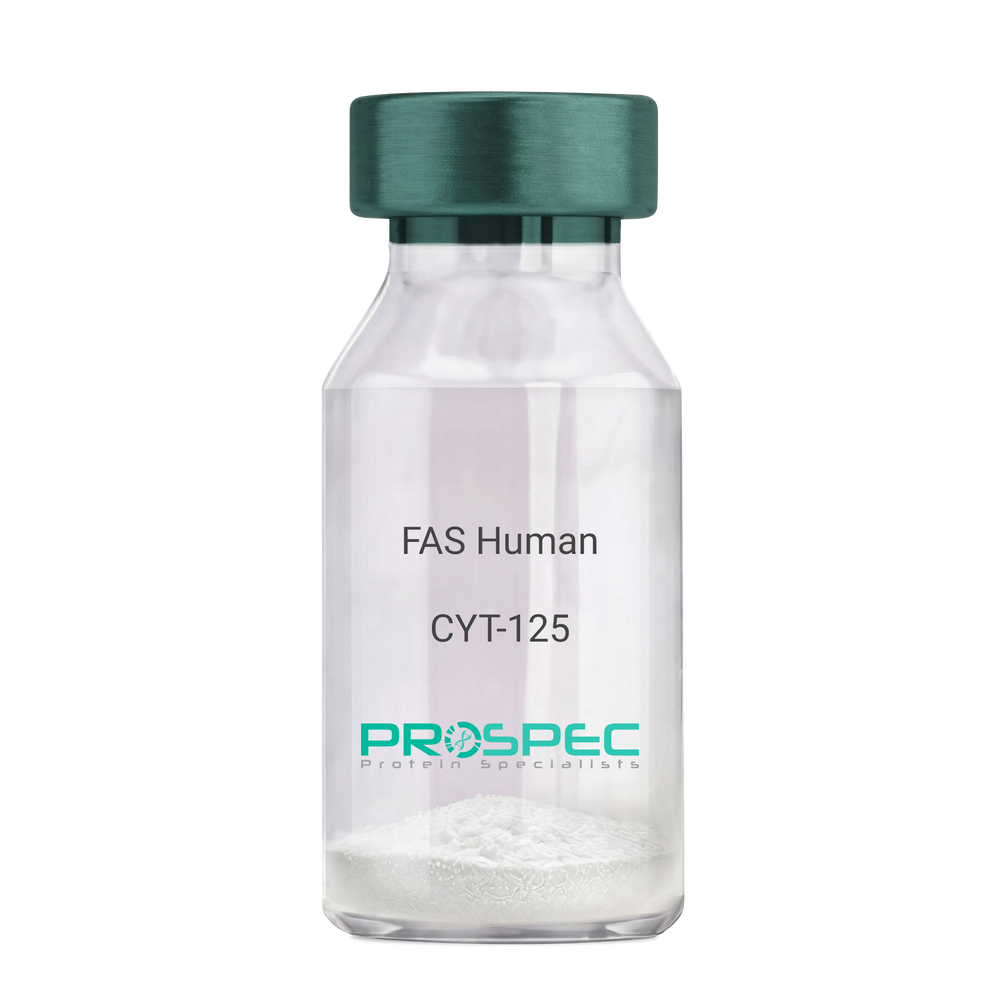
    FAS Human

    Description:

    sFas Receptor Human Recombinant

    Tumor necrosis factor receptor superfamily member 6, Apo-1 antigen, Apoptosis-mediating surface antigen FAS, FASLG receptor, CD95, FAS, APT1, FAS1, APO-1, FASTM, ALPS1A, TNFRSF6.

    Product # :

    CYT-125

    Price :

    Quantity :

    Shipping Method :

    Room Temp Icon

    Shipped at Room temp

    Add To Cart

    More Info

    • description
    • source
    • formulation
    • purity
    • biological activity
    • More Info

    Description

    sFas Receptor Human Recombinant produced in E.coli is a single, non-glycosylated polypeptide chain containing 157 amino acids and having a molecular mass of 17.6kDa.The FAS is purified by proprietary chromatographic techniques.

    Source

    Escherichia Coli.

    Formulation

    FAS protein was lyophilized from a 0.2µm filtered concentrated solution in 1×PBS, pH 7.4.

    Purity

    Greater than 95.0% as determined by:
    (a) Analysis by RP-HPLC.
    (b) Analysis by SDS-PAGE.

    Biological Activity

    The ED50 was determined by its ability to inhibit the cytotoxicity of Jurkat cells is between 10-15 µg/ml in the presence of 2ng/ml of hFasL.

    More Info

    • Introduction

      Fas and Fas Ligand (FasL) are members of the TNF superfamily and are type I and type II transmembrane proteins, respectively. Binding of FasL to Fas initiates apoptosis in Fas-bearing cells. The apoptosis mechanism involves the recruitment of pro-caspase 8 through an adaptor molecule named FADD followed by processing of the pro-enzyme to active forms. These active caspases subsequently cleave a variety of cellular substrates leading to the eventual cell death. sFasR is able to inhibit FasL-induced apoptosis by acting as a decoy receptor whicht serves as a sink for FasL. The full length Fas Receptor is a 319 a.a type I transmembrane protein, which contains a 157 a.a extracellular domain, a 17 a.a transmembrane domain, and 145 a.a cytoplasmic domain. The mature human Fas ECD shares 55%, 58%, a.a sequence identity with the mouse, rat, Fas, respectively.

    • Synonyms

      Tumor necrosis factor receptor superfamily member 6, Apo-1 antigen, Apoptosis-mediating surface antigen FAS, FASLG receptor, CD95, FAS, APT1, FAS1, APO-1, FASTM, ALPS1A, TNFRSF6.

    • Physical Appearance

      Sterile Filtered White lyophilized (freeze-dried) powder.

    • Stability

      Lyophilized FAS although stable at room temperature for 3 weeks, should be stored desiccated below -18°C. Upon reconstitution FAS should be stored at 4°C between 2-7 days and for future use below -18°C. For long term storage it is recommended to add a carrier protein (0.1% HSA or BSA). Please prevent freeze-thaw cycles.

    • Solubility

      It is recommended to reconstitute the lyophilized FAS in sterile 18M-cm H2O not less than 100µg/ml, which can then be further diluted to other aqueous solutions.

    • Amino Acid Sequence

      MRLSSKSVNA QVTDINSKGL ELRKTVTTVE TQNLEGLHHD GQFCHKPCPP GERKARDCTV NGDEPDCVPC QEGKEYTDKA HFSSKCRRCR LCDEGHGLEV EINCTRTQNT KCRCKPNFFC NSTVCEHCDP CTKCEHGIIK ECTLTSNTKC KEEGSRS.

    • Background

      What is the molecular weight/Mw of FAS Protein?
      FAS Protein has a total Mw of 17.6kDa.

      What is the source or expression system of FAS Protein?
      Escherichia Coli.

      What is the Purity of FAS Protein?
      FAS Protein is >95% pure as determined by SDS-PAGE.

      What is the Biological Activity of FAS Protein?
      The ED50 was determined by its ability to inhibit the cytotoxicity of Jurkat cells is between 10-15 µg/ml in the presence of 2ng/ml of hFasL.

      What is the amino acid sequence of FAS Protein?
      MRLSSKSVNA QVTDINSKGL ELRKTVTTVE TQNLEGLHHD GQFCHKPCPP GERKARDCTV NGDEPDCVPC QEGKEYTDKA HFSSKCRRCR LCDEGHGLEV EINCTRTQNT KCRCKPNFFC NSTVCEHCDP CTKCEHGIIK ECTLTSNTKC KEEGSRS.

      What applications can FAS Protein be used in?
      FAS Protein can probably be used in western blot, ELISA and Lateral Flow.

      What is the endotoxin level for FAS Protein?
      The endotoxin level is minimal, FAS Protein was purified using conventional chromatography techniques..

    ProSpec's products are furnished for LABORATORY RESEARCH USE ONLY. The product may not be used as drugs, agricultural or pesticidal products, food additives or household chemicals.

    Fas Human
  • View Data Sheet

    Name :

    EEF2 Human

    Description:

    Eukaryotic Translation Elongation Factor 2 Human Recombinant

    Elongation factor 2, EF-2, EEF2, EF2, Eukaryotic Translation Elongation Factor 2, EEF-2.

    Product # :

    PRO-2076

    Price :

    Quantity :

    Shipping Method :

    Ice Icon

    Shipped with Ice Packs

    Add To Cart

    More Info

    • description
    • source
    • formulation
    • purity
    • More Info

    Description

    EEF2 Human Recombinant produced in E.coli is a single, non-glycosylated polypeptide chain containing 308 amino acids (574-858) and having a molecular mass of 34.3kDa.EEF2 is fused to a 23 amino acid His-Tag at N-terminus and purified by proprietary chromatographic techniques.

    Source

    E.coli.

    Formulation

    The EEF2 solution (1mg/ml) contains 20mM Tris-HCl buffer (pH 8.0), 10% glycerol and 0.4M Urea.

    Purity

    Greater than 90% as determined by SDS-PAGE.

    More Info

    • Introduction

      Eukaryotic Translation Elongation Factor 2 (EEF2) which is necessary factor for protein synthesis is a part of the GTP-binding translation elongation factor family. EEF2 catalyzes the GTP-dependent ribosomal translocation step during translation elongation. EEF2 is also catalyzes the coordinated movement of the mRNA as well as the 2 tRNA molecules and conformational changes in the ribosome. EF-2 kinase phosporylation inactivates the EEF2 protein.

    • Synonyms

      Elongation factor 2, EF-2, EEF2, EF2, Eukaryotic Translation Elongation Factor 2, EEF-2.

    • Physical Appearance

      Sterile Filtered colorless solution.

    • Stability

      Store at 4°C if entire vial will be used within 2-4 weeks. Store, frozen at -20°C for longer periods of time. For long term storage it is recommended to add a carrier protein (0.1% HSA or BSA).Avoid multiple freeze-thaw cycles.

    • Amino Acid Sequence

      MGSSHHHHHH SSGLVPRGSH MGSDPVVSYR ETVSEESNVL CLSKSPNKHN RLYMKARPFP DGLAEDIDKG EVSARQELKQ RARYLAEKYE WDVAEARKIW CFGPDGTGPN ILTDITKGVQ YLNEIKDSVV AGFQWATKEG ALCEENMRGV RFDVHDVTLH ADAIHRGGGQ IIPTARRCLY ASVLTAQPRL MEPIYLVEIQ CPEQVVGGIY GVLNRKRGHV FEESQVAGTP MFVVKAYLPV NESFGFTADL RSNTGGQAFP QCVFDHWQIL PGDPFDNSSR PSQVVAETRK RKGLKEGIPA LDNFLDKL.

    ProSpec's products are furnished for LABORATORY RESEARCH USE ONLY. The product may not be used as drugs, agricultural or pesticidal products, food additives or household chemicals.

    Eef2 Human
  • View Data Sheet

    Name :

    GOSR2 Human

    Description:

    Golgi SNAP Receptor Complex Member 2 Human Recombinant

    Bos1, EPM6, GS27, Membrin, Golgi SNAP receptor complex member 2, 27 kDa Golgi SNARE protein, GOSR2.

    Product # :

    PRO-1399

    Price :

    Quantity :

    Shipping Method :

    Ice Icon

    Shipped with Ice Packs

    Add To Cart

    More Info

    • description
    • source
    • formulation
    • purity
    • More Info

    Description

    GOSR2 Human Recombinant produced in E.Coli is a single, non-glycosylated polypeptide chain containing 213 amino acids (1-190a.a) and having a molecular mass of 24.6kDa. GOSR2 is fused to a 23 amino acid His-tag at N-terminus & purified by proprietary chromatographic techniques.

    Source

    E.coli.

    Formulation

    GOSR2 protein solution (0.25mg/ml) containing 20mM Tris-HCl buffer (pH 8.0), 1M Urea and 10% glycerol.

    Purity

    Greater than 85% as determined by SDS-PAGE.

    More Info

    • Introduction

      Golgi SNAP receptor complex member 2 isoform A (GOSR2) is a part of the SNARE Protein family which consists of important trafficking proteins between the endoplasmic reticulum and the Golgi and between Golgi subcompartments. GOSR2 is located near a locus implicated in familial essential hypertension, indicating that it is a potential candidate gene for this disease. GOSR2 exists as cytoplasmically oriented integral membrane proteins.

    • Synonyms

      Bos1, EPM6, GS27, Membrin, Golgi SNAP receptor complex member 2, 27 kDa Golgi SNARE protein, GOSR2.

    • Physical Appearance

      Sterile Filtered colorless solution.

    • Stability

      Store at 4°C if entire vial will be used within 2-4 weeks. Store, frozen at -20°C for longer periods of time. For long term storage it is recommended to add a carrier protein (0.1% HSA or BSA).Avoid multiple freeze-thaw cycles.

    • Amino Acid Sequence

      MGSSHHHHHH SSGLVPRGSH MGSMDPLFQQ THKQVHEIQS CMGRLETADK QSVHIVENEI QASIDQIFSR LERLEILSSK EPPNKRQNAR LRVDQLKYDV QHLQTALRNF QHRRHAREQQ ERQREELLSR TFTTNDSDTT IPMDESLQFN SSLQKVHNGM DDLILDGHNI LDGLRTQRLT LKGTQKKILD IANMLGLSNT VMRLIEKRAF QDK.

    ProSpec's products are furnished for LABORATORY RESEARCH USE ONLY. The product may not be used as drugs, agricultural or pesticidal products, food additives or household chemicals.

    Gosr2 Human
  • View Data Sheet

    Name :

    FCGRT Mouse

    Description:

    Fc Fragment Of IgG Receptor And Transporter Mouse Recombinant

    IgG receptor FcRn large subunit p51, FcRn, IgG Fc fragment receptor transporter alpha chain, Neonatal Fc receptor, Fcgrt, Fcrn.

    Product # :

    PRO-2376

    Price :

    Quantity :

    Shipping Method :

    Ice Icon

    Shipped with Ice Packs

    Add To Cart

    More Info

    • description
    • source
    • formulation
    • purity
    • More Info

    Description

    FCGRT Mouse Recombinant produced in Sf9 Baculovirus cells is a single, glycosylated polypeptide chain containing 285 amino acids (22-297 a.a) and having a molecular mass of 32.1kDa (Molecular size on SDS-PAGE will appear at approximately 40-57kDa).FCGRT is fused to a 6 amino acid His-tag at C-terminus & purified by proprietary chromatographic techniques.

    Source

    Sf9, Baculovirus cells.

    Formulation

    FCGRT protein solution (0.5mg/ml) contains Phosphate buffered saline (pH7.4) and 10% glycerol.

    Purity

    Greater than 85.0% as determined by SDS-PAGE.

    More Info

    • Introduction

      Fc Fragment Of IgG Receptor And Transporter also known as FCGRT is a transmembrane glycoprotein with structural homology to MHC class 1 proteins. FCGRT is widely expressed in endothelial and epithelial cells and takes a vital part in IgG homeostasis. Moreover, FCGRT is expressed in neutrophils in addition myeloid antigen presenting cells. FCGRT can enhance IgG-meditated phagocytosis as well as antigen presentation by heses cells, however it promotes the degradation of opsonizing IgG rather than returning it to the circulation.

    • Synonyms

      IgG receptor FcRn large subunit p51, FcRn, IgG Fc fragment receptor transporter alpha chain, Neonatal Fc receptor, Fcgrt, Fcrn.

    • Physical Appearance

      Sterile filtered colorless solution.

    • Stability

      Store at 4°C if entire vial will be used within 2-4 weeks. Store, frozen at -20°C for longer periods of time. For long term storage it is recommended to add a carrier protein (0.1% HSA or BSA).Avoid multiple freeze-thaw cycles.

    • Amino Acid Sequence

      ADPSETRPPL MYHLTAVSNP STGLPSFWAT GWLGPQQYLT YNSLRQEADP CGAWMWENQV SWYWEKETTD LKSKEQLFLE ALKTLEKILN GTYTLQGLLG CELASDNSSV PTAVFALNGE EFMKFNPRIG NWTGEWPETE IVANLWMKQP DAARKESEFL LNSCPERLLG HLERGRRNLE WKEPPSMRLK ARPGNSGSSV LTCAAFSFYP PELKFRFLRN GLASGSGNCS TGPNGDGSFH AWSLLEVKRG DEHHYQCQVE HEGLAQPLTV DLDSSARSSH HHHHH.

    ProSpec's products are furnished for LABORATORY RESEARCH USE ONLY. The product may not be used as drugs, agricultural or pesticidal products, food additives or household chemicals.

    Fcgrt Mouse
  • View Data Sheet

    Name :

    PEDF Human, HEK

    Description:

    Pigment Epithelium-Derived Factor Human Recombinant, HEK

    Pigment epithelium-derived factor, PEDF, Serpin-F1, SerpinF1, EPC-1, EPC1, PIG35.

    Product # :

    CYT-553

    Price :

    Quantity :

    Shipping Method :

    Room Temp Icon

    Shipped at Room temp

    Add To Cart

    More Info

    • description
    • source
    • formulation
    • purity
    • More Info

    Description

    PEDF Human Recombinant produced in HEK cells is a single, glycosylated, polypeptide chain containing a total of 410 amino acids, having a molecular mass of 45.6 kDa and fused to an 11 aa FLAG tag at C-Terminus.The Human PEDF is purified by proprietary chromatographic techniques.

    Source

    HEK 293.

    Formulation

    The filtered (0.4µm) concentrated (0.5mg/ml) protein solution was lyophilized with 20mM Tris & 20mM NaCl pH-7.5.

    Purity

    Greater than 95% as determined by SDS-PAGE.

    More Info

    • Introduction

      PEDF is a neurotrophic protein that induces extensive neuronal differentiation in retinoblastoma cells. SerpinF1 is a potent inhibitor of angiogenesis. EPC1 doesn’t undergo the stressed to relaxed conformation transition characteristic as of the active serpins since it exhibits no serine protease inhibitory activity.
      Aqueous humour level of asymmetric dimethylarginine is correlated with PEDF in humans. ADMA and PEDF levels are increased in response to inflammation in uveitis.
      Lack of PEDF expression is a potent factor for the enhancement of tumor growth and angiogenesis in breast cancer.
      PEDF & VEGF genes contribute to the development of diabetic retinopathy.
      PEDF and VEGF structural changes in blood vessel wall play an important role in the pathophysiology of PD patients.
      PEDF-overexpressing tumors exhibited reduced intratumoral angiogenesis.
      SerpinF1 is a new promising approach for the treatment of osteosarcoma.
      Levels of the natural ocular anti-angiogenic factor SentrinF1 (PEDF) is associated with proliferative retinopathy.
      VEGF secreted by retinal pigment epithelial cells upregulates PEDF expression via VEGFR-1 in an autocrine manner.
      Sentrin-F1 concentration in the aqueous humor of diabetic patients predicts who will develop progression of retinopathy.
      PEDF blocks angiogenic effects of leptin through its anti-oxidative properties.

    • Synonyms

      Pigment epithelium-derived factor, PEDF, Serpin-F1, SerpinF1, EPC-1, EPC1, PIG35.

    • Physical Appearance

      Filtered White lyophilized (freeze-dried) powder.

    • Stability

      Store lyophilized protein at -20°C. Aliquot the product after reconstitution to avoid repeated freezing/thawing cycles. Reconstituted protein can be stored at 4°C for a limited period of time.

    • Solubility

      It is recomnded to add deionized water to a working concentration of 0.5mg/ml and let the lyophilized pellet dissolve completely. Product is not sterile! Please filter the product by an appropriate sterile filter before using it in the cell culture.

    • Amino Acid Sequence

      QNPASPPEEG SPDPDSTGAL VEEEDPFFKV PVNKLAAAVS NFGYDLYRVR SSTSPTTNVL LSPLSVATAL SALSLGAEQR TESIIHRALY YDLISSPDIH GTYKELLDTV TAPQKNLKSA SRIVFEKKLR IKSSFVAPLE KSYGTRPRVL TGNPRLDLQE INNWVQAQMK GKLARSTKEI PDEISILLLG VAHFKGQWVT KFDSRKTSLE DFYLDEERTV RVPMMSDPKA VLRYGLDSDL SCKIAQLPLT GSMSIIFFLP LKVTQNLTLI EESLTSEFIH DIDRELKTVQ AVLTVPKLKL SYEGEVTKSL QEMKLQSLFD SPDFSKITGK PIKLTQVEHR AGFEWNEDGA GTTPSPGLQP AHLTFPLDYH LNQPFIFVLR DTDTGALLFI GKILDPRGPAAADYKDDDDK.

    ProSpec's products are furnished for LABORATORY RESEARCH USE ONLY. The product may not be used as drugs, agricultural or pesticidal products, food additives or household chemicals.

    Serpinf1 Human Hek
  • View Data Sheet

    Name :

    TFRC Native

    Description:

    Transferrin Receptor Human

    Transferrin receptor protein 1, TR, TfR, TfR1, Trfr, T9, p90, CD_antigen: CD71, Transferrin receptor, serum form, sTfR, TFRC, CD71

    Product # :

    PRO-2742

    Price :

    Quantity :

    Shipping Method :

    Ice Icon

    Shipped with Ice Packs

    Add To Cart

    More Info

    • description
    • source
    • formulation
    • More Info

    Description

    Human Transferrin Receptor Protein produced in human serum tissue having a molecular mass of 85kDa.

    Source

    Human serum.

    Formulation

    TFRC Native solution (0.2µm filtered) contains 250mM TRIS-HCl buffer, 0.15M NaCl, 0.09% NaN3, pH 8.0.

    More Info

    • Introduction

      Transferrin receptor protein 1 (TFRC) is required for iron delivery from transferring to cells. The TFRC protein is a transmembrane glycoprotein comprised of 2 disulfide-linked monomers joined by 2 disulfide bonds. Each monomer will bind one holo-transferrin molecule producing an iron-Tf-TfR complex which enters the cell by endocytosis.

    • Synonyms

      Transferrin receptor protein 1, TR, TfR, TfR1, Trfr, T9, p90, CD_antigen: CD71, Transferrin receptor, serum form, sTfR, TFRC, CD71

    • Physical Appearance

      Sterile Filtered brown solution.

    • Stability

      Store at 4°C if entire vial will be used within 2-4 weeks. Store, frozen at -20°C for longer periods of time. For long term storage it is recommended to add a carrier protein (0.1% HSA or BSA). Avoid multiple freeze-thaw cycles.

    • Human Virus Test

      Starting material donor has been tested and certified negative for antibodies to HIV-1, HIV-2, HCV, HBSAG, Parvovirus B19, Syphilis and HIV/HBV/HCV (PCR).

    ProSpec's products are furnished for LABORATORY RESEARCH USE ONLY. The product may not be used as drugs, agricultural or pesticidal products, food additives or household chemicals.

    Transferrin Receptor Tfrc
  • View Data Sheet

    Name :

    TEK Human Fc

    Description:

    TEK Tyrosine Kinase Endothelial Fc Chimera Human Recombinant

    Angiopoietin-1 receptor precursor, Tyrosine-protein kinase receptor TIE-2, hTIE2, Tyrosine-protein kinase receptor TEK, p140 TEK, Tunica interna endothelial cell kinase, CD202b, VMCM, VMCM1, TIE2.

    Product # :

    PKA-248

    Price :

    Quantity :

    Shipping Method :

    Room Temp Icon

    Shipped at Room temp

    Add To Cart

    More Info

    • description
    • source
    • formulation
    • purity
    • More Info

    Description

    Soluble TEK Human Recombinant fused with the Fc part of human IgG1 produced in baculovirus is a monomeric, glycosylated, polypeptide containing 730 amino acids and having a total molecular mass of 250 kDa. Human TIE-2/Fc monomer has a calculated molecular mass of approximately 125 kDa. As a result of glycosylation, the recombinant protein migrates as an approximately 140 kDa protein in SDS-PAGE under reducing conditions.The TEK Fc Chimera is purified by proprietary chromatographic techniques.

    Source

    Insect Cells.

    Formulation

    TEK Fc Chimera was lyophilized from a concentrated (1mg/ml) sterile solution containing 1xPBS.

    Purity

    Greater than 90.0% as determined by:
    (a) Analysis by RP-HPLC.
    (b) Analysis by SDS-PAGE.

    More Info

    • Introduction

      TIE-1 (tyrosine kinase with Ig and EGF homology domains 1) and TIE-2/Tek comprise a receptor tyrosine kinase (RTK) subfamily with unique structural characteristics: two immunoglobulin-like domains flanking three epidermal growth factor (EGF)-like domains and followed by three fibronectin type III-like repeats in the extracellular region and a split tyrosine kinase domain in the cytoplasmic region. These receptors are expressed primarily on endothelial and hematopoietic progenitor cells and play critical roles in angiogenesis, vasculogenesis and hematopoiesis. Human TIE-1 cDNA encodes a 1122 amino acid (aa) residue precursor protein with an 18 residue putative signal peptide, a 726 residue extracellular domain and a 353 residue cytoplasmic domain. Two ligands, angiopoietin-1 (Ang1) and angiopoietin-2 (Ang2), which bind TIE-2 with high-affinity have been identified. Ang2 has been reported to act as an antagonist for Ang1. Mice engineered to overexpress Ang2 or to lack Ang1 or Tie-1 display similar angiogenic defects.

    • Synonyms

      Angiopoietin-1 receptor precursor, Tyrosine-protein kinase receptor TIE-2, hTIE2, Tyrosine-protein kinase receptor TEK, p140 TEK, Tunica interna endothelial cell kinase, CD202b, VMCM, VMCM1, TIE2.

    • Physical Appearance

      Sterile Filtered White lyophilized (freeze-dried) powder.

    • Stability

      Lyophilized sTIE-2 although stable at room temperature for 3 weeks, should be stored desiccated below -18°C. Upon reconstitution TEK should be stored at 4°C between 2-7 days and for future use below -18°C.For long term storage it is recommended to add a carrier protein (0.1% HSA or BSA).Please prevent freeze-thaw cycles.

    • Solubility

      It is recommended to reconstitute the lyophilized TIE-2 Fc Chimera in sterile water not less than 100µg/ml, which can then be further diluted to other aqueous solutions.

    ProSpec's products are furnished for LABORATORY RESEARCH USE ONLY. The product may not be used as drugs, agricultural or pesticidal products, food additives or household chemicals.

    Tie 2 Human Fc
  • View Data Sheet

    Name :

    ErbB4 Human

    Description:

    Tyrosine Kinase ErbB-4 Human Recombinant

    Receptor tyrosine-protein kinase erbB-4, Proto-oncogene-like protein c-ErbB-4, Tyrosine kinase-type cell surface receptor HER4, p180erbB4, 4ICD, E4ICD, s80HER4, ERBB4, HER4, receptor tyrosine-protein kinase erbB-4 isoform JM-a/CVT-1, receptor tyrosine-protein kinase erbB-4, tyrosine kinase-type cell surface receptor HER4, avian erythroblastic leukemia viral (v-erb-b2) oncogene homolog 4, proto-oncogene-like protein c-ErbB-4, ALS19, v-erb-a erythroblastic leukemia viral oncogene homolog 4, v-erb-b2 avian erythroblastic leukemia viral oncogene homolog 4, human epidermal growth factor receptor 4.

    Product # :

    PKA-128

    Price :

    Quantity :

    Shipping Method :

    Ice Icon

    Shipped with Ice Packs

    Add To Cart

    More Info

    • description
    • source
    • formulation
    • purity
    • biological activity
    • More Info

    Description

    ErbB4 Human Recombinant produced in HEK293 Cells is a single, glycosylated polypeptide chain containing 863 amino acids (26-649 a.a) and having a molecular mass of 96.6 kDa.ErbB4 is fused to a 239 amino acid hIgG-His-Tag at C-terminus & purified by proprietary chromatographic techniques.

    Source

    HEK293 Cells.

    Formulation

    The ErbB4 solution (0.25mg/ml) contains phosphate buffered saline (pH7.4) and 10% glycerol.

    Purity

    Greater than 90.0% as determined by SDS-PAGE.

    Biological Activity

    Measured by its binding ability in a functional ELISA with Human NRG1(CAT# cyt-1186). The ED50 range ≤ 0.2 ug/ml.

    More Info

    • Introduction

      Tyrosine Kinase ErbB-4 (ErbB4) is a receptor tyrosine kinase that is a member of the epidermal growth factor receptor family whose members play a role as receptors for the EGF family of growth factors. ErbB4is a single-pass type I transmembrane protein with multiple furin-like cysteine rich domains,PDZ domain binding motif, a tyrosine kinase domain and a phosphotidylinositol-3 kinase binding site. ErbB4binds its ligands with low affinity and is expressed in normal skeletal muscle, heart, pituitary, brain and some breast carcinomas. Monomeric ErbB4 takes part in neuronal development and development of the heart and cancer.

    • Synonyms

      Receptor tyrosine-protein kinase erbB-4, Proto-oncogene-like protein c-ErbB-4, Tyrosine kinase-type cell surface receptor HER4, p180erbB4, 4ICD, E4ICD, s80HER4, ERBB4, HER4, receptor tyrosine-protein kinase erbB-4 isoform JM-a/CVT-1, receptor tyrosine-protein kinase erbB-4, tyrosine kinase-type cell surface receptor HER4, avian erythroblastic leukemia viral (v-erb-b2) oncogene homolog 4, proto-oncogene-like protein c-ErbB-4, ALS19, v-erb-a erythroblastic leukemia viral oncogene homolog 4, v-erb-b2 avian erythroblastic leukemia viral oncogene homolog 4, human epidermal growth factor receptor 4.

    • Physical Appearance

      Sterile filtered colorless solution.

    • Stability

      Store at 4°C if entire vial will be used within 2-4 weeks.Store, frozen at -20°C for longer periods of time.For long term storage it is recommended to add a carrier protein (0.1% HSA or BSA).Avoid multiple freeze-thaw cycles.

    • Amino Acid Sequence

      QSVCAGTENK LSSLSDLEQQ YRALRKYYEN CEVVMGNLEI TSIEHNRDLS FLRSVREVTG YVLVALNQFR YLPLENLRII RGTKLYEDRY ALAIFLNYRK DGNFGLQELG LKNLTEILNG GVYVDQNKFL CYADTIHWQD IVRNPWPSNL TLVSTNGSSG CGRCHKSCTG RCWGPTENHC QTLTRTVCAE QCDGRCYGPY VSDCCHRECA GGCSGPKDTD CFACMNFNDS GACVTQCPQT FVYNPTTFQL EHNFNAKYTY GAFCVKKCPH NFVVDSSSCV RACPSSKMEV EENGIKMCKP CTDICPKACD GIGTGSLMSA QTVDSSNIDK FINCTKINGN LIFLVTGIHG DPYNAIEAID PEKLNVFRTV REITGFLNIQ SWPPNMTDFS VFSNLVTIGG RVLYSGLSLL ILKQQGITSL QFQSLKEISA GNIYITDNSN LCYYHTINWT TLFSTINQRI VIRDNRKAEN CTAEGMVCNH LCSSDGCWGP GPDQCLSCRR FSRGRICIES CNLYDGEFRE FENGSICVEC DPQCEKMEDG LLTCHGPGPD NCTKCSHFKD GPNCVEKCPD GLQGANSFIF KYADPDRECH PCHPNCTQGC NGPTSHDCIY YPWTGHSTLP QHARLEPKSC DKTHTCPPCP APELLGGPSV FLFPPKPKDT LMISRTPEVT CVVVDVSHED PEVKFNWYVD GVEVHNAKTK PREEQYNSTY RVVSVLTVLH QDWLNGKEYK CKVSNKALPA PIEKTISKAK GQPREPQVYT LPPSRDELTK NQVSLTCLVK GFYPSDIAVE WESNGQPENN YKTTPPVLDS DGSFFLYSKL TVDKSRWQQG NVFSCSVMHE ALHNHYTQKS LSLSPGKHHH HHH

    ProSpec's products are furnished for LABORATORY RESEARCH USE ONLY. The product may not be used as drugs, agricultural or pesticidal products, food additives or household chemicals.

    Erbb4 Human
  • View Data Sheet

    Name :

    FLT1 Human, His

    Description:

    Vascular Endothelial Growth Factor receptor-1 Human Recombinant, His Tag

    FLT-1, FLT1, Tyrosine-protein kinase receptor FLT, Flt-1, Tyrosine-protein kinase FRT, Fms-like tyrosine kinase 1, VEGFR-1.

    Product # :

    PKA-354

    Price :

    Quantity :

    Shipping Method :

    Ice Icon

    Shipped with Ice Packs

    Add To Cart

    More Info

    • description
    • source
    • formulation
    • purity
    • More Info

    Description

    FLT1 Human Recombinant produced in E.Coli is single, a non-glycosylated, Polypeptide chain containing 298 amino acids fragment (31-328) corresponding to the IgG like domains 1-3 from the mature soluble FLT1 protein, having a total molecular mass of 43kDa and fused with a 4.5kDa amino-terminal hexahistidine tag. The FLT1 His is purified by proprietary chromatographic techniques.

    Source

    Escherichia Coli.

    Formulation

    FLT1 His-Tag protein is supplied in 1x PBS and 50% glycerol.

    Purity

    Greater than 95.0% as determined by SDS-PAGE.

    More Info

    • Introduction

      Endothelial cells express three different vascular endothelial growth factor (VEGF) receptors, belonging to the family of receptor tyrosine kinases (RTKs). They are named VEGFR-1 (Flt-1), VEGFR-2 (KDR/Flk-1), VEGFR-3 (Flt-4). Their expression is almost exclusively restricted to endothelial cells, but VEGFR-1 can also be found on monocytes, dendritic cells and on trophoblast cells. The flt-1 gene was first described in 1990. The receptor contains seven immunoglobulin-like extracellular domains, a single transmembrane region and an intracellular splited tyrosine kinase domain. Compared to VEGFR-2 the Flt-1 receptor has a higher affinity for VEGF but a weaker signaling activity. VEGFR-1 thus leads not to proliferation of endothelial cells, but mediates signals for differentiation. Interestingly a naturally occuring soluble variant of VEGFR-1 (sVEGFR-1) was found in HUVE supernatants in 1996, which is generated by alternative splicing of the flt-1 mRNA. The biological functions of sVEGFR-1 still are not clear, but it seems to be an endogenous regulator of angiogenesis, binding VEGF with the same affinity as the full-length receptor.

    • Synonyms

      FLT-1, FLT1, Tyrosine-protein kinase receptor FLT, Flt-1, Tyrosine-protein kinase FRT, Fms-like tyrosine kinase 1, VEGFR-1.

    • Physical Appearance

      Sterile Filtered clear solution.

    • Stability

      Store at 4°C if entire vial will be used within 2-4 weeks. Store, frozen at -20°C for longer periods of time. Please avoid freeze thaw cycles.

    ProSpec's products are furnished for LABORATORY RESEARCH USE ONLY. The product may not be used as drugs, agricultural or pesticidal products, food additives or household chemicals.

    Flt1 Human His
  • View Data Sheet

    Name :

    EPYC Human

    Description:

    Epiphycan Human Recombinant

    Epiphycan, SLRR3B, DSPG3, EPYC Dermatan sulfate proteoglycan 3, Proteoglycan-Lb, PG-Lb, Small chondroitin/dermatan sulfate proteoglycan, PGLB, epiphycan proteoglycan.

    Product # :

    PRO-2778

    Price :

    Quantity :

    Shipping Method :

    Ice Icon

    Shipped with Ice Packs

    Add To Cart

    More Info

    • description
    • source
    • formulation
    • purity
    • biological activity
    • More Info

    Description

    EPYC Human Recombinant produced in HEK293 Cells.is a single, glycosylated polypeptide chain containing 309 amino acids (20-322 a.a.) and having a molecular mass of 35.5kDa. EPYC is fused to a 6 amino acid His-tag at C-terminus and is purified by proprietary chromatographic techniques.

    Source

    HEK293 Cells.

    Formulation

    EPYC protein solution (0.5mg/ml) containing 10% Glycerol and Phosphate-Buffered Saline (pH 7.4).

    Purity

    Greater than 95.0% as determined by SDS-PAGE.

    Biological Activity

    >60% and is measured by the ability of the immobilized protein to support the adhesion of Saos‑2 human osteosarcoma cells. When cells are added to human DSPG3 1.25 ug/ml and human fibronectin 0.5 ug/ml coated plates.

    More Info

    • Synonyms

      Epiphycan, SLRR3B, DSPG3, EPYC Dermatan sulfate proteoglycan 3, Proteoglycan-Lb, PG-Lb, Small chondroitin/dermatan sulfate proteoglycan, PGLB, epiphycan proteoglycan.

    • Physical Appearance

      Sterile Filtered colorless solution.

    • Stability

      Store at 4°C if entire vial will be used within 2-4 weeks. Store, frozen at -20°C for longer periods of time. For long term storage it is recommended to add a carrier protein (0.1% HSA or BSA).Avoid multiple freeze-thaw cycles.

    • Amino Acid Sequence

      APTLESINYD SETYDATLED LDNLYNYENI PVDKVEIEIA TVMPSGNREL LTPPPQPEKA QEEEEEEEST PRLIDGSSPQ EPEFTGVLGP HTNEDFPTCL LCTCISTTVY CDDHELDAIP PLPKNTAYFY SRFNRIKKIN KNDFASLSDL KRIDLTSNLI SEIDEDAFRK LPQLRELVLR DNKIRQLPEL PTTLTFIDIS NNRLGRKGIK QEAFKDMYDL HHLYLTDNNL DHIPLPLPEN LRALHLQNNN ILEMHEDTFC NVKNLTYIRK ALEDIRLDGN PINLSKTPQA YMCLPRLPVG SLVHHHHHH.

    • Background

      Epiphycan, a small leucine-rich proteoglycan, has gained recognition as a crucial player in tissue development, repair, and homeostasis. This research aims to explore the significance of epiphycan and its potential therapeutic applications in various physiological and pathological contexts. By investigating the properties and functions of epiphycan, we can uncover new insights into its role in tissue biology and its potential as a target for therapeutic interventions.

      Epiphycan is a proteoglycan primarily expressed in skeletal tissues, such as the growth plate of long bones, articular cartilage, and intervertebral discs. It is an extracellular matrix component that interacts with various growth factors, cytokines, and other matrix proteins, influencing cell behavior and tissue organization. The unique structure of epiphycan, comprising a core protein and attached glycosaminoglycan chains, endows it with diverse regulatory functions.

      The involvement of epiphycan in tissue development and repair has been highlighted in several studies. It plays a critical role in chondrogenesis, modulating the differentiation and proliferation of chondrocytes. Furthermore, epiphycan has been implicated in the maintenance of articular cartilage integrity and the prevention of osteoarthritis progression. Its ability to interact with growth factors, such as transforming growth factor-beta (TGF-β) and bone morphogenetic proteins (BMPs), suggests its potential as a modulator of tissue regeneration and repair.

      This research will delve into the molecular mechanisms underlying epiphycan's functions and its interactions with various signaling pathways. The paper will explore the regulatory effects of epiphycan on cell behavior, matrix remodeling, and tissue architecture. Additionally, it will examine the implications of epiphycan dysregulation in pathological conditions, such as osteoarthritis, and discuss its potential as a therapeutic target for promoting tissue regeneration and repair.

      The study will also investigate the diagnostic and prognostic value of epiphycan in various diseases and conditions. Understanding the expression patterns and alterations of epiphycan in different tissues and disease states may provide valuable insights into disease progression and aid in the development of personalized treatment strategies.

      By unraveling the multifaceted roles of epiphycan in tissue biology and its potential therapeutic applications, this research aims to contribute to our understanding of tissue development and repair mechanisms. Furthermore, it highlights the potential of epiphycan as a target for therapeutic interventions and emphasizes the importance of further investigations to harness its full therapeutic potential.

    ProSpec's products are furnished for LABORATORY RESEARCH USE ONLY. The product may not be used as drugs, agricultural or pesticidal products, food additives or household chemicals.

    Epyc Protein
  • View Data Sheet

    Name :

    ICAM1 Human HEK

    Description:

    Intercellular Adhesion Molecule-1 Human Recombinant HEK

    Intercellular adhesion molecule 1, ICAM-1, Major group rhinovirus receptor, CD54 antigen, ICAM1, BB2, CD54, P3.58.

    Product # :

    PRO-1643

    Price :

    Quantity :

    Shipping Method :

    Room Temp Icon

    Shipped at Room temp

    Add To Cart

    More Info

    • description
    • source
    • formulation
    • purity
    • More Info

    Description

    ICAM1 Human Recombinant produced by mammalian expression system in human cells is a single polypeptide chain containing 461 amino acids (28-480). ICAM1 is fused to an 8 amino acid His-tag at C-terminus & purified by proprietary chromatographic techniques.

    Source

    HEK293 cells.

    Formulation

    ICAM1 was lyophilized from a 0.2 µM filtered solution of 20mM PB and 150mM NaCl, pH 7.2.

    Purity

    Greater than 95% as determined by SDS-PAGE.

    More Info

    • Introduction

      ICAM-1 also called CD54 is a single chain membrane glycoprotein expressed on the surface of a variety of non-haematopoietic and haematopoietic cell types and has roles in signal transduction, cell signaling and lymphocyte adhesion. ICAM1 binds to integrins such as CD11a / CD18, or CD11b / CD18. ICAM1 is also used by Rhinovirus as a receptor. ICAM-1 is an intercellular adhesion molecule constantly present in low concentrations in the membranes of leukocytes and endothelial cells. When stimulated by cytokine the concentrations significantly increase. ICAM-1 can be stimulated by interleukin-1 (IL-1) and tumor necrosis factor alpha (TNFA) and is expressed by the vascular endothelium, macrophages and lymphocytes. ICAM-1 is a ligand for LFA-1 which is a receptor found on leukocytes. Upon activation, leukocytes bind to endothelial cells via ICAM-1/LFA-1 and then transmigrate into tissues.
      ICAM-1 is implicated in subarachnoid hemorrhage (SAH). Levels of ICAM-1 are shown to be notably elevated in patients with SAH.
      Soluble ICAM-1 is detectable in the plasma and is elevated in patients with various inflammatory conditions.

    • Synonyms

      Intercellular adhesion molecule 1, ICAM-1, Major group rhinovirus receptor, CD54 antigen, ICAM1, BB2, CD54, P3.58.

    • Physical Appearance

      Sterile Filtered White lyophilized (freeze-dried) powder.

    • Stability

      Lyophilized ICAM1 although stable at room temperature for 3 weeks, should be stored desiccated below -18°C. Upon reconstitution ICAM1 should be stored at 4°C between 2-7 days and for future use below -18°C. Please prevent freeze-thaw cycles.

    • Solubility

      It is recommended to reconstitute the lyophilized ICAM1 in 1xPBS to a concentration no less than 100 µg/ml, which can then be further diluted to other aqueous solutions.

    • Amino Acid Sequence

      QTSVSPSKVILPRGGSVLVTCSTSCDQPKLLGIETPLPKKELLLPGNNRKVYELSNVQE
      DSQPMCYSNCPDGQSTAKTFLTVYWTPERVELAPLPSWQPVGKNLTLRCQVEGGAPRANL
      TVVLLRGEKELKREPAVGEPAEVTTTVLVRRDHHGANFSCRTELDLRPQGLELFENTSAP
      YQLQTFVLPATPPQLVSPRVLEVDTQGTVVCSLDGLFPVSEAQVHLALGDQRLNPTVTYGN
      DSFSAKASVSVTAEDEGTQRLTCAVILGNQSQETLQTVTIYSFPAPNVILTKPEVSEGTEV
      TVKCEAHPRAKVTLNGVPAQPLGPRAQLLLKATPEDNGRSFSCSATLEVAGQLIHKNQTRELR
      VLYGPRLDERDCPGNWTWPENSQQTPMCQAWGNPLPELKCLKDGTFPLPIGESVTVTRDLEGTYL
      CRARSTQGEVTRKVTVNVLSPRYEVDHHHHHH.

    ProSpec's products are furnished for LABORATORY RESEARCH USE ONLY. The product may not be used as drugs, agricultural or pesticidal products, food additives or household chemicals.

    Icam1 Human Hek
  • View Data Sheet

    Name :

    FGFR2 Human

    Description:

    Fibroblast Growth Factor Receptor 2 Fc Chimera Human Recombinant

    Keratinocyte growth factor receptor 2, CD332, FGFR2.

    Product # :

    PKA-231

    Price :

    Quantity :

    Shipping Method :

    Room Temp Icon

    Shipped at Room temp

    Add To Cart

    More Info

    • description
    • source
    • formulation
    • purity
    • biological activity
    • More Info

    Description

    Soluble FGFR-2a (IIIc) Fc Chimera Human Recombinant fused with Xa cleavage site with the Fc part of human IgG1 produced in baculovirus is a heterodimeric, glycosylated, Polypeptide chain containing 602 amino acids and having a molecular mass of 170 kDa. The FGFR2 is purified by proprietary chromatographic techniques.

    Source

    Insect Cells.

    Formulation

    CD332 was lyophilized from a concentrated (1 mg/ml) sterile solution containing no additives.

    Purity

    Greater than 90.0% as determined by SDS-PAGE.

    Biological Activity

    Determined by its ability to inhibit human FGF-2 dependent proliferation on HUVE cells. The ED50 for this effect is typically at 15 - 30ng/ml. 

    More Info

    • Introduction

      Fibroblast Growth Factors (FGFs) comprise a family of at least eighteen structurally realted proteins that are involved in a multitude of physiological and pathological cellular processes, including cell growth, differentation, angiogenesis, wound healing and tumorgenesis. The biological activities of the FGFs are mediated by a family if type I transmembrane tyrosine kinases which undergo dimerization and autophosphorylation after ligand binding. Four distinct genes encoding closely related FGF receptors, FGFR-1to -4 are known. Multiple forms of FGFR-1 to -3 are generated by alternative splicing of the mRNAs. A frequent splicing event involving FGFR-1 and -2 results in receptors containing all three Ig domains, referred to as the alpha isoform, or only IgII and IgIII, referred to as the ? isoform. Only the alpha isoform has been identified for FGFR-3 and FGFR-4. Additional splicing events for FGFR-1 to -3, involving the C-terminal half of the IgIII domain encoded by two mutually exclusive alternative exons, generate FGF receptors with alternative IgIII domains (IIIb and IIIc). A IIIa isoform which is a secreted FGF binding protein containing only the N-terminal half of the IgIII domain plus some intron sequences has also been reported for FGFR-1. Mutations in FGFR-1 to -3 have been found in patients with birth defects involving craniosynostosis.

    • Synonyms

      Keratinocyte growth factor receptor 2, CD332, FGFR2.

    • Physical Appearance

      Sterile Filtered White lyophilized (freeze-dried) powder.

    • Stability

      Lyophilized FGFR2A although stable at room temperature for 3 weeks, should be stored desiccated below -18°C. Upon reconstitution FGFR2 should be stored at 4°C between 2-7 days and for future use below -18°C. For long term storage it is recommended to add a carrier protein (0.1% HSA or BSA).Please prevent freeze-thaw cycles.

    • Solubility

      It is recommended to reconstitute the lyophilized FGFR-2 in sterile PBS not less than 100 µg/ml, which can then be further diluted to other aqueous solutions.

    • Amino Acid Sequence

      RPSFSLVEDTTLEPEEPPTKYQISQPEVYVAAPGESLEVRCLLKDAAVISWT KDGVHLGPNNRTVLIGEYLQIKGATPRDSGLYACTASRTVDSETWYFMVNVT DAISSGDDEDDTDGAEDFVSENSNNKRAPYWTNTEKMEKRLHAVPAANTVKF RCPAGGNPMPTMRWLKNGKEFKQEHRIGGYKVRNQHWSLIMESVVPSDKGNY TCVVENEYGSINHTYHLDVVERSPHRPILQAGLPANASTVVGGDVEFVCKVY SDAQPHIQWIKHVEKNGSKYGPDGLPYLKVLKAAGVNTTDKEIEVLYIRNVT FEDAGEYTCLAGNSIGISFHSAWLTVLPAPGREKEITASPDYLEDPRRASIE GRGDPEEPKSCDKTHTCPPCPAPELLGGPSVFLFPPKPKDTLMISRTPEVTC VVVDVSHEDPEVKFNWYVDGVEVHNAKTKPREEQYNSTYRVVSVLTVLHQDW LNGKEYKCKVSNKALPAPIEKTISKAKGQPREPQVYTLPPSRDELTKNQVSL TCLVKGFYPSDIAVEWESNGQPENNYKTTPPVLDSDGSFFLYSKLTVDKSRW QQGNVFSCSVMHEALHNHYTQKSLSLSPGK

    ProSpec's products are furnished for LABORATORY RESEARCH USE ONLY. The product may not be used as drugs, agricultural or pesticidal products, food additives or household chemicals.

    Fgfr2 Human
  • View Data Sheet

    Name :

    EEF1A1 Human

    Description:

    Eukaryotic Translation Elongation Factor 1 Alpha 1 Human Recombinant

    Eukaryotic Translation Elongation Factor 1 Alpha 1, EF1A, EEF1A, LENG7, Leukocyte Receptor Cluster (LRC) Member 7, Elongation Factor Tu, Eukaryotic Elongation Factor 1 A-1, Leukocyte Receptor Cluster Member 7, EF-1-alpha-1, EF-Tu, eEF1A-1, CCS-3, CCS3, EE1A1, EEF-1, GRAF-1EF, HNGC:16303, PTI1, Cervical Cancer Suppressor 3, CTCL Tumor Antigen, EF1a-Like Protein, Elongation Factor 1 Alpha Subunit, Elongation Factor 1-Alpha 1, Eukaryotic Translation Elongation Factor 1 Alpha 1-Like 14, Glucocorticoid Receptor AF-1 Specific Elongation Factor, Prostate Tumor-Inducing Protein 1, Translation Elongation Factor 1 Alpha 1-Like 14.

    Product # :

    PRO-1910

    Price :

    Quantity :

    Shipping Method :

    Ice Icon

    Shipped with Ice Packs

    Add To Cart

    More Info

    • description
    • source
    • formulation
    • purity
    • More Info

    Description

    EEF1A1 Human Recombinant produced in E.Coli is a single, non-glycosylated polypeptide chain containing 462 amino acids (1-462 a.a) and having a molecular mass of 50kDa.

    Source

    Escherichia Coli.

    Formulation

    EEF1A1 protein solution (1mg/ml) containing 20mM Tris-HCl buffer (pH 8.0), 0.4M Urea and 10% glycerol.

    Purity

    Greater than 90.0% as determined by SDS-PAGE.

    More Info

    • Introduction

      EEF1A1 is an isoform of the alpha subunit of the elongation factor-1 complex, which is responsible forthe enzymatic release of aminoacyl tRNAs to the ribosome. EEF1A1 is expressed in brain, placenta, lung, liver, kidney, and pancreas, and the other isoform (alpha 2) is expressed in brain, heart and skeletal muscle. EEF1A1 is recognized as an autoantigen in 66% of patients with Felty syndrome. EEF1A1 has multiple copies on numerous chromosomes, part of them, if not all, symbolize different pseudogenes. Among the diseases associated with EEF1A1 are tinea nigra and andcervical cancer.

    • Synonyms

      Eukaryotic Translation Elongation Factor 1 Alpha 1, EF1A, EEF1A, LENG7, Leukocyte Receptor Cluster (LRC) Member 7, Elongation Factor Tu, Eukaryotic Elongation Factor 1 A-1, Leukocyte Receptor Cluster Member 7, EF-1-alpha-1, EF-Tu, eEF1A-1, CCS-3, CCS3, EE1A1, EEF-1, GRAF-1EF, HNGC:16303, PTI1, Cervical Cancer Suppressor 3, CTCL Tumor Antigen, EF1a-Like Protein, Elongation Factor 1 Alpha Subunit, Elongation Factor 1-Alpha 1, Eukaryotic Translation Elongation Factor 1 Alpha 1-Like 14, Glucocorticoid Receptor AF-1 Specific Elongation Factor, Prostate Tumor-Inducing Protein 1, Translation Elongation Factor 1 Alpha 1-Like 14.

    • Physical Appearance

      Sterile Filtered clear solution.

    • Stability

      Store at 4°C if entire vial will be used within 2-4 weeks. Store, frozen at -20°C for longer periods of time.For long term storage it is recommended to add a carrier protein (0.1% HSA or BSA).Please avoid freeze thaw cycles.

    • Amino Acid Sequence

      MGKEKTHINI VVIGHVDSGK STTTGHLIYK CGGIDKRTIE KFEKEAAEMG KGSFKYAWVL DKLKAERERG ITIDISLWKF ETSKYYVTII DAPGHRDFIK NMITGTSQAD CAVLIVAAGV GEFEAGISKN GQTREHALLA YTLGVKQLIV GVNKMDSTEP PYSQKRYEEI VKEVSTYIKK IGYNPDTVAF VPISGWNGDN MLEPSANMPW FKGWKVTRKD GNASGTTLLE ALDCILPPTR PTDKPLRLPL QDVYKIGGIG TVPVGRVETG VLKPGMVVTF APVNVTTEVK SVEMHHEALS EALPGDNVGF NVKNVSVKDV RRGNVAGDSK NDPPMEAAGF TAQVIILNHP GQISAGYAPV LDCHTAHIAC KFAELKEKID RRSGKKLEDG PKFLKSGDAA IVDMVPGKPM CVESFSDYPP LGRFAVRDMR QTVAVGVIKA VDKKAAGAGK ITKSAQKAQK AK

    ProSpec's products are furnished for LABORATORY RESEARCH USE ONLY. The product may not be used as drugs, agricultural or pesticidal products, food additives or household chemicals.

    Eef1A1 Human
  • View Data Sheet

    Name :

    PRL R Human

    Description:

    Prolactin Soluble Receptor Human Recombinant

    PRL-R, hPRLrI.

    Product # :

    CYT-595

    Price :

    Quantity :

    Shipping Method :

    Room Temp Icon

    Shipped at Room temp

    Add To Cart

    More Info

    • description
    • source
    • formulation
    • purity
    • biological activity
    • More Info

    Description

    Extra Cellular Domain Prolactin Receptor Human Recombinant produced in E.Coli is a non-glycosylated, Polypeptide chain containsing 210 amino acids and having a molecular mass of 23.97 kDa. The Prolactin Receptor is purified by proprietary chromatographic techniques according to Bignon et al. (1994) JBC 269; 3318-24 and tested according to Gertler et al. (1996) JBC 271; 24482-91.

    Source

    Escherichia Coli.

    Formulation

    The Prolactin Receptor was lyophilized from a concentrated (0.4mg/ml) solution with 0.0045mM NaHCO3.

    Purity

    Greater than 97.0% as determined by:
    (a) Analysis by SEC-HPLC.
    (b) Analysis by SDS-PAGE.
    (c) Gel filtration at pH 8 under non denaturative conditions.

    Biological Activity

    Activity is determined by the dose-dependant inhibition of Prolactin stimuled proliferation of Nb2 cells and by high affinity binding of ovine Prolactin and other lactogenic hormones in 1:1 molar ratio.

    More Info

    • Introduction

      Prolactin is a pituitary hormone that plays a role in the stimulation of milk production, salt and water regulation, growth, development and reproduction. The primary step in its action is the binding to a specific membrane receptor (prolactin receptor) which belongs to the superfamily of class 1 cytokine receptors. Prolactin is a hormone involved in a range of significant functions including ion transport and osmoregulation, stimulation of milk, protein synthesis as well as the regulation of numerous reproductive functions. Prolactin exerts its influence on different cell types through a signal transduction pathway which begins with the binding of the hormone to a transmembrane Prolactin receptor. PRLR varies in size (short and long forms) with tissue source and species, from ~40 kDa to 100 kDa. The PRL-R consists of at least 3 separate domains: an extracellular region with 5 cysteines which contains the prolactin binding site, a single transmembrane domain and a cytoplasmic region, the length of which appears to influence ligand binding and regulate cellular function.

    • Synonyms

      PRL-R, hPRLrI.

    • Physical Appearance

      Sterile filtered white lyophilized powder.

    • Stability

      Lyophilized PRL-R although stable at room temperature for 1-2 weeks, should be stored desiccated below -18°C or preferably even at -80°C to prevent dimer formation. Upon reconstitution PRL-R should be stored sterile at 4°C between 2-7 days and for future use below -18°C. For long term storage at 4°C it is recommended to add a carrier protein (0.1% HSA or BSA). Please prevent freeze-thaw cycles as they cause oligomerization of the protein.

    • Solubility

      It is recommended to reconstitute the lyophilized PRLR in sterile 18M-cm H2O not less than 100µg/ml and not more than 1 mg/ml, which can then be further diluted to other aqueous solutions.

    • Amino Acid Sequence

      AGKPEIFKCRSPNKETFTCWWRPGTDGGLPTNYSLTYHREGETLMHECPDYITGGPNSCH
      FGKQYTSMWRTYIMMVNATNQMGSSFSDELYVDVTYIVQPDPPLELAVEVKQPEDRKPYL
      WIKWSPPTLIDLKTGWFTLLYEIRLKPEKAAEWEIHFAGQQTEFKILSLHPGQKYLVQVR
      CKPDHGYWSAWSPATFIQIPSDFTMNDTTVW.

    • Protein content

      UV spectroscopy at 280 nm using the absorbency value of 2.63 as the extinction coefficient for a 0.1% (1mg/ml) solution. This value is calculated by the PC GENE computer analysis program of protein sequences (IntelliGenetics).

    ProSpec's products are furnished for LABORATORY RESEARCH USE ONLY. The product may not be used as drugs, agricultural or pesticidal products, food additives or household chemicals.

    Prlr Human
  • View Data Sheet

    Name :

    PROCR Human

    Description:

    Protein-c Receptor Human Recombinant

    Protein C Receptor, CD201, APC Receptor, EPCR, Centrocyclin, CCD41, CCCA

    Product # :

    PRO-1938

    Price :

    Quantity :

    Shipping Method :

    Ice Icon

    Shipped with Ice Packs

    Add To Cart

    More Info

    • description
    • source
    • formulation
    • purity
    • More Info

    Description

    PROCR Human Recombinant produced in E.coli is a single, non-glycosylated polypeptide chain containing 216 amino acids (18-210) and having a molecular mass of 24.4 kDa.PROCR is fused to a 23 amino acid His-tag at N-terminus & purified by proprietary chromatographic techniques.

    Source

    Escherichia Coli.

    Formulation

    The PROCR solution (1mg/ml) contains 20mM Tris-HCl buffer (pH8.0), 10% glycerol and 0.4M Urea.

    Purity

    Greater than 80.0% as determined by SDS-PAGE.

    More Info

    • Introduction

      Protein-c Receptor (PROCR) is a receptor for activated protein C, a serine protease activated by and involved in the blood coagulation pathway. The PROCR protein is an N-glycosylated type I membrane protein which enhances the activation of protein C. PROCR gene mutations are linked with venous thromboembolism and myocardial infarction, as well as with late fetal loss during pregnancy. In addition, PROCR may have a role in malarial infection and has been linked with cancer.

    • Synonyms

      Protein C Receptor, CD201, APC Receptor, EPCR, Centrocyclin, CCD41, CCCA

    • Physical Appearance

      Sterile Filtered colorless solution.

    • Stability

      Store at 4°C if entire vial will be used within 2-4 weeks. Store, frozen at -20°C for longer periods of time. For long term storage it is recommended to add a carrier protein (0.1% HSA or BSA).Avoid multiple freeze-thaw cycles.

    • Amino Acid Sequence

      MGSSHHHHHH SSGLVPRGSH MGSSQDASDG LQRLHMLQIS YFRDPYHVWY QGNASLGGHL THVLEGPDTN TTIIQLQPLQ EPESWARTQS GLQSYLLQFH GLVRLVHQER TLAFPLTIRC FLGCELPPEG SRAHVFFEVA VNGSSFVSFR PERALWQADT QVTSGVVTFT LQQLNAYNRT RYELREFLED TCVQYVQKHI SAENTKGSQT SRSYTS.

    ProSpec's products are furnished for LABORATORY RESEARCH USE ONLY. The product may not be used as drugs, agricultural or pesticidal products, food additives or household chemicals.

    Procr Human
  • View Data Sheet

    Name :

    RARRES2 Human, His

    Description:

    Retinoic Acid Receptor Responder 2 Human Recombinant, His Tag

    Chemerin, TIG2, Tazarotene-induced gene 2 protein, Retinoic acid receptor responder protein 2, RAR-responsive protein TIG2, RARRES2, HP10433.

    Product # :

    PRO-1458

    Price :

    Quantity :

    Shipping Method :

    Ice Icon

    Shipped with Ice Packs

    Add To Cart

    More Info

    • description
    • source
    • formulation
    • purity
    • More Info

    Description

    RARRES2 Human Recombinant produced in E.Coli is a single, non-glycosylated, polypeptide chain containing 158 amino acids (21-157a.a) and having a total molecular mass of 18 kDa. RARRES2 is fused to a 21 amino acid His-tag at N-terminus & purified by proprietary chromatographic techniques.

    Source

    Escherichia Coli.

    Formulation

    RARRES2 protein solution (1mg/ml) containing 20mM Tris-HCl buffer (pH 8.0), 0.4M Urea and 10% glycerol.

    Purity

    Greater than 85.0% as determined by SDS-PAGE.

    More Info

    • Introduction

      RARRES2 is a secreted chemotactic protein that initiates chemotaxis through the ChemR23 G protein-coupled seven-transmembrane domain ligand. RARRES2 is upregulated by the synthetic retinoid tazarotene and found in a vast variety of tissues. RARRES2 acts as an adipokine, and is truncated on both termini from the proprotein. RARRES2 is structurally related to the cathelicidin precursors, cystatin C and kininogens. RARRES2 promotes calcium mobilization and chemotaxis of immature dendritic cells and macrophages. RARRES2 is secreted as a precursor of little biological activity, which requires proteolytic cleavage of its COOH-terminal domain to be exchangeed into a potent and highly specific agonist of ChemR23. RARRES2 signals via its receptor, ChemR23 (CMKLR1), as a positive regulator of adipocyte differentiation and metabolic function. The Chemerin receptor acts as a coreceptor for SIV and some primary HIV-1 strains. The Chemerin receptor has another ligand, called tazarotene-induced gene.

    • Synonyms

      Chemerin, TIG2, Tazarotene-induced gene 2 protein, Retinoic acid receptor responder protein 2, RAR-responsive protein TIG2, RARRES2, HP10433.

    • Physical Appearance

      Sterile Filtered colorless solution.

    • Stability

      Store at 4°C if entire vial will be used within 2-4 weeks. Store, frozen at -20°C for longer periods of time. For long term storage it is recommended to add a carrier protein (0.1% HSA or BSA).Avoid multiple freeze-thaw cycles.

    • Amino Acid Sequence

      MGSSHHHHHH SSGLVPRGSH MELTEAQRRG LQVALEEFHK HPPVQWAFQE TSVESAVDTP FPAGIFVRLE FKLQQTSCRK RDWKKPECKV RPNGRKRKCL ACIKLGSEDK VLGRLVHCPI ETQVLREAEE HQETQCLRVQ RAGEDPHSFY FPGQFAFS.

    ProSpec's products are furnished for LABORATORY RESEARCH USE ONLY. The product may not be used as drugs, agricultural or pesticidal products, food additives or household chemicals.

    Rarres2 Human His
  • 1
  • …
  • 3
  • 4
  • 5
  • 6
  • 7
  • …
  • 42
Your browser does not support the video tag.

Products

  • Cytokines
  • Growth Factors
  • Chemokines
  • CD Antigens
  • Neurotrophins
  • Hormones
  • Enzymes
  • Viral Antigens
  • Recombinant Proteins
  • Natural Proteins
  • Monoclonal Antibodies
  • Polyclonal Antibodies
  • Thermal Packaging

About

  • Company
  • Founder
  • Contribution
  • Contact Us
  • My Account

Ordering

  • Ordering Method
  • Ordering - Credit Card
  • Ordering PO
  • Shipping Fees
  • FAQ's

Legal

  • Terms & Conditions
  • Privacy
  • Site Map
  • info@prospecbio.com
  • Facebook
  • Instagram
  • Linkedin Profile

© 2026 ProSpec-Tany TechnoGene Ltd. All Rights Reserved.

  • Choosing a selection results in a full page refresh.
  • Opens in a new window.