Skip to content

High-quality research proteins.

  • 1-800-805-6531

  • Mon - Sat 8.00-18.00, Sun - Closed

  • info@prospecbio.com

  • PO Box 6591 East Brunswick NJ 08816

  • Products
    • Cytokines
    • Growth factors
    • Chemokines
    • Cd antigens
    • Neurotrophins
    • Hormones
    • Enzymes
    • Viral antigens
    • Recombinant proteins
    • Natural proteins
    • Monoclonal antibodies
    • Polyclonal antibodies
    • Thermal Packaging
  • About
    • Company
    • Founder
    • Contribution
  • Customers
    • Eastern Asia
    • Eastern Europe
    • North America
    • South America
    • South East Asia
    • Southern Asia
    • Western Europe
  • Ordering
    • Ordering Method
    • Ordering - Credit Card
    • Ordering - PO
    • Shipping Fees
    • FAQs
  • Services
    • DNA Cloning
    • Protein Expression
    • Monoclonal Antibody
    • Fermentation
    • Technology License
  • Contact us
Log in

Country/region

  • USD $ | Albania
  • USD $ | Andorra
  • USD $ | Argentina
  • USD $ | Armenia
  • USD $ | Australia
  • USD $ | Austria
  • USD $ | Azerbaijan
  • USD $ | Belarus
  • USD $ | Belgium
  • USD $ | Bolivia
  • USD $ | Brazil
  • USD $ | Bulgaria
  • USD $ | Cambodia
  • USD $ | Canada
  • USD $ | Chile
  • USD $ | China
  • USD $ | Colombia
  • USD $ | Costa Rica
  • USD $ | Croatia
  • USD $ | Cyprus
  • USD $ | Czechia
  • USD $ | Denmark
  • USD $ | Estonia
  • USD $ | Finland
  • USD $ | France
  • USD $ | Georgia
  • USD $ | Germany
  • USD $ | Greece
  • USD $ | Hong Kong SAR
  • USD $ | Hungary
  • USD $ | Iceland
  • USD $ | India
  • USD $ | Ireland
  • USD $ | Israel
  • USD $ | Italy
  • USD $ | Japan
  • USD $ | Kazakhstan
  • USD $ | Latvia
  • USD $ | Liechtenstein
  • USD $ | Lithuania
  • USD $ | Madagascar
  • USD $ | Malta
  • USD $ | Mexico
  • USD $ | Moldova
  • USD $ | Monaco
  • USD $ | Netherlands
  • USD $ | New Zealand
  • USD $ | North Macedonia
  • USD $ | Norway
  • USD $ | Panama
  • USD $ | Paraguay
  • USD $ | Peru
  • USD $ | Philippines
  • USD $ | Poland
  • USD $ | Portugal
  • USD $ | Romania
  • USD $ | Singapore
  • USD $ | Slovakia
  • USD $ | Slovenia
  • USD $ | South Africa
  • USD $ | South Korea
  • USD $ | Spain
  • USD $ | Sri Lanka
  • USD $ | Sweden
  • USD $ | Switzerland
  • USD $ | Taiwan
  • USD $ | Thailand
  • USD $ | Türkiye
  • USD $ | Ukraine
  • USD $ | United Kingdom
  • USD $ | United States
  • USD $ | Uruguay
  • USD $ | Vatican City
  • USD $ | Venezuela
  • USD $ | Vietnam
  • Facebook
  • Instagram
logoProSpec - Recombinant Protein Manufacturer for academic and R&D industry
Become a distributor
Account Log in
Wishlist
Cart Cart(0)
  • Products
    +
    • Cytokines
    • Growth factors
    • Chemokines
    • Cd antigens
    • Neurotrophins
    • Hormones
    • Enzymes
    • Viral antigens
    • Recombinant proteins
    • Natural proteins
    • Monoclonal antibodies
    • Polyclonal antibodies
    • Thermal Packaging
  • About
    +
    • Company
    • Founder
    • Contribution
  • Customers
    +
    • Eastern Asia
    • Eastern Europe
    • North America
    • South America
    • South East Asia
    • Southern Asia
    • Western Europe
  • Ordering
    +
    • Ordering Method
    • Ordering - Credit Card
    • Ordering - PO
    • Shipping Fees
    • FAQs
  • Services
    +
    • DNA Cloning
    • Protein Expression
    • Monoclonal Antibody
    • Fermentation
    • Technology License
  • Contact us

Item added to your cart

View cart
View All
  • Cytokines
  • Growth factors
  • Chemokines
  • Cd antigens
  • Neurotrophins
  • Hormones
  • Enzymes
  • Viral antigens
  • Recombinant proteins
  • Natural proteins
  • Monoclonal antibodies
  • Polyclonal antibodies
  • Thermal Packaging
  • Tumor Necrosis Factor

    Tumor Necrosis Factor

    View All
  • 4-1BB

    4-1BB

    View All
  • Adiponectin

    Adiponectin

    View All
  • AIF1

    AIF1

    View All
  • Other Cytokines

    Other Cytokines

    View All
  • AITRL

    AITRL

    View All
  • Angiopoietin

    Angiopoietin

    View All
  • Apolipoprotein

    Apolipoprotein

    View All
  • B-Cell Activating Factor

    B-Cell Activating Factor

    View All
  • Beta Defensin

    Beta Defensin

    View All
  • Bone Morphogenetic Protein

    Bone Morphogenetic Protein

    View All
  • B type Natriuretic Peptide

    B type Natriuretic Peptide

    View All
  • BST

    BST

    View All
  • Betacellulin

    Betacellulin

    View All
  • Cardiotrophin

    Cardiotrophin

    View All
  • Activin

    Activin

    View All
  • Fibroblast Growth Factor

    Fibroblast Growth Factor

    View All
  • Other Growth Factors

    Other Growth Factors

    View All
  • CSF

    CSF

    View All
  • CTGF

    CTGF

    View All
  • IGFBP

    IGFBP

    View All
  • VEGF Protein

    VEGF Protein

    View All
  • EGF

    EGF

    View All
  • Epigen

    Epigen

    View All
  • Erythropoietin

    Erythropoietin

    View All
  • Insulin-Like Growth Factor

    Insulin-Like Growth Factor

    View All
  • Growth Hormone

    Growth Hormone

    View All
  • HDGF

    HDGF

    View All
  • Hepatocyte Growth Factor

    Hepatocyte Growth Factor

    View All
  • Insulin

    Insulin

    View All
  • BCA-1/ BLC (CXCL13)

    BCA-1/ BLC (CXCL13)

    View All
  • BRAK (CXCL14)

    BRAK (CXCL14)

    View All
  • C-10 (CCL6)

    C-10 (CCL6)

    View All
  • Other Chemokines

    Other Chemokines

    View All
  • MEC (CCL28)

    MEC (CCL28)

    View All
  • LD78-beta (CCL3L1)

    LD78-beta (CCL3L1)

    View All
  • CTACK (CCL27)

    CTACK (CCL27)

    View All
  • CXCL16

    CXCL16

    View All
  • CXCL17

    CXCL17

    View All
  • Platelet Factor-4 (CXCL4)

    Platelet Factor-4 (CXCL4)

    View All
  • ENA-78 (CXCL5)

    ENA-78 (CXCL5)

    View All
  • Eotaxin (CCL11,24,26)

    Eotaxin (CCL11,24,26)

    View All
  • Exodus-2 (CCL21)

    Exodus-2 (CCL21)

    View All
  • Fractalkine (CX3CL1)

    Fractalkine (CX3CL1)

    View All
  • CXCL6

    CXCL6

    View All
  • Other CD Antigens

    Other CD Antigens

    View All
  • CD14

    CD14

    View All
  • CD164

    CD164

    View All
  • CD1

    CD1

    View All
  • CD2

    CD2

    View All
  • CD200

    CD200

    View All
  • CD207

    CD207

    View All
  • CD226

    CD226

    View All
  • CD23

    CD23

    View All
  • CD244

    CD244

    View All
  • CD247

    CD247

    View All
  • CD27

    CD27

    View All
  • CD274

    CD274

    View All
  • CD300

    CD300

    View All
  • CD33

    CD33

    View All
  • Other Neurotrophins

    Other Neurotrophins

    View All
  • Beta-NGF

    Beta-NGF

    View All
  • BDNF

    BDNF

    View All
  • CDNF

    CDNF

    View All
  • CNTF

    CNTF

    View All
  • GDNF

    GDNF

    View All
  • Glia Maturation Factor

    Glia Maturation Factor

    View All
  • MANF

    MANF

    View All
  • Midkine

    Midkine

    View All
  • Neuroglobin

    Neuroglobin

    View All
  • Neurotrophic factors

    Neurotrophic factors

    View All
  • Neuregulin

    Neuregulin

    View All
  • Neuropilin

    Neuropilin

    View All
  • Pigment Epithelium-Derived Factor

    Pigment Epithelium-Derived Factor

    View All
  • Pleiotrophin

    Pleiotrophin

    View All
  • Peptide Hormones

    Peptide Hormones

    View All
  • Other Hormones

    Other Hormones

    View All
  • HCG

    HCG

    View All
  • Endothelin

    Endothelin

    View All
  • Exendin

    Exendin

    View All
  • FSH

    FSH

    View All
  • Glucagon

    Glucagon

    View All
  • GHRP

    GHRP

    View All
  • GLP

    GLP

    View All
  • Thyrostimulin

    Thyrostimulin

    View All
  • Inhibin A

    Inhibin A

    View All
  • LHRH

    LHRH

    View All
  • Melanotan

    Melanotan

    View All
  • Procalcitonin

    Procalcitonin

    View All
  • PTH

    PTH

    View All
  • Peroxiredoxin

    Peroxiredoxin

    View All
  • Peptidase

    Peptidase

    View All
  • Synthetase

    Synthetase

    View All
  • Transferase

    Transferase

    View All
  • Hydrolase

    Hydrolase

    View All
  • Dehydrogenase

    Dehydrogenase

    View All
  • ACE2

    ACE2

    View All
  • Esterase

    Esterase

    View All
  • Protein Kinases

    Protein Kinases

    View All
  • Other Enzymes

    Other Enzymes

    View All
  • Phosphatase

    Phosphatase

    View All
  • Deaminase

    Deaminase

    View All
  • Oxygenase

    Oxygenase

    View All
  • Adenylate Kinase

    Adenylate Kinase

    View All
  • Lyase

    Lyase

    View All
  • Chagas

    Chagas

    View All
  • SARS

    SARS

    View All
  • Influenza

    Influenza

    View All
  • ASFV

    ASFV

    View All
  • Astrovirus

    Astrovirus

    View All
  • Borrelia

    Borrelia

    View All
  • Helicobacter Pylori

    Helicobacter Pylori

    View All
  • Chikungunya

    Chikungunya

    View All
  • Chlamydia

    Chlamydia

    View All
  • Cytomegalo

    Cytomegalo

    View All
  • Dengue

    Dengue

    View All
  • EBV

    EBV

    View All
  • Ebola

    Ebola

    View All
  • Feline Leukemia Virus

    Feline Leukemia Virus

    View All
  • Hepatitis A

    Hepatitis A

    View All
  • Other

    Other

    View All
  • Actin

    Actin

    View All
  • ADAM

    ADAM

    View All
  • Complement Component

    Complement Component

    View All
  • Ag85

    Ag85

    View All
  • Eukaryotic Translation Initiation Factor

    Eukaryotic Translation Initiation Factor

    View All
  • Anterior Gradient Protein

    Anterior Gradient Protein

    View All
  • Heat Shock Protein

    Heat Shock Protein

    View All
  • Alpha-2-HS-Glycoprotein

    Alpha-2-HS-Glycoprotein

    View All
  • Hemoglobin

    Hemoglobin

    View All
  • Allergy

    Allergy

    View All
  • Anaplasma

    Anaplasma

    View All
  • Angiogenin

    Angiogenin

    View All
  • Ankyrin Repeat Domain

    Ankyrin Repeat Domain

    View All
  • Annexin

    Annexin

    View All
  • Other Natural Proteins

    Other Natural Proteins

    View All
  • Aprotinin

    Aprotinin

    View All
  • Transferrin

    Transferrin

    View All
  • Avidin

    Avidin

    View All
  • Anti Coagulation Factors

    Anti Coagulation Factors

    View All
  • Natural Albumin

    Natural Albumin

    View All
  • Natural Coagulation Factors

    Natural Coagulation Factors

    View All
  • Fibronectin

    Fibronectin

    View All
  • Thrombin

    Thrombin

    View All
  • Anti Human Enzyme

    Anti Human Enzyme

    View All
  • Other Monoclonal Antibodies

    Other Monoclonal Antibodies

    View All
  • Anti Human Cytokine

    Anti Human Cytokine

    View All
  • Anti Human Heat Shock Protein

    Anti Human Heat Shock Protein

    View All
  • Anti Mouse Lymphocyte

    Anti Mouse Lymphocyte

    View All
  • Anti Human Chemokine

    Anti Human Chemokine

    View All
  • Anti Human Lymphocyte

    Anti Human Lymphocyte

    View All
  • Anti Viral Monoclonal

    Anti Viral Monoclonal

    View All
  • Anti Mouse Cytokine

    Anti Mouse Cytokine

    View All
  • Anti-GST Monoclonal

    Anti-GST Monoclonal

    View All
  • Other Polyclonal Antibodies

    Other Polyclonal Antibodies

    View All
  • Anti Viral

    Anti Viral

    View All
  • Anti-GST Monoclonal

    Anti-GST Monoclonal

    View All
Back

Search results

1000 results found for “Peptide Hormones”

Name

Description

Product #

Price

Quantity

Shipping Method

  • View Data Sheet

    Name :

    Placental Lactogen Human

    Description:

    Placental Lactogen Human Recombinant

    Chorionic Somatomammotropin Hormone 1, CSH1, Choriomammotropin, Lactogen, CSH2, PL, CSA, CSMT, FLJ75407.

    Product # :

    CYT-656

    Price :

    Quantity :

    Shipping Method :

    Room Temp Icon

    Shipped at Room temp

    Add To Cart

    More Info

    • description
    • source
    • formulation
    • purity
    • biological activity
    • More Info
    • Citations

    Description

    Placental Lactogen Human Recombinant, is a single polypeptide chain containing 199 amino acids and an additional Ala at the N-terminus having a molecular mass of approximately 22.4 kDa. Placental Lactogen Recombinant is purified by proprietary chromatographic techniques.

    Source

    Escherichia Coli.

    Formulation

    The protein was lyophilized from a concentrated (1mg/ml) solution with 0.02-0.03% NaHCO3.

    Purity

    Greater than 99.0% as determined by:
    (a) Analysis by Gel Filtration.
    (b) Analysis by SDS-PAGE.

    Biological Activity

    Placental Lactogen Human is biologically active as evidenced by inducing proliferation of Nb2 cells.

    Citations

    More Info

    • Introduction

      Placental Lactogen is a polypeptide hormone that is produced by the Syncytiotrophoblasts of the Placenta, also known as chorionic somatomammotropin. It has both GH and Prolactin activities on growth, lactation, and luteal steroid production. In women, placental lactogen secretion begins soon after implantation and increases to 1 g or more a day in late pregnancy. Placental lactogen is also an ins. antagonist.
      Placental Lactogen Bovine is also capable of activating human and other heterologous GH receptors but not ruminat GH receptors.

    • Synonyms

      Chorionic Somatomammotropin Hormone 1, CSH1, Choriomammotropin, Lactogen, CSH2, PL, CSA, CSMT, FLJ75407.

    • Physical Appearance

      Sterile Filtered White lyophilized (freeze-dried) powder.

    • Stability

      Lyophilized Placental Lactogen Human Recombinant although stable at room temperature for 3 weeks, should be stored desiccated below -18°C. Upon reconstitution Placental Lactogen should be stored at 4°C between 2-7 days and for future use below -18°C. For long term storage it is recommended to add a carrier protein (0.1% HSA or BSA).Please prevent freeze-thaw cycles.

    • Solubility

      It is recommended to reconstitute the lyophilized Placental Lactogen in sterile water or 0.4% NaHCO3 adjusted to pH 8-9, not less than 100µg/ml, which can then be further diluted to other aqueous solutions, preferably in presence of carrier protein.

    • Amino Acid Sequence

      The sequence of the first 6 N-terminal amino acids was determined and was found to be Ala-Val-Gln-Thr-Val-Pro.

    • Protein content

      UV spectroscopy at 280 nm using the absorbency value of 0.73 as the extinction coefficient for a 0.1% (1mg/ml) solution. This value is calculated by the DNAman computer analysis program of protein sequences.

    ProSpec's products are furnished for LABORATORY RESEARCH USE ONLY. The product may not be used as drugs, agricultural or pesticidal products, food additives or household chemicals.

    Placental Lactogen Human
  • View Data Sheet

    Name :

    Tesamorelin

    Description:

    Tesamorelin

    Product # :

    HOR-062

    Price :

    Quantity :

    Shipping Method :

    Room Temp Icon

    Shipped at Room temp

    Add To Cart

    More Info

    • description
    • formulation
    • purity
    • More Info
    • Citations

    Description

    Tesamorelin is a synthetic single, non-glycosylated polypeptide chain containing 44 amino acids, having a molecular mass of 5135.78 Dalton and a Molecular formula of C221H366N72O67S.

    Formulation

    The protein was lyophilized with no additives.

    Purity

    Greater than 97.0% as determined by analysis by RP-HPLC.

    Citations

    More Info

    • Physical Appearance

      Sterile Filtered White lyophilized (freeze-dried) powder.

    • Stability

      Lyophilized Tesamorelin although stable at room temperature for 3 weeks, should be stored desiccated below -18°C. Upon reconstitution Tesamorelin should be stored at 4°C between 2-7 days and for future use below -18°C.
      For long term storage it is recommended to add a carrier protein (0.1% HSA or BSA).
      Please prevent freeze-thaw cycles.

    • Solubility

      It is recommended to reconstitute the lyophilized Tesamorelin in sterile 18MΩ-cm H2O not less than 100 µg/ml, which can then be further diluted to other aqueous solutions.

    • Amino Acid Sequence

      trans-3-hexenoyl-Tyr-Ala-Asp-Ala-IlePhe-Thr-Asn-Ser-Tyr-Arg-Lys-Val-Leu-Gly-Gln-Leu-Ser-Ala-Arg-LysLeu-Leu-Gln-Asp-Ile-Met-Ser-Arg-Gln-Gln-Gly-Glu-Ser-Asn-Gln-GluArg-Gly-Ala-Arg-Ala-Arg-Leu-NH2.

    • Background

      Tesamorelin is a growth hormone-releasing hormone (GHRH) analogue. Tesamorelin stimulates the pituitary gland to produce endogenous growth hormone, which targets visceral adipose tissue. Tesamorelin has evolved from a HIV treatment into an effective metabolic and regenerative therapy.

    ProSpec's products are furnished for LABORATORY RESEARCH USE ONLY. The product may not be used as drugs, agricultural or pesticidal products, food additives or household chemicals.

    Tesamorelin
  • View Data Sheet

    Name :

    TSH Human

    Description:

    Thyroid Stimulating Hormone Human

    Glycoprotein hormones alpha chain, Anterior pituitary glycoprotein hormones common subunit alpha, Follitropin alpha chain, Follicle-stimulating hormone alpha chain, FSH-alpha, Lutropin alpha chain, Luteinizing hormone alpha chain, LSH-alpha, Thyrotropin alpha chain, Thyroid-stimulating hormone alpha chain, TSH-alpha, Choriogonadotropin alpha chain, Chorionic gonadotrophin alpha subunit, CG-alpha, Thyrotropin subunit beta, Thyroid-stimulating hormone subunit beta, TSH-beta, TSH-B, Thyrotropin beta chain, Thyrotropin alfa.

    Product # :

    HOR-001

    Price :

    Quantity :

    Shipping Method :

    Room Temp Icon

    Shipped at Room temp

    Add To Cart

    More Info

    • description
    • source
    • formulation
    • purity
    • biological activity
    • More Info
    • Citations

    Description

    Thyroid Stimulating Hormone Human produced in Human pituitary glands is an important indicator of thyroid function.

    Source

    Human pituitary glands

    Formulation

    Lyophilized from a concentrated solution containing 50mM ammonium bicarbonate.

    Purity

    Greater than 95% as determined by SDS-PAGE.

    Biological Activity

    11.72 IU/mg vial by Centaur CP. Siemens Centaur CP is standardized against WHO 3rd IRP 81/565.

    Citations

    More Info
    • Introduction

      Thyroid-stimulating hormone (also known as TSH or thyrotropin) is a hormone synthesized and secreted by thyrotrope cells in the anterior pituitary gland which regulates the endocrine function of the thyroid gland.
      TSH stimulates the thyroid gland to secrete the hormones thyroxine (T4) and triiodothyronine (T3). TSH production is controlled by a Thyrotropin Releasing Hormone, (TRH), which is manufactured in the hypothalamus and transported to the Anterior Pituitary gland, where it increases TSH production and release. Somatostatin is also produced by the hypothalamus, and has an opposite effect on the pituitary production of TSH, decreasing or inhibiting its release.
      The level of Thyroid hormones (T3 and T4) in the blood have an additional effect on the pituitary release of TSH, When the levels of T3 and T4 are low, the production of TSH is increased, and conversely, when levels of T3 and T4 are high, then TSH production is decreased. This effect creates a regulatory negative feedback loop.
      TSH is a glycoprotein and consists of two subunits, the alpha and the beta subunit.
      The a (alpha) subunit is identical to that of human chorionic gonadotropin (HCG), luteinising hormone (LH), follicle-stimulating hormone (FSH).
      The b (beta) subunit is unique to TSH, and therefore determines its function.

    • Synonyms

      Glycoprotein hormones alpha chain, Anterior pituitary glycoprotein hormones common subunit alpha, Follitropin alpha chain, Follicle-stimulating hormone alpha chain, FSH-alpha, Lutropin alpha chain, Luteinizing hormone alpha chain, LSH-alpha, Thyrotropin alpha chain, Thyroid-stimulating hormone alpha chain, TSH-alpha, Choriogonadotropin alpha chain, Chorionic gonadotrophin alpha subunit, CG-alpha, Thyrotropin subunit beta, Thyroid-stimulating hormone subunit beta, TSH-beta, TSH-B, Thyrotropin beta chain, Thyrotropin alfa.

    • Physical Appearance

      Sterile Filtered White lyophilized (freeze-dried) powder.

    • Stability

      Lyophilized TSH although stable at room temperature for 3 weeks, should be stored desiccated below -18°C. Upon reconstitution TSH should be stored at 4°C between 2-7 days and for future use below -18°C. For long term storage it is recommended to add a carrier protein (0.1% HSA or BSA).Please prevent freeze-thaw cycles.

    • Solubility

      It is recommended to reconstitute the lyophilized TSH in sterile 18MΩ-cm H2O not less than 100 µg/ml, which can then be further diluted to other aqueous solutions.

    • Background

      What is the source or expression system of TSH HUMAN Protein?
      Human pituitary glands

      What is the Purity of TSH HUMAN Protein?
      TSH HUMAN Protein is >95% pure as determined by SDS-PAGE.

      What is the Biological Activity of TSH HUMAN Protein?
      11.72 IU/mg vial by Centaur CP. Siemens Centaur CP is standardized against WHO 3rd IRP 81/565.

      What applications can TSH HUMAN Protein be used in?
      TSH HUMAN Protein can probably be used in western blot, ELISA and Lateral Flow.

      What is the endotoxin level for TSH HUMAN Protein?
      The endotoxin level is minimal, TSH HUMAN Protein was purified using conventional chromatography techniques.

    ProSpec's products are furnished for LABORATORY RESEARCH USE ONLY. The product may not be used as drugs, agricultural or pesticidal products, food additives or household chemicals.

    Tsh Human
  • View Data Sheet

    Name :

    MG Human

    Description:

    Menopausal Gonadotropin Human

    Product # :

    HOR-251

    Price :

    Quantity :

    Shipping Method :

    Room Temp Icon

    Shipped at Room temp

    Add To Cart

    More Info

    • description
    • source
    • formulation
    • biological activity
    • More Info
    • Citations

    Description

    Menopausal Gonadotropin Human is produced from a sterile preparation of placental glucoprotein urine of post-menopausal women.The MG is purified by proprietary chromatographic techniques.

    Source

    Urine of post-menopausal women.

    Formulation

    The Human MG was lyophilized from a concentrated (1mg/ml) solution with no additives.

    Biological Activity

    100 IU/mg of FSH and 100 IU/mg LH.

    Citations

    More Info

    • Physical Appearance

      Sterile Filtered White lyophilized (freeze-dried) powder.

    • Stability

      Lyophilized Menopausal Gonadotropin Human although stable at room temperature for 3 weeks, should be stored desiccated below -18°C. Upon reconstitution MG should be stored at 4°C between 2-7 days and for future use below -18°C.For long term storage it is recommended to add a carrier protein (0.1% HSA or BSA).Please prevent freeze-thaw cycles.

    • Solubility

      It is recommended to reconstitute the lyophilized MG in sterile 18MΩ-cm H2O not less than 100 µg/ml, which can then be further diluted to other aqueous solutions.

    • Contaminants

      Free of: HbsAg, Hepatitis B surface antigen and antibodies to HIV, Hepatitis C and HIV.

    ProSpec's products are furnished for LABORATORY RESEARCH USE ONLY. The product may not be used as drugs, agricultural or pesticidal products, food additives or household chemicals.

    Menopausal Gonadotropin Human
  • View Data Sheet

    Name :

    PTHrP Human

    Description:

    Parathyroid Hormone Related Protein Human Recombinant

    Parathyroid Hormone 2, PTH2, TIPF39, Tuberoinfundibular 39 Residue Protein.

    Product # :

    HOR-004

    Price :

    Quantity :

    Shipping Method :

    Room Temp Icon

    Shipped at Room temp

    Add To Cart

    More Info

    • description
    • source
    • formulation
    • purity
    • More Info
    • Citations

    Description

    PTHrP Human Recombinant produced in E.Coli is a single, non-glycosylated, polypeptide chain containing 86 amino acids, having an MW of 9.9kDa.The PTHrP is purified by proprietary chromatographic techniques.

    Source

    Escherichia Coli.

    Formulation

    PthRp protein was lyophilized from a 0.2µm filtered concentrated solution in 10Mm PB, pH 6.0, 300 Mm NaCI.

    Purity

    Greater than 97.0% as determined by:
    (a) Analysis by RP-HPLC.
    (b) Analysis by SDS-PAGE.

    Citations

    More Info

    • Introduction

      PTHrP is a powerful and discriminating agonist of PTH2R which takes part in adenyl cyclase activation and intracellular calcium levels elevation. PTHrP encourages protein kinase C beta activation, recruitment of beta-arrestin and PTH2R internalization. Additionally, PTHrP inhibits cell proliferation through its contribution to PTH2R activation, activates nociceptors and nociceptive circuits and acts as a neuropeptide in spermatogenesis.

    • Synonyms

      Parathyroid Hormone 2, PTH2, TIPF39, Tuberoinfundibular 39 Residue Protein.

    • Physical Appearance

      Sterile Filtered White lyophilized (freeze-dried) powder.

    • Stability

      Lyophilized PTHrP although stable at room temperature for 3 weeks, should be stored desiccated below -18C. Upon reconstitution PTHrP should be stored at 4C between 2-7 days and for future use below -18C.For long term storage it is recommended to add a carrier protein (0.1% HSA or BSA).Please prevent freeze-thaw cycles.

    • Solubility

      It is recommended to reconstitute the lyophilized PTHrP in sterile 18MΩ-cm H2O not less than 100 µg/ml, which can then be further diluted to other aqueous solutions.

    • Amino Acid Sequence

      AVSEHQLLHD KGKSIQDLRR RFFLHHLIAE IHTAEIRATS EVSPNSKPSP NTKNHPVRFG SDDEGRYLTQ ETNKVETYKE QPLKTP.

    ProSpec's products are furnished for LABORATORY RESEARCH USE ONLY. The product may not be used as drugs, agricultural or pesticidal products, food additives or household chemicals.

    Pthrp Human
  • View Data Sheet

    Name :

    GLP1R Human

    Description:

    Glucagon Like Peptide 1 Receptor Human Recombinant

    GLP1, GLP2, GRPP

    Product # :

    HOR-027

    Price :

    Quantity :

    Shipping Method :

    Room Temp Icon

    Shipped at Room temp

    Add To Cart

    More Info

    • description
    • source
    • formulation
    • purity
    • More Info
    • Citations

    Description

    GLP1R Human Recombinant produced in E.Coli is a single, non-glycosylated, polypeptide chain (aa 24-145) containing 132 amino acids including a 10 a.a N-terminal His tag. The total molecular mass is 15.55 kDa (calculated).

    Source

    Escherichia Coli.

    Formulation

    GLP1R filtered (0.4 µm) and lyophilized from 0.5mg/ml in 50mM Acetate Buffer, pH 4.0.

    Purity

    Greater than 90.0% as determined by SDS-PAGE.

    Citations

    More Info

    • Introduction

      The glucagon-like peptide-1 receptor, also known as GLP1R, is a receptor protein found on brain neurons and beta cells of the pancreas. GLP1R activates a signalling cascade that leads to the initiation of adenylyl cyclase and increased intracellular cAMP levels. In humans, GLP1R is synthesized by GLP1R gene, which is present on chromosome 6.
      GLP1R takes part in the control of blood sugar level by enhancing insulin secretion. GLP1R is a part of the glucagon receptor family of G protein-coupled receptors. GLP1R consists of two domains, one transmembrane (TMD) domain, that binds the N-terminal region of GLP-1. And one extracellular (ECD) which binds the C-terminal helix of GLP-1. The TMD domain contains a fulcrum of polar residues that controls the biased signaling of the receptor, while the transmembrane helical boundaries and extracellular surface are a trigger for biased agonism.

    • Synonyms

      GLP1, GLP2, GRPP

    • Physical Appearance

      Filtered White lyophilized (freeze-dried) powder.

    • Stability

      Store lyophilized protein at -20°C. Aliquot the product after reconstitution to avoid repeated freezing/thawing cycles. Reconstituted protein can be stored at 4°C for a limited period of time; it does not show any change after two weeks at 4°C.

    • Solubility

      It is recommended to reconstitute the lyophilized Hepatocyte Growth Factor in 100mM Acetate buffer to a working concentration approximately 0.5mg/ml. Further dilutions should be made using buffer containing protein.

    • Amino Acid Sequence

      MKHHHHHHAS RPQGATVSLW ETVQKWREYR RQCQRSLTED PPPATDLFCN RTFDEYACWP DGEPGSFVNV SCPWYLPWAS SVPQGHVYRF CTAEGLWLQK DNSSLPWRDL SECEESKRGE RSSPEEQLLF LY

    ProSpec's products are furnished for LABORATORY RESEARCH USE ONLY. The product may not be used as drugs, agricultural or pesticidal products, food additives or household chemicals.

    Glp1R Human
  • View Data Sheet

    Name :

    LH Porcine

    Description:

    Luteinizing Hormone Porcine

    Product # :

    HOR-310

    Price :

    Quantity :

    Shipping Method :

    Room Temp Icon

    Shipped at Room temp

    Add To Cart

    More Info

    • description
    • source
    • formulation
    • More Info
    • Citations

    Description

    Porcine Luteinizing Hormone is a glycosylated, heterodimer polypeptide chain which stimulates maturation of follicle, induces ovulation, accelerates formation of corpus luteum and secretion of pregnanolone. Porcine Luteinizing Hormone delays ovulation and ovarian cyst.

    Source

    Porcine.

    Formulation

    The LH was lyophilized with no additives.

    Citations

    More Info

    • Physical Appearance

      Sterile Filtered White lyophilized (freeze-dried) powder.

    • Stability

      Lyophilized Porcine LH although stable at room temperature for 3 weeks, should be stored desiccated below -18°C. Upon reconstitution LH should be stored at 4°C between 2-7 days and for future use below -18°C. For long term storage it is recommended to add a carrier protein (0.1% HSA or BSA).Please prevent freeze-thaw cycles.

    • Solubility

      It is recommended to reconstitute the lyophilized Porcine LH in sterile 18M-cm H2O at 100IU/4ml, which can then be further diluted to other aqueous solutions.

    ProSpec's products are furnished for LABORATORY RESEARCH USE ONLY. The product may not be used as drugs, agricultural or pesticidal products, food additives or household chemicals.

    Lh Porcine
  • View Data Sheet

    Name :

    NPPC Human

    Description:

    Natriuretic Peptide C Human Recombinant

    Natriuretic Peptide Precursor C, C-Type Natriuretic Peptide, CNP2, CNP.

    Product # :

    CYT-760

    Price :

    Quantity :

    Shipping Method :

    Ice Icon

    Shipped with Ice Packs

    Add To Cart

    More Info

    • description
    • source
    • formulation
    • purity
    • More Info
    • Citations

    Description

    NPPC Human Recombinant produced in E.coli is a single, non-glycosylated polypeptide chain containing 126 amino acids (24-126) and having a molecular mass of 13.2kDa.NPPC is fused to a 23 amino acid His-tag at N-terminus & purified by proprietary chromatographic techniques.

    Source

    Escherichia Coli.

    Formulation

    The NPPC solution (0.25mg/ml) contains 20mM Tris-HCl buffer (pH 8.0), 0.15M NaCl and 10% glycerol.

    Purity

    Greater than 85% as determined by SDS-PAGE.

    Citations

    More Info

    • Introduction

      NPPC is proteolytically managed to create a secreted hormone of the natriuretic peptide family. NPPC is vasoactive and natriuretic and controls the evolution and differentiation of cartilaginous growth plate chondrocytes.

    • Synonyms

      Natriuretic Peptide Precursor C, C-Type Natriuretic Peptide, CNP2, CNP.

    • Physical Appearance

      Sterile Filtered clear solution.

    • Stability

      Store at 4°C if entire vial will be used within 2-4 weeks. Store, frozen at -20°C for longer periods of time. For long term storage it is recommended to add a carrier protein (0.1% HSA or BSA).Avoid multiple freeze-thaw cycles.

    • Amino Acid Sequence

      MGSSHHHHHH SSGLVPRGSH MGSKPGAPPK VPRTPPAEEL AEPQAAGGGQ KKGDKAPGGG GANLKGDRSR LLRDLRVDTK SRAAWARLLQ EHPNARKYKG ANKKGLSKGC FGLKLDRIGS MSGLGC

    ProSpec's products are furnished for LABORATORY RESEARCH USE ONLY. The product may not be used as drugs, agricultural or pesticidal products, food additives or household chemicals.

    Nppc Human
  • View Data Sheet

    Name :

    TSH Protein

    Description:

    Thyroid Stimulating Hormone Human Recombinant

    Glycoprotein hormones alpha chain, Anterior pituitary glycoprotein hormones common subunit alpha, Follitropin alpha chain, Follicle-stimulating hormone alpha chain, FSH-alpha, Lutropin alpha chain, Luteinizing hormone alpha chain, LSH-alpha, Thyrotropin alpha chain, Thyroid-stimulating hormone alpha chain, TSH-alpha, Choriogonadotropin alpha chain, Chorionic gonadotrophin alpha subunit, CG-alpha, Thyrotropin subunit beta, Thyroid-stimulating hormone subunit beta, TSH-beta, TSH-B, Thyrotropin beta chain, Thyrotropin alfa.

    Product # :

    HOR-050

    Price :

    Quantity :

    Shipping Method :

    Room Temp Icon

    Shipped at Room temp

    Add To Cart

    More Info

    • description
    • source
    • formulation
    • purity
    • biological activity
    • More Info
    • Citations

    Description

    Thyroid Stimulating Hormone Human Recombinant produced in HEK 293 cells.

    Source

    HEK 293 cells.

    Formulation

    Lyophilized from a concentrated 50mM ammonium bicarbonate.

    Purity

    Greater than 95.0% as determined by SDS-PAGE.

    Biological Activity

    The protein is biologically active using Siemens Centaur CP is standardized against WHO 3rd IS 81/565.

    Citations

    More Info

    • Synonyms

      Glycoprotein hormones alpha chain, Anterior pituitary glycoprotein hormones common subunit alpha, Follitropin alpha chain, Follicle-stimulating hormone alpha chain, FSH-alpha, Lutropin alpha chain, Luteinizing hormone alpha chain, LSH-alpha, Thyrotropin alpha chain, Thyroid-stimulating hormone alpha chain, TSH-alpha, Choriogonadotropin alpha chain, Chorionic gonadotrophin alpha subunit, CG-alpha, Thyrotropin subunit beta, Thyroid-stimulating hormone subunit beta, TSH-beta, TSH-B, Thyrotropin beta chain, Thyrotropin alfa.

    • Physical Appearance

      Sterile Filtered White lyophilized (freeze-dried) powder.

    • Stability

      Lyophilized Recombinant TSH although stable at room temperature for 3 weeks, should be stored desiccated below -18°C. Upon reconstitution Recombinant TSH should be stored at 4°C between 2-7 days and for future use below -18°C. For long term storage it is recommended to add a carrier protein (0.1% HSA or BSA). Please prevent freeze-thaw cycles.

    • Solubility

      It is recommended to reconstitute the lyophilized recombinant TSH in sterile 10 mM Sodium Phosphate, 150 mM Sodium Chloride, 1 mg/ml BSA, 0.1% Sodium Azide (optional), pH 7.4.

    • Background

      Thyroid-stimulating hormone (TSH), also known as thyrotropin, is a glycoprotein hormone produced by the anterior pituitary gland. Its primary function is to regulate thyroid gland activity by stimulating the synthesis and secretion of thyroid hormones, thyroxine (T4) and triiodothyronine (T3). Recombinant human TSH (rhTSH) has emerged as a valuable tool in clinical practice, particularly in the management of thyroid disorders and in diagnostic procedures involving the thyroid gland. This paper aims to provide an overview of research on rhTSH, including its mechanism of action, activity, and therapeutic applications.

      The mechanism of action of rhTSH involves binding to the TSH receptor (TSHR) on the surface of thyroid follicular cells. This interaction activates intracellular signalling pathways, including cyclic adenosine monophosphate (cAMP) production and protein kinase A (PKA) activation. These pathways stimulate various cellular processes within thyroid follicular cells, such as iodine uptake, thyroid hormone synthesis, and secretion.

      What is the source or expression system of TSH PROTEIN Protein?
      HEK 293 cells.

      What is the Purity of TSH PROTEIN Protein?
      TSH PROTEIN Protein is >95% pure as determined by SDS-PAGE.

      What is the Biological Activity of TSH PROTEIN Protein?
      The protein is biologically active using Siemens Centaur CP is standardized against WHO 3rd IS 81/565.

      What applications can TSH PROTEIN Protein be used in?
      TSH PROTEIN Protein can probably be used in western blot, ELISA and Lateral Flow.

      What is the endotoxin level for TSH PROTEIN Protein?
      The endotoxin level is minimal, TSH PROTEIN Protein was purified using conventional chromatography techniques.


    ProSpec's products are furnished for LABORATORY RESEARCH USE ONLY. The product may not be used as drugs, agricultural or pesticidal products, food additives or household chemicals.

    Tsh Recombinant
  • View Data Sheet

    Name :

    PTH (1-84) Human

    Description:

    Parathyroid Hormone (1-84) Human Recombinant

    Parathyrin, PTH, Parathormone.

    Product # :

    HOR-263

    Price :

    Quantity :

    Shipping Method :

    Room Temp Icon

    Shipped at Room temp

    Add To Cart

    More Info

    • description
    • source
    • formulation
    • purity
    • biological activity
    • More Info
    • sds-page
    • Citations

    Description

    Parathyroid Hormone 1-84 (full length) Human Recombinant produced in E.Coli is a single, non-glycosylated, polypeptide chain containing 84 amino acids, having an MW of ~9.4kDa.The PTH is purified by proprietary chromatographic techniques.

    Source

    Escherichia Coli.

    Formulation

    Lyophilized from a 0.2µm filtered concentrated solution in PBS pH7.4.

    Purity

    Greater than 97.0% as determined by:
    (a) Analysis by RP-HPLC.
    (b) Analysis by SDS-PAGE.

    Biological Activity

    The activity is calculated by its ability to induce cAMP accumulation in murine MC3T3E1 cells and  is <50ng/ml, corresponding to a specific activity of greater than 2.0 x 10⁴ Units/mg.

    sds-page

    PTH 1-84 Human SDS-PAGE - Product image 1

    Citations

    More Info

    • Introduction

      Parathyroid hormone (PTH), or parathormone, is secreted by the parathyroid glands as a polypeptide containing 84 amino acids. It acts to increase the concentration of calciumin the blood, whereas calcitonin (a hormone produced by the parafollicular cells of the thyroid gland) acts to decrease calcium concentration. PTH acts to increase the concentration of calcium in the blood by acting upon parathyroid hormone receptorin three parts of the body: In the bones- It enhances the release of calcium from the large reservoir contained in the bones. Bone resorption is the normal destruction of bone by osteoclasts, which are indirectly stimulated by PTH. Stimulation is indirect since osteoclasts do not have a receptor for PTH; rather, PTH binds to osteoblasts, the cells responsible for creating bone. Binding stimulates osteoblasts to increase their expression of RANKL, which can bind to osteoclast precursors containing RANK, a receptor for RANKL. The binding of RANKL to RANK stimulates these precursors to fuse, forming new osteoclasts which ultimately enhances the resorption of bone.
      In the kidney- It enhances active reabsorption of calcium from distal tubules and the thick ascending limb.
      In the intestine- It enhances the absorption of calcium in the intestine by increasing the production of vitamin D and upregulating the enzyme responsible for 1-alpha hydroxylationof 25-hydroxy vitamin D, converting vitamin D to its active form (1,25-dihydroxy vitamin D) which effects the actual absorption of calcium (as Ca2+ ions) by the intestine via calbindin.
      Recombinant Human full length PTH 1-84 has potential as an anti-osteoporotic agent, due to its properties as a bone formation stimulant, it increases bone turnover, stimulating osteoblasts and reducing both vertebral and non vertebral fractures.

    • Synonyms

      Parathyrin, PTH, Parathormone.

    • Physical Appearance

      Sterile Filtered White lyophilized (freeze-dried) powder.

    • Stability

      Lyophilized Parathyrin although stable at room temperature for 3 weeks, should be stored desiccated below -18°C. Upon reconstitution PTH should be stored at 4°C between 2-7 days and for future use below -18°C.For long term storage it is recommended to add a carrier protein (0.1% HSA or BSA).Please prevent freeze-thaw cycles.

    • Solubility

      It is recommended to reconstitute the lyophilized Parathormone in sterile 18MΩ-cm H2O not less than 100 µg/ml, which can then be further diluted to other aqueous solutions.

    • Amino Acid Sequence

      SVSEIQLMHN LGKHLNSMER VEWLRKKLQD VHNFVALGAP LAPRDAGSQR PRKKEDNVLV ESHEKSLGEA DKADVNVLTK AKSQ.

    ProSpec's products are furnished for LABORATORY RESEARCH USE ONLY. The product may not be used as drugs, agricultural or pesticidal products, food additives or household chemicals.

    Pth 1 84 Human
  • View Data Sheet

    Name :

    Follicle Stimulating Hormone Porcine

    Description:

    Porcine Follicle Stimulating Hormone

    Follitropin, Follicle-stimulating hormone, FSH.

    Product # :

    HOR-285

    Price :

    Quantity :

    Shipping Method :

    Room Temp Icon

    Shipped at Room temp

    Add To Cart

    More Info

    • description
    • source
    • formulation
    • More Info
    • Citations

    Description

    FSH Porcine is a glycoprotein produced from pituitaries of porcine. The FSH is purified by proprietary chromatographic techniques.

    Source

    Porcine pituitaries.

    Formulation

    The FSH was lyophilized with no additives.

    Citations

    More Info

    • Introduction

      Follicle stimulating hormone (FSH) is a hormone synthesised and secreted by gonadotropes in the anterior pituitary gland. FSH and LH act synergistically in reproductionIn women, in the ovary FSH stimulates the growth of immature Graafian follicles to maturation. As the follicle grows it releases inhibin, which shuts off the FSH production.
      In men, FSH enhances the production of androgen-binding proteinby the Sertoli cells of the testes and is critical for spermatogenesis.
      In both males and females, FSH stimulates the maturation of germ cells. In females, FSH initiates follicular growth, specifically affecting granulosa cells. With the concomitant rise in inhibin B FSH levels then decline in the late follicular phase. This seems to be critical in selecting only the most advanced follicle to proceed to ovulation. At the end of the luteal phase, there is a slight rise in FSH that seems to be of importance to start the next ovulatory cycle.
      Like its partner, LH, FSH releas

    • Synonyms

      Follitropin, Follicle-stimulating hormone, FSH.

    • Physical Appearance

      Sterile Filtered White lyophilized (freeze-dried) powder.

    • Stability

      Lyophilized porcine FSH although stable at room temperature for 3 weeks, should be stored desiccated below -18°C. Upon reconstitution FSH-porcine should be stored at 4°C between 2-7 days and for future use below -18°C. For long term storage it is recommended to add a carrier protein (0.1% HSA or BSA).Please prevent freeze-thaw cycles.

    • Solubility

      It is recommended to reconstitute the lyophilized porcine FSH in sterile 18M-cm H2O not less than 100 µg/ml, which can then be further diluted to other aqueous solutions.

    • Specific Activity

      40 Units/1mg.

    ProSpec's products are furnished for LABORATORY RESEARCH USE ONLY. The product may not be used as drugs, agricultural or pesticidal products, food additives or household chemicals.

    Fsh Porcine
  • View Data Sheet

    Name :

    Prolactin Ovine

    Description:

    Prolactin Ovine Recombinant

    Mammotropin, Luteotropic hormone, Luteotropin, PRL.

    Product # :

    CYT-240

    Price :

    Quantity :

    Shipping Method :

    Room Temp Icon

    Shipped at Room temp

    Add To Cart

    More Info

    • description
    • source
    • formulation
    • purity
    • biological activity
    • More Info
    • Citations

    Description

    Prolactin Ovine Recombinant produced in E.Coli is a single, non-glycosylated polypeptide chain containing 199 amino acids and having a molecular mass of 23 kDa. The Prolactin n is purified by proprietary chromatographic techniques.

    Source

    Escherichia Coli.

    Formulation

    The protein was lyophilized from a concentrated (1mg/ml) solution with 0.02-0.03% NaHCO3.

    Purity

    Greater than 99.0% as determined by:
    (a) Gel filtration analysis.
    (b) Analysis by SDS-PAGE.

    Biological Activity

    Is fully biologically active as evidenced by inducing proliferation of Nb2 cells.

    Citations

    More Info

    • Introduction

      Prolactin is a neuroendocrine hormone synthesized primarily by the pituitary gland but also a variety of other cell types including the placenta, brain and uterus. Its primary function is to promote and maintain lactation but has also been shown to have a role in breast cancer development, regulation of reproductive function and immunoregulation.

    • Synonyms

      Mammotropin, Luteotropic hormone, Luteotropin, PRL.

    • Physical Appearance

      Sterile Filtered White lyophilized (freeze-dried) powder.

    • Stability

      Lyophilized Prolactin although stable at room temperature for 3 weeks, should be stored desiccated below -18°C. Upon reconstitution Prl should be stored at 4°C between 2-7 days and for future use below -18°C.For long term storage it is recommended to add a carrier protein (0.1% HSA or BSA).Please prevent freeze-thaw cycles.

    • Solubility

      It is recommended to reconstitute the lyophilized Prolactin in sterile 18MΩ-cm H2O or 0.4% NaHCO3 adjusted to pH 8-9, not less than 100µg/ml, which can then be further diluted to other aqueous solutions.

    • Amino Acid Sequence

      The sequence of the first six N-terminal amino acids was determined and was found to be Ala-Thr-Pro-Val-Cys-Pro.

    • Protein content

      Protein quantitation was carried out by UV spectroscopy at 280 nm using the absorbency value of 0.93 as the extinction coefficient for a 0.1% (1mg/ml) solution. This value is calculated by the PC DNAman computer analysis program of protein sequences.

    ProSpec's products are furnished for LABORATORY RESEARCH USE ONLY. The product may not be used as drugs, agricultural or pesticidal products, food additives or household chemicals.

    Prolactin Ovine
  • View Data Sheet

    Name :

    pGH 20kDa Human

    Description:

    Growth Hormone Placental 20kDa Human Recombinant

    GHL, GHV, GH-V, hGH-V, PGH.

    Product # :

    CYT-337

    Price :

    Quantity :

    Shipping Method :

    Room Temp Icon

    Shipped at Room temp

    Add To Cart

    More Info

    • description
    • source
    • formulation
    • purity
    • More Info
    • Citations

    Description

    Growth Hormone Placental 20kDa Human Recombinant produced in E.Coli is a single, non-glycosylated, polypeptide chain containing 177 amino acids and having a molecular mass of 20498 Dalton. Predicted pI=8.20. Growth Hormone 20K placental is devoid of lactogenic (prolactin receptor mediated) activity characteristic to pituitary GHs. GH 20K placental is purified by proprietary chromatographic techniques.

    Source

    Escherichia Coli.

    Formulation

    pGH 20kDa was lyophilized from a concentrated (1mg/ml) solution with0.0045mM NaHCO3 previously adjusted pH 11.

    Purity

    Greater than 98.0% as determined by:
    (a) Analysis by SEC-HPLC.
    (b) Analysis by SDS-PAGE.

    Citations

    More Info

    • Introduction

      GH is a member of the somatotropin/prolactin family of hormones which play an important role in growth control. The gene, along with four other related genes, is located at the growth hormone locus on chromosome 17 where they are interspersed in the same transcriptional orientation; an arrangement which is thought to have evolved by a series of gene duplications. The five genes share a remarkably high degree of sequence identity. Alternative splicing generates additional isoforms of each of the five growth hormones, leading to further diversity and potential for specialization. This particular family member is expressed in the pituitary but not in placental tissue as is the case for the other four genes in the growth hormone locus. Mutations in or deletions of the gene lead to growth hormone deficiency and short stature.

    • Synonyms

      GHL, GHV, GH-V, hGH-V, PGH.

    • Physical Appearance

      Sterile Filtered White lyophilized (freeze-dried) powder.

    • Stability

      Lyophilized Growth Hormone 20K Placental although stable at room temperature for 3 weeks, should be stored desiccated below -18°C. Upon reconstitution and filter sterilization GH 20K pl can be stored at 4°C for up to 4 weeks. For long term storage and more diluted solutions it is recommended to add a carrier protein (0.1% HSA or BSA). Please prevent freeze-thaw cycles.

    • Solubility

      It is recommended to reconstitute the lyophilized Placental Growth Hormone in 0.4% NaHCO3or water adjusted to pH 11, not less than 100µg/ml, which can then be further diluted to other aqueous solutions.

    • Amino Acid Sequence

      AFPTI PLSRLFDNAM LRARRLYQLA YDTYQEFNPQ TSLCFSESIP TPSNRVKTQQ KSNLELLRIS LLLIQSWLEP VQLLRSVFAN SLVYGASDSN VYRHLKDLEE GIQTLMWRLE DGSPRTGQIF NQSYSKFDTK SHNDDALLKN YGLLYCFRKD MDKVETFLRI VQCRSVEGSC GF

    ProSpec's products are furnished for LABORATORY RESEARCH USE ONLY. The product may not be used as drugs, agricultural or pesticidal products, food additives or household chemicals.

    Placental Gh 20K Human
  • View Data Sheet

    Name :

    Placental Lactogen Ovine

    Description:

    Placental Lactogen Ovine Recombinant

    Chorionic Somatomammotropin Hormone 1, CSH1, CS-1, hCS, PL.

    Product # :

    CYT-512

    Price :

    Quantity :

    Shipping Method :

    Room Temp Icon

    Shipped at Room temp

    Add To Cart

    More Info

    • description
    • source
    • formulation
    • purity
    • biological activity
    • More Info
    • Citations

    Description

    Placental Lactogen Ovine Recombinant, is a single polypeptide chain containing 199 amino acids and an additional Ala at the N-terminus having a molecular mass of 23 kDa. Placental Lactogen Recombinant is purified by proprietary chromatographic techniques.

    Source

    Escherichia Coli.

    Formulation

    The protein was lyophilized from a concentrated (1mg/ml) solution with 0.02-0.03% NaHCO3.

    Purity

    Greater than 97.0% as determined by:
    (a) Analysis gel filtration.
    (b) Analysis by SDS-PAGE.

    Biological Activity

    Placental Lactogen Ovine is biologically active as evidenced by inducing proliferation of Nb2 cells.

    Citations

    More Info

    • Introduction

      Placental Lactogen is a polypeptide hormone that is produced by the Syncytiotrophoblasts of the Placenta, also known as chorionic somatomammotropin. It has both Growth Hormone and Prolactin activities on growth, lactation, and luteal steroid production. In women, placental lactogen secretion begins soon after implantation and increases to 1 g or more a day in late pregnancy. Placental lactogen is also an insulin antagonist.
      Placental Lactogen Ovine is also capable of activating human and other heterologous GH receptors but not ruminat GH receptors.

    • Synonyms

      Chorionic Somatomammotropin Hormone 1, CSH1, CS-1, hCS, PL.

    • Physical Appearance

      Sterile Filtered White lyophilized (freeze-dried) powder.

    • Stability

      Lyophilized Placental Lactogen Ovine Recombinant although stable at room temperature for 3 weeks, should be stored desiccated below -18°C. Upon reconstitution Placental Lactogen should be stored at 4°C between 2-7 days and for future use below -18°C.For long term storage it is recommended to add a carrier protein (0.1% HSA or BSA).Please prevent freeze-thaw cycles.

    • Solubility

      It is recommended to reconstitute the lyophilized Placental Lactogen in sterile 18MΩ-cm H2O not less than 100µg/ml, which can then be further diluted to other aqueous solutions.

    • Amino Acid Sequence

      The sequence of the first five N-terminal amino acids was determined and was found to be Ala-Gln-His-Pro-Pro.

    • Protein content

      UV spectroscopy at 280 nm using the absorbency value of 0.85 as the extinction coefficient for a 0.1% (1mg/ml) solution. This value is calculated by the PC GENE computer analysis program of protein sequences (IntelliGenetics).

    ProSpec's products are furnished for LABORATORY RESEARCH USE ONLY. The product may not be used as drugs, agricultural or pesticidal products, food additives or household chemicals.

    Placental Lactogen Ovine
  • View Data Sheet

    Name :

    CRH Human (13-87)

    Description:

    Corticotropin Releasing Hormone (13-87 a.a.) Human Recombinant

    CRF, Corticotropin-Releasing Factor.

    Product # :

    HOR-054

    Price :

    Quantity :

    Shipping Method :

    Room Temp Icon

    Shipped at Room temp

    Add To Cart

    More Info

    • description
    • source
    • formulation
    • purity
    • More Info
    • Citations

    Description

    The CRH Human is created as a recombinant protein with a 4kda N-terminal fusion of His Tag. The CRH His-Tagged Fusion Protein, produced in E. coli, is a 15kDa protein containing 75 amino acid residues of the CRH Human, 13-87 amino acids.

    Source

    Escherichia Coli.

    Formulation

    Each mg was lyophilized with 1xPBS, 0.4% SDS and 4mM DTT.

    Purity

    Greater than 90% as determined by SDS-PAGE.

    Citations

    More Info

    • Synonyms

      CRF, Corticotropin-Releasing Factor.

    • Physical Appearance

      Filtered White lyophilized (freeze-dried) powder.

    • Stability

      Store lyophilized CRH at -20°C. Aliquot the product after reconstitution to avoid repeated freezing/thawing cycles. Reconstituted protein can be stored at 4°C for a limited period of time; it does not show any change after two weeks at 4°C.

    • Solubility

      It is recommended to add deionized water to prepare a working stock solution of approximately 0.5mg/ml and let the lyophilized pellet dissolve completely. Product is not sterile! Please filter the product by an appropriate sterile filter before using it on cell culture.

    • Background

      CRH is a neuropeptide which regulates body's response to stress. CRH stimulates the release of ACTH from the pituitary gland which triggers the adrenal glands to produce cortisol. CRH takes part in the hypothalamic-pituitary-adrenal axis which controls the production of cortisol and other glucocorticoids. CRH is synthesized in different tissues such as the brainstem, hypothalamus and peripheral organs. In Pregnancy, CRH regulates parturition and fetal development.

    ProSpec's products are furnished for LABORATORY RESEARCH USE ONLY. The product may not be used as drugs, agricultural or pesticidal products, food additives or household chemicals.

    Crh Protein
  • View Data Sheet

    Name :

    Insulin Human

    Description:

    Insulin Human Recombinant

    Product # :

    CYT-270

    Price :

    Quantity :

    Shipping Method :

    Room Temp Icon

    Shipped at Room temp

    Add To Cart

    More Info

    • description
    • source
    • formulation
    • purity
    • biological activity
    • More Info
    • Citations

    Description

    Insulin Human Recombinant produced in E.Coli is a two chain, non-glycosylated polypeptide chain containing 51 amino acids and having a molecular mass of 5807 Dalton. Insulin is purified by proprietary chromatographic techniques.

    Source

    Escherichia Coli.

    Formulation

    The protein was lyophilized from a concentrated (1mg/ml) solution with no additives.

    Purity

    Greater than 98.0% as determined by RP-HPLC analysis.

    Biological Activity

    The Biological Activity was determined to be 28 units/mg.

    Citations

    More Info

    • Introduction

      Insulin decreases blood glucose concentration. It increases cell permeability to monosaccharides, amino acids and fatty acids. It accelerates glycolysis, the pentose phosphate cycle, and glycogen synthesis in liver.

    • Physical Appearance

      Sterile Filtered White lyophilized (freeze-dried) powder.

    • Stability

      Lyophilized Insulin although stable at room temperature for 3 weeks, should be stored desiccated below -18°C. Upon reconstitution Insulin should be stored at 4°C between 2-7 days and for future use below -18°C.For long term storage it is recommended to add a carrier protein (0.1% HSA or BSA).Please prevent freeze-thaw cycles.

    • Solubility

      It is recommended to reconstitute the lyophilized Insulin in sterile 0.005N HCl not more than 1 mg/ml.

    ProSpec's products are furnished for LABORATORY RESEARCH USE ONLY. The product may not be used as drugs, agricultural or pesticidal products, food additives or household chemicals.

    Insulin Human
  • View Data Sheet

    Name :

    TSHR Human

    Description:

    Thyroid Stimulating Hormone Receptor Human Recombinant

    Product # :

    HOR-051

    Price :

    Quantity :

    Shipping Method :

    Ice Icon

    Shipped with Ice Packs

    Add To Cart

    More Info

    • description
    • source
    • formulation
    • purity
    • More Info
    • Citations

    Description

    Recombinant Human Thyroid Stimulating Hormone Receptor produced in E. coli forms a dimer migrating at 46kDa on SDS-PAGE. TSHR Human contains multiple Leucine rich repeats with a histidine tag at N-terminus and purified by proprietary chromatographic technique.

    Source

    Escherichia Coli.

    Formulation

    TSHR solution (0.9mg/ml) contains PBS & 25mM K2CO3.

    Purity

    Protein is >85%.

    Citations

    More Info

    • Physical Appearance

      Sterile Filtered clear solution.

    • Stability

      Store at 4°C if entire vial will be used within 2-4 weeks.Store, frozen at -20°C for longer periods of time.For long term storage it is recommended to add a carrier protein (0.1% HSA or BSA). Avoid multiple freeze-thaw cycles.

    • Applications

      Serological assay for TSH receptor autoantibody.

    • Background

      The thyroid-stimulating hormone receptor (TSHR) is a critical component of the hypothalamic-pituitary-thyroid axis, playing an essential role in regulating thyroid function. TSHR, located on the surface of thyroid follicular cells, mediates the effects of thyroid-stimulating hormone (TSH) by stimulating the production and release of thyroid hormones. Research into human TSHR has revealed its significance not only in normal thyroid physiology but also in the pathogenesis of various thyroid disorders, including Graves' disease and thyroid cancer. This paper aims to provide an overview of research publications and information on human TSHR, highlighting its structure, function, and clinical implications.

      What is the molecular weight/Mw of TSHR Protein?
      TSHR Protein has a total Mw of 46kDa.

      What is the source or expression system of TSHR Protein?
      Escherichia Coli.

      What is the Purity of TSHR Protein?
      TSHR Protein is >85% pure as determined by SDS-PAGE.

      What is the Biological Activity of TSHR Protein?
      The biological functionality of TSHR Protein will be determined in the future.

      What applications can TSHR Protein be used in?
      TSHR Protein can probably be used in western blot, ELISA and Lateral Flow.

      What is the endotoxin level for TSHR Protein?
      The endotoxin level is minimal, TSHR Protein was purified using conventional chromatography techniques.


    ProSpec's products are furnished for LABORATORY RESEARCH USE ONLY. The product may not be used as drugs, agricultural or pesticidal products, food additives or household chemicals.

    Tshr Human
  • View Data Sheet

    Name :

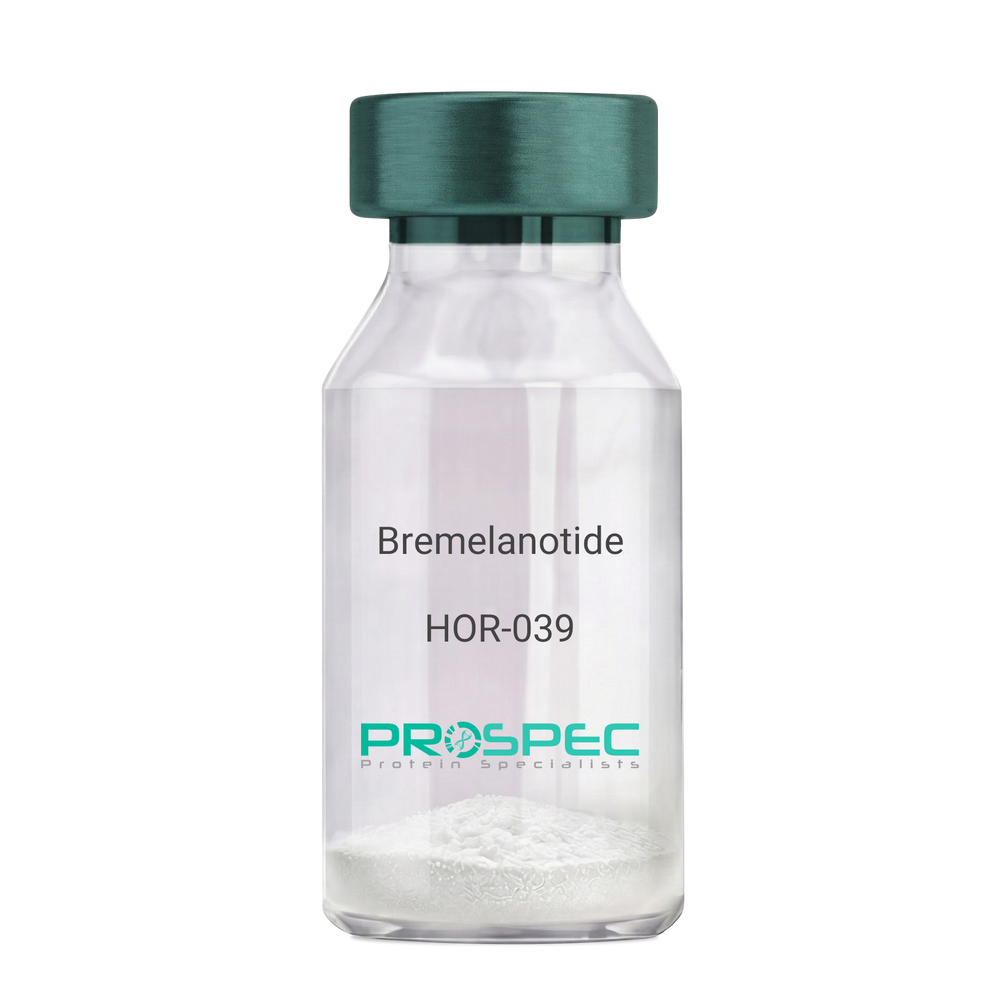
    Bremelanotide

    Description:

    Bremelanotide

    PT-141, Rekynda, bremelanotide acetate.

    Product # :

    HOR-039

    Price :

    Quantity :

    Shipping Method :

    Room Temp Icon

    Shipped at Room temp

    Add To Cart

    More Info

    • description
    • formulation
    • purity
    • More Info
    • Citations

    Description

    Bremelanotide Synthetic is a single, non-glycosylated polypeptide chain containing 6 amino acids, having a molecular mass of 1025.16 Dalton and a Molecular formula of C50H68N40O10.

    Formulation

    The protein was lyophilized with no additives.

    Purity

    Greater than 97.0% as determined by analysis by RP-HPLC.

    Citations

    More Info

    • Synonyms

      PT-141, Rekynda, bremelanotide acetate.

    • Physical Appearance

      Sterile Filtered White lyophilized (freeze-dried) powder.

    • Stability

      Lyophilized Bremelanotide although stable at room temperature for 3 weeks, should be stored desiccated below -18°C. Upon reconstitution Bremelanotide should be stored at 4°C between 2-7 days and for future use below -18°C. For long term storage it is recommended to add a carrier protein (0.1% HSA or BSA). Please prevent freeze-thaw cycles.

    • Solubility

      It is recommended to reconstitute the lyophilized Bremelanotide in sterile 18MΩ-cm H2O not less than 100 µg/ml, which can then be further diluted to other aqueous solutions.

    • Amino Acid Sequence

      Ac-Nle-cyclo(-Asp-His-D-Phe-Arg-Trp-Lys)-OH.

    • Background

      Bremelanotide (PT-141), a synthetic heptapeptide, is a novel therapeutic agent primarily utilized for the treatment of sexual dysfunction. This paper provides an exhaustive review of Bremelanotide, detailing its biochemical structure, mechanism of action, therapeutic applications, and future prospects in clinical medicine.

      Bremelanotide (PT-141), derived from Melanotan II, is a synthetic peptide developed for its role in treating sexual dysfunction in both men and women (Clayton et al., 2016). This paper presents a comprehensive examination of Bremelanotide, its biological properties, and potential therapeutic uses.

      Bremelanotide acts as a non-selective agonist of the melanocortin receptors, primarily MC3R and MC4R, present in the central nervous system. The peptide initiates its action in the hypothalamus, leading to downstream effects on sexual desire and arousal (King et al., 2007).

      The US Food and Drug Administration approved Bremelanotide for the treatment of premenopausal women with hypoactive sexual desire disorder (HSDD) in 2019. In clinical trials, it demonstrated efficacy in enhancing sexual desire and reducing distress associated with HSDD (Kingsberg et al., 2019).

      While the current focus of Bremelanotide is on treating sexual dysfunction, its future potential may extend to other areas due to its unique mechanism of action. Further research is needed to explore the full therapeutic potential of this intriguing peptide. In conclusion, Bremelanotide represents a significant advance in sexual dysfunction therapeutics, with potential implications extending beyond this realm.

    ProSpec's products are furnished for LABORATORY RESEARCH USE ONLY. The product may not be used as drugs, agricultural or pesticidal products, food additives or household chemicals.

    Bremelanotide
  • View Data Sheet

    Name :

    TSH Canine

    Description:

    Thyroid Stimulating Hormone Canine Recombinant

    Glycoprotein hormones alpha chain, Anterior pituitary glycoprotein hormones common subunit alpha, Follitropin alpha chain, Follicle-stimulating hormone alpha chain, FSH-alpha, Lutropin alpha chain, Luteinizing hormone alpha chain, LSH-alpha, Thyrotropin alpha chain, Thyroid-stimulating hormone alpha chain, TSH-alpha, Choriogonadotropin alpha chain, Chorionic gonadotrophin alpha subunit, CG-alpha, Thyrotropin subunit beta, Thyroid-stimulating hormone subunit beta, TSH-beta, TSH-B, Thyrotropin beta chain, Thyrotropin alfa.

    Product # :

    HOR-049

    Price :

    Quantity :

    Shipping Method :

    Room Temp Icon

    Shipped at Room temp

    Add To Cart

    More Info

    • description
    • source
    • formulation
    • purity
    • More Info
    • Citations

    Description

    TSH Canine is a heterodimeric glycoprotein consisting of 2 non-covalently linked subunits, an alpha subunit (96 a.a) and a beta subunit (118 a.a). TSH Canine is produced by co-expression of the alpha and beta subunits of TSH. Beta subunit contains alanine instead of valine at position 81.

    Source

    Mammalian cell line.

    Formulation

    TSH was lyophilized from 150mM NaCl, 10mM K-phosphate, pH 7.4, 0.1% CHAPS and 100mM D-mannitol.

    Purity

    Greater than 90% as determined by SDS-PAGE.

    Citations

    More Info

    • Synonyms

      Glycoprotein hormones alpha chain, Anterior pituitary glycoprotein hormones common subunit alpha, Follitropin alpha chain, Follicle-stimulating hormone alpha chain, FSH-alpha, Lutropin alpha chain, Luteinizing hormone alpha chain, LSH-alpha, Thyrotropin alpha chain, Thyroid-stimulating hormone alpha chain, TSH-alpha, Choriogonadotropin alpha chain, Chorionic gonadotrophin alpha subunit, CG-alpha, Thyrotropin subunit beta, Thyroid-stimulating hormone subunit beta, TSH-beta, TSH-B, Thyrotropin beta chain, Thyrotropin alfa.

    • Physical Appearance

      Sterile Filtered White lyophilized (freeze-dried) powder.

    • Stability

      Lyophilized TSH although stable at room temperature for 3 weeks, should be stored desiccated below -18°C. Upon reconstitution Thyroid Stimulating Hormone should be stored at 4°C between 2-7 days and for future use below -18°C.
      For long term storage it is recommended to add a carrier protein (0.1% HSA or BSA).
      Please prevent freeze-thaw cycles.

    • Solubility

      It is recommended to reconstitute the lyophilized TSH in deionized H2O not less than 100µg/ml, which can then be further diluted to other aqueous solutions.

    • Background

      Thyroid Stimulating Hormone (TSH), a pivotal glycoprotein hormone secreted by the anterior pituitary gland, stands as the master regulator of thyroid function. Its intricate control over thyroid hormone synthesis and secretion makes it a linchpin in the delicate balance of the endocrine system. The study of TSH, particularly in the form of TSH Recombinant Protein, has not only provided profound insights into thyroid physiology but has also revolutionized diagnostic methods, therapeutic interventions, and our understanding of various thyroid disorders. This research delves into the multifaceted realm of TSH, exploring its structural intricacies, physiological roles, and its far-reaching implications in both clinical and research settings.

      Structural Insights into TSH:

      TSH, a heterodimeric protein consisting of alpha and beta subunits, possesses a distinctive structure crucial for its biological activity. The beta subunit contains a unique hinge region, allowing flexibility in its interactions with the thyroid follicular cells. Understanding these structural nuances is fundamental for comprehending TSH's receptor binding, signaling cascades, and its intricate feedback mechanisms governing thyroid hormone production.

      Physiological Significance in Thyroid Regulation:

      TSH orchestrates thyroid function by binding to its specific receptors on the thyroid gland, stimulating iodine uptake, thyroid hormone synthesis, and secretion. This process is indispensable for maintaining the body's metabolism, energy balance, and overall growth and development. TSH's meticulous control over thyroid activity ensures the precise release of thyroid hormones, essential for numerous physiological processes and maintaining homeostasis.

      Diagnostic and Therapeutic Applications:

      In the realm of diagnostics, TSH assays utilizing TSH Recombinant Protein have revolutionized the detection and monitoring of thyroid disorders, particularly hypothyroidism and hyperthyroidism. By measuring TSH levels, clinicians can assess thyroid function, enabling early diagnosis and personalized treatment strategies. Moreover, recombinant TSH finds applications in diagnostic imaging, enhancing the accuracy of radioiodine scans for thyroid cancer diagnosis and treatment.

      Innovative Therapies and Future Prospects:

      Recombinant TSH has paved the way for innovative therapeutic interventions, particularly in the management of thyroid cancer. Thyroid remnant ablation, a crucial step in thyroid cancer treatment, involves the administration of radioiodine following recombinant TSH stimulation, maximizing the therapeutic efficacy while minimizing the radiation exposure to surrounding tissues. Ongoing research explores the potential of TSH receptor agonists and antagonists, offering new avenues for targeted therapies in thyroid-related disorders.

      TSH Recombinant Protein, with its profound influence on thyroid function and its applications in diagnostics and therapeutics, stands at the forefront of endocrine research. Its intricate roles in thyroid regulation, metabolism, and growth highlight its significance in human physiology. As our understanding of TSH deepens, it not only aids in the development of innovative treatments but also opens new avenues for exploring the complex interplay between hormones, receptors, and physiological responses. This research not only illuminates the vital role of TSH but also underscores its potential in shaping the future of thyroid-related healthcare.

      What is the source or expression system of TSH CANINE Protein?
      Mammalian cell line.

      What is the Purity of TSH CANINE Protein?
      TSH CANINE Protein is >90% pure as determined by SDS-PAGE.

      What is the Biological Activity of TSH CANINE Protein?
      The biological functionality of TSH CANINE Protein will be determined in the future.


      What applications can TSH CANINE Protein be used in?
      TSH CANINE Protein can probably be used in western blot, ELISA and Lateral Flow.

      What is the endotoxin level for TSH CANINE Protein?
      The endotoxin level is minimal, TSH CANINE Protein was purified using conventional chromatography techniques.


    ProSpec's products are furnished for LABORATORY RESEARCH USE ONLY. The product may not be used as drugs, agricultural or pesticidal products, food additives or household chemicals.

    Tsh Canine
  • View Data Sheet

    Name :

    GH Ovine

    Description:

    Growth Hormone Ovine Recombinant

    GH1, GH, GHN, GH-N, hGH-N,Pituitary growth hormone, Growth hormone 1, Somatotropin.

    Product # :

    CYT-237

    Price :

    Quantity :

    Shipping Method :

    Room Temp Icon

    Shipped at Room temp

    Add To Cart

    More Info

    • description
    • source
    • formulation
    • purity
    • biological activity
    • More Info
    • Citations

    Description

    Growth Hormone Ovine Recombinant produced in E.Coli is a single, non-glycosylated polypeptide chain containing 191 amino acids and having a molecular mass of 21833 Dalton. The GH Ovine Recombinant is purified by proprietary chromatographic techniques.

    Source

    Escherichia Coli.

    Formulation

    The protein was lyophilized from a concentrated (1mg/ml) solution with 0.0045mM NaHCO3.

    Purity

    Greater than 98.0% as determined by:
    (a) Analysis by SEC-HPLC.
    (b) Analysis by SDS-PAGE.

    Biological Activity

    The activity as determined by the dose-dependant stimulation of the proliferation FDCP13B9 cells.

    Citations

    More Info

    • Introduction

      GH is a member of the somatotropin/prolactin family of hormones which play an important role in growth control. The gene, along with four other related genes, is located at the growth hormone locus on chromosome 17 where they are interspersed in the same transcriptional orientation; an arrangement which is thought to have evolved by a series of gene duplications. The five genes share a remarkably high degree of sequence identity. Alternative splicing generates additional isoforms of each of the five growth hormones, leading to further diversity and potential for specialization. This particular family member is expressed in the pituitary but not in placental tissue as is the case for the other four genes in the growth hormone locus. Mutations in or deletions of the gene lead to growth hormone deficiency and short stature.

    • Synonyms

      GH1, GH, GHN, GH-N, hGH-N,Pituitary growth hormone, Growth hormone 1, Somatotropin.

    • Physical Appearance

      Sterile Filtered White lyophilized (freeze-dried) powder.

    • Stability

      Lyophilized Growth Hormone although stable at room temperature for 3 weeks, should be stored desiccated below -18°C. Upon reconstitution GH Ovine should be stored at 4°C between 2-7 days and for future use below -18°C.For long term storage it is recommended to add a carrier protein (0.1% HSA or BSA).Please prevent freeze-thaw cycles.

    • Solubility

      It is recommended to reconstitute the lyophilized Growth Hormone in sterile 0.4% NaHCO3 or water adjusted to pH-8-9, not less than 100µg/ml, which can then be further diluted to other aqueous solutions.

    • Amino Acid Sequence

      1 afpamslsgl fanavlraqh lhqlaadtfk efertyipeg qrysiqntqv 51 afcfsetipa ptgkneaqqk sdlellrisl lliqswlgpl qflsrvftns 101 lvfgtsdrvy eklkdleegi lalmreledv tpragqilkq tydkfdtnmr 151 sddallknyg llscfrkdlh ktetylrvmk crrfgeasca f

    • Protein content

      Protein quantitation was carried out by UV spectroscopy at 280 nm using the absorbency value of 0.63 as the extinction coefficient for a 0.1% (1mg/ml) solution. This value is calculated by the DNAman computer analysis program of protein sequences.

    ProSpec's products are furnished for LABORATORY RESEARCH USE ONLY. The product may not be used as drugs, agricultural or pesticidal products, food additives or household chemicals.

    Growth Hormone Ovine
  • View Data Sheet

    Name :

    LL-37

    Description:

    LL-37

    LL37, antibacterial protein LL-37, cathelicidin LL 37, camp.

    Product # :

    HOR-041

    Price :

    Quantity :

    Shipping Method :

    Room Temp Icon

    Shipped at Room temp

    Add To Cart

    More Info

    • description
    • formulation
    • purity
    • More Info
    • Citations

    Description

    LL-37 Synthetic is a single, non-glycosylated polypeptide chain containing 37 amino acids, having a molecular mass of 4493 Dalton and a Molecular formula of C205H340N60O53.

    Formulation

    The protein was lyophilized with no additives.

    Purity

    Greater than 97.0% as determined by analysis by RP-HPLC.

    Citations

    More Info

    • Synonyms

      LL37, antibacterial protein LL-37, cathelicidin LL 37, camp.

    • Physical Appearance

      Sterile Filtered White lyophilized (freeze-dried) powder.

    • Stability

      Lyophilized LL-37 although stable at room temperature for 3 weeks, should be stored desiccated below -18°C. Upon reconstitution LL-37 should be stored at 4°C between 2-7 days and for future use below -18°C.For long term storage it is recommended to add a carrier protein (0.1% HSA or BSA). Please prevent freeze-thaw cycles.

    • Solubility

      It is recommended to reconstitute the lyophilized LL-37 in sterile 18MΩ-cm H2O not less than 100 µg/ml, which can then be further diluted to other aqueous solutions.

    • Amino Acid Sequence

      H-Leu-Leu-Gly-Asp-Phe-Phe-Arg-Lys-Ser-Lys-Glu-Lys-Ile-Gly-Lys-Glu-Phe-Lys-Arg-Ile-Val-Gln-Arg-Ile-Lys-Asp-Phe-Leu-Arg-Asn-Leu-Val-Pro-Arg-Thr-Glu-Ser-OH.

    • Background

      LL-37, a prominent member of the human cathelicidin family, has emerged as a pivotal host defense peptide with diverse biological functions. This research paper aims to provide a comprehensive analysis of LL-37, elucidating its biochemical properties, antimicrobial activity, immunomodulatory effects, and potential therapeutic applications.

      LL-37, derived from the precursor protein hCAP18, plays a crucial role in innate immunity and host defense against microbial pathogens. Beyond its well-established antimicrobial properties, LL-37 exhibits various immunomodulatory effects, making it an intriguing target for therapeutic interventions (Lai & Gallo, 2009). This paper aims to delve into the complexities of LL-37, uncovering its multifaceted nature and potential clinical applications.

      LL-37 is a cationic peptide characterized by a helical structure that facilitates its interaction with microbial membranes. Its amphipathic nature enables it to penetrate microbial membranes, leading to disruption and subsequent cell death (Zaiou, 2007). Additionally, LL-37 can undergo proteolytic processing to release smaller bioactive fragments with distinct functions (Bowdish et al., 2005).

      LL-37's antimicrobial activity extends beyond direct microbial killing. It also exhibits immunomodulatory effects, stimulating the recruitment of immune cells and promoting the clearance of pathogens through phagocytosis (Scott et al., 2002). Furthermore, LL-37 can neutralize endotoxins, reducing inflammation caused by microbial products (Davidson et al., 2004).

      LL-37 possesses immunomodulatory properties that influence various immune cells, including neutrophils, macrophages, dendritic cells, and lymphocytes (Nagaoka et al., 2001). It can promote the differentiation and maturation of immune cells, modulate cytokine production, and contribute to wound healing and tissue repair (van Harten et al., 2018).

      The multifunctional nature of LL-37 renders it a promising candidate for various therapeutic applications. LL-37-based therapies are being explored in wound healing, infectious diseases, and immune-related disorders (Pena et al., 2014). Furthermore, LL-37 has shown potential as a vaccine adjuvant, enhancing the immune response to antigens (Howell et al., 2018).

      LL-37's diverse roles in immunity and host defense warrant further research to unravel its precise mechanisms of action and potential applications in clinical medicine. As we deepen our understanding of LL-37's complexities, its therapeutic potential continues to expand, offering exciting prospects for the future.

    ProSpec's products are furnished for LABORATORY RESEARCH USE ONLY. The product may not be used as drugs, agricultural or pesticidal products, food additives or household chemicals.

    Ll 37
  • View Data Sheet

    Name :

    UCN3 Human

    Description:

    Urocortin 3 Human Recombinant

    Stresscopin, urocortin-iii.

    Product # :

    HOR-056

    Price :

    Quantity :

    Shipping Method :

    Room Temp Icon

    Shipped at Room temp

    Add To Cart

    More Info

    • description
    • source
    • formulation
    • purity
    • More Info
    • Citations

    Description

    The UCN3Human is created as a recombinant protein with a 4kda N-terminal fusion of His Tag. The UCN3His-Tagged Fusion Protein, produced in E. coli, is a 20kDa protein containing 161 amino acid residues of the UCN3Human, 1-161 amino acids.

    Source

    Escherichia Coli.

    Formulation

    Each mg was lyophilized with 1xPBS, 0.4% SDS and 4mM DTT.

    Purity

    Greater than 90% as determined by SDS-PAGE.

    Citations

    More Info

    • Synonyms

      Stresscopin, urocortin-iii.

    • Physical Appearance

      Filtered White lyophilized (freeze-dried) powder.

    • Stability

      Store lyophilized UCN3at -20°C. Aliquot the product after reconstitution to avoid repeated freezing/thawing cycles. Reconstituted protein can be stored at 4°C for a limited period of time; it does not show any change after two weeks at 4°C.

    • Solubility

      It is recommended to add deionized water to prepare a working stock solution of approximately 0.5mg/ml and let the lyophilized pellet dissolve completely. Product is not sterile! Please filter the product by an appropriate sterile filter before using it on cell culture.

    • Background

      Urocortin 3 also known as UCN3 is a part of the corticotropin-releasing factor (CRF) family of peptides, which are involved in metabolism, stress response and neuroendocrine regulation. UCN3 exerts its biological effects through interactions with CRFR2. UCN3 takes a main part in mediating few important biological processes, specially those associated with energy metabolism, stress response and the regulation of the hypothalamic-pituitary-adrenal (HPA) axis. UCN3 expressed mainly in the brain in areas such as the hypothalamus, as well as in peripheral tissues, including the heart and adipose tissue.

      What is the molecular weight/Mw of UCN3 HUMAN Protein?
      UCN3 HUMAN Protein has a total Mw of 20kDa.

      What is the source or expression system of UCN3 HUMAN Protein?
      Escherichia Coli.

      What is the Purity of UCN3 HUMAN Protein?
      UCN3 HUMAN Protein is >90% pure as determined by SDS-PAGE.

      What is the Biological Activity of UCN3 HUMAN Protein?
      The biological functionality of UCN3 HUMAN Protein will be determined in the future.

      What applications can UCN3 HUMAN Protein be used in?
      UCN3 HUMAN Protein can probably be used in western blot, ELISA and Lateral Flow.

      What is the endotoxin level for UCN3 HUMAN Protein?
      The endotoxin level is minimal, UCN3 HUMAN Protein was purified using conventional chromatography techniques.

    ProSpec's products are furnished for LABORATORY RESEARCH USE ONLY. The product may not be used as drugs, agricultural or pesticidal products, food additives or household chemicals.

    Ucn3 Human
  • View Data Sheet

    Name :

    ProInsulin Human

    Description:

    ProInsulin C-Peptide Analogue Human Recombinant

    Insulin, Insulin-Dependent Diabetes Mellitus 2, Preproinsulin, Proinsulin, MODY10, IDDM1, IDDM2, IDDM, ILPR, IRDN. 

    Product # :

    CYT-1120

    Price :

    Quantity :

    Shipping Method :

    Room Temp Icon

    Shipped at Room temp

    Add To Cart

    More Info

    • description
    • source
    • formulation
    • purity
    • More Info
    • Citations

    Description

    ProInsulin C-Peptide Analogue Human Recombinant produced in E.Coli is a non-glycosylated polypeptide chain containing 35 amino acid and having a molecular mass of approximately 3.6kDa.ProInsulin is purified by proprietary chromatographic techniques.

    Source

    Escherichia Coli.

    Formulation

    Lyophilized from a 0.2μm filtered concentrated solution in PBS, pH 7.4.

    Purity

    Greater than 95.0% as determined by:
    (a) Analysis by RP-HPLC.
    (b) Analysis by SDS-PAGE.

    Citations

    More Info

    • Introduction

      Insulin decreases blood glucose concentration. Insulin increases cell permeability to monosaccharides, amino acids and fatty acids. Insulin accelerates glycolysis, the pentose phosphate cycle, and glycogen synthesis in liver.

    • Synonyms

      Insulin, Insulin-Dependent Diabetes Mellitus 2, Preproinsulin, Proinsulin, MODY10, IDDM1, IDDM2, IDDM, ILPR, IRDN.

    • Physical Appearance

      Sterile Filtered White lyophilized (freeze-dried) powder.

    • Stability

      Lyophilized ProInsulin although stable at room temperature for 3 weeks, should be stored desiccated below -18°C. Upon reconstitution ProInsulin C-Peptide Analogue should be stored at 4°C between 2-7 days and for future use below -18°C.Please prevent freeze-thaw cycles.

    • Solubility

      It is recommended to reconstitute the lyophilized ProInsulin C-Peptide Analogue in sterile 18MΩ-cm H2O not less than 100µg/ml, which can then be further diluted to other aqueous solutions.

    • Amino Acid Sequence

      RREAEDLQVG QVELGGGPGA GSLQPLALEG SLQKR.

    ProSpec's products are furnished for LABORATORY RESEARCH USE ONLY. The product may not be used as drugs, agricultural or pesticidal products, food additives or household chemicals.

    Proinsulin C Peptide
  • View Data Sheet

    Name :

    GH Human, Plant

    Description:

    Growth Hormone Human Recombinant, Plant

    GH1, GH, GHN, GH-N, hGH-N,Pituitary growth hormone, Growth hormone 1, Somatotropin.

    Product # :

    CYT-053

    Price :

    Quantity :

    Shipping Method :

    Room Temp Icon

    Shipped at Room temp

    Add To Cart

    More Info

    • description
    • source
    • formulation
    • purity
    • biological activity
    • More Info
    • Citations

    Description

    GH human Recombinant produced in Nicotiana benthamiana plant is a single chain containing 205 amino acids (molecular formula C1025H1570N280O306S7) and 6-His-tag at the N-terminal having the total molecular mass of 22.9kDa.

    Source

    Nicotiana benthamiana plant

    Formulation

    Lyophilized from 1mg/ml solution in PBS 0.05M buffer at pH 7.5.

    Purity

    Greater than 97.0% as determined by Analysis by SDS-PAGE.

    Biological Activity

    The biological activity of human Growth Hormone is measured by cell proliferation using Nb2-11 cells. ED50 < 0.04-0.1 ng/mL.

    Citations

    More Info

    • Introduction

      GH is a member of the somatotropin/prolactin family of hormones which play an important role in growth control. The gene, along with four other related genes, is located at the growth hormone locus on chromosome 17 where they are interspersed in the same transcriptional orientation; an arrangement which is thought to have evolved by a series of gene duplications. The five genes share a remarkably high degree of sequence identity. Alternative splicing generates additional isoforms of each of the five growth hormones, leading to further diversity and potential for specialization. This particular family member is expressed in the pituitary but not in placental tissue as is the case for the other four genes in the growth hormone locus. Mutations in or deletions of the gene lead to growth hormone deficiency and short stature.

    • Synonyms

      GH1, GH, GHN, GH-N, hGH-N,Pituitary growth hormone, Growth hormone 1, Somatotropin.

    • Physical Appearance

      Sterile Filtered White lyophilized (freeze-dried) powder.

    • Stability

      Lyophilized GH although stable at room temperature for 3 weeks, should be stored desiccated below -18°C. Upon reconstitution GH should be stored at 4°C between 2-7 days and for future use below -18°C. For long term storage it is recommended to add a carrier protein (0.1% HSA or BSA). Please prevent freeze-thaw cycles.

    • Solubility

      It is recommended to reconstitute the lyophilized GH in sterile 18M-cm H2O not less than 100µg/ml, which can then be further diluted to other aqueous solutions.

    • Amino Acid Sequence

      HHHHHHFPTI PLSRPFDNAM LRAHRLHQLA FDTYQEFEEA YIPKEQKYSF LQNPQTSLCF SESIPTPSNR EETQQKSNLE LLRISLLLIQ SWLEPVQFLR SVFANSLVYG ASDSNVYDLL KDLEEGIQTL MGRLEDGSPR TGQIFKQTYS KFDTNSHNDD ALLKNYGLLY CFRKDMDKVE TFLRIVQCRS VEGSCGFAG

    ProSpec's products are furnished for LABORATORY RESEARCH USE ONLY. The product may not be used as drugs, agricultural or pesticidal products, food additives or household chemicals.

    Gh Human Plant
  • 1
  • …
  • 3
  • 4
  • 5
  • 6
  • 7
  • …
  • 42
Your browser does not support the video tag.

Products

  • Cytokines
  • Growth Factors
  • Chemokines
  • CD Antigens
  • Neurotrophins
  • Hormones
  • Enzymes
  • Viral Antigens
  • Recombinant Proteins
  • Natural Proteins
  • Monoclonal Antibodies
  • Polyclonal Antibodies
  • Thermal Packaging

About

  • Company
  • Founder
  • Contribution
  • Contact Us
  • My Account

Ordering

  • Ordering Method
  • Ordering - Credit Card
  • Ordering PO
  • Shipping Fees
  • FAQ's

Legal

  • Terms & Conditions
  • Privacy
  • Site Map
  • info@prospecbio.com
  • Facebook
  • Instagram
  • Linkedin Profile

© 2026 ProSpec-Tany TechnoGene Ltd. All Rights Reserved.

  • Choosing a selection results in a full page refresh.
  • Opens in a new window.