Search results
1000 results found for “pdgf”
Name
Description
Product #
Price
Quantity
Shipping Method
- View Data Sheet
Name :
OX40L HumanDescription:
OX40 Ligand Human Recombinant
Tumor necrosis factor ligand superfamily member 4, OX40 ligand, OX40L, OX-40L, CD252, Tnfsf4, Ox40l, Txgp1l, gp3, OX4, Ath-1, Ath1, CD134L, gp34, Tnlg2b, Txgp1l.
Product # :
CYT-1226Price :
Quantity :
Shipping Method :
Shipped with Ice Packs
More Info
- description
- source
- formulation
- purity
- biological activity
- More Info
Description
OX40L Human Recombinant is a single, glycosylated, polypeptide chain (51-183 a.a) containing a total of139 amino acids and having a molecular mass of 16.2 kDa. OX40L is fused to a 6 a.a his-Tag at C-terminus and is purified by proprietary chromatographic techniques.
Source
HEK293 Cells.
Formulation
The OX40L solution (1mg/ml) contains 10% Glycerol and Phosphate-Buffered Saline (pH 7.4).
Purity
Greater than 90.0% as determined by SDS-PAGE.
Biological Activity
Measured by its binding ability in a functional ELISA with Human OX40/TNFRSF4.
More Info
-
Synonyms
Tumor necrosis factor ligand superfamily member 4, OX40 ligand, OX40L, OX-40L, CD252, Tnfsf4, Ox40l, Txgp1l, gp3, OX4, Ath-1, Ath1, CD134L, gp34, Tnlg2b, Txgp1l.
-
Physical Appearance
Sterile Filtered colorless solution.
-
Stability
Store at 4°C if entire vial will be used within 2-4 weeks. Store, frozen at -20°C for longer periods of time. For long term storage it is recommended to add a carrier protein (0.1% HSA or BSA). Avoid multiple freeze-thaw cycles.
-
Amino Acid Sequence
QVSHRYPRIQ SIKVQFTEYK KEKGFILTSQ KEDEIMKVQN NSVIINCDGF YLISLKGYFS QEVNISLHYQ KDEEPLFQLK KVRSVNSLMV ASLTYKDKVY LNVTTDNTSL DDFHVNGGEL ILIHQNPGEF CVLHHHHHH.
-
Background
OX40 Ligand (OX40L), a member of the tumor necrosis factor (TNF) superfamily, plays a pivotal role in regulating immune responses and orchestrating the delicate balance between activation and tolerance. The human recombinant form of OX40L has emerged as a potent tool in immunology, offering insights into its molecular intricacies and potential applications in therapeutic interventions. This research embarks on a journey to unravel the multifaceted role of OX40L Human Recombinant, shedding light on its structural attributes, signaling pathways, and its promising avenues in immunotherapy. By delving into the properties of OX40L, scientists aim to expand our understanding of immune modulation and open new frontiers in the treatment of immune-related disorders.
Structural Insights into OX40L Human Recombinant:
OX40L, as a trimeric transmembrane protein, exhibits a unique structural configuration that governs its interactions with the OX40 receptor on T cells. The human recombinant form, engineered for controlled study, provides a window into the three-dimensional intricacies of the ligand. Understanding its structure is pivotal for deciphering how OX40L engages with its receptor and modulates immune responses.
Immunomodulatory Signaling Pathways:
OX40L binding to its cognate receptor OX40 on T cells triggers intricate signaling cascades that impact immune cell activation, proliferation, and cytokine production. The OX40-OX40L axis is a crucial regulator of T cell function, influencing both effector and regulatory T cell responses. Unraveling the specific pathways activated by OX40L Human Recombinant provides valuable insights into the modulation of immune responses in health and disease.
Applications in Immunotherapy:
The immunomodulatory properties of OX40L make it an attractive candidate for therapeutic interventions. OX40L Human Recombinant, in preclinical and clinical studies, is being explored for its potential in enhancing antitumor immune responses. By harnessing the ligand's ability to stimulate effector T cells and memory T cell formation, researchers aim to develop novel immunotherapies for cancer and other immune-related disorders.
OX40L in Autoimmune Diseases:
Conversely, OX40L's role in autoimmune diseases has spurred investigations into its inhibition as a therapeutic strategy. Blocking the OX40-OX40L interaction has shown promise in mitigating autoimmune responses, presenting a potential avenue for the development of treatments for conditions such as rheumatoid arthritis and inflammatory bowel disease.
While the potential of OX40L Human Recombinant in immunotherapy is promising, challenges persist. Fine-tuning its applications, understanding potential side effects, and optimizing dosages are critical considerations for translational success. Additionally, comprehending the context-dependent nature of OX40L signaling is essential for tailoring therapeutic strategies to specific diseases and patient profiles.
OX40L Human Recombinant stands at the forefront of immunomodulation research, offering a lens through which we can unravel the complexities of immune responses. Its structural insights, signaling pathways, and therapeutic applications position it as a key player in the evolving landscape of immunotherapy. As researchers continue to dissect the molecular nuances of OX40L, they not only expand our understanding of immune regulation but also pave the way for transformative advancements in the treatment of cancer and autoimmune diseases, shaping the future of precision medicine and immunotherapy.
ProSpec's products are furnished for LABORATORY RESEARCH USE ONLY. The product may not be used as drugs, agricultural or pesticidal products, food additives or household chemicals.
- View Data Sheet
Name :
KLF6 HumanDescription:
Kruppel-Like Factor 6 Human Recombinant
Krueppel-like factor 6, B-cell-derived protein 1, Core promoter element-binding protein, GC-rich sites-binding factor GBF, Proto-oncogene BCD1, Suppressor of tumorigenicity 12 protein, Transcription factor Zf9, KLF6, BCD1, COPEB, CPBP, ST12.
Product # :
PRO-1864Price :
Quantity :
Shipping Method :
Shipped with Ice Packs
More Info
- description
- source
- formulation
- purity
- More Info
Description
KLF6 Human Recombinant produced in E. coli is. a single polypeptide chain containing 306 amino acids (1-283) and having a molecular mass of 34.3kDa. KLF6 is fused to a 23 amino acid His-tag at N-terminus & purified by proprietary chromatographic techniques.
Source
Escherichia Coli.
Formulation
The KLF6 solution (1mg/ml) contains 20mM Tris-HCl buffer (pH8.0), 20% glycerol and 1mM DTT.
Purity
Greater than 85% as determined by SDS-PAGE.
More Info
-
Introduction
Kruppel-Like Factor 6 (KLF6) is a nuclear protein which has 3 zinc fingers. The zinc fingers of KLF6 are accountable for the specific DNA binding with the guanine-rich core promoter factors. The central region is involved in activation or posttranslational regulatory pathways, and the acidic N terminal domain takes part in the process of transcriptional activation.
-
Synonyms
Krueppel-like factor 6, B-cell-derived protein 1, Core promoter element-binding protein, GC-rich sites-binding factor GBF, Proto-oncogene BCD1, Suppressor of tumorigenicity 12 protein, Transcription factor Zf9, KLF6, BCD1, COPEB, CPBP, ST12.
-
Physical Appearance
Sterile Filtered clear solution.
-
Stability
Store at 4°C if entire vial will be used within 2-4 weeks. Store frozen at -20°C for longer periods of time. For long term storage it is recommended to add a carrier protein (0.1% HSA or BSA).Avoid multiple freeze-thaw cycles.
-
Amino Acid Sequence
MGSSHHHHHH SSGLVPRGSH MGSMDVLPMC SIFQELQIVH ETGYFSALPS LEEYWQQTCL ELERYLQSEP CYVSASEIKF DSQEDLWTKI ILAREKKEES ELKISSSPPE DTLISPSFCY NLETNSLNSD VSSESSDSSE ELSPTAKFTS DPIGEVLVSS GKLSSSVTST PPSSPELSRE PSQLWGCVPG ELPSPGKVRS GTSGKPGDKG NGDASPDGRR RVHRCHFNGC RKVYTKSSHL KAHQRTHTGE KPYRCSWEGC EWRFARSDEL TRHFRKHTGA KPFKCSHCDR CFSRSDHLAL HMKRHL.
ProSpec's products are furnished for LABORATORY RESEARCH USE ONLY. The product may not be used as drugs, agricultural or pesticidal products, food additives or household chemicals.
- View Data Sheet
Name :
NEFL HumanDescription:
Neurofilament Light Human Recombinant
Neurofilament light polypeptide, NF-L, NEFL, NF68, NFL, 68 kDa neurofilament protein.
Product # :
PRO-2584Price :
Quantity :
Shipping Method :
Shipped at Room temp
More Info
- description
- source
- formulation
- purity
- More Info
Description
NEFL Human Recombinant produced in E.Coli is a single, non-glycosylated, polypeptide chain (2-543 a.a) containing 551 amino acids including a 9 a.a N-terminal His tag. The total molecular mass is 62.5kDa (calculated).
Source
Escherichia Coli.
Formulation
NEFL filtered (0.4 µm) and lyophilized from 0.5mg/ml solution in 15mM Tris and 85mM Glycine, pH 8.5.
Purity
Greater than 90.0% as determined by SDS-PAGE.
More Info
-
Introduction
NEFL or Neurofilament light polypeptide is a protein that is encoded through the NEFL gene. NEFL is correlated to a disease called Charcot–Marie–Tooth. The protein’s light subunit is determined by immunoassays in the plasma and cerebrospinal fluid, if present, it can indicate on axonal damage in neurological diseases. By doing so, NEFL can act as a marker for Huntington's disease, Amyotrophic Lateral Sclerosis and multiple sclerosis.
-
Synonyms
Neurofilament light polypeptide, NF-L, NEFL, NF68, NFL, 68 kDa neurofilament protein.
-
Physical Appearance
Filtered White lyophilized (freeze-dried) powder.
-
Stability
Store lyophilized protein at -20°C. Aliquot the product after reconstitution to avoid repeated freezing/thawing cycles. Reconstituted protein can be stored at 4°C for a limited period of time; it does not show any change after two weeks at 4°C.
-
Solubility
It is recommended to add deionized water to prepare a working stock solution of approximately 0.5mg/ml and let the lyophilized pellet dissolve completely.
-
Amino Acid Sequence
MKHHHHHHAS SFSYEPYYST SYKRRYVETP RVHISSVRSG YSTARSAYSS YSAPVSSSLS VRRSYSSSSG SLMPSLENLD LSQVAAISND LKSIRTQEKA QLQDLNDRFA SFIERVHELE QQNKVLEAEL LVLRQKHSEP SRFRALYEQE IRDLRLAAED ATNEKQALQG EREGLEETLR NLQARYEEEV LSREDAEGRL MEARKGADEA ALARAELEKR IDSLMDEISF LKKVHEEEIA ELQAQIQYAQ ISVEMDVTKP DLSAALKDIR AQYEKLAAKN MQNAEEWFKS RFTVLTESAA KNTDAVRAAK DEVSESRRLL KAKTLEIEAC RGMNEALEKQ LQELEDKQNA DISAMQDTIN KLENELRTTK SEMARYLKEY QDLLNVKMAL DIEIAAYRKL LEGEETRLSF TSVGSITSGY SQSSQVFGRS AYGGLQTSSY LMSTRSFPSY YTSHVQEEQI EVEETIEAAK AEEAKDEPPS EGEAEEEEKD KEEAEEEEAA EEEEAAKEES EEAKEEEEGG EGEEGEETKE AEEEEKKVEG AGEEQAAKKK D.
ProSpec's products are furnished for LABORATORY RESEARCH USE ONLY. The product may not be used as drugs, agricultural or pesticidal products, food additives or household chemicals.
- View Data Sheet
Name :
NANOGP8 HumanDescription:
Nanog Homeobox Pseudogene 8 Human Recombinant
Nanog Homeobox Pseudogene 8, NANOG, NANOGP1, PN8.
Product # :
PRO-1553Price :
Quantity :
Shipping Method :
Shipped with Ice Packs
More Info
- description
- source
- formulation
- purity
- More Info
Description
NANOGP8 Human Recombinant produced in E.coli is a single, non-glycosylated polypeptide chain containing 305 amino acids (1-305) and having a molecular mass of 34.6kDa.NANOGP8 is purified by proprietary chromatographic techniques.
Source
Escherichia Coli.
Formulation
The NANOGP8 solution (1mg/ml) contains 20mM Tris-HCl buffer (pH 8.0), 0.4M Urea and 5% glycerol.
Purity
Greater than 85% as determined by SDS-PAGE.
More Info
-
Introduction
NANOGP8 belongs to the homeobox family of DNA binding transcription factors which is known to conserve pluripotency of embryonic stem cells. One change only separate NANOGP8 from NANOG – instead of 'Gln-253' in the inferred amino acid sequence in NANOG there is a ‘His-253’ in NANOGP8.
-
Synonyms
Nanog Homeobox Pseudogene 8, NANOG, NANOGP1, PN8.
-
Physical Appearance
Sterile Filtered clear solution.
-
Stability
Store at 4°C if entire vial will be used within 2-4 weeks. Store, frozen at -20°C for longer periods of time. For long term storage it is recommended to add a carrier protein (0.1% HSA or BSA).Avoid multiple freeze-thaw cycles.
-
Amino Acid Sequence
MSVDPACPQS LPCFEASDCK ESSPMPVICG PEENYPSLQM SSAEMPHTET VSPLPSSMDL LIQDSPDSST SPKGKQPTSA ENSVAKKEDK VPVKKQKTRT VFSSTQLCVL NDRFQRQKYL SLQQMQELSN ILNLSYKQVK TWFQNQRMKS KRWQKNNWPK NSNGVTQKAS APTYPSLYSS YHQGCLVNPT GNLPMWSNQT WNNSTWSNQT QNIQSWSNHS WNTQTWCTQS WNNQAWNSPF YNCGEESLQS CMHFQPNSPA SDLEAALEAA GEGLNVIQQT TRYFSTPQTM DLFLNYSMNM QPEDV
ProSpec's products are furnished for LABORATORY RESEARCH USE ONLY. The product may not be used as drugs, agricultural or pesticidal products, food additives or household chemicals.
- View Data Sheet
Name :
PKNOX1 HumanDescription:
PBX/Knotted 1 Homeobox 1 Human Recombinant
pkonx1c, PREP1, Homeobox protein PKNOX1, Homeobox protein PREP-1, PBX/knotted homeobox 1, PKNOX1.
Product # :
PRO-1979Price :
Quantity :
Shipping Method :
Shipped with Ice Packs
More Info
- description
- source
- formulation
- purity
- More Info
Description
PKNOX1 Human Recombinant produced in E.Coli is a single, non-glycosylated polypeptide chain containing 456 amino acids (1-436 a.a) and having a molecular mass of 49.7kDa. PKNOX1 is fused to a 20 amino acid His-tag at N-terminus & purified by proprietary chromatographic techniques.
Source
Escherichia Coli.
Formulation
PKNOX1 protein solution (0.25mg/ml) containing 20mM Tris-HCl buffer (pH 8.0), 0.1M NaCl and 10% glycerol.
Purity
Greater than 80.0% as determined by SDS-PAGE.
More Info
-
Introduction
PBX/Knotted 1 Homeobox 1 (PKNOX1) is a DNA-binding factor which takes part in the regulation of the transcriptional activity of AP-1 containing promoters. PKNOX1, which is also known as UEF3, PRP-1 and p64, is a Hmeobox protein. PKNOX1 forms stable complexes containing PBX proteins which synergize with AP-1 binding factors.
-
Synonyms
pkonx1c, PREP1, Homeobox protein PKNOX1, Homeobox protein PREP-1, PBX/knotted homeobox 1, PKNOX1.
-
Physical Appearance
Sterile Filtered colorless solution.
-
Stability
Store at 4°C if entire vial will be used within 2-4 weeks. Store, frozen at -20°C for longer periods of time. For long term storage it is recommended to add a carrier protein (0.1% HSA or BSA).Avoid multiple freeze-thaw cycles.
-
Amino Acid Sequence
MGSSHHHHHH SSGLVPRGSH MMATQTLSID SYQDGQQMQV VTELKTEQDP NCSEPDAEGV SPPPVESQTP MDVDKQAIYR HPLFPLLALL FEKCEQSTQG SEGTTSASFD VDIENFVRKQ EKEGKPFFCE DPETDNLMVK AIQVLRIHLL ELEKVNELCK DFCSRYIACL KTKMNSETLL SGEPGSPYSP VQSQQIQSAI TGTISPQGIV VPASALQQGN VAMATVAGGT VYQPVTVVTP QGQVVTQTLS PGTIRIQNSQ LQLQLNQDLS ILHQDDGSSK NKRGVLPKHA TNVMRSWLFQ HIGHPYPTED EKKQIAAQTN LTLLQVNNWF INARRRILQP MLDSSCSETP KTKKKTAQNR PVQRFWPDSI ASGVAQPPPS ELTMSEGAVV TITTPVNMNV DSLQSLSSDG ATLAVQQVMM AGQSEDESVD STEEDAGALA PAHISGLVLE NSDSLQ.
ProSpec's products are furnished for LABORATORY RESEARCH USE ONLY. The product may not be used as drugs, agricultural or pesticidal products, food additives or household chemicals.
- View Data Sheet
Name :
CDKN1A HumanDescription:
Cyclin-Dependent Kinase Inhibitor 1A Human Recombinant
Cyclin-Dependent Kinase Inhibitor 1A (P21, Cip1), Melanoma Differentiation Associated Protein 6, Wild-Type P53-Activated Fragment 1, CDK-Interaction Protein 1, DNA Synthesis Inhibitor, CDK-Interacting Protein 1, CDKN1, P21Cip1/Waf1, MDA6, P21CIP1, CAP20, WAF1, CIP1, PIC1, P21, SDI1.
Product # :
PKA-043Price :
Quantity :
Shipping Method :
Shipped with Ice Packs
More Info
- description
- source
- formulation
- purity
- More Info
Description
CDKN1A Human Recombinant produced in E. coli is a single polypeptide chain containing 184 amino acids (1-164) and having a molecular mass of 20.2 kDa.CDKN1A is fused to a 20 amino acid His-tag at N-terminus & purified by proprietary chromatographic techniques.
Source
Escherichia Coli.
Formulation
The CDKN1A solution contains 20mM Tris-HCl buffer (pH 8.0), 2M Urea, 0.1M NaCl and 10% glycerol.
Purity
Greater than 85.0% as determined by SDS-PAGE.
More Info
-
Introduction
CDKN1A holds a key part in the cellular response to DNA mutation. CDKN1A overexpression causes cell cycle to stop. When collaborating with CDK2 complexes, CDKN1A aids to prevent kinase activity and inhibits progression through G1/S. Nevertheless, CDKN1A can additionally increase assembly and activity in complexes of CDK4 or CDK6 and cyclin D. CDKN1A is a vital intermediary by which p53/TP53 facilitates its part as an inhibitor of cellular proliferation as a reaction to DNA impairment.
-
Synonyms
Cyclin-Dependent Kinase Inhibitor 1A (P21, Cip1), Melanoma Differentiation Associated Protein 6, Wild-Type P53-Activated Fragment 1, CDK-Interaction Protein 1, DNA Synthesis Inhibitor, CDK-Interacting Protein 1, CDKN1, P21Cip1/Waf1, MDA6, P21CIP1, CAP20, WAF1, CIP1, PIC1, P21, SDI1.
-
Physical Appearance
Sterile Filtered colorless solution.
-
Stability
Store at 4°C if entire vial will be used within 2-4 weeks. Store, frozen at -20°C for longer periods of time. For long term storage it is recommended to add a carrier protein (0.1% HSA or BSA).Avoid multiple freeze-thaw cycles.
-
Amino Acid Sequence
MGSSHHHHHH SSGLVPRGSH MSEPAGDVRQ NPCGSKACRR LFGPVDSEQL SRDCDALMAG CIQEARERWN FDFVTETPLE GDFAWERVRG LGLPKLYLPT GPRRGRDELG GGRRPGTSPA LLQGTAEEDH VDLSLSCTLV PRSGEQAEGS PGGPGDSQGR KRRQTSMTDF YHSKRRLIFS KRKP.
ProSpec's products are furnished for LABORATORY RESEARCH USE ONLY. The product may not be used as drugs, agricultural or pesticidal products, food additives or household chemicals.
- View Data Sheet
Name :
PRND HumanDescription:
Prion Protein 2 Human Recombinant
Prion protein 2, DOPPEL, DPL, PrPL.
Product # :
PRO-018Price :
Quantity :
Shipping Method :
Shipped with Ice Packs
More Info
- description
- source
- formulation
- purity
- More Info
Description
PRND Human Recombinant produced in E.Coli is a single, non-glycosylated polypeptide chain containing 149 amino acids (27-152a.a) and having a molecular mass of 16.9kDa. PRND is fused to a 23 amino acid His-tag at N-terminus & purified by proprietary chromatographic techniques.
Source
Escherichia Coli.
Formulation
PRND protein solution (0.25mg/ml) contains 20mM Tris-HCl buffer (pH 7.5), 0.2M NaCl, 30% glycerol and 1mM DTT.
Purity
Greater than 95.0% as determined by SDS-PAGE.
More Info
-
Introduction
PRND is a membrane glycosylphosphatidylinositol-anchored glycoprotein which exists mainly in testis. PRND is expressed during embryogenesis, although in the central nervous system it is expressed minimally .Mutations in PRND may cause neurological disorders. PRND located on chromosome 20, about 20 kbp downstream of the gene encoding cellular prion protein, to which it is biochemically and structurally analogous.
-
Synonyms
Prion protein 2, DOPPEL, DPL, PrPL.
-
Physical Appearance
Sterile Filtered colorless solution.
-
Stability
Store at 4°C if entire vial will be used within 2-4 weeks. Store, frozen at -20°C for longer periods of time. For long term storage it is recommended to add a carrier protein (0.1% HSA or BSA).Avoid multiple freeze-thaw cycles.
-
Amino Acid Sequence
MGSSHHHHHH SSGLVPRGSH MGSRGIKHRI KWNRKALPST AQITEAQVAE NRPGAFIKQG RKLDIDFGAE GNRYYEANYW QFPDGIHYNG CSEANVTKEA FVTGCINATQ AANQGEFQKP DNKLHQQVLW RLVQELCSLK HCEFWLERG.
ProSpec's products are furnished for LABORATORY RESEARCH USE ONLY. The product may not be used as drugs, agricultural or pesticidal products, food additives or household chemicals.
- View Data Sheet
Name :
PSMA5 HumanDescription:
Proteasome Subunit Alpha Type 5 Human Recombinant
Proteasome subunit alpha type-5, Macropain zeta chain, Multicatalytic endopeptidase complex zeta chain, Proteasome zeta chain, PSMA5, PSC5, ZETA.
Product # :
ENZ-213Price :
Quantity :
Shipping Method :
Shipped with Ice Packs
More Info
- description
- source
- formulation
- purity
- More Info
Description
PSMA5 Human Recombinant produced in E.coli is a single, non-glycosylated polypeptide chain containing 277 amino acids (1-241) and having a molecular mass of 30.5kDa.PSMA5 is fused to a 36 amino acid His-tag at N-terminus & purified by proprietary chromatographic techniques.
Source
E.coli.
Formulation
The PSMA5 solution (0.5mg/ml) contains 20mM Tris-HCl buffer (pH 8.0), 2mM DTT, 10% glycerol and 100mM NaCl.
Purity
Greater than 90% as determined by SDS-PAGE.
More Info
-
Introduction
Proteasome subunit alpha type-5 (PSMA5) is a member of the peptidase T1A family. The proteasome is a multicatalytic proteinase complex which is distinguished by its ability to cleave peptides with Arg, Phe, Tyr, Leu, and Glu adjacent to the leaving group at neutral or slightly basic pH. Proteasomes are spread throughout eukaryotic cells at a high concentration and cleave peptides in an ATP/ubiquitin-dependent process in a non-lysosomal pathway. PSMA5 interacts with PLK1. The PSMA5 peptidase has a very wide-ranging specificity for cleavage of peptide bonds.
-
Synonyms
Proteasome subunit alpha type-5, Macropain zeta chain, Multicatalytic endopeptidase complex zeta chain, Proteasome zeta chain, PSMA5, PSC5, ZETA.
-
Physical Appearance
Sterile Filtered colorless solution.
-
Stability
Store at 4°C if entire vial will be used within 2-4 weeks. Store, frozen at -20°C for longer periods of time. For long term storage it is recommended to add a carrier protein (0.1% HSA or BSA).Avoid multiple freeze-thaw cycles.
-
Amino Acid Sequence
MRGSHHHHHH GMASMTGGQQ MGRDLYDDDD KDRWGSMFLT RSEYDRGVNT FSPEGRLFQV EYAIEAIKLG STAIGIQTSE GVCLAVEKRI TSPLMEPSSI EKIVEIDAHI GCAMSGLIAD AKTLIDKARV ETQNHWFTYN ETMTVESVTQ AVSNLALQFG EEDADPGAMS RPFGVALLFG GVDEKGPQLF HMDPSGTFVQ CDARAIGSAS EGAQSSLQEV YHKSMTLKEA IKSSLIILKQ VMEEKLNATN IELATVQPGQ NFHMFTKEEL EEVIKDI.
ProSpec's products are furnished for LABORATORY RESEARCH USE ONLY. The product may not be used as drugs, agricultural or pesticidal products, food additives or household chemicals.
- View Data Sheet
Name :
GPT2 Mouse, ActiveDescription:
Glutamic-Pyruvate Transaminase 2, Active Mouse Recombinant
ALT2, AAT2, Alanine aminotransferase 2, Glutamate pyruvate transaminase 2, Glutamic--alanine transaminase 2, Glutamic--pyruvic transaminase 2.
Product # :
ENZ-1110Price :
Quantity :
Shipping Method :
Shipped with Ice Packs
More Info
- description
- source
- formulation
- purity
- biological activity
- More Info
Description
GPT2 Mouse Recombinant produced in E.Coli is a single, non-glycosylated polypeptide chain containing 542 amino acids (1-522 aa) and having a molecular mass of 60.1kDa.GPT2 is fused to a 20 amino acid His tag at N-terminus and purified by proprietary chromatographic techniques.
Source
Escherichia Coli.
Formulation
The GPT2 solution (1 mg/ml) contains 2mM DTT, 20% Glycerol and 20mM Tris-HCl (pH7.5).
Purity
Greater than 85.0% as determined by SDS-PAGE.
Biological Activity
Specific activity is > 50 units/mg. Measured by the amount of enzyme that cleaves 1umole of L-Alanineto L-Glutamate per minute at pH7.5 at 37C˚.
More Info
-
Introduction
Glutamic-Pyruvate Transaminase 2 (GPT2) catalyzes the reversible transamination among alanine and 2-oxoglutarate to create pyruvate and glutamate. GPT2 expressed mainly in muscle, fat and kidney and participates in the intermediary metabolism of glucose and amino acids.
-
Synonyms
ALT2, AAT2, Alanine aminotransferase 2, Glutamate pyruvate transaminase 2, Glutamic--alanine transaminase 2, Glutamic--pyruvic transaminase 2.
-
Physical Appearance
Sterile Filtered colorless solution.
-
Stability
Store at 4°C if entire vial will be used within 2-4 weeks. Store, frozen at -20°C for longer periods of time. For long term storage it is recommended to add a carrier protein (0.1% HSA or BSA).Avoid multiple freeze-thaw cycles.
-
Amino Acid Sequence
MGSSHHHHHH SSGLVPRGSH MQRAAVLVRR GSCPRASGPW GRSHSSAAAE ASAALKVRPE
RSPRDRILTL ESMNPQVKAV EYAVRGPIVL KAGEIEMELQ RGIKKPFTEV IRANIGDAHA
MGQQPITFLR QVMALCTYPN LLNSPSFPED AKKRARRILQ ACGGNSLGSY SASQGVNCIR
EDVAAFITRR DGVPADPDNI YLTTGASDGI STILKLLVSG GGKSRTGVMI PIPQYPLYSA
VISELDAVQV NYYLDEENCW ALNVDELRRA LRQAKDHCDP KVLCIINPGN PTGQVQSRKC
IEDVIHFAWE EKLFLLADEV YQDNVYSPDC RFHSFKKVLY QMGHEYSSNV ELASFHSTSK
GYMGECGYRG GYMEVINLHP EIKGQLVKLL SVRLCPPVSG QAAMDIVVNP PEPGEESFEQ
FSREKEFVLG NLAKKAKLTE DLFNQVPGIQ CNPLQGAMYA FPRILIPAKA VEAAQSHKMA
PDMFYCMKLL EETGICVVPG SGFGQREGTY HFRMTILPPV DKLKTVLHKV KDFHLKFLEQ YS
ProSpec's products are furnished for LABORATORY RESEARCH USE ONLY. The product may not be used as drugs, agricultural or pesticidal products, food additives or household chemicals.
- View Data Sheet
Name :
CNTF Human, His ActiveDescription:
Ciliary Neurotrophic Factor Human Recombinant, His Tag Active
Ciliary neurotrophic factor, CNTF, HCNTF.
Product # :
CYT-909Price :
Quantity :
Shipping Method :
Shipped with Ice Packs
More Info
- description
- source
- formulation
- purity
- biological activity
- More Info
Description
CNTF Human Recombinant produced in E.Coli is a single, non-glycosylated polypeptide chain containing 220 amino acids (1-200 a.a) and having a molecular mass of 25kDa. CNTF is fused to a 20 amino acid His-tag at N-terminus & purified by proprietary chromatographic techniques.
Source
Escherichia Coli.
Formulation
CNTF protein solution (1mg/ml) containing 20 mM Tris-HCl buffer (pH 8.5), 1 mM DTT,30% Glycerol and 0.2M NaCl.
Purity
Greater than 95.0% as determined by SDS-PAGE.
Biological Activity
Measured in a cell proliferation assay using TF-1 human erythroleukemic cell. The ED50 for this effects is less or equal to 1 ug/ml.More Info
-
Introduction
CNTF is a polypeptide hormone whose actions appear to be restricted to the nervous system where it promotes neurotransmitter synthesis and neurite outgrowth in certain neuronal populations. The protein is a potent survival factor for neurons and oligodendrocytes and may be relevant in reducing tissue destruction during inflammatory attacks. A mutation in this gene, which results in aberrant splicing, leads to ciliary neurotrophic factor deficiency, but this phenotype is not causally related to neurologic disease. In addition to the predominant monocistronic transcript originating from this locus, the gene is also co-transcribed with the upstream ZFP91 gene. Co-transcription from the two loci results in a transcript that contains a complete coding region for the zinc finger protein but lacks a complete coding region for ciliary neurotrophic factor.
CNTF is a survival factor for various neuronal cell types. Seems to prevent the degeneration of motor axons after axotomy. -
Synonyms
Ciliary neurotrophic factor, CNTF, HCNTF.
-
Physical Appearance
Sterile Filtered clear solution.
-
Stability
Store at 4°C if entire vial will be used within 2-4 weeks. Store, frozen at -20°C for longer periods of time. For long term storage it is recommended to add a carrier protein (0.1% HSA or BSA).Avoid multiple freeze-thaw cycles.
-
Amino Acid Sequence
MGSSHHHHHH SSGLVPRGSH MAFTEHSPLT PHRRDLCSRS IWLARKIRSD LTALTESYVK HQGLNKNINL DSADGMPVAS TDQWSELTEA ERLQENLQAY RTFHVLLARL LEDQQVHFTP TEGDFHQAIH TLLLQVAAFA YQIEELMILL EYKIPRNEAD GMPINVGDGG LFEKKLWGLK VLQELSQWTV RSIHDLRFIS SHQTGIPARG SHYIANNKKM.
-
Background
What is the molecular weight/Mw of CNTF Protein?
CNTF Protein has a total Mw of 25kDa.
What is the source or expression system of CNTF Protein?
Escherichia Coli.
What is the Purity of CNTF Protein?
CNTF Protein is >95% pure as determined by SDS-PAGE.
What is the Biological Activity of CNTF Protein?
Measured in a cell proliferation assay using TF-1 human erythroleukemic cell. The ED50 for this effects is less or equal to 1 ug/ml.
What is the amino acid sequence of CNTF Protein?
MGSSHHHHHH SSGLVPRGSH MAFTEHSPLT PHRRDLCSRS IWLARKIRSD LTALTESYVK HQGLNKNINL DSADGMPVAS TDQWSELTEA ERLQENLQAY RTFHVLLARL LEDQQVHFTP TEGDFHQAIH TLLLQVAAFA YQIEELMILL EYKIPRNEAD GMPINVGDGG LFEKKLWGLK VLQELSQWTV RSIHDLRFIS SHQTGIPARG SHYIANNKKM.
What applications can CNTF Protein be used in?
CNTF Protein can probably be used in western blot, ELISA and Lateral Flow.
What is the endotoxin level for CNTF Protein?
The endotoxin level is minimal, CNTF Protein was purified using conventional chromatography techniques.
ProSpec's products are furnished for LABORATORY RESEARCH USE ONLY. The product may not be used as drugs, agricultural or pesticidal products, food additives or household chemicals.
- View Data Sheet
Name :
BTF3L4 HumanDescription:
Basic Transcription Factor 3-Like 4 Human Recombinant
Basic transcription factor 3-like 4, BTF3L4.
Product # :
PRO-1870Price :
Quantity :
Shipping Method :
Shipped with Ice Packs
More Info
- description
- source
- formulation
- purity
- More Info
Description
BTF3L4 Human Recombinant produced in E.Coli is a single, non-glycosylated polypeptide chain containing 101 amino acids (1-78 a.a) and having a molecular mass of 11.3kDa. BTF3L4 is fused to a 23 amino acid His-tag at N-terminus & purified by proprietary chromatographic techniques.
Source
Escherichia Coli.
Formulation
BTF3L4 protein solution (1mg/ml) containing 20mM Tris-HCl buffer (pH 8.0), 10% glycerol and 0.4M Urea.
Purity
Greater than 85.0% as determined by SDS-PAGE.
More Info
-
Introduction
BTF3L4 is a part of the NAC-beta family which contains 1 NAC-A/B (NAC-alpha/beta) domain and required for the initiation of transcription. BTF3L4 binds to polypeptide chains as they emerge from the ribosome and prevents their interaction with the SRP, which usually targets nascent secretory peptides to the ER. BTF3 is also a general transcription factor which forms a stable complex with RNA polymerase II.
-
Synonyms
Basic transcription factor 3-like 4, BTF3L4.
-
Physical Appearance
Sterile Filtered colorless solution.
-
Stability
Store at 4°C if entire vial will be used within 2-4 weeks. Store, frozen at -20°C for longer periods of time. For long term storage it is recommended to add a carrier protein (0.1% HSA or BSA).Avoid multiple freeze-thaw cycles.
-
Amino Acid Sequence
MGSSHHHHHH SSGLVPRGSH MGSMNQEKLA KLQAQVRIGG KGTARRKKKV VHRTATADDK KLQSSLKKLA VNNIAGIEES WTVKHQNQKT LMRKMMMFQI L.
ProSpec's products are furnished for LABORATORY RESEARCH USE ONLY. The product may not be used as drugs, agricultural or pesticidal products, food additives or household chemicals.
- View Data Sheet
Name :
ARF5 HumanDescription:
ADP-Ribosylation Factor 5 Human Recombinant
ADP-ribosylation factor 5, ARF5.
Product # :
PRO-245Price :
Quantity :
Shipping Method :
Shipped with Ice Packs
More Info
- description
- source
- formulation
- purity
- More Info
Description
ARF5 produced in E.Coli is a single, non-glycosylated polypeptide chain containing 200 amino acids (1-180 a.a) and having a molecular mass of 22.6kDa.ARF5 is fused to a 20 amino acid His-tag at N-terminus & purified by proprietary chromatographic techniques.
Source
Escherichia Coli.
Formulation
ARF5 protein solution (1mg/ml) containing 20mM Tris-HCl buffer (pH 8.0), 1mM DTT, 20% glycerol and 0.1M NaCl.
Purity
Greater than 90.0% as determined by SDS-PAGE.
More Info
-
Introduction
ADP-ribosylation factor 5 (ARF5) is a small guanine nucleotide-binding protein which enhances the enzymatic activities of cholera toxin. ARF-dependent regulatory mechanisms include the coordination of spectrin interactions with golgi membranes and the connection of actin to the golgi via rho family-dependent G-protein localization and WASP/Arp2/3 complexes. ARF5 is involved in vesicular transport and functioning via phospholipase D activation.
-
Synonyms
ADP-ribosylation factor 5, ARF5.
-
Physical Appearance
Sterile filtered colorless solution.
-
Stability
Store at 4°C if entire vial will be used within 2-4 weeks. Store, frozen at -20°C for longer periods of time. For long term storage it is recommended to add a carrier protein (0.1% HSA or BSA).Avoid multiple freeze-thaw cycles.
-
Amino Acid Sequence
MGSSHHHHHH SSGLVPRGSH MGLTVSALFS RIFGKKQMRI LMVGLDAAGK TTILYKLKLG EIVTTIPTIG FNVETVEYKN ICFTVWDVGG QDKIRPLWRH YFQNTQGLIF VVDSNDRERV QESADELQKM LQEDELRDAV LLVFANKQDM PNAMPVSELT DKLGLQHLRS RTWYVQATCA
TQGTGLYDGL DWLSHELSKR.
ProSpec's products are furnished for LABORATORY RESEARCH USE ONLY. The product may not be used as drugs, agricultural or pesticidal products, food additives or household chemicals.
- View Data Sheet
Name :
ARFIP2 HumanDescription:
ADP-Ribosylation Factor Interacting Protein 2 Human Recombinant
ADP-ribosylation factor interacting protein 2, partner of RAC1 (arfaptin 2), Partner of RAC1, Protein POR1, arfaptin-2, POR1.
Product # :
PRO-1201Price :
Quantity :
Shipping Method :
Shipped with Ice Packs
More Info
- description
- source
- formulation
- purity
- More Info
Description
ARFIP2 Human Recombinant produced in E. coli is a single polypeptide chain containing 364 amino acids (1-341) and having a molecular mass of 40.2 kDa.ARFIP2 is fused to a 23 amino acid His-tag at N-terminus & purified by proprietary chromatographic techniques.
Source
E.coli.
Formulation
The ARFIP2 solution (0.25mg/1ml) contains 20mM Tris-HCl buffer (pH 8.0), 0.2M NaCl, 1mM DTT and 40% glycerol.
Purity
Greater than 90% as determined by SDS-PAGE.
More Info
-
Introduction
Arfaptin 2 (ARFIP2) is a Rac1 binding protein essential for Rac-mediated actin polymerization and the succeeding formation of membrane ruffles and lamellipodia. ARFIP2 is a putative target protein of ADP-ribosylation factor. ARFIP2 is also involved in membrane ruffling. ARFIP2 expression is increased at sites of neurodegeneration. In addition, ARFIP2 interacts with the ADP ribosylation factor ARF6, a GTPase which associates with the plasma membrane and intracellular endosome vesicles, in a GTP dependent mode. Furthermore, Arfaptin 2 controls the aggregation of mutant Huntingtin protein by weakening proteasome function.
-
Synonyms
ADP-ribosylation factor interacting protein 2, partner of RAC1 (arfaptin 2), Partner of RAC1, Protein POR1, arfaptin-2, POR1.
-
Physical Appearance
Sterile Filtered colorless solution.
-
Stability
Store at 4°C if entire vial will be used within 2-4 weeks. Store, frozen at -20°C for longer periods of time. For long term storage it is recommended to add a carrier protein (0.1% HSA or BSA).Avoid multiple freeze-thaw cycles.
-
Amino Acid Sequence
MGSSHHHHHH SSGLVPRGSH MGS TDGILG KAATMEIPIH GNGEARQLPE DDGLEQDLQQ VMVSGPNLNE TSIVSGGYGG SGDGLIPTGS GRHPSHSTTP SGPGDEVARG IAGEKFDIVK KWGINTYKCT KQLLSERFGR GSRTVDLELE LQIELLRETK RKYESVLQLG RALTAHLYSL LQTQHALGDA FADLSQKSPE LQEEFGYNAE TQKLLCKNGE TLLGAVNFFV SSINTLVTKT MEDTLMTVKQ YEAARLEYDA YRTDLEELSL GPRDAGTRGR LESAQATFQA HRDKYEKLRG DVAIKLKFLE ENKIKVMHKQ LLLFHNAVSA YFAGNQKQLE QTLQQFNIKL RPPGAEKPSW LEEQ
ProSpec's products are furnished for LABORATORY RESEARCH USE ONLY. The product may not be used as drugs, agricultural or pesticidal products, food additives or household chemicals.
- View Data Sheet
Name :
PRL R HumanDescription:
Prolactin Soluble Receptor Human Recombinant
PRL-R, hPRLrI.
Product # :
CYT-595Price :
Quantity :
Shipping Method :
Shipped at Room temp
More Info
- description
- source
- formulation
- purity
- biological activity
- More Info
Description
Extra Cellular Domain Prolactin Receptor Human Recombinant produced in E.Coli is a non-glycosylated, Polypeptide chain containsing 210 amino acids and having a molecular mass of 23.97 kDa. The Prolactin Receptor is purified by proprietary chromatographic techniques according to Bignon et al. (1994) JBC 269; 3318-24 and tested according to Gertler et al. (1996) JBC 271; 24482-91.
Source
Escherichia Coli.
Formulation
The Prolactin Receptor was lyophilized from a concentrated (0.4mg/ml) solution with 0.0045mM NaHCO3.
Purity
Greater than 97.0% as determined by:
(a) Analysis by SEC-HPLC.
(b) Analysis by SDS-PAGE.
(c) Gel filtration at pH 8 under non denaturative conditions.Biological Activity
Activity is determined by the dose-dependant inhibition of Prolactin stimuled proliferation of Nb2 cells and by high affinity binding of ovine Prolactin and other lactogenic hormones in 1:1 molar ratio.More Info
-
Introduction
Prolactin is a pituitary hormone that plays a role in the stimulation of milk production, salt and water regulation, growth, development and reproduction. The primary step in its action is the binding to a specific membrane receptor (prolactin receptor) which belongs to the superfamily of class 1 cytokine receptors. Prolactin is a hormone involved in a range of significant functions including ion transport and osmoregulation, stimulation of milk, protein synthesis as well as the regulation of numerous reproductive functions. Prolactin exerts its influence on different cell types through a signal transduction pathway which begins with the binding of the hormone to a transmembrane Prolactin receptor. PRLR varies in size (short and long forms) with tissue source and species, from ~40 kDa to 100 kDa. The PRL-R consists of at least 3 separate domains: an extracellular region with 5 cysteines which contains the prolactin binding site, a single transmembrane domain and a cytoplasmic region, the length of which appears to influence ligand binding and regulate cellular function.
-
Synonyms
PRL-R, hPRLrI.
-
Physical Appearance
Sterile filtered white lyophilized powder.
-
Stability
Lyophilized PRL-R although stable at room temperature for 1-2 weeks, should be stored desiccated below -18°C or preferably even at -80°C to prevent dimer formation. Upon reconstitution PRL-R should be stored sterile at 4°C between 2-7 days and for future use below -18°C. For long term storage at 4°C it is recommended to add a carrier protein (0.1% HSA or BSA). Please prevent freeze-thaw cycles as they cause oligomerization of the protein.
-
Solubility
It is recommended to reconstitute the lyophilized PRLR in sterile 18M-cm H2O not less than 100µg/ml and not more than 1 mg/ml, which can then be further diluted to other aqueous solutions.
-
Amino Acid Sequence
AGKPEIFKCRSPNKETFTCWWRPGTDGGLPTNYSLTYHREGETLMHECPDYITGGPNSCH
FGKQYTSMWRTYIMMVNATNQMGSSFSDELYVDVTYIVQPDPPLELAVEVKQPEDRKPYL
WIKWSPPTLIDLKTGWFTLLYEIRLKPEKAAEWEIHFAGQQTEFKILSLHPGQKYLVQVR
CKPDHGYWSAWSPATFIQIPSDFTMNDTTVW. -
Protein content
UV spectroscopy at 280 nm using the absorbency value of 2.63 as the extinction coefficient for a 0.1% (1mg/ml) solution. This value is calculated by the PC GENE computer analysis program of protein sequences (IntelliGenetics).
ProSpec's products are furnished for LABORATORY RESEARCH USE ONLY. The product may not be used as drugs, agricultural or pesticidal products, food additives or household chemicals.
- View Data Sheet
Name :
PTH (1-34) HumanDescription:
Parathyroid Hormone (1-34) Human
Parathyrin, PTH, Parathormone.
Product # :
HOR-290Price :
Quantity :
Shipping Method :
Shipped at Room temp
More Info
- description
- formulation
- purity
- More Info
Description
Parathyroid Hormone Human Synthetic (C181H291N55O51S2) contains 34 amino acids and has a molecular mass of 4117.72 Dalton. The PTH is purified by proprietary chromatographic techniques.
Formulation
The protein (1mg/ml) was lyophilized without any additives.
Purity
Greater than 99.0% as determined by RP-HPLC.
More Info
-
Introduction
Parathyroid hormone (PTH), or parathormone, is secreted by the parathyroid glands as a polypeptide containing 84 amino acids. It acts to increase the concentration of calciumin the blood, whereas calcitonin (a hormone produced by the parafollicular cells of the thyroid gland) acts to decrease calcium concentration. PTH acts to increase the concentration of calcium in the blood by acting upon parathyroid hormone receptorin three parts of the body: In the bones- It enhances the release of calcium from the large reservoir contained in the bones. Bone resorption is the normal destruction of bone by osteoclasts, which are indirectly stimulated by PTH. Stimulation is indirect since osteoclasts do not have a receptor for PTH; rather, PTH binds to osteoblasts, the cells responsible for creating bone. Binding stimulates osteoblasts to increase their expression of RANKL, which can bind to osteoclast precursors containing RANK, a receptor for RANKL. The binding of RANKL to RANK stimulates these precursors to fuse, forming new osteoclasts which ultimately enhances the resorption of bone.
In the kidney- It enhances active reabsorption of calcium from distal tubules and the thick ascending limb.
In the intestine- It enhances the absorption of calcium in the intestine by increasing the production of vitamin D and upregulating the enzyme responsible for 1-alpha hydroxylationof 25-hydroxy vitamin D, converting vitamin D to its active form (1,25-dihydroxy vitamin D) which effects the actual absorption of calcium (as Ca2+ ions) by the intestine via calbindin.
Recombinant Human full length PTH 1-84 has potential as an anti-osteoporotic agent, due to its properties as a bone formation stimulant, it increases bone turnover, stimulating osteoblasts and reducing both vertebral and non vertebral fractures. -
Synonyms
Parathyrin, PTH, Parathormone.
-
Physical Appearance
Sterile Filtered White lyophilized (freeze-dried) powder.
-
Stability
Lyophilized Parathyrin although stable at room temperature for 3 weeks should be stored desiccated below -18°C. Upon reconstitution PTH should be stored at 4°C between 2-7 days and for future use below -18°C.For long term storage it is recommended to add a carrier protein (0.1% HSA or BSA).Please prevent freeze-thaw cycles.
-
Solubility
It is recommended to reconstitute the lyophilized Parathormone in sterile 18MΩ-cm H2O not less than 100 µg/ml, which can then be further diluted to other aqueous solutions.
-
Amino Acid Sequence
H-Ser-Val-Ser-Glu-Ile-Gln-Leu-Met-His-Asn-Leu-Gly-Lys-His-Leu-Asn-Ser-Met-Glu-Arg-Val-Glu-Trp-Leu-Arg-Lys-Lys-Leu-Gln-Asp-Val-His-Asn-Phe-OH.
ProSpec's products are furnished for LABORATORY RESEARCH USE ONLY. The product may not be used as drugs, agricultural or pesticidal products, food additives or household chemicals.
- View Data Sheet
Name :
PfHSP70Description:
Plasmodium Falciparum HSP70 Recombinant
Product # :
MAL-001Price :
Quantity :
Shipping Method :
Shipped with Ice Packs
More Info
- description
- formulation
- purity
- More Info
Description
The E.Coli derived recombinant Plasmodium falciparum contains the Plasmodium falciparum HSP70 protein epitopes 33-114 amino acids.
Formulation
150mM Imidazole, pH 8.0, 150mM NaCl, 150mM Sodium Phosphate and 50% glycerol.
Purity
Protein is >95% pure as determined by 10% PAGE (coomassie staining) and RP-HPLC.
More Info
-
Introduction
Plasmodium falciparum heat shock proteins (PfHSPs) contribute to immunopathological alterations in infected hosts PfHSP70s may have a significant function during parasite adaptation in its environments. They have also been a focus of considerable attention due to their immunodominant antigenic nature and their properties as mediators of protective immunity.
-
Physical Appearance
Sterile Filtered clear solution.
-
Stability
PfHSP70 although stable at 4°C for 1 week, should be stored below -18°C. Please prevent freeze thaw cycles.
-
Applications
Use as an antigen in ELISA and Western Blots.
-
Purification Method
Purified by proprietary chromatographic technique
ProSpec's products are furnished for LABORATORY RESEARCH USE ONLY. The product may not be used as drugs, agricultural or pesticidal products, food additives or household chemicals.
- View Data Sheet
Name :
EEF1A1 HumanDescription:
Eukaryotic Translation Elongation Factor 1 Alpha 1 Human Recombinant
Eukaryotic Translation Elongation Factor 1 Alpha 1, EF1A, EEF1A, LENG7, Leukocyte Receptor Cluster (LRC) Member 7, Elongation Factor Tu, Eukaryotic Elongation Factor 1 A-1, Leukocyte Receptor Cluster Member 7, EF-1-alpha-1, EF-Tu, eEF1A-1, CCS-3, CCS3, EE1A1, EEF-1, GRAF-1EF, HNGC:16303, PTI1, Cervical Cancer Suppressor 3, CTCL Tumor Antigen, EF1a-Like Protein, Elongation Factor 1 Alpha Subunit, Elongation Factor 1-Alpha 1, Eukaryotic Translation Elongation Factor 1 Alpha 1-Like 14, Glucocorticoid Receptor AF-1 Specific Elongation Factor, Prostate Tumor-Inducing Protein 1, Translation Elongation Factor 1 Alpha 1-Like 14.
Product # :
PRO-1910Price :
Quantity :
Shipping Method :
Shipped with Ice Packs
More Info
- description
- source
- formulation
- purity
- More Info
Description
EEF1A1 Human Recombinant produced in E.Coli is a single, non-glycosylated polypeptide chain containing 462 amino acids (1-462 a.a) and having a molecular mass of 50kDa.
Source
Escherichia Coli.
Formulation
EEF1A1 protein solution (1mg/ml) containing 20mM Tris-HCl buffer (pH 8.0), 0.4M Urea and 10% glycerol.
Purity
Greater than 90.0% as determined by SDS-PAGE.
More Info
-
Introduction
EEF1A1 is an isoform of the alpha subunit of the elongation factor-1 complex, which is responsible forthe enzymatic release of aminoacyl tRNAs to the ribosome. EEF1A1 is expressed in brain, placenta, lung, liver, kidney, and pancreas, and the other isoform (alpha 2) is expressed in brain, heart and skeletal muscle. EEF1A1 is recognized as an autoantigen in 66% of patients with Felty syndrome. EEF1A1 has multiple copies on numerous chromosomes, part of them, if not all, symbolize different pseudogenes. Among the diseases associated with EEF1A1 are tinea nigra and andcervical cancer.
-
Synonyms
Eukaryotic Translation Elongation Factor 1 Alpha 1, EF1A, EEF1A, LENG7, Leukocyte Receptor Cluster (LRC) Member 7, Elongation Factor Tu, Eukaryotic Elongation Factor 1 A-1, Leukocyte Receptor Cluster Member 7, EF-1-alpha-1, EF-Tu, eEF1A-1, CCS-3, CCS3, EE1A1, EEF-1, GRAF-1EF, HNGC:16303, PTI1, Cervical Cancer Suppressor 3, CTCL Tumor Antigen, EF1a-Like Protein, Elongation Factor 1 Alpha Subunit, Elongation Factor 1-Alpha 1, Eukaryotic Translation Elongation Factor 1 Alpha 1-Like 14, Glucocorticoid Receptor AF-1 Specific Elongation Factor, Prostate Tumor-Inducing Protein 1, Translation Elongation Factor 1 Alpha 1-Like 14.
-
Physical Appearance
Sterile Filtered clear solution.
-
Stability
Store at 4°C if entire vial will be used within 2-4 weeks. Store, frozen at -20°C for longer periods of time.For long term storage it is recommended to add a carrier protein (0.1% HSA or BSA).Please avoid freeze thaw cycles.
-
Amino Acid Sequence
MGKEKTHINI VVIGHVDSGK STTTGHLIYK CGGIDKRTIE KFEKEAAEMG KGSFKYAWVL DKLKAERERG ITIDISLWKF ETSKYYVTII DAPGHRDFIK NMITGTSQAD CAVLIVAAGV GEFEAGISKN GQTREHALLA YTLGVKQLIV GVNKMDSTEP PYSQKRYEEI VKEVSTYIKK IGYNPDTVAF VPISGWNGDN MLEPSANMPW FKGWKVTRKD GNASGTTLLE ALDCILPPTR PTDKPLRLPL QDVYKIGGIG TVPVGRVETG VLKPGMVVTF APVNVTTEVK SVEMHHEALS EALPGDNVGF NVKNVSVKDV RRGNVAGDSK NDPPMEAAGF TAQVIILNHP GQISAGYAPV LDCHTAHIAC KFAELKEKID RRSGKKLEDG PKFLKSGDAA IVDMVPGKPM CVESFSDYPP LGRFAVRDMR QTVAVGVIKA VDKKAAGAGK ITKSAQKAQK AK
ProSpec's products are furnished for LABORATORY RESEARCH USE ONLY. The product may not be used as drugs, agricultural or pesticidal products, food additives or household chemicals.
- View Data Sheet
Name :
Leptin Mouse (D23L)Description:
Leptin D23L Mutant Mouse Recombinant
Product # :
CYT-1249Price :
Quantity :
Shipping Method :
Shipped at Room temp
More Info
- description
- source
- formulation
- purity
- biological activity
- More Info
Description
Leptin Mutant D23L Mouse Recombinant is a single non-glycosilated polypeptide chain containing 146 amino acids and additional Ala at N-terminus. The Mouse Leptin having a molecular mass of 16 kDa and was purified by proprietary chromatographic techniques.
Source
Escherichia coli.
Formulation
The Mouse Leptin was lyophilized from a concentrated (1mg/ml) solution with 0.0045mM NaHCO3.
Purity
Greater than 95.0% as determined by:
(a) Gel filtration analysis.
(b) Analysis by SDS-PAGE.
Biological Activity
Leptin Mouse is able to induce proliferation of BA/F3 cells stably transfected with the long form of human leptin receptor but its affinity toward this receptor was ~ 25-fold higher compared to non-mutated mouse leptin.
More Info
-
Physical Appearance
White lyophilized (freeze-dried) powder.
-
Stability
Lyophilized Leptin Mouse Recombinant although stable at room temperature for several weeks, should be stored desiccated below -18°C. Upon reconstitution at > 0.1mg/ml and up to 2mM and filter sterilization Mouse Leptin can be stored at 4°C for 2-3 months. Please prevent freeze-thaw cycles.
-
Solubility
It is recommended to reconstitute the lyophilized Leptin Mouse in sterile water or sterile 0.4% NaHCO3adjusted to pH 8-9, not less than 100µg/ml, which can then be further diluted with other aqueous solutions.
-
Amino Acid Sequence
The sequence of the first five N-terminal amino acids is Ala-Val-Pro-Ile-Gln
-
Background
Leptin’s main part is to regulate long-term energy balance. Leptin produced mainly by adipocytes and is encoded by the LEP gene. Leptin effects mainly on leptin receptors in the cell mambrane of different cells in the human body. The leptin receptor is found on various cell types. The leptin receptor is a single-transmembrane-domain type 1 cytokine receptor. leptin levels influence satiety, appetite and triggers behaviors which lead to energy savings High leptin levels are interpreted by the brain that energy reserves are high, whereas low leptin levels means that energy reserves are low, in the process adapting the organism to starvation through a variety of metabolic, neurobiochemical, endocrine and behavioral change.
-
Protein content
Protein quantization was carried out by UV spectroscopy at 280 nm using the absorbency value of 0.2 as the extinction coefficient for a 0.1% (1mg/ml) solution. This value was calculated by DNA man program.
ProSpec's products are furnished for LABORATORY RESEARCH USE ONLY. The product may not be used as drugs, agricultural or pesticidal products, food additives or household chemicals.
- View Data Sheet
Name :
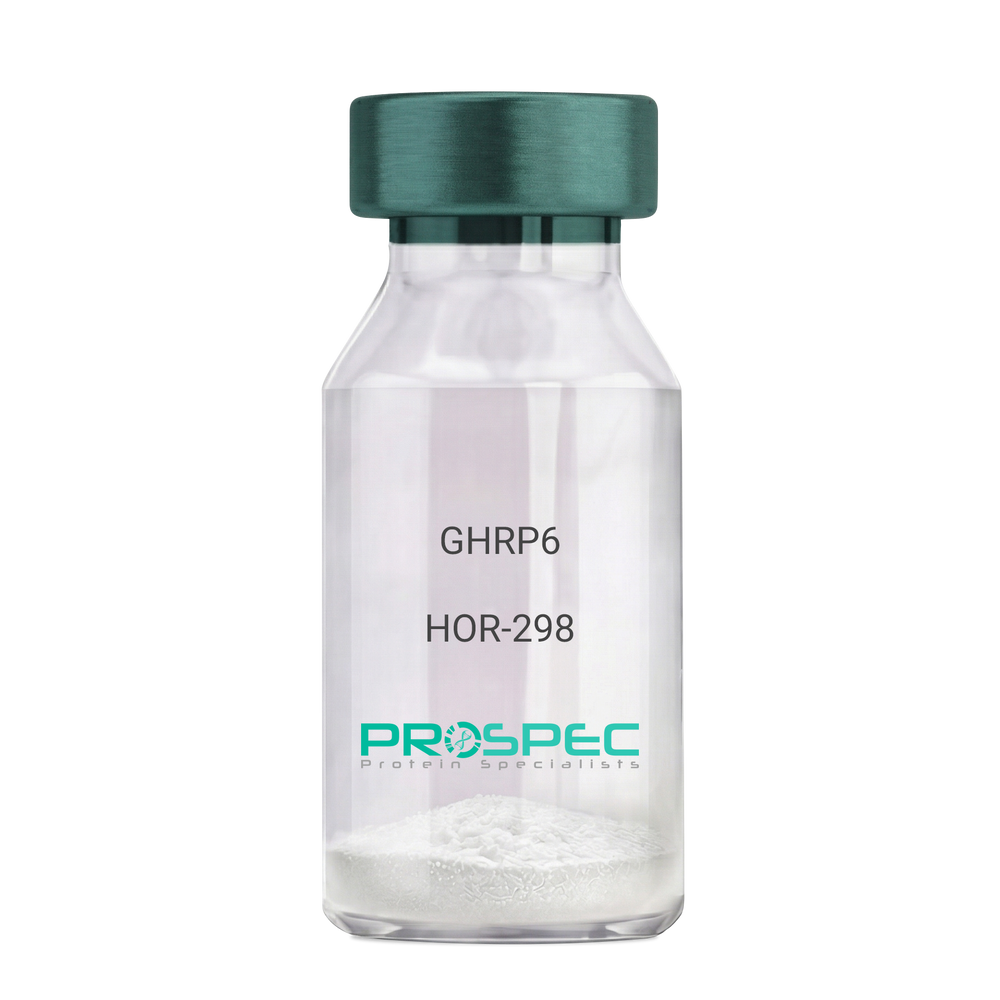
GHRP6Description:
Growth Hormone Releasing Peptide-6
GHRP-6, GHRP6
Product # :
HOR-298Price :
Quantity :
Shipping Method :
Shipped at Room temp
More Info
- description
- formulation
- purity
- More Info
Description
Growth Hormone Releasing Peptide-6 Synthetic is a single, non-glycosylated polypeptide chain containing 6 amino acids, having a molecular mass of 873 Dalton and a Molecular formula of C46H56N12O6.
Formulation
The GHRP-6 peptide was lyophilized with no additives.
Purity
Greater than 98.0% as determined by analysis by RP-HPLC.
More Info
-
Introduction
GH-releasing peptides (GHRPs) are synthetic peptides that like GHRH act directly on pituitary somatotrophs to stimulate GH release. Growth hormone (GH) release is stimulated by a variety of synthetic secretagogues, of which growth hormone-releasing hexapeptide (GHRP-6) has been most thoroughly studied; it is thought to have actions at both pituitary and hypothalamic site.
-
Synonyms
GHRP-6, GHRP6
-
Physical Appearance
Sterile Filtered White lyophilized (freeze-dried) powder.
-
Stability
Lyophilized Growth Hormone Releasing Peptide-6 although stable at room temperature for 3 weeks, should be stored desiccated below -18°C. Upon reconstitution GHRP-6 should be stored at 4°C between 2-7 days and for future use below -18°C. For long term storage it is recommended to add a carrier protein (0.1% HSA or BSA).Please prevent freeze-thaw cycles.
-
Solubility
It is recommended to reconstitute the lyophilized GHRP-6 in sterile 18MΩ-cm H2O not less than 100 µg/ml, which can then be further diluted to other aqueous solutions.
-
Amino Acid Sequence
His-D-Trp-Ala-Trp-D-Phe-Lys-NH2.
ProSpec's products are furnished for LABORATORY RESEARCH USE ONLY. The product may not be used as drugs, agricultural or pesticidal products, food additives or household chemicals.
- View Data Sheet
Name :
Omentin 298 a.a. HumanDescription:
Omentin 298 a.a. Human Recombinant
Intelectin-1, HL1, LFR, HL-1, INTL, ITLN, hIntL.
Product # :
CYT-061Price :
Quantity :
Shipping Method :
Shipped with Ice Packs
More Info
- description
- source
- formulation
- purity
- More Info
Description
Omentin Human Recombinant produced in E.coli is a single, non-glycosylated polypeptide chain containing 298 amino acids (17-313) and having a molecular mass of 33.2 kDa.The Omentin is purified by proprietary chromatographic techniques.
Source
Escherichia Coli.
Formulation
Omentin protein (1mg/ml) is supplied in 20mM Tris-HCL, pH-8, 0.4M Urea and 10% Glycerol.
Purity
Greater than 90.0% as determined by SDS-PAGE.
More Info
-
Introduction
Omentin is a recently recognized gene highly localized to the mental tissue (visceral adipose tissue). Omentin is present in the stromal vascular cells in the adipose tissue rather than in the adipocytes. Omentin is predominantly expressed in the visceral adipose tissue than the subcutaneous tissue, with the omentin mRNA being 150 times higher in the visceral adipose tissue. Omentin has also been detected in human blood using western blot analysis, and seems to increase insulin-stimulated glucose uptake in 3T3-L1 adipocytes in mice. Omentin seems to increase Akt phosphorylation irrespective of insulin presence. Its role in glucose metabolism and obesity remains to be described; an insulin-sensitizing action is possible.Differences in Omentin expression has been noted in adipose tissue from normals and patients with inflammatory bowel disease although its significance is unknown.
-
Synonyms
Intelectin-1, HL1, LFR, HL-1, INTL, ITLN, hIntL.
-
Physical Appearance
Sterile Filtered colorless solution.
-
Stability
Store at 4°C if entire vial will be used within 2-4 weeks. Store, frozen at -20°C for longer periods of time. For long term storage it is recommended to add a carrier protein (0.1% HSA or BSA).Avoid multiple freeze-thaw cycles.
-
Amino Acid Sequence
MWSTDEANTY FKEWTCSSSP SLPRSCKEIK DECPSAFDGL YFLRTENGVI YQTFCDMTSG GGGWTLVASV HENDMRGKCT VGDRWSSQQG SKAVYPEGDG NWANYNTFGS AEAATSDDYK NPGYYDIQAK DLGIWHVPNK SPMQHWRNSS LLRYRTDTGF LQTLGHNLFG IYQKYPVKYG EGKCWTDNGP VIPVVYDFGD AQKTASYYSP YGQREFTAGF VQFRVFNNER AANALCAGMR VTGCNTEHHC IGGGGYFPEA SPQQCGDFSG FDWSGYGTHV GYSSSREITE AAVLLFYR
ProSpec's products are furnished for LABORATORY RESEARCH USE ONLY. The product may not be used as drugs, agricultural or pesticidal products, food additives or household chemicals.
- View Data Sheet
Name :
GMFB AntibodyDescription:
Glia Maturation Factor Beta, Mouse Anti Human
Glia maturation factor beta, GMFB, GMF-B, GMF-beta, GMF.
Product # :
ANT-680Price :
Quantity :
Shipping Method :
Shipped with Ice Packs
More Info
- formulation
- More Info
Formulation
1mg/ml containing PBS, pH-7.4, 10% Glycerol and 0.02% Sodium Azide.
More Info
-
Introduction
Glia Maturation Factor-Beta (GMF-Beta) is a 17 kDa protein nerve gorwth factor identified as a growth and differentiation factor in the vertebrate brain.
Glia Maturation Factor-Beta stimulates differentiation of normal neurons as well as glial cells. GMFB inhibits the proliferation of the N-18 neuroblastoma line and the C6 glioma line while promoting their phenotypic expression.
GMF-beta inhances the phenotypic expression of glia & neurons thus inhibits the proliferation of their respective tumors when added to cell culture. Although astrocytes produce GMF-b and stores it inside the cells, they don’t secrete the GMF-B into the cultured medium. Cell- surface GMFb acts on the target cells at close range when cells are in direct contact. GMF-Beta is produced by thymic epithelial cells and plays an important role in T cell development in favor of CD4+ T cells.
GMF-Beta is a brain-specific protein which belongs to the actin-binding proteins (ADF) family. GMF-beta appears to play a role in the differentiation, maintenance, and regeneration of the nervous system. It also supports the progression of certain auto-immune diseases, possibly through its ability to induce the production and secretion of various pro-inflammatory cytokines. -
Synonyms
Glia maturation factor beta, GMFB, GMF-B, GMF-beta, GMF.
-
Physical Appearance
Sterile filtered colorless solution.
-
Immunogen
Anti-human GMFB mAb, is derived from hybridization of mouse F0 myeloma cells with spleen cells from BALB/c mice immunized with recombinant human GMFB amino acids 1-142 purified from E. coli.
-
Ig Subclass
Mouse IgG2a heavy chain and Kappa light chain.
-
Clone
PAT44D8AT.
-
Applications
GMFB antibody has been tested by ELISA, Western blot and ICC/IF to assure specificity and reactivity. Since application varies, however, each investigation should be titrated by the reagent to obtain optimal results.
-
Type
Mouse Anti Human Monoclonal.
-
Storage Procedures
For periods up to 1 month store at 4°C, for longer periods of time, store at -20°C. Prevent freeze thaw cycles.
-
Purification Method
GMFB antibody was purified from mouse ascitic fluids by protein-A affinity chromatography.
ProSpec's products are furnished for LABORATORY RESEARCH USE ONLY. The product may not be used as drugs, agricultural or pesticidal products, food additives or household chemicals.
- View Data Sheet
Name :
BMF HumanDescription:
Bcl2 Modifying Factor, Isoform 3 Human Recombinant
Bcl-2-modifying factor, FLJ00065, BMF.
Product # :
PRO-700Price :
Quantity :
Shipping Method :
Shipped with Ice Packs
More Info
- description
- source
- formulation
- purity
- More Info
Description
Bcl2 modifying factor Human Recombinant produced in E.Coli is a single, non-glycosylated, polypeptide chain containing 144 amino acids (1-129 a.a.) and having a molecular mass of 15.6 kDa.The Bcl2 modifying factor is fused to 15 amino acid His Tag at Nterminus and purified by proprietary chromatographic techniques.
Source
Escherichia Coli.
Formulation
The Bcl2 modifying factor solution contains 20mM Tris pH-7.5, 1mM DTT & 10% glycerol.
Purity
Greater than 90.0% as determined by SDS-PAGE.
More Info
-
Introduction
Bcl2 modifying factor, is a member of the Bcl2 protein family of apoptosis mediators. Bcl2 modifying factor is widely expressed in many tissues.
Bcl2 modifying factor contains a single Bcl2 homology domain 3 (BH3), and binds Bcl2 proteins and functions as an apoptotic activator. Also, Bcl2 modifying factor is important for histone deacetylase (HDAC) inhibitors which alters the balance between acetylation and deacetylation, significantly increasing histone acetylation, while strongly inducing apoptosis in a variety of cancer cell types. Bcl2 modifying factor supports Bim in regulating cell death processes in response to many stimuli. A synergistic role for bim and Bcl2 modifying factor in an apoptotic pathway leading to the clearance of Neisseria gonorrhoeae -infected cells. -
Synonyms
Bcl-2-modifying factor, FLJ00065, BMF.
-
Physical Appearance
Sterile Filtered colorless solution.
-
Stability
Store at 4°C if entire vial will be used within 2-4 weeks. Store, frozen at -20°C for longer periods of time. For long term storage it is recommended to add a carrier protein (0.1% HSA or BSA).Avoid multiple freeze-thaw cycles.
-
Amino Acid Sequence
MASMTGGQQM GRGSHMEPSQ CVEELEDDVF QPEDGEPVTQ PGSLLSADLF AQSLLDCPLS RLQLFPLTHC CGPGLRPTSQ EDKATQTLSPASPSQGVMLP CGVTEEPQRL FYAPAEPKSC VVADPPLPAQ PCFEWRREQE RGRP.
ProSpec's products are furnished for LABORATORY RESEARCH USE ONLY. The product may not be used as drugs, agricultural or pesticidal products, food additives or household chemicals.
- View Data Sheet
Name :
ALDH2 Mouse, ActiveDescription:
Aldehyde Dehydrogenase 2 Mouse Recombinant, Active
Aldehyde dehydrogenase, mitochondrial, AHD-M1, ALDH class 2, ALDH-E2, ALDHI.
Product # :
ENZ-1093Price :
Quantity :
Shipping Method :
Shipped with Ice Packs
More Info
- description
- source
- formulation
- purity
- biological activity
- More Info
Description
ALDH2 Mouse Recombinant produced in E.Coli is a single, non-glycosylated polypeptide chain containing 523 amino acids (20-519) and having a molecular mass of 56.8kDa. ALDH2 Mouse is fused to a 23 amino acid His-Tag at N-terminus and purified by proprietary chromatographic techniques.
Source
Escherichia Coli.
Formulation
ALDH2 Mouse protein (0.5mg/ml) is formulated in Phosphate buffered saline (pH7.4), 20% glycerol and 1mM DTT.
Purity
Greater than 95% as determined by SDS-PAGE.
Biological Activity
Specific activity is > 180 pmol/min/ug, and was obtained by measuring the increase of NADH in absorbance at 340 nm resulting from the reduction of NAD at pH 8.0 at 25C.
More Info
-
Introduction
ALDH2 is part of the aldehyde dehydrogenase family of proteins which catalyze the chemical transformation from acetaldehyde to acetic acid. ALDH2 is the second enzyme of the major oxidative pathway of alcohol metabolism. ALDH2 has 2 major liver isoforms: cytosolic and mitochondrial, which differ by their electrophoretic mobilities, kinetic properties, and subcellular localizations. Nearly all Caucasians have 2 major isozymes, whereas roughly 50% of Orientals have only the cytosolic isozyme, omitting the mitochondrial isozyme. The extremely higher rate of acute alcohol intoxication with Orientals compared to Caucasians is due to the fact of the absence of mitochondrial isozyme. ALDH2 has a low Km for acetaldehydes, and is localized in mitochondrial matrix.
-
Synonyms
Aldehyde dehydrogenase, mitochondrial, AHD-M1, ALDH class 2, ALDH-E2, ALDHI.
-
Physical Appearance
Sterile Filtered clear solution.
-
Stability
Store at 4°C if entire vial will be used within 2-4 weeks. Store, frozen at -20°C for longer periods of time. For long term storage it is recommended to add a carrier protein (0.1% HSA or BSA).Avoid multiple freeze-thaw cycles.
-
Amino Acid Sequence
MGSSHHHHHH SSGLVPRGSH MGSSAAATSA VPAPNHQPEV FCNQIFINNE WHDAVSRKTF PTVNPSTGEV ICQVAEGNKE DVDKAVKAARAAFQLGSPWR RMDASDRGRL LYRLADLIER DRTYLAALET LDNGKPYVIS YLVDLDMVLK CLRYYAGWAD KYHGKTIPID GDFFSYTRHEPVGVCGQIIP WNFPLLMQAW KLGPALATGN VVVMKVAEQT PLTALYVANL IKEAGFPPGV VNIVPGFGPT AGAAIASHEG VDKVAFTGSTEVGHLIQVAA GSSNLKRVTL ELGGKSPNII MSDADMDWAV EQAHFALFFN QGQCCCAGSR TFVQENVYDE FVERSVARAK SRVVGNPFDSRTEQGPQVDE TQFKKILGYI KSGQQEGAKL LCGGGAAADR GYFIQPTVFG DVKDGMTIAK EEIFGPVMQI LKFKTIEEVV GRANDSKYGLAAAVFTKDLD KANYLSQALQ AGTVWINCYD VFGAQSPFGG YKMSGSGREL GEYGLQAYTE VKTVTVKVPQ KNS.
ProSpec's products are furnished for LABORATORY RESEARCH USE ONLY. The product may not be used as drugs, agricultural or pesticidal products, food additives or household chemicals.
- View Data Sheet
Name :
CSTF1 HumanDescription:
Cleavage Stimulation Factor 1 Human Recombinant
Cleavage stimulation factor subunit 1, CF-1 50 kDa subunit, Cleavage stimulation factor 50 kDa subunit, CSTF 50 kDa subunit, CstF-50, CSTF1, CstFp50.
Product # :
PRO-1170Price :
Quantity :
Shipping Method :
Shipped with Ice Packs
More Info
- description
- source
- formulation
- purity
- More Info
Description
CSTF1 Human Recombinant produced in E.Coli is a single, non-glycosylated polypeptide chain containing 439 amino acids (1-431 a.a) and having a molecular mass of 49.4kDa.CSTF1 is fused to an 8 amino acid His-tag at C-terminus & purified by proprietary chromatographic techniques.
Source
Escherichia Coli.
Formulation
CSTF1 protein solution (1mg/ml) containing 20mM Tris-HCl buffer (pH8.0), 20% glycerol, 0.1M NaCl and 2M urea.
Purity
Greater than 90% as determined by SDS-PAGE.
More Info
-
Introduction
Cleavage stimulation factor subunit 1 (CSTF1) is involved in the polyadenylation and 3'end cleavage of pre-mRNAs. The CSTF1 gene encodes one of three subunits which merge to produce cleavage stimulation factor (CSTF). Like the mammalian G protein beta subunits, CSTF1 contains transducin-like repeats. CSTF1 is one of the numerous factors necessary for polyadenylation and 3'-end cleavage of mammalian pre-mRNAs. CSTF1 is responsible for the interaction of CSTF with other factors to create a stable complex on the pre-mRNA.
-
Synonyms
Cleavage stimulation factor subunit 1, CF-1 50 kDa subunit, Cleavage stimulation factor 50 kDa subunit, CSTF 50 kDa subunit, CstF-50, CSTF1, CstFp50.
-
Physical Appearance
Sterile filtered colorless solution.
-
Stability
Store at 4°C if entire vial will be used within 2-4 weeks. Store, frozen at -20°C for longer periods of time. For long term storage it is recommended to add a carrier protein (0.1% HSA or BSA).Avoid multiple freeze-thaw cycles.
-
Amino Acid Sequence
MYRTKVGLKD RQQLYKLIIS QLLYDGYISI ANGLINEIKP QSVCAPSEQL LHLIKLGMEN DDTAVQYAIG RSDTVAPGTG IDLEFDADVQ TMSPEASEYE TCYVTSHKGP CRVATYSRDG QLIATGSADA SIKILDTERM LAKSAMPIEV MMNETAQQNM ENHPVIRTLY DHVDEVTCLA FHPTEQILAS GSRDYTLKLF DYSKPSAKRA FKYIQEAEML RSISFHPSGD FILVGTQHPT LRLYDINTFQ CFVSCNPQDQ HTDAICSVNY NSSANMYVTG SKDGCIKLWD GVSNRCITTF EKAHDGAEVC SAIFSKNSKY ILSSGKDSVA KLWEISTGRT LVRYTGAGLS GRQVHRTQAV FNHTEDYVLL PDERTISLCC WDSRTAERRN LLSLGHNNIV RCIVHSPTNP GFMTCSDDFR ARFWYRRSTT DVEHHHHHH.
ProSpec's products are furnished for LABORATORY RESEARCH USE ONLY. The product may not be used as drugs, agricultural or pesticidal products, food additives or household chemicals.