Skip to content

High-quality research proteins.

  • 1-800-805-6531

  • Mon - Sat 8.00-18.00, Sun - Closed

  • info@prospecbio.com

  • PO Box 6591 East Brunswick NJ 08816

  • Products
    • Cytokines
    • Growth factors
    • Chemokines
    • Cd antigens
    • Neurotrophins
    • Hormones
    • Enzymes
    • Viral antigens
    • Recombinant proteins
    • Natural proteins
    • Monoclonal antibodies
    • Polyclonal antibodies
    • Thermal Packaging
  • About
    • Company
    • Founder
    • Contribution
  • Customers
    • Eastern Asia
    • Eastern Europe
    • North America
    • South America
    • South East Asia
    • Southern Asia
    • Western Europe
  • Ordering
    • Ordering Method
    • Ordering - Credit Card
    • Ordering - PO
    • Shipping Fees
    • FAQs
  • Services
    • DNA Cloning
    • Protein Expression
    • Monoclonal Antibody
    • Fermentation
    • Technology License
  • Contact us
Log in

Country/region

  • USD $ | Albania
  • USD $ | Andorra
  • USD $ | Argentina
  • USD $ | Armenia
  • USD $ | Australia
  • USD $ | Austria
  • USD $ | Azerbaijan
  • USD $ | Belarus
  • USD $ | Belgium
  • USD $ | Bolivia
  • USD $ | Brazil
  • USD $ | Bulgaria
  • USD $ | Cambodia
  • USD $ | Canada
  • USD $ | Chile
  • USD $ | China
  • USD $ | Colombia
  • USD $ | Costa Rica
  • USD $ | Croatia
  • USD $ | Cyprus
  • USD $ | Czechia
  • USD $ | Denmark
  • USD $ | Estonia
  • USD $ | Finland
  • USD $ | France
  • USD $ | Georgia
  • USD $ | Germany
  • USD $ | Greece
  • USD $ | Hong Kong SAR
  • USD $ | Hungary
  • USD $ | Iceland
  • USD $ | India
  • USD $ | Ireland
  • USD $ | Israel
  • USD $ | Italy
  • USD $ | Japan
  • USD $ | Kazakhstan
  • USD $ | Latvia
  • USD $ | Liechtenstein
  • USD $ | Lithuania
  • USD $ | Madagascar
  • USD $ | Malta
  • USD $ | Mexico
  • USD $ | Moldova
  • USD $ | Monaco
  • USD $ | Netherlands
  • USD $ | New Zealand
  • USD $ | North Macedonia
  • USD $ | Norway
  • USD $ | Panama
  • USD $ | Paraguay
  • USD $ | Peru
  • USD $ | Philippines
  • USD $ | Poland
  • USD $ | Portugal
  • USD $ | Romania
  • USD $ | Singapore
  • USD $ | Slovakia
  • USD $ | Slovenia
  • USD $ | South Africa
  • USD $ | South Korea
  • USD $ | Spain
  • USD $ | Sri Lanka
  • USD $ | Sweden
  • USD $ | Switzerland
  • USD $ | Taiwan
  • USD $ | Thailand
  • USD $ | Türkiye
  • USD $ | Ukraine
  • USD $ | United Kingdom
  • USD $ | United States
  • USD $ | Uruguay
  • USD $ | Vatican City
  • USD $ | Venezuela
  • USD $ | Vietnam
  • Facebook
  • Instagram
logoProSpec - Recombinant Protein Manufacturer for academic and R&D industry
Become a distributor
Account Log in
Wishlist
Cart Cart(0)
  • Products
    +
    • Cytokines
    • Growth factors
    • Chemokines
    • Cd antigens
    • Neurotrophins
    • Hormones
    • Enzymes
    • Viral antigens
    • Recombinant proteins
    • Natural proteins
    • Monoclonal antibodies
    • Polyclonal antibodies
    • Thermal Packaging
  • About
    +
    • Company
    • Founder
    • Contribution
  • Customers
    +
    • Eastern Asia
    • Eastern Europe
    • North America
    • South America
    • South East Asia
    • Southern Asia
    • Western Europe
  • Ordering
    +
    • Ordering Method
    • Ordering - Credit Card
    • Ordering - PO
    • Shipping Fees
    • FAQs
  • Services
    +
    • DNA Cloning
    • Protein Expression
    • Monoclonal Antibody
    • Fermentation
    • Technology License
  • Contact us

Item added to your cart

View cart
View All
  • Cytokines
  • Growth factors
  • Chemokines
  • Cd antigens
  • Neurotrophins
  • Hormones
  • Enzymes
  • Viral antigens
  • Recombinant proteins
  • Natural proteins
  • Monoclonal antibodies
  • Polyclonal antibodies
  • Thermal Packaging
  • Tumor Necrosis Factor

    Tumor Necrosis Factor

    View All
  • 4-1BB

    4-1BB

    View All
  • Adiponectin

    Adiponectin

    View All
  • AIF1

    AIF1

    View All
  • Other Cytokines

    Other Cytokines

    View All
  • AITRL

    AITRL

    View All
  • Angiopoietin

    Angiopoietin

    View All
  • Apolipoprotein

    Apolipoprotein

    View All
  • B-Cell Activating Factor

    B-Cell Activating Factor

    View All
  • Beta Defensin

    Beta Defensin

    View All
  • Bone Morphogenetic Protein

    Bone Morphogenetic Protein

    View All
  • B type Natriuretic Peptide

    B type Natriuretic Peptide

    View All
  • BST

    BST

    View All
  • Betacellulin

    Betacellulin

    View All
  • Cardiotrophin

    Cardiotrophin

    View All
  • Activin

    Activin

    View All
  • Fibroblast Growth Factor

    Fibroblast Growth Factor

    View All
  • Other Growth Factors

    Other Growth Factors

    View All
  • CSF

    CSF

    View All
  • CTGF

    CTGF

    View All
  • IGFBP

    IGFBP

    View All
  • VEGF Protein

    VEGF Protein

    View All
  • EGF

    EGF

    View All
  • Epigen

    Epigen

    View All
  • Erythropoietin

    Erythropoietin

    View All
  • Insulin-Like Growth Factor

    Insulin-Like Growth Factor

    View All
  • Growth Hormone

    Growth Hormone

    View All
  • HDGF

    HDGF

    View All
  • Hepatocyte Growth Factor

    Hepatocyte Growth Factor

    View All
  • Insulin

    Insulin

    View All
  • BCA-1/ BLC (CXCL13)

    BCA-1/ BLC (CXCL13)

    View All
  • BRAK (CXCL14)

    BRAK (CXCL14)

    View All
  • C-10 (CCL6)

    C-10 (CCL6)

    View All
  • Other Chemokines

    Other Chemokines

    View All
  • MEC (CCL28)

    MEC (CCL28)

    View All
  • LD78-beta (CCL3L1)

    LD78-beta (CCL3L1)

    View All
  • CTACK (CCL27)

    CTACK (CCL27)

    View All
  • CXCL16

    CXCL16

    View All
  • CXCL17

    CXCL17

    View All
  • Platelet Factor-4 (CXCL4)

    Platelet Factor-4 (CXCL4)

    View All
  • ENA-78 (CXCL5)

    ENA-78 (CXCL5)

    View All
  • Eotaxin (CCL11,24,26)

    Eotaxin (CCL11,24,26)

    View All
  • Exodus-2 (CCL21)

    Exodus-2 (CCL21)

    View All
  • Fractalkine (CX3CL1)

    Fractalkine (CX3CL1)

    View All
  • CXCL6

    CXCL6

    View All
  • Other CD Antigens

    Other CD Antigens

    View All
  • CD14

    CD14

    View All
  • CD164

    CD164

    View All
  • CD1

    CD1

    View All
  • CD2

    CD2

    View All
  • CD200

    CD200

    View All
  • CD207

    CD207

    View All
  • CD226

    CD226

    View All
  • CD23

    CD23

    View All
  • CD244

    CD244

    View All
  • CD247

    CD247

    View All
  • CD27

    CD27

    View All
  • CD274

    CD274

    View All
  • CD300

    CD300

    View All
  • CD33

    CD33

    View All
  • Other Neurotrophins

    Other Neurotrophins

    View All
  • Beta-NGF

    Beta-NGF

    View All
  • BDNF

    BDNF

    View All
  • CDNF

    CDNF

    View All
  • CNTF

    CNTF

    View All
  • GDNF

    GDNF

    View All
  • Glia Maturation Factor

    Glia Maturation Factor

    View All
  • MANF

    MANF

    View All
  • Midkine

    Midkine

    View All
  • Neuroglobin

    Neuroglobin

    View All
  • Neurotrophic factors

    Neurotrophic factors

    View All
  • Neuregulin

    Neuregulin

    View All
  • Neuropilin

    Neuropilin

    View All
  • Pigment Epithelium-Derived Factor

    Pigment Epithelium-Derived Factor

    View All
  • Pleiotrophin

    Pleiotrophin

    View All
  • Peptide Hormones

    Peptide Hormones

    View All
  • Other Hormones

    Other Hormones

    View All
  • HCG

    HCG

    View All
  • Endothelin

    Endothelin

    View All
  • Exendin

    Exendin

    View All
  • FSH

    FSH

    View All
  • Glucagon

    Glucagon

    View All
  • GHRP

    GHRP

    View All
  • GLP

    GLP

    View All
  • Thyrostimulin

    Thyrostimulin

    View All
  • Inhibin A

    Inhibin A

    View All
  • LHRH

    LHRH

    View All
  • Melanotan

    Melanotan

    View All
  • Procalcitonin

    Procalcitonin

    View All
  • PTH

    PTH

    View All
  • Peroxiredoxin

    Peroxiredoxin

    View All
  • Peptidase

    Peptidase

    View All
  • Synthetase

    Synthetase

    View All
  • Transferase

    Transferase

    View All
  • Hydrolase

    Hydrolase

    View All
  • Dehydrogenase

    Dehydrogenase

    View All
  • ACE2

    ACE2

    View All
  • Esterase

    Esterase

    View All
  • Protein Kinases

    Protein Kinases

    View All
  • Other Enzymes

    Other Enzymes

    View All
  • Phosphatase

    Phosphatase

    View All
  • Deaminase

    Deaminase

    View All
  • Oxygenase

    Oxygenase

    View All
  • Adenylate Kinase

    Adenylate Kinase

    View All
  • Lyase

    Lyase

    View All
  • Chagas

    Chagas

    View All
  • SARS

    SARS

    View All
  • Influenza

    Influenza

    View All
  • ASFV

    ASFV

    View All
  • Astrovirus

    Astrovirus

    View All
  • Borrelia

    Borrelia

    View All
  • Helicobacter Pylori

    Helicobacter Pylori

    View All
  • Chikungunya

    Chikungunya

    View All
  • Chlamydia

    Chlamydia

    View All
  • Cytomegalo

    Cytomegalo

    View All
  • Dengue

    Dengue

    View All
  • EBV

    EBV

    View All
  • Ebola

    Ebola

    View All
  • Feline Leukemia Virus

    Feline Leukemia Virus

    View All
  • Hepatitis A

    Hepatitis A

    View All
  • Other

    Other

    View All
  • Actin

    Actin

    View All
  • ADAM

    ADAM

    View All
  • Complement Component

    Complement Component

    View All
  • Ag85

    Ag85

    View All
  • Eukaryotic Translation Initiation Factor

    Eukaryotic Translation Initiation Factor

    View All
  • Anterior Gradient Protein

    Anterior Gradient Protein

    View All
  • Heat Shock Protein

    Heat Shock Protein

    View All
  • Alpha-2-HS-Glycoprotein

    Alpha-2-HS-Glycoprotein

    View All
  • Hemoglobin

    Hemoglobin

    View All
  • Allergy

    Allergy

    View All
  • Anaplasma

    Anaplasma

    View All
  • Angiogenin

    Angiogenin

    View All
  • Ankyrin Repeat Domain

    Ankyrin Repeat Domain

    View All
  • Annexin

    Annexin

    View All
  • Other Natural Proteins

    Other Natural Proteins

    View All
  • Aprotinin

    Aprotinin

    View All
  • Transferrin

    Transferrin

    View All
  • Avidin

    Avidin

    View All
  • Anti Coagulation Factors

    Anti Coagulation Factors

    View All
  • Natural Albumin

    Natural Albumin

    View All
  • Natural Coagulation Factors

    Natural Coagulation Factors

    View All
  • Fibronectin

    Fibronectin

    View All
  • Thrombin

    Thrombin

    View All
  • Anti Human Enzyme

    Anti Human Enzyme

    View All
  • Other Monoclonal Antibodies

    Other Monoclonal Antibodies

    View All
  • Anti Human Cytokine

    Anti Human Cytokine

    View All
  • Anti Human Heat Shock Protein

    Anti Human Heat Shock Protein

    View All
  • Anti Mouse Lymphocyte

    Anti Mouse Lymphocyte

    View All
  • Anti Human Chemokine

    Anti Human Chemokine

    View All
  • Anti Human Lymphocyte

    Anti Human Lymphocyte

    View All
  • Anti Viral Monoclonal

    Anti Viral Monoclonal

    View All
  • Anti Mouse Cytokine

    Anti Mouse Cytokine

    View All
  • Anti-GST Monoclonal

    Anti-GST Monoclonal

    View All
  • Other Polyclonal Antibodies

    Other Polyclonal Antibodies

    View All
  • Anti Viral

    Anti Viral

    View All
  • Anti-GST Monoclonal

    Anti-GST Monoclonal

    View All
Back

Search results

1000 results found for “Peroxisomal Biogenesis Factor”

Name

Description

Product #

Price

Quantity

Shipping Method

  • View Data Sheet

    Name :

    PPP3R2 Human

    Description:

    Protein Phosphatase 3 Regulatory subunit, Beta Isozyme Human Recombinant

    Calcineurin subunit B type 2, Calcineurin B-like protein, CBLP, Calcineurin BII, CNBII, PPP3R1-like, Protein phosphatase 2B regulatory subunit 2, Protein phosphatase 3 regulatory subunit B beta isoform, PPP3R2, PPP3RL.

    Product # :

    ENZ-103

    Price :

    Quantity :

    Shipping Method :

    Ice Icon

    Shipped with Ice Packs

    Add To Cart

    More Info

    • description
    • source
    • formulation
    • purity
    • More Info

    Description

    PPP3R2 Human Recombinant fused with a 20 a.a. His tag at N-terminus produced in E.Coli is a single, non-glycosylated, polypeptide chain (a.a. 1-173) containing 193 amino acids and having a molecular mass of 22kDa.The PPP3R2 is purified by proprietary chromatographic techniques.

    Source

    Escherichia Coli.

    Formulation

    The PPP3R2 solution (0.5mg/ml) contains 20mM Tris-HCl buffer(pH 8.0), 10% glycerol and 1mM DTT.

    Purity

    Greater than 95.0% as determined by SDS-PAGE.

    More Info

    • Introduction

      PPP3R2 is a calcium-dependent, calmodulin stimulated serine/threonine protein phosphatase. In eukaryotes, the phosphorylation and dephosphorylation of proteins on serine and threonine residues is a crucial means of regulating a wide range of cellular functions including division, homeostasis and apoptosis. Ordinarily the protein phosphatase (PP) holoenzyme is a trimeric complex composed of a regulatory subunit, a variable subunit and a catalytic subunit.

    • Synonyms

      Calcineurin subunit B type 2, Calcineurin B-like protein, CBLP, Calcineurin BII, CNBII, PPP3R1-like, Protein phosphatase 2B regulatory subunit 2, Protein phosphatase 3 regulatory subunit B beta isoform, PPP3R2, PPP3RL.

    • Physical Appearance

      Sterile Filtered colorless solution.

    • Stability

      Store at 4°C if entire vial will be used within 2-4 weeks. Store, frozen at -20°C for longer periods of time. For long term storage it is recommended to add a carrier protein (0.1% HSA or BSA).Avoid multiple freeze-thaw cycles.

    • Amino Acid Sequence

      MGSSHHHHHH SSGLVPRGSH MSTMGNEASY PAEMCSHFDN DEIKRLGRRF KKLDLDKSGS LSVEEFMSLP ELRHNPLVRR VIDVFDTDGD GEVDFKEFIL GTSQFSVKGD EEQKLRFAFS IYDMDKDGYI SNGELFQVLK MMVGNNLTDW QLQQLVDKTI IILDKDGDGK ISFEEFSAVV RDLEIHKKLV LIV.

    ProSpec's products are furnished for LABORATORY RESEARCH USE ONLY. The product may not be used as drugs, agricultural or pesticidal products, food additives or household chemicals.

    Ppp3R2 Human
  • View Data Sheet

    Name :

    PRRT2 Human

    Description:

    Proline-Rich Transmembrane Protein 2 Human Recombinant

    Proline-Rich Transmembrane Protein 2, Infantile Convulsions And Paroxysmal Choreoathetosis, Dispanin Subfamily B Member 3, DSPB3, BFIC2, BFIS2, DYT10, EKD1, PKC, FICCA, IFITMD1, ICCA.

    Product # :

    PRO-1852

    Price :

    Quantity :

    Shipping Method :

    Ice Icon

    Shipped with Ice Packs

    Add To Cart

    More Info

    • description
    • source
    • formulation
    • purity
    • More Info

    Description

    PRRT2 Human Recombinant produced in E.coli is a single, non-glycosylated polypeptide chain containing 291 amino acids (1-268) and having a molecular mass of 29.7 kDa. PRRT2 is fused to a 23 amino acid His-tag at N-terminus.

    Source

    Escherichia Coli.

    Formulation

    The PRRT2 solution (0.25mg/ml) contains 20mM Tris-HCl buffer (pH 8.0), 0.15M NaCl, 1mM DTT and 10% glycerol.

    Purity

    Greater than 85% as determined by SDS-PAGE.

    More Info

    • Introduction

      Transmembrane protein PRRT2 holds a proline-rich domain in its N-terminal half. PRRT2 is known to be primarily expressed in brain and spinal cord in embryonic and postnatal stages. Alterations in this gene are the cause for paroxysmal kinesigenic dyskinesia. PRRT2 mutations were found in nearly 30% of sporadic PKC patients.

    • Synonyms

      Proline-Rich Transmembrane Protein 2, Infantile Convulsions And Paroxysmal Choreoathetosis, Dispanin Subfamily B Member 3, DSPB3, BFIC2, BFIS2, DYT10, EKD1, PKC, FICCA, IFITMD1, ICCA.

    • Physical Appearance

      Sterile Filtered clear solution.

    • Stability

      Store at 4°C if entire vial will be used within 2-4 weeks. Store, frozen at -20°C for longer periods of time. For long term storage it is recommended to add a carrier protein (0.1% HSA or BSA).Avoid multiple freeze-thaw cycles.

    • Amino Acid Sequence

      MGSSHHHHHH SSGLVPRGSH MGSMAASSSE ISEMKGVEES PKVPGEGPGH SEAETGPPQV LAGVPDQPEA PQPGPNTTAA PVDSGPKAGL APETTETPAG ASETAQATDL SLSPGGESKA NCSPEDPCQE TVSKPEVSKE ATADQGSRLE SAAPPEPAPE PAPQPDPRPD SQPTPKPALQ PELPTQEDPT PEILSESVGE KQENGAVVPL QAGDGEEGPA PEPHSPPSKK SPPANGAPPR VLQQLVEEDR MRRAHSGHPG SPRGSLSRHP SSQLAGPGVE GGEGTQKPRD Y.

    ProSpec's products are furnished for LABORATORY RESEARCH USE ONLY. The product may not be used as drugs, agricultural or pesticidal products, food additives or household chemicals.

    Prrt2 Human
  • View Data Sheet

    Name :

    PRSS3 Human, sf9

    Description:

    Recombinant Human Protease Serine 3, sf9

    Protease, Serine, 3, Protease, Serine, 4 (Trypsin 4, Brain), Brain Trypsinogen, Mesotrypsinogen, Mesotrypsin, Trypsin III, EC 3.4.21.4 4, Trypsin IV, PRSS4, TRY3, TRY4 Protease, Serine, 3 (Mesotrypsin), Pancreatic Trypsinogen III, Serine Protease 3, Serine Protease 4, Trypsinogen IV, Trypsinogen 4, Trypsinogen 5, EC 3.4.21, MTG, T9.

    Product # :

    ENZ-925

    Price :

    Quantity :

    Shipping Method :

    Ice Icon

    Shipped with Ice Packs

    Add To Cart

    More Info

    • description
    • source
    • formulation
    • purity
    • More Info

    Description

    PRSS3 produced in Sf9 Insect cells is a single, glycosylated polypeptide chain containing 233 amino acids (81-304a.a.) and having a molecular mass of 25.3kDa (Molecular size on SDS-PAGE will appear at approximately 28-40kDa).PRSS3 is expressed with a 6 amino acid His tag at C-Terminus and purified by proprietary chromatographic techniques.

    Source

    Sf9, Insect cells.

    Formulation

    PRSS3 protein solution (0.5mg/ml) contains Phosphate Buffered Saline (pH 7.4) and 10% glycerol.

    Purity

    Greater than 95.0% as determined by SDS-PAGE.

    More Info

    • Introduction

      PRSS3 is a trypsinogen, and a member of the trypsin family of serine proteases. PRSS3 is expressed in the pancreas and brain and is unaffected by common trypsin inhibitors. It is active on peptide linkages involving the carboxyl group of lysine or arginine. PRSS3 is restricted to the locus of T cell receptor beta variable orphans on chromosome 9. 4 different isoforms encoded by 4 transcript variants were identified for this gene.

    • Synonyms

      Protease, Serine, 3, Protease, Serine, 4 (Trypsin 4, Brain), Brain Trypsinogen, Mesotrypsinogen, Mesotrypsin, Trypsin III, EC 3.4.21.4 4, Trypsin IV, PRSS4, TRY3, TRY4 Protease, Serine, 3 (Mesotrypsin), Pancreatic Trypsinogen III, Serine Protease 3, Serine Protease 4, Trypsinogen IV, Trypsinogen 4, Trypsinogen 5, EC 3.4.21, MTG, T9.

    • Physical Appearance

      Sterile filtered colorless solution.

    • Stability

      Store at 4°C if entire vial will be used within 2-4 weeks.Store, frozen at -20°C for longer periods of time. For long term storage it is recommended to add a carrier protein (0.1% HSA or BSA).Avoid multiple freeze-thaw cycles.

    • Amino Acid Sequence

      ADPIVGGYTC EENSLPYQVS LNSGSHFCGG SLISEQWVVS AAHCYKTRIQ VRLGEHNIKV LEGNEQFINA AKIIRHPKYN RDTLDNDIML IKLSSPAVIN ARVSTISLPT APPAAGTECL ISGWGNTLSF GADYPDELKC LDAPVLTQAE CKASYPGKIT NSMFCVGFLE GGKDSCQRDS GGPVVCNGQL QGVVSWGHGC AWKNRPGVYT KVYNYVDWIK DTIAANSHHH HHH.

    ProSpec's products are furnished for LABORATORY RESEARCH USE ONLY. The product may not be used as drugs, agricultural or pesticidal products, food additives or household chemicals.

    Prss3 Human Sf9
  • View Data Sheet

    Name :

    PTX2 Mouse

    Description:

    Pentraxin-2 Mouse Recombinant

    Serum amyloid P-component, SAP, Apcs, Sap, Ptx2.

    Product # :

    PRO-2598

    Price :

    Quantity :

    Shipping Method :

    Ice Icon

    Shipped with Ice Packs

    Add To Cart

    More Info

    • description
    • source
    • formulation
    • purity
    • More Info

    Description

    PTX2 Mouse Recombinant produced in Sf9 Insect cells is a single, glycosylated polypeptide chain containing 210 amino acids (21-224 a.a) and having a molecular mass of 24.6kDa. (Molecular size on SDS-PAGE will appear at approximately 28-40kDa). PTX2 is fused to a 6 amino acid His-tag at C-terminus & purified by proprietary chromatographic techniques.

    Source

    HEK293.

    Formulation

    PTX2 protein solution (0.25mg/ml) contains 10% glycerol in Phosphate Buffered Saline (pH 7.4).

    Purity

    Greater than 90.0% as determined by SDS-PAGE.

    More Info

    • Introduction

      PTX-2 or Pentraxin-2 is a phylogenetically conserved protein, commonly moving with homopentameric blood protein or with a protein that recognizes receptors of the innate immune system. The protein’s specific binding abilities may show that PTX-2 is specially bound in sites where injury accrued, therefore helps to eliminate damaged tissue by ways that are not phlogistics.

    • Synonyms

      Serum amyloid P-component, SAP, Apcs, Sap, Ptx2.

    • Physical Appearance

      Sterile Filtered clear solution.

    • Stability

      Store at 4°C if entire vial will be used within 2-4 weeks. Store, frozen at -20°C for longer periods of time. For long term storage it is recommended to add a carrier protein (0.1% HSA or BSA).Avoid multiple freeze-thaw cycles.

    • Amino Acid Sequence

      QTDLKRKVFV FPRESETDHV KLIPHLEKPL QNFTLCFRTY SDLSRSQSLF SYSVKGRDNE LLIYKEKVGE YSLYIGQSKV TVRGMEEYLS PVHLCTTWES SSGIVEFWVN GKPWVKKSLQ REYTVKAPPS IVLGQEQDNY GGGFQRSQSF VGEFSDLYMW DYVLTPQDIL FVYRDSPVNP NILNWQALNY EINGYVVIRP RVWDHHHHHH.

    ProSpec's products are furnished for LABORATORY RESEARCH USE ONLY. The product may not be used as drugs, agricultural or pesticidal products, food additives or household chemicals.

    Ptx2 Mouse
  • View Data Sheet

    Name :

    HARS Human, His

    Description:

    Histidyl-tRNA Synthetase Human Recombinant, His Tag

    Histidyl-tRNA synthetase cytoplasmic, Histidine--tRNA ligase, HisRS, HARS, HRS, FLJ20491.

    Product # :

    ENZ-001

    Price :

    Quantity :

    Shipping Method :

    Ice Icon

    Shipped with Ice Packs

    Add To Cart

    More Info

    • description
    • source
    • formulation
    • purity
    • More Info

    Description

    HARS Human Recombinant fused with a 23 amino acid His tag at N-terminus produced in E.Coli is a single, non-glycosylated, polypeptide chain containing 532 amino acids (1-509 a.a.) and having a molecular mass of 59.4kDa. The HARS is purified by proprietary chromatographic techniques.

    Source

    Escherichia Coli.

    Formulation

    The HARS solution (1mg/ml) contains 20mM Tris-HCl buffer(pH 8.0), 10% glycerol,
    1mM DTT and 0.1M NaCl.

    Purity

    Greater than 95.0% as determined by SDS-PAGE.

    More Info

    • Introduction

      Histidyl-tRNA synthetase (HARS) functions to catalyze the aminoacylation of tRNAs by their corresponding amino acids. HARS is a member of the class II family of aminoacyl-tRNA synthetases. HARS is responsible for the synthesis of histidyl-transfer RNA, which is vital for the incorporation of histidine into proteins. HARS is a frequent target of autoantibodies in the human autoimmune disease polymyositis/dermatomyositis.

    • Synonyms

      Histidyl-tRNA synthetase cytoplasmic, Histidine--tRNA ligase, HisRS, HARS, HRS, FLJ20491.

    • Physical Appearance

      Sterile Filtered colorless solution.

    • Stability

      Store at 4°C if entire vial will be used within 2-4 weeks.Store, frozen at -20°C for longer periods of time. For long term storage it is recommended to add a carrier protein (0.1% HSA or BSA).Avoid multiple freeze-thaw cycles.

    • Amino Acid Sequence

      MGSSHHHHHH SSGLVPRGSH MGSMAERAAL EELVKLQGER VRGLKQQKAS AELIEEEVAK LLKLKAQLGP DESKQKFVLK TPKGTRDYSP RQMAVREKVF DVIIRCFKRH GAEVIDTPVF ELKETLMGKY GEDSKLIYDL KDQGGELLSL RYDLTVPFAR YLAMNKLTNI KRYHIAKVYR RDNPAMTRGR YREFYQCDFD IAGNFDPMIP DAECLKIMCE ILSSLQIGDF LVKVNDRRIL DGMFAICGVS DSKFRTICSS VDKLDKVSWE EVKNEMVGEK GLAPEVADRI GDYVQQHGGV SLVEQLLQDP KLSQNKQALE GLGDLKLLFE YLTLFGIDDK ISFDLSLARG LDYYTGVIYE AVLLQTPAQA GEEPLGVGSV AAGGRYDGLV GMFDPKGRKV PCVGLSIGVE RIFSIVEQRL EALEEKIRTT ETQVLVASAQ KKLLEERLKL VSELWDAGIK AELLYKKNPK LLNQLQYCEE AGIPLVAIIG EQELKDGVIK LRSVTSREEV DVRREDLVEE IKRRTGQPLC IC.

    ProSpec's products are furnished for LABORATORY RESEARCH USE ONLY. The product may not be used as drugs, agricultural or pesticidal products, food additives or household chemicals.

    Hars Human
  • View Data Sheet

    Name :

    IGF1 N15 Human

    Description:

    Insulin Like Growth Factor-1 N15 Labeled Human Recombinant

    Somatomedin C, IGF-I, IGFI, IGF1, IGF-IA, Mechano growth factor, MGF.

    Product # :

    CYT-128

    Price :

    Quantity :

    Shipping Method :

    Room Temp Icon

    Shipped at Room temp

    Add To Cart

    More Info

    • description
    • source
    • formulation
    • purity
    • biological activity
    • More Info
    • sds-page

    Description

    IGF1 N15 Human Recombinant produced in E.coli is a single, non-glycosylated polypeptide chain containing 70 amino acids and having a molecular mass of 7.74kDa. The N15 is stable isotope labeled. The IGF1 N15 is purified by proprietary chromatographic techniques.

    Source

    Escherichia Coli.

    Formulation

    IGF1 N15 protein was lyophilized from a 0.2µm filtered concentrated solution in PBS, pH 7.2.

    Purity

    Greater than 97.0% as determined by:
    (a) Analysis by RP-HPLC.
    (b) Analysis by SDS-PAGE.

    Biological Activity

    The ED50 as determined by a cell proliferation assay using serum free human MCF-7 cells is less than 2ng/ml, corresponding to a specific activity of > 5.0 × 10⁵ IU/mg.

    sds-page

    IGF-1 15N Human sds-page - Product image 1

    More Info

    • Introduction

      The somatomedins, or insulin-like growth factors (IGFs), comprise a family of peptides that play important roles in mammalian growth and development. IGF1 mediates many of the growth-promoting effects of growth hormone (GH; MIM 139250). Early studies showed that growth hormone did not directly stimulate the incorporation of sulfate into cartilage, but rather acted through a serum factor, termed 'sulfation factor,' which later became known as 'somatomedin' (Daughaday et al., 1972). Three main somatomedins have been characterized: somatomedin C (IGF1), somatomedin A (IGF2; MIM 147470), and somatomedin B (MIM 193190) (Rotwein, 1986; Rosenfeld, 2003).

    • Synonyms

      Somatomedin C, IGF-I, IGFI, IGF1, IGF-IA, Mechano growth factor, MGF.

    • Physical Appearance

      Sterile Filtered White lyophilized (freeze-dried) powder.

    • Stability

      Lyophilized IGF1 N15 although stable at room temperature for 3 weeks, should be stored desiccated below -18°C. Upon reconstitution IGF1 N15 should be stored at 4°C between 2-7 days and for future use below -18°C. For long term storage it is recommended to add a carrier protein (0.1% HSA or BSA). Please prevent freeze-thaw cycles.

    • Solubility

      It is recommended to reconstitute the lyophilized IGF1 N15 in sterile 18M-cm H2O not less than 100µg/ml, which can then be further diluted to other aqueous solutions.

    • Amino Acid Sequence

      GPETLCGAEL VDALQFVCGD RGFYFNKPTG YGSSSRRAPQ TGIVDECCFR SCDLRRLEMY CAPLKPAKSA.

    • Background

      What is the molecular weight/Mw of IGF1 N15 HUMAN Protein?
      IGF1 N15 HUMAN Protein has a total Mw of 7.74kDa.

      What is the source or expression system of IGF1 N15 HUMAN Protein?
      Escherichia Coli.

      What is the Purity of IGF1 N15 HUMAN Protein?
      IGF1 N15 HUMAN Protein is >97% pure as determined by SDS-PAGE.

      What is the Biological Activity of IGF1 N15 HUMAN Protein?
      The ED50 as determined by a cell proliferation assay using serum free human MCF-7 cells is less than 2ng/ml, corresponding to a specific activity of > 5.0 × 10⁵ IU/mg.

      What is the amino acid sequence of IGF1 N15 HUMAN Protein?
      GPETLCGAEL VDALQFVCGD RGFYFNKPTG YGSSSRRAPQ TGIVDECCFR SCDLRRLEMY CAPLKPAKSA.

      What applications can IGF1 N15 HUMAN Protein be used in?
      IGF1 N15 HUMAN Protein can probably be used in western blot, ELISA and Lateral Flow.

      What is the endotoxin level for IGF1 N15 HUMAN Protein?
      The endotoxin level is minimal, IGF1 N15 HUMAN Protein was purified using conventional chromatography techniques.

    ProSpec's products are furnished for LABORATORY RESEARCH USE ONLY. The product may not be used as drugs, agricultural or pesticidal products, food additives or household chemicals.

    Igf1 N15 Human
  • View Data Sheet

    Name :

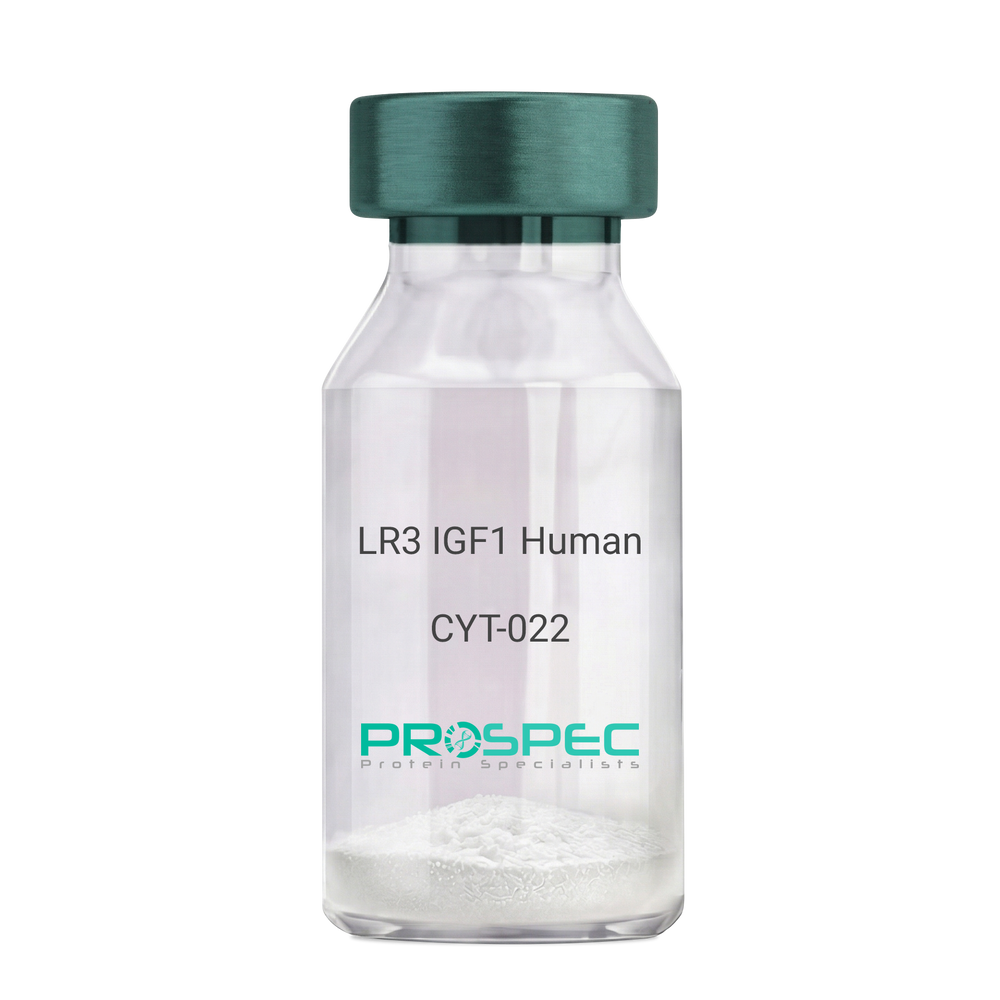
    IGF1 LR3 Human

    Description:

    LR3 Insulin Like Growth Factor-1 Human Recombinant

    R3 IGF1, R3 IGF-1, R3IGF1, R3IGF-1, LONG IGF1, LONG IGF-1, LONG R3 IGF1, LONG R3IGF1, LONG R3 IGF-1, LONG R3IGF-1.

    Product # :

    CYT-022

    Price :

    Quantity :

    Shipping Method :

    Room Temp Icon

    Shipped at Room temp

    Add To Cart

    More Info

    • description
    • source
    • formulation
    • purity
    • biological activity
    • More Info
    • sds-page

    Description

    The LR3 is a long-term analog of human IGF-1, specifically designed and manufactured for mammalian cell culture to support large-scale manufacturing of recombinant biopharmaceuticals. Recombinant Human LR3 Insulin Like Growth Factor-1 produced in E.Coli is a single, non-glycosylated, polypeptide chain containing 83 amino acids and having a molecular mass of 9.1kDa.

    Source

    Escherichia Coli.

    Formulation

    Lyophilized from a 0.2µm filtered concentrated solution in 20mM PB, pH 7.2.

    Purity

    Greater than 97.0% as determined by SDS-PAGE.

    Biological Activity

    The ED50 as determined by the stimulation of protein synthesis in L6 myoblasts is less than 10ng/ml, corresponding to a specific activity of 100,000units/mg.

    sds-page

    LR3 IGF1 sds-page - Product image 1

    More Info

    • Introduction

      IGF-1 (Insulin-like growth factor-1) is a major hormonal mediator of statural growth. Under regular circumstances, GH (growth hormone) binds to its receptor in the liver, and other tissues, and stimulates the synthesis/secretion of IGF-1. In target tissues, the Type 1 IGF receptor, that is homologous to the insulin receptor, is activated by IGF-1, leading to intracellular signaling which stimulates multiple processes leading to statural growth. IGF-1 metabolic actions are partly directed at stimulating the uptake of glucose, fatty acids, and amino acids so that metabolism supports growing tissues.

    • Synonyms

      R3 IGF1, R3 IGF-1, R3IGF1, R3IGF-1, LONG IGF1, LONG IGF-1, LONG R3 IGF1, LONG R3IGF1, LONG R3 IGF-1, LONG R3IGF-1.

    • Physical Appearance

      Sterile Filtered White lyophilized (freeze-dried) powder.

    • Stability

      Lyophilized LR3 IGF1 although stable at room temperature for 3 weeks, should be stored desiccated below -18°C. Upon reconstitution the LR3 IGF1 should be stored at 4°C between 2-7 days and for future use below -18°C.For long term storage it is recommended to add a carrier protein (0.1% HSA or BSA).Please prevent freeze-thaw cycles.

    • Solubility

      It is recommended to reconstitute the lyophilized LR3 IGF1 in sterile 18M-cm H2O at a concentration of 100µg/ml, which can then be further diluted to other aqueous solutions.

    • Amino Acid Sequence

      MFPAMPLSSLFVNGPRTLCGAELVDALQFVCGDRGFYFNKPTGYGSSSRRAPQTGIV DECCFRSCDLRRLEMYCAPLKPAKSA.

    • Background

      What is the molecular weight/Mw of IGF1 LR3 HUMAN Protein?
      IGF1 LR3 HUMAN Protein has a total Mw of 9.1kDa.

      What is the source or expression system of IGF1 LR3 HUMAN Protein?
      Escherichia Coli.

      What is the Purity of IGF1 LR3 HUMAN Protein?
      IGF1 LR3 HUMAN Protein is >98% pure as determined by SDS-PAGE.

      What is the Biological Activity of IGF1 LR3 HUMAN Protein?
      The ED50 as determined by the stimulation of protein synthesis in L6 myoblasts is less than 10ng/ml, corresponding to a specific activity of 100,000units/mg.

      What is the amino acid sequence of IGF1 LR3 HUMAN Protein?
      MFPAMPLSSLFVNGPRTLCGAELVDALQFVCGDRGFYFNKPTGYGSSSRRAPQTGIV DECCFRSCDLRRLEMYCAPLKPAKSA.

      What applications can IGF1 LR3 HUMAN Protein be used in?
      IGF1 LR3 HUMAN Protein can probably be used in western blot, ELISA and Lateral Flow.

      What is the endotoxin level for IGF1 LR3 HUMAN Protein?
      The endotoxin level is minimal, IGF1 LR3 HUMAN Protein was purified using conventional chromatography techniques.


    ProSpec's products are furnished for LABORATORY RESEARCH USE ONLY. The product may not be used as drugs, agricultural or pesticidal products, food additives or household chemicals.

    Long R3 Igf1 Human
  • View Data Sheet

    Name :

    GDF5 Mouse, His

    Description:

    Growth differentiation factor 5 Mouse Recombinant, His Tag

    Bmp-14, Bp, GDF-5, Bone morphogenetic protein 14, GDF5.

    Product # :

    CYT-852

    Price :

    Quantity :

    Shipping Method :

    Ice Icon

    Shipped with Ice Packs

    Add To Cart

    More Info

    • description
    • source
    • formulation
    • purity
    • More Info
    • sds-page

    Description

    GDF5 Mouse Recombinant produced in E.Coli is a single, non-glycosylated polypeptide chain containing 143 amino acids (376-495 a.a) and having a molecular mass of 16kDa.GDF5 is fused to a 23 amino acid His-tag at N-terminus & purified by proprietary chromatographic techniques.

    Source

    Escherichia Coli.

    Formulation

    GDF5 protein solution (0.5mg/ml) containing 20mM Tris-HCl buffer (pH 8.0) and 10% glycerol.

    Purity

    Greater than 90.0% as determined by SDS-PAGE.

    sds-page

    GDF5-sds-page - Product image 1

    More Info

    • Introduction

      GDF-5 is a member of the bone morphogenetic protein (BMP) family and the TGF-beta superfamily. This group of proteins is characterized by a polybasic proteolytic processing site which is cleaved to produce a mature protein containing seven conserved cysteine residues. The members of this family are regulators of cell growth and differentiation in both embryonic and adult tissues. Mutations in this gene are associated with acromesomelic dysplasia, Hunter-Thompson type; brachydactyly, type C; and chondrodysplasia, Grebe type. These associations confirm that the gene product plays a role in skeletal development.

    • Synonyms

      Bmp-14, Bp, GDF-5, Bone morphogenetic protein 14, GDF5.

    • Physical Appearance

      Sterile Filtered colorless solution.

    • Stability

      Store at 4°C if entire vial will be used within 2-4 weeks. Store, frozen at -20°C for longer periods of time. For long term storage it is recommended to add a carrier protein (0.1% HSA or BSA).Avoid multiple freeze-thaw cycles.

    • Amino Acid Sequence

      MGSSHHHHHH SSGLVPRGSH MGSAPLANRQ GKRPSKNLKA RCSRKALHVN FKDMGWDDWI IAPLEYEAFH CEGLCEFPLR SHLEPTNHAV IQTLMNSMDP ESTPPTCCVP TRLSPISILF IDSANNVVYK QYEDMVVESC GCR.

    • Background

      What is the molecular weight/Mw of GDF5 MOUSE Protein?
      GDF5 MOUSE Protein has a total Mw of 16kDa.

      What is the source or expression system of GDF5 MOUSE Protein?
      Escherichia Coli.

      What is the Purity of GDF5 MOUSE Protein?
      GDF5 MOUSE Protein is >90% pure as determined by SDS-PAGE.

      What is the Biological Activity of GDF5 MOUSE Protein?
      The biological functionality of GDF5 MOUSE Protein will be determined in the future.

      What is the amino acid sequence of GDF5 MOUSE Protein?
      MGSSHHHHHH SSGLVPRGSH MGSAPLANRQ GKRPSKNLKA RCSRKALHVN FKDMGWDDWI IAPLEYEAFH CEGLCEFPLR SHLEPTNHAV IQTLMNSMDP ESTPPTCCVP TRLSPISILF IDSANNVVYK QYEDMVVESC GCR.

      What applications can GDF5 MOUSE Protein be used in?
      GDF5 MOUSE Protein can probably be used in western blot, ELISA and Lateral Flow.

      What is the endotoxin level for GDF5 MOUSE Protein?
      The endotoxin level is minimal, GDF5 MOUSE Protein was purified using conventional chromatography techniques.

    ProSpec's products are furnished for LABORATORY RESEARCH USE ONLY. The product may not be used as drugs, agricultural or pesticidal products, food additives or household chemicals.

    Gdf5 Mouse
  • View Data Sheet

    Name :

    PRPS1 Antibody

    Description:

    Phosphoribosyl Pyrophosphate Synthetase 1, Mouse Anti Human

    ARTS, CMTX5, PPRibP, PRSI, DFN2, Ribose-phosphate pyrophosphokinase 1, DFNX1, Phosphoribosyl pyrophosphate synthase I, PRS-I, PRPS1, KIAA0967.

    Product # :

    ANT-503

    Price :

    Quantity :

    Shipping Method :

    Ice Icon

    Shipped with Ice Packs

    Add To Cart

    More Info

    • formulation
    • More Info

    Formulation

    1mg/ml containing PBS, pH-7.4, 10% Glycerol and 0.02% Sodium Azide.

    More Info

    • Introduction

      PRPS1 catalyzes the synthesis of phosphoribosylpyrophosphate (PRPP) that is essential for nucleotide synthesis. PRPS1 catalyzes the phosphoribosylation of ribose 5-phosphate to 5-phosphoribosyl-1-pyrophosphate, which is essential for purine metabolism and nucleotide biosynthesis. Defects in PRPS1 result in phosphoribosylpyrophosphate synthetase superactivity, Charcot-Marie-Tooth disease X-linked recessive type 5 and Arts Syndrome.

    • Synonyms

      ARTS, CMTX5, PPRibP, PRSI, DFN2, Ribose-phosphate pyrophosphokinase 1, DFNX1, Phosphoribosyl pyrophosphate synthase I, PRS-I, PRPS1, KIAA0967.

    • Physical Appearance

      Sterile filtered colorless solution.

    • Immunogen

      Anti-human PRPS1 mAb, clone PAT1E11AT, is derived from hybridization of mouse F0 myeloma cells with spleen cells from BALB/c mice immunized with a recombinant human PRPS1 protein 1-318 amino acids purified from E. coli.

    • Ig Subclass

      Mouse IgG2a heavy chain and k light chain.

    • Clone

      PAT1E11AT.

    • Applications

      The antibody has been tested by ELISA, Western blot analysis to assure specificity and reactivity. Since application varies, however, each investigation should be titrated by the reagent to obtain optimal results. Recommended starting dilution is 1:1000.

    • Type

      Mouse Anti Human Monoclonal.

    • Storage Procedures

      For periods up to 1 month store at 4°C, for longer periods of time, store at -20°C. Prevent freeze thaw cycles.

    • Purification Method

      PRPS1 antibody was purified from mouse ascitic fluids by protein-A affinity chromatography.

    ProSpec's products are furnished for LABORATORY RESEARCH USE ONLY. The product may not be used as drugs, agricultural or pesticidal products, food additives or household chemicals.

    Prps1 Antibody
  • View Data Sheet

    Name :

    HDDC3 Human

    Description:

    HD domain containing 3 Human Recombinant

    Guanosine-3',5'-bis(diphosphate) 3'-pyrophosphohydrolase MESH1, HD domain-containing protein 3, Metazoan SpoT homolog 1, MESH1, Penta-phosphate guanosine-3'-pyrophosphohydrolase, (ppGpp)ase, HDDC3.

    Product # :

    ENZ-184

    Price :

    Quantity :

    Shipping Method :

    Ice Icon

    Shipped with Ice Packs

    Add To Cart

    More Info

    • description
    • source
    • formulation
    • purity
    • More Info

    Description

    HDDC3 Human Recombinant produced in E.coli is a single, non-glycosylated polypeptide chain containing 160 amino acids (1-140) and having a molecular mass of 17.9kDa.HDDC3 is fused to a 20 amino acid His-tag at N-terminus & purified by proprietary chromatographic techniques.

    Source

    Escherichia Coli.

    Formulation

    The HDDC3 solution (0.5mg/ml) contains 20mM Tris-HCl buffer (pH8.0), 40% glycerol, 0.15M NaCl and 1mM DTT.

    Purity

    Greater than 90.0% as determined by SDS-PAGE.

    More Info

    • Introduction

      Guanosine-3',5'-bis(diphosphate)-pyrophosphohydrolase MESH1 (HDDC3) contains an active site for ppGpp hydrolysis and a conserved His-Asp-box motif for Mn(2+) binding. In accordance with its structure, HDDC3 effectively catalyzes the hydrolysis of guanosine 3',5'-diphosphate (ppGpp) both in vitro and in vivo. In addition, HDDC3 suppresses SpoT-deficient lethality and RelA-induced delayed cell growth in bacteria.

    • Synonyms

      Guanosine-3',5'-bis(diphosphate) 3'-pyrophosphohydrolase MESH1, HD domain-containing protein 3, Metazoan SpoT homolog 1, MESH1, Penta-phosphate guanosine-3'-pyrophosphohydrolase, (ppGpp)ase, HDDC3.

    • Physical Appearance

      Sterile Filtered colorless solution.

    • Stability

      Store at 4°C if entire vial will be used within 2-4 weeks.Store, frozen at -20°C for longer periods of time. For long term storage it is recommended to add a carrier protein (0.1% HSA or BSA).Avoid multiple freeze-thaw cycles.

    • Amino Acid Sequence

      MGSSHHHHHH SSGLVPRGSH MGSEAAQLLE AADFAARKHR QQRRKDPEGT PYINHPIGVA RILTHEAGIT DIVVLQAALL HDTVEDTDTT LDEVELHFGA QVRRLVEEVT DDKTLPKLER KRLQVEQAPH SSPGAKLVKL ADKLYNLRDL NRCTPEVKIQ.

    ProSpec's products are furnished for LABORATORY RESEARCH USE ONLY. The product may not be used as drugs, agricultural or pesticidal products, food additives or household chemicals.

    Hddc3 Human
  • View Data Sheet

    Name :

    MPST Human

    Description:

    Mercaptopyruvate Sulfurtransferase Human Recombinant

    3-mercaptopyruvate sulfurtransferase, MST, MPST, TST2.

    Product # :

    ENZ-676

    Price :

    Quantity :

    Shipping Method :

    Ice Icon

    Shipped with Ice Packs

    Add To Cart

    More Info

    • description
    • source
    • formulation
    • purity
    • More Info

    Description

    MPST Human Recombinant produced in E.coli is a single, non-glycosylated polypeptide chain containing 321 amino acids (1-297) and having a molecular mass of 35kDa.MPST is fused to a 24 amino acid His-tag at N-terminus & purified by proprietary chromatographic techniques.

    Source

    Escherichia Coli.

    Formulation

    The MPST solution (0.5mg/ml) contains 20mM Tris-HCl buffer (pH 8.0), 0.15M NaCl, 20% glycerol and 1mM DTT.

    Purity

    Greater than 95.0% as determined by SDS-PAGE.

    More Info

    • Introduction

      Mercaptopyruvate Sulfurtransferase (MPST) catalyzes the transfer of a sulfur ion from 3-mercaptopyruvate to cyanide or other thiol compounds. MPST might be involved in cysteine degradation and cyanide detoxification. The MPST enzyme is regulated by oxidative stress and thioredoxin. In oxidative stress conditions, the catalytic cysteine site is transformed to a sulfenate which inhibits the MPST enzyme activity. The reduced thioredoxin cleaves an intersubunit disulfide bond to activate the redox switch and reactivate the enzyme. A deficiency in MPST activity is implicated in a rare inheritable condition known as MCDU (mercaptolactate-cysteine disulfiduria).

    • Synonyms

      3-mercaptopyruvate sulfurtransferase, MST, MPST, TST2.

    • Physical Appearance

      Sterile Filtered clear solution.

    • Stability

      Store at 4°C if entire vial will be used within 2-4 weeks. Store, frozen at -20°C for longer periods of time. For long term storage it is recommended to add a carrier protein (0.1% HSA or BSA).Avoid multiple freeze-thaw cycles.

    • Amino Acid Sequence

      MGSSHHHHHH SSGLVPRGSH MGSHMASPQL CRALVSAQWV AEALRAPRAG QPLQLLDASW YLPKLGRDAR REFEERHIPG AAFFDIDQCS DRTSPYDHML PGAEHFAEYA GRLGVGAATH VVIYDASDQG LYSAPRVWWM FRAFGHHAVS LLDGGLRHWL RQNLPLSSGK SQPAPAEFRA QLDPAFIKTY EDIKENLESR RFQVVDSRAT GRFRGTEPEP RDGIEPGHIP GTVNIPFTDF LSQEGLEKSP EEIRHLFQEK KVDLSKPLVA TCGSGVTACH VALGAYLCGK PDVPIYDGSW VEWYMRARPE DVISEGRGKT H.

    ProSpec's products are furnished for LABORATORY RESEARCH USE ONLY. The product may not be used as drugs, agricultural or pesticidal products, food additives or household chemicals.

    Mpst Human
  • View Data Sheet

    Name :

    HPGDS Human

    Description:

    Hematopoietic Prostaglandin D Synthase Human Recombinant

    Hematopoietic prostaglandin D synthase, H-PGDS, GST class-sigma, Glutathione S-transferase, Glutathione-dependent PGD synthase, Glutathione-requiring prostaglandin D synthase, Prostaglandin-H2 D-isomerase, HPGDS, GSTS, PGDS, PTGDS2GSTS, PGD2, GSTS1-1.

    Product # :

    ENZ-616

    Price :

    Quantity :

    Shipping Method :

    Ice Icon

    Shipped with Ice Packs

    Add To Cart

    More Info

    • description
    • source
    • formulation
    • purity
    • More Info

    Description

    HPGDS Human Recombinant produced in E.Coli is a single, non-glycosylated polypeptide chain containing 223 amino acids (1-199 a.a.) and having a molecular mass of 25.9kDa.HPGDS is fused to a 24 amino acid His-tag at N-terminus & purified by proprietary chromatographic techniques.

    Source

    Escherichia Coli.

    Formulation

    HPGDS protein solution (1mg/ml) containing 20mM Tris-HCl buffer (pH8.0), 10% glycerol, 0.15M NaCl and 1mM DTT.

    Purity

    Greater than 95.0% as determined by SDS-PAGE.

    More Info

    • Introduction

      Hematopoietic Prostaglandin D Synthase (HPGDS) belongs to the sigma class glutathione-S-transferase family. The HPGDS enzyme catalyzes the conversion of PGH2 to PGD2 and has a role in the production of prostanoids in the immune system and mast cells. The presence of the HPGDS enzyme can be utilized to identify the differentiation stage of human megakaryocytes. Furthermore, HPGDS is a prostaglandin involved in smooth muscle contraction/relaxation and an effective inhibitor of platelet aggregation, and the conjugation of glutathione with a extensive range of aryl halides and organic isothiocyanates. In addition, HPGDS displays low glutathione-peroxidase activity towards cumene hydroperoxide. HPGDS is expressed in a number of megakaryocytic cell lines but not in platelets. HPGDS is highly expressed in the adipose tissue, macrophages and placenta; however it is expressed at lower levels in the lung, heart, lymph nodes, appendix, bone marrow and fetal liver.

    • Synonyms

      Hematopoietic prostaglandin D synthase, H-PGDS, GST class-sigma, Glutathione S-transferase, Glutathione-dependent PGD synthase, Glutathione-requiring prostaglandin D synthase, Prostaglandin-H2 D-isomerase, HPGDS, GSTS, PGDS, PTGDS2GSTS, PGD2, GSTS1-1.

    • Physical Appearance

      Sterile Filtered colorless solution.

    • Stability

      Store at 4°C if entire vial will be used within 2-4 weeks. Store, frozen at -20°C for longer periods of time. For long term storage it is recommended to add a carrier protein (0.1% HSA or BSA).Avoid multiple freeze-thaw cycles.

    • Amino Acid Sequence

      MGSSHHHHHH SSGLVPRGSH MGSHMPNYKL TYFNMRGRAE IIRYIFAYLD IQYEDHRIEQ ADWPEIKSTL PFGKIPILEV DGLTLHQSLA IARYLTKNTD LAGNTEMEQC HVDAIVDTLD DFMSCFPWAE KKQDVKEQMF NELLTYNAPH LMQDLDTYLG GREWLIGNSV TWADFYWEIC
      STTLLVFKPD LLDNHPRLVT LRKKVQAIPA VANWIKRRPQ TKL.

    ProSpec's products are furnished for LABORATORY RESEARCH USE ONLY. The product may not be used as drugs, agricultural or pesticidal products, food additives or household chemicals.

    Hpgds Human
  • View Data Sheet

    Name :

    NFU1 Human

    Description:

    NFU1 Human Recombinant

    CGI-33, HIRIP, HIRIP5, MMDS1, Nfu, NifU, NIFUC, NFU1 iron-sulfur cluster scaffold homolog, mitochondrial, HIRA-interacting protein 5.

    Product # :

    PRO-2129

    Price :

    Quantity :

    Shipping Method :

    Ice Icon

    Shipped with Ice Packs

    Add To Cart

    More Info

    • description
    • source
    • formulation
    • purity
    • More Info

    Description

    NFU1 Human Recombinant produced in E.Coli is a single, non-glycosylated polypeptide chain containing 268 amino acids (10-254 a.a) and having a molecular mass of 29.9kDa.NFU1 is fused to a 23 amino acid His-tag at N-terminus & purified by proprietary chromatographic techniques.

    Source

    Escherichia Coli.

    Formulation

    NFU1 protein solution (0.5mg/ml) containing Phosphate buffer saline (pH 7.4), 20% glycerol and 1mM DTT.

    Purity

    Greater than 90.0% as determined by SDS-PAGE.

    More Info

    • Introduction

      NFU1 is a protein which is localized to mitochondria and plays a vital role in iron-sulfur cluster biogenesis. The NFU1 protein constructs and transfers 4Fe-4S clusters to target apoproteins including succinate dehydrogenase and lipoic acid synthase. NFU1 gene mutations cause multiple mitochondrial dysfunctions syndrome-1, and pseudogenes of the NFU1 gene are located on the short arms of chromosomes 1 and 3.

    • Synonyms

      CGI-33, HIRIP, HIRIP5, MMDS1, Nfu, NifU, NIFUC, NFU1 iron-sulfur cluster scaffold homolog, mitochondrial, HIRA-interacting protein 5.

    • Physical Appearance

      Sterile Filtered clear solution.

    • Stability

      Store at 4°C if entire vial will be used within 2-4 weeks. Store, frozen at -20°C for longer periods of time. For long term storage it is recommended to add a carrier protein (0.1% HSA or BSA).Avoid multiple freeze-thaw cycles.

    • Amino Acid Sequence

      MGSSHHHHHH SSGLVPRGSH MGSGAAAVAA GLRRRFCHML KNPYTIKKQP LHQFVQRPLF PLPAAFYHPV RYMFIQTQDT PNPNSLKFIP GKPVLETRTM DFPTPAAAFR SPLARQLFRI EGVKSVFFGP DFITVTKENE ELDWNLLKPD IYATIMDFFA SGLPLVTEET PSGEAGSEED DEVVAMIKEL LDTRIRPTVQ EDGGDVIYKG FEDGIVQLKL QGSCTSCPSS IITLKNGIQN MLQFYIPEVE GVEQVMDDES DEKEANSP.

    ProSpec's products are furnished for LABORATORY RESEARCH USE ONLY. The product may not be used as drugs, agricultural or pesticidal products, food additives or household chemicals.

    Nfu1 Human
  • View Data Sheet

    Name :

    IDI2 Human

    Description:

    Isopentenyl-Diphosphate Delta Isomerase 2 Human Recombinant

    Isopentenyl-diphosphate Delta-isomerase 2, Isopentenyl pyrophosphate isomerase 2, IPP isomerase 2, IPPI2, IDI2.

    Product # :

    ENZ-107

    Price :

    Quantity :

    Shipping Method :

    Ice Icon

    Shipped with Ice Packs

    Add To Cart

    More Info

    • description
    • source
    • formulation
    • purity
    • More Info

    Description

    IDI2 produced in E.Coli is a single, non-glycosylated polypeptide chain containing 247 amino acids (1-227 a.a.) and having a molecular mass of 28.9kDa.IDI2 is fused to a 20 amino acid His-tag at N-terminus & purified by proprietary chromatographic techniques.

    Source

    Escherichia Coli.

    Formulation

    IDI2 solution (0.5mg/ml) containing 20mM Tris-HCl buffer (pH8.0), 10% glycerol, 1mM DTT and 0.1mM PMSF.

    Purity

    Greater than 80.0% as determined by SDS-PAGE.

    More Info

    • Introduction

      Isopentenyl-diphosphate Delta-isomerase 2 (IDI2) is a member of the IPP isomerase type 1 family. IDI2 catalyzes the 1,3-allylic reorganization of the homoallylic substrate isopentenyl (IPP) to its extremely electrophilic allylic isomer, dimethylallyl diphosphate (DMAPP).

    • Synonyms

      Isopentenyl-diphosphate Delta-isomerase 2, Isopentenyl pyrophosphate isomerase 2, IPP isomerase 2, IPPI2, IDI2.

    • Physical Appearance

      Sterile filtered colorless solution.

    • Stability

      Store at 4°C if entire vial will be used within 2-4 weeks. Store, frozen at -20°C for longer periods of time. For long term storage it is recommended to add a carrier protein (0.1% HSA or BSA).Avoid multiple freeze-thaw cycles.

    • Amino Acid Sequence

      MGSSHHHHHH SSGLVPRGSH MSDINLDWVD RRQLQRLEEM LIVVDENDKV IGADTKRNCH LNENIEKGLL HRAFSVVLFN TKNRILIQQR SDTKVTFPGY FTDSCSSHPL YNPAELEEKD AIGVRRAAQR RLQAELGIPG EQISPEDIVF MTIYHHKAKS DRIWGEHEIC YLLLVRKNVT LNPDPSETKS ILYLSQEELW ELLEREARGE VKVTPWLRTI AERFLYRWWP HLDDVTPFVE LHKIHRV.

    ProSpec's products are furnished for LABORATORY RESEARCH USE ONLY. The product may not be used as drugs, agricultural or pesticidal products, food additives or household chemicals.

    Idi2 Human
  • View Data Sheet

    Name :

    ASPA Human, His

    Description:

    Aspartoacylase Human Recombinant, His Tag

    Aspartoacylase, Aminoacylase-2, ACY-2, ASPA, ACY2, ASP.

    Product # :

    ENZ-572

    Price :

    Quantity :

    Shipping Method :

    Ice Icon

    Shipped with Ice Packs

    Add To Cart

    More Info

    • description
    • source
    • formulation
    • purity
    • More Info

    Description

    ASPA Human Recombinant produced in E.coli is a single, non-glycosylated polypeptide chain containing 336 amino acids (1-313) and having a molecular mass of 38.1kDa.ASPA is fused to a 23 amino acid His-tag at N-terminus & purified by proprietary chromatographic techniques.

    Source

    Escherichia Coli.

    Formulation

    The ASPA solution (0.5mg/ml) contains 20mM Tris-HCl buffer (pH8.0), 20% glycerol, 1mM DTT, 0.1M NaCl and 0.1mM PMSF.

    Purity

    Greater than 90% as determined by SDS-PAGE.

    More Info

    • Introduction

      Aspartoacylase is a homodimer which catalyzes the deacetylation of N-acetylaspartic acid (NAA) (a protein whose hydrolysis is crucial to maintenance of intact white matter) to generate acetate and L-aspartate. Aspartoacylase (ASPA) is expressed in the liver, lung and kidney tissue, as well as in the skeletal muscle and in cerebral white matter. NAA is ample in the brain where hydrolysis by aspartoacylase is believed to aid maintain white matter. In other tissues ASPA functions as a scavenger of NAA from body fluids. ASPA gene mutations cause Canavan disease (CAND or spongy degeneration of the brain).

    • Synonyms

      Aspartoacylase, Aminoacylase-2, ACY-2, ASPA, ACY2, ASP.

    • Physical Appearance

      Sterile Filtered clear solution.

    • Stability

      Store at 4°C if entire vial will be used within 2-4 weeks. Store, frozen at -20°C for longer periods of time. For long term storage it is recommended to add a carrier protein (0.1% HSA or BSA).Avoid multiple freeze-thaw cycles.

    • Amino Acid Sequence

      MGSSHHHHHH SSGLVPRGSH MGSMTSCHIA EEHIQKVAIF GGTHGNELTG VFLVKHWLEN GAEIQRTGLE VKPFITNPRA VKKCTRYIDC DLNRIFDLEN LGKKMSEDLP YEVRRAQEIN HLFGPKDSED SYDIIFDLHN TTSNMGCTLI LEDSRNNFLI QMFHYIKTSL APLPCYVYLI
      EHPSLKYATT RSIAKYPVGI EVGPQPQGVL RADILDQMRK MIKHALDFIH HFNEGKEFPP CAIEVYKIIE KVDYPRDENG EIAAIIHPNL QDQDWKPLHP GDPMFLTLDG KTIPLGGDCT VYPVFVNEAA YYEKKEAFAK TTKLTLNAKS IRCCLH.

    ProSpec's products are furnished for LABORATORY RESEARCH USE ONLY. The product may not be used as drugs, agricultural or pesticidal products, food additives or household chemicals.

    Aspa Human
  • View Data Sheet

    Name :

    ATG4B Human

    Description:

    ATG4 Autophagy Related 4 Homolog B Human Recombinant

    Cysteine protease ATG4B, AUT-like 1 cysteine endopeptidasem, Autophagin-1, Autophagy-related cysteine endopeptidase 1, Autophagy-related protein 4 homolog B, hAPG4B, ATG4B, APG4B, AUTL1, KIAA0943.

    Product # :

    PRO-1048

    Price :

    Quantity :

    Shipping Method :

    Ice Icon

    Shipped with Ice Packs

    Add To Cart

    More Info

    • description
    • source
    • formulation
    • purity
    • More Info

    Description

    ATG4B Human Recombinant produced in E.Coli is a single, non-glycosylated polypeptide chain containing 401 amino acids (1-393 a.a.) and having a molecular mass of 45.4kDa.ATG4B is fused to an 8 amino acid His-tag at C-terminus & purified by proprietary chromatographic techniques.

    Source

    Escherichia Coli.

    Formulation

    ATG4B protein solution (0.5mg/ml) containing 20mM Tris-HCl buffer (pH8.0), 20% glycerol, 1mM DTT and 0.1mM PMSF.

    Purity

    Greater than 90.0% as determined by SDS-PAGE.

    More Info

    • Introduction

      Cysteine protease ATG4B (ATG4B) belongs to the autophagin protein family. Autophagy is the manner by which endogenous proteins and damaged organelles are destroyed intracellularly. Autophagy is vital for cell homeostasis and cell remodeling during differentiation, metamorphosis, non-apoptotic cell death, and aging. ATG4B is a cysteine protease necessary for autophagy, which cleaves the C-terminal part of either MAP1LC3, GABARAPL2 or GABARAP, allowing the liberation of form I. A subpopulation of form I is then transformed to a smaller form (form II). Form II, with an exposed C-terminal glycine, is deemed to be the phosphatidylethanolamine (PE)-conjugated form, and is capable of binding to autophagosomes. Reduced levels of autophagy are seen in some malignant tumors; therefore autophagy may have a role in controlling the unregulated cell growth linked to cancer.

    • Synonyms

      Cysteine protease ATG4B, AUT-like 1 cysteine endopeptidasem, Autophagin-1, Autophagy-related cysteine endopeptidase 1, Autophagy-related protein 4 homolog B, hAPG4B, ATG4B, APG4B, AUTL1, KIAA0943.

    • Physical Appearance

      Sterile Filtered clear solution.

    • Stability

      Store at 4°C if entire vial will be used within 2-4 weeks. Store, frozen at -20°C for longer periods of time. For long term storage it is recommended to add a carrier protein (0.1% HSA or BSA).Avoid multiple freeze-thaw cycles.

    • Amino Acid Sequence

      MDAATLTYDT LRFAEFEDFP ETSEPVWILG RKYSIFTEKD EILSDVASRL WFTYRKNFPA IGGTGPTSDT GWGCMLRCGQ MIFAQALVCR HLGRDWRWTQ RKRQPDSYFS VLNAFIDRKD SYYSIHQIAQ MGVGEGKSIG QWYGPNTVAQ VLKKLAVFDT WSSLAVHIAM DNTVVMEEIR RLCRTSVPCA GATAFPADSD RHCNGFPAGA EVTNRPSPWR PLVLLIPLRL GLTDINEAYV ETLKHCFMMP QSLGVIGGKP NSAHYFIGYV GEELIYLDPH TTQPAVEPTD GCFIPDESFH CQHPPCRMSI AELDPSIAVG FFCKTEDDFN DWCQQVKKLS LLGGALPMFE LVEQQPSHLA CPDVLNLSLD SSDVERLERF FDSEDEDFEI LSLLEHHHHH H.

    ProSpec's products are furnished for LABORATORY RESEARCH USE ONLY. The product may not be used as drugs, agricultural or pesticidal products, food additives or household chemicals.

    Atg4B Human
  • View Data Sheet

    Name :

    NMT2 Human

    Description:

    N-Myristoyltransferase 2 Human Recombinant

    Glycylpeptide N-tetradecanoyltransferase 2, Myristoyl-CoA:protein N-myristoyltransferase 2, NMT 2, Peptide N-myristoyltransferase 2, Type II N-myristoyltransferase, NMT2.

    Product # :

    ENZ-068

    Price :

    Quantity :

    Shipping Method :

    Ice Icon

    Shipped with Ice Packs

    Add To Cart

    More Info

    • description
    • source
    • formulation
    • purity
    • More Info

    Description

    NMT2 Human Recombinant fused with a 20 amino acid His tag at N-terminus produced in E.Coli is a single, non-glycosylated, polypeptide chain containing 518 amino acids (1-498 a.a.) and having a molecular mass of 59.1kDa. The NMT2 is purified by proprietary chromatographic techniques.

    Source

    Escherichia Coli.

    Formulation

    The NMT2 solution (1 mg/ml) contains 20mM Tris-HCl buffer (pH 8.0), 10% glycerol, 2mM DTT and 0.1M NaCl.

    Purity

    Greater than 85.0% as determined by SDS-PAGE.

    More Info

    • Introduction

      Glycylpeptide N-tetradecan-oyltransferases 2 (NMT2) is a cytoplasmic protein which is a member of the NMT family of proteins. The proteins in the NMT family catalyze the addition of a myristoyl group to the N-terminal glycine residue of eukaryotic, fungal and viral proteins. These proteins are mostly detected in the heart, gut, kidney, liver and placenta. NMT catalyzes the reaction of N-terminal myristoylation of various signaling proteins. NMT transfers myristic acid from myristoyl coenzyme A to the amino group of a protein's N-terminal glycine residue. There are several distinct NMTs which vary in the molecular weight and /or subcellular distribution.

    • Synonyms

      Glycylpeptide N-tetradecanoyltransferase 2, Myristoyl-CoA:protein N-myristoyltransferase 2, NMT 2, Peptide N-myristoyltransferase 2, Type II N-myristoyltransferase, NMT2.

    • Physical Appearance

      Sterile Filtered colorless solution.

    • Stability

      Store at 4°C if entire vial will be used within 2-4 weeks. Store, frozen at -20°C for longer periods of time. For long term storage it is recommended to add a carrier protein (0.1% HSA or BSA).Please prevent freeze-thaw cycles.

    • Amino Acid Sequence

      MGSSHHHHHH SSGLVPRGSH MAEDSESAAS QQSLELDDQD TCGIDGDNEE ETEHAKGSPG GYLGAKKKKK KQKRKKEKPN SGGTKSDSAS DSQEIKIQQP SKNPSVPMQK LQDIQRAMEL LSACQGPARN IDEAAKHRYQ FWDTQPVPKL DEVITSHGAI EPDKDNVRQE PYSLPQGFMW DTLDLSDAEV LKELYTLLNE NYVEDDDNMF RFDYSPEFLL WALRPPGWLL QWHCGVRVSS NKKLVGFISA IPANIRIYDS VKKMVEINFL CVHKKLRSKR VAPVLIREIT RRVNLEGIFQ AVYTAGVVLP KPIATCRYWH RSLNPKKLVE VKFSHLSRNM TLQRTMKLYR LPDVTKTSGL RPMEPKDIKS VRELINTYLK QFHLAPVMDE EEVAHWFLPR EHIIDTFVVE SPNGKLTDFL SFYTLPSTVM HHPAHKSLKA AYSFYNIHTE TPLLDLMSDA LILAKSKGFD VFNALDLMEN KTFLEKLKFG IGDGNLQYYL YNWRCPGTDS EKVGLVLQ.

    ProSpec's products are furnished for LABORATORY RESEARCH USE ONLY. The product may not be used as drugs, agricultural or pesticidal products, food additives or household chemicals.

    Nmt2 Human
  • View Data Sheet

    Name :

    SPARC Mouse

    Description:

    Secreted Protein Acidic & Rich in Cysteine Mouse Recombinant

    Osteonectin, ON, Basement-membrane protein 40, BM-40, SPARC, Secreted Protein acidic and Rich in Cysteine

    Product # :

    PRO-2658

    Price :

    Quantity :

    Shipping Method :

    Ice Icon

    Shipped with Ice Packs

    Add To Cart

    More Info

    • description
    • source
    • formulation
    • purity
    • More Info

    Description

    SPARC Mouse Recombinant produced in Sf9 Baculovirus cells is a single, glycosylated polypeptide chain containing 291 amino acids (18-302a.a) and having a molecular mass of 33.3kDa.SPARC is fused to a 6 amino acid His-tag at C-terminus & purified by proprietary chromatographic techniques.

    Source

    Sf9, Baculovirus cells.

    Formulation

    The SPARC solution (0.25mg/ml) contains Phosphate-Buffered Saline (pH 7.4) and 10% glycerol.

    Purity

    Greater than 95.0% as determined by SDS-PAGE.

    More Info

    • Introduction

      Secreted Protein Acidic & Rich in Cysteine (SPARC) protein is coded by the SPARC gene in humans. SPARC is a glycoprotein located in bones that binds to calcium. SPARC is produced by fibroblasts, capillary endothelial cells, platelets and macrophages, mainly in areas of tissue morphogenesis and remodelling. Asides from calcium, SPARC can also bind to collagen.

    • Synonyms

      Osteonectin, ON, Basement-membrane protein 40, BM-40, SPARC, Secreted Protein acidic and Rich in Cysteine

    • Physical Appearance

      Sterile Filtered colorless solution.

    • Stability

      Store at 4°C if entire vial will be used within 2-4 weeks. Store, frozen at -20°C for longer periods of time. For long term storage it is recommended to add a carrier protein (0.1% HSA or BSA).Avoid multiple freeze-thaw cycles.

    • Amino Acid Sequence

      APQQTEVAEE IVEEETVVEE TGVPVGANPV QVEMGEFEDG AEETVEEVVA DNPCQNHHCK HGKVCELDES NTPMCVCQDP TSCPAPIGEF EKVCSNDNKT FDSSCHFFAT KCTLEGTKKG HKLHLDYIGP CKYIAPCLDS ELTEFPLRMR DWLKNVLVTL YERDEGNNLL TEKQKLRVKK IHENEKRLEA GDHPVELLAR DFEKNYNMYI FPVHWQFGQL DQHPIDGYLS HTELAPLRAP LIPMEHCTTR FFETCDLDND KYIALEEWAG CFGIKEQDIN KDLVIHHHHH H

    ProSpec's products are furnished for LABORATORY RESEARCH USE ONLY. The product may not be used as drugs, agricultural or pesticidal products, food additives or household chemicals.

    Sparc Mouse
  • View Data Sheet

    Name :

    SPINK1 Human

    Description:

    Serine Peptidase Inhibitor Kazal Type 1 Human Recombinant

    Serine Peptidase Inhibitor Kazal Type 1, Pancreatic Secretory Trypsin Inhibitor, Tumor-Associated Trypsin Inhibitor, PCTT, TATI, Spink3, Serine Protease Inhibitor Kazal Type 1, TCP, PSTI.

    Product # :

    ENZ-724

    Price :

    Quantity :

    Shipping Method :

    Ice Icon

    Shipped with Ice Packs

    Add To Cart

    More Info

    • description
    • source
    • formulation
    • purity
    • More Info

    Description

    SPINK1 Human Recombinant produced in E.coli is a single, non-glycosylated polypeptide chain containing 79 amino acids (24-79) and having a molecular mass of 8.6kDa.SPINK1 is fused to a 23 amino acid His-tag at N-terminus & purified by proprietary chromatographic techniques.

    Source

    Escherichia Coli.

    Formulation

    The SPINK1 solution (0.5mg/ml) contains 20mM Tris-HCl buffer (pH 8.0), 0.15M NaCl, 1mM DTT and 20% glycerol.

    Purity

    Greater than 90% as determined by SDS-PAGE.

    More Info

    • Introduction

      Trypsin inhibitor SPINK1 is secreted from pancreatic acinar cells into pancreatic fluid. SPINK1 has a role in inhibition of trypsin-catalyzed premature initiation of zymogens in the pancreas and the pancreatic duct. Alterations in SPINK1 gene are the cause for tropical calcific and pancreatitis hereditary pancreatitis.

    • Synonyms

      Serine Peptidase Inhibitor Kazal Type 1, Pancreatic Secretory Trypsin Inhibitor, Tumor-Associated Trypsin Inhibitor, PCTT, TATI, Spink3, Serine Protease Inhibitor Kazal Type 1, TCP, PSTI.

    • Physical Appearance

      Sterile Filtered clear solution.

    • Stability

      Store at 4°C if entire vial will be used within 2-4 weeks. Store, frozen at -20°C for longer periods of time. For long term storage it is recommended to add a carrier protein (0.1% HSA or BSA).Avoid multiple freeze-thaw cycles.

    • Amino Acid Sequence

      MGSSHHHHHH SSGLVPRGSH MGSDSLGREA KCYNELNGCT KIYDPVCGTD GNTYPNECVL CFENRKRQTS ILIQKSGPC.

    ProSpec's products are furnished for LABORATORY RESEARCH USE ONLY. The product may not be used as drugs, agricultural or pesticidal products, food additives or household chemicals.

    Spink1 Human
  • View Data Sheet

    Name :

    SSBP1

    Description:

    Single-Stranded DNA Binding Protein 1 Sulfolobus solfataricus Recombinant

    Mt-SSB, mtSSB, SOSS-B1, SSBP, PWP1-interacting protein 17, Single-stranded DNA-binding protein, mitochondrial.

    Product # :

    PRO-359

    Price :

    Quantity :

    Shipping Method :

    Ice Icon

    Shipped with Ice Packs

    Add To Cart

    More Info

    • description
    • source
    • formulation
    • purity
    • More Info

    Description

    Recombinant Sulfolobus solfataricus Single-Stranded DNA Binding Protein 1 produced in E.coli cells is a non-glycosylated, homodimeric protein containing 148 amino acids and having a molecular mass of 16.1kDa. The SSBP1 is purified by proprietary chromatographic techniques.

    Source

    Escherichia Coli.

    Formulation

    SSBP1 is a 0.2µm filtered concentrated solution which contains 20mM Tris, pH 7.4, 200mM NaCl, 1mM EDTA, 0.5mM DTT, and 50% Glycerol.

    Purity

    Greater than 95.0% as determined by:
    (a) Analysis by RP-HPLC.
    (b) Analysis by SDS-PAGE.

    More Info

    • Introduction

      Single-Stranded DNA Binding Protein 1 (SSBP) participates in mitochondrial biogenesis. SSBP binds preferentially and cooperatively to ss-DNA. The SSBP protein is involved in mitochondrial DNA replication and associates with mitochondrial DNA.

    • Synonyms

      Mt-SSB, mtSSB, SOSS-B1, SSBP, PWP1-interacting protein 17, Single-stranded DNA-binding protein, mitochondrial.

    • Physical Appearance

      Sterile Filtered clear solution.

    • Stability

      Store at 4°C if entire vial will be used within 2-4 weeks.Store, frozen at -20°C for longer periods of time.For long term storage it is recommended to add a carrier protein (0.1% HSA or BSA).Avoid multiple freeze-thaw cycles.

    • Amino Acid Sequence

      MEEKVGNLKP NMESVNVTVR VLEASEARQI QTKNGVRTIS EAIVGDETGR VKLTLWGKHA GSIKEGQVVK IENAWTTAFK GQVQLNAGSK TKIAEASEDG FPESSQIPEN TPTAPQQMRG GGRGFRGGGR RYGRRGGRRQ ENEEGEEE

    ProSpec's products are furnished for LABORATORY RESEARCH USE ONLY. The product may not be used as drugs, agricultural or pesticidal products, food additives or household chemicals.

    Ssbp1
  • View Data Sheet

    Name :

    BMP 7 Human, His

    Description:

    Bone Morphogenetic Protein-7 Human Recombinant, His Tag

    Osteogenic Protein 1, OP-1, BMP-7, Bone morphogenetic protein 7, BMP7, OP1.

    Product # :

    CYT-629

    Price :

    Quantity :

    Shipping Method :

    Ice Icon

    Shipped with Ice Packs

    Add To Cart

    More Info

    • description
    • source
    • formulation
    • purity
    • More Info
    • sds-page

    Description

    BMP7 Human Recombinant produced in E.Coli is a monomeric, non-glycosylated, polypeptide chain containing 148 amino acids (293-431) and having a molecular mass of 16.8 kDa. The BMP-7 is fused to 8 amino acid His Tag at C-terminus & purified by proprietary chromatographic techniques.

    Source

    Escherichia Coli.

    Formulation

    BMP-7 protein (0.5mg/ml) solution contains 10mM sodium citrate pH3.5 and 10% glycerol.

    Purity

    Greater than 95.0% as determined by SDS-PAGE.

    sds-page

    BMP7-sds-page - Product image 1

    More Info

    • Introduction

      The bone morphogenetic proteins (BMPs) are a family of secreted signaling molecules that can induce ectopic bone growth. Many BMPs are part of the transforming growth factor-beta (TGFB) superfamily. BMPs were originally identified by an ability of demineralized bone extract to induce endochondral osteogenesis in vivo in an extraskeletal site. Based on its expression early in embryogenesis, the BMP encoded by this gene has a proposed role in early development. In addition, the fact that this BMP is closely related to BMP5 and BMP7 has lead to speculation of possible bone inductive activity.

    • Synonyms

      Osteogenic Protein 1, OP-1, BMP-7, Bone morphogenetic protein 7, BMP7, OP1.

    • Physical Appearance

      Sterile Filtered colorless solution.

    • Stability

      Store at 4°C if entire vial will be used within 2-4 weeks. Store, frozen at -20°C for longer periods of time.For long term storage it is recommended to add a carrier protein (0.1% HSA or BSA).Please avoid freeze thaw cycles.

    • Amino Acid Sequence

      MSTGSKQRSQ NRSKTPKNQE ALRMANVAEN SSSDQRQACK KHELYVSFRD LGWQDWIIAP EGYAAYYCEG ECAFPLNSYM NATNHAIVQTLVHFINPETV PKPCCAPTQL NAISVLYFDD SSNVILKKYR NMVVRACGCH LEHHHHHH.

    • Background

      Research Paper on Bone Morphogenetic Protein-7 Human Recombinant, His Tag, Monomer, HEK

      Abstract:

      Step into the fascinating world of Bone Morphogenetic Protein-7 Human Recombinant, His Tag, Monomer (BMP-7 HR) in Human Embryonic Kidney Cells (HEK). In this research paper, we embark on an exciting journey to uncover the wonders of BMP-7 HR and its significance in cellular differentiation. As a pivotal member of the transforming growth factor-beta (TGF-β) superfamily, BMP-7 HR holds immense potential in tissue regeneration and development. Join us as we delve into the intricate molecular mechanisms of BMP-7 HR signaling in HEK cells while also exploring its friendly interactions with key cytokines, including Tumor Necrosis Factor-alpha (TNF-α) and Tumor Necrosis Factor-alpha Superfamily Member 2 (TNFα SF2 or TNFSF2).

      Introduction:

      Welcome to the world of BMP-7 HR! In this section, we introduce the remarkable BMP-7 HR and its essential role in guiding cellular differentiation. Let's get to know our loyal companion, Human Embryonic Kidney Cells (HEK), as they help us unveil the secrets of BMP-7 HR signaling.

      BMP-7 HR Signaling in HEK Cells:

      Be amazed by the graceful dance of BMP-7 HR signaling within HEK cells! Uncover the captivating process of ligands binding to specific receptors, setting the stage for both the canonical SMAD-dependent and non-canonical SMAD-independent pathways. This harmonious interplay orchestrates various cellular processes, including gene transcription, cell proliferation, and differentiation.

      Influential Role in Cellular Differentiation:

      Watch in awe as BMP-7 HR takes center stage as a master conductor of cellular differentiation within HEK cells. Marvel at its ability to promote osteogenic differentiation, leading to the expression of vital osteogenic markers like RUNX2 and Osteocalcin. But that's not all! Join us in exploring BMP-7 HR's versatile nature, influencing other forms of differentiation, such as chondrogenic and adipogenic pathways.

      Interplay with Key Cytokines:

      Uncover the intriguing interactions between BMP-7 HR and key cytokines like TNF-α and TNFSF2. Witness how BMP-7 HR modulates the expression and activity of these cytokines, hinting at potential cross-talk between BMP-7 HR and inflammatory pathways, fostering a harmonious cellular environment.

      Therapeutic Implications and Tissue Regeneration:

      The therapeutic potential of BMP-7 HR in tissue regeneration comes to the forefront. Together, we explore the exciting possibilities of utilizing BMP-7 HR in regenerative medicine, offering hope for healing and tissue repair. As we navigate this path, we also address challenges, such as optimal dosage, innovative delivery methods, and safety considerations, ensuring the best outcomes.

      Conclusion:

      As we conclude our exploration of BMP-7 HR in HEK cells, we stand in awe of its role in guiding cellular differentiation and tissue regeneration. Equipped with this knowledge, we look forward to a future where BMP-7 HR opens doors to innovative applications in regenerative medicine, making a positive impact on human health and well-being.

      What is the molecular weight/Mw of BMP7 Protein?
      BMP7 Protein has a total Mw of 16.8kDa.

      What is the source or expression system of BMP7 Protein?
      Escherichia Coli.

      What is the Purity of BMP7 Protein?
      BMP7 Protein is >95% pure as determined by SDS-PAGE.

      What is the Biological Activity of BMP7 Protein?
      The biological functionality of BMP7 Protein will be determined in the future.

      What is the amino acid sequence of BMP7 Protein?
      MSTGSKQRSQ NRSKTPKNQE ALRMANVAEN SSSDQRQACK KHELYVSFRD LGWQDWIIAP EGYAAYYCEG ECAFPLNSYM NATNHAIVQTLVHFINPETV PKPCCAPTQL NAISVLYFDD SSNVILKKYR NMVVRACGCH LEHHHHHH.

      What applications can BMP7 Protein be used in?
      BMP7 Protein can probably be used in western blot, ELISA and Lateral Flow.

      What is the endotoxin level for BMP7 Protein?
      The endotoxin level is minimal, BMP7 Protein was purified using conventional chromatography techniques.

    ProSpec's products are furnished for LABORATORY RESEARCH USE ONLY. The product may not be used as drugs, agricultural or pesticidal products, food additives or household chemicals.

    Bmp 7 Human His
  • View Data Sheet

    Name :

    SULT1A2 Human

    Description:

    Sulfotransferase Family, Cytosolic, 1A, Member 2 Human Recombinant

    Sulfotransferase 1A2, ST1A2, Aryl sulfotransferase 2, Phenol sulfotransferase 2, Phenol-sulfating phenol sulfotransferase 2, P-PST 2, SULT1A2, STP2, HAST4, TSPST2.

    Product # :

    ENZ-152

    Price :

    Quantity :

    Shipping Method :

    Ice Icon

    Shipped with Ice Packs

    Add To Cart

    More Info

    • description
    • source
    • formulation
    • purity
    • More Info

    Description

    SULT1A2 Human Recombinant produced in E.Coli is a single, non-glycosylated polypeptide chain containing 315 amino acids (1-295 a.a.) and having a molecular mass of 36.4kDa.SULT1A2 is fused to a 20 amino acid His-tag at N-terminus & purified by proprietary chromatographic techniques.

    Source

    Escherichia Coli.

    Formulation

    SULT1A2 protein solution (1mg/ml) containing 20mM Tris-HCl buffer (pH 8.0), 1mM DTT, 10% glycerol and 0.1M NaCl.

    Purity

    Greater than 95.0% as determined by SDS-PAGE.

    More Info

    • Introduction

      Sulfotransferase 1A2 (SULT1A2) belongs to the sulfotransferase family. Sulfotransferase enzymes catalyze the sulfate conjugation of many hormones, neurotransmitters, drugs, and xenobiotic compounds. SULT1A2 mediates the metabolic activation of carcinogenic N-hydroxyarylamines to DNA binding products and might thus participate as a modulating factor of cancer risk.

    • Synonyms

      Sulfotransferase 1A2, ST1A2, Aryl sulfotransferase 2, Phenol sulfotransferase 2, Phenol-sulfating phenol sulfotransferase 2, P-PST 2, SULT1A2, STP2, HAST4, TSPST2.

    • Physical Appearance

      Sterile Filtered colorless solution.

    • Stability

      Store at 4°C if entire vial will be used within 2-4 weeks. Store, frozen at -20°C for longer periods of time. For long term storage it is recommended to add a carrier protein (0.1% HSA or BSA).Avoid multiple freeze-thaw cycles.

    • Amino Acid Sequence

      MGSSHHHHHH SSGLVPRGSH MELIQDISRP PLEYVKGVPL IKYFAEALGP LQSFQARPDD LLISTYPKSG TTWVSQILDM IYQGGDLEKC HRAPIFMRVP FLEFKVPGIP SGMETLKNTP APRLLKTHLP LALLPQTLLD QKVKVVYVAR NAKDVAVSYY HFYHMAKVYP HPGTWESFLE KFMAGEVSYG SWYQHVQEWW ELSRTHPVLY LFYEDMKENP KREIQKILEF VGRSLPEETV DLMVEHTSFK EMKKNPMTNY TTVRREFMDH SISPFMRKGM AGDWKTTFTV AQNERFDADY AEKMAGCSLS FRSEL.

    ProSpec's products are furnished for LABORATORY RESEARCH USE ONLY. The product may not be used as drugs, agricultural or pesticidal products, food additives or household chemicals.

    Sult1A2 Human
  • View Data Sheet

    Name :

    PGD Human

    Description:

    Phosphogluconate Dehydrogenase Human Recombinant

    EC 1.1.1.44, 6PGD, PGDH, 6-phosphogluconate dehydrogenase decarboxylating, PGD.

    Product # :

    ENZ-501

    Price :

    Quantity :

    Shipping Method :

    Ice Icon

    Shipped with Ice Packs

    Add To Cart

    More Info

    • description
    • source
    • formulation
    • purity
    • More Info

    Description

    PGD Human Recombinant produced in E.Coli is a single, non-glycosylated, polypeptide chain containing 503 amino acids (1-483 a.a.) and having a molecular mass of 55.3 kDa. The PGD is fused to a 20 amino acid His Tag at N-terminus and purified by proprietary chromatographic techniques.

    Source

    Escherichia Coli.

    Formulation

    The PGD solution contains 20mM Tris-HCl pH-8, 1mM DTT, 0.1M NaCl and 10% glycerol.

    Purity

    Greater than 95% as determined by SDS-PAGE.

    More Info

    • Introduction

      6PGD is the second dehydrogenase in the pentose phosphate shunt. Pentose is neccesary for nucleic acid biosynthesis. The pentose phosphate cycle is a major source of NADPH 6PGD deficiency is usually asymptomatic, and the inheritance of this disorder is autosomal dominant. PGD deficiency raises the erythrocyte pyruvate kinase levels of activity and decreases glutathione synthetase, resulting in hemolysis.

    • Synonyms

      EC 1.1.1.44, 6PGD, PGDH, 6-phosphogluconate dehydrogenase decarboxylating, PGD.

    • Physical Appearance

      Sterile Filtered clear colorless solution.

    • Stability

      Store at 4°C if entire vial will be used within 2-4 weeks. Store, frozen at -20°C for longer periods of time. For long term storage it is recommended to add a carrier protein (0.1% HSA or BSA).Avoid multiple freeze-thaw cycles.

    • Amino Acid Sequence

      MGSSHHHHHH SSGLVPRGSH MAQADIALIG LAVMGQNLIL NMNDHGFVVC AFNRTVSKVD DFLANEAKGT KVVGAQSLKE MVSKLKKPRR IILLVKAGQA VDDFIEKLVP LLDTGDIIID GGNSEYRDTT RRCRDLKAKG ILFVGSGVSG GEEGARYGPS LMPGGNKEAW PHIKTIFQGI AAKVGTGEPC CDWVGDEGAG HFVKMVHNGI EYGDMQLICE AYHLMKDVLG MAQDEMAQAF EDWNKTELDS FLIEITANIL KFQDTDGKHL LPKIRDSAGQ KGTGKWTAIS ALEYGVPVTL IGEAVFARCL SSLKDERIQA SKKLKGPQKF QFDGDKKSFL EDIRKALYAS KIISYAQGFM LLRQAATEFG WTLNYGGIAL MWRGGCIIRS VFLGKIKDAF DRNPELQNLL LDDFFKSAVE NCQDSWRRAV STGVQAGIPM PCFTTALSFY DGYRHEMLPA SLIQAQRDYF GAHTYELLAK PGQFIHTNWT GHGGTVSSSS YNA.

    ProSpec's products are furnished for LABORATORY RESEARCH USE ONLY. The product may not be used as drugs, agricultural or pesticidal products, food additives or household chemicals.

    Pgd Human
  • View Data Sheet

    Name :

    PGM1 Human

    Description:

    Phosphoglucomutase 1 Human Recombinant

    PGM1, Phosphoglucomutase 1, Glucose Phosphomutase 1, EC 5.4.2.2, PGM 1, CDG1T, GSD14, Phosphoglucomutase-1, EC 5.4.2.

    Product # :

    ENZ-916

    Price :

    Quantity :

    Shipping Method :

    Ice Icon

    Shipped with Ice Packs

    Add To Cart

    More Info

    • description
    • source
    • formulation
    • purity
    • More Info

    Description

    PGM1 Human Recombinant produced in E.Coli is a single, non-glycosylated polypeptide chain containing 585 amino acids (1-562 a.a) and having a molecular mass of 63.8kDa.PGM1 is fused to a 23 amino acid His-tag at N-terminus & purified by proprietary chromatographic techniques.

    Source

    Escherichia Coli.

    Formulation

    PGM1 protein solution (1mg/ml) containing Phosphate Buffered Saline (pH 7.4) and 10% glycerol.

    Purity

    Greater than 95% as determined by SDS-PAGE.

    More Info

    • Introduction

      Phosphoglucomutase-1 also known as PGM1 is a member of the phosphohexose mutase family. There are more than a few PGM isozymes, which catalyze the transfer of phosphate between the 1&6positions of glucose. In nearly all cell types, PGM1 isozymes predominate, representing around 90% of total PGM activity. It has been found that defects in PGM1 are the cause of glycogen storage disease type 14.

    • Synonyms

      PGM1, Phosphoglucomutase 1, Glucose Phosphomutase 1, EC 5.4.2.2, PGM 1, CDG1T, GSD14, Phosphoglucomutase-1, EC 5.4.2.

    • Physical Appearance

      Sterile Filtered clear colorless solution.

    • Stability

      Store at 4°C if entire vial will be used within 2-4 weeks. Store, frozen at -20°C for longer periods of time. For long term storage it is recommended to add a carrier protein (0.1% HSA or BSA).Avoid multiple freeze-thaw cycles.

    • Amino Acid Sequence

      MGSSHHHHHH SSGLVPRGSH MGSMVKIVTV KTQAYQDQKP GTSGLRKRVK VFQSSANYAE NFIQSIISTV EPAQRQEATL VVGGDGRFYM KEAIQLIARI AAANGIGRLV IGQNGILSTP AVSCIIRKIK AIGGIILTAS HNPGGPNGDF GIKFNISNGG PAPEAITDKI FQISKTIEEY AVCPDLKVDL GVLGKQQFDL ENKFKPFTVE IVDSVEAYAT MLRSIFDFSA LKELLSGPNR LKIRIDAMHG VVGPYVKKIL CEELGAPANS AVNCVPLEDF GGHHPDPNLT YAADLVETMK SGEHDFGAAF DGDGDRNMIL GKHGFFVNPS DSVAVIAANI FSIPYFQQTG VRGFARSMPT SGALDRVASA TKIALYETPT GWKFFGNLMD ASKLSLCGEE SFGTGSDHIR EKDGLWAVLA WLSILATRKQ SVEDILKDHW QKYGRNFFTR YDYEEVEAEG ANKMMKDLEA LMFDRSFVGK QFSANDKVYT VEKADNFEYS DPVDGSISRN QGLRLIFTDG SRIVFRLSGT GSAGATIRLY IDSYEKDVAK INQDPQVMLA PLISIALKVS QLQERTGRTA PTVIT.

    ProSpec's products are furnished for LABORATORY RESEARCH USE ONLY. The product may not be used as drugs, agricultural or pesticidal products, food additives or household chemicals.

    Pgm1 Human
  • 1
  • …
  • 40
  • 41
  • 42
Your browser does not support the video tag.

Products

  • Cytokines
  • Growth Factors
  • Chemokines
  • CD Antigens
  • Neurotrophins
  • Hormones
  • Enzymes
  • Viral Antigens
  • Recombinant Proteins
  • Natural Proteins
  • Monoclonal Antibodies
  • Polyclonal Antibodies
  • Thermal Packaging

About

  • Company
  • Founder
  • Contribution
  • Contact Us
  • My Account

Ordering

  • Ordering Method
  • Ordering - Credit Card
  • Ordering PO
  • Shipping Fees
  • FAQ's

Legal

  • Terms & Conditions
  • Privacy
  • Site Map
  • info@prospecbio.com
  • Facebook
  • Instagram
  • Linkedin Profile

© 2026 ProSpec-Tany TechnoGene Ltd. All Rights Reserved.

  • Choosing a selection results in a full page refresh.
  • Opens in a new window.