Skip to content

High-quality research proteins.

  • 1-800-805-6531

  • Mon - Sat 8.00-18.00, Sun - Closed

  • info@prospecbio.com

  • PO Box 6591 East Brunswick NJ 08816

  • Products
    • Cytokines
    • Growth factors
    • Chemokines
    • Cd antigens
    • Neurotrophins
    • Hormones
    • Enzymes
    • Viral antigens
    • Recombinant proteins
    • Natural proteins
    • Monoclonal antibodies
    • Polyclonal antibodies
    • Thermal Packaging
  • About
    • Company
    • Founder
    • Contribution
  • Customers
    • Eastern Asia
    • Eastern Europe
    • North America
    • South America
    • South East Asia
    • Southern Asia
    • Western Europe
  • Ordering
    • Ordering Method
    • Ordering - Credit Card
    • Ordering - PO
    • Shipping Fees
    • FAQs
  • Services
    • DNA Cloning
    • Protein Expression
    • Monoclonal Antibody
    • Fermentation
    • Technology License
  • Contact us
Log in

Country/region

  • USD $ | Albania
  • USD $ | Andorra
  • USD $ | Argentina
  • USD $ | Armenia
  • USD $ | Australia
  • USD $ | Austria
  • USD $ | Azerbaijan
  • USD $ | Belarus
  • USD $ | Belgium
  • USD $ | Bolivia
  • USD $ | Brazil
  • USD $ | Bulgaria
  • USD $ | Cambodia
  • USD $ | Canada
  • USD $ | Chile
  • USD $ | China
  • USD $ | Colombia
  • USD $ | Costa Rica
  • USD $ | Croatia
  • USD $ | Cyprus
  • USD $ | Czechia
  • USD $ | Denmark
  • USD $ | Estonia
  • USD $ | Finland
  • USD $ | France
  • USD $ | Georgia
  • USD $ | Germany
  • USD $ | Greece
  • USD $ | Hong Kong SAR
  • USD $ | Hungary
  • USD $ | Iceland
  • USD $ | India
  • USD $ | Ireland
  • USD $ | Israel
  • USD $ | Italy
  • USD $ | Japan
  • USD $ | Kazakhstan
  • USD $ | Latvia
  • USD $ | Liechtenstein
  • USD $ | Lithuania
  • USD $ | Madagascar
  • USD $ | Malta
  • USD $ | Mexico
  • USD $ | Moldova
  • USD $ | Monaco
  • USD $ | Netherlands
  • USD $ | New Zealand
  • USD $ | North Macedonia
  • USD $ | Norway
  • USD $ | Panama
  • USD $ | Paraguay
  • USD $ | Peru
  • USD $ | Philippines
  • USD $ | Poland
  • USD $ | Portugal
  • USD $ | Romania
  • USD $ | Singapore
  • USD $ | Slovakia
  • USD $ | Slovenia
  • USD $ | South Africa
  • USD $ | South Korea
  • USD $ | Spain
  • USD $ | Sri Lanka
  • USD $ | Sweden
  • USD $ | Switzerland
  • USD $ | Taiwan
  • USD $ | Thailand
  • USD $ | Türkiye
  • USD $ | Ukraine
  • USD $ | United Kingdom
  • USD $ | United States
  • USD $ | Uruguay
  • USD $ | Vatican City
  • USD $ | Venezuela
  • USD $ | Vietnam
  • Facebook
  • Instagram
logoProSpec - Recombinant Protein Manufacturer for academic and R&D industry
Become a distributor
Account Log in
Wishlist
Cart Cart(0)
  • Products
    +
    • Cytokines
    • Growth factors
    • Chemokines
    • Cd antigens
    • Neurotrophins
    • Hormones
    • Enzymes
    • Viral antigens
    • Recombinant proteins
    • Natural proteins
    • Monoclonal antibodies
    • Polyclonal antibodies
    • Thermal Packaging
  • About
    +
    • Company
    • Founder
    • Contribution
  • Customers
    +
    • Eastern Asia
    • Eastern Europe
    • North America
    • South America
    • South East Asia
    • Southern Asia
    • Western Europe
  • Ordering
    +
    • Ordering Method
    • Ordering - Credit Card
    • Ordering - PO
    • Shipping Fees
    • FAQs
  • Services
    +
    • DNA Cloning
    • Protein Expression
    • Monoclonal Antibody
    • Fermentation
    • Technology License
  • Contact us

Item added to your cart

View cart
View All
  • Cytokines
  • Growth factors
  • Chemokines
  • Cd antigens
  • Neurotrophins
  • Hormones
  • Enzymes
  • Viral antigens
  • Recombinant proteins
  • Natural proteins
  • Monoclonal antibodies
  • Polyclonal antibodies
  • Thermal Packaging
  • Tumor Necrosis Factor

    Tumor Necrosis Factor

    View All
  • 4-1BB

    4-1BB

    View All
  • Adiponectin

    Adiponectin

    View All
  • AIF1

    AIF1

    View All
  • Other Cytokines

    Other Cytokines

    View All
  • AITRL

    AITRL

    View All
  • Angiopoietin

    Angiopoietin

    View All
  • Apolipoprotein

    Apolipoprotein

    View All
  • B-Cell Activating Factor

    B-Cell Activating Factor

    View All
  • Beta Defensin

    Beta Defensin

    View All
  • Bone Morphogenetic Protein

    Bone Morphogenetic Protein

    View All
  • B type Natriuretic Peptide

    B type Natriuretic Peptide

    View All
  • BST

    BST

    View All
  • Betacellulin

    Betacellulin

    View All
  • Cardiotrophin

    Cardiotrophin

    View All
  • Activin

    Activin

    View All
  • Fibroblast Growth Factor

    Fibroblast Growth Factor

    View All
  • Other Growth Factors

    Other Growth Factors

    View All
  • CSF

    CSF

    View All
  • CTGF

    CTGF

    View All
  • IGFBP

    IGFBP

    View All
  • VEGF Protein

    VEGF Protein

    View All
  • EGF

    EGF

    View All
  • Epigen

    Epigen

    View All
  • Erythropoietin

    Erythropoietin

    View All
  • Insulin-Like Growth Factor

    Insulin-Like Growth Factor

    View All
  • Growth Hormone

    Growth Hormone

    View All
  • HDGF

    HDGF

    View All
  • Hepatocyte Growth Factor

    Hepatocyte Growth Factor

    View All
  • Insulin

    Insulin

    View All
  • BCA-1/ BLC (CXCL13)

    BCA-1/ BLC (CXCL13)

    View All
  • BRAK (CXCL14)

    BRAK (CXCL14)

    View All
  • C-10 (CCL6)

    C-10 (CCL6)

    View All
  • Other Chemokines

    Other Chemokines

    View All
  • MEC (CCL28)

    MEC (CCL28)

    View All
  • LD78-beta (CCL3L1)

    LD78-beta (CCL3L1)

    View All
  • CTACK (CCL27)

    CTACK (CCL27)

    View All
  • CXCL16

    CXCL16

    View All
  • CXCL17

    CXCL17

    View All
  • Platelet Factor-4 (CXCL4)

    Platelet Factor-4 (CXCL4)

    View All
  • ENA-78 (CXCL5)

    ENA-78 (CXCL5)

    View All
  • Eotaxin (CCL11,24,26)

    Eotaxin (CCL11,24,26)

    View All
  • Exodus-2 (CCL21)

    Exodus-2 (CCL21)

    View All
  • Fractalkine (CX3CL1)

    Fractalkine (CX3CL1)

    View All
  • CXCL6

    CXCL6

    View All
  • Other CD Antigens

    Other CD Antigens

    View All
  • CD14

    CD14

    View All
  • CD164

    CD164

    View All
  • CD1

    CD1

    View All
  • CD2

    CD2

    View All
  • CD200

    CD200

    View All
  • CD207

    CD207

    View All
  • CD226

    CD226

    View All
  • CD23

    CD23

    View All
  • CD244

    CD244

    View All
  • CD247

    CD247

    View All
  • CD27

    CD27

    View All
  • CD274

    CD274

    View All
  • CD300

    CD300

    View All
  • CD33

    CD33

    View All
  • Other Neurotrophins

    Other Neurotrophins

    View All
  • Beta-NGF

    Beta-NGF

    View All
  • BDNF

    BDNF

    View All
  • CDNF

    CDNF

    View All
  • CNTF

    CNTF

    View All
  • GDNF

    GDNF

    View All
  • Glia Maturation Factor

    Glia Maturation Factor

    View All
  • MANF

    MANF

    View All
  • Midkine

    Midkine

    View All
  • Neuroglobin

    Neuroglobin

    View All
  • Neurotrophic factors

    Neurotrophic factors

    View All
  • Neuregulin

    Neuregulin

    View All
  • Neuropilin

    Neuropilin

    View All
  • Pigment Epithelium-Derived Factor

    Pigment Epithelium-Derived Factor

    View All
  • Pleiotrophin

    Pleiotrophin

    View All
  • Peptide Hormones

    Peptide Hormones

    View All
  • Other Hormones

    Other Hormones

    View All
  • HCG

    HCG

    View All
  • Endothelin

    Endothelin

    View All
  • Exendin

    Exendin

    View All
  • FSH

    FSH

    View All
  • Glucagon

    Glucagon

    View All
  • GHRP

    GHRP

    View All
  • GLP

    GLP

    View All
  • Thyrostimulin

    Thyrostimulin

    View All
  • Inhibin A

    Inhibin A

    View All
  • LHRH

    LHRH

    View All
  • Melanotan

    Melanotan

    View All
  • Procalcitonin

    Procalcitonin

    View All
  • PTH

    PTH

    View All
  • Peroxiredoxin

    Peroxiredoxin

    View All
  • Peptidase

    Peptidase

    View All
  • Synthetase

    Synthetase

    View All
  • Transferase

    Transferase

    View All
  • Hydrolase

    Hydrolase

    View All
  • Dehydrogenase

    Dehydrogenase

    View All
  • ACE2

    ACE2

    View All
  • Esterase

    Esterase

    View All
  • Protein Kinases

    Protein Kinases

    View All
  • Other Enzymes

    Other Enzymes

    View All
  • Phosphatase

    Phosphatase

    View All
  • Deaminase

    Deaminase

    View All
  • Oxygenase

    Oxygenase

    View All
  • Adenylate Kinase

    Adenylate Kinase

    View All
  • Lyase

    Lyase

    View All
  • Chagas

    Chagas

    View All
  • SARS

    SARS

    View All
  • Influenza

    Influenza

    View All
  • ASFV

    ASFV

    View All
  • Astrovirus

    Astrovirus

    View All
  • Borrelia

    Borrelia

    View All
  • Helicobacter Pylori

    Helicobacter Pylori

    View All
  • Chikungunya

    Chikungunya

    View All
  • Chlamydia

    Chlamydia

    View All
  • Cytomegalo

    Cytomegalo

    View All
  • Dengue

    Dengue

    View All
  • EBV

    EBV

    View All
  • Ebola

    Ebola

    View All
  • Feline Leukemia Virus

    Feline Leukemia Virus

    View All
  • Hepatitis A

    Hepatitis A

    View All
  • Other

    Other

    View All
  • Actin

    Actin

    View All
  • ADAM

    ADAM

    View All
  • Complement Component

    Complement Component

    View All
  • Ag85

    Ag85

    View All
  • Eukaryotic Translation Initiation Factor

    Eukaryotic Translation Initiation Factor

    View All
  • Anterior Gradient Protein

    Anterior Gradient Protein

    View All
  • Heat Shock Protein

    Heat Shock Protein

    View All
  • Alpha-2-HS-Glycoprotein

    Alpha-2-HS-Glycoprotein

    View All
  • Hemoglobin

    Hemoglobin

    View All
  • Allergy

    Allergy

    View All
  • Anaplasma

    Anaplasma

    View All
  • Angiogenin

    Angiogenin

    View All
  • Ankyrin Repeat Domain

    Ankyrin Repeat Domain

    View All
  • Annexin

    Annexin

    View All
  • Other Natural Proteins

    Other Natural Proteins

    View All
  • Aprotinin

    Aprotinin

    View All
  • Transferrin

    Transferrin

    View All
  • Avidin

    Avidin

    View All
  • Anti Coagulation Factors

    Anti Coagulation Factors

    View All
  • Natural Albumin

    Natural Albumin

    View All
  • Natural Coagulation Factors

    Natural Coagulation Factors

    View All
  • Fibronectin

    Fibronectin

    View All
  • Thrombin

    Thrombin

    View All
  • Anti Human Enzyme

    Anti Human Enzyme

    View All
  • Other Monoclonal Antibodies

    Other Monoclonal Antibodies

    View All
  • Anti Human Cytokine

    Anti Human Cytokine

    View All
  • Anti Human Heat Shock Protein

    Anti Human Heat Shock Protein

    View All
  • Anti Mouse Lymphocyte

    Anti Mouse Lymphocyte

    View All
  • Anti Human Chemokine

    Anti Human Chemokine

    View All
  • Anti Human Lymphocyte

    Anti Human Lymphocyte

    View All
  • Anti Viral Monoclonal

    Anti Viral Monoclonal

    View All
  • Anti Mouse Cytokine

    Anti Mouse Cytokine

    View All
  • Anti-GST Monoclonal

    Anti-GST Monoclonal

    View All
  • Other Polyclonal Antibodies

    Other Polyclonal Antibodies

    View All
  • Anti Viral

    Anti Viral

    View All
  • Anti-GST Monoclonal

    Anti-GST Monoclonal

    View All
Back

Search results

1000 results found for “Hydratase”

Name

Description

Product #

Price

Quantity

Shipping Method

  • View Data Sheet

    Name :

    Phosphotransacetylase

    Description:

    Phosphotransacetylase Bacillus S. Recombinant

    Phosphate Acetyltransferase, EC 2.3.1.8, Phosphotransacetylase, phosphoacylase.

    Product # :

    ENZ-1205

    Price :

    Quantity :

    Shipping Method :

    Room Temp Icon

    Shipped at Room temp

    Add To Cart

    More Info

    • description
    • source
    • formulation
    • purity
    • biological activity
    • More Info

    Description

    Phosphotransacetylase Bacillus Stearothermophilus Recombinant produced in E.Coli is a single, non glycosylated polypeptide chain containing 325 amino acids and having a total molecular mass of 34.7kDa.
    Phosphotransacetylase Recombinant is purified by proprietary chromatographic techniques.

    Source

    E.Coli

    Formulation

    The protein was lyophilized with 0.15M NaCl and 20mM Tris pH-8.

    Purity

    Greater than 95.0% as determined by SDS-PAGE.

    Biological Activity

    Phosphotransacetylase activity is assessed by using the DTNB spectrophotometric method which was found to be greater than 3,000 Units/mg.

    More Info

    • Introduction

      Phosphotransacetylase (PTA) is a metabolic enzyme (EC 2.3.1.8) that catalyzes the reversible conversion: acetyl-CoA + Pi ⇄ acetyl-phosphate + CoA. The reversible reaction of acetyl-CoA to acetate node and back, is useful in R&D and biotech assays such as Metabolic engineering, Synthetic biology, Production of biopolymers, Enzymatic synthesis of acetyl-phosphate, bacterial signaling
      and Fermentation.  Phosphotransacetylase controls acetate formation and manipulates acetyl-CoA flux thus is widely used in protein expression, metabolic engineering, and synthetic pathways.

    • Synonyms

      Xylosyltransferase 2, Peptide O-xylosyltransferase 1, Xylosyltransferase II, XT-II, XylT-II, XYLT2, XT2.

    • Physical Appearance

      Filtered White lyophilized (freeze-dried) powder.

    • Stability

      Lyophilized Phosphate Acetyltransferase although stable at room temperature for 3 weeks, should be stored desiccated below -18C. Upon reconstitution Phosphate Acetyltransferase should be stored at 4C between 2-7 days and for future use below -18C. For long term storage it is recommended to add a carrier protein (0.1% HSA or BSA). Please prevent freeze-thaw cycles.

    • Solubility

      It is recommended to reconstitute the lyophilized Phosphate Acetyltransferase in
      sterile 18MΩ-cm H2O not less than 100µg/ml, which can then be
      further diluted to other aqueous solutions.

    • Amino Acid Sequence

      TTDLFTALKA KVTGTARKIV FPEGTDDRIL TAASRLATEQ VLQPIVLGDE QAIRVKAAAL GLPLEGVEIV NPRRYGGFDE LVSAFVERRK GKVTEETARE LLFDENYFGT MLVYMGAADG LVSGAAHSTA DTVRPALQII KTKPGVGKTS GVFIMVRGDE KYVFADCAIN IAPNSQDLAE IAVESARTAK MFGLKPRVAL LSFSTKGSAS SPETEKVVEA VRLAKEMAPD LILDGEFQFD AAFVPEVAKK KAPDSVIQGD ANVFIFPSLE AGNIGYKIAQ RLGGFEAVGP ILQGLNKPVN DLSRGCSAED AYKLALITAA QSLGE

    • Unit Definition

      1 unit will convert 1umole of Coenzyme A to acetyl coenzyme A /min/pH-7.5/30˚C using acetyl phosphate as substrate

    ProSpec's products are furnished for LABORATORY RESEARCH USE ONLY. The product may not be used as drugs, agricultural or pesticidal products, food additives or household chemicals.

    Phosphotransacetylase
  • View Data Sheet

    Name :

    Urokinase Human

    Description:

    Urokinase Human

    Urokinase, Abbokinase, Urokinase-type Plasminogen Activator,uPA, EC 3.4.21.73, UK.

    Product # :

    ENZ-264

    Price :

    Quantity :

    Shipping Method :

    Room Temp Icon

    Shipped at Room temp

    Add To Cart

    More Info

    • description
    • source
    • formulation
    • purity
    • More Info

    Description

    Urokinase is a two-chain glycoprotein containing 411 amino acids with 12 disulfide bonds. Its molecular weight is 54,000 Dalton.

    Source

    Human urine.

    Formulation

    The Urokinase was lyophilized from a concentrated (1mg/ml) solution containing phosphate buffer.

    Purity

    Greater than 90.0%.

    More Info

    • Introduction

      Urokinase (UK) is a serine protease, which is one of biological plasminogen activators.
      It is involved in a number of biological functions including fibrinolysis, embryogenesis, cell migration, tissue remodeling, ovulation, and wound healing.
      It can be obtained from human urine or kidney cell culture.

    • Synonyms

      Urokinase, Abbokinase, Urokinase-type Plasminogen Activator,uPA, EC 3.4.21.73, UK.

    • Physical Appearance

      Sterile Filtered White lyophilized (freeze-dried) powder.

    • Stability

      Lyophilized Urokinase although stable at room temperature for 3 weeks, should be stored desiccated below -18°C. Upon reconstitution Urokinase should be stored at 4°C between 2-7 days and for future use below -18°C.Please prevent freeze-thaw cycles.

    • Solubility

      It is recommended to reconstitute the lyophilized Urokinase in sterile 18MΩ-cm H2O not less than 100µg/ml, which can then be further diluted to other aqueous solutions.

    • Contaminants

      Free of: Hepatitis B surface antigen, Hepatitis C antibody and HIV I and II.

    • Specific Activity

      187,973IU/mg.

    ProSpec's products are furnished for LABORATORY RESEARCH USE ONLY. The product may not be used as drugs, agricultural or pesticidal products, food additives or household chemicals.

    Urokinase Human
  • View Data Sheet

    Name :

    Trypsin-2 Human

    Description:

    Trypsin-2 Human Recombinant

    Product # :

    PRO-770

    Price :

    Quantity :

    Shipping Method :

    Room Temp Icon

    Shipped at Room temp

    Add To Cart

    More Info

    • description
    • source
    • formulation
    • purity
    • biological activity
    • More Info

    Description

    Recombinant Human Trypsin-2 expressed in E.Coli having an Mw of 24kDa is purified by standard chromatography techniques.

    Source

    Escherichia Coli.

    Formulation

    The protein was lyophilized without any additives.

    Purity

    Greater than 90% as determined by SDS-PAGE.

    Biological Activity

    2,800 units/mg.

    More Info

    • Introduction

      Trypsin (EC3.4.21.4) is part of the serine protease family. Trypsin cleaves lysine and arginine at the C-terminal side of the peptide. The hydrolysis rate is slower if an acidic residue is on either sides of the cleavage site and no cleavage occurs if a proline residue is on the carboxyl side of the cleavage site. Trypsin optimum pH is pH-7 to 9. Trypsin will also hydrolyze ester and amide linkages of synthetic derivatives of amino acids such as: benzoyl L-arginine ethyl ester (BAEE), p-toluenesulfonyl- L-arginine methyl ester (TAME), tosyl-L-arginine methyl ester, N-α-benzoyl-L-arginine p-nitroanilide (BAPNA), L-lysyl-p-nitroanilide, and benzoyl-L-tyrosine ethyl ester (BTEE). Serine protease inhibitors that inhibit recombinant trypsin include TLCK (N-p-tosyl-L-lysine chloromethyl ketone), PMSF (phenylmethanesulfonyl fluoride), benzamidine, soybean trypsin inhibitor, and ovomucoid.

    • Physical Appearance

      Sterile Filtered lyophilized powder.

    • Stability

      Recombinant Human Trypsin although stable at room temp for 1 week, should be stored desiccated below -18°C. For long term storage it is recommended to add a carrier protein (0.1% HSA or BSA). Please prevent freeze-thaw cycles.

    • Solubility

      It is recommended to reconstitute the lyophilized Human Trypsin in sterile 1mM HCl or 50mM HAC not less than 100µg/ml, which can then be further diluted to other aqueous solutions.

    • Applications

      Trypsin digestion: the suggested ratio is 1:50 to 1:1000 (w/w).

    • Unit Definition

      One USP unit of trypsin activity will produce a Delta A253 of 0.003 per minute in a reaction volume of 3.0ml at pH7.6 and 25°C, with BAEE as a substrate (1cm light path).

    ProSpec's products are furnished for LABORATORY RESEARCH USE ONLY. The product may not be used as drugs, agricultural or pesticidal products, food additives or household chemicals.

    Trypsin Human
  • View Data Sheet

    Name :

    YWHAE Antibody

    Description:

    Tyr-3/Trp- 5 Monooxygenase Activation Protein Epsilon, Mouse Anti Human

    YWHAE, MDS, MDCR, KCIP-1, 14-3-3E, 14-3-3 Epsilon, FLJ45465, Tyr-3/Trp- 5 Monooxygenase Activation Protein Epsilon.

    Product # :

    ANT-379

    Price :

    Quantity :

    Shipping Method :

    Ice Icon

    Shipped with Ice Packs

    Add To Cart

    More Info

    • formulation
    • More Info

    Formulation

    1mg/ml containing PBS, pH-7.4, 10% Glycerol and 0.02% Sodium Azide.

    More Info

    • Introduction

      The 14-3-3 family of proteins plays a key regulatory role in signal transduction, checkpoint control, apoptotic and nutrient-sensing pathways. 14-3-3 proteins are highly conserved and ubiquitously expressed. There are at least seven isoforms, β, γ, ε, σ, ζ, τ and η that have been identified in mammals. The 14-3-3 epsilon, a subtype of the 14-3-3 family of proteins, was thought to be brain and neuron-specific. It has been shown to interact with CDC25 phosphatases, RAF1 and IRS1 proteins, suggesting its role in diverse biochemical activities related to signal transduction, such as cell division and regulation of insulin sensitivity. It has also been implicated in the pathogenesis of small cell lung cancer.

    • Synonyms

      YWHAE, MDS, MDCR, KCIP-1, 14-3-3E, 14-3-3 Epsilon, FLJ45465, Tyr-3/Trp- 5 Monooxygenase Activation Protein Epsilon.

    • Immunogen

      Anti-human YWHAE mAb is derived from hybridization of mouse FO myeloma cells with spleen cells from BALB/c mice immunized with recombinant human YWHAE amino acids 1-255 purified from E. coli.

    • Ig Subclass

      Mouse IgG2b heavy chain and k light chain

    • Clone

      PAT4F8AT.

    • Applications

      YWHAE antibody has been tested by ELISA, Western blot analysis, Flow cytometry and ICC/IF to assure specificity and reactivity. Since application varies, however, each investigation should be titrated by the reagent to obtain optimal results.

    • Type

      Mouse Anti Human Monoclonal.

    • Storage Procedures

      For periods up to 1 month store at 4°C, for longer periods of time, store at -20°C. Prevent freeze thaw cycles.

    • Purification Method

      YWHAE antibody was purified from mouse ascitic fluids by protein-A affinity chromatography.

    ProSpec's products are furnished for LABORATORY RESEARCH USE ONLY. The product may not be used as drugs, agricultural or pesticidal products, food additives or household chemicals.

    Ywhae Antibody
  • View Data Sheet

    Name :

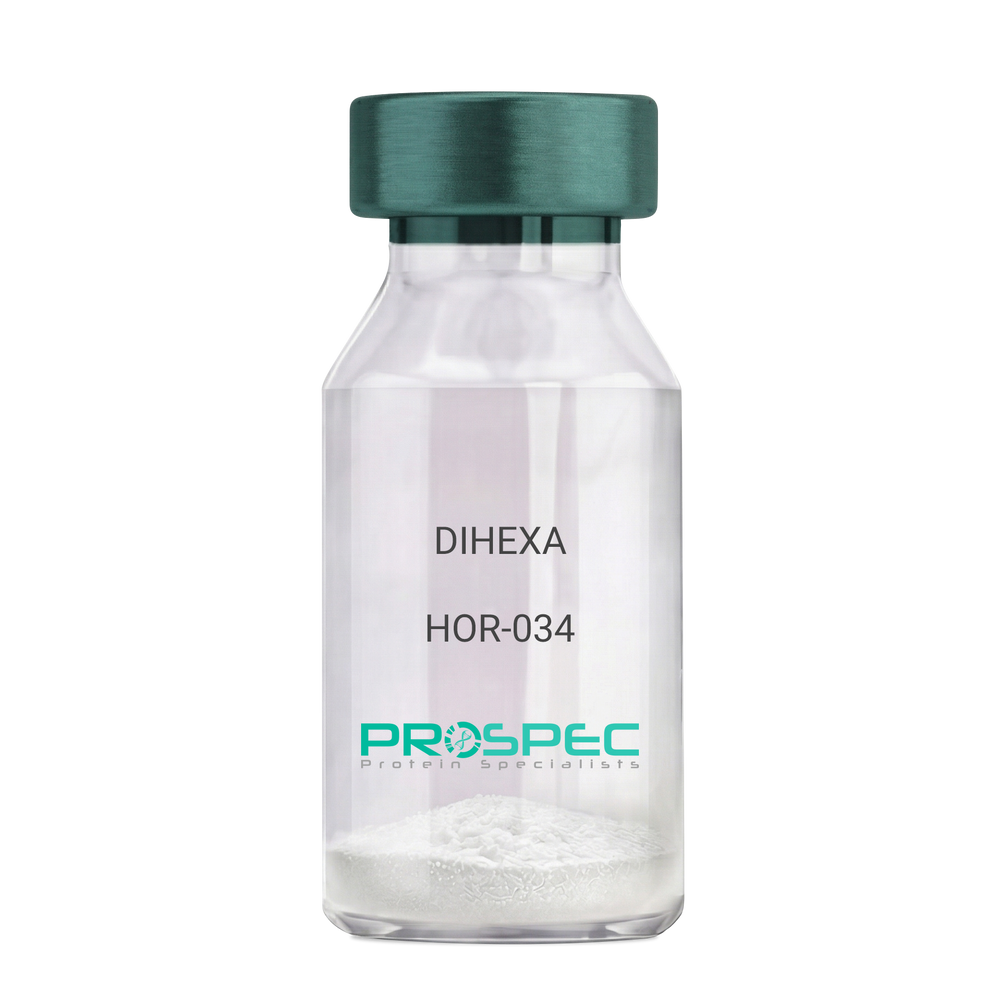
    DIHEXA

    Description:

    DIHEXA

    Product # :

    HOR-034

    Price :

    Quantity :

    Shipping Method :

    Room Temp Icon

    Shipped at Room temp

    Add To Cart

    More Info

    • description
    • formulation
    • purity
    • More Info

    Description

    DIHEXA Synthetic is a single, non-glycosylated polypeptide chain containing 3 amino acids, having a molecular mass of 504.28 Dalton and a Molecular formula of C27H44N4O5.

    Formulation

    The protein was lyophilized with no additives.

    Purity

    Greater than 97.0% as determined by analysis by RP-HPLC.

    More Info

    • Physical Appearance

      Sterile Filtered White lyophilized (freeze-dried) powder.

    • Stability

      Lyophilized DIHEXA although stable at room temperature for 3 weeks, should be stored desiccated below -18°C. Upon reconstitution DIHEXA should be stored at 4°C between 2-7 days and for future use below -18°C. For long term storage it is recommended to add a carrier protein (0.1% HSA or BSA). Please prevent freeze-thaw cycles.

    • Solubility

      It is recommended to reconstitute the lyophilized DIHEXA in sterile 18MΩ-cm H2O not less than 100 µg/ml, which can then be further diluted to other aqueous solutions.

    • Amino Acid Sequence

      Hexanoyl-Tyr-Ile-Ahx-NH2.

    • Background

      Dihexa, also known as N-hexanoic-Tyr-Ile-(6) aminohexanoic amide, is a potent and orally active small peptide that has been the focus of significant research due to its potential neurogenic and neuroprotective effects. This compound, derived from angiotensin IV, has been shown to possess a wide range of biological activities, including enhancing cognitive function, promoting neurogenesis, and potentially mitigating the effects of neurodegenerative diseases.

      Dihexa's primary mechanism of action involves its interaction with hepatocyte growth factor (HGF) and its receptor, c-Met. By mimicking the effects of HGF, Dihexa can stimulate the c-Met receptor, leading to a cascade of events that promote neurogenesis and synaptic plasticity. Studies by Benoist et al. (2014) have demonstrated that Dihexa can enhance cognitive function in rats, suggesting potential applications in cognitive enhancement and the treatment of cognitive disorders.

      In addition to its neurogenic effects, Dihexa has been shown to possess neuroprotective properties. Research by Kawas et al. (2017) found that Dihexa could protect neurons from apoptosis, suggesting potential applications in the treatment of neurodegenerative diseases such as Alzheimer's and Parkinson's disease.

      Given its neurogenic and neuroprotective effects, Dihexa has been proposed as a potential therapeutic agent for a variety of conditions, including cognitive disorders, neurodegenerative diseases, and stroke. For instance, a study by Harding et al. (2018) found that Dihexa could improve outcomes in animal models of stroke, indicating its potential as a therapeutic agent in stroke recovery.

      While research on Dihexa is promising, it is important to note that most studies have been conducted in animals or in vitro. More research is needed to fully understand the potential effects and applications of Dihexa in humans. However, the existing body of research suggests that Dihexa could be a promising tool in the treatment of cognitive disorders and neurodegenerative diseases.

    ProSpec's products are furnished for LABORATORY RESEARCH USE ONLY. The product may not be used as drugs, agricultural or pesticidal products, food additives or household chemicals.

    Dihexa
  • View Data Sheet

    Name :

    RNASEH1 E.Coli

    Description:

    Ribonuclease H1 E.Coli Recombinant

    Ribonuclease HI, RNase HI, Ribonuclease H, RNase H, rnhA, dasF, herA, rnh, sdrA, b0214, JW0204.

    Product # :

    ENZ-164

    Price :

    Quantity :

    Shipping Method :

    Ice Icon

    Shipped with Ice Packs

    Add To Cart

    More Info

    • description
    • source
    • formulation
    • purity
    • More Info

    Description

    RNASEH1 E.coli Recombinant produced in E.Coli is a single, non-glycosylated polypeptide chain containing 178 amino acids (1-155 a.a.) and having a molecular mass of 20kDa.RNASEH1 is fused to a 23 amino acid His-tag at N-terminus & purified by proprietary chromatographic techniques.

    Source

    Escherichia Coli.

    Formulation

    RNASEH1 protein solution (1mg/ml) containing 20mM Tris-HCl buffer (pH 8.0), 10% glycerol and 2mM DTT.

    Purity

    Greater than 95% as determined by SDS-PAGE.

    More Info

    • Introduction

      RNHA is an endonuclease which specifically degrades the RNA of RNA-DNA hybrids. Localized to the nucleus, the RNHA protein mediates the removal of Okazaki fragment RNA primers which are present on the lagging strand during DNA replication. RNHA catalyzes the endonucleolytic cleavage of RNA to a 5'-phosphomonoester and is capable of binding magnesium or manganese as cofactors.

    • Synonyms

      Ribonuclease HI, RNase HI, Ribonuclease H, RNase H, rnhA, dasF, herA, rnh, sdrA, b0214, JW0204.

    • Physical Appearance

      Sterile Filtered clear solution.

    • Stability

      Store at 4°C if entire vial will be used within 2-4 weeks.Store, frozen at -20°C for longer periods of time. For long term storage it is recommended to add a carrier protein (0.1% HSA or BSA).Avoid multiple freeze-thaw cycles.

    • Amino Acid Sequence

      MGSSHHHHHH SSGLVPRGSH MGSMLKQVEI FTDGSCLGNP GPGGYGAILR YRGREKTFSA GYTRTTNNRM ELMAAIVALE ALKEHCEVIL STDSQYVRQG ITQWIHNWKK RGWKTADKKP VKNVDLWQRL DAALGQHQIK WEWVKGHAGH PENERCDELA RAAAMNPTLE DTGYQVEV.

    ProSpec's products are furnished for LABORATORY RESEARCH USE ONLY. The product may not be used as drugs, agricultural or pesticidal products, food additives or household chemicals.

    Rnaseh1 Ecoli
  • View Data Sheet

    Name :

    GHRL Protein

    Description:

    Ghrelin Human

    Appetite-regulating hormone precursor, Growth hormone secretagogue, Growth hormone-releasing peptide, GHRP, Motilin-related peptide, M46 protein, Ghrelin, Obestatin, MTLRP.

    Product # :

    HOR-297

    Price :

    Quantity :

    Shipping Method :

    Room Temp Icon

    Shipped at Room temp

    Add To Cart

    More Info

    • description
    • formulation
    • purity
    • More Info

    Description

    Ghrelin Human contains 28 amino acids and a total molecular mass of 3370.9 Dalton and a molecular formula of C149H249N47O42.The GHRL is purified by proprietary chromatographic techniques.

    Formulation

    GHRL was lyophilized without additives.

    Purity

    Greater than 97% as determined by:
    (a) Analysis by RP-HPLC.
    (b) Analysis by SDS-PAGE.

    More Info

    • Introduction

      Obestatin is a hormone that is produced in the cells lining the stomach and small intestine of several mammals including humans; it drastically reduces appetite in mice and is expected to do the same in humans. Obestatin is a peptide hormone - a relatively small protein. It is encoded by the same gene that also encodes ghrelin, a peptide hormone that increases appetite. The protein produced by that gene breaks into two smaller peptides, ghrelin and obestatin. Ghrelin is an endogenous ligand for the growth hormone secretagogue receptor and is involved in regulating growth hormone release. Ghrelin is derived from a preprohormone called preproghrelin, which also generates a second peptide called obestatin. Ghrelin is an endogenous ligand for the orphan G protein-coupled receptor GPR39 and is involved in satiety and decreased food intake.

    • Synonyms

      Appetite-regulating hormone precursor, Growth hormone secretagogue, Growth hormone-releasing peptide, GHRP, Motilin-related peptide, M46 protein, Ghrelin, Obestatin, MTLRP.

    • Physical Appearance

      Sterile Filtered Yellowish lyophilized (freeze-dried) powder that may appear as a gel form.

    • Stability

      Store the lyophilized Ghrelin at -20°C. Aliquot the product after reconstitution to avoid repeated freezing/thawing cycles. Reconstituted GHRL can be stored at 4°C for a limited period of time; it does not show any change after two weeks at 4°C.

    • Solubility

      Add deionized water to a working concentration approximately 0.5mg/1ml and let the lyophilized pellet dissolve completely.

    • Amino Acid Sequence

      Gly-Ser-Ser(n-octanoyl)-Phe-Leu-Ser-Pro-Glu-His-Gln-Arg-Val-Gln-Gln-Arg-Lys-Glu-Ser-Lys-Lys-Pro-Pro-Ala-Lys-Leu-Gln-Pro-Arg-OH.

    ProSpec's products are furnished for LABORATORY RESEARCH USE ONLY. The product may not be used as drugs, agricultural or pesticidal products, food additives or household chemicals.

    Ghrelin Human
  • View Data Sheet

    Name :

    UTI Human

    Description:

    Urinary Trypsin Inhibitor-Ulinastatin Human

    UTI, Ulinastatin, Urinary Trypsin Inhibitor.

    Product # :

    PRO-321

    Price :

    Quantity :

    Shipping Method :

    Room Temp Icon

    Shipped at Room temp

    Add To Cart

    More Info

    • description
    • source
    • formulation
    • biological activity
    • More Info

    Description

    Ulinastatin is derived from human urine.

    Source

    Human Urine.

    Formulation

    Lyophilized from a (1mg/ml) solution containing no additives.

    Biological Activity

    Human UTI has an activity of 2350IU/mg.

    More Info

    • Introduction

      Urinary-Trypsin Inhibitor is a glucoprotein proteinase inhibitor which inhibits the activity of trypsin, chymotrypsin, lactate, lipase, hyaluronidase and various pancreatic enzymes. Ulinastatin is effective for acute pancreatitis, chronic recurrent pancreatitis and hemorrhagic, traumatic and endotoxic shocks. Ulinastatin is has strong inhibition effect to various protease, sugar and fat hydrolase. Ulinastatin precursor is proteolytically processed into distinct functioning proteins. Urinary trypsin inhibitor belongs to the superfamily of Kunitz-type protease inhibitors and plays an important role in many physiological and pathological processes. Uristatin gene is located on chromosome 9 in a cluster of lipocalin genes.
      High levels of Ulinastatin secretion is an early marker of renal tubular involvement and has radical scavenging activity. Bikunin localizes cell membrane.
      Free uristatin and bikunin pass readily into urine and are primarily bound to heavy chains that constitute the proinhibitor form in plasma. UTI has a calculated Mw of approx. 20kDa and 40kDa by SDS-PAGE analysis.
      Ulinastatin particularly interacts with ORF3 protein of hepatitis E virus and in charge for enhancing alpha microglobulin export from the hepatocyte.

    • Synonyms

      UTI, Ulinastatin, Urinary Trypsin Inhibitor.

    • Physical Appearance

      Sterile Filtered White lyophilized (freeze-dried) powder.

    • Stability

      Store the lyophilized UTI between 2-8°C, do not freeze. Upon reconstitution UTI should be stored at 4°C between 2-7 days and for future use below -18°C. Please prevent freeze-thaw cycles.

    • Solubility

      It is recommended to reconstitute the lyophilized UTI in sterile 18MΩ-cm H2O not less than 100µg/ml, which can then be further diluted to other aqueous solutions.

    ProSpec's products are furnished for LABORATORY RESEARCH USE ONLY. The product may not be used as drugs, agricultural or pesticidal products, food additives or household chemicals.

    Uti Human
  • View Data Sheet

    Name :

    KLK3 Human, Native

    Description:

    Kallikrein-3 Human

    Prostate-specific antigen, PSA, Gamma-seminoprotein, Seminin, Kallikrein-3, P-30 antigen, Semenogelase, KLK3, APS, hK3, KLK2A1

    Product # :

    ENZ-1172

    Price :

    Quantity :

    Shipping Method :

    Ice Icon

    Shipped with Ice Packs

    Add To Cart

    More Info

    • description
    • source
    • formulation
    • purity
    • More Info

    Description

    Human Kallikrein-3 produced in Human seminal fluid having a molecular mass of approximately 30kD.

    Source

    Human seminal fluid.

    Formulation

    The protein solution (0.2 µm filtered) is in 0.09% NaN3, 0.05M phosphate buffer, 150mM NaCl, pH 7.5.

    Purity

    Greater than 96.0%.

    More Info

    • Introduction

      Kallikrein-3 (KLK3) is a part of the kallikrein-related peptidase family. Kallikreins are a subgroup of serine proteases having various physiological functions. Numerous kallikreins take part in carcinogenesis and some may be prospective cancer and other disease biomarkers. Kallikrein-3 is 1 of the 15 kallikrein subfamily members located in a cluster on chromosome 19 and is a protease present in seminal plasma. KLK3 hydrolyzes semenogelin-1 consequently leading to the liquefaction of the seminal coagulum. KLK3 acts normally in the liquefaction of seminal coagulum, probably by hydrolysis of the high molecular mass seminal vesicle protein. Serum level of the KLK3 protein, called PSA in the clinical setting, is beneficial in the diagnosis and monitoring of prostatic carcinoma.

    • Synonyms

      Prostate-specific antigen, PSA, Gamma-seminoprotein, Seminin, Kallikrein-3, P-30 antigen, Semenogelase, KLK3, APS, hK3, KLK2A1

    • Physical Appearance

      Sterile Filtered clear solution.

    • Stability

      Human Kallikrein-3 should be stored at 2-8°C. Do not freeze!

    • Human Virus Test

      Starting material donor has been tested and certified negative for antibodies to HIV-1, HIV-2, HCV, HBSAG, Syphilis and HIV/HBV/HCV (PCR).

    ProSpec's products are furnished for LABORATORY RESEARCH USE ONLY. The product may not be used as drugs, agricultural or pesticidal products, food additives or household chemicals.

    Prostate Specific Antigen
  • View Data Sheet

    Name :

    RNASE1 Human

    Description:

    Ribonuclease 1 Human Recombinant

    RNASE1, ribonuclease A family member 1, pancreatic, RAC1, RIB1, RNS1, ribonuclease pancreatic, HP-RNase, RIB-1, RNase UpI-1, RNase 1, Ribonuclease A, RNase A, Ribonuclease 1.

    Product # :

    ENZ-1168

    Price :

    Quantity :

    Shipping Method :

    Ice Icon

    Shipped with Ice Packs

    Add To Cart

    More Info

    • description
    • source
    • formulation
    • purity
    • biological activity
    • More Info

    Description

    RNASE1 Human Recombinant produced in HEK cells is a single, glycosylated, polypeptide chain (29-156 a.a) containing a total of 134 amino acids, having a molecular mass of 15.3kDa. RNASE1 is fused to a 6 amino acid His-tag at C-terminus,and is purified by proprietary chromatographic techniques.

    Source

    HEK293 Cells.

    Formulation

    The RNASE1 solution (1mg/ml) contains 10% Glycerol and Phosphate-Buffered Saline (pH 7.4).

    Purity

    Greater than 90.0% as determined by SDS-PAGE.

    Biological Activity

    Specific activity is >  3 X 10^6 unit/mg. Defined by the amount of enzyme that  hydrolyzes 1nmole of RNA per minute at 25˚C.

    More Info

    • Introduction

      Ribonuclease 1R (NASE1) is a small protein which is a part of pancreatic ribonuclease enzyme family. NASE1 has 4 disulfide bonds in its native state and cleaves speciallyafter pyrimidine nucleotides.Cleavage takes place in 2 steps: first, the 3’,5’-phosphodiester bond is cleaved to craete a 2’,3’-cyclic phosphodiester intermediate; than, the cyclic phosphodiester is hydrolyzed to a 3’-monophosphate. NASE1is activated the most with single stranded RNA.NASE1inhibited by alkylation of His12 and His119 and activated by potassium and sodium salts.NASE1hydrolyzes RNA from protein samples.

    • Synonyms

      RNASE1, ribonuclease A family member 1, pancreatic, RAC1, RIB1, RNS1, ribonuclease pancreatic, HP-RNase, RIB-1, RNase UpI-1, RNase 1, Ribonuclease A, RNase A, Ribonuclease 1.

    • Physical Appearance

      Sterile Filtered colorless solution.

    • Stability

      Store at 4°C if entire vial will be used within 2-4 weeks.Store, frozen at -20°C for longer periods of time.For long term storage it is recommended to add a carrier protein (0.1% HSA or BSA).Avoid multiple freeze-thaw cycles.

    • Amino Acid Sequence

      KESRAKKFQR QHMDSDSSPS SSSTYCNQMM RRRNMTQGRC KPVNTFVHEP LVDVQNVCFQ EKVTCKNGQG NCYKSNSSMH ITDCRLTNGS RYPNCAYRTS PKERHIIVAC EGSPYVPVHF DASVEDSTHH HHHH

    ProSpec's products are furnished for LABORATORY RESEARCH USE ONLY. The product may not be used as drugs, agricultural or pesticidal products, food additives or household chemicals.

    Rnase1 Human
  • View Data Sheet

    Name :

    SIRPA Human

    Description:

    Signal-Regulatory Protein Alpha Human Recombinant

    Signal-Regulatory Protein Alpha, SHPS1, CD172 Antigen-Like Family Member A, Inhibitory Receptor SHPS-1, Macrophage Fusion Receptor, PTPNS1, SIRP, P84, BIT, MFR, Brain-Immunoglobulin-Like Molecule With Tyrosine-Based Activation Motifs, Brain Ig-Like Molecule With Tyrosine-Based Activation Motifs, Protein Tyrosine Phosphatase, Non-Receptor Type Substrate 1, Tyrosine-Protein Phosphatase Non-Receptor Type Substrate 1, Tyrosine Phosphatase SHP Substrate 1, Signal-Regulatory Protein Alpha-1 , ignal-Regulatory Protein Alpha-2, Signal-Regulatory Protein Alpha-3, SHP Substrate 1, CD172a Antigen, Myd-1 Antigen, MyD-1 Antigen, Sirp-Alpha-1, Sirp-Alpha-2, Sirp-Alpha-3, CD172A, SHPS-1, MYD-1, MYD1, Tyrosine-protein phosphatase non-receptor type substrate 1.

    Product # :

    PRO-2080

    Price :

    Quantity :

    Shipping Method :

    Ice Icon

    Shipped with Ice Packs

    Add To Cart

    More Info

    • description
    • source
    • formulation
    • purity
    • More Info

    Description

    SIRPA Human Recombinant produced in E.Coli is a single, non-glycosylated polypeptide chain containing 370 amino acids (27-373 a.a) and having a molecular mass of 40.4kDa. SIRPA is fused to a 23 amino acid His-tag at N-terminus & purified by proprietary chromatographic techniques.

    Source

    Escherichia Coli.

    Formulation

    SIRPA protein solution (0.5mg/ml) containing PBS buffer (pH 7.4), 10% glycerol and 1mM DTT.

    Purity

    Greater than 90.0% as determined by SDS-PAGE.

    More Info

    • Introduction

      Signal-Regulatory Protein Alpha, SIRPA belongs to the signal-regulatory-protein (SIRP) family, as well as theimmunoglobulin super family. The members of the SIRP family are receptor-type transmembrane glycoproteins which areinvolved in the negative regulation of receptor tyrosine kinase-coupled signaling processes. SIRPA can bephosphorylated by tyrosine kinases. The phospho-tyrosine residues of this PTP have been shown to recruit SH2domain containing tyrosine phosphatases (PTP), and perform as substrates of PTPs. SIRPA take part insignal transduction mediated by a variety of growth factor receptors. CD47 has been shown to be a ligand for SIRPA.

    • Synonyms

      Signal-Regulatory Protein Alpha, SHPS1, CD172 Antigen-Like Family Member A, Inhibitory Receptor SHPS-1, Macrophage Fusion Receptor, PTPNS1, SIRP, P84, BIT, MFR, Brain-Immunoglobulin-Like Molecule With Tyrosine-Based Activation Motifs, Brain Ig-Like Molecule With Tyrosine-Based Activation Motifs, Protein Tyrosine Phosphatase, Non-Receptor Type Substrate 1, Tyrosine-Protein Phosphatase Non-Receptor Type Substrate 1, Tyrosine Phosphatase SHP Substrate 1, Signal-Regulatory Protein Alpha-1 , ignal-Regulatory Protein Alpha-2, Signal-Regulatory Protein Alpha-3, SHP Substrate 1, CD172a Antigen, Myd-1 Antigen, MyD-1 Antigen, Sirp-Alpha-1, Sirp-Alpha-2, Sirp-Alpha-3, CD172A, SHPS-1, MYD-1, MYD1, Tyrosine-protein phosphatase non-receptor type substrate 1.

    • Physical Appearance

      Sterile Filtered colorless solution.

    • Stability

      Store at 4°C if entire vial will be used within 2-4 weeks. Store, frozen at -20°C for longer periods of time. For long term storage it is recommended to add a carrier protein (0.1% HSA or BSA).Avoid multiple freeze-thaw cycles.

    • Amino Acid Sequence

      MGSSHHHHHH SSGLVPRGSH MGSGVAGEEE LQVIQPDKSV LVAAGETATL RCTATSLIPV GPIQWFRGAG PGRELIYNQK EGHFPRVTTV SDLTKRNNMD FSIRIGNITP ADAGTYYCVK FRKGSPDDVE FKSGAGTELS VRAKPSAPVV SGPAARATPQ HTVSFTCESH GFSPRDITLK WFKNGNELSD FQTNVDPVGE SVSYSIHSTA KVVLTREDVH SQVICEVAHV TLQGDPLRGT ANLSETIRVP PTLEVTQQPV RAENQVNVTC QVRKFYPQRL QLTWLENGNV SRTETASTVT ENKDGTYNWM SWLLVNVSAH RDDVKLTCQV EHDGQPAVSK SHDLKVSAHP KEQGSNTAAE NTGSNERNIY.

    ProSpec's products are furnished for LABORATORY RESEARCH USE ONLY. The product may not be used as drugs, agricultural or pesticidal products, food additives or household chemicals.

    Sirpa Human
  • View Data Sheet

    Name :

    SUOX Human

    Description:

    Sulfite Oxidase Human Recombinant

    Sulfite Oxidase, EC 1.8.3.1, Sulfite oxidase, mitochondrial.

    Product # :

    ENZ-887

    Price :

    Quantity :

    Shipping Method :

    Ice Icon

    Shipped with Ice Packs

    Add To Cart

    More Info

    • description
    • source
    • formulation
    • purity
    • More Info

    Description

    SUOX Human Recombinant produced in E.Coli is a single, non-glycosylated polypeptide chain containing 489 amino acids (80-545 a.a) and having a molecular mass of 53.9kDa. SUOX is fused to a 23 amino acid His-tag at N-terminus & purified by proprietary chromatographic techniques.

    Source

    E.coli.

    Formulation

    SUOX protein solution (1mg/ml) containing Phosphate buffered saline (pH7.4), 30% glycerol and 1mM DTT.

    Purity

    Greater than 90% as determined by SDS-PAGE.

    More Info

    • Introduction

      Sulfite oxidase, also known as SUOX is a homodimeric protein localized to the intermembrane space of mitochondria. Each subunit includes a heme domain as well as a molybdopterin-binding domain. The SUOX enzyme catalyzes the oxidation of sulfite to sulfate, the last reaction in the oxidative degradation of the sulfur amino acids cysteine and methionine. In addition, the deficiency of SUOX results in neurological abnormalities which are often fatal at an early age.

    • Synonyms

      Sulfite Oxidase, EC 1.8.3.1, Sulfite oxidase, mitochondrial.

    • Physical Appearance

      Sterile Filtered colorless solution.

    • Stability

      Store at 4°C if entire vial will be used within 2-4 weeks. Store, frozen at -20°C for longer periods of time. For long term storage it is recommended to add a carrier protein (0.1% HSA or BSA).Avoid multiple freeze-thaw cycles.

    • Amino Acid Sequence

      MGSSHHHHHH SSGLVPRGSH MGSESTHIYT KEEVSSHTSP ETGIWVTLGS EVFDVTEFVD LHPGGPSKLM LAAGGPLEPF WALYAVHNQS HVRELLAQYK IGELNPEDKV APTVETSDPY ADDPVRHPAL KVNSQRPFNA EPPPELLTEN YITPNPIFFT RNHLPVPNLD PDTYRLHVVG APGGQSLSLS LDDLHNFPRY EITVTLQCAG NRRSEMTQVK EVKGLEWRTG AISTARWAGA RLCDVLAQAG HQLCETEAHV CFEGLDSDPT GTAYGASIPL ARAMDPEAEV LLAYEMNGQP LPRDHGFPVR VVVPGVVGAR HVKWLGRVSV QPEESYSHWQ RRDYKGFSPS VDWETVDFDS APSIQELPVQ SAITEPRDGE TVESGEVTIK GYAWSGGGRA VIRVDVSLDG GLTWQVAKLD GEEQRPRKAW AWRLWQLKAP VPAGQKELNI VCKAVDDGYN VQPDTVAPIW NLRGVLSNAW HRVHVYVSP.

    ProSpec's products are furnished for LABORATORY RESEARCH USE ONLY. The product may not be used as drugs, agricultural or pesticidal products, food additives or household chemicals.

    Suox Human
  • View Data Sheet

    Name :

    PDI Human

    Description:

    Protein Disulfide Isomerase Human Recombinant

    Protein Disulfide Isomerase, PDI, EC 5.3.4.1, Prolyl 4-hydroxylase subunit beta, Cellular thyroid hormone-binding protein, p55, P4HB, ERBA2L, PDIA1, PO4DB, DSI, GIT, PHDB, PO4HB, PROHB, P4Hbeta.

    Product # :

    ENZ-262

    Price :

    Quantity :

    Shipping Method :

    Room Temp Icon

    Shipped at Room temp

    Add To Cart

    More Info

    • description
    • source
    • formulation
    • purity
    • More Info

    Description

    PDI Human Recombinant produced in E.Coli is a single, non-glycosylated, polypeptide chain containing a total of 502 amino acids and having a molecular mass of 56.6kDa. The PDI is fused to a 12 amino acid His tag at N-terminal and purified by proprietary chromatographic techniques.

    Source

    Escherichia Coli.

    Formulation

    The PDI protein (1mg/ml)solution was lyophilized from PBS pH-7.

    Purity

    Greater than 95.0% as determined by:
    a) Analysis by RP-HPLC.
    b) Analysis by SDS-PAGE.

    More Info

    • Introduction

      Protein disulfide isomerases (PDIs) constitute a family of structurally related enzymes which catalyze disulfide bonds formation, reduction, or isomerization of newly synthesized proteins in the lumen of the endoplasmic reticulum (ER). They act also as chaperones, and are, therefore, part of a quality-control system for the correct folding of the proteins in the same subcellular compartment. PDI has been found to have moderate effects (25-fold) on the rate of oxidative folding of proteins in vitro.
      Recombinant Human Protein Disulfide Isomerase is involved in disulphide-bond formation and isomerization, as well as the reduction of disulphide bonds in proteins. Recombinant PDI has been found to have moderate effects (25-fold) on the rate of oxidative folding of proteins in vitro.

    • Synonyms

      Protein Disulfide Isomerase, PDI, EC 5.3.4.1, Prolyl 4-hydroxylase subunit beta, Cellular thyroid hormone-binding protein, p55, P4HB, ERBA2L, PDIA1, PO4DB, DSI, GIT, PHDB, PO4HB, PROHB, P4Hbeta.

    • Physical Appearance

      Sterile Filtered White lyophilized (freeze-dried) powder.

    • Stability

      Lyophilized Protein Disulfide Isomerase although stable at room temperature for 3 weeks, should be stored desiccated below -18°C. Upon reconstitution Human PDI should be stored at 4°C between 2-7 days and for future use below -18°C. For long term storage it is recommended to add a carrier protein (0.1% HSA or BSA).Please avoid freeze-thaw cycles.

    • Solubility

      It is recommended to reconstitute the lyophilized PDI in sterile 18MΩ-cm H2O not less than 100µg/ml, which can then be further diluted to other aqueous solutions.

    • Amino Acid Sequence

      MRGSGSHHHHHHAPEEEDHVLVLRKSNFAEALAAHKYLLVEFYAPWCGHCKALAPEYAKA

      AGKLKAEGSEIRLAKVDATEESDLAQQYGVRGYPTIKFFRNGDTASPKEYTAGREADDIVN

      WLKKRTGPAATTLPDGAAAESLVESSEVAVIGFFKDVESDSAKQFLQAAEAIDDIPFGITSNS

      DVFSKYQLDKDGVVLFKKFDEGRNNFEGEVTKENLLDFIKHNQLPLVIEFTEQTAPKIFGGEIK

      THILLFLPKSVSDYDGKLSNFKTAAESFKGKILFIFIDSDHTDNQRILEFFGLKKEECPAVRLITL

      EEEMTKYKPESEELTAERITEFCHRFLEGKIKPHLMSQELPEDWDKQPVKVLVGKNFEDVAFDEK

      KNVFVEFYAPWCGHCKQLAPIWDKLGETYKDHENIVIAKMDSTANEVEAVKVHSFPTLKFFP

      ASADRTVIDYNGERTLDGFKKFLESGGQDGAGDDDDLEDLEEAEEPDMEEDDDQKAVKDEL

    • Reductase Activity

      0.001 650nm/ min-2. By measuring the turbidity increase at 650 nm due to insulin reduction (Holmgren, A. (1979) J. Biol. Chem. 254, 9627–9632). The activity is expressed as the ratio of the slope of a linear part of the turbidity curve to the lag time (Mart

    • Isomerase Activity

      0.5 µmol active RNase A min-1 µmol PDI-1. According to the re-activation of reduced and denatured RNase A (Lyles, M. M. and Gilbert, H. F. (1991) Biochemistry 30, 613-619).

    ProSpec's products are furnished for LABORATORY RESEARCH USE ONLY. The product may not be used as drugs, agricultural or pesticidal products, food additives or household chemicals.

    Protein Disulfide Isomerase Human
  • View Data Sheet

    Name :

    CKMB1 Human

    Description:

    Creatine Kinase MB Isoenzyme Type-1 Human Recombinant

    Creatine Kinase MB 1, CKMB1

    Product # :

    CKI-269

    Price :

    Quantity :

    Shipping Method :

    Ice Icon

    Shipped with Ice Packs

    Add To Cart

    More Info

    • description
    • source
    • formulation
    • purity
    • biological activity
    • More Info

    Description

    CKMB1 Human Recombinant produced in E.Coli is a non covalently linked heterodimer that consists of 381 a.a. and having a total Mw of ~85.6kDa. The CKMB1 is purified by proprietary chromatographic techniques.

    Source

    E.Coli

    Formulation

    CKMB1 was lyophilized a concentrated solution containing 20mM Tris, 150mM NaCl, pH-8.

    Purity

    Greater than 95.0% as determined by SDS-PAGE.

    Biological Activity

    CKMB1 activity was measured kinetically by the CK-NAC assay at 37°C which was found to be between 500-600 units/mg. 1U converts 1µmole of creatine phosphate to creatine/min at 37˚C

    More Info

    • Introduction

      The three isoenzymes (MM, MB, and BB) are found in muscle, cardiac and brain tissues. These recombinant proteins are ideal for calibrating diagnostic instruments and researching neuromuscular diseases. Creatine Kinases can be used for indications in many neuromuscular applications. These disorders include cardiac disease, mitochondrial disorders, inflammatory myopathies, myasthenia, polymyositis, McArdle's disease, NMJ disorders, muscular dystrophy, ALS, hypo and hyperthyroid disorders, central core disease, acid maltase deficiency, myoglobinuria, rhabdomyolysis, motor neuron diseases, rheumatic diseases, and other that create elevated or reduced levels of Creatine Kinases.

    • Synonyms

      Creatine Kinase MB Isoenzyme Type-1, CK MB1

    • Physical Appearance

      Sterile Filtered white lyophilized powder.

    • Stability

      Lyophilized CKMB1 although stable at room temperature for 3 weeks, should be stored desiccated below -18°C. Upon reconstitution MCSF should be stored at 4°C between 2-7 days and for future use below -18°C.Please prevent freeze-thaw cycles.

    • Solubility

      It is recommended to reconstitute the lyophilized CKMB1 in sterile 18MΩ-cm H2O at 0.1 mg/ml, which can then be further diluted to other aqueous solutions.

    • Amino Acid Sequence

      CKM1
      MPFGNTHNKF KLNYKPEEEY PDLSKHNNHM AKVLTLELYK KLRDKETPSG FTVDDVIQTG VDNPGHPFIM TVGCVAGDEE SYEVFKELFD PIISDRHGGY KPTDKHKTDL NHENLKGGDD LDPNYVLSSR VRTGRSIKGY TLPPHCSRGE RRAVEKLSVE ALNSLTGEFK GKYYPLKSMT EKEQQQLIDD HFLFDKPVSP LLLASGMARD WPDARGIWHN DNKSFLVWVN EEDHLRVISM EKGGNMKEVF RRFCVGLQKI EEIFKKAGHP FMWNQHLGYV LTCPSNLGTG LRGGVHVKLA HLSKHPKFEE ILTRLRLQKR GTGGVDTAAV GSVFDVSNAD RLGSSEVEQV QLVVDGVKLM VEMEKKLEKG QSIDDMIPAQ

      CKB
      MPFSNSHNAL KLRFPAEDEF PDLSAHNNHM AKVLTPELYA ELRAKSTPSG FTLDDVIQTG VDNPGHPYIM TVGCVAGDEE SYEVFKDLFD PIIEDRHGGY KPSDEHKTDL NPDNLQGGDD LDPNYVLSSR VRTGRSIRGF CLPPHCSRGE RRAIEKLAVE ALSSLDGDLA GRYYALKSMT EAEQQQLIDD HFLFDKPVSP LLLASGMARD WPDARGIWHN DNKTFLVWVN EEDHLRVISM QKGGNMKEVF TRFCTGLTQI ETLFKSKDYE FMWNPHLGYI LTCPSNLGTG LRAGVHIKLP NLGKHEKFSE VLKRLRLQKR GTGGVDTAAV GGVFDVSNAD RLGFSEVELV QMVVDGVKLL IEMEQRLEQG QAIDDLMPAQ K

    • Background

      What is the molecular weight / Mw of CKMB1 Protein?
      CKMB1 Protein is a non covalently heterodimer having a total Mw of 85.6

      What is the source or expression system of CKMB1 Protein?
      Escherichia Coli.

      What is the Purity of CKMB1 Protein?
      CKMB1 Protein is >95% pure as determined by SDS-PAGE.

      What is the Biological Activity of CKMB1 Protein?
      The activity was determined kinetically by the CK-NAC assay at 37°C which ranges between 500-600 U/mg.

      What is the amino acid sequence of CKMB1 Protein?
      CKM1
      MPFGNTHNKF KLNYKPEEEY PDLSKHNNHM AKVLTLELYK KLRDKETPSG FTVDDVIQTG VDNPGHPFIM TVGCVAGDEE SYEVFKELFD PIISDRHGGY KPTDKHKTDL NHENLKGGDD LDPNYVLSSR VRTGRSIKGY TLPPHCSRGE RRAVEKLSVE ALNSLTGEFK GKYYPLKSMT EKEQQQLIDD HFLFDKPVSP LLLASGMARD WPDARGIWHN DNKSFLVWVN EEDHLRVISM EKGGNMKEVF RRFCVGLQKI EEIFKKAGHP FMWNQHLGYV LTCPSNLGTG LRGGVHVKLA HLSKHPKFEE ILTRLRLQKR GTGGVDTAAV GSVFDVSNAD RLGSSEVEQV QLVVDGVKLM VEMEKKLEKG QSIDDMIPAQ
      CKB
      MPFSNSHNAL KLRFPAEDEF PDLSAHNNHM AKVLTPELYA ELRAKSTPSG FTLDDVIQTG VDNPGHPYIM TVGCVAGDEE SYEVFKDLFD PIIEDRHGGY KPSDEHKTDL NPDNLQGGDD LDPNYVLSSR VRTGRSIRGF CLPPHCSRGE RRAIEKLAVE ALSSLDGDLA GRYYALKSMT EAEQQQLIDD HFLFDKPVSP LLLASGMARD WPDARGIWHN DNKTFLVWVN EEDHLRVISM QKGGNMKEVF TRFCTGLTQI ETLFKSKDYE FMWNPHLGYI LTCPSNLGTG LRAGVHIKLP NLGKHEKFSE VLKRLRLQKR GTGGVDTAAV GGVFDVSNAD RLGFSEVELV QMVVDGVKLL IEMEQRLEQG QAIDDLMPAQ K

      What applications can CKMB1 Protein be used in?
      CKMB1 Protein can probably be used in western blot, ELISA and Lateral Flow.

      What is the endotoxin level for CKMB1 Protein?
      The endotoxin level is minimal, CKMB1 Protein was purified using conventional chromatography techniques.

    ProSpec's products are furnished for LABORATORY RESEARCH USE ONLY. The product may not be used as drugs, agricultural or pesticidal products, food additives or household chemicals.

    Ckmbi Human
  • View Data Sheet

    Name :

    CTSL1 Antibody

    Description:

    Cathepsin L, Mouse Anti Human

    Cathepsin L1, EC 3.4.22.15, Major excreted protein, MEP, CTSL1, CTSL, CATL, FLJ31037.

    Product # :

    ANT-384

    Price :

    Quantity :

    Shipping Method :

    Ice Icon

    Shipped with Ice Packs

    Add To Cart

    More Info

    • formulation
    • More Info

    Formulation

    1mg/ml containing PBS, pH-7.4, & 0.1% Sodium Azide.

    More Info

    • Introduction

      Cathepsins B, C, H, L, S, V, X/Z/P and 1 are cysteine proteases of the papain family. Cathepsin C is also known as DPPI (dipeptidyl-peptidase I). Cathepsin A is a serine carboxypeptidase and Cathepsin D and E are aspartic proteases. As lysosomal proteases, cathepsins play an important role in protein degradation. Because of their redistribution or increased levels in human and animal tumors, cathepsins may have a role in invasion and metastasis. Cathepsins are synthesized as inactive proenzymes and processed to become mature and active enzymes. Endogenous protein inhibitors, such as cystatins and some serpins, inhibit active enzymes.

    • Synonyms

      Cathepsin L1, EC 3.4.22.15, Major excreted protein, MEP, CTSL1, CTSL, CATL, FLJ31037.

    • Immunogen

      Anti-human Cathepsin-L mAb is derived from hybridization of mouse F0 myeloma cells with spleen cells from BALB/c mice immunized with recombinant human Cathepsin-L amino acids 114-333 purified from E. coli.

    • Ig Subclass

      Mouse IgG2b heavy chain and κ light chain.

    • Clone

      P2H7AT.

    • Applications

      Cathepsin-L antibody has been tested by ELISA and Western blot analysis to assure specificity and reactivity. Since application varies, however, each investigation should be titrated by the reagent to obtain optimal results. Recommended dilution range for Western blot analysis is 1:1,000 ~2,000. Recommended starting dilution is 1:1,000.

    • Type

      Mouse Anti Human Monoclonal.

    • Storage Procedures

      For periods up to 1 month store at 4°C, for longer periods of time, store at -20°C. Prevent freeze thaw cycles.

    • Purification Method

      Cathepsin-L antibody was purified from mouse ascitic fluids by protein-G affinity chromatography.

    ProSpec's products are furnished for LABORATORY RESEARCH USE ONLY. The product may not be used as drugs, agricultural or pesticidal products, food additives or household chemicals.

    Ctsl1 Antibody
  • View Data Sheet

    Name :

    GAPDH Mouse

    Description:

    GAPDH Mouse Recombinant

    Glyceraldehyde-3-phosphate dehydrogenase, GAPDH, Peptidyl-cysteine S-nitrosylase GAPDH, Gapdh, Gapd, Glyceraldehyde-3-phosphate dehydrogenase isoform 2, G3PD, GAPD, HEL-S-162eP.

    Product # :

    ENZ-860

    Price :

    Quantity :

    Shipping Method :

    Ice Icon

    Shipped with Ice Packs

    Add To Cart

    More Info

    • description
    • source
    • formulation
    • purity
    • More Info

    Description

    GAPDH Mouse Recombinant produced in E.Coli is a single, non-glycosylated polypeptide chain containing 356 amino acids (1-333a.a.) and having a molecular mass of 38.2kDa.GAPDH is fused to a 23 amino acid His-tag at N-terminus & purified by proprietary chromatographic techniques.

    Source

    E.coli.

    Formulation

    GAPDH protein solution (0.25mg/ml) containing Phosphate buffered saline (pH7.4), 20% glycerol and 1mM DTT.

    Purity

    Greater than 95% as determined by SDS-PAGE.

    More Info

    • Introduction

      GAPDH is a catalytic enzyme normally known to play a role in glycolysis. GAPDH exists as a tetramer composed of 36-kDa subunits and has a range of intracellular functions. GAPDH catalyzes the reversible reduction of 1,3-bisphosphoglycerate to glyceraldehyde 3-phosphophate in the presence of NADPH. Besides functioning as a glycolytic enzyme in cytoplasm, GAPDH has function in intracellular processes such as membrane fusion, microtubule bundling, phosphotransferase activity, nuclear RNA export, DNA replication and DNA repair. GAPDH catalyzes a vital energy-yielding step in carbohydrate metabolism, the reversible oxidative phosphorylation of glyceraldehyde-3-phosphate in the presence of inorganic phosphate and nicotinamide adenine dinucleotide (NAD). The enzyme exists as a tetramer of identical chains.

    • Synonyms

      Glyceraldehyde-3-phosphate dehydrogenase, GAPDH, Peptidyl-cysteine S-nitrosylase GAPDH, Gapdh, Gapd, Glyceraldehyde-3-phosphate dehydrogenase isoform 2, G3PD, GAPD, HEL-S-162eP.

    • Physical Appearance

      Sterile Filtered colorless solution.

    • Stability

      Store at 4°C if entire vial will be used within 2-4 weeks. Store, frozen at -20°C for longer periods of time. For long term storage it is recommended to add a carrier protein (0.1% HSA or BSA).Avoid multiple freeze-thaw cycles.

    • Amino Acid Sequence

      MGSSHHHHHH SSGLVPRGSH MGSMVKVGVN GFGRIGRLVT RAAICSGKVE IVAINDPFID LNYMVYMFQY DSTHGKFNGT VKAENGKLVI NGKPITIFQE RDPTNIKWGE AGAEYVVEST GVFTTMEKAG AHLKGGAKRV IISAPSADAP MFVMGVNHEK YDNSLKIVSN ASCTTNCLAP LAKVIHDNFG IVEGLMTTVH AITATQKTVD GPSGKLWRDG RGAAQNIIPA STGAAKAVGK VIPELNGKLT GMAFRVPTPN VSVVDLTCRL EKPAKYDDIK KVVKQASEGP LKGILGYTED QVVSCDFNSN SHSSTFDAGA GIALNDNFVK LISWYDNEYG YSNRVVDLMA YMASKE.

    ProSpec's products are furnished for LABORATORY RESEARCH USE ONLY. The product may not be used as drugs, agricultural or pesticidal products, food additives or household chemicals.

    Gapdh Mouse
  • View Data Sheet

    Name :

    GH Zebrafish

    Description:

    Growth Hormone Zebrafish Recombinant

    GH1, GH, GHN, GH-N, hGH-N, Pituitary growth hormone, Growth hormone 1, Somatotropin.

    Product # :

    CYT-710

    Price :

    Quantity :

    Shipping Method :

    Room Temp Icon

    Shipped at Room temp

    Add To Cart

    More Info

    • description
    • source
    • formulation
    • purity
    • biological activity
    • More Info

    Description

    Somatotropin Zebrafish Recombinant produced in E.Coli is a single, non-glycosylated polypeptide chain containing 185 amino acids with an additional Ala at the N-terminus and having a molecular mass of 21.18 kDa. The Zebrafish Recombinant is purified by proprietary chromatographic techniques.

    Source

    Escherichia Coli.

    Formulation

    The protein was lyophilized from a concentrated (1mg/ml) solution with 0.05% NaHCO3 pH-8.

    Purity

    Greater than 99.0% as determined by:
    (a) Analysis by RP-HPLC.
    (b) Analysis by SDS-PAGE.

    Biological Activity

    Zebrafish Growth-Hormone is biologically active in PDF-P1 3B9 cells stably transfected with rabbit GH receptors.

    More Info

    • Introduction

      GH is a member of the somatotropin/prolactin family of hormones which play an important role in growth control. The gene, along with four other related genes, is located at the growth hormone locus on chromosome 17 where they are interspersed in the same transcriptional orientation; an arrangement which is thought to have evolved by a series of gene duplications. The five genes share a remarkably high degree of sequence identity. Alternative splicing generates additional isoforms of each of the five growth hormones, leading to further diversity and potential for specialization. This particular family member is expressed in the pituitary but not in placental tissue as is the case for the other four genes in the growth hormone locus. Mutations in or deletions of the gene lead to growth hormone deficiency and short stature.

    • Synonyms

      GH1, GH, GHN, GH-N, hGH-N, Pituitary growth hormone, Growth hormone 1, Somatotropin.

    • Physical Appearance

      Sterile Filtered White lyophilized (freeze-dried) powder.

    • Stability

      Lyophilized Zebrafish Growth-Hormone although stable at room temperature for at least two weeks, should be stored desiccated below -18°C. Upon reconstitution and filter sterilization GH can be stored at 4°C, pH 9 for up to 4 weeks. For long term storage and more diluted solutions it is recommended to add a carrier protein (0.1% HSA or BSA). Please prevent freeze-thaw cycles.

    • Solubility

      It is recommended to reconstitute the lyophilized Zebrafish Growth-Hormone in 0.4% NaHCO3 or water adjusted to pH-9, not less than 100µg/ml, which can then be further diluted to other aqueous solutions, preferably in a presence of a carrier protein such as BSA or similar.

    • Amino Acid Sequence

      AQRLFNNAVIRVQHLHQLAAKMINDFEEGLMPEERRQLSKIFPL

      SFCNSDSIETPTGKDETQKSSMLKLLRISFRLIESWEFPSQTLSS

      TISNSLTIGNPNLITEKLVDLKMGISVLIKGCLDGQPNMDDNDSL

      PLPFEDFYLTVGETSLRESFRLLACFKKDMHKVETYLRVANCRRSLDSNCTL

    ProSpec's products are furnished for LABORATORY RESEARCH USE ONLY. The product may not be used as drugs, agricultural or pesticidal products, food additives or household chemicals.

    Growth Hormone Zebrafish
  • View Data Sheet

    Name :

    Urokinase

    Description:

    Urokinase Human Recombinant

    PLAU, ATF, BDPLT5, QPD, u-PA, UPA, URK, Urokinase-type plasminogen activator, U-plasminogen activator, uPA, Urokinase-type plasminogen activator long chain A, Urokinase-type plasminogen activator short chain A, Urokinase-type plasminogen activator chain B.

    Product # :

    ENZ-965

    Price :

    Quantity :

    Shipping Method :

    Ice Icon

    Shipped with Ice Packs

    Add To Cart

    More Info

    • description
    • source
    • formulation
    • purity
    • More Info

    Description

    Urokinase Human Recombinant produced in Sf9 Baculovirus cells is a single, glycosylated polypeptide chain containing 419 amino acids (21-431) and having a molecular mass of 47.4kDa (Molecular size on SDS-PAGE will appear at approximately 40-57kDa).Urokinase is fused to 8 amino acid His-Tag at C-terminus and purified by proprietary chromatographic techniques.

    Source

    Sf9, Baculovirus cells.

    Formulation

    Urokinase protein solution (0.5mg/ml) containing Phosphate buffered saline (pH7.4) and 10% glycerol.

    Purity

    Greater than 95.0% as determined by SDS-PAGE.

    More Info

    • Introduction

      Urokinase (UK) is a serine protease, which is one of biological plasminogen activators.
      It is involved in a number of biological functions including fibrinolysis, embryogenesis, cell migration, tissue remodeling, ovulation, and wound healing.
      It can be obtained from human urine or kidney cell culture.

    • Synonyms

      PLAU, ATF, BDPLT5, QPD, u-PA, UPA, URK, Urokinase-type plasminogen activator, U-plasminogen activator, uPA, Urokinase-type plasminogen activator long chain A, Urokinase-type plasminogen activator short chain A, Urokinase-type plasminogen activator chain B.

    • Physical Appearance

      Sterile Filtered clear solution.

    • Stability

      Store at 4°C if entire vial will be used within 2-4 weeks. Store, frozen at -20°C for longer periods of time. For long term storage it is recommended to add a carrier protein (0.1% HSA or BSA).Avoid multiple freeze-thaw cycles.

    • Amino Acid Sequence

      SNELHQVPSN CDCLNGGTCV SNKYFSNIHW CNCPKKFGGQ HCEIDKSKTC YEGNGHFYRG KASTDTMGRP CLPWNSATVL QQTYHAHRSD ALQLGLGKHN YCRNPDNRRR PWCYVQVGLK PLVQECMVHD CADGKKPSSP PEELKFQCGQ KTLRPRFKII GGEFTTIENQ PWFAAIYRRH RGGSVTYVCG GSLISPCWVI SATHCFIDYP KKEDYIVYLG RSRLNSNTQG EMKFEVENLI LHKDYSADTL AHHNDIALLK IRSKEGRCAQ PSRTIQTICL PSMYNDPQFG TSCEITGFGK ENSTDYLYPE QLKMTVVKLI SHRECQQPHY YGSEVTTKML CAADPQWKTD SCQGDSGGPL VCSLQGRMTL TGIVSWGRGC ALKDKPGVYT RVSHFLPWIR SHTKEENGLA LLEHHHHHH.

    ProSpec's products are furnished for LABORATORY RESEARCH USE ONLY. The product may not be used as drugs, agricultural or pesticidal products, food additives or household chemicals.

    Urokinase Human 2
  • View Data Sheet

    Name :

    GH Chicken

    Description:

    GH Chicken Recombinant

    GH1, GH, GHN, GH-N, hGH-N,Pituitary GH, GH 1, 

    Product # :

    CYT-430

    Price :

    Quantity :

    Shipping Method :

    Room Temp Icon

    Shipped at Room temp

    Add To Cart

    More Info

    • description
    • source
    • formulation
    • purity
    • biological activity
    • More Info

    Description

    GH Chicken Recombinant produced in E.Coli is a single, non-glycosylated, polypeptide chain containing 191 amino acids with an additional Ala at its N-terminus and having a molecular mass of 22255 Dalton. GH Chicken recombinant is purified by proprietary chromatographic techniques.

    Source

    Escherichia Coli.

    Formulation

    The protein was lyophilized from a concentrated (1mg/ml) solution with 0.3% NaHCO3 adjusted to pH 8.

    Purity

    Greater than 99.0% as determined by:
    (a) Analysis by SDS-PAGE gel.
    (b) Analysis by SEC-HPLC.

    Biological Activity

    GH Chicken Recombinantis fully biologically active in homologous assays and in PDF-P1 3B9 cells stably transfected with rabbit GH receptors.

    More Info

    • Introduction

      GH is a member of the prolactin family of hormones which play an important role in growth control. The gene, along with four other related genes, is located at the GH locus on chromosome 17 where they are interspersed in the same transcriptional orientation; an arrangement which is thought to have evolved by a series of gene duplications. The five genes share a remarkably high degree of sequence identity. Alternative splicing generates additional isoforms of each of the five GHs, leading to further diversity and potential for specialization. This particular family member is expressed in the pituitary but not in placental tissue as is the case for the other four genes in the GH locus. Mutations in or deletions of the gene lead to GH deficiency and short stature.

    • Synonyms

      GH1, GH, GHN, GH-N, hGH-N,Pituitary GH, GH 1,

    • Physical Appearance

      Sterile Filtered White lyophilized (freeze-dried) powder.

    • Stability

      Lyophilized GH Chicken although stable at room temperature for 3 weeks, should be stored desiccated below -18°C. Upon reconstitution at > 0.1 mg/ml and filter sterilization GH can be stored at 4°C for several weeks. At lower concentration addition of a carrier protein (0.1% HSA or BSA) is recommended.Please prevent freeze-thaw cycles.

    • Solubility

      It is recommended to reconstitute the lyophilized GH Chicken Recombinant in sterile water or 0.4% NaHCO3 adjusted to pH 8-9, not less than 100µg/ml and not more than 3 mg/ml, which can then be further diluted to other aqueous solutions, preferably in presence of carrier protein.

    • Amino Acid Sequence

      The sequence of the first five N-terminal amino acids was determined and was found to be Ala-Thr-Phe-Pro-Ala.

    • Protein content

      Protein quantitation was carried out by two independent methods:1. UV spectroscopy at 280 nm using the absorbency value of 0.75 as the extinction coefficient for a 0.1% (1mg/ml) solution at pH 8.0 This value is calculated by the PC GENE computer analysis program of protein sequences (IntelliGenetics). 2. Analysis by RP-HPLC, using a calibrated solution of GH as a Reference Standard.

    ProSpec's products are furnished for LABORATORY RESEARCH USE ONLY. The product may not be used as drugs, agricultural or pesticidal products, food additives or household chemicals.

    Growth Hormone Chicken
  • View Data Sheet

    Name :

    PON1 Human (68-124)

    Description:

    Paraoxonase-1 (68-124) Human Recombinant

    Serum paraoxonase, arylesterase 1, EC 3.1.1.2, EC 3.1.8.1, PON 1.

    Product # :

    ENZ-1197

    Price :

    Quantity :

    Shipping Method :

    Room Temp Icon

    Shipped at Room temp

    Add To Cart

    More Info

    • description
    • source
    • formulation
    • purity
    • More Info

    Description

    The PON1 Human is created as a recombinant protein with a 4kda N-terminal fusion of His Tag. The PON1 His-Tagged Fusion Protein, produced in E. coli, is a 12kDa protein containing 57 amino acid residues of the PON1 Human, 68-124 amino acids.

    Source

    Escherichia Coli.

    Formulation

    Each mg was lyophilized with 1xPBS, 0.4% SDS and 4mM DTT.

    Purity

    Greater than 90% as determined by SDS-PAGE.

    More Info

    • Synonyms

      Serum paraoxonase, arylesterase 1, EC 3.1.1.2, EC 3.1.8.1, PON 1.

    • Physical Appearance

      Filtered White lyophilized (freeze-dried) powder.

    • Stability

      Store lyophilized PON1 at -20°C. Aliquot the product after reconstitution to avoid repeated freezing/thawing cycles. Reconstituted protein can be stored at 4°C for a limited period of time; it does not show any change after two weeks at 4°C.

    • Solubility

      It is recommended to add deionized water to prepare a working stock solution of approximately 0.5mg/ml and let the lyophilized pellet dissolve completely. Product is not sterile!

      Please filter the product by an appropriate sterile filter before using it on cell culture.

    • Background

      Paraoxonase 1 also known as PON1takes part in the detoxification of organophosphate insecticides such as parathion.

      PON1 is related to high-density lipoprotein (HDL) in the plasma and takes an important part in lipid metabolism and antioxidant defense.

      PON1 was first known for its ability to hydrolyze organophosphates and protect against oxidative stress.

      PON1 reduces oxidative stress by preventing the oxidation of lipids in LDL particles, which is extremely important in mitigating atherosclerosis and other cardiovascular diseases.

      PON1 has an anti-inflammatory effects which help reduce inflammatory markers in different disease states.

      PON1 takes part in cholesterol metabolism, influencing the stability and formation of HDL particles, which are vital for lipid transport and reverse cholesterol efflux.

    ProSpec's products are furnished for LABORATORY RESEARCH USE ONLY. The product may not be used as drugs, agricultural or pesticidal products, food additives or household chemicals.

    Pon1 Protein
  • View Data Sheet

    Name :

    TSH Human

    Description:

    Thyroid Stimulating Hormone Human

    Glycoprotein hormones alpha chain, Anterior pituitary glycoprotein hormones common subunit alpha, Follitropin alpha chain, Follicle-stimulating hormone alpha chain, FSH-alpha, Lutropin alpha chain, Luteinizing hormone alpha chain, LSH-alpha, Thyrotropin alpha chain, Thyroid-stimulating hormone alpha chain, TSH-alpha, Choriogonadotropin alpha chain, Chorionic gonadotrophin alpha subunit, CG-alpha, Thyrotropin subunit beta, Thyroid-stimulating hormone subunit beta, TSH-beta, TSH-B, Thyrotropin beta chain, Thyrotropin alfa.

    Product # :

    HOR-001

    Price :

    Quantity :

    Shipping Method :

    Room Temp Icon

    Shipped at Room temp

    Add To Cart

    More Info

    • description
    • source
    • formulation
    • purity
    • biological activity
    • More Info

    Description

    Thyroid Stimulating Hormone Human produced in Human pituitary glands is an important indicator of thyroid function.

    Source

    Human pituitary glands

    Formulation

    Lyophilized from a concentrated solution containing 50mM ammonium bicarbonate.

    Purity

    Greater than 95% as determined by SDS-PAGE.

    Biological Activity

    11.72 IU/mg vial by Centaur CP. Siemens Centaur CP is standardized against WHO 3rd IRP 81/565.

    More Info

    • Introduction

      Thyroid-stimulating hormone (also known as TSH or thyrotropin) is a hormone synthesized and secreted by thyrotrope cells in the anterior pituitary gland which regulates the endocrine function of the thyroid gland.
      TSH stimulates the thyroid gland to secrete the hormones thyroxine (T4) and triiodothyronine (T3). TSH production is controlled by a Thyrotropin Releasing Hormone, (TRH), which is manufactured in the hypothalamus and transported to the Anterior Pituitary gland, where it increases TSH production and release. Somatostatin is also produced by the hypothalamus, and has an opposite effect on the pituitary production of TSH, decreasing or inhibiting its release.
      The level of Thyroid hormones (T3 and T4) in the blood have an additional effect on the pituitary release of TSH, When the levels of T3 and T4 are low, the production of TSH is increased, and conversely, when levels of T3 and T4 are high, then TSH production is decreased. This effect creates a regulatory negative feedback loop.
      TSH is a glycoprotein and consists of two subunits, the alpha and the beta subunit.
      The a (alpha) subunit is identical to that of human chorionic gonadotropin (HCG), luteinising hormone (LH), follicle-stimulating hormone (FSH).
      The b (beta) subunit is unique to TSH, and therefore determines its function.

    • Synonyms

      Glycoprotein hormones alpha chain, Anterior pituitary glycoprotein hormones common subunit alpha, Follitropin alpha chain, Follicle-stimulating hormone alpha chain, FSH-alpha, Lutropin alpha chain, Luteinizing hormone alpha chain, LSH-alpha, Thyrotropin alpha chain, Thyroid-stimulating hormone alpha chain, TSH-alpha, Choriogonadotropin alpha chain, Chorionic gonadotrophin alpha subunit, CG-alpha, Thyrotropin subunit beta, Thyroid-stimulating hormone subunit beta, TSH-beta, TSH-B, Thyrotropin beta chain, Thyrotropin alfa.

    • Physical Appearance

      Sterile Filtered White lyophilized (freeze-dried) powder.

    • Stability

      Lyophilized TSH although stable at room temperature for 3 weeks, should be stored desiccated below -18°C. Upon reconstitution TSH should be stored at 4°C between 2-7 days and for future use below -18°C. For long term storage it is recommended to add a carrier protein (0.1% HSA or BSA).Please prevent freeze-thaw cycles.

    • Solubility

      It is recommended to reconstitute the lyophilized TSH in sterile 18MΩ-cm H2O not less than 100 µg/ml, which can then be further diluted to other aqueous solutions.

    • Background

      What is the source or expression system of TSH HUMAN Protein?
      Human pituitary glands

      What is the Purity of TSH HUMAN Protein?
      TSH HUMAN Protein is >95% pure as determined by SDS-PAGE.

      What is the Biological Activity of TSH HUMAN Protein?
      11.72 IU/mg vial by Centaur CP. Siemens Centaur CP is standardized against WHO 3rd IRP 81/565.

      What applications can TSH HUMAN Protein be used in?
      TSH HUMAN Protein can probably be used in western blot, ELISA and Lateral Flow.

      What is the endotoxin level for TSH HUMAN Protein?
      The endotoxin level is minimal, TSH HUMAN Protein was purified using conventional chromatography techniques.

    ProSpec's products are furnished for LABORATORY RESEARCH USE ONLY. The product may not be used as drugs, agricultural or pesticidal products, food additives or household chemicals.

    Tsh Human
  • View Data Sheet

    Name :

    CTSZ Mouse

    Description:

    Cathepsin-Z Mouse Recombinant

    Cathepsin Z, CTSZ.

    Product # :

    ENZ-934

    Price :

    Quantity :

    Shipping Method :

    Ice Icon

    Shipped with Ice Packs

    Add To Cart

    More Info

    • description
    • source
    • formulation
    • purity
    • More Info

    Description

    CTSZ produced in Sf9 Baculovirus cells is a single, glycosylated polypeptide chain containing 292 amino acids (23-306a.a.) and having a molecular mass of 32.8kDa. (Molecular size on SDS-PAGE will appear at approximately 28-40kDa). CTSZ is expressed with an 8 amino acid His tag at C-Terminus and purified by proprietary chromatographic techniques.

    Source

    Sf9, Baculovirus cells.

    Formulation

    CTSZ protein solution (0.5mg/ml) contains Phosphate Buffered Saline (pH 7.4) and 10% glycerol.

    Purity

    Greater than 95% as determined by SDS-PAGE.

    More Info

    • Introduction

      Cathepsin-Z (CTSZ) is a lysosomal cysteine proteinase and member of the peptidase C1 family. CTSZ, which has been also known as cathepsin X and cathepsin P, exhibits carboxy-monopeptidase and carboxy-dipeptidase activities. CTSZ is expressed ubiquitously in cancer cell lines and primary tumors and, similar to other members of this family, takes part in tumorigenesis.

    • Synonyms

      Cathepsin Z, CTSZ.

    • Physical Appearance

      Sterile Filtered clear solution.

    • Stability

      Store at 4°C if entire vial will be used within 2-4 weeks. Store, frozen at -20°C for longer periods of time.For long term storage it is recommended to add a carrier protein (0.1% HSA or BSA).Please avoid freeze thaw cycles.

    • Amino Acid Sequence

      ARARLYFRSG QTCYHPIRGD QLALLGRRTY PRPHEYLSPA DLPKNWDWRN VNGVNYASVT RNQHIPQYCG SCWAHGSTSA MADRINIKRK GAWPSILLSV QNVIDCGNAG SCEGGNDLPV WEYAHKHGIP DETCNNYQAK DQDCDKFNQC GTCTEFKECH TIQNYTLWRV GDYGSLSGRE KMMAEIYANG PISCGIMATE MMSNYTGGIY AEHQDQAVIN HIISVAGWGV SNDGIEYWIV RNSWGEPWGE KGWMRIVTST YKGGTGDSYN LAIESACTFG DPIVLEHHHH HH.

    ProSpec's products are furnished for LABORATORY RESEARCH USE ONLY. The product may not be used as drugs, agricultural or pesticidal products, food additives or household chemicals.

    Ctsz Mouse
  • View Data Sheet

    Name :

    RNASEH2A E.Coli

    Description:

    Ribonuclease H2A E.Coli Recombinant

    AGS4, JUNB, RNASEHI, RNHIA, RNHL , Ribonuclease H2 subunit A, Aicardi-Goutieres syndrome 4 protein, RNase H(35), Ribonuclease HI large subunit, RNase HI large subunit, EC=3.1.26.4.

    Product # :

    ENZ-713

    Price :

    Quantity :

    Shipping Method :

    Ice Icon

    Shipped with Ice Packs

    Add To Cart

    More Info

    • description
    • source
    • formulation
    • purity
    • More Info

    Description

    RNASEH2A Recombinant produced in E.coli is a single, non-glycosylated polypeptide chain containing 322 amino acids (1-299) and having a molecular mass of 35.8kDa.RNASEH2A is fused to a 23 amino acid His-tag at N-terminus & purified by proprietary chromatographic techniques.

    Source

    Escherichia Coli.

    Formulation

    The RNASEH2A solution (0.5mg/ml) contains 20mM Tris-HCl buffer (pH 8.0), 0.4M Urea and 10% glycerol.

    Purity

    Greater than 85% as determined by SDS-PAGE.

    More Info

    • Introduction

      Ribonuclease H2 subunit A (RNASEH2A) is a member of the RNase HII family and eukaryotic subfamily. RNASEH2A Plays a part in DNA replication, probably by mediating the removal of lagging-strand Okazaki fragment RNA primers throughout DNA replication. RNASEH2A catalyzes the endonucleolytic cleavage of RNA to a 5’-phosphomonoester and is capable to bind magnesium or manganese as cofactors. Aicardi-Goutieres syndrome type 4 (AGS4) caused by defects in RNASEH2A.

    • Synonyms

      AGS4, JUNB, RNASEHI, RNHIA, RNHL , Ribonuclease H2 subunit A, Aicardi-Goutieres syndrome 4 protein, RNase H(35), Ribonuclease HI large subunit, RNase HI large subunit, EC=3.1.26.4.

    • Physical Appearance

      Sterile filtered colorless solution.

    • Stability

      Store at 4°C if entire vial will be used within 2-4 weeks. Store, frozen at -20°C for longer periods of time. For long term storage it is recommended to add a carrier protein (0.1% HSA or BSA).Avoid multiple freeze-thaw cycles.

    • Amino Acid Sequence

      MGSSHHHHHH SSGLVPRGSH MGSMDLSELE RDNTGRCRLS SPVPAVCRKE PCVLGVDEAG RGPVLGPMVY AICYCPLPRL ADLEALKVAD SKTLLESERE RLFAKMEDTD FVGWALDVLS PNLISTSMLG RVKYNLNSLS HDTATGLIQY ALDQGVNVTQ VFVDTVGMPE TYQARLQQSF PGIEVTVKAK ADALYPVVSA ASICAKVARD QAVKKWQFVE KLQDLDTDYG SGYPNDPKTK AWLKEHVEPV FGFPQFVRFS WRTAQTILEK EAEDVIWEDS ASENQEGLRK ITSYFLNEGS QARPRSSHRY FLERGLESAT SL.

    ProSpec's products are furnished for LABORATORY RESEARCH USE ONLY. The product may not be used as drugs, agricultural or pesticidal products, food additives or household chemicals.

    Rnaseh2A Human
  • View Data Sheet

    Name :

    HAV P2C-P3A

    Description:

    Hepatitis A Virus P2C-P3A Recombinant

    Product # :

    HAV-266

    Price :

    Quantity :

    Shipping Method :

    Ice Icon

    Shipped with Ice Packs

    Add To Cart

    More Info

    • description
    • source
    • formulation
    • purity
    • More Info

    Description

    The E.Coli derived recombinant protein contains the P2C-P3A immunodominant regions, amino acids 1392-1521.

    Source

    Escherichia Coli.

    Formulation

    10mM CBB, pH9.6, 0.1% SDS and 50% glycerol.

    Purity

    HAV P2C-P3A protein is >90% pure as determined by 10% PAGE (coomassie staining).

    More Info

    • Introduction

      Forty-two antigenic domains were identified across the hepatitis A virus (HAV) polyprotein by using a set of 237 overlapping 20-mer synthetic peptides spanning the entire HAV polyprotein. Nineteen antigenic domains were found within the structural proteins, and 22 were found within the nonstructural proteins, with 1 domain spanning the junction of VP1 and P2A proteins. Five of these domains were considered immunodominant, as judged by both the breadth and the strength of their immunoreactivity. One domain is located within the VP2 protein at position 57-90 aa. A second domain, located at position 767-842 aa, contains the C-terminal part of the VP1 protein and the entire P2A protein. A third domain, located at position 1403-1456 aa, comprises the C-terminal part of the P2C protein and the N-terminal half of the P3A protein. The fourth domain, located at position 1500-1519 aa, includes almost the entire P3B, and the last domain, located at position 1719-1764 aa, contains the C-terminal region of the P3C protein and the N-terminal region of the P3D protein. Four of the five most immunoreactive domains are derived from small HAV proteins and/or encompass protein cleavage sites separating different HAV proteins.

    • Stability

      HAV P2C-P3A protein although stable at 4°C for 1 week, should be stored below -18°C. Please prevent freeze thaw cycles.

    • Applications

      HAV P2C-P3A antigen is suitable for ELISA and Western blots, excellent antigen for detection of HAV with minimal specificity problems.

    • Specificity

      Immunoreactive with sera HAV-infected individuals.

    • Purification Method

      HAV P2C-P3A protein was purified by proprietary chromatographic technique.

    ProSpec's products are furnished for LABORATORY RESEARCH USE ONLY. The product may not be used as drugs, agricultural or pesticidal products, food additives or household chemicals.

    Hepatitis A Virus P2C P3A
  • 1
  • …
  • 38
  • 39
  • 40
  • 41
  • 42
Your browser does not support the video tag.

Products

  • Cytokines
  • Growth Factors
  • Chemokines
  • CD Antigens
  • Neurotrophins
  • Hormones
  • Enzymes
  • Viral Antigens
  • Recombinant Proteins
  • Natural Proteins
  • Monoclonal Antibodies
  • Polyclonal Antibodies
  • Thermal Packaging

About

  • Company
  • Founder
  • Contribution
  • Contact Us
  • My Account

Ordering

  • Ordering Method
  • Ordering - Credit Card
  • Ordering PO
  • Shipping Fees
  • FAQ's

Legal

  • Terms & Conditions
  • Privacy
  • Site Map
  • info@prospecbio.com
  • Facebook
  • Instagram
  • Linkedin Profile

© 2026 ProSpec-Tany TechnoGene Ltd. All Rights Reserved.

  • Choosing a selection results in a full page refresh.
  • Opens in a new window.