Search results
1000 results found for “Coagulation Factors”
Name
Description
Product #
Price
Quantity
Shipping Method
- View Data Sheet
Name :
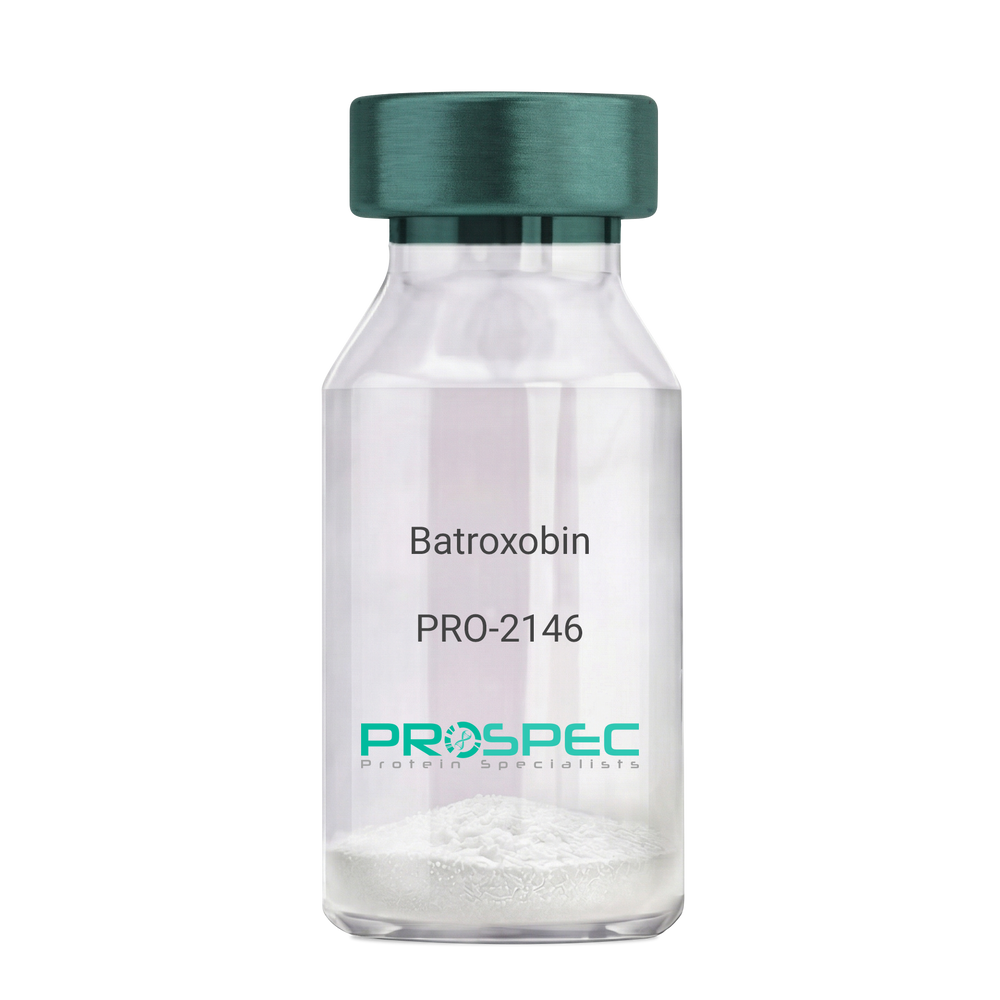
BatroxobinDescription:
Batroxobin
Thrombin-like enzyme batroxobin, EC 3.4.21.74, BX, Bothrops atrox serine proteinase, Venombin-A, Batroxobin.
Product # :
PRO-2146Price :
Quantity :
Shipping Method :
Shipped at Room temp
More Info
- description
- formulation
- More Info
Description
Batroxobin, isolated from Bothrops atrox snake venom, has an Mw of approximately 43kDa.
Formulation
The Batroxobin protein was lyophilized from a concentrated (1mg/ml) solution with no additives.
More Info
-
Introduction
Batroxobin is a serin protease that reduces fibronogen levels and is originally extracted from snake venom of Bothrops Atrox. Batroxobin is used in defibrinogenation and thrombolysis and also has an effect on c-fos gene and growth factor.
Batroxobin can efficiently restrain proliferation of VSMCs, by blocking the release and uptake of Ca2+, thus influencing [Ca2+]i.
Batroxobin converts fibrinogen to fibrin through the restricted release of fibrinopeptide-A from fibrinogen to promote blood to clot. Unlike thrombin, it is not affected by heparin and hirudin. -
Synonyms
Thrombin-like enzyme batroxobin, EC 3.4.21.74, BX, Bothrops atrox serine proteinase, Venombin-A, Batroxobin.
-
Physical Appearance
Sterile Filtered white lyophilized powder.
-
Stability
Store the lyophilized Batroxobin between 2-8°C. Do not freeze!
-
Solubility
It is recommended to reconstitute the lyophilized Batroxobin in sterile 18MΩ-cm H2O not less than 100µg/ml or more than 10mg/ml solutions.
-
Unit Definition
100BU [Batroxobin Units]=1mg.
ProSpec's products are furnished for LABORATORY RESEARCH USE ONLY. The product may not be used as drugs, agricultural or pesticidal products, food additives or household chemicals.
- View Data Sheet
Name :
SULT1A2 HumanDescription:
Sulfotransferase Family, Cytosolic, 1A, Member 2 Human Recombinant
Sulfotransferase 1A2, ST1A2, Aryl sulfotransferase 2, Phenol sulfotransferase 2, Phenol-sulfating phenol sulfotransferase 2, P-PST 2, SULT1A2, STP2, HAST4, TSPST2.
Product # :
ENZ-152Price :
Quantity :
Shipping Method :
Shipped with Ice Packs
More Info
- description
- source
- formulation
- purity
- More Info
Description
SULT1A2 Human Recombinant produced in E.Coli is a single, non-glycosylated polypeptide chain containing 315 amino acids (1-295 a.a.) and having a molecular mass of 36.4kDa.SULT1A2 is fused to a 20 amino acid His-tag at N-terminus & purified by proprietary chromatographic techniques.
Source
Escherichia Coli.
Formulation
SULT1A2 protein solution (1mg/ml) containing 20mM Tris-HCl buffer (pH 8.0), 1mM DTT, 10% glycerol and 0.1M NaCl.
Purity
Greater than 95.0% as determined by SDS-PAGE.
More Info
-
Introduction
Sulfotransferase 1A2 (SULT1A2) belongs to the sulfotransferase family. Sulfotransferase enzymes catalyze the sulfate conjugation of many hormones, neurotransmitters, drugs, and xenobiotic compounds. SULT1A2 mediates the metabolic activation of carcinogenic N-hydroxyarylamines to DNA binding products and might thus participate as a modulating factor of cancer risk.
-
Synonyms
Sulfotransferase 1A2, ST1A2, Aryl sulfotransferase 2, Phenol sulfotransferase 2, Phenol-sulfating phenol sulfotransferase 2, P-PST 2, SULT1A2, STP2, HAST4, TSPST2.
-
Physical Appearance
Sterile Filtered colorless solution.
-
Stability
Store at 4°C if entire vial will be used within 2-4 weeks. Store, frozen at -20°C for longer periods of time. For long term storage it is recommended to add a carrier protein (0.1% HSA or BSA).Avoid multiple freeze-thaw cycles.
-
Amino Acid Sequence
MGSSHHHHHH SSGLVPRGSH MELIQDISRP PLEYVKGVPL IKYFAEALGP LQSFQARPDD LLISTYPKSG TTWVSQILDM IYQGGDLEKC HRAPIFMRVP FLEFKVPGIP SGMETLKNTP APRLLKTHLP LALLPQTLLD QKVKVVYVAR NAKDVAVSYY HFYHMAKVYP HPGTWESFLE KFMAGEVSYG SWYQHVQEWW ELSRTHPVLY LFYEDMKENP KREIQKILEF VGRSLPEETV DLMVEHTSFK EMKKNPMTNY TTVRREFMDH SISPFMRKGM AGDWKTTFTV AQNERFDADY AEKMAGCSLS FRSEL.
ProSpec's products are furnished for LABORATORY RESEARCH USE ONLY. The product may not be used as drugs, agricultural or pesticidal products, food additives or household chemicals.
- View Data Sheet
Name :
BPIFA1 HumanDescription:
BPI fold containing family A Member 1 Human Recombinant
BPI fold-containing family A member 1, Lung-specific protein X, Nasopharyngeal carcinoma-related protein, Palate lung and nasal epithelium clone protein, Secretory protein in upper respiratory tracts, Tracheal epithelium-enriched protein, Von Ebner protein Hl, BPIFA1, LUNX, NASG, PLUNC, SPURT, SPLUNC1, bA49G10.5.
Product # :
PRO-404Price :
Quantity :
Shipping Method :
Shipped with Ice Packs
More Info
- description
- source
- formulation
- purity
- More Info
Description
BPIFA1 Human Recombinant produced in E.Coli is a single, non-glycosylated polypeptide chain containing 260 amino acids (20-256 a.a) and having a molecular mass of 27.1kDa.BPIFA1 is fused to a 23 amino acid His-tag at N-terminus & purified by proprietary chromatographic techniques.
Source
Escherichia Coli.
Formulation
BPIFA1 protein solution (1mg/ml) containing 20mM Tris-HCl buffer (pH 8.0), 0.2M NaCl and 30% glycerol.
Purity
Greater than 90.0% as determined by SDS-PAGE.
More Info
-
Introduction
BPI fold containing family A Member 1 (BPIFA1) belongs to the short subfamily of PLUNC family proteins and have homology only to the Nterminal domains of BPI. BPIFA1 is a secreted protein which is expressed in the secretory ducts and submucosal glands of tracheobronchial tissues. BPIFA1 binds to LPS (lipopolysaccharide) in nasal lavage fluid (NLF) which alludes to its role in the inflammatory response of the upper airways after exposure to irritants. BPIFA1 may also serve as a potential molecular marker for detection of micrometastasis in non-small-cell lung cancer. Decreased levels of BPIFA1 are observed in the NLF of smokers and people who have been exposed to reactive epoxy chemicals, which indicats that long-term exposure to airway irritants damages the production of BPIFA1 in the upper respiratory tract.
-
Synonyms
BPI fold-containing family A member 1, Lung-specific protein X, Nasopharyngeal carcinoma-related protein, Palate lung and nasal epithelium clone protein, Secretory protein in upper respiratory tracts, Tracheal epithelium-enriched protein, Von Ebner protein Hl, BPIFA1, LUNX, NASG, PLUNC, SPURT, SPLUNC1, bA49G10.5.
-
Physical Appearance
Sterile Filtered colorless solution.
-
Stability
Store at 4°C if entire vial will be used within 2-4 weeks. Store, frozen at -20°C for longer periods of time. For long term storage it is recommended to add a carrier protein (0.1% HSA or BSA).Avoid multiple freeze-thaw cycles.
-
Amino Acid Sequence
MGSSHHHHHH SSGLVPRGSH MGSQFGGLPV PLDQTLPLNV NPALPLSPTG LAGSLTNALS NGLLSGGLLG ILENLPLLDI LKPGGGTSGG LLGGLLGKVT SVIPGLNNII DIKVTDPQLL ELGLVQSPDG HRLYVTIPLG IKLQVNTPLV GASLLRLAVK LDITAEILAV RDKQERIHLV LGDCTHSPGS LQISLLDGLG PLPIQGLLDS LTGILNKVLP ELVQGNVCPL VNEVLRGLDI TLVHDIVNML IHGLQFVIKV.
ProSpec's products are furnished for LABORATORY RESEARCH USE ONLY. The product may not be used as drugs, agricultural or pesticidal products, food additives or household chemicals.
- View Data Sheet
Name :
C8G HumanDescription:
Complement Component 8, Gamma Human Recombinant
Complement component 8 gamma polypeptide, C8C, complement component C8 gamma chain, MGC142186.
Product # :
PRO-947Price :
Quantity :
Shipping Method :
Shipped with Ice Packs
More Info
- description
- source
- formulation
- purity
- More Info
Description
C8G Human Recombinant produced in E.coli is a single, non-glycosylated polypeptide chain containing 203 amino acids (21-202) and having a molecular mass of 22.6 kDa.The C8G is fused to a 21 amino acid His-Tag at N-terminus and purified by proprietary chromatographic techniques.
Source
E.coli.
Formulation
The C8G solution (0.5mg/ml) contains 20mM Tris-HCl buffer (pH 8.0), 2mM DTT, 0.15M NaCl and 10% glycerol.
Purity
Greater than 95% as determined by SDS-PAGE.
More Info
-
Introduction
C8, a component of the complement system consists of three polypeptides C8A, C8B and C8G and takes part in the formation of Membrane Attack Complex (MAC). Patients with C8 deficiency are exposed to several bacteria infections. C8G, a member of the lipocalin family and calycin superfamily, is a secreted protein that can bind retinol. C8G is created in the liver, monocytes and fibroblast and has a role in clearing pathogens from an infected host.
-
Synonyms
Complement component 8 gamma polypeptide, C8C, complement component C8 gamma chain, MGC142186.
-
Physical Appearance
Sterile Filtered colorless solution.
-
Stability
Store at 4°C if entire vial will be used within 2-4 weeks. Store, frozen at -20°C for longer periods of time. For long term storage it is recommended to add a carrier protein (0.1% HSA or BSA).Avoid multiple freeze-thaw cycles.
-
Amino Acid Sequence
MGSSHHHHHH SSGLVPRGSH MQKPQRPRRP ASPISTIQPK ANFDAQQFAG TWLLVAVGSA CRFLQEQGHR AEATTLHVAP QGTAMAVSTF RKLDGICWQV RQLYGDTGVL GRFLLQARGA RGAVHVVVAE TDYQSFAVLY LERAGQLSVK LYARSLPVSD SVLSGFEQRV QEAHLTEDQI FYFPKYGFCE AADQFHVLDE VRR
ProSpec's products are furnished for LABORATORY RESEARCH USE ONLY. The product may not be used as drugs, agricultural or pesticidal products, food additives or household chemicals.
- View Data Sheet
Name :
TEK Human FcDescription:
TEK Tyrosine Kinase Endothelial Fc Chimera Human Recombinant
Angiopoietin-1 receptor precursor, Tyrosine-protein kinase receptor TIE-2, hTIE2, Tyrosine-protein kinase receptor TEK, p140 TEK, Tunica interna endothelial cell kinase, CD202b, VMCM, VMCM1, TIE2.
Product # :
PKA-248Price :
Quantity :
Shipping Method :
Shipped at Room temp
More Info
- description
- source
- formulation
- purity
- More Info
Description
Soluble TEK Human Recombinant fused with the Fc part of human IgG1 produced in baculovirus is a monomeric, glycosylated, polypeptide containing 730 amino acids and having a total molecular mass of 250 kDa. Human TIE-2/Fc monomer has a calculated molecular mass of approximately 125 kDa. As a result of glycosylation, the recombinant protein migrates as an approximately 140 kDa protein in SDS-PAGE under reducing conditions.The TEK Fc Chimera is purified by proprietary chromatographic techniques.
Source
Insect Cells.
Formulation
TEK Fc Chimera was lyophilized from a concentrated (1mg/ml) sterile solution containing 1xPBS.
Purity
Greater than 90.0% as determined by:
(a) Analysis by RP-HPLC.
(b) Analysis by SDS-PAGE.More Info
-
Introduction
TIE-1 (tyrosine kinase with Ig and EGF homology domains 1) and TIE-2/Tek comprise a receptor tyrosine kinase (RTK) subfamily with unique structural characteristics: two immunoglobulin-like domains flanking three epidermal growth factor (EGF)-like domains and followed by three fibronectin type III-like repeats in the extracellular region and a split tyrosine kinase domain in the cytoplasmic region. These receptors are expressed primarily on endothelial and hematopoietic progenitor cells and play critical roles in angiogenesis, vasculogenesis and hematopoiesis. Human TIE-1 cDNA encodes a 1122 amino acid (aa) residue precursor protein with an 18 residue putative signal peptide, a 726 residue extracellular domain and a 353 residue cytoplasmic domain. Two ligands, angiopoietin-1 (Ang1) and angiopoietin-2 (Ang2), which bind TIE-2 with high-affinity have been identified. Ang2 has been reported to act as an antagonist for Ang1. Mice engineered to overexpress Ang2 or to lack Ang1 or Tie-1 display similar angiogenic defects.
-
Synonyms
Angiopoietin-1 receptor precursor, Tyrosine-protein kinase receptor TIE-2, hTIE2, Tyrosine-protein kinase receptor TEK, p140 TEK, Tunica interna endothelial cell kinase, CD202b, VMCM, VMCM1, TIE2.
-
Physical Appearance
Sterile Filtered White lyophilized (freeze-dried) powder.
-
Stability
Lyophilized sTIE-2 although stable at room temperature for 3 weeks, should be stored desiccated below -18°C. Upon reconstitution TEK should be stored at 4°C between 2-7 days and for future use below -18°C.For long term storage it is recommended to add a carrier protein (0.1% HSA or BSA).Please prevent freeze-thaw cycles.
-
Solubility
It is recommended to reconstitute the lyophilized TIE-2 Fc Chimera in sterile water not less than 100µg/ml, which can then be further diluted to other aqueous solutions.
ProSpec's products are furnished for LABORATORY RESEARCH USE ONLY. The product may not be used as drugs, agricultural or pesticidal products, food additives or household chemicals.
- View Data Sheet
Name :
PSG1 HumanDescription:
Pregnancy Specific Beta-1-Glycoprotein 1 Human Recombinant
Pregnancy Specific Beta-1-Glycoprotein 1, PSBG1, B1G1, Fetal Liver Non-Specific Cross-Reactive Antigen 1/2, Pregnancy-Specific Beta-1 Glycoprotein C/D, CD66 Antigen-Like Family Member F, PS-Beta-C/D, PS-Beta-G-1, FL-NCA-1/2, PSBG-1, PSGGA, PSG95, SP1, Pregnancy-Specific Beta-1-Glycoprotein 1, Pregnancy-Specific B-1 Glycoprotein, Pregnancy-Specific Glycoprotein 1, CD66f Antigen, DHFRP2, PSGIIA, CD66f, PBG1, PSG1.
Product # :
PRO-1966Price :
Quantity :
Shipping Method :
Shipped with Ice Packs
More Info
- description
- source
- formulation
- purity
- More Info
Description
PSG1 Human Recombinant produced in E.coli is a single, non-glycosylated polypeptide chain containing 408 amino acids (35-419) and having a molecular mass of 45.9 kDa.PSG1 is fused to a 23 amino acid His-tag at N-terminus & purified by proprietary chromatographic techniques.
Source
Escherichia Coli.
Formulation
The PSG1 solution (1mg/ml) contains 20mM Tris-HCl buffer (pH 8.0), 0.4M Urea and 10% glycerol.
Purity
Greater than 80% as determined by SDS-PAGE.
More Info
-
Introduction
Pregnancy Specific Beta-1-Glycoprotein 1 (PSG1) is a member of a subgroup of transcription factors which are phosphorylated upon binding to promoter sequences. PSGs belong to the carcinoembryonic antigen (CEA) family and function as early biochemical markers of syncytiotrophoblast formation. Furthermore, PSG1 is assumed to mediate placental vascular morphogenesis by enhancing VEGF-A production and endothelial tube formation. PSG1 is a major product of the syncytiotrophoblast, reaching concentrations of 100- 290 mg/l at term in the serum of pregnant women.
-
Synonyms
Pregnancy Specific Beta-1-Glycoprotein 1, PSBG1, B1G1, Fetal Liver Non-Specific Cross-Reactive Antigen 1/2, Pregnancy-Specific Beta-1 Glycoprotein C/D, CD66 Antigen-Like Family Member F, PS-Beta-C/D, PS-Beta-G-1, FL-NCA-1/2, PSBG-1, PSGGA, PSG95, SP1, Pregnancy-Specific Beta-1-Glycoprotein 1, Pregnancy-Specific B-1 Glycoprotein, Pregnancy-Specific Glycoprotein 1, CD66f Antigen, DHFRP2, PSGIIA, CD66f, PBG1, PSG1.
-
Physical Appearance
Sterile filtered colorless solution.
-
Stability
Store at 4°C if entire vial will be used within 2-4 weeks. Store, frozen at -20°C for longer periods of time. For long term storage it is recommended to add a carrier protein (0.1% HSA or BSA).Avoid multiple freeze-thaw cycles.
-
Amino Acid Sequence
MGSSHHHHHH SSGLVPRGSH MGSQVTIEAE PTKVSEGKDV LLLVHNLPQN LTGYIWYKGQ MRDLYHYITS YVVDGEIIIY GPAYSGRETA YSNASLLIQN VTREDAGSYT LHIIKGDDGT RGVTGRFTFT LHLETPKPSI SSSNLNPRET MEAVSLTCDP ETPDASYLWW MNGQSLPMTH SLKLSETNRT LFLLGVTKYT AGPYECEIRN PVSASRSDPV TLNLLPKLPK PYITINNLNP RENKDVLNFT CEPKSENYTY IWWLNGQSLP VSPRVKRPIE NRILILPSVT RNETGPYQCE IRDRYGGIRS DPVTLNVLYG PDLPRIYPSF TYYRSGEVLY LSCSADSNPP AQYSWTINEK FQLPGQKLFI RHITTKHSGL YVCSVRNSAT GKESSKSMTV EVSGKWIP.
ProSpec's products are furnished for LABORATORY RESEARCH USE ONLY. The product may not be used as drugs, agricultural or pesticidal products, food additives or household chemicals.
- View Data Sheet
Name :
PSMA4 HumanDescription:
Proteasome Subunit Alpha Type 4 Human Recombinant
Proteasome subunit alpha type-4, Macropain subunit C9, Multicatalytic endopeptidase complex subunit C9, Proteasome component C9, Proteasome subunit L, PSMA4, HC9, PSC9, HsT17706.
Product # :
ENZ-222Price :
Quantity :
Shipping Method :
Shipped with Ice Packs
More Info
- description
- source
- formulation
- purity
- More Info
Description
PSMA4 Human Recombinant produced in E.coli is a single, non-glycosylated polypeptide chain containing 285 amino acids (1-261) and having a molecular mass of 32kDa.PSMA4 is fused to a 24 amino acid His-tag at N-terminus & purified by proprietary chromatographic techniques.
Source
E.coli.
Formulation
The PSMA4 solution (1mg/ml) contains 20mM Tris-HCl buffer (pH8.0), 20% glycerol, 1mM DTT and 0.1mM PMSF.
Purity
Greater than 95% as determined by SDS-PAGE.
More Info
-
Introduction
Proteasome subunit alpha type 4 (PSMA4) belongs to the peptidase T1A family, which is a 20S core alpha subunit. The proteasome is a multicatalytic proteinase complex with an extremely ordered ring-shaped 20S core structure. The core structure is comprised of 4 rings of 28 non-identical subunits; 2 rings are composed of 7 alpha subunits and 2 rings are composed of 7 beta subunits. PSMA4 is dispersed throughout eukaryotic cells at a high concentration and cleaves peptides in an ATP/ubiquitin-dependent process in a non-lysosomal pathway.
-
Synonyms
Proteasome subunit alpha type-4, Macropain subunit C9, Multicatalytic endopeptidase complex subunit C9, Proteasome component C9, Proteasome subunit L, PSMA4, HC9, PSC9, HsT17706.
-
Physical Appearance
Sterile Filtered colorless solution.
-
Stability
Store at 4°C if entire vial will be used within 2-4 weeks. Store, frozen at -20°C for longer periods of time. For long term storage it is recommended to add a carrier protein (0.1% HSA or BSA).Avoid multiple freeze-thaw cycles.
-
Amino Acid Sequence
MGSSHHHHHH SSGLVPRGSH MGSHMSRRYD SRTTIFSPEG RLYQVEYAME AIGHAGTCLG ILANDGVLLA AERRNIHKLL DEVFFSEKIY KLNEDMACSV AGITSDANVL TNELRLIAQR YLLQYQEPIP CEQLVTALCD IKQAYTQFGG KRPFGVSLLY IGWDKHYGFQ LYQSDPSGNY GGWKATCIGN NSAAAVSMLK QDYKEGEMTL KSALALAIKV LNKTMDVSKL SAEKVEIATL TRENGKTVIR VLKQKEVEQL IKKHEEEEAK AEREKKEKEQ KEKDK.
ProSpec's products are furnished for LABORATORY RESEARCH USE ONLY. The product may not be used as drugs, agricultural or pesticidal products, food additives or household chemicals.
- View Data Sheet
Name :
PSMB3 HumanDescription:
Proteasome Subunit Beta Type 3 Human Recombinant
Proteasome (prosome, macropain) subunit beta type 3, Proteasome chain 13, HC10-II, Proteasome component C10-II, Proteasome theta chain, EC 3.4.25.1, MGC4147.
Product # :
ENZ-200Price :
Quantity :
Shipping Method :
Shipped with Ice Packs
More Info
- description
- source
- formulation
- purity
- More Info
Description
PSMB3 Human Recombinant produced in E.Coli is a single, non-glycosylated polypeptide chain containing 225 amino acids (1-205 a.a.) and having a molecular mass of 25.1kDa.PSMB3 is fused to a 20 amino acid His-tag at N-terminus & purified by proprietary chromatographic techniques.
Source
Escherichia Coli.
Formulation
PSMB3 protein solution (0.25mg/ml) containing 20mM Tris-HCl buffer (pH8.0), 200mM NaCl, 1mM DTT and 50% glycerol.
Purity
Greater than 90.0% as determined by SDS-PAGE.
More Info
-
Introduction
The proteasome is a multicatalytic proteinase complex with an extremely organized ring-shaped 20S core structure. The core structure consists of 4 rings of 28 non-identical subunits; 2 rings consist of 7 alpha subunits and 2 rings consist of 7 beta subunits. Proteasomes are spread all over the eukaryotic cells in large quantities and cleave peptides in an ATP/ubiquitin-dependent procedure in a non-lysosomal pathway. A vital role of a modified proteasome, the immunoproteasome, is the handling of class I MHC peptides.
-
Synonyms
Proteasome (prosome, macropain) subunit beta type 3, Proteasome chain 13, HC10-II, Proteasome component C10-II, Proteasome theta chain, EC 3.4.25.1, MGC4147.
-
Physical Appearance
Sterile Filtered colorless solution.
-
Stability
Store at 4°C if entire vial will be used within 2-4 weeks. Store, frozen at -20°C for longer periods of time. For long term storage it is recommended to add a carrier protein (0.1% HSA or BSA).Avoid multiple freeze-thaw cycles.
-
Amino Acid Sequence
MGSSHHHHHH SSGLVPRGSH MSIMSYNGGA VMAMKGKNCV AIAADRRFGI QAQMVTTDFQ KIFPMGDRLY IGLAGLATDV QTVAQRLKFR LNLYELKEGR QIKPYTLMSM VANLLYEKRF GPYYTEPVIA GLDPKTFKPF ICSLDLIGCP MVTDDFVVSG TCAEQMYGMC ESLWEPNMDP DHLFETISQA MLNAVDRDAV SGMGVIVHII EKDKITTRTL KARMD
ProSpec's products are furnished for LABORATORY RESEARCH USE ONLY. The product may not be used as drugs, agricultural or pesticidal products, food additives or household chemicals.
- View Data Sheet
Name :
LGALS3 Mouse, ActiveDescription:
Galectin-3 Mouse Recombinant, BioActive
Lectin galactose binding soluble 3, Lectin, galactose binding, soluble 3, CBP35, GAL3, GALBP, GALIG, LGALS2, MAC2.
Product # :
CYT-1151Price :
Quantity :
Shipping Method :
Shipped with Ice Packs
More Info
- description
- source
- formulation
- purity
- biological activity
- More Info
- sds-page
Description
LGALS3 Mouse Recombinant produced in E.Coli is a single, non-glycosylated polypeptide chain containing 287 amino acids ( 1-264 a.a) and having a molecular mass of 29.8kDa.LGALS3 is fused to a 23 amino acid His-tag at N-terminus & purified by proprietary chromatographic techniques.
Source
E.coli.
Formulation
LGALS3 protein (0.5mg/ml) contains 20mM Tris-HCl buffer (pH 8.0), 0.15M NaCl, 50% glycerol,1mM DTT and 2mM EDTA.
Purity
Greater than 95% as determined by SDS-PAGE.
Biological Activity
Measured by its ability to agglutinate human red blood cells. The ED50 for this effect is ≥ 25ug/ml.
sds-page
More Info
-
Introduction
Galectin 3, or LGALS3, is a protein which belongs to the animal lectins family, that binds betagalactoside residues selectively. LGALS3 is originated and leaves cells through ectocytosis. The protein is capable of inhibition apoptosis and the development of cancer. Galectin 3 is found in epithelial tissues in organisms, it can be located in dendritic cells, Kupffer cells, macrophages etc. LGALS3 levels elevated when inflammation is generating, cell proliferation, trans-activation by viral proteins and cell differentiation.
-
Synonyms
Lectin galactose binding soluble 3, Lectin, galactose binding, soluble 3, CBP35, GAL3, GALBP, GALIG, LGALS2, MAC2.
-
Physical Appearance
Sterile Filtered colorless solution.
-
Stability
Store at 4°C if entire vial will be used within 2-4 weeks. Store, frozen at -20°C for longer periods of time. For long term storage it is recommended to add a carrier protein (0.1% HSA or BSA).Avoid multiple freeze-thaw cycles.
-
Amino Acid Sequence
MGSSHHHHHH SSGLVPRGSH MGSMADSFSL NDALAGSGNP NPQGYPGAWG NQPGAGGYPG AAYPGAYPGQ APPGAYPGQA PPGAYPGQAP PSAYPGPTAP GAYPGPTAPG AYPGSTAPGA FPGQPGAPGA YPSAPGGYPA AGPYGVPAGP LTVPYDLPLP GGVMPRMLIT IMGTVKPNAN RIVLDFRRGN DVAFHFNPRF NENNRRVIVC NTKQDNNWGK EERQSAFPFE SGKPFKIQVL VEADHFKVAV NDAHLLQYNH RMKNLREISQ LGISGDITLT SANHAMI.
-
Background
What is the molecular weight/Mw of LGALS3 MOUSE Protein?
LGALS3 MOUSE Protein has a total Mw of 29.8kDa.
What is the source or expression system of LGALS3 MOUSE Protein?
Escherichia Coli.
What is the Purity of LGALS3 MOUSE Protein?
LGALS3 MOUSE Protein is >95% pure as determined by SDS-PAGE.
What is the Biological Activity of LGALS3 MOUSE Protein?
Measured by its ability to agglutinate human red blood cells. The ED50 for this effect is ≥ 25ug/ml.
What is the amino acid sequence of LGALS3 MOUSE Protein?
MGSSHHHHHH SSGLVPRGSH MGSMADSFSL NDALAGSGNP NPQGYPGAWG NQPGAGGYPG AAYPGAYPGQ APPGAYPGQA PPGAYPGQAP PSAYPGPTAP GAYPGPTAPG AYPGSTAPGA FPGQPGAPGA YPSAPGGYPA AGPYGVPAGP LTVPYDLPLP GGVMPRMLIT IMGTVKPNAN RIVLDFRRGN DVAFHFNPRF NENNRRVIVC NTKQDNNWGK EERQSAFPFE SGKPFKIQVL VEADHFKVAV NDAHLLQYNH RMKNLREISQ LGISGDITLT SANHAMI.
What applications can LGALS3 MOUSE Protein be used in?
LGALS3 MOUSE Protein can probably be used in western blot, ELISA and Lateral Flow.
ProSpec's products are furnished for LABORATORY RESEARCH USE ONLY. The product may not be used as drugs, agricultural or pesticidal products, food additives or household chemicals.
- View Data Sheet
Name :
CDNF HumanDescription:
Cerebral Neurotrophic Factor Human Recombinant
Cerebral neurotrophic factor, arginine-rich, mutated in early stage tumors-like 1, Conserved neurotrophic factor, ARMET-like protein 1, ARMETL1.
Product # :
CYT-167Price :
Quantity :
Shipping Method :
Shipped at Room temp
More Info
- description
- source
- formulation
- purity
- biological activity
- More Info
Description
CDNF Human Recombinant produced in E.coli is a single, non-glycosylated polypeptide chain containing 161 amino acids and having a molecular mass of 18.5kDa.The CDNF is purified by proprietary chromatographic techniques.
Source
Escherichia Coli.
Formulation
CDNF protein was lyophilized from a 0.2µm filtered concentrated solution in 1xPBS, pH 7.4.
Purity
Greater than 96.0% as determined by:
(a) Analysis by RP-HPLC.
(b) Analysis by SDS-PAGE.Biological Activity
The ED50 as determined by its ability to stimulate the proliferation of rat C6 cells is 15-25µg/ml, corresponding to a specific activity of 40-67units/mg.More Info
-
Introduction
CDNF is a member of the ARMET family and acts as a trophic factor for neurons. CDNF inhibits the (6-OHDA)-induced degeneration of neurons. When CDNF controlled after 6-OHDA-lesioning, it reestablishes the function and inhibits the degeneration of neurons in substantia nigra. CDNF is universally expressed in neuronal and non-neuronal tissues. The highest levels in the brain are found in the optic nerve and corpus callosum.
-
Synonyms
Cerebral neurotrophic factor, arginine-rich, mutated in early stage tumors-like 1, Conserved neurotrophic factor, ARMET-like protein 1, ARMETL1.
-
Physical Appearance
Sterile Filtered White lyophilized (freeze-dried) powder.
-
Stability
Lyophilized CDNF although stable at room temperature for 3 weeks, should be stored desiccated below -18°C. Upon reconstitution CDNF should be stored at 4°C between 2-7 days and for future use below -18°C. For long term storage it is recommended to add a carrier protein (0.1% HSA or BSA). Please prevent freeze-thaw cycles.
-
Solubility
It is recommended to reconstitute the lyophilized CDNF in sterile 18M-cm H2O not less than 100µg/ml, which can then be further diluted to other aqueous solutions.
-
Amino Acid Sequence
QEAGGRPGAD CEVCKEFLNR FYKSLIDRGV NFSLDTIEKE LISFCLDTKG KENRLCYYLG ATKDAATKIL SEVTRPMSVH MPAMKICEKL KKLDSQICEL KYEKTLDLAS VDLRKMRVAE LKQILHSWGE ECRACAEKTD YVNLIQELAP KYAATHPKTE L
-
Background
Cerebral Neurotrophic Factor Human Recombinant: A Leap Forward in Neurobiology
The field of neurobiology is replete with wonder, particularly due to the influential role of neurotrophic factors. These essential proteins, responsible for the survival and growth of neurons, have become a focal point in modern research. Among these, the Cerebral Neurotrophic Factor (CNF) stands out, offering novel insights and potential breakthroughs in our understanding of neurological health.
Enter the world of bioengineering, a scientific arena where we have successfully replicated CNF, leading to the birth of Cerebral Neurotrophic Factor Human Recombinant (CNF-HR). This is a massive step towards conquering neurodegenerative disorders such as Alzheimer's and Parkinson's diseases, conditions that have perplexed scientists and clinicians for decades.
The extraordinary capacity of CNF-HR lies in its dual functionality - it acts as a defender and a promoter. It defends neurons from harmful degenerative processes while promoting their growth and development. Picture a devoted gardener who tirelessly protects his garden from pests and nurtures the growth of each plant. In this context, the brain is the vibrant garden, and the neurons, the delicate plants we must care for.
Although this scientific breakthrough sparks enthusiasm, it's crucial to remember the challenges that lie ahead. The path to determining the most effective method of delivering CNF-HR to the brain, identifying the optimal dosage, and monitoring potential side effects is a winding one. Nevertheless, with continuous research and relentless scientific curiosity, we are optimistic about overcoming these challenges.
In conclusion, the development of CNF-HR is a significant milestone in the fascinating journey of neurobiology. Its potential to change the trajectory of treating neurodegenerative diseases and enhancing our understanding of neuronal function is tremendous. While the journey is strewn with complexities, the potential rewards we stand to reap promise a future where neurodegenerative diseases could be effectively managed or even cured.
What is the molecular weight/Mw of CDNF Protein?
CDNF Protein has a total Mw of 18.5kDa.
What is the source or expression system of CDNF Protein?
Escherichia Coli.
What is the Purity of CDNF Protein?
CDNF Protein is >96% pure as determined by SDS-PAGE.
What is the Biological Activity of CDNF Protein?
The ED50 as determined by its ability to stimulate the proliferation of rat C6 cells is 15-25µg/ml, corresponding to a specific activity of 40-67units/mg.
What is the amino acid sequence of CDNF Protein?
QEAGGRPGAD CEVCKEFLNR FYKSLIDRGV NFSLDTIEKE LISFCLDTKG KENRLCYYLG ATKDAATKIL SEVTRPMSVH MPAMKICEKL KKLDSQICEL KYEKTLDLAS VDLRKMRVAE LKQILHSWGE ECRACAEKTD YVNLIQELAP KYAATHPKTE L
What applications can CDNF Protein be used in?
CDNF Protein can probably be used in western blot, ELISA and Lateral Flow.
What is the endotoxin level for CDNF Protein?
The endotoxin level is minimal, CDNF Protein was purified using conventional chromatography techniques
ProSpec's products are furnished for LABORATORY RESEARCH USE ONLY. The product may not be used as drugs, agricultural or pesticidal products, food additives or household chemicals.
- View Data Sheet
Name :
Leptin Ovine, MTSDescription:
Leptin Ovine Recombinant, MTS tag
OB Protein, Obesity Protein, OBS, Obesity factor.
Product # :
CYT-531Price :
Quantity :
Shipping Method :
Shipped at Room temp
More Info
- description
- source
- formulation
- purity
- biological activity
- More Info
Description
Leptin Ovine MTS tagged Recombinant produced in E.Coli is a single, non-glycosylated, polypeptide chain containing 157 amino acids and having a molecular mass of 17.5 kDa.The Leptin is purified by proprietary chromatographic techniques. The membrane translocating sequence Tag is composed of 10 amino acids Val-Leu-Leu-Pro-Val-Leu-Leu-Ala-Ala-Pro located at the N-terminus.
Source
Escherichia Coli.
Formulation
The protein was lyophilized from a concentrated (1mg/ml) solution with 0.02% NaHCO3.
Purity
Greater than 98.0% as determined by:
(a) Gel filtration analysis.
(b) Analysis by SDS-PAGE.Biological Activity
Biological active as evidenced by inducing proliferation of BAF/3 cells stably transfected with the long form of human leptin receptor.More Info
-
Introduction
A 16-kDa peptide hormone secreted from white adipocytes and implicated in the regulation of food intake and energy balance. Leptin provides the key afferent signal from fat cells in the feedback system that controls body fat stores.
-
Synonyms
OB Protein, Obesity Protein, OBS, Obesity factor.
-
Physical Appearance
Sterile Filtered White lyophilized (freeze-dried) powder.
-
Stability
Lyophilized Leptin Ovine MTS tagged although stable at room temperature for 3 weeks, should be stored desiccated below -18°C. Upon reconstitution Leptin should be stored at 4°C between 2-7 days and for future use below -18°C.For long term storage it is recommended to add a carrier protein (0.1% HSA or BSA).Please prevent freeze-thaw cycles.
-
Solubility
It is recommended to reconstitute the lyophilized Leptin in sterile 0.02% NaHCO3 not less than 100µg/ml, which can then be further diluted to other aqueous solutions.
-
Amino Acid Sequence
The sequence of the first five N-terminal amino acids was determined and was found to be Ala-Val-Leu-Leu-Pro.
-
Protein content
Protein quantization was carried out by UV spectroscopy at 280 nm using the absorbency value of 0.18 as the extinction coefficient for a 0.1% (1mg/ml) solution at pH 8.0. This value is calculated by the PC GENE computer analysis program of protein sequences (IntelliGenetics).
ProSpec's products are furnished for LABORATORY RESEARCH USE ONLY. The product may not be used as drugs, agricultural or pesticidal products, food additives or household chemicals.
- View Data Sheet
Name :
METTL21A HumanDescription:
Methyltransferase Like 21A Human Recombinant
Protein N-lysine methyltransferase METTL21A, HSPA lysine methyltransferase, HSPA-KMT, Hepatocellular carcinoma-associated antigen 557b, Methyltransferase-like protein 21A, METTL21A, FAM119A, HCA557B, Methyltransferase Like 21A.
Product # :
ENZ-718Price :
Quantity :
Shipping Method :
Shipped with Ice Packs
More Info
- description
- source
- formulation
- purity
- More Info
Description
METTL21A Human Recombinant produced in E. coli is a single polypeptide chain containing 149 amino acids (93-218) and having a molecular mass of 17 kDa.METTL21A is fused to a 23 amino acid His-tag at N-terminus & purified by proprietary chromatographic techniques.
Source
E.coli.
Formulation
The METTL21A solution (0.25mg/ml) contains 20mM Tris-HCl buffer (pH 8.0), 0.15M NaCl and 30% glycerol.
Purity
Greater than 85% as determined by SDS-PAGE.
More Info
-
Introduction
METTL21A, which is a part of the methyltransferase superfamily, is a Protein-lysine methyltransferase that in vitro methylates HSPA1, HSPA5 and HSPA8.
-
Synonyms
Protein N-lysine methyltransferase METTL21A, HSPA lysine methyltransferase, HSPA-KMT, Hepatocellular carcinoma-associated antigen 557b, Methyltransferase-like protein 21A, METTL21A, FAM119A, HCA557B, Methyltransferase Like 21A.
-
Physical Appearance
Sterile Filtered colorless solution.
-
Stability
Store at 4°C if entire vial will be used within 2-4 weeks. Store, frozen at -20°C for longer periods of time. For long term storage it is recommended to add a carrier protein (0.1% HSA or BSA).Avoid multiple freeze-thaw cycles.
-
Amino Acid Sequence
MGSSHHHHHH SSGLVPRGSH MGSTDRKVAL EFLKSNVQAN LPPHIQTKTV VKELTWGQNL GSFSPGEFDL ILGADIIYLE ETFTDLLQTL EHLCSNHSVI LLACRIRYER DNNFLAMLER QFTVRKVHYD PEKDVHIYEA QKRNQKEDL.
ProSpec's products are furnished for LABORATORY RESEARCH USE ONLY. The product may not be used as drugs, agricultural or pesticidal products, food additives or household chemicals.
- View Data Sheet
Name :
HTF BovineDescription:
Holo Transferrin Bovine
Serotransferrin, Transferrin, Siderophilin, Beta-1-metal-binding globulin, TF, PRO1557, PRO2086, DKFZp781D0156, Holo Transferrin, HTF.
Product # :
PRO-510Price :
Quantity :
Shipping Method :
Shipped at Room temp
More Info
- description
- formulation
- purity
- More Info
Description
Bovine Holo Transferrin is a glycoprotein of approximately 80 kDa.
Formulation
The protein (1mg/ml) was lyophilized with no additives.
Purity
Greater than 97.0% as determined by Cellulose Acetate.
More Info
-
Introduction
Transferrin is the iron-transport protein of vertebrate serum and donates iron to cells through interaction with a specific membrane receptor, CD71. Transferrin appears to be indispensable for most cells growing in tissue culture.
It is referred to frequently as a growth factor because, in analogy to other growth factor-receptor interactions, proliferating cells express high numbers of transferrin receptors, and the binding of transferrin to their receptors is needed for cells to initiate and maintain their DNA synthesis. Apart from its role as an iron transport protein transferrin acts as a cytokine and has functions that may not be related to its iron-carrying capacity. -
Synonyms
Serotransferrin, Transferrin, Siderophilin, Beta-1-metal-binding globulin, TF, PRO1557, PRO2086, DKFZp781D0156, Holo Transferrin, HTF.
-
Physical Appearance
Sterile Filtered Pink lyophilized (freeze-dried) powder.
-
Stability
Lyophilized Bovine HTF although stable at room temperature for 3 weeks, should be stored desiccated below -18°C. Upon reconstitution Bovine HTF should be stored at 4°C between 2-7 days and for future use below -18°C.Please prevent freeze-thaw cycles.
-
Solubility
It is recommended to reconstitute the lyophilized Bovine HTF in sterile 18MΩ-cm H2O not less than 100µg/ml, which can then be further diluted to other aqueous solutions.
-
Human Virus Test
FDA approved Plasma from each donor has been tested and found negative for antibody to HIV-1, HIV-2, HCV, HBSAG, HBc, ALT and Syphilis.Viral inactivation by pasteurization (60°C for 10 hours) has been validated using three different test viruses, with removal of 8-14.5 logs of virus documented. The purification process has also been found to remove significant additional quantities of virus.
-
Applications
Bovine Transferrin is a crucial component for the cultivation of mammalian cells in-vitro. Bovine Transferrin is Critical for long-term cells growth in-vitro. Bovine Transferrin is used as detoxificant in media by binding contaminating metal ions. Bovine Transferrin is often used as a nutrient in fermentation media for recombinant protein and biopharmaceutical production. Additional common uses of Bovine Transferrin areMolecular weight, Affinity purification of anti-human transferrin antibodies and also as receptor mediated transfection of molecules such as DNA, into cells.
ProSpec's products are furnished for LABORATORY RESEARCH USE ONLY. The product may not be used as drugs, agricultural or pesticidal products, food additives or household chemicals.
- View Data Sheet
Name :
KLK1 Human, HisDescription:
Kallikrein-1 Human Recombinant, His Tag
KLK1, KLK-1, HK1, HK-1, KLKR, KLK6, Tissue Kallikrein, hKLK1, EC 3.4.21.35, Kidney/pancreas/salivary gland kallikrein, Kallikrein-1.
Product # :
ENZ-690Price :
Quantity :
Shipping Method :
Shipped with Ice Packs
More Info
- description
- source
- formulation
- purity
- More Info
Description
Kallikrein-1 Human Recombinant produced in E.coli is a single, non-glycosylated polypeptide chain containing 259 amino acids (25-262) and having a molecular mass of 28.7kDa.KLK1 is fused to a 21 amino acid His-tag at N-terminus & purified by proprietary chromatographic techniques.
Source
Escherichia Coli.
Formulation
The KLK1 solution (0.25mg/ml) contains 20mM Tris-HCl buffer (pH 8.0), 0.15M NaCl, 10% glycerol and 1mM DTT.
Purity
Greater than 90.0% as determined by SDS-PAGE.
More Info
-
Introduction
Kallikreins are serine protease enzymes having various physiological functions.
Kallikreins are implicated in carcinogenesis and have potenital as novel cancer disease biomarkers. KLK1 is one of the fifteen kallikrein subfamily members located in a cluster on chromosome 19. KLK1 is functionally conserved in its ability to release the vasoactive peptide, Lys-bradykinin, from low molecular weight kininogen.
Human Kallikrein-1, also called as Kallidinogenase, Kininogenase or Kininogenin, is an active protein enzyme present in saliva, pancreatic juices, and urine that catalyzes the proteolysis of bradykininogen to bradykinin.
Kallikrein-1, which derived from human or porcine, have been used as drugs for a long time, they are mainly used in the treatment f light to medium hypertension and occlusion of cerebral and surrounding blood vessels.
KLK1 demonstrates both trypsin- and chymotrypsin-like selectivities with Tyr/Arg preferred at site P1, Ser/Arg strongly preferred at P1', and Phe/Leu at P2.
rs5517 in the KLK1 gene is considerably connected with hypertension in a Chinese Han population. KLK1 is expressed de novo in endothelial cells and mediates relaxation of human umbilical veins. The K allele of KLK1 promoter and TT genotype of TGF-beta1 are a genetic KLK1 -130 GN and -128 G-C, and the defenselessness factor contributing to progressive renal descent in Taiwanese primary vesicoureteric reflux children.
Induction of KLK1 in carotid arteriosclerosis doesn’t lead to kallikrein-kinins pathway activation. Transgenic rats expressing KLK1 have impaired renal response to acute volume expansion Endothelial cells synthesize and release active form of KLK1on the surface which is important function in maintenance of circulation homeostasis.
KLK1 participates in epidermal desquamation through cleavage of desmoglein 1 and regulation by lympho-epithelial Kazal-type-related inhibitor (LEKTI). -
Synonyms
KLK1, KLK-1, HK1, HK-1, KLKR, KLK6, Tissue Kallikrein, hKLK1, EC 3.4.21.35, Kidney/pancreas/salivary gland kallikrein, Kallikrein-1.
-
Physical Appearance
Sterile Filtered clear solution.
-
Stability
Store at 4°C if entire vial will be used within 2-4 weeks. Store, frozen at -20°C for longer periods of time. For long term storage it is recommended to add a carrier protein (0.1% HSA or BSA).Avoid multiple freeze-thaw cycles.
-
Amino Acid Sequence
MGSSHHHHHH SSGLVPRGSH MIVGGWECEQ HSQPWQAALY HFSTFQCGGI LVHRQWVLTA AHCISDNYQL WLGRHNLFDD ENTAQFVHVS ESFPHPGFNM SLLENHTRQA DEDYSHDLML LRLTEPADTI TDAVKVVELP TQEPEVGSTC LASGWGSIEP ENFSFPDDLQ CVDLKILPND ECKKVHVQKV TDFMLCVGHL EGGKDTCVGD SGGPLMCDGV LQGVTSWGYV PCGTPNKPSV AVRVLSYVKW IEDTIAENS.
ProSpec's products are furnished for LABORATORY RESEARCH USE ONLY. The product may not be used as drugs, agricultural or pesticidal products, food additives or household chemicals.
- View Data Sheet
Name :
GAGE12F HumanDescription:
G Antigen 12F Human Recombinant
G Antigen 12F, GAGE-12F, G Antigen 12F/G/I.
Product # :
PRO-1736Price :
Quantity :
Shipping Method :
Shipped with Ice Packs
More Info
- description
- source
- formulation
- purity
- More Info
Description
GAGE12F Human Recombinant produced in E.Coli is a single, non-glycosylated polypeptide chain containing 140 amino acids (1-117aa) and having a molecular mass of 15.4kDa.GAGE12F is fused to a 23 amino acid His-tag at N-terminus & purified by proprietary chromatographic techniques.
Source
Escherichia Coli.
Formulation
GAGE12F protein solution (0.25mg/ml) containing 20mM Tris-HCl buffer (pH 8.0), 0.15M NaCl and 10% glycerol.
Purity
Greater than 85.0% as determined by SDS-PAGE.
More Info
-
Introduction
GAGE12F is a member of the GAGE multigene family expressed in a large range of tumors whereas in normal tissues, his expression is restricted to germ cells. These genes are organized in clustered repeats, and have a high degree of forecasted sequence identity, however differ by scattered single nucleotide substitution. Their sequences contain either the antigenic peptide YYWPRPRRY or YRPRPRRY which is recognized by cytotoxic T-cells.
-
Synonyms
G Antigen 12F, GAGE-12F, G Antigen 12F/G/I.
-
Physical Appearance
Sterile Filtered clear solution.
-
Stability
Store at 4°C if entire vial will be used within 2-4 weeks. Store, frozen at -20°C for longer periods of time. For long term storage it is recommended to add a carrier protein (0.1% HSA or BSA).Avoid multiple freeze-thaw cycles.
-
Amino Acid Sequence
MGSSHHHHHH SSGLVPRGSH MGSMSWRGRS TYYWPRPRRY VQPPEMIGPM RPEQFSDEVE PATPEEGEPA TQRQDPAAAQ EGEDEGASAG QGPKPEAHSQ EQGHPQTGCE CEDGPDGQEM DPPNPEEVKT PEEGEKQSQC
ProSpec's products are furnished for LABORATORY RESEARCH USE ONLY. The product may not be used as drugs, agricultural or pesticidal products, food additives or household chemicals.
- View Data Sheet
Name :
KLK15 Human, sf9Description:
Kallikrein-15 Human Recombinant, sf9
Kallikrein Related Peptidase 15, ACO Protease, Kallikrein-Like Serine Protease, Kallikrein 15, Kallikrein-15, Prostinogen, EC 3.4.21.4, EC 3.4.21.-, EC 3.4.21, HSRNASPH, ACO.
Product # :
ENZ-1047Price :
Quantity :
Shipping Method :
Shipped with Ice Packs
More Info
- description
- source
- formulation
- purity
- More Info
Description
KLK15 Human Recombinant produced in Sf9 Baculovirus cells is a single, glycosylated polypeptide chain containing 249 amino acids (17-256a.a.) and having a molecular mass of 27.4kDa (Molecular size on SDS-PAGE will appear at approximately 28-40kDa).KLK15 is expressed with a 6 amino acids His tag at C-Terminus and purified by proprietary chromatographic techniques.
Source
Sf9, Baculovirus cells.
Formulation
KLK15 protein solution (0.25mg/ml) contains Phosphate Buffered Saline (pH 7.4) and 10% glycerol.
Purity
Greater than 80.0% as determined by SDS-PAGE.
More Info
-
Introduction
Kallikrein-15 (KLK15) is one of the 15 kallikrein subfamily members located in a cluster on chromosome 19. KLK15 contains numerous polyadenylation sites and alternative splicing results in multiple transcript variants encoding different isoforms. KLK15 is over expressed in prostate cancer and therefore uses as a diagnostic or prognostic marker for prostate cancer.
-
Synonyms
Kallikrein Related Peptidase 15, ACO Protease, Kallikrein-Like Serine Protease, Kallikrein 15, Kallikrein-15, Prostinogen, EC 3.4.21.4, EC 3.4.21.-, EC 3.4.21, HSRNASPH, ACO.
-
Physical Appearance
Sterile Filtered colorless solution.
-
Stability
Store at 4°C if entire vial will be used within 2-4 weeks. Store, frozen at -20°C for longer periods of time. For long term storage it is recommended to add a carrier protein (0.1% HSA or BSA). Avoid multiple freeze-thaw cycles.
-
Amino Acid Sequence
ADPQDGDKLL EGDECAPHSQ PWQVALYERG RFNCGASLIS PHWVLSAAHC QSRFMRVRLG EHNLRKRDGP EQLRTTSRVI PHPRYEARSH RNDIMLLRLV QPARLNPQVR PAVLPTRCPH PGEACVVSGW GLVSHNEPGT AGSPRSQVSL PDTLHCANIS IISDTSCDKS YPGRLTNTMV CAGAEGRGAE SCEGDSGGPL VCGGILQGIV SWGDVPCDNT TKPGVYTKVC HYLEWIRETM KRNHHHHHH.
ProSpec's products are furnished for LABORATORY RESEARCH USE ONLY. The product may not be used as drugs, agricultural or pesticidal products, food additives or household chemicals.
- View Data Sheet
Name :
KLK5 HumanDescription:
Kallikrein-5 Human Recombinant
Kallikrein-5, Kallikrein-like protein 2, KLK-L2, Stratum corneum tryptic enzyme, KLK5, SCTE, UNQ570/PRO1132, KLKL2.
Product # :
ENZ-630Price :
Quantity :
Shipping Method :
Shipped with Ice Packs
More Info
- description
- source
- formulation
- purity
- More Info
Description
KLK5 Human Recombinant produced in E.coli is a single, non-glycosylated polypeptide chain containing 252 amino acids (67-293) and having a molecular mass of 27.8kDa.KLK5 is fused to a 25 amino acid His-tag at N-terminus & purified by proprietary chromatographic techniques.
Source
Escherichia Coli.
Formulation
The KLK5 solution (0.25mg/ml) contains 20mM Tris-HCl buffer (pH 8.0), 2M Urea and 20% glycerol.
Purity
Greater than 90.0% as determined by SDS-PAGE.
More Info
-
Introduction
Kallikrein-5 (KLK5) is a member of the serine protease family of proteolytic enzymes. KLK5 is expressed in various tissues including the salivary gland, stomach, uterus, lung, thymus, prostate, colon, brain, thyroid, and trachea. KLK5 expression is up-regulated by estrogens and progestins. KLK5 is secreted and may be involved in desquamation in the epidermis. Kallikreins which are a subgroup of serine proteases, have distinct physiological functions. Many kallikreins are associated with carcinogenesis and some have potential as novel cancer and other disease biomarkers. The KLK5 gene is one of the 15 kallikrein subfamily members located in a cluster on chromosome 19.
-
Synonyms
Kallikrein-5, Kallikrein-like protein 2, KLK-L2, Stratum corneum tryptic enzyme, KLK5, SCTE, UNQ570/PRO1132, KLKL2.
-
Physical Appearance
Sterile Filtered clear solution.
-
Stability
Store at 4°C if entire vial will be used within 2-4 weeks. Store, frozen at -20°C for longer periods of time. For long term storage it is recommended to add a carrier protein (0.1% HSA or BSA).Avoid multiple freeze-thaw cycles.
-
Amino Acid Sequence
MGSSHHHHHH SSGLVPRGSH MGSHMIINGS DCDMHTQPWQ AALLLRPNQL YCGAVLVHPQ WLLTAAHCRK KVFRVRLGHY SLSPVYESGQ QMFQGVKSIP HPGYSHPGHS NDLMLIKLNR RIRPTKDVRP INVSSHCPSA GTKCLVSGWG TTKSPQVHFP KVLQCLNISV LSQKRCEDAY PRQIDDTMFC AGDKAGRDSC QGDSGGPVVC NGSLQGLVSW GDYPCARPNR PGVYTNLCKF TKWIQETIQA NS.
ProSpec's products are furnished for LABORATORY RESEARCH USE ONLY. The product may not be used as drugs, agricultural or pesticidal products, food additives or household chemicals.
- View Data Sheet
Name :
PRCP HumanDescription:
Prolylcarboxypeptidase Human Recombinant
Angiotensinase-C, PRCP, Proline Carboxypeptidase.
Product # :
ENZ-1178Price :
Quantity :
Shipping Method :
Shipped with Ice Packs
More Info
- description
- source
- formulation
- purity
- biological activity
- More Info
Description
PRCP Human Recombinant produced in HEK cells is a single, glycosylated, polypeptide chain (22-496 a.a) containing a total of 481 amino acids, having a molecular mass of 54.3 kDa. PRCP is fused to a 6 amino acid His-tag at C-terminus,and is purified by proprietary chromatographic techniques.
Source
HEK293 Cells.
Formulation
The PRCP solution (0.25mg/ml) contains 30% Glycerol and Phosphate-Buffered Saline (pH 7.4).
Purity
Greater than 95% as determined by SDS-PAGE.
Biological Activity
Specific activity is > 3,000 pmol/min/μg, and is defined as the amount of enzyme that converts 1pmole of Z-ProAla-OH/min. at pH-4 at 25˚C.
More Info
-
Introduction
PRCP is a plasma protein which takes part in the cleavage of C-terminal amino acids linked to proline in proteinfor example angiotensin-2 & 3 at acidic pHenvironment rather than at neutral pHwhich exhibit less activity. This cleavage is important since Angiotensin-2 takes part in regulation of blood pressure & electrolyte balance which is essential to hypertension.
-
Synonyms
Angiotensinase-C, PRCP, Proline Carboxypeptidase.
-
Physical Appearance
Sterile filtered colorless solution.
-
Stability
Store at 4°C if entire vial will be used within 2-4 weeks. Store, frozen at -20°C for longer periods of time. For long term storage it is recommended to add a carrier protein (0.1% HSA or BSA).Avoid multiple freeze-thaw cycles.
-
Amino Acid Sequence
LRPALRALGS LHLPTNPTSL PAVAKNYSVL YFQQKVDHFG FNTVKTFNQR YLVADKYWKK NGGSILFYTG NEGDIIWFCN NTGFMWDVAE ELKAMLVFAE HRYYGESLPF GDNSFKDSRH LNFLTSEQAL ADFAELIKHL KRTIPGAENQ PVIAIGGSYG GMLAAWFRMK YPHMVVGALA ASAPIWQFED LVPCGVFMKI VTTDFRKSGP HCSESIHRSW DAINRLSNTG SGLQWLTGALHLCSPLTSQD IQHLKDWISE TWVNLAMVDY PYASNFLQPL PAWPIKVVCQ YLKNPNVSDS LLLQNIFQAL NVYYNYSGQV KCLNISETAT SSLGTLGWSY QACTEVVMPF CTNGVDDMFE PHSWNLKELS DDCFQQWGVR PRPSWITTMY GGKNISSHTN IVFSNGELDP WSGGGVTKDI TDTLVAVTIS EGAHHLDLRT KNALDPMSVL LARSLEVRHM KNWIRDFYDS AGKQ HHHHHH
ProSpec's products are furnished for LABORATORY RESEARCH USE ONLY. The product may not be used as drugs, agricultural or pesticidal products, food additives or household chemicals.
- View Data Sheet
Name :
APIP HumanDescription:
APAF1 interacting protein Human Recombinant
APAF1 interacting protein, CGI-29, APIP2, Mmrp19, APAF1-interacting protein, MTRu-1-P dehydratase, probable methylthioribulose-1-phosphate dehydratase, CGI29, EC 4.2.1.109, dJ179L10.2, MMRP19.
Product # :
PRO-1186Price :
Quantity :
Shipping Method :
Shipped with Ice Packs
More Info
- description
- source
- formulation
- purity
- More Info
Description
APIP Human Recombinant produced E. coli is a single polypeptide chain containing 266 amino acids (1-242) and having a molecular mass of 29.7kDa.APIP is fused to a 24 amino acid His-tag at N-terminus & purified by proprietary chromatographic techniques.
Source
E.coli.
Formulation
The APIP solution (0.5mg/1ml) contains 20mM Tris-HCl buffer (pH 8.0), 1mM DTT and 20% glycerol.
Purity
Greater than 85% as determined by SDS-PAGE.
More Info
-
Introduction
APIP catalyzes the dehydration of methylthioribulose-1-phosphate (MTRu-1-P) into 2,3-diketo-5-methylthiopentyl-1-phosphate (DK-MTP-1-P). APIP has an anti-apoptotic function and inhibits muscle ischemic impairment. APIP inhibits the cytochrome c-dependent and APAF1-mediated cell death.
-
Synonyms
APAF1 interacting protein, CGI-29, APIP2, Mmrp19, APAF1-interacting protein, MTRu-1-P dehydratase, probable methylthioribulose-1-phosphate dehydratase, CGI29, EC 4.2.1.109, dJ179L10.2, MMRP19.
-
Physical Appearance
Sterile Filtered colorless solution.
-
Stability
Store at 4°C if entire vial will be used within 2-4 weeks. Store, frozen at -20°C for longer periods of time. For long term storage it is recommended to add a carrier protein (0.1% HSA or BSA).Avoid multiple freeze-thaw cycles.
-
Amino Acid Sequence
MGSSHHHHHH SSGLVPRGSH MGSHMSGCDA REGDCCSRRC GAQDKEHPRY LIPELCKQFY HLGWVTGTGG GISLKHGDEI YIAPSGVQKE RIQPEDMFVC DINEKDISGP SPSKKLKKSQ CTPLFMNAYT MRGAGAVIHT HSKAAVMATL LFPGREFKIT HQEMIKGIKK CTSGGYYRYD DMLVVPIIEN TPEEKDLKDR MAHAMNEYPD SCAVLVRRHG VYVWGETWEK AKTMCECYDY LFDIAVSMKK VGLDPSQLPV GENGIV
ProSpec's products are furnished for LABORATORY RESEARCH USE ONLY. The product may not be used as drugs, agricultural or pesticidal products, food additives or household chemicals.
- View Data Sheet
Name :
IFIT3 HumanDescription:
IFN-Induced Protein With Tetratricopeptide Repeats 3 Human Recombinant
IFN-Induced Protein With Tetratricopeptide Repeats 3, IFN-Induced Protein With Tetratricopeptide Repeats 4, IFIT4, Retinoic Acid-Induced Gene G Protein, IFN-Induced 60 KDa Protein, IFI-60K, CIG-49, IFIT-3, IFIT-4, ISG-60, CIG49, IFI60, ISG60, RIG-G, P60, GARG-49, IRG2, IFN-induced protein with tetratricopeptide repeats 3.
Product # :
CYT-898Price :
Quantity :
Shipping Method :
Shipped with Ice Packs
More Info
- description
- source
- formulation
- purity
- More Info
- SDS-PAGE
Description
IFIT3 Human Recombinant produced in E.Coli is a single, non-glycosylated polypeptide chain containing 513 amino acids (1-490 a.a) and having a molecular mass of 58.4kDa. IFIT3 is fused to a 23 amino acid His-tag at N-terminus & purified by proprietary chromatographic techniques.
Source
E.coli.
Formulation
IFIT3 protein solution (1mg/ml) containing Phosphate buffered saline (pH7.4), 20% glycerol and 1mM DTT.
Purity
Greater than 85% as determined by SDS-PAGE.
SDS-PAGE
More Info
-
Introduction
IFN-Induced Protein With Tetratricopeptide Repeats 3, also known as IFIT3 is a member of the IFIT family. IFN-induced antiviral protein which performs as an inhibitor of cellular and viral processes, cell migration, proliferation, signaling, as well as viral replication. Furthermore, IFIT3 is significantly induced upon RNA virus infection. Ectopic expression or alternatively knockdown of IFIT3 might, respectively, enhance or impair IRF3-mediated gene expression.
-
Synonyms
IFN-Induced Protein With Tetratricopeptide Repeats 3, IFN-Induced Protein With Tetratricopeptide Repeats 4, IFIT4, Retinoic Acid-Induced Gene G Protein, IFN-Induced 60 KDa Protein, IFI-60K, CIG-49, IFIT-3, IFIT-4, ISG-60, CIG49, IFI60, ISG60, RIG-G, P60, GARG-49, IRG2, IFN-induced protein with tetratricopeptide repeats 3.
-
Physical Appearance
Sterile Filtered colorless solution.
-
Stability
Store at 4°C if entire vial will be used within 2-4 weeks. Store, frozen at -20°C for longer periods of time. For long term storage it is recommended to add a carrier protein (0.1% HSA or BSA).Avoid multiple freeze-thaw cycles.
-
Amino Acid Sequence
MGSSHHHHHH SSGLVPRGSH MGSMSEVTKN SLEKILPQLK CHFTWNLFKE DSVSRDLEDR VCNQIEFLNT EFKATMYNLL AYIKHLDGNN EAALECLRQA EELIQQEHAD QAEIRSLVTW GNYAWVYYHL GRLSDAQIYV DKVKQTCKKF SNPYSIEYSE LDCEEGWTQL KCGRNERAKV CFEKALEEKP NNPEFSSGLA IAMYHLDNHP EKQFSTDVLK QAIELSPDNQ YVKVLLGLKL QKMNKEAEGE QFVEEALEKS PCQTDVLRSA AKFYRRKGDL DKAIELFQRV LESTPNNGYL YHQIGCCYKA KVRQMQNTGE SEASGNKEMI EALKQYAMDY SNKALEKGLN PLNAYSDLAE FLETECYQTP FNKEVPDAEK QQSHQRYCNL QKYNGKSEDT AVQHGLEGLS ISKKSTDKEE IKDQPQNVSE NLLPQNAPNY WYLQGLIHKQ NGDLLQAAKC YEKELGRLLR DAPSGIGSIF LSASELEDGS EEMGQGAVSS SPRELLSNSE QLN.
-
Background
What is the molecular weight/Mw of IFIT3 HUMAN Protein?
IFIT3 HUMAN Protein has a total Mw of 58.4kDa.
What is the source or expression system of IFIT3 HUMAN Protein?
Escherichia Coli.
What is the Purity of IFIT3 HUMAN Protein?
IFIT3 HUMAN Protein is >85% pure as determined by SDS-PAGE.
What is the Biological Activity of IFIT3 HUMAN Protein?
The biological functionality of IFIT3 HUMAN Protein will be determined in the future.
What is the amino acid sequence of IFIT3 HUMAN Protein?
MGSSHHHHHH SSGLVPRGSH MGSMSEVTKN SLEKILPQLK CHFTWNLFKE DSVSRDLEDR VCNQIEFLNT EFKATMYNLL AYIKHLDGNN EAALECLRQA EELIQQEHAD QAEIRSLVTW GNYAWVYYHL GRLSDAQIYV DKVKQTCKKF SNPYSIEYSE LDCEEGWTQL KCGRNERAKV CFEKALEEKP NNPEFSSGLA IAMYHLDNHP EKQFSTDVLK QAIELSPDNQ YVKVLLGLKL QKMNKEAEGE QFVEEALEKS PCQTDVLRSA AKFYRRKGDL DKAIELFQRV LESTPNNGYL YHQIGCCYKA KVRQMQNTGE SEASGNKEMI EALKQYAMDY SNKALEKGLN PLNAYSDLAE FLETECYQTP FNKEVPDAEK QQSHQRYCNL QKYNGKSEDT AVQHGLEGLS ISKKSTDKEE IKDQPQNVSE NLLPQNAPNY WYLQGLIHKQ NGDLLQAAKC YEKELGRLLR DAPSGIGSIF LSASELEDGS EEMGQGAVSS SPRELLSNSE QLN.
What applications can IFIT3 HUMAN Protein be used in?
IFIT3 HUMAN Protein can probably be used in western blot, ELISA and Lateral Flow.
What is the endotoxin level for IFIT3 HUMAN Protein?
The endotoxin level is minimal, IFIT3 HUMAN Protein was purified using conventional chromatography techniques.
ProSpec's products are furnished for LABORATORY RESEARCH USE ONLY. The product may not be used as drugs, agricultural or pesticidal products, food additives or household chemicals.
- View Data Sheet
Name :
Leptin tA Mouse, PEG (D23L)Description:
Leptin Triple Antagonist (D23L) Pegylated Mouse Recombinant
OB Protein, Obesity Protein, OBS, Obesity factor.
Product # :
CYT-1242Price :
Quantity :
Shipping Method :
Shipped at Room temp
More Info
- description
- source
- formulation
- purity
- biological activity
- More Info
Description
Leptin Antagonist Triple Mutant D23L Mouse Recombinant is a single non-glycosilated polypeptide chain containing 146 amino and additional Ala at N-terminus. The Leptin antagonist was mutated, resulting in L39A/D40A/F41A mutant. The Mouse Leptin antagonist is bound to 20 kDa mono-PEG at N-terminus, resulting in 35.6 kDa. The Mouse Leptin triple anatagonist runs as a 48 kDa. Leptin Antagonist Triple Mutant Mouse Recombinant was purified by proprietary chromatographic techniques.
Source
Escherichia coli.
Formulation
The Mouse Leptin triple anatagonist was lyophilized from a concentrated (0.65mg/ml) solution with 0.003mM NaHCO3.
Purity
Greater than 99.0% as determined by:
(a) Gel filtration analysis.
(b) Analysis by SDS-PAGE.
Biological Activity
Leptin Antagonist Triple Mutant D23L Mouse Recombinant is capable of stimulating proliferation of BAF/3 cells stably transfected with the long form of human leptin receptor. Its in vitro activity is only slightly lower than the non-pegylated recombinant mouse leptin but in vivo it has profound weight reducing effect (as compared to the non-pegylated recombinant mouse leptin), resulting mainly from reduced food intake.
More Info
-
Synonyms
OB Protein, Obesity Protein, OBS, Obesity factor.
-
Physical Appearance
White lyophilized (freeze-dried) powder.
-
Stability
Lyophilized Leptin Antagonist Triple Mutant Mouse Recombinant although stable at room temperature for several weeks, should be stored desiccated below -18°C. Upon reconstitution at > 0.1mg/ml and up to 2mM and filter sterilization LEP mutant can be stored at 4°C or even room temperature for several weeks making it suitable for long term infusion studies using osmotic pumps. At lower concentration addition of a carrier protein (0.1% HSA or BSA) is suggested. Please prevent freeze-thaw cycles.
-
Solubility
It is recommended to reconstitute the lyophilized Leptin Antagonist Triple Mutant Mouse Recombinant in sterile water or sterile 0.4% NaHCO3adjusted to pH 8-9, not less than 100µg/ml, which can then be further diluted with other aqueous solutions.
-
Background
Leptin is a hormone which mainly produced by adipocytes . Leptin’s main part is to regulate long-term energy balance. Leptin is encoded by the LEP gene. Leptin effects mainly on leptin receptors in the cell mambrane of various cells in the human body. The leptin receptor is found on a wide range of cell types. The leptin receptor is a single-transmembrane-domain type 1 cytokine receptor. leptin levels influence satiety, appetite and triggers behaviors which lead to energy savings High leptin levels are interpreted by the brain that energy reserves are high, whereas low leptin levels means that energy reserves are low, in the process adapting the organism to starvation through a variety of metabolic, neurobiochemical, endocrine and behavioral change.
ProSpec's products are furnished for LABORATORY RESEARCH USE ONLY. The product may not be used as drugs, agricultural or pesticidal products, food additives or household chemicals.
- View Data Sheet
Name :
ARSA Mouse, ActiveDescription:
Arylsulfatase A Mouse Recombinant, Active
Arylsulfatase A, Arsa, As-2, AS-A, As2, ASA, AW212749, TISP73.
Product # :
ENZ-1088Price :
Quantity :
Shipping Method :
Shipped with Ice Packs
More Info
- description
- source
- formulation
- purity
- More Info
Description
ARSA Mouse Recombinant produced in Sf9 is a single, glycosylated polypeptide chain containing 498 amino acids (18-506) and having a molecular mass of 53.2kDa (Molecular size on SDS-PAGE will appear at approximately 50-70kDa).ARSA Mouse is fused to an 9 amino acid His-Tag at C-terminus and purified by proprietary chromatographic techniques.
Source
Sf9, Baculovirus cells.
Formulation
ARSA protein solution (0.5mg/ml) containing Phosphate Buffered Saline (pH 7.4) and 10% glycerol.
Purity
Greater than 95% as determined by SDS-PAGE.
More Info
-
Introduction
Arylsulfatase A (ARSA) hydrolyzes cerebrosidesulfate to cerebroside and sulfate. ARSA is inhibited by phosphate. The phosphate develops a covalent bond with the active site 3-oxoalanine. ARSA gene defects cause metachromatic leucodystrophy (MLD), a progressive demyelination disease which results in various neurological symptoms and ultimately death.
-
Synonyms
Arylsulfatase A, Arsa, As-2, AS-A, As2, ASA, AW212749, TISP73.
-
Physical Appearance
Sterile Filtered clear solution.
-
Stability
Store at 4°C if entire vial will be used within 2-4 weeks. Store, frozen at -20°C for longer periods of time. For long term storage it is recommended to add a carrier protein (0.1% HSA or BSA).Avoid multiple freeze-thaw cycles.
-
Amino Acid Sequence
ADPSPPNILL IFADDLGYGD LGSYGHPSST TPNLDQLAEG GLRFTDFYVP VSLCTPSRAA LLTGRLPVRSGMYPGVLGPS SQGGLPLEEVTLAEVLAARG YLTGMAGKWH LGVGPEGAFL PPHQGFHRFL GIPYSHDQGP CQNLTCFPPD IPCKGGCDQG LVPIPLLANL TVEAQPPWLPGLEARYVSFS RDLMADAQRQ GRPFFLYYAS HHTHYPQFSG QSFTKRSGRG PFGDSLMELD GAVGALMTTV GDLGLLEETL VIFTADNGPELMRMSNGGCSGLLRCGKGTT FEGGVREPAL VYWPGHITPG VTHELASSLD LLPTLAALTG APLPNVTLDG VDISPLLLGT GKSPRKSVFFYPPYPDEIHG VFAVRNGKYK AHFFTQGSAH SDTTSDPACH AANRLTAHEP PLLYDLSQDP GENYNVLESI EGVSPEALQA LKHIQLLKAQYDAAMTFGPS QIAKGEDPAL QICCQPSCTP HPVCCHCPGS QSHHHHHH.
ProSpec's products are furnished for LABORATORY RESEARCH USE ONLY. The product may not be used as drugs, agricultural or pesticidal products, food additives or household chemicals.
- View Data Sheet
Name :
TGFB3 AntibodyDescription:
Transforming Growth Factor-beta 3 Polyclonal Rabbit Anti Human Antibody
Transforming Growth Factor-beta3, TGFB3, ARVD, FLJ16571, TGF-beta3.
Product # :
ANT-040Price :
Quantity :
Shipping Method :
Shipped with Ice Packs
More Info
- formulation
- More Info
Formulation
lyophilized from 1mg/ml solution in 0.2µm sterile filtered solution in phosphate buffered saline.
More Info
-
Introduction
Transforming growth factor betas (TGF Betas) mediate many cell-cell interactions that occur during embryonic development. Three TGF Betas have been identified in mammals. TGF Beta 1, TGF Beta 2 and TGF Beta 3 are each synthesized as precursor proteins that are very similar in that each is cleaved to yield a 112 amino acid polypeptide that remains associated with the latent portion of the molecule.
-
Synonyms
Transforming Growth Factor-beta3, TGFB3, ARVD, FLJ16571, TGF-beta3.
-
Stability
Store at 4°C. For long term storage freezes in working aliquots at -20°C. Repeated freezing and thawing is not recommended.
-
Solubility
Reconstitute with H20. Mix gently, wash the sides of the vial and wait 30-60 seconds before use.
-
Immunogen
IgG Anti Human TGFb-3 is developed in rabbit using recombinant Human TGFb-3 produced in plants.
-
Applications
To detect Human TGFb-3 by WB analysis this IgG can be used in a dilution of 1/500-1/1000.
-
Antigen Amino Acid Sequence
ALDTNYCFRNLEENCCVRPLYIDFRQDLGWKWVHEPKGYYANFCSGPCPYLRSADTTHSTVLGLYNTLNPEASASPCCVPQDLEPLTILYYVGRTPKVEQLSNMVVKSCKCS
-
Type
Polyclonal Rabbit Antibody.
-
Purification Method
Purified IgG prepared by affinity chromatography on protein G.
ProSpec's products are furnished for LABORATORY RESEARCH USE ONLY. The product may not be used as drugs, agricultural or pesticidal products, food additives or household chemicals.
- View Data Sheet
Name :
METRN MouseDescription:
Meteorin Mouse Recombinant
Meteorin, Hypoxia/reoxygenation regulatory factor, Metrn, 1810034B16Rik, Hyrac.
Product # :
PRO-2241Price :
Quantity :
Shipping Method :
Shipped with Ice Packs
More Info
- description
- source
- formulation
- purity
- More Info
Description
METRN produced in Sf9 Baculovirus cells is a single, glycosylated polypeptide chain containing 276 amino acids (22-291 a.a.) and having a molecular mass of 30.2kDa (Migrates at 28-40kDa on SDS-PAGE under reducing conditions). METRN is expressed with a 6 amino acid His tag at C-Terminus and purified by proprietary chromatographic techniques.
Source
Sf9, Baculovirus cells.
Formulation
METRN protein solution (0.25mg/ml) contains Phosphate Buffered Saline (pH 7.4) and 10% glycerol.
Purity
Greater than 90.0% as determined by SDS-PAGE.
More Info
-
Introduction
Meteorin (METRN) is involved in both glial cell differentiation and axonal network formation during neurogenesis. METRN promotes astrocyte differentiation and transforms cerebellar astrocytes into radial glia. Moreover, the METRN protein stimulates axonal extension in small and intermediate neurons of sensory ganglia by activating nearby satellite glia.
-
Synonyms
Meteorin, Hypoxia/reoxygenation regulatory factor, Metrn, 1810034B16Rik, Hyrac.
-
Physical Appearance
Sterile Filtered colorless solution.
-
Stability
Store at 4°C if entire vial will be used within 2-4 weeks. Store, frozen at -20°C for longer periods of time. For long term storage it is recommended to add a carrier protein (0.1% HSA or BSA). Avoid multiple freeze-thaw cycles.
-
Amino Acid Sequence
GYSEDRCSWR GSGLTQEPGS VGQLTLDCTE GAIEWLYPAG ALRLTLGGPD PGTRPSIVCL RPERPFAGAQ VFAERMTGNL ELLLAEGPDL AGGRCMRWGP RERRALFLQA TPHRDISRRV AAFRFELHED QRAEMSPQAQ GLGVDGACRP CSDAELLLAA CTSDFVIHGT IHGVAHDTEL QESVITVVVA RVIRQTLPLF KEGSSEGQGR ASIRTLLRCG VRPGPGSFLF MGWSRFGEAW LGCAPRFQEF SRVYSAALTT HLNPCEMALD HHHHHH.
ProSpec's products are furnished for LABORATORY RESEARCH USE ONLY. The product may not be used as drugs, agricultural or pesticidal products, food additives or household chemicals.