Skip to content

High-quality research proteins.

  • 1-800-805-6531

  • Mon - Sat 8.00-18.00, Sun - Closed

  • info@prospecbio.com

  • PO Box 6591 East Brunswick NJ 08816

  • Products
    • Cytokines
    • Growth factors
    • Chemokines
    • Cd antigens
    • Neurotrophins
    • Hormones
    • Enzymes
    • Viral antigens
    • Recombinant proteins
    • Natural proteins
    • Monoclonal antibodies
    • Polyclonal antibodies
    • Thermal Packaging
  • About
    • Company
    • Founder
    • Contribution
  • Customers
    • Eastern Asia
    • Eastern Europe
    • North America
    • South America
    • South East Asia
    • Southern Asia
    • Western Europe
  • Ordering
    • Ordering Method
    • Ordering - Credit Card
    • Ordering - PO
    • Shipping Fees
    • FAQs
  • Services
    • DNA Cloning
    • Protein Expression
    • Monoclonal Antibody
    • Fermentation
    • Technology License
  • Contact us
Log in

Country/region

  • USD $ | Albania
  • USD $ | Andorra
  • USD $ | Argentina
  • USD $ | Armenia
  • USD $ | Australia
  • USD $ | Austria
  • USD $ | Azerbaijan
  • USD $ | Belarus
  • USD $ | Belgium
  • USD $ | Bolivia
  • USD $ | Brazil
  • USD $ | Bulgaria
  • USD $ | Cambodia
  • USD $ | Canada
  • USD $ | Chile
  • USD $ | China
  • USD $ | Colombia
  • USD $ | Costa Rica
  • USD $ | Croatia
  • USD $ | Cyprus
  • USD $ | Czechia
  • USD $ | Denmark
  • USD $ | Estonia
  • USD $ | Finland
  • USD $ | France
  • USD $ | Georgia
  • USD $ | Germany
  • USD $ | Greece
  • USD $ | Hong Kong SAR
  • USD $ | Hungary
  • USD $ | Iceland
  • USD $ | India
  • USD $ | Ireland
  • USD $ | Israel
  • USD $ | Italy
  • USD $ | Japan
  • USD $ | Kazakhstan
  • USD $ | Latvia
  • USD $ | Liechtenstein
  • USD $ | Lithuania
  • USD $ | Madagascar
  • USD $ | Malta
  • USD $ | Mexico
  • USD $ | Moldova
  • USD $ | Monaco
  • USD $ | Netherlands
  • USD $ | New Zealand
  • USD $ | North Macedonia
  • USD $ | Norway
  • USD $ | Panama
  • USD $ | Paraguay
  • USD $ | Peru
  • USD $ | Philippines
  • USD $ | Poland
  • USD $ | Portugal
  • USD $ | Romania
  • USD $ | Singapore
  • USD $ | Slovakia
  • USD $ | Slovenia
  • USD $ | South Africa
  • USD $ | South Korea
  • USD $ | Spain
  • USD $ | Sri Lanka
  • USD $ | Sweden
  • USD $ | Switzerland
  • USD $ | Taiwan
  • USD $ | Thailand
  • USD $ | Türkiye
  • USD $ | Ukraine
  • USD $ | United Kingdom
  • USD $ | United States
  • USD $ | Uruguay
  • USD $ | Vatican City
  • USD $ | Venezuela
  • USD $ | Vietnam
  • Facebook
  • Instagram
logoProSpec - Recombinant Protein Manufacturer for academic and R&D industry
Become a distributor
Account Log in
Wishlist
Cart Cart(0)
  • Products
    +
    • Cytokines
    • Growth factors
    • Chemokines
    • Cd antigens
    • Neurotrophins
    • Hormones
    • Enzymes
    • Viral antigens
    • Recombinant proteins
    • Natural proteins
    • Monoclonal antibodies
    • Polyclonal antibodies
    • Thermal Packaging
  • About
    +
    • Company
    • Founder
    • Contribution
  • Customers
    +
    • Eastern Asia
    • Eastern Europe
    • North America
    • South America
    • South East Asia
    • Southern Asia
    • Western Europe
  • Ordering
    +
    • Ordering Method
    • Ordering - Credit Card
    • Ordering - PO
    • Shipping Fees
    • FAQs
  • Services
    +
    • DNA Cloning
    • Protein Expression
    • Monoclonal Antibody
    • Fermentation
    • Technology License
  • Contact us

Item added to your cart

View cart
View All
  • Cytokines
  • Growth factors
  • Chemokines
  • Cd antigens
  • Neurotrophins
  • Hormones
  • Enzymes
  • Viral antigens
  • Recombinant proteins
  • Natural proteins
  • Monoclonal antibodies
  • Polyclonal antibodies
  • Thermal Packaging
  • Tumor Necrosis Factor

    Tumor Necrosis Factor

    View All
  • 4-1BB

    4-1BB

    View All
  • Adiponectin

    Adiponectin

    View All
  • AIF1

    AIF1

    View All
  • Other Cytokines

    Other Cytokines

    View All
  • AITRL

    AITRL

    View All
  • Angiopoietin

    Angiopoietin

    View All
  • Apolipoprotein

    Apolipoprotein

    View All
  • B-Cell Activating Factor

    B-Cell Activating Factor

    View All
  • Beta Defensin

    Beta Defensin

    View All
  • Bone Morphogenetic Protein

    Bone Morphogenetic Protein

    View All
  • B type Natriuretic Peptide

    B type Natriuretic Peptide

    View All
  • BST

    BST

    View All
  • Betacellulin

    Betacellulin

    View All
  • Cardiotrophin

    Cardiotrophin

    View All
  • Activin

    Activin

    View All
  • Fibroblast Growth Factor

    Fibroblast Growth Factor

    View All
  • Other Growth Factors

    Other Growth Factors

    View All
  • CSF

    CSF

    View All
  • CTGF

    CTGF

    View All
  • IGFBP

    IGFBP

    View All
  • VEGF Protein

    VEGF Protein

    View All
  • EGF

    EGF

    View All
  • Epigen

    Epigen

    View All
  • Erythropoietin

    Erythropoietin

    View All
  • Insulin-Like Growth Factor

    Insulin-Like Growth Factor

    View All
  • Growth Hormone

    Growth Hormone

    View All
  • HDGF

    HDGF

    View All
  • Hepatocyte Growth Factor

    Hepatocyte Growth Factor

    View All
  • Insulin

    Insulin

    View All
  • BCA-1/ BLC (CXCL13)

    BCA-1/ BLC (CXCL13)

    View All
  • BRAK (CXCL14)

    BRAK (CXCL14)

    View All
  • C-10 (CCL6)

    C-10 (CCL6)

    View All
  • Other Chemokines

    Other Chemokines

    View All
  • MEC (CCL28)

    MEC (CCL28)

    View All
  • LD78-beta (CCL3L1)

    LD78-beta (CCL3L1)

    View All
  • CTACK (CCL27)

    CTACK (CCL27)

    View All
  • CXCL16

    CXCL16

    View All
  • CXCL17

    CXCL17

    View All
  • Platelet Factor-4 (CXCL4)

    Platelet Factor-4 (CXCL4)

    View All
  • ENA-78 (CXCL5)

    ENA-78 (CXCL5)

    View All
  • Eotaxin (CCL11,24,26)

    Eotaxin (CCL11,24,26)

    View All
  • Exodus-2 (CCL21)

    Exodus-2 (CCL21)

    View All
  • Fractalkine (CX3CL1)

    Fractalkine (CX3CL1)

    View All
  • CXCL6

    CXCL6

    View All
  • Other CD Antigens

    Other CD Antigens

    View All
  • CD14

    CD14

    View All
  • CD164

    CD164

    View All
  • CD1

    CD1

    View All
  • CD2

    CD2

    View All
  • CD200

    CD200

    View All
  • CD207

    CD207

    View All
  • CD226

    CD226

    View All
  • CD23

    CD23

    View All
  • CD244

    CD244

    View All
  • CD247

    CD247

    View All
  • CD27

    CD27

    View All
  • CD274

    CD274

    View All
  • CD300

    CD300

    View All
  • CD33

    CD33

    View All
  • Other Neurotrophins

    Other Neurotrophins

    View All
  • Beta-NGF

    Beta-NGF

    View All
  • BDNF

    BDNF

    View All
  • CDNF

    CDNF

    View All
  • CNTF

    CNTF

    View All
  • GDNF

    GDNF

    View All
  • Glia Maturation Factor

    Glia Maturation Factor

    View All
  • MANF

    MANF

    View All
  • Midkine

    Midkine

    View All
  • Neuroglobin

    Neuroglobin

    View All
  • Neurotrophic factors

    Neurotrophic factors

    View All
  • Neuregulin

    Neuregulin

    View All
  • Neuropilin

    Neuropilin

    View All
  • Pigment Epithelium-Derived Factor

    Pigment Epithelium-Derived Factor

    View All
  • Pleiotrophin

    Pleiotrophin

    View All
  • Peptide Hormones

    Peptide Hormones

    View All
  • Other Hormones

    Other Hormones

    View All
  • HCG

    HCG

    View All
  • Endothelin

    Endothelin

    View All
  • Exendin

    Exendin

    View All
  • FSH

    FSH

    View All
  • Glucagon

    Glucagon

    View All
  • GHRP

    GHRP

    View All
  • GLP

    GLP

    View All
  • Thyrostimulin

    Thyrostimulin

    View All
  • Inhibin A

    Inhibin A

    View All
  • LHRH

    LHRH

    View All
  • Melanotan

    Melanotan

    View All
  • Procalcitonin

    Procalcitonin

    View All
  • PTH

    PTH

    View All
  • Peroxiredoxin

    Peroxiredoxin

    View All
  • Peptidase

    Peptidase

    View All
  • Synthetase

    Synthetase

    View All
  • Transferase

    Transferase

    View All
  • Hydrolase

    Hydrolase

    View All
  • Dehydrogenase

    Dehydrogenase

    View All
  • ACE2

    ACE2

    View All
  • Esterase

    Esterase

    View All
  • Protein Kinases

    Protein Kinases

    View All
  • Other Enzymes

    Other Enzymes

    View All
  • Phosphatase

    Phosphatase

    View All
  • Deaminase

    Deaminase

    View All
  • Oxygenase

    Oxygenase

    View All
  • Adenylate Kinase

    Adenylate Kinase

    View All
  • Lyase

    Lyase

    View All
  • Chagas

    Chagas

    View All
  • SARS

    SARS

    View All
  • Influenza

    Influenza

    View All
  • ASFV

    ASFV

    View All
  • Astrovirus

    Astrovirus

    View All
  • Borrelia

    Borrelia

    View All
  • Helicobacter Pylori

    Helicobacter Pylori

    View All
  • Chikungunya

    Chikungunya

    View All
  • Chlamydia

    Chlamydia

    View All
  • Cytomegalo

    Cytomegalo

    View All
  • Dengue

    Dengue

    View All
  • EBV

    EBV

    View All
  • Ebola

    Ebola

    View All
  • Feline Leukemia Virus

    Feline Leukemia Virus

    View All
  • Hepatitis A

    Hepatitis A

    View All
  • Other

    Other

    View All
  • Actin

    Actin

    View All
  • ADAM

    ADAM

    View All
  • Complement Component

    Complement Component

    View All
  • Ag85

    Ag85

    View All
  • Eukaryotic Translation Initiation Factor

    Eukaryotic Translation Initiation Factor

    View All
  • Anterior Gradient Protein

    Anterior Gradient Protein

    View All
  • Heat Shock Protein

    Heat Shock Protein

    View All
  • Alpha-2-HS-Glycoprotein

    Alpha-2-HS-Glycoprotein

    View All
  • Hemoglobin

    Hemoglobin

    View All
  • Allergy

    Allergy

    View All
  • Anaplasma

    Anaplasma

    View All
  • Angiogenin

    Angiogenin

    View All
  • Ankyrin Repeat Domain

    Ankyrin Repeat Domain

    View All
  • Annexin

    Annexin

    View All
  • Other Natural Proteins

    Other Natural Proteins

    View All
  • Aprotinin

    Aprotinin

    View All
  • Transferrin

    Transferrin

    View All
  • Avidin

    Avidin

    View All
  • Anti Coagulation Factors

    Anti Coagulation Factors

    View All
  • Natural Albumin

    Natural Albumin

    View All
  • Natural Coagulation Factors

    Natural Coagulation Factors

    View All
  • Fibronectin

    Fibronectin

    View All
  • Thrombin

    Thrombin

    View All
  • Anti Human Enzyme

    Anti Human Enzyme

    View All
  • Other Monoclonal Antibodies

    Other Monoclonal Antibodies

    View All
  • Anti Human Cytokine

    Anti Human Cytokine

    View All
  • Anti Human Heat Shock Protein

    Anti Human Heat Shock Protein

    View All
  • Anti Mouse Lymphocyte

    Anti Mouse Lymphocyte

    View All
  • Anti Human Chemokine

    Anti Human Chemokine

    View All
  • Anti Human Lymphocyte

    Anti Human Lymphocyte

    View All
  • Anti Viral Monoclonal

    Anti Viral Monoclonal

    View All
  • Anti Mouse Cytokine

    Anti Mouse Cytokine

    View All
  • Anti-GST Monoclonal

    Anti-GST Monoclonal

    View All
  • Other Polyclonal Antibodies

    Other Polyclonal Antibodies

    View All
  • Anti Viral

    Anti Viral

    View All
  • Anti-GST Monoclonal

    Anti-GST Monoclonal

    View All
Back

Search results

1000 results found for “thrombin”

Name

Description

Product #

Price

Quantity

Shipping Method

  • View Data Sheet

    Name :

    TXN1 Human

    Description:

    Thioredoxin Human Recombinant

    Thioredoxin, ATL-derived factor, ADF, Surface-associated sulphydryl protein, SASP, TXN, TRDX, TRX, TRX1, MGC61975, DKFZp686B1993.

    Product # :

    PRO-569

    Price :

    Quantity :

    Shipping Method :

    Ice Icon

    Shipped with Ice Packs

    Add To Cart

    More Info

    • description
    • source
    • formulation
    • purity
    • biological activity
    • More Info
    • Citations

    Description

    Thioredoxin Human Recombinant produced in E.Coli is a single, non-glycosylated, polypeptide chain containing 105 amino acids and having a molecular mass of 11.7 kDa.

    Source

    Escherichia Coli.

    Formulation

    Thioredoxin solution containing 1mg/ml solution containing 1xPBS pH 7.4.

    Purity

    Greater than 90.0% as determined by SDS-PAGE.

    Biological Activity

    Specific activity is>150 A650/min/mg, obtained by measuring the increase of insulin precipitation in absorbance at 650 nm resulting from the reduction of insulin.

    Citations

    More Info

    • Introduction

      Thioredoxins are small disulphide-containing redox proteins (within the conserved Cys-Gly-Pro-Cys active site) that have been found in all the kingdoms of living organisms. Thioredoxin contains a single disulfide active site and serves as a general protein disulphide oxidoreductase. Thioredoxins are involved in the first unique step in DNA synthesis. It interacts with a broad range of proteins by a redox mechanism based on reversible oxidation of two cysteine thiol groups to a disulphide, accompanied by the transfer of two electrons and two protons. The net result is the covalent interconversion of a disulphide and a dithiol. It has been suggested that thioredoxin may catalyze the formation of correct disulfides during protein folding because of its ability to act as an efficient oxidoreductant. Trx also provides control over a number of transcription factors affecting cell proliferation and death through a mechanism referred to as redox regulation.

    • Synonyms

      Thioredoxin, ATL-derived factor, ADF, Surface-associated sulphydryl protein, SASP, TXN, TRDX, TRX, TRX1, MGC61975, DKFZp686B1993.

    • Physical Appearance

      Sterile filtered colorless solution.

    • Stability

      Store at 4°C if entire vial will be used within 2-4 weeks.Store, frozen at -20°C for longer periods of time.For long term storage it is recommended to add a carrier protein (0.1% HSA or BSA).Avoid multiple freeze-thaw cycles.

    • Amino Acid Sequence

      MVKQIESKTA FQEALDAAGD KLVVVDFSAT WCGPCKMIKP FFHSLSEKYS NVIFLEVDVD DCQDVASECE VKCMPTFQFFKKGQKVGEFS GANKEKLEAT INELV.

    ProSpec's products are furnished for LABORATORY RESEARCH USE ONLY. The product may not be used as drugs, agricultural or pesticidal products, food additives or household chemicals.

    Thioredoxin Human
  • View Data Sheet

    Name :

    Eptifibatide Human

    Description:

    Eptifibatide Human

    Product # :

    PRO-358

    Price :

    Quantity :

    Shipping Method :

    Room Temp Icon

    Shipped at Room temp

    Add To Cart

    More Info

    • description
    • formulation
    • purity
    • More Info
    • Citations

    Description

    Synthetic Eptifibatide is a 6 amino acid peptide having a MW of 832.5 Dalton the following sequence Mpr-Har-Gly-Asp-Trp-Pro-Cys-NH2.

    Formulation

    Eptifibatide was lyophilized with no additives.

    Purity

    Greater than 98.0% as determined by:
    (a) Analysis by RP-HPLC.
    (b) Analysis by SDS-PAGE.

    Citations

    More Info
    • Introduction

      Eptifibatide binds to the platelet receptor glycoprotein (GP) IIb/IIIa of human platelets and inhibits platelet aggregation. Eptifibatide is a cyclic peptide derived from a protein discovered in the venom of the southeastern pygmy rattlesnake (Sistrurus miliarus barbouri). Eptifibatide belongs to the arginin-glycin-aspartat-mimetics and reversibly binds to platelets.

    • Physical Appearance

      Sterile Filtered White lyophilized (freeze-dried) powder.

    • Stability

      Lyophilized Eptifibatide although stable at room temperature for 3 weeks, should be stored desiccated below -18°C. Upon reconstitution Eptifibatide should be stored at 4°C between 2-7 days and for future use below -18°C.For long term storage it is recommended to add a carrier protein (0.1% HSA or BSA).Please prevent freeze-thaw cycles.

    • Solubility

      It is recommended to reconstitute the lyophilized Eptifibatide in sterile 18MΩ-cm H2O not less than 100µg/ml, which can then be further diluted to other aqueous solutions.

    ProSpec's products are furnished for LABORATORY RESEARCH USE ONLY. The product may not be used as drugs, agricultural or pesticidal products, food additives or household chemicals.

    Eptifibatide
  • View Data Sheet

    Name :

    TPM3 Human

    Description:

    Tropomyosin-3 Human Recombinant

    Tropomyosin alpha-3 chain, Gamma-tropomyosin, Tropomyosin-3, Tropomyosin-5, hTM5, TPM3, TM3, TM5, TRK, CFTD, NEM1, TM-5, TM30, TM30nm, TPMsk3, hscp30, OK/SW-cl.5.

    Product # :

    PRO-1020

    Price :

    Quantity :

    Shipping Method :

    Ice Icon

    Shipped with Ice Packs

    Add To Cart

    More Info

    • description
    • source
    • formulation
    • purity
    • More Info
    • Citations

    Description

    TPM3 Human Recombinant produced in E.Coli is a single, non-glycosylated polypeptide chain containing 272 amino acids (1-248 a.a.) and having a molecular mass of 31.6kDa. TPM3 is fused to a 24 amino acid His-tag at N-terminus & purified by proprietary chromatographic techniques.

    Source

    Escherichia Coli.

    Formulation

    TPM3 protein solution (0.5mg/ml) containing 20mM Tris-HCl buffer (pH 8.0), 1mM DTT, 10% glycerol, 0.1M NaCl.

    Purity

    Greater than 90% as determined by SDS-PAGE.

    Citations

    More Info

    • Introduction

      Tropomyosin alpha-3 chain (TPM3) belongs to the tropomyosin family of actin-binding proteins involved in the contractile system of striated and smooth muscles and the cytoskeleton of non-muscle cells. Tropomyosins are dimers of coiled-coil proteins which polymerize end-to-end along the major groove in most actin filaments. Tropomyosins give stability to the filaments and regulate access of other actin-binding proteins. In muscle cells, tropomyosins regulate muscle contraction by controlling the binding of myosin heads to the actin filament. Mutations in the TPM3 gene cause autosomal dominant nemaline myopathy, and oncogenes formed by chromosomal translocations involving this locus are linked with cancer.

    • Synonyms

      Tropomyosin alpha-3 chain, Gamma-tropomyosin, Tropomyosin-3, Tropomyosin-5, hTM5, TPM3, TM3, TM5, TRK, CFTD, NEM1, TM-5, TM30, TM30nm, TPMsk3, hscp30, OK/SW-cl.5.

    • Physical Appearance

      Sterile Filtered clear solution.

    • Stability

      Store at 4°C if entire vial will be used within 2-4 weeks. Store, frozen at -20°C for longer periods of time. For long term storage it is recommended to add a carrier protein (0.1% HSA or BSA).Avoid multiple freeze-thaw cycles.

    • Amino Acid Sequence

      MGSSHHHHHH SSGLVPRGSH MGSHMAGITT IEAVKRKIQV LQQQADDAEE RAERLQREVE GERRAREQAE AEVASLNRRI QLVEEELDRA QERLATALQK LEEAEKAADE SERGMKVIEN RALKDEEKME LQEIQLKEAK HIAEEADRKY EEVARKLVII EGDLERTEER AELAESRCRE MDEQIRLMDQ NLKCLSAAEE KYSQKEDKYE EEIKILTDKL KEAETRAEFA ERSVAKLEKT IDDLEDKLKC TKEEHLCTQR MLDQTLLDLN EM.

    ProSpec's products are furnished for LABORATORY RESEARCH USE ONLY. The product may not be used as drugs, agricultural or pesticidal products, food additives or household chemicals.

    Tpm3 Human
  • View Data Sheet

    Name :

    VWA2 Human

    Description:

    Von Willebrand Factor A Domain Containing 2 Human Recombinant

    A domain-containing protein similar to matrilin and collagen, AMACO, Colon cancer secreted protein 2, CCSP-2.

    Product # :

    PRO-2752

    Price :

    Quantity :

    Shipping Method :

    Ice Icon

    Shipped with Ice Packs

    Add To Cart

    More Info

    • description
    • source
    • formulation
    • purity
    • More Info
    • Citations

    Description

    VWA2 Human Recombinant produced in E.Coli is a single, non-glycosylated polypeptide chain containing 177 amino acids (341-517 a.a) and having a molecular mass of 19.3kDa.The VWA2 is expressed with an amino-terminal hexahistidine tag and purified by proprietary chromatographic techniques.

    Source

    Escherichia Coli.

    Formulation

    The VWA2 protein solution contains 20mM Tris-HCl, pH 8.0, 0.8M Urea & 50% glycerol.

    Purity

    Greater than 95% as determined by SDS-PAGE.

    Citations

    More Info

    • Introduction

      Von Willebrand Factor A Domain Containing 2 (VWA2) is an extracellular matrix protein containing vWA-like domains. VWA2 contains a signal peptide sequence, an N-terminal VWA domain connected to 2 additional tandem vWA domains by a cysteine-rich sequence and an EGF-like domain. Also, another EGF-like domain is located at the C-terminus. Expression of VWA2 is induced in stage II, III and IV colon cancers and colon adenomas and is considered a novel serum marker for the diagnosis of early-stage colon cancer.

    • Synonyms

      A domain-containing protein similar to matrilin and collagen, AMACO, Colon cancer secreted protein 2, CCSP-2.

    • Physical Appearance

      Sterile Filtered colorless liquid formulation.

    • Stability

      Store at 4°C if entire vial will be used within 2-4 weeks. Store, frozen at -20°C for longer periods of time.Please avoid freeze thaw cycles.

    ProSpec's products are furnished for LABORATORY RESEARCH USE ONLY. The product may not be used as drugs, agricultural or pesticidal products, food additives or household chemicals.

    Vwa2 Human
  • View Data Sheet

    Name :

    TPSAB1 Human

    Description:

    Tryptase Alpha/Beta 1 Human Recombinant

    Tryptase Alpha/Beta 1, Tryptase Alpha II, Tryptase Beta-1, Tryptase Alpha-1, Tryptase Alpha/Beta-1, Tryptase-I, TPS1, TPS2, TPSB1, Tryptase-III, Mast Cell Alpha II Tryptase, Mast Cell Beta I Tryptase, EC 3.4.21.59.

    Product # :

    ENZ-652

    Price :

    Quantity :

    Shipping Method :

    Ice Icon

    Shipped with Ice Packs

    Add To Cart

    More Info

    • description
    • source
    • formulation
    • purity
    • More Info
    • Citations

    Description

    TPSAB1 Human Recombinant produced in E. coli is a single polypeptide chain containing 270 amino acids (31-275) and having a molecular mass of 30.1 kDa.TPSAB1 is fused to a 25 amino acid His-tag at N-terminus & purified by proprietary chromatographic techniques.

    Source

    E.coli.

    Formulation

    The TPSAB1 solution (1mg/1ml) contains 20mM Tris-HCl buffer (pH 8.0), 0.4M Urea and 10% glycerol.

    Purity

    Greater than 85% as determined by SDS-PAGE.

    Citations

    More Info

    • Introduction

      Tryptase alpha/beta-1 (TPSAB1) is a tryptase which is the key neutral protease present in mast cells and is discharged upon the coupled activation-degranulation response of this cell type. TPSAB1 is enzymatically active only as a heparin-stabilized tetramer, and is resistant to all known endogenous proteinase inhibitors. TPSAB1 is implicated as a mediator in the pathogenesis of asthma and other allergic and inflammatory disorders.

    • Synonyms

      Tryptase Alpha/Beta 1, Tryptase Alpha II, Tryptase Beta-1, Tryptase Alpha-1, Tryptase Alpha/Beta-1, Tryptase-I, TPS1, TPS2, TPSB1, Tryptase-III, Mast Cell Alpha II Tryptase, Mast Cell Beta I Tryptase, EC 3.4.21.59.

    • Physical Appearance

      Sterile Filtered colorless solution.

    • Stability

      Store at 4°C if entire vial will be used within 2-4 weeks. Store, frozen at -20°C for longer periods of time. For long term storage it is recommended to add a carrier protein (0.1% HSA or BSA).Avoid multiple freeze-thaw cycles.

    • Amino Acid Sequence

      MGSSHHHHHH SSGLVPRGSH MGSHMIVGGQ EAPRSKWPWQ VSLRVHGPYW MHFCGGSLIH PQWVLTAAHC VGPDVKDLAA LRVQLREQHL YYQDQLLPVS RIIVHPQFYT AQIGADIALL ELEEPVNVSS HVHTVTLPPA SETFPPGMPC WVTGWGDVDN DERLPPPFPL KQVKVPIMEN HICDAKYHLG AYTGDDVRIV RDDMLCAGNT RRDSCQGDSG GPLVCKVNGT WLQAGVVSWG EGCAQPNRPG IYTRVTYYLD WIHHYVPKKP.

    ProSpec's products are furnished for LABORATORY RESEARCH USE ONLY. The product may not be used as drugs, agricultural or pesticidal products, food additives or household chemicals.

    Tpsab1 Human
  • View Data Sheet

    Name :

    TrxR Yeast

    Description:

    Thioredoxin Reductase (NADPH) Yeast Recombinant

    Thioredoxin Reductase (NADPH), NTR, TrxR.

    Product # :

    ENZ-278

    Price :

    Quantity :

    Shipping Method :

    Room Temp Icon

    Shipped at Room temp

    Add To Cart

    More Info

    • description
    • source
    • formulation
    • purity
    • biological activity
    • More Info
    • Citations

    Description

    Thioredoxin Reductase (NADPH) Yeast Recombinant produced in E.Coli is a single, non-glycosylated, polypeptide chain having a molecular mass of 36 kDa. Thioredoxin Reductase is purified by proprietary chromatographic techniques.

    Source

    Escherichia Coli.

    Formulation

    Each mg of protein contains 20mM phosphate buffer pH 7.4.

    Purity

    Greater than 95.0% as determined by SDS-PAGE.

    Biological Activity

    The specific activity was found to be 5.8 IU/mg.

    Citations

    More Info

    • Introduction

      Thioredoxin reductase (TrxR/NTR), an enzyme belonging to the flavoprotein family of pyridine nucleotide-disulfide oxidoreductases. Thioredoxin reductase (TrxR), a component of the thioredoxin system, including thioredoxin (Trx) and NADPH, catalyzes the transfer of electrons from NADPH to Trx, acts as a reductant of disulfide-containing proteins and participates in the defense system against oxidative stresses.

    • Synonyms

      Thioredoxin Reductase (NADPH), NTR, TrxR.

    • Physical Appearance

      Sterile Filtered White lyophilized (freeze-dried) powder.

    • Stability

      NTR although stable at 4°C for 3 weeks, should be stored desiccated below -18°C. Please prevent freeze thaw cycles.

    • Solubility

      It is recommended to reconstitute the lyophilized NTR in sterile 18MΩ-cm H2O.

    • Unit Definition

      One unit equals the change in absorbance at 412 nm per minute at 25°C using 0.2mM NADPH containing 5mM DTNB (pH 7.0).

    ProSpec's products are furnished for LABORATORY RESEARCH USE ONLY. The product may not be used as drugs, agricultural or pesticidal products, food additives or household chemicals.

    Thioredoxin Reductase Yeast
  • View Data Sheet

    Name :

    Thymalin

    Description:

    Thymulin

    Product # :

    HOR-047

    Price :

    Quantity :

    Shipping Method :

    Room Temp Icon

    Shipped at Room temp

    Add To Cart

    More Info

    • description
    • formulation
    • purity
    • More Info
    • Citations

    Description

    Thymulin Synthetic is a single, non-glycosylated polypeptide chain containing 9 amino acids, having a molecular mass of 858 Dalton and a Molecular formula of C33H54N12O15.

    Formulation

    The protein was lyophilized with no additives.

    Purity

    Greater than 97.0% as determined by analysis by RP-HPLC.

    Citations

    More Info

    • Physical Appearance

      Sterile Filtered White lyophilized (freeze-dried) powder.

    • Stability

      Lyophilized Thymulin although stable at room temperature for 3 weeks, should be stored desiccated below -18°C. Upon reconstitution Thymulin should be stored at 4°C between 2-7 days and for future use below -18°C. For long term storage it is recommended to add a carrier protein (0.1% HSA or BSA). Please prevent freeze-thaw cycles.

    • Solubility

      It is recommended to reconstitute the lyophilized Thymulin in sterile 18MΩ-cm H2O not less than 100 µg/ml, which can then be further diluted to other aqueous solutions.

    • Amino Acid Sequence

      Pyr-Ala-Lys-Ser-Gln-Gly-Gly-Ser-Asn-OH.

    • Background

      Thymulin, a nonapeptide hormone, is produced primarily by the thymus gland and has been recognized for its pivotal role in the immune system. It plays a significant role in the maturation and differentiation of T lymphocytes, which are crucial for immune function. Beyond its immune-related functions, research has increasingly unveiled the diverse physiological roles of thymulin. This study aims to comprehensively investigate thymulin, shedding light on its immunological functions and exploring its potential applications in various aspects of health and medicine.

      The primary objective of this research is to elucidate the mechanisms underlying thymulin's role in immune regulation. In vitro and in vivo experiments will be conducted to explore thymulin's interactions with immune cells, its impact on T cell development and function, and its potential modulation of immune responses. Understanding these mechanisms is fundamental for harnessing thymulin's immunomodulatory properties.

      The second objective is to assess the clinical relevance of thymulin in immune-related disorders. Clinical trials and studies involving individuals with autoimmune diseases, immunodeficiencies, and age-related immune decline will be conducted to evaluate the potential therapeutic applications of thymulin. These investigations may offer insights into the use of thymulin as an immunomodulatory agent in various clinical settings.

      The third objective is to explore the broader implications of thymulin in health and medicine. Research will investigate its potential roles in areas beyond immunology, such as neuroprotection, wound healing, and tissue regeneration. Understanding the multifaceted properties of thymulin may open new avenues for therapeutic interventions in various medical specialties.

      By delving into the diverse functions of thymulin, this research aims to expand our knowledge of its physiological roles and clinical applications. The findings may have implications for the development of innovative approaches in immunology and healthcare, ultimately benefiting patients affected by immune-related disorders and other medical conditions.

      What is the molecular weight/Mw of THYMALIN Protein?
      THYMALIN Protein has a total Mw of 0.85kDa.

      What is the Purity of THYMALIN Protein?
      THYMALIN Protein is >97% pure as determined by SDS-PAGE.

      What is the Biological Activity of THYMALIN Protein?
      The biological functionality of THYMALIN Protein will be determined in the future.

      What is the amino acid sequence of THYMALIN Protein?
      Pyr-Ala-Lys-Ser-Gln-Gly-Gly-Ser-Asn-OH.

      What applications can THYMALIN Protein be used in?
      THYMALIN Protein can probably be used in western blot, ELISA and Lateral Flow.

      What is the endotoxin level for THYMALIN Protein?
      The endotoxin level is minimal, THYMALIN Protein was purified using conventional chromatography techniques.

    ProSpec's products are furnished for LABORATORY RESEARCH USE ONLY. The product may not be used as drugs, agricultural or pesticidal products, food additives or household chemicals.

    Thymulin
  • View Data Sheet

    Name :

    Tri a 14.0101

    Description:

    Non-Specific Lipid-Transfer Protein Tri a 14 Recombinant

    Non-specific lipid-transfer protein, ltp142.

    Product # :

    ALR-025

    Price :

    Quantity :

    Shipping Method :

    Ice Icon

    Shipped with Ice Packs

    Add To Cart

    More Info

    • description
    • source
    • formulation
    • purity
    • More Info
    • Citations

    Description

    Recombinant Non-Specific Lipid-Transfer Protein Tri a 14 produced in SF9 is a glycosylated, polypeptide chain having a calculated molecular mass of 13kDa. Tri a 14.0101 is expressed with a 6xHis tag and purified by proprietary chromatographic techniques.

    Source

    Sf9 insect cells.

    Formulation

    Tri a 14.0101 is supplied in 20mM HEPES buffer pH-8.0, 200mM NaCl and 20% glycerol.

    Purity

    Greater than 80.0% as determined by SDS-PAGE.

    Citations

    More Info

    • Introduction

      Tri a 14.0101 is a non-specific lipid transfer protein and a major wheat allergen. Those who are sensitive to this allergen may have baker’s asthma, a frequent occupational allergic disease caused mainly by inhalation of cereal flour, especially wheat flour. Tri a 14.0101 consists of 4 helical fragments and irregular C-terminal regions which are highly stable to heat treatment and proteolytic attack.

    • Synonyms

      Non-specific lipid-transfer protein, ltp142.

    • Physical Appearance

      Sterile Filtered clear solution.

    • Stability

      Store at 4°C if entire vial will be used within 2-4 weeks. Store, frozen at -20°C for longer periods of time. Avoid multiple freeze-thaw cycles.

    • Immunological Functions

      1. Binds IgE-type human antibodies.2. Immunodot test with positive/negative samples.

    • Applications

      Tested by LAL (Limulus Amoebocyte Lysate) chromogenic endotoxin assay.

    ProSpec's products are furnished for LABORATORY RESEARCH USE ONLY. The product may not be used as drugs, agricultural or pesticidal products, food additives or household chemicals.

    Tri A 140101
  • View Data Sheet

    Name :

    TNC Rabbit

    Description:

    Skeletal Muscle Troponin-C Rabbit

    Troponin C skeletal muscle, TNNC2, TNC.

    Product # :

    PRO-323

    Price :

    Quantity :

    Shipping Method :

    Ice Icon

    Shipped with Ice Packs

    Add To Cart

    More Info

    • description
    • source
    • formulation
    • purity
    • More Info
    • Citations

    Description

    Rabbit Skeletal Muscle Troponin-C is a single, glycosylated, polypeptide chain having a molecular mass of 18kDa. Troponin-C is one of three subunits that form the Troponin complex of striated muscle thin filaments. Skeletal muscle Troponin-C is purified using a combination of ion-exchange and affinity chromatography steps.

    Source

    Rabbit Skeletal Muscle.

    Formulation

    The Troponin C Rabbit protein solution contains 150mM sodium chloride, 10mM sodium phosphate and 0.05% sodium azide, pH-7.2.

    Purity

    Greater than 95.0% as determined by SDS-PAGE.

    Citations

    More Info

    • Synonyms

      Troponin C skeletal muscle, TNNC2, TNC.

    • Physical Appearance

      Sterile filtered colorless solution.

    • Stability

      Store at 4°C if entire vial will be used within 2-4 weeks. Store, frozen at -20°C for longer periods of time. Avoid multiple freeze-thaw cycles.

    ProSpec's products are furnished for LABORATORY RESEARCH USE ONLY. The product may not be used as drugs, agricultural or pesticidal products, food additives or household chemicals.

    Tnnc2 Rabbit
  • View Data Sheet

    Name :

    TFRC Native

    Description:

    Transferrin Receptor Human

    Transferrin receptor protein 1, TR, TfR, TfR1, Trfr, T9, p90, CD_antigen: CD71, Transferrin receptor, serum form, sTfR, TFRC, CD71

    Product # :

    PRO-2742

    Price :

    Quantity :

    Shipping Method :

    Ice Icon

    Shipped with Ice Packs

    Add To Cart

    More Info

    • description
    • source
    • formulation
    • More Info
    • Citations

    Description

    Human Transferrin Receptor Protein produced in human serum tissue having a molecular mass of 85kDa.

    Source

    Human serum.

    Formulation

    TFRC Native solution (0.2µm filtered) contains 250mM TRIS-HCl buffer, 0.15M NaCl, 0.09% NaN3, pH 8.0.

    Citations

    More Info

    • Introduction

      Transferrin receptor protein 1 (TFRC) is required for iron delivery from transferring to cells. The TFRC protein is a transmembrane glycoprotein comprised of 2 disulfide-linked monomers joined by 2 disulfide bonds. Each monomer will bind one holo-transferrin molecule producing an iron-Tf-TfR complex which enters the cell by endocytosis.

    • Synonyms

      Transferrin receptor protein 1, TR, TfR, TfR1, Trfr, T9, p90, CD_antigen: CD71, Transferrin receptor, serum form, sTfR, TFRC, CD71

    • Physical Appearance

      Sterile Filtered brown solution.

    • Stability

      Store at 4°C if entire vial will be used within 2-4 weeks. Store, frozen at -20°C for longer periods of time. For long term storage it is recommended to add a carrier protein (0.1% HSA or BSA). Avoid multiple freeze-thaw cycles.

    • Human Virus Test

      Starting material donor has been tested and certified negative for antibodies to HIV-1, HIV-2, HCV, HBSAG, Parvovirus B19, Syphilis and HIV/HBV/HCV (PCR).

    ProSpec's products are furnished for LABORATORY RESEARCH USE ONLY. The product may not be used as drugs, agricultural or pesticidal products, food additives or household chemicals.

    Transferrin Receptor Tfrc
  • View Data Sheet

    Name :

    Prealbumin Human

    Description:

    Transthyretin Human

    TTHY, TTR, ATTR, TBPA, Transthyretin, Prealbumin, PALB, HsT2651TTHY, TTR, ATTR, TBPA, Transthyretin, Prealbumin, PALB, HsT2651.

    Product # :

    PRO-2740

    Price :

    Quantity :

    Shipping Method :

    Room Temp Icon

    Shipped at Room temp

    Add To Cart

    More Info

    • description
    • source
    • formulation
    • purity
    • More Info
    • Citations

    Description

    Human Transthyretin dimer protein produced in Human plasma having a molecular mass of 30kD. Under certain conditions it may be shown as a monomer (15kD) or a tetramer (60kD).

    Source

    Human serum.

    Formulation

    The protein was lyophilized (0.2 µm filtered) from 20mM NH4HCO3.

    Purity

    Greater than 96.0%.

    Citations

    More Info

    • Introduction

      Prealbumin is a thyroid hormone-binding protein that transports thyroxine from the bloodstream to the brain. Prealbumin is a carrier protein which transports thyroid hormones in the plasma and cerebrospinal fluid, and also transports retinol (vitamin A) in the plasma. Transthyretin consists of a tetramer of identical subunits and is dominantly produced in the liver. Mutations in Prealbumin are related to amyloid deposition, affecting predominantly peripheral nerve and/or the heart. The diseases caused by mutations include amyloidotic polyneuropathy, euthyroid hyperthyroxinaemia, amyloidotic vitreous opacities, cardiomyopathy, oculoleptomeningeal amyloidosis, meningocerebrovascular amyloidosis, and carpal tunnel syndrome. Prealbumin is an indicator of protein-energy malnutrition since it has a circulating half life of 2 days and reacts swiftly to changes in nutritional status.

    • Synonyms

      TTHY, TTR, ATTR, TBPA, Transthyretin, Prealbumin, PALB, HsT2651TTHY, TTR, ATTR, TBPA, Transthyretin, Prealbumin, PALB, HsT2651.

    • Physical Appearance

      Sterile Filtered White lyophilized (freeze-dried) powder.

    • Stability

      Prealbumin Human although stable at room temperature for 3 weeks, should be stored between 2-8°C.

    • Solubility

      It is recommended to reconstitute the lyophilized Prealbumin Human in phosphate buffer pH > 7 containing 0.15M NaCl.

    • Human Virus Test

      Starting material donor has been tested and certified negative for antibodies to HIV-1, HIV-2, HCV, HBSAG, Parvovirus B19, Syphilis and HIV/HBV/HCV (PCR).

    ProSpec's products are furnished for LABORATORY RESEARCH USE ONLY. The product may not be used as drugs, agricultural or pesticidal products, food additives or household chemicals.

    Prealbumin Protein
  • View Data Sheet

    Name :

    THAP1 Human

    Description:

    THAP Domain Containing, Apoptosis Associated Protein 1 Human Recombinant

    THAP domain-containing protein 1, THAP1, DYT6.

    Product # :

    PRO-1089

    Price :

    Quantity :

    Shipping Method :

    Ice Icon

    Shipped with Ice Packs

    Add To Cart

    More Info

    • description
    • source
    • formulation
    • purity
    • More Info
    • Citations

    Description

    THAP1 Human Recombinant produced in E.Coli is a single, non-glycosylated polypeptide chain containing 237 amino acids (1-213 a.a) and having a molecular mass of 27.5kDa.THAP1 is fused to a 24 amino acid His-tag at N-terminus & purified by proprietary chromatographic techniques.

    Source

    Escherichia Coli.

    Formulation

    THAP1 protein solution (1mg/ml) containing 20mM Tris-HCl buffer (pH 8.0), 2M Urea, 10% glycerol, 1mM DTT and 0.2M NaCl.

    Purity

    Greater than 85.0% as determined by SDS-PAGE.

    Citations

    More Info

    • Introduction

      THAP domain-containing protein 1 (THAP1) is a 213 amino acid protein which is restricted to the nucleoplasm and contains one THAPtype zinc finger, a conserved DNA-binding domain. THAP1 is a DNA-binding transcription regulator which regulates endothelial cell proliferation and G1/S cell-cycle progression. In addition, THAP1 has a pro-apoptopic activity by potentiating both serum-withdrawal and TNF-induced apoptosis. THAP1 protein colocalizes with the apoptosis response protein PAWR/PAR-4 in promyelocytic leukemia (PML) nuclear bodies, and serves as a proapoptotic factor which connects PAWR to PML nuclear bodies.

    • Synonyms

      THAP domain-containing protein 1, THAP1, DYT6.

    • Physical Appearance

      Sterile Filtered colorless solution.

    • Stability

      Store at 4°C if entire vial will be used within 2-4 weeks. Store, frozen at -20°C for longer periods of time. For long term storage it is recommended to add a carrier protein (0.1% HSA or BSA).Avoid multiple freeze-thaw cycles.

    • Amino Acid Sequence

      MGSSHHHHHH SSGLVPRGSH MGSHMVQSCS AYGCKNRYDK DKPVSFHKFP LTRPSLCKEW EAAVRRKNFK PTKYSSICSE HFTPDCFKRE CNNKLLKENA VPTIFLCTEP HDKKEDLLEP QEQLPPPPLP PPVSQVDAAI GLLMPPLQTP VNLSVFCDHN YTVEDTMHQR KRIHQLEQQV
      EKLRKKLKTA QQRCRRQERQ LEKLKEVVHF QKEKDDVSER GYVILPNDYF EIVEVPA.

    ProSpec's products are furnished for LABORATORY RESEARCH USE ONLY. The product may not be used as drugs, agricultural or pesticidal products, food additives or household chemicals.

    Thap1 Human
  • View Data Sheet

    Name :

    Avidin Recombinant

    Description:

    Avidin Recombinant

    Avidin, AVD, AVID.

    Product # :

    PRO-2597

    Price :

    Quantity :

    Shipping Method :

    Room Temp Icon

    Shipped at Room temp

    Add To Cart

    More Info

    • description
    • source
    • purity
    • biological activity
    • More Info
    • Citations

    Description

    Recombinant Avidin produced in Plants is a polypeptide chain having a molecular mass of 66kDa and 16kda per subunit. The Recombinant Avidin is purified by affinity chromatographic techniques.

    Source

    Corn (Zea Mays).

    Purity

    Greater than 90% as visualized by SDS-PAGE.

    Biological Activity

    13.5 units/mg protein, 1 unit binds 1µg biotin.

    Citations

    More Info

    • Introduction

      Avidin is a tetrameric protein of 4 identical subunits (homotetramer) which can bind to biotin with a high degree of affinity and specificity. The estimated molecular weight of Avidin in its tetrameric form is between 66-69 kDa. Avidin is produced in the oviducts of birds, reptiles and amphibians and is subsequently deposited in the whites of their eggs. In the chicken egg white, avidin makes up roughly 0.05% of total protein (approximately 1.8 mg per egg). 10% of Avidin’s molecular weight is ascribed to carbohydrate content which is composed of 4-5 mannose and 3 N-acetylglucosamine residues. Avidin has at least three distinctive oligosaccharide structural type which are similar in structure and composition. The dissociation constant (KD) of avidin is approximately 10-15M, making it one of the strongest known non-covalent bonds.

    • Synonyms

      Avidin, AVD, AVID.

    • Physical Appearance

      Sterile Filtered white lyophilized powder.

    • Stability

      Lyophilized Recombinant Avidin although stable at room temperature for 3 weeks, should be stored desiccated below -18°C. Upon reconstitution Recombinant Avidin should be stored at 4°C between 2-7 days and for future use below -18°C. For long term storage it is recommended to add a carrier protein (0.1% HSA or BSA). Please prevent freeze-thaw cycles.

    • Solubility

      It is recommended to reconstitute the lyophilized Recombinant Avidin in sterile 18MΩ-cm H2O not less than 100µg/ml or more than 10mg/ml solutions.

    ProSpec's products are furnished for LABORATORY RESEARCH USE ONLY. The product may not be used as drugs, agricultural or pesticidal products, food additives or household chemicals.

    Avidin Recombinant
  • View Data Sheet

    Name :

    Fibronectin Recombinant

    Description:

    Fibronectin Human Recombinant

    Product # :

    PRO-2621

    Price :

    Quantity :

    Shipping Method :

    Room Temp Icon

    Shipped at Room temp

    Add To Cart

    More Info

    • description
    • source
    • formulation
    • purity
    • biological activity
    • More Info
    • Citations

    Description

    Fibronectin Human Recombinant produced in E.Coli is a single, non-glycosylated polypeptide chain containing 574 amino acids and having a molecular mass of 62.6kDa. The Fibronectin is purified by proprietary chromatographic techniques.

    Source

    Escherichia Coli.

    Formulation

    Lyophilized from a 0.2μm filtered concentrated solution in 20 mM Tris-HCl, pH 8.0, 150 mM NaCl, with 5 % Trehalose and 0.02 % Tween-20.

    Purity

    Greater than 95.0% as determined by:
    (a) Analysis by RP-HPLC.
    (b) Analysis by SDS-PAGE.

    Biological Activity

    Was measured by its ability to support cell attachment and spreading when used as a substratum for cell culture. The recommended concentration in this application for this effect is typically 1-5 μg/cm2. Fibronectin can also be added to the media to support cell spreading at a concentration of 0.5-50 μg/ml. Optimal concentrations will need to be determined for individual user applications.

    Citations

    More Info

    • Introduction

      Fibronectin takes part in several cellular processes, including tissue repair, embryogenesis, blood clotting, and cell migration/adhesion.Plasma fibronectin level is elevated in severe coronary artery disease. Increased plasma fibronectin levels are related with venous thromboembolism (VTE) particularly in males, and extend the probable association between biomarkers and risk factors for arterial atherothrombosis and VTE. Fibronectin consists in 2 main forms: 1) as an insoluble glycoprotein dimer that serves as a linker in the etracellular matrix and 2) as a soluble disulphide linked dimer found in the plasma. The plasma form is produced by hepatocytes, and the ECM form is synthesized by fibroblasts, chondrocytes, endothelial cells, macrophages, as well as certain epithelial cells. Fibronectin alos takes part as a general cell adhesion molecule by anchoring cells to collagen or proteoglycan substrates. Fibronectin organizes cellular interaction with the ECM by binding to different components of the extracellular matrix and to membrane-bound Fibronectin receptors on cell surfaces.

    • Physical Appearance

      Sterile Filtered White lyophilized (freeze-dried) powder.

    • Stability

      Lyophilized Fibronectin although stable at room temperature for 3 weeks, should be stored desiccated below -18°C. Upon reconstitution Fibronectin should be stored at 4°C between 2-7 days and for future use below -18°C. Please prevent freeze-thaw cycles.

    • Solubility

      It is recommended to reconstitute the lyophilized Fibronectin in sterile 18MΩ-cm H2O not less than 100µg/ml, which can then be further diluted to other aqueous solutions.

    ProSpec's products are furnished for LABORATORY RESEARCH USE ONLY. The product may not be used as drugs, agricultural or pesticidal products, food additives or household chemicals.

    Fibronectin Recombinant
  • View Data Sheet

    Name :

    CTSD Human

    Description:

    Cathepsin-D Human Recombinant

    Cathepsin D, EC 3.4.23.5, CTSD, CPSD, CLN10, MGC2311.

    Product # :

    ENZ-378

    Price :

    Quantity :

    Shipping Method :

    Ice Icon

    Shipped with Ice Packs

    Add To Cart

    More Info

    • description
    • source
    • formulation
    • purity
    • More Info
    • Citations

    Description

    CTSD produced in HEK293 cells is a single, glycosylated polypeptide chain containing 398 amino acids (21-412 a.a.) and having a molecular mass of 43.4kDa. CTSD is expressed with a 6 amino acid His tag at C-Terminus and purified by proprietary chromatographic techniques.

    Source

    HEK293 Cells

    Formulation

    CTSD at 1mg/ml in 50mM MES, pH5.5, 100mM NaCl and 20% Glycerol.

    Purity

    Greater than 95% as determined by SDS-PAGE

    Citations

    More Info

    • Introduction

      Cathepsin D is synthesized as a 54kDa precursor, which is proteolytically processed to an intermediate 48kDa single chain, which matures into more stable 34kDa and 14kDa two chain form. It is an estrogen-regulated lysosomal protease that has been suggested to facilitate cancer cell migration and invasion by digesting the basement membrane, extracellular matrix, and xonnective tissue. Because of its mitogenic and proteolytic activities, it has been implicated as a prognostic marker in many tumor types. Cathepsin D is expressed in epithelial cells as well as in macrophages.

    • Synonyms

      Cathepsin D, EC 3.4.23.5, CTSD, CPSD, CLN10, MGC2311.

    • Physical Appearance

      Sterile Filtered clear solution.

    • Stability

      Store vial at -20°C to -80°C. When stored at the recommended temperature, this protein is stable for 12 months.Please prevent freeze-thaw cycles.

    • Amino Acid Sequence

      LVRIPLHKFT SIRRTMSEVG GSVEDLIAKG PVSKYSQAVP AVTEGPIPEV LKNYMDAQYY GEIGIGTPPQ CFTVVFDTGS SNLWVPSIHC KLLDIACWIH HKYNSDKSST YVKNGTSFDI HYGSGSLSGY LSQDTVSVPC QSASSASALG GVKVERQVFG EATKQPGITF IAAKFDGILG MAYPRISVNN VLPVFDNLMQ QKLVDQNIFS FYLSRDPDAQ PGGELMLGGT DSKYYKGSLS YLNVTRKAYW QVHLDQVEVA SGLTLCKEGC EAIVDTGTSL MVGPVDEVRE LQKAIGAVPL IQGEYMIPCE KVSTLPAITL KLGGKGYKLS PEDYTLKVSQ AGKTLCLSGF MGMDIPPPSG PLWILGDVFI GRYYTVFDRD NNRVGFAEAA RLHHHHHH

    • Enzymatic Activity

      > 20 pmol/min/ug, defined as the amount of enzyme which cleaves 1pmol of Mca-PLGLDpa-AR-NH2/min at pH-3.5 at 25C.

    ProSpec's products are furnished for LABORATORY RESEARCH USE ONLY. The product may not be used as drugs, agricultural or pesticidal products, food additives or household chemicals.

    Ctsd Human
  • View Data Sheet

    Name :

    Streptavidin

    Description:

    Streptavidin Recombinant

    Product # :

    PRO-791

    Price :

    Quantity :

    Shipping Method :

    Room Temp Icon

    Shipped at Room temp

    Add To Cart

    More Info

    • description
    • source
    • formulation
    • purity
    • More Info
    • Citations

    Description

    Streptavidin Streptomyces Avidinii Recombinant produced in E.Coli. The molecular weight per tetramer is approximately 52kDa.

    Source

    Escherichia Coli.

    Formulation

    Lyophilized in 10mM potassium phosphate buffer pH 6.5.

    Purity

    Greater than 98.0% as determined by SDS-PAGE and HPLC.

    Citations

    More Info

    • Introduction

      Streptavidin is a tetrameric protein secreted by Streptomyces avidinii which binds firmly to biotin. Streptavidin is widely used in molecular biology through its unique high affinity for the vitamin biotin. The dissociation constant (Kd) of the biotin-streptavidin complex is about ~10-15 mol/L. The strong affinity recognition of biotin and biotinylated molecules has made streptavidin one of the most important components in diagnostics and laboratory kits. The streptavidin/biotin system has one of the biggest free energies of association of yet observed for noncovalent binding of a protein and small ligand in aqueous solution (K_assoc = 10**14). The complexes are also extremely stable over a wide range of temperature and pH.

    • Physical Appearance

      Sterile Filtered White lyophilized (freeze-dried) powder.

    • Stability

      Streptavidin is shipped at ambient temperature, upon arrival store at -20°C.

    • Solubility

      It is recommended to reconstitute the lyophilized Streptavidin in sterile 18MΩ-cm H2O not less than 0.5mg/ml, which can then be further diluted to other aqueous solutions.

    • Amino Acid Sequence

      MAEAGITGTWYNQLGSTFIVTAGADGALTGTYESAVGNAESRYVLT
      GRYDSAPATDGSGTALGWTVAWKNNYRNAHSATTWSGQYVGGA
      EARINTQWLLTSGTTEANAWKSTLVGHDTFTKVKPSAAS.

    • Proteolytic Activity

      < 10-3 U/mg protein (Azocoll, 25 °C, 24 h, pH 8.0).

    • Specific Activity

      > 17U/mg (one unit binds 1 μg D-biotin).

    ProSpec's products are furnished for LABORATORY RESEARCH USE ONLY. The product may not be used as drugs, agricultural or pesticidal products, food additives or household chemicals.

    Streptavidin Recombinant
  • View Data Sheet

    Name :

    THAP11 Human

    Description:

    THAP Domain Containing, Apoptosis Associated Protein 11 Human Recombinant

    THAP domain-containing protein 11, CTG-B43a, CTG-B45d, HRIHFB2206, RONIN, THAP domain-containing protein 11, THAP11.

    Product # :

    PRO-2009

    Price :

    Quantity :

    Shipping Method :

    Ice Icon

    Shipped with Ice Packs

    Add To Cart

    More Info

    • description
    • source
    • formulation
    • purity
    • More Info
    • Citations

    Description

    THAP11 Human Recombinant produced in E.coli is a single, non-glycosylated polypeptide chain containing 337 amino acids (1-314) and having a molecular mass of 36.8kDa.THAP11 is fused to a 23 amino acid His-tag at N-terminus & purified by proprietary chromatographic techniques.

    Source

    Escherichia Coli.

    Formulation

    The THAP11 solution (0.5mg/ml) contains 20mM Tris-HCl buffer (pH 8.0), 0.4M Urea and 10% glycerol.

    Purity

    Greater than 80% as determined by SDS-PAGE.

    Citations

    More Info

    • Introduction

      THAP Domain Containing, Apoptosis Associated Protein 11 (THAP11) is a part of the thanatos-associated protein family. THAP11 plays a role as a transcriptional repressor and interacts with HCF1 through a coiled coil domain. THAP11 which is localized to the nucleus and cytoplasm takes part in embryogenesis and pluripotency of embryonic stem cells by recruiting epigenetic modifiers.

    • Synonyms

      THAP domain-containing protein 11, CTG-B43a, CTG-B45d, HRIHFB2206, RONIN, THAP domain-containing protein 11, THAP11.

    • Physical Appearance

      Sterile filtered colorless solution.

    • Stability

      Store at 4°C if entire vial will be used within 2-4 weeks. Store, frozen at -20°C for longer periods of time. For long term storage it is recommended to add a carrier protein (0.1% HSA or BSA).Avoid multiple freeze-thaw cycles.

    • Amino Acid Sequence

      MGSSHHHHHH SSGLVPRGSH MGSMPGFTCC VPGCYNNSHR DKALHFYTFP KDAELRRLWL KNVSRAGVSG CFSTFQPTTG HRLCSVHFQG GRKTYTVRVP TIFPLRGVNE RKVARRPAGA AAARRRQQQQ QQQQQQQQQQ QQQQQQQQQQ QQQQQSSPSA STAQTAQLQP NLVSASAAVL LTLQATVDSS QAPGSVQPAP ITPTGEDVKP IDLTVQVEFA AAEGAAAAAA ASELQAATAG LEAAECPMGP QLVVVGEEGF PDTGSDHSYS LSSGTTEEEL LRKLNEQRDI LALMEVKMKE MKGSIRHLRL TEAKLREELR EKDRLLAMAV IRKKHGM.

    ProSpec's products are furnished for LABORATORY RESEARCH USE ONLY. The product may not be used as drugs, agricultural or pesticidal products, food additives or household chemicals.

    Thap11 Human
  • View Data Sheet

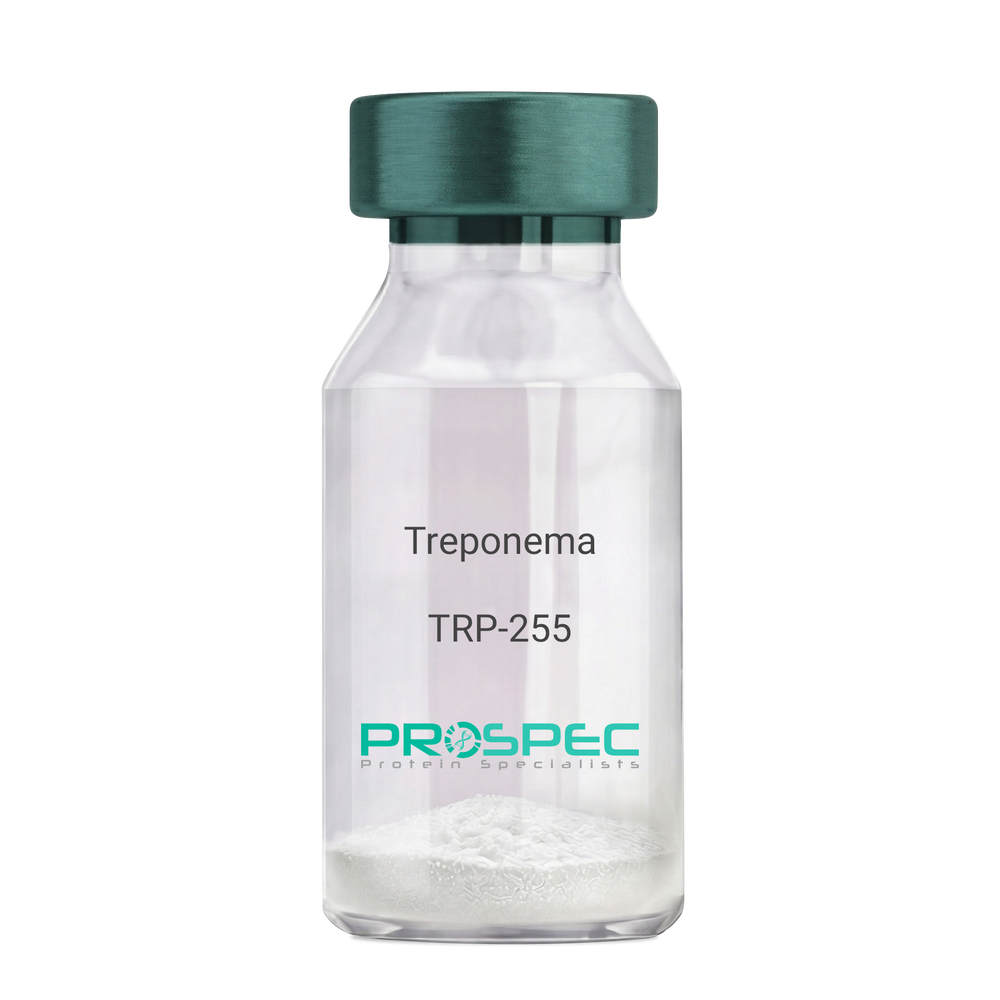
    Name :

    Treponema TP0453

    Description:

    Outer Membrane Protein Treponema pallidum Recombinant

    Outer membrane protein TP0453, 30kLP, TP_0453, TPANIC_0453

    Product # :

    TRP-255

    Price :

    Quantity :

    Shipping Method :

    Ice Icon

    Shipped with Ice Packs

    Add To Cart

    More Info

    • description
    • source
    • formulation
    • purity
    • More Info
    • Citations

    Description

    Recombinant Treponema pallidum Outer Membrane Protein TP0453 has a Mw of 26kDa, and was purified from E. coli.The Recombinant Treponema pallidum Outer Membrane Protein TP0453 is fused to 6 amino acid His tag at its C terminal and purified by proprietary chromatographic technique.

    Source

    Escherichia Coli.

    Formulation

    Treponema TP0453 solution contains 25mM K2CO3 with PBS.

    Purity

    Protein is >95% pure as determined by SDS-PAGE (coomassie staining).

    Citations

    More Info

    • Introduction

      Tp0453 is a carrier of lipids and glycolipids during outer membrane. Tp045 is hypothesized to be a new type of bacterial outer membrane protein, which reduces T.pallidum outer membrane permeability to nutrients while remaining inaccessible to antibodies. Tp0453 exhibited 100% specificity and sensitivity in reaction with syphilis patients’ sera, giving negative result with Lyme disease, relapsing-fever or leptospirosis patients’ sera.

    • Synonyms

      Outer membrane protein TP0453, 30kLP, TP_0453, TPANIC_0453

    • Physical Appearance

      Sterile Filtered clear solution.

    • Stability

      Store at 4°C if entire vial will be used within 2-4 weeks.Store, frozen at -20°C for longer periods of time.For long term storage it is recommended to add a carrier protein (0.1% HSA or BSA).Avoid multiple freeze-thaw cycles.

    • Applications

      Rapid test, Immunoassay.

    ProSpec's products are furnished for LABORATORY RESEARCH USE ONLY. The product may not be used as drugs, agricultural or pesticidal products, food additives or household chemicals.

    Tp0453 Treponema
  • View Data Sheet

    Name :

    Urokinase Human

    Description:

    Urokinase Human

    Urokinase, Abbokinase, Urokinase-type Plasminogen Activator,uPA, EC 3.4.21.73, UK.

    Product # :

    ENZ-264

    Price :

    Quantity :

    Shipping Method :

    Room Temp Icon

    Shipped at Room temp

    Add To Cart

    More Info

    • description
    • source
    • formulation
    • purity
    • More Info
    • Citations

    Description

    Urokinase is a two-chain glycoprotein containing 411 amino acids with 12 disulfide bonds. Its molecular weight is 54,000 Dalton.

    Source

    Human urine.

    Formulation

    The Urokinase was lyophilized from a concentrated (1mg/ml) solution containing phosphate buffer.

    Purity

    Greater than 90.0%.

    Citations

    More Info

    • Introduction

      Urokinase (UK) is a serine protease, which is one of biological plasminogen activators.
      It is involved in a number of biological functions including fibrinolysis, embryogenesis, cell migration, tissue remodeling, ovulation, and wound healing.
      It can be obtained from human urine or kidney cell culture.

    • Synonyms

      Urokinase, Abbokinase, Urokinase-type Plasminogen Activator,uPA, EC 3.4.21.73, UK.

    • Physical Appearance

      Sterile Filtered White lyophilized (freeze-dried) powder.

    • Stability

      Lyophilized Urokinase although stable at room temperature for 3 weeks, should be stored desiccated below -18°C. Upon reconstitution Urokinase should be stored at 4°C between 2-7 days and for future use below -18°C.Please prevent freeze-thaw cycles.

    • Solubility

      It is recommended to reconstitute the lyophilized Urokinase in sterile 18MΩ-cm H2O not less than 100µg/ml, which can then be further diluted to other aqueous solutions.

    • Contaminants

      Free of: Hepatitis B surface antigen, Hepatitis C antibody and HIV I and II.

    • Specific Activity

      187,973IU/mg.

    ProSpec's products are furnished for LABORATORY RESEARCH USE ONLY. The product may not be used as drugs, agricultural or pesticidal products, food additives or household chemicals.

    Urokinase Human
  • View Data Sheet

    Name :

    TBCEL Human

    Description:

    Tubulin Folding Cofactor E-Like Human Recombinant

    Tubulin Folding Cofactor E-Like, E-Like, LRRC351, Leucine Rich Repeat Containing Catastrophin, Tubulin-Specific Chaperone E-Like.

    Product # :

    PRO-030

    Price :

    Quantity :

    Shipping Method :

    Ice Icon

    Shipped with Ice Packs

    Add To Cart

    More Info

    • description
    • source
    • formulation
    • purity
    • More Info
    • Citations

    Description

    TBCEL Recombinant Human produced in E.Coli is a single, non-glycosylated polypeptide chain containing 447 amino acids and having a molecular mass of 50.6kDa. The TBCEL is purified by proprietary chromatographic techniques.

    Source

    Escherichia Coli.

    Formulation

    The TBCEL solution (1mg/ml) contains 20mM Tris-HCl buffer (pH 8.0) 0.15M NaCl, 20% glycerol and 1mM DTT.

    Purity

    Greater than 95% as determined by SDS-PAGE.

    Citations

    More Info

    • Introduction

      TBCEL, is a factor that is in charge of the microtubule cytoskeleton in determining cell behavior. TBCEL plays a role as a regulator of tubulin stability. While widely expressed in testis, TBCEL is also present in several tissues at a much lower level. TBCEL comprises of seven LRR (leucine-rich) repeats, one LRRCT domain and one ubiquitin-like domain. The gene that translates TBCEL consists of 66,704 bases and maps to human chromosome 11q23.3. Chromosome 11 houses over 1,400 genes and consist of nearly 4% of the human genome. Jervell and Lange-Nielsen syndrome, Jacobsen syndrome, Niemann-Pick disease, hereditary angioedema and Smith-Lemli-Opitz syndrome are associated with defects in genes that map to chromosome 11.

    • Synonyms

      Tubulin Folding Cofactor E-Like, E-Like, LRRC351, Leucine Rich Repeat Containing Catastrophin, Tubulin-Specific Chaperone E-Like.

    • Physical Appearance

      Sterile filtered colorless solution.

    • Stability

      Store at 4°C if entire vial will be used within 2-4 weeks. Store, frozen at -20°C for longer periods of time. For long term storage it is recommended to add a carrier protein (0.1% HSA or BSA).Avoid multiple freeze-thaw cycles.

    • Amino Acid Sequence

      MGSSHHHHHH SSGLVPRGSH MGSMDQPSGR SFMQVLCEKY SPENFPYRRG PGMGVHVPAT PQGSPMKDRL NLPSVLVLNS CGITCAGDEK EIAAFCAHVS ELDLSDNKLE DWHEVSKIVS NVPQLEFLNL SSNPLNLSVL ERTCAGSFSG VRKLVLNNSK ASWETVHMIL QELPDLEELF LCLNDYETVS CPSICCHSLK LLHITDNNLQ DWTEIRKLGV MFPSLDTLVL ANNHLNAIEE PDDSLARLFP NLRSISLHKS GLQSWEDIDK LNSFPKLEEV RLLGIPLLQP YTTEERRKLV IARLPSVSKL NGSVVTDGER EDSERFFIRY YVDVPQEEVP FRYHELITKY GKLEPLAEVD LRPQSSAKVE VHFNDQVEEM SIRLDQTVAE LKKQLKTLVQ LPTSNMLLYY FDHEAPFGPE EMKYSSRALH SFGIRDGDKI YVESKTK.

    ProSpec's products are furnished for LABORATORY RESEARCH USE ONLY. The product may not be used as drugs, agricultural or pesticidal products, food additives or household chemicals.

    Tbcel Human
  • View Data Sheet

    Name :

    TRIAP1 Human

    Description:

    TP53 Regulated Inhibitor Of Apoptosis 1 Human Recombinant

    TP53 Regulated Inhibitor of Apoptosis 1, P53-Inducible Cell-Survival Factor, Mitochondrial Distribution And Morphology 35 Homolog, Protein 15E1.1, MDM35, WF-1, p53CSV, HSPC132.

    Product # :

    PRO-1771

    Price :

    Quantity :

    Shipping Method :

    Ice Icon

    Shipped with Ice Packs

    Add To Cart

    More Info

    • description
    • source
    • formulation
    • purity
    • More Info
    • Citations

    Description

    TRIAP1 Human Recombinant produced in E.Coli is a single, non-glycosylated polypeptide chain containing 99 amino acids (1-76 a.a) and having a molecular mass of 11.2kDa.TRIAP1 is fused to a 23 amino acid His-tag at N-terminus & purified by proprietary chromatographic techniques.

    Source

    Escherichia Coli.

    Formulation

    TRIAP1 protein solution (1mg/ml) containing 20mM Tris-HCl buffer (pH8.0), 0.1M NaCl, 1mM DTT and 20% glycerol.

    Purity

    Greater than 90.0% as determined by SDS-PAGE.

    Citations

    More Info

    • Introduction

      TRIAP1 has a p53-binding site in its second exon. TRIAP1 expression is reduced by small interfering RNA enhanced apoptosis, while overexpression of TRIAP1 protects cells from apoptosis triggered by DNA damage. TRIAP1 is highly induced when cells have low levels of genotoxic stresses, but not when DNA damage is severe. TRIAP1 is able to control apoptotic pathways by interacting with Hsp70 which inhibits activity of apoptosis protease activating factor-1.

    • Synonyms

      TP53 Regulated Inhibitor of Apoptosis 1, P53-Inducible Cell-Survival Factor, Mitochondrial Distribution And Morphology 35 Homolog, Protein 15E1.1, MDM35, WF-1, p53CSV, HSPC132.

    • Physical Appearance

      Sterile Filtered clear solution.

    • Stability

      Store at 4°C if entire vial will be used within 2-4 weeks. Store, frozen at -20°C for longer periods of time.For long term storage it is recommended to add a carrier protein (0.1% HSA or BSA).Please avoid freeze thaw cycles.

    • Amino Acid Sequence

      MGSSHHHHHH SSGLVPRGSH MGSMNSVGEA CTDMKREYDQ CFNRWFAEKF LKGDSSGDPC TDLFKRYQQC VQKAIKEKEI PIEGLEFMGH GKEKPENSS

    ProSpec's products are furnished for LABORATORY RESEARCH USE ONLY. The product may not be used as drugs, agricultural or pesticidal products, food additives or household chemicals.

    Triap1 Human
  • View Data Sheet

    Name :

    GP9 Human

    Description:

    Glycoprotein-9 Human Recombinant

    Platelet glycoprotein IX, GP-IX, GPIX, Glycoprotein 9, CD42a, Glycoprotein IX (Platelet).

    Product # :

    PRO-055

    Price :

    Quantity :

    Shipping Method :

    Ice Icon

    Shipped with Ice Packs

    Add To Cart

    More Info

    • description
    • source
    • formulation
    • purity
    • More Info
    • Citations

    Description

    GP9 Human Recombinant produced in E.coli is a single, non-glycosylated polypeptide chain containing 154 amino acids (17-147) and having a molecular mass of 16.8kDa. GP9 is fused to a 23 amino acid His-tag at N-terminus & purified by proprietary chromatographic techniques.

    Source

    Escherichia Coli.

    Formulation

    GP9 protein solution (1mg/ml) containing 20mM Tris-HCl buffer (pH 8.0), 2M UREA and 10% glycerol.

    Purity

    Greater than 90.0% as determined by SDS-PAGE.

    Citations

    More Info

    • Introduction

      Glycoprotein-9 (GP9) is a small membrane glycoprotein found on the surface of human platelets. GP9 forms a one to one noncovalent complex with glycoprotein Ib, a platelet surface membrane glycoprotein complex which functions as a receptor for von Willebrand factor. The complete receptor complex includes noncovalent association of the alpha and beta subunits with the protein and platelet glycoprotein V. GP9 gene defects cause the Bernard-Soulier syndrome, aka giant platelet disease whose patients have unusually large platelets and have a clinical bleeding tendency.

    • Synonyms

      Platelet glycoprotein IX, GP-IX, GPIX, Glycoprotein 9, CD42a, Glycoprotein IX (Platelet).

    • Physical Appearance

      Sterile Filtered colorless solution.

    • Stability

      Store at 4°C if entire vial will be used within 2-4 weeks. Store, frozen at -20°C for longer periods of time. For long term storage it is recommended to add a carrier protein (0.1% HSA or BSA).Avoid multiple freeze-thaw cycles.

    • Amino Acid Sequence

      MGSSHHHHHH SSGLVPRGSH MGSTKDCPSP CTCRALETMG LWVDCRGHGL TALPALPART RHLLLANNSL QSVPPGAFDH LPQLQTLDVT QNPWHCDCSL TYLRLWLEDR TPEALLQVRC ASPSLAAHGP LGRLTGYQLG SCGWQLQASW VRPG.

    ProSpec's products are furnished for LABORATORY RESEARCH USE ONLY. The product may not be used as drugs, agricultural or pesticidal products, food additives or household chemicals.

    Gp9 Human
  • View Data Sheet

    Name :

    THAP3 Human

    Description:

    THAP Domain Containing, Apoptosis Associated Protein 3 Human Recombinant

    THAP Domain Containing Apoptosis Associated Protein 3, THAP Domain-Containing Protein 3.

    Product # :

    PRO-1630

    Price :

    Quantity :

    Shipping Method :

    Ice Icon

    Shipped with Ice Packs

    Add To Cart

    More Info

    • description
    • source
    • formulation
    • purity
    • More Info
    • Citations

    Description

    THAP3 Human Recombinant produced in E.coli is a single, non-glycosylated polypeptide chain containing 262 amino acids (1-239) and having a molecular mass of 29.4kDa.THAP3 is fused to a 23 amino acid His-tag at N-terminus & purified by proprietary chromatographic techniques.

    Source

    Escherichia Coli.

    Formulation

    The THAP3 solution contains 20mM Tris-HCl buffer (pH 8.0), 0.2M NaCl, 2mM DTT and 50% glycerol.

    Purity

    Greater than 85% as determined by SDS-PAGE.

    Citations

    More Info

    • Introduction

      THAP3 is an element of a THAP1/THAP3-HCFC1-OGT complex which is essential for the regulation of the transcriptional activity of RRM1. THAP3 is vastly produced in placenta, skeletal muscle and heart.

    • Synonyms

      THAP Domain Containing Apoptosis Associated Protein 3, THAP Domain-Containing Protein 3.

    • Physical Appearance

      Sterile filtered colorless solution.

    • Stability

      Store at 4°C if entire vial will be used within 2-4 weeks. Store, frozen at -20°C for longer periods of time. For long term storage it is recommended to add a carrier protein (0.1% HSA or BSA).Avoid multiple freeze-thaw cycles.

    • Amino Acid Sequence

      MGSSHHHHHH SSGLVPRGSH MGSMPKSCAA RQCCNRYSSR RKQLTFHRFP FSRPELLKEW VLNIGRGNFK PKQHTVICSE HFRPECFSAF GNRKNLKHNA VPTVFAFQDP TQQVRENTDP ASERGNASSS QKEKVLPEAG AGEDSPGRNM DTALEELQLP PNAEGHVKQV SPRRPQATEA VGRPTGPAGL RRTPNKQPSD HSYALLDLDS LKKKLFLTLK ENEKLRKRLQ AQRLVMRRMS SRLRACKGHQ GLQARLGPEQ QS

    ProSpec's products are furnished for LABORATORY RESEARCH USE ONLY. The product may not be used as drugs, agricultural or pesticidal products, food additives or household chemicals.

    Thap3 Human
  • View Data Sheet

    Name :

    Hepsin Human

    Description:

    Hepsin Human Recombinant

    HPN, TMPRSS1, Serine protease hepsin, Transmembrane protease serine 1.

    Product # :

    PRO-2846

    Price :

    Quantity :

    Shipping Method :

    Room Temp Icon

    Shipped at Room temp

    Add To Cart

    More Info

    • description
    • source
    • formulation
    • purity
    • biological activity
    • More Info
    • Citations

    Description

    Hepsin Human Recombinant produced in Cho cells is a covalently-linked heterodimer having a total molecular mass of 43.0kDa. Hepsin is fused to a 6 amino acid His-tag at C-terminus & purified by proprietary chromatographic techniques.

    Source

    CHO cells.

    Formulation

    The Hepsin protein was Lyophilized from a 0.2µm filtered concentrated solution in 20mM Tris and 150mM NaCl, pH 8.0.

    Purity

    Greater than 95.0% as determined by SDS-PAGE.

    Biological Activity

    The specific activity is >20,000 pmol/min/μg and was measured by its ability to cleave tert-butoxycarbonyl-Gln-Arg-Arg-7-amino-4-methylcoumarin (Boc-QRR-AMC).

    Citations

    More Info

    • Synonyms

      HPN, TMPRSS1, Serine protease hepsin, Transmembrane protease serine 1.

    • Physical Appearance

      Filtered White lyophilized (freeze-dried) powder.

    • Stability

      Lyophilized Hepsin Active although stable at room temperature for 3 weeks, should be stored desiccated below -18°C. Upon reconstitution Hepsin Active should be stored at 4°C between 2-7 days and for future use below -18°C.
      Please prevent freeze-thaw cycles.

    • Solubility

      It is recommended to reconstitute the lyophilized Hepsin in sterile 18MΩ-cm H2O not less than 100µg/ml, which can then be further diluted to other aqueous solutions.

    • Amino Acid Sequence

      Light Chain (Non-catalytic Chain)
      RSDQEPLYPV QVSSADARLM VFDKTEGTWR LLCSSRSNAR VAGLSCEEMG FLRALTHSEL DVRTAGANGT SGFFCVDEGR LPHTQRLLE VISVCDCPRGR FLAAICQDCG RRKLPVDR.

      Heavy Chain (Catalytic Chain)
      IVGGRDTSLG RWPWQVSLRY DGAHLCGGSL LSGDWVLTAA HCFPERNRVL SRWRVFAGAV AQASPHGLQL GVQAVVYHGG YLPFRDPNSE ENSNDIALVH LSSPLPLTEY IQPVCLPAAG QALVDGKICT VTGWGNTQYY GQQAGVLQEA RVPIISNDVC NGADFYGNQI KPKMFCAGYP EGGIDACQGD SGGPFVCEDS ISRTPRWRLC GIVSWGTGCA LAQKPGVYTK VSDFREWIFQ AIKTHSEASG MVTQLHHHHH H.

    • Background

      Hepsin is a type II transmembrane serine protease expressed primarily on epithelial cells, it takes part in extracellular proteolysis by activating precursor proteins such as pro-HGF and contributes to tissue remodeling, cell signaling, and normal epithelial function. Recombinant Hepsin is used to study prostate cancer, extracellular matrix remodelling, protease signalling pathways, tumor invasion, metastasis, HGF/MET signaling, and for screening inhibitors that target serine proteases

      What is the molecular weight / Mw of Hepsin Protein?
      Hepsin Protein has a total Mw of 43kDa.

      What is the source or expression system of Hepsin Protein?
      CHO Cells

      What is the Purity of Hepsin Protein?
      Hepsin Protein is >95% pure as determined by SDS-PAGE.

      What is the Biological Activity of Hepsin Protein?
      The enzymatic activity was measured by its ability to cleave tert-butoxycarbonyl-Gln-Arg-Arg-7-amino-4-methylcoumarin (Boc-QRR-AMC). The specific activity is >20,000 pmol/min/μg.

      What is the amino acid sequence of Hepsin Protein?
      Light Chain (Non-catalytic Chain)
      RSDQEPLYPV QVSSADARLM VFDKTEGTWR LLCSSRSNAR VAGLSCEEMG FLRALTHSEL DVRTAGANGT SGFFCVDEGR LPHTQRLLE VISVCDCPRGR FLAAICQDCG RRKLPVDR
      Heavy Chain (Catalytic Chain)
      IVGGRDTSLG RWPWQVSLRY DGAHLCGGSL LSGDWVLTAA HCFPERNRVL SRWRVFAGAV AQASPHGLQL GVQAVVYHGG YLPFRDPNSE ENSNDIALVH LSSPLPLTEY IQPVCLPAAG QALVDGKICT VTGWGNTQYY GQQAGVLQEA RVPIISNDVC NGADFYGNQI KPKMFCAGYP EGGIDACQGD SGGPFVCEDS ISRTPRWRLC GIVSWGTGCA LAQKPGVYTK VSDFREWIFQ AIKTHSEASG MVTQLHHHHH H

      What applications can Hepsin Protein be used in?
      Hepsin Protein can probably be used in western blot, ELISA and Lateral Flow.

      What is the endotoxin level for Hepsin Protein?
      The endotoxin level is minimal, Hepsin Protein was purified using conventional chromatography techniques.

    ProSpec's products are furnished for LABORATORY RESEARCH USE ONLY. The product may not be used as drugs, agricultural or pesticidal products, food additives or household chemicals.

    hepsin human
  • 1
  • 2
  • 3
  • 4
  • 5
  • 6
  • …
  • 42
Your browser does not support the video tag.

Products

  • Cytokines
  • Growth Factors
  • Chemokines
  • CD Antigens
  • Neurotrophins
  • Hormones
  • Enzymes
  • Viral Antigens
  • Recombinant Proteins
  • Natural Proteins
  • Monoclonal Antibodies
  • Polyclonal Antibodies
  • Thermal Packaging

About

  • Company
  • Founder
  • Contribution
  • Contact Us
  • My Account

Ordering

  • Ordering Method
  • Ordering - Credit Card
  • Ordering PO
  • Shipping Fees
  • FAQ's

Legal

  • Terms & Conditions
  • Privacy
  • Site Map
  • info@prospecbio.com
  • Facebook
  • Instagram
  • Linkedin Profile

© 2026 ProSpec-Tany TechnoGene Ltd. All Rights Reserved.

  • Choosing a selection results in a full page refresh.
  • Opens in a new window.