Search results
1000 results found for “thrombin”
Name
Description
Product #
Price
Quantity
Shipping Method
- View Data Sheet
Name :
ThrombinDescription:
Human Thrombin
Product # :
PRO-339Price :
Quantity :
Shipping Method :
Shipped at Room temp
More Info
- description
- source
- formulation
- biological activity
- More Info
- Citations
Description
Thrombin was purified from human plasma.
Source
Human Plasma.
Formulation
Lyophilized protein containing mannitol, sodium chloride, calcium chloride.
Biological Activity
The specific activity was found to be 116 US Units/mg protein.
Citations
More Info
-
Introduction
Thrombin enzyme (Activated Factor IIa) is an important clotting promoter that controls the transformation of soluble fibrinogen to insoluble active fibrin strands. Thrombin is a coagulation protein and a serine protease (EC 3.4.21.5) that catalyzes many coagulation-related reactions. Thrombin triggers factor-XI, factor-V, Factor-XIII and factor-VIII. Thrombin endorses platelet activation, using activation of protease-activated receptors on the platelet. As a result of its high proteolytic specificity, thrombin has become an important biochemical protein. The thrombin cleavage site (Leu-Val-Pro-Arg-Gly-Ser) is widely used in linker regions of recombinant fusion protein constructs. After the purification of the fusion protein, thrombin is used to cleave between the Arginine and Glycine residues of the cleavage site, efficiently removing the purification tag from the protein of interest with a high degree of specificity.
-
Physical Appearance
lyophilized powder.
-
Stability
Lyophilized Human Thrombin although stable at room temperature for 3 weeks, should be stored desiccated below -18°C. Upon reconstitution human thrombin should be stored at 4°C between 2-7 days and for future use below -18°C. For long term storage it is recommended to add a carrier protein (0.1% HSA or BSA). Please prevent freeze-thaw cycles.
-
Solubility
It is recommended to reconstitute the lyophilized human thrombin in sterile a 0.9% NaCl solution at 500U/ml.
ProSpec's products are furnished for LABORATORY RESEARCH USE ONLY. The product may not be used as drugs, agricultural or pesticidal products, food additives or household chemicals.
- View Data Sheet
Name :
Thrombin HumanDescription:
Thrombin Human Recombinant
Coagulation Factor II (Thrombin), Prepro-Coagulation Factor II, EC 3.4.21.5, RPRGL2, THPH1, Coagulation Factor II, Prothrombin B-Chain, Serine Protease, Prothrombin, EC 3.4.21, PT, F2.
Product # :
PRO-1954Price :
Quantity :
Shipping Method :
Shipped with Ice Packs
More Info
- description
- source
- formulation
- purity
- More Info
- Citations
Description
Thrombin Human Recombinant produced in E.coli is a single, non-glycosylated polypeptide chain containing 296 amino acids (328-622) and having a molecular mass of 33.9 kDa.
Source
Escherichia Coli.
Formulation
The Thrombin solution (1mg/ml) contains 20mM Tris-HCl buffer (pH 8.0), 0.4M Urea and 10% glycerol.
Purity
Greater than 80.0% as determined by SDS-PAGE.
Citations
More Info
-
Introduction
Coagulation factor II (F2) is proteolytically cleaved to form thrombin in the 1st step of the coagulation cascade which ultimately results in the stemming of blood loss. F2 also has a role in preserving vascular integrity during development and postnatal life. F2 gene mutations lead to various forms of thrombosis and dysprothrombinemia.
-
Synonyms
Coagulation Factor II (Thrombin), Prepro-Coagulation Factor II, EC 3.4.21.5, RPRGL2, THPH1, Coagulation Factor II, Prothrombin B-Chain, Serine Protease, Prothrombin, EC 3.4.21, PT, F2.
-
Physical Appearance
Sterile Filtered colorless solution.
-
Stability
Store at 4°C if entire vial will be used within 2-4 weeks. Store, frozen at -20°C for longer periods of time. For long term storage it is recommended to add a carrier protein (0.1% HSA or BSA).Avoid multiple freeze-thaw cycles.
-
Amino Acid Sequence
MTFGSGEADC GLRPLFEKKS LEDKTERELL ESYIDGRIVE GSDAEIGMSP WQVMLFRKSP QELLCGASLI SDRWVLTAAH CLLYPPWDKN FTENDLLVRI GKHSRTRYER NIEKISMLEK IYIHPRYNWR ENLDRDIALM KLKKPVAFSD YIHPVCLPDR ETAASLLQAG YKGRVTGWGN LKETWTANVG KGQPSVLQVV NLPIVERPVC KDSTRIRITD NMFCAGYKPD EGKRGDACEG DSGGPFVMKS PFNNRWYQMG IVSWGEGCDR DGKYGFYTHV FRLKKWIQKV IDQFGE.
ProSpec's products are furnished for LABORATORY RESEARCH USE ONLY. The product may not be used as drugs, agricultural or pesticidal products, food additives or household chemicals.
- View Data Sheet
Name :
Thrombin PorcineDescription:
Porcine Thrombin
Product # :
PRO-617Price :
Quantity :
Shipping Method :
Shipped at Room temp
More Info
- source
- formulation
- More Info
- Citations
Source
Porcine Blood.
Formulation
Lyophilized Powder from glycine, calcium chloride pH 7.0 containing 0.9% NaCl
Citations
More Info
-
Introduction
Thrombin enzyme (Activated Factor IIa) is an important clotting promoter that controls the transformation of soluble fibrinogen to insoluble active fibrin strands. Thrombin is a coagulation protein and a serine protease (EC 3.4.21.5) that catalyzes many coagulation-related reactions. Thrombin triggers factor-XI, factor-V, Factor-XIII and factor-VIII. Thrombin endorses platelet activation, using activation of protease-activated receptors on the platelet. As a result of its high proteolytic specificity, thrombin has become an important biochemical protein. The thrombin cleavage site (Leu-Val-Pro-Arg-Gly-Ser) is widely used in linker regions of recombinant fusion protein constructs. After the purification of the fusion protein, thrombin is used to cleave between the Arginine and Glycine residues of the cleavage site, efficiently removing the purification tag from the protein of interest with a high degree of specificity.
-
Physical Appearance
Sterile Filtered White lyophilized (freeze-dried) powder.
-
Stability
Lyophilized Porcine Thrombin although stable at room temperature for 3 weeks, should be stored desiccated below -18°C. Upon reconstitution IPF1 should be stored at 4°C between 2-7 days and for future use below -18°C.For long term storage it is recommended to add a carrier protein (0.1% HSA or BSA).Please prevent freeze-thaw cycles.
-
Solubility
It is recommended to reconstitute the lyophilized porcine Thrombin in sterile 0.9% NaCl.
ProSpec's products are furnished for LABORATORY RESEARCH USE ONLY. The product may not be used as drugs, agricultural or pesticidal products, food additives or household chemicals.
- View Data Sheet
Name :
Thrombin Human, HEKDescription:
Thrombin Human Recombinant, HEK
Prothrombin, EC 3.4.21.5, Coagulation factor II, F2, PT, THPH1, RPRGL2.
Product # :
PRO-1422Price :
Quantity :
Shipping Method :
Shipped with Ice Packs
More Info
- description
- source
- formulation
- biological activity
- More Info
- Citations
Description
Recombinant Human Thrombin produced in HEK cells, having a total molecular weight of 36kDa. The Thrombin is purified by proprietary chromatographic techniques.
Source
HEK
Formulation
The Thrombin solution contains 20mM MES, pH6.0 and 500mM Choline Chloride.
Biological Activity
5396 NIH Units/mg.
The activity was determined in NIH units by comparing to Sigma’s human plasma thrombin. Protein concentration was measured using E(0.1%)@280nm = 1.83.Citations
More Info
-
Introduction
Thrombin enzyme (Activated Factor IIa) is an important clotting promoter that controls the transformation of soluble fibrinogen to insoluble active fibrin strands. Thrombin is a coagulation protein and a serine protease (EC 3.4.21.5) that catalyzes many coagulation-related reactions. Thrombin triggers factor-XI, factor-V, Factor-XIII and factor-VIII. Thrombin endorses platelet activation, using activation of protease-activated receptors on the platelet. As a result of its high proteolytic specificity, thrombin has become an important biochemical protein. The thrombin cleavage site (Leu-Val-Pro-Arg-Gly-Ser) is widely used in linker regions of recombinant fusion protein constructs. After the purification of the fusion protein, thrombin is used to cleave between the Arginine and Glycine residues of the cleavage site, efficiently removing the purification tag from the protein of interest with a high degree of specificity.
-
Synonyms
Prothrombin, EC 3.4.21.5, Coagulation factor II, F2, PT, THPH1, RPRGL2.
-
Physical Appearance
Sterile Filtered colorless solution.
-
Stability
Store frozen at -20°C to -80°C for long periods of time. Avoid multiple freeze-thaw cycles.
-
Assay Conditions
Thrombin (1nM) was assayed using SPECTROZYME TH as a substrate (20µM) in 5mM Tris-HCl (pH8.0), 0.1% PEG, 200mM NaCl at 25°C.
ProSpec's products are furnished for LABORATORY RESEARCH USE ONLY. The product may not be used as drugs, agricultural or pesticidal products, food additives or household chemicals.
- View Data Sheet
Name :
Thrombin BovineDescription:
Bovine Thrombin
Coagulation Factor II (Thrombin), Prepro-Coagulation Factor II, EC 3.4.21.5, RPRGL2, THPH1, Coagulation Factor II, Prothrombin B-Chain, Serine Protease, Prothrombin, EC 3.4.21, PT, F2.
Product # :
PRO-447Price :
Quantity :
Shipping Method :
Shipped at Room temp
More Info
- source
- formulation
- biological activity
- More Info
- Citations
Source
Bovine Blood.
Formulation
Lyophilized freeze dry powder formulated with glycine, CaCl2 and sodium chloride, PH 6.8.
Biological Activity
155 US units/mg protein.
Citations
More Info
-
Introduction
Thrombin enzyme (Activated Factor IIa) is an important clotting promoter that controls the transformation of soluble fibrinogen to insoluble active fibrin strands. Thrombin is a coagulation protein and a serine protease (EC 3.4.21.5) that catalyzes many coagulation-related reactions. Thrombin triggers factor-XI, factor-V, Factor-XIII and factor-VIII. Thrombin endorses platelet activation, using activation of protease-activated receptors on the platelet. As a result of its high proteolytic specificity, thrombin has become an important biochemical protein. The thrombin cleavage site (Leu-Val-Pro-Arg-Gly-Ser) is widely used in linker regions of recombinant fusion protein constructs. After the purification of the fusion protein, thrombin is used to cleave between the Arginine and Glycine residues of the cleavage site, efficiently removing the purification tag from the protein of interest with a high degree of specificity.
-
Synonyms
Coagulation Factor II (Thrombin), Prepro-Coagulation Factor II, EC 3.4.21.5, RPRGL2, THPH1, Coagulation Factor II, Prothrombin B-Chain, Serine Protease, Prothrombin, EC 3.4.21, PT, F2.
-
Physical Appearance
Sterile Filtered beige lyophilized (freeze-dried) powder.
-
Stability
Lyophilized Thrombin although stable at room temperature for 3 weeks, should be stored desiccated below -18°C. Upon reconstitution Thrmbin should be stored at 4°C between 2-7 days and for future use below -18°C. For long term storage it is recommended to add a carrier protein (0.1% HSA or BSA).Please prevent freeze-thaw cycles.
-
Solubility
It is recommended to reconstitute the lyophilized Thrombin in 0.9% NaCl.
ProSpec's products are furnished for LABORATORY RESEARCH USE ONLY. The product may not be used as drugs, agricultural or pesticidal products, food additives or household chemicals.
- View Data Sheet
Name :
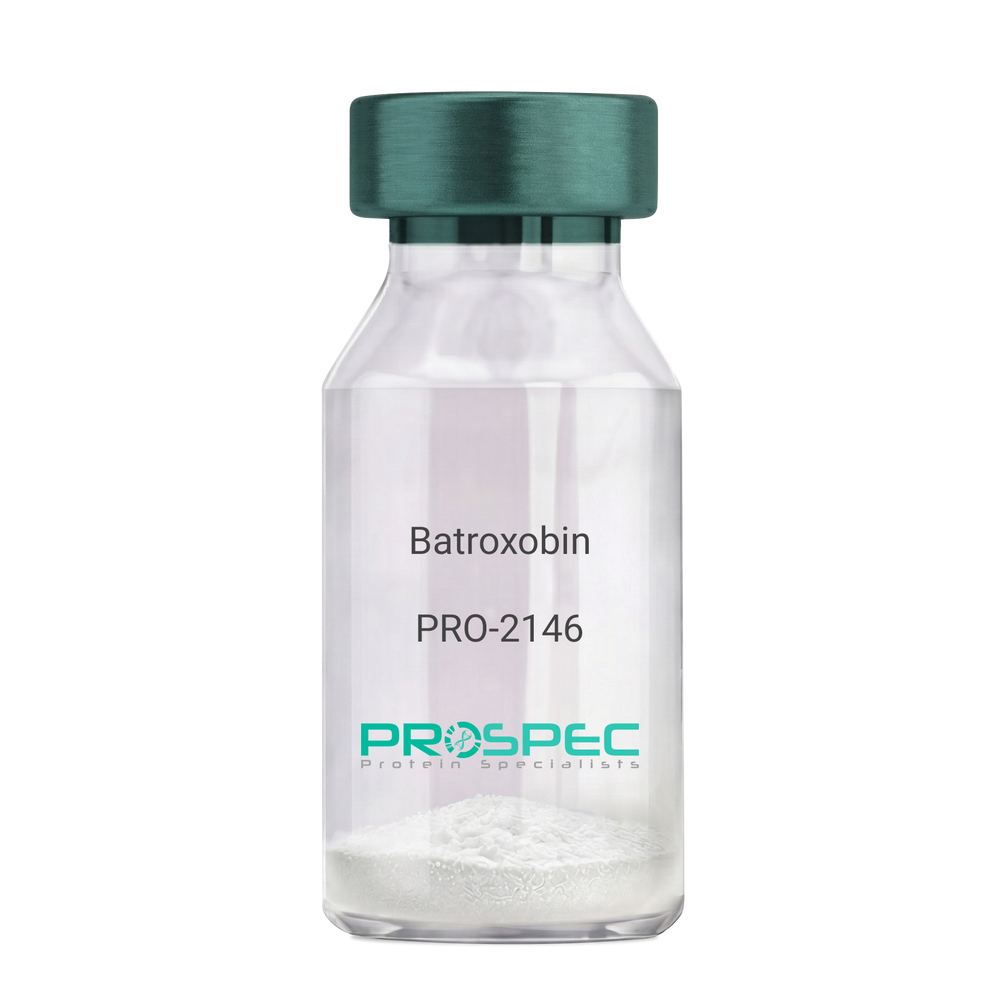
BatroxobinDescription:
Batroxobin
Thrombin-like enzyme batroxobin, EC 3.4.21.74, BX, Bothrops atrox serine proteinase, Venombin-A, Batroxobin.
Product # :
PRO-2146Price :
Quantity :
Shipping Method :
Shipped at Room temp
More Info
- description
- formulation
- More Info
- Citations
Description
Batroxobin, isolated from Bothrops atrox snake venom, has an Mw of approximately 43kDa.
Formulation
The Batroxobin protein was lyophilized from a concentrated (1mg/ml) solution with no additives.
Citations
More Info
-
Introduction
Batroxobin is a serin protease that reduces fibronogen levels and is originally extracted from snake venom of Bothrops Atrox. Batroxobin is used in defibrinogenation and thrombolysis and also has an effect on c-fos gene and growth factor.
Batroxobin can efficiently restrain proliferation of VSMCs, by blocking the release and uptake of Ca2+, thus influencing [Ca2+]i.
Batroxobin converts fibrinogen to fibrin through the restricted release of fibrinopeptide-A from fibrinogen to promote blood to clot. Unlike thrombin, it is not affected by heparin and hirudin. -
Synonyms
Thrombin-like enzyme batroxobin, EC 3.4.21.74, BX, Bothrops atrox serine proteinase, Venombin-A, Batroxobin.
-
Physical Appearance
Sterile Filtered white lyophilized powder.
-
Stability
Store the lyophilized Batroxobin between 2-8°C. Do not freeze!
-
Solubility
It is recommended to reconstitute the lyophilized Batroxobin in sterile 18MΩ-cm H2O not less than 100µg/ml or more than 10mg/ml solutions.
-
Unit Definition
100BU [Batroxobin Units]=1mg.
ProSpec's products are furnished for LABORATORY RESEARCH USE ONLY. The product may not be used as drugs, agricultural or pesticidal products, food additives or household chemicals.
- View Data Sheet
Name :
THBD HumanDescription:
Thrombomodulin Human Recombinant
THBD, Thrombomodulin, TM, Fetomodulin, CD141, CD141 antigen, THRM, BDCA-3, BDCA3, blood dendritic cell antigen 3, AHUS6, THPH12.
Product # :
PRO-2697Price :
Quantity :
Shipping Method :
Shipped with Ice Packs
More Info
- description
- source
- formulation
- purity
- More Info
- Citations
Description
THBD Human Recombinant produced in Sf9 Baculovirus cells is a single, glycosylated polypeptide chain containing 500 amino acids (22-515a.a) and having a molecular mass of 52.6kDa.THBD is fused to an 6 amino acid His-tag at C-terminus & purified by proprietary chromatographic techniques.
Source
Sf9, Baculovirus cells.
Formulation
THBD protein solution (0.5mg/ml) contains Phosphate-Buffered Saline (pH 7.4) and 10% glycerol.
Purity
Greater than 90.0% as determined by SDS-PAGE.
Citations
More Info
-
Introduction
Thrombomodulin, also referred to THBD, is an endothelial cell-expressed, transmembrane glycoprotein that can form a complex with the coagulation factor, thrombin. This complex increasethe activation of protein C in the anticoagulant pathway by forming a 1:1 stoichiometric complex with thrombin. Thrombomodulinbound thrombin has procoagulant effect at the same time by inhibiting fibrinolysis by cleaving thrombinactivatable fibrinolysis inhibitor (TAFI) into its active form. Reduced levels of thrombomodulin or increased serum levels of THBD can correlate with pathogenesis of certain cardiovascular diseases, such as atherosclerosis and thrombosis. Furthermore, it associated with, diabetes mellitus, liver cirrhosis, cerebral & myocardial infarction, and multiple sclerosis.
-
Synonyms
THBD, Thrombomodulin, TM, Fetomodulin, CD141, CD141 antigen, THRM, BDCA-3, BDCA3, blood dendritic cell antigen 3, AHUS6, THPH12.
-
Physical Appearance
Sterile Filtered colorless solution.
-
Stability
Store at 4°C if entire vial will be used within 2-4 weeks. Store, frozen at -20°C for longer periods of time. For long term storage it is recommended to add a carrier protein (0.1% HSA or BSA).Avoid multiple freeze-thaw cycles.
-
Amino Acid Sequence
EPQPGGSQCV EHDCFALYPG PATFLNASQI CDGLRGHLMT VRSSVAADVI SLLLNGDGGV GRRRLWIGLQ LPPGCGDPKR LGPLRGFQWV TGDNNTSYSR WARLDLNGAP LCGPLCVAVS AAEATVPSEP IWEEQQCEVK ADGFLCEFHF PATCRPLAVE PGAAAAAVSI TYGTPFAARG ADFQALPVGS SAAVAPLGLQ LMCTAPPGAV QGHWAREAPG AWDCSVENGG CEHACNAIPG
APRCQCPAGA ALQADGRSCT ASATQSCNDL CEHFCVPNPD QPGSYSCMCE TGYRLAADQH RCEDVDDCIL EPSPCPQRCV NTQGGFECHC YPNYDLVDGE CVEPVDPCFR ANCEYQCQPL NQTSYLCVCA EGFAPIPHEP HRCQMFCNQT ACPADCDPNT QASCECPEGY ILDDGFICTD IDECENGGFC SGVCHNLPGT FECICGPDSA LARHIGTDCD SGKVDGGDSG SGEPPPSPTP
GSTLTPPAVG LVHSHHHHHH
ProSpec's products are furnished for LABORATORY RESEARCH USE ONLY. The product may not be used as drugs, agricultural or pesticidal products, food additives or household chemicals.
- View Data Sheet
Name :
Prothrombin BovineDescription:
Prothrombin Bovine
Coagulation factor II, Prothrombin, F2.
Product # :
PRO-2759Price :
Quantity :
Shipping Method :
Shipped at Room temp
More Info
- description
- source
- formulation
- More Info
- Citations
Description
Prothrombin bovine native.
Source
Bovine Plasma.
Formulation
The bovine prothrombin was lyophilized with no additives.
Citations
More Info
-
Introduction
Prothrombin produced in the liver is a vitamin K-dependent plasma protein. Before prothrombin is secreted into the plasma it goes through post translational modification by vitamin K-dependent carboxylase. The vitamin K-dependent carboxylase convertsprothrombin to 10 glutamic acid residues to gamma carboxyglutamic acid. Prothrombin comprises of 2 kringle regions which are found among residues a.a. 40 & 270 of the mature plasma protein and substitute the growth factor domains located in numerous plasma serine proteases.
-
Synonyms
Coagulation factor II, Prothrombin, F2.
-
Physical Appearance
Sterile Filtered White lyophilized (freeze-dried) powder.
-
Stability
Lyophilized Bovine Prothrombin although stable at room temperature for 3 weeks, should be stored desiccated below -18C. Upon reconstitution Prothrombin should be stored at 4C between 2-7 days and for future use below -18C.For long term storage it is recommended to add a carrier protein (0.1% HSA or BSA). Please prevent freeze-thaw cycles
-
Solubility
It is recommended to reconstitute the lyophilized Bovine Prothrombin in sterile 0.9% NaCl
ProSpec's products are furnished for LABORATORY RESEARCH USE ONLY. The product may not be used as drugs, agricultural or pesticidal products, food additives or household chemicals.
- View Data Sheet
Name :
BivalirudinDescription:
Bivalirudin
Product # :
PRO-357Price :
Quantity :
Shipping Method :
Shipped at Room temp
More Info
- description
- formulation
- purity
- More Info
- Citations
Description
The active of Bivalirudin substance is a synthetic 20 amino acid peptide. The amino acid sequence is Phe-Pro-Arg-Pro-Gly-Gly-Gly-Gly- Asn-Gly-Asp-Phe-Glu-Glu-Ile- Pro-Glu-Glu-Tyr-Leu. The Mw is 2180 dalton.
Formulation
The protein (1mg/ml) was lyophilized with 0.5mg Manntiol and sodium hydroxide 50µg pH-5.5.
Purity
Greater than 98.0% as determined by:
(a) Analysis by RP-HPLC.
(b) Analysis by SDS-PAGE.Citations
More Info
-
Introduction
Bivalirudin directly inhibits thrombin by specifically binding as well to the catalytic site and to the anion-binding exosite of circulating and clot-bound thrombin. Bivalirudin is a specific and reversible direct thrombin inhibitor.
Thrombin, which is a serine protease, plays a central role in the thrombotic process; it cleaves fibrinogen into fibrin monomers and activates Factor XIII to Factor XIIIa, allowing fibrin to develop a covalently cross-linked structure which stabilizes the thrombus. Thrombin also activates Factors V and VIII, which promotes further thrombin generation, activates platelets, stimulating aggregation and granule release. -
Physical Appearance
Sterile Filtered White lyophilized (freeze-dried) powder.
-
Stability
Lyophilized Bivalirudin although stable at room temperature for 3 weeks, should be stored desiccated below -18°C. Upon reconstitution Bivalirudin should be stored at 4°C between 2-7 days and for future use below -18°C.For long term storage it is recommended to add a carrier protein (0.1% HSA or BSA).Please prevent freeze-thaw cycles.
-
Solubility
It is recommended to reconstitute the lyophilized Bivalirudin in sterile 18MΩ-cm H2O not less than 100µg/ml, which can then be further diluted to other aqueous solutions.
ProSpec's products are furnished for LABORATORY RESEARCH USE ONLY. The product may not be used as drugs, agricultural or pesticidal products, food additives or household chemicals.
- View Data Sheet
Name :
Thromboplastin BovineDescription:
Thromboplastin Bovine
Tissue factor, Coagulation factor III, Thromboplastin, CD142, TF, F3, TFA.
Product # :
PRO-2760Price :
Quantity :
Shipping Method :
Shipped at Room temp
More Info
- description
- source
- formulation
- More Info
- Citations
Description
Thromboplastin bovine native
Source
Bovine Lung.
Formulation
The bovine thromboplastin was lyophilized with no additives.
Citations
More Info
-
Introduction
Tissue factor is well-known as the main cellular initiator of blood coagulation. The Tissue factor gene encodes coagulation factor III which is a cell surface glycoprotein that enables cells to initiate the blood coagulation cascades, and functions as the high-affinity receptor for the coagulation factor VII. Following vessel injury, the Tissue Factor and Factor VIIa complex activates the coagulation protease cascade, which leads to fibrin deposition and activation of platelets. The ensuing complex presents a catalytic event, which is responsible for initiation of the coagulation protease cascades by specific limited proteolysis. Therefore, Tissue factor has a role in normal hemostasis by initiating the cell-surface assembly and propagation of the coagulation protease cascade. Tissue Factor can also be stimulated by the inflammatory mediators interleukin 1 and TNF, as well as by endotoxin, to appear on monocytes and vascular endothelial cells as a component of cellular immune response.
Tissue factor is the only one in the coagulation pathway for which a congenital deficiency has not been described. Certain levels of Tissue Factor are essential for the maintained viability and growth of endothelium and Tissue Factor-expressing tumor cells. Additionally, abnormal Tissue Factor expression inside the vasculature initiates life threatening thrombosis in various diseases, for example sepsis, atherosclerosis, and cancer. Alternative spliced Tissue Factor expression advances tumor growth, and is linked to increased tumor cell proliferation and angiogenesis in pancreatic cancer. -
Synonyms
Tissue factor, Coagulation factor III, Thromboplastin, CD142, TF, F3, TFA.
-
Physical Appearance
Sterile Filtered White lyophilized (freeze-dried) powder.
-
Stability
Lyophilized Bovine Thromboplastin although stable at room temperature for 3 weeks, should be stored desiccated below -18C. Upon reconstitution Prothrombin should be stored at 4C between 2-7 days and for future use below -18C.For long term storage it is recommended to add a carrier protein (0.1% HSA or BSA). Please prevent freeze-thaw cycles
-
Solubility
It is recommended to reconstitute the lyophilized Bovine Thromboplastin in sterile 0.9% NaCl
ProSpec's products are furnished for LABORATORY RESEARCH USE ONLY. The product may not be used as drugs, agricultural or pesticidal products, food additives or household chemicals.
- View Data Sheet
Name :
Thrombopoietin HumanDescription:
Thrombopoietin Human Recombinant
Megakaryocyte colony-stimulating factor, Myeloproliferative leukemia virus oncogene ligand, C-mpl ligand, ML, Megakaryocyte growth and development factor, MGDF, TPO, MKCSF, MPLLG, MGC163194, THPO
Product # :
CYT-1178Price :
Quantity :
Shipping Method :
Shipped with Ice Packs
More Info
- description
- source
- formulation
- purity
- biological activity
- More Info
- Citations
Description
TPO Human Recombinant produced in HEK293 cells is a single, glycosylated polypeptide chain containing 343 amino acids (22-353 a.a) and having a molecular mass of 36.8kDa.TPO is fused to a 6 amino acid His-tag at C-terminus & purified by proprietary chromatographic techniques.
Source
HEK293 cells.
Formulation
TPO protein (0.25mg/ml) contains 10% glycerol and Phosphate-Buffered Saline (pH 7.4).
Purity
Greater than 90.0% as determined by SDS-PAGE.
Biological Activity
The ED50 range is ≤10ng/ml. It is measured by cell proliferation assay using MO7e human megakaryocytic leukemic cells.
Citations
More Info
-
Introduction
Thrombopoietin is a glycoprotein hormone produced mainly by the liver and the kidney which regulates the production of platelets by the bone marrow. TPO stimulates the production as well as differentiation of megakaryocytes, the bone marrow cells which fragment into large numbers of platelets.
-
Synonyms
Megakaryocyte colony-stimulating factor, Myeloproliferative leukemia virus oncogene ligand, C-mpl ligand, ML, Megakaryocyte growth and development factor, MGDF, TPO, MKCSF, MPLLG, MGC163194, THPO
-
Physical Appearance
Sterile Filtered colorless solution.
-
Stability
Store at 4°C if entire vial will be used within 2-4 weeks. Store, frozen at -20°C for longer periods of time. For long term storage it is recommended to add a carrier protein (0.1% HSA or BSA).Avoid multiple freeze-thaw cycles.
-
Amino Acid Sequence
DGSHMSPAPP ACDLRVLSKL LRDSHVLHSR LSQCPEVHPL PTPVLLPAVD FSLGEWKTQM EETKAQDILG AVTLLLEGVM AARGQLGPTC LSSLLGQLSG QVRLLLGALQ SLLGTQLPPQ GRTTAHKDPN AIFLSFQHLL RGKVRFLMLV GGSTLCVRRA PPTTAVPSRT SLVLTLNELP NRTSGLLETN FTASARTTGS GLLKWQQGFR AKIPGLLNQT SRSLDQIPGY LNRIHELLNG TRGLFPGPSR RTLGAPDISS GTSDTGSLPP NLQPGYSPSP THPPTGQYTL FPLPPTLPTP VVQLHPLLPD PSAPTPTPTS PLLNTSYTHS QNLSQEGHHH HHH
ProSpec's products are furnished for LABORATORY RESEARCH USE ONLY. The product may not be used as drugs, agricultural or pesticidal products, food additives or household chemicals.
- View Data Sheet
Name :
HirudinDescription:
Hirudin Recombinant
Product # :
PRO-362Price :
Quantity :
Shipping Method :
Shipped at Room temp
More Info
- description
- source
- formulation
- purity
- biological activity
- More Info
- Citations
Description
Recombinant Hirudin is derived from yeast and the polypeptide chain contains 65 amino acids and its Mw is 6979.5 Dalton which is identical to natural Hirudin except for the substitution of leucine for isoleucine at the N-terminal end of the molecule and the absence of a sulfate group on the tyrosine at position 63.The Recombinant Hirudin is purified by proprietary chromatographic techniques.
Source
Pichia Pastoris.
Formulation
Each mg of protein was lyophilized from a sterile solution containing 20mM PBS pH-7 and 2% mannitol.
Purity
Greater than 98.0% as determined by:
(a) Analysis by RP-HPLC.
(b) Analysis by SDS-PAGE.Biological Activity
The specific activity was found to be >14,000ATU/mg.Citations
More Info
-
Introduction
Recombinant Hirudin is a potent thrombin inhibitor originally derived from the medicinal leech. Hirudin acts directly on thrombin rather than through other clotting factors. The mechanism of Hirudin-thrombin appears to be unique. The conversion of fibrinogen into fibrin by the serine protease enzyme thrombin is a major event in the final stages of blood coagulation. In the final stages of coagulation prothrombinase converts prothrombin into thrombin. Fibrin is subsequently cross linked by factor XIII to form a blood clot. The primary inhibitor of thrombin in normal blood circulation is antithrombin III. The anticoagulatant activity of hirudin is derived from its ability to inhibit the pro-coagulant activity of thrombin (similar to antithrombin III activity). Hirudin is the strongest natural inhibitor of thrombin. Hirudin binds to and inhibits only the activity of thrombin forms with a specific activity on fibrinogen contrasting to antithrombin III activity. Therefore, hirudin has a thrombolytic activity since it prevents or dissolves the formation of clots and thrombi. Hirudin also has therapeutic significance in blood coagulation disorders, in the treatment of skin hematomas and of superficial varicose veins. Hirudin does not hinder with the biological activity of other serum proteins and can also act on complexed thrombin, thus having an advantage over more common anticoagulants and thrombolytics. It is complicated to extract large quantities of hirudin from natural sources; therefore a method for producing and purifying hirudin using recombinant biotechnology has been developed.
-
Physical Appearance
Sterile Filtered White lyophilized (freeze-dried) powder.
-
Stability
Lyophilized Hirudin although stable at room temperature for 3 weeks, should be stored desiccated below -18°C. Upon reconstitution Hirudin should be stored at 4°C between 2-7 days and for future use below -18°C.For long term storage it is recommended to add a carrier protein (0.1% HSA or BSA).Please prevent freeze-thaw cycles.
-
Solubility
It is recommended to reconstitute the lyophilized Hirudin in sterile 18MΩ-cm H2O not less than 100µg/ml, which can then be further diluted to other aqueous solutions.
ProSpec's products are furnished for LABORATORY RESEARCH USE ONLY. The product may not be used as drugs, agricultural or pesticidal products, food additives or household chemicals.
- View Data Sheet
Name :
Tissue Factor Human, ActiveDescription:
Coagulation Factor III Active Human Recombinant
Tissue factor, TF, Coagulation factor III, CD142.
Product # :
PRO-2845Price :
Quantity :
Shipping Method :
Shipped at Room temp
More Info
- description
- source
- formulation
- purity
- biological activity
- More Info
- Citations
Description
Recombinant Human Tissue Factor Active is a glycosylated, polypeptide chain containing 225 amino acids and having a total molecular mass of 45.0kDa. Coagulation Factor III is fused at C-terminus & is purified by proprietary chromatographic techniques.
Source
CHO cells.
Formulation
Lyophilized from a 0.2μm filtered solution in 20mM Tris and 150mM NaCl, pH 8.0.
Purity
Greater than 98.0% as determined by Analysis by SDS-PAGE.
Biological Activity
The ED50 was determined by its ability to activate fluorogenic peptide substrate Boc-VPR-AMC cleavage, when bound in 1:1 complex with Coagulation Factor VII.Citations
More Info
-
Synonyms
Tissue factor, TF, Coagulation factor III, CD142.
-
Physical Appearance
Sterile Filtered White lyophilized (freeze-dried) powder.
-
Stability
Lyophilized Coagulation Factor III although stable at room temperature for 3 weeks, should be stored desiccated below -18°C. Upon reconstitution Tissue Factor should be stored at 4°C between 2-7 days and for future use below -18°C.
Please prevent freeze-thaw cycles. -
Solubility
It is recommended to reconstitute the lyophilized Coagulation Factor III in sterile 18MΩ-cm H2O not less than 100µg/ml, which can then be further diluted to other aqueous solutions.
-
Amino Acid Sequence
SGTTNTVAAY NLTWKSTNFK TILEWEPKPV NQVYTVQIST KSGDWKSKCF YTTDTECDLT DEIVKDVKQT YLARVFSYPA GNVESTGSAG EPLYENSPEF TPYLETNLGQ PTIQSFEQVG TKVNVTVEDE RTLVRRNNTF LSLRDVFGKD LIYTLYYWKS SSSGKKTAKT NTNEFLIDVD KGENYCFSVQ AVIPSRTVNR KSTDSPVECM GQEKGEFREH HHHHH.
-
Background
Tissue Factor is the main initiator of the extrinsic blood coagulation pathway. after vascular injury, Tissue Factor binds circulating Factor VII/VIIa, forming the TF–FVIIa complex, which activates Factors IX and X, leading to thrombin generation and fibrin clot formation. Tissue Factor also participates in cell signalling influencing inflammation, angiogenesis, wound healing, and tumor progression.
What is the molecular weight / Mw of Tissue Factor Protein?
Tissue Factor Protein has a total Mw of 45kDa.
What is the source or expression system of Tissue Factor Protein?
CHO Cells
What is the Purity of Tissue Factor Protein?
Tissue Factor Protein is >98% pure as determined by SDS-PAGE.
What is the Biological Activity of Tissue Factor Protein?
The enzymatic activity was determined by its ability to activate fluorogenic peptide substrate Boc-VPR-AMC cleavage, when bound in 1:1 complex with Coagulation Factor VII.
What is the amino acid sequence of Tissue Factor Protein?
SGTTNTVAAY NLTWKSTNFK TILEWEPKPV NQVYTVQIST KSGDWKSKCF YTTDTECDLT DEIVKDVKQT YLARVFSYPA GNVESTGSAG EPLYENSPEF TPYLETNLGQ PTIQSFEQVG TKVNVTVEDE RTLVRRNNTF LSLRDVFGKD LIYTLYYWKS SSSGKKTAKT NTNEFLIDVD KGENYCFSVQ AVIPSRTVNR KSTDSPVECM GQEKGEFREH HHHHH
What applications can Tissue Factor Protein be used in?
Tissue Factor Protein can probably be used in western blot, ELISA and Lateral Flow.
What is the endotoxin level for Tissue Factor Protein?
The endotoxin level is minimal, Tissue Factor Protein was purified using conventional chromatography techniques.
ProSpec's products are furnished for LABORATORY RESEARCH USE ONLY. The product may not be used as drugs, agricultural or pesticidal products, food additives or household chemicals.
- View Data Sheet
Name :
Tissue Factor HumanDescription:
Coagulation Factor III Human Recombinant
Tissue factor, Coagulation factor III, Thromboplastin, CD142, TF, F3, TFA.
Product # :
PRO-312Price :
Quantity :
Shipping Method :
Shipped with Ice Packs
More Info
- description
- source
- formulation
- purity
- More Info
- sds-page
- Citations
Description
Tissue factor Human Recombinant produced in E.Coli is single, a non-glycosylated, Polypeptide chain containing 219 amino acids of the extracellular domain (33-251) having a molecular mass of 29.39 kDa and fused with a 4.5kDa amino-terminal hexahistidine tag. The Tissue factor is purified by proprietary chromatographic techniques.
Source
Escherichia Coli.
Formulation
Tissue factor protein is supplied in 20mM Tris-HCl pH8.0, 1mM EDTA and 50% glycerol.
Purity
Greater than 95.0% as determined by SDS-PAGE.
sds-page
Citations
More Info
-
Introduction
Tissue factor is well-known as the main cellular initiator of blood coagulation. The Tissue factor gene encodes coagulation factor III which is a cell surface glycoprotein that enables cells to initiate the blood coagulation cascades, and functions as the high-affinity receptor for the coagulation factor VII. Following vessel injury, the Tissue Factor and Factor VIIa complex activates the coagulation protease cascade, which leads to fibrin deposition and activation of platelets. The ensuing complex presents a catalytic event, which is responsible for initiation of the coagulation protease cascades by specific limited proteolysis. Therefore, Tissue factor has a role in normal hemostasis by initiating the cell-surface assembly and propagation of the coagulation protease cascade. Tissue Factor can also be stimulated by the inflammatory mediators interleukin 1 and TNF, as well as by endotoxin, to appear on monocytes and vascular endothelial cells as a component of cellular immune response.
Tissue factor is the only one in the coagulation pathway for which a congenital deficiency has not been described. Certain levels of Tissue Factor are essential for the maintained viability and growth of endothelium and Tissue Factor-expressing tumor cells. Additionally, abnormal Tissue Factor expression inside the vasculature initiates life threatening thrombosis in various diseases, for example sepsis, atherosclerosis, and cancer. Alternative spliced Tissue Factor expression advances tumor growth, and is linked to increased tumor cell proliferation and angiogenesis in pancreatic cancer. -
Synonyms
Tissue factor, Coagulation factor III, Thromboplastin, CD142, TF, F3, TFA.
-
Physical Appearance
Sterile Filtered clear solution.
-
Stability
Store at 4°C if entire vial will be used within 2-4 weeks. Store, frozen at -20°C for longer periods of time. Please avoid freeze thaw cycles.
ProSpec's products are furnished for LABORATORY RESEARCH USE ONLY. The product may not be used as drugs, agricultural or pesticidal products, food additives or household chemicals.
- View Data Sheet
Name :
TFPI HumanDescription:
Tissue Factor Pathway Inhibitor Human Recombinant
Tissue Factor Pathway Inhibitor (Lipoprotein-Associated Coagulation Inhibitor), Extrinsic Pathway Inhibitor, Tissue Factor Pathway Inhibitor, anti-convertin, TFPI1, EPI, LACI, TFI.
Product # :
PRO-1702Price :
Quantity :
Shipping Method :
Shipped with Ice Packs
More Info
- description
- source
- formulation
- purity
- More Info
- Citations
Description
TFPI Human Recombinant produced in E.coli is a single, non-glycosylated polypeptide chain containing 299 amino acids (29-304) and having a molecular mass of 34.3kDa.TFPI is fused to a 23 amino acid His-tag at N-terminus & purified by proprietary chromatographic techniques.
Source
Escherichia Coli.
Formulation
The TFPI solution (1mg/ml) contains 20mM Tris-HCl buffer (pH 8.0), 0.4M Urea and 10% glycerol.
Purity
Greater than 85.0% as determined by SDS-PAGE.
Citations
More Info
-
Introduction
TFPI is a protease inhibitor which controls the tissue factor (TF)-dependent pathway of blood coagulation. The coagulation process starts with the creation of a factor VIIa-TF complex, that proteolytically triggers additional proteases (factors IX and X) and eventually results in a fibrin clot. TFPI inhibits the activated factor X and VIIa-TF proteases in an autoregulatory loop. TFPI is glycosylated and predominantly located in the vascular endothelium and plasma in both free forms and complexed with plasma lipoproteins. A number of alternatively spliced transcript variants of this gene have are known, however the full-length nature of several of these variants were not yet established.
-
Synonyms
Tissue Factor Pathway Inhibitor (Lipoprotein-Associated Coagulation Inhibitor), Extrinsic Pathway Inhibitor, Tissue Factor Pathway Inhibitor, anti-convertin, TFPI1, EPI, LACI, TFI.
-
Physical Appearance
Sterile Filtered clear solution.
-
Stability
Store at 4°C if entire vial will be used within 2-4 weeks. Store, frozen at -20°C for longer periods of time. For long term storage it is recommended to add a carrier protein (0.1% HSA or BSA).Avoid multiple freeze-thaw cycles.
-
Amino Acid Sequence
MGSSHHHHHH SSGLVPRGSH MGSDSEEDEE HTIITDTELP PLKLMHSFCA FKADDGPCKA IMKRFFFNIF TRQCEEFIYG GCEGNQNRFE SLEECKKMCT RDNANRIIKT TLQQEKPDFC FLEEDPGICR GYITRYFYNN QTKQCERFKY GGCLGNMNNF ETLEECKNIC EDGPNGFQVD NYGTQLNAVN NSLTPQSTKV PSLFEFHGPS WCLTPADRGL CRANENRFYY NSVIGKCRPF KYSGCGGNEN NFTSKQECLR ACKKGFIQRI SKGGLIKTKR KRKKQRVKIA YEEIFVKNM.
ProSpec's products are furnished for LABORATORY RESEARCH USE ONLY. The product may not be used as drugs, agricultural or pesticidal products, food additives or household chemicals.
- View Data Sheet
Name :
TFPI2 HumanDescription:
Tissue Factor Pathway Inhibitor 2 Human Recombinant
Tissue Factor Pathway Inhibitor 2, Placental Protein 5, TFPI-2, PP5, Retinal Pigment Epithelium Cell Factor 1, REF1, TFPI2.
Product # :
PRO-860Price :
Quantity :
Shipping Method :
Shipped with Ice Packs
More Info
- description
- source
- formulation
- purity
- More Info
- Citations
Description
TFPI2 Human Recombinant produced in Sf9 Baculovirus cells is a single, glycosylated polypeptide chain containing 199 amino acids (23-213 a.a.) and having a molecular mass of 22.9kDa (Migrates at 18-40kDa on SDS-PAGE under reducing conditions).TFPI2 is expressed with an 8 amino acid His tag at C-Terminus and purified by proprietary chromatographic techniques.
Source
Sf9, Baculovirus cells.
Formulation
TFPI2 protein solution (0.5mg/ml) contains Phosphate Buffered Saline (pH 7.4) and 10% glycerol.
Purity
Greater than 95.0% as determined by SDS-PAGE.
Citations
More Info
-
Introduction
TFPI2 takes part in the regulation of plasmin-mediated matrix remodeling. Inhibits trypsin, plasmin, factor VIIa/tissue factor and weakly factor Xa. TFPI2 doesn’t have any influence on thrombin.
-
Synonyms
Tissue Factor Pathway Inhibitor 2, Placental Protein 5, TFPI-2, PP5, Retinal Pigment Epithelium Cell Factor 1, REF1, TFPI2.
-
Physical Appearance
Sterile filtered colorless solution.
-
Stability
Store at 4°C if entire vial will be used within 2-4 weeks. Store, frozen at -20°C for longer periods of time. For long term storage it is recommended to add a carrier protein (0.1% HSA or BSA).Avoid multiple freeze-thaw cycles.
-
Amino Acid Sequence
DAAQEPTGNN AEICLLPLDY GPCRALLLRY YYDRYTQSCR QFLYGGCEGN ANNFYTWEAC DDACWRIEKV PKVCRLQVSV DDQCEGSTEK YFFNLSSMTC EKFFSGGCHR NRIENRFPDE ATCMGFCAPK KIPSFCYSPK DEGLCSANVT RYYFNPRYRT CDAFTYTGCG GNDNNFVSRE DCKRACAKAL KLEHHHHHH.
ProSpec's products are furnished for LABORATORY RESEARCH USE ONLY. The product may not be used as drugs, agricultural or pesticidal products, food additives or household chemicals.
- View Data Sheet
Name :
tPA HumanDescription:
Tissue Plasminogen Activator Human Recombinant
Tissue-type plasminogen activator, EC 3.4.21.68, tPA, t-PA, t-plasminogen activator, TPA, T-PA, DKFZp686I03148.
Product # :
ENZ-263Price :
Quantity :
Shipping Method :
Shipped at Room temp
More Info
- description
- source
- formulation
- purity
- More Info
- Citations
Description
Tissue Plasminogen Activator Human Recombinant produced in CHO cells is a single, glycosylated polypeptide chain containing 527 amino acids and having a molecular mass of 59008.71 Dalton. tPA is a serine protease enzyme that converts plasminogen to plasmin. The tPA is purified by proprietary chromatographic techniques.
Source
Chinese Hamster Ovary Cells (CHO)
Formulation
Each mg of t-PA contains 1.7 gr L-arginine, 0.5 gr phosphoric acid and 4 mg tween 80.
Purity
Greater than 98.0% as determined by:
(a) Analysis by RP-HPLC.
(b) Analysis by SDS-PAGE.Citations
More Info
-
Introduction
Tissue plasminogen activator (abbreviated PLAT or tPA) is a secreted serine proteasewhich converts the proenzymeplasminogento plasmin, a fibrinolyticenzyme. Plasminogen is synthesized as a single chain which is cleaved by PLAT into the two chain disulfide linked plasmin.
This enzyme plays a role in cell migrationand tissue remodeling. Increased enzymatic activity causes hyperfibrinolysis, which manifests as excessive bleeding; decreased activity leads to hypofibrinolysiswhich can result in thrombosisor embolism. -
Synonyms
Tissue-type plasminogen activator, EC 3.4.21.68, tPA, t-PA, t-plasminogen activator, TPA, T-PA, DKFZp686I03148.
-
Physical Appearance
Sterile Filtered White lyophilized (freeze-dried) powder.
-
Stability
Lyophilized t-PA although stable at room temperature for 3 weeks, should be stored desiccated below -18°C. Upon reconstitution tPA should be stored at 4°C between 2-7 days and for future use below -18°C.For long term storage it is recommended to add a carrier protein (0.1% HSA or BSA).Please prevent freeze-thaw cycles.
-
Solubility
It is recommended to reconstitute the lyophilized t-PA in sterile 18MΩ-cm H2O not less than 100 µg/ml, which can then be further diluted to other aqueous solutions.
-
Enzymatic Activity
580,000 IU/mg.
ProSpec's products are furnished for LABORATORY RESEARCH USE ONLY. The product may not be used as drugs, agricultural or pesticidal products, food additives or household chemicals.
- View Data Sheet
Name :
THBS1 HumanDescription:
Thrombospondin-1 Human Recombinant
Thrombospondin-1, THBS1, TSP, TSP1, THBS, THBS-1.
Product # :
PRO-288Price :
Quantity :
Shipping Method :
Shipped with Ice Packs
More Info
- description
- source
- formulation
- purity
- More Info
- Citations
Description
Recombinant Human THBS1 is glycosylated with N-linked sugars and produced using baculovirus vectors in insect cells. Recombinant Human THBS1 is Reactive with A4.1 anti-TSP mAb and its Mw is 140,000 Dalton.
Source
Baculovirus Insect Cells.
Formulation
The sterile protein solution contains 20mM Sodium phosphate, pH 6.0 and 300mM NaCl.
Purity
Greater than 90.0% as determined by SDS-PAGE.
Citations
More Info
-
Introduction
Thrombospondin-1 (TSP1) is a member of the Thrombospondin family and is encoded by the gene THBS1 which is a subunit of a disulfide-linked homotrimeric protein. Thrombospondin-1 is an adhesive glycoprotein that mediates cell-to-cell and cell-to-matrix interactions. Thrombospondin-1 can bind to fibrinogen, fibronectin, laminin, type V collagen and integrins alpha-V/beta-1. TSP1 has been shown to play roles in platelet aggregation, angiogenesis, and tumorigenesis. TSP1 has been shown to be a natural inhibitor of neovascularization and tumorigenesis in healthy tissue. TSP1 interacts with no less than 12 cell adhesion receptors, including CD36, av integrins, b1 integrins, syndecan, and integrin-associated protein (IAP or CD47). It also interacts with various proteases involved in angiogenesis, including plasminogen, matrix metalloproteinase, thrombin, cathepsin, and elastase. Positive and negative modulation of endothelial cell adhesion, motility, and growth are attributed to TSP1. Recently, thrombospondin-1 was found to bind to the reelin receptors, ApoER2 and VLDLR, in so doing affecting neuronal migration in the rostral migratory stream.
-
Synonyms
Thrombospondin-1, THBS1, TSP, TSP1, THBS, THBS-1.
-
Physical Appearance
Sterile Filtered clear solution.
-
Stability
Recombinant Human TSP should be stored between 2°C- 8°C. For long term storage it is recommended to add a carrier protein (0.1% HSA or BSA).
ProSpec's products are furnished for LABORATORY RESEARCH USE ONLY. The product may not be used as drugs, agricultural or pesticidal products, food additives or household chemicals.
- View Data Sheet
Name :
TFPI Human, Sf9Description:
Tissue Factor Pathway Inhibitor Human Recombinant, Sf9
Tissue Factor Pathway Inhibitor (Lipoprotein-Associated Coagulation Inhibitor), Extrinsic Pathway Inhibitor, Tissue Factor Pathway Inhibitor, anti-convertin, TFPI1, EPI, LACI, TFI.
Product # :
PRO-2441Price :
Quantity :
Shipping Method :
Shipped with Ice Packs
More Info
- description
- source
- formulation
- purity
- More Info
- Citations
Description
TFPI Human Recombinant produced in Sf9 Baculovirus cells is a single, glycosylated polypeptide chain containing 285 amino acids (29-304a.a.) and having a molecular mass of 33kDa (Molecular size on SDS-PAGE will appear at approximately 40-57kDa). TFPI is expressed with a 9 amino acids His tag at C-Terminus and purified by proprietary chromatographic techniques.
Source
Sf9, Baculovirus cells.
Formulation
TFPI protein solution (0.25mg/ml) contains Phosphate Buffered Saline (pH 7.4) and 10% glycerol.
Purity
Greater than 90.0% as determined by SDS-PAGE.
Citations
More Info
-
Introduction
TFPI is a protease inhibitor which controls the tissue factor (TF)-dependent pathway of blood coagulation. The coagulation process starts with the creation of a factor VIIa-TF complex, that proteolytically triggers additional proteases (factors IX and X) and eventually results in a fibrin clot. TFPI inhibits the activated factor X and VIIa-TF proteases in an autoregulatory loop. TFPI is glycosylated and predominantly located in the vascular endothelium and plasma in both free forms and complexed with plasma lipoproteins. A number of alternatively spliced transcript variants of this gene have are known, however the full-length nature of several of these variants were not yet established.
-
Synonyms
Tissue Factor Pathway Inhibitor (Lipoprotein-Associated Coagulation Inhibitor), Extrinsic Pathway Inhibitor, Tissue Factor Pathway Inhibitor, anti-convertin, TFPI1, EPI, LACI, TFI.
-
Physical Appearance
Sterile Filtered colorless solution.
-
Stability
Store at 4°C if entire vial will be used within 2-4 weeks. Store, frozen at -20°C for longer periods of time. For long term storage it is recommended to add a carrier protein (0.1% HSA or BSA).Avoid multiple freeze-thaw cycles.
-
Amino Acid Sequence
ADPDSEEDEE HTIITDTELP PLKLMHSFCA FKADDGPCKA IMKRFFFNIF TRQCEEFIYG GCEGNQNRFE SLEECKKMCT RDNANRIIKT TLQQEKPDFC FLEEDPGICR GYITRYFYNN QTKQCERFKY GGCLGNMNNF ETLEECKNIC EDGPNGFQVD NYGTQLNAVN NSLTPQSTKV PSLFEFHGPS WCLTPADRGL CRANENRFYY NSVIGKCRPF KYSGCGGNEN NFTSKQECLR ACKKGFIQRI SKGGLIKTKR KRKKQRVKIA YEEIFVKNMH HHHHH.
ProSpec's products are furnished for LABORATORY RESEARCH USE ONLY. The product may not be used as drugs, agricultural or pesticidal products, food additives or household chemicals.
- View Data Sheet
Name :
F7 HumanDescription:
Coagulation Factor VIIa Human Recombinant
Coagulation factor VII, EC 3.4.21.21, Serum prothrombin conversion accelerator, SPCA, Proconvertin, Eptacog alfa, F7.
Product # :
PRO-331Price :
Quantity :
Shipping Method :
Shipped at Room temp
More Info
- description
- source
- formulation
- purity
- biological activity
- More Info
- Citations
Description
Factor VIIa Human Recombinant produced in BHK is a glycosylated polypeptide two-chain dimer consisting of 406 amino acids with a molecular weight of 50kD.The Factor-VIIa is purified by proprietary chromatographic techniques.
Source
BHK cells (Baby Hamster Kidney Cells).
Formulation
The protein 1 mg/ml was lyophilized after from a sterile solution containing 10mg sucrose pH-6.
Purity
Greater than 98.0% as determined by analysis by SDS-PAGE.
Biological Activity
The potency per mg was tested and found to be 50,000Units/mg.Citations
More Info
-
Introduction
Coagulation factor VII is a vitamin K-dependent factor which is essential for hemostasis. It circulates in the blood as a zymogen which is later converted to an active form by factor IXa, factor Xa, factor XIIa, or thrombin by minor proteolysis. Upon activation of factor VII, a heavy chain with a catalytic domain and a light chain with 2 EGF-like domains are generated, and the two chains are held together by a disulfide bond. The presence of factor III and calcium ions further activates the coagulation cascade by converting factor IX to factor IXa and/or factor X to factor Xa. Alternative splicing of factor VII results in 2 transcripts. Defects in coagulation factor VII can cause coagulopathy. Coagulation factor VII initiates the extrinsic pathway of blood coagulation. Minor proteolysis converts factor VII to factor VIIa by factors Xa, XIIa, IXa, or thrombin. Factor VIIa also converts factor IX to factor IXa in the presence of tissue factor and calcium.
-
Synonyms
Coagulation factor VII, EC 3.4.21.21, Serum prothrombin conversion accelerator, SPCA, Proconvertin, Eptacog alfa, F7.
-
Physical Appearance
Sterile Filtered White lyophilized (freeze-dried) powder.
-
Stability
Lyophilized Factor-VIIa although stable at room temperature for 3 weeks, should be stored desiccated below -18°C. Upon reconstitution Factor-VIIa should be stored at 4°C between 2-7 days and for future use below -18°C.Please prevent freeze-thaw cycles.
-
Solubility
It is recommended to reconstitute the lyophilized Factor-VIIa in sterile 18MΩ-cm H2O not less than 100µg/ml, which can then be further diluted to other aqueous solutions.
ProSpec's products are furnished for LABORATORY RESEARCH USE ONLY. The product may not be used as drugs, agricultural or pesticidal products, food additives or household chemicals.
- View Data Sheet
Name :
Troponin-C2 HumanDescription:
Troponin-C2 Human Recombinant
Troponin C, skeletal muscle, TNNC2.
Product # :
PRO-2572Price :
Quantity :
Shipping Method :
Shipped at Room temp
More Info
- description
- source
- formulation
- purity
- More Info
- Citations
Description
Troponin-C2 Human Recombinant produced in E.Coli is a single, non-glycosylated polypeptide chain of 160 amino acids having a molecular mass of 18.1kDa. The Recombinant Human Troponin-C2 is purified by proprietary chromatographic techniques.
Source
Escherichia Coli.
Formulation
The protein (1mg/ml) contains 20 mM Tris-HCl buffer (pH 7.5), 1mM DTT, 100mM NaCl and 10% glycerol.
Purity
Greater than 95.0% as determined by SDS-PAGE.
Citations
More Info
-
Introduction
Troponin-C2 (Troponin C, skeletal muscle) is the central regulatory antigen of striated muscle contraction, and modulates the Ca2+-activation characteristics of muscle fibers. Troponin-C2 has three subunits, Troponin I(Tn-1), Troponin T(Tn-T) and Troponin C(Tn-C). Tn-I subunit inhibits actomyosin ATPase and Tn-T subunit binds tropomyosin and Tn-C, while Tn-C subunit binds calcium and overcomes the inhibitory action of the troponin complex on actin filaments. Mutations in all components of this complex have been linked with skeletal muscle disease.
-
Synonyms
Troponin C, skeletal muscle, TNNC2.
-
Physical Appearance
Sterile filtered colorless solution.
-
Stability
Store at 4°C if entire vial will be used within 2-4 weeks. Store, frozen at -20°C for longer periods of time. For long term storage it is recommended to add a carrier protein (0.1% HSA or BSA). Avoid multiple freeze-thaw cycles.
-
Amino Acid Sequence
MTDQQAEARS YLSEEMIAEF KAAFDMFDAD GGGDISVKEL GTVMRMLGQT PTKEELDAII EEVDEDGSGT IDFEEFLVMM VRQMKEDAKG KSEEELAECF RIFDRNADGY IDPEELAEIF RASGEHVTDE EIESLMKDGD KNNDGRIDFD EFLKMMEGVQ.
ProSpec's products are furnished for LABORATORY RESEARCH USE ONLY. The product may not be used as drugs, agricultural or pesticidal products, food additives or household chemicals.
- View Data Sheet
Name :
THRSP HumanDescription:
Thyroid Hormone Responsive Human Recombinant
Lpgp, LPGP1, S14, SPOT14, THRP, Spot 14 protein.
Product # :
PRO-1485Price :
Quantity :
Shipping Method :
Shipped with Ice Packs
More Info
- description
- source
- formulation
- purity
- More Info
- Citations
Description
THRSP Human Recombinant produced in E.Coli is a single, non-glycosylated polypeptide chain containing 169 amino acids (1-146 a.a.) and having a molecular mass of 18.9kDa.THRSP is fused to a 23 amino acid His-tag at N-terminus & purified by proprietary chromatographic techniques.
Source
Escherichia Coli.
Formulation
THRSP protein solution (1mg/ml) contains 20mM Tris-HCl buffer, (pH 8.0), 0.15M NaCl and 10% glycerol.
Purity
Greater than 90.0% as determined by SDS-PAGE.
Citations
More Info
-
Introduction
Thyroid Hormone Responsive (THRSP) is a member of the SPOT14 family. THRSP is similar to the gene product of S14, a rat gene whose expression is limited to liver and adipose tissue and is controlled by nutritional and hormonal factors. THRSP is expressed in liver and adipocytes, specifically in lipomatous modules. In addition It is expressed in lipogenic breast cancers, which suggests a role in controlling tumor lipid metabolism.
-
Synonyms
Lpgp, LPGP1, S14, SPOT14, THRP, Spot 14 protein.
-
Physical Appearance
Sterile Filtered clear solution.
-
Stability
Store at 4°C if entire vial will be used within 2-4 weeks. Store, frozen at -20°C for longer periods of time. For long term storage it is recommended to add a carrier protein (0.1% HSA or BSA).Avoid multiple freeze-thaw cycles.
-
Amino Acid Sequence
MGSSHHHHHH SSGLVPRGSH MGSMQVLTKR YPKNCLLTVM DRYAAEVHNM EQVVMIPSLL RDVQLSGPGG QAQAEAPDLY TYFTMLKAIC VDVDHGLLPR EEWQAKVAGS EENGTAETEE VEDESASGEL DLEAQFHLHF SSLHHILMHL TEKAQEVTRK YQEMTGQVW.
ProSpec's products are furnished for LABORATORY RESEARCH USE ONLY. The product may not be used as drugs, agricultural or pesticidal products, food additives or household chemicals.
- View Data Sheet
Description:
Parathyroid Hormone (7-84) N15 Labeled Human Recombinant
Parathyrin, PTH, Parathormone.
Product # :
HOR-013Price :
Quantity :
Shipping Method :
Shipped at Room temp
More Info
- description
- source
- formulation
- purity
- More Info
- Citations
Description
PTH (7-84) N15 Human Recombinant produced in E.coli is a single, non-glycosylated polypeptide chain containing 78 amino acids and having a molecular mass of 8900 Dalton labeled by the stable isotope N15.The PTH (7-84) N15 is purified by proprietary chromatographic techniques.
Source
Escherichia Coli.
Formulation
PTH (7-84) N15 protein was lyophilized from a 0.2µm filtered concentrated solution in 1xPBS, pH 7.4.
Purity
Greater than 97.0% as determined by:
(a) Analysis by RP-HPLC.
(b) Analysis by SDS-PAGE.Citations
More Info
-
Introduction
Parathyroid hormone (PTH), or parathormone, is secreted by the parathyroid glands as a polypeptide containing 84 amino acids. It acts to increase the concentration of calcium in the blood, whereas calcitonin (a hormone produced by the parafollicular cells of the thyroid gland) acts to decrease calcium concentration. PTH acts to increase the concentration of calcium in the blood by acting upon parathyroid hormone receptor in three parts of the body: In the bones- It enhances the release of calcium from the large reservoir contained in the bones. Bone resorption is the normal destruction of bone by osteoclasts, which are indirectly stimulated by PTH. Stimulation is indirect since osteoclasts do not have a receptor for PTH; rather, PTH binds to osteoblasts, the cells responsible for creating bone. Binding stimulates osteoblasts to increase their expression of RANKL, which can bind to osteoclast precursors containing RANK, a receptor for RANKL. The binding of RANKL to RANK stimulates these precursors to fuse, forming new osteoclasts which ultimately enhances the resorption of bone. In the kidney- It enhances active reabsorption of calcium from distal tubules and the thick ascending limb. In the intestine- It enhances the absorption of calcium in the intestine by increasing the production of vitamin D and upregulating the enzyme responsible for 1-alpha hydroxylation of 25-hydroxy vitamin D, converting vitamin D to its active form (1,25-dihydroxy vitamin D) which effects the actual absorption of calcium (as Ca2+ ions) by the intestine via calbindin.
-
Synonyms
Parathyrin, PTH, Parathormone.
-
Physical Appearance
Sterile Filtered White lyophilized (freeze-dried) powder.
-
Stability
Lyophilized PTH (7-84) N15 although stable at room temperature for 3 weeks, should be stored desiccated below -18°C. Upon reconstitution PTH (7-84) N15 should be stored at 4°C between 2-7 days and for future use below -18°C. For long term storage it is recommended to add a carrier protein (0.1% HSA or BSA). Please prevent freeze-thaw cycles.
-
Solubility
It is recommended to reconstitute the lyophilized PTH (7-84) N15 in sterile water not less than 100µg/ml, which can then be further diluted to other aqueous solutions.
-
Amino Acid Sequence
LMHNLGKHLN SMERVEWLRK KLQDVHNFVA LGAPLAPRDA GSQRPRKKED NVLVESHEKS LGEADKADVN VLTKAKSQ
-
Background
What is the molecular weight/Mw of PARATHORMONE (7-84) N15 Protein?
PARATHORMONE (7-84) N15 Protein has a total Mw of 8.9kDa.
What is the source or expression system of PARATHORMONE (7-84) N15 Protein?
Escherichia Coli.
What is the Purity of PARATHORMONE (7-84) N15 Protein?
PARATHORMONE (7-84) N15 Protein is >97% pure as determined by SDS-PAGE.
What is the Biological Activity of PARATHORMONE (7-84) N15 Protein?
The biological functionality of PARATHORMONE (7-84) N15 Protein will be determined in the future.
What is the amino acid sequence of PARATHORMONE (7-84) N15 Protein?
LMHNLGKHLN SMERVEWLRK KLQDVHNFVA LGAPLAPRDA GSQRPRKKED NVLVESHEKS LGEADKADVN VLTKAKSQ
What applications can PARATHORMONE (7-84) N15 Protein be used in?
PARATHORMONE (7-84) N15 Protein can probably be used in western blot, ELISA and Lateral Flow.
What is the endotoxin level for PARATHORMONE (7-84) N15 Protein?
The endotoxin level is minimal, PARATHORMONE (7-84) N15 Protein was purified using conventional chromatography techniques.
Who supplies recombinant PARATHORMONE (7-84) N15 that is in stock and available to order?
ProSpec has the protein in stock and available for immediate delivery.
Where can I order bulk mg quantities of PARATHORMONE (7-84) N15?
ProSpec supplies bulk mg quantities at affordable prices that meets research and academic budgets.
ProSpec's products are furnished for LABORATORY RESEARCH USE ONLY. The product may not be used as drugs, agricultural or pesticidal products, food additives or household chemicals.
- View Data Sheet
Name :
Tamm HorsfallDescription:
Recombinant Human Tamm Horsfall Glycoprotein
Tamm-Horsfall urinary glycoprotein, THP, FJHN, HNFJ, THGP, MCKD2, ADMCKD2, UMOD, Uromodulin.
Product # :
ENZ-1206Price :
Quantity :
Shipping Method :
Shipped at Room temp
More Info
- description
- source
- formulation
- purity
- More Info
- SDS-PAGE
- Citations
Description
Uromodulin Human Recombinant protein produced from HEK Cells, is a polypeptide chain containing 595 amino acids ( 25-613 a.a. ) and having a total Mw of 65 kDa. Uromodulin is expressed with a 6 amino acid His tag at N-Terminus and purified by proprietary chromatographic techniques.
Source
HEK293
Formulation
The UMOD protein was lyophilized from 0.4μm filtered solution containing 50mM NaCl, 0.02M TRIS, pH 7.5.
Purity
Greater than 90.0% as determined by SDS-PAGE analysis.
SDS-PAGE
Citations
More Info
-
Introduction
Uromodulin (Tamm–Horsfall protein) is produced mainly by cells in the kidney’s thick ascending limb and is the most abundant protein in normal urine.
Uromodulin takes part in salt and water regulation, helps prevent urinary tract infections and kidney stones, and influences inflammation and immune activity in the kidney.
Reduced Uromodulin levels is associated with chronic kidney disease.
UMOD mutations causes unproper protein folding and thus transported incorrectly, resulting in its accumulation inside kidney tubular cells that damages the tubules and cause kidney disease (ADTKD-UMOD), associated with high uric acid, gout, and progressive kidney failure.
-
Synonyms
Tamm-Horsfall urinary glycoprotein, THP, FJHN, HNFJ, THGP, MCKD2, ADMCKD2, UMOD, Uromodulin.
-
Physical Appearance
Filtered White lyophilized (freeze-dried) powder.
-
Stability
Lyophilized UMOD although stable at room temperature for 3 weeks, should be stored at -18C. Upon reconstitution UMOD should be stored at 4C between 2-7 days and for future use below -18C.
For long term storage it is recommended to add a carrier protein (0.1% HSA or BSA).
Please prevent freeze-thaw cycles.
-
Solubility
Add deionized water to prepare a working stock solution of approximately 0.5mg/ml and let the lyophilized pellet dissolve completely. Product is not sterile! Please filter the product by an appropriate sterile filter before using it in the cell culture.
-
Amino Acid Sequence
DTSEARWCSE CHSNATCTED EAVTTCTCQE GFTGDGLTCV DLDECAIPGA HNCSANSSCV NTPGSFSCVC PEGFRLSPGL GCTDVDECAE PGLSHCHALA TCVNVVGSYL CVCPAGYRGD GWHCECSPGS CGPGLDCVPE GDALVCADPC QAHRTLDEYW RSTEYGEGYA CDTDLRGWYR FVGQGGARMA ETCVPVLRCN TAAPMWLNGT HPSSDEGIVS RKACAHWSGH CCLWDASVQV KACAGGYYVY NLTAPPECHL AYCTDPSSVE GTCEECSIDE DCKSNNGRWH CQCKQDFNIT DISLLEHRLE CGANDMKVSL GKCQLKSLGF DKVFMYLSDS RCSGFNDRDN RDWVSVVTPA RDGPCGTVLT RNETHATYSN TLYLADEIII RDLNIKINFA CSYPLDMKVS LKTALQPMVS ALNIRVGGTG MFTVRMALFQ TPSYTQPYQG SSVTLSTEAF LYVGTMLDGG DLSRFALLMT NCYATPSSNA TDPLKYFIIQ DRCPHTRDST IQVVENGESS QGRFSVQMFR FAGNYDLVYL HCEVYLCDTM NEKCKPTCSG TRFRSGSVID QSRVLNLGPI TRKGVQATVH HHHHH
-
Background
What is the function of Uromodulin?
Uromodulin is the most abundant protein in normal urine. Its secretion in urine follows proteolytic cleavage of the ectodomain of its glycosyl phosphatidylinosital-anchored counterpart that is situated on the luminal cell surface of the loop of Henle. Uromodulin plays a role as a constitutive inhibitor of calcium crystallization in renal fluids. Secretion of uromodulin in urine provides protection against urinary tract infections caused by uropathogenic bacteria. Defects in Uromodulin expression are associated with the autosomal dominant renal disorders medullary cystic kidney disease-2 (MCKD2) and familial juvenile hyperuricemic nephropathy (FJHN). These disorders are characterized by juvenile onset of hyperuricemia, gout, and progressive renal failure. While several transcript variants may exist for this gene, the full-length natures of only two have been described to date. UMOD is involved in regulating the circulating activity of cytokines as it binds to il-1, il-2 and tnf with high affinity.
What is the molecular weight/Mw of Uromodulin Protein?
UMOD Protein has a total Mw of 65kDa.
What is the source or expression system of Uromodulin Protein?
HEK293.
What is the Purity of Uromodulin Protein?
UMOD Protein is >90% pure as determined by SDS-PAGE.
What is the Biological Activity of Uromodulin Protein?
The biological functionality of UMOD Protein will be determined in the future.
What is the amino acid sequence of Uromodulin Protein?
UMOD Protein is composed from 595 amino acids.
What applications can Uromodulin Protein be used in?
UMOD Protein can probably be used in western blot, ELISA and Lateral Flow.
What is the endotoxin level for Uromodulin Protein?
The endotoxin level is minimal, UMOD Protein was purified using conventional chromatography techniques.
ProSpec's products are furnished for LABORATORY RESEARCH USE ONLY. The product may not be used as drugs, agricultural or pesticidal products, food additives or household chemicals.