Skip to content

High-quality research proteins.

  • 1-800-805-6531

  • Mon - Sat 8.00-18.00, Sun - Closed

  • info@prospecbio.com

  • PO Box 6591 East Brunswick NJ 08816

  • Products
    • Cytokines
    • Growth factors
    • Chemokines
    • Cd antigens
    • Neurotrophins
    • Hormones
    • Enzymes
    • Viral antigens
    • Recombinant proteins
    • Natural proteins
    • Monoclonal antibodies
    • Polyclonal antibodies
    • Thermal Packaging
  • About
    • Company
    • Founder
    • Contribution
  • Customers
    • Eastern Asia
    • Eastern Europe
    • North America
    • South America
    • South East Asia
    • Southern Asia
    • Western Europe
  • Ordering
    • Ordering Method
    • Ordering - Credit Card
    • Ordering - PO
    • Shipping Fees
    • FAQs
  • Services
    • DNA Cloning
    • Protein Expression
    • Monoclonal Antibody
    • Fermentation
    • Technology License
  • Contact us
Log in

Country/region

  • USD $ | Albania
  • USD $ | Andorra
  • USD $ | Argentina
  • USD $ | Armenia
  • USD $ | Australia
  • USD $ | Austria
  • USD $ | Azerbaijan
  • USD $ | Belarus
  • USD $ | Belgium
  • USD $ | Bolivia
  • USD $ | Brazil
  • USD $ | Bulgaria
  • USD $ | Cambodia
  • USD $ | Canada
  • USD $ | Chile
  • USD $ | China
  • USD $ | Colombia
  • USD $ | Costa Rica
  • USD $ | Croatia
  • USD $ | Cyprus
  • USD $ | Czechia
  • USD $ | Denmark
  • USD $ | Estonia
  • USD $ | Finland
  • USD $ | France
  • USD $ | Georgia
  • USD $ | Germany
  • USD $ | Greece
  • USD $ | Hong Kong SAR
  • USD $ | Hungary
  • USD $ | Iceland
  • USD $ | India
  • USD $ | Ireland
  • USD $ | Israel
  • USD $ | Italy
  • USD $ | Japan
  • USD $ | Kazakhstan
  • USD $ | Latvia
  • USD $ | Liechtenstein
  • USD $ | Lithuania
  • USD $ | Madagascar
  • USD $ | Malta
  • USD $ | Mexico
  • USD $ | Moldova
  • USD $ | Monaco
  • USD $ | Netherlands
  • USD $ | New Zealand
  • USD $ | North Macedonia
  • USD $ | Norway
  • USD $ | Panama
  • USD $ | Paraguay
  • USD $ | Peru
  • USD $ | Philippines
  • USD $ | Poland
  • USD $ | Portugal
  • USD $ | Romania
  • USD $ | Singapore
  • USD $ | Slovakia
  • USD $ | Slovenia
  • USD $ | South Africa
  • USD $ | South Korea
  • USD $ | Spain
  • USD $ | Sri Lanka
  • USD $ | Sweden
  • USD $ | Switzerland
  • USD $ | Taiwan
  • USD $ | Thailand
  • USD $ | Türkiye
  • USD $ | Ukraine
  • USD $ | United Kingdom
  • USD $ | United States
  • USD $ | Uruguay
  • USD $ | Vatican City
  • USD $ | Venezuela
  • USD $ | Vietnam
  • Facebook
  • Instagram
logoProSpec - Recombinant Protein Manufacturer for academic and R&D industry
Become a distributor
Account Log in
Wishlist
Cart Cart(0)
  • Products
    +
    • Cytokines
    • Growth factors
    • Chemokines
    • Cd antigens
    • Neurotrophins
    • Hormones
    • Enzymes
    • Viral antigens
    • Recombinant proteins
    • Natural proteins
    • Monoclonal antibodies
    • Polyclonal antibodies
    • Thermal Packaging
  • About
    +
    • Company
    • Founder
    • Contribution
  • Customers
    +
    • Eastern Asia
    • Eastern Europe
    • North America
    • South America
    • South East Asia
    • Southern Asia
    • Western Europe
  • Ordering
    +
    • Ordering Method
    • Ordering - Credit Card
    • Ordering - PO
    • Shipping Fees
    • FAQs
  • Services
    +
    • DNA Cloning
    • Protein Expression
    • Monoclonal Antibody
    • Fermentation
    • Technology License
  • Contact us

Item added to your cart

View cart
View All
  • Cytokines
  • Growth factors
  • Chemokines
  • Cd antigens
  • Neurotrophins
  • Hormones
  • Enzymes
  • Viral antigens
  • Recombinant proteins
  • Natural proteins
  • Monoclonal antibodies
  • Polyclonal antibodies
  • Thermal Packaging
  • Tumor Necrosis Factor

    Tumor Necrosis Factor

    View All
  • 4-1BB

    4-1BB

    View All
  • Adiponectin

    Adiponectin

    View All
  • AIF1

    AIF1

    View All
  • Other Cytokines

    Other Cytokines

    View All
  • AITRL

    AITRL

    View All
  • Angiopoietin

    Angiopoietin

    View All
  • Apolipoprotein

    Apolipoprotein

    View All
  • B-Cell Activating Factor

    B-Cell Activating Factor

    View All
  • Beta Defensin

    Beta Defensin

    View All
  • Bone Morphogenetic Protein

    Bone Morphogenetic Protein

    View All
  • B type Natriuretic Peptide

    B type Natriuretic Peptide

    View All
  • BST

    BST

    View All
  • Betacellulin

    Betacellulin

    View All
  • Cardiotrophin

    Cardiotrophin

    View All
  • Activin

    Activin

    View All
  • Fibroblast Growth Factor

    Fibroblast Growth Factor

    View All
  • Other Growth Factors

    Other Growth Factors

    View All
  • CSF

    CSF

    View All
  • CTGF

    CTGF

    View All
  • IGFBP

    IGFBP

    View All
  • VEGF Protein

    VEGF Protein

    View All
  • EGF

    EGF

    View All
  • Epigen

    Epigen

    View All
  • Erythropoietin

    Erythropoietin

    View All
  • Insulin-Like Growth Factor

    Insulin-Like Growth Factor

    View All
  • Growth Hormone

    Growth Hormone

    View All
  • HDGF

    HDGF

    View All
  • Hepatocyte Growth Factor

    Hepatocyte Growth Factor

    View All
  • Insulin

    Insulin

    View All
  • BCA-1/ BLC (CXCL13)

    BCA-1/ BLC (CXCL13)

    View All
  • BRAK (CXCL14)

    BRAK (CXCL14)

    View All
  • C-10 (CCL6)

    C-10 (CCL6)

    View All
  • Other Chemokines

    Other Chemokines

    View All
  • MEC (CCL28)

    MEC (CCL28)

    View All
  • LD78-beta (CCL3L1)

    LD78-beta (CCL3L1)

    View All
  • CTACK (CCL27)

    CTACK (CCL27)

    View All
  • CXCL16

    CXCL16

    View All
  • CXCL17

    CXCL17

    View All
  • Platelet Factor-4 (CXCL4)

    Platelet Factor-4 (CXCL4)

    View All
  • ENA-78 (CXCL5)

    ENA-78 (CXCL5)

    View All
  • Eotaxin (CCL11,24,26)

    Eotaxin (CCL11,24,26)

    View All
  • Exodus-2 (CCL21)

    Exodus-2 (CCL21)

    View All
  • Fractalkine (CX3CL1)

    Fractalkine (CX3CL1)

    View All
  • CXCL6

    CXCL6

    View All
  • Other CD Antigens

    Other CD Antigens

    View All
  • CD14

    CD14

    View All
  • CD164

    CD164

    View All
  • CD1

    CD1

    View All
  • CD2

    CD2

    View All
  • CD200

    CD200

    View All
  • CD207

    CD207

    View All
  • CD226

    CD226

    View All
  • CD23

    CD23

    View All
  • CD244

    CD244

    View All
  • CD247

    CD247

    View All
  • CD27

    CD27

    View All
  • CD274

    CD274

    View All
  • CD300

    CD300

    View All
  • CD33

    CD33

    View All
  • Other Neurotrophins

    Other Neurotrophins

    View All
  • Beta-NGF

    Beta-NGF

    View All
  • BDNF

    BDNF

    View All
  • CDNF

    CDNF

    View All
  • CNTF

    CNTF

    View All
  • GDNF

    GDNF

    View All
  • Glia Maturation Factor

    Glia Maturation Factor

    View All
  • MANF

    MANF

    View All
  • Midkine

    Midkine

    View All
  • Neuroglobin

    Neuroglobin

    View All
  • Neurotrophic factors

    Neurotrophic factors

    View All
  • Neuregulin

    Neuregulin

    View All
  • Neuropilin

    Neuropilin

    View All
  • Pigment Epithelium-Derived Factor

    Pigment Epithelium-Derived Factor

    View All
  • Pleiotrophin

    Pleiotrophin

    View All
  • Peptide Hormones

    Peptide Hormones

    View All
  • Other Hormones

    Other Hormones

    View All
  • HCG

    HCG

    View All
  • Endothelin

    Endothelin

    View All
  • Exendin

    Exendin

    View All
  • FSH

    FSH

    View All
  • Glucagon

    Glucagon

    View All
  • GHRP

    GHRP

    View All
  • GLP

    GLP

    View All
  • Thyrostimulin

    Thyrostimulin

    View All
  • Inhibin A

    Inhibin A

    View All
  • LHRH

    LHRH

    View All
  • Melanotan

    Melanotan

    View All
  • Procalcitonin

    Procalcitonin

    View All
  • PTH

    PTH

    View All
  • Peroxiredoxin

    Peroxiredoxin

    View All
  • Peptidase

    Peptidase

    View All
  • Synthetase

    Synthetase

    View All
  • Transferase

    Transferase

    View All
  • Hydrolase

    Hydrolase

    View All
  • Dehydrogenase

    Dehydrogenase

    View All
  • ACE2

    ACE2

    View All
  • Esterase

    Esterase

    View All
  • Protein Kinases

    Protein Kinases

    View All
  • Other Enzymes

    Other Enzymes

    View All
  • Phosphatase

    Phosphatase

    View All
  • Deaminase

    Deaminase

    View All
  • Oxygenase

    Oxygenase

    View All
  • Adenylate Kinase

    Adenylate Kinase

    View All
  • Lyase

    Lyase

    View All
  • Chagas

    Chagas

    View All
  • SARS

    SARS

    View All
  • Influenza

    Influenza

    View All
  • ASFV

    ASFV

    View All
  • Astrovirus

    Astrovirus

    View All
  • Borrelia

    Borrelia

    View All
  • Helicobacter Pylori

    Helicobacter Pylori

    View All
  • Chikungunya

    Chikungunya

    View All
  • Chlamydia

    Chlamydia

    View All
  • Cytomegalo

    Cytomegalo

    View All
  • Dengue

    Dengue

    View All
  • EBV

    EBV

    View All
  • Ebola

    Ebola

    View All
  • Feline Leukemia Virus

    Feline Leukemia Virus

    View All
  • Hepatitis A

    Hepatitis A

    View All
  • Other

    Other

    View All
  • Actin

    Actin

    View All
  • ADAM

    ADAM

    View All
  • Complement Component

    Complement Component

    View All
  • Ag85

    Ag85

    View All
  • Eukaryotic Translation Initiation Factor

    Eukaryotic Translation Initiation Factor

    View All
  • Anterior Gradient Protein

    Anterior Gradient Protein

    View All
  • Heat Shock Protein

    Heat Shock Protein

    View All
  • Alpha-2-HS-Glycoprotein

    Alpha-2-HS-Glycoprotein

    View All
  • Hemoglobin

    Hemoglobin

    View All
  • Allergy

    Allergy

    View All
  • Anaplasma

    Anaplasma

    View All
  • Angiogenin

    Angiogenin

    View All
  • Ankyrin Repeat Domain

    Ankyrin Repeat Domain

    View All
  • Annexin

    Annexin

    View All
  • Other Natural Proteins

    Other Natural Proteins

    View All
  • Aprotinin

    Aprotinin

    View All
  • Transferrin

    Transferrin

    View All
  • Avidin

    Avidin

    View All
  • Anti Coagulation Factors

    Anti Coagulation Factors

    View All
  • Natural Albumin

    Natural Albumin

    View All
  • Natural Coagulation Factors

    Natural Coagulation Factors

    View All
  • Fibronectin

    Fibronectin

    View All
  • Thrombin

    Thrombin

    View All
  • Anti Human Enzyme

    Anti Human Enzyme

    View All
  • Other Monoclonal Antibodies

    Other Monoclonal Antibodies

    View All
  • Anti Human Cytokine

    Anti Human Cytokine

    View All
  • Anti Human Heat Shock Protein

    Anti Human Heat Shock Protein

    View All
  • Anti Mouse Lymphocyte

    Anti Mouse Lymphocyte

    View All
  • Anti Human Chemokine

    Anti Human Chemokine

    View All
  • Anti Human Lymphocyte

    Anti Human Lymphocyte

    View All
  • Anti Viral Monoclonal

    Anti Viral Monoclonal

    View All
  • Anti Mouse Cytokine

    Anti Mouse Cytokine

    View All
  • Anti-GST Monoclonal

    Anti-GST Monoclonal

    View All
  • Other Polyclonal Antibodies

    Other Polyclonal Antibodies

    View All
  • Anti Viral

    Anti Viral

    View All
  • Anti-GST Monoclonal

    Anti-GST Monoclonal

    View All
Back

Search results

1000 results found for “Hepatocyte Growth Factor”

Name

Description

Product #

Price

Quantity

Shipping Method

  • View Data Sheet

    Name :

    PGF1 Mouse

    Description:

    Placental Growth Factor-1 Mouse Recombinant

    Placenta growth factor, PlGF, PGF1.

    Product # :

    CYT-907

    Price :

    Quantity :

    Shipping Method :

    Ice Icon

    Shipped with Ice Packs

    Add To Cart

    More Info

    • description
    • source
    • formulation
    • purity
    • More Info
    • Citations

    Description

    PGF1 Mouse Recombinant produced in Sf9 Baculovirus cells is a single, glycosylated polypeptide chain containing 138 amino acids (27-158a.a.) and having a molecular mass of 15.9kDa (Molecular size on SDS-PAGE will appear at approximately 18-28kDa). PGF1 is expressed with a 6 amino acid His tag at C-Terminus and purified by proprietary chromatographic techniques.

    Source

    Sf9, Baculovirus cells.

    Formulation

    PGF1 protein solution (1mg/ml) containing Phosphate Buffered Saline (pH 7.4), 0.1mM PMSF and 10% glycerol.

    Purity

    Greater than 85.0% as determined by SDS-PAGE.

    Citations

    More Info

    • Introduction

      Placental Growth Factor, also known as PGF is rich in trophoblastic giant cells which are linked with the parietal yolk sac at early stages of embryogenesis. Furthermore, the secretion of PGF by trophoblastic giant cells is the signal which initiates as well as co-ordinates vascularization in the deciduum and placenta during early embryogenesis.

    • Synonyms

      Placenta growth factor, PlGF, PGF1.

    • Physical Appearance

      Sterile Filtered clear solution.

    • Stability

      Store at 4°C if entire vial will be used within 2-4 weeks. Store, frozen at -20°C for longer periods of time. For long term storage it is recommended to add a carrier protein (0.1% HSA or BSA). Avoid multiple freeze-thaw cycles.

    • Amino Acid Sequence

      AGNNSTEVEV VPFNEVWGRS YCRPMEKLVY ILDEYPDEVS HIFSPSCVLL SRCSGCCGDE GLHCVPIKTA NITMQILKIP PNRDPHFYVE MTFSQDVLCE CRPILETTKA ERRKTKGKRK RSRNSQTEEP HPHHHHHH.

    ProSpec's products are furnished for LABORATORY RESEARCH USE ONLY. The product may not be used as drugs, agricultural or pesticidal products, food additives or household chemicals.

    Pgf Mouse
  • View Data Sheet

    Name :

    FGFR2 Human

    Description:

    Fibroblast Growth Factor Receptor 2 Fc Chimera Human Recombinant

    Keratinocyte growth factor receptor 2, CD332, FGFR2.

    Product # :

    PKA-231

    Price :

    Quantity :

    Shipping Method :

    Room Temp Icon

    Shipped at Room temp

    Add To Cart

    More Info

    • description
    • source
    • formulation
    • purity
    • biological activity
    • More Info
    • Citations

    Description

    Soluble FGFR-2a (IIIc) Fc Chimera Human Recombinant fused with Xa cleavage site with the Fc part of human IgG1 produced in baculovirus is a heterodimeric, glycosylated, Polypeptide chain containing 602 amino acids and having a molecular mass of 170 kDa. The FGFR2 is purified by proprietary chromatographic techniques.

    Source

    Insect Cells.

    Formulation

    CD332 was lyophilized from a concentrated (1 mg/ml) sterile solution containing no additives.

    Purity

    Greater than 90.0% as determined by SDS-PAGE.

    Biological Activity

    Determined by its ability to inhibit human FGF-2 dependent proliferation on HUVE cells. The ED50 for this effect is typically at 15 - 30ng/ml. 

    Citations

    More Info

    • Introduction

      Fibroblast Growth Factors (FGFs) comprise a family of at least eighteen structurally realted proteins that are involved in a multitude of physiological and pathological cellular processes, including cell growth, differentation, angiogenesis, wound healing and tumorgenesis. The biological activities of the FGFs are mediated by a family if type I transmembrane tyrosine kinases which undergo dimerization and autophosphorylation after ligand binding. Four distinct genes encoding closely related FGF receptors, FGFR-1to -4 are known. Multiple forms of FGFR-1 to -3 are generated by alternative splicing of the mRNAs. A frequent splicing event involving FGFR-1 and -2 results in receptors containing all three Ig domains, referred to as the alpha isoform, or only IgII and IgIII, referred to as the ? isoform. Only the alpha isoform has been identified for FGFR-3 and FGFR-4. Additional splicing events for FGFR-1 to -3, involving the C-terminal half of the IgIII domain encoded by two mutually exclusive alternative exons, generate FGF receptors with alternative IgIII domains (IIIb and IIIc). A IIIa isoform which is a secreted FGF binding protein containing only the N-terminal half of the IgIII domain plus some intron sequences has also been reported for FGFR-1. Mutations in FGFR-1 to -3 have been found in patients with birth defects involving craniosynostosis.

    • Synonyms

      Keratinocyte growth factor receptor 2, CD332, FGFR2.

    • Physical Appearance

      Sterile Filtered White lyophilized (freeze-dried) powder.

    • Stability

      Lyophilized FGFR2A although stable at room temperature for 3 weeks, should be stored desiccated below -18°C. Upon reconstitution FGFR2 should be stored at 4°C between 2-7 days and for future use below -18°C. For long term storage it is recommended to add a carrier protein (0.1% HSA or BSA).Please prevent freeze-thaw cycles.

    • Solubility

      It is recommended to reconstitute the lyophilized FGFR-2 in sterile PBS not less than 100 µg/ml, which can then be further diluted to other aqueous solutions.

    • Amino Acid Sequence

      RPSFSLVEDTTLEPEEPPTKYQISQPEVYVAAPGESLEVRCLLKDAAVISWT KDGVHLGPNNRTVLIGEYLQIKGATPRDSGLYACTASRTVDSETWYFMVNVT DAISSGDDEDDTDGAEDFVSENSNNKRAPYWTNTEKMEKRLHAVPAANTVKF RCPAGGNPMPTMRWLKNGKEFKQEHRIGGYKVRNQHWSLIMESVVPSDKGNY TCVVENEYGSINHTYHLDVVERSPHRPILQAGLPANASTVVGGDVEFVCKVY SDAQPHIQWIKHVEKNGSKYGPDGLPYLKVLKAAGVNTTDKEIEVLYIRNVT FEDAGEYTCLAGNSIGISFHSAWLTVLPAPGREKEITASPDYLEDPRRASIE GRGDPEEPKSCDKTHTCPPCPAPELLGGPSVFLFPPKPKDTLMISRTPEVTC VVVDVSHEDPEVKFNWYVDGVEVHNAKTKPREEQYNSTYRVVSVLTVLHQDW LNGKEYKCKVSNKALPAPIEKTISKAKGQPREPQVYTLPPSRDELTKNQVSL TCLVKGFYPSDIAVEWESNGQPENNYKTTPPVLDSDGSFFLYSKLTVDKSRW QQGNVFSCSVMHEALHNHYTQKSLSLSPGK

    ProSpec's products are furnished for LABORATORY RESEARCH USE ONLY. The product may not be used as drugs, agricultural or pesticidal products, food additives or household chemicals.

    Fgfr2 Human
  • View Data Sheet

    Name :

    VEGF C Human

    Description:

    Vascular Endothelial Growth Factor C Human Recombinant

    VEGF-C, Vascular endothelial growth factor C, VRP, Flt4 ligand, Flt4-L, Vascular endothelial growth factor-related protein, VEGFC.

    Product # :

    CYT-527

    Price :

    Quantity :

    Shipping Method :

    Room Temp Icon

    Shipped at Room temp

    Add To Cart

    More Info

    • description
    • source
    • formulation
    • purity
    • biological activity
    • More Info
    • Citations

    Description

    VEGF-C Human Recombinant- contains 121 amino acids residues including 6 amino acid His-tag fused at the C-terminal end. As a result of glycosylation VEGF-C migrates as an 18-24 kDa protein in SDS-PAGE under reducing conditions.

    Source

    Sf9, Insect Cells.

    Formulation

    Each mg of VEGF-C Human contains 50mg BSA and 1xPBS as buffer.

    Purity

    Greater than 90.0% as determined by SDS-PAGE.

    Biological Activity

    Measured by its ability to induce to the VEGFR-3/FLT-4 receptor phosphorylation inPAEC/VEGFR3 cells and VEGFC induced proliferation of primary HDLEC cells.

    Citations

    More Info

    • Introduction

      VEGF-C, also known as Vascular Endothelial Growth Factor Related Protein (VRP), is a recently discovered VEGF growth factor family member that is most closely related to VEGF-D. Human VEGF-C cDNA encodes a pre-pro-protein of 416 amino acids residues. It is almost identical to the mouse VEGF-C protein. Similar to VEGF-D, VEGF-C has a VEGF homology domain spanning the middle third of the precursor molecule and long N- and C-terminal extensions. In adults, VEGF-C is highly expressed in heart, placenta, ovary and small intestine. Recombinant human VEGF-C, lacking the N- and C-terminal extensions and containing only the middle VEGF homology domain, forms primarily non-covalently linked dimers. This protein is a ligand for both VEGFR-2/KDR and VEGFR-3/FLT-4. Since VEGFR-3 is strongly expressed in lymphatic endothelial cells, it has been postulated that VEGF-C is involved in the regulation of the growth and/or differentiation of lymphatic endothelium. Although recombinant human VEGF-C is also a mitogen for vascular endothelial cells, it is much less potent than VEGF-A.

    • Synonyms

      VEGF-C, Vascular endothelial growth factor C, VRP, Flt4 ligand, Flt4-L, Vascular endothelial growth factor-related protein, VEGFC.

    • Physical Appearance

      Sterile Filtered White lyophilized (freeze-dried) powder.

    • Stability

      Lyophilized VEGF-C although stable at room temperature for 3 weeks, should be stored desiccated below -18°C. Upon reconstitution VEGF-C should be stored at 4°C between 2-7 days and for future use below -18°C.Please prevent freeze-thaw cycles.

    • Solubility

      It is recommended to reconstitute the lyophilized VEGF-C in sterile 18MΩ-cm H2O not less than 100µg/ml, which can then be further diluted to other aqueous solutions.

    ProSpec's products are furnished for LABORATORY RESEARCH USE ONLY. The product may not be used as drugs, agricultural or pesticidal products, food additives or household chemicals.

    Vegf C Human
  • View Data Sheet

    Name :

    PDGF BB Human

    Description:

    Platelet-Derived Growth Factor BB Human Recombinant

    Glioma-derived growth factor, GDGF, Osteosarcoma-derived Growth Factor, ODGF, SIS, SSV, PDGF2, c-sis, FLJ12858, PDGF-BB, PDGF B-chain, Platelet-derived growth factor beta polypeptide.

    Product # :

    CYT-501

    Price :

    Quantity :

    Shipping Method :

    Room Temp Icon

    Shipped at Room temp

    Add To Cart

    More Info

    • description
    • source
    • formulation
    • purity
    • biological activity
    • More Info
    • Citations

    Description

    Platelet-Derived Growth Factor BB Human Recombinant is a homodimeric, non-glycosylated, polypeptide chain containing 2x10⁹ amino acids (218 amino acids in total) and having a molecular mass of 24.3 kDa. PDGF-BB is purified by proprietary chromatographic techniques.

    Source

    Escherichia Coli.

    Formulation

    Lyophilized from a 0.2µm filtered concentrated solution in PBS, pH7.4.

    Purity

    Greater than 95.0% as determined by:
    (a) Analysis by RP-HPLC.
    (b) Analysis by SDS-PAGE.

    Biological Activity

    Determined by the dose-dependent stimulation of the proliferation of Balb/c 3T3 cells.
    The expected ED50 for this effect is 1.0-3.0 ng/ml.

    Citations

    More Info

    • Introduction

      PDGF-BB is a member of the platelet-derived growth factor family. The four members of this family are mitogenic factors for cells of mesenchymal origin and are characterized by a motif of eight cysteines. This gene product can exist either as a homodimer (PDGF-BB) or as a heterodimer with the platelet-derived growth factor alpha polypeptide (PDGF-AB), where the dimers are connected by disulfide bonds. Mutations in this gene are associated with meningioma. Reciprocal translocations between chromosomes 22 and 7, at sites where this gene and that for COL1A1 are located, are associated with a particular type of skin tumor called dermatofibrosarcoma protuberans resulting from unregulated expression of growth factor. Two splice variants have been identified for this gene.

    • Synonyms

      Glioma-derived growth factor, GDGF, Osteosarcoma-derived Growth Factor, ODGF, SIS, SSV, PDGF2, c-sis, FLJ12858, PDGF-BB, PDGF B-chain, Platelet-derived growth factor beta polypeptide.

    • Physical Appearance

      Sterile Filtered White lyophilized (freeze-dried) powder.

    • Stability

      Lyophilized Platelet-derived Growth Factor BB although stable at room temperature for 3 weeks, should be stored desiccated below -18°C. Upon reconstitution PDGF BB should be stored at 4°C between 2-7 days and for future use below -18°C.Please prevent freeze-thaw cycles.

    • Solubility

      It is recommended to reconstitute the lyophilized Platelet-derived Growth Factor-BB in sterile 18MΩ-cm H2O not less than 100µg/ml, which can then be further diluted to other aqueous solutions.

    • Amino Acid Sequence

      SLGSLTIAEP AMIAECKTRT EVFEISRRLI DRTNANFLVW PPCVEVQRCS GCCNNRNVQC RPTQVQLRPV QVRKIEIVRK KPIFKKATVT LEDHLACKCE TVAAARPVT.

    • Background

      PDGF BB HUMAN: Overview of Its Production, Properties, and Clinical Significance

      PDGF BB HUMAN, standing for Platelet-Derived Growth Factor BB, is a powerful protein in the field of medical research, particularly in cell growth and healing. This growth factor plays a crucial role in the development and repair of tissues by stimulating cells primarily of mesenchymal origin.

      Characteristics and Production

      PDGF is produced as a recombinant protein in E. coli. It presents as a homodimer consisting of two identical polypeptide chains, each containing 109 amino acids, culminating in a total molecular mass of 24.3 kDa. The production process ensures a high-purity product, which is essential for reliable scientific results.

      Physical Properties and Formulation

      This growth factor appears as a white, sterile, lyophilized powder. It is formulated in a buffered solution (PBS, pH 7.4) and then filtered to ensure sterility and purity, essential for laboratory use. The formulation process is designed to maintain the stability and activity of the protein under various research conditions.

      Solubility and Storage Instructions

      PDGF BB is recommended to be reconstituted in sterile water to achieve a concentration of no less than 100µg/ml. This solution can then be diluted further to meet experimental needs.

      Once reconstituted, the protein should be stored at 4°C for short-term use (2-7 days) and below -18°C for long-term storage. Avoiding freeze-thaw cycles is crucial to preserve its biological activities.

      Stability and Purity

      The lyophilized form of PDGF BB remains stable at room temperature for up to three weeks but requires desiccation for longer storage.

      Moreover, the purity of this growth factor exceeds 95%, as confirmed by rigorous testing, including RP-HPLC and SDS-PAGE, ensuring that researchers receive a highly effective product.

      Research Applications

      PDGF BB HUMAN is widely used in laboratory research to explore various biological processes, including wound healing, angiogenesis, and the development of certain types of cancers. It is also instrumental in studying the cellular mechanisms underlying tissue repair and regeneration.

      Biological Activity

      The effectiveness of PDGF BB is measured by its ability to stimulate the proliferation of Balb/c 3T3 cells, with an effective dose (ED50) ranging from 1.0 to 3.0 ng/ml. This high level of activity underscores its utility in promoting cell growth, making it an invaluable tool in tissue engineering and regenerative medicine.

      Usage Guidelines

      It is important to note that PDGF BB HUMAN is intended solely for laboratory research and is not suitable for drug, food, or cosmetic applications. Researchers must handle this growth factor under controlled conditions to ensure safety and efficacy.

      Essentially, PDGF BB is a pivotal component in the toolkit of biomedical researchers, offering profound insights into cellular processes and potential therapeutic approaches. Also, its well-defined properties and controlled production make it a staple in studies focused on cell growth and tissue repair.


    ProSpec's products are furnished for LABORATORY RESEARCH USE ONLY. The product may not be used as drugs, agricultural or pesticidal products, food additives or household chemicals.

    Pdgf Bb Human
  • View Data Sheet

    Name :

    VEGFC Human, Sf9

    Description:

    Vascular Endothelial Growth Factor C Human Recombinant, Sf9

    Vascular Endothelial Growth Factor C, Vascular Endothelial Growth Factor-Related Protein, Flt4-L, VRP, FLT4 Ligand DHM, Flt4 Ligand, LMPH1D, VEGF-C, Vascular endothelial growth factor C, VEGF-C, Flt4 ligand, Flt4-L, Vascular endothelial growth factor-related protein.

    Product # :

    CYT-948

    Price :

    Quantity :

    Shipping Method :

    Ice Icon

    Shipped with Ice Packs

    Add To Cart

    More Info

    • description
    • source
    • formulation
    • purity
    • More Info
    • Citations

    Description

    VEGFC Human Recombinant produced in Sf9 Baculovirus cells is a single, glycosylated polypeptide chain containing 125 amino acids (112-227a.a.) and having a molecular mass of 14.2kDa (Molecular size on SDS-PAGE will appear at approximately 18-28kDa). VEGFC is expressed with a 6 amino acid His tag at C-Terminus and purified by proprietary chromatographic techniques.

    Source

    Sf9, Baculovirus cells.

    Formulation

    VEGFC protein solution (0.5mg/ml) contains Phosphate Buffered Saline (pH 7.4) and 20% glycerol.

    Purity

    Greater than 90.0% as determined by SDS-PAGE.

    Citations

    More Info

    • Introduction

      VEGF-C, also known as Vascular Endothelial Growth Factor Related Protein (VRP), is a recently discovered VEGF growth factor family member that is most closely related to VEGF-D. Human VEGF-C cDNA encodes a pre-pro-protein of 416 amino acids residues. It is almost identical to the mouse VEGF-C protein. Similar to VEGF-D, VEGF-C has a VEGF homology domain spanning the middle third of the precursor molecule and long N- and C-terminal extensions. In adults, VEGF-C is highly expressed in heart, placenta, ovary and small intestine. Recombinant human VEGF-C, lacking the N- and C-terminal extensions and containing only the middle VEGF homology domain, forms primarily non-covalently linked dimers. This protein is a ligand for both VEGFR-2/KDR and VEGFR-3/FLT-4. Since VEGFR-3 is strongly expressed in lymphatic endothelial cells, it has been postulated that VEGF-C is involved in the regulation of the growth and/or differentiation of lymphatic endothelium. Although recombinant human VEGF-C is also a mitogen for vascular endothelial cells, it is much less potent than VEGF-A.

    • Synonyms

      Vascular Endothelial Growth Factor C, Vascular Endothelial Growth Factor-Related Protein, Flt4-L, VRP, FLT4 Ligand DHM, Flt4 Ligand, LMPH1D, VEGF-C, Vascular endothelial growth factor C, VEGF-C, Flt4 ligand, Flt4-L, Vascular endothelial growth factor-related protein.

    • Physical Appearance

      Sterile filtered colorless solution.

    • Stability

      Store at 4°C if entire vial will be used within 2-4 weeks. Store, frozen at -20°C for longer periods of time. For long term storage it is recommended to add a carrier protein (0.1% HSA or BSA). Avoid multiple freeze-thaw cycles.

    • Amino Acid Sequence

      ADPAHYNTEI LKSIDNEWRK TQCMPREVCI DVGKEFGVAT NTFFKPPCVS VYRCGGCCNS EGLQCMNTST SYLSKTLFEI TVPLSQGPKP VTISFANHTS CRCMSKLDVY RQVHSIIRRH HHHHH.

    ProSpec's products are furnished for LABORATORY RESEARCH USE ONLY. The product may not be used as drugs, agricultural or pesticidal products, food additives or household chemicals.

    Vegfc Human Sf9
  • View Data Sheet

    Name :

    FGF 18 Human

    Description:

    Fibroblast Growth Factor-18 Human Recombinant

    Fibroblast growth factor 18, FGF-18, zFGF5, FGF18.

    Product # :

    CYT-120

    Price :

    Quantity :

    Shipping Method :

    Room Temp Icon

    Shipped at Room temp

    Add To Cart

    More Info

    • description
    • source
    • formulation
    • purity
    • biological activity
    • More Info
    • Citations

    Description

    FGF-18 Human Recombinant produced in E.coli is a single, non-glycosylated polypeptide chain containing 181 amino acids and having a molecular mass of 21.1kDa. The FGF-18 is purified by proprietary chromatographic techniques.

    Source

    Escherichia Coli.

    Formulation

    FGF-18 protein was lyophilized from a 0.2µm filtered concentrated solution in PBS, pH 7.4.

    Purity

    Greater than 95.0% as determined by:
    (a) Analysis by RP-HPLC.
    (b) Analysis by SDS-PAGE.

    Biological Activity

    The ED50 as determined by the dose-dependent stimulation of thymidine uptake by BaF3 cells expressing FGF-receptors is < 0.5ng/ml, corresponding to a specific activity of > 2.0×10⁶ units/mg.

    Citations

    More Info

    • Introduction

      Fibroblast growth factor 18 (FGF18) is a member of the large FGF family which has at least 23 members. FGF18 is a binding growth factor with a core 120 amino acid FGF domain which allows for a common tertiary structure. FGFs are expressed in the course of the embryonic development and in restricted adult tissues. FGF-18 is an indispensable regulator of long bone and calvarial development. FGF-18 signals via FGFR 1c, 2c, 3c, and 4.

    • Synonyms

      Fibroblast growth factor 18, FGF-18, zFGF5, FGF18.

    • Physical Appearance

      Sterile Filtered White lyophilized (freeze-dried) powder.

    • Stability

      Lyophilized FGF-18 although stable at room temperature for 3 weeks, should be stored desiccated below -18°C. Upon reconstitution FGF-18 should be stored at 4°C between 2-7 days and for future use below -18°C. For long term storage it is recommended to add a carrier protein (0.1% HSA or BSA). Please prevent freeze-thaw cycles.

    • Solubility

      It is recommended to reconstitute the lyophilized FGF-18 in sterile 18MΩ-cm H2O not less than 100µg/ml, which can then be further diluted to other aqueous solutions.

    • Amino Acid Sequence

      AEENVDFRIH VENQTRARDD VSRKQLRLYQ LYSRTSGKHI QVLGRRISAR GEDGDKYAQL LVETDTFGSQ VRIKGKETEF YLCMNRKGKL VGKPDGTSKE CVFIEKVLEN NYTALMSAKY SGWYVGFTKK GRPRKGPKTR ENQQDVHFMK RYPKGQPELQ KPFKYTTVTK RSRRIRPTHP A.

    • Background

      What is the molecular weight/Mw of FGF18 Protein?
      FGF18 Protein has a total Mw of 21.1kDa.

      What is the source or expression system of FGF18 Protein?
      Escherichia Coli.

      What is the Purity of FGF18 Protein?
      FGF18 Protein is >95% pure as determined by SDS-PAGE.

      What is the Biological Activity of FGF18 Protein?
      The ED50 as determined by the dose-dependent stimulation of thymidine uptake by BaF3 cells expressing FGF-receptors is < 0.5ng/ml, corresponding to a specific activity of > 2.0×10⁶ units/mg.

      What is the amino acid sequence of FGF18 Protein?
      AEENVDFRIH VENQTRARDD VSRKQLRLYQ LYSRTSGKHI QVLGRRISAR GEDGDKYAQL LVETDTFGSQ VRIKGKETEF YLCMNRKGKL VGKPDGTSKE CVFIEKVLEN NYTALMSAKY SGWYVGFTKK GRPRKGPKTR ENQQDVHFMK RYPKGQPELQ KPFKYTTVTK RSRRIRPTHP A.

      What applications can FGF18 Protein be used in?
      FGF18 Protein can probably be used in western blot, ELISA and Lateral Flow.

      What is the endotoxin level for FGF18 Protein?
      The endotoxin level is minimal, FGF18 Protein was purified using conventional chromatography tech

    ProSpec's products are furnished for LABORATORY RESEARCH USE ONLY. The product may not be used as drugs, agricultural or pesticidal products, food additives or household chemicals.

    Fgf 18 Human
  • View Data Sheet

    Name :

    FGF 21 Mouse

    Description:

    Fibroblast Growth Factor-21 Mouse Recombinant

    Fibroblast growth factor 21, FGF-21.

    Product # :

    CYT-339

    Price :

    Quantity :

    Shipping Method :

    Room Temp Icon

    Shipped at Room temp

    Add To Cart

    More Info

    • description
    • source
    • formulation
    • purity
    • More Info
    • Citations

    Description

    Fibroblast Growth Factor -21 Mouse Recombinant produced in E.Coli is a single, non-glycosylated, polypeptide chain containing 183 amino acids including N-terminal Methionin and having a molecular mass of 20.1 kDa. The FGF-21 is purified by proprietary chromatographic techniques.

    Source

    Escherichia Coli.

    Formulation

    Filtered (0.4µm) and lyophilized from 0.5mg/ml in 20mM TRIS, 20mM NaCl, pH 7.5.

    Purity

    Greater than 95.0% as determined by SDS-PAGE.

    Citations

    More Info

    • Introduction

      The FGFs are a family of more than 20 small (~17–26 kDa) secreted peptides. The initial characterization of these proteins focused on their ability to stimulate fibroblast proliferation. This mitogenic activity was mediated through FGF receptors (FGFRs) 1, 2, or 3. A fourth closely related tyrosine kinase receptor (FGFR4) was able to bind the FGFs but did not lead to a mitogenic response.
      FGFs modulate cellular activity via at least 5 distinct subfamilies of high-affinity FGF receptors (FGFRs): FGFR-1, -2, -3, and -4, all with intrinsic tyrosine kinase activity and, except for FGFR-4, multiple splice isoforms, and FGFR-5, which lacks an intracellular kinase domain. There is growing evidence that FGFRs can be important for regulation of glucose and lipid homeostasis. The overexpression of a dominant negative form of FGFR-1 in ? cells leads to diabetes in mice, which thus implies that proper FGF signaling is required for normal ? cell function and glycemia maintenance. FGFR-2 appears to be a key molecule during pancreatic development. Moreover, FGFR-4 has been implicated in cholesterol metabolism and bile acid synthesis.
      FGF-19, has been shown to cause resistance to diet-induced obesity desensitization and to improve glucose, and lipid profiles in diabetic rodents. Since these effects, at least in part, are mediated through the observed changes in metabolic rates, FGF-19 can be considered as a regulator of energy expenditure.
      FGF-21 is preferentially expressed in liver, but an exact knowledge of FGF-21 bioactivity and its mode of action have been lacking to date. FGF-21 is a potent activator of glucose uptake on adipocytes, protects animals from diet-induced obesity when overexpressed in transgenic mice, and lowers blood glucose and triglyceride levels when therapeutically administered to diabetic rodents.

    • Synonyms

      Fibroblast growth factor 21, FGF-21.

    • Physical Appearance

      Filtered white lyophilized powder.

    • Stability

      Lyophilized FGF-21 Mouse Recombinant although stable at room temperature for 3 weeks, should be stored desiccated below -18°C. Upon reconstitution Fibroblast Growth Factor 21 should be stored at 4°C between 2-7 days and for future use below -18°C.For long term storage it is recommended to add a carrier protein (0.1% HSA or BSA).Please prevent freeze-thaw cycles.

    • Solubility

      It is recommended to add deionized water to prepare a working stock solution of approximately 0.5mg/ml and let the lyophilized pellet dissolve completely. Product is not sterile! Please filter the product by an appropriate sterile filter before using it in the cell culture. Add DTT (0.2mM) and NaCl (0.1-0.15M) before freezing to prevent potential aggregation.

    • Amino Acid Sequence

      MAY PIPDSSPLLQ FGGQVRQRYL YTDDDQDTEA HLEIREDGTV VGAAHRSPES LLELKALKPG VIQILGVKAS RFLCQQPDGA LYGSPHFDPE ACSFRELLLE DGYNVYQSEA HGLPLRLPQK DSPNQDATSW GPVRFLPMPG LLHEPQDQAG FLPPEPPDVG SSDPLSMVEP LQGRSPSYAS.

    • Background

      What is the molecular weight/Mw of FGF21 MOUSE Protein?
      FGF21 MOUSE Protein has a total Mw of 20.1kDa.

      What is the source or expression system of FGF21 MOUSE Protein?
      Escherichia Coli.

      What is the Purity of FGF21 MOUSE Protein?
      FGF21 MOUSE Protein is >95% pure as determined by SDS-PAGE.

      What is the Biological Activity of FGF21 MOUSE Protein?
      The biological functionality of FGF21 MOUSE Protein will be determined in the future.

      What is the amino acid sequence of FGF21 MOUSE Protein?
      MAY PIPDSSPLLQ FGGQVRQRYL YTDDDQDTEA HLEIREDGTV VGAAHRSPES LLELKALKPG VIQILGVKAS RFLCQQPDGA LYGSPHFDPE ACSFRELLLE DGYNVYQSEA HGLPLRLPQK DSPNQDATSW GPVRFLPMPG LLHEPQDQAG FLPPEPPDVG SSDPLSMVEP LQGRSPSYAS.

      What applications can FGF21 MOUSE Protein be used in?
      FGF21 MOUSE Protein can probably be used in western blot, ELISA and Lateral Flow.

      What is the endotoxin level for FGF21 MOUSE Protein?
      The endotoxin level is minimal, FGF21 MOUSE Protein was purified using conventional chromatography techniques.

    ProSpec's products are furnished for LABORATORY RESEARCH USE ONLY. The product may not be used as drugs, agricultural or pesticidal products, food additives or household chemicals.

    Fgf21 Mouse
  • View Data Sheet

    Name :

    FGF13 Human

    Description:

    Fibroblast Growth Factor 13 Human Recombinant

    Fibroblast growth factor 13, FGF-13, Fibroblast growth factor homologous factor 2, FHF-2, FGF13, FHF2.

    Product # :

    CYT-121

    Price :

    Quantity :

    Shipping Method :

    Room Temp Icon

    Shipped at Room temp

    Add To Cart

    More Info

    • description
    • source
    • formulation
    • purity
    • More Info
    • Citations

    Description

    FGF13 Human Recombinant produced in E.coli is a single, non-glycosylated polypeptide chain containing 245 amino acids and having a molecular mass of 27.6kDa.The FGF-13 is purified by proprietary chromatographic techniques.

    Source

    Escherichia Coli.

    Formulation

    FGF13 protein was lyophilized from a 0.2µm filtered concentrated solution in 20mM PB, 0.5M NaCl, pH 7.4.

    Purity

    Greater than 95.0% as determined by:
    (a) Analysis by RP-HPLC.
    (b) Analysis by SDS-PAGE.

    Citations

    More Info

    • Introduction

      Fibroblast growth factor 13 (FGF-13) is a member of the large FGF family which has at least 23 members. Most of its members are binding growth factors with a core 120 amino acid (aa) FGF domain which allows for a mutual tertiary structure. Human and mouse FGF13 are 245 aa proteins which arise from genes that show N-terminal alternative splicing. Transcripts for 245 aa, 199 aa, 226 aa, 192 aa and 255 aa have been identified in human and mouse, with almost complete cross-species aa identity among all splice forms (greater than 98%). FGF13 is identified in the fetal ependyma, dorsal root and cranial ganglia, both atrial and ventricular myocardium, and in renal collecting duct-associated mesenchyme.

    • Synonyms

      Fibroblast growth factor 13, FGF-13, Fibroblast growth factor homologous factor 2, FHF-2, FGF13, FHF2.

    • Physical Appearance

      Sterile Filtered White lyophilized (freeze-dried) powder.

    • Stability

      Lyophilized FGF13 although stable at room temperature for 3 weeks, should be stored desiccated below -18°C. Upon reconstitution FGF-13 should be stored at 4°C between 2-7 days and for future use below -18°C. For long term storage it is recommended to add a carrier protein (0.1% HSA or BSA). Please prevent freeze-thaw cycles.

    • Solubility

      It is recommended to reconstitute the lyophilized FGF-13 in sterile 18M-cm H2O not less than 100µg/ml, which can then be further diluted to other aqueous solutions.

    • Amino Acid Sequence

      MAAAIASSLI RQKRQARERE KSNACKCVSS PSKGKTSCDK NKLNVFSRVK LFGSKKRRRR RPEPQLKGIV TKLYSRQGYH LQLQADGTID GTKDEDSTYT LFNLIPVGLR VVAIQGVQTK LYLAMNSEGY LYTSELFTPE CKFKESVFEN YYVTYSSMIY RQQQSGRGWY LGLNKEGEIM KGNHVKKNKP AAHFLPKPLK VAMYKEPSLH DLTEFSRSGS GTPTKSRSVS GVLNGGKSMS HNEST.

    • Background

      What is the molecular weight/Mw of FGF13 Protein?
      FGF13 Protein has a total Mw of 27.6kDa.

      What is the source or expression system of FGF13 Protein?
      Escherichia Coli.

      What is the Purity of FGF13 Protein?
      FGF13 Protein is >95% pure as determined by SDS-PAGE.

      What is the Biological Activity of FGF13 Protein?
      The biological functionality of FGF13 Protein will be determined in the future.

      What is the amino acid sequence of FGF13 Protein?
      MAAAIASSLI RQKRQARERE KSNACKCVSS PSKGKTSCDK NKLNVFSRVK LFGSKKRRRR RPEPQLKGIV TKLYSRQGYH LQLQADGTID GTKDEDSTYT LFNLIPVGLR VVAIQGVQTK LYLAMNSEGY LYTSELFTPE CKFKESVFEN YYVTYSSMIY RQQQSGRGWY LGLNKEGEIM KGNHVKKNKP AAHFLPKPLK VAMYKEPSLH DLTEFSRSGS GTPTKSRSVS GVLNGGKSMS HNEST.

      What applications can FGF13 Protein be used in?
      FGF13 Protein can probably be used in western blot, ELISA and Lateral Flow.

      What is the endotoxin level for FGF13 Protein?
      The endotoxin level is minimal, FGF13 Protein was purified using conventional chromatography techniques.

    ProSpec's products are furnished for LABORATORY RESEARCH USE ONLY. The product may not be used as drugs, agricultural or pesticidal products, food additives or household chemicals.

    Fgf13 Human
  • View Data Sheet

    Name :

    PDGF B Human

    Description:

    Platelet-Derived Growth Factor B Human Recombinant

    Glioma-derived growth factor, GDGF, Osteosarcoma-derived Growth Factor, ODGF, SIS, SSV, PDGF2, c-sis, FLJ12858, PDGF-BB, PDGF B-chain, Platelet-derived growth factor beta polypeptide, Becaplermin.

    Product # :

    CYT-492

    Price :

    Quantity :

    Shipping Method :

    Ice Icon

    Shipped with Ice Packs

    Add To Cart

    More Info

    • description
    • source
    • formulation
    • purity
    • More Info
    • Citations

    Description

    PDGF-B Human Recombinant mature chain produced in E.Coli is a non-glycosylated, polypeptide chain containing 109 amino acids fragment (82-190) and having a molecular mass of 16.75 kDa. The PDGF-B is fused with an amino-terminal hexahistidine tag and purified by proprietary chromatographic techniques.

    Source

    Escherichia Coli.

    Formulation

    Platelet-Derived Growth Factor-B is supplied in 25mM Na-Acetate pH 4.8, 1mM EDTA and 50% glycerol.

    Purity

    Greater than 95.0% as determined by SDS-PAGE.

    Citations

    More Info

    • Introduction

      The term ‘PDGF’ refers to a family of disulphide bond-linked dimeric isoforms that act as autocrine and paracrine growth factors and are produced by a variety of cell types other than platelets.
      They act as potent mitogens for almost all mesenchymally-derived cells. Aberrant expression is involved in certain cancers, fibroproliferative disorders and atherosclerosis. The protein also contributes to wound healing and neural regeneration. There are four members of the PDGF family – PDGF A, PDGF B, PDGF C and PDGF D. Two distinct types of PDGF-A exist – a short form that is soluble and a long form that is retained by the extracellular matrix.

    • Synonyms

      Glioma-derived growth factor, GDGF, Osteosarcoma-derived Growth Factor, ODGF, SIS, SSV, PDGF2, c-sis, FLJ12858, PDGF-BB, PDGF B-chain, Platelet-derived growth factor beta polypeptide, Becaplermin.

    • Physical Appearance

      Sterile Filtered clear solution.

    • Stability

      Store at 4°C if entire vial will be used within 2-4 weeks. Store, frozen at -20°C for longer periods of time. Please avoid freeze thaw cycles.

    ProSpec's products are furnished for LABORATORY RESEARCH USE ONLY. The product may not be used as drugs, agricultural or pesticidal products, food additives or household chemicals.

    Pdgf B Human
  • View Data Sheet

    Name :

    FGF 21 Mouse, His

    Description:

    Fibroblast Growth Factor-21 Mouse Recombinant, His Tag

    Fibroblast growth factor 21, FGF-21.

    Product # :

    CYT-516

    Price :

    Quantity :

    Shipping Method :

    Room Temp Icon

    Shipped at Room temp

    Add To Cart

    More Info

    • description
    • source
    • formulation
    • purity
    • More Info
    • Citations

    Description

    Fibroblast Growth Factor -21 Mouse Recombinant produced in E.Coli is a single, non-glycosylated, polypeptide chain containing 192 amino acids and having a molecular mass of 21.2 kDa. The amino acid sequence of the recombinant human FGF21 is 100% homologous to the amino acid sequence of the Mouse FGF21 without signal sequence and contains 10 a.a. His tag at N-terminal.The FGF-21 is purified by proprietary chromatographic techniques.

    Source

    Escherichia Coli.

    Formulation

    Filtered (0.4 µm) and lyophilized from 0.5 mg/ml in 20mM TRIS, 20mM NaCl, pH 7.5.

    Purity

    Greater than 95.0% as determined by:
    (a) Analysis by RP-HPLC.
    (b) Analysis by SDS-PAGE.

    Citations

    More Info

    • Introduction

      The FGFs are a family of more than 20 small (~17–26 kDa) secreted peptides. The initial characterization of these proteins focused on their ability to stimulate fibroblast proliferation. This mitogenic activity was mediated through FGF receptors (FGFRs) 1, 2, or 3. A fourth closely related tyrosine kinase receptor (FGFR4) was able to bind the FGFs but did not lead to a mitogenic response.
      FGFs modulate cellular activity via at least 5 distinct subfamilies of high-affinity FGF receptors (FGFRs): FGFR-1, -2, -3, and -4, all with intrinsic tyrosine kinase activity and, except for FGFR-4, multiple splice isoforms, and FGFR-5, which lacks an intracellular kinase domain. There is growing evidence that FGFRs can be important for regulation of glucose and lipid homeostasis. The overexpression of a dominant negative form of FGFR-1 in ? cells leads to diabetes in mice, which thus implies that proper FGF signaling is required for normal ? cell function and glycemia maintenance. FGFR-2 appears to be a key molecule during pancreatic development. Moreover, FGFR-4 has been implicated in cholesterol metabolism and bile acid synthesis.
      FGF-19, has been shown to cause resistance to diet-induced obesity and insulin desensitization and to improve insulin, glucose, and lipid profiles in diabetic rodents. Since these effects, at least in part, are mediated through the observed changes in metabolic rates, FGF-19 can be considered as a regulator of energy expenditure.
      FGF-21 is preferentially expressed in liver, but an exact knowledge of FGF-21 bioactivity and its mode of action have been lacking to date. FGF-21 is a potent activator of glucose uptake on adipocytes, protects animals from diet-induced obesity when overexpressed in transgenic mice, and lowers blood glucose and triglyceride levels when therapeutically administered to diabetic rodents.

    • Synonyms

      Fibroblast growth factor 21, FGF-21.

    • Physical Appearance

      Filtered white lyophilized powder.

    • Stability

      Lyophilized FGF-21 Mouse Recombinant although stable at room temperature for 3 weeks, should be stored desiccated below -18°C. Upon reconstitution Fibroblast Growth Factor 21 should be stored at 4°C between 2-7 days and for future use below -18°C. For long term storage it is recommended to add a carrier protein (0.1% HSA or BSA).Please prevent freeze-thaw cycles.

    • Solubility

      It is recommended to add deionized water to prepare a working stock solution of approximately 0.5 mg/ml and let the lyophilized pellet dissolve completely. Product is not sterile! Please filter the product by an appropriate sterile filter before using it in the cell culture. Add DTT (0.2mM) and NaCl (0.1-0.15M) before freezing to prevent potential aggregation.

    • Amino Acid Sequence

      MKHHHHHHAS AYPIPDSSPL LQFGGQVRQR YLYTDDDQDT EAHLEIREDG TVVGAAHRSP ESLLELKALKPGVIQILGVK ASRFLCQQPD GALYGSPHFD PEACSFRELL LEDGYNVYQS EAHGLPLRLP QKDSPNQDATSWGPVRFLPM PGLLHEPQDQ AGFLPPEPPD VGSSDPLSMV EPLQGRSPSY AS.

    • Background

      What is the molecular weight/Mw of FGF21 MOUSE,HIS Protein?
      FGF21 MOUSE,HIS Protein has a total Mw of 21.2kDa.

      What is the source or expression system of FGF21 MOUSE,HIS Protein?
      Escherichia Coli.

      What is the Purity of FGF21 MOUSE,HIS Protein?
      FGF21 MOUSE,HIS Protein is >95% pure as determined by SDS-PAGE.

      What is the Biological Activity of FGF21 MOUSE,HIS Protein?
      The biological functionality of FGF21 MOUSE,HIS Protein will be determined in the future.

      What is the amino acid sequence of FGF21 MOUSE,HIS Protein?
      MKHHHHHHAS AYPIPDSSPL LQFGGQVRQR YLYTDDDQDT EAHLEIREDG TVVGAAHRSP ESLLELKALKPGVIQILGVK ASRFLCQQPD GALYGSPHFD PEACSFRELL LEDGYNVYQS EAHGLPLRLP QKDSPNQDATSWGPVRFLPM PGLLHEPQDQ AGFLPPEPPD VGSSDPLSMV EPLQGRSPSY AS.

      What applications can FGF21 MOUSE,HIS Protein be used in?
      FGF21 MOUSE,HIS Protein can probably be used in western blot, ELISA and Lateral Flow.

      What is the endotoxin level for FGF21 MOUSE,HIS Protein?
      The endotoxin level is minimal, FGF21 MOUSE,HIS Protein was purified using conventional chromatography techniques.

    ProSpec's products are furnished for LABORATORY RESEARCH USE ONLY. The product may not be used as drugs, agricultural or pesticidal products, food additives or household chemicals.

    Fgf21 Mouse His
  • View Data Sheet

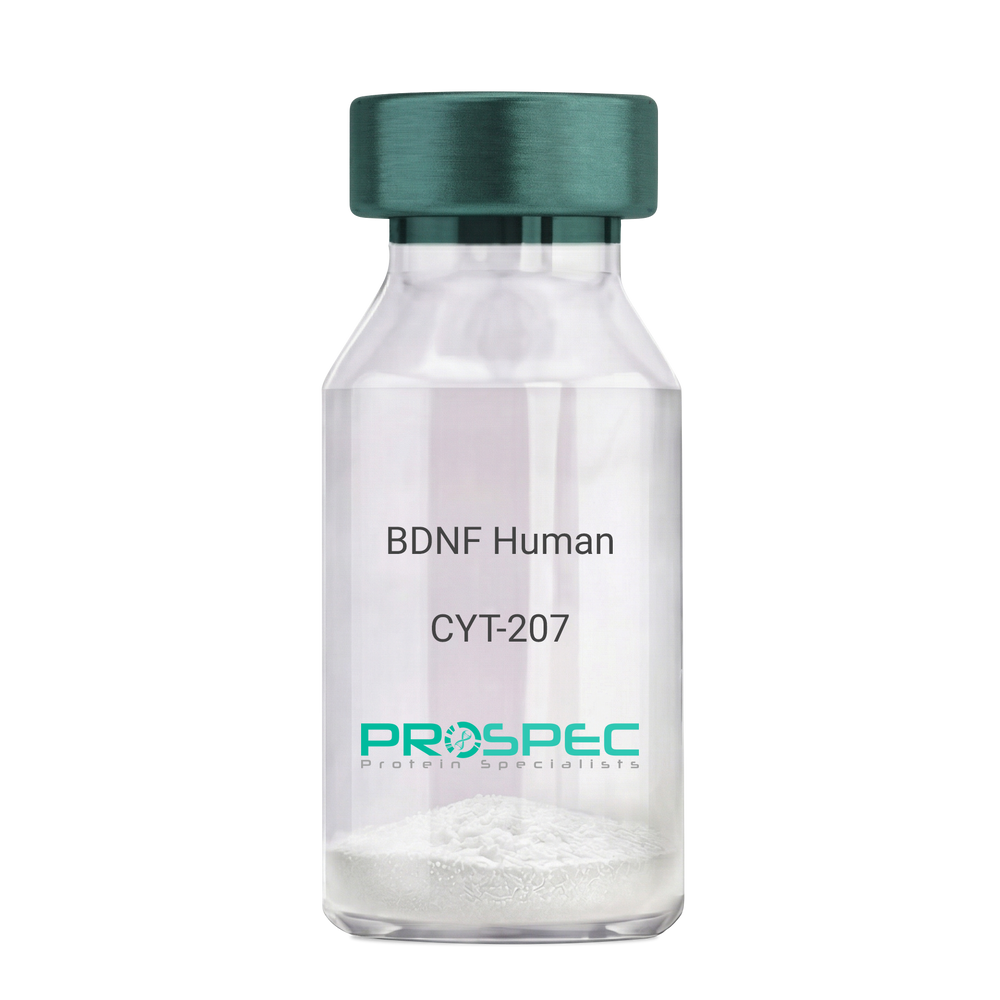
    Name :

    BDNF Human

    Description:

    Brain-Derived Neurotrophic Factor Human Recombinant

    Brain-Derived Neurotrophic Factor, BDNF, MGC34632.

    Product # :

    CYT-207

    Price :

    Quantity :

    Shipping Method :

    Room Temp Icon

    Shipped at Room temp

    Add To Cart

    More Info

    • description
    • source
    • formulation
    • purity
    • biological activity
    • More Info
    • Activity
    • Citations

    Description

    BDNF Human Recombinant produced in E.Coli is a homodimer, non-glycosylated, polypeptide chain containing 2 x 119 amino acids (and an N-terminal Met) and having a total molecular mass of 28kDa. BDNF Human Recombinant is purified by proprietary chromatographic techniques.

    Source

    Escherichia Coli.

    Formulation

    The protein was lyophilized with 20mM PB and 400mM NaCl, pH 7.2.

    Purity

    BDNF is greater than 950% as determined SDS-PAGE.

    Biological Activity

    The activity was determined using Immobilized Human TrkB-His tag protein 2ug/ml (100 μl/well) for its binding to NHS-Biotin BDNF. The ED50 of was found to be ≤20ng/mL

    Activity

    bdnf activity - Product image 1

    Citations

    More Info

    • Introduction

      BDNF promotes the survival of neuronal populations that are all located either in the central nervous system or directly connected to it. BDNF is a major regulator of synaptic transmission and plasticity at adult synapses in many regions of the cns. The versatility of BDNF is emphasized by its contribution to a range of adaptive neuronal responses including long-term potentiation (ltp), long-term depression (ltd), certain forms of short-term synaptic plasticity, as well as homeostatic regulation of intrinsic neuronal excitability.

    • Synonyms

      Brain-Derived Neurotrophic Factor, BDNF, MGC34632.

    • Physical Appearance

      Sterile Filtered White lyophilized (freeze-dried) powder.

    • Stability

      Lyophilized BDNF although stable at room temperature for 3 weeks, should be stored desiccated below -18°C. Upon reconstitution BDNF should be stored at 4°C between 2-7 days and for future use below -18°C.For long term storage it is recommended to add a carrier protein (0.1% HSA or BSA).Please prevent freeze-thaw cycles.

    • Solubility

      It is recommended to reconstitute the lyophilized BDNF in sterile 18M-cm H2O not less than 100µg/ml, which can then be further diluted to other aqueous solutions.

    • Amino Acid Sequence

      HSDPARRGE LSVCDSISEW VTAADKKTAV DMSGGTVTVL EKVPVSKGQL KQYFYETKCN PMGYTKEGCR GIDKRHWNSQ CRTTQSYVRA LTMDSKKRIG WRFIRIDTSC VCTLTIKRGR.

    • Background

      Final Thoughts

      Although more research is needed on the safety and effectiveness of BDNF human recombinant, trials suggest that this laboratory-produced protein may be effective in managing and treating several neurological and psychiatric disorders. It's important for experts to stay up to date on the latest developments and research to learn more about potential risks and benefits.

      What is the molecular weight/Mw of BDNF Protein?
      BDNF Protein has a total Mw of 27kDa.

      What is the source or expression system of BDNF Protein?
      Escherichia Coli.

      What is the Purity of BDNF Protein?
      BDNF Protein is >97% pure as determined by SDS-PAGE.

      What is the Biological Activity of BDNF Protein?
      The ED50, as determined by the dose-dependent induction of C6 cells proliferation, is 1.3-2µg/ml.

      What is the amino acid sequence of BDNF Protein?
      MHSDPARRGE LSVCDSISEW VTAADKKTAV DMSGGTVTVL EKVPVSKGQL KQYFYETKCN PMGYTKEGCR GIDKRHWNSQ CRTTQSYVRA LTMDSKKRIG WRFIRIDTSC VCTLTIKRGR.

      What applications can BDNF Protein be used in?
      BDNF Protein can probably be used in western blot, ELISA and Lateral Flow.

      What is the endotoxin level for BDNF Protein?
      The endotoxin level is minimal, BDNF Protein was purified using conventional chromatography techniques.

    • Protein content

      BDNF quantitation was carried out by two independent methods:1. UV spectroscopy at 280 nm using the absorbency value of 1.6 as the extinction coefficient for a 0.1% (1mg/ml) solution. This value is calculated by the PC GENE computer analysis program of protein sequences (IntelliGenetics). 2. Analysis by RP-HPLC, using a standard solution of Brain-derived Neurotrophic Factor as a Reference Standard.

    ProSpec's products are furnished for LABORATORY RESEARCH USE ONLY. The product may not be used as drugs, agricultural or pesticidal products, food additives or household chemicals.

    Bdnf Human
  • View Data Sheet

    Name :

    PDGF BB Rat

    Description:

    Platelet-Derived Growth Factor BB Rat Recombinant

    Platelet-derived growth factor subunit B, PDGF subunit B, PDGF-2, Platelet-derived growth factor B chain, Platelet-derived growth factor beta polypeptide, Pdgfb, SIS, c-sis.

    Product # :

    CYT-740

    Price :

    Quantity :

    Shipping Method :

    Room Temp Icon

    Shipped at Room temp

    Add To Cart

    More Info

    • description
    • source
    • formulation
    • purity
    • biological activity
    • More Info
    • Citations

    Description

    PDGF-BB Rat Recombinant produced in E.coli is a disulfide-linked homodimeric, non-glycosylated, polypeptide of two B chains containing 2x10⁹ amino acids (218 amino acids in total) and having a molecular mass of 24.4 kDa.The PDGF-BB is purified by proprietary chromatographic techniques.

    Source

    Escherichia Coli.

    Formulation

    PDGF-BB was lyophilized from a 0.2µm filtered concentrated solution in 1xPBS, pH 7.0.

    Purity

    Greater than 98.0% as determined by:
    (a) Analysis by RP-HPLC.
    (b) Analysis by SDS-PAGE.

    Biological Activity

    The ED50as determined by a cell proliferation assay using murine Balb/c 3T3 cells is less than 2.0 ng/ml, corresponding to a specific activity of > 5.0 × 10⁵ IU/mg.

    Citations

    More Info

    • Introduction

      PDGF-BB is a member of the platelet-derived growth factor family. The four members of this family are mitogenic factors for cells of mesenchymal origin and are characterized by a motif of eight cysteines. This gene product can exist either as a homodimer (PDGF-BB) or as a heterodimer with the platelet-derived growth factor alpha polypeptide (PDGF-AB), where the dimers are connected by disulfide bonds. Mutations in this gene are associated with meningioma. Reciprocal translocations between chromosomes 22 and 7, at sites where this gene and that for COL1A1 are located, are associated with a particular type of skin tumor called dermatofibrosarcoma protuberans resulting from unregulated expression of growth factor. Two splice variants have been identified for this gene.

    • Synonyms

      Platelet-derived growth factor subunit B, PDGF subunit B, PDGF-2, Platelet-derived growth factor B chain, Platelet-derived growth factor beta polypeptide, Pdgfb, SIS, c-sis.

    • Physical Appearance

      Sterile Filtered White lyophilized (freeze-dried) powder.

    • Stability

      Lyophilized Platelet-derived Growth Factor BB although stable at room temperature for 3 weeks, should be stored desiccated below -18°C. Upon reconstitution PDGF BB should be stored at 4°C between 2-7 days and for future use below -18°C. For long term storage it is recommended to add a carrier protein (0.1% HSA or BSA).Please prevent freeze-thaw cycles.

    • Solubility

      It is recommended to reconstitute the lyophilized PDGF-BB in sterile 18M-cm H2O not less than 100µg/ml, which can then be further diluted to other aqueous solutions.

    • Amino Acid Sequence

      SLGSLAAAEP AVIAECKTRT EVFQISRNLI DRTNANFLVW PPCVEVQRCS GCCNNRNVQC RASQVQMRPV QVRKIEIVRK KPVFKKATVT LEDHLACKCE TVVTPRPVT.

    ProSpec's products are furnished for LABORATORY RESEARCH USE ONLY. The product may not be used as drugs, agricultural or pesticidal products, food additives or household chemicals.

    Pdgf Bb Rat
  • View Data Sheet

    Name :

    FGF 21 Mouse, Sf9

    Description:

    Fibroblast Growth Factor-21 Mouse Recombinant, Sf9

    Fibroblast growth factor 21, FGF-21.

    Product # :

    CYT-930

    Price :

    Quantity :

    Shipping Method :

    Ice Icon

    Shipped with Ice Packs

    Add To Cart

    More Info

    • description
    • source
    • formulation
    • purity
    • More Info
    • sds-page
    • Citations

    Description

    FGF-21 produced in Sf9 Baculovirus cells is a single, glycosylated polypeptide chain containing 190 amino acids (29-210a.a.) and having a molecular mass of 21.0kDa (Molecular size on SDS-PAGE will appear at approximately 18-28kDa). FGF21 is expressed with an 8 amino acid His tag at C-Terminus and purified by proprietary chromatographic techniques.

    Source

    Sf9, Baculovirus cells.

    Formulation

    FGF-21 protein solution (0.5mg/ml) contains Phosphate Buffered Saline (pH 7.4) and 10% glycerol.

    Purity

    Greater than 90.0% as determined by SDS-PAGE.

    sds-page

    FGF21-sds-page - Product image 1

    Citations

    More Info

    • Introduction

      The FGFs are a family of more than 20 small (~17–26 kDa) secreted peptides. The initial characterization of these proteins focused on their ability to stimulate fibroblast proliferation. This mitogenic activity was mediated through FGF receptors (FGFRs) 1, 2, or 3. A fourth closely related tyrosine kinase receptor (FGFR4) was able to bind the FGFs but did not lead to a mitogenic response.
      FGFs modulate cellular activity via at least 5 distinct subfamilies of high-affinity FGF receptors (FGFRs): FGFR-1, -2, -3, and -4, all with intrinsic tyrosine kinase activity and, except for FGFR-4, multiple splice isoforms, and FGFR-5, which lacks an intracellular kinase domain. There is growing evidence that FGFRs can be important for regulation of glucose and lipid homeostasis. The overexpression of a dominant negative form of FGFR-1 in ? cells leads to diabetes in mice, which thus implies that proper FGF signaling is required for normal ? cell function and glycemia maintenance. FGFR-2 appears to be a key molecule during pancreatic development. Moreover, FGFR-4 has been implicated in cholesterol metabolism and bile acid synthesis.
      FGF-21 is preferentially expressed in liver, but an exact knowledge of FGF-21 bioactivity and its mode of action have been lacking to date. FGF-21 is a potent activator of glucose uptake on adipocytes, protects animals from diet-induced obesity when overexpressed in transgenic mice, and lowers blood glucose and triglyceride levels when therapeutically administered to diabetic rodents.

    • Synonyms

      Fibroblast growth factor 21, FGF-21.

    • Physical Appearance

      Sterile Filtered colorless clear solution.

    • Stability

      Store at 4°C if entire vial will be used within 2-4 weeks.Store, frozen at -20°C for longer periods of time. For long term storage it is recommended to add a carrier protein (0.1% HSA or BSA).Avoid multiple freeze-thaw cycles.

    • Amino Acid Sequence

      AYPIPDSSPL LQFGGQVRQR YLYTDDDQDT EAHLEIREDG TVVGAAHRSP ESLLELKALK PGVIQILGVK ASRFLCQQPD GALYGSPHFD PEACSFRELL LEDGYNVYQS EAHGLPLRLP QKDSPNQDAT SWGPVRFLPM PGLLHEPQDQ AGFLPPEPPD VGSSDPLSMV EPLQGRSPSY ASLEHHHHHH.

    • Background

      What is the molecular weight/Mw of FGF21 MOUSE,SF9 Protein?
      FGF21 MOUSE,SF9 Protein has a total Mw of 21kDa.

      What is the source or expression system of FGF21 MOUSE,SF9 Protein?
      Sf9, Baculovirus cells.

      What is the Purity of FGF21 MOUSE,SF9 Protein?
      FGF21 MOUSE,SF9 Protein is >90% pure as determined by SDS-PAGE.

      What is the Biological Activity of FGF21 MOUSE,SF9 Protein?
      The biological functionality of FGF21 MOUSE,SF9 Protein will be determined in the future.

      What is the amino acid sequence of FGF21 MOUSE,SF9 Protein?
      AYPIPDSSPL LQFGGQVRQR YLYTDDDQDT EAHLEIREDG TVVGAAHRSP ESLLELKALK PGVIQILGVK ASRFLCQQPD GALYGSPHFD PEACSFRELL LEDGYNVYQS EAHGLPLRLP QKDSPNQDAT SWGPVRFLPM PGLLHEPQDQ AGFLPPEPPD VGSSDPLSMV EPLQGRSPSY ASLEHHHHHH.

      What applications can FGF21 MOUSE,SF9 Protein be used in?
      FGF21 MOUSE,SF9 Protein can probably be used in western blot, ELISA and Lateral Flow.

      What is the endotoxin level for FGF21 MOUSE,SF9 Protein?
      The endotoxin level is minimal, FGF21 MOUSE,SF9 Protein was purified using conventional chromatography techniques.

    ProSpec's products are furnished for LABORATORY RESEARCH USE ONLY. The product may not be used as drugs, agricultural or pesticidal products, food additives or household chemicals.

    Fgf 21 Mouse Sf9
  • View Data Sheet

    Name :

    GCSF Rat

    Description:

    Granulocyte-Colony Stimulating Factor Rat Recombinant

    Granulocyte colony stimulating factor, Protein Csf3, Csf3.

    Product # :

    CYT-940

    Price :

    Quantity :

    Shipping Method :

    Room Temp Icon

    Shipped at Room temp

    Add To Cart

    More Info

    • description
    • source
    • formulation
    • purity
    • biological activity
    • More Info
    • Citations

    Description

    GCSF Rat Recombinant produced in E.Coli is a single, non-glycosylated, polypeptide chain containing 195 amino acids and having a molecular mass of 21.5kDa.The G-CSF is purified by proprietary chromatographic techniques.

    Source

    Escherichia Coli.

    Formulation

    Lyophilized from a 0.2µm filtered solution in 5mM Sodium Citrate, pH 4.0.

    Purity

    Greater than 97.0% as determined by:
    (a)Analysis by RP-HPLC.
    (b)Analysis by SDS-PAGE.

    Biological Activity

    The ED50 determined by a cell proliferation assay using murine NFS-60 cells is less than 0.05ng/ml, corresponding to a specific activity of > 2.0× 10⁷ IU/mg.

    Citations

    More Info

    • Introduction

      GCSF is a cytokine that controls the production, differentiation, and function of granulocytes. The active protein is found extracellularly. Three transcript variants encoding three different isoforms have been found for the GCSF gene. Granulocyte/macrophage colony-stimulating factors are cytokines that act in hematopoiesis by controlling the production, differentiation, and function of 2 related white cell populations of the blood, the granulocytes and the monocytes-macrophages. This csf induces granulocytes.

    • Synonyms

      Granulocyte colony stimulating factor, Protein Csf3, Csf3.

    • Physical Appearance

      Sterile Filtered White lyophilized (freeze-dried) powder.

    • Stability

      Lyophilized G-CSF although stable at room temperature for 3 weeks, should be stored desiccated below -18°C. Upon reconstitution GCSF should be stored at 4°C between 2-7 days and for future use below -18°C.For long term storage it is recommended to add a carrier protein (0.1% HSA or BSA).Please prevent freeze-thaw cycles.

    • Solubility

      It is recommended to reconstitute the lyophilized GCSF in sterile 18M-cm H2O not less than 100µg/ml, which can then be further diluted to other aqueous solutions.

    • Amino Acid Sequence

      KKIPLLTVSS LPPSLPLPRS FLLKSLEQVR KIQARNTELL EQLCATYKLC HPEELVLFGH SLGIPKASLS SCSSQALQQT KCLSQLHSGL FLYQGLLQAL AGISSELAPT LDMLHLDVDN FATTIWQQME SLGVAPTVQP TQSTMPIFTS AFQRRAGGVL VTSYLQSFLE TAHHALHHLP RPAQKHFPES LFISI.

    • Background

      What is the molecular weight/Mw of G CSF RAT Protein?
      G CSF RAT Protein has a total Mw of 21.5kDa.

      What is the source or expression system of G CSF RAT Protein?
      Escherichia Coli.

      What is the Purity of G CSF RAT Protein?
      G CSF RAT Protein is >97% pure as determined by SDS-PAGE.

      What is the Biological Activity of G CSF RAT Protein?
      The ED50 determined by a cell proliferation assay using murine NFS-60 cells is less than 0.05ng/ml, corresponding to a specific activity of > 2.0× 10⁷ IU/mg.

      What is the amino acid sequence of G CSF RAT Protein?
      KKIPLLTVSS LPPSLPLPRS FLLKSLEQVR KIQARNTELL EQLCATYKLC HPEELVLFGH SLGIPKASLS SCSSQALQQT KCLSQLHSGL FLYQGLLQAL AGISSELAPT LDMLHLDVDN FATTIWQQME SLGVAPTVQP TQSTMPIFTS AFQRRAGGVL VTSYLQSFLE TAHHALHHLP RPAQKHFPES LFISI.

      What applications can G CSF RAT Protein be used in?
      G CSF RAT Protein can probably be used in western blot, ELISA and Lateral Flow.

      What is the endotoxin level for G CSF RAT Protein?
      The endotoxin level is minimal, G CSF RAT Protein was purified using conventional chromatography techniques.


    ProSpec's products are furnished for LABORATORY RESEARCH USE ONLY. The product may not be used as drugs, agricultural or pesticidal products, food additives or household chemicals.

    Gcsf Rat
  • View Data Sheet

    Name :

    FGF23 Human, His

    Description:

    Fibroblast Growth Factor-23 Human Recombinant, His Tag

    Tumor-derived hypophosphatemia-inducing factor, HYPF, ADHR, HPDR2, PHPTC, FGF23, FGF-23, Fibroblast Growth Factor-23.

    Product # :

    CYT-374

    Price :

    Quantity :

    Shipping Method :

    Room Temp Icon

    Shipped at Room temp

    Add To Cart

    More Info

    • description
    • source
    • formulation
    • purity
    • biological activity
    • More Info
    • Citations

    Description

    Fibroblast Growth Factor-23 Human Recombinant produced in E.Coli is a single, non-glycosylated polypeptide chain expressed with a -6xHis tag containing a total of 257 amino acids (251 a.a. FGF23+ 6 a.a. His tag) and having a molecular mass of 28629.5 Dalton. The FGF-23 is and purified by chromatographic techniques.

    Source

    Escherichia Coli.

    Formulation

    The protein (0.5mg/ml) was lyophilized from 25mM Tris pH7.5 and 0.6M NaCl solution.

    Purity

    Greater than 90.0% as determined by:
    (a) Analysis by RP-HPLC.
    (b) Analysis by SDS-PAGE.

    Biological Activity

    Treatment with hrFGF23 has been shown to induce FGFR mediated Erk phosphorylation, reduce plasma PTH levels in rats and to reduce blood phosphate levels.

    Citations

    More Info

    • Introduction

      FGF-23 is a member of the fibroblast growth factor (FGF) family. FGF family members possess broad mitogenic and cell survival activities and are involved in a variety of biological processes including embryonic development, cell growth, morphogenesis, tissue repair, tumor growth and invasion. FGF-23 inhibits renal tubular phosphate transport. This gene was identified by its mutations associated with autosomal dominant hypophosphatemic rickets (ADHR), an inherited phosphate wasting disorder. Abnormally high level expression of FGF23 was found in oncogenic hypophosphatemic osteomalacia (OHO), a phenotypically similar disease caused by abnormal phosphate metabolism. Mutations FGF23 have also been shown to cause familial tumoral calcinosis with hyperphosphatemia.

    • Synonyms

      Tumor-derived hypophosphatemia-inducing factor, HYPF, ADHR, HPDR2, PHPTC, FGF23, FGF-23, Fibroblast Growth Factor-23.

    • Physical Appearance

      Sterile Filtered white lyophilized powder.

    • Stability

      Lyophilized Fibroblast Growth Factor 23 although stable at room temperature for 3 weeks, should be stored desiccated below -18°C. Upon reconstitution FGF-23 should be stored at 4°C between 2-7 days and for future use below -18°C.For long term storage it is recommended to add a carrier protein (0.1% HSA or BSA).Please prevent freeze-thaw cycles.

    • Solubility

      It is recommended to reconstitute the lyophilized Fibroblast Growth Factor-23 in sterile 18MΩ-cm H2O not less than 100µg/ml, which can then be further diluted to other aqueous solutions.

    • Amino Acid Sequence

      MLGARLRLWVCALCSVCSMSVLRAYPNASPLLGSSWGGLIHLYTATARN
      SYHLQIHKNGHVDGAPHQTIYSALMIRSEDAGFVVITGVMSRRYLCMDFR
      GNIFGSHYFDPENCRFQHQTLENGYDVYHSPQYHFLVSLGRAKRAFLPG
      MNPPPYSQFLSRRNEIPLIHFNTPIPRRHTRSAEDDSERDPLNVLKPRAR
      MTPAPASCSQELPSAEDNSPMASDPLGVVRGGRVNTHAGGTGPEGCRP
      FAKFIHHHHHH.

    • Background

      What is the molecular weight/Mw of FGF23 HUMAN, HIS Protein?
      FGF23 HUMAN, HIS Protein has a total Mw of 28.6kDa.

      What is the source or expression system of FGF23 HUMAN, HIS Protein?
      Escherichia Coli.

      What is the Purity of FGF23 HUMAN, HIS Protein?
      FGF23 HUMAN, HIS Protein is >90% pure as determined by SDS-PAGE.

      What is the Biological Activity of FGF23 HUMAN, HIS Protein?
      Treatment with hrFGF23 has been shown to induce FGFR mediated Erk phosphorylation, reduce plasma PTH levels in rats and to reduce blood phosphate levels.

      What is the amino acid sequence of FGF23 HUMAN, HIS Protein?
      MLGARLRLWVCALCSVCSMSVLRAYPNASPLLGSSWGGLIHLYTATARN
      SYHLQIHKNGHVDGAPHQTIYSALMIRSEDAGFVVITGVMSRRYLCMDFR
      GNIFGSHYFDPENCRFQHQTLENGYDVYHSPQYHFLVSLGRAKRAFLPG
      MNPPPYSQFLSRRNEIPLIHFNTPIPRRHTRSAEDDSERDPLNVLKPRAR
      MTPAPASCSQELPSAEDNSPMASDPLGVVRGGRVNTHAGGTGPEGCRP
      FAKFIHHHHHH.

      What applications can FGF23 HUMAN, HIS Protein be used in?
      FGF23 HUMAN, HIS Protein can probably be used in western blot, ELISA and Lateral Flow.

      What is the endotoxin level for FGF23 HUMAN, HIS Protein?
      The endotoxin level is minimal, FGF23 HUMAN, HIS Protein was purified using conventional chromatography techniques.

    ProSpec's products are furnished for LABORATORY RESEARCH USE ONLY. The product may not be used as drugs, agricultural or pesticidal products, food additives or household chemicals.

    Fgf23 Human His
  • View Data Sheet

    Name :

    VEGF Rat

    Description:

    Vascular Endothelial Growth Factor Rat Recombinant

    Vascular endothelial growth factor A, VEGF-A, Vascular permeability factor, VPF, VEGF, MGC70609.

    Product # :

    CYT-392

    Price :

    Quantity :

    Shipping Method :

    Room Temp Icon

    Shipped at Room temp

    Add To Cart

    More Info

    • description
    • source
    • formulation
    • purity
    • biological activity
    • More Info
    • Citations

    Description

    Vascular Endothelial Growth Factor Rat Recombinant produced in E.Coli is a double, non-glycosylated, polypeptide chain containing 165 amino acids and having a molecular mass of 38,750 Dalton. The VEGF is purified by proprietary chromatographic techniques.

    Source

    Escherichia Coli.

    Formulation

    The protein was lyophilized from 10mM NaP, pH 7.5.

    Purity

    Greater than 97.0% as determined by:
    (a) Analysis by RP-HPLC.
    (b) Analysis by SDS-PAGE.

    Biological Activity

    Determined by the dose-dependent stimulation of the proliferation of human umbilical vein endothelial cells (HUVEC) using a concentration range of 4.0-8.0 ng/ml.

    Citations

    More Info

    • Introduction

      Vascular endothelial growth factor is an important signaling protein involved in both vasculogenesis and angiogenesis. As its name implies, VEGF activity has been mostly studied on cells of the vascular endothelium, although it does have effects on a number of other cell types (e.g. stimulation monocyte/ macrophagemigration, neurons, cancer cells, kidney epithelial cells ).VEGF mediates increased vascular permeability, induces angiogenesis, vasculogenesis and endothelial cell growth, promotes cell migration, and inhibits apoptosis. In vitro, VEGF has been shown to stimulate endothelial cell mitogenesisand cell migration. VEGF is also a vasodilator and increases microvascular permeability and was originally referred to as vascular permeability factor.
      Elevated levels of this protein are linked to POEMS syndrome, also known as Crow-Fukase syndrome. Mutations in this gene have been associated with proliferative and nonproliferative diabetic retinopathy.

    • Synonyms

      Vascular endothelial growth factor A, VEGF-A, Vascular permeability factor, VPF, VEGF, MGC70609.

    • Physical Appearance

      Sterile Filtered White lyophilized (freeze-dried) powder.

    • Stability

      Lyophilized Vascular Endothelial Growth Factor although stable at room temperature for 3 weeks, should be stored desiccated below -18°C. Upon reconstitution VEGF should be stored at 4°C between 2-7 days and for future use below -18°C.For long term storage it is recommended to add a carrier protein (0.1% HSA or BSA).Please prevent freeze-thaw cycles.

    • Solubility

      It is recommended to reconstitute the lyophilized Vascular Endothelial Growth Factor in sterile 18MΩ-cm H2O not less than 100µg/ml, which can then be further diluted to other aqueous solutions.

    • Amino Acid Sequence

      MAPTTEGEQK AHEVVKFMDV YQRSYCRPIE TLVDIFQEYP DEIEYIFKPS CVPLMRCAGC CNDEALECVP TSESNVTMQI MRIKPHQSQH IGEMSFLQHS RCECRPKKDR TKPEKHCEPC SERRKHLFVQ DPQTCKCSCK NTDSRCKARQ LELNERTCRC DKPRR.

    ProSpec's products are furnished for LABORATORY RESEARCH USE ONLY. The product may not be used as drugs, agricultural or pesticidal products, food additives or household chemicals.

    Vegf Rat
  • View Data Sheet

    Name :

    VEGF (121a.a.) Human, HEK

    Description:

    Vascular Endothelial Growth Factor (121) Human Recombinant, HEK

    Vascular endothelial growth factor A, VEGF-A, Vascular permeability factor, VPF, VEGF, MGC70609.

    Product # :

    CYT-116

    Price :

    Quantity :

    Shipping Method :

    Room Temp Icon

    Shipped at Room temp

    Add To Cart

    More Info

    • description
    • source
    • formulation
    • purity
    • biological activity
    • More Info
    • Citations

    Description

    Recombinant Human VEGF 121 amino acids, produced in HEK cells is a glycosylated 37kDa homodimer and 50kDa homotrimer.The VEGF is purified by proprietary chromatographic techniques.

    Source

    HEK.

    Formulation

    VEGF was lyophilized from a 0.2µm filtered solution containing 1xPBS.

    Purity

    Greater than 95% as obsereved by SDS-PAGE.

    Biological Activity

    The specific activity was determined by the dose-dependent stimulation of the proliferation of HUVEC cells (Human Umbilical Vein Endothelial Cells), the ED50 is 3ng/ml.

    Citations

    More Info

    • Introduction

      Vascular endothelial growth factor is an important signaling protein involved in both vasculogenesis and angiogenesis. As its name implies, VEGF activity has been mostly studied on cells of the vascular endothelium, although it does have effects on a number of other cell types (e.g. stimulation monocyte/ macrophagemigration, neurons, cancer cells, kidney epithelial cells ).VEGF mediates increased vascular permeability, induces angiogenesis, vasculogenesis and endothelial cell growth, promotes cell migration, and inhibits apoptosis. In vitro, VEGF has been shown to stimulate endothelial cell mitogenesisand cell migration. VEGF is also a vasodilator and increases microvascular permeability and was originally referred to as vascular permeability factor.
      Elevated levels of this protein are linked to POEMS syndrome, also known as Crow-Fukase syndrome. Mutations in this gene have been associated with proliferative and nonproliferative diabetic retinopathy.

    • Synonyms

      Vascular endothelial growth factor A, VEGF-A, Vascular permeability factor, VPF, VEGF, MGC70609.

    • Physical Appearance

      Sterile Filtered White lyophilized (freeze-dried) powder.

    • Stability

      Lyophilized VEGF although stable at room temperature for 3 weeks, should be stored desiccated below -18°C. Upon reconstitution VEGF should be stored at 4°C between 2-7 days and for future use below -18°C.For long term storage it is recommended to add a carrier protein (0.1% HSA or BSA).Please prevent freeze-thaw cycles.

    • Solubility

      It is recommended to reconstitute the lyophilized VEGF in sterile PBS containing 0.1% endotoxin-free recombinant HSA.

    ProSpec's products are furnished for LABORATORY RESEARCH USE ONLY. The product may not be used as drugs, agricultural or pesticidal products, food additives or household chemicals.

    Vegf121 Human Hek
  • View Data Sheet

    Name :

    TGFB3 (207 a.a.) Human

    Description:

    Transforming Growth Factor-Beta 3 (207 a.a.) Human Recombinant

    Transforming Growth Factor-beta3, TGFB3, ARVD, FLJ16571, TGF-beta3.

    Product # :

    CYT-319

    Price :

    Quantity :

    Shipping Method :

    Ice Icon

    Shipped with Ice Packs

    Add To Cart

    More Info

    • description
    • source
    • formulation
    • More Info
    • Citations

    Description

    TGFB3 Human Recombinant protein encoding amino acids 644-850 and total molecular mass of 50 kDa (Including GST Tag).

    Source

    Escherichia Coli.

    Formulation

    100µl purified human TGF Beta 3protein at 100µg/ml in 50mM Tris-Acetate, pH-7.5, 1mM EDTA and 20% Glycerol.

    Citations

    More Info

    • Introduction

      Transforming growth factor betas (TGF Betas) mediate many cell-cell interactions that occur during embryonic development. Three TGF Betas have been identified in mammals. TGF Beta 1, TGF Beta 2 and TGF Beta 3 are each synthesized as precursor proteins that are very similar in that each is cleaved to yield a 112 amino acid polypeptide that remains associated with the latent portion of the molecule.

    • Synonyms

      Transforming Growth Factor-beta3, TGFB3, ARVD, FLJ16571, TGF-beta3.

    • Physical Appearance

      Sterile Filtered clear solution.

    • Stability

      TGF-beta 3 Human Recombinant although stable at 4°C for 1 week, should be stored at -20°C. For long term storage it is recommended to add a carrier protein (0.1% HSA or BSA).Please avoid freeze-thaw cycles.

    • Applications

      (a) ELISA.
      (b) Western Blotting.
      (c) Inhibition Assays.

    ProSpec's products are furnished for LABORATORY RESEARCH USE ONLY. The product may not be used as drugs, agricultural or pesticidal products, food additives or household chemicals.

    Tgf Beta 3 207 Human
  • View Data Sheet

    Name :

    PLGF1 Human, Sf9

    Description:

    Placental Growth Factor-1 Human Recombinant, Sf9

    PIGF, PGF, PLGF-1.

    Product # :

    CYT-419

    Price :

    Quantity :

    Shipping Method :

    Room Temp Icon

    Shipped at Room temp

    Add To Cart

    More Info

    • description
    • source
    • formulation
    • purity
    • biological activity
    • More Info
    • Citations

    Description

    Placenta Growth Factor-1 Human Recombinant produced in insect cells is a homodimer, glycosylated polypeptide chain containing 2 x 131 amino acids and having a total molecular mass of approximately 34 kDa. The PLGF-1 is purified by proprietary chromatographic techniques.

    Source

    Insect Cells.

    Formulation

    Lyophilized from a concentrated (1mg/ml) solution containing 50mM acetic acid.

    Purity

    Greater than 95.0% as determined by SDS-PAGE.

    Biological Activity

    The ED50 as determined by its ability to bind to immobilized rh-sFlt-1 in a functional ELISA. PlGF-1 human Recombinant can bind to immobilized rh-sFlt-1 (100ng/well) with a linear range at 0.5-10ng/ml, corresponding to a Specific Activity of 1x10⁵-2x10⁶units/mg.

    Citations

    More Info

    • Introduction

      PLGF is a growth factor active in angiogenesis, and endothelial cell growth, stimulating their proliferation and migration. It binds to receptor vegfr-1/flt1.

    • Synonyms

      PIGF, PGF, PLGF-1.

    • Physical Appearance

      Sterile Filtered White lyophilized (freeze-dried) powder.

    • Stability

      Lyophilized Placenta Growth Factor 1 although stable at room temperature for 3 weeks, should be stored desiccated below -18°C. Upon reconstitution PLGF1 should be stored at 4°C between 2-7 days and for future use below -18°C.Please prevent freeze-thaw cycles.

    • Solubility

      It is recommended to reconstitute the lyophilized Placenta Growth Factor 1 in sterile 0.1M acetic acid not less than 100µg/ml, which can then be further diluted to other aqueous solutions.

    • Amino Acid Sequence

      The sequence of the first five N-terminal amino acids was determined and was found to be Met-Leu-Pro-Ala-Val.

    ProSpec's products are furnished for LABORATORY RESEARCH USE ONLY. The product may not be used as drugs, agricultural or pesticidal products, food additives or household chemicals.

    Pigf Human
  • View Data Sheet

    Name :

    GDNF Human

    Description:

    Glial-Derived Neurotrophic Factor Human Recombinant

    ATF1, ATF2, HFB1-GDNF, GDNF.

    Product # :

    CYT-305

    Price :

    Quantity :

    Shipping Method :

    Room Temp Icon

    Shipped at Room temp

    Add To Cart

    More Info

    • description
    • source
    • formulation
    • purity
    • biological activity
    • More Info
    • sds-page
    • Citations

    Description

    Glial derived Neurotrophic Factor Human Recombinant produced in E.Coli is a non-glycosylated disulfide-linked homodimer containing 2 x 135 amino acids and having a total molecular mass of approximately 30kDa. GDNF is purified by proprietary chromatographic techniques.

    Source

    Escherichia Coli.

    Formulation

    GDNF was lyophilized from a 0.2µm filtered concentrated solution in 1×PBS, pH 7.4 and 5% Trehalose.

    Purity

    Greater than 95.0% as determined by analysis by SDS-PAGE.

    Biological Activity

    The ED50 was determined by the proliferation of rat C6 cells is < 0.1 ng/ml, corresponding to a specific activity of > 1.0x10⁷ units/mg.

    sds-page

    GDNF sds-page - Product image 1

    Citations

    More Info

    • Introduction

      GDNF promotes the survival and differentiation of minergic neurons in culture, and is able to prevent apoptosis of motor neurons induced by axotomy. The encoded protein is processed to a mature secreted form that exists as a homodimer. The mature form of the protein is a ligand for the product of the RET (rearranged during transfection) protooncogene. In addition to the transcript encoding GDNF, two additional alternative transcripts encoding distinct proteins, referred to as astrocyte-derived trophic factors, have also been described. Mutations in this gene may be associated with Hirschsprung disease.
      GDNF enhances survival and morphological differentiation of minergic neurons and increases their high-affinity uptake.

    • Synonyms

      ATF1, ATF2, HFB1-GDNF, GDNF.

    • Physical Appearance

      Sterile Filtered White lyophilized (freeze-dried) powder.

    • Stability

      Lyophilized Glial-derived Neurotrophic Factor although stable at room temperature for 3 weeks, should be stored desiccated below -18°C. Upon reconstitution GDNF should be stored at 4°C between 2-7 days and for future use below -18°C.For long term storage it is recommended to add a carrier protein (0.1% HSA or BSA).Please prevent freeze-thaw cycles.

    • Solubility

      It is recommended to reconstitute the lyophilized Glial Derived Neurotrophic Factor in sterile 18MΩ-cm H2O not less than 100µg/ml, which can then be further diluted to other aqueous solutions.

    • Amino Acid Sequence

      SPDKQMAVLP RRERNRQAAA ANPENSRGKG RRGQRGKNRG CVLTAIHLNV TDLGLGYETK EELIFRYCSG SCDAAETTYD KILKNLSRNR RLVSDKVGQA CCRPIAFDDD LSFLDDNLVY HILRKHSAKR CGCI.

    • Background

      What is the molecular weight/Mw of GDNF HUMAN Protein?
      GDNF HUMAN Protein has a total Mw of 30kDa.

      What is the source or expression system of GDNF HUMAN Protein?
      Escherichia Coli.

      What is the Purity of GDNF HUMAN Protein?
      GDNF HUMAN Protein is >95% pure as determined by SDS-PAGE.

      What is the Biological Activity of GDNF HUMAN Protein?
      The ED50 was determined by the proliferation of rat C6 cells is < 0.1 ng/ml, corresponding to a specific activity of > 1.0x10⁷ units/mg.

      What is the amino acid sequence of GDNF HUMAN Protein?
      SPDKQMAVLP RRERNRQAAA ANPENSRGKG RRGQRGKNRG CVLTAIHLNV TDLGLGYETK EELIFRYCSG SCDAAETTYD KILKNLSRNR RLVSDKVGQA CCRPIAFDDD LSFLDDNLVY HILRKHSAKR CGCI.
      What applications can GDNF HUMAN Protein be used in?
      GDNF HUMAN Protein can probably be used in western blot, ELISA and Lateral Flow.

      What is the endotoxin level for GDNF HUMAN Protein?
      The endotoxin level is minimal, GDNF HUMAN Protein was purified using conventional chromatography techniques.


    ProSpec's products are furnished for LABORATORY RESEARCH USE ONLY. The product may not be used as drugs, agricultural or pesticidal products, food additives or household chemicals.

    Gdnf Human
  • View Data Sheet

    Name :

    VEGF D Human

    Description:

    Vascular Endothelial Growth Factor D Human Recombinant

    c-fos induced growth factor (vascular endothelial growth factor D), FIGF, VEGFD.

    Product # :

    CYT-045

    Price :

    Quantity :

    Shipping Method :

    Room Temp Icon

    Shipped at Room temp

    Add To Cart

    More Info

    • description
    • source
    • formulation
    • purity
    • biological activity
    • More Info
    • Citations

    Description

    VEGFD Human Recombinant produced in HEK-293 cells is a secreted protein (amino acids Phe93-Ser201) fused to a polyhistidine tag at the C-terminus.

    Source

    HEK293.

    Formulation

    The recombinant VEGF-D was lyophilized after extensive dialysis against PBS.

    Purity

    Greater than 95.0% as determined by SDS-PAGE.

    Biological Activity

    The ED50 of 3-4ng/ml is measured by its ability to stimulate the proliferation of human microvascular endothelial cells (HMVECs).

    Citations

    More Info

    • Introduction

      VEGF-D belongs to the VEGF/PDGF family of proteins. VEGF-D promotes lymphangiogesis, endothelial cell growth, and regulates vascular permeability. In addition, VEGF-D has an important part in the creation of the venous and lymphatic vascular systems and in the growth and maintenance of differentiated lymphatic endothelium Mature VEGF-D forms a noncovalently linked homodimer, and binds to and activate both VEGFR-2 (flk1) and VEGFR-3 (flt4).

    • Synonyms

      c-fos induced growth factor (vascular endothelial growth factor D), FIGF, VEGFD.

    • Physical Appearance

      Sterile Filtered White lyophilized (freeze-dried) powder.

    • Stability

      Lyophilized VEGF-D although stable at room temperature for 3 weeks, should be stored desiccated below -18°C. Upon reconstitution VEGF-D should be stored at 4°C between 2-7 days and for future use below -18°C.For long term storage it is recommended to add a carrier protein (0.1% HSA or BSA).Please prevent freeze-thaw cycles.

    • Solubility

      It is recommended to reconstitute the Vascular Endothelial Growth Factor D in sterile 18M-cm H2O not less than 100 µg/ml, which can then be further diluted to other aqueous solutions.

    ProSpec's products are furnished for LABORATORY RESEARCH USE ONLY. The product may not be used as drugs, agricultural or pesticidal products, food additives or household chemicals.

    Vegf D Human
  • View Data Sheet

    Name :

    TGFA Human

    Description:

    Transforming Growth Factor-Alpha Human Recombinant

    Transforming Growth Factor Alpha, Protransforming Growth Factor Alpha, TGF-Alpha, TGFA.

    Product # :

    CYT-871

    Price :

    Quantity :

    Shipping Method :

    Room Temp Icon

    Shipped at Room temp

    Add To Cart

    More Info

    • description
    • source
    • formulation
    • purity
    • biological activity
    • More Info
    • Citations

    Description

    TGFA Human Recombinant (40-89) produced in E.Coli is a single, non-glycosylated, polypeptide chain containing 50 amino acids and having a molecular mass of 5.6kDa. The TGFA is purified by proprietary chromatographic techniques.

    Source

    Escherichia Coli.

    Formulation

    Lyophilized from a 0.2µm filtered solution in 0.1% TFA.

    Purity

    Greater than 95.0% as determined by SDS-PAGE.

    Biological Activity

    The ED50, as measured in a proliferation assay using mouse BALB/c 3T3 cells, is 0.395ng/ml.

    Citations

    More Info

    • Introduction

      Transforming Growth Factor-Alpha (TGF-alpha) belongs to the EGF family of cytokines. TGFA soluble form is discharged from the membrane by proteolytic cleavage. Membrane-bound proTGF-alpha is biologically active and has a role in cell-cell adhesion or in the stimulation of adjacent cells. TGFA expression is common in transformed cells. Additionally, TGFA is expressed in normal tissues during embryogenesis and in adult cells/tissues, including the pituitary, keratinocytes, and macrophages.

    • Synonyms

      Transforming Growth Factor Alpha, Protransforming Growth Factor Alpha, TGF-Alpha, TGFA.

    • Physical Appearance

      Sterile Filtered White lyophilized (freeze-dried) powder.

    • Stability

      Lyophilized TGFA although stable at room temperature for 3 weeks, should be stored desiccated below -18°C. Upon reconstitution TGFA should be stored at 4°C between 2-7 days and for future use below -18°C.For long term storage it is recommended to add a carrier protein (0.1% HSA or BSA).Please prevent freeze-thaw cycles.

    • Solubility

      It is recommended to reconstitute the lyophilized TGFA in sterile 18M-cm H2O not less than 100µg/ml, which can then be further diluted to other aqueous solutions.

    • Amino Acid Sequence

      VVSHFNDCPD SHTQFCFHGT CRFLVQEDKP ACVCHSGYVG ARCEHADLLA.

    • Background

      Title: Transforming Growth Factor-Alpha Human Recombinant, Yeast: A Versatile Biopharmaceutical for Therapeutic Applications

      Abstract:


      Transforming Growth Factor-Alpha (TGF-α) is a potent growth factor involved in numerous physiological processes, including cell proliferation, differentiation, and tissue repair. The development of TGF-α human recombinant using yeast expression systems has provided a valuable biopharmaceutical tool for therapeutic applications. This research paper explores the production process, characteristics, and potential therapeutic applications of TGF-α human recombinant derived from yeast, highlighting its versatility and clinical significance.

      Introduction:


      TGF-α is a crucial growth factor that regulates cellular functions and plays a vital role in tissue development and repair. Harnessing the therapeutic potential of TGF-α has been limited by challenges in its production and stability. However, the development of TGF-α human recombinant using yeast expression systems has overcome these limitations, making it an attractive biopharmaceutical for therapeutic interventions.

      Production Process and Characteristics:


      TGF-α human recombinant derived from yeast is produced through recombinant DNA technology, utilizing yeast cells as expression hosts. Yeast expression systems offer several advantages, including high expression yields, cost-effectiveness, and the ability to produce correctly folded and biologically active TGF-α. The resulting TGF-α human recombinant closely resembles native TGF-α in terms of structure and function, allowing for effective therapeutic intervention.

      Therapeutic Applications:


      TGF-α human recombinant derived from yeast has shown promise in various therapeutic applications. It has been investigated for its wound-healing properties, where it promotes tissue regeneration and accelerates the healing process. Additionally, TGF-α has been explored in tissue engineering and regenerative medicine, playing a crucial role in stimulating cell proliferation and tissue development. Furthermore, TGF-α has been studied in the context of cancer research, as it is involved in tumor growth and angiogenesis, making it a potential target for anticancer therapies.

      Advantages and Challenges:


      The use of yeast expression systems for producing TGF-α human recombinant offers several advantages, including scalability, cost-effectiveness, and the ability to produce bioactive protein. However, challenges remain, such as optimizing production processes, purification methods, and ensuring product consistency and stability. Further research is needed to address these challenges and maximize the clinical potential of TGF-α human recombinant derived from yeast.

      Conclusion:


      TGF-α human recombinant derived from yeast represents a versatile biopharmaceutical tool with significant therapeutic potential. Its production using yeast expression systems offers advantages in terms of scalability, cost-effectiveness, and bioactivity. The therapeutic applications of TGF-α human recombinant extend to wound healing, tissue engineering, and cancer research. Continued research and development efforts are crucial to optimizing production processes, overcoming challenges, and fully exploiting the clinical benefits of TGF-α human recombinant as a therapeutic agent.

    ProSpec's products are furnished for LABORATORY RESEARCH USE ONLY. The product may not be used as drugs, agricultural or pesticidal products, food additives or household chemicals.

    Tgfa Human
  • View Data Sheet

    Name :

    FGF 2 Human (147 a.a.)

    Description:

    Fibroblast Growth Factor Basic 147 a.a. Human Recombinant

    Prostatropin, HBGH-2, HBGF-2, FGF-2, FGF-b.

    Product # :

    CYT-557

    Price :

    Quantity :

    Shipping Method :

    Room Temp Icon

    Shipped at Room temp

    Add To Cart

    More Info

    • description
    • source
    • formulation
    • purity
    • biological activity
    • More Info
    • Citations

    Description

    Fibroblast Growth Factor-2 Human Recombinant (FGF-2) produced in E.Coli is a single, non-glycosylated, polypeptide chain containing 147 amino acids and having a molecular mass of 16.5kDa. The FGF2 is purified by proprietary chromatographic techniques.

    Source

    Escherichia Coli.

    Formulation

    The bFGF was lyophilized from a sterile filtered solution containing 20mM Tris-HCl, pH 7.6 and 150mM NaCl.

    Purity

    Greater than 98.0% as determined by SDS-PAGE.

    Biological Activity

    The ED50, Calculated by the dose- dependent proliferation of mouse BALB/c 3T3 cells is < 0.05ng/ml corresponding to a specific activity of 2.0x10⁷ units/mg.

    Citations

    More Info

    • Introduction

      FGF-basic is a member of the fibroblast growth factor (FGF) family. FGF family members possess broad mitogenic and cell survival activities, and are involved in a variety of biological processes, including embryonic development, cell growth, morphogenesis, tissue repair, tumor growth and invasion. This protein functions as a modifier of endothelial cell migration and proliferation, as well as an angiogenic factor. It acts as a mitogen for a variety of mesoderm- and neuroectoderm-derived cells in vitro, thus is thought to be involved in organogenesis. Three alternatively spliced variants encoding different isoforms have been described. The heparin-binding growth factors are angiogenic agents in vivo and are potent mitogens for a variety of cell types in vitro. There are differences in the tissue distribution and concentration of these 2 growth factors.

    • Synonyms

      Prostatropin, HBGH-2, HBGF-2, FGF-2, FGF-b.

    • Physical Appearance

      Sterile Filtered White lyophilized (freeze-dried) powder.

    • Stability

      Lyophilized basic-FGF although stable at room temperature for 3 weeks, should be stored desiccated below -18°C. Upon reconstitution FGFb should be stored at 4°C between 2-7 days and for future use below -18°C.For long term storage it is recommended to add a carrier protein (0.1% HSA or BSA).Please prevent freeze-thaw cycles.

    • Solubility

      It is recommended to reconstitute the lyophilized FGF-B in sterile 18MΩ-cm H2O not less than 100µg/ml, which can then be further diluted to other aqueous solutions.

    • Amino Acid Sequence

      MPALPEDGGS GAFPPGHFKD PKRLYCKNGG FFLRIHPDGR VDGVREKSDP HIKLQLQAEE RGVVSIKGVC ANRYLAMKED GRLLASKCVT DECFFFERLE SNNYNTYRSR KYTSWYVALK RTGQYKLGSK TGPGQKAILF LPMSAKS.

    • Background

      What is the molecular weight/Mw of FGF 2 Protein?
      FGF 2 Protein has a total Mw of 16.5kDa.

      What is the source or expression system of FGF 2 Protein?
      Escherichia Coli.

      What is the Purity of FGF 2 Protein?
      FGF 2 Protein is >98% pure as determined by SDS-PAGE.

      What is the Biological Activity of FGF 2 Protein?
      The ED50, Calculated by the dose- dependent proliferation of mouse BALB/c 3T3 cells is < 0.05ng/ml corresponding to a specific activity of 2.0x10⁷ units/mg.

      What is the amino acid sequence of FGF 2 Protein?
      MPALPEDGGS GAFPPGHFKD PKRLYCKNGG FFLRIHPDGR VDGVREKSDP HIKLQLQAEE RGVVSIKGVC ANRYLAMKED GRLLASKCVT DECFFFERLE SNNYNTYRSR KYTSWYVALK RTGQYKLGSK TGPGQKAILF LPMSAKS.

      What applications can FGF 2 Protein be used in?
      FGF 2 Protein can probably be used in western blot, ELISA and Lateral Flow.

      What is the endotoxin level for FGF 2 Protein?
      The endotoxin level is minimal, FGF 2 Protein was purified using conventional chromatography techniques.

    ProSpec's products are furnished for LABORATORY RESEARCH USE ONLY. The product may not be used as drugs, agricultural or pesticidal products, food additives or household chemicals.

    Fgf 2 147 Aa Human
  • View Data Sheet

    Name :

    bNGF Human, CHO

    Description:

    Beta-Nerve Growth Factor Human Recombinant, CHO

    Beta Polypeptide, NGF, NGFB, HSAN5, Beta-NGF, MGC161426, MGC161428.

    Product # :

    CYT-246

    Price :

    Quantity :

    Shipping Method :

    Room Temp Icon

    Shipped at Room temp

    Add To Cart

    More Info

    • description
    • source
    • formulation
    • purity
    • biological activity
    • More Info
    • Citations

    Description

    Nerve Growth Factor-beta Human Recombinant produced in CHO is a noncovalently disulfide linked homodimer, glycosylated, polypeptide chain (Ser122-Arg239) containing 2 identical 118 amino acids and having a molecular mass of 26.5 kDa.The NGF-b is purified by proprietary chromatographic techniques.

    Source

    Chinese Hamster Ovary Cells.

    Formulation

    The protein was lyophilized from a 0.2µm filtered solution in 20mM PB and 250mM NaCl, pH 7.0.

    Purity

    Greater than 95.0% as determined by:
    (a) Analysis by RP-HPLC.
    (b) Analysis by SDS-PAGE.

    Biological Activity

    The ED50, calculated by its ability to stimulate chick E9 DRG neurite outgrowth was found to be < 1.0 ng/ml, corresponding to a specific activity of > 1 x 10⁶ units/mg.

    Citations

    More Info

    • Introduction

      NGF-beta has nerve growth stimulating activity and the complex is involved in the regulation of growth and the differentiation of sympathetic and certain sensory neurons. Mutations in this gene have been associated with hereditary sensory and autonomic neuropathy, type 5 (HSAN5), and dysregulation of this gene's expression is associated with allergic rhinitis.

    • Synonyms

      Beta Polypeptide, NGF, NGFB, HSAN5, Beta-NGF, MGC161426, MGC161428.

    • Physical Appearance

      Sterile Filtered White lyophilized (freeze-dried) powder.

    • Stability

      Lyophilized Nerve Growth Factor b although stable at room temperature for 3 weeks, should be stored desiccated below -18°C. Upon reconstitution Nerve Growth Factor-beta should be stored at 4°C between 2-7 days and for future use below -18°C. For long-term storage it is recommended to add a carrier protein (0.1% HSA or BSA).Please prevent freeze-thaw cycles.

    • Solubility

      It is recommended to reconstitute the lyophilized NGF-b in sterile 18MΩ-cm H2O not less than 100µg/ml, which can then be further diluted to other aqueous solutions.

    • Amino Acid Sequence

      Was analyzed by Mass spectrometry.

    • Background

      What is the molecular weight/Mw of B NGF Protein?
      B NGF Protein has a total Mw of 26.5kDa.

      What is the source or expression system of B NGF Protein?
      Chinese Hamster Ovary Cells.

      What is the Purity of B NGF Protein?
      B NGF Protein is >95% pure as determined by SDS-PAGE.

      What is the Biological Activity of B NGF Protein?
      The ED50, calculated by its ability to stimulate chick E9 DRG neurite outgrowth was found to be < 1.0 ng/ml, corresponding to a specific activity of > 1 x 10⁶ units/mg.

      What is the amino acid sequence of B NGF Protein?
      B NGF Protein is composed from 118 amino acids.

      What applications can B NGF Protein be used in?
      B NGF Protein can probably be used in western blot, ELISA and Lateral Flow.

      What is the endotoxin level for B NGF Protein?
      The endotoxin level is minimal, B NGF Protein was purified using conventional chromatography techniques.

    ProSpec's products are furnished for LABORATORY RESEARCH USE ONLY. The product may not be used as drugs, agricultural or pesticidal products, food additives or household chemicals.

    Beta Ngf Human Cho
  • 1
  • 2
  • 3
  • 4
  • 5
  • 6
  • …
  • 42
Your browser does not support the video tag.

Products

  • Cytokines
  • Growth Factors
  • Chemokines
  • CD Antigens
  • Neurotrophins
  • Hormones
  • Enzymes
  • Viral Antigens
  • Recombinant Proteins
  • Natural Proteins
  • Monoclonal Antibodies
  • Polyclonal Antibodies
  • Thermal Packaging

About

  • Company
  • Founder
  • Contribution
  • Contact Us
  • My Account

Ordering

  • Ordering Method
  • Ordering - Credit Card
  • Ordering PO
  • Shipping Fees
  • FAQ's

Legal

  • Terms & Conditions
  • Privacy
  • Site Map
  • info@prospecbio.com
  • Facebook
  • Instagram
  • Linkedin Profile

© 2026 ProSpec-Tany TechnoGene Ltd. All Rights Reserved.

  • Choosing a selection results in a full page refresh.
  • Opens in a new window.