Search results
308 results found for “Glia Maturation Factor”
Name
Description
Product #
Price
Quantity
Shipping Method
- View Data Sheet
Name :
GCSF MonkeyDescription:
Granulocyte Colony Stimulating Factor Recombinant Rhesus Macaque
CSF3, MGI-1G, GM-CSF beta, Pluripoietin, G-CSF, GCSF.
Product # :
CYT-1121Price :
Quantity :
Shipping Method :
Shipped at Room temp
More Info
- description
- source
- formulation
- purity
- biological activity
- More Info
Description
Granulocyte Colony Stimulating Rhesus Macaque Recombinant produced in E.Coli is a non-glycosylated polypeptide chain containing 174 amino acids and having a molecular mass of approximately 18.9kDa.GCSF is purified by proprietary chromatographic techniques.
Source
Escherichia Coli.
Formulation
Lyophilized from a 0.2μm filtered concentrated solution in PBS, pH7.4.
Purity
Greater than 98.0% as determined by:
(a) Analysis by RP-HPLC.
(b) Analysis by SDS-PAGE.Biological Activity
The ED50 as determined by a cell proliferation assay using murine NFS-60 cells is < 0.05 ng/ml, corresponding to a specific activity of > 2.0 × 10⁷ IU/mg.
More Info
-
Introduction
GCSF is a cytokine that controls the production, differentiation, and function of granulocytes. The active protein is found extracellularly. 3 transcript variants encoding 3 different isoforms have been found for the GCSF gene. Granulocyte/macrophage colony-stimulating factors are cytokines that take part in hematopoiesis by controlling the production, differentiation, and function of 2 related white cell populations of the blood, the granulocytes and the monocytes-macrophages. This csf induces granulocytes.
-
Synonyms
CSF3, MGI-1G, GM-CSF beta, Pluripoietin, G-CSF, GCSF.
-
Physical Appearance
Sterile Filtered White lyophilized (freeze-dried) powder.
-
Stability
Lyophilized GCSF although stable at room temperature for 3 weeks, should be stored desiccated below -18°C. Upon reconstitution Granulocyte Colony Stimulating Rhesus Macaque should be stored at 4°C between 2-7 days and for future use below -18°C.Please prevent freeze-thaw cycles.
-
Solubility
It is recommended to reconstitute the lyophilized Granulocyte Colony Stimulating Rhesus Macaque in sterile 18MΩ-cm H2O not less than 100µg/ml, which can then be further diluted to other aqueous solutions.
-
Amino Acid Sequence
TPLGPASSLP QSFLLKCLEQ VRKIQGDGAA LQEKLCATYK LCHPEELVLL RHSLGIPWAP LSSCPSQALQ LTGCLSQLHS SLFLYQGLLQ ALEGISPELS PTLDTLQLDI ADFATTIWQQ MEDLGMAPAL QPTQGAMPAF TSAFQRRAGG VLVASHLQRF LELAYRVLRH LAQS.
-
Background
What is the molecular weight/Mw of GCSF MONKEY Protein?
GCSF MONKEY Protein has a total Mw of 18.9kDa.
What is the source or expression system of GCSF MONKEY Protein?
Escherichia Coli.
What is the Purity of GCSF MONKEY Protein?
GCSF MONKEY Protein is >98% pure as determined by SDS-PAGE.
What is the Biological Activity of GCSF MONKEY Protein?
The ED50 as determined by a cell proliferation assay using murine NFS-60 cells is < 0.05 ng/ml, corresponding to a specific activity of > 2.0 × 10⁷ IU/mg.
What is the amino acid sequence of GCSF MONKEY Protein?
TPLGPASSLP QSFLLKCLEQ VRKIQGDGAA LQEKLCATYK LCHPEELVLL RHSLGIPWAP LSSCPSQALQ LTGCLSQLHS SLFLYQGLLQ ALEGISPELS PTLDTLQLDI ADFATTIWQQ MEDLGMAPAL QPTQGAMPAF TSAFQRRAGG VLVASHLQRF LELAYRVLRH LAQS.
What applications can GCSF MONKEY Protein be used in?
GCSF MONKEY Protein can probably be used in western blot, ELISA and Lateral Flow.
What is the endotoxin level for GCSF MONKEY Protein?
The endotoxin level is minimal, GCSF MONKEY Protein was purified using conventional chromatography techniques.
ProSpec's products are furnished for LABORATORY RESEARCH USE ONLY. The product may not be used as drugs, agricultural or pesticidal products, food additives or household chemicals.
- View Data Sheet
Name :
TGFB1 (113 a.a.) HumanDescription:
Transforming Growth Factor-Beta 1 (113 a.a.) Human Recombinant
Transforming growth factor beta-1, TGF-beta-1, CED, DPD1, TGFB, TGF-b 1.
Product # :
CYT-679Price :
Quantity :
Shipping Method :
Shipped with Ice Packs
More Info
- description
- source
- formulation
- purity
- More Info
Description
TGF-b 1 Human Recombinant produced in E.Coli is a single, non-glycosylated, polypeptide chain containing 113 amino acids (279-390 a.a.) and having a total molecular mass of 12.9 kDa. TGF-b 1 (113 a.a.) is purified by proprietary chromatographic techniques.
Source
Escherichia Coli.
Formulation
The TGF-b 1 solution contains 10mM Sodium Citrate (pH3.5) and 10% glycerol.
Purity
Greater than 95.0% as determined by SDS-PAGE.
More Info
-
Introduction
Transforming growth factor betas (TGFBetas) mediate many cell-cell interactions that occur during embryonic development. Three TGFBetas have been identified in mammals. TGFBeta1, TGFBeta2 and TGFBeta3 are each synthesized as precursor proteins that are very similar in that each is cleaved to yield a 112 amino acid polypeptide that remains associated with the latent portion of the molecule.
-
Synonyms
Transforming growth factor beta-1, TGF-beta-1, CED, DPD1, TGFB, TGF-b 1.
-
Physical Appearance
Sterile Filtered colorless solution.
-
Stability
Store at 4°C if entire vial will be used within 2-4 weeks. Store, frozen at -20°C for longer periods of time. For long term storage it is recommended to add a carrier protein (0.1% HSA or BSA).Avoid multiple freeze-thaw cycles.
-
Amino Acid Sequence
MALDTNYCFS STEKNCCVRQ LYIDFRKDLG WKWIHEPKGY HANFCLGPCP YIWSLDTQYS KVLALYNQHN PGASAAPCCV PQALEPLPIVYYVGRKPKVE QLSNMIVRSC KCS.
-
Background
Title: Transforming Growth Factor-Beta 1 (113 a.a.) Human Recombinant: A Key Regulator of Cellular Processes with Therapeutic Potential
Abstract:
Transforming Growth Factor-Beta 1 (TGF-β1) is a multifunctional cytokine that plays a crucial role in various cellular processes, including cell growth, differentiation, and immune modulation. The development of TGF-β1 human recombinant proteins has provided valuable tools for studying its biological functions and therapeutic applications. This research paper explores the production process, characteristics, and potential therapeutic uses of TGF-β1 human recombinant, highlighting its importance and clinical significance.Introduction:
TGF-β1 is a pivotal cytokine involved in numerous physiological and pathological processes, such as embryonic development, tissue repair, and immune regulation. Harnessing the therapeutic potential of TGF-β1 has been facilitated by the development of TGF-β1 human recombinant proteins using recombinant DNA technology. These recombinant proteins have become valuable tools for investigating the biological functions of TGF-β1 and exploring its therapeutic applications.Production Process and Characteristics:
TGF-β1 human recombinant proteins are produced using recombinant DNA technology, allowing for the expression of the TGF-β1 gene in different host systems. The resulting recombinant proteins possess similar structural and functional characteristics to native TGF-β1. They exhibit the ability to bind to the TGF-β receptor, initiate intracellular signaling pathways, and modulate various cellular responses.Therapeutic Applications:
TGF-β1 human recombinant proteins have shown promise in a wide range of therapeutic applications. They have been investigated for their potential in tissue regeneration and wound healing, as TGF-β1 plays a crucial role in promoting cell proliferation and extracellular matrix production. Additionally, TGF-β1 has been studied in the context of fibrotic diseases, such as pulmonary fibrosis and liver fibrosis, where it is implicated in the fibrotic cascade. Furthermore, TGF-β1 has been explored as a potential target for antitumor therapies due to its involvement in tumor progression and immune evasion.Advantages and Challenges:
The use of TGF-β1 human recombinant proteins offers several advantages, including the ability to study and manipulate its biological functions in a controlled manner. Recombinant proteins also provide a consistent and reproducible source of TGF-β1, overcoming the challenges associated with sourcing native TGF-β1 from biological samples. However, challenges remain in optimizing production processes, ensuring correct protein folding, and maintaining protein stability.Conclusion:
TGF-β1 human recombinant proteins have emerged as valuable tools for studying the biological functions of TGF-β1 and exploring its therapeutic applications. The production of TGF-β1 recombinant proteins using recombinant DNA technology allows for the investigation of its diverse roles in cellular processes. The therapeutic potential of TGF-β1 human recombinant proteins extends to tissue regeneration, fibrotic diseases, and cancer research. Continued research and development efforts are essential to further optimize production processes, address challenges, and fully exploit the clinical benefits of TGF-β1 human recombinant proteins.
ProSpec's products are furnished for LABORATORY RESEARCH USE ONLY. The product may not be used as drugs, agricultural or pesticidal products, food additives or household chemicals.
- View Data Sheet
Description:
Hepatocyte Growth Factor Human Recombinant, HEK
Scatter Factor (SF), Hepatopoietin (HPTA), HGF, HGFB, F-TCF.
Product # :
CYT-090Price :
Quantity :
Shipping Method :
Shipped at Room temp
More Info
- description
- source
- formulation
- purity
- biological activity
- More Info
Description
HGF Human Recombinant produced in HEK cells is a glycosylated disulfide-linked heterodimer, containing 697 a.a. (Gln-32 to Ser-728) having a total molecular weight of 80kDa. The HGF is purified by proprietary chromatographic techniques.
Source
HEK.
Formulation
The HGF was lyophilized from a solution (1mg/ml) containing 10mM Sodium phosphate, 150mM NaCl, 0.01% Tween 80 and 100mM L-Arginine, pH 6.5.
Purity
Greater than 90.0% as determined by SDS-PAGE.
Biological Activity
The activity was measured in a cell proliferation assay using 4MBr-5 rhesus monkey epithelial cells (ATCC CCL-208). The EC50 for this effect is typically 20-40ng/ml.
More Info
-
Introduction
Hepatocyte Growth Factor (HGF) is a multifunctional growth factor which regulates both cell growth and cell motility. It exerts a strong mitogenic effect on hepatocytes and primary epithelial cells. HGF synergizes with Interleukin-3 and GM-CSF to stimulate colony formation of hematopoietic progenitor cells in vitro and may, therefore, also modulate hematopoiesis.
-
Synonyms
Scatter Factor (SF), Hepatopoietin (HPTA), HGF, HGFB, F-TCF.
-
Physical Appearance
Sterile Filtered White lyophilized (freeze-dried) powder.
-
Stability
Lyophilized HGF although stable at room temperature for 3 weeks, should be stored desiccated below -18°C. Upon reconstitution HGF should be stored at 4°C between 2-7 days and for future use below -18°C.For long term storage it is recommended to add a carrier protein (0.1% HSA or BSA).Please prevent freeze-thaw cycles.
-
Solubility
It is recommended to reconstitute the lyophilized Hepatocyte Growth Factor in sterile 18MΩ-cm H2O not less than 100µg/ml, which can then be further diluted to other aqueous solutions.
-
Amino Acid Sequence
32-QRKRRNTIHE FKKSAKTTLI KIDPALKIKT KKVNTADQCA NRCTRNKGLP FTCKAFVFDK ARKQCLWFPF NSMSSGVKKE FGHEFDLYEN KDYIRNCIIG KGRSYKGTVS ITKSGIKCQP WSSMIPHEHS FLPSSYRGKD LQENYCRNPR GEEGGPWCFT SNPEVRYEVC DIPQCSEVEC MTCNGESYRG LMDHTESGKI CQRWDHQTPH RHKFLPERYP DKGFDDNYCR NPDGQPRPWC YTLDPHTRWE YCAIKTCADN TMNDTDVPLE TTECIQGQGE GYRGTVNTIW NGIPCQRWDS QYPHEHDMTP ENFKCKDLRE NYCRNPDGSE SPWCFTTDPN IRVGYCSQIP NCDMSHGQDC YRGNGKNYMG NLSQTRSGLT CSMWDKNMED LHRHIFWEPD ASKLNENYCR NPDDDAHGPW CYTGNPLIPW DYCPISRCEG DTTPTIVNLD HPVISCAKTK QLRVVNGIPT RTNIGWMVSL RYRNKHICGG SLIKESWVLT ARQCFPSRDL KDYEAWLGIH DVHGRGDEKC KQVLNVSQLV YGPEGSDLVL MKLARPAVLD DFVSTIDLPN YGCTIPEKTS CSVYGWGYTG LINYDGLLRV AHLYIMGNEK CSQHHRGKVT LNESEICAGA EKIGSGPCEG DYGGPLVCEQ HKMRMVLGVI VPGRGCAIPN RPGIFVRVAY YAKWIHKIIL TYKVPQS-728
-
Background
What is the molecular weight/Mw of HEPATOCYTE GROWTH FACTOR HUMAN,HEK Protein?
HEPATOCYTE GROWTH FACTOR HUMAN,HEK Protein has a total Mw of 80kDa.
What is the source or expression system of HEPATOCYTE GROWTH FACTOR HUMAN,HEK Protein?
HEK.
What is the Purity of HEPATOCYTE GROWTH FACTOR HUMAN,HEK Protein?
HEPATOCYTE GROWTH FACTOR HUMAN,HEK Protein is >90% pure as determined by SDS-PAGE.
What is the Biological Activity of HEPATOCYTE GROWTH FACTOR HUMAN,HEK Protein?
The activity was measured in a cell proliferation assay using 4MBr-5 rhesus monkey epithelial cells (ATCC CCL-208). The EC50 for this effect is typically 20-40ng/ml.
What is the amino acid sequence of HEPATOCYTE GROWTH FACTOR HUMAN,HEK Protein?
32-QRKRRNTIHE FKKSAKTTLI KIDPALKIKT KKVNTADQCA NRCTRNKGLP FTCKAFVFDK ARKQCLWFPF NSMSSGVKKE FGHEFDLYEN KDYIRNCIIG KGRSYKGTVS ITKSGIKCQP WSSMIPHEHS FLPSSYRGKD LQENYCRNPR GEEGGPWCFT SNPEVRYEVC DIPQCSEVEC MTCNGESYRG LMDHTESGKI CQRWDHQTPH RHKFLPERYP DKGFDDNYCR NPDGQPRPWC YTLDPHTRWE YCAIKTCADN TMNDTDVPLE TTECIQGQGE GYRGTVNTIW NGIPCQRWDS QYPHEHDMTP ENFKCKDLRE NYCRNPDGSE SPWCFTTDPN IRVGYCSQIP NCDMSHGQDC YRGNGKNYMG NLSQTRSGLT CSMWDKNMED LHRHIFWEPD ASKLNENYCR NPDDDAHGPW CYTGNPLIPW DYCPISRCEG DTTPTIVNLD HPVISCAKTK QLRVVNGIPT RTNIGWMVSL RYRNKHICGG SLIKESWVLT ARQCFPSRDL KDYEAWLGIH DVHGRGDEKC KQVLNVSQLV YGPEGSDLVL MKLARPAVLD DFVSTIDLPN YGCTIPEKTS CSVYGWGYTG LINYDGLLRV AHLYIMGNEK CSQHHRGKVT LNESEICAGA EKIGSGPCEG DYGGPLVCEQ HKMRMVLGVI VPGRGCAIPN RPGIFVRVAY YAKWIHKIIL TYKVPQS-728
What applications can HEPATOCYTE GROWTH FACTOR HUMAN,HEK Protein be used in?
HEPATOCYTE GROWTH FACTOR HUMAN,HEK Protein can probably be used in western blot, ELISA and Lateral Flow.
What is the endotoxin level for HEPATOCYTE GROWTH FACTOR HUMAN,HEK Protein?
The endotoxin level is minimal, HEPATOCYTE GROWTH FACTOR HUMAN,HEK Protein was purified using conventional chromatography techniques.
ProSpec's products are furnished for LABORATORY RESEARCH USE ONLY. The product may not be used as drugs, agricultural or pesticidal products, food additives or household chemicals.
- View Data Sheet
Name :
CNTF RatDescription:
Ciliary Neurotrophic Factor Rat Recombinant
HCNTF, CNTF, Ciliary Neurotrophic Factor.
Product # :
CYT-654Price :
Quantity :
Shipping Method :
Shipped at Room temp
More Info
- description
- source
- formulation
- purity
- biological activity
- More Info
Description
CNTF Recombinant Rat produced in E.Coli is a single, non-glycosylated polypeptide chain containing 200 amino acids and having a molecular mass of 22834 Dalton. The CNTF is purified by proprietary chromatographic techniques.
Source
Escherichia Coli.
Formulation
Lyophilized from a concentrated (1mg/ml) solution in water containing 0.025% NaHCO3.
Purity
Greater than 99.0% as determined by:
(a) Analysis by Gel Filtration.
(b) Analysis by SDS-PAGE.Biological Activity
Fully biologically active by its ability to phosphorylate STAT3 in several cells lines.More Info
-
Introduction
CNTF is a polypeptide hormone whose actions appear to be restricted to the nervous system where it promotes neurotransmitter synthesis and neurite outgrowth in certain neuronal populations. The protein is a potent survival factor for neurons and oligodendrocytes and may be relevant in reducing tissue destruction during inflammatory attacks. A mutation in this gene, which results in aberrant splicing, leads to ciliary neurotrophic factor deficiency, but this phenotype is not causally related to neurologic disease. In addition to the predominant monocistronic transcript originating from this locus, the gene is also co-transcribed with the upstream ZFP91 gene. Co-transcription from the two loci results in a transcript that contains a complete coding region for the zinc finger protein but lacks a complete coding region for ciliary neurotrophic factor.
CNTF is a survival factor for various neuronal cell types. Seems to prevent the degeneration of motor axons after axotomy. -
Synonyms
HCNTF, CNTF, Ciliary Neurotrophic Factor.
-
Physical Appearance
Sterile Filtered White lyophilized (freeze-dried) powder.
-
Stability
Lyophilized CNTF although stable at room temperature for 3 weeks, should be stored desiccated below -18°C. Upon reconstitution CNTF should be stored at 4°C between 2-7 days and for future use below -18°C.Please prevent freeze-thaw cycles.
-
Solubility
It is recommended to reconstitute the lyophilized CNTF in sterile water or 0.4% NaHCO3 adjusted to pH 8-9, not less than 100µg/ml, which can then be further diluted to other aqueous solutions, preferably in presence of carrier protein.
-
Amino Acid Sequence
AFAEQTPLTL HRRDLSSRSIWLARKIRSDLTALMESYVKHQGLNKNI
NLDSVDGVPVASTDRWSEMTEAERLQENLQAYRTFQGMLTKLLEDQRV
HFTPTEGDFHQAIHTLMLQVSAFAYQLEELMVLLEQKIPENEADGMPA
TVGDGGLFEKKLWGLKVLQELSQWTVRSIHDLRVISSHQMGISALESH
YGAKDKQM. -
Background
What is the molecular weight/Mw of CNTF Protein?
CNTF Protein has a total Mw of 22kDa.
What is the source or expression system of CNTF Protein?
Escherichia Coli.
What is the Purity of CNTF Protein?
CNTF Protein is >99% pure as determined by SDS-PAGE.
What is the Biological Activity of CNTF Protein?
Fully biologically active by its ability to phosphorylate STAT3 in several cells lines.
What is the amino acid sequence of CNTF Protein?
AFAEQTPLTL HRRDLSSRSIWLARKIRSDLTALMESYVKHQGLNKNI
NLDSVDGVPVASTDRWSEMTEAERLQENLQAYRTFQGMLTKLLEDQRV
HFTPTEGDFHQAIHTLMLQVSAFAYQLEELMVLLEQKIPENEADGMPA
TVGDGGLFEKKLWGLKVLQELSQWTVRSIHDLRVISSHQMGISALESH YGAKDKQM.
What applications can CNTF Protein be used in?
CNTF Protein can probably be used in western blot, ELISA and Lateral Flow.
What is the endotoxin level for CNTF Protein?
The endotoxin level is minimal, CNTF Protein was purified using conventional chromatography techniques.
ProSpec's products are furnished for LABORATORY RESEARCH USE ONLY. The product may not be used as drugs, agricultural or pesticidal products, food additives or household chemicals.
- View Data Sheet
Name :
TGFB3 HumanDescription:
Transforming Growth Factor-Beta 3 Human Recombinant
Transforming Growth Factor-beta3, TGFB3, ARVD, FLJ16571, TGF-beta3.
Product # :
CYT-368Price :
Quantity :
Shipping Method :
Shipped with Ice Packs
More Info
- description
- source
- formulation
- purity
- biological activity
- More Info
Description
TGF-β 3 Human Recombinant produced in E.Coli is a disulfide-linked homodimeric, non-glycosylated, polypeptide chain containing two 113 amino acid chains and having a total molecular mass of 25.8kDa. The TGF-β 3 is purified by standard chromatographic techniques.
Source
Escherichia Coli.
Formulation
The protein solution contains 20% Ethanol and 10mM Acetic acid (AcOH).
Purity
Greater than 95.0% as determined by SDS-PAGE.
Biological Activity
The activity is determined by the ability to induce chondrogenic differentiation.More Info
-
Introduction
Transforming growth factor betas (TGF Betas) mediate many cell-cell interactions that occur during embryonic development. Three TGF Betas have been identified in mammals. TGF Beta 1, TGF Beta 2 and TGF Beta 3 are each synthesized as precursor proteins that are very similar in that each is cleaved to yield a 112 amino acid polypeptide that remains associated with the latent portion of the molecule.
-
Synonyms
Transforming Growth Factor-beta3, TGFB3, ARVD, FLJ16571, TGF-beta3.
-
Physical Appearance
Sterile Filtered clear solution.
-
Stability
TGF-beta 3 although stable at room temperature for 1 week, should be stored at 4°C.For long term storage it is recommended to add a carrier protein (0.1% HSA or BSA).
-
Amino Acid Sequence
MALDTNYCFRN LEENCCVRPL YIDFRQDLGW KWVHEPKGYY ANFCSGPCPY LRSADTTHST VLGLYNTLNP EASASPCCVP QDLEPLTILY YVGRTPKVEQ LSNMVVKSCK CS.
-
Background
TGFB3 (207 a.a.) Human
About TGFB3 (207 a.a.) Human:
Transforming growth factor beta-3 (also known as TGF-β3) is a cytokine encoded by the TGFB3 gene that belongs to the transforming growth factor beta superfamily. It plays a significant role in cell differentiation, embryogenesis, and development by regulating molecules involved in cell adhesion and extracellular matrix formation. TGF-β3 is necessary for palate development, as its absence causes clefting. In addition, it controls lung development and wound healing processes by regulating cell adhesion and movement in the respective tissues. Together, TGF-β3 coordinates a variety of cellular processes that are critical for mammalian embryonic development and tissue homeostasis. In this article we will explore the features and applications of TGFB3 Human Recombinant Protein, expanding on its significance in in advanced research pursuits.
Description:
TGFB3 Human Recombinant protein encodes amino acids 644-850 and total molecular mass of 50 kDa (Including GST Tag). As TGFB3 Human derives from Escherichia Coli, it appears as a sterile filtered clear solution and is formulated as 100µl of purified human TGF Beta 3 protein at 100µg/ml. In addition, its protein is formulated in a solution comprising 50mM Tris-Acetate (pH 7.5), 1mM EDTA, and 20% Glycerol. In terms of stability, TGF-beta 3 Human Recombinant is stable at 4°C for up to a week. However, it is preferable to store at -20°C. However, if you are looking to store it for a long term it is preferable to add a carrier protein (0.1% HSA or BSA).
Activation:
While TGF-β plays a crucial role regulating essential cell functions, its activation pathways is still being explored and understood. Some pathways are specific to certain cells or tissues, while others are more widespread. Factors like proteases, integrins, pH, and reactive oxygen species can activate TGF-β. Disruptions in these factors can lead to uncontrolled TGF-β signaling, causing issues like inflammation, autoimmune diseases, and cancer.
Applications and Usage:
TGFB3 (207 a.a.) Human is intended for laboratory research, serving as an important tool in stem cell differentiation as well as T-cell regulation and differentiation. Accordingly, its versatility extends to applications such as ELISA, Western Blotting, and Inhibition Assays, offering different avenues for discovery and research.
Safety Information:
TGFB3 (207 a.a.) Human is intended for use only in laboratory research, in accordance with safety guidelines. It emphasizes adherence to ethical and regulatory norms and is not intended for use as household chemicals, pharmaceuticals, agricultural products, or food additives.
-
Protein content
Protein quantitation was carried out by two independent methods:1. UV spectroscopy at 280 nm using the absorbency value of 1.718 as the extinction coefficient for a 0.1% (1mg/ml) solution. This value is calculated by the PC GENE computer analysis program of protein sequences (IntelliGenetics). 2. Analysis by RP-HPLC, using a calibrated solution of TGF-b 3 as a Reference Standard.
ProSpec's products are furnished for LABORATORY RESEARCH USE ONLY. The product may not be used as drugs, agricultural or pesticidal products, food additives or household chemicals.
- View Data Sheet
Name :
CNTFR Human, Sf9Description:
Ciliary Neurotrophic Factor Receptor Human Recombinant, Sf9
Ciliary Neurotrophic Factor Receptor, CNTF Receptor Subunit Alpha, CNTFR-Alpha, Ciliary Neurotrophic Factor Receptor Subunit Alpha.
Product # :
CYT-1087Price :
Quantity :
Shipping Method :
Shipped with Ice Packs
More Info
- description
- source
- formulation
- purity
- More Info
Description
CTNFR produced in Sf9 Baculovirus cells is a single, glycosylated polypeptide chain containing 329 amino acids (23-342a.a.) and having a molecular mass of 36.9kDa. (Molecular size on SDS-PAGE will appear at approximately 40-57kDa).CTNFR is expressed with a 9 amino acid His tag at C-Terminus and purified by proprietary chromatographic techniques.
Source
Sf9, Baculovirus cells.
Formulation
CTNFR protein solution (1mg/ml) contains 10% glycerol & Phosphate Buffered Saline (pH 7.4).
Purity
Greater than 95.0% as determined by SDS-PAGE.
More Info
-
Introduction
Ciliary Neurotrophic Factor Receptor (CNTFR) is a member of the type I cytokine receptor family and binds to CNTF. The alpha subunit provides the receptor specificity. Sole nucleotide polymorphisms in CNTFR has been associated with variations in muscle strength, in addition to early onset of eating disorders.
-
Synonyms
Ciliary Neurotrophic Factor Receptor, CNTF Receptor Subunit Alpha, CNTFR-Alpha, Ciliary Neurotrophic Factor Receptor Subunit Alpha.
-
Physical Appearance
Sterile Filtered colorless clear solution.
-
Stability
Store at 4°C if entire vial will be used within 2-4 weeks. Store, frozen at -20°C for longer periods of time. For long term storage it is recommended to add a carrier protein (0.1% HSA or BSA).Avoid multiple freeze-thaw cycles.
-
Amino Acid Sequence
ADPQRHSPQE APHVQYERLG SDVTLPCGTA NWDAAVTWRV NGTDLAPDLL NGSQLVLHGL ELGHSGLYAC FHRDSWHLRH QVLLHVGLPPREPVLSCRSN TYPKGFYCSW HLPTPTYIPN TFNVTVLHGS KIMVCEKDPA LKNRCHIRYM HLFSTIKYKV SISVSNALGH NATAITFDEF TIVKPDPPEN VVARPVPSNP RRLEVTWQTP STWPDPESFP LKFFLRYRPL ILDQWQHVEL SDGTAHTITD AYAGKEYIIQ VAAKDNEIGTWSDWSVAAHA TPWTEEPRHL TTEAQAAETT TSTTSSLAPP PTTKICDPGE LGSHHHHHH.
-
Background
What is the molecular weight/Mw of CNTFR Protein?
CNTFR Protein has a total Mw of 36.9kDa.
What is the source or expression system of CNTFR Protein?
Sf9, Baculovirus cells.
What is the Purity of CNTFR Protein?
CNTFR Protein is >95% pure as determined by SDS-PAGE.
What is the Biological Activity of CNTFR Protein?
The biological functionality of CNTFR Protein will be determined in the future.
What is the amino acid sequence of CNTFR Protein?
ADPQRHSPQE APHVQYERLG SDVTLPCGTA NWDAAVTWRV NGTDLAPDLL NGSQLVLHGL ELGHSGLYAC FHRDSWHLRH QVLLHVGLPPREPVLSCRSN TYPKGFYCSW HLPTPTYIPN TFNVTVLHGS KIMVCEKDPA LKNRCHIRYM HLFSTIKYKV SISVSNALGH NATAITFDEF TIVKPDPPEN VVARPVPSNP RRLEVTWQTP STWPDPESFP LKFFLRYRPL ILDQWQHVEL SDGTAHTITD AYAGKEYIIQ VAAKDNEIGTWSDWSVAAHA TPWTEEPRHL TTEAQAAETT TSTTSSLAPP PTTKICDPGE LGSHHHHHH.
What applications can CNTFR Protein be used in?
CNTFR Protein can probably be used in western blot, ELISA and Lateral Flow.
What is the endotoxin level for CNTFR Protein?
The endotoxin level is minimal, CNTFR Protein was purified using conventional chromatography techniques.
ProSpec's products are furnished for LABORATORY RESEARCH USE ONLY. The product may not be used as drugs, agricultural or pesticidal products, food additives or household chemicals.
- View Data Sheet
Name :
GM- CSF HumanDescription:
Granulocyte Macrophage-Colony Stimulating Factor Human Recombinant
CSF-2, MGI-1GM, GM-CSF, Pluripoietin-alpha, MGC131935, MGC138897.
Product # :
CYT-221Price :
Quantity :
Shipping Method :
Shipped at Room temp
More Info
- description
- source
- formulation
- purity
- biological activity
- More Info
Description
Granulocyte Macrophage Colony Stimulating Factor Human Recombinant produced in E.Coli is a single, non-glycosylated, polypeptide chain containing 127 amino acids and having a molecular mass of 14477 Dalton. GM-CSF is purified by proprietary chromatographic techniques.
Source
Escherichia Coli.
Formulation
GM-CSF was lyophilized after extensive dialysis against 2mM sodium phosphate buffer pH= 7.4±0.1.
Purity
Greater than 98.0% as determined by:
1. Analysis by RP-HPLC.
2. Analysis by SDS-PAGE.Biological Activity
The ED50 as determined by the dose-dependant stimulation of the proliferation of human TF-1 cells (human erythroleukemic indicator cell line) is < 0.1 ng/ml, corresponding to a Specific Activity of 11,100,000 IU/mg.More Info
-
Introduction
Granulocyte Macrophage Colony Stimulating Factor (GM-CSF) was first characterized as a growth factor that supports the in-vitro colony formation of granulocytes-macrophages progenitor cells. It is a pleiotropic cytokine and a member of a family of endogenous cytokines of the hematopoietic system. GM-CSF is produced as a response to immune or inflammatory stimuli by activated cells of the hematopoietic system such as T cells, B cells, macrophages, mast cells and also fibroblasts and alveolar epithelial cells. It plays an important role in regulating the proliferation, differentiation, survival and activation of hematopoietic cells such as granulocytes and monocytes ,neutrophiles, basophiles and eosonophoiles, erythroid cells, megakaryocytes and T cells.
Human and mouse GM-CSF have about 56% homology and are species specific. Human GM-CSF is not active on mouse cells and vice versa. It is active on canine and feline cells.
GMCSF is 144 amino acids, 22kDa glycoprotein. It is composed of four bundles alpha helices. Its receptor is heterodimers with a ligand-specific alpha subunit and a betac subunit that is shared with the interleukin IL-3 and IL-5 receptors. This unusual form of receptor assembly likely applies also to IL-3 and IL-5 receptors. Cross-linking the two receptor subunits is required for receptor activation and signaling .
GMCSF has been shown to be involved in maturation, mobilization and antigen presentation of myeloid dentritic cells (DCs) in-vivo or ex-vivo. This function promotes Th1 immune responses, cytotoxcity, anti-angiogenesis as well as allergic inflammation, and the development of autoimmunity. Therefore GMCSF can be used in immunotherapy for the treatment of immune suppressed and immune-compromised patients as well as in veterinary medicine for the same purpose. GM-CSF is also important in regulation of embryo development and pregnancy and specifically in embryo implantation and subsequent development . -
Synonyms
CSF-2, MGI-1GM, GM-CSF, Pluripoietin-alpha, MGC131935, MGC138897.
-
Physical Appearance
Sterile Filtered White lyophilized (freeze-dried) powder.
-
Stability
Lyophilized Granulocyte Macrophage Colony Stimulating Factor although stable at room temperature for 3 weeks, should be stored desiccated below -18°C. Upon reconstitution GMCSF should be stored at 4°C between 2-7 days and for future use below -18°C.For long term storage it is recommended to add a carrier protein (0.1% HSA or BSA).Please prevent freeze-thaw cycles.
-
Solubility
It is recommended to reconstitute the lyophilized Granulocyte Macrophage Colony Stimulating Factor in sterile 18MΩ-cm H2O not less than 100µg/ml, which can then be further diluted to other aqueous solutions.
-
Amino Acid Sequence
The sequence of the first five N-terminal amino acids was determined and was found to be Ala-Pro-Ala-Arg-Ser.
N-terminal methionine has been completely removed enzymatically. -
Background
What is the molecular weight/Mw of GM CSF HUMAN Protein?
GM CSF HUMAN Protein has a total Mw of 14.47kDa.
What is the source or expression system of GM CSF HUMAN Protein?
Escherichia Coli.
What is the Purity of GM CSF HUMAN Protein?
GM CSF HUMAN Protein is >98% pure as determined by SDS-PAGE.
What is the Biological Activity of GM CSF HUMAN Protein?
The ED50 as determined by the dose-dependant stimulation of the proliferation of human TF-1 cells (human erythroleukemic indicator cell line) is < 0.1 ng/ml, corresponding to a Specific Activity of 11,100,000 IU/mg.
What is the amino acid sequence of GM CSF HUMAN Protein?
The sequence of the first five N-terminal amino acids was determined and was found to be Ala-Pro-Ala-Arg-Ser.
N-terminal methionine has been completely removed enzymatically.
What applications can GM CSF HUMAN Protein be used in?
GM CSF HUMAN Protein can probably be used in western blot, ELISA and Lateral Flow.
What is the endotoxin level for GM CSF HUMAN Protein?
The endotoxin level is minimal, GM CSF HUMAN Protein was purified using conventional chromatography techniques.
-
Protein content
GM-CSF quantitation was carried out by two independent methods:1. UV spectroscopy at 280 nm using the absorbency value of 0.963 as the extinction coefficient for a 0.1% (1mg/ml) solution. This value is calculated by the PC GEN computer analysis program of protein sequences (IntelliGenetics). 2. Analysis by RP-HPLC, using a standard solution of GM-CSF as a Reference Standard.
ProSpec's products are furnished for LABORATORY RESEARCH USE ONLY. The product may not be used as drugs, agricultural or pesticidal products, food additives or household chemicals.
- View Data Sheet
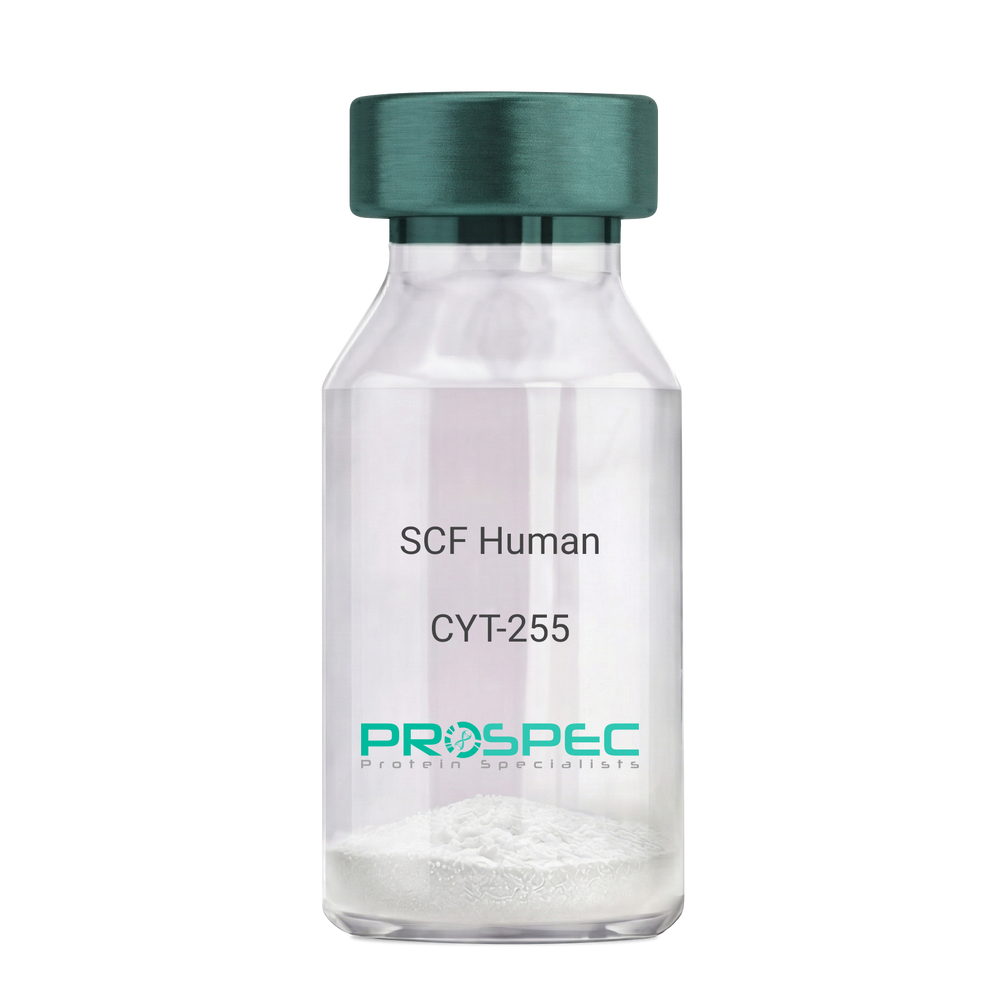
Name :
SCF HumanDescription:
Stem Cell Factor Human Recombinant
Kit ligand Precursor, C-kit ligand, SCF, Mast cell growth factor, MGF, SF, KL-1, Kitl, DKFZp686F2250.
Product # :
CYT-255Price :
Quantity :
Shipping Method :
Shipped at Room temp
More Info
- description
- source
- formulation
- purity
- biological activity
- More Info
Description
Stem Cell Factor Human Recombinant produced in E.Coli is a single, non-glycosylated polypeptide chain containing 165 amino acids and having a molecular mass of 18409 Dalton. The SCF is purified by proprietary chromatographic techniques.
Source
Escherichia Coli.
Formulation
Lyophilized from a concentrated (1mg/ml) solution in water containing 0.02% NaHCO3.
Purity
Greater than 98.0% as determined by:
(a) Analysis by SEC-HPLC.
(b) Analysis by SDS-PAGE.Biological Activity
The ED50 as determined by the dose-dependant stimulation of Human TF-1 cells is < 2 ng/ml, corresponding to a Specific Activity of 500,000 IU/mg.More Info
-
Introduction
Stem cell factor / KIT ligand (SCF) is a cytokine which binds CD117(c-Kit). SCF is also known as "steel factor" or "c-kit ligand". SCF exists in two forms, cell surface bound SCF and soluble (or free) SCF. Soluble SCF is produced by the cleavage of surface bound SCF by metalloproteases. SCF is a growth factor important for the survival, proliferation, and differentiation of hematopoietic stem cells and other hematopoietic progenitor cells. One of its roles is to change the BFU-E (burst-forming unit-erythroid) cells, which are the earliest erythrocyte precursors in the erythrocytic series, into the CFU-E (colony-forming unit-erythroid).
-
Synonyms
Kit ligand Precursor, C-kit ligand, SCF, Mast cell growth factor, MGF, SF, KL-1, Kitl, DKFZp686F2250.
-
Physical Appearance
Sterile Filtered White lyophilized (freeze-dried) powder.
-
Stability
Lyophilized KIT ligand although stable at room temperature for 3 weeks, should be stored desiccated below -18°C. Upon reconstitution SCF should be stored at 4°C between 2-7 days and for future use below -18°C.For long term storage it is recommended to add a carrier protein (0.1% HSA or BSA).Please prevent freeze-thaw cycles.
-
Solubility
It is recommended to reconstitute the lyophilized Stem Cell Factor in sterile 18MΩ-cm H2O not less than 100µg/ml, which can then be further diluted to other aqueous solutions.
-
Amino Acid Sequence
The sequence of the first five N-terminal amino acids was determined and was found to be Met-Glu-Gly-Ile-Cys.
-
Protein content
Protein quantitation was carried out by two independent methods1. UV spectroscopy at 280 nm using the absorbency value of 0.52 as the extinction coefficient for a 0.1% (1mg/ml) solution. This value is calculated by the PC GENE computer analysis program of protein sequences (IntelliGenetics). 2. Analysis by RP-HPLC, using a standard solution of Stem Cell Factor as a Reference Standard.
ProSpec's products are furnished for LABORATORY RESEARCH USE ONLY. The product may not be used as drugs, agricultural or pesticidal products, food additives or household chemicals.
- View Data Sheet
Name :
MIF HumanDescription:
Macrophage Migration Inhibitory Factor Human Recombinant
Phenylpyruvate tautomerase, Glycosylation-inhibiting factor, GIF, MMIF, MIF.
Product # :
CYT-575Price :
Quantity :
Shipping Method :
Shipped with Ice Packs
More Info
- description
- source
- formulation
- purity
- More Info
Description
Macrophage Inducing Factor Human Recombinant produced in E. coli is a single, non-glycosylated, polypeptide chain containing 115 amino acids (1-115aa) and having a molecular mass of 12kDa. MIF human Recombinant is purified by proprietary chromatographic techniques.
Source
Escherichia Coli.
Formulation
1mg/ml solution containing 50mM Tris-HCl pH-8, 0.5mM DTT & 10% glycerol.
Purity
Greater than 98.0% as determined by SDS-PAGE.
More Info
-
Introduction
The cytokine Macrophage migration inhibitory factor (MIF) has been identified to be secreted by the pituitary gland and the monocyte/macrophage and to play an important role in endotoxic shock. MIF has the unique property of being released from macrophages and T cells in response to physiological concentrations of glucocorticoids. The secretion of MIF is tightly regulated and decreases at high, anti-inflammatory steroid concentration.
-
Synonyms
Phenylpyruvate tautomerase, Glycosylation-inhibiting factor, GIF, MMIF, MIF.
-
Physical Appearance
Sterile Filtered clear solution.
-
Stability
Store at 4°C if entire vial will be used within 2-4 weeks. Store, frozen at -20°C for longer periods of time. For long term storage it is recommended to add a carrier protein (0.1% HSA or BSA).Avoid multiple freeze-thaw cycles.
-
Amino Acid Sequence
MPMFIVNTNV PRASVPDGFL SELTQQLAQA TGKPPQYIAV HVVPDQLMAF GGSSEPCALC SLHSIGKIGG AQNRSYSKLL CGLLAERLRI SPDRVYINYY DMNAANVGWN NSTFA.
ProSpec's products are furnished for LABORATORY RESEARCH USE ONLY. The product may not be used as drugs, agricultural or pesticidal products, food additives or household chemicals.
- View Data Sheet
Name :
G CSF Human, HisDescription:
Granulocyte-Colony Stimulating Factor Human Recombinant, His Tag
CSF-3, MGI-1G, GM-CSF beta, Pluripoietin, Filgrastim, Lenograstim, G-CSF, MGC45931, GCSF.
Product # :
CYT-476Price :
Quantity :
Shipping Method :
Shipped with Ice Packs
More Info
- description
- source
- formulation
- purity
- More Info
Description
Granulocyte Colony Stimulating Factor-His Tag Human Recombinant produced in E.coli is a single, non-glycosylated, polypeptide chain containing 174 amino acids, fragment (31-204) and having a molecular mass of 23.19 kDa with an amino-terminal hexahistidine tag.G-CSF-His is purified by proprietary chromatographic techniques.
Source
Escherichia Coli.
Formulation
Granulocyte Colony Stimulating Factor His is supplied in 1x PBS and 50% glycerol.
Purity
Greater than 95.0% as determined by:
(a) Analysis by RP-HPLC.
(b) Analysis by SDS-PAGE.More Info
-
Introduction
Granulocyte Colony Stimulating Factor is a growth factor and/or cytokine produced by the endothelium, macrophages and a number of other immune cells. GCSF stimulates the bone marrow to produce granulocytes and also to stimulate the survival, proliferation, differentiation and function of neutrophil granulocyte progenator cells and mature neutrophils.
-
Synonyms
CSF-3, MGI-1G, GM-CSF beta, Pluripoietin, Filgrastim, Lenograstim, G-CSF, MGC45931, GCSF.
-
Physical Appearance
Sterile Filtered clear solution.
-
Stability
Store at 4°C if entire vial will be used within 2-4 weeks. Store, frozen at -20°C for longer periods of time. Please avoid freeze thaw cycles.
-
Background
What is the molecular weight/Mw of G CSF Protein?
G CSF Protein has a total Mw of 23.19kDa.
What is the source or expression system of G CSF Protein?
Escherichia Coli.
What is the Purity of G CSF Protein?
G CSF Protein is >95% pure as determined by SDS-PAGE.
What is the Biological Activity of G CSF Protein?
The biological functionality of G CSF Protein will be determined in the future.
What is the amino acid sequence of G CSF Protein?
G CSF Protein is composed from 174 amino acids.
What applications can G CSF Protein be used in?
G CSF Protein can probably be used in western blot, ELISA and Lateral Flow.
What is the endotoxin level for G CSF Protein?
The endotoxin level is minimal, G CSF Protein was purified using conventional chromatography techniques.
ProSpec's products are furnished for LABORATORY RESEARCH USE ONLY. The product may not be used as drugs, agricultural or pesticidal products, food additives or household chemicals.
- View Data Sheet
Name :
bNGF Human, CHODescription:
Beta-Nerve Growth Factor Human Recombinant, CHO
Beta Polypeptide, NGF, NGFB, HSAN5, Beta-NGF, MGC161426, MGC161428.
Product # :
CYT-246Price :
Quantity :
Shipping Method :
Shipped at Room temp
More Info
- description
- source
- formulation
- purity
- biological activity
- More Info
Description
Nerve Growth Factor-beta Human Recombinant produced in CHO is a noncovalently disulfide linked homodimer, glycosylated, polypeptide chain (Ser122-Arg239) containing 2 identical 118 amino acids and having a molecular mass of 26.5 kDa.The NGF-b is purified by proprietary chromatographic techniques.
Source
Chinese Hamster Ovary Cells.
Formulation
The protein was lyophilized from a 0.2µm filtered solution in 20mM PB and 250mM NaCl, pH 7.0.
Purity
Greater than 95.0% as determined by:
(a) Analysis by RP-HPLC.
(b) Analysis by SDS-PAGE.Biological Activity
The ED50, calculated by its ability to stimulate chick E9 DRG neurite outgrowth was found to be < 1.0 ng/ml, corresponding to a specific activity of > 1 x 10⁶ units/mg.More Info
-
Introduction
NGF-beta has nerve growth stimulating activity and the complex is involved in the regulation of growth and the differentiation of sympathetic and certain sensory neurons. Mutations in this gene have been associated with hereditary sensory and autonomic neuropathy, type 5 (HSAN5), and dysregulation of this gene's expression is associated with allergic rhinitis.
-
Synonyms
Beta Polypeptide, NGF, NGFB, HSAN5, Beta-NGF, MGC161426, MGC161428.
-
Physical Appearance
Sterile Filtered White lyophilized (freeze-dried) powder.
-
Stability
Lyophilized Nerve Growth Factor b although stable at room temperature for 3 weeks, should be stored desiccated below -18°C. Upon reconstitution Nerve Growth Factor-beta should be stored at 4°C between 2-7 days and for future use below -18°C. For long-term storage it is recommended to add a carrier protein (0.1% HSA or BSA).Please prevent freeze-thaw cycles.
-
Solubility
It is recommended to reconstitute the lyophilized NGF-b in sterile 18MΩ-cm H2O not less than 100µg/ml, which can then be further diluted to other aqueous solutions.
-
Amino Acid Sequence
Was analyzed by Mass spectrometry.
-
Background
What is the molecular weight/Mw of B NGF Protein?
B NGF Protein has a total Mw of 26.5kDa.
What is the source or expression system of B NGF Protein?
Chinese Hamster Ovary Cells.
What is the Purity of B NGF Protein?
B NGF Protein is >95% pure as determined by SDS-PAGE.
What is the Biological Activity of B NGF Protein?
The ED50, calculated by its ability to stimulate chick E9 DRG neurite outgrowth was found to be < 1.0 ng/ml, corresponding to a specific activity of > 1 x 10⁶ units/mg.
What is the amino acid sequence of B NGF Protein?
B NGF Protein is composed from 118 amino acids.
What applications can B NGF Protein be used in?
B NGF Protein can probably be used in western blot, ELISA and Lateral Flow.
What is the endotoxin level for B NGF Protein?
The endotoxin level is minimal, B NGF Protein was purified using conventional chromatography techniques.
ProSpec's products are furnished for LABORATORY RESEARCH USE ONLY. The product may not be used as drugs, agricultural or pesticidal products, food additives or household chemicals.
- View Data Sheet
Name :
GLUL Human, His ActiveDescription:
Glutamine Synthetase Human Recombinant, His Active
GLNS, EC 6.3.1.2, EC 4.1.1.15, GLUL, Glutamine Synthetase, GS, Glutamate decarboxylase, Glutamate--ammonia ligase, PIG43, PIG59.
Product # :
ENZ-984Price :
Quantity :
Shipping Method :
Shipped with Ice Packs
More Info
- description
- source
- formulation
- purity
- biological activity
- More Info
Description
GLUL Recombinant Human produced in E.Coli is a single, non-glycosylated polypeptide chain containing 393 amino acids (1-373 a.a.) and having a molecular mass of 44.2 kDa. The GLUL is fused to a 20 amino acid His-Tag at N-terminus and purified by proprietary chromatographic techniques.
Source
Escherichia Coli.
Formulation
GLUL Human solution containing 20mM Tris-HCl pH-8, 5mM DTT, 0.2M NaCl & 20% glycerol.
Purity
Greater than 90.0% as determined by SDS-PAGE.
Biological Activity
Specific activity is > 2,800 pmol/min/ug, and is defined as the amount of enzyme that convert 1.0 pmole of L-glutamate to L-glutamine per miunte at pH 7.5 at 37C in coupled system with PK/LDH.More Info
-
Introduction
GLUL catalyzes the synthesis of glutamine from glutamate and ammonia. Glutamine is a major source of energy and that takes part in cell proliferation, inhibition of apoptosis, and cell signaling. GLUL is expressed during early fetal stages, and has a role in maintaining body pH by removing ammonia from circulation. Mutations in GLUL gene are related with congenital glutamine deficiency.
-
Synonyms
GLNS, EC 6.3.1.2, EC 4.1.1.15, GLUL, Glutamine Synthetase, GS, Glutamate decarboxylase, Glutamate--ammonia ligase, PIG43, PIG59.
-
Physical Appearance
Sterile filtered colorless solution.
-
Stability
Store at 4°C if entire vial will be used within 2-4 weeks. Store, frozen at -20°C for longer periods of time. For long term storage it is recommended to add a carrier protein (0.1% HSA or BSA).Avoid multiple freeze-thaw cycles.
-
Amino Acid Sequence
MGSSHHHHHH SSGLVPRGSH MTTSASSHLN KGIKQVYMSL PQGEKVQAMY IWIDGTGEGL RCKTRTLDSE PKCVEELPEW NFDGSSTLQS EGSNSDMYLV PAAMFRDPFR KDPNKLVLCE VFKYNRRPAE TNLRHTCKRI MDMVSNQHPW FGMEQEYTLM GTDGHPFGWP SNGFPGPQGP YYCGVGADRA YGRDIVEAHY RACLYAGVKI AGTNAEVMPA QWEFQIGPCE GISMGDHLWV ARFILHRVCE DFGVIATFDP KPIPGNWNGA GCHTNFSTKA MREENGLKYI EEAIEKLSKR HQYHIRAYDP KGGLDNARRL TGFHETSNIN DFSAGVANRS ASIRIPRTVG QEKKGYFEDR RPSANCDPFS VTEALIRTCL LNETGDEPFQ YKN.
ProSpec's products are furnished for LABORATORY RESEARCH USE ONLY. The product may not be used as drugs, agricultural or pesticidal products, food additives or household chemicals.
- View Data Sheet
Name :
GFER HumanDescription:
Growth Factor, Augmenter of Liver Regeneration Human Recombinant
FAD-linked sulfhydryl oxidase ALR, Augmenter of liver regeneration, Hepatopoietin, GFER, ALR, HERV1, HPO, ALR, HSS, ERV1, HPO1, HPO2.
Product # :
PRO-1326Price :
Quantity :
Shipping Method :
Shipped with Ice Packs
More Info
- description
- source
- formulation
- purity
- More Info
Description
GFER Human Recombinant produced in E.Coli is a single, non-glycosylated polypeptide chain containing 229 amino acids (1-205 a.a) and having a molecular mass of 26kDa.GFER is fused to a 24 amino acid His-tag at N-terminus & purified by proprietary chromatographic techniques.
Source
Escherichia Coli.
Formulation
GFER protein solution (0.25mg/ml) containing 20mM Tris-HCl buffer (pH 8.0), 0.2M NaCl, 50% glycerol and 2mM DTT.
Purity
Greater than 90.0% as determined by SDS-PAGE.
More Info
-
Introduction
FAD-linked sulfhydryl oxidase ALR (GFER) is a member of the Erv1/ALR family of proteins, which is found in higher and lower eukaryotes. GFER is a hepatotrophic growth factor and flavin-linked sulfhydryl oxidase expressed in a variety of tissues. Moreover, GFER induces the expression of S-adenosylmethionine decarboxyl-ase and ornithine decarboxylases (ODC), which each have a central role in the synthesis of polyamines. The hepatotrophic factor designated augmenter of liver regeneration (ALR) is assumed to be one of the factors responsible for the exceptional regenerative capacity of mammalian liver. The GFER gene is located on chromosome 16 in the interval containing the locus for polycystic kidney disease (PKD1).
-
Synonyms
FAD-linked sulfhydryl oxidase ALR, Augmenter of liver regeneration, Hepatopoietin, GFER, ALR, HERV1, HPO, ALR, HSS, ERV1, HPO1, HPO2.
-
Physical Appearance
Sterile Filtered colorless solution.
-
Stability
Store at 4°C if entire vial will be used within 2-4 weeks. Store, frozen at -20°C for longer periods of time. For long term storage it is recommended to add a carrier protein (0.1% HSA or BSA).Avoid multiple freeze-thaw cycles.
-
Amino Acid Sequence
MGSSHHHHHH SSGLVPRGSH MGSHMAAPGE RGRFHGGNLF FLPGGARSEM MDDLATDARG RGAGRRDAAA SASTPAQAPT SDSPVAEDAS RRRPCRACVD FKTWMRTQQK RDTKFREDCP PDREELGRHS WAVLHTLAAY YPDLPTPEQQ QDMAQFIHLF SKFYPCEECA EDLRKRLCRN HPDTRTRACF TQWLCHLHNE VNRKLGKPDF DCSKVDERWR DGWKDGSCD.
ProSpec's products are furnished for LABORATORY RESEARCH USE ONLY. The product may not be used as drugs, agricultural or pesticidal products, food additives or household chemicals.
- View Data Sheet
Name :
GLUL HumanDescription:
Glutamine Synthetase Human Recombinant
GLNS, EC 6.3.1.2, EC 4.1.1.15, GLUL, Glutamine Synthetase, GS, Glutamate decarboxylase, Glutamate--ammonia ligase, PIG43, PIG59.
Product # :
ENZ-544Price :
Quantity :
Shipping Method :
Shipped with Ice Packs
More Info
- description
- source
- formulation
- purity
- More Info
Description
GLUL Recombinant Human produced in E.Coli is a single, non-glycosylated polypeptide chain containing 393 amino acids (1-373 a.a.) and having a molecular mass of 44.2 kDa. The GLUL is fused to a 20 amino acid His-Tag at N-terminus and purified by proprietary chromatographic techniques.
Source
Escherichia Coli.
Formulation
GLUL Human solution containing 20mM Tris-HCl pH-8, 5mM DTT, 0.2M NaCl & 20% glycerol.
Purity
Greater than 90.0% as determined by SDS-PAGE.
More Info
-
Introduction
GLUL catalyzes the synthesis of glutamine from glutamate and ammonia. Glutamine is a major source of energy and that takes part in cell proliferation, inhibition of apoptosis, and cell signaling. GLUL is expressed during early fetal stages, and has a role in maintaining body pH by removing ammonia from circulation. Mutations in GLUL gene are related with congenital glutamine deficiency.
-
Synonyms
GLNS, EC 6.3.1.2, EC 4.1.1.15, GLUL, Glutamine Synthetase, GS, Glutamate decarboxylase, Glutamate--ammonia ligase, PIG43, PIG59.
-
Physical Appearance
Sterile filtered colorless solution.
-
Stability
Store at 4°C if entire vial will be used within 2-4 weeks. Store, frozen at -20°C for longer periods of time. For long term storage it is recommended to add a carrier protein (0.1% HSA or BSA).Avoid multiple freeze-thaw cycles.
-
Amino Acid Sequence
MGSSHHHHHH SSGLVPRGSH MTTSASSHLN KGIKQVYMSL PQGEKVQAMY IWIDGTGEGL RCKTRTLDSE PKCVEELPEW NFDGSSTLQS EGSNSDMYLV PAAMFRDPFR KDPNKLVLCE VFKYNRRPAE TNLRHTCKRI MDMVSNQHPW FGMEQEYTLM GTDGHPFGWP SNGFPGPQGP YYCGVGADRA YGRDIVEAHY RACLYAGVKI AGTNAEVMPA QWEFQIGPCE GISMGDHLWV ARFILHRVCE DFGVIATFDP KPIPGNWNGA GCHTNFSTKA MREENGLKYI EEAIEKLSKR HQYHIRAYDP KGGLDNARRL TGFHETSNIN DFSAGVANRS ASIRIPRTVG QEKKGYFEDR RPSANCDPFS VTEALIRTCL LNETGDEPFQ YKN.
ProSpec's products are furnished for LABORATORY RESEARCH USE ONLY. The product may not be used as drugs, agricultural or pesticidal products, food additives or household chemicals.
- View Data Sheet
Name :
HDGF2 HumanDescription:
Hepatoma-Derived Growth Factor-2 Human Recombinant
Hepatoma-derived growth factor-related protein 3, HRP-3, Hepatoma-derived growth factor 2, HDGF-2, HDGFRP3, HDGF2, CGI-142.
Product # :
CYT-132Price :
Quantity :
Shipping Method :
Shipped with Ice Packs
More Info
- description
- source
- formulation
- purity
- More Info
- SDS-PAGE
Description
HDGF2 Human Recombinant produced in E.Coli is a single, non-glycosylated polypeptide chain containing 227 amino acids (1-203 a.a.) and having a molecular mass of 25.1kDa (Molecular weight on SDS-PAGE will appear higher). HDGF2 is fused to a 24 amino acid His-tag at N-terminus & purified by proprietary chromatographic techniques.
Source
Escherichia Coli.
Formulation
HDGF2 protein solution (0.5mg/ml) containing 20mM Tris-HCl buffer (pH 8.0), 1mM DTT, 10% glycerol and 0.1M NaCl.
Purity
Greater than 90% as determined by SDS-PAGE.
SDS-PAGE
More Info
-
Introduction
Hepatoma-derived growth factor, related protein 3 (HDGFRP3/HDGF2) is the original member of a family of polypeptides labeled HDGF related proteins (HRPs). The HDGF2 protein augments DNA synthesis and may play a part in cell proliferation. HDGF2 is expressed primarily in the testis and the brain, to an intermediate extent in the heart, and to a slight extent in the ovaries, kidneys, spleen, and liver in humans.
-
Synonyms
Hepatoma-derived growth factor-related protein 3, HRP-3, Hepatoma-derived growth factor 2, HDGF-2, HDGFRP3, HDGF2, CGI-142.
-
Physical Appearance
Sterile Filtered clear solution.
-
Stability
Store at 4°C if entire vial will be used within 2-4 weeks. Store, frozen at -20°C for longer periods of time. For long term storage it is recommended to add a carrier protein (0.1% HSA or BSA).Avoid multiple freeze-thaw cycles.
-
Amino Acid Sequence
MGSSHHHHHH SSGLVPRGSH MGSHMARPRP REYKAGDLVF AKMKGYPHWP ARIDELPEGA VKPPANKYPI FFFGTHETAF LGPKDLFPYK EYKDKFGKSN KRKGFNEGLW EIENNPGVKF TGYQAIQQQS SSETEGEGGN TADASSEEEG DRVEEDGKGK RKNEKAGSKR KKSYTSKKSS
KQSRKSPGDE DDKDCKEEEN KSSSEGGDAG NDTRNTTSDL QKTSEGT. -
Background
What is the molecular weight/Mw of HDGF2 HUMAN Protein?
HDGF2 HUMAN Protein has a total Mw of 25.1kDa.
What is the source or expression system of HDGF2 HUMAN Protein?
Escherichia Coli.
What is the Purity of HDGF2 HUMAN Protein?
HDGF2 HUMAN Protein is >90% pure as determined by SDS-PAGE.
What is the Biological Activity of HDGF2 HUMAN Protein?
The biological functionality of HDGF2 HUMAN Protein will be determined in the future.
What is the amino acid sequence of HDGF2 HUMAN Protein?
MGSSHHHHHH SSGLVPRGSH MGSHMARPRP REYKAGDLVF AKMKGYPHWP ARIDELPEGA VKPPANKYPI FFFGTHETAF LGPKDLFPYK EYKDKFGKSN KRKGFNEGLW EIENNPGVKF TGYQAIQQQS SSETEGEGGN TADASSEEEG DRVEEDGKGK RKNEKAGSKR KKSYTSKKSS
KQSRKSPGDE DDKDCKEEEN KSSSEGGDAG NDTRNTTSDL QKTSEGT.
What applications can HDGF2 HUMAN Protein be used in?
HDGF2 HUMAN Protein can probably be used in western blot, ELISA and Lateral Flow.
What is the endotoxin level for HDGF2 HUMAN Protein?
The endotoxin level is minimal, HDGF2 HUMAN Protein was purified using conventional chromatography techniques.
ProSpec's products are furnished for LABORATORY RESEARCH USE ONLY. The product may not be used as drugs, agricultural or pesticidal products, food additives or household chemicals.
- View Data Sheet
Name :
TGFB1 Human RecombinantDescription:
Transforming Growth Factor-Beta 1 Human Recombinant
Transforming growth factor beta-1, TGF-beta-1, CED, DPD1, TGFB, TGF-b 1, LAP, TGFB1.
Product # :
CYT-716Price :
Quantity :
Shipping Method :
Shipped at Room temp
More Info
- description
- source
- formulation
- purity
- biological activity
- More Info
Description
TGFB1 Human Recombinant produced in CHO cells is a glycosylated homodimeric polypeptide chain containing 2 x 112 amino acids and having a total molecular mass of 25.6kDa. The TGFB1 is purified by proprietary chromatographic techniques.
Source
CHO cells.
Formulation
Lyophilized from a sterile filtered solution containing 0.1 % trifluoroacetic acid (TFA) And trehalose (1:20 protein to Trehalose ratio).
Purity
Greater than 95.0% as determined by SDS-PAGE.
Biological Activity
The ED50 as determined by the dose-dependent inhibition of IL-4-induced proliferation of HT-2 cells is 0.142ng/ml, corresponding to a specific activity of 7.4x10⁶units/mg.
More Info
-
Introduction
Transforming growth factor betas (TGFBetas) mediate many cell-cell interactions that occur during embryonic development. Three TGFBetas have been identified in mammals. TGFBeta1, TGFBeta2 and TGFBeta3 are each synthesized as precursor proteins that are very similar in that each is cleaved to yield a 112 amino acid polypeptide that remains associated with the latent portion of the molecule.
-
Synonyms
Transforming growth factor beta-1, TGF-beta-1, CED, DPD1, TGFB, TGF-b 1, LAP, TGFB1.
-
Physical Appearance
Sterile Filtered White lyophilized (freeze-dried) powder.
-
Stability
Lyophilized TGFB1 although stable at room temperature for 3 weeks, should be stored desiccated below -18°C. Upon reconstitution TGFB1 Human should be stored at 4°C between 2-7 days and for future use below -18°C. For long term storage it is recommended to add a carrier protein (0.1% HSA or BSA). Please prevent freeze-thaw cycles.
-
Solubility
It is recommended to reconstitute the lyophilized TGFB1 in sterile 10mM HCl at a concentration of 0.1 mg/ml, which can then be further diluted to other aqueous solutions.
-
Amino Acid Sequence
ALDTNYCFSS TEKNCCVRQL YIDFRKDLGW KWIHEPKGYH ANFCLGPCPY IWSLDTQYSK VLALYNQHNP GASAAPCCVP QALEPLPIVY YVGRKPKVEQ LSNMIVRSCK CS.
-
Background
Title: Transforming Growth Factor-Beta 1 Human Recombinant: A Promising Tool for Biomedical Research
Abstract:
Transforming Growth Factor-Beta 1 (TGF-β1) is a crucial cytokine involved in diverse cellular processes. This research paper provides an in-depth analysis of human recombinant TGF-β1, focusing on its production, purification, and applications in biomedical research. The paper discusses the significance of TGF-β1 in tissue engineering, regenerative medicine, and immunology. Furthermore, it elucidates the potential therapeutic implications of recombinant TGF-β1 in various diseases and highlights ongoing research in the field. The information presented in this paper aims to enhance the understanding of TGF-β1 and its utility as a research tool in biomedical sciences.Introduction:
Transforming Growth Factor-Beta 1 (TGF-β1) is a multifunctional cytokine that regulates cellular processes such as cell growth, differentiation, and immune modulation. Human recombinant TGF-β1 is synthesized using genetic engineering techniques, enabling the production of large quantities of biologically active protein for research purposes.Production and Purification:
Recombinant TGF-β1 is typically produced in expression systems such as bacteria, yeast, or mammalian cells. The protein is then purified using various chromatographic techniques to obtain a highly pure and active form. Quality control measures ensure the biological activity and integrity of the recombinant protein.Biomedical Applications:
Human recombinant TGF-β1 has found broad applications in biomedical research. In tissue engineering and regenerative medicine, it plays a critical role in promoting cell proliferation, extracellular matrix production, and tissue repair. TGF-β1 is also involved in immune modulation, influencing immune cell differentiation and function. Recombinant TGF-β1 is a valuable tool for studying these processes and developing therapeutic interventions.Therapeutic Implications:
The dysregulation of TGF-β1 signaling is associated with various diseases, including fibrosis, cancer, and autoimmune disorders. Recombinant TGF-β1 offers potential therapeutic applications through its ability to modulate cellular responses. Ongoing research aims to develop targeted therapies that specifically regulate TGF-β1 signaling for the treatment of these conditions.Conclusion:
Human recombinant TGF-β1 holds immense potential as a research tool in biomedical sciences. Its production, purification, and applications in tissue engineering, regenerative medicine, and immunology contribute to advancing our understanding of cellular processes and disease mechanisms. With ongoing research, recombinant TGF-β1 may pave the way for novel therapeutic strategies in various medical fields.
ProSpec's products are furnished for LABORATORY RESEARCH USE ONLY. The product may not be used as drugs, agricultural or pesticidal products, food additives or household chemicals.
- View Data Sheet
Name :
TGFA HumanDescription:
Transforming Growth Factor-Alpha Human Recombinant
Transforming Growth Factor Alpha, Protransforming Growth Factor Alpha, TGF-Alpha, TGFA.
Product # :
CYT-871Price :
Quantity :
Shipping Method :
Shipped at Room temp
More Info
- description
- source
- formulation
- purity
- biological activity
- More Info
Description
TGFA Human Recombinant (40-89) produced in E.Coli is a single, non-glycosylated, polypeptide chain containing 50 amino acids and having a molecular mass of 5.6kDa. The TGFA is purified by proprietary chromatographic techniques.
Source
Escherichia Coli.
Formulation
Lyophilized from a 0.2µm filtered solution in 0.1% TFA.
Purity
Greater than 95.0% as determined by SDS-PAGE.
Biological Activity
The ED50, as measured in a proliferation assay using mouse BALB/c 3T3 cells, is 0.395ng/ml.
More Info
-
Introduction
Transforming Growth Factor-Alpha (TGF-alpha) belongs to the EGF family of cytokines. TGFA soluble form is discharged from the membrane by proteolytic cleavage. Membrane-bound proTGF-alpha is biologically active and has a role in cell-cell adhesion or in the stimulation of adjacent cells. TGFA expression is common in transformed cells. Additionally, TGFA is expressed in normal tissues during embryogenesis and in adult cells/tissues, including the pituitary, keratinocytes, and macrophages.
-
Synonyms
Transforming Growth Factor Alpha, Protransforming Growth Factor Alpha, TGF-Alpha, TGFA.
-
Physical Appearance
Sterile Filtered White lyophilized (freeze-dried) powder.
-
Stability
Lyophilized TGFA although stable at room temperature for 3 weeks, should be stored desiccated below -18°C. Upon reconstitution TGFA should be stored at 4°C between 2-7 days and for future use below -18°C.For long term storage it is recommended to add a carrier protein (0.1% HSA or BSA).Please prevent freeze-thaw cycles.
-
Solubility
It is recommended to reconstitute the lyophilized TGFA in sterile 18M-cm H2O not less than 100µg/ml, which can then be further diluted to other aqueous solutions.
-
Amino Acid Sequence
VVSHFNDCPD SHTQFCFHGT CRFLVQEDKP ACVCHSGYVG ARCEHADLLA.
-
Background
Title: Transforming Growth Factor-Alpha Human Recombinant, Yeast: A Versatile Biopharmaceutical for Therapeutic Applications
Abstract:
Transforming Growth Factor-Alpha (TGF-α) is a potent growth factor involved in numerous physiological processes, including cell proliferation, differentiation, and tissue repair. The development of TGF-α human recombinant using yeast expression systems has provided a valuable biopharmaceutical tool for therapeutic applications. This research paper explores the production process, characteristics, and potential therapeutic applications of TGF-α human recombinant derived from yeast, highlighting its versatility and clinical significance.Introduction:
TGF-α is a crucial growth factor that regulates cellular functions and plays a vital role in tissue development and repair. Harnessing the therapeutic potential of TGF-α has been limited by challenges in its production and stability. However, the development of TGF-α human recombinant using yeast expression systems has overcome these limitations, making it an attractive biopharmaceutical for therapeutic interventions.Production Process and Characteristics:
TGF-α human recombinant derived from yeast is produced through recombinant DNA technology, utilizing yeast cells as expression hosts. Yeast expression systems offer several advantages, including high expression yields, cost-effectiveness, and the ability to produce correctly folded and biologically active TGF-α. The resulting TGF-α human recombinant closely resembles native TGF-α in terms of structure and function, allowing for effective therapeutic intervention.Therapeutic Applications:
TGF-α human recombinant derived from yeast has shown promise in various therapeutic applications. It has been investigated for its wound-healing properties, where it promotes tissue regeneration and accelerates the healing process. Additionally, TGF-α has been explored in tissue engineering and regenerative medicine, playing a crucial role in stimulating cell proliferation and tissue development. Furthermore, TGF-α has been studied in the context of cancer research, as it is involved in tumor growth and angiogenesis, making it a potential target for anticancer therapies.Advantages and Challenges:
The use of yeast expression systems for producing TGF-α human recombinant offers several advantages, including scalability, cost-effectiveness, and the ability to produce bioactive protein. However, challenges remain, such as optimizing production processes, purification methods, and ensuring product consistency and stability. Further research is needed to address these challenges and maximize the clinical potential of TGF-α human recombinant derived from yeast.Conclusion:
TGF-α human recombinant derived from yeast represents a versatile biopharmaceutical tool with significant therapeutic potential. Its production using yeast expression systems offers advantages in terms of scalability, cost-effectiveness, and bioactivity. The therapeutic applications of TGF-α human recombinant extend to wound healing, tissue engineering, and cancer research. Continued research and development efforts are crucial to optimizing production processes, overcoming challenges, and fully exploiting the clinical benefits of TGF-α human recombinant as a therapeutic agent.
ProSpec's products are furnished for LABORATORY RESEARCH USE ONLY. The product may not be used as drugs, agricultural or pesticidal products, food additives or household chemicals.
- View Data Sheet
Name :
CTGF (182-250 a.a.) HumanDescription:
Connective Tissue Growth Factor Human Recombinant (182-250 a.a.)
CCN2, NOV2, HCS24, IGFBP8, MGC102839, CTGF, Connective Tissue Growth Factor.
Product # :
CYT-526Price :
Quantity :
Shipping Method :
Shipped at Room temp
More Info
- description
- source
- formulation
- purity
- More Info
Description
The Connective Tissue Growth Factor amino acids 182-250, produced in E.Coli, is a fusion protein with His Tag (4 kDa), having a total molecular mass of 15 kDa.
Source
Escherichia Coli.
Formulation
Lyophilized without any additives.
Purity
Greater than 90.0% as determined by SDS-PAGE.
More Info
-
Introduction
Connective Tissue Growth Factor belongs to the CCN family of proteins. The CCN family presently consists of six members in human also known as: Cyr61 (Cystein rich 61), CTGF (Connective Tissue Growth Factor), Nov (Nephroblastoma Overexpressed gene), WISP-1, 2 and 3 (Wnt-1 Induced Secreted Proteins). The CCN genes encode secreted proteins associated with the Extracellular Matrix (ECM) and cell membrane. CCN proteins are matricellular proteins which are involved in the regulation of various cellular functions including: proliferation, differentiation, survival, adhesion and migration. They are expressed in derivatives of the three embryonic sheets and are implicated in the development of kidney, nervous system, muscle, bone marrow, cartilage and bone. During adulthood, they are implicated in wound healing, bone fracture repair, and pathologies such as: fibrosis, vascular ailments and tumorigenesis.
Full length secreted CCN proteins can show an antiproliferative activity, whereas truncated isoforms are likely to stimulate proliferation and behave as oncogenes. The full length protein consists of four modulesModule I shares partial identity with the N-terminal part of the Insulin-like Growth Factor Binding Proteins (IGFBPs).
Module II includes a stretch of 70amino acid residues – which shares sequence identity with the Von Willebrand Factor Type C repeat (VWC).
Module III contains sequences sharing identity with the Thrombospondin type 1 repeat (TSP1) (WSXCSXXCG), which is thought to be implicated in the binding of sulfated glycoconjugates and to be important for cell adhesion. Module IV, also designated CT, is encoded by exon5. It is the leasts conserved one of the four domains at the level of nucleotide sequence, but it appears to be critical for several of the biological functions attributed to the CCN proteins. Module IV resembles the CT domain of several extracellular protein including, Von Willebrand's factor and mucins. Sequence similarities to heparin-binding motifs are also found within this domain. Proteolysis of the secreted full-length CCN proteins that has been reported in the case of CCN2 and CCN3 might result in the production of CCN-derived peptides with high affinity for ligands that full-length CNN proteins bind only poorly. Amino-truncated CCN2 isoforms were biologically active whereas no specific biological activity has been attributed to the truncated CCN3. Although the molecular processes underlying the production of these secreted isoforms is presently unknown, it is important to note that proteolysis occur at the same amino acid residues in both CCN2 and CCN3. An elevated expression of CCN2 has also been detected by Northern blotting in human invasive mammary ductal carcinomas, dermatofibromas, pyogenic granuloma, endothelial cells of angiolipomas and angioleiomyomas, and in pancreatic tumors. A study performed with chondrosarcomas representative of various histological grades established that CCN2 expression was closely correlated with increasing levels of malignancy. In agreement with CCN2 playing a role in brain tumor angiogenesis, immunocytochemistry studies indicated that both glioblastoma tumor cells and proliferating endothelial cells stained positive for CCN2. In astrocytomas, CCN2 expression was particularly elevated in high grade tumors, with a marked effect of CCN2 on cell proliferation. Downregulation of CCN2 expression in these cells was associated with a growth arrest at the G1/S transition while over-expression of CCN2 induced a two-fold increase of the number of cells in the G1 phase. Gene profiling analysis allowed to identify a set of about 50 genes whose expression might account for the proliferative activity of CCN2 in these cells.
CCN2 was seen in a higher proportion of mononuclear cells of patients with acute lymphoblastic leukemia. -
Synonyms
CCN2, NOV2, HCS24, IGFBP8, MGC102839, CTGF, Connective Tissue Growth Factor.
-
Physical Appearance
Sterile Filtered white lyophilized powder.
-
Stability
Lyophilized CTGF although stable at room temperature for 3 weeks, should be stored desiccated below -18°C. Upon reconstitution CTGF should be stored at 4°C between 2-7 days and for future use below -18°C.For long-term storage it is recommended to add a carrier protein (0.1% HSA or BSA).Please prevent freeze-thaw cycles.
-
Solubility
It is recommended to reconstitute the lyophilized CTGF in sterile 18MΩ-cm H2O not less than 100 µg/ml, which can then be further diluted to other aqueous solutions.
-
Background
What is the molecular weight/Mw of CTGF Protein?
CTGF Protein has a total Mw of 15kDa.
What is the source or expression system of CTGF Protein?
Escherichia Coli.
What is the Purity of CTGF Protein?
CTGF Protein is >90% pure as determined by SDS-PAGE.
What is the Biological Activity of CTGF Protein?
The biological functionality of CTGF Protein will be determined in the future.
What is the amino acid sequence of CTGF Protein?
CTGF Protein is composed from 180-250 amino acids.
What applications can CTGF Protein be used in?
CTGF Protein can probably be used in western blot, ELISA and Lateral Flow.
What is the endotoxin level for CTGF Protein?
The endotoxin level is minimal, CTGF Protein was purified using conventional chromatography techniques.
ProSpec's products are furnished for LABORATORY RESEARCH USE ONLY. The product may not be used as drugs, agricultural or pesticidal products, food additives or household chemicals.
- View Data Sheet
Name :
M CSF Human, Sf9 HisDescription:
Macrophage Colony Stimulating Factor Human Recombinant, Sf9
Macrophage colony-stimulating factor 1, CSF-1, M-CSF, MCSF, Lanimostim.
Product # :
CYT-1015Price :
Quantity :
Shipping Method :
Shipped with Ice Packs
More Info
- description
- source
- formulation
- purity
- biological activity
- More Info
Description
MCSF produced in Sf9 Insect cells is a single, glycosylated polypeptide chain containing 231 amino acids (33-255 a.a.) and having a molecular mass of 26.1kDa (Molecular size on SDS-PAGE will appear at approximately 28-40kDa).MCSF is expressed with an 8 amino acid His tag at C-Terminus and purified by proprietary chromatographic techniques.
Source
Sf9, Insect cells.
Formulation
MCSF protein solution (0.25mg/ml) contains Phosphate Buffered Saline (pH 7.4) and 10% glycerol.
Purity
Greater than 95.0% as determined by SDS-PAGE.
Biological Activity
Measured in a cell proliferation assay using M-NFS-60 mouse myelogenous leukemia lymphoblast cell. The ED50 for this effect is less or equal to 3 ng/ml.
More Info
-
Introduction
Granulocyte/Macrophage Colony-Stimulating Factors are cytokines that act in hematopoiesis by controlling the production, differentiation, and function of 2 related white cell populations of the blood, the granulocytes and the monocytes-macrophages. MCSF induces cells of the monocyte/macrophage lineage. MCSF plays a role in immunological defenses, bone metabolism, lipoproteins clearance, fertility and pregnancy.
-
Synonyms
Macrophage colony-stimulating factor 1, CSF-1, M-CSF, MCSF, Lanimostim.
-
Physical Appearance
Sterile filtered colorless solution.
-
Stability
Store at 4°C if entire vial will be used within 2-4 weeks. Store, frozen at -20°C for longer periods of time. For long term storage it is recommended to add a carrier protein (0.1% HSA or BSA).Avoid multiple freeze-thaw cycles.
-
Amino Acid Sequence
EEVSEYCSHM IGSGHLQSLQ RLIDSQMETS CQITFEFVDQ EQLKDPVCYL KKAFLLVQDI MEDTMRFRDN TPNAIAIVQL QELSLRLKSC FTKDYEEHDK ACVRTFYETP LQLLEKVKNV FNETKNLLDK DWNIFSKNCN NSFAECSSQD VVTKPDCNCL YPKAIPSSDP ASVSPHQPLA PSMAPVAGLT WEDSEGTEGS SLLPGEQPLH TVDPGSAKQR PPRLEHHHHH H.
ProSpec's products are furnished for LABORATORY RESEARCH USE ONLY. The product may not be used as drugs, agricultural or pesticidal products, food additives or household chemicals.
- View Data Sheet
Name :
PLGF-1 HumanDescription:
Placental Growth Factor-1 Human Recombinant
PIGF, PGF, PLGF-1.
Product # :
CYT-1227Price :
Quantity :
Shipping Method :
Shipped with Ice Packs
More Info
- description
- source
- formulation
- purity
- biological activity
- More Info
Description
PLGF1 Human Recombinant produced in HEK293 cells is a single, glycosylated polypeptide chain (a.a 19-149) containing 137 amino acids and having a molecular mass of 15.5kDa. PLGF1 is fused to a 6 amino acid His tag at C-terminus and purified by proprietary chromatographic techniques.
Source
HEK293 cells.
Formulation
PLGF1 protein (0.5mg/ml) contains Phosphate-Buffered Saline (pH 7.4) and 10% glycerol.
Purity
Greater than 90.0% as determined by SDS-PAGE.
Biological Activity
Measured by its binding ability in a functional ELISA with Human VEGFR1/Flt-1.
More Info
-
Synonyms
PIGF, PGF, PLGF-1.
-
Physical Appearance
Sterile Filtered colorless solution.
-
Stability
Store at 4°C if entire vial will be used within 2-4 weeks. Store, frozen at -20°C for longer periods of time. For long term storage it is recommended to add a carrier protein (0.1% HSA or BSA). Avoid multiple freeze-thaw cycles.
-
Amino Acid Sequence
LPAVPPQQWA LSAGNGSSEV EVVPFQEVWG RSYCRALERL VDVVSEYPSE VEHMFSPSCV SLLRCTGCCG DENLHCVPVE TANVTMQLLK IRSGDRPSYV ELTFSQHVRC ECRPLREKMK PERCGDAVPR RHHHHHH.
-
Background
Implications in Pathological Angiogenesis:
While PLGF1 is essential for normal vascular development, dysregulation of its expression is associated with pathological angiogenesis. In conditions such as cancer, PLGF1 can contribute to the formation of abnormal blood vessels that support tumor growth and metastasis. Investigations involving PLGF1 Human Recombinant provide insights into the mechanisms by which PLGF1 contributes to pathological angiogenesis, offering potential targets for anti-angiogenic therapies.
Challenges and Future Directions:
While the potential of PLGF1 Human Recombinant in understanding angiogenesis is evident, challenges persist. Fine-tuning its applications, understanding its interactions with other angiogenic factors, and deciphering the context-dependent nature of its functions are critical considerations for translational success. Additionally, developing strategies to selectively target PLGF1 in pathological conditions without compromising its physiological roles poses a challenge in the pursuit of therapeutic interventions.
PLGF1 Human Recombinant stands at the forefront of angiogenesis research, offering a controlled platform for scientific exploration. Its structural insights, angiogenic signaling functions, and implications in both physiological and pathological contexts position it as a key player in the evolving landscape of vascular biology. As researchers continue to delve into the molecular intricacies of PLGF1, they not only enhance our understanding of angiogenesis but also pave the way for transformative advancements in vascular-targeted therapies, shaping the future of precision medicine and anti-angiogenic interventions.
ProSpec's products are furnished for LABORATORY RESEARCH USE ONLY. The product may not be used as drugs, agricultural or pesticidal products, food additives or household chemicals.
- View Data Sheet
Name :
SCF MouseDescription:
Stem Cell Factor Mouse Recombinant
Kit ligand Precursor, C-kit ligand, SCF, Mast cell growth factor, MGF, SF, KL-1, Kitl, DKFZp686F2250, Hematopoietic growth factor KL, Steel factor.
Product # :
CYT-275Price :
Quantity :
Shipping Method :
Shipped at Room temp
More Info
- description
- source
- formulation
- purity
- biological activity
- More Info
Description
Stem Cell Factor Mouse Recombinant produced in E.Coli is a single, non-glycosylated polypeptide chain containing 165 amino acids and having a molecular mass of 18309 Dalton. The SCF is purified by proprietary chromatographic techniques.
Source
Escherichia Coli.
Formulation
Lyophilized from a concentrated (1mg/ml) solution in water containing 0.02% NaHCO3.
Purity
Greater than 98.0% as determined by:
(a) Analysis by SEC-HPLC.
(b) Analysis by SDS-PAGE.Biological Activity
The ED50 as determined by the dose-dependant stimulation of Human TF-1 cell line is < 10 ng/ml, corresponding to a Specific Activity of 1x10⁵ IU/mg.More Info
-
Introduction
Stem cell factor / KIT ligand (SCF) is a cytokine which binds CD117(c-Kit). SCF is also known as "steel factor" or "c-kit ligand". SCF exists in two forms, cell surface bound SCF and soluble (or free) SCF. Soluble SCF is produced by the cleavage of surface bound SCF by metalloproteases.
SCF is a growth factor important for the survival, proliferation, and differentiation of hematopoietic stem cells and other hematopoietic progenitor cells. One of its roles is to change the BFU-E (burst-forming unit-erythroid) cells, which are the earliest erythrocyte precursors in the erythrocytic series, into the CFU-E (colony-forming unit-erythroid). -
Synonyms
Kit ligand Precursor, C-kit ligand, SCF, Mast cell growth factor, MGF, SF, KL-1, Kitl, DKFZp686F2250, Hematopoietic growth factor KL, Steel factor.
-
Physical Appearance
Sterile Filtered White lyophilized (freeze-dried) powder.
-
Stability
Lyophilized KIT ligand although stable at room temperature for 3 weeks, should be stored desiccated below -18°C. Upon reconstitution SCF should be stored at 4°C between 2-7 days and for future use below -18°C.For long term storage it is recommended to add a carrier protein (0.1% HSA or BSA).Please prevent freeze-thaw cycles.
-
Solubility
It is recommended to reconstitute the lyophilized Stem Cell Factor in sterile 18MΩ-cm H2O not less than 100µg/ml, which can then be further diluted to other aqueous solutions.
-
Amino Acid Sequence
MKEICGNPVT DNVKDITKLV ANLPNDYMIT LNYVAGMDVL PSHCWLRDMV IQLSLSLTTL LDKFSNISEG LSNYSIIDKL GKIVDDLVLC MEENAPKNIK ESPKRPETRS FTPEEFFSIF NRSIDAFKDF MVASDTSDCV LSSTLGPEKD SRVSVTKPFM LPPVA.
-
Protein content
Protein quantitation was carried out by two independent methods:1. UV spectroscopy at 280 nm using the absorbency value of 0.52 as the extinction coefficient for a 0.1% (1mg/ml) solution. This value is calculated by the PC GENE computer analysis program of protein sequences (IntelliGenetics). 2. Analysis by RP-HPLC, using a standard solution of Stem Cell Factor as a Reference Standard.
ProSpec's products are furnished for LABORATORY RESEARCH USE ONLY. The product may not be used as drugs, agricultural or pesticidal products, food additives or household chemicals.
- View Data Sheet
Name :
CDNF MouseDescription:
Cerebral Dopamine Neurotrophic Factor Mouse Recombinant
Cerebral dopamine neurotrophic factor, ARMET-like protein 1, Conserved dopamine neurotrophic factor, Cdnf, Armetl1, 9330140G23.
Product # :
CYT-729Price :
Quantity :
Shipping Method :
Shipped at Room temp
More Info
- description
- source
- formulation
- purity
- biological activity
- More Info
Description
CDNF Mouse Recombinant produced in E.coli is a single, non-glycosylated polypeptide chain containing 163 amino acids and having a molecular mass of 18.5kDa.The CDNF is purified by proprietary chromatographic techniques.
Source
Escherichia Coli.
Formulation
CDNF protein was lyophilized from a 0.2µm filtered concentrated solution in 1xPBS, pH 7.4.
Purity
Greater than 97.0% as determined by:
(a) Analysis by RP-HPLC.
(b) Analysis by SDS-PAGE.Biological Activity
CDNF Mouse is able to enhance neurite outgrowth of E16-E18 rat embryonic cortical neurons when immobilized at 5-30 µg/mL on a nitrocellulose-coated microplate.More Info
-
Introduction
CDNF is a member of the ARMET family and acts as a trophic factor for dopamine neurons. CDNF inhibits the 6-hydroxydopamine (6-OHDA)-induced degeneration of dopaminergic neurons. When CDNF controlled after 6-OHDA-lesioning, it reestablishes the dopaminergic function and inhibits the degeneration of dopaminergic neurons in substantia nigra. CDNF is universally expressed in neuronal and non-neuronal tissues. The highest levels in the brain are found in the optic nerve and corpus callosum.
-
Synonyms
Cerebral dopamine neurotrophic factor, ARMET-like protein 1, Conserved dopamine neurotrophic factor, Cdnf, Armetl1, 9330140G23.
-
Physical Appearance
Sterile Filtered White lyophilized (freeze-dried) powder.
-
Stability
Lyophilized CDNF although stable at room temperature for 3 weeks, should be stored desiccated below -18°C. Upon reconstitution CDNF should be stored at 4°C between 2-7 days and for future use below -18°C. For long term storage it is recommended to add a carrier protein (0.1% HSA or BSA). Please prevent freeze-thaw cycles.
-
Solubility
It is recommended to reconstitute the lyophilized CDNF in sterile 18M-cm H2O not less than 100µg/ml, which can then be further diluted to other aqueous solutions.
-
Amino Acid Sequence
QGLEAGVGPR ADCEVCKEFL DRFYNSLLSR GIDFSADTIE KELLNFCSDA KGKENRLCYY LGATTDAATK ILGEVTRPMS VHIPAVKICE KLKKMDSQIC ELKYGKKLDL ASVDLWKMRV AELKQILQRW GEECRACAEK SDYVNLIREL APKYVEIYPQ TEL.
-
Background
What is the molecular weight/Mw of CDNF Protein?
CDNF Protein has a total Mw of 18.5kDa.
What is the source or expression system of CDNF Protein?
Escherichia Coli.
What is the Purity of CDNF Protein?
CDNF Protein is >97% pure as determined by SDS-PAGE.
What is the Biological Activity of CDNF Protein?
CDNF Mouse is able to enhance neurite outgrowth of E16-E18 rat embryonic cortical neurons when immobilized at 5-30 µg/mL on a nitrocellulose-coated microplate.
What is the amino acid sequence of CDNF Protein?
QGLEAGVGPR ADCEVCKEFL DRFYNSLLSR GIDFSADTIE KELLNFCSDA KGKENRLCYY LGATTDAATK ILGEVTRPMS VHIPAVKICE KLKKMDSQIC ELKYGKKLDL ASVDLWKMRV AELKQILQRW GEECRACAEK SDYVNLIREL APKYVEIYPQ TEL.
What applications can CDNF Protein be used in?
CDNF Protein can probably be used in western blot, ELISA and Lateral Flow.
What is the endotoxin level for CDNF Protein?
The endotoxin level is minimal, CDNF Protein was purified using conventional chromatography techniques.
ProSpec's products are furnished for LABORATORY RESEARCH USE ONLY. The product may not be used as drugs, agricultural or pesticidal products, food additives or household chemicals.
- View Data Sheet
Name :
b NGF Human, HEKDescription:
beta Nerve Growth Factor Human Recombinant, HEK
Beta Polypeptide, NGF, NGFB, HSAN5, Beta-NGF, MGC161426, MGC161428.
Product # :
CYT-079Price :
Quantity :
Shipping Method :
Shipped at Room temp
More Info
- description
- source
- formulation
- purity
- biological activity
- More Info
Description
BNGF Human Recombinant produced in HEK293 is a noncovalently disulfide linked homodimer, glycosylated, polypeptide chain (Ser122-Arg239) containing 2 identical 118 amino acids and having a molecular mass of 26.5 kDa.
Source
HEK293 cells.
Formulation
The b-NGF was lyophilized from 1mg/ml in 20mM PB and 0.25M NaCl pH-7.5.
Purity
Greater than 97% as obsereved by SDS-PAGE.
Biological Activity
The specific activity was determined by the dose-dependent stimulation of the proliferation of human TF-1 cells (human erythroleukemic indicator cell line), the ED50 is <0.04-0.4ng/ml.
More Info
-
Introduction
NGF-beta has nerve growth stimulating activity and the complex is involved in the regulation of growth and the differentiation of sympathetic and certain sensory neurons. Mutations in this gene have been associated with hereditary sensory and autonomic neuropathy, type 5 (HSAN5), and dysregulation of this gene's expression is associated with allergic rhinitis.
-
Synonyms
Beta Polypeptide, NGF, NGFB, HSAN5, Beta-NGF, MGC161426, MGC161428.
-
Physical Appearance
Sterile Filtered White lyophilized (freeze-dried) powder.
-
Stability
Lyophilized b-NGF although stable at room temperature for 3 weeks, should be stored desiccated below -18°C. Upon reconstitution b-NGF should be stored at 4°C between 2-7 days and for future use below -18°C.For long term storage it is recommended to add a carrier protein (0.1% HSA or BSA).Please prevent freeze-thaw cycles.
-
Solubility
It is recommended to reconstitute the lyophilized b-NGF in sterile distilled pyrogen free water at a concentration of 0.25mg/ml.
-
Background
What is the molecular weight/Mw of B NGF Protein?
B NGF Protein has a total Mw of 26.5kDa.
What is the source or expression system of B NGF Protein?
HEK293 cells.
What is the Purity of B NGF Protein?
B NGF Protein is >97% pure as determined by SDS-PAGE.
What is the Biological Activity of B NGF Protein?
The specific activity was determined by the dose-dependent stimulation of the proliferation of human TF-1 cells (human erythroleukemic indicator cell line), the ED50 is <0.04-0.4ng/ml.
What is the amino acid sequence of B NGF Protein?
B NGF Protein is composed from 118 amino acids.
What applications can B NGF Protein be used in?
B NGF Protein can probably be used in western blot, ELISA and Lateral Flow.
What is the endotoxin level for B NGF Protein?
The endotoxin level is minimal, B NGF Protein was purified using conventional chromatography techniques.
ProSpec's products are furnished for LABORATORY RESEARCH USE ONLY. The product may not be used as drugs, agricultural or pesticidal products, food additives or household chemicals.
- View Data Sheet
Name :
GM-CSF MonkeyDescription:
Granulocyte Macrophage-Colony Stimulating Factor Rhesus Macaque Recombinant
CSF-2, MGI-1GM, GM-CSF, Pluripoietin-alpha, MGC131935, MGC138897.
Product # :
CYT-720Price :
Quantity :
Shipping Method :
Shipped at Room temp
More Info
- description
- source
- formulation
- purity
- biological activity
- More Info
Description
Granulocyte Macrophage Colony Stimulating Factor Monkey Recombinant produced in E.Coli is a single, non-glycosylated, polypeptide chain containing 127 amino acids and having a molecular mass of 14.4 kDa.GM-CSF is purified by proprietary chromatographic techniques.
Source
Escherichia Coli.
Formulation
GM-CSF was lyophilized from a concentrated (1mg/ml) solution containing 1x PBS pH 7.4.
Purity
Greater than 98.0% as determined by SDS-PAGE and RP-HPLC.
Biological Activity
The ED50 as determined by a cell proliferation assay using human TF-1 cells is less than 0.1ng/ml, corresponding to a specific activity of > 10,000,000 IU/mg.More Info
-
Introduction
GMCSF is a cytokine that controls the production, differentiation, and function of granulocytes and macrophages. The active form of the protein is found extracellularly as a homodimer. This gene has been localized to a cluster of related genes at chromosome region 5q31, which is known to be associated with interstitial deletions in the 5q- syndrome and acute myelogenous leukemia. Other genes in the cluster include those encoding interleukins 4, 5, and 13. GM-CSF stimulates the growth and differentiation of hematopoietic precursor cells from various lineages, including granulocytes, macrophages, eosinophils and erythrocytes.
-
Synonyms
CSF-2, MGI-1GM, GM-CSF, Pluripoietin-alpha, MGC131935, MGC138897.
-
Physical Appearance
Sterile Filtered White lyophilized (freeze-dried) powder.
-
Stability
Lyophilized GMCSF although stable at room temperature for 3 weeks, should be stored desiccated below -18°C. Upon reconstitution GMCSF should be stored at 4°C between 2-7 days and for future use below -18°C. For long term storage it is recommended to add a carrier protein (0.1% HSA or BSA). Please prevent freeze-thaw cycles.
-
Solubility
It is recommended to reconstitute the lyophilized GMCSF in sterile 18MΩ-cm H2O not less than 100µg/ml, which can then be further diluted to other aqueous solutions.
-
Amino Acid Sequence
APARSPSPGT QPWEHVNAIQ EARRLLNLSR DTAAEMNKTV EVVSEMFDLQ EPSCLQTRLE LYKQGLQGSL TKLKGPLTMM ASHYKQHCPP TPETSCATQI ITFQSFKENL KDFLLVIPFD CWEPVQE.
ProSpec's products are furnished for LABORATORY RESEARCH USE ONLY. The product may not be used as drugs, agricultural or pesticidal products, food additives or household chemicals.