Search results
696 results found for “General Transcription Factor”
Name
Description
Product #
Price
Quantity
Shipping Method
- View Data Sheet
Name :
CTGF HumanDescription:
Connective Tissue Growth Factor Human Recombinant
CCN2, NOV2, HCS24, IGFBP8, MGC102839, CTGF, Connective Tissue Growth Factor.
Product # :
CYT-541Price :
Quantity :
Shipping Method :
Shipped at Room temp
More Info
- description
- source
- formulation
- purity
- biological activity
- More Info
Description
CTGF Human Recombinant produced in E.Coli is a single, non-glycosylated, polypeptide chain containing 98 amino acids and having a molecular mass of 11.2 kDa. The CTGF is purified by proprietary chromatographic techniques.
Source
Escherichia Coli.
Formulation
CTGF was Lyophilized from a sterile filtered aqueous solution containing 0.1% Trifluoroacetic Acid (TFA).
Purity
Purity of CTGF is greater than 90% as determined by SDS-PAGE.
Biological Activity
Determined by the dose-dependent stimulation of the proliferation of HUVEC cells. The expected ED50 for this effect is 1-2µg/ml, corresponding to a specific activity of 500-1000units/mg.More Info
-
Introduction
Connective Tissue Growth Factor belongs to the CCN family of proteins. The CCN family presently consists of six members in human also known as: Cyr61 (Cystein rich 61), CTGF (Connective Tissue Growth Factor), Nov (Nephroblastoma Overexpressed gene), WISP-1, 2 and 3 (Wnt-1 Induced Secreted Proteins). The CCN genes encode secreted proteins associated with the Extracellular Matrix (ECM) and cell membrane.
CCN proteins are matricellular proteins which are involved in the regulation of various cellular functions including: proliferation, differentiation, survival, adhesion and migration. They are expressed in derivatives of the three embryonic sheets and are implicated in the development of kidney, nervous system, muscle, bone marrow, cartilage and bone. During adulthood, they are implicated in wound healing, bone fracture repair, and pathologies such as: fibrosis, vascular ailments and tumorigenesis.
Full length secreted CCN proteins can show an antiproliferative activity, whereas truncated isoforms are likely to stimulate proliferation and behave as oncogenes.
The full length protein consists of four modulesModule I shares partial identity with the N-terminal part of the IGFBPs.
Module II includes a stretch of 70amino acid residues – which shares sequence identity with the Von Willebrand Factor Type C repeat (VWC).
Module III contains sequences sharing identity with the Thrombospondin type 1 repeat (TSP1) (WSXCSXXCG), which is thought to be implicated in the binding of sulfated glycoconjugates and to be important for cell adhesion.
Module IV, also designated CT, is encoded by exon5. It is the leasts conserved one of the four domains at the level of nucleotide sequence, but it appears to be critical for several of the biological functions attributed to the CCN proteins. Module IV resembles the CT domain of several extracellular protein including, Von Willebrand's factor and mucins. Sequence similarities to binding motifs are also found within this domain.
Proteolysis of the secreted full-length CCN proteins that has been reported in the case of CCN2 and CCN3 might result in the production of CCN-derived peptides with high affinity for ligands that full-length CNN proteins bind only poorly. Amino-truncated CCN2 isoforms were biologically active whereas no specific biological activity has been attributed to the truncated CCN3. Although the molecular processes underlying the production of these secreted isoforms is presently unknown, it is important to note that proteolysis occur at the same amino acid residues in both CCN2 and CCN3. An elevated expression of CCN2 has also been detected by Northern blotting in human invasive mammary ductal carcinomas, dermatofibromas, pyogenic granuloma, endothelial cells of angiolipomas and angioleiomyomas, and in pancreatic tumors. A study performed with chondrosarcomas representative of various histological grades established that CCN2 expression was closely correlated with increasing levels of malignancy.
In agreement with CCN2 playing a role in brain tumor angiogenesis, immunocytochemistry studies indicated that both glioblastoma tumor cells and proliferating endothelial cells stained positive for CCN2. In astrocytomas, CCN2 expression was particularly elevated in high grade tumors, with a marked effect of CCN2 on cell proliferation. Downregulation of CCN2 expression in these cells was associated with a growth arrest at the G1/S transition while over-expression of CCN2 induced a two-fold increase of the number of cells in the G1 phase. Gene profiling analysis allowed to identify a set of about 50 genes whose expression might account for the proliferative activity of CCN2 in these cells.
CCN2 was seen in a higher proportion of mononuclear cells of patients with acute lymphoblastic leukemia. -
Synonyms
CCN2, NOV2, HCS24, IGFBP8, MGC102839, CTGF, Connective Tissue Growth Factor.
-
Physical Appearance
Sterile Filtered White lyophilized (freeze-dried) powder.
-
Stability
Lyophilized CTGF although stable at room temperature for 3 weeks, should be stored desiccated below -18°C. Upon reconstitution CTGF should be stored at 4°C between 2-7 days and for future use below -18°C. For long term storage it is recommended to add a carrier protein (0.1% HSA or BSA). Please prevent freeze-thaw cycles.
-
Solubility
It is recommended to reconstitute the lyophilized CTGF in sterile 18MΩcm H2O not less than 100µg/ml, which can then be further diluted to other aqueous solutions.
-
Amino Acid Sequence
MGKKCIRTPK ISKPIKFELS GCTSMKTYRA KFCGVCTDGR CCTPHRTTTL PVEFKCPDGE VMKKNMMFIK TCACHYNCPG DNDIFESLYY RKMYGDMA.
-
Background
Title: Connective Tissue Growth Factor Human Recombinant: Insights into Production, Function, and Therapeutic Potential
Abstract:
Connective tissue growth factor (CTGF) is a multifunctional protein that plays a critical role in tissue homeostasis and repair. This research paper provides a comprehensive analysis of human recombinant CTGF, focusing on its production, characterization, and potential therapeutic applications. The paper discusses the significance of CTGF in connective tissue development, fibrosis, and wound healing. Furthermore, it explores the ongoing research and clinical trials investigating the therapeutic potential of recombinant CTGF in various pathological conditions. The information presented in this paper aims to deepen our understanding of human recombinant CTGF and its utility as a research tool and a potential therapeutic agent.Introduction:
Connective tissue growth factor (CTGF) is a secreted protein that belongs to the CCN (Cyr61, CTGF, Nov) family. It is involved in diverse cellular processes, including cell proliferation, extracellular matrix synthesis, and angiogenesis. Human recombinant CTGF, produced through genetic engineering techniques, enables researchers to study its biological functions and explore its therapeutic potential.Production and Characterization:
Recombinant CTGF is typically generated using expression systems such as mammalian cells or bacteria. The protein is then purified and characterized to ensure its structural integrity and functional activity. Quality control measures are implemented to confirm the specificity and biological activity of the recombinant CTGF.Role in Tissue Homeostasis and Repair:
CTGF plays a critical role in connective tissue development, maintenance, and repair. It promotes the synthesis of extracellular matrix components, such as collagen and fibronectin, and regulates the activity of various growth factors. CTGF is also involved in wound healing and tissue remodeling processes. Understanding the molecular mechanisms underlying CTGF-mediated tissue repair provides insights into potential therapeutic interventions.Therapeutic Implications:
The dysregulation of CTGF expression and signaling has been implicated in several pathological conditions, including fibrosis, arthritis, and cancer. Recombinant CTGF holds promise as a potential therapeutic agent for these diseases. Preclinical and clinical studies are being conducted to evaluate the safety and efficacy of CTGF-based therapies, such as CTGF-targeting antibodies and small-molecule inhibitors.Conclusion:
Human recombinant CTGF is a valuable research tool and a potential therapeutic target in various pathological conditions. Its production, characterization, and applications in connective tissue biology contribute to our understanding of tissue repair mechanisms and the development of novel therapeutic strategies. Continued research and clinical trials exploring the therapeutic potential of recombinant CTGF offer promising avenues for improving patient outcomes.What is the molecular weight/Mw of CTGF Protein?
CTGF Protein has a total Mw of 11.2kDa.
What is the source or expression system of CTGF Protein?
Escherichia Coli.
What is the Purity of CTGF Protein?
CTGF Protein is >90% pure as determined by SDS-PAGE.
What is the Biological Activity of CTGF Protein?
Determined by the dose-dependent stimulation of the proliferation of HUVEC cells. The expected ED50 for this effect is 1-2µg/ml, corresponding to a specific activity of 500-1000units/mg.
What is the amino acid sequence of CTGF Protein?
MGKKCIRTPK ISKPIKFELS GCTSMKTYRA KFCGVCTDGR CCTPHRTTTL PVEFKCPDGE VMKKNMMFIK TCACHYNCPG DNDIFESLYY RKMYGDMA.
What applications can CTGF Protein be used in?
CTGF Protein can probably be used in western blot, ELISA and Lateral Flow.
What is the endotoxin level for CTGF Protein?
The endotoxin level is minimal, CTGF Protein was purified using conventional chromatography techniques.
ProSpec's products are furnished for LABORATORY RESEARCH USE ONLY. The product may not be used as drugs, agricultural or pesticidal products, food additives or household chemicals.
- View Data Sheet
Name :
TRAF1 HumanDescription:
TNF receptor-Associated Factor 1 Human Recombinant
TRAF-1, EBI6, Epstein-Barr virus-induced protein 6, TNF Receptor-Associated Factor 1, MGC:10353.
Product # :
PRO-834Price :
Quantity :
Shipping Method :
Shipped with Ice Packs
More Info
- description
- source
- formulation
- purity
- More Info
Description
TRAF1 Human Recombinant produced in E.Coli is a single, non-glycosylated, polypeptide chain containing 172 amino acids (266-416 a.a.) and having a molecular mass of 19.5 kDa. TRAF1 protein is fused to a 21 amino acid His tag at N-terminus and is purified by standard chromatography.
Source
Escherichia Coli.
Formulation
TRAF1 Human solution containing 20mM Tris-HCl pH-8, 0.1M NaCl, 1mM DTT & 20% glycerol.
Purity
Greater than 95% as determined by SDS-PAGE.
More Info
-
Introduction
TRAF1 is an adapter protein and signal transducer that connects members of the TNFR family to different signaling pathways by association with the receptor cytoplasmic domain and kinases. TRAF1 mediates activation of NF-kappa-B and JNK and participates in apoptosis. The TRAF1/TRAF2 complex recruits the apoptotic suppressors BIRC2 and BIRC3 to TNFRSF1B/TNFR2.
-
Synonyms
TRAF-1, EBI6, Epstein-Barr virus-induced protein 6, TNF Receptor-Associated Factor 1, MGC:10353.
-
Physical Appearance
Sterile filtered colorless solution.
-
Stability
Store at 4°C if entire vial will be used within 2-4 weeks. Store, frozen at -20°C for longer periods of time. For long term storage it is recommended to add a carrier protein (0.1% HSA or BSA).Avoid multiple freeze-thaw cycles.
-
Amino Acid Sequence
MGSSHHHHHH SSGLVPRGSH MDGTFLWKIT NVTRRCHESA CGRTVSLFSP AFYTAKYGYK LCLRLYLNGD GTGKRTHLSL FIVIMRGEYD ALLPWPFRNK VTFMLLDQNN REHAIDAFRP DLSSASFQRP QSETNVASGC PLFFPLSKLQ SPKHAYVKDD TMFLKCIVET ST.
ProSpec's products are furnished for LABORATORY RESEARCH USE ONLY. The product may not be used as drugs, agricultural or pesticidal products, food additives or household chemicals.
- View Data Sheet
Name :
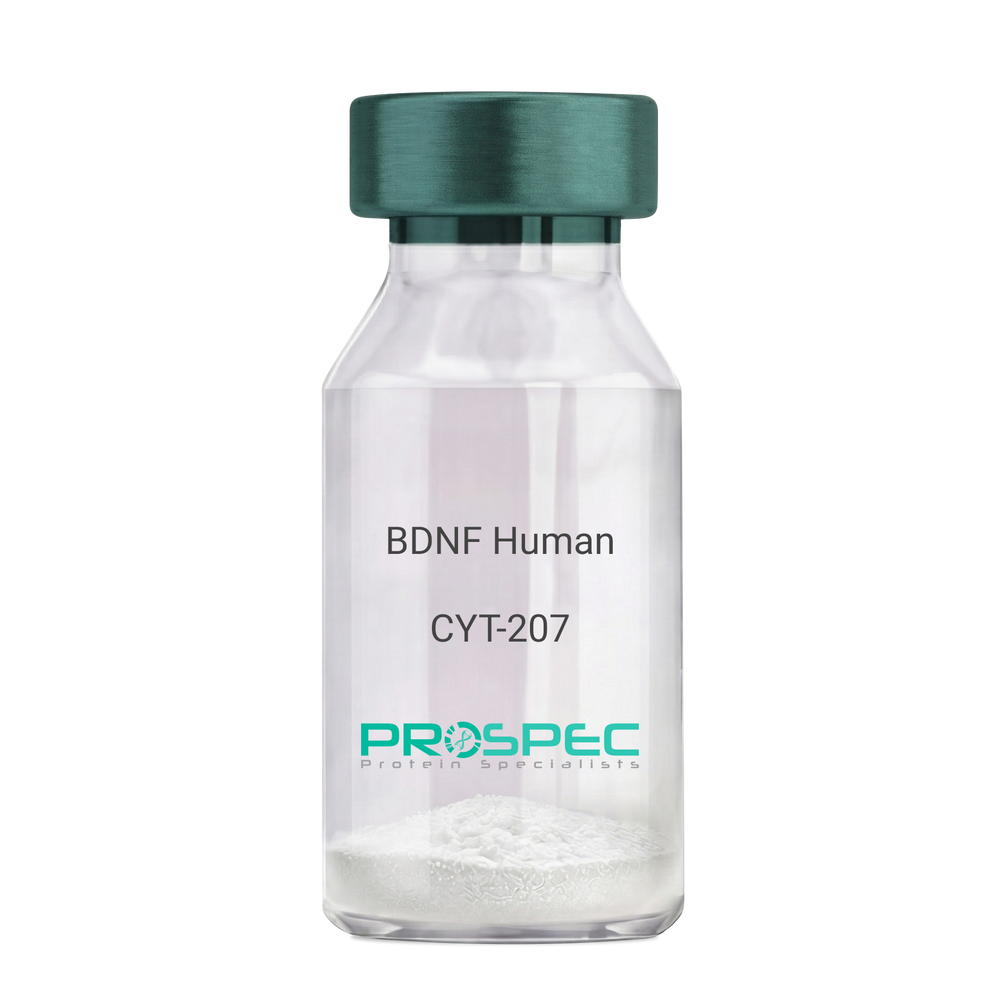
BDNF HumanDescription:
Brain-Derived Neurotrophic Factor Human Recombinant
Brain-Derived Neurotrophic Factor, BDNF, MGC34632.
Product # :
CYT-207Price :
Quantity :
Shipping Method :
Shipped at Room temp
More Info
- description
- source
- formulation
- purity
- biological activity
- More Info
- Activity
Description
BDNF Human Recombinant produced in E.Coli is a homodimer, non-glycosylated, polypeptide chain containing 2 x 119 amino acids (and an N-terminal Met) and having a total molecular mass of 28kDa. BDNF Human Recombinant is purified by proprietary chromatographic techniques.
Source
Escherichia Coli.
Formulation
The protein was lyophilized with 20mM PB and 400mM NaCl, pH 7.2.
Purity
BDNF is greater than 950% as determined SDS-PAGE.
Biological Activity
The activity was determined using Immobilized Human TrkB-His tag protein 2ug/ml (100 μl/well) for its binding to NHS-Biotin BDNF. The ED50 of was found to be ≤20ng/mLActivity
More Info
-
Introduction
BDNF promotes the survival of neuronal populations that are all located either in the central nervous system or directly connected to it. BDNF is a major regulator of synaptic transmission and plasticity at adult synapses in many regions of the cns. The versatility of BDNF is emphasized by its contribution to a range of adaptive neuronal responses including long-term potentiation (ltp), long-term depression (ltd), certain forms of short-term synaptic plasticity, as well as homeostatic regulation of intrinsic neuronal excitability.
-
Synonyms
Brain-Derived Neurotrophic Factor, BDNF, MGC34632.
-
Physical Appearance
Sterile Filtered White lyophilized (freeze-dried) powder.
-
Stability
Lyophilized BDNF although stable at room temperature for 3 weeks, should be stored desiccated below -18°C. Upon reconstitution BDNF should be stored at 4°C between 2-7 days and for future use below -18°C.For long term storage it is recommended to add a carrier protein (0.1% HSA or BSA).Please prevent freeze-thaw cycles.
-
Solubility
It is recommended to reconstitute the lyophilized BDNF in sterile 18M-cm H2O not less than 100µg/ml, which can then be further diluted to other aqueous solutions.
-
Amino Acid Sequence
HSDPARRGE LSVCDSISEW VTAADKKTAV DMSGGTVTVL EKVPVSKGQL KQYFYETKCN PMGYTKEGCR GIDKRHWNSQ CRTTQSYVRA LTMDSKKRIG WRFIRIDTSC VCTLTIKRGR.
-
Background
Final Thoughts
Although more research is needed on the safety and effectiveness of BDNF human recombinant, trials suggest that this laboratory-produced protein may be effective in managing and treating several neurological and psychiatric disorders. It's important for experts to stay up to date on the latest developments and research to learn more about potential risks and benefits.
What is the molecular weight/Mw of BDNF Protein?
BDNF Protein has a total Mw of 27kDa.
What is the source or expression system of BDNF Protein?
Escherichia Coli.
What is the Purity of BDNF Protein?
BDNF Protein is >97% pure as determined by SDS-PAGE.
What is the Biological Activity of BDNF Protein?
The ED50, as determined by the dose-dependent induction of C6 cells proliferation, is 1.3-2µg/ml.
What is the amino acid sequence of BDNF Protein?
MHSDPARRGE LSVCDSISEW VTAADKKTAV DMSGGTVTVL EKVPVSKGQL KQYFYETKCN PMGYTKEGCR GIDKRHWNSQ CRTTQSYVRA LTMDSKKRIG WRFIRIDTSC VCTLTIKRGR.
What applications can BDNF Protein be used in?
BDNF Protein can probably be used in western blot, ELISA and Lateral Flow.
What is the endotoxin level for BDNF Protein?
The endotoxin level is minimal, BDNF Protein was purified using conventional chromatography techniques.
-
Protein content
BDNF quantitation was carried out by two independent methods:1. UV spectroscopy at 280 nm using the absorbency value of 1.6 as the extinction coefficient for a 0.1% (1mg/ml) solution. This value is calculated by the PC GENE computer analysis program of protein sequences (IntelliGenetics). 2. Analysis by RP-HPLC, using a standard solution of Brain-derived Neurotrophic Factor as a Reference Standard.
ProSpec's products are furnished for LABORATORY RESEARCH USE ONLY. The product may not be used as drugs, agricultural or pesticidal products, food additives or household chemicals.
- View Data Sheet
Name :
GMFB HumanDescription:
Glia Maturation Factor Beta Human Recombinant
Glia maturation factor beta, GMFB, GMF-B, GMF-beta, GMF.
Product # :
CYT-565Price :
Quantity :
Shipping Method :
Shipped at Room temp
More Info
- description
- source
- formulation
- purity
- More Info
Description
Glia Maturation Factor-Beta (GMF-Beta) Human Recombinant produced in E.Coli is a signle, non-glycosylated, polypeptide chain containing 141 amino acids and having a total molecular mass of 16.5 kDa. Glia Maturation Factor-Beta, GMF-Beta, Human Recombinant is purified by proprietary chromatographic techniques.
Source
Escherichia Coli.
Formulation
The GMF-beta protein was lyophilized after dialysis against 20mM PBS pH=7.4 and 130mM NaCl.
Purity
Greater than 98.0% as determined by(a) Analysis by RP-HPLC.
(b) Analysis by SDS-PAGE.More Info
-
Introduction
Glia Maturation Factor-Beta (GMF-Beta) is a 17 kDa protein nerve gorwth factor identified as a growth and differentiation factor in the vertebrate brain.
Glia Maturation Factor-Beta stimulates differentiation of normal neurons as well as glial cells. GMFB inhibits the proliferation of the N-18 neuroblastoma line and the C6 glioma line while promoting their phenotypic expression.
GMF-beta inhances the phenotypic expression of glia & neurons thus inhibits the proliferation of their respective tumors when added to cell culture. Although astrocytes produce GMF-b and stores it inside the cells, they don’t secrete the GMF-B into the cultured medium. Cell- surface GMFb acts on the target cells at close range when cells are in direct contact. GMF-Beta is produced by thymic epithelial cells and plays an important role in T cell development in favor of CD4+ T cells.
GMF-Beta is a brain-specific protein which belongs to the actin-binding proteins (ADF) family. GMF-beta appears to play a role in the differentiation, maintenance, and regeneration of the nervous system. It also supports the progression of certain auto-immune diseases, possibly through its ability to induce the production and secretion of various pro-inflammatory cytokines. -
Synonyms
Glia maturation factor beta, GMFB, GMF-B, GMF-beta, GMF.
-
Physical Appearance
Sterile Filtered White lyophilized (freeze-dried) powder.
-
Stability
Lyophilized GMF-B although stable at room temperature for 3 weeks, should be stored desiccated below -18°C. Upon reconstitution GMF-beta should be stored at 4°C between 2-7 days and for future use below -18°C.For long term storage it is recommended to add a carrier protein (0.1% HSA or BSA).Please prevent freeze-thaw cycles.
-
Solubility
It is recommended to reconstitute the lyophilized GMFB in sterile 18MΩ-cm H2O not less than 100µg/ml, which can then be further diluted to other aqueous solutions.
-
Amino Acid Sequence
SESLVVCDVAEDLVEKLRKFRFRKETNNAAIIMKIDKDKRLVVLDEELEGISPD
ELKELPERQPRFIVYSYKYQHDDGRVSYPLCFIFSSPVGCKPEQQMMYAGSKN
KLVQT AELTKVFEIRNTEDLTEEWLREKLGFFH. -
Background
What is the molecular weight/Mw of GMFB HUMAN Protein?
GMFB HUMAN Protein has a total Mw of 16.5kDa.
What is the source or expression system of GMFB HUMAN Protein?
Escherichia Coli.
What is the Purity of GMFB HUMAN Protein?
GMFB HUMAN Protein is >98% pure as determined by SDS-PAGE.
What is the Biological Activity of GMFB HUMAN Protein?
The biological functionality of GMFB HUMAN Protein will be determined in the future.
What is the amino acid sequence of GMFB HUMAN Protein?
SESLVVCDVAEDLVEKLRKFRFRKETNNAAIIMKIDKDKRLVVLDEELEGISPD
ELKELPERQPRFIVYSYKYQHDDGRVSYPLCFIFSSPVGCKPEQQMMYAGSKN
KLVQT AELTKVFEIRNTEDLTEEWLREKLGFFH.
What applications can GMFB HUMAN Protein be used in?
GMFB HUMAN Protein can probably be used in western blot, ELISA and Lateral Flow.
What is the endotoxin level for GMFB HUMAN Protein?
The endotoxin level is minimal, GMFB HUMAN Protein was purified using conventional chromatography techniques.
ProSpec's products are furnished for LABORATORY RESEARCH USE ONLY. The product may not be used as drugs, agricultural or pesticidal products, food additives or household chemicals.
- View Data Sheet
Name :
GDF3 HumanDescription:
Growth Differentiation Factor-3 Human Recombinant
Growth Differentiation Factor 3, Growth/Differentiation Factor 3 , MCOPCB6, MCOP7, GDF-3, KFS3.
Product # :
CYT-694Price :
Quantity :
Shipping Method :
Shipped at Room temp
More Info
- description
- source
- formulation
- purity
- More Info
Description
GDF3 Human Recombinant produced in E.Coli is a single, non-glycosylated, polypeptide chain containing 124 amino acids and having a total molecular mass of 14.15 kDa.GDF3 is fused to a 10 amino acid His Tag at N-terminus and purified by proprietary chromatographic techniques.
Source
Escherichia Coli.
Formulation
The protein was lyophilized from a concentrated solution (0.5mg/ml) containing 30mM Acetate buffer pH-4.
Purity
Greater than 90.0% as determined by SDS-PAGE.
More Info
-
Introduction
GDF3 is a member of the TGF-beta superfamily though it does not show similarity pattern of conserved cysteine residues. GDF3 is linked to Vg-1 and human BMP-4. GDF3 transcripts are identified mainly in adult bone marrow, spleen, thymus, and adipose tissue. GDF3 expression is upregulated strongly in high-fat-fed C57Bl/6J FABP4/aP2 null mice, which develop obesity but not the related hyperglycemia or hyperinsulinemia characteristic of type II diabetes. GDF3 expression therefore bonds fatty acid metabolism in adipocytes and the expression of a differentiation regulator belonging to the bone morphogenetic proteins.
-
Synonyms
Growth Differentiation Factor 3, Growth/Differentiation Factor 3 , MCOPCB6, MCOP7, GDF-3, KFS3.
-
Physical Appearance
Filtered White lyophilized (freeze-dried) powder.
-
Stability
Lyophilized GDF3 although stable at room temperature for 3 weeks, should be stored desiccated below -18°C. Upon reconstitution GDF3 should be stored at 4°C between 2-7 days and for future use below -18°C.For long term storage it is recommended to add a carrier protein (0.1% HSA or BSA).Please prevent freeze-thaw cycles.
-
Solubility
It is recommended to reconstitute the lyophilized GDF3 in sterile 100mM Acetate buffer pH-4 at a concentration of 0.5mg/ml. For the dilution into higher pH values, it is recommended to dilute the protein to a concentration of 10μg/ml. Please note that in higher concentrations the solubility of GDF3 is limited. The protein is not sterile! Please sterile filter before using it in the cell culture.
-
Amino Acid Sequence
MKHHHHHHAS AAIPVPKLSC KNLCHRHQLF INFRDLGWHK WIIAPKGFMA NYCHGECPFS LTISLNSSNY AFMQALMHAV DPEIPQAVCI PTKLSPISML YQDNNDNVIL RHYEDMVVDECGCG.
-
Background
What is the molecular weight/Mw of GDF3 HUMAN Protein?
GDF3 HUMAN Protein has a total Mw of 14.15XkDa.
What is the source or expression system of GDF3 HUMAN Protein?
Escherichia Coli.
What is the Purity of GDF3 HUMAN Protein?
GDF3 HUMAN Protein is >90% pure as determined by SDS-PAGE.
What is the Biological Activity of GDF3 HUMAN Protein?
The biological functionality of GDF3 HUMAN Protein will be determined in the future.
What is the amino acid sequence of GDF3 HUMAN Protein?
MKHHHHHHAS AAIPVPKLSC KNLCHRHQLF INFRDLGWHK WIIAPKGFMA NYCHGECPFS LTISLNSSNY AFMQALMHAV DPEIPQAVCI PTKLSPISML YQDNNDNVIL RHYEDMVVDECGCG.
What applications can GDF3 HUMAN Protein be used in?
GDF3 HUMAN Protein can probably be used in western blot, ELISA and Lateral Flow.
What is the endotoxin level for GDF3 HUMAN Protein?
The endotoxin level is minimal, GDF3 HUMAN Protein was purified using conventional chromatography techniques.
ProSpec's products are furnished for LABORATORY RESEARCH USE ONLY. The product may not be used as drugs, agricultural or pesticidal products, food additives or household chemicals.
- View Data Sheet
Name :
GCHFR HumanDescription:
GTP Cyclohydrolase I Feedback Regulator Human Recombinant
GFRP, HsT16933, P35,GTP cyclohydrolase 1 feedback regulatory protein, GTP cyclohydrolase I feedback regulatory protein, p35, GCHFR
Product # :
PRO-2006Price :
Quantity :
Shipping Method :
Shipped with Ice Packs
More Info
- description
- source
- formulation
- purity
- More Info
Description
GCHFR Human Recombinant produced in E.Coli is a single, non-glycosylated polypeptide chain containing 107 amino acids (1-84a.a) and having a molecular mass of 12.1kDa. GCHFR is fused to a 23 amino acid His-tag at N-terminus & purified by proprietary chromatographic techniques.
Source
Escherichia Coli.
Formulation
GCHFR protein solution (1mg/ml) containing 20mM Tris-HCl buffer (pH 8.0), 0.15M NaCl, 40% glycerol and 1mM DTT.
Purity
Greater than 95.0% as determined by SDS-PAGE.
More Info
-
Introduction
GTP Cyclohydrolase I Feedback Regulator, also known as GCHFR, is a Protein coding gene which includes a homodimer. GCHFR binds and mediates tetrahydrobiopterin inhibition of GTP cyclohydrolase I. GCHFR also regulates phenylalanine metabolism in the liver and in the production of biogenic amine neurotransmitters and nitric oxide.
-
Synonyms
GFRP, HsT16933, P35,GTP cyclohydrolase 1 feedback regulatory protein, GTP cyclohydrolase I feedback regulatory protein, p35, GCHFR
-
Physical Appearance
Sterile Filtered colorless solution.
-
Stability
Store at 4°C if entire vial will be used within 2-4 weeks. Store, frozen at -20°C for longer periods of time. For long term storage it is recommended to add a carrier protein (0.1% HSA or BSA).Avoid multiple freeze-thaw cycles.
-
Amino Acid Sequence
MGSSHHHHHH SSGLVPRGSH MGSMPYLLIS TQIRMEVGPT MVGDEQSDPE LMQHLGASKR RALGNNFYEY YVDDPPRIVL DKLERRGFRV LSMTGVGQTL VWCLHKE.
ProSpec's products are furnished for LABORATORY RESEARCH USE ONLY. The product may not be used as drugs, agricultural or pesticidal products, food additives or household chemicals.
- View Data Sheet
Name :
EHF HumanDescription:
Ets Homologous Factor Human Recombinant
ESE3, ESE3B, ESEJ, ETS homologous factor, hEHF, ETS domain-containing transcription factor, Epithelium-specific Ets transcription factor 3, EHF.
Product # :
PRO-1436Price :
Quantity :
Shipping Method :
Shipped with Ice Packs
More Info
- description
- source
- formulation
- purity
- More Info
Description
EHF Human Recombinant produced in E. coli is a single polypeptide chain containing 323 amino acids (1-300) and having a molecular mass of 37.3kDa. EHF is fused to a 23 amino acid His-tag at N-terminus & purified by proprietary chromatographic techniques.
Source
E.coli.
Formulation
The EHF solution (1mg/ml) contains 20mM Tris-HCl buffer (pH 8.0), 0.4M Urea and 10% glycerol.
Purity
Greater than 90% as determined by SDS-PAGE.
More Info
-
Introduction
ETS homologous factor (EHF) is a part of the ESE subfamily of Ets transcription factors. Ets factors are an important kind of transcriptional regulators which take part in hema-topoiesis, angiogenesis, organogenesis, oncogenesis and specification of neuronal connectivity. EHF is expressed solely in a subset of epithelial cells, with highest expression noticed in glandular epithelium of the prostate, pancreas, salivary gland and trachea. EHF transactivates the c-Met promoter via 3 high affinity binding sites, which support the notion that EHF contribute to branching morphogenesis.
-
Synonyms
ESE3, ESE3B, ESEJ, ETS homologous factor, hEHF, ETS domain-containing transcription factor, Epithelium-specific Ets transcription factor 3, EHF.
-
Physical Appearance
Sterile Filtered colorless solution.
-
Stability
Store at 4°C if entire vial will be used within 2-4 weeks. Store, frozen at -20°C for longer periods of time. For long term storage it is recommended to add a carrier protein (0.1% HSA or BSA).Avoid multiple freeze-thaw cycles.
-
Amino Acid Sequence
MGSSHHHHHH SSGLVPRGSH MGSMILEGGG VMNLNPGNNL LHQPPAWTDS YSTCNVSSGF FGGQWHEIHP QYWTKYQVWE WLQHLLDTNQ LDANCIPFQE FDINGEHLCS MSLQEFTRAA GTAGQLLYSN LQHLKWNGQC SSDLFQSTHN VIVKTEQTEP SIMNTWKDEN YLYDTNYGST VDLLDSKTFC RAQISMTTTS HLPVAESPDM KKEQDPPAKC HTKKHNPRGT HLWEFIRDIL LNPDKNPGLI KWEDRSEGVF RFLKSEAVAQ LWGKKKNNSS MTYEKLSRAM RYYYKREILE RVDGRRLVYK FGKNARGWRE NEN.
ProSpec's products are furnished for LABORATORY RESEARCH USE ONLY. The product may not be used as drugs, agricultural or pesticidal products, food additives or household chemicals.
- View Data Sheet
Name :
FGF 2 Human (147 a.a.)Description:
Fibroblast Growth Factor Basic 147 a.a. Human Recombinant
Prostatropin, HBGH-2, HBGF-2, FGF-2, FGF-b.
Product # :
CYT-557Price :
Quantity :
Shipping Method :
Shipped at Room temp
More Info
- description
- source
- formulation
- purity
- biological activity
- More Info
Description
Fibroblast Growth Factor-2 Human Recombinant (FGF-2) produced in E.Coli is a single, non-glycosylated, polypeptide chain containing 147 amino acids and having a molecular mass of 16.5kDa. The FGF2 is purified by proprietary chromatographic techniques.
Source
Escherichia Coli.
Formulation
The bFGF was lyophilized from a sterile filtered solution containing 20mM Tris-HCl, pH 7.6 and 150mM NaCl.
Purity
Greater than 98.0% as determined by SDS-PAGE.
Biological Activity
The ED50, Calculated by the dose- dependent proliferation of mouse BALB/c 3T3 cells is < 0.05ng/ml corresponding to a specific activity of 2.0x10⁷ units/mg.
More Info
-
Introduction
FGF-basic is a member of the fibroblast growth factor (FGF) family. FGF family members possess broad mitogenic and cell survival activities, and are involved in a variety of biological processes, including embryonic development, cell growth, morphogenesis, tissue repair, tumor growth and invasion. This protein functions as a modifier of endothelial cell migration and proliferation, as well as an angiogenic factor. It acts as a mitogen for a variety of mesoderm- and neuroectoderm-derived cells in vitro, thus is thought to be involved in organogenesis. Three alternatively spliced variants encoding different isoforms have been described. The heparin-binding growth factors are angiogenic agents in vivo and are potent mitogens for a variety of cell types in vitro. There are differences in the tissue distribution and concentration of these 2 growth factors.
-
Synonyms
Prostatropin, HBGH-2, HBGF-2, FGF-2, FGF-b.
-
Physical Appearance
Sterile Filtered White lyophilized (freeze-dried) powder.
-
Stability
Lyophilized basic-FGF although stable at room temperature for 3 weeks, should be stored desiccated below -18°C. Upon reconstitution FGFb should be stored at 4°C between 2-7 days and for future use below -18°C.For long term storage it is recommended to add a carrier protein (0.1% HSA or BSA).Please prevent freeze-thaw cycles.
-
Solubility
It is recommended to reconstitute the lyophilized FGF-B in sterile 18MΩ-cm H2O not less than 100µg/ml, which can then be further diluted to other aqueous solutions.
-
Amino Acid Sequence
MPALPEDGGS GAFPPGHFKD PKRLYCKNGG FFLRIHPDGR VDGVREKSDP HIKLQLQAEE RGVVSIKGVC ANRYLAMKED GRLLASKCVT DECFFFERLE SNNYNTYRSR KYTSWYVALK RTGQYKLGSK TGPGQKAILF LPMSAKS.
-
Background
What is the molecular weight/Mw of FGF 2 Protein?
FGF 2 Protein has a total Mw of 16.5kDa.
What is the source or expression system of FGF 2 Protein?
Escherichia Coli.
What is the Purity of FGF 2 Protein?
FGF 2 Protein is >98% pure as determined by SDS-PAGE.
What is the Biological Activity of FGF 2 Protein?
The ED50, Calculated by the dose- dependent proliferation of mouse BALB/c 3T3 cells is < 0.05ng/ml corresponding to a specific activity of 2.0x10⁷ units/mg.
What is the amino acid sequence of FGF 2 Protein?
MPALPEDGGS GAFPPGHFKD PKRLYCKNGG FFLRIHPDGR VDGVREKSDP HIKLQLQAEE RGVVSIKGVC ANRYLAMKED GRLLASKCVT DECFFFERLE SNNYNTYRSR KYTSWYVALK RTGQYKLGSK TGPGQKAILF LPMSAKS.
What applications can FGF 2 Protein be used in?
FGF 2 Protein can probably be used in western blot, ELISA and Lateral Flow.
What is the endotoxin level for FGF 2 Protein?
The endotoxin level is minimal, FGF 2 Protein was purified using conventional chromatography techniques.
ProSpec's products are furnished for LABORATORY RESEARCH USE ONLY. The product may not be used as drugs, agricultural or pesticidal products, food additives or household chemicals.
- View Data Sheet
Name :
GATC HumanDescription:
Glutamyl-TRNA Amidotransferase, Subunit C Human Recombinant
Glutamyl-TRNA(Gln) Amidotransferase Subunit C, Glu-AdT Subunit C, 15E1.2, Glutamyl-TRNA(Gln) Amidotransferase Subunit C Homolog (Bacterial), Glutamyl-TRNA(Gln) Amidotransferase Subunit C Mitochondrial, Glutamyl-TRNA(Gln) Amidotransferase Subunit C Homolog, EC 6.3.5, Protein 15E1.2.
Product # :
ENZ-722Price :
Quantity :
Shipping Method :
Shipped with Ice Packs
More Info
- description
- source
- formulation
- purity
- More Info
Description
GATC Human Recombinant produced in E.Coli is a single, non-glycosylated polypeptide chain containing 159 amino acids (1-136 a.a) and having a molecular mass of 17.5kDa (Molecular size on SDS-PAGE will appear higher).GATC is fused to a 23 amino acid His-tag at N-terminus & purified by proprietary chromatographic techniques.
Source
Escherichia Coli.
Formulation
GATC protein solution (0.25mg/ml) containing 20mM Tris-HCl buffer (pH 8.0), 0.15M NaCl, 30% glycerol and 1mM DTT.
Purity
Greater than 85.0% as determined by SDS-PAGE.
More Info
-
Introduction
Glutamyl-TRNA Amidotransferase, Subunit C also known as GATC allows the formation of properly charged Gln-tRNA(Gln) through the transamidation of misacylated Glu-tRNA(Gln) in the mitochondria. The reaction occurs in the attendance of glutamine and ATP through an activated gamma-phospho-Glu-tRNA(Gln). In addition, GATC is subunit of the heterotrimeric GatCAB amidotransferase (AdT) complex, composed of A (QRSL1), B (PET112) and C (GATC) subunits.
-
Synonyms
Glutamyl-TRNA(Gln) Amidotransferase Subunit C, Glu-AdT Subunit C, 15E1.2, Glutamyl-TRNA(Gln) Amidotransferase Subunit C Homolog (Bacterial), Glutamyl-TRNA(Gln) Amidotransferase Subunit C Mitochondrial, Glutamyl-TRNA(Gln) Amidotransferase Subunit C Homolog, EC 6.3.5, Protein 15E1.2.
-
Physical Appearance
Sterile Filtered clear solution.
-
Stability
Store at 4°C if entire vial will be used within 2-4 weeks. Store, frozen at -20°C for longer periods of time. For long term storage it is recommended to add a carrier protein (0.1% HSA or BSA).Avoid multiple freeze-thaw cycles.
-
Amino Acid Sequence
MGSSHHHHHH SSGLVPRGSH MGSMWSRLVW LGLRAPLGGR QGFTSKADPQ GSGRITAAVI EHLERLALVD FGSREAVARL EKAIAFADRL RAVDTDGVEP MESVLEDRCL YLRSDNVVEG NCADELLQNS HRVVEEYFVA PPGNISLPKL DEQEPFPHS
ProSpec's products are furnished for LABORATORY RESEARCH USE ONLY. The product may not be used as drugs, agricultural or pesticidal products, food additives or household chemicals.
- View Data Sheet
Name :
TGFBRAP1 HumanDescription:
Transforming Growth Factor Beta Receptor Associated Protein 1 Human Recombinant
TRAP-1, TRAP1, Transforming growth factor-beta receptor-associated protein 1, TGF-beta receptor-associated protein 1.
Product # :
PRO-1890Price :
Quantity :
Shipping Method :
Shipped with Ice Packs
More Info
- description
- source
- formulation
- purity
- More Info
Description
TGFBRAP1 Human Recombinant produced in E.Coli is a single, non-glycosylated polypeptide chain containing 296 amino acids (601-860 a.a) and having a molecular mass of 33kDa.TGFBRAP1 is fused to a 36 amino acid His-tag at N-terminus & purified by proprietary chromatographic techniques.
Source
Escherichia Coli.
Formulation
TGFBRAP1 protein solution (0.5mg/ml) containing 20mM Tris-HCl buffer (pH 8.0), 0.4M Urea and 10% glycerol.
Purity
Greater than 80% as determined by SDS-PAGE.
More Info
-
Introduction
TGF-beta receptor-associated protein 1 also known as TGFBRAP1 takes part in the TGF-beta/activin signaling pathway. TGFBRAP1 is related with inactive heteromeric TGF-beta and activin receptor complexes, mainly through the type II receptor, and is released upon activation of signaling. TGFBRAP1recruits SMAD4 to the vicinity of the receptor complex and smoothes the progress of its interaction with receptor-regulated Smads, such as SMAD2.
-
Synonyms
TRAP-1, TRAP1, Transforming growth factor-beta receptor-associated protein 1, TGF-beta receptor-associated protein 1.
-
Physical Appearance
Sterile Filtered clear solution.
-
Stability
Store at 4°C if entire vial will be used within 2-4 weeks. Store, frozen at -20°C for longer periods of time.For long term storage it is recommended to add a carrier protein (0.1% HSA or BSA).Please avoid freeze thaw cycles.
-
Amino Acid Sequence
MRGSHHHHHH GMASMTGGQQ MGRDLYDDDD KDRWGSKRLQ KEEYHTHLAV LYLEEVLLQR ASASGKGAEA TETQAKLRRL LQKSDLYRVH FLLERLQGAG LPMESAILHG KLGEHEKALH ILVHELQDFA AAEDYCLWCS EGRDPPHRQQ LFHTLLAIYL HAGPTAHELA VAAVDLLNRH ATEFDAAQVL QMLPDTWSVQ LLCPFLMGAM RDSIHARRTM QVALGLARSE NLIYTYDKMK LKGSSIQLSD KKLCQICQNP FCEPVFVRYP NGGLVHTHCA ASRHTNPSSS SPGTRT
ProSpec's products are furnished for LABORATORY RESEARCH USE ONLY. The product may not be used as drugs, agricultural or pesticidal products, food additives or household chemicals.
- View Data Sheet
Name :
C17ORF103 HumanDescription:
Chromosome 17 Open Reading Frame 103 Human Recombinant
Chromosome 17 Open Reading Frame 103, Transcript Expressed During Hematopoiesis 2, Gene Trap Locus F3b, Gtlf3b, Protein GTLF3B.
Product # :
PRO-1619Price :
Quantity :
Shipping Method :
Shipped with Ice Packs
More Info
- description
- source
- formulation
- purity
- More Info
Description
C17ORF103 Human Recombinant produced in E.coli is a single, non-glycosylated polypeptide chain containing 136 amino acids (1-113) and having a molecular mass of 15.4kDa.C17ORF103 is fused to a 23 amino acid His-tag at N-terminus & purified by proprietary chromatographic techniques.
Source
Escherichia Coli.
Formulation
The C17ORF103 solution contains 20mM Tris-HCl buffer (pH 8.0), 0.1M NaCl, 1mM DTT and 20% glycerol.
Purity
Greater than 95% as determined by SDS-PAGE.
More Info
-
Introduction
C17orf103 is a member of the GTLF3B family and is encoded by a gene which is located in human chromosome 17p11.2. BRCA1 and p53 are 2 main tumor suppressor genes which are linked to chromosome 17. Tumor suppressor p53 is necessary for maintenance of cellular genetic integrity by moderating cell fate through DNA repair versus cell death. C17orf103 is also related to neurofibromatosis, a disorder characterized by neural and epidermal lesions, and dysregulated Schwann cell growth.
-
Synonyms
Chromosome 17 Open Reading Frame 103, Transcript Expressed During Hematopoiesis 2, Gene Trap Locus F3b, Gtlf3b, Protein GTLF3B.
-
Physical Appearance
Sterile filtered colorless solution.
-
Stability
Store at 4°C if entire vial will be used within 2-4 weeks. Store, frozen at -20°C for longer periods of time. For long term storage it is recommended to add a carrier protein (0.1% HSA or BSA).Avoid multiple freeze-thaw cycles.
-
Amino Acid Sequence
MGSSHHHHHH SSGLVPRGSH MGSMAHSAAA VPLGALEQGC PIRVEHDRRR RQFTVRLNGC HDRAVLLYEY VGKRIVDLQH TEVPDAYRGR GIAKHLAKAA LDFVVEEDLK AHLTCWYIQK YVKENPLPQY LERLQP
ProSpec's products are furnished for LABORATORY RESEARCH USE ONLY. The product may not be used as drugs, agricultural or pesticidal products, food additives or household chemicals.
- View Data Sheet
Name :
GDF10 HumanDescription:
Growth differentiation factor 10 Human Recombinant
Bone morphogenetic protein 3b, BMP-3b, Growth/differentiation factor 10, GDF-10, Bone-inducing protein, BIP, GDF10, BMP3B.
Product # :
CYT-659Price :
Quantity :
Shipping Method :
Shipped with Ice Packs
More Info
- description
- source
- formulation
- purity
- More Info
- sds-page
Description
GDF10 Human Recombinant produced in E.Coli is a single, non-glycosylated, polypeptide chain containing 111 amino acids (369-478 a.a.) and having a total molecular mass of 12.5 kDa. GDF10 is purified by proprietary chromatographic techniques.
Source
Escherichia Coli.
Formulation
The GDF10 solution (1mg/ml) contains 10mM Sodium citrate (pH 3.5), 1mM DTT, 40% glycerol and 0.1M NaCl.
Purity
Greater than 95.0% as determined by SDS-PAGE.
sds-page
More Info
-
Introduction
GDF10 is a member of the BMP family and the TGF-beta superfamily. GDF10 is expressed in femur, brain, lung, skeletal, muscle, pancreas and testis, and has a role in head formation and possibly multiple roles in skeletal morphogenesis. In humans, GDF10 mRNA is found in the cochlea and lung of fetuses, and in testis, retina, pineal gland, and other neural tissues of adults. The BMP family members are regulators of cell growth and differentiation in both embryonic and adult tissues. These proteins are characterized by a polybasic proteolytic processing site which is cleaved to produce a mature protein containing 7 conserved cysteine residues.
-
Synonyms
Bone morphogenetic protein 3b, BMP-3b, Growth/differentiation factor 10, GDF-10, Bone-inducing protein, BIP, GDF10, BMP3B.
-
Physical Appearance
Sterile Filtered colorless solution.
-
Stability
Store at 4°C if entire vial will be used within 2-4 weeks. Store, frozen at -20°C for longer periods of time. For long term storage it is recommended to add a carrier protein (0.1% HSA or BSA).Avoid multiple freeze-thaw cycles.
-
Amino Acid Sequence
MQWDEPRVCS RRYLKVDFAD IGWNEWIISP KSFDAYYCAG ACEFPMPKIV RPSNHATIQS IVRAVGIIPG IPEPCCVPDK MNSLGVLFLD ENRNVVLKVY PNMSVDTCAC R.
-
Background
What is the molecular weight/Mw of GDF10 HUMAN Protein?
GDF10 HUMAN Protein has a total Mw of 12.5kDa.
What is the source or expression system of GDF10 HUMAN Protein?
Escherichia Coli.
What is the Purity of GDF10 HUMAN Protein?
GDF10 HUMAN Protein is >95% pure as determined by SDS-PAGE.
What is the Biological Activity of GDF10 HUMAN Protein?
The biological functionality of GDF10 HUMAN Protein will be determined in the future.
What is the amino acid sequence of GDF10 HUMAN Protein?
MQWDEPRVCS RRYLKVDFAD IGWNEWIISP KSFDAYYCAG ACEFPMPKIV RPSNHATIQS IVRAVGIIPG IPEPCCVPDK MNSLGVLFLD ENRNVVLKVY PNMSVDTCAC R.
What applications can GDF10 HUMAN Protein be used in?
GDF10 HUMAN Protein can probably be used in western blot, ELISA and Lateral Flow.
What is the endotoxin level for GDF10 HUMAN Protein?
The endotoxin level is minimal, GDF10 HUMAN Protein was purified using conventional chromatography techniques.
ProSpec's products are furnished for LABORATORY RESEARCH USE ONLY. The product may not be used as drugs, agricultural or pesticidal products, food additives or household chemicals.
- View Data Sheet
Name :
GDNF Human, Sf9Description:
Glial-Derived Neurotrophic Factor Human Recombinant, Sf9
Glial cell line-derived neurotrophic factor, hGDNF, Astrocyte-derived trophic factor, ATF, ATF1, ATF2, HFB1-GDNF, HSCR3.
Product # :
CYT-1162Price :
Quantity :
Shipping Method :
Shipped with Ice Packs
More Info
- description
- source
- formulation
- purity
- More Info
Description
GDNF Human Recombinant produced in Baculovirus is a single glycosylated polypeptide chain containing 113amino acids (109-211 aa) and having a molecular mass of 12.8kDa.GDNF is fused to an 10 amino acid His tag at C-terminus and purified by proprietary chromatographic techniques.
Source
Sf9, Baculovirus cells.
Formulation
GDNF protein (0.25mg/ml) contains 10% glycerol and Phosphate-Buffered Saline (pH 7.4).
Purity
Greater than 90.0% as determined by SDS-PAGE.
More Info
-
Introduction
Glial cell-derived neurotrophic factor or GDNF is part of the GDNF group of ligands proteins. GDNF has a crucial part in numerous cell mechanisms such as neurite outgrowth, cell differentiation, cell survival and migration of cells. GDNF enhances neurons survival via GFRa receptors (mainly GFRa1). The mentioned neurons can die as a result from Parkinson's disease or ALS (amyotrophic lateral sclerosis). This protein takes part in the development of the spermatogenesis & kidney, also, it has a role in alcohol metabolism as ameliorating.
-
Synonyms
Glial cell line-derived neurotrophic factor, hGDNF, Astrocyte-derived trophic factor, ATF, ATF1, ATF2, HFB1-GDNF, HSCR3.
-
Physical Appearance
Sterile Filtered colorless solution.
-
Stability
Store at 4°C if entire vial will be used within 2-4 weeks. Store, frozen at -20°C for longer periods of time. For long term storage it is recommended to add a carrier protein (0.1% HSA or BSA).Avoid multiple freeze-thaw cycles.
-
Amino Acid Sequence
ADPMRGQRGK NRGCVLTAIH LNVTDLGLGY ETKEELIFRY CSGSCDAAET TYDKILKNLS RNRRLVSDKV GQACCRPIAF DDDLSFLDDN LVYHILRKHS AKRCGCIHHH HHH
-
Background
What is the molecular weight/Mw of GDNF HUMAN, SF9 Protein?
GDNF HUMAN, SF9 Protein has a total Mw of 12.8kDa.
What is the source or expression system of GDNF HUMAN, SF9 Protein?
Sf9, Baculovirus cells.
What is the Purity of GDNF HUMAN, SF9 Protein?
GDNF HUMAN, SF9 Protein is >90% pure as determined by SDS-PAGE.
What is the Biological Activity of GDNF HUMAN, SF9 Protein?
The biological functionality of GDNF HUMAN, SF9 Protein will be determined in the future.
What is the amino acid sequence of GDNF HUMAN, SF9 Protein?
ADPMRGQRGK NRGCVLTAIH LNVTDLGLGY ETKEELIFRY CSGSCDAAET TYDKILKNLS RNRRLVSDKV GQACCRPIAF DDDLSFLDDN LVYHILRKHS AKRCGCIHHH HHH
What applications can GDNF HUMAN, SF9 Protein be used in?
GDNF HUMAN, SF9 Protein can probably be used in western blot, ELISA and Lateral Flow.
What is the endotoxin level for GDNF HUMAN, SF9 Protein?
The endotoxin level is minimal, GDNF HUMAN, SF9 Protein was purified using conventional chromatography techniques.
ProSpec's products are furnished for LABORATORY RESEARCH USE ONLY. The product may not be used as drugs, agricultural or pesticidal products, food additives or household chemicals.
- View Data Sheet
Name :
GFRA1 HumanDescription:
GDNF Family Receptor Alpha 1 Human Recombinant
GDNF receptor alpha-1, GDNFR-alpha-1, GFRalpha-1, RET ligand 1, TGF-beta-related neurotrophic factor receptor 1, GDNFRA1, RET1L2, RETL1, Glial Cell LineDerived Neurotrophic Factor Receptor Alpha, TRNR1, GPILinked Anchor Protein, PI-Linked Cell-Surface.
Product # :
CYT-1026Price :
Quantity :
Shipping Method :
Shipped at Room temp
More Info
- description
- source
- formulation
- purity
- More Info
Description
GFRA1 Human Recombinant produced in HEK293 cells is a single, glycosylated polypeptide chain (a.a 25-423) containing 409 amino acids including a 10 a.a C-terminal His tag. The total molecular mass is 46.0kDa (calculated).
Source
HEK293 cells.
Formulation
GFRA1 filtered (0.4 µm) and lyophilized from 0.5mg/ml in phosphate buffered saline pH 7.5 containing 5 % (w/v) trehalose.
Purity
Greater than 95.0% as determined by SDS-PAGE.
More Info
-
Introduction
GDNF family receptor alpha-1 (GFRA1) belongs to the GDNF receptor family. GFRA1 is a glycosyl-phosphatidylinositol(GPI)-linked cell surface receptor for both Glial cell line-derived growth factor (GDNF), neurturin (NTN), and mediates activation of the RET tyrosine kinase receptor. The GFRA1 protein is a potent survival factor for central and peripheral neurons, and is vital for the development of kidneys and the enteric nervous system.
-
Synonyms
GDNF receptor alpha-1, GDNFR-alpha-1, GFRalpha-1, RET ligand 1, TGF-beta-related neurotrophic factor receptor 1, GDNFRA1, RET1L2, RETL1, Glial Cell LineDerived Neurotrophic Factor Receptor Alpha, TRNR1, GPILinked Anchor Protein, PI-Linked Cell-Surface.
-
Physical Appearance
Filtered White lyophilized (freeze-dried) powder.
-
Stability
Store lyophilized protein at -20°C. Aliquot the product after reconstitution to avoid repeated freezing/thawing cycles. Reconstituted protein can be stored at 4°C for a limited period of time; it does not show any change after two weeks at 4°C.
-
Solubility
It is recommended to add deionized water to prepare a working stock solution of approximately 0.5mg/ml and let the lyophilized pellet dissolve completely. GFRA1 is not sterile! Please filter the product by an appropriate sterile filter before using it in the cell culture.
-
Amino Acid Sequence
DRLDCVKASD QCLKEQSCST KYRTLRQCVA GKETNFSLAS GLEAKDECRS AMEALKQKSL YNCRCKRGMK KEKNCLRIYW SMYQSLQGND LLEDSPYEPV NSRLSDIFRV VPFISVEHIP KGNNCLDAAK ACNLDDICKK YRSAYITPCT TSVSNDVCNR RKCHKALRQF FDKVPAKHSY GMLFCSCRDI ACTERRRQTI VPVCSYEERE KPNCLNLQDS CKTNYICRSR LADFFTNCQP ESRSVSSCLK ENYADCLLAY SGLIGTVMTP NYIDSSSLSV APWCDCSNSG NDLEECLKFL NFFKDNTCLK NAIQAFGNGS DVTVWQPAFP VQTTTATTTT ALRVKNKPLG PAGSENEIPT HVLPPCANLQ AQKLKSNVSG NTHLCISNGN YEKEGLGAS H HHHHHHHHH.
-
Background
What is the molecular weight/Mw of GFRA1 Protein?
GFRA1 Protein has a total Mw of 46kDa.
What is the source or expression system of GFRA1 Protein?
HEK293 cells.
What is the Purity of GFRA1 Protein?
GFRA1 Protein is >95% pure as determined by SDS-PAGE.
What is the Biological Activity of GFRA1 Protein?
The biological functionality of GFRA1 Protein will be determined in the future.
What is the amino acid sequence of GFRA1 Protein?
DRLDCVKASD QCLKEQSCST KYRTLRQCVA GKETNFSLAS GLEAKDECRS AMEALKQKSL YNCRCKRGMK KEKNCLRIYW SMYQSLQGND LLEDSPYEPV NSRLSDIFRV VPFISVEHIP KGNNCLDAAK ACNLDDICKK YRSAYITPCT TSVSNDVCNR RKCHKALRQF FDKVPAKHSY GMLFCSCRDI ACTERRRQTI VPVCSYEERE KPNCLNLQDS CKTNYICRSR LADFFTNCQP ESRSVSSCLK ENYADCLLAY SGLIGTVMTP NYIDSSSLSV APWCDCSNSG NDLEECLKFL NFFKDNTCLK NAIQAFGNGS DVTVWQPAFP VQTTTATTTT ALRVKNKPLG PAGSENEIPT HVLPPCANLQ AQKLKSNVSG NTHLCISNGN YEKEGLGAS H HHHHHHHHH.
What applications can GFRA1 Protein be used in?
GFRA1 Protein can probably be used in western blot, ELISA and Lateral Flow.
What is the endotoxin level for GFRA1 Protein?
The endotoxin level is minimal, GFRA1 Protein was purified using conventional chromatography techniques.
ProSpec's products are furnished for LABORATORY RESEARCH USE ONLY. The product may not be used as drugs, agricultural or pesticidal products, food additives or household chemicals.
- View Data Sheet
Name :
TGFBI Human, 182 a.a.Description:
Transforming Growth Factor Beta-Induced (182 a.a.) Human Recombinant
Transforming growth factor-beta-induced protein ig-h3, Beta ig-h3, Kerato-epithelin, RGD-containing collagen-associated protein, RGD-CAP, TGFBI, BIGH3, CSD, CDB1, CDG2, CSD1, CSD2, CSD3, EBMD, LCD1, CDGG1.
Product # :
PRO-672Price :
Quantity :
Shipping Method :
Shipped with Ice Packs
More Info
- description
- source
- formulation
- purity
- More Info
Description
TGFBI Recombinant Human produced in e.Coli is a single, non-glycosylated, polypeptide containing 182 amino acids (502-683) and having a molecular mass of 19.9 kDa (Molecular weight on SDS-PAGE will appear higher). The TGFBI recombinant Human protein is purified by proprietary chromatographic techniques.
Source
Escherichia Coli.
Formulation
The TGFBI 182 a.a. recombinant Human is formulated in 20mM Tris-HCl pH-8, 1mM EDTA, 0.1mM PMSF and 20% glycerol.
Purity
Greater than 95.0% as determined by SDS-PAGE.
More Info
-
Introduction
TGFBI is an extracellular matrix protein induced by transforming growth factor (TGF)-beta 1. TGFBI protein is involved in cell growth, cell differentiation, wound healing and cell adhesion. In addition, some missense mutations of TGFBI were identified in families affected with human autosomal dominant corneal dystrophies. TGFBI gene encodes for a 683 amino-acid protein containing an RGD motif and four internal repeated domains which have highly conserved sequences founded in several species (Fasciclin domain).
-
Synonyms
Transforming growth factor-beta-induced protein ig-h3, Beta ig-h3, Kerato-epithelin, RGD-containing collagen-associated protein, RGD-CAP, TGFBI, BIGH3, CSD, CDB1, CDG2, CSD1, CSD2, CSD3, EBMD, LCD1, CDGG1.
-
Physical Appearance
Sterile filtered liquid formulation.
-
Stability
Store at 4°C if entire vial will be used within 2-4 weeks. Store, frozen at -20°C for longer periods of time. For long term storage it is recommended to add a carrier protein (0.1% HSA or BSA).Avoid multiple freeze-thaw cycles.
-
Amino Acid Sequence
MGTVMDVLKG DNRFSMLVAA IQSAGLTETL NREGVYTVFA PTNEAFRALP PRERSRLLGD AKELANILKY HIGDEILVSG GIGALVRLKS LQGDKLEVSL KNNVVSVNKE PVAEPDIMAT NGVVHVITNV LQPPANRPQE RGDELADSAL EIFKQASAFS RASQRSVRLA PVYQKLLERM KH.
ProSpec's products are furnished for LABORATORY RESEARCH USE ONLY. The product may not be used as drugs, agricultural or pesticidal products, food additives or household chemicals.
- View Data Sheet
Name :
CTGF Human, HEKDescription:
Connective Tissue Growth Factor Human Recombinant , HEK
CCN2, NOV2, HCS24, IGFBP8, MGC102839, CTGF.
Product # :
CYT-687Price :
Quantity :
Shipping Method :
Shipped with Ice Packs
More Info
- description
- source
- formulation
- purity
- More Info
Description
The CTGF Human Recombinant produced in HEK293 cells, is 36kDa protein containing a total of 329 amino acid residues (aa 27-349) including a C-terminal 6×His tag.
Source
HEK293 cells.
Formulation
CTGF filtered (0.2µm) solution in 0.1M Citrate buffer pH 4.7 and 20% (w/v) glycerol.
Purity
Greater than 90.0% as determined by SDS-PAGE.
More Info
-
Introduction
Connective Tissue Growth Factor belongs to the CCN family of proteins. The CCN family presently consists of six members in human also known as: Cyr61 (Cystein rich 61), CTGF (Connective Tissue Growth Factor), Nov (Nephroblastoma Overexpressed gene), WISP-1, 2 and 3 (Wnt-1 Induced Secreted Proteins). The CCN genes encode secreted proteins associated with the Extracellular Matrix (ECM) and cell membrane.
CCN proteins are matricellular proteins which are involved in the regulation of various cellular functions including: proliferation, differentiation, survival, adhesion and migration. They are expressed in derivatives of the three embryonic sheets and are implicated in the development of kidney, nervous system, muscle, bone marrow, cartilage and bone. During adulthood, they are implicated in wound healing, bone fracture repair, and pathologies such as: fibrosis, vascular ailments and tumorigenesis.
Full length secreted CCN proteins can show an antiproliferative activity, whereas truncated isoforms are likely to stimulate proliferation and behave as oncogenes.
The full length protein consists of four modules: Module I shares partial identity with the N-terminal part of the Insulin-like Growth Factor Binding Proteins (IGFBPs).
Module II includes a stretch of 70amino acid residues – which shares sequence identity with the Von Willebrand Factor Type C repeat (VWC).
Module III contains sequences sharing identity with the Thrombospondin type 1 repeat (TSP1) (WSXCSXXCG), which is thought to be implicated in the binding of sulfated glycoconjugates and to be important for cell adhesion.
Module IV, also designated CT, is encoded by exon5. It is the leasts conserved one of the four domains at the level of nucleotide sequence, but it appears to be critical for several of the biological functions attributed to the CCN proteins. Module IV resembles the CT domain of several extracellular protein including, Von Willebrand's factor and mucins. Sequence similarities to heparin-binding motifs are also found within this domain.
Proteolysis of the secreted full-length CCN proteins that has been reported in the case of CCN2 and CCN3 might result in the production of CCN-derived peptides with high affinity for ligands that full-length CNN proteins bind only poorly. Amino-truncated CCN2 isoforms were biologically active whereas no specific biological activity has been attributed to the truncated CCN3. Although the molecular processes underlying the production of these secreted isoforms is presently unknown, it is important to note that proteolysis occur at the same amino acid residues in both CCN2 and CCN3. An elevated expression of CCN2 has also been detected by Northern blotting in human invasive mammary ductal carcinomas, dermatofibromas, pyogenic granuloma, endothelial cells of angiolipomas and angioleiomyomas, and in pancreatic tumors. A study performed with chondrosarcomas representative of various histological grades established that CCN2 expression was closely correlated with increasing levels of malignancy.
In agreement with CCN2 playing a role in brain tumor angiogenesis, immunocytochemistry studies indicated that both glioblastoma tumor cells and proliferating endothelial cells stained positive for CCN2. In astrocytomas, CCN2 expression was particularly elevated in high grade tumors, with a marked effect of CCN2 on cell proliferation. Downregulation of CCN2 expression in these cells was associated with a growth arrest at the G1/S transition while over-expression of CCN2 induced a two-fold increase of the number of cells in the G1 phase. Gene profiling analysis allowed to identify a set of about 50 genes whose expression might account for the proliferative activity of CCN2 in these cells.
CCN2 was seen in a higher proportion of mononuclear cells of patients with acute lymphoblastic leukemia. -
Synonyms
CCN2, NOV2, HCS24, IGFBP8, MGC102839, CTGF.
-
Physical Appearance
Filtered colorless solution.
-
Stability
Store at 4°C if entire vial will be used within 2-4 weeks. Store, frozen at -20°C for longer periods of time. For long term storage it is recommended to add a carrier protein (0.1% HSA or BSA).Avoid multiple freeze-thaw cycles.
-
Amino Acid Sequence
QNCSGPCRCP DEPAPRCPAG VSLVLDGCGC CRVCAKQLGE LCTERDPCDP HKGLFCHFGS PANRKIGVCT AKDGAPCIFG GTVYRSGESF QSSCKYQCTC LDGAVGCMPL CSMDVRLPSP DCPFPRRVKL PGKCCEEWVC DEPKDQTVVG PALAAYRLED TFGPDPTMIR ANCLVQTTEW SACSKTCGMG ISTRVTNDNA SCRLEKQSRL CMVRPCEADL EENIKKGKKC IRTPKISKPI KFELSGCTSM KTYRAKFCGV CTDGRCCTPH RTTTLPVEFK CPDGEVMKKN MMFIKTCACH YNCPGDNDIF ESLYYRKMYG DMA HHHHHH.
-
Background
What is the molecular weight/Mw of CTGF Protein?
CTGF Protein has a total Mw of 36kDa.
What is the source or expression system of CTGF Protein?
HEK293 cells.
What is the Purity of CTGF Protein?
CTGF Protein is >90% pure as determined by SDS-PAGE.
What is the Biological Activity of CTGF Protein?
The biological functionality of CTGF Protein will be determined in the future.
What is the amino acid sequence of CTGF Protein?
QNCSGPCRCP DEPAPRCPAG VSLVLDGCGC CRVCAKQLGE LCTERDPCDP HKGLFCHFGS PANRKIGVCT AKDGAPCIFG GTVYRSGESF QSSCKYQCTC LDGAVGCMPL CSMDVRLPSP DCPFPRRVKL PGKCCEEWVC DEPKDQTVVG PALAAYRLED TFGPDPTMIR ANCLVQTTEW SACSKTCGMG ISTRVTNDNA SCRLEKQSRL CMVRPCEADL EENIKKGKKC IRTPKISKPI KFELSGCTSM KTYRAKFCGV CTDGRCCTPH RTTTLPVEFK CPDGEVMKKN MMFIKTCACH YNCPGDNDIF ESLYYRKMYG DMA HHHHHH.
What applications can CTGF Protein be used in?
CTGF Protein can probably be used in western blot, ELISA and Lateral Flow.
What is the endotoxin level for CTGF Protein?
The endotoxin level is minimal, CTGF Protein was purified using conventional chromatography techniques.
ProSpec's products are furnished for LABORATORY RESEARCH USE ONLY. The product may not be used as drugs, agricultural or pesticidal products, food additives or household chemicals.
- View Data Sheet
Name :
TGFB3 Human, CHODescription:
Transforming Growth Factor-Beta 3 Human Recombinant, CHO
Transforming Growth Factor-beta3, TGFB3, ARVD, FLJ16571, TGF-beta3.
Product # :
CYT-1259Price :
Quantity :
Shipping Method :
Shipped at Room temp
More Info
- description
- source
- formulation
- purity
- biological activity
- More Info
Description
TGFB3 Human Recombinant produced in CHO cells is a glycosylated, polypeptide homodimer chain containing 2x112 amino acids and having a total molecular mass of 25.0kDa. The TGFB3 is purified by proprietary chromatographic techniques.
Source
CHO cells.
Formulation
TGFB3 was lyophilized from a concentrated solution containing 35% (v/v) Acetonitrile and 0.1% (v/v) TFA.
Purity
Greater than 97.0% as determined by: (a) Analysis by HPLC. (b) Analysis by SDS-PAGE.
Biological Activity
The ED50 as determined by its ability to inhibit the mouse IL-4-dependent proliferation of mouse HT-2 cells is less than 0.05 ng/ml, corresponding to a specific activity of ≥ 2.0 × 10⁷ units/mg.
More Info
-
Synonyms
Transforming Growth Factor-beta3, TGFB3, ARVD, FLJ16571, TGF-beta3.
-
Physical Appearance
Sterile Filtered White lyophilized (freeze-dried) powder.
-
Stability
Lyophilized Transforming Growth Factor-Beta 3 Recombinant although stable at room temperature for 3 weeks, should be stored desiccated below -18°C. Upon reconstitution TGFB3 should be stored at 4°C between 2-7 days and for future use below -18°C. For long term storage it is recommended to add a carrier protein (0.1% HSA or BSA). Please prevent freeze-thaw cycles.
-
Solubility
It is recommended to reconstitute the lyophilized TGFB3 in sterile 4mM HCl to a concentration of 0.1-1.0 mg/mL. Stock solutions should be apportioned into working aliquots and stored at ≤-20°C which can then be further diluted to other aqueous solutions.
-
Amino Acid Sequence
ALDTNYCFRN LEENCCVRPL YIDFRQDLGW KWVHEPKGYY ANFCSGPCPY LRSADTTHST VLGLYNTLNP EASASPCCVP QDLEPLTILY YVGRTPKVEQ LSNMVVKSCK CS.
-
Background
Transforming growth factor betas (TGF Betas) mediate many cell-cell interactions that occur during embryonic development. 3 TGF Betas have been identified in mammals: TGF Beta 1, TGF Beta 2 and TGF Beta 3. each are synthesized as precursor proteins that are very similar in that each is cleaved to yield a 112 amino acid polypeptide that remains associated with the latent portion of the molecule.
ProSpec's products are furnished for LABORATORY RESEARCH USE ONLY. The product may not be used as drugs, agricultural or pesticidal products, food additives or household chemicals.
- View Data Sheet
Name :
FGF1 Human, 154 a.a.Description:
Fibroblast Growth Factor-acidic (154 a.a.) Human Recombinant
HBGF-1, ECGF-beta, FIBP, FGFIBP, FIBP-1, ECGF, ECGFA, GLIO703, FGF1, FGF-a.
Product # :
CYT-1112Price :
Quantity :
Shipping Method :
Shipped at Room temp
More Info
- description
- source
- formulation
- purity
- biological activity
- More Info
Description
Fibroblast Growth Factor-acidic Human Recombinant produced in E.Coli is a single, non-glycosylated polypeptide chain containing 154 amino acids and having a molecular mass of 17.3kDa. The FGF1 is purified by proprietary chromatographic techniques.
Source
Escherichia Coli.
Formulation
Lyophilized from a 0.2μm filtered concentrated solution in PBS, pH 7.4, with 0.5mM DTT, 2mM EDTA, and 5 % Trehalose.
Purity
Greater than 97.0% as determined by:
(a) Analysis by RP-HPLC.
(b) Analysis by SDS-PAGE.
Biological Activity
The ED50 as determined by a cell proliferation assay using murine balb/c 3T3 cells is < than 0.5 ng/ml, corresponding to a specific activity of > 2.0 ×10⁶ IU/mg in the presence of 10µg/ml Heparin.
More Info
-
Introduction
Acidic fibroblast growth factor is a member of the fibroblast growth factor (FGF) family. FGF family members possess broad mitogenic and cell survival activities, and are involved in a variety of biological processes, including embryonic development, cell growth, morphogenesis, tissue repair, tumor growth and invasion. FGF1 functions as a modifier of endothelial cell migration and proliferation, as well as an angiogenic factor.FGF1 acts as a mitogen for a variety of mesoderm- and neuroectoderm-derived cells in vitro, thus is thought to be involved in organogenesis. Three alternatively spliced variants encoding different isoforms have been described. The binding growth factors are angiogenic agents in vivo and are potent mitogens for a variety of cell types in vitro. There are differences in the tissue distribution and concentration of these 2 growth factors.
-
Synonyms
HBGF-1, ECGF-beta, FIBP, FGFIBP, FIBP-1, ECGF, ECGFA, GLIO703, FGF1, FGF-a.
-
Physical Appearance
Sterile Filtered White lyophilized (freeze-dried) powder.
-
Stability
Lyophilized FGF1 although stable at room temperature for 3 weeks, should be stored desiccated below -18°C. Upon reconstitution Fibroblast Growth Factor-acidic should be stored at 4°C between 2-7 days and for future use below -18°C. Please prevent freeze-thaw cycles.
-
Solubility
It is recommended to reconstitute the lyophilized Fibroblast Growth Factor-acidic Recombinant in sterile 18MΩ-cm H2O not less than 100µg/ml, which can then be further diluted to other aqueous solutions.
-
Amino Acid Sequence
AEGEITTFTA LTEKFNLPPG NYKKPKLLYC SNGGHFLRIL PDGTVDGTRD RSDQHIQLQL SAESVGEVYI KSTETGQYLA MDTDGLLYGS QTPNEECLFL ERLEENHYNT YISKKHAEKN WFVGLKKNGS CKRGPRTHYG QKAILFLPLP VSSD.
-
Background
What is the molecular weight/Mw of FGF 1 Protein?
FGF 1 Protein has a total Mw of 17.3kDa.
What is the source or expression system of FGF 1 Protein?
Escherichia Coli.
What is the Purity of FGF 1 Protein?
FGF 1 Protein is >97% pure as determined by SDS-PAGE.
What is the Biological Activity of FGF 1 Protein?
The ED50 as determined by a cell proliferation assay using murine balb/c 3T3 cells is < than 0.5 ng/ml, corresponding to a specific activity of > 2.0 ×10⁶ IU/mg in the presence of 10µg/ml Heparin.
What is the amino acid sequence of FGF 1 Protein?
AEGEITTFTA LTEKFNLPPG NYKKPKLLYC SNGGHFLRIL PDGTVDGTRD RSDQHIQLQL SAESVGEVYI KSTETGQYLA MDTDGLLYGS QTPNEECLFL ERLEENHYNT YISKKHAEKN WFVGLKKNGS CKRGPRTHYG QKAILFLPLP VSSD.
What applications can FGF 1 Protein be used in?
FGF 1 Protein can probably be used in western blot, ELISA and Lateral Flow.
What is the endotoxin level for FGF 1 Protein?
The endotoxin level is minimal, FGF 1 Protein was purified using conventional chromatography techniques.
ProSpec's products are furnished for LABORATORY RESEARCH USE ONLY. The product may not be used as drugs, agricultural or pesticidal products, food additives or household chemicals.
- View Data Sheet
Name :
GDNF RatDescription:
Glial-Derived Neurotrophic Factor Rat Recombinant
ATF1, ATF2, HFB1-GDNF, GDNF.
Product # :
CYT-403Price :
Quantity :
Shipping Method :
Shipped at Room temp
More Info
- description
- source
- formulation
- purity
- biological activity
- More Info
Description
Glial derived Neurotrophic Factor Rat Recombinant produced in E.Coli is a homodimer, non-glycosylated, polypeptide chain containing 2 x 134 amino acids and having a total molecular mass of 29.8 kDa.
Source
Escherichia Coli.
Formulation
GDNF was lyophilized from a sterile solution containing 1xPBS, pH 7.4.
Purity
Greater than 98.0% as determined by HPLC analysis and by SDS-PAGE.
Biological Activity
Recombinant rat GDNF has full biological activity when compared to standards. The ED50, determined by a cell proliferation assay using rat C6 cells, is less than 0.2ng/ml corresponding to a specific activity of more than 5,000,000IU/mg.More Info
-
Introduction
GDNF promotes the survival and differentiation of neurons in culture, and is able to prevent apoptosis of motor neurons induced by axotomy. The encoded protein is processed to a mature secreted form that exists as a homodimer. The mature form of the protein is a ligand for the product of the RET (rearranged during transfection) protooncogene. In addition to the transcript encoding GDNF, two additional alternative transcripts encoding distinct proteins, referred to as astrocyte-derived trophic factors, have also been described. Mutations in this gene may be associated with Hirschsprung disease.
GDNF enhances survival and morphological differentiation of neurons and increases their high-affinity uptake. -
Synonyms
ATF1, ATF2, HFB1-GDNF, GDNF.
-
Physical Appearance
Sterile Filtered White lyophilized (freeze-dried) powder.
-
Stability
Lyophilized Glial-derived Neurotrophic Factor although stable at room temperature for 3 weeks, should be stored desiccated below -18°C. Upon reconstitution GDNF should be stored at 4°C between 2-7 days and for future use below -18°C.For long term storage it is recommended to add a carrier protein (0.1% HSA or BSA).Please prevent freeze-thaw cycles.
-
Solubility
It is recommended to reconstitute the lyophilized Glial Derived Neurotrophic Factor in sterile 18MΩ-cm H2O not less than 100µg/ml, which can then be further diluted to other aqueous solutions.
-
Amino Acid Sequence
SPDKQAALP RRENRNRQAAA ASPENSRGKG RRGQRGKNRG CVLTAIHLNV TDLGLGYETK EELIFRYCSG SCESAETMYD KILKNLSRSR RLTSDKVGQA CCRPVAFDDD LSFLDDNLVY HILRKHSAKR CGCI
-
Background
What is the molecular weight/Mw of GDNF RAT Protein?
GDNF RAT Protein has a total Mw of 29.8kDa.
What is the source or expression system of GDNF RAT Protein?
Escherichia Coli.
What is the Purity of GDNF RAT Protein?
GDNF RAT Protein is >98% pure as determined by SDS-PAGE.
What is the Biological Activity of GDNF RAT Protein?
Recombinant rat GDNF has full biological activity when compared to standards. The ED50, determined by a cell proliferation assay using rat C6 cells, is less than 0.2ng/ml corresponding to a specific activity of more than 5,000,000IU/mg.
What is the amino acid sequence of GDNF RAT Protein?
SPDKQAALP RRENRNRQAAA ASPENSRGKG RRGQRGKNRG CVLTAIHLNV TDLGLGYETK EELIFRYCSG SCESAETMYD KILKNLSRSR RLTSDKVGQA CCRPVAFDDD LSFLDDNLVY HILRKHSAKR CGCI
What applications can GDNF RAT Protein be used in?
GDNF RAT Protein can probably be used in western blot, ELISA and Lateral Flow.
What is the endotoxin level for GDNF RAT Protein?
The endotoxin level is minimal, GDNF RAT Protein was purified using conventional chromatography techniques.
ProSpec's products are furnished for LABORATORY RESEARCH USE ONLY. The product may not be used as drugs, agricultural or pesticidal products, food additives or household chemicals.
- View Data Sheet
Name :
C-JUN HumanDescription:
Jun Proto-Oncogene Human Recombinant
Transcription factor AP-1, Activator protein 1, AP1, Proto-oncogene c-jun, V-jun avian sarcoma virus 17 oncogene homolog, p39, c-Jun.
Product # :
PKA-323Price :
Quantity :
Shipping Method :
Shipped at Room temp
More Info
- description
- source
- formulation
- purity
- biological activity
- More Info
Description
C-JUN amino acids 1-81 produced in E.coli, is a non-glycosylated, polypeptide chain having a molecular mass of 52 kDa.C-JUN is a maltose binding protein (MBP) fusion protein with an amino-terminal polyhistidine tag and purified by proprietary chromatographic techniques.
Source
Escherichia Coli.
Formulation
C-JUN is supplied as lyophilized powder containing no additives.
Purity
Greater than 95% as determined by SDS-PAGE.
Biological Activity
C-Jun is phosphorylatable in vitro, using either recombinant active JNK1 or JNK2, or with JNK immunoprecipitated from stimulated cells. This phosphorylation can be monitored by Western blot analysis using an antibody directed to c-Jun [pS73], in conjunction with chemiluminescence detection methods. Optimization of the cell stimulation protocol, cell lysis procedure, and reaction conditions may be required for each specific application.More Info
-
Introduction
C-JUN is a gene which, in combination with c-Fos, forms the AP-1early response transcription factor. C-JUN is activated by the JNKpathway. C-JUN is the putative transforming gene of avian sarcoma virus 17. C-JUN is a protein which is highly similar to the viral protein, and which interacts directly with specific target DNA sequences to regulate gene expression. The C-JUN gene is intronless and is mapped to 1p32-p31, a chromosomal region involved in both translocations and deletions in human malignancies.
-
Synonyms
Transcription factor AP-1, Activator protein 1, AP1, Proto-oncogene c-jun, V-jun avian sarcoma virus 17 oncogene homolog, p39, c-Jun.
-
Physical Appearance
Sterile Filtered White lyophilized (freeze-dried) powder.
-
Stability
Store at 4°C if entire vial will be used within 1-2 weeks. Store, frozen at -20°C for longer periods of time. Avoid multiple freeze-thaw cycles.
-
Solubility
It is recommended to centrifuge the vial prior to opening in order to bring the contents to the bottom. The reconstitution of the lyophilized c-Jun is recommended in 40mM Tris, pH 7.5, to a concentration of 0.2-1.0 mg/ml.
-
Note
Kinase activity may vary depending on the substrate and reaction conditions.
ProSpec's products are furnished for LABORATORY RESEARCH USE ONLY. The product may not be used as drugs, agricultural or pesticidal products, food additives or household chemicals.
- View Data Sheet
Name :
G CSF Human, HEKDescription:
Granulocyte-Colony Stimulating Factor Human Recombinant, HEK
CSF-3, MGI-1G, GM-CSF beta, Pluripoietin, Filgrastim, Lenograstim, G-CSF, MGC45931, GCSF.
Product # :
CYT-088Price :
Quantity :
Shipping Method :
Shipped at Room temp
More Info
- description
- source
- formulation
- purity
- biological activity
- More Info
Description
G-CSF Human Recombinant produced in HEK cells is a glycosylated monomer, having a molecular weight range of 21-25kDa due to glycosylation.The G-CSF is purified by proprietary chromatographic techniques.
Source
HEK.
Formulation
The G-CSF was lyophilized from 1mg/ml in 1xPBS.
Purity
Greater than 95% as obsereved by SDS-PAGE.
Biological Activity
The specific activity was determined by the dose-dependent stimulation of the proliferation of murine M-NFS-60 cells (Mouse Myeloid Leukemia indicator cell line), the ED50 is <0.01ng/ml.
More Info
-
Introduction
GCSF is a cytokine that controls the production, differentiation, and function of granulocytes. The active protein is found extracellularly. Three transcript variants encoding three different isoforms have been found for the GCSF gene. Granulocyte/macrophage colony-stimulating factors are cytokines that act in hematopoiesis by controlling the production, differentiation, and function of 2 related white cell populations of the blood, the granulocytes and the monocytes-macrophages. This csf induces granulocytes.
-
Synonyms
CSF-3, MGI-1G, GM-CSF beta, Pluripoietin, Filgrastim, Lenograstim, G-CSF, MGC45931, GCSF.
-
Physical Appearance
Sterile Filtered White lyophilized (freeze-dried) powder.
-
Stability
Lyophilized G-CSF although stable at room temperature for 3 weeks, should be stored desiccated below -18°C. Upon reconstitution G-CSF should be stored at 4°C between 2-7 days and for future use below -18°C.For long term storage it is recommended to add a carrier protein (0.1% HSA or BSA).Please prevent freeze-thaw cycles.
-
Solubility
It is recommended to reconstitute the lyophilized G-CSF in sterile 1xPBS containing 0.1% endotoxin-free recombinant HSA.
-
Background
What is the molecular weight/Mw of G CSF HUMAN, HEK Protein?
G CSF HUMAN, HEK Protein has a total Mw of 23kDa.
What is the source or expression system of G CSF HUMAN, HEK Protein?
HEK.
What is the Purity of G CSF HUMAN, HEK Protein?
G CSF HUMAN, HEK Protein is >95% pure as determined by SDS-PAGE.
What is the Biological Activity of G CSF HUMAN, HEK Protein?
The specific activity was determined by the dose-dependent stimulation of the proliferation of murine M-NFS-60 cells (Mouse Myeloid Leukemia indicator cell line), the ED50 is <0.01ng/ml.
What applications can G CSF HUMAN, HEK Protein be used in?
G CSF HUMAN, HEK Protein can probably be used in western blot, ELISA and Lateral Flow.
What is the endotoxin level for G CSF HUMAN, HEK Protein?
The endotoxin level is minimal, G CSF HUMAN, HEK Protein was purified using conventional chromatography techniques.
ProSpec's products are furnished for LABORATORY RESEARCH USE ONLY. The product may not be used as drugs, agricultural or pesticidal products, food additives or household chemicals.
- View Data Sheet
Name :
C-JUN Human (241 a.a.)Description:
Jun Proto-Oncogene (1-241 a.a.) Human Recombinant
Transcription factor AP-1, Activator protein 1, AP1, Proto-oncogene c-jun, V-jun avian sarcoma virus 17 oncogene homolog, p39, c-Jun.
Product # :
PKA-001Price :
Quantity :
Shipping Method :
Shipped with Ice Packs
More Info
- description
- source
- formulation
- purity
- More Info
Description
C-JUN Human Recombinant fused with a 20 amino acid His tag at N-terminus produced in E.Coli is a single, non-glycosylated, polypeptide chain containing 261 amino acids (1-241 a.a.) and having a molecular mass of 27.3kDa. The C-JUN is purified by proprietary chromatographic techniques.
Source
Escherichia Coli.
Formulation
The C-JUN solution (0.25mg/ml) contains 20mM Tris-HCl buffer (pH 8.0), 10% glycerol, 2mM DTT and 0.1M NaCl.
Purity
Greater than 90.0% as determined by SDS-PAGE.
More Info
-
Introduction
C-JUN is a gene which, in combination with c-Fos, forms the AP-1early response transcription factor. C-JUN is activated by the JNKpathway. C-JUN is the putative transforming gene of avian sarcoma virus 17. C-JUN is a protein which is highly similar to the viral protein, and which interacts directly with specific target DNA sequences to regulate gene expression. The C-JUN gene is intronless and is mapped to 1p32-p31, a chromosomal region involved in both translocations and deletions in human malignancies.
-
Synonyms
Transcription factor AP-1, Activator protein 1, AP1, Proto-oncogene c-jun, V-jun avian sarcoma virus 17 oncogene homolog, p39, c-Jun.
-
Physical Appearance
Sterile Filtered colorless solution.
-
Stability
Store at 4°C if entire vial will be used within 2-4 weeks. Store, frozen at -20°C for longer periods of time. For long term storage it is recommended to add a carrier protein (0.1% HSA or BSA).Avoid multiple freeze-thaw cycles.
-
Amino Acid Sequence
MGSSHHHHHH SSGLVPRGSH MTAKMETTFY DDALNASFLP SESGPYGYSN PKILKQSMTL NLADPVGSLK PHLRAKNSDL LTSPDVGLLK LASPELERLI IQSSNGHITT TPTPTQFLCP KNVTDEQEGF AEGFVRALAE LHSQNTLPSV TSAAQPVNGA GMVAPAVASV AGGSGSGGFS ASLHSEPPVY ANLSNFNPGA LSSGGGAPSY GAAGLAFPAQ PQQQQQPPHH LPQQMPVQHP RLQALKEEPQ TVPEMPGETP P.
ProSpec's products are furnished for LABORATORY RESEARCH USE ONLY. The product may not be used as drugs, agricultural or pesticidal products, food additives or household chemicals.
- View Data Sheet
Name :
GDF15 MouseDescription:
Growth and Differentiation factor 15 Mouse Recombinant
Growth/differentiation factor 15, GDF-15.
Product # :
CYT-857Price :
Quantity :
Shipping Method :
Shipped with Ice Packs
More Info
- description
- source
- formulation
- purity
- More Info
- sds-page
Description
GDF15 Mouse Recombinant produced in E.Coli is a single, non-glycosylated polypeptide chain containing 138 amino acids (189-303 a.a) and having a molecular mass of 14.9kDa. GDF15 is fused to a 23 amino acid His-tag at N-terminus & purified by proprietary chromatographic techniques.
Source
Escherichia Coli.
Formulation
GDF15 protein solution (1.0mg/ml) containing 20mM Phosphate buffer (pH 8.0) and 10% glycerol.
Purity
Greater than 90.0% as determined by SDS-PAGE.
sds-page
More Info
-
Introduction
GDF15 is part of the TGF-Beta superfamily which is involved in regulating inflammatory and apoptotic pathways in injured tissues and throughout disease processes. GDF15 is most abundant in the liver. Its expression in liver can be considerably up-regulated in during injury of organs such as liver, kidney, heart and lung. GDF-15 promotes proliferation or growth arrest and differentiation due to differences in cellular differentiation. GDF15 prevents apoptosis in cerebellar granule neurons by activating Akt and inhibiting endogenously active ERK. GDF15 is a novel autocrine/endocrine factor that antagonizes the hypertrophic response and loss of ventricular performance.
-
Synonyms
Growth/differentiation factor 15, GDF-15.
-
Physical Appearance
Sterile Filtered colorless solution.
-
Stability
Store at 4°C if entire vial will be used within 2-4 weeks. Store, frozen at -20°C for longer periods of time. For long term storage it is recommended to add a carrier protein (0.1% HSA or BSA).Avoid multiple freeze-thaw cycles.
-
Amino Acid Sequence
MGSSHHHHHH SSGLVPRGSH MGSSAHAHPR DSCPLGPGRC CHLETVQATL EDLGWSDWVL SPRQLQLSMC VGECPHLYRS ANTHAQIKAR LHGLQPDKVP APCCVPSSYT PVVLMHRTDS GVSLQTYDDL VARGCHCA.
-
Background
What is the molecular weight/Mw of GDF15 MOUSE Protein?
GDF15 MOUSE Protein has a total Mw of 14.9kDa.
What is the source or expression system of GDF15 MOUSE Protein?
Escherichia Coli.
What is the Purity of GDF15 MOUSE Protein?
GDF15 MOUSE Protein is >90% pure as determined by SDS-PAGE.
What is the Biological Activity of GDF15 MOUSE Protein?
The biological functionality of GDF15 MOUSE Protein will be determined in the future.
What is the amino acid sequence of GDF15 MOUSE Protein?
MGSSHHHHHH SSGLVPRGSH MGSSAHAHPR DSCPLGPGRC CHLETVQATL EDLGWSDWVL SPRQLQLSMC VGECPHLYRS ANTHAQIKAR LHGLQPDKVP APCCVPSSYT PVVLMHRTDS GVSLQTYDDL VARGCHCA.
What applications can GDF15 MOUSE Protein be used in?
GDF15 MOUSE Protein can probably be used in western blot, ELISA and Lateral Flow.
What is the endotoxin level for GDF15 MOUSE Protein?
The endotoxin level is minimal, GDF15 MOUSE Protein was purified using conventional chromatography techniques.
ProSpec's products are furnished for LABORATORY RESEARCH USE ONLY. The product may not be used as drugs, agricultural or pesticidal products, food additives or household chemicals.
- View Data Sheet
Name :
GFRA1 RatDescription:
GDNF Family Receptor Alpha 1 Rat Recombinant
GDNF family receptor alpha-1, GDNF receptor alpha-1, GDNFR-alpha-1, GFR-alpha-1, RET ligand 1, TGF-beta-related neurotrophic factor receptor 1, Gfra1, Gdnfra, Retl1, Trnr1.
Product # :
CYT-1012Price :
Quantity :
Shipping Method :
Shipped with Ice Packs
More Info
- description
- source
- formulation
- purity
- More Info
Description
GFRA1 Rat Recombinant produced in Sf9 Baculovirus cells is a single, glycosylated polypeptide chain containing 645 amino acids (25-430a.a.) and having a molecular mass of 72.3kDa (Molecular size on SDS-PAGE will appear at approximately 70-100kDa). GFRA1 is expressed with a 239 amino acid hIgG-His tag at C-Terminus and purified by proprietary chromatographic techniques.
Source
Sf9, Baculovirus cells.
Formulation
GFRA1 protein solution (0.25mg/ml) contains Phosphate Buffered Saline (pH 7.4) and 10% glycerol.
Purity
Greater than 85% as determined by SDS-PAGE.
More Info
-
Introduction
GDNF family receptor alpha-1 (GFRA1) belongs to the GDNF receptor family. GFRA1 is a glycosyl-phosphatidylinositol(GPI)-linked cell surface receptor for both Glial cell line-derived growth factor (GDNF), neurturin (NTN), and mediates activation of the RET tyrosine kinase receptor. The GFRA1 protein is a potent survival factor for central and peripheral neurons, and is vital for the development of kidneys and the enteric nervous system.
-
Synonyms
GDNF family receptor alpha-1, GDNF receptor alpha-1, GDNFR-alpha-1, GFR-alpha-1, RET ligand 1, TGF-beta-related neurotrophic factor receptor 1, Gfra1, Gdnfra, Retl1, Trnr1.
-
Physical Appearance
Sterile Filtered colorless solution.
-
Stability
Store at 4°C if entire vial will be used within 2-4 weeks. Store, frozen at -20°C for longer periods of time. For long term storage it is recommended to add a carrier protein (0.1% HSA or BSA).Avoid multiple freeze-thaw cycles.
-
Amino Acid Sequence
DRLDCVKASD QCLKEQSCST KYRTLRQCVA GKETNFSLTS GLEAKDECRS AMEALKQKSL YNCRCKRGMK KEKNCLRIYW SMYQSLQGND LLEDSPYEPV NSRLSDIFRA VPFISDVFQQ VEHISKGNNC LDAAKACNLD DTCKKYRSAY ITPCTTSMSN EVCNRRKCHK ALRQFFDKVP AKHSYGMLFC SCRDIACTER RRQTIVPVCS YEERERPNCL SLQDSCKTNY ICRSRLADFF TNCQPESRSV SNCLKENYAD CLLAYSGLIG TVMTPNYVDS SSLSVAPWCD CSNSGNDLED CLKFLNFFKD NTCLKNAIQA FGNGSDVTMW QPAPPVQTTT ATTTTAFRVK NKPLGPAGSE NEIPTHVLPP CANLQAQKLK SNVSGSTHLC LSDSDFGKDG LAGASSLEPK SCDKTHTCPP CPAPELLGGP SVFLFPPKPK DTLMISRTPE VTCVVVDVSH EDPEVKFNWY VDGVEVHNAK TKPREEQYNS TYRVVSVLTV LHQDWLNGKE YKCKVSNKAL PAPIEKTISK AKGQPREPQV YTLPPSRDEL TKNQVSLTCL VKGFYPSDIA VEWESNGQPE NNYKTTPPVL DSDGSFFLYS KLTVDKSRWQ QGNVFSCSVM HEALHNHYTQ KSLSLSPGKH HHHHH.
-
Background
What is the molecular weight/Mw of GFRA1 RAT Protein?
GFRA1 RAT Protein has a total Mw of 72.3kDa.
What is the source or expression system of GFRA1 RAT Protein?
Sf9, Baculovirus cells.
What is the Purity of GFRA1 RAT Protein?
GFRA1 RAT Protein is >85% pure as determined by SDS-PAGE.
What is the Biological Activity of GFRA1 RAT Protein?
The biological functionality of GFRA1 RAT Protein will be determined in the future.
What is the amino acid sequence of GFRA1 RAT Protein?
DRLDCVKASD QCLKEQSCST KYRTLRQCVA GKETNFSLTS GLEAKDECRS AMEALKQKSL YNCRCKRGMK KEKNCLRIYW SMYQSLQGND LLEDSPYEPV NSRLSDIFRA VPFISDVFQQ VEHISKGNNC LDAAKACNLD DTCKKYRSAY ITPCTTSMSN EVCNRRKCHK ALRQFFDKVP AKHSYGMLFC SCRDIACTER RRQTIVPVCS YEERERPNCL SLQDSCKTNY ICRSRLADFF TNCQPESRSV SNCLKENYAD CLLAYSGLIG TVMTPNYVDS SSLSVAPWCD CSNSGNDLED CLKFLNFFKD NTCLKNAIQA FGNGSDVTMW QPAPPVQTTT ATTTTAFRVK NKPLGPAGSE NEIPTHVLPP CANLQAQKLK SNVSGSTHLC LSDSDFGKDG LAGASSLEPK SCDKTHTCPP CPAPELLGGP SVFLFPPKPK DTLMISRTPE VTCVVVDVSH EDPEVKFNWY VDGVEVHNAK TKPREEQYNS TYRVVSVLTV LHQDWLNGKE YKCKVSNKAL PAPIEKTISK AKGQPREPQV YTLPPSRDEL TKNQVSLTCL VKGFYPSDIA VEWESNGQPE NNYKTTPPVL DSDGSFFLYS KLTVDKSRWQ QGNVFSCSVM HEALHNHYTQ KSLSLSPGKH HHHHH.
What applications can GFRA1 RAT Protein be used in?
GFRA1 RAT Protein can probably be used in western blot, ELISA and Lateral Flow.
What is the endotoxin level for GFRA1 RAT Protein?
The endotoxin level is minimal, GFRA1 RAT Protein was purified using conventional chromatography techniques.
ProSpec's products are furnished for LABORATORY RESEARCH USE ONLY. The product may not be used as drugs, agricultural or pesticidal products, food additives or household chemicals.