Skip to content

High-quality research proteins.

  • 1-800-805-6531

  • Mon - Sat 8.00-18.00, Sun - Closed

  • info@prospecbio.com

  • PO Box 6591 East Brunswick NJ 08816

  • Products
    • Cytokines
    • Growth factors
    • Chemokines
    • Cd antigens
    • Neurotrophins
    • Hormones
    • Enzymes
    • Viral antigens
    • Recombinant proteins
    • Natural proteins
    • Monoclonal antibodies
    • Polyclonal antibodies
    • Thermal Packaging
  • About
    • Company
    • Founder
    • Contribution
  • Customers
    • Eastern Asia
    • Eastern Europe
    • North America
    • South America
    • South East Asia
    • Southern Asia
    • Western Europe
  • Ordering
    • Ordering Method
    • Ordering - Credit Card
    • Ordering - PO
    • Shipping Fees
    • FAQs
  • Services
    • DNA Cloning
    • Protein Expression
    • Monoclonal Antibody
    • Fermentation
    • Technology License
  • Contact us
Log in

Country/region

  • USD $ | Albania
  • USD $ | Andorra
  • USD $ | Argentina
  • USD $ | Armenia
  • USD $ | Australia
  • USD $ | Austria
  • USD $ | Azerbaijan
  • USD $ | Belarus
  • USD $ | Belgium
  • USD $ | Bolivia
  • USD $ | Brazil
  • USD $ | Bulgaria
  • USD $ | Cambodia
  • USD $ | Canada
  • USD $ | Chile
  • USD $ | China
  • USD $ | Colombia
  • USD $ | Costa Rica
  • USD $ | Croatia
  • USD $ | Cyprus
  • USD $ | Czechia
  • USD $ | Denmark
  • USD $ | Estonia
  • USD $ | Finland
  • USD $ | France
  • USD $ | Georgia
  • USD $ | Germany
  • USD $ | Greece
  • USD $ | Hong Kong SAR
  • USD $ | Hungary
  • USD $ | Iceland
  • USD $ | India
  • USD $ | Ireland
  • USD $ | Israel
  • USD $ | Italy
  • USD $ | Japan
  • USD $ | Kazakhstan
  • USD $ | Latvia
  • USD $ | Liechtenstein
  • USD $ | Lithuania
  • USD $ | Madagascar
  • USD $ | Malta
  • USD $ | Mexico
  • USD $ | Moldova
  • USD $ | Monaco
  • USD $ | Netherlands
  • USD $ | New Zealand
  • USD $ | North Macedonia
  • USD $ | Norway
  • USD $ | Panama
  • USD $ | Paraguay
  • USD $ | Peru
  • USD $ | Philippines
  • USD $ | Poland
  • USD $ | Portugal
  • USD $ | Romania
  • USD $ | Singapore
  • USD $ | Slovakia
  • USD $ | Slovenia
  • USD $ | South Africa
  • USD $ | South Korea
  • USD $ | Spain
  • USD $ | Sri Lanka
  • USD $ | Sweden
  • USD $ | Switzerland
  • USD $ | Taiwan
  • USD $ | Thailand
  • USD $ | Türkiye
  • USD $ | Ukraine
  • USD $ | United Kingdom
  • USD $ | United States
  • USD $ | Uruguay
  • USD $ | Vatican City
  • USD $ | Venezuela
  • USD $ | Vietnam
  • Facebook
  • Instagram
logoProSpec - Recombinant Protein Manufacturer for academic and R&D industry
Become a distributor
Account Log in
Wishlist
Cart Cart(0)
  • Products
    +
    • Cytokines
    • Growth factors
    • Chemokines
    • Cd antigens
    • Neurotrophins
    • Hormones
    • Enzymes
    • Viral antigens
    • Recombinant proteins
    • Natural proteins
    • Monoclonal antibodies
    • Polyclonal antibodies
    • Thermal Packaging
  • About
    +
    • Company
    • Founder
    • Contribution
  • Customers
    +
    • Eastern Asia
    • Eastern Europe
    • North America
    • South America
    • South East Asia
    • Southern Asia
    • Western Europe
  • Ordering
    +
    • Ordering Method
    • Ordering - Credit Card
    • Ordering - PO
    • Shipping Fees
    • FAQs
  • Services
    +
    • DNA Cloning
    • Protein Expression
    • Monoclonal Antibody
    • Fermentation
    • Technology License
  • Contact us

Item added to your cart

View cart
View All
  • Cytokines
  • Growth factors
  • Chemokines
  • Cd antigens
  • Neurotrophins
  • Hormones
  • Enzymes
  • Viral antigens
  • Recombinant proteins
  • Natural proteins
  • Monoclonal antibodies
  • Polyclonal antibodies
  • Thermal Packaging
  • Tumor Necrosis Factor

    Tumor Necrosis Factor

    View All
  • 4-1BB

    4-1BB

    View All
  • Adiponectin

    Adiponectin

    View All
  • AIF1

    AIF1

    View All
  • Other Cytokines

    Other Cytokines

    View All
  • AITRL

    AITRL

    View All
  • Angiopoietin

    Angiopoietin

    View All
  • Apolipoprotein

    Apolipoprotein

    View All
  • B-Cell Activating Factor

    B-Cell Activating Factor

    View All
  • Beta Defensin

    Beta Defensin

    View All
  • Bone Morphogenetic Protein

    Bone Morphogenetic Protein

    View All
  • B type Natriuretic Peptide

    B type Natriuretic Peptide

    View All
  • BST

    BST

    View All
  • Betacellulin

    Betacellulin

    View All
  • Cardiotrophin

    Cardiotrophin

    View All
  • Activin

    Activin

    View All
  • Fibroblast Growth Factor

    Fibroblast Growth Factor

    View All
  • Other Growth Factors

    Other Growth Factors

    View All
  • CSF

    CSF

    View All
  • CTGF

    CTGF

    View All
  • IGFBP

    IGFBP

    View All
  • VEGF Protein

    VEGF Protein

    View All
  • EGF

    EGF

    View All
  • Epigen

    Epigen

    View All
  • Erythropoietin

    Erythropoietin

    View All
  • Insulin-Like Growth Factor

    Insulin-Like Growth Factor

    View All
  • Growth Hormone

    Growth Hormone

    View All
  • HDGF

    HDGF

    View All
  • Hepatocyte Growth Factor

    Hepatocyte Growth Factor

    View All
  • Insulin

    Insulin

    View All
  • BCA-1/ BLC (CXCL13)

    BCA-1/ BLC (CXCL13)

    View All
  • BRAK (CXCL14)

    BRAK (CXCL14)

    View All
  • C-10 (CCL6)

    C-10 (CCL6)

    View All
  • Other Chemokines

    Other Chemokines

    View All
  • MEC (CCL28)

    MEC (CCL28)

    View All
  • LD78-beta (CCL3L1)

    LD78-beta (CCL3L1)

    View All
  • CTACK (CCL27)

    CTACK (CCL27)

    View All
  • CXCL16

    CXCL16

    View All
  • CXCL17

    CXCL17

    View All
  • Platelet Factor-4 (CXCL4)

    Platelet Factor-4 (CXCL4)

    View All
  • ENA-78 (CXCL5)

    ENA-78 (CXCL5)

    View All
  • Eotaxin (CCL11,24,26)

    Eotaxin (CCL11,24,26)

    View All
  • Exodus-2 (CCL21)

    Exodus-2 (CCL21)

    View All
  • Fractalkine (CX3CL1)

    Fractalkine (CX3CL1)

    View All
  • CXCL6

    CXCL6

    View All
  • Other CD Antigens

    Other CD Antigens

    View All
  • CD14

    CD14

    View All
  • CD164

    CD164

    View All
  • CD1

    CD1

    View All
  • CD2

    CD2

    View All
  • CD200

    CD200

    View All
  • CD207

    CD207

    View All
  • CD226

    CD226

    View All
  • CD23

    CD23

    View All
  • CD244

    CD244

    View All
  • CD247

    CD247

    View All
  • CD27

    CD27

    View All
  • CD274

    CD274

    View All
  • CD300

    CD300

    View All
  • CD33

    CD33

    View All
  • Other Neurotrophins

    Other Neurotrophins

    View All
  • Beta-NGF

    Beta-NGF

    View All
  • BDNF

    BDNF

    View All
  • CDNF

    CDNF

    View All
  • CNTF

    CNTF

    View All
  • GDNF

    GDNF

    View All
  • Glia Maturation Factor

    Glia Maturation Factor

    View All
  • MANF

    MANF

    View All
  • Midkine

    Midkine

    View All
  • Neuroglobin

    Neuroglobin

    View All
  • Neurotrophic factors

    Neurotrophic factors

    View All
  • Neuregulin

    Neuregulin

    View All
  • Neuropilin

    Neuropilin

    View All
  • Pigment Epithelium-Derived Factor

    Pigment Epithelium-Derived Factor

    View All
  • Pleiotrophin

    Pleiotrophin

    View All
  • Peptide Hormones

    Peptide Hormones

    View All
  • Other Hormones

    Other Hormones

    View All
  • HCG

    HCG

    View All
  • Endothelin

    Endothelin

    View All
  • Exendin

    Exendin

    View All
  • FSH

    FSH

    View All
  • Glucagon

    Glucagon

    View All
  • GHRP

    GHRP

    View All
  • GLP

    GLP

    View All
  • Thyrostimulin

    Thyrostimulin

    View All
  • Inhibin A

    Inhibin A

    View All
  • LHRH

    LHRH

    View All
  • Melanotan

    Melanotan

    View All
  • Procalcitonin

    Procalcitonin

    View All
  • PTH

    PTH

    View All
  • Peroxiredoxin

    Peroxiredoxin

    View All
  • Peptidase

    Peptidase

    View All
  • Synthetase

    Synthetase

    View All
  • Transferase

    Transferase

    View All
  • Hydrolase

    Hydrolase

    View All
  • Dehydrogenase

    Dehydrogenase

    View All
  • ACE2

    ACE2

    View All
  • Esterase

    Esterase

    View All
  • Protein Kinases

    Protein Kinases

    View All
  • Other Enzymes

    Other Enzymes

    View All
  • Phosphatase

    Phosphatase

    View All
  • Deaminase

    Deaminase

    View All
  • Oxygenase

    Oxygenase

    View All
  • Adenylate Kinase

    Adenylate Kinase

    View All
  • Lyase

    Lyase

    View All
  • Chagas

    Chagas

    View All
  • SARS

    SARS

    View All
  • Influenza

    Influenza

    View All
  • ASFV

    ASFV

    View All
  • Astrovirus

    Astrovirus

    View All
  • Borrelia

    Borrelia

    View All
  • Helicobacter Pylori

    Helicobacter Pylori

    View All
  • Chikungunya

    Chikungunya

    View All
  • Chlamydia

    Chlamydia

    View All
  • Cytomegalo

    Cytomegalo

    View All
  • Dengue

    Dengue

    View All
  • EBV

    EBV

    View All
  • Ebola

    Ebola

    View All
  • Feline Leukemia Virus

    Feline Leukemia Virus

    View All
  • Hepatitis A

    Hepatitis A

    View All
  • Other

    Other

    View All
  • Actin

    Actin

    View All
  • ADAM

    ADAM

    View All
  • Complement Component

    Complement Component

    View All
  • Ag85

    Ag85

    View All
  • Eukaryotic Translation Initiation Factor

    Eukaryotic Translation Initiation Factor

    View All
  • Anterior Gradient Protein

    Anterior Gradient Protein

    View All
  • Heat Shock Protein

    Heat Shock Protein

    View All
  • Alpha-2-HS-Glycoprotein

    Alpha-2-HS-Glycoprotein

    View All
  • Hemoglobin

    Hemoglobin

    View All
  • Allergy

    Allergy

    View All
  • Anaplasma

    Anaplasma

    View All
  • Angiogenin

    Angiogenin

    View All
  • Ankyrin Repeat Domain

    Ankyrin Repeat Domain

    View All
  • Annexin

    Annexin

    View All
  • Other Natural Proteins

    Other Natural Proteins

    View All
  • Aprotinin

    Aprotinin

    View All
  • Transferrin

    Transferrin

    View All
  • Avidin

    Avidin

    View All
  • Anti Coagulation Factors

    Anti Coagulation Factors

    View All
  • Natural Albumin

    Natural Albumin

    View All
  • Natural Coagulation Factors

    Natural Coagulation Factors

    View All
  • Fibronectin

    Fibronectin

    View All
  • Thrombin

    Thrombin

    View All
  • Anti Human Enzyme

    Anti Human Enzyme

    View All
  • Other Monoclonal Antibodies

    Other Monoclonal Antibodies

    View All
  • Anti Human Cytokine

    Anti Human Cytokine

    View All
  • Anti Human Heat Shock Protein

    Anti Human Heat Shock Protein

    View All
  • Anti Mouse Lymphocyte

    Anti Mouse Lymphocyte

    View All
  • Anti Human Chemokine

    Anti Human Chemokine

    View All
  • Anti Human Lymphocyte

    Anti Human Lymphocyte

    View All
  • Anti Viral Monoclonal

    Anti Viral Monoclonal

    View All
  • Anti Mouse Cytokine

    Anti Mouse Cytokine

    View All
  • Anti-GST Monoclonal

    Anti-GST Monoclonal

    View All
  • Other Polyclonal Antibodies

    Other Polyclonal Antibodies

    View All
  • Anti Viral

    Anti Viral

    View All
  • Anti-GST Monoclonal

    Anti-GST Monoclonal

    View All
Back

Search results

1000 results found for “Calcyphosine”

Name

Description

Product #

Price

Quantity

Shipping Method

  • View Data Sheet

    Name :

    NCALD Human

    Description:

    Neurocalcin Delta Recombinant Human

    Rocalcin Delta, MGC33870, MGC74858, Neurocalcin-Delta.

    Product # :

    PRO-093

    Price :

    Quantity :

    Shipping Method :

    Ice Icon

    Shipped with Ice Packs

    Add To Cart

    More Info

    • description
    • source
    • formulation
    • purity
    • More Info

    Description

    NCALD produced in E.Coli is a single, non-glycosylated polypeptide chain containing 213 amino acids (1-193.a.a) and having a molecular mass of 24.4kDa. NCALD is fused to a 20 amino acid His-tag at N-terminus & purified by proprietary chromatographic techniques.

    Source

    Escherichia Coli.

    Formulation

    The NCALD protein solution (0.5mg/1ml) is formulated in 20 mM Tris-HCl buffer (pH8.0), 100mM NaCl, 1mM DTT and 40% glycerol.

    Purity

    Greater than 90% as determined by SDS-PAGE.

    More Info

    • Introduction

      NCALD belongs to the neuronal calcium sensor (NCS) family. NCALD is cytosolic at inactive calcium levels; but, high intracellular calcium levels induce a conformational transformation which exposes the myristoyl group, causing protein association with membranes and partial co-localization with the perinuclear trans-golgi network. NCALD protein is a regulator of signal transduction by G protein-coupled receptor.

    • Synonyms

      Rocalcin Delta, MGC33870, MGC74858, Neurocalcin-Delta.

    • Physical Appearance

      Sterile Filtered clear solution.

    • Stability

      Store at 4°C if entire vial will be used within 2-4 weeks. Store, frozen at -20°C for longer periods of time.For long term storage it is recommended to add a carrier protein (0.1% HSA or BSA).Please avoid freeze thaw cycles.

    • Amino Acid Sequence

      MGSSHHHHHH SSGLVPRGSH MGKQNSKLRP EVMQDLLEST DFTEHEIQEW YKGFLRDCPS GHLSMEEFKK IYGNFFPYGD ASKFAEHVFR TFDANGDGTI DFREFIIALS VTSRGKLEQK LKWAFSMYDL DGNGYISKAE MLEIVQAIYK MVSSVMKMPE DESTPEKRTE KIFRQMDTNR DGKLSLEEFI RGAKSDPSIV RLLQCDPSSA GQF.

    ProSpec's products are furnished for LABORATORY RESEARCH USE ONLY. The product may not be used as drugs, agricultural or pesticidal products, food additives or household chemicals.

    Ncald Human
  • View Data Sheet

    Name :

    CANX Antibody

    Description:

    Mouse Anti Human Calnexin

    Calnexin, Major histocompatibility complex class I antigen-binding protein p88, p90, IP90, CANX, CNX, FLJ26570. 

    Product # :

    ANT-713

    Price :

    Quantity :

    Shipping Method :

    Ice Icon

    Shipped with Ice Packs

    Add To Cart

    More Info

    • formulation
    • More Info

    Formulation

    1mg/ml containing PBS, pH-7.4, 10% Glycerol and 0.02% Sodium Azide.

    More Info

    • Introduction

      Calnexin (CANX) belongs to the calnexin family of molecular chaperones. Calnexin is a calcium-binding, ER-associated protein that interacts briefly with newly synthesized N-linked glycoproteins, facilitating protein folding and assembly. Calnexin may also have a key role in the quality control of protein folding by retaining incorrectly folded protein subunits within the ER for degradation. Calnexin grants long-term protection of wild-type Shaker protein from ER-associated degradation. Polypeptide substrate recognition by Calnexin requires specific conformations of the Calnexin protein. Calnexin dwindles with aging and might contribute to a cytoprotection in an array of human age-related diseases.

    • Synonyms

      Calnexin, Major histocompatibility complex class I antigen-binding protein p88, p90, IP90, CANX, CNX, FLJ26570.

    • Physical Appearance

      Sterile filtered colorless solution.

    • Immunogen

      Anti-human CANX mAb, is derived from hybridization of mouse F0 myeloma cells with spleen cells from BALB/c mice immunized with a recombinant human CANX protein 21-481 amino acids purified from E. coli.

    • Ig Subclass

      Mouse IgG1 heavy chain and k light chain.

    • Clone

      PAT18B9AT.

    • Applications

      CANX antibody has been tested by ELISA and Western blot analysis to assure specificity and reactivity. Since application varies, however, each investigation should be titrated by the reagent to obtain optimal results.

    • Type

      Mouse Anti Human Monoclonal.

    • Storage Procedures

      For periods up to 1 month store at 4°C, for longer periods of time, store at -20°C. Prevent freeze thaw cycles.

    • Purification Method

      CANX antibody was purified from mouse ascitic fluids by protein-A affinity chromatography.

    ProSpec's products are furnished for LABORATORY RESEARCH USE ONLY. The product may not be used as drugs, agricultural or pesticidal products, food additives or household chemicals.

    Canx Antibody
  • View Data Sheet

    Name :

    CTSA Mouse

    Description:

    Cathepsin-A Mouse Recombinant

    Lysosomal protective protein (EC:3.4.16.5), Carboxypeptidase C, Carboxypeptidase, Cathepsin A, Protective protein cathepsin A, PPCA, Protective protein for beta-galactosidase.

    Product # :

    ENZ-945

    Price :

    Quantity :

    Shipping Method :

    Ice Icon

    Shipped with Ice Packs

    Add To Cart

    More Info

    • description
    • source
    • formulation
    • purity
    • More Info

    Description

    CTSA produced in Sf9 Insect cells is a single, glycosylated polypeptide chain containing 459 amino acids (24-474 a.a.) and having a molecular mass of 52.4kDa (Molecular size on SDS-PAGE will appear at approximately 50-70kDa).CTSA is expressed with an 8 amino acid His tag at C-Terminus and purified by proprietary chromatographic techniques.

    Source

    Sf9 Insect cells.

    Formulation

    CTSA protein solution (0.5mg/ml) contains phosphate buffered saline (pH7.4) and 10% glycerol.

    Purity

    Greater than 90.0% as determined by SDS-PAGE.

    More Info

    • Introduction

      Cathepsin-A (CTSA) is a protective protein which is crucial for both the activity of beta-galactosidase and neuraminidase, CTSA associates with these enzymes and exerts a protective function required for their stability and activity. The CTSA protein is also a carboxypeptidase and can deamidate tachykinins. CTSA is a component of the lysosomal multienzyme complex along with beta-galactosidase and sialidase Neu1. CTSA is a multicatalytic enzyme with deamidase and esterase in addition to carboxypeptidase activities.

    • Synonyms

      Lysosomal protective protein (EC:3.4.16.5), Carboxypeptidase C, Carboxypeptidase, Cathepsin A, Protective protein cathepsin A, PPCA, Protective protein for beta-galactosidase.

    • Physical Appearance

      Sterile filtered colorless solution.

    • Stability

      Store at 4°C if entire vial will be used within 2-4 weeks. Store, frozen at -20°C for longer periods of time. For long term storage it is recommended to add a carrier protein (0.1% HSA or BSA).Avoid multiple freeze-thaw cycles.

    • Amino Acid Sequence

      APDQDEIDCL PGLAKQPSFR QYSGYLRASD SKHFHYWFVE SQNDPKNSPV VLWLNGGPGC SSLDGLLTEH GPFLIQPDGV TLEYNPYAWN LIANVLYIES PAGVGFSYSD DKMYVTNDTE VAENNYEALK DFFRLFPEYK DNKLFLTGES YAGIYIPTLA VLVMQDPSMN LQGLAVGNGL ASYEQNDNSL VYFAYYHGLL GNRLWTSLQT HCCAQNKCNF YDNKDPECVN NLLEVSRIVG KSGLNIYNLY APCAGGVPGR HRYEDTLVVQ DFGNIFTRLP LKRRFPEALM RSGDKVRLDP PCTNTTAPSN YLNNPYVRKA LHIPESLPRW DMCNFLVNLQ YRRLYQSMNS QYLKLLSSQK YQILLYNGDV DMACNFMGDE WFVDSLNQKM EVQRRPWLVD YGESGEQVAG FVKECSHITF LTIKGAGHMV PTDKPRAAFT MFSRFLNKEP YVEHHHHHH.

    ProSpec's products are furnished for LABORATORY RESEARCH USE ONLY. The product may not be used as drugs, agricultural or pesticidal products, food additives or household chemicals.

    Ctsa Mouse
  • View Data Sheet

    Name :

    PDE6H Human

    Description:

    Phosphodiesterase 6H cGMP-Specific Cone Gamma Human Recombinant

    Phosphodiesterase 6H, CGMP-Specific, Cone, Gamma, Retinal Cone Rhodopsin-Sensitive CGMP 3',5'-Cyclic Phosphodiesterase, Subunit Gamma, EC 3.1.4.35, EC 3.1.4.17, RCD3, GMP-PDE Gamma, ACHM6, PDE6H.

    Product # :

    ENZ-819

    Price :

    Quantity :

    Shipping Method :

    Ice Icon

    Shipped with Ice Packs

    Add To Cart

    More Info

    • description
    • source
    • formulation
    • purity
    • More Info

    Description

    PDE6H Human Recombinant produced in E.Coli is a single, non-glycosylated polypeptide chain containing 106 amino acids (1-83 a.a) and having a molecular mass of 11.5 kDa. PDE6H is fused to a 23 amino acid His-tag at N-terminus & purified by proprietary chromatographic techniques.

    Source

    Escherichia Coli.

    Formulation

    PDE6H protein solution (0.5mg/ml) containing 20mM Tris-HCl buffer (pH 8.0), 0.2M NaCl, 40% glycerol, 2mM DTT and 0.1mM PMSF.

    Purity

    Greater than 80% as determined by SDS-PAGE.

    More Info

    • Introduction

      PDE6H belongs to the rod/cone cGMP-PDE gamma subunit family, which selectively catalyze the hydrolysis of 3 cyclic phosphate bonds in adenosine and/or guanine 3,5 cyclic monophosphate (cAMP and/or cGMP). This family regulates the cellular levels, localization and duration of action of these second messengers by controlling the rate of their degradation. PDE6H is the inhibitory (or gamma) subunit of the cone-specific cGMP phosphodiesterase, which is atetramer composed of two catalytic chains (alpha and beta), and two inhibitory chains (gamma). PDE6H is particularly expressed in the retina, and is implicated in the transmission and amplification of the visual signal. Mutations in PDE6H have been associated with retinal cone dystrophy type 3A.

    • Synonyms

      Phosphodiesterase 6H, CGMP-Specific, Cone, Gamma, Retinal Cone Rhodopsin-Sensitive CGMP 3',5'-Cyclic Phosphodiesterase, Subunit Gamma, EC 3.1.4.35, EC 3.1.4.17, RCD3, GMP-PDE Gamma, ACHM6, PDE6H.

    • Physical Appearance

      Sterile Filtered colorless solution.

    • Stability

      Store at 4°C if entire vial will be used within 2-4 weeks. Store, frozen at -20°C for longer periods of time. For long term storage it is recommended to add a carrier protein (0.1% HSA or BSA).Avoid multiple freeze-thaw cycles.

    • Amino Acid Sequence

      MGSSHHHHHH SSGLVPRGSH MGSMSDNTTL PAPASNQGPT TPRKGPPKFK QRQTRQFKSK PPKKGVKGFG DDIPGMEGLG TDITVICPWE AFSHLELHEL AQFGII.

    ProSpec's products are furnished for LABORATORY RESEARCH USE ONLY. The product may not be used as drugs, agricultural or pesticidal products, food additives or household chemicals.

    Pde6H Human
  • View Data Sheet

    Name :

    S100A6 Human

    Description:

    S100 Calcium Binding Protein A6 Human Recombinant

    Protein S100-A6, Calcyclin, Growth factor-inducible protein 2A9, MLN 4, Prolactin receptor-associated protein, PRA, S100 calcium-binding protein A6, S100A6, CACY, 2A9, 5B10, CABP.

    Product # :

    PRO-148

    Price :

    Quantity :

    Shipping Method :

    Ice Icon

    Shipped with Ice Packs

    Add To Cart

    More Info

    • description
    • source
    • formulation
    • purity
    • More Info

    Description

    S100A6 Human Recombinant fused with a 20 amino acid His tag at N-terminus produced in E.Coli is a single, non-glycosylated, polypeptide chain containing 110 amino acids (1-90 a.a.) and having a molecular mass of 12.3kDa. The S100A6 is purified by proprietary chromatographic techniques.

    Source

    Escherichia Coli.

    Formulation

    The S100A6 solution (1 mg/ml) contains 20mM Tris-HCl buffer (pH8.0), 0.1M NaCl, 1mM DTT and 30% glycerol.

    Purity

    Greater than 95.0% as determined by SDS-PAGE.

    More Info

    • Introduction

      S100A6 is a member of the S100 family of proteins containing 2 EF-hand calcium-binding motifs. S100 proteins are localized either in the cytoplasm or the nucleus of a wide range of cells. S100 proteins are involved in the regulation of a number of cellular processes such as cell cycle progression and differentiation. There are at least 13 members in the S100 gene family, which are located as a cluster on chromosome 1q21. S100A6 function in stimulation of prolactin secretion and exocytosis. Chromosomal rearrangements and altered expression of the S100A6 gene are implicated in melanoma.

    • Synonyms

      Protein S100-A6, Calcyclin, Growth factor-inducible protein 2A9, MLN 4, Prolactin receptor-associated protein, PRA, S100 calcium-binding protein A6, S100A6, CACY, 2A9, 5B10, CABP.

    • Physical Appearance

      Sterile Filtered colorless solution.

    • Stability

      Store at 4°C if entire vial will be used within 2-4 weeks. Store, frozen at -20°C for longer periods of time. For long term storage it is recommended to add a carrier protein (0.1% HSA or BSA).Avoid multiple freeze-thaw cycles.

    • Amino Acid Sequence

      MGSSHHHHHH SSGLVPRGSH MACPLDQAIG LLVAIFHKYS GREGDKHTLS KKELKELIQK ELTIGSKLQD AEIARLMEDL DRNKDQEVNF QEYVTFLGAL ALIYNEALKG.

    ProSpec's products are furnished for LABORATORY RESEARCH USE ONLY. The product may not be used as drugs, agricultural or pesticidal products, food additives or household chemicals.

    S100A6 Human
  • View Data Sheet

    Name :

    TAC3 Human

    Description:

    Tachykinin-3 Human Recombinant

    Tachykinin-3, ZNEUROK1, Neurokinin-B, NKB, Neuromedin-K, TAC3, NKNB, PRO1155.

    Product # :

    PRO-716

    Price :

    Quantity :

    Shipping Method :

    Ice Icon

    Shipped with Ice Packs

    Add To Cart

    More Info

    • description
    • source
    • formulation
    • purity
    • More Info

    Description

    TAC3 Human Recombinant fused with 20 amino acid His tag at N-terminus produced in E.Coli is a single, non-glycosylated, polypeptide chain containing 125 amino acids (17-121 a.a.) and having a molecular mass of 13.8kDa.The TAC3 is purified by proprietary chromatographic techniques.

    Source

    Escherichia Coli.

    Formulation

    The TAC3 solution contains 20mM Tris-HCl buffer (pH 8.0) and 20% glycerol.

    Purity

    Greater than 95.0% as determined by SDS-PAGE.

    More Info

    • Introduction

      Tachykinin-3 belongs to the substance P-related tachykinin family. Tachykinins are active peptides that stimulate neurons, induce behavioral responses, are effective vasodilators and secretagogues, and contract (directly or indirectly) many smooth muscles. TAC3 and its receptor are essential switches of regulator of human puberty, regulated by the brain through the release of the GnRH which starts a chain of processes which eventually lead to the production of sex hormones.
      During pregnancy, the expression of TAC3 is restricted to the outer syncytiotrophoblast of the placenta, significant concentrations of TAC3 can be identified in plasma as early as week 9, and plasma concentrations of TAC3 are grossly elevated in pregnancy-induced hypertension and pre-eclampsia. Higher Tachykinin-3 concentrations in normotensive pregnant women may be caused by the advanced gestational age and/or the result of a negative interaction of other vasoactive substances. TAC3 has a role in the continuance of high placental blood flow in normal pregnancy.

    • Synonyms

      Tachykinin-3, ZNEUROK1, Neurokinin-B, NKB, Neuromedin-K, TAC3, NKNB, PRO1155.

    • Physical Appearance

      Sterile Filtered colorless solution.

    • Stability

      Store at 4°C if entire vial will be used within 2-4 weeks. Store, frozen at -20°C for longer periods of time. For long term storage it is recommended to add a carrier protein (0.1% HSA or BSA).Avoid multiple freeze-thaw cycles.

    • Amino Acid Sequence

      MGSSHHHHHH SSGLVPRGSH QSFGAVCKEP QEEVVPGGGR SKRDPDLYQL LQRLFKSHSS LEGLLKALSQ ASTDPKESTS PEKRDMHDFF VGLMGKRSVQ PDSPTDVNQE NVPSFGILKY PPRAE.

    ProSpec's products are furnished for LABORATORY RESEARCH USE ONLY. The product may not be used as drugs, agricultural or pesticidal products, food additives or household chemicals.

    Tac3 Human
  • View Data Sheet

    Name :

    CX3CL1 Mouse

    Description:

    Fractalkine Mouse Recombinant (CX3CL1)

    Fractalkine, C-X3-C motif chemokine 1, CX3C membrane-anchored chemokine, Neurotactin, Small-inducible cytokine D1, Cx3cl1, Cx3c, Fkn, Scyd1, CX3C, ABCD-3, AB030188, AI848747, D8Bwg0439e.

    Product # :

    CHM-017

    Price :

    Quantity :

    Shipping Method :

    Room Temp Icon

    Shipped at Room temp

    Add To Cart

    More Info

    • description
    • source
    • formulation
    • purity
    • biological activity
    • More Info

    Description

    Fractalkine Mouse Recombinant produced in E.Coli is a single, non-glycosylated, polypeptide chain containing 76 amino acids and having a molecular mass of 8.7kDa. The CX3CL1 is purified by proprietary chromatographic techniques.

    Source

    Escherichia Coli.

    Formulation

    Lyophilized from a 0.2µm filtered concentrated solution in PBS, pH 7.4.

    Purity

    Greater than 97.0% as determined by:
    (a) Analysis by RP-HPLC.
    (b) Analysis by SDS-PAGE.

    Biological Activity

    The ED50as determined by a cell proliferation assay using human peripheral blood lymphocytes (PBL) is less than 0.5 µg/ml, corresponding to a specific activity of > 2000IU/mg.

    More Info

    • Introduction

      Fractalkine soluble form is chemotactic for t-cells and monocytes, but not for neutrophils. Fractalkine membrane-bound form promotes adhesion of those leukocytes to endothelial cells. Fractalkine regulates leukocyte adhesion and migration processes at the endothelium and binds to CX3CR1. Natural Human Fractalkine is produced as a long protein (373-amino acid) with an extended mucin-like stalk and a chemokine domain on top. The mucin-like stalk permits it to bind to the cell surface. Fractalkine gene is located on human chromosome 16 along with some CC chemokines known as CCL17 and CCL22.

    • Synonyms

      Fractalkine, C-X3-C motif chemokine 1, CX3C membrane-anchored chemokine, Neurotactin, Small-inducible cytokine D1, Cx3cl1, Cx3c, Fkn, Scyd1, CX3C, ABCD-3, AB030188, AI848747, D8Bwg0439e.

    • Physical Appearance

      Sterile Filtered White lyophilized (freeze-dried) powder.

    • Stability

      Lyophilized CX3CL1 although stable at room temperature for 3 weeks, should be stored desiccated below -18°C. Upon reconstitution CX3CL1 should be stored at 4°C between 2-7 days and for future use below -18°C.For long term storage it is recommended to add a carrier protein (0.1% HSA or BSA).Please prevent freeze-thaw cycles.

    • Solubility

      It is recommended to reconstitute the lyophilized CX3CL1 in sterile 18MΩ-cm H2O not less than 100µg/ml, which can then be further diluted to other aqueous solutions.

    • Amino Acid Sequence

      QHLGMTKCEI MCGKMTSRIP VALLIRYQLN QESCGKRAIV LETTQHRRFC ADPKEKWVQD AMKHLDHQAA ALTKNG.

    • Background

      What is the molecular weight/Mw of CX3CL1 MOUSE Protein?
      CX3CL1 MOUSE Protein has a total Mw of 8.7kDa.

      What is the source or expression system of CX3CL1 MOUSE Protein?
      Escherichia Coli.

      What is the Purity of CX3CL1 MOUSE Protein?
      CX3CL1 MOUSE Protein is >97% pure as determined by SDS-PAGE.

      What is the Biological Activity of CX3CL1 MOUSE Protein?
      The ED50as determined by a cell proliferation assay using human peripheral blood lymphocytes (PBL) is less than 0.5 µg/ml, corresponding to a specific activity of > 2000IU/mg.

      What is the amino acid sequence of CX3CL1 MOUSE Protein?
      QHLGMTKCEI MCGKMTSRIP VALLIRYQLN QESCGKRAIV LETTQHRRFC ADPKEKWVQD AMKHLDHQAA ALTKNG.

      What applications can CX3CL1 MOUSE Protein be used in?
      CX3CL1 MOUSE Protein can probably be used in western blot, ELISA and Lateral Flow.

      What is the endotoxin level for CX3CL1 MOUSE Protein?
      The endotoxin level is minimal, CX3CL1 MOUSE Protein was purified using conventional chromatography techniques.


    ProSpec's products are furnished for LABORATORY RESEARCH USE ONLY. The product may not be used as drugs, agricultural or pesticidal products, food additives or household chemicals.

    Fractalkine Mouse
  • View Data Sheet

    Name :

    BLyS Human, Plant

    Description:

    BAFF (BLyS) Human Recombinant, Plant

    BAFF, BLYS, CD257, TALL1, THANK, ZTNF4, TALL-1, TNFSF20, TNFSF13B, B-cell Activating Factor.

    Product # :

    CYT-054

    Price :

    Quantity :

    Shipping Method :

    Room Temp Icon

    Shipped at Room temp

    Add To Cart

    More Info

    • description
    • source
    • formulation
    • purity
    • biological activity
    • More Info

    Description

    BAFF human Recombinant produced in Nicotiana benthamiana plant is a single glycosilated polypeptide chain containing 151 amino acids fragment (134-285).BAFF (C830H1277N223O242S5) is fused to a 10-His-tag at the N-terminal having the total molecular mass of 18-20kDa and purified by standard chromatographic techniques.

    Source

    Nicotiana benthamiana plant

    Formulation

    Lyophilized from 1mg/ml solution in 20 mM PBS buffer pH 7 and 0.2 M NaCl.

    Purity

    Greater than 97.0% as determined by Analysis by SDS-PAGE.

    Biological Activity

    The activity is determined by dose-dependent stimulation of proliferation B cell from Human PBMC. Cell proliferation was measured by MTT method.
    *activity results may vary with PBMC donors.
    ED50 ? 50ng/ml

    More Info

    • Introduction

      BAFF binds to tnfrsf13b/taci and tnfrsf17/bcma. Tnfsf13/april binds to the same 2 receptors, together, they form a 2 ligands -2 receptors pathway involved in the stimulation of b- and t-cell function and the regulation of humoral immunity.A third b-cell specific baff-receptor (baffr/br3) promotes the survival of mature b-cells and the b-cell response.
      B Lymphocyte Stimulator functions as a potent B-cell growth factor in costimulation assays.
      Administration of BAFF Human recombinant to mice disrupts splenic B-cell and T-cell zones and results in elevated levels of serum immunoglobulin.

    • Synonyms

      BAFF, BLYS, CD257, TALL1, THANK, ZTNF4, TALL-1, TNFSF20, TNFSF13B, B-cell Activating Factor.

    • Physical Appearance

      Sterile Filtered White lyophilized (freeze-dried) powder.

    • Stability

      Lyophilized BAFF although stable at room temperature for 3 weeks, should be stored desiccated below -18°C. Upon reconstitution BAFF should be stored at 4°C between 2-7 days and for future use below -18°C. For long term storage it is recommended to add a carrier protein (0.1% HSA or BSA). Please prevent freeze-thaw cycles.

    • Solubility

      It is recommended to reconstitute the lyophilized BAFF in sterile 18M-cm H2O not less than 100µg/ml, which can then be further diluted to other aqueous solutions.

    • Amino Acid Sequence

      HHHHHHHHHH AVQGPEETVT QDCLQLIADS ETPTIQKGSY TFVPWLLSFK RGSALEEKEN KILVKETGYF FIYGQVLYTD KTYAMGHLIQ RKKVHVFGDE LSLVTLFRCI QNMPETLPNN SCYSAGIAKL EEGDELQLAI PRENAQISLD GDVTFFGALK LL

    • Background

      What is the molecular weight/Mw of BLYS Protein?
      BLYS Protein has a total Mw of 19kDa.

      What is the source or expression system of BLYS Protein?
      Escherichia Coli.

      What is the Purity of BLYS Protein?
      BLYS Protein is >97% pure as determined by SDS-PAGE.

      What is the Biological Activity of BLYS Protein?
      The activity is determined by dose-dependent stimulation of proliferation B cell from Human PBMC. Cell proliferation was measured by MTT method.

      What is the amino acid sequence of BLYS Protein?
      HHHHHHHHHH AVQGPEETVT QDCLQLIADS ETPTIQKGSY TFVPWLLSFK RGSALEEKEN KILVKETGYF FIYGQVLYTD KTYAMGHLIQ RKKVHVFGDE LSLVTLFRCI QNMPETLPNN SCYSAGIAKL EEGDELQLAI PRENAQISLD GDVTFFGALK LL

      What applications can BLYS Protein be used in?
      BLYS Protein can probably be used in western blot, ELISA and Lateral Flow.

      What is the endotoxin level for BLYS Protein?
      The endotoxin level is minimal, BLYS Protein was purified using conventional chromatography techniques.

    ProSpec's products are furnished for LABORATORY RESEARCH USE ONLY. The product may not be used as drugs, agricultural or pesticidal products, food additives or household chemicals.

    Baff Human Plant
  • View Data Sheet

    Name :

    Cyclosporin A

    Description:

    Cyclosporin-A

    Product # :

    PRO-408

    Price :

    Quantity :

    Shipping Method :

    Room Temp Icon

    Shipped at Room temp

    Add To Cart

    More Info

    • description
    • source
    • formulation
    • purity
    • More Info

    Description

    Cyclosporin is a cyclic polypeptide immunosuppressant agent consisting of 11 amino acids and having a molecular weight of 1202.64. It is produced as a metabolite by the fungus species Beauveria nlyea. Chemically, cyclosporin is designated as [R-[R*,R*-(E)]]-cyclic(L-alanyl-D- alanyl-N-methyl-L-leucyl-N-methyl-L-leucyl-N-methyl-L-valyl-3-hydroxy-N, 4-dimethyl-L-2-amino-6-octenoyl-L-a-amino-butyryl- N-methylglycyl-N- methyl-L-leucyl-L-valyl-N-methyl-L-leucyl). Molecular Formula: C62H111N11O12.

    Source

    Beauveria Nivea.

    Formulation

    The Cyclosporin-A was lyophilized from a concentrated (1mg/ml) solution with no additives.

    Purity

    Greater than 99.0% as determined by RP-HPLC.

    More Info

    • Introduction

      Cyclosporin A is a noncytotoxic, natural, 11 amino acid cyclic peptide used clinically as an immunosuppressant for the treatment of autoimmune and inflammatory disorders and to prevent organ rejection after transplantation. Cyclosporin acts chiefly by inhibiting T lymphocyte function, which is vital for the propagation of inflammation. Cyclosporin A does not suppress the activity of other hematopoietic cells, does not cause bone marrow suppression and has a rapid onset of action as opposed to other immunosuppressive agents. Nevertheless, Cyclosporin A -induced nephrotoxicity remains an important clinical problem, and oxidative stress has been implicated as a potential responsible mechanism.

    • Physical Appearance

      Sterile Filtered White lyophilized (freeze-dried) powder.

    • Stability

      Lyophilized Cyclosporin A although stable at room temperature for 3 weeks, should be stored desiccated below -18°C. Upon reconstitution Cyclosporin A should be stored at 4°C between 2-7 days and for future use below -18°C.Please prevent freeze-thaw cycles.

    • Solubility

      It is recommended to reconstitute the lyophilized Cyclosporin-A in anhydrous ethanol R at a concentration of 50mg/ml.

    ProSpec's products are furnished for LABORATORY RESEARCH USE ONLY. The product may not be used as drugs, agricultural or pesticidal products, food additives or household chemicals.

    Cyclosporin A
  • View Data Sheet

    Name :

    PPM1A Human

    Description:

    Protein Phosphatase 1A Alpha Isoform Human Recombinant

    Protein phosphatase 1A, EC 3.1.3.16, Protein phosphatase 2C isoform alpha, PP2C-alpha, IA, PPM1A, PP2CA, MGC9201.

    Product # :

    PKA-222

    Price :

    Quantity :

    Shipping Method :

    Ice Icon

    Shipped with Ice Packs

    Add To Cart

    More Info

    • description
    • source
    • formulation
    • purity
    • More Info

    Description

    PPM1A Human Recombinant produced in E.Coli is a single, non-glycosylated polypeptide chain containing 418 amino acids (1-382a.a) and having a molecular mass of 46.6kDa. PPM1A is fused to a 36 amino acid His-tag at N-terminus & purified by proprietary chromatographic techniques.

    Source

    Escherichia Coli.

    Formulation

    PPM1A protein solution (1mg/ml) contains 10mM Tris-HCl, pH7.5, 50mM NaCl, 2mM DTT, 1mM MnCl2 and 20% glycerol.

    Purity

    Greater than 95.0% as determined by SDS-PAGE.

    More Info

    • Introduction

      Protein Phosphatase 2C alpha is a member of the PP2C family of Ser/Thr protein phosphatases. PP2C family members are known to be negative regulators of cell stress response pathways. This phosphatase dephosphorylates, and negatively regulates the activities of, MAP kinases and MAP kinase kinases. It has been shown to inhibit the activation of p38 and JNK kinase cascades induced by environmental stresses. This phosphatase can also dephosphorylate cyclin-dependent kinases, and thus may be involved in cell cycle control. Overexpression of this phosphatase is reported to activate the expression of the tumor suppressor gene TP53/p53, which leads to G2/M cell cycle arrest and apoptosis. Three alternatively spliced transcript variants encoding two distinct isoforms have been described.
      Protein phosphatase 2C(PP2C?) is a Mn2+- or Mg2+-dependent protein serine/threonine phosphatase that is essential for regulating cellular stress response in eukaryotes.

    • Synonyms

      Protein phosphatase 1A, EC 3.1.3.16, Protein phosphatase 2C isoform alpha, PP2C-alpha, IA, PPM1A, PP2CA, MGC9201.

    • Physical Appearance

      Sterile filtered colorless solution.

    • Stability

      Store at 4°C if entire vial will be used within 2-4 weeks. Store, frozen at -20°C for longer periods of time. For long term storage it is recommended to add a carrier protein (0.1% HSA or BSA). Avoid multiple freeze-thaw cycles.

    • Amino Acid Sequence

      MRGSHHHHHH GMASMTGGQQ MGRDLYDDDD KDRWILMGAF LDKPKMEKHN AQGQGNGLRY GLSSMQGWRV EMEDAHTAVI GLPSGLESWS FFAVYDGHAG SQVAKYCCEH LLDHITNNQD FKGSAGAPSV ENVKNGIRTG FLEIDEHMRV MSEKKHGADR SGSTAVGVLI SPQHTYFINC GDSRGLLCRN RKVHFFTQDH KPSNPLEKER IQNAGGSVMI QRVNGSLAVS RALGDFDYKC VHGKGPTEQL VSPEPEVHDI ERSEEDDQFI ILACDGIWDV MGNEELCDFV RSRLEVTDDL EKVCNEVVDT CLYKGSRDNM SVILICFPNA PKVSPEAVKK EAELDKYLEC RVEEIIKKQG EGVPDLVHVM RTLASENIPS LPPGGELASK RNVIEAVYNR LNPYKNDDTD STSTDDMW.

    • Unit Definition

      One unit will hydrolyze 1 nanomole of p-nitrophenyl phosphatate (pNPP) per minute at pH 7.5 at 37°C.

    • Specific Activity

      >1,400 U/mg.

    ProSpec's products are furnished for LABORATORY RESEARCH USE ONLY. The product may not be used as drugs, agricultural or pesticidal products, food additives or household chemicals.

    Ppm1A Human
  • View Data Sheet

    Name :

    NT 3 Human

    Description:

    Neurotrophin-3 Human Recombinant

    Neurotrophic factor, Nerve growth factor-2, NGF-2, HDNF, NT-3.

    Product # :

    CYT-257

    Price :

    Quantity :

    Shipping Method :

    Room Temp Icon

    Shipped at Room temp

    Add To Cart

    More Info

    • description
    • source
    • formulation
    • purity
    • biological activity
    • More Info

    Description

    Neurotrophin-3 Human Recombinant produced in E.Coli is a non-glycosylated and non-covalently linked homodimer, containing 2x120 amino acid chains, having a total Mw of 27.5 kDa. The NT-3 is purified by proprietary chromatographic techniques.

    Source

    Escherichia Coli.

    Formulation

    Lyophilized from 0.1% TFA.

    Purity

    Greater than 95.0% as determined by analysis by SDS-PAGE.

    Biological Activity

    The ED50 as determined by the dose-dependent proliferation of neuroblastoma cell line expressing BR6 is 3.49 ng/ml.

    More Info

    • Introduction

      NT3 a member of the neurotrophin family, that controls survival and differentiation of mammalian neurons. This protein is closely related to both nerve growth factor and brain-derived neurotrophic factor. It may be involved in the maintenance of the adult nervous system, and may affect development of neurons in the embryo when it is expressed in human placenta. NTF3-deficient mice generated by gene targeting display severe movement defects of the limbs. The mature peptide of this protein is identical in all mammals examined including human, pig, rat and mouse.

    • Synonyms

      Neurotrophic factor, Nerve growth factor-2, NGF-2, HDNF, NT-3.

    • Physical Appearance

      Sterile Filtered White lyophilized (freeze-dried) powder.

    • Stability

      Lyophilized NGF2 although stable at room temperature for 3 weeks, should be stored desiccated below -18°C. Upon reconstitution NGF-2 should be stored at 4°C between 2-7 days and for future use below -18°C.For long term storage it is recommended to add a carrier protein (0.1% HSA or BSA).Please prevent freeze-thaw cycles.

    • Solubility

      It is recommended to reconstitute the lyophilized Neurotrophin-3 in sterile 18MΩ-cm H2O not less than 100µg/ml, which can then be further diluted to other aqueous solutions.

    • Amino Acid Sequence

      MYAEHKSHRGE YSVCDSESLW VTDKSSAIDI RGHQVTVLGE IKTGNSPVKQ YFYETRCKEA RPVKNGCRGI DDKHWNSQCK TSQTYVRALT SENNKLVGWR WIRIDTSCVC ALSRKIGRT.

    • Protein content

      Protein quantitation was carried out by two independent methods:1. UV spectroscopy at 280 nm using the absorbency value of 2.165 as the extinction coefficient for a 0.1% (1mg/ml) solution. This value is calculated by the PC GENE computer analysis program of protein sequences (IntelliGenetics). 2. Analysis by RP-HPLC, using a standard solution of NT-3 as a Reference Standard.

    ProSpec's products are furnished for LABORATORY RESEARCH USE ONLY. The product may not be used as drugs, agricultural or pesticidal products, food additives or household chemicals.

    Neurotrophin 3 Human
  • View Data Sheet

    Name :

    M CSF Mouse

    Description:

    Macrophage-Colony Stimulating Factor Mouse Recombinant

    CSF-1, Lanimostim, MCSF, M-CSF.

    Product # :

    CYT-439

    Price :

    Quantity :

    Shipping Method :

    Room Temp Icon

    Shipped at Room temp

    Add To Cart

    More Info

    • description
    • source
    • formulation
    • purity
    • biological activity
    • More Info

    Description

    Macrophage Colony Stimulating Factor Mouse Recombinant produced in E.coli is a disulfide linked homodimer, non-glycosylated, polypeptide chain containing 2 x 156 amino acids and having a total molecular mass of 36.4 KD.MCSF is purified by proprietary chromatographic techniques.

    Source

    Escherichia Coli.

    Formulation

    The protein was lyophilized from a sterile (0.2µm) filtered solution containing 10mM sodium phosphate, 50mM sodium chloride, pH 7.5.

    Purity

    Greater than 95.0% as determined by SDS-PAGE.

    Biological Activity

    The ED50, as calculated by the dose-dependant stimulation of the proliferation of murine M-NFS-60 indicator cells is 1.33ng/ml corresponding to a specific activity of 7.5x10⁵ units/mg.

    More Info

    • Introduction

      Granulocyte/Macrophage Colony-Stimulating Factors are cytokines that act in hematopoiesis by controlling the production, differentiation, and function of 2 related white cell populations of the blood, the granulocytes and the monocytes-macrophages. CSF-1 induces cells of the monocyte/macrophage lineage. It plays a role in immunological defenses, bone metabolism, lipoproteins clearance, fertility and pregnancy.

    • Synonyms

      CSF-1, Lanimostim, MCSF, M-CSF.

    • Physical Appearance

      Sterile Filtered White lyophilized (freeze-dried) powder.

    • Stability

      Lyophilized M-CSF although stable at room temperature for 3 weeks, should be stored desiccated below -18°C. Upon reconstitution MCSF should be stored at 4°C between 2-7 days and for future use below -18°C.Please prevent freeze-thaw cycles.

    • Solubility

      It is recommended to reconstitute the lyophilized M-CSF in sterile 18MΩ-cm H2O not less than 100µg/ml, which can then be further diluted to other aqueous solutions.

    • Amino Acid Sequence

      MKEVSEHCSH MIGNGHLKVL QQLIDSQMET SCQIAFEFVD QEQLDDPVCY LKKAFFLVQD IIDETMRFKD NTPNANATER LQELSNNLNS CFTKDYEEQN KACVRTFHET PLQLLEKIKN FFNETKNLLE KDWNIFTKNC NNSFAKCSSR DVVTKP.

    • Background

      Macrophage-Colony Stimulating Factor Mouse Recombinant: An In-Depth Analysis

      Abstract:

      Macrophage-Colony Stimulating Factor (M-CSF) is a crucial cytokine involved in the regulation of macrophage biology, including their differentiation, survival, and function. This research paper provides an in-depth analysis of M-CSF Mouse Recombinant, focusing on its structure, signaling pathways, and diverse functions in the context of human research. Additionally, the paper explores the therapeutic potential of M-CSF modulation in various diseases.

      Introduction:

      M-CSF plays a vital role in the development and maintenance of macrophages, key immune cells involved in innate immunity and tissue homeostasis. This paper aims to provide a comprehensive analysis of M-CSF Mouse Recombinant, highlighting its importance in human macrophage biology and its potential therapeutic applications.

      Structure and Function of M-CSF:

      M-CSF is a homodimeric protein that binds to its receptor, CSF-1R, leading to the activation of downstream signaling pathways. It regulates the proliferation, survival, and activation of macrophages, influencing immune responses and tissue remodeling processes.

      Signaling Pathways:

      Upon binding to CSF-1R, M-CSF triggers various intracellular signaling pathways, including the MAPK pathway, PI3K/Akt pathway, and JAK/STAT pathway. These pathways regulate gene expression and mediate cellular responses, impacting macrophage functions.

      Role in Macrophage Development and Function:

      M-CSF is essential for the differentiation and maturation of macrophages from hematopoietic progenitor cells. It promotes the survival, proliferation, and activation of macrophages, enhancing their phagocytic activity, cytokine production, and antigen presentation capabilities.

      Therapeutic Potential:

      Given its crucial role in macrophage biology, M-CSF modulation has emerged as a potential therapeutic strategy. M-CSF inhibitors and CSF-1R antagonists have shown promise in the treatment of inflammatory and autoimmune diseases, as well as certain cancers. Targeting M-CSF signaling can modulate immune responses and affect disease progression.

      Clinical Applications and Future Directions:

      The therapeutic potential of M-CSF modulation is being explored in various clinical settings. Clinical trials investigating M-CSF inhibitors as monotherapy or combination therapy are underway in diseases such as rheumatoid arthritis and cancer. Future research should focus on understanding the intricate mechanisms of M-CSF signaling, optimizing therapeutic strategies, and developing personalized treatment approaches.

    ProSpec's products are furnished for LABORATORY RESEARCH USE ONLY. The product may not be used as drugs, agricultural or pesticidal products, food additives or household chemicals.

    M Csf Mouse
  • View Data Sheet

    Name :

    TAC1 Human

    Description:

    Tachykinin-1 Human Recombinant

    Protachykinin-1, Protachykinin 1, 4930528L02Rik, NK-1, NK1, Nka, Nkna, Neurokinin 2, Neurokinin A, Neurokinin alpha, Neuromedin L, Neuropeptide K, Substance P, Tachykinin precursor 1.

    Product # :

    PRO-1338

    Price :

    Quantity :

    Shipping Method :

    Ice Icon

    Shipped with Ice Packs

    Add To Cart

    More Info

    • description
    • source
    • formulation
    • purity
    • More Info

    Description

    TAC1 Human Recombinant produced in E.Coli is a single, non-glycosylated polypeptide chain containing 135 amino acids (20-129 a.a) and having a molecular mass of 15.6kDa.TAC1 is fused to a 25 amino acid His-tag at N-terminus & purified by proprietary chromatographic techniques.

    Source

    Escherichia Coli.

    Formulation

    TAC1 protein solution (1mg/ml) containing 20mM Tris-HCl buffer (pH8.0), 10% glycerol and 2M Urea.

    Purity

    Greater than 95.0% as determined by SDS-PAGE.

    More Info

    • Introduction

      Tachykinin-1 (TAC1) belongs to the tachykinin peptide hormone family. TAC1 are a family of peptides which have similar biologic activities and share a common C-terminal sequence, phe-X-gly-leu-met-NH2, however they have distinct N-terminal sequences that convey receptor specificities. TAC1 is assumed to act as neurotransmitters which interact with nerve receptors and smooth muscle cells. TAC1 induces behavioral responses and serves as vasodilators and secretagogues.

    • Synonyms

      Protachykinin-1, Protachykinin 1, 4930528L02Rik, NK-1, NK1, Nka, Nkna, Neurokinin 2, Neurokinin A, Neurokinin alpha, Neuromedin L, Neuropeptide K, Substance P, Tachykinin precursor 1.

    • Physical Appearance

      Sterile Filtered colorless solution.

    • Stability

      Store at 4°C if entire vial will be used within 2-4 weeks. Store, frozen at -20°C for longer periods of time. For long term storage it is recommended to add a carrier protein (0.1% HSA or BSA).Avoid multiple freeze-thaw cycles.

    • Amino Acid Sequence

      MGSSHHHHHH SSGLVPRGSH MGSHMEEIGA NDDLNYWSDW YDSDQIKEEL PEPFEHLLQR IARRPKPQQF FGLMGKRDAD SSIEKQVALL KALYGHGQIS HKRHKTDSFV GLMGKRALNS VAYERSAMQN YERRR.

    ProSpec's products are furnished for LABORATORY RESEARCH USE ONLY. The product may not be used as drugs, agricultural or pesticidal products, food additives or household chemicals.

    Tac1 Human
  • View Data Sheet

    Name :

    DDAVP

    Description:

    Desmopressin

    Product # :

    HOR-270

    Price :

    Quantity :

    Shipping Method :

    Room Temp Icon

    Shipped at Room temp

    Add To Cart

    More Info

    • description
    • formulation
    • purity
    • More Info

    Description

    Desmopressin also called ADH (Anti-Diuretic Hormone) has a molecular formula of C46H64N14O12S2 , Mpr-Tyr-Phe-Gln-Asn-Cys-Pro-D-Arg-Gly-NH2 having a Mw of 1069.23 Dalton.

    Formulation

    The Desmopressin peptide was lyophilized with no additives.

    Purity

    Greater than 98.0% as determined by:
    (a) Analysis by RP-HPLC.
    (b) Analysis by SDS-PAGE.

    More Info

    • Introduction

      Desmopressin is the first vasopressin analog with a very high and very specific antidiuretic effect, has been widely used for different therapeutic purposes and is believed to be partly responsible for the formation of memories learning and memory processes. Desmopressin increases urine concentration and decreases urine production. Desmopressin is used to prevent and control excessive thirst, urination, and dehydration.

    • Physical Appearance

      Sterile Filtered White lyophilized (freeze-dried) powder.

    • Stability

      Lyophilized Desmopressin although stable at room temperature for 3 weeks, should be stored desiccated below -18°C. Upon reconstitution DDAVP should be stored at 4°C between 2-7 days and for future use below -18°C. For long term storage it is recommended to add a carrier protein (0.1% HSA or BSA).Please prevent freeze-thaw cycles.

    • Solubility

      It is recommended to reconstitute the lyophilized DDAVP in sterile 18MΩ-cm H2O not less than 100 µg/ml, which can then be further diluted to other aqueous solutions.

    ProSpec's products are furnished for LABORATORY RESEARCH USE ONLY. The product may not be used as drugs, agricultural or pesticidal products, food additives or household chemicals.

    Desmopressin
  • View Data Sheet

    Name :

    PPIL2 Human

    Description:

    Cyclophilin-60 Human Recombinant

    CYC4, Cyp-60, CYP60, hCyP-60, Peptidyl-prolyl cis-trans isomerase-like 2, PPIase, Rotamase PPIL2, Cyclophilin-60, Cyclophilin-like protein Cyp-60, PPIL2, MGC787, FLJ39930, MGC33174.

    Product # :

    ENZ-497

    Price :

    Quantity :

    Shipping Method :

    Ice Icon

    Shipped with Ice Packs

    Add To Cart

    More Info

    • description
    • source
    • formulation
    • purity
    • biological activity
    • More Info

    Description

    PPIL2 Human Recombinant fused to 20 amino acid His Tag at N-terminal produced in E.Coli is a single, non-glycosylated, polypeptide chain containing 547 amino acids (1-527 a.a.) and having a molecular mass of 61.6 kDa. The PPIL2 is purified by proprietary chromatographic techniques.

    Source

    Escherichia Coli.

    Formulation

    The PPIL2 solution contains 20mM Tris-HCl pH-8, 0.1M NaCl and 20% glycerol.

    Purity

    Greater than 95% as determined by SDS-PAGE.

    Biological Activity

    Specific activity is > 290 nmoles/min/mg, and is defined as the amount of enzyme that cleaves 1umole of suc-AAFP-pNA per minute at 25C in Tris-Hcl pH8.0 using chymotrypsin.

    More Info

    • Introduction

      PPIL2 is part of the cyclophilin family of peptidylprolyl isomerases which are highly conserved ubiquitous proteins that play an important role in protein folding, immunosuppression by cyclosporin A, and infection of HIV-1 virions. PPIL2 interacts with the proteinase inhibitor eglin c and is localized in the nucleus. PPIL2 increases folding of proteins andcatalyzes the cis-trans isomerization of proline imidic peptide bonds in oligopeptides.

    • Synonyms

      CYC4, Cyp-60, CYP60, hCyP-60, Peptidyl-prolyl cis-trans isomerase-like 2, PPIase, Rotamase PPIL2, Cyclophilin-60, Cyclophilin-like protein Cyp-60, PPIL2, MGC787, FLJ39930, MGC33174.

    • Physical Appearance

      Sterile Filtered clear colorless solution.

    • Stability

      Store at 4°C if entire vial will be used within 2-4 weeks. Store, frozen at -20°C for longer periods of time. For long term storage it is recommended to add a carrier protein (0.1% HSA or BSA). Avoid multiple freeze-thaw cycles.

    • Amino Acid Sequence

      MGSSHHHHHH SSGLVPRGSH MGKRQHQKDK MYITCAEYTH FYGGKKPDLP QTNFRRLPFD HCSLSLQPFV YPVCTPDGIV FDLLNIVPWL KKYGTNPSNG EKLDGRSLIK LNFSKNSEGK YHCPVLFTVF TNNTHIVAVR TTGNVYAYEA VEQLNIKAKN FRDLLTDEPF SRQDIITLQD PTNLDKFNVS NFYHVKNNMK IIDPDEEKAK QDPSYYLKNT NAETRETLQE YKEFKGDEI LAATMKAPEK KKVDKLNAAH YSTGKVSASF TSTAMVPETT EAAAIDEDV LRYQFVKKKG YVRLHTNKGD LNLELHCDLT PKTCENFIRL CKKHYYDGTI FHRSIRNFVI QGGDPTGTGT GGESYWGKPF KDEFRPNLSH TGRGILSMAN SGPNSNRSQF FITFRSCAYL DKKHTIFGRV VGGFDVLTAM ENVESDPKTD RPKEEIRIDA TTVFVDPYEE ADAQIAQERK TQLKVAPETK VKSSQPQAGS QGPQTFRQGV GKYINPAATE QQRKSPQPVP LSPCPRRSPV GVLGTSAPGS SRLPDDH.

    ProSpec's products are furnished for LABORATORY RESEARCH USE ONLY. The product may not be used as drugs, agricultural or pesticidal products, food additives or household chemicals.

    Ppil2 Human
  • View Data Sheet

    Name :

    Terlipressin

    Description:

    Terlipressin

    Product # :

    HOR-287

    Price :

    Quantity :

    Shipping Method :

    Room Temp Icon

    Shipped at Room temp

    Add To Cart

    More Info

    • description
    • formulation
    • purity
    • More Info

    Description

    Terlipressin contains 12 amino acids Gly-Gly-Gly-c[Cys-Tyr-Phe-Gln-Asn-Cys]-Pro-Lys-Gly-NH2 and having a molecular weight of 1227.37 Dalton.

    Formulation

    The protein (1 mg/ml) was lyophilized with no additives.

    Purity

    Greater than 98.0% as determined by:
    (a) Analysis by RP-HPLC.
    (b) Analysis by SDS-PAGE.

    More Info

    • Introduction

      Terlipressin is similar to a naturally occurring hormone present in the body, known as antidiuretic hormone (ADH) or vasopressin. ADH has two main effects in the body. Firstly, it causes narrowing of blood vessels (vasoconstriction), thereby limiting blood flow to a particular area of the body. It also acts on receptors in the kidney to retain water in the body, which helps to prevent excessive loss of water in the urine. Terlipressin is commonly used to stop bleeding of varices in the food pipe (oesophagus). Varices are fragile distended veins that can occur in various parts of the body such as the oesophagus. This is caused by an increase in blood pressure in certain diseases such as severe liver disease. These fragile varices can rupture and lead to life threatening bleeding. Terlipressin is therefore given to narrow blood vessels, and so restricting blood flow to the varices and stopping the bleeding.

    • Physical Appearance

      Sterile Filtered White lyophilized (freeze-dried) powder.

    • Stability

      Lyophilized Terlipressin although stable at room temperature for 3 weeks, should be stored desiccated below -18°C. Upon reconstitution Terlipressin should be stored at 4°C between 2-7 days and for future use below -18°C.For long term storage it is recommended to add a carrier protein (0.1% HSA or BSA).Please prevent freeze-thaw cycles.

    • Solubility

      It is recommended to reconstitute the lyophilized Terlipressin18MΩ-cm H2O not less than 100 µg/ml, which can then be further diluted to other aqueous solutions.

    ProSpec's products are furnished for LABORATORY RESEARCH USE ONLY. The product may not be used as drugs, agricultural or pesticidal products, food additives or household chemicals.

    Terlipressin
  • View Data Sheet

    Name :

    SERPINA3

    Description:

    Alpha-1 AntiChymotrypsin Human Recombinant

    Alpha-1-antichymotrypsin, ACT, Cell growth-inhibiting gene 24/25 protein, SERPINA3, AACT, A1ACT, GIG24, GIG25, MGC88254.

    Product # :

    PRO-750

    Price :

    Quantity :

    Shipping Method :

    Ice Icon

    Shipped with Ice Packs

    Add To Cart

    More Info

    • description
    • source
    • formulation
    • purity
    • More Info

    Description

    SERPINA3 Human Recombinant fused with a 20 amino acid His tag at N-terminus produced in E.Coli is a single, non-glycosylated, polypeptide chain containing 421 amino acids (24-423 a.a.) and having a molecular mass of 47.6 kDa.The SERPINA3 is purified by proprietary chromatographic techniques.

    Source

    Escherichia Coli.

    Formulation

    The SERPINA3 solution contains 20mM Tris-HCl buffer pH-8, 1mM DTT, and 10% glycerol.

    Purity

    Greater than 95.0% as determined by SDS-PAGE.

    More Info

    • Introduction

      Alpha 1 ACT is an early-stage acute-phase plasma protein and a serpin that preferentially inactivates chymotrypsin, cathepsin G, and chymase. Alpha-1-ACT, a serine protease inhibitor, is tightly associated with amyloid plaques in Alzheimer's disease (AD) and in normal aged human and monkey brain.
      Regulation of the serine proteases and serine protease inhibitors plays an important role in neuromuscular differentiation. Prostate specific antigen (PSA), a chymotrypsin-like serine protease, is predominantly complexed to Alpha-1-ACT.

    • Synonyms

      Alpha-1-antichymotrypsin, ACT, Cell growth-inhibiting gene 24/25 protein, SERPINA3, AACT, A1ACT, GIG24, GIG25, MGC88254.

    • Physical Appearance

      Sterile Filtered colorless solution.

    • Stability

      Store at 4°C if entire vial will be used within 2-4 weeks. Store, frozen at -20°C for longer periods of time. For long term storage it is recommended to add a carrier protein (0.1% HSA or BSA).Avoid multiple freeze-thaw cycles.

    • Amino Acid Sequence

      MGSSHHHHHH SSGLVPRGSH MHPNSPLDEE NLTQENQDRG THVDLGLASA NVDFAFSLYK QLVLKAPDKN VIFSPLSIST ALAFLSLGAH NTTLTEILKG LKFNLTETSE AEIHQSFQHL LRTLNQSSDE LQLSMGNAMF VKEQLSLLDR FTEDAKRLYG SEAFATDFQD SAAAKKLIND YVKNGTRGKI TDLIKDLDSQ TMMVLVNYIF FKAKWEMPFD PQDTHQSRFY LSKKKWVMVP MMSLHHLTIP YFRDEELSCT VVELKYTGNA SALFILPDQD KMEEVEAMLL PETLKRWRDS LEFREIGELY LPKFSISRDY NLNDILLQLG IEEAFTSKAD LSGITGARNL AVSQVVHKAV LDVFEEGTEA SAATAVKITL LSALVETRTI VRFNRPFLMI IVPTDTQNIF FMSKVTNPKQ A.

    ProSpec's products are furnished for LABORATORY RESEARCH USE ONLY. The product may not be used as drugs, agricultural or pesticidal products, food additives or household chemicals.

    Serpina3 Human Recombinant
  • View Data Sheet

    Name :

    TECK Human, His

    Description:

    Thymus Expressed Chemokine (CCL25) Human Recombinant, His Tag

    C-C motif chemokine 25, Small-inducible cytokine A25, Thymus-expressed chemokine, Chemokine TECK, CCL25, SCYA25, TECK, Ckb15, MGC150327.

    Product # :

    CHM-032

    Price :

    Quantity :

    Shipping Method :

    Ice Icon

    Shipped with Ice Packs

    Add To Cart

    More Info

    • description
    • source
    • formulation
    • purity
    • More Info

    Description

    TECK Human Recombinant produced in E.Coli is a single, non-glycosylated polypeptide chain containing 152 amino acids (24-150 a.a.) and having a molecular mass of 16.8kDa.TECK is fused to a 25 amino acid His-tag at N-terminus & purified by proprietary chromatographic techniques.

    Source

    Escherichia Coli.

    Formulation

    TECK protein solution (1mg/ml) containing 20mM Tris-HCl buffer (pH 8.0) and 10% glycerol.

    Purity

    Greater than 90.0% as determined by SDS-PAGE.

    More Info

    • Introduction

      CCL25 (Teck) is a novel CC chemokine, which is distantly related (about 20% amino acid sequence identity) to other CC chemokines. The mouse CCL25 cDNA has also been cloned and shown to encode a 144 a.a. protein, which exhibits 49% a.a. sequence identity to the human CCL25. Human and mouse CCL25 expression was shown to be greatly restricted to the thymus and small intestine. While dendritic cells are identified as the source of CCL25 production in the thymus, dendritic cells derived from bone marrow do not express CCL25. CCL25 signals through the CCR9 receptor. Teck is possibly involved in T-cell development.
      Recombinant human and mouse Teck were shown to be chemotactic for activated macrophages, dendritic cells and thymocytes. The recombinant protein demonstrates chemotactic activity on thymocytes, macrophages, THP-1 cells, and dendritic cells but is inactive on peripheral blood lymphocytes and neutrophils.

    • Synonyms

      C-C motif chemokine 25, Small-inducible cytokine A25, Thymus-expressed chemokine, Chemokine TECK, CCL25, SCYA25, TECK, Ckb15, MGC150327.

    • Physical Appearance

      Filtered colorless solution.

    • Stability

      Store at 4°C if entire vial will be used within 2-4 weeks. Store, frozen at -20°C for longer periods of time. For long term storage it is recommended to add a carrier protein (0.1% HSA or BSA).Avoid multiple freeze-thaw cycles.

    • Amino Acid Sequence

      MGSSHHHHHH SSGLVPRGSH MGSHMQGVFE DCCLAYHYPI GWAVLRRAWT YRIQEVSGSC NLPAAIFYLP KRHRKVCGNP KSREVQRAMK LLDARNKVFA KLHHNTQTFQ AGPHAVKKLS SGNSKLSSSK FSNPISSSKR NVSLLISANS GL.

    ProSpec's products are furnished for LABORATORY RESEARCH USE ONLY. The product may not be used as drugs, agricultural or pesticidal products, food additives or household chemicals.

    Teck Human His
  • View Data Sheet

    Name :

    CXCL1 Mouse, His

    Description:

    GRO/KC (CXCL1) Mouse Recombinant, His Tag

    Growth-regulated alpha protein, CXCL1, Platelet-derived growth factor-inducible protein KC, Secretory protein N51, KC, Fsp, N51, gro, Gro1, Mgsa, Scyb1, chemokine (C-X-C motif) ligand 1.

    Product # :

    CHM-002

    Price :

    Quantity :

    Shipping Method :

    Ice Icon

    Shipped with Ice Packs

    Add To Cart

    More Info

    • description
    • source
    • formulation
    • purity
    • More Info
    • SDS-PAGE

    Description

    GRO1/KC Mouse Recombinant produced in E.Coli is a single, non-glycosylated polypeptide chain containing 97 amino acids (25-96 a.a.) and having a molecular mass of 10.5kDa.GRO1 is fused to a 25 amino acid His-tag at N-terminus & purified by proprietary chromatographic techniques.

    Source

    Escherichia Coli.

    Formulation

    GRO1 protein solution (0.5mg/ml) containing 20mM Tris-HCl buffer (pH 8.0), 10% glycerol and 0.1M NaCl.

    Purity

    Greater than 90.0% as determined by SDS-PAGE.

    SDS-PAGE

    CXCL1 Mouse, His-SDS-PAGE - Product image 1

    More Info

    • Introduction

      Chemokine (C-X-C motif) ligand 1 (CXCL1) is a small cytokine belonging to the CXC chemokine family that was previously called GRO1 oncogene, Neutrophil-activating protein 3 (NAP-3) and melanoma growth stimulating activity, alpha (MSGA-a). It is secreted by human melanoma cells, has mitogenic properties and is implicated in melanoma pathogenesis. CXCL1 is expressed by macrophages, neutrophils and epithelial cells, and has neutrophil chemoattractant activity. CXCL1 plays a role in spinal cord development by inhibiting the migration of oligodendrocyte precursors and is involved in the processes of angiogenesis, inflammation, wound healing, and tumorigenesis. This chemokine elicits its effects by signaling through the chemokine receptor CXCR2. The gene for CXCL1 is located on human chromosome 4 amongst genes for other CXC chemokines.

    • Synonyms

      Growth-regulated alpha protein, CXCL1, Platelet-derived growth factor-inducible protein KC, Secretory protein N51, KC, Fsp, N51, gro, Gro1, Mgsa, Scyb1, chemokine (C-X-C motif) ligand 1.

    • Physical Appearance

      Sterile Filtered colorless solution.

    • Stability

      Store at 4°C if entire vial will be used within 2-4 weeks. Store, frozen at -20°C for longer periods of time. For long term storage it is recommended to add a carrier protein (0.1% HSA or BSA).Avoid multiple freeze-thaw cycles.

    • Amino Acid Sequence

      MGSSHHHHHH SSGLVPRGSH MGSHMAPIAN ELRCQCLQTM AGIHLKNIQS LKVLPSGPHC TQTEVIATLK NGREACLDPE APLVQKIVQK MLKGVPK.

    • Background

      What is the molecular weight/Mw of CXCL1 MOUSE, HIS Protein?
      CXCL1 MOUSE, HIS Protein has a total Mw of 10.5kDa.

      What is the source or expression system of CXCL1 MOUSE, HIS Protein?
      Escherichia Coli.

      What is the Purity of CXCL1 MOUSE, HIS Protein?
      CXCL1 MOUSE, HIS Protein is >90% pure as determined by SDS-PAGE.

      What is the Biological Activity of CXCL1 MOUSE, HIS Protein?
      The biological functionality of CXCL1 MOUSE, HIS Protein will be determined in the future.

      What is the amino acid sequence of CXCL1 MOUSE, HIS Protein?
      MGSSHHHHHH SSGLVPRGSH MGSHMAPIAN ELRCQCLQTM AGIHLKNIQS LKVLPSGPHC TQTEVIATLK NGREACLDPE APLVQKIVQK MLKGVPK.

      What applications can CXCL1 MOUSE, HIS Protein be used in?
      CXCL1 MOUSE, HIS Protein can probably be used in western blot, ELISA and Lateral Flow.

      What is the endotoxin level for CXCL1 MOUSE, HIS Protein?
      The endotoxin level is minimal, CXCL1 MOUSE, HIS Protein was purified using conventional chromatography techniques.


    ProSpec's products are furnished for LABORATORY RESEARCH USE ONLY. The product may not be used as drugs, agricultural or pesticidal products, food additives or household chemicals.

    Gro A Mouse His
  • View Data Sheet

    Name :

    I TAC Mouse

    Description:

    I-TAC (CXCL11) Mouse Recombinant

    C-X-C motif chemokine 11, I-TAC, Small-inducible cytokine B11, Cxcl11, Scyb11.

    Product # :

    CHM-026

    Price :

    Quantity :

    Shipping Method :

    Room Temp Icon

    Shipped at Room temp

    Add To Cart

    More Info

    • description
    • source
    • formulation
    • purity
    • biological activity
    • More Info

    Description

    I TAC Mouse Recombinant produced in E.Coli is a single, non-glycosylated, polypeptide chain containing 79 amino acids and having a molecular mass of 9.1kDa.

    Source

    Escherichia Coli.

    Formulation

    I TAC protein was lyophilized from a 0.2 µm filtered concentrated solution in 10 mM Sodium Citrate, pH 4.0, with 600 mM NaCl.

    Purity

    Greater than 98.0% as determined by:
    (a) Analysis by RP-HPLC.
    (b) Analysis by SDS-PAGE.

    Biological Activity

    Fully biologically active when compared to standard. The biological activity determined by a chemotaxis bioassay using murine CXCR3 transfected 293 cells is in a concentration of 10-100 ng/ml corresponding to a specific activity of 10,000-100,000 IU/mg.

    More Info

    • Introduction

      Chemokine (C-X-C motif) ligand 11 (CXCL11) is a small cytokine belonging to the CXC chemokinen family. I-TAC is highly expressed in peripheral blood leukocytes, pancreas and liver, with moderate levels in thymus, spleen and lung and low expression levels were in small intestine, placenta and prostate. Gene expression of CXCL11 is strongly induced by IFN-g and IFN-b, and weakly induced by IFN-a. The I-TACchemokine elicits its effects on its target cells by interacting with the cell surface chemokine receptor CXCR3, with a higher affinity than do the other ligands for this receptor, CXCL9 and CXCL10. I-TAC is chemotactic for activated T cells.The CXCL11 gene is located on human chromosome 4 along with many other members of the CXC chemokine family.

    • Synonyms

      C-X-C motif chemokine 11, I-TAC, Small-inducible cytokine B11, Cxcl11, Scyb11.

    • Physical Appearance

      Sterile Filtered White lyophilized (freeze-dried) powder.

    • Stability

      Lyophilized I TAC although stable at room temperature for 3 weeks, should be stored desiccated below -18°C. Upon reconstitution I TAC should be stored at 4°C between 2-7 days and for future use below -18°C. For long term storage it is recommended to add a carrier protein (0.1% HSA or BSA). Please prevent freeze-thaw cycles.

    • Solubility

      It is recommended to reconstitute the lyophilized I TAC in sterile 18M-cm H2O not less than 100µg/ml, which can then be further diluted to other aqueous solutions.

    • Amino Acid Sequence

      FLMFKQGRCL CIGPGMKAVK MAEIEKASVI YPSNGCDKVE VIVTMKAHKR QRCLDPRSKQ ARLIMQAIEK KNFLRRQNM.

    ProSpec's products are furnished for LABORATORY RESEARCH USE ONLY. The product may not be used as drugs, agricultural or pesticidal products, food additives or household chemicals.

    I Tac Mouse
  • View Data Sheet

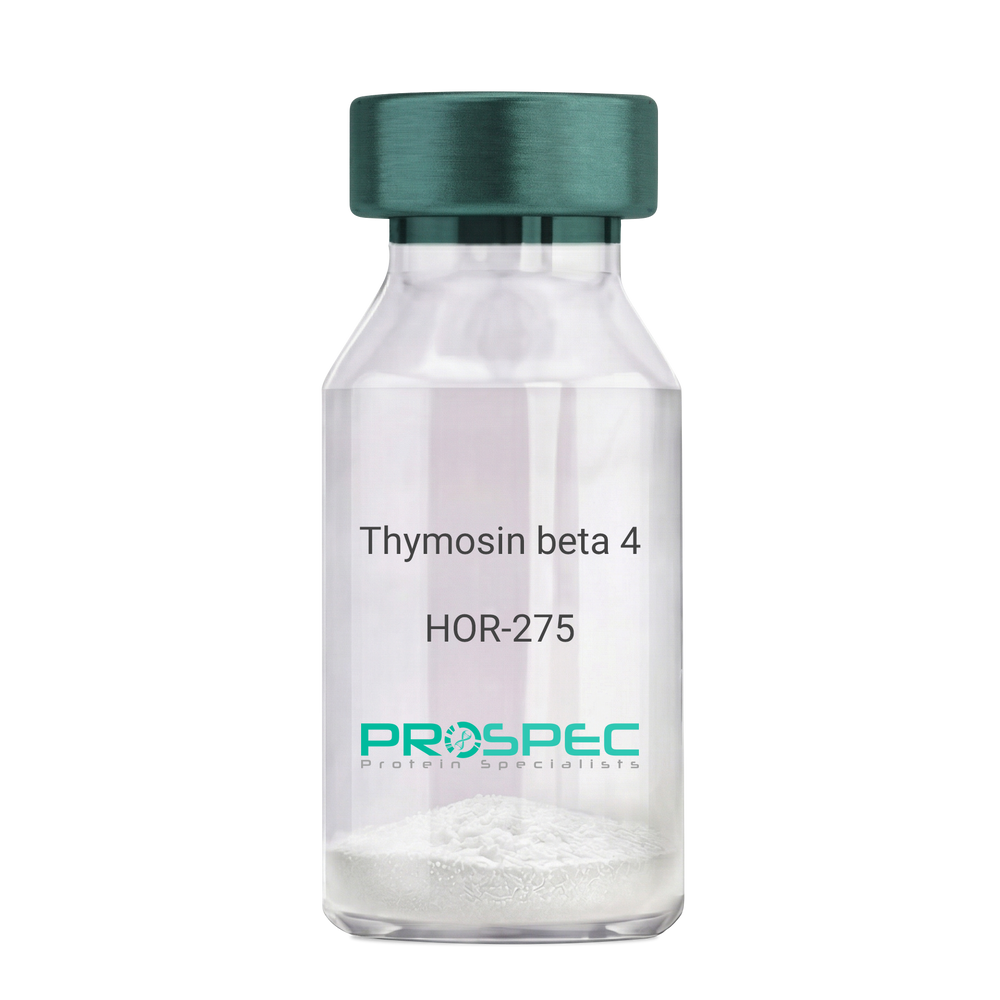
    Name :

    Thymosin beta 4

    Description:

    Thymosin β4

    Thymosin beta-4. TB500, TB-500

    Product # :

    HOR-275

    Price :

    Quantity :

    Shipping Method :

    Room Temp Icon

    Shipped at Room temp

    Add To Cart

    More Info

    • description
    • formulation
    • purity
    • More Info

    Description

    Thymosin b4 is a 43 amino acid peptide which is regarded as the main intracellular G-actin sequestering peptide. It has a molecular weight of 4963.55 Da, and its molecular formula is: C212H350N56O78S1. Extracellular Thymosin b4 may contribute to physiological processes such as angiogenesis, wound healing, and regulation of inflammation.

    Formulation

    The protein (1mg/ml) was lyophilized with no additives.

    Purity

    Greater than 98.0% as determined by RP-HPLC.

    More Info

    • Introduction

      Thymosin is a hormone secreted from the thymus. Its primary function is to stimulate the production of T cells, which are an important part of the immune system. Thymosin also assists in the development of B cells to plasma cells to produce antibodies. The predominant form of thymosin, thymosin b4, is a member of a highly conserved family of actin monomer-sequestering proteins. b-thymosins are the primary regulators of unpolymerized actin, and are essential for maintaining the small cytoplasmic pool of free G-actin monomers required for rapid filament elongation and allowing for the flux of monomers between the thymosin-bound pool and F-actin.

    • Synonyms

      Thymosin beta-4. TB500, TB-500

    • Physical Appearance

      Sterile Filtered White lyophilized (freeze-dried) powder.

    • Stability

      Lyophilized Thymosin b4 although stable at room temperature for 3 weeks, should be stored desiccated below -18°C. Upon reconstitution T beta 4 should be stored at 4°C between 2-7 days and for future use below -18°C.For long term storage it is recommended to add a carrier protein (0.1% HSA or BSA).Please prevent freeze-thaw cycles.

    • Solubility

      It is recommended to reconstitute the lyophilized Thymosin beta-4 in sterile 18MΩ-cm H2O not less than 100 µg/ml, which can then be further diluted to other aqueous solutions.

    • Amino Acid Sequence

      Thymosin b4 has an a.a. sequence of Ac-Ser-Asp-Lys-Pro-Asp-Met-Ala-Glu-Ile-Glu-Lys-Phe-Asp-Lys-Ser-Lys-Leu-Lys-Lys-Thr-Glu-Thr-Gln-Glu-Lys-Asn-Pro-Leu-Pro-Ser-Lys-Glu-Thr-Ile-Glu-Gln-Glu-Lys-Gln-Ala-Gly-Glu-Ser-OH.

    ProSpec's products are furnished for LABORATORY RESEARCH USE ONLY. The product may not be used as drugs, agricultural or pesticidal products, food additives or household chemicals.

    Thymosin Beta 4
  • View Data Sheet

    Name :

    CALR Human

    Description:

    Calreticulin Human Recombinant

    cC1qR, CRT, FLJ26680, RO, SSA, CRP55, Calreticulin, ERp60, CRTC, CALR.

    Product # :

    PRO-813

    Price :

    Quantity :

    Shipping Method :

    Ice Icon

    Shipped with Ice Packs

    Add To Cart

    More Info

    • description
    • source
    • formulation
    • purity
    • More Info

    Description

    CALR Human Recombinant produced in E.Coli is a single, non-glycosylated, polypeptide chain containing 421 amino acids (18-417 a.a.) and having a molecular mass of 48.7 kDa. CALR protein is fused to a 21 amino acid His-Tag at N-terminus and purified by standard chromatography.

    Source

    Escherichia Coli.

    Formulation

    CALR Human solution containing 20mM Tris-HCl pH-8, 1mM DTT, 0.1M NaCl and 10% glycerol.

    Purity

    Greater than 85% as determined by SDS-PAGE.

    More Info

    • Introduction

      CALR is a multifunctional protein that acts as a main Ca(2+)-binding (storage) protein in the lumen of the endoplasmic reticulum. Calreticulin is localized in the nucleus, and participates in transcription regulation. Calreticulin binds to the synthetic peptide KLGFFKR, which is nearly identical to an amino acid sequence in the DNA-binding domain of the superfamily of nuclear receptors. CALR binds to antibodies in specific sera of systemic lupus and Sjogren patients which have anti-Ro/SSA antibodies, it is well conserved among species, and it is positioned in the endoplasmic and sarcoplasmic reticulum where it binds calcium. The amino terminus of CALR interacts with the DNA-binding domain of the glucocorticoid receptor and prevents the receptor from binding to its specific glucocorticoid response element. CALR reduces the binding of androgen receptor to its hormone-responsive DNA element and inhibits androgen receptor and retinoic acid receptor transcriptional activities in vivo, as well as retinoic acid-induced neuronal differentiation. Therefore, CALR acts as a significant modulator of the regulation of gene transcription by nuclear hormone receptors.

    • Synonyms

      cC1qR, CRT, FLJ26680, RO, SSA, CRP55, Calreticulin, ERp60, CRTC, CALR.

    • Physical Appearance

      Sterile filtered colorless solution.

    • Stability

      Store at 4°C if entire vial will be used within 2-4 weeks. Store, frozen at -20°C for longer periods of time. For long term storage it is recommended to add a carrier protein (0.1% HSA or BSA).Avoid multiple freeze-thaw cycles.

    • Amino Acid Sequence

      MGSSHHHHHH SSGLVPRGSH MEPAVYFKEQ FLDGDGWTSR WIESKHKSDF GKFVLSSGKF YGDEEKDKGL QTSQDARFYA LSASFEPFSN KGQTLVVQFT VKHEQNIDCG GGYVKLFPNS LDQTDMHGDS EYNIMFGPDI CGPGTKKVHV IFNYKGKNVL INKDIRCKDD EFTHLYTLIV RPDNTYEVKI DNSQVESGSL EDDWDFLPPK KIKDPDASKP EDWDERAKID DPTDSKPEDW DKPEHIPDPD AKKPEDWDEE MDGEWEPPVI QNPEYKGEWK PRQIDNPDYK GTWIHPEIDN PEYSPDPSIY AYDNFGVLGL DLWQVKSGTI FDNFLITNDE AYAEEFGNET WGVTKAAEKQ MKDKQDEEQR LKEEEEDKKR KEEEEAEDKE DDEDKDEDEE DEEDKEEDEE EDVPGQAKDE L.

    ProSpec's products are furnished for LABORATORY RESEARCH USE ONLY. The product may not be used as drugs, agricultural or pesticidal products, food additives or household chemicals.

    Calr Human
  • View Data Sheet

    Name :

    Calumenin Human

    Description:

    Calumenin Human Recombinant

    CALU, Crocalbin, IEF SSP 9302, FLJ90608, Calumenin.

    Product # :

    PRO-2465

    Price :

    Quantity :

    Shipping Method :

    Ice Icon

    Shipped with Ice Packs

    Add To Cart

    More Info

    • description
    • source
    • formulation
    • purity
    • biological activity
    • More Info

    Description

    Calumenin Human Recombinant produced in E. coli is a single polypeptide chain containing 297 amino acids (20-315) and having a molecular mass of 35kDa. Calumenin is purified by proprietary chromatographic techniques.

    Source

    Escherichia Coli.

    Formulation

    The Calumenin solution (0.5mg/1ml) contains phosphate buffered saline (pH7.4) and 10% glycerol.

    Purity

    Greater than 90.0% as determined by SDS-PAGE.

    Biological Activity

    The IC50 value is < 2.0nM. The inhibitory function of Cystatin 5 on protease activity of papain was measured by a fluorometric assay using Z-FR-AMC at pH 7.5 at 25C.

    More Info

    • Introduction

      Calumenin is a calcium-binding protein located in the endoplasmic reticulum (ER) and sarcoplasmic reticulum (SR) of mammalian tissues which plays a role in ER functions as protein folding and sorting. Calumenin belongs to a family of multiple EF-hand proteins (CERC) that include reticulocalbin, ERC-55, and Cab45 and the product of this gene. Calumenin binds 7 calcium ions having low affinity and takes part in such ER functions as protein folding and sorting.

    • Synonyms

      CALU, Crocalbin, IEF SSP 9302, FLJ90608, Calumenin.

    • Physical Appearance

      Sterile Filtered clear solution.

    • Stability

      Store at 4°C if entire vial will be used within 2-4 weeks. Store, frozen at -20°C for longer periods of time. For long term storage it is recommended to add a carrier protein (0.1% HSA or BSA).Avoid multiple freeze-thaw cycles.

    • Amino Acid Sequence

      MKPTEKKDRV HHEPQLSDKV HNDAQSFDYD HDAFLGAEEA KTFDQLTPEE SKERLGKIVS KIDGDKDGFV TVDELKDWIK FAQKRWIYED VERQWKGHDL NEDGLVSWEE YKNATYGYVL DDPDPDDGFN YKQMMVRDER RFKMADKDGD LIATKEEFTA FLHPEEYDYM KDIVVQETME DIDKNADGFI DLEEYIGDMY SHDGNTDEPE WVKTEREQFV EFRDKNRDGK MDKEETKDWI LPSDYDHAEA EARHLVYESD QNKDGKLTKE EIVDKYDLFV GSQATDFGEA LVRHDEF.

    ProSpec's products are furnished for LABORATORY RESEARCH USE ONLY. The product may not be used as drugs, agricultural or pesticidal products, food additives or household chemicals.

    Calumenin Human 2
  • View Data Sheet

    Name :

    CAPNS1 Antibody

    Description:

    Calpain, Small Subunit 1, Mouse Anti Human

    Calpain Small Subunit 1, CAPN4, Calcium-Activated Neutral Proteinase Small Subunit, Calcium-Dependent Protease Small Subunit 1, Calpain Regulatory Subunit, CANP Small Subunit, CDPS, CSS1, Calcium-Dependent Protease Small Subunit, Calcium-Dependent Protease Small Subunit, Calpain 4 Small Subunit (30K), Calpain Small Polypeptide, Calpain Small Subunit 1, CALPAIN4, CANPS, CAPNS, CANP, CAPNS1.

    Product # :

    ANT-587

    Price :

    Quantity :

    Shipping Method :

    Ice Icon

    Shipped with Ice Packs

    Add To Cart

    More Info

    • formulation
    • More Info

    Formulation

    1mg/ml containing PBS, pH-7.4, 10% Glycerol and 0.02% Sodium Azide.

    More Info

    • Introduction

      Calpain, Small Subunit 1 (CAPNS1) belongs to the calpain small subunit family. Calpains are a ubiquitous, well-conserved family of calcium-dependent, cysteine proteases, widely distributed in mammalian cells. Calpain families are implicated in neurodegenerative processes, considering that their activation can be triggered by calcium influx and oxidative stress. Calpains function as heterodimers, comprising a specific large catalytic subunit (calpain 1 subunit in Calpain I, and calpain 2 subunit in Calpain II), and a common small regulatory subunit encoded by the CAPNS1 gene. The CAPNS1 protein is vital for the stability and function of both calpain heterodimers, whose proteolytic activities influence numerous cellular functions including apoptosis, proliferation, migration, adhesion, and autophagy.

    • Synonyms

      Calpain Small Subunit 1, CAPN4, Calcium-Activated Neutral Proteinase Small Subunit, Calcium-Dependent Protease Small Subunit 1, Calpain Regulatory Subunit, CANP Small Subunit, CDPS, CSS1, Calcium-Dependent Protease Small Subunit, Calcium-Dependent Protease Small Subunit, Calpain 4 Small Subunit (30K), Calpain Small Polypeptide, Calpain Small Subunit 1, CALPAIN4, CANPS, CAPNS, CANP, CAPNS1.

    • Physical Appearance

      Sterile filtered colorless solution.

    • Immunogen

      Anti-human CAPNS1 mAb, is derived from hybridization of mouse F0 myeloma cells with spleen cells from BALB/c mice immunized with a recombinant human CAPNS1 protein 84-268 amino acids purified from E. coli.

    • Ig Subclass

      Mouse IgG1 heavy chain and k light chain.

    • Clone

      PAT1D11AT.

    • Applications

      CAPNS1 antibody has been tested by ELISA, Western blot analysis, ICC/IF and Flow cytometry to assure specificity and reactivity. Since application varies, however, each investigation should be titrated by the reagent to obtain optimal results.

    • Type

      Mouse Anti Human Monoclonal.

    • Storage Procedures

      For periods up to 1 month store at 4°C, for longer periods of time, store at -20°C. Prevent freeze thaw cycles.

    • Purification Method

      CAPNS1 antibody was purified from mouse ascitic fluids by protein-A affinity chromatography.

    ProSpec's products are furnished for LABORATORY RESEARCH USE ONLY. The product may not be used as drugs, agricultural or pesticidal products, food additives or household chemicals.

    Capns1 Antibody
  • 1
  • 2
  • 3
  • 4
  • 5
  • 6
  • …
  • 42
Your browser does not support the video tag.

Products

  • Cytokines
  • Growth Factors
  • Chemokines
  • CD Antigens
  • Neurotrophins
  • Hormones
  • Enzymes
  • Viral Antigens
  • Recombinant Proteins
  • Natural Proteins
  • Monoclonal Antibodies
  • Polyclonal Antibodies
  • Thermal Packaging

About

  • Company
  • Founder
  • Contribution
  • Contact Us
  • My Account

Ordering

  • Ordering Method
  • Ordering - Credit Card
  • Ordering PO
  • Shipping Fees
  • FAQ's

Legal

  • Terms & Conditions
  • Privacy
  • Site Map
  • info@prospecbio.com
  • Facebook
  • Instagram
  • Linkedin Profile

© 2026 ProSpec-Tany TechnoGene Ltd. All Rights Reserved.

  • Choosing a selection results in a full page refresh.
  • Opens in a new window.