Skip to content

High-quality research proteins.

  • 1-800-805-6531

  • Mon - Sat 8.00-18.00, Sun - Closed

  • info@prospecbio.com

  • PO Box 6591 East Brunswick NJ 08816

  • Products
    • Cytokines
    • Growth factors
    • Chemokines
    • Cd antigens
    • Neurotrophins
    • Hormones
    • Enzymes
    • Viral antigens
    • Recombinant proteins
    • Natural proteins
    • Monoclonal antibodies
    • Polyclonal antibodies
    • Thermal Packaging
  • About
    • Company
    • Founder
    • Contribution
  • Customers
    • Eastern Asia
    • Eastern Europe
    • North America
    • South America
    • South East Asia
    • Southern Asia
    • Western Europe
  • Ordering
    • Ordering Method
    • Ordering - Credit Card
    • Ordering - PO
    • Shipping Fees
    • FAQs
  • Services
    • DNA Cloning
    • Protein Expression
    • Monoclonal Antibody
    • Fermentation
    • Technology License
  • Contact us
Log in

Country/region

  • USD $ | Albania
  • USD $ | Andorra
  • USD $ | Argentina
  • USD $ | Armenia
  • USD $ | Australia
  • USD $ | Austria
  • USD $ | Azerbaijan
  • USD $ | Belarus
  • USD $ | Belgium
  • USD $ | Bolivia
  • USD $ | Brazil
  • USD $ | Bulgaria
  • USD $ | Cambodia
  • USD $ | Canada
  • USD $ | Chile
  • USD $ | China
  • USD $ | Colombia
  • USD $ | Costa Rica
  • USD $ | Croatia
  • USD $ | Cyprus
  • USD $ | Czechia
  • USD $ | Denmark
  • USD $ | Estonia
  • USD $ | Finland
  • USD $ | France
  • USD $ | Georgia
  • USD $ | Germany
  • USD $ | Greece
  • USD $ | Hong Kong SAR
  • USD $ | Hungary
  • USD $ | Iceland
  • USD $ | India
  • USD $ | Ireland
  • USD $ | Israel
  • USD $ | Italy
  • USD $ | Japan
  • USD $ | Kazakhstan
  • USD $ | Latvia
  • USD $ | Liechtenstein
  • USD $ | Lithuania
  • USD $ | Madagascar
  • USD $ | Malta
  • USD $ | Mexico
  • USD $ | Moldova
  • USD $ | Monaco
  • USD $ | Netherlands
  • USD $ | New Zealand
  • USD $ | North Macedonia
  • USD $ | Norway
  • USD $ | Panama
  • USD $ | Paraguay
  • USD $ | Peru
  • USD $ | Philippines
  • USD $ | Poland
  • USD $ | Portugal
  • USD $ | Romania
  • USD $ | Singapore
  • USD $ | Slovakia
  • USD $ | Slovenia
  • USD $ | South Africa
  • USD $ | South Korea
  • USD $ | Spain
  • USD $ | Sri Lanka
  • USD $ | Sweden
  • USD $ | Switzerland
  • USD $ | Taiwan
  • USD $ | Thailand
  • USD $ | Türkiye
  • USD $ | Ukraine
  • USD $ | United Kingdom
  • USD $ | United States
  • USD $ | Uruguay
  • USD $ | Vatican City
  • USD $ | Venezuela
  • USD $ | Vietnam
  • Facebook
  • Instagram
logoProSpec - Recombinant Protein Manufacturer for academic and R&D industry
Become a distributor
Account Log in
Wishlist
Cart Cart(0)
  • Products
    +
    • Cytokines
    • Growth factors
    • Chemokines
    • Cd antigens
    • Neurotrophins
    • Hormones
    • Enzymes
    • Viral antigens
    • Recombinant proteins
    • Natural proteins
    • Monoclonal antibodies
    • Polyclonal antibodies
    • Thermal Packaging
  • About
    +
    • Company
    • Founder
    • Contribution
  • Customers
    +
    • Eastern Asia
    • Eastern Europe
    • North America
    • South America
    • South East Asia
    • Southern Asia
    • Western Europe
  • Ordering
    +
    • Ordering Method
    • Ordering - Credit Card
    • Ordering - PO
    • Shipping Fees
    • FAQs
  • Services
    +
    • DNA Cloning
    • Protein Expression
    • Monoclonal Antibody
    • Fermentation
    • Technology License
  • Contact us

Item added to your cart

View cart
View All
  • Cytokines
  • Growth factors
  • Chemokines
  • Cd antigens
  • Neurotrophins
  • Hormones
  • Enzymes
  • Viral antigens
  • Recombinant proteins
  • Natural proteins
  • Monoclonal antibodies
  • Polyclonal antibodies
  • Thermal Packaging
  • Tumor Necrosis Factor

    Tumor Necrosis Factor

    View All
  • 4-1BB

    4-1BB

    View All
  • Adiponectin

    Adiponectin

    View All
  • AIF1

    AIF1

    View All
  • Other Cytokines

    Other Cytokines

    View All
  • AITRL

    AITRL

    View All
  • Angiopoietin

    Angiopoietin

    View All
  • Apolipoprotein

    Apolipoprotein

    View All
  • B-Cell Activating Factor

    B-Cell Activating Factor

    View All
  • Beta Defensin

    Beta Defensin

    View All
  • Bone Morphogenetic Protein

    Bone Morphogenetic Protein

    View All
  • B type Natriuretic Peptide

    B type Natriuretic Peptide

    View All
  • BST

    BST

    View All
  • Betacellulin

    Betacellulin

    View All
  • Cardiotrophin

    Cardiotrophin

    View All
  • Activin

    Activin

    View All
  • Fibroblast Growth Factor

    Fibroblast Growth Factor

    View All
  • Other Growth Factors

    Other Growth Factors

    View All
  • CSF

    CSF

    View All
  • CTGF

    CTGF

    View All
  • IGFBP

    IGFBP

    View All
  • VEGF Protein

    VEGF Protein

    View All
  • EGF

    EGF

    View All
  • Epigen

    Epigen

    View All
  • Erythropoietin

    Erythropoietin

    View All
  • Insulin-Like Growth Factor

    Insulin-Like Growth Factor

    View All
  • Growth Hormone

    Growth Hormone

    View All
  • HDGF

    HDGF

    View All
  • Hepatocyte Growth Factor

    Hepatocyte Growth Factor

    View All
  • Insulin

    Insulin

    View All
  • BCA-1/ BLC (CXCL13)

    BCA-1/ BLC (CXCL13)

    View All
  • BRAK (CXCL14)

    BRAK (CXCL14)

    View All
  • C-10 (CCL6)

    C-10 (CCL6)

    View All
  • Other Chemokines

    Other Chemokines

    View All
  • MEC (CCL28)

    MEC (CCL28)

    View All
  • LD78-beta (CCL3L1)

    LD78-beta (CCL3L1)

    View All
  • CTACK (CCL27)

    CTACK (CCL27)

    View All
  • CXCL16

    CXCL16

    View All
  • CXCL17

    CXCL17

    View All
  • Platelet Factor-4 (CXCL4)

    Platelet Factor-4 (CXCL4)

    View All
  • ENA-78 (CXCL5)

    ENA-78 (CXCL5)

    View All
  • Eotaxin (CCL11,24,26)

    Eotaxin (CCL11,24,26)

    View All
  • Exodus-2 (CCL21)

    Exodus-2 (CCL21)

    View All
  • Fractalkine (CX3CL1)

    Fractalkine (CX3CL1)

    View All
  • CXCL6

    CXCL6

    View All
  • Other CD Antigens

    Other CD Antigens

    View All
  • CD14

    CD14

    View All
  • CD164

    CD164

    View All
  • CD1

    CD1

    View All
  • CD2

    CD2

    View All
  • CD200

    CD200

    View All
  • CD207

    CD207

    View All
  • CD226

    CD226

    View All
  • CD23

    CD23

    View All
  • CD244

    CD244

    View All
  • CD247

    CD247

    View All
  • CD27

    CD27

    View All
  • CD274

    CD274

    View All
  • CD300

    CD300

    View All
  • CD33

    CD33

    View All
  • Other Neurotrophins

    Other Neurotrophins

    View All
  • Beta-NGF

    Beta-NGF

    View All
  • BDNF

    BDNF

    View All
  • CDNF

    CDNF

    View All
  • CNTF

    CNTF

    View All
  • GDNF

    GDNF

    View All
  • Glia Maturation Factor

    Glia Maturation Factor

    View All
  • MANF

    MANF

    View All
  • Midkine

    Midkine

    View All
  • Neuroglobin

    Neuroglobin

    View All
  • Neurotrophic factors

    Neurotrophic factors

    View All
  • Neuregulin

    Neuregulin

    View All
  • Neuropilin

    Neuropilin

    View All
  • Pigment Epithelium-Derived Factor

    Pigment Epithelium-Derived Factor

    View All
  • Pleiotrophin

    Pleiotrophin

    View All
  • Peptide Hormones

    Peptide Hormones

    View All
  • Other Hormones

    Other Hormones

    View All
  • HCG

    HCG

    View All
  • Endothelin

    Endothelin

    View All
  • Exendin

    Exendin

    View All
  • FSH

    FSH

    View All
  • Glucagon

    Glucagon

    View All
  • GHRP

    GHRP

    View All
  • GLP

    GLP

    View All
  • Thyrostimulin

    Thyrostimulin

    View All
  • Inhibin A

    Inhibin A

    View All
  • LHRH

    LHRH

    View All
  • Melanotan

    Melanotan

    View All
  • Procalcitonin

    Procalcitonin

    View All
  • PTH

    PTH

    View All
  • Peroxiredoxin

    Peroxiredoxin

    View All
  • Peptidase

    Peptidase

    View All
  • Synthetase

    Synthetase

    View All
  • Transferase

    Transferase

    View All
  • Hydrolase

    Hydrolase

    View All
  • Dehydrogenase

    Dehydrogenase

    View All
  • ACE2

    ACE2

    View All
  • Esterase

    Esterase

    View All
  • Protein Kinases

    Protein Kinases

    View All
  • Other Enzymes

    Other Enzymes

    View All
  • Phosphatase

    Phosphatase

    View All
  • Deaminase

    Deaminase

    View All
  • Oxygenase

    Oxygenase

    View All
  • Adenylate Kinase

    Adenylate Kinase

    View All
  • Lyase

    Lyase

    View All
  • Chagas

    Chagas

    View All
  • SARS

    SARS

    View All
  • Influenza

    Influenza

    View All
  • ASFV

    ASFV

    View All
  • Astrovirus

    Astrovirus

    View All
  • Borrelia

    Borrelia

    View All
  • Helicobacter Pylori

    Helicobacter Pylori

    View All
  • Chikungunya

    Chikungunya

    View All
  • Chlamydia

    Chlamydia

    View All
  • Cytomegalo

    Cytomegalo

    View All
  • Dengue

    Dengue

    View All
  • EBV

    EBV

    View All
  • Ebola

    Ebola

    View All
  • Feline Leukemia Virus

    Feline Leukemia Virus

    View All
  • Hepatitis A

    Hepatitis A

    View All
  • Other

    Other

    View All
  • Actin

    Actin

    View All
  • ADAM

    ADAM

    View All
  • Complement Component

    Complement Component

    View All
  • Ag85

    Ag85

    View All
  • Eukaryotic Translation Initiation Factor

    Eukaryotic Translation Initiation Factor

    View All
  • Anterior Gradient Protein

    Anterior Gradient Protein

    View All
  • Heat Shock Protein

    Heat Shock Protein

    View All
  • Alpha-2-HS-Glycoprotein

    Alpha-2-HS-Glycoprotein

    View All
  • Hemoglobin

    Hemoglobin

    View All
  • Allergy

    Allergy

    View All
  • Anaplasma

    Anaplasma

    View All
  • Angiogenin

    Angiogenin

    View All
  • Ankyrin Repeat Domain

    Ankyrin Repeat Domain

    View All
  • Annexin

    Annexin

    View All
  • Other Natural Proteins

    Other Natural Proteins

    View All
  • Aprotinin

    Aprotinin

    View All
  • Transferrin

    Transferrin

    View All
  • Avidin

    Avidin

    View All
  • Anti Coagulation Factors

    Anti Coagulation Factors

    View All
  • Natural Albumin

    Natural Albumin

    View All
  • Natural Coagulation Factors

    Natural Coagulation Factors

    View All
  • Fibronectin

    Fibronectin

    View All
  • Thrombin

    Thrombin

    View All
  • Anti Human Enzyme

    Anti Human Enzyme

    View All
  • Other Monoclonal Antibodies

    Other Monoclonal Antibodies

    View All
  • Anti Human Cytokine

    Anti Human Cytokine

    View All
  • Anti Human Heat Shock Protein

    Anti Human Heat Shock Protein

    View All
  • Anti Mouse Lymphocyte

    Anti Mouse Lymphocyte

    View All
  • Anti Human Chemokine

    Anti Human Chemokine

    View All
  • Anti Human Lymphocyte

    Anti Human Lymphocyte

    View All
  • Anti Viral Monoclonal

    Anti Viral Monoclonal

    View All
  • Anti Mouse Cytokine

    Anti Mouse Cytokine

    View All
  • Anti-GST Monoclonal

    Anti-GST Monoclonal

    View All
  • Other Polyclonal Antibodies

    Other Polyclonal Antibodies

    View All
  • Anti Viral

    Anti Viral

    View All
  • Anti-GST Monoclonal

    Anti-GST Monoclonal

    View All
Back

Search results

1000 results found for “cyclin-dependent kinase”

Name

Description

Product #

Price

Quantity

Shipping Method

  • View Data Sheet

    Name :

    PSMA6 Human

    Description:

    Proteasome Subunit Alpha Type 6 Human Recombinant

    Proteasome (prosome, macropain) subunit alpha type 6, PROS27, p27K, IOTA, Macropain iota chain, Multicatalytic endopeptidase complex iota chain, Proteasome iota chain, 27 kDa prosomal protein.

    Product # :

    ENZ-198

    Price :

    Quantity :

    Shipping Method :

    Ice Icon

    Shipped with Ice Packs

    Add To Cart

    More Info

    • description
    • source
    • formulation
    • purity
    • More Info

    Description

    PSMA6 Human Recombinant produced in E.Coli is a single, non-glycosylated polypeptide chain containing 270 amino acids (1-246 a.a.) and having a molecular mass of 29.9kDa.PSMA6 is fused to a 24 amino acid His-tag at N-terminus & purified by proprietary chromatographic techniques.

    Source

    Escherichia Coli.

    Formulation

    PSMA6 protein solution (0.25mg/ml) containing 20mM Tris-HCl buffer (pH8.0), 100mM NaCl, 1mM DTT and 40% glycerol.

    Purity

    Greater than 90.0% as determined by SDS-PAGE.

    More Info

    • Introduction

      PSMA6 belongs to the peptidase T1A family, which is a 20S core alpha subunit. The proteasome is a multicatalytic proteinase complex with an extremely organized ring-shaped 20S core structure. The core structure consists of 4 rings of 28 non-identical subunits; 2 rings consist of 7 alpha subunits and 2 rings consist of 7 beta subunits. PSMA6 is spread all over eukaryotic cells in large quantities and cleave peptides in an ATP/ubiquitin-dependent procedure in a non-lysosomal pathway.

    • Synonyms

      Proteasome (prosome, macropain) subunit alpha type 6, PROS27, p27K, IOTA, Macropain iota chain, Multicatalytic endopeptidase complex iota chain, Proteasome iota chain, 27 kDa prosomal protein.

    • Physical Appearance

      Sterile Filtered colorless solution.

    • Stability

      Store at 4°C if entire vial will be used within 2-4 weeks. Store, frozen at -20°C for longer periods of time. For long term storage it is recommended to add a carrier protein (0.1% HSA or BSA).Avoid multiple freeze-thaw cycles.

    • Amino Acid Sequence

      MGSSHHHHHH SSGLVPRGSH MGSHMSRGSS AGFDRHITIF SPEGRLYQVE YAFKAINQGG LTSVAVRGKD CAVIVTQKKV PDKLLDSSTVTHLFKITENI GCVMTGMTAD SRSQVQRARY EAANWKYKYG YEIPVDMLCK RIADISQVYT QNAEMRPLGC CMILIGIDEE QGPQVYKCDP AGYYCGFKAT AAGVKQTEST SFLEKKVKKK FDWTFEQTVE TAITCLSTVL SIDFKPSEIE VGVVTVENPK FRILTEAEID AHLVALAERD

    ProSpec's products are furnished for LABORATORY RESEARCH USE ONLY. The product may not be used as drugs, agricultural or pesticidal products, food additives or household chemicals.

    Psma6 Human
  • View Data Sheet

    Name :

    PPP1CA Human

    Description:

    Protein Phosphatase 1, Catalytic Subunit Alpha Human Recombinant

    Serine/threonine-protein phosphatase PP1-alpha catalytic subunit, PP-1A, PPP1CA, PPP1A, PP1alpha.

    Product # :

    ENZ-165

    Price :

    Quantity :

    Shipping Method :

    Ice Icon

    Shipped with Ice Packs

    Add To Cart

    More Info

    • description
    • source
    • formulation
    • purity
    • biological activity
    • More Info

    Description

    PPP1CA Human Recombinant produced in E.Coli is a single, non-glycosylated polypeptide chain containing 350 amino acids (1-330 a.a) and having a molecular mass of 39.7kDa.PPP1CA is fused to a 20 amino acid His-tag at N-terminus & purified by proprietary chromatographic techniques.

    Source

    Escherichia Coli.

    Formulation

    PPP1CA protein solution (0.2mg/ml) containing 50mM Tris-HCl (pH8.5),0.2M NaCl, 1mM DTT, 0.1mM PMSF, 1mM MnCl2 and 50% glycerol.

    Purity

    Greater than 80.0% as determined by SDS-PAGE.

    Biological Activity

    Specific activity: >3,000 units/mg. Enzymatic activity was confirmed by measuring the amount of enzyme hydrolyzing 1 nmole of p-nitrophenyl phosphate (pNPP) per minute at 37C, pH7.5 using 30mM of substrate.

    More Info

    • Introduction

      Serine/Threonine-protein phosphatase PP1-alpha catalytic subunit (PPP1CA) is crucial for cell division, and participates in the regulation of glycogen metabolism, muscle contractility and protein synthesis. The PPP1CA protein may have a significant role in dephosphorylating substrates such as the postsynaptic density-associated Ca2+/calmodulin dependent protein kinase II.

    • Synonyms

      Serine/threonine-protein phosphatase PP1-alpha catalytic subunit, PP-1A, PPP1CA, PPP1A, PP1alpha.

    • Physical Appearance

      Sterile filtered yellowish solution.

    • Stability

      Store at 4°C if entire vial will be used within 2-4 weeks. Store, frozen at -20°C for longer periods of time. For long term storage it is recommended to add a carrier protein (0.1% HSA or BSA).Avoid multiple freeze-thaw cycles.

    • Amino Acid Sequence

      MGSSHHHHHH SSGLVPRGSH MSDSEKLNLD SIIGRLLEVQ GSRPGKNVQL TENEIRGLCL KSREIFLSQP ILLELEAPLK ICGDIHGQYY DLLRLFEYGG FPPESNYLFL GDYVDRGKQS LETICLLLAY KIKYPENFFL LRGNHECASI NRIYGFYDEC KRRYNIKLWK TFTDCFNCLP IAAIVDEKIF CCHGGLSPDL QSMEQIRRIM RPTDVPDQGL LCDLLWSDPD KDVQGWGEND RGVSFTFGAE VVAKFLHKHD LDLICRAHQV VEDGYEFFAK RQLVTLFSAP NYCGEFDNAG AMMSVDETLM CSFQILKPAD KNKGKYGQFS GLNPGGRPIT PPRNSAKAKK.

    ProSpec's products are furnished for LABORATORY RESEARCH USE ONLY. The product may not be used as drugs, agricultural or pesticidal products, food additives or household chemicals.

    Ppp1Ca Human
  • View Data Sheet

    Name :

    METTL1 Human

    Description:

    Methyltransferase Like 1 Human Recombinant

    Methyltransferase-Like 1, TRM8, tRNA(m7G46)-methyltransferase, tRNA (guanine-N(7)-)-methyltransferase , C12orf1, YDL201w, D1075-like gene product, FLJ95748, EC 2.1.1.33.

    Product # :

    ENZ-054

    Price :

    Quantity :

    Shipping Method :

    Ice Icon

    Shipped with Ice Packs

    Add To Cart

    More Info

    • description
    • source
    • formulation
    • purity
    • More Info

    Description

    Recombinant Human METTL1 produced in E.Coli is a single, non-glycosylated polypeptide chain containing 296 amino acids (1-276a.a.) and having a molecular mass of 33.6kDa.METTL1 is fused to a 20 amino acid His-tag at N-terminus & purified by proprietary chromatographic techniques.

    Source

    Escherichia Coli.

    Formulation

    The METTL1 protein solution (0.5mg/1ml) is formulated in 20mM Tris-HCl buffer (pH8.0)
    1mM DTT, 50mM NaCl and 10% glycerol.

    Purity

    Greater than 90% as determined by SDS-PAGE.

    More Info

    • Introduction

      METTL1 is recognized as tRNA (guanine-N(7)-)-methyltransferase that is a part of the methyltransferase superfamily. METTL1 displays high sequence similarity to yeast ORF YDL201w and can be inactivated by phosphorylation. METTL1 protein has a conserved S-adenosylmethionine-binding motif and ccatalyzes the formation of N(7)-methylguanine at position 46 (m7G46) in tRNA.

    • Synonyms

      Methyltransferase-Like 1, TRM8, tRNA(m7G46)-methyltransferase, tRNA (guanine-N(7)-)-methyltransferase , C12orf1, YDL201w, D1075-like gene product, FLJ95748, EC 2.1.1.33.

    • Physical Appearance

      Sterile Filtered clear solution.

    • Stability

      Store at 4°C if entire vial will be used within 2-4 weeks.Store, frozen at -20°C for longer periods of time. For long term storage it is recommended to add a carrier protein (0.1% HSA or BSA).Avoid multiple freeze-thaw cycles.

    • Amino Acid Sequence

      MGSSHHHHHH SSGLVPRGSH MAAETRNVAG AEAPPPQKRY YRQRAHSNPM ADHTLRYPVK PEEMDWSELY PEFFAPLTQN QSHDDPKDKK EKRAQAQVEF ADIGCGYGGL LVELSPLFPD TLILGLEIRV KVSDYVQDRI RALRAAPAGG FQNIACLRSN AMKHLPNFFY KGQLTKMFFL FPDPHFKRTK HKWRIISPTL LAEYAYVLRV GGLVYTITDV LELHDWMCTH FEEHPLFERV PLEDLSEDPV VGHLGTSTEE GKKVLRNGGK NFPAIFRRIQ DPVLQAVTSQ TSLPGH

    ProSpec's products are furnished for LABORATORY RESEARCH USE ONLY. The product may not be used as drugs, agricultural or pesticidal products, food additives or household chemicals.

    Mettl1 Human
  • View Data Sheet

    Name :

    DLAT Human

    Description:

    Dihydrolipoamide S-Acetyltransferase Human Recombinant

    Dihydrolipoamide S-Acetyltransferase, PDC-E2, dihydrolipoyllysine-residue acetyltransferase component of pyruvate dehydrogenase complex mitochondrial, Pyruvate dehydrogenase complex component E2, 70 kDa mitochondrial autoantigen of primary biliary cirrhosis, DLAT, PBC, M2 antigen complex 70 kDa subunit, EC 2.3.1.12, EC 2.3.1.

    Product # :

    ENZ-082

    Price :

    Quantity :

    Shipping Method :

    Ice Icon

    Shipped with Ice Packs

    Add To Cart

    More Info

    • description
    • source
    • formulation
    • purity
    • More Info

    Description

    DLAT is a full-length cDNA coding for the mature form of the human PDC-E2 protein having a molecular mass of 60,630 Dalton (pH 5.8). DLAT protein is fused to a hexa-histidine purification tag.

    Source

    Sf9 insect cells.

    Formulation

    DLAT is supplied in 20mM HEPES buffer pH-8.0, 200mM NaCl and 20% glycerol.

    Purity

    DLAT purity was found to be greater than 75% as determined by SDS-PAGE.

    More Info

    • Introduction

      DLAT gene encodes component E2 of the multi-enzyme pyruvate dehydrogenase complex (PDC). PDC is located in the inner mitochondrial membrane and catalyzes the conversion of pyruvate to acetyl coenzyme A. The protein product of this gene, dihydrolipoamide acetyltransferase, takes acetyl groups created by the oxidative decarboxylation of pyruvate and transfers them to coenzyme A. Dihydrolipoamide acetyltransferase is the antigen for antimitochondrial antibodies which are found in about 95% of patients with the autoimmune liver disease primary biliary cirrhosis (PBC). In patients who suffer from this illness, activated T lymphocytes attack and destroy epithelial cells in the bile duct where this protein is abnormally distributed and overexpressed. PBC ultimately leads to cirrhosis and liver failure. Mutations in DLAT are also a cause of pyruvate dehydrogenase E2 deficiency which causes primary lactic acidosis in infancy and early childhood.

    • Synonyms

      Dihydrolipoamide S-Acetyltransferase, PDC-E2, dihydrolipoyllysine-residue acetyltransferase component of pyruvate dehydrogenase complex mitochondrial, Pyruvate dehydrogenase complex component E2, 70 kDa mitochondrial autoantigen of primary biliary cirrhosis, DLAT, PBC, M2 antigen complex 70 kDa subunit, EC 2.3.1.12, EC 2.3.1.

    • Physical Appearance

      Sterile Filtered colorless solution.

    • Stability

      Store DLAT at 4°C if entire vial will be used within 2-4 weeks. Store, frozen at -20°C for longer periods of time. Avoid multiple freeze-thaw cycles.

    ProSpec's products are furnished for LABORATORY RESEARCH USE ONLY. The product may not be used as drugs, agricultural or pesticidal products, food additives or household chemicals.

    Dlat Human
  • View Data Sheet

    Name :

    TEK Mouse

    Description:

    TEK Tyrosine Kinase Endothelial Mouse Recombinant

    Angiopoietin-1 receptor, Endothelial tyrosine kinase, HYK, STK1, Tunica interna endothelial cell kinase, Tyrosine kinase with Ig and EGF homology domains-2, Tyrosine-protein kinase receptor TEK, Tyrosine-protein kinase receptor TIE-2, mTIE2, p140 TEK, CD202b.

    Product # :

    PKA-083

    Price :

    Quantity :

    Shipping Method :

    Ice Icon

    Shipped with Ice Packs

    Add To Cart

    More Info

    • description
    • source
    • formulation
    • purity
    • More Info

    Description

    TEK produced in Sf9 Baculovirus cells is a single, glycosylated polypeptide chain containing 730 amino acids (23-746 a.a.) and having a molecular mass of 81.6kDa (Migrates at 70-100kDa on SDS-PAGE under reducing conditions). TEK is expressed with a 6 amino acid His tag at C-Terminus and purified by proprietary chromatographic techniques.

    Source

    Sf9, Baculovirus cells.

    Formulation

    TEK protein solution (0.5mg/ml) contains Phosphate Buffered Saline (pH 7.4) and 10% glycerol.

    Purity

    Greater than 95.0% as determined by SDS-PAGE.

    More Info

    • Introduction

      TIE-1 (tyrosine kinase with Ig and EGF homology domains 1) and TIE-2/Tek comprise a receptor tyrosine kinase (RTK) subfamily with unique structural characteristics: two immunoglobulin-like domains flanking three epidermal growth factor (EGF)-like domains and followed by three fibronectin type III-like repeats in the extracellular region and a split tyrosine kinase domain in the cytoplasmic region. These receptors are expressed primarily on endothelial and hematopoietic progenitor cells and play critical roles in angiogenesis, vasculogenesis and hematopoiesis. Human TIE-1 cDNA encodes a 1122 amino acid (aa) residue precursor protein with an 18 residue putative signal peptide, a 726 residue extracellular domain and a 353 residue cytoplasmic domain. Two ligands, angiopoietin-1 (Ang1) and angiopoietin-2 (Ang2), which bind TIE-2 with high-affinity have been identified. Ang2 has been reported to act as an antagonist for Ang1. Mice engineered to overexpress Ang2 or to lack Ang1 or Tie-1 display similar angiogenic defects.

    • Synonyms

      Angiopoietin-1 receptor, Endothelial tyrosine kinase, HYK, STK1, Tunica interna endothelial cell kinase, Tyrosine kinase with Ig and EGF homology domains-2, Tyrosine-protein kinase receptor TEK, Tyrosine-protein kinase receptor TIE-2, mTIE2, p140 TEK, CD202b.

    • Physical Appearance

      Sterile Filtered colorless solution.

    • Stability

      Store at 4°C if entire vial will be used within 2-4 weeks. Store, frozen at -20°C for longer periods of time. For long term storage it is recommended to add a carrier protein (0.1% HSA or BSA). Avoid multiple freeze-thaw cycles.

    • Amino Acid Sequence

      AMDLILINSL PLVSDAETSL TCIASGWHPH EPITIGRDFE ALMNQHQDPL EVTQDVTREW AKKVVWKREK ASKINGAYFC EGRVRGQAIR IRTMKMRQQA SFLPATLTMT VDRGDNVNIS FKKVLIKEED AVIYKNGSFI HSVPRHEVPD ILEVHLPHAQ PQDAGVYSAR YIGGNLFTSA FTRLIVRRCE AQKWGPDCSR PCTTCKNNGV CHEDTGECIC PPGFMGRTCE KACEPHTFGR TCKERCSGPE GCKSYVFCLP DPYGCSCATG WRGLQCNEAC PSGYYGPDCK LRCHCTNEEI CDRFQGCLCS QGWQGLQCEK EGRPRMTPQI EDLPDHIEVN SGKFNPICKA SGWPLPTSEE MTLVKPDGTV LQPNDFNYTD RFSVAIFTVN RVLPPDSGVW VCSVNTVAGM VEKPFNISVK VLPEPLHAPN VIDTGHNFAI INISSEPYFG DGPIKSKKLF YKPVNQAWKY IEVTNEIFTL NYLEPRTDYE LCVQLARPGE GGEGHPGPVR RFTTASIGLP PPRGLSLLPK SQTALNLTWQ PIFTNSEDEF YVEVERRSLQ TTSDQQNIKV PGNLTSVLLS NLVPREQYTV RARVNTKAQG EWSEELRAWT LSDILPPQPE NIKISNITDS TAMVSWTIVD GYSISSIIIR YKVQGKNEDQ HIDVKIKNAT VTQYQLKGLE PETTYHVDIF AENNIGSSNP AFSHELRTLP HSPASADLGG GKMLHHHHHH.

    ProSpec's products are furnished for LABORATORY RESEARCH USE ONLY. The product may not be used as drugs, agricultural or pesticidal products, food additives or household chemicals.

    Tek Mouse
  • View Data Sheet

    Name :

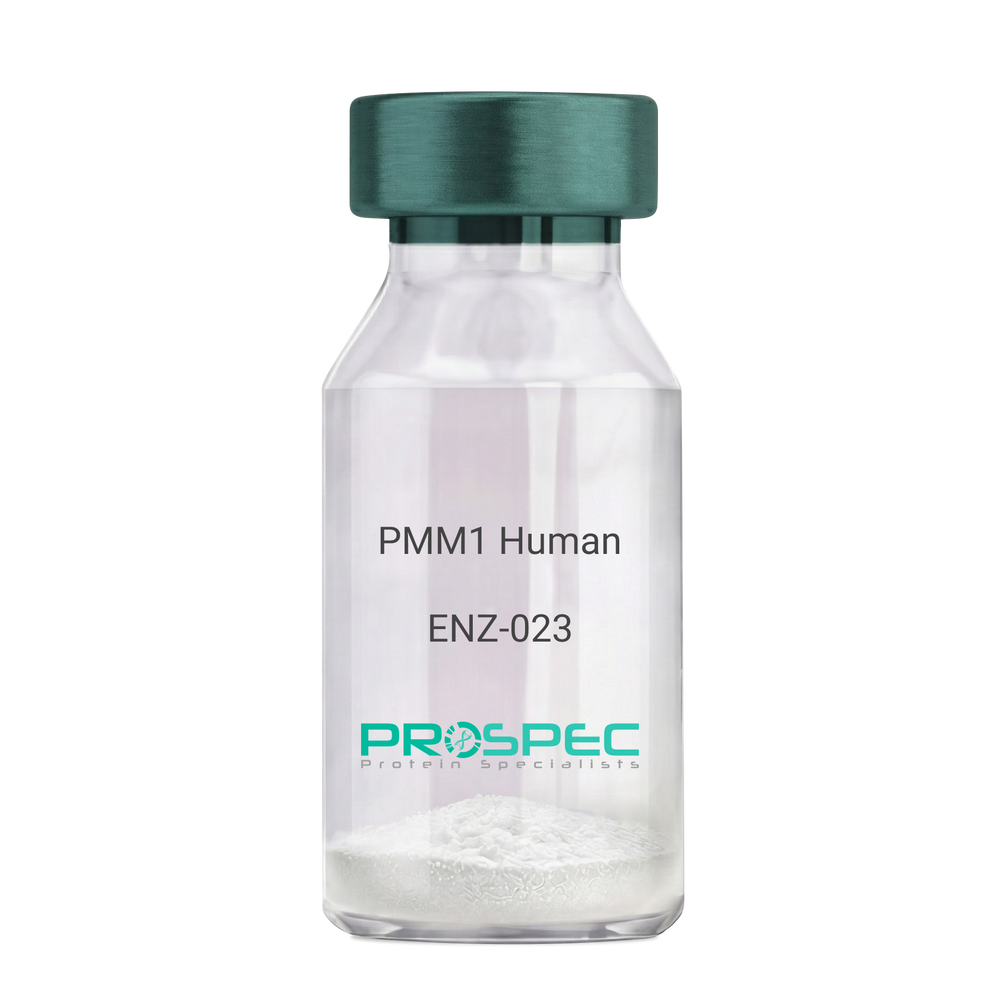
    PMM1 Human

    Description:

    Phosphomannomutase 1 Human Recombinant

    Phosphomannomutase 1, PMM 1, PMMH-22, PMM1, PMMH22, Sec53.

    Product # :

    ENZ-023

    Price :

    Quantity :

    Shipping Method :

    Ice Icon

    Shipped with Ice Packs

    Add To Cart

    More Info

    • description
    • source
    • formulation
    • purity
    • More Info

    Description

    PMM1 Human Recombinant fused with a 20 amino acid His tag at N-terminus produced in E.Coli is a single, non-glycosylated, polypeptide chain containing 282 amino acids (1-262 a.a.) and having a molecular mass of 31.9kDa. The PMM1 is purified by proprietary chromatographic techniques.

    Source

    Escherichia Coli.

    Formulation

    The PMM1 solution (0.5mg/ml) contains 20mM Tris-HCl buffer (pH8.0), 10% glycerol, 2mM DTT, 100mM NaCl and 0.1mM PMSF.

    Purity

    Greater than 90.0% as determined by SDS-PAGE.

    More Info

    • Introduction

      Phosphomannomutase 1 (PMM1) is an enzyme involved in the synthesis of the GDP-mannose and dolichol-phosphate-mannose required for a number of critical mannosyl transfer reactions. PMM1 catalyzes the conversion between D-mannose 6-phosphate and D-mannose 1-phosphate which is a substrate for GDP-mannose synthesis. GDP-mannose is used for the synthesis of dolichol-phosphate-mannose, which is crucial for N-linked glycosylation and accordingly the secretion of several glycoproteins as well as for the synthesis of glycosyl-phosphatidyl-inositol (GPI) anchored proteins. Additionally, PMM1 may be responsible for the degradation of glucose-1,6-bisphosphate in ischemic brain.

    • Synonyms

      Phosphomannomutase 1, PMM 1, PMMH-22, PMM1, PMMH22, Sec53.

    • Physical Appearance

      Sterile Filtered colorless solution.

    • Stability

      Store at 4°C if entire vial will be used within 2-4 weeks. Store, frozen at -20°C for longer periods of time. For long term storage it is recommended to add a carrier protein (0.1% HSA or BSA).Avoid multiple freeze-thaw cycles.

    • Amino Acid Sequence

      MGSSHHHHHH SSGLVPRGSH MAVTAQAARR KERVLCLFDV DGTLTPARQK IDPEVAAFLQ KLRSRVQIGV VGGSDYCKIA EQLGDGDEVI EKFDYVFAEN GTVQYKHGRL LSKQTIQNHL GEELLQDLIN FCLSYMALLR LPKKRGTFIE FRNGMLNISP IGRSCTLEER IEFSELDKKE KIREKFVEAL KTEFAGKGLR FSRGGMISFD VFPEGWDKRY CLDSLDQDSF DTIHFFGNET SPGGNDFEIF ADPRTVGHSV VSPQDTVQRC REIFFPETAH EA.

    ProSpec's products are furnished for LABORATORY RESEARCH USE ONLY. The product may not be used as drugs, agricultural or pesticidal products, food additives or household chemicals.

    Pmm1 Human
  • View Data Sheet

    Name :

    CASP3 Human

    Description:

    Caspase 3 Apoptosis-Related Cysteine Peptidase Human Recombinant

    Caspase 3 Apoptosis-Related Cysteine Peptidase, CPP32 Caspase 3 Apoptosis-Related Cysteine Protease, Cysteine Protease CPP32, Protein Yama, CASP-3, CPP-32, SCA-1, SREBP Cleavage Activity 1, EC 3.4.22.56, CPP32B, caspase-3, PARP Cleavage Protease, procaspase3, Apopain, EC 3.4.22, CASP3.

    Product # :

    ENZ-791

    Price :

    Quantity :

    Shipping Method :

    Ice Icon

    Shipped with Ice Packs

    Add To Cart

    More Info

    • description
    • source
    • formulation
    • purity
    • More Info

    Description

    CASP3 Human Recombinant produced in E.coli is a single, non-glycosylated polypeptide chain containing 103 amino acids (176-277) and having a molecular mass of 12kDa.CASP3 is purified by proprietary chromatographic techniques.

    Source

    Escherichia Coli.

    Formulation

    The CASP3 solution (0.5mg/ml) contains 20mM Tris-HCl buffer (pH 8.0), 0.4M Urea and 10% glycerol.

    Purity

    Greater than 80.0% as determined by SDS-PAGE.

    More Info

    • Introduction

      Caspase 3 Apoptosis-Related Cysteine Peptidase (CASP3) belongs to the cysteine-aspartic acid protease (caspase) family. Sequential activation of caspases plays a key role in the execution-phase of cell apoptosis. Caspases exist as inactive proenzymes which undergo proteolytic processing at conserved aspartic residues to generate 2 subunits, large and small, that dimerize to create the active enzyme. CASP3 protein cleaves and activates caspases 6, 7 and 9, and the protein itself is processed by caspases 8, 9 and 10. CASP3 is the leading caspase involved in the cleavage of amyloid-beta 4A precursor protein, which is linked with neuronal death in Alzheimer's disease. In addition, CASP3 is involved in the cleavage of huntingtin. CASP3 also cleaves and activates sterol regulatory element binding proteins (SREBPs) between the basic helix-loop-helix leucine zipper domain and the membrane attachment domain. CASP3 initiates cell adhesion in sympathetic neurons through RET cleavage.

    • Synonyms

      Caspase 3 Apoptosis-Related Cysteine Peptidase, CPP32 Caspase 3 Apoptosis-Related Cysteine Protease, Cysteine Protease CPP32, Protein Yama, CASP-3, CPP-32, SCA-1, SREBP Cleavage Activity 1, EC 3.4.22.56, CPP32B, caspase-3, PARP Cleavage Protease, procaspase3, Apopain, EC 3.4.22, CASP3.

    • Physical Appearance

      Sterile Filtered colorless solution.

    • Stability

      Store at 4°C if entire vial will be used within 2-4 weeks. Store, frozen at -20°C for longer periods of time. For long term storage it is recommended to add a carrier protein (0.1% HSA or BSA).Avoid multiple freeze-thaw cycles.

    • Amino Acid Sequence

      MSGVDDDMAC HKIPVEADFL YAYSTAPGYY SWRNSKDGSW FIQSLCAMLK QYADKLEFMH ILTRVNRKVA TEFESFSFDA TFHAKKQIPC IVSMLTKELY FYH.

    ProSpec's products are furnished for LABORATORY RESEARCH USE ONLY. The product may not be used as drugs, agricultural or pesticidal products, food additives or household chemicals.

    Casp3 Human
  • View Data Sheet

    Name :

    GDA Mouse

    Description:

    Guanine Deaminase Mouse Recombinant

    Guanine deaminase, Guanase, Guanine aminase, Guanine aminohydrolase, GAH.

    Product # :

    ENZ-1058

    Price :

    Quantity :

    Shipping Method :

    Ice Icon

    Shipped with Ice Packs

    Add To Cart

    More Info

    • description
    • source
    • formulation
    • purity
    • biological activity
    • More Info

    Description

    GDA Mouse Recombinant produced in E.Coli is a single, non-glycosylated polypeptide chain containing 477 amino acids (1-454 a.a) and having a molecular mass of 53.4kDa.GDA is fused to a 23 amino acid His-tag at N-terminus & purified by proprietary chromatographic techniques.

    Source

    Escherichia Coli.

    Formulation

    GDA protein solution (0.5mg/ml) containing 20mM Tris-HCl(pH8.0), 0.15M NaCl, 1mM DTT and 10% glycerol .

    Purity

    Greater than 95.0% as determined by SDS-PAGE.

    Biological Activity

    Specific activity is > 4,000 pmol/min/ug, and is defined as
    the amount of enzyme that convert guanine to xanthine per minute at pH 8.0 at 37°C.

    More Info

    • Introduction

      GDA is a member of the ATZ/TRZ family and is in charge for the hydrolytic deamination of guanine. GDA takes part in microtubule assembly. Multiple transcript variants encoding different isoforms have been found for GDA.

    • Synonyms

      Guanine deaminase, Guanase, Guanine aminase, Guanine aminohydrolase, GAH.

    • Physical Appearance

      Sterile Filtered colorless solution.

    • Stability

      Store at 4°C if entire vial will be used within 2-4 weeks. Store, frozen at -20°C for longer periods of time. For long term storage it is recommended to add a carrier protein (0.1% HSA or BSA). Avoid multiple freeze-thaw cycles.

    • Amino Acid Sequence

      MGSSHHHHHH SSGLVPRGSH MGSMCAARTP PLALVFRGTF VHSTWTCPME VLRDHLLGVS DSGKIVFLEE SSQQEKLAKE WCFKPCEIRE LSHHEFFMPG LVDTHIHAPQ YAFAGSNVDL PLLEWLNKYT FPTEQRFRST DVAEEVYTRV VRRTLKNGTT TACYFGTIHT DSSLILAEIT DKFGQRAFVG KVCMDLNDTV PEYKETTEES VKETERFVSE MLQKNYPRVK PIVTPRFTLS CTETLMSELG NIAKTHDLYI QSHISENREE IEAVKSLYPS YKNYTDVYDK NNLLTNKTVM AHGCYLSEEE LNIFSERGAS IAHCPNSNLS LSSGLLNVLE VLKHKVKIGL GTDVAGGYSY SMLDAIRRAV MVSNVLLINK VNEKNLTLKE VFRLATLGGS QALGLDSEIG NFEVGKEFDA LLINPRASDS PIDLFYGDFV GDISEAVIQK FLYLGDDRNI EEVYVGGKQV VPFSSSV.

    ProSpec's products are furnished for LABORATORY RESEARCH USE ONLY. The product may not be used as drugs, agricultural or pesticidal products, food additives or household chemicals.

    Gda Mouse
  • View Data Sheet

    Name :

    GPT2 Mouse

    Description:

    Glutamic-Pyruvate Transaminase 2 Mouse Recombinant

    ALT2, AAT2, Alanine aminotransferase 2, Glutamate pyruvate transaminase 2, Glutamic--alanine transaminase 2, Glutamic--pyruvic transaminase 2.

    Product # :

    ENZ-1096

    Price :

    Quantity :

    Shipping Method :

    Ice Icon

    Shipped with Ice Packs

    Add To Cart

    More Info

    • description
    • source
    • formulation
    • purity
    • biological activity
    • More Info

    Description

    GPT2 Mouse Recombinant produced in E. coli is a single polypeptide chain containing 522 amino acids (1-522) and having a molecular mass of 60.1 kDa. Mouse GPT2 is fused to a 21 amino acid His-tag at N-terminus & purified by proprietary chromatographic techniques.

    Source

    E.coli.

    Formulation

    The GPT2 solution (1mg/1ml) contains 20mM Tris-HCl buffer (pH 7.5), 20% glycerol, and 2mM DTT.

    Purity

    Greater than 85% as determined by SDS-PAGE.

    Biological Activity

    Greater than 50units/mg, and is defined as the amount of enzyme that cleaves 1umole of L-Alanine to L-Glutamate per minute at pH7.5 at 37℃.

    More Info

    • Introduction

      Glutamic-Pyruvate Transaminase 2 (GPT2) catalyzes the reversible transamination among alanine and 2-oxoglutarate to create pyruvate and glutamate. GPT2 expressed mainly in muscle, fat and kidney and participates in the intermediary metabolism of glucose and amino acids.

    • Synonyms

      ALT2, AAT2, Alanine aminotransferase 2, Glutamate pyruvate transaminase 2, Glutamic--alanine transaminase 2, Glutamic--pyruvic transaminase 2.

    • Physical Appearance

      Sterile Filtered colorless solution.

    • Stability

      Store at 4°C if entire vial will be used within 2-4 weeks. Store, frozen at -20°C for longer periods of time. For long term storage it is recommended to add a carrier protein (0.1% HSA or BSA).Avoid multiple freeze-thaw cycles.

    • Amino Acid Sequence

      MGSSHHHHHH SSGLVPRGSH MQRAAVLVRR GSCPRASGPW GRSHSSAAAE ASAALKVRPE RSPRDRILTL ESMNPQVKAV EYAVRGPIVL KAGEIEMELQ RGIKKPFTEV IRANIGDAHA MGQQPITFLR QVMALCTYPN LLNSPSFPED AKKRARRILQ ACGGNSLGSY SASQGVNCIR EDVAAFITRR DGVPADPDNI YLTTGASDGI STILKLLVSG GGKSRTGVMI PIPQYPLYSA VISELDAVQV NYYLDEENCW ALNVDELRRA LRQAKDHCDP KVLCIINPGN PTGQVQSRKC IEDVIHFAWE EKLFLLADEV YQDNVYSPDC RFHSFKKVLY QMGHEYSSNV ELASFHSTSK GYMGECGYRG GYMEVINLHP EIKGQLVKLL SVRLCPPVSG QAAMDIVVNP PEPGEESFEQ FSREKEFVLG NLAKKAKLTE DLFNQVPGIQ CNPLQGAMYA FPRILIPAKA VEAAQSHKMA PDMFYCMKLL EETGICVVPG SGFGQREGTY HFRMTILPPV DKLKTVLHKV KDFHLKFLEQ.

    ProSpec's products are furnished for LABORATORY RESEARCH USE ONLY. The product may not be used as drugs, agricultural or pesticidal products, food additives or household chemicals.

    Gpt2 Mouse
  • View Data Sheet

    Name :

    RPIA Human

    Description:

    Ribose 5-Phosphate Isomerase A Human Recombinant

    Ribose-5-phosphate isomerase, Phosphoriboisomerase, RPIA, RPI.

    Product # :

    ENZ-228

    Price :

    Quantity :

    Shipping Method :

    Ice Icon

    Shipped with Ice Packs

    Add To Cart

    More Info

    • description
    • source
    • formulation
    • purity
    • More Info

    Description

    RPIA Human Recombinant produced in E.coli is a single, non-glycosylated polypeptide chain containing 331 amino acids (1-311) and having a molecular mass of 35.4kDa.RPIA is fused to a 20 amino acid His-tag at N-terminus & purified by proprietary chromatographic techniques.

    Source

    Escherichia Coli.

    Formulation

    The RPIA solution (0.25mg/ml) contains 20mM Tris-HCl buffer (pH 8.0), 2mM DTT,40% glycerol, 200mM NaCl, 2mM EDTA and 0.2mM PMSF.

    Purity

    Greater than 90% as determined by SDS-PAGE.

    More Info

    • Introduction

      Ribose-5-phosphate isomerase (RPIA) is a member of the ribose 5-phosphate isomerase family. RPIA is an enzyme which catalyzes the conversion between ribose-5-phosphate (R5P) and ribulose-5-phosphate (Ru5P). RPI occurs as 2 separate proteins forms, termed RPIA and RPIB. RPIA has a vital role in the metabolism of plants and animals, as it is involved in the Calvin cycle which takes place in plants, and the pentose phosphate pathway which occurs in plants as well as animals.

    • Synonyms

      Ribose-5-phosphate isomerase, Phosphoriboisomerase, RPIA, RPI.

    • Physical Appearance

      Sterile Filtered clear solution.

    • Stability

      Store at 4°C if entire vial will be used within 2-4 weeks. Store, frozen at -20°C for longer periods of time. For long term storage it is recommended to add a carrier protein (0.1% HSA or BSA).Avoid multiple freeze-thaw cycles.

    • Amino Acid Sequence

      MGSSHHHHHH SSGLVPRGSH MQRPGPFSTL YGRVLAPLPG RAGGAASGGG GNSWDLPGSH VRLPGRAQSG TRGGAGNTST SCGDSNSICP APSTMSKAEE AKKLAGRAAV ENHVRNNQVL GIGSGSTIVH AVQRIAERVK QENLNLVCIP TSFQARQLIL QYGLTLSDLD RHPEIDLAID GADEVDADLN LIKGGGGCLT QEKIVAGYAS RFIVIADFRK DSKNLGDQWH KGIPIEVIPM AYVPVSRAVS QKFGGVVELR MAVNKAGPVV TDNGNFILDW KFDRVHKWSE VNTAIKMIPG VVDTGLFINM AERVYFGMQD GSVNMREKPF C.

    ProSpec's products are furnished for LABORATORY RESEARCH USE ONLY. The product may not be used as drugs, agricultural or pesticidal products, food additives or household chemicals.

    Rpia Human
  • View Data Sheet

    Name :

    HSD17B8 Human

    Description:

    Hydroxysteroid (17-beta) Dehydrogenase 8 Human Recombinant

    E2 17-beta-dehydrogenase 8, 17-beta-hydroxysteroid dehydrogenase 8, 17-beta-HSD 8, 3-oxoacyl-[acyl-carrier-protein] reductase, Protein Ke6, Ke-6, Really interesting new gene 2 protein, Testosterone 17-beta-dehydrogenase 8, HSD17B8, FABGL, HKE6, RING2, KE6, FABG, H2-KE6, SDR30C1, D6S2245E, dJ1033B10.9.

    Product # :

    ENZ-108

    Price :

    Quantity :

    Shipping Method :

    Ice Icon

    Shipped with Ice Packs

    Add To Cart

    More Info

    • description
    • source
    • formulation
    • purity
    • More Info

    Description

    HSD17B8 Human Recombinant produced in E.Coli is a single, non-glycosylated polypeptide chain containing 281 amino acids (1-261 a.a.) and having a molecular mass of 29.1kDa.HSD17B8 is fused to a 20 amino acid His-tag at N-terminus & purified by proprietary chromatographic techniques.

    Source

    Escherichia Coli.

    Formulation

    HSD17B8 solution (0.5mg/ml) containing 20mM Tris-HCl buffer (pH8.0), 40% glycerol and 150mM NaCl.

    Purity

    Greater than 95.0% as determined by SDS-PAGE.

    More Info

    • Introduction

      E2 17-beta-dehydrogenase 8 (HSD17B8) is a member of the short-chain dehydrogenases/reductases (SDR) family. In mice, the HSD17B8 protein is a 17-beta-hydroxysteroid dehydrogenase which can regulate the concentration of biologically active estrogens and androgens. HSD17B8 is preferentially an oxidative enzyme and inactivates E2, testosterone, and DHT. However, the HSD17B8 enzyme has some reductive activity and can synthesize E2 from E1. HSD17B8 may have a role in biosynthesis of fatty acids in mitochondria.

    • Synonyms

      E2 17-beta-dehydrogenase 8, 17-beta-hydroxysteroid dehydrogenase 8, 17-beta-HSD 8, 3-oxoacyl-[acyl-carrier-protein] reductase, Protein Ke6, Ke-6, Really interesting new gene 2 protein, Testosterone 17-beta-dehydrogenase 8, HSD17B8, FABGL, HKE6, RING2, KE6, FABG, H2-KE6, SDR30C1, D6S2245E, dJ1033B10.9.

    • Physical Appearance

      Sterile filtered colorless solution.

    • Stability

      Store at 4°C if entire vial will be used within 2-4 weeks. Store, frozen at -20°C for longer periods of time. For long term storage it is recommended to add a carrier protein (0.1% HSA or BSA).Avoid multiple freeze-thaw cycles.

    • Amino Acid Sequence

      MGSSHHHHHH SSGLVPRGSH MASQLQNRLR SALALVTGAG SGIGRAVSVR LAGEGATVAA CDLDRAAAQE TVRLLGGPGS KEGPPRGNHA AFQADVSEAR AARCLLEQVQ ACFSRPPSVV VSCAGITQDE FLLHMSEDDW DKVIAVNLKG TFLVTQAAAQ ALVSNGCRGS IINISSIVGK VGNVGQTNYA ASKAGVIGLT QTAARELGRH GIRCNSVLPG FIATPMTQKV PQKVVDKITE MIPMGHLGDP EDVADVVAFL ASEDSGYITG TSVEVTGGLF M.

    ProSpec's products are furnished for LABORATORY RESEARCH USE ONLY. The product may not be used as drugs, agricultural or pesticidal products, food additives or household chemicals.

    Hsd17B8 Human
  • View Data Sheet

    Name :

    DMGO

    Description:

    Dimethylglycine Oxidase Recombinant

    DMGO, Dimethylglycine Oxidase.

    Product # :

    ENZ-318

    Price :

    Quantity :

    Shipping Method :

    Ice Icon

    Shipped with Ice Packs

    Add To Cart

    More Info

    • description
    • source
    • formulation
    • purity
    • More Info

    Description

    Dimethylglycine oxidase Recombinant originated from Arthrobacter globifomis fused to His Tag at N-terminal produced in E.Coli is a single, non-glycosylated, polypeptide chain containing 850 amino acids and having a molecular mass of 92.1 kDa. The DMGO is purified by proprietary chromatographic techniques.

    Source

    Escherichia Coli.

    Formulation

    The Recombinant Dimethylglycine Oxidase solution contains 20mM Tris-HCl pH7.5 and 20% glycerol.

    Purity

    Greater than 95.0% as determined by SDS-PAGE.

    More Info

    • Introduction

      Dimethylglycine oxidase (DMGO) is a covalent flavoenzyme from Arthrobacter globiformis that catalyzes the oxidative demethylation of dimethylglycine to yield sarcosine, formaldehyde, and hydrogen peroxide. The N-terminal region binds FAD covalently so it is yellowish.

    • Synonyms

      DMGO, Dimethylglycine Oxidase.

    • Physical Appearance

      Sterile filtered liquid formulation 1 mg/ml.

    • Stability

      Store at 4°C if entire vial will be used within 2-4 weeks. Store, frozen at -20°C for longer periods of time. For long term storage it is recommended to add a carrier protein (0.1% HSA or BSA).Avoid multiple freeze-thaw cycles.

    • Amino Acid Sequence

      MGSSHHHHHH SSGLVPRGSH MASTPRIVII GAGIVGTNLA DELVTRGWNN ITVLDQGPLN MPGGSTSHAP GLVFQTNPSK TMASFAKYTVEKLLSLTEDG VSCFNQVGGL EVATTETRLA DLKRKLGYAA AWGIEGRLLS PAECQELYPL LDGENILGGL HVPSDGLASA ARAVQLLIKRTESAGVTYRG STTVTGIEQS GGRVTGVQTA DGVIPADIVV SCAGFWGAKI GAMIGMAVPL LPLAHQYVKT TPVPAQQGRN DQPNGARLPILRHQDQDLYY REHGDRYGIG SYAHRPMPVD VDTLGAYAPE TVSEHHMPSR LDFTLEDFLP AWEATKQLLP ALADSEIEDG FNGIFSFTPDGGPLLGESKE LDGFYVAEAV WVTHSAGVAK AMAELLTTGR SETDLGECDI TRFEDVQLTP EYVSETSQQN FVEIYDVLHP LQPRLSPRNLRVSPFHARHK ELGAFFLEAG GWERPYWFEA NAALLKEMPA EWLPPARDAW SGMFSSPIAA AEAWKTRTAV AMYDMTPLKR LEVSGPGALKLLQELTTADL AKKPGAVTYT LLLDHAGGVR SDITVARLSE DTFQLGANGN IDTAYFERAA RHQTQSGSAT DWVQVRDTTG GTCCIGLWGPLARDLVSKVS DDDFTNDGLK YFRAKNVVIG GIPVTAMRLS YVGELGWELY TSADNGQRLW DALWQAGQPF GVIAAGRAAF SSLRLEKGYRSWGTDMTTEH DPFEAGLGFA VKMAKESFIG KGALEGRTEE ASARRLRCLT IDDGRSIVLG KEPVFYKEQA VGYVTSAAYG YTVAKPIAYSYLPGTVSVGD SVDIEYFGRR ITATVTEDPL YDPKMTRLRG.

    ProSpec's products are furnished for LABORATORY RESEARCH USE ONLY. The product may not be used as drugs, agricultural or pesticidal products, food additives or household chemicals.

    Dimethylglycine Oxidase
  • View Data Sheet

    Name :

    IFIH1 Human

    Description:

    Interferon Induced With Helicase C Domain 1 Human Recombinant

    Interferon-induced helicase C domain-containing protein 1, Clinically amyopathic dermatomyositis autoantigen 140 kDa, CADM-140 autoantigen, Helicase with 2 CARD domains, Helicard, Interferon-induced with helicase C domain protein 1, Melanoma differentiation-associated protein 5, MDA-5, Murabutide down-regulated protein, RIG-I-like receptor 2, RLR-2, RNA helicase-DEAD box protein 116, IFIH1, MDA5, RH116, Hlcd, IDDM19.

    Product # :

    PRO-1505

    Price :

    Quantity :

    Shipping Method :

    Ice Icon

    Shipped with Ice Packs

    Add To Cart

    More Info

    • description
    • source
    • formulation
    • purity
    • More Info

    Description

    IFIH1 Human Recombinant produced in SF9 is a glycosylated, polypeptide chain having a calculated molecular mass of 152,000 Dalton. IFIH1 is expressed with a -10xHis tag at N-terminus and purified by proprietary chromatographic techniques.

    Source

    Sf9 Insect Cells.

    Formulation

    IFIH1 is supplied in 20mM HEPES buffer pH-7.9, 550mM NaCl and 6M Urea.

    Purity

    Greater than 93.0% as determined by SDS-PAGE.

    More Info

    • Introduction

      IFIH1 is a DEAD box protein which is upregulated in response to treatment with beta-interferon and a protein kinase C-activating compound, mezerein. Irreversible reprogramming of melanomas can be attained by therapy with both these agents; treatment with either agent alone only achieves reversible differentiation. DEAD box proteins are implicated in several cellular processes involving alteration of RNA secondary structure such as translation initiation, nuclear and mitochondrial splicing, and ribosome and spliceosome assembly.

    • Synonyms

      Interferon-induced helicase C domain-containing protein 1, Clinically amyopathic dermatomyositis autoantigen 140 kDa, CADM-140 autoantigen, Helicase with 2 CARD domains, Helicard, Interferon-induced with helicase C domain protein 1, Melanoma differentiation-associated protein 5, MDA-5, Murabutide down-regulated protein, RIG-I-like receptor 2, RLR-2, RNA helicase-DEAD box protein 116, IFIH1, MDA5, RH116, Hlcd, IDDM19.

    • Physical Appearance

      Sterile Filtered clear solution.

    • Stability

      Store at 4°C if entire vial will be used within 2-4 weeks. Store, frozen at -20°C for longer periods of time. Avoid multiple freeze-thaw cycles.

    ProSpec's products are furnished for LABORATORY RESEARCH USE ONLY. The product may not be used as drugs, agricultural or pesticidal products, food additives or household chemicals.

    Ifih1 Human
  • View Data Sheet

    Name :

    ACADM Human

    Description:

    Acyl-Coenzyme A Dehydrogenase, C-4 to C-12 Human Recombinant

    ACADM, ACAD1, CAD, MCADH, MCAD, EC=1.3.99.3, Medium-chain specific acyl-CoA dehydrogenase, mitochondrial, FLJ18227, FLJ93013, FLJ99884.

    Product # :

    ENZ-529

    Price :

    Quantity :

    Shipping Method :

    Ice Icon

    Shipped with Ice Packs

    Add To Cart

    More Info

    • description
    • source
    • formulation
    • purity
    • More Info

    Description

    ACADM Recombinant Human produced in E.Coli is a single, non-glycosylated polypeptide chain containing 417 amino acids (26-421 a.a.) and having a molecular mass of 45.9 kDa. The ACADM is fused to a 21 amino acid His-Tag at N-terminus and purified by proprietary chromatographic techniques.

    Source

    Escherichia Coli.

    Formulation

    The ACADM (0.5mg/ml) protein solution containing 20mM Tris-HCl pH-7.5, 0.1M NaCl & 20% glycerol.

    Purity

    Greater than 90.0% as determined by SDS-PAGE.

    More Info

    • Introduction

      ACADM enzyme is essential for the degradation a certain group of fats called medium-chain fatty acids. ACADM is essential for converting specific fatty acids to energy, mainly during fasting periods. ACADM functions in mitochondria, the energy-producing centers within cells. ACADM is localized in the mitochondria of numerous tissue types, predominantly the liver.

    • Synonyms

      ACADM, ACAD1, CAD, MCADH, MCAD, EC=1.3.99.3, Medium-chain specific acyl-CoA dehydrogenase, mitochondrial, FLJ18227, FLJ93013, FLJ99884.

    • Physical Appearance

      Sterile filtered colorless solution.

    • Stability

      Store at 4°C if entire vial will be used within 2-4 weeks. Store, frozen at -20°C for longer periods of time. For long term storage it is recommended to add a carrier protein (0.1% HSA or BSA).Avoid multiple freeze-thaw cycles.

    • Amino Acid Sequence

      MGSSHHHHHH SSGLVPRGSH MKANRQREPG LGFSFEFTEQ QKEFQATARK FAREEIIPVA AEYDKTGEYP VPLIRRAWEL GLMNTHIPEN CGGLGLGTFD ACLISEELAY GCTGVQTAIE GNSLGQMPII IAGNDQQKKK YLGRMTEEPL MCAYCVTEPG AGSDVAGIKT KAEKKGDEYI INGQKMWITN GGKANWYFLL ARSDPDPKAP ANKAFTGFIV EADTPGIQIG RKELNMGQRC SDTRGIVFED VKVPKENVLI GDGAGFKVAM GAFDKTRPVV AAGAVGLAQR ALDEATKYAL ERKTFGKLLV EHQAISFMLA EMAMKVELAR MSYQRAAWEV DSGRRNTYYA SIAKAFAGDI ANQLATDAVQ ILGGNGFNTE YPVEKLMRDA KIYQIYEGTS QIQRLIVARE HIDKYKN.

    ProSpec's products are furnished for LABORATORY RESEARCH USE ONLY. The product may not be used as drugs, agricultural or pesticidal products, food additives or household chemicals.

    Acadm Human
  • View Data Sheet

    Name :

    GLUL Human, Active

    Description:

    Glutamine Synthetase Human Recombinant, Active

    Glutamine synthetase, GLUL Active, GLUL, Glutamine Synthetase, Active, GLNS, GS, PIG43, PIG59, Glutamate decarboxylase (EC:4.1.1.15), Glutamate--ammonia ligase.

    Product # :

    ENZ-974

    Price :

    Quantity :

    Shipping Method :

    Ice Icon

    Shipped with Ice Packs

    Add To Cart

    More Info

    • description
    • source
    • formulation
    • purity
    • biological activity
    • More Info

    Description

    GLUL Recombinant Human produced in E.Coli is a single, non-glycosylated polypeptide chain containing 373 amino acids (1-373) and having a molecular mass of 42kDa.

    Source

    Escherichia Coli.

    Formulation

    GLUL protein solution (1mg/ml) containing 20mM Tris-HCl buffer (pH8.0), 10% glycerol 1mM DTT and 0.1mM PMSF.

    Purity

    Greater than 85.0% as determined by SDS-PAGE.

    Biological Activity

    Specific activity is > 2.000 pmol/min/ug, and is defined as the amount of enzyme that convert L-glutamate to L-glutamine per miunte at pH 7.5 at 37C in coupled system with PK/LDH.

    More Info

    • Introduction

      GLUL catalyzes the synthesis of glutamine from glutamate and ammonia. Glutamine is a major source of energy and that takes part in cell proliferation, inhibition of apoptosis, and cell signaling. GLUL is expressed during early fetal stages, and has a role in maintaining body pH by removing ammonia from circulation. Mutations in GLUL gene are related with congenital glutamine deficiency.

    • Synonyms

      Glutamine synthetase, GLUL Active, GLUL, Glutamine Synthetase, Active, GLNS, GS, PIG43, PIG59, Glutamate decarboxylase (EC:4.1.1.15), Glutamate--ammonia ligase.

    • Physical Appearance

      Sterile filtered colorless solution.

    • Stability

      Store at 4°C if entire vial will be used within 2-4 weeks. Store, frozen at -20°C for longer periods of time. For long term storage it is recommended to add a carrier protein (0.1% HSA or BSA).Avoid multiple freeze-thaw cycles.

    • Amino Acid Sequence

      MTTSASSHLN KGIKQVYMSL PQGEKVQAMY IWIDGTGEGL RCKTRTLDSE PKCVEELPEW NFDGSSTLQS EGSNSDMYLV PAAMFRDPFR KDPNKLVLCE VFKYNRRPAE TNLRHTCKRI MDMVSNQHPW FGMEQEYTLM GTDGHPFGWP SNGFPGPQGP YYCGVGADRA YGRDIVEAHY RACLYAGVKI AGTNAEVMPA QWEFQIGPCE GISMGDHLWV ARFILHRVCE DFGVIATFDP KPIPGNWNGA GCHTNFSTKA MREENGLKYI EEAIEKLSKR HQYHIRAYDP KGGLDNARRL TGFHETSNIN DFSAGVANRS ASIRIPRTVG QEKKGYFEDR RPSANCDPFS VTEALIRTCL LNETGDEPFQ YKN.

    ProSpec's products are furnished for LABORATORY RESEARCH USE ONLY. The product may not be used as drugs, agricultural or pesticidal products, food additives or household chemicals.

    Glul Human Active
  • View Data Sheet

    Name :

    GPI Human

    Description:

    Glucose-6-Phosphate Isomerase Human Recombinant

    Glucose-6-phosphate isomerase, Phosphoglucose isomerase, Phosphohexose isomerase, Autocrine motility factor, Neuroleukin, Sperm antigen 36, GPI, PGI, PHI, AMF, NLK, SA-36, GNPI.

    Product # :

    ENZ-430

    Price :

    Quantity :

    Shipping Method :

    Ice Icon

    Shipped with Ice Packs

    Add To Cart

    More Info

    • description
    • source
    • formulation
    • purity
    • More Info

    Description

    GPI Human Recombinant fused with a 20 amino acid His tag at N-terminus produced in E.Coli is a single, non-glycosylated, polypeptide chain containing 578 amino acids (1-558 a.a.) and having a molecular mass of 65.3kDa.The GPI is purified by proprietary chromatographic techniques.

    Source

    Escherichia Coli.

    Formulation

    The GPI solution (1mg/ml) contains 20mM Tris-HCl buffer (pH8.0), 1mM DTT and 10% glycerol.

    Purity

    Greater than 95.0% as determined by SDS-PAGE.

    More Info

    • Introduction

      Glucose-6-phosphate isomerase (GPI) is a part of the GPI family whose members encode multifunctional phosphoglucose isomerase proteins involved in energy pathways. GPI is a dimeric enzyme which catalyzes the reversible isomerization of glucose-6-phosphate and fructose-6-phosphate. Mammalian GPI also functions as a tumor-secreted cytokine and an angiogenic factor (AMF) which stimulates endothelial cell motility. In addition, GPI is a neurotrophic factor (Neuroleukin) for spinal and sensory neurons. GPI performs in different capacities inside and outside the cell. In the cytoplasm, GPI is involved in glycolysis and gluconeogenesis, while outside the cell it acts as a neurotrophic factor for spinal and sensory neurons.
      Defects in the GPI gene cause the nonspherocytic hemolytic anemia and a severe enzyme deficiency can be linked to hydrops fetalis, immediate neonatal death and neurological impairment.

    • Synonyms

      Glucose-6-phosphate isomerase, Phosphoglucose isomerase, Phosphohexose isomerase, Autocrine motility factor, Neuroleukin, Sperm antigen 36, GPI, PGI, PHI, AMF, NLK, SA-36, GNPI.

    • Physical Appearance

      Sterile Filtered colorless solution.

    • Stability

      Store at 4°C if entire vial will be used within 2-4 weeks. Store, frozen at -20°C for longer periods of time. For long term storage it is recommended to add a carrier protein (0.1% HSA or BSA).Avoid multiple freeze-thaw cycles.

    • Amino Acid Sequence

      MGSSHHHHHH SSGLVPRGSH MAALTRDPQF QKLQQWYREH RSELNLRRLF DANKDRFNHF SLTLNTNHGH ILVDYSKNLV TEDVMRMLVD LAKSRGVEAA RERMFNGEKI NYTEGRAVLH VALRNRSNTP ILVDGKDVMP EVNKVLDKMK SFCQRVRSGD WKGYTGKTIT DVINIGIGGS DLGPLMVTEA LKPYSSGGPR VWYVSNIDGT HIAKTLAQLN PESSLFIIAS KTFTTQETIT NAETAKEWFL QAAKDPSAVA KHFVALSTNT TKVKEFGIDP QNMFEFWDWV GGRYSLWSAI GLSIALHVGF DNFEQLLSGA HWMDQHFRTT PLEKNAPVLL ALLGIWYINC FGCETHAMLP YDQYLHRFAA YFQQGDMESN GKYITKSGTR VDHQTGPIVW GEPGTNGQHA FYQLIHQGTK MIPCDFLIPV QTQHPIRKGL HHKILLANFL AQTEALMRGK STEEARKELQ AAGKSPEDLE RLLPHKVFEG NRPTNSIVFT KLTPFMLGAL VAMYEHKIFV QGIIWDINSF DQWGVELGKQ LAKKIEPELD GSAQVTSHDA STNGLINFIK QQREARVQ.

    ProSpec's products are furnished for LABORATORY RESEARCH USE ONLY. The product may not be used as drugs, agricultural or pesticidal products, food additives or household chemicals.

    Gpi Human
  • View Data Sheet

    Name :

    sRANKL Human

    Description:

    RANK Ligand Soluble Human Recombinant

    Soluble Receptor Activator of NFkB Ligand, TNFSF11, TRANCE, TNF-related activation-induced cytokine, OPGL, ODF, Osteoclast differentiation factor, Tumor necrosis factor ligand superfamily member 11, Receptor activator of nuclear factor kappa B ligand, RANKL, Osteoprotegerin ligand, CD254 antigen, sRANKL, sOdf, hRANKL2.

    Product # :

    CYT-334

    Price :

    Quantity :

    Shipping Method :

    Room Temp Icon

    Shipped at Room temp

    Add To Cart

    More Info

    • description
    • source
    • formulation
    • purity
    • biological activity
    • More Info
    • HPLC, SDS-PAGE

    Description

    sRANKL Human Recombinant produced in E.Coli is a single, non-glycosylated polypeptide chain containing 175 amino acids and having a molecular mass of 19.7kDa.

    Source

    Escherichia Coli.

    Formulation

    The protein was lyophilized from a concentrated (1mg/ml) solution containing 10mM Sodium phosphate, pH-7.5.

    Purity

    Greater than 95.0% as determined by analysis by SDS-PAGE.

    Biological Activity

    The activity of RAW-Blue was measured to be 46.96 ng/ml, corresponding to a specific activity of 2.1x10⁴ units/mg.

    HPLC, SDS-PAGE

    sRANKL Human HPLC - Product image 1
    sRANKL Human SDS PAGE - Product image 2

    More Info

    • Introduction

      RANKL binds to tnfrsf11b/opg and to tnfrsf11a/rank. Osteoclast differentiation and activation factor. Augments the ability of dendritic cells to stimulate naive t-cell proliferation. May be an important regulator of interactions between t-cells and dendritic cells and may play a role in the regulation of the t-cell-dependent immune response. sRANKL may also play an important role in enhanced bone-resorption in humoral hypercalcemia of malignancy.

    • Synonyms

      Soluble Receptor Activator of NFkB Ligand, TNFSF11, TRANCE, TNF-related activation-induced cytokine, OPGL, ODF, Osteoclast differentiation factor, Tumor necrosis factor ligand superfamily member 11, Receptor activator of nuclear factor kappa B ligand, RANKL, Osteoprotegerin ligand, CD254 antigen, sRANKL, sOdf, hRANKL2.

    • Physical Appearance

      Sterile Filtered White lyophilized (freeze-dried) powder.

    • Stability

      Lyophilized TNFSF11 although stable at room temperature for 3 weeks, should be stored desiccated below -18°C. Upon reconstitution sRANKL should be stored at 4°C between 2-7 days and for future use below -18°C.For long term storage it is recommended to add a carrier protein (0.1% HSA or BSA).Please prevent freeze-thaw cycles.

    • Solubility

      It is recommended to reconstitute the lyophilized sRANKL in sterile 18MΩ-cm H2O at a concentration of 100µg/ml, which can then be further diluted to other aqueous solutions.

    • Amino Acid Sequence

      EKAMVDGSW LDLAKRSKLE AQPFAHLTIN ATDIPSGSHK VSLSSWYHDR GWAKISNMTF SNGKLIVNQD GFYYLYANIC FRHHETSGDL ATEYLQLMVY VTKTSIKIPS SHTLMKGGST KYWSGNSEFH FYSINVGGFF KLRSGEEISI EVSNPSLLDP DQDATYFGAF KVRDID.

    ProSpec's products are furnished for LABORATORY RESEARCH USE ONLY. The product may not be used as drugs, agricultural or pesticidal products, food additives or household chemicals.

    Rankl Human
  • View Data Sheet

    Name :

    FGF20 Human

    Description:

    Fibroblast Growth Factor-20 Human Recombinant

    Fibroblast Growth Factor 20, FGF-20, RHDA2, FGF20.

    Product # :

    CYT-875

    Price :

    Quantity :

    Shipping Method :

    Room Temp Icon

    Shipped at Room temp

    Add To Cart

    More Info

    • description
    • source
    • formulation
    • purity
    • biological activity
    • More Info

    Description

    FGF20 Human Recombinant (1-211) produced in E.Coli is a single, non-glycosylated, polypeptide chain containing 217 amino acids and having a molecular mass of 24kDa.The FGF-20 is fused to a 6 amino acid His tag [HHHHHH] at N-terminus and purified by proprietary chromatographic techniques.

    Source

    Escherichia Coli.

    Formulation

    Lyophilized from a 0.2µm filtered solution in MOPS, (NH4)2SO4, DTT and EDTA.

    Purity

    Greater than 97.0% as determined by SDS-PAGE.

    Biological Activity

    The ED50, as measured in a proliferation assay using mouse NR6R-3T3 cells, is less than 2.5ng/ml.

    More Info

    • Introduction

      Fibroblast growth factor 20 (FGF20) belongs to the FGF gene family and member of FGF-9 subfamily (based upon its structure). Human FGF20 has several receptors which include FGF R1c, FGF R2c, FGF R3b, FGF R3c and FGF R4. FGF20 is expressed a various cells, including dopaminergic neurons, fibroblasts, keratinocytes and breast epithelium, and numerous sites in the fetus.

    • Synonyms

      Fibroblast Growth Factor 20, FGF-20, RHDA2, FGF20.

    • Physical Appearance

      Sterile Filtered White lyophilized (freeze-dried) powder.

    • Stability

      Lyophilized FGF20 although stable at room temperature for 3 weeks, should be stored desiccated below -18°C. Upon reconstitution FGF-20 should be stored at 4°C between 2-7 days and for future use below -18°C.For long term storage it is recommended to add a carrier protein (0.1% HSA or BSA).Please prevent freeze-thaw cycles.

    • Solubility

      It is recommended to reconstitute the lyophilized FGF-20 in sterile 18M-cm H2O not less than 100µg/ml, which can then be further diluted to other aqueous solutions.

    • Amino Acid Sequence

      MHHHHHHAPL AEVGGFLGGL EGLGQQVGSH FLLPPAGERP PLLGERRSAA ERSARGGPGA AQLAHLHGIL RRRQLYCRTG FHLQILPDGS VQGTRQDHSL FGILEFISVA VGLVSIRGVD SGLYLGMNDK GELYGSEKLT SECIFREQFE ENWYNTYSSN IYKHGDTGRR YFVALNKDGT PRDGARSKRH QKFTHFLPRP VDPERVPELY KDLLMYT.

    • Background

      What is the molecular weight/Mw of FGF20 Protein?
      FGF20 Protein has a total Mw of 24kDa.

      What is the source or expression system of FGF20 Protein?
      Escherichia Coli.

      What is the Purity of FGF20 Protein?
      FGF20 Protein is >97% pure as determined by SDS-PAGE.

      What is the Biological Activity of FGF20 Protein?
      The ED50, as measured in a proliferation assay using mouse NR6R-3T3 cells, is less than 2.5ng/ml.

      What is the amino acid sequence of FGF20 Protein?
      MHHHHHHAPL AEVGGFLGGL EGLGQQVGSH FLLPPAGERP PLLGERRSAA ERSARGGPGA AQLAHLHGIL RRRQLYCRTG FHLQILPDGS VQGTRQDHSL FGILEFISVA VGLVSIRGVD SGLYLGMNDK GELYGSEKLT SECIFREQFE ENWYNTYSSN IYKHGDTGRR YFVALNKDGT PRDGARSKRH QKFTHFLPRP VDPERVPELY KDLLMYT.

      What applications can FGF20 Protein be used in?
      FGF20 Protein can probably be used in western blot, ELISA and Lateral Flow.

      What is the endotoxin level for FGF20 Protein?
      The endotoxin level is minimal, FGF20 Protein was purified using conventional chromatography techniques.

    ProSpec's products are furnished for LABORATORY RESEARCH USE ONLY. The product may not be used as drugs, agricultural or pesticidal products, food additives or household chemicals.

    Fgf20 Human
  • View Data Sheet

    Name :

    GDF6 Human

    Description:

    Bone Morphogenetic protein-13 Human Recombinant

    Growth Differentiation Factor 6, Growth/Differentiation Factor 16, Bone Morphogenetic Protein 13, BMP-13, BMP13, GDF-6, Klippel-Feil Malformation, Segmentation Syndrome 1, Klip-Feil Malformation, Klippel-Feil Syndrome, MCOPCB6, SCDO4, CDMP2, LCA17, MCOP4, GDF16, KFS1, KFSL, SGM1, KFM, KFS, GDF6.

    Product # :

    CYT-938

    Price :

    Quantity :

    Shipping Method :

    Room Temp Icon

    Shipped at Room temp

    Add To Cart

    More Info

    • description
    • source
    • formulation
    • purity
    • biological activity
    • More Info

    Description

    BMP13 Human Recombinant produced in E.coli is a non-glycosylated disulfide linked homodimer containing 2 chains of 120 amino acids and having a molecular mass of 27.1kDa.The BMP-13 is purified by proprietary chromatographic techniques.

    Source

    Escherichia Coli.

    Formulation

    BMP-13 protein was lyophilized from a 0.2µm filtered concentrated solution in 30% Acetonitrile and 0.1% TFA.

    Purity

    Greater than 95.0% as determined by: (a) Analysis by HPLC. (b) Analysis by SDS-PAGE.

    Biological Activity

    The ED50 as determined by inducing alkaline phosphatase production of murine ATDC5 cells is less than 2.0µg/ml, corresponding to a specific activity of > 500IU/mg.

    More Info

    • Introduction

      Growth/differentiation factors (GDF1-GDF15) belong to the BMP family of TGF-beta superfamily proteins. These factors are produced as inactive preproproteins which are subsequently cleaved and assembled into active secreted homodimers. BMP13 is a growth factor which controls proliferation and cellular differentiation in the retina and bone formation. BMP13 has a central role in regulating apoptosis during retinal development. GDF proteins are vital during embryonic development, particularly in the skeletal, nervous, and muscular systems. BMP13 gene mutations result in colobomata, which are congenital abnormalities in ocular development, and in Klippel-Feil syndrome (KFS), which is a congenital disorder of spinal segmentation.

    • Synonyms

      Growth Differentiation Factor 6, Growth/Differentiation Factor 16, Bone Morphogenetic Protein 13, BMP-13, BMP13, GDF-6, Klippel-Feil Malformation, Segmentation Syndrome 1, Klip-Feil Malformation, Klippel-Feil Syndrome, MCOPCB6, SCDO4, CDMP2, LCA17, MCOP4, GDF16, KFS1, KFSL, SGM1, KFM, KFS, GDF6.

    • Physical Appearance

      Sterile Filtered White lyophilized (freeze-dried) powder.

    • Stability

      Lyophilized BMP13 although stable at room temperature for 3 weeks, should be stored desiccated below -18°C. Upon reconstitution BMP-13 should be stored at 4°C between 2-7 days and for future use below -18°C. For long term storage it is recommended to add a carrier protein (0.1% HSA or BSA). Please prevent freeze-thaw cycles.

    • Solubility

      It is recommended to reconstitute the lyophilized BMP13 in sterile 18M-cm H2O not less than 100µg/ml, which can then be further diluted to other aqueous solutions.

    • Amino Acid Sequence

      TAFASRHGKR HGKKSRLRCS KKPLHVNFKE LGWDDWIIAP LEYEAYHCEG VCDFPLRSHL EPTNHAIIQT LMNSMDPGST PPSCCVPTKL TPISILYIDA GNNVVYKQYE DMVVESCGCR.

    • Background

      Bone Morphogenetic Protein-13 Human Recombinant: Unraveling its Potential in Tissue Engineering and Regenerative Medicine

      Abstract:

      Bone Morphogenetic Protein-13 (BMP-13) human recombinant is a pivotal member of the bone morphogenetic protein family, known for its crucial role in tissue development, regeneration, and repair. This research paper aims to provide a comprehensive analysis of BMP-13, including its characteristics, signaling pathways, and potential therapeutic applications. Furthermore, innovative methodologies for the production and optimization of BMP-13 human recombinant are proposed, shedding light on its future implications in the field of tissue engineering and regenerative medicine.

      Introduction:

      Tissue engineering and regenerative medicine hold great promise in addressing tissue repair and regeneration challenges. BMP-13, a prominent member of the BMP family, plays a vital role in orchestrating cellular responses during tissue development and healing. This paper explores the distinctive features of BMP-13 and presents novel approaches for the production and optimization of BMP-13 human recombinant, aiming to unlock its therapeutic potential in various regenerative contexts.

      Characteristics and Signaling Pathways:

      BMP-13 is a secreted growth factor belonging to the transforming growth factor-beta (TGF-β) superfamily. It exerts its biological effects by binding to specific cell surface receptors, initiating intricate intracellular signaling cascades. BMP-13 signaling pathways, including Smad-dependent and Smad-independent pathways, regulate critical processes such as cell differentiation, proliferation, and extracellular matrix synthesis, influencing tissue development and repair.

      Production of BMP-13 Human Recombinant:

      Efficient production methodologies are crucial for harnessing the therapeutic potential of BMP-13 human recombinant. Various recombinant protein expression systems, such as mammalian cells or baculovirus-insect cell systems, have been utilized for the production of functional BMP-13. Optimization strategies, including codon optimization, signal peptide engineering, and protein folding enhancement, have been employed to improve the yield and bioactivity of BMP-13 recombinant protein.

      Potential Therapeutic Applications:

      BMP-13 human recombinant holds immense promise in the field of tissue engineering and regenerative medicine. Its involvement in cartilage formation, osteogenesis, and tissue repair makes it a potential candidate for the treatment of musculoskeletal disorders, joint injuries, and cartilage defects. Furthermore, the ability of BMP-13 to modulate cell behavior and tissue remodeling indicates its wider therapeutic applications in diverse regenerative processes.

      Conclusion:

      BMP-13 human recombinant emerges as a crucial regulator in tissue engineering and regenerative medicine, offering significant potential for tissue repair and regeneration. Optimizing production methodologies and further unraveling its signaling mechanisms will undoubtedly enhance its therapeutic applications. Given its involvement in cartilage and bone formation, as well as tissue repair, BMP-13 human recombinant represents a valuable tool for promoting tissue regeneration and addressing the unmet clinical needs in regenerative medicine.

      What is the molecular weight/Mw of GDF6 Protein?
      GDF6 Protein has a total Mw of 27.1kDa.

      What is the source or expression system of GDF6 Protein?
      Escherichia Coli.

      What is the Purity of GDF6 Protein?
      GDF6 Protein is >95% pure as determined by SDS-PAGE.

      What is the Biological Activity of GDF6 Protein?
      The ED50 as determined by inducing alkaline phosphatase production of murine ATDC5 cells is less than 2.0µg/ml, corresponding to a specific activity of > 500IU/mg.

      What is the amino acid sequence of GDF6 Protein?
      TAFASRHGKR HGKKSRLRCS KKPLHVNFKE LGWDDWIIAP LEYEAYHCEG VCDFPLRSHL EPTNHAIIQT LMNSMDPGST PPSCCVPTKL TPISILYIDA GNNVVYKQYE DMVVESCGCR.

      What applications can GDF6 Protein be used in?
      GDF6 Protein can probably be used in western blot, ELISA and Lateral Flow.

      What is the endotoxin level for GDF6 Protein?

      The endotoxin level is minimal, GDF6 Protein was purified using conventional chromatography techniques.

    ProSpec's products are furnished for LABORATORY RESEARCH USE ONLY. The product may not be used as drugs, agricultural or pesticidal products, food additives or household chemicals.

    Bmp13 Human
  • View Data Sheet

    Name :

    NUDT14 Human

    Description:

    Nudix Type Motif 14 Human Recombinant

    UGPP, UGPPase, Uridine diphosphate glucose pyrophosphatase, UDPG pyrophosphatase, Nucleoside diphosphate-linked moiety X motif 14, Nudix motif 14, NUDT14.

    Product # :

    ENZ-691

    Price :

    Quantity :

    Shipping Method :

    Ice Icon

    Shipped with Ice Packs

    Add To Cart

    More Info

    • description
    • source
    • formulation
    • purity
    • More Info

    Description

    NUDT14 Human Recombinant produced in E.coli is a single, non-glycosylated polypeptide chain containing 245 amino acids (1-222) and having a molecular mass of 26.5kDa. NUDT14 is fused to a 23 amino acid His-tag at N-terminus & purified by proprietary chromatographic techniques.

    Source

    Escherichia Coli.

    Formulation

    The NUDT14 solution (1mg/ml) contains 20mM Tris-HCl buffer (pH 8.0), 0.1M NaCl, 10% glycerol and 1mM DTT.

    Purity

    Greater than 95.0% as determined by SDS-PAGE.

    More Info

    • Introduction

      Uridine diphosphate glucose pyrophosphatase (NUDT14), is a part of the nudix hydrolase family. NUDT14 is a cytoplasmic protein which contains one nudix hydrolase domain and acts as the sugar donor in numerous glycosylation reactions, including those involved in the production of glycogen. NUDT14 hydrolyzes ADP-ribose into ribose 5-phosphate and AMP, and UDP-glucose to glucose 1-phosphate and UMP. NUDT14 is a homodimer which binds magnesium as a cofactor and is encoded by a gene located on human chromosome 14.

    • Synonyms

      UGPP, UGPPase, Uridine diphosphate glucose pyrophosphatase, UDPG pyrophosphatase, Nucleoside diphosphate-linked moiety X motif 14, Nudix motif 14, NUDT14.

    • Physical Appearance

      Sterile Filtered colorless solution.

    • Stability

      Store at 4°C if entire vial will be used within 2-4 weeks. Store, frozen at -20°C for longer periods of time. For long term storage it is recommended to add a carrier protein (0.1% HSA or BSA).Avoid multiple freeze-thaw cycles.

    • Amino Acid Sequence

      MGSSHHHHHH SSGLVPRGSH MGSMERIEGA SVGRCAASPY LRPLTLHYRQ NGAQKSWDFM KTHDSVTVLL FNSSRRSLVL VKQFRPAVYA GEVERRFPGS LAAVDQDGPR ELQPALPGSA GVTVELCAGL VDQPGLSLEE VACKEAWEEC GYHLAPSDLR RVATYWSGVG LTGSRQTMFY TEVTDAQRSG PGGGLVEEGE LIEVVHLPLE GAQAFADDPD IPKTLGVIFG VSWFLSQVAP NLDLQ.

    ProSpec's products are furnished for LABORATORY RESEARCH USE ONLY. The product may not be used as drugs, agricultural or pesticidal products, food additives or household chemicals.

    Nudt14 Human
  • View Data Sheet

    Name :

    NANA E.Coli

    Description:

    N-Acetylneuraminate Lyase E.Coli Recombinant

    N-acetylneuraminate lyase, N-acetylneuraminate pyruvate-lyase, N-acetylneuraminic acid aldolase, NALase, Sialate lyase, Sialic acid aldolase, Sialic acid lyase, nanA, npl, b3225, JW3194.

    Product # :

    ENZ-128

    Price :

    Quantity :

    Shipping Method :

    Ice Icon

    Shipped with Ice Packs

    Add To Cart

    More Info

    • description
    • source
    • formulation
    • purity
    • More Info

    Description

    NANA produced in E.Coli is a single, non-glycosylated polypeptide chain containing 317 amino acids (1-297 a.a.) and having a molecular mass of 34.7kDa.NANA is fused to a 20 amino acid His-tag at N-terminus & purified by proprietary chromatographic techniques.

    Source

    Escherichia Coli.

    Formulation

    The NANA protein solution (1mg/ml) 20mM Tris-HCl buffer (pH8.0) and 20% glycerol.

    Purity

    Greater than 95% as determined by SDS-PAGE.

    More Info

    • Introduction

      N-acetylneuraminate lyase (NanA) is a member of a family of lyases, specifically the oxo-acid-lyases, which cleave carbon-carbon bonds. NanA catalyzes the cleavage of N-acetylneuraminic acid (sialic acid) to form pyruvate and N-acetyl-D-mannosamine. NanA is inhibited by reduction with NaBH4 in the presence of the substrate, which indicates that it belongs to the Schiff-base-forming Class I aldolases. NanA is strongly inhibited by Cu2+ ions, p-chloromercuribenzoate and N-bromosuccinimide, it is also inhibited competitively by the reaction product, pyruvate, and its structurally related compounds, dihydroxyacetone and DL-glyceraldehyde.

    • Synonyms

      N-acetylneuraminate lyase, N-acetylneuraminate pyruvate-lyase, N-acetylneuraminic acid aldolase, NALase, Sialate lyase, Sialic acid aldolase, Sialic acid lyase, nanA, npl, b3225, JW3194.

    • Physical Appearance

      Sterile Filtered clear solution.

    • Stability

      Store at 4°C if entire vial will be used within 2-4 weeks. Store, frozen at -20°C for longer periods of time. For long term storage it is recommended to add a carrier protein (0.1% HSA or BSA). Avoid multiple freeze-thaw cycles.

    • Amino Acid Sequence

      MGSSHHHHHH SSGLVPRGSH MATNLRGVMA ALLTPFDQQQ ALDKASLRRL VQFNIQQGID GLYVGGSTGE AFVQSLSERE QVLEIVAEEA KGKIKLIAHV GCVSTAESQQ LAASAKRYGF DAVSAVTPFY YPFSFEEHCD HYRAIIDSAD GLPMVVYNIP ALSGVKLTLD QINTLVTLPG
      VGALKQTSGD LYQMEQIRRE HPDLVLYNGY DEIFASGLLA GADGGIGSTY NIMGWRYQGI VKALKEGDIQ TAQKLQTECN KVIDLLIKTG VFRGLKTVLH YMDVVSVPLC RKPFGPVDEK YLPELKALAQ QLMQERG.

    ProSpec's products are furnished for LABORATORY RESEARCH USE ONLY. The product may not be used as drugs, agricultural or pesticidal products, food additives or household chemicals.

    Nana Ecoli
  • View Data Sheet

    Name :

    TSTA3 Human

    Description:

    Tissue Specific Transplantation Antigen P35B Human Recombinant

    FX, P35B, SDR4E1, GDP-L-fucose synthase, Protein FX .

    Product # :

    ENZ-259

    Price :

    Quantity :

    Shipping Method :

    Ice Icon

    Shipped with Ice Packs

    Add To Cart

    More Info

    • description
    • source
    • formulation
    • purity
    • More Info

    Description

    TSTA3 Recombinant Human produced in E.Coli is a single, non-glycosylated polypeptide chain containing 341 amino acids (1-321 a.a.) and having a molecular mass of 38 kDa. The TSTA3 is fused to 20 amino acid His-Tag at N-terminus and purified by proprietary chromatographic techniques.

    Source

    Escherichia Coli.

    Formulation

    0.5mg/ml solution containing 20mM Tris pH-8, 2mM DTT, 50mM NaCl & 10% glycerol.

    Purity

    Greater than 90.0% as determined by SDS-PAGE.

    More Info

    • Introduction

      TSTA3 is a NADP(H)-binding protein. TSTA3 catalyzes the two-step epimerase and the reductase reactions in GDP-D-mannose metabolism, converting GDP-4-keto-6-D-deoxymannose to GDP-L-fucose. GDP-L-fucose is the substrate of numerous fucosyltransferases that take part in the expression of several glycoconjugates, including blood group ABH antigens and developmental adhesion antigens.
      Mutations in TSTA3 result in leukocyte adhesion deficiency, type II.

    • Synonyms

      FX, P35B, SDR4E1, GDP-L-fucose synthase, Protein FX .

    • Physical Appearance

      Sterile filtered colorless solution.

    • Stability

      Store at 4°C if entire vial will be used within 2-4 weeks. Store, frozen at -20°C for longer periods of time. For long term storage it is recommended to add a carrier protein (0.1% HSA or BSA). Avoid multiple freeze-thaw cycles.

    • Amino Acid Sequence

      MGSSHHHHHH SSGLVPRGSH MGEPQGSMRI LVTGGSGLVG KAIQKVVADG AGLPGEDWVF VSSKDADLTD TAQTRALFEK VQPTHVIHLA AMVGGLFRNI KYNLDFWRKN VHMNDNVLHS AFEVGARKVV SCLSTCIFPD KTTYPIDETM IHNGPPHNSN FGYSYAKRMI DVQNRAYFQQ YGCTFTAVIP TNVFGPHDNF NIEDGHVLPG LIHKVHLAKS SGSALTVWGT GNPRRQFIYS LDLAQLFIWV LREYNEVEPI ILSVGEEDEV SIKEAAEAVV EAMDFHGEVT FDTTKSDGQF KKTASNSKLR TYLPDFRFTP FKQAVKETCA WFTDNYEQAR K.

    ProSpec's products are furnished for LABORATORY RESEARCH USE ONLY. The product may not be used as drugs, agricultural or pesticidal products, food additives or household chemicals.

    Tsta3 Human
  • View Data Sheet

    Name :

    CASP2 Human

    Description:

    Caspase 2 Apoptosis-Related Cysteine Peptidase Human Recombinant

    Caspase-2, CASP-2, CASP2, Caspase 2 Apoptosis-Related Cysteine Peptidase, Neural precursor cell expressed developmentally down-regulated protein 2, NEDD-2, Protease ICH-1, ICH1, NEDD2, Caspase-2 subunit p18, Caspase-2 subunit p13, Caspase-2 subunit p12, Caspase 2 isoform 1, PPP1R57.

    Product # :

    ENZ-801

    Price :

    Quantity :

    Shipping Method :

    Ice Icon

    Shipped with Ice Packs

    Add To Cart

    More Info

    • description
    • source
    • formulation
    • purity
    • More Info

    Description

    CASP2 Human Recombinant produced in E.coli is a single, non-glycosylated polypeptide chain containing 126 amino acids (348-452) and having a molecular mass of 14.1kDa.CASP2 is fused to a 21 amino acid His-tag at N-terminus & purified by proprietary chromatographic techniques.

    Source

    Escherichia Coli.

    Formulation

    The CASP2 solution (1mg/ml) contains 20mM Tris-HCl buffer (pH 8.0), 0.4M Urea and 10% glycerol.

    Purity

    Greater than 80.0% as determined by SDS-PAGE.

    More Info

    • Introduction

      Caspase 2 Apoptosis-Related Cysteine Peptidase (CASP2) is a part of the cysteine-aspartic acid protease (caspase) family. CASP2 takes part in the activation cascade of caspases responsible for apoptosis execution. CASP2 is also responsible for inactivating proteins essential for cell survival. The proteolytic cleavage of CASP2 is induced by a variety of apoptotic stimuli.

    • Synonyms

      Caspase-2, CASP-2, CASP2, Caspase 2 Apoptosis-Related Cysteine Peptidase, Neural precursor cell expressed developmentally down-regulated protein 2, NEDD-2, Protease ICH-1, ICH1, NEDD2, Caspase-2 subunit p18, Caspase-2 subunit p13, Caspase-2 subunit p12, Caspase 2 isoform 1, PPP1R57.

    • Physical Appearance

      Sterile Filtered colorless solution.

    • Stability

      Store at 4°C if entire vial will be used within 2-4 weeks. Store, frozen at -20°C for longer periods of time. For long term storage it is recommended to add a carrier protein (0.1% HSA or BSA).Avoid multiple freeze-thaw cycles.

    • Amino Acid Sequence

      MGSSHHHHHH SSGLVPRGSH MAGKEKLPKM RLPTRSDMIC GYACLKGTAA MRNTKRGSWY IEALAQVFSE RACDMHVADM LVKVNALIKD REGYAPGTEF HRCKEMSEYC STLCRHLYLF PGHPPT.

    ProSpec's products are furnished for LABORATORY RESEARCH USE ONLY. The product may not be used as drugs, agricultural or pesticidal products, food additives or household chemicals.

    Casp2 Human
  • View Data Sheet

    Name :

    FGFR1OP Human (1-80)

    Description:

    FGFR1 Oncogene Partner (1-80 a.a.) Human Recombinant

    FGFR1 oncogene partner, FGFR1OP, FOP.

    Product # :

    PKA-138

    Price :

    Quantity :

    Shipping Method :

    Room Temp Icon

    Shipped at Room temp

    Add To Cart

    More Info

    • description
    • source
    • formulation
    • purity
    • More Info

    Description

    The FGFR1O PHuman is created as a recombinant protein with a 4kda N-terminal fusion of His Tag. The FGFR1OP His-Tagged Fusion Protein, produced in E. coli, is a 12kDa protein containing 80 amino acid residues of the FGFR1OP Human, 1-80 amino acids.

    Source

    Escherichia Coli.

    Formulation

    Each mg was lyophilized with 1xPBS, 0.4% SDS and 4mM DTT.

    Purity

    Greater than 90% as determined by SDS-PAGE.

    More Info

    • Synonyms

      FGFR1 oncogene partner, FGFR1OP, FOP.

    • Physical Appearance

      Filtered White lyophilized (freeze-dried) powder.

    • Stability

      Store lyophilized FGFR1OP at -20°C. Aliquot the product after reconstitution to avoid repeated freezing/thawing cycles. Reconstituted protein can be stored at 4°C for a limited period of time; it does not show any change after two weeks at 4°C.

    • Solubility

      It is recommended to add deionized water to prepare a working stock solution of approximately 0.5mg/ml and let the lyophilized pellet dissolve completely. Product is not sterile! Please filter the product by an appropriate sterile filter before using it on cell culture.

    • Amino Acid Sequence

      L MAATAAAVVA EEDTELRDLL VQTLENSGVL NRIKAELRAA VFLALEEQEK VENKTPLVNE SLRKFLNTKD GRLVASLVA

    • Background

      FGFR1 oncogene partner also known as FGFR1OP is a leucine-rich member of the FGFR1OP family. The ensuing chimeric protein contains the N-terminal leucine-rich region of the FGFR1OP protein fused to the catalytic domain of FGFR1. The FGFR1OP plays a main role in normal proliferation and differentiation of the erythroid lineage.

    ProSpec's products are furnished for LABORATORY RESEARCH USE ONLY. The product may not be used as drugs, agricultural or pesticidal products, food additives or household chemicals.

    Fgfr1Op Protein
  • 1
  • …
  • 37
  • 38
  • 39
  • 40
  • 41
  • 42
Your browser does not support the video tag.

Products

  • Cytokines
  • Growth Factors
  • Chemokines
  • CD Antigens
  • Neurotrophins
  • Hormones
  • Enzymes
  • Viral Antigens
  • Recombinant Proteins
  • Natural Proteins
  • Monoclonal Antibodies
  • Polyclonal Antibodies
  • Thermal Packaging

About

  • Company
  • Founder
  • Contribution
  • Contact Us
  • My Account

Ordering

  • Ordering Method
  • Ordering - Credit Card
  • Ordering PO
  • Shipping Fees
  • FAQ's

Legal

  • Terms & Conditions
  • Privacy
  • Site Map
  • info@prospecbio.com
  • Facebook
  • Instagram
  • Linkedin Profile

© 2026 ProSpec-Tany TechnoGene Ltd. All Rights Reserved.

  • Choosing a selection results in a full page refresh.
  • Opens in a new window.